0001651562DEF 14AFALSEiso4217:USD00016515622025-01-012025-12-310001651562cour:JeffreyMaggioncaldaMember2025-01-012025-12-310001651562cour:GregHartMember2025-01-012025-12-3100016515622024-01-012024-12-3100016515622023-01-012023-12-3100016515622022-01-012022-12-3100016515622021-01-012021-12-310001651562cour:JeffreyMaggioncaldaMember2025-01-012025-02-020001651562cour:GregHartMember2025-02-032025-12-310001651562ecd:EqtyAwrdsInSummryCompstnTblForAplblYrMembercour:JeffreyMaggioncaldaMemberecd:PeoMember2025-01-012025-12-310001651562ecd:EqtyAwrdsInSummryCompstnTblForAplblYrMembercour:GregHartMemberecd:PeoMember2025-01-012025-12-310001651562ecd:EqtyAwrdsInSummryCompstnTblForAplblYrMemberecd:NonPeoNeoMember2025-01-012025-12-310001651562ecd:YrEndFrValOfEqtyAwrdsGrntdInCvrdYrOutsdngAndUnvstdMembercour:JeffreyMaggioncaldaMemberecd:PeoMember2025-01-012025-12-310001651562ecd:YrEndFrValOfEqtyAwrdsGrntdInCvrdYrOutsdngAndUnvstdMembercour:GregHartMemberecd:PeoMember2025-01-012025-12-310001651562ecd:YrEndFrValOfEqtyAwrdsGrntdInCvrdYrOutsdngAndUnvstdMemberecd:NonPeoNeoMember2025-01-012025-12-310001651562ecd:ChngInFrValOfOutsdngAndUnvstdEqtyAwrdsGrntdInPrrYrsMembercour:JeffreyMaggioncaldaMemberecd:PeoMember2025-01-012025-12-310001651562ecd:ChngInFrValOfOutsdngAndUnvstdEqtyAwrdsGrntdInPrrYrsMembercour:GregHartMemberecd:PeoMember2025-01-012025-12-310001651562ecd:ChngInFrValOfOutsdngAndUnvstdEqtyAwrdsGrntdInPrrYrsMemberecd:NonPeoNeoMember2025-01-012025-12-310001651562ecd:VstngDtFrValOfEqtyAwrdsGrntdAndVstdInCvrdYrMembercour:JeffreyMaggioncaldaMemberecd:PeoMember2025-01-012025-12-310001651562ecd:VstngDtFrValOfEqtyAwrdsGrntdAndVstdInCvrdYrMembercour:GregHartMemberecd:PeoMember2025-01-012025-12-310001651562ecd:VstngDtFrValOfEqtyAwrdsGrntdAndVstdInCvrdYrMemberecd:NonPeoNeoMember2025-01-012025-12-310001651562ecd:ChngInFrValAsOfVstngDtOfPrrYrEqtyAwrdsVstdInCvrdYrMembercour:JeffreyMaggioncaldaMemberecd:PeoMember2025-01-012025-12-310001651562ecd:ChngInFrValAsOfVstngDtOfPrrYrEqtyAwrdsVstdInCvrdYrMembercour:GregHartMemberecd:PeoMember2025-01-012025-12-310001651562ecd:ChngInFrValAsOfVstngDtOfPrrYrEqtyAwrdsVstdInCvrdYrMemberecd:NonPeoNeoMember2025-01-012025-12-310001651562ecd:FrValAsOfPrrYrEndOfEqtyAwrdsGrntdInPrrYrsFldVstngCondsDrngCvrdYrMembercour:JeffreyMaggioncaldaMemberecd:PeoMember2025-01-012025-12-310001651562ecd:FrValAsOfPrrYrEndOfEqtyAwrdsGrntdInPrrYrsFldVstngCondsDrngCvrdYrMembercour:GregHartMemberecd:PeoMember2025-01-012025-12-310001651562ecd:FrValAsOfPrrYrEndOfEqtyAwrdsGrntdInPrrYrsFldVstngCondsDrngCvrdYrMemberecd:NonPeoNeoMember2025-01-012025-12-31000165156212025-01-012025-12-31000165156222025-01-012025-12-31000165156232025-01-012025-12-31000165156242025-01-012025-12-31
UNITED STATES SECURITIES AND EXCHANGE COMMISSION
Washington, D.C. 20549
SCHEDULE 14A
Proxy Statement Pursuant to Section 14(a) of the
Securities Exchange Act of 1934
(Amendment No. )
| | | | | | | | | | | |
Filed by the Registrant | ☒ | Filed by a Party other than the Registrant | ☐ |
| | | | | | | | | | | | | | |
Check the appropriate box: |
☐ | Preliminary Proxy Statement |
☐ | Confidential, for Use of the Commission Only (as permitted by Rule 14a-6(e)(2)) |
☒ | Definitive Proxy Statement |
☐ | Definitive Additional Materials |
☐ | Soliciting Material under §240.14a-12 |
| | | | |
COURSERA, INC.
(Name of Registrant as Specified In Its Charter)
(Name of Person(s) Filing Proxy Statement, if other than the Registrant)
Payment of Filing Fee (Check all boxes that apply):
| | | | | |
☒ | No fee required. |
☐ | Fee paid previously with preliminary materials. |
☐ | Fee computed on table in exhibit required by Item 25(b) per Exchange Act Rules 14a-6(i)(1) and 0-11 |
| |
Notice of 2026 Annual Meeting of Stockholders | | | | | | | | | | | | | | | | | |
| When | | Location | | Who can vote |
| Wednesday, June 10, 2026 at 10:00 a.m. PT | | Live webcast at www.virtualshareholdermeeting.com/COUR2026 | | Holders of Coursera’s common stock at the close of business on April 23, 2026 (“Record Date”) |
| | | | | | | | | | | | | | |
| Annual Meeting Proposals | | Board recommendation | For further details |
| | | | |
| Election of Christopher D. McCarthy, Andrew Y. Ng, and Lydia Paterson to serve as Class II directors until our 2029 annual meeting of stockholders or until their successors are duly elected and qualified | | FOR each director nominee | |
| Advisory approval of the compensation of our named executive officers as disclosed in this Proxy Statement | | FOR | |
| Ratification of the appointment of Deloitte & Touche LLP as our independent registered public accounting firm for 2026 | | FOR | |
We may also transact such other business as may properly come before the 2026 Annual Meeting of Stockholders (the “Annual Meeting”) and any adjournments thereof. Stockholders of record as of the Record Date, are entitled to notice of and to vote at the Annual Meeting and any adjournments of the Annual Meeting. At this time, we are not aware of any other matters to be submitted for consideration at the Annual Meeting. Stockholders are encouraged to review the entire Proxy Statement as well as our Annual Report on Form 10-K for the year ended December 31, 2025 (the “Annual Report”) which are available free of charge at www.proxyvote.com.
By Order of the Board of Directors,
Alan B. Cardenas
Senior Vice President, General Counsel and Secretary
Mountain View, California
May 11, 2026
DELIVERY OF PROXY MATERIALS. We are using the “Full Set Delivery” method of providing proxy materials to stockholders. Accordingly, stockholders as of the Record Date will receive the Proxy Statement, Annual Report and proxy card by mail, or if they previously agreed, by email. The proxy materials are being sent to stockholders on or about May 11, 2026 and are electronically available at www.proxyvote.com.
YOUR VOTE IS IMPORTANT. Please vote your shares as soon as possible, whether or not you plan to attend the Annual Meeting. Voting instructions are contained on the proxy card or voting instruction form that you received with this Proxy Statement. We encourage you to read the accompanying Proxy Statement carefully and vote your shares via the internet, which is convenient, reduces the environmental impact, and saves significant postage and processing costs. You may vote in one of the following ways:
| | | | | | | | | | | | | | | | | | | | | | | | | | | | | | | | |
| Internet Stockholders of record may vote online at www.proxyvote.com | | | Telephone Stockholders of record may call toll-free at 1-800-690-6903 | | | Mail Follow the instructions in your proxy materials | | | At the Virtual Meeting Visit www.virtualshareholdermeeting.com/COUR2026 and use the 16-digit control number included in your proxy materials |
Message from our
Chief Executive Officer
To our shareholders,
2025 was a year of focused execution and strategic momentum, as we strengthened the foundation for Coursera’s next phase of innovation. As AI reshapes the global labor market, the demand to discover and master emerging skills continues to grow. Against this backdrop, we remain focused on creating new learning experiences and investing in the platform capabilities we believe will be essential to building the future of skills development at scale.
Our focus on faster innovation cycles and improvements in our operating model translated into solid financial performance. For the full year, revenue grew to $757 million, up 9% year over year, driven by renewed momentum in our Consumer segment and steady progress in our Enterprise segment. We generated $109 million in net cash provided by operating activities and a record $78 million in Free Cash Flow, reflecting a more disciplined and durable business model. We made early progress across our platform, particularly in Consumer, where improvements in subscriptions, content discovery, and localization helped drive growth and deepen our relationship with learners around the world.
More than 29 million new learners joined Coursera’s platform in 2025, and we recently surpassed 200 million cumulative registered learners in the first quarter of 2026. We also serve more than 1,700 Paid Enterprise Customers, spanning businesses, governments, and campuses, as they work to equip their employees, citizens, and students with the skills needed for the AI era. The scale of this global reach creates a powerful flywheel and growing data advantage, giving us proprietary, real-time insight into which skills are rising in importance and how we can better connect learning to real-world outcomes.
As AI becomes embedded in business processes and everyday tools, we believe teaching and learning must evolve alongside it. We are strengthening Coursera’s position as a leading skills platform for learners and institutions, continuing our evolution beyond content delivery toward a more integrated system for skills discovery, development, and verification. We increased our investment in product innovation while maintaining operating discipline, introducing more personalized and contextual experiences across the platform, including interactive, AI-powered features like Role Play, improvements in discovery, and enhanced localization and translation.
Building on that foundation, we are now advancing toward fully AI-native experiences that are more proactive, contextual, and embedded directly into the flow of work. We are pursuing multiple paths to achieve this vision, recognizing the need to move quickly with more rapid experimentation and iteration. This includes early integrations that bring Coursera’s trusted learning into new environments like ChatGPT, as well as the launch of our first learning agent for Microsoft 365 Copilot and the introduction of our Enterprise MCP Server. Our focus is on integrating skills development into the broad set of tools employees use every day, enabling individuals to apply new skills in real time while helping organizations better align learning objectives with business goals.
December marked another important milestone for Coursera with the announcement of our combination with Udemy. This step reflects a shared vision for a skills-first future and the scale of the talent transformation opportunity ahead. Based on what we’ve seen over the past year, the market is evolving quickly as learners and organizations seek more dynamic, skills-focused experiences grounded in high-quality learning they can trust. As a result, learners increasingly want clearer pathways to skills development that can unlock career opportunity, while institutions are looking for partners that can help them identify skill gaps, build new workforce capabilities, and deliver measurable talent outcomes. We believe the combination of Coursera and Udemy is uniquely positioned to meet these demands.
Together, we are positioned to move faster and build a more differentiated platform than either company could alone. By bringing together complementary content models, a broader global ecosystem, and deeper data on how learners and organizations master skills, we have a clear opportunity to create more adaptive and intelligent learning experiences. This includes agentic solutions that support skills development in the flow of work and more directly connect learning to career advancement and business outcomes.
The combination also strengthens our financial profile and expands our capacity to invest in long-term growth opportunities at scale. With more than $1.5 billion in combined annual revenue reported in 2025, as well as our focus on delivering greater operating efficiency, margin expansion, and cash generation, we are building a stronger and more durable business. These advantages support our ability to invest in product innovation, execute with discipline, and create long-term value for our business, our shareholders, and our broader set of stakeholders.
On behalf of all of us at Coursera, I want to thank you for your continued trust and support. We remain focused on building a company that delivers long-term value for our shareholders while expanding access to opportunity for learners around the world. I am proud of what our team accomplished in 2025 and energized by what we can build next. The pace of technological change is accelerating, and we believe Coursera is in a stronger position to help individuals and organizations develop the skills they need to not only participate, but grow and thrive in the new economy.
We appreciate your support.
Greg Hart
President and Chief Executive Officer
Coursera, Inc.
Table of Contents
Company Snapshot
Who We Are
Coursera, Inc., a Delaware public benefit corporation (“we,” “us,” “our,” “Coursera,” or the “Company”), is one of the world’s most comprehensive platforms for skills, enabling individuals and organizations to discover, develop, and verify skills in a rapidly evolving global labor market. Our mission is to provide universal access to world-class learning so that anyone, anywhere can transform their life through learning.
Coursera connects a global ecosystem of learners, enterprise customers, and content creators, including world-class university, industry, and subject-matter experts. Learners and organizations come to Coursera to discover and develop in-demand skills taught by expert instructors valued for academic rigor, real-world context, and career relevance. As of December 31, 2025, Coursera had approximately 197 million cumulative registered learners from over 230 countries and territories.
Coursera’s platform is powered by the scale of its proprietary data and insights, including a deep understanding of how individuals learn and the skills employers value most. This foundation, spanning credentials, technology, and tools, enables Coursera to deliver learning experiences designed to support a complete talent lifecycle, from practical application of skills in the flow of work to the attainment of trusted credentials. Our product initiatives increasingly incorporate artificial intelligence to deliver more personalized and adaptive learning experiences, helping individuals develop skills in real-world contexts and enabling employers to drive workforce transformation at scale.
Transaction with Udemy
On May 11, 2026, we closed our combination with Udemy, Inc. (“Udemy”). This transaction represents an important step in advancing our strategy. By bringing together two highly complementary platforms, operating models, and cultures, we believe the combined company will have an increased ability to invest in innovation at scale, offer greater value and choice to customers, and better serve the growing global demand for skills development.
Pursuant to the terms of the transaction, Coursera’s wholly-owned subsidiary, Chess Merger Sub, Inc. (“Merger Sub”), merged with and into Udemy, with Udemy surviving the merger as a wholly owned subsidiary of Coursera (the “Merger”). As of the closing date, each share of common stock, par value $0.00001 per share (“Udemy Common Stock”), of Udemy issued and outstanding immediately prior to the effective time of the Merger, except for certain shares owned by Coursera, Udemy or Merger Sub, was converted into the right to receive 0.800 shares of our common stock.
2025 Business Results
In 2025, we executed on our strategy to strengthen Coursera’s foundation for long-term growth by building product, content, and go-to-market capabilities that enable faster innovation cycles and deliver more valuable experiences for learners, customers, and content creators over time. The closing of the Merger with Udemy was a key milestone in accelerating this strategy, broadening our reach, enhancing the value of our complementary strengths, and positioning Coursera’s platform to transform how the global workforce discovers and masters new skills.
As global demand for skilling evolves, we continue to build a more agile, focused, and capable company, with early results reflected in our 2025 performance. We remain disciplined as we prioritize investments in key initiatives across our Consumer and Enterprise segments, with a focus on more rapid product innovation, expanding our content catalog and creator ecosystem, and increasing our global reach to individuals and organizations — initiatives we expect will position Coursera to deliver more durable growth over time.
| | | | | | | | |
Coursera | 1 | 2026 Proxy Statement |
Key results in 2025 include:
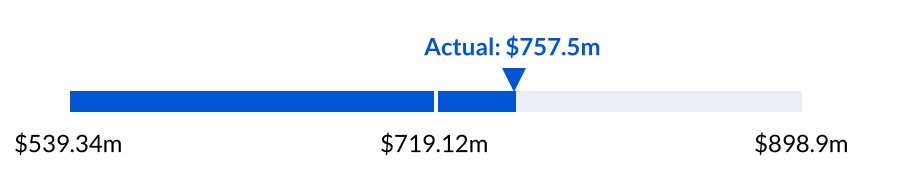
•Grew revenue 9% year over year to $757.5 million, driven by a 10% revenue increase in our Consumer segment reflecting strong demand for in-demand skills and branded credentials for today’s fast-changing economy and technology landscape.
•Delivered an approximately 470 basis points improvement in net loss margin and approximately 240 basis points of annual Adjusted EBITDA Margin(1) expansion, demonstrating our commitment to operating discipline and the strong financial leverage in our business model.
•Generated $108.7 million of net cash provided by operating activities and a record $78.5 million of Free Cash Flow(1), strengthening our balance sheet and financial position.
•Added more than 29 million new registered learners, bringing our cumulative registered learners to over 197 million.
•Broadened our Enterprise customer base with more than 115 new Paid Enterprise Customers, serving more than 1,730 businesses, governments, and campuses by the end of the year.
•Partnered with more than 375 content creators to launch over 4,300 new courses in 2025, including doubling our collection of generative AI courses to more than 1,000, as leading technology companies and world-class universities meet the growing demand to discover and master emerging skills.
1. Please see Appendix A titled “Fiscal Year 2025 Performance — GAAP to non-GAAP Reconciliations” for the definitions of Adjusted EBITDA, Adjusted EBITDA Margin, and Free Cash Flow as well as a reconciliation of these non-GAAP financial measures to their comparable GAAP measures. GAAP refers to generally accepted accounting principles in the United States. Non-GAAP financial measures should not be considered in isolation from, or as an alternative to, their comparable GAAP measures. | | | | | | | | |
Coursera | 2 | 2026 Proxy Statement |
Forward-Looking Statements
This Proxy Statement, including the Compensation Discussion and Analysis section, contains forward-looking statements, including information about future expectations, plans and prospects, within the safe harbor provisions under The Private Securities Litigation Reform Act of 1995. Any statements contained in this Proxy Statement that are not statements of historical facts may be deemed to be forward-looking statements. In some cases, you can identify forward-looking statements by terms such as: “anticipate,” “believe,” “can,” “continue,” “could,” “demand,” “design,” “estimate,” “expect,” “intend,” “may,” “might,” “ongoing,” “plan,” “potential,” “seek,” “should,” “target,” “will,” “would,” or the negative of these terms, or other comparable terminology intended to identify statements about the future. These forward-looking statements include, but are not limited to, our next phase of innovation; the changes in the global labor market, including as a result of AI; our AI initiatives; our expectations regarding our Merger with Udemy, including the resulting benefits and integration efforts; our path to deliver greater operating efficiency, margin expansion, and cash generation; our market opportunity; the global demand to embrace new skills; our progress in our growth initiatives; our commitment to creating more personalized, engaging and interactive learning experiences; the growing learner demand to develop AI skills and expertise; our mission to provide universal access to world-class learning; the demand for online learning; the strength of our customer and content creator relationships; anticipated features and benefits of our offerings; the anticipated utility of our non-GAAP financial measures; anticipated growth rates; and our financial outlook and operational performance; our gross burn rate for 2026; among others. These forward-looking statements involve known and unknown risks, uncertainties, and other factors that may cause our actual results, levels of activity, performance, or achievements to be materially different from the information expressed or implied by these forward-looking statements. These risks and uncertainties include, but are not limited to, the following: our ability to attract, engage, and retain learners; our ability to increase sales of our offerings; our limited operating history; the relative nascency of online learning solutions and generative AI; risks related to market acceptance and demand for our offerings; our ability to maintain and expand our existing content creator relationships and to develop new partnerships with universities, industry leaders, and subject matter experts; our dependence on the supply of content created by our partners; risks related to our AI innovations and AI generally; risks related to the Merger, including our ability to retain key personnel and maintain relationships with customers, vendors and others with whom we do business, or on our operating results and business generally; the outcome of any legal proceedings related to the Merger; our ability to successfully integrate Udemy’s operations and business on a timely basis or otherwise in accordance with the standards and obligations applicable to the combined company as a public benefit corporation and as a B Corp.; our ability to implement our plans, forecasts and other expectations with respect to the combined company’s business and realize expected synergies and other benefits of the Merger within the expected timeframe or at all; fluctuations in the prices of our stock; potential business disruptions following the Merger; our ability to compete effectively; adverse impacts on our business and financial condition due to macroeconomic or market conditions; our ability to manage our growth; regulatory and/or policy matters or changes impacting us or our content creators; risks related to intellectual property; cybersecurity and privacy risks and regulations; potential disruptions to our platform; risks related to operations, regulatory, economic, and geopolitical conditions; current and future legal and regulatory matters; the impact of actions to improve operational efficiencies and operating costs; our history of net losses and ability to achieve or sustain profitability; natural disasters, public health crises, or other catastrophic events; and our status as a certified B Corp, as well as the risks and uncertainties discussed in our most recently filed annual and quarterly reports on Forms 10-K and 10-Q and subsequent filings and as detailed from time to time in our SEC filings. You should not rely upon forward-looking statements as predictions of future events. Although we believe that the expectations reflected in the forward-looking statements are reasonable, we cannot guarantee that the future results, levels of activity, performance, or events and circumstances reflected in the forward-looking statements will be achieved or occur. Moreover, neither we nor any other person assumes responsibility for the accuracy and completeness of the forward-looking statements. Such forward-looking statements relate only to events as of the date of this Proxy Statement. We undertake no obligation to update any forward-looking statements except to the extent required by law.
| | | | | | | | |
Coursera | 3 | 2026 Proxy Statement |
Proposal 1:
Election of Directors
| | | | | | | | | | | | | | |
Our Board of Directors (our “Board”) currently consists of nine directors who are divided into three classes, Class I, Class II, and Class III, with members of each class serving three-year terms. At each annual meeting of stockholders, the successors to directors whose terms then expire will be elected to serve from the time of election and qualification until the third annual meeting following their election and until their successors are duly elected and qualified. In connection with the closing of the Merger on May 11, 2026 and pursuant to the terms of the Merger Agreement, our Board was reconstituted to consist of (1) six directors designated by Coursera from the Board, and (2) three directors designated by Udemy from its board of directors. To implement this Board structure, effective on May 11, 2026, (1) Mses. Clark, Muigai, and Simmons resigned from our Board and (2) Sohaib Abbasi, Marylou Maco, and Lydia Paterson, who had served on Udemy’s board of directors, were appointed to our Board as the three directors designated by Udemy. In accordance with the Merger Agreement, continuing directors designated by Coursera remain in their current classes and Mr. Abbasi and Mses. Maco and Paterson have been allocated to classes by the Board to ensure that the classes of our classified Board remain as nearly equal in number as possible. Accordingly, the current composition of our Board is as follows: •Our Class I directors are Carmen Chang, Theodore R. Mitchell, and Scott D. Sandell, and their terms will expire at the 2028 annual meeting of stockholders; •Our Class II directors are Christopher D. McCarthy, Andrew Y. Ng, and Lydia Paterson, and their terms will expire at the Annual Meeting; and •Our Class III directors are Sohaib Abbasi, Gregory M. Hart, and Marylou Maco, and their terms will expire at the 2027 annual meeting of stockholders. Three Class II directors will be elected at the Annual Meeting to serve until the annual meeting of stockholders to be held in 2029 or until their successors are duly elected and qualified or until such director’s earlier death, resignation or removal from the Board, with the other classes of directors continuing to serve for the remainder of their respective terms. Our Nominating and Corporate Governance Committee (the “Governance Committee”) has recommended, and our Board has designated, Christopher D. McCarthy, Andrew Y. Ng, and Lydia Paterson as the nominees for Class II directors to serve until the 2029 annual meeting of stockholders. The Class II director nominees have each indicated to us that they will be able to serve if elected. If a nominee is unable or declines to serve as a director at the time of the Annual Meeting, an event that we do not currently anticipate, proxies will be voted for any nominees designated by our Board, taking into account any recommendations of the Governance Committee, to fill such vacancy. Directors shall be elected by a plurality of the votes cast (meaning that the director nominees who receive the highest number of shares voted “FOR” their election are elected as directors); provided, that if any nominee for director receives a greater number of votes “WITHHELD” than votes “FOR” such election, our Bylaws require that such person must promptly tender an irrevocable resignation to our Board or the Governance Committee for their consideration. | | | | |
| | | |
| | | |
| | VOTE The Board of Directors Recommends a Vote “FOR” the Election of All of the Class II Nominees as Directors of Coursera. |
| | | | | | | | |
Coursera | 4 | 2026 Proxy Statement |
About Our Board of Directors
Our Board is divided into three classes with three-year terms. The following section provides summary information about our director nominees and continuing directors as of May 11, 2026.
| | | | | | | | | | | | | | | | | | | | | | | | | | |
| | | | | Committee Membership(2) | |
| Name | Age | Director Since | Class | Term Expiration(1) | Audit | Human Resources and Compensation (“HRC”) | Nominating and Corporate Governance (“Governance”) | Independent |
| | | | | | | | |
| Director Nominees: | | | | | | | | |
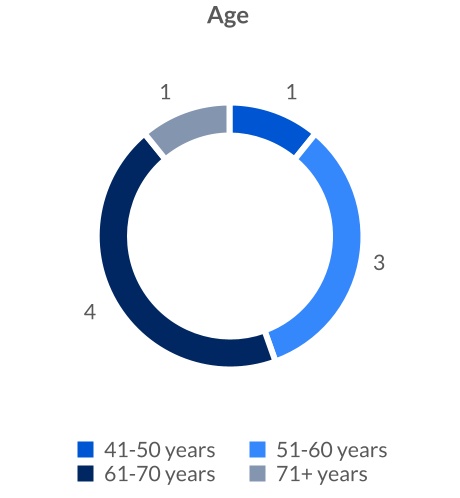
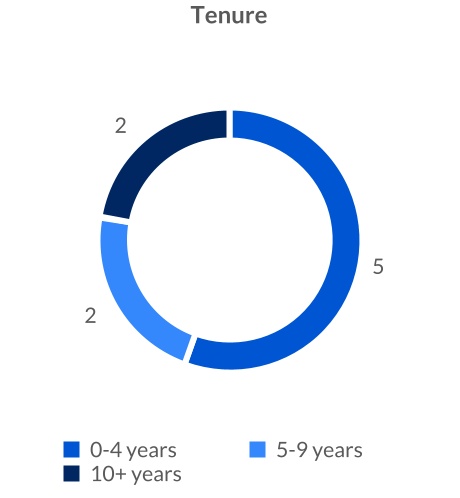
Christopher D. McCarthy | 51 | 2023 | II | 2026 | Member | Member | — | ✔ |
Andrew Y. Ng Chairman of the Board | 50 | 2011 | II | 2026 | — | — | — | — |
Lydia Paterson | 53 | 2026 | II | 2026 | Chair | — | — | ✔ |
| Continuing Directors: | | | | | | | | |
Carmen Chang | 78 | 2021 | I | 2028 | — | Chair | Member | ✔ |
Theodore R. Mitchell | 70 | 2020 | I | 2028 | Member | — | Chair | ✔ |
Scott D. Sandell Lead Independent Director | 61 | 2011 | I | 2028 | — | Member | — | ✔ |
Sohaib Abbasi | 69 | 2026 | III | 2027 | — | Member | — | ✔ |
Gregory M. Hart President and CEO | 56 | 2025 | III | 2027 | — | — | — | — |
Marylou Maco | 65 | 2026 | III | 2027 | — | — | Member | ✔ |
1.Each director’s respective three-year term expires at the annual meeting of stockholders to be held during the year indicated. If our director nominees are re-elected at the Annual Meeting, their respective terms will expire at our 2029 annual meeting of stockholders.
2.If our director nominees are re-elected at the Annual Meeting, each committee’s membership immediately following the Annual Meeting is expected to remain unchanged.
| | | | | | | | |
Coursera | 5 | 2026 Proxy Statement |
Director Skills and Qualifications
We strive to maintain an experienced and highly qualified Board with a broad range of perspectives and skills. Our Governance Committee periodically assesses the appropriate size, composition, and needs of our Board as well as the desired qualifications, expertise, and characteristics for membership on our Board and each of its committees. Because the identification, evaluation, and selection of qualified directors is a complex and subjective process that requires consideration of many intangible factors and will be significantly influenced by the particular needs of our Board from time to time, our Board has not adopted a specific set of minimum qualifications, qualities or skills that are necessary for a nominee to possess, other than those that are necessary to meet applicable requirements of the U.S. Securities and Exchange Commission (“SEC”) and the New York Stock Exchange (“NYSE”).
Our Board is made up of highly skilled individuals well versed in the technology, consumer, and education industries. The matrix below summarizes our Board members’ key skills and qualifications as a group. If an individual is not listed under a particular attribute, it does not signify a director’s lack of ability to contribute in that area. The biographical information set forth below includes a summary of the experience and qualifications of each of our directors that support the Board’s decision for each director to serve as a member of our Board at this time.
| | | | | | | | | | | | | | | | | | | | | | | | | | | | | | | | | | | |
| | | | | | | | | | | |
| | | Sohaib
Abbasi | Carmen Chang | Gregory M. Hart | Marylou Maco | Christopher D.
McCarthy | Theodore R. Mitchell | Andrew Y. Ng | Lydia Paterson | Scott D. Sandell |
| | | | | | | | | | | |
| Global Growth and Scale Experience expanding and scaling business internationally, with deep understanding of diverse market environments, geopolitical considerations, or economic conditions | | ✔ | ✔ | ✔ | ✔ | ✔ | | ✔ | ✔ | ✔ |
| Technology and AI Background in technology, including understanding of technological trends and disruptors such as generative AI and machine learning | | ✔ | ✔ | ✔ | ✔ | ✔ | ✔ | ✔ | ✔ | ✔ |
| Workforce Skilling Experience with workforce reskilling, upskilling, and training matters at an organizational level or in a broader societal context | | | ✔ | | | | ✔ | ✔ | | |
| Consumer Insights and Trends Background in analyzing, anticipating, and adapting to consumer behavior and market trends | | | ✔ | ✔ | | ✔ | | ✔ | ✔ | ✔ |
| Education Industry Experience and understanding of the education industry, including serving students and partnering with academic institutions | | | ✔ | | | | ✔ | ✔ | | ✔ |
| Operational Leadership Experience in executive management or operational leadership and able to provide insight into strategic and operating plans | | ✔ | ✔ | ✔ | ✔ | ✔ | ✔ | ✔ | ✔ | ✔ |
| Finance and Accounting Knowledge or experience in financial reporting, accounting, or financing and investing activities | | ✔ | ✔ | | ✔ | ✔ | ✔ | | ✔ | ✔ |
| Public Company Board Governance and Compliance Experience as a director of another public company, including experience in board governance and risk oversight (e.g., regulatory, cybersecurity, and data privacy risks) | | ✔ | ✔ | | ✔ | | ✔ | ✔ | ✔ | ✔ |
| | | | | | | | |
Coursera | 6 | 2026 Proxy Statement |
Director Biographies
The biographies of our Class II director nominees and the other members of our Board as of May 11, 2026 are set forth below:
Class II Director Nominees
| | | | | | | | | | | |
| Christopher D. McCarthy Director Since: January 2023 | | Christopher D. McCarthy has served as the Chief Executive Officer and President of Creative Partner Studios, under an exclusive arrangement with NBCUniversal, since January 2026. Previously, Mr. McCarthy was the co-Chief Executive Officer of Paramount Global, Inc. from May 2024 to July 2025, where he led a business turnaround and oversaw the company’s merger with Skydance Media. During his tenure at Paramount, Mr. McCarthy held a series of progressively senior leadership positions, including President and CEO Paramount Television, MTV Entertainment and Showtime Studios. He began his career with the company as a freelancer in 2004 and rose to lead many of its most iconic global brands, including Paramount+, Showtime, MTV, VH1, CMT, Logo, Comedy Central, and Smithsonian. In addition to his corporate roles, Mr. McCarthy has led industry-wide coalitions to tackle mental health and civic engagement, driving record youth registration and turnout. Mr. McCarthy has served on the board of directors for the Animal Medical Center of New York since 2022. We believe that Mr. McCarthy is qualified to serve on our Board because of his significant operational, leadership, consumer trends, and social impact experience. |
| Committee Membership: | | Audit Committee, HRC Committee |
| Education: | | B.S. with Honors in Commerce and Engineering from Drexel University |
| | | M.B.A. from The Wharton School of Business at the University of Pennsylvania |
| | | |
| | | | | | | | | | | |
| Lydia Paterson Director Since: May 2026 | | Lydia Paterson joined our Board effective May 11, 2026 in connection with the Merger with Udemy. Prior to the closing of the Merger, Ms. Paterson served as a director of Udemy since December 2019. Ms. Paterson most recently served as an operating partner at Prosus N.V. from April 2024 to December 2024. She previously served as Chief Executive Officer at OLX Group B.V., a global online classified marketplace and Prosus subsidiary, from March 2023 to April 2024, and as Chief Financial Officer from June 2016 to February 2023. Prior to that, Ms. Paterson served as the Vice President, Global Finance and Corporate Financial Planning & Analysis for PayPal Holdings, Inc., an online payments company, from 2012 to 2016. She also served in various finance executive roles at eBay Inc., a multinational e-commerce platform, from 1999 to 2012, and earlier served in various accounting roles at Coopers & Lybrand (subsequently PricewaterhouseCoopers) from 1993 to 1998. She has been designated by the Board as an "audit committee financial expert" as defined by SEC regulations. We believe that Ms. Paterson is qualified to serve on our Board because of her global business and leadership experience, financial expertise, and knowledge of technology companies. |
| Committee Membership: | | Audit Committee (Chair) |
| Education: | | B.B.A. from Simon Fraser University |
| | | |
| | | | | | | | |
Coursera | 7 | 2026 Proxy Statement |
Class II Director Nominee
| | | | | | | | | | | |
| Andrew Y. Ng Director Since: October 2011 | | Andrew Y. Ng is one of our co-founders and served as Co-CEO until 2014. He has served as our Chairman of the Board since our inception in 2014. Dr. Ng is a leading voice in artificial intelligence (AI) and online education. In 2013, he was named in the Time100 list of the most influential people in the world. Dr. Ng has served as Managing General Partner of AI Fund, a venture studio that supports entrepreneurs in building AI companies, since January 2018. Dr. Ng also has led DeepLearning.AI, an education technology company he founded to provide AI training, since June 2017. Dr. Ng is also the Founder of LandingAI, which provides visual AI solutions, where he has served as Executive Chairman since August 2024 and previously served as Chief Executive Officer and Chairman from October 2017 to August 2024. Dr. Ng has also served as the Managing Partner of AI Aspire, an advisory firm for AI strategy, since its formation in July 2025. Dr. Ng currently also serves as an adjunct professor in Computer Science at Stanford University. From April 2017 to May 2024, he was Chief Scientist at Baidu, Inc., a multinational technology company, where he led the company’s global AI strategy and infrastructure. Dr. Ng was the founding lead of the Google Brain team from 2011 to 2012. In 2011, Dr. Ng led the development of Stanford’s first massive open online course (MOOC) platform and launched an online machine learning class that reached over 100,000 students—an initiative that inspired the creation of Coursera. Since April 2024, Dr. Ng has served on the board of Amazon.com, Inc. In addition, Dr. Ng is a board member of several privately-held companies engaged in AI. Dr. Ng has authored or co-authored over 200 research papers in machine learning, robotics, and related fields. We believe that Dr. Ng is qualified to serve on our Board because of his knowledge of our company as co-founder, his breadth and depth of experience as a pioneer in online education and artificial intelligence, and his invaluable industry, technology, and leadership expertise. |
| Education: | | B.S. in Math and Computer Science from Carnegie Mellon University |
| | | M.S. in Electrical Engineering and Computer Science from MIT |
| | | Ph.D. in Computer Science from the University of California, Berkeley |
| | | |
| | | | | | | | |
Coursera | 8 | 2026 Proxy Statement |
Other Directors
| | | | | | | | | | | |
| Scott D. Sandell Director Since: December 2011 | | Scott D. Sandell is the Executive Chairman and Chief Investment Officer of NEA, a venture capital firm, since April 2024 and April 2023, respectively. Mr. Sandell also served as NEA’s Chief Executive Officer and Chairman from April 2023 to April 2024, Managing General Partner from April 2017 to April 2024, Co-Managing General Partner from March 2015 to April 2017, and as a General Partner since September 2000. Mr. Sandell joined NEA in January 1996 and served as head of the firm’s technology investing practice for 10 years. In addition to serving on the board of directors of several privately held companies, he currently serves as lead independent director of Cloudflare, Inc., an internet security company. Mr. Sandell previously served on the board of directors of Robinhood Markets, Inc. from June 2016 to May 2022, Tuya Inc. from April 2018 to June 2022, and Bloom Energy Corporation from August 2003 to May 2022. Outside of NEA, Mr. Sandell is actively involved with the National Venture Capital Association and is a founding director of the organization’s nonprofit, Venture Forward. He is also an Adjunct Lecturer at Stanford University. We believe that Mr. Sandell is qualified to serve on our Board because of his significant public company director experience and global business, leadership, finance, and venture capital industry expertise. |
| Committee Membership: | | HRC Committee |
| Education: | | A.B. in Engineering from Dartmouth College |
| | | M.B.A. from the Stanford Graduate School of Business |
| | | |
| | | | | | | | | | | |
| Sohaib Abbasi Director Since: May 2026 | | Sohaib Abbasi joined our Board effective May 11, 2026 in connection with the Merger with Udemy. Prior to the closing of the Merger, Mr. Abbasi served on the board of directors of Udemy since July 2023. Mr. Abbasi has served as a senior advisor at TPG Global, a private equity firm, since July 2017, and previously as a member of Balderton Capital's Executive Council from January 2018 to June 2023. From 2004 to 2015, Mr. Abbasi served as the Chief Executive Officer of Informatica Corporation, a data integration company, where he also served as the Chair and a member of the board of directors. Mr. Abbasi previously served in various executive roles at Oracle Corporation. Mr. Abbasi served on the board of directors of Elastic N.V., from July 2022 to September 2025, and McAfee Corp., from November 2018 to March 2022. We believe that Mr. Abbasi is qualified to serve on our Board because of his significant leadership and operational experience, including as a CEO of a public technology company and as senior executive and director of multiple large public and private technology companies. |
| Committee Membership: | | HRC Committee |
| Education: | | B.S. and M.S. in Computer Science from the University of Illinois Urbana-Champaign |
| | | |
| | | | | | | | |
Coursera | 9 | 2026 Proxy Statement |
Other Directors
| | | | | | | | | | | |
| Carmen Chang Director Since: October 2021 | | Carmen Chang is a Partner and Head of Asia at New Enterprise Associates, Inc. (“NEA”), where she focuses on building NEA’s global organization and portfolio in China and other emerging markets in Asia. Ms. Chang joined NEA in 2012. Ms. Chang currently serves on the board of directors for a number of privately-held companies, including Availink, Inc., a semiconductor manufacturer, Moqi Inc., an innovative player in biometrics identification, Blue Ocean Technologies Inc., a developer of scalable, high performing AI chips, Cista System Corp., a developer of image sensor systems, and Woebot Labs, Inc., an AI-based digital mental health company. From 2016 to 2022, Ms. Chang served on the board of directors of Tuya Inc. Prior to joining NEA, Ms. Chang was a partner at a major Silicon Valley law firm, where she specialized in corporate and securities law and led that firm’s China practice. We believe that Ms. Chang is qualified to serve on our Board because of her significant business, legal, and leadership experience, including expertise in the Asian markets. |
| Committee Membership: | | HRC Committee (Chair), Governance Committee |
| Education: | | Master’s degree in modern Chinese history from Stanford University |
| | | J.D. from Stanford Law School |
| | | |
| | | | | | | | | | | |
| Gregory M. Hart Director Since: February 2025 | | Gregory M. Hart was appointed as our President, CEO, and as a member of our Board effective on February 3, 2025. Mr. Hart previously served as Chief Operating Officer at Compass, Inc., a real estate technology company, from May 2022 to December 2023, and as its Chief Product Officer from April 2020 to April 2022. Prior to that, Mr. Hart held various leadership positions at Amazon.com, Inc., where he served for 23 years, including leading Amazon’s Prime Video global business, leading the Amazon Echo business, and as Technical Advisor to Jeff Bezos, Amazon’s founder and Chief Executive Officer. Since December 2024, he has served as a member of the board of directors of Bose Corporation. In addition, he serves as an unpaid advisor to Baller League GmbH. We believe that Mr. Hart is qualified to serve on our Board because of his extensive operational leadership, product, technology, and consumer experience. |
| Education: | | B.A. in English Literature from Williams College |
| | | |
| | | | | | | | |
Coursera | 10 | 2026 Proxy Statement |
Other Directors
| | | | | | | | | | | |
| Marylou Maco Director Since: May 2026 | | Marylou Maco joined our Board effective May 11, 2026 in connection with the Merger with Udemy. Prior to the closing of the Merger, Ms. Maco served on the board of directors of Udemy since December 2024. Ms. Maco has served on the board of directors for Avaya, LLC, a cloud communications company, since May 2023. Ms. Maco has served as Chief Revenue and Customer Experience Officer at Avaya, LLC since December 2023. Prior to Avaya, Ms. Maco served as the Executive Vice President of Worldwide Sales and Field Operations at Genesys Cloud Services, Inc., a customer experience software company, from July 2020 to January 2023. Before Genesys, Maco served in several sales executive leadership positions, including at CognitiveScale, Hewlett Packard Enterprise, and Oracle Corporation. Notably, Ms. Maco also spent more than two decades at Cisco Systems. We believe that Ms. Maco is qualified to serve on our Board because of her extensive leadership and go-to-market experience. |
| Committee Membership: | | Governance Committee |
| Education: | | Studied Management and Related Support Services at Penn State University |
| | | |
| | | | | | | | | | | |
| Theodore R. Mitchell Director Since: May 2020 | | Dr. Theodore R. Mitchell has been the President of the American Council on Education (“ACE”) since September 2017. Prior to that time, he was the Under Secretary of the United States Department of Education from May 2014 until January 2017, responsible for all post-secondary and adult education policy programs as well as a $1.3 trillion Federal Student Aid portfolio. From January 2017 to September 2017, Dr. Mitchell served as a private consultant, including to ACE. Prior to his federal service, Dr. Mitchell served as Chief Executive Officer of the NewSchools Venture Fund, a national investor in education technology, from June 2005 to May 2014. Dr. Mitchell also previously served as President of the California State Board of Education, President of Occidental College, and in a variety of leadership roles at University of California, Los Angeles, including Vice Chancellor. Dr. Mitchell was Deputy to the President and to the Provost at Stanford University and began his career as a professor at Dartmouth College where he also served as Chair of the Department of Education. Dr. Mitchell is a board member for several privately held organizations: TIAA, Occidental College, Khan Academy, Education Quality Outcomes Standards Board, Jack Kent Cooke Foundation, and Credential Engine. He also served as a member of the board of directors of The McClatchy Company from May 2017 to August 2020 and of Frontline Ltd. from April 2017 to August 2018. We believe that Dr. Mitchell is qualified to serve on our Board because of his extensive experience as a leader in education, business, and public policy. |
| Committee Membership: | | Governance Committee (Chair), Audit Committee |
| Education: | | B.A. and Ph.D. in Education from Stanford University |
| | | |
| | | | | | | | |
Coursera | 11 | 2026 Proxy Statement |
Non-Employee Director Compensation
Our director compensation is designed to attract and retain qualified directors and address the time, effort, expertise, and accountability required of active Board membership. Our HRC Committee periodically evaluates the appropriate level and form of compensation for non-employee members of our Board and recommends changes when appropriate. As part of its evaluation, the HRC Committee reviews the information, analysis, and recommendations provided by our independent compensation consultant, Compensia, Inc. (“Compensia”), which includes benchmarking compensation paid to non-employee directors to companies in our compensation peer group. Under our non-employee director compensation policy, our non-employee directors are compensated for Board and Board committee service through annual equity retainers with a pre-established target economic value, an annual base cash retainer for board service, and additional annual retainers for non-executive Board Chair and committee service. In 2025, we made no changes to the compensation structure or retainers for our non-employee directors from 2024, which was structured as follows:
| | | | | | | | | | | |
| | | |
| $185,000 | + | $37,500 | + |
Annual Equity Retainer | Annual Cash Retainer |
| | | |
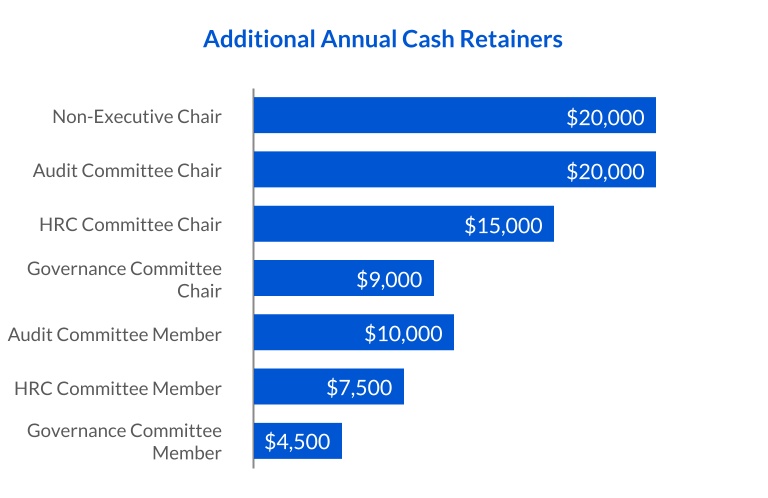
The annual cash retainers are paid quarterly in arrears, pro-rated for any partial months of service. The annual equity retainer is paid in restricted stock units (“RSUs”) under the Coursera, Inc. 2021 Stock Incentive Plan (the “2021 Plan”) following the conclusion of each annual meeting of our stockholders to each non-employee director who will continue serving as a member of the Board. The annual RSU award will be with respect to a number of shares of common stock having an aggregate value equal to $185,000, based on the average closing price of our common stock during the 30 calendar days prior to the grant date. Each annual RSU award vests on the earliest of the first anniversary of the grant date, the next annual meeting of stockholders following the grant date, or the consummation of a change in control as defined in the 2021 Plan, subject to the non-employee director’s continued service as a director of Coursera through the applicable vesting date.
In addition, the Board, at its discretion, may grant a non-employee director an initial RSU award upon appointment to our Board. We also reimburse our non-employee directors for their reasonable out-of-pocket costs and travel expenses incurred in connection with their attendance at Board and committee meetings.
Employee directors do not receive any compensation for service as a Board member.
| | | | | | | | |
Coursera | 12 | 2026 Proxy Statement |
2025 Director Compensation
The following table provides information on the compensation paid to our non-employee directors for the year ended December 31, 2025, pursuant to the non-employee director compensation policy described above. Our employee directors do not receive any cash compensation for their service on our Board or its committees. Mr. Abbasi, Ms. Maco, and Ms. Paterson were appointed as directors effective May 11, 2026 and did not receive any compensation in 2025.
| | | | | | | | | | | | | | |
| Name | Fees earned or paid in cash
($) | Stock awards(1) ($) | Total
($) | |
| | | | |
| Carmen Chang | 57,000 | | 185,438 | | 242,438 | | |
Amanda M. Clark(2) | 55,000 | | 185,438 | | 240,438 | | |
Christopher D. McCarthy | 42,000 | | 185,438 | | 227,438 | | |
| Theodore R. Mitchell | 56,500 | | 185,438 | | 241,938 | | |
Susan W. Muigai(2) | 45,000 | | 185,438 | | 230,438 | | |
| Andrew Y. Ng | 57,500 | | 185,438 | | 242,938 | | |
| Scott D. Sandell | 45,000 | | 185,438 | | 230,438 | | |
Sabrina L. Simmons(2) | 57,500 | | 185,438 | | 242,938 | | |
1.Represents the aggregate grant date fair value of the annual RSU awards granted to all non-employee directors who were serving on the Board in May 2025 pursuant to our non-employee director compensation policy, computed in accordance with Financial Accounting Standards Board (“FASB”) Accounting Standards Codification (“ASC”) Topic 718, Compensation—Stock Compensation (“ASC 718”). For information on the assumptions used in the calculations of these amounts, refer to Notes 2 and 11 of our audited consolidated financial statements contained in our Annual Report. These amounts reflect the accounting cost for these RSUs and do not represent the actual economic value that may be realized by the director.
2.Mses. Clark, Muigai and Simmons served as directors until May 11, 2026.
The following table sets forth the aggregate number of shares of common stock underlying stock option awards and RSUs held by each non-employee director as of December 31, 2025:
| | | | | | | | | | | |
| Name | Number of shares underlying stock options (#) | Number of shares underlying RSUs(1) (#) | |
| | | |
| Carmen Chang | — | | 21,765 | | |
| Amanda M. Clark | — | | 21,765 | | |
| Christopher D. McCarthy | — | | 24,209 | | |
| Theodore R. Mitchell | 150,000 | | 21,765 | | |
| Susan W. Muigai | — | | 27,972 | | |
| Andrew Y. Ng | — | | 21,765 | | |
| Scott D. Sandell | — | | 21,765 | | |
| Sabrina L. Simmons | 150,000 | | 21,765 | | |
1.On May 21, 2025, we granted each non-employee director 21,765 RSUs that vest on the earlier of (1) the day of the Annual Meeting, (2) May 21, 2026, or (3) a change in control, subject to continued service.
| | | | | | | | |
Coursera | 13 | 2026 Proxy Statement |
Corporate Governance
Board of Directors and Corporate Governance Highlights
Our business and affairs are organized under the direction of our Board. The primary responsibilities of our Board are to provide risk oversight, strategic guidance, counseling, and direction to our management.
Our Board is committed to sound and effective governance practices that promote long-term stockholder value and strengthen the Board’s management accountability to our stockholders, customers, and other stakeholders. We also believe that our status as a public benefit corporation (“PBC”) reinforces our commitment to providing global access to affordable and flexible world-class learning and strengthens our mission, culture, and opportunities to create long-term value for stockholders and other stakeholders.
The following table highlights many of our key governance practices.
| | | | | |
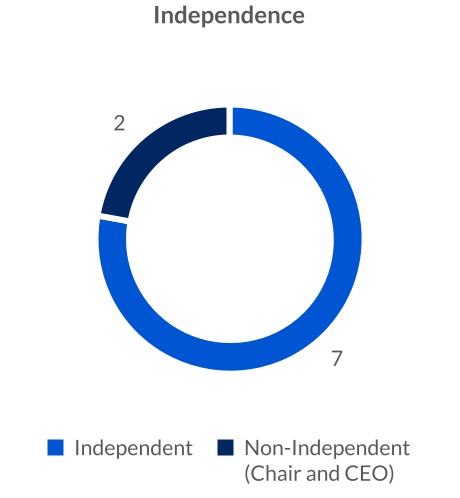
•Seven of our nine directors (78%) are independent, including a lead independent director | •Annual Board and committee self-assessments |
•Board committees composed of entirely independent directors | •Robust director nominee selection process |
•Proactive, year-round stockholder and stakeholder engagement | •Commitment to periodic Board refreshment and continued assessment of highly qualified and independent candidates for nomination to the Board with relevant experience and perspectives |
•Regular executive sessions of our non-management directors | •Policies regarding transactions in our common stock, including prohibitions on hedging, pledging, derivative trading, and short selling |
•Mandatory tender of director resignation if a majority vote is not received in an uncontested election | •Management of key risks and compliance obligations, overseen by the Board and its committees |
•Board oversight and annual review of succession planning strategies for key executives | •Meaningful director stock ownership guidelines |
•Policies requiring a reevaluation of Board membership due to changes affecting a director’s principal occupation or independence | •Limits on other for-profit board service |
•Regular review of committee charters and corporate governance policies | •Sophisticated and highly engaged directors with an effective mix of relevant skills, experience, and perspectives |
| | | | | | | | |
Coursera | 14 | 2026 Proxy Statement |
Active Attendance at Board Meetings
Our Board met 15 times during 2025, and additionally received regular updates from management. Each director attended at least 75% of the aggregate meetings held by our Board and the applicable committees on which such director served.
Executive Sessions of Non-Management Directors
The non-management directors meet in an executive session in connection with each regularly scheduled Board meeting, during which they have the opportunity to discuss management performance and such other topics as they may determine. The purpose of these executive sessions is to promote open and candid discussion among the non-management directors and to make recommendations for consideration by the full Board. Our lead independent director presides over executive sessions of the non-management directors.
Board Attendance at Annual Meeting of Stockholders
We encourage, but do not require, directors to attend our annual meeting of stockholders. Seven of our nine then-serving directors attended our 2025 annual meeting of stockholders.
Director Independence
Our Board has affirmatively determined that seven of our current directors, namely Sohaib Abbasi, Carmen Chang, Marylou Maco, Christopher D. McCarthy, Theodore R. Mitchell, Scott D. Sandell, and Lydia Paterson, are independent under NYSE listing standards. In addition, our Board previously determined that Amanda M. Clark, Susan W. Muigai, and Sabrina L. Simmons, who served on our Board during 2025, were independent. There are no family relationships among any of our directors or executive officers.
Board Leadership Structure
Our Board of Directors is committed to strong corporate governance and has a leadership structure that separates the roles of Chief Executive Officer and Board Chair. The Board believes this is the optimal structure for Coursera as it enhances the Board’s independence and its ability to provide effective, objective oversight over Coursera, our CEO, and our executive officers. This separation allows Mr. Hart, our CEO, to focus on executing our strategy and managing Coursera’s day-to-day operations, while Dr. Ng, our Board Chair, can focus on leading the Board and guiding its independent oversight of management.
In his role as Board Chair, Dr. Ng oversees the governance, operations, and functioning of our Board. He has served as Board Chair since 2014, providing consistent leadership and deep institutional knowledge. His responsibilities include, among others:
•presiding at stockholder meetings, meetings of our Board and executive sessions of the non-employee directors;
•facilitating communication between senior management and the independent directors;
•consulting with the CEO to set the Board’s agenda and ensure directors receive timely and relevant information; and
•working with committee chairs to oversee coordinated coverage of Board responsibilities.
If our Board Chair is not an independent director, our Board may appoint an independent director to serve as lead independent director in accordance with our Corporate Governance Guidelines. To further strengthen the Board’s independent leadership, Scott D. Sandell serves as our lead independent director. Mr. Sandell’s primary responsibilities as lead independent director include, among others:
•presiding over all meetings at which the Board Chair is not present;
•serving as a liaison between the Board Chair and/or the CEO and the independent directors; and
•retaining the authority to call meetings of the independent directors or the full Board.
| | | | | | | | |
Coursera | 15 | 2026 Proxy Statement |
Board Effectiveness, Annual Self-Assessments, and Education
Our Board recognizes that a robust and constructive evaluation process is an essential component of good corporate governance and board effectiveness. On an annual basis, our Board and each of its committees conduct self-assessments to evaluate performance and to identify opportunities for improvement. The self-assessments are led by the Governance Committee, and the results of the evaluation are shared with the Board along with recommendations to enhance the effectiveness of the Board and its committees. As the first step in the self-assessment process, directors respond to comprehensive questions, which ask them to consider various topics related to Board and committee composition, structure, effectiveness, and responsibilities, as well as satisfaction with the schedule, agendas, materials, and discussion topics. The Board then reviews all responses and makes appropriate recommendations. Thereafter, the Board and the Governance Committee discuss the results of the assessments and the recommendations in executive session, with a view toward taking action to address any issues presented. In addition, all members of our Board have the opportunity and are encouraged to attend director education programs to assist them in remaining current with best practices and developments in corporate governance.
Board Committees
Our Audit Committee, HRC Committee, and Governance Committee are each composed solely of independent directors, in accordance with SEC and NYSE requirements. Each of our committees operate under a charter that has been approved by our Board, and which is reviewed annually by each committee. Copies of the charters for each committee are available on our website at https://investor.coursera.com under the heading “Governance—Governance Documents.” In connection with the Merger and the reconstitution of our Board, our Board reconstituted the Board committees, effective on May 11, 2026, by appointing Lydia Paterson as Chair of the Audit Committee, Sohaib Abbasi as member of the HRC Committee, Marylou Maco as member of the Governance Committee, and Christopher D. McCarthy as member of the Audit and HRC Committees and removing him from the Governance Committee. As a result, each committee has the composition and key responsibilities described below. For a more extensive description of committee functions, please refer to the committee charters.
| | | | | | | | | | | |
| Name | Audit Committee | HRC Committee | Governance Committee |
| | | |
Sohaib Abbasi | | Member | |
| Carmen Chang | | Chair | Member |
Marylou Maco | | | Member |
| Christopher D. McCarthy | Member | Member | |
| Theodore R. Mitchell | Member | | Chair |
Lydia Paterson | Chair | | |
| Scott D. Sandell, Lead Independent Director | | Member | |
| | | | | | | | |
Coursera | 16 | 2026 Proxy Statement |
| | | | | | | | | | | |
| Audit Committee | | |
| Members: | | Key Responsibilities: |
| | | |
| Lydia Paterson (Chair) Christopher D. McCarthy Theodore R. Mitchell
Meetings in 2025: 8 | | •Evaluate the performance, independence, and qualifications of our independent auditors and determine whether to retain our existing independent auditors or engage new independent auditors •Pre-approve all audit services and any permissible non-audit services •Review the adequacy and effectiveness of our internal control over financial reporting and internal audit function, and the effectiveness of the Company’s disclosure controls and procedures •Review financial statements and reports, earnings announcements, and earnings guidance •Oversee our cybersecurity policies and practices and internal controls regarding information security •Review and approve related party transactions •Review with the Board any issues that arise with respect to the quality or integrity of the Company’s financial statements, compliance with legal or regulatory requirements •Review our major financial risk exposures, including the policies to govern the process by which risk assessment and risk management are implemented •Conduct an annual self-evaluation of its performance with respect to its duties and responsibilities set forth in its charter |
| Expertise: | | Each member of our Audit Committee is financially literate in accordance with NYSE audit committee requirements. The Board has determined that Ms. Paterson is an “audit committee financial expert” within the meaning of SEC regulations. |
| | | |
| | | | | | | | | | | |
| HRC Committee |
| Members: | | Key Responsibilities: |
| | | |
| Carmen Chang (Chair) Sohaib Abbasi Christopher D. McCarthy Scott D. Sandell
Meetings in 2025: 7 | | •Approve our executive compensation goals and objectives for our CEO and other executive officers, evaluate performance in light of such goals, and set compensation levels and terms of employment for our executive officers •Oversee equity compensation plans and approve awards thereunder •Oversee human capital management •Review and recommend to the Board changes in compensation of our non-employee directors •Approve the selection of the Company’s peer companies for the purposes of benchmarking executive compensation •Oversee the administration and performance of duties under our compensation recoupment policy •Oversee compliance with compensation-related disclosure requirements, including those required by the NYSE, the SEC, and the Sarbanes-Oxley Act of 2002 •Conduct an annual self-evaluation of its performance with respect to its duties and responsibilities set forth in its charter •Consider the results of stockholder advisory votes on executive compensation and the frequency of such votes |
| | | |
| | | | | | | | | | | |
| Governance Committee |
| Members: | | Key Responsibilities: |
| | | |
| Theodore R. Mitchell (Chair) Carmen Chang Marylou Maco
Meetings in 2025: 4 | | •Identify, review, and recommend candidates to serve on our Board •Oversee annual self-assessment of Board and its standing committees •Review annually our certificate of incorporation, bylaws, committee charters, codes of conduct, corporate governance principles, and insider trading policy •Oversee our obligations and related matters in connection with our status as a public benefit corporation •Evaluate the size and composition of our Board and its committees •Review and oversee with the Board Chair and the CEO, the CEO succession plan, and the management development plan •Review and make recommendations regarding stock ownership guidelines and review compliance |
| | | |
| | | | | | | | |
Coursera | 17 | 2026 Proxy Statement |
Compensation Committee Interlocks and Insider Participation
During 2025, the members of our HRC Committee were Carmen Chang, Amanda M. Clark, Susan W. Muigai, and Scott D. Sandell. No member of our HRC Committee was at any time during 2025 or at any other time an officer or employee of ours or any of our subsidiaries, and none had or have any relationships with us that are required to be disclosed under Item 404 of Regulation S-K promulgated under the Exchange Act. None of our executive officers currently serve, or have served during the last completed fiscal year, on the compensation committee or board of directors of any other entity that has one or more executive officers serving as a member of our Board or HRC Committee.
Role in Risk Oversight
The Board provides active and informed oversight of our risk management process. Our risk governance framework is a comprehensive, Board-led process designed to:
•identify and assess critical risks to our business and strategy;
•facilitate open communication between management and the Board; and
•foster a culture of integrity and risk awareness across the organization.
Rather than delegating this core responsibility to a single committee, the Board believes that risk oversight is most effective when conducted at the full Board level, complemented by the focused work of its committees. This integrated approach ensures that the collective experience and judgment of all directors are applied to overseeing the Company’s most significant risks.
Our Board as a whole is responsible for monitoring and assessing strategic risk exposure. The Governance Committee periodically evaluates our risk management process to ensure its effectiveness, and each committee reports their key risk findings to the full Board at its regular meetings.
Specific risk oversight responsibilities are delegated as follows:
•Audit Committee: Oversees major financial risk exposures and the steps our management has taken to monitor and control them, including policies to govern the process by which risk assessment and management is undertaken. The Audit Committee also oversees our cybersecurity program (including our technology and information security policies and practices) and the internal controls regarding cybersecurity and information security, and monitors our compliance with legal and regulatory requirements.
•HRC Committee: Ensures our compensation plans, policies, and programs do not incentivize excessive risk-taking. The HRC Committee conducts a periodic review of compensation-related risks for all employees to ensure our practices align with the Company’s long-term interests and recommends any policy changes deemed appropriate to address such risks.
Corporate Governance Documents
Corporate Governance Guidelines
Our Board has adopted written Corporate Governance Guidelines, which set forth the practices the Board intends to follow with respect to, among other things, Board composition, director selection, Board meetings and involvement of senior management, CEO performance evaluations and succession planning, Board compensation, and other policies and guidelines relating to the Board. The Governance Committee assists our Board in overseeing and reviewing the Corporate Governance Guidelines at least annually, and recommending to our Board for approval of any changes to our corporate governance framework. Our Corporate Governance Guidelines are posted on the investor relations section of our website at https://investor.coursera.com under the heading “Governance—Governance Documents.”
| | | | | | | | |
Coursera | 18 | 2026 Proxy Statement |
Codes of Business Conduct and Ethics
Our Code of Business Conduct and Ethics (the “Code of Conduct’) applies to each of our directors, officers, employees, and consultants, and addresses various topics, including:
•Compliance with laws, rules, and regulations
•Confidentiality
•Conflicts of interest
•Corporate opportunities
•Fair dealing
•Payments or gifts from others
•Discrimination and harassment
•Anti-corruption and interaction with government officials
•Health and safety
•Insider trading
•Protection and proper use of company assets
•Recordkeeping
•Communications with the media, analysts, and stockholders
Our Board has also adopted a Code of Ethics for Senior Financial Officers (the “Financial Code of Ethics”) that applies to our CEO, Chief Financial Officer, Principal Accounting Officer, and Controller as well as other key management employees and addresses ethical issues.
The Code of Conduct and the Financial Code of Ethics are each posted on our website at https://investor.coursera.com under the heading “Governance—Governance Documents.” These codes can only be amended by the approval of a majority of our Board. Any waiver to the Code of Conduct for an executive officer or director or any waiver of the Financial Code of Ethics may only be granted by our Board or our Governance Committee and must be timely disclosed as required by applicable law. We have implemented whistleblower procedures that establish formal protocols for receiving and handling complaints from employees and contractors. Any concerns regarding accounting or auditing matters reported under these procedures will be communicated promptly to our Audit Committee.
To date, there have been no waivers under our Code of Conduct or Financial Code of Ethics. We intend to disclose future amendments to certain provisions of these codes or waivers of such codes granted to executive officers and directors on our website at https://investor.coursera.com within four business days following the date of such amendment or waiver.
Stock Ownership Guidelines
In March 2024, we adopted stock ownership guidelines that apply to our non-employee directors and officers, including our named executive officers (“NEOs”) (collectively, the “Covered Persons”) designed to align their interests with the long-term interests of our stockholders. Within five years from becoming subject to the stock ownership guidelines, Covered Persons are required to own shares of our common stock with a value at least equal to the required level of stock ownership set forth below:
| | | | | |
| Position | Minimum Required Level of Stock Ownership |
| |
| CEO | 5x annual base salary |
| Other Covered Executive | 1x annual base salary |
| Non-employee directors | 3x cash base retainer |
| | | | | | | | |
Coursera | 19 | 2026 Proxy Statement |
Shares that are credited toward compliance with our stock ownership guidelines include the following:
•Shares owned directly or beneficially by the Covered Person or their immediate family members;
•Shares held in a trust or in a 401(k) account for the benefit of the Covered Person or their immediate family members; and
•Shares owned by a partnership, limited liability company, or other entity to the extent of the Covered Person’s interest therein (or the interest therein of their immediate family members) but only if the Covered Person has or shares the power to vote or dispose of the shares.
Unexercised stock options, unvested restricted stock awards, and unvested RSUs do not count toward compliance with the guidelines.
If, by the applicable deadline, the Covered Person has not met the minimum ownership level specified above, then such covered person must retain at least 50% of the net shares of our common stock received by such person upon the vesting, settlement, or exercise of equity awards issued to such person until they comply with the stock ownership guidelines.
Our non-employee directors, CEO, and other Covered Persons (including our NEOs) are expected to be in compliance with the stock ownership guidelines when they become effective for such persons.
Insider Trading, Derivatives Trading, Hedging, and Pledging Policies
We have adopted insider trading policies and procedures applicable to our directors, officers, employees, consultants, and contractors, and their immediate family members and controlled entities that we believe are reasonably designed to promote compliance with insider trading laws and regulations, and NYSE listing standards. Under our insider trading policy, our directors, executive officers, and other predetermined insiders may only conduct open market sales or purchases of Coursera securities (i) with preclearance during designated open trading windows, or (ii) through use of stock trading plans adopted pursuant to Rule 10b5-1 of the Exchange Act. Our insider trading policy was filed as Exhibit 19.1 to our Annual Report.
Under our insider trading policy, covered persons, including our directors and executive officers, are prohibited from engaging in short sales, derivatives trading, hedging, monetization, or pledging transactions involving Coursera’s securities.
Our Director Nomination Process
Our Board nominates directors whose term is scheduled to expire at the next annual meeting of stockholders and elects new directors to fill vacancies when they arise. Our Governance Committee has the responsibility to identify, evaluate, recruit, and recommend qualified candidates to the Board for nomination or election.
Our Board strives to find directors who are experienced and dedicated individuals with a broad range of backgrounds, perspectives, and skills. Our corporate governance guidelines provide that our Governance Committee may take into account all factors it considers appropriate in identifying qualified candidates for Board membership, such as character, judgment, leadership, business acumen, variety of backgrounds, perspectives, skills, and professional experience, the ability of a candidate to devote sufficient time and attention to Coursera’s affairs, knowledge of or experience in the industry in which Coursera operates, and the extent to which a particular candidate would fill a present or anticipated need on the Board. In addition, we expect each director to be committed to enhancing stockholder value and to have sufficient time to effectively carry out their duties as a director. Our Governance Committee also seeks to ensure that a majority of our directors are independent in accordance with NYSE rules and that one or more of our directors is an “audit committee financial expert” under SEC rules.
| | | | | | | | |
Coursera | 20 | 2026 Proxy Statement |
Prior to our annual meeting of stockholders, our Governance Committee identifies director nominees first by evaluating the current directors whose terms will expire at the annual meeting and who are willing to continue in service. The candidates are evaluated based on the criteria described above, and the candidate’s prior service as a director. If a director no longer wishes to continue in service, if the Governance Committee decides not to re-nominate a director, or if a vacancy is created on the Board because of a resignation or an increase in the size of the Board or other event, then the Committee will consider whether to replace the director or to decrease the size of the Board. If the decision is to replace a director, the Governance Committee will consider various candidates for Board membership, including those suggested by Committee members, other Board members, a director search firm engaged by the Committee, or our stockholders. Prospective nominees are evaluated by the Governance Committee based on the same membership criteria described above and set forth in our corporate governance guidelines, regardless of the source of the nomination.
Stockholder Recommendations for Nominations to our Board
The Governance Committee will consider candidates recommended by stockholders. A stockholder who wishes to suggest a prospective nominee for our Board should notify Coursera’s Secretary or any member of the Governance Committee in writing with any supporting material the stockholder considers appropriate. Our Bylaws contain provisions that address the process by which a stockholder may nominate an individual to stand for election to the Board at an annual meeting of stockholders. To be timely, our Bylaws provide that the stockholder’s notice must be delivered to, or mailed and received at, the principal executive offices of the corporation not more than 120 days nor less than 90 days in advance of the anniversary of the date of the corporation’s proxy statement provided in connection with the previous year’s annual meeting of stockholders. However, in the event that no annual meeting was held in the previous year or the annual meeting is called for a date that is more than 30 days before or after the anniversary date of the previous year’s annual meeting, notice by the stockholder must be received by the Secretary of the corporation not later than the close of business on the later of the 90th day prior to such annual meeting or the 10th day following the day on which public announcement of the date of such meeting is first made. Information required by our Bylaws to be in the notice include the name and contact information for the candidate, the person making the nomination, and other information about the nominee that must be disclosed in proxy solicitations pursuant to our Bylaws and under Section 14 of the Exchange Act and the related rules and regulations under that Section.
Stockholder Engagement; How to Communicate with our Board
We proactively engage with stockholders and other stakeholders throughout the year to learn their perspectives on significant issues. Over the past year, our stockholder engagement activities included participation by the Board, our management team, particularly our CEO and CFO, and our investor relations department. This engagement helps us better understand stockholder priorities and perspectives and help foster ongoing constructive dialogue with our community of stockholders. The Board and our management team carefully consider the feedback from these meetings, as well as stockholder support and feedback at our annual meetings, when reviewing our business practices, corporate governance framework, and executive compensation program. For more information on our stockholder engagement and actions we have taken as a result of stockholder feedback, see below in the section “Executive Compensation—Compensation Discussion and Analysis—Say-on-Pay Vote and Stockholder Engagement.”
Our Board welcomes questions or comments about Coursera and our operations. If stockholders or interested parties wish to communicate with our Board, including our independent directors, they may send their communication in writing to: Secretary, Coursera, Inc., 2440 West El Camino Real, Suite 500, Mountain View, California 94040. You must include your name and address in the written communication and indicate whether you are a stockholder. The Secretary will review any communication received from a stockholder or interested party, and all relevant, appropriate, and substantive communications will be forwarded to the appropriate director or directors or committee of our Board based on the subject matter.
| | | | | | | | |
Coursera | 21 | 2026 Proxy Statement |
Certain Relationships and Related Transactions
Policies and Procedures for Transactions with Related Persons
Our Board is committed to the highest legal and ethical standards of conduct in fulfilling its responsibilities and recognizes that related party transactions may present a heightened risk of potential or actual conflicts of interest. We have adopted a written Related Person Transactions Policy that sets forth our policies and procedures regarding the identification, review, consideration, and oversight of “related person transactions.” For purposes of our policy only, a “related person transaction” is a transaction, arrangement, or relationship (or any series of similar transactions, arrangements, or relationships, including any indebtedness or guarantee of indebtedness) in which we or any of our subsidiaries are participants, in which any “related person” has a material interest.
Transactions involving compensation for services provided to us as an employee, consultant, or director are not considered related person transactions under this policy. A related person is any executive officer, director, nominee to become a director, or a holder of more than 5% of any class of our voting securities (including our common stock), including any of their immediate family members and affiliates, including entities owned or controlled by such persons.
Under the policy, the related person in question or, in the case of transactions with a holder of more than 5% of any class of our voting securities, an executive officer with knowledge of the proposed transaction, must present information regarding the proposed related person transaction to our Audit Committee (or, where review by our Audit Committee would be inappropriate, to another independent body of our Board) for review. To identify related person transactions in advance, we rely on information supplied by our executive officers, directors, and certain significant stockholders. In considering related person transactions, our Audit Committee takes into account the relevant available facts and circumstances, which may include, but are not limited to:
•the risks, costs, and benefits to us;
•the impact on a director’s independence in the event the related person is a director, immediate family member of a director, or an entity with which a director is affiliated;
•the terms of the transaction;
•the availability of other sources for comparable services or products; and
•the terms available to or from, as the case may be, unrelated third parties.
Our Audit Committee will approve only those transactions that it determines are fair to us and in our best interests.
Transactions with Related Persons
The following includes a summary of transactions since January 1, 2025 to which we have been a party, in which the amount involved in the transaction exceeded or will exceed $120,000, and in which any of our directors, executives, officers, or beneficial owners of more than 5% of our capital stock or any member of the immediate family of any of the foregoing persons had or will have a direct or indirect material interest, other than equity and other compensation, termination, change of control, and other arrangements. Please see the section “Executive Compensation” below for information regarding compensation and other such arrangements if the applicable executive officer had been an NEO.
| | | | | | | | |
Coursera | 22 | 2026 Proxy Statement |
Investors’ Rights Agreement
In connection with the issuance and sale of approximately 7.65 million shares of our Series F redeemable convertible preferred stock, in July 2020, we entered into an Amended and Restated Investors’ Rights Agreement (the “Rights Agreement”) with certain holders of such stock, including entities affiliated with NEA, with which two of our directors, Scott D. Sandell and Carmen Chang, are affiliated. The Rights Agreement grants certain holders of our common stock specified registration rights with respect to shares of our common stock, including shares of our common stock issued upon conversion of the shares of our redeemable convertible preferred stock held by them prior to our initial public offering (“IPO”).
Online Course Hosting and Services Agreement with DeepLearning.AI
In October 2020, we entered into an Online Course Hosting and Platform Services Agreement (the “Hosting Agreement”) with DeepLearning.AI Corp., which is wholly owned by DeepLearning LLC, which is wholly owned by Dr. Ng, our Board Chair (“DeepLearning Corp.”, and together with DeepLearning LLC, the “DeepLearning Entities”). DeepLearning Corp. develops AI education courses, which are currently distributed through our platform. Pursuant to the Hosting Agreement, DeepLearning Corp. receives 50% of revenue attributable to courses provided by the DeepLearning Entities (subject to customary conditions and deductions) on our platform, except for certain machine learning specialization courses co-developed and co-branded by the DeepLearning Entities and Stanford, for which we make payments to Stanford equal to 60% of revenue attributable to such courses, which amount is subsequently shared between the DeepLearning Entities and Stanford. We are not party to, or otherwise involved with, this subsequent revenue sharing arrangement. Under the Hosting Agreement, we made payments to the DeepLearning Entities in an amount of approximately $8.7 million in 2025.
Consulting Agreement with Andrew Y. Ng
In June 2014, we entered into a Consultant and Proprietary Information Nondisclosure Agreement with Dr. Ng for advisory services (the “Consulting Agreement”). Under the terms of the Consulting Agreement, Dr. Ng receives reimbursement for reasonable expenses required to complete his duties and responsibilities (subject to approval from our CEO) and payment of $1.00 per annum.
Indemnification Agreements
We have entered, and intend to continue to enter, into separate indemnification agreements with our directors and executive officers, in addition to the indemnification provided for in our Amended and Restated Certificate of Incorporation and our Bylaws. These agreements, among other things, require us to indemnify our directors and executive officers for certain expenses, including attorneys’ fees, judgments, fines, and settlement amounts incurred by a director or executive officer in any action or proceeding arising out of their services as one of our directors or executive officers or as a director or executive officer of any other company or enterprise to which the person provides services at our request. We believe that these charter and bylaw provisions and indemnification agreements are necessary to attract and retain qualified persons as directors and officers.
Employment Arrangements
We have entered into employment agreements and offer letter agreements with certain of our executive officers. Please see the sections titled “Employment Arrangements with Our Named Executive Officers” and “Potential Payments Upon Termination or Change in Control” in the Executive Compensation section below for more information regarding such employment arrangements.
| | | | | | | | |
Coursera | 23 | 2026 Proxy Statement |
Executive Officers
The following table provides information about our executive officers as of May 11, 2026. Our executive officers are elected by and serve at the discretion of our Board. There are no family relationships among any of our executive officers.
| | | | | | | | | | | | | | | | | | | | | | | | | | | | | | | | | | | | | | |
| | | | | | | | | | | | |
| | | | | | | | | | | | |
| | Gregory M. Hart(1) President, Chief Executive Officer, and Director (Our CEO) | | | Michael D. Foley(2) Senior Vice President, Chief Financial Officer, and Treasurer (Our CFO) | | | Alan B. Cardenas Senior Vice President,
General Counsel and Secretary | | | Marcelo C. Modica Senior Vice President,
Chief People Officer | |
| | | | | | | | | | | | |
1.Mr. Hart succeeded Mr. Maggioncalda as our President, CEO, and Class III Director, effective February 3, 2025.
2.Mr. Hahn, our former Chief Financial Officer, transitioned from his role to advisor effective October 29, 2025, and Mr. Foley succeeded Mr. Hahn effective November 17, 2025.
Please see the section titled “Proposal 1: Election of Directors—Director Biographies” above for more information regarding Mr. Hart’s biographical information.
Michael D. Foley, age 53, has served as our Senior Vice President, Chief Financial Officer, and Treasurer since November 2025. Prior to joining Coursera, Mr. Foley served as Venture Advisor to AI and technology companies at NEA from June 2024 to December 2025. Mr. Foley served as Chief Executive Officer at Branch Metrics, Inc., a mobile linking and attribution platform, from March 2023 to April 2024. Previously, from January 2019 to July 2021, he was the Head of Finance for Emerging Hardware and Services at Alphabet, Inc. Before his time at Google, he served as Chief Financial Officer of Unity Software, Inc. from January 2015 to September 2018. Mr. Foley also previously served as SVP, Strategic Planning and Corporate Development at Electronic Arts, Inc. and as director of Corporate Development at Microsoft, Corp. He previously served as Assistant Director, Lead Advisory at Ernst & Young London. Mr. Foley holds an MBA from Harvard Business School, an honors degree in Natural Sciences from the University of Cambridge, and an honorary doctorate in Engineering from the Glasgow Caledonian University. He is a Qualified Chartered Accountant with the Institute of Chartered Accountants of Scotland.
Alan B. Cardenas, age 50, has served as our Senior Vice President, General Counsel and Secretary since May 2023 and served as our Vice President, Deputy General Counsel and Assistant Corporate Secretary from September 2021 to May 2023. Prior to joining Coursera, Mr. Cardenas served as Head of U.S. Corporate Legal for Siemens Energy, a spin-off from Siemens, from January 2020 to September 2021. Prior to Siemens Energy, Mr. Cardenas served in multiple senior roles for Siemens, a global manufacturing and technology conglomerate, from September 2008 to December 2019. During his time at Siemens, he also served as General Counsel and Secretary of the Siemens Foundation from August 2010 to February 2020. Mr. Cardenas started his career with Drinker Biddle & Reath LLP and Debevoise & Plimpton LLP. Mr. Cardenas holds a J.D. from Rutgers University School of Law and a B.A. in History and Political Science from Rutgers University.
Marcelo C. Modica, age 57, has served as our Senior Vice President, Chief People Officer since August 2024. Prior to joining Coursera, Mr. Modica served as Chief People Officer of OneTrust, LLC from June 2022 to August 2024. Before OneTrust, he was Chief People Officer at Robinhood Markets, Inc. from December 2020 to June 2022, and at Mercer, a consulting firm, from November 2012 to October 2020. Since April 2022, he has served as a director of Aspiriant, LLC, a wealth management firm, where he chairs the Compensation and People committee and is a member of its Finance, Audit and Risk committee. Mr. Modica holds a B.A. in psychology from Siena College and an M.A. in organizational psychology from Columbia University.
| | | | | | | | |
Coursera | 24 | 2026 Proxy Statement |
Executive Compensation
Compensation Discussion and Analysis
This Compensation Discussion and Analysis describes our executive compensation program and the material elements of compensation for our named executive officers for fiscal year 2025. It also explains how our compensation program is designed to support our strategy, align pay with performance, and create long-term value for stockholders.
The discussion in this section contains forward-looking statements that are based on our current considerations and expectations relating to our executive compensation programs and philosophy. As our business and our needs evolve, the actual amount and form of compensation and the compensation programs that we adopt may differ materially from current or planned programs as summarized in this section.
2025 Named Executive Officers
For 2025, our NEOs were:
| | | | | |
| Name | Position |
| |
| Gregory M. Hart | President, CEO, and Director (since February 3, 2025) |
| Michael D. Foley | Senior Vice President, Chief Financial Officer, and Treasurer (on an interim basis beginning November 17, 2025 and on a permanent basis effective March 16, 2026) |
| Alan B. Cardenas | Senior Vice President, General Counsel and Secretary |
| Marcelo C. Modica | Senior Vice President, Chief People Officer |
| Jeffrey N. Maggioncalda | former President, CEO, and Director (until February 3, 2025) |
| Kenneth R. Hahn | former Senior Vice President, Chief Financial Officer, and Treasurer (until October 29, 2025) |
2025 Business and Financial Highlights
The education market in which we compete requires continuous innovation and agility to remain competitive. In 2025, we took significant steps to sharpen our strategy, strengthen our leadership, and position the Company for its next phase of innovation, growth and profitability.
•Leadership Changes: Following an extensive search, effective February 3, 2025, our Board appointed Gregory M. Hart as our President and CEO and Class III director. Mr. Hart is a proven leader with more than 25 years of experience leading technology-driven businesses across multiple industries, including at Amazon, where he led the development and launch of Alexa and scaled Prime Video globally. We believe he is well positioned to lead Coursera in its next stage of innovation and growth.
Michael Foley joined Coursera as Senior Vice President, Chief Financial Officer and Treasurer, on an interim basis, on November 17, 2025. Mr. Foley was appointed to this role on a permanent basis effective March 16, 2026. Mr. Foley brings over 20 years of financial and operational experience across global technology and media companies, including as a strategic adviser to AI and technology companies at New Enterprise Associates, CFO of Unity Technologies and in other senior leadership, finance, and strategy roles at Branch, Google, Electronic Arts, and Microsoft.
During 2025, we also appointed additional executive leaders, including Patrick Supanc as Chief Product Officer effective June 2025, Grant Parsamyan as Chief Data Officer effective July 2025 and Anthony Salcito as Senior Vice President and General Manager, Enterprise effective October 2025.
| | | | | | | | |
Coursera | 25 | 2026 Proxy Statement |
•Simplified Business for Greater Focus and Accountability: Under our new leadership, we refined our operating model and simplified our business into two core reporting segments: Consumer and Enterprise, incorporating our former Degrees reportable segment into the Consumer segment. This refined structure provides greater clarity into our performance, enables more efficient allocation of capital, and supports faster, data-driven decision-making across the business while fostering stronger performance accountability across the organization. It is a direct reflection of our new, focused approach to creating and delivering more value to the learners and customers we serve.
•Transformational Merger: On December 17, 2025, we entered into an Agreement and Plan of Merger with Udemy and Merger Sub, a direct wholly-owned subsidiary of the Company, pursuant to which Udemy became a wholly-owned subsidiary of Coursera on May 11, 2026. This transformational transaction is expected to unlock significant synergies, expand our capacity to invest in AI-driven platform innovation, strengthen our long-term financial profile, and accelerate value creation for our stockholders.
•2025 Financial Results: The renewed focus and discipline brought by our new leadership team is reflected in our 2025 financial performance, from top-line growth to profitability and cash generation. Our progress on financial measures in 2025 includes improved revenue growth, enhanced profitability and increased cash generation compared to 2024.
| | | | | | | | | | | | | | |
Revenue | | Consumer Revenue | | Adjusted EBITDA(1) |
| | | | |
$757.5M | | $502.2M | | $63.5M |
up 9% Y/Y | | up 10% Y/Y | | 8.4% Adjusted EBITDA Margin(1) |
| | | | | | | | | | | | | | |
Net Loss | | Net Cash provided by operating activities | | Free Cash Flow(1) |
| | | | |
$(51.0)M | | $108.7M | | $78.5M |
(6.7)% Net loss margin | | up 14% Y/Y | | up 32% Y/Y |
1.Please see Appendix A titled “Fiscal Year 2025 Performance — GAAP to non-GAAP Reconciliations” for the definitions of Adjusted EBITDA, Adjusted EBITDA Margin, and Free Cash Flow as well as a reconciliation of these non-GAAP financial measures to their comparable GAAP measures. Non-GAAP financial measures should not be considered in isolation from, or as an alternative to, their comparable GAAP measures. Please refer to the section “Company Snapshot—2025 Business Results” and our Annual Report for additional financial and business information.
| | | | | | | | |
Coursera | 26 | 2026 Proxy Statement |
2025 Executive Compensation Highlights
We believe that our long-term success depends on attracting, motivating, and retaining talented executive leadership through compensation incentives that are closely aligned with our performance and the interests of our stockholders.
We designed our 2025 executive compensation program to directly align with our pay-for-performance philosophy. We also believe that the compensation of our NEOs should incentivize sustainable, profitable growth focused on our strategic goals and priorities.
The following are key highlights of our 2025 executive compensation program:
•Stockholder Engagement: We engaged in significant stockholder outreach in connection with the results of our say-on-pay vote in 2025. As a result of stockholder feedback, the HRC Committee took several decisive actions, including redesigning our 2025 cash bonus plan for better strategic alignment; differentiating the metrics between our PSU program and our 2025 cash bonus plan; and, beginning in 2026, doubling the performance-based component of executive equity awards from 25% to 50% of total target award value. Please see the section titled “Say-on-Pay Vote and Stockholder Engagement” below for more information regarding the feedback we received from stockholders through that engagement and the responsive actions taken in the design of our compensation program.
•Alignment of 2025 cash bonus plan performance metrics with key strategic objectives: Our HRC Committee redesigned our 2025 annual bonus program metrics to increase the emphasis on top line growth, with Consumer Revenue (weighted 50%) and Enterprise Annual Contract Value (“ACV”) (weighted 30%), while maintaining strong profitability discipline with Adjusted EBITDA target (weighted 20%). This change also differentiated the metrics of our cash bonus plan from the total revenue metric of our PSU program, creating distinct and complementary performance drivers for each incentive component.
•Focus on pay-for-performance: Our HRC Committee set challenging performance goals for each metric used under our incentive compensation programs so that what executives ultimately earn is based on strong performance measured against pre-established objectives that are key to our long-term success and, ultimately, stockholder value creation. Pay outcomes for 2025 demonstrate a clear link between performance and compensation. Annual cash incentives paid out at 106.3% of target, driven by strong performance for Consumer Revenue and Adjusted EBITDA. PSUs granted to Messrs. Cardenas, Hahn and Modica, our then continuing non-CEO NEOs, paid out at 110.7% of target based on our 2025 total revenue performance.
•New hire CEO compensation package significantly “at risk” and designed to drive stockholder value: The new hire total compensation package for Mr. Hart, our new CEO, is composed of 99% “at-risk” and variable components. As part of that total package, his new hire equity awards, described below under the heading “CEO New Hire Awards” are composed of (1) stock options that vest over four years, which are inherently performance-based given that they have no value unless our stock price appreciates over the exercise price, (2) performance-based stock options (PBSOs) that are subject to a rigorous performance vesting condition (requiring that our stock price over a 60-trading day period equal or exceed $12.81, 150% of a base stock price of $8.54) as well as a four year time-based vesting condition, and (3) RSUs that vest over four years, providing a critical retention incentive while ensuring he maintains an ownership stake aligned with our stockholders. Please see the section titled “CEO New Hire Equity Awards” below for more information regarding the composition of Mr. Hart’s new hire equity awards. The HRC Committee structured Mr. Hart’s new hire awards with a significant emphasis on stock options to provide direct alignment with the strategic objective of increasing stockholder value through stock price appreciation. Please see the section titled “CEO New Hire Equity Awards” below for more information regarding our CEO’s awards.
•No increases to base salaries or target bonus percentages: For 2025, none of our NEOs received a base salary increase, and target bonus percentages remained unchanged.
| | | | | | | | |
Coursera | 27 | 2026 Proxy Statement |
The graphic below illustrates the heavily at-risk and performance-oriented nature of our 2025 executive compensation program.
| | | | | | | | | | | | | | |
| 2025 Compensation for our Executive Officers(1) | |
| Current CEO Pay Mix(2) | | Other current NEOs Average Pay Mix(3) | |
| | | | |
| | | | |
| | | | |
1.Amounts in the graphics are based on the HRC Committee’s targeted economic value of the equity awards granted during 2025. Percentages may not add up to 100% due to rounding.
2.Represents pay mix for Gregory M. Hart.
3.Represents pay mix for all current NEOs as of December 31, 2025, Messrs. Cardenas and Modica, excluding Mr. Foley who was hired on an interim basis during 2025.
Say-on-Pay Vote and Stockholder Engagement
We believe that our active dialogue with stockholders plays an important role in our long-term success, and we are committed to facilitating regular engagement to strengthen alignment, understand stockholders’ priorities and concerns, and gather valuable feedback on our strategy, performance, compensation philosophy, and governance practices.
At our 2025 annual meeting of stockholders, our Say-on-Pay vote received the support of 60.5% of the votes cast. The Board and the HRC Committee took this vote outcome seriously and undertook extensive stockholder outreach in order to better understand this vote result and solicit stockholder feedback.
| | | | | | | | |
Coursera | 28 | 2026 Proxy Statement |
The following is a high-level summary of our proactive stockholder engagement efforts in 2025, along with the actions we undertook in response to our Say-on-Pay vote and direct feedback.
| | | | | | | | |
March - May 2025 | | June - August 2025 |
| |
•Conducted spring shareholder outreach in advance of our 2025 annual general meeting. •Contacted shareholders representing approximately 30% of our outstanding shares, specifically soliciting feedback on compensation program considerations. •Discussed proposals in the proxy statement, along with compensation and governance matters. | •Considered spring shareholder feedback as part of our review of potential changes to our compensation programs in 2025 and 2026, governance, and enhanced disclosures. |
| | |
Dec. 2025 - April 2026 | | Sept. - Nov. 2025 |
| |
•Reported final stockholder views to the HRC Committee at the Q1 meeting. •The CEO and the HRC Committee considered fall shareholder feedback as part of the HRC Committee's review of compensation, and implemented changes to compensation programs for 2026. •Prepared enhanced compensation disclosure. | •Conducted fall shareholder outreach. ◦Contacted the top 30 shareholders representing approximately 68% of our outstanding shares and held meetings with 11 firms representing approximately 38% of our outstanding shares (as of September 30, 2025) ◦Solicited feedback on topics including executive compensation and pay for performance, governance, dilution and other performance matters. ◦Our HRC Committee Chair, a HRC Committee member, CEO, CFO and key members of our executive leadership team participated in stockholder engagement activities •Reported initial results of our stockholders’ views out to the HRC Committee at the Q4 meeting. |
We received valuable feedback on our executive compensation program, policies, and practices during these meetings and appreciate the time our investors spent with us. We plan to continue to conduct outreach annually to address any questions or concerns stockholders may have on our executive compensation program or broader governance practices.
The table below summarizes the principal areas of feedback we received relating to executive compensation and our responses to that feedback.
| | | | | | | | |
Coursera | 29 | 2026 Proxy Statement |
| | | | | | | | |
What We Heard | | What We Did |
| | |
| | |
Pay-for-Performance Alignment: Stockholders raised concerns about a perceived disconnect between variable pay outcomes and total shareholder return. Stockholders emphasized the need to strengthen the link between pay and performance. | | New hire CEO compensation significantly “at risk” and designed to drive stockholder value: The new hire compensation package for Mr. Hart, our new CEO, is composed of 99% “at-risk” and variable components. To align Mr. Hart directly with the strategic objective of increasing stockholder value through stock price appreciation, a significant portion of the award value is in stock options, which have no realizable value unless our stock price appreciates over the exercise price, and Performance-Based Stock Options (PBSOs), which vest only if our stock price over a 60-trading day period equals or exceeds $12.81 (150% of a base stock price of $8.54). He also received RSUs which provide a critical retention element, promote long-term thinking, and ensure alignment with stockholder value, as their value is directly tied to our stock price. All awards are subject to a four-year time-based vesting schedule, creating a structure deliberately designed to focus our CEO on the creation of durable, long-term stockholder value. Increased PSU weighting to 50%: To strengthen the pay-for-performance alignment of our executive equity program and in consideration of stockholder feedback, beginning in 2026, the HRC Committee increased the portion of the target award value delivered in PSUs from 25% to 50% resulting in a target mix of 50% PSUs and 50% RSUs. Alignment of 2025 cash bonus plan with key strategic objectives: To sharpen the focus on top line growth, the HRC Committee redesigned our 2025 cash bonus plan, shifting from three equally weighted performance measures to emphasize our current growth priorities. Our 2025 annual bonus program metrics are Consumer Revenue (weighted 50%), Enterprise Annual Contract Value (“Enterprise ACV”) (weighted 30%), and Adjusted EBITDA (weighted 20%). These metrics and weighting underscore our focus on top line performance while maintaining strong profitability discipline, directly aligning the program with key drivers of sustainable stockholder value. |
| | |
| | |
Overlapping metric: Stockholders raised concerns about the use of the same performance metric (total revenue) in both our PSUs and our cash bonus plan, which may result in rewarding executives twice for the same performance. | | Distinct, complementary performance metrics: For 2025, the HRC Committee did not use the same metrics in our cash bonus program and our PSU program, creating distinct and complementary performance drivers for each incentive component. |
| | |
| | |
PSU performance period: Some stockholders indicated a preference for multi-year performance periods for PSU awards to support long-term incentive objectives, viewing our current one-year performance period as insufficient. | | Retained one-year PSU performance period with four-year vesting: The evolving nature of our business and the dynamic trends shaping the global education market makes multi-year forecasting and related goal-setting highly uncertain. Accordingly, the HRC Committee determined that a one-year performance period for the 2025 PSU program remained the most appropriate structure, enabling the setting of a rigorous performance goal with a degree of precision not currently feasible over a multi-year horizon. Importantly, the long-term focus of our 2025 PSU awards is strongly reinforced by a four-year vesting schedule, which requires sustained service to realize their full value. |
| | |
| | |
Dilution: Some stockholders expressed concern that the company’s burn rate and resulting stockholder dilution are too high. | | Intentional equity investments to secure critical talent: Our gross equity burn rate of 10.5% was primarily driven by intentional leadership and retention investments made to strengthen critical capabilities and position the company for long-term value creation. Specifically, the HRC Committee approved equity awards in connection with the hiring of our new CEO, SVP, Chief Product Officer, SVP, Chief Data Officer, and SVP, GM Enterprise, and granted our SVP, Chief Technology Officer a retention award to mitigate continuity risk in connection with the CEO transition. Excluding these exceptional investments in our leadership, our gross burn rate would have been 4.9% in 2025. The HRC Committee understands that these necessary one-time investments create a heightened responsibility to manage dilution, and we are committed to ensuring our ongoing program reflects this discipline. For 2026, we expect our gross burn rate to be approximately 5%. Disciplined equity management to proactively manage dilution: The HRC Committee is committed to disciplined equity management and protecting stockholder value from undue dilution. As a key control, in August 2024, the HRC Committee introduced a $10 per share floor for calculating shares for future annual refresh equity awards, which was thereafter expanded to promotion and new hire awards, including new hire executive awards beginning June 2025. |
| | |
| | | | | | | | |
Coursera | 30 | 2026 Proxy Statement |
Our Compensation Philosophy
Our executive compensation program is designed to reward our executive officers in alignment with our strategic and financial performance. It provides competitive compensation to attract, retain, and motivate top talent in the highly competitive market in which we operate. We believe that competitive compensation packages consisting of a combination of base salaries, annual cash bonus opportunities, and long-term stock incentives earned over multiple years enable us to attract top talent, drive both short-term objectives and long-term performance, retain key executives, and align their interests with our performance and the long-term value we create for our stockholders.
We are committed to a compensation program that evolves alongside our business. As Coursera continues to mature as a public company and we navigate the current phase of strategic and operational transformation, our HRC Committee will continue to evaluate and refine our program to ensure it remains appropriate to our size and stage of development, responsive to stockholder feedback, and aligned with the long-term interests of stockholders. In addition, our HRC Committee expects to perform a comprehensive review of our executive compensation program in connection with our merger with Udemy.
Emphasis on At-Risk Compensation and Pay Aligned with Performance
We believe our executive compensation program is reasonable, competitive, and appropriately balances the goals of attracting, motivating, rewarding, and retaining our executive officers with the goal of aligning their interests with those of our stockholders. Consistent with our compensation philosophy, our executive compensation program emphasizes variable, at-risk and performance-based pay over fixed pay and focuses on long-term incentives. The annual compensation of our executive officers varies from year to year based on our financial and operational results and the performance of our stock price. Variable pay elements ensure that a substantial portion of our executive officers’ target total direct compensation is “at-risk,” rather than fixed in nature. The actual amounts payable vary based on our performance, reinforcing the alignment between compensation and results.
Executive Compensation Best Practices
We maintain sound executive compensation policies and practices, including compensation-related corporate governance standards, consistent with our executive compensation philosophy. During 2025, we observed the following executive compensation policies and practices:
ü Independent Compensation Committee — Our HRC Committee, is composed solely of independent directors.
ü Independent Compensation Committee Advisor — The HRC Committee utilizes an independent compensation consultant, which is retained directly by the HRC Committee annually and provides no other services to Coursera.
ü Emphasize Long-Term Equity Compensation — We use time and performance-based equity awards to deliver long-term incentive compensation opportunities to our executive officers. These equity awards vest over multi-year periods, which helps serve our long-term value creation and retention objectives.
ü Dilution Management — Implemented a $10 share price floor for equity awards, as described above under the heading “Instituted Disciplined Equity Management and Controls”.
ü Pay for Performance: Annual Bonuses and PSUs — Consistent with our performance-based annual incentive program design, 100% of each executive officer’s cash bonus payment for 2025 was tied to Coursera’s performance metrics, and 25% of each executive officer's annual refresh equity grant was in the form of PSUs, which were first introduced in 2024.
ü Annual Compensation Review — We annually review our executive compensation philosophy and strategy, including a review of the compensation peer group used for comparative purposes.
ü Compensation-Related Risk Assessment — Each year we assess our compensation programs, policies, and practices to ensure that they reflect an appropriate level of risk-taking but do not encourage our employees to take excessive or unnecessary risks that could have a material adverse impact on the company.
| | | | | | | | |
Coursera | 31 | 2026 Proxy Statement |
ü Double Trigger Change in Control Benefits — Our change in control benefits require both a change in control and a qualifying termination.
ü Annual Say-on-Pay Vote — We proactively seek annual stockholder feedback on our executive compensation program.
ü Succession Planning — We annually review the risks associated with our key executive positions so that we have an adequate succession strategy and plans are in place for our most critical positions.
ü Clawback Policy — We have a compensation recoupment, or clawback, policy that requires recoupment of erroneously awarded incentive-based compensation paid to our current and former executive officers in the event of an accounting restatement.
ü Equity Award Grant Practices — We do not schedule our equity grants in anticipation of the release of material nonpublic information (“MNPI”), nor do we release MNPI based on equity award dates or time the disclosure of MNPI for the purpose of affecting the value of executive compensation.
ü Stock Ownership Guidelines — We have robust Stock Ownership Guidelines to encourage stock ownership among our directors and executive officers, including our NEOs.
û No Guaranteed Bonuses — Our annual cash bonus plan for our executive officers is performance-based and does not provide for any guaranteed minimum payment levels.
û No Executive Retirement Programs — We do not offer a pension plan, or other executive retirement or nonqualified deferred compensation plans or arrangements.
û No Executive Perquisites — We do not provide any meaningful perquisites or other personal benefits to our executive officers.
û No Hedging and Pledging — Employees, including our executive officers, and non-employee directors are prohibited from hedging our securities and from pledging our securities as collateral for a loan.
û No Tax “Gross-Ups” or Payments — We do not provide any “gross-ups” or tax payments in connection with any compensation element.
û No Dividends — We do not have a practice of paying dividends and have not paid dividends or dividend equivalents on unvested equity awards.
û No “Single Trigger” Change of Control Arrangements — No change-of-control payments or benefits are triggered simply by the occurrence of a change of control. All change-of-control payments and benefits are based on a “double-trigger” arrangement (that is, they either require both a change of control of the Company plus a qualifying termination of employment before payments and benefits are paid or, in the case of certain performance awards, require a change of control of the Company and the award is not assumed in the acquisition).
| | | | | | | | |
Coursera | 32 | 2026 Proxy Statement |
Compensation Elements and 2025 Compensation Program
The three primary elements of our executive compensation programs are: (i) base salary, (ii) annual cash bonus opportunity, and (iii) long-term incentives in the form of equity awards. Consistent with our compensation philosophy, we emphasize at-risk, variable compensation incentives. Variable pay elements ensure that, each year, a substantial portion of our continuing executive officers’ target total compensation is contingent in nature, with the amounts ultimately payable subject to variability based on our performance in alignment with creating value for our stockholders.
| | | | | | | | | | | | | | | | | |
| | Compensation Element | What This Element Rewards | | Purpose and Key Features of Element |
| | | | | |
| | | | | |
Fixed | | Base Salary (Cash) | Individual performance and relative contributions and responsibilities, level of experience, expected future performance, and contributions | | Provides competitive level of fixed compensation determined by the market value of the position, with actual base salaries established based on the facts and circumstances of each executive officer and each individual position |
| | | | | |
| | | | | |
Variable | | Annual Cash Bonus Opportunities | Achievement of pre-established annual financial, operational, and/or strategic corporate performance objectives | | Motivates executive officers to achieve our key business objectives for the year Performance objectives are established to incentivize our executive officers to achieve or exceed performance objectives. For 2025, payouts for corporate performance objectives could range from 0% to 150% for each objective, depending on actual achievement |
| | | | |
| | | | |
| Equity Awards (Long-Term Incentives) | Sustained, multi-year performance and long-term value creation for stockholders Multi-year vesting retains the talent critical to executing our strategy | | Encourages creation and maintenance of long-term stockholder value because the current and future economic value of these equity awards is directly related to our stock price, and the awards vest over an extended period of time Equity awards generally vest over multiple years, provide a variable “at risk” pay opportunity, and serve to focus management on long-term value creation while also attracting, retaining, motivating, and rewarding our executive officers |
| | | | | |
Our executive officers, including our NEOs, participate in the same standard employee benefit plans available to our broader workforce. They are also eligible for post-employment payments, including severance and change-in-control protections, in limited, defined circumstances.
The following section details each element of our 2025 compensation program, including the specific pay outcomes for each of our NEOs, other than Mr. Foley.
In light of the interim nature of Mr. Foley’s role during 2025, his compensation was deliberately structured for his temporary role and consisted of a monthly cash retainer and a bonus opportunity outside of our 2025 annual cash bonus plan, with no equity awards. Please see the section titled “Leadership Transition-Related Compensation in 2025” below for more information regarding Mr. Foley’s interim compensation package for 2025.
Base Salary
We believe that a competitive base salary is a necessary element of our executive compensation program that enables us to attract and retain a stable management team. Base salaries for our executive officers are intended to be competitive with those received by other individuals in similar positions at the companies with which we compete for talent, as well as equitable across the executive team.
| | | | | | | | |
Coursera | 33 | 2026 Proxy Statement |
We establish the initial base salaries of our executive officers through arm’s-length negotiation at the time we hire the individual executive officer. Please see the section titled “Compensation-Setting Process” below for more information regarding the factors considered in determining initial base salaries. Thereafter, the HRC Committee reviews the base salaries of our executive officers annually and makes adjustments to base salaries as it determines to be necessary or appropriate. No executive officers are entitled to any automatic base salary increases, and all base salary increases are determined by the HRC Committee at its discretion.
As part of its annual review of our executive officers’ base salaries, the HRC Committee took into consideration a competitive market analysis performed by Compensia and the recommendations of our CEO (except with respect to his own base salary), as well as the other relevant factors described above. Following this review, in 2025, the HRC Committee determined that our NEO’s salaries were competitive and did not increase the salaries for any NEO.
| | | | | | | | | | | | | | |
| Named Executive Officer | 2025 Base Salary ($) | 2024 Base Salary ($) | Year-over-Year Adjustment
(%) | |
| | | | |
Gregory M. Hart(1) | 590,000 | | — | | — | % | |
| Jeffrey N. Maggioncalda | 400,000 | | 400,000 | | — | % | |
| Kenneth R. Hahn | 450,000 | | 450,000 | | — | % | |
Alan B. Cardenas | 400,000 | | 400,000 | | — | % | |
| Marcelo C. Modica | 400,000 | | 400,000 | | — | % | |
1.Represents Mr. Hart’s annualized base salary; see the "Summary Compensation Table" in the section titled "Executive Compensation Tables" below for additional information regarding the amount of his actual, pro-rated salary earned during 2025 given his start date of February 3, 2025.
Annual Cash Incentive Bonus Opportunity
Our annual cash bonus plan is designed to reward executives for achieving rigorous predetermined corporate performance targets each fiscal year.
2025 Target Cash Bonus Opportunities
The HRC Committee sets target bonus opportunities as a percentage of base salary. Consistent with our accountability-focused approach in 2025, the HRC Committee held bonus target percentages flat year-over-year for all NEOs.
| | | | | | | | | | | |
| Named Executive Officer | 2025 Target Cash Bonus Opportunity (as a percentage of base salary) (%) | 2025 Target Cash Bonus Opportunity ($) | |
| | | |
Gregory M. Hart(1) | 100.0 | | 590,000 | |
| Jeffrey N. Maggioncalda | 62.5 | | 250,000 | |
| Kenneth R. Hahn | 70.0 | | 315,000 | |
Alan B. Cardenas | 50.0 | | 200,000 | |
Marcelo C. Modica | 50.0 | | 200,000 | |
1.Represents Mr. Hart’s annualized cash bonus opportunity; see the "Summary Compensation Table" in the section titled "Executive Compensation Tables" below for additional information regarding the amount of his actual, pro-rated amount earned during 2025 given his start date of February 3, 2025.
| | | | | | | | |
Coursera | 34 | 2026 Proxy Statement |
Corporate Performance Measures, Targets, Results, and Bonus Decisions
The HRC Committee sets all performance measures and target levels for the annual cash bonus plan. Metrics may be based on GAAP or non-GAAP financial results, and the HRC Committee retains the ability to adjust outcomes for one-time or unbudgeted items to ensure that assessments reflect the true underlying performance of the business rather than anomalous events.
Our NEOs’ target bonus opportunities under our 2025 cash bonus plan were determined solely based on the corporate performance objectives discussed below (subject to any exercise of HRC Committee discretion, which it did not elect to exercise during 2025). For 2025, the HRC Committee updated the corporate performance metrics and the weighting of each goal compared to 2024. The prior year’s design used three equally weighted measures: total revenue, Adjusted EBITDA, and new student degree revenue. The rebalanced cash bonus plan for 2025 emphasized top line growth, while maintaining strong profitability discipline, as described below:
| | | | | | | | | | | | | | |
Corporate Performance Measure | Definition | Weighting | Rationale | |
| | | | |
| | | | | | | | |
Consumer Revenue | Coursera’s FY25 revenue for the consumer segment based on GAAP as disclosed in the Annual Report; | |
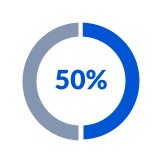
| | | | | | | | |
| Rewards operational performance and growth in our consumer segment | |
| | | | | | | | |
Enterprise ACV(1) | Coursera’s new and renewed enterprise sales for FY25, subject to certain exclusions; and | |
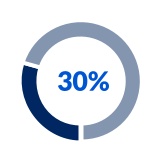
| | | | | |
| Rewards operational performance and growth in our enterprise segment |
| | | | | | | | |
Adjusted EBITDA(1) | Coursera’s FY25 Adjusted EBITDA as disclosed in the Annual Report. | |
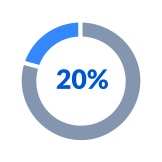
| | | | | |
| Rewards profitability and operational discipline |
1. Please see Appendix A titled “Fiscal Year 2025 Performance — GAAP to non-GAAP Reconciliations” for the definition of Adjusted EBITDA and the reconciliation of this non-GAAP financial measure to its comparable GAAP measure. Enterprise ACV is a non-GAAP financial measure for which there is no comparable GAAP measure. Non-GAAP financial measures should not be considered in isolation from, or as an alternative to, their comparable GAAP measures. The HRC Committee designed a rigorous framework for the 2025 cash bonus plan, setting threshold, target, and maximum performance levels for each metric that required meaningful year-over-year growth. While we do not disclose the specific financial targets for Enterprise ACV given such information is competitively sensitive, we have provided sufficient context in this section for stockholders to assess the rigor of our goals and the level of performance achieved against them in 2025. Each metric is assessed independently, and payouts for performance between the established levels are calculated on a straight-line basis.
| | | | | | | | | | | | | | | | | | | | | | | |
| Corporate Performance Measure | Threshold Performance Level (Achievement %) | Threshold Payment Level
(% of Target Payout) | Target Performance Level
(%) | Target Payment Level
(%) | Maximum Performance Level
(%) | Maximum Payment Level
(%) | |
| | | | | | | |
Consumer Revenue | 75 | | 50 | | 100 | | 100 | | ≥125 | 150 | | |
Enterprise ACV | 75 | | 50 | | 100 | | 100 | | ≥125 | 150 | | |
Adjusted EBITDA | 75 | | 50 | | 100 | | 100 | | ≥125 | 150 | | |
| | | | | | | | |
Coursera | 35 | 2026 Proxy Statement |
In February 2026, the HRC Committee completed its assessment of 2025 performance against the targets for the 2025 cash bonus plan. For 2025, total weighted achievement was 106.3% of target driven by strong performance in Consumer Revenue and Adjusted EBITDA, offset by Enterprise ACV results that were slightly below target.
| | | | | | | | | | | | | | | | | | | | | | | |
Corporate Performance Measure | Weight | Threshold ($m) (50% Payout) | Target ($m) (100% Payout) | Max ($m) (150% Payout) | Metric Achievement (%) | Payout Result (%)(1) | |
| | | | | | | |
1.In the event actual performance falls between the threshold and target levels, or between the target and maximum levels, the payment amount is determined on a linear scale within each range.
2.Please see Appendix A titled “Fiscal Year 2025 Performance — GAAP to non-GAAP Reconciliations” for the definition of Adjusted EBITDA and the reconciliation of this non-GAAP financial measure to its comparable GAAP measure. Enterprise ACV is a non-GAAP financial measure for which there is no comparable GAAP measure. Non-GAAP financial measures should not be considered in isolation from, or as an alternative to, their comparable GAAP measures. Accordingly, in March 2026, the HRC Committee approved bonus payments for our then current NEOs as follows under our 2025 cash bonus plan:
| | | | | | | | | | | | | | | | | |
| Named Executive Officer | 2025 Target Bonus
($) | | Actual Payout as a Percentage of 2025 Target Bonus
(%) | Actual Annual Cash Bonus Payment
($) | |
| | | | | |
Gregory M. Hart(1) | 590,000 | | 106.3 | | 570,467 | |
Alan B. Cardenas | 200,000 | | 106.3 | | 212,600 | |
Marcelo C. Modica | 200,000 | | 106.3 | | 212,600 | |
1.For Mr. Hart, represents his pro-rated bonus amount earned based on his February 3, 2025 hire date.
Due to the circumstances of their respective cessation of service, Messrs. Maggioncalda and Hahn were each eligible to receive as severance pay an amount tied to the amount they otherwise would have been eligible to receive under our 2025 cash bonus plan. Please see the section titled “Potential Payments Upon Termination or Change in Control” below for more information regarding severance payments.
| | | | | | | | |
Coursera | 36 | 2026 Proxy Statement |
Equity Awards (Long-Term Incentive Compensation)
Long-term equity incentive awards are a critical component of our executive compensation program, designed to align the interests of our executives with those of our stockholders, drive long-term value creation, and secure the talent necessary to execute our strategy.
The composition of our equity awards continues to evolve over time, as our HRC Committee selects each vehicle to strike the appropriate balance between at-risk, performance-based pay and our attraction and retention objectives, while remaining mindful of the dilutive impact of each award type. In determining the size of the equity awards granted to our executive officers, the HRC Committee considers the recommendations of our CEO (except with respect to his own equity awards), as well as the other factors described above. The HRC Committee also considers the existing equity holdings of each executive officer, including the current economic value of their unvested equity awards and the ability of these unvested holdings to satisfy our retention objectives. In addition, the HRC Committee considers the dilutive effect of our long-term incentive compensation practices, and the overall impact that these equity awards, as well as awards to other employees, will have on stockholder value. In an effort to manage dilution, in August 2024, the HRC Committee introduced a $10 per share price floor for calculating the number of shares in all future refresh and promotion-related equity grants. This policy was subsequently expanded to apply to all new hire awards, including for executives beginning in June 2025.
CEO New Hire Equity Awards
In connection with his appointment as our CEO effective February 3, 2025, Mr. Hart was awarded one-time new hire equity awards designed to:
•provide competitive and meaningful awards to attract a CEO with the unique skills to lead our Company's next chapter, and
•grant a significant, long-term equity stake to ensure Mr. Hart is deeply invested in the success of our Company and aligned with the interests of our stockholders.
In its search for a new CEO, the Committee sought a proven leader with the unique skills to lead Coursera through its next stage of innovation and growth. Mr. Hart’s extensive experience, with more than 25 years leading technology-driven businesses, including at Amazon where he led the development of Alexa and scaled Prime Video globally, uniquely positioned him for this role. Securing a leader of his caliber required a significant, one-time equity package to induce him to join Coursera and to provide a meaningful stake in our long-term success. Accordingly, the HRC Committee approved a new-hire equity package for Mr. Hart with a total target value of $38 million. This figure represents the intended economic value of the award package at grant, while the actual value Mr. Hart may realize is entirely contingent on our future stock performance and his continued employment over a multi-year vesting period.
Mr. Hart’s new hire equity package consists of stock options, performance-based stock options (PBSOs), and RSUs. The HRC Committee structured Mr. Hart’s new hire awards with a significant emphasis on stock options to provide direct alignment with the strategic objective of increasing stockholder value through stock price appreciation.
•Stock Option (42% of target value). Stock options are inherently performance-based as they only have realizable value if our stock price appreciates over the exercise price. Mr. Hart's time-based stock option award consists of 3,746,342 shares, with an exercise price of $7.81 per share, the closing price of our stock on the grant date. The options vest over four years, with 25% vesting on the first anniversary of the grant date and the remainder vesting quarterly thereafter, subject to Mr. Hart’s continued service through each vesting date.
| | | | | | | | |
Coursera | 37 | 2026 Proxy Statement |
•Performance-Based Stock Options (PBSOs) (16% of target value). The PBSOs are entirely at-risk, and are designed to reward the delivery of ambitious and sustained stock price growth, creating powerful alignment between Mr. Hart's compensation and stockholder value. Mr. Hart’s PBSO award consists of 1,404,879 PBSOs with an exercise price of $7.81, the closing price of our stock on the grant date. The award is eligible to vest only if our stock price over a 60-trading day period equals or exceeds $12.81 (150% of a base stock price of $8.54). In addition to this rigorous performance-based vesting condition, the PBSOs are subject to time-based vesting over four years, with 25% vesting on the first anniversary of the grant date, and the remainder vesting quarterly thereafter, subject to Mr. Hart’s continued service through each vesting date.
•RSUs (42% of target value). Mr. Hart’s RSU award consists of 1,873,171 RSUs that vest over four years, requiring sustained service to realize their full value. 25% of the RSUs vest on the first anniversary of the grant date, and the remainder vesting quarterly thereafter, subject to his continued service through each vesting date. The RSUs provide a critical retention element while ensuring alignment with stockholder value, as their value is directly tied to our stock price.
In light of the significant new hire equity awards granted to Mr. Hart, the HRC Committee determined it was appropriate not to grant Mr. Hart any equity awards in connection with our annual equity refresh cycle in March 2026.
Equity Awards to non-CEO NEOs
In 2025, the HRC Committee granted equity awards to Messrs. Hahn, Cardenas and Modica with a value mix of 75% RSUs and 25% PSUs, consistent with the prior year. The HRC Committee determined the total target value of each NEO’s awards based on competitive market data, individual performance, and internal pay equity. To calculate the final number of shares granted, the HRC Committee applied the $10 per share floor, a key governance control designed to manage stockholder dilution. The table below summarizes our RSU and PSU grants to our NEOs during 2025:
| | | | | | | | | | | |
| Named Executive Officer | Number of RSUs (#) | Target Number of PSUs (#) | |
| | | |
Kenneth R. Hahn(1) | 247,500 | 82,500 | |
| Alan B. Cardenas | 112,500 | 37,500 | |
| Marcelo C. Modica | 112,500 | 37,500 | |
1.The equity awards were granted to Mr. Hahn in March 2025 while he was serving as our Chief Financial Officer.
RSU Awards
The RSUs granted to Messrs. Hahn, Modica and Cardenas vest in equal quarterly installments over 16 quarters, beginning February 15, 2025, subject to continued service through each vesting date.
PSU Awards
The performance metric for our 2025 PSU awards was 2025 total revenue. The HRC Committee believed that the total revenue metric would incentivize management to pursue top line revenue growth across our Consumer and Enterprise segments. Given the current evolving nature of our business and the dynamic nature of the global education market, the HRC Committee determined that a one-year performance period for the 2025 PSU program was appropriate to enable the setting of a rigorous performance revenue goal with a degree of precision not currently feasible over a multi-year horizon.
| | | | | | | | |
Coursera | 38 | 2026 Proxy Statement |
To further drive stockholder alignment and retention, any earned PSUs are subject to a four-year service-based vesting condition after achievement of the underlying performance metric. After the end of the one-year performance period, the HRC Committee determines and certifies the achievement of the metric against the goals, upon which 25% of shares earned (if any) vest, subject to the executive remaining in service through the issuance date. The remaining 75% of the PSUs then vest on a service-based schedule, in twelve equal quarterly installments over the following three years, subject to the NEO’s continued service through each applicable vesting date, tying final delivery of value to sustained tenure and long-term commitment to the Company.
The 2025 PSU revenue goal, actual performance and shares earned by our NEOs are set forth below.
| | | | | | | | | | | | | | | | | | | | |
Metric | Threshold ($m) (50% Payout) | Target ($m) (100% Payout) | Max ($m) (150% Payout) | Metric Achievement (%) | Payout Result (%) | |
| | | | | | |
| | | | | | | | | | | | | | |
| Named Executive Officer | 2025 Target PSUs (#) | PSUs Earned as a Percentage of Target
(%) | 2025 Earned PSUs(1) (#) | |
| | | | |
| Kenneth R. Hahn | 82,500 | 110.66 | | 91,295 | |
Alan B. Cardenas | 37,500 | 110.66 | | 41,498 | |
Marcelo C. Modica | 37,500 | 110.66 | | 41,498 | |
1.25% of the earned PSUs vested in February 2026, with the remaining units eligible to vest in 12 substantially equal quarterly installments thereafter, subject to continued service through each applicable vesting date.
For our 2026 equity program, the HRC Committee increased the proportion of performance-based equity by doubling the weighting of PSUs from 25% to 50% of the total award value. This change strengthens the link between pay and performance, with half of the grant value now directly contingent on achieving pre-determined performance goals.
Leadership Transition-Related Compensation in 2025
2025 was a year of profound leadership renewal at Coursera. We appointed a new CEO and an interim Chief Financial Officer, while managing the departures of our prior CEO and CFO with care and discipline. Each transition was handled in a manner designed to protect operational continuity, preserve institutional knowledge, and position the Company for its next phase of growth. The compensation arrangements described in this section reflect those priorities: competitive packages structured to attract proven leaders capable of executing our transformation, and separation arrangements designed to facilitate smooth handovers in the interests of the Company and our stockholders.
| | | | | | | | |
Coursera | 39 | 2026 Proxy Statement |
Employment Agreement for Mr. Hart
The Board appointed Mr. Hart as President and CEO effective February 3, 2025. The HRC Committee designed a compensation package for Mr. Hart that was reflective of his experience and the demands of the role. Mr. Hart's new hire package consists of an annual base salary of $590,000, a target cash bonus opportunity of 100% of base salary, and equity awards composed of RSUs, time-based stock options, and performance-based stock options, a structure significantly weighted toward at-risk, performance-driven pay. Please see the section titled “CEO New Hire Equity Awards” above for more information regarding Mr. Hart’s new hire equity awards. Mr. Hart is also eligible to participate in our Executive Severance Plan. Please see the section titled “Potential Payments Upon Termination or Change in Control” below for more information regarding Mr. Hart’s eligibility to participate in our Executive Severance Plan.
Departure of Mr. Maggioncalda
We separated from Mr. Maggioncalda, our former President and CEO, effective February 3, 2025. To facilitate a smooth leadership transition, Mr. Maggioncalda remained with the Company in a strategic advisor capacity through August 15, 2025. Due to the circumstances of his cessation of service, Mr. Maggioncalda was entitled to severance benefits for a termination without “cause” under his offer letter. In February 2025, we entered into a separation agreement with Mr. Maggioncalda, which provided for separation benefits consistent with his offer letter. Please see the section titled “Potential Payments Upon Termination or Change in Control” below for more information regarding the full terms of Mr. Maggioncalda’s separation agreement.
Departure of Mr. Hahn
To preserve near-term leadership continuity and stability during our CEO transition, including in light of executive turnover in 2024, we entered into a retention agreement with Mr. Hahn, our CFO, in January 2025. The HRC Committee believed that retaining Mr. Hahn for at least a six month period after the hiring of our new CEO was critical and agreed to provide Mr. Hahn with certain retention benefits provided he remained employed through a defined retention period ending no later than November 15, 2025. As contemplated in the retention agreement, we entered into a separation and advisory agreement with Mr. Hahn upon his departure from the Company on October 29, 2025 to facilitate the orderly transition of his responsibilities to his successor. Please see the section titled “Potential Payments Upon Termination or Change in Control” below for more information regarding the terms of these arrangements.
Employment of Mr. Foley
The HRC Committee appointed Mr. Foley as interim CFO effective November 17, 2025. Reflecting the interim nature of the role, Mr. Foley’s compensation was deliberately structured for his temporary role and consisted of a monthly retainer of $166,667 and a performance-contingent cash bonus opportunity of up to $200,000 outside of our 2025 cash bonus plan, with no equity awards. Following strong performance in the interim role, Mr. Foley was appointed as our CFO on a permanent basis effective March 16, 2026, at which time his interim compensation package was superseded by a new compensation package aligned with his permanent role and our compensation program and philosophy.
Other Compensation Policies
Company Benefits
Coursera’s benefits are an important tool in our ability to attract and retain outstanding employees. As a business matter, we weigh the benefits we need to offer to remain competitive and attract and retain talented employees against the cost of the benefits. Benefits levels are reviewed periodically to ensure they are cost-effective, and competitive and support the overall needs of our Company employees. This section describes the benefits that Coursera provides to our executive officers, including our NEOs.
| | | | | | | | |
Coursera | 40 | 2026 Proxy Statement |
Company-Sponsored Retirement Plan
The Coursera 401(k) Plan (the “401(k) Plan”) is a tax-qualified defined contribution plan that is designed to comply with the Employee Retirement Income Security Act of 1974, as well as federal and state legal requirements. The 401(k) Plan provides retirement benefits to eligible Coursera employees. Eligible employees, including Coursera’s executive officers, may elect to contribute to the 401(k) Plan through salary reduction up to the yearly maximum tax-deductible deferral allowed pursuant to applicable tax regulations. All participants’ interests in their deferrals are 100% vested when contributed under the plan. We provide a dollar-for-dollar Company matching contribution equal to up to 3% of a participant’s semi-monthly salary, up to a maximum of $2,500 annually. Contributions are allocated to each participant’s individual account under the 401(k) Plan and are invested in selected investment alternatives according to the participant’s directions.
We do not provide employees, including our executive officers, any other retirement benefits, including but not limited to tax-qualified defined benefit plans (pension plans), supplemental executive retirement plans, or nonqualified defined contribution plans.
Health and Welfare Benefits
We provide health and welfare benefits to our executive officers on the same basis as all of our full-time employees. These benefits generally include health, dental, vision benefits, health and dependent care flexible spending accounts, short-term and long-term disability insurance, accidental death and dismemberment insurance, and basic life insurance coverage. We also provide well-being reimbursements, vacation and other paid holidays to all employees, including our executive officers.
Perquisites and Other Personal Benefits
We do not provide meaningful perquisites or other personal benefits to our executive officers.
Employee Stock Purchase Plan
We maintain our 2021 Employee Stock Purchase Plan, which is a tax-qualified employee stock purchase plan that offers all eligible employees, including our executive officers, the opportunity to acquire an ownership interest in Coursera by purchasing shares of our common stock at a discount.
Employment Arrangements with our Named Executive Officers
We have extended and entered into written employment offer letters with each of our executive officers. Each of these arrangements was approved on our behalf by our Board or the HRC Committee, as applicable. We believe that these arrangements were appropriate to induce these individuals to forego other employment opportunities or leave their current employer for the uncertainty of a demanding position in a new and unfamiliar organization. At the same time, in formulating these compensation packages, we were sensitive to the need to integrate these individuals into the executive compensation structure, balancing both competitive and internal equity considerations. Each of these employment arrangements provides for “at will” employment and sets forth the initial compensation arrangements for the executive officer.
Post-Employment Compensation
We believe that having in place reasonable and competitive post-employment compensation arrangements, including in the event of a change in control of Coursera, are essential to attracting and retaining highly qualified executive officers. We maintain a severance plan for certain eligible executives, including our NEOs (our “Executive Severance Plan”), pursuant to which they may become eligible to receive severance and change in control benefits in certain situations.
| | | | | | | | |
Coursera | 41 | 2026 Proxy Statement |
We believe that our Executive Severance Plan serves several key objectives by (i) incentivizing our executive officers to remain employed and focused on their responsibilities during the threat or negotiation of a change-in-control transaction, which preserves our value and the potential benefit to be received by our stockholders in the transaction, (ii) creating an equitable program based on the executive’s level of responsibility and tenure, and (iii) reducing administrative costs by eliminating the need to negotiate separation payments and benefits on a case-by-case basis. Please see the section titled “Potential Payments upon Termination or Change in Control” below for more information regarding the material terms and conditions of our severance arrangements, as well as the post-employment compensation arrangements with our NEOs.
Compensation Recovery Policy
We maintain a Senior Executive Compensation Recoupment Policy ("the clawback policy") that is designed to comply with the listing standards of the NYSE and Exchange Act Rule 10D-1. Under our clawback policy, we will recover erroneously awarded incentive compensation paid to current and former executive officers in the event of an accounting restatement due to material noncompliance with financial reporting requirements. The clawback policy applies to compensation that is granted, earned, or vested based in whole or in part upon the attainment of a financial reporting measure and provides for the reimbursement or forfeiture by the executive officer of the excess portion of the compensation received by the executive officers during the three preceding fiscal years.
Insider Trading, Derivatives Trading, Hedging, and Pledging Policies
Our NEOs are subject to our insider trading, derivatives trading, hedging, and pledging policies. Please see the section titled “Corporate Governance Documents—Insider Trading, Derivatives Trading, Hedging and Pledging Policies” for more information regarding such policies.
Compensation-Setting Process
Role of the HRC Committee
Our HRC Committee, which is composed entirely of independent directors, is the governing body responsible for setting our executive compensation philosophy and approving all compensation decisions for our executive officers and non-employee Board members. To ensure those decisions are well-informed and rigorous, the HRC Committee retains independent outside counsel and compensation advisors. Its full charter, reviewed and updated regularly, is available on our website at https://investor.coursera.com/ under “Governance—Governance Documents.”
While the HRC Committee draws on input from its independent compensation consultant, legal counsel, and members of senior management, including our CEO, CFO, and Chief People Officer, compensation decisions rest with the HRC Committee. No executive sets his or her own pay. The HRC Committee met seven times in 2025 and regularly reports to the full Board on compensation matters.
Each year, the HRC Committee conducts a structured review of the full compensation program to confirm that it is coherent, aligned with our strategy and values, appropriately incentivizing over both the short and long term, and competitive with the companies against which we compete for talent in connection with the design and approval of the next fiscal year’s program.
To stay current on how leading technology companies structure and deliver pay, the HRC Committee regularly reviews market trends and evolving compensation practices. In designing our program, it also considers the tax efficiency of our compensation structure — how our choices affect both the Company’s financial condition and the after-tax value of compensation to our executives. Critically, no single factor carries a fixed formula or predetermined weight; the HRC Committee exercises genuine judgment in every decision.
As part of its annual review, the HRC Committee formally evaluates the performance of our CEO, assessing his contribution against our strategic priorities, and uses that evaluation to inform all elements of his compensation. Our CEO has no role in, and is excluded from, any discussions regarding his own pay.
| | | | | | | | |
Coursera | 42 | 2026 Proxy Statement |
Role of our CEO
Our CEO plays an important but clearly bounded role in compensation decisions. He works with the HRC Committee to help structure pay for the executives who report to him, bringing first-hand knowledge of individual performance and contribution, but makes no decisions about his own compensation and is excluded from all deliberations concerning his pay.
At the start of each year, our CEO assesses the performance of each executive who reports to him and brings those evaluations, along with compensation recommendations, to the HRC Committee. The HRC Committee then applies its own independent judgment, weighing the CEO's input alongside competitive market data and the other factors described below, before making all final decisions on pay.
Role of Compensation Consultant
To support rigorous, well-informed decision-making, the HRC Committee retains its own independent advisors, including legal counsel and a compensation consultant, who report directly to the HRC Committee, not to management. The HRC Committee controls all aspects of these engagements.
For 2025, the HRC Committee retained Compensia, a national independent compensation consulting firm specializing in executive pay, to provide independent analysis and advice. Compensia's work covered:
•reviewed and recommended updates to our compensation peer group;
•provided advice with respect to compensation best practices, peer benchmarking and market trends for our executive officers and Board members;
•analyzed levels of overall compensation and each element of compensation for our executive officers;
•analyzed levels of overall compensation and each element of compensation for our Board members;
•conducted an executive compensation risk analysis;
•conducted an analysis of our CEO pay ratio and pay versus performance disclosures for this Proxy Statement;
•reviewed this Compensation Discussion and Analysis in this Proxy Statement; and
•provided ad hoc advice and support throughout the year.
A representative of Compensia attends meetings of the HRC Committee as requested and may also communicate with the HRC Committee outside of meetings. Compensia reports solely to the HRC Committee, although Compensia may meet with members of management, including our CEO and members of our executive compensation staff, for purposes of gathering information on proposals that management may make to the HRC Committee and providing them with market data to assist them in developing their proposals. Throughout 2025, Compensia met with various members of management to collect data and discuss management’s executive compensation proposals.
The HRC Committee may replace its compensation consultant or hire additional advisors at any time. Compensia has not provided any other services to Coursera and has not received any compensation other than with respect to the services for the benefit of the HRC Committee.
The HRC Committee has assessed Compensia's independence under the standards set by Exchange Act Rule 10C-1 and NYSE listing requirements, and has confirmed that Compensia is fully independent and that its work raises no conflict of interest.
| | | | | | | | |
Coursera | 43 | 2026 Proxy Statement |
Competitive Positioning
When considering executive compensation decisions, the HRC Committee believes it is important to be informed as to current compensation practices of comparable publicly held companies, to ensure informed decision-making, and to establish a compensation program that is competitive and appropriate for a company like ours.
The HRC Committee reviews our peer group and the target criteria for selecting such peer group at least annually and makes adjustments as it believes are necessary or appropriate, taking into account changes in both our business and the businesses of the companies in the compensation peer group. The HRC Committee uses the target criteria as a guide in considering the similarity of a company in terms of industry and financial characteristics but does not strictly adhere to such criteria in selecting the peer group, and may take into account other considerations including companies against which we may compete in hiring key talent.
In consultation with Compensia, our HRC Committee approved the following target criteria for determining the composition of our peer group for 2025:
•Company status/location: Public companies, primarily headquartered in the U.S.
•Industry: application software, systems software, education services, with a focus on software-as-a-service (SaaS) companies;
•Revenue: ~0.5 to ~2.0 times of Coursera’s revenue over the prior four quarters (~$263M to ~$1.3B at the time of the HRC Committee’s review); and
•Market Cap: 30-day average market cap between ~0.25 to ~4.0 times Coursera’s size (~$296M to ~$4.7B at the time of the HRC Committee’s review).
Based on these criteria, and with the recommendation of Compensia, our HRC Committee selected the following peer group, consisting of 21 educational services and software companies, for 2025 executive compensation benchmarking:
| | | | | | | | | | | | | | | | | | | | | | | |
| | | | | | | |
| | Compensation Peer Group | | |
| | | | | | | |
| | Alarm.com Holdings, Inc. | Elastic N.V. | Instructure Holdings, Inc. | Stride, Inc. | | |
| | AppFolio, Inc. | Everbridge, Inc. | PagerDuty, Inc. | Udemy, Inc. | | |
| | Appian Corporation | Fastly, Inc. | PowerSchool Holdings, Inc. | Upwork, Inc. | | |
| | BlackLine, Inc. | Five9, Inc. | Qualys, Inc. | Yext, Inc. | | |
| | Box, Inc. | iLearningEngines, Inc. | Smartsheet Inc. | ZipRecruiter, Inc. | | |
| | Chegg, Inc. | | | | | |
| | | | | | | |
The HRC Committee updated our compensation peer group compared to the prior year as follows:
•Removed Alteryx, Inc., Momentive Global Inc. and New Relic, Inc. due to their acquisition;
•Removed 2U, Inc. given it no longer met our peer selection criteria; and
•Added iLearningEngines, Inc., PagerDuty, Inc., Upwork Inc., Yext, Inc. and ZipRecruiter, Inc. due to their alignment with our selection criteria.
| | | | | | | | |
Coursera | 44 | 2026 Proxy Statement |
This compensation peer group was used by the HRC Committee in connection with its annual review of our executive compensation program for 2025. Specifically, the HRC Committee reviewed the compensation data drawn from the compensation peer group, in combination with industry-specific compensation survey data from Radford Aon to build a well-grounded picture of the “competitive market” with respect to current executive compensation levels and related policies and practices. The HRC Committee then evaluated how our pay practices and the compensation levels of our executive officers compared to the competitive market. As part of this evaluation, the HRC Committee also reviewed the performance measures and performance goals generally used within the competitive market to reward performance.
Factors Considered in Setting Compensation
Market data is a useful reference point as it confirms our program is competitive and helps validate that individual pay levels are reasonable. But it is the starting point for the HRC Committee's deliberations, not the end point. The HRC Committee also weighs:
•the recommendations of our CEO (except with respect to his own compensation);
•our overall corporate growth and other elements of financial performance;
•our overall corporate achievements against one or more short-term performance objectives;
•the individual performance of each executive officer;
•the expected future contribution of the individual executive officers;
•historical compensation awards of the individual executive officers; and
•internal pay equity between our executive officers.
No single factor carries a fixed weight. The HRC Committee applies collective experience and judgment, drawing on its deep knowledge of our business, our people, and the competitive landscape, to reach decisions it believes are fair, rigorous, and in the best long-term interests of our stockholders.
Tax and Accounting Considerations
Deductibility of Executive Compensation
Section 162(m) of the Internal Revenue Code of 1986, as amended, (the “Code”) generally places a $1 million limit on the amount of compensation a public company can deduct in any one year for certain current and former executive officers. While our HRC Committee considers tax deductibility as one factor in determining executive compensation, our HRC Committee also looks at other factors in making its decisions, as noted above, and retains the flexibility to award compensation that it determines to be consistent with the goals of our executive compensation program, even if the awards are not deductible by us for tax purposes.
Taxation of Nonqualified Deferred Compensation
Section 409A of the Code requires that amounts that qualify as “nonqualified deferred compensation” satisfy requirements with respect to the timing of deferral elections, timing of payments, and certain other matters. Generally, the HRC Committee intends to administer our executive compensation program and design individual compensation components, as well as the compensation plans and arrangements for our employees, so that they are either exempt from, or satisfy the requirements of, Section 409A of the Code. From time to time, we may be required to amend some of our compensation plans and arrangements to ensure that they are either exempt from, or compliant with, Section 409A of the Code.
| | | | | | | | |
Coursera | 45 | 2026 Proxy Statement |
Taxation of “Excess Parachute Payments”
Sections 280G and 4999 of the Code provide that executive officers and directors who hold significant equity interests and certain other service providers may be subject to additional taxes if they receive payments or benefits in connection with a change in control of Coursera that exceed certain prescribed limits, and that we (or a successor) may forfeit a deduction on the amounts subject to this additional tax. We did not provide any executive officer with a “gross-up” or other reimbursement payment for any tax liability owed as a result of the application of Sections 280G or 4999 of the Code during 2025, and we have not agreed and are not otherwise obligated to provide any executive officers with such a “gross-up” or other reimbursement payment.
Accounting for Stock-Based Compensation
The HRC Committee considers accounting implications when designing compensation plans and arrangements for our executive officers and other employees. Chief among these is ASC 718, the standard that governs the accounting treatment of stock-based compensation awards.
ASC 718 requires us to recognize in our financial statements all share-based payment awards to employees, including grants of options to purchase shares of our common stock, RSUs, and awards for shares of our common stock to our executive officers, based on their fair values. The application of ASC 718 involves judgment in the determination of inputs into the Black-Scholes-Merton valuation model that we use to determine the fair value of stock options. These inputs are based upon assumptions as to the volatility of the underlying stock, risk-free interest rates, and the expected life (term) of the stock options. As required under GAAP, we review our valuation assumptions at each grant date, and, as a result, our valuation assumptions used to value stock options granted in future periods may vary from the valuation assumptions we have used previously. For performance-based equity awards, we also must apply judgment in determining the periods when, and if, the related performance targets become probable of being met.
ASC 718 also requires us to recognize the compensation cost of our stock-based payment awards in our income statement over the period that an employee, including our executive officers, is required to render service in exchange for the award (which, generally, will correspond to the award’s vesting schedule).
Compensation Committee Report
The HRC Committee has reviewed and discussed with management the Compensation Discussion and Analysis contained in this Proxy Statement. Based upon its review and those discussions, the HRC Committee recommended to our Board that the Compensation Discussion and Analysis be included in this Proxy Statement.
Human Resources and Compensation Committee
Carmen Chang (Chair)
Amanda M. Clark(1)
Susan W. Muigai(1)
Scott D. Sandell
1. Mses. Clark and Muigai were members of the HRC Committee until their respective resignations from the Board on May 11, 2026. Effective May 11, 2026, Sohaib Abbasi and Christopher D. McCarthy were appointed as members of the HRC Committee, and they did not participate in the reviews, discussion or recommendation described in this report
| | | | | | | | |
Coursera | 46 | 2026 Proxy Statement |
Executive Compensation Tables
Summary Compensation Table
The following table sets forth information concerning the total compensation of our NEOs for the year ended December 31, 2025, and where applicable, the years ended December 31, 2024 and December 31, 2023.
| | | | | | | | | | | | | | | | | | | | | | | | | | | | | | | | | | | | | | |
Name and Principal Position(1) | Year | Salary
($) | Bonus
($) | Stock Awards(2) ($) | | Option Awards(3) ($) | | Non-Equity Incentive Plan Compensation(4) ($) | All Other Compensation(5) ($) | | Total
($) | |
| | | | | | | | | | | | |
Gregory M. Hart
President, CEO, and Director | 2025 | 540,833 | | — | | 14,629,466 | | | 23,644,105 | | | 570,467 | | 2,500 | | | 39,387,371 | | |
Jeffrey N. Maggioncalda Former President, CEO, and Director | 2025 | 35,000 | | — | | 3,560,039 | | (6) | 485,383 | | (7) | — | | 650,000 | | (8) | 4,730,422 | | |
| 2024 | 400,000 | | — | | — | | | — | | | 260,000 | | — | | | 660,000 | | |
| 2023 | 400,000 | | — | | — | | | — | | | 206,500 | | — | | | 606,500 | | |
Michael D. Foley Senior Vice President, CFO, and Treasurer | 2025 | 250,000 | | — | | — | | | — | | | — | | 2,500 | | | 252,500 | | |
Kenneth R. Hahn Former Senior Vice President, CFO, and Treasurer | 2025 | 371,875 | | — | | 4,667,788 | | (9) | 429,892 | | (10) | — | | 719,738 | | (11) | 6,189,293 | | |
| 2024 | 446,833 | | — | | 8,417,358 | | | — | | | 327,600 | | 2,500 | | | 9,194,291 | | |
| 2023 | 427,500 | | — | | — | | | — | | | 249,204 | | 2,500 | | | 679,204 | | |
Alan B. Cardenas Senior Vice President, General Counsel and Secretary | 2025 | 400,000 | | — | | 1,068,000 | | | — | | | 212,600 | | 2,500 | | | 1,683,100 | | |
| 2024 | 396,667 | | — | | 1,262,617 | | | — | | | 208,000 | | 2,500 | | | 1,869,784 | | |
| 2023 | 360,383 | | — | | 854,735 | | | 995,601 | | | 127,633 | | 2,500 | | | 2,340,852 | | |
Marcelo C. Modica Senior Vice President, and Chief People Officer | 2025 | 400,000 | | — | | 1,068,000 | | | — | | | 212,600 | | 2,500 | | | 1,683,100 | | |
| 2024 | 148,485 | | 100,000 | | 2,392,773 | | | 2,688,729 | | | 76,721 | | — | | | 5,406,708 | | |
1.Mr. Hart joined the Company as our President, CEO and Director on February 3, 2025; Mr. Maggioncalda ceased serving as our President, CEO, and Director on February 3, 2025; Mr. Hahn ceased serving as an executive officer effective October 29, 2025 and transitioned to a strategic advisor role. Compensation information provided only for years in which the executive was designated as a NEO.
2.Amounts in the “Stock Awards” column represent the aggregate grant date fair value of awards, comprising RSUs and PSUs, granted to each NEO under our equity incentive plans, computed in accordance with ASC 718, and do not represent the actual economic value that may be realized by the NEO upon vesting or settlement of such awards. Please see Notes 2 and 11 to our financial statements in our Annual Report for more information regarding the accounting for and assumptions we used to calculate the grant date fair values for our stock awards. The grant date fair value of the PSUs was computed based on the probable outcome, which was determined to be equal to the performance target, or 100%. If the PSUs were instead valued based on the maximum outcome of the performance target (i.e., based on the maximum level of performance), the total incremental fair value of the PSU awards reported in this column for 2025 would be $293,700 for Mr. Hahn, and $133,500 for each of Messrs. Cardenas and Modica.
3.Amounts in the “Option Awards” column represent the aggregate grant date fair value of option awards granted to each NEO under our equity incentive plans, computed in accordance with ASC 718, including the grant date fair value of the PBSOs that was estimated using a Monte Carlo simulation model, and do not represent the actual value that may be realized by the NEO upon vesting, exercise or settlement of such awards. Please see Notes 2 and 11 to our financial statements in our Annual Report for more information regarding the accounting for and assumptions we used to calculate the grant date fair values for our stock awards.
4.Amounts represent the applicable NEO’s total annual incentive-based cash bonus. Please see the section titled “Annual Cash Incentive Bonus Opportunity” above for more information regarding the bonus payments for the year ended December 31, 2025.
5.All other compensation in 2025 for all NEOs, other than Messrs. Maggioncalda and Hahn, consisted solely of matching contributions in the amount of $2,500 under the Coursera 401(k) Plan.
| | | | | | | | |
Coursera | 47 | 2026 Proxy Statement |
6.Represents the stock-based compensation expense recognized with respect to the continued vesting of Mr. Maggioncalda's outstanding RSUs during the Maggioncalda Advisory Period (as defined below). Mr. Maggioncalda was not granted stock awards in 2025.
7.Represents the stock-based compensation expense recognized with respect to (i) the continued vesting of Mr. Maggioncalda's outstanding options during the Maggioncalda Advisory Period (as defined below), and (ii) the extension of his post-termination option exercise period through the earlier of 18 months from his employment termination date and the expiration date of such options. Mr. Maggioncalda was not granted option awards in 2025.
8.Represents the aggregate of (i) 12 months base salary of $400,000, and (ii) his target bonus for fiscal year 2025 of $250,000, in each case, less applicable withholdings and deductions, pursuant to Mr. Maggioncalda's separation agreement. Please see the section titled “Potential Payments Upon Termination or Change in Control” below for more information regarding the terms of Mr. Maggioncalda’s separation agreement.
9.Includes $2,318,188 in stock-based compensation expense recognized with respect to the continued vesting of Mr. Hahn's outstanding RSUs and PSUs during the Hahn Advisory Period (as defined below). Not reflected in this figure is the reversal of stock-based compensation expense of ($397,459) for the cancellation of 103,030 PSUs that would not vest during the Hahn Advisory Period.
10.Represents stock-based compensation expense recognized with respect to (i) the continued vesting of Mr. Hahn's outstanding options during the Hahn Advisory Period, and (ii) the extension of his post-termination option exercise period through the earlier of 24 months from his employment termination date and the expiration date of such options. Mr. Hahn was not awarded option awards in 2025.
11.Represents the aggregate of (i) 12 months of base salary of $450,000, (ii) a prorated portion of his target annual bonus for fiscal year 2025 of $260,481, and (iii) COBRA premiums of $6,757 in 2025, pursuant to Mr. Hahn's retention agreement, as well as (iv) matching contributions of $2,500 under the Coursera 401(k) Plan. Please see the section titled “Potential Payments Upon Termination or Change in Control” below for more information regarding the terms of Mr. Hahn’s transition arrangements.
Grants of Plan-Based Awards
The following table presents information regarding grants of plan-based awards to our NEOs during 2025.
| | | | | | | | | | | | | | | | | | | | | | | | | | | | | | | | | | | | | | | | | | | | |
| | | Estimated Future Payouts Under Non-Equity Incentive Plan Awards(1) | | Estimated Future Payouts Under Equity Incentive Plan Awards(2) | All Other Stock Awards: Number of Shares of Stock or Units
(#) | All Other Option Awards: Number of Securities Underlying Options
(#) | Exercise or Base Price of Option Awards
($/sh) | Grant Date Fair Value of Stock and Option Awards(3) ($) | |
| Name | Type of Award | Grant Date | Threshold
($) | Target
($) | Maximum
($) | | Threshold
(#) | Target
(#) | Maximum
(#) | |
| | | | | | | | | | | | | | |
Gregory M. Hart(4) | Cash | — | 295,000 | | 590,000 | | 885,000 | | | — | | — | — | | — | | — | | — | — | |
| RSU | 2/3/2025 | — | | — | | — | | | — | | — | — | | 1,873,171 | | — | | — | 14,629,466 | |
| Options | 2/3/2025 | — | | — | | — | | | — | | — | — | | — | | 3,746,342 | | 7.81 | 16,746,149 | |
| Options | 2/3/2025 | — | | — | | — | | | — | | 1,404,879 | — | | — | | — | | 7.81 | 6,897,956 | |
| Jeffrey N. Maggioncalda | Cash | — | 125,000 | 250,000 | 375,000 | | — | | — | — | | — | | — | | — | — | |
| RSU | 1/29/2025 | — | | — | | — | | | — | | — | — | | 553,545 | | — | | — | 3,560,039 | ⁽⁵⁾ |
| Options | 1/29/2025 | — | | — | | — | | | — | | — | — | | — | | 2,855,176 | | — | 485,383 | ⁽⁶⁾ |
| Kenneth R. Hahn | Cash | — | 157,500 | 315,000 | 472,500 | | — | | — | — | | — | | — | | — | — | |
| RSU | 3/20/2025 | — | | — | | — | | | — | | — | — | | 247,500 | | — | | — | 1,762,200 | |
| PSU | 3/20/2025 | — | | — | | — | | | 41,250 | | 82,500 | 123,750 | | — | | — | | — | 587,400 | |
| RSU | 10/30/2025 | — | | — | | — | | | — | | — | — | | 332,302 | | — | | — | 2,248,053 | ⁽⁷⁾ |
| PSU | 10/30/2025 | — | | — | | — | | | — | | — | — | | 64,889 | | — | | — | 70,135 | ⁽⁸⁾ |
| Options | 10/30/2025 | — | | — | | — | | | — | | — | — | | — | | 876,367 | | — | 429,892 | ⁽⁹⁾ |
| | | | | | | | |
Coursera | 48 | 2026 Proxy Statement |
| | | | | | | | | | | | | | | | | | | | | | | | | | | | | | | | | | | | | | | | | | | | |
| | | Estimated Future Payouts Under Non-Equity Incentive Plan Awards(1) | | Estimated Future Payouts Under Equity Incentive Plan Awards(2) | All Other Stock Awards: Number of Shares of Stock or Units
(#) | All Other Option Awards: Number of Securities Underlying Options
(#) | Exercise or Base Price of Option Awards
($/sh) | Grant Date Fair Value of Stock and Option Awards(3) ($) | |
| Name | Type of Award | Grant Date | Threshold
($) | Target
($) | Maximum
($) | | Threshold
(#) | Target
(#) | Maximum
(#) | |
| | | | | | | | | | | | | | |
| Alan B. Cardenas | Cash | — | 100,000 | 200,000 | 300,000 | | — | | — | — | | — | | — | | — | — | |
| RSU | 3/20/2025 | — | | — | | — | | | — | | — | — | | 112,500 | | — | | — | 801,000 | |
| PSU | 3/20/2025 | — | | — | | — | | | 18,750 | 37,500 | 56,250 | — | | — | | — | 267,000 | |
| Marcelo C. Modica | Cash | — | 100,000 | 200,000 | 300,000 | | — | | — | — | | — | | — | | — | — | |
| RSU | 3/20/2025 | — | | — | | — | | | — | | — | — | | 112,500 | — | | — | 801,000 | |
| PSU | 3/20/2025 | — | | — | | — | | | 18,750 | | 37,500 | 56,250 | | — | | — | | — | 267,000 | |
1.Amounts represent annual cash bonus opportunities granted under our 2025 annual cash bonus plan described above in the section “Annual Cash Bonus Opportunity.” These amounts do not necessarily correspond to the actual bonus payout amounts received by the individuals.
2.Amounts represent awards under our 2025 PSU program and an award of PBSOs to Mr. Hart. Please see the section titled “Equity Awards (Long-Term Incentive Compensation)” for more information regarding our 2025 PSU program and the section titled “CEO New Hire Equity Awards" above for more information regarding Mr. Hart’s award of PBSOs.
3.Represents the grant date fair value of stock awards and option awards granted during 2025, calculated in accordance with ASC 718, including the grant date fair value of the PBSOs granted to Mr. Hart that was estimated using a Monte Carlo simulation model, and does not represent the actual economic value that may be realized by the NEO upon vesting, exercise or settlement of such awards. Please see Notes 2 and 11 to our financial statements in our Annual Report for more information regarding the assumptions used in the calculations of these amounts.
4.Mr. Hart earned a pro-rated cash bonus payout for 2025 under our 2025 annual cash bonus plan and received a new hire grant consisting of RSUs, stock options and PBSOs.
5.Represents the aggregate stock-based compensation expense recognized with respect to the continued vesting of Mr. Maggioncalda’s outstanding RSUs during the Maggioncalda Advisory Period (as defined below) with the following grant dates: 41,625 RSUs granted on 11/18/2020, 14,132 RSUs granted on 11/30/2021, and 497,788 RSUs granted on 9/30/2022.
6.Represents the aggregate stock-based compensation expense recognized with respect to (i) the continued vesting of Mr. Maggioncalda’s outstanding options during the Maggioncalda Advisory Period (as defined below), and (ii) the extension of his post-termination option exercise period through the earlier of 18 months from his employment termination date and the expiration date of such options for the following stock option awards: 2,023,279 options granted on 7/13/2017, 700,000 options granted on 11/18/2020, and 131,897 options granted on 11/30/2021.
7.Represents the aggregate stock-based compensation expense recognized with respect to the continued vesting of Mr. Hahn’s outstanding RSUs during the Hahn Advisory Period (as defined below) with the following grant dates: 5,653 RSUs granted on 11/30/2021, 154,868 RSUs granted on 9/30/2022, 109,906 RSUs granted on 3/18/2024, and 61,875 shares granted on 3/20/2025.
8.Represents the aggregate stock-based compensation expense recognized with respect to the continued vesting of Mr. Hahn’s outstanding PSUs during the Hahn Advisory Period (as defined below) with the following grant dates: 30,719 PSUs granted on 3/18/2024 and 34,170 PSUs granted on 3/20/2025.
9.Represents the aggregate stock-based compensation expense recognized with respect to (i) the continued vesting of Mr. Hahn’s outstanding options during the Hahn Advisory Period (as defined below), and (ii) the extension of his post-termination option exercise period through the earlier of 24 months from his employment termination date and the expiration date of such options for the following stock option awards: 785,923 options granted on 5/19/2020 and 90,444 options granted on 11/30/2021.
| | | | | | | | |
Coursera | 49 | 2026 Proxy Statement |
Outstanding Equity Awards at Fiscal Year-End
The following table sets forth information regarding outstanding equity awards held by our NEOs as of December 31, 2025.
| | | | | | | | | | | | | | | | | | | | | | | | | | | | | | | | | | | | | | |
| | Option Awards | Stock Awards | |
| Name | Grant Date | Number of Securities Underlying Unexercised Options Exercisable
(#) | Number of Securities Underlying Unexercised Options Unexercisable(1) (#) | Equity Incentive Plan Awards: Number of Securities Underlying Unexercised Unearned Options
(#) | Option Exercise Price
($) | Option Expiration Date | Number of Shares or Units of Stock That Have Not Vested(1) (#) | Market Value of Shares or Units of Stock that Have not Vested(2) ($) | Equity Incentive Plan Awards: Number of Unearned Shares, Units or Other Rights That Have Not Vested
(#) | Equity Incentive Plan Awards: Market or Payout Value of Unearned Shares, Units or Other Rights That Have Not Vested(2) ($) | |
| | | | | | | | | | | | |
| Gregory M. Hart | 2/3/2025(3) | — | | — | 1,404,879 | 7.81 | 2/3/2035 | — | — | — | — | |
2/3/2025(4) | — | | 3,746,342 | — | 7.81 | 2/3/2035 | — | — | — | — | |
2/3/2025(5) | — | | — | — | — | — | 1,873,171 | 13,786,539 | — | — | |
| Jeffrey N. Maggioncalda | 7/13/2017(6) | 107,727 | (7) | — | — | 2.56 | 8/3/2026 | — | — | — | — | |
11/18/2020(6) | 700,000 | | — | — | 15.17 | 8/3/2026 | — | — | — | — | |
11/30/2021(8) | 131,897 | | — | — | 29.99 | 8/3/2026 | — | — | — | — | |
| Kenneth R. Hahn | 5/19/2020(6) | 785,923 | | — | — | 6.06 | 10/29/2027 | — | — | — | — | |
11/30/2021(8) | 86,675 | | 3,769 | — | 29.99 | 10/29/2027 | — | — | — | — | |
11/30/2021(9) | — | | — | — | — | — | 2,827 | 20,807 | — | — | |
9/30/2022(10) | — | | — | — | — | — | 116,151 | 854,871 | — | — | |
3/18/2024(11) | — | | — | — | — | — | 247,290 | 1,820,054 | — | — | |
3/18/2024(12) | — | | — | — | — | — | 69,118 | 508,708 | — | — | |
3/20/2025(13) | — | | — | — | — | — | 201,094 | 1,480,052 | — | — | |
3/20/2025(14) | — | | — | — | — | — | — | — | 82,500 | 607,200 | |
| Alan B. Cardenas | 4/28/2022(15) | — | | — | — | — | — | 3,181 | 23,412 | — | — | |
10/31/2022(10) | — | | — | — | — | — | 15,220 | 112,019 | — | — | |
6/27/2023(16) | — | | — | — | — | — | 25,338 | 186,488 | — | — | |
6/27/2023(17) | 84,460 | | 50,676 | — | 12.65 | 6/27/2033 | — | — | — | — | |
3/18/2024(11) | — | | — | — | — | — | 37,094 | 273,012 | — | — | |
3/18/2024(12) | — | | — | — | — | — | 10,369 | 76,316 | — | — | |
3/20/2025(13) | — | | — | — | — | — | 91,407 | 672,756 | — | — | |
3/20/2025(14) | — | | — | — | — | — | — | — | 37,500 | 276,000 | |
| Marcelo C. Modica | 9/16/2024(18) | 204,246 | | 408,500 | — | 7.81 | 9/16/2034 | — | — | — | — | |
9/16/2024(19) | — | | — | — | — | — | 210,632 | 1,550,252 | — | — | |
3/20/2025(13) | — | | — | — | — | — | 91,407 | 672,756 | — | — | |
3/20/2025(14) | — | | — | — | — | — | — | — | 37,500 | 276,000 | |
1.Outstanding but unvested equity awards are subject to acceleration under certain circumstances. Please see the section titled “Potential Payments upon Termination or Change in Control” below and the section titled “Equity Awards (Long-Term Incentive Compensation)” above for more information regarding the acceleration of these awards.
2.The market value is calculated by multiplying the number of units shown in the preceding column by $7.36 per share, the closing price of our common stock on December 31, 2025.
| | | | | | | | |
Coursera | 50 | 2026 Proxy Statement |
3.Option vests upon satisfaction of both service- and performance-based vesting conditions. The performance-based vesting condition is satisfied when the average closing price of our common stock over a 60-trading day period equals or exceeds $12.81 (150% of the base stock price of $8.54). Under the service-based vesting condition, the option vests over four years with 25% of the shares subject to the option vesting on February 3, 2026, with the remaining 75% of the shares subject to the option vesting in 12 substantially equal quarterly installments thereafter, subject to continuous service.
4.Option vests over four years, with 25% of the shares subject to the option vesting on February 3, 2026, with the remaining 75% of the shares subject to the option vesting in 12 substantially equal quarterly installments thereafter, subject to continuous service.
5.25% of the RSUs vested on February 3, 2026, 6.25% of the RSUs vested on February 15, 2026, with the remaining 68.75% of the RSUs vesting in 11 substantially equal quarterly installments thereafter, subject to continuous service.
6.25% of the total number of shares of stock subject to this option vested on the first anniversary of the vesting commencement date (as defined in the stock option agreement) with the remaining 75% of the shares of stock subject to the option vesting in 36 substantially equal monthly installments, subject to continuous service. Mr. Maggioncalda ceased vesting in this option as of August 15, 2025 upon termination of his advisory services. Mr. Hahn will cease vesting in this option upon termination of his advisory services scheduled to end on October 30, 2026.
7.These options were held by the Maggioncalda Family Trust of 2022, for which Mr. Maggioncalda’s spouse and child serve as trustees.
8.25% of the total number of shares subject to this option vested on February 15, 2023, with the remaining 75% of the shares subject to this option vesting in 36 substantially equal monthly installments thereafter, subject to continuous service. Mr. Maggioncalda ceased vesting in this option as of August 15, 2025 upon termination of his advisory services. Mr. Hahn will cease vesting in this option upon termination of his advisory services scheduled to end on October 30, 2026.
9.25% of the RSUs vested on February 15, 2023, with the remaining 75% of the RSUs vesting in 12 substantially equal quarterly installments thereafter, subject to continuous service. Mr. Hahn will cease vesting in these RSUs upon termination of his advisory services scheduled to end on October 30, 2026.
10.6.25% of the RSUs vested on November 15, 2022, with the remaining 93.75% of the RSUs vesting in 15 substantially equal quarterly installments thereafter, subject to continuous service. Mr. Hahn will cease vesting in these RSUs upon termination of his advisory services scheduled to end on October 30, 2026.
11.6.25% of the RSUs vested on May 15, 2024, with the remaining 93.75% of the RSUs vesting in 15 substantially equal quarterly installments thereafter, subject to continuous service. Mr. Hahn will cease vesting in these RSUs upon termination of his advisory services scheduled to end on October 30, 2026.
12.These PSUs were granted subject to a service based vesting condition as well as a performance based vesting condition. The performance based vesting condition is based upon achievement of pre-established metrics between January 1, 2024 and December 31, 2024. The PSU metrics were achieved at 83.8%. Following the determination of the achievement of the performance based vesting condition, 25% of the eligible PSUs vested on February 24, 2025, with the remaining 75% of the eligible PSUs vesting in 12 substantially equal quarterly installments thereafter, subject to continuous service. Mr. Hahn will cease vesting in these PSUs upon termination of his advisory services scheduled to end on October 30, 2026.
13.6.25% of the RSUs vested on May 15, 2025, with the remaining 93.75% of the RSUs vesting in 15 substantially equal quarterly installments thereafter, subject to the NEO's continuous service. Mr. Hahn will cease vesting in these RSUs upon termination of his advisory services scheduled to end on October 30, 2026.
14.These PSUs were granted subject to a service based vesting condition as well as a performance based vesting condition. The performance based vesting condition is based upon achievement of pre-established metrics between January 1, 2025 and December 31, 2025. The PSU metrics were achieved at 110.66%. Following the determination of the achievement of the performance based vesting condition, 25% of the eligible PSUs vested on February 23, 2026, with the remaining 75% of the eligible PSUs vesting in 12 substantially equal quarterly installments thereafter, subject to continuous service. Mr. Hahn will cease vesting in these PSUs upon termination of his advisory services scheduled to end on October 30, 2026.
15.25% of the RSUs vested on February 15, 2023, with the remaining 75% of the RSUs vesting in 12 substantially equal quarterly installments thereafter, subject to continuous service.
16.6.25% of the RSUs vested on August 15, 2023, with the remaining 93.75% of the RSUs vesting in 15 substantially equal quarterly installments thereafter, subject to continuous service.
17.6.25% of the total number of shares subject to this option vested on August 15, 2023, with the remaining 93.75% of the shares subject to this option vesting in 15 substantially equal quarterly installments thereafter, subject to continuous service.
18.25% of the total number of shares of stock subject to this option vested on August 15, 2025, with the remaining 75% of the total number of shares of stock subject to the option vesting in 36 substantially equal monthly installments, subject to continuous service.
19.25% of the RSUs vested on August 15, 2025, with the remaining 75% of the RSUs vesting in 12 substantially equal quarterly installments thereafter, subject to continuous service.
| | | | | | | | |
Coursera | 51 | 2026 Proxy Statement |
Option Exercises and Stock Vested
The following table provides information about the exercise of stock options and vesting of stock awards for our NEOs during 2025.
| | | | | | | | | | | | | | | | | |
| Option Awards | Stock Awards | |
| Name | Number of Shares Acquired on Exercise
(#) | Value Realized on Exercise(1) ($) | Number of Shares Acquired on Vesting(2) (#) | Value Realized on Vesting(3) ($) | |
| | | | | |
| Gregory M. Hart | — | | — | | — | | — | |
| Jeffrey N. Maggioncalda | 1,915,552 | | 15,983,459 | | 553,545 | | 5,438,262 | |
| Michael D. Foley | — | | — | | — | | — | |
| Kenneth R. Hahn | 49,503 | | 288,602 | | 391,243 | | 3,695,756 | |
Alan B. Cardenas | — | | — | | 105,909 | | 1,013,524 | |
Marcelo C. Modica | — | | — | | 116,834 | | 1,280,817 | |
1.The value realized on exercise for stock options equals the difference between the sales price per share of our common stock at the time of exercise and the exercise price per share of such stock options, multiplied by the number of shares of our common stock acquired upon exercise.
2.Such number of shares represents the gross number of shares acquired by the NEO on the vesting date. Coursera withholds shares for tax purposes and the NEO receives a fewer number of shares.
3.The value realized on vesting for stock awards equals the closing price per share of our common stock on the vesting date, multiplied by the gross number of shares vesting on such date as described in note 2.
Equity Award Grant Practices
We do not schedule our equity grants in anticipation of the release of MNPI, nor do we release MNPI based on equity award dates or time the disclosure of MNPI for the purpose of affecting the value of executive compensation.
Our HRC Committee typically grants annual equity awards to eligible employees, including executive officers, following the completion of our annual review cycle, which usually takes place in the first quarter of the year. The timing of any equity grants in connection with new hires, promotions, or other non-routine grants is tied to the event giving rise to the award (such as an executive officer’s commencement of employment or promotion effective date). Consistent with this practice, together with the approval of Mr. Hart’s compensation package and his appointment as our CEO, stock option grants to Mr. Hart were pre-approved at a special meeting of our Board of Directors on January 24, 2025, to become effective on Mr. Hart’s start date. Please see the section titled “CEO New Hire Equity Awards” above for more information regarding Mr. Hart’s equity grants.
The following table contains information required by Item 402(x)(2) of Regulation S-K regarding stock options granted to our NEOs in the year ended December 31, 2025, during the period from four business days before to one business day after the filing of our periodic reports on Forms 10-K and 10-Q, or current reports on Form 8-K that contained MNPI.
| | | | | | | | |
Coursera | 52 | 2026 Proxy Statement |
| | | | | | | | | | | | | | | | | | | | |
Name | Grant Date | Number of securities underlying the award (#) | Exercise price of the award ($/Sh) | Grant date fair value of the award ($)(1) | Percentage change in the closing market price of the securities underlying the award between the trading day ending immediately prior to the disclosure of material nonpublic information and the trading day beginning immediately following the disclosure of material nonpublic information (2) (%) | |
| | | | | | |
| Gregory M. Hart | 2/3/2025 | 3,746,342 | 7.81 | 16,746,149 | | 2.98 | |
| Gregory M. Hart | 2/3/2025 | 1,404,879 | 7.81 | 6,897,956 | | 2.98 | |
1.Represents the grant date fair value of each of Mr. Hart’s stock options, calculated in accordance with ASC 718, including the grant date fair value of the PBSOs that was estimated using a Monte Carlo simulation model, and do not represent the actual value that may be realized by the NEO upon vesting, exercise or settlement of such awards. Please see Notes 2 and 11 to our financial statements in our Annual Report for more information on the assumptions used in the calculations of these amounts.
2.Represents the percentage increase in the market price of our common stock. The stock options were granted on Mr. Hart’s start date of February 3, 2025. The closing price of our stock prior to our issuance of the current report on Form 8-K on February 3, 2025 was $7.71 on January 31, 2025 (the trading day immediately preceding February 3, 2025) and the closing market price on the following trading day, February 4, 2025, was $7.94.
Equity Compensation Plan Information
The following table summarizes, as of December 31, 2025, the number of shares of common stock issuable upon the exercise of outstanding options, warrants, and rights granted to our employees, consultants, and directors, as well as the number of shares of common stock remaining available for future issuance under our equity compensation plans.
| | | | | | | | | | | | | | |
| Number of Securities to be Issued upon Exercise of Outstanding Options, Warrants, and Rights
(a)
(#) | Weighted Average
Exercise Price of Outstanding Options, Warrants, and Rights
(b)
($) | Number of Securities Remaining Available for Future Issuance under Equity Compensation Plans
(excluding Securities Reflected in Column (a))
(#) | |
| | | | |
Equity compensation plans approved by security holders | 28,849,934(1) | 8.63(2) | 20,817,295 | |
| Equity compensation plans not approved by security holders | — | — | | — | |
| Total | 28,849,934(1) | 8.63(2) | 20,817,295(3) | |
1.Includes 11,103,282 shares of common stock issuable upon the exercise of outstanding options, 17,153,558 shares of common stock issuable upon the vesting of RSUs, 482,500 shares of common stock issuable at target upon the achievement of applicable performance goals and vesting of PSUs granted in 2025, and 110,594 shares of common stock issuable upon the vesting of PSUs granted in 2024. Does not include future rights to purchase common stock under the ESPP, which depend on a number of factors described in the ESPP and will not be determined until the end of the applicable purchase period.
2.As RSUs and PSUs do not have an exercise price, such awards are not included in the weighted average exercise price calculation.
3.Represents 14,810,618 shares available for future issuance under the 2021 Plan and 6,006,677 shares available for future issuance under the ESPP as of December 31, 2025. The 2021 Plan contains an “evergreen” provision, pursuant to which the number of shares of common stock reserved for issuance pursuant to awards under such plan shall be increased on the first day of each year for a period of ten years beginning in 2022, equal to the lesser of (x) 5% of the number of shares of common stock outstanding on the last day of the immediately preceding fiscal year or (y) such lesser amount that our Board determines for purposes of the annual increase for that fiscal year. As of January 1, 2026, the number of shares reserved for issuance under the 2021 Plan increased by 8,395,809 shares pursuant to such evergreen provision. The ESPP contains an “evergreen” provision, pursuant to which the number of shares of common stock available for purchase under such plan shall be increased on the first day of each year for a period of ten years beginning in 2022, equal to the least of (x) 1% of the number of shares of common stock outstanding on such date, (y) 11,000,000 shares, or (z) a lesser amount determined by our Board. As of January 1, 2026, the number of shares available for purchase under the ESPP increased by 1,679,162 shares pursuant to such evergreen provision.
| | | | | | | | |
Coursera | 53 | 2026 Proxy Statement |
Employment Arrangements with our Named Executive Officers
We have extended and entered into written employment offer letters with each of our executive officers. Each of these arrangements was approved on our behalf by our Board or the HRC Committee, as applicable. We believe that these arrangements were appropriate to induce these individuals to forego other employment opportunities or leave their current employer for the uncertainty of a demanding position in a new and unfamiliar organization. At the same time, in formulating these compensation packages, we were sensitive to the need to integrate these individuals into the executive compensation structure, balancing both competitive and internal equity considerations. Each of these employment arrangements provides for “at will” employment and sets forth the initial compensation arrangements for the executive officer.
Potential Payments upon Termination or Change in Control
Executive Severance Plan
In January 2021, we adopted an Executive Severance Plan (the “Executive Severance Plan”) applicable to our CEO and certain members of our executive management team who report directly to our CEO (including each of our NEOs) that provides severance and change in control benefits as described below.
Outside of a change in control. Under the Executive Severance Plan, if an executive officer’s employment is terminated by us without “cause” (as defined in the Executive Severance Plan) outside of a “change in control” (as defined in the Executive Severance Plan), subject to the effectiveness of a release of claims and compliance with applicable covenants and obligations, the executive officer will be entitled to (i) a lump sum payment equal to the sum of (A) six months of the current annual base salary plus (B) an additional week of the current annual base salary for every full year of employment with us prior to termination, payable on the first business day after the 60th day following the executive officer’s termination of employment, and (ii) if the executive officer elects to continue health insurance coverage under the Consolidated Omnibus Budget Reconciliation Act (“COBRA”) for the executive officer and the executive officer’s eligible dependents, payment by us of the COBRA premium for a period of six months following the executive officer’s termination of employment.
In connection with a change in control. If any executive officer’s employment is terminated (i)(A) by the executive officer with “good reason” (as defined in the Executive Severance Plan), or (B) by us without “cause” and (ii) such termination occurs within three months prior to or 12 months following a “change in control” (as such terms are defined in the Executive Severance Plan), subject to the effectiveness of a release of claims and compliance with applicable covenants and obligations, the executive officer will be entitled to receive:
•a lump sum payment equal to the sum of (i) six months of the current annual base salary, plus (ii) an additional week of the current annual base salary for every full year of employment with us prior to termination, plus (iii) the amount of any earned but unpaid bonus attributable to the fiscal year preceding the year in which the termination of employment occurs, plus (iv) a lump sum payment equal to 100% of the current target annual cash bonus pro-rated for the number of days in the calendar year that have elapsed prior to the change in control;
•if the executive officer elects to continue health insurance coverage under COBRA for the executive officer and the executive officer’s eligible dependents, payment by us of the COBRA premium for a period of six months following the executive officer’s termination of employment; and
•full acceleration of service-based vesting of all outstanding equity compensation awards.
| | | | | | | | |
Coursera | 54 | 2026 Proxy Statement |
In addition, in the event any of the payments or benefits provided for under the Executive Severance Plan or that are otherwise paid or will become payable to an executive officer would constitute a “parachute payment” within the meaning of Section 280G of the Code and could be subject to the related excise tax, the executive officer would be entitled to receive either full payment of such payments and benefits or such lesser amount which would result in no portion of the payments and benefits being subject to the excise tax, whichever results in the greater amount of after-tax benefits to the executive officer.
The Executive Severance Plan has an initial term ending on the third anniversary of its effective date, and automatically renews for successive additional terms of three years unless terminated or amended by the HRC Committee at the end of the initial term or additional term, as applicable. If a change of control occurs when there are fewer than 12 months remaining in the term, then the term extends automatically through the date that is 12 months following the change of control.
Other Severance Arrangements
The Executive Severance Plan provides that, to the extent that an eligible executive officer participates in any other plan or has entered into another agreement with us that also provides for one or more of the severance benefits provided under the Executive Severance Plan, then with respect to each such payment or benefit, the executive officer will be entitled to receive either (i) such payment or benefit under such other agreement, or (ii) the payment or benefit provided under the Executive Severance Plan, whichever of the foregoing results in the receipt by the executive officer on an after-tax basis of the greater payment or benefit, and provided that the executive officer does not receive any duplication of payments or benefits.
The benefits under the Executive Severance Plan are generally more favorable than the executive officer’s respective offer letters, and therefore, would generally control. However, in the event of Mr. Hart’s termination, the severance benefits he is entitled to receive are generally more favorable under his offer letter dated January 24, 2025 (the “Hart Employment Agreement”) than under the Executive Severance Plan. The Hart Employment Agreement provides that, in the event of a termination by the Company without cause or by Mr. Hart for good reason (each as defined in the Hart Employment Agreement) outside of a change in control period (as described in the Hart Employment Agreement), subject to effectiveness of a customary general release of claims and compliance with applicable covenants and obligations, Mr. Hart will be entitled to (i) a lump sum cash payment equal to 12 months of base salary and 100% of his target annual bonus for the year of termination plus any earned but unpaid prior year bonus, and (ii) payment by us of the COBRA premium for a period of twelve months following his termination of employment. If such a termination occurs within three months prior to or 12 months following a “change in control”, subject to effectiveness of a release of claims and compliance with applicable covenants and obligations, Mr. Hart will be entitled to (i) a lump sum cash payment equal to 18 months of base salary and 150% of his target annual bonus for the year of termination plus any earned but unpaid prior year bonus, (ii) payment by us of the COBRA premium for him and eligible dependents for a period of 18 months following his termination of employment, and (iii) full acceleration of all outstanding time-based equity awards (including performance-based awards for which the applicable goals were achieved prior to termination, but excluding performance-based awards for which the applicable goals have not been satisfied). Performance-based awards for which the applicable goals have not been satisfied will be treated subject to the terms of the applicable award agreement.
Separation Arrangement with Jeffrey N. Maggioncalda. We separated from Mr. Maggioncalda, our former President and CEO, effective February 3, 2025. The circumstances of Mr. Maggioncalda’s departure would have entitled him to payments consistent with the termination without cause provisions of his offer letter dated June 1, 2017. On January 29, 2025, we entered into a separation agreement with Mr. Maggioncalda, that provided substantially similar benefits he was eligible to receive under his offer letter and our Executive Severance Plan. Subject to the effectiveness of a release of claims, Mr. Maggioncalda received a lump sum cash severance payment of $650,000 consisting of (i) 12 months base salary of $400,000, and (ii) his target bonus for fiscal year 2025 of $250,000, in each case, less applicable withholdings and deductions.
| | | | | | | | |
Coursera | 55 | 2026 Proxy Statement |
Additionally, to support a smooth leadership transition, Mr. Maggioncalda agreed to provide advisory services to Coursera through August 15, 2025 (the “Maggioncalda Advisory Period”). During the Maggioncalda Advisory Period, Mr. Maggioncalda continued to vest in his outstanding equity awards (representing 80,317 options, 553,545 RSUs) during such period. In consideration for his advisory services, outstanding stock options held by Mr. Maggioncalda remain exercisable through the earlier of 18 months from his employment termination and the expiration date of such awards.
Retention and Separation Arrangements with Kenneth R. Hahn. On January 29, 2025, we entered into a retention agreement with Mr. Hahn, our former Senior Vice President, Chief Financial Officer, and Treasurer, to preserve near-term leadership continuity and ensure stability during our CEO transition in early 2025. Under the retention agreement, Mr. Hahn was eligible to receive certain enhanced severance benefits during the earlier of (i) the date occurring six months following the start date of the Company’s new CEO or (ii) November 15, 2025 (the “Retention Period”) and for 90 days following such Retention Period. Namely, if Mr. Hahn was terminated without cause (as defined in the retention agreement) or resigned for good reason (as defined in the Executive Severance Plan) during the Retention Period, or if Mr. Hahn resigned for any reason within the 90-day period following the Retention Period, he was entitled to enhanced severance benefits, including (1) a lump sum cash payment of $710,481 equal to (i) 12 months of base salary of $450,000, and (ii) a prorated portion of his target annual bonus of $260,481 for fiscal year 2025; and (2) COBRA premiums for him and eligible dependents for up to 12 months following his employment termination of $43,233.
Mr. Hahn resigned from Coursera effective October 29, 2025. As contemplated by the retention agreement, we entered into a separation agreement with Mr. Hahn on October 30, 2025 consistent with the terms of his retention agreement. Subject to the effectiveness of a release of claims and in accordance with the separation agreement, we paid Mr. Hahn a lump sum of $710,481 for the enhanced lump sum cash portion of the severance benefits provided for under his retention agreement. The retention agreement also provided the Company and Mr. Hahn with the opportunity to enter into an advisory agreement for Mr. Hahn to provide advisory services to the Company for a period of 12 months following termination of his employment (the “Hahn Advisory Period”). On October 30, 2025, we entered into the advisory agreement with Mr. Hahn under the terms contemplated by the retention agreement. In consideration for the advisory services, Mr. Hahn continues to vest in his outstanding equity awards during the Hahn Advisory Period (representing up to 7,537 stock options, 332,302 RSUs and 64,889 PSUs). If the Company terminates Mr. Hahn’s advisory services without cause before the end of the Hahn Advisory Period, then the unvested equity awards subject solely to service-based vesting that would have vested during the Hahn Advisory Period had Mr. Hahn remained in service through the entirety of the Hahn Advisory Period would accelerate in full (reflecting 7,537 stock options with an exercise price of $29.99 per share and a value of $0, 332,302 RSUs with a value of $2,751,461, and 64,889 PSUs with a value of $537,281, based on the closing price of the Company’s common stock of $8.28 on October 30, 2025). In addition, as contemplated under the retention agreement, the outstanding stock options held by Mr. Hahn remain exercisable through the earlier of 24 months from his employment termination and the expiration date of such awards.
PSUs
In 2024 and 2025, we granted PSUs as a component of our long-term incentive compensation program to our executive officers. Messrs. Hahn, Cardenas and Modica each have outstanding PSUs pursuant to such program. The PSU award agreements provide that in the event of a “Change in Control” (as defined in the 2021 Plan), subject to Messrs. Cardenas’ and Modica’s compliance with the terms of any restrictive covenants to which they are subject, and timely execution and the effectiveness of a release of claims in favor of the Company, the following will occur:
•If the Change in Control occurs prior to the conclusion of the performance period and the PSUs are assumed, converted, or replaced by the continuing entity following the Change in Control, the performance goals will be deemed to have been satisfied at target effective as of immediately prior to the Change in Control, and the PSUs will automatically convert in the Change in Control into service-based vesting RSUs that continue to vest on the same schedule applicable to the PSUs immediately prior to the Change in Control, subject to the NEO’s continuous service through each applicable vesting date. Further acceleration for such RSUs, if any, will be governed by the Executive Severance Plan.
| | | | | | | | |
Coursera | 56 | 2026 Proxy Statement |
•If the Change in Control occurs following the conclusion of the performance period and the PSUs are assumed, converted, or replaced by the continuing entity following the Change in Control, the number of PSUs previously determined to have been earned for the performance period will automatically convert in the Change in Control into service-based vesting RSUs that continue to vest on the same schedule applicable to the PSUs immediately prior to the Change in Control, subject to the NEO’s continuous service through each applicable vesting date. Further acceleration, if any, for such RSUs will be governed by the Executive Severance Plan.
•If the Change in Control occurs prior to the conclusion of the performance period and the PSUs are not assumed, converted, or replaced by the continuing entity following the Change in Control, the performance goals will be deemed to have been satisfied at target, and the PSUs will vest in full immediately prior to the Change in Control.
•If the Change in Control occurs following the conclusion of the performance period and the PSUs are not assumed, converted, or replaced by the continuing entity following the Change in Control, the number of PSUs previously determined to have been earned for the performance period that have not yet vested will vest in full immediately prior to the Change in Control.
Please see the sections titled “Compensation Elements and 2025 Compensation Program,” “Grants of Plan-Based Awards” and “Outstanding Equity Awards at Fiscal Year-End” above for more information regarding outstanding PSUs granted to, or held by, our NEOs.
The following table summarizes the payments that would be made to our NEOs upon the occurrence of certain qualifying terminations of employment, assuming such NEO’s termination of employment with us occurred on December 31, 2025, and where relevant, that a change in control occurred on December 31, 2025.
| | | | | | | | | | | | | | | | | | | | | | | | | | | | | | | | |
| Upon a Termination Without Cause - No Change in Control | | Upon a Termination Without Cause or for Good Reason -
Change in Control | |
Name | Cash Severance(1) ($) | Continuation of Medical Benefits(2) ($) | Value of Accelerated Vesting
($) | Total
($) | | Cash Severance(3) ($) | Continuation of Medical Benefits(2) ($) | Value of Accelerated Vesting(4) ($) | Total
($) | |
| | | | | | | | | | |
| Gregory M. Hart | 1,180,000 | | 29,525 | | — | | 1,209,525 | | | 1,770,000 | | 44,287 | | 13,786,539 | | 15,600,826 | | |
Michael D. Foley(5) | — | | — | | — | | — | | | — | | — | | — | | — | | |
| Alan B. Cardenas | 230,769 | | 15,936 | | — | | 246,705 | | | 430,769 | | 15,936 | | 1,620,002 | | 2,066,707 | | |
| Marcelo C. Modica | 207,692 | | 19,116 | | — | | 226,808 | | | 407,692 | | 19,116 | | 2,499,007 | | 2,925,815 | | |
1.For Mr. Hart, the cash severance amount represents the value of 12 months of annual base salary plus his 2025 target cash bonus, pursuant to the Hart Employment Agreement. For Messrs. Cardenas and Modica, the cash severance amount represents the value of six months of such executive’s annual base salary plus an additional week of such executive’s then current annual base salary for every full year of employment with us prior to termination, pursuant to the Executive Severance Plan. As of December 31, 2025, the length of employment for the NEOs was as follows: four years for Mr. Cardenas; and one year for Mr. Modica.
2.For Mr. Hart, represents the value of 12 months of COBRA premiums. For Messrs. Cardenas and Modica, represents the value of six months of COBRA premiums, in each case based on the NEO’s coverage elections as of December 31, 2025 and the cost of coverage for 2025.
3.For Mr. Hart, the cash severance amount represents the value of 18 months of annual base salary plus 150% of his 2025 target cash bonus, pursuant to the Hart Employment Agreement. For Messrs. Cardenas and Modica, the cash severance amount represents the value of six months of such executive’s annual base salary, an additional week of such executive’s then current annual base salary for every full year of employment with us prior to termination, and the executive’s 2025 target cash bonus.
| | | | | | | | |
Coursera | 57 | 2026 Proxy Statement |
4.Represents the value of the applicable NEO’s accelerated equity compensation awards as of December 31, 2025, based on a closing price of $7.36 per share of our common stock on that date. The amount for Mr. Hart represents the value of acceleration with respect to RSUs covering 1,873,171 shares of our common stock and options to purchase 3,746,342 shares of our common stock. Mr. Hart’s performance-based stock options for which the applicable stock price appreciation goal has not been met are excluded because the performance goals have not been satisfied, and were therefore ineligible for accelerated vesting as of December 31, 2025.The amount for Mr. Cardenas represents the value of acceleration with respect to PSUs covering 37,500 shares of our common stock (at target), PSUs covering 10,369 shares of our common stock, and RSUs covering 172,240 shares of our common stock. The amount for Mr. Modica represents the value of acceleration with respect to PSUs covering 37,500 shares of our common stock (at target), RSUs covering 302,039 shares of our common stock and options to purchase up to 612,746 shares of our common stock.
5.As of December 31, 2025, Mr. Foley was not eligible for severance benefits due to the interim nature of his role at such time.
Nonqualified Deferred Compensation
None of our NEOs participate in or has account balances in nonqualified defined contribution plans or other nonqualified deferred compensation plans maintained by us. Our Board or the HRC Committee may elect to provide our executive officers and other employees with nonqualified defined contribution or other nonqualified deferred compensation benefits in the future if it determines that doing so is in our best interests.
CEO Pay Ratio
As required by SEC rules, we are providing the following information about the relationship between the annual total compensation of Gregory Hart, our CEO serving in the CEO position on the date we selected for purposes of determining our median employee, and our median employee’s annual total compensation (other than Mr. Hart) for 2025. For the year ended December 31, 2025, the total compensation for our CEO, Mr. Hart was $39,387,371, as reported in the “Total” column of the Summary Compensation Table above. Since Mr. Hart was appointed CEO effective February 3, 2025, we annualized his Salary and Non-Equity Incentive Plan Compensation, to arrive at a value of $39,493,241, used for the ratio of annual total compensation for our CEO to the annual total compensation for our median employee. We annualized Mr. Hart’s compensation as follows:
| | | | | | | | | | | | | | | | | |
SCT Component | Actual Value Reported in SCT ($) | For CEO Pay Ratio: Annualized Value ($) | | Rationale | |
| | | | | |
| Salary | 540,833 | | 590,000 | | | Annualized salary | |
| Bonus | — | | — | | | | |
| Stock Awards | 14,629,466 | | 14,629,466 | | | None of the stock awards were prorated and therefore not annualized | |
| Option Awards | 23,644,105 | | 23,644,105 | | | None of the option awards were prorated and therefore not annualized | |
| Non-Equity Incentive Plan Compensation | 570,467 | | 627,170 | | | Annualized bonus under our 2025 cash bonus plan | |
| All Other Compensation | 2,500 | | 2,500 | | | Not annualized - matching contributions of $2,500 under the Coursera 401(k) plan | |
| Total CEO Pay | 39,387,371 | | 39,493,241 | | | | |
| | | | | | | | |
Coursera | 58 | 2026 Proxy Statement |
Based on the evolving distribution of our global workforce and changes in our short-term and long-term awards to strengthen our pay for performance philosophy, we identified a new median employee for 2025 and chose actual base salary as the most appropriate measure of compensation for our workforce. This represents a change from the prior year, in which we used a consistently applied compensation measure consisting of the actual base salary, the actual annual short-term incentive compensation, and the grant date fair value of equity awards granted to our employees. Actual base salary represents the fixed portion of each employee’s compensation arrangements and is paid without regard to our financial or operational performance in a given year. We calculated the annual total compensation for the median employee using the same methodology we use to calculate the amount reported for our CEO in the “Total” column for 2025 in the Summary Compensation Table as set forth above. For 2025,
•Our CEO, Mr. Hart’s annualized annual total compensation was $39,493,241, and
•our median employee’s annual total compensation was $139,401.
Based on this information, the ratio of our CEO's annualized total compensation for 2025 to the annual total compensation of our median employee for 2025 was 283.3 to 1. We believe this pay ratio to be a reasonable estimate, calculated in a manner consistent with SEC rules. In light of the new hire equity compensation that we paid to Mr. Hart in 2025 in order to successfully recruit him to Coursera, we expect the 2025 Pay Ratio to be significantly higher than the CEO pay ratio in future years when we are not providing new hire equity compensation to recruit a new CEO.
Methodology. The methodology and the material assumptions, adjustments, and estimates used to identify the median of the annual total compensation of all our employees for 2025 were based on the following:
•The median of the annual total compensation of all our employees was determined from all full-time, part-time, seasonal, and temporary employees as of December 31, 2025, the last day of our fiscal year.
•To identify our median employee, we used a consistently applied compensation measure consisting of the annualized base salary paid to our employees for the 12-month period from January 1, 2025 through December 31, 2025. We annualized the base salaries for all permanent employees who did not work for the entire measurement period.
•Payments made in currencies other than U.S. dollars were converted to U.S. dollars using the applicable currency exchange rate in effect as of December 31, 2025. We did not make any cost-of-living adjustments.
Because SEC rules for identifying the median of the annual total compensation of all employees allow companies to adopt a variety of methodologies, apply certain exclusions, and make reasonable estimates and assumptions that reflect their employee population and compensation practices, the pay ratio reported by other companies may not be comparable to our pay ratio, as other companies have different employee populations and compensation practices and may have used different methodologies, exclusions, estimates, and assumptions in calculating their pay ratios. This information is being provided for compliance purposes. Neither the HRC Committee nor management of the Company used the foregoing pay ratio measure in making compensation decisions.
Pay Versus Performance
As discussed in our Compensation Discussion and Analysis, our executive compensation program is designed to reflect a strong focus on pay-for-performance to align our executives’ interests with those of our stockholders. As required by Item 402(v) of Regulation S-K (“Item 402(v)”), we are providing the following information about the relationship between NEOs’ “compensation actually paid” (computed in accordance with Item 402(v)) and certain financial performance of Coursera. Use of the term “compensation actually paid” is required by the SEC’s rules, and as a result of the calculation methodology required by the SEC, such amounts differ from compensation actually received by the individuals for the fiscal years listed below. The HRC Committee did not consider the pay versus performance disclosure below in making its pay decisions for any of the years shown.
| | | | | | | | |
Coursera | 59 | 2026 Proxy Statement |
The following table sets forth certain information with respect to Coursera’s financial performance and the compensation paid to our NEOs for the years ended December 31, 2025, 2024, 2023, 2022, and 2021.
| | | | | | | | | | | | | | | | | | | | | | | | | | | | | | | | |
| Pay Versus Performance |
Year | Summary Compensation Table Total for PEO Maggioncalda(1) ($) | Compensation Actually Paid to PEO Maggioncalda(1)(2) ($) | Summary Compensation Table Total for PEO Hart(1) ($) | Compensation Actually Paid to PEO Hart(1)(2) ($) | Average Summary Compensation Table Total for Non-PEO NEOs(1) ($) | Average Compensation Actually Paid to Non-PEO NEOs(1)(2) ($) | Value of Initial Fixed $100 Investment Based On: | Net Loss(5) ($) | Company-Selected Measure: Revenue(6) ($) |
Total Stockholder Return(3) ($) | Peer Group Total Stockholder Return(4) ($) |
| | | | | | | | | | |
| 2025 | 4,730,422 | | (4,464,697) | | 39,387,371 | | 36,134,649 | | 2,451,998 | | 1,679,721 | | 16 | | 161 | | (51,000,000) | | 757,500,000 | |
| 2024 | 660,000 | | (21,769,084) | | — | | — | | 4,633,313 | | (1,362,579) | | 19 | | 153 | | (79,530,000) | | 694,670,000 | |
| 2023 | 606,500 | | 21,167,366 | | — | | — | | 1,147,123 | | 6,956,342 | | 43 | | 122 | | (116,554,000) | | 635,764,000 | |
| 2022 | 29,124,802 | | 19,912,204 | | — | | — | | 8,187,427 | | 3,364,720 | | 26 | | 77 | | (175,357,000) | | 523,756,000 | |
| 2021 | 5,379,367 | | 9,345,438 | | — | | — | | 3,236,448 | | 7,133,735 | | 54 | | 120 | (145,215,000) | | 415,287,000 | |
1.The PEOs and NEOs included in the above table for each year were:
| | | | | | | | |
| PEOs | non-PEO NEOs |
| | |
| 2025 | Jeffrey Maggioncalda and Greg Hart | Michael Foley, Kenneth Hahn, Alan Cardenas, and Marcelo Modica |
| 2024 | Jeffrey Maggioncalda | Kenneth Hahn, Alan Cardenas, Shravan Goli, and Marcelo Modica |
| 2023 | Jeffrey Maggioncalda | Kenneth Hahn, Leah Belsky, Shravan Goli, and Alan Cardenas |
| 2022 | Jeffrey Maggioncalda | Kenneth Hahn, Leah Belsky, Shravan Goli, and Richard Jacquet |
| 2021 | Jeffrey Maggioncalda | Kenneth Hahn and Leah Belsky |
Mr. Maggioncalda served as our President, CEO, director, and our principal executive officer (“PEO”), for the entirety of 2021, 2022, 2023, and 2024, as well as through February 3, 2025. Mr. Hart served as our President, CEO, director, and PEO since February 3, 2025.
2.Represents the amount of “compensation actually paid” to our PEOs and our non-PEO NEOs, as computed in accordance with Item 402(v). The amounts do not reflect the actual amount of compensation earned by or paid by each person during the applicable year. Rather, in accordance with the requirements of Item 402(v), the following adjustments were made to each individual’s total compensation for 2025 to determine the compensation actually paid; for information on the calculation of “compensation actually paid” for 2024, 2023, 2022, and 2021 please see the “pay versus performance” disclosure in our 2024, 2023 and 2022 definitive proxy statements filed with the SEC:
| | | | | | | | | | | | | | | | | | |
| | PEO Maggioncalda: 2025
($) | PEO Hart: 2025
($) | NEO: 2025
($) | | |
| | | | | | |
| Summary Compensation Table - Total Compensation | 4,730,422 | | 39,387,371 | | 2,451,998 | | | |
— | Grant Date Fair Value of Stock Awards and Option Awards Granted in Fiscal Year* | (4,045,422) | | (38,273,570) | | (1,808,420) | | | |
+ | Fair Value at Fiscal Year-End of Outstanding and Unvested Stock Awards and Option Awards Granted in Fiscal Year* | — | | 35,020,848 | | 1,027,083 | | | |
+ | Year-over-Year Change in Fair Value of Outstanding and Unvested Stock Awards and Option Awards Granted in Prior Fiscal Years* | — | | — | | (436,142) | | | |
+ | Fair Value at Vesting of Stock Awards and Option Awards Granted in Fiscal Year that Vested During Fiscal Year* | — | | — | | 216,534 | | | |
+ | Year-over-Year Change in Fair Value as of Vesting Date of Stock Awards and Option Awards Granted in Prior Fiscal Years for Which Applicable Vesting Conditions Were Satisfied During Fiscal Year* | 616,840 | | — | | 228,667 | | | |
| | | | | | | | |
Coursera | 60 | 2026 Proxy Statement |
| | | | | | | | | | | | | | | | | | |
| | PEO Maggioncalda: 2025
($) | PEO Hart: 2025
($) | NEO: 2025
($) | | |
| | | | | | |
— | Fair Value as of Prior Year-End of Stock Awards and Option Awards Granted in Prior Years that Failed to Meet Applicable Vesting Conditions During Fiscal Year* | (5,766,537) | | — | | — | | | |
= | Compensation Actually Paid for Fiscal Year | (4,464,697) | | 36,134,649 | | 1,679,721 | | | |
* Equity values are calculated in accordance with ASC 718, and the valuation methodology used to calculate fair values did not materially differ from those disclosed at the time of grant.
3.In accordance with Item 402(v), the comparison assumes $100 was invested in our common stock as of the close of the day of our IPO on March 31, 2021. Historic stock price performance is not necessarily indicative of future stock price performance.
4.The Total Stockholder Return (“TSR”) Peer Group consists of the S&P North American Technology Software Index, an independently prepared index. The amount for 2021 in this column has been corrected from the disclosure contained in our 2023 definitive proxy statement.
5.Net loss amounts reported on a GAAP basis.
6.As noted in our Compensation Discussion and Analysis, for 2025, our HRC Committee determined that revenue continues to be viewed as a key indicator of our business performance and aligned with the creation of stockholder value.
Tabular List
As described in greater detail in our Compensation Discussion and Analysis, our executive compensation program reflects a variable pay-for-performance philosophy. The following list presents the corporate performance measures that Coursera considers to have been the most important measures used to link the compensation actually paid to our NEOs, for 2025, to Coursera’s performance (each as defined and described in the “Compensation Discussion and Analysis” section above):
•Revenue (Company Selected Measure)
•Consumer Revenue
•Adjusted EBITDA*
•Enterprise ACV*
* See Appendix A for the definition of Adjusted EBITDA and the reconciliation of this non-GAAP financial measure to its comparable GAAP measure. Enterprise ACV is a non-GAAP financial measure for which there is no comparable GAAP measure. Non-GAAP financial measures should not be considered in isolation from, or as an alternative to, their comparable GAAP measures. Description of Relationship Between Pay and Performance
"Compensation actually paid" in the tables above is calculated pursuant to SEC rules and reflects cash compensation actually paid as well as changes to the fair values of equity awards during the applicable fiscal years based on year-end or vesting date stock prices, various accounting valuation assumptions, and projected performance modifiers, and does not reflect the actual amounts earned by our NEOs. Compensation actually paid fluctuates annually largely due to the change in our stock price from year to year as well as varying levels of actual achievement of performance goals.
Because "compensation actually paid" set forth in the tables above does not reflect the actual amount earned by our NEOs, we do not use this measure for understanding how NEO pay aligns with our company performance. For a discussion of how our HRC Committee assessed “pay-for-performance” and how our executive compensation program is designed to attract, retain, and motivate our executive officers, who are critical to our success, and to align their compensation with our performance and long-term value creation for our stockholders, see “Compensation Discussion and Analysis” in this Proxy Statement and in last year’s proxy statement filed with the SEC.
| | | | | | | | |
Coursera | 61 | 2026 Proxy Statement |
The following graphs show the relationship of compensation actually paid, as calculated under the SEC rules, to our PEO and non-PEO NEOs for 2025, 2024, 2023, 2022, and 2021 to (1) the total stockholder return for Coursera and for the S&P North American Technology Software Index, (2) our net loss, and (3) our revenue.
| | | | | | | | |
Coursera | 62 | 2026 Proxy Statement |
| | | | | | | | |
Coursera | 63 | 2026 Proxy Statement |
| | |
Proposal 2: Non-Binding Advisory Vote on Executive Compensation |
| | | | | | | | | | | | | | |
As required by Section 14A of the Exchange Act we provide our stockholders with the opportunity to approve, on a non-binding advisory basis, the compensation of our named executive officers (“NEOs”) as described under the heading “Executive Compensation—Compensation Discussion and Analysis.” This vote is commonly known as Say-on-Pay. In response to the 2023 stockholder vote for an annual vote frequency, the practice of holding this vote annually will remain in effect at least until the next such stockholder advisory vote on frequency, which will be held in 2029. Our executive compensation programs are designed to attract, retain, and motivate our executive officers, who are critical to our success, and to align their compensation with our performance and long-term value creation for our stockholders. Stockholders should review the entire Proxy Statement including, in particular, the Compensation Discussion and Analysis and the Summary Compensation Table and other executive compensation information and tables for information on our executive compensation programs, and the compensation of our NEOs in 2025. We believe that the information provided in this Proxy Statement demonstrates that our executive compensation programs are designed to link pay to performance and are effective in implementing our compensation philosophy. Accordingly, the Board recommends that stockholders approve the following Say-on-Pay resolution: “RESOLVED, that the stockholders of the Company approve, on a non-binding advisory basis, the compensation of our named executive officers as disclosed in the Company’s Proxy Statement for the 2026 Annual Meeting of Stockholders pursuant to the compensation disclosure rules of the Securities and Exchange Commission, including the Compensation Discussion and Analysis section and the tabular disclosure regarding named executive officer compensation (together with the accompanying narrative disclosure).” We will consider Proposal 2 approved if the majority of the votes cast at the Annual Meeting vote “FOR” the proposal. Because this vote is advisory, it will not be binding upon the Board or the HRC Committee and may not be construed as overruling any decision by the Board or the HRC Committee. However, the HRC Committee will consider the outcome of the vote when evaluating the effectiveness of our compensation policies and procedures and in connection with its future executive compensation determinations. | | | | |
| | | |
| | | |
| | VOTE The Board of Directors Recommends Voting “FOR” the Approval, on a Non-Binding Advisory Basis, of the Compensation Paid to our Named Executive Officers. |
| | | | | | | | |
Coursera | 64 | 2026 Proxy Statement |
Security Ownership of Certain Beneficial Owners and Management
The following table sets forth, as of April 30, 2026, the beneficial ownership of our common stock beneficially owned by:
•each stockholder (including any group) who is known by us to own beneficially more than 5% of our common stock,
•each of our NEOs listed in the Summary Compensation Table for 2025,
•each of our current and prior directors and director nominees, and
•all of our current directors and executive officers as a group.
Under SEC rules, a person has beneficial ownership of a security if such person possesses sole or shared voting or investment power over that security, including stock options and warrants, that are currently exercisable or exercisable within 60 days. In computing the number of shares of common stock beneficially owned by a person and the percentage ownership of that person, we deemed outstanding shares of common stock subject to options held by that person that are currently exercisable, or RSUs that vest, in each case, within 60 days of April 30, 2026. We did not deem these shares outstanding, however, for the purpose of computing the percentage ownership of any other person.
Except as otherwise set forth below, the address of each beneficial owner is c/o Coursera, Inc., 2440 West El Camino Real, Suite 500, Mountain View, California 94040, and each beneficial owner is deemed to have sole voting and dispositive power over the shares reported. As of April 30, 2026 there were 169,333,436 shares of common stock outstanding.
| | | | | | | | | | | | | | | | | |
| Components of Beneficial Ownership | |
Name and Address of Beneficial Owner | Common Stock Beneficially Owned
(#) | Rights to Acquire Within 60 Days
(#) | Total Number of Shares
(#) | Percentage of Outstanding Shares
(%) | |
| | | | | |
| NEOs and Directors: | | | |
| |
| | | | | |
Sohaib Abbasi(1) | — | — | — | * | |
Alan B. Cardenas(2) | 66,680 | 130,545 | 197,225 | * | |
Carmen Chang(3) | 2,272,378 | 21,765 | 2,294,143 | 1.4 | |
Amanda M. Clark(4) | 63,808 | 21,765 | 85,573 | * | |
Michael D. Foley | — | — | — | * | |
Kenneth R. Hahn(5) | 265,214 | 971,415 | 1,236,629 | * | |
Gregory M. Hart(6) | 353,643 | 1,287,804 | 1,641,447 | 1.0 | |
Jeffrey N. Maggioncalda(7) | — | 939,624 | 939,624 | * | |
Marylou Maco(1) | — | — | — | * | |
Christopher D. McCarthy(8) | 64,181 | 21,765 | 85,946 | * | |
Theodore R. Mitchell(9) | 50,205 | 171,765 | 221,970 | * | |
Marcelo C. Modica(10) | 91,335 | 314,608 | 405,943 | * | |
Susan W. Muigai(4)(11) | 39,361 | 23,834 | 63,195 | * | |
Andrew Y. Ng(8) | 7,221,561 | 21,765 | 7,243,326 | 4.3 | |
Lydia Paterson(1) | — | — | — | * | |
| | | | | | | | |
Coursera | 65 | 2026 Proxy Statement |
| | | | | | | | | | | | | | | | | |
| Components of Beneficial Ownership | |
Name and Address of Beneficial Owner | Common Stock Beneficially Owned
(#) | Rights to Acquire Within 60 Days
(#) | Total Number of Shares
(#) | Percentage of Outstanding Shares
(%) | |
| | | | | |
Scott D. Sandell(12) | 12,917,974 | 21,765 | 12,939,739 | 7.6 | |
Sabrina L. Simmons(4)(13) | 28,450 | 171,765 | 200,215 | * | |
| All executive officers and directors as a group (17 persons) | 23,434,790 | 4,120,185 | 27,554,975 | 16.3 | |
| 5% Stockholders: | | | | | |
| | | | | |
The Vanguard Group, Inc.(14) | 16,116,748 | | | 9.5 | |
Baillie Gifford & Co(15) | 14,590,942 | | | 8.6 | |
Entities affiliated with New Enterprise Associates 13, LP(16) | 12,867,769 | | | 7.6 | |
Caledonia (Private) Investments Pty Ltd.(17) | 12,052,670 | | | 7.1 | |
BlackRock, Inc.(18) | 10,687,252 | | | 6.3 | |
Pale Fire Capital SICAV a.s.(19) | 9,704,521 | | | 5.7 | |
* Represents beneficial ownership of less than 1%.
1.Mr. Abbasi, Ms. Maco, and Ms. Paterson, formerly members of Udemy’s board of directors, were appointed to our Board effective May 11, 2026 in connection with the Merger. Subsequent to the date of this table, Mr. Abbasi acquired 91,337 shares of common stock, Ms. Maco acquired 48,386 shares of common stock, and Ms. Paterson acquired 76,138 shares of common stock, each effective on May 11, 2026 upon conversion of the shares of Udemy Common Stock and Udemy equity awards beneficially owned by each director at a 0.800 conversion rate into Coursera common stock pursuant to the Merger.
2.Includes options to purchase 101,352 shares of common stock that are exercisable within 60 days of April 30, 2026, and 29,193 shares issuable upon the vesting of RSUs and PSUs within 60 days of April 30, 2026.
3.Includes 2,205,883 shares of common stock held by NEA 17 (as defined in footnote (16) below) and 21,765 shares issuable upon the vesting of RSUs within 60 days of April 30, 2026. Ms. Chang may be deemed to indirectly beneficially own shares of common stock held by NEA 17.
4.Includes 21,765 shares issuable to each of Mses. Clark, Muigai and Simmons upon the vesting of RSUs within 60 days of April 30, 2026. These RSUs were originally scheduled to fully vest on May 21, 2026. Subsequent to the date of this table, in connection with the Merger, the Board approved the accelerated vesting and settlement of these awards effective May 11, 2026, and Mses. Clark, Muigai and Simmons resigned from the Board as of that date.
5.Mr. Hahn ceased serving as our Senior Vice President, CFO, and Treasurer effective October 29, 2025. Includes 876,367 shares of common stock that are exercisable within 60 days of April 30, 2026, and 95,048 shares issuable upon the vesting of RSUs and PSUs within 60 days of April 30, 2026.
6.Includes options to purchase 1,170,731 shares of common stock that are exercisable within 60 days of April 30, 2026, and 117,073 shares issuable upon the vesting of RSUs within 60 days of April 30, 2026.
7.Mr. Maggioncalda ceased serving as our CEO, President, and Director effective February 3, 2025. Includes options to purchase 939,624 shares of common stock that are exercisable within 60 days of April 30, 2026. Of these options, 107,727 options were held by the Maggioncalda Family Trust of 2022, for which Mr. Maggioncalda’s spouse and child serve as trustees.
8.Includes 21,765 shares issuable upon the vesting of RSUs within 60 days of April 30, 2026.
9.Includes options to purchase 150,000 shares of common stock that are exercisable within 60 days of April 30, 2026, and 21,765 shares issuable upon the vesting of RSUs within 60 days of April 30, 2026.
10.Includes options to purchase 280,836 shares of common stock that are exercisable within 60 days of April 30, 2026, and 33,772 shares issuable upon the vesting of RSUs and PSUs within 60 days of April 30, 2026.
11.Includes 2,069 shares issuable upon the vesting of RSUs within 60 days of April 30, 2026.
12.Includes (i) 2,205,883 shares of common stock held by NEA 17 (as defined in footnote (16) below), (ii) 10,661,886 shares of common stock held by NEA 13 (as defined below), and (iii) and 21,765 shares issuable upon the vesting of RSUs within 60 days of April 30, 2026. Mr. Sandell may be deemed to indirectly beneficially own shares of common stock held by NEA 17 and NEA 13.
13.Includes options to purchase 150,000 shares of common stock that are exercisable within 60 days of April 30, 2026.
| | | | | | | | |
Coursera | 66 | 2026 Proxy Statement |
14.The Vanguard Group, Inc. (“VGI”) reported in a Schedule 13G/A filed with the SEC on March 26, 2026 that, due to an internal realignment in early 2026, it no longer has, or is deemed to have, beneficial ownership over our securities beneficially owned by various VGI subsidiaries and/or business divisions. VGI also reported that certain subsidiaries or business divisions that formerly had, or were deemed to have, beneficial ownership with VGI, will report beneficial ownership separately (on a disaggregated basis) in reliance on SEC rules and guidance. VGI disclosed that such subsidiaries or business divisions pursue the same investment strategies as previously pursued by VGI prior to the realignment. To our knowledge, based on a prior Schedule 13G/A filed with the SEC on January 30, 2026, reporting ownership as of December 31, 2025, VGI beneficially owned an aggregate of 16,116,748 shares of common stock, consisting of (i) 1,192,502 shares as to which it had shared voting power, and (ii) 16,116,748 shares as to which it had shared dispositive power. Based on illustrative beneficial ownership information as of December 31, 2025 published by VGI, Vanguard Capital Management, LLC, a wholly owned investment advisor, had beneficial ownership of an aggregate of 7,430,126 shares of common stock, or 4.4% of the outstanding common stock as of April 30, 2026, and Vanguard Portfolio Management, LLC, a wholly owned investment advisor, had beneficial ownership of an aggregate of 8,686,622 shares of common stock, or 5.1% of the outstanding common stock as of April 30, 2026. The principal business address for VGI is 100 Vanguard Blvd., Malvern, PA 19355.
15.According to a Schedule 13G filed on February 5, 2026 by Baillie Gifford & Co., Baillie Gifford & Co. has sole voting power over 9,165,973 shares of common stock and sole dispositive power over 14,590,942 shares of common stock, and the shares of common stock are held by Baillie Gifford & Co. and/or one or more of its investment adviser subsidiaries, which may include Baillie Gifford Overseas Limited, on behalf of investment advisory clients, which may include investment companies registered under the Investment Company Act, employee benefit plans, pension funds or other institutional clients. The principal business address of Baillie Gifford & Co. is Calton Square, 1 Greenside Row, Edinburgh EH1 3AN, Scotland, United Kingdom.
16.According to Amendment No. 1 to Schedule 13G filed on February 14, 2024 by New Enterprise Associates 13 L.P. (“NEA 13”), (i) includes 10,661,886 shares of common stock over which NEA 13 is the direct beneficial owner and (ii) 2,205,883 shares of common stock over which New Enterprise Associates 17, L.P. (“NEA 17”) is the direct beneficial owner. Mr. Sandell is a manager of NEA 13 GP, LLC (“NEA 13 GP”), which is the sole general partner of NEA Partners 13, L.P. (“NEA Partners 13”). NEA Partners 13 is the sole general partner of NEA 13. Mr. Sandell and Ms. Chang are managers of NEA 17 GP, LLC (“NEA 17 GP”), which is the sole general partner of NEA Partners 17, L.P. (“NEA Partners 17”). NEA Partners 17 is the sole general partner of NEA 17. The managers of NEA 13 GP and NEA 17 GP share voting and dispositive power over the shares held directly by NEA 13 and NEA 17, respectively. Each of Mr. Sandell and Ms. Chang disclaims beneficial ownership of such securities. The principal business address of each of the above entities and Mr. Sandell is 1954 Greenspring Drive, Suite 600, Timonium, MD 21093. Ms. Chang’s principal business office is 2855 Sand Hill Road, Menlo Park, CA 93025.
17.According to Amendment No. 1 to Schedule 13G filed on February 17, 2026, by Caledonia (Private) Investments Pty Limited and Caledonia US, LP (“Caledonia”), Caledonia has shared voting and dispositive power over 12,052,670 shares of common stock. The principal business address of Caledonia (Private) Investments PTY Limited is Level 10, 131 Macquarie Street, Sydney, NSW, 2000 Australia. The principal business address of Caledonia US, LP is 650 Madison Avenue, 24th Floor, New York, New York 10022.
18.According to Amendment No. 3 to Schedule 13G filed on April 17, 2025, by BlackRock, Inc., BlackRock has sole voting power over 10,540,816 shares of common stock, and sole dispositive power over 10,687,252 shares of common stock. The principal business address of BlackRock is 50 Hudson Yards, New York, New York 10001.
19.According to a Schedule 13G filed on March 10, 2026 by Pale Fire Capital SICAV a.s., Pale Fire Capital investicni spolecnost a.s., PALE FIRE CAPITAL SE, Senkypl Dusan, and Barta Jan, have shared voting and dispositive power over 9,704,521 shares of common stock. Pale Fire Capital SICAV a.s., a Joint Stock Company organized under the laws of the Czech Republic ("PFC SICAV"), Pale Fire Capital investicni spolecnost a.s., a Joint Stock Company organized under the laws of the Czech Republic ("PFC IS"), Pale Fire Capital SE, a Societas Europaea organized under the laws of the Czech Republic ("Pale Fire Capital"), Dusan Senkypl and Jan Barta. Each of the foregoing is referred to as a "Reporting Person" and collectively as the "Reporting Persons." PFC IS is the investment manager of PFC SICAV and may be deemed to beneficially own the common stock owned directly by PFC SICAV. Pale Fire Capital is the controlling person and sole shareholder of each of PFC SICAV and PFC IS and may be deemed to beneficially own the Shares owned directly by PFC SICAV. Mr. Senkypl is a control person and Chairman of the board of Pale Fire Capital and may be deemed to beneficially own the Shares owned directly by PFC SICAV. Mr. Barta is a control person and Chairman of the supervisory board of Pale Fire Capital and Chief Investment Officer of PFC IS and may be deemed to beneficially own the Shares owned directly by PFC SICAV. The principal business address of each of PFC SICAV, PFC IS, and Pale Fire Capital is Zatecka 55/14, Josefov, 110 00 Prague 1, Czech Republic. The principal business address of Mr. Senkypl is Jestrabi 493, Osnice, 252 42 Jesenice, Czech Republic. The principal business address of Mr. Barta is Na bateriich 104/35, Brevnov, 162 00 Prague 6, Czech Republic.
| | | | | | | | |
Coursera | 67 | 2026 Proxy Statement |
Report of the Audit Committee
The Audit Committee has reviewed and discussed Coursera’s audited consolidated financial statements as of and for the year ended December 31, 2025 with management and Deloitte & Touche LLP, Coursera’s independent registered public accounting firm. The Audit Committee has also discussed with Deloitte & Touche LLP the matters required to be discussed by Auditing Standard No. 1301, Communications with Audit Committees, issued by the Public Company Accounting Oversight Board and the U.S. Securities and Exchange Commission. In addition, the Audit Committee has received the written disclosures and the letter from the independent registered public accounting firm required by applicable requirements of the Public Company Accounting Oversight Board regarding the independent registered public accounting firm’s communications with the Audit Committee concerning independence and has discussed with the independent registered public accounting firm the independent registered public accounting firm’s independence.
Based upon these reviews and discussions, the Audit Committee recommended to the Board that the audited consolidated financial statements be included in Coursera’s Annual Report on Form 10-K for the year ended December 31, 2025.
Audit Committee
Sabrina L. Simmons (Chair)(1)
Amanda M. Clark(1)
Theodore R. Mitchell
1. Ms. Simmons was Chair of the Audit Committee and Ms. Clark was a member of the Audit Committee until their respective resignations from the Board on May 11, 2026. Effective May 11, 2026, Lydia Paterson was appointed Chair of the Audit Committee and Christopher D. McCarthy was appointed as a member of the Audit Committee, and they did not participate in the reviews, discussions or recommendation described in this report.
| | | | | | | | |
Coursera | 68 | 2026 Proxy Statement |
| | | | | |
Proposal 3: Ratification of Appointment of Independent Registered Public Accounting Firm | |
| | | | | | | | | | | | | | |
The Audit Committee has selected Deloitte & Touche LLP (“Deloitte & Touche”) as our independent registered public accounting firm for the fiscal year ending December 31, 2026. Deloitte & Touche has served as our independent public accounting firm since 2013. Representatives of Deloitte & Touche are expected to attend the virtual Annual Meeting. They will have an opportunity to make a statement, if they desire to do so, and will be available to respond to appropriate questions. Proposal 3 will be approved if the majority of the votes cast at the Annual Meeting vote “FOR” the proposal. Principal Accountant Fees and Services The following table provides the aggregate fees for services provided by Deloitte & Touche for the years set forth below: | | | | |
| | | |
| | | |
| | VOTE The Board of Directors Recommends a Vote “FOR” the Ratification of Deloitte & Touche LLP as our Independent Registered Public Accounting Firm. |
| | | | | | | | | | | |
| Year ended December 31, | |
| 2025 ($ in thousands) | 2024 ($ in thousands) | |
| | | |
Audit Fees(1) | 2,170 | 2,156 | |
Audit-Related Fees(2) | 50 | 50 | |
Tax Fees(3) | 36 | 78 | |
All Other Fees(4) | 2 | 2 | |
| Total | 2,258 | 2,286 | |
1.Audit fees consist of fees for professional services provided in connection with the audit of our annual consolidated financial statements, reviews of our quarterly condensed consolidated financial statements, statutory and regulatory filings or engagements, and consents issued in connection with SEC filings.
2.Audit-related fees consist of fees associated with a merger transaction with Udemy, Inc.
3.Tax fees consist of fees for professional services for tax compliance, tax advice, and tax planning, including providing assistance with federal, state, and international income tax and indirect tax compliance.
4.All other fees consist of fees related to a research tool subscription.
| | | | | | | | |
Coursera | 69 | 2026 Proxy Statement |
Pre-approval Policies and Procedures
Our Audit Committee has implemented a policy to pre-approve all audit and permissible non-audit services provided by our independent registered public accounting firm. All of the services provided were pre-approved to the extent required. During the pre-approval process, the Audit Committee considers the impact of the types of services and the related fees on the independence of the independent registered public accounting firm. The services and fees must be deemed compatible with the maintenance of that firm’s independence, including compliance with rules and regulations of the SEC. Throughout the year, the Audit Committee will review any revisions to the estimates of audit and non-audit fees initially approved.
Stockholder ratification of the selection of Deloitte & Touche as our independent registered public accounting firm is not required by our Bylaws or otherwise. However, our Board is submitting the selection of Deloitte & Touche to the stockholders for ratification as a matter of good corporate practice. If the stockholders fail to ratify the selection, the Audit Committee will reconsider whether or not to retain Deloitte & Touche. Even if the selection is ratified, the Audit Committee in its discretion may direct the appointment of a different independent registered public accounting firm at any time during the year if the Audit Committee determines that such a change would be in the best interests of our Company and our stockholders.
| | | | | | | | |
Coursera | 70 | 2026 Proxy Statement |
Questions and Answers About the Proxy Materials and the Annual Meeting
| | | | | | | | |
Why am I receiving these materials? | | Our Board is soliciting your proxy to vote at the Annual Meeting, including at any adjournments of the meeting. This year’s Annual Meeting will be held virtually. You are invited to attend the Annual Meeting via live audio webcast to vote electronically on the proposals described in this Proxy Statement. However, you do not need to attend the meeting to vote your shares. Instead, you may follow the instructions below to submit your proxy by internet or telephone. We have elected to utilize the “Full Set Delivery” method of providing the proxy materials to stockholders. Accordingly, stockholders of record as of April 23, 2026 (the “Record Date”) will receive the Proxy Statement, the Annual Report and the form of proxy card by mail, or if they previously agreed, by email. We are also providing access to the proxy materials electronically free of charge at www.proxyvote.com. Stockholders are encouraged to vote and submit proxies in advance of the Annual Meeting by internet or telephone as early as possible to avoid processing delays. |
| | |
Will there be any other items of business on the agenda? | | We do not expect any other items of business because the deadline for stockholder proposals and nominations has already passed. Nonetheless, in case there is an unforeseen need, the accompanying proxy gives discretionary authority to the persons named on the proxy with respect to any other matters that might be properly brought before the meeting. Those persons intend to vote the proxy in accordance with their best judgment. |
| | |
Who is entitled to vote? | | Stockholders of record at the close of business on the Record Date may vote at the Annual Meeting. A list of stockholders of record entitled to vote at the Annual Meeting will be available for examination by any stockholder, for any purpose related to the Annual Meeting, for at least ten days prior to the Annual Meeting during ordinary business hours at our offices located at 2440 West El Camino Real, Suite 500, Mountain View, California 94040. Please contact our Secretary by telephone at (650) 963-9884 if you wish to inspect the list of stockholders prior to the Annual Meeting. |
| | |
What is the difference between holding shares as a stockholder of record and as a beneficial owner? | | Stockholder of Record If your shares are registered directly in your name with our transfer agent, Equiniti Trust Company, LLC (“Equiniti”), you are considered a stockholder of record with respect to those shares. We will mail the proxy materials directly to all stockholders of record. Beneficial Owner If your shares are held in a brokerage account or by a bank or other nominee, you are considered the beneficial owner of shares held in street name. The proxy materials have been forwarded to you by your broker, bank, or nominee who is considered the stockholder of record with respect to those shares. |
| | |
| | | | | | | | |
Coursera | 71 | 2026 Proxy Statement |
| | | | | | | | | | | | | | |
How do I vote? | | You may vote using any of the following methods: |
| | | | |
| | Internet Stockholders of record may vote online at www.proxyvote.com | | By Internet Stockholders of record may submit proxies by following the internet voting instructions on their proxy cards prior to the Annual Meeting. Most stockholders who hold shares beneficially in street name may provide voting instructions by accessing the website specified on the voting instruction form provided by their brokers, banks, or nominees. Please be aware that if you vote over the internet, you may incur costs such as internet access charges for which you will be responsible. The internet voting facilities will close at 11:59 p.m., Eastern Time, the day before the Annual Meeting. |
| | | | |
| | Telephone Stockholders of record may call toll-free at 1-800-690-6903 | | By Telephone Stockholders of record may submit proxies by following the telephone voting instructions on their proxy cards prior to the Annual Meeting. Most stockholders who hold shares beneficially in street name may provide voting instructions by telephone by calling the number specified on the voting instruction form provided by their brokers, banks, or nominees. Please be aware that if you submit voting instructions by telephone, you may incur costs such as telephone access charges for which you will be responsible. The telephone voting facilities will close at 11:59 p.m., Eastern Time, the day before the Annual Meeting. |
| | | | |
| | Mail Follow the instructions in your proxy materials | | By Mail If you would like to receive a paper copy of the proxy card, you must request one. Stockholders of record may submit paper proxies by completing, signing, and dating the proxy card and returning it in the prepaid envelope enclosed with the proxy card. Sign your name exactly as it appears on the proxy. If you return your signed proxy but do not indicate your voting preferences, your shares will be voted on your behalf “FOR ALL” in Proposal 1, and “FOR” Proposals 2 and 3. Stockholders who hold shares beneficially in street name may provide voting instructions by mail by completing, signing, and dating the voting instruction forms provided by their brokers, banks, or nominees. |
| | | | |
| | At the Virtual Meeting Visit www.virtualshareholdermeeting.com/COUR2026 and use the 16-digit control number included in your proxy materials | | At the Virtual Meeting Shares held in your name as the stockholder of record may be voted electronically at the Annual Meeting by visiting www.virtualshareholdermeeting.com/COUR2026 and using the 16-digit control number included in your proxy materials. If you have already voted previously by internet or telephone, there is no need to vote again at the Annual Meeting unless you wish to revoke and change your vote. Shares held beneficially in street name may be voted electronically at the Annual Meeting only if you obtain a legal proxy from the broker, bank, or nominee that holds your shares giving you the right to vote the shares. |
| | | |
| | | | Even if you plan to attend the Annual Meeting via live audio webcast, we recommend that you also submit your proxy or voting instructions or vote by internet, telephone, or mail prior to the meeting so that your vote will be counted if you later decide not to attend the meeting. |
| | | | |
| | | | | | | | |
Coursera | 72 | 2026 Proxy Statement |
| | | | | | | | | | | | | | |
Can I change my vote or revoke my proxy? | | You may change your vote or revoke your proxy at any time prior to the vote at the Annual Meeting. If you submitted your proxy by internet or telephone, you may change your vote or revoke your proxy with a later internet or telephone proxy, as the case may be. If you are a stockholder of record and submitted your proxy by mail, you must file with Coursera’s Secretary a written notice of revocation or deliver, prior to the vote at the Annual Meeting, a valid, later-dated proxy. Attendance at the Annual Meeting will not have the effect of revoking a proxy unless you give written notice of revocation to the Secretary before the proxy is exercised or you vote at the Annual Meeting. If you are a beneficial owner of shares held in street name and you wish to change or revoke your vote, you must obtain a legal proxy through your broker, bank, or nominee and present it to Equiniti at least two weeks in advance of the Annual Meeting. Please consult the voting instructions or contact your broker, bank, or nominee. |
| | | | |
How are votes counted? | | For Proposal 1, the election of directors, you may vote “FOR ALL” the Class II director nominees, or “FOR ALL EXCEPT” one or more of the nominees, or your vote may be “WITHHOLD ALL” with respect to all nominees. Broker non-votes resulting from a broker’s failure to receive voting instructions from the beneficial owner of shares entitled to vote on Proposal 1 will have no effect. For Proposals 2 and 3, you may vote “FOR,” “AGAINST,” or “ABSTAIN.” Abstentions (with respect to both proposals) and broker non-votes (with respect to Proposal 2) will not be counted as votes cast and, therefore, will have no effect on the vote. If you provide specific instructions, your shares will be voted as you instruct. If you sign your proxy card or voting instruction form with no further instructions, your shares will be voted in accordance with the recommendations of our Board (i.e., “FOR ALL” the election of the Class II nominees to our Board, “FOR” Proposals 2 and 3, and in the discretion of the proxy holders on any other matters that may properly come before the meeting). If you hold shares beneficially in street name and do not provide your broker, bank, or nominee with voting instructions, your shares may constitute “broker non-votes.” Generally, broker non-votes occur on a matter when a broker or nominee does not have discretionary voting authority to vote on that matter without instructions from the beneficial owner and instructions are not given. Discretionary items are proposals considered “routine” under NYSE rules, such as the ratification of the appointment of our independent registered public accounting firm, and therefore, broker non-votes are not expected to exist with respect to Proposal 3. Except for Proposal 3, the ratification of the appointment of Deloitte & Touche as our independent registered public accounting firm for the year ending December 31, 2026, all proposals are considered “non-routine” items for which brokers and nominees do not have discretionary voting power and, therefore, broker non-votes may exist with respect to these proposals. In tabulating the voting result for any particular proposal, shares that constitute broker non-votes are not considered votes cast on that proposal. Thus, for any non-routine proposal, broker non-votes will not affect the outcome of such matter being voted on at the Annual Meeting, assuming that a quorum is obtained. |
| | | | |
| | | | | | | | |
Coursera | 73 | 2026 Proxy Statement |
| | | | | | | | | | | | | | |
How many votes do I have? | | For the election of directors, each stockholder is entitled to cast one vote for each director nominee for each share of common stock held by them as of the Record Date. Cumulative voting is not permitted, which means that each stockholder may vote no more than the number of shares owned for a single director candidate. On the other matters to be voted upon, each stockholder is entitled to one vote for each share of common stock held by them as of the Record Date. |
| | | | |
What vote is required to approve each item? How does the Board recommend that I vote and what is the voting requirement for each of the proposals? | | We have a plurality standard for the election of directors in an uncontested election. The director nominees receiving the highest number of “FOR” votes at the Annual Meeting will be elected. For the other matters to be voted upon, we use a majority of votes cast standard. The table below describes the proposals to be considered at the Annual Meeting and the vote required for each proposal. |
| | | | | | | | | | | | | | | | | | | | | | | | | | |
Proposal | Board
Recommendation | | Vote Required | | Effect of Abstentions(1) | Broker Discretionary Voting Allowed?(2) | |
| | | | | | | | |
| | | | | | | | |
| Election of Directors | FOR ALL | | The nominees receiving the highest number of “FOR” votes at the Annual Meeting will be elected(3) | | No effect Not considered votes cast on this proposal | No Brokers without voting instructions will not be able to vote on this proposal (broker non-votes will have no effect) | |
| | | | | | | | |
| | | | | | | | |
| Advisory Vote on Executive Compensation | FOR | | Non-binding advisory proposal. We will consider Proposal 2 approved if the majority of the votes cast at the Annual Meeting vote “FOR” the proposal. | | No effect Not considered votes cast on this proposal | No Brokers without voting instructions will not be able to vote on this proposal (broker non-votes will have no effect) | |
| | | | | | | | |
| | | | | | | | |
| Ratification of the Appointment of Deloitte & Touche LLP | FOR | | Proposal 3 will be approved if the majority of the votes cast at the Annual Meeting vote “FOR” the proposal. | | No effect Not considered votes cast on this proposal | Yes Brokers without voting instructions will have discretionary authority to vote | |
| | | | | | | | |
1.As noted below, abstentions will be counted as present for purposes of establishing a quorum at the Annual Meeting.
2.Only relevant if you are the beneficial owner of shares held in street name. If you are a stockholder of record and you do not cast your vote, no votes will be cast on your behalf on any of the items of business at the Annual Meeting.
3.If any nominee for director receives a greater number of votes “WITHHELD” than votes “FOR” such election, our Bylaws require that such person must promptly tender an irrevocable resignation to our Board for its consideration.
| | | | | | | | |
What constitutes a quorum? | | The presence online at the Annual Meeting or represented by proxy, of the holders of a majority of the shares of common stock outstanding on the Record Date, will constitute a quorum. As of the close of business on the Record Date, 169,333,436 shares of our common stock were outstanding. Both abstentions and broker non-votes are counted for the purpose of determining the presence of a quorum. |
| | |
| | | | | | | | |
Coursera | 74 | 2026 Proxy Statement |
| | | | | | | | |
What is “householding” and how does it affect me? | | We have adopted a process for mailing our proxy materials called “householding,” which has been approved by the SEC. Householding means that stockholders who share the same last name and address will receive only one copy of our proxy materials, unless we receive contrary instructions from any stockholder at that address. If you prefer to receive multiple copies of our proxy materials at the same address, we will promptly provide additional copies upon request. If you are receiving multiple copies of our proxy materials and would like to receive only one, please contact us. If you are a stockholder of record, you may contact us by writing to Secretary, Coursera, Inc., 2440 West El Camino Real, Suite 500, Mountain View, California 94040, or by calling (650) 963-9884. Eligible stockholders of record receiving multiple copies of our proxy materials can request householding by contacting us in the same manner. We have undertaken householding to reduce printing costs and postage fees, and we encourage you to participate. If you are a beneficial owner, you may request additional copies of our proxy materials or you may request householding by notifying your broker, bank, or nominee. |
| | |
How are proxies solicited? | | Our employees, officers, and directors may solicit proxies. We will pay the cost of printing and mailing proxy materials and will reimburse brokerage houses and other custodians, nominees, and fiduciaries for their reasonable out-of-pocket expenses for forwarding proxy materials to the owners of our common stock. Our solicitation of proxies may also be made in person, by telephone, or by electronic communications by our respective directors, officers, and employees, who will not receive additional compensation for those solicitation activities. We have also engaged D.F. King as our proxy solicitor, for a fee of approximately $15,000 plus reasonable out-of-pocket expenses. |
| | |
How can I attend the virtual Annual Meeting? | | The Annual Meeting will be a completely virtual meeting of stockholders conducted exclusively via live audio webcast. You will be able to attend the Annual Meeting via live audio webcast by visiting www.virtualshareholdermeeting.com/COUR2026. To participate in, vote, or ask questions at the Annual Meeting, you will also need the 16-digit control number, which is included in your proxy materials. If you have any questions about your control number, please contact the broker, bank, or nominee that holds your shares. The Annual Meeting will begin promptly at 10:00 a.m., Pacific Time, on Wednesday, June 10, 2026. We encourage you to access the virtual meeting website prior to the start time. You may begin to log into the virtual meeting platform beginning at approximately 9:45 a.m., Pacific Time, on the day of the Annual Meeting. |
| | |
| | | | | | | | |
Coursera | 75 | 2026 Proxy Statement |
| | | | | | | | |
How do I ask a question at the Annual Meeting? | | Stockholders may submit written questions in advance of the Annual Meeting at www.proxyvote.com or during the Annual Meeting at www.virtualshareholdermeeting.com/COUR2026. If you wish to submit a question during the Annual Meeting, log in to the virtual meeting website using your control number, type your question into the “Ask a Question” field and click “Submit.” Questions and answers may be grouped by topic and substantially similar questions may be grouped and answered once. We will endeavor to answer as many questions related to the business of the Annual Meeting that comply with our Annual Meeting Rules of Conduct as time permits. Our Annual Meeting Rules of Conduct will be available at www.virtualshareholdermeeting.com/COUR2026. |
| | |
What if I have technical difficulties accessing or participating in the virtual Annual Meeting? | | We will have technicians ready to assist you with technical difficulties you may have accessing, voting at, or submitting questions at the Annual Meeting. Please refer to the technical support telephone number posted on the virtual meeting website login page and the Annual Meeting Rules of Conduct posted on the virtual meeting website. |
Other Matters
Company Information and Mailing Address
We were organized as a Delaware public benefit corporation in 2021. Our mailing address is 2440 West El Camino Real, Suite 500, Mountain View, CA 94040, and our telephone number is (650) 963-9884. Our website is www.coursera.org. Information on our website is not intended to be and shall not be deemed to be incorporated into this Proxy Statement.
Incorporation By Reference
Neither the Report of the HRC Committee nor the Report of our Audit Committee shall be deemed filed with the SEC or incorporated by reference into any prior or future filings made by Coursera under the Securities Act or the Exchange Act, and neither shall be deemed to be “soliciting material.”
References to our website address and additional reports or information contained on the website throughout this Proxy Statement are for information purposes only or to satisfy requirements of the NYSE or the SEC and are intended to provide inactive, textual references only. The information on the website, including the information contained in those reports, is not part of this Proxy Statement and is not incorporated by reference into this Proxy Statement.
Stockholder Proposals and Business for the 2027 Annual Meeting
To be considered for inclusion in Coursera’s proxy statement for the 2027 annual meeting of stockholders, stockholder proposals must be received by our Secretary no later than January 11, 2027. Proposals should be sent to our Secretary at Coursera, Inc., 2440 West El Camino Real, Suite 500, Mountain View, California 94040. These proposals must comply with the stockholder proxy proposal submission rules of the SEC under Rule 14a-8 of the Exchange Act. Proposals we receive after that date will not be included in the proxy statement. We urge stockholders to submit proposals by Certified Mail – Return Receipt Requested.
| | | | | | | | |
Coursera | 76 | 2026 Proxy Statement |
A stockholder proposal not included in the proxy statement for the 2027 annual meeting will not be eligible for presentation at the meeting unless the stockholder gives timely notice of the proposal in writing to our Secretary at our principal executive offices and otherwise complies with the provisions of our Bylaws. In addition, for a stockholder to make any nomination of a candidate for election to the Board at an annual meeting, the stockholder must provide timely notice of the nomination in writing to our Secretary at our principal executive offices and otherwise comply with the provision of our Bylaws. To be timely for such stockholder proposal or nomination, our Bylaws provide that we must have received the stockholder’s notice not more than 120 days nor less than 90 days prior to the first anniversary of the date the proxy statement was provided to the stockholders in connection with preceding year’s annual meeting of stockholders. However, if we have not held an annual meeting in the previous year or the date of the annual meeting is called for a date that is more than 30 days before or after the first anniversary date of the preceding year’s annual meeting, we must have received the stockholder’s notice not later than the close of business on the later of the 90th day prior to the date of the scheduled annual meeting or the 10th day following the day on which public announcement of the date of such meeting is first made. For the 2027 annual meeting of stockholders, notice must be received between January 11, 2027 and February 10, 2027. An adjournment of an annual meeting will not commence a new time period or extend any time period for the giving of the stockholder’s notice described above. The stockholder’s notice must set forth, as to each proposed matter, the information required by our Bylaws.
The requirements summarized above are qualified in their entirety by our Bylaws, Rule 14a-19 under the Exchange Act (as applicable) and, in the case of stockholder proposals submitted for inclusion in the proxy materials, Rule 14a-8 under the Exchange Act, which you should read in order to comply with the applicable requirements. However, we note that the deadline provided for in Rule 14a-19 does not supersede any of the requirements or timing required by our Bylaws. We encourage stockholders who wish to submit a proposal or nomination to seek independent counsel. We will not consider any proposal or nomination that is not timely or otherwise does not meet our Bylaws and SEC requirements. We reserve the right to reject, rule out of order, or take other appropriate action with respect to any proposal that does not comply with these and other applicable requirements, and the presiding officer of the meeting may refuse to acknowledge any matter not made in compliance with the foregoing procedure.
Other Business
Our Board does not know of any other business that will be presented at the Annual Meeting. If any other business is properly brought before the Annual Meeting, the proxy holders will vote in accordance with their judgment unless you direct them otherwise. Whether or not you intend to attend the Annual Meeting, we urge you to vote your shares promptly by internet or telephone.
By Order of the Board of Directors,
Alan B. Cardenas
Senior Vice President, General Counsel and Secretary
Mountain View, California
May 11, 2026
Stockholders may request a printed copy of this Proxy Statement or our Annual Report by writing to our Secretary, Coursera, Inc., 2440 West El Camino Real, Suite 500, Mountain View, California 94040. The request must include a representation by the stockholder that, as of April 23, 2026, the stockholder was entitled to vote at the Annual Meeting. This Proxy Statement and our Annual Report are also available at https://investor.coursera.com and at www.proxyvote.
| | | | | | | | |
Coursera | 77 | 2026 Proxy Statement |
Appendix A
Fiscal Year 2025 Performance — GAAP to non-GAAP Reconciliations
We monitor the non-GAAP financial measures set forth below used by our management to help us analyze our financial results, establish budgets and operational goals for managing our business, evaluate our performance, and make strategic decisions. Non-GAAP financial measures are not meant to be considered in isolation or as a substitute for, or superior to, comparable GAAP financial measures and should be read only in conjunction with our audited consolidated financial statements prepared in accordance with generally accepted accounting principles in the United States of America (“GAAP”). To properly and prudently evaluate our business, we encourage you to review (i) the audited consolidated financial statements and related notes included in our Annual Report, and (ii) the reconciliation of our Non-GAAP financial measures below, as well as those included in our Annual Report. You should not rely on any single financial measure to evaluate our business. In addition, because Adjusted EBITDA, Adjusted EBITDA Margin, and Free Cash Flow are susceptible to varying calculations, such Non-GAAP financial measures, as presented herein and in our Annual Report, may differ from, and may therefore not be comparable to, similarly titled measures used by other companies.
In the accompanying Proxy Statement, particularly in the sections “Company Snapshot,” “Executive Compensation—Compensation Discussion and Analysis,” and “Executive Compensation—Pay Versus Performance,” we use the following non-GAAP financial measures: Adjusted EBITDA, Adjusted EBITDA Margin, and Free Cash Flow. A reconciliation of each non-GAAP financial measure to the most directly comparable GAAP financial measure is provided below.
Adjusted EBITDA and Adjusted EBITDA Margin
Adjusted EBITDA and Adjusted EBITDA Margin are key measures used by our management to help us analyze our financial results, establish budgets and operational goals for managing our business, evaluate our performance, and make strategic decisions.
We define Adjusted EBITDA as our GAAP net loss excluding: (i) depreciation and amortization; (ii) interest income, net; (iii) income tax expense; (iv) other expense (income), net; (v) stock-based compensation expense; (vi) payroll tax expense related to stock-based compensation; (vii) M&A related transaction costs; (viii) costs and settlement (gains) losses related to significant and non-recurring legal matters, net of insurance recoveries; and (ix) restructuring related charges. We define Adjusted EBITDA Margin as Adjusted EBITDA divided by revenue.
| | | | | | | | |
Coursera | A-1 | 2026 Proxy Statement |
The following table provides a reconciliation of net loss, the most directly comparable GAAP financial measure, to Adjusted EBITDA:
| | | | | | | | | | | | | | | | | |
| | Year Ended December 31, | |
| | 2025 | | 2024 | |
| | (in millions, except percentages) | |
| | | | | |
| Net loss | $ | (51.0) | | | $ | (79.5) | | |
| Depreciation and amortization | 28.8 | | | 25.1 | | |
| Interest income, net | (32.0) | | | (36.7) | | |
| Income tax expense | 5.1 | | | 1.0 | | |
| Other expense, net | 0.5 | | | 2.0 | | |
| Stock-based compensation expense | 96.7 | | | 108.1 | | |
| Payroll tax expense related to stock-based compensation | 2.8 | | | 2.9 | | |
| M&A related transaction costs | 11.9 | | | 3.4 | | |
| Significant and non-recurring legal and regulatory matters | 1.6 | | | 6.3 | | |
| Restructuring related charges | (0.9) | | | 8.9 | | |
| Adjusted EBITDA | $ | 63.5 | | | $ | 41.5 | | |
| Net loss margin | (6.7) | % | | (11.4) | % | |
| Adjusted EBITDA Margin | 8.4 | % | | 6.0 | % | |
Free Cash Flow
We define Free Cash Flow as net cash provided by operating activities, less purchases of property, equipment, and software, capitalized internal-use software costs, and purchases of content assets as we consider these capital expenditures necessary to support our ongoing operations.
We consider Free Cash Flow to be a liquidity measure that provides useful information to management and investors in understanding and evaluating our liquidity and future ability to generate cash that can be used for strategic opportunities, including investing in our business and strengthening our balance sheet, but it is not intended to represent the residual cash flow available for discretionary expenditures.
The following table provides a reconciliation of net cash provided by operating activities, the most directly comparable GAAP financial measure, to Free Cash Flow:
| | | | | | | | | | | | | | | | | |
| | Year Ended December 31, | |
| | 2025 | | 2024 | |
| | (in millions) | |
| | | | | |
| Net cash provided by operating activities | $ | 108.7 | | | $ | 95.4 | | |
| Less: purchases of property, equipment, and software | (1.5) | | | (1.6) | | |
| Less: capitalized internal-use software costs | (18.1) | | | (17.2) | | |
| Less: purchases of content assets | (10.6) | | | (17.3) | | |
| Free Cash Flow | $ | 78.5 | | | $ | 59.3 | | |
| | | | | | | | |
Coursera | A-2 | 2026 Proxy Statement |