Exhibit 99.3

Shareholder Letter

AIR Global PLC is a unique company with no direct comparable in its Flavored Shisha Molasses (“FSM”) business. The purpose of this shareholder letter, and the ones that will follow each quarter, is to help investors better understand the company, its categories and the factors driving our performance.

This shareholder letter is structured in a Q&A format to address the key questions investors may have following our third-quarter results.

Question 1: AIR has filed the PMTA for Crown Switch, and it seems that vapes have become the NGC focus of your company. You had announced the launch of several nicotine pouch products earlier last year, and now it seems they are not the focus. This is contrary to what all your peers are doing, who are investing heavily in nicotine pouches given the attractive growth characteristics of that market. Is that perception correct?

We are very bullish on the long-term growth trajectory of all the Next Generation Categories/Reduced Risk Products in the tobacco industry as there are still close to 1bn smokers (including China) in the world, and we believe a significant proportion may transition to NGCs over the next two decades. There are three reasons why we have chosen to prioritize vapes over nicotine pouches:


•


First, we think that we need to focus and prioritize our resources given our size relative to our larger tobacco competitors.


•


Second, per management estimates, the near-term profitability trajectory of vapes and nicotine pouches is going in opposite directions. Indeed, based on recent results, we understand that the industry leader in US nicotine pouches is guiding to losses in US nicotine pouches in Q4’26, which we think reflects heightened investment in that category by all players, leading to price compression. By contrast, per management estimates, the industry leader in the US rechargeable pod vape market is operating at 40%+ (and growing) EBIT margins. Due to the crackdown on illicit vapes in the US, we think the US rechargeable pod vape market is becoming less competitive and, according to our estimates, could grow at a mid-teens revenue CAGR over the next few years with attractive economics.

Long-term, we do expect the US nicotine pouch market to rationalize and consolidate and generate attractive margins. So, we continue to pursue new innovations within nicotine pouches. It is when we have a truly differentiated product in nicotine pouches that we believe we would have a right to win.


•


Third, with Crown Switch, which has been developed using Greentank’s Quantum Chip technology, we think we have a differentiated vape product that can be commercially successful. We note that the Crown brand is already successful in the vape market. 4% of our 2025 revenues were generated through our licensing partnership in the disposable vape market on Al Fakher Crown Bar. Extending traditional tobacco brands into vape products isn’t straightforward, but we have a successful brand extension with Al Fakher Crown Bar.

We do not aim to run an NGC business that, while contributing to revenue, generates little/negative EBITDA perpetually. We aim to take a disciplined approach to future growth. We have submitted the Crown Switch PMTA, and we intend to invest selectively in New Growth Categories, with a focus on generating attractive returns on capital.

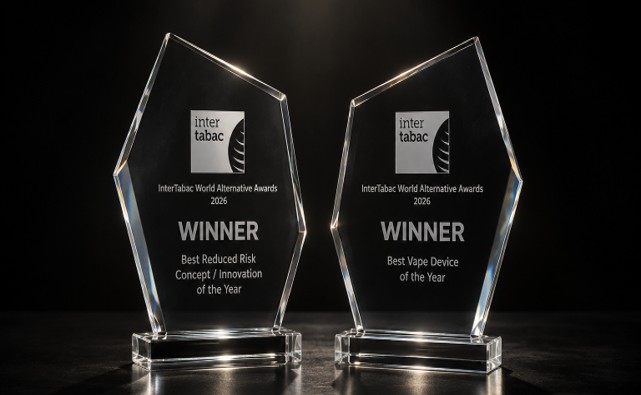
Crown Switch has also received encouraging external recognition, having recently been named 2026 Best Vape Device of the Year at the InterTabac World Alternative Awards. We believe this award provides further support for the product’s appeal as we prepare for commercialization.


LOGO

Question 2: Several global consumer MNCs including tobacco companies are highlighting higher costs due to the conflict in the Middle East in Q4’26 as well as potentially 2027. What is your cost outlook?

Higher energy, shipping, insurance, security and raw-material costs linked to the conflict in the Middle East are affecting our industry, and AIR is no exception. We continue to face a prolonged period of higher costs in the Middle East. That is why we are seeing modest margin compression in 2026. It is also leading to higher working capital investment, which is one of the reasons why our expected leverage at YE2026 is now higher than what we expected when we reported Q2 2026 results in mid-August. We are mitigating these costs through alternative shipping routes, the accelerated reorganization of our factory footprint and pricing actions. If and when costs such as shipping normalize, which we believe historical patterns suggest they may, we expect AIR to capture the majority of these cost savings.

Question 3: How can Al Fakher’s global scale help AIR accelerate growth in Crown Switch?

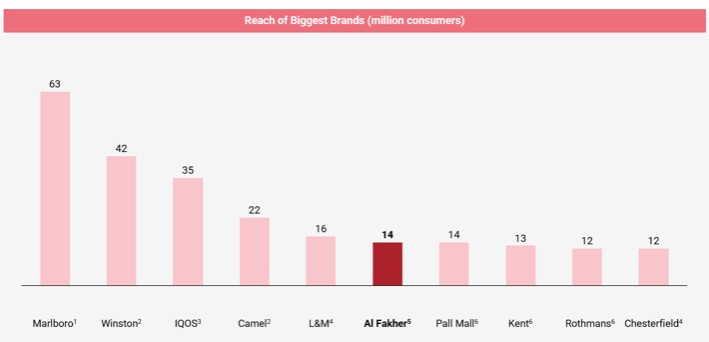
Al Fakher already reaches an estimated 14 million consumers globally and over 1mn annually in the US. By consumer reach, it is the sixth largest tobacco brand in the world (ex-China). That gives AIR something particularly valuable as we expand into Crown Switch: an established consumer base and strong brand recognition. Of course, brand strength alone does not guarantee success. Regulatory approvals, consumer adoption and disciplined commercial execution will determine how quickly we can scale.


LOGO

Source: Company information, PMI Investor Information Document, Altria, Japan Tobacco. Notes: (1) Marlboro consumer reach = Marlboro International (PMI) + Marlboro US (Altria). (2) Winston and Camel numbers based on JTI disclosures (excludes US). (3) Philip Morris cigarette consumer count calculated using 5,000 sticks/consumer per annum; IQOS using 4,500 sticks/consumer/annum, based on disclosures in PMI’s sustainability reports. (4) L&M and Chesterfield owned by PMI (excludes US). (5) Al Fakher consumer base calculated using 25gm/session and 3-4 sessions/month/consumer. (6) Rothmans, Pall Mall and Kent owned by BAT.

Consumer figures are estimates based on different consumption assumptions across brands and should therefore be viewed as directional rather than directly comparable.

Question 4: Germany’s Bundestag has approved phased excise-tax increases affecting waterpipe tobacco from March 2027. What does this mean for AIR and the outlook for Europe?

The final Bundestag outcome is significantly better than the original proposal. Earlier discussions contemplated waterpipe-tobacco excise of up to approximately €195 per kilogram by 2030. The adopted amendment delays implementation until March 1, 2027, and now stipulates rates of €60 per kilogram in 2027, €71 in 2028, €82.50 in 2029 and €94.50 in 2030.

The increase is therefore lower, more gradual and later than first proposed, giving the industry more time to adapt. We continue to review the final legislation and its implementation.

Al Fakher currently retails at approximately €145 per kilogram in Germany, which helps put the initial increase of approximately €11 per kilogram into context. Even so, higher prices can reduce legal-market volumes and encourage illicit consumption. We prefer stable or moderate excise increases. Europe is therefore likely to remain challenging, while the United States remains AIR’s main growth driver.


Question 5: How is AIR performing in Saudi Arabia, and how do nicotine-pouch developments affect the market opportunity?

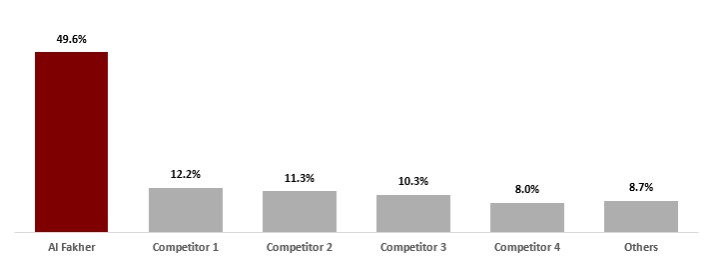
Saudi Arabia is Al Fakher’s second largest market by revenue based on 9M’26. Based on our latest retail audit, we estimate that Al Fakher’s share of the Saudi FSM market is approximately 50% and has been stable over the last few years. We believe this reflects the strength of the brand and resilient consumer demand.

Nicotine pouches have grown rapidly in Saudi Arabia, which is now one of the world’s largest nicotine pouch markets, supported by increasing adult-consumer interest and a leading PIF-backed market participant with significant local scale. This demonstrates how rapidly reduced-risk nicotine categories can develop when regulation with strict enforcement, distribution and consumer demand are aligned.

Our immediate priority remains strengthening Al Fakher’s leadership in FSM. We continue to monitor the nicotine-pouch category in Saudi, but currently the market remains closed to new competition. Besides, we only plan to participate when we have a differentiated product that gives us the right to win and long-term attractive economics.


LOGO

Note: Market share data as of September 2026, covering Jeddah, Dammam, Riyadh. Competitors are shown anonymously; “Others” represents all remaining brands. Percentages are rounded and may not sum to 100%.

Question 6: The 2026 YTD results have a lot of one-off items. Is AIR going to be one of those companies that have a significant difference between adjusted and reported numbers?

As a Nasdaq-listed company, AIR prepares its financial statements in accordance with IFRS as issued by the IASB, its annual financial statements are audited in accordance with the standards of the PCAOB, and AIR is subject to the requirements of the SEC in respect of any non-IFRS financial measures AIR publishes. In keeping with the foregoing, AIR intends to report earnings of the highest quality and to present adjusted numbers that, we believe, together with our IFRS results, better reflect the underlying operating performance of the business. AIR completed its listing on Nasdaq in May 2026. Listing-related adjustments, comprising the non-cash equity issuance expense, BCA transaction fees and public-company readiness costs, total $106.3 million. The key adjusting items in 9M’26 are:


•


$48.2 million of non-cash listing expense in accordance with IFRS 2, relating to equity issued in connection with the business combination;


•


$47.7 million of IPO-related cash costs;


•


$10.5 million of other public company readiness costs;


•


$4.3 million of supply chain-related costs resulting from the Strait of Hormuz disruption;


•


$3.4 million of costs relating to the acceleration of PMTA filings in the US following changed FDA enforcement guidance on nicotine vapes and pouches.


•


$14.1 million of non-cash share-based compensation expense.

In addition, we also have $10.7 million of intangible amortization. This is partly linked to past acquisitions, where cash has already largely been paid out.

We present Adjusted EBITDA to help investors assess AIR’s underlying operating performance separately from items that are non-cash, associated with the listing and refinancing, not expected to recur regularly, or outside normal operations. Adjusted EBITDA is not a substitute for IFRS results or cash flow. Investors should consider both measures alongside cash generation, leverage and the expected reduction in exceptional costs as AIR moves beyond its listing and refinancing activity.

Forward-Looking Statements

This shareholder letter contains forward-looking statements within the meaning of the U.S. Private Securities Litigation Reform Act of 1995 that relate to our current expectations and views of future events. We intend such forward-looking statements to be covered by the safe harbor provisions for forward-looking statements contained in Section 27A of the Securities Act and Section 21E of the Exchange Act. AIR Global PLC is the public operating company that resulted from the business combination of AIR Limited with a special purpose acquisition company, which completed in May 2026, and is accordingly not a “blank check company” for purposes of these safe harbor provisions.

Any express or implied statements contained in this shareholder letter that are not statements of historical fact may be deemed forward-looking statements, including, without limitation, statements regarding future results of operations and financial position; FY2026 and FY2027 financial outlook and medium-term guidance; shipment volumes and growth; future costs, margins, working capital and leverage; the Greentank investment and related ownership option; PMTA filings and related costs, FDA acceptance and Crown Switch commercialization; New Growth Categories; returns on capital; the impact of excise tax changes; market, industry and competitor developments; share count and Earnout Shares; business strategy; capital allocation; and management’s plans and objectives. Forward-looking statements may include words such as “expect,” “intend,” “plan,” “believe,” “think,” “project,” “forecast,” “estimate,” “may,” “should,” “would,” “anticipate,” “will,” “likely,” “aim,” “potential,” “continue” and similar expressions.

Forward-looking statements are neither promises nor guarantees and involve known and unknown risks and uncertainties that could cause actual results to differ materially, including supply-chain and shipment disruption, and higher logistics and raw-material costs; dependence on distributors and suppliers; competition and cannibalization; FDA review and authorization of PMTA applications; regulatory change and enforcement; scientific-study outcomes; product development and commercialization; excise taxes and illicit trade; consumer preferences; the accuracy of market, industry and competitor estimates; foreign exchange; dilution; tariffs and trade policy; general economic conditions; realization of anticipated investment benefits; tax, legal and accounting developments; internal control over financial reporting; and the other factors discussed under “Risk Factors” in AIR’s Registration Statement on Form F-1, as amended, filed with the U.S. Securities and Exchange Commission (“SEC”), as such factors may be updated from time to time in AIR’s other filings with the SEC, including its Reports on Form 6-K. Any forward-looking statement speaks only as of the date made. AIR disclaims any obligation to update or revise forward-looking statements except as required by applicable law.
Use of Non-IFRS Financial Measures

This shareholder letter includes EBITDA and Adjusted EBITDA, each of which is not presented in accordance with IFRS and may differ from similarly titled measures used by other companies.

AIR defines EBITDA as earnings for the period before interest, taxation, depreciation and amortization. The most directly comparable IFRS measure is profit/(loss) for the period. EBITDA is an intermediate step in AIR’s calculation of Adjusted EBITDA.

AIR defines Adjusted EBITDA as earnings before interest, taxes, depreciation and amortization, further adjusted to exclude items such as non-recurring expenses, share-based compensation and other non-operating expenses. AIR believes Adjusted EBITDA assists investors and management in evaluating operating performance consistently, but it should not be considered in isolation or as a substitute for IFRS results.

Adjusted EBITDA does not reflect cash expenditures or capital requirements, working-capital needs, interest or principal payments, cash taxes, or the future replacement of depreciated and amortized assets. Other companies may calculate the measure differently, and management’s adjustments involve judgment. A reconciliation of profit/(loss) for the period to Adjusted EBITDA is provided in Appendix C to AIR’s Q3 2026 earnings release, furnished on Form 6-K on the date of this shareholder letter.

No Offer or Solicitation

This shareholder letter is for informational purposes only and does not constitute, and shall not be construed as, an offer to sell or the solicitation of an offer to buy any securities of AIR, nor shall there be any sale of securities in any state or jurisdiction in which such offer, solicitation or sale would be unlawful prior to registration or qualification under the securities laws of that state or jurisdiction.

Contacts

AIR Investor Relations:

Gaurav Jain: Gaurav.jain@air.global; +971-56-439-4296

Anuja Shendye: a.shendye@air.global; +971-58-907-8782

investor@air.global

AIR Media Relations:

ICR for AIR | AIRglobal@icrinc.com