Exhibit 99.2
| Courageous Innovation Dedicated to Bringing Game-Changing Gene Therapies to Market and Working Even Harder to Provide Access to Patients Globally |

| 2 This presentation contains forward-looking statements within the meaning of The Private Securities Litigation Reform Act of 1995, including, but not limited to, strategy, business plans and objectives for Ocugen’s clinical programs, plans and timelines for the preclinical and clinical development of Ocugen’s product candidates, including the therapeutic potential, clinical benefits and potential safety thereof, expectations regarding timing, success and data announcements of current ongoing preclinical and clinical trials, the ability to initiate new clinical programs, statements regarding qualitative assessments of available data, potential benefits, expectations for ongoing clinical trials, anticipated regulatory filings and anticipated development timelines, which are subject to risks and uncertainties. We may, in some cases, use terms such as “predicts,” “believes,” “potential,” “proposed,” “continue,” “estimates,” “anticipates,” “expects,” “plans,” “intends,” “may,” “could,” “might,” “will,” “should,” or other words that convey uncertainty of future events or outcomes to identify these forward-looking statements. Such statements are subject to numerous important factors, risks, and uncertainties that may cause actual events or results to differ materially from our current expectations, including, but not limited to, the risks that preliminary, interim and top-line clinical trial results may not be indicative of, and may differ from, final clinical data; that unfavorable new clinical trial data may emerge in ongoing clinical trials or through further analyses of existing clinical trial data; that earlier non-clinical and clinical data and testing of may not be predictive of the results or success of later clinical trials; and that that clinical trial data are subject to differing interpretations and assessments, including by regulatory authorities. These and other risks and uncertainties are more fully described in our filings with the Securities and Exchange Commission (SEC), including the risk factors described in the section entitled “Risk Factors” in the quarterly and annual reports that we file with the SEC. Any forward-looking statements that we make in this presentation speak only as of the date of this presentation. Except as required by law, we assume no obligation to update forward-looking statements contained in this presentation whether as a result of new information, future events, or otherwise, after the date of this presentation. Forward Looking Statement Ocugen – Third Quarter Business Update |
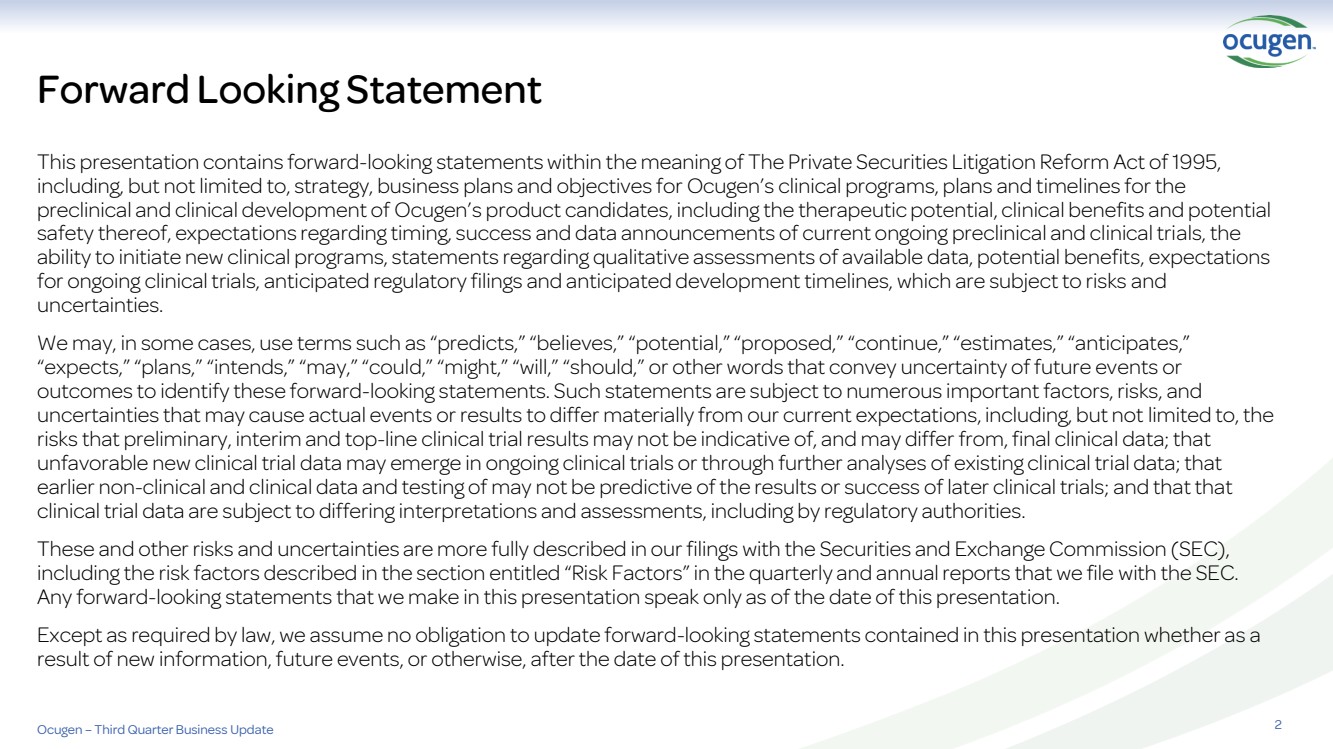
| 3 Pipeline A quarter of execution across three programs Ocugen – Third Quarter Business Update OCU410ST Stargardt Disease 100K U.S.+EU patients No approved therapy ODD · RPDD · OMPD · ATMP Current Stage Phase 2/3 GARDian3 Enrollment complete Ph1 Ph2 Ph3 BLA Approved Next Catalysts Topline data: 2Q 2027 BLA target: Mid-2027 BLA 2027 OCU400 Retinitis Pigmentosa 300K U.S.+EU patients 298K untreated RMAT · ODD · ATMP · OMPD Current Stage Phase 3 Enrollment complete Ph1 Ph2 Ph3 BLA Approved Next Catalysts Topline data: 1Q 2027 BLA target: 2Q 2027 BLA 2027 OCU410 Geographic Atrophy 2–3M U.S.+EU patients No gene therapy approved RMAT · ATMP (EMA) Current Stage Phase 3 ArMaDa3 First patient dosed Ph1 Ph2 Ph3 BLA Approved Next Catalysts BLA target: 2028 BLA 2028 |
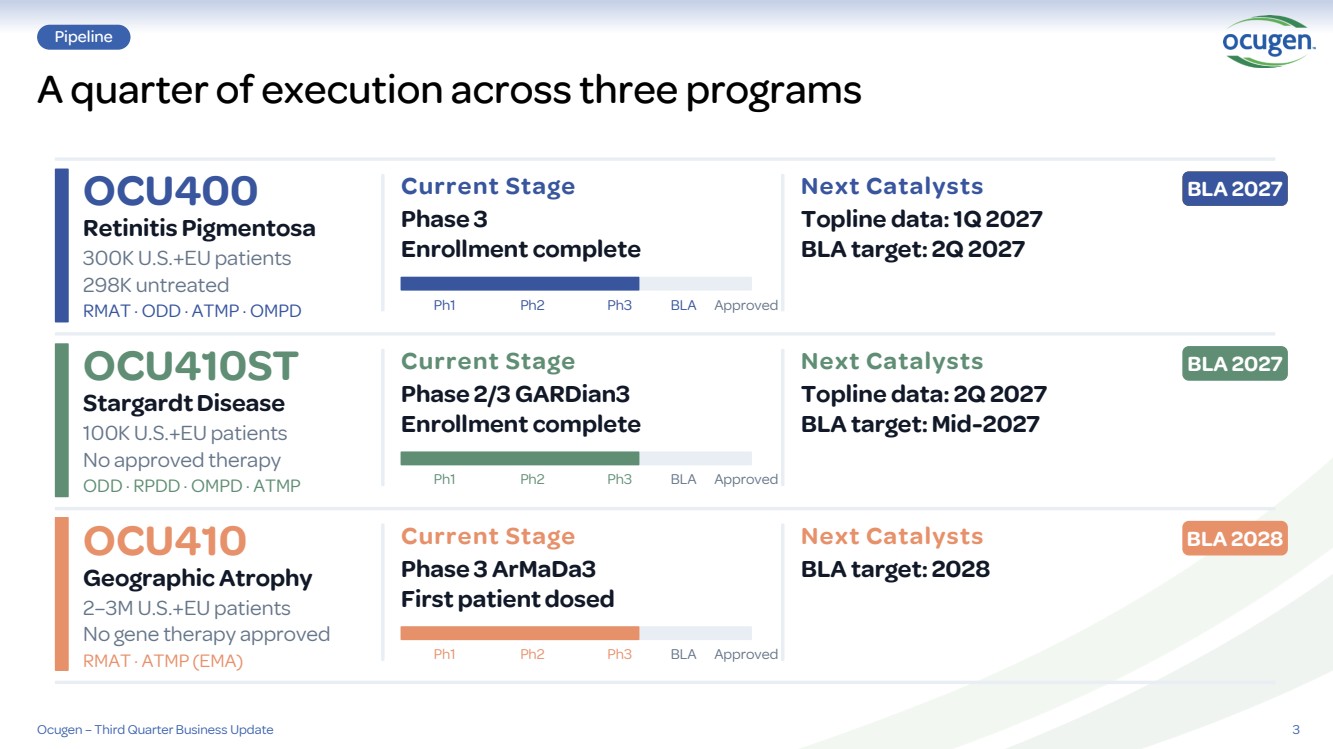
| 4 The largest orphan gene therapy trial ever run, targeting approval across all RP mutations 140 patients enrolled in Phase 3 liMeliGhT trial (largest orphan gene therapy Ph3) 100+ RP-causing genes addressed by a single subretinal injection 1H 2027 topline data expected: 1Q BLA filing target: 2Q POPULATION Clinical trial eligibility criteria includes early-to late-stage RP, spanning pediatric to adult populations PRIMARY ENDPOINT 12-month change in visual function via LDNA Lux Level RANDOMIZATION 2:1 — treatment vs. untreated control EU BLA PATHWAY Single U.S. trial accepted by EMA for MAA Trial Design: Enrolling patients across multiple mutations, spanning pediatric to adult populations and early-to late-stage disease. No competitor has pursued this breadth within a single trial. GLOBAL VALIDATION SIGNAL Kwangdong OCU400 deal — Potential sales milestones of up to $180M+ and royalties equaling 25% of net sales Roots Pharmaceutical OCU400 deal – Potential sales milestones up to $255 million and royalties equaling 22% of net sales OCU400 Ocugen – Third Quarter 2026 Business Update |
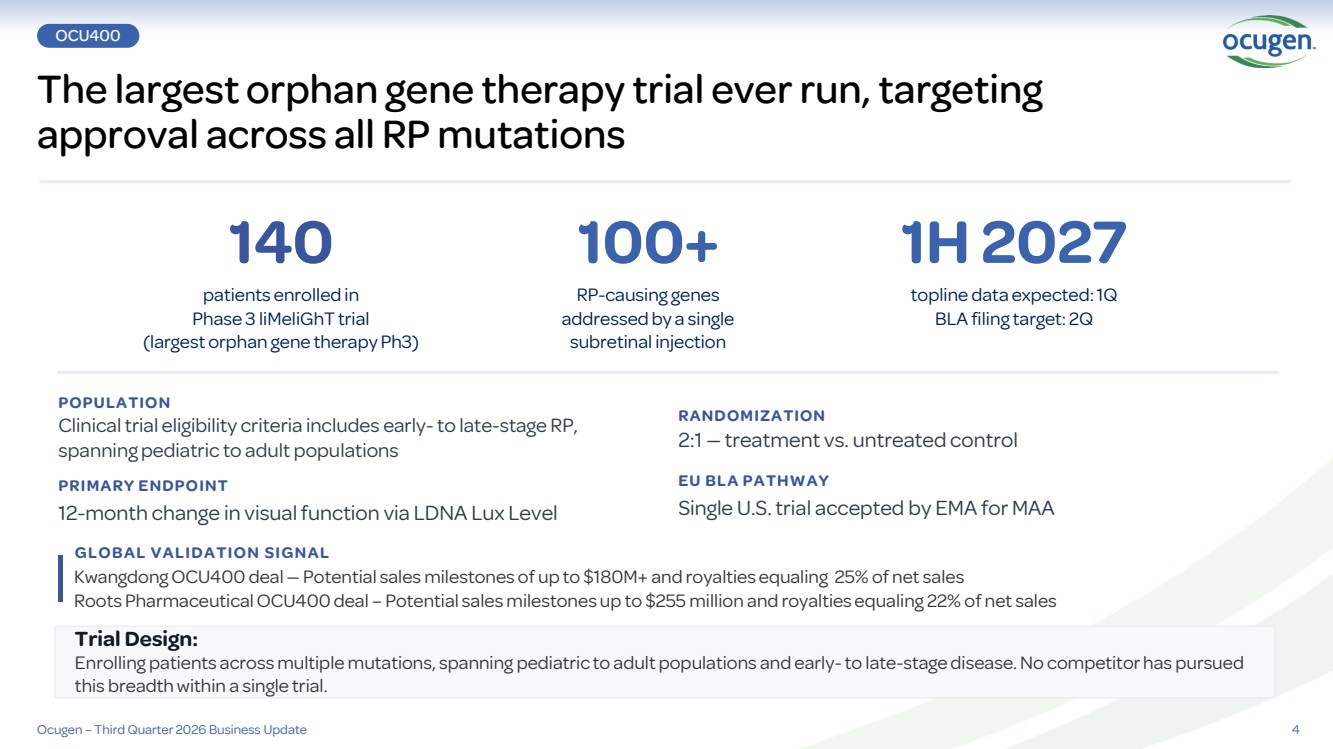
| 5 Highlights: • Bahamas Regulatory Agency, (LARTA1 ), provided provisional approval and priority designation of OCU400 • Advancing toward full approval and patient enrollment, under a regulated EAP2 , potentially as early as year-end • Executed agreement with local partner, (GARM3 ), to coordinate and manage patient care • The EAP is open to patients around the world at commercial pricing – potentially $1–2M per patient4 • Enables global patient access for those with high unmet medical needs ahead of full product approval in major markets, offering an important treatment option for patients at risk of serious vision loss and blindness EAP Program in The Bahamas marks first OCU400 approval 1LARTA – Bahamas Regulatory Agency (Longevity and Regenerative Therapies Board) 2 Early Access Program 3. Global Alliance of Regenerative Medicine 4 Retina “Modeling Natural History and Cost-Effectiveness of Gene-Agnostic Treatment in Retinitis Pigmentosa” (link here) OCU400 Ocugen – Third Quarter 2026 Business Update |
| Phase 1/2 Subject Disposition: Safety and Post-hoc Efficacy Analysis 18 Safety analysis All Phase 1/2 subjects −2 → 16 Post-hoc efficacy 9 RHO 3 AD-NR2E3 4 AR-NR2E3 −3 → 13 Post-hoc efficacy 9 RHO 4 AR-NR2E3 −6 → 7 Phase 3 ITT* Post hoc efficacy 5 RHO 2 AR-NR2E3 18 → 16 2 with surgery-related AEs Sub#6, Sub#14 Safety analysis only 16 → 13 3 AD-NR2E3 subjects Not included in the efficacy analysis due to a dominant negative effect 13 → 7 6 excluded post-hoc 1 sentinel, poor visual acuity: Sub#1 5 subjects ceiling effect at baseline: Sub#7, Sub#10, Sub#12, Sub#15, Sub#18 *Post-hoc analysis: Patients who qualify for Phase 3 Intent-to-Treat (ITT) criteria: RHO + AR-NR2E3 subjects, excluding adverse event, sentinel and ceiling effect subjects. Ceiling effect on Mobility Test: Baseline performance at 1 Lux - Subjects already achieved the lowest illumination level measurable by the mobility test AD, autosomal dominant; AR, autosomal recessive; ITT, intent to treat; MLMT, multi-luminance mobility test; Sub#= Subject number Study Design OCU400 6 Ocugen – Third Quarter 2026 Business Update |
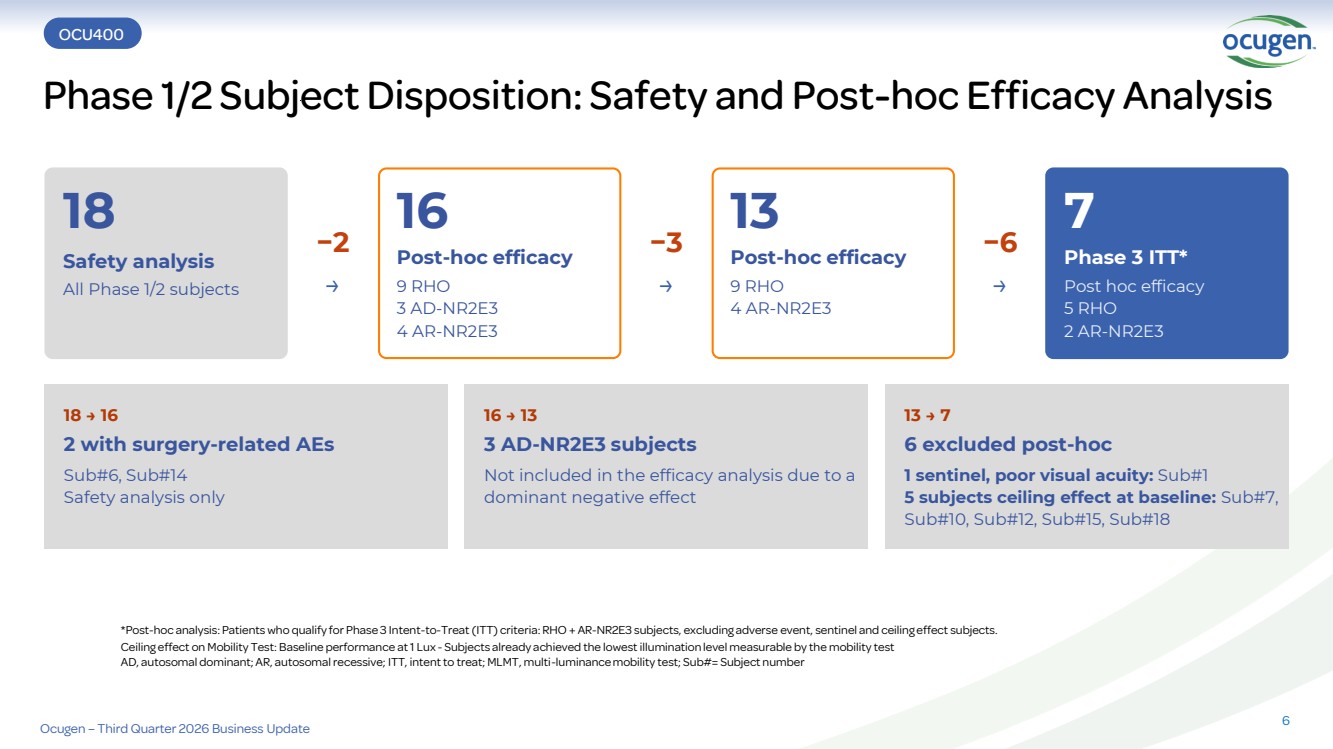
| Phase 1/2 Population Meeting “Intent to Treat Population” Criteria for Phase 3* at 12M *RHO +AR-NR2E3 Subjects (- Adverse Events, Sentinel); and Ceiling Effect (RHO+AR-NR2E3) Subjects, Sub#= Subject numbers # AR-NR2E3 Subjects: Baseline MLMT at 5 Lux level; 1 Lux level improvement resulted in ceiling effect on old scale on 0-6 Lux levels Sub#2 (RHO) Sub#8 (RHO) Sub#9 (RHO) Sub#3 (AR-NR2E3) Sub#5 (AR-NR2E3) Sub#11 (RHO) Sub#13 (RHO) 0.0 0.5 1.0 1.5 2.0 2.5 3.0 3.5 4.0 4.5 5.0 Improvement in Lux Level MLMT Scale LDNA Scale Subject ID (with Mutation) 9 m 12 m 12 m # 12 m 12 m # 12 m 12 m • Phase 3 primary endpoint revised: LDNA replaces Multi-Luminance Mobility Test (MLMT) mobility test • Wider range, finer resolution: 0.4–500 lux across 10 levels vs 1–400 lux across 6 levels for MLMT • Evenly spaced log-unit steps between lux levels and lux intensity • Addresses the ceiling effect seen in Phase 1/2 • Clinical success: ≥2 lux level improvement from baseline at Week 52 • Why LDNA? • Measures functional vision • Regulatory precedent: ≥2 lux level MLMT improvement (Luxturna®) • Correlates with visual function (e.g., LLVA) and quality of life 71.4% (5/7) of treated eyes are projected to meet ≥2 Lux level improvement on LDNA scale OCU400 Safety 7 Ocugen – Third Quarter 2026 Business Update |
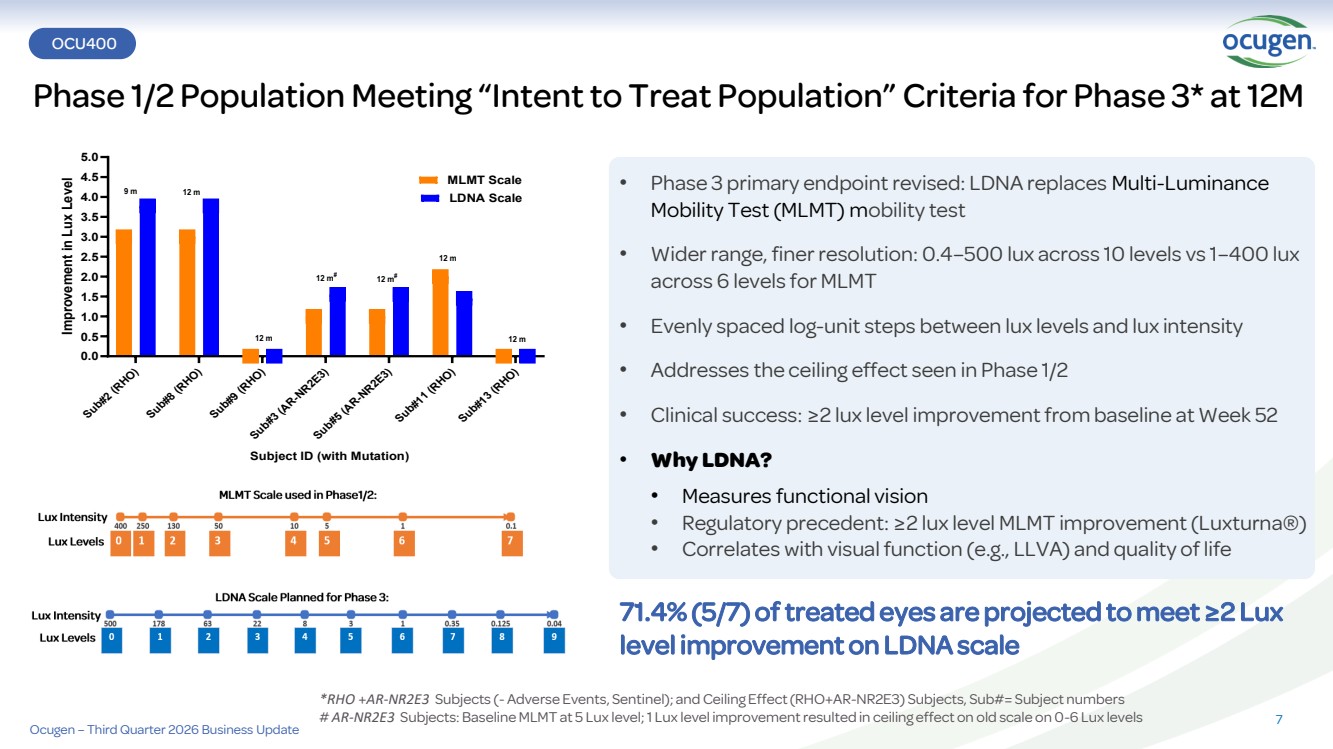
| OCU400 Phase 3 Study: >99% power as per current enrollment and effect size assumption Statistical Method • Power calculated using SAS PROC POWER. • One-sided Fisher's Exact Test. • Significance level (α): 0.025. • Binary responder endpoint. Study Design • Total sample size: N = 140 subjects.(TRT-92, CTRL-48) • Randomization ratio: 2:1 (Treatment : Control). • Power estimated for each treatment-control responder rate combination. >93% power is maintained at 20% responder rate in treatment vs 1% in control Scenario Treatment Group (Responder %) Control Group (Responder %) Treatment Effect (Delta) Statistical Power Scenario 1 50.0% (0.50) 10.0% (0.10) +40.0% 99.8% Scenario 2 20.0% (0.20) 1.0% (0.01) +19.0% 93.2% Treatment vs. Control Responder Proportions Comparative power analysis across primary endpoint response scenarios Ocugen – Third Quarter 2026 Business Update 8 |
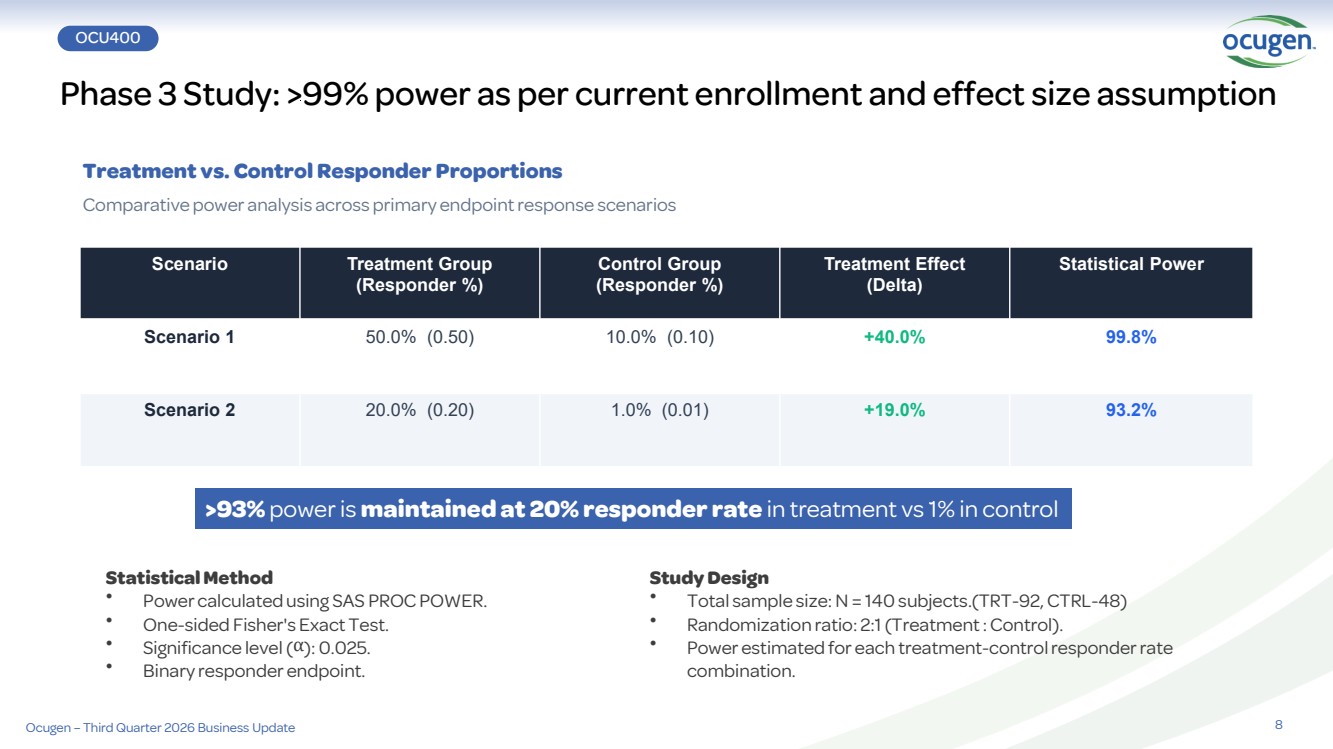
| 9 First-in-Class Gene Therapy for Stargardt Disease OCU410ST 100K U.S. + EU patients No approved therapy globally Q3 2026 GARDian3 enrollment interim outcome Q2 2027 topline data expected; EMA accepted single U.S. trial for MAA Stargardt is the most common inherited macular dystrophy — caused by mutations in ABCA4 (1,200+ mutations), causing progressive central vision loss typically beginning in childhood. What sets OCU410ST apart Modifier gene approach covers all 1,200+ ABCA4 mutations with a single therapy. Traditional approaches can't address this genetic complexity. Phase 1 GARDian1 published Results published in EYE journal supports favorable safety and efficacy profile as GARDian3 pivotal confirmatory trial advances. Pivotal confirmatory Phase 2/3 trial. 51 subjects, 2:1 randomized. Primary endpoint: change in atrophic lesion size. One-year data used for BLA filing. ODD + RPDD (FDA) · OMPD + ATMP (EMA). Rare Pediatric Disease Designation adds priority review voucher optionality at approval. Trial: GARDian3 Designations Ocugen – Third Quarter 2026 Business Update |
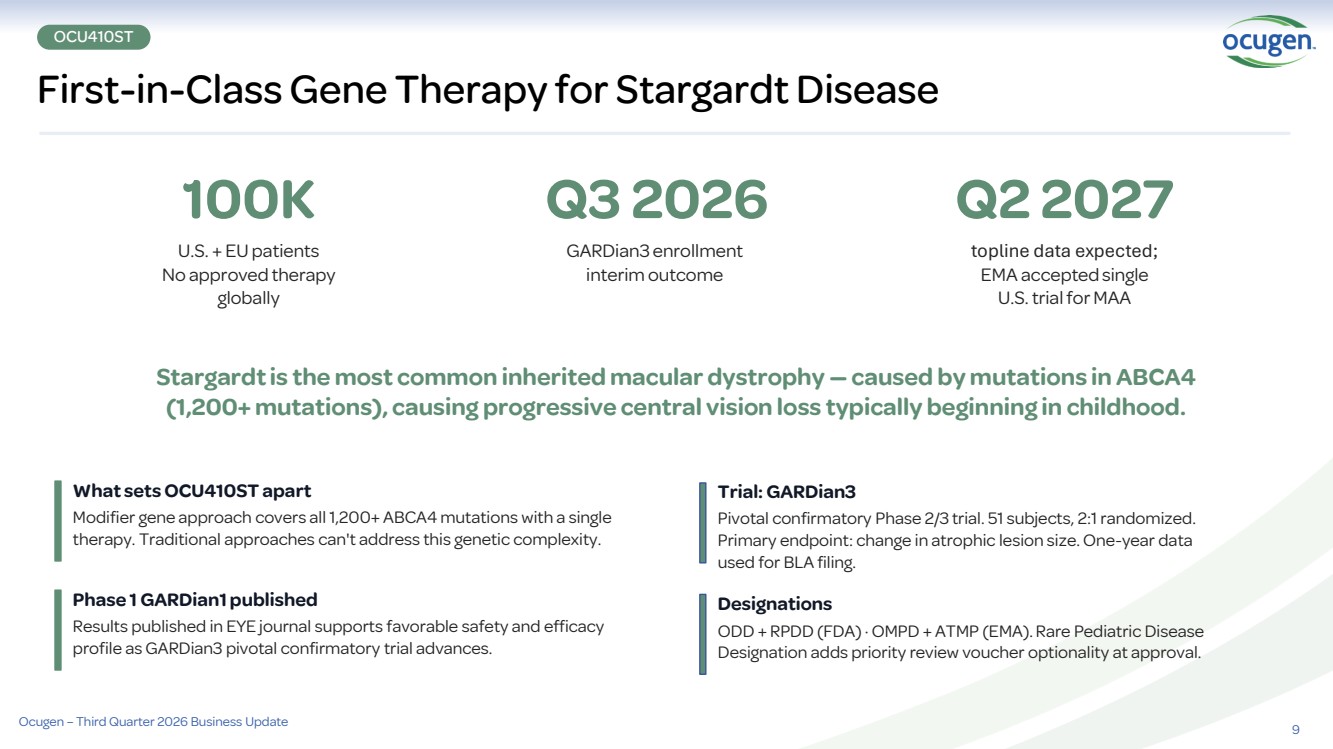
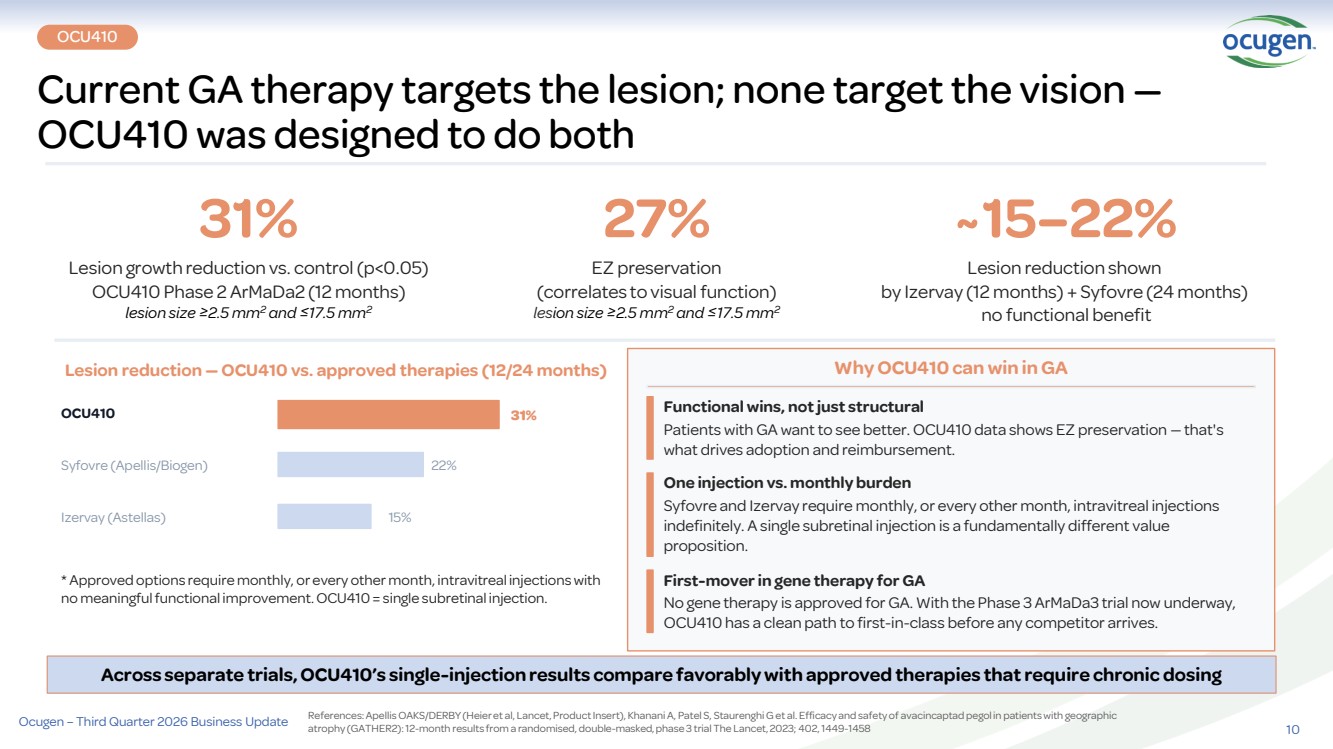
| 10 Current GA therapy targets the lesion; none target the vision — OCU410 was designed to do both 31% Lesion growth reduction vs. control (p<0.05) OCU410 Phase 2 ArMaDa2 (12 months) lesion size ≥2.5 mm2 and ≤17.5 mm2 27% EZ preservation (correlates to visual function) lesion size ≥2.5 mm2 and ≤17.5 mm2 ~15–22% Lesion reduction shown by Izervay (12 months) + Syfovre (24 months) no functional benefit Lesion reduction — OCU410 vs. approved therapies (12/24 months) OCU410 31% Syfovre (Apellis/Biogen) 22% Izervay (Astellas) 15% * Approved options require monthly, or every other month, intravitreal injections with no meaningful functional improvement. OCU410 = single subretinal injection. Why OCU410 can win in GA Functional wins, not just structural Patients with GA want to see better. OCU410 data shows EZ preservation —that's what drives adoption and reimbursement. One injection vs. monthly burden Syfovre and Izervay require monthly, or every other month, intravitreal injections indefinitely. A single subretinal injection is a fundamentally different value proposition. First-mover in gene therapy for GA No gene therapy is approved for GA. With the Phase 3 ArMaDa3 trial now underway, OCU410 has a clean path to first-in-class before any competitor arrives. Across separate trials, OCU410’s single-injection results compare favorably with approved therapies that require chronic dosing References: Apellis OAKS/DERBY (Heier et al, Lancet, Product Insert), Khanani A, Patel S, StaurenghiG et al. Efficacy and safety of avacincaptad pegol in patients with geographic atrophy (GATHER2): 12-month results from a randomised, double-masked, phase 3 trial The Lancet, 2023; 402, 1449-1458 OCU410 Ocugen – Third Quarter 2026 Business Update |
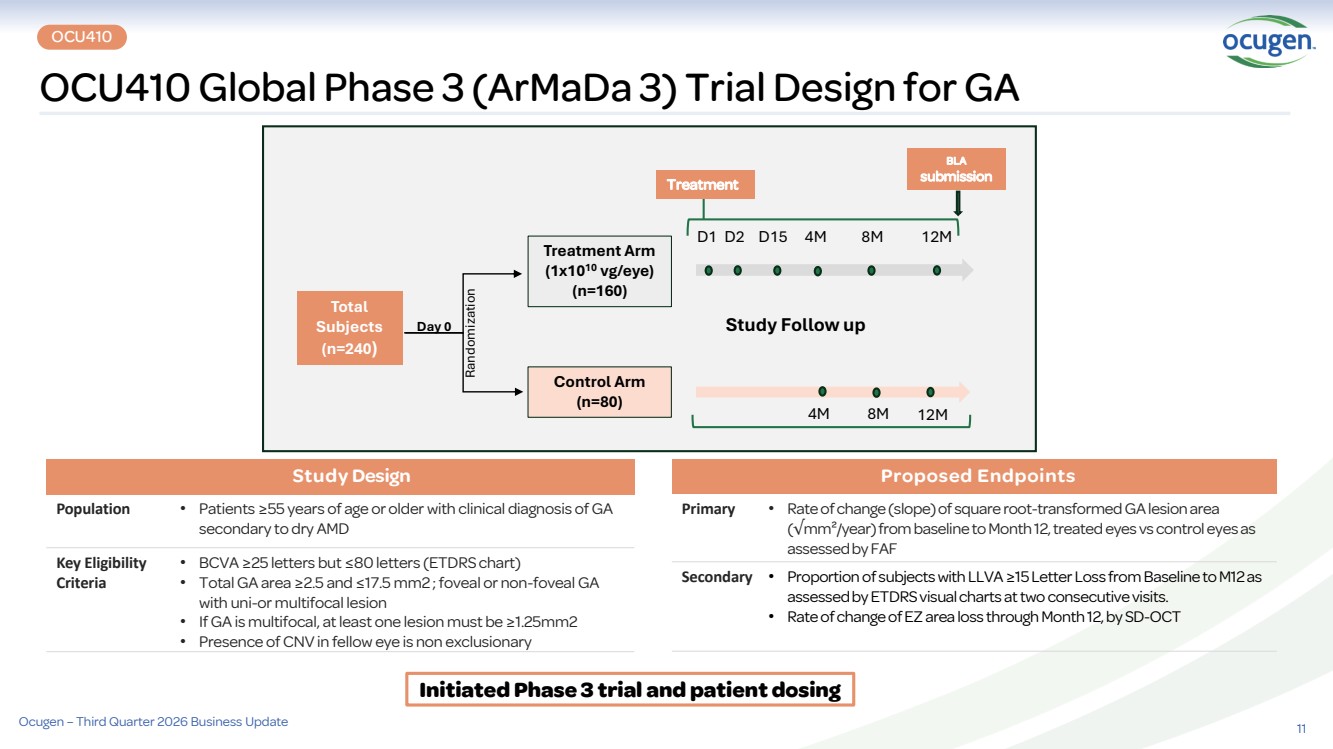
| Proposed Endpoints Primary • Rate of change (slope) of square root-transformed GA lesion area (√mm²/year) from baseline to Month 12, treated eyes vs control eyes as assessed by FAF Secondary • Proportion of subjects with LLVA ≥15 Letter Loss from Baseline to M12 as assessed by ETDRS visual charts at two consecutive visits. • Rate of change of EZ area loss through Month 12, by SD-OCT Study Design Population • Patients ≥55 years of age or older with clinical diagnosis of GA secondary to dry AMD Key Eligibility Criteria • BCVA ≥25 letters but ≤80 letters (ETDRS chart) • Total GA area ≥2.5 and ≤17.5 mm2 ; foveal or non-foveal GA with uni-or multifocal lesion • If GA is multifocal, at least one lesion must be ≥1.25mm2 • Presence of CNV in fellow eye is non exclusionary OCU410 Global Phase 3 (ArMaDa 3) Trial Design for GA OCU410 Ocugen – Third Quarter 2026 Business Update Initiated Phase 3 trial and patient dosing 11 Total Subjects (n=240) Treatment Arm (1x10¹⁰ vg/eye) (n=160) Control Arm (n=80) 4M 8M 12M Day 0 D1 D2 D15 4M 8M 12M Study Follow up Randomization Treatment BLA submission |
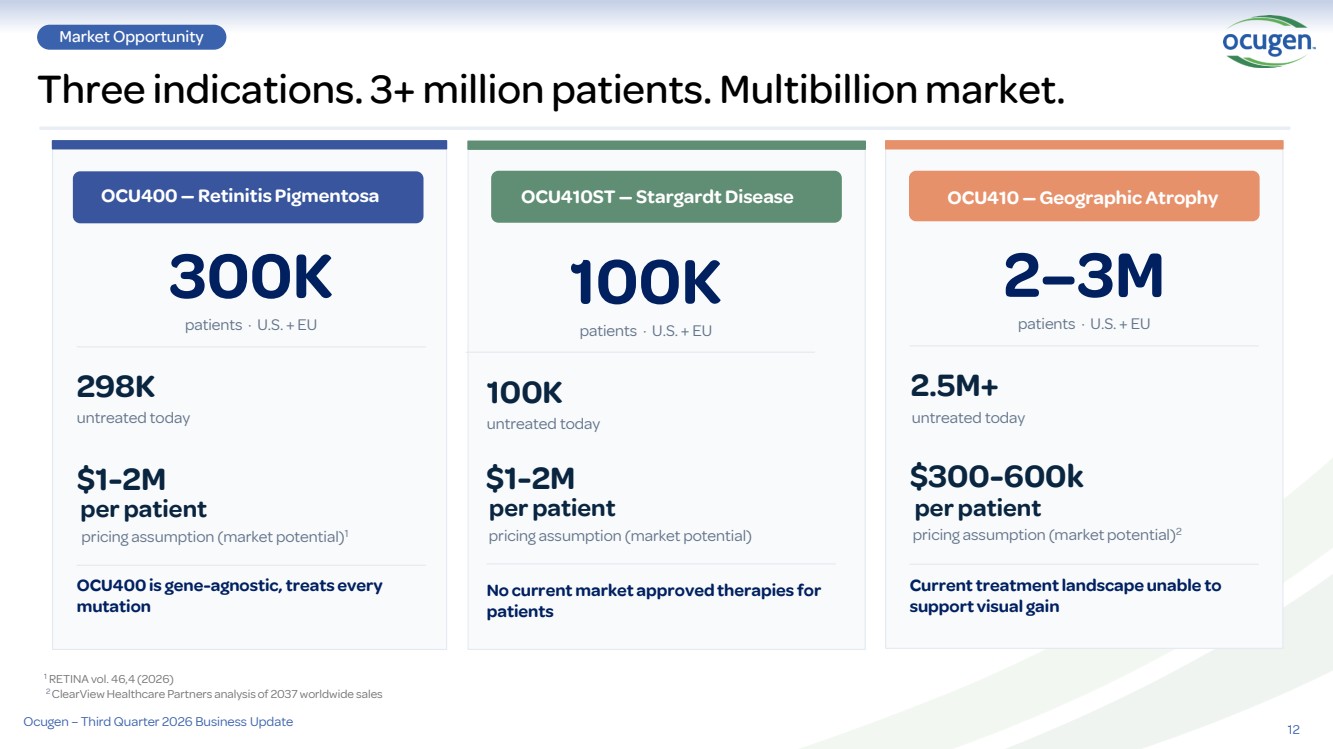
| 12 Three indications. 3+ million patients. Multibillion market. Market Opportunity OCU410 — Geographic Atrophy 2–3M patients · U.S. + EU 2.5M+ untreated today $300-600k pricing assumption (market potential)2 Current treatment landscape unable to support visual gain OCU410ST — Stargardt Disease 100K patients · U.S. + EU 100K untreated today $1-2M No current market approved therapies for patients Ocugen – Third Quarter 2026 Business Update per patient per patient pricing assumption (market potential) OCU400 — Retinitis Pigmentosa 300K patients · U.S. + EU 298K untreated today $1-2M OCU400 is gene-agnostic, treats every mutation pricing assumption (market potential)1 per patient 1 RETINA vol. 46,4 (2026) 2 ClearViewHealthcare Partners analysis of 2037 worldwide sales per patient |
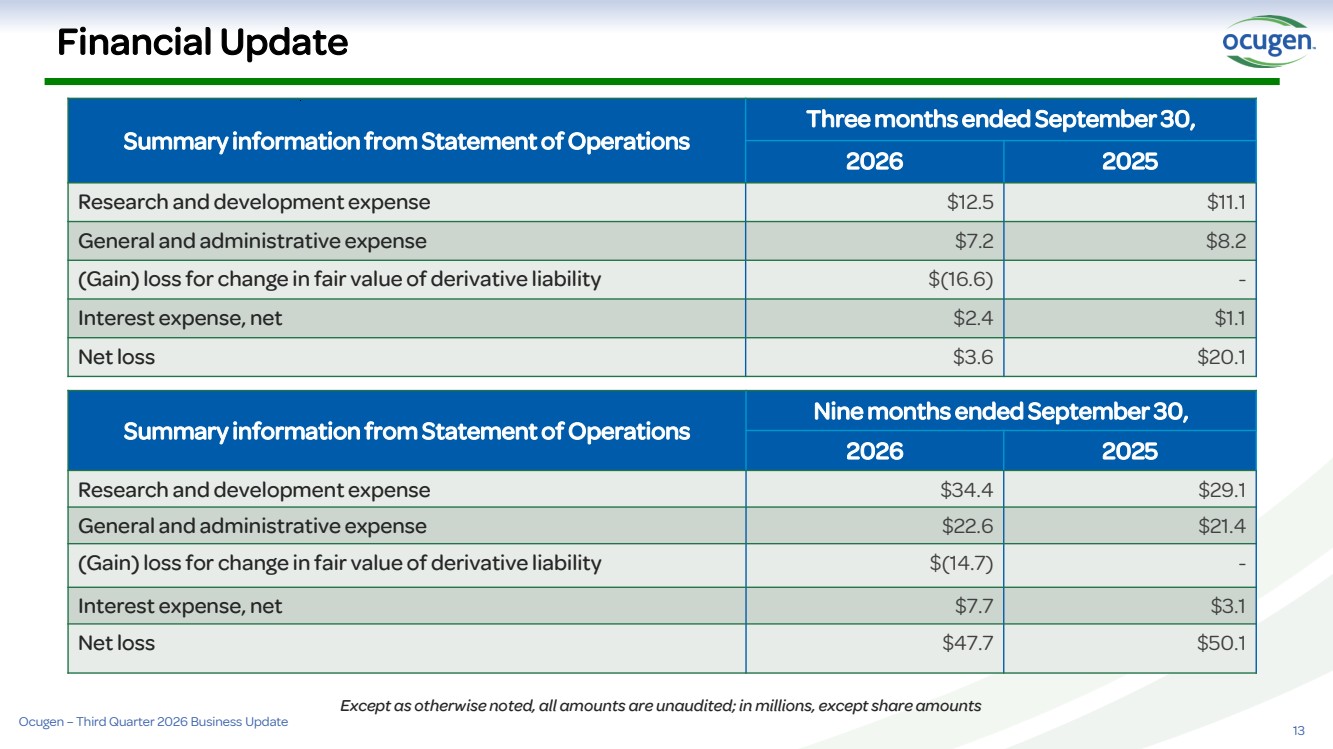
| Financial Update Summary information from Statement of Operations Three months ended September 30, 2026 2025 Research and development expense $12.5 $11.1 General and administrative expense $7.2 $8.2 (Gain) loss for change in fair value of derivative liability $(16.6) - Interest expense, net $2.4 $1.1 Net loss $3.6 $20.1 Except as otherwise noted, all amounts are unaudited; in millions, except share amounts Ocugen – Third Quarter 2026 Business Update Summary information from Statement of Operations Nine months ended September 30, 2026 2025 Research and development expense $34.4 $29.1 General and administrative expense $22.6 $21.4 (Gain) loss for change in fair value of derivative liability $(14.7) - Interest expense, net $7.7 $3.1 Net loss $47.7 $50.1 13 |
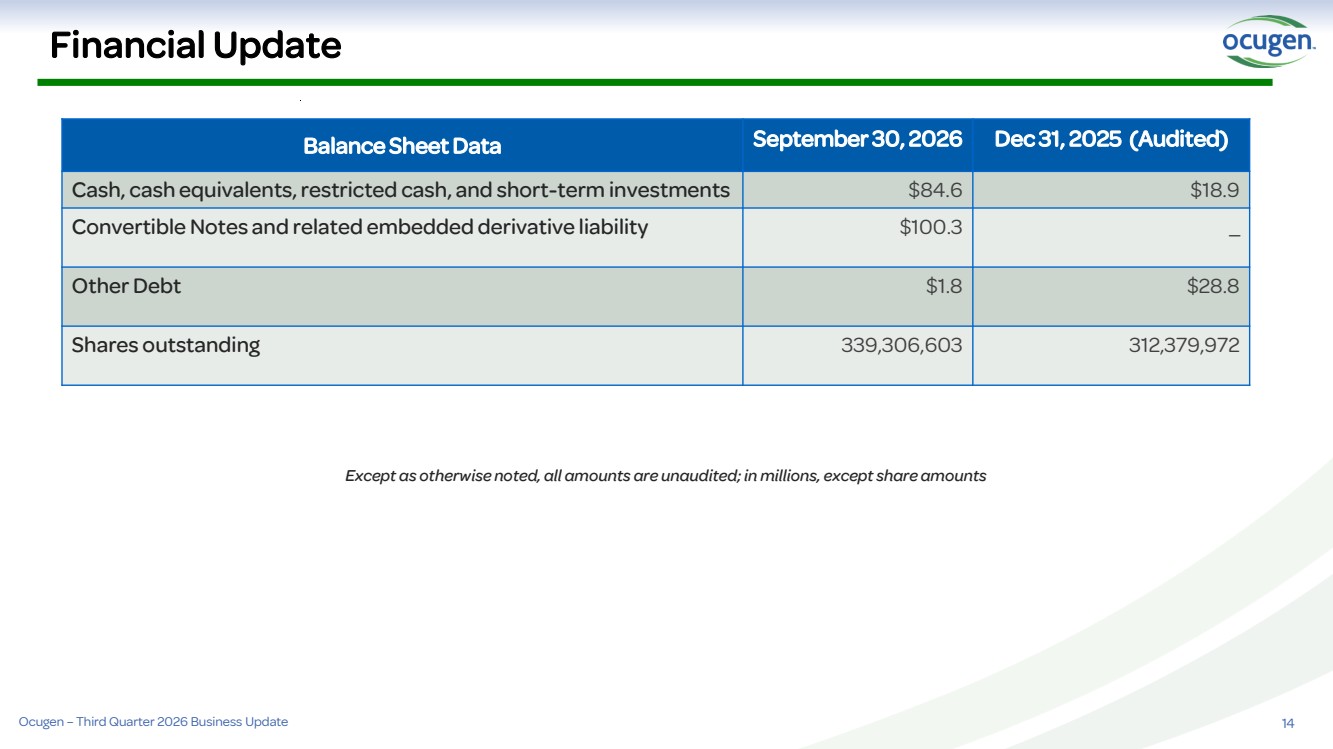
| Financial Update Balance Sheet Data September 30, 2026 Dec 31, 2025 (Audited) Cash, cash equivalents, restricted cash, and short-term investments $84.6 $18.9 Convertible Notes and related embedded derivative liability $100.3 _ Other Debt $1.8 $28.8 Shares outstanding 339,306,603 312,379,972 14 Except as otherwise noted, all amounts are unaudited; in millions, except share amounts Ocugen – Third Quarter 2026 Business Update |
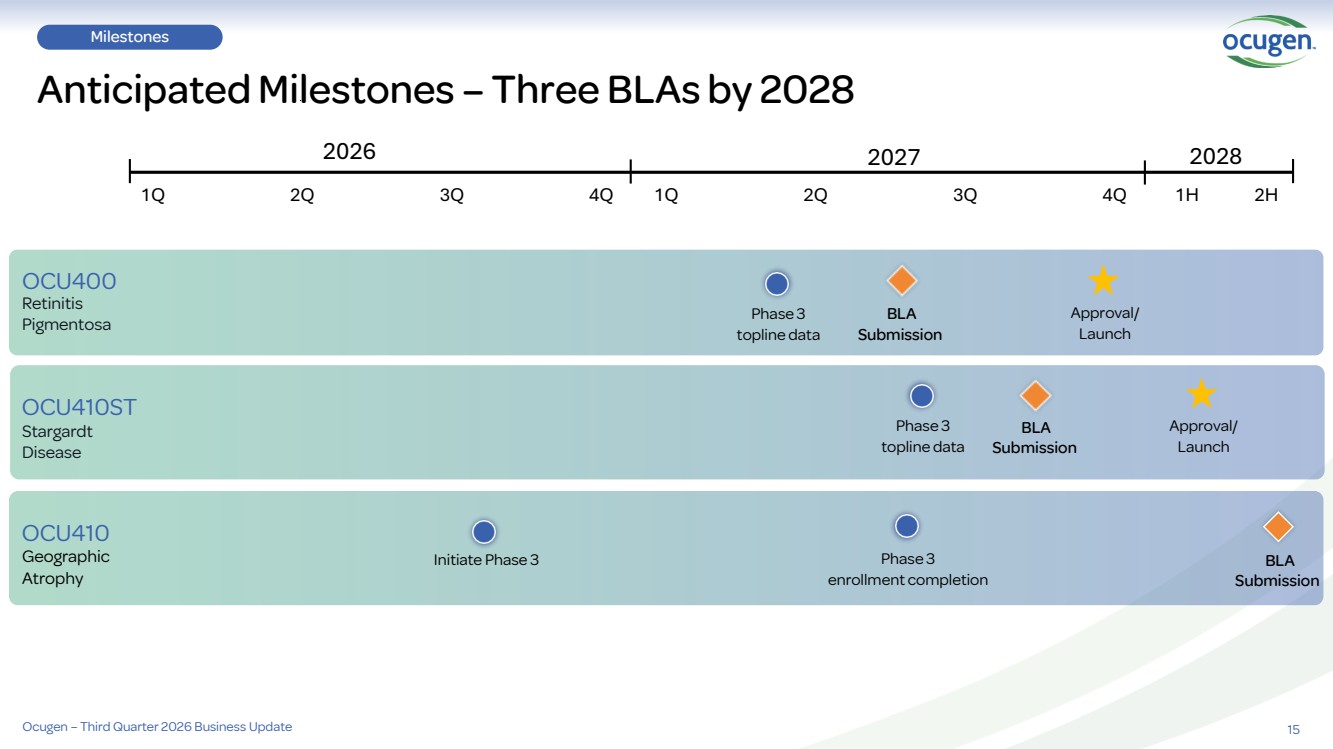
| 15 Milestones Anticipated Milestones – Three BLAs by 2028 Retinitis Pigmentosa Stargardt Disease Geographic Atrophy OCU400 OCU410ST OCU410 Phase 3 topline data Initiate Phase 3 2026 2027 1Q 2Q 3Q 4Q Phase 3 topline data BLA Submission Approval/ Launch Approval/ Launch BLA Submission 1H 2H 2028 Phase 3 enrollment completion 1Q 2Q 3Q 4Q BLA Submission Ocugen – Third Quarter 2026 Business Update |
| Q&A |