



Code of Ethics
Personal Investing Standards
December 2025
Applies to:
All employees (full-time and part-time), globally, that work for, support, or are a registered representative of any of Prudential’s asset management, investment adviser, and broker dealer businesses (CIO, PAD, PGIM, PIMS, and PruCo)
All contractors, interns, temporary employees, and others who have been notified by compliance are subject to this policy.
Questions?
CONTACT: PST.Help@prudential.com
This policy complements other important Prudential policies that address ethics and conflicts, such as Prudential’s Code of Conduct
–Making the Right Choices, Conflicts of Interest Policy, Global Anti-Bribery and Anti- Corruption Policy, Information Barrier Standards, and Global Insider Trading Policy.
Prudential Financial, Inc.- Compliance Approval Required Prior to External Dissemination
Minimum Holding Periods & Short-Swing Profits ........................................................................................... |
|
3
Overview
Key Points
We are entrusted with our clients’ investment assets and as such, Prudential Financial, Inc. and its subsidiaries (collectively “Prudential,” “PFI” or the “Company”) aspire to the highest standard of business ethics. Per our Code of Conduct, “Making the Right Choices,” we have an obligation to place our clients’ interests before our own and manage conflicts of interest fairly. In addition to Making the Right Choices, our Code of Ethics - Personal Investing Standards (the “Code”) provides a framework to make sure we meet that obligation with our personal investments.
While the Code sets out several requirements, prohibitions, and conditions, it does not cover every possible scenario and cannot be a replacement for your good judgment. If the Code is unclear, consult with Compliance and evaluate your proposed course of conduct against our principles and core values:
✓We do the right thing by placing the interests of our clients first.
✓We avoid, mitigate and/or disclose relevant conflicts of interest.
✓We are committed to doing business in the right way, and comply with applicable laws, rules, and regulations.
✓We make and keep promises, which includes holding each other accountable by reporting any violations.
The Code is designed to comply with laws, rules, and regulations of the various jurisdictions where Prudential operates. You should consult with your Local Business Compliance Officer to confirm if there are any additional personal investing policies and procedures that are specific to your business.
Who is Covered Under These Standards?
Except as otherwise noted, the Code applies globally to all directors, officers, and employees (including contractors, interns, temporary employees, and others who have been notified by compliance they are subject to this policy) of/or supporting Prudential asset management, investment adviser and/or broker-dealer businesses, including the Prudential Chief Investment Office (“CIO”), Prudential Annuities Distributors (“PAD”), PGIM, Prudential Investment Management Services (“PIMS”), and Prudential Financial Planning Services (“PruCo”), throughout the enterprise regardless of geographic location (“Employees”).
For the purposes of these standards, “PGIM” refers to all PGIM affiliated registered investment advisers, business lines and their associated functional areas including: AST Investment Services, PGIM Custom Harvest, PGIM DC Solutions, PGIM Global Services, PGIM Inc, PGIM Investments, PGIM Multi-Asset Solutions, and PGIM Quantitative Solutions.
Roles and Responsibilities
Employees |
Compliance |
Ethics Committee |
|
|
|
Upon hire, annually and any time |
Administers and monitors adherence to the |
Reviews the Code on a periodic basis in line with |
material changes are made you |
Code, including providing training, reviewing |
business changes and changes to regulation. |
will attest and agree to comply |
employees’ disclosures and transactions, and |
|
with the requirements of the |
identifying potential violations. |
Provides oversight of the Code, including by |
Code. |
|
reviewing exceptions and addressing incidents and |
|
Maintains and oversees the maintenance of |
violations. Sanctions may include verbal reminders, |
|
certain records in accordance with applicable |
educational letters, disciplinary letters, monetary |
|
legal and regulatory requirements. |
penalties, suspension without pay, personal trading |
|
|
ban, reduction in PTO days, or other disciplinary |
|
|
action up to and including termination of employment. |
|
|
|
4
Employee Classifications
Employee monitoring classifications are listed below. For ease of reference, the term Employee will be used throughout this document, and multiple classifications may apply depending on your role.
Please see Exhibit A – Key Definitions for a full list of classifications.
|
Supervised |
|
|
Associated |
|
|
Access Persons |
|
|
Investment |
|
|
Designated Persons |
|
|
Persons |
|
|
Persons |
|
|
|
|
Persons |
|
|
|
||
|
|
|
|
|
|
|
|
|
|
|
|
|||
|
|
|
|
|
|
|
|
|
|
|
|
|
|
|
|
Employees of a |
|
Employees who are |
|
|
Employees who are |
|
|
Employees who make or |
|
|
Employees who, during the |
|
|
|
Prudential registered |
|
associated with any |
|
|
associated with any |
|
|
participate in making |
|
|
normal course of their |
|
|
|
investment adviser, and |
|
Prudential broker- |
|
|
Prudential broker-dealer |
|
|
recommendations |
|
|
employment, have routine |
|
|
|
other individuals who |
|
dealer. |
|
|
and/or Employees who work |
|
|
regarding the purchase |
|
|
access to Material Nonpublic |
|
|
|
provide investment |
|
|
|
|
|
for, or support, investment |
|
|
or sale of securities for |
|
|
Information about Prudential. |
|
|
advice on behalf of the |
|
|
|
|
|
advisory activities and may |
|
|
client accounts (e.g., |
|
|
|
|
|
adviser and are subject |
|
|
|
|
|
have access to nonpublic: |
|
|
portfolio managers and |
|
|
Material Nonpublic |
|
|
to the adviser’s |
|
|
|
|
|
|
|
|
research analysts). |
|
|
Information may consist of |
|
|
supervision and control. |
|
|
|
|
|
• Advisory client trading |
|
|
|
|
|
financial or non-financial |
|
|
|
|
|
|
|
|
information; |
|
|
|
|
|
information about Prudential |
|
|
|
|
|
|
|
|
|
|
|
|
|
|
as a whole or one or more |
|
|
|
|
|
|
|
|
• Advisory client investment |
|
|
|
|
|
Divisions or Segments. |
|
|
|
|
|
|
|
|
|
|
|
|
|
|
|
|
|
|
|
|
|
|
|
recommendations; or |
|
|
|
|
|
Please refer to Prudential’s |
|
|
|
|
|
|
|
|
|
|
|
|
|
|
|
|
|
|
|
|
|
|
|
• Portfolio holdings. |
|
|
|
|
|
Global Insider Trading Policy |
|
|
|
|
|
|
|
|
|
|
|
|
|
for specific requirements. |
|
|
|
|
|
|
|
|
|
|
|
|
|
|
|
|
|
|
|
|
|
|
|
|
|
|
|
|
|
|
|
|
Escalation Requirements
Failure to comply with any of the requirements of the Code or report potential violations may result in violations of securities regulations. Prudential takes violations very seriously. Any potential violation of the provisions of the Code will be investigated by Compliance and may be reported to the Ethics Committee.
If a determination is made that a violation has occurred, we may impose appropriate sanctions, including but not limited to one or more of the following: a written warning, profit surrender, personal trading ban, and termination of employment or referral to regulatory, civil, or criminal authorities.
To report suspected violations of the Code, you should contact Compliance. If you feel uncomfortable reporting directly to Compliance, you may also report suspected violations to our Ethics Help Line (1-800-752-7024) or website https://prudential.ethicspoint.com.
We will not tolerate any discrimination, harassment, or retaliation against anyone who makes a good faith report or assists in an investigation.
You may voluntarily communicate with or provide information to government agencies regarding potential violations of the law without providing notice to, or obtaining approval, from Prudential. Nothing in this Code is
intended to, or should be interpreted, to preclude anyone from exercising these rights.
Key Definitions
See Exhibit A.
5

Policy Requirements
Personal Trading
Key Principles
Your personal trading and investments may present an actual, potential, or apparent conflict of interest or other risk that could harm Prudential, our shareholders, or our clients. To help us identify and manage these conflicts and risks, depending on your employee classification (described above) you may be required to:
➢Disclose Investment Securities Accounts and investment holdings where you have a Beneficial Interest (including those where you have influence or control);
➢Receive pre-approval for certain personal trading activities; and
➢Conduct approved securities transactions in accordance with the requirements of the Code. Before engaging in any investment- related activity or transaction, you must carefully consider the nature of your responsibilities and the type of information that you might be deemed to possess regarding a particular securities transaction.
In addition
Beneficial Interest
➢You may not trade based on Material Nonpublic Information (MNPI) or Inside Information
➢You may not profit, or cause others to profit, based on your knowledge of completed or contemplated client transactions.
➢You may not improperly benefit by causing a client to act, or fail to act, in making investment decisions.
➢You may not trade in any manner that conflicts with the interests of our clients, the parameters set by the Code, or the restrictions imposed by our Restricted Lists.
➢You may not use a derivative (futures, options, and other types) or any other instrument or means to circumvent the Code if a direct investment in the underlying security is prohibited.
Trading Restrictions
Material Nonpublic Information (MNPI)
You may not buy or sell any security while in possession of MNPI. You may not recommend, advise, or encourage any other person to engage in such activity.
You may not use your knowledge of transactions in funds or other accounts advised by any Prudential entity to profit from the market effect of these transactions.
Investing in Prudential Funds
Prudential serves as the adviser to a variety of investment products including open-end mutual funds, exchange traded products, investment trusts, commingled vehicles and private funds. While you must disclose accounts that hold Prudential-affiliated funds, you do not need to preclear transactions in Prudential-affiliated open-ended mutual funds. Certain Access and Investment Persons may be required to preclear transactions in other Prudential-affiliated funds (for example closed end funds, BDCs, and ETFs).
6
Be aware these funds may have restrictions on frequent trading and other restrictions as described in its fund prospectus, or other offering documents.
Private Placements & Private Securities Transactions
You must obtain approval before investing in a private placement securities offering. Compliance approval may be granted after a review of the facts and circumstances, including whether:
▪An investment in the securities is likely to result in future conflicts with client accounts (e.g., upon a future public offering); and
▪You are being offered the opportunity due to your employment at or association with Prudential.
Contact Compliance for assistance with these requests.
Initial Public Offerings (IPOs)
You may not participate in IPOs. Compliance will consider exceptions under limited circumstances.
Trading in Prudential Securities
Prudential Financial, Inc. (PFI) is a publicly traded company. You may not trade or cause someone else to trade in Prudential securities while in the possession of Material Nonpublic Information (MNPI) or Inside Information.
You may not engage in transactions in PFI securities if they are speculative or short-term in nature. Speculative trading includes short sales, transactions in “put” or “call” options or similar derivative transactions. For more information, see the Global Insider Trading Policy.
Gifts of Prudential Securities
Employees with Section 16-related filing obligations regarding securities of PFI or PGIM Closed-End Funds must preclear all gifts of such securities.
Board Memberships and Joint Ventures
You should be mindful that purchasing and/or selling shares of publicly traded companies when either you or your Immediate Family Member serves on that company’s Board of Directors may require additional reporting and/or prior approval by that company. Please contact the Compliance Department of that company for guidance.
Employees serving on the Board of Directors for Prudential-affiliated joint ventures may be subject to trading restrictions on shares issued by the joint venture’s partner(s). Please contact your Local Business Unit Compliance for guidance.
Short Sales
You may not short PFI related securities under any circumstances.
Additionally, Access and Investment Persons may not short sell any security that requires pre-clearance or is prohibited. See Exhibit D.
7
Associated, Access, & Investment Persons Account Reporting
What Must be Reported?
Initial Investment Securities Account Disclosure
If you are classified as either an Associated, Access, or Investment Person, within 10 calendar days of your start date, you must report all Investment Securities Accounts in which you have a Beneficial Interest (see definition above). Additionally, you must disclose any account that holds or can hold Prudential products (e.g., mutual funds, hedge funds or sub-advised products).
Initial Holdings Disclosures
If you are classified as an Access or Investment person, within 10 calendar days of your start date, you must disclose all holdings in Covered Securities in which you have a Beneficial Interest.
Additionally, you must disclose any holdings in Prudential-managed products, including mutual funds, commingled pools, hedge funds or sub-advised products.
Holdings information must be current as of 45 days prior to your start date. See Exhibit B for a detailed list of Covered and Non-Covered Securities.
Authorized Brokers for US Reportable Accounts
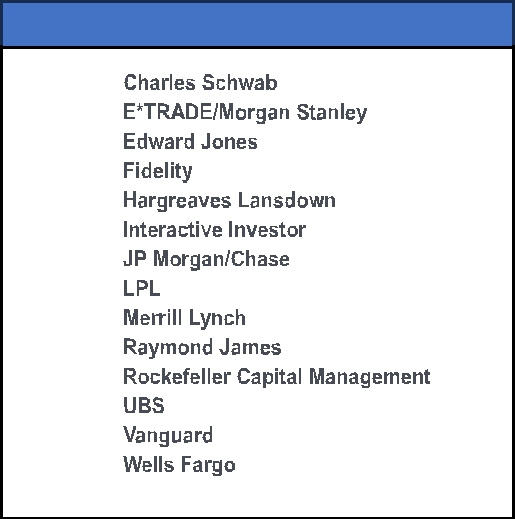
US-based reportable Investment Securities Accounts must be held at one or more of the firms on the Authorized Brokers List.
New employees must transfer all reportable accounts to an Authorized Broker within 45 days from the start of their employment.
This requirement does not apply to managed accounts that are exempt from certain provisions of the Code, employee stock purchase and stock option plans and other accounts (including health savings accounts, 529 plans, pension, retirement, and compensation accounts).
If you are granted an exception to hold your Investment Securities Accounts with a firm not on the Authorized Brokers List, you must manually enter all Covered Securities transactions into the STAR system as soon as possible, but no later than 10 days after the quarter ends. Additionally, you must periodically certify the accuracy of manually entered transactions.
Authorized Brokers List
•
•
•
•
•
•
•
•
•
•
•
•
•
•
Non-US Reportable Accounts
For non-US reportable Investment Securities Accounts, you must promptly disclose any newly opened accounts in which you have a Beneficial Interest.
You must ensure that Compliance receives duplicate statements and trade confirmations/contract notes in one of the three ways listed below.
1.Electronic feeds – You are encouraged to deal through brokers that provide Compliance with trade confirmations and holdings via electronic feed to the STAR system. This provides Compliance with the most timely and accurate personal trading information. All brokers on the Authorized List provide us with electronic feeds.
8
2.Broker Delivery of Duplicate Confirmations and Statements – In applicable jurisdictions, you should allow your brokers to provide delivery of duplicate confirmations and statements directly to your local compliance team.
3.You Upload Trade Information – If neither of the above options is possible, you are required to enter your trade details into STAR and upload the trade information (e.g., confirmation/contract notes, etc.) within 10 business days of executing a precleared trade. Additionally, you will be required to attest to your trades quarterly and upload statements quarterly.
Due to applicable laws, if you are located outside of the United States, you may not be required to disclose or report information regarding accounts for a spouse, dependent family member and/or minor child.
Please see Exhibit B for jurisdiction-specific guidance, if your jurisdiction is not listed, contact your local Compliance for clarification.
Cryptocurrency
You are not required to disclose accounts for cryptocurrency (or other digital assets) if they do not have brokerage capabilities and are not linked to an account with brokerage capabilities (whether or not such capabilities are utilized).
MOBILE INVESTING APPS
If you need help confirming whether your cryptocurrency account has a brokerage component, contact Compliance for assistance.
Ongoing Disclosure, Reporting, & Attestation Responsibilities
The table below summarizes ongoing disclosure, reporting and attestation responsibilities for those accounts in which you have a Beneficial Interest, depending on your Employee Classification.
|
Ongoing Responsibilities |
|
|
Associated Persons |
|
|
Access & Investment Persons |
|
|
|
|
|
|
|
|
|
|
|
Within 30 days – Disclose any newly opened |
|
|
Required |
|
|
Required |
|
|
accounts |
|
|
|
|
|
||
|
|
|
|
|
|
|
|
|
|
|
|
|
|
|
|
|
|
Within 30 days – Disclose the holdings contained in |
|
Not Required |
|
Required |
||||
newly opened accounts |
|
|
||||||
|
|
|
|
|
|
|||
|
|
|
|
|
||||
|
Annually attest that you have disclosed all accounts |
|
|
Required |
|
|
Required |
|
|
|
|
|
|
|
|
|
|
Annually attest that you have disclosed all required |
|
Not Required |
|
Required |
||||
holdings |
|
|
||||||
|
|
|
|
|
|
|||
|
|
|
|
|
|
|
||
|
Quarterly Exception Account Attestation (for |
|
|
|
|
|
|
|
|
Investment Securities Accounts without direct |
|
|
Required |
|
|
Required |
|
|
electronic feed) |
|
|
|
|
|
|
|
|
|
|
|
|
|
|
|
|
In addition to the above, you may be required to complete other periodic attestations to meet jurisdictional and regulatory requirements.
9
Additional Requirements for Access and Investment Persons
Preclearance Process for Personal Trading
The requirements in the Code are designed to mitigate or eliminate any potential or apparent conflict that may occur between your personal account dealing and client security dealing. The following requirements apply to your personal dealing in Covered Securities in Investment Securities Accounts for which you have a Beneficial Interest (See Exhibit C – Beneficial Interest).
What Trades Must Be Precleared?
If you are classified as an Access or Investment Person, you must receive approval before buying, selling, gifting and transferring ownership of stocks, bonds, options, other publicly traded securities, and private placements (Covered Securities) in any reportable Investment Securities Account. Please refer to Exhibit D to see what you need to preclear and what you are not required to preclear. You should consider any potential conflicts of interest before trading regardless of whether pre-clearance is required. PruCo Access Persons may have additional exclusions please consult with your dedicated compliance team.
How does the Preclearance Process Work?
You must preclear any trades in Covered Securities in an Investment Securities Account for which you have a Beneficial Interest.
U.S Based Employees |
Non-U.S. based Employees |
|
|
Employees preclear using STAR. See Exhibit |
Employees preclear using STAR when available. |
D for specific requirements. |
|
|
Please note local law or administrative issues may limit the availability of STAR. |
|
In these cases, employee personal trading activity is approved, monitored, and |
|
tracked locally. |
|
Please consult your local dedicated compliance team for details. |
|
|
Most requests are approved or denied immediately, but some may take longer to evaluate. Please note, a reason for denial may not be provided if it could result in the release of Confidential Information.
Two-Day Approval Window
Approvals and denials are communicated via email. If your requested transaction is approved and you choose to transact, you have until the end of the next calendar day to execute your transaction. If one of your approved days is on a weekend or market holiday, your approval does not carry over to the next business day. A new preclearance request will be required after the two calendar days have passed.
If the transaction is not placed and executed within the approved timeframe, you will need to submit a new trade request in STAR. Limit orders are allowed only if they are set to expire within the preclearance approval window.
If you engage in multi-day limit orders, you must obtain preclearance approval for the days that the order is outstanding. Transactions triggered by limit orders, margin calls, or margin account maintenance fees require preclearance approval and may result in violations.
Options & Futures
As detailed in Exhibit D, the purchase, sale and exercise of options and futures are generally subject to the same restrictions as applicable to the underlying security.
Trading options on a security held by any PGIM portfolio is at the discretion of Compliance.
You may not write uncovered call options or buy uncovered put options on individual securities.
10
Investment & Access Persons should keep in mind that the short-term trading profit rule might affect their ability to close out an option position at a profit as noted below.
Covered Calls/Put Options. You may purchase a put option or sell a call option if the option has a “period to expiration” of at least 60 calendar days from the date of opening the contract and you hold the option for at least 60 calendar days prior to closing of the contract. If you purchase a put to open on a security you already own, you may exercise the put once you have held the underlying security for 60 calendar days.
For PGIM Employees, except for futures on certain broad-based indices listed in Exhibit D, you may not
trade futures, forward contracts, including currency forwards, physical commodities and related derivatives, over- the-counter warrants or swaps. The prohibition on commodities trading applies to trades directly on commodities markets rather than holding the physical commodity (e.g., gold bullion).
Preclearance is not required when the option is exercised without any action on your part.
You should be cautious when transacting in options since a client transaction in the underlying security or a restriction associated with the underlying security may prevent an option transaction from being closed or exercised.
Additional Restrictions for NFA Associated Persons
Employees who are Associated Persons with the National Futures Association are prohibited from trading futures in their personal Investment Securities Accounts and are prohibited from maintaining a personal futures trading account.
Trading Restrictions
Excessive Trading
You may not engage in an excessive volume of trading in your personal accounts. High volumes of personal trading may raise concerns that your energies and interests are not aligned with client interests or our long-term investment philosophy and could potentially impact your ability to conduct assigned responsibilities. You and your supervisor may be notified when personal trading appears excessive (75 or more transactions per quarter).
Restricted Securities
You are prohibited from purchasing or selling securities of issuers on PGIM’s Restricted List(s).
Compliance is responsible for maintaining these Restricted Lists and/or Watch Lists pursuant to their standard operating procedures. Restricted Lists and Watch Lists are confidential and may not be shared.
If you acquired restricted securities prior to becoming subject to the Code or prior to the security being placed on the Restricted List or Watch List you must obtain a written exception from your Compliance Officer prior to the sale of such security.
Blackout Periods
You will not be granted preclearance to transact in a Covered Security when there is a pending buy or sell order for a client in that same security. Additionally:
▪Access Persons will not be granted preclearance to trade in a Covered Security on the same day a client trade occurs in the same security if they have knowledge that security is being considered for a client transaction.
▪Investment Persons will not be granted preclearance to trade in a Covered Security within seven
(7) calendar days of a client trade occurring in the same security.
11

In addition, the Law Department may issue a trading restriction that applies to all or a certain subset of Employees on any Prudential-issued security or any security of a third-party issuer. The Law Department will notify impacted Employees directly with instructions regarding the trading restriction.
Minimum Holding Periods & Short-Swing Profits
Access & Investment Persons are prohibited from profiting from a purchase and sale, or sale and purchase, of the same Covered Security within any sixty (60)-calendar day period.
▪Transactions resulting in a loss are not subject to this prohibition.
Minimum holding periods are applicable for any purchase and subsequent sale, or any sale then subsequent purchase (short-term trading), of the same Covered Security.
Minimum holding periods for Covered Securities are as follows:
Profile |
Minimum Holding Period |
|
|
Access & Investment Person |
Two months (60 calendar days) |
|
|
|
PGIM Public and Private Fixed Income: Six months (180 calendar days) |
Employees located in Japan |
|
|
PGIM Real Estate: Three months (90 calendar days) |
|
|
In keeping with the spirit of this restriction, Access and Investment Persons should not engage in options or other derivative strategies that lead to the exercise or assignment of Covered Securities that would result in a prohibited transaction (i.e., writing a short call or buying a long put with an expiration date of less than sixty days). Any violation of this prohibition will result in disgorgement of profit.
With respect to derivatives, any transaction to close out a derivative position cannot be executed until the end of the holding period. The holding period starts the day after execution of your trade. Calculations are made using the “first-in, first-out” (FIFO) method unless a different method is required in your local jurisdiction. Any exceptions to the above will be made only after compliance review and written approval.
Exceptions (Blackout Periods, Short Swing Profits and Minimum Holding Periods)
Exceptions may be granted to the Minimum Holding Periods, Blackout Periods and Short Swing Profits Rule when the transaction is in a discretionary managed account, non-volitional, or below a certain de minimis threshold.
De minimis Amounts
De minimis amounts are based on USD and are calculated to the equivalent local currency when trading in non-US markets; aggregated over 30 days
|
Blackout Period |
|
Short Swing Profits Rule |
|
|
|
|
|
All Securities Subject to Pre-Clearance |
|
All Securities Subject to a Minimum Holding |
|
|
Period (Equities, ETFs, Debt, etc.) |
|
|
|
|
|
|
|
|
|
|
$50,000 or less |
|
$100 or less |
|
|
|
|
Minimum Holding are any trades, or series of trades |
|
Round-trip transactions over the minimum period |
|
effected over the minimum period |
|
(Buy and Sell or Sell and Buy) |
|
|
|
|
|
Transactions in Covered Securities involving no more than the amount listed in the table above will not violate the Code. Compliance has discretion up to the nearest round lot.
12
Additional Restrictions for PGIM Real Estate – Prudential Retirement Real Estate Fund (“PRREF”)
Employees in PGIM Real Estate, and those that support PGIM Real Estate, are prohibited from trading any real estate-related securities (including real estate investment trusts (REITs) and real estate operating companies (REOCs).
PGIM Real Estate Employees, as well as certain other individuals who have been specifically notified, collectively called “PRREF Covered Individuals,” are subject to special restrictions and requirements including:
➢The PRREF trading window and blackout period procedures; and
➢Only permitted to execute PRREF transactions during the respective open trading window.
Controls have been established to prevent prohibited transactions during closed trading windows. If a blocking system fails, you are still responsible for adherence to the Code. PGIM Real Estate compliance staff will send PRREF trading window and blackout period notices to all PRREF Covered Persons.
Certain limited transactions are permissible during blackout periods. Please contact your Compliance Officer for additional information regarding blackout period exclusions.
Investment Clubs
All employees are prohibited from participating in Investment Clubs.
Financial Wagering Instruments and Prediction Markets
You are prohibited from engaging in any transaction that constitutes a financial wager on the outcome of market, economic, or geopolitical events, where the participant does not acquire a direct interest in the underlying asset.
This includes, but is not limited to:
•Prediction Markets: Platforms that allow participants to bet on the likelihood of specific outcomes (e.g., interest rate decisions, election results, corporate earnings) through event contracts, options, or similar instruments.
•Spread Betting and Contracts for Difference (CFDs): Instruments that enable speculation on the price movement of financial assets without ownership of the underlying asset.
•Other Financial Wagering Instruments: Any product or platform—regulated or unregulated—that facilitates betting on financial outcomes without asset ownership, including synthetic derivatives (e.g., futures, options) or similar instruments.
Such transactions are considered speculative and can pose significant compliance and reputational risks
This prohibition does not apply to wagering on non-financial events such as sports, entertainment, or cultural outcomes (e.g., Super Bowl, Oscars, World Cup), which fall outside the scope of this Code. However, be mindful that such activities are not permitted on Prudential’s premises or while engaged in Prudential business.
Additional Requirements for Designated Persons
Trading Limited During Open Window
If you are identified as a Designated Person outlined in Prudential’s Global Insider Trading Policy, you may only trade PFI stock during an open Trading Window, or such other periods of time as determined at the discretion of the Law Department. The current Prudential Trading Window Calendar can be located in the Document Library in STAR.
13
Preclearance Required for Senior Vice Presidents and Above
Employees who are a level 1-4 or 56A (e.g., Senior Vice Presidents and above), must always preclear all PFI stock trades. Compliance & Law will determine whether there is potential Material Nonpublic Information (“MNPI”) risk before you receive approval.
All employees are prohibited from trading PFI securities when in possession of MNPI regardless of pre-approval. Please contact Compliance with any questions.
Automatic investment plans, default activities, stock awards and grants are exempt from preclearance.
Exceptions
Excluded Transactions
The following transactions are excluded from the above trading restrictions:
▪Purchases or sales that are not voluntary, including tender offers and broker-initiated transactions.
▪Purchases or sales that are part of an automatic investment plan or discretionary managed account which have been approved by Compliance.
▪The acquisition of:
▪Securities because of a corporate action.
▪Securities because of a gift or inheritance.
▪Securities through an employer retirement plan such as a 401(k) plan or stock purchase plan.
▪Transfers in-kind of Covered Securities.
Discretionary Managed Accounts
Discretionary Accounts are managed for you by a registered investment adviser or bank/trust company over which you have no direct or indirect influence or control. These accounts need to be reported, and with approval from Compliance they are exempt from:
▪Quarterly transaction and annual holdings certifications.
▪Access & Investment Person personal investing rules (such as pre-clearance requirements and minimum holding periods).
To receive approval, submit documentation to Compliance demonstrating that all trading in the account is under the sole discretion of your adviser or other designee. Discretionary accounts still require disclosure in STAR (or other approved process, for non-U.S. based employees) and transactions in private placements and limited offerings still require preclearance approval.
Additionally, annually you will attest and acknowledge that you:
➢Had no direct or indirect influence or control over the trading decisions in your discretionary account(s); and
➢Did not suggest trades to the manager or in any way direct the manager to make any particular trades in securities for the discretionary account(s).
You are required to inform Compliance immediately if you terminate any approved advisory relationship or make management changes.
Exemptions While on Leave
All personal trade monitoring requirements outlined in the Code remain in effect while you are on leave of absence, disability, or vacation.
14
In certain circumstances, when you have no access to Prudential or its systems while on extended leave, you may request a temporary suspension from certain requirements. Please work with the appropriate Business Unit Compliance Officer (and management) to obtain an exemption.
Your Business Unit Compliance Officer may grant an exemption only when it would not violate laws or regulations. Until you receive confirmation of an exemption, all requirements remain in effect.
Non-Compliance
You are required to promptly report non-compliance of the Code to your business unit Chief Compliance Officer or their designee.
Incidences of non-compliance reported or detected through internal monitoring will be reported to the Ethics Committee. This Committee will review all incidents and determine any sanctions or other disciplinary actions that may be deemed appropriate.
Depending on the facts and circumstances of the incident, sanctions may include verbal reminders, educational letters, disciplinary letters, monetary penalties, suspension without pay, personal trading ban, reduction in PTO days, or other disciplinary action up to and including termination of employment. In accordance with FINRA Rule 3110, certain transactions by Registered Representatives prompting an investigation may require notification to the Self Reporting Organization.
Recordkeeping
Prudential’s registered investment advisers are required under the Investment Advisers Act of 1940 and the Investment Company Act of 1940 to keep records of certain transactions in which Access and Investment Persons have a direct or indirect beneficial interest.
Compliance maintains all records relating to compliance with the Code such as preclearance requests, exception reports, memoranda relating to non-compliant transactions, records of violations and any actions taken as a result thereof, acknowledgements, and the names of Access Persons.
These records are maintained in accordance with applicable law and Prudential’s Recordkeeping Standards.
15
Exhibit A – Key Definitions
Access Person: Any Employee who has access to nonpublic information regarding any client’s purchase or sale of securities or non-public information regarding the portfolio holdings of any client account or anyone identified by Compliance who should be held to the Code because of the activities conducted by their business unit.
Affiliated Open-End Mutual Fund: A proprietary investment company advised by Prudential, or a non- proprietary investment company sub-advised by Prudential, and any investment company whose investment adviser or principal underwriter is controlled by or under common control with Prudential.
Approved ETF List: Select broad-based ETFs that track an index with a minimum of 100 constituents and other ETFs that compliance has determined to be sufficient. See the document library in STAR for the current Approved List
Associated Person: Any officer, director or branch manager (or any person occupying a similar status or performing similar functions), any person directly or indirectly controlling, controlled by, or under common control with the broker-dealer, any Employee of the broker- dealer or individuals performing covered functions under the Operations Professional rule 1230 (b)(6), except someone whose functions are solely clerical or ministerial. This includes all Employees and support personnel who are registered with a FINRA member broker-dealer firm. For the purposes of the Code Associated Persons may be classified as either Associated, Access or an Investment Person.
Authorized Broker-Dealer and Authorized Futures Commission Merchants (FCMs*):
• |
Charles Schwab* |
• |
Interactive Investor |
• |
Rockefeller Capital |
• |
E*TRADE/Morgan |
• |
JP Morgan/Chase |
|
Management |
|
Stanley* |
• |
LPL |
• |
UBS* |
• |
Edward Jones |
• |
Merrill Lynch |
• |
Vanguard |
• |
Fidelity |
• |
Raymond James |
• |
Wells Fargo |
•Hargreaves Lansdown
U.S.-based reportable Investment Securities Accounts must be held at one of the above firms. Employees with non-U.S. reportable Investment Securities Accounts are encouraged to use firms that will provide an electronic feed to STAR.
Automatic Investment Plan: Regular periodic purchases (or withdrawals) that are made automatically in (or from) Investment Securities Accounts in accordance with a predetermined schedule and allocation. An automatic investment plan includes dividend reinvestment plans (“DRIPs”) and Employee Stock Purchase Plans (“ESPPs”).
Beneficial Interest: You have Beneficial Interest of any account or securities in which you have a direct or indirect financial interest. This includes accounts or securities held in your own name or the name of your spouse or equivalent domestic partner, your minor children, and relatives living with you and to whom you provide or receive financial support or whose investments for which you have discretion, influence, or control. This could include accounts or securities of individuals with whom you share living expenses, bank accounts, rent or mortgage payments, ownership of a home, or any other material financial support. See Exhibit C for more information.
Blackout Period: A temporary period of time as determined by Compliance during which you may be restricted from making any personal securities trades in certain specific Covered Securities to prevent conflicts of interest and safeguard the company’s and clients’ interests and integrity.
CCO: Business Area Chief Compliance Officer or their designee.
Company: Prudential Financial, Inc. and its subsidiaries, otherwise known as “Prudential.”
16
Covered Securities: In general, any securities (and derivatives thereof), including but not limited to individual stocks and bonds, exchange-traded products (ETFs and ETNs), closed-end funds, private placements, and limited offerings. See Exhibit B for a detailed list of Covered and Non-Covered securities.
Designated Person: An Employee who, during the normal course of his or her job, has routine access to material nonpublic information about Prudential. Material Nonpublic Information may consist of financial or non-financial information about Prudential as a whole, or one or more Divisions or Segments. See the Global Insider Trading Policy for more information.
Discretionary Managed Account: An account managed on a discretionary basis by a person other than the Employee or an algorithmic tool (robo-adviser), over which the Employee has no direct or indirect influence or control over the selection or disposition of securities and no knowledge of transactions therein. A Discretionary Managed Account must have a formal investment management agreement that provides full discretionary authority to a third-party money manager.
Dividend Reinvestment Plan (“DRIPs:): A stock purchase plan offered by a corporation whereby shareholders purchase stock directly from the company (usually through a transfer agent) and allow investors to reinvest their cash dividends by purchasing additional shares or fractional shares.
Employees or You: All employees of Prudential, as well as certain others as identified by Compliance.
Ethics Committee: Governance committee composed of senior leaders throughout Prudential. The Committee meets quarterly, or more often as needed, to review potential violations of the Code.
.
FCA: Financial Conduct Authority – a U.K. regulator.
Initial Public Offering: An offering of securities registered under the Securities Act of 1933, the issuer of which immediately before registration was not subject to the reporting requirements of Section 13 or 15(d) of the Securities Exchange Act of 1934.
Investment Club: A group of two or more people, each of whom contributes money to an investment pool and participates in the investment making decision process and shares in the investment returns.
Investment Persons: An Access Person who also makes or participates in making decisions regarding the trading of securities in any client account, has access to such decisions or assists in the trade process. Investment Persons generally can include PMs, research analysts, traders, trade operations, , investments, product development and certain ELT members.
Investment Securities Accounts: Any accounts in which you have a Beneficial Interest (defined above) and other accounts you could be expected to influence or control, in whole or in part, directly or indirectly, whether for securities or other financial instruments, and that can hold Covered Securities (defined above), whether or not such capability is utilized.
Immediate Family Member: Relatives who you share the same household with, and you provide, or receive, material financial support including child, stepchild, grandchild, parent, stepparent, grandparent, spouse, sibling, mother-in-law, father-in-law, son-in-law, daughter-in-law, etc.
Material Nonpublic Information (“MNPI”): Information that is not available to the investing public that an investor, considering all the surrounding facts and circumstances, would find important in deciding whether or when to buy, sell, or hold a security.
Monitored Persons: The term Monitored Persons refers collectively to Supervised Persons, Access Persons, Investment Persons, Associated Persons, and Designated Persons. This term is used by Compliance for back- end monitoring purposes.
17
NFA Associated Person: An individual who solicits orders, customers, or customer funds (or who supervises persons so engaged) on behalf of a commodity trading advisor (CTA) or commodity pool operator (CPO).
Non-Volitional: Investment Securities Account activity related to: i) transactions in approved Discretionary Managed Accounts; ii) transactions in pre-approved dividend reinvestment plans; iii) transactions resulting from automatic rebalancing plans; and v) receipt of employee stock or option bonus awards.
NRSRO: An SEC-registered Nationally Recognized Statistical Rating Organization (NRSRO). Such entities assess the creditworthiness of an obligor as an entity or with respect to specific securities or money market instruments.
Private Placement: An offering that is exempt from registration under the Securities Act of 1933, as amended, under Sections 4(2) or 4(6), or Rules 504, 505 or 506 there under.
Private Securities Transaction: Any securities transaction outside the regular course or scope of an associated person’s employment with a member, including but not limited to, new offerings of securities which are not registered with the Securities and Exchange Commission, but not including transactions in investment company and variable insurance and annuity securities. You are prohibited from investing in these transactions including Crowdfunding investments that are private placements without prior approval from their Local Compliance Officer, and as applicable, Broker-Dealer Compliance Officer based on a determination that no conflict of interest is involved.
Prudential or the Company: Prudential, its affiliates, and its subsidiaries.
Prudential Affiliated Funds: Proprietary funds advised by Prudential, or a non-proprietary fund sub-advised by Prudential, and any fund whose investment adviser or principal underwriter is controlled by or under common control with Prudential.
Prudential Securities Trading Window: The period of time commencing at the opening of business on the date that is two full trading days after an earnings release and ending at the close of business on the date that is two weeks prior to the end of each quarter, or such other period of time as determined at the discretion of the Law Department).
Star Compliance (STAR): The monitoring system utilized for all personal compliance disclosures including Personal Account Dealing.
Supervised Persons: Individuals who are officers, directors, and employees of a registered investment adviser, as well as certain other individuals who provide advice on behalf of the adviser and are subject to the adviser’s supervision and control.
SEC: U.S Securities and Exchange Commission – a U.S. regulator.
Uncovered Option: An option strategy where the options contract writer (i.e., the seller) does not hold the underlying asset to cover the contract in case of assignment (as opposed to a covered option). Nor does the seller hold any option of the same class on the same underlying asset that could protect against potential losses (options spread).
U.S. Government Entity: Any U.S. state or local government; any agency, authority, or instrumentality of a state or local government; any pool of assets sponsored by a state or local government (such as a defined benefit pension plan, separate account or general fund); and any participant-directed government plan (such as 529, 403(b), or 457 plans).
18

Exhibit B – Summary of Code Requirements by Employee Classification
Summary of Code Requirements by Employee Classification
|
|
Supervised |
|
Associated |
|
Access |
|
Investment |
|
|
|
|
|
|
|
|
|
Acknowledgement Requirements |
|
|
|
|
|
|
|
|
Complete new hire and other periodic certifications, |
|
Required |
|
Required |
|
Required |
|
Required |
attestations, and acknowledgments. |
|
|
|
|
|
|
|
|
|
|
|
|
|
|
|
|
|
Account Reporting Requirements |
|
|
|
|
|
|
|
|
|
|
|
|
|
|
|
|
|
Report all Investment Securities Accounts and future |
|
Not |
|
Required |
|
Required |
|
Required |
accounts where you have a beneficial interest. |
|
Required |
|
|
|
|||
|
|
|
|
|
|
|
||
|
|
|
|
|
|
|
|
|
Report transactions and holdings for all securities and |
|
Not |
|
Required |
|
|
|
|
|
|
(transaction |
|
Required |
|
Required |
||
future accounts where you have a beneficial interest. |
|
Required |
|
|
|
|||
|
|
reporting only) |
|
|
|
|
||
|
|
|
|
|
|
|
|
|
|
|
|
|
|
|
|
|
|
Maintain Investment Securities Accounts at Authorized |
|
Not |
|
|
|
|
|
|
Broker-Dealers and Authorized Futures Commission |
|
|
Required |
|
Required |
|
Required |
|
|
Required |
|
|
|
||||
Merchants |
|
|
|
|
|
|
|
|
|
|
|
|
|
|
|
|
|
|
|
|
|
|
|
|
|
|
Report Affiliated Open-End Mutual Fund Accounts and |
|
Not |
|
Required |
|
Required |
|
Required |
Prudential Sponsored Insurance/Annuity Products |
|
Required |
|
|
|
|||
|
|
|
|
|
|
|
||
|
|
|
|
|
|
|
|
|
Report Retirement Accounts (e.g., 401K) that can hold |
|
|
|
|
|
|
|
|
individual securities or Prudential Affiliated Funds |
|
Not |
|
Required |
|
Required |
|
Required |
(Retirement accounts that do not hold securities, or |
|
Required |
|
|
|
|||
|
|
|
|
|
|
|
||
Prudential affiliated funds do not have to be reported) |
|
|
|
|
|
|
|
|
|
|
|
|
|
|
|
|
|
Discretionary Managed Accounts |
|
Not |
|
Required |
|
Required |
|
Required |
|
Required |
|
|
|
||||
|
|
|
|
|
|
|
|
|
|
|
|
|
|
|
|
|
|
Investment Restrictions |
|
|
|
|
|
|
|
|
|
|
|
|
|
|
|
|
|
|
|
|
|
|
|
Required |
|
|
|
|
|
|
|
|
One-Day when you |
|
|
|
|
Does not |
|
Does not |
|
have knowledge |
|
Required |
Blackout Period |
|
|
|
that security is |
|
Seven-Day |
||
|
apply |
|
apply |
|
|
|||
|
|
|
|
being considered |
|
|
||
|
|
|
|
|
|
|
|
|
|
|
|
|
|
|
for client |
|
|
|
|
|
|
|
|
transaction |
|
|
|
|
|
|
|
|
|
|
|
Minimum Holdings Periods and Short Swing Profit Rule |
|
Does not |
|
Does not |
|
Required (60 days) |
|
Required |
|
apply |
|
apply |
|
|
|
||
|
|
|
|
|
|
|
||
|
|
|
|
|
|
|
|
|
Jurisdictional Guidance |
|
|
|
|
|
|
|
|
|
|
|
|
|
|
|
|
|
Jurisdictional Area |
|
Code |
|
|
|
|
|
|
|
|
|
|
|
|
|
|
|
United States |
|
Applies in Full |
|
|
|
|
|
|
|
|
|
|
|
|
|
|
|
United Kingdom |
|
Applies in Full |
|
|
|
|
|
|
|
|
|
|
|
|
|
|
|
19

Summary of Code Requirements by Employee Classification
|
Supervised |
|
Associated |
Access |
Investment |
|
|
|
|
|
|
Netherlands |
Applies in Full |
|
|
|
|
|
|
|
|
|
|
Mexico |
Applies in Full |
|
|
|
|
|
|
||||
|
Applies in Full. In addition, local regulations may require more restrictive |
||||
Japan |
requirements – contact your local compliance department if you have |
||||
|
questions |
|
|
|
|
|
|
|
|
|
|
Ireland |
Applies in Full. |
|
|
|
|
|
|
|
|
|
|
References
The Code complements and should be read in conjunction with other Global Enterprise Policies that address ethics and conflicts, such as Making the Right Choices, Conflicts of Interest Policy, Global Anti-Bribery and Anti- Corruption Policy, and the Global Insider Trading Policy.
The Code is designed to comply with laws, rules, and regulations applicable to Prudential’s business across the globe, including but not limited to:
▪Section 206 of the US Investment Advisers Act of 1940
▪Section 17(j) of the US Investment Company Act of 1940
▪SEC Rule 17j-1, Personal Investment Activities of Investment Company Personnel
▪SEC Rule 204-2, Books and Records To Be Maintained by Investment Advisers
▪SEC Rule 204A-1, Investment Adviser Codes of Ethics
▪FINRA Rule 3210, Accounts At Other Broker-Dealers and Financial Institutions
▪FINRA Rule 3280, Private Securities Transactions of an Associate Person
▪FCA COBS 11.7 and 11.7A, Personal Account Dealing
▪Hong Kong SFC Code of Conduct for Persons Licensed by or Registered with the SFC Section 12.2
▪IMAS Code of Ethics & Standards of Professional Conduct 2.12, Personal Conduct and Training
▪NYSE Listing Rules 303A.10, Code of Business Conduct and Ethics Requirements
20
Exhibit C – Beneficial Interest
Beneficial Interest: The Code applies to all accounts and securities in which you have a Beneficial Interest (as defined above in Exhibit A – Key Definitions). This means that if you can profit, directly or indirectly, or share in any profit from a transaction, you have a Beneficial Interest. If you are unsure if an account or investment falls under your beneficial interest, contact Compliance for further guidance.
Employees Located Outside of the U.S.: If you are located outside of the United States, you may not be required to disclose or report information regarding accounts for which a spouse, dependent family member and/or minor child has a beneficial interest. Please contact your Local Business Compliance Team for clarification.
|
Beneficial Interest |
|
|
Not Beneficial Interest |
|
|
|
|
|
||
|
|
|
|
|
|
You have a spouse, domestic partner, or similar |
|
You have a roommate and do not share bank and investment |
|||
cohabitation arrangement: If you contribute to the |
|
||||
|
accounts or provide material financial support to one another. |
||||
maintenance of a household and the financial support of a |
|
||||
|
Roommates are presumed to be temporary and therefore you |
||||
partner or vice versa, your partner’s accounts and |
|
||||
|
do not have beneficial interest in one another’s accounts and |
||||
securities you have beneficial interest and are required to |
|
||||
|
securities and are not required to disclose. |
||||
disclose. |
|
||||
|
|
|
|||
|
|
|
|
||
Your parents live with you: If you provide financial support |
|
|
|
||
to your parents, your parents’ accounts, and securities you |
|
|
|
||
have beneficial interest and are required to disclose. |
|
|
|
||
|
|
|
|||
Your child has an investment account (e.g., UGMA/UTMA) |
|
Your child has an investment account (e.g., UGMA/UTMA) If |
|||
If you (or your spouse) are the custodian for the minor |
|
someone other than you (or your spouse) is the custodian for |
|||
child, the child’s accounts give you beneficial interest and |
|
your minor child’s account, the account does not give you |
|||
you are required to disclose. |
|
beneficial interest and you are not required to disclose. |
|||
|
|
|
|
|
|
You have an adult child living in your home: If you provide |
|
You have power of attorney: If you have been granted power |
|||
|
of attorney over an account, you do not have beneficial |
||||
financial support to your child, your child’s accounts and |
|
||||
|
interest until the time that the power of attorney has been |
||||
securities give you beneficial interest and you are required |
|
||||
|
activated. Prior to activation, you do not have to disclose; post |
||||
to disclose. |
|
||||
|
activation you do. |
||||
|
|
|
|
||
|
|
|
|
||
You have a college-age child: If your child is in college and |
|
|
|
||
you still claim the child as a dependent for tax purposes, |
|
|
|
||
you have beneficial interest of their accounts and securities |
|
|
|
||
and are required to disclose. |
|
|
|
||
|
|
|
|
||
You are the executor, trustee and/or the beneficiary of a |
|
|
|
||
trust: Due to the complexity and variety of trust |
|
|
|
||
agreements, these situations require case-by-case review |
|
|
|
||
by Compliance. |
|
|
|
||
|
|
|
|
|
|
21

Exhibit D – Preclearance Summary Chart
Access & Investment Persons Pre-Clearance & Holding Period Summary Chart
|
|
Reporting |
Holding Period Required |
|
TYPE OF SECURITY |
Pre-Clearance |
60 days. |
||
Required |
Required |
Employees located in Japan: |
||
|
||||
|
|
|
(FI – 180 days and RE 90 days) |
|
|
|
|
|
Covered Securities
Publicly Traded Investment Vehicles
Closed-End Funds |
Yes |
Yes |
|
Yes |
|
|
|
|
|
Proprietary/Affiliated or Sub-advised Open End |
No |
Yes |
|
No - must comply with limits in |
Mutual Fund |
|
fund documents |
||
|
|
|
|
|
Unit Investment Trusts |
No |
Yes |
|
No |
|
|
|
|
|
Approved ETFs [See Star Document Library] |
No |
Yes |
|
No |
|
|
|
|
|
Exchange-Traded Funds (ETFs) |
Yes |
Yes |
|
Yes |
(not listed in the Approved ETF List) |
|
|||
|
|
|
|
|
|
|
|
|
|
Exchange-Traded Notes (ETNs) |
Yes |
Yes |
|
Yes |
|
|
|
|
|
Publicly Traded Equities |
|
|
|
|
|
|
|
|
|
Common Stocks |
Yes |
Yes |
|
Yes |
|
|
|
|
|
Listed Depository Receipts e.g. ADRs, Ads, |
Yes |
Yes |
|
Yes |
GDRs |
|
|||
|
|
|
|
|
|
|
|
|
|
DRIPs - Automatic purchases for dividend |
|
|
|
|
reinvestment plan are not subject to pre-approval |
No |
Yes |
|
No |
requirements. Need to report the initial account set |
|
|||
|
|
|
|
|
up/purchase within 30 days |
|
|
|
|
|
|
|
|
|
Corporate Non-Voluntary Actions (e.g., |
No |
Yes |
|
No |
Stock Splits, Mergers, Spin-off etc.) |
|
|||
|
|
|
|
|
|
|
|
|
|
Rights |
Yes |
Yes |
|
Yes |
|
|
|
|
|
Warrants (Listed and Exercised) |
Yes |
Yes |
|
Yes |
|
|
|
|
|
Preferred Stock |
Yes |
Yes |
|
Yes |
|
|
|
|
|
Listed Real Estate Investment Trusts (REITs) |
Yes |
Yes |
|
Yes |
|
|
|
|
|
|
Only for Level 1-4 |
|
|
Only Section 16 Reporting |
Prudential Stock |
or 56A level |
|
|
|
|
|
Persons |
||
employees |
Yes |
|
||
Designated Persons can only trade during open |
|
(Board of Directors and Certain |
||
(regardless of |
|
|||
window |
|
|
Executive Officers) are subject to a |
|
other |
|
|
||
|
classifications) |
|
|
6-month holding period |
|
|
|
|
|
Initial Public Offerings (equity IPOs) and |
|
|
PROHIBITED |
|
Secondary/Follow on offerings |
|
|
||
|
|
|
|
|
|
|
|
|
|
Private Investments in Public Equity Securities |
|
|
PROHIBITED |
|
(PIPES) |
|
|
||
|
|
|
|
|
|
|
|
|
|
|
|
|
22 |
|

Access & Investment Persons Pre-Clearance & Holding Period Summary Chart
|
|
Reporting |
Holding Period Required |
|
TYPE OF SECURITY |
Pre-Clearance |
60 days. |
||
Required |
Required |
Employees located in Japan: |
||
|
||||
|
|
|
(FI – 180 days and RE 90 days) |
|
|
|
|
|
Publicly Traded Fixed Income Instruments
Asset Backed Securities |
Yes |
Yes |
|
Yes |
|
|
|
|
|
U.S. Agency Securities including Fannie |
Yes |
Yes |
|
Yes |
Mae/Freddie Mac |
|
|||
|
|
|
|
|
|
|
|
|
|
Corporate Bonds |
Yes |
Yes |
|
Yes |
|
|
|
|
|
Convertible Bonds (converted) |
Yes |
Yes |
|
Yes |
|
|
|
|
|
Municipal Bonds |
Yes |
Yes |
|
Yes |
|
|
|
|
|
New Issues (fixed income) |
Yes |
Yes |
|
Yes |
|
|
|
|
|
Structured Notes |
Yes |
Yes |
|
Yes |
|
|
|
|
|
Sovereign Debt |
Yes |
Yes |
|
Yes |
|
|
|
|
|
Derivatives |
|
|
|
|
|
|
|
|
|
Common Stock Options |
Yes |
Yes |
|
Yes |
|
|
|
|
|
Options and futures on certain Broad-Based |
|
|
|
|
Indices. (S&P 500, FTSE 100, FTSE 250, MSCI |
|
|
|
|
EAFE, MSCI EM, NASDAQ 100, Nikkei 225, NSE |
|
|
|
|
S&P CNX, Russell 1000, Russell 2000, Russell |
|
|
|
|
3000, S&P 100, S&P Europe 350, and S&P |
No |
Yes |
|
No |
MidCap 400 including CBOE securities) and ETFs |
|
|
|
|
(on the Approved ETF list) |
|
|
|
|
NFA Associated Persons are prohibited from |
|
|
|
|
trading in futures |
|
|
|
|
|
|
|
|
|
All other options and futures that are not listed |
|
PROHIBITED |
|
|
above |
|
|
||
|
|
|
|
|
|
|
|
|
|
Forward Contracts |
|
PROHIBITED |
|
|
|
|
|
|
|
Commodities Contracts |
|
PROHIBITED |
|
|
|
|
|
|
|
OTC Warrants or Swaps |
|
PROHIBITED |
|
|
|
|
|
|
|
Derivative Instruments of Prudential Securities |
|
|
|
|
speculative in nature: e.g., short sales; put or |
|
PROHIBITED |
|
|
call options |
|
|
|
|
|
|
|
|
|
Derivatives of Sovereign Debt |
|
PROHIBITED |
|
|
|
|
|
|
|
Currency Related Derivatives (Futures, Swaps |
|
|
|
|
and other structured products tied to |
|
PROHIBITED |
|
|
currencies) |
|
|
|
|
|
|
|
|
|
23

Access & Investment Persons Pre-Clearance & Holding Period Summary Chart
|
|
Reporting |
Holding Period Required |
|
TYPE OF SECURITY |
Pre-Clearance |
60 days. |
||
Required |
Required |
Employees located in Japan: |
||
|
||||
|
|
|
(FI – 180 days and RE 90 days) |
|
|
|
|
|
Private Investments, Health Savings Accounts, Investment Clubs, Short Sales, & Financial Wagering and Predictive Markets
Private Investments (e.g. limited partnerships; |
Yes |
Yes |
|
N/A |
private placements) |
|
|||
|
|
|
|
|
|
|
|
|
|
Hedge Funds |
Yes |
Yes |
|
Yes |
|
|
|
|
|
HSA Accounts with Self-Directed Brokerage |
|
|
|
|
Accounts (Health Equity Schwab Account) need to |
Yes |
Yes |
|
Yes |
follow the applicable preclearance requirements |
|
|||
|
|
|
|
|
listed above |
|
|
|
|
|
|
|
|
|
Investment Clubs |
|
PROHIBITED |
|
|
|
|
|
|
|
Short Selling of any security that requires pre- |
|
PROHIBITED |
|
|
clearance under the Code |
|
|
||
|
|
|
|
|
|
|
|
|
|
Financial Wagering Instruments and Prediction |
|
PROHIBITED |
|
|
Markets |
|
|
||
|
|
|
|
|
|
|
|
|
|
The following do not require pre-clearance and reporting and are not subject to holding period requirements
Non-Affiliated Open End Mutual Funds |
No |
No |
No |
|
|
|
|
|
|
Money Market Funds |
No |
No |
No |
|
|
||||
|
|
|
|
|
Investments in 529 Plans |
No |
No |
No |
|
|
|
|
|
|
Brokerage CDs |
No |
No |
No |
|
|
|
|
|
|
Investment Grade Short-Term Debt |
|
|
|
|
Instruments (rated in one of the two highest |
No |
No |
No |
|
categories by an NRSRO and have a maturity |
||||
|
|
|
||
of less than 366 days) |
|
|
|
|
|
|
|
|
|
Bankers’ Acceptances & Certificates of |
No |
No |
No |
|
Deposits |
||||
|
|
|
||
|
|
|
|
|
Direct Obligations of the US Government |
No |
No |
No |
|
(US Treasuries) |
||||
|
|
|
||
|
|
|
|
|
Commercial Paper |
No |
No |
No |
|
Cash Currencies Transactions (buying EURO, |
No |
No |
No |
|
GBP, etc.) |
||||
|
|
|
||
|
|
|
|
|
Cryptocurrencies that are not securities |
No |
No |
No |
|
|
|
|
|
24

Information Barrier Standards
December 2025
Applies to:
All employees (full-time and part-time), globally, that work for, or support, Prudential’s general account, institutional asset management, investment adviser, and broker dealer businesses (CIO, PGIM and PIMS).
All contractors, interns, temporary employees, and others who have been notified by compliance are subject to this policy.
Questions?
For any questions, please contact your local compliance officer or
PST.Help@prudential.com
These Standards complement other important Prudential policies that address ethics and conflicts, such as Prudential’s Code of Conduct
–Making the Right Choices, Conflicts of Interest Policy, Global Insider Trading Policy, and Code of Ethics – Personal Securities Investing Standards.
Prudential Financial, Inc.- Compliance Approval Required Prior to External Dissemination
Policy Statement
PGIM is subject to strict laws and regulations that prohibit the misuse of Material Non-Public Information (“MNPI” as defined below). You are strictly prohibited from using MNPI to execute securities transactions for the company, client or personal gain. You are also prohibited from sharing MNPI with anyone who does not require the information in the proper course of their employment. PGIM takes a zero-tolerance approach to misuse of MNPI.
PGIM has implemented Information Barrier Controls (as defined below) designed to control the flow of, and prohibit the misuse of MNPI and to manage conflicts of interest which may arise as a result of receiving MNPI.
The below Standards set out the minimum requirements that apply to all PGIM employees, consultants, contractors, interns and others who have been advised to be subject to this Policy.
Standards
These Information Barrier Standards (“Standards”) outline the controls and information barriers that are reasonably designed to safeguard material non-public information and ensure compliance with applicable insider trading laws and regulations. PGIM’s Chief Legal and Compliance Officer is authorized to approve exceptions to and modifications of these Standards. Any requests should be documented and set forth the basis and rationale and any conditions to which the approval is subject.
For purposes of these Standards, material non-public information (“MNPI”) is defined as information not available to the general public that a reasonable investor would consider material when making decisions to buy, sell, or hold a security. Information that may not be material on its own can become MNPI when combined with other information held or internal data, such as strategic decisions or anticipated actions.
Information is considered public only when it has been widely disseminated through recognized channels (e.g., public filings, press releases, newswire services). Information accessible solely to company employees or a limited group of analysts, brokers, or institutional investors is generally not considered public.
PGIM maintains physical separation and technological controls (“Information Barrier Controls”, as further defined below) designed to prevent the exchange of MNPI between distinct investment teams and designed to control the flow of inside information. These Information Barrier Controls are designed to support compliance with insider trading laws and regulations, and to manage conflicts of interest, by enabling PGIM’s investment teams to trade independently, even when other PGIM teams may possess MNPI.
To further safeguard PGIM’s confidential information and MNPI, all employees - whether working in PGIM offices, remotely, or in shared spaces—must maintain such information in a secure, and organized workspace in alignment with these Standards. This includes removing and securing sensitive, including confidential, documents in locked drawers or cabinets when unattended, locking or shutting down devices when not in use, and ensuring passwords or access credentials are not left visible. Computer sessions must be locked when stepping away, and electronic files containing confidential information
Prudential Financial, Inc.- Compliance Approval Required Prior to External Dissemination
should be secured when not in use. Sensitive documents must be disposed of in designated shred bins, and printouts containing MNPI, confidential or personally identifiable information, or client data should be promptly retrieved and removed from shared printers or copiers.
Under these Standards, you may not share MNPI without prior written approval from Compliance, nor may you seek MNPI from others. Any other confidential, proprietary or other information that you receive during your time at Prudential must not be shared with those who do not have a need to know the information, even when this policy is otherwise followed.
You are required to understand and comply with these Standards and attest to compliance with these Standards at least annually. Employees will typically receive training on these Standards at time of hire and periodically thereafter.
Information Barrier Classifications and Controls
Above the Barrier: Certain Investment Sector or Permitted Shared Resource senior officers and enumerated control functions as noted in Exhibit A may need access across Investment Sectors to make strategic decisions or perform their job responsibilities. Such personnel are not involved in making security-specific trading or investment decisions for PGIM or our clients.
•Employees designated as Above the Barrier are generally not subject to the physical and technological restrictions noted in these Standards but should only communicate and receive relevant information on a “need-to-know” basis.
Information Barrier Controls: PGIM has implemented Information Barrier Controls to: (a) contain the MNPI within an Investment Sector and their support teams; (b) prevent the misuse of MNPI; and (c) limit transacting while in possession of MNPI. These controls permit other Investment Sectors to continue transacting unimpeded by limiting their access to MNPI. PGIM’s Information Barrier Controls include but are not limited to:
•Policies and procedures
•Training
•Physical Separation
•Technological Separation
•Restricted Lists
Isolated Information Barrier: As needed, Compliance may approve “ad hoc” or Isolated Information Barriers around one or a group of employees with respect to potential receipt or sharing of MNPI. The relevant Compliance department is responsible for documenting the approval, maintaining the applicable controls and escalating and addressing any breaches of the Isolated Information Barrier. Please refer to the section titled “Barrier Crossings – Isolated Information Barriers” for more information regarding Isolated Information Barriers.
Investment Sector: At PGIM, MNPI resides primarily in our Investment Sectors. Investment Sector means each distinct PGIM business group listed in Exhibit A that has its own investment and/or trading
Prudential Financial, Inc.- Compliance Approval Required Prior to External Dissemination
team that has been designated or grouped separately from other investment units. Investment Sectors are subject to the following Information Barrier Controls:
•Physical Separation: Investment Sectors may not co-locate with each other.
•Technological Separation: Access to Investment Sector trading systems and drives is limited.
Investment Sector workspace co-location and systems access permissions may be granted to Permitted Shared Resources (as defined below) that provide support to an Investment Sector and require such access to perform their roles.
Investment Sector Sub-Division: From time to time, we may designate a sub-division of an Investment Sector as a separate sub-division information barrier (the “Sub-division Barrier”) for the purpose of receiving and containing MNPI separate from the rest of the Investment Sector. The Sub-division Barrier should have sufficient managerial, physical, and technological separation from the rest of the Investment Sector and may have additional controls as determined by Compliance. With reasonable controls, the receipt of MNPI by the members of the Sub-division Barrier would not restrict the Investment Sector unless the MNPI was intentionally or inadvertently shared.
Permitted Shared Resources: Business groups which support multiple Investment Sectors and which do not have investment authority are designated as “Permitted Shared Resources.” These business groups include the Institutional Client Group, Global Wealth, Product and Marketing, Portfolio Specialists, Operations, Technology and Finance. Permitted Shared Resources are subject to the following Information Barrier Controls:
•Physical Separation: Permitted Shared Resource teams may generally share workspace with one another, but can only co-locate with an Investment Sector if they provide dedicated support to the Investment Sector and require such access to perform their role.
•Technological Separation: Permitted Shared Resource teams may access each other’s systems, provided those systems do not contain unsecured MNPI. Cross-team system access should be limited to teams that regularly share information to perform their functions.
Investment Sector co-location and systems access permissions may be granted to Permitted Shared Resources that provide support to an Investment Sector and require such access to perform their roles.
Restricted Lists: A list of issuers or related issuers (e.g., affiliates, competitors) with respect to which PGIM has MNPI. Employees are prohibited from entering into any securities or derivative transactions in relation to any securities that are included the Restricted Lists applicable to them. If you obtain MNPI, from any source, with respect to an issuer, you must immediately notify Compliance. Compliance will place the issuer and/or the related issuer on the appropriate Restricted List(s) unless otherwise addressed (e.g., creation of Isolated Information Barriers). Trading restrictions will generally apply to related issuers (e.g. parents and subsidiaries) unless it can be determined that the MNPI is not material to those related issuers. Once Compliance reasonably concludes that no employee of an Investment Sector possesses MNPI with respect to an issuer, they may remove such issuer from the applicable Restricted List(s).
Prudential Financial, Inc.- Compliance Approval Required Prior to External Dissemination
Determining Whether Information is MNPI
Prior to communicating issuer specific information with a member of another Investment Sector or a Permitted Shared Resource that supports another Investment Sector, you must receive pre-approval from Compliance to determine if the topic of discussion relates to MNPI. The relevant Compliance department will maintain a log of approved cross-barrier communications that involve MNPI.
Not all information that you have access to or, or come in contact with will be MNPI and subject to these Standards. MNPI is typically information that is precise, non-public, related to one or more issuers, or to one or more financial instruments and the publication of which would likely have a significant effect on the price of those financial instruments, or related financial instruments.
When assessing whether information is material, you should consider whether a reasonable person would consider the information to be important in deciding whether to buy, sell or hold a security. These materiality determinants are usually fact-intensive and can be complex. It is important to consider whether a piece of information on its own may not be material, but when taken with other information it could be material. Information you receive when combined with information you already hold and decisions you have taken, or are about to take, could, collectively, be MNPI.
Examples of information that, depending on the circumstances, may be MNPI include, without limitation:
•a merger or acquisition;
•a sale or divestiture of substantial assets;
•a change in dividend policy;
•earnings results (or significant trends or projections regarding or affecting company performance or earnings results);
•embargoed government reports and statistics;
•unannounced government actions; and
•changes in auditors or senior management.
Examples of information that, depending on the circumstances is MNPI and cannot be shared with another Investment Sector include, without limitation:
•Issuer specific MNPI
•Restricted Lists
•Same day trade information (e.g., open market orders or intended trades) unless required to perform a business function (e.g., settlements, reconciliations).
•Valuations for fair valued transactions (public or private) where the valuation is based on MNPI (consult with Compliance)
•Investment Research that Includes MNPI.
Prudential Financial, Inc.- Compliance Approval Required Prior to External Dissemination
Examples of information that, depending on the circumstances is not MNPI and can be shared on a need to know basis include, without limitation:
•Client Information (e.g., Names, Contacts, Fees, Meeting Notes)
•Client Pipeline Reports
•Marketing Decks
•Valuations for unrestricted Public Equity/Fixed Income Securities
•Time Delayed Holdings (T+1 or longer)
•Security Attributes (e.g., issuer, maturity, coupon, ratings)
•Investment Research that Does Not Include MNPI
If you are not sure whether information is MNPI, or if you believe that you have come into contact with MNPI you must reach out to Compliance for clarification.
Barrier Crossings - Isolated Information Barriers
Sharing MNPI across information barriers (“Barrier Crossing”) is permitted only when necessary for a legitimate business purpose and subject to strict controls.
MNPI may be shared only when there is a legitimate business need that cannot be met through alternative means. Examples include, but are not limited to: a) evaluating or executing investments, mergers, acquisitions, divestitures, or joint ventures; b) providing MNPI to Credit or Investment Committee members assessing multi-sector transactions; c) supporting strategic initiatives such as product development, portfolio restructuring, or market response; and d) facilitating client-directed transactions requiring coordination between multiple sectors.
Except as noted below, Barrier Crossings require pre-approval from Compliance. If MNPI is being shared, requests should generally describe the business purpose and provide additional information such as recipients, scope and duration of the trading restrictions. Approved Barrier Crossings will typically be logged, if necessary, Compliance will advise on controls for isolated information barriers and will update Restricted Lists. Trading restrictions will remain in place until Compliance determines that MNPI is no longer held.
Pre-approval is not required for certain activities, including: a) internal or client meetings limited to macro themes and general performance; b) communications related to shared third-party client advisory relationships limited to the client’s portfolio; and c) communications between affiliated advisory relationships limited to the engaging sector’s portfolio.
Access to MNPI must be restricted to individuals with a demonstrated need-to-know. Recipients should be briefed on their obligations regarding MNPI handling. Compliance may require additional safeguards such as chaperoned meetings or restricted system access. Any suspected or actual breach of secured MNPI or this policy must be reported to Compliance immediately.
Prudential Financial, Inc.- Compliance Approval Required Prior to External Dissemination
Confidentiality Agreements
When an Investment Sector or any of its sub-divisions enters into a confidentiality agreement, governing information to be received from a third party in connection with an actual or potential investment, the employee signing the agreement is responsible for determining whether they will likely receive MNPI and notifying Compliance. If the information is deemed to be MNPI, Compliance will update the relevant Investment Sector’s Restricted List(s) as necessary.
Even if the information is not deemed to be MNPI, you must take precautions to ensure that Confidential Information, regardless of materiality, is not shared with individuals who do not need to know the information to perform their job role or function. In some cases, the terms of the confidentiality agreement may not permit the sharing of such information to other business units or Investment Sectors. Please consult your Law Department, as needed, when assessing the terms of any confidentiality agreement.
Escalation
If MNPI is shared in violation of the information barriers defined herein, the incident must be escalated to Compliance immediately.
Please note that you are not required to report receipt of MNPI to Compliance when a) you receive the MNPI from a PGIM employee and b) you have been explicitly informed that the MNPI was previously reported to Compliance and that the issuer and any associated securities have already been placed on the restricted list.
Furthermore, MNPI that is created by PGIM in the course of daily business activity does not have to be escalated to Compliance. For example, a pending order or a decision to purchase or sell securities may be MNPI. Similarly, research analysis (e.g. relative value recommendations or rating changes) which may influence trading decisions may be MNPI. You are not required to report all such instances of MNPI to Compliance, however you are prohibited from disclosing that information to any other person who does not need to know the information to perform their duties and the information may only be used to carry out the purposes for which the information was created.
Failure to report violations of this policy, or failure to disclose your receipt of MNPI may breach securities laws and will be investigated and may result in disciplinary action, including termination or referral to regulatory or other law enforcement authorities. Any suspected violations should be reported to a Compliance Officer, or, if preferred, through Prudential’s Ethics Help Line (1-800-752- 7024) or website (https://prudential.ethicspoint.com). Prudential prohibits retaliation against anyone who makes a good faith report or assists in an investigation.
Nothing in these Standards restricts your right to voluntarily communicate with government agencies about potential legal violations without notifying or seeking approval from Prudential.
Prudential Financial, Inc.- Compliance Approval Required Prior to External Dissemination

Exhibit A
Investment Sectors
(also known as Information Barrier Groups)
Employees/Groups Designated as "Above the Barrier"
Prudential Officers: Prudential Chief Investment Officer, Prudential Global Investment Strategy Managing Director, Prudential Head of Global Hedge Management, Prudential Chief of Global Portfolio Management, Prudential Head of Alternative Assets
PGIM Group Heads: Chief Executive Officer, Heads of Institutional Distribution, Head of Product and Marketing, Heads of Multi-Asset Solutions and Quantitative Solutions, Head of Public and Private Fixed Income, Heads of PGIM Real Estate, Head of Global Wealth, and CEO of Jennison Associates
PGIM Functional Heads and Executive Support: Chief of Staff, Chief Legal and Compliance Officer, Heads of Each of: Strategy; People Team; Information & Technology; Administration; Finance, Risk; Communications; Operations; Marketing; and Global Services, and Chief Business Officer of PGIM Fixed Income
PGIM Functional Support Units: Law, Compliance, Risk Management, Enterprise Risk Management (Investment Risk and Market Risk) and Internal Audit (IA PGIM coverage)
|
|
|
|
|
|
|
|
|
|
|
|
|
|
|
|
|
|
|
|
|
|
|
|
|
|
|
|
|
|
|
|
PGIM Global |
|
|
PGIM Fixed |
|
|
PGIM Fixed |
|
|
PGIM |
|
|
Jennison |
|
|
Deerpath |
|
|
PGIM Real |
|
|
Montana |
|
|
Chief |
|
|
PGIM Multi- |
|
|
|
|
|
|
|
Income |
|
|
Quantitative |
|
|
Associates |
|
|
|
|
|
|
Capital |
|
|
Investment |
|
|
Asset |
|
|
||||
|
Wealth |
|
|
Income (Public) |
|
|
|
|
|
|
|
|
Capital |
|
|
Estate |
|
|
|
|
|
|
|
|
||||||
|
|
|
|
|
(Private) |
|
|
Solutions |
|
|
LLC |
|
|
|
|
|
|
Partners |
|
|
Office |
|
|
Solutions |
|
|
||||
|
|
|
|
|
|
|
|
|
|
|
|
|
|
|
|
|
|
|
|
|
|
|
|
|
||||||
|
|
|
|
|
|
|
|
|
|
|
|
|
|
|
|
|
|
|
|
|
|
|
|
|
|
|
|
|
|
|
|
PGIM |
|
PGIM Fixed Income |
|
PGIM Fixed |
|
PGIM |
|
Jennison |
|
Deerpath |
|
All PGIM |
|
Montana |
|
Chief Investment |
|
PGIM Multi- |
|
||||||||||
|
Investments |
|
Public |
|
Income |
|
Quantitative |
|
Associates |
|
Capital |
|
Real Estate |
|
Capital |
|
Office, including |
|
Asset Solutions |
|
||||||||||
|
(all units and locations, |
|
(all units and |
|
Private |
|
Solutions |
|
LLC |
|
(all units and |
|
(all units and |
|
Partners |
|
Global Hedge |
|
(all units and |
|
||||||||||
|
and investment sector |
|
locations, and |
|
(all units and |
|
(all units and |
|
(all units and |
|
locations, |
|
locations, |
|
(all units and |
|
Management |
|
locations, and |
|
||||||||||
|
support functions |
|
investment sector |
|
locations, and |
|
locations, and |
|
locations, and |
|
and |
|
including |
|
locations, and |
|
|
|
|
investment sector |
|
|||||||||
|
deemed to be BU |
|
support functions |
|
investment |
|
investment |
|
investment |
|
investment |
|
GRES and |
|
investment |
|
Prudential Select |
|
support functions |
|
||||||||||
|
employees) |
|
deemed to be BU |
|
sector support |
|
sector support |
|
sector support |
|
sector |
|
investment |
|
sector support |
|
Strategies |
|
deemed to be BU |
|
||||||||||
|
|
|
|
employees |
|
functions |
|
functions |
|
functions |
|
support |
|
sector |
|
functions |
|
|
|
|
employees) |
|
||||||||
|
PGIM Custom Harvest |
|
|
|
|
deemed to be |
|
deemed to be |
|
deemed to be |
|
functions |
|
support |
|
deemed to be |
|
|
|
|
|
|
|
|||||||
|
LLC |
|
PGIM Japan Co. Ltd |
|
BU |
|
BU employees) |
|
BU |
|
deemed to be |
|
functions |
|
BU employees) |
|
|
|
|
|
|
|
||||||||
|
|
|
|
Sub-Division Barrier |
|
employees) |
|
|
|
|
employees) |
|
BU |
|
deemed to be |
|
|
|
|
|
|
|
|
|
|
|||||
|
PGIM DC Solutions |
|
Within FI: |
|
|
|
|
|
|
|
|
|
|
employees) |
|
BU |
|
|
|
|
|
|
|
|
|
|
||||
|
|
|
|
|
|
|
|
|
|
|
|
|
|
|
|
|
|
|
employees) |
|
|
|
|
|
|
|
|
|
|
|
|
Strategic Investment |
|
Capital Markets |
|
|
|
|
|
|
|
|
|
|
|
|
|
|
|
|
|
|
|
|
|
|
|
|
|
||
|
Group (SIRG) |
|
Group - Fixed |
|
|
|
|
|
|
|
|
|
|
|
|
|
|
|
|
|
|
|
|
|
|
|
|
|
||
|
|
|
|
Income Employees |
|
|
|
|
|
|
|
|
|
|
|
|
|
Impact & |
|
|
|
|
|
|
|
|
|
|
||
|
|
|
|
(also known as the |
|
|
|
|
|
|
|
|
|
|
|
|
|
Responsible |
|
|
|
|
|
|
|
|
|
|
||
|
|
|
|
PGIM FI Private |
|
|
|
|
|
|
|
|
|
|
|
|
|
Investing |
|
|
|
|
|
|
|
|
|
|
||
|
|
|
|
Credit Team) |
|
|
|
|
|
|
|
|
|
|
|
|
|
|
|
|
|
|
|
|
|
|
|
|
|
|
Prudential Financial, Inc.- Compliance Approval Required Prior to External Dissemination

Prudential’s Code of Conduct
MAKING THE
RIGHT CHOICES
MTRC
Prudential’s Code of Conduct
MAKING THE
RIGHT CHOICES
MESSAGE FROM OUR CEO
At Prudential, we all share a tremendous responsibility and opportunity
—to make lives better by solving the financial challenges of our changing world. Your commitment to fulfilling our shared purpose and delivering meaningful value to our customers and other stakeholders helps make financial security a reality for millions of individuals and families around the world.
Our long-standing pledge to do business the right way must remain at the heart of every customer interaction, decision and choice we make so that we live up to our purpose and deliver on our promises. Where we operate, who we serve and what solutions we provide will evolve just as our customers’ needs, expectations and our operating environment do. What will never change — can never change — is our commitment to responsible leadership and working with integrity.
These fundamentals have defined our approach to business from the day Prudential was founded 150 years ago. And we must hold true to those as we evolve to address new customer needs and technological advancements. As we continue to grow and serve customers worldwide, I know I can rely on you to uphold our resolute commitment to always do things the right way, every day.
Our Code of Conduct, Making the Right Choices, was developed to support you in your work every day. It provides a guide to understanding the ethical business practices we adhere to across the company — from how we operate to how we treat employees, customers and other stakeholders. It identifies the responsibilities we all share in meeting the company’s high ethical standards. In addition, it notes the many resources available to help as we deliver on our promises.
Thank you for your continued contributions and commitment to delivering on our promises and fulfilling our purpose.
“Our long-standing pledge to do business the right way must remain at the heart of every customer interaction, decision and choice we make.”
ANDREW F. SULLIVAN
Chief Executive Officer Prudential Financial, Inc.
Making the Right Choices Prudential’s Code of Conduct | 1

TABLE OF CONTENTS TABLE OF CONTENTS
Our Purpose Unites Us................................................... |
3 |
Our Principles Guide Us................................................. |
3 |
Our Core Values Are Our Foundation........................... |
3 |
OUR FUTURE IS POWERED BY OUR HERITAGE.......... |
4 |
WE DO THE RIGHT THING.................................................. |
5 |
What Is the Code?............................................................ |
5 |
Following the Code.......................................................... |
5 |
Leading by Example........................................................ |
6 |
Seeking Guidance and Reporting Concerns................ |
7 |
Speaking Up Without Fear............................................. |
7 |
Protecting the Integrity |
|
of Prudential’s Financial Reporting............................... |
7 |
Making the Right Decisions........................................... |
8 |
|
|
|
|
of Our Workforce.......................................................... |
|
Workplace Violence...................................................... |
|
Sustainability at Prudential.......................................... |
|
WE UNDERSTAND OUR RESPONSIBILITIES |
|
TO OUR CUSTOMERS....................................................... |
13 |
Treating Customers Ethically....................................... |
14 |
Keeping Private Information Private........................... |
14 |
Securing Data and Information............................. |
14 |
Artificial Intelligence (AI)........................................ |
|
Social Media Usage................................................ |
WE DO BUSINESS THE RIGHT WAY............................. |
16 |
Competing with Integrity.............................................. |
17 |
Managing Risk.............................................................. |
17 |
Avoiding Conflicts of Interest....................................... |
18 |
Protecting Our Assets.................................................. |
18 |
Safeguarding Prudential Proprietary Information |
|
and Assets............................................................... |
18 |
|
|
Intellectual Property................................................ |
|
Treating Gifts and Entertainment Responsibly......... |
20 |
Refusing to Pay or Take Bribes or Kickbacks........... |
20 |
Preventing Money Laundering.................................... |
20 |
Insider Information....................................................... |
21 |
Communicating Responsibly...................................... |
21 |
Engaging Third Parties Responsibly........................... |
|
ADMINISTRATION OF OUR CODE.................................. |
23 |
Our Policies................................................................... |
|
Disciplinary Action........................................................ |
|
|
|
CONCERNS AT PRUDENTIAL.......................................... |
Making the Right Choices Prudential’s Code of Conduct | 2

OUR PURPOSE, PRINCIPLES AND CORE VALUES
Our Purpose Unites Us
Our purpose speaks to our 150 years of creating financial opportunities for individuals, families, institutions and communities. It highlights our ability to improve the quality of life for more people through small- and large-scale solutions.
We make lives better by solving the financial challenges of our changing world.
Our Principles Guide Us
While our purpose unites us, our principles guide us in everything we do. Our integrity, long-term focus, our ability to translate the potential of our talent and culture into superior execution, and our expertise in making and keeping promises represent Prudential’s unique combination of strengths.
We do the right thing.
Above all, we conduct ourselves in an ethical way, recognizing our role as a leader in the global community; we value the trust our customers, employees, investors, partners and communities place in us.
We take a long-term perspective.
We are committed to making lives better over the long term by providing solutions that stand the test of time; we anticipate the implications of our decisions now and in the future and take smart risks.
Our Core Values
Are Our Foundation
Our core values fuel our ethical culture, drive our behaviors and reinforce our individual accountability to do the right thing every day and in every way.
Worthy of Trust
We keep our promises and are committed to doing business the right way.
Customer Focused
We provide quality products and services that meet our customers’ needs.
We win with talent, culture and execution.
Our diverse talent and inclusive culture give us an advantage in the marketplace and allow us to develop and execute on innovative solutions to address our customers’ challenges as they evolve.
We make and keep promises.
We manage our company well and are able to take on risk for our customers; we live up to our commitments; our ability to make lives better depends on keeping the promises we make over the long term.
Respect for Each Other
We are inclusive and collaborative, and individuals with diverse backgrounds and talents can contribute and grow.
Winning with Integrity
We are passionate about becoming the unrivaled industry leader by achieving superior results for our customers, employees, shareholders and communities.
Making the Right Choices Prudential’s Code of Conduct | 3

OUR FUTURE IS POWERED
BY OUR HERITAGE
In 1875, Insurance Agent John Fairfield Dryden established the Prudential Friendly Society, the first U.S. company to make life insurance affordable to working-class people. The company sold Industrial Insurance, which provided funeral and burial expenses for low- income families. Since that time, Prudential has remained committed to helping people achieve financial wellness and peace of mind.
That commitment extends to our communities and society as a whole. By increasing access to financial solutions, identifying and addressing challenging issues, and driving innovation through impactful investments, we are bringing financial security within reach of more and more people and communities.
We have built our company on our proud heritage of keeping the promises we make. Our commitment to doing business the right way is how we continue to earn the trust of our customers, employees, investors, shareholders, regulators, communities and other stakeholders. That trust is one of our most valuable and long-standing assets. It is the foundation upon which we fulfill our purpose to make lives better by solving the financial challenges of our customers in a changing world.
In our collective pursuit of that purpose, we welcome change by questioning the status quo and inviting feedback and open dialogue. We relentlessly bring our customers’ perspectives into everything we do. And we embrace new technologies to enhance how we work, compete and exceed our customers’ expectations.
We are responsible global citizens who strive each day to conduct business in an environmentally and socially responsible manner. We are committed to partnerships and initiatives that promote sustainability and social and economic development. We welcome and encourage the incredible volunteerism of our global associates. This commitment benefits our stakeholders and the communities in which we live and work.
Prudential’s journey to make continuous improvements while working with high standards of ethics and integrity allows us to create value for our stakeholders and to make a positive, lasting difference in the world.
Making the Right Choices Prudential’s Code of Conduct | 4

WE DO THE RIGHT THING
At Prudential, we are committed to doing business the right way. Our Code of Conduct, Making the Right Choices, will help everyone working for or on behalf of Prudential understand our expectations and conduct business in a way that is consistent with Prudential’s principles and values.
What Is the Code?
The Code of Conduct describes the company’s values, principles and expectations. It serves as a guide to support our everyday work, and provides an ethical decision-making framework for when we are faced with difficult situations. The Code underscores our commitment to doing business with the highest standards of ethics and integrity. Our Code applies to all employees and officers. We expect third parties doing business with or on behalf of Prudential to conduct themselves with this same level of honesty and integrity. The Code cannot address every issue that may be encountered, so we must be familiar with its principles and use it to guide our judgment and inform our actions.
Following the Code
Prudential expects its employees, sales associates and others associated with Prudential to understand their responsibilities to work with high ethical standards and integrity, and to support Prudential in doing the right thing. Our Code of Conduct communicates the general expectations for these behaviors. Specifically, Prudential expects everyone doing business with or on behalf of Prudential to:
Š\Act in an honest, fair, respectful and ethical manner.
Š\Make a personal commitment to conduct business with ethics and integrity, every day, in every situation.
Š\Act in the best interests of our customers, company, employees, partners and other stakeholders.
Š\Know, understand and comply with the letter and spirit of applicable laws, regulations and policies.
Š\Make business decisions based on what is right, not simply what is easy or expedient.
Š\Treat people professionally and with dignity and respect.
Š\Maintain a fair, professional, safe work environment free from discrimination, intimidation and harassment.
Š\Respect the diversity of each other’s talents, abilities and experiences, value the input of others, and foster an environment of trust, collaboration, inclusiveness and candor.
Š\Report suspected unethical or unlawful behavior promptly. See page 7 for reporting resources.
Š\Complete required company training on time.
Š\Respect and protect personal, confidential, sensitive and material nonpublic information.
Š\Be customer-obsessed and provide excellent customer service, and when complaints do occur, take them seriously and escalate the issues for quick remediation.
Š\Manage risk by understanding, identifying, communicating and mitigating issues arising out of our businesses.
Making the Right Choices Prudential’s Code of Conduct | 5

Leading by Example
Leaders and managers at Prudential have an increased responsibility to lead by example and be role models in the way they act, make decisions, handle concerns and different opinions, and set a rock-solid foundation for the trust that is placed in us by all our stakeholders. At a minimum, we expect all leaders and managers at Prudential to:
Š\Role model the right behaviors and inspire others to do the same.
Š\Create and maintain a work environment where everyone understands their responsibilities and ethical behavior is expected.
Š\Promote and protect Prudential’s brand, name and reputation.
Š\Make business decisions based on high ethical standards.
Š\Establish and maintain controls and procedures that are current, effective and consistent with internal policies and the changing marketplace.
Š\Recognize, acknowledge and consider ethical behavior when making employment-related decisions, including hiring, promotions, compensation and disciplinary actions.
Š\Foster a speak-up culture so that everyone is comfortable raising concerns by encouraging open communication, building trust, escalating and resolving issues promptly, and upholding Prudential’s policy against retaliation.
Š\Hold team members accountable for completing required company training on time.
If you wantt totobebeinspired,
inspire inspired,others. inspireothers.
Making the Right Choices Prudential’s Code of Conduct | 6

Seeking Guidance
and Reporting Concerns
Seeking guidance and raising concerns promptly are
the responsibilities of all employees and sales associates. If anyone associated with Prudential is aware of or reasonably suspects any unethical or unlawful behavior or practices, violations of laws, regulations or internal policies — including any accounting, internal accounting controls or auditing matters — the person is obligated to report this information promptly.
Reporters do not have to be certain that a wrongdoing or a violation has taken place to report it. We want employees and sales associates to raise questions and concerns
in good faith so that they can be addressed. We should continue to escalate our concerns until we feel the concerns are being heard.
There are many options for employees, sales associates and others associated with Prudential to report a concern or seek advice:
ŠManagement
ŠHuman Resources
ŠBusiness Ethics Officer
ŠGlobal Business Ethics & Integrity (Ethics Office)
ŠEthics Help Line or Website https://prudential.ethicspoint.com
(Reporters may choose to remain anonymous where permitted by local law; see page 25 for additional information about reporting help lines.)
ŠCompliance or Legal Contact
Be confident that Prudential takes questions and concerns seriously. Prudential ensures that appropriate procedures and, where applicable, grievance mechanisms are in place to receive, escalate and resolve concerns promptly and appropriately. Prudential investigates reports of misconduct thoroughly and confidentially, disclosing information only
to those who need to know to resolve the issue. Prudential is committed to preventing the recurrence of misconduct. Individuals may also voluntarily communicate with or provide information to government agencies regarding potential violations of law without providing notice to or obtaining approval from Prudential. For more information, consult Prudential’s policies on reporting concerns and non- retaliation.
Prudential valuesalues when you Prudentialraise concerns nd we don’t
toleratewhenr taliationyou raiseagainst thoseconcernswho do.
and we don’t tolerate retaliation against those
who do.
Speaking Up Without Fear
We know it takes courage to come forward and share concerns. Consistent with relevant legal protections, Prudential strictly prohibits retaliatory, threatening or harassing acts against anyone for reporting in good faith reasonably suspected unethical or unlawful behaviors or practices, and against anyone participating in an investigation.
Protecting the Integrity of Prudential’s Financial Reporting
Accurate and timely financial and accounting records are critical to the effective management of Prudential. We require that appropriate controls are in place to protect the integrity and reliability of our financial reporting information, and we comply with all applicable financial reporting and accounting laws. We do not permit the integrity of our records to be compromised in any way.
Making the Right Choices Prudential’s Code of Conduct | 7

Making the Right Decisions
If we face a difficult decision or are unclear what to do in a situation, following these steps can help us make decisions that will preserve the trust that others have placed in us.
PAUSE
Pausing before we act to consider how to approach the situation can help avoid hasty decisions and rationalizations and provide clarity on a course of action.
THINK
These questions can help us think through the various intended and unintended consequences of our actions or decisions:
Is it consistent with the law, internal policies, standards, procedures and guidelines?
Is it in the best interests of our customers, company, employees and other stakeholders?
Would it be okay if everyone did it? If we can do it, should we do it?
Would I be proud if this action or decision was in the news?
ACT
Answering no to any of these questions may signify a situation with serious consequences. Act by discussing the situation promptly with management, human resources, compliance, law or the Ethics Office. These resources are available to provide guidance on making sound decisions for the long-term benefit of our stakeholders. There may also be times when the issue needs to be further escalated to arrive at a decision.
Q |
QUESTION: You don’t work in finance, |
|
but you suspect that our recordkeeping |
|
on a large initiative is not accurate. Is the |
|
financial integrity of Prudential’s records |
|
your responsibility? |
A |
ANSWER: Yes. Accuracy in recordkeeping |
|
is not the job of a particular function. |
|
We are all responsible for making sure |
|
that our company records are accurate, |
|
complete and appropriately documented. |
|
If you suspect an issue, it’s your |
|
obligation to report it. |
|
|
Q |
QUESTION: You see a colleague do |
|
something that you think may be a |
|
violation of a Prudential policy, but |
|
you’re not sure and it doesn’t directly |
|
affect you. Should you say anything? |
A |
ANSWER: Yes. We rely on everyone |
|
associated with Prudential to report |
|
suspected violations of law, regulation |
|
or policy, or unethical behavior even if |
|
it doesn’t affect the employee making |
|
the report. A violation, left unreported, |
|
can cause damage to our reputation |
|
and puts our colleagues, our customers |
|
and the company at risk. Depending on |
|
what it is, it can also lead to regulatory |
|
and legal consequences. Even if you’re |
|
not sure, make a confidential report of |
|
concerns and suspected violations. It’s |
|
your responsibility. Prudential requires |
|
it and depends on our employees, sales |
|
associates and others to raise concerns. |
|
You may also voluntarily communicate |
|
with or provide information to government |
|
agencies regarding potential violations |
|
of law without providing notice to or |
|
obtaining approval from Prudential. |
Making the Right Choices Prudential’s Code of Conduct | 8

WE CHAMPION AN ETHICAL WORK ENVIRONMENT
Prudential is committed to policies and practices that foster a work environment that upholds the highest standards of integrity. We are dedicated to creating an inclusive and respectful environment where we value each other’s contributions and believe that everyone should have an equal chance to succeed — this is essential to achieving our purpose.

Q |
QUESTION: There’s a person in your group |
|
who makes offensive jokes. You keep telling |
|
him not to do this, but he keeps ignoring |
|
you and says you have no sense of humor. |
|
What should you do? |
A |
ANSWER: You should report this to |
|
management, human resources, your |
|
business ethics officer, or the Ethics Office. |
|
Prudential is committed to a safe and |
|
respectful work environment. All Prudential |
|
employees are expected to conduct |
|
themselves professionally, to respect |
|
others at all times, and to contribute to a |
|
productive work environment that is free |
|
from harassing behaviors. |
Q |
QUESTION: As the manager responsible |
|
for hiring, you’ve been reviewing resumes |
|
of candidates for a role involving |
|
communications with external parties. You |
|
and key members of your team have held |
|
interviews with promising candidates and |
|
narrowed down the individuals to the top |
|
three. The clear choice is a woman, and if |
|
hired, she would be the first woman to ever |
|
hold the position. Should that factor into |
|
your decision? |
A |
ANSWER: No. Managers must make all |
|
hiring decisions based on an applicant’s |
|
qualifications and without regard for gender |
|
or any other protected characteristic. |
Promoting a Work Environment Free from Harassment and Discrimination
Prudential expects a work environment that is free from harassment of any kind or any other offensive or disrespectful conduct that makes employees feel uncomfortable. Our company complies with all local laws prohibiting harassment and expects that our employees and sales associates will do the same in all situations. The responsibility for maintaining a fair, professional and safe work environment free from discrimination, intimidation and harassment belongs to everyone associated with Prudential.
We will not tolerate unlawful discrimination of any kind in any aspect of the employment relationship, or when conducting Prudential business. This includes, but is not limited to, recruiting, hiring, compensation, access to training, promotion, discipline, termination of employment, work-related social activities, and other terms and conditions of employment. Prudential also will not tolerate any conduct that creates an intimidating or hostile working environment, or that interferes with work performance. This includes any conduct that occurs on or off Prudential facilities. We also will not tolerate retaliation against anyone who complains in good faith about behavior or practices that are inconsistent with Prudential internal policies, standards, procedures and guidelines.
Prudential provides employment and advancement opportunities to all qualified individuals in accordance with applicable laws. When bringing new employees into the company, Prudential recruits and hires individuals in compliance with applicable laws, with a commitment to fairness to all candidates. Prudential hires individuals based on their job-related qualifications, merit and competence. The company has specific protocols for hiring individuals in each local operation and related to each job responsibility. For more information, consult Prudential’s policies on anti-discrimination, anti-harassment, and non-retaliation.
Valuing and Respecting the Talents of Our Workforce
At Prudential, we strongly believe that talent from different backgrounds and experiences provides the right mix of skills and expertise that allows us to grow and fulfill our purpose. For this reason, we actively seek out employees, vendors and business relationships from a deep pool of accomplished professionals eager to build on Prudential’s respected name in the financial services industry. What’s more, we strive to make Prudential an employer of choice through initiatives that support, inform, develop and increase the culture of inclusion, to create a work environment where all are empowered to contribute to our success. Through these efforts — which also extend to our surrounding communities — we honor the power of our people.
Making the Right Choices Prudential’s Code of Conduct | 10

Providing a Safe and Healthy Work Environment
Prudential is committed to creating and sustaining a culture that optimizes workplace health, well-being and safety. Everyone associated with Prudential is responsible for knowing and following our guidelines and any directions given by Prudential’s security and facilities staff, and reporting situations or conditions that threaten health or safety to the appropriate area or their manager.
As an employer, we comply with all applicable regulations.
Prudential’s Commitment to Human Rights
Prudential is fully committed to supporting and respecting the protection of internationally proclaimed human rights and ensuring the company is not complicit in any abuse of human rights around the globe. We believe we operate in accordance with the United Nations Universal Declaration of Human Rights and the International Labour Organization’s core conventions, and recognize and support the United Nations Guiding Principles on Business and Human Rights.
A fundamental part of Prudential’s culture is the respect for and commitment to human rights. We expect that all customers, employees, agents, and business and supply chain partners will be treated with respect and dignity, and that our interactions with others will be free from abuse, discrimination and corruption.
We do not tolerate forced labor, child labor, prison labor, human trafficking or slavery in any form. We expect that our business and supply chain partners similarly respect human rights and reject abuses of human rights.
Workplace Violence
Prudential is committed to maintaining a violence-free work environment. The company will not tolerate violence or threats of violence of any kind and will respond appropriately to ensure the maintenance of a safe and professional workplace. Workplace violence is any conduct that is sufficiently severe, offensive or intimidating to cause an employee to reasonably fear for their personal safety, the safety of their family, friends or coworkers, or damage or destruction of property. Further, it includes such behavior that results in a hostile, abusive or intimidating work environment. It is important to recognize and report behaviors
of concern observed in and outside of the workplace that constitute workplace violence. We can all help each other create a safer work environment and prevent workplace violence. Please contact Global Security, email gscc@prudential.com, call your local Security Services or Human Resources contact, or make an Ethics report at prudential.ethicspoint.com.
Q |
QUESTION: You sit next to one of |
|
your colleagues and have observed her |
|
drinking alcohol and taking some pills |
|
during working hours. As part of her job |
|
responsibilities, she often drives from |
|
office to office during the day. You are |
|
concerned. What should you do? |
A |
ANSWER: You should not compromise |
|
when it comes to the safety of our |
|
employees and work environment. Share |
|
your concerns with your manager, human |
|
resources or the Ethics Office so that |
|
Prudential has an opportunity to provide |
|
support, if needed, to this employee. |
Making the Right Choices Prudential’s Code of Conduct | 11

Sustainability at Prudential
Since Prudential’s founding 150 years ago, delivering on our promises has required a sustainable business approach. We recognize that addressing our top sustainability risks and opportunities is important to our long-term business success and to the success of our many stakeholders.
Our annual Sustainability Report offers details on our business stewardship practices such as product innovation, employee well- being, volunteering and community engagement, data privacy and cybersecurity, ethics and compliance, environmental stewardship, and more.
Every employee has a role to play in our progress, whether that is using natural resources cost-effectively or helping to foster a fair and inclusive work environment or supporting the financial security of our customers. The everyday actions at the heart of Making
the Right Choices underpin the foundation of trust that fuels our continued progress. For more information, consult Prudential’s Sustainability Report.
Making the Right Choices Prudential’s Code of Conduct | 12

WE UNDERSTAND OUR RESPONSIBILITIES TO OUR CUSTOMERS
We believe that doing the right thing means we focus on bringing our customers’ perspective into everything we do. It means putting our customers first — listening and responding to what they want and need, personalizing the customer experience and anticipating their future needs. We expect that every employee and sales associate at Prudential will create a positive experience for our customers as we help them solve their financial challenges.
Making the Right Choices Prudential’s Code of Conduct | 13

Q |
QUESTION: You are a sales associate |
|
for Prudential. You notice a piece of |
|
information is missing from a form |
|
signed by your customer. Since you know |
|
what should be filled in based on your |
|
conversation with the customer, should |
|
you complete the form yourself? |
A |
ANSWER: If the customer — not the sales |
|
associate — is required to fill in that |
|
information, you should not complete the |
|
form. You should inform the customer |
|
that the application is not yet complete |
|
and cannot be submitted for processing |
|
until he or she completes all the necessary |
|
information. When an organization and |
|
an individual do the right thing instead of |
|
what’s easier or expedient, both gain the |
|
value of a reputation for integrity. |
Treating Customers Ethically
In addition to complying with applicable laws and regulations, we expect everyone associated with Prudential to hold themselves to high ethical standards. We are expected to act professionally and respectfully, to listen carefully and quickly respond to customer inquiries and requests, and to produce high-quality products, solutions and services.
We use fair and honest practices in advertising, marketing and customer service interactions, provide customers with clear, accurate information and deliver on our short- and long-term promises. Prudential’s internal policies specify how Prudential’s products, services and solutions can be marketed or sold. We have strict guidelines regarding the required licensing, communications and behavior of those who have the significant responsibility for selling our products, services and solutions.
Customer complaints are promptly reported, reviewed and resolved in accordance with company policies and applicable laws. For more information, consult Prudential’s policies on sales practices.
Keeping Private Information Private
Securing Data and Information
We are diligent about protecting the data entrusted to us and our operating environment. Prudential’s global information security and privacy programs establish controls and standards concerning the collection, use, storage, transfer and security of data. To best protect our customers’, employees’ and the company’s interests, those with access to Prudential systems are expected not only to know their responsibilities in supporting the company’s data protection efforts, but also to understand the specific ways they can help prevent cyberattacks and/or privacy breaches. For example, we should know the source before opening emails and attachments. Further, we should not send Prudential business records, including emails, to personal or other non-business-related external accounts
or repositories.
We continually evaluate and evolve the technologies, processes, controls and intelligence to prevent, detect and respond to cyber threats and attacks. Everyone associated with Prudential is expected to report activity that puts our data and operating systems at risk.
Making the Right Choices Prudential’s Code of Conduct | 14

Caring for Personal and Sensitive Information
To retain the trust placed in us, it is our duty to protect the personal information of our customers, employees and others with whom we conduct business. We respect and honor their privacy as described in our policies and in accordance with applicable laws.
Employees and all others associated with Prudential who have access to personal information are required to keep this information secure and confidential, to use it in accordance with applicable privacy notices or contractual requirements and to restrict access to those who have proper authorization and a legitimate business need to know. For more information, consult Prudential’s privacy policies.
Prudential informs its customers, employees and others with whom we conduct business about our privacy practices through several channels and works to honor consumer rights as required by applicable laws and regulations. We provide privacy notices to consumers, employees and customers consistent with legal requirements and explain how Prudential generally collects, uses, stores, transfers and secures personal information.
Artificial Intelligence (AI)
An AI system makes content, predictions, recommendations or decisions influencing real or virtual environments based on a given set of human-defined objectives. AI systems are designed to operate with varying levels of autonomy. At Prudential, AI helps us create and preserve value for our customers, employees and investors. Prudential’s Ethical Principles for AI provide the foundation
for trust and transparency throughout our design, development, purchase, validation, deployment, use and monitoring of AI.
Social Media Usage
Prudential recognizes the importance of communicating with clients, customers, colleagues and the public through digital media, including social media platforms. While social media can be an effective way to connect with others, it must be done in compliance with all applicable laws, rules and regulations, the policies and terms of the online/social networking venue, and Prudential policies, standards and guidelines, as well as Prudential’s Anti- Discrimination, Anti-Harassment and Non-Retaliation policies. Please contact Prudential Communications at prudential. communications@prudential.com if you see or receive concerning posts or comments about the company’s business or affairs. Do not respond directly. For more information, consult Prudential’s policies on social media, digital communications and acceptable use.
Q |
QUESTION: You posted comments |
|
on Facebook and Instagram about a |
|
business conversation you had with a |
|
Prudential customer and mentioned that |
|
customer by name and stated she is a |
|
customer. You did not reveal any other |
|
information, so that was okay to do, |
|
right? |
A |
ANSWER: No. This is a violation of the |
|
company’s privacy policy. Prudential |
|
requires that all personal information |
|
about its customers and employees |
|
— and employees of our vendors and |
|
business partners — be kept secure and |
|
confidential, including the fact that a |
|
customer relationship exists. |
Making the Right Choices Prudential’s Code of Conduct | 15

WE DO BUSINESS THE RIGHT WAY
Prudential’s long-term perspective as to how we conduct business is one of the reasons we have been around for 150 years. Selling products, solutions and services we can be proud of, making ethics and integrity a priority in our business practices, and requiring high ethical standards of third parties are some of the ways we will sustain our business over the long term and keep the promises we make.
Making the Right Choices Prudential’s Code of Conduct | 16

Competing with Integrity
Prudential does not engage in conduct that interferes with free and fair competition or otherwise may violate antitrust and unfair competition laws. We must not use, disclose or obtain any confidential information to or from competitors, except through proper benchmarking or other approved methods that are intended to comply with antitrust laws. We do not utilize the intellectual property of others without having the appropriate rights. For more information, consult Prudential’s policies on anti-trust, anti-competition, intellectual property, and third-party ownership, protection and use.
Managing Risk
Prudential is in the business of managing risks. We are committed to understanding, identifying and mitigating risks that may arise out of the services we perform and the products we sell/administer. We bring together a broad array of talent and expertise across the organization to collaborate and analyze potential outcomes and decisions to effectively manage risk. We also periodically review and assess our risks and programs. Prudential expects each of us to timely communicate and escalate any questions or disagreements about the risks we are taking or the ways in which we are managing risk.
Q |
QUESTION: You think a senior leader is |
|
abusing his or her power to cover up a |
|
mistake that was made with a project. |
|
What should you do? |
A |
ANSWER: The level of an employee or |
|
associate at Prudential does not excuse |
|
behavior inconsistent with our Code of |
|
Conduct. You should report the concern; |
|
it’s your responsibility. Prudential will |
|
review the concern without regard to the |
|
level of the potential offender. Leaders |
|
will be held to higher standards of |
|
conduct, as they should role model the |
|
right behaviors. |
|
|
Q |
QUESTION: You used to work as an IT |
|
consultant before you were hired by |
|
Prudential. You want to continue working |
|
with your clients during the evenings |
|
and weekends. None of your clients |
|
are customers of or in competition with |
|
Prudential. Is this permitted? |
A |
ANSWER: It depends. You will need to |
|
disclose all the relevant details regarding |
|
your outside business activity to your |
|
manager and other approvers, who will |
|
decide if there is an actual or potential |
|
conflict. Given that your business is not |
|
competing with Prudential, nor sharing |
|
the same customers, it is possible you |
|
may be allowed to continue your outside |
|
business, but with specific conditions, |
|
such as not doing this business on |
|
company time, not using company |
|
resources or not holding yourself out as a |
|
Prudential employee while working with |
|
your clients. |
Making the Right Choices Prudential’s Code of Conduct | 17

Q |
QUESTION: You are employed by |
|
Prudential and are responsible for hiring |
|
third parties for company projects. You |
|
receive a bid from a company owned by |
|
your neighbor and friend. What should |
|
you do? |
A |
ANSWER: You need to avoid creating |
|
a personal conflict of interest, or the |
|
appearance of one, in business dealings. |
|
The company’s interests have to come first. |
|
You should disclose to your manager that |
|
you have a relationship with the owner. |
|
You may need to recuse yourself from |
|
the selection process. The company’s bid |
|
should be given the same consideration |
|
as other third parties so that the most |
|
appropriate service provider for the project |
|
is selected. |
|
|
Q |
QUESTION: You are attending a weekly |
|
continuing education business class. Your |
|
professor thinks it is important for students |
|
to use real-world examples in class. You |
|
have heard that the company might be |
|
acquiring a company in the life insurance |
|
area. If you do not tell anyone the name |
|
of the company being considered for |
|
purchase, can you share this information |
|
with your classmates? |
A |
ANSWER: No, you may not share |
|
this information. This information is |
|
confidential. Premature disclosure of |
|
sensitive company information could |
|
cause the company harm and may |
|
be unlawful. You must be careful not |
|
to discuss confidential or material |
|
nonpublic information, such as a potential |
|
acquisition, in public places. It is also |
|
important not to reveal confidential |
|
information to anyone who does not have |
|
a need to know. This includes coworkers, |
|
sales associates, business partners, |
|
consultants, nongovernmental third parties |
|
and personal acquaintances. |
Avoiding Conflicts of Interest
All employees and sales associates are required to disclose any activities, interests or affiliations that conflict with or appear to conflict with the interests of Prudential, its shareholders, customers or other stakeholders. This may include personal investments, business dealings, relationships, political contributions, involvement in certain crimes, family activities or outside activities — such as second jobs or sitting on a board — that may impact their objectivity or ability to make impartial business decisions, or that may jeopardize Prudential’s ability to conduct business.
We are also required to identify and document institutional conflicts of interest that may arise within Prudential. Institutional conflicts of interest are situations in which the company has an incentive
to serve one interest at the expense of another. Examples include serving the company’s interest over the customer’s interest and serving one customer to the detriment of another customer. For more information, consult Prudential’s policies on conflicts of interest.
Protecting Our Assets
Safeguarding Prudential Proprietary
Information and Assets
Prudential’s assets include everything that the company owns or uses to conduct business. Employees and sales associates are entrusted with the care of these assets and must be proactive in safeguarding them from loss, damage, theft, waste and improper use. Protecting proprietary information and assets is critical to preserving Prudential’s reputation and to meeting our obligations to our customers, shareholders and other stakeholders. We are expected to take appropriate measures to protect confidential, privileged, proprietary and sensitive business-related information. We only share this type of information on a need-to-know basis and in furtherance of Prudential business.
To help us protect our assets, be mindful of ethical standards, laws, and preferred business practices when engaging in business- related communications, regardless of the form (written, email, intranet or internet, conversation or in presentations). For more information, consult Prudential’s policies on digital communications and acceptable use.
Making the Right Choices Prudential’s Code of Conduct | 18

Protecting Trademarks and Other
Intellectual Property
The Prudential and PGIM names and iconic Rock symbol represent the relevance, expertise and strength of Prudential’s business. Prudential’s brand and other intellectual property are significant and valuable corporate assets that must only be used for permissible purposes. To maintain the value and integrity of Prudential’s intellectual property, employees and all others associated with Prudential are expected to implement appropriate controls and to seek permission before using or allowing others to use Prudential’s intellectual property.
Q |
QUESTION: Your friend, a former |
|
Prudential colleague, now works for |
|
a competitor. She wants to recreate |
|
for her new employer some forms and |
|
spreadsheets she created while working |
|
at Prudential. She asks you for electronic |
|
copies of the documents. Is it okay to |
|
send them to her? |
A |
ANSWER: No. Even though the materials |
|
were created by the former employee, |
|
they belong to the company. Sending this |
|
information would be a breach of your |
|
obligations to Prudential, would violate |
|
our Code of Conduct and our policies, |
|
and could potentially create legal |
|
consequences. |
|
Employees must keep all Prudential |
|
information secure and must not disclose |
|
it to anyone inside or outside of the |
|
company unless they are expressly |
|
authorized to do so or the disclosure is |
|
made to voluntarily provide information |
|
to a government agency regarding |
|
potential violations of law. You should |
|
know and understand your obligations |
|
to Prudential regarding confidential and |
|
proprietary information. |
Making the Right Choices Prudential’s Code of Conduct | 19

Q |
QUESTION: Our new vendor wants to send |
|
a welcome gift card to each member |
|
of your department as a thank-you. They |
|
ask for a list of the members of your team |
|
and their work email addresses. What |
|
should you do? |
A |
ANSWER: Before doing anything, check |
|
the anti-corruption and anti-bribery policy |
|
to determine if the gift or entertainment |
|
is possible. Then connect with your law |
|
or compliance partner on any additional |
|
compliance issues. |
|
|
Bribery usually involves giving or offering money, a gift or something else of value in order to obtain or retain a commercial advantage or to induce or reward the recipient for acting improperly or where it would be improper for the recipient to accept the benefit. Bribery can also take place when the offer or giving
of a bribe is made by or through a third party, e.g., an agent, representative or intermediary. Both the giving and receiving of bribes are prohibited.
Corruption is any activity that involves misusing a position of power for an improper personal or business advantage, whether in the public or private sectors.
Facilitation Payment is a
payment, typically small in nature, made to secure or expedite the performance of a routine or necessary action to which the payer has legal or other entitlement.
Treating Gifts and
Entertainment Responsibly
The exchange of gifts and offers of entertainment are common business practices, but sometimes a well-intentioned gift or offer can be misinterpreted or suggest something improper. Prudential employees and sales associates are expected to know and understand the guidelines governing gifts and entertainment applicable to them and to avoid any action that can be perceived as improper or giving them or the company an unfair advantage.
Prudential also expects its employees and sales associates to follow the applicable guidelines for political contributions and entertaining politicians and government officials. For more information, consult the gift and entertainment guidelines found in Prudential’s policies on gifts and entertainment and anti-corruption and anti-bribery.
Refusing to Pay or Take Bribes or Kickbacks
Prudential has policies that expressly define and prohibit bribery, corruption and facilitation payments. Everyone representing Prudential, regardless of level or function, is responsible for understanding and complying with Prudential’s policies, the Foreign Corrupt Practices Act and the applicable local anti-bribery/anti- corruption laws. For more information, consult Prudential’s policies on anti-corruption and anti-bribery.
Preventing Money Laundering
Generally, money laundering involves disguising assets/money obtained through illegal means by moving them through legitimate channels such as banks, broker-dealers and insurance companies to clean (launder) the assets/money. Money laundering may be used to convert and launder illicit proceeds from a wide range of illegal activities.
Prudential will not knowingly engage in financial transactions that involve proceeds from money laundering or that support terrorist activities (commonly referred to as “terrorist financing”) or engage in any transaction in violation of U.S. Office of Foreign Assets Control regulations or similar laws in non-U.S. jurisdictions. Given the important role we play in detecting and preventing money laundering in our daily work, we are expected to know Prudential’s customers, to maintain required well-documented information throughout the relationship and to know the nature and purpose of all financial transactions. For more information, consult Prudential’s policies on anti-money laundering and sanctions.
Making the Right Choices Prudential’s Code of Conduct | 20

Insider Information
Prudential recognizes that trading based on material, nonpublic (or “inside”) information is not only unfair, it is illegal. Employees and others may have information about our company, or companies with which we work, that is not known by the public. But if it were, it could influence someone to buy, sell or hold stock. That knowledge makes us insiders, and trading on this inside information is against the law. Employees and relevant third parties are responsible for knowing the types of information considered inside information. Examples include nonpublic information about mergers or acquisitions, sales or earnings results, financial forecasts, changes to the executive management team, pending lawsuits, or major wins or losses. For more information, consult the company’s policies on insider trading.
Communicating Responsibly
Prudential expects its employees and sales associates to use its digital communications and internet connections in a lawful and ethical manner consistent with internal policies and standards.
These policies may also apply to use of personal electronic devices that are connected to Prudential’s systems.
Employees and sales associates are required to use Prudential systems to send and receive all substantive business communications. While employees should avoid using these systems for non-business purposes, occasional personal use of Prudential systems is permitted if it does not interfere with Prudential’s business and is not otherwise prohibited by internal policies and standards. Employees and sales associates should not expect privacy when using Prudential systems.
Only certain employees are authorized to communicate on behalf of Prudential. Please refer all media requests to Prudential Communications at prudential.communications@prudential.com or a local Communications contact.
Q |
QUESTION: You saw a blog post that |
|
is critical of one of our products and |
|
contains misinformation. Should you |
|
respond and provide correct information |
|
on behalf of Prudential? |
A |
ANSWER: No. Unless you are an |
|
authorized spokesperson, you should |
|
notify Prudential Communications, and |
|
they will address the situation. |
Making the Right Choices Prudential’s Code of Conduct | 21

Engaging Third Parties Responsibly
Prudential does business with third parties who must conduct themselves with high standards of ethics and integrity. Prudential has established governance for assigning and managing risks. We require third-party arrangements that are negotiated and in the best interests of Prudential, which are granted based on merit using fair and ethical processes. Through third-party risk management standards, we define a framework and requirements for a comprehensive program to effectively and consistently manage risks throughout the third-party life cycle.
Prudential is committed to conducting business in an honest and ethical manner and with the highest standards of integrity and accountability in all countries in which we operate. As set out in Prudential’s Supplier Code of Conduct, we expect that our contractors, consultants and vendors (collectively, “Suppliers”) conduct themselves with this same level of honesty and integrity in the provision of all goods, services and business activities undertaken for the company. Consistent with its values, Prudential expects Suppliers
to demonstrate their commitment to ethical, humane, socially responsible and legally compliant business practices.
Prudential provides equal opportunity to all suppliers to compete for our business and makes every effort to fully utilize them. Prudential will continue establishing agreements with suppliers who share our vision and dedication regarding inclusion.

ADMINISTRATION OF OUR CODE
Prudential’s Code of Conduct, Making the Right Choices, is a guide to assist in making ethical decisions. While not intended to be all-inclusive, or to address every situation that may arise in the conduct of Prudential’s business, it provides a framework and structure to guide business decisions and meet the company’s ethical standards. High standards of ethics and integrity are core to our purpose-driven journey to tackle the toughest problems so that we can help change the world for the better.
Making the Right Choices Prudential’s Code of Conduct | 23
The Code applies to the extent permissible under the laws and/or regulations of the countries where we do business. If any portion of Making the Right Choices is inconsistent with any law and/or regulation, such law and/or regulation shall prevail. Reference to “regulations” in Making the Right Choices includes laws, codes and other similar requirements. Employees and sales associates should contact their compliance and/or legal contacts for further information as needed.
The Code, like all Prudential’s policies, is not intended to constitute or create a contract of any type between Prudential and its employees, sales associates or anyone else providing services to or acting on behalf of Prudential.
Our Policies
Prudential maintains a well-controlled operating environment including a series of formal policies. They are designed to guide employees and sales associates in the conduct of Prudential business. Some policies even apply to the actions of our family members, such as those that relate to conflicts of interest and securities trading. Adherence to all internal policies is critical to our ability to make the right decisions and fulfill our purpose.
Employees and sales associates are expected to consult other applicable internal policies, standards and procedures specific to their businesses and corporate centers as well as other materials, such as compliance manuals, human resources policies, expense manuals, etc. These resources may be available electronically or can be obtained, as applicable, from management, human resources, or compliance and/or legal contacts. These resources can help in understanding Prudential’s expectations.
Board members and associates of affiliated companies in which Prudential controls a majority stake are also subject to Prudential policies. In many instances, third parties and contractors who do business with Prudential will also be asked to affirm that they understand and agree to comply with terms of engagement that encompass the principles set forth in these policies.
Disciplinary Action
Prudential uses disciplinary processes that treat employees and sales associates fairly. Behavior inconsistent with the company’s Code of Conduct, policies, laws and/ or regulations may lead to disciplinary action, up to and including termination, unless otherwise prohibited by applicable law. The company pursues those who attempt
or commit crimes and other unlawful acts and refers them for prosecution or to government agencies, as appropriate.
Voluntary Reporting to Government Agencies
All individuals who are subject to this Code of Conduct and Prudential policies may voluntarily communicate with or provide information to government agencies regarding potential violations of law without providing notice to or obtaining approval from Prudential. Nothing in this Code of Conduct is intended to or should be interpreted to preclude any individual from exercising these rights.
Making the Right Choices Prudential’s Code of Conduct | 24

CONTACT INFORMATION FOR RAISING ETHICAL CONCERNS AT PRUDENTIAL
External ethics reporting website: https://www.prudential.ethicspoint.com
Help Lines are operated by independent third parties and are available 24 hours a day, 7 days a week, in multiple languages. Reporters may choose to remain anonymous where permitted by local law. In some countries, the scope of what is permitted to be reported through the Help Line may vary.
Argentina...................................... |
0800-444-3653 |
Italy.................................................... |
800-902-527 |
|
Australia............................................ |
1800430985 |
Japan.......................................... |
0066-33-830194 |
|
Austria.............................................. |
0800 298875 |
Korea.................................... |
00798-11-002-3653 |
|
Belgium............................................. |
0800 71 268 |
Luxembourg........................................... |
80024603 |
|
Bermuda..................................... |
1-844-880-7274 |
Malaysia.......................................... |
1800-88-5523 |
|
Brazil............................................. |
0800-891-2823 |
Mexico............................................. |
800 880 1739 |
|
Brazil Local Statutory Line..... |
0800-377-8045 |
Netherlands................................... |
0800 0229451 |
|
Canada........................................ |
1-888-847-5288 |
|||
Singapore....................................... |
800-1101-707 |
|||
|
|
|||
China............................................... |
400 120 8500 |
Spain.................................................... |
900751383 |
|
|
|
|||
France.............................................. |
0800-909106 |
Switzerland.................................... |
0800 333 005 |
|
|
|
|||
Germany........................................ |
0800 0827327 |
Taiwan........................................... |
00801-104-229 |
|
|
|
|||
Hong Kong......................................... |
800-930264 |
United Arab Emirates...................... |
8000120103 |
|
|
|
|||
India.............................................. |
022 5097 2955 |
United Kingdom.......................... |
0808-234-2695 |
|
|
|
|||
Indonesia....................................... |
021 50918401 |
United States............................. |
1-800-752-7024 |
|
|
|
|||
Ireland.............................................. |
1800-946552 |
|
|
Global Business Ethics Mailing Address:
Prudential Financial, Global Business Ethics & Integrity 751 Broad Street, Newark, NJ 07102, USA ethics@prudential.com
Making the Right Choices Prudential’s Code of Conduct | 25

Global Business Ethics & Integrity, 751 Broad Street, Newark, New Jersey 07102, USA, ethics@prudential.com, 1-800-752-7024
Prudential Financial, Inc. of the United States is not affiliated in any manner with Prudential plc, incorporated in the United Kingdom, or with Prudential Assurance Company, a subsidiary of M&G plc, incorporated in the United Kingdom.
Rev. April 2025