
Exhibit 99.1
® Designing Proteins Delivering Medicines Updated Results from Dose Expansion Cohorts in the Phase 1 Study of XmAb819 October 26, 2026

2 Today's Speakers Bassil Dahiyat, Ph.D. President & Chief Executive Officer Xencor Management Guest Speaker Sumanta Pal, M.D., F.A.S.C.O. Professor, Department of Medical Oncology & Therapeutics Research Vice Chair of Academic Affairs Co-director, Kidney Cancer Program City of Hope Comprehensive Cancer Center Dane Leone Executive Vice President & Chief Strategy Officer John Desjarlais, Ph.D. Executive Vice President & Chief Scientific Officer Jeff Chou Senior Vice President, Head of Oncology Clinical Development
3 Today's Agenda XmAb819 development strategy Updated Phase 1 results of XmAb819, a novel ENPP3 x CD3 bispecific, in advanced clear cell renal cell carcinoma (ccRCC) Overview & XmAb® 2+1 T-cell Engagers Summary and Q&A Additional results
4 Forward-Looking Statements Certain statements contained in this presentation, other than statements of historical fact, may constitute forward-looking statements within the meaning of the Private Securities Litigation Reform Act of 1995. Such statements include, but are not limited to, statements regarding Xencor's development plans and timelines; potential regulatory actions; expected use of cash resources; the timing and results of clinical trials; the plans and objectives of management for future operations; and the potential markets for Xencor's product and development candidates. Forward-looking statements are based on the current expectations of management and upon what management believes to be reasonable assumptions based on information currently available to it, and involve numerous risks and uncertainties, many of which are beyond Xencor's control. These risks and uncertainties could cause future results, performance or achievements to differ significantly from the results, performance or achievements expressed or implied by such forward-looking statements. Such risks include, but are not limited to, potential delays in development timelines or negative preclinical or clinical trial results, reliance on third parties for development efforts and changes in the competitive landscape including changes in the standard of care for treatment of diseases for which we are developing product candidates, as well as other risks described in Xencor's filings with the Securities and Exchange Commission, including Xencor's most recent Annual Report on Form 10-K and subsequently filed Quarterly Reports on Form 10-Q. Xencor expressly disclaims any duty, obligation or undertaking to update or revise any forward-looking statements contained herein to reflect any change in Xencor's expectations with regard thereto or any subsequent change in events, conditions or circumstances on which any such statements are based, except in accordance with applicable securities laws. For all forward-looking statements, we claim the protection of the safe harbor for forward looking statements contained in the Private Securities Litigation Reform Act of 1995. Disclaimer: We use our trademarks and our logo in this presentation. This presentation also includes trademarks, tradenames and service marks that are the property of other organizations. Solely for convenience, trademarks and tradenames referred to in this presentation appear without the "®" and "TM" symbols, but those references are not intended to indicate, in any way, that we will not assert, to the fullest extent under applicable law, our rights or that the applicable owner will not assert its rights, to these trademarks and tradenames.
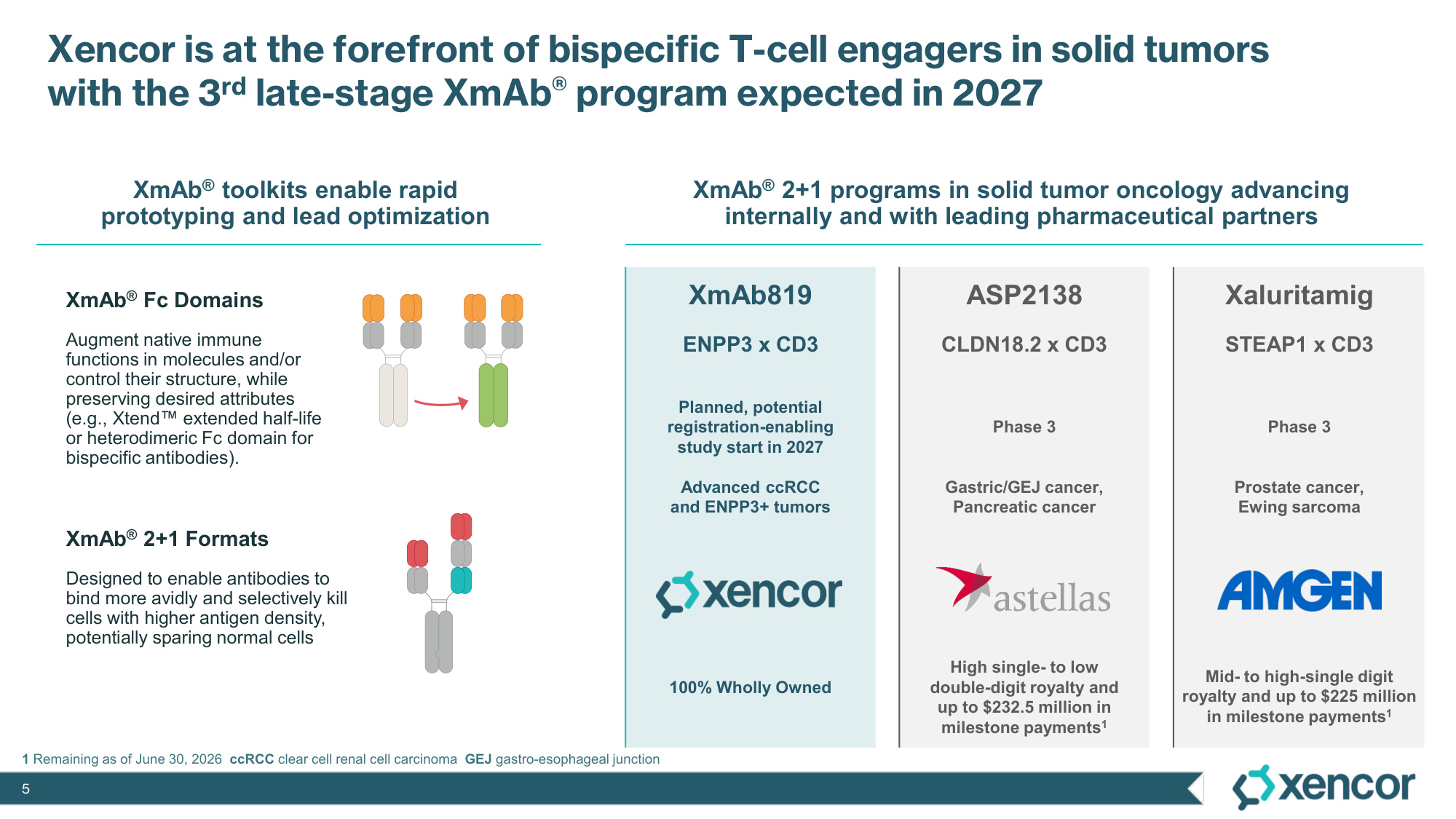
5 Xencor is at the forefront of bispecific T-cell engagers in solid tumors with the 3rd late-stage XmAb® program expected in 2027 XmAb819 ENPP3 x CD3 Planned, potential registration-enabling study start in 2027 Advanced ccRCC and ENPP3+ tumors 100% Wholly Owned Xaluritamig STEAP1 x CD3 Phase 3 Prostate cancer, Ewing sarcoma Mid- to high-single digit royalty and up to $225 million in milestone payments1 ASP2138 CLDN18.2 x CD3 Phase 3 Gastric/GEJ cancer, Pancreatic cancer High single- to low double-digit royalty and up to $232.5 million in milestone payments1 XmAb® Fc Domains Augment native immune functions in molecules and/or control their structure, while preserving desired attributes (e.g., Xtend extended half-life or heterodimeric Fc domain for bispecific antibodies). XmAb® toolkits enable rapid prototyping and lead optimization XmAb® 2+1 Formats Designed to enable antibodies to bind more avidly and selectively kill cells with higher antigen density, potentially sparing normal cells XmAb® 2+1 programs in solid tumor oncology advancing internally and with leading pharmaceutical partners 1 Remaining as of June 30, 2026 ccRCC clear cell renal cell carcinoma GEJ gastro-esophageal junction
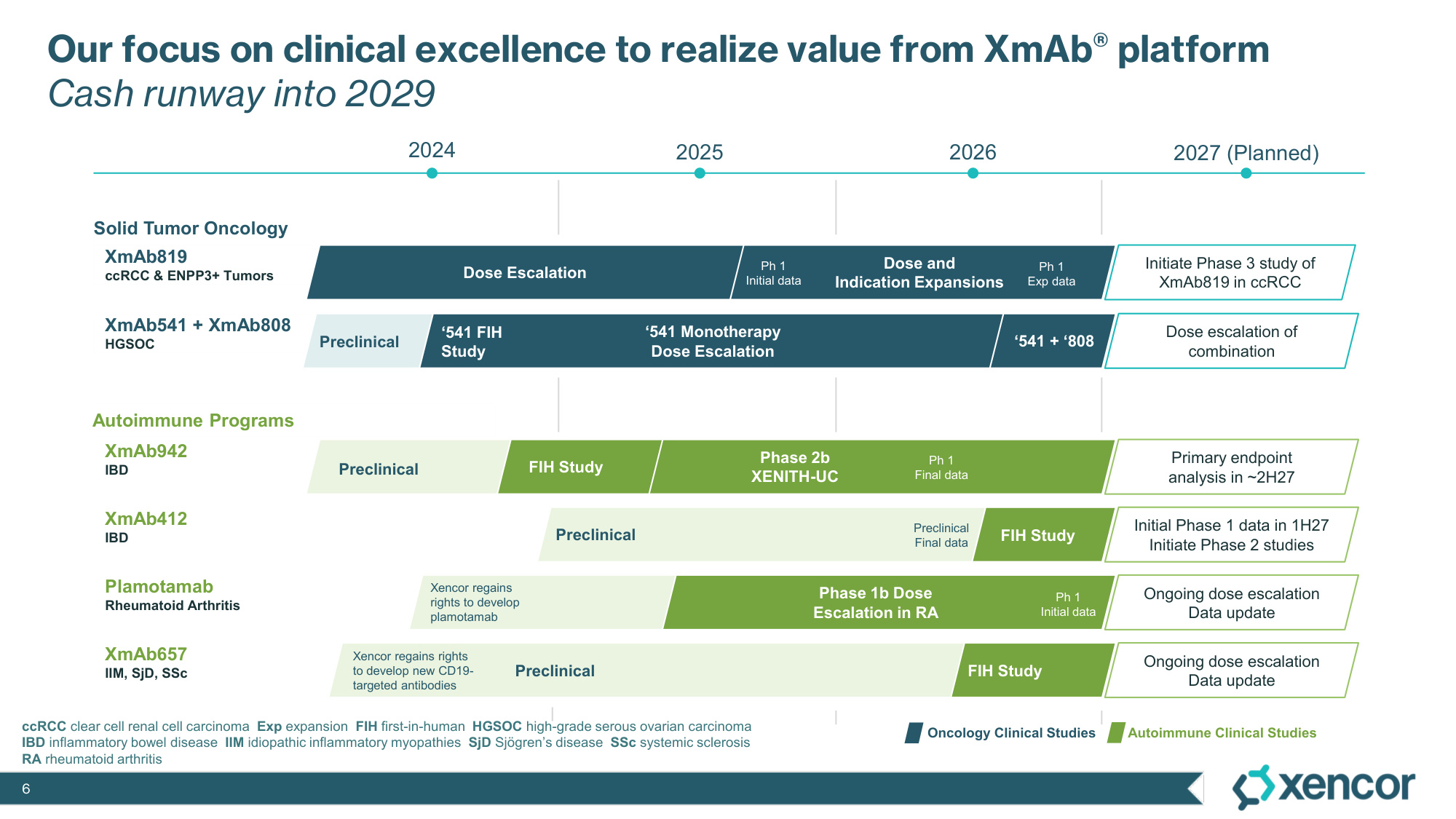
6 Oncology Clinical Studies Our focus on clinical excellence to realize value from XmAb® platform Cash runway into 2029 2024 2026 2025 2027 (Planned) Solid Tumor Oncology ccRCC clear cell renal cell carcinoma Exp expansion FIH first-in-human HGSOC high-grade serous ovarian carcinoma IBD inflammatory bowel disease IIM idiopathic inflammatory myopathies SjD Sjögren's disease SSc systemic sclerosis RA rheumatoid arthritis Autoimmune Clinical Studies Autoimmune Programs XmAb819 ccRCC & ENPP3+ Tumors Dose and Indication Expansions Dose Escalation Initiate Phase 3 study of XmAb819 in ccRCC XmAb541 + XmAb808 HGSOC Preclinical '541 Monotherapy Dose Escalation '541 FIH Study '541 + '808 Dose escalation of combination FIH Study Phase 2b XENITH-UC Preclinical Primary endpoint analysis in ~2H27 XmAb942 IBD FIH Study Preclinical Initial Phase 1 data in 1H27 Initiate Phase 2 studies XmAb412 IBD Phase 1b Dose Escalation in RA Ongoing dose escalation Data update Xencor regains rights to develop plamotamab Plamotamab Rheumatoid Arthritis FIH Study Preclinical Ongoing dose escalation Data update Xencor regains rights to develop new CD19- targeted antibodies XmAb657 IIM, SjD, SSc Ph 1 Final data Ph 1 Exp data Ph 1 Initial data Preclinical Final data Ph 1 Initial data
7 ® XmAb® 2+1 T Cell Engagers
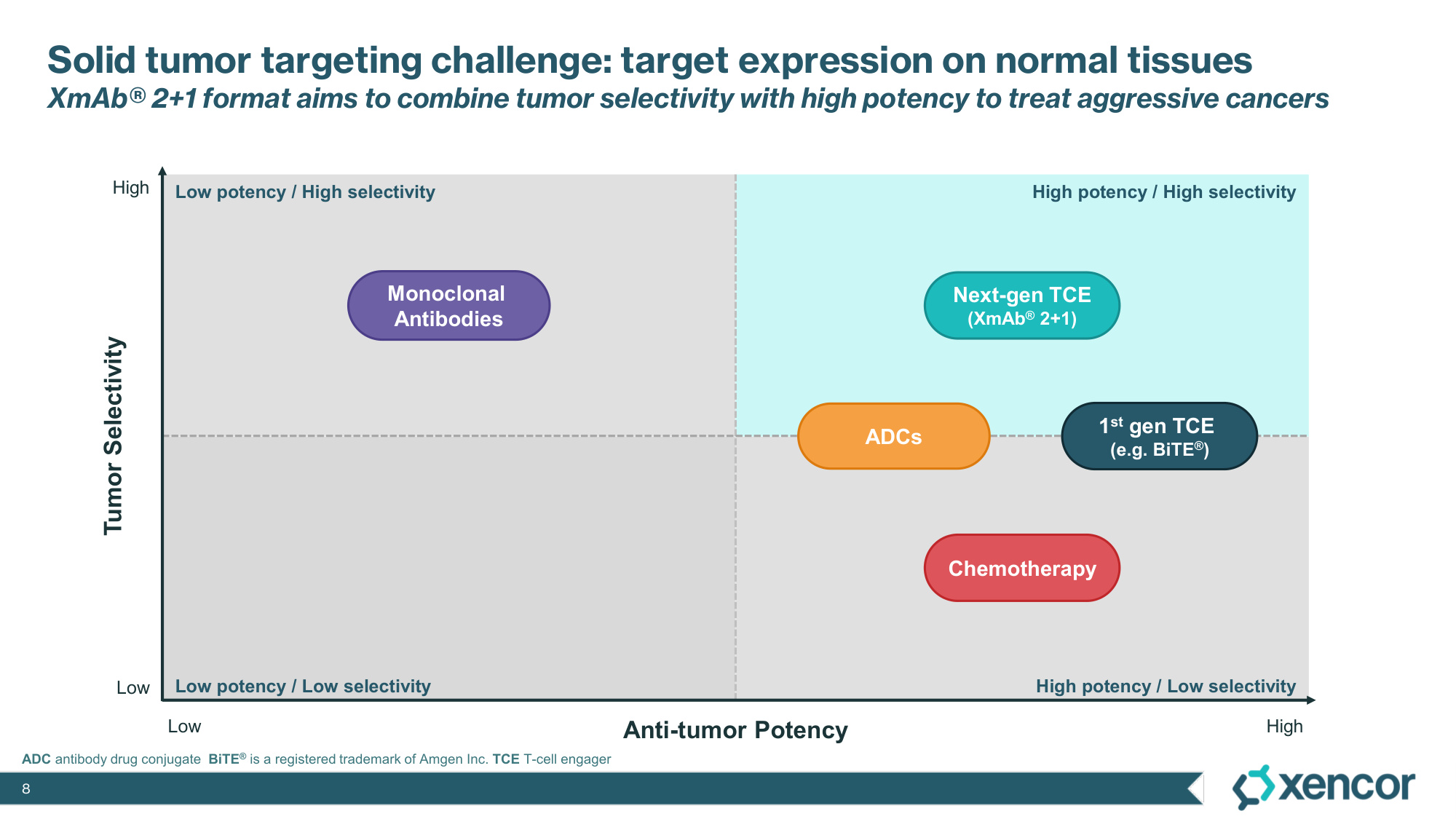
8 Solid tumor targeting challenge: target expression on normal tissues XmAb® 2+1 format aims to combine tumor selectivity with high potency to treat aggressive cancers Low potency / High selectivity High potency / High selectivity Low potency / Low selectivity High potency / Low selectivity Low High Anti-tumor Potency Tumor Selectivity Low High ADC antibody drug conjugate BiTE® is a registered trademark of Amgen Inc. TCE T-cell engager 1st gen TCE (e.g. BiTE®) Monoclonal Antibodies Chemotherapy ADCs Next-gen TCE (XmAb® 2+1)
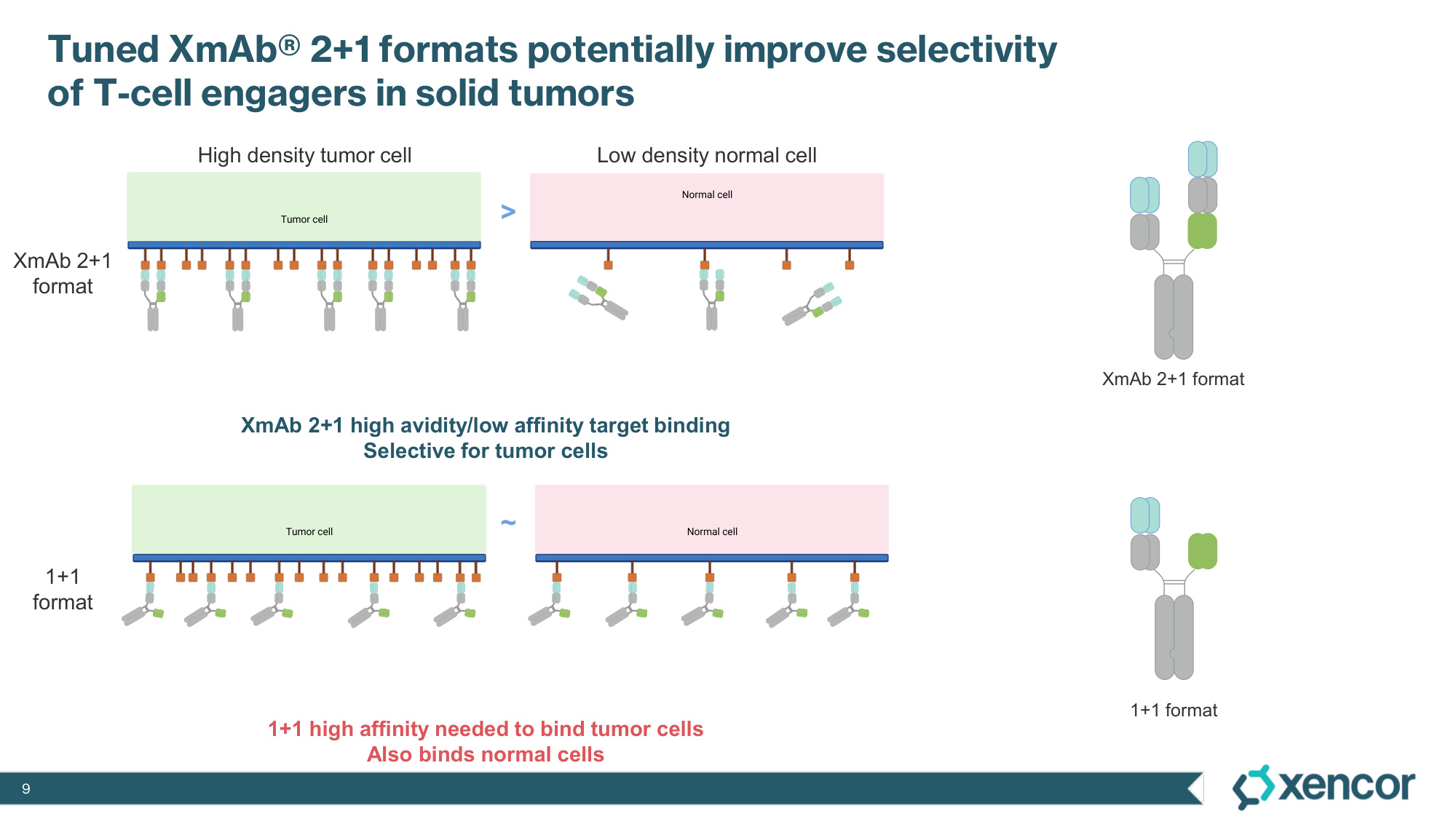
9 Tuned XmAb® 2+1 formats potentially improve selectivity of T-cell engagers in solid tumors Tumor cell Normal cell 1+1 format 1+1 high affinity needed to bind tumor cells Also binds normal cells 1+1 format XmAb 2+1 high avidity/low affinity target binding Selective for tumor cells Tumor cell Normal cell High density tumor cell Low density normal cell XmAb 2+1 format XmAb 2+1 format > ~
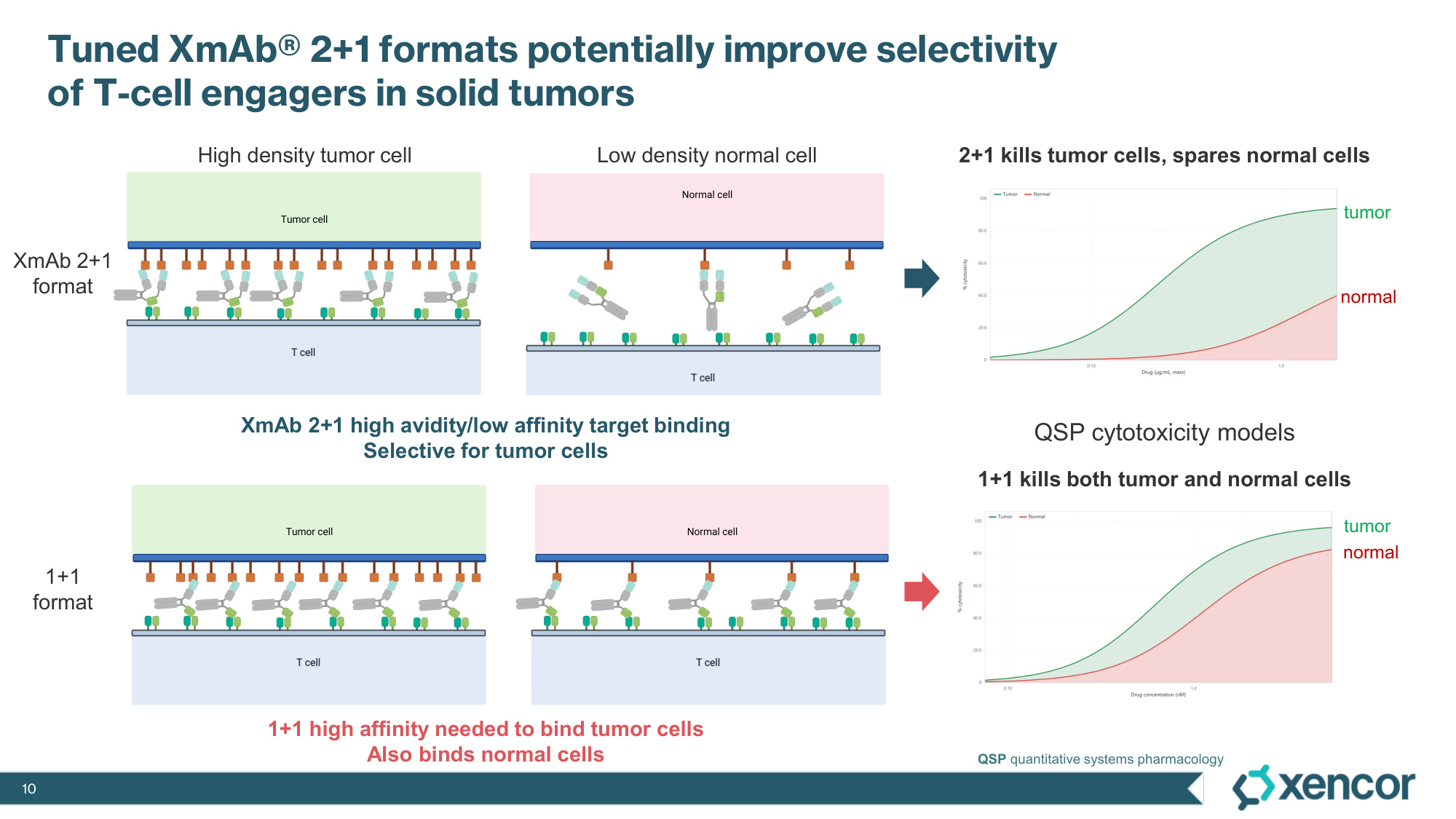
10 Tuned XmAb® 2+1 formats potentially improve selectivity of T-cell engagers in solid tumors Tumor cell Normal cell 1+1 format 1+1 high affinity needed to bind tumor cells Also binds normal cells 1+1 kills both tumor and normal cells tumor normal XmAb 2+1 high avidity/low affinity target binding Selective for tumor cells Tumor cell High density tumor cell Low density normal cell XmAb 2+1 format Normal cell 2+1 kills tumor cells, spares normal cells QSP cytotoxicity models tumor normal QSP quantitative systems pharmacology
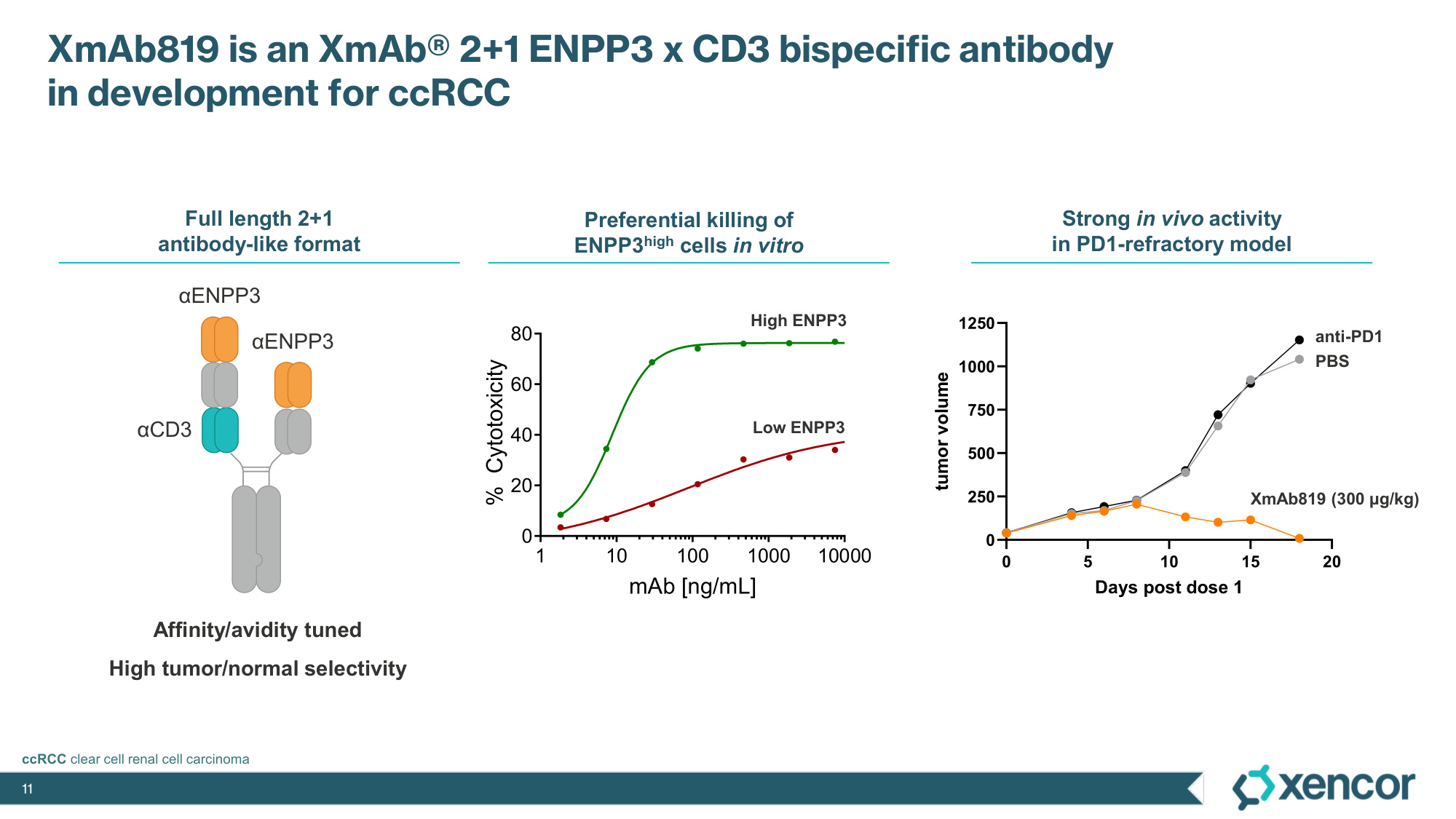
11 XmAb819 is an XmAb® 2+1 ENPP3 x CD3 bispecific antibody in development for ccRCC αCD3 αENPP3 αENPP3 1 10 100 1000 10000 0 20 40 60 80 mAb [ng/mL] % Cytotoxicity Preferential killing of ENPP3high cells in vitro High ENPP3 Low ENPP3 Full length 2+1 antibody-like format 0 5 10 15 20 0 250 500 750 1000 1250 Days post dose 1 tumor volume anti-PD1 PBS XmAb819 (300 μg/kg) Strong in vivo activity in PD1-refractory model ccRCC clear cell renal cell carcinoma Affinity/avidity tuned High tumor/normal selectivity
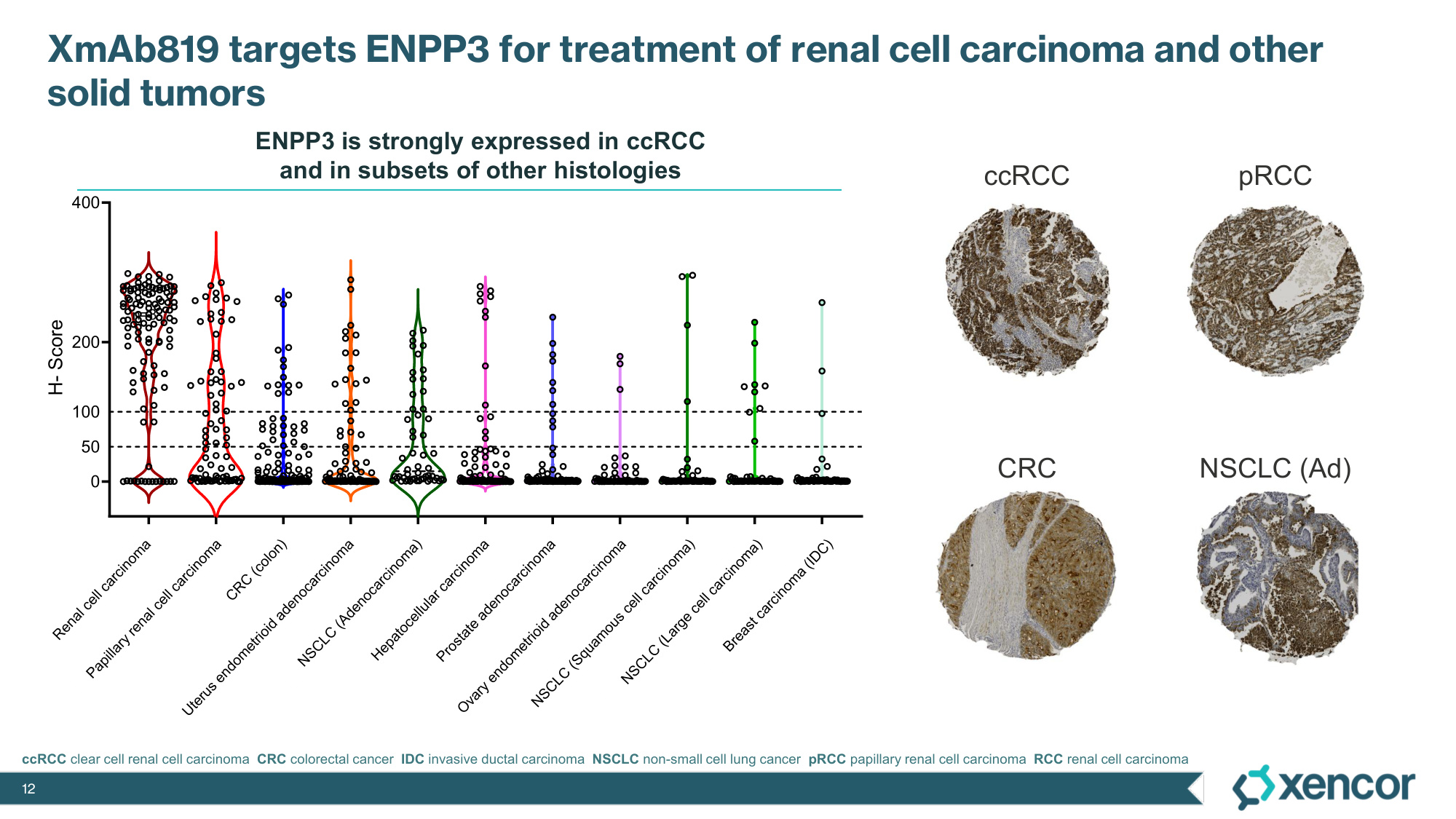
12 XmAb819 targets ENPP3 for treatment of renal cell carcinoma and other solid tumors ENPP3 is strongly expressed in ccRCC and in subsets of other histologies ccRCC pRCC CRC NSCLC (Ad) ccRCC clear cell renal cell carcinoma CRC colorectal cancer IDC invasive ductal carcinoma NSCLC non-small cell lung cancer pRCC papillary renal cell carcinoma RCC renal cell carcinoma 0 200 400 H- Score n=8 50 100
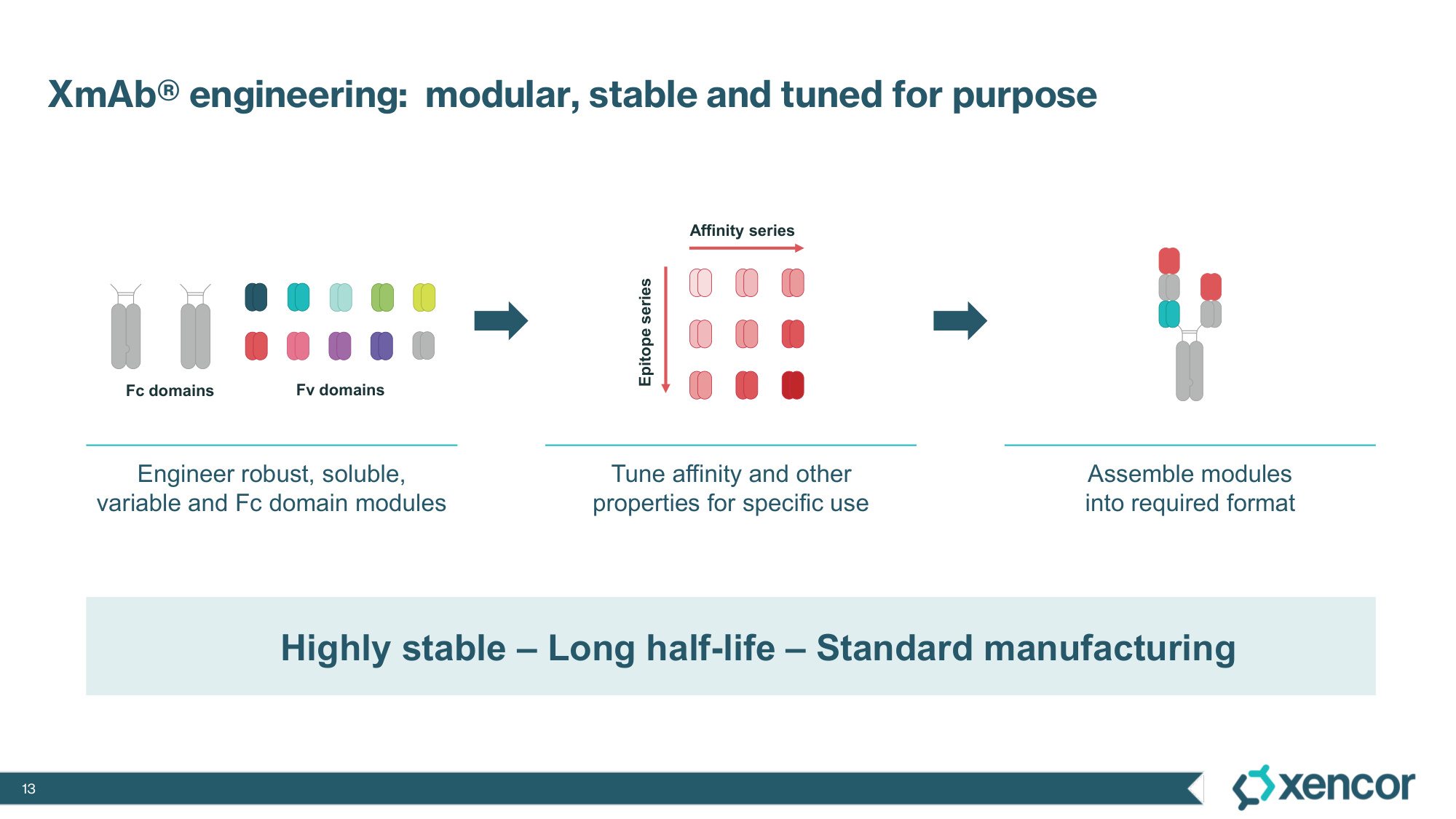
13 XmAb® engineering: modular, stable and tuned for purpose Highly stable – Long half-life – Standard manufacturing Engineer robust, soluble, variable and Fc domain modules Fv domains Fc domains Tune affinity and other properties for specific use Affinity series Epitope series Assemble modules into required format
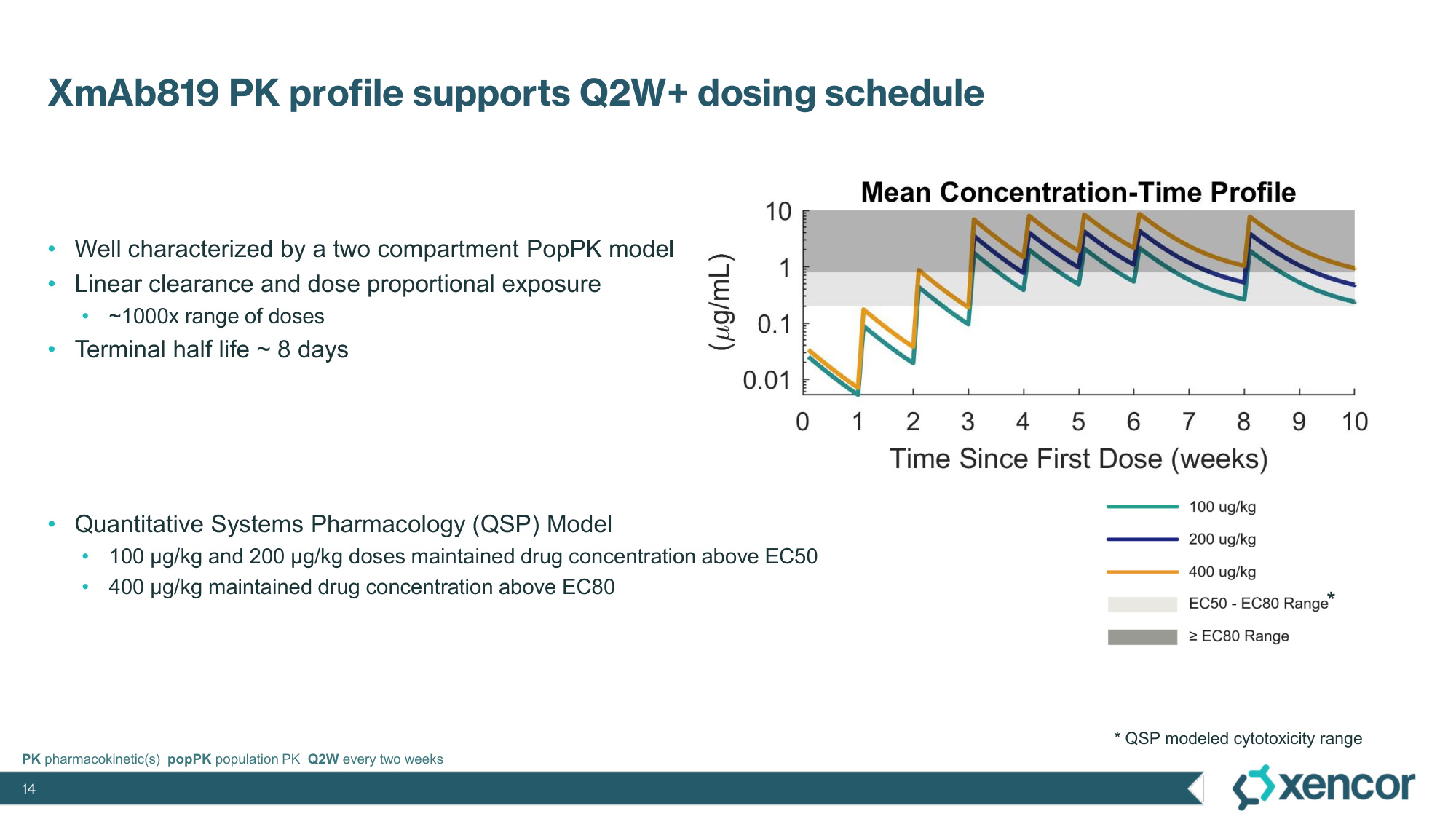
14 XmAb819 PK profile supports Q2W+ dosing schedule • Well characterized by a two compartment PopPK model • Linear clearance and dose proportional exposure • ~1000x range of doses • Terminal half life ~ 8 days • Quantitative Systems Pharmacology (QSP) Model • 100 µg/kg and 200 µg/kg doses maintained drug concentration above EC50 • 400 µg/kg maintained drug concentration above EC80 * QSP modeled cytotoxicity range * PK pharmacokinetic(s) popPK population PK Q2W every two weeks
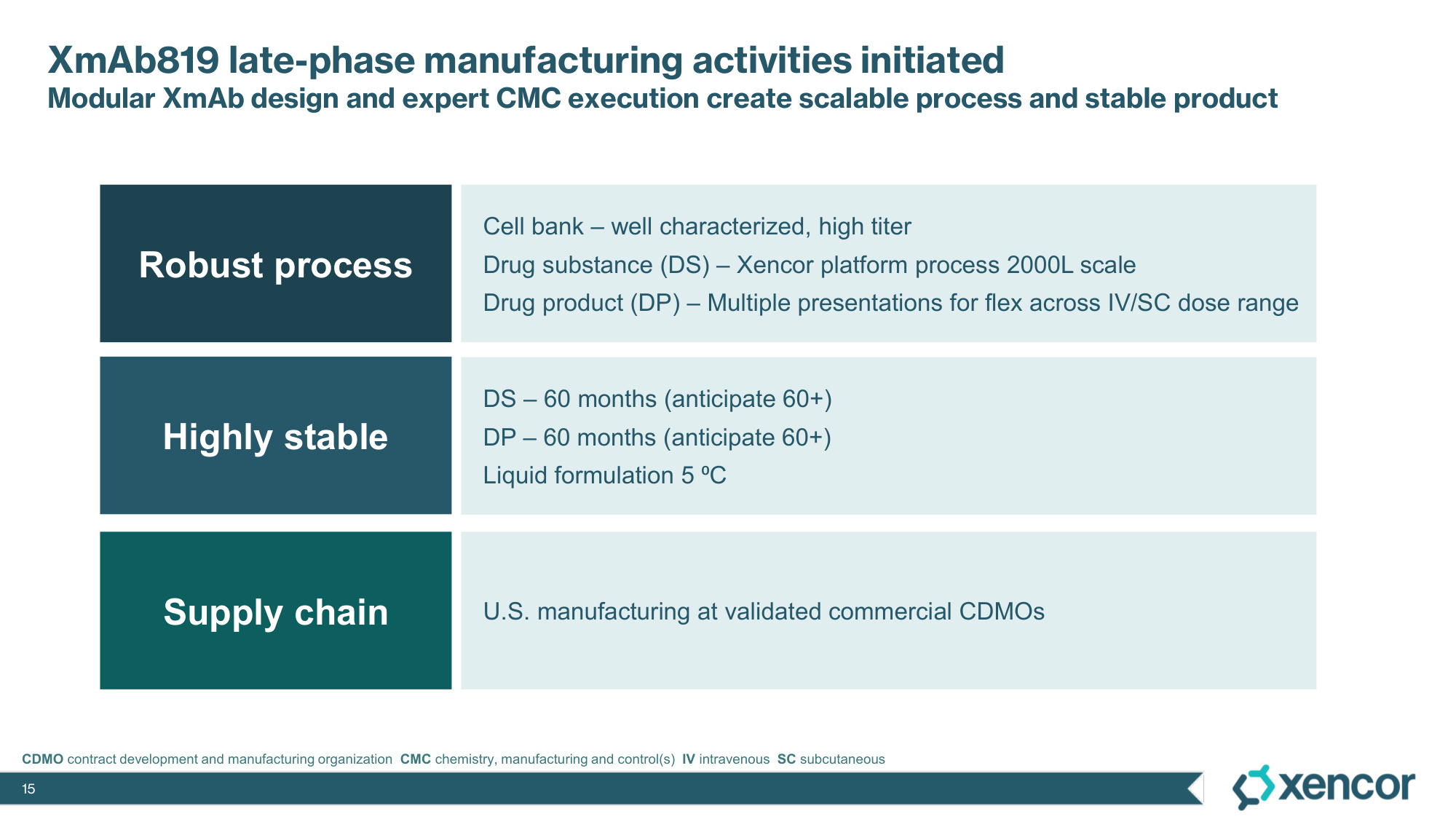
15 XmAb819 late-phase manufacturing activities initiated Modular XmAb design and expert CMC execution create scalable process and stable product Robust process Highly stable Supply chain Cell bank – well characterized, high titer Drug substance (DS) – Xencor platform process 2000L scale Drug product (DP) – Multiple presentations for flex across IV/SC dose range DS – 60 months (anticipate 60+) DP – 60 months (anticipate 60+) Liquid formulation 5 ⁰C U.S. manufacturing at validated commercial CDMOs CDMO contract development and manufacturing organization CMC chemistry, manufacturing and control(s) IV intravenous SC subcutaneous
Phase 1 results of XmAb819, a novel ENPP3 x CD3 bispecific, in advanced clear cell renal cell carcinoma (ccRCC) Sumanta K. Pal1, Benjamin Garmezy2, Randy F. Sweis3, Mehmet A. Bilen4, Scott S. Tykodi5, Yuanquan Yang6, Karie Runcie7, David A. Braun8, David J. VanderWeele9, Claud M. Grigg10, Christopher Hoimes11, Adanma Ayanambakkam12, Joseph J. Maly13, Robert A. Franklin14, Biren Saraiya15, Chet Bohac16, Jitendra Kanodia16, Nicholas Rinella16, Ritesh R. Kotecha17, Laurence Albiges18 25 October 2026 Abstract 2684 1City of Hope Comprehensive Cancer Center, Duarte, USA; 2Sarah Cannon Research Institute, Nashville, USA, 3University of Chicago, Chicago, USA, 4Winship Cancer Institute of Emory University, Atlanta, USA, 5University of Washington and Fred Hutchinson Cancer Center, Seattle, USA, 6The Ohio State University Comprehensive Cancer Center, Columbus, USA, 7Columbia University, New York, USA, 8Yale School of Medicine, New Haven, USA, 9Northwestern University, Chicago, USA, 10Atrium Health Wake Forest Baptist Comprehensive Cancer Center, Charlotte, NC, USA, 11Duke University Medical Center, Durham, USA, 12University of Oklahoma Health Sciences Center, Oklahoma City, USA, 13Norton Cancer Institute - St Matthews Campus, Louisville, USA, 14University of Cincinnati Medical Center, Cincinnati, OH, USA, 15Rutgers Cancer Institute, New Brunswick, USA, 16Xencor, Inc., Pasadena, California, USA, 17 Memorial Sloan Kettering Cancer Center, New York, USA, 18Institut Gustave Roussy, Villejuif, France Reused with permission from the European Society for Medical Oncology. © 2026 The Authors. All rights reserved. Officially licensed by ESMO for distribution via Xencor.
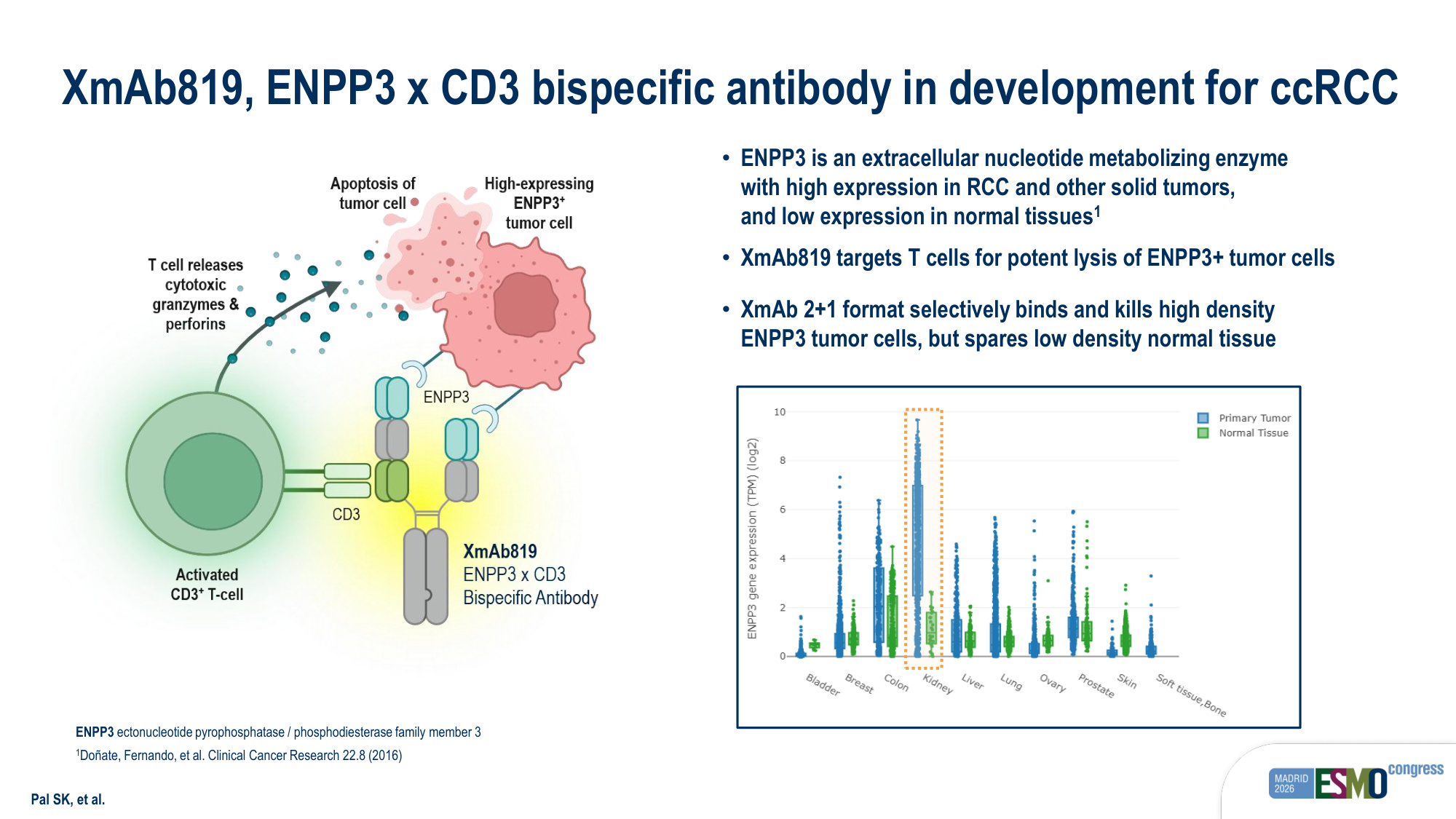
Pal SK, et al. XmAb819, ENPP3 x CD3 bispecific antibody in development for ccRCC ENPP3 ectonucleotide pyrophosphatase / phosphodiesterase family member 3 1Doñate, Fernando, et al. Clinical Cancer Research 22.8 (2016) • ENPP3 is an extracellular nucleotide metabolizing enzyme with high expression in RCC and other solid tumors, and low expression in normal tissues1 • XmAb 2+1 format selectively binds and kills high density ENPP3 tumor cells, but spares low density normal tissue • XmAb819 targets T cells for potent lysis of ENPP3+ tumor cells
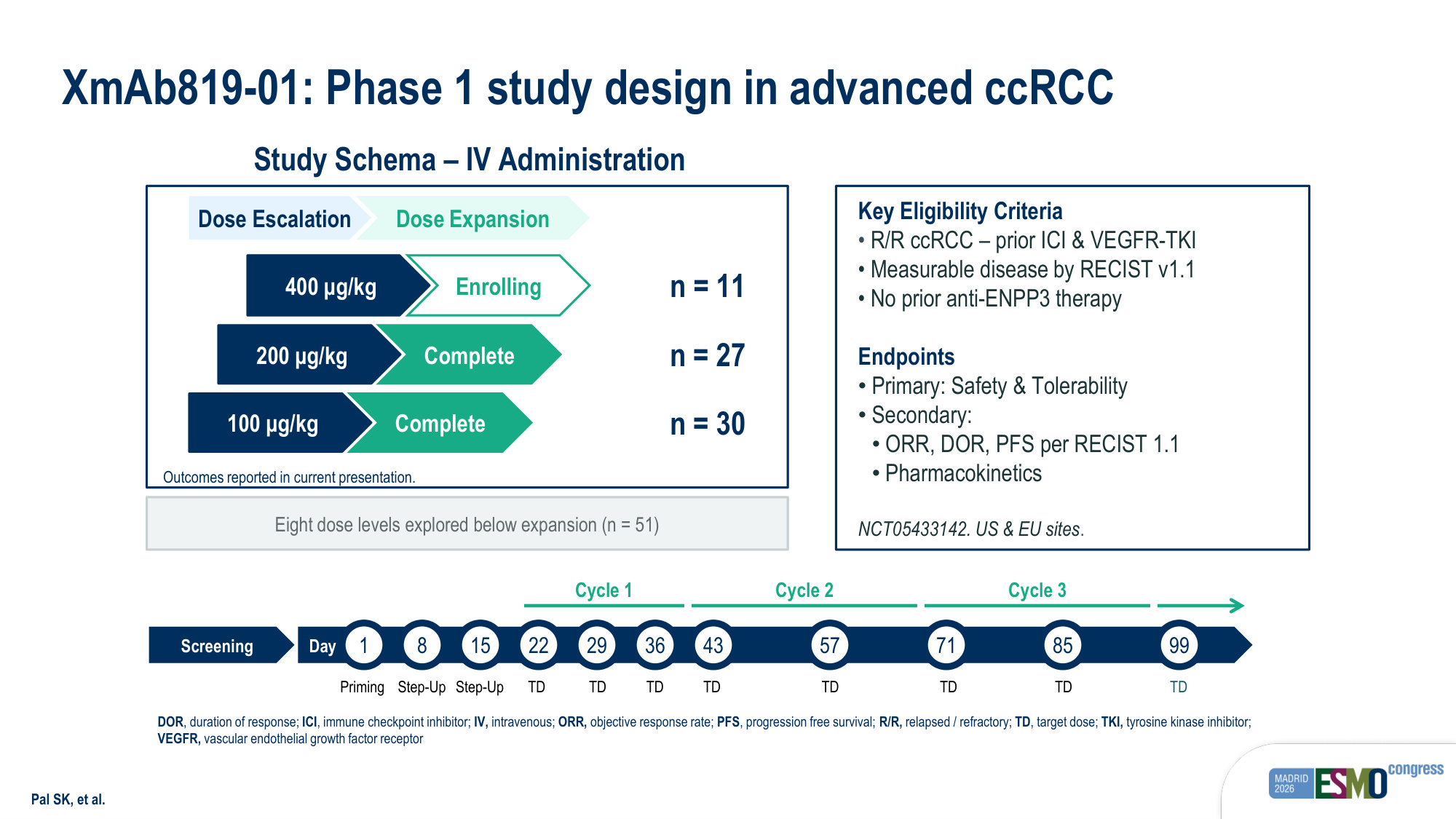
XmAb819-01: Phase 1 study design in advanced ccRCC Key Eligibility Criteria • R/R ccRCC – prior ICI & VEGFR-TKI • Measurable disease by RECIST v1.1 • No prior anti-ENPP3 therapy Endpoints • Primary: Safety & Tolerability • Secondary: • ORR, DOR, PFS per RECIST 1.1 • Pharmacokinetics NCT05433142. US & EU sites. Eight dose levels explored below expansion (n = 51) Study Schema – IV Administration Screening Priming Step-Up Step-Up TD Day 99 TD TD TD TD TD TD TD 85 71 57 43 36 29 22 15 8 1 Cycle 1 Cycle 2 Cycle 3 DOR, duration of response; ICI, immune checkpoint inhibitor; IV, intravenous; ORR, objective response rate; PFS, progression free survival; R/R, relapsed / refractory; TD, target dose; TKI, tyrosine kinase inhibitor; VEGFR, vascular endothelial growth factor receptor 100 μg/kg Complete n = 11 n = 30 n = 27 Dose Escalation Dose Expansion 200 μg/kg Complete Enrolling 400 μg/kg Outcomes reported in current presentation. Pal SK, et al.
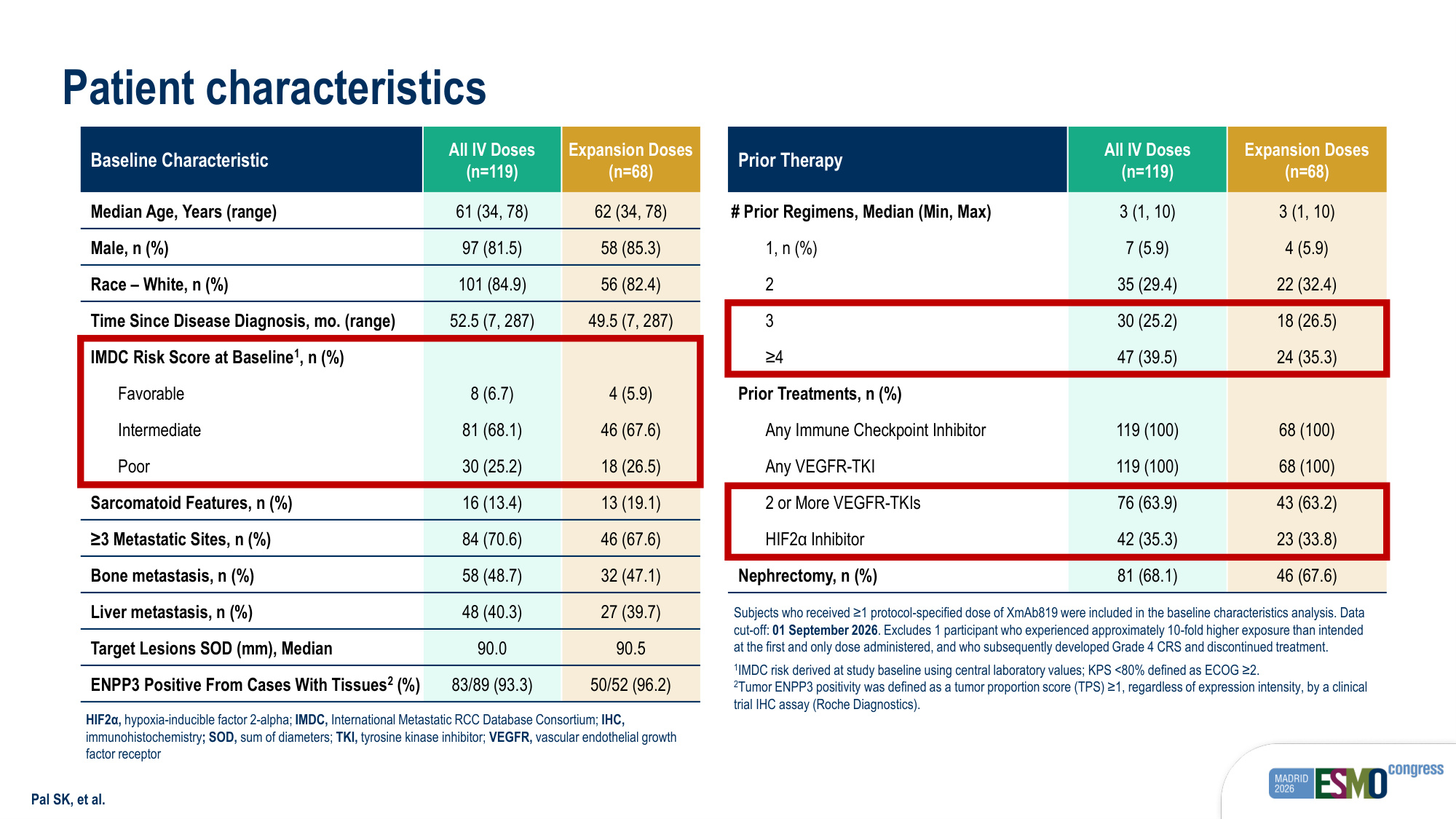
Patient characteristics Baseline Characteristic All IV Doses (n=119) Expansion Doses (n=68) Median Age, Years (range) 61 (34, 78) 62 (34, 78) Male, n (%) 97 (81.5) 58 (85.3) Race – White, n (%) 101 (84.9) 56 (82.4) Time Since Disease Diagnosis, mo. (range) 52.5 (7, 287) 49.5 (7, 287) IMDC Risk Score at Baseline1, n (%) Favorable 8 (6.7) 4 (5.9) Intermediate 81 (68.1) 46 (67.6) Poor 30 (25.2) 18 (26.5) Sarcomatoid Features, n (%) 16 (13.4) 13 (19.1) ≥3 Metastatic Sites, n (%) 84 (70.6) 46 (67.6) Bone metastasis, n (%) 58 (48.7) 32 (47.1) Liver metastasis, n (%) 48 (40.3) 27 (39.7) Target Lesions SOD (mm), Median 90.0 90.5 ENPP3 Positive From Cases With Tissues2 (%) 83/89 (93.3) 50/52 (96.2) Prior Therapy All IV Doses (n=119) Expansion Doses (n=68) # Prior Regimens, Median (Min, Max) 3 (1, 10) 3 (1, 10) 1, n (%) 7 (5.9) 4 (5.9) 2 35 (29.4) 22 (32.4) 3 30 (25.2) 18 (26.5) ≥4 47 (39.5) 24 (35.3) Prior Treatments, n (%) Any Immune Checkpoint Inhibitor 119 (100) 68 (100) Any VEGFR-TKI 119 (100) 68 (100) 2 or More VEGFR-TKIs 76 (63.9) 43 (63.2) HIF2α Inhibitor 42 (35.3) 23 (33.8) Nephrectomy, n (%) 81 (68.1) 46 (67.6) HIF2α, hypoxia-inducible factor 2-alpha; IMDC, International Metastatic RCC Database Consortium; IHC, immunohistochemistry; SOD, sum of diameters; TKI, tyrosine kinase inhibitor; VEGFR, vascular endothelial growth factor receptor Subjects who received ≥1 protocol-specified dose of XmAb819 were included in the baseline characteristics analysis. Data cut-off: 01 September 2026. Excludes 1 participant who experienced approximately 10-fold higher exposure than intended at the first and only dose administered, and who subsequently developed Grade 4 CRS and discontinued treatment. 1IMDC risk derived at study baseline using central laboratory values; KPS <80% defined as ECOG ≥2. 2Tumor ENPP3 positivity was defined as a tumor proportion score (TPS) ≥1, regardless of expression intensity, by a clinical trial IHC assay (Roche Diagnostics). Pal SK, et al.
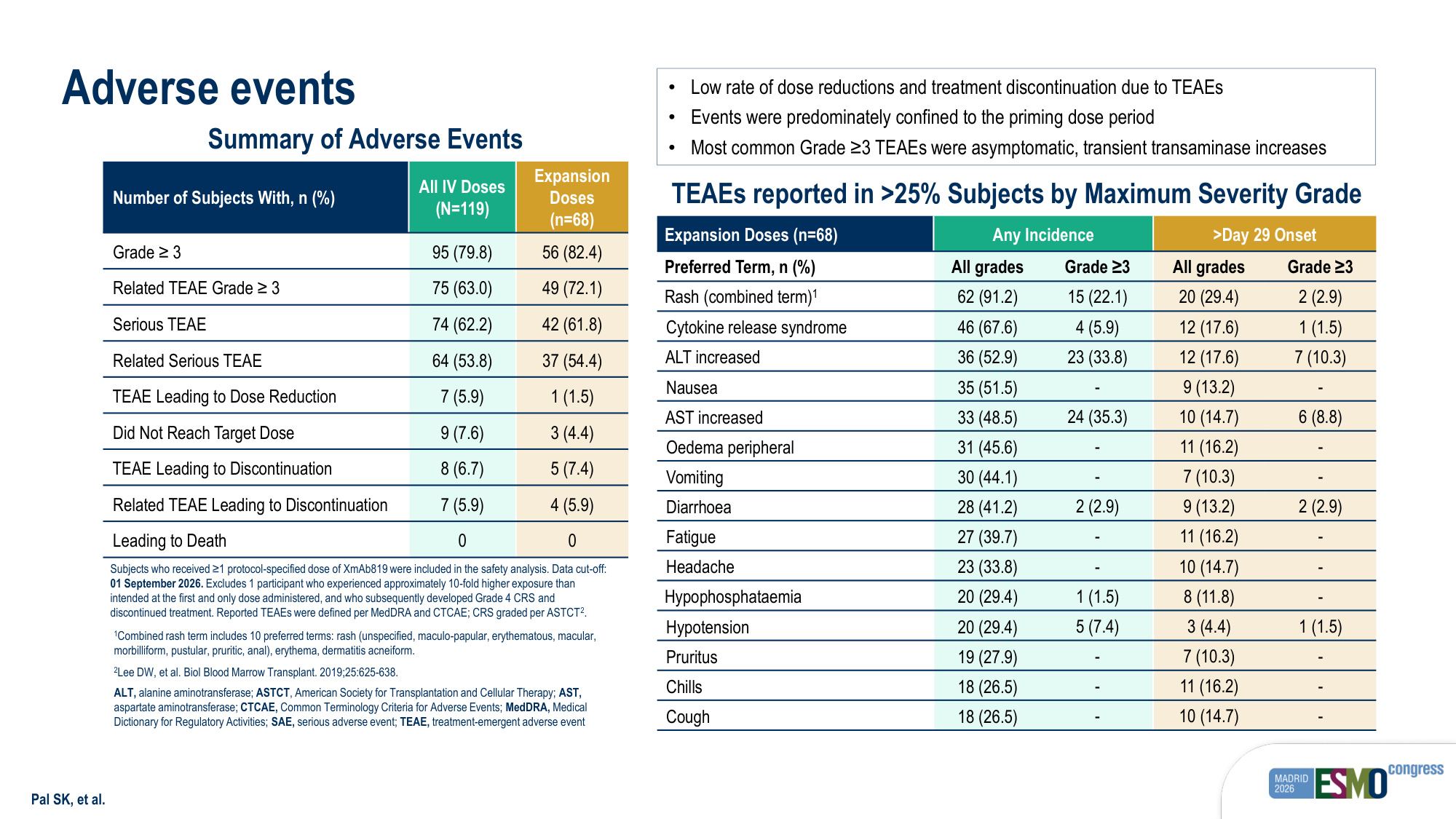
Adverse events Expansion Doses (n=68) Any Incidence >Day 29 Onset Preferred Term, n (%) All grades Grade ≥3 All grades Grade ≥3 Rash (combined term)1 62 (91.2) 15 (22.1) 20 (29.4) 2 (2.9) Cytokine release syndrome 46 (67.6) 4 (5.9) 12 (17.6) 1 (1.5) ALT increased 36 (52.9) 23 (33.8) 12 (17.6) 7 (10.3) Nausea 35 (51.5) - 9 (13.2) - AST increased 33 (48.5) 24 (35.3) 10 (14.7) 6 (8.8) Oedema peripheral 31 (45.6) - 11 (16.2) - Vomiting 30 (44.1) - 7 (10.3) - Diarrhoea 28 (41.2) 2 (2.9) 9 (13.2) 2 (2.9) Fatigue 27 (39.7) - 11 (16.2) - Headache 23 (33.8) - 10 (14.7) - Hypophosphataemia 20 (29.4) 1 (1.5) 8 (11.8) - Hypotension 20 (29.4) 5 (7.4) 3 (4.4) 1 (1.5) Pruritus 19 (27.9) - 7 (10.3) - Chills 18 (26.5) - 11 (16.2) - Cough 18 (26.5) - 10 (14.7) - TEAEs reported in >25% Subjects by Maximum Severity Grade ALT, alanine aminotransferase; ASTCT, American Society for Transplantation and Cellular Therapy; AST, aspartate aminotransferase; CTCAE, Common Terminology Criteria for Adverse Events; MedDRA, Medical Dictionary for Regulatory Activities; SAE, serious adverse event; TEAE, treatment-emergent adverse event Number of Subjects With, n (%) All IV Doses (N=119) Expansion Doses (n=68) Grade ≥ 3 95 (79.8) 56 (82.4) Related TEAE Grade ≥ 3 75 (63.0) 49 (72.1) Serious TEAE 74 (62.2) 42 (61.8) Related Serious TEAE 64 (53.8) 37 (54.4) TEAE Leading to Dose Reduction 7 (5.9) 1 (1.5) Did Not Reach Target Dose 9 (7.6) 3 (4.4) TEAE Leading to Discontinuation 8 (6.7) 5 (7.4) Related TEAE Leading to Discontinuation 7 (5.9) 4 (5.9) Leading to Death 0 0 Summary of Adverse Events 1Combined rash term includes 10 preferred terms: rash (unspecified, maculo-papular, erythematous, macular, morbilliform, pustular, pruritic, anal), erythema, dermatitis acneiform. Subjects who received ≥1 protocol-specified dose of XmAb819 were included in the safety analysis. Data cut-off: 01 September 2026. Excludes 1 participant who experienced approximately 10-fold higher exposure than intended at the first and only dose administered, and who subsequently developed Grade 4 CRS and discontinued treatment. Reported TEAEs were defined per MedDRA and CTCAE; CRS graded per ASTCT2. 2Lee DW, et al. Biol Blood Marrow Transplant. 2019;25:625-638. • Low rate of dose reductions and treatment discontinuation due to TEAEs • Events were predominately confined to the priming dose period • Most common Grade ≥3 TEAEs were asymptomatic, transient transaminase increases Pal SK, et al.
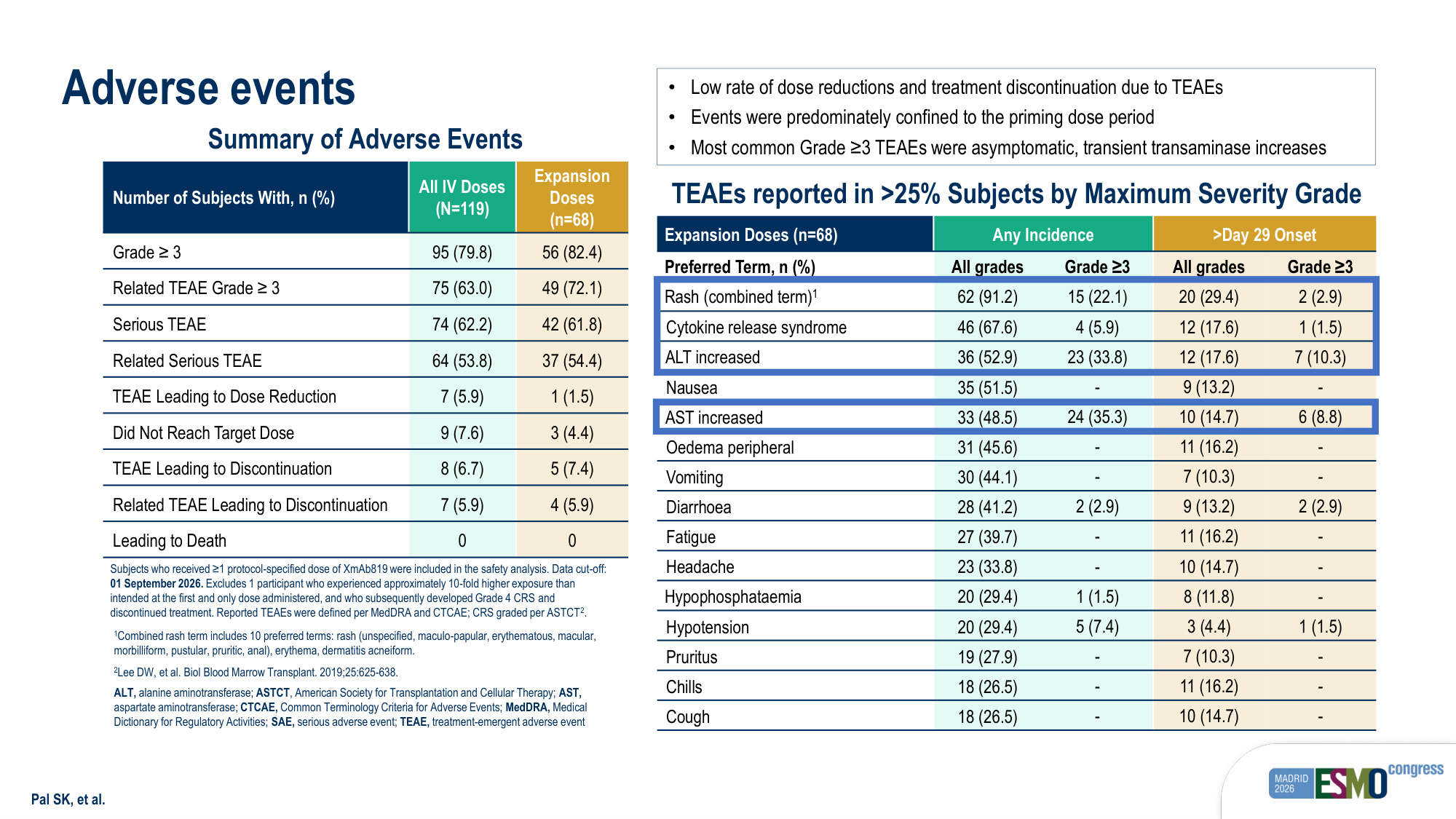
Adverse events Expansion Doses (n=68) Any Incidence >Day 29 Onset Preferred Term, n (%) All grades Grade ≥3 All grades Grade ≥3 Rash (combined term)1 62 (91.2) 15 (22.1) 20 (29.4) 2 (2.9) Cytokine release syndrome 46 (67.6) 4 (5.9) 12 (17.6) 1 (1.5) ALT increased 36 (52.9) 23 (33.8) 12 (17.6) 7 (10.3) Nausea 35 (51.5) - 9 (13.2) - AST increased 33 (48.5) 24 (35.3) 10 (14.7) 6 (8.8) Oedema peripheral 31 (45.6) - 11 (16.2) - Vomiting 30 (44.1) - 7 (10.3) - Diarrhoea 28 (41.2) 2 (2.9) 9 (13.2) 2 (2.9) Fatigue 27 (39.7) - 11 (16.2) - Headache 23 (33.8) - 10 (14.7) - Hypophosphataemia 20 (29.4) 1 (1.5) 8 (11.8) - Hypotension 20 (29.4) 5 (7.4) 3 (4.4) 1 (1.5) Pruritus 19 (27.9) - 7 (10.3) - Chills 18 (26.5) - 11 (16.2) - Cough 18 (26.5) - 10 (14.7) - TEAEs reported in >25% Subjects by Maximum Severity Grade ALT, alanine aminotransferase; ASTCT, American Society for Transplantation and Cellular Therapy; AST, aspartate aminotransferase; CTCAE, Common Terminology Criteria for Adverse Events; MedDRA, Medical Dictionary for Regulatory Activities; SAE, serious adverse event; TEAE, treatment-emergent adverse event Number of Subjects With, n (%) All IV Doses (N=119) Expansion Doses (n=68) Grade ≥ 3 95 (79.8) 56 (82.4) Related TEAE Grade ≥ 3 75 (63.0) 49 (72.1) Serious TEAE 74 (62.2) 42 (61.8) Related Serious TEAE 64 (53.8) 37 (54.4) TEAE Leading to Dose Reduction 7 (5.9) 1 (1.5) Did Not Reach Target Dose 9 (7.6) 3 (4.4) TEAE Leading to Discontinuation 8 (6.7) 5 (7.4) Related TEAE Leading to Discontinuation 7 (5.9) 4 (5.9) Leading to Death 0 0 Summary of Adverse Events 1Combined rash term includes 10 preferred terms: rash (unspecified, maculo-papular, erythematous, macular, morbilliform, pustular, pruritic, anal), erythema, dermatitis acneiform. Subjects who received ≥1 protocol-specified dose of XmAb819 were included in the safety analysis. Data cut-off: 01 September 2026. Excludes 1 participant who experienced approximately 10-fold higher exposure than intended at the first and only dose administered, and who subsequently developed Grade 4 CRS and discontinued treatment. Reported TEAEs were defined per MedDRA and CTCAE; CRS graded per ASTCT2. 2Lee DW, et al. Biol Blood Marrow Transplant. 2019;25:625-638. • Low rate of dose reductions and treatment discontinuation due to TEAEs • Events were predominately confined to the priming dose period • Most common Grade ≥3 TEAEs were asymptomatic, transient transaminase increases Pal SK, et al.
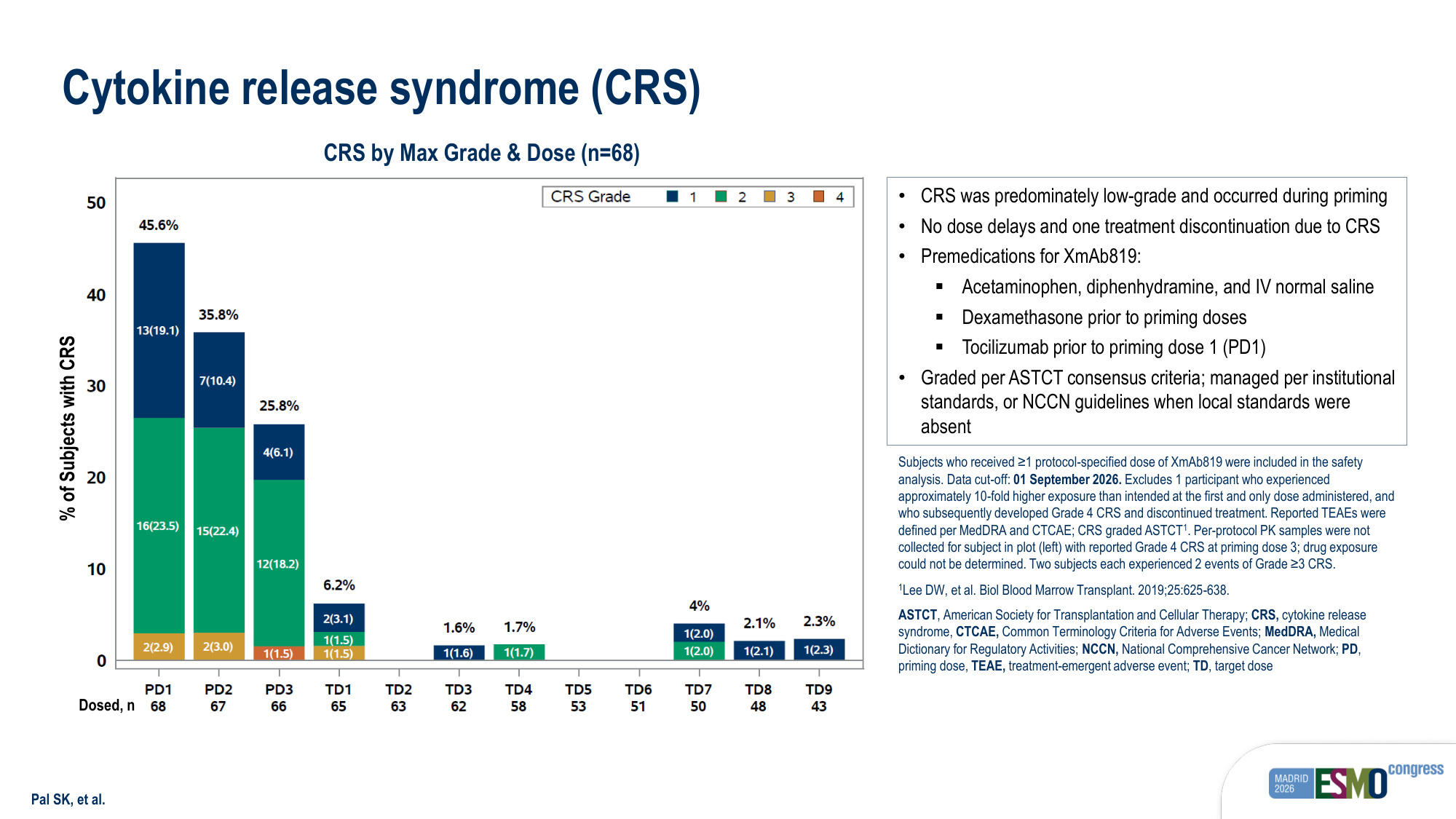
Cytokine release syndrome (CRS) • CRS was predominately low-grade and occurred during priming • No dose delays and one treatment discontinuation due to CRS • Premedications for XmAb819: ▪ Acetaminophen, diphenhydramine, and IV normal saline ▪ Dexamethasone prior to priming doses ▪ Tocilizumab prior to priming dose 1 (PD1) • Graded per ASTCT consensus criteria; managed per institutional standards, or NCCN guidelines when local standards were absent Subjects who received ≥1 protocol-specified dose of XmAb819 were included in the safety analysis. Data cut-off: 01 September 2026. Excludes 1 participant who experienced approximately 10-fold higher exposure than intended at the first and only dose administered, and who subsequently developed Grade 4 CRS and discontinued treatment. Reported TEAEs were defined per MedDRA and CTCAE; CRS graded ASTCT1. Per-protocol PK samples were not collected for subject in plot (left) with reported Grade 4 CRS at priming dose 3; drug exposure could not be determined. Two subjects each experienced 2 events of Grade ≥3 CRS. 1Lee DW, et al. Biol Blood Marrow Transplant. 2019;25:625-638. ASTCT, American Society for Transplantation and Cellular Therapy; CRS, cytokine release syndrome, CTCAE, Common Terminology Criteria for Adverse Events; MedDRA, Medical Dictionary for Regulatory Activities; NCCN, National Comprehensive Cancer Network; PD, priming dose, TEAE, treatment-emergent adverse event; TD, target dose CRS by Max Grade & Dose (n=68) % of Subjects with CRS Dosed, n Pal SK, et al.
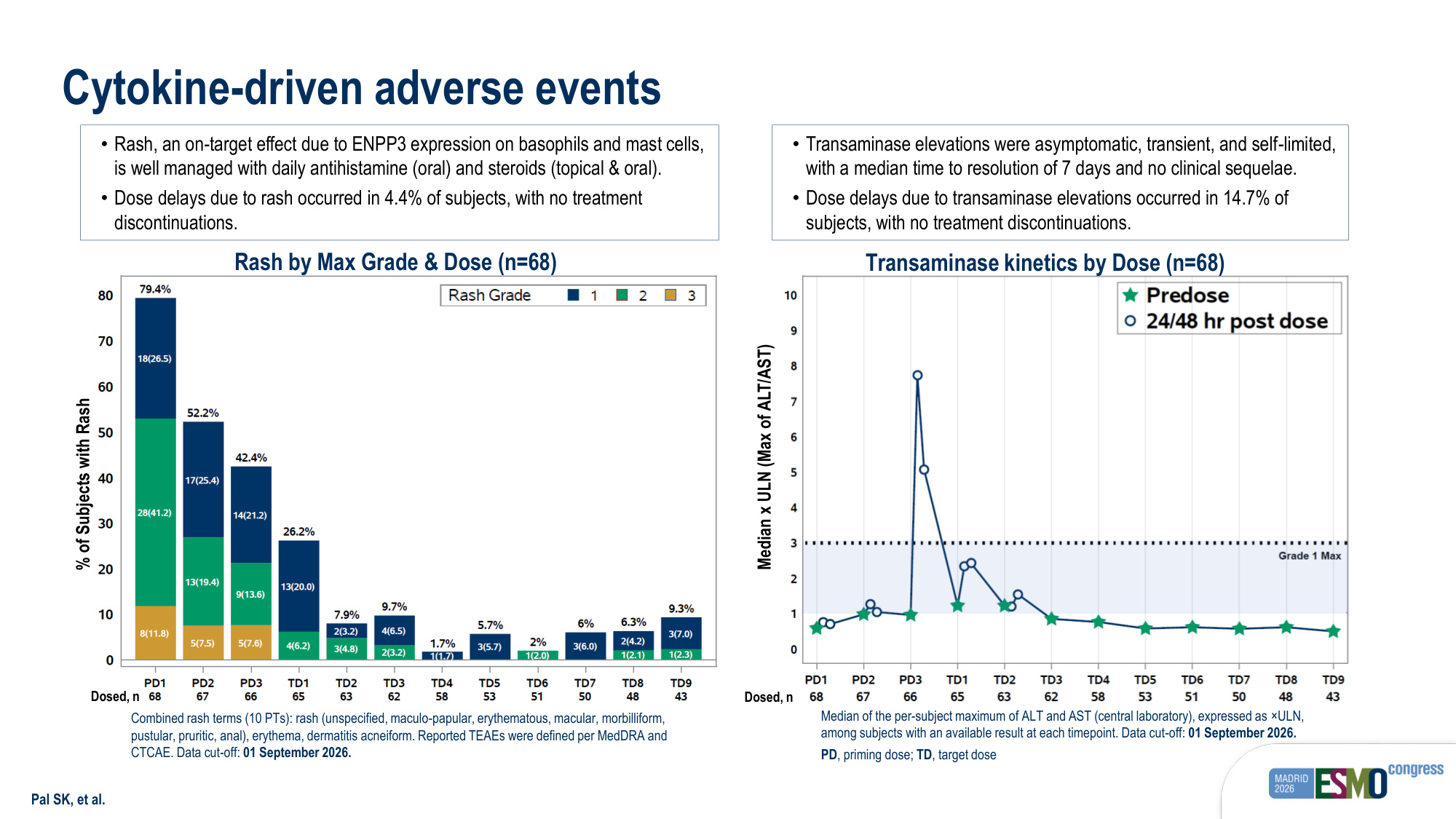
Cytokine-driven adverse events Median of the per-subject maximum of ALT and AST (central laboratory), expressed as ×ULN, among subjects with an available result at each timepoint. Data cut-off: 01 September 2026. Rash by Max Grade & Dose (n=68) Transaminase kinetics by Dose (n=68) Combined rash terms (10 PTs): rash (unspecified, maculo-papular, erythematous, macular, morbilliform, pustular, pruritic, anal), erythema, dermatitis acneiform. Reported TEAEs were defined per MedDRA and CTCAE. Data cut-off: 01 September 2026. • Transaminase elevations were asymptomatic, transient, and self-limited, with a median time to resolution of 7 days and no clinical sequelae. • Dose delays due to transaminase elevations occurred in 14.7% of subjects, with no treatment discontinuations. • Rash, an on-target effect due to ENPP3 expression on basophils and mast cells, is well managed with daily antihistamine (oral) and steroids (topical & oral). • Dose delays due to rash occurred in 4.4% of subjects, with no treatment discontinuations. % of Subjects with Rash PD, priming dose; TD, target dose Median x ULN (Max of ALT/AST) Dosed, n Dosed, n Pal SK, et al.
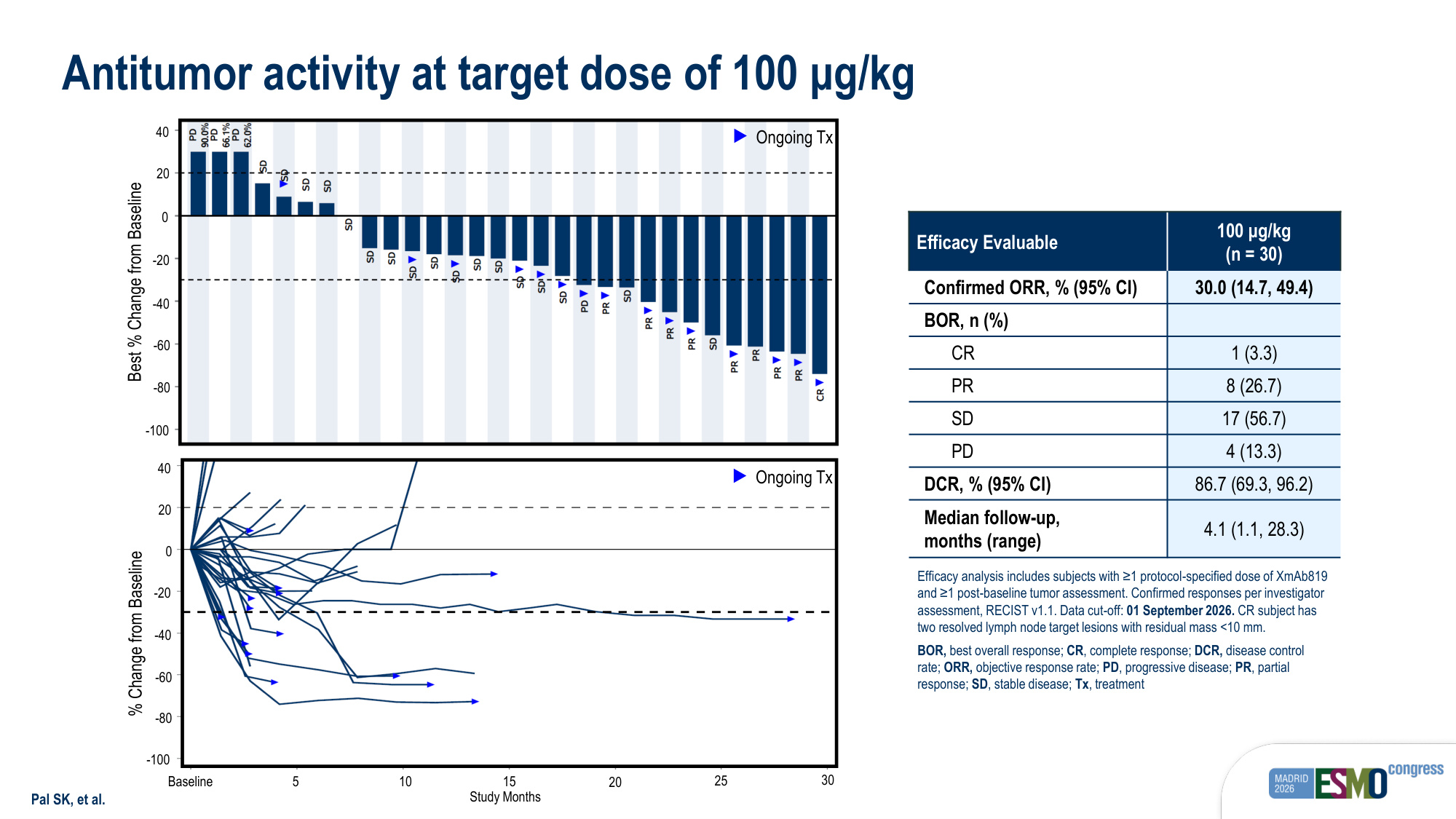
Antitumor activity at target dose of 100 μg/kg Efficacy Evaluable 100 μg/kg (n = 30) Confirmed ORR, % (95% CI) 30.0 (14.7, 49.4) BOR, n (%) CR 1 (3.3) PR 8 (26.7) SD 17 (56.7) PD 4 (13.3) DCR, % (95% CI) 86.7 (69.3, 96.2) Median follow-up, months (range) 4.1 (1.1, 28.3) Efficacy analysis includes subjects with ≥1 protocol-specified dose of XmAb819 and ≥1 post-baseline tumor assessment. Confirmed responses per investigator assessment, RECIST v1.1. Data cut-off: 01 September 2026. CR subject has two resolved lymph node target lesions with residual mass <10 mm. BOR, best overall response; CR, complete response; DCR, disease control rate; ORR, objective response rate; PD, progressive disease; PR, partial response; SD, stable disease; Tx, treatment Study Months Baseline 5 10 15 20 25 30 Best % Change from Baseline % Change from Baseline Ongoing Tx -100 -80 -60 -40 -20 0 20 40 -100 -80 -60 -40 -20 0 20 40 Ongoing Tx Pal SK, et al.
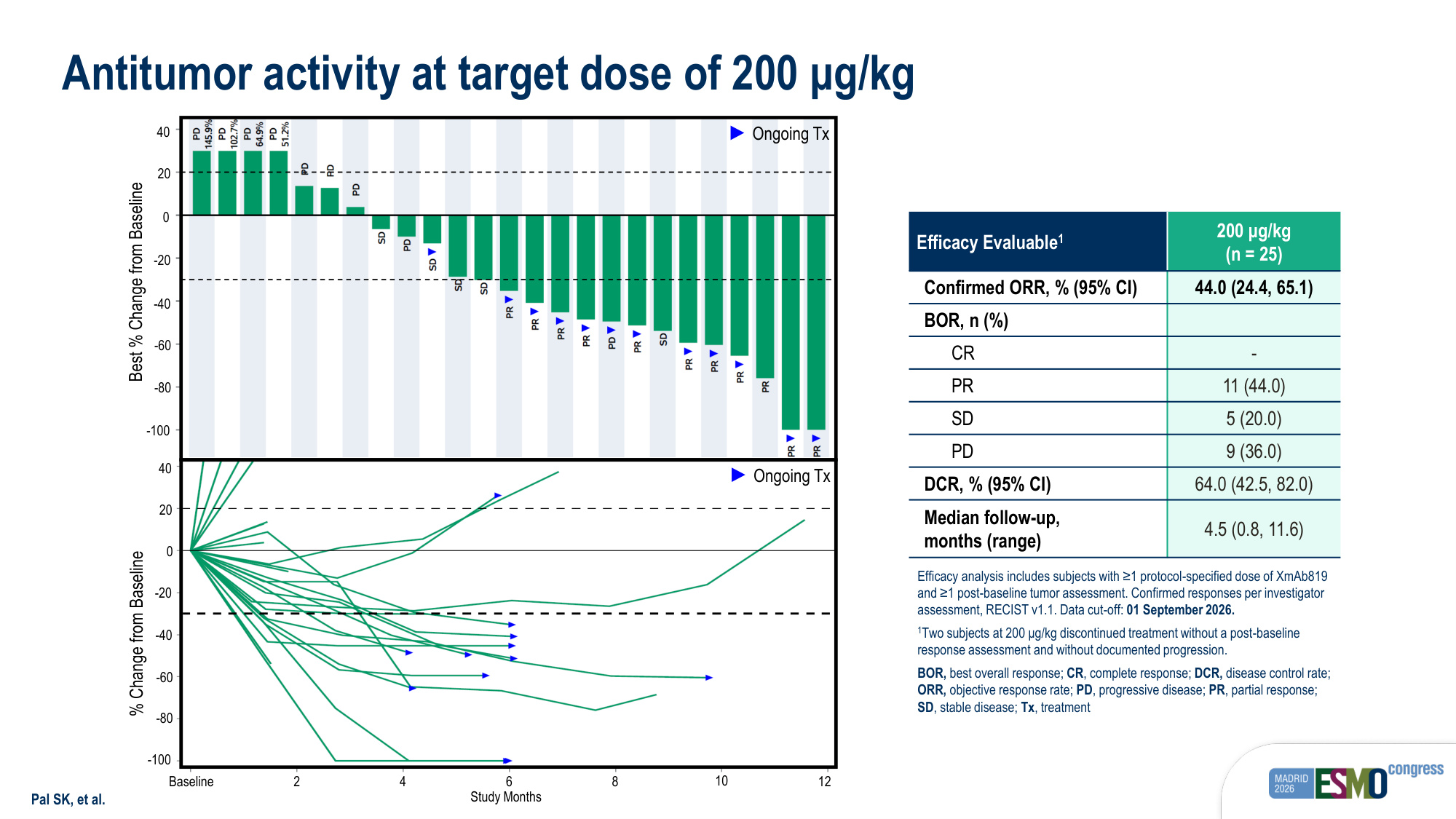
Efficacy analysis includes subjects with ≥1 protocol-specified dose of XmAb819 and ≥1 post-baseline tumor assessment. Confirmed responses per investigator assessment, RECIST v1.1. Data cut-off: 01 September 2026. 1Two subjects at 200 μg/kg discontinued treatment without a post-baseline response assessment and without documented progression. BOR, best overall response; CR, complete response; DCR, disease control rate; ORR, objective response rate; PD, progressive disease; PR, partial response; SD, stable disease; Tx, treatment Efficacy Evaluable1 200 μg/kg (n = 25) Confirmed ORR, % (95% CI) 44.0 (24.4, 65.1) BOR, n (%) CR - PR 11 (44.0) SD 5 (20.0) PD 9 (36.0) DCR, % (95% CI) 64.0 (42.5, 82.0) Median follow-up, months (range) 4.5 (0.8, 11.6) Best % Change from Baseline % Change from Baseline Study Months Baseline 2 4 6 8 10 12 -100 -80 -60 -40 -20 0 20 40 -100 -80 -60 -40 -20 0 20 40 Antitumor activity at target dose of 200 μg/kg Ongoing Tx Ongoing Tx Pal SK, et al.
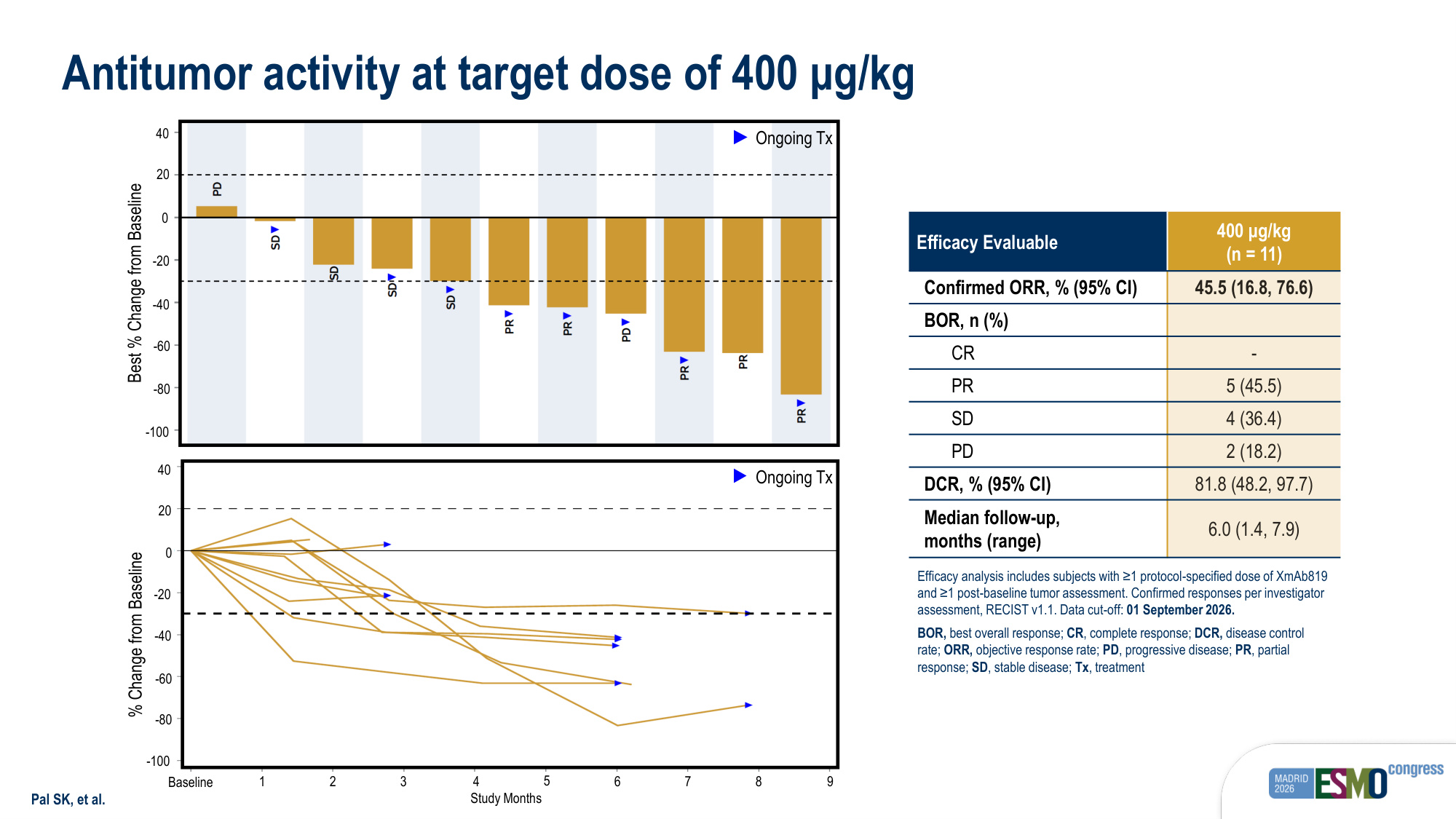
Efficacy Evaluable 400 μg/kg (n = 11) Confirmed ORR, % (95% CI) 45.5 (16.8, 76.6) BOR, n (%) CR - PR 5 (45.5) SD 4 (36.4) PD 2 (18.2) DCR, % (95% CI) 81.8 (48.2, 97.7) Median follow-up, months (range) 6.0 (1.4, 7.9) Efficacy analysis includes subjects with ≥1 protocol-specified dose of XmAb819 and ≥1 post-baseline tumor assessment. Confirmed responses per investigator assessment, RECIST v1.1. Data cut-off: 01 September 2026. BOR, best overall response; CR, complete response; DCR, disease control rate; ORR, objective response rate; PD, progressive disease; PR, partial response; SD, stable disease; Tx, treatment Antitumor activity at target dose of 400 μg/kg Best % Change from Baseline % Change from Baseline Baseline -100 -80 -60 -40 -20 0 20 40 -100 -80 -60 -40 -20 0 20 40 1 2 3 4 5 6 7 8 9 Study Months Ongoing Tx Ongoing Tx Pal SK, et al.
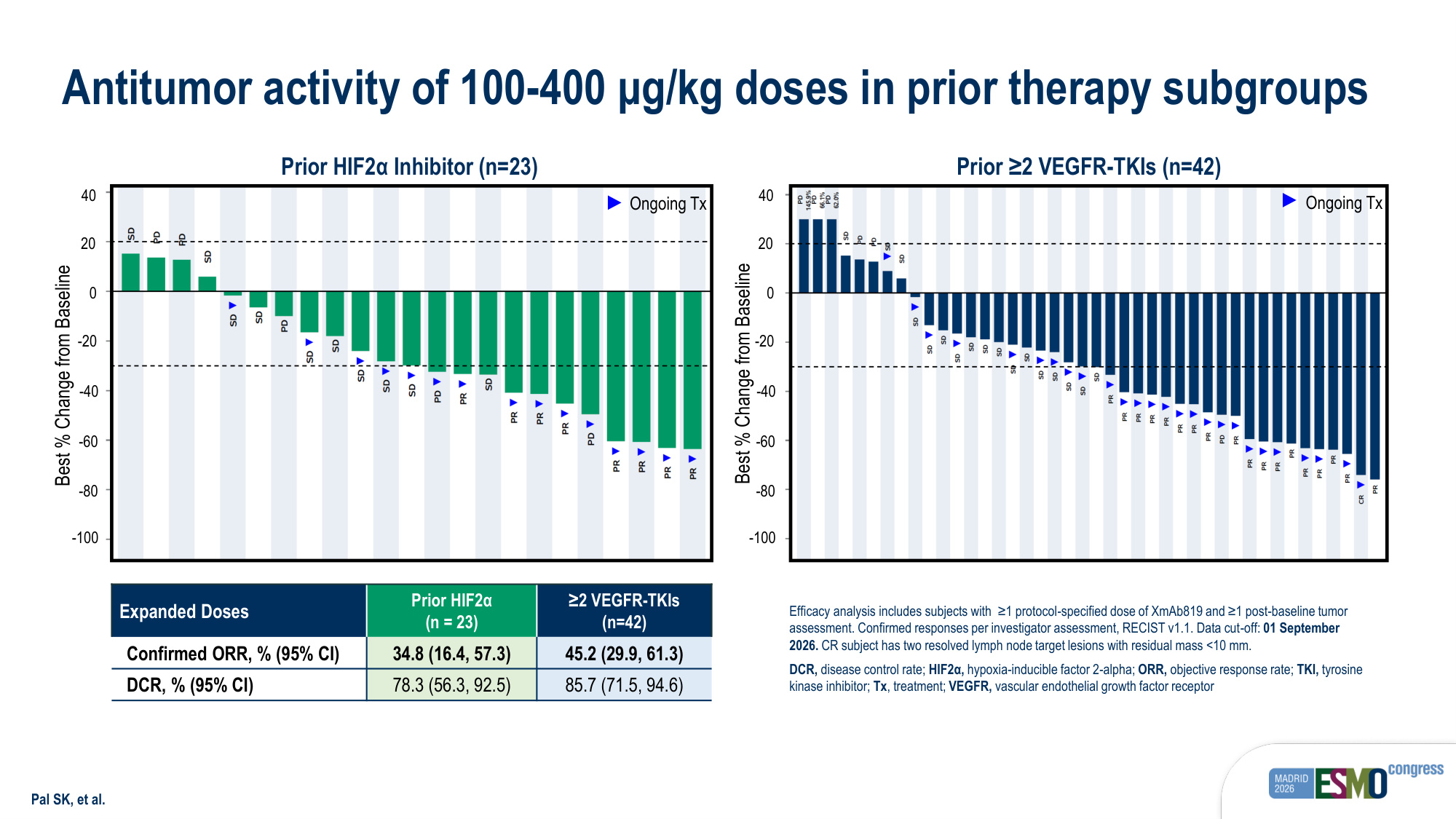
Antitumor activity of 100-400 μg/kg doses in prior therapy subgroups Best % Change from Baseline -100 -80 -60 -40 -20 0 20 40 Best % Change from Baseline -100 -80 -60 -40 -20 0 20 40 Prior HIF2α Inhibitor (n=23) Prior ≥2 VEGFR-TKIs (n=42) Expanded Doses Prior HIF2α (n = 23) ≥2 VEGFR-TKIs (n=42) Confirmed ORR, % (95% CI) 34.8 (16.4, 57.3) 45.2 (29.9, 61.3) DCR, % (95% CI) 78.3 (56.3, 92.5) 85.7 (71.5, 94.6) DCR, disease control rate; HIF2α, hypoxia-inducible factor 2-alpha; ORR, objective response rate; TKI, tyrosine kinase inhibitor; Tx, treatment; VEGFR, vascular endothelial growth factor receptor Efficacy analysis includes subjects with ≥1 protocol-specified dose of XmAb819 and ≥1 post-baseline tumor assessment. Confirmed responses per investigator assessment, RECIST v1.1. Data cut-off: 01 September 2026. CR subject has two resolved lymph node target lesions with residual mass <10 mm. Ongoing Tx Ongoing Tx Pal SK, et al.
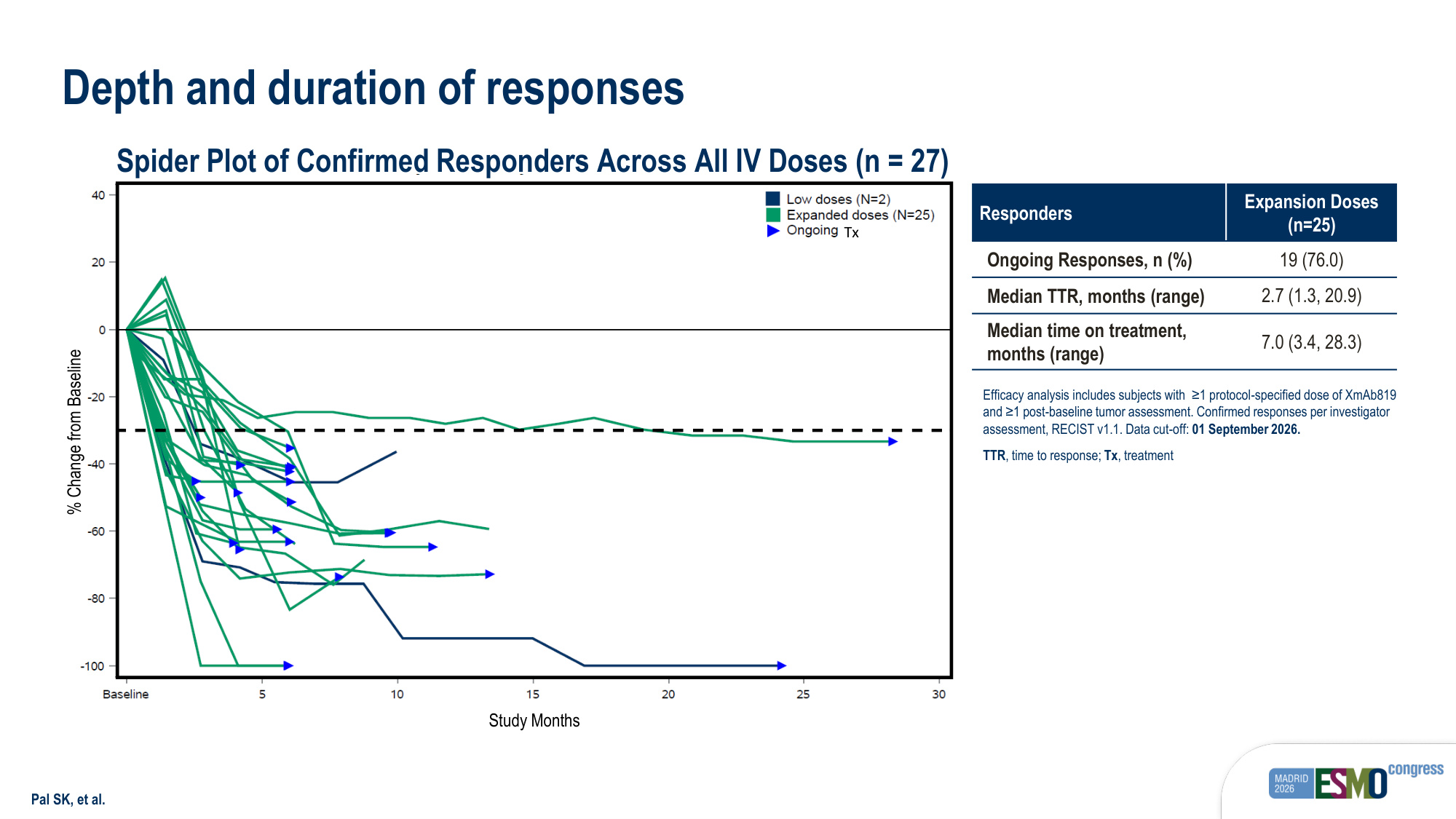
Depth and duration of responses Responders Expansion Doses (n=25) Ongoing Responses, n (%) 19 (76.0) Median TTR, months (range) 2.7 (1.3, 20.9) Median time on treatment, months (range) 7.0 (3.4, 28.3) Spider Plot of Confirmed Responders Across All IV Doses (n = 27) % Change from Baseline Study Months TTR, time to response; Tx, treatment Efficacy analysis includes subjects with ≥1 protocol-specified dose of XmAb819 and ≥1 post-baseline tumor assessment. Confirmed responses per investigator assessment, RECIST v1.1. Data cut-off: 01 September 2026. Tx Pal SK, et al.
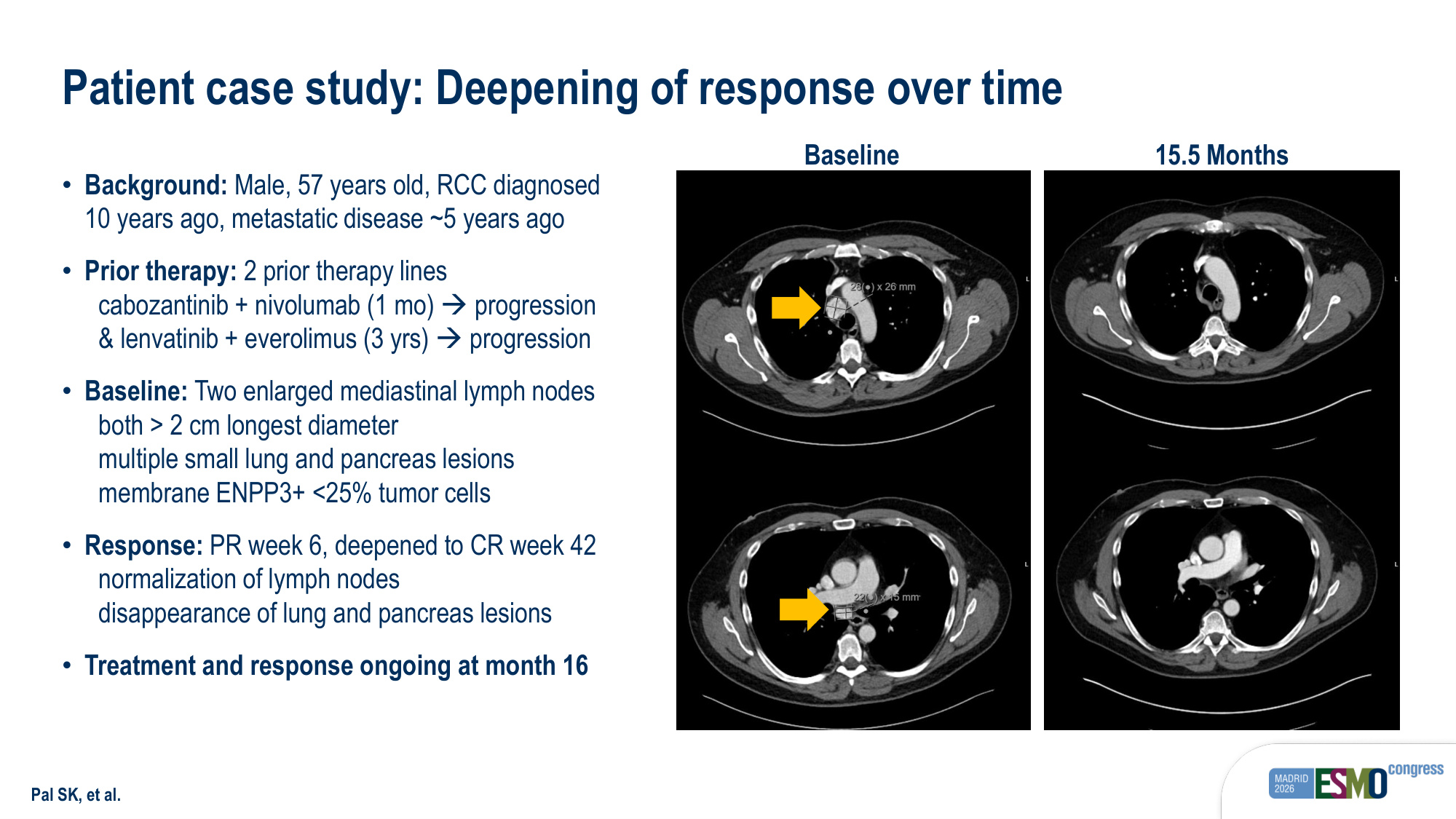
Pal SK, et al. Patient case study: Deepening of response over time • Background: Male, 57 years old, RCC diagnosed 10 years ago, metastatic disease ~5 years ago • Prior therapy: 2 prior therapy lines cabozantinib + nivolumab (1 mo) → progression & lenvatinib + everolimus (3 yrs) → progression • Baseline: Two enlarged mediastinal lymph nodes both > 2 cm longest diameter multiple small lung and pancreas lesions membrane ENPP3+ <25% tumor cells • Response: PR week 6, deepened to CR week 42 normalization of lymph nodes disappearance of lung and pancreas lesions • Treatment and response ongoing at month 16 Baseline 15.5 Months
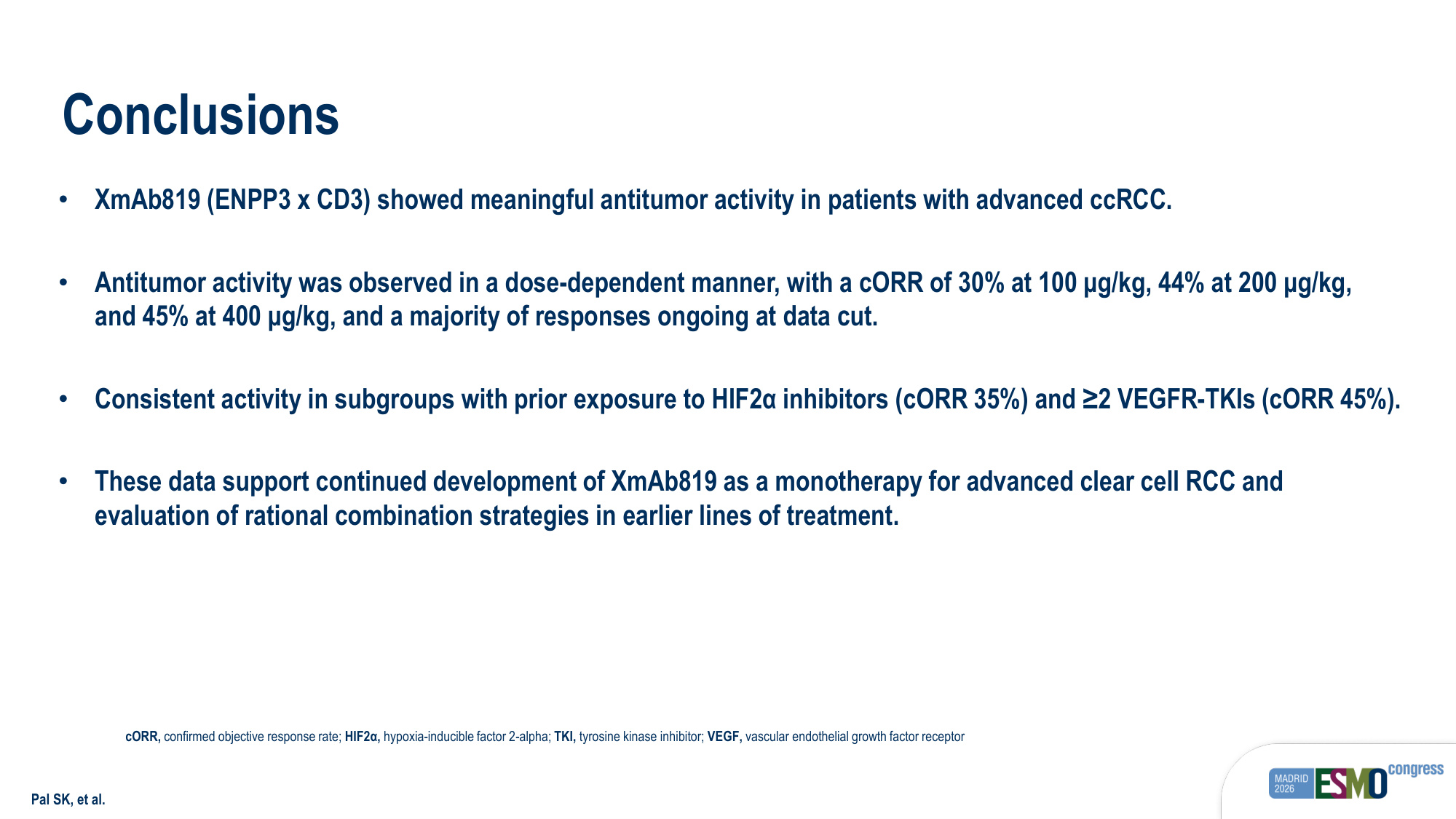
Conclusions • XmAb819 (ENPP3 x CD3) showed meaningful antitumor activity in patients with advanced ccRCC. • Antitumor activity was observed in a dose-dependent manner, with a cORR of 30% at 100 μg/kg, 44% at 200 μg/kg, and 45% at 400 μg/kg, and a majority of responses ongoing at data cut. • Consistent activity in subgroups with prior exposure to HIF2α inhibitors (cORR 35%) and ≥2 VEGFR-TKIs (cORR 45%). • These data support continued development of XmAb819 as a monotherapy for advanced clear cell RCC and evaluation of rational combination strategies in earlier lines of treatment. cORR, confirmed objective response rate; HIF2α, hypoxia-inducible factor 2-alpha; TKI, tyrosine kinase inhibitor; VEGF, vascular endothelial growth factor receptor Pal SK, et al.

31 ® Additional Results
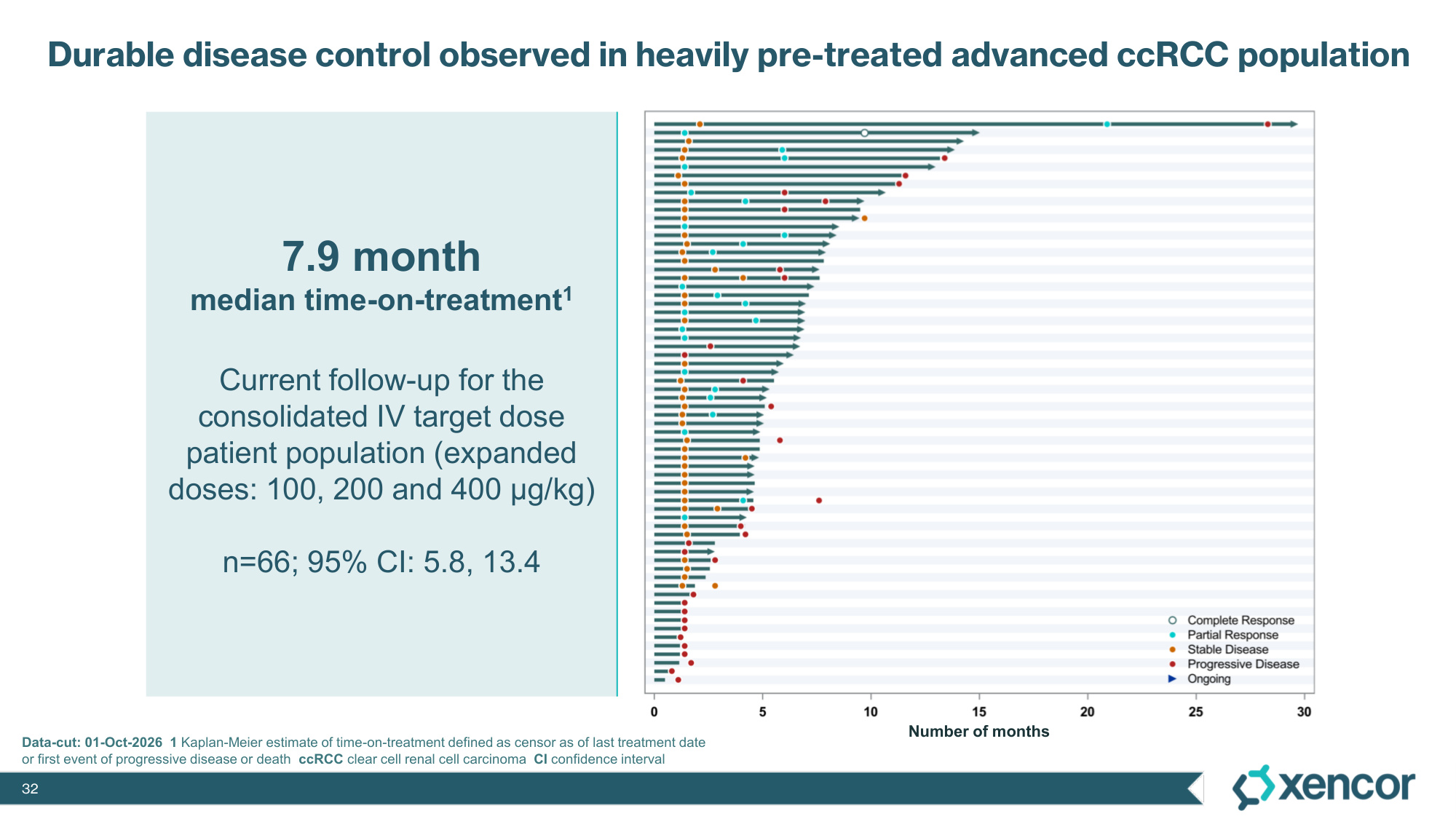
32 Durable disease control observed in heavily pre-treated advanced ccRCC population 7.9 month median time-on-treatment1 Current follow-up for the consolidated IV target dose patient population (expanded doses: 100, 200 and 400 µg/kg) n=66; 95% CI: 5.8, 13.4 Data-cut: 01-Oct-2026 1 Kaplan-Meier estimate of time-on-treatment defined as censor as of last treatment date or first event of progressive disease or death ccRCC clear cell renal cell carcinoma CI confidence interval Number of months
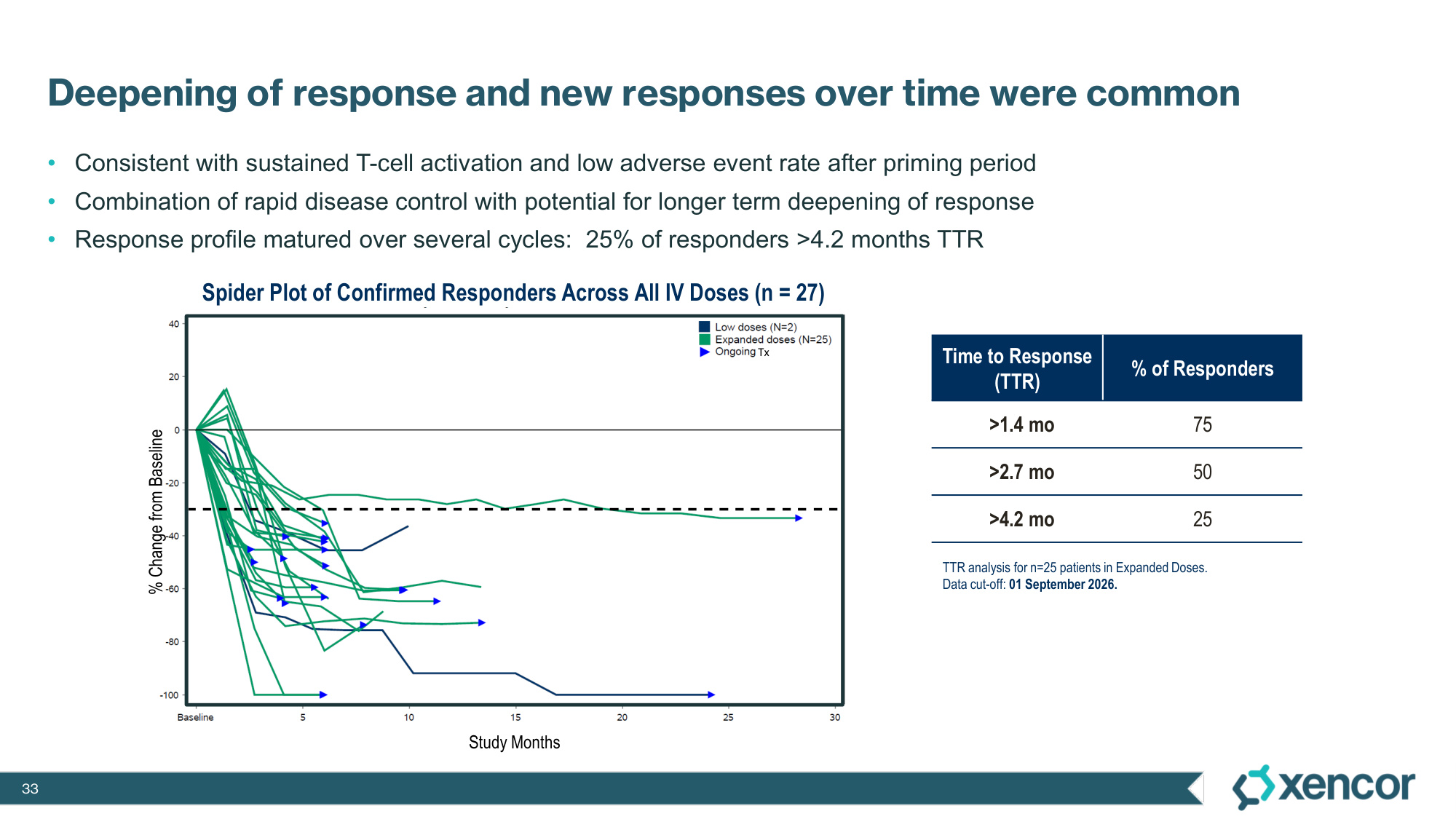
33 Tx Deepening of response and new responses over time were common • Consistent with sustained T-cell activation and low adverse event rate after priming period • Combination of rapid disease control with potential for longer term deepening of response • Response profile matured over several cycles: 25% of responders >4.2 months TTR Time to Response (TTR) % of Responders >1.4 mo 75 >2.7 mo 50 >4.2 mo 25 Spider Plot of Confirmed Responders Across All IV Doses (n = 27) % Change from Baseline Study Months TTR analysis for n=25 patients in Expanded Doses. Data cut-off: 01 September 2026.
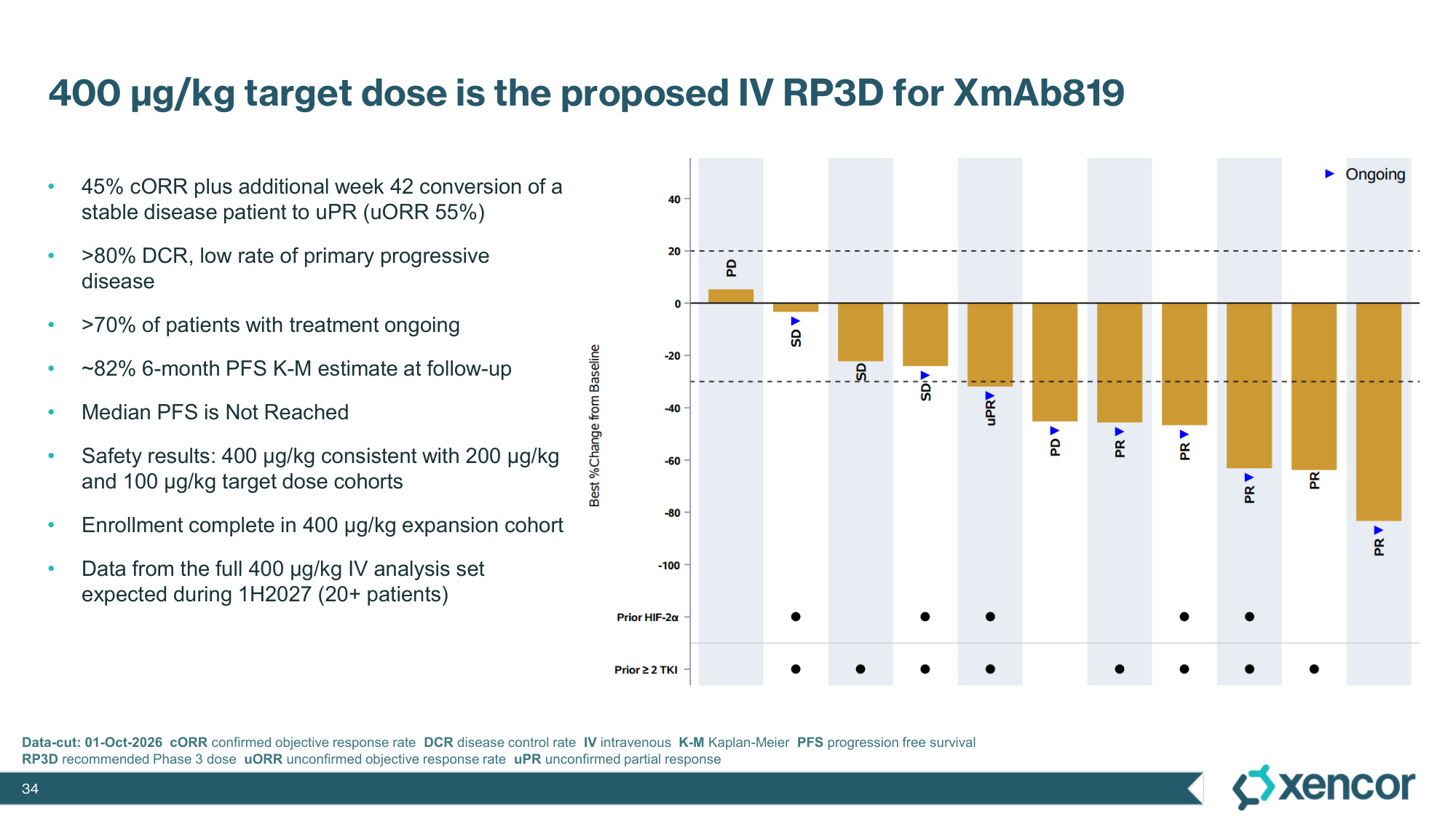
34 • 45% cORR plus additional week 42 conversion of a stable disease patient to uPR (uORR 55%) • >80% DCR, low rate of primary progressive disease • >70% of patients with treatment ongoing • ~82% 6-month PFS K-M estimate at follow-up • Median PFS is Not Reached • Safety results: 400 μg/kg consistent with 200 μg/kg and 100 μg/kg target dose cohorts • Enrollment complete in 400 μg/kg expansion cohort • Data from the full 400 µg/kg IV analysis set expected during 1H2027 (20+ patients) Data-cut: 01-Oct-2026 cORR confirmed objective response rate DCR disease control rate IV intravenous K-M Kaplan-Meier PFS progression free survival RP3D recommended Phase 3 dose uORR unconfirmed objective response rate uPR unconfirmed partial response 400 μg/kg target dose is the proposed IV RP3D for XmAb819
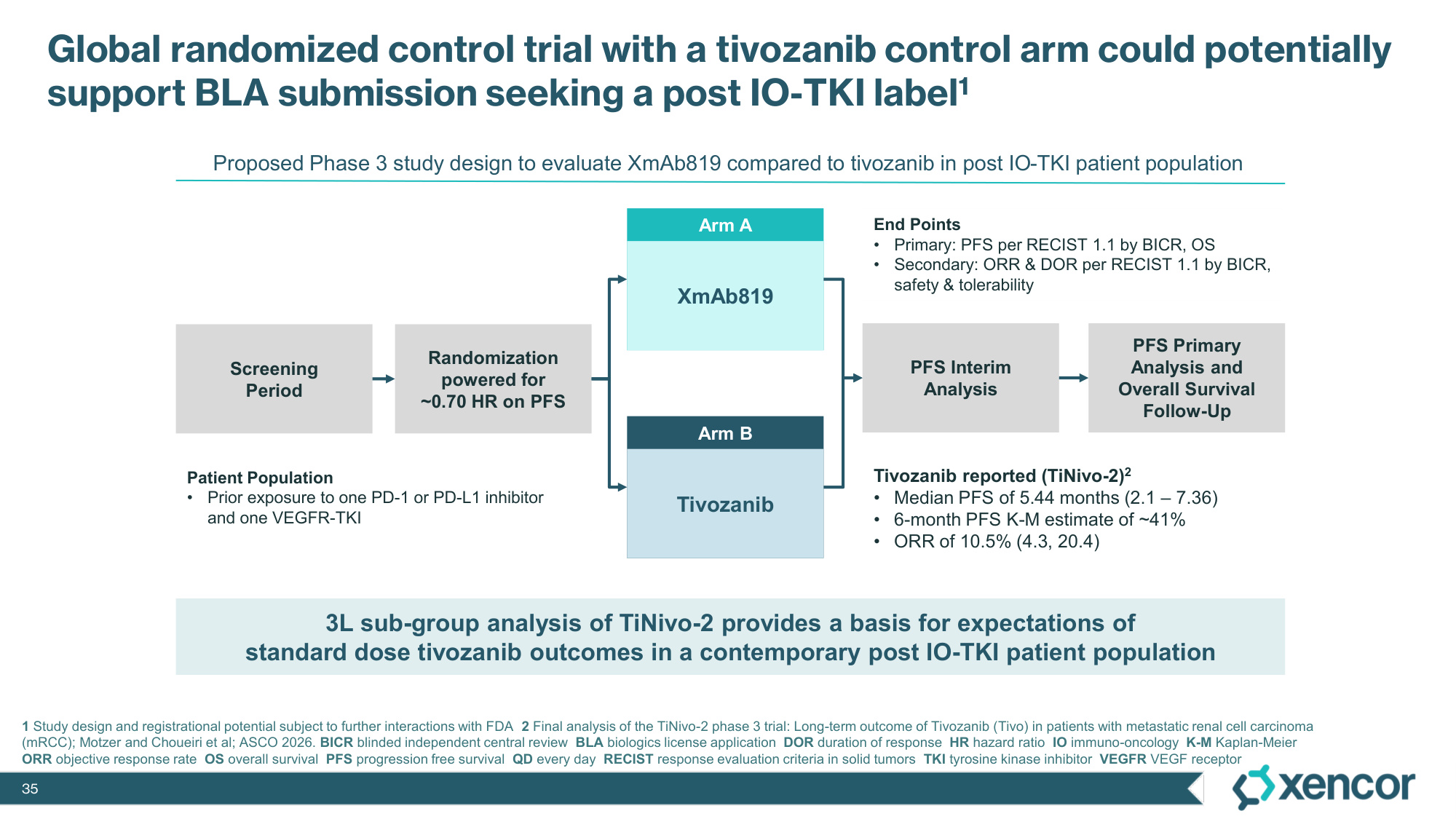
35 Global randomized control trial with a tivozanib control arm could potentially support BLA submission seeking a post IO-TKI label1 3L sub-group analysis of TiNivo-2 provides a basis for expectations of standard dose tivozanib outcomes in a contemporary post IO-TKI patient population 1 Study design and registrational potential subject to further interactions with FDA 2 Final analysis of the TiNivo-2 phase 3 trial: Long-term outcome of Tivozanib (Tivo) in patients with metastatic renal cell carcinoma (mRCC); Motzer and Choueiri et al; ASCO 2026. BICR blinded independent central review BLA biologics license application DOR duration of response HR hazard ratio IO immuno-oncology K-M Kaplan-Meier ORR objective response rate OS overall survival PFS progression free survival QD every day RECIST response evaluation criteria in solid tumors TKI tyrosine kinase inhibitor VEGFR VEGF receptor Arm B Arm A Screening Period Randomization powered for ~0.70 HR on PFS XmAb819 Tivozanib PFS Interim Analysis PFS Primary Analysis and Overall Survival Follow-Up Patient Population • Prior exposure to one PD-1 or PD-L1 inhibitor and one VEGFR-TKI End Points • Primary: PFS per RECIST 1.1 by BICR, OS • Secondary: ORR & DOR per RECIST 1.1 by BICR, safety & tolerability Tivozanib reported (TiNivo-2)2 • Median PFS of 5.44 months (2.1 – 7.36) • 6-month PFS K-M estimate of ~41% • ORR of 10.5% (4.3, 20.4) Proposed Phase 3 study design to evaluate XmAb819 compared to tivozanib in post IO-TKI patient population

36 ® XmAb819 Development Strategy
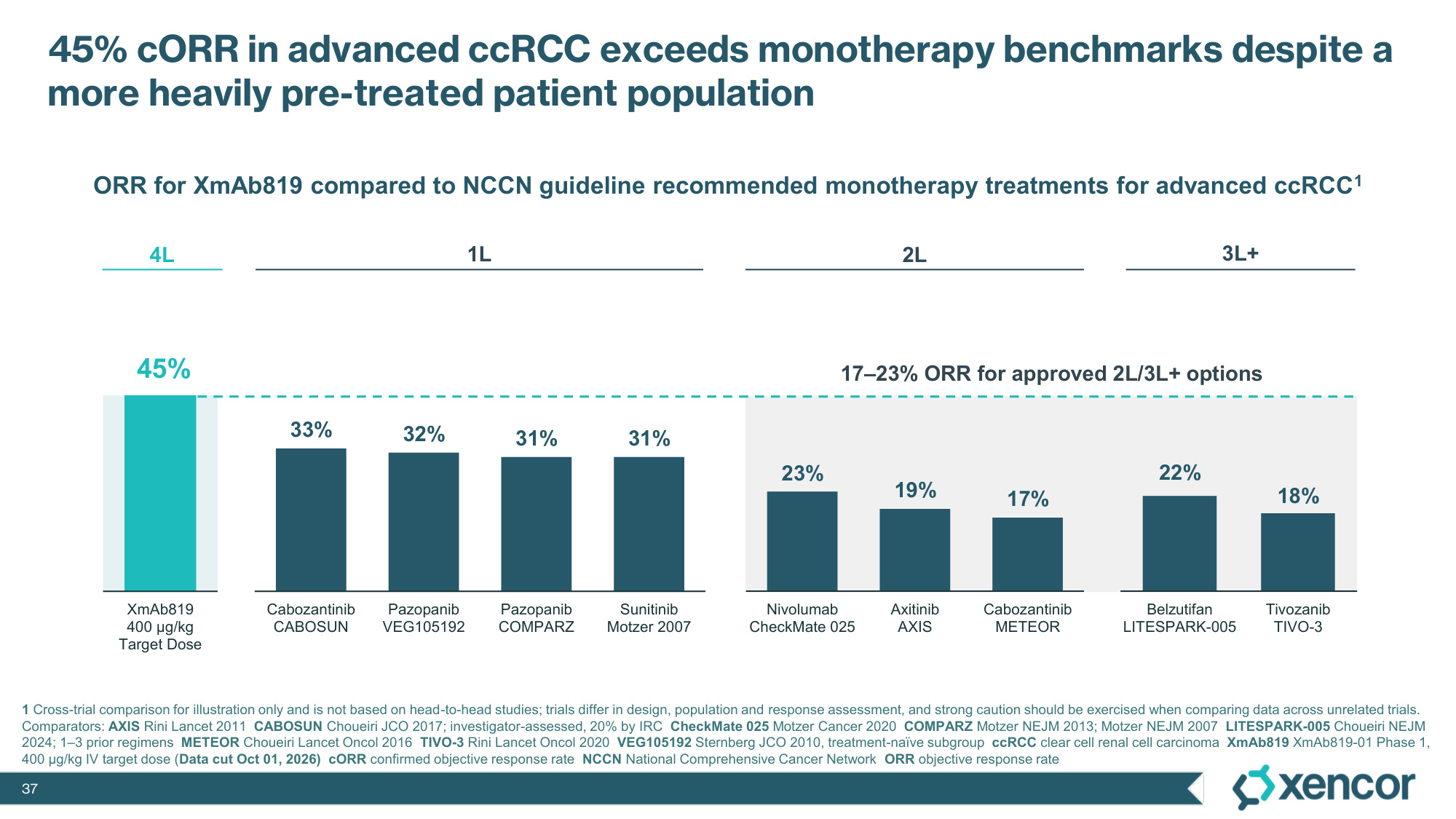
37 45% XmAb819 400 µg/kg Target Dose 33% 32% 31% 31% Cabozantinib CABOSUN Pazopanib VEG105192 Pazopanib COMPARZ Sunitinib Motzer 2007 23% 19% 17% Nivolumab CheckMate 025 Axitinib AXIS Cabozantinib METEOR 22% 18% Belzutifan LITESPARK-005 Tivozanib TIVO-3 4L 1L 2L 3L+ 1 Cross-trial comparison for illustration only and is not based on head-to-head studies; trials differ in design, population and response assessment, and strong caution should be exercised when comparing data across unrelated trials. Comparators: AXIS Rini Lancet 2011 CABOSUN Choueiri JCO 2017; investigator-assessed, 20% by IRC CheckMate 025 Motzer Cancer 2020 COMPARZ Motzer NEJM 2013; Motzer NEJM 2007 LITESPARK-005 Choueiri NEJM 2024; 1–3 prior regimens METEOR Choueiri Lancet Oncol 2016 TIVO-3 Rini Lancet Oncol 2020 VEG105192 Sternberg JCO 2010, treatment-naïve subgroup ccRCC clear cell renal cell carcinoma XmAb819 XmAb819-01 Phase 1, 400 µg/kg IV target dose (Data cut Oct 01, 2026) cORR confirmed objective response rate NCCN National Comprehensive Cancer Network ORR objective response rate 45% cORR in advanced ccRCC exceeds monotherapy benchmarks despite a more heavily pre-treated patient population ORR for XmAb819 compared to NCCN guideline recommended monotherapy treatments for advanced ccRCC1 17–23% ORR for approved 2L/3L+ options
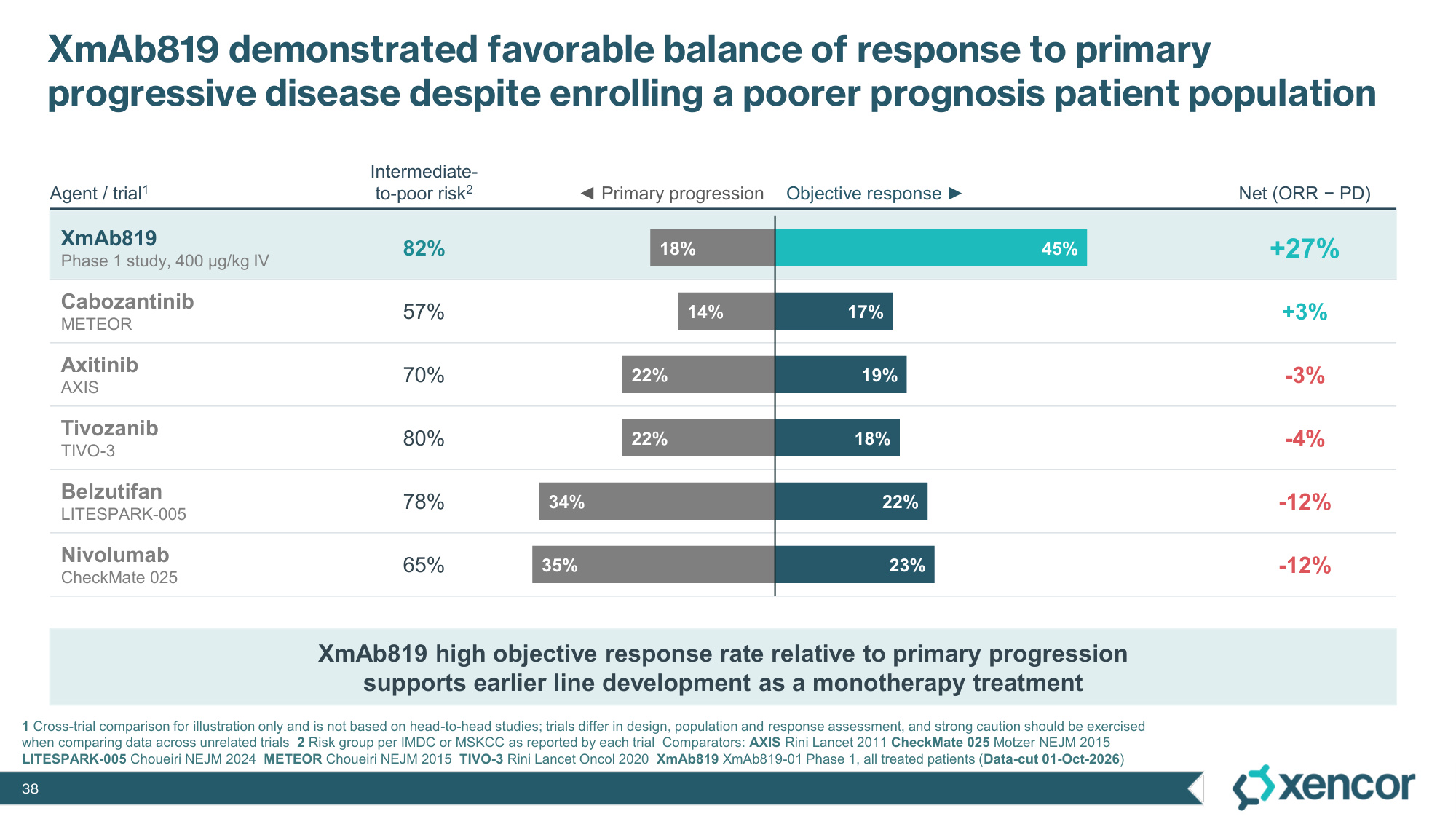
38 XmAb819 Phase 1 study, 400 µg/kg IV 82% +27% Cabozantinib METEOR 57% +3% Axitinib AXIS 70% -3% Tivozanib TIVO-3 80% -4% Belzutifan LITESPARK-005 78% -12% Nivolumab CheckMate 025 65% -12% 18% 14% 22% 22% 34% 35% 45% 17% 19% 18% 22% 23% XmAb819 high objective response rate relative to primary progression supports earlier line development as a monotherapy treatment 1 Cross-trial comparison for illustration only and is not based on head-to-head studies; trials differ in design, population and response assessment, and strong caution should be exercised when comparing data across unrelated trials 2 Risk group per IMDC or MSKCC as reported by each trial Comparators: AXIS Rini Lancet 2011 CheckMate 025 Motzer NEJM 2015 LITESPARK-005 Choueiri NEJM 2024 METEOR Choueiri NEJM 2015 TIVO-3 Rini Lancet Oncol 2020 XmAb819 XmAb819-01 Phase 1, all treated patients (Data-cut 01-Oct-2026) XmAb819 demonstrated favorable balance of response to primary progressive disease despite enrolling a poorer prognosis patient population Agent / trial1 Intermediate- to-poor risk2 ◄ Primary progression Objective response ► Net (ORR − PD)
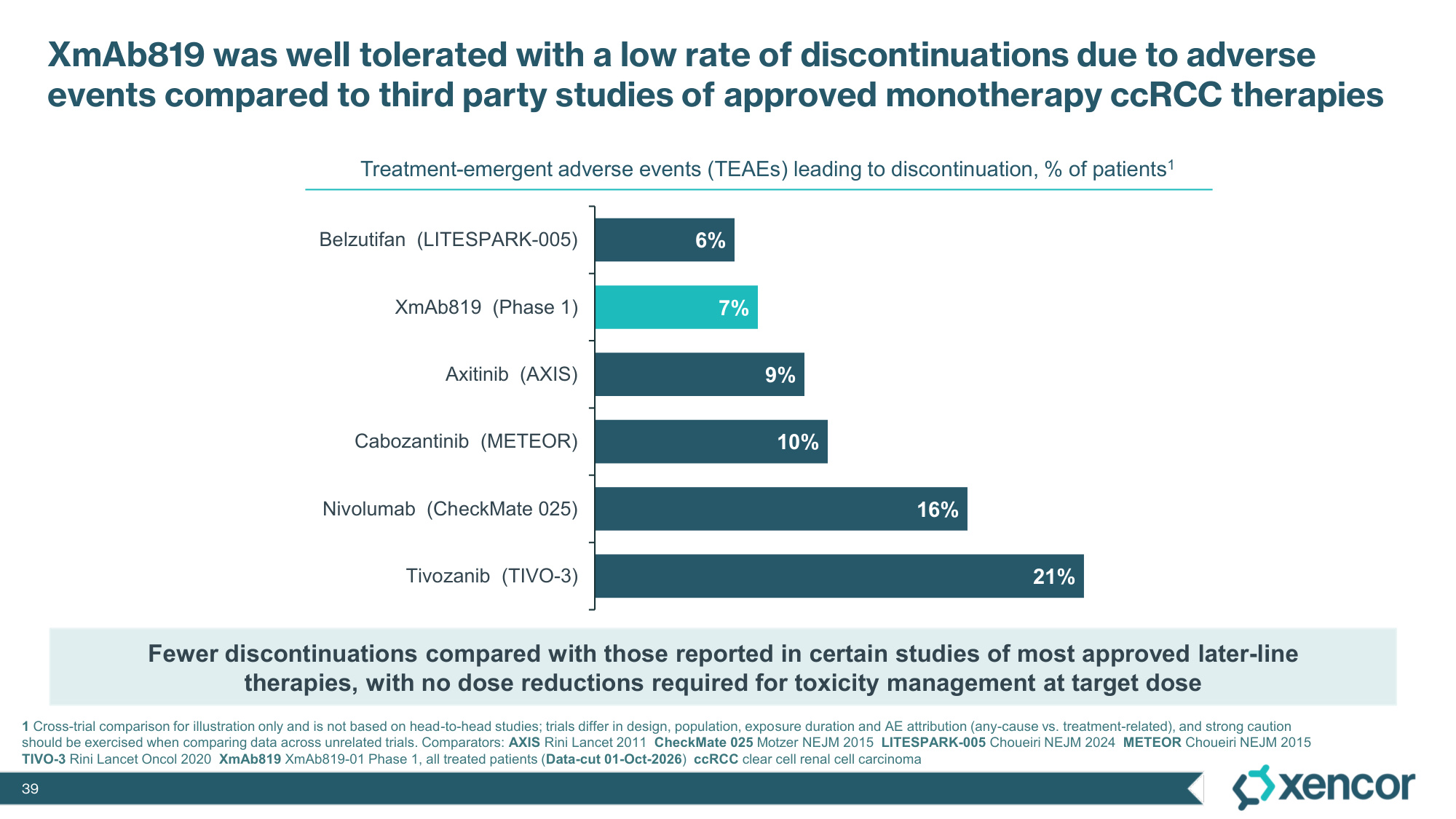
39 7% 6% 9% 10% 16% 21% Belzutifan (LITESPARK-005) XmAb819 (Phase 1) Axitinib (AXIS) Cabozantinib (METEOR) Nivolumab (CheckMate 025) Tivozanib (TIVO-3) 1 Cross-trial comparison for illustration only and is not based on head-to-head studies; trials differ in design, population, exposure duration and AE attribution (any-cause vs. treatment-related), and strong caution should be exercised when comparing data across unrelated trials. Comparators: AXIS Rini Lancet 2011 CheckMate 025 Motzer NEJM 2015 LITESPARK-005 Choueiri NEJM 2024 METEOR Choueiri NEJM 2015 TIVO-3 Rini Lancet Oncol 2020 XmAb819 XmAb819-01 Phase 1, all treated patients (Data-cut 01-Oct-2026) ccRCC clear cell renal cell carcinoma Treatment-emergent adverse events (TEAEs) leading to discontinuation, % of patients1 XmAb819 was well tolerated with a low rate of discontinuations due to adverse events compared to third party studies of approved monotherapy ccRCC therapies Fewer discontinuations compared with those reported in certain studies of most approved later-line therapies, with no dose reductions required for toxicity management at target dose
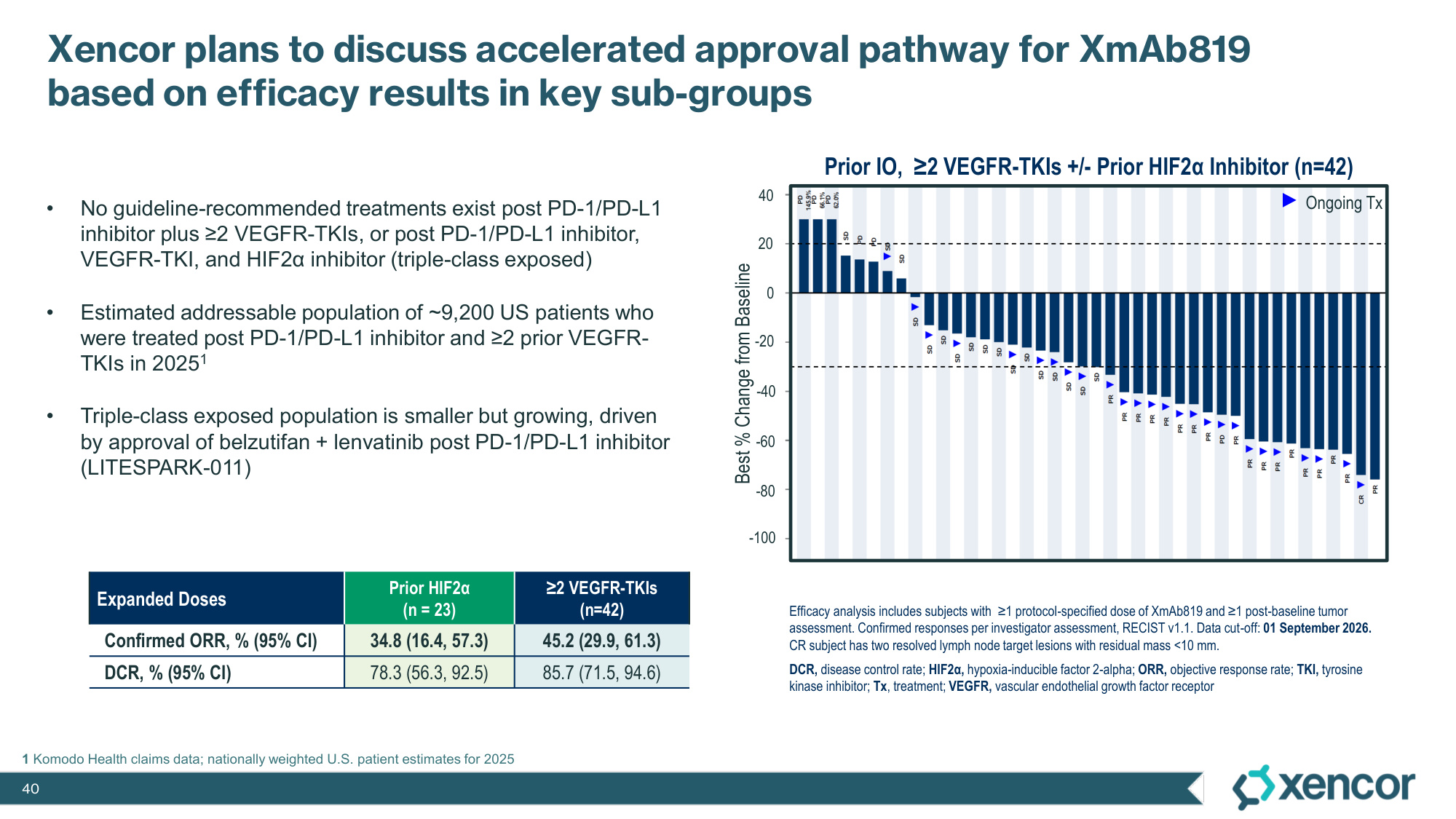
40 Xencor plans to discuss accelerated approval pathway for XmAb819 based on efficacy results in key sub-groups Best % Change from Baseline -100 -80 -60 -40 -20 0 20 40 Prior IO, ≥2 VEGFR-TKIs +/- Prior HIF2α Inhibitor (n=42) DCR, disease control rate; HIF2α, hypoxia-inducible factor 2-alpha; ORR, objective response rate; TKI, tyrosine kinase inhibitor; Tx, treatment; VEGFR, vascular endothelial growth factor receptor Efficacy analysis includes subjects with ≥1 protocol-specified dose of XmAb819 and ≥1 post-baseline tumor assessment. Confirmed responses per investigator assessment, RECIST v1.1. Data cut-off: 01 September 2026. CR subject has two resolved lymph node target lesions with residual mass <10 mm. Ongoing Tx • No guideline-recommended treatments exist post PD-1/PD-L1 inhibitor plus ≥2 VEGFR-TKIs, or post PD-1/PD-L1 inhibitor, VEGFR-TKI, and HIF2α inhibitor (triple-class exposed) • Estimated addressable population of ~9,200 US patients who were treated post PD-1/PD-L1 inhibitor and ≥2 prior VEGFR- TKIs in 20251 • Triple-class exposed population is smaller but growing, driven by approval of belzutifan + lenvatinib post PD-1/PD-L1 inhibitor (LITESPARK-011) Expanded Doses Prior HIF2α (n = 23) ≥2 VEGFR-TKIs (n=42) Confirmed ORR, % (95% CI) 34.8 (16.4, 57.3) 45.2 (29.9, 61.3) DCR, % (95% CI) 78.3 (56.3, 92.5) 85.7 (71.5, 94.6) 1 Komodo Health claims data; nationally weighted U.S. patient estimates for 2025
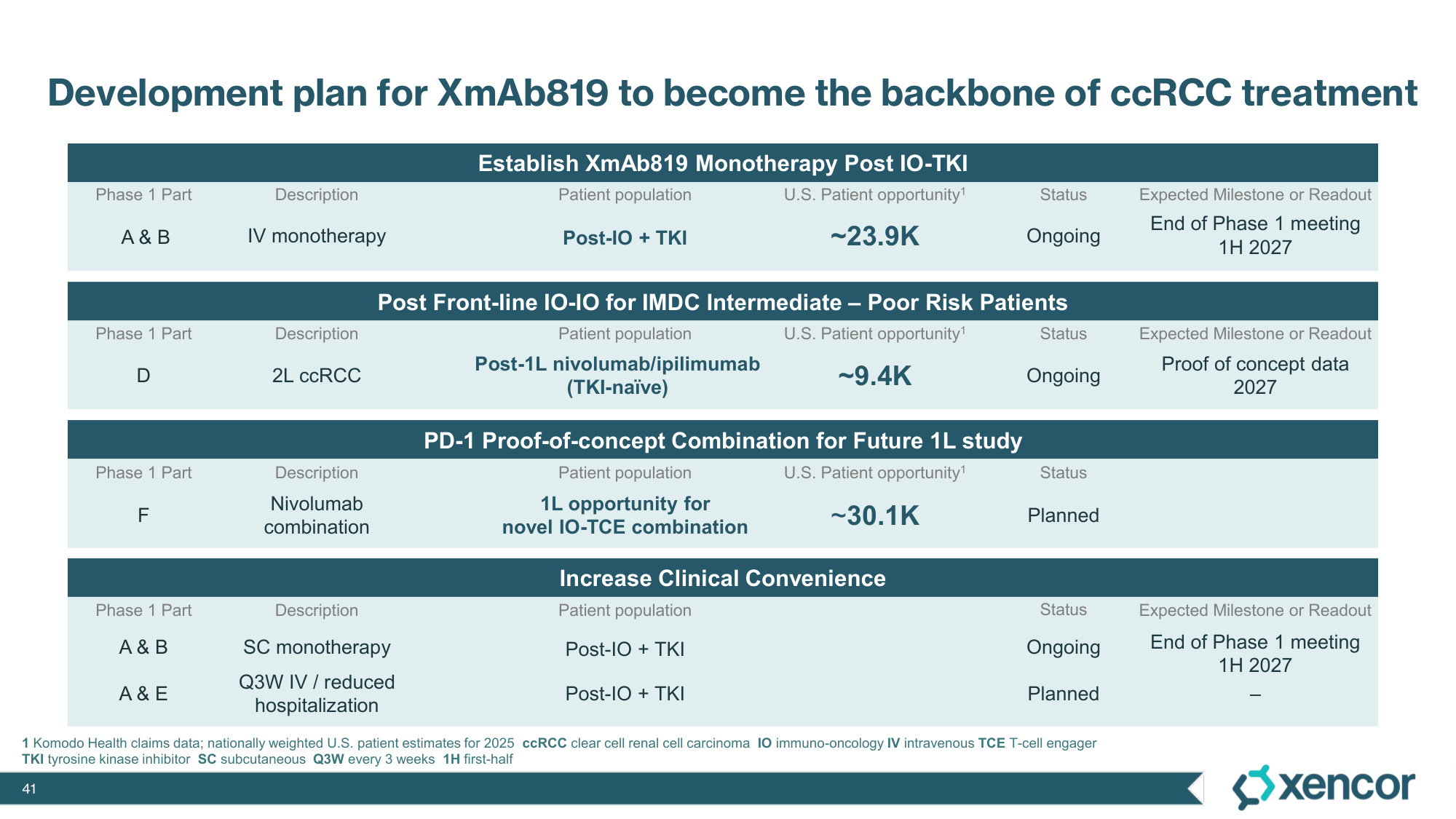
41 Q3W IV / reduced hospitalization Planned Increase Clinical Convenience 1 Komodo Health claims data; nationally weighted U.S. patient estimates for 2025 ccRCC clear cell renal cell carcinoma IO immuno-oncology IV intravenous TCE T-cell engager TKI tyrosine kinase inhibitor SC subcutaneous Q3W every 3 weeks 1H first-half SC monotherapy Post-IO + TKI Status Ongoing Expected Milestone or Readout End of Phase 1 meeting 1H 2027 Development plan for XmAb819 to become the backbone of ccRCC treatment Patient population A & B A & E Description Post Front-line IO-IO for IMDC Intermediate – Poor Risk Patients 2L ccRCC Post-1L nivolumab/ipilimumab (TKI-naïve) ~9.4K Ongoing Proof of concept data 2027 Status Expected Milestone or Readout U.S. Patient opportunity1 Patient population D Description Phase 1 Part Nivolumab combination 1L opportunity for novel IO-TCE combination ~30.1K Planned PD-1 Proof-of-concept Combination for Future 1L study Status U.S. Patient opportunity1 Patient population F Description Phase 1 Part Phase 1 Part Post-IO + TKI – Establish XmAb819 Monotherapy Post IO-TKI IV monotherapy Post-IO + TKI ~23.9K Ongoing End of Phase 1 meeting 1H 2027 A & B Status Expected Milestone or Readout U.S. Patient opportunity1 Description Patient population Phase 1 Part
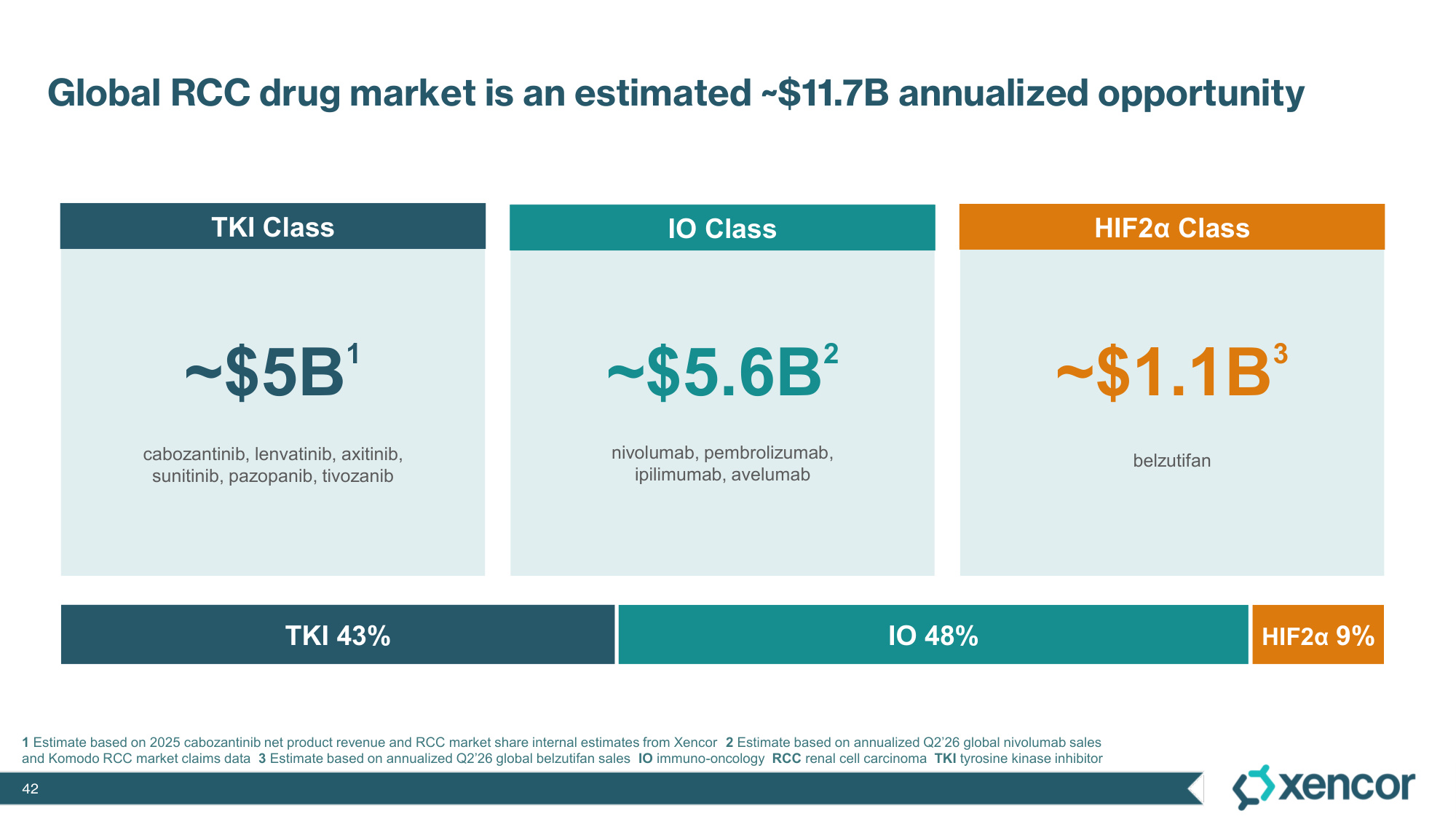
42 ~$5B 1 cabozantinib, lenvatinib, axitinib, sunitinib, pazopanib, tivozanib ~$5.6B 2 nivolumab, pembrolizumab, ipilimumab, avelumab ~$1.1B 3 belzutifan TKI 43% IO 48% HIF2α 9% 1 Estimate based on 2025 cabozantinib net product revenue and RCC market share internal estimates from Xencor 2 Estimate based on annualized Q2'26 global nivolumab sales and Komodo RCC market claims data 3 Estimate based on annualized Q2'26 global belzutifan sales IO immuno-oncology RCC renal cell carcinoma TKI tyrosine kinase inhibitor Global RCC drug market is an estimated ~$11.7B annualized opportunity TKI Class IO Class HIF2α Class
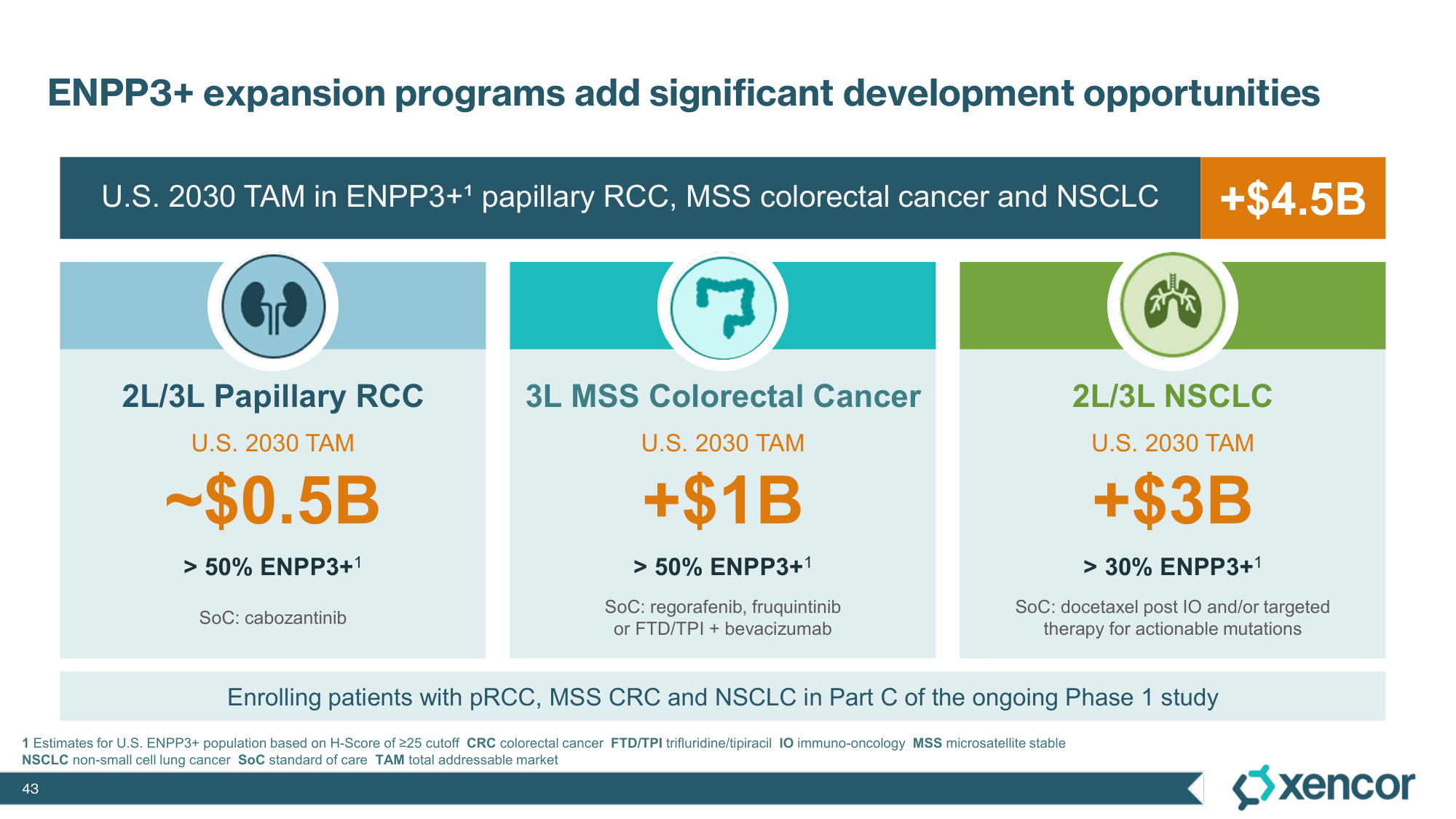
43 U.S. 2030 TAM in ENPP3+¹ papillary RCC, MSS colorectal cancer and NSCLC +$4.5B 1 Estimates for U.S. ENPP3+ population based on H-Score of ≥25 cutoff CRC colorectal cancer FTD/TPI trifluridine/tipiracil IO immuno-oncology MSS microsatellite stable NSCLC non-small cell lung cancer SoC standard of care TAM total addressable market 2L/3L Papillary RCC U.S. 2030 TAM ~$0.5B > 50% ENPP3+1 SoC: cabozantinib 3L MSS Colorectal Cancer U.S. 2030 TAM +$1B > 50% ENPP3+1 SoC: regorafenib, fruquintinib or FTD/TPI + bevacizumab 2L/3L NSCLC U.S. 2030 TAM +$3B > 30% ENPP3+1 SoC: docetaxel post IO and/or targeted therapy for actionable mutations ENPP3+ expansion programs add significant development opportunities Enrolling patients with pRCC, MSS CRC and NSCLC in Part C of the ongoing Phase 1 study
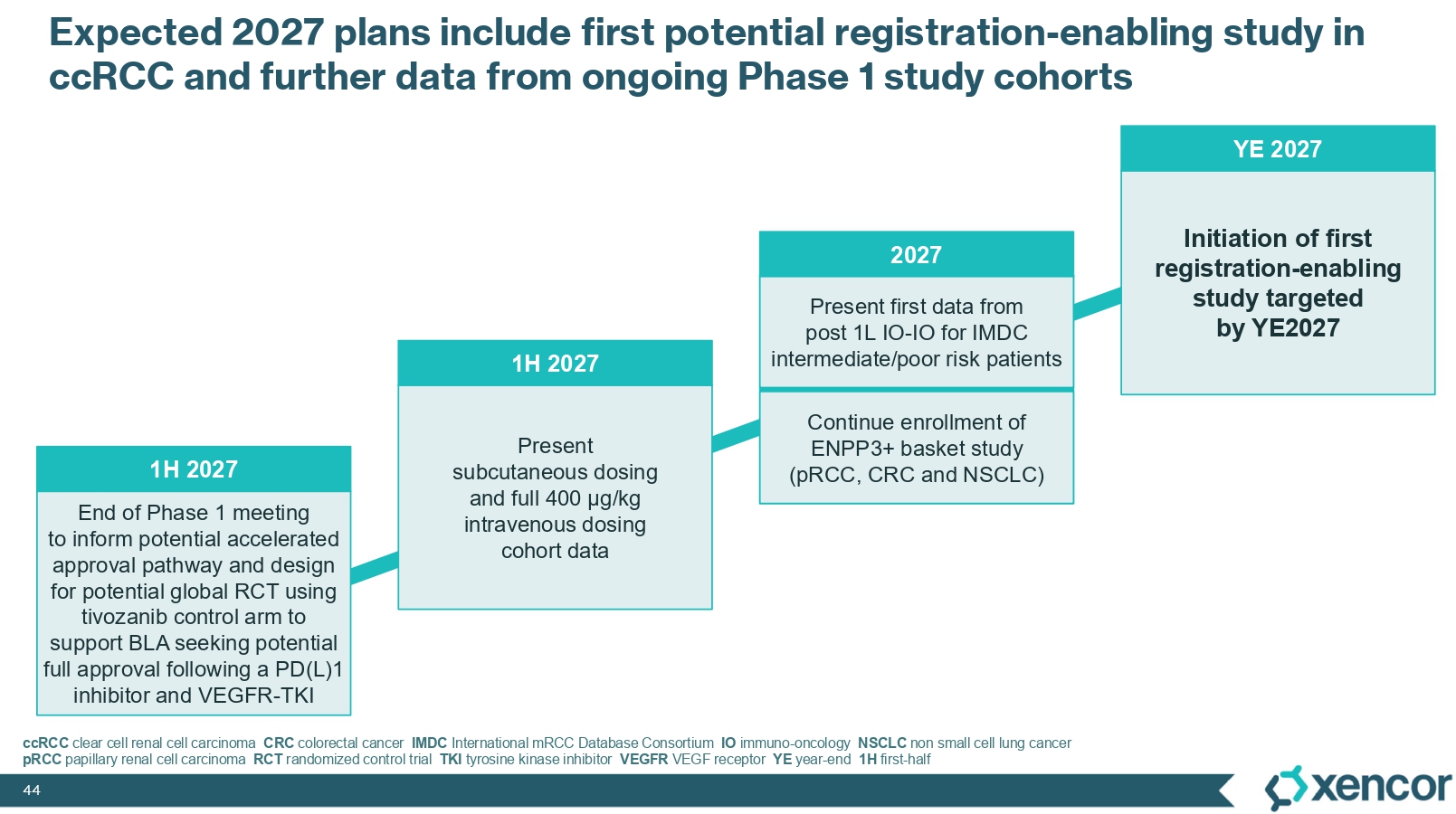
44 Expected 2027 plans include first potential registration - enabling study in ccRCC and further data from ongoing Phase 1 study cohorts Initiation of first registration - enabling study targeted by YE2027 YE 2027 2027 Present first data from post 1L IO - IO for IMDC intermediate/poor risk patients Continue enrollment of ENPP3+ basket study (pRCC, CRC and NSCLC) End of Phase 1 meeting to inform potential accelerated approval pathway and design for potential global RCT using tivozanib control arm to support BLA seeking potential full approval following a PD(L)1 inhibitor and VEGFR - TKI 1H 2027 Present subcutaneous dosing and full 400 μg/kg intravenous dosing cohort data 1H 2027 ccRCC clear cell renal cell carcinoma CRC colorectal cancer IMDC International mRCC Database Consortium IO immuno - oncology NSCLC non small cell lung cancer pRCC papillary renal cell carcinoma RCT randomized control trial TKI tyrosine kinase inhibitor VEGFR VEGF receptor YE year - end 1H first - half
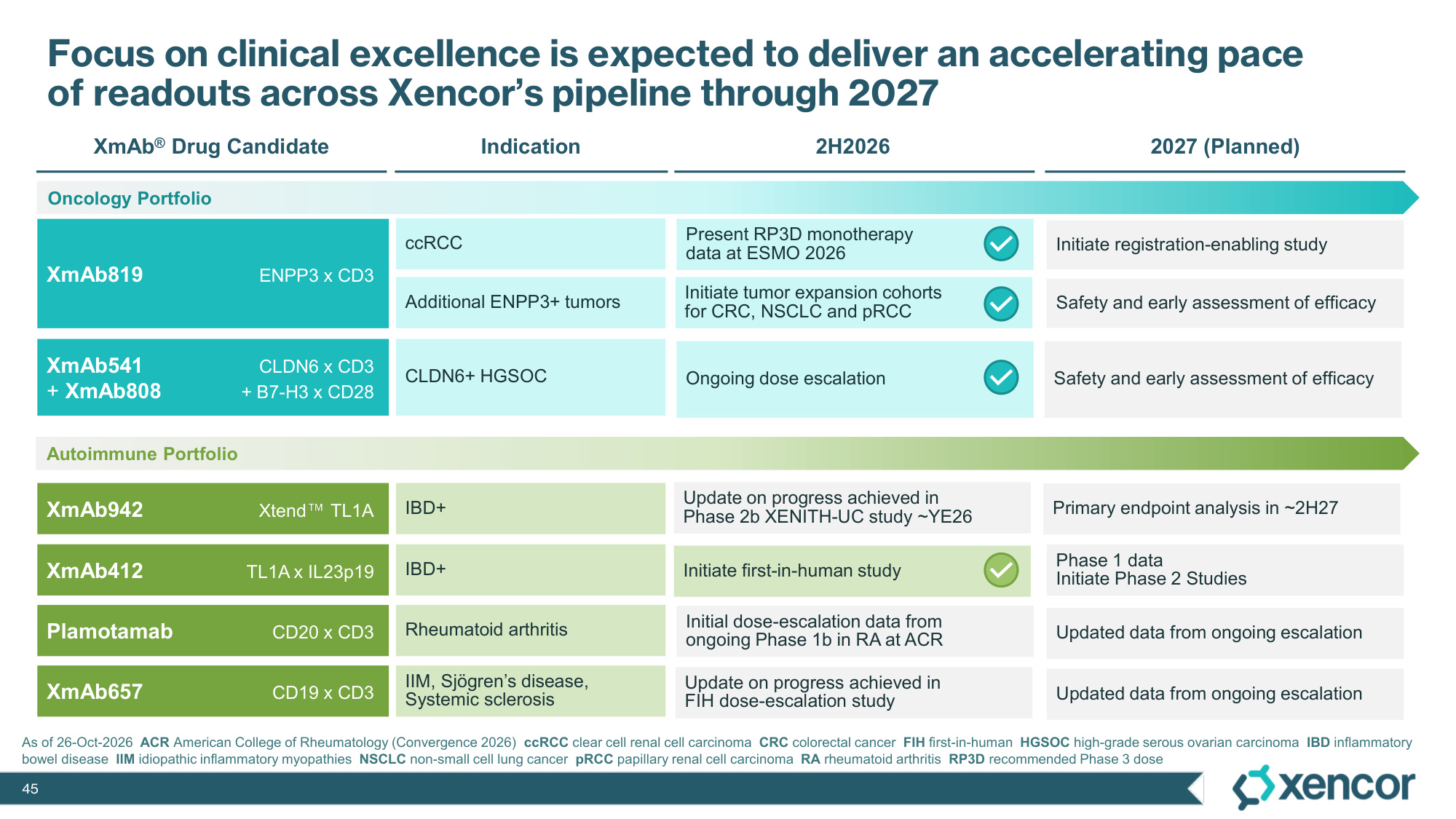
45 Focus on clinical excellence is expected to deliver an accelerating pace of readouts across Xencor's pipeline through 2027 XmAb® Drug Candidate Indication Oncology Portfolio 2H2026 2027 (Planned) Autoimmune Portfolio As of 26-Oct-2026 ACR American College of Rheumatology (Convergence 2026) ccRCC clear cell renal cell carcinoma CRC colorectal cancer FIH first-in-human HGSOC high-grade serous ovarian carcinoma IBD inflammatory bowel disease IIM idiopathic inflammatory myopathies NSCLC non-small cell lung cancer pRCC papillary renal cell carcinoma RA rheumatoid arthritis RP3D recommended Phase 3 dose XmAb819 ENPP3 x CD3 Additional ENPP3+ tumors Initiate tumor expansion cohorts for CRC, NSCLC and pRCC Present RP3D monotherapy data at ESMO 2026 CLDN6+ HGSOC XmAb541 CLDN6 x CD3 + XmAb808 + B7-H3 x CD28 Safety and early assessment of efficacy XmAb942 Xtend TL1A IBD+ Update on progress achieved in Phase 2b XENITH-UC study ~YE26 XmAb412 TL1A x IL23p19 IBD+ Initiate first-in-human study Plamotamab CD20 x CD3 Rheumatoid arthritis Initial dose-escalation data from ongoing Phase 1b in RA at ACR XmAb657 CD19 x CD3 IIM, Sjögren's disease, Systemic sclerosis Update on progress achieved in FIH dose-escalation study ccRCC Ongoing dose escalation Initiate registration-enabling study Safety and early assessment of efficacy Primary endpoint analysis in ~2H27 Phase 1 data Initiate Phase 2 Studies Updated data from ongoing escalation Updated data from ongoing escalation

46 ® Q&A

® Designing Proteins Delivering Medicines Updated Results from Dose Expansion Cohorts in the Phase 1 Study of XmAb819 October 26, 2026