HERO/OLE Update EXHIBIT 99.2
Disclaimer Aardvark Therapeutics, Inc. (“we”, “us,” “our” or the “Company”) does not (nor its respective affiliates, directors, members, officers, employees or agents) make any representation or warranty, express or implied, as to, and no reliance should be placed on, the fairness, accuracy, completeness or correctness of the information and opinions contained in this presentation or any other written or oral information made available to any interested party or its advisors and any liability therefor is hereby expressly disclaimed. This presentation includes certain statements, estimates, targets and projections (including, without limitation, projected revenue, growth and demand expectations and estimated costs) provided by the Company with respect to the anticipated future performance of the assets described herein which reflect significant assumptions and subjective judgments by the Company’s management. The Company believes that it is important to communicate its future assumptions and expectations to current and prospective investors. These assumptions and judgments may or may not prove to be correct, are subject to significant business, economic and competitive uncertainties and contingencies, many of which are beyond the control of the Company, and there can be no assurance that any estimates, targets or projections are attainable or will be realized. The actual results may vary from the projected results and such variations may be material. Any forward-looking statement made by the Company in this presentation speaks only as of the date on which it was made. The Company and its affiliates, directors, members, officers, employees and agents shall have no liability whatsoever (in negligence or otherwise) for the accuracy or sufficiency of the information contained herein, any errors, omissions or misstatements relating hereto, or any direct, indirect, consequential or other loss howsoever arising from any use of this presentation or its contents or otherwise arising in connection with this presentation. These forward-looking statements are subject to risks and uncertainties, including the factors described under the “Risk Factors” section of the Company’s most recent Annual Report on Form 10-K and Quarterly Reports on Form 10-Q that the Company has filed or may subsequently file with the U.S. Securities and Exchange Commission. The Company undertakes no obligation to update or revise any forward-looking statements, whether as a result of new information, future events or otherwise. Nothing contained within this presentation is or should be relied upon as a promise or representation as to the future. Trade names, trademarks and service marks of other companies appearing in this presentation are the property of their respective owners. Solely for convenience, the trademarks and trade names referred to in this presentation appear without the ® and TM symbols, but those references are not intended to indicate, in any way, that we will not assert, to the fullest extent under applicable law, our rights, or the rights of the applicable licensor to these trademarks and tradenames. This presentation concerns products that are under clinical investigation and which have not yet been approved for marketing by the U.S. Food and Drug Administration. It is currently limited by federal law to investigational use, and no representation is made as to its safety or effectiveness for the purposes for which it is being investigated.
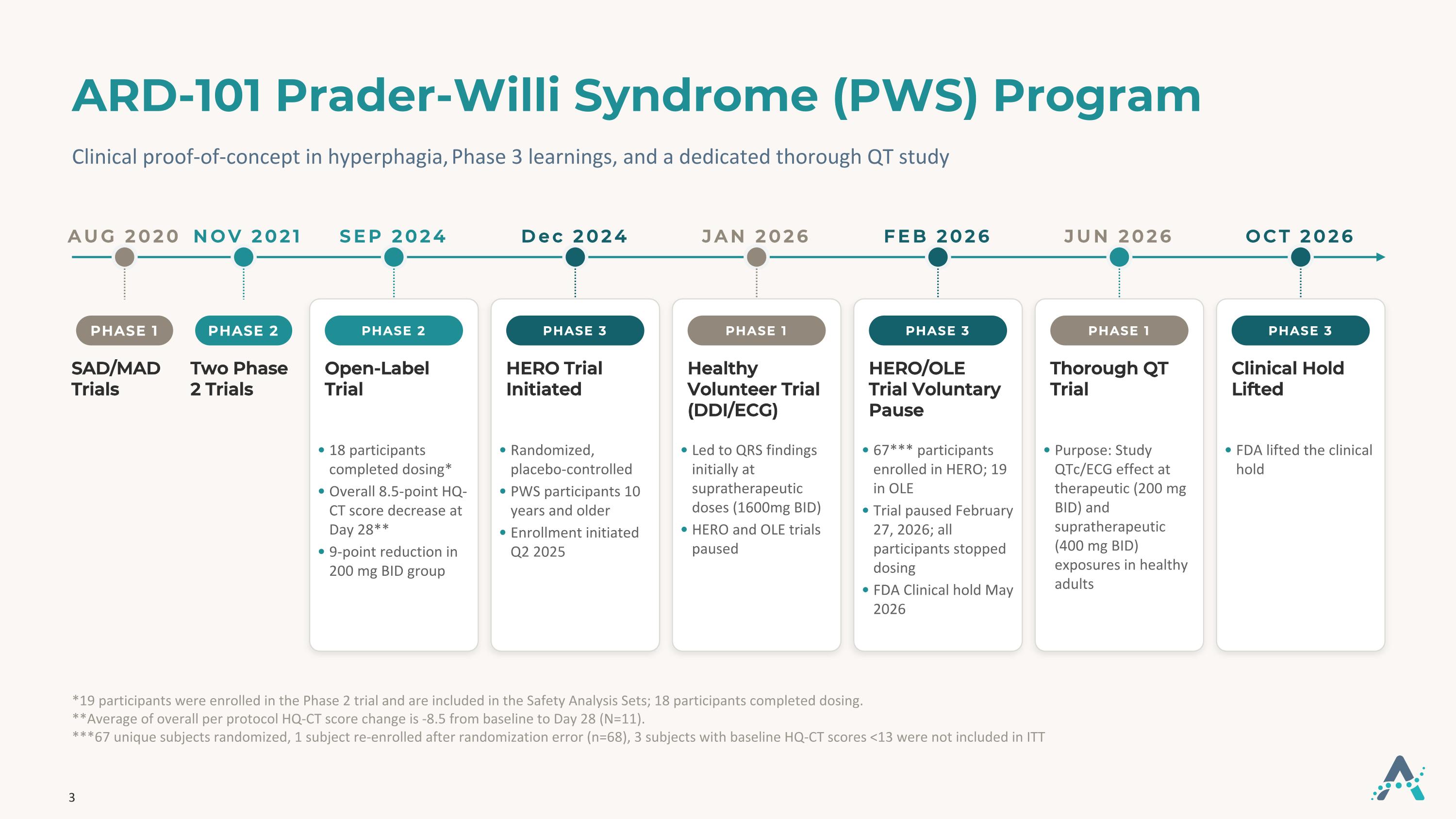
ARD-101 Prader-Willi Syndrome (PWS) Program Clinical proof-of-concept in hyperphagia, Phase 3 learnings, and a dedicated thorough QT study AUG 2020 PHASE 1 SAD/MAD Trials NOV 2021 PHASE 2 Two Phase 2 Trials SEP 2024 PHASE 2 Open-Label Trial 18 participants completed dosing* Overall 8.5-point HQ-CT score decrease at Day 28** 9-point reduction in 200 mg BID group Dec 2024 PHASE 3 HERO Trial Initiated Randomized, placebo-controlled PWS participants 10 years and older Enrollment initiated Q2 2025 JAN 2026 PHASE 1 Healthy Volunteer Trial (DDI/ECG) Led to QRS findings initially at supratherapeutic doses (1600mg BID) HERO and OLE trials paused FEB 2026 PHASE 3 HERO/OLE Trial Voluntary Pause 67*** participants enrolled in HERO; 19 in OLE Trial paused February 27, 2026; all participants stopped dosing FDA Clinical hold May 2026 JUN 2026 PHASE 1 Thorough QT Trial Purpose: Study QTc/ECG effect at therapeutic (200 mg BID) and supratherapeutic (400 mg BID) exposures in healthy adults *19 participants were enrolled in the Phase 2 trial and are included in the Safety Analysis Sets; 18 participants completed dosing. **Average of overall per protocol HQ-CT score change is -8.5 from baseline to Day 28 (N=11). ***67 unique subjects randomized, 1 subject re-enrolled after randomization error (n=68), 3 subjects with baseline HQ-CT scores <13 were not included in ITT OCT 2026 PHASE 3 Clinical Hold Lifted FDA lifted the clinical hold
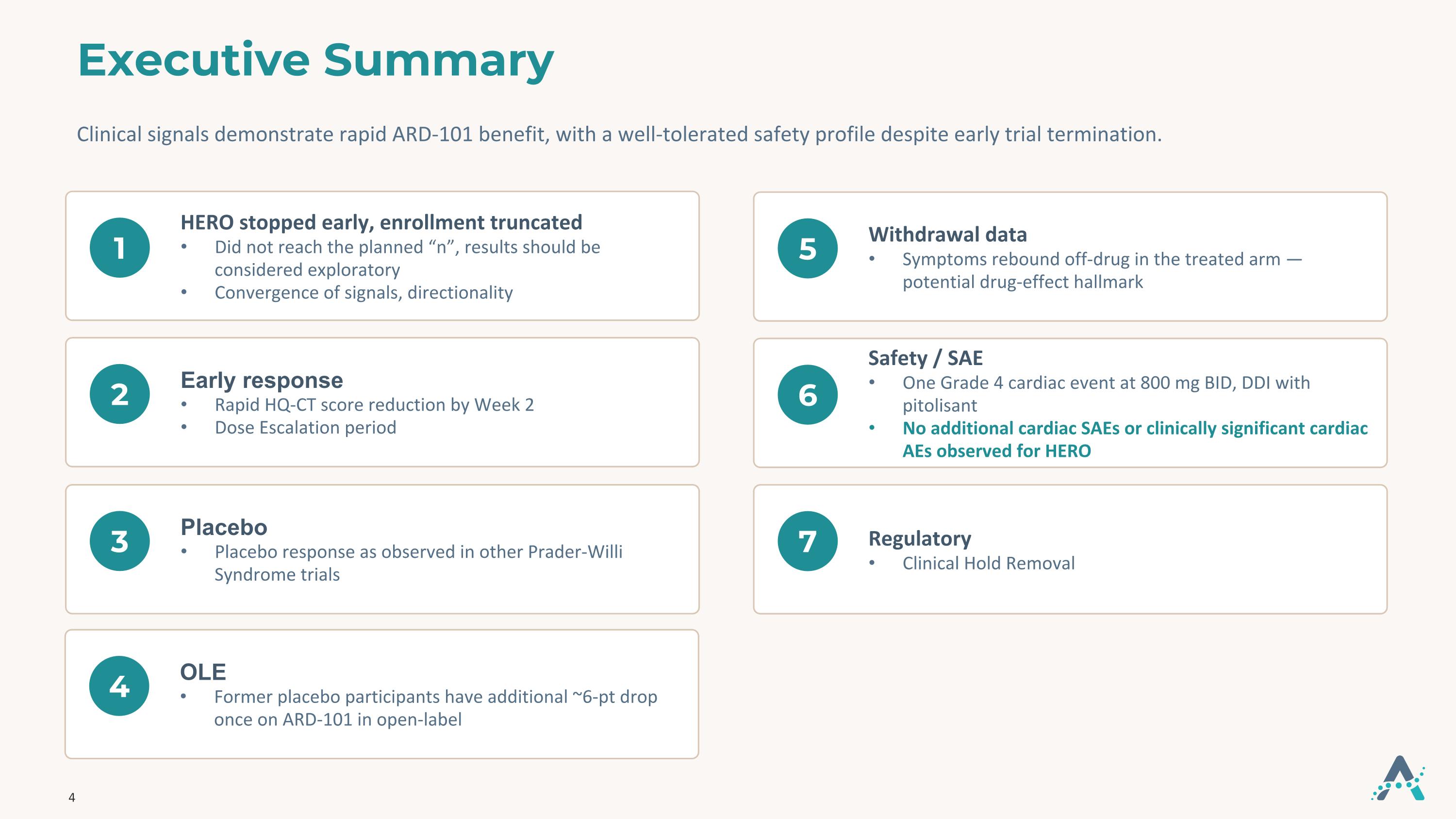
Executive Summary Clinical signals demonstrate rapid ARD-101 benefit, with a well-tolerated safety profile despite early trial termination. 1 HERO stopped early, enrollment truncated Did not reach the planned “n”, results should be considered exploratory Convergence of signals, directionality 2 Early response Rapid HQ-CT score reduction by Week 2 Dose Escalation period 3 Placebo Placebo response as observed in other Prader-Willi Syndrome trials 4 OLE Former placebo participants have additional ~6-pt drop once on ARD-101 in open-label 5 Withdrawal data Symptoms rebound off-drug in the treated arm — potential drug-effect hallmark 6 Safety / SAE One Grade 4 cardiac event at 800 mg BID, DDI with pitolisant No additional cardiac SAEs or clinically significant cardiac AEs observed for HERO 7 Regulatory Clinical Hold Removal
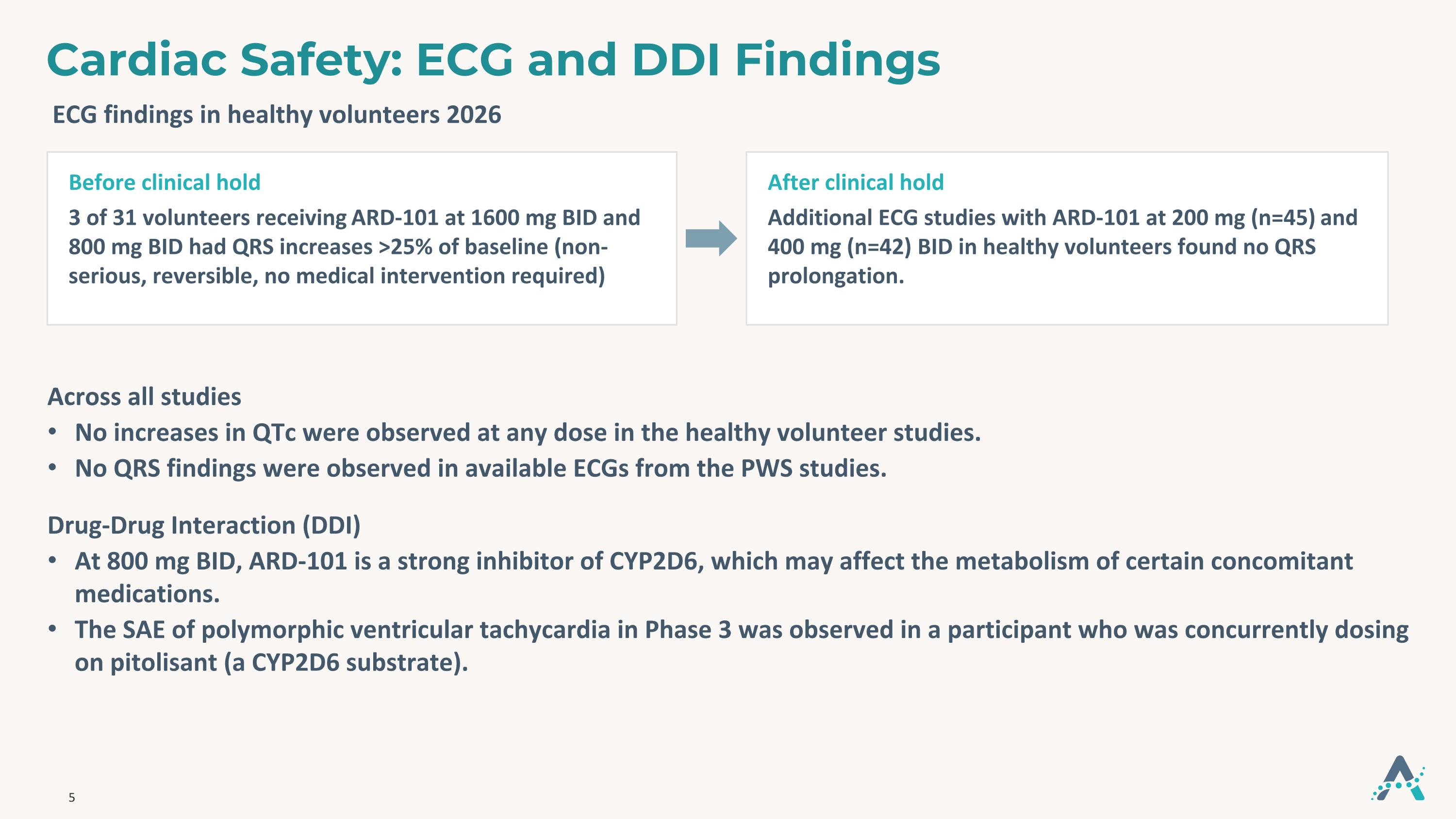
Cardiac Safety: ECG and DDI Findings Across all studies No increases in QTc were observed at any dose in the healthy volunteer studies. No QRS findings were observed in available ECGs from the PWS studies. Drug-Drug Interaction (DDI) At 800 mg BID, ARD-101 is a strong inhibitor of CYP2D6, which may affect the metabolism of certain concomitant medications. The SAE of polymorphic ventricular tachycardia in Phase 3 was observed in a participant who was concurrently dosing on pitolisant (a CYP2D6 substrate). ECG findings in healthy volunteers 2026 Before clinical hold 3 of 31 volunteers receiving ARD-101 at 1600 mg BID and 800 mg BID had QRS increases >25% of baseline (non-serious, reversible, no medical intervention required) After clinical hold Additional ECG studies with ARD-101 at 200 mg (n=45) and 400 mg (n=42) BID in healthy volunteers found no QRS prolongation.
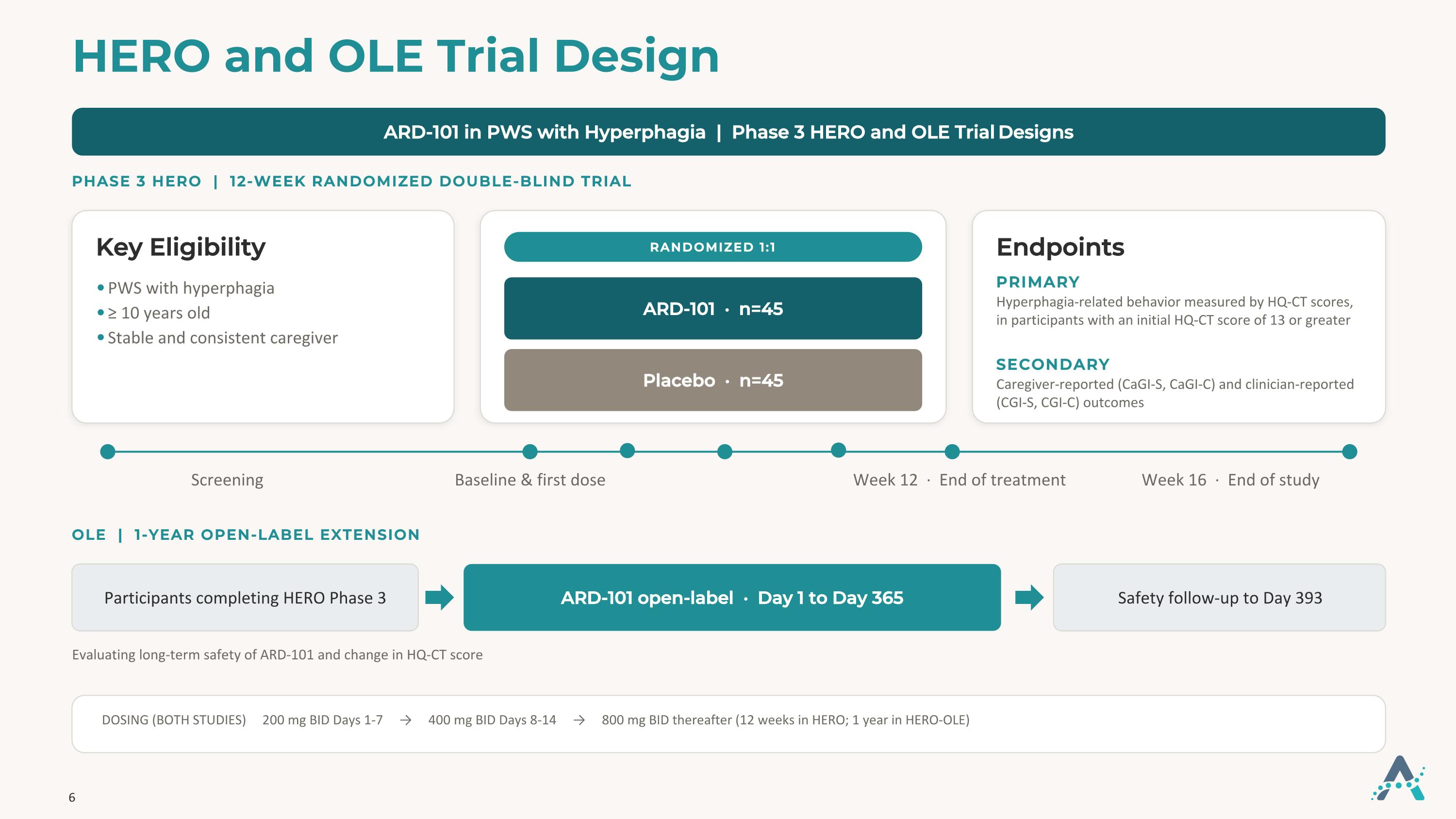
HERO and OLE Trial Design ARD-101 in PWS with Hyperphagia | Phase 3 HERO and OLE Trial Designs PHASE 3 HERO | 12-WEEK RANDOMIZED DOUBLE-BLIND TRIAL Key Eligibility PWS with hyperphagia ≥ 10 years old Stable and consistent caregiver RANDOMIZED 1:1 ARD-101 · n=45 Placebo · n=45 Endpoints PRIMARY Hyperphagia-related behavior measured by HQ-CT scores, in participants with an initial HQ-CT score of 13 or greater SECONDARY Caregiver-reported (CaGI-S, CaGI-C) and clinician-reported (CGI-S, CGI-C) outcomes Screening Baseline & first dose Week 12 · End of treatment Week 16 · End of study OLE | 1-YEAR OPEN-LABEL EXTENSION Participants completing HERO Phase 3 ARD-101 open-label · Day 1 to Day 365 Safety follow-up to Day 393 Evaluating long-term safety of ARD-101 and change in HQ-CT score DOSING (BOTH STUDIES) 200 mg BID Days 1-7 → 400 mg BID Days 8-14 → 800 mg BID thereafter (12 weeks in HERO; 1 year in HERO-OLE)
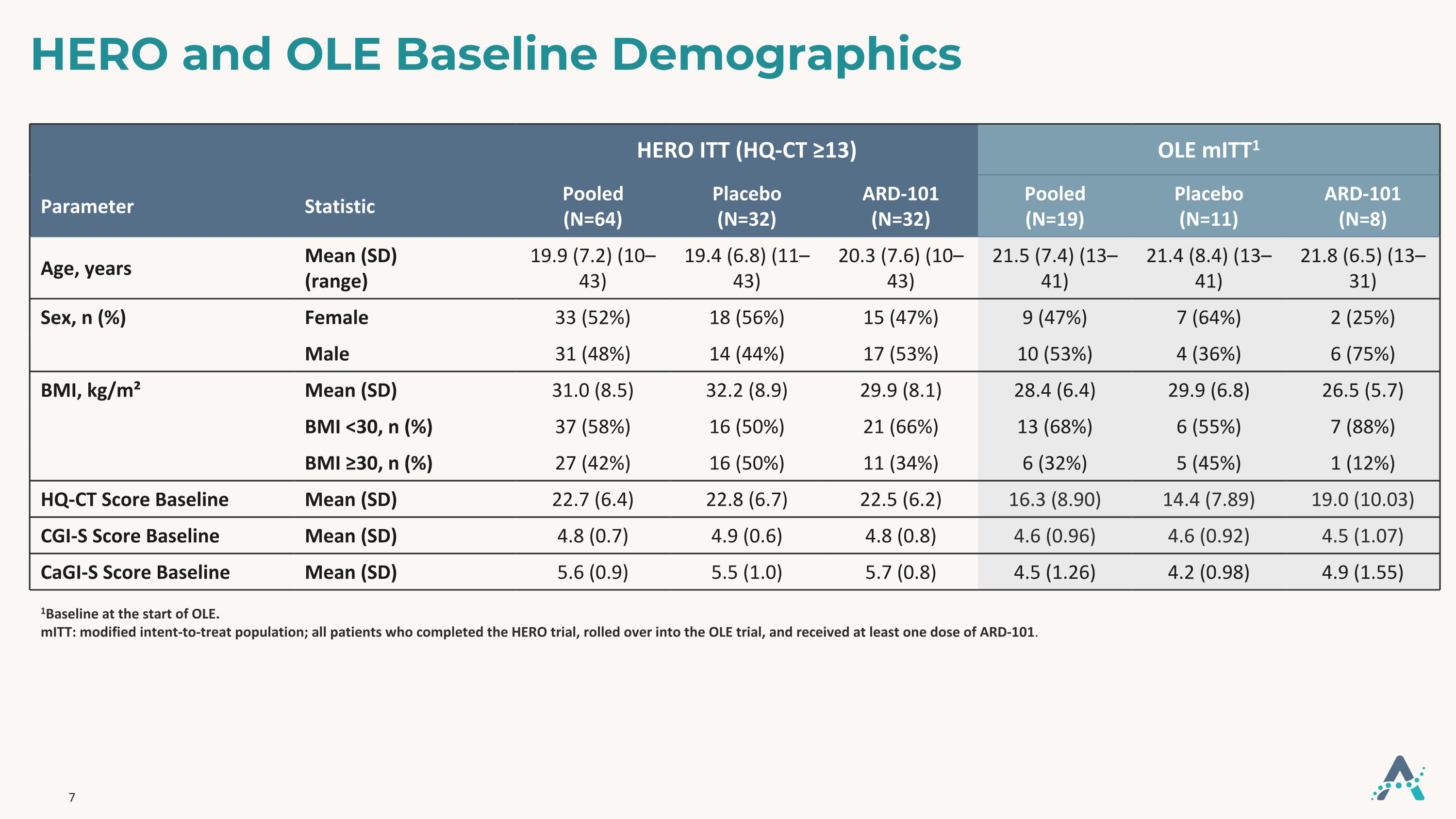
HERO and OLE Baseline Demographics HERO ITT (HQ-CT ≥13) OLE mITT1 Parameter Statistic Pooled (N=64) Placebo (N=32) ARD-101 (N=32) Pooled (N=19) Placebo (N=11) ARD-101 (N=8) Age, years Mean (SD) (range) 19.9 (7.2) (10–43) 19.4 (6.8) (11–43) 20.3 (7.6) (10–43) 21.5 (7.4) (13–41) 21.4 (8.4) (13–41) 21.8 (6.5) (13–31) Sex, n (%) Female 33 (52%) 18 (56%) 15 (47%) 9 (47%) 7 (64%) 2 (25%) Male 31 (48%) 14 (44%) 17 (53%) 10 (53%) 4 (36%) 6 (75%) BMI, kg/m² Mean (SD) 31.0 (8.5) 32.2 (8.9) 29.9 (8.1) 28.4 (6.4) 29.9 (6.8) 26.5 (5.7) BMI <30, n (%) 37 (58%) 16 (50%) 21 (66%) 13 (68%) 6 (55%) 7 (88%) BMI ≥30, n (%) 27 (42%) 16 (50%) 11 (34%) 6 (32%) 5 (45%) 1 (12%) HQ-CT Score Baseline Mean (SD) 22.7 (6.4) 22.8 (6.7) 22.5 (6.2) 16.3 (8.90) 14.4 (7.89) 19.0 (10.03) CGI-S Score Baseline Mean (SD) 4.8 (0.7) 4.9 (0.6) 4.8 (0.8) 4.6 (0.96) 4.6 (0.92) 4.5 (1.07) CaGI-S Score Baseline Mean (SD) 5.6 (0.9) 5.5 (1.0) 5.7 (0.8) 4.5 (1.26) 4.2 (0.98) 4.9 (1.55) 1Baseline at the start of OLE. mITT: modified intent-to-treat population; all patients who completed the HERO trial, rolled over into the OLE trial, and received at least one dose of ARD-101.
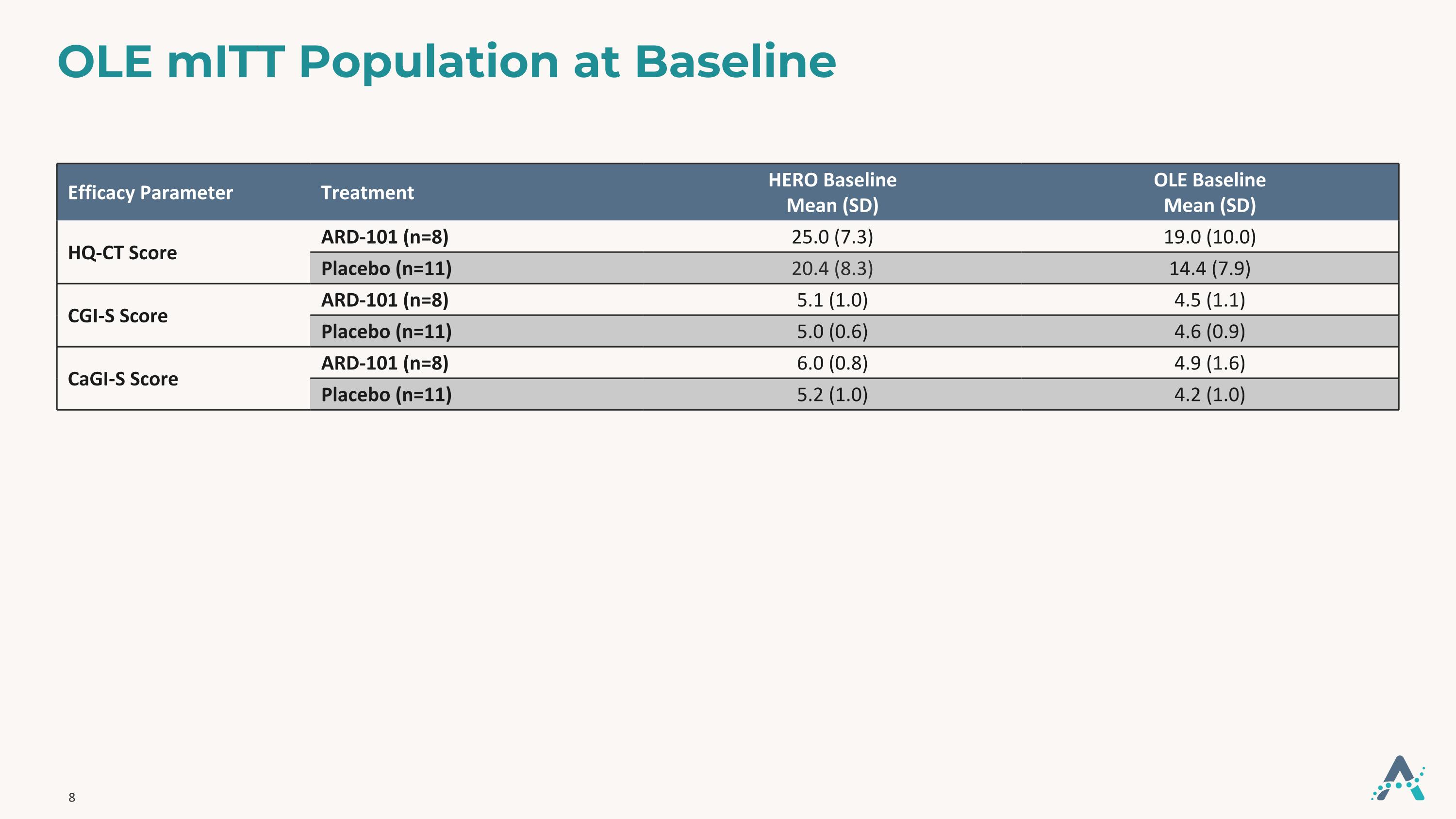
OLE mITT Population at Baseline Efficacy Parameter Treatment HERO Baseline Mean (SD) OLE Baseline Mean (SD) HQ-CT Score ARD-101 (n=8) 25.0 (7.3) 19.0 (10.0) Placebo (n=11) 20.4 (8.3) 14.4 (7.9) CGI-S Score ARD-101 (n=8) 5.1 (1.0) 4.5 (1.1) Placebo (n=11) 5.0 (0.6) 4.6 (0.9) CaGI-S Score ARD-101 (n=8) 6.0 (0.8) 4.9 (1.6) Placebo (n=11) 5.2 (1.0) 4.2 (1.0)
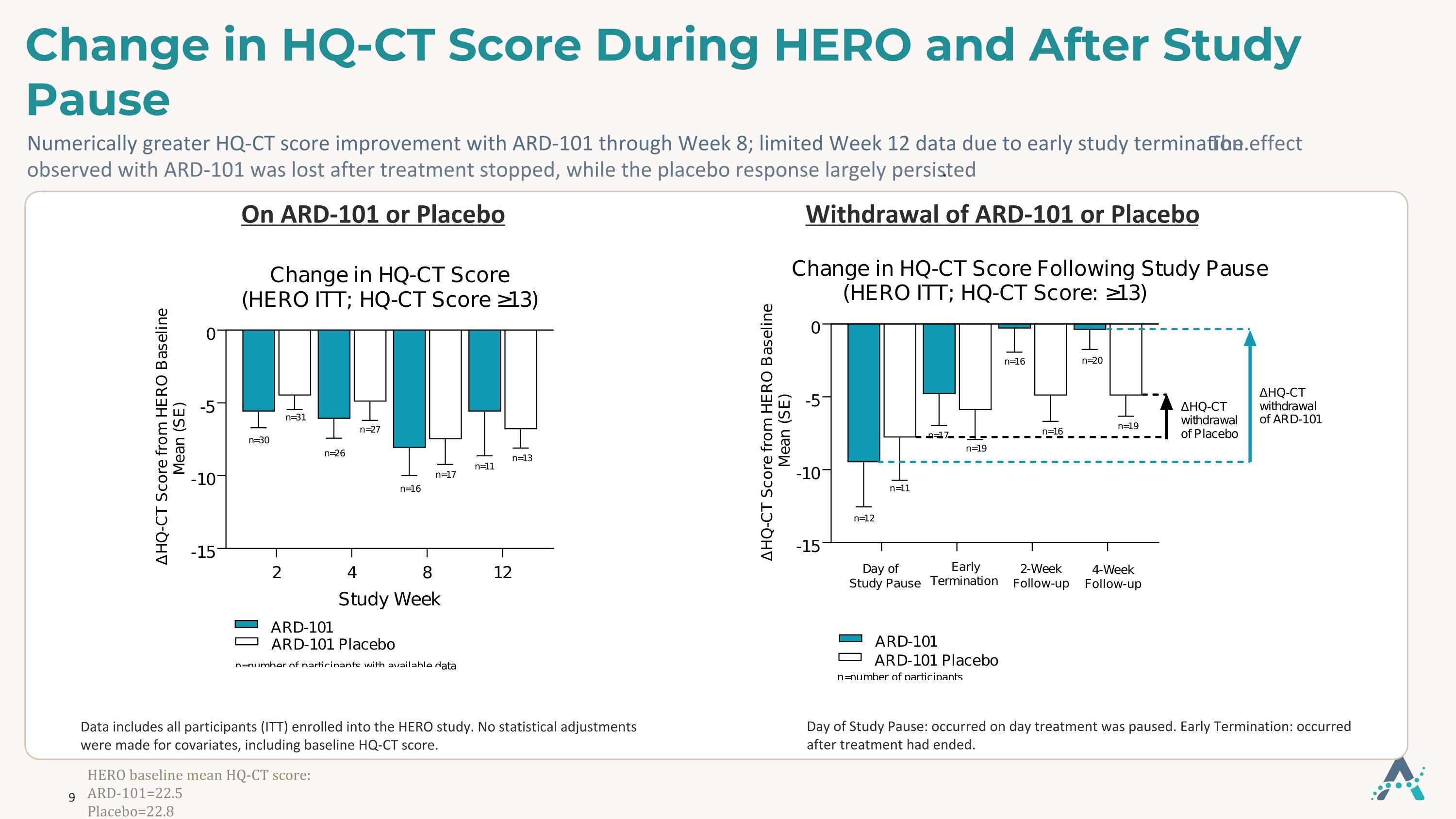
HERO baseline mean HQ-CT score: ARD-101=22.5 Placebo=22.8 Change in HQ-CT Score During HERO and After Study Pause On ARD-101 or Placebo Withdrawal of ARD-101 or Placebo Data includes all participants (ITT) enrolled into the HERO study. No statistical adjustments were made for covariates, including baseline HQ-CT score. Numerically greater HQ-CT score improvement with ARD-101 through Week 8; limited Week 12 data due to early study termination. The effect observed with ARD-101 was lost after treatment stopped, while the placebo response largely persisted. Day of Study Pause: occurred on day treatment was paused. Early Termination: occurred after treatment had ended.
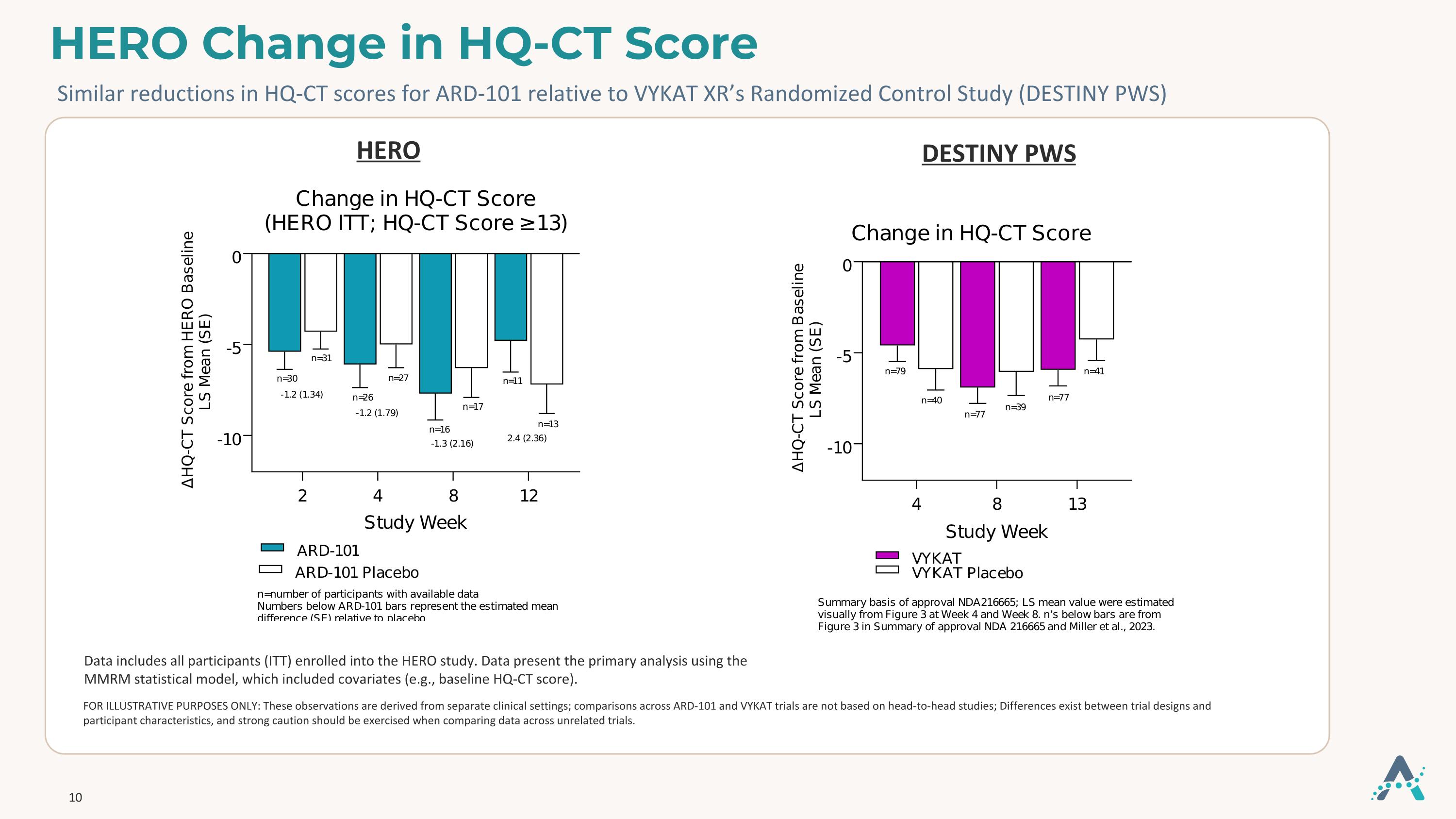
HERO Change in HQ-CT Score FOR ILLUSTRATIVE PURPOSES ONLY: These observations are derived from separate clinical settings; comparisons across ARD-101 and VYKAT trials are not based on head-to-head studies; Differences exist between trial designs and participant characteristics, and strong caution should be exercised when comparing data across unrelated trials. DESTINY PWS Data includes all participants (ITT) enrolled into the HERO study. Data present the primary analysis using the MMRM statistical model, which included covariates (e.g., baseline HQ-CT score). Similar reductions in HQ-CT scores for ARD-101 relative to VYKAT XR’s Randomized Control Study (DESTINY PWS) HERO
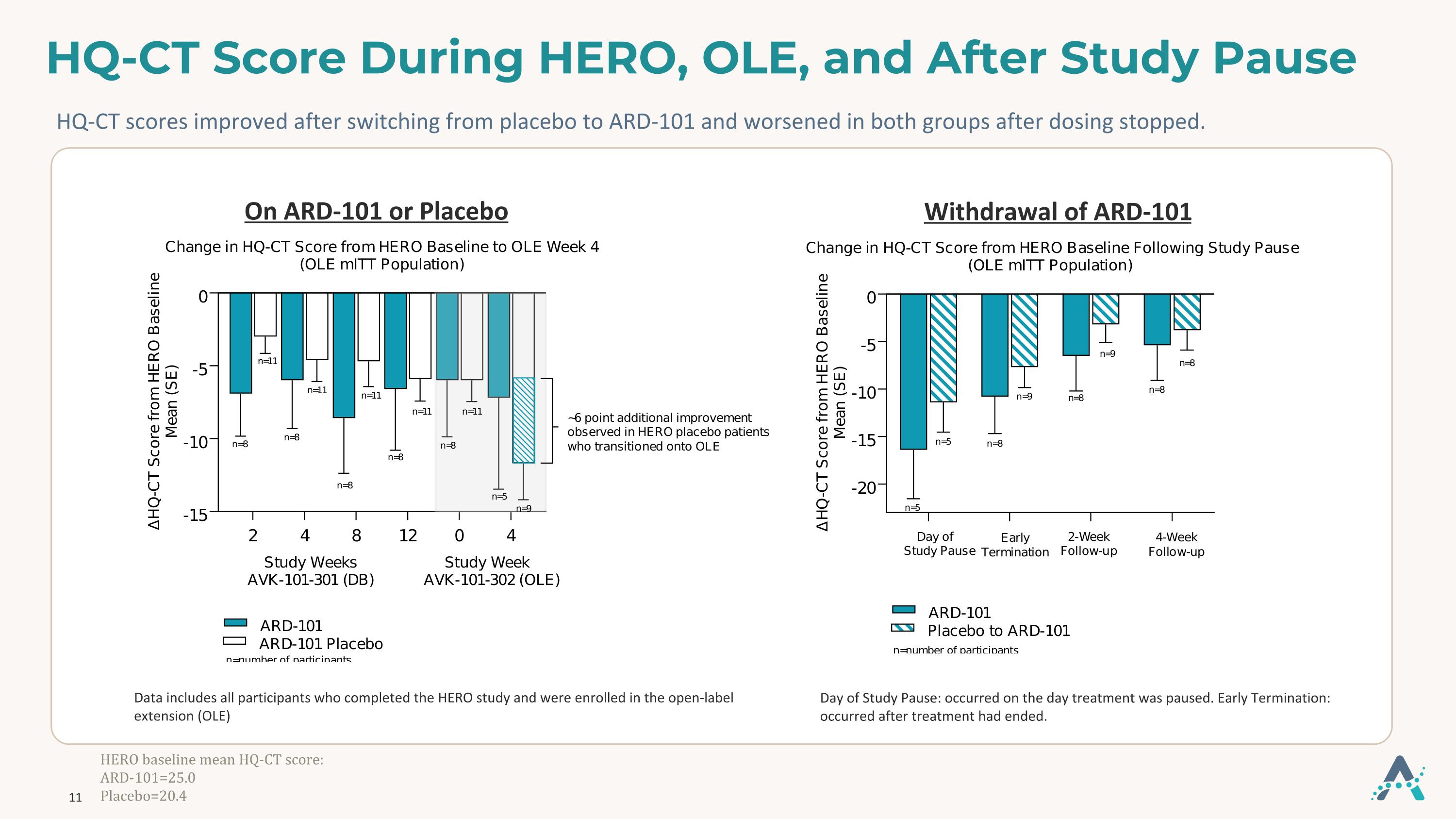
HERO baseline mean HQ-CT score: ARD-101=25.0 Placebo=20.4 HQ-CT Score During HERO, OLE, and After Study Pause On ARD-101 or Placebo Withdrawal of ARD-101 Data includes all participants who completed the HERO study and were enrolled in the open-label extension (OLE) HQ-CT scores improved after switching from placebo to ARD-101 and worsened in both groups after dosing stopped. Day of Study Pause: occurred on the day treatment was paused. Early Termination: occurred after treatment had ended.
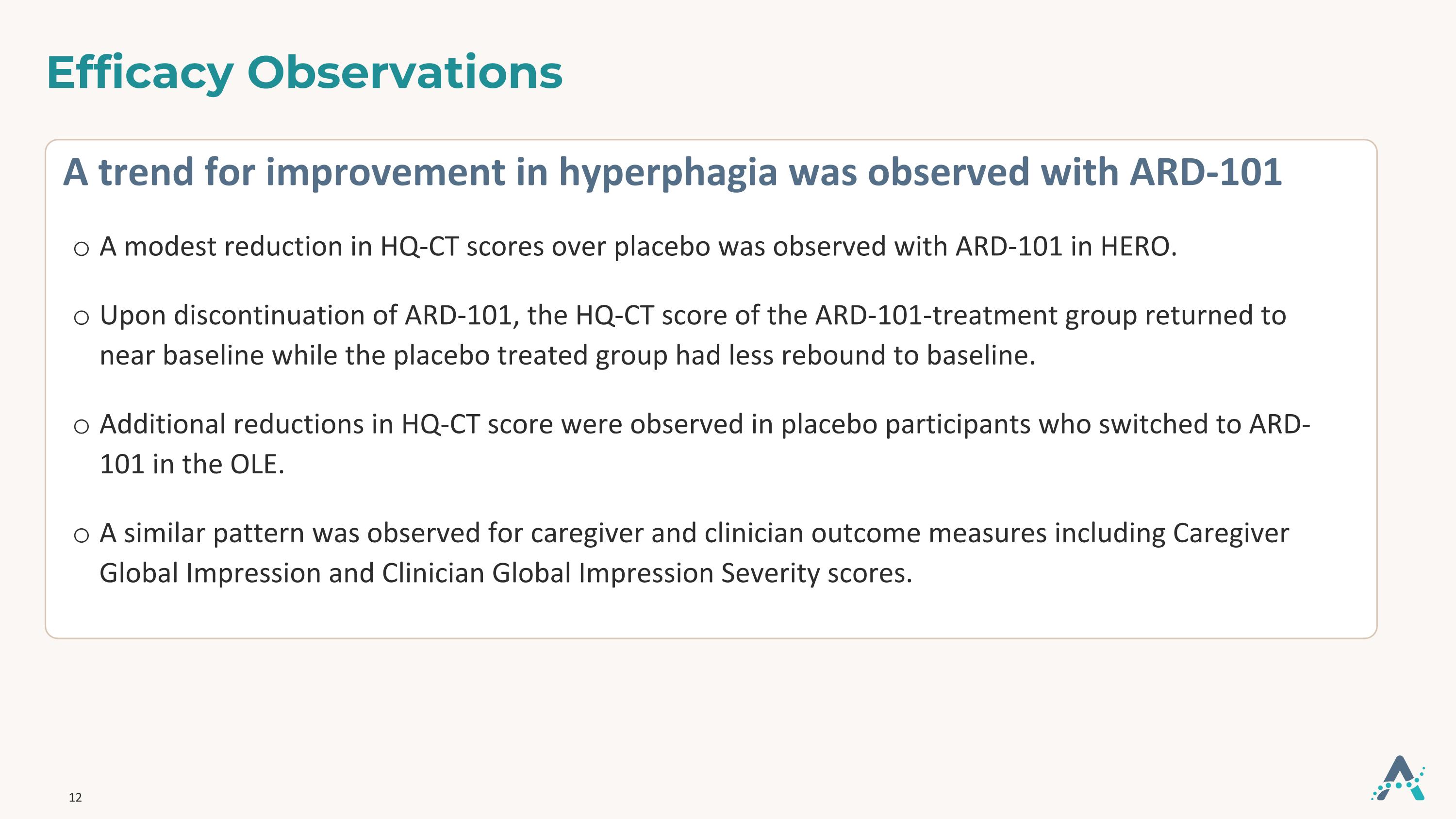
Efficacy Observations A trend for improvement in hyperphagia was observed with ARD-101 A modest reduction in HQ-CT scores over placebo was observed with ARD-101 in HERO. Upon discontinuation of ARD-101, the HQ-CT score of the ARD-101-treatment group returned to near baseline while the placebo treated group had less rebound to baseline. Additional reductions in HQ-CT score were observed in placebo participants who switched to ARD-101 in the OLE. A similar pattern was observed for caregiver and clinician outcome measures including Caregiver Global Impression and Clinician Global Impression Severity scores.
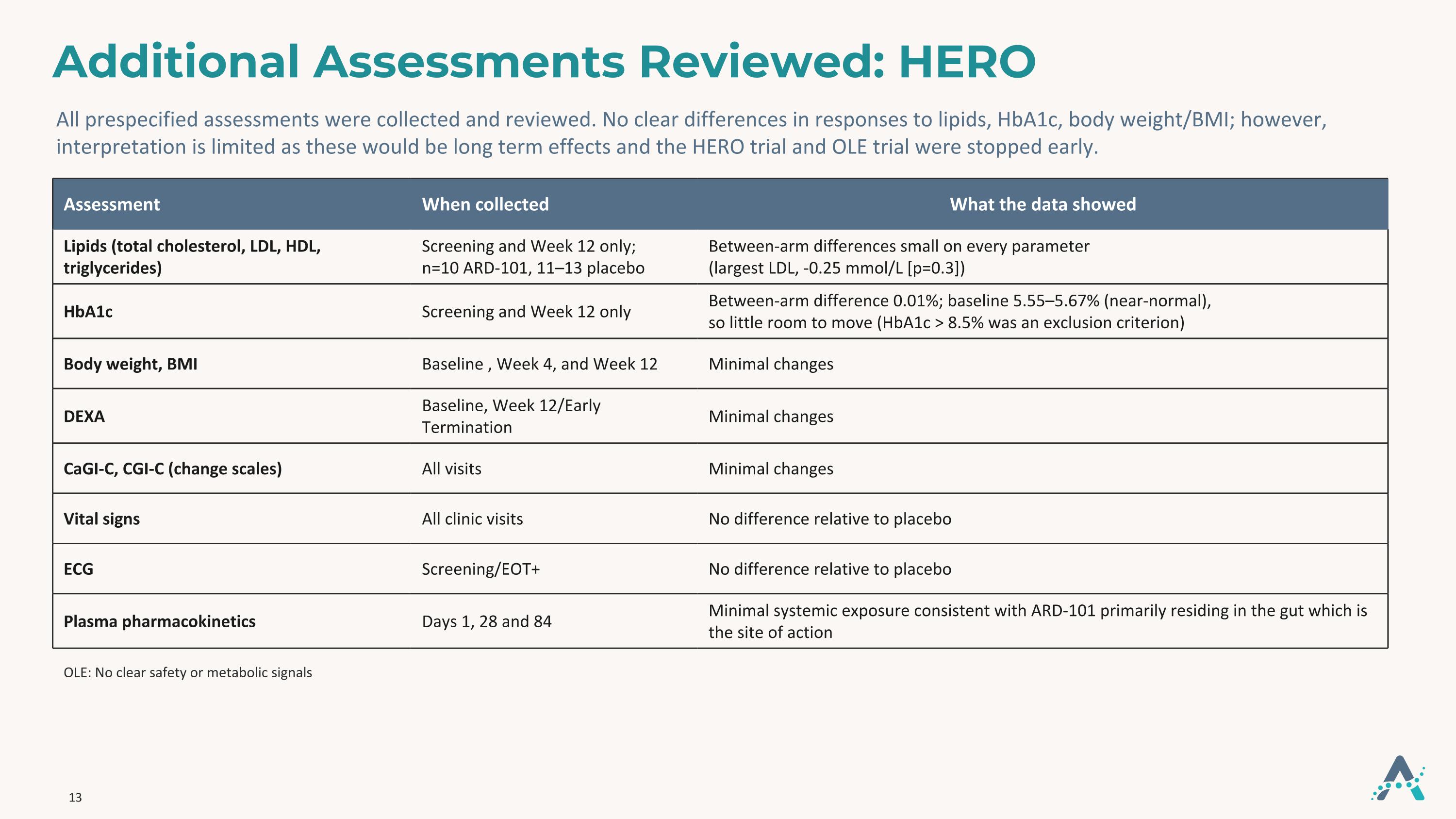
Additional Assessments Reviewed: HERO All prespecified assessments were collected and reviewed. No clear differences in responses to lipids, HbA1c, body weight/BMI; however, interpretation is limited as these would be long term effects and the HERO trial and OLE trial were stopped early. Assessment When collected What the data showed Lipids (total cholesterol, LDL, HDL, triglycerides) Screening and Week 12 only; n=10 ARD-101, 11–13 placebo Between-arm differences small on every parameter (largest LDL, -0.25 mmol/L [p=0.3]) HbA1c Screening and Week 12 only Between-arm difference 0.01%; baseline 5.55–5.67% (near-normal), so little room to move (HbA1c > 8.5% was an exclusion criterion) Body weight, BMI Baseline , Week 4, and Week 12 Minimal changes DEXA Baseline, Week 12/Early Termination Minimal changes CaGI-C, CGI-C (change scales) All visits Minimal changes Vital signs All clinic visits No difference relative to placebo ECG Screening/EOT+ No difference relative to placebo Plasma pharmacokinetics Days 1, 28 and 84 Minimal systemic exposure consistent with ARD-101 primarily residing in the gut which is the site of action OLE: No clear safety or metabolic signals
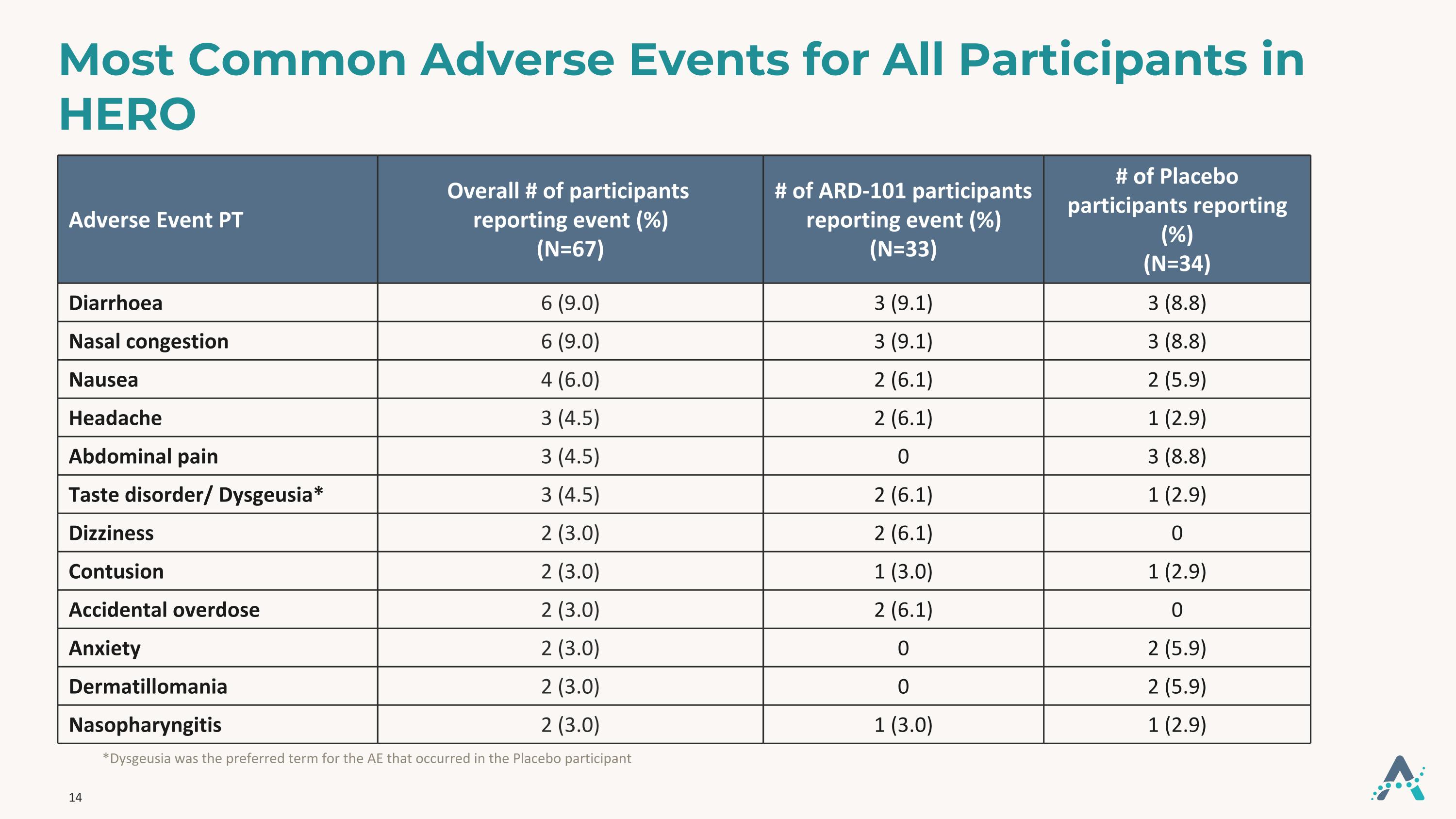
Most Common Adverse Events for All Participants in HERO Adverse Event PT Overall # of participants reporting event (%) (N=67) # of ARD-101 participants reporting event (%) (N=33) # of Placebo participants reporting (%) (N=34) Diarrhoea 6 (9.0) 3 (9.1) 3 (8.8) Nasal congestion 6 (9.0) 3 (9.1) 3 (8.8) Nausea 4 (6.0) 2 (6.1) 2 (5.9) Headache 3 (4.5) 2 (6.1) 1 (2.9) Abdominal pain 3 (4.5) 0 3 (8.8) Taste disorder/ Dysgeusia* 3 (4.5) 2 (6.1) 1 (2.9) Dizziness 2 (3.0) 2 (6.1) 0 Contusion 2 (3.0) 1 (3.0) 1 (2.9) Accidental overdose 2 (3.0) 2 (6.1) 0 Anxiety 2 (3.0) 0 2 (5.9) Dermatillomania 2 (3.0) 0 2 (5.9) Nasopharyngitis 2 (3.0) 1 (3.0) 1 (2.9) *Dysgeusia was the preferred term for the AE that occurred in the Placebo participant
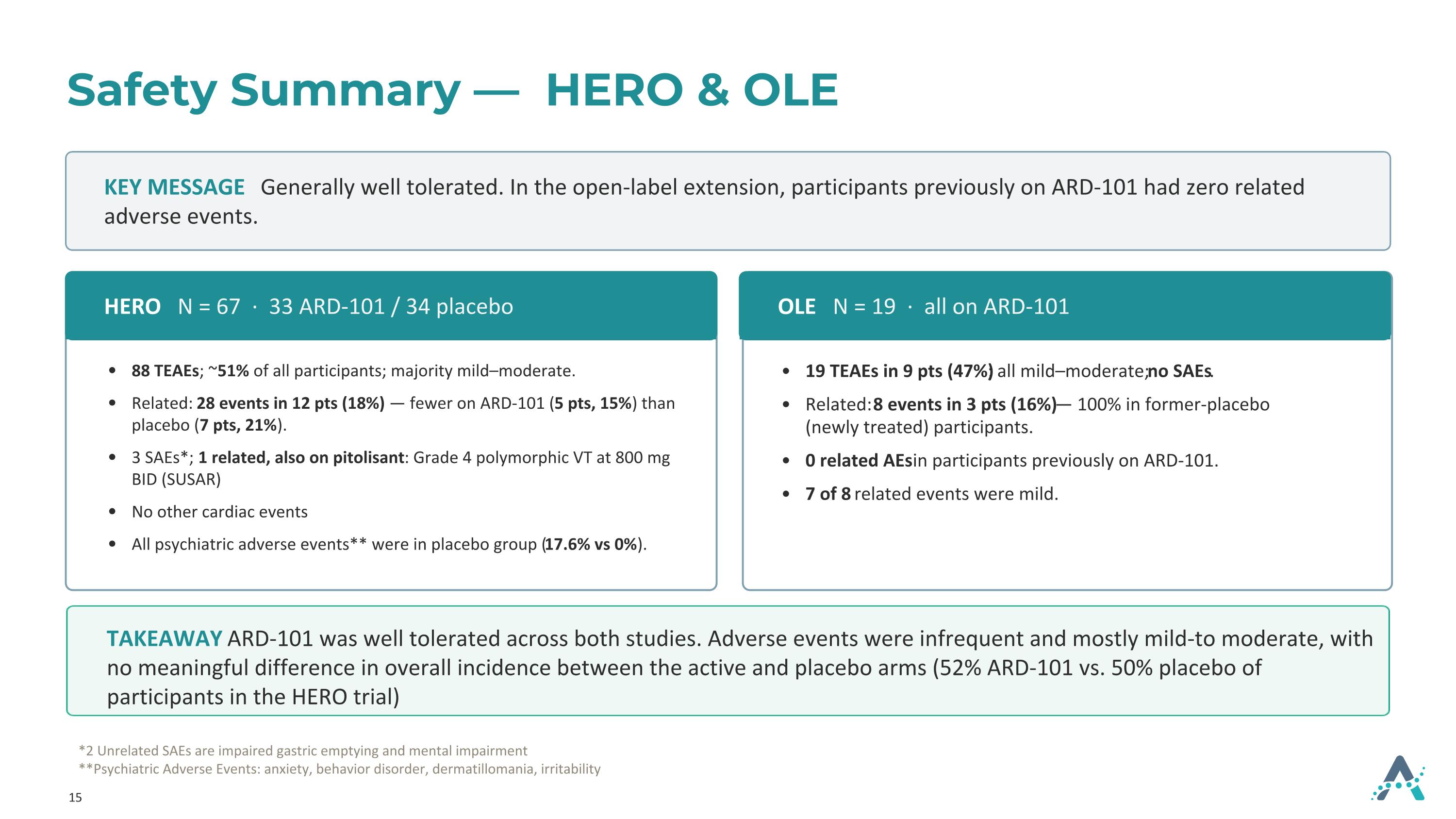
Safety Summary — HERO & OLE KEY MESSAGE Generally well tolerated. In the open-label extension, participants previously on ARD-101 had zero related adverse events. HERO N = 67 · 33 ARD-101 / 34 placebo 88 TEAEs; ~51% of all participants; majority mild–moderate. Related: 28 events in 12 pts (18%) — fewer on ARD-101 (5 pts, 15%) than placebo (7 pts, 21%). 3 SAEs*; 1 related, also on pitolisant: Grade 4 polymorphic VT at 800 mg BID (SUSAR) No other cardiac events All psychiatric adverse events** were in placebo group (17.6% vs 0%). OLE N = 19 · all on ARD-101 19 TEAEs in 9 pts (47%); all mild–moderate; no SAEs. Related: 8 events in 3 pts (16%) — 100% in former-placebo (newly treated) participants. 0 related AEs in participants previously on ARD-101. 7 of 8 related events were mild. *2 Unrelated SAEs are impaired gastric emptying and mental impairment **Psychiatric Adverse Events: anxiety, behavior disorder, dermatillomania, irritability TAKEAWAY ARD-101 was well tolerated across both studies. Adverse events were infrequent and mostly mild-to moderate, with no meaningful difference in overall incidence between the active and placebo arms (52% ARD-101 vs. 50% placebo of participants in the HERO trial)
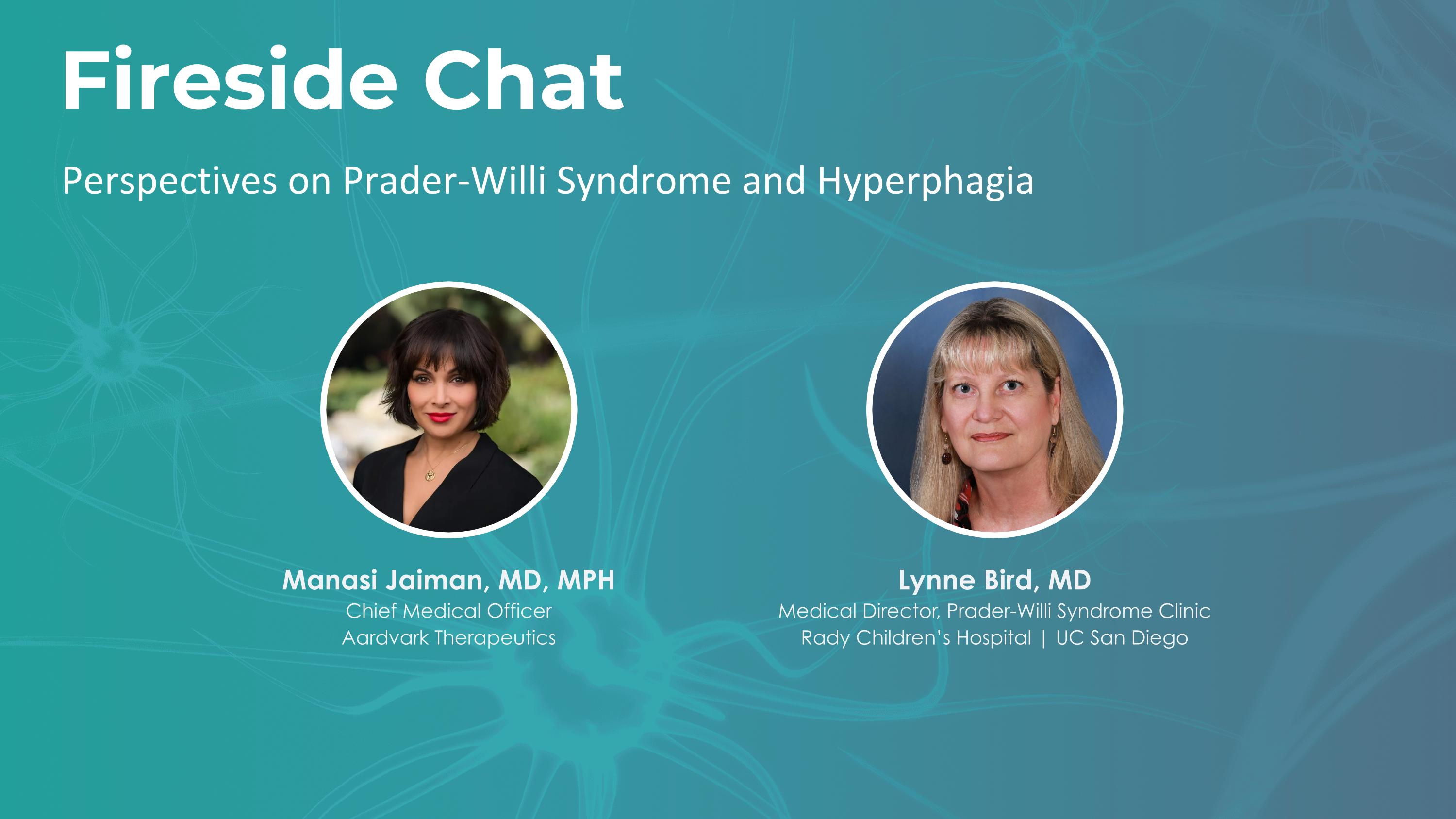
Fireside Chat Manasi Jaiman, MD, MPH Chief Medical Officer Aardvark Therapeutics Lynne Bird, MD Medical Director, Prader-Willi Syndrome Clinic Rady Children’s Hospital | UC San Diego Perspectives on Prader-Willi Syndrome and Hyperphagia

Excited to be resuming clinical development!
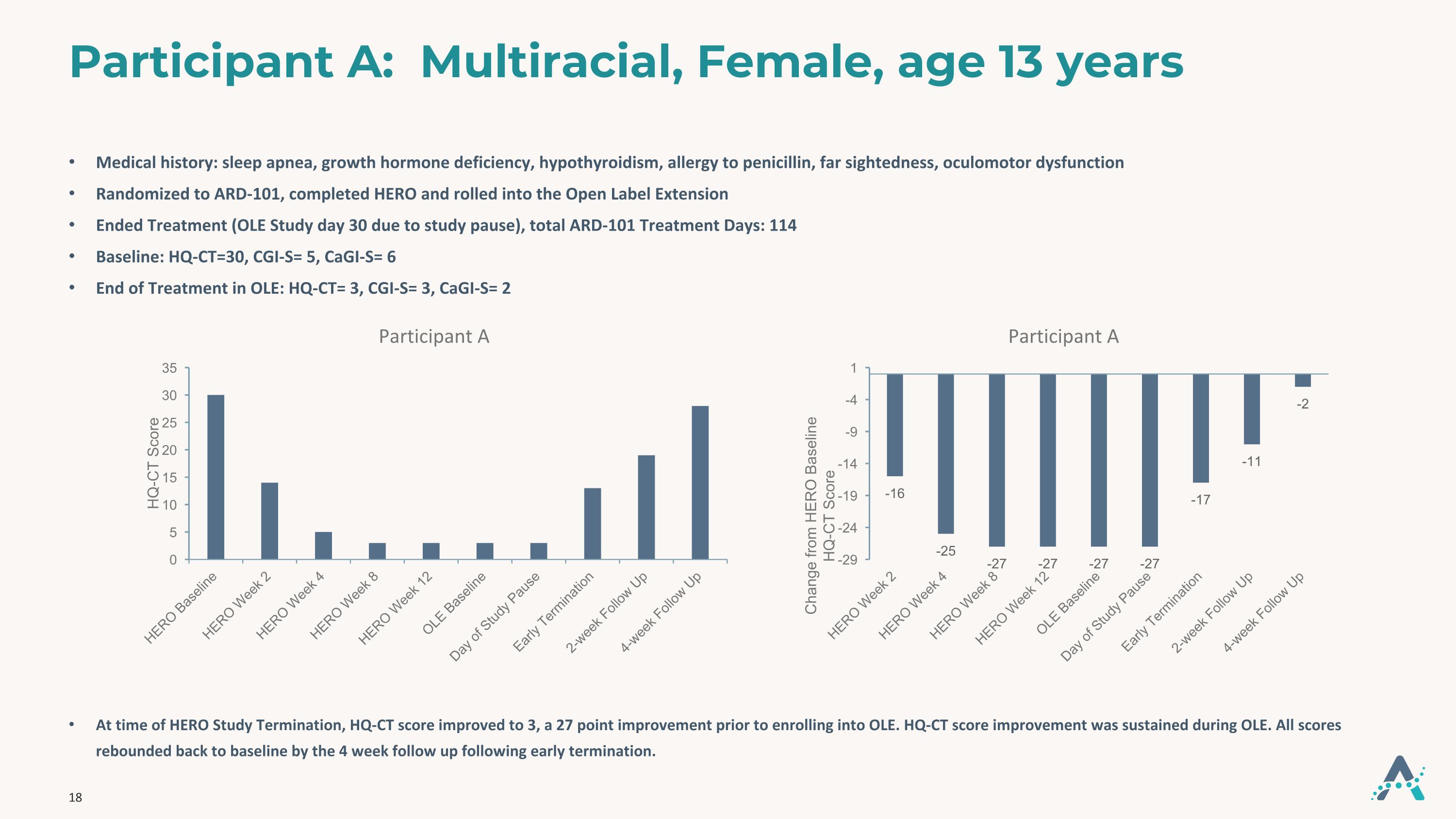
Participant A: Multiracial, Female, age 13 years Medical history: sleep apnea, growth hormone deficiency, hypothyroidism, allergy to penicillin, far sightedness, oculomotor dysfunction Randomized to ARD-101, completed HERO and rolled into the Open Label Extension Ended Treatment (OLE Study day 30 due to study pause), total ARD-101 Treatment Days: 114 Baseline: HQ-CT=30, CGI-S= 5, CaGI-S= 6 End of Treatment in OLE: HQ-CT= 3, CGI-S= 3, CaGI-S= 2 At time of HERO Study Termination, HQ-CT score improved to 3, a 27 point improvement prior to enrolling into OLE. HQ-CT score improvement was sustained during OLE. All scores rebounded back to baseline by the 4 week follow up following early termination.
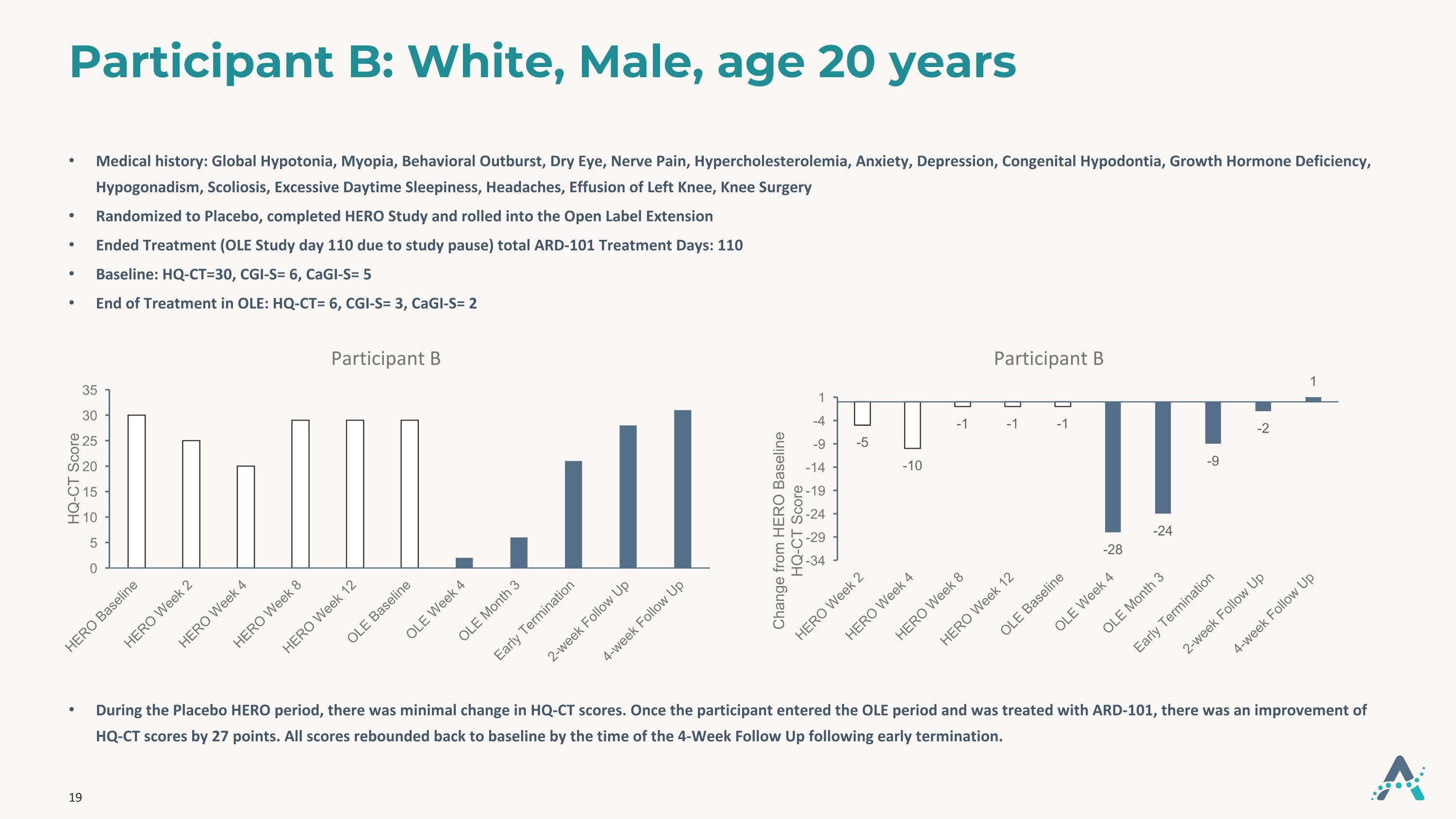
Participant B: White, Male, age 20 years Medical history: Global Hypotonia, Myopia, Behavioral Outburst, Dry Eye, Nerve Pain, Hypercholesterolemia, Anxiety, Depression, Congenital Hypodontia, Growth Hormone Deficiency, Hypogonadism, Scoliosis, Excessive Daytime Sleepiness, Headaches, Effusion of Left Knee, Knee Surgery Randomized to Placebo, completed HERO Study and rolled into the Open Label Extension Ended Treatment (OLE Study day 110 due to study pause) total ARD-101 Treatment Days: 110 Baseline: HQ-CT=30, CGI-S= 6, CaGI-S= 5 End of Treatment in OLE: HQ-CT= 6, CGI-S= 3, CaGI-S= 2 During the Placebo HERO period, there was minimal change in HQ-CT scores. Once the participant entered the OLE period and was treated with ARD-101, there was an improvement of HQ-CT scores by 27 points. All scores rebounded back to baseline by the time of the 4-Week Follow Up following early termination.
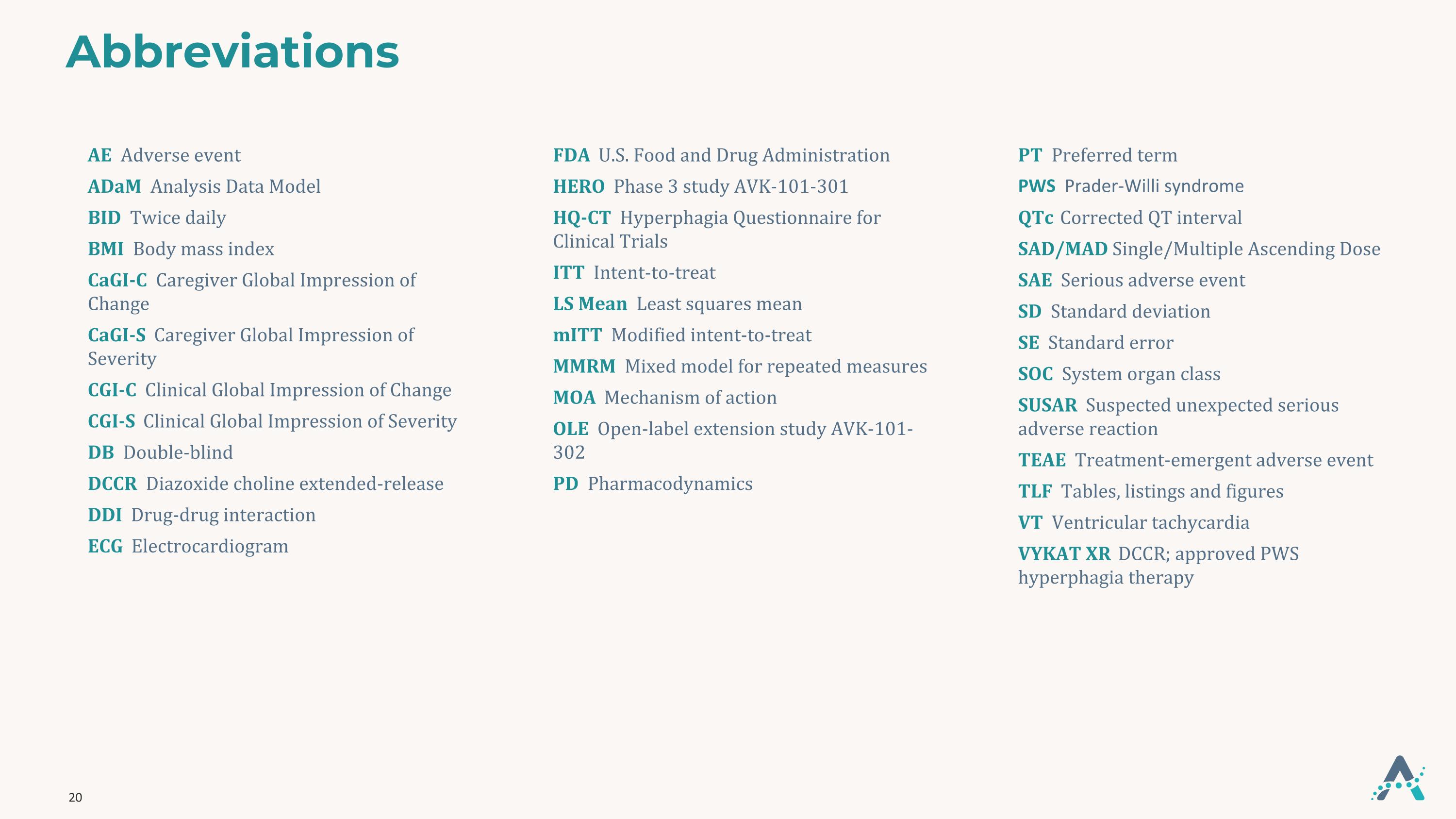
Abbreviations AE Adverse event ADaM Analysis Data Model BID Twice daily BMI Body mass index CaGI-C Caregiver Global Impression of Change CaGI-S Caregiver Global Impression of Severity CGI-C Clinical Global Impression of Change CGI-S Clinical Global Impression of Severity DB Double-blind DCCR Diazoxide choline extended-release DDI Drug-drug interaction ECG Electrocardiogram FDA U.S. Food and Drug Administration HERO Phase 3 study AVK-101-301 HQ-CT Hyperphagia Questionnaire for Clinical Trials ITT Intent-to-treat LS Mean Least squares mean mITT Modified intent-to-treat MMRM Mixed model for repeated measures MOA Mechanism of action OLE Open-label extension study AVK-101-302 PD Pharmacodynamics PT Preferred term PWS Prader-Willi syndrome QTc Corrected QT interval SAD/MAD Single/Multiple Ascending Dose SAE Serious adverse event SD Standard deviation SE Standard error SOC System organ class SUSAR Suspected unexpected serious adverse reaction TEAE Treatment-emergent adverse event TLF Tables, listings and figures VT Ventricular tachycardia VYKAT XR DCCR; approved PWS hyperphagia therapy
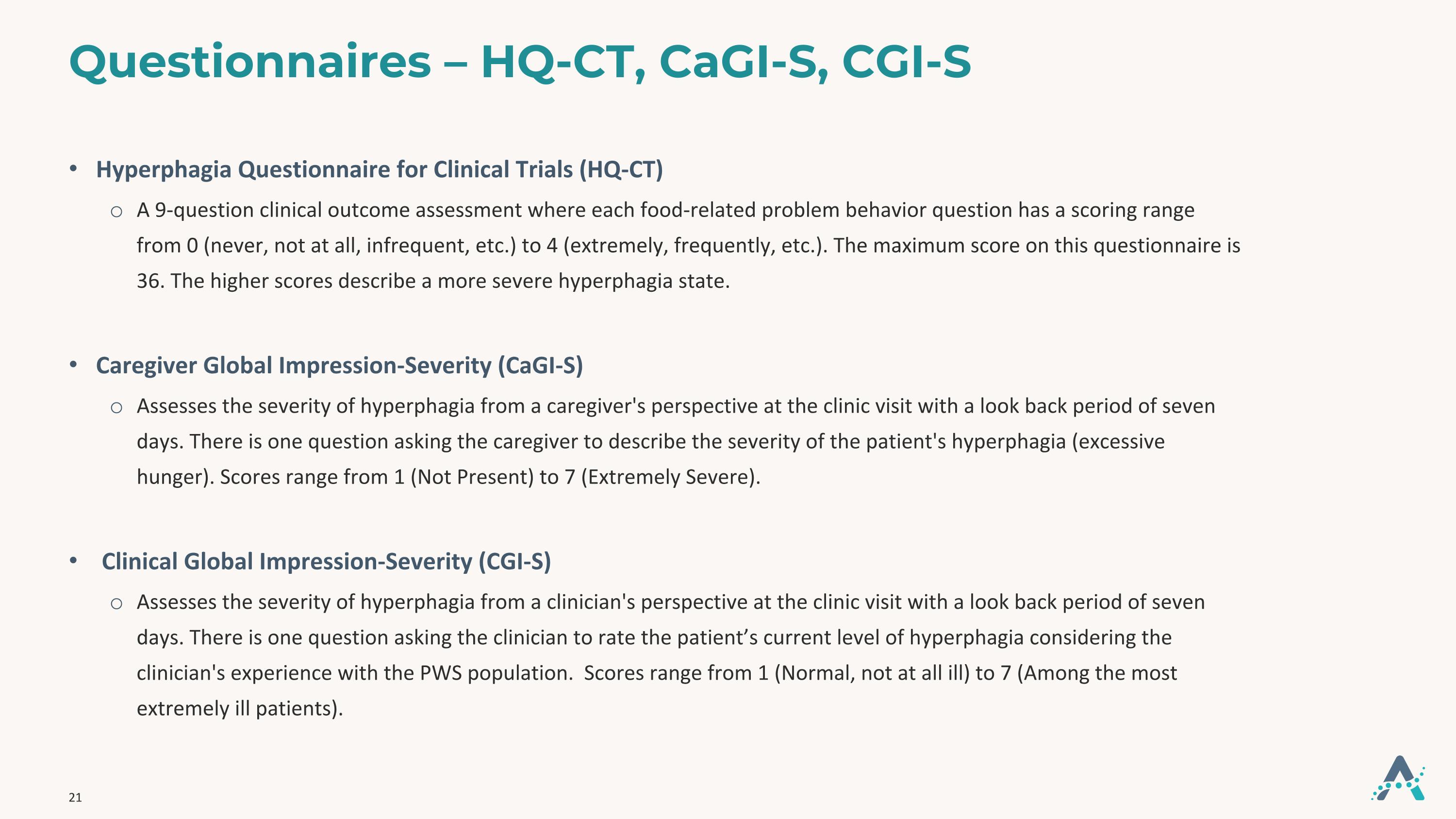
Questionnaires – HQ-CT, CaGI-S, CGI-S Hyperphagia Questionnaire for Clinical Trials (HQ-CT) A 9-question clinical outcome assessment where each food-related problem behavior question has a scoring range from 0 (never, not at all, infrequent, etc.) to 4 (extremely, frequently, etc.). The maximum score on this questionnaire is 36. The higher scores describe a more severe hyperphagia state. Caregiver Global Impression-Severity (CaGI-S) Assesses the severity of hyperphagia from a caregiver's perspective at the clinic visit with a look back period of seven days. There is one question asking the caregiver to describe the severity of the patient's hyperphagia (excessive hunger). Scores range from 1 (Not Present) to 7 (Extremely Severe). Clinical Global Impression-Severity (CGI-S) Assesses the severity of hyperphagia from a clinician's perspective at the clinic visit with a look back period of seven days. There is one question asking the clinician to rate the patient’s current level of hyperphagia considering the clinician's experience with the PWS population. Scores range from 1 (Normal, not at all ill) to 7 (Among the most extremely ill patients).
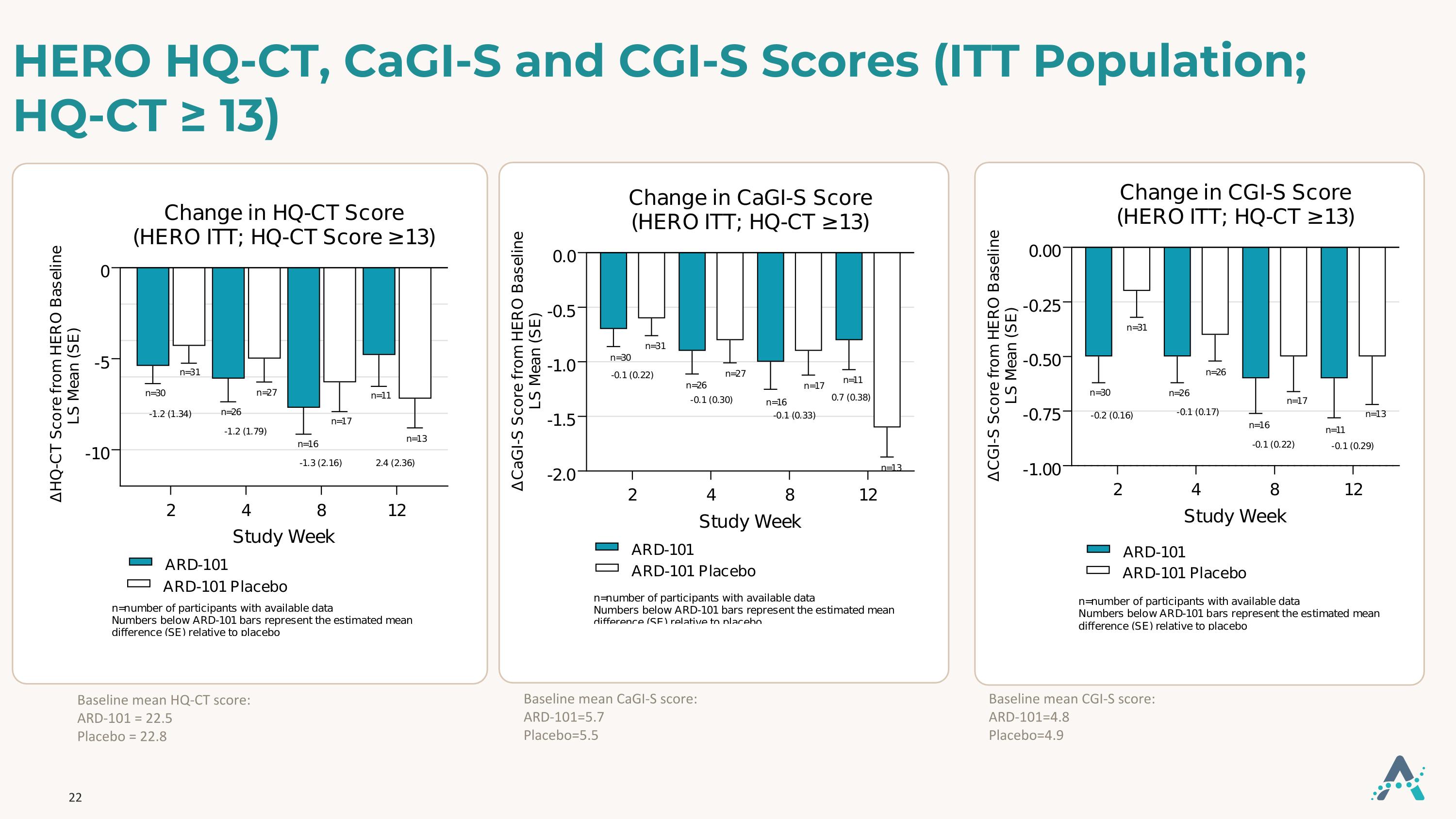
HERO HQ-CT, CaGI-S and CGI-S Scores (ITT Population; HQ-CT ≥ 13) Baseline mean HQ-CT score: ARD-101 = 22.5 Placebo = 22.8 Baseline mean CaGI-S score: ARD-101=5.7 Placebo=5.5 Baseline mean CGI-S score: ARD-101=4.8 Placebo=4.9
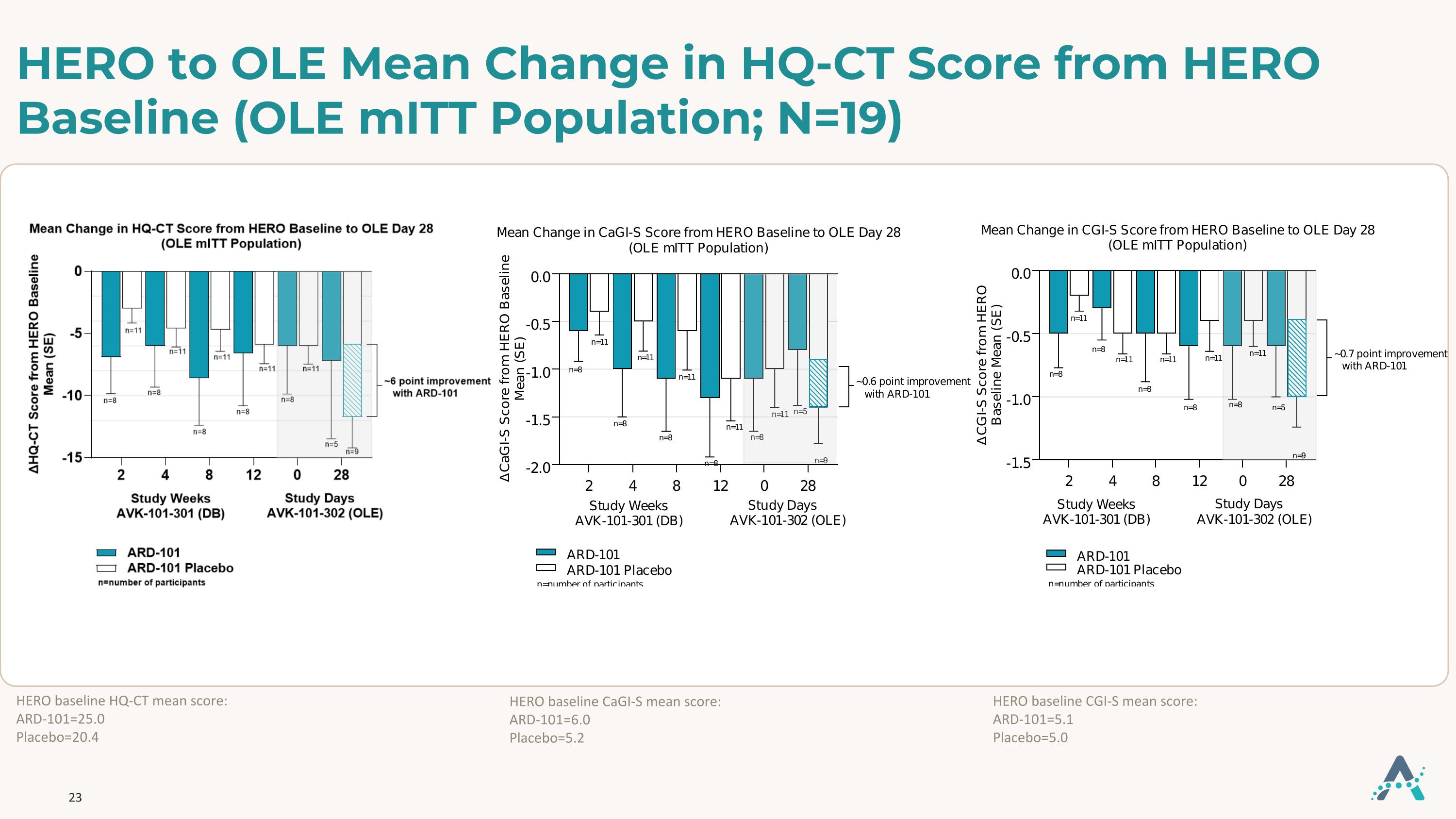
HERO to OLE Mean Change in HQ-CT Score from HERO Baseline (OLE mITT Population; N=19) HERO baseline HQ-CT mean score: ARD-101=25.0 Placebo=20.4 HERO baseline CaGI-S mean score: ARD-101=6.0 Placebo=5.2 HERO baseline CGI-S mean score: ARD-101=5.1 Placebo=5.0
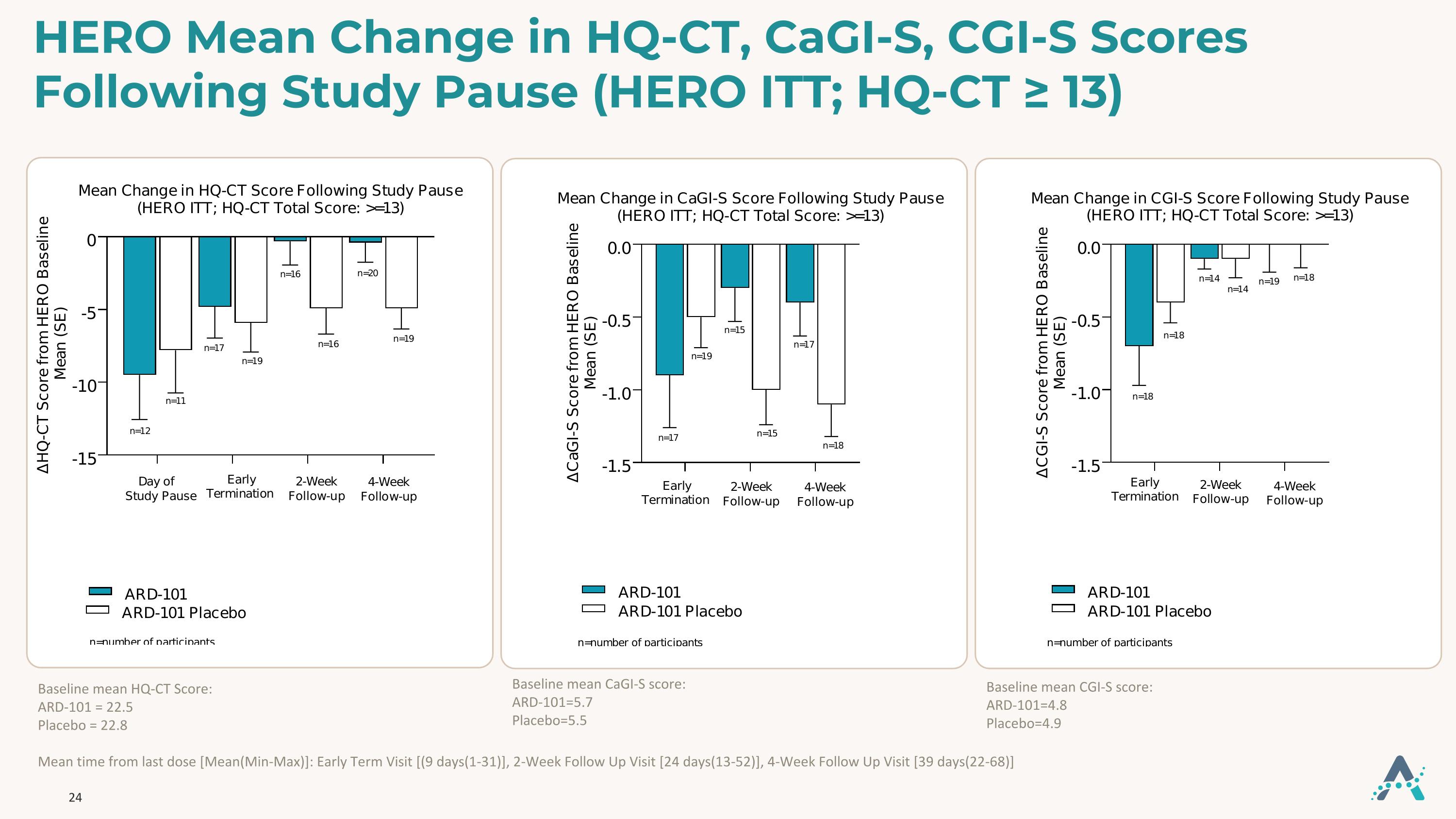
HERO Mean Change in HQ-CT, CaGI-S, CGI-S Scores Following Study Pause (HERO ITT; HQ-CT ≥ 13) Baseline mean HQ-CT Score: ARD-101 = 22.5 Placebo = 22.8 Mean time from last dose [Mean(Min-Max)]: Early Term Visit [(9 days(1-31)], 2-Week Follow Up Visit [24 days(13-52)], 4-Week Follow Up Visit [39 days(22-68)] Baseline mean CaGI-S score: ARD-101=5.7 Placebo=5.5 Baseline mean CGI-S score: ARD-101=4.8 Placebo=4.9
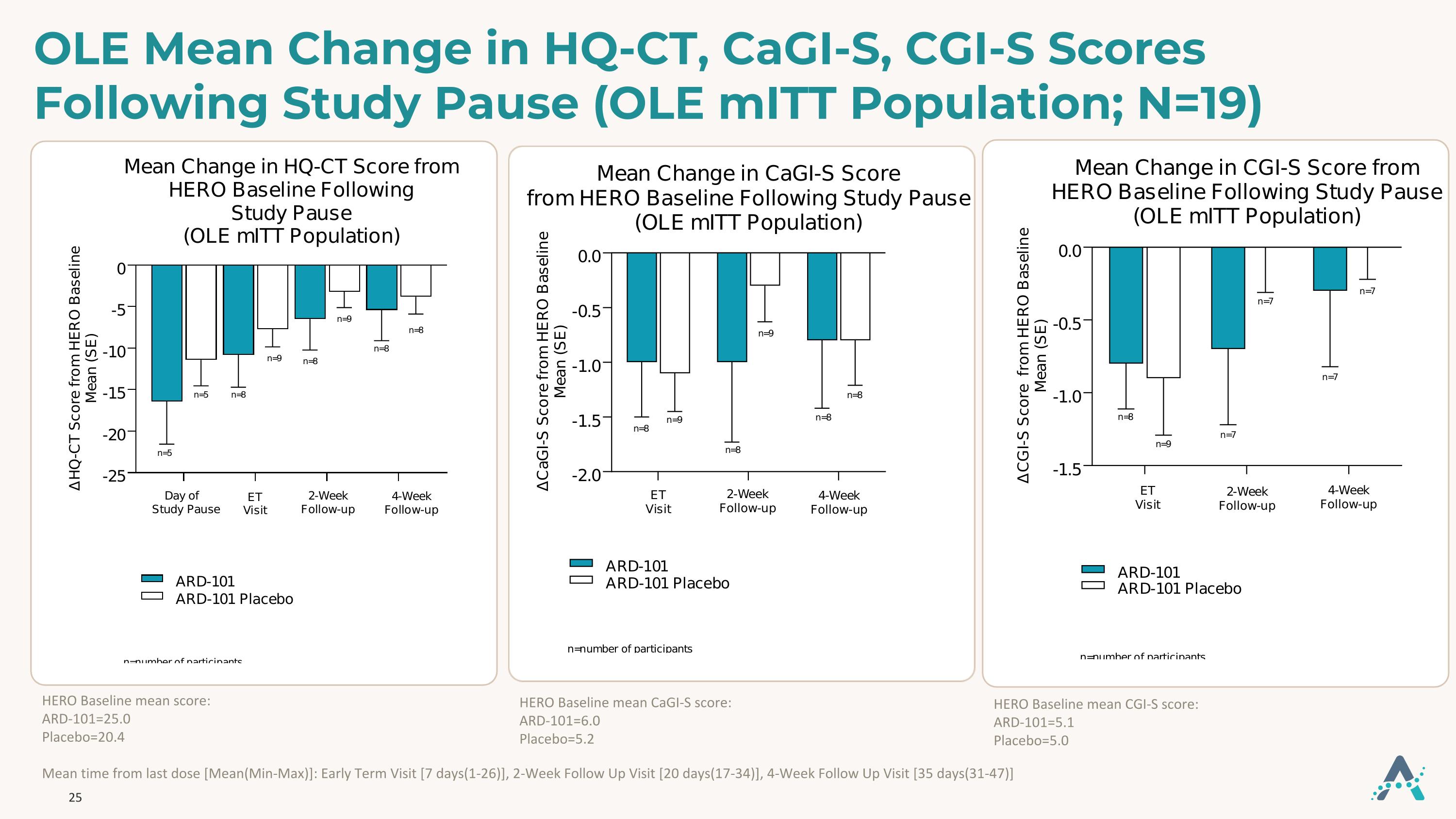
HERO Baseline mean score: ARD-101=25.0 Placebo=20.4 Mean time from last dose [Mean(Min-Max)]: Early Term Visit [7 days(1-26)], 2-Week Follow Up Visit [20 days(17-34)], 4-Week Follow Up Visit [35 days(31-47)] OLE Mean Change in HQ-CT, CaGI-S, CGI-S Scores Following Study Pause (OLE mITT Population; N=19) HERO Baseline mean CaGI-S score: ARD-101=6.0 Placebo=5.2 HERO Baseline mean CGI-S score: ARD-101=5.1 Placebo=5.0
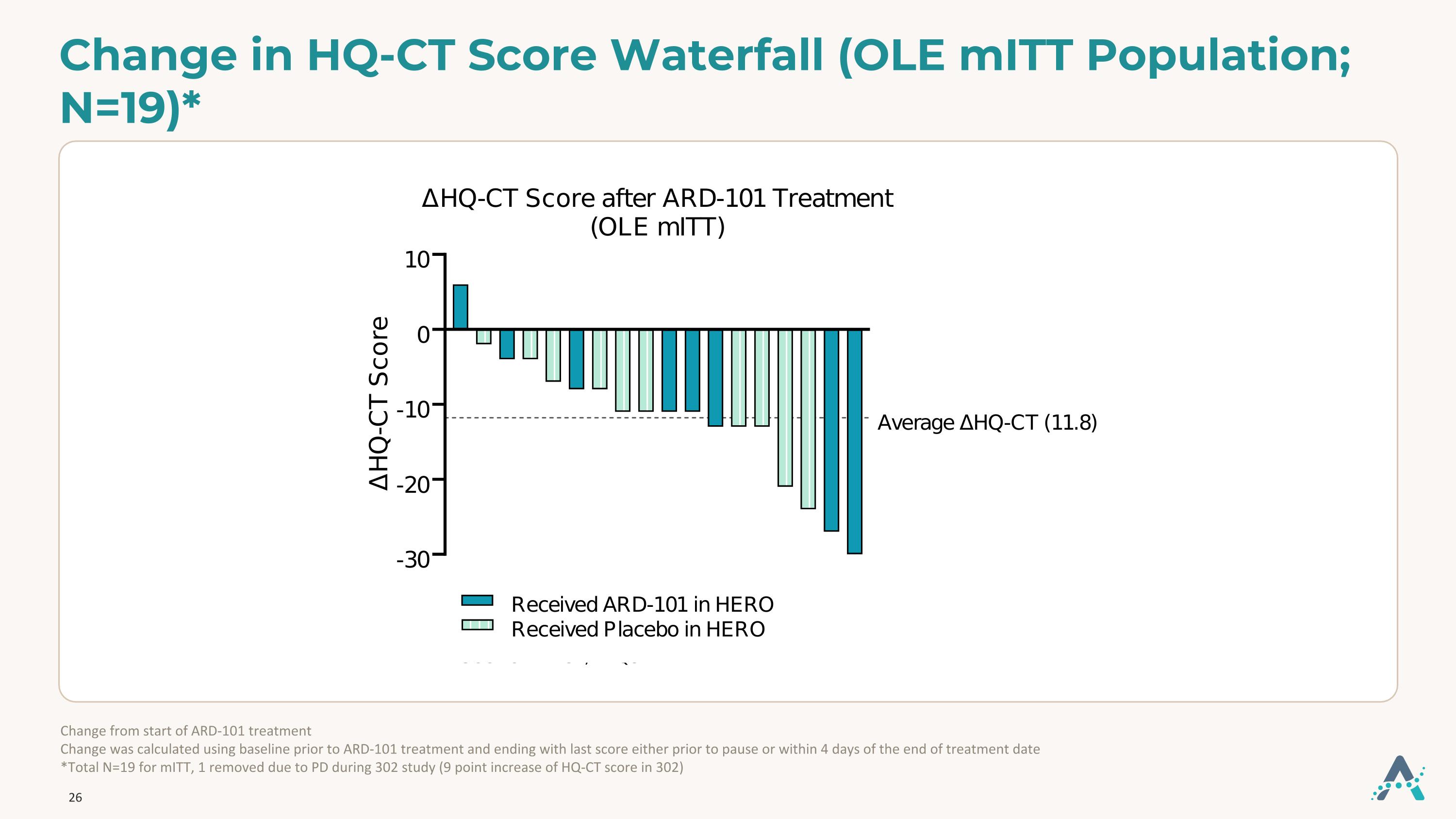
Change from start of ARD-101 treatment Change was calculated using baseline prior to ARD-101 treatment and ending with last score either prior to pause or within 4 days of the end of treatment date *Total N=19 for mITT, 1 removed due to PD during 302 study (9 point increase of HQ-CT score in 302) Change in HQ-CT Score Waterfall (OLE mITT Population; N=19)*