Exhibit 99.1
TABLE OF CONTENTS
| INDUSTRY AND MARKET DATA | 2 | |
| ATTENDANCE AND VOTING AT GENERAL MEETINGS | 3 | |
| DEFINED TERMS AND ABBREVIATIONS | 4 | |
| SUMMARY | 12 | |
| OUR LISTING ON THE SGX-ST | 15 | |
| RISK FACTORS | 20 | |
| CAPITALISATION AND INDEBTEDNESS | 57 | |
| MANAGEMENT’S DISCUSSION AND ANALYSIS OF FINANCIAL CONDITION AND RESULTS OF OPERATIONS | 60 | |
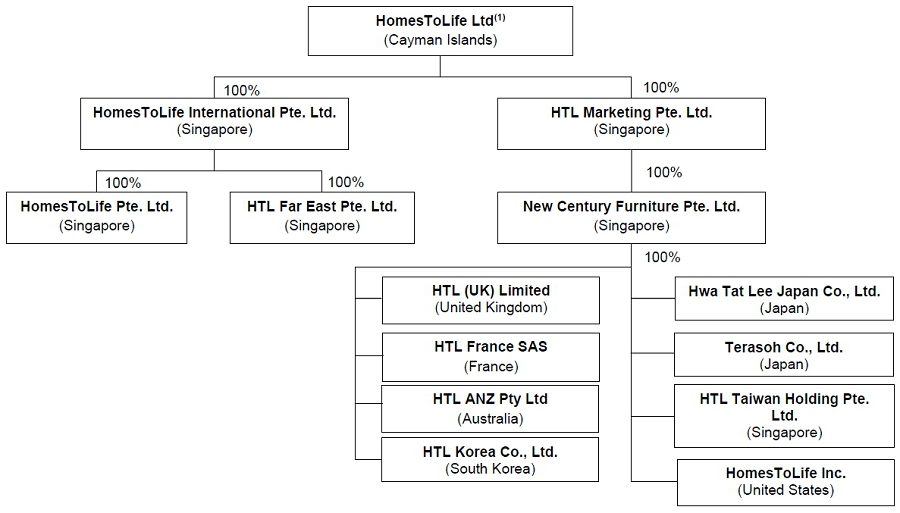
| GROUP STRUCTURE | 84 | |
| BUSINESS | 86 | |
| DESCRIPTION OF SHARE CAPITAL | 122 | |
| SHAREHOLDERS AND SHARE-BASED INCENTIVES | 130 | |
| INTERESTED PERSON TRANSACTIONS AND POTENTIAL CONFLICTS OF INTEREST | 131 | |
| CLEARANCE AND SETTLEMENT | 173 | |
| PROPOSED PLACEMENT | 179 |
INDUSTRY AND MARKET DATA
Certain market data, industry forecasts and data relating to our business used throughout this Introductory Document have been obtained from internal surveys, market research, publicly available information and industry publications. Industry publications generally state that the information contained therein has been obtained from sources believed to be reliable, but that the accuracy and completeness of the information is not guaranteed. Similarly, while we believe these industry forecasts and market research to be reliable, we have not independently verified such information and do not make any representation as to its accuracy.
We derived certain facts and statistics in this Introductory Document relating to the furniture industry globally from various publicly available industry, government and research publications. This Introductory Document includes industry data and forecasts that we obtained from such industry publications and surveys, reports of governmental agencies and internal company surveys. Our Company, Directors and the Joint Issue Managers have taken reasonable action to ensure that the facts and statistical data used in this Introductory Document have been extracted from these sources in their proper form and context. However, our Company, Directors and the Joint Issue Managers (except where reasonable and appropriate to do so) have not verified the accuracy of the information extracted nor have our Company, Directors and the Joint Issue Managers obtained the specific consent of these sources for the inclusion of such information in this Introductory Document unless otherwise specified. Our Directors are also not aware of any disclaimers made by these sources in relation to reliance on such information. Investors should note that market data and statistics are inherently predictive and subject to uncertainty and are not necessarily reflective of actual market conditions.
| 2 |
ATTENDANCE AND VOTING AT GENERAL MEETINGS
GENERAL MEETINGS OF THE SHAREHOLDERS
A shareholder of a company primarily listed on the SGX-ST would normally be entitled to attend and vote at a general meeting of shareholders if the shareholder’s name appears on the Depository Register maintained by CDP 72 hours before the general meeting. However, this entitlement will not apply to our Shareholders as we are a company incorporated in the Cayman Islands and governed by Cayman Islands law, and our primary listing is on the Nasdaq. In connection with our Company’s listing on the Main Board of the SGX-ST, CDP has appointed the Depository Trust Company (“DTC”) in the United States to hold Shares which are listed and traded on the SGX-ST for CDP Depositors.
VOTING INSTRUCTIONS
Investors who trade Shares listed on the SGX-ST would hold their Shares through the CDP system. Investors holding Shares through the CDP system may only exercise the voting rights for the deposited Shares through the CDP system and in accordance with the terms and conditions for the operation of Securities Accounts with CDP, and the terms and conditions for CDP to act as depository for foreign securities as amended from time to time. Under the Cayman Islands Companies Act, a person who has agreed to become a member of a Cayman Islands company and whose name is entered on the register of members of such company is considered a member of the company. Under Cayman Islands law, the register of members is prima facie evidence of any matters by the Cayman Islands Companies Act directed or authorised to be inserted therein. Accordingly, a CDP Depositor holding Shares through CDP would not be recognised as our Shareholder under the laws of the Cayman Islands and does not have the right to attend and vote at the general meetings of our Company. CDP Depositors will be able to vote at the shareholders’ meetings by (i) attending the meetings and casting votes in person as a proxy appointed by Cede & Co., or (ii) returning the Voting Instruction Form and/or the Depositor Proxy Form by the relevant deadline to the Singapore Transfer Agent.
In accordance with the CDP Terms, we have agreed that, where applicable and/or required, we will coordinate with the Singapore Transfer Agent to mail to the CDP Depositors any notice of shareholders’ meetings, together with a voting instruction form (“Voting Instruction Form”) and/or a depositor proxy form (“Depositor Proxy Form”). The Voting Instruction Form and/or the Depositor Proxy Form would in turn be consolidated by the Singapore Transfer Agent, for onward distribution to the Company via DTC or the Company’s proxy solicitor. Our Company, through our Singapore Share Registrar and Share Transfer Agent, will send notices of Shareholders’ meetings to CDP Depositors by post. At any general meeting, CDP, as a clearing house, may appoint more than one proxy in accordance with Article 12.2 of our Memorandum and Articles of Association. Pursuant to Articles 12.2 and 12.9 of our Memorandum and Articles of Association, provided that CDP or its nominee is a member of our Company, it may appoint two or more proxies or authorise such persons as it thinks fit to act as its representatives at any general meeting of our Company provided that, if more than one person is so authorised, the authorisation shall specify the number and class of shares in respect of which each such representative is so authorised.
Any queries by CDP Depositors related to voting arrangements or related matters should be directed to the Singapore Transfer Agent or our Company.
| 3 |
DEFINED TERMS AND ABBREVIATIONS
This glossary contains a list of abbreviations of our subsidiaries, explanations and definitions of certain terms used in this Introductory Document in connection with our business. The terms and their assigned meaning may not correspond to standard industry or common meaning or usage of these terms.
Companies within our Group
| “Company” | : | HomesToLife Ltd |
| “Group” | : | Our Company and our subsidiaries as at the date of this Introductory Document |
| Subsidiaries | ||
| “HomesToLife Singapore” | : | HomesToLife Pte. Ltd., an indirect wholly-owned subsidiary of our Company |
| “HTL Australia” | : | HTL ANZ Pty Ltd, an indirect wholly-owned subsidiary of our Company |
| “HTL FE” | : | HTL Far East Pte. Ltd., an indirect wholly-owned subsidiary of our Company |
| “HTL France” | : | HTL France SAS, an indirect wholly-owned subsidiary of our Company
|
| “HomesToLife International” | : | HomesToLife International Pte. Ltd., a direct wholly-owned subsidiary of our Company |
| “HTL Japan” | : | Hwa Tat Lee Japan Co., Ltd., an indirect wholly-owned subsidiary of our Company
|
“HTL Korea”
|
: | HTL Korea Co., Ltd., an indirect wholly-owned subsidiary of our Company
|
| “HTL Marketing” | : | HTL Marketing Pte. Ltd., a direct wholly-owned subsidiary of our Company |
| “HTL UK” | : | HTL (UK) Limited, an indirect wholly-owned subsidiary of our Company |
| “NCFTP” | : | New Century Furniture Pte. Ltd., an indirect wholly-owned subsidiary of our Company
|
| “Terasoh” | : | Terasoh Co., Ltd., an indirect wholly-owned subsidiary of our Company |
| 4 |
Companies within the GHC Group
| “GHC” | : | Golden Hill Capital Pte. Ltd., a company indirectly owned by Messrs. Phua Yong Pin and Phua Yong Tat, which in turn directly or indirectly owns and/or controls our Group and the related party entities which do not form part of our Group |
| “GHC Group” | : | Means GHC and its subsidiaries (but excluding our Group) as at the date of this Introductory Document, as follows: |
| (a) | Corium Italia S.R.L. | ||
| (b) | GHI Capital Limited | ||
| (c) | Golden Hill Capital Ltd | ||
| (d) | Golden Hill Capital Pte. Ltd. | ||
| (e) | Gruppo 8 S.R.L. | ||
| (f) | HTL Capital Ltd. | ||
| (g) | HTL Capital Pte. Ltd. | ||
| (h) | HTL Furniture (Yangzhou) Co., Ltd. (华达利家具(扬州)有限公司) | ||
| (i) | H.T.L. Furniture, Inc. | ||
| (j) | HTL Global Pte. Ltd. | ||
| (k) | HTL Furniture (Changshu) Co., Ltd. (华达利家具(常熟)有限公司) | ||
| (l) | HTL Furniture (China) Co., Ltd. (华达利家具(中国)有限公司) | ||
| (m) | HTL Furniture (Huai An) Co., Ltd. (华达利家具(淮安)有限公司) | ||
| (n) | HTL Furniture (Kunshan) Co., Ltd. (华达利沙发(昆山)有限公司) | ||
| (o) | HTL Furniture Vietnam Company Limited. | ||
| (p) | HTL Import/Export Trading (Kunshan) Co., Ltd. (华达利进出口贸易(昆山)有限公司) | ||
| (q) | HTL Leather (China) Co., Ltd. (华达利皮革(中国)有限公司) | ||
| (r) | HTL Middle East Furniture L.L.C. | ||
| (s) | HTL Product Design (Kunshan) Co., Ltd. (华达利产品设计(昆山)有限公司) | ||
| (t) | New Century Home Pte. Ltd. | ||
| (u) | New Century India Holdings Limited | ||
| (v) | New Century International Homes Pte. Ltd. | ||
| (w) | New Century Overseas Investments Pte. Ltd. | ||
| (x) | New Century Sofa India Private Limited | ||
| (y) | New Century Trading Holding Co., Ltd. | ||
| (z) | New Century Trading (India) Private Limited | ||
| (aa) | New World Pte Ltd | ||
| (bb) | Run Zhi Furniture Trading (Kunshan) Co., Ltd. (润至家具贸易(昆山)有限公司) | ||
| (cc) | Trends Leather (Yangzhou) Co., Ltd. (创利皮革(扬州)有限公司) |
| 5 |
Other Companies, Corporations or Organisations
| “ACRA” | : | Accounting and Corporate Regulatory Authority of Singapore |
| “CDP” | : | The Central Depository (Pte) Limited of Singapore |
| “DTC” | : | The Depository Trust Company, the central book-entry clearing and settlement system for equity securities in the United States and the clearance system for our Shares traded on Nasdaq |
| “SEC” | : | The United States Securities and Exchange Commission |
| General | ||
| “1H2025” | : | The financial period from 1 January 2025 to 30 June 2025 |
| “1H2026” | : | The financial period from 1 January 2026 to 30 June 2026 |
| “2025 Deed of Global Settlement” | : | The deed of global settlement dated 5 May 2025 entered into between New World Pte Ltd, Golden Hill Capital Pte. Ltd. and HTL Marketing |
| “2026 Deed of Global Settlement” | : | The deed of global settlement dated 30 June 2026 entered into between our Company and Golden Hill Capital Pte. Ltd. |
| “Associate” | : | (a) | In relation to any Director, Substantial Shareholder or Controlling Shareholder (being an individual) means: |
| (i) | his immediate family; | |||
| (ii) | the trustees of any trust of which he or his immediate family is a beneficiary or, in the case of a discretionary trust, is a discretionary object; or | |||
| (iii) | any company in which he and his immediate family together (directly or indirectly) have an interest of 30.0% or more; and |
| (b) | in relation to a Substantial Shareholder or a Controlling Shareholder (being a company) means any other company which is its subsidiary or holding company or is a subsidiary of such holding company or one in the equity of which it and/or such other company or companies taken together (directly or indirectly) have an interest of 30.0% or more |
| “Audit Committee” | : | The audit committee of our Company as at the date of this Introductory Document |
| “Board” | : | Our Company’s board of Directors |
| “Cayman Islands Companies Act” | : | The Companies Act (As Revised) of the Cayman Islands, as amended, supplemented or otherwise modified from time to time |
| 6 |
| “CDP Depositors” | : | Depositors holding Shares under a direct account with CDP or a securities sub-account with a Depository Agent |
“CEO”
|
: | Chief Executive Officer |
| “CFO” | : | Chief Financial Officer |
| “Compensation Committee” | : | The Compensation Committee of our Company as at the date of this Introductory Document |
| “Contract Manufacturing Agreements” | : | The contract manufacturing agreements between our Group and related party manufacturers within the GHC Group |
| “Controlling Shareholder” | : | A person who: |
| (a) | holds directly or indirectly 15.0% or more of the total voting rights in the company. The SGX-ST may determine that a person who satisfies this paragraph is not a controlling shareholder; or | ||
| (b) | in fact exercises control over a company, | ||
| as defined in the Listing Manual | |||
| “Directors” | : | Our Company’s directors as at the date of this Introductory Document |
| “DRS” | : | The Direct Registration System, which allows registered securities to be held in electronic form without having a physical security certificate issued as evidence of ownership |
“DWAC”
|
: | Deposit/Withdrawal by custodian, a fully automated, interactive system, which can be utilised to move shares between DTC’s participants and custodian |
| “Executive Directors” | : | The executive Directors of our Company as at the date of this Introductory Document |
| “Executive Officers” | : | The executive officers of our Company as at the date of this Introductory Document, who are also key executives as defined under the SFR |
| “FY” | : | Financial year ended or ending 31 December |
“Incentive Securities Plan” or “Plan” |
: | HomesToLife Ltd 2024 Incentive Securities Plan adopted on 17 September 2024 |
“Independent Directors” |
: | The independent directors of our Company as at the date of this Introductory Document |
| 7 |
“Independent Financial Adviser” |
: | PrimePartners Corporate Finance Pte. Ltd. |
| “Introduction Shares” | : | Our Shares that have been issued and the Shares issuable by our Company under the Incentive Securities Plan |
“IRDA” |
: | Insolvency, Restructuring and Dissolution Act 2018 of Singapore |
“IT” |
: | Information technology |
“Joint Issue Managers” |
: | United Overseas Bank Limited and UOB Kay Hian Private Limited |
| “Latest Practicable Date” | : | 9 October 2026, being the latest practicable date prior to the issuance of this Introductory Document |
| “Listing” | : | The admission of the Shares to the Official List of the SGX-ST |
| “Listing Date” | : | The date on which trading of our Shares on the SGX-ST commences |
| “Listing Manual” | : | The listing manual of the SGX-ST |
| “Market Day” | : | A day on which the SGX-ST is open for trading in securities |
| “Memorandum and Articles of Association” | : | The Memorandum and Articles of Association of our Company as amended from time to time |
| “Nasdaq” | : | Nasdaq Capital Market |
“Nasdaq Listing” |
: | Our Company’s initial public offering and listing on the Nasdaq since October 2024 |
| “Nasdaq Listing Rules” | : | The listing rules of the Nasdaq, as amended, modified or supplemented from time to time |
| “Nominating Committee” | : | The nominating committee of our Company as at the date of this Introductory Document |
| “NTA” | : | Net Tangible Assets |
| “Period Under Review” | : | The period comprising FY2023, FY2024, FY2025 and 1H2026 |
| “Placement Price” | : | The price for each Placement Share |
| “Placement Shares” | : | The aggregate of such number of new shares in the capital of our Company to be allotted and issued pursuant to the Proposed Placement |
| “PRC” or “China” | : | The People’s Republic of China, excluding, for the purposes of this Introductory Document only, Taiwan and the special administrative regions of Hong Kong and Macau, except where the context otherwise requires |
| 8 |
“Proposed Placement” |
: | The proposed placement of the Placement Shares in the capital of our Company at the Placement Price for each Placement Share |
“Relevant Period”
|
: | The Period Under Review and the period commencing from 1 July 2026 up to the Latest Practicable Date |
| “Securities Account” | : | A securities account maintained by a Depositor with CDP, not including the securities sub-account |
| “Securities Act” | : | The U.S. Securities Act of 1933, as amended, modified or supplemented from time to time |
| “Securities and Futures Act” or “SFA” | : | Securities and Futures Act 2001 of Singapore, as amended, modified or supplemented from time to time |
| “SFR” | : | Securities and Futures (Offers of Investments) (Securities and Securities-based Derivatives Contracts) Regulations 2018 of Singapore, as amended, modified or supplemented from time to time |
“SGXNET”
|
: | A system network used by listed companies to send information and announcements to the SGX-ST or any other system network prescribed by the SGX-ST |
| “Share” | : | An ordinary share in the capital of our Company |
| “Shareholders” | : | Registered holders of Shares, except where the registered holder is CDP, the term “Shareholders” shall, in relation to such Shares, mean the Depositors whose Securities Accounts are credited with Shares |
| “Singapore Share Registrar and Share Transfer Agent” or “Singapore Transfer Agent” | : | Boardroom Corporate & Advisory Services Pte. Ltd. |
“Singapore Code of Corporate Governance” |
: | The Code of Corporate Governance 2018 and the accompanying Practice Guidance |
| “Singapore Companies Act” | : | Companies Act 1967 of Singapore, as amended, modified or supplemented from time to time |
| “Singapore Take-over Code” | : | The Singapore Code on Take-overs and Mergers |
| “South Korea” | : | The Republic of Korea |
| 9 |
| “Substantial Shareholder” | : | A person who has an interest or interests in the Shares, where the total votes attached to those Shares is not less than 5.0% of the total votes attached to all Shares |
“U.S. Share Registrar and Share Transfer Agent” or “U.S. Transfer Agent” |
: | Transhare Corporation |
| “United States” or “U.S.” | : | The United States of America, its territories, its possessions and all areas subject to its jurisdiction |
“US Listing Rules and Requirements” |
: | The Nasdaq Listing Rules, as well as the US Securities Act of 1933 and the Securities Exchange Act of 1934 |
| Currencies and Units of Measurement and Others | ||
“AUD” or “Australian Dollars” |
: | The lawful currency of Australia |
“EUR” or “Euro” |
: | The lawful currency of the European Union |
“GBP” or “British Pound” |
: | The lawful currency of the United Kingdom |
“JPY” or “Japanese Yen” |
: | The lawful currency of Japan |
“KRW” or “South Korean Won” |
: | The lawful currency of South Korea |
“RMB” or “Chinese Renminbi” |
: | The lawful currency of the People’s Republic of China |
| “SGD” or “S$” or “Singapore Dollar” and “SG Cents” | : | The lawful currency of the Republic of Singapore |
| “USD” or “US$” and “US Cents” | : | United States dollars and cents, respectively |
| “sq m” | : | Square metres |
| “%” or “per cent.” | : | Percentage or per centum |
| 10 |
For the purposes of this Introductory Document, the following persons named in the second column below are also known by the names set out in the first column:
| Name used in this Introductory Document | Name in National Registration Identity Card / Passport | |
|
“Mdm. Long Ai Ming” |
: |
Long Ai Ming |
| “Mr. Jeff Chai” | : | Chai Zhengjie |
“Mr. Phua Yong Pin” |
: | Phua Yong Pin |
“Mr. Phua Yong Tat” |
: | Phua Yong Tat |
“Mr. Wang Jun” |
: | Wang Jun |
| “Ms. Phua Mei Ming” | : | Phua Mei Ming |
“Ms. Sophia Dai” |
: | Dai Jing |
In this Introductory Document, unless the context otherwise requires, references to “we”, “our Company” or “the Company” refer to HomesToLife Ltd; references to “Group”, “us”, “our”, “ourselves” and “our Group” refer to our Company and our subsidiaries taken as a whole. References to our management and Directors are to the management and Directors of our Company; references to our “Memorandum and Articles of Association” are to the Memorandum and Articles of Association of our Company; and references to “our share capital” are to the share capital of our Company.
The terms “associate”, “associated company”, “related corporation” and “subsidiary” shall have the same meanings ascribed to them respectively in the SFA, Fourth Schedule of the SFR, the Singapore Companies Act and/or the Listing Manual, as the case may be.
The terms “Depositor”, “Depository Agent” and “Depository Register” shall have the meanings ascribed to them respectively in Section 81SF of the SFA.
Words importing the singular shall, where applicable, include the plural and vice versa, and words importing the masculine gender shall, where applicable, include the feminine and neuter genders. References to persons shall include corporations.
Our reporting currency is U.S. dollars. Unless otherwise indicated, US$ amounts in this Introductory Document have been translated into Singapore Dollars, based on the exchange rate of S$1.00: US$0.781 quoted by Bloomberg L.P. as at the Latest Practicable Date.
Bloomberg L.P. has not provided its consent, for purposes of Section 249 of the Securities and Futures Act, to the inclusion of the exchange rate quoted above and in the section entitled “Exchange Rates and Exchange Controls” of this Introductory Document and is thereby not liable for such information. While we and the Joint Issue Managers have taken reasonable actions to ensure that the above exchange rates have been reproduced in their proper form and context, neither we, the Joint Issue Managers nor any other party has conducted an independent review of the information or verified the accuracy of the contents of the relevant information. However, these translations should not be construed as representations that US$ amounts have been, would have been or could be converted into Singapore Dollars or that Singapore Dollar amounts have been, would have been or could be converted into US$ at those rates or any other rate or at all. See the section entitled “Exchange Rates and Exchange Controls” of this Introductory Document for certain historical information on the exchange rate between US$ and Singapore Dollars.
Any discrepancies in the tables included herein between the listed amounts and totals thereof are due to rounding, and figures herein have been rounded to the nearest one decimal place, or where applicable, figures are rounded to the nearest whole number.
The information on our websites or any website directly or indirectly linked to such websites, is not incorporated by reference into this Introductory Document and should not be relied on.
Certain Chinese names and characters, such as those of entities in the PRC, properties, cities and governmental and regulatory authorities, laws, regulations and notices have been translated into English names. Such translations are provided solely for convenience, may not have been registered with the relevant authorities and should not be construed as representations that the English names actually represent the Chinese names and characters or that the Chinese names actually represent the English names and characters.
Any reference in this Introductory Document to any statute or enactment is a reference to that statute or enactment as for the time being amended or re-enacted.
Any reference to a time of day in this Introductory Document refers to Singapore time unless otherwise stated.
Any discrepancies in the tables, graphs and charts between the listed amounts and the totals thereof are due to rounding.
| 11 |
SUMMARY
This summary highlights information contained elsewhere in this Introductory Document and may not contain all of the information that may be important to you. You should read the summary together with the more detailed information regarding us, including our financial statements and related notes appearing elsewhere in this Introductory Document. You should carefully consider, among other things, the matters discussed in the section entitled “Risk Factors” in this Introductory Document, before making a decision to invest in us.
OVERVIEW
Our Company was incorporated in the Cayman Islands on 16 February 2024 under the Cayman Islands Companies Act as an exempted company with limited liability, under the name of “HomesToLife Ltd”, and has been listed on Nasdaq since 1 October 2024 under the stock code “HTLM”. Our Company’s registration number is 407249.
We are a global home furniture company headquartered in Singapore. Leveraging 50 years of heritage established by our founders, being our Executive Directors, our Group combines wholesale distribution, consumer retail and sourcing capabilities, supported by a diversified sourcing and supplier network across China, Vietnam and India.
Our Group operates through three core business divisions: (a) export division for supplying furniture to wholesale customers such as retailers and distributors worldwide; (b) leather trading division; and (c) retail division, with direct retail operations in Singapore and South Korea. Across these business divisions, our Group operates an integrated supply chain model that encompasses product design and development, sourcing from our manufacturing partners, and the coordination of logistics and distribution channels. This operating model enables our Group to translate designs into production-ready products efficiently, supporting both branded and white-label offerings, and allows us to deliver scale and consistency across multiple markets.
OUR COMPETITIVE STRENGTHS
We believe that we have the following competitive strengths:
| (1) | We operate an integrated product design and development, sourcing and distribution platform |
Our Group operates an integrated platform spanning product design and development, procurement of leather hides, sourcing of upholstered furniture from manufacturing partners, and coordination of logistics and distribution. Through this platform, our Group has access to the scale and depth of the design and production resources available through the GHC Group, while maintaining a relatively lean in-house team in Singapore. This facilitates the development of a broad and regularly refreshed portfolio comprising hundreds of models, from which our retail, export sales and wholesale customers may select products suited to their respective markets and customer segments. By coordinating product specifications, procurement, production schedules and delivery requirements across these functions, our Group is also able to respond flexibly to local market requirements and customer preferences. This integrated platform enables us to offer scalable and production-ready product offerings across different markets.
| 12 |
| (2) | We have an established export platform with global market reach and quick fulfilment capability |
Our Group has built an established wholesale export platform serving furniture retailers and distributors in more than 30 countries across Asia-Pacific, Europe and North America, with our products sold in more than 5,000 retail outlets globally. We offer both ready-stock and made-to-order fulfilment options, providing our customers with flexibility to plan regular inventory replenishment and respond to urgent or ad hoc orders. Our close working relationships and multi-year contract manufacturing arrangements with our related party manufacturers within the GHC Group support continuity of supply, production coordination and quick turnaround for orders.
| (3) | We have established multi-brand, white label, and customisation capabilities serving different customer segments |
Our Group maintains a diversified portfolio of six furniture brands, each positioned to address different consumer preferences and price segments across markets. In addition to distributing products under our own brands, we supply white-label products and offer a range of customisation options, including choice of material, colour, configuration and sizing. These capabilities enable us to serve different customer segments and distribution channels while maintaining consistent quality standards across our product lines.
| (4) | We have an experienced management team with deep industry relationships and market knowledge |
Our Group is led by an experienced management team with extensive knowledge and experience in the global upholstered furniture industry. Each of Mr. Phua Yong Pin, our Executive Chairman, and Mr. Phua Yong Tat, our Executive Vice Chairman, has over 40 years of experience in the furniture industry. Their industry knowledge, long-standing customer relationships and familiarity with different geographic markets and customer segments, have supported the development and expansion of our retail and export business across Asia-Pacific, Europe and North America.
| (5) | We are uniquely positioned to offer a one-stop shop for retail customers |
Our Group offers retail customers a broad range of upholstered furniture, case goods, accessories and other home furnishing products. In addition to our own portfolio of upholstered furniture brands, our case goods, accessories and complementary furniture products are sourced internationally and carefully curated by us to complement our upholstered furniture offerings. This allows customers to purchase multiple categories of furniture and accessories through our retail platform. Our trained sales personnel also provide product selection and space-planning guidance based on customers’ furnishing preferences, intended use, available space and budget. Together, these capabilities strengthen our positioning in the premium furniture retail segment.
Please see the section entitled “Business – Our Competitive Strengths” of this Introductory Document for further details.
| 13 |
OUR BUSINESS STRATEGIES AND FUTURE PLANS
Our business strategies and future plans are to:
| (1) | Strengthen our brand positioning and marketing capabilities |
We intend to strengthen our brand strategy, marketing capabilities and regional execution across our export and retail divisions under a centrally aligned, Group-wide framework. Our initiatives will include adopting consistent brand messaging, developing curated product collections, enhancing retail and trade marketing activities, participating selectively in exhibitions and industry platforms, and promoting our brands through social media, key opinion leaders, in-house content creation and consumer events. These initiatives are intended to strengthen brand differentiation, enhance engagement with consumers and business partners, and support the long-term development of our brands.
| (2) | Deepen and grow our export and wholesale channels in existing and new markets |
We intend to deepen our relationships with existing wholesale customers in our core European, Asia-Pacific and North American markets through (a) product range expansion by developing curated product collections tailored to the specific preferences and market positioning of individual wholesale customers, including customisation options and white-label capabilities; (b) consistent brand messaging by adopting a unified brand positioning across channels to reinforce our Group’s value proposition to wholesale partners; (c) enhanced retail and trade marketing support by providing wholesale customers with retail merchandising support, point-of-sale materials, and digital marketing assets; and (d) selective trade fair participation by maintaining an active presence at key international furniture exhibitions (including the Canton Fair, Shanghai Fair, and Brussels Fair) to showcase new products and strengthen trade relationships, while expanding into new wholesale markets through sales partners, distribution networks, business development activities and other market-entry arrangements. We also intend to grow our leather trading business by maintaining stable supply relationships and exploring opportunities to expand our supplier network for raw leather hides. These initiatives are intended to strengthen our position in our core markets while capturing scalable growth opportunities in Asia and other high-potential regions.
| (3) | Strategic expansion of our retail presence in Singapore, South Korea and overseas |
We intend to selectively expand our retail presence in Singapore by opening further stores in locations with good customer demand and footfall, while continuing to refine our showroom formats and product displays. In South Korea, we plan to expand our retail touchpoints through direct retail stores, department store concessions and pop-up locations. We also intend to extend the HomesToLife retail store concept into selected cities in the Asia-Pacific region and explore mergers and acquisitions, strategic partnerships and distributorship arrangements with local companies to deepen our connection with local markets.
| (4) | Invest in design innovation and product development capabilities and collaborate with designers and technology partners |
We intend to maintain a regular pipeline of new product launches, continue introducing new offerings at international and regional exhibitions, and offer customisation options to meet evolving market needs. We also plan to collaborate with designers and technology partners, including Zeica Labs, in which we made a strategic investment in January 2026. Zeica Labs is a Singapore technology company that owns the spatial-audio intellectual property and engineering capabilities behind Super X-Fi, a patented audio technology designed to deliver immersive, personalised sound experiences. We plan to explore the integration of spatial-audio and other smart home technologies into selected furniture collections. These initiatives are intended to enhance product differentiation, strengthen our premium positioning and maintain our competitive position in the global upholstered furniture market.
Please see the section entitled “Business – Our Business Strategies and Future Plans” of this Introductory Document for further details.
OUR CONTACT DETAILS
Our registered address is at P.O. Box 31119, Grand Pavilion Hibiscus Way, 802 West Bay Road, Grand Cayman, KY1-1205, Cayman Islands, and our principal place of business is at 12 Tai Seng Link, GRC Centre, #03-01A, Singapore 534233. Our telephone number is +65 9730 3718, and our e-mail address is investor@homestolife.com. Our website address is https://investors.homestolife.com. Information contained in our website and any website directly or indirectly linked to such website or the websites of any of our related corporations or other entities in which we may have an interest in does not constitute part of and is not incorporated by reference to this Introductory Document and should not be relied on as such.
| 14 |
OUR LISTING ON THE SGX-ST
Upon admission to the Official List of the SGX-ST, we will be listed on both the SGX-ST and the Nasdaq, with the Nasdaq being the primary exchange on which our Shares are traded and the SGX-ST being the secondary exchange. As the Nasdaq is the primary exchange on which our Shares are traded, we are subject to and are required to comply with the relevant regulations and notifications issued by the Nasdaq.
An eligibility-to-list letter has been obtained from the SGX-ST for the listing and quotation of all our Introduction Shares on the SGX-ST, subject to the following conditions:
| (a) | compliance with the SGX-ST’s listing requirements; |
| (b) | our Company maintaining our primary listing on Nasdaq; |
| (c) | pre-quotation disclosure of information required by the SGX-ST (which was conveyed to our Company prior to issuance of this Introductory Document); |
| (d) | submission of the following documents: |
| (i) | a written confirmation from our Company that our Company’s Memorandum and Articles of Association (incorporating all amendments made to date) has been filed with Nasdaq; | |
| (ii) | a written confirmation from our Company and the Joint Issue Managers that our CFO, Mr. Jeff Chai, has been directly employed by our Group; | |
| (iii) | a written undertaking from our Company that it would comply with Chapters 9, 10 and 13 of the Listing Manual for so long that its primary listing is on Nasdaq; and | |
| (iv) | written confirmations from the Joint Issue Managers and our Company that the financials included in this Introductory Document are aligned to the latest financial filings made by our Company pursuant to the US Listing Rules and Requirements prior to the Listing; |
| (e) | our Company’s written undertaking that our Company will comply with the following requirements as set out in Rule 217 of the Listing Manual to: |
| (i) | release all information and documents in English to the SGX-ST at the same time as they are released to the Nasdaq or the SEC’s Electronic Data Gathering, Analysis and Retrieval (EDGAR) System; | |
| (ii) | inform the SGX-ST of any issue of additional securities in a class already listed on the SGX-ST and the decision of the Nasdaq; and | |
| (iii) | comply with such other listing rules as may be applied by the SGX-ST from time to time (whether before or after the Listing); |
| 15 |
| (f) | written undertakings from our Company and Joint Issue Managers that (1) the Introductory Document will include the indicative placement information contained in the Form F-1 Registration Statement; (2) upon pricing and the execution of the placement agreement, our Company will announce on the SEC’s website and our Company’s corporate website the finalised placement information; (3) all subsequent amended Form F-1 Registration Statements, the notice of effectiveness and the final Form F-1 Registration Statement will be released on SGXNet if our Company has obtained access to its SGXNet account; and (4) this Introductory Document will direct investors to our Company’s SEC filings and its corporate website’s announcements for updated information relating to the Proposed Placement; |
| (g) | our Company’s written undertaking that in the event of a need for a trading halt or suspension in our Shares, our Company would request for a trading halt or suspension on all exchanges at the same time; |
| (h) | our Company’s written undertaking that we will ensure the appointment of a market maker for a minimum of six months from the date of the Introduction; |
| (i) | the Joint Issue Managers’ written confirmation that adequate disclosures have been made on the major differences between the laws of the Cayman Islands and Singapore on investor protection; |
| (j) | written confirmations from the Joint Issue Managers and our Company that arrangements satisfactory to the SGX-ST are in place to ensure: |
| (i) | orderly trading in the market when trading begins in our Shares in Singapore; and | |
| (ii) | timely settlement of trades, including but not limited to, procedures for the deposit, withdrawal and registration of our Shares in Singapore; |
| (k) | the Joint Issue Managers’ written confirmation that Rules 246(4) and 246(12) of the Listing Manual have been complied with, where such confirmation should also state that the Directors have been informed of their ongoing obligations under the Listing Manual, including Chapters 9, 10 and 13 of the Listing Manual, prior to the issuance of this Introductory Document; |
| (l) | written confirmations from our Company and Joint Issue Managers that Rule 210(1)(b)(i) of the Listing Manual has been complied with; |
| (m) | submission of the documents stipulated in Rules 248, 249 and 250 of the Listing Manual; and |
| (n) | the release of an SGXNET announcement disclosing the latest price of our Shares (including the equivalent in Singapore Dollars) on the Nasdaq prior to the Listing. |
OBLIGATIONS UNDER THE LISTING MANUAL
As a foreign issuer with a secondary listing on the SGX-ST, pursuant to Rule 217 of the Listing Manual, upon the listing of our Shares on the SGX-ST, we will not be required to comply with the Listing Manual (except for such rules as may be applied by the SGX-ST from time to time), provided that we undertake to:
| (a) | release all information and documents in English to the SGX-ST at the same time as they are released to the home exchange; |
| (b) | inform the SGX-ST of any issue of additional securities in a class already listed on the SGX-ST and the decision of the home exchange; and |
| (c) | comply with such other listing rules of the SGX-ST as may be applied by the SGX-ST from time to time (whether before or after the Listing). |
The SGX-ST has no further comments on the Joint Issue Managers’ views that Rules 229(3) and (4) do not apply to our Company in respect of the Listing. Rules 229(3) and 229(4) of the Listing Manual impose a moratorium on investors each with (i) 5% or more of the issuer’s post-invitation issued share capital excluding subsidiary holdings who acquired their securities, and who made payment for their acquisition, less than 12 months prior to the date of the listing application, a proportion of their shareholdings will be subject to moratorium for 6 months after listing computed based on the prescribed cash formula and (ii) less than 5% of the issuer’s post-invitation share capital excluding subsidiary holdings who acquired their securities, and who made payment for their acquisition, less than 12 months prior to the date of the listing application, to restrict the transfer or disposal of a proportion of their interests in the securities of the issuer for six months after listing. The concurrence was sought on the basis that as our Company is currently listed on Nasdaq, it will not be practicable to impose a moratorium on our Company’s shares acquired and paid for by investors less than 12 months prior to the date of the listing application. In addition, our Company has been listed on Nasdaq since 1 October 2024, and price discovery has already taken place on its home exchange. Given this, it is respectfully submitted that imposing a Singapore-specific moratorium requirement would not be meaningful and would add little protection to investors.
In complying with Listing Rules 878 and 880 in respect of the Applicable Securities (as defined below), the SGX-ST will require our Company’s quarterly SEC filings to be announced on SGXNet pursuant to Rule 217(2) of the Listing Manual, and that our Company discloses the additional issuances of Applicable Securities (as defined below) as at the date of such quarterly filings pursuant to the listing of ordinary shares arising from the exercise of stock options or the vesting of restricted stock granted or to be granted from time to time pursuant to the ordinary shares issuable under the HomesToLife Ltd 2024 Incentive Securities Plan adopted on 17 September 2024, which contemplates the issuance of up to 2,900,000 shares (the “Applicable Securities”). For all other issuances that fall outside the Applicable Securities, our Company will comply with Rules 878, 879 and 880 of the Listing Manual (where applicable).
| 16 |
SFA AND THE FIFTH SCHEDULE TO THE SFR
The Joint Issue Managers had sought certain clarifications from the SGX-ST on the Fifth Schedule to the SFR (the “Fifth Schedule”). The SGX-ST has no comments on our Company’s compliance with Rule 607 of the Listing Manual, subject to the Joint Issue Managers and our Company furnishing written confirmations that the disclosures in this Introductory Document that would be consistent with and aligned to the latest available SEC Filings (including Form F-1, Form 20-F, Form 10-Q, proxy statements to shareholders and current reports on Form 6-K and Form F-3) made by our Company in accordance with the US Listing Rules and Requirements and customary market practices; and (2) disclosure in this Introductory Document of the reason(s) why our Company is unable to comply with the following SFR disclosure requirements set out below:
| (a) | Paragraph 6 of Part 4 (the “Capitalisation and Indebtedness Disclosure Requirement”), in respect of the requirement to include a statement of capitalisation and indebtedness (including the amount of cash and cash equivalents) as of a date no earlier than 60 days prior to the date of this Introductory Document, showing the capitalisation and indebtedness (distinguishing between guaranteed and non-guaranteed, secured and unsecured, indebtedness) of our Group (the “Capitalisation and Indebtedness Statement”), subject to disclosures being made in this Introductory Document of the Capitalisation and Indebtedness Statement (a) as of the latest balance sheet date of the financial statements in line with that the most recent financial results our Company will make in its filings with the SEC and disclosed in, and prior to, the issuance of this Introductory Document; and (b) as adjusted for the net proceeds of the Proposed Placement (after deducting the estimated expenses in connection with the Proposed Placement based on the information contained in the most recent Form F-1 Registration Statement for the Proposed Placement), as of the latest balance sheet date of the financial statements in line with the most recent financial results our Company will make in its fillings with the SEC and disclosed in, and prior to, the issuance of this Introductory Document; |
| (b) | Paragraph 1(d) of Part 5 (the “Capital Expenditure Disclosure Requirement”), in respect of the disclosure to provide a description, including the amount invested of each material expenditure on and divestment of capital investment (including any interest in another corporation) by our Group between the beginning of the period comprising the 3 most recently completed financial years (“FYs”) and the Latest Practicable Date (collectively, the “Historical Capital Expenditures”), subject to disclosure in the Introductory Document of the Historical Capital Expenditures required under Paragraph 1(d) of Part 5, for the 3 most recently completed FYs and as of the latest balance sheet date of the financial statements in line with the most recent financial results our Company will make in its filings with the SEC and disclosed in, and prior to, the issuance of this Introductory Document; |
| (c) | Paragraph 5(a) of Part 6 (the “Material Sources of Liquidity Disclosure Requirement”), in respect of the disclosure in this Introductory Document of a description of the material sources of liquidity whether internal or external, and a brief discussion of any material unused sources of liquidity as of the Latest Practicable Date, subject to (i) the disclosures being made in this Introductory Document (including a description of our Company’s material sources of liquidity (whether internal or external), but excluding the discussion of material unused sources of liquidity) as of the latest balance sheet date of the financial statements in line with the most recent financial results our Company will make in its filings with the SEC and disclosed in, and prior to, the issuance of this Introductory Document; and (ii) a statement to the effect that our Group has sufficient cash and liquidity to finance its operations for at least 12 months as at the latest balance sheet date of the financial statements in line with the most recent financial results our Company will make in its filings with the SEC and disclosed in, and prior to, the issuance of this Introductory Document; |
| (d) | Paragraph 8 of Part 6 (and together with the Capital Expenditure Disclosure Requirement, the “Historical and Committed Capital Expenditure Disclosure Requirement”), in respect of the disclosure in this Introductory Document of the material commitment for capital expenditures as of the Latest Practicable Date, the general purpose of such commitment and the anticipated source of funds needed to fulfil such commitment, subject to the disclosures being made in this Introductory Document of the information required under Paragraph 8 of Part 6 as of the latest balance sheet date of the financial statements in line with the most recent financial results our Company will make in its filings with the SEC and disclosed in, and prior to, the issuance of this Introductory Document; |
| (e) | Paragraph 9 of Part 6 (the “Trade Receivables Disclosure Requirement”), in respect of (i) where the amount of trade receivables is material, the disclosure of the average collection period / trade receivables turnover days for each of the 3 most recently completed FYs and any interim period for which interim financial statements have been included in this Introductory Document; and (ii) where material, the amount of trade receivables collected as of the Latest Practicable Date, subject to the disclosure in this Introductory Document (1) the ageing analysis of our Company’s accounts receivables as of 31 December 2025, 31 December 2024 and 31 December 2023 and the latest balance sheet of the interim financial statements in line with the most recent financial results our Company will make in its filings with the SEC and disclosed in, and prior to, the issuance of this Introductory Document, with such ageing analysis to include the amount of accounts receivable, any allowance for expected credit losses, as well as the net accounts receivable; and (2) amount of accounts receivable as of 31 December 2025, 31 December 2024 and 31 December 2023, and the latest balance sheet of the financial statements in line with the most recent financial results our Company will make in its filings with the SEC and disclosed in, and prior to, the issuance of this Introductory Document, but not the amounts collected as of the Latest Practicable Date or the latest balance sheet of the financial statements in line with the most recent financial results our Company will make in its filings with the SEC and disclosed in, and prior to, the issuance of this Introductory Document; |
| (f) | Paragraph 12 of Part 6 (the “Order Book Disclosure Requirement”), in respect of the disclosures in this Introductory Document to include a discussion on the state of the order book since the end of the most recent period for which annual or interim financial statements have been provided in this Introductory Document, subject to adequate disclosures in this Introductory Document on a general qualitative description of our Group’s order book; |
| 17 |
| (g) | Paragraph 1(b) of Part 7 (the “Principal Directorships Disclosure Requirement”), in respect of the disclosures in this Introductory Document to include, in relation to (i) for each Director, each principal directorship held, other than in our Company, in the last 5 years; and (b) for each key executive (“EO”), the principal directorships held at present or in the last 5 years other than in our Company, subject to disclosures in this Introductory Document of, in relation to (ii) each Director of our Company, their current principal directorships and each principal business activity performed outside of our Company; and (b) each EO of our Company, each principal business activity performed outside of our Group; |
| (h) | Paragraph 3 of Part 7 (the “Shareholding Interests Disclosure Requirement”), in respect of (i) determining and disclosing interests in shares based on “beneficial ownership” as determined under the applicable US Listing Rules and Requirements and not “interests” as defined or determined Section 4 of the SFA; and (ii) the disclosures in this Introductory Document to include any significant change in the percentage of ownership in the last 3 years prior to the Latest Practicable Date, subject to disclosures being made in this Introductory Document based on the concept of “beneficial ownership”, which is determined in accordance with the rules of the SEC and the US Listing Rules and Requirements; |
| (i) | Paragraph 9 of Part 7, in respect of the disclosure of the amounts of compensation that our Company, its subsidiary or subsidiary entity has and/or will pay to each director, CEO, and the top 5 EOs of our Company, in bands of S$250,000, in each of the 2 most recent completed FYs and current FY, subject to disclosure in this Introductory Document, the total remuneration paid in cash to its directors, CEO, and EOs of our Company on an aggregate basis for each of FY2023, FY2024 and FY2025; |
| (j) | Paragraph 12 of Part 7, in respect of information on compensation paid or to be paid pursuant to any bonus or profit-sharing plan or any other profit-linked agreement or arrangement, in each of the 2 most recent completed FYs and current FY, subject to the requisite disclosures in this Introductory Document in relation to its Directors and EOs, but where the shares held by each of the Directors and EOs represent less than 1% of our Company’s total outstanding shares, our Company would only state that the number of shares covered by options represented less than 1% of our Company’s total outstanding shares in accordance with the US Listing Rules and Requirements; |
| (k) | Paragraph 14 of Part 7, in respect of information on compensation paid or to be paid in the form of stock options, in each of the 2 most recent completed FYs and current FY, subject to the requisite disclosures in this Introductory Document in relation to its Directors and EOs, but where the shares held by each of these Directors and EOs represent less than 1% of our Company’s total outstanding shares, our Company would only state that the number of shares covered by the options represents less than 1% of our Company’s total outstanding shares, in accordance with the US Listing Rules and Requirements; |
| (l) | Paragraph 18 of Part 7, in respect of the disclosure of the amounts paid to employees who are immediate family members of a Director or the CEO, subject to disclosure of information to the extent that is required under the US Listing Rules & Requirements; |
(Paragraphs 9, 12, 14 and 18 of Part 7 shall be collectively referred to as the “Remuneration Disclosure Requirement”)
| (m) | Paragraph 21 of Part 7 (the “Employees Disclosure Requirement”), in respect of the disclosures in this Introductory Document to include (a) the average number or the total number of employees of our Group for each of the 3 most recently completed FYs and any interim period; and (b) an explanation for any material change in the average number or total number of employees, subject to disclosures in this Introductory Document of (i) the total number of employees (including the number of full-time employees) as of FY2023, FY2024 and FY2025; (ii) a breakdown of employees by main category of activity (without specifying the geographic location); (iii) any significant change in the number of employees, our Company’s relationship between management and the labour union in Singapore only; and (iv) the number of temporary employees on average during the most recent FY, if our Company employs a significant number of temporary employees; |
| (n) | Paragraphs 11 and 21 of Part 9 (the “Auditing Standards Requirement”), subject to the financial statements in this Introductory Document being audited in accordance with the standards of the PCAOB; |
| (o) | Paragraph 42 of Part 9 (the “Dividend Disclosure Requirement”), in relation to dividends declared or paid by any entity in our Group (other than our Company), subject to disclosure in this Introductory Document on the dividends declared or paid by our Company for FY2023, FY2024, FY2025 and for the period from 1 January 2026 to the Latest Practicable Date; and |
| (p) | Paragraph 8 of Part 11 (the “Share Capital Disclosure Requirement”), in relation to providing specific information on the history of our Group’s share capital, subject to disclosures under Paragraph 8 of Part 11 being made in this Introductory Document in respect of all our Company’s Significant Subsidiaries (as defined below) that exceed the financial threshold of Regulation S-X of the SEC rules. |
| 18 |
The above concurrences were sought for reasons that include the following:
| (a) | Nasdaq is our home exchange and we are subject to a set of disclosure requirements under the applicable U.S. laws and regulations including the Nasdaq Listing Rules. |
| (b) | Disclosing information in this Introductory Document relating to the requirements under the Fifth Schedule may result in a non-parity of information between investors in the U.S. and Singapore, which may present an unfair ground and unlevel playing field between the two sets of investors. Such additional disclosures may also result in queries from the SEC, Nasdaq or even litigation. |
| (c) | In respect of the Auditing Standards Requirement, it would be unduly onerous for our Company to have to comply with two sets of auditing standards for the Listing. An audit in accordance with the PCAOB Auditing Standards would be sufficient for compliance with the Nasdaq Listing Rules, and extensive time and resources would be unnecessarily expended by our Group to audit its annual financial statements in accordance with the Singapore Standards on Auditing, the International Standards on Auditing or the U.S. Generally Accepted Auditing Standards in addition to PCAOB Auditing Standards. If there were to be two sets of audit reports prepared based on different sets of auditing standards presented in the Introductory Document, this could potentially be confusing for investors. |
| (d) | In respect of the Capitalisation and Indebtedness Disclosure Requirement, as the inclusion of a statement of capitalisation and indebtedness (including the amount of cash and cash equivalents, and distinguishing between guaranteed and non-guaranteed, and secured and unsecured, indebtedness) of our Group as of a date no earlier than 60 days prior to the date of the Introductory Document is unduly onerous, and extensive time and resources would be unnecessarily expended by our Company, as such information is not required to be prepared or published under the Nasdaq Listing Rules, nor has it otherwise been voluntarily published in accordance with U.S. market custom. |
| (e) | In respect of the Historical and Committed Capital Expenditure Disclosure Requirement, as providing information on its historical and committed capital expenditures between the beginning of the period comprising the three most recently completed financial years and the latest practicable date when it is not required to and would not be included in its SEC filings could potentially be confusing to investors and may result in queries from the SEC, Nasdaq and/or investors due to disparity of information or unequal dissemination of such information. |
| (f) | In respect of the Material Sources of Liquidity Disclosure Requirement, as the disclosures required under Paragraph 5(a) of Part 6 of the Fifth Schedule are not provided in our Company’s filings with the SEC as of a date within 14 days prior to such filing(s). As an issuer listed on Nasdaq, our Company is required under the Nasdaq Listing Rules to disclose information relating to its liquidity and financial resources, and a relevant discussion and analysis of our Group’s performance for the relevant financial year or period in its financial announcements and in its annual report. |
| (g) | In respect of the Trade Receivables Disclosure Requirement, as under the Nasdaq Listing Rules, our Company is not required to disclose the average collection period for each of the three most recently completed financial years, any interim period for which interim financial statements have been announced and, the amount of trade receivables which has been collected as at the Latest Practicable Date. |
| (h) | In respect of the Order Book Disclosure Requirement, as under the Nasdaq Listing Rules, our Company is not required to keep records of its order book and/or publicly disclose such information. |
| (i) | In respect of the Principal Directorships Disclosure Requirement, as under the Nasdaq Listing Rules, only directors are required to disclose their principal directorships and there is no such requirement imposed on key executives. |
| (j) | In respect of the Shareholding Interests Disclosure Requirement, as disclosure requirements relating to share ownership of companies under the Nasdaq Listing Rules differ from the requirements under the Shareholding Interests Disclosure Requirement, and the information could be potentially confusing for its shareholders and potential investors due to the differences between how beneficial ownership in shares is determined under the U.S. rules and pursuant to Section 4 of the SFA. |
| (k) | In respect of the Remuneration Disclosure Requirement, as our Company is a foreign private issuer, and is entitled to follow Cayman Islands laws for certain corporate governance matters and disclose the compensation of its directors and executive officers for each financial year on an aggregate basis as a group, which would be the practice that our Company will adopt in respect of its disclosures pursuant to the Nasdaq Listing Rules. |
| (l) | In respect of the Employees Disclosure Requirement, as it would require our Company to make disclosures which are more onerous than the requirements of its home exchange and such additional disclosures may also result in regulatory enquiries from the SEC, Nasdaq and/or investors. |
| (m) | In respect of the Dividend Disclosure Requirement, as there is no corresponding requirement under the Nasdaq Listing Rules to disclose dividends declared or paid by subsidiaries of a listed company. The information that is of material interest to shareholders is the dividends declared at our Company’s level to all of its shareholders, as shareholders are only entitled to receive dividends distributed by our Company and not directly from its subsidiaries. |
| (n) | In respect of the Share Capital Disclosure Requirement, as it would be unduly burdensome on our Company to disclose the information required under Paragraph 8 of Part 11 of the Fifth Schedule in respect of the non-significant subsidiaries as such disclosures would be more onerous than the requirements of its home exchange. |
| 19 |
RISK FACTORS
An investment in our Shares involves risk. Prospective investors should consider, among other things, the risk factors set out herein, in addition to other information contained elsewhere in this Introductory Document, before making an investment decision. The risks described below are not the only ones we face. There may be additional risks not described below or not presently known to us or that we currently believe to be immaterial that turn out to be material. Our business, financial position, operating results, prospects and ability to make dividend payments could be materially and adversely affected by any of these risks, should they occur or turn out to be material. Prospective investors should be aware that the price of our Shares may fluctuate, and investors should also note that the price of our Shares could decline and investors may not recoup all or any portion of their original investment.
Unless quantified in the relevant risk factors set out herein, we are not in a position to quantify the financial or other implications of any of the risks described in this section. Potential investors should pay particular attention to the fact that we are subject to the legal, regulatory and business environments of the Cayman Islands, the United States and the other countries and regions in which we operate, which in some material respects may be different from that which prevails in Singapore and other countries.
This Introductory Document also contains forward-looking statements, which involve risks and uncertainties. The actual results of our operations may differ materially from those anticipated by these forward-looking statements due to a variety of factors including, but not limited to, the risk factors described below and elsewhere in this Introductory Document.
RISKS RELATING TO OUR INDUSTRY AND BUSINESS
Our business is subject to a number of risks, including risks that may prevent us from achieving our business objectives or may materially and adversely affect our business, financial condition, results of operations, cash flows and prospects that you should consider before making a decision to invest in our Shares. These risks include, but are not limited to, the following:
We rely materially on related party suppliers within the GHC Group, and any disruption or conflict in these relationships may materially and adversely affect our business. Such arrangements materially and adversely expose us to unique risks. Any disruption to our relationship with these suppliers or to their operations, or our inability to identify alternative furniture suppliers, may materially and adversely affect our business operations and financial results
Our Group’s purchases from related party suppliers within the GHC Group constitute a substantial majority of our Group’s total purchases. For FY2025, these related party suppliers collectively accounted for approximately 94.3% of our Group’s total purchases. These suppliers are outside our Group but are ultimately owned or controlled by our Controlling Shareholders. Please refer to the section entitled “Interested Person Transactions and Potential Conflicts of Interest” of this Introductory Document for more information. Our Group’s major suppliers do not provide similar products or services to other competitors of our Group (except to the GHC Group itself), and our Group’s interests are safeguarded pursuant to the provisions contained in the Contract Manufacturing Agreements which prohibit the related party suppliers from providing manufacturing services to competitors without our Group’s prior written consent.
Our business relies heavily on a stable and adequate supply of furniture from these suppliers. If our business relationships with these suppliers are interrupted or terminated, this may lead to a material interruption of our operations or delays in fulfilling our customer orders until we find suitable alternative supplier(s). In addition, events that adversely affect our suppliers or their operations could impair our ability to obtain the furniture supply that we require. Such events include financial difficulties, labour disputes or shortages, increased costs or shortages of raw materials, production capacity constraints, quality control issues, regulatory non-compliance, loss of licences or certifications, reputational issues, as well as natural disasters, pandemics, or other catastrophic occurrences. Any such event could impair their ability to supply to us products of the required quantity or quality or deliver them within the required timeline.
| 20 |
Although we have entered into long term Contract Manufacturing Agreements with these suppliers, there is no assurance that the agreements will remain in force or be renewed on commercially favourable terms upon their expiration. The Contract Manufacturing Agreements contain provisions which allow our Group to terminate the agreements upon the occurrence of specified events (for instance upon a change of control of the supplier). In the event of any early termination or non-renewal of our agreements with these suppliers, or in the event of any disruption, delay or inability on the part of our suppliers to manufacture sufficient and quality products to us within the required time frame, we may not be able to identify alternative suppliers on commercially acceptable terms, within a reasonable period of time, or at all. Any failure or extended delays in securing an alternative source could result in late shipments of our products to our customers, which could materially and adversely affect our customer relationships, our brand image, business, financial condition, results of operations and prospects.
Further, our Group believes that the following measures and factors help mitigate the risk of disruption to our business operations in the event that the GHC Group were to transfer, dispose or cease to own its manufacturing assets or operating subsidiaries from which our Group purchases upholstered furniture or case goods:
| (a) | the Deed of Undertaking entered into amongst our Company and GHC, Mr. Phua Yong Pin, Mr. Phua Yong Tat and Ms. Phua Mei Ming contains a restriction on disposals or divestments of the GHC Group’s key manufacturing assets and/or operating subsidiaries, in cases where such disposal or divestment would, in the reasonable opinion of our Group, result in a reduction in the production capacity of the GHC Group insofar as it pertains to its ability to supply upholstered furniture to our Group. In particular, each of GHC, Mr. Phua Yong Pin, Mr. Phua Yong Tat and Ms. Phua Mei Ming undertakes that any proposed sale of the GHC Group’s key manufacturing assets and/or operating subsidiaries which would, in the reasonable opinion of our Group, result in a reduction in the production capacity of the GHC Group, insofar as it pertains to their ability to supply upholstered furniture to our Group, shall require the prior written consent of our Company. Each of GHC, Mr. Phua Yong Pin, Mr. Phua Yong Tat and Ms. Phua Mei Ming further undertakes that, upon request by our Group in connection with any such proposed disposal or divestment, it shall provide (or procure the provision of) such documents and information as are reasonably necessary to demonstrate that the proposed sale will not result in a reduction in the production capacity of the GHC Group; |
| (b) | Our Group owns the trademarks used in the upholstered furniture manufactured and labelled with the Group’s brands, further details of which are set out in the section entitled “Business – Intellectual Property Rights” of this Introductory Document. In addition, our Company’s Controlling Shareholders and Executive Directors, Mr. Phua Yong Pin and Mr. Phua Yong Tat, have deep knowledge in the upholstered furniture manufacturing industry, with an extensive network of contacts through their decades of experience in the field. As such, our Group is not dependent on the continued ownership of such manufacturing assets by the GHC Group, as our Group’s intellectual property and know-how can be transferred to, or licensed by, an alternative third-party contract manufacturer in the event that the GHC Group ceases to operate the relevant manufacturing entities. This materially reduces our Group’s exposure to supply chain disruption arising from any change in ownership of the GHC Group’s manufacturing assets; and |
| 21 |
| (c) | Further, upholstered furniture is not a niche or specialised product. To the knowledge of our Company’s management team, there are a number of qualified manufacturers readily accessible across the Asia region. These manufacturers can be engaged on either a longer-term contractual basis or on an ad hoc, order-by-order basis, affording our Group considerable flexibility in scaling its production capacity and managing its supply chain in response to prevailing demand and conditions. |
While our Group has put in place the above measures to mitigate the risk of disruption to our business operations, there is no assurance that the risk of any disruption, delay or inability on our part to secure goods from alternative sources in the event that the GHC Group were to transfer, dispose or cease to own its manufacturing assets or operating subsidiaries, will be eliminated entirely. Any failure or extended delays in securing an alternative source could result in late shipments of our products to our customers, which could materially and adversely affect our customer relationships, our brand image, business, financial condition, results of operations and prospects.
If we experience significant increased demand for our products, there can be no assurance that additional supplies of furniture will be available for us when required on acceptable terms, or at all, or our suppliers would allocate sufficient capacity to us in order to meet our requirements, fulfil our orders in a timely manner or meet our strict quality standards. Even if our existing suppliers are able to meet our needs or if we are able to find new manufacturers, we may encounter delays in production, inconsistencies in quality and additional costs. We are not likely to be able to pass the increased costs to the customer immediately, if at all, which may decrease or eliminate our profitability in any period. Any delays or interruption in or increased costs of purchases could reduce our revenue and margins and have a material adverse effect on our business, financial condition, results of operations and prospects.
In addition, our Group is dependent on related parties within the GHC Group for the provision of financial management services, namely the processing of accounting entries, payment records and transactional data arising from our Group’s day-to-day operations. Any disruption, termination or deterioration in the quality of such financial management services, or any failure by the relevant related parties to perform these services in a timely and effective manner, could adversely affect our Group’s financial reporting, treasury operations, cash management and overall financial controls. In the event that such arrangements are terminated or not renewed on commercially acceptable terms, there can be no assurance that we will be able to develop adequate in-house capabilities or engage suitable third-party service providers within a reasonable period of time or on comparable terms, which could materially and adversely affect our business, financial condition, results of operations and prospects.
In view of the above, our Group has implemented measures to mitigate the risks of our Group’s reliance on related party suppliers, including: (a) the long-term contractual supply commitments by our related party suppliers, which provide our Group with a stable source of products for the duration of the Contract Manufacturing Agreements, thereby reducing the risk of supply disruption; (b) the exclusivity and non-compete provisions in the Contract Manufacturing Agreements; (c) the common ownership alignment of interests and our Group’s oversight of the operations of the related party manufacturing facilities; and (d) our Group’s ability to source from third-party manufacturers, if considered by our Company to be commercially necessary.
| 22 |
Our Group is substantially dependent on our export business, and any adverse development affecting our export customers, destination markets, cross-border logistics or international trade conditions may materially and adversely affect our business
Our export business accounted for approximately 95.4%, 93.1%, 92.5% and 93.9% of our revenue in FY2023, FY2024, FY2025 and 1H2026 respectively. Accordingly, our revenue and profitability are substantially dependent on the continued performance of our export business and the demand for our products in overseas markets.
Our export business is subject to various factors beyond our control, including the purchasing decisions and inventory requirements of our wholesale customers and distributors, order lead times, credit terms, changes in consumer demand and economic conditions in our destination markets, competition, foreign exchange fluctuations, availability and cost of freight, shipping delays, port congestion, customs clearance, tariffs, trade duties, sanctions, import and export restrictions, changes in trade policies, geopolitical developments and other disruptions to cross-border logistics and international trade.
If we are unable to respond effectively to such developments, diversify our revenue base, manage our logistics arrangements or pass on increased costs to our customers, our business, financial condition, results of operations and prospects may be materially and adversely affected.
Our Group’s export customers are concentrated in Europe, and we are reliant on a few key wholesale customers
Our export business is geographically concentrated in Europe, with Europe accounting for approximately 62.4%, 63.0%, 64.5%, and 66.4% of our total export business revenue in FY2023, FY2024, FY2025 and 1H2026 respectively. Any adverse economic, regulatory or political developments in this region (including but not limited to prolonged economic downturn, reduction in consumer spending or demand, changes in import duties, tariffs, consumer protection regulations, trade restrictions or shifts in wholesale or retail consumer spending patterns) may disproportionately affect our revenue and profitability.
The concentration of our export business among a limited number of major wholesale customers, including DFS Trading Limited (which accounted for approximately 23.8%, 24.7%, 24.5% and 23.1% of our total revenue in FY2023, FY2024, FY2025 and 1H2026 respectively) and Customer A, being a furniture retailer based in the United Kingdom (which accounted for approximately 12.2%, 9.7%, 8.1% and 8.2% of our total revenue in FY2023, FY2024, FY2025 and 1H2026 respectively), further amplifies the risk that any loss of, or reduction in orders from, a single key customer could have a material adverse effect on our business, financial condition, results of operations and prospects.
Our leather trading business depends substantially on our related party tannery and global suppliers of raw leather hides
Our leather trading business involves the procurement of raw leather hides from global suppliers in Australia, Brazil, and the United States. Our leather trading revenue accounted for approximately 3.0%, 5.5%, 5.1% and 3.4% of our total revenue in FY2023, FY2024, FY2025 and 1H2026 respectively.
A substantial proportion of our revenue from our leather trading business comprises sales to a related party tannery within the GHC Group, Trends Leather (Yangzhou) Co., Ltd. Sale of leather to the GHC Group accounted for approximately 100.0%, 90.5%, 98.6% and 100.0% of our leather trading revenue in FY2023, FY2024, FY2025 and 1H2026 respectively. Any adverse development affecting the operations or demand of Trends Leather (Yangzhou) Co., Ltd., or any disruption in the supply of raw hides from our sourcing markets (including regulatory restrictions on the export of raw hides, animal disease outbreaks, or environmental regulations in supplier countries), or any deterioration in the commercial terms of our leather trading arrangements, could have a material adverse effect on our leather trading revenue, our overall business, financial condition, results of operations and prospects.
| 23 |
The supply and cost of our products are influenced by a number of factors, some of which are beyond our control
We do not manufacture our products. As a result, we are dependent on the ability of our suppliers to manufacture, procure and deliver products that meet our quality standards, technical specifications and delivery schedules, and we have limited control over their production processes, procurement decisions, labour arrangements, capacity allocation and compliance practices. The price, quality and supply of our products may therefore be affected by a number of factors outside our control, including fluctuations in the cost and availability of raw materials, components, packaging materials and labour, changes in energy, transportation, warehousing and logistics costs; production disruptions or capacity constraints at our suppliers’ facilities, the imposition of import or export tariffs, duties, quotas, sanctions, trade restrictions, sales taxes or other governmental measures; changes in customs procedures or inspection requirements, adverse changes in foreign exchange rates; and delays or disruptions in international shipping, ports, freight forwarding, customs clearance or inland transportation. While we seek to price our goods to take into account any increase in costs, in the event we are unable to pass on increased costs to our customers, our business, financial condition, results of operations and prospects may be materially and adversely affected.
In addition, our suppliers’ operations may be affected by events such as adverse weather conditions, natural disasters, epidemics or pandemics, fire, power shortages, labour disputes, industrial accidents, political or social instability, changes in local laws and regulations, heightened regulatory scrutiny, or other events that may interrupt production or delivery. We may also face risks arising from quality-control failures, defective products, non-compliance with our specifications or applicable regulatory requirements, or the inability of suppliers to maintain consistent production standards. If any of our suppliers were to suspend or reduce production, increase prices, fail to deliver products on time, deliver products that do not meet our quality requirements, or otherwise fail to perform their obligations, we may not be able to obtain alternative sources of supply on commercially reasonable terms, or at all, in a timely manner.
Any increase in procurement, raw material, labour, tariff, tax, logistics or other costs may increase the cost of our products. We may not be able to pass such increased costs on to our customers in full or in a timely manner, which could reduce our gross profit margin and profitability. Conversely, if we increase our selling prices in response to higher costs, demand for our products may decline and our competitiveness may be adversely affected. Any shortage, delay, disruption or quality issue in our supply chain could also result in order cancellations, loss of customers, damage to our reputation, increased warranty or replacement costs, inventory shortages, or reduced sales. Accordingly, any of these factors could materially and adversely affect our business, results of operations, financial condition and prospects. There have not been any past occurrences of such events which had a material adverse impact on our Group’s financials and/or business operations.
We may be subject to supply chain disruptions, which could have a material adverse effect on our business, financial condition and results of operations
In recent years, heightened trade and political tensions have created uncertainty in global markets. The imposition of tariffs, restrictions on cross-border investments, export controls, and other protectionist measures have affected international trade flows and contributed to market volatility. These developments may continue or worsen, potentially impacting diplomatic and economic relations among major economies, which in turn may dampen global growth and disrupt supply chains.
| 24 |
As a significant proportion of our suppliers are based in the PRC, any changes in PRC laws, regulations or industrial policies, including those affecting export controls, customs and inspections, environmental or labour standards, or other regulatory measures, could disrupt our suppliers’ operations and adversely affect lead times and delivery reliability. Regional security tensions, including potential disruptions to maritime traffic through the Taiwan Strait and adjacent sea lanes, could delay shipments, necessitate rerouting, increase freight and insurance costs, or otherwise impair the timely movement of goods. Any of these PRC-specific geopolitical or geographic developments could materially disrupt our supply chain, increase our costs, reduce product availability and adversely affect our business, financial condition, results of operations and prospects.
While all our major suppliers are currently fully operational, any disruption in their operations would impact our ability to procure and deliver our products to customers. Any future disruptions to ports and other shipping infrastructure resulting in increased transport times to deliver our products to customers, may limit our ability to fulfil orders and we may be unable to satisfy all of the demand for our products in a timely manner, which may adversely affect our relationships with our customers, our business, financial performance and financial condition.
Our historical performance may not be indicative of our future growth or financial results, and we may not be able to sustain our historical growth rates. If we fail to manage our growth effectively, our business, financial condition and operating results could be harmed
Our historical growth rates may not be sustainable or indicative of our future growth. Our business is categorised into three core divisions, namely, an export division, a leather trading division and a consumer retail division with direct operations in Singapore and South Korea. Our historical performance may not be indicative of our future growth or financial results. There is no assurance that we will be able to grow our revenue in future periods. Our growth rates may decline for any number of possible reasons, and some of them are beyond our control, including decreasing customer numbers, decreasing customer demand, increasing competition, declining growth of the furniture industry in general, shortage of raw materials, price increase of raw materials, or changes in government policies or general economic conditions.
To manage our growth effectively, we must continue to implement our operational plans and strategies, improve and expand our infrastructure of people and information systems and expand, train and manage our employees. We plan to expand our sales network and product and services offerings so as to increase our customer base and sales volume. Please refer to the section entitled “Business – Our Business Strategies and Future Plans” of this Introductory Document for more information. However, there can be no assurance that we will be able to effectively execute this strategy or that such strategy will be successful, and our sales may not grow as anticipated.
Failure to manage our growth and organisational change effectively could lead to over-investment or under-investment in technology and operations, result in weaknesses in our infrastructure, systems or controls, give rise to operational mistakes, losses or loss of productivity or business opportunities, reduce customer satisfaction, limit our ability to respond to competitive pressures, and result in loss of employees and reduced productivity of remaining employees. If we are unable to manage the growth of our organisation effectively, our business, financial condition and operating results may be materially and adversely affected. If our growth rates decline, investors’ perceptions of our business and prospects may be adversely affected and the market price of our securities could decline, which would lead to a material adverse effect on our business, financial condition, results of operations and prospects.
| 25 |
Any inability by us to consummate and effectively integrate acquisitions into our business operations may adversely affect our results of operations
While our Company has not identified any acquisitions that we would be undertaking in the near future, we may in the future invest time and resources into carefully assessing opportunities for acquisitions and/or strategic investments to support, strengthen and grow our business.
Despite diligence and integration planning, acquisitions still present certain risks, including the time and economic costs of integrating an acquisition’s IT system, as well as control and financial systems, unforeseen liabilities, and difficulties in bringing together different work cultures and personnel. There can be no assurance that we will be able to identify suitable acquisition targets or acquire potential acquisition targets on commercially reasonable terms, or integrate acquired businesses successfully in the future. Future acquisitions may require us to incur additional debt and contingent liabilities, which may adversely affect our results of operations and combined financial condition. The process of integrating acquired businesses into our existing operations may result in operating, contractual and supply chain difficulties, such as the failure to retain customers or management personnel. Such difficulties may divert significant financial, operational and managerial resources from our existing operations, and make it more difficult to achieve our operating and strategic objectives.
Any failure to successfully integrate the entities or business which we acquire, or to realise the expected benefits of the acquisition on a timely basis or at all, could adversely affect our business, results of operations, financial position and prospects.
We may have difficulties implementing our growth strategies
Our growth strategies are focused on strengthening our position as a leading global platform for the design, sourcing, distribution and retail of premium upholstered furniture, while delivering sustainable growth across our export, leather trading and retail divisions. Please refer to the section entitled “Business – Our Business Strategies and Future Plans” of this Introductory Document for more information.
We may pursue organic growth and expansion into new jurisdictions and may undertake certain expansion initiatives through acquisitions, joint ventures and/or strategic alliances. The successful implementation of our growth strategy will depend on a number of factors, including:
| (a) | our ability to identify suitable markets and opportunities and accurately assess their commercial potential; |
| (b) | our ability to obtain financing and enter investment or other agreements on terms and conditions that are satisfactory to us; |
| (c) | our ability to obtain necessary regulatory approvals (where required) and comply with applicable requirements in new jurisdictions; |
| (d) | customer demand for and market acceptance of our expanded offerings; and |
| (e) | the availability of sufficient management, personnel and operational resources to implement our growth strategies. |
In addition, there is no assurance that these expansion initiatives undertaken will result in increased sales being commensurate with the investment costs. We may also not be able to generate the planned returns on our new investments. If we are unable to do so or cannot manage our costs, our business, results of operations and financial condition may be adversely and materially affected as we will not be able to recover the costs of our investment.
| 26 |
As we seek to grow our business, we will need to continue to improve and enhance our existing procedures, systems and controls to deal with the greater scale and complexity of our operations. While reasonable steps may have been taken to establish and maintain adequate procedures, systems and controls, if there is continued growth in our business and the existing procedures, systems and controls are unable to cope with such growth, this could cause disruptions to business-as-usual activities, inability to fulfil our customers’ requirements on a timely basis, and/or bottlenecks or errors during operational processes. Any of these factors could have a material adverse effect on our business, results of operations, financial position and prospects.
Our failure to operate effectively in a highly competitive and evolving industry could have a material adverse effect on our business
Our business is rapidly evolving and intensely competitive, with numerous competitors including furniture stores, big box retailers, department stores, specialty retailers and online retailers and marketplaces in respect of our business in Singapore and South Korea under our consumer retail division, as well as other global and regional wholesalers of upholstered furniture in respect of our business under our export and leather trading divisions.
We expect competition generally to continue to increase. We believe that our ability to compete successfully depends upon many factors, including:
| (i) | the size and composition of our customer base; |
| (ii) | the range of products that we offer; |
| (iii) | our selling and marketing efforts; |
| (iv) | our ability to anticipate consumer demand and preferences; |
| (v) | the quality, price and reliability of products we offer; |
| (vi) | the adequacy of our customer service and the customer experience that we provide; |
| (vii) | our ability to distribute our products and manage our operations; and |
| (viii) | our reputation and brand recognition and strength. |
Some of our current competitors have, and potential competitors may have, longer operating histories, greater brand recognition, larger fulfilment infrastructures, greater technical capabilities, lower prices, significantly greater financial, marketing and other resources and larger customer bases than we do. These factors may allow our competitors to derive greater net revenue and profits from their existing customer base, acquire customers at lower costs or respond more quickly than we can to new or emerging technologies and changes in consumer habits. There can be no assurance that we will continue to be competitive and retain our existing customers as well as attract new customers. If we are unable to retain existing customers and/or grow our customer base, we may be unable to generate revenue growth at desired rates, thereby adversely affecting our business, financial condition, results of operations and prospects.
| 27 |
Our business is subject to regulatory and licensing requirements, and we may be adversely affected if we are unable to comply with applicable laws, regulations and licence conditions, or to obtain, maintain or renew necessary licences, permits, registrations and approvals
Our Group’s operations require various licences, registrations, approvals and permits issued by governmental and regulatory authorities in the jurisdictions in which it operates. These are typically granted for a limited duration, subject to conditions stipulated therein or under the relevant laws and regulations, and require periodic renewal. Failure to obtain, renew or maintain any such licence, permit, registration or approval on a timely basis, or at all, or to comply with the conditions attaching thereto, could result in revocation, non-renewal, suspension of operations, penalties or restrictions on our Group’s ability to conduct business. The introduction of new laws, regulations, guidelines, rules or policies, or the imposition of stricter operational conditions requiring additional or revised licences, permits or approvals, may similarly cause operational disruption or increase our Group’s cost of compliance and operations.
Our Group operates across multiple jurisdictions and is subject to a wide range of local laws, regulations, guidelines, rules, policies, directives and administrative requirements, including those relating to corporate governance, regulatory filings, licensing, taxation, employment, data protection and environmental matters. There can be no assurance that our Group, its subsidiaries, or their respective directors, officers and employees have been, or will at all times be, in full compliance with all applicable laws and regulations. Any failure to comply, whether arising from inadvertent oversight, changes in regulatory requirements, differing interpretations of applicable rules or otherwise, could expose our Group to investigations, enforcement actions, fines, penalties or other sanctions imposed by the relevant authorities.
As at the Latest Practicable Date, our Group has obtained all licences necessary for carrying on its businesses in their current scope, and has not experienced any material failures to renew licences or approvals, nor been subject to fines or suspensions that have materially impacted its business. Notwithstanding the foregoing, there can be no assurance that our Group will not face regulatory challenges in the future, or that any such challenges would not have a material adverse effect on our business, results of operations, financial position and prospects.
Please refer to the section entitled “Regulations” of this Introductory Document for the key laws and regulations to which our Group is subject. In particular, during the Relevant Period, due to inadvertent omissions and administrative oversights, there were instances of procedural non-compliances by our Group, including, among others, missing corporate secretarial records and non-compliances with certain employment laws and regulations. While these non-compliances resulted in our Group being liable to fines, the amount of the fines is non-material and is unlikely to have a material adverse impact on our Group’s financials and/or business operations. These non-compliances were subsequently rectified by the relevant Group Company making the relevant regulatory filings and undertaking the relevant actions prescribed by the relevant regulators.
Our Group takes its compliance obligations seriously and, upon identification of any such matters described above, has taken, and will continue to take, appropriate steps to rectify such non-compliances and strengthen its internal compliance monitoring procedures to reduce the risk of similar occurrences in the future, including, without limitation, maintaining an internal corporate secretarial compliance calendar, which tracks all statutory filing deadlines for each Group entity across all jurisdictions in which our Group operates, and working closely with external corporate secretarial providers in the relevant jurisdictions to provide an additional layer of oversight and to assist with the timely preparation and submission of statutory filings. Notwithstanding such remedial measures, there can be no assurance that similar instances of non-compliance have not occurred, or will not occur in the future, in respect of our Company or any other member of our Group. Any such non-compliance could result in the imposition of fines, penalties or other regulatory sanctions which could have a material adverse effect on our Group’s business, results of operations, financial position and prospects.
| 28 |
We may incur losses in the future
We anticipate that our operating expenses will increase in the foreseeable future as we seek to maintain and continue to grow our business and attract potential customers. These efforts may prove more expensive than we currently anticipate, and we may not succeed in increasing our revenue sufficiently to offset these higher expenses. As a result of the foregoing and other factors, we may incur net losses in the future and may be unable to achieve or maintain profitability on a quarterly or annual basis for the foreseeable future, thereby adversely affecting our business, financial condition, results of operations and prospects.
Seasonal trends in our business create variability in our financial and operating results and place increased strain on our operations
Historically, we have experienced surges in orders associated with promotional activities and seasonal trends. This activity may place additional demands on our resources and our logistics network and could cause or exacerbate slowdowns or interruptions. Any such service interruptions could prevent us from efficiently receiving or fulfilling orders, which may cause customer dissatisfaction and harm our reputation and brand. We generally record a higher volume of orders in January, April, August, September and October for our business. However, there is no certainty that this seasonality in our sales will repeat every year, and our historical financial performance may not be relied upon as an indicator of our future performance.
We may be subject to risks associated with debt financing, including rising interest rates
Due to our working capital requirements to support our day-to-day operations and business expansion, we may finance all or a substantial portion of our costs through bank loans and credit facilities.
While we believe that we have sufficient capital from our available cash resources, our cash generated from our business operations and our credit facilities to meet our current working capital and capital expenditure requirements, we may require additional debt financing to operate our business, implement our future business strategies and/or acquire complementary businesses.
Our ability to obtain debt financing depends on a number of factors including our financial strength, creditworthiness and prospects, as well as other factors beyond our control, including general economic, liquidity and political conditions. There is no assurance that we will be able to secure adequate debt financing on terms acceptable to us, or at all. In the event that we are unable to secure adequate debt financing on terms acceptable to us, we may not be able to implement our business strategies and our business and prospects could be materially and adversely affected as a result.
Any disruptions, volatility or uncertainty of the credit markets could also cause our borrowings to become more expensive. As such, we may be forced to pay unattractive interest rates, thereby increasing our interest expense, decreasing our profitability, reducing our financial flexibility if we take on additional debt financing, and affecting our ability to obtain further future debt financing.
| 29 |
Further, debt financing may restrict our freedom to operate our business as it may require conditions and/or covenants that may:
| (a) | limit our ability to pay dividends or require us to seek consent for the payment of dividends; |
| (b) | require us to dedicate a portion of our cash flow from operations to repayments of our debt, thereby reducing the availability of our cash flow for capital expenditures, working capital and other general corporate purposes; |
| (c) | limit our ability to obtain further third-party loans and borrowings; and |
| (d) | limit our flexibility in planning for, or reacting to, changes in our business and our industry. |
We cannot give any assurance that our future borrowing arrangements will not contain any such operating and financial covenants. Please refer to the section entitled “Capitalisation and Indebtedness – Banking Facilities of our Group” of this Introductory Document for further details on the material operating and financial covenants in our bank borrowings.
If we are unable to secure debt financing, or to secure debt financing on commercially acceptable terms to us, it may have a material adverse effect on our business, financial condition, results of operations and prospects.
It is not certain if our Company will be classified as a Singapore tax resident
Under the Singapore Income Tax Act 1947 (the “Singapore Income Tax Act”), a company established outside Singapore could be considered tax resident in Singapore if the control and management of its business is exercised in Singapore. “Control and management” typically refers to the making of decisions on strategic matters, such as those concerning the company’s policy and strategy. Where the control and management of a company is exercised is a question of fact. Usually, the location of the company’s board of directors’ meetings determines where the control and management of a company’s business is exercised. Therefore, such control and management of business should not be considered to be exercised in Singapore if physical board meetings are conducted outside of Singapore.
The Inland Revenue Authority of Singapore (“IRAS”) has issued guidance indicating that a board meeting which involves the use of virtual meeting technology will generally be regarded as having strategic decisions made in Singapore if either of the following conditions is met:
| (a) | at least 50% of the directors (with the authority to make strategic decisions) are physically in Singapore during the meeting; or |
| (b) | the chairman of the board (if the company has such an appointment) is physically in Singapore during the meeting. |
Other factors considered by the IRAS include whether (i) there are any board meetings held in Singapore; (ii) any strategic decisions are made at board meetings held in Singapore; (iii) the directors are based in or outside Singapore; (iv) any strategic decisions are made by the local director in Singapore; (v) the local director in Singapore holds an executive position and is not a nominee director; (vi) the company is managed by a related company based in Singapore; and (vii) there are key employees based in Singapore.
| 30 |
We believe that the Company, which is a Cayman Islands exempted company, is not a Singapore tax resident for Singapore income tax purposes, as historically, less than 50% of the directors of the Company have been physically present in Singapore for past board meetings. However, the tax residence status of the Company is subject to determination by the IRAS, and uncertainties remain with respect to the interpretation of the term “control and management” for the purposes of the Singapore Income Tax Act. However, if IRAS determines that the Company is a Singapore tax resident for Singapore income tax purposes, the portion of the Company’s single company income on an uncombined basis that is received or deemed by the Singapore Income Tax Act to be received in Singapore, where applicable, may be subject to Singapore income tax at the prevailing tax rate of 17% before applicable income tax exemptions or relief. If the Company is regarded as a Singapore tax resident, any dividends received or deemed received by the Company in Singapore from our subsidiaries located in a foreign jurisdiction with a rate of income tax or tax of a similar nature of no more than 15% may generally be subject to additional Singapore income tax where there is no other applicable tax treaty between such foreign jurisdiction and Singapore.
Regardless of whether the Company is regarded as a Singapore tax resident, there should not be withholding tax imposed in Singapore on dividend payments made to holders of our Shares. See the section entitled “Taxation – Singapore Taxation – Dividend Distributions” of this Introductory Document.
We are dependent on our key personnel for our continued success
Our success to date is attributable to the leadership and contributions of our key management personnel, who are collectively responsible for the overall corporate development and business strategies of our Group as well as implementing business plans and driving our growth. As such, the experience and contribution of our management and in particular, our Executive Directors who have built the business of our Group, are crucial to the success and continuous growth of our Group. Please refer to the section entitled “Management and Corporate Governance – Directors” of this Introductory Document for further details on our Executive Directors. Our Group’s continued success and growth will depend, to a large extent, on our ability to retain the services of the Executive Directors and personnel in the management team. The loss of their services without suitable and timely replacement, or the inability to attract and retain other qualified personnel, could have an adverse impact on our business, results of operations, financial position and prospects.
Whilst there were no material changes to the key management personnel that had a material adverse impact on our Group’s financials and/or operations during the Period Under Review and till the Latest Practicable Date, we cannot guarantee that it will not happen in the future and if we lose the services of our key management personnel without timely and suitable replacement, this may adversely affect our business, results of operations, financial position and prospects.
Competition for qualified personnel is often intense and we may incur significant costs or be unsuccessful in attracting, integrating, or retaining qualified personnel to fulfil our current or future needs
We have, from time to time, experienced, and we expect to continue to experience, difficulty in hiring and retaining employees with relevant industry experience and appropriate qualifications. In addition, if any of our senior management or key personnel joins a competitor or engages in a competing business, we may lose business, trade secrets, business partners and key personnel. Furthermore, prospective candidates and existing employees often consider the value of the equity awards they receive in connection with their employment. Thus, our ability to attract or retain suitably qualified employees may be adversely affected by any declines in the perceived value of our equity or equity awards. Furthermore, there is no assurance that the number of shares reserved for issuance under the Incentive Securities Plan will be sufficient to grant equity awards adequate to recruit new employees and to compensate existing employees. If we are unable to attract or retain employees with the relevant experience, qualifications, or industry background, this may have a material adverse effect on our business, results of operations, financial position and prospects.
| 31 |
Our Directors’ and Chief Executive Officer’s other business activities may pose conflicts of time commitment and conflicts of interest
Our Executive Directors and CEO have other business interests outside our Group that could potentially give rise to conflicts of time commitment. For example, our Executive Directors and CEO own and/or are employed in executive positions in other companies within the GHC Group that manufacture and sell upholstered furniture and related goods.
Below is a chart showing the approximate percentages(1) of the time devoted by our Executive Directors and CEO to matters concerning our Group and other companies outside of our Group in 2025.
| Name | Title | To our Group | To other companies outside of our Group
| |||||||
| Mr. Phua Yong Pin | Executive Chairman | 10 | % | 90 | % | |||||
| Mr. Phua Yong Tat | Executive Vice Chairman | 30 | % | 70 | % | |||||
| Ms. Phua Mei Ming(2) | CEO | 80 | % | 20 | % | |||||
Notes:
| (1) | The approximate percentages were estimated on the basis of a standard five-day work week of eight hours per day, assessed over the course of the calendar year ended 31 December 2025. |
| (2) | Ms. Phua Mei Ming holds directorships in several GHC Group entities and maintains strategic oversight over certain aspects of their operations, such as IT and branding. Her involvement only extends to general strategic oversight and she is not involved on a day-to-day basis in respect of operational matters. |
In addition to Mr. Phua Yong Pin, Mr. Phua Yong Tat and Ms. Phua Mei Ming, Mr. Phua Jing Yuh, our Group’s Director of the Central Procurement Unit of HTL Marketing, also holds a concurrent position within the GHC Group. The rationale for this arrangement is that, in his capacity as Director of the Central Procurement Unit, Mr. Phua Jing Yuh is responsible for coordinating the procurement of raw leather hides from third-party suppliers and the sourcing of upholstered furniture from our related party manufacturers within the GHC Group. His concurrent role as a director at certain related party manufacturers facilitates operational coordination between our Group’s procurement function and the GHC Group’s manufacturing operations, by granting him visibility and access to information on the relevant manufacturing entities, such as production progress, expected delivery timelines and product quality. This assists him in coordinating our Group’s procurement requirements with the relevant manufacturers on matters, including quality oversight, production scheduling, and supply chain consistency, and supports the effective execution of our Group’s integrated supply chain model. For the avoidance of doubt, Mr. Phua Jing Yuh does not hold any key executive positions with the GHC Group, and his role is limited to being a statutory director of certain related party manufacturers under the GHC Group. He does not exercise executive decision-making authority within the GHC Group, and his concurrent directorship does not extend to management of the GHC Group’s overall day-to-day operations.
As these Directors and personnel devote considerable time and effort to other companies, such business activities could both distract them from focusing on our Group and pose a conflict of time commitment. Should these Directors and personnel be unable to devote sufficient time to our Group, our business, results of operations, financial position and prospects may be materially and adversely affected.
| 32 |
Our Company is of the view that the concurrent appointments of Mr. Phua Yong Pin, Mr. Phua Yong Tat, Ms. Phua Mei Ming and Mr. Phua Jing Yuh do not present material governance and conflict of interest concerns for the following reasons:
| (a) | Segregation at board and committee level: The Audit Committee, Nominating Committee and Compensation Committee are composed entirely of independent directors (namely, Mr. Wang Jun, Ms. Sophia Dai and Mdm. Long Ai Ming), none of whom holds any position in the GHC Group. All interested person transactions between our Group and the GHC Group are subject to review and approval by the Audit Committee on at least a quarterly basis, with further details set out at paragraph (e) of the section entitled “Interested Person Transactions and Potential Conflicts of Interest – General Mandate for Interested Person Transactions – Additional Methods and Procedures”. |
| (b) | IPT review procedures: The review procedures for the IPT General Mandate, details of which are set out in the section entitled “Interested Person Transactions and Potential Conflicts of Interest – General Mandate for Interested Person Transactions – Methods and Procedures for Mandated Transactions with Mandated Interested Persons” provide multiple layers of independent oversight, culminating in an Audit Committee review, and an annual verification exercise by the internal auditors, whereby any discrepancies or significant variances from the established methods and procedures for the Mandated Transactions shall be reported to our Audit Committee. Further details are set out at paragraph (f) of the section entitled “ Interested Person Transactions and Potential Conflicts of Interest – General Mandate for Interested Person Transactions – Additional Methods and Procedures”. |
| (c) | Dedicated management oversight: Our CEO, Ms. Phua Mei Ming, dedicates approximately 80% of her time to our Group and is the primary decision-maker for day-to-day operational matters of our Group. Our CFO, Mr. Jeff Chai, works for our Group on an exclusive basis. |
Our marketing efforts may not be effective or cost-efficient, and our reliance on third-party digital channels may adversely affect our ability to acquire and retain retail customers
Our success depends on our ability to acquire and retain customers in a cost-effective manner. We have made significant investments related to customer acquisition and expect to continue to spend significant amounts to acquire additional customers and to retain existing customers. Our paid advertising efforts are primarily online channel advertising, including social media advertising, search engine marketing and paid engagement of online media companies. We engage influencers or key opinion leaders within the community via product sponsorship. We also conduct offline advertisements including printed display ads, direct mailing and magazine advertisements. These efforts are expensive and there is no certainty that they will enable us to expand our customer base or retain existing customers.
Our marketing expenses have varied from period to period, and we expect this trend to continue as we test new channels and refine our marketing strategies, and to maintain and further develop our online platforms to facilitate customer engagement and conversion. Increases or decreases in our marketing spend may result in increased or decreased customer engagement in any given period. We cannot assure you that the net revenue from new or existing customers will ultimately exceed the cost of acquiring those customers.
We also utilise non-paid advertising. Our website benefits significantly from direct searches via various platforms. In addition, our non-paid advertising strategy includes leveraging the value of our own social media content and user-generated content within our community. Although we employ search engine optimisation and marketing strategies, our ability to maintain and increase the number of visitors directed to our website and application is not entirely within our control. Search engines, social media platforms and other third-party channels may change their algorithms, policies, advertising requirements or the manner in which content and search results are displayed, restrict or block the delivery of advertisements, increase advertising costs or otherwise reduce the visibility or effectiveness of our paid and non-paid marketing activities. We also obtain a significant amount of traffic via social networking websites or other channels used by our current and prospective customers. As e-commerce and social networking continue to rapidly evolve, we must continue to establish relationships with these channels and may be unable to develop or maintain these relationships on acceptable terms. If we are unable to cost-effectively drive traffic to our sites, our ability to acquire new customers or retain our existing customers and our financial performance may be adversely affected.
| 33 |
Further, some of our new customers originate from word of mouth or other non-paid referrals from existing customers. If our efforts to satisfy our existing customers are not successful, we may not be able to acquire new customers, which may adversely affect how we continue to grow our business, or may require us to incur significantly higher marketing expenses in order to acquire new customers.
Our success depends on our ability to retain and grow relationships with wholesale customers and retail consumers
Our ability to grow our business depends on our ability to generate increased net revenue and repeat purchases from our existing customers, as well as to acquire new customers to expand our customer base.
To maintain and strengthen our relationships with existing wholesale customers, we strive to consistently deliver products that meet their specifications for quality, design, pricing and lead times. Our wholesale customers evaluate us against competing suppliers on factors including product range and design innovation, production flexibility and customisation capability, pricing competitiveness, reliability and consistency of supply, regulatory compliance (including product safety and environmental standards in the destination market), and after-sales support including warranty claims handling. Any failure to meet customer expectations on any of these factors, or any deterioration in the quality, timeliness or competitiveness of our offerings, could lead to a reduction in orders, loss of a customer, or unfavourable renegotiation of commercial terms, any of which could materially and adversely affect our business, financial condition, results of operations and prospects.
To maintain and grow our base of retail customers, we are required to maintain high levels of customer engagement. To do this, we strive to provide our customers and potential customers with a unified, convenient, efficient and differentiated purchase experience by:
| (a) | maintaining the quality and perceived value of our products; |
| (b) | providing pre-sale consulting, and post-sale customer support, services; and |
| (c) | delivering products on time and without damage. |
If we fail to increase net revenue per active customer, generate repeat purchases or maintain high levels of customer engagement, our business, financial condition, results of operations and prospects could be materially and adversely affected.
We have faced and will continue to face price competition in the future. In addition, competitors with whom we compete, or who can obtain better pricing, more favourable contractual terms and conditions, or more favourable mix of products during periods of limited supply may be able to offer lower prices than we are able to offer. Our operating results and financial condition may be adversely affected by these and other industry-wide pricing pressures.
| 34 |
Our retail business depends on our ability to build and maintain strong brands. We may not be able to maintain and enhance our “HomesToLife”, “Domicil”, “Fabbrica”, “Corium”, “Gallery”, and “RelaxStudio” brands if we receive unfavourable customer complaints, negative publicity or otherwise fail to live up to consumers’ expectations, which could materially adversely affect our business, results of operations and growth prospects
In our wholesale and retail businesses, we mainly engage in the sales of upholstered furniture under our key brands “HomesToLife”, “Domicil”, “Fabbrica”, “Corium”, “Gallery”, and “RelaxStudio”, and to a lesser extent, complementary furniture pieces, such as case goods, tables, bedding and mattresses. For our retail business in Singapore and South Korea, our ability to maintain and enhance our one-stop shop concept depends largely on our ability to maintain customer confidence in our product offerings, including by customising our recommendations of high-quality furniture to fit customers’ living style, maintaining product availability and delivering products on time and in good condition. If customers do not have a satisfactory purchase experience, they may stop purchasing or reduce purchases of our products. In addition, unfavourable publicity regarding, product quality or availability, poor customer service, delivery problems, competitive pressures, litigation or regulatory activity, could seriously harm our reputation. Such negative publicity also could have an adverse effect on the size, engagement and loyalty of our customer base and result in decreased net revenue, which could adversely affect our business, financial condition, results of operations and prospects.
In addition, maintaining and enhancing our various brands may require us to make substantial investments, and these investments may not be successful. If we fail to promote and maintain our brands, or if we incur excessive expenses in this effort, our business, operating results and financial condition may be materially and adversely affected. We anticipate that, as our market becomes increasingly competitive, maintaining and enhancing our brands may become increasingly difficult and expensive.
While there have been no past occurrences of the above which would have had a material adverse impact on our Group’s financials and/or business operations, there is no assurance that there will not be any customer complaints in the future. Customer complaints or negative publicity about our stores, products, delivery times, company practices, employees, customer data handling and security practices or customer support, could rapidly and severely diminish consumer confidence in us and result in harm to our various brand names and decreased revenue, whether or not the complaints and negative sentiment are justified.
Our physical retail stores may not achieve sales or operations targets
As at the Latest Practicable Date, we have four Group-owned and directly operated physical retail stores in Singapore, and three Group-owned and directly operated physical retail stores, as well as department store concessions in South Korea. We believe that continued expansion into new physical retail stores represents a growth opportunity for us. Our growth strategy is dependent on our ability to identify suitable store locations in new and existing markets. Our ability to open stores in a timely and successful manner depends in part on the factors including the availability of desirable store locations; the availability and costs of construction labour and materials, local permitting timelines, the ability to negotiate acceptable lease and development terms at reasonable rates, including the length of rental periods and renewal options and the ability to obtain termination rights, our ability to obtain all required approvals and comply with other regulatory requirements; our relationships with current and prospective landlords, the ability to secure and manage the inventory necessary for the launch and operation of new stores, the availability of capital funding for expansion and general economic conditions. Any or all of these factors and conditions could materially adversely affect our business, financial condition, results of operations and prospects.
| 35 |
New store openings may negatively impact our financial results due to the effect of store opening costs and lower sales during the initial period following opening. New stores, particularly those in new markets, build their brand recognition and customer base over time and, as a result, may have lower margins and incur higher operating expenses. We may not anticipate all of the challenges imposed by the expansion of our operations into new geographic markets. We may not manage our expansion effectively, and our failure to achieve or properly execute our expansion plans could limit our growth or have a material adverse effect on our business, financial condition, results of operations and prospects.
We may close additional physical retail stores in the future, which could result in significant costs and adversely affect our business, financial condition and results of operations
While we opened a retail store in Singapore in December 2025, we had also closed retail stores in Singapore in 2025. From time to time, we evaluate the performance and strategic fit of our physical retail stores, and we may determine that certain locations are no longer aligned with our business objectives or are not economically viable. As a result, we may decide to close existing retail stores, whether due to underperformance, changes in market conditions, shifts in consumer behaviour, rising operating costs, or broader strategic considerations.
The closure of such physical retail stores may disrupt our operations, reduce our physical presence in certain markets, and adversely affect our brand visibility and impact, which would negatively affect customer awareness and customer loyalty. Store closures may also require management to devote significant time and resources to restructuring activities, which could divert attention away from other aspects of our business.
If we are unable to execute store closures in an efficient and timely manner, or if the anticipated benefits of such closures are not realised, our business, financial condition, results of operations and prospects could be materially and adversely affected.
Our business may be affected by increase in rental expenses or the termination of leases of our retail stores, warehouses, showroom and office premises
We operate our own retail stores under the name “HomesToLife” by offering a one-stop solution to retail customers. As of the date of this Introductory Document, we have in operation four retail stores under our brand name “HomesToLife” in Singapore, and three Group-owned and directly operated retail stores under our brand names “Domicil” and “HomesToLife” in South Korea. The retail stores are essential to our retail sales business as they are an important distribution channel of our products. However, there is no assurance that we can renew the existing tenancies upon their respective expiry or on the same terms and conditions no less favourable to us than the existing ones. Failure to renew the existing tenancies on terms and conditions acceptable to us may lead to disruption of our business and additional costs being incurred for relocation and renovation. If we are unable to find alternative locations that are suitable or on commercially acceptable terms in a timely manner, it may lead to reduction in the number of retail stores and our business, results of operation and financial condition may be adversely affected.
Furthermore, rental expenditure is one of the major costs in our retail sales business. For FY2023, FY2024, FY2025 and 1H2026, payments on lease liabilities, which represent rental costs, amounted to approximately US$1.4 million, US$1.9 million, US$3.5 million and US$1.4 million respectively. Any substantial increase in rental expenses of our retail venues may increase our cost of operation and may adversely affect our profitability and financial position.
| 36 |
In addition to our retail store leases, our Group’s export sales and leather trading divisions rely on leased warehousing, showroom, office and logistics facilities primarily in Australia, France, Japan, South Korea, the Netherlands, Singapore, and the United Kingdom. Any increase in the rental costs of these facilities, failure to renew material leases on acceptable terms, or disruption to our warehousing and distribution capabilities, could adversely affect our ability to fulfil export orders in a timely manner and increase our operating costs, with a consequent material adverse effect on our business, financial condition, results of operations and prospects.
Our Group occupies certain premises pursuant to sub-tenancy arrangements. In some cases, such arrangements may require the consent or approval of the relevant landlord or other third party under the underlying head lease. If any required consent or approval has not been obtained, or if the relevant sub-tenancy arrangement is otherwise found to be in breach of the terms of the underlying head lease or occupancy agreement, the landlord or other counterparty may have the right to take enforcement action, including terminating the underlying head lease or exercising other contractual remedies. Where our Group’s right to occupy premises is dependent on the continued subsistence of the underlying head lease, any termination of such head lease may result in the automatic termination of the relevant sub-tenancy arrangement and the loss of our Group’s right to occupy the affected premises. If our Group is required to vacate any such premises and is unable to secure suitable alternative premises on commercially acceptable terms in a timely manner, its operations may be disrupted and additional costs may be incurred. Any such circumstances could have an adverse effect on our Group’s business, financial condition, results of operations and prospects.
Our efforts to expand our retail business in new geographic markets will subject us to additional business, legal, financial and competitive risks, and may not be successful and could adversely affect our profitability and operating results
Through our acquisition of HTL Marketing and its subsidiaries in May 2025, we expanded our retail business to include two Group-owned and directly operated retail stores as well as department store concessions in South Korea before subsequently increasing the number of stores in Korea to three in October 2026, in addition to our stores in Singapore. The continued success and growth of our retail business depends on our ability to expand our existing one-stop shop concept and product offerings in new geographic markets. Our plan to expand in new geographic markets may be subject to risks such as:
| (a) | costs associated with expanding our physical retail locations; |
| (b) | costs associated with upgrading IT infrastructure to support anticipated growth in sales and supply volume; |
| (c) | challenges in recruiting and retaining experienced sales, customer service and management personnel; |
| (d) | costs associated with potential strategic acquisitions; and |
| (e) | burdens of complying with various local laws and regulations. |
Further, expanding internationally entails significant amounts of management time and resources. Expanding our one-stop shop concept internationally is particularly challenging because it requires us to gain country-specific knowledge about consumers, regional competitors and local laws, construct catalogues specific to the country, open new physical stores, and build local logistics capabilities. These technological and logistical challenges can result in failures or other quality issues that may cause customer dissatisfaction and harm our reputation and brand. In the future, we may also consider incorporating the franchise model in our international expansion plan. We also cannot guarantee the success of the franchise model. We may not be able to generate satisfactory revenue from these efforts to offset related costs. Any lack of market acceptance of our efforts to expand our one-stop shop concept and product offerings in new geographic markets could have a material adverse effect on our business, financial condition, results of operations and prospects.
| 37 |
In addition, our current and potential competitors in these new geographic markets may have greater brand recognition, financial resources, longer operating histories and larger customer bases than we do in these markets. If we are unable to compete effectively with our competitors in these new markets, our business, financial condition, results of operations and prospects may be materially and adversely affected.
Our business is exposed to changes in discretionary consumer spending and housing market conditions
The upholstered furniture industry is affected by consumer spending and changes in housing market conditions. We target the premium mass market segment, including middle and upper income consumers. Purchases of upholstered furniture are generally discretionary and may be deferred or reduced during periods of economic uncertainty, declining consumer confidence, inflation, higher interest rates, unemployment or reduced disposable income. If discretionary spending or the purchasing power of our target customers declines due to general economic conditions or other reasons, demand for our products may decrease and customers may trade down to lower-priced alternatives, delay purchases or reduce the number of products purchased, and our business and operating results will be adversely affected.
Demand for upholstered furniture may also be influenced by residential property transactions, new home completions, renovation activity and consumers’ willingness and ability to purchase or upgrade their homes. A slowdown in the housing market may therefore reduce demand for our products. In such an event, our business, financial condition, results of operations and prospects could be materially and adversely affected.
Failures, disruptions or security breaches affecting our IT systems or those of our third-party service providers could disrupt our operations, compromise confidential information and expose us to liability and reputational harm
We rely on IT systems, networks, software and online platforms to support various aspects of our business, including retail sales, order processing, customer relationship management, financial reporting and payment processing. We also collect, process, transmit and store information relating to our customers, employees, suppliers and other business counterparties, including personal data, payment information and other confidential or commercially sensitive information.
Certain of our IT functions and data-processing activities are supported by third-party service providers, including providers of software, cloud hosting, payment-processing and other technology services. Accordingly, the security, availability and performance of our systems may be affected by failures, disruptions or security incidents involving systems operated by such third parties, over which we may have limited control.
Our IT systems and those of our third-party service providers may be vulnerable to cyberattacks, ransomware, phishing, malicious software, unauthorised access, computer viruses, social-engineering attacks, equipment or software failures, telecommunications or power disruptions, human error and other security incidents. Such incidents may also result from intentional or inadvertent acts of our employees, contractors, service providers or other persons with access to our systems or information. As the methods used to gain unauthorised access to systems or compromise information evolve rapidly, we may not be able to anticipate, detect, prevent or respond effectively to every threat or incident.
| 38 |
Any failure, disruption or security breach affecting our systems or those of our service providers could result in the interruption of our retail, order-processing, payment, or financial reporting functions; the loss, corruption or unauthorised disclosure of information; delays in fulfilling customer orders; and an inability to maintain accurate business records or provide services to our customers.
We may also incur substantial costs in investigating and remediating an incident, restoring systems and data, notifying affected persons or regulatory authorities, strengthening our cybersecurity measures, engaging external advisers and responding to claims, investigations or regulatory proceedings. We could also be exposed to contractual claims, compensation obligations, regulatory fines or penalties and reputational damage, and may lose the confidence of customers, employees, suppliers and other business partners.
Although we have implemented measures intended to protect our systems and information, there can be no assurance that such measures will be sufficient to prevent, detect or mitigate all incidents. Any material failure, disruption, cyberattack or data breach could materially and adversely affect our business, financial condition, results of operations and prospects.
We may be subject to product liability and other similar claims and lawsuits if people or property are harmed by the products we sell
We source our products from suppliers and are subject to the inherent risks associated therewith, including product recalls, product liability claims, quality control and regulatory action relating to safety, personal injury, death or environmental or property damage. Our suppliers may not have adequate financial resources or insurance coverage to fulfil their obligations under any product warranties given by them. Litigation and claims against us by our customers may have an adverse effect on our reputation and brand image, lead to negative publicity and, regardless of the validity of such claims, may reduce our sales which may in turn adversely affect our financial performance. We may also be held liable for purchase or import of products made of restricted materials or failing safety standards under the relevant laws and regulations governing the supplier and/or our business operations. In addition, if complaints from customers escalate into legal claims, resources such as time and legal costs would have to be incurred to address such claims, our business, financial condition, results of operations and prospects could be materially and adversely affected.
Merchandise returns and warranty claims could adversely affect our business
We permit customers to return products in accordance with our return policy, and also provide warranties for our products, as set out in the section entitled “Business – Quality Assurance” of this Introductory Document.
Our Group makes a provision for warranty expenses in its financial statements, based on an assessment of the expected settlement of warranty claims having regard to recent claim history and other relevant factors. The amount of provision is recognised only where a warranty claim is considered probable.
Our Group is able to rely on certain contractual protections in our agreements with our related party manufacturers, including provisions that such manufacturers will indemnify our Group for all claims by our retail and wholesale customers arising from product defects and delivery delays. However, there is no assurance that such reimbursement claims will be accepted or settled in full, or in a timely manner. If our Group is unable to recover the costs of any warranty claims or product returns from the relevant manufacturer, this could adversely affect our profitability.
| 39 |
In respect of our leather trading business, raw leather hide purchases from Brazil and Australia are governed by International Contract No. 6 - Hides & Skins published by the International Council of Hides, Skins and Leather Traders’ Associations, while purchases from the United States are governed by the Standards Governing the Sale of North American Cattle Hides published by the United States Hide, Skin & Leather Association. The above contracts contain provisions relating to quality of the materials, inspection rights, claims, rejection by customers, and events of default, but do not contain an equivalent indemnity requiring the raw leather hide suppliers to indemnify HTL Marketing against claims made by HTL Marketing’s customers.
Further, our policies relating to returns are subject to modifications from time to time, which may result in customer dissatisfaction or an increase in the number of product returns. Many of our products are large and require special handling and delivery. From time to time, our products may also be damaged in transit, which can increase return rates and affect our brand image and reputation, thereby causing our business, financial condition, results of operations and prospects to be materially and adversely affected.
Please refer to the section entitled “Business – Quality Assurance” of this Introductory Document for further details on our warranty policy and return policy.
We are subject to risks related to online transactions and payment methods
For our Group’s business, we accept payments using a variety of methods, including credit card, debit card, electronic and mobile payment technologies, credit accounts (including promotional financing) and gift cards. We rely on third parties to provide many of these payment methods and payment processing services, including certain promotional financing. As we offer new payment options to consumers, we may be subject to additional regulations, compliance requirements and fraud. For certain payment methods, including credit and debit cards, we pay interchange and other fees, which may increase over time and raise our operating costs and lower profitability. As our business changes, we may also be subject to different rules under existing standards, which may require new assessments that involve costs above what we currently pay for compliance. If we fail to comply with the rules or requirements of any provider of a payment method we accept, if the volume of fraud in our transactions limits or terminates our rights to use payment methods we currently accept, or if a data breach occurs relating to our payment systems, we may, among other things, be subject to fines or higher transaction fees and may lose, or face restrictions placed upon, our ability to accept credit card and debit card payments from consumers or to facilitate other types of online payments. If any of these events were to occur, our business, financial condition, results of operations and prospects could be materially and adversely affected.
Although we have not experienced any incidence of orders being placed with fraudulent credit card data, we may, in the future, suffer losses as a result of orders placed with such fraudulent credit card data even if the associated financial institution approved payment of the orders. Under current credit card practices, we may be liable for fraudulent credit card transactions. We may, in the future, also suffer losses from other online transaction fraud, including fraudulent returns. If we are unable to detect or control credit card or transaction fraud, our liability for these transactions could harm our business, results of operations, financial position and prospects.
We are exposed to the risk of legal or other proceedings or to other disputes or claims
In the event that our customers do not make payment in a timely manner, we may seek to enforce our contractual rights and seek recourse via litigation or arbitration. These legal procedures are time- consuming and the settlement of a contract dispute may require additional financial and other resources. Failure to secure adequate payments in time or to manage past due receivables effectively could have a material adverse effect on our business, financial condition, results of operations and prospects.
| 40 |
Further, disputes and claims may arise, from time to time, between our Group and our customers, suppliers or sub-contractors (e.g., technicians, logistics and delivery providers, personnel who assist in installing the relevant furniture in customers’ premises) for various reasons such as delays, unsatisfactory service delivery and alleged breaches of service contracts. We may also be the subject of workplace safety and/or negligence claims from employees and/or members of the public. These disputes, if they remain unresolved or worsen, may eventually result in legal or other proceedings which divert management time in defending these claims, in addition to the costs that may be incurred in their settlement or other resolution.
In the event that we are unable to resolve the disputes or claims satisfactorily in a timely manner or at all, our Group’s business, financial condition, results of operations and prospects may be materially and adversely affected.
We are exposed to foreign exchange fluctuations
Our Company has significant exposure to exchange rate fluctuations, both due to translation and transaction exposures. Translation exposures arise from measuring income statements of foreign subsidiaries that have functional currencies other than the U.S. dollar. Transaction exposures involve impact from (i) input costs that are denominated in currencies other than the local reporting currency; and (ii) revaluation of working capital balances denominated in currencies other than the functional currency. Our Company leverages our diversified portfolio of exposures as a natural hedge. In certain cases, our Company enters into non-qualifying foreign currency contracts to hedge certain balance sheet items subject to revaluation. The change in fair value of these instruments and the underlying exposure are both immediately recognised in earnings, substantially offsetting the foreign currency mark-to-market impact of the related exposure.
Our Group enters into foreign currency derivative contracts to economically hedge exposure to foreign currency fluctuations associated with the forecasted sale and purchase of inventories, the foreign exchange risk associated with certain receivables denominated in foreign currencies and certain future commitments for foreign expenditures. Please refer to the section entitled “Management’s Discussion and Analysis of Financial Condition and Results of Operations” of this Introductory Document for further details. However, our Company’s hedging measures may not fully offset foreign exchange fluctuations. Any residual exposure could adversely affect our Company’s financial performance and financial condition.
Our Group sources substantially all of our products from related party manufacturers in China, Vietnam and India, with our purchases primarily denominated in RMB and USD. Our export sales are primarily denominated in USD, EUR, and GBP, and we are therefore subject to exchange rate risks. For FY2025, approximately 59.7% of our total revenue was generated from Europe (primarily in USD and EUR), approximately 26.9% from Asia-Pacific (primarily in USD) and approximately 13.4% from North America (in USD). Favourable or unfavourable movements in these currencies against the USD may materially affect our reported revenue, gross margins, and net income. For example, the Company recorded a foreign exchange loss of US$2.2 million in 1H2026, compared to a gain of US$4.3 million in 1H2025, primarily due to the appreciation of RMB vis-à-vis USD, as our costs are largely denominated in RMB, and the depreciation of EUR vis-à-vis USD, as a portion of our sales are denominated in EUR.
We cannot predict the impact of future exchange rate fluctuations on our results of operations. In the event of unfavourable movements in foreign exchange rates, our profit margin will be affected if we are unable to transfer such additional cost to our customers, and our results of operations, financial position and prospects could be materially and adversely affected.
| 41 |
Our existing insurance may not sufficiently cover all the risks related to our business operations
Our business divisions are exposed to various risks arising from our business operations, including without limitation, the risk of errors or delays in delivery or even non-delivery of our customers’ goods, natural disasters and accidents. These risks could cause injury, death or damage or destruction to property, which may result in our operations being suspended or disrupted. In addition, cargo may be lost, damaged, delayed or misdirected due to accidents, improper handling, theft, weather conditions or system failures. We may also face civil and/or criminal penalties arising from any such incidents. In the event that we fail to meet stipulated delivery deadlines and/or fail to prevent loss or damage to our customers’ goods, we may also be required to pay penalties or liquidated damages to the affected customers.
We maintain business insurance of our stores and our office, such as combined general and products liability insurance. We also maintain directors and officers liability insurance, and insurance to cover freight forwarding and shipping with respect to our export business. We may, from time to time, enter into contracts which may require us to maintain specific insurance coverage. There can be no assurance that our Group has at all times maintained insurance coverage in strict compliance with the requirements of each such contract, and any failure to do so may constitute a breach of the relevant contractual obligations. Such a breach could entitle the relevant counterparty to terminate the affected contract, claim damages or other remedies, or exercise any other rights available to it under the contract or at law, which in turn could disrupt our Group’s operations and commercial relationships. The occurrence of a significant event or adverse claim in excess of the insurance coverage that we maintain, or that is not covered by our insurance, or in circumstances where the required insurance coverage has not been maintained, could result in our Group having to pay compensation or damages and/or incur loss of revenue and could have a material adverse effect on our business, results of operations, financial position and prospects.
We may not be able to adequately protect our intellectual property rights
As of the date of this Introductory Document, we have multiple trademarks registered in Singapore and in overseas jurisdictions, such as the United States, European Union, China, Australia, Japan, and South Korea. We might from time to time apply for new trademarks. We cannot assure you that our pending trademark applications, if any, will proceed to registration, and even registered trademarks could be challenged by a third party including by way of revocation or invalidity actions. Unauthorised use of our trademarks may damage our brand and reputation and/or affect our business. We are not aware of any infringement of our intellectual property rights in the past in Singapore or South Korea, or in any other jurisdictions where our trademarks are registered, but there is no assurance that there will not be any infringement in the future. In the event that any infringement occurs, we may have to protect our intellectual property rights or other rights through litigation which may be costly and could have a material adverse impact on our business, results of operations, financial position and prospects.
Moreover, there is no assurance that there will not be any counterfeit products of the furniture products we sourced overseas or our own products being sold in the markets which we operate. Demand for our products may be adversely affected should there be any counterfeit products and in which case, our business, results of operations, financial position and prospects may also be adversely affected.
In addition, there could be potential trade name or trademark ownership or infringement claims brought by owners of other rights, including registered trademarks, in our marks or marks similar to ours. Any such claims, brand dilution or consumer confusion related to our “HomesToLife” brand could damage our reputation and brand identity and substantially harm our business, results of operations, financial position and prospects.
| 42 |
Our products may be subject to third party intellectual property rights
As the products sourced by us are procured from various suppliers, it is not commercially practicable for us to ascertain whether such products infringe on third party intellectual property rights. While there have not been any instances of infringement of third party intellectual property rights during the Relevant Period, there is no assurance that there will be no infringement in the future, and in the event that any product we sell infringes on third party intellectual property rights, we may also be found liable for such infringement and be compelled to discontinue the sale of the infringing products and/or pay damages or suffer other liabilities. It may also lead to litigation which could result in substantial costs and diversion of resources and negatively affect our business, results of operations, financial position and prospects.
We may be exposed to liabilities under applicable anti-corruption laws and any determination that we violated these laws could materially and adversely affect our business
We are subject to various anti-corruption laws that prohibit companies and their agents from making improper payments or offers of payments for the purpose of obtaining or retaining business. We may conduct business in countries and regions that are generally recognised as potentially more corrupt business environments. Activities in these countries create the risk of unauthorised payments or offers of payments by one of our employees or agents that could be in violation of various anti-corruption laws, including the United States Foreign Corrupt Practices Act (the “FCPA”) and the Prevention of Corruption Act 1960 of Singapore (the “POCA”). We have implemented safeguards and policies prohibiting these practices by our employees and agents, but we cannot provide assurance that our internal controls and compliance systems will always protect us from acts committed by our employees or agents. If our employees or agents violate our policies or we fail to maintain adequate record keeping and internal accounting practices to accurately record our transactions, we may be subject to regulatory sanctions. Violations of the FCPA, POCA or other anti-corruption laws, or allegations of any such acts, could damage our reputation and subject us to civil or criminal investigations in the United States and in other jurisdictions. Those and any related shareholder lawsuits could lead to substantial civil and criminal, monetary and nonmonetary penalties and cause us to incur significant legal and investigatory fees which could adversely affect our business, results of operations, financial position and prospects.
There have been no past occurrences of the above which would have had a material adverse impact on our Group’s financials and/or business operations.
We may be subject to claims against us relating to any acquisition or business combination
There may be liabilities assumed in any acquisition or business combination that we did not discover or that we underestimated in the course of performing our due diligence. Although a seller generally will have indemnification obligations in favour of us under an acquisition or merger agreement, these obligations will usually be subject to financial limitations, such as general deductibles and maximum recovery amounts, as well as time limitations. We cannot ensure that our right to indemnification from any sellers will be enforceable, collectible or sufficient in amount, scope or duration to fully offset the amount of any undiscovered or underestimated liabilities that we may incur. Any such liabilities, individually or collectively, could have a material adverse effect on our business, results of operations, financial position and prospects.
| 43 |
Negative publicity relating to our Group or our Directors, Executive Officers or Substantial Shareholders or our major suppliers may materially and adversely affect our reputation and Share price
Negative publicity or announcements relating to our Group or any of our Directors, Executive Officers or Substantial Shareholders, whether with or without merit, may materially and adversely affect the reputation and goodwill of our Group in the home furnishings industry, consequently affecting our relationships with our customers, suppliers and sub-contractors. Since we rely on a limited number of key suppliers for our leather and fabric upholstered furniture which contributed to a significant portion of our purchases of goods for the Period Under Review, any negative publicity or announcements relating to our key suppliers may also adversely affect our reputation in the industry. In addition, such negative publicity may affect market perception of our Group and the performance of our Share price.
Negative publicity or announcements may include, among others, unsuccessful attempts in joint ventures, acquisitions or take-overs, any involvement we or our major suppliers may have in litigation or insolvency proceedings, and unfavourable or negative articles on any of our Directors, Executive Officers or Substantial Shareholders. Any claims and legal actions brought forward by our customers may also damage our brand image. If our customers, suppliers and sub-contractors subsequently lose confidence in us, this could result in the termination of business relationships or consumer orders.
As our Group is materially dependent on related party manufacturers and suppliers within the GHC Group, any negative publicity or adverse news relating to these related party suppliers and manufacturers, including the imposition of administrative penalties or fines, anti-dumping measures or investigations, product safety or quality enforcement actions, environmental or labour regulatory sanctions, or other adverse regulatory, legal or enforcement actions directed at such entities, may harm our Group’s reputation and customers’ goodwill, even where such penalties or actions are not directed at our Group. Given the close commercial relationship between our Group and these related party suppliers, the public and the market may associate negative developments affecting these suppliers with our Group, our products, or brands. Any such association could diminish consumer and wholesale customer confidence in our products, adversely affect demand for our products, and result in reputational harm to our Group and adversely affect our business, financial condition, results of operations and prospects. There have been no past occurrences of the above which would have had a material adverse impact on our Group’s financials and/or business operations.
Nevertheless, certain related party manufacturers in the GHC Group (which Mr. Phua Yong Pin, Mr. Phua Yong Tat, and Ms. Phua Mei Ming, hold concurrent positions in) were involved in certain commercial and employment related civil litigation cases and administrative violations in the PRC arising in the ordinary course of business. In addition, certain related party manufacturers in the GHC Group were also subject to an investigation in 2021 by the Canada Border Services Agency into anti-dumping allegations on several China-based exporters, but the investigation was subsequently terminated, as the Canadian regulator had found that there was no subsidising or the amounts of subsidy were insignificant. Further details of these incidents are set out in the section entitled “Management and Corporate Governance – Corporate Governance – Opinion of our Nominating Committee on the suitability of the Directors and Executive Officers in view of certain disclosures in relation to past civil proceedings and administrative violations involving the GHC Group”. While our Group did not experience any material legal, regulatory, operational or reputational risks arising from such incidents, there is no assurance that similar incidents which may occur in the future will not adversely affect our business, financial condition, results of operations and prospects.
| 44 |
Our failure to anticipate and respond to changing consumer preferences and design trends may reduce demand for our products
The marketability of our products depends on our ability to continually innovate and improve our product design and product customisation offerings. Consumer preferences in the furniture industry are subjective and may be influenced by factors such as evolving trends in interior design, lifestyle changes, cultural shifts, and broader macroeconomic conditions. Whether a particular product design appeals to customers is a matter of individual taste, and a design which appeals to one segment of the market may not resonate with another. It is therefore critical for us to produce designs with sufficient market appeal to attract and retain a wide consumer base across the various markets in which we operate.
Our design and product development team must anticipate and respond to changing consumer preferences in a timely manner. The furniture industry is characterised by shifting aesthetic trends, and there can be no assurance that our team will be able to accurately identify or respond to emerging design preferences, or that new product lines will achieve commercial acceptance. The process of developing new designs and bringing them to market requires significant investment of time and resources, including expenditure on product development and design, prototyping, and market testing. There is a risk that such investments may not yield products that achieve sufficient consumer demand to justify the costs incurred.
In addition, we face competition from other furniture manufacturers and retailers who may be better positioned to identify and capitalise on emerging design trends, or who may possess greater resources to invest in design innovation and product development. Competitors may also be quicker to adopt new materials, manufacturing techniques, or sustainable design practices which appeal to environmentally conscious consumers, thereby placing us at a competitive disadvantage. The proliferation of online retail platforms has further intensified competition by providing consumers with access to a broader range of product offerings from both domestic and international suppliers, reducing barriers to entry for new market participants and increasing the risk that our designs may be perceived as less distinctive, innovative or competitively priced relative to those of our competitors.
Furthermore, our ability to innovate and develop commercially successful products depends in part on our ability to attract and retain talented designers and product development professionals. The loss of key design personnel, or an inability to recruit individuals with the requisite creative skills and industry experience, could impair our ability to develop compelling new products. There can be no assurance that we will be able to attract or retain skilled design talent sufficient to sustain our competitive position.
If we fail to develop innovative, commercially viable, and aesthetically appealing designs which resonate with a wide consumer base, anticipate or respond to changes in consumer preferences, or compete effectively with the product offerings of our competitors, we may experience a decline in consumer demand, a loss of market share and an erosion of brand value, and our business, financial condition, results of operations and prospects may be adversely affected.
| 45 |
RISKS RELATING TO THE MARKET AND MACRO ECONOMIC ENVIRONMENT
Any adverse material changes to the markets where we operate (whether localised or resulting from global economic or other conditions) such as the occurrence of an economic recession, and the effect of economic pressures and other business factors on discretionary consumer spending and consumer preferences could have a material adverse effect on our business, results of operations and financial condition.
Uncertainties in global economic conditions that are beyond our control have in the past impacted our business and may in the future materially adversely affect our business, results of operations, financial condition and stock price.
These adverse economic conditions include inflation, slower growth or recession, new or increased tariffs and other changes to fiscal and monetary policy, higher interest rates, high unemployment, decreased consumer confidence in the economy, armed hostilities, such as the ongoing military conflicts between Russia and Ukraine, and the United States, Israel and Iran, foreign currency exchange rate fluctuations, conditions affecting the retail environment for products we sell, and other matters that influence consumer spending and preferences.
In addition, geopolitical developments in the Middle East may give rise to secondary effects including volatility in global energy prices, disruption to maritime shipping routes (including the Red Sea corridor which is a key transit route for our European-bound exports), supply chain delays, and fluctuations in raw material costs and currency markets.
A downturn in the economic environment can also lead to financial instability, increased credit and collectability risk on our receivables, business failure of important partners, including suppliers, logistics providers, derivative counterparties and other financial institutions, limitations on our ability to issue new debt, reduced liquidity and declines in the fair value of our financial instruments. These and other economic factors can materially adversely affect our business, financial condition, results of operations, prospects and stock price.
In addition, consumer confidence and spending can be materially and adversely affected in response to financial market volatility, negative financial news, conditions in the real estate and mortgage markets, including home equity loans and consumer credit, changes in net worth based on market changes and uncertainty, energy shortages and cost increases, labour and healthcare costs, government actions and general uncertainty regarding the overall future economic environment. Consumers may view a substantial portion of the products we offer as discretionary items rather than necessities. As a result, our operating results are sensitive to changes in macroeconomic conditions that impact consumer spending, including discretionary spending. Declines in consumer spending have and, in the future, may result in decreased demand for our products and services which may have an adverse effect on our results of operations.
During economic downturns or recessions, there can be heightened competition for sales and increased pressure to reduce selling prices as our customers may reduce their demand for our products. If we lose significant sales volume or reduce selling prices significantly, then there could be a negative impact on our financial condition or results of operations, profitability and cash flows.
In particular, our export sales division, which accounted for approximately 95.4%, 93.1%, 92.5% and 93.9% of our total revenue in FY2023, FY2024, FY2025 and 1H2026 respectively, sells upholstered furniture to wholesale customers located predominantly in Europe, North America and Asia-Pacific. In FY2025, approximately 59.7% of our total revenue was generated from customers in Europe, approximately 26.9% from Asia-Pacific and approximately 13.4% from North America. Accordingly, our business, financial condition and results of operations are substantially exposed to economic, regulatory and political developments in these key markets.
| 46 |
Any adverse circumstances affecting the markets in the above regions may adversely affect our business, financial condition, results of operations and prospects, whether in the form of lower net sales due to weakened demand, unfavourable changes in product price/mix, lower profit margins, the postponement, delay or cancellation of contracts, or delay in the recovery of accounts receivable. Further, a slowdown in economic growth in our key markets may also adversely affect demand for our products and impact our export and leather trading operations. Economic volatility may also result in currency fluctuations and broader supply chain disruptions that could negatively affect our business, financial condition, results of operations and prospects.
As our major costs include (i) product procurement; (ii) wages, (iii) rental rates and (iv) freight charges, our operating results can be materially affected by changes in our procurement costs, including product costs, rents at our retail stores, and transportation costs. Due to the uncertainty of product price fluctuations and inflation, we may not be able to pass some or all of these increased costs to our customers, which may result in lower profit margins. Accordingly, any rapid and significant changes in product prices or other supply chain costs may have a material adverse effect on our gross margins, business, financial condition, results of operations and prospects.
Many of the economies in Asia, including Singapore, are experiencing substantial inflationary pressures which may prompt the governments to take action to control the growth of the economy and inflation that could lead to a significant decrease in our profitability in the future
While many of the economies in Asia have experienced rapid growth over the last two decades, they currently are experiencing inflationary pressures. As governments take steps to address the current inflationary pressures, there may be significant changes in the availability of bank credit, interest rate increases, limitations on loans, or restrictions on currency conversions and foreign investment. There also may be imposition of price controls. If the prices of the products we source rise at a rate that exceeds any rise in consumers’ incomes, and we are unable to absorb such cost increases and are required to pass them on to consumers, it may have an adverse effect on consumers’ demand, and in turn, our profitability. If these or other similar restrictions are imposed by a government to influence the economy, it may lead to a slowing of economic growth and lower discretionary spending by the consumers at large.
These factors can lead to margin compression, longer lead times and supply disruptions (due to, for example, reduced production capacity by our suppliers due to increases in production costs), higher compliance costs, reduced flexibility in sourcing strategies, and potential supplier relocation, which would negatively affect our business, financial condition, results of operations and prospects.
Reduced availability of credit may also adversely affect the ability of some of our customers and suppliers to obtain funds for operations and capital expenditures. This could not only result in reduced or delayed collections of outstanding accounts receivable, but also negatively impact our ability to obtain necessary supplies.
Adverse changes in government regulations and trade policies may materially and adversely affect our operations
We face exposure to shifts in government trade policies, tariffs, and regulatory requirements, including protectionist measures and sanctions, that may raise costs, disrupt supply chains, and limit market access. Some of the key risk drivers include the introduction or escalation of tariffs and duties, quota or local-content requirements, changes in trade agreements, tighter environmental, social, and governance, and customs compliance expectations, and geopolitical tensions that influence policy direction. For example, increasing geopolitical risks and the Red Sea crisis affect our trade with the European markets, whilst the imposition of tariffs by the United States and other major economies on goods and services from China, and the slowing economic growth of China, both directly and indirectly impact our business.
Heightened regulatory scrutiny and more stringent licensing requirements related to the export restrictions may result in delays and increased compliance costs. An introduction of more stringent trade-related regulations in countries where we operate may lead to an increase in compliance costs. The evolving global trade landscape, together with the increased geopolitical uncertainty, could lead to delays in the supply chain, fluctuations in exchange rates, and rising expenses. Such tariffs and regulatory changes may further affect our revenue streams. These may have a material adverse impact on our business, results of operations, financial position and prospects.
| 47 |
RISKS RELATING TO OUR CORPORATE STRUCTURE
We incur significant expenses and devote other significant resources and management time as a result of being a public company, which may negatively impact our financial performance and could cause our results of operations and financial condition to suffer
We incur significant legal, accounting, insurance and other expenses as a result of being a public company with a primary listing on the Nasdaq, and following the Listing, a public company with a secondary listing on the Main Board of the SGX-ST. Laws, regulations and standards relating to corporate governance and public disclosure for public companies, including the Securities and Futures Act, Listing Manual, Dodd-Frank Act of 2010, the Sarbanes-Oxley Act, regulations related thereto and the rules and regulations of the SEC and Nasdaq, significantly increase our costs as well as the time that must be devoted to compliance matters. Compliance with these laws, rules, regulations and standards has substantially increased our costs, including our legal and accounting costs, and makes some of our operating activities more time-consuming and costly. Our public company obligations also require attention from our senior management and could divert their attention away from the day-to-day management of our business. These laws, rules, regulations and standards make it more expensive for us to obtain director and officer liability insurance, and we may be required to accept reduced policy limits and coverage or incur substantially higher costs to obtain the same or similar coverage. As a result, it may be more difficult for us to attract and retain qualified persons to serve on our Board of Directors or as officers. As a result of the foregoing, we have experienced a substantial increase in legal, accounting, insurance and certain other expenses, which will negatively impact our financial performance and financial condition. Furthermore, if we are unable to satisfy our obligations as a public company, we could be subject to delisting of our Shares, fines, sanctions and other regulatory actions and potential civil litigation.
You may face difficulties in protecting your interests, and your ability to protect your rights through Singapore courts may be limited, because we are incorporated under Cayman Islands law, with a primary listing on Nasdaq, which may differ from laws and regulations applicable to Singapore-incorporated companies listed on the SGX-ST
We are an exempted company incorporated under the laws of the Cayman Islands. Our corporate affairs are governed by our Memorandum and Articles of Association, the Cayman Islands Companies Act, the common law of the Cayman Islands, and we will also have to comply with the Listing Manual upon our admission to the Main Board of the SGX-ST. The Singapore Companies Act may provide shareholders of Singapore-incorporated companies certain rights and protections of which there may be no corresponding rights or protections under the Cayman Islands Companies Act. As such, if you invest in our Shares, you may or may not be accorded the same level of shareholder rights and protections that a shareholder of a Singapore-incorporated company would be accorded under the Singapore Companies Act.
The rights of shareholders to take action against the directors, actions by minority shareholders and the fiduciary duties of our Directors to us under Cayman Islands law are to a large extent governed by the common law of the Cayman Islands. The common law of the Cayman Islands is derived in part from comparatively limited judicial precedent in the Cayman Islands as well as from the common law of England, the decisions of whose courts are of persuasive authority, but are not binding, on a court in the Cayman Islands. The rights of our shareholders and the fiduciary duties of our Directors under Cayman Islands law are not as clearly established as they would be under statutes or judicial precedent in Singapore, and Singapore may have more fully developed and judicially interpreted bodies of corporate law than the Cayman Islands.
| 48 |
Shareholders of Cayman Islands exempted companies like us have no general rights under Cayman Islands law to inspect corporate records (other than the Memorandum and Articles of Association and any special resolutions passed by such companies, and the register of mortgages and charges of such companies) or to obtain copies of lists of shareholders of these companies. Our Directors have discretion under our Memorandum and Articles of Association to determine whether or not, and under what conditions, our corporate records may be inspected by our shareholders, but are not obliged to make them available to our shareholders. This may make it more difficult for you to obtain the information needed to establish any facts necessary for a shareholder motion or to solicit proxies from other shareholders in connection with a proxy contest.
As a result of all of the above, our shareholders may have more difficulty in protecting their interests in the face of actions taken by our management, members of our board of Directors or controlling shareholders than they would as public shareholders of a company incorporated in Singapore.
It may also be difficult for you to bring an action against us in Singapore in the event that you believe that your rights have been infringed under Singapore laws or otherwise. Even if you are successful in bringing an action of this kind, the laws of the Cayman Islands, or other relevant jurisdictions may render you unable to enforce a judgment against our assets or the assets of our Directors and officers.
Please refer to Appendix D entitled “Comparison of Selected Cayman Islands Corporate Law with Singapore Corporate Law Provisions”, and Appendix E entitled “Comparison between the Nasdaq Listing Rules and the SGX-ST Listing Rules” to this Introductory Document for further details.
We are subject to changing laws and regulations regarding regulatory matters, corporate governance and public disclosure that have increased both our costs and the risk of non-compliance
We are subject to rules and regulations by various governing bodies which are charged with the protection of investors and the oversight of companies whose securities are publicly traded, and to new and evolving regulatory measures under applicable law. Our efforts to comply with new and changing laws and regulations have resulted in and are likely to continue to result in, increased general and administrative expenses and a diversion of management time and attention from revenue generating activities to compliance activities.
Moreover, because these laws, regulations and standards are subject to varying interpretations, their application in practice may evolve over time as new guidance becomes available. This evolution may result in continuing uncertainty regarding compliance matters and additional costs necessitated by ongoing revisions to our disclosure and governance practices. If we fail to address and comply with these regulations and any subsequent changes, we may be subject to penalty and our business may be harmed.
| 49 |
The different characteristics of the capital markets in Singapore and the United States may negatively affect the trading prices of our Shares
Upon the Listing, we will be subject to Singapore and Nasdaq listing and regulatory requirements concurrently. The SGX-ST and Nasdaq have different trading characteristics (including trading volume and liquidity), trading and listing rules, and investor bases (including different levels of retail and institutional participation). As a result of these differences, the trading prices of our Shares on the SGX-ST and Nasdaq may not be the same, even allowing for currency differences. Fluctuations in the price of our Shares due to circumstances peculiar to the United States capital markets could materially and adversely affect the price of our Shares listed in Singapore, or vice versa. Certain events having significant negative impact specifically on the United States capital market may result in a decline in the trading price of our Shares listed in Singapore notwithstanding that such event may not impact the trading prices of securities listed in Singapore generally or to the same extent, or vice versa.
We will not be subject to full regulatory oversight from the SGX-ST after our Listing and certain rules from the SGX-ST Listing Manual will not apply to us
As our primary listing is on the Nasdaq and the listing of our Shares on the SGX-ST is a secondary listing, the Nasdaq will have primary regulatory oversight over our Company. Under the Listing Manual, a foreign issuer having a secondary listing on the SGX-ST, as is our case, need not comply with the SGX-ST’s listing rules, provided that it undertakes to:
| ● | release all information and documents in English to the SGX-ST at the same time as they are released to Nasdaq; | |
| ● | inform the SGX-ST of any issue of additional securities in a class already listed on the SGX-ST and the decision of Nasdaq; and | |
| ● | to comply with such other listing rules as may be applied by the SGX-ST from time to time. |
Our compliance with such conditions will nonetheless be less than that required of a company primary listed on the SGX-ST. For example, we are not required to comply with any of the rules of the Listing Manual on a continuing basis, save for Rule 216(2), Rule 217 and Rule 751 of the Listing Manual, as well as Chapters 9, 10 and 13 of the Listing Manual.
The ability of our subsidiaries to distribute dividends to us may be subject to restrictions under applicable laws
We are a holding company, and our operating subsidiaries are located in various jurisdictions. Part of our primary internal sources of funds to meet our cash needs is our share of the dividends, if any, paid by our operating subsidiaries. The distribution of dividends to us from our subsidiaries is subject to restrictions imposed by the applicable laws and regulations in the various jurisdictions, including requirements relating to the availability of distributable profits and requisite board and shareholder approvals, which are more fully described in the section entitled “Dividend Policy” of this Introductory Document. In addition, although there are currently no foreign exchange control regulations which restrict the ability of our operating subsidiaries to distribute dividends to us, standard tax filing and reporting procedures apply, the relevant regulations may be changed and the ability of our subsidiaries to distribute dividends to us may be restricted in the future.
| 50 |
As a company incorporated in the Cayman Islands, we may adopt certain home country practices in relation to corporate governance matters that differ significantly from the Singapore Code of Corporate Governance and corporate governance requirements of Nasdaq. These practices may afford less protection to shareholders than they would enjoy if we complied fully with the Singapore Code of Corporate Governance and corporate governance requirements of Nasdaq
Under Rule 217 of the Listing Manual, a foreign issuer with a secondary listing on the Exchange need not comply with the Singapore Code of Corporate Governance.
As a company incorporated under the laws of the Cayman Islands that is also listed on Nasdaq, we are subject to Nasdaq corporate governance listing standards. However, Nasdaq rules permit a foreign private issuer like us to follow the corporate governance practices of its home country. Certain corporate governance practices in the Cayman Islands which is our home country, may differ significantly from corporate governance requirements of the Singapore Code of Corporate Governance and Nasdaq, including, but not limited to, board of directors’ independence requirements, director nomination procedures, compensation committee matters. We may follow our home country law instead of the Singapore Code of Corporate Governance and/or Nasdaq Listing Rules. As a result, our shareholders may be afforded less protection than they otherwise would enjoy under the Singapore Code of Corporate Governance and corporate governance requirements of Nasdaq applicable to U.S. domestic issuers.
RISKS RELATING TO AN INVESTMENT IN OUR SHARES
Our Directors and Controlling Shareholders have significant control over our Company, which will allow them to influence the outcome of matters submitted to Shareholders for approval
As at the Latest Practicable Date, our indirect Controlling Shareholders, Mr. Phua Yong Pin and Mr. Phua Yong Tat collectively and beneficially own approximately 94.8% of our Company’s issued Shares.
Therefore, these persons will be able to exercise significant influence over matters requiring Shareholders’ approval, including the election of directors and the approval of significant corporate transactions. If they act together, they will also have veto power with respect to any shareholder action or approval requiring a majority vote except where they are required by Nasdaq Listing Rules or the rules of the Listing Manual to abstain from voting. Such concentration of ownership may also have the effect of delaying, preventing or deterring a change in control of our Company, or otherwise discourage a potential acquirer from attempting to obtain control of our Company through corporate actions such as merger or takeover attempts notwithstanding that the same may be synergistic or beneficial to our Group or our Shareholders.
Any future sales of our Shares by our Substantial Shareholders or future sales or issuance of Shares, or the availability of large amounts of Shares for sale, could adversely affect our Share price
Any future issuance or sale or an increased availability of our Shares may have a downward pressure on our Share price. The sale of a significant number of Shares in the public market, including by our Substantial Shareholders, or the issuance of further new Shares by us, or the perception that such sales may occur, could materially affect the market price of our Shares. These factors also affect our ability to sell additional equity securities at a time and at a price favourable to us. In addition, our Shareholders would experience dilution in their holdings upon issuance or sale of additional securities in the future. If additional funds are raised through the issuance of new equity or equity-linked securities of our Company other than on a pro rata basis to existing Shareholders, the percentage ownership of such Shareholders in our Company may be reduced. We cannot predict what effect, if any, market sales of securities held by our significant shareholders or any other shareholder or the availability of these securities for future sale will have on the market price of our Shares.
| 51 |
The incurrence of additional indebtedness could result in increased fixed payment obligations and could also result in certain additional restrictive covenants, such as limitations on our ability to incur additional debt or issue additional equity, and other operating restrictions that could adversely impact our ability to conduct our business. If we fail to utilise the additional funds raised to generate a commensurate increase in earnings, this will also lead to a dilution in our earnings per Share and could lead to a decline in the Share price.
Our Share price after the Listing may not be reflective of our value, we may experience capital market risks and our share price may be volatile
The Listing will be by way of an Introduction. Unlike a listing undertaken in connection with an initial public offering, there will not be a price-discovery process such as book building undertaken prior to and in connection with the Introduction. As such, the price of the Shares immediately after the Listing may not reflect an appropriate value of our Company.
Further, the performance of the SGX-ST and the Nasdaq are very much dependent on external factors such as the performance of the regional and world bourses and the flows of foreign funds. Sentiments are, inter alia, driven by internal factors such as the economic and political conditions in Singapore and the United States as well as the growth potential of the various sectors of the economy. These factors invariably contribute to the volatility of trading volumes witnessed on the SGX-ST and the Nasdaq, thus adding risk to the market price of the listed securities.
In addition, the market price of our Shares may fluctuate significantly and rapidly in response to, among other factors, some of which are beyond our control:
| ● | variations in our results of operations; |
| ● | success or failure of our management team in implementing business and growth strategies; |
| ● | gain or loss of an important business relationship; |
| ● | announcements by our competitors or ourselves of the gain or loss of significant acquisitions, strategic partnerships, joint ventures or capital commitments; |
| ● | ability to obtain or maintain regulatory approval for our operations; |
| ● | negative publicity involving our Company, any of our Directors, Executive Officers or Substantial Shareholders, whether or not it is justified. Some examples are unsuccessful attempts in joint ventures, takeovers or involvement in insolvency proceedings; |
| ● | changes in securities analysts’ recommendations, perceptions or estimates of our financial performance; |
| ● | changes in conditions affecting the industry, the general economic conditions or stock market sentiments or other events; |
| 52 |
| ● | changes in market valuations and share prices of companies with similar businesses to our Company that may be listed on the SGX-ST or the Nasdaq; |
| ● | additions or departures of key personnel; |
| ● | fluctuations in foreign exchange rates; |
| ● | fluctuations in stock market prices and volume; or |
| ● | involvement in litigation or arbitration. |
Exchange rate fluctuations may adversely affect the value of our Shares and any dividend distribution
Our Shares will be quoted in United States Dollars on the Nasdaq and in Singapore Dollars on the SGX-ST. Dividends, if any, with respect to our Shares will be declared in United States Dollars and converted to Singapore Dollars for payment in relation to Shares which are listed on the SGX-ST. Fluctuations in the exchange rates between United States Dollars and the Singapore Dollars will affect, among other things, the value of the dividends to be received in Singapore Dollars by investors of our Shares in Singapore. Whilst an investor who sells our Shares on the Nasdaq and converts the proceeds from the sale of the Shares to a currency other than United States Dollars will be subject to fluctuations in exchange rates between the converted currency and the United States Dollar, similarly, an investor who sells our Shares on the SGX-ST and converts the proceeds from the sale of the Shares to a currency other than Singapore Dollars will be subject to fluctuations in exchange rates between the converted currency and Singapore Dollars.
Exchange rate gains or losses will also arise when the assets and liabilities of our subsidiaries (except for HomesToLife Singapore) are translated into Singapore Dollars for repatriation purposes. If the functional and reporting currencies of our subsidiaries depreciate against the Singapore Dollar, this may materially and adversely affect our Group’s reported dividends, if any.
Please see the section entitled “Exchange Rates and Exchange Controls” of this Introductory Document for more information.
Negative market conditions on one market on which our Shares are listed may affect the price of our Shares on the other market
As our Shares will be listed and quoted on both the Nasdaq and the SGX-ST, prices of our Shares will be affected by general market conditions on the Nasdaq, in addition to general market conditions of the SGX-ST. There is no assurance that any negative market conditions on the SGX-ST will not affect the price of our Shares listed and quoted on the Nasdaq and vice versa. In addition, there will be occasions when our Shares may trade on one market while the other market is closed for trading. If there are negative trading conditions on the market which is open for trading and the price of our Shares on this market declines during trading hours, investors who hold our Shares on the other market which is closed for trading will not have the opportunity to sell their Shares during the period when the price of our Shares on the other market is declining.
| 53 |
Overseas shareholders may not be able to participate in future offerings or certain other equity issues by us
If we offer or cause to be offered to our Shareholders rights to subscribe for additional Shares or any rights of any other nature, we will have the discretion as to the procedure to be followed in making such rights available to our Shareholders or in disposing of such rights for the benefit of such Shareholders and making the net proceeds available to such Shareholders. We may decide not to offer such rights to Shareholders having an address in a jurisdiction outside the United States and Singapore.
Our Company will not offer such rights to Shareholders having an address in a jurisdiction outside the United States and Singapore where doing so may constitute a breach of the local securities law in the jurisdiction where such shareholders are based or where the costs of compliance with the local securities law (e.g. requirement to lodge any prospectus or offering memorandum) is out of proportion as compared to the funds raised from the proposed fundraising exercise. For so long as our Company is listed on Nasdaq and SGX-ST, our Company intends that rights issues, bonus issues and other distributions of securities to Shareholders would be offered to all Shareholders (whether based in the United States or Singapore), subject to compliance with applicable laws.
Cayman Islands laws and regulations and our Memorandum and Articles of Association contain provisions that could discourage a take-over of our Company
The Cayman Islands Companies Act contains a statutory power of compulsory acquisition which may facilitate the “squeeze out” of dissentient minority shareholders upon a tender offer. When a tender offer is made and accepted by holders of 90% of the shares affected, the offeror may, within a two-month period after the approval by the said holders, require the holders of the remaining shares to transfer such shares to the offeror on the terms of the offer. An objection can be made to the Grand Court of the Cayman Islands.
We may or may not pay dividends in the foreseeable future
We currently intend to retain all of our available funds and any future earnings to fund the development and growth of our business. As a result, we may not consistently pay cash dividends in the foreseeable future. Therefore, you should not rely on an investment in our Shares as a source for any future dividend income.
Following the adoption of the new Memorandum and Articles of Association, our board of directors will have complete discretion as to whether to distribute dividends. Even if our board of directors decides to declare and pay dividends, our ability to declare and pay dividends in relation to the Shares will depend on, amongst others, our operating results, financial condition, other cash requirements including capital expenditures, the terms of borrowing arrangements, the ability of our subsidiaries to pay dividends to us, other contractual restrictions and other factors deemed relevant by our Directors. This, in turn, depends on our strategy, the successful implementation of our strategy and on financial, competitive, regulatory, general economic conditions and other factors that may be specific to us or specific to our industry, many of which are beyond our control. There is also no guarantee that our Shares will appreciate in value in the future or even maintain the price at which you purchased our Shares. You may not realise a return on your investment in our Shares and you may even lose your entire investment.
In addition, our Company is a holding company and we operate our business through our subsidiaries. Therefore, our ability to pay dividends will be affected by the ability of our subsidiaries to declare and pay us dividends or other distributions. The ability of our subsidiaries to declare and pay dividends to us will be dependent on the cash income of and cash available to such subsidiary and the operating results, financial condition, other cash requirements including capital expenditures, the terms of borrowing arrangements and other contractual restrictions of the relevant subsidiary and may be restricted under applicable laws or regulations.
| 54 |
There has been no prior market for our Shares on the Main Board of the SGX-ST, and the Introduction may not result in an active or liquid market for our Shares
As at the date of this Introductory Document, there is no public market for our Shares in Singapore. We have received an eligibility-to-list letter from the SGX-ST to have our Introduction Shares listed and quoted on the SGX-ST. Listing and quotation does not, however, guarantee that a trading market for our Shares on the SGX-ST will develop or, if a market does develop, the liquidity of that market for our Shares.
The trading prices of our Shares on the SGX-ST and Nasdaq may differ significantly due not only to currency fluctuations but also due to differences in market liquidity for the Shares, trading participants and investor bases, exchange trading systems, and other factors outside of our control. There is no guarantee that the trading prices of our Shares on the SGX-ST will be equivalent to the trading prices of our Shares on Nasdaq.
The trading prices of our Shares could be subject to fluctuations in response to variations in our results of operations, changes in general economic conditions, changes in accounting principles or other developments affecting us, our clients or our competitors, changes in financial estimates by securities analysts, the operating and stock price performance of other companies and other events or factors, many of which are beyond our control. Volatility in the price of our Shares may be caused by factors outside of our control or may be unrelated or disproportionate to our results of operations. It may be difficult to assess our performance against either domestic or international benchmarks.
Techniques employed by short sellers may drive down the market price of the Shares
Short selling is the practice of selling securities that the seller does not own but rather has borrowed from a third party with the intention of buying identical securities back at a later date to return to the lender. The short seller hopes to profit from a decline in the value of the securities between the sale of the borrowed securities and the purchase of the replacement shares, as the short seller expects to pay less in that purchase than it received in the sale. As it is in the short seller’s interest for the price of the security to decline, many short sellers publish, or arrange for the publication of, negative opinions and allegations regarding the relevant issuer and its business prospects in order to create negative market momentum and generate profits for themselves after selling a security short. These short attacks have, in the past, led to selling of shares in the market. If we were to become the subject of any unfavourable allegations, whether such allegations are proven to be true or untrue, we could have to expend a significant amount of resources to investigate such allegations and/or defend ourselves. While we would strongly defend against any such short seller attacks, we may be constrained in the manner in which we can proceed against the relevant short seller by principles of freedom of speech, applicable state law or issues of commercial confidentiality.
Securities analysts may not publish favourable research or reports about our business or may not publish any report at all, which could cause our stock price or trading volume to decline
The trading market for our securities is influenced to some extent by the research and reports that industry or financial analysts publish about us and our business. In the event we obtain securities or industry analyst coverage, if any of the analysts who cover us provide inaccurate or unfavourable research or issue an adverse opinion regarding our stock price, our stock price could decline. If one or more of these analysts cease coverage of us or fail to publish reports covering us regularly, we could lose visibility in the market, which in turn could cause our stock price or trading volume to decline and result in the loss of all or a part of your investment in us.
| 55 |
The actual performance of our Company may differ materially from the forward-looking statements in this Introductory Document
This Introductory Document contains forward-looking statements, which are based on a number of assumptions which are subject to significant uncertainties and contingencies, many of which are outside of our control. Furthermore, our revenue and financial performance are dependent on a number of external factors, including demand for our products which may decrease for various reasons, such as increased competition within the industry or changes in applicable laws and regulations. We cannot assure you that these assumptions will be realised and our actual performance will be as expected. Investors should not place undue reliance on any such forward-looking statements. The inclusion of these forward-looking statements in this Introductory Document shall not be regarded as a representation or warranty by our Company or any of its professional advisers that the plans and objectives of our Company can or will be achieved.
Although the Shares will be listed on the Nasdaq and the SGX-ST, there is no assurance that the Shares will remain listed on the Nasdaq or that our Shares will remain listed on the SGX-ST
There is no assurance of the continued listing of the Shares on the Nasdaq or on the SGX-ST. We may not be able to continue to satisfy the Nasdaq listing requirements as well as other relevant rules, regulations and laws in Singapore or in the United States, which may result in the Shares being suspended for trading or delisted on the Nasdaq.
Our eligibility-to-list on the SGX-ST is conditional upon, among other things, the maintenance of the primary listing of our Shares on the Nasdaq. Thus, in the event that the Shares are removed from trading on the Nasdaq, there is no assurance that our Shares will remain listed on the Official List of the SGX-ST. If the Shares are suspended from quotation on, or removed from trading on the Nasdaq and/or from the SGX-ST, Shareholders will not be able to trade their Shares on the Nasdaq and/or their Shares on the SGX-ST and there is no assurance that holders of Shares will be entitled to compensation or an exit offer, or should they be so entitled, that holders of Shares will receive realisation for their investments that they would have been able to obtain through trading their Shares on the Nasdaq or their Shares on the SGX-ST.
Transfer of Shares between Nasdaq and SGX-ST may affect the liquidity and/or trading price of our Shares on either exchange, and the time required for the transfer between SGX-ST and Nasdaq might be longer than expected, and investors may experience delays, costs and inability to trade during the transfer process
Our Shares are currently traded on Nasdaq, and there is no direct trading or settlement between Nasdaq and the SGX-ST on which our Shares will be traded. CDP both acts as central depository for the SGX-ST and is a DTC participant and facilitates settlement between the two markets via its procedures for cross border securities transfers via DTC. Subject to compliance with U.S. securities law and procedures of CDP, holders of our Shares may use CDP’s procedures for cross border securities transfers via DTC to transfer Shares traded on SGX-ST to Shares traded on Nasdaq. Any holder of Shares traded on Nasdaq may also transfer such interests for trading on the SGX-ST. In the event that a substantial number of Shares are exchanged, the liquidity and trading price of our Shares on the SGX-ST and Shares on Nasdaq may be adversely affected.
In
addition, the time differences between Singapore and New York, unforeseen market circumstances, temporary closure of the facilities offered
by CDP for cross border securities transfers via DTC, the procedures of Shareholders’ brokers in Singapore and/or the United States
or other factors may delay the transfer of Shares from trading on the SGX-ST to Nasdaq (and vice versa). Investors may be unable
to settle or effect the sale of their securities during such periods of delay. In addition, there is no assurance that any transfer of
Shares from trading on the SGX-ST to Nasdaq (and vice versa) will be completed in accordance with the timelines that investors
may anticipate. Furthermore, CDP and other DTC participants are entitled to charge holders fees for cross border securities transfers
via DTC. Brokers in Singapore and/or the United States may charge additional fees. As a result, shareholders who transfer Shares from
trading on the SGX-ST to Nasdaq (and vice versa), may not achieve the level of economic return they may anticipate.
| 56 |
CAPITALISATION AND INDEBTEDNESS
The following table shows the cash and cash equivalents as well as capitalisation and indebtedness of our Group:
| (a) | as at 30 June 2026, based on our unaudited interim condensed consolidated financial statements as at 30 June 2026; and |
| (b) | as at 30 June 2026, based on our unaudited interim condensed consolidated financial statements as at 30 June 2026, as adjusted to give effect to the Proposed Placement. |
The information in this table should be read in conjunction with the full text of this Introductory Document, including the sections entitled “Management’s Discussion and Analysis of Financial Condition and Results of Operations”, “Appendix A – Independent Auditor’s Report and the Audited Consolidated and Combined Financial Statements for the Financial Years ended December 31, 2023, 2024, and 2025” and “Appendix B – Independent Auditor’s Review Report and the Unaudited Interim Condensed Consolidated Financial Statements for the Six Months Period Ended June 30, 2026” of this Introductory Document and our historical financial statements and the notes thereto included in this Introductory Document.
| (USD’000) | Unaudited
as at 30 June 2026 | As adjusted for the net proceeds from the Proposed Placement after deducting the estimated expenses in connection with the Proposed Placement(1) | ||||||
| Cash and cash equivalents | 17,941 | 38,361 | ||||||
| Current Indebtedness | ||||||||
| Secured and guaranteed | 7,264 | 7,264 | ||||||
| Secured and non-guaranteed | - | - | ||||||
| Unsecured and guaranteed | - | - | ||||||
| Unsecured and non-guaranteed(2) | 2,300 | 2,300 | ||||||
| Non-Current Indebtedness | ||||||||
| Secured and guaranteed | - | - | ||||||
| Secured and non-guaranteed | - | - | ||||||
| Unsecured and guaranteed | - | - | ||||||
| Unsecured and non-guaranteed(2) | 5,377 | 5,377 | ||||||
| Total indebtedness | 14,941 | 14,941 | ||||||
| Share Capital | 9 | 10 | ||||||
| Additional paid-in capital | 37,179 | 57,598 | ||||||
| Treasury Shares | - | - | ||||||
| Retained Earnings | 3,002 | 3,002 | ||||||
| Other Reserves | - | - | ||||||
| Accumulated other comprehensive loss | (12,515 | ) | (12,515 | ) | ||||
| Non-controlling Interests | - | - | ||||||
| Total equity | 27,675 | 48,095 | ||||||
| Total capitalisation and indebtedness | 42,616 | 63,036 | ||||||
Notes:
| (1) | On an as-adjusted basis to reflect the issuance and sale of the maximum of 13,000,000 Placement Shares in the Proposed Placement at an assumed Placement Price of US$1.65 per Placement Share, after deducting placement agent fees and estimated expenses of the Proposed Placement payable by our Company. The final number of Placement Shares and Placement Price, as well as the actual net proceeds to our Company from the Proposed Placement will be announced by the Company on SGXNet in due course. Please refer to the section entitled “Proposed Placement” of this Introductory Document for further details on the Proposed Placement. |
| (2) | Refers to the lease liabilities of our Group. |
| 57 |
From 30 June 2026 to the Latest Practicable Date, there have been no material changes in our total capitalisation and indebtedness, save for changes in our retained profits and cash and cash equivalents arising from our day-to-day operations in the ordinary course of business and the amount outstanding as at the Latest Practicable Date under the banking facilities taken out by our Group as disclosed in the section entitled “Interested Person Transactions and Potential Conflicts of Interest – Present and Ongoing Interested Person Transactions – (g) Provision of Corporate Guarantee in favour of our Group”.
Banking Facilities of our Group
As at 30 June 2026, we had obtained credit facilities in the aggregate principal amount of up to US$43 million (utilised and unutilised).
The below table sets forth certain information about our Group’s credit facilities as at 30 June 2026.
Type of facility and use of facility, and restriction of use |
Date of facility agreement | Lender / financial institution | Borrower | Amount of facilities granted | Amount utilised and outstanding as at 30 June 2026 |
Maturity profile | Interest rate(1) | |||||||
Letter of credit
Trust receipts
Bills of Exchange
Money market line
Restrictions on use of facility:(4)
The facility shall be used by HTL Marketing solely for its working requirements and shall not be used for any intercompany transaction. |
14 October 2024 (as supplemented by the letter of offer dated 27 November 2025) | United Overseas Bank Limited | HTL Marketing
|
US$40,000,000 | Utilised:(3) US$7,945,914
Outstanding: US$7,945,914 |
Repayable on demand(2) | Letters of credit: 1/16% per month
Trust receipt: 1.75% per annum above the cost of funds
Bills of exchange: 1.5% per annum above the cost of funds
Drawdowns in SGD or foreign currencies: 2% per annum above the cost of funds. | |||||||
For the issuance of irrevocable letters of credit and for import loans against trust receipts, covering the release of goods imported under the letters of credit |
17 March 2025, and as supplemented on 18 May 2026 | Citibank N.A., Singapore Branch | HTL Marketing | US$6,000,000(6) | Utilised:(3) US$2,829,054
Outstanding: US$2,829,054 |
Repayable on demand(2) | Trust receipt: interest is charged on a quotation basis
Letters of credit: 1/16% per month, for a minimum of two months or US$100, whichever is the higher | |||||||
| Restrictions on use of facility:(5) | ||||||||||||||
| The proceeds of the Credit Facilities shall be used to finance the borrower’s (HTL Marketing’s) general trade requirements. | ||||||||||||||
| The facilities’ use are restricted to suppliers that the bank may approve from time to time, and related company transactions are not allowed. |
Notes:
| (1) | Such facilities bear an effective average annual interest rate of 5.71%. |
| (2) | While the facility agreements specify that the facilities are repayable on demand, in actuality, the facilities utilised as at 30 June 2026 bear a maturity ranging from July 2026 to October 2026. The facility agreements contain financial covenants requiring HTL Marketing to maintain defined financial ratios throughout the term of the facilities. We evaluated compliance with these covenants and determined that HTL Marketing was in compliance with all such requirements as at the Latest Practicable Date. |
| 58 |
| (3) | This figure represents the actual amounts borrowed pursuant to the relevant facility. |
| (4) | The UOB loan facility contains a covenant providing that the borrower (HTL Marketing) shall “remain (directly or indirectly) 100% owned by Mr. Phua Yong Tat and Mr. Phua Yong Pin and there shall be no change in shareholding of the borrower during the duration of the Banking Facilities”, save that in the event of an initial public offering (“IPO”) on a stock exchange that is acceptable to United Overseas Bank Limited, the borrower (HTL Marketing) shall remain (directly or indirectly) at least 70% owned by Mr. Phua Yong Tat and Mr. Phua Yong Pin after the IPO. The covenant remains applicable notwithstanding our Company’s listing on Nasdaq. |
| (5) | The general terms to the Citibank facilities state that a change of control of the obligor (i.e., HTL Marketing) would constitute an “Event of Default”, which would entitle the bank to cancel the facility with or without notice. The covenant remains applicable notwithstanding our Company’s listing on Nasdaq. |
| (6) | The limit as at 30 June 2026 is US$3,000,000 but has been revised to US$6,000,000 with effect from 15 July 2026, pursuant to a supplemental letter from Citibank dated 18 May 2026. |
These banking facilities are secured by an irrevocable corporate guarantee provided by one of our major shareholders, Golden Hill Capital Pte. Ltd. (“GHC”) with a maximum amount of US$50 million and certain assignments of accounts receivable. The corporate guarantee expires six months after the full repayment of all loans. Please refer to the section entitled “Interested Person Transactions and Potential Conflicts of Interest” of this Introductory Document for further information on the corporate guarantees provided by GHC.
Material Borrowing Terms
In addition to the restrictions on use of facilities set out above, our facilities contain various terms that limit our and certain of our subsidiaries’ ability to engage in specified types of transactions, including, among others, covenants and undertakings that limit the ability to create mortgages, pledges, liens or any other encumbrances.
Further, under the terms of our borrowings, we are required to, among others, comply with various covenants, including obligations relating to the utilisation of trade facilities, the provision of a first right of refusal to the relevant lender in respect of hedging arrangements and certain related transactions, and the maintenance of a minimum interest coverage ratio of not less than 2.5 times.
We are currently not in breach of any terms and conditions or covenants associated with any credit arrangement or bank loan which would materially affect our financial position and results or business operations, or the investment by our Shareholders.
| 59 |
MANAGEMENT’S DISCUSSION AND ANALYSIS OF FINANCIAL CONDITION AND RESULTS OF OPERATIONS
The following discussion and analysis of our results of operations and financial position has been prepared by our management and should be read in conjunction with the full text of this Introductory Document, including the “Independent Auditor’s Report and the Audited Consolidated and Combined Financial Statements for the Financial Years Ended December 31, 2023, 2024 and 2025” and the “Independent Auditor’s Review Report and the Unaudited Interim Condensed Consolidated Financial Statements for the Six Months Period Ended June 30, 2026” as set out in Appendices A and B to this Introductory Document respectively.
This discussion contains forward-looking statements based upon current expectations that involve risks and uncertainties. Our actual results and the timing of selected events may differ materially from those anticipated in these forward-looking statements as a result of various factors, including those discussed below and described under the section entitled “Risk Factors”, and elsewhere in this Introductory Document. See the section entitled “Cautionary Note Regarding Forward-Looking Statements” of this Introductory Document. Our consolidated and combined financial statements have been prepared in accordance with the U.S. GAAP.
OVERVIEW
We are a global home furniture company headquartered in Singapore. Leveraging 50 years of heritage established by our founders, being our Executive Directors, our Group combines wholesale distribution, consumer retail and sourcing capabilities, supported by a diversified sourcing and supplier network across China, Vietnam and India.
Our Group operates through three core business divisions: (a) export division for supplying furniture to wholesale customers such as retailers and distributors worldwide; (b) leather trading division; and (c) retail division, with direct retail operations in Singapore and South Korea. Across these business divisions, our Group operates an integrated supply chain model that encompasses product design and development, sourcing from our manufacturing partners, and the coordination of logistics and distribution channels. This operating model enables our Group to translate designs into production-ready products efficiently, supporting both branded and white-label offerings, and allows us to deliver scale and consistency across multiple markets.
Please refer to the section entitled “Business – Overview” of this Introductory Document for further details on our Group’s business.
Our operating results are primarily affected by, inter alia, the following factors:
| (a) | changes in demand for upholstered furniture and home furnishing products by consumers, distributors and retailers, which are in turn affected by factors such as general economic conditions and consumer sentiment in the markets in which we operate; |
| (b) | our ability to compete effectively in the upholstered furniture market, including in terms of product design, quality, pricing, customer service and delivery lead times; |
| (c) | our ability to maintain and enhance the appeal of our brands and product offerings, and to keep pace with changes in consumer preferences and market demand; |
| (d) | our ability to manage product sourcing, logistics and fulfilment of customer orders; and |
| (e) | our ability to broaden our product offerings, expand our market reach and diversify our customer base. |
Please refer to the sections entitled “Risk Factors”, “Business – Competition” and “Business – Trend Information” of this Introductory Document for factors which may affect our revenue and financial performance.
| 60 |
COMPONENTS OF OUR RESULTS OF OPERATIONS
Revenue
Revenue is generated from three segments: export sales, leather trading and retail sales:
| (a) | our Group’s export sales revenue comprises business-to-business sales of upholstered furniture to retailers and distributors globally. Products are mainly sold on a wholesale basis under both FOB and landed terms, and include both branded and white-label offerings; |
| (b) | under our leather trading business, our Group procures raw hides from global suppliers and sells them mainly to related tanneries for conversion into finished upholstery leather used in upholstered furniture; and |
| (c) | retail sales revenue is derived from our retail business in Singapore and South Korea, which is primarily conducted through HomesToLife Singapore and HTL Korea. This division focuses on the sale of upholstered furniture and related home furnishing products to end consumers through our retail and department store network. |
Our revenue is mainly derived from export sales. The following table sets forth our revenue by business segments and geographical segments in amounts and percentages of the total revenue for the financial periods presented:
By business segments:
| Audited | Unaudited | |||||||||||||||||||||||||||||||||||||||
| FY2023 | FY2024 | FY2025 | 1H2025 | 1H2026 | ||||||||||||||||||||||||||||||||||||
| US$ | % | US$ | % | US$ | % | US$ | % | US$ | % | |||||||||||||||||||||||||||||||
| Export Sales | 311,098,665 | 95.4 | 312,043,186 | 93.1 | 349,599,092 | 92.5 | 168,009,212 | 92.9 | 186,293,352 | 93.9 | ||||||||||||||||||||||||||||||
| Leather Trading | 9,813,484 | 3.0 | 18,453,936 | 5.5 | 19,161,359 | 5.1 | 9,383,318 | 5.2 | 6,697,933 | 3.4 | ||||||||||||||||||||||||||||||
| Retail Sales | 5,072,320 | 1.6 | 4,563,729 | 1.4 | 9,115,672 | 2.4 | 3,382,273 | 1.9 | 5,313,821 | 2.7 | ||||||||||||||||||||||||||||||
| Revenue, net | 325,984,469 | 100 | 335,060,851 | 100 | 377,876,123 | 100 | 180,774,803 | 100 | 198,305,106 | 100 | ||||||||||||||||||||||||||||||
| 61 |
By geographic locations of customers:
| Audited | Unaudited | |||||||||||||||||||||||||||||||||||||||
| FY2023 | FY2024 | FY2025 | 1H2025 | 1H2026 | ||||||||||||||||||||||||||||||||||||
| US$ | % | US$ | % | US$ | % | US$ | % | US$ | % | |||||||||||||||||||||||||||||||
| Asia Pacific | 80,073,034 | 24.5 | 95,848,418 | 28.6 | 101,605,918 | 26.9 | 48,682,985 | 26.9 | 46,679,559 | 23.5 | ||||||||||||||||||||||||||||||
| Europe | 194,139,405 | 59.6 | 196,591,871 | 58.7 | 225,547,377 | 59.7 | 109,989,204 | 60.9 | 123,659,565 | 62.4 | ||||||||||||||||||||||||||||||
| North America | 51,772,030 | 15.9 | 42,620,562 | 12.7 | 50,722,828 | 13.4 | 22,102,614 | 12.2 | 27,965,982 | 14.1 | ||||||||||||||||||||||||||||||
| Revenue, net | 325,984,469 | 100 | 335,060,851 | 100 | 377,876,123 | 100 | 180,774,803 | 100 | 198,305,106 | 100 | ||||||||||||||||||||||||||||||
Cost of Goods Sold
Cost of goods sold primarily represents cost of acquiring leather and fabric upholstered furniture, raw hides from suppliers, inbound shipping and fulfilment costs necessary to bring inventory to its present location and condition, and inventory write-downs, which relate to obsolete and slow-moving inventories. The following table sets forth our cost of goods sold by business segments in amounts and percentages of the corresponding revenue for the financial periods presented:
| Audited | Unaudited | |||||||||||||||||||||||||||||||||||||||
| FY2023 | FY2024 | FY2025 | 1H2025 | 1H2026 | ||||||||||||||||||||||||||||||||||||
| US$ | % of revenue | US$ | % of revenue | US$ | % of revenue | US$ | % of revenue | US$ | % of revenue | |||||||||||||||||||||||||||||||
| Export Sales | 228,577,666 | 73.5 | 232,617,863 | 74.5 | 250,842,924 | 71.8 | 120,526,294 | 71.7 | 133,106,987 | 71.5 | ||||||||||||||||||||||||||||||
| Leather Trading | 9,375,723 | 95.5 | 17,582,488 | 95.3 | 18,425,586 | 96.2 | 9,014,470 | 96.1 | 6,327,510 | 94.5 | ||||||||||||||||||||||||||||||
| Retail Sales | 1,784,687 | 35.2 | 1,832,485 | 40.2 | 3,302,812 | 36.2 | 1,401,494 | 41.4 | 1,876,931 | 35.3 | ||||||||||||||||||||||||||||||
| Cost of goods sold | 239,738,076 | 73.5 | 252,032,836 | 75.2 | 272,571,322 | 72.1 | 130,942,258 | 72.4 | 141,311,428 | 71.3 | ||||||||||||||||||||||||||||||
Gross Profit and Gross Margin
Our gross profit equals to our revenue less cost of goods sold. Our gross profit is primarily affected by our ability to generate revenue and the fluctuation of our costs.
| Audited | Unaudited | |||||||||||||||||||||||||||||||||||||||
| FY2023 | FY2024 | FY2025 | 1H2025 | 1H2026 | ||||||||||||||||||||||||||||||||||||
| US$ | % | US$ | % | US$ | % | US$ | % | US$ | % | |||||||||||||||||||||||||||||||
| Export Sales | 82,520,999 | 26.5 | 79,425,323 | 25.5 | 98,756,168 | 28.2 | 47,482,918 | 28.3 | 53,186,365 | 28.5 | ||||||||||||||||||||||||||||||
| Leather Trading | 437,761 | 4.5 | 871,448 | 4.7 | 735,773 | 3.8 | 368,848 | 3.9 | 370,423 | 5.5 | ||||||||||||||||||||||||||||||
| Retail Sales | 3,287,633 | 64.8 | 2,731,244 | 59.8 | 5,812,860 | 63.8 | 1,980,779 | 58.6 | 3,436,890 | 64.7 | ||||||||||||||||||||||||||||||
| Gross profit/ margin | 86,246,393 | 26.5 | 83,028,015 | 24.8 | 105,304,801 | 27.9 | 49,832,545 | 27.6 | 56,993,678 | 28.7 | ||||||||||||||||||||||||||||||
We plan to closely monitor and optimise our sales mix from time to time to enhance our gross profit margin.
| 62 |
Operating Expenses
Our operating expenses consist of sales and distribution expenses, general and administrative expenses and listing expenses.
Our sales and distribution expenses consist primarily of ocean freight, outwards land transport, salaries of our salespersons, sales commissions, and warranty expenses. Our general and administrative expenses consist primarily of salaries of our office staff, depreciation of right-of-use assets of our office, professional fees, and traveling expenses, while our on-going listing expenses consist primarily of audit fee, statutory and legal expenses, and insurance expenses.
In 1H2026 and 1H2025, listing expenses of US$1.1 million and US$0.7 million respectively were reported in general and administrative expenses, as such expenses are administrative in nature.
The following table sets forth our operating expenses in amounts and percentages of the total revenue for the financial periods presented:
| Audited | Unaudited | |||||||||||||||||||||||||||||||||||||||
| FY2023 | FY2024 | FY2025 | 1H2025 | 1H2026 | ||||||||||||||||||||||||||||||||||||
| US$ | % of revenue | US$ | % of revenue | US$ | % of revenue | US$ | % of revenue | US$ | % of revenue | |||||||||||||||||||||||||||||||
| Sales and Distribution Expenses | (51,622,790 | ) | 15.8 | (54,727,281 | ) | 16.3 | (66,331,518 | ) | 17.6 | (31,092,110 | ) | 17.2 | (36,967,422 | ) | 18.6 | |||||||||||||||||||||||||
| General and Administrative Expenses | (17,400,101 | ) | 5.3 | (17,348,952 | ) | 5.2 | (18,336,882 | ) | 4.9 | (9,691,952 | ) | 5.4 | (10,327,858 | ) | 5.2 | |||||||||||||||||||||||||
| Listing expenses | - | (1,440,130 | ) | 0.4 | (1,265,042 | ) | 0.3 | - | - | |||||||||||||||||||||||||||||||
| Operating Expenses | (69,022,891 | ) | 21.2 | (73,516,363 | ) | 21.9 | (85,933,442 | ) | 22.7 | (40,784,062 | ) | 22.6 | (47,295,280 | ) | 23.8 | |||||||||||||||||||||||||
| 63 |
Other income (expense)
Other income (expense) primarily consists of interest income, government subsidies, foreign exchange gain (loss), net gain from related parties debt restructuring, scrap sofa sale income, change in fair value of derivatives financial instruments, gain on derecognition of right-of-use asset, and sundry income (expense), offset by interest expense and professional fees on acquisition of HTL Marketing and its subsidiaries.
Our Group enters into foreign currency derivative contracts to economically hedge exposure to foreign currency fluctuations associated with the forecasted sale and purchase of inventories, the foreign exchange risk associated with certain receivables denominated in foreign currencies and certain future commitments for foreign expenditures. These foreign currency derivative contracts are measured at fair value using quoted forward currency rates as at the balance sheet date. Accordingly, their fair values can change as foreign exchange rates fluctuate, as well as with changes in the volume of the outstanding hedging activities.
Income tax
Our Company is incorporated in the Cayman Islands. Under the current laws of the Cayman Islands, we are not subject to income or capital gains taxes. Additionally, upon payments of dividends by us to our shareholders, no Cayman withholding tax will be imposed.
Our Group is subject to tax in jurisdictions our business operates in. As a result of our business activities, our Group files tax returns that are subject to examination by the relevant tax authorities. The summary of effective income tax rates by the governing countries is as follows:
| Income Tax Rate | ||||||||||||||||||||
| Jurisdiction | FY2023 | FY2024 | FY2025 | 1H2025 | 1H2026 | |||||||||||||||
| France | 25.0 | % | 25.0 | % | 25.0 | % | 25.0 | % | 25.0 | % | ||||||||||
| Australia | 30.0 | % | 30.0 | % | 30.0 | % | 30.0 | % | 30.0 | % | ||||||||||
| South Korea | 9.9 | % | 9.9 | % | 9.9 | % | 9.9 | % | 9.9 | % | ||||||||||
| Japan | 34.0 | % | 34.0 | % | 34.0 | % | 34.0 | % | 34.0 | % | ||||||||||
| United Kingdom | 25.0 | % | 25.0 | % | 25.0 | % | 25.0 | % | 25.0 | % | ||||||||||
| Singapore | 17.0 | % | 17.0 | % | 17.0 | % | 17.0 | % | 17.0 | % | ||||||||||
Income tax expense amounted to US$1.9 million, US$2.4 million, US$4.2 million, US$2.3 million and US$1.7 million, translating to overall effective tax rates of 15.3%, 22.3%, 20.2%, 18.9% and 22.3% for FY2023, FY2024, FY2025, 1H2025 and 1H2026 respectively.
| 64 |
REVIEW OF OUR PAST RESULTS OF OPERATIONS
Comparison of FY2023 and FY2024
| Audited | ||||||||||||||||
| FY2023 | FY2024 | Change (Increase/(decrease)) | ||||||||||||||
| US$ | US$ | US$ | % | |||||||||||||
| Revenue, net | 325,984,469 | 335,060,851 | 9,076,382 | 2.8 | ||||||||||||
| Cost of goods sold | (239,738,076 | ) | (252,032,836 | ) | 12,294,760 | 5.1 | ||||||||||
| Gross profit | 86,246,393 | 83,028,015 | (3,218,378 | ) | (3.7 | ) | ||||||||||
| Operating expenses: | ||||||||||||||||
| Sales and distribution expenses | (51,622,790 | ) | (54,727,281 | ) | 3,104,491 | 6.0 | ||||||||||
| General and administrative expenses | (17,400,101 | ) | (17,348,952 | ) | (51,149 | ) | (0.3 | ) | ||||||||
| Listing expenses | - | (1,440,130 | ) | 1,440,130 | N/A | |||||||||||
| Total operating expenses | (69,022,891 | ) | (73,516,363 | ) | 4,493,472 | 6.5 | ||||||||||
| Income from operations | 17,223,502 | 9,511,652 | (7,711,850 | ) | (44.8 | ) | ||||||||||
| Other income (expense): | ||||||||||||||||
| Interest expense | (881,717 | ) | (1,042,888 | ) | 161,171 | 18.3 | ||||||||||
| Interest income | 339,351 | 119,306 | (220,045 | ) | (64.8 | ) | ||||||||||
| Government subsidies | 42,339 | 28,040 | (14,299 | ) | (33.8 | ) | ||||||||||
| Foreign exchange (loss) gain, net | (8,196,633 | ) | 2,184,854 | 10,381,487 | 126.7 | |||||||||||
| Scrap sofa sale income | 696,290 | 562,310 | (133,980 | ) | (19.2 | ) | ||||||||||
| Change in fair value of derivatives financial instruments | 2,841,215 | (403,350 | ) | (3,244,565 | ) | (114.2 | ) | |||||||||
| Sundry income (expense) | 117,035 | (123,411 | ) | (240,446 | ) | (205.4 | ) | |||||||||
| Total other (expense) income, net | (5,042,120 | ) | 1,324,861 | 6,366,981 | 126.3 | |||||||||||
| Income before income taxes | 12,181,382 | 10,836,513 | (1,344,869 | ) | (11.0 | ) | ||||||||||
| Income tax expense | (1,864,201 | ) | (2,415,742 | ) | 551,541 | 29.6 | ||||||||||
| Net income | 10,317,181 | 8,420,771 | (1,896,410 | ) | (18.4 | ) | ||||||||||
Revenue, net
| Audited | ||||||||||||||||
| FY2023 | FY2024 | Change (Increase/(decrease)) | ||||||||||||||
| By business segments: | US$ | US$ | US$ | % | ||||||||||||
| Export Sales | 311,098,665 | 312,043,186 | 944,521 | 0.3 | ||||||||||||
| Leather Trading | 9,813,484 | 18,453,936 | 8,640,452 | 88.0 | ||||||||||||
| Retail Sales | 5,072,320 | 4,563,729 | (508,591 | ) | (10.0 | ) | ||||||||||
| Revenue, net | 325,984,469 | 335,060,851 | 9,076,382 | 2.8 | ||||||||||||
Our revenue increased by approximately US$9.1 million, or 2.8%, from approximately US$326.0 million in FY2023 to US$335.1 million in FY2024, primarily driven by the following factors:
| (a) | US$0.9 million or 0.3% increase in export sales revenue; and |
| (b) | US$8.6 million or 88.0% surge in leather trading revenue, mainly due to stock replenishment at related party tannery factories. The stock replenishment in FY2024 was attributable to the need to maintain adequate inventory levels at the related party tannery factories to support any potential increase in production requirements, notwithstanding the weakened consumer sentiment. |
| 65 |
This was partially offset by US$0.5 million or 10.0% decrease in retail sales revenue, primarily attributable to the decrease in the sale of our leather and fabric upholstered home furniture products for FY2024, due to rising inflation and weakened consumer sentiment.
| Audited | ||||||||||||||||
| FY2023 | FY2024 | Change (Increase/(decrease)) | ||||||||||||||
| By geographic location: | US$ | US$ | US$ | % | ||||||||||||
| Asia Pacific | 80,073,034 | 95,848,418 | 15,775,384 | 19.7 | ||||||||||||
| Europe | 194,139,405 | 196,591,871 | 2,452,466 | 1.3 | ||||||||||||
| North America | 51,772,030 | 42,620,562 | (9,151,468 | ) | (17.7 | ) | ||||||||||
| Revenue, net | 325,984,469 | 335,060,851 | 9,076,382 | 2.8 | ||||||||||||
By geography, Europe remained the largest revenue contributor with Asia Pacific contributing to the highest growth with an increase of 19.7% in FY2024 compared to FY2023, due mainly to increase in marketing efforts and local sales presence in Asia Pacific markets. This was partially offset by a decrease in revenue from North America of 17.7% from FY2023 to FY2024, due mainly to lower order volumes from existing customers during the year.
Cost of goods sold
| Audited | ||||||||||||||||
| FY2023 | FY2024 | Change (Increase/(decrease)) | ||||||||||||||
| US$ | US$ | US$ | % | |||||||||||||
| Export Sales | 228,577,666 | 232,617,863 | 4,040,197 | 1.8 | ||||||||||||
| Leather Trading | 9,375,723 | 17,582,488 | 8,206,765 | 87.5 | ||||||||||||
| Retail Sales | 1,784,687 | 1,832,485 | 47,798 | 2.7 | ||||||||||||
| Cost of goods sold | 239,738,076 | 252,032,836 | 12,294,760 | 5.1 | ||||||||||||
Our cost of goods sold increased by approximately US$12.3 million, or 5.1%, from approximately US$239.7 million for FY2023 to US$252.0 million for FY2024. The increase in cost of goods sold was primarily attributable to the increase in our revenue and a less favourable shift in product sales mix, namely a proportional increase in the sale of products with a lower profit margin (such as raw leather hides) relative to products with a higher profit margin (such as upholstered furniture), which impacted overall gross margins.
Gross profit
| Audited | ||||||||||||||||
| FY2023 | FY2024 | Change (Increase/(decrease)) | ||||||||||||||
| US$ | US$ | US$ | % | |||||||||||||
| Export Sales | 82,520,999 | 79,425,323 | (3,095,676 | ) | (3.8 | ) | ||||||||||
| Leather Trading | 437,761 | 871,448 | 433,687 | 99.1 | ||||||||||||
| Retail Sales | 3,287,633 | 2,731,244 | (556,389 | ) | (16.9 | ) | ||||||||||
| Gross profit | 86,246,393 | 83,028,015 | (3,218,378 | ) | (3.7 | ) | ||||||||||
| 66 |
As a result of the foregoing, gross profit for FY2023 and FY2024 was approximately US$86.2 million and US$83.0 million, respectively, with a decrease of approximately US$3.2 million or 3.7%.
During FY2024, gross profit margin was 24.8%, as compared to 26.5% for FY2023, representing a decrease of 1.7 percentage points. This was primarily due to a less favourable shift in our sales mix, which generated a lower gross profit margin.
Sales and distribution expenses
For FY2024, sales and distribution expenses were approximately US$54.7 million, which increased by approximately US$3.1 million or 6.0% from approximately US$51.6 million for the preceding year. The increase was mainly due to increases in the salaries of our salespersons, higher warranty expenses and increase in ocean freight and inland trucking costs, which was largely in line with the increase in our revenue and compounded by higher inflation in 2024.
General and administrative expenses
For FY2024, we incurred general and administrative expenses of approximately US$17.3 million, a slight decrease of US$0.05 million or 0.3%, as compared to approximately US$17.4 million for FY2023.
Listing expenses
For FY2024, listing expenses were approximately US$1.4 million, which mainly related to the audit fee of US$0.7 million and listing maintenance fee of US$0.4 million incurred during the Nasdaq Listing process. The Company was listed on Nasdaq on 1 October 2024.
Income from operations
As a result of the aforementioned, our income from operations decreased by approximately US$7.7 million, or 44.8%, to approximately US$9.5 million for FY2024, as compared to approximately US$17.2 million for FY2023, which was primarily due to the decrease in our gross profit coupled with an increase in sales and distribution expenses and listing expenses during the year.
Other income/(expense)
For FY2024, our total other income (net) increased by US$6.4 million or 126.3% to approximately US$1.3 million as compared to total other expense, net of US$5.0 million for the preceding year. The increase was mainly due to the increase in foreign exchange gain of US$10.4 million, and partially offset by the decrease in change in fair value of derivatives financial instruments of US$3.2 million, interest income of US$0.2 million, scrap sofa sale income of US$0.1 million and sundry income of US$0.2 million. The increase in foreign exchange gain of US$10.4 million was largely due to the strengthening of USD vis-à-vis RMB, which our costs are largely denominated in.
Income tax expenses
For FY2024, our income tax expense was approximately US$2.4 million, an increase of approximately US$0.6 million or 29.6% as compared to US$1.9 million for the prior year. Income tax expense was lower in FY2023, mainly due to non-taxable income recognised in relation to changes in fair value of derivative financial instruments.
| 67 |
Net income
As a result of the foregoing, our net income for FY2023 and FY2024 was approximately US$10.3 million and US$8.4 million, respectively, with a decrease of US$1.9 million or 18.4%. Net income margin was 3.2% and 2.5% respectively for the aforesaid years.
Comparison of FY2024 and FY2025
| Audited | ||||||||||||||||
| FY2024 | FY2025 | Change (Increase/(decrease)) | ||||||||||||||
| US$ | US$ | US$ | % | |||||||||||||
| Revenue, net | 335,060,851 | 377,876,123 | 42,815,272 | 12.8 | ||||||||||||
| Cost of goods sold | (252,032,836 | ) | (272,571,322 | ) | 20,538,486 | 8.1 | ||||||||||
| Gross profit | 83,028,015 | 105,304,801 | 22,276,786 | 26.8 | ||||||||||||
| Operating expenses: | ||||||||||||||||
| Sales and distribution expenses | (54,727,281 | ) | (66,331,518 | ) | 11,604,237 | 21.2 | ||||||||||
| General and administrative expenses | (17,348,952 | ) | (18,336,882 | ) | 987,930 | 5.7 | ||||||||||
| Listing expenses | (1,440,130 | ) | (1,265,042 | ) | (175,088 | ) | (12.2 | ) | ||||||||
| Total operating expenses | (73,516,363 | ) | (85,933,442 | ) | 12,417,079 | 16.9 | ||||||||||
| Income from operations | 9,511,652 | 19,371,359 | 9,859,707 | 103.7 | ||||||||||||
| Other income (expense): | ||||||||||||||||
| Interest expense | (1,042,888 | ) | (1,406,903 | ) | 364,015 | 34.9 | ||||||||||
| Interest income | 119,306 | 23,134 | (96,172 | ) | (80.6 | ) | ||||||||||
| Government subsidies | 28,040 | 69,994 | 41,954 | 149.6 | ||||||||||||
| Foreign exchange gain, net | 2,184,854 | 3,505,118 | 1,320,264 | 60.4 | ||||||||||||
| Professional fees on acquisition of HTL Marketing | - | (1,261,560 | ) | 1,261,560 | N/A | |||||||||||
| Scrap sofa sale income | 562,310 | 414,664 | (147,646 | ) | (26.3 | ) | ||||||||||
| Change in fair value of derivatives financial instruments | (403,350 | ) | (74,765 | ) | (328,585 | ) | (81.5 | ) | ||||||||
| Gain on derecognition of right-of-use asset | - | 90,368 | 90,368 | N/A | ||||||||||||
| Sundry income (expense) | (123,411 | ) | 22,563 | 145,974 | 118.3 | |||||||||||
| Total other income, net | 1,324,861 | 1,382,613 | 57,752 | 4.4 | ||||||||||||
| Income before income taxes | 10,836,513 | 20,753,972 | 9,917,459 | 91.5 | ||||||||||||
| Income tax expense | (2,415,742 | ) | (4,199,820 | ) | 1,784,078 | 73.9 | ||||||||||
| Net Income | 8,420,771 | 16,554,152 | 8,133,381 | 96.6 | ||||||||||||
| 68 |
Revenue
| Audited | ||||||||||||||||
| FY2024 | FY2025 | Change (Increase/(decrease)) | ||||||||||||||
| By business segments: | US$ | US$ | US$ | % | ||||||||||||
| Export Sales | 312,043,186 | 349,599,092 | 37,555,906 | 12.0 | ||||||||||||
| Leather Trading | 18,453,936 | 19,161,359 | 707,423 | 3.8 | ||||||||||||
| Retail Sales | 4,563,729 | 9,115,672 | 4,551,943 | 99.7 | ||||||||||||
| Revenue, net | 335,060,851 | 377,876,123 | 42,815,272 | 12.8 | ||||||||||||
Our revenue increased by approximately US$42.8 million or 12.8%, from approximately US$335.1 million for FY2024 to approximately US$377.9 million for FY2025. This growth was primarily driven by two factors:
| (a) | a US$37.6 million or 12.0% increase in export sales, supported by higher sales volumes across Europe and North America, driven by stronger customer demand and higher sales volumes from existing customers and a favourable shift in sales mix; and |
| (b) | a US$4.6 million rise in retail sales or an increase of 99.7% to US$ 9.1 million, mainly attributed to the US$4.7 million contribution from South Korea’s retail business, which commenced operations in August 2024. |
| Audited | ||||||||||||||||
| FY2024 | FY2025 | Change (Increase/(decrease)) | ||||||||||||||
| By geographic location: | US$ | US$ | US$ | % | ||||||||||||
| Asia Pacific | 95,848,418 | 101,605,918 | 5,757,500 | 6.0 | ||||||||||||
| Europe | 196,591,871 | 225,547,377 | 28,955,506 | 14.7 | ||||||||||||
| North America | 42,620,562 | 50,722,828 | 8,102,266 | 19.0 | ||||||||||||
| Revenue, net | 335,060,851 | 377,876,123 | 42,815,272 | 12.8 | ||||||||||||
By geography, Europe remained the largest revenue contributor, accounting for 59.7% of total revenue in FY2025. Revenue contribution from Europe and North America increased by 14.7% and 19.0% respectively in FY2025, due to stronger export sales and supported by higher shipment volumes and stronger demand from customers.
Cost of goods sold
| Audited | ||||||||||||||||
| FY2024 | FY2025 | Change (Increase/(decrease)) | ||||||||||||||
| US$ | US$ | US$ | % | |||||||||||||
| Export Sales | 232,617,863 | 250,842,924 | 18,225,061 | 7.8 | ||||||||||||
| Leather Trading | 17,582,488 | 18,425,586 | 843,098 | 4.8 | ||||||||||||
| Retail Sales | 1,832,485 | 3,302,812 | 1,470,327 | 80.2 | ||||||||||||
| Cost of goods sold | 252,032,836 | 272,571,322 | 20,538,486 | 8.1 | ||||||||||||
Cost of goods sold increased by US$20.5 million, or 8.1%, from US$252.0 million for FY2024 to US$272.6 million for FY2025. The increase in cost of goods sold was primarily attributable to the increase in our revenue, partially mitigated by a more favourable sales mix.
| 69 |
Gross profit
| Audited | ||||||||||||||||
| FY2024 | FY2025 | Change (Increase/(decrease)) | ||||||||||||||
| US$ | US$ | US$ | % | |||||||||||||
| Export Sales | 79,425,323 | 98,756,168 | 19,330,845 | 24.3 | ||||||||||||
| Leather Trading | 871,448 | 735,773 | (135,675 | ) | (15.6 | ) | ||||||||||
| Retail Sales | 2,731,244 | 5,812,860 | 3,081,616 | 112.8 | ||||||||||||
| Gross profit | 83,028,015 | 105,304,801 | 22,276,786 | 26.8 | ||||||||||||
As a result of the foregoing, gross profit for FY2024 and FY2025 was approximately US$83.0 million and US$105.3 million, respectively, with an increase of approximately US$22.3 million or 26.8%.
During FY2025, gross profit margin was 27.9%, as compared to 24.8% for FY2024, representing an increase of 3.1 percentage points. This improvement was attributable to a favourable shift in sales mix in export sales, as well as the contribution from South Korea’s retail business, which commenced operations in August 2024.
Sales and distribution expenses
For FY2025, sales and distribution expenses were US$66.3 million, which increased by US$11.6 million or 21.2% from US$54.7 million for the preceding year, in line with increase in revenue in FY2025.
The increase in sales and distribution expenses of US$11.6 million was primarily attributable to several factors. A significant contributor was the rise in freight and shipping costs due to the Suez Canal disruption, which led to a 22% increase in freight rates and an associated increase in ocean freight cost of US$8.6 million. This was partially offset by price adjustments passed on to customers. Additionally, expenses increased due to higher commission expenses of US$1.3 million and an increase in payroll expenses of US$0.8 million, in line with 13% higher sales value and 19% higher sales volume in FY2025.
General and administrative expenses
General and administrative expenses increased by approximately US$1.0 million or 5.7% as compared to US$17.3 million for the preceding year to US$18.3 million in FY2025, mainly due to higher staff costs associated with the increase in the headcount for office staff of US$1.2 million during FY2025, which was in turn in line with our Group’s increase in sales.
Listing expenses
For FY2025, ongoing listing expenses were approximately US$1.3 million, a slight decrease of approximately US$0.1 million as compared to US$1.4 million for the preceding year.
Income from operations
As a result of the aforementioned, our income from operations was approximately US$19.4 million for FY2025, and US$9.5 million for the preceding year. The increase of approximately US$9.9 million or 103.7% was primarily due to the increase in our gross profit as a result of the higher gross profit margin, partially offset by higher operating expenses associated with the increase in business activities during the year.
Other income (expense)
For FY2025, our other income (net) increased slightly by US$0.1 million or 4.4% from US$1.3 million for the preceding year to US$1.4 million. The increase was mainly due to the increase in foreign exchange gain of US$1.3 million, decrease in loss arising from change in fair value of derivatives financial instruments of US$0.3 million, increase in sundry income of US$0.1 million, and offset by the increase in interest expense of US$0.4 million and professional fees on acquisition of HTL Marketing of US$1.3 million.
Income tax expenses
For FY2025, income tax expense was US$4.2 million, an increase of approximately US$1.8 million or 73.9% from US$2.4 million for the preceding year. This increase was attributable to the rise in operating income.
| 70 |
Net income
As a result of the foregoing, net income rose 97% to US$16.6 million in FY2025, compared to US$8.4 million in FY2024. Net income margin also improved from 2.5% in FY2024 to 4.4% in FY2025.
Comparison of 1H2026 and 1H2025
| Unaudited | ||||||||||||||||
| 1H2025 | 1H2026 | Change (Increase/(decrease)) | ||||||||||||||
| US$ | US$ | US$ | % | |||||||||||||
| Revenue, net | 180,774,803 | 198,305,106 | 17,530,303 | 9.7 | ||||||||||||
| Cost of goods sold | (130,942,258 | ) | (141,311,428 | ) | 10,369,170 | 7.9 | ||||||||||
| Gross profit | 49,832,545 | 56,993,678 | 7,161,133 | 14.4 | ||||||||||||
| Operating expenses: | ||||||||||||||||
| Sales and distribution expenses | (31,092,110 | ) | (36,967,422 | ) | 5,875,312 | 18.9 | ||||||||||
| General and administrative expenses | (9,691,952 | ) | (10,327,858 | ) | 635,906 | 6.6 | ||||||||||
| Total operating expenses | (40,784,062 | ) | (47,295,280 | ) | 6,511,218 | 16.0 | ||||||||||
| Income from operations | 9,048,483 | 9,698,398 | 649,915 | 7.2 | ||||||||||||
| Other income (expense): | ||||||||||||||||
| Interest expense | (730,372 | ) | (150,615 | ) | (579,757 | ) | (79.4 | ) | ||||||||
| Interest income | 16,246 | 19,193 | 2,947 | 18.1 | ||||||||||||
| Government subsidies | 16,950 | 23,385 | 6,435 | 38.0 | ||||||||||||
| Foreign exchange gain/(loss), net | 4,293,633 | (2,168,357 | ) | (6,461,990 | ) | (150.5 | ) | |||||||||
| Net gain from related parties debt restructuring | 1,460,543 | - | (1,460,543 | ) | (100.0 | ) | ||||||||||
| Professional fees on acquisition of HTL Marketing | (1,261,560 | ) | - | (1,261,560 | ) | (100.0 | ) | |||||||||
| Scrap sofa sale income | 223,263 | 165,621 | (57,642 | ) | (25.8 | ) | ||||||||||
| Change in fair value of derivatives financial instruments | (753,243 | ) | 74,765 | 828,008 | 109.9 | |||||||||||
| Sundry income | 39,404 | 148,095 | 108,691 | 275.8 | ||||||||||||
| Total other income (expense), net | 3,304,864 | (1,887,913 | ) | (5,192,777 | ) | (157.1 | ) | |||||||||
| Income before income taxes | 12,353,347 | 7,810,485 | (4,542,862 | ) | (36.8 | ) | ||||||||||
| Income tax expense | (2,329,272 | ) | (1,742,947 | ) | (586,325 | ) | (25.2 | ) | ||||||||
| Net Income | 10,024,075 | 6,067,538 | (3,956,537 | ) | (39.5 | ) | ||||||||||
| 71 |
Revenue
| Unaudited | ||||||||||||||||
| 1H2025 | 1H2026 | Change (Increase/(decrease)) | ||||||||||||||
| By business segments: | US$ | US$ | US$ | % | ||||||||||||
| Export Sales | 168,009,212 | 186,293,352 | 18,284,140 | 10.9 | ||||||||||||
| Leather Trading | 9,383,318 | 6,697,933 | (2,685,385 | ) | (28.6 | ) | ||||||||||
| Retail Sales | 3,382,273 | 5,313,821 | 1,931,548 | 57.1 | ||||||||||||
| Revenue, net | 180,774,803 | 198,305,106 | 17,530,303 | 9.7 | ||||||||||||
Our revenue increased by approximately US$17.5 million or 9.7%, from approximately US$180.8 million for 1H2025 to approximately US$198.3 million for 1H2026. This growth was primarily driven by the following factors:
| (a) | a US$18.3 million or 10.9% increase in export sales, supported by stronger customer demand and higher sales volumes from existing customers across North America and Europe and offset by a slight decline in sales from Asia-Pacific; and |
| (b) | a US$1.9 million or 57.1% increase in retail sales, attributable to the expansion of the retail stores and retail sales growth in South Korea; and |
| (c) | offset by a US$2.7 million or 28.6% decrease in leather trading sales. |
| Unaudited | ||||||||||||||||
| 1H2025 | 1H2026 | Change (Increase/(decrease)) | ||||||||||||||
| By geographic location: | US$ | US$ | US$ | % | ||||||||||||
| Asia Pacific | 48,682,985 | 46,679,559 | (2,003,426 | ) | (4.1 | ) | ||||||||||
| Europe | 109,989,204 | 123,659,565 | 13,670,361 | 12.4 | ||||||||||||
| North America | 22,102,614 | 27,965,982 | 5,863,368 | 26.5 | ||||||||||||
| Revenue, net | 180,774,803 | 198,305,106 | 17,530,303 | 9.7 | ||||||||||||
By geography, Europe remained the largest revenue contributor, accounting for 62.4% of total revenue in 1H2026. The increase in revenue from Europe and North America was mainly due to stronger export sales, supported by higher shipment volumes and stronger demand. This was partially offset by a slight decline of 4.1% in revenue from Asia Pacific.
| 72 |
Cost of goods sold
| Unaudited | ||||||||||||||||
| 1H2025 | 1H2026 | Change (Increase/(decrease)) | ||||||||||||||
| US$ | US$ | US$ | % | |||||||||||||
| Export Sales | 120,526,294 | 133,106,987 | 12,580,693 | 10.4 | ||||||||||||
| Leather Trading | 9,014,470 | 6,327,510 | (2,686,960 | ) | (29.8 | ) | ||||||||||
| Retail Sales | 1,401,494 | 1,876,931 | 475,437 | 33.9 | ||||||||||||
| Cost of goods sold | 130,942,258 | 141,311,428 | 10,369,170 | 7.9 | ||||||||||||
Cost of goods sold increased by US$10.4 million, or 7.9%, to US$141.3 million for 1H2026 from US$130.9 million for 1H2025. The increase in cost of goods sold was primarily attributable to the increase in our revenue, partially mitigated by a more favourable sales mix, namely a proportional increase in the sale of products with a higher profit margin (such as upholstered furniture) relative to products with a lower profit margin (such as raw leather hides), which improved overall gross margins.
Gross profit
| Unaudited | ||||||||||||||||
| 1H2025 | 1H2026 | Change (Increase/(decrease)) | ||||||||||||||
| US$ | US$ | US$ | % | |||||||||||||
| Export Sales | 47,482,918 | 53,186,365 | 5,703,447 | 12.0 | ||||||||||||
| Leather Trading | 368,848 | 370,423 | 1,575 | 0.4 | ||||||||||||
| Retail Sales | 1,980,779 | 3,436,890 | 1,456,111 | 73.5 | ||||||||||||
| Gross profit | 49,832,545 | 56,993,678 | 7,161,133 | 14.4 | ||||||||||||
As a result of the foregoing, gross profit for 1H2025 and 1H2026 was approximately US$49.8 million and US$57.0 million, respectively, with an increase of approximately US$7.2 million or 14.4%.
During 1H2026, gross profit margin was 28.7%, as compared to 27.6% for 1H2025, representing an increase of 1.1 percentage points. This improvement was attributable to a favourable shift in sales mix, which generated a higher gross profit margin.
Sales and distribution expenses
For 1H2026, sales and distribution expenses were US$37.0 million, which increased by US$5.9 million or 18.9% from US$31.1 million for 1H2025. The increase was in line with the 9.7% higher sales value and 13.4% higher sales volume.
The increase in sales and distribution expenses of US$5.9 million was primarily attributable to several factors, including higher ocean freight and inland trucking costs of US$2.2 million driven by higher sales volume, a US$2.3 million increase in commission expenses, a US$0.9 million increase in payroll expenses and a US$0.8 million increase in U.S. export duties, which was in turn attributable to a 53% increase in U.S. market sales. Our Group’s sales were not materially affected by the tariffs imposed by the U.S. for the Period Under Review.
| 73 |
General and administrative expenses
General and administrative expenses increased by US$0.6 million or 6.6% from approximately US$9.7 million in 1H2025 to approximately US$10.3 million in 1H2026, which mainly related to the professional fees of US$0.5 million incurred in connection with the proposed Listing.
Income from operations
As a result of the aforementioned, our income from operations was approximately US$9.7 million for 1H2026, and US$9.0 million for the preceding period. The increase of approximately US$0.7 million or 7.2% was primarily due to the increase in our gross profit, reflecting an increase in sales and gross profit margin, partially offset by higher operating expenses associated with the increase in business activities during the period.
Other income (expense)
For 1H2026, our other income (net) decreased by US$5.2 million or 157.1% from other income of US$3.3 million for the preceding period to other expense of US$1.9 million. The decrease was mainly driven by the recording of a foreign exchange loss of US$2.2 million in 1H2026 as opposed to a foreign exchange gain of US$4.3 million in 1H2025, resulting in a net decrease of US$6.5 million. This was largely due to the strengthening of RMB vis-à-vis USD, as our costs are largely denominated in RMB, and the depreciation of EUR vis-à-vis USD, as a portion of our sales are denominated in EUR. The decrease was also due to the absence of net gain from related parties debt restructuring of US$1.5 million recorded in 1H2025 pursuant to the 2025 Deed of Global Settlement. The gain recognised in 1H2025 arose from payments made by interested persons after the 2025 Deed of Global Settlement had been entered into and was subsequently reversed in the second half of FY2025 when the amounts were effectively settled. Following the 2026 Deed of Global Settlement, as the relevant receivables and payables are effectively settled on a net basis, the Group does not expect any recurrence of such interim transactions giving rise to similar gains or losses, and no gain or loss have arisen at the Group level from such interim transactions since 31 December 2025.
The above was partially offset by a decrease in professional fees on acquisition of HTL Marketing of US$1.3 million, a decrease in loss from change in fair value of derivatives financial instruments of US$0.8 million and a decrease in interest expense of US$0.6 million.
Income tax expenses
For 1H2026, income tax expense was US$1.7 million, a decrease of approximately US$0.6 million or 25.2% from US$2.3 million for the preceding period. This decrease was primarily attributable to the decline in income before income taxes.
Net income
As a result of the foregoing, our net income for 1H2026 and 1H2025 was US$6.1 million and US$10.0 million, respectively. Net profit margin for 1H2026 and 1H2025 was 3.1% and 5.5%, respectively.
| 74 |
REVIEW OF OUR PAST FINANCIAL POSITION
Non-current assets
As at 31 December 2025 and 30 June 2026, our non-current assets amounted to US$13.4 million and US$15.2 million, and accounted for 9.6% and 12.2% of our total assets respectively. Our non-current assets comprise property, plant and equipment, right-of-use assets, deferred tax assets, restricted cash, non-current, and investments in equity securities.
Property, plant and equipment amounted to US$4.4 million and US$5.9 million and accounted for 32.5% and 38.7% of our non-current assets as at 31 December 2025 and 30 June 2026 respectively. It includes freehold land and buildings, leasehold improvements, leasehold properties, furniture and fixtures, office equipment, and motor vehicles. Our Group has also entered into commercial operating leases with various third parties for the use of offices, retail stores, showrooms and warehouse in various countries. These leases have original terms exceeding 1 year, but not more than 10 years. These operating leases are included in “Right-of-use Assets” on the balance sheet and represent our Group’s right to use the underlying assets during the lease term. Right-of-use assets amounted to US$7.4 million and US$7.5 million and accounted for 55.0% and 49.5% of non-current assets as at 31 December 2025 and 30 June 2026 respectively.
Restricted cash, non-current amounted to nil and US$0.1 million, and accounted for nil and 0.7% of non-current assets as at 31 December 2025 and 30 June 2026 respectively. Restricted cash, non-current, comprises deposits pledged as security for bank guarantees supporting the lease arrangements entered into in 1H2026 by a subsidiary.
Our Group’s deferred tax assets amounted to US$0.7 million and US$0.7 million, and accounted for 5.0% and 4.5% of non-current assets as at 31 December 2025 and 30 June 2026 respectively. It comprised operating loss carry forward and other temporary differences mostly arising from provision for warranty liabilities, allowance for obsolete stocks and provision for employee-related obligations.
Other non-current assets of US$1.0 million and investments in equity securities of US$1.0 million accounted for 7.5% and 6.6% of non-current assets as at 31 December 2025 and 30 June 2026 respectively. It relates to our Group’s acquisition of 10% equity interest of Zeica Labs Pte. Ltd. (“Zeica Labs”) for a consideration of US$1.0 million. Zeica Labs is a technology start-up company incorporated in Singapore in July 2025, which owns the spatial-audio intellectual property and engineering capabilities behind Super X-Fi, a patented audio technology that delivers immersive, personalised sound experiences. Our Group paid US$1.0 million for the acquisition in December 2025 and recorded this as other non-current assets as at 31 December 2025. The investment was completed in January 2026 upon which it was transferred from non-current assets to investments in equity securities.
Current assets
As at 31 December 2025 and 30 June 2026, our current assets amounted to US$125.8 million and US$109.8 million, and accounted for 90.4% and 87.8% of total assets respectively.
Our current assets comprise accounts receivables, cash and cash equivalents, inventories, deposit, prepayments and other receivables, and amounts due from related parties.
Accounts receivables are presented net of an allowance for expected credit losses and amounted to US$76.0 million and US$74.8 million, and accounted for 60.4% and 68.1% of current assets as at 31 December 2025 and 30 June 2026 respectively. These are mainly trade receivables from our customers. Our Group generally conducts its business with creditworthy third parties in export sales and leather trading, by offering credit terms ranging from 7 to 115 days. The US$1.2 million reduction in receivables was mainly due to customer and related party payments.
Cash and cash equivalents amounted to US$27.3 million and US$17.9 million, and accounted for 21.7% and 16.3% of current assets as at 31 December 2025 and 30 June 2026 respectively. Cash and cash equivalents consist primarily of cash in readily available checking and saving accounts with banks. They consist of highly liquid investments that are readily convertible to cash and that mature within three months or less from the date of purchase. The carrying amounts approximate fair value due to the short maturities of these instruments.
| 75 |
Restricted cash amounted to nil and US$0.2 million, and accounted for nil and 0.1% of current assets as at 31 December 2025 and 30 June 2026 respectively. Restricted cash comprises a fixed deposit maintained by another subsidiary as collateral for its merchant acquiring facility.
Inventories are stated at the lower of cost or net realisable value and amounted to US$9.6 million and US$10.1 million, and accounted for 7.6% and 9.2% of current assets as at 31 December 2025 and 30 June 2026 respectively. Inventories comprised finished goods for sale at warehouses and showrooms, goods in transit, such as sofa, armchairs, recliners, home accessories, other related products, and inventory at subcontractor.
Deposit, prepayments and other receivables amounted to US$5.9 million and US$6.7 million, and accounted for 4.7% and 6.1% of current assets as at 31 December 2025 and 30 June 2026 respectively, comprising primarily of prepaid ocean freight, exhibition deposits and unamortised SAP and IT-maintenance costs.
Amounts due from related parties amounted to US$7.0 million and nil, and accounted for 5.6% and nil of current assets as at 31 December 2025 and 30 June 2026 respectively. It arises from non-trade temporary advances made by our Group, which are unsecured, interest-free and repayable on demand. Please refer to the section entitled “Interested Person Transactions and Potential Conflicts of Interest” of this Introductory Document for further details. The US$7.0 million reduction in amounts due from related parties was primarily attributable to a US$10.5 million repayment received from related parties and partially offset by US$3.5 million of related party balances that were effectively settled pursuant to the 2025 Deed of Global Settlement and 2026 Deed of Global Settlement.
Non-current liabilities
As at 31 December 2025 and 30 June 2026, our non-current liabilities amounted to US$6.0 million and US$5.9 million, and accounted for 5.3% and 6.0% of total liabilities as at 31 December 2025 and 30 June 2026 respectively. Our non-current liabilities comprise mainly long-term lease liabilities and provisions for reinstatement cost.
Our Group has entered into commercial operating leases with various third parties for the use of offices, retail stores, showrooms and warehouses in various countries. Lease liabilities represent our Group’s obligation to make lease payments arising from the respective leases. Long-term lease liabilities amounted to US$5.6 million and US$5.4 million, and accounted for 93.6% and 91.5% of non-current liabilities as at 31 December 2025 and 30 June 2026 respectively.
Provisions for reinstatement cost amounted to US$0.4 million and US$0.5 million, and accounted for 6.4% and 8.5% of non-current liabilities as at 31 December 2025 and 30 June 2026 respectively.
Provisions for the costs to reinstate leased properties to their original condition, as required by the terms and conditions of the respective leases, are recognised at the date of inception of the leases at our Group’s best estimate of the expenditure that would be required to reinstate the leased properties. Estimates are regularly reviewed and adjusted as appropriate for new circumstances. As at 30 June 2026, the provision for reinstatement costs is expected to be materialised in 0.42 to 4.75 years in accordance with the lease terms.
| 76 |
Current liabilities
As at 31 December 2025 and 30 June 2026, our current liabilities amounted to US$105.4 million and US$91.4 million, and accounted for 94.7% and 94.0% of total liabilities as at 31 December 2025 and 30 June 2026 respectively. Our current liabilities comprise accounts payable, customer deposits, accrued liabilities and other payables, short-term borrowings, amounts due to related parties, current lease liabilities, warranty liabilities, income tax payable and derivative financial instruments.
Short-term borrowings comprise secured trade financing loans amounted to US$10.4 million and US$7.3 million, and accounting for 9.9% and 7.9% of current liabilities as at 31 December 2025 and 30 June 2026 respectively. Further details are set out in the section entitled “Capitalisation and Indebtedness” of this Introductory Document. Short-term borrowings decreased by US$3.1 million, mainly attributable to stronger cash inflows from customer and related parties payments, with surplus operating cash deployed to settle maturing loans during the half year.
Accounts payable amounted to US$79.4 million and US$68.3 million, and accounted for 75.3% and 74.7% of current liabilities as at 31 December 2025 and 30 June 2026 respectively. These are mainly trade payables to our vendors, of which US$74.9 million and US$63.7 million or 71.1% and 69.7% of current liabilities are due to related parties, arising from the purchase of goods by our Group in the normal course of business. Such payables are unsecured, non-interest bearing and repayable on demand. The US$11.1 million reduction in payables was mainly driven by settlement of outstanding balances.
Accrued liabilities and other payables amounted to US$6.1 million and US$6.7 million, and accounted for 5.8% and 7.3% of current liabilities as at 31 December 2025 and 30 June 2026 respectively. These are mainly accruals for commission, inland trucking, royalties and duties.
Current lease liabilities relating to our Group’s obligation to make lease payments in the short-term amounted to US$1.9 million and US$2.3 million, and accounted for 1.8% and 2.5% of current liabilities as at 31 December 2025 and 30 June 2026 respectively.
Warranty liabilities amounted to US$2.2 million and US$1.9 million, and accounted for 2.1% and 2.1% of current liabilities as at 31 December 2025 and 30 June 2026 respectively. Our Group offers a product warranty to its customers for repairs and replacements, details of which are set out in the section entitled “Business – Quality Assurance” of this Introductory Document. Historically, our Group has experienced a low rate of repairs and replacements on product claims. The provision for the expected warranty claims is estimated based on our Group’s past experience with requests by customers.
Income tax payable amounted to US$4.2 million and US$3.7 million, and accounted for 3.9% and 4.1% of current liabilities as at 31 December 2025 and 30 June 2026 respectively.
Customer deposits amounted to US$1.2 million and US$1.2 million, and accounted for 1.1% and 1.3% of current liabilities as at 31 December 2025 and 30 June 2026 respectively. Payments received as deposits for the purchase orders made by the customers are recognised as customer deposits and included in current liabilities. Customer deposits are recognised as revenue when control over the ordered furniture is transferred to and accepted by the customer.
Derivative financial instruments amounted to US$0.1 million and nil, and accounted for 0.1% and nil of current liabilities as at 31 December 2025 and 30 June 2026 respectively. Our Group enters into foreign currency derivative contracts to economically hedge exposure to foreign currency fluctuations associated with the forecasted sale and purchase of inventories, the foreign exchange risk associated with certain receivables denominated in foreign currencies and certain future commitments for foreign expenditures. Foreign currency derivative contracts are measured using quoted forward currency rates at the balance sheet date. The Group did not have any outstanding foreign currency derivative contracts as at 30 June 2026.
| 77 |
Off-Balance Sheet Arrangements
We have off-balance sheet financial guarantees but do not have other off-balance sheet commitments to guarantee the payment obligations of any third parties. We have not entered into any derivative contracts that are indexed to our shares and classified as shareholder’s equity or that are not reflected in our consolidated and combined financial statements but have entered into derivative contracts on foreign currency forward contracts.
Furthermore, we do not have any retained or contingent interest in assets transferred to an uncombined entity that serves as credit, liquidity or market risk support to such entity. We do not have any variable interest in any uncombined entity that provides financing, liquidity, market risk or credit support to us or engages in leasing, hedging or product development services with us.
| Off-Balance Sheet Agreement | 31 December 2023 US$’million | 31 December 2024 US$’million | 31 December 2025 US$’million | 30 June 2026 US$’million | ||||||||||||
| Issuance of letter of credit | 1.1 | 2.4 | 2.5 | 3.5 | ||||||||||||
| Outstanding foreign exchange derivative contracts | 91.8 | - | 126.2 | - | ||||||||||||
LIQUIDITY AND CAPITAL RESOURCES
During the Period Under Review, our Group has financed our operations primarily through a combination of cash and bank balances (including net proceeds raised from our listing on Nasdaq), net cash generated from operating activities and borrowings. Our principal uses of cash have been for working capital, capital expenditures and other liquidity requirements. To ensure that our Group has sufficient funds to meet our contractual and financial obligations, we monitor our cash flows from operations and maintain a level of cash and bank balances deemed adequate by management for our working capital requirements. The following table sets forth a summary of our cash flows for the financial periods presented:
| Audited | Unaudited | |||||||||||||||
| FY2023 | FY2024 | FY2025 | 1H2026 | |||||||||||||
| US$ | US$ | US$ | US$ | |||||||||||||
| Net cash provided by/(used in) operating activities | 18,843,730 | 384,538 | 13,479,592 | (8,266,135 | ) | |||||||||||
| Net cash provided by/(used in) investing activities | (275,742 | ) | (515,509 | ) | (2,136,453 | ) | (1,951,009 | ) | ||||||||
| Net cash provided by/(used in) financing activities | (23,278,934 | ) | (5,527,866 | ) | (9,377,770 | ) | 1,457,160 | |||||||||
| Effect on exchange rate change on cash and cash equivalents, and restricted cash | (74,709 | ) | (905,513 | ) | 450,101 | (299,544 | ) | |||||||||
| Net change in cash and cash equivalents, and restricted cash | (4,785,655 | ) | (6,564,350 | ) | 2,415,470 | (9,059,528 | ) | |||||||||
| Cash and cash equivalents, and restricted cash at beginning of the year | 36,210,626 | 31,424,971 | 24,860,621 | 27,276,091 | ||||||||||||
| Cash and cash equivalents, and restricted cash at end of the year | 31,424,971 | 24,860,621 | 27,276,091 | 18,216,563 | ||||||||||||
As at 30 June 2026, our Group has sufficient cash and liquidity to finance our operations for at least the next 12 months.
| 78 |
FY2023
In FY2023, we generated operating cash flows before changes in operating assets and liabilities of approximately US$12.3 million. Net cash generated from changes in operating assets and liabilities amounted to approximately US$6.5 million, mainly due to a decrease in accounts receivable of US$11.0 million, decrease in inventories of US$2.0 million, increase in customer deposits of US$0.9 million, and increase in income tax payable of US$1.1 million, partially offset by a decrease in accounts payable of US$1.7 million, decrease in deposits, prepayments and other receivables of US$0.1 million, decrease in accrued liabilities and other payables of US$1.2 million, and a decrease in warranty liabilities of US$5.2 million. As a result, net cash provided by operating activities amounted to approximately US$18.8 million.
Net cash used in investing activities amounted to approximately US$0.3 million, primarily due to the purchase of property, plant and equipment for business operations.
Net cash used in financing activities amounted to approximately US$23.3 million, primarily due to proceeds from short-term borrowings of US$35.4 million, repayments of short-term borrowings of US$54.4 million, advances from related parties of US$27.7 million, repayments to related parties of US$30.7 million, and increase in amounts due from related parties due to Reorganisation and Scrapping of US$1.4 million. The reference to “Reorganisation and Scrapping” relates to the corporate reorganisation exercise undertaken in connection with our acquisition of HTL Marketing. Pursuant to the corporate reorganisation, HTL Marketing and certain related parties entered into the 2025 Deed of Global Settlement, which had the effect of restructuring and netting off certain amounts owing to and from related parties. As a result, movements in the related party balances reflected both ordinary business transactions and the impact of the aforementioned reorganisation related arrangements. As the Company and HTL Marketing were controlled by common shareholders prior to the acquisition, adjustments were made as though the current corporate structure of our Group had existed since the beginning of the earliest period presented.
As a result of the above, and after adjusting for the effect of foreign exchange changes, our cash and cash equivalents decreased by approximately US$4.8 million during the year to approximately US$31.4 million as at 31 December 2023.
FY2024
In FY2024, we generated operating cash flows before changes in operating assets and liabilities of approximately US$15.1 million. Net cash used in changes in operating assets and liabilities amounted to approximately US$14.8 million, mainly due to increase in accounts receivables of US$9.6 million, increase in inventories of US$2.1 million, increase in deposits, prepayments and other receivables of US$0.1 million, decrease in accrued liabilities and other payables of US$0.06 million and decrease in warranty liabilities of US$6.3 million, partially offset by increase in accounts payable of US$2.0 million, and increase in income tax payable of US$1.3 million. As a result, net cash provided by operating activities amounted to approximately US$0.4 million.
Net cash used in investing activities amounted to approximately US$0.5 million, primarily due to the purchase of property, plant and equipment for business operations.
| 79 |
Net cash used in financing activities amounted to approximately US$5.5 million, primarily due to proceeds from short-term borrowings of US$40.8 million, repayments of short-term borrowings of US$26.5 million, advances from related parties of US$20.8 million, repayments to related parties of US$20.4 million, increase in amounts due from related parties due to Reorganisation and Scrapping of US$11.9 million, dividend paid to Shareholders of US$11.8 million, and net proceeds of US$3.6 million from the Company’s initial public offering on Nasdaq. The US$11.9 million arose from transactions undertaken in the ordinary course of business between HTL Marketing and related parties during the year.
As a result of the above, and after adjusting for the effect of foreign exchange changes, our cash and cash equivalents decreased by approximately US$6.6 million during the year to approximately US$24.9 million as at 31 December 2024.
FY2025
In FY2025, we generated operating cash flows before changes in operating assets and liabilities of approximately US$23.9 million. Net cash used in changes in operating assets and liabilities amounted to approximately US$10.4 million, mainly due to increase in accounts receivables of US$9.3 million, increase in inventories of US$1.6 million, increase in deposits, prepayments and other receivables of US$0.7 million and decrease in warranty liabilities of US$6.4 million, partially offset by increase in accounts payable of US$3.9 million, increase in customer deposits of US$0.3 million, increase in accrued liabilities and other payables of US$1.6 million, and increase in income tax payable of US$1.7 million. As a result, net cash provided by operating activities amounted to approximately US$13.5 million.
Net cash used in investing activities amounted to approximately US$2.1 million, comprising purchase of property, plant and equipment of US$1.1 million relating to business operations and advance payment of US$1.0 million for our Group’s acquisition of the 10% equity interest in Zeica Labs.
Net cash used in financing activities amounted to US$9.4 million in FY2025, primarily due to proceeds from short-term borrowings of US$56.9 million, repayments of short-term borrowings of US$61.7 million, advances from related parties of US$12.3 million, repayments to related parties of US$21.1 million, and decrease in amount due from related parties due to Reorganisation and Scrapping of US$4.3 million.
As a result of the above, and after adjusting for the effect of foreign exchange changes, our cash and cash equivalents increased by approximately US$2.4 million during the year to approximately US$27.3 million as at 31 December 2025.
1H2026
In 1H2026, we generated operating cash flows before changes in operating assets and liabilities of approximately US$9.9 million. Net cash used in changes in operating assets and liabilities amounted to approximately US$18.2 million, mainly due to increase in inventories of US$0.7 million, increase in deposit, prepayments and other receivables of US$0.8 million, decrease in accounts payable of US$14.5 million, decrease in warranty liabilities of US$3.4 million, decrease in income tax payable of US$0.4 million, and decrease in customer deposits of US$7,142. This was partially offset by a decrease in accounts receivables of US$1.0 million, and an increase in accrued liabilities and other payables of US$0.6 million. As a result, net cash used in operating activities amounted to approximately US$8.3 million.
| 80 |
Net cash used in investing activities amounted to approximately US$2.0 million, primarily due to the purchase of property, plant and equipment.
Net cash provided by financing activities amounted to approximately US$1.5 million, primarily due to proceeds from short-term borrowings of US$10.7 million, repayments of short-term borrowings of US$13.8 million, dividend paid to shareholders of the Company of US$5.8 million, prepaid deferred offering cost of US$62,537, and repaid advances from related parties of US$10.5 million.
As a result of the above, and after adjusting for the effect of foreign exchange changes, our cash and cash equivalents, and restricted cash decreased by approximately US$9.1 million during the period to approximately US$18.2 million as at 30 June 2026.
Material cash requirements
Cash requirements consist primarily of day-to-day operating expenses, capital expenditure and contractual obligations with respect to operating leases. We lease most of our office facilities, retail stores, showrooms and warehouses. We expect to make future payments on existing leases from cash generated from operations. We have limited credit available from our major vendors and are obligated to settle the purchase invoices, which further constrains our cash liquidity.
In order to enhance the growth in export sales and retail business, as of 30 June 2026, we expect to incur approximately US$2.3 million in business development projects and the launch of more sales and marketing campaigns to expand our market exposure.
As of 30 June 2026, we reported working capital of approximately US$18.3 million and cash balance, including restricted cash of approximately US$18.2 million. Our Directors are of the reasonable opinion that, after having made due and careful enquiry and after taking into account the financial resources presently available to us, including cash and cash equivalents on hand, cash flows generated from our operations and available credit facilities, the working capital available to our Group as at the date of this Introductory Document is sufficient to meet our present requirements and for at least 12 months after the Listing.
Future Capital Requirements
Historically, our primary use of cash has been to finance working capital needs. We expect that we will be able to meet our needs to fund operations, capital expenditures and other commitments in the next 12 months primarily with our cash and cash equivalents, accounts receivable and operating cash flows.
We may, however, require additional cash resources due to changes in business conditions or other future developments. If these sources are insufficient to satisfy our cash requirements, we may seek to sell additional equity or debt securities or obtain a credit facility. The sale of additional equity or equity-linked securities could result in additional dilution to Shareholders. The incurrence of indebtedness would result in increased debt service obligations and could result in operating and financial covenants that would restrict operations. Financing may not be available in amounts or on terms acceptable to us, or at all.
Our capital requirements for 2026 and future years will depend on numerous factors, including management’s evaluation of the timing of projects to pursue. Subject to our ability to generate revenue and cash flow from operations and our ability to raise additional capital (including through possible joint ventures, acquisitions, and/or partnerships), we expect to incur substantial expenditures to carry out our business plan, as well as costs associated with our capital raising efforts and being a public company.
| 81 |
CAPITAL EXPENDITURES, DIVESTMENTS, COMMITMENTS AND CONTINGENT LIABILITIES
Capital Expenditures and Divestments
Capital expenditure amounted to US$0.3 million, US$0.5 million, US$1.1 million and US$2.0 million relating to the purchase of property, plant and equipment for FY2023, FY2024, FY2025 and 1H2026 respectively.
In order to enhance the growth in export sales and retail business, as of 30 June 2026, we expect to incur approximately US$2.3 million in business development projects and the launch of more sales and marketing campaigns to expand our market exposure.
We plan to fund our future capital expenditure with our existing cash balance and cash flows from our operations. We will continue to make capital expenditures to meet the expected growth of our business, including property renovation, office equipment and leasehold improvements.
Save as disclosed above, there were no other material capital expenditure and/or divestments made by our Group during the Period Under Review.
Capital Commitments
As at 30 June 2026, our Group does not have any material capital commitments.
Lease Commitments
We have entered into commercial operating lease agreements with various third parties, for the use of retail stores and warehouses.
The following table sets forth our operating lease commitments as of 30 June 2026:
| Payment due by period | ||||||||||||||||||||
| Total | Less than 1 year | 1-3 years | 3-5 years | More than 5 years | ||||||||||||||||
| US$ | US$ | US$ | US$ | US$ | ||||||||||||||||
| Operating lease obligations | 7,677,157 | 2,299,696 | 3,143,435 | 1,156,969 | 1,077,057 | |||||||||||||||
We intend to finance the above commitments through internally generated funds. Save as disclosed above, we do not have any other material lease commitments as at 30 June 2026.
Contingent Liabilities
As at 30 June 2026, our Group does not have any material contingent liabilities.
| 82 |
INDEBTEDNESS
As at 30 June 2026, total outstanding borrowings amounted to approximately US$7.3 million, comprising short-term trade financing facilities utilised to support working capital needs.
Please refer to the section entitled “Capitalisation and Indebtedness – Banking Facilities of our Group” of this Introductory Document for further details of our credit facilities.
FOREIGN EXCHANGE MANAGEMENT
Our revenue, expenses, assets and liabilities are mainly transacted or denominated in USD, EUR, GBP and RMB.
We have significant exposure to exchange rate fluctuations, both due to translation and transaction exposures. Translation exposures arise from measuring income statements of foreign subsidiaries with functional currencies other than the U.S. dollar. Transaction exposures involve impact from (i) input costs that are denominated in currencies other than the local reporting currency and (ii) revaluation of working capital balances denominated in currencies other than the functional currency. We leverage our diversified portfolio of exposures as a natural hedge. In certain cases, we enter into non-qualifying foreign currency contracts to hedge certain balance sheet items subject to revaluation. The change in fair value of these instruments and the underlying exposure are both immediately recognised in earnings, substantially offsetting the foreign currency mark-to-market impact of the related exposure.
We currently have a foreign currency hedging policy, even though we do not apply hedge accounting. We monitor foreign exchange exposure and will consider hedging significant foreign exchange exposure should the need arise.
SIGNIFICANT CHANGES IN ACCOUNTING POLICIES
Please refer to the “Independent Auditor’s Report and the Audited Consolidated and Combined Financial Statements for the Financial Years Ended December 31, 2023, 2024 and 2025” and the “Independent Auditor’s Review Report and the Unaudited Interim Condensed Consolidated Financial Statements for the Six Months Period Ended June 30, 2026” as set out in Appendix A and Appendix B respectively to this Introductory Document for details of our Group’s accounting policies and changes in our accounting policies for the Period Under Review.
Our Group does not expect to change its accounting policies such that it will result in material adjustments to the disclosed financials.
| 83 |
GROUP STRUCTURE
The following chart shows the corporate structure of our Group as at the date of this Introductory Document:
| 84 |
Details of our significant subsidiaries whose absolute amount of net assets or the profit before tax accounted for 10% or more of the absolute amount of the net assets, net liabilities or profit or loss before tax, respectively, of our Group for any of FY2023, FY2024 and FY2025, are as follows (“Significant Subsidiaries”):
| Name of Significant Subsidiary | Country of Incorporation / Constitution and Principal Place of Business |
Principal Activities | Proportion of Ownership Interest/ Voting Rights held directly or indirectly by our Company |
Directors | ||||
| HTL Far East Pte. Ltd. | Singapore | Primary: Wholesale of furniture (including mattresses, cushions)
Secondary: Retail sale of Furniture (including Mattresses, Cushions) |
100% | ● Mr. Phua Yong Pin ● Mr. Phua Yong Tat ● Ms. Phua Mei Ming | ||||
| HomesToLife International Pte. Ltd. | Singapore | Primary: Wholesale of furniture (including mattresses, cushions)(1)
Secondary: Other holding companies |
100% | ● Mr. Phua Yong Pin ● Mr. Phua Yong Tat ● Ms. Phua Mei Ming | ||||
| HTL Marketing Pte. Ltd. | Singapore | Primary: Wholesale of furniture (including mattresses, cushions)
Secondary: Other holding companies |
100% | ● Mr. Phua Yong Pin ● Mr. Phua Yong Tat ● Ms. Phua Mei Ming | ||||
| New Century Furniture Pte. Ltd. | Singapore | Primary: Wholesale of furniture (including mattresses, cushions)(1)
Secondary: Other holding companies |
100% | ● Mr. Phua Yong Pin ● Mr. Phua Yong Tat ● Ms. Phua Mei Ming | ||||
HomesToLife Pte. Ltd. |
Singapore | Retail sale of furniture | 100% | ● Mr. Phua Yong Pin ● Mr. Phua Yong Tat ● Ms. Phua Mei Ming ● Ms. Phua Mei Qi | ||||
HTL (UK) Limited |
The United Kingdom | Wholesale of furniture, carpets and lighting equipment | 100% | ● Mr. Phua Yong Pin ● Mr. Phua Yong Tat ● Ms. Phua Mei Ming | ||||
Hwa Tat Lee Japan Co., Ltd. |
Japan | Import and sale of sofas, beds, other bedding products, and general furniture, and all businesses incidental or related to the foregoing |
100% | ● Mr. Phua Yong Pin ● Mr. Phua Yong Tat ● Ms. Phua Mei Ming | ||||
| Terasoh Co., Ltd. | Japan
|
Leasing, management, holding and operation of real estate, and all businesses related or incidental to the foregoing |
100% | ● Mr. Phua Yong Pin ● Mr. Phua Yong Tat ● Ms. Phua Mei Ming |
Note:
| (1) | While this is the primary and secondary activity description as registered with ACRA, the entity does not currently conduct any wholesale of furniture business activities and is a holding company without its own sales. |
Save as disclosed above and in Appendix F to this Introductory Document, there are no other subsidiaries, subsidiary entities, associated companies and associated entities of our Group.
None of our subsidiaries is listed on any stock exchange.
| 85 |
BUSINESS
OVERVIEW
We are a global home furniture company headquartered in Singapore. Leveraging 50 years of heritage established by our founders, being our Executive Directors, our Group combines wholesale distribution, consumer retail and sourcing capabilities, supported by a diversified sourcing and supplier network across China, Vietnam and India.
Our Group operates through three core business divisions: (a) export division for supplying furniture to wholesale customers such as retailers and distributors worldwide; (b) leather trading division; and (c) retail division, with direct retail operations in Singapore and South Korea. Across these business divisions, our Group operates an integrated supply chain model that encompasses product design and development, sourcing from our manufacturing partners, and the coordination of logistics and distribution channels. This operating model enables our Group to translate designs into production-ready products efficiently, supporting both branded and white-label offerings, and allows us to deliver scale and consistency across multiple markets.
| (a) | Export division for supplying furniture to customers worldwide |
Under our export sales business, our Group engages in business-to-business sales of upholstered furniture and case goods to our customers, including but not limited to furniture retailers and distributors worldwide. Products are mainly sold on a wholesale basis under FOB and landed terms and include both branded and white-label offerings.
| (b) | Leather trading division |
Under our leather trading business, our Group procures raw hides from global suppliers and sells them principally to a related party tannery and other third parties. Such raw hides are processed by the tannery into finished upholstery leather which are in turn used by our related party manufacturers to manufacture upholstered furniture. The leather trading business ensures a stable supply of high-quality leather for our upholstered products, improves cost visibility across the supply chain, and facilitates the provision of custom colours and textures in our Group’s product offerings.
| (c) | Retail division, with direct retail operations in Singapore and South Korea |
Under our retail business, our Group offers leather and fabric upholstered furniture, case goods and home accessories to end consumers through our retail store network across Singapore and South Korea.
Our retail operations primarily serve as a direct-to-consumer channel and brand showcase for our Group’s upholstered furniture offerings. The retail stores are strategically located in areas with good market potential or customer demand, taking into account population density, average income level of residents and their discretionary spending, and the presence of related trade mix in proximity.
Our retail business also functions as a testing platform for new designs, materials and retail concepts, providing customer insights that support our Group’s product development and merchandising activities. The business is complemented by an e-commerce platform at www.homestolife.com offering online purchasing and post-sales support.
| 86 |
As at the Latest Practicable Date, our Group operates four Group-owned and directly operated retail stores in Singapore. In South Korea, our consumer retail operations comprise a combination of three Group-owned and directly operated retail stores and department store concessions.
Our Group’s products are procured from related party manufacturers across China, Vietnam and India, which our Group views as having the scale, cost and operational efficiency to meet the supply requirements of our Group. This is supported by centralised freight management, warehousing and distribution capabilities, enabling seamless end-to-end service delivery. Across the supply chain, our Group maintains audit, quality and environmental compliance standards to support consistent execution and operational reliability.
We provide end-to-end global logistics solutions for our customers, covering freight, customs, insurance, and shipping, from factory pick-up in China, Vietnam and India, to shared shipping with leading freight forwarders, and last mile delivery service providers.
OUR HISTORY
Our Company was incorporated in the Cayman Islands on 16 February 2024 under the Cayman Islands Companies Act as an exempted company with limited liability, under the name of “HomesToLife Ltd”, and has been listed on Nasdaq since 1 October 2024 under the stock code “HTLM”. Our Company’s registration number is 407249. Our authorised share capital is currently US$50,000.00 divided into 500,000,000 Shares of par value of US$0.0001 each.
HomesToLife Singapore, one of our operating subsidiaries, was initially incorporated in September 1989 under the name, “Hwa Tat Lee Leather Pte Ltd” in Singapore by three brothers, Messrs. Phua Yong Pin, Phua Yong Sin and Phua Yong Tat (altogether known as, the “Phua Brothers”), as part of the then GHC Group of companies founded by the Phua Brothers. It underwent several name changes before becoming HomesToLife Pte. Ltd. in 2019. Its business transitioned from leather trading to furniture retail in 2014, was sold to a third party in 2018, before being subsequently returned to the beneficial ownership of Messrs. Phua Yong Pin and Phua Yong Tat in 2022.
In preparation for the Nasdaq Listing, our Group completed a reorganisation exercise (the “Reorganisation”) in May 2024. Prior to the Reorganisation, HomesToLife Singapore was a wholly-owned subsidiary of New Century International Homes Pte. Ltd., a Singapore incorporated company, which was in turn an indirect wholly-owned subsidiary of Golden Hill Investments.
After the Reorganisation, the Company directly owns HomesToLife International, which is the direct holding company of 100% of the shares of HomesToLife Singapore.
Subsequently, our Shares were priced on 30 September 2024, and our initial public offering and listing on the Nasdaq was completed on 2 October 2024.
On 28 October 2024, we incorporated HTL FE as a second operating company under HomesToLife International, expanding our business beyond retail in Singapore to export sales in Japan and South Korea.
On 19 May 2025, we acquired 100% of the equity interests in HTL Marketing and its subsidiaries, a B2B procurer and supplier of premium upholstered furniture and leather materials for sofa manufacturing, from New Century International Homes Pte. Ltd., for a consideration of 75,000,000 Shares of our Company. The acquisition of HTL Marketing was undertaken as part of our Group’s strategic objective of expanding its international business platform, strengthening its product development and merchandising capabilities and increasing its scale across key markets. Following the acquisition, our Group gained ownership of HTL Marketing’s international network and customer relationships, as well as a portfolio of operating subsidiaries located in Australia, France, Japan, South Korea and the United Kingdom.
| 87 |
The acquisition formed part of our Group’s broader business development strategy and corporate reorganisation initiatives. The acquisition also streamlined our Group structure by consolidating HTL Marketing and its subsidiaries under our Company, and the Company significantly expanded its operations to include the export of upholstered furniture across the Asia-Pacific, Europe and North America regions.
Key Milestones
The table below sets forth key milestones in our Group’s history:
| Year | Event | |
| 2024 | Our Company was incorporated in the Cayman Islands as the holding company of our Group. | |
| 2024 | Listing on Nasdaq. | |
| 2024 | Expanded into export sales in Japan and South Korea. | |
| 2025 | Completion of the acquisition of HTL Marketing and its subsidiaries, a B2B procurer and supplier of premium upholstered furniture and leather materials for sofa manufacturing, which expanded our export sales to cover key global markets across Asia-Pacific, Europe, and North America.
With the acquisition of HTL Marketing and its subsidiaries, our Group also expanded into retail sales in South Korea. |
OUR COMPETITIVE STRENGTHS
Our Directors believe that our competitive strengths include the following:
We operate an integrated product design and development, sourcing and distribution platform
Our Group operates an integrated product development, sourcing and distribution platform spanning product design and development, procurement of leather hides, sourcing of upholstered furniture from manufacturing partners, and coordination of logistics and distribution.
Our product design and development function is led by Mr. Phua Yong Tat, our Executive Vice Chairman, who oversees our Group’s product development, product design, brand promotion, and business expansion strategies. He is supported by two key design personnel based in Singapore, who coordinate the overall design direction and oversee design execution.
The majority of our Group’s product design and development work is outsourced to the GHC Group, pursuant to a service agreement under which our Group pays a professional fee for the design services rendered. Please refer to the section entitled “Interested Person Transactions and Potential Conflicts of Interest” of this Introductory Document for further details.
| 88 |
This arrangement provides our Group with access to the scale and depth of the design resources available through the GHC Group, while allowing us to maintain a relatively lean in-house design team in Singapore. It facilitates the development of a broad and regularly refreshed product portfolio comprising hundreds of models to cater to our retail customers, and from which our export sales and wholesale customers may select products suitable for their respective markets and customer segments.
Our Group also coordinates the procurement of leather hides through our Central Procurement Unit and sources upholstered furniture from the GHC Group’s factories in China, Vietnam and India. Logistics, freight, shipping and last-mile delivery are coordinated through third-party service providers. This operating model allows our Group to coordinate product specifications, production schedules and delivery requirements across our customer base, while retaining flexibility to respond to local market requirements and customer preferences.
The procurement of leather hides through our Central Procurement Unit provides our Group with the advantage of ensuring quality oversight and supply chain consistency. Our Group’s Central Procurement Unit identifies, evaluates and selects raw hide suppliers based on quality, pricing, availability and delivery reliability, enabling our Group to maintain a higher degree of control over the quality and characteristics of the finished upholstery leather used in its products.
Through this integrated platform, our Group supports both our own proprietary brands as well as white-label arrangements for wholesale customers, providing scalable and production-ready product offerings across different markets.
We have an established export platform with global market reach and quick fulfilment capability
Our Group has built an established wholesale export platform with global market reach, serving a wide customer base of furniture retailers and distributors in more than 30 countries across Asia-Pacific, Europe and North America. This platform enables the scaling of product offerings through B2B partners, with our products sold in more than 5,000 retail outlets globally, including retail outlets not directly operated by our Group, such as department stores and other retailers.
Our export revenue has grown steadily from US$311.1 million in FY2023 to US$349.6 million in FY2025. In FY2025, Europe accounted for approximately 59.7% of our export revenue, with Asia-Pacific and North America accounting for approximately 26.9% and 13.4% respectively. Although Europe is currently our largest export market, our presence across these three principal regions reduces our dependence on any single country and provides multiple avenues for the distribution of our products.
Our Group is further differentiated through our ability to offer both ready-stock and made-to-order fulfilment options. Where inventory is available at an overseas warehouse, selected ready-stock models may be delivered to wholesale and retail customers in that country within a shorter timeframe following confirmation of an order, while customised made-to-order sofas are generally available for delivery to customers within approximately 8 to 12 weeks. Our Group’s overseas warehousing capabilities are primarily in Japan (where our Group owns 2 warehouses). For European and other markets, our Group utilises third-party logistics providers and freight forwarders, and does not itself maintain or lease any warehouses. Our Group has a “dual fulfilment model” which allows our Group to fulfil orders through one of the following modes: (a) directly from manufacturing facilities on a made-to-order basis; or (b) “quick-ship availability”, which refers to delivery of ready-stock models from existing inventory from our Group’s owned warehouses (Japan) or through third-party logistics arrangements, thus allowing for a shorter timeframe between placement of the order and delivery of the goods.
| 89 |
This dual fulfilment model, which combines customised production with quick-ship availability, provides our wholesale customers with the flexibility to plan regular inventory replenishment, while also responding to urgent or ad-hoc orders. This rapid fulfilment capability is supported by our Group’s close working relationships with related party manufacturers and tannery operations within the GHC Group, which maintain ready production capacity and finished goods inventory for selected products to support fast-turnaround orders.
Our Group has in place 20-year term contract manufacturing agreements with these related party manufacturers within the GHC Group (the “Contract Manufacturing Agreements”). Please refer to the section entitled “Interested Person Transactions and Potential Conflicts of Interest – Present and Ongoing Interested Person Transactions – (e) Purchase of goods from interested persons” of this Introductory Document for further information on the Contract Manufacturing Agreements. These arrangements support continuity of supply and facilitate coordination over product specifications, production scheduling and quality requirements. We believe this quick-ship capability, with the availability of both ready-stock and made-to-order options, enhances our value proposition to wholesale customers and provides a significant competitive advantage.
We have established multi-brand, white label, and customisation capabilities serving different customer segments
Our Group maintains a diversified portfolio of six furniture brands: Domicil, Fabbrica, Corium, HomesToLife, RelaxStudio and Gallery, each positioned to address different consumer preferences and price segments across markets. This multi-brand approach enables our Group to tailor its product and brand mix to the characteristics of individual markets and distribution channels. In addition to distributing products under our own brands, our Group supplies white-label products to wholesale customers who sell our products under their own brands.
Our wholesale customers may select from a range of customisation options (including choice of leather or fabric, colour, configuration and sizing) without the cost and complexity of fully bespoke manufacturing, as our related party manufacturers can produce a variety of specifications with their production infrastructure. This multi-brand and white-label model enables our Group to serve customers ranging from premium European furniture retailers (such as DFS Trading Limited) to regional distributors and department store operators across Asia-Pacific, while maintaining consistent quality standards across our product lines.
In the last ten years or more, we have established the HomesToLife, Domicil and Fabbrica brands and our Group’s reputation as a premium furniture retailer offering products that deliver exceptional value.
Apart from this, we have also established HTL as a trusted and reliable brand in the wholesale furniture industry, and our furniture is recognised for its high quality. As a result, many of our wholesale customers, including retailers that operate their own brands, place orders for our wholesale furniture on a recurrent basis, and we enjoy steady sales to such wholesale customers.
We have an experienced management team with deep industry relationships and market knowledge
Our Group is led by an experienced management team with extensive knowledge and experience in the global upholstered furniture industry. Each of Mr. Phua Yong Pin, our Executive Chairman, and Mr. Phua Yong Tat, our Executive Vice Chairman, has over 40 years of experience in the furniture industry. Messrs. Phua Yong Tat and Phua Yong Pin are primarily responsible for the formulation and implementation of our business strategies and the oversight of our operations. Messrs. Phua Yong Tat and Phua Yong Pin are supported by our CEO, Ms. Phua Mei Ming, who has over 25 years of experience in the furniture industry, and has been primarily responsible for driving both retail and wholesale operations, brand development and fostering organisational development of our Group. The depth of industry knowledge within our management team has enabled our Group to build and maintain long-standing relationships with our wholesale customers over the years. Many of our major wholesale customers have maintained purchasing relationships with our Group for over a considerable period, reflecting the trust and reliability that our management team has established in the global furniture market.
| 90 |
Our management team’s familiarity with different geographic markets and customer segments enables our Group to monitor changes in consumer preferences, identify product and market opportunities and adapt our product offerings to local requirements. The team has overseen the development of our retail operations in Singapore and South Korea, and the expansion of our export sales into key global markets across Asia-Pacific, Europe, and North America. We believe that our management team’s industry experience, relationships and market knowledge will continue to support the operation and expansion of our business.
We are uniquely positioned to offer a one-stop shop for retail customers
Our Group offers retail customers a broad range of upholstered furniture, case goods, accessories, and other home furnishing products. In addition to our own portfolio of upholstered furniture brands, our case goods, accessories and complementary furniture products are sourced internationally and carefully curated by us to complement our upholstered furniture offerings. This allows customers to purchase multiple categories of furniture and accessories through our retail platform. It also provides our retail operations with opportunities to cross-sell complementary products and to fulfil a wider range of customer furnishing requirements.
Additionally, we are positioned as a luxury furniture retailer, and our sales personnel provide significant value-added services at no additional cost to our customers, in order to improve the customer purchasing experience and support sales conversion. For example, our sales personnel at each of our retail stores are trained to understand customers’ furnishing preferences and provide product selection and space-planning guidance. Customers may provide information on their preferred style, intended use, available space and budget, following which our sales personnel can recommend products, configurations and complementary furnishings suited to those requirements.
Together with our broad product range and experience in upholstered furniture, these capabilities strengthen the positioning of our Group in the premium furniture retail segment.
OUR BUSINESS STRATEGIES AND FUTURE PLANS
Our goal is to strengthen our position as a leading global platform for the design, sourcing, distribution and retail of premium upholstered furniture, while delivering sustainable growth across our export, leather trading and retail divisions. Going forward, we also plan to expand our Group’s presence to new markets in Asia-Pacific. We hope to achieve this through our strategies and future plans below:
Strengthen our brand positioning and marketing capabilities
Our Group is entering a new phase of brand-led expansion, with a focus on developing our brand strategy, strengthening our marketing capabilities and coordinating regional execution, particularly across our export and retail divisions. Our Group’s six-brand portfolio (Domicil, Fabbrica, Corium, HomesToLife, RelaxStudio and Gallery) is managed under a centrally aligned, Group-wide framework to promote brand consistency, strategic coherence, and disciplined execution across our relevant markets and distribution channels. This structured brand architecture is intended to facilitate more focused customer targeting and strengthen overall brand equity. We intend to adopt consistent brand messaging, develop curated product collections, and enhance our retail and trade marketing activities to strengthen engagement with consumers and business partners and support the long-term development of our brands.
| 91 |
At the corporate level, we will continue to define overarching brand positioning, portfolio architecture, and long-term brand development priorities, while regional teams will adapt and implement marketing initiatives for their respective markets within the parameters of our Group’s overall brand framework, with a focus on the following:
| ● | Export: Strengthening brand credibility and product positioning, and developing long-term and scalable partnerships with wholesale customers and distributors. |
| ● | Retail: Enhancing lifestyle positioning, consumer engagement, and the accessibility of our Group’s portfolio of brands. |
This approach is intended to ensure that each segment’s value proposition is clearly articulated while collectively reinforcing our Group’s global brand positioning and market leadership. Aligning messaging, channel strategy, and service standards across segments strengthens cross-segment synergies and improves the effectiveness of our marketing initiatives.
For our export business, we intend to focus on strengthening brand credibility, product positioning and developing scalable partnerships to support long-term relationships with wholesale customers and distributors. We also intend to selectively participate in exhibitions and industry platforms to enhance brand visibility, support our premium product positioning, and expand market access across multiple distribution channels. Our Group intends to continue participating in leading international exhibitions, including Canton Fair, Shanghai Fair and Brussels Fair, to develop and deepen trade relationships, enhance brand awareness, and create opportunities for long-term growth.
For our retail business, we intend to focus on lifestyle positioning, consumer engagement and premium accessibility through our brand portfolio. In Singapore and South Korea, we intend to continue promoting our brands through social media platforms, engagement with key opinion leaders, and in-house content creation, which we believe is more cost-effective and allows us to be more responsive to changes in consumer preferences and market trends. We plan to continue undertaking sponsorship of events and attending or hosting exhibitions and consumer trade fairs to further enhance brand recognition across our target markets.
Within our brand portfolio, the brand Domicil continues to perform strongly in established markets, supported by rising average order values and increasing engagement among affluent, repeat buyers. Our Group intends to selectively expand points of sale while refining distribution partnerships to strengthen brand-channel alignment and long-term growth.
Collectively, these initiatives are intended to strengthen brand differentiation, expand global mindshare, and support long-term growth across our business segments.
Deepen and grow our export and wholesale channels in existing and new markets
Our export division, which accounted for over 92.5% of Group revenue in FY2025, is our primary growth engine. We intend to deepen our relationships with existing wholesale customers in our core European, Asia-Pacific and North American markets, through (a) product range expansion by developing curated product collections tailored to the specific preferences and market positioning of individual wholesale customers, including customisation options and white-label capabilities; (b) consistent brand messaging by adopting a unified brand positioning across channels to reinforce our Group’s value proposition to wholesale partners; (c) enhanced retail and trade marketing support by providing wholesale customers with retail merchandising support, point-of-sale materials, and digital marketing assets; and (d) selective trade fair participation by maintaining an active presence at key international furniture exhibitions (including the Canton Fair, Shanghai Fair, and Brussels Fair) to showcase new products and strengthen trade relationships, while expanding into new wholesale markets. Our Group has identified the wholesale trade of upholstered furniture as a growing market within the Asia-Pacific region, and since 2024, our Group has expanded into a number of markets including Japan, South Korea, Indonesia, Thailand, Taiwan, Philippines, Malaysia and Cambodia. Our Group’s expansion of our export sales into these markets is expected to be carried out through sales partners, distribution networks, business development activities and/or other market entry arrangements, instead of through the establishment of new subsidiaries or branches.
| 92 |
We also intend to grow our leather trading business by maintaining stable supply relationships with our related party tannery and exploring opportunities to expand our network of suppliers for raw leather hide. Our leather trading division plays a strategic role in ensuring raw material availability, cost visibility, and the ability to launch new leather specifications for our upholstered furniture products.
Disciplined investments are also being made in both emerging and established markets, including the continued scaling of our India business following its strategic entry in 2020. We sell upholstered furniture to New Century Trading (India) Private Limited, a related party of our Group. Collectively, these initiatives reflect a focused and disciplined brand direction with the strengthening of leadership in core markets while capturing scalable growth opportunities across Asia and other high-potential regions.
Strategic expansion of our retail presence in Singapore, South Korea and overseas
We operate our own retail stores under the brand name “HomesToLife” by offering a one-stop solution to retail customers to address their furniture needs. As of the Latest Practicable Date, we have in operation four retail stores owned by us under our brand name “HomesToLife” across Singapore. Within Singapore, we may open further retail stores in areas with good customer demand and footfall, such as shopping malls. Additionally, we intend to continue refining our showroom formats and product displays. Given the unique design of our flagship products, such as our sofa recliners that can take up less space when not being used, we are able to maximise the space in our stores to display all of our key products for our potential customers to test and evaluate in-store, thus promoting a higher sales conversion rate.
In South Korea, we intend to continue expanding our retail touchpoints through a combination of direct retail stores, department store concessions, and pop-up locations.
We also intend to extend our retail footprint into new markets in the Asia-Pacific region, where we plan to establish the HomesToLife retail store concept in selected cities following the completion of market studies. In addition to our direct-to-consumer business, we will also explore the possibility of selectively pursuing mergers and acquisitions, strategic partnerships and distributorship arrangements with local companies to deepen our connection with local markets. The retail division, while representing approximately 2.4% of our revenue in FY2025, serves a strategic function in brand building and consumer insight generation that supports all three business divisions.
Invest in design innovation and product development capabilities and collaborating with designers and technology partners
Design innovation and product development are central to our Group’s growth strategy. Our Group has collaborated with international designers since the early 2010s, and has developed a broad portfolio of original product designs, many of which have achieved sustained commercial success. Our Group intends to maintain a regular pipeline of new product launches, and to continue introducing new offerings at international and regional trade fairs and consumer exhibitions to meet evolving market needs across geographies. We also intend to continue offering customisation options that allow our wholesale customers and retail partners to tailor selected product specifications and configurations without the cost or complexity associated with fully bespoke manufacturing, consistent with our Group’s business model of outsourcing manufacturing to the GHC Group rather than establishing and operating its own manufacturing facilities. Specifically: (a) the GHC Group’s manufacturing facilities benefit from economies of scale, established production processes and an experienced workforce, which enables the production of customised upholstered furniture at a lower cost than would be achievable if our Group were to establish its own manufacturing operations; (b) by outsourcing manufacturing, our Group avoids the capital expenditure, operational complexity and management resources that would be required to establish and operate its own manufacturing facilities, including investment in plant and equipment, recruitment and training of factory workers, and compliance with manufacturing-related regulatory requirements; and (c) this asset-light model is not an unusual approach adopted by other market players in the furniture wholesale distribution and retail industry which outsource manufacturing.
| 93 |
Our Group intends to maintain a regular pipeline of new product launches, which has been achieved by the product design and development strategy team who coordinate the overall design direction, including collaborating with international designers for certain product lines. Our Group also outsources product design and development work to the GHC Group, which mainly relates to design execution. Our Group retains the intellectual property rights to the product designs and development that have been undertaken by the GHC Group, as such product designs and development are commissioned by, and performed for, our Group.
In connection with our product innovation strategy, in January 2026, our Group made a strategic acquisition of a 10% equity interest in Zeica Labs Pte. Ltd. (“Zeica Labs”) for US$1.0 million. Zeica Labs is a Singapore technology company that owns the spatial-audio intellectual property and engineering capabilities behind Super X-Fi, a patented audio technology designed to deliver immersive, personalised sound experiences. Our Group plans to engage with Zeica Labs as our innovation and technology development partner, working closely with it to integrate patented spatial-audio technology into selected upcoming furniture collections. Our Group intends for this collaboration to support our broader strategy to develop differentiated, next-generation smart home products that combine our expertise in premium upholstered furniture design with embedded technology capabilities. Singapore will serve as the initial testbed for this technology, before potential rollout into other key markets across our export and retail divisions.
We believe that the integration of spatial-audio and other smart home technologies into our furniture offerings also has the potential to differentiate our products from those of competitors, enhance the value proposition for our wholesale export customers and their end-consumers, and support premium positioning across our brand portfolio. However, this investment and collaboration are at an early stage, and there can be no assurance that the collaboration will result in commercially viable products, that such products will achieve market acceptance, or that the technology will be successfully scaled beyond the initial Singapore pilot.
This investment reflects our Group’s commitment to leveraging technology-enabled design capabilities to enhance our competitive positioning in the global upholstered furniture market. We intend to continue investing in design innovation and product development capabilities and collaborating with designers and technology partners to maintain our competitive positioning and respond to evolving consumer preferences and market trends.
OUR SALES CHANNELS AND BUSINESS PROCESS
Our Group conducts its sales activities through three business divisions: (a) the export division, which is our principal revenue contributor, accounting for 92.5% of total revenue in FY2025; (b) the leather trading division, which accounted for 5.1% of total revenue in FY2025; and (c) the retail division, which accounted for 2.4% of total revenue in FY2025. The sales channel for each division is described below.
| 1. | Export Sales Channel |
While the following is an illustration of the typical sales process for our Group’s export division, please note that the specific procedures, systems and timelines may vary from customer to customer.
| (a) | Order Placement |
Customers place orders with our Group using various channels, such as via email and via the customers’ own order systems and platforms, which may be integrated with our Group’s own order systems (thereby allowing our Group to directly access and retrieve purchase orders from such systems). For some customers, our Group’s personnel are granted accounts and/or direct login rights to customers’ order systems, which allows our Group to similarly retrieve the relevant purchase order. The order information includes key elements such as product type, price, quantity, shipping address and delivery dates.
| 94 |
| (b) | Order Processing and Confirmation |
Once the purchase order is received from the customer via email or the customer’s order system / platform, such orders will be processed by our Group’s internal systems, and our Group sends an order confirmation back to the customer. For certain customers, our Group is also required to send a delivery notice prior to the goods being received by the customer.
For export sales, our Group calculates the number of products that can be loaded into each container, and will inform the customer to adjust their order quantity accordingly. In this regard, the final quantity of items confirmed in an order may differ from the quantity originally ordered by the customer. This is done to maximise the utilisation of container space, and reduce the shifting and movement of the products in the container during transit, thereby reducing the risk of damage and ensuring better product integrity.
| (c) | Production and Shipment |
The order is sent to our related party manufacturers to commence production. The manufacturer then directly exports and ships the goods from its factory to our Group’s customers.
In addition to the above, our Group maintains a ready stock of selected products on a “quick ship” basis, where such products may be delivered in a shorter lead time from order placement.
| (d) | Invoicing and Payment |
The manufacturer first issues an invoice to our Group after the shipment of goods.
Our Group then issues a sales invoice to the customer based on the terms of the purchase order after receiving the manufacturer’s invoice through various methods, including (without limitation) via email, or the customer’s own order system / platform.
Once the customer receives the invoice, the customer makes payment to our Group in accordance with the payment terms contained within the invoice. Separately, our Group makes the payment to the related party manufacturer in accordance with the Contract Manufacturing Agreements.
| 2. | Leather Trading Sales Channel |
Our Central Procurement Unit procures raw leather hides (a key raw material used in the manufacture of upholstered furniture) from third-party suppliers principally based in Brazil. The Central Procurement Unit identifies, evaluates and negotiates with raw leather hide suppliers based on quality, pricing, availability and delivery reliability.
We principally sell the raw hides to the GHC Group, which processes the raw hides into finished upholstery leather. These are subsequently used in the production of upholstered furniture for subsequent sale to our Group.
| 3. | Retail Sales Channel |
In Singapore, we primarily engage in business-to-consumer sales through four Group-owned and directly operated retail stores, and occasionally online sales.
In South Korea, we conduct retail operations through three Group-owned and directly operated retail stores, and through department store concessions. We believe that brand recognition and reputation are critical for the growth of our business.
Our Group also provides after-sales support for products sold through our retail channel. In the event of a genuine product defect reported by a customer within the applicable warranty period, our Group arranges for on-site service or return pickup, inspection and rectification. Findings from returned items are communicated to the relevant quality control and manufacturing teams to support continuous product improvement.
| 95 |
Retail Stores
As at the Latest Practicable Date, we have a total of four Group-owned directly operated retail stores across Singapore, specifically, at the following locations:
| Location | Address | |||
| 1. | City Square Mall | 180 Kitchener Rd, #03-42/43/44, Singapore 208539 | ||
| 2. | Great World City | 1 Kim Seng Promenade, #02-133, Singapore 237994 | ||
| 3. | Leisure Park Kallang | 5 Stadium Walk, #01-01, Singapore 397693 | ||
| 4. | Marina Square | 6 Raffles Boulevard, #02-01/02/53, Singapore 039594 |
As at the Latest Practicable Date, we have a total of three Group-owned directly operated retail stores across South Korea, specifically, at the following locations:
| Branch | Address | |||
| 1. | Domicil Cheongdam Branch | 737 Samsung-ro, Gangnam-gu, Seoul, Korea (Chungdam-dong) | ||
| 2. | HomesToLife Giheung Branch | 59 Shingomae-ro, Giheung-gu, Yongin, Gyeonggi Province (Gomae-dong, Living Power Center) | ||
| 3. | HomesToLife Pangyo Store | 1F, 182, Unjung-ro, Bundang-gu, Seongnam-si, Gyeonggi-do |
In each of these stores, our furniture is displayed for potential customers to try and evaluate. Each of these stores is also staffed by at least one employee.
Department store concessions
Our department store concession arrangements in South Korea operate on a commission basis and are not rental or consignment arrangements. Under these arrangements, our Group directly operates the concession, and sets the sales price of the products, and the sale of the product is finalised directly between the department store and the end consumer. Inventory at the department store concession remains the property of our Group at all times and does not belong to the department store.
Online Channels
We also offer a catalogue of our furniture and case goods through our websites at “homestolife.com” and “homestolife.kr”, and customers may browse through listings, each with high-quality pictures and a detailed description of the product, including the dimensions of the product and the materials used. As customers typically prefer trying and experiencing products at the retail stores before purchasing the products, customers would then generally purchase the upholstered furniture and case goods through our retail stores.
We maintain our product advertising capabilities through our websites in order to reinforce sales, as we understand that potential customers may seek to obtain information on the products online first, to deliberate over their purchase for big ticket items like upholstered furniture.
Sales Process
| (a) | Order Placement and Confirmation through Retail Stores |
In each store, furniture is displayed for customers to check the feel, comfort and quality in person. Trained sales staff provide interior design consultancy and product recommendations, prepare detailed quotations, and assist customers with customisation options including leather and fabric selection, colour and configuration. For custom orders, products are manufactured by our related party manufacturers and delivered to customers within approximately 8 to 12 weeks from order placement. Full payment is required for ready-stock items, while custom orders require a deposit with the remaining balance (if any) payable upon delivery.
With respect to department store concessions, our Group records the full sales amount as our own revenue and pays a commission based on a certain percentage of the sales amount to the department store. Payment from end consumers is collected by the department store, which then remits the balance (after deducting its commission margin) to our Group. The contractual framework comprises two separate contracts: (i) a sale contract between the end consumer and the department store; and (ii) a separate contract between our Group and the department store governing the concession arrangement, including commission rates, operational terms and after-sales obligations.
| 96 |
| (b) | After-Sales and Service Recovery |
In the event that there is a defect with any delivered goods, the customer may reject the goods upon delivery, or contact us within the prescribed time period in the relevant purchase order or sales contract after acceptance of the goods. Our sales team will then verify the purchase and the claim, and will assess the reported defect. In the event of a genuine defect with the goods, we will arrange for on-site service to address the defect, or for return pickup if on-site service is not available. In the event of a return pickup, we will receive and inspect the returned item, and document our findings. We will also keep the customer updated on the status of the returned item, before arranging for the item to be sent back to the customer once the defect is addressed. We will close the matter when the customer informs us that he/she is satisfied with the resolution. Additionally, in order to improve processes, we will provide the findings from such returned item to our related party supplier including their quality control team and manufacturing team, to reduce the chances of recurrence of such defects.
QUALITY ASSURANCE
We emphasise safety and quality as fundamental requirements for all our products, and have a dedicated quality assurance and brand management team. We ensure the quality of our products through various measures.
First, we are stringent in our selection of suppliers. With respect to third party suppliers of raw leather hides in Brazil, we engage a third party service provider to visit and inspect the suppliers’ production sites, to ensure that the hides meet the standards consistent with our requirements. With respect to raw leather hides from Australia and the United States, they will be inspected at the related party tannery in China, Trends Leather (Yangzhou) Co., Ltd. The rationale for the arrangement whereby raw hides are inspected at Trends Leather (Yangzhou) Co., Ltd. is that: (a) the tannery has the specialised expertise and facilities to assess hide quality; and (b) inspection at the point of processing is more cost-efficient than inspections at the production sites.
Our upholstered furniture is procured from, and manufactured by the GHC Group. For case goods and accessories, these are supplied to us by the GHC Group which in turn procures such products from third party vendors. Each such third party vendor of case goods and accessories needs to be onboarded as an approved vendor by our sourcing manager, and the approval process is subject to the oversight and supervision of our CEO, Ms. Phua Mei Ming, who must approve the third party vendor before the GHC Group can purchase products from them to fulfil our orders. The procurement team from the GHC Group will continually liaise with our furniture as well as case goods and accessories suppliers (both related party and third party) to ensure products are of reliable quality and regularly assess such approved third party vendors’ workmanship and product quality as well as their reputation. For new products, the procurement team from the GHC Group also inspects the design and workmanship of these products to identify and rectify any potential safety or quality issues.
Second, our Group’s quality assurance processes are supported at the related party manufacturing level. Our Group relies principally on related party manufacturers within the GHC Group, in particular the manufacturing facilities in China, India and Vietnam, to conduct product inspections as part of their production processes. These related party manufacturers maintain quality control procedures, including inspection of incoming raw materials, in-process checks during production and final product inspection prior to shipment. Our Group does not conduct large-scale inspections, but our management team conducts regular site visits to the manufacturing facilities to review production quality, assess compliance with our specifications and monitor the overall quality control environment. While our Group has received past complaints by customers on our Group’s products in the ordinary course of business, such complaints did not have a material adverse effect on our Group’s overall business, and such matters were addressed in accordance with our warranty and return policy processes.
| 97 |
As part of our supplier management and quality assurance processes, our Group also liaises with the GHC Group to ensure that the related party manufacturers hold the relevant ISO certifications, regulatory licences and permits, and ensure that they are renewed in accordance with the terms and conditions of such certifications, licences, and permits. Many of our related party manufacturers and third party suppliers have obtained quality certifications, such as ISO 14001:2015 for Leather Finishing for Upholstery Leather. In addition, our Group facilitates visits and inspections by wholesale customers at the related party manufacturing facilities where requested.
For case goods and other products sourced from third-party suppliers, such products are delivered first to the GHC Group through which we procure these products. The delivered products will be inspected for quality and conformity with specifications before they are released for delivery to our Group.
Our subsidiary, HTL Japan, operates its own internal quality control function, under which products received for the Japanese market are inspected locally by HTL Japan’s quality control team prior to delivery to end customers. This localised quality control capability supports compliance with the quality and safety standards applicable to the Japanese market.
Third, we conduct quality control inspections of products on a sampling basis in our warehouse, before such products are delivered to customers. This allows us to identify defects or deviations from our quality standards and to take appropriate corrective action before delivery.
Fourth, we closely monitor customer feedback and analyse product returns. Each time a product is returned due to a reported defect, we investigate its root cause, identify any recurring quality issues and implement appropriate corrective measures.
Lastly, our Group has implemented a warranty and return policy with respect to our products, details of which are set out below.
| (a) | Warranty Policy |
For our export sales business, we provide warranty coverage of varying durations depending on the relevant component, including a five-year warranty for wooden frame structures, with shorter warranty periods applying to other components, namely: (i) 1 year for upholstery, leather, fabric, electrical parts; (ii) 2 years for filling, suspension systems, and mechanism; and (iii) 1 year for workmanship covering stitching and zipper closures.
After a customer claim is submitted by the customer, our operations team will review and determine whether the claim is covered by our warranty policy. For valid manufacturing defects covered under the warranty, our Group may resolve the matter via repair, replacement or monetary reimbursement, if a repair or replacement is not commercially practicable. We may then seek reimbursement from the relevant manufacturer by submitting a claim to the factory in respect of warranted defects. Our Group is able to rely on certain contractual protections in its agreements with our related party manufacturers, including provisions that such manufacturers will indemnify our Group for claims by our wholesale customers arising from product defects and delivery delays.
| (b) | Return Policy |
Our retail stores generally allow customers to return products in accordance with the applicable return policy for the relevant jurisdiction.
| 98 |
In Singapore, our Group currently offers a 14-day return policy for regular-priced and ready-stock items, excluding made-to-order sofas, and allows customers to cancel an order within three calendar days from the date of order without additional charges.
Where the product has already been processed for delivery, the delivery fees will be deducted from the amount refunded.
In South Korea, our retail stores generally do not permit returns or exchanges after delivery of the upholstered furniture.
For made-to-stock products, cancellation before delivery may be subject to a cancellation charge ranging from 10% to 30% of the total contract amount, depending on the timing of the cancellation.
Where cancellation occurs on the delivery date before the packaging is opened, a round-trip shipping fee may also apply.
Made-to-order products are non-refundable, while a full refund without cancellation penalty is available only where the product has a quality defect.
SALES AND MARKETING
Export Sales and Leather Trading
For our export sales and leather trading businesses, our integrated, end-to-end supply chain model increases the visibility of our core values to customers, including product customisation, production flexibility, consistent quality and specifications, regulatory compliance, distribution, and comprehensive after-sales support.
We participate in the latest sofa exhibitions, including at Canton Fair, Shanghai Fair, and Brussels Fair where our products are marketed to other retailers across the world, including in markets in Asia-Pacific, Europe, and North America to deepen trade relationships and increase our outreach to industry partners and players.
We also provide our local teams at our overseas sales offices with marketing support, including product training and marketing materials in the local language.
Retail
To enhance brand awareness, we conduct various marketing and promotional activities through different media channels. Our marketing team is responsible for designing and launching marketing campaigns to promote our brand image and does so by focusing campaigns through high-impact channels such as social media platforms like Instagram and Facebook.
We create most of our content in-house instead of relying on external agencies so as to maintain full control over our brand identity. Such content is usually more engaging and produced within shorter lead times to respond to market changes. Most importantly, we believe it is also more economical than engaging external agencies. Our combination of sales strategies such as giveaways, collaborating with other brands, or working directly with key opinion leaders has proven to be effective in engaging customers and increasing brand awareness. We may also work from time to time with established media agencies to produce marketing campaigns.
| 99 |
We also engage performance marketing agencies to place data-driven digital advertisements that use AI algorithms for target audience outreach on the Google search engine, serving ads to potential customers across different platforms.
We rely less on traditional mass media such as television and newspaper advertisements as, based on our experience, social media focused advertisements resonate well with our potential customers due to their localised approach, and have a strong positive effect on our sales and revenue figures.
For our retail sales in South Korea, we focus on strengthening brand presence and expanding customer touchpoints through offline retail channels, primarily via department store concessions and Group-owned and directly operated stores.
MAJOR CUSTOMERS
The following table sets out the customers which accounted for 5.0% or more of our total revenue in any one of FY2023, FY2024, FY2025 and 1H2026:
| As a percentage of total revenue (%) | ||||||||||||||||||
| Major Customer | Products or Services Provided by our Group | FY2023 | FY2024 | FY2025 |
1H2026 | |||||||||||||
| DFS Trading Limited | Upholstered furniture | 23.8 | 24.7 | 24.5 | 23.1 | |||||||||||||
| Customer A(1) | Upholstered furniture | 12.2 | 9.7 | 8.1 | 8.2 | |||||||||||||
| Cuir Center International Group(2) | Upholstered furniture and case goods | 6.0 | 5.8 | 7.1 | 7.9 | |||||||||||||
| Trends Leather (Yangzhou) Co., Ltd.(3)(4)(5) | Leather hides | 0.6 | 5.0 | 5.0 | 3.4 | |||||||||||||
Notes:
| (1) | Customer A is a furniture retailer based in the United Kingdom. |
| (2) | This is based on the aggregate revenue received from Cuir Center International Group, including its owned and directly operated stores and its franchise stores. |
| (3) | Mr. Phua Yong Pin and Mr. Phua Yong Tat (the Company’s Executive Directors and indirect Controlling Shareholders) each indirectly hold 50% shares in the entity. |
| (4) | Ms. Phua Mei Ming, our Company’s CEO, is a director and legal representative of the entity. |
| (5) | Mr. Phua Jing Yuh, the son of Mr. Phua Yong Pin, is a director of the entity. |
Save as disclosed above, as of the Latest Practicable Date and to the best of our knowledge, none of our Directors, Executive Officers, Substantial Shareholders or any of their respective Associates has any interest, direct or indirect, in, and/or are involved in the management of, any of our major customers.
As at the Latest Practicable Date, our Directors are not aware of any information or arrangements which would lead to a cessation or termination of our current relationship with any of our major customers.
To the best of our Directors’ knowledge and belief, there are no arrangements or understanding with any customers pursuant to which any of our Directors and Executive Officers were appointed.
| 100 |
MAJOR SUPPLIERS
The following table sets out the suppliers which accounted for 5.0% or more of our total cost of sales in any one of FY2023, FY2024, FY2025 and 1H2026:
| As a percentage of total cost of sales (%) | ||||||||||||||||||
| Major Supplier | Products or Services Provided to our Group | FY2023 | FY2024 | FY2025 | 1H2026 | |||||||||||||
| HTL Furniture (China) Co., Ltd.(1)(3)(4) | Upholstered furniture | 44.7 | 42.5 | 38.2 | 39.8 | |||||||||||||
| HTL Furniture (Changshu) Co., Ltd.(1)(3)(4) | Upholstered furniture | 28.7 | 29.7 | 30.6 | 29.3 | |||||||||||||
| HTL Furniture (Kunshan) Co., Ltd.(1)(3)(4) | Upholstered furniture | 14.0 | 12.7 | 10.6 | 9.5 | |||||||||||||
| HTL Furniture (Huai An) Co., Ltd.(1)(3)(4) | Upholstered furniture | 7.2 | 4.4 | 3.6 | 4.0 | |||||||||||||
| HTL Furniture Vietnam Company Limited.(1)(2) | Upholstered furniture | Nil | 1.5 | 7.8 | 11.4 | |||||||||||||
Notes:
| (1) | Mr. Phua Yong Pin and Mr. Phua Yong Tat (the Company’s Executive Directors and indirect Controlling Shareholders) each indirectly hold 50% shares in the entity. |
| (2) | Each of Mr. Phua Yong Pin and Mr. Phua Yong Tat (the Company’s Executive Directors and indirect Controlling Shareholders) are directors and legal representatives of the entity. |
| (3) | Ms. Phua Mei Ming, the Company’s CEO, is a director and legal representative of the entity. |
| (4) | Mr. Phua Jing Yuh, the son of Mr. Phua Yong Pin, is a director of the entity. |
Save as disclosed above, as of the Latest Practicable Date and to the best of our knowledge, none of our Directors, Executive Officers, Substantial Shareholders or their respective Associates has any interest, direct or indirect, in, and/or are involved in the management of, any of our major suppliers.
As at the Latest Practicable Date, our Directors are not aware of any information or arrangements which would lead to a cessation or termination of our current relationship with any of our major suppliers.
To the best of our Directors’ knowledge and belief, there are no arrangements or understanding with any suppliers pursuant to which any of our Directors and Executive Officers were appointed.
| 101 |
CREDIT MANAGEMENT
Credit Terms to our Customers
With respect to our export and leather trading businesses, our Group generally extends credit terms of between 7 to 115 days to our customers.
With respect to our retail business, for our department store concessions, our Group generally extends credit terms of between 30 days to 60 days to the department stores, and for our Group-owned directly operated retail stores, upfront payment is required from customers.
The credit terms extended to our customers may differ on a case-by-case basis as we grant credit terms based on, among others, creditworthiness, level of risk involved, size of order, payment history records and length of dealing with the customer. For instance, we may sell to certain customers on cash terms until they have demonstrated a prompt payment track record, following which we may extend the appropriate credit terms. We may also request for upfront payments in cash from some of our customers.
Specific provision is made when the recoverability of an outstanding debt is in doubt. We may also write off an outstanding debt when we are certain that a customer is unable to meet its financial obligations.
An aging analysis for our accounts receivable, net as of 31 December 2023, 2024 and 2025 and 30 June 2026, is as follows:
| As of 31 December 2023 | Balance | Current | 1 – 120 days | 121 – 150 days | 151 – 180 days | Over 181 days | ||||||||||||||||||
| Accounts receivable | 57,440,946 | 49,076,213 | 7,795,456 | 134,460 | 19,677 | 415,140 | ||||||||||||||||||
| Allowance for expected credit losses | (128,311 | ) | (10,826 | ) | (2,079 | ) | (576 | ) | (92 | ) | (114,738 | ) | ||||||||||||
| Accounts receivable, net | 57,312,635 | 49,065,387 | 7,793,377 | 133,884 | 19,585 | 300,402 | ||||||||||||||||||
| As of 31 December 2024 | Balance | Current | 1 – 120 days | 121 – 150 days | 151 – 180 days | Over 181 days | ||||||||||||||||||
| Accounts receivable | 66,987,726 | 54,189,101 | 12,520,084 | 40,953 | 68,765 | 168,823 | ||||||||||||||||||
| Allowance for expected credit losses | (59,124 | ) | (8,549 | ) | (6,846 | ) | (226 | ) | (499 | ) | (43,004 | ) | ||||||||||||
| Accounts receivable, net | 66,928,602 | 54,180,552 | 12,513,238 | 40,727 | 68,266 | 125,819 | ||||||||||||||||||
| As of 31 December 2025 | Balance | Current | 1 – 120 days | 121 – 150 days | 151 – 180 days | Over 181 days | ||||||||||||||||||
| Accounts receivable | 76,265,908 | 59,895,433 | 15,929,738 | 90,092 | 188,622 | 162,023 | ||||||||||||||||||
| Allowance for expected credit losses | (255,199 | ) | - | (5,915 | ) | (31,854 | ) | (100,309 | ) | (117,121 | ) | |||||||||||||
| Accounts receivable, net | 76,010,709 | 59,895,433 | 15,923,823 | 58,238 | 88,313 | 44,902 | ||||||||||||||||||
| As of 30 June 2026 | Balance | Current | 1 – 120 days | 121 – 150 days | 151 – 180 days | Over 181 days | ||||||||||||||||||
| Accounts receivable | 75,278,185 | 56,842,275 | 17,873,916 | 73,533 | 133,920 | 354,541 | ||||||||||||||||||
| Allowance for expected credit losses | (467,104 | ) | (119,655 | ) | (3,115 | ) | (23,836 | ) | (39,835 | ) | (280,663 | ) | ||||||||||||
| Accounts receivable, net | 74,811,081 | 56,722,620 | 17,870,801 | 49,697 | 94,085 | 73,878 | ||||||||||||||||||
We monitor our Group’s collection of payments as well as overdue trade receivables on a regular basis. For FY2023, FY2024, FY2025 and 1H2026, the trade receivables written off were not material, and provisions for bad debts were made for FY2023, FY2024, FY2025 and 1H2026, amounting to US$102,010, US$3,007, US$196,075 and US$211,905 respectively.
| 102 |
Credit Terms from our Suppliers
The credit terms that our suppliers grant us usually ranges between 60 days and 90 days. The credit terms granted to us differ as the terms depend on, amongst others, the size of our order and the length of dealing with the supplier. In respect of certain suppliers and service providers (such as consultants and product designers) we are required to usually pay cash on delivery or have relatively shorter credit terms of up to 14 days. As our related party suppliers typically offer terms requiring payment on demand, our trade payables’ turnover days may exceed the typical period of 60 days and 90 days as set out above. As at the Latest Practicable Date, there are no on-going disputes between our Group and our suppliers in relation to the outstanding trade payables.
Our trade payables’ turnover days during FY2023, FY2024, FY2025 and 1H2026 were as follows:
| FY2023(1) | FY2024(1) | FY2025(1) | 1H2026(2) | |||||||||||||
| Trade payables’ turnover days | 113 | 108 | 104 | 95 |
Notes:
| (1) | For FY2023, FY2024 and FY2025, the trade payables’ turnover days are computed based on the following formula: (Average opening and closing trade payables balances / Cost of goods sold) x 365 days. |
| (2) | For 1H2026, the trade payables’ turnover days are computed based on the following formula: (Average opening and closing trade payables balances / Cost of goods sold) x 183 days. |
INVENTORY MANAGEMENT
Our inventories comprise finished goods inventory of sofas, armchairs, recliners, accessories and other related products. We conduct a full count of our inventories on a half yearly basis. We also conduct inventory count on selected inventories at least once a month. For the storage of our inventories, we undertake prudent measures to ensure that inventories that are flammable or susceptible to quality deterioration are properly and safely stored.
Generally, we review our inventory levels monthly to ensure that we are able to meet the needs of our customers expeditiously.
Our inventory turnover days during FY2023, FY2024, FY2025 and 1H2026 were as follows:
| FY2023(1) | FY2024(1) | FY2025(1) | 1H2026(2) | |||||||||||||
| Inventory turnover days | 11 | 10 | 12 | 13 |
Notes:
| (1) | For FY2023, FY2024 and FY2025, inventory turnover days for finished goods are computed based on the following formula: (Average opening and closing finished goods inventory balances / Cost of goods sold) x 365 days. |
| (2) | For 1H2026, inventory turnover days for finished goods are computed based on the following formula: (Average opening and closing finished goods inventory balances / Cost of goods sold ) x 183 days. |
| 103 |
RESEARCH AND DEVELOPMENT
Due to the nature of our business, we do not usually carry out research and development activities as defined under accounting standards. For the Period Under Review, we did not incur any material expenses in relation to research and development activities.
Notwithstanding the above, our Group engages in product design and development activities, including developing and improving product design, materials, and customisation options for customers, merchandising, and collaboration with technology and design partners. The majority of our Group’s product design and development work is outsourced to the GHC Group, a related party, pursuant to a service agreement under which our Group pays a professional fee for product design and development services rendered.
Design innovation and product development activities are central to our Group’s growth, with ongoing collaborations with international designers since the early 2010s resulting in a broad portfolio of original product designs, many of which have achieved sustained commercial success. Supported by this pipeline, our Group maintains consistent product launch momentum, introducing new offerings at international, regional and home shows to meet evolving market needs across geographies.
INTELLECTUAL PROPERTY RIGHTS
Save as disclosed below, we do not own or use any other registered trademarks, patents, internet domain names or intellectual property which are material to our business. During the Relevant Period, we did not have any dispute or any other pending legal proceedings concerning intellectual property rights.
As at the Latest Practicable Date, the following trademarks have been registered by and/or applied for by our Group:
| Place of Registration | Trademark | Trademark Number | Class(es)(1)(2) | Expiry Date | ||||
Australia
|
HomesToLife | 1650148 | 35 | 2 June 2034 | ||||
Australia, China, Japan and South Korea
|
1217190 | 35 | 2 June 2034 | |||||
Indonesia
|
IDM00536586 | 35 | 19 December 2033 | |||||
Singapore
|
T1319858E | 35 | 9 December 2033 | |||||
Hong Kong
|
302844621 | 35 | 19 December 2033
|
| 104 |
Cambodia
|
KH/T/2024/114461 KH/T/2024/113974 |
20 35 |
Pending (Under Examination)
| |||||
China
|
89257953 | 20 | 6 August 2036 | |||||
| India | 5473146 | 20; 35 | 2 June 2032 | |||||
Australia, China, Japan and South Korea
|
 |
|||||||
| Indonesia | IDM00536586 | 35 | 19 December 2033
| |||||
| Hong Kong | 303016908 | 35 | 2 June 2034
| |||||
| Malaysia | 2014006135 | 35 | 3 June 2034
| |||||
| Singapore | T1408378A | 35 | 29 May 2034
| |||||
Australia, China, Japan and South Korea
|
1236315 | 35 | 29 September 2034 | |||||
Cambodia
|
KH/T/2024/113975 |
35 |
Pending (Under Examination) | |||||
| India | 5473147 | 20; 35 | 1 June 2032 | |||||
| Indonesia |  |
IDM000548742 | 35 | 5 June 2034 | ||||
| International Registration (Australia, India, United Arab Emirates, United Kingdom, United States of America) |  |
1815770 | 20 | 2 August 2034 |
| 105 |
| China | 79984671 | 20 | 13 February 2035 | |||||
| Singapore | 40202416467Y | 20 | 22 July 2034 | |||||
| European Union |  |
18948130
|
20, 35 | 8 November 2033 | ||||
| United Kingdom | UK00003974772 |
20, 35 | 2 November 2033 | |||||
| United States of America | 98253800 |
20 | 18 March 2035 | |||||
| International Registration |  |
1659413 |
20 | 21 February 2032 | ||||
| Singapore |  |
40202203387V | 20 | 15 February 2032 | ||||
| Singapore | 
|
40202109240V | 20 | 21 April 2031 | ||||
| Taiwan |  |
02176227 | 20 | 15 October 2031 | ||||
| Hong Kong | 305601366 | 20 | 21 April 2031 | |||||
| International (AU, CN, EM, GB, ID, IN, JP, KH, MY, NZ, PH, TH, VN) | 1601780 | 20 | 31 May 2031 | |||||
| Hong Kong |  |
303153861 | 20 | 29 September 2034 | ||||
| Indonesia | IDM000554695 | 20 | 1 October 2034 | |||||
| International (AU, CN) | 1249788 | 20 | 27 January 2035 | |||||
| Malaysia | 2014010996 | 20 | 30 September 2034 | |||||
| Singapore | T1415294E | 20 | 24 September 2034 | |||||
| Taiwan | 01704950 |
20 | 30 April 2035 |
| 106 |
| Thailand | 171102723
|
20 | 7 October 2034 | |||||
| China | 72679779 | 20 | Pending | |||||
| South Korea | 40-2024-0045459
|
20 | Pending | |||||
| China |  |
64517806 | 20 | 6 April 2033 | ||||
| China | 64525955 | 35 | 20 December 2033 | |||||
| China | 67037561 | 35 | 6 December 2033 | |||||
| China | ||||||||
| China |  |
1291532 | 20, 24, 35 | 24 August 2035 | ||||
| China | 85811563 | 20 | 27 December 2035 | |||||
| China |  |
1580801 | 20 | 6 June 2031 | ||||
| International Registration (AU, CN, EM, IN, JP, KR, US) |  |
1251438 | 20 | 30 March 2035 | ||||
| United States | 4911430 | 20 | 30 March 2035 | |||||
| Canada | TMA946977 | 20 | 22 August 2031 | |||||
| Hong Kong | 303156859 | 20 | 5 October 2034 | |||||
| Indonesia | IDM000563907 |
20 | 8 October 2032 | |||||
| Malaysia | 2014011263 |
20 | 7 October 2034 | |||||
| Taiwan | 1714924 | 20 | 30 June 2035 | |||||
| Thailand | 161113025 (958065) | 20 | 8 October 2034 | |||||
| United Kingdom | UK00801251438 | 20 | 30 March 2035 | |||||
| Singapore | T1415937J | 20 | 3 October 2034 | |||||
| South Korea | 4013014080000 | 20 | 6 November 2027 |
| 107 |
| China |  |
58515770 | 20 | 6 December 2032 | ||||
| China | 72665006 | 20 | 27 February 2034 | |||||
| China |  |
58515769 | 20 | 6 December 2032 | ||||
| China |  |
50776973 | 20 | 28 December 2031 | ||||
| China | 50776972 | 35 | 28 October 2031 | |||||
| China |  |
50776977 | 20 | 12 August 2031 | ||||
| China | 50776976 | 35 | 27 October 2031 | |||||
| China |  |
50776975 | 20 | 21 August 2031 | ||||
| China | 50776974 | 35 | 7 June 2032 | |||||
| China | 56325909 | 35 | 21 March 2032 | |||||
| Canada | FABBRICA | TMA982127 |
20 | 4 October 2032 | ||||
| Hong Kong | 303156877 | 20 | 5 October 2034 | |||||
| International Registration | 1250204 |
20 | 4 March 2035 | |||||
| Singapore | T1415935D |
20 | 3 October 2034 | |||||
| Taiwan | 01709969 |
20 | 31 May 2035 | |||||
| Thailand | 171109912 |
20 | 9 October 2034 | |||||
| China | 72685912 |
20 | 6 January 2034 | |||||
| South Korea | 40-2023-0018034 |
20, 35 | 10 December 2035 | |||||
| Canada |  |
TMA982127 | 20 | 4 October 2032 | ||||
| China | 1250456A |
20 | 4 March 2035 | |||||
| Canada | TMA982125 | 20 | 4 October 2032 |
| 108 |
| Hong Kong |  |
303153852 | 20 | 29 September 2034 | ||||
| International (AU, US, EM, CN) | 1250181 | 20 | 28 January 2035 | |||||
| Malaysia | 2014010997 | 20 | 30 September 2034 | |||||
| Singapore | T1415296A | 20 | 24 September 2034 | |||||
| Taiwan | 01704951 | 20 | 30 April 2035 | |||||
| United Kingdom | UK00801250181 | 20 | 28 January 2035 | |||||
| South Korea | 40-2025-0048064 |
20 | Pending | |||||
| Hong Kong | DOMICIL |
300658350AB | 20 and 35 | 13 June 2036 | ||||
| Canada | TMA763504 |
35 |
8 April 2035 | |||||
| Canada | TMA403760 |
20 | 23 October 2032 | |||||
| South Korea | 4000215730100 |
20, 35 | 23 November 2027 | |||||
| Taiwan | 0-1244365 |
20 | 31 December 2026 | |||||
| Australia | 524886 |
20 | 7 December 2026 | |||||
| European Union | 14997639 |
20, 24 | 1 April 2036 | |||||
| Indonesia | IDM000152762 |
20 | 28 June 2036 | |||||
| Australia | 920367 |
35 | 16 February 2027 | |||||
| China | 920367 |
35 | 16 February 2027 | |||||
| European Community | 920367 |
35 | 16 February 2027 | |||||
| Japan | 920367 |
35 | 16 February 2027 | |||||
| Norway | 920367 |
35 | 16 February 2027 | |||||
| United States | 920367 |
35 | 16 February 2027 | |||||
| Germany | 968813 | 20 | 28 February 2027 |
| 109 |
| United Kingdom | UK00914997639 | 20 and 24 | 1 April 2036 | |||||
| United Kingdom | UK00800920367 | 35 | 16 February 2027 | |||||
| United Kingdom | UK00001403615 | 20 | 18 October 2036 | |||||
| Malaysia | 06009957 | 35 | 12 June 2036 | |||||
| Malaysia | 06009959 | 20 | 12 June 2036 | |||||
| Singapore | T0518965C | 20 | 30 September 2035 | |||||
| Singapore | T0518970Z | 35 | 30 September 2035 | |||||
| United States | 1839964 | 20 | 4 June 2034 | |||||
| Vietnam | 4-0106922-000 | 20, 24 and 35 | 12 December 2026 | |||||
| Cambodia | KH/T/2024/113976 | 20 | Pending | |||||
| Vietnam | 4-2024-45046 | 20 and 35 | 23 September 2034 | |||||
| Hong Kong |  |
300309870 | 20 and 35 | 28 October 2034 | ||||
| Singapore | T0417286B | 35 | 11 October 2034 | |||||
| Singapore | T0417285D | 20 | 11 October 2034 | |||||
| New Zealand | 720803 | 10, 20 | 2 November 2034 | |||||
| Canada |  |
TMA1331369 | 20 | 11 July 2035 | ||||
| China | 11116235 | 20 | 13 June 2034 | |||||
| China | 11116237 | 10 | 13 November 2033 | |||||
| Indonesia | IDM000081061 | 35 | 23 November 2034 | |||||
| Indonesia | IDM000081060 | 20 | 23 November 2034 | |||||
| International Registration (AU, CH, CN, EM, JP, KR, LI, MA, NO, RU, US) | 851654 | 10, 20 and 35 | 25 November 2034 | |||||
| United States | 3130047 | 20 | 25 November 2034 |
| 110 |
| Taiwan | 1188196 | 10, 20 and 35 | 15 December 2035 | |||||
| United Kingdom | UK00800851654 | 20 and 35 | 24 November 2034 | |||||
| Vietnam | 4-2024-45048 | 20 and 35 | 23 September 2034 | |||||
| Taiwan |  |
01580141 | 20, 24 and 35 | 15 May 2033 | ||||
| Singapore | T1118146D | 20, 24 and 35 | 19 December 2031 | |||||
| Philippines | 4-2012-500060 | 20, 24 and 35 | 19 December 2031 | |||||
| Macau | N/063401 | 20 | 11 May 2032 | |||||
| Macau | N/063403 | 35 | 29 November 2026 | |||||
| Canada | TMA886390 | 20, 24 and 35 | 22 November 2029 | |||||
| South Korea | 1130076 | 20, 24 and 35 | 22 September 2032 | |||||
| Japan | 1130076 | 20, 24 and 35 | 20 February 2032 | |||||
| United States | 4472945 | 20, 24 and 35 | 20 February 2032 | |||||
| Colombia | 463213 | 20 | 20 February 2032 | |||||
| Colombia | 463215 | 35 | 25 October 2032 | |||||
| Qatar | 73452 | 20 | 25 October 2032 | |||||
| Qatar | 73451 | 24 | 10 March 2032 | |||||
| Egypt | 269522 | 20 | 10 March 2032 | |||||
| Mauritius | 12901/2012 | 20, 24 and 35 | 8 March 2032 | |||||
| Dominican Republic | 194943 | 20, 24 and 35 | 8 March 2033 | |||||
| Costa Rica | 221451 | 20, 24 and 35 | 1 May 2032 | |||||
| Hong Kong | 302134155 | 20, 24, 35 | 21 September 2032 | |||||
| Saudi Arabia | 143303405 (1410/19) | 20 | 9 January 2032 | |||||
| Saudi Arabia | 143303407 (1410/21) | 35 | 1 October 2030 | |||||
| United Arab Emirates | 168966 | 20 | 1 October 2030 | |||||
| United Arab Emirates | 168967 | 24 | 8 February 2032 | |||||
| United Arab Emirates | 168968 | 35 | 8 February 2032 |
| 111 |
| United Kingdom | UK00801130076 | 20, 24 and 35 | 8 February 2032 | |||||
| Jordan | 122854 | 20 | 8 February 2032 | |||||
| Jordan | 122855 | 24 | 8 February 2032 | |||||
| Jordan | 122856 | 35 | 8 February 2032 | |||||
| New Zealand | 854888 | 20, 24 and 35 | 8 February 2032 | |||||
| Cambodia | KH/T/2024/113977 | 20 | 10 January 2032 | |||||
| Thailand | Kor381927 | 20 | 9 April 2032 | |||||
| Thailand | Kor368720 | 24 | 9 April 2032 | |||||
| Thailand | Bor62743 | 35 | 9 April 2032 | |||||
| Indonesia | IDM000418132 | 20 | 9 April 2032 | |||||
| Indonesia | IDM000484274 | 35 | 9 April 2032 | |||||
| Canada |  |
TMA700522 | 20 | 9 November 2032 | ||||
| Indonesia | IDM000081058 | 20 | 23 November 2034 | |||||
| Indonesia | IDM000081059 | 20 | 23 November 2034 | |||||
| International Registration (AU, CH, CN, EM, JP, KR, LI, MA, NO, RU, US) | 849385 | 20 and 35 | 1 November 2034 | |||||
| Philippines | 4-2004-010238 |
20 | 15 October 2027 | |||||
| Taiwan | 001176757 | 10, 20 and 35 | 30 September 2035 | |||||
| Thailand | Kor229982 (573072) | 20 | 24 November 2034 | |||||
| United Kingdom | UK00800849385 | 20 and 35 | 1 November 2034 |
| 112 |
| Hong Kong |  |
300309889 | 20 and 35 | 28 October 2034 | ||||
| Malaysia | 04015726 | 35 | 14 October 2034 | |||||
| Malaysia | 04015727 | 35 | 14 October 2034 | |||||
| Singapore | T0417282Z |
20 | 11 October 2034 | |||||
| Singapore | T0417283H |
35 | 11 October 2034 | |||||
| New Zealand | 720804 |
10 and 20 | 2 November 2034 | |||||
| China |  |
7811537 | 10 | 13 April 2031 | ||||
| China | 7811536 | 20 | 13 August 2032 | |||||
| China | 7811535 | 35 | 27 May 2031 | |||||
| China | 72685557 | 20 | 6 January 2034 |
Notes:
| (1) | “Class” refers to the specification of services under the International Classification of Goods and Services by the World Intellectual Property Organisation. |
| (2) | Class 10 includes mainly surgical, medical, dental and veterinary apparatus, instruments and articles generally used for the diagnosis, treatment or improvement of function or condition of persons and animals. |
Class 20 includes mainly furniture and parts therefor, as well as certain goods made of wood, cork, reed, cane, wicker, horn, bone, ivory, whalebone, shell, amber, mother-of-pearl, meerschaum and substitutes for all these materials, or of plastic.
Class 24 includes mainly fabrics and fabric covers for household use.
Class 35 includes mainly services involving business management, operation, organisation and administration of a commercial or industrial enterprise, as well as advertising, marketing and promotional services. For the purposes of classification, the sale of goods is not considered to be a service.
Our subsidiary, HTL Marketing, had entered into separate trademark licensing agreements with New Century Trading (India) Private Limited and Run Zhi Furniture Trading (Kunshan) Co., Ltd. on 1 January 2023 and 1 May 2024 respectively, pursuant to which a licence was granted for the use of our Group’s trademarks in India and the PRC respectively.
| 113 |
As at the Latest Practicable Date, the following web domain names are owned by our Group:
Web Domain |
Registered Owner |
Registration Date |
Expiry Date | |||
| homestolife.com | Our Company | 18 June 2014 | 18 June 2027 | |||
| homestolife.kr | HTL Korea | 26 March 2025 | 26 March 2027 | |||
| corium-italia.com | HTL Marketing | 3 March 2022 | 3 March 2028 | |||
| domicil.de | HTL Marketing | 25 October 2017 | 24 October 2026 | |||
| domicil.global | HTL Marketing | 10 April 2026 | 10 April 2028 | |||
| domicilhome.com(1) | HTL Marketing | 22 August 2007 | 22 August 2027 | |||
| domicilishome.com | HTL Marketing | 13 March 2019 | 14 March 2027 | |||
| fabbrica-home.com | HTL Marketing | 21 July 2021 | 20 July 2027 | |||
htlinternational.com |
HTL Marketing | 4 January 2001 | 4 January 2028 | |||
| homestolife.sg | HTL Marketing | 25 May 2020 | 24 July 2027 |
Note:
| (1) | This domain is not currently in use by our Group, and does not currently contain any online content. |
Where appropriate, we will use patent and copyright laws to protect our intellectual property rights arising from any new technological process developed by us.
MATERIAL LICENCES AND PERMITS
Our Group’s principal business activities are located in Australia, Singapore, Japan, South Korea, and the United Kingdom, and we are subject to various laws, regulations and government agencies. These regulations require us to possess various licences or approvals.
As at the Latest Practicable Date, our Group has the following material approvals, licences and permits:
| Licence Holder | Licensing body / Issuing body | Licence Name / Licence Number | Effective Date | Expiry Date | ||||
| HTL Korea | Hana Bank (in its capacity as a designated FX bank) | Certificate of Registration of Foreign-Invested Enterprise / 31851 | 10 June 2010 | N/A |
As at the Latest Practicable Date, and to the best of our Directors’ knowledge, our Group has obtained all requisite licences, permits and approvals, and is in compliance with all applicable laws and regulations, that would materially affect our business operations. Please refer to the section entitled “Regulations” of this Introductory Document for further information. As at the Latest Practicable Date, none of the aforesaid licences, permits and approvals have been suspended, revoked or cancelled, and to the best of our Directors’ knowledge and belief, we are not aware of any facts or circumstances which would cause such licences, permits, and approvals to be suspended, revoked or cancelled, as the case may be, or for any applications for, or renewal of, any of these licences, permits, approvals and certificates to be rejected by the relevant authorities.
| 114 |
MATERIAL PROPERTIES AND FIXED ASSETS
Material Properties Owned by our Group
Apart from one warehouse and one non-operating factory in Japan which is currently used as a warehouse, details of which are set out below, as at the Latest Practicable Date, our Group does not own any material properties.
| Registered Owner | Address | Tenure | Approximate Land Area (sq m) | Usage | Encumbrance | |||||
| HTL Japan | 124-3, 124-4, 124-5, 124-7, 124-8, 124-9, 124-12, 124-13, 124-14 Roppomachi, Inage-ku, Chiba-shi, Chiba Prefecture | Freehold | 3,803 | Warehouse and distribution centre | Mortgaged in favour of Mizuho Bank, Ltd. as mortgagee(2) | |||||
| Terasoh | 26-3 and 759-7, Katabata, Tsubata-machi, Kahoku-gun, Ishikawa Prefecture | Freehold | 12,227.08 | Non-operating factory which is currently used as a warehouse(1) | NIL |
Notes:
| (1) | Production activities at this facility for the production of upholstered furniture ceased in late 2023. Records of productive capacity and utilisation have not been maintained since cessation of production and accordingly, this information cannot be ascertained now. Our Company has no plans to resume production at this productive facility in the near term. |
| (2) | A revolving mortgage was created over HTL Japan’s property in favour of Mizuho Bank, Ltd., with the maximum amount secured by the encumbrance being JPY400,000,000. The scope of secured claims covers banking transactions, negotiable instrument claims (promissory notes) and check claim. As at the Latest Practicable Date, there are no outstanding borrowings owed by HTL Japan to Mizuho Bank, Ltd., and HTL Japan intends to procure the cancellation of the registration of the revolving mortgage in or around November 2026. |
Material Properties Leased by our Group
As at the Latest Practicable Date, our Group leases the following material property:
| Lessee | Address | Tenure |
Gross Area (sq m) | Lessor | Usage | |||||
| HTL UK | First floor of Units 1 and 2 Harrington Mills, Leopold Street, Long Eaton, Nottingham, NG10 4QE | Leasehold title granted on 11 September 2017, for a tenure of 99 years from 21 May 2007 ending on 20 May 2106 | 710 | The Harrington Factory Company Limited
|
Showroom for export sales |
| 115 |
While the lessor above may unilaterally terminate the lease upon the occurrence of specific events (e.g. breach by the lessee of its obligations under the lease), our Directors are of the view that any unilateral termination by the lessor is unlikely to have a material impact on our Group’s business or operations as we believe that we will be able to secure lease(s) for alternative premises in such event.
As at the Latest Practicable Date, we do not lease or sub-lease any properties to third parties.
Our Group leases properties for use as retail stores, none of which is considered material to our Group. As at the Latest Practicable Date, we operate four retail stores in Singapore and three retail stores in South Korea. Please refer to the section entitled “Business – Our Sales Channels and Business Process” of this Introductory Document for further information on the locations of our retail stores.
As at the Latest Practicable Date, our Directors are not aware of any existing breach of any of the terms and conditions of, or any obligations under our lease agreements that would result in the termination by the lessors.
To the best of our Directors’ knowledge, there are no regulatory requirements or environmental issues that materially affect our utilisation of the above material fixed asset, save as disclosed under the section entitled “Regulations” of this Introductory Document.
Save in respect of renewals of licences in the ordinary course of business, our Group has obtained the required material licences for the conduct of its business operations at the material properties and fixed assets listed in this section.
EMPLOYEES
As at 30 June 2026, we had 176 full-time employees. We do not experience any significant seasonal fluctuations in our number of full-time employees.
The breakdown of full-time employees of our Group as at 31 December 2023, 2024, 2025, and 30 June 2026 respectively, by job function is as follows:
| Job Function | As at 31 December | As at 30 June | ||||||||||||||
| 2023 | 2024 | 2025 | 2026 | |||||||||||||
| General and Administration(1) | 7 | (2) | 11 | (3) | 80 | (4) | 80 | (5) | ||||||||
| Sales and Marketing | 23 | 23 | 89 | 96 | ||||||||||||
| Total | 30 | 34 | 169 | 176 | ||||||||||||
Notes:
| (1) | Comprising, amongst others, our Executive Directors, Executive Officers (excluding our CFO), operational management staff, finance and human resource staff. |
| (2) | Comprising: (i) 2 finance staff; (ii) 1 human resource staff; and (iii) 4 operations staff. |
| (3) | Comprising: (i) 2 finance staff; (ii) 1 human resource staff; and (iii) 8 operations staff. |
| (4) | Comprising: (i) 2 finance staff; (ii) 5 human resource staff; and (iii) 73 operations staff. |
| (5) | Comprising: (i) 2 finance staff; (ii) 6 human resource staff; and (iii) 72 operations staff. |
| 116 |
The increase in the number of employees during the Period Under Review was primarily due to our acquisition of HTL Marketing in 2025 and in line with the ramping up of our business operations with the growth of our business.
In Singapore, where the majority of our employees are based, our employees are part of the Built Environment and Urban Trades Employees’ Union of Singapore (“Union”), and HomesToLife Singapore has entered into a collective agreement with the Union on 1 May 2024 which shall remain in force until 30 April 2027 (“Collective Agreement”). The Collective Agreement sets out a set of basic and favourable employment terms and conditions such as the working hours and rate of payment for overtime work for our employees, as well as the number of rest days per week for each employee. It was certified by the Singapore Industrial Arbitration Court on 28 March 2025.
We believe that we maintain a good working relationship with our employees and we did not experience any significant labour disputes or any difficulty in recruiting employees during the Relevant Period. Please also refer to the section entitled “Risk Factors – Risks Relating to our Industry and Business – We are dependent on our key personnel for our continued success” of this Introductory Document.
None of our full-time employees are related to our Directors, Executive Officers, Controlling Shareholders and/or Substantial Shareholders, save that: (1) Ms. Phua Mei Ming (our CEO), is the daughter of Mr. Phua Yong Tat, our Executive Vice Chairman and the niece of Mr. Phua Yong Pin, our Executive Chairman; (2) Mr. Gabriel Ho (the Senior Director of Sales of HTL Marketing), is the husband of our CEO, Ms. Phua Mei Ming; (3) Mr. Phua Jing Yuh (the Director of the Central Procurement Unit of HTL Marketing), is the son of Mr. Phua Yong Pin, our Executive Chairman; and (4) Ms. Celeste Phua (Phua Mei Qi) (the Head of Retail Branding of HomesToLife Singapore) is the daughter of Mr. Phua Yong Tat, our Executive Vice Chairman.
STAFF TRAINING AND DEVELOPMENT
Our Company has instituted a training and development framework to support our growth and strengthen operational excellence. Various internal trainings are conducted to equip employees with the skills and knowledge required to carry out their tasks and adapt to evolving market conditions, while enabling structured career development. New employees are required to complete a formal onboarding programme for new hires to familiarise themselves with our Company’s policies, procedures, operating systems and culture.
A decentralised, needs-based approach is adopted to ensure that staff training and development programmes remain relevant to functional and regional requirements. For example, role-specific technical trainings are delivered to employees in the sales team via sales training and different induction programmes are provided for employees across different functions, to strengthen foundational competencies in product knowledge, sales, and marketing. To support our Company’s engagement with Japanese customers and counterparties, employees assigned to relevant functions may undertake language training which is available throughout our Group, which focuses on business communication, documentation, and cross-cultural effectiveness to enhance service quality and collaboration. Our Group also offers English language training for its employees. In addition, managers may attend manager training programmes, such as interview training and performance management training, to equip them with people management skills. Our Company also maintains a structured performance appraisal goal and settings framework to promote personal career development.
Our Company will continue to allocate resources to enhance the breadth and depth of its internal training events for employees in order to improve their professional competencies.
| 117 |
INSURANCE
As at the Latest Practicable Date, we maintain the following comprehensive insurance policies to cover, amongst others, our risks relating to:
| ● | employer’s liability insurance; | |
| ● | business travel insurance; | |
| ● | commercial general liability insurance; | |
| ● | cargo insurance for domestic transit and storage within Japan; | |
| ● | public liability insurance; | |
| ● | ocean freight insurance; | |
| ● | property all-risks insurance, and insurance covering damage to buildings, equipment and fixtures; | |
| ● | insurance covering damage to fleet vehicles, equipment and business interruptions; and | |
| ● | product liability and overseas product liability insurance maintained by HTL Japan in respect of products imported and sold in Japan. |
There have been no material insurance claims made by us, and our Group has not been subject to any material insurance claims or liabilities arising from our operations, during the Relevant Period. Our Group maintains the foregoing policies in amounts we believe are sufficient, or as may be operationally appropriate to the businesses of the relevant subsidiary and risks that it faces, which may include risks related to, inter alia, fire, burglary, business interruption, legal liability to third parties, product liability, overseas product liability, and other losses. Each of these insurance policies is renewable, and we will continue to regularly review and adjust our insurance coverage based on our needs and industry practice.
As our business expands, we will continue to regularly review and assess our risk portfolio and adjust our insurance practice based on our needs and industry practice. The cost and availability of insurance coverage have varied in recent years and may continue to vary in the future. While we believe that our insurance policies are adequate in amount and coverage for our operations, we may experience unanticipated issues or incur liabilities beyond our current coverage and we may be unable to obtain similar coverage in the future.
See the section entitled “Risk Factors – Risks Relating to Our Industry and Business – Our existing insurance may not sufficiently cover all the risks related to our business operations.” of this Introductory Document for further details.
CORPORATE SOCIAL RESPONSIBILITY
Our Group values social responsibility and will support community development projects that align our commercial goals with social and community welfare and environmental sustainability, as well as make contributions towards charitable causes.
| 118 |
COMPETITION
The principal competitors with respect to our export business include:
| ● | Jason Furniture (Hangzhou) Co., Ltd. | |
| ● | Man Wah Holdings Limited |
Competition in the export market is based principally on product design, quality, pricing, product range, customisation capabilities, reliability of supply, delivery lead times and customer service. We believe that our international sales network, collaborations with international designers, broad product portfolio and access to more efficient Asia-based manufacturing partners enable us to compete effectively in the markets for exporting upholstered furniture. Our upholstered furniture products are designed to appeal to wholesale customers seeking contemporary products at competitive prices, with a broad range of designs, materials, configurations and customisation options.
The retail market for upholstered furniture is highly fragmented and competitive. We believe that the primary elements of competition in our industry include merchandise quality, design, range and pricing, store experience and location, customer service, marketing and advertising, and product availability and delivery lead times. Our retail business competes with numerous other independent and chain retail furniture stores and wholesalers. Competitors that are larger chain retail furniture stores may benefit from greater brand recognition, broader store networks and greater financial and marketing resources.
We believe that we are uniquely positioned in the various markets for upholstered furniture, with a targeted mix of goods and products that appeals to customers across various segments, from mass market to the affluent. Our experienced sales personnel and customer service are considered as important factors in ensuring our competitive success. We also believe that significant additional competitive advantages are also provided by our ability to make prompt delivery of orders through maintenance of ready-stock inventory in warehouse, and to tailor merchandise to customers’ desires through custom orders. Our after-sales and service recovery processes are also robust, allowing us to ensure customer satisfaction with our goods and products.
To the best of our Directors’ knowledge, none of our Directors, Controlling Shareholders, Executive Officers, or any of their respective associates has any interest, direct or indirect, in any of our competitors.
See the section entitled “Risk Factors – Risks Relating to our Industry and Business – Our failure to operate effectively in a highly competitive and evolving industry could have a material adverse effect on our business” of this Introductory Document for further details on the competitive risks we face in our business.
SEASONALITY
In general, we record a higher volume of orders in January, April, August, September and October for our business. Our retail business is subject to seasonality in a limited capacity. Large sales events take place over the course of each year and many retailers, including us, participate in such sales by offering discounts on our goods and products. Such sales may also extend to our export sales business and leather trading business. As a result of such promotional sales events, there may be higher revenue recorded by us.
See the section entitled “Risk Factors – Risks relating to our Industry and Business – Seasonal trends in our business create variability in our financial and operating results and place increased strain on our operations” of this Introductory Document for more information.
| 119 |
ORDER BOOK
Due to the nature of our business, our Group does not generally enter into long-dated contracts with customers, and customers typically place orders with us on an as-needed basis. Accordingly, our revenue is not driven by long-term contracted orders with extended fulfilment periods. Customer orders are generally placed in the ordinary course of trade and retail sales and are typically fulfilled within a relatively short timeframe. Further, the number of outstanding customer orders at any point in time fluctuates significantly in the ordinary course of business based on factors such as the timing of customer order placements, delivery schedules, promotional campaigns, seasonality and operational considerations. Where inventory is available at an overseas warehouse, selected ready-stock models may be delivered to wholesale and retail customers in that country within a shorter timeframe following confirmation of an order, while customised made-to-order sofas are generally available for delivery to customers within approximately 8 to 12 weeks. Please also refer to the sections entitled “Business – Our Sales Channels and Business Process” and “Business – Seasonality” of this Introductory Document for further information.
ENVIRONMENTAL POLICY
Our Group places a strong emphasis on environmental conservation and is committed to operating in a manner that minimises our potential impact on the environment. We recognise that the conduct of our business activities can impact communities and are mindful of our duty to uphold environmentally responsible practices.
Our Group designs products that incorporate fabrics made from recycled polyethylene terephthalate (“PET”), where appropriate. By using recycled PET derived from post-consumer plastic materials, our Group supports waste reduction and contributes to the circular use of resources, while maintaining the quality, durability, and performance expected of its products.
Our Group also seeks to minimise the environmental impact of its packaging by using recycled and recyclable materials wherever practicable. This includes the adoption of recycled paper, cardboard, and other packaging components designed to reduce waste and support more sustainable distribution practices.
At the retail level, we have implemented initiatives such as marketing campaigns aimed at reducing wastage, including strategies to minimise the use of foam boards and the digitalisation of our product catalogues.
In relation to leather products, our Group is committed to the ethical sourcing of leather hides. Our Group works with suppliers who are expected to comply with applicable laws and recognised standards relating to animal welfare, environmental management, and responsible sourcing. Our Group also seeks to ensure that leather hides are obtained through transparent and accountable supply chains, with an emphasis on traceability and responsible production practices.
Through these initiatives, our Group aims to reduce its environmental footprint, promote more sustainable material choices, and support ethical practices throughout its operations and supply chain.
| 120 |
TREND INFORMATION
The results of our operations for the next 12 months from the Latest Practicable Date have been and are expected to continue to be primarily influenced by the following factors, in addition to the factors included in the sections entitled “Risk Factors” and “Management’s Discussion and Analysis of Financial Condition and Results of Operations – Overview”:
| (a) | our Group operates in an environment that is subject to ongoing macroeconomic and geopolitical developments, which may have an impact on its operations, cost structure and supply chain; |
| (b) | in particular, heightened geopolitical tensions, including conflicts in the Middle East, have contributed to volatility in global transportation markets. These developments may result in higher logistics costs, including ocean freight and inland trucking expenses, as well as potential disruptions to transportation routes and lead times. Such conditions may impact delivery schedules and overall service reliability, especially during periods of constrained capacity. Our Group also operates in a competitive market where customers may increasingly consider sourcing from domestic suppliers where available. This may, in turn, affect demand for imported products, particularly in markets where local alternatives are present; |
| (c) | furthermore, increases in global energy prices, including oil prices, may lead to higher input costs, as certain raw materials used by our Group, such as fabric, foam and fibre, are derived from petrochemical products. Sustained increases in such costs may exert pressure on our Group’s margins if not fully passed through to customers; |
| (d) | our Group is also exposed to foreign exchange fluctuations, as a predominant portion of its purchases is denominated in RMB while a significant portion of its sales is denominated in EUR and GBP. Any adverse movements in exchange rates may lead to increased procurement costs and impact our Group’s profitability; |
| (e) | while our Group continues to monitor these developments and may implement measures to mitigate their impact, there can be no assurance that such measures will be effective, and our Group’s financial performance may be adversely affected by the foregoing factors; and |
| (f) | save for the above, we are not aware of any significant trends, uncertainties, demands, commitments or events that are reasonably likely to have a material effect on our net revenue, income, profitability, liquidity or capital resources for the current financial year, or that may cause the financial information disclosed in this Introductory Document to be not necessarily indicative of our future operating results or financial condition. |
Except as disclosed above, and in the sections entitled “Risk Factors” and “Management’s Discussion and Analysis of Financial Condition and Results of Operations”, to the best of our Board’s knowledge and belief, there are no significant recent trends in sales, and in the costs and selling prices of our products since 30 June 2026, or other known trends, uncertainties, demands, commitments or events that are reasonably likely to have a material effect on our net sales or revenue, profitability, liquidity or capital resources for at least the current financial year ending 31 December 2026, or that may cause financial information disclosed in this Introductory Document to be not necessarily indicative of the future operating results or financial condition of our Company.
| 121 |
DESCRIPTION OF SHARE CAPITAL
Our corporate affairs are governed by our Memorandum and Articles of Association and the Cayman Islands Companies Act. The following is a summary of the material provisions of our Memorandum and Articles of Association insofar as they relate to the material terms of our share capital.
The Cayman Islands Companies Act differs from laws applicable to Singapore companies and their shareholders. A comparison of certain aspects of the Cayman Islands Companies Act applicable to us and the Singapore Companies Act applicable to Singapore companies is set forth at Appendix D to this Introductory Document.
The summary below does not purport to be complete and is qualified in its entirety by reference to our Memorandum and Articles of Association and the applicable provisions of the Cayman Islands Companies Act.
OUR SHARE CAPITAL
As at the Latest Practicable Date and the date of this Introductory Document, the authorised share capital of our Company is US$50,000.00 divided into 500,000,000 Shares of par value of US$0.0001 each, and the issued and paid-up share capital of our Company is US$8,968.75 comprising 89,687,500 Shares. We have only one class of shares.
The rights and privileges attached to our Shares are stated in the Memorandum and Articles of Association of our Company. There are no founder, management or deferred shares. None of our Substantial Shareholders and Directors have interests which carry different voting rights from our Shares.
TRANSFER OF SHARES
Subject to the Cayman Islands Companies Act and our Memorandum and Articles of Association and provided that a transfer of Shares complies with applicable rules of the SGX-ST, a Shareholder may transfer Shares to another person by completing an instrument of transfer in the usual or common form or in a form prescribed by the SGX-ST or in such other form as our board of directors may approve, executed:
| ● | where the Shares are fully paid, by or on behalf of that Shareholder; and |
| ● | where the Shares are partly paid, by or on behalf of that Shareholder and the transferee. |
The transferor shall be deemed to remain the holder of a Share until the name of the transferee is entered in the register of members of our Company in respect of that Share.
Our Board of Directors shall keep or cause to be kept a register of members as required by the Cayman Islands Companies Act and may cause our Company to maintain one or more branch registers as contemplated by the Cayman Islands Companies Act, provided that where our Company is maintaining one or more branch registers, the Board of Directors shall ensure that a duplicate of each branch register is kept with our Company’s principal register of members and updated within such number of days of any amendment having been made to such branch register as may be required by the Cayman Islands Companies Act.
| 122 |
Our Board may decline to register a transfer of any Share which is not fully paid or on which our Company has a lien. It may also decline to register a transfer of any Share issued unless:
| (a) | the instrument of transfer is lodged with our Company, accompanied by the certificate (if any) for the Shares to which it relates and such other evidence as the board of directors of our Company may reasonably require to show the right of the transferor to make the transfer; |
| (b) | the instrument of transfer is in respect of only one class of shares; |
| (c) | the instrument of transfer is properly stamped, if required; |
| (d) | in the case of a transfer to joint holders, the number of joint holders to whom the Share is to be transferred does not exceed four; |
| (e) | the Shares transferred are fully paid up and free of any lien in favour of our Company; and |
| (f) | any applicable fee of such maximum sum as the Nasdaq may determine to be payable, or such lesser sum as the board of the directors of our Company may from time to time require, related to the transfer is paid to our Company. |
A Shareholder may transfer any Share held through the SGX-ST book entry settlement system by way of a book-entry transfer without the need for any instrument of transfer.
LIMITATION ON FOREIGN OWNERSHIP OF SHARES
Cayman Islands law and our Memorandum and Articles of Association do not impose any limitations on the right of non-resident or foreign Shareholders to hold or exercise voting rights attached to our Shares.
ISSUANCE OF NEW SHARES
The Shares, which have identical rights in all respects, rank equally with one another. Our Memorandum and Articles of Association provides that we may issue shares of a different class with preferential, deferred, qualified or special rights, privileges or conditions as our Board of Directors may think fit, and may issue preference shares which are, or at our option are, redeemable, subject to certain limitations.
Rights Offerings
Our Board of Directors may, with the approval from our Shareholders at a general meeting, capitalise any sums standing to the credit of any of our reserve funds, accounts or other undistributable reserve or any sum standing to the credit of profit and loss account and distribute the same as bonus Shares credited as paid-up to the Shareholders in proportion to their shareholdings.
Our Board of Directors may also issue bonus Shares to participants of any share incentive or option scheme or plan implemented by our Company and approved by our Shareholders in such manner and on such terms as our Board of Directors shall think fit.
Our Board of Directors may also issue rights to take up additional Shares to Shareholders in proportion to their shareholdings. Such rights are subject to any conditions attached to such issue and the regulations of any securities exchange upon which our Shares are listed.
PRE-EMPTIVE RIGHTS
Our Shareholders do not have preemptive rights.
| 123 |
SUBSTANTIAL SHAREHOLDING DISCLOSURE - SINGAPORE
We are not a “corporation” as defined in Section 2 read with Section 130 of the SFA. Accordingly, our Company and CDP Depositors will not be subject to the provisions of Division 1 of Part 7 of the SFA regulating substantial shareholding reporting obligations.
PRINCIPAL SHAREHOLDINGS AND DISCLOSURE NOTIFICATIONS – UNITED STATES
The following table sets forth information regarding the beneficial ownership of our Shares as of the Latest Practicable Date: (i) before the Proposed Placement; and (ii) after completion of the Proposed Placement, by our Directors, Executive Officers and 5% or greater beneficial owners of Shares. There is no other person or group of affiliated persons known by us to beneficially own more than 5% of our Shares. Holders of our Shares are entitled to one vote per share and vote on all matters submitted to a vote of our shareholders, except as may otherwise be required by law.
We have determined beneficial ownership in accordance with the rules of the SEC. These rules generally attribute beneficial ownership of securities to persons who possess sole or shared voting power or investment power with respect to those securities. The person is also deemed to be a beneficial owner of any security of which that person has a right to acquire beneficial ownership within 60 days. Unless otherwise indicated, the person identified in the table below has sole voting and investment power with respect to all shares shown as beneficially owned by him or her, subject to applicable community property laws.
| 124 |
Shares
Beneficially Owned as of the Latest Practicable Date and | Shares Beneficially Owned as of the Latest Practicable Date and immediately after the Introduction, and after the completion of the Proposed Placement(3) | |||||||||||||||
| Name | No. of Shares | % | No. of Shares | % | ||||||||||||
| Directors | ||||||||||||||||
| Mr. Phua Yong Pin(1) | 42,506,250 | 47.4 | 42,506,250 | 41.4 | ||||||||||||
| Mr. Phua Yong Tat(1) | 42,506,250 | 47.4 | 42,506,250 | 41.4 | ||||||||||||
| Mr. Wang Jun | - | - | - | - | ||||||||||||
| Ms. Sophia Dai | - | - | - | - | ||||||||||||
| Mdm. Long Ai Ming | - | - | - | - | ||||||||||||
| Executive Officers | ||||||||||||||||
| Ms. Phua Mei Ming | - | - | - | - | ||||||||||||
| Mr. Jeff Chai | 625 | less than 1 | % | 625 | less than 1 | % | ||||||||||
| Principal Shareholders(2) | ||||||||||||||||
| Golden Hill Capital Ltd | 10,012,500 | 11.2 | 10,012,500 | 9.8 | ||||||||||||
| New Century International Homes Pte. Ltd. | 75,000,000 | 83.6 | 75,000,000 | 73.0 | ||||||||||||
| Total | 89,687,500 | 100 | % | 102,687,500 | 100 | % | ||||||||||
Notes:
| (1) | Each of Mr. Phua Yong Pin and Mr. Phua Yong Tat indirectly owns 50% of Golden Hill Capital Ltd and of New Century International Homes Pte. Ltd. As such, each of Mr. Phua Yong Pin and Mr. Phua Yong Tat is deemed to have a beneficial interest in 42,506,250 Shares held through Golden Hill Capital Ltd and New Century International Homes Pte. Ltd. |
| (2) | Shareholders which beneficially own 5% or more of our Company’s outstanding Shares. |
| (3) | Assuming the maximum issuance and sale of 13,000,000 Placement Shares in the Proposed Placement at an assumed Placement Price of US$1.65 per Placement Share, based on the closing price of the Shares as at 19 October 2026. The Placement Price and the number of Placement Shares are indicative only, and are subject to change. Please refer to any subsequent filings that our Company may make with the SEC, which are available on the SEC’s website at www.sec.gov and the Company’s corporate website at https://investors.homestolife.com/financials, for definitive information relating to the Proposed Placement. Definitive information relating to the Proposed Placement will also be announced by the Company on SGXNet in due course. Please refer to the section entitled “Proposed Placement” of this Introductory Document for further details on the Proposed Placement. |
| 125 |
SIGNIFICANT CHANGES IN PERCENTAGE OF OWNERSHIP
The table below sets out the significant changes in the shareholding of our Directors, Executive Officers and Substantial Shareholders in our Company in the past three years up to the Latest Practicable Date based on public disclosures on the SEC website available as at the Latest Practicable Date. Save as disclosed below, based on public disclosures on the SEC website available as at the Latest Practicable Date, there were no significant changes in the percentage of ownership of our Directors, Executive Officers and Substantial Shareholders in our Company in the past three years up to the Latest Practicable Date.
Shares Beneficially Owned Immediately Prior to the Nasdaq Listing | Shares Beneficially Owned Immediately After the Nasdaq Listing | Shares Beneficially Owned as of the Latest Practicable Date | ||||||||||||||||||||||
| Name | No. of Shares | % | No. of Shares | % | No. of Shares | % | ||||||||||||||||||
Directors | ||||||||||||||||||||||||
| Mr. Phua Yong Pin(1) | 5,006,250 | 37.8 | 5,006,250 | 34.1 | 42,506,250 | 47.4 | ||||||||||||||||||
| Mr. Phua Yong Tat(1) | 5,006,250 | 37.8 | 5,006,250 | 34.1 | 42,506,250 | 47.4 | ||||||||||||||||||
| Mr. Wang Jun | - | - | - | - | - | - | ||||||||||||||||||
| Ms. Sophia Dai | - | - | - | - | - | - | ||||||||||||||||||
| Mdm. Long Ai Ming | - | - | - | - | - | - | ||||||||||||||||||
| Executive Officers | ||||||||||||||||||||||||
| Ms. Phua Mei Ming | - | - | - | - | - | - | ||||||||||||||||||
| Mr. Jeff Chai | - | - | 625 | less than 1 | % | 625 | less than 1 | % | ||||||||||||||||
| Principal Shareholders(2) | ||||||||||||||||||||||||
| Golden Hill Capital Ltd | 10,012,500 | 75.6 | 10,012,500 | 68.2 | 10,012,500 | 11.2 | ||||||||||||||||||
| New Century International Homes Pte. Ltd. | - | - | - | - | 75,000,000 | 83.6 | ||||||||||||||||||
| Total | 13,250,000 | 100 | 14,687,500 | 100 | 89,687,500 | 100 | ||||||||||||||||||
Notes:
| (1) | Each of Mr. Phua Yong Pin and Mr. Phua Yong Tat indirectly owns 50% of Golden Hill Capital Ltd and of New Century International Homes Pte. Ltd. As such, each of Mr. Phua Yong Pin and Mr. Phua Yong Tat is deemed to have a beneficial interest in 42,506,250 Shares held through Golden Hill Capital Ltd and New Century International Homes Pte. Ltd. |
| (2) | Shareholders which beneficially own 5% or more of our Company’s outstanding Shares. |
| 126 |
DIVIDENDS
Subject to the Cayman Islands Companies Act and our Memorandum and Articles of Association, our Company in general meeting may declare dividends in accordance with the respective rights of the Members but no dividend shall be declared in excess of the amount recommended by our board of directors.
Subject to the provisions of the Cayman Islands Companies Act and any rights attaching to any class or classes of shares under and in accordance with the articles:
| (a) | the directors may declare dividends or distributions out of our funds which are lawfully available for that purpose; and |
| (b) | our shareholders may, by ordinary resolution, declare dividends but no such dividend shall exceed the amount recommended by the directors. |
Subject to the requirements of the Cayman Islands Companies Act regarding the application of a company’s share premium account and with the sanction of an ordinary resolution, dividends may also be declared and paid out of any share premium account. The directors when paying dividends to shareholders may make such payment either in cash or in specie.
Unless provided by the rights attached to a share, no dividend shall bear interest.
Shareholders or investors are advised to consult their own tax advisors in respect of the tax laws of their respective countries of residence which are applicable on such dividends received by them and the applicability of any double taxation agreement.
GENERAL MEETINGS OF THE SHAREHOLDERS
Our Company is not obligated by the Cayman Islands Companies Act to call shareholders’ annual general meetings; accordingly, we may, but shall not be obliged to, in each year hold a general meeting as an annual general meeting. Any annual general meeting held shall be held at such time and place as may be determined by our board of directors. All general meetings other than annual general meetings shall be called extraordinary general meetings.
The directors may convene general meetings whenever they think fit. General meetings may be convened on the written requisition of one or more members entitled to attend and vote at our general meetings who (together) hold at least one tenth of the rights to vote at such general meeting in accordance with the notice provisions in the articles, specifying the purpose of the meeting and signed by each of the shareholders making the requisition. If the directors do not convene such meeting within 21 clear days’ from the date of receipt of the written requisition, those shareholders who requested the meeting or any of them may convene the general meeting themselves within three months after the end of such period of 21 clear days in which case reasonable expenses incurred by them as a result of the directors failing to convene a meeting shall be reimbursed by us.
Every general meeting of our Company must be called by at least 5 clear days’ notice in writing. The notice must specify the day and the hour, place of the meeting, whether the meeting will be held virtually, at a physical place or both, if the meeting is to be held in any part at a physical place, the address of such place, if the meeting is to be held in two or more places or in any part virtually, the Electronic Communication Facilities (as defined in our Memorandum and Articles of Association) that will be used to facilitate the meeting, including the procedures to be followed by any shareholder or other participant of the meeting who wishes to utilise such Electronic Communication Facilities for the purposes of attending and participating in such meeting and the general nature of that business.
| 127 |
Subject to the Cayman Islands Companies Act, a meeting may be convened on shorter notice with the consent of the member or members who, individually or collectively, hold at least ninety per cent. of the voting rights of all those who have a right to vote at that meeting.
Save as provided in the relevant article of our Memorandum and Articles of Association, no business shall be transacted at any general meeting unless a quorum is present in person or by proxy.
The quorum for a general meeting shall be: (a) if the Company has only one member: that member; or (b) if the Company has more than one member: one or more Members holding Shares that represent not less than one-third of the votes attached to the outstanding Shares carrying the right to vote at such general meeting.
VOTING RIGHTS
Subject to any special rights, restrictions or privileges as to voting for the time being attached to any class or classes of shares, unless any share carries special voting rights or unless a call or other amount presently payable has not been paid, at any general meeting: (a) on a poll every member present in person and every person representing a member by proxy or, in the case of a member being a corporation, by a duly authorised representative shall have one vote for every share, unless any Share carries special voting rights; and (b) on a show of hands every member who is present in person (or, in the case of a member being a corporation, by a duly authorised representative) and every person representing a member by proxy shall have one vote. No member is bound to vote on his shares or any of them nor is he bound to vote each of his Shares in the same way. All members holding shares of a particular class of shares are entitled to vote at a meeting of the holders of that class of Shares.
FINANCIAL STATEMENTS
Under our Memorandum and Articles of Association and the Cayman Islands Companies Act, our Directors shall cause proper accounts to be kept of all sums of money received and expended by our Company including the matters in respect of which such receipt or expenditure takes place, all sales and purchases of goods by our Company and the assets and liabilities of our Company.
The Company is required to file its annual report including the audited financial statements by 31 March of each calendar year, if there is a registration statement on file or to be filed, or by 30 April, if there is no registration statement.
Our Company must notify Nasdaq promptly and immediately announce on SGXNET any change in our financial year-end.
LIQUIDATION RIGHTS
If we are wound up, the shareholders may, subject to the articles and any other sanction required by the Cayman Islands Companies Act, pass a special resolution allowing the liquidator to do either or both of the following:
| ● | to divide in specie among the shareholders the whole or any part of our assets and, for that purpose, to value any assets and to determine how the division shall be carried out as between the shareholders or different classes of shareholders; and | |
| ● | to vest the whole or any part of the assets in trustees for the benefit of shareholders and those liable to contribute to the winding up. |
| 128 |
The directors have the authority to present a petition for our winding up to the Grand Court of the Cayman Islands on our behalf without the sanction of a resolution passed at a general meeting.
ACQUISITION BY US OF OUR SHARES
Under our Memorandum and Articles of Association and subject to the provisions of the Cayman Islands Companies Act and the Nasdaq Listing Rules and the regulations and guidelines of such other stock exchange on which the Shares are listed or traded or the foreign depository for the time being in force, our Company may, with the sanction of our members in a general meeting, purchase our own Shares.
Under the U.S. rules, we may purchase our own Shares, but those purchases are subject to certain U.S. legal requirements, including, but not limited to, those set forth under Rule 10b-5, Rule 10b-18 and Regulation M, and we should make timely disclosures.
TAKE-OVERS
As our Company is incorporated outside Singapore and does not maintain a primary listing in Singapore, we are not subject to the provisions of the Singapore Take-over Code. However, our Company is subject to take-over provisions under Cayman Islands law.
The Cayman Islands Companies Act contains a statutory power of compulsory acquisition which may facilitate the “squeeze out” of dissentient minority shareholders upon a tender offer. When a tender offer is made and accepted by holders of ninety per cent. (90%) of the shares affected, the offeror may, within a two-month period after the approval by the said holders, require the holders of the remaining shares to transfer such shares to the offeror on the terms of the offer. An objection can be made to the Grand Court of the Cayman Islands.
| 129 |
SHAREHOLDERS AND SHARE-BASED INCENTIVES
OWNERSHIP STRUCTURE
Details of the shareholdings of each Director who has an interest in our Shares, and each Substantial Shareholder, being a shareholder who is known by us to beneficially own 5.0% or more of our issued Shares, as at the Latest Practicable Date, are set out in the section entitled “Description of Share Capital – Principal Shareholdings and Disclosure Notifications – United States” of this Introductory Document.
CONTROL OF OUR COMPANY
As at the Latest Practicable Date, our indirect Controlling Shareholders, Messrs. Phua Yong Pin and Phua Yong Tat beneficially own approximately 94.8% of our Company’s issued Shares. To the best of the knowledge of our Directors, save for the foregoing, our Company is not directly or indirectly owned or controlled whether severally or jointly, by any other person or government and there is no known arrangement, the operation of which may, at a subsequent date, result in a change in the control of our Company.
To the best of our knowledge, there are no trust arrangements among our Directors, Substantial Shareholders, or with any other third-party as at the date of this Introductory Document.
To the best of our knowledge, save as disclosed above, there are no Directors or employees holding 5.0% or more of our Shares. There are no Shares in our Company that are held by or on behalf of our Company or by our subsidiaries.
The Shares held by our Directors and Substantial Shareholders described in the section entitled “Description of Share Capital – Principal Shareholdings and Disclosure Notifications – United States” of this Introductory Document do not have any interests or carry any different voting rights from the Shares of our Company held by the public.
Our Company is not aware of any contractual undertaking provided by any party to observe a moratorium on the transfer or disposal of any Shares in our Company, other than in respect of the 75,000,000 Shares which are subject to a two-year moratorium period from 18 May 2025 to 18 May 2027, pursuant to the sale and purchase agreement dated 5 May 2025 entered into between our Company and New Century International Homes Pte. Ltd. in connection with our Company’s acquisition of 100% of the total issued shares in HTL Marketing.
| 130 |
INTERESTED PERSON TRANSACTIONS AND POTENTIAL CONFLICTS OF INTEREST
INTERESTED PERSON TRANSACTIONS
For purposes of this section, the following definitions will apply:
“our Group” means:
| (a) | our Company; |
| (b) | a subsidiary of our Company that is not listed on the SGX-ST or any approved exchange; or |
| (c) | an associated company of our Company that is not listed on the SGX-ST or any approved exchange and which our Group and our interested person(s) have control over. |
“approved exchange” means a stock exchange that has rules which safeguard the interests of shareholders against interested person transactions according to similar principles in Chapter 9 of the Listing Manual.
“interested person” means:
| (a) | a director, CEO, or controlling shareholder of our Company; or |
| (b) | an associate of any such director, CEO, or controlling shareholder. |
Certain terms such as “associate”, “control”, “controlling shareholder”, and “interested person” used in this section have the meanings as provided in the Listing Manual and in the SFR, unless the context specifically requires the application of the definitions in one or the other as the case may be.
In general, transactions between our Group and any of our interested persons would constitute interested person transactions for the purposes of Chapter 9 of the Listing Manual.
Details of the present and ongoing transactions as well as past transactions between our Group and our interested persons which are material in the context of the Introduction are set out below. Save as disclosed in this section, there are no interested person transactions that are material in the context of the Introduction for FY2023, FY2024, FY2025, 1H2026 and the period commencing from 1 July 2026 to the Latest Practicable Date.
In line with the rules set out in Chapter 9 of the Listing Manual, a transaction whose value is less than S$100,000 is not considered material in the context of the Introduction and is not taken into account for the purposes of aggregation in this section.
| 131 |
Interested Persons
The list of Interested Persons in respect of our interested person transactions is set out below:
Interested Persons |
Relationship with our Group | ||
Individuals |
|||
Mr. Phua Yong Pin |
: |
Our Executive Chairman and indirect Controlling Shareholder | |
Mr. Phua Yong Tat |
: | Our Executive Vice Chairman and indirect Controlling Shareholder | |
| Corporations | |||
Corium Italia S.R.L.
|
: | Mr. Phua Yong Pin and Mr. Phua Yong Tat (our Company’s indirect Controlling Shareholders) each indirectly holds 50% of the shares in the entity. The entity’s principal business is wholesale trade. | |
| Golden Hill Capital Pte. Ltd. | : | Mr. Phua Yong Pin and Mr. Phua Yong Tat (our Company’s indirect Controlling Shareholders) each indirectly holds 50% of the shares in the entity. The entity’s principal business is investment holding. | |
Gruppo 8 S.R.L.
|
: | Mr. Phua Yong Pin and Mr. Phua Yong Tat (our Company’s indirect Controlling Shareholders) each indirectly holds 50% of the shares in the entity. The entity’s principal business is sofa manufacturing. | |
| HTL Capital Pte. Ltd. | : | Mr. Phua Yong Pin and Mr. Phua Yong Tat (our Company’s indirect Controlling Shareholders) each indirectly holds 50% of the shares in the entity. The entity’s principal business is investment holding. | |
H.T.L. Furniture, Inc.
|
: | Mr. Phua Yong Pin and Mr. Phua Yong Tat (our Company’s indirect Controlling Shareholders) each indirectly holds 50% of the shares in the entity. The entity’s principal business is wholesale trade. | |
HTL Furniture (Changshu) Co., Ltd. (华达利家具(常熟)有限公司)
|
: | Mr. Phua Yong Pin and Mr. Phua Yong Tat (our Company’s indirect Controlling Shareholders) each indirectly holds 50% of the shares in the entity. The entity’s principal business is sofa manufacturing. | |
HTL Furniture (China) Co., Ltd. (华达利家具(中国)有限公司)
|
: | Mr. Phua Yong Pin and Mr. Phua Yong Tat (our Company’s indirect Controlling Shareholders) each indirectly holds 50% of the shares in the entity. The entity’s principal business is sofa manufacturing. | |
HTL Furniture (Huai An) Co., Ltd. (华达利家具(淮安)有限公司)
|
: | Mr. Phua Yong Pin and Mr. Phua Yong Tat (our Company’s indirect Controlling Shareholders) each indirectly holds 50% of the shares in the entity. The entity’s principal business is sofa manufacturing. | |
HTL Furniture (Kunshan) Co., Ltd. (华达利沙发(昆山)有限公司)
|
: | Mr. Phua Yong Pin and Mr. Phua Yong Tat (our Company’s indirect Controlling Shareholders) each indirectly holds 50% of the shares in the entity. The entity’s principal business is sofa manufacturing. |
| 132 |
HTL Furniture (Yangzhou) Co., Ltd. (华达利家具(扬州)有限公司)
|
: | Mr. Phua Yong Pin and Mr. Phua Yong Tat (our Company’s indirect Controlling Shareholders) each indirectly holds 50% of the shares in the entity. The entity’s principal business is sofa manufacturing. | |
HTL Furniture Vietnam Company Limited. |
: | Mr. Phua Yong Pin and Mr. Phua Yong Tat (our Company’s indirect Controlling Shareholders) each indirectly holds 50% of the shares in the entity. The entity’s principal business is sofa manufacturing. | |
| HTL Global Pte. Ltd. | : | Mr. Phua Yong Pin and Mr. Phua Yong Tat (our Company’s indirect Controlling Shareholders) each indirectly holds 50% of the shares in the entity. The entity’s principal business is as a trading company. | |
HTL Import/Export Trading (Kunshan) Co., Ltd. (华达利进出口贸易(昆山)有限公司)
|
: | Mr. Phua Yong Pin and Mr. Phua Yong Tat (our Company’s indirect Controlling Shareholders) each indirectly holds 50% of the shares in the entity. The entity’s principal business is as a trading company. | |
HTL Leather (China) Co., Ltd. (华达利皮革(中国)有限公司)
|
: | Mr. Phua Yong Pin and Mr. Phua Yong Tat (our Company’s indirect Controlling Shareholders) each indirectly holds 50% of the shares in the entity. The entity’s principal business is as a trading company. | |
HTL Leather Trading (Yangzhou) Co., Ltd. (华达利皮革贸易(扬州)有限公司)
|
: | Mr. Phua Yong Pin and Mr. Phua Yong Tat (our Company’s indirect Controlling Shareholders) each indirectly holds 50% of the shares in the entity for FY2023, FY2024, and for the period 1 January 2025 to 10 January 2025. The entity was dissolved on 10 January 2025. The entity’s principal business is as a trading company. | |
HTL Manufacturing Pte Ltd
|
: | An entity which Mr. Phua Yong Pin and Mr. Phua Yong Tat (our Company’s indirect Controlling Shareholders) used to each indirectly holds 50% of the shares in, prior to 16 April 2025. The entity’s principal business is as a trading company. | |
HTL Middle East Furniture L.L.C.
|
: | Mr. Phua Yong Pin and Mr. Phua Yong Tat (our Company’s indirect Controlling Shareholders) each indirectly holds 50% of the shares in the entity. The entity’s principal business is wholesale trade. | |
HTL Product Design (Kunshan) Co., Ltd. (华达利产品设计(昆山)有限公司)
|
: | Mr. Phua Yong Pin and Mr. Phua Yong Tat (our Company’s indirect Controlling Shareholders) each indirectly holds 50% of the shares in the entity. The entity’s principal business is service design and development. | |
New Century Home Pte. Ltd.
|
: | Mr. Phua Yong Pin and Mr. Phua Yong Tat (our Company’s indirect Controlling Shareholders) each indirectly holds 50% of the shares in the entity. The entity’s principal business is investment holding. | |
| 133 |
New Century International Homes Pte. Ltd. |
: | Our direct Controlling Shareholder. The entity’s principal business is investment holding. | |
| New Century Marketing Pte. Ltd. | : | Mr. Phua Yong Pin and Mr. Phua Yong Tat (our Company’s indirect Controlling Shareholders) each indirectly holds 50% of the shares in the entity, prior to it being struck off on 15 June 2025. The entity’s principal business is as a trading company. | |
| New Century Overseas Investments Pte. Ltd. | : | Mr. Phua Yong Pin and Mr. Phua Yong Tat (our Company’s indirect Controlling Shareholders) each indirectly holds 50% of the shares in the entity. The entity’s principal business is investment holding. | |
New Century Sofa India Private Limited
|
: | Mr. Phua Yong Pin and Mr. Phua Yong Tat (our Company’s indirect Controlling Shareholders) each indirectly holds 50% of the shares in the entity. The entity’s principal business is sofa manufacturing. | |
New Century Trading (India) Private Limited
|
: | Mr. Phua Yong Pin and Mr. Phua Yong Tat (our Company’s indirect Controlling Shareholders) each indirectly holds 50% of the shares in the entity. The entity’s principal business is as a trading company. | |
| New World Pte Ltd | : | Mr. Phua Yong Pin and Mr. Phua Yong Tat (our Company’s indirect Controlling Shareholders) each indirectly holds 50% of the shares in the entity. The entity’s principal business is investment holding. | |
Run Zhi Furniture Trading (Kunshan) Co., Ltd. (润至家具贸易(昆山)有限公司)
|
: | Mr. Phua Yong Pin and Mr. Phua Yong Tat (our Company’s indirect Controlling Shareholders) each indirectly holds 50% of the shares in the entity. The entity’s principal business is as a trading company. | |
Trends Leather (Yangzhou) Co., Ltd. (创利皮革(扬州)有限公司)
|
: | Mr. Phua Yong Pin and Mr. Phua Yong Tat (our Company’s indirect Controlling Shareholders) each indirectly holds 50% of the shares in the entity. The entity’s principal business is as a leather factory. |
PAST INTERESTED PERSON TRANSACTIONS
Details of the past transactions between our Group and interested persons which are material in the context of the Introduction, for FY2023, FY2024, FY2025, 1H2026 and the period commencing from 1 July 2026 to the Latest Practicable Date are set out below. For completeness, even though HTL Marketing was only acquired by our Group in May 2025 and was not an entity at risk for FY2023 and FY2024, transactions between HTL Marketing and the GHC Group entities prior to HTL Marketing’s acquisition in May 2025 have nevertheless been disclosed as if it were a subsidiary of our Group during the Period Under Review, as the financials of HTL Marketing had been included in our Group’s consolidated and combined financial statements for the respective financial periods during the Period Under Review, including prior to May 2025.
| 134 |
| (a) | Acquisition of HTL Marketing by our Group |
On 5 May 2025, our Company entered into a sale and purchase agreement with New Century International Homes Pte. Ltd. for the acquisition of 100% of the issued and paid-up share capital of HTL Marketing (“HTL Marketing Acquisition”). The consideration that was paid to New Century International Homes Pte. Ltd. was approximately US$288.75 million, and satisfied through the issuance of 75,000,000 Shares at the prevailing market price of US$3.85 per Share. The HTL Marketing Acquisition was conducted on an arm’s length, willing-buyer willing-seller basis, and was on normal commercial terms and was not prejudicial to the interests of our Group and our minority shareholders, as: (i) the provisions of the sale and purchase agreement do not unduly favour any party to the HTL Marketing Acquisition, given that the terms of the sale and purchase agreements are terms which a party would obtain if the transaction were on an arm’s length basis and on terms no less favourable to our Company than terms available from independent third parties, and the terms were consistent with the usual business practice for a similar sale and purchase of shares in a private company, and (ii) to evaluate the fairness of the HTL Marketing Acquisition in the interests of our Company and its Shareholders, the Board had established a special committee which comprised solely of Independent Directors of our Company (the “Special Committee”).
The Special Committee had the exclusive power and authority to, among other things, evaluate and negotiate the proposed acquisition on behalf of the Board and our Company and approve or reject the HTL Marketing Acquisition. The Special Committee had in turn engaged Kroll, LLC as its independent financial advisor and Loeb & Loeb LLP as its legal advisor for the evaluation and negotiation of the HTL Marketing Acquisition. Kroll, LLC had provided a fairness opinion to the Special Committee that the issuance of 75,000,000 Shares in the capital of our Company at the value of approximately US$288.75 million was fair to our Company from a financial point of view. Kroll, LLC’s assessment was based on, among other things: (a) a review of certain unaudited and segment financial information for HTL Marketing for the years ended 31 December 2023 and 31 December 2024; (b) a review of our Company’s audited financial statements filed with the SEC for the years ended 31 December 2022 through 31 December 2023; (c) a review of certain unaudited and segment financial information for the Company for the years ended 31 December 2022 through 31 December 2024; (d) a review of a detailed financial projection model for HTL Marketing for the years ending 31 December 2025 through to 31 December 2029, prepared and provided by the management of HTL Marketing; (e) a review of a detailed financial projection model for our Company for the years ending 31 December 2025 through 31 December 2029, prepared by the management of our Company; (f) a review of other internal documents relating to the history, current operations, and probable future outlook of HTL Marketing and our Company, provided by the management of our Company; (g) a review of a letter from the management of HTL Marketing and our Company which made certain representations as to historical financial information for the HTL Marketing and our Company, the management’s projections of HTL Marketing and our Company, and the underlying assumptions of such projections respectively; and (h) certain valuation and comparative analyses which were performed using generally accepted valuation and analytical techniques including a discounted cash flow analysis, an analysis of selected public companies, and an analysis of selected transactions deemed relevant.
| 135 |
In connection with the HTL Marketing Acquisition, New World Pte Ltd, Golden Hill Capital Pte. Ltd. (each being associates of our Controlling Shareholders) and HTL Marketing, had on 5 May 2025, entered into the 2025 Deed of Global Settlement to effect the settlement of certain related party loans and intercompany balances, given that following the HTL Marketing Acquisition, HTL Marketing would no longer be part of the same group of companies as New World Pte Ltd and Golden Hill Capital Pte. Ltd., which covers entities controlled by our Controlling Shareholders (save for our Group). Pursuant to the 2025 Deed of Global Settlement, (i) New World Pte Ltd and certain of its wholly-owned subsidiaries waived and discharged claims that they had in respect of certain related party loans against HTL Marketing amounting to US$75,016,833, (ii) HTL Marketing waived and discharged claims that they had in respect of certain related party loans against Golden Hill Capital Pte. Ltd. and its group of companies amounting to US$75,016,833 and (iii) HTL Marketing waived and discharged claims in respect of certain intercompany balances that it had against certain entities that were held under HTL Marketing prior to the HTL Marketing Acquisition amounting to US$20,499,197. The arrangements under the 2025 Deed of Global Settlement were not conducted on an arm’s length, willing-buyer willing-seller basis, and was not on normal commercial terms. However, the 2025 Deed of Global Settlement was entered into in connection with the HTL Marketing Acquisition, in order to ensure that pre-existing related party loans and intercompany balances between HTL Marketing and the other entities held by the Controlling Shareholders (excluding our Group) would be fully settled prior to HTL Marketing becoming a subsidiary of our Company. The claims waived by New World Pte Ltd and certain of its wholly-owned subsidiaries against HTL Marketing (amounting to US$75,016,833) were offset by the claims waived by HTL Marketing against Golden Hill Capital Pte. Ltd. and its group of companies (amounting to US$75,016,833). The additional waiver by HTL Marketing of intercompany balances amounting to US$20,499,197 relates to balances owed by entities that were held under HTL Marketing prior to the HTL Marketing Acquisition and which were no longer part of HTL Marketing at the time of its acquisition by our Group. The 2025 Deed of Global Settlement was also considered by Kroll, LLC in arriving at their fairness opinion to the Special Committee. In light of the foregoing, the Board is of the view that the 2025 Deed of Global Settlement is not prejudicial to the interests of our Group and its minority shareholders.
| (b) | Acquisition of 100% of the share capital in HomesToLife Pte. Ltd. |
On 12 March 2024, as part of the reorganisation in preparation for the Nasdaq Listing, HomesToLife International Pte. Ltd. entered into a sale and purchase agreement with New Century International Homes Pte. Ltd. for the acquisition of 100% of the issued and paid-up share capital of HomesToLife Pte. Ltd. (“HTLPL Acquisition”). The consideration was S$2,847,127.00. The parties had, on 30 June 2026, entered into a deed of amendment (“HTLPL Acquisition SPA Deed of Amendment”) to provide that the consideration shall instead be settled by way of our Company increasing its paid-in share capital by US$2,120,388.24 (equivalent to S$2,847,127.00 at an exchange rate of S$1.00:US$0.7448 which was agreed between the parties, being the average of the exchange rates of 31 January 2026 and 28 February 2026). For the avoidance of doubt, no new Shares shall be issued by our Company in connection with the HTLPL Acquisition SPA Deed of Amendment. The HTLPL Acquisition was not conducted on an arm’s length, willing-buyer willing-seller basis, and was not on normal commercial terms as no independent valuation was conducted to determine the consideration in relation to the HTLPL Acquisition. However, our Directors are of the view that the HTLPL Acquisition was not prejudicial to the interests of our Group and our minority shareholders, as our Group did not have to make any payment in cash or in-kind for the HTLPL Acquisition as at or prior to completion, which was subsequently settled through the HTLPL Acquisition SPA Deed of Amendment.
| (c) | Payment by our Group to third parties on behalf of interested persons on a reimbursable basis |
Our Group has made payments on behalf of interested persons, for which our Group was reimbursed by the interested persons.
During the Relevant Period, our subsidiary, HTL Marketing, had paid certain professional service fees for and on behalf of HTL Manufacturing Pte Ltd to a third party provider of legal services, and was subsequently reimbursed by HTL Manufacturing Pte Ltd. The aggregate amounts paid by HTL Marketing for FY2023, FY2024, FY2025, 1H2026 and for the period from 1 July 2026 to the Latest Practicable Date were US$114,657, nil, nil, nil and nil, respectively. Such transactions were on a cost recovery basis and HTL Marketing did not charge any administrative fees for such payments. Accordingly, such transaction was not conducted on an arm’s length basis and was not on normal commercial terms. However, the transactions were carried out before HTL Marketing was acquired by our Group in May 2025 and such transactions with respect to HTL Manufacturing Pte Ltd have ceased. Accordingly, our Directors are of the view that such transaction is not prejudicial to the interests of our Group and our minority shareholders.
| 136 |
| (d) | Payment by our Group to interested persons for the provision of corporate support services |
During the Relevant Period, our subsidiary, HTL Marketing, had engaged New Century Trading (India) Private Limited to provide certain corporate support services. In particular, such services mainly relate to business development services provided in India on a costs plus basis, including the establishment of showrooms and retail spaces for the purposes of promoting the growth and expansion of the HTL brands in India, and HTL Marketing had reimbursed New Century Trading (India) Private Limited the expenses incurred in connection with the provision of the above services on a cost-plus basis. The aggregate amounts reimbursable by HTL Marketing to New Century Trading (India) Private Limited for FY2023, FY2024, FY2025, 1H2026 and for the period from 1 July 2026 to the Latest Practicable Date were US$1,045,600, nil, nil, nil and nil, respectively. Our Group did not source for alternative quotes from third parties for the provision of such business development services. Accordingly, such transaction was not provided on an arm’s length basis and was not on normal commercial terms. However, HTL Marketing was only acquired by our Group in FY2025 and was not an entity at risk for FY2023 and FY2024. Accordingly, our Directors are of the view that such transaction is not prejudicial to the interests of our Group and our minority shareholders.
Following the Listing, our Group may, in the ordinary course of its business, enter into similar transactions with New Century Trading (India) Private Limited. Upon the completion of the Listing, we will comply with the methods and procedures set out under the section entitled “Interested Person Transactions – General Mandate for Interested Person Transactions” of this Introductory Document.
| (e) | Purchase of products from certain interested persons |
During the Relevant Period, our subsidiary, HTL Marketing, had purchased furniture, case goods and accessories from Gruppo 8 S.R.L. The aggregate amounts incurred by HTL Marketing for such purchases for FY2023, FY2024, FY2025, 1H2026 and for the period from 1 July 2026 to the Latest Practicable Date were nil, US$105,344, US$835,250, nil and nil, respectively. The products sold are charged on a cost-recovery basis with a mark-up that was agreed between the parties with reference to the guidelines on transfer pricing applicable under Singapore tax laws and regulations. As such, the arrangement was entered into on an arm’s length basis and on normal commercial terms.
During the Relevant Period, our subsidiary, HTL Japan, had purchased from Corium Italia S.R.L. The aggregate amounts incurred by HTL Japan for such purchases for FY2023, FY2024, FY2025, 1H2026 and for the period from 1 July 2026 to the Latest Practicable Date were US$28,008, US$14,410, nil, nil and nil, respectively. The purchase prices paid by our Group to the interested persons for the furniture, case goods and accessories were not on an arm’s length basis and not on normal commercial terms as the pricing structure is on a cost plus specified mark-up basis. Our Group did not seek quotes from independent third parties for the products during the Relevant Period. However, the arrangement with interested persons provides a reliable and stable source of supply, which is in the operational and commercial interests of our Company. Further, HTL Japan, a subsidiary of HTL Marketing, was only acquired by our Group in 2025 and was not an entity at risk for FY2023 and FY2024. Accordingly, our Directors are of the view that these transactions are not prejudicial to the interests of our Group and our minority shareholders.
Such purchases from Gruppo 8 S.R.L and Corium Italia S.R.L have ceased and our Group does not intend to enter into similar arrangements post-Listing.
| 137 |
| (f) | Sale of goods to certain interested persons |
During the Relevant Period, our subsidiary, HTL Marketing, had sold leather hides to HTL Leather (China) Co., Ltd. and HTL Leather Trading (Yangzhou) Co., Ltd. The aggregate purchase consideration recorded by HTL Leather (China) Co., Ltd. to HTL Marketing for such purchases for FY2023, FY2024, FY2025, 1H2026 and for the period from 1 July 2026 to the Latest Practicable Date were US$692,485, nil, nil, nil and nil, respectively. The aggregate purchase consideration recorded by HTL Leather Trading (Yangzhou) Co., Ltd. to HTL Marketing for such purchases for FY2023, FY2024, FY2025, 1H2026 and for the period from 1 July 2026 to the Latest Practicable Date were US$7,015,330, nil, nil, nil and nil, respectively. The products sold are charged on a cost-recovery basis with a mark-up that was agreed between the parties with reference to the guidelines on transfer pricing applicable under PRC and Singapore tax laws and regulations. Further, HTL Marketing was only acquired by our Group in FY2025 and was not an entity at risk for FY2023 and FY2024. As such, the arrangement was entered into on an arm’s length basis and on normal commercial terms and are not prejudicial to the interests of our Group and our minority shareholders.
Such sales to HTL Leather (China) Co., Ltd. and HTL Leather Trading (Yangzhou) Co., Ltd have ceased and our Group does not intend to enter into similar arrangements post-Listing.
| (g) | Payment of fee for CFO services rendered to our Group |
During the Relevant Period, H.T.L. Furniture, Inc. provided CFO services to our Company. This arrangement arose as our CFO, who was appointed on 1 May 2026, is based in the U.S. but our Group did not have an entity in the U.S. to employ him during the Relevant Period. As such, he is employed by H.T.L. Furniture, Inc., an associate of our Controlling Shareholders. Our Company decided to engage Mr. Jeff Chai who is based in the U.S., given his experience and familiarity with the operations of our Group, and prior to that, the GHC Group, further details of which are set out in the sections entitled “Management and Corporate Governance – Executive Officers” and “Management and Corporate Governance – Corporate Governance – Opinion of our Audit Committee in Relation to our CFO” of this Introductory Document. The aggregate amounts reimbursable by our Company to H.T.L. Furniture, Inc. for such services (which include Mr. Jeff Chai’s salary and employment benefits) for FY2023, FY2024, FY2025, 1H2026 and for the period from 1 July 2026 to the Latest Practicable Date were nil, nil, nil, US$55,117 and US$82,674, respectively.
For completeness, Mr. Jeff Chai himself does not undertake any responsibilities for the finance and accounting function of the GHC Group, with the CFO services agreement expressly providing that Mr. Jeff Chai will provide the services to our Company on an exclusive and full-time basis, and the team of approximately 30 finance personnel supporting Mr. Jeff Chai provide the finance and accounting function exclusively for our Group, and do not undertake similar responsibilities for the GHC Group. As at the Latest Practicable Date, Mr. Jeff Chai does not hold any concurrent positions with the GHC Group, whether as a CFO, company secretary, or otherwise. In particular, our Company has incorporated a wholly-owned new United States subsidiary to employ Mr. Jeff Chai directly. Accordingly, such payments made by our Company to H.T.L. Furniture, Inc. for Mr. Jeff Chai’s salary and employment benefits shall cease post-Listing.
Our Directors are of the view that the above transactions were carried out on an arm’s length basis and on normal commercial terms in the ordinary course of business, as the cost of such CFO services was within the range of salaries paid to CFOs with a comparable experience and background who are based in the U.S.
| 138 |
| (h) | Receipt of commission income for the provision of marketing and sales services by our Group from interested persons |
During the Relevant Period, HTL Global Pte. Ltd. had sold its products to customers in Australia through HTL Australia, and provided HTL Australia with commission income based on the corresponding proportion of sales.
During the Relevant Period, our subsidiary, HTL France had provided marketing and promotion, customer service and other services to Corium Italia S.R.L. and Gruppo 8 S.R.L., and received fees for providing such services.
During the Relevant Period, Corium Italia S.R.L. had sold its products to customers in South Korea and the UK through our subsidiaries HTL Korea and HTL UK respectively, and provided HTL Korea and HTL UK with commission income based on the corresponding proportion of sales.
The aggregate amounts received in respect of the abovementioned transactions during the Relevant Period were as follows:
| Interested Persons | Provision of marketing and sales services by our Group | FY2023 (US$) | FY2024 (US$) | FY2025 (US$) | 1H2026 (US$) | 1 July 2026 to the Latest Practicable Date (US$) | ||||||||||||||||
| HTL Global Pte. Ltd. | HTL Australia | - | - | 14,573 | - | - | ||||||||||||||||
| Corium Italia S.R.L. | HTL France, HTL Korea and HTL UK | 240,663 | 107,049 | - | - | - | ||||||||||||||||
| Gruppo 8 S.R.L. | HTL France | - | 27,205 | 69,409 | - | - | ||||||||||||||||
The abovementioned fees and commission were based on a percentage of revenue, which was within the rates charged by or charged to unrelated third parties. Accordingly, these transactions were on an arm’s length basis and on normal commercial terms and are not prejudicial to the interests of our Group and our minority shareholders.
Where our Group enters into similar arrangements post-Listing, the procedures under the section entitled “Interested Person Transactions and Potential Conflicts of Interests – Review Procedures for Non-Mandated On-going and Future Interested Person Transactions” will be complied with.
| 139 |
| (i) | Advances and loans extended by our Group to interested persons |
During the Relevant Period, NCFTP and HTL Marketing extended interest-free working capital advances and loans to several interested persons, including HTL Global Pte. Ltd., Golden Hill Capital Pte. Ltd., New Century International Homes Pte. Ltd., New Century Overseas Investments Pte. Ltd., Gruppo 8 S.R.L., HTL Capital Pte. Ltd. and HTL Middle East Furniture L.L.C. The outstanding amounts due to our Group from the interested persons as at 31 December 2023, 31 December 2024, 31 December 2025, 30 June 2026 and as at the Latest Practicable Date in respect of such advances and loans and the largest outstanding amount for the Relevant Period is as follows:
| Advances to Interested Persons | As at 31 December 2023 (US$) | As at 31 December 2024 (US$) | As at 31 December 2025 (US$) | As at 30 June 2026 (US$) | As at the Latest Practicable Date (US$) | Largest amount outstanding during the Relevant Period (US$) | ||||||||||||||||||
| Amounts owed to HTL Marketing by: | ||||||||||||||||||||||||
| HTL Global Pte. Ltd. | - | 996,316 | 2,708,435 | - | - | 2,708,435 | ||||||||||||||||||
| Golden Hill Capital Pte. Ltd. | 5,489,513 | - | 2,745,840 | - | - | 5,489,513 | ||||||||||||||||||
| New Century International Homes Pte. Ltd. | 553,551 | 1,811,538 | 1,571,817 | - | - | 1,811,538 | ||||||||||||||||||
| Gruppo 8 S.R.L. | - | - | - | - | - | 364,650 | ||||||||||||||||||
| Amounts owed to NCFTP by: | ||||||||||||||||||||||||
| HTL Capital Pte. Ltd. | - | - | - | - | - | 292,753 | ||||||||||||||||||
| HTL Middle East Furniture L.L.C. | 9,116 | - | - | - | - | 9,116 | ||||||||||||||||||
The working capital advances provided by NCFTP and HTL Marketing to the several interested persons were unsecured, interest free and had no fixed terms of repayment. Accordingly, such working capital advances were not provided on an arm’s length basis and were not on normal commercial terms. However, our Directors are of the view that these transactions are not prejudicial to the interests of our Group and our minority shareholders as the loan transactions took place before HTL Marketing was acquired by our Group in May 2025, and moreover, with respect to NCFTP, the largest amount outstanding during the Relevant Period was not material in the context of our Group’s financial position. The amounts owing pursuant to the loans and advances were partially waived pursuant to the 5 May 2025 Deed of Global Settlement. The amounts shown as advances and loans outstanding as at 31 December 2025 were balances remaining between our Group and the GHC Group, which have been fully settled as at 30 June 2026.
Such arrangements have ceased and our Group does not currently intend to enter into similar arrangements post-Listing.
| 140 |
| (j) | Advances and loans extended by interested persons to our Group |
During the Relevant Period, the interested persons HTL Capital Pte. Ltd., Golden Hill Capital Pte. Ltd., and New Century International Homes Pte. Ltd. had extended interest-free advances and loans to HTL Marketing. The total aggregate amounts outstanding as at 31 December 2023, 31 December 2024, 31 December 2025, 30 June 2026 and as at the Latest Practicable Date in respect of such advances and loans and the largest outstanding amount for the Relevant Period are as follows:
| Advances from Interested Persons | As at 31 December 2023 (US$) | As at 31 December 2024 (US$) | As at 31 December 2025 (US$) | As at 30 June 2026 (US$) | As at the Latest Practicable Date (US$) | Largest amount Outstanding during the Relevant Period (US$) | ||||||||||||||||||
| Amounts owed by HTL Marketing to: | ||||||||||||||||||||||||
| HTL Capital Pte. Ltd. | 292,753 | 292,753 | - | - | - | 300,000 | ||||||||||||||||||
| Golden Hill Capital Pte. Ltd. | - | - | - | - | - | 300,000 | ||||||||||||||||||
| New Century International Homes Pte. Ltd. | 38,462 | - | - | - | - | 38,462 | ||||||||||||||||||
The working capital advances provided by HTL Capital Pte. Ltd., Golden Hill Capital Pte. Ltd., and New Century International Homes Pte. Ltd. to HTL Marketing were unsecured, interest free and had no fixed terms of repayment. Accordingly, such working capital advances were not provided on an arm’s length basis and were not on normal commercial terms. However, our Directors are of the view that these transactions are not prejudicial to the interests of our Group and our minority shareholders as such advances were granted to our Group on advantageous terms to fund the business plans of our Group. The amounts owing by our Group pursuant to the loans and advances have been waived pursuant to the 2025 Deed of Global Settlement.
Such arrangements have ceased and our Group currently does not intend to enter into similar arrangements post-Listing.
| (k) | Amount contributed as capital contribution |
During the relevant period, NCFTP made capital contributions to HTL Middle East Furniture L.L.C. and HTL Furniture Vietnam Company Limited.
The aggregate amounts contributed by NCFTP to HTL Middle East Furniture L.L.C. for FY2023, FY2024, FY2025, 1H2026 and for the period from 1 July 2026 to the Latest Practicable Date were nil, US$54,572, nil, nil and nil, respectively.
The aggregate amounts contributed by NCFTP to HTL Furniture Vietnam Company Limited for FY2023, FY2024, FY2025, 1H2026 and for the period from 1 July 2026 to the Latest Practicable Date were nil, US$2,000,000, nil, nil and nil, respectively.
As the capital contributions were made by NCFTP at such time when HTL Middle East Furniture L.L.C. and HTL Furniture Vietnam Company Limited were subsidiaries of NCFTP, the above transactions were not provided on an arm’s length basis and were not on normal commercial terms. Accordingly, our Directors are of the view that such transactions are not prejudicial to the interests of our Group and our minority shareholders. HTL Middle East Furniture L.L.C. and HTL Furniture Vietnam Company Limited. ceased to be a subsidiary of NCFTP on 20 March 2025 and 21 April 2025 respectively.
Such arrangements with respect to HTL Middle East Furniture L.L.C. and HTL Furniture Vietnam Company Limited. have ceased and our Group does not intend to enter into similar arrangements post-Listing.
| (l) | Reimbursement for erroneous customer payments |
During the Relevant Period, some customers of New Century Marketing Pte. Ltd. had erroneously made payments to HTL Marketing, and HTL Marketing had transferred such payments to New Century Marketing Pte. Ltd. The aggregate amounts transferred by HTL Marketing to New Century Marketing Pte. Ltd. for FY2023, FY2024, FY2025, 1H2026 and for the period from 1 July 2026 to the Latest Practicable Date were US$733,834, nil, nil, nil and nil, respectively.
| 141 |
The above transactions were not provided on an arm’s length basis and were not on normal commercial terms, as such transactions were conducted to rectify erroneous payments. However, our Directors are of the view that such transactions are not prejudicial to the interests of our Group and our minority shareholders, as the erroneous payments were promptly identified and rectified on a dollar-for-dollar basis with no mark-up or fee charged, and our Group has since implemented operational controls (including updated payment instructions and segregated bank accounts) to minimise the recurrence of such misdirected payments by customers.
Where there are such transactions entered into by our Group post-Listing, the procedures under the section entitled “Interested Person Transactions and Potential Conflicts of Interests – Review Procedures for Non-Mandated On-going and Future Interested Person Transactions” of this Introductory Document will be complied with.
PRESENT AND ONGOING INTERESTED PERSON TRANSACTIONS
Details of the present and ongoing transactions between our Group and interested persons which are material in the context of the Introduction, FY2023, FY2024, FY2025, 1H2026 and the period commencing from 1 July 2026 to the Latest Practicable Date are set out in this section.
Following the Listing, transactions with our interested persons will be conducted in accordance with the review procedures for interested person transactions as set out in the section entitled “Interested Person Transactions and Potential Conflicts of Interests – Review Procedures for Non-Mandated On-going and Future Interested Person Transactions” of this Introductory Document, and will be subject to Chapter 9 of the Listing Manual, including Rules 905 and 906 in particular.
| (a) | Payment of fee for services rendered to our Group |
Corporate Support Services
During the Relevant Period, HTL Marketing had appointed the following Interested Persons to provide corporate support services. The aggregate fees recognised for such services during the Relevant Period are as follows:
| Interested Persons | Corporate Support Services | FY2023 (US$) | FY2024 (US$) | FY2025 (US$) | 1H2026 (US$) | 1 July 2026 to the Latest Practicable Date (US$) | ||||||||||||||||
| HTL Furniture (Yangzhou) Co., Ltd. | Financial data processing services, financial database establishment and maintenance services, quality control consulting services, production guidance and consulting services(1) | - | - | 522,234 | 392,861 | 203,421 | ||||||||||||||||
| HTL Import/Export Trading (Kunshan) Co., Ltd. | Supply chain solution design, third-party supply chain management services, procurement order management and execution, and database services | - | 110,392 | 560,638 | 697,377 | 184,590 | ||||||||||||||||
| HTL Middle East Furniture L.L.C. | Marketing and sales support services | - | - | 119,015 | 78,825 | 28,516 | ||||||||||||||||
| HTL Product Design (Kunshan) Co., Ltd. | Product design, product technology research and development, market and customer analysis, cost data analysis, production, sales, application customer analysis for product after-sales services, financial data processing, information system operation and maintenance, sample and process testing, establishment and maintenance of financial databases, and enterprise compliance services | 4,200,561 | 5,411,696 | 5,178,857 | 2,357,625 | 1,127,011 | ||||||||||||||||
| HTL Global Pte. Ltd. | Financial management services | - | 104,381 | 10,357 | - | - | ||||||||||||||||
Note:
| (1) | Financial data processing services comprise the processing of accounting entries, payment records and transactional data arising from our Group’s day-to-day operations. Financial database establishment and maintenance services comprise the set-up, configuration and ongoing maintenance of our Group’s financial accounting databases, including chart of accounts structures, data migration, system upgrades and data integrity checks. Quality control consulting services comprise the provision of quality assurance guidance in relation to our Group’s furniture products, including the development and review of quality standards, inspection protocols and product testing methodologies to ensure consistency with our Group’s product specifications. Database services comprise the maintenance of centralised data repositories supporting our Group’s procurement, sales and inventory management functions. |
| 142 |
The services rendered to our Group are charged on a cost-recovery basis with a mark-up that was agreed between the parties with reference to the guidelines on transfer pricing applicable under PRC and Singapore tax laws and regulations, or were considered to be in line with market rates and independently reviewed by the former CFO of our Company. The mark-up in relation to each purchase order is a specified percentage, as determined with reference to transfer pricing guidelines applicable under the relevant laws and regulations, and based on the anticipated costs of production. The mark-ups are however subject to adjustments from time to time, as they are dependent on the prevailing costs of production or costs of services.
The mark-up applied on a cost-recovery basis is not a fixed percentage as it may be adjusted from time to time for the following reasons:
| (a) | Transfer pricing guidelines prescribe an arm’s length range (rather than a single fixed percentage) for the mark-up applicable to related party transactions. The actual mark-up applied to any given transaction must fall within this arm’s length range, and may vary depending on the specific characteristics of the transaction, including the type of goods or services, the volume, the complexity and the prevailing market conditions. |
| (b) | The cost base to which the mark-up is applied (being the actual costs of production or the costs of providing the relevant services) fluctuates over time due to changes in, inter alia, raw material costs, labour costs, energy costs, exchange rates and other input cost factors. As the mark-up is the amount by which the cross charge exceeds the cost, changes in the underlying costs of production or service provision may result in changes to the absolute amount of mark-up charged. Where estimated costs are used for periodic invoicing, reconciliations are undertaken against actual costs incurred and adjustments may be made, where necessary, to ensure that the realised mark-up remains within the applicable arm’s length range prescribed under the applicable transfer pricing guidelines. |
| (c) | Transfer pricing reports are typically prepared on an annual basis and may recommend adjustments to the mark-up percentage to ensure continued compliance with the arm’s length standard, based on updated comparability analyses and changes in the economic conditions of the relevant markets. |
Further, HTL Marketing was only acquired by our Group in FY2025 and was not an entity at risk for FY2023 and FY2024. As such, the arrangement was entered into on an arm’s length basis and on normal commercial terms and are not prejudicial to the interests of our Group and our minority shareholders.
Such services are not undertaken by our Group directly, given that the existing arrangements with the GHC Group afford cost efficiencies, as the negotiated terms reflect the economies of a long-standing engagement and obviate the need for our Group to recruit and maintain a full in-house financial management team at comparable cost.
It is envisaged that we will continue the above transactions with the interested persons in the ordinary course of our business in the future. Upon the completion of the Listing, we will comply with the methods and procedures set out under the section entitled “Interested Person Transactions – General Mandate for Interested Person Transactions” of this Introductory Document.
| 143 |
The financial data processing services relate to a team of approximately 30 finance personnel who are directly employed by entities within the GHC Group, whose services are provided to our Group under services contracts for corporate support services. They assist our CFO, Mr. Jeff Chai, and provide the finance and accounting function exclusively for our Group, and do not undertake similar responsibilities for the GHC Group. The arrangement arose for historical reasons: prior to the Company’s acquisition of HTL Marketing in May 2025, these personnel provided finance and accounting services to all relevant companies within the broader GHC Group, which included HTL Marketing. Following the acquisition of HTL Marketing by the Company, our Group inherited these legacy employment arrangements, and the 30 finance personnel have since provided their services exclusively to our Group and do not undertake similar responsibilities for the GHC Group. Following the acquisition, the existing service arrangement was retained to preserve operational continuity and cost efficiency as the personnel engaged under this arrangement had already acquired a longstanding familiarity with HTL Marketing’s financial systems, reporting requirements and internal controls. The relevant staff are based in the PRC and are employed by the GHC Group’s PRC entities for PRC employment law reasons, including in order to comply with requirements relating to employees’ social insurance and housing fund contributions, which cannot be replicated by a foreign entity under a direct employment arrangement. As our Group does not have any entities incorporated in the PRC, establishing new PRC subsidiaries and transferring the relevant personnel would have involved unnecessary disruption, administrative burden and transition costs. Accordingly, in these circumstances, our Company considered it appropriate to retain this arrangement, while maintaining the following internal controls and oversight measures to ensure appropriate checks and balances:
| (a) | Exclusive service obligation. The 30 finance personnel provide services exclusively to our Group and do not undertake similar responsibilities for the GHC Group. |
| (b) | IT systems segregation and access controls. Our Group maintains its own enterprise resource planning system, financial accounting databases and IT infrastructure, which are not shared with or accessible by the GHC Group. The 30 finance personnel are granted role-based, restricted and password-protected user access permissions to our Group’s relevant systems only. Our Group conducts routine reviews of system access logs. |
| (c) | Segregation of physical workstations. The workstations used by employees of our Group and the GHC Group are physically segregated, ensuring appropriate separation of operational activities. |
| (d) | CFO oversight. The Chief Financial Officer, Mr. Jeff Chai, who works exclusively and on a full-time basis for our Group and does not hold any concurrent positions with the GHC Group, exercises direct oversight and supervision over the 30 finance personnel. He reports directly to our CEO and the Board. |
| 144 |
Please also refer to the section entitled “Interested Person Transactions and Potential Conflicts of Interest – General Mandate for Interested Person Transactions – Rationale for and Benefits of the IPT General Mandate – In relation to the procurement of services by our Group from Mandated Interested Persons” of this Introductory Document for further details.
The combination of exclusive service obligations, IT access controls, confidentiality protections, and CFO supervision creates multiple layers of oversight that ensure the finance personnel operate as a functionally dedicated team within our Group’s governance framework, notwithstanding their formal employment by GHC Group entities. The role-based access restrictions and routine system access log reviews mitigate the risk of unauthorised access to or misuse of our Group’s confidential financial data. The direct reporting line to the CFO and, in turn, to the Audit Committee, ensures that the Board retains effective oversight over our Group’s finance function.
Nevertheless, our Group has been evaluating and may explore alternatives to this arrangement as part of its long-term plan to enhance its financial management team.
For completeness, our Group’s offices, financial and IT systems are independent and separate from that of the GHC Group, save that our Group has entered into a shared office space agreement whereby a licence has been granted by our Group to the GHC Group to use part of an office space located at 12 Tai Seng Link, #03-01A, GRC Centre, Singapore 534233, as disclosed in the section entitled “Interested Person Transactions and Potential Conflicts of Interest – Present and Ongoing Interested Person Transactions – Receipt of licence fees, for licence of premises to interested persons”. To maintain confidentiality of our Group’s data, our Group maintains its own enterprise resource planning system, financial accounting databases and IT infrastructure, which are not shared with or accessible by the GHC Group, and the work stations and IT systems used by employees of our Group and the GHC Group are physically segregated. Our Group has also implemented access controls, including restricted user permissions and password-protected systems, to ensure that confidential financial and business data is accessible only to authorised Group personnel. As at the Latest Practicable Date, the GRC Centre premises are used by the GHC Group solely for the storage of documents, and the GHC Group has no employees based in Singapore. With respect to the approximately 30 finance personnel employed by the GHC Group which provide the finance and accounting function exclusively for our Group, they are granted role-based, restricted and password-protected user access permissions to our Group’s relevant systems, and are subject to our Group’s routine review of system access logs. The services contract also contains confidentiality undertakings to ensure that our Group’s data is protected.
The quality control consulting services received from the GHC Group relate to the provision of quality assurance guidance (including development of quality standards, inspection protocols and product testing methodologies) that is applied during the manufacturing process. This embedded quality assurance is supplementary to, and does not replace, our Group’s own quality assessment. Our Group’s own quality assurance processes include: (i) our Group ensuring that site visits of third party suppliers of raw leather hides in Brazil are conducted; (ii) sampling inspections at our Group’s warehouses before products are delivered to customers; and (iii) close monitoring of customer feedback and product returns, with root cause investigation and corrective action for recurring issues, with further details of our Group’s quality control processes set out at the section entitled “Business – Quality Assurance” of this Introductory Document. Our Board is of the view that, taken together, the combination of embedded quality control at the manufacturing stage and our Group’s independent quality assessment processes provides appropriate oversight of the quality of products purchased from the GHC Group. Our Board further notes that the Contract Manufacturing Agreements contain indemnification provisions requiring the GHC Group manufacturers to indemnify our Group for claims arising from product defects and delivery delays, which provides an additional layer of protection, details of which are set out in the section entitled “Business – Quality Assurance – Warranty Policy” of this Introductory Document.
| 145 |
Exhibition space and ancillary services in organising trade fairs and exhibition
During the Relevant Period, H.T.L. Furniture, Inc. had utilised the showroom space located at 305 N Main St, High Point, North Carolina 27260-4925, the U.S., to host trade fairs for HTL Marketing’s customers. H.T.L. Furniture, Inc., had also incurred expenses in connection with the trade fairs, such as transportation expenses for the furniture and catering expenses. The aggregate amounts reimbursed by HTL Marketing to H.T.L. Furniture, Inc. for FY2023, FY2024, FY2025, 1H2026 and for the period from 1 July 2026 to the Latest Practicable Date were US$494,660, US$552,824, US$524,897, US$100,000 and US$50,000, respectively. The amount reimbursable by HTL Marketing to H.T.L. Furniture, Inc. was on a cost-recovery basis. Accordingly, these transactions were not on an arm’s length basis and were not on normal commercial terms. However, our Directors are of the view that such transactions are not prejudicial to the interests of our Group and our minority shareholders as our Group has the benefit of the showroom space and the ancillary services in organising the exhibition at a lower price as compared to renting a similar space from an independent third party and engaging external event organisers. The utilisation of the showroom space owned by and the exhibition organisation services of H.T.L. Furniture, Inc. is in the operational and commercial interests of our Group as: (a) it provides a dedicated venue for our Group to showcase its product range to existing and prospective wholesale customers during trade fairs; (b) showroom operation costs incurred by H.T.L Furniture, Inc. are reimbursed by our Group to H.T.L. Furniture, Inc. on a cost-recovery basis; (c) the cost to our Group is lower than securing independent third-party rental and engaging external event organisers; and (d) the High Point location is a key industry venue that enables direct customer engagement.
It is envisaged that we will continue the above transactions with H.T.L. Furniture, Inc. in the ordinary course of our business in the future. Upon the completion of the Listing, we will comply with the methods and procedures set out under the section entitled “Interested Person Transactions – General Mandate For Interested Person Transactions” of this Introductory Document.
| (b) | Payment of commission by our Group to interested persons |
During the Relevant Period, HTL Marketing had made commission payments to H.T.L. Furniture, Inc., which were based on 0.5% to 7% of the revenue of the sales conducted through H.T.L. Furniture, Inc. The aggregate commission incurred by HTL Marketing and payable to H.T.L. Furniture, Inc. for such marketing services for FY2023, FY2024, FY2025, 1H2026 and for the period from 1 July 2026 to the Latest Practicable Date were US$2,193,852, US$1,979,659, US$2,038,722, US$1,439,903 and US$ 572,040, respectively.
During the Relevant Period, HTL Marketing had appointed New Century Trading (India) Private Limited to promote the sales of leather sofa sets and other sofa products. The aggregate commission incurred by HTL Marketing and payable to New Century Trading (India) Private Limited for such services for FY2023, FY2024, FY2025, 1H2026 and for the period from 1 July 2026 to the Latest Practicable Date were US$55,358, US$253,695, US$377,863, US$176,372 and US$40,111, respectively.
| 146 |
The range of commission paid by our Group to the interested persons for the services was within the range of commission paid by our Group to unrelated third parties and based on a fixed rate of the product sales achieved that was agreed between the parties with reference to the guidelines on transfer pricing applicable under Singapore tax laws. Accordingly, these transactions were on an arm’s length basis and on normal commercial terms and are not prejudicial to the interests of our Group and our minority shareholders.
It is envisaged that we will continue the above transactions with H.T.L. Furniture, Inc. and New Century Trading (India) Private Limited in the ordinary course of our business in the future. Upon the completion of the Listing, we will comply with the methods and procedures for Marketing and Sales-Related Services (as defined below) set out under the section entitled “Interested Person Transactions – General Mandate For Interested Person Transactions” of this Introductory Document.
| (c) | Payments made by interested persons on behalf of our Group to third parties which are on a reimbursable basis |
During the Relevant Period, the following Interested Persons had made payments on behalf of HTL Marketing. The aggregate amounts reimbursed to the Interested Persons during the Relevant Period were as follows:
| Interested Persons | Nature of payments made on behalf of our Group | FY2023 (US$) | FY2024 (US$) | FY2025 (US$) | 1H2026 (US$) | 1 July 2026 to the Latest Practicable Date (US$) | ||||||||||||||||
| H.T.L. Furniture, Inc. | Furniture repairs rendered by a third party | - | - | 40,426 | 20,763 | 5,792 | ||||||||||||||||
| New Century Trading (India) Private Limited | Ocean freight charges | - | - | 242,249 | 84,000 | 99,000 | ||||||||||||||||
| H.T.L. Furniture, Inc. | Advertising and publicity costs, software usage fees and transportation and personnel travel expenses | - | 453,795 | 395,290 | 269,769 | 68,745 | ||||||||||||||||
| H.T.L. Furniture, Inc. | SEC filing fees | - | - | - | - | 1,315 | ||||||||||||||||
Such transactions were on a cost recovery basis, and H.T.L. Furniture, Inc. and New Century Trading (India) Private Limited did not charge any administrative fees for making such payments on behalf of our Group. Accordingly, such transactions were not conducted on an arm’s length basis and were not on normal commercial terms. However, our Directors are of the view that such transactions are not prejudicial to the interests of our Group and our minority shareholders as such payments were on reimbursement basis and no administrative fees were charged by the interested persons for such payments.
It is envisaged that we will continue the above transactions with H.T.L. Furniture, Inc. and New Century Trading (India) Private Limited in the ordinary course of our business in the future. Upon the completion of the Listing, we will comply with the methods and procedures set out under the section entitled “Interested Person Transactions – General Mandate For Interested Person Transactions” of this Introductory Document.
| 147 |
| (d) | Receipt of licence fees, for licence of premises to interested persons |
During the Relevant Period, HTL Marketing had entered into shared office space agreements for the licence of part of an office space located at 229 Mountbatten Road, #03-44/45, Mountbatten Square, Singapore 398007 from 1 January 2025 to 30 June 2026, and subsequently at 12 Tai Seng Link, #03-01A, GRC Centre, Singapore 534233 from 1 July 2026 till present, to New Century International Homes Pte. Ltd. The aggregate amounts collected by HTL Marketing from New Century International Homes Pte. Ltd. for FY2023, FY2024, FY2025, 1H2026 and for the period from 1 July 2026 to the Latest Practicable Date were nil, nil, US$4,609, US$2,360 and US$1,178, respectively.
Our Directors are of the view that the above transactions were carried out on an arm’s length basis and on normal commercial terms in the ordinary course of business, as the amount of the rental was comparable to prevailing market rates for properties located in similar locations of similar sizes.
It is envisaged that we will continue the above transactions with New Century International Homes Pte. Ltd. in the ordinary course of our business in the future. Upon the completion of the Listing, we will comply with the methods and procedures set out under the section entitled “Interested Person Transactions – General Mandate For Interested Person Transactions” of this Introductory Document.
| (e) | Purchase of goods from interested persons |
During the Relevant Period, our Group purchased products, including upholstered furniture, case goods and accessories and sample finished leather from interested persons. The aggregate amounts incurred by our Group for such purchases were as follows:
| Interested Persons | Products purchased by our Group | FY2023 (US$) | FY2024 (US$) | FY2025 (US$) | 1H2026 (US$) | 1 July 2026 to the Latest Practicable Date (US$) | ||||||||||||||||
| HTL Furniture (Changshu) Co., Ltd. | Upholstered furniture | 68,735,988 | 74,784,827 | 83,491,944 | 41,393,853 | 25,674,351 | ||||||||||||||||
| HTL Furniture (China) Co., Ltd. | Upholstered furniture | 107,277,084 | 107,053,182 | 104,218,558 | 56,306,447 | 25,584,784 | ||||||||||||||||
| HTL Furniture (Huai An) Co., Ltd. | Upholstered furniture | 17,289,382 | 10,967,375 | 9,797,106 | 5,685,121 | 3,031,712 | ||||||||||||||||
| HTL Furniture (Kunshan) Co., Ltd. | Upholstered furniture | 33,666,337 | 32,054,553 | 28,965,947 | 13,407,373 | 9,012,957 | ||||||||||||||||
| HTL Import/Export Trading (Kunshan) Co., Ltd. | Case goods, accessories and spare parts for repair or replacement of furniture products | 132,563 | 92,165 | 461,824 | 176,669 | 164,984 | ||||||||||||||||
| Trends Leather (Yangzhou) Co., Ltd. | Sample finished leather | 3,288 | 1,182 | 1,231 | 493 | - | ||||||||||||||||
| HTL Furniture Vietnam Company Limited. | Upholstered furniture | - | 3,901,169 | 21,255,119 | 16,049,743 | 9,195,705 | ||||||||||||||||
| New Century Sofa India Private Limited | Upholstered furniture | 1,217,589 | 8,044,440 | 7,910,832 | 3,548,280 | 1,899,765 | ||||||||||||||||
| 148 |
The salient terms of the Contract Manufacturing Agreements are as follows:
| (a) | the Contract Manufacturing Agreements have a term of 20 years; |
| (b) | the agreements do not stipulate minimum purchase amounts. Purchase orders are placed by our Group from time to time in accordance with its operational requirements, and the related party manufacturers are contractually obliged to fulfil such orders; |
| (c) | the related party manufacturers are contractually prohibited from engaging in other business activities without our Group’s prior written consent and are subject to post-termination non-compete restrictions for a period of three years; and |
| (d) | the agreements contain termination provisions permitting our Group to terminate upon: (i) the occurrence of a change of control of the manufacturer; (ii) non-compliance by the manufacturer with any specifications or other criteria set out in the agreement; and (iii) the manufacturer being subject to insolvency proceedings. There are no termination payments imposed on our Group. The agreements do not contain provisions allowing our Group to terminate without cause. |
The products purchased from HTL Furniture (Changshu) Co., Ltd., HTL Furniture (China) Co., Ltd., HTL Furniture (Huai An) Co., Ltd., HTL Furniture (Kunshan) Co., Ltd., HTL Import/Export Trading (Kunshan) Co., Ltd. and Trends Leather (Yangzhou) Co., Ltd. are charged on a cost-recovery basis with a mark-up at a specified percentage that was agreed between the parties with reference to the guidelines on transfer pricing applicable under PRC and Singapore tax laws and regulations.
As such, the transactions were entered into on an arm’s length basis and on normal commercial terms.
The products purchased from HTL Furniture Vietnam Company Limited. and New Century Sofa India Private Limited are charged on a cost-recovery basis with a mark-up for each purchase order that is a specified percentage that was agreed between the parties with reference to the guidelines on transfer pricing applicable under Singapore tax laws and regulations. As such, the transactions were entered into on an arm’s length basis and on normal commercial terms.
It is envisaged that we will continue the above transactions with the above interested persons in the ordinary course of our business in the future. Upon the completion of the Listing, we will comply with the methods and procedures set out under the section entitled “Interested Person Transactions – General Mandate For Interested Person Transactions” of this Introductory Document.
For completeness, in the event that the renewal of the IPT General Mandate is not approved by the Shareholders, our Group would not be in breach of those agreements as they do not contain any minimum purchase obligations. In that event, our Group would be required to obtain specific shareholder approval for each purchase transaction with the relevant interested persons in accordance with Chapter 9 of the Listing Manual, or source from alternative third-party manufacturers. Our Group retains the ability to source from third-party manufacturers, if considered commercially necessary.
| 149 |
| (f) | Sale of goods to interested persons |
During the Relevant Period, our Group sold products, including upholstered furniture, case goods and accessories and leather hides to interested persons. The aggregate amounts received by our Group for such sales were as follows:
| Interested Persons | Products sold by our Group | FY2023 (US$) | FY2024 (US$) | FY2025 (US$) | 1H2026 (US$) | 1 July 2026 to the Latest Practicable Date (US$) | ||||||||||||||||
| H.T.L. Furniture, Inc. | Upholstered furniture, case goods and accessories | 168,910 | 212,654 | 143,808 | 63,320 | 26,478 | ||||||||||||||||
| New Century Trading (India) Private Limited | Upholstered furniture, case goods and accessories | 217 | 2,273,588 | 2,660,281 | 811,627 | 719,298 | ||||||||||||||||
| Trends Leather (Yangzhou) Co., Ltd. | Leather hides | 2,105,669 | 16,706,676 | 18,884,960 | 6,697,933 | 6,923,594 | ||||||||||||||||
The products sold are charged on a cost-recovery basis with a mark-up for each purchase order that is a specified percentage that was agreed between the parties with reference to the guidelines on transfer pricing applicable, including the guidelines applicable under Singapore tax laws and regulations for sales to New Century Trading (India) Private Limited, and guidelines applicable under PRC and Singapore tax laws and regulations for sales to Trends Leather (Yangzhou) Co., Ltd. As such, the abovementioned transactions were entered into on an arm’s length basis and on normal commercial terms.
It is envisaged that we will continue the above transactions with the above interested persons in the ordinary course of our business in the future. Upon the completion of the Listing, we will comply with the methods and procedures set out under the section entitled “Interested Person Transactions – General Mandate For Interested Person Transactions” of this Introductory Document.
| 150 |
| (g) | Provision of Corporate Guarantee in favour of our Group |
During the Relevant Period, Golden Hill Capital Pte. Ltd. provided corporate guarantees in respect of the following facilities granted to our Group.
| Date of Agreement | Lender / Financial Institution | Borrower | Amount of Facility/Amount Guaranteed | Amount Outstanding as at the Latest Practicable Date |
Largest Outstanding Amount Guaranteed for the Relevant Period | Type of Facility | Maturity Profile | Interest Rate | ||||||||
| 14 October 2024 (as supplemented by the letter of offer dated 27 November 2025) | United Overseas Bank Limited | HTL Marketing
|
US$40,000,000 | US$7,448,024 | US$24,822,164 | Letter of credit
Trust receipts
Bills of Exchange
Money market line |
Repayable on demand | Letters of credit: 1/16% per month
Trust receipt: 1.75% per annum above the cost of funds
Bills of exchange: 1.5% per annum above the cost of funds
Drawdowns in SGD or foreign currencies: 2% per annum above the cost of funds.
| ||||||||
| 17 March 2025, and as supplemented on 18 May 2026 | Citibank N.A., Singapore Branch | HTL Marketing | US$6,000,000(1) | US$1,177,539 | US$2,884,366 | For the issuance of irrevocable letters of credit and for import loans against trust receipts, covering the release of goods imported under the letters of credit | Repayable on demand | Trust receipt: interest is charged on a quotation basis
Letters of credit: 1/16% per month, for a minimum of two months or US$100, whichever is the higher |
Note:
| (1) | The limit as at 30 June 2026 is US$3,000,000 but has been revised to US$6,000,000 with effect from 15 July 2026, pursuant to a supplemental letter from Citibank dated 18 May 2026. |
As no consideration was paid by our Group to procure the corporate guarantees provided by Golden Hill Capital Pte. Ltd., the corporate guarantees were not provided on an arm’s length basis and were not on normal commercial terms. However, as these corporate guarantees were to secure the obligations of our Group, our Directors are of the view that they are not prejudicial to the interests of our Group and our minority shareholders.
It is envisaged that we will continue the above transactions with the above interested persons in the ordinary course of our business in the future. Upon the completion of the Listing, we will comply with the methods and procedures set out under the section entitled “Interested Person Transactions – General Mandate For Interested Person Transactions” of this Introductory Document.
| 151 |
| (h) | Deed of Global Settlement Dated 30 June 2026 |
For completeness, our Company had entered into the 2026 Deed of Global Settlement with Golden Hill Capital Pte. Ltd. on 30 June 2026 to establish a framework for settlement of all receivables and payables between our Group and the GHC Group on an ongoing basis for financial quarters from 2Q2026 onwards, further details of which are set out in paragraph 24(e) of the section entitled “General Information – Material Contracts”. The 2026 Deed of Global Settlement is a settlement mechanism relating to the underlying transactions disclosed in this section, and does not in itself constitute a separate interested person transaction as there is no amount at risk to our Group.
GENERAL MANDATE FOR INTERESTED PERSON TRANSACTIONS
We anticipate that we would, on and after the Listing Date, in the ordinary course of business, continue to enter into certain transactions with our interested persons, including but not limited to those categories of transactions described below. In view of the time-sensitive and recurrent nature of such commercial transactions, it would be advantageous for us to obtain a general mandate from our Shareholders pursuant to Chapter 9 of the Listing Manual to enable any or all members of our Group, in the ordinary course of their business, to enter into the Mandated Transactions (as defined below) with the Mandated Interested Persons (as defined below) which are necessary for our day-to-day operations, provided that all such transactions are carried out on normal commercial terms and are not prejudicial to the interests of our Group and our minority Shareholders (“IPT General Mandate”).
Chapter 9 of the Listing Manual
Chapter 9 of the Listing Manual allows a listed company to obtain a mandate from its shareholders for recurrent transactions which are of a revenue or trading nature or those necessary for its day-to-day operations such as the purchase and sale of supplies and materials (but not in respect of the purchase or sale of assets, undertakings or businesses) that may be carried out with the listed company’s interested persons.
Pursuant to Rule 920(2) of the Listing Manual, our Company may treat a general mandate as having been obtained from our Shareholders for us to enter into interested person transactions with our interested persons, if the information required under Rule 920(1)(b) of the Listing Manual is included in this Introductory Document. While Rule 920(2) of the Listing Manual references the inclusion of the above Rule 920(1)(b) information in a “prospectus”, a “prospectus”, as defined in the Listing Manual, refers to “a listing document, or in the case of reverse takeovers or business combinations a circular, or any equivalent document issued or proposed to be issued in connection with an application for listing of securities”. This Introductory Document serves an analogous function as the principal listing document for the Company’s secondary listing by way of introduction, given that a prospectus is not suitable in this context as there is no public offering of shares. In this regard, and in relation to our Company, the information required under Rule 920(1)(b) is as follows:
| (a) | the names of the interested persons with whom the Entity at Risk (as defined below) will be transacting; |
| (b) | the nature of the transactions contemplated under the mandate; |
| (c) | the rationale for, and benefit to, the Entity at Risk; |
| (d) | the methods or procedures for determining transaction prices; |
| 152 |
| (e) | the independent financial adviser’s opinion on whether the methods or procedures in (d) above are sufficient to ensure that the transactions will be carried out on normal commercial terms and will not be prejudicial to the interests of our Company and the interests of our minority Shareholders; |
| (f) | an opinion from our Audit Committee if it takes a different view to the independent financial adviser; |
| (g) | a statement from us that we will obtain a fresh mandate from our Shareholders if the methods or procedures in (d) above become inappropriate; and |
| (h) | a statement that the interested person will abstain, and has undertaken to ensure that its associates will abstain, from voting on the resolution approving the transaction. |
Nevertheless, as the Company is listed on Nasdaq, it will seek Shareholders’ approval for the adoption of the IPT General Mandate at an extraordinary general meeting to be convened prior to the Listing.
Taking into consideration the historical high frequency and the relatively small value of certain individual transactions (with multiple transactions in general being below S$100,000 in value each) undertaken with the Mandated Interested Persons, the IPT General Mandate will, for good order, cover all Mandated Transactions, including transactions which have a value of below or above S$100,000 entered into during the same financial year, notwithstanding that the threshold and aggregation requirements under Chapter 9 of the Listing Manual as at the date of this Introductory Document do not apply to such transactions.
While transactions below S$100,000 are not normally aggregated under Rule 906(2) of the Listing Manual, the SGX-ST may aggregate any such transaction entered into during the same financial year and treat them as if they were one transaction in accordance with Rule 902 of the Listing Manual. Transactions which do not fall within the ambit of the IPT General Mandate shall be subject to the relevant provisions of Chapter 9 and/or other applicable provisions of the Listing Manual and/or any applicable law. The Mandated Transactions conducted under the IPT General Mandate are not separately subject to Rules 905 and 906 of the Listing Manual pertaining to threshold and aggregation requirements.
The IPT General Mandate will be effective until the earlier of the following: (a) the conclusion of our first annual general meeting following our admission to the Official List of the SGX-ST; or (b) the first anniversary of the date of our admission to the Official List of the SGX-ST. Thereafter, we will seek the approval of our Shareholders for a renewal of the IPT General Mandate at each subsequent annual general meeting or the date by which the next annual general meeting of our Company is required by law to be held, subject to satisfactory review by our Audit Committee of its continued application to the transactions with the Mandated Interested Persons (as defined below).
In accordance with Rule 920(1)(b)(viii) of the Listing Manual, interested persons and their associates shall abstain from voting on resolutions approving interested person transactions involving themselves and our Group. Furthermore, such interested persons shall not act as proxies in relation to such resolutions unless voting instructions have been given by the appointing Shareholder. As such, Mr. Phua Yong Pin, our Executive Chairman and Controlling Shareholder and Mr. Phua Yong Tat, our Executive Vice Chairman and Controlling Shareholder, and each of their respective associates, will abstain from voting on the resolutions approving the renewal of the IPT General Mandate.
| 153 |
Entity at Risk
For the purposes of the IPT General Mandate, an “Entity at Risk” means:
| (a) | our Company; |
| (b) | a subsidiary of our Company (excluding subsidiaries listed on the SGX-ST or an approved exchange); and |
| (c) | an associated company of our Company (other than an associated company that is listed on the SGX-ST or an approved exchange) over which our Group, or our Group and the interested person(s), has or have control, |
(collectively, the “EAR Group”).
Names of the Mandated Interested Persons
The IPT General Mandate will apply to the transactions that are carried out between any Entity at Risk and the following persons or entities:
| (a) | Corium Italia S.R.L. (1); |
| (b) | Golden Hill Capital Pte. Ltd.; |
| (c) | Gruppo 8 S.R.L. (2); |
| (d) | HTL Furniture (Yangzhou) Co., Ltd (华达利家具(扬州)有限公司); |
| (e) | H.T.L. Furniture, Inc.; |
| (f) | HTL Furniture (Changshu) Co., Ltd. (华达利家具(常熟)有限公司); |
| (g) | HTL Furniture (China) Co., Ltd. (华达利家具(中国)有限公司); |
| (h) | HTL Furniture (Huai An) Co., Ltd. (华达利家具(淮安)有限公司); |
| (i) | HTL Furniture (Kunshan) Co., Ltd. (华达利沙发(昆山)有限公司); |
| (j) | HTL Furniture Vietnam Company Limited.; |
| (k) | HTL Global Pte. Ltd.; |
| (l) | HTL Import/Export Trading (Kunshan) Co., Ltd (华达利进出口贸易(昆山)有限公司); |
| (m) | HTL Middle East Furniture L.L.C.; |
| (n) | HTL Product Design (Kunshan) Co., Ltd. (华达利产品设计(昆山)有限公司); |
| (o) | New Century Home Pte. Ltd. (3); |
| (p) | New Century International Homes Pte. Ltd.; |
| 154 |
| (q) | New Century Sofa India Private Limited; |
| (r) | New Century Trading (India) Private Limited; |
| (s) | Run Zhi Furniture Trading (Kunshan) Co., Ltd. (4); and |
| (t) | Trends Leather (Yangzhou) Co., Ltd. (创利皮革(扬州)有限公司), |
(collectively, the “Mandated Interested Persons”, and each a “Mandated Interested Person”, all being “interested persons” as defined in the Listing Manual).
Notes:
| (1) | While this entity is in the process of being liquidated, it may dispose its inventory, comprising upholstered furniture and case goods, to our Group in connection with the liquidation process. Accordingly, this entity is included within the list of Mandated Interested Persons above. |
| (2) | While this entity is currently dormant, it may dispose its inventory, comprising upholstered furniture and case goods, to our Group. Accordingly, this entity is included within the list of Mandated Interested Persons above. |
| (3) | This entity is a wholly-owned subsidiary of Golden Hill Capital Pte. Ltd. and may provide security to support banking and credit facilities taken out by our Group post-Listing. It does not currently provide any security in favour of our Group. However, as GHC itself has already provided corporate guarantees to support our Group’s banking and credit facilities, the lenders may require other entities within the GHC Group, including but not limited to New Century Home Pte. Ltd., to similarly provide a corporate guarantee in support of such facilities post-Listing. |
| (4) | This entity is included in the list of Mandated Interested Persons as it is engaged in the principal business of purchase and sale of upholstered furniture and case goods. While our Group has not purchased from them previously, they may from time to time acquire new products that our Group may be interested in purchasing and therefore, there may be sale and purchase transactions between this entity and our Group post-Listing. |
Transactions between the Mandated Interested Persons and the EAR Group which do not fall within the ambit of the proposed IPT General Mandate shall be subject to the relevant provisions of Chapter 9 of the Listing Manual. In particular, if such transactions (either individually or as part of a series or if aggregated with other transactions involving the same interested person during the same financial year) are equal to or more than 5.0% of our Group’s latest audited NTA, future transactions of such a nature will be subject to our Shareholders’ approval before they can be entered into.
| 155 |
Categories of Mandated Interested Person Transactions
We envisage that in the ordinary course of our business, the following transactions between our Group and the relevant Mandated Interested Persons are likely to occur from time to time:
| (a) | Procurement of services by our Group from Mandated Interested Persons (in particular, HTL Furniture (Yangzhou) Co., Ltd, HTL Import/Export Trading (Kunshan) Co., Ltd., HTL Middle East Furniture L.L.C., HTL Product Design (Kunshan) Co., Ltd., HTL Global Pte. Ltd., H.T.L. Furniture, Inc., and New Century Trading (India) Private Limited); |
| (b) | Purchase and sale of goods between our Group and Mandated Interested Persons (in particular, HTL Furniture (Changshu) Co., Ltd., HTL Furniture (China) Co., Ltd., HTL Furniture (Huai An) Co., Ltd., HTL Furniture (Kunshan) Co., Ltd., HTL Import/Export Trading (Kunshan) Co., Ltd., HTL Furniture Vietnam Company Limited., New Century Sofa India Private Limited, H.T.L. Furniture, Inc., New Century Trading (India) Private Limited, and Trends Leather (Yangzhou) Co., Ltd.); |
| (c) | Lease or licence of premises by our Group to or from Mandated Interested Persons (in particular, with New Century International Homes Pte. Ltd.); and |
| (d) | Provision of security in favour of our Group by Mandated Interested Persons (in particular, Golden Hill Capital Pte. Ltd.), |
(collectively, the “Mandated Transactions”).
For the avoidance of doubt, there will be no sale or purchase of any assets, undertakings or businesses within the scope of the IPT General Mandate.
Transactions with other interested persons will be subject to the relevant provisions of Chapter 9 of the Listing Manual and/or applicable provisions of the Listing Manual and/or any applicable law.
Transactions conducted under the IPT General Mandate are not subject to Rules 905 and 906 of Chapter 9 of the Listing Manual pertaining to threshold and aggregation requirements.
Rationale for and Benefits of the IPT General Mandate
The IPT General Mandate is intended to facilitate transactions in the normal course of business of the EAR Group which are transacted from time to time with the Mandated Interested Persons, provided that they are carried out on an arm’s length basis, on normal commercial terms, and are not prejudicial to the interests of our Group and our minority Shareholders.
The EAR Group will benefit from the IPT General Mandate by being able to carry out Mandated Transactions in the normal course of our business which are transacted from time to time with the Mandated Interested Persons. Given the long working history between the Mandated Interested Persons and the EAR Group, we envisage that we will continue to engage in such transactions with the Mandated Interested Persons in the ordinary course of our business from time to time, and the IPT General Mandate would enable the EAR Group to tap on the services of the Mandated Interested Persons, which have proven to be reliable working partners and service providers.
The rationale and benefit to the EAR Group for each category of the Mandated Transactions include, but are not limited to the following:
In relation to the procurement of services by our Group from Mandated Interested Persons
| (a) | The staff members from the Mandated Interested Persons who are responsible for providing Corporate Support Services (as defined below), for example, financial management services and supply chain solution design to the EAR Group are familiar with financial planning, reporting, treasury management, and regulatory compliance. Through a long-standing working relationship, these staff members have developed a keen understanding of the EAR Group’s financial systems, reporting requirements, internal controls, and strategic objectives. This knowledge may not be easily replicated, and continuing to engage these interested persons is in the best interests of our Group, as their familiarity with our Group’s operations ensures continuity in financial reporting and compliance processes, minimises the risk of disruption, and supports our Group’s ability to meet its ongoing disclosure and regulatory obligations in a timely manner. The existing arrangements also afford cost efficiencies, as the negotiated terms reflect the economies of a long-standing engagement and obviate the need for our Group to recruit and maintain a full in-house financial management team at comparable cost. |
| 156 |
| (b) | The Marketing and Sales-Related Services (as defined herein) form an integral part of our Group’s ordinary course of business as they support the sales, marketing and customer fulfilment activities. The inclusion of the Marketing and Sales-Related Services is intended to provide our Group and the Mandated Interested Persons with the flexibility to enter into recurrent transactions necessary for the efficient conduct of businesses. Given the nature of the businesses of our Group and the Mandated Interested Persons, such transactions are expected to occur regularly and on a recurring basis. |
| (i) | In relation to the payment services component, the Mandated Interested Persons will only act as an intermediary to receive and make payments on behalf of our Group, such as payments to and from third parties and processing customer refunds, which are part of our post-sales services, such that the Mandated Interested Persons will be reimbursed wholly for any such payments made. Our Group is not directly involved in receiving and making such payments for the following reasons: |
| (1) | Geographical presence: H.T.L. Furniture, Inc. maintains a physical presence in the U.S. (including a showroom at High Point, North Carolina) and has established banking relationships and customer-facing infrastructure in that market. Our Group does not have its own U.S. banking facilities, and accordingly relies on H.T.L. Furniture, Inc. to receive customer payments and process refunds in the U.S. market. While our Group has incorporated a U.S. subsidiary (the “U.S. Subsidiary”) for the employment of the CFO, Mr. Jeff Chai, given that the U.S. Subsidiary is newly incorporated and the lead time required to open and operationalise U.S. banking facilities, it would not be practicable for the U.S. Subsidiary to assume H.T.L. Furniture, Inc.’s current role in the near term. | |
| Any decision by our Group to develop its own U.S. customer-facing infrastructure, including, without limitation, the establishment of independent banking facilities, a physical showroom or direct customer engagement capabilities, is contingent upon our Company’s future business plans and strategies, taking into account the operational implications, potential business disruption and costs associated with transferring the established customer-facing infrastructure currently provided through H.T.L. Furniture, Inc. Accordingly, in order to ensure continuity of operations, avoid disruption to customer relationships and minimise unnecessary costs, our Group expects to continue to rely on H.T.L. Furniture, Inc. to receive customer payments and process refunds in the U.S. market following the Listing. | ||
| Similarly, New Century Trading (India) Private Limited has a presence in India and facilitates payments in that market. | ||
| (2) | Operational efficiency: The Mandated Interested Persons have existing relationships with third-party service providers in their respective jurisdictions. It is operationally more efficient and cost-effective for local payments to be made by the entity with the existing vendor relationships and local banking facilities. |
| 157 |
| (3) | Customer-facing continuity: In certain markets, customers have historically transacted with the Mandated Interested Persons and may continue to erroneously remit payments to them. Our Group has been progressively updating payment instructions to redirect and remit customer payments to our Group’s own bank accounts, and has implemented segregated bank accounts to minimise the recurrence of misdirected payments. Customer relationships are maintained directly by our Group whereby our sales and business development teams, comprising employees of our Group’s own subsidiaries, manage all customer-facing activities, including sales negotiations, order management, after-sales service and relationship management. In the U.S. market, while our Group’s management team retains oversight and direction of the commercial relationship, H.T.L. Furniture, Inc. serves as the local customer-facing entity for certain historical customer accounts purely for administrative purposes. | |
| (4) | Post-sales service fulfilment: The processing of customer refunds by Mandated Interested Persons arises where the Mandated Interested Person is the local customer-facing entity that originally facilitated the sale. |
| (ii) | The following safeguards are in place to ensure that all these payments are duly received from the Mandated Interested Persons: |
| (A) | Monthly reconciliation by our Group’s finance team of all intermediary payment transactions against accounting records and supporting documentation. | |
| (B) | Our Group has also implemented updated payment instructions and segregated bank accounts to minimise misdirected customer payments. |
| (c) | The Events-Related Services (as defined herein) are vital to our Group’s marketing and promotion activities. Obtaining such services from the Mandated Interested Persons is likely to enhance operational efficiency through streamlining the procurement processes, reducing administrative burden and leading to a faster turnaround time for event planning and execution. There is also the benefit of flexibility in the scheduling and customisation of event arrangements, given the established relationship and mutual understanding between our Group and the Mandated Interested Persons. |
In relation to the purchase and sale of goods between our Group and Mandated Interested Persons
| (a) | Our Group may, from time to time, sell or provide goods to Mandated Interested Persons in circumstances where such transactions are necessary or desirable for the conduct of our Group’s business as driven by commercial considerations, as such transactions are favourable to our Group as our Group only incurs minimal marketing costs for sales to Mandated Interested Persons as these sales are to entities within the GHC Group which have their own established distribution networks and customer bases. Accordingly, our Group does not incur the marketing, advertising and customer acquisition costs that would typically be associated with sales to unrelated third-party customers. These transactions enable our Group to maximise revenue opportunities and optimise the utilisation of its resources, including inventory and service capabilities. Transacting with Mandated Interested Persons allows our Group to secure stable and reliable revenue streams, which contributes to the overall financial performance of our Group. In particular, our Group sells leather hides to Mandated Interested Persons. This arrangement ensures that our Group is able to control the quality of the leather hides that are used in the production of upholstered furniture by the Mandated Interested Persons for our Group, thereby safeguarding product quality and consistency across our supply chain. |
| 158 |
| Our Group may purchase sofas and other upholstered furniture, and case goods from Mandated Interested Persons, which are established manufacturers and/or distributors with proven capabilities in product design, quality control, and timely fulfilment of orders, and have consistently met our Group’s specifications and quality standards. Through many years of commercial dealings, both parties have developed a mutual understanding of quality expectations, product specifications, lead times, and after-sales support requirements, enabling our Group to maintain its standards of product quality and customer satisfaction. Accordingly, it is in the best interests of our Group to continue purchasing sofas and other upholstered furniture from the interested persons. The continuation of these transactions also affords our Group operational and cost advantages, including favourable pricing arising from established volume commitments, priority allocation of production capacity, flexibility in customisation and reduced lead times relative to alternative suppliers. |
In relation to the lease or licence of premises by our Group to or from Mandated Interested Persons
| (a) | Our Group may, from time to time, lease or licence premises to or from Mandated Interested Persons. In relation to lease or licence of premises to Mandated Interested Persons, this allows our Group to generate rental or licence income from properties that might otherwise remain underutilised. There is also the benefit of economic efficiencies in terms of shared cleaning and maintenance arrangements. |
| (b) | In relation to lease or licence of premises from Mandated Interested Persons, securing these premises on appropriate terms enables our Group to maintain uninterrupted operations and to service its customers, clients and stakeholders effectively. Our Group would benefit from having access to quotations from the Mandated Interested Persons in addition to obtaining quotations from third parties. |
In relation to the provision of security in favour of our Group by Mandated Interested Persons
| (a) | The provision of corporate guarantees or other security by the Mandated Interested Persons to support credit facilities to be obtained by our Group would be beneficial for our Group, as this would support banking and credit facilities granted by third party lenders to our Group, or allow us to secure banking and financing facilities on more favourable terms. |
Therefore, the IPT General Mandate and its subsequent renewal on an annual basis would enhance the ability of the EAR Group to pursue business opportunities which are time-sensitive in nature and would eliminate the need to announce and/or convene separate general meetings from time to time to seek Shareholders’ approval as and when potential Mandated Transactions with a Mandated Interested Person arise, thereby substantially reducing the administrative time and expenses in convening such meetings, without compromising the corporate objectives and adversely affecting the business opportunities available to our Group and the day-to-day operations of the EAR Group.
In accordance with the requirements of Chapter 9 of the Listing Manual, we will (a) disclose in the annual report of our Company, the aggregate value of transactions conducted with the Mandated Interested Persons pursuant to the IPT General Mandate during the financial year, including the name of the interested person, nature of relationship and the corresponding aggregate value of the interested person transactions entered into with the same interested person (as well as in the annual reports for subsequent financial years that the IPT General Mandate continues to be in force); and (b) announce the aggregate value of transactions conducted with Mandated Interested Persons pursuant to the IPT General Mandate for the financial periods that we are required to report on pursuant to Rule 705 of the Listing Manual within the time required for the announcement of such report.
| 159 |
Methods and Procedures for Mandated Transactions with Mandated Interested Persons
To ensure that the Mandated Transactions with the Mandated Interested Persons are undertaken: (a) at arm’s length and on normal commercial terms consistent with the EAR Group’s usual business practices and on price and terms which are generally not less favourable to our Group than those extended by unrelated third parties to the EAR Group or not more favourable to the Mandated Interested Persons than those extended by the EAR Group to unrelated third parties; or (b) on price and terms no less favourable to the EAR Group than prevailing open market rates, and will not be prejudicial to the interests of our Group and its minority Shareholders, the EAR Group will adopt the following methods and procedures to undertake the conduct of the Mandated Transactions under the IPT General Mandate:
Procurement of services by our Group from Mandated Interested Persons
| (a) | With respect to the procurement by the EAR Group of: |
| (1) | Corporate services which comprise: (i) financial management services, financial data processing services, financial database establishment and maintenance services, quality control consulting services, production guidance and consulting services; (ii) supply chain solution design, third-party supply chain management services, procurement order management and execution, as well as database services; and (iii) product design, product technology research and development, market and customer analysis, cost data analysis, production, sales, application customer analysis for product after-sales services, financial data processing, information system operation and maintenance, sample and process testing, establishment and maintenance of financial databases, and enterprise compliance services from the Mandated Interested Persons (collectively, the “Corporate Support Services”); | |
| (2) | marketing, business development, sales support services and payment services (including (i) the receipt of payments from third parties by Mandated Interested Persons on behalf of our Group, (ii) the payment of monies to third parties by Mandated Interested Persons on behalf of our Group, including for services rendered to or goods sold to our Group, as well as (iii) the processing of refunds to customers of our Group, by Mandated Interested Persons on behalf of our Group and in each case, on the basis that our Group will fully reimburse the Mandated Interested Persons for all such payments made on our Group’s behalf) in relation to the sale of upholstered furniture and case goods (collectively, the “Marketing and Sales-Related Services”); and | |
| (3) | services relating to provision of event and showroom space as well as exhibition management services from the Mandated Interested Persons (collectively, the “Events-Related Services”), |
(the Corporate Support Services, Marketing and Sales-Related Services and Events-Related Services shall be collectively termed the “IPT Services”),
| 160 |
Before procuring any IPT Services:
| (i) | our Group shall obtain quotations from at least two unrelated third-party suppliers for the same (or substantially similar) types of services for comparison wherever appropriate and practicable (the “Services Comparable Quotes”) in order to determine whether the price is comparable to prevailing market rates and the terms being offered by the Mandated Interested Persons are on normal commercial terms and comparable to those offered by unrelated third parties for the same or substantially similar products and/or services, and not prejudicial to the interests of our Group and our minority Shareholders. |
In general, the EAR Group will only procure the IPT Services from the Mandated Interested Persons if the price is not higher than the prevailing market rates and the terms of such services offered by the Mandated Interested Persons to the EAR Group are no less favourable than the terms in the Services Comparable Quotes, after taking into account relevant factors such as the track record, experience, quality, expertise and reliability of the suppliers, complexity of services to be provided, location and tenure of the services required, the prevailing market conditions, availability and delivery schedules, payment terms, cost and margins, quality control of the services, and any other relevant factors (the “Service Factors”).
| (ii) | In the event that it is not practicable to obtain such Services Comparable Quotes (for instance, if there are no unrelated third party vendors providing similar services), the price and terms offered by the Mandated Interested Persons will be compared to at least two of the same (or substantially similar) types of successful transactions entered into between the EAR Group and unrelated third parties (the “Comparable Transactions”) that have taken place most recently, if practicable or available. In general, the EAR Group will only procure the IPT Services from the Mandated Interested Persons if the price and terms of such IPT Services offered by the Mandated Interested Persons are no less favourable than those in the Comparable Transactions after taking into account the Service Factors. | |
| (iii) | In the event that paragraph (ii) above is not available or practicable, the EAR Group shall compare the price offered by the Mandated Interested Persons against publicly available open market rates, including but not limited to published rate indices, rates available on online marketplaces and other publicly accessible rate benchmarks, taking into account our Group’s expected range of profit margins and the Service Factors, to ensure that the price and terms offered by the Mandated Interested Persons are fair and reasonable and in accordance with the EAR Group’s usual business practices and policies. | |
| (iv) | In the event that there are no comparative prices or terms for comparison against the prices and terms provided by the Mandated Interested Persons, the price and terms of the IPT Services shall be subject to the review and prior approval of our CFO or an officer of equivalent rank (who must have no interest, direct or indirect, in the Mandated Interested Persons and the Mandated Transaction(s)) or the Audit Committee (a “Relevant Reviewer”). In relation to the review of the terms of the provision of financial management services by the Mandated Interested Persons under this category of Mandated Transactions, the Audit Committee shall be the Relevant Reviewer to review and approve the transaction. The Relevant Reviewer will (a) evaluate and weigh the costs and benefits of, and rationale for transacting with the Mandated Interested Persons, and (b) assess and determine whether the price and terms offered by the Mandated Interested Persons are on normal commercial terms and not prejudicial to the interests of our Group and our minority Shareholders, after taking into account the Service Factors and in accordance with the EAR Group’s usual business practices and policies. |
| 161 |
Purchase and Sale of Goods between our Group and Mandated Interested Persons
| (a) | With respect to the purchase of sample finished leather, upholstered furniture, case goods, and other accessories by the EAR Group from Mandated Interested Persons (the “Purchase IPTs”), the EAR Group shall ensure that all contracts or transactions entered into with the Mandated Interested Persons shall be (i) at a price that is agreed between the parties which shall be on a cost-recovery basis with a mark-up that is determined with reference to the guidelines on transfer pricing applicable under Singapore and PRC tax laws and regulations, and transfer pricing reports prepared by our Group on an annual basis, and (ii) where possible, on normal commercial terms comparable to those extended to the EAR Group by unrelated third parties. |
| (b) | With respect to the sale of raw leather hides, upholstered furniture, case goods, and accessories by the EAR Group to Mandated Interested Persons (the “Sales IPTs”), the EAR Group shall ensure that all contracts or transactions entered into with the Mandated Interested Persons shall be (i) at a price that is agreed between the parties which shall be on a cost-recovery basis with a mark-up that is determined with reference to the guidelines on transfer pricing applicable under Singapore and PRC tax laws and regulations, and transfer pricing reports prepared by our Group on an annual basis, and (ii) where possible, on normal commercial terms comparable to those extended by the EAR Group to unrelated third parties. |
| (c) | In determining whether the price and terms offered by the Mandated Interested Person for Purchase IPTs or Sales IPTs are fair and reasonable and on normal commercial terms, factors such as, but not limited to quality, grade, quantity, volume, rebates or discounts accorded for bulk purchases, and other relevant specifications, the track record and reliability of the suppliers (for Purchase IPTs), delivery costs, and delivery schedules will be taken into account, and compared with transacting with unrelated third parties, the prevailing industry norms (including any published prices or rates, the reasonableness of the terms), as well as the prevailing market price of the same or reasonably comparable type of goods which is publicly available or transfer pricing reports prepared, if any, will also be assessed to determine whether the relevant Mandated Transaction is undertaken at an arm’s length basis and on the EAR Group’s usual business practices, commercial terms and/or pricing policies, and where applicable, consistent with the usual margin to be obtained by the EAR Group for the same or reasonably comparable type of contract or transaction with unrelated third parties (collectively, the “Relevant Factors”). |
| (d) | Where the prevailing market rates or prices for the goods are not available or cannot be practicably ascertained, or where the above specific review procedures cannot be utilised for whatever reason (for example, due to the nature or specifications of the goods to be purchased or sold, or if meaningful comparisons cannot be practicably obtained for any commercial reasons), the price and terms of the purchase or sale of goods (as the case may be) shall be subject to the review and approval of a Relevant Reviewer. The Relevant Reviewer will (i) evaluate and weigh the costs and benefits of, and rationale for transacting with the Mandated Interested Persons, and (ii) assess and determine whether the price and terms offered by the Mandated Interested Persons are on normal commercial terms and not prejudicial to the interests of our Group and our minority Shareholders, after taking into account the Relevant Factors and in accordance with the EAR Group’s usual business practices and policies. The evaluation can also include considerations of the efficiencies and flexibilities derived by the EAR Group in transacting with the relevant Mandated Interested Person, as well as the Relevant Factors. |
| 162 |
Lease or licence of premises by our Group to or from Mandated Interested Persons
| (a) | With respect to the leasing or licencing of office space, showroom spaces or such other premises by our Group to or from Mandated Interested Persons (the “Rental Transactions”): |
| (i) | the EAR Group will compare the rental or licence fee proposed by the Mandated Interested Person(s) with at least two quotations from unrelated third party suppliers for similar Rental Transactions, prior to the entry into the contract with the Mandated Interested Person(s), to determine whether the fees proposed by the Mandated Interested Person(s) are on normal commercial terms, and not prejudicial to the interests of our Group and our minority Shareholders. The fees payable by the EAR Group to the Mandated Interested Person(s), or the fees payable to the EAR Group by the Mandated Interested Person(s) (as the case may be) will be no more favourable to the Mandated Interested Person(s) as compared to the fees quoted by the unrelated third parties. | |
| (ii) | In determining whether the fees payable by our Group to the Mandated Interested Person(s) or by the Mandated Interested Person(s) to our Group (as the case may be) are on normal commercial terms, our Group will take into account the location, size of space, tenure or duration of the lease or licence (as the case may be), facilities, amenities and services available, and any other relevant factors which may affect the rental or licence rates or terms of the lease or licence (as the case may be), (the “Rental Space Factors”). In determining the prevailing market rental or licence rates, the EAR Group may adopt measures such as making relevant enquiries with unrelated third-party landlords or licensors for similar properties, or obtaining reports or reviews published by unrelated third-party property agents (including an independent valuation report by a property valuer, where appropriate). In determining whether a property is similar, the EAR Group will also take into consideration, among others, the particulars of the property or space (as the case may be), including its size, location and condition, the fittings and the façade, and other factors which are relevant to lease or licence (as the case may be) transactions of this nature. |
In general, our Group will only enter into new leases or licences or renew the existing leases or licences (as the case may be) with the Mandated Interested Person(s) if our Group is satisfied that the rental or licence fee is in line with or better than prevailing market rates for comparable spaces.
| (iii) | Where comparable quotations are not available (for instance, if there are no unrelated third party lessors within the same vicinity for a space of a comparable size), the terms of the proposed Mandated Transaction(s) will also be subject to the review and approval of a Relevant Reviewer who will determine whether the terms offered by the Mandated Interested Person(s) are fair and reasonable, having regard to the Rental Space Factors as well as costs and benefits to our Group for entering into the Mandated Transaction(s). |
| 163 |
Provision of security in favour of our Group by Mandated Interested Persons
| (a) | Where a Mandated Interested Person provides a security, including a corporate guarantee, standby letter of credit, indemnity, letter of comfort, security or other similar financial support in favour of any member of the EAR Group in connection with banking facilities, trade financing, lease obligations or other credit arrangements obtained by the EAR Group, and no guarantee fee, commission or other consideration is payable by the EAR Group to the Mandated Interested Person, the CFO or the Audit Committee (as the case may be) shall assess and document whether the provision of such security is fair and reasonable and not prejudicial to the interests of our Group and our minority Shareholders, having regard to the benefit conferred on the EAR Group, including whether such security enables the EAR Group to obtain or maintain credit facilities, or obtain such facilities on terms no less favourable than those otherwise available to the EAR Group. |
| (i) | Where any guarantee fee, commission or other consideration is payable by the EAR Group to the Mandated Interested Person for the provision of such security, the EAR Group shall obtain at least two quotations, indications or benchmarks from unrelated third-party banks, financial institutions, insurers, surety providers or other professional guarantors for guarantees, standby letters of credit, surety bonds or similar credit support of comparable size, terms of repayment, tenor, security or collateral package and risk profile, whenever appropriate and available (such factors being the “Guarantee Factors”). The guarantee fee payable to the Mandated Interested Person shall not be higher than the most competitive comparable third-party quotation or benchmark, after taking into account the Guarantee Factors. | |
| (ii) | In determining whether the terms of the agreement/documentation for the provision of the security are fair and reasonable, a Relevant Reviewer shall take into account factors such as, but not limited to, the principal amount guaranteed or secured, the tenor and duration of the guarantee or security, the nature of the underlying facility or obligation, the credit profile of the relevant EAR Group borrower, the security package required by the third-party creditor, the creditworthiness and financial standing of the Mandated Interested Person providing the security, prevailing market guarantee commission rates or bank guarantee rates for comparable arrangements, whether the security is required as a condition to obtaining or maintaining the facility, whether the arrangement imposes any indemnity, reimbursement obligation, covenant or restriction on the EAR Group, and the costs and benefits to the EAR Group of entering into the arrangement. |
Approval Thresholds
The following approval thresholds will be implemented to supplement the methods and procedures for the Mandated Transactions to ensure that such Mandated Transactions undertaken are on normal commercial terms and are not prejudicial to the interests of our Group and our minority Shareholders:
Value of Mandated Transaction |
Approval Authority | |
Where the value of the Mandated Transaction is below S$100,000
|
Subject to review by the CFO or the Audit Committee on a quarterly basis
| |
Where the value of the Mandated Transaction is at least S$100,000 but below 3.0% of our Group’s latest audited NTA
|
Prior approval of:
- CFO or an officer of equivalent rank, who does not have an interest in the transaction; or
- any member of the Audit Committee
Will also be subject to review by our Audit Committee on a quarterly basis
| |
Where the value of the Mandated Transaction is equal to or exceeds 3.0% of our Group’s latest audited NTA
|
Prior approval of our Audit Committee |
| 164 |
In the event that all of the CFO and officers of equivalent rank of the EAR Group have an interest in the Mandated Transaction(s), or are nominees for the time being of the Mandated Interested Person or have associates (as defined in the Listing Manual) involved in the decision-making process on the part of the Mandated Interested Person or are subject to such conflicts of interest, the review and approval process shall be undertaken by our Audit Committee.
In the event that a member of our Audit Committee has an interest in the Mandated Transactions, or is a nominee for the time being of any of the Mandated Interested Person (or its associates), or if he or she also serves as a director on the board of directors of any of the Mandated Interested Person, he or she shall abstain from participating in the review and approval process of our Audit Committee in relation to such Mandated Transactions.
In the event that a member of our Audit Committee (who is not a nominee of the Mandated Interested Person, has no interest in the transaction and is not subject to such conflicts of interest) also serves as an independent non-executive director on the board of directors or (as the case may be) an audit or other board committee of the Mandated Interested Person, and she/he participates in the review and approval process of our Audit Committee in relation to a transaction with that Mandated Interested Person, she/he will abstain from participating on any decision before the board or committee of that Mandated Interested Person with respect to such transaction.
For the avoidance of doubt, Mandated Transactions which have already been reviewed and approved by our Audit Committee will not be included in such calculations.
Any transaction to be entered into under the IPT General Mandate shall only be approved by the above-approving authority if the transactions are carried out on an arm’s length basis and on normal commercial terms, in accordance with the methods and procedures outlined in the section entitled “Interested Person Transactions and Potential Conflicts of Interest – General Mandate for Interested Person Transactions – Methods and Procedures for Mandated Transactions with Mandated Interested Persons” of this Introductory Document, and the basis on which the transactions are entered into is properly documented in the IPT Register (as defined below), accompanied with supporting documents.
Additional Methods and Procedures
In addition to the methods and procedures set out above, we will implement the following additional methods and procedures to ensure that the Mandated Transactions carried out under the IPT General Mandate are undertaken on an arm’s length basis, on normal commercial terms and are not prejudicial to the interests of our Group and our minority Shareholders:
| (a) | A register will be maintained to record the list of the interested person(s) and their associates (which is to be updated immediately if there are any changes) to enable the identification of the interested person(s) (the “IPT Register”). This list of interested person(s) shall be disseminated to any staff of our Group that our Group’s finance team considers relevant for the purposes of entering into transactions that fall under the IPT General Mandate. |
| (b) | The IPT Register will be maintained by our Group’s finance or legal team, which will record all interested person transactions (including the Mandated Transactions) carried out with interested person(s) (including with the Mandated Interested Persons) including the bases on which the interested person transactions are entered into, their amounts and nature, and the relevant supporting documents. The IPT Register will also record any interested person transactions that are below S$100,000 in value, although such transactions are not typically required to be aggregated under Chapter 9 of the Listing Manual. The supporting documentation shall include: (i) the identity of the interested person(s) and a description of the interested person transaction; (ii) the price and key commercial terms offered to or by the Mandated Interested Person(s); (iii) the details of the comparative quotes or transactions relied upon (if any), including the identity of the unrelated third-party counterparties (and on a no-names basis, if appropriate); and (iv) the name and designation of the person who conducted the review and granted the approval. Such records shall be made available to the Audit Committee and the internal and external auditors of our Group upon request. In addition, any exceptions or departures from the procedures shall be reported and highlighted to the Audit Committee immediately. |
| (c) | The IPT Register shall be reviewed by our CFO on a quarterly basis and submitted to the Audit Committee for review on a quarterly basis (or such other more frequent basis as may be required or as the Audit Committee may deem necessary) to ascertain that the established methods and procedures to carry out the Mandated Transactions have been complied with. Our Audit Committee shall, when it deems fit, request any additional information pertaining to the transaction under review from independent sources, advisers or valuers or require additional review by the internal auditors in respect of the Mandated Transactions. |
| (d) | We will also file the documents relating to the Mandated Transactions, including the contract entered into with the Mandated Interested Person, the relevant supporting documents and approval forms for ease of review by the internal auditors, our Audit Committee and/or any senior management staff designated by our Audit Committee to conduct such review. |
| (e) | Our Audit Committee shall review all Mandated Transactions (including the bases on which the Mandated Transactions are entered into, amount and nature) (except where Mandated Transactions are required under the methods and procedures of the IPT General Mandate to be approved by our Audit Committee prior to the entry thereof) at least on a quarterly basis to ensure that they are carried out on normal commercial terms and are not prejudicial to the interests of our Group and our minority Shareholders, in accordance with the procedures outlined above. All relevant non-quantitative factors will also be taken into account. Such review includes the examination of the transaction and its supporting documents or such other data deemed necessary by our Audit Committee. Our Audit Committee shall, when it deems fit, request any additional information pertaining to the transaction under review from independent sources, advisers or valuers or require additional review by the internal auditors in respect of the Mandated Transactions, including requesting an independent financial adviser’s opinion and/or the obtaining of valuations from independent professional valuers. |
| (f) | The annual internal audit plan will incorporate a review of the Mandated Transactions entered into, pursuant to the IPT General Mandate, to ensure that the methods and procedures in respect of the Mandated Transactions have been adhered to. The internal auditors will report to our Audit Committee annually and highlight any discrepancies or significant variances from the established methods and procedures for the Mandated Transactions to our Audit Committee. |
| 165 |
| (g) | Our Audit Committee will also review at least on a quarterly basis or such other periods on the methods and procedures to determine if they are adequate and/or commercially practicable in ensuring that transactions between the EAR Group and the Mandated Interested Persons are conducted on an arm’s length basis, normal commercial terms and are not prejudicial to the interests of our Group and our minority Shareholders. If during any review by our Audit Committee, our Audit Committee is of the view that the methods and procedures for Mandated Transactions have become inappropriate or insufficient in the event of changes to the nature of, or manner in which, the business activities of our Group or the Mandated Interested Persons are conducted, it will, in consultation with our Board, take such action as it deems proper in respect of such methods and procedures and/or modify or implement such methods and procedures as may be necessary to ensure that the Mandated Transactions will be conducted on normal commercial terms and will not be prejudicial to the interests of our Company and its minority Shareholders, and we will seek a fresh general mandate from our Shareholders based on new methods and procedures so that the Mandated Transactions will be carried out on an arm’s length basis, on normal commercial terms and will not be prejudicial to the interests of our Company and its minority Shareholders. In the interim, our Audit Committee will review every Mandated Transaction pending the grant of the fresh mandate, which will be in accordance with the requirements of the relevant provisions of Chapter 9 and/or other applicable provisions of the Listing Manual (as from time to time amended). |
| (h) | Our Board will also ensure that all disclosure, approval and other requirements on interested person transactions, including those required by prevailing legislation, the Listing Manual (in particular, Chapter 9 thereof) and relevant accounting standards, are complied with. |
Opinion of the Independent Financial Adviser
PrimePartners Corporate Finance Pte. Ltd. has been appointed as the independent financial adviser (the “Independent Financial Adviser”) pursuant to Rule 920(1)(b)(v) of the Listing Manual to opine on whether the methods and procedures for determining the transaction prices of the Mandated Transactions as set out under the IPT General Mandate, are sufficient to ensure that the Mandated Transactions will be carried out on normal commercial terms and will not be prejudicial to the interests of our Company and our minority Shareholders.
Having considered, amongst others, the rationale for and benefits of the IPT General Mandate, the methods and procedures for determining transaction prices of the Mandated Transactions, and the role of our Audit Committee in enforcing the methods and procedures for the Mandated Transactions in relation to the IPT General Mandate, the Independent Financial Adviser is of the opinion that the methods and procedures for determining the transaction prices of the Mandated Transactions as set out under the IPT General Mandate, if adhered to, are sufficient to ensure that the Mandated Transactions will be carried out on normal commercial terms and will not be prejudicial to the interests of our Company and its minority Shareholders. Please refer to the section entitled “Appendix H – Letter from the Independent Financial Adviser” to this Introductory Document for further details.
Audit Committee’s Statement
Having considered, amongst others, the rationale for and benefits of the IPT General Mandate, the methods and procedures for determining transaction prices of the Mandated Transactions, together with the opinion of the Independent Financial Adviser, our Audit Committee is of the opinion that the methods and procedures for determining the transaction prices of the Mandated Transactions, if adhered to, are sufficient to ensure that the Mandated Transactions will be carried out on normal commercial terms and will not be prejudicial to the interests of our Company and its minority Shareholders.
| 166 |
Review Procedures for Non-Mandated On-going and Future Interested Person Transactions
All future interested person transactions other than the Mandated Transactions will be reviewed and approved in accordance with the threshold limits set out under Chapter 9 of the Listing Manual, to ensure that they are carried out on normal commercial terms, are not prejudicial to the interests of our Group and our minority Shareholders and are consistent with our Group’s usual business practices and policies. In the event that such interested person transactions require the approval of our Board and/or the Audit Committee, the relevant information will be submitted to the Board or the Audit Committee for review. In the event that such interested person transactions require the approval of Shareholders, additional information may be required to be presented to Shareholders and an independent financial adviser may be appointed to provide an opinion.
In the review of all future non-mandated interested person transactions, the following procedures will be applied:
| (a) | transactions (either individually or as part of a series or if aggregated with other transactions involving the same interested person during the same financial year) that are at least S$100,000 in value but below 3.0% of the value of our Group’s audited NTA will be subject to (1) prior approval of (i) our CFO or an officer of equivalent rank, who does not have an interest in the transaction, or (ii) any member of our Audit Committee and (2) review by our Audit Committee on a quarterly basis; |
| (b) | transactions (either individually or as part of a series or if aggregated with other transactions involving the same interested person during the same financial year) equal to or exceeding 3.0% but below 5.0% of the value of our Group’s audited NTA will be subject to the review and prior approval of our Audit Committee. Such approval shall only be given if the transactions are on arm’s length commercial terms and are consistent with similar types of transactions made with non-interested parties; and |
| (c) | transactions (either individually or as part of a series or if aggregated with other transactions involving the same interested person during the same financial year) equal to or exceeding 5.0% of the value of our Group’s audited NTA will be reviewed and approved by our Audit Committee and our Shareholders, prior to such transactions being entered into, which may, as it deems fit, request advice on the transaction from independent sources or advisers, including the obtaining of valuations from independent professional valuers. |
A register will be maintained to record all interested person transactions (including the bases on which they are entered into, quotations obtained from unrelated third parties to support the terms of the Interested Person Transactions (if applicable), amount and nature). Our Audit Committee will review all interested person transactions at least on a quarterly basis to ensure that they are carried out on normal commercial terms, in accordance with the procedures outlined above and to ensure that the prevailing rules and regulations of the SGX-ST (in particular, Chapter 9 of the Listing Manual) are complied with. All relevant non-quantitative factors will also be taken into account. Such review includes the examination of the transaction and its supporting documents or such other data deemed necessary by our Audit Committee. Our Audit Committee may request for any additional information pertaining to the transaction under review from independent sources, advisers or valuers as it deems fit.
In addition, our Board of Directors will also ensure that all disclosure, approval and other requirements on interested person transactions, including those required by prevailing legislation, the Listing Manual (in particular, Chapter 9 thereof) and relevant accounting standards, are complied with.
The annual internal audit plan will incorporate a review of all interested person transactions entered into by our Group. Our Audit Committee will review internal audit reports at least on an annual basis to ascertain that the guidelines and procedures established to monitor interested person transactions have been complied with. In addition, our Audit Committee will also review from time to time such guidelines and procedures to determine if they are adequate and/or commercially practicable in ensuring that transactions between us and our interested persons are conducted on arm’s length commercial terms. Furthermore, if during these periodic reviews, our Audit Committee believes that the guidelines and procedures as stated above are not sufficient to ensure that the interests of our Company and our minority Shareholders are not prejudiced, we will adopt new guidelines and procedures. Our Audit Committee may request for an independent financial adviser to provide an opinion as it deems fit.
In the event that a member of the Audit Committee is interested in any interested person transaction, he or she will abstain from deliberating, reviewing and/or approving that particular transaction. We will also disclose the aggregate value of interested person transactions conducted during the current financial year in our annual report.
| 167 |
POTENTIAL CONFLICTS OF INTEREST
Deed of Non-Compete
Each of our Controlling Shareholders, Mr. Phua Yong Pin and Mr. Phua Yong Tat (who are also our Executive Chairman and Executive Vice Chairman respectively), controls Golden Hill Capital Pte. Ltd. (“GHC”), which in turn directly or indirectly owns and/or controls related party entities which do not form part of our Group. Phua Mei Ming (who is our CEO), is also a director of GHC and an associate of Mr. Phua Yong Pin and Mr. Phua Yong Tat. As at the date of this Introductory Document, the GHC Group engages in B2B Sales and B2C Sales of upholstered furniture and case goods in China and India. This does not give rise to conflicts of interest as our Group does not currently conduct B2B Sales or B2C Sales in India or China, save for B2B Sales to the GHC Group. The revenue derived by our Group from such B2B Sales is not significant, accounting for less than 1% of our revenue for each of the financial periods during the Period Under Review.
Nonetheless, in this regard, to mitigate any perceived or potential conflict of interests, each of Golden Hill Capital Pte. Ltd., Mr. Phua Yong Pin, Mr. Phua Yong Tat and Ms. Phua Mei Ming has provided a deed of undertaking dated 29 July 2026 in our Company’s favour (“Deed of Undertaking”), which sets out non-compete undertakings and a right of first refusal (the “ROFR”) granted to our Company, as further detailed below.
The key terms of the Deed of Undertaking are set out below.
Duration and Definitions
The Deed of Undertaking commences on the Listing Date and shall continue until (i) our Company ceases to be listed on the SGX-ST; or (ii) none of GHC, Mr. Phua Yong Pin, Mr. Phua Yong Tat, and Ms. Phua Mei Ming or any of their Associates is a Controlling Shareholder of our Company (whether individually or collectively, as well as directly or indirectly) or a Director or CEO of our Company.
For purposes of the Deed of Undertaking:
“B2B Sales” means business-to-business sales and refers to the sale of products, specifically upholstered furniture and case goods, directly to other companies;
“B2C Sales” means business-to-consumer sales and refers to the sale of products, specifically upholstered furniture and case goods, directly to individual end-users;
“GHC Group” means GHC and its subsidiaries, the current details of which are set out in the Deed of Undertaking, as well as new entities or subsidiaries which may be incorporated and held under GHC from time to time, but excluding every entity within our Group, and “GHC Group Company” shall mean any one of them;
“Permitted Businesses” means: (a) B2B Sales and B2C Sales of upholstered furniture and case goods in the PRC; (b) B2B Sales and B2C Sales of upholstered furniture and case goods in India; and (c) any interest(s) in quoted or listed securities which do not exceed 5% of the total amount of issued securities in that class, provided that (i) neither Mr. Phua Yong Pin, Mr. Phua Yong Tat, and Ms. Phua Mei Ming nor any of his or her Associates and (in the case of GHC Group) any of its nominees or employees, is involved in the management or operations of such company nor holds any executive position or directorship in such company and (ii) such interest(s) is disclosed to the Audit Committee of our Company.
| 168 |
“Relevant Business” means the (a) export division of our Group for supplying upholstered furniture to wholesale customers such as retailers and distributors worldwide; (b) retail division of our Group for supplying leather and fabric upholstered furniture, case goods and home accessories to end consumers; and (c) leather trading division, which involves the procurement of raw hides from suppliers and sale to a related party tannery and other third party tanneries.
Non-Compete Restrictions
Except for the Permitted Businesses and save as otherwise permitted in the Deed of Undertaking, each of GHC, Mr. Phua Yong Pin, Mr. Phua Yong Tat and Ms. Phua Mei Ming has irrevocably and unconditionally undertaken to our Company, and each of GHC, Mr. Phua Yong Pin, Mr. Phua Yong Tat, and Ms. Phua Mei Ming shall not and shall procure that his, her or its Associates (as the case may be, except for any company in our Group): (i) shall not directly or indirectly (including in partnership, common ownership or joint venture) carry on or be engaged or be interested in any capacity in any other business, trade or occupation which competes (whether in whole or in part) with, is similar to, or is competitive with, the Relevant Business carried on by our Group; (ii) do not have any interest, directly or indirectly, in, and/or provide any assistance, financial, technical or otherwise, to any person or entity whose business is similar to or in competition with the Relevant Business; (iii) do not, directly or indirectly, solicit, market to, entice away, interfere with or make arrangements which have the effect of harming contractual or other trade relations between our Group and any person who is or has been at any time a customer, client, distributor or supplier of our Group, or has business dealings with our Group; and (iv) directly or indirectly, solicit, persuade or entice away, or attempt to solicit, persuade or entice away from our Group, any person who is an officer, manager or employee of our Group, whether or not such person would commit a breach of his contract of employment with our Group by reason of leaving such employment, save that each of Mr. Phua Yong Pin’s, Mr. Phua Yong Tat’s, and Ms. Phua Mei Ming’s time is split between our Group and the GHC Group, further details of which are set out in the section entitled “Risk Factors – Risks Relating to our Industry and Business – Our Directors’ and Executive Officers’ other business activities may pose conflicts of time commitment and conflicts of interest” of this Introductory Document, and this shall not be construed as a breach of the non-compete undertaking. In particular:
| (a) | the GHC Group shall not directly or indirectly (including in partnership, common ownership or joint venture) carry on or be engaged or interested in any capacity in B2C Sales and B2B Sales outside of the PRC and India, except in accordance with sub-paragraph (b) below and the ROFR; and |
| (b) | in relation to B2B Sales in the U.S., the GHC Group shall not engage in B2B Sales of upholstered furniture and case goods, save for (i) the sale by H.T.L. Furniture, Inc. of showroom samples of upholstered furniture and case goods to liquidators; and (ii) the sale by H.T.L. Furniture, Inc. of products to customers which require inventory to be stored in the U.S. such that there is readily available stock (“U.S. B2B Sale”), provided that the right of first refusal procedure as described below is complied with. |
The rationale for the carveout for “Permitted Business” is that H.T.L. Furniture, Inc. maintains a physical showroom in High Point, North Carolina and sells its outdated showroom samples to liquidators. The activities are limited in scope and subject to our Group’s ROFR, thereby safeguarding our Group’s commercial interest. Our Group does not presently have any operations within the U.S. itself, nor does it intend to establish any operations or office in the U.S. presently.
| 169 |
ROFR
Pursuant to the ROFR, with effect from the Listing Date, each of GHC, Mr. Phua Yong Pin, Mr. Phua Yong Tat, and Ms. Phua Mei Ming has irrevocably undertaken to our Company that each of GHC, Mr. Phua Yong Pin, Mr. Phua Yong Tat, and Ms. Phua Mei Ming shall grant a ROFR to our Company in relation to:
| (i) | any proposed offer of sale of shareholding interest in any of the GHC Group Companies, which has been made available by GHC, Mr. Phua Yong Pin, Mr. Phua Yong Tat, Ms. Phua Mei Ming, or any of the GHC Group Companies (the “Proposed Sale”); |
| (ii) | any U.S. B2B Sale; and |
| (iii) | any proposed business opportunity that may be relevant or related to the Relevant Business (regardless of remoteness), including, without limitation, any potential purchase of products by the GHC Group Companies from our Group, which has been identified by, or presented or made available to GHC, Mr. Phua Yong Pin, Mr. Phua Yong Tat, Ms. Phua Mei Ming or any of the GHC Group Companies, |
(sub-paragraphs (ii) and (iii) above shall be termed a “Proposed Business Opportunity” and together with the Proposed Sale, the “Offer”).
Each of GHC, Mr. Phua Yong Pin, Mr. Phua Yong Tat, and Ms. Phua Mei Ming undertakes to and with our Group that he, she or it (as the case may be) shall, and shall procure the relevant GHC Group Company to, as soon as practicable but no later than 20 Business Days of receiving the Offer, issue a written notice (“Written Notice”) to our Group of such Offer, and grant our Group the right of first refusal to participate in the Proposed Sale or the Proposed Business Opportunity (the “ROFR Undertaking”), as follows:
| (i) | The Written Notice shall include the particulars of the Offer, including details of the level and form of participation offered by GHC, Mr. Phua Yong Pin, Mr. Phua Yong Tat and Ms. Phua Mei Ming and/or the relevant GHC Group Company and any other information on the Offer as may be requested by our Group (including, to the extent legally permissible, definitive legal agreements) and which is reasonably required to assist our Group in assessing the viability and suitability of the Offer. |
| (ii) | GHC, Mr. Phua Yong Pin, Mr. Phua Yong Tat, Ms. Phua Mei Ming and/or the relevant GHC Group Company shall allow our Group at least 60 Business Days to evaluate the Offer after the receipt by our Group of the Written Notice (the “Notice Period”). GHC, Mr. Phua Yong Pin, Mr. Phua Yong Tat, Ms. Phua Mei Ming and/or the relevant GHC Group Company shall promptly respond to reasonable follow-up requests from our Group during the Notice Period. |
| (iii) | Our Group shall inform GHC, Mr. Phua Yong Pin, Mr. Phua Yong Tat, Ms. Phua Mei Ming and/or the relevant GHC Group Company before the expiry of the Notice Period whether (a) it wishes to pursue the Offer and the terms upon which our Group will participate in the Offer; or (b) that it declines to pursue the Offer. If our Company fails to indicate its intention before the expiry of the Notice Period, the ROFR Undertaking shall be deemed to have expired and GHC, Mr. Phua Yong Pin, Mr. Phua Yong Tat, Ms. Phua Mei Ming and/or the relevant GHC Group Company shall be at liberty to pursue the Offer, subject to subparagraph (iv) below. |
| 170 |
| (iv) | In the event that our Group declines to pursue the Offer, GHC, Mr. Phua Yong Pin, Mr. Phua Yong Tat, Ms. Phua Mei Ming and/or the relevant GHC Group Company shall be at liberty to pursue the Offer either on its own or with any third party, on terms no more favourable than the terms offered to our Group, as originally contained in the Written Notice, provided that if Mr. Phua Yong Pin, Mr. Phua Yong Tat, Ms. Phua Mei Ming, GHC and/or the relevant GHC Group Company has not entered into legally binding definitive documentation in respect of such Offer with the relevant third party within six months from the expiry of the Notice Period (or such longer period as our Company may agree in writing), any subsequent pursuit, entry into, or completion of such Offer (or any similar transaction with such third party or any of its affiliates) shall be treated as a new Offer subject to the right of first refusal undertakings as described in this paragraph; and |
| (v) | In the event that GHC, Mr. Phua Yong Pin, Mr. Phua Yong Tat, Ms. Phua Mei Ming and/or the relevant GHC Group Company pursues an Offer in breach of the ROFR provisions, GHC, Mr. Phua Yong Pin, Mr. Phua Yong Tat, Ms. Phua Mei Ming undertakes to and with our Group that he, she or it (as the case may be) shall, and shall procure the relevant GHC Group Company to, as soon as practicable, grant our Group a right to acquire GHC, Mr. Phua Yong Pin, Mr. Phua Yong Tat, Ms. Phua Mei Ming and/or the relevant GHC Group Company’s total interests relating to the Offer, at GHC’s or the GHC Group’s total cost of investment. |
Restriction on Disposals or Divestments of Key Manufacturing Assets and/or Operating Subsidiaries
| (a) | The Deed of Undertaking further contains a restriction on disposals or divestments of the GHC Group’s key manufacturing assets and/or operating subsidiaries, in cases where such disposal or divestment would, in the reasonable opinion of our Group, result in a reduction in the production capacity of the GHC Group insofar as it pertains to their ability to supply upholstered furniture to our Group. In particular, each of GHC, Mr. Phua Yong Pin, Mr. Phua Yong Tat and Ms. Phua Mei Ming undertakes that any proposed sale of the GHC Group’s key manufacturing assets and/or operating subsidiaries which would, in the reasonable opinion of our Group, result in a reduction in the production capacity of the GHC Group, insofar as it pertains to their ability to supply upholstered furniture to our Group, shall require the prior written consent of our Company. |
| (b) | Each of GHC, Mr. Phua Yong Pin, Mr. Phua Yong Tat and Ms. Phua Mei Ming further undertakes that, upon request by our Group in connection with any such proposed disposal or divestment, it shall provide (or procure the provision of) such documents and information as are reasonably necessary to demonstrate that the proposed sale will not result in a reduction in the production capacity of the GHC Group, insofar as it pertains to their ability to supply upholstered furniture to our Group. |
| (c) | Our Board (excluding Mr. Phua Yong Pin, Mr. Phua Yong Tat, and their respective associates, who shall recuse themselves from all deliberations and decision-making in respect of such matters) retains sole discretion as to whether or not to grant consent for any such proposed sale. |
| 171 |
Termination
The Deed of Undertaking shall automatically terminate upon:
| (a) | the date on which the Company ceases to be listed on the SGX-ST; or |
| (b) | the date on which none of Mr. Phua Yong Pin, Mr. Phua Yong Tat, Ms. Phua Mei Ming or GHC or any of their Associates is a Controlling Shareholder of our Company (whether individually or collectively, as well as directly or indirectly) or a Director or CEO of our Company, |
whichever is the earlier.
Save as disclosed above in the section entitled “Interested Person Transactions and Potential Conflicts of Interest – Potential Conflicts of Interest”, none of our Directors nor our Controlling Shareholders or any of their associates (except for Ms. Phua Mei Ming and Mr. Phua Jing Yuh) has any interest, direct or indirect:
| (a) | in any transactions to which our Company or any of our Subsidiaries was or is a party; |
| (b) | in any entity carrying on the same business or dealing in similar products which competes materially and directly with the existing business of our Group, save for any interests in quoted or listed securities which do not exceed 5.0% of the total amount of issued securities in that class; and |
| (c) | in any company that is our customer or supplier of goods or services, save for any interests in quoted or listed securities which do not exceed 5.0% of the total amount of issued securities in that class. |
INTERESTS OF EXPERTS
None of the experts named in this Introductory Document:
| (a) | is employed on a contingent basis by our Company or any of our subsidiaries; |
| (b) | has a material interest, whether direct or indirect, in our Shares or the shares of our subsidiaries; or |
| (c) | has a material economic interest, whether direct or indirect, in our Company, including an interest in the success of the Listing. |
INTERESTS OF THE JOINT ISSUE MANAGERS TO THE INTRODUCTION
The Joint Issue Managers and their respective affiliates are full service financial institutions engaged in various activities, which may include securities trading, commercial and investment banking, financial advisory, investment and asset management, investment research, principal investment, hedging, financing and brokerage activities, and may also hold treasury investments for their own account or make co-investments with funds managed by them or their affiliates.
The Joint Issue Managers and their respective affiliates have, from time to time, engaged in transactions with, and/or performed services for our Group and our affiliates, in the ordinary course of business and have engaged, and may in the future engage, in commercial banking, lending or investment banking transactions, private banking, securities trading, asset and funds management, research, insurance, advisory services and/or other commercial transactions with our Group and our affiliates, for which they have received or made payment of, or may in the future receive or make payment of, customary fees, expenses and/or commissions.
In addition, the Joint Issue Managers and their respective affiliates may, in the ordinary course of business, make, issue or hold a broad array of investments and enter into secondary market transactions, or actively trade debt and equity securities (including but not limited to equity derivatives, warrants and other structured instruments) and financial instruments (including bank loans) for their own account and for the account of their customers, and such investments and securities activities may involve securities and/or instruments of our Company. The Joint Issue Managers and their respective affiliates may also make investment recommendations and/or publish or express independent research views in respect of such securities or instruments and may at any time hold, or recommend to clients that they acquire, long and/or short positions in such securities and instruments.
Save
as disclosed herein, in the reasonable opinion of our Directors, the Joint Issue Managers do not have a material relationship with our
Company.
| 172 |
CLEARANCE AND SETTLEMENT
A letter of eligibility has been obtained from the SGX-ST for the listing and quotation of the Introduction Shares. For the purpose of trading on the SGX-ST, a board lot of the Shares will comprise 100 Shares.
CDP, a wholly-owned subsidiary of Singapore Exchange Limited, is incorporated under the laws of Singapore and acts as a depository and clearing organisation. CDP holds securities for its accountholders and facilitates the clearance and settlement of securities transactions between accountholders through electronic book-entry changes in the Securities Accounts maintained by such accountholders with CDP.
TRADING, SETTLEMENT AND REGISTRATION OF SHARES
Upon our listing and quotation of the Introduction Shares on the SGX-ST, there will not be any changes to the Shares trading on Nasdaq. Shareholders who acquire their Shares on Nasdaq, or who otherwise trade the Shares over Nasdaq, will not be holding their Shares through CDP and will not be subject to the SGX-ST clearance, settlement, voting and trading procedures described below.
The conversions and transfers of the Shares between the SGX-ST and Nasdaq can be carried out on a scripless basis. The procedure for the conversion of the Shares on Nasdaq to the Shares on the SGX-ST and vice versa are set out in the following paragraphs.
CLEARANCE, TRADING AND SETTLEMENT ON THE SGX-ST
Upon listing and quotation on the SGX-ST, the Shares that are traded on the SGX-ST will be cleared and settled under the scripless book-entry settlement system of CDP, and all dealings in and transactions of the Shares through the SGX-ST will be effected in accordance with the terms and conditions for the operation of securities accounts maintained by a CDP Depositor with CDP (“Securities Account”), the terms and conditions for CDP to act as depository for foreign securities and any other terms and conditions issued by CDP in relation thereto, as may be amended, modified or supplemented by CDP from time to time (collectively, the “CDP Terms”).
Each holder of the Shares is entitled to one vote for each Share on all matters submitted to a vote of the Shareholders, including the election of directors. Under the Memorandum and Articles of Association, Shareholders do not have cumulative voting rights.
The Shares trading on the SGX-ST will be registered in the name of Cede & Co. as nominee for DTC. CDP is a DTC Participant holding account 5700. CDP will hold book-entry interests in the Shares for and on behalf of persons who maintain, either directly or through Depository Agents’ Securities Accounts, accounts with CDP. Accordingly, under the Cayman Islands Companies Act, a CDP Depositor holding the Shares through CDP would not be recognised as our shareholder of record but may be appointed by Cede & Co., via CDP, as its proxy and have the direct right to attend and cast votes at such shareholders’ meetings. Shareholders are to take note that no option shall be provided to Shareholders for them to withdraw or deposit the Shares from or with CDP in scrip form. Accordingly, in the event that a CDP Depositor wishes to attend and vote at the shareholders’ meetings in his own name, the CDP Depositor would have to first convert his Shares trading on the SGX-ST to Shares trading on Nasdaq, before making a DRS or DWAC withdrawal, as set out below, and receiving the corresponding number of Shares in either registered or certificated form in his own name as the registered holder. The CDP Depositors must complete the process and be a registered holder of Shares on the U.S. share register prior to the record date for the shareholders’ meeting in order to have a direct right to attend and cast votes at such Shareholders’ meeting.
| 173 |
All Shares to be deposited with CDP for listing and trading on the SGX-ST shall be strictly Shares which have been registered with the SEC (or exempted, as the case may be) and listed and traded on Nasdaq (“Unrestricted Shares”). Shareholders can convert and transfer Shares trading on the SGX-ST to Shares on Nasdaq (and vice versa) without any change or difference, or purported change or difference, in the beneficial owner of the Shares before and after transfer and only on a scripless basis, which involves a transfer of shares between the Shareholder’s (or his Depository Agent’s) CDP account and the Shareholder’s (or his broker’s) DTC account, via the CDP DTC account. The total estimated time taken for the entire process for a CDP Depositor holding Shares through CDP to be able to attend and vote at the shareholders’ meeting in his own name is approximately five business days from the time CDP receives all necessary documentation and payment of associated fees, barring any unforeseen circumstances and closure of transfer books of the Company. The above-mentioned estimated time consists of (i) approximately two business days for the conversion and transfer of Shares trading on the SGX-ST to Shares on Nasdaq, and (ii) approximately three business days for a DRS or DWAC withdrawal, as set out below, and receiving such Shares in registered form or physical share certificates as the registered holder.
In this regard, the Shares listed and traded on the SGX-ST shall be solely Unrestricted Shares.
The estimated timeline mentioned above may be subject to extension and CDP (and the Company) may not be able to complete the process for administrative or other reasons, within such estimated timeline and accordingly will not be held liable for any delays, failures or non-completion in relation thereto. For the avoidance of doubt, this indicative timeline may be extended without notice and CDP reserves the right to reject, delay or suspend any such request in compliance with the CDP Terms or any instruction given by the Company or any other applicable law or regulation. The process for application for transfer would remain subject to the then prevailing process and requirements for transfers of Shares as between the SGX-ST and Nasdaq (and vice versa).
Following the Listing, Shareholders will not be given an option to deposit and/or withdraw the Shares from and/or with CDP in scrip form (“Option”), in order to ensure that the Shares trading on the SGX-ST are strictly Unrestricted Shares. If Shareholders are given the Option, there may be a risk of shares which are unregistered with the SEC and/or have yet to be approved by Nasdaq for listing (“Restricted Shares”) being deposited directly into CDP. Thereafter, it would be practically impossible to differentiate between Unrestricted Shares and Restricted Shares once the Shares are admitted for trading in scripless form on the SGX-ST.
Accordingly, the following mechanisms have been or will be put in place to ensure that the Restricted Shares are not listed and traded on the SGX-ST:
| (1) | Restricted shares are not permitted entry into the DTC clearing system in the United States by transfer agents or other DTC participants. Significant and longstanding market practices and procedures in the United States operate to ensure this. |
| (2) | Shareholders would not be given an option to deposit and/or withdraw the Shares from and/or with the CDP in scrip form to prevent Shareholders from depositing Restricted Shares into CDP, and accordingly introducing Restricted Shares to the SGX-ST, and indirectly into DTC for trading. |
Transactions in the Shares under the CDP book-entry settlement system will be reflected by the seller’s Securities Account being debited with the number of Shares sold and the buyer’s Securities Account being credited with the number of Shares acquired and no transfer stamp duty is currently payable for the Shares that are settled on a book-entry basis.
| 174 |
A CDP Depositor must have their respective Securities Accounts credited with the number of Shares deposited before they can effect the desired trades. A fee of S$10.00 is payable upon the deposit of each instrument of transfer with CDP and any brokers to CDP Depositors. The above fees may be subject to such charges as may be imposed in accordance with CDP’s prevailing policies or the current tax policies, including GST that may be in force in Singapore from time to time.
CLEARING FEES
A Singapore clearing fee for trades in our Shares on the SGX-ST is payable at the rate of 0.0325% of the contract value. The clearing fee, instrument of transfer deposit fee and share withdrawal fee may be subject to GST at the prevailing rate of 9.0% (or such other rate prevailing from time to time).
Dealings in our Shares will be carried out in Singapore Dollars and will be effected for settlement in CDP on a scripless basis.
Settlement of dealings through the CDP system may be effected only by Depository Agents or Shareholders who have their own direct Securities Accounts with CDP, and shall be made in accordance with the CDP Terms. Settlement of trades on a normal “ready” basis on the SGX-ST generally takes place on the second Market Day following the transaction date and payment for the securities is generally settled on the following business day. CDP holds securities on behalf of Depositors in Securities Accounts. An investor may open a direct account with CDP or a sub-account with any Depository Agent. A Depository Agent may be a member company of the SGX-ST, bank, merchant bank or trust company.
In addition, Shareholders should ensure that the Shares to be dealt in and traded on the SGX-ST are credited to their own direct Securities Account with CDP or their brokers’ sub-account with a Depository Agent before dealing in the Shares.
MECHANISM FOR TRANSMISSION OF SHARES FROM CDP IN SINGAPORE TO NASDAQ
Transfers of Shares for trading on Nasdaq will only be carried out on a scripless basis.
CDP Depositors who wish to trade their Shares on Nasdaq must first arrange to transfer their Shares into their own securities account opened with their U.S. broker.
The procedure for effecting such transfer of Shares is as follows:
| (1) | The CDP Depositor shall contact his broker in Singapore or CDP in the following manner: |
| (a) | where the CDP Depositor holds a direct Securities Account with CDP, the CDP Depositor shall complete a “Request for Cross-Border Securities Transfer (USA)” form as prescribed by CDP and submit the completed form together with the relevant supporting documents and fees to CDP directly or via his broker in Singapore; or |
| (b) | where the CDP Depositor holds Shares through a securities sub-account with a Depository Agent, it is the Shareholder’s sole responsibility to instruct the Depository Agent to complete and deliver the relevant transfer request to CDP in the prescribed form, along with any supporting documents as may be required and within the prescribed timeframe, in accordance with CDP’s applicable procedures. Applicable fees and expenses will be charged to such Depository Agent acting on behalf of the Shareholder. |
| 175 |
| (2) | The CDP Depositor shall contact his broker or custodian in the U.S. in order to prepare the broker or custodian in the U.S. for receiving Shares from CDP DTC’s account via DRS. |
Barring any unforeseen circumstances, assuming that such transfer request (using CDP’s prescribed form, with payment having been duly made) is received by CDP by 1 p.m. (Singapore time) on a Market Day, if there are sufficient Shares in the CDP Depositor’s direct Securities Account with CDP or securities sub-account with a Depository Agent for delivery and the transfer request is in order, CDP will, via DTC, instruct for the transfer out of the Shares from CDP’s DTC account to the CDP Depositor’s securities account opened with his broker or custodian in the U.S. for delivery typically by 10.30 a.m. (Singapore time) of the following Market Day after CDP receives such transfer request, subject always to the prevailing process and rules of cross border transfer of Shares between Singapore and the U.S. and such other restrictions as may be set out in this Introductory Document or otherwise. CDP Depositors are advised to follow up with their broker or custodian in the U.S. on receipt of such Shares.
The fee payable to CDP for the cross border securities transfer between Singapore and the U.S. is S$10.90, inclusive of GST at the prevailing rate of 9.0% (or such other rate prevailing from time to time) per request and CDP reserves the right to reject any transfer request where payment of the fees is not made/insufficient. The payment instruction is outlined in the “Request for Cross-Border Securities Transfer (USA)” form as prescribed by CDP.
MECHANISM FOR TRANSMISSION OF SHARES FROM NASDAQ TO CDP IN SINGAPORE
Transfers of Shares for trading on the SGX-ST will only be carried out on a scripless basis.
Shareholders whose Shares are not held through CDP and who wish to trade their Shares on the SGX-ST must first arrange to transfer their Shares into their own Securities Account with CDP. Such Securities Account can be held by the Shareholder either directly with CDP or indirectly through Depository Agents in Singapore.
The procedure for effecting such transfer of Shares is as follows:
| (1) | The Shareholder shall contact his broker or custodian in the U.S. to request the transfer of his shares to CDP’s account with the DTC via DRS. |
| (2) | The Shareholder shall contact CDP or his broker in Singapore in the following manner: |
| a. | where the Shareholder holds a direct Securities Account with CDP, the Shareholder shall complete a “Request for Cross-Border Securities Transfer (USA)” form as prescribed by CDP, and submit the completed form together with the relevant payment to CDP directly or via his broker in Singapore; or |
| b. | where the Shareholder holds Shares through a securities sub-account with a Depository Agent, it is the Shareholder’s sole responsibility to instruct the Depository Agent to complete and deliver the relevant transfer request to CDP in the prescribed form, along with any supporting documents as may be required and within the prescribed timeframe, in accordance with CDP’s applicable procedures. Applicable fees and expenses will be charged to such Depository Agent acting on behalf of the Shareholder. |
| 176 |
Barring any unforeseen circumstances, assuming that such transfer request (using CDP’s prescribed form, with payment having been duly made) is received by CDP by 1 p.m. (Singapore time) on a Market Day, if there are sufficient Shares in his broker or custodian account in the U.S. for delivery and the transfer request is in order, CDP will typically credit the Shareholders’ Securities Account by 10.30 a.m. (Singapore time) of the following Market Day after CDP receives such transfer request, subject always to the prevailing process and rules of cross border transfer of Shares between Singapore and the U.S.
The fee payable to CDP for the cross-border securities transfer between Singapore and the U.S. is S$10.90, inclusive of GST at the prevailing rate of 9.0% (or such other rate prevailing from time to time) per request and CDP reserves the right to reject any transfer request where payment of the fees is not made/insufficient. The payment instruction is outlined in the “Request for Cross-Border Securities Transfer (USA)” form as prescribed by CDP.
DEALING OF SHARES ON THE SGX-ST
Dealing of Shares on the SGX-ST should be conducted with member companies of the SGX-ST by CDP Depositors who hold direct Securities Accounts with CDP or a sub-account with a Depository Agent.
Settlement of trades on a normal “ready” basis on the SGX-ST generally takes place on the second Market Day following the transaction date and payment for the securities is generally settled on the following business day. CDP holds securities on behalf of Depositors in Securities Accounts. An investor may open a direct account with CDP or a sub-account with any Depository Agent. A Depository Agent may be a member company of the SGX-ST, bank, merchant bank or trust company.
CDP Depositors selling the Shares should ensure that there are sufficient Shares in their direct Securities Account with CDP or their sub-account with a Depository Agent on the Settlement Date. Settlement of dealings through the CDP direct Securities Account or sub-account with a Depository Agent shall be made in accordance with, including but not limited to, CDP’s “Terms and Conditions for Operation of Securities Accounts with CDP,” the “Terms and Conditions for CDP to Act as Depository for Foreign Securities,” and any other CDP Terms as may be applicable, as amended from time to time.
Investors should take note that they would need to maintain a direct account with CDP or a sub-account with any Depository Agent before they can hold and/or trade the Shares on the SGX-ST. If you do not currently have a direct account with CDP or a sub-account with a Depository Agent through which you can trade securities on the SGX-ST, please open an account with CDP or contact a broker to open an account.
NO WITHDRAWAL OR DEPOSIT OF SHARES IN SCRIP FORM FROM OR WITH CDP
Shareholders should note that they will not be permitted to withdraw or deposit Shares from or with CDP in scrip form, so as to ensure the fungibility of Shares trading on Nasdaq and SGX-ST and that all Shares trading on Nasdaq and SGX-ST have either been registered under the U.S. Securities Act or are otherwise freely tradable pursuant to an exemption from registration under the U.S. Securities Act. In the event that any CDP Depositor wishes to withdraw his Shares in scrip form for whatsoever reason, the CDP Depositor would have to first convert his Shares trading on the SGX-ST to Shares trading on Nasdaq, before making a DWAC withdrawal, as set out below, and receiving such Shares in registered form or if requested, physical share certificates as the registered holder.
| 177 |
DEALING WITH SHARES ON NASDAQ
General
The U.S. transfer agent for the Shares is Transhare Corporation (the “U.S. Transfer Agent”), whose office is located at Bayside Center 1, 17755 U.S. Highway 19 N, Suite 140, Clearwater FL 33764. Under the U.S. clearing system, the Shares may be held either (1) directly (a) by having certificated/scrip Shares registered in the holder’s name or (b) by holding in the direct registration system of DTC, pursuant to which the U.S. Transfer Agent may register the ownership of uncertificated or “scripless” Shares, which ownership shall be evidenced by periodic statements issued by the U.S. Transfer Agent to the Shareholders entitled thereto, or (2) indirectly through the holder’s broker or other financial institution that is a DTC participant. CDP is a DTC participant holding DTC account 5700. If a holder holds the Shares indirectly, it must rely on the procedures of its broker or other financial institution, such as CDP, to assert the rights of Shareholders described in this section. If applicable, you should consult with your broker or financial institution to find out what those procedures are.
Shares in Certificated and Uncertificated “Scripless” Form
Certificated shares of the Company are evidenced by share certificates. Persons (or their U.S. brokers) holding physical stock certificates who wish to trade Shares on Nasdaq must first deposit their share certificates or evidence of rights to receive stock pursuant to the DWAC. DWAC allows DTC participants to instruct DTC regarding deposit and withdrawal transactions being made directly via a fast automated securities transfer (“FAST”) transfer agent. The FAST system eliminates the movement of physical securities certificates for transfers of securities registered in the name of DTC’s nominee, Cede & Co, on the U.S. Transfer Agent’s books. DTC and its FAST transfer agents reconcile the results of participants’ deposit and withdrawal activities electronically on a daily basis. Participants submit their physical securities and/or transfer instructions for approval directly to their FAST transfer agent. When the transfer agent approves the transfer, the participant enters the transaction and then approves the transaction on the DTC system. For DWAC deposits, the requesting participant’s position in its DTC account is increased as is DTC’s FAST balance in the issue. For DWAC withdrawals, the requesting participant’s position in its DTC account is debited, as is DTC’s FAST balance in the issue. Following completion of a DWAC deposit, the Shares will have become uncertificated or “scripless.” A DWAC deposit generally requires a medallion signature guarantee stock power, which is a special system used by U.S. domestic market participants to ensure signatures are genuine. Medallion signature guarantees are not ordinarily available outside the United States.
Transfer Restrictions
Only securities whose offering has been registered under the U.S. Securities Act or are otherwise freely tradable pursuant to an exemption from registration under the U.S. Securities Act may be freely transferred under U.S. federal securities laws. In addition, only securities which have been approved by Nasdaq for listing may be traded on Nasdaq. In contrast to other jurisdictions, only a portion of securities of most U.S. reporting companies are registered, exempt from registration and approved for listing and the remaining securities are subject to various legal restrictions on transfer (“Restricted Shares”). Furthermore, registration under the U.S. Securities Act, or exemptions from registration, are typically applicable not to a security itself, but to a transaction in such security, meaning that a registered or unrestricted security may subsequently become a Restricted Share due to the characteristics of the holder or the prior holder of such security. For example, Shares issued directly by the Company in transactions that are not registered under the U.S. Securities Act or Shares held by “affiliates” (as defined under U.S. federal securities laws) of the Company are typically subject to legal restrictions on transfer under U.S. federal securities laws. The procedures of the U.S. clearing system and those described in this section, in particular the bar on deposit or withdrawal of Shares in scrip form from CDP, are intended to ensure that all Shares listed and trading on Nasdaq and SGX-ST are unrestricted. Most Restricted Shares include restrictive legends identifying them as such and are not permitted to enter the DTC clearing system.
| 178 |
PROPOSED PLACEMENT
CONCURRENT PLACEMENT
| 1. | The Company intends to undertake a concurrent placement of new shares following the issuance of this Introductory Document, subject to prevailing circumstances and market conditions. Please note that any information relating to the Proposed Placement in this Introductory Document, including the size of the placement, capitalisation and indebtedness adjustments reflecting the issuance of new Shares, are indicative only, based on assumptions and information available as of the Latest Practicable Date, and are subject to change. Please refer to any subsequent filings that our Company may make with the SEC, which are available on the SEC’s website at www.sec.gov and the Company’s corporate website at https://investors.homestolife.com/financials, for updated information relating to the Proposed Placement. |
USE OF PROCEEDS FROM THE PROPOSED PLACEMENT
| 2. | Based upon an assumed Placement Price of US$1.65 per Placement Share, our Company will receive estimated gross proceeds from the Proposed Placement of approximately US$21,450,000 and net proceeds of approximately US$20,420,000 after deducting estimated expenses in connection with the Proposed Placement, including payment of the placement fee to UOB Kay Hian Private Limited as the placement agent, of approximately US$643,500, if the maximum number of shares offered in the Proposed Placement of 13,000,000 Placement Shares is sold. However, because there is no minimum placement amount required as a condition to the closing of the Proposed Placement, the actual placement amount, and the net proceeds to our Company are not presently determinable and may be substantially less than the maximum gross proceeds amount stated above. The placement commission charged by the placement agent is 3.0% of the gross proceeds raised by our Company. |
| 3. | Our Company intends to use the net proceeds of the Proposed Placement for business expansion and for general working capital purposes as follows, and the specific uses of proceeds have been listed in order of priority. General corporate purposes may include capital expenditures. |
| Description of Use | Estimated Percentage of Net Proceeds | |||
| Business expansion | 80 | % | ||
| General working capital | 20 | % | ||
| Total | 100 | % | ||
| 4. | Our Company currently does not have any binding agreements, letters of intent or definitive arrangements with respect to any specific business venture. Our Company’s plans for business expansion are preliminary in nature and are subject to change based on market conditions, the availability of suitable opportunities and the results of our due diligence. Accordingly, the timing, size and nature of any such transactions have not been determined at this time, and there can be no assurance that our Company will complete any particular business venture or acquisition. |
| 5. | The actual allocation of proceeds realised from the Proposed Placement will depend upon our Company’s operating revenue, cash position, and our working capital requirements. We cannot currently allocate specific percentages of the net proceeds to our Company from the Proposed Placement that our Company may use for these purposes. Therefore, as of the date of this Introductory Document, we cannot specify with certainty all of the particular uses for the net proceeds to be received upon the completion of the Proposed Placement. Accordingly, our Company will have discretion in the application of the net proceeds, and investors will be relying on our judgment regarding the application of the proceeds of the Proposed Placement. Pending our Company’s use of the net proceeds from the Proposed Placement, our Company intends to invest the net proceeds in a variety of capital preservation investments, including short-term, investment-grade, interest-bearing instruments and U.S. government securities. |
| 6. | A US$1.00 increase (decrease) in the assumed Placement Price of US$1.65 per Placement Share would increase (decrease) the net proceeds to us from the Proposed Placement by approximately US$12,610,000 assuming the number of 13,000,000 Placement Shares to be offered by us remains the same and after deducting estimated expenses in connection with the Proposed Placement payable by our Company. Further, for each 100,000 Placement Shares by which the Proposed Placement size varies from the expected Proposed Placement size of 13,000,000 Placement Shares, the net proceeds to our Company from the Proposed Placement would increase or decrease by approximately US$160,050 assuming the estimated Placement Price remains the same. |
EXPENSES RELATING TO THE PROPOSED PLACEMENT
| 7. | Set forth below is an itemisation of the total expenses, excluding placement agent fees and commissions, that we expect to incur in connection with the Proposed Placement. With the exception of the SEC registration fee, all amounts are estimates. |
| Securities and Exchange Commission Registration Fee | US$ | 2,888 | ||
| Legal Fees and Expenses | US$ | 147,078 | ||
| Accounting Fees and Expenses | US$ | 14,401 | ||
| Placement Agent Expenses | US$ | 170,000 | ||
| Printing and Engraving Expenses | US$ | 5,000 | ||
| Miscellaneous Expenses | US$ | 47,133 | ||
| Total Expenses | US$ | 386,500 |
| 8. | These expenses will be borne by our Company. Placement agent fees and commissions will be borne by our Company in proportion to the number of Shares sold in the Proposed Placement. |
DILUTION FROM THE PROPOSED PLACEMENT
| 9. | If you invest in our Shares, your interest will be diluted for each Share you purchase to the extent of the difference between the assumed Placement Price per Share and our net tangible book value per Share after the Proposed Placement. Dilution results from the fact that the assumed Placement Price per Share is substantially in excess of the net tangible book value per Share attributable to the existing shareholders for our presently outstanding Shares. Our net tangible book value attributable to shareholders at 30 June 2026 was US$27,674,631 or approximately US$0.31 per Share. Net tangible book value per Share as of 30 June 2026 represents the amount of total assets less intangible assets and total liabilities, divided by the number of Shares outstanding. |
| 179 |
| 10. | Our as adjusted net tangible book value of our Shares as of 30 June 2026 gives effect to the sale of 13,000,000 Shares upon completion of the Proposed Placement at the assumed Placement Price of US$1.65 per Share, after deducting the placement agent fees and estimated Proposed Placement expenses. Our as adjusted net tangible book value as of 30 June 2026 will be approximately US$48,094,631 or US$0.47 per Share. This would result in dilution to investors in the Proposed Placement of approximately US$1.18 per Share or approximately 71.6% from the assumed Placement Price of US$1.65 per share. Net tangible book value per Share would increase to the benefit of present shareholders by US$0.16 per share attributable to the purchase of the Shares by investors in the Proposed Placement. |
| 11. | The following table sets forth the estimated net tangible book value per Share after the Proposed Placement and the dilution to persons purchasing Shares based on the foregoing assumptions. |
| Assumed Placement Price per Share | US$ | 1.65 | ||
| Net tangible book value per Share as of 30 June 2026 | US$ | 0.31 | ||
| As adjusted net tangible book value per Share as of 30 June 2026 | US$ | 0.47 | ||
| Dilution in net tangible book value per Share to new investors in the Proposed Placement | US$ | 1.18 |
As adjusted net tangible book value as of 30 June 2026, is calculated as follows:
| Total assets | US$ | 145,411,687 | ||
| Total tangible assets | US$ | 145,411,687 | ||
| Less: Total liabilities | US$ | 97,317,056 | ||
| As adjusted net tangible book value | US$ | 48,094,631 |
| 12. | The as adjusted information as discussed above is illustrative only. Our Company’s as adjusted net tangible book value following the completion of the Proposed Placement is subject to adjustment based on the actual number of Shares sold in the Proposed Placement and the actual Placement Price of Shares and other terms of the Proposed Placement determined at the pricing. |
| 13. | Each US$1.00 increase (decrease) in the assumed Placement Price of US$1.65 per Share would increase (decrease) the net tangible book value per share after the Proposed Placement by US$0.12 per share and the dilution to new investors purchasing Shares in the Proposed Placement by US$0.88 per share, assuming the number of 13,000,000 Shares offered by our Company remains the same, and after deducting placement agent fees and estimated Proposed Placement expenses payable by our Company. |
| 14. | If our Company only sells 75%, 50% or 25% of the maximum Proposed Placement amount, our Company’s net tangible book value per share after the Proposed Placement would be US$0.43, US$0.39 or US$0.35, respectively, and the immediate dilution in net tangible book value per share to new investors purchasing Shares in the Proposed Placement would be US$1.22, US$1.26 or US$1.30, respectively. |
| 180 |
| 15. | The following tables summarise, on a pro forma as adjusted basis as of 30 June 2026, the differences between existing shareholders and the new investors with respect to the number of Shares purchased from our Company, the total consideration paid and the average price per share before deducting the estimated placement agent fees and the estimated Proposed Placement expenses payable by our Company. |
Shares purchased |
Total consideration | Average price Per share | ||||||||||||||||||
| Number | Percent (%) | Amount | Percent (%) | |||||||||||||||||
| Existing shareholders | 89,687,500 | 87.34 | US$ | 294,511,324 | (1) | 93.21 | US$ | 3.28 | ||||||||||||
| New investors | 13,000,000 | 12.66 | US$ | 21,450,000 | 6.79 | US$ | 1.65 | |||||||||||||
| Total | 102,687,500 | 100.00 | US$ | 315,961,324 | 100.00 | |||||||||||||||
Note:
| (1) | The figure reflects the actual and deemed consideration paid upon issuance of the relevant shares by the Company, and does not take into account the subsequent market value or acquisition cost of the shares in the hands of investors in the secondary market. Any subsequent acquisition of interests in such shares through secondary trading on Nasdaq would occur at prevailing market prices and would not change or be similar to the actual and deemed consideration received by the Company when such shares were originally issued. Accordingly, the manner of computation of the purchase consideration held by the existing Shareholders may not be meaningful or relevant for investors in the secondary market. |
| 181 |