Exhibit 99.1
Tafenoquine for Babesiosis Progress across acute, relapsing and chronic disease Geoffrey S. Dow, PhD Chief Executive Officer 2026 ILADS Annual Scientific Conference October 22–25, 2026 | Herndon, Virginia Reframing Complex Disease: Pathways to Treatment 2026 update A marketed antimalarial platform now has converging evidence across three clinical settings. CHRONIC DIAGNOSTICS RELAPSING DISEASE HOSPITAL READOUT Regulatory objective A potential sNDA in 2027 — and a request for national-priority review. 60° PHARMA ©2026 60 Degrees Pharmaceuticals, Inc. CONFIDENTIAL All rights reserved. 1
Disclaimer and Forward-Looking Statements DISCLAIMER. The information contained herein has been prepared to assist prospective investors in making their own evaluation of 60 Degrees Pharmaceuticals, Inc. (the "Company") and does not purport to be all-inclusive or to contain all of the information a prospective or existing investor may desire. In all cases, interested parties will be expected to have conducted their own due diligence investigation regarding these and all other matters pertinent to investment in the Company. The Company makes no representation or warranty as to the accuracy or completeness of this information and shall not have any liability for any representations (expressed or implied) regarding information contained in, or for any omissions from, this information or any other written or oral communications transmitted to the recipient in the course of its evaluation of the Company. This presentation and contents herein are the exclusive property of the Company and may not be copied without the express prior written consent of the Company. FORWARD-LOOKING STATEMENTS. This communication includes forward-looking statements based on the Company's current expectations and projections about future events. All statements contained in this communication other than statements of historical fact, including any statements regarding our future operations, are forward-looking statements. The words "believe", "may", "will", "estimate", "continue", "anticipate", "intend", "expect", "could", "would", "project", "plan", "potentially", "likely" and similar expressions are intended to identify forward-looking statements as defined in the Private Securities Litigation Reform Act of 1995. Important factors that could cause our actual results and financial conditions to differ materially from those indicated in the forward-looking statements include, among others, the following: there is substantial doubt as to our ability to continue on a going-concern basis; we might not be eligible for Australian government research and development tax rebates; if we are not able to successfully develop, obtain FDA approval for, and otherwise provide for the commercialization of non-malaria- prevention indications for tafenoquine (ARAKODA or another regimen) or other product candidates in a timely manner, we may not be able to expand our business operations; we cannot guarantee our ability to conduct successful clinical trials; and we have no manufacturing capacity, which poses the risk of lengthy and costly delays in bringing products to market. More detailed information about the Company and the risk factors that may affect the realization of forward-looking statements is set forth in the Company's filings with the Securities and Exchange Commission, including our Annual Report on Form 10-K and subsequent Quarterly Reports on Form 10-Q. Investors and security holders are urged to read these documents free of charge on the SEC's website. As a result of these matters, changes in fact, assumptions not being realized or other circumstances, actual results may differ materially from expected results discussed in this presentation. In light of these risks, uncertainties and assumptions, you should not place undue reliance on these forward-looking statements, which speak only as of the date of this presentation. Although we believe our expectations are based on reasonable assumptions, we can give no assurance that our expectations will materialize. Unless required by law, we undertake no obligation to update or revise any forward-looking statements, whether as a result of new information, future events or otherwise. 60° PHARMA ©2026 60 Degrees Pharmaceuticals, Inc. CONFIDENTIAL All rights reserved. 2
Disclaimer, Off-Label Use Statement & CME Goals Speaker disclosure I am an Officer, Director and Shareholder of 60 Degrees Pharmaceuticals, Inc. The Company has a commercial interest in tafenoquine for babesiosis. Perspective Opinions expressed are the speaker's own and do not necessarily reflect those of 60 Degrees Pharmaceuticals or its stakeholders. I am not a health care provider. Scope This talk covers synthetic small-molecule therapeutics and molecular diagnostics. Approved uses Tafenoquine is FDA-approved for malaria prevention (ARAKODA) and single-dose radical cure of P. vivax malaria in combination with chloroquine (KRINTAFEL). Tafenoquine is not approved for any indication in Europe. Safety information The tafenoquine safety summary shown here is not complete. Clinicians should refer to the full ARAKODA Prescribing Information. Tafenoquine has not been proven effective for treatment or prevention of babesiosis and is not approved by FDA or EMA for such indications. Full ARAKODA Prescribing Information: www.arakoda.com 60° PHARMA ©2026 60 Degrees Pharmaceuticals, Inc. CONFIDENTIAL All rights reserved. 3
4
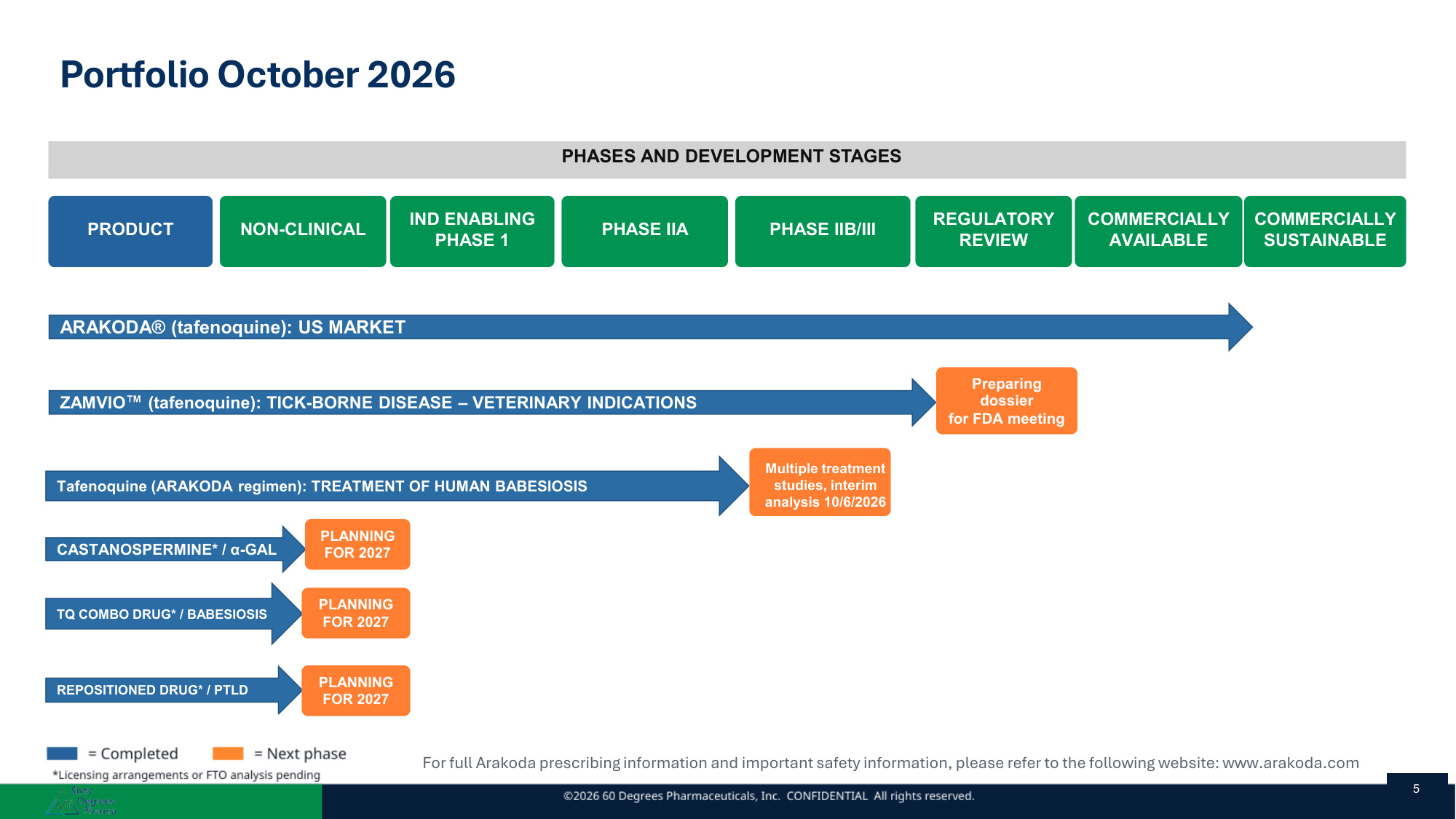
PHASES AND DEVELOPMENT STAGES PRODUCT NON-CLINICAL IND ENABLING PHASE 1 PHASE IIA PHASE IIB/III REGULATORY REVIEW COMMERCIALLY AVAILABLE COMMERCIALLY SUSTAINABLE ARAKODA® (tafenoquine): US MARKET ZAMVIO (tafenoquine): TICK-BORNE DISEASE – VETERINARY INDICATIONS Tafenoquine (ARAKODA regimen): TREATMENT OF HUMAN BABESIOSIS CASTANOSPERMINE* / α-GAL TQ COMBO DRUG* / BABESIOSIS REPOSITIONED DRUG* / PTLD Preparing dossier for FDA meeting Multiple treatment studies, interim analysis 10/6/2026 PLANNING FOR 2027 PLANNING FOR 2027 PLANNING FOR 2027 Portfolio October 2026 For full Arakoda prescribing information and important safety information, please refer to the following website: www.arakoda.com 5
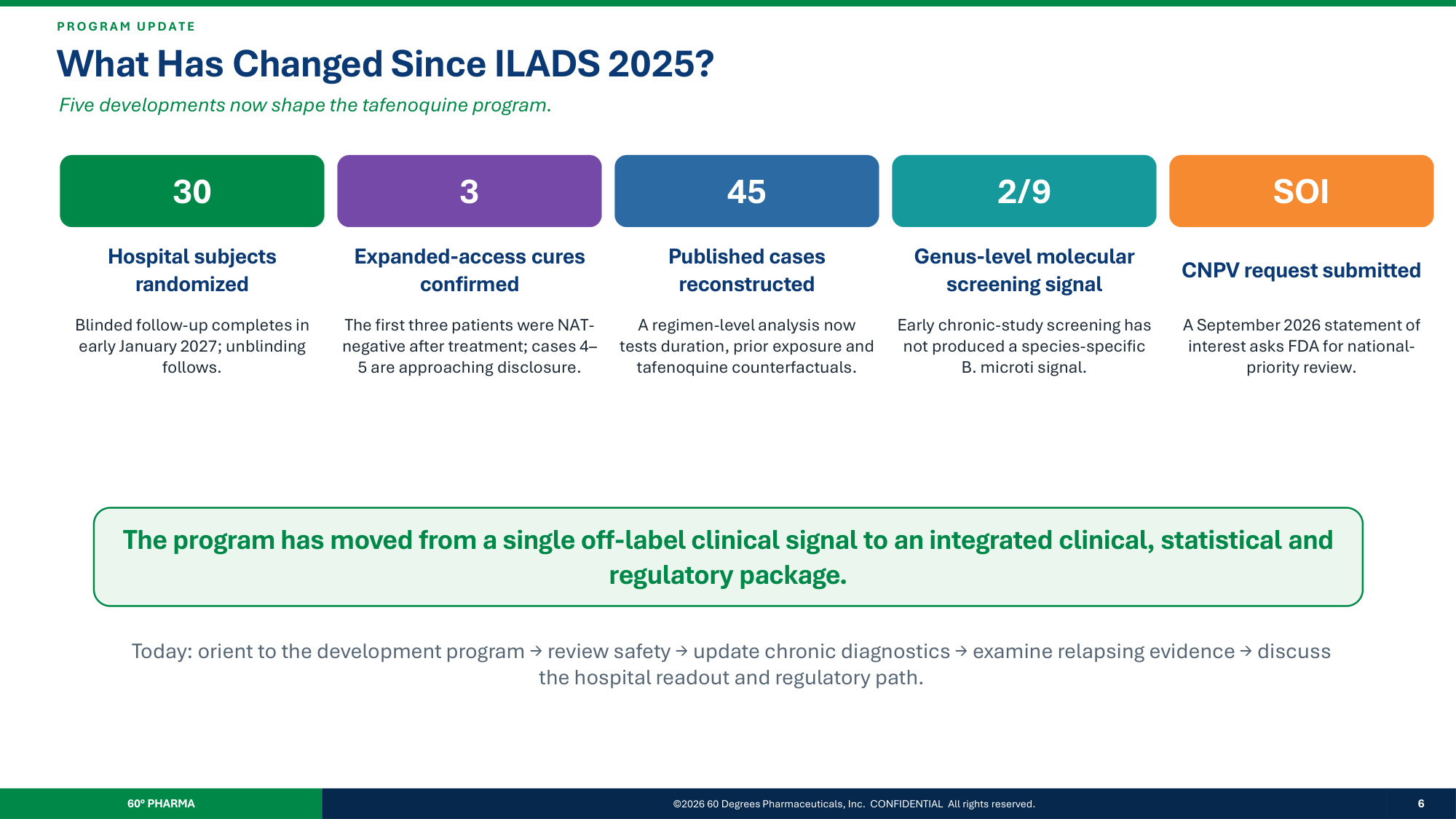
P R O G R A M UP D A T E What Has Changed Since ILADS 2025? Five developments now shape the tafenoquine program. 30 Hospital subjects randomized Blinded follow-up completes in early January 2027; unblinding follows. 3 Expanded-access cures confirmed The first three patients were NAT- negative after treatment; cases 4– 5 are approaching disclosure. 45 Published cases reconstructed A regimen-level analysis now tests duration, prior exposure and tafenoquine counterfactuals. 2/9 Genus-level molecular screening signal Early chronic-study screening has not produced a species-specific B. microti signal. SOI CNPV request submitted A September 2026 statement of interest asks FDA for national- priority review. The program has moved from a single off-label clinical signal to an integrated clinical, statistical and regulatory package. Today: orient to the development program → review safety → update chronic diagnostics → examine relapsing evidence → discuss the hospital readout and regulatory path. 60° PHARMA ©2026 60 Degrees Pharmaceuticals, Inc. CONFIDENTIAL All rights reserved. 6
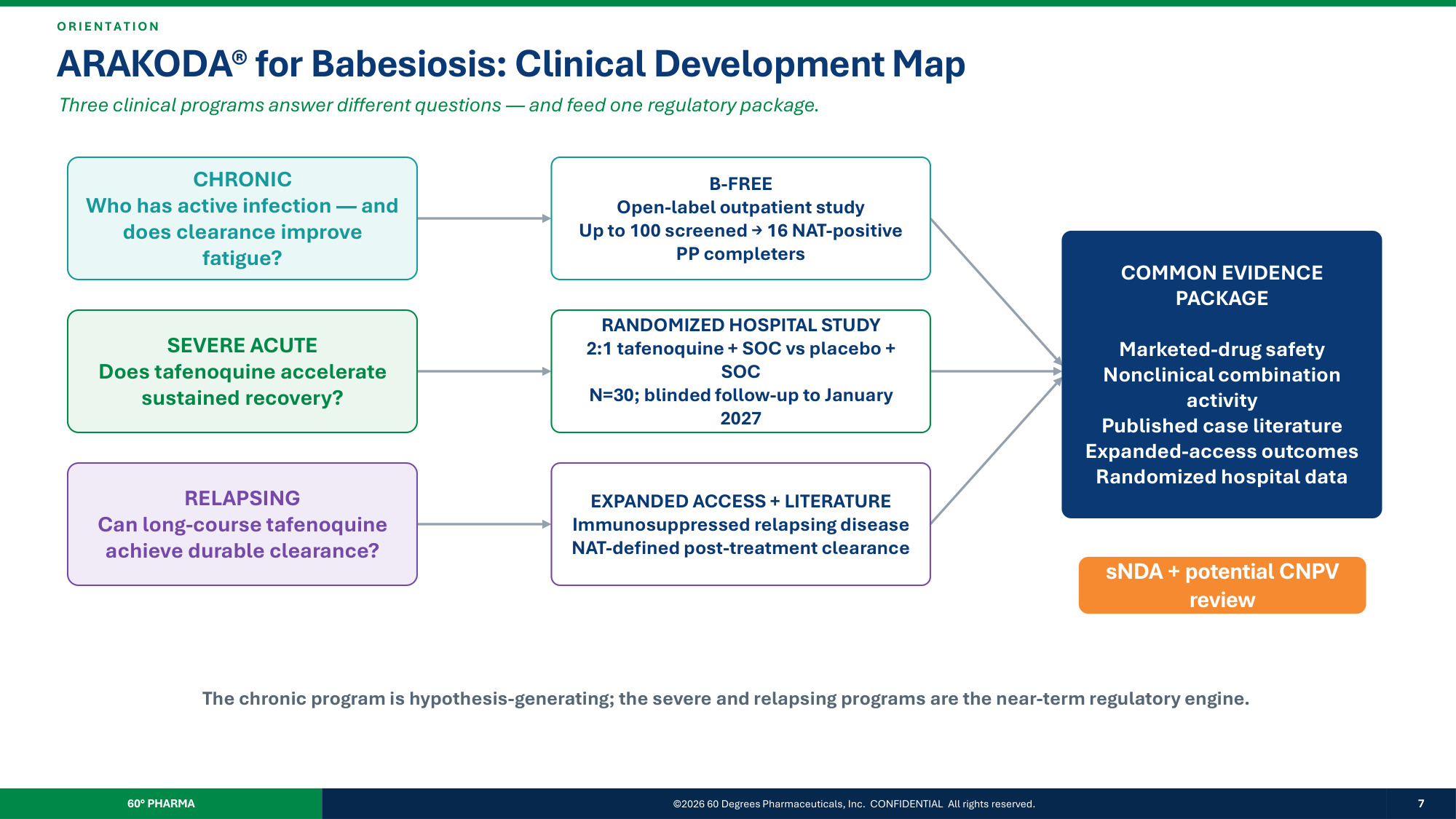
O R I E N T A T IO N ARAKODA® for Babesiosis: Clinical Development Map Three clinical programs answer different questions — and feed one regulatory package. CHRONIC Who has active infection — and does clearance improve fatigue? SEVERE ACUTE Does tafenoquine accelerate sustained recovery? RELAPSING Can long-course tafenoquine achieve durable clearance? B-FREE Open-label outpatient study Up to 100 screened → 16 NAT-positive PP completers RANDOMIZED HOSPITAL STUDY 2:1 tafenoquine + SOC vs placebo + SOC N=30; blinded follow-up to January 2027 EXPANDED ACCESS + LITERATURE Immunosuppressed relapsing disease NAT-defined post-treatment clearance COMMON EVIDENCE PACKAGE Marketed-drug safety Nonclinical combination activity Published case literature Expanded-access outcomes Randomized hospital data sNDA + potential CNPV review The chronic program is hypothesis-generating; the severe and relapsing programs are the near-term regulatory engine. 60° PHARMA ©2026 60 Degrees Pharmaceuticals, Inc. CONFIDENTIAL All rights reserved. 7
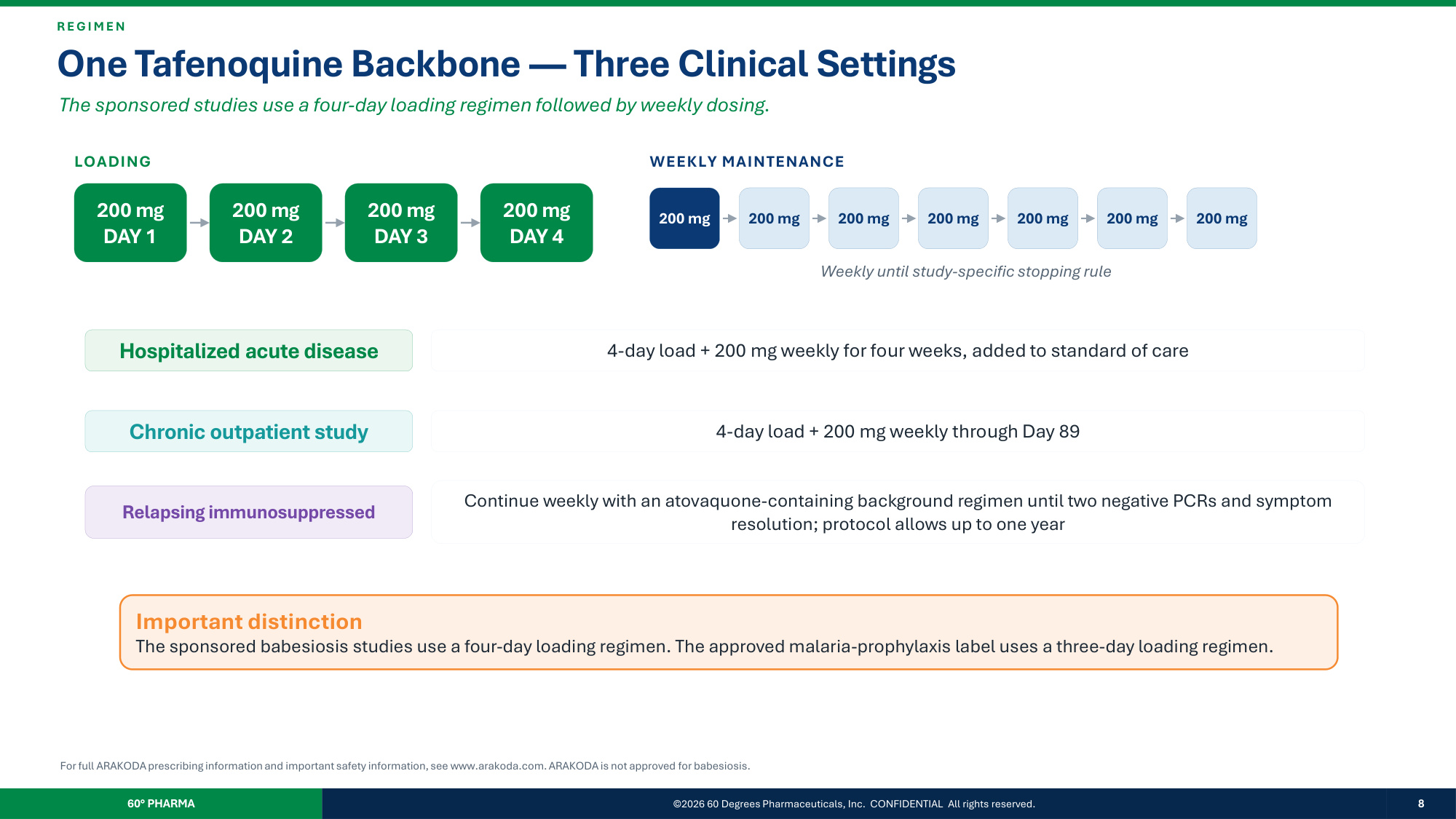
R E G I M E N One Tafenoquine Backbone — Three Clinical Settings The sponsored studies use a four-day loading regimen followed by weekly dosing. LOADING 200 mg DAY 1 200 mg DAY 2 200 mg DAY 3 200 mg DAY 4 WEEKLY MAINTENANCE 200 mg 200 mg 200 mg 200 mg 200 mg 200 mg 200 mg Weekly until study-specific stopping rule Hospitalized acute disease 4-day load + 200 mg weekly for four weeks, added to standard of care Chronic outpatient study 4-day load + 200 mg weekly through Day 89 Relapsing immunosuppressed Continue weekly with an atovaquone-containing background regimen until two negative PCRs and symptom resolution; protocol allows up to one year Important distinction The sponsored babesiosis studies use a four-day loading regimen. The approved malaria-prophylaxis label uses a three-day loading regimen. For full ARAKODA prescribing information and important safety information, see www.arakoda.com. ARAKODA is not approved for babesiosis. 60° PHARMA ©2026 60 Degrees Pharmaceuticals, Inc. CONFIDENTIAL All rights reserved. 8
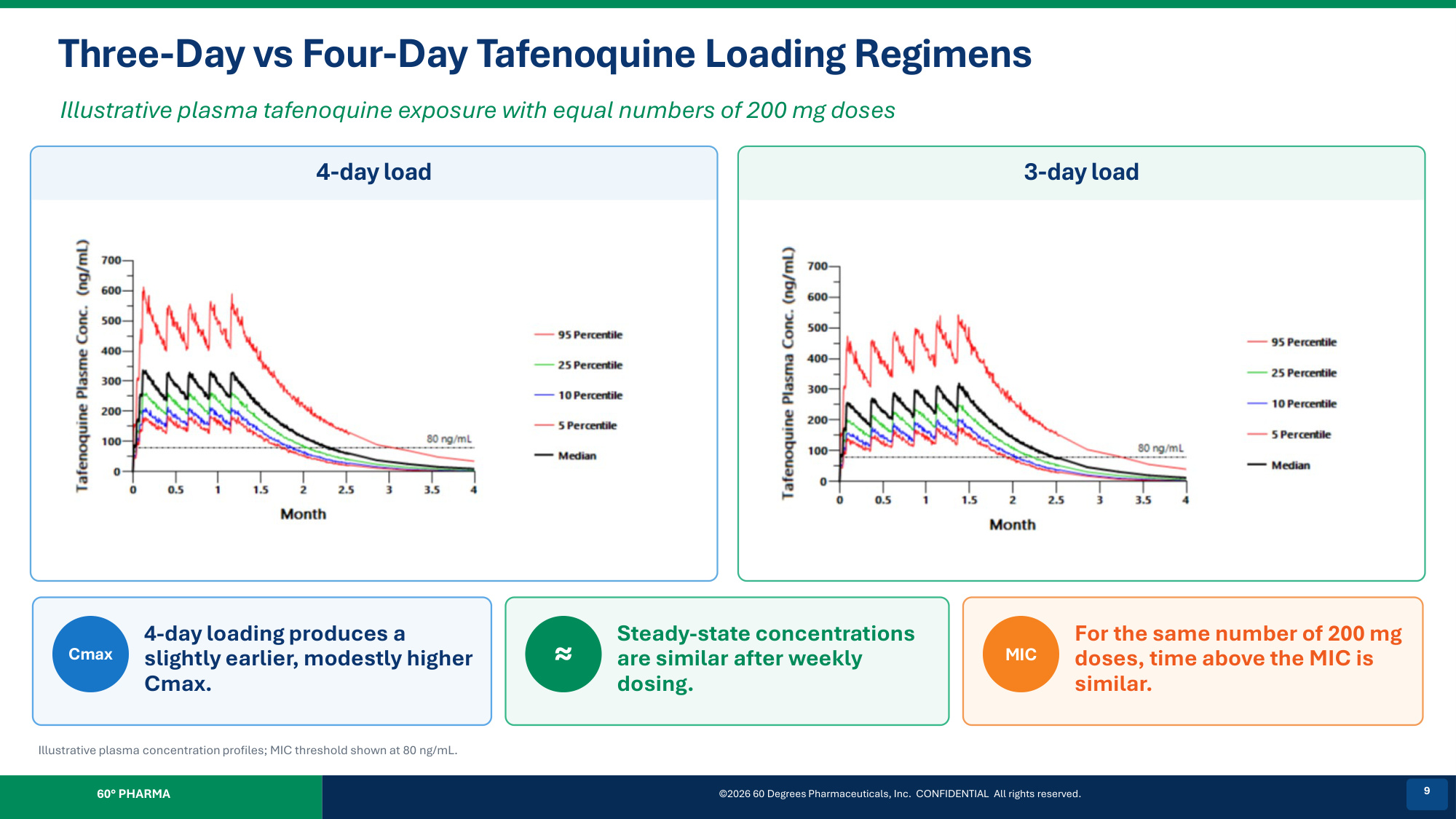
Three-Day vs Four-Day Tafenoquine Loading Regimens Illustrative plasma tafenoquine exposure with equal numbers of 200 mg doses 4-day load 3-day load Cmax 4-day loading produces a slightly earlier, modestly higher Cmax. ≈ Steady-state concentrations are similar after weekly dosing. MIC For the same number of 200 mg doses, time above the MIC is similar. Illustrative plasma concentration profiles; MIC threshold shown at 80 ng/mL. 60° PHARMA ©2026 60 Degrees Pharmaceuticals, Inc. CONFIDENTIAL All rights reserved. 9
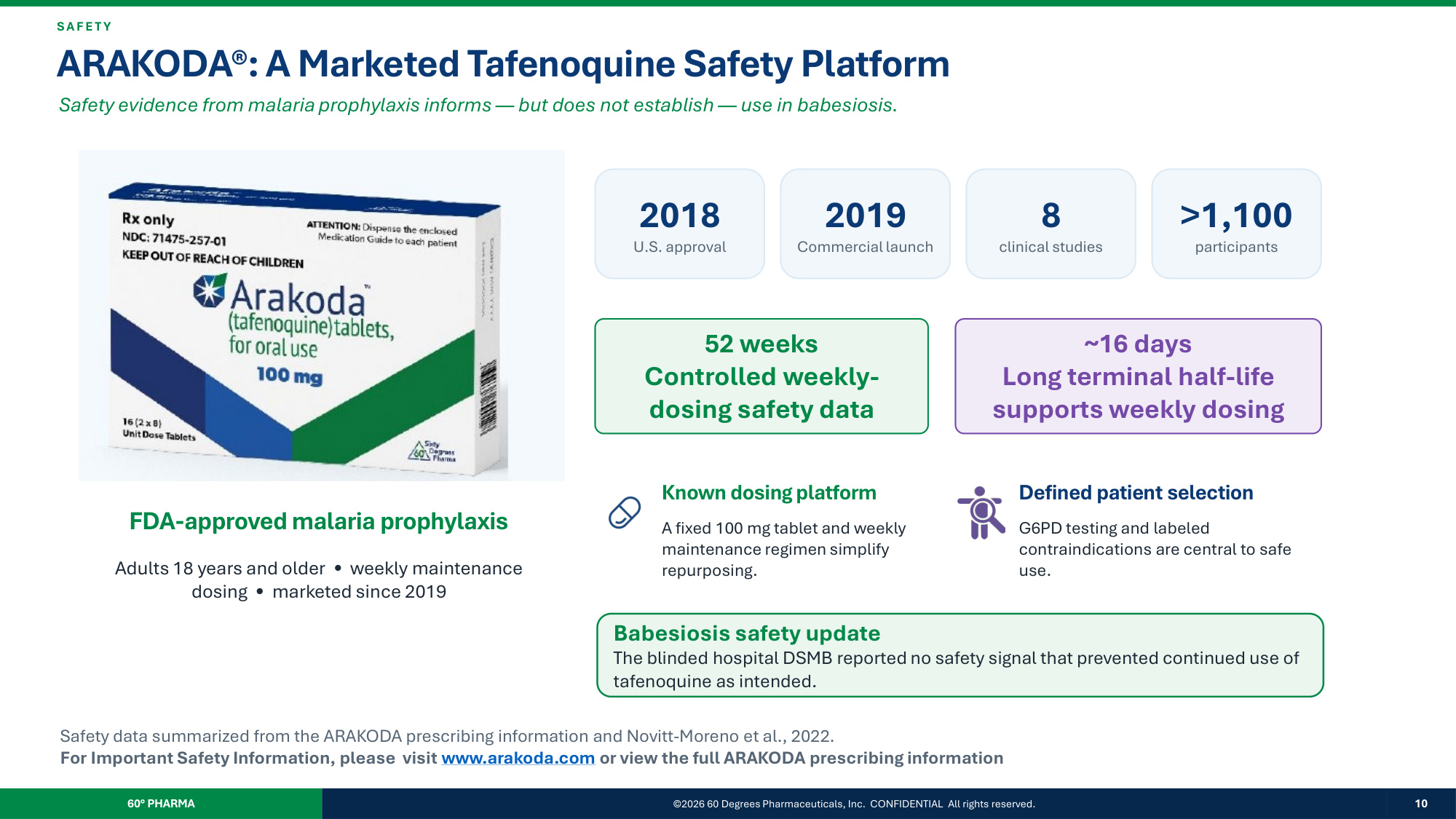
SA F E T Y ARAKODA®: A Marketed Tafenoquine Safety Platform Safety evidence from malaria prophylaxis informs — but does not establish — use in babesiosis. FDA-approved malaria prophylaxis Adults 18 years and older • weekly maintenance dosing • marketed since 2019 2018 U.S. approval 2019 Commercial launch 8 clinical studies >1,100 participants 52 weeks Controlled weekly- dosing safety data ~16 days Long terminal half-life supports weekly dosing Known dosing platform A fixed 100 mg tablet and weekly maintenance regimen simplify repurposing. Defined patient selection G6PD testing and labeled contraindications are central to safe use. Babesiosis safety update The blinded hospital DSMB reported no safety signal that prevented continued use of tafenoquine as intended. Safety data summarized from the ARAKODA prescribing information and Novitt-Moreno et al., 2022. For Important Safety Information, please visit www.arakoda.com or view the full ARAKODA prescribing information 60° PHARMA ©2026 60 Degrees Pharmaceuticals, Inc. CONFIDENTIAL All rights reserved. 10
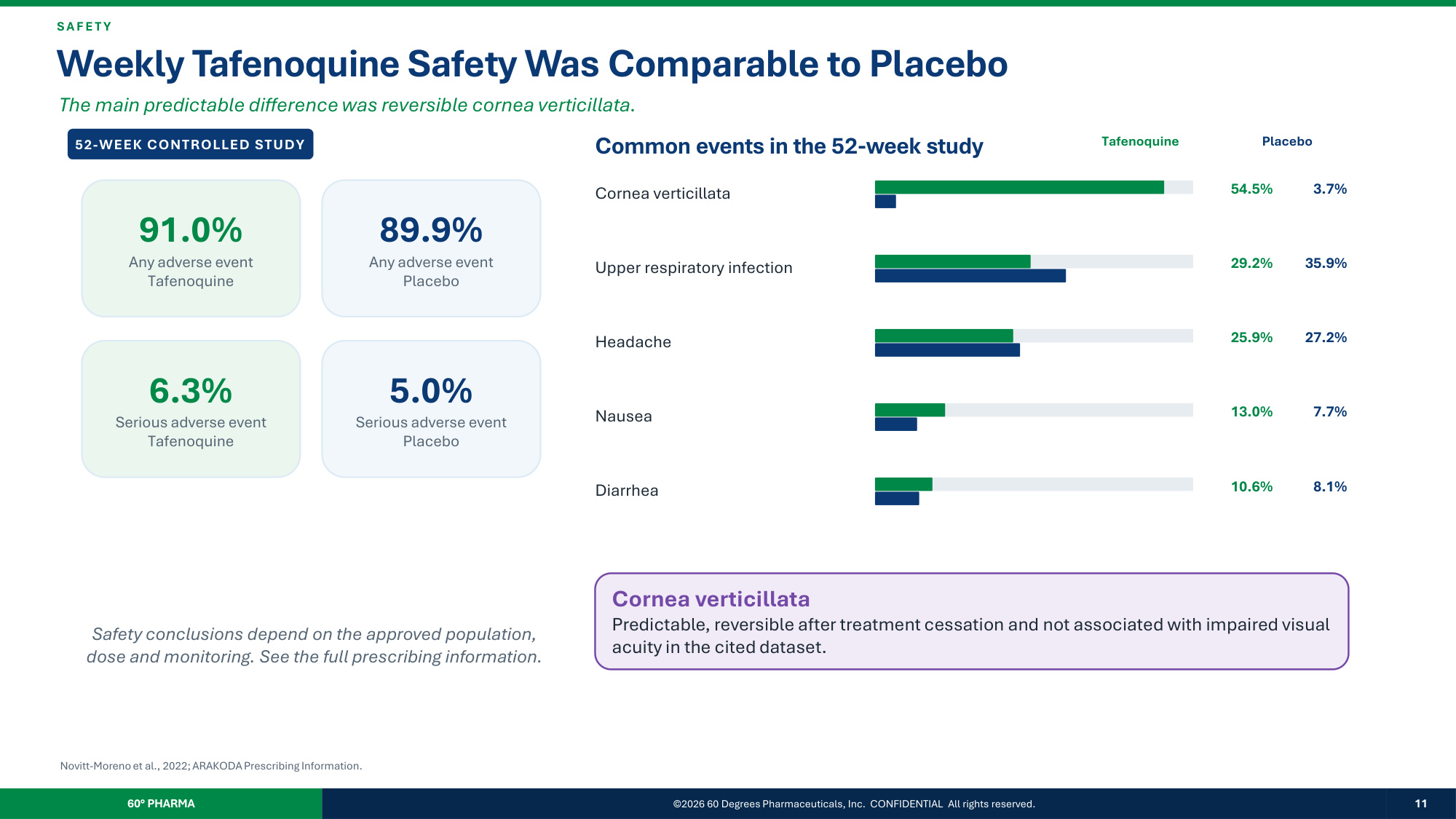
SA F E T Y Weekly Tafenoquine Safety Was Comparable to Placebo The main predictable difference was reversible cornea verticillata. 52-WEEK CONTROLLED STUDY 91.0% Any adverse event Tafenoquine 89.9% Any adverse event Placebo 6.3% Serious adverse event Tafenoquine 5.0% Serious adverse event Placebo Common events in the 52-week study Tafenoquine Placebo Cornea verticillata 54.5% 3.7% Upper respiratory infection 29.2% 35.9% Headache 25.9% 27.2% Nausea 13.0% 7.7% Diarrhea 10.6% 8.1% Cornea verticillata Predictable, reversible after treatment cessation and not associated with impaired visual acuity in the cited dataset. Safety conclusions depend on the approved population, dose and monitoring. See the full prescribing information. Novitt-Moreno et al., 2022; ARAKODA Prescribing Information. 60° PHARMA ©2026 60 Degrees Pharmaceuticals, Inc. CONFIDENTIAL All rights reserved. 11
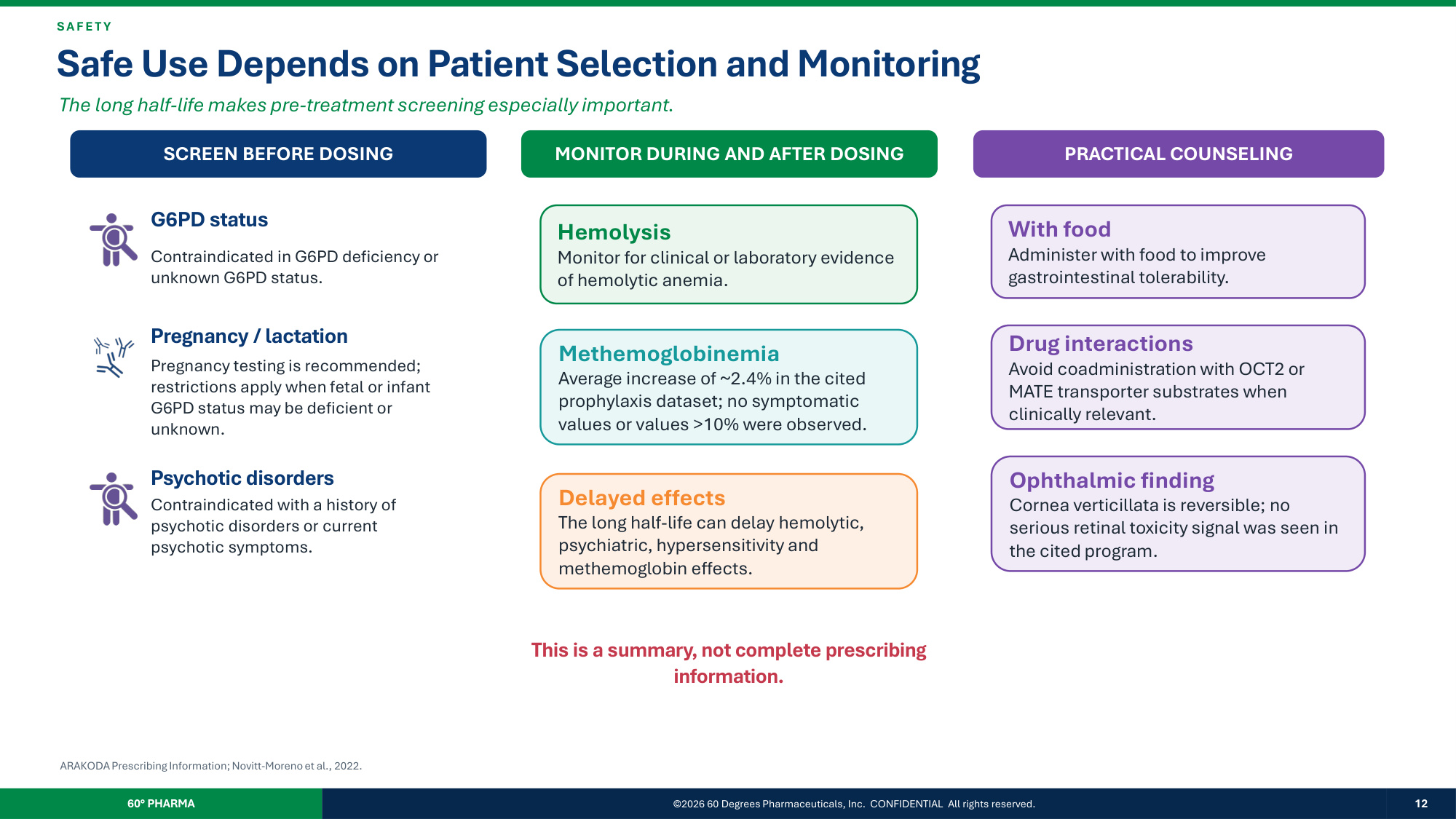
SA F E T Y Safe Use Depends on Patient Selection and Monitoring The long half-life makes pre-treatment screening especially important. SCREEN BEFORE DOSING G6PD status Contraindicated in G6PD deficiency or unknown G6PD status. Pregnancy / lactation Pregnancy testing is recommended; restrictions apply when fetal or infant G6PD status may be deficient or unknown. Psychotic disorders Contraindicated with a history of psychotic disorders or current psychotic symptoms. MONITOR DURING AND AFTER DOSING Hemolysis Monitor for clinical or laboratory evidence of hemolytic anemia. Methemoglobinemia Average increase of ~2.4% in the cited prophylaxis dataset; no symptomatic values or values >10% were observed. Delayed effects The long half-life can delay hemolytic, psychiatric, hypersensitivity and methemoglobin effects. PRACTICAL COUNSELING With food Administer with food to improve gastrointestinal tolerability. Drug interactions Avoid coadministration with OCT2 or MATE transporter substrates when clinically relevant. Ophthalmic finding Cornea verticillata is reversible; no serious retinal toxicity signal was seen in the cited program. This is a summary, not complete prescribing information. ARAKODA Prescribing Information; Novitt-Moreno et al., 2022. 60° PHARMA ©2026 60 Degrees Pharmaceuticals, Inc. CONFIDENTIAL All rights reserved. 12
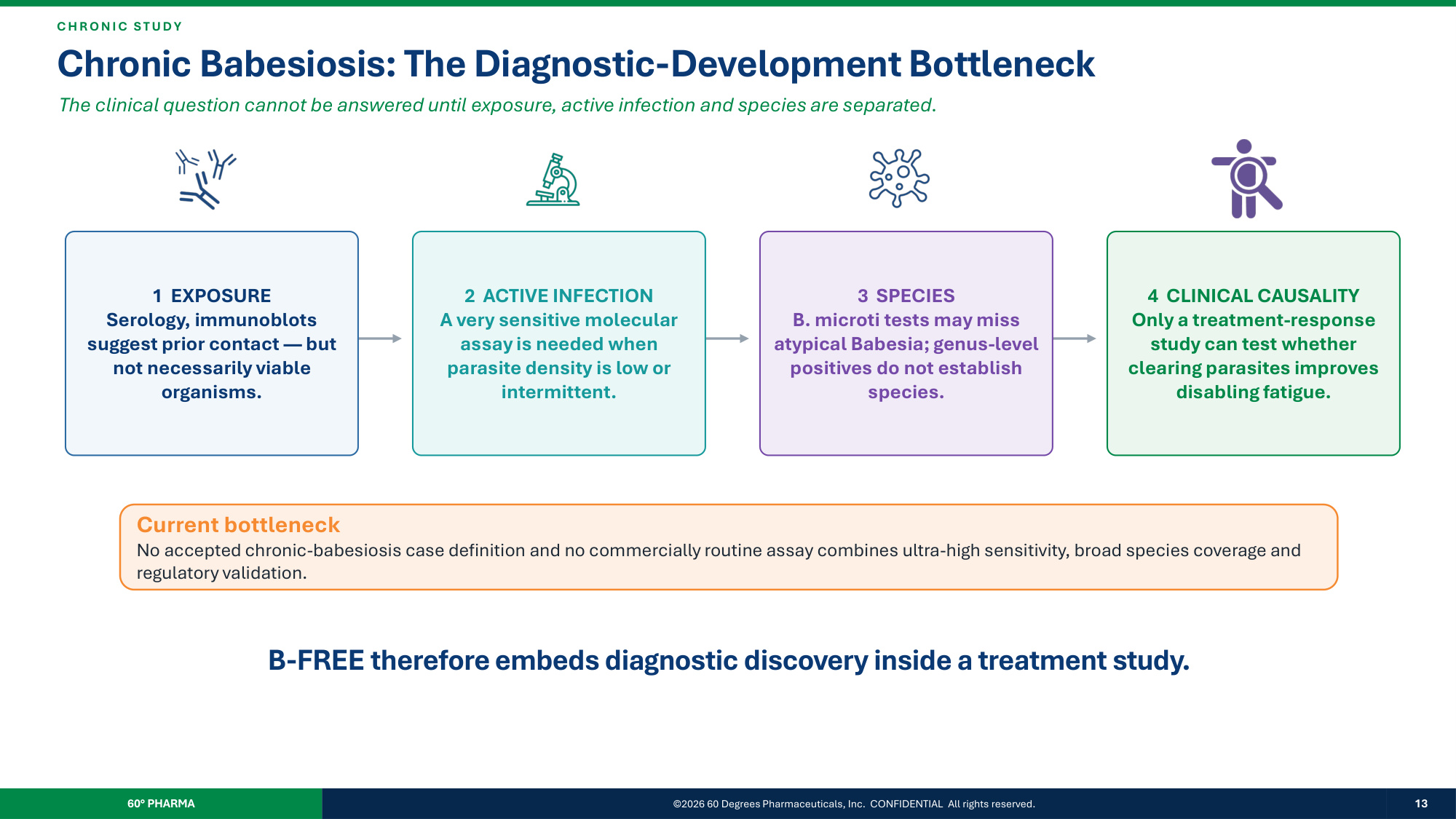
C H R O N I C ST UD Y Chronic Babesiosis: The Diagnostic-Development Bottleneck The clinical question cannot be answered until exposure, active infection and species are separated. 1 EXPOSURE Serology, immunoblots suggest prior contact — but not necessarily viable organisms. 2 ACTIVE INFECTION A very sensitive molecular assay is needed when parasite density is low or intermittent. 3 SPECIES B. microti tests may miss atypical Babesia; genus-level positives do not establish species. 4 CLINICAL CAUSALITY Only a treatment-response study can test whether clearing parasites improves disabling fatigue. Current bottleneck No accepted chronic-babesiosis case definition and no commercially routine assay combines ultra-high sensitivity, broad species coverage and regulatory validation. B-FREE therefore embeds diagnostic discovery inside a treatment study. 60° PHARMA ©2026 60 Degrees Pharmaceuticals, Inc. CONFIDENTIAL All rights reserved. 13
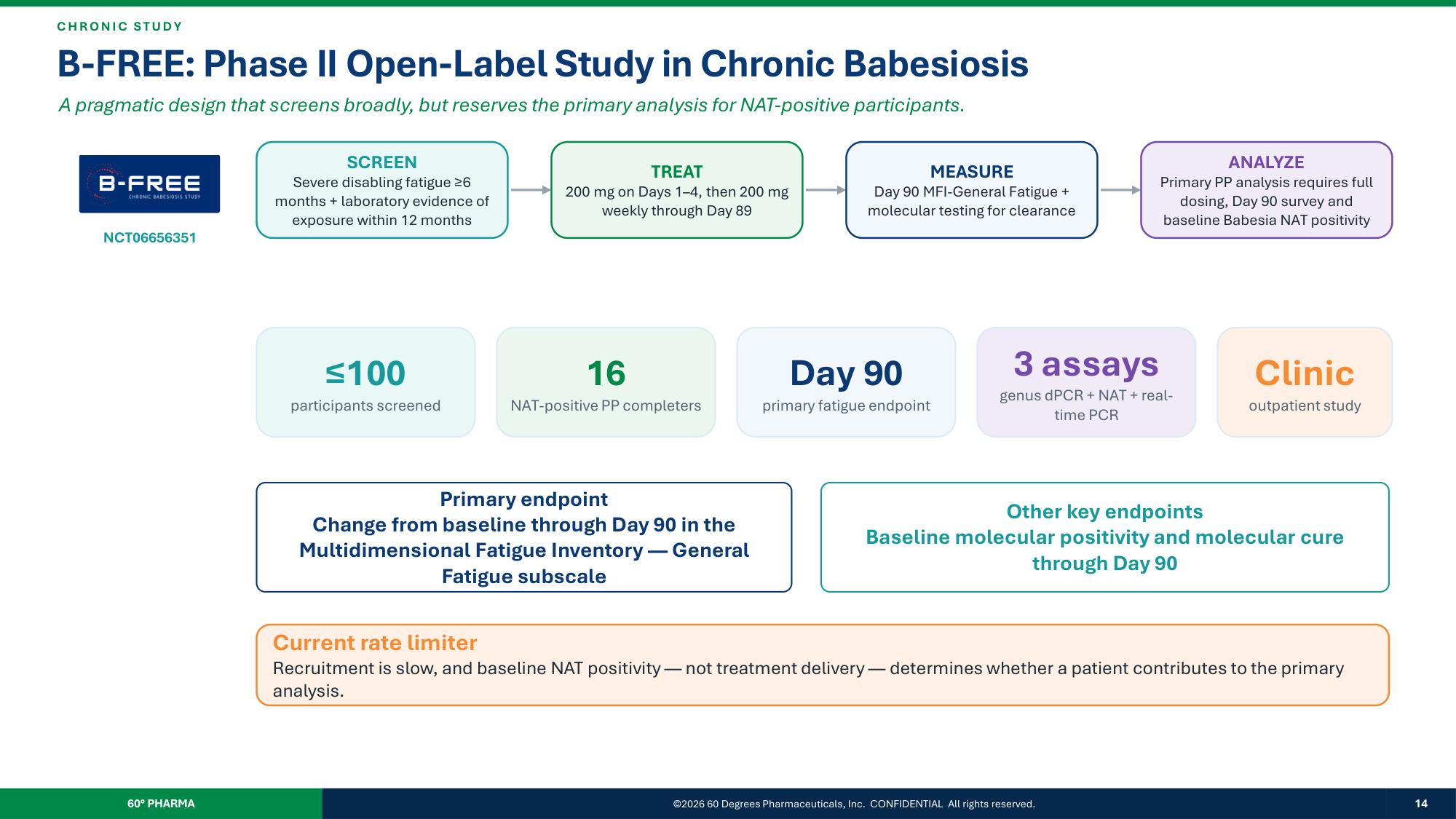
C H R O N I C ST UD Y B-FREE: Phase II Open-Label Study in Chronic Babesiosis A pragmatic design that screens broadly, but reserves the primary analysis for NAT-positive participants. NCT06656351 SCREEN Severe disabling fatigue ≥6 months + laboratory evidence of exposure within 12 months TREAT 200 mg on Days 1–4, then 200 mg weekly through Day 89 MEASURE Day 90 MFI-General Fatigue + molecular testing for clearance ANALYZE Primary PP analysis requires full dosing, Day 90 survey and baseline Babesia NAT positivity ≤100 participants screened 16 NAT-positive PP completers Day 90 primary fatigue endpoint 3 assays genus dPCR + NAT + real- time PCR Clinic outpatient study Primary endpoint Change from baseline through Day 90 in the Multidimensional Fatigue Inventory — General Fatigue subscale Other key endpoints Baseline molecular positivity and molecular cure through Day 90 Current rate limiter Recruitment is slow, and baseline NAT positivity — not treatment delivery — determines whether a patient contributes to the primary analysis. 60° PHARMA ©2026 60 Degrees Pharmaceuticals, Inc. CONFIDENTIAL All rights reserved. 14
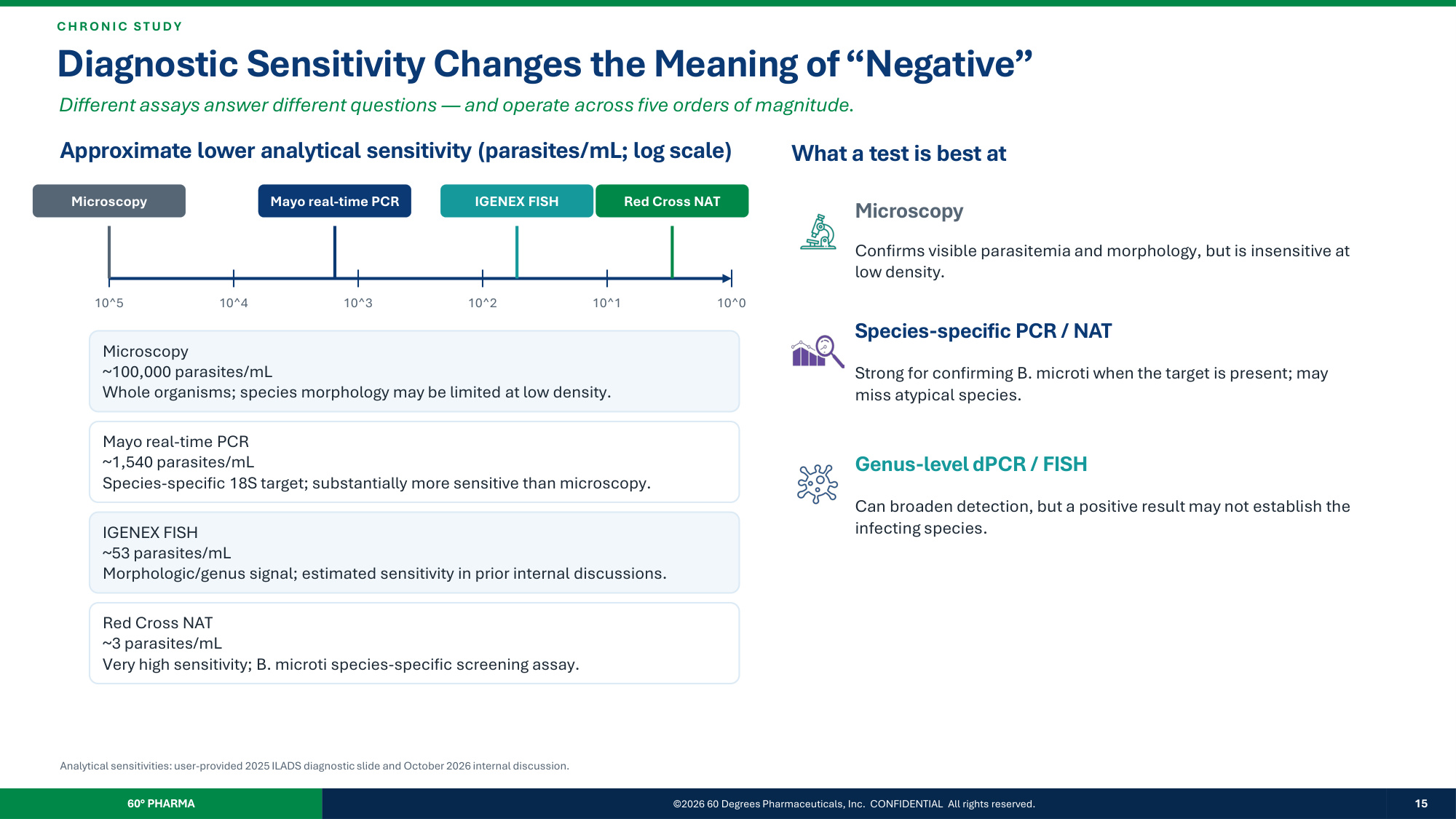
C H R O N I C ST UD Y Diagnostic Sensitivity Changes the Meaning of "Negative" Different assays answer different questions — and operate across five orders of magnitude. Approximate lower analytical sensitivity (parasites/mL; log scale) 10^5 10^4 10^3 10^2 10^1 10^0 Microscopy Microscopy ~100,000 parasites/mL Whole organisms; species morphology may be limited at low density. Mayo real-time PCR Mayo real-time PCR ~1,540 parasites/mL Species-specific 18S target; substantially more sensitive than microscopy. IGENEX FISH IGENEX FISH ~53 parasites/mL Morphologic/genus signal; estimated sensitivity in prior internal discussions. Red Cross NAT Red Cross NAT ~3 parasites/mL Very high sensitivity; B. microti species-specific screening assay. What a test is best at Microscopy Confirms visible parasitemia and morphology, but is insensitive at low density. Species-specific PCR / NAT Strong for confirming B. microti when the target is present; may miss atypical species. Genus-level dPCR / FISH Can broaden detection, but a positive result may not establish the infecting species. Analytical sensitivities: user-provided 2025 ILADS diagnostic slide and October 2026 internal discussion. 60° PHARMA ©2026 60 Degrees Pharmaceuticals, Inc. CONFIDENTIAL All rights reserved. 15
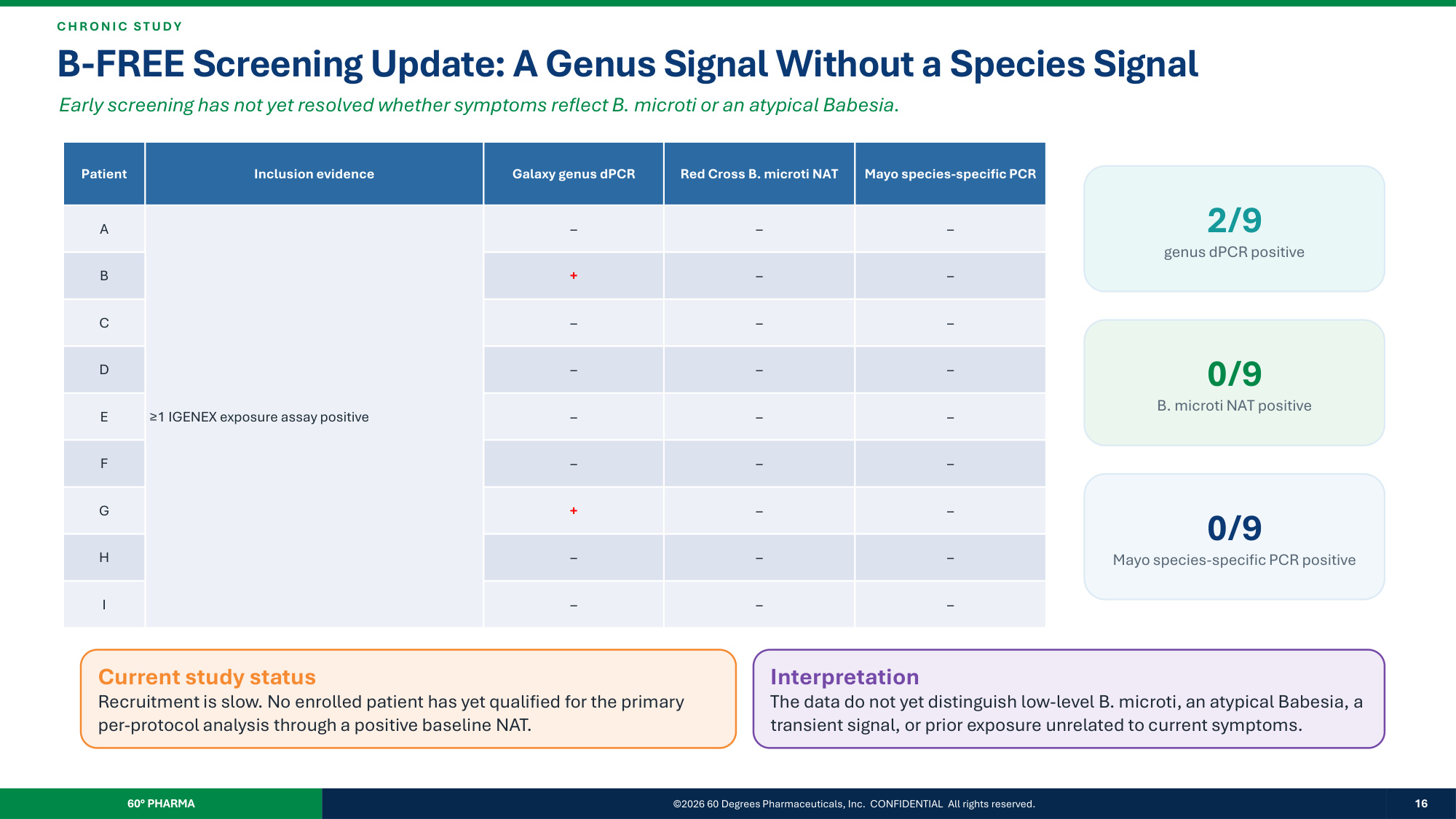
C H R O N I C ST UD Y B-FREE Screening Update: A Genus Signal Without a Species Signal Early screening has not yet resolved whether symptoms reflect B. microti or an atypical Babesia. Patient Inclusion evidence Galaxy genus dPCR Red Cross B. microti NAT Mayo species-specific PCR A ≥1 IGENEX exposure assay positive – – – B + – – C – – – D – – – E – – – F – – – G + – – H – – – I – – – 2/9 genus dPCR positive 0/9 B. microti NAT positive 0/9 Mayo species-specific PCR positive Current study status Recruitment is slow. No enrolled patient has yet qualified for the primary per-protocol analysis through a positive baseline NAT. Interpretation The data do not yet distinguish low-level B. microti, an atypical Babesia, a transient signal, or prior exposure unrelated to current symptoms. 60° PHARMA ©2026 60 Degrees Pharmaceuticals, Inc. CONFIDENTIAL All rights reserved. 16
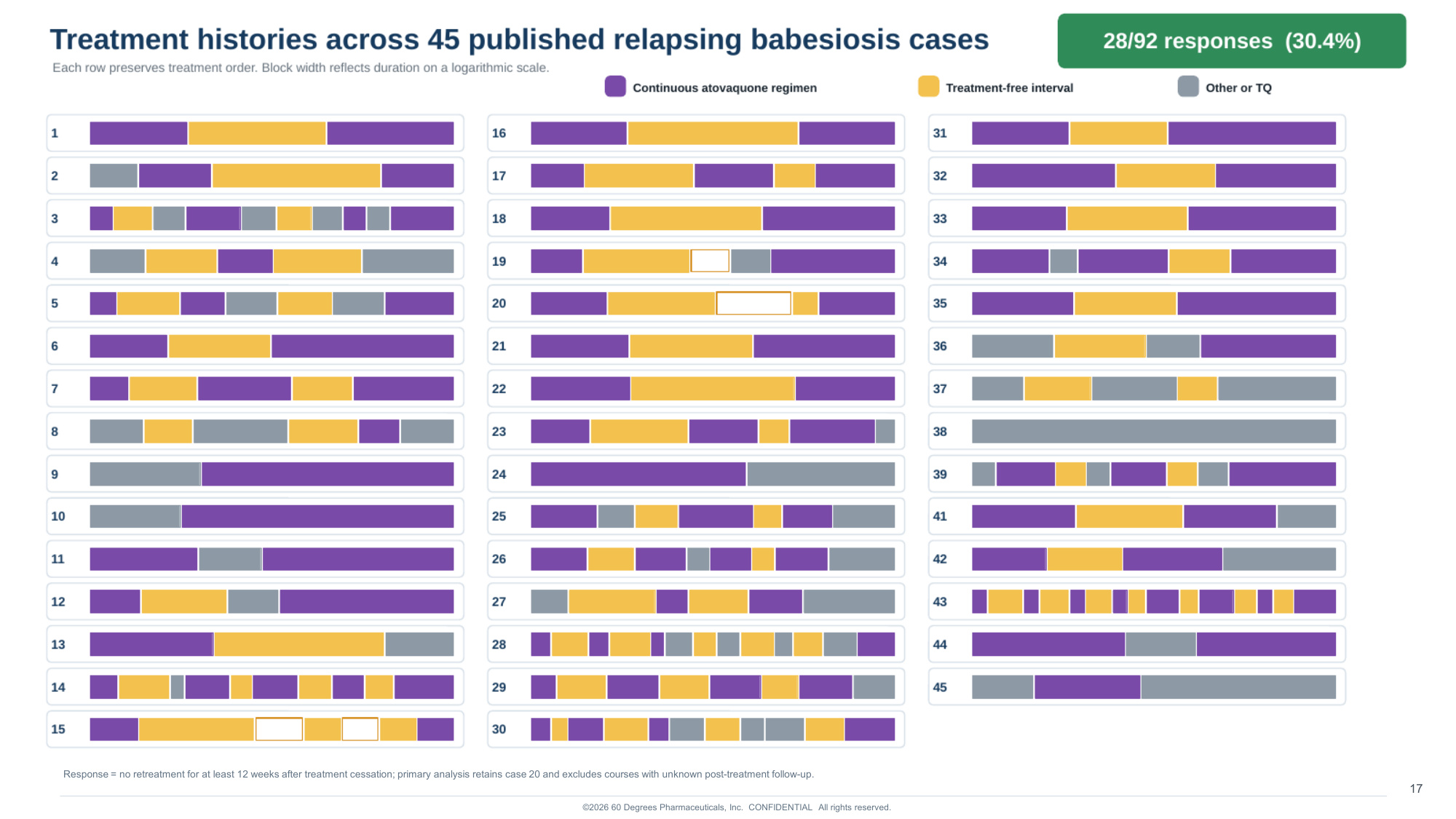
Response = no retreatment for at least 12 weeks after treatment cessation; primary analysis retains case 20 and excludes courses with unknown post-treatment follow-up. ©2026 60 Degrees Pharmaceuticals, Inc. CONFIDENTIAL All rights reserved. 17
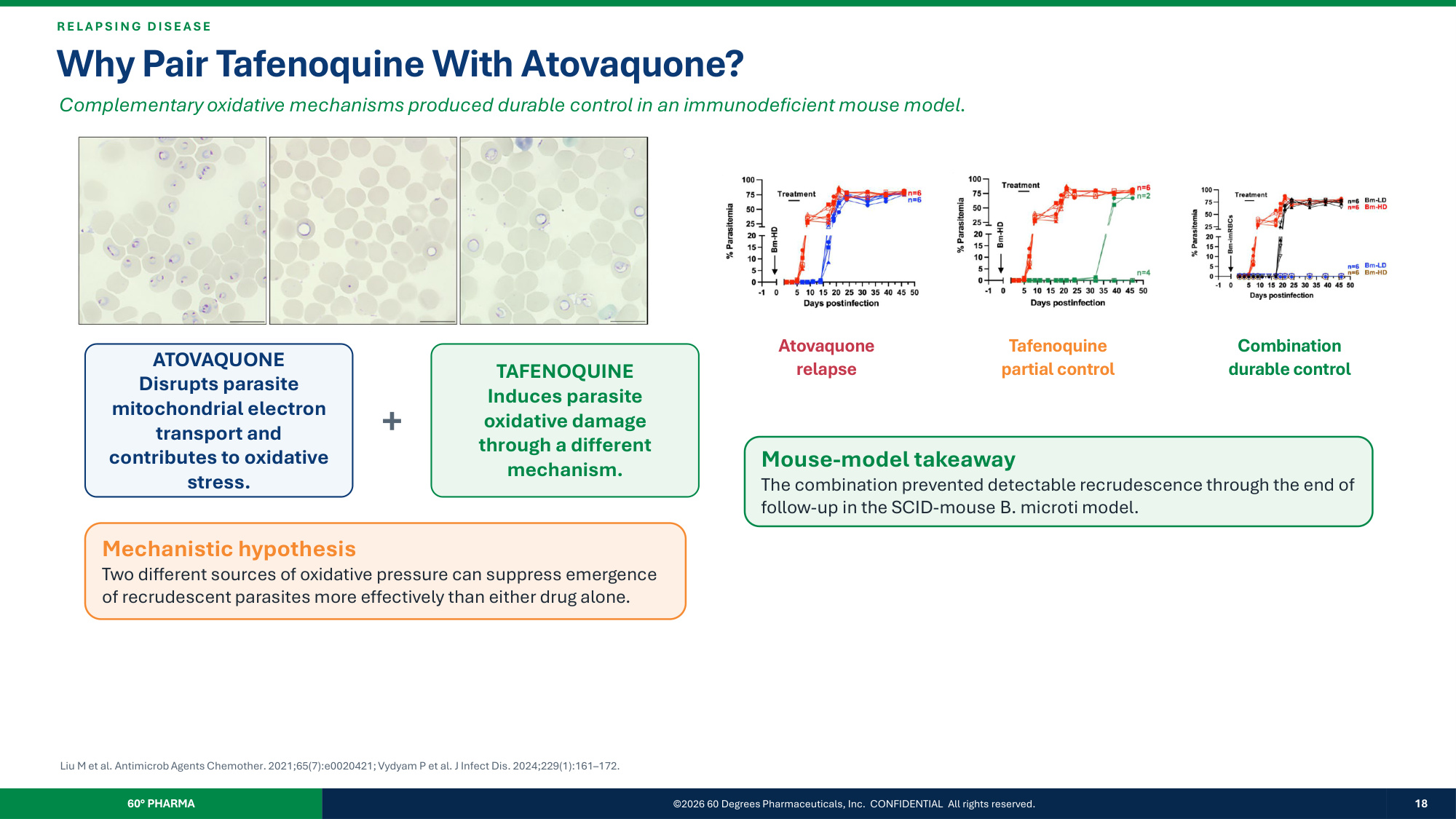
R E L A P SI N G D I SE A SE Why Pair Tafenoquine With Atovaquone? Complementary oxidative mechanisms produced durable control in an immunodeficient mouse model. ATOVAQUONE Disrupts parasite mitochondrial electron transport and contributes to oxidative stress. + TAFENOQUINE Induces parasite oxidative damage through a different mechanism. Mechanistic hypothesis Two different sources of oxidative pressure can suppress emergence of recrudescent parasites more effectively than either drug alone. Atovaquone relapse Tafenoquine partial control Combination durable control Mouse-model takeaway The combination prevented detectable recrudescence through the end of follow-up in the SCID-mouse B. microti model. Liu M et al. Antimicrob Agents Chemother. 2021;65(7):e0020421; Vydyam P et al. J Infect Dis. 2024;229(1):161–172. 60° PHARMA ©2026 60 Degrees Pharmaceuticals, Inc. CONFIDENTIAL All rights reserved. 18
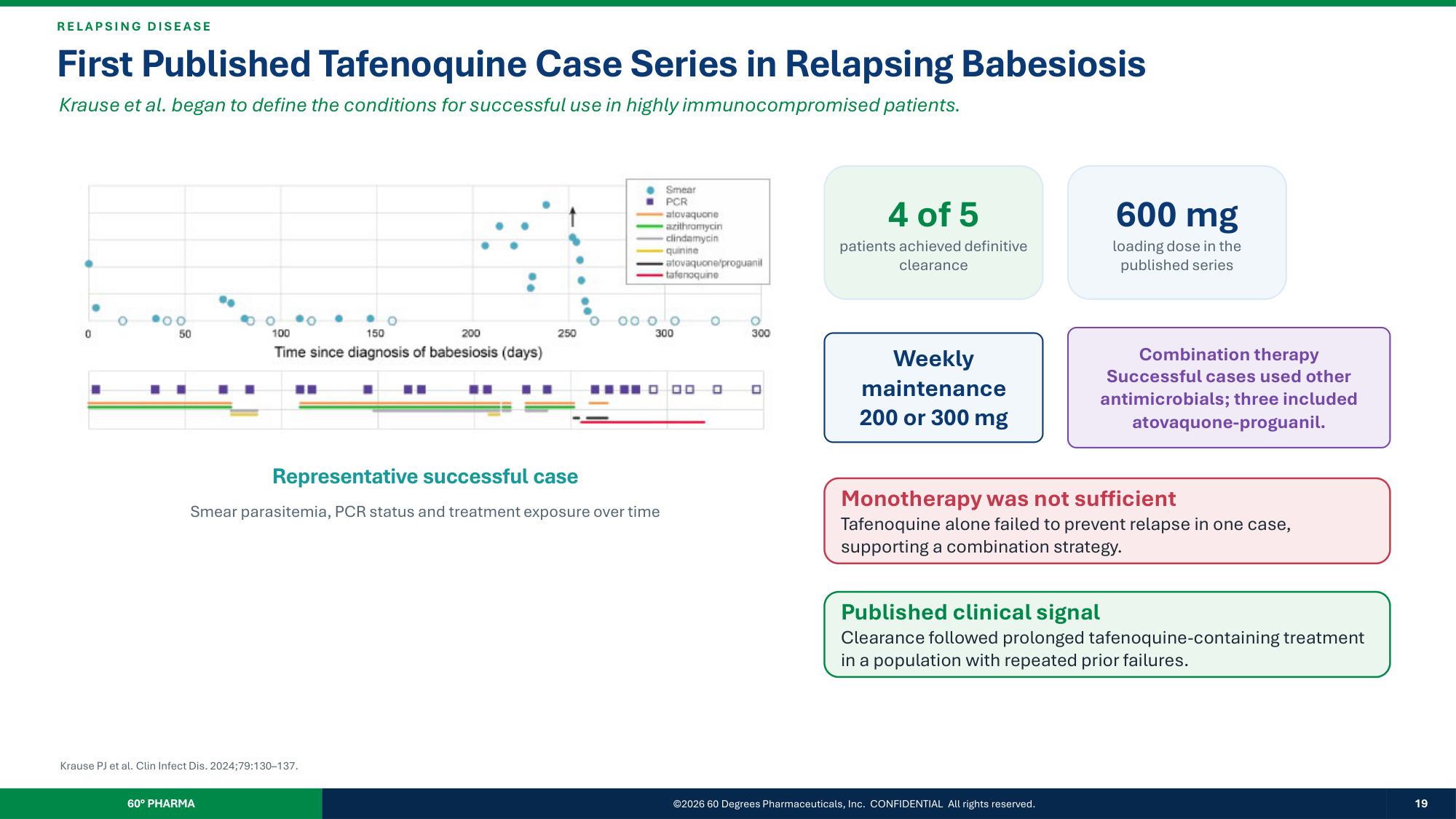
R E L A P SI N G D I SE A SE First Published Tafenoquine Case Series in Relapsing Babesiosis Krause et al. began to define the conditions for successful use in highly immunocompromised patients. Representative successful case Smear parasitemia, PCR status and treatment exposure over time 4 of 5 patients achieved definitive clearance 600 mg loading dose in the published series Weekly maintenance 200 or 300 mg Combination therapy Successful cases used other antimicrobials; three included atovaquone-proguanil. Monotherapy was not sufficient Tafenoquine alone failed to prevent relapse in one case, supporting a combination strategy. Published clinical signal Clearance followed prolonged tafenoquine-containing treatment in a population with repeated prior failures. Krause PJ et al. Clin Infect Dis. 2024;79:130–137. 60° PHARMA ©2026 60 Degrees Pharmaceuticals, Inc. CONFIDENTIAL All rights reserved. 19
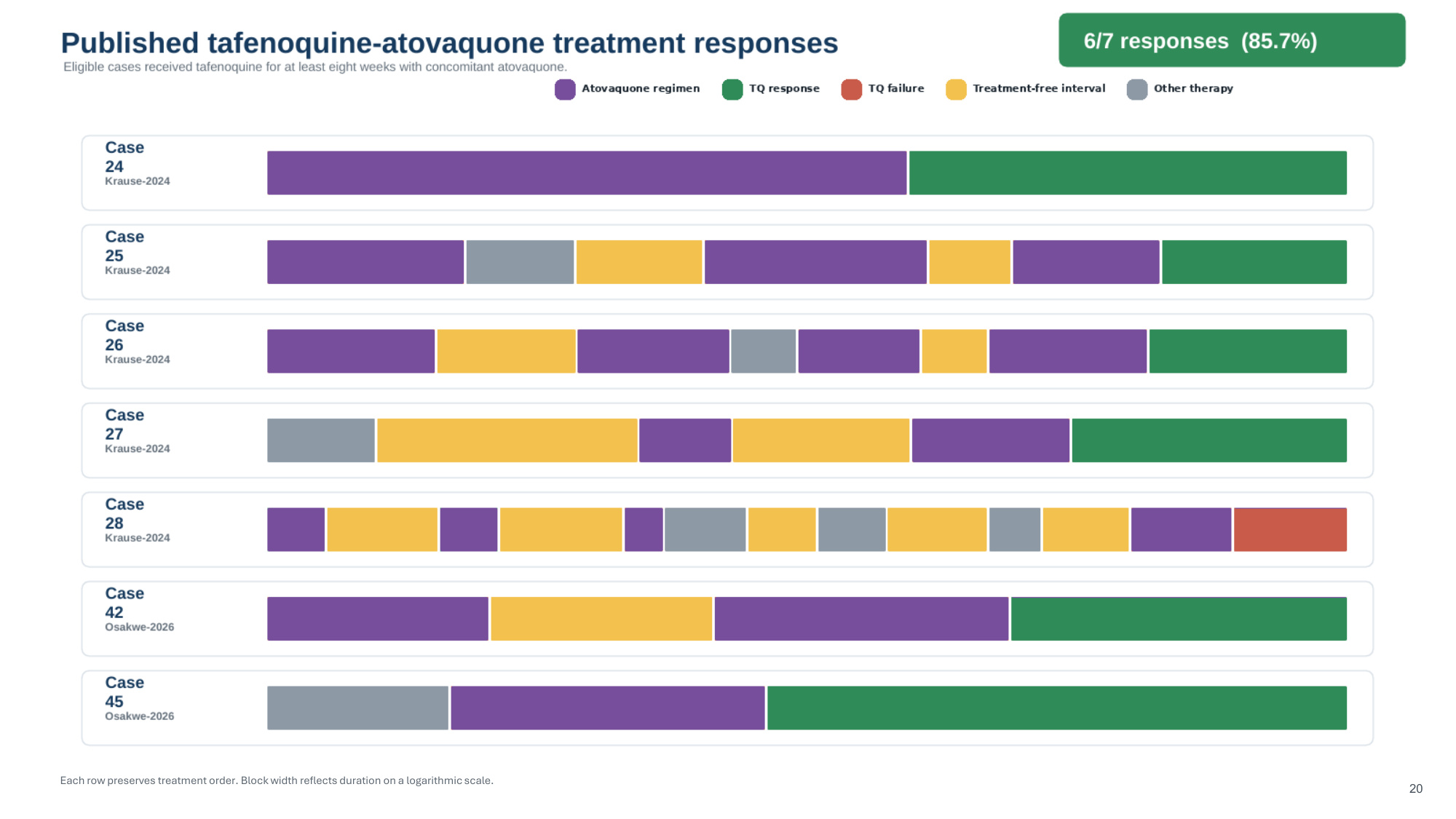
Each row preserves treatment order. Block width reflects duration on a logarithmic scale. 20
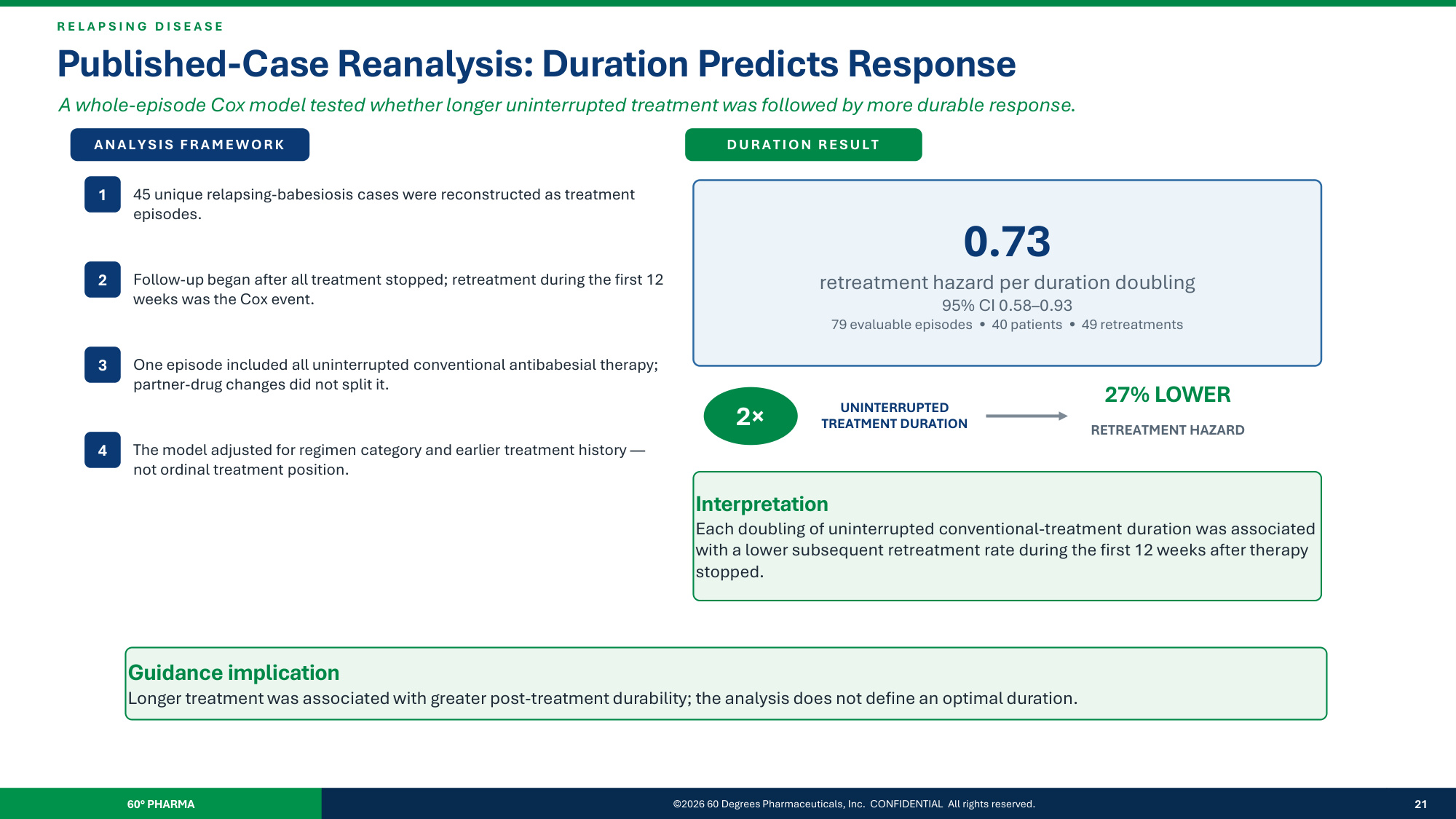
R E L A P S I N G D I S E A S E Published-Case Reanalysis: Duration Predicts Response A whole-episode Cox model tested whether longer uninterrupted treatment was followed by more durable response. 60° PHARMA ©2026 60 Degrees Pharmaceuticals, Inc. CONFIDENTIAL All rights reserved. 21 ANALYSIS FRAMEWORK 1 45 unique relapsing-babesiosis cases were reconstructed as treatment episodes. 2 Follow-up began after all treatment stopped; retreatment during the first 12 weeks was the Cox event. 3 One episode included all uninterrupted conventional antibabesial therapy; partner-drug changes did not split it. 4 The model adjusted for regimen category and earlier treatment history — not ordinal treatment position. DURATION RESULT 0.73 retreatment hazard per duration doubling 95% CI 0.58–0.93 79 evaluable episodes • 40 patients • 49 retreatments 2× UNINTERRUPTED TREATMENT DURATION 27% LOWER RETREATMENT HAZARD Interpretation Each doubling of uninterrupted conventional-treatment duration was associated with a lower subsequent retreatment rate during the first 12 weeks after therapy stopped. Guidance implication Longer treatment was associated with greater post-treatment durability; the analysis does not define an optimal duration.
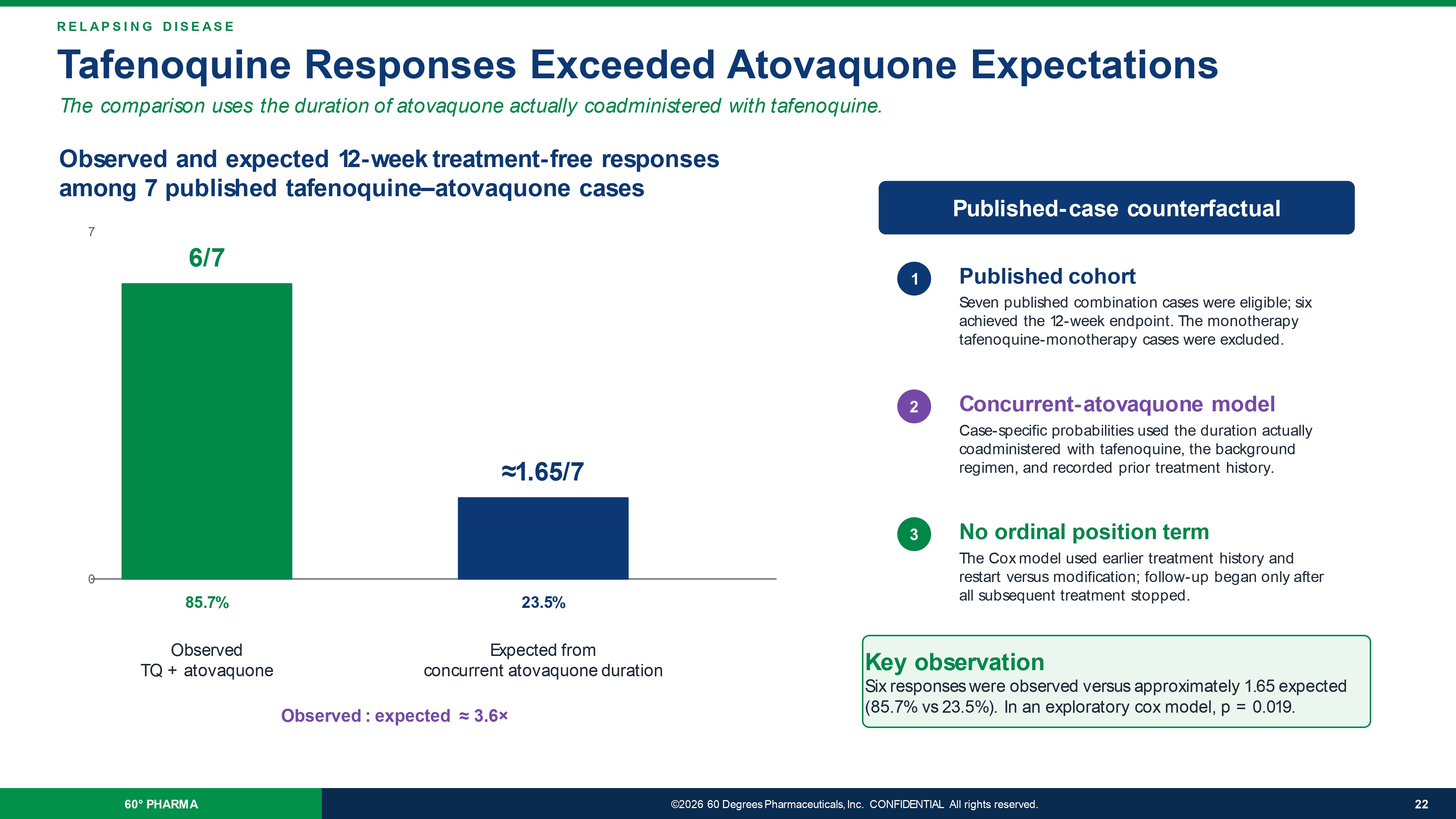
RELAPSING DISEASE Tafenoquine Responses Exceeded Atovaquone Expectations The comparison uses the duration of atovaquone actually coadministered with tafenoquine. 60 ° PHARMA ©2026 60 Degrees Pharmaceuticals, Inc. CONFIDENTIAL All rights reserved. 22 Observed and expected 12 - week treatment - free responses among 7 published tafenoquine – atovaquone cases 7 0 6/7 85.7% Observed TQ + atovaquone ≈1.65/7 23.5% Expected from concurrent atovaquone duration Observed : expected ≈ 3.6 × Published - case counterfactual 1 Published cohort Seven published combination cases were eligible; six achieved the 12 - week endpoint. The monotherapy tafenoquine - monotherapy cases were excluded. 2 Concurrent - atovaquone model Case - specific probabilities used the duration actually coadministered with tafenoquine, the background regimen, and recorded prior treatment history. 3 No ordinal position term The Cox model used earlier treatment history and restart versus modification; follow - up began only after all subsequent treatment stopped. Key observation Six responses were observed versus approximately 1.65 expected (85.7% vs 23.5%). In an exploratory cox model, p = 0.019.
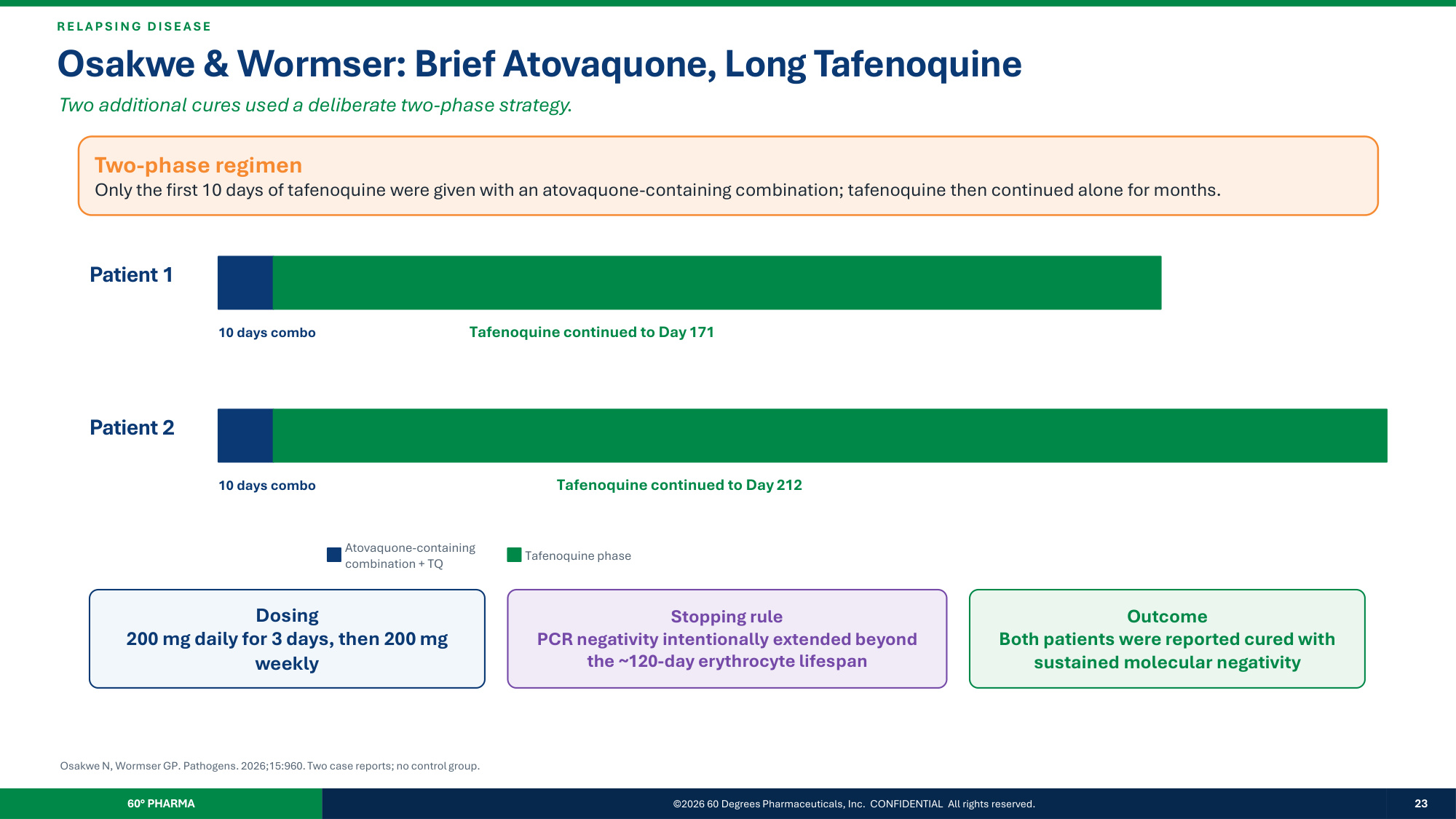
R E L A P SI N G D I SE A SE Osakwe & Wormser: Brief Atovaquone, Long Tafenoquine Two additional cures used a deliberate two-phase strategy. Two-phase regimen Only the first 10 days of tafenoquine were given with an atovaquone-containing combination; tafenoquine then continued alone for months. Patient 1 10 days combo Tafenoquine continued to Day 171 Patient 2 10 days combo Tafenoquine continued to Day 212 Atovaquone-containing combination + TQ Tafenoquine phase Dosing 200 mg daily for 3 days, then 200 mg weekly Stopping rule PCR negativity intentionally extended beyond the ~120-day erythrocyte lifespan Outcome Both patients were reported cured with sustained molecular negativity Osakwe N, Wormser GP. Pathogens. 2026;15:960. Two case reports; no control group. 60° PHARMA ©2026 60 Degrees Pharmaceuticals, Inc. CONFIDENTIAL All rights reserved. 23
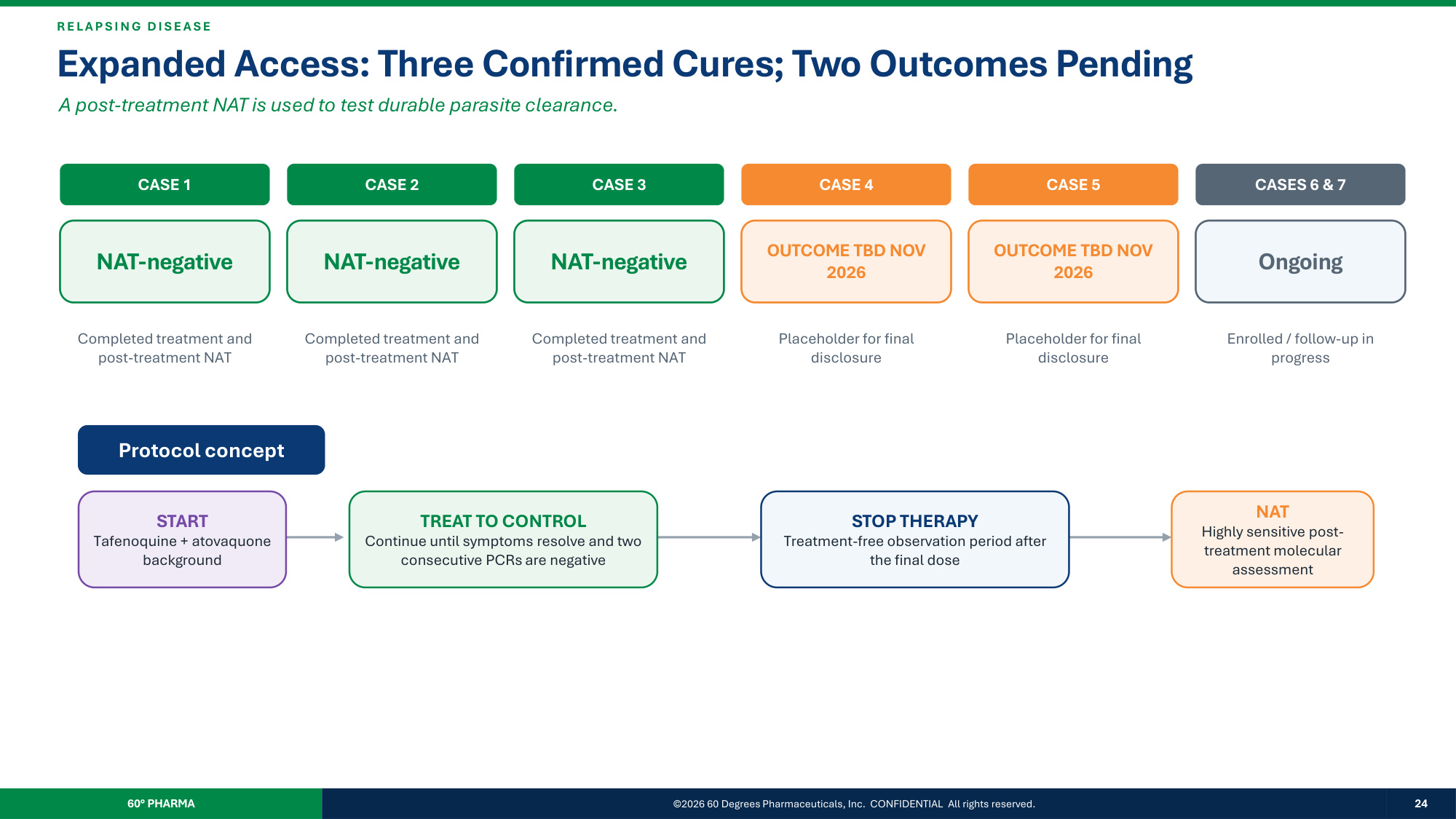
R E L A P SI N G D I SE A SE Expanded Access: Three Confirmed Cures; Two Outcomes Pending A post-treatment NAT is used to test durable parasite clearance. CASE 1 NAT-negative Completed treatment and post-treatment NAT CASE 2 NAT-negative Completed treatment and post-treatment NAT CASE 3 NAT-negative Completed treatment and post-treatment NAT CASE 4 OUTCOME TBD NOV 2026 Placeholder for final disclosure CASE 5 OUTCOME TBD NOV 2026 Placeholder for final disclosure CASES 6 & 7 Ongoing Enrolled / follow-up in progress Protocol concept START Tafenoquine + atovaquone background TREAT TO CONTROL Continue until symptoms resolve and two consecutive PCRs are negative STOP THERAPY Treatment-free observation period after the final dose NAT Highly sensitive post- treatment molecular assessment 60° PHARMA ©2026 60 Degrees Pharmaceuticals, Inc. CONFIDENTIAL All rights reserved. 24
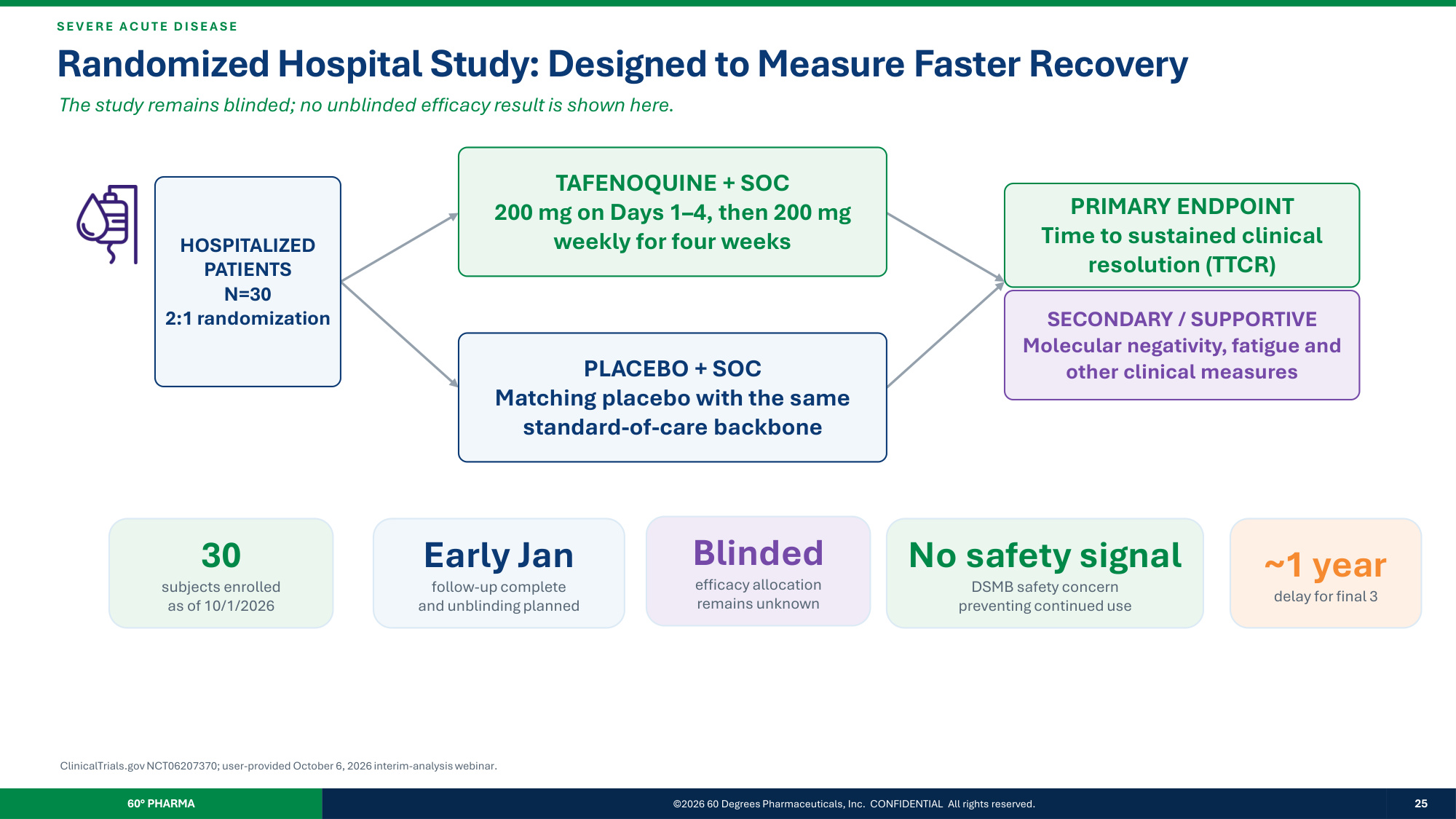
SE V E R E A C UT E D I SE A SE Randomized Hospital Study: Designed to Measure Faster Recovery The study remains blinded; no unblinded efficacy result is shown here. HOSPITALIZED PATIENTS N=30 2:1 randomization TAFENOQUINE + SOC 200 mg on Days 1–4, then 200 mg weekly for four weeks PLACEBO + SOC Matching placebo with the same standard-of-care backbone PRIMARY ENDPOINT Time to sustained clinical resolution (TTCR) SECONDARY / SUPPORTIVE Molecular negativity, fatigue and other clinical measures 30 subjects enrolled as of 10/1/2026 Early Jan follow-up complete and unblinding planned Blinded efficacy allocation remains unknown No safety signal DSMB safety concern preventing continued use ~1 year delay for final 3 ClinicalTrials.gov NCT06207370; user-provided October 6, 2026 interim-analysis webinar. 60° PHARMA ©2026 60 Degrees Pharmaceuticals, Inc. CONFIDENTIAL All rights reserved. 25
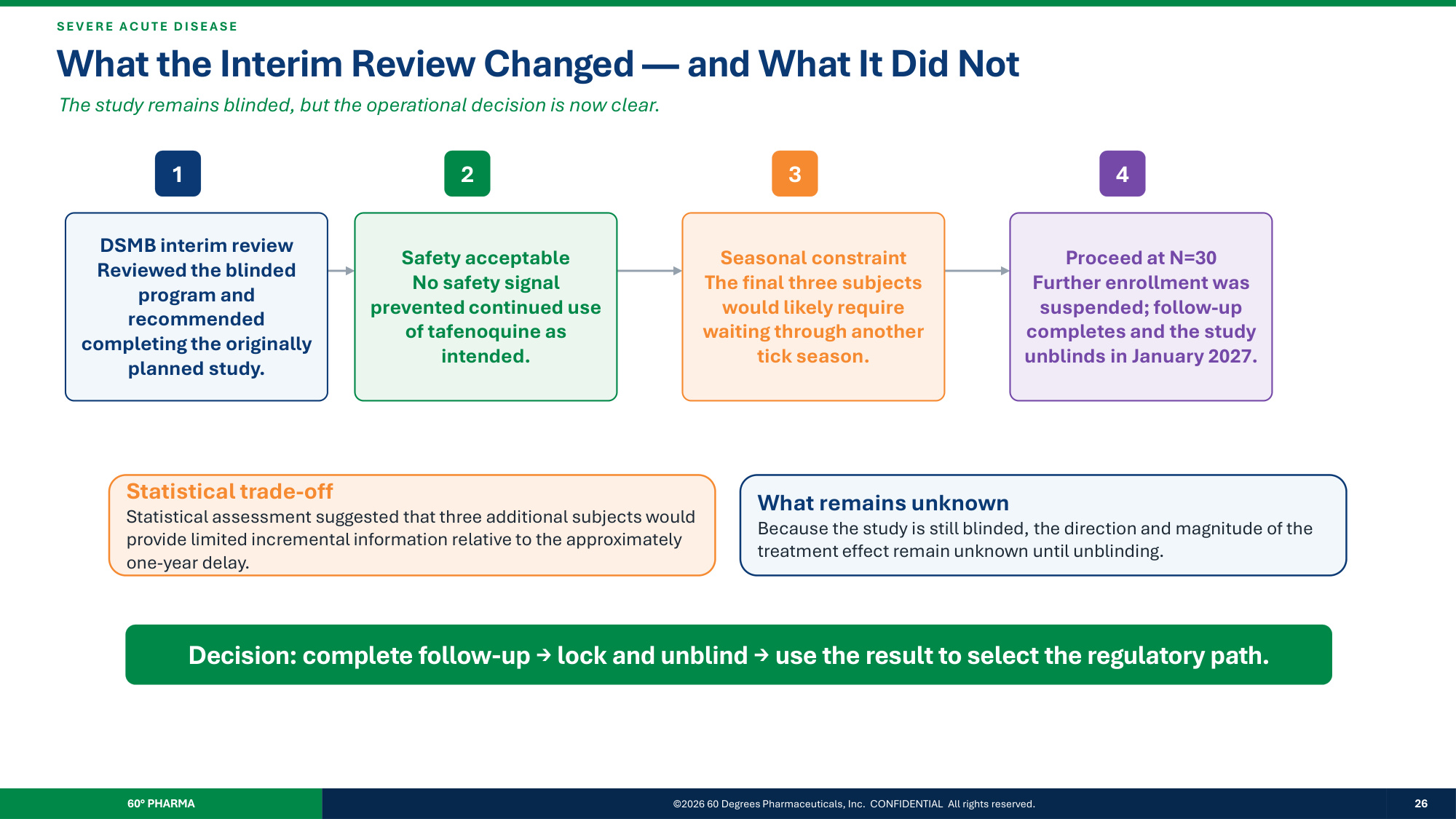
SE V E R E A C UT E D I SE A SE What the Interim Review Changed — and What It Did Not The study remains blinded, but the operational decision is now clear. 1 DSMB interim review Reviewed the blinded program and recommended completing the originally planned study. 2 Safety acceptable No safety signal prevented continued use of tafenoquine as intended. 3 Seasonal constraint The final three subjects would likely require waiting through another tick season. 4 Proceed at N=30 Further enrollment was suspended; follow-up completes and the study unblinds in January 2027. Statistical trade-off Statistical assessment suggested that three additional subjects would provide limited incremental information relative to the approximately one-year delay. What remains unknown Because the study is still blinded, the direction and magnitude of the treatment effect remain unknown until unblinding. Decision: complete follow-up → lock and unblind → use the result to select the regulatory path. 60° PHARMA ©2026 60 Degrees Pharmaceuticals, Inc. CONFIDENTIAL All rights reserved. 26
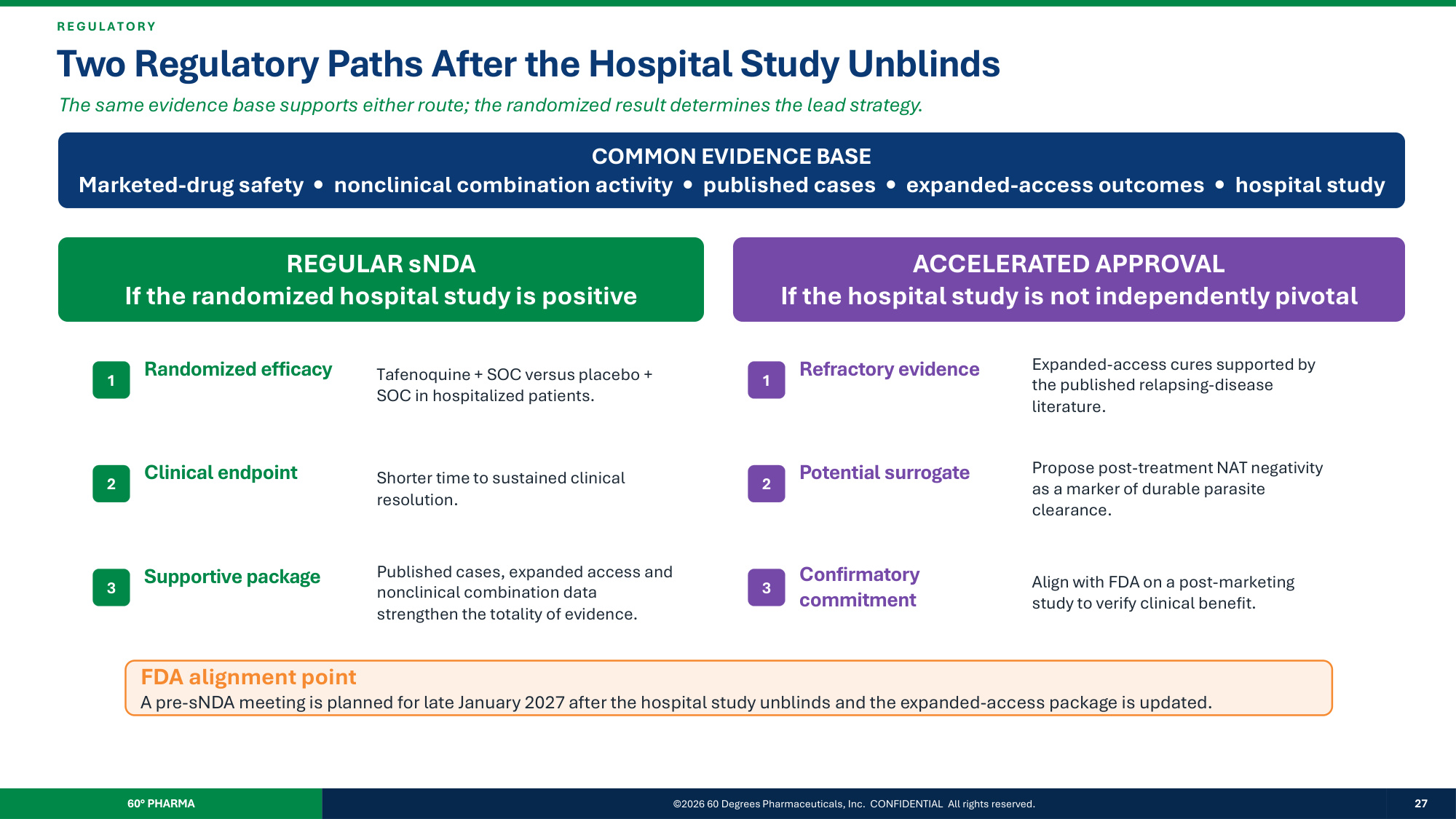
R E G ULA T O R Y Two Regulatory Paths After the Hospital Study Unblinds The same evidence base supports either route; the randomized result determines the lead strategy. COMMON EVIDENCE BASE Marketed-drug safety • nonclinical combination activity • published cases • expanded-access outcomes • hospital study REGULAR sNDA If the randomized hospital study is positive ACCELERATED APPROVAL If the hospital study is not independently pivotal 1 Randomized efficacy Tafenoquine + SOC versus placebo + SOC in hospitalized patients. 2 Clinical endpoint Shorter time to sustained clinical resolution. 3 Supportive package Published cases, expanded access and nonclinical combination data strengthen the totality of evidence. 1 Refractory evidence Expanded-access cures supported by the published relapsing-disease literature. 2 Potential surrogate Propose post-treatment NAT negativity as a marker of durable parasite clearance. 3 Confirmatory commitment Align with FDA on a post-marketing study to verify clinical benefit. FDA alignment point A pre-sNDA meeting is planned for late January 2027 after the hospital study unblinds and the expanded-access package is updated. 60° PHARMA ©2026 60 Degrees Pharmaceuticals, Inc. CONFIDENTIAL All rights reserved. 27
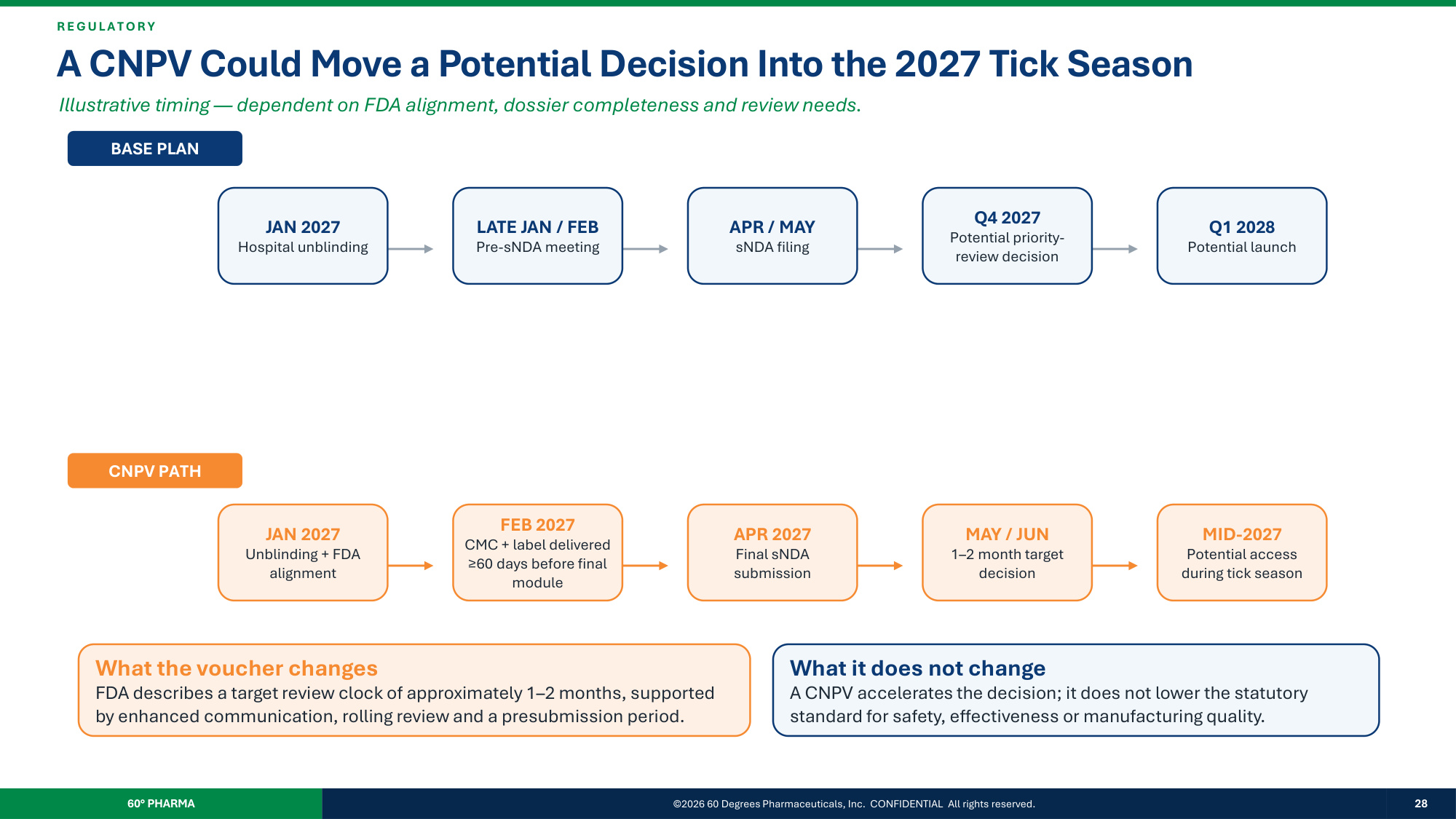
R E G ULA T O R Y A CNPV Could Move a Potential Decision Into the 2027 Tick Season Illustrative timing — dependent on FDA alignment, dossier completeness and review needs. BASE PLAN CNPV PATH JAN 2027 Hospital unblinding LATE JAN / FEB Pre-sNDA meeting APR / MAY sNDA filing Q4 2027 Potential priority- review decision Q1 2028 Potential launch JAN 2027 Unblinding + FDA alignment FEB 2027 CMC + label delivered ≥60 days before final module APR 2027 Final sNDA submission MAY / JUN 1–2 month target decision MID-2027 Potential access during tick season What the voucher changes FDA describes a target review clock of approximately 1–2 months, supported by enhanced communication, rolling review and a presubmission period. What it does not change A CNPV accelerates the decision; it does not lower the statutory standard for safety, effectiveness or manufacturing quality. 60° PHARMA ©2026 60 Degrees Pharmaceuticals, Inc. CONFIDENTIAL All rights reserved. 28
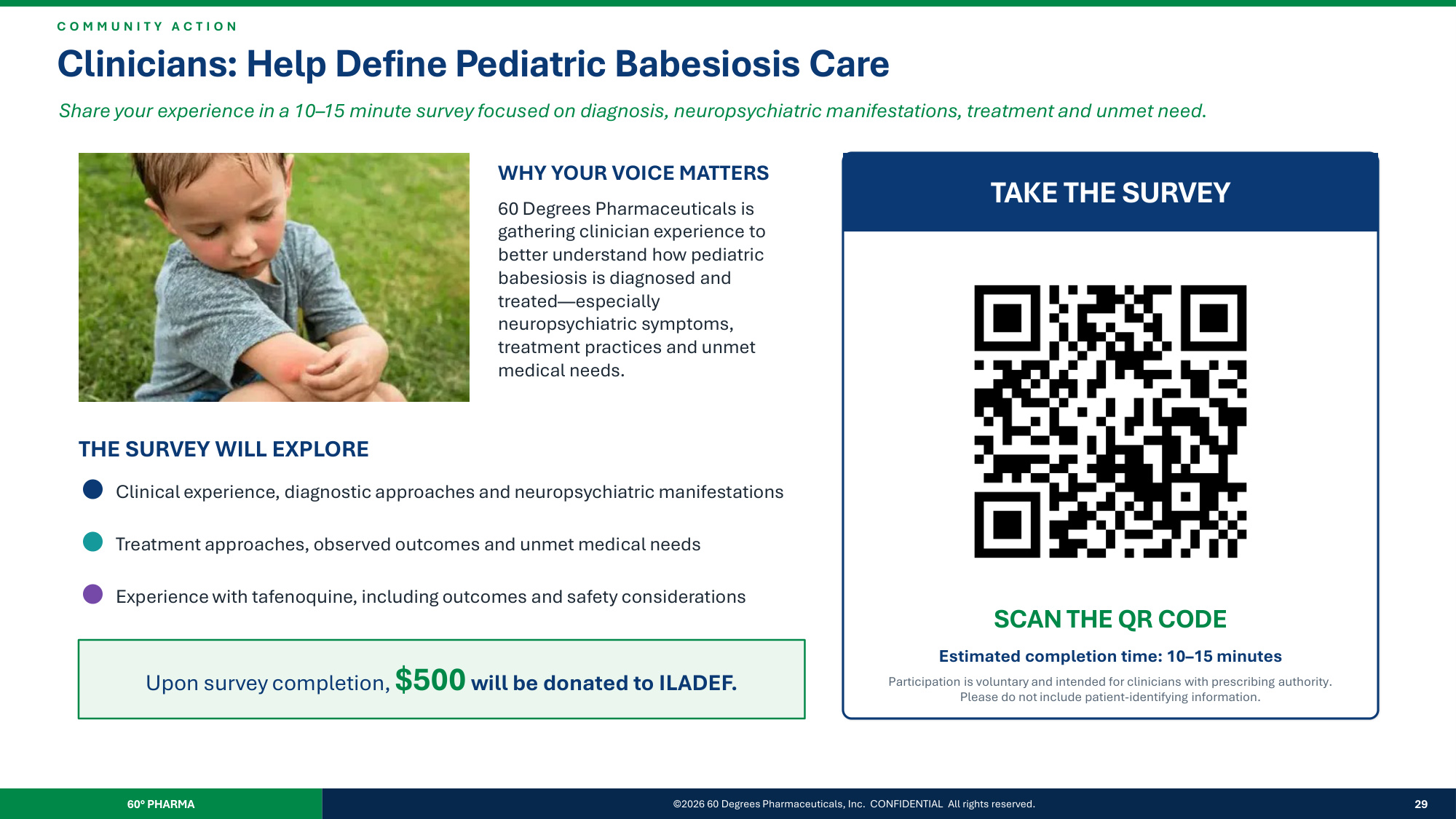
60° PHARMA ©2026 60 Degrees Pharmaceuticals, Inc. CONFIDENTIAL All rights reserved. 29 C O M M U N I T Y A C T I O N Clinicians: Help Define Pediatric Babesiosis Care Share your experience in a 10–15 minute survey focused on diagnosis, neuropsychiatric manifestations, treatment and unmet need. WHY YOUR VOICE MATTERS 60 Degrees Pharmaceuticals is gathering clinician experience to better understand how pediatric babesiosis is diagnosed and treated—especially neuropsychiatric symptoms, treatment practices and unmet medical needs. THE SURVEY WILL EXPLORE Clinical experience, diagnostic approaches and neuropsychiatric manifestations Treatment approaches, observed outcomes and unmet medical needs Experience with tafenoquine, including outcomes and safety considerations Upon survey completion, $500 will be donated to ILADEF. TAKE THE SURVEY SCAN THE QR CODE Estimated completion time: 10–15 minutes Participation is voluntary and intended for clinicians with prescribing authority. Please do not include patient-identifying information.