
Exhibit 99.2

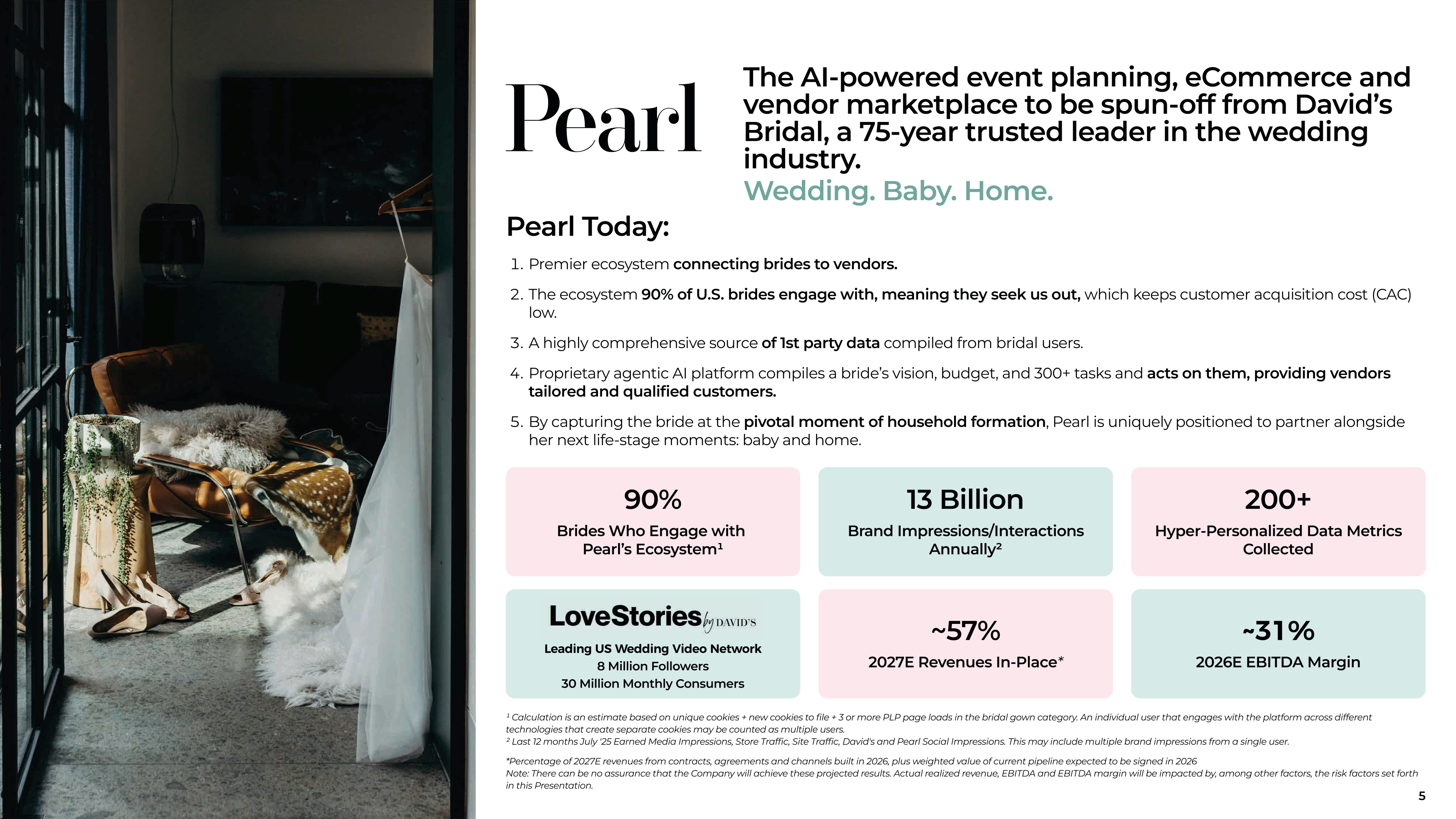
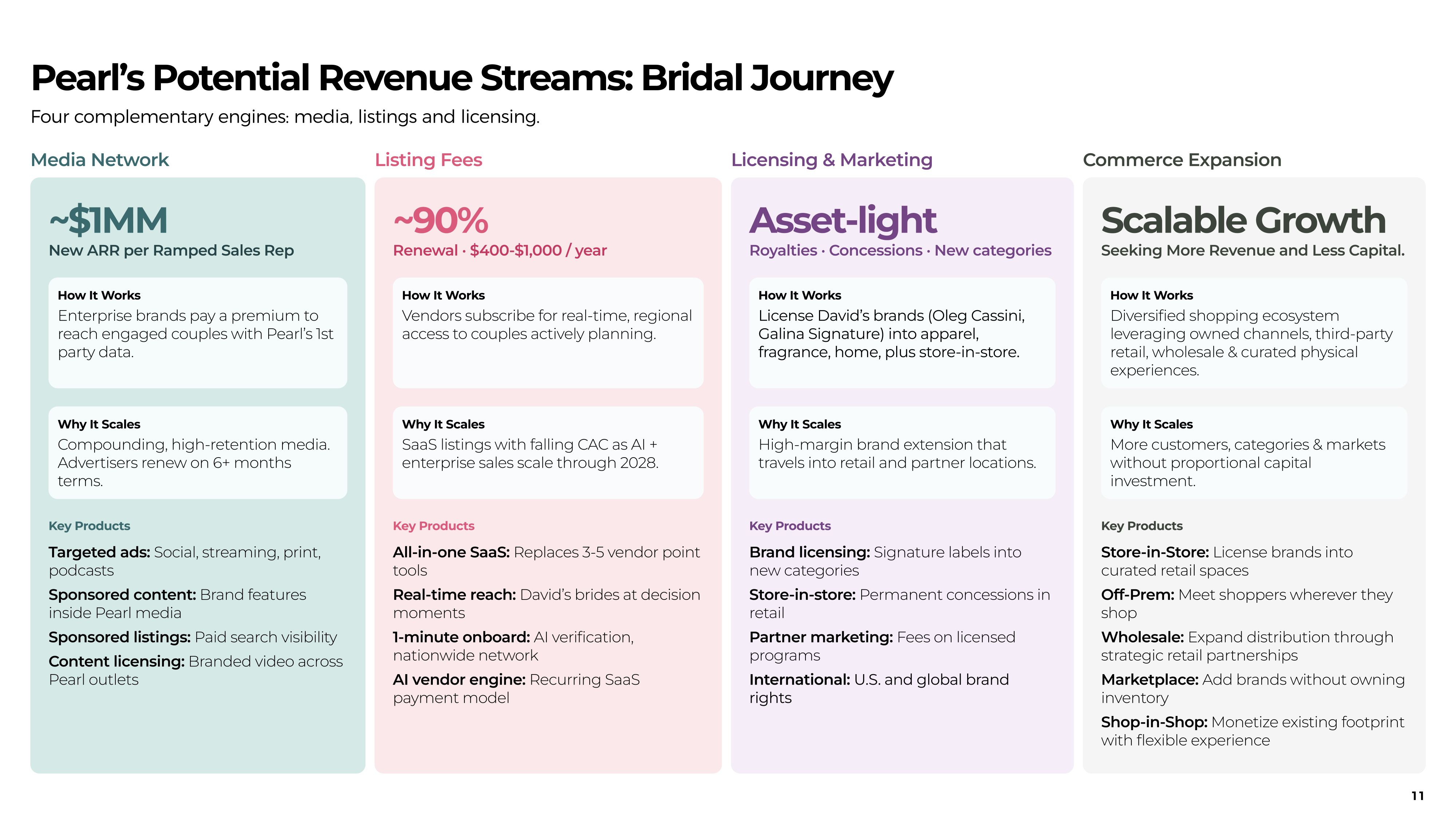
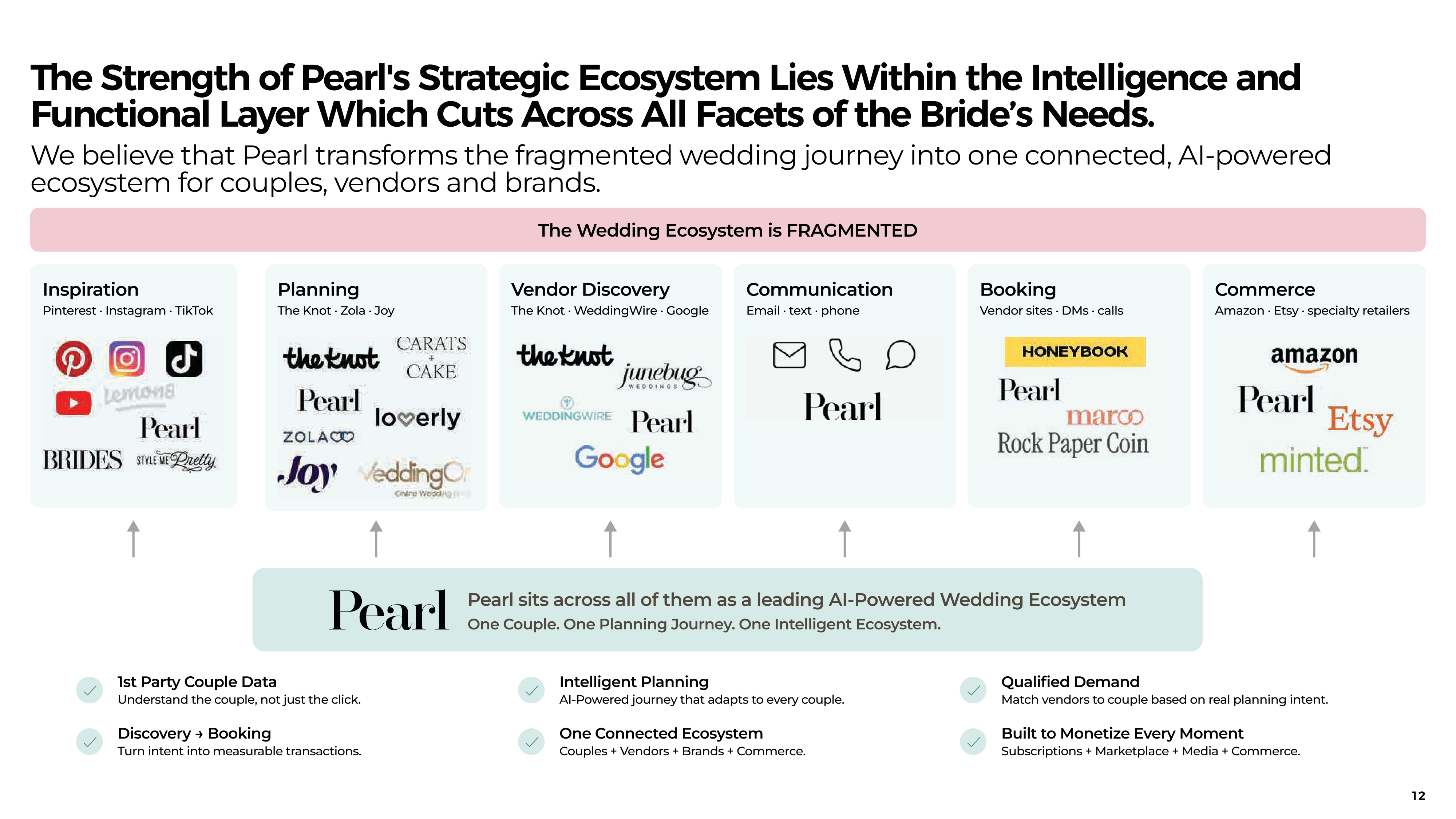
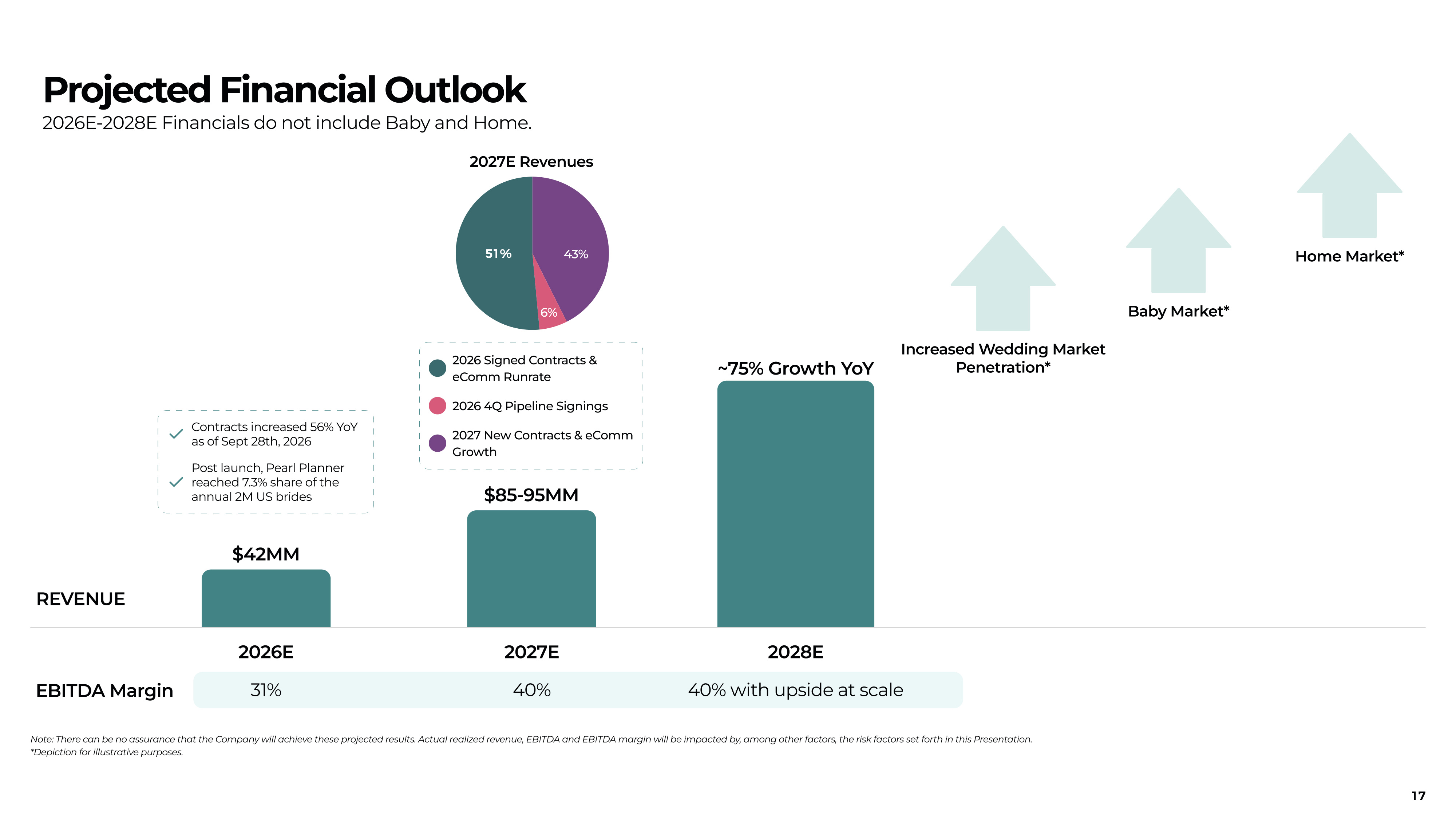
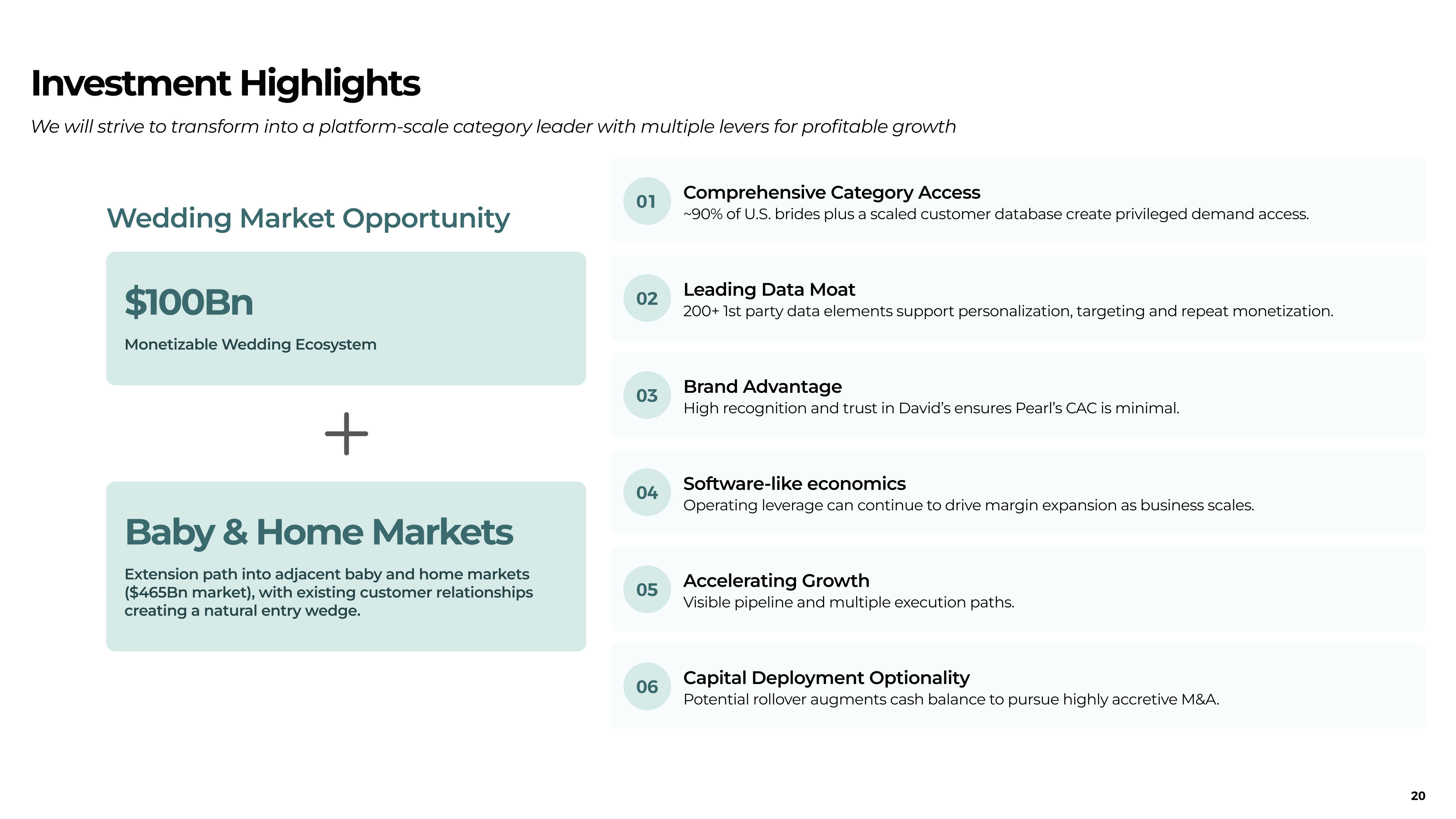
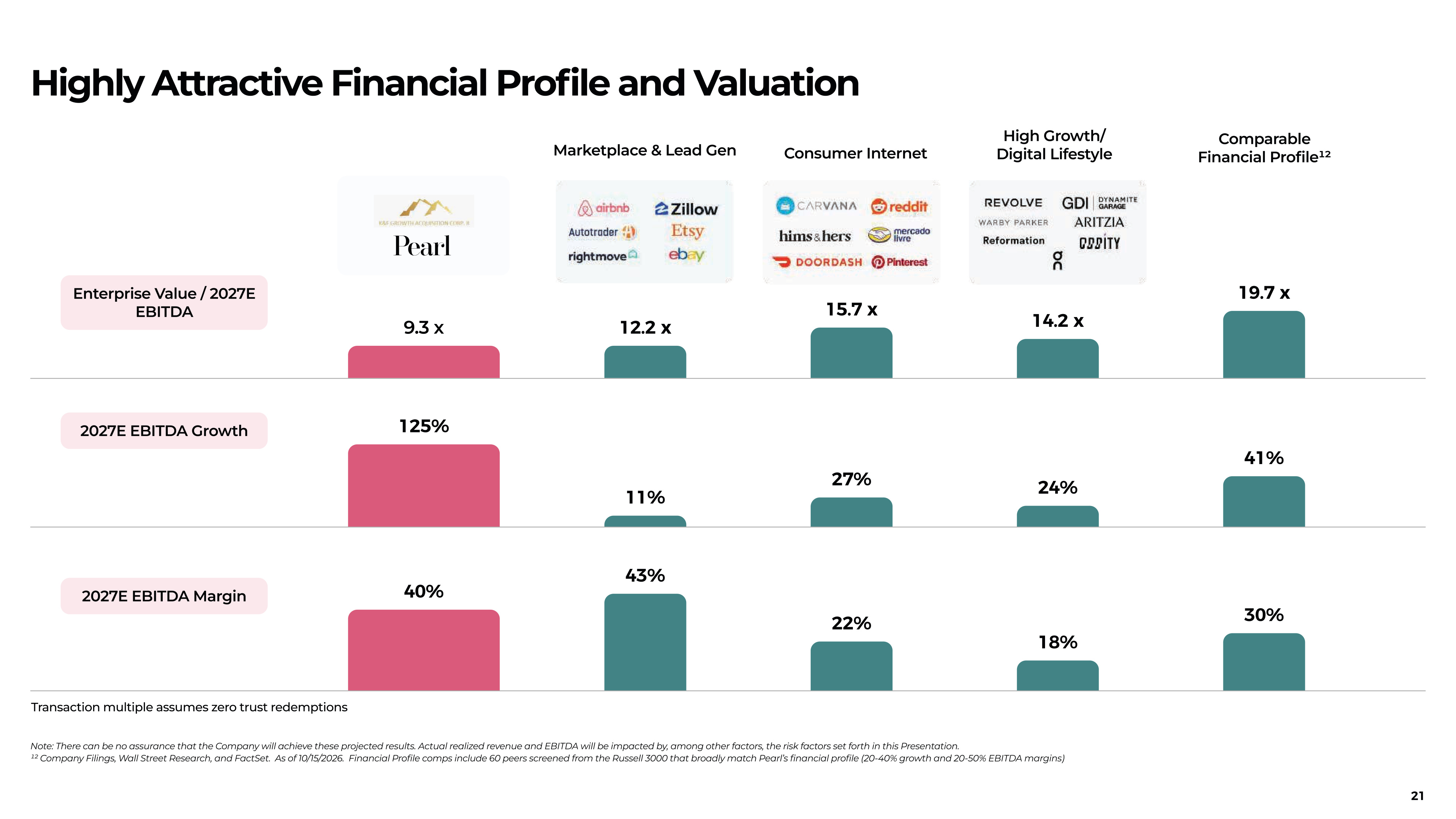
Pearl: Highest Growth, Lowest Multiple ~75% 2028E revenue growth, still accelerating ~31% 2026E EBITDA margin, with upside at scale +56% Media/Commerce Contracts YoY as of Sept 28, 2026 $85–95MM 2027E revenue, ~2x the $42MM in 2026E 2027E benchmarking vs. peer groups EV / EBITDA EBITDA Growth Group Pearl 9.3x 125% Marketplace & Lead Gen 12.2x 11% Consumer Internet 15.7x 27% High Growth / Digital 14.2x 24% Comparable Fin. Profile 19.7x 41% EBITDA Margin 40% 43% 22% 18% 30% Why the growth compounds Privileged demand. ~90% of U.S. brides reached, 200+ first-party data points, minimal CAC. Visibility. 51% of 2027E revenue is already signed or in e-comm run-rate. Free option. $465Bn Baby & Home market extension is excluded from projections. Illustrative Pearl EBITDA multiple re-rating: to Marketplace peers (12.2x) ≈ +31%; to Comparable Financial Profile peers (19.7x) ≈ +112% *Note: There can be no assurance that the Company will achieve these projected results. The comparison groups are averages of an aggregate of individual companies within that group; as such, individual companies within the groups may have EV/EBITDA, Growth or Margin data that differs materially from the group average. Actual revenue, EBITDA, EBITDA margin and media/commerce contracts won will be impacted by, among other factors, the risk factors set forth in this Presentation. See pages 5, 16 and 20 and their footnotes regarding the figures on this page. Enterprise value assumes zero trust redemptions. *Percentage of 2027E revenues from contracts, agreements and channels built in 2026, plus weighted value of current pipeline expected to be signed in 2026 Note: There can be no assurance that the Company will achieve these projected results. Actual realized revenue, EBITDA and EBITDA margin will be impacted by, among other factors, the risk factors set forth in this Presentation. 6
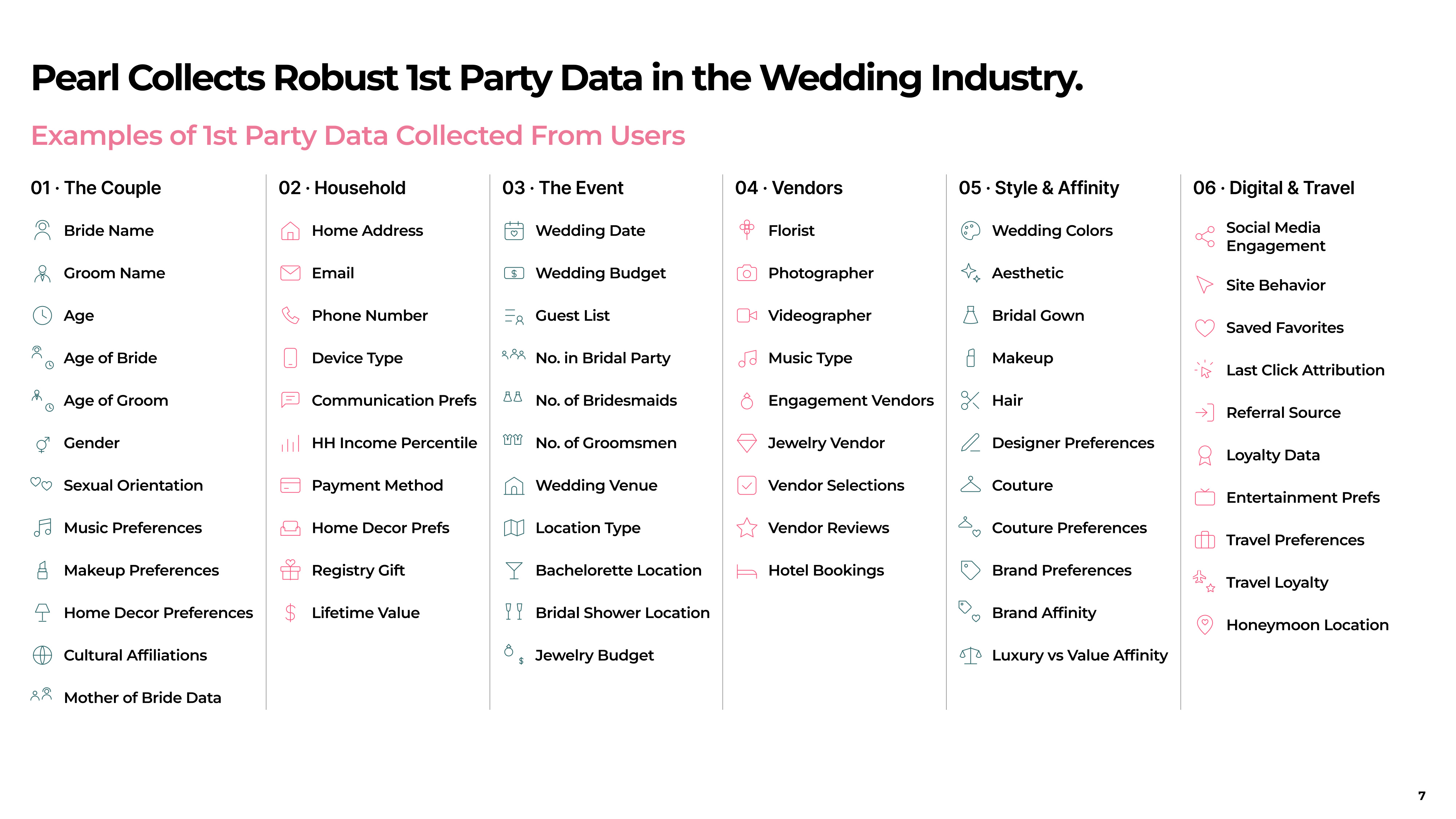
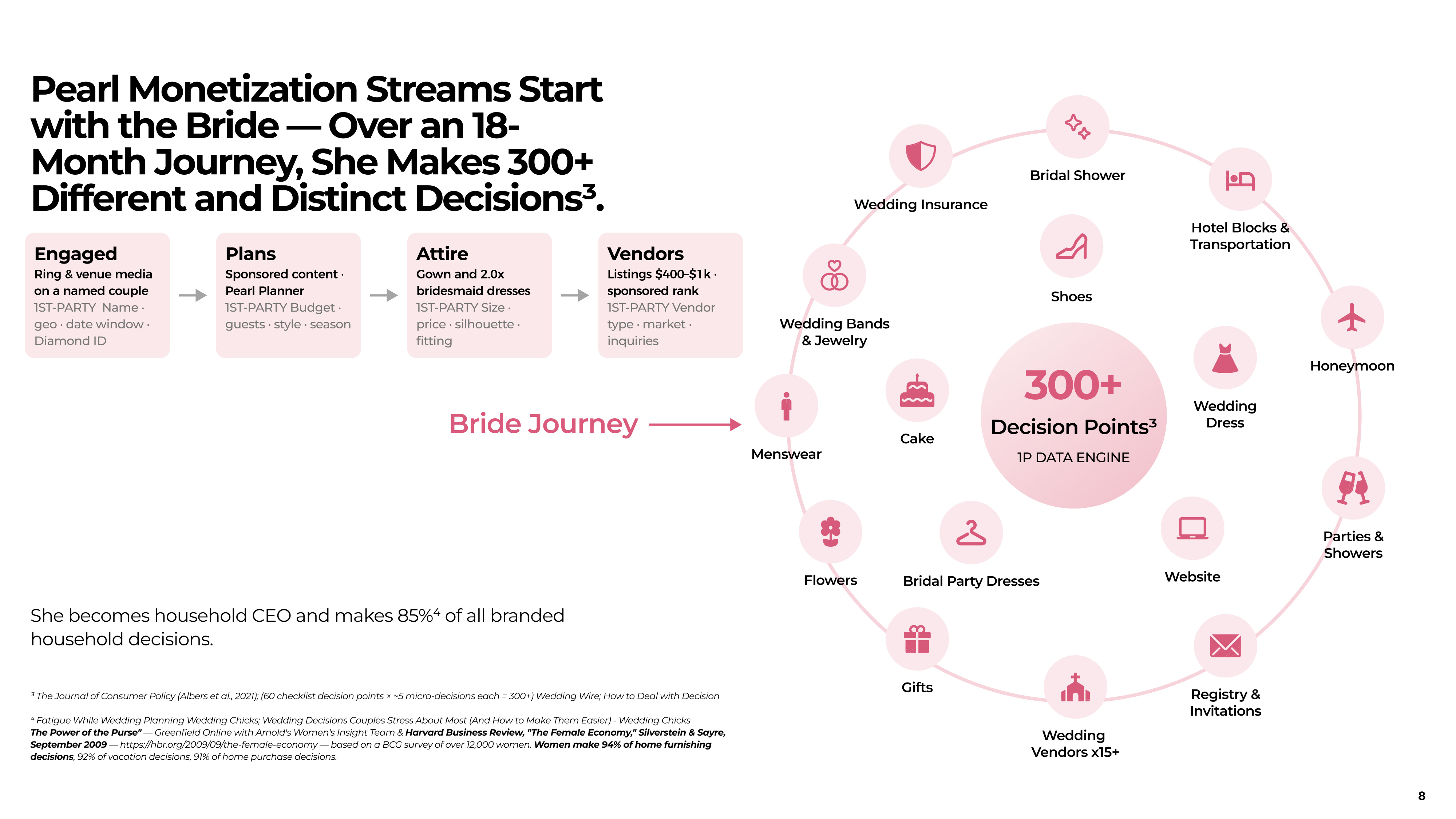
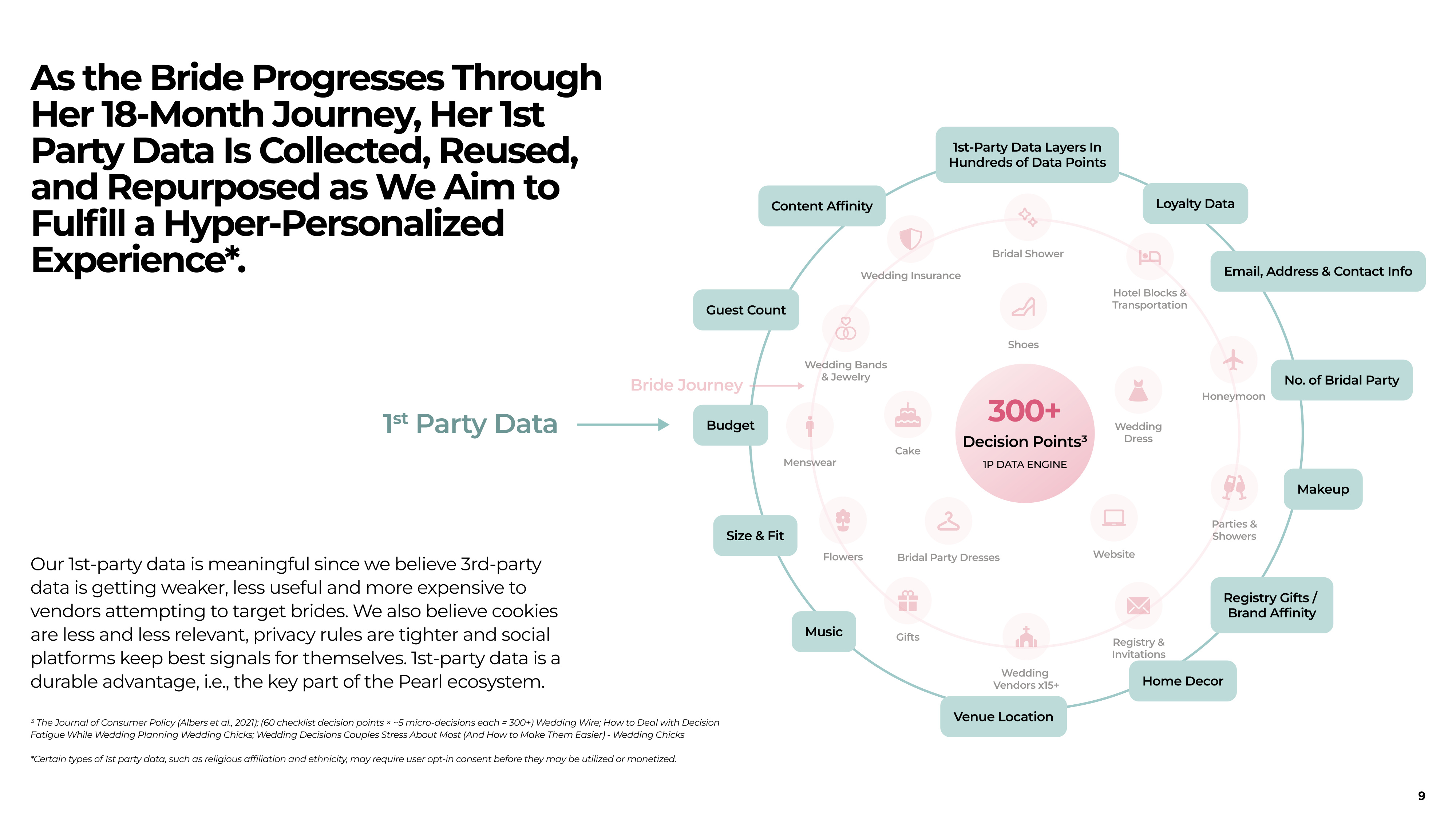
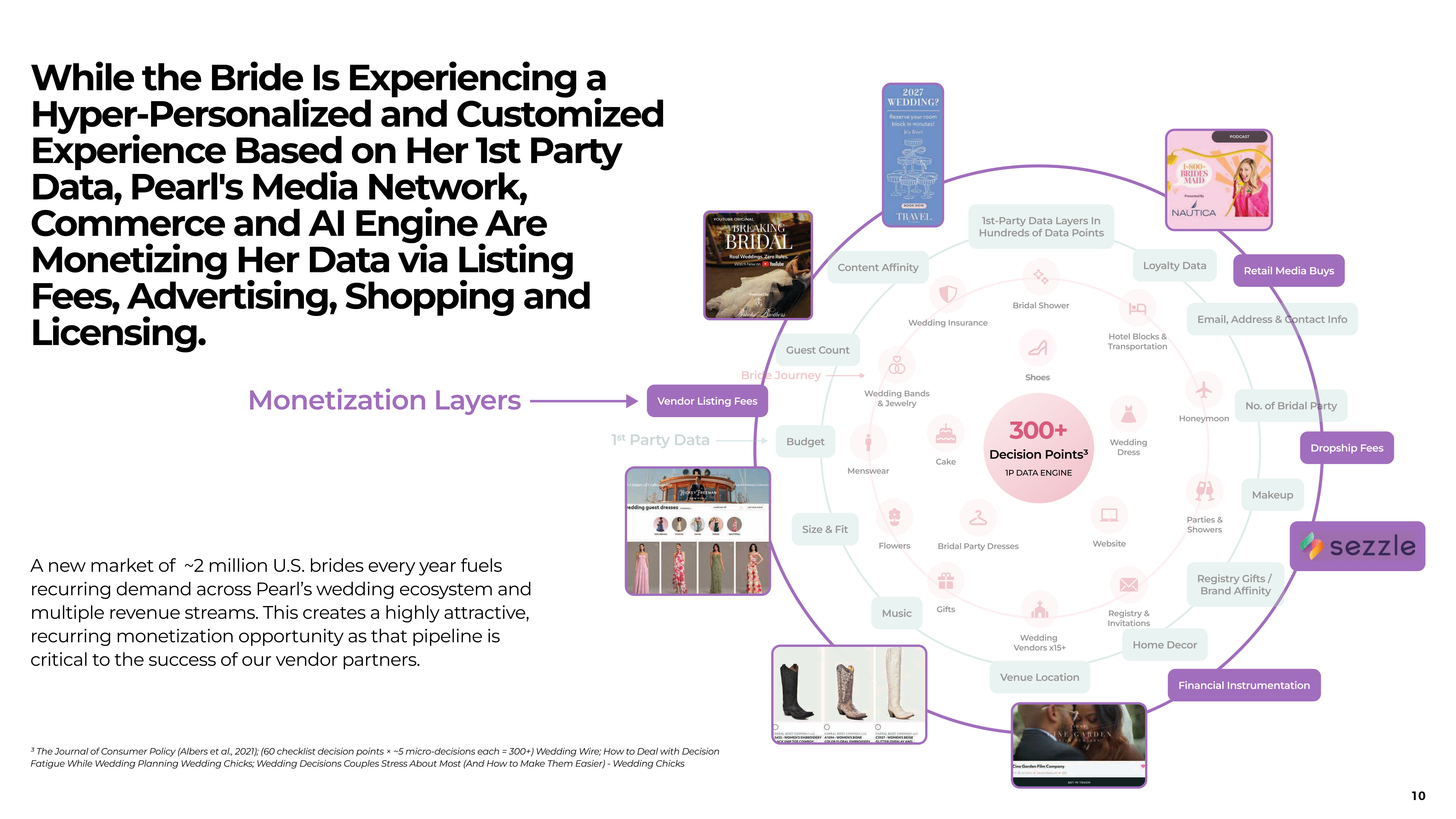
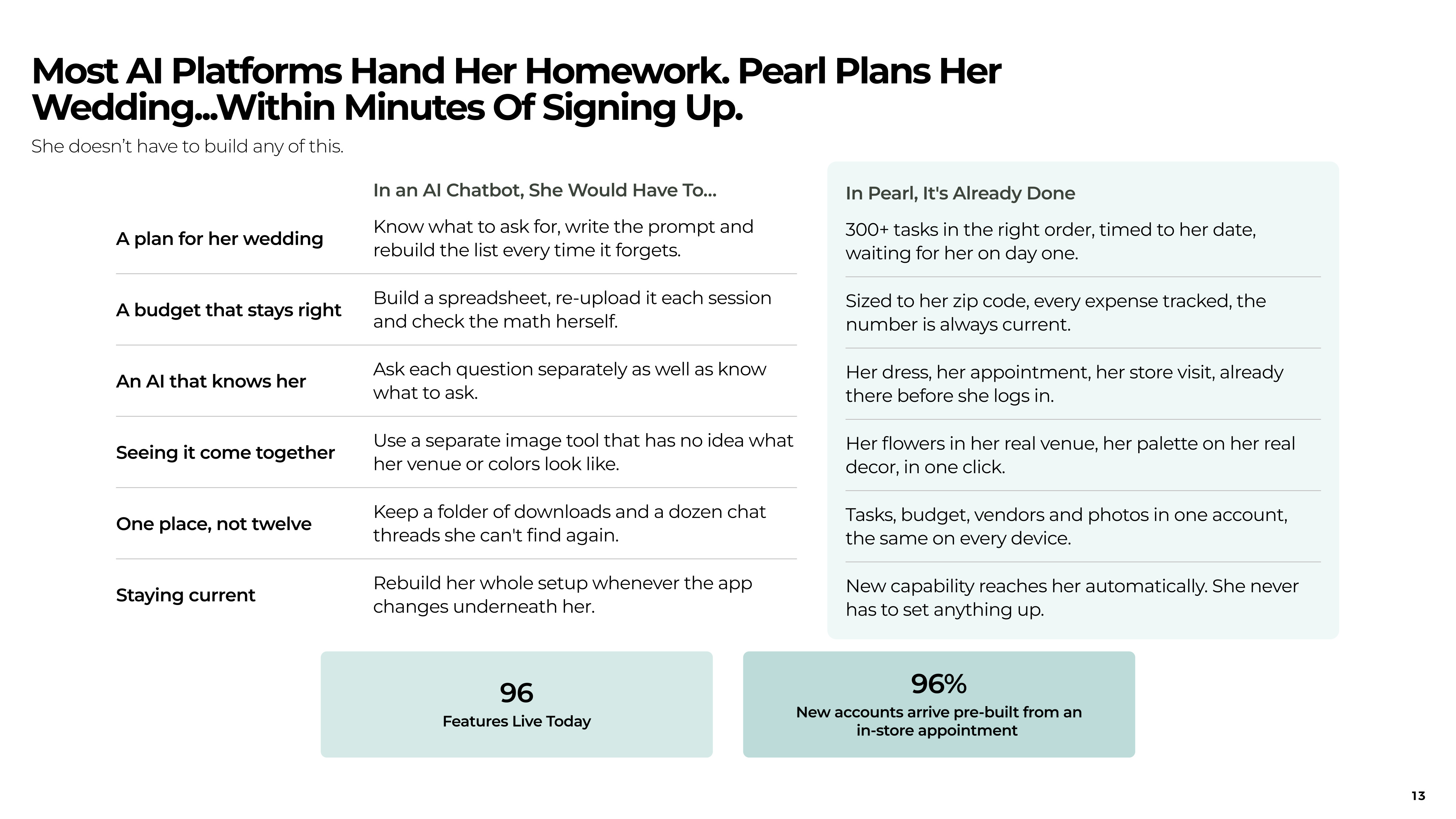
Most AI Platforms Hand Her Homework. Pearl Plans Her Wedding...Within Minutes Of Signing Up. She doesn't have to build any of this. In an AI Chatbot, She Would Have To... In Pearl, It's Already Done Know what to ask for, write the prompt and rebuild the list every time it forgets. 300+ tasks in the right order, timed to her date, waiting for her on day one. A plan for her wedding Build a spreadsheet, re-upload it each session and check the math herself. Sized to her zip code, every expense tracked, the number is always current. A budget that stays right Ask each question separately as well as know what to ask. Her dress, her appointment, her store visit, already there before she logs in. An AI that knows her Use a separate image tool that has no idea what her venue or colors look like. Her flowers in her real venue, her palette on her real decor, in one click. Seeing it come together Keep a folder of downloads and a dozen chat threads she can't find again. Tasks, budget, vendors and photos in one account, the same on every device. One place, not twelve Rebuild her whole setup whenever the app changes underneath her. New capability reaches her automatically. She never has to set anything up. Staying current 96% New accounts arrive pre-built from an in-store appointment 96 Features Live Today 13

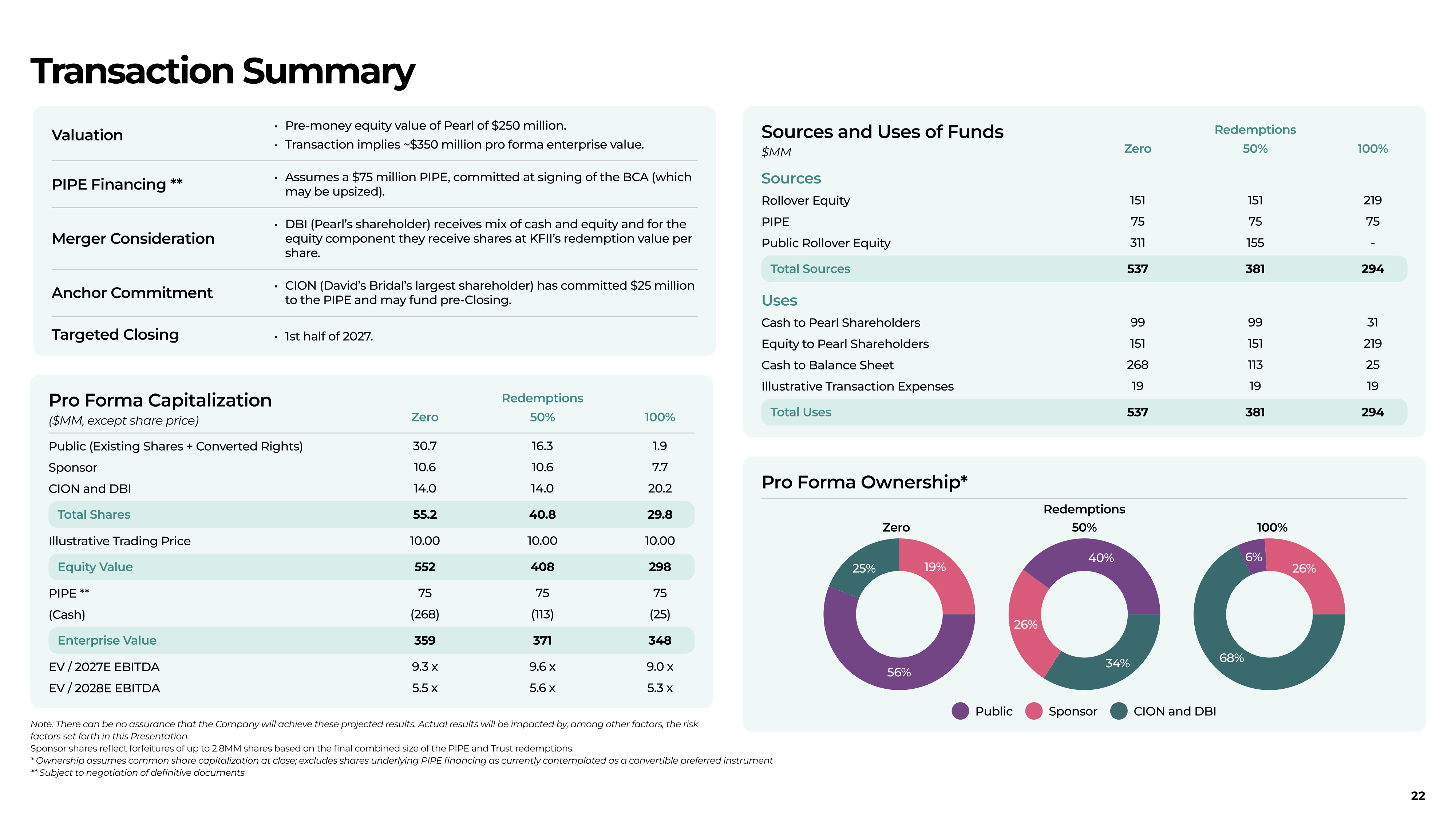
Transaction Summary Pre-money equity value of Pearl of $250 million. Redemptions Valuation Transaction implies ~$350 million pro forma enterprise value. Zero 50% 100% Sources A ssumes a $75 million PIPE, committed at signing of the BCA (which may be upsized). PIPE Financing ** Rollover Equity 151 151 219 PIPE 75 75 75 D BI (Pearl's shareholder) receives mix of cash and equity and for the equity component they receive shares at KFII's redemption value per share. Merger Consideration Public Rollover Equity 311 155 - Total Sources 537 381 294 CI ON (David's Bridal's largest shareholder) has committed $25 million to the PIPE and may fund pre-Closing. Anchor Commitment Uses Cash to Pearl Shareholders Targeted Closing 1st half of 2027. Equity to Pearl Shareholders Cash to Balance Sheet Illustrative Transaction Expenses Total Uses Sources and Uses of Funds $MM 99 151 268 19 537 99 151 113 19 381 31 219 25 19 294 Pro Forma Capitalization ($MM, except share price) Redemptions Zero 50% 100% 30.7 16.3 1.9 10.6 10.6 7.7 14.0 14.0 20.2 55.2 40.8 29.8 10.00 10.00 10.00 552 408 298 75 75 75 (268) (113) (25) 359 371 348 9.3 x 9.6 x 9.0 x 5.5 x 5.6 x 5.3 x Public (Existing Shares + Converted Rights) Sponsor CION and DBI Total Shares Illustrative Trading Price Equity Value PIPE ** (Cash) Enterprise Value EV / 2027E EBITDA EV / 2028E EBITDA Pro Forma Ownership* Redemptions 6% 40% 26% Zero 50% 100% 19% 25% 26% 68% Public Sponsor 34% CION and DBI 56% Note: There can be no assurance that the Company will achieve these projected results. Actual results will be impacted by, among other factors, the risk factors set forth in this Presentation. Sponsor shares reflect forfeitures of up to 2.8MM shares based on the final combined size of the PIPE and Trust redemptions. * Ownership assumes common share capitalization at close; excludes shares underlying PIPE financing as currently contemplated as a convertible preferred instrument ** Subject to negotiation of definitive documents 22
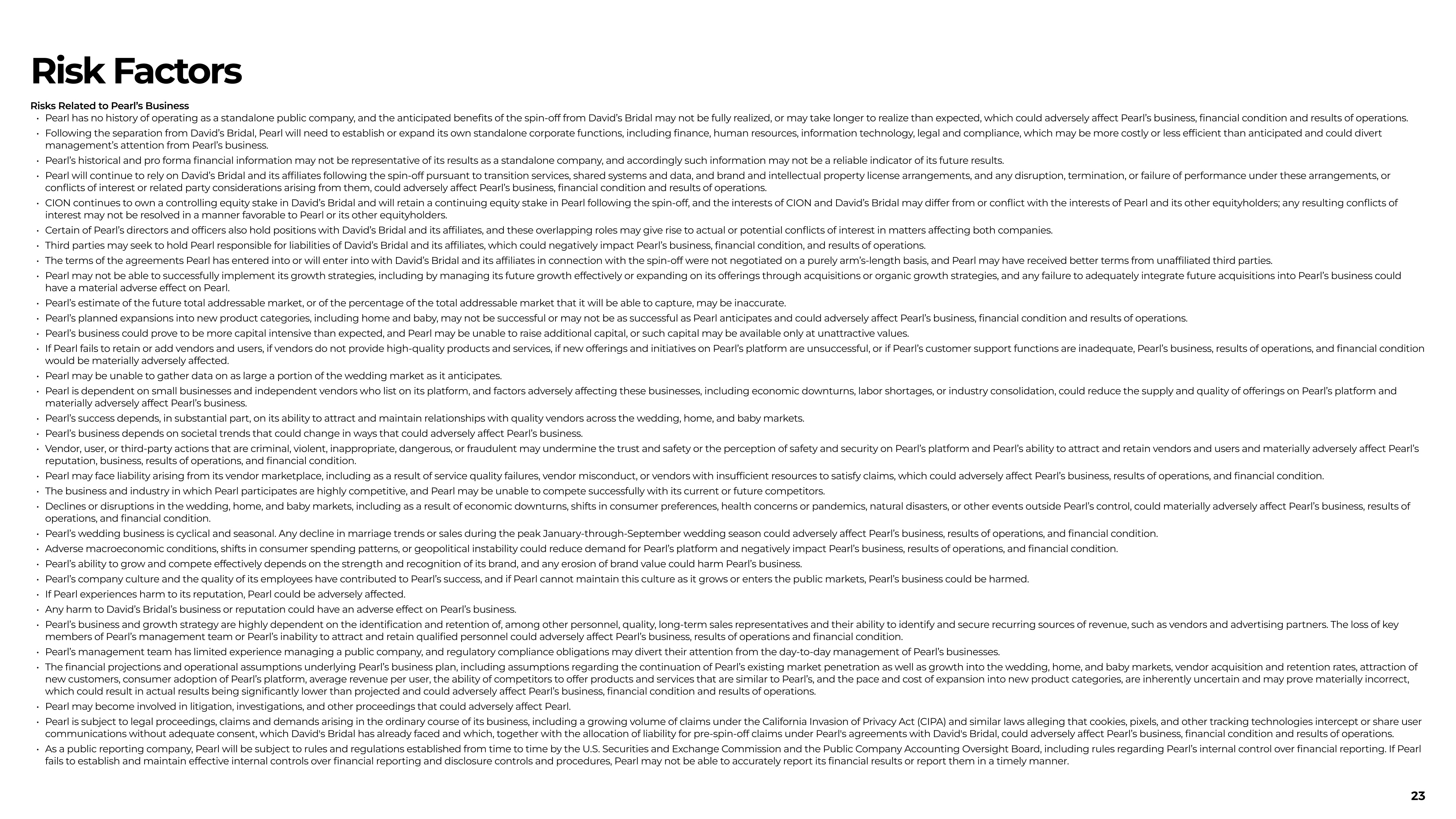
Risk Factors Risks Related to Pearl's Business Pearl has no history of operating as a standalone public company, and the anticipated benefits of the spin-off from David's Bridal may not be fully realized, or may take longer to realize than expected, which could adversely affect Pearl's business, financial condition and results of operations. Following the separation from David's Bridal, Pearl will need to establish or expand its own standalone corporate functions, including finance, human resources, information technology, legal and compliance, which may be more costly or less efficient than anticipated and could divert management's attention from Pearl's business. Pearl's historical and pro forma financial information may not be representative of its results as a standalone company, and accordingly such information may not be a reliable indicator of its future results. Pearl will continue to rely on David's Bridal and its affiliates following the spin-off pursuant to transition services, shared systems and data, and brand and intellectual property license arrangements, and any disruption, termination, or failure of performance under these arrangements, or conflicts of interest or related party considerations arising from them, could adversely affect Pearl's business, financial condition and results of operations. CION continues to own a controlling equity stake in David's Bridal and will retain a continuing equity stake in Pearl following the spin-off, and the interests of CION and David's Bridal may differ from or conflict with the interests of Pearl and its other equityholders; any resulting conflicts of interest may not be resolved in a manner favorable to Pearl or its other equityholders. Certain of Pearl's directors and officers also hold positions with David's Bridal and its affiliates, and these overlapping roles may give rise to actual or potential conflicts of interest in matters affecting both companies. Third parties may seek to hold Pearl responsible for liabilities of David's Bridal and its affiliates, which could negatively impact Pearl's business, financial condition, and results of operations. The terms of the agreements Pearl has entered into or will enter into with David's Bridal and its affiliates in connection with the spin-off were not negotiated on a purely arm's-length basis, and Pearl may have received better terms from unaffiliated third parties. Pearl may not be able to successfully implement its growth strategies, including by managing its future growth effectively or expanding on its offerings through acquisitions or organic growth strategies, and any failure to adequately integrate future acquisitions into Pearl's business could have a material adverse effect on Pearl. Pearl's estimate of the future total addressable market, or of the percentage of the total addressable market that it will be able to capture, may be inaccurate. Pearl's planned expansions into new product categories, including home and baby, may not be successful or may not be as successful as Pearl anticipates and could adversely affect Pearl's business, financial condition and results of operations. Pearl's business could prove to be more capital intensive than expected, and Pearl may be unable to raise additional capital, or such capital may be available only at unattractive values. If Pearl fails to retain or add vendors and users, if vendors do not provide high-quality products and services, if new offerings and initiatives on Pearl's platform are unsuccessful, or if Pearl's customer support functions are inadequate, Pearl's business, results of operations, and financial condition would be materially adversely affected. Pearl may be unable to gather data on as large a portion of the wedding market as it anticipates. Pearl is dependent on small businesses and independent vendors who list on its platform, and factors adversely affecting these businesses, including economic downturns, labor shortages, or industry consolidation, could reduce the supply and quality of offerings on Pearl's platform and materially adversely affect Pearl's business. Pearl's success depends, in substantial part, on its ability to attract and maintain relationships with quality vendors across the wedding, home, and baby markets. Pearl's business depends on societal trends that could change in ways that could adversely affect Pearl's business. Vendor, user, or third-party actions that are criminal, violent, inappropriate, dangerous, or fraudulent may undermine the trust and safety or the perception of safety and security on Pearl's platform and Pearl's ability to attract and retain vendors and users and materially adversely affect Pearl's reputation, business, results of operations, and financial condition. Pearl may face liability arising from its vendor marketplace, including as a result of service quality failures, vendor misconduct, or vendors with insufficient resources to satisfy claims, which could adversely affect Pearl's business, results of operations, and financial condition. The business and industry in which Pearl participates are highly competitive, and Pearl may be unable to compete successfully with its current or future competitors. Declines or disruptions in the wedding, home, and baby markets, including as a result of economic downturns, shifts in consumer preferences, health concerns or pandemics, natural disasters, or other events outside Pearl's control, could materially adversely affect Pearl's business, results of operations, and financial condition. Pearl's wedding business is cyclical and seasonal. Any decline in marriage trends or sales during the peak January-through-September wedding season could adversely affect Pearl's business, results of operations, and financial condition. Adverse macroeconomic conditions, shifts in consumer spending patterns, or geopolitical instability could reduce demand for Pearl's platform and negatively impact Pearl's business, results of operations, and financial condition. Pearl's ability to grow and compete effectively depends on the strength and recognition of its brand, and any erosion of brand value could harm Pearl's business. Pearl's company culture and the quality of its employees have contributed to Pearl's success, and if Pearl cannot maintain this culture as it grows or enters the public markets, Pearl's business could be harmed. If Pearl experiences harm to its reputation, Pearl could be adversely affected. Any harm to David's Bridal's business or reputation could have an adverse effect on Pearl's business. Pearl's business and growth strategy are highly dependent on the identification and retention of, among other personnel, quality, long-term sales representatives and their ability to identify and secure recurring sources of revenue, such as vendors and advertising partners. The loss of key members of Pearl's management team or Pearl's inability to attract and retain qualified personnel could adversely affect Pearl's business, results of operations and financial condition. Pearl's management team has limited experience managing a public company, and regulatory compliance obligations may divert their attention from the day-to-day management of Pearl's businesses. The financial projections and operational assumptions underlying Pearl's business plan, including assumptions regarding the continuation of Pearl's existing market penetration as well as growth into the wedding, home, and baby markets, vendor acquisition and retention rates, attraction of new customers, consumer adoption of Pearl's platform, average revenue per user, the ability of competitors to offer products and services that are similar to Pearl's, and the pace and cost of expansion into new product categories, are inherently uncertain and may prove materially incorrect, which could result in actual results being significantly lower than projected and could adversely affect Pearl's business, financial condition and results of operations. Pearl may become involved in litigation, investigations, and other proceedings that could adversely affect Pearl. Pearl is subject to legal proceedings, claims and demands arising in the ordinary course of its business, including a growing volume of claims under the California Invasion of Privacy Act (CIPA) and similar laws alleging that cookies, pixels, and other tracking technologies intercept or share user communications without adequate consent, which David's Bridal has already faced and which, together with the allocation of liability for pre-spin-off claims under Pearl's agreements with David's Bridal, could adversely affect Pearl's business, financial condition and results of operations. As a public reporting company, Pearl will be subject to rules and regulations established from time to time by the U.S. Securities and Exchange Commission and the Public Company Accounting Oversight Board, including rules regarding Pearl's internal control over financial reporting. If Pearl fails to establish and maintain effective internal controls over financial reporting and disclosure controls and procedures, Pearl may not be able to accurately report its financial results or report them in a timely manner. 23
Risk Factors Continued. Risks Related to Pearl's Platform and Technology Pearl's business is heavily reliant on the quality of its information technology platform. If that platform does not perform as expected, or if Pearl fails to continue to develop the technology on which that platform is based, Pearl's business could be harmed. Pearl's business depends on the gathering and use of first-party data by its technology systems and use of artificial intelligence and on its expectation that it would be difficult for competitors to replicate Pearl's platform or product offerings. If existing or new competitors are able to gather similarly valuable data or develop similar or better technology, Pearl's business and growth plans may be adversely affected. Pearl's ability to use customer data collected by David's Bridal depends on the privacy notices, consents, and evolving privacy laws under which that data was collected. Restrictions on its transfer or use, including under state consumer health data laws as Pearl expands into pregnancy and baby planning, could limit Pearl's marketing and personalization capabilities and adversely affect Pearl's business. Pearl's success depends, in substantial part, on the continued growth of online adoption by consumers and vendors in the wedding, home, and baby markets, and any slowdown in this trend could adversely affect Pearl's business. Pearl's success depends, in part, on its ability to continue to develop and monetize its platform across mobile and other digital channels. Pearl relies on search engines and social media platforms to drive traffic to its websites and apps. If Pearl's platforms are not displayed prominently in search results, or if search engine or social media algorithms change in ways that reduce Pearl's visibility, traffic to Pearl's platform could decline and Pearl's business could be adversely affected. Marketing efforts designed to drive traffic to Pearl's brands and businesses may not be successful or cost-effective. The reliability, performance, and scalability of Pearl's technology infrastructure, and that of its third-party providers, are critical to Pearl's operations, and any degradation could adversely affect Pearl's business. System failures, defects, errors or vulnerabilities in Pearl's website, applications, backend systems or other technology systems or those of third-party technology providers could harm Pearl's reputation and adversely impact Pearl's business, financial condition and results of operations. Cybersecurity threats continue to increase in frequency and sophistication, and cyberattacks targeting Pearl's systems or the systems of Pearl's third-party providers could interrupt or disrupt operations, compromise data, and result in significant costs or reputational harm. Pearl's adoption of AI and machine learning technologies exposes Pearl to emerging legal, regulatory, and operational risks that could adversely affect Pearl's business, financial condition, and results of operations. If Pearl is unable to respond to and keep pace with rapid technological and market changes, Pearl's business, results of operations, and financial condition could be adversely affected. If Pearl is unable to protect or enforce its intellectual property rights, or if any of Pearl's services infringe upon the intellectual property rights of others, Pearl's business could be adversely affected. Risks Related to Data Privacy and Security Unauthorized access to or disclosure of personal, confidential, or sensitive user data could expose Pearl to significant remediation costs, legal liability, and reputational damage. Pearl's handling of personal data subjects Pearl to evolving privacy and data protection obligations that could increase compliance costs and expose Pearl to liability. Pearl's success depends, in part, on its ability to access, collect, and use personal data about its users to deliver relevant content and vendor recommendations. Compliance with federal, state, and foreign laws relating to data privacy, data security, marketing, and consumer protection involves significant expenditure and resources, and any actual or perceived failure by Pearl or its vendors to comply may result in significant liability, litigation or other legal action against Pearl, negative publicity, an erosion of trust, and/or result in regulatory scrutiny, fines, and penalties and could materially adversely affect Pearl's business, results of operations, and financial condition. Pearl's planned expansion into pregnancy and baby-related products and services may involve the collection, use, or sharing of information that constitutes "consumer health data" or similarly regulated categories of sensitive personal information under an increasing number of state privacy laws, which impose more stringent requirements, including specific, opt-in consumer consent for collection and separate consent for sharing, heightened data security obligations, and expanded consumer rights, than may be reflected in Pearl's current privacy practices, and noncompliance could result in regulatory enforcement, private litigation, and reputational harm. Payment processing fraud or security incidents involving credit card or other payment data could result in financial losses, regulatory action, and harm to Pearl's business. Pearl could face liability for information or content on or accessible through its platform. Risks Related to Regulatory Matters Pearl is subject to a wide variety of laws and regulations, including those relating to e-commerce, data privacy and cybersecurity, artificial intelligence, payment services, advertising, consumer protection, employment, and licensing, which could adversely affect Pearl's business. Pearl's payments operations are subject to extensive, complex, overlapping, and frequently changing government regulation and oversight, and any failure or perceived failure to comply with such laws, rules, regulations, policies, legal interpretations, and regulatory guidance could materially adversely affect Pearl's business, results of operations, and financial condition. Risks Related to the Proposed Business Combination The consummation of the Business Combination is expected to be subject to a number of conditions and, if those conditions are not satisfied or waived, any definitive agreement relating to the Business Combination may be terminated in accordance with its terms and the Business Combination may not be completed. The sponsor of K&F (the "Sponsor") and K&F's public shareholders may be adversely affected if the Business Combination is not consummated. The ability of K&F's public shareholders to exercise redemption rights with respect to a large number of outstanding Class A ordinary shares of K&F (the "K&F Class A Ordinary Shares") may not allow the Business Combination to be completed, may adversely affect the capital available to the Combined Company following the Business Combination, may reduce the public "float" and liquidity of the trading market for K&F Class A Ordinary Shares, or may make it difficult to obtain or maintain the quotation, listing or trading of shares of Combined Company securities on a national securities exchange, and consequently may not allow the parties to optimize the Combined Company's capital structure following the Business Combination. The benefits of the Business Combination may not be realized to the extent currently anticipated by Pearl and K&F, or at all. The ability to recognize any such benefits may be affected by, among other things, competition and the ability of the Combined Company to grow and manage growth profitably, maintain and expand relationships with vendors and users and retain its management and key employees, as well as the other risk factors set forth above. Pearl and K&F will incur significant transaction and transition costs in connection with the Business Combination, which could be higher than currently anticipated. Since the Sponsor and K&F's directors and officers have interests that are different from, or in addition to (and which may conflict with), the interests of K&F's public shareholders, a conflict of interest may exist in determining whether the Business Combination is appropriate. Such interests include that the Sponsor will lose its entire investment in K&F if the Business Combination or any other business combination is not completed by K&F's deadline, and the expenses it has incurred will not be reimbursed, which may have influenced its decision to approve the Business Combination. In addition, certain of K&F's executive officers and directors may receive a positive return on their investment in K&F's Class B ordinary shares (the "K&F Class B Ordinary Shares") and in preferred equity and related securities of the Combined Company, even if K&F's public shareholders experience a negative return on their investment. The Sponsor will also be liable to K&F in certain circumstances if and to the extent any claims by a third party for services rendered or products sold to K&F (except for its independent auditors and underwriters of K&F's initial public offering), or a prospective target business with which K&F has entered into a written letter of intent, confidentiality or similar agreement or merger agreement, reduce the redemption amount to below certain agreed-upon thresholds. An active trading market for the Combined Company's securities may not develop, which may limit your ability to sell such securities. 24
Risk Factors Continued. Shareholders who acquired public shares in the IPO will have their ownership interests diluted to the extent of the difference between the initial public offering price of $10.00 per public share sold in the IPO and the net tangible book value per share at the time of the Business Combination. K&F's public shareholders that do not redeem may experience immediate and material dilution upon closing of the Business Combination as a result of the K&F Class B Ordinary Shares held by the Sponsor, since the value of the K&F Class B Ordinary Shares is likely to be substantially higher than the nominal price paid for them, even if the trading price of Combined Company securities at such time is substantially less than $10.00 per share. After the closing of the Business Combination, sales of a substantial number of shares of the Combined Company's stock in the public market by existing shareholders could cause the stock price to decline. After the closing of the Business Combination, a significant number of shares of the Combined Company's stock will be subject to issuance upon exercise of outstanding warrants, which may result in dilution to the Combined Company's shareholders. The definitive agreement entered into for the Business Combination may contain provisions that limit K&F from seeking an alternative business combination. K&F's public shareholders may be unable to sell their shares in the public market, if liquidity is insufficient. As a result, the only opportunity that K&F's public shareholders may have to effect their investment decision regarding the Business Combination may be limited to the exercise of their right to redeem their shares from K&F for cash. K&F's public shareholders may not be afforded an opportunity to vote on the Business Combination. Even if K&F holds a vote, holders of K&F Class B Ordinary Shares will participate in such vote, which means K&F may complete the Business Combination even though a majority of its public shareholders do not support such a combination. The ability of K&F's public shareholders to redeem their shares for cash may make K&F's financial condition unattractive. K&F has only until November 6, 2026 to consummate its initial business combination. If K&F's public shareholders fail to approve an extension to the date by which K&F must consummate its initial business combination, the Business Combination may not be consummated. If K&F's public shareholders elect to redeem their shares for cash in connection with such approval, there may be significantly less cash available from K&F's trust account to fund the Business Combination and the Combined Company. K&F, Pearl, or the Combined Company may not be able to raise the anticipated transaction financing that they are seeking in connection with the Business Combination, or the terms of such financing may be on less desirable terms and conditions than currently anticipated. K&F's directors and officers will have discretion on whether to agree to changes or waivers in the terms of the Business Combination, and their interests in exercising that discretion may conflict with those of K&F's shareholders. Members of K&F's management team and the K&F Board have significant experience as founders, board members, officers, executives or employees of other companies. Certain of those persons, as well as K&F's affiliates, have been, may be, or may become, involved in litigation, investigations or other proceedings, including related to those companies or otherwise. The defense or prosecution of these matters could be time-consuming and could divert K&F management's attention, and may have an adverse effect on K&F, which may impede K&F's ability to consummate the Business Combination. Changes in laws or regulations, or a failure to comply with any laws and regulations, may adversely affect K&F's business, including K&F's ability to negotiate and complete the Business Combination. If K&F seeks shareholder approval of the Business Combination, the Sponsor and K&F's directors, officers and their respective affiliates may elect to purchase K&F Class A Ordinary Shares from public shareholders, subject to any limitations under Rule 14e-5 under the Securities Exchange Act of 1934, which may influence a vote on the Business Combination and reduce the public "float" of K&F Class A Ordinary Shares. 25