Exhibit 99.2 R RAP AP--2 21 19 9 P Ph ha ase se 2 2 iin n B Biip pol ola ar r M Ma an niia a T Top oplliin ne e R Re esul sult ts s Webcast Presentation OCTOBER 20, 2026
Disclaimer This presentation contains forward-looking statements within the meaning of Section 27A of the Securities Act of 1933 and Section 21E of the Securities Exchange Act of 1934, each as amended. The words anticipate, believe, continue, could, estimate, expect, intend, may, plan, potential, predict, project, should, target, will, would and similar expressions are intended to identify forward-looking statements, although not all forward-looking statements contain these identifying words. These forward-looking statements include, but are not limited to, express or implied statements regarding: the clinical development of RAP-219 for the treatment of focal onset seizures, primary generalized tonic-clonic seizures, bipolar mania and peripheral neuropathic pain, including the initiation, timing, progress and results of the ongoing, planned and future clinical trials; expectations for the efficacy, tolerability, and commercial potential of RAP-219; the potential multi-billion dollar market opportunity for RAP- 219 in focal onset seizures, primary generalized tonic-clonic seizures and bipolar mania, if approved; expectations for the development of a long-acting injectable formulation of RAP-219; the potential of the Company’s RAP technology platform; the achievement of any milestones in connection with the Tenacia collaboration; and expectations for the Company’s uses of capital, including its cash runway expectations into the second half of 2029. Forward-looking statements are based on management's current expectations and are subject to risks and uncertainties that could negatively affect the Company’s business, operating results, financial condition and stock value. Factors that could cause actual results to differ materially from those currently anticipated include: risks relating to the Company's research and development activities; risks relating to the Company's ability to execute on its strategy, including obtaining the requisite regulatory approvals on the expected timelines, if at all; uncertainties relating to preclinical and clinical development activities; risks relating to the Company's dependence on third parties to conduct clinical trials, manufacture its product candidates and develop, commercialize its product candidates, if approved, and more; risks relating to the Company's ability to attract, integrate and retain key personnel; risks relating to the Company’s business operations; risks relating to the Company's financial condition and need for substantial additional funds in order to complete development activities and commercialize a product candidate, if approved; risks relating to regulatory developments and approval processes of the U.S. Food and Drug Administration and comparable foreign regulatory authorities; risks relating to establishing, defending and maintaining the Company's intellectual property protections; and risks related to the competitive landscape for the Company's product candidates; as well as other risks described in Risk Factors in the Company's Annual Report on Form 10-K and most recent Quarterly Report on Form 10-Q, as well as discussions of potential risks, uncertainties, and other important factors in the Company's subsequent fillings with the Securities and Exchange Commission. Any forward-looking statements represent the Company's views only as of today and should not be relied upon as representing its views as of any subsequent date. The Company expressly disclaims any obligation or undertaking to release publicly any updates or revisions to any forward- looking statements contained herein to reflect any change in its expectations or any changes in events, conditions or circumstances on which any such statement is based, except as required by law, and claims the protection of the safe harbor for forward-looking statements contained in the Private Securities Litigation Reform Act of 1995. 2
Agenda Company and RAP-219 Overview 01 Abe Ceesay, Chief Executive Officer Bipolar Mania Phase 2 Trial Topline Results 02 Jeffrey Sevigny, MD, Chief Medical Officer KOL Perspective 03 Gary Sachs, MD, Founding Director, Bipolar Clinic and Research Program, Massachusetts General Hospital; Associate Clinical Professor of Psychiatry, Harvard Medical School Near-term Catalysts and Financial Overview 04 Troy Ignelzi, Chief Financial Officer Closing Remarks 05 Abe Ceesay, Chief Executive Officer 06 Q&A 3
Company and RAP-219 Overview Abe Ceesay Chief Executive Officer, Rapport
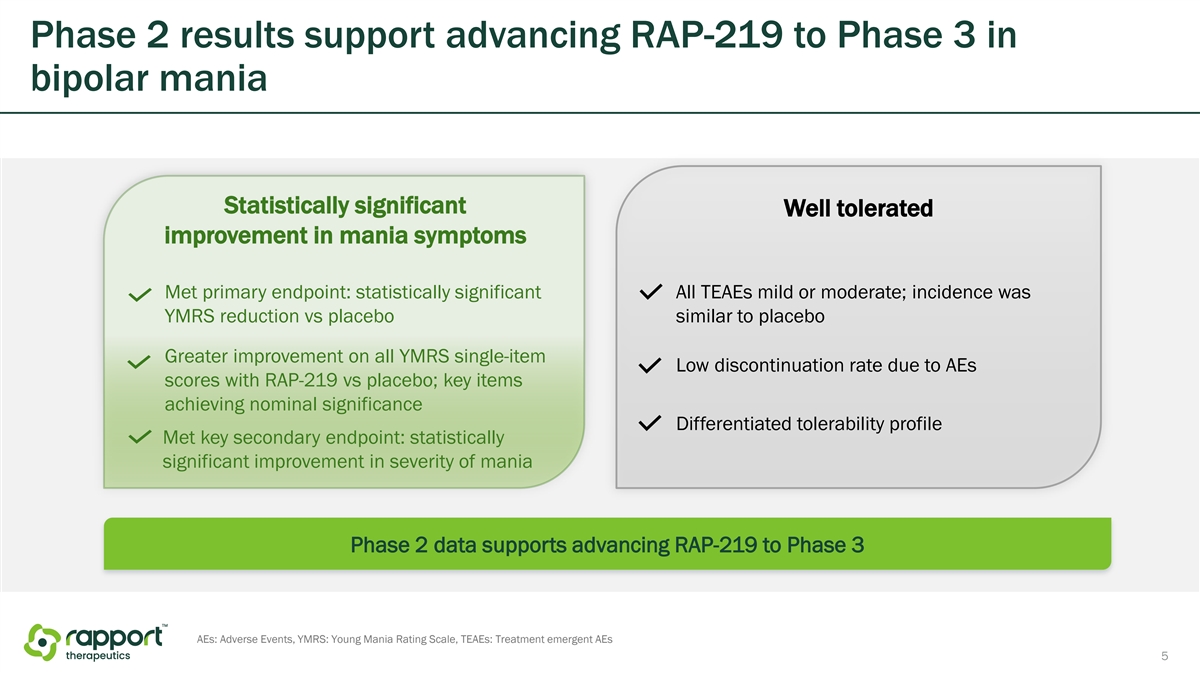
Phase 2 results support advancing RAP-219 to Phase 3 in bipolar mania Statistically significant Well tolerated improvement in mania symptoms Met primary endpoint: statistically significant All TEAEs mild or moderate; incidence was YMRS reduction vs placebo similar to placebo Greater improvement on all YMRS single-item Low discontinuation rate due to AEs scores with RAP-219 vs placebo; key items achieving nominal significance Differentiated tolerability profile Met key secondary endpoint: statistically significant improvement in severity of mania Phase 2 data supports advancing RAP-219 to Phase 3 AEs: Adverse Events, YMRS: Young Mania Rating Scale, TEAEs: Treatment emergent AEs 5
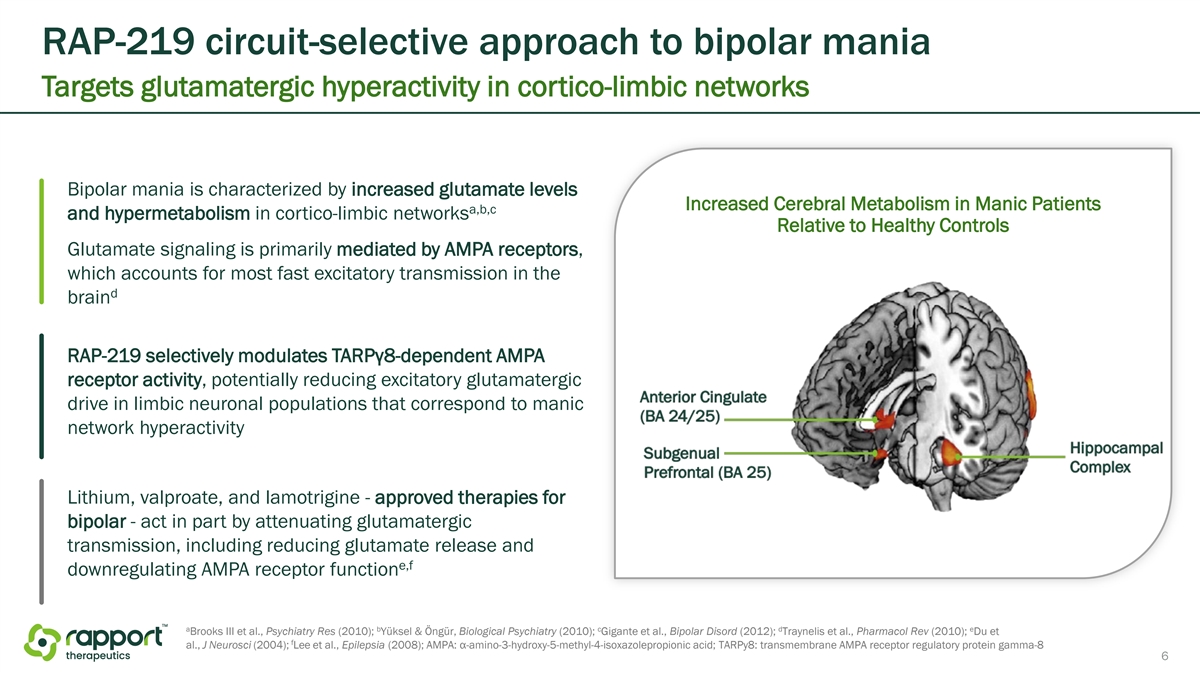
RAP-219 circuit-selective approach to bipolar mania Targets glutamatergic hyperactivity in cortico-limbic networks Bipolar mania is characterized by increased glutamate levels Increased Cerebral Metabolism in Manic Patients a,b,c and hypermetabolism in cortico-limbic networks Relative to Healthy Controls Glutamate signaling is primarily mediated by AMPA receptors, which accounts for most fast excitatory transmission in the d brain RAP-219 selectively modulates TARPγ8-dependent AMPA receptor activity, potentially reducing excitatory glutamatergic drive in limbic neuronal populations that correspond to manic network hyperactivity Lithium, valproate, and lamotrigine - approved therapies for bipolar - act in part by attenuating glutamatergic transmission, including reducing glutamate release and e,f downregulating AMPA receptor function a b c d e Brooks III et al., Psychiatry Res (2010); Yüksel & Öngür, Biological Psychiatry (2010); Gigante et al., Bipolar Disord (2012); Traynelis et al., Pharmacol Rev (2010); Du et f al., J Neurosci (2004); Lee et al., Epilepsia (2008); AMPA: α-amino-3-hydroxy-5-methyl-4-isoxazolepropionic acid; TARPy8: transmembrane AMPA receptor regulatory protein gamma-8 6
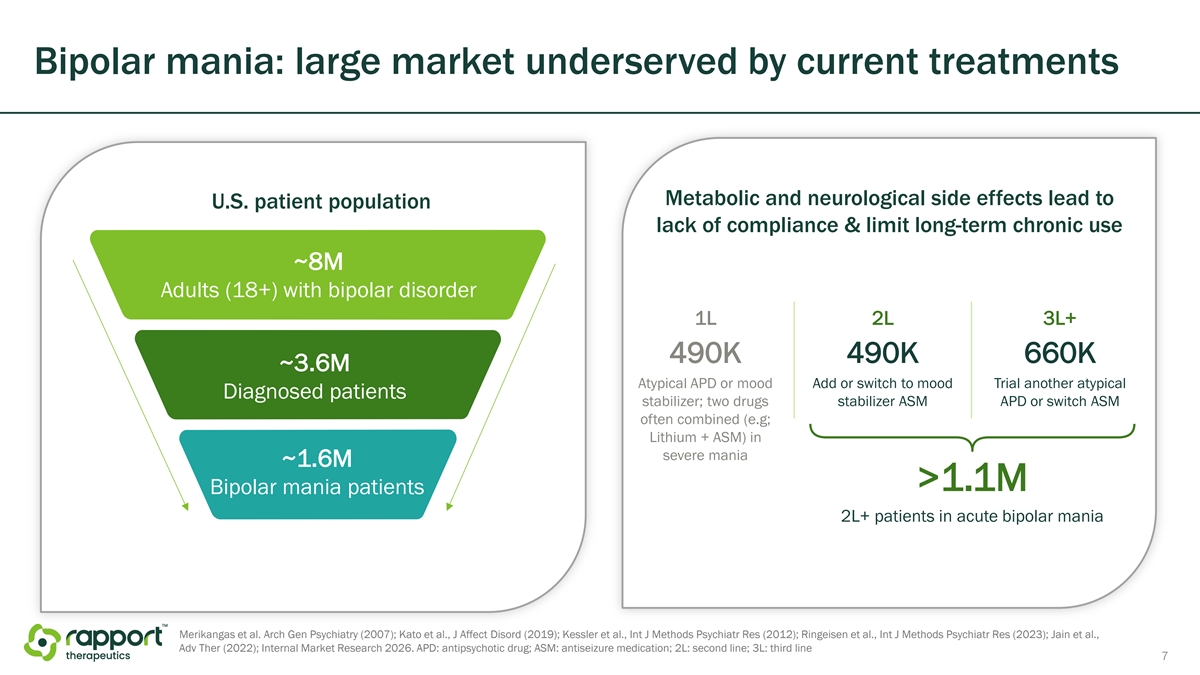
Bipolar mania: large market underserved by current treatments Metabolic and neurological side effects lead to U.S. patient population lack of compliance & limit long-term chronic use ~8M Adults (18+) with bipolar disorder 1L 2L 3L+ 490K 490K 660K ~3.6M Atypical APD or mood Add or switch to mood Trial another atypical Diagnosed patients stabilizer; two drugs stabilizer ASM APD or switch ASM often combined (e.g; Lithium + ASM) in severe mania ~1.6M >1.1M Bipolar mania patients 2L+ patients in acute bipolar mania Merikangas et al. Arch Gen Psychiatry (2007); Kato et al., J Affect Disord (2019); Kessler et al., Int J Methods Psychiatr Res (2012); Ringeisen et al., Int J Methods Psychiatr Res (2023); Jain et al., Adv Ther (2022); Internal Market Research 2026. APD: antipsychotic drug; ASM: antiseizure medication; 2L: second line; 3L: third line 7
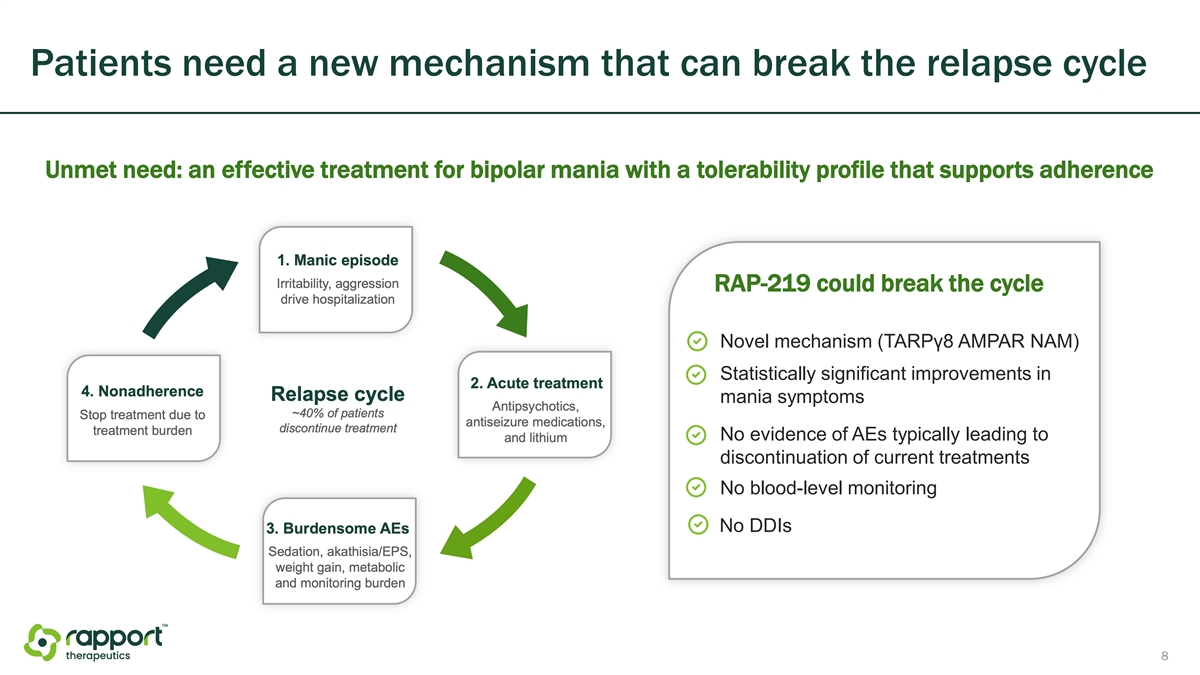
Patients need a new mechanism that can break the relapse cycle Unmet need: an effective treatment for bipolar mania with a tolerability profile that supports adherence RAP-219 could break the cycle Novel mechanism (TARPγ8 AMPAR NAM) Statistically significant improvements in mania symptoms No evidence of AEs typically leading to discontinuation of current treatments No blood-level monitoring No DDIs 8
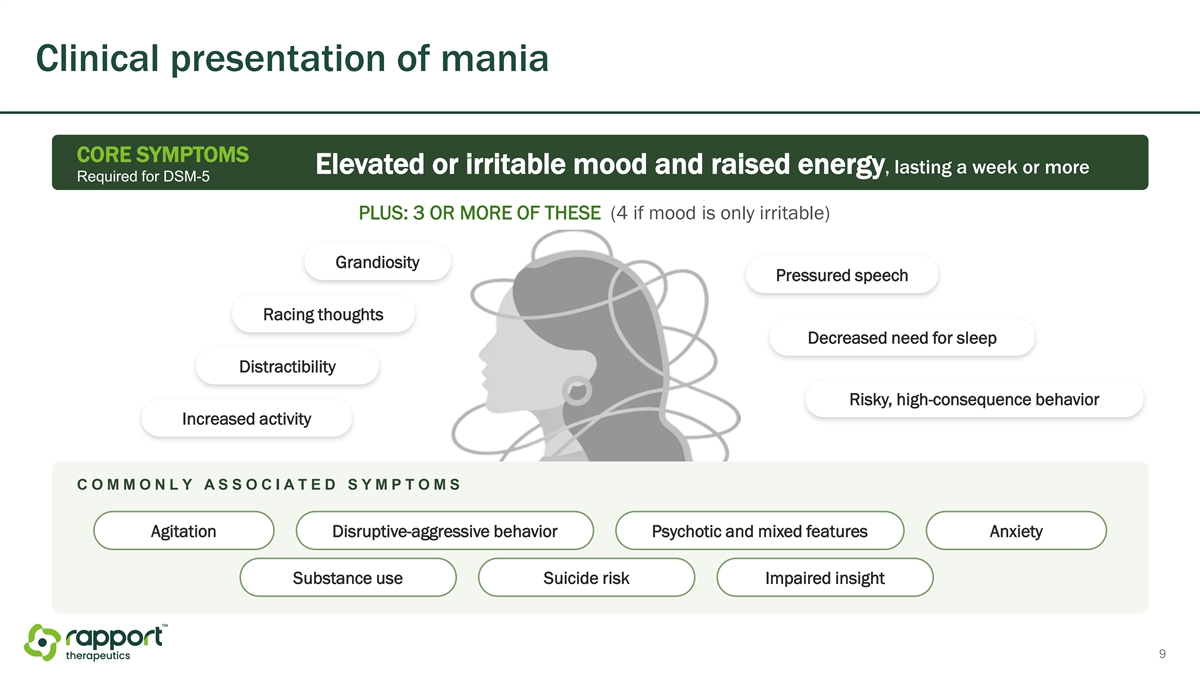
Clinical presentation of mania CORE SYMPTOMS Elevated or irritable mood and raised energy, lasting a week or more Required for DSM-5 PLUS: 3 OR MORE OF THESE (4 if mood is only irritable) Grandiosity Pressured speech Racing thoughts Decreased need for sleep Distractibility Risky, high-consequence behavior Increased activity COMMONLY ASSOCIATED SYMPTOMS Agitation Disruptive-aggressive behavior Psychotic and mixed features Anxiety Substance use Suicide risk Impaired insight 9
Bipolar Mania Phase 2 Trial Topline Results Jeff Sevigny, M.D. Chief Medical Officer, Rapport 10
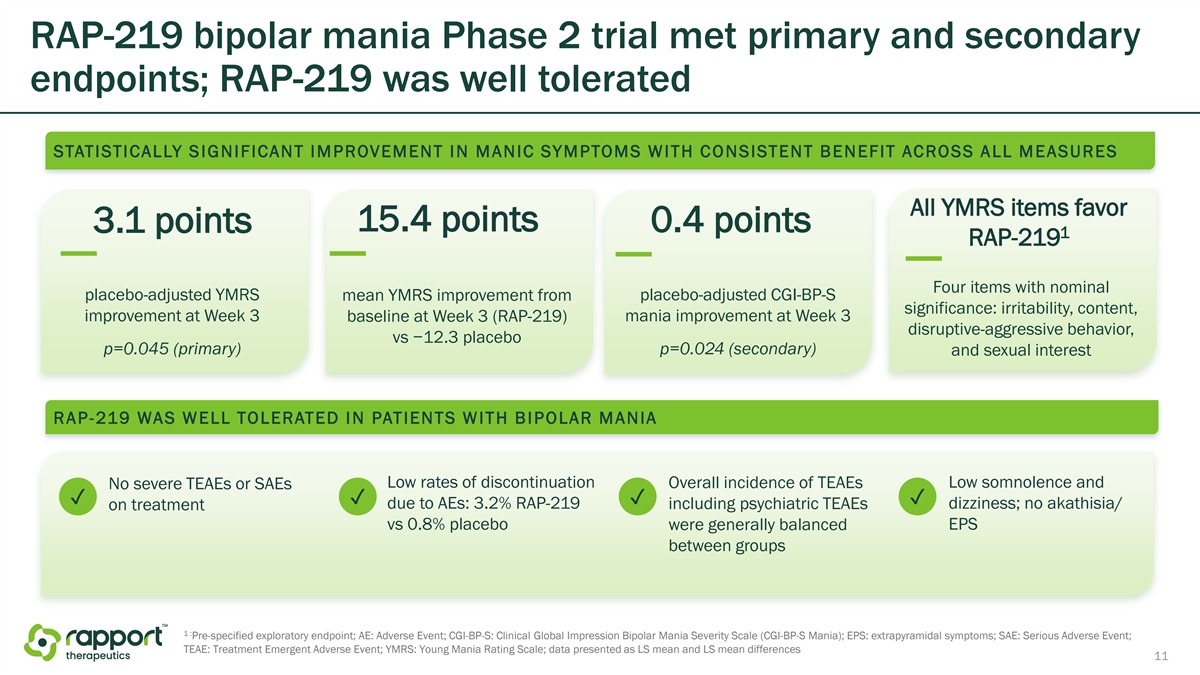
RAP-219 bipolar mania Phase 2 trial met primary and secondary endpoints; RAP-219 was well tolerated STATISTICALLY SIGNIFICANT IMPROVEMENT IN MANIC SYMPTOMS WITH CONSISTENT BENEFIT ACROSS ALL MEASURES All YMRS items favor 15.4 points 3.1 points 0.4 points 1 RAP-219 Four items with nominal placebo-adjusted YMRS placebo-adjusted CGI-BP-S mean YMRS improvement from significance: irritability, content, improvement at Week 3 mania improvement at Week 3 baseline at Week 3 (RAP-219) disruptive-aggressive behavior, vs −12.3 placebo p=0.045 (primary) p=0.024 (secondary) and sexual interest RAP-219 WAS WELL TOLERATED IN PATIENTS WITH BIPOLAR MANIA Low rates of discontinuation Low somnolence and Overall incidence of TEAEs No severe TEAEs or SAEs ✓✓✓✓ due to AEs: 3.2% RAP-219 including psychiatric TEAEs dizziness; no akathisia/ on treatment vs 0.8% placebo were generally balanced EPS between groups 1 : Pre-specified exploratory endpoint; AE: Adverse Event; CGI-BP-S: Clinical Global Impression Bipolar Mania Severity Scale (CGI-BP-S Mania); EPS: extrapyramidal symptoms; SAE: Serious Adverse Event; TEAE: Treatment Emergent Adverse Event; YMRS: Young Mania Rating Scale; data presented as LS mean and LS mean differences 11
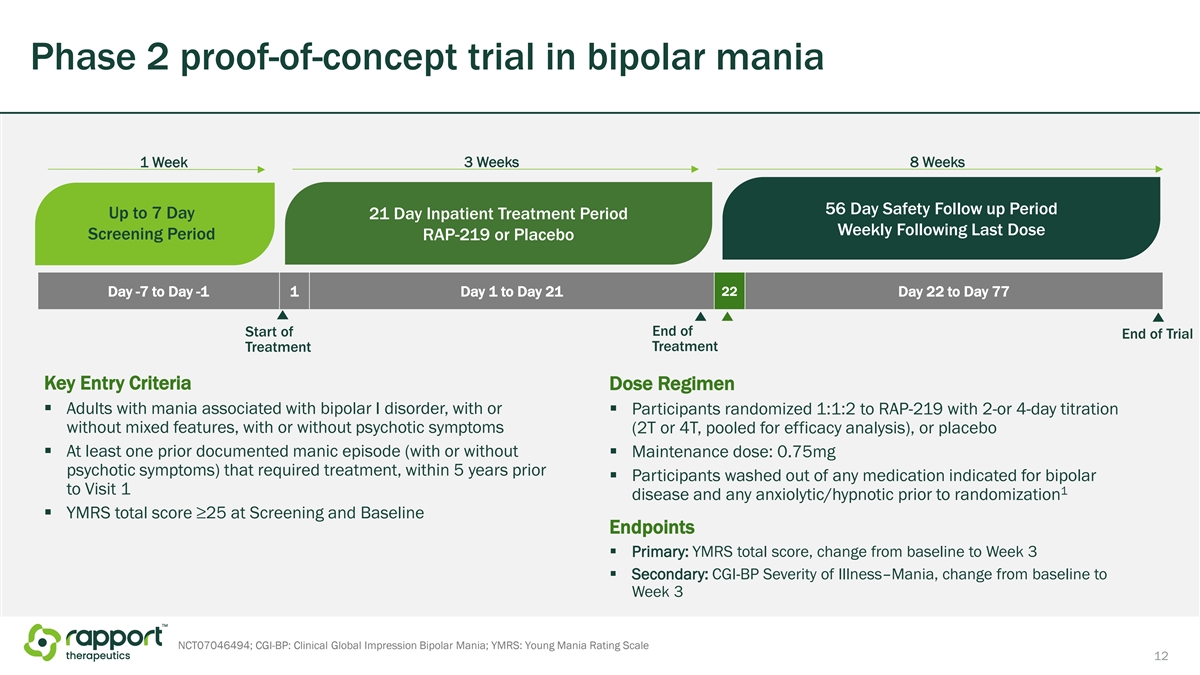
Phase 2 proof-of-concept trial in bipolar mania 1 Week 3 Weeks 8 Weeks 56 Day Safety Follow up Period Up to 7 Day 21 Day Inpatient Treatment Period Weekly Following Last Dose Screening Period RAP-219 or Placebo Day -7 to Day -1 1 Day 1 to Day 21 22 Day 22 to Day 77 Start of End of End of Trial Treatment Treatment Key Entry Criteria Dose Regimen § Adults with mania associated with bipolar I disorder, with or § Participants randomized 1:1:2 to RAP-219 with 2-or 4-day titration without mixed features, with or without psychotic symptoms (2T or 4T, pooled for efficacy analysis), or placebo § At least one prior documented manic episode (with or without § Maintenance dose: 0.75mg psychotic symptoms) that required treatment, within 5 years prior § Participants washed out of any medication indicated for bipolar to Visit 1 1 disease and any anxiolytic/hypnotic prior to randomization § YMRS total score ≥25 at Screening and Baseline Endpoints § Primary: YMRS total score, change from baseline to Week 3 § Secondary: CGI-BP Severity of Illness–Mania, change from baseline to Week 3 NCT07046494; CGI-BP: Clinical Global Impression Bipolar Mania; YMRS: Young Mania Rating Scale 12
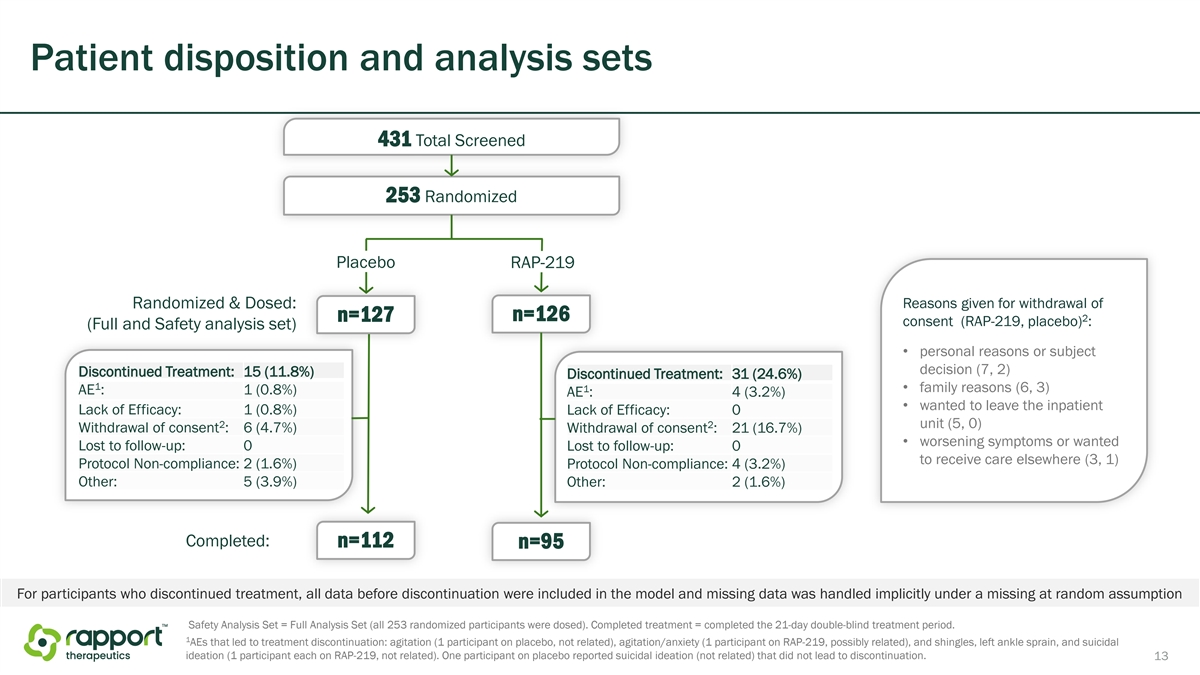
Patient disposition and analysis sets 431 Total Screened 253 Randomized Placebo RAP-219 Randomized & Dosed: Reasons given for withdrawal of n=127 n=126 2 consent (RAP-219, placebo) : (Full and Safety analysis set) • personal reasons or subject decision (7, 2) Discontinued Treatment: 15 (11.8%) Discontinued Treatment: 31 (24.6%) 1 1 • family reasons (6, 3) AE : 1 (0.8%) AE : 4 (3.2%) • wanted to leave the inpatient Lack of Efficacy: 1 (0.8%) Lack of Efficacy: 0 2 2 unit (5, 0) Withdrawal of consent : 6 (4.7%) Withdrawal of consent : 21 (16.7%) • worsening symptoms or wanted Lost to follow-up: 0 Lost to follow-up: 0 to receive care elsewhere (3, 1) Protocol Non-compliance: 2 (1.6%) Protocol Non-compliance: 4 (3.2%) Other: 5 (3.9%) Other: 2 (1.6%) Completed: n=112 n=95 For participants who discontinued treatment, all data before discontinuation were included in the model and missing data was handled implicitly under a missing at random assumption Safety Analysis Set = Full Analysis Set (all 253 randomized participants were dosed). Completed treatment = completed the 21-day double-blind treatment period. 1 AEs that led to treatment discontinuation: agitation (1 participant on placebo, not related), agitation/anxiety (1 participant on RAP-219, possibly related), and shingles, left ankle sprain, and suicidal ideation (1 participant each on RAP-219, not related). One participant on placebo reported suicidal ideation (not related) that did not lead to discontinuation. 13
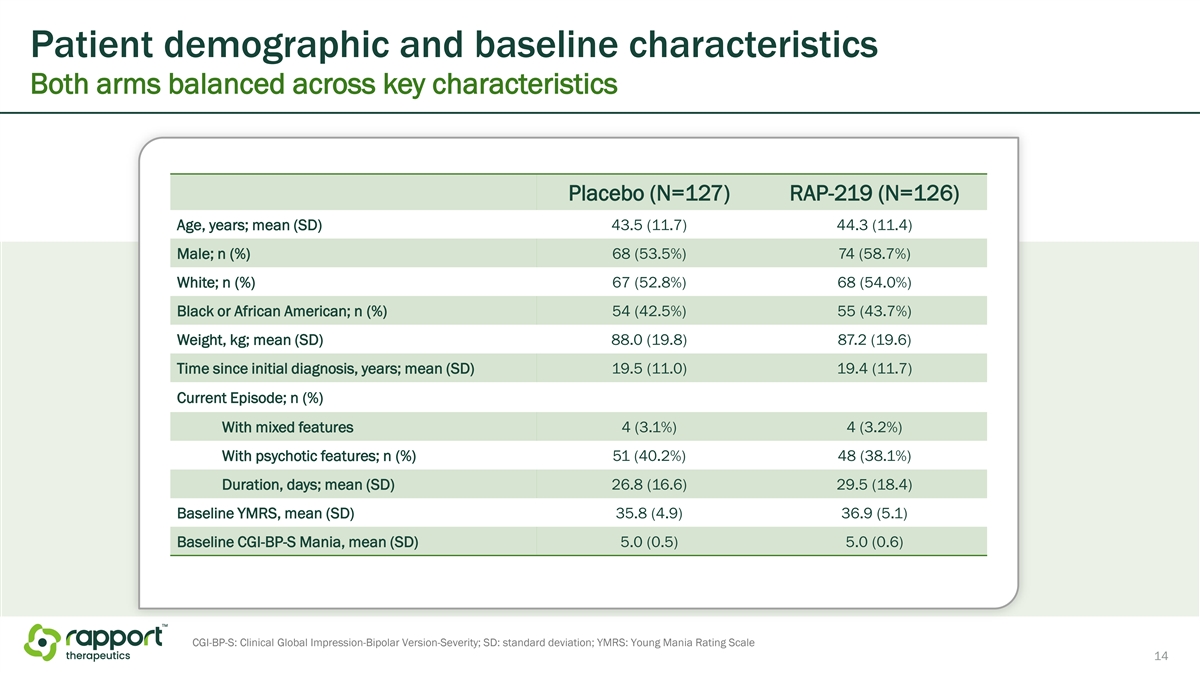
Patient demographic and baseline characteristics Both arms balanced across key characteristics Placebo (N=127) RAP-219 (N=126) Age, years; mean (SD) 43.5 (11.7) 44.3 (11.4) Male; n (%) 68 (53.5%) 74 (58.7%) White; n (%) 67 (52.8%) 68 (54.0%) Black or African American; n (%) 54 (42.5%) 55 (43.7%) Weight, kg; mean (SD) 88.0 (19.8) 87.2 (19.6) Time since initial diagnosis, years; mean (SD) 19.5 (11.0) 19.4 (11.7) Current Episode; n (%) With mixed features 4 (3.1%) 4 (3.2%) With psychotic features; n (%) 51 (40.2%) 48 (38.1%) Duration, days; mean (SD) 26.8 (16.6) 29.5 (18.4) Baseline YMRS, mean (SD) 35.8 (4.9) 36.9 (5.1) Baseline CGI-BP-S Mania, mean (SD) 5.0 (0.5) 5.0 (0.6) CGI-BP-S: Clinical Global Impression-Bipolar Version-Severity; SD: standard deviation; YMRS: Young Mania Rating Scale 14
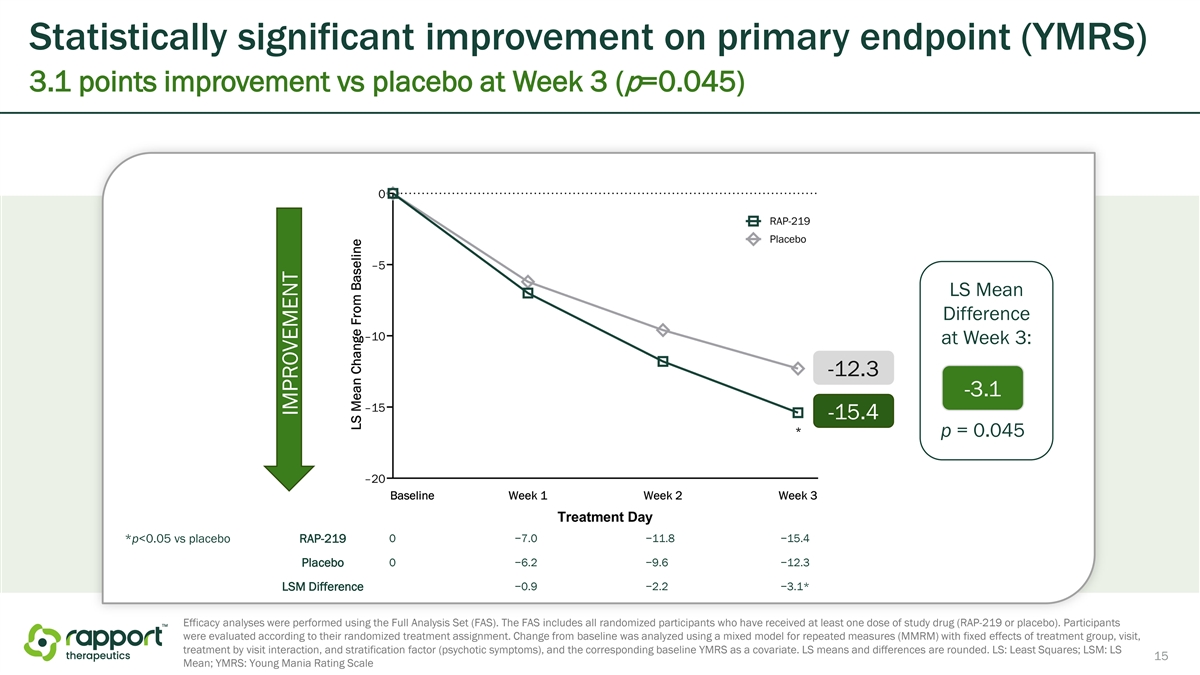
Statistically significant improvement on primary endpoint (YMRS) 3.1 points improvement vs placebo at Week 3 (p=0.045) LS Mean Difference at Week 3: -12.3 -3.1 -15.4 p = 0.045 *p<0.05 vs placebo RAP-219 0 −7.0 −11.8 −15.4 Placebo 0 −6.2 −9.6 −12.3 −0.9 −2.2 −3.1* LSM Difference Efficacy analyses were performed using the Full Analysis Set (FAS). The FAS includes all randomized participants who have received at least one dose of study drug (RAP-219 or placebo). Participants were evaluated according to their randomized treatment assignment. Change from baseline was analyzed using a mixed model for repeated measures (MMRM) with fixed effects of treatment group, visit, treatment by visit interaction, and stratification factor (psychotic symptoms), and the corresponding baseline YMRS as a covariate. LS means and differences are rounded. LS: Least Squares; LSM: LS 15 Mean; YMRS: Young Mania Rating Scale IMPROVEMENT
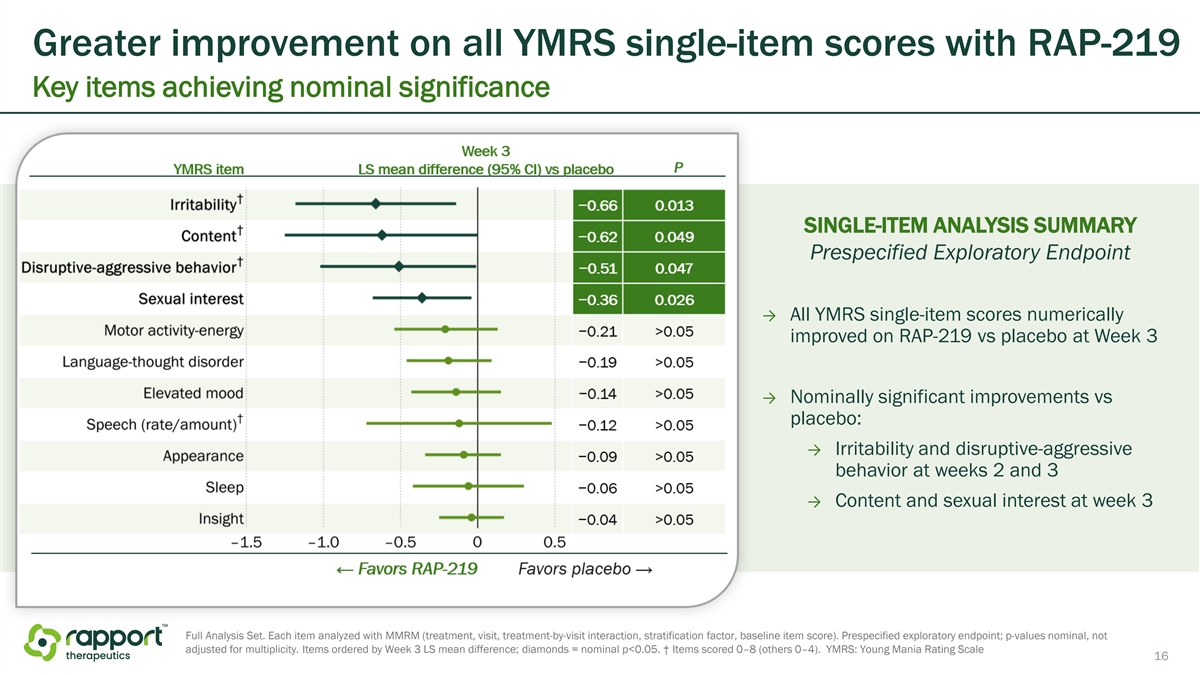
Greater improvement on all YMRS single-item scores with RAP-219 Key items achieving nominal significance SINGLE-ITEM ANALYSIS SUMMARY Prespecified Exploratory Endpoint → All YMRS single-item scores numerically improved on RAP-219 vs placebo at Week 3 → Nominally significant improvements vs placebo: → Irritability and disruptive-aggressive behavior at weeks 2 and 3 → Content and sexual interest at week 3 Full Analysis Set. Each item analyzed with MMRM (treatment, visit, treatment-by-visit interaction, stratification factor, baseline item score). Prespecified exploratory endpoint; p-values nominal, not adjusted for multiplicity. Items ordered by Week 3 LS mean difference; diamonds = nominal p<0.05. † Items scored 0–8 (others 0–4). YMRS: Young Mania Rating Scale 16
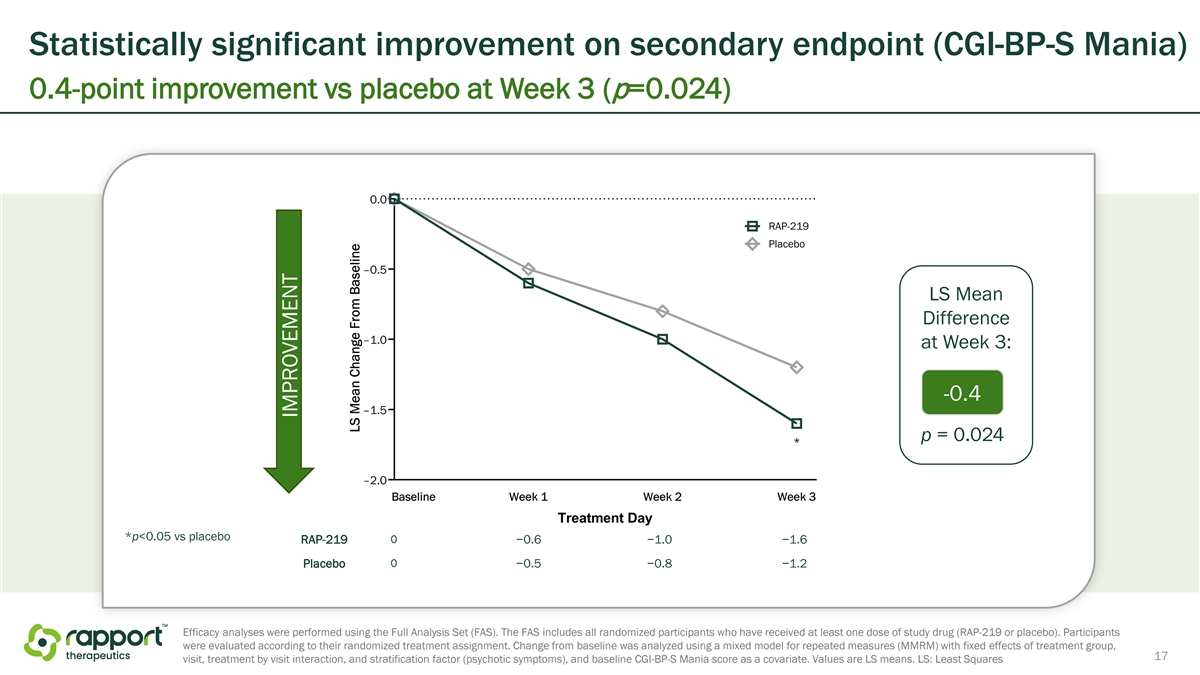
Statistically significant improvement on secondary endpoint (CGI-BP-S Mania) 0.4-point improvement vs placebo at Week 3 (p=0.024) LS Mean Difference at Week 3: -0.4 p = 0.024 *p<0.05 vs placebo RAP-219 0 −0.6 −1.0 −1.6 Placebo 0 −0.5 −0.8 −1.2 Efficacy analyses were performed using the Full Analysis Set (FAS). The FAS includes all randomized participants who have received at least one dose of study drug (RAP-219 or placebo). Participants were evaluated according to their randomized treatment assignment. Change from baseline was analyzed using a mixed model for repeated measures (MMRM) with fixed effects of treatment group, 17 visit, treatment by visit interaction, and stratification factor (psychotic symptoms), and baseline CGI-BP-S Mania score as a covariate. Values are LS means. LS: Least Squares IMPROVEMENT
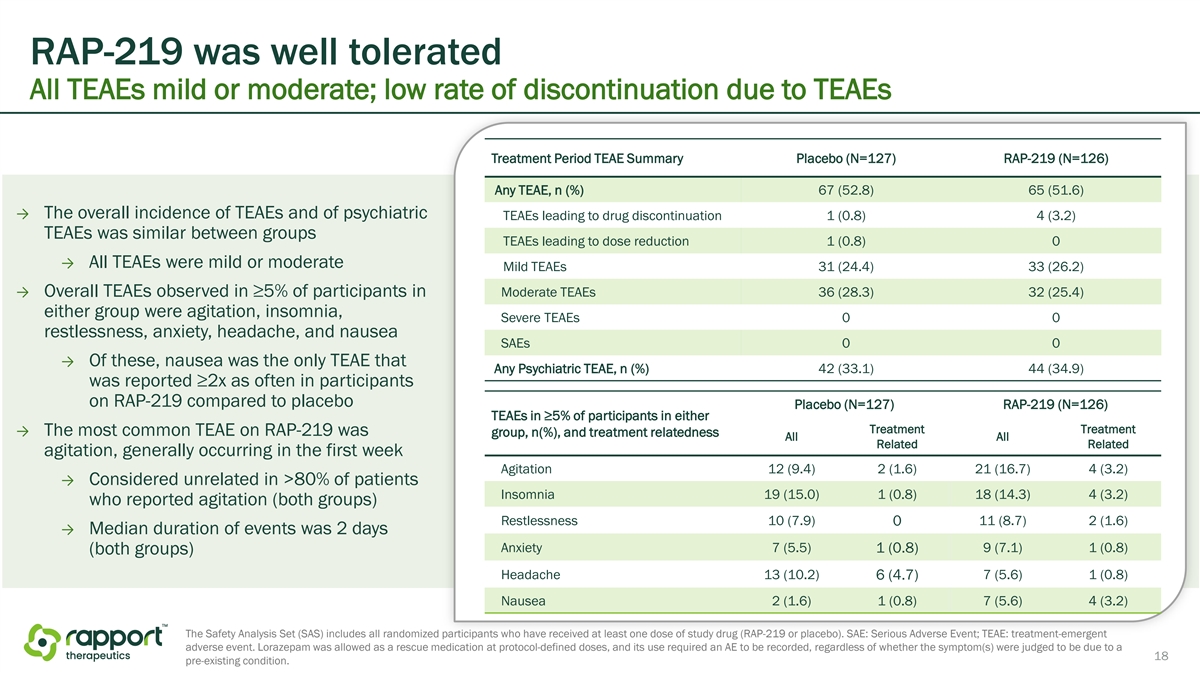
RAP-219 was well tolerated All TEAEs mild or moderate; low rate of discontinuation due to TEAEs Treatment Period TEAE Summary Placebo (N=127) RAP-219 (N=126) Any TEAE, n (%) 67 (52.8) 65 (51.6) → The overall incidence of TEAEs and of psychiatric TEAEs leading to drug discontinuation 1 (0.8) 4 (3.2) TEAEs was similar between groups TEAEs leading to dose reduction 1 (0.8) 0 → All TEAEs were mild or moderate Mild TEAEs 31 (24.4) 33 (26.2) Moderate TEAEs 36 (28.3) 32 (25.4) → Overall TEAEs observed in ≥5% of participants in either group were agitation, insomnia, Severe TEAEs 0 0 restlessness, anxiety, headache, and nausea SAEs 0 0 → Of these, nausea was the only TEAE that Any Psychiatric TEAE, n (%) 42 (33.1) 44 (34.9) was reported ≥2x as often in participants ZZ on RAP-219 compared to placebo Placebo (N=127) RAP-219 (N=126) TEAEs in ≥5% of participants in either Treatment Treatment → The most common TEAE on RAP-219 was group, n(%), and treatment relatedness All All Related Related agitation, generally occurring in the first week Agitation 12 (9.4) 2 (1.6) 21 (16.7) 4 (3.2) → Considered unrelated in >80% of patients Insomnia 19 (15.0) 1 (0.8) 18 (14.3) 4 (3.2) who reported agitation (both groups) Restlessness 10 (7.9) 11 (8.7) 2 (1.6) 0 → Median duration of events was 2 days Anxiety 7 (5.5) 1 (0.8) 9 (7.1) 1 (0.8) (both groups) Headache 13 (10.2) 7 (5.6) 1 (0.8) 6 (4.7) Nausea 2 (1.6) 1 (0.8) 7 (5.6) 4 (3.2) The Safety Analysis Set (SAS) includes all randomized participants who have received at least one dose of study drug (RAP-219 or placebo). SAE: Serious Adverse Event; TEAE: treatment-emergent adverse event. Lorazepam was allowed as a rescue medication at protocol-defined doses, and its use required an AE to be recorded, regardless of whether the symptom(s) were judged to be due to a 18 pre-existing condition.
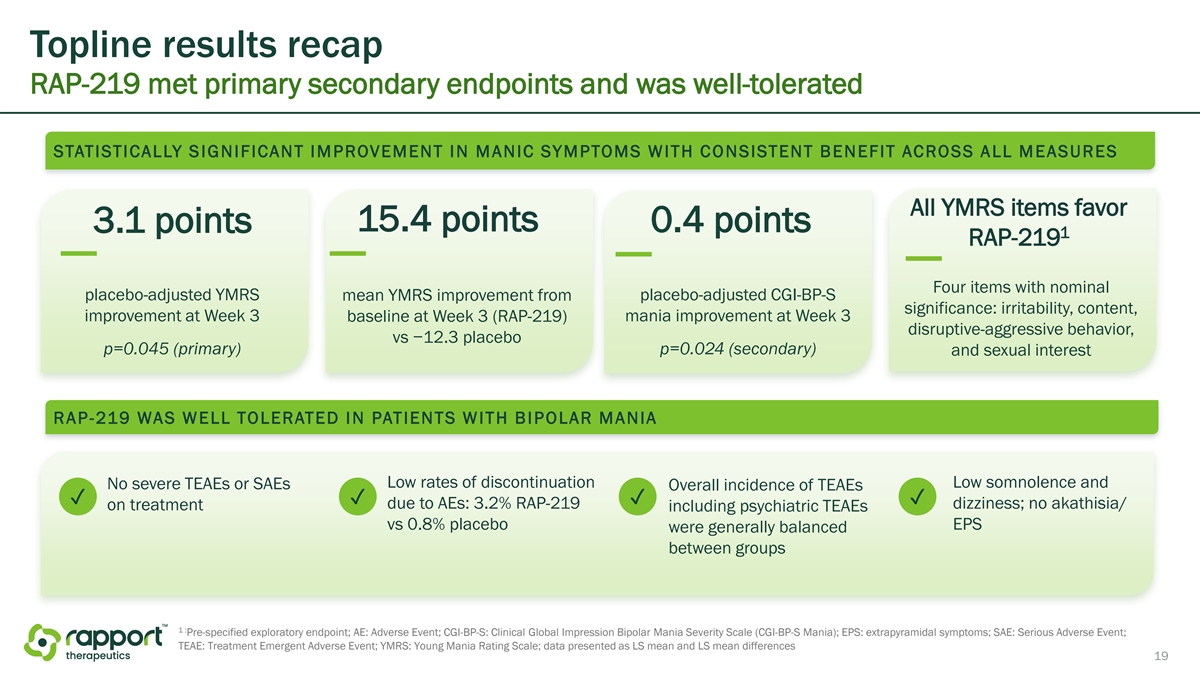
Topline results recap RAP-219 met primary secondary endpoints and was well-tolerated STATISTICALLY SIGNIFICANT IMPROVEMENT IN MANIC SYMPTOMS WITH CONSISTENT BENEFIT ACROSS ALL MEASURES All YMRS items favor 15.4 points 3.1 points 0.4 points 1 RAP-219 Four items with nominal placebo-adjusted YMRS placebo-adjusted CGI-BP-S mean YMRS improvement from significance: irritability, content, improvement at Week 3 mania improvement at Week 3 baseline at Week 3 (RAP-219) disruptive-aggressive behavior, vs −12.3 placebo p=0.045 (primary) p=0.024 (secondary) and sexual interest RAP-219 WAS WELL TOLERATED IN PATIENTS WITH BIPOLAR MANIA Low rates of discontinuation Low somnolence and No severe TEAEs or SAEs Overall incidence of TEAEs ✓✓✓✓ due to AEs: 3.2% RAP-219 dizziness; no akathisia/ on treatment including psychiatric TEAEs vs 0.8% placebo EPS were generally balanced between groups 1 : Pre-specified exploratory endpoint; AE: Adverse Event; CGI-BP-S: Clinical Global Impression Bipolar Mania Severity Scale (CGI-BP-S Mania); EPS: extrapyramidal symptoms; SAE: Serious Adverse Event; TEAE: Treatment Emergent Adverse Event; YMRS: Young Mania Rating Scale; data presented as LS mean and LS mean differences 19
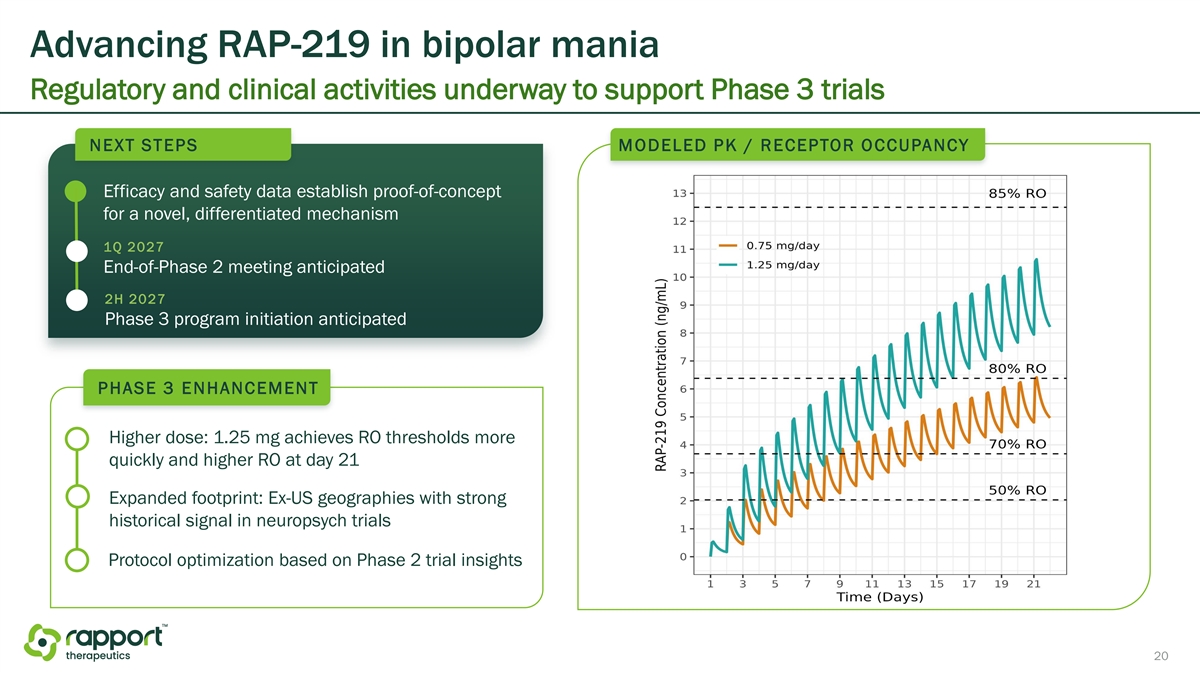
Advancing RAP-219 in bipolar mania Regulatory and clinical activities underway to support Phase 3 trials NEXT STEPS MODELED PK / RECEPTOR OCCUPANCY Efficacy and safety data establish proof-of-concept for a novel, differentiated mechanism 1Q 2027 End-of-Phase 2 meeting anticipated 2H 2027 Phase 3 program initiation anticipated PHASE 3 ENHANCEMENT Higher dose: 1.25 mg achieves RO thresholds more quickly and higher RO at day 21 Expanded footprint: Ex-US geographies with strong historical signal in neuropsych trials Protocol optimization based on Phase 2 trial insights 20

KOL Perspective Gary Sachs, M.D. Founding Director, Bipolar Clinic and Research Program, Massachusetts General Hospital Assoc. Clinical Professor of Psychiatry, Harvard Medical School

Near-term Catalysts and Financial Overview Troy Ignelzi Chief Financial Officer, Rapport
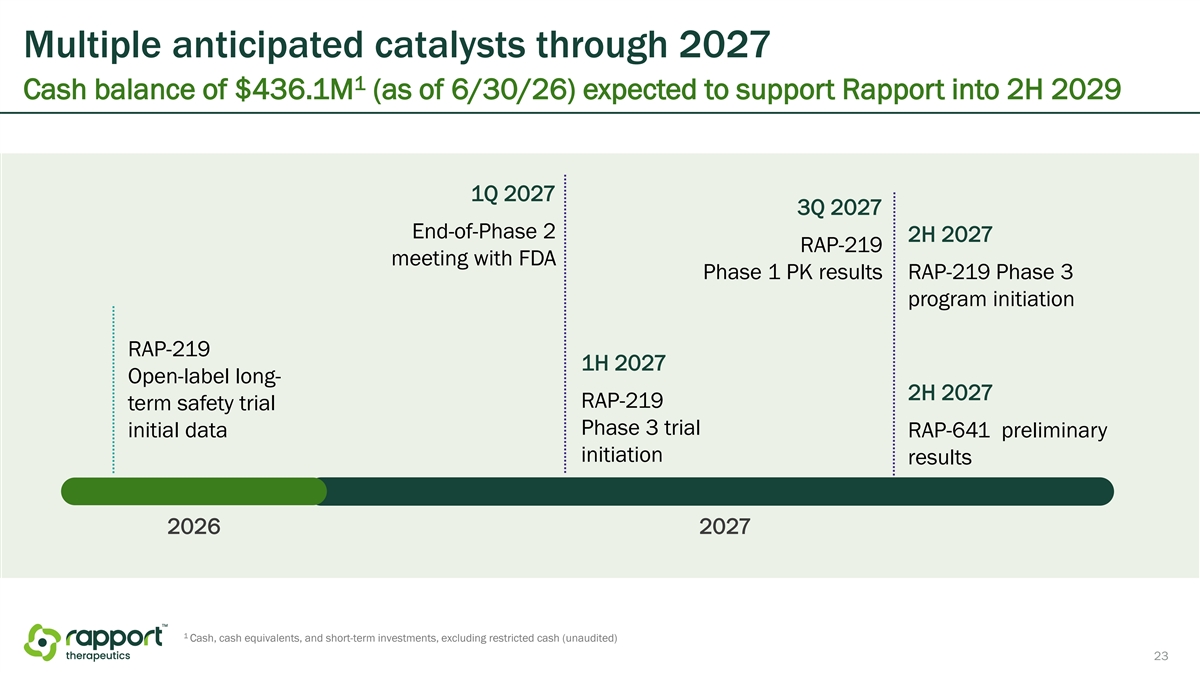
Multiple anticipated catalysts through 2027 1 Cash balance of $436.1M (as of 6/30/26) expected to support Rapport into 2H 2029 1Q 2027 3Q 2027 End-of-Phase 2 2H 2027 RAP-219 meeting with FDA Phase 1 PK results RAP-219 Phase 3 program initiation RAP-219 1H 2027 Open-label long- 2H 2027 RAP-219 term safety trial Phase 3 trial initial data RAP-641 preliminary initiation results 2026 2027 1 Cash, cash equivalents, and short-term investments, excluding restricted cash (unaudited) 23

Closing Remarks Abe Ceesay Chief Executive Officer, Rapport
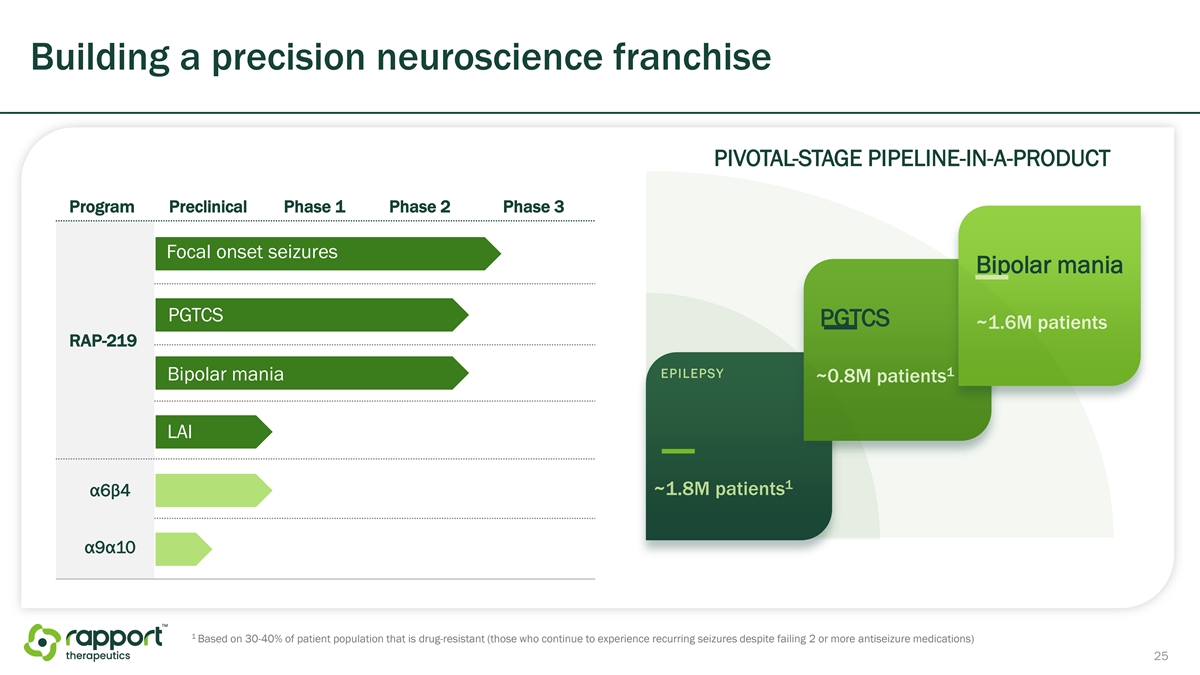
Building a precision neuroscience franchise PIVOTAL-STAGE PIPELINE-IN-A-PRODUCT Program Preclinical Phase 1 Phase 2 Phase 3 Focal onset seizures Bipolar mania PGTCS PGTCS ~1.6M patients RAP-219 1 EPILEPSY Bipolar mania ~0.8M patients LAI 1 ~1.8M patients α6β4 α9α10 1 Based on 30-40% of patient population that is drug-resistant (those who continue to experience recurring seizures despite failing 2 or more antiseizure medications) 25

Questions & Answers