October 2026 REMAIN-1 Pivotal Study Positive Topline 6 Month Results for Revita in Post-GLP-1 Weight Maintenance Revita is for investigational use only in the United States. Revita has a CE mark in the EU/UK. REMAIN-1 is an ongoing study; final data rely on database lock at 12 months. ©2026 Fractyl Health, Inc. All Rights Reserved. Exhibit 99.2
Legal disclaimer . ©2026 Fractyl Health, Inc. All Rights Reserved. Market Data, Estimates and Industry Information The market size, addressable market, industry, business and related figures presented herein are estimates and projections provided for illustrative purposes only. This information is based in part on the Company's own internal estimates, research, analyses, assumptions and projections, and in part on third-party sources, including industry reports, research, surveys and studies prepared by market research firms and other third parties, industry, medical and general publications, government data, publicly available data and similar sources. Neither the Company's internal estimates nor the third-party information referenced have been independently verified, and while the Company is not aware of any misstatements regarding any third-party information presented herein, no representation or warranty, express or implied, is made as to the accuracy, completeness or reasonableness of any such information. This information, particularly estimates, forecasts and projections relating to market definition, growth rates, adoption trends and the Company's addressable market share, involves significant assumptions and judgments and is inherently subject to uncertainties and risks. Actual events, circumstances, market size and the Company's addressable share thereof may differ materially from those assumed or presented herein, based on various factors. Recipients should not place undue reliance on this information and should conduct their own independent investigation and analysis of the market opportunity described. Trademarks This presentation may contain trademarks, service marks, trade names and copyrights of the Company and other companies, which are the property of their respective owners. The use herein does not imply an affiliation with, or endorsement by, the owners of these trademarks, service marks, trade names and copyrights. Third-party logos herein may be provided simply for illustrative purposes only. Inclusion of such logos does not necessarily imply affiliation with or endorsement by such firms or businesses. There is no guarantee that the Company will work, or continue to work, with any of the firms or businesses whose logos are included herein in the future. This presentation shall not constitute an offer to sell or the solicitation of an offer to buy securities, nor shall there be any sale of securities in any state or jurisdiction in which such offer, solicitation, or sale would be unlawful prior to registration or qualification under the securities laws of any such state or jurisdiction. Forward-looking statements REMAIN-1 is an ongoing study; final data rely on database lock at 12 months. This presentation contains forward-looking statements about Fractyl Health, Inc. (“Fractyl” or “the “Company”) within the meaning of the Private Securities Litigation Reform Act of 1995. All statements contained in this presentation that do not relate to matters of historical fact are forward-looking statements. These statements may be identified by words such as “aims,” “anticipates,” “believes,” “could,” “estimates,” “expects,” “forecasts,” “goal,” “intends,” “may,” “plans,” “possible,” “potential,” “seeks,” “will” and variations of these words or similar expressions that are intended to identify forward-looking statements, although not all forward-looking statements contain these words. Forward-looking statements in this presentation include, without limitation, statements regarding: the expected initiation, timing, design, endpoints, site activation, and conduct of the REMAIN-1 clinical trial program; Fractyl’s regulatory strategy, including submissions to and communications with regulators; the promise, potential impact, and mechanism of action of the Revita DMR system and Fractyl’s Revita platform; Fractyl’s anticipated financial performance, including cash and cash equivalents, for any period of time; Fractyl’s expected cash runway; the promise and potential impact of Fractyl’s preclinical or clinical trial data and product candidates, including Revita’s potential for maintaining weight loss after glucagon-like peptide (GLP-1) based therapy discontinuation; the design, initiation, timing and results of clinical enrollment and any clinical studies or readouts, including readouts from the REVEAL-1 Cohort, the REMAIN-1 Midpoint Cohort and the REMAIN-1 Pivotal Cohort; the content, information used for, timing or results of any Investigational New Drug (IND)-enabling studies, IND applications, or CTAs; communications with regulators regarding the REVEAL-1 Cohort, the potential launch or commercialization of any of Fractyl’s product candidates or products, the REMAIN-1 Midpoint Cohort and the REMAIN-1 Pivotal Cohort; the potential treatment population or benefits for any of Fractyl’s product candidates or products; Fractyl’s regulatory strategy, including potential use and benefits of the De Novo pathway (U.S. Food and Drug Administration (FDA) pre-submission feedback is advisory and non-binding, and there is no assurance that FDA will accept a De Novo marketing application submission or that the Revita DMR System will receive marketing authorization); Fractyl’s commercial readiness activities and the development of commercial infrastructure; coding, coverage and payment for Revita, including the effectiveness and use of Category III CPT code 1122T and eligibility for or timing of Medicare transitional pass-through payment or other coverage, which are subject to AMA and CMS review and are not assured; the potential treatment population or benefits for any of our product candidates or products; Fractyl’s strategic and product development objectives and goals; the potential sales and estimated total addressable markets, currently and in the future, for Fractyl's product candidates; the potential timeline for profitability following the launch of Revita;’ and the timing of any of the foregoing. These statements are neither promises nor guarantees, but involve known and unknown risks, uncertainties and other important factors that may cause Fractyl’s actual results, performance or achievements to be materially different from any future results, performance or achievements expressed or implied by the forward-looking statements, including, but not limited to, the risks are discussed more fully in Fractyl’s filings with the Securities and Exchange Commission (the SEC), including the “Risk Factors” section of Fractyl’s Annual Report on Form 10-K for the year ended December 31, 2025, filed with the SEC on March 24, 2026, and other documents Fractyl subsequently files with or furnishes to the SEC, including Fractyl’s Quarterly Report on Form 10-Q for the quarter ended June 30, 2026, filed with the SEC on August 10, 2026. These forward-looking statements are based on management’s current estimates and expectations. While Fractyl may elect to update such forward-looking statements at some point in the future, Fractyl disclaims any obligation to do so, even if subsequent events cause Fractyl’s views to change.

Today’s speakers and agenda ©2026 Fractyl Health, Inc. All Rights Reserved. Harith Rajagopalan, MD, PhD Co-Founder & CEO REMAIN-1 Pivotal Topline Results Adrian Dan, MD, FACS, FASMBS, DABS-MBS, DABOM Medical Director, Weight Management Institute, Summa Health Professor of Surgery, Northeast Ohio Medical University A clinician’s perspective: what REMAIN-1 means for patients and practice
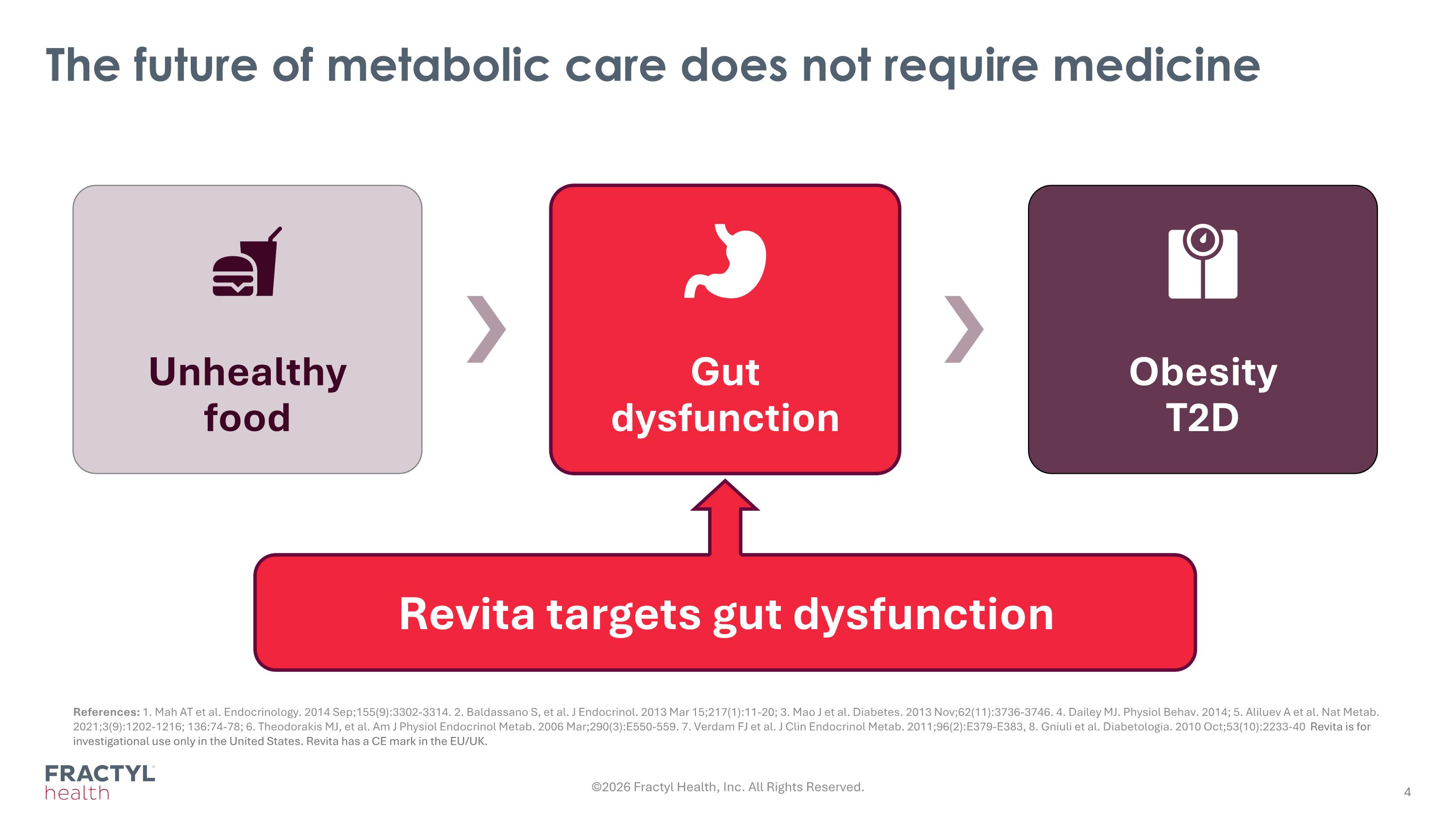
The future of metabolic care does not require medicine References: 1. Mah AT et al. Endocrinology. 2014 Sep;155(9):3302-3314. 2. Baldassano S, et al. J Endocrinol. 2013 Mar 15;217(1):11-20; 3. Mao J et al. Diabetes. 2013 Nov;62(11):3736-3746. 4. Dailey MJ. Physiol Behav. 2014; 5. Aliluev A et al. Nat Metab. 2021;3(9):1202-1216; 136:74-78; 6. Theodorakis MJ, et al. Am J Physiol Endocrinol Metab. 2006 Mar;290(3):E550-559. 7. Verdam FJ et al. J Clin Endocrinol Metab. 2011;96(2):E379-E383, 8. Gniuli et al. Diabetologia. 2010 Oct;53(10):2233-40 Revita is for investigational use only in the United States. Revita has a CE mark in the EU/UK. ©2026 Fractyl Health, Inc. All Rights Reserved. Unhealthy food Gut dysfunction Obesity T2D Revita targets gut dysfunction
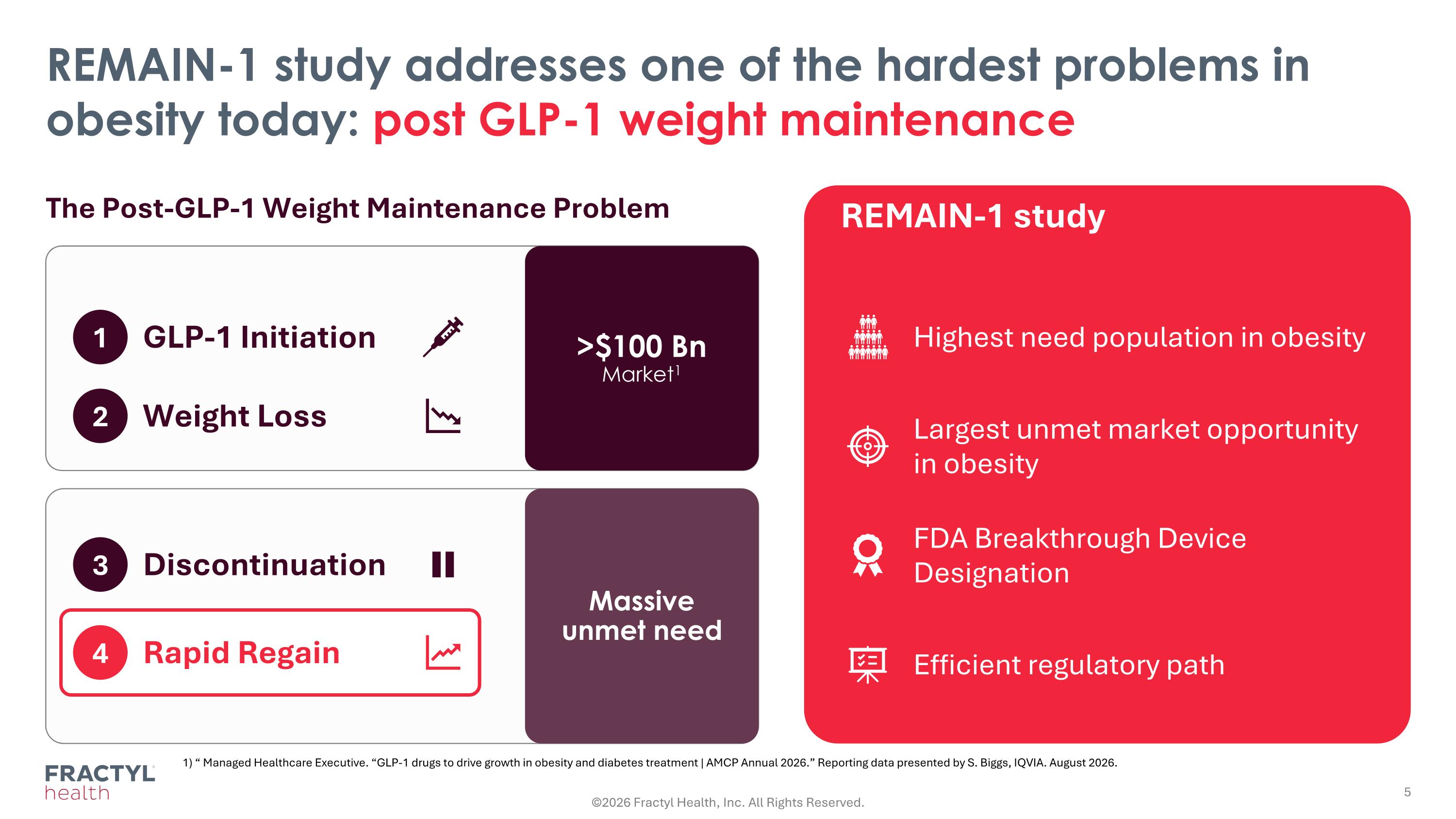
REMAIN-1 study addresses one of the hardest problems in obesity today: post GLP-1 weight maintenance ©2026 Fractyl Health, Inc. All Rights Reserved. The Post-GLP-1 Weight Maintenance Problem 1 GLP-1 Initiation 2 Weight Loss 3 Discontinuation 4 Rapid Regain REMAIN-1 study Highest need population in obesity Largest unmet market opportunity in obesity FDA Breakthrough Device Designation Efficient regulatory path >$100 Bn Market1 Massive unmet need 1) “ Managed Healthcare Executive. “GLP-1 drugs to drive growth in obesity and diabetes treatment | AMCP Annual 2026.” Reporting data presented by S. Biggs, IQVIA. August 2026.
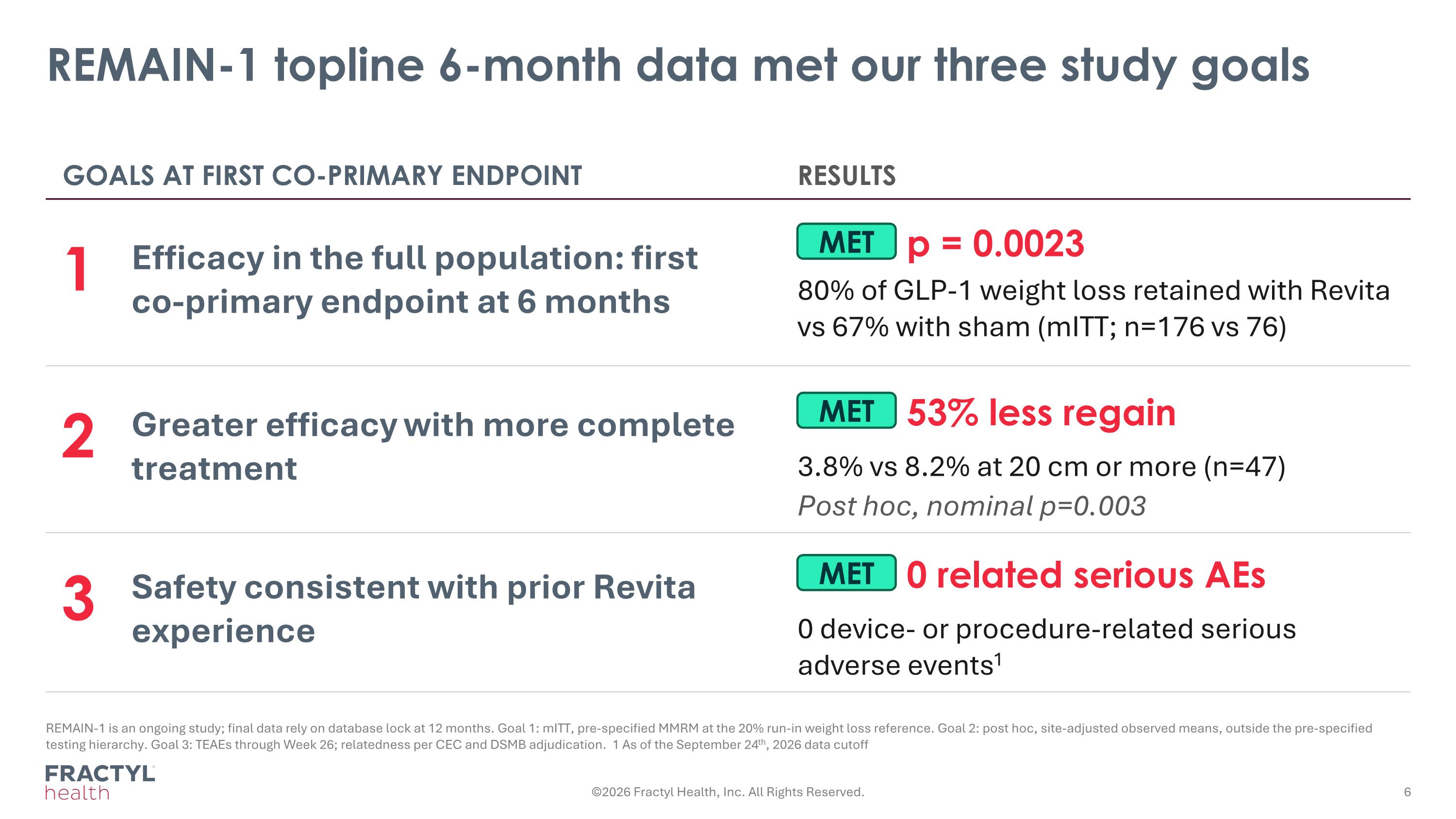
REMAIN-1 topline 6-month data met our three study goals REMAIN-1 is an ongoing study; final data rely on database lock at 12 months. Goal 1: mITT, pre-specified MMRM at the 20% run-in weight loss reference. Goal 2: post hoc, site-adjusted observed means, outside the pre-specified testing hierarchy. Goal 3: TEAEs through Week 26; relatedness per CEC and DSMB adjudication. 1 As of the September 24th, 2026 data cutoff GOALS AT FIRST CO-PRIMARY ENDPOINT RESULTS 1 Efficacy in the full population: first co-primary endpoint at 6 months MET p = 0.0023 2 Greater efficacy with more complete treatment MET 53% less regain 3.8% vs 8.2% at 20 cm or more (n=47) Post hoc, nominal p=0.003 3 Safety consistent with prior Revita experience MET 0 related serious AEs 0 device- or procedure-related serious adverse events1 ©2026 Fractyl Health, Inc. All Rights Reserved. 80% of GLP-1 weight loss retained with Revita vs 67% with sham (mITT; n=176 vs 76)
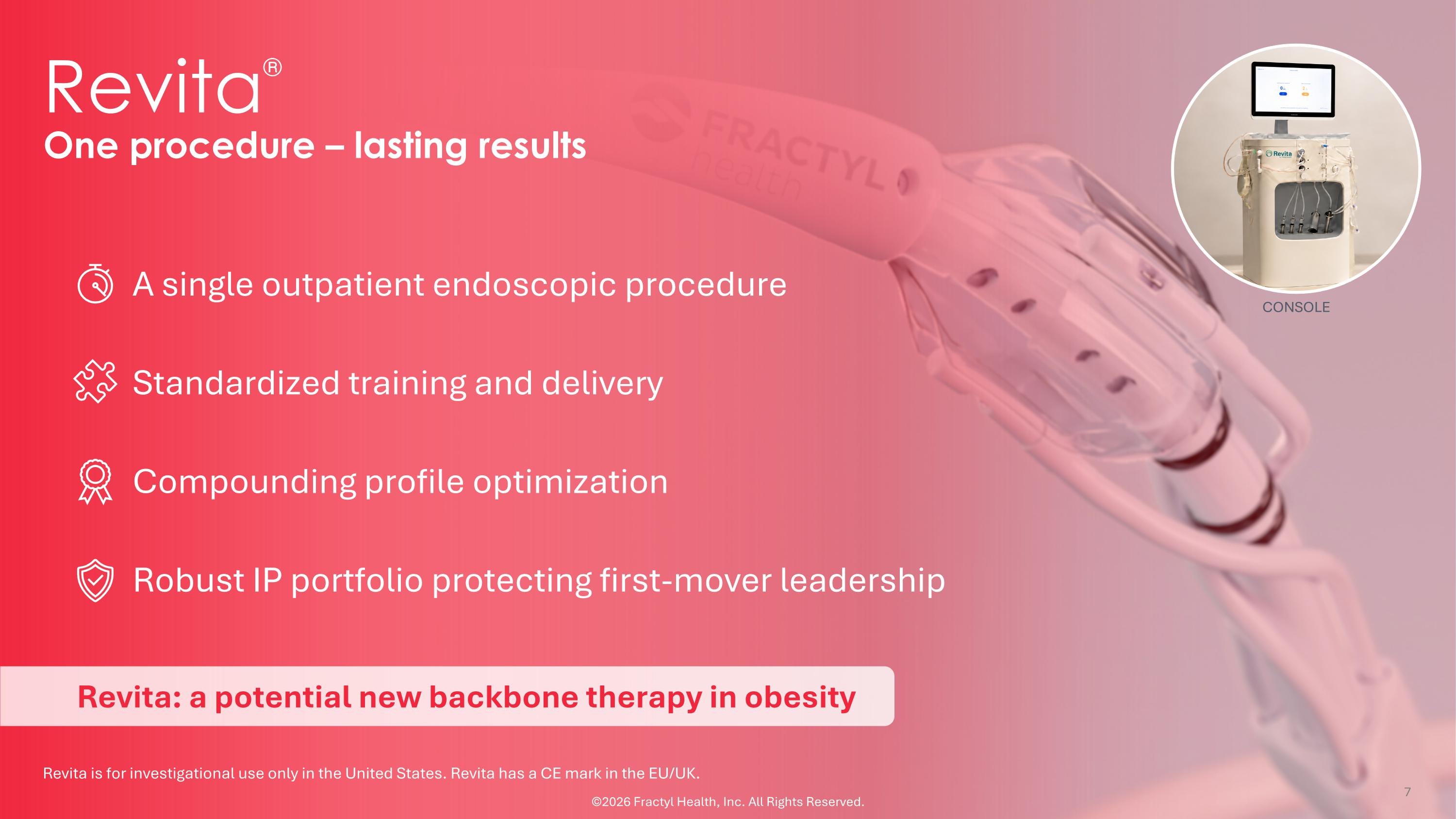
One procedure – lasting results Revita is for investigational use only in the United States. Revita has a CE mark in the EU/UK. CONSOLE A single outpatient endoscopic procedure Standardized training and delivery Compounding profile optimization Robust IP portfolio protecting first-mover leadership Revita® Revita: a potential new backbone therapy in obesity ©2026 Fractyl Health, Inc. All Rights Reserved.
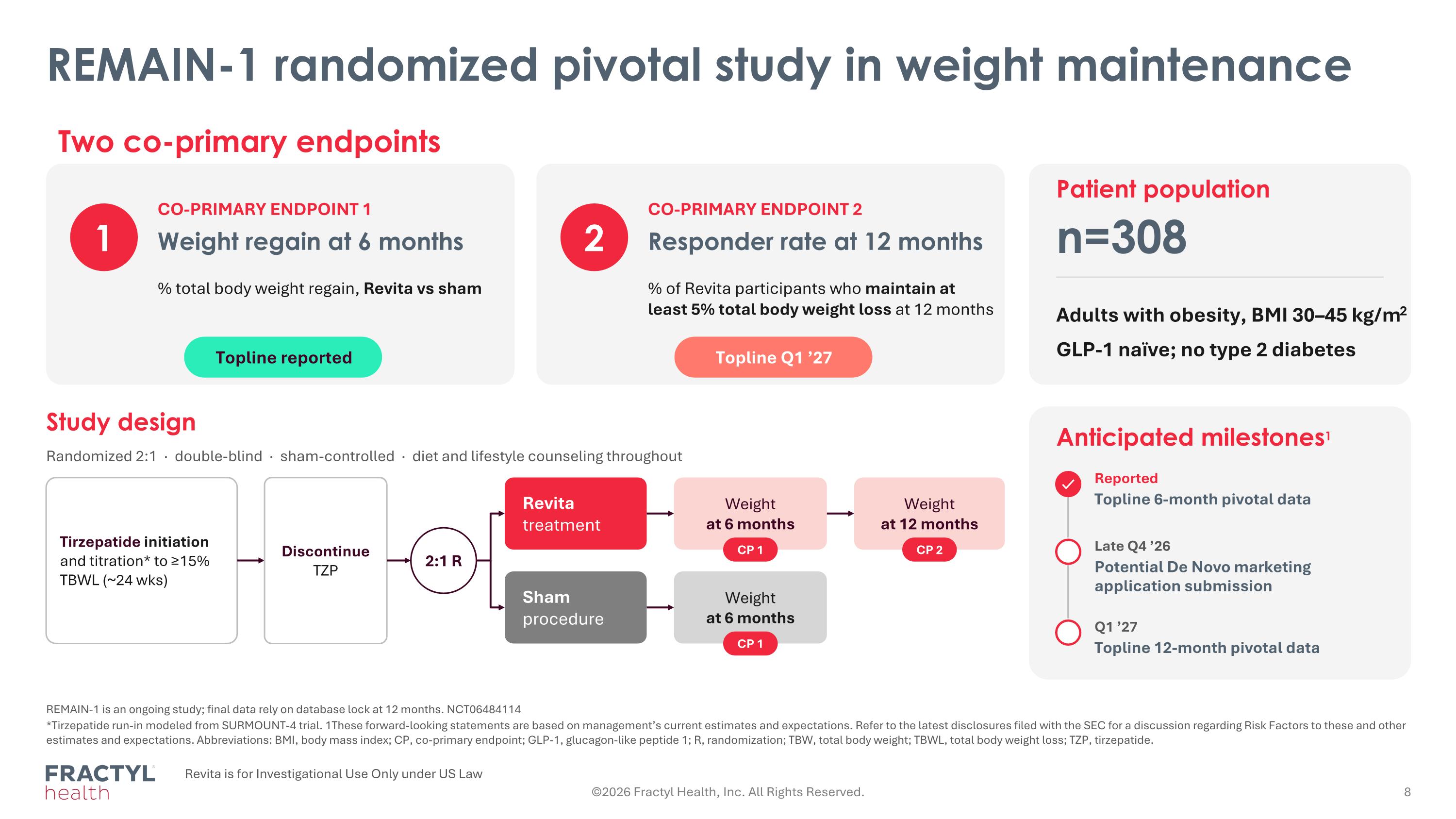
REMAIN-1 randomized pivotal study in weight maintenance Two co-primary endpoints 1 CO-PRIMARY ENDPOINT 1 Weight regain at 6 months % total body weight regain, Revita vs sham Topline reported 2 CO-PRIMARY ENDPOINT 2 Responder rate at 12 months % of Revita participants who maintain at least 5% total body weight loss at 12 months Topline Q1 ’27 Patient population n=308 Adults with obesity, BMI 30–45 kg/m2 GLP-1 naïve; no type 2 diabetes Study design Randomized 2:1 · double-blind · sham-controlled · diet and lifestyle counseling throughout Tirzepatide initiation and titration* to ≥15% TBWL (~24 wks) Discontinue TZP 2:1 R Revita treatment Sham procedure Weight at 6 months Weight at 6 months Weight at 12 months CP 1 CP 1 CP 2 Anticipated milestones1 ✓ Reported Topline 6-month pivotal data Late Q4 ’26 Potential De Novo marketing application submission Q1 ’27 Topline 12-month pivotal data REMAIN-1 is an ongoing study; final data rely on database lock at 12 months. NCT06484114 *Tirzepatide run-in modeled from SURMOUNT-4 trial. 1These forward-looking statements are based on management’s current estimates and expectations. Refer to the latest disclosures filed with the SEC for a discussion regarding Risk Factors to these and other estimates and expectations. Abbreviations: BMI, body mass index; CP, co-primary endpoint; GLP-1, glucagon-like peptide 1; R, randomization; TBW, total body weight; TBWL, total body weight loss; TZP, tirzepatide. Revita is for Investigational Use Only under US Law ©2026 Fractyl Health, Inc. All Rights Reserved.
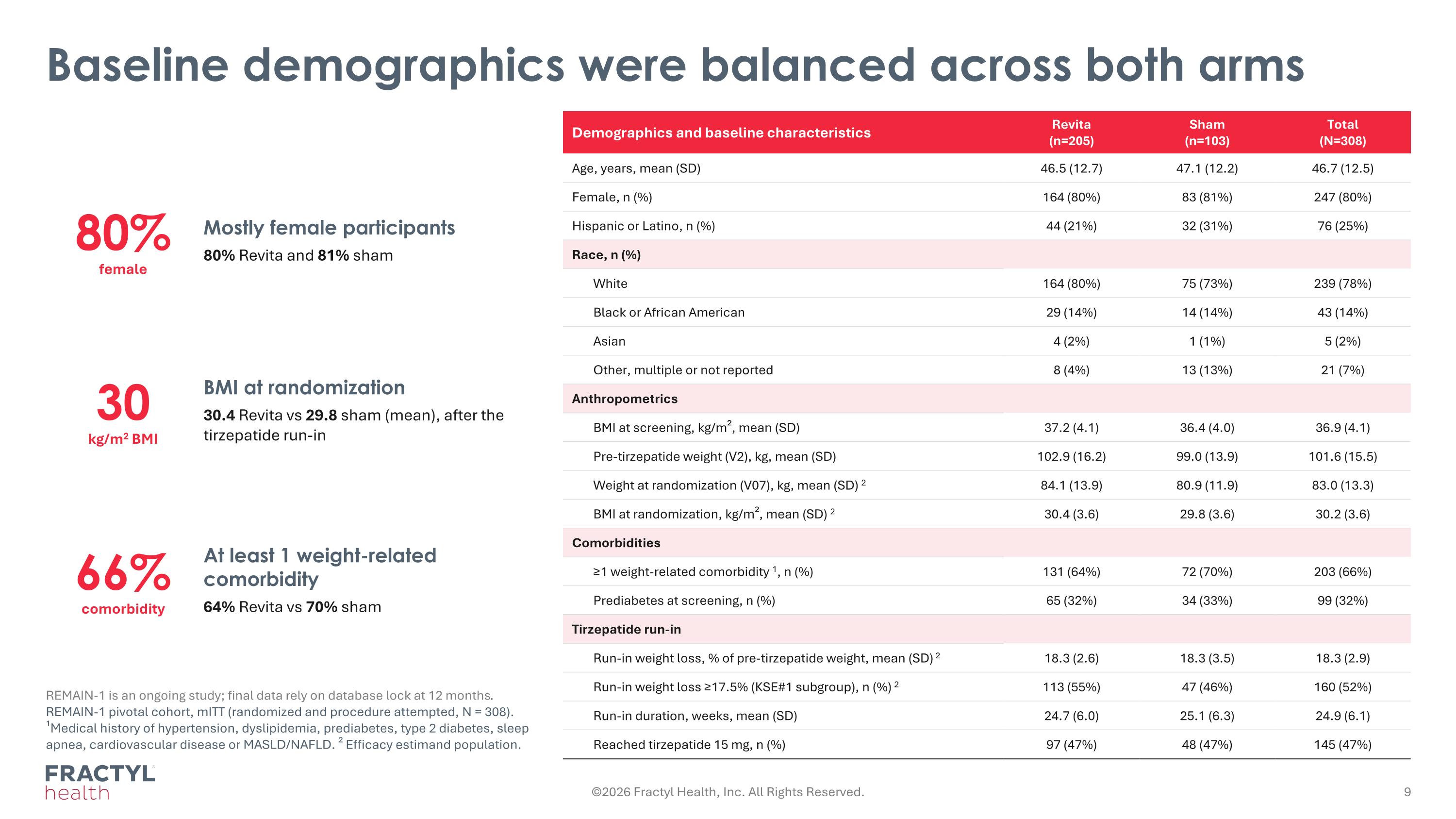
Baseline demographics were balanced across both arms REMAIN-1 is an ongoing study; final data rely on database lock at 12 months. REMAIN-1 pivotal cohort, mITT (randomized and procedure attempted, N = 308). ¹Medical history of hypertension, dyslipidemia, prediabetes, type 2 diabetes, sleep apnea, cardiovascular disease or MASLD/NAFLD. ² Efficacy estimand population. 80% female Mostly female participants 80% Revita and 81% sham 30 kg/m2 BMI BMI at randomization 30.4 Revita vs 29.8 sham (mean), after the tirzepatide run-in 66% comorbidity At least 1 weight-related comorbidity 64% Revita vs 70% sham Demographics and baseline characteristics Revita (n=205) Sham (n=103) Total (N=308) Age, years, mean (SD) 46.5 (12.7) 47.1 (12.2) 46.7 (12.5) Female, n (%) 164 (80%) 83 (81%) 247 (80%) Hispanic or Latino, n (%) 44 (21%) 32 (31%) 76 (25%) Race, n (%) White 164 (80%) 75 (73%) 239 (78%) Black or African American 29 (14%) 14 (14%) 43 (14%) Asian 4 (2%) 1 (1%) 5 (2%) Other, multiple or not reported 8 (4%) 13 (13%) 21 (7%) Anthropometrics BMI at screening, kg/m², mean (SD) 37.2 (4.1) 36.4 (4.0) 36.9 (4.1) Pre-tirzepatide weight (V2), kg, mean (SD) 102.9 (16.2) 99.0 (13.9) 101.6 (15.5) Weight at randomization (V07), kg, mean (SD) 2 84.1 (13.9) 80.9 (11.9) 83.0 (13.3) BMI at randomization, kg/m², mean (SD) 2 30.4 (3.6) 29.8 (3.6) 30.2 (3.6) Comorbidities ≥1 weight-related comorbidity 1, n (%) 131 (64%) 72 (70%) 203 (66%) Prediabetes at screening, n (%) 65 (32%) 34 (33%) 99 (32%) Tirzepatide run-in Run-in weight loss, % of pre-tirzepatide weight, mean (SD) 2 18.3 (2.6) 18.3 (3.5) 18.3 (2.9) Run-in weight loss ≥17.5% (KSE#1 subgroup), n (%) 2 113 (55%) 47 (46%) 160 (52%) Run-in duration, weeks, mean (SD) 24.7 (6.0) 25.1 (6.3) 24.9 (6.1) Reached tirzepatide 15 mg, n (%) 97 (47%) 48 (47%) 145 (47%) ©2026 Fractyl Health, Inc. All Rights Reserved.
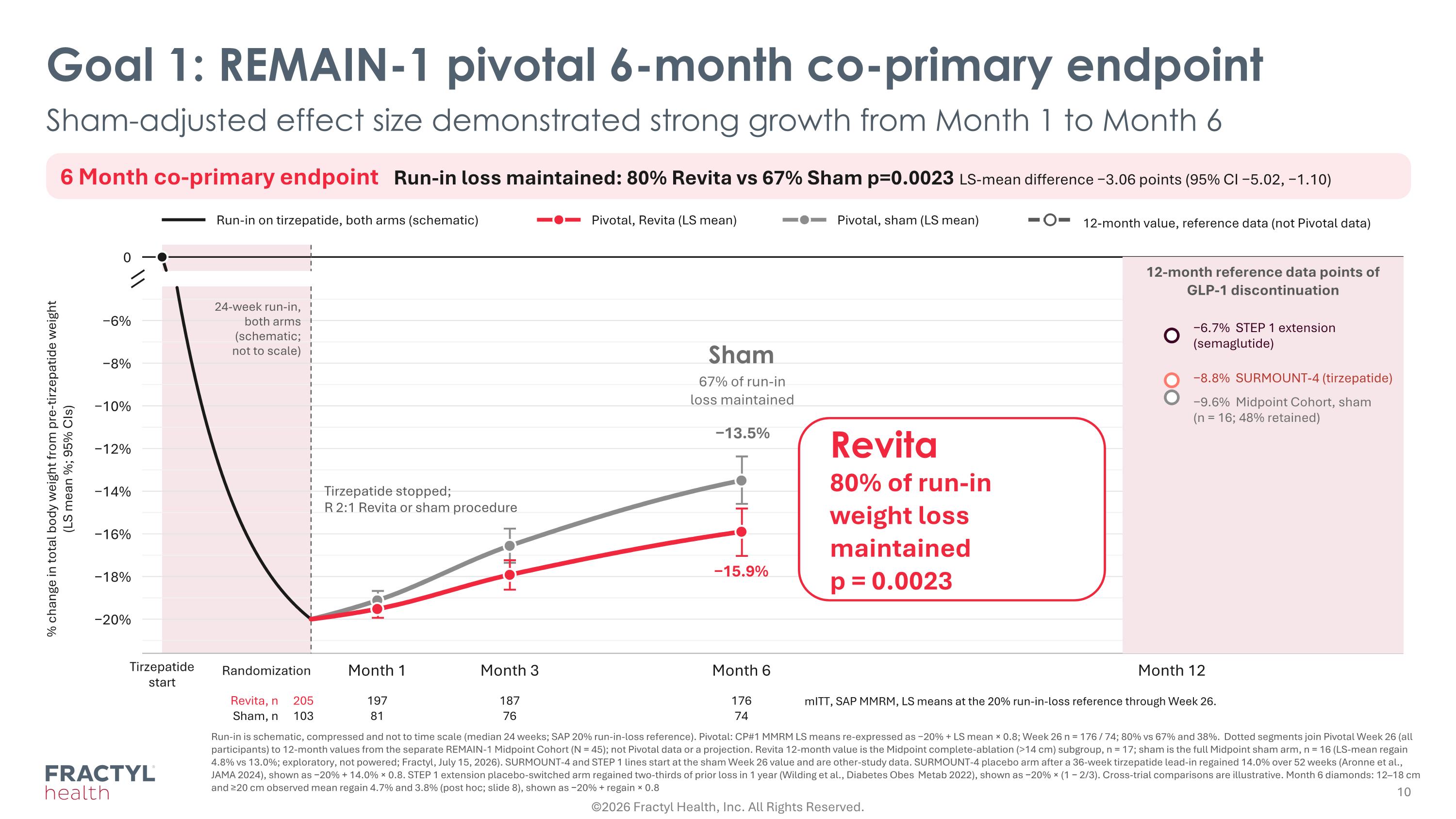
Goal 1: REMAIN-1 pivotal 6-month co-primary endpoint Sham-adjusted effect size demonstrated strong growth from Month 1 to Month 6 6 Month co-primary endpoint Run-in loss maintained: 80% Revita vs 67% Sham p=0.0023 LS-mean difference −3.06 points (95% CI −5.02, −1.10) Run-in on tirzepatide, both arms (schematic) Pivotal, Revita (LS mean) Pivotal, sham (LS mean) 12-month value, reference data (not Pivotal data) 0 −20% −18% −16% −14% −12% −10% −8% −6% % change in total body weight from pre-tirzepatide weight (LS mean %; 95% CIs) Tirzepatide start Randomization Month 1 Month 3 Month 6 Month 12 Revita, n 205 197 187 176 Sham, n 103 81 12-month reference data points of GLP-1 discontinuation 76 74 24-week run-in, both arms (schematic; not to scale) Tirzepatide stopped; R 2:1 Revita or sham procedure −6.7% STEP 1 extension (semaglutide) −8.8% SURMOUNT-4 (tirzepatide) −9.6% Midpoint Cohort, sham (n = 16; 48% retained) −13.5% −15.9% Sham 67% of run-in loss maintained Revita 80% of run-in weight loss maintained p = 0.0023 mITT, SAP MMRM, LS means at the 20% run-in-loss reference through Week 26. Run-in is schematic, compressed and not to time scale (median 24 weeks; SAP 20% run-in-loss reference). Pivotal: CP#1 MMRM LS means re-expressed as −20% + LS mean × 0.8; Week 26 n = 176 / 74; 80% vs 67% and 38%. Dotted segments join Pivotal Week 26 (all participants) to 12-month values from the separate REMAIN-1 Midpoint Cohort (N = 45); not Pivotal data or a projection. Revita 12-month value is the Midpoint complete-ablation (>14 cm) subgroup, n = 17; sham is the full Midpoint sham arm, n = 16 (LS-mean regain 4.8% vs 13.0%; exploratory, not powered; Fractyl, July 15, 2026). SURMOUNT-4 and STEP 1 lines start at the sham Week 26 value and are other-study data. SURMOUNT-4 placebo arm after a 36-week tirzepatide lead-in regained 14.0% over 52 weeks (Aronne et al., JAMA 2024), shown as −20% + 14.0% × 0.8. STEP 1 extension placebo-switched arm regained two-thirds of prior loss in 1 year (Wilding et al., Diabetes Obes Metab 2022), shown as −20% × (1 − 2/3). Cross-trial comparisons are illustrative. Month 6 diamonds: 12–18 cm and ≥20 cm observed mean regain 4.7% and 3.8% (post hoc; slide 8), shown as −20% + regain × 0.8 ©2026 Fractyl Health, Inc. All Rights Reserved.
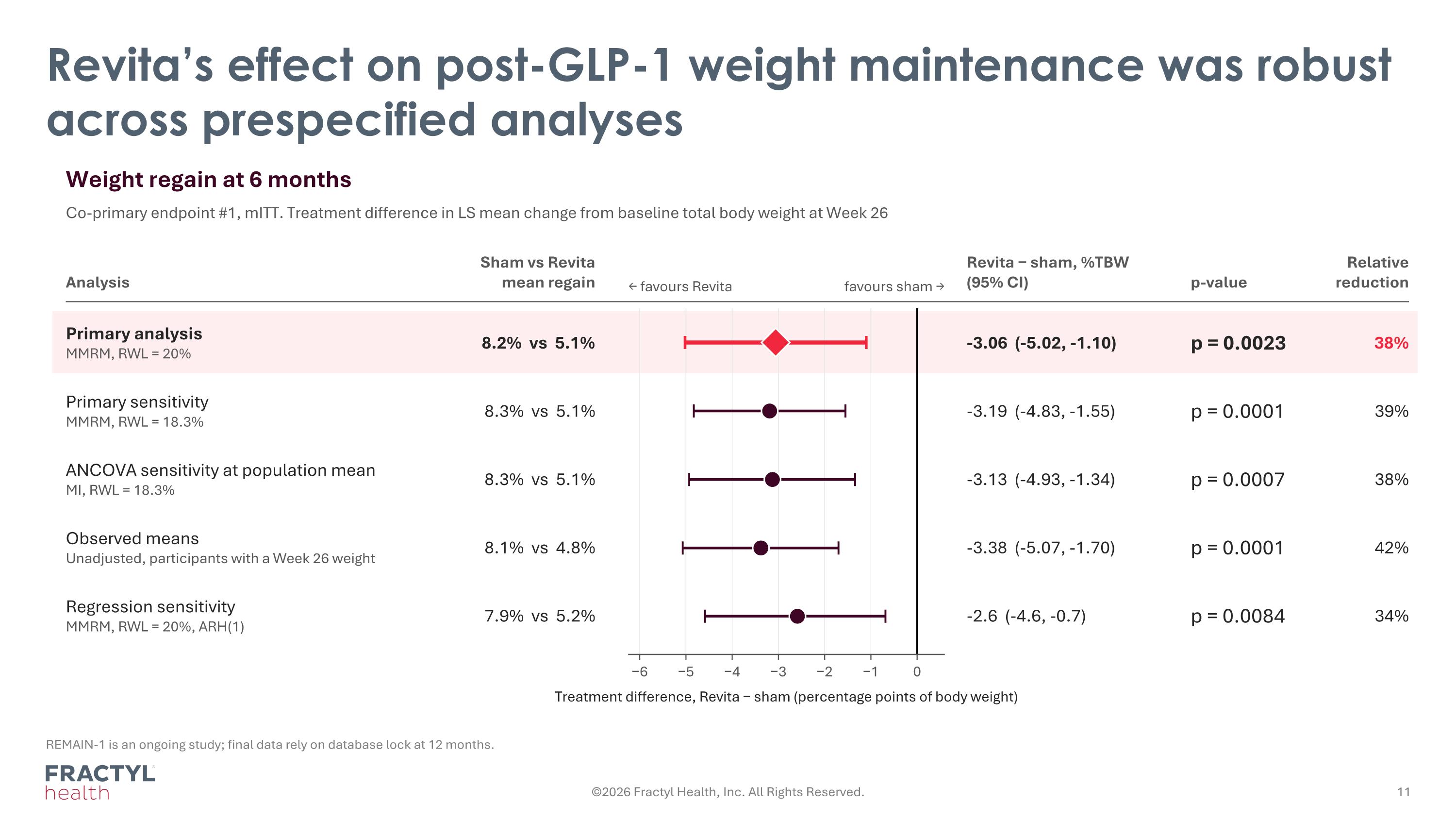
Revita’s effect on post-GLP-1 weight maintenance was robust across prespecified analyses REMAIN-1 is an ongoing study; final data rely on database lock at 12 months. Weight regain at 6 months Co-primary endpoint #1, mITT. Treatment difference in LS mean change from baseline total body weight at Week 26 Analysis Sham vs Revita mean regain Revita − sham, %TBW (95% CI) p-value Relative reduction ← favours Revita favours sham → −6 −5 −4 −3 −2 −1 0 Treatment difference, Revita − sham (percentage points of body weight) Primary analysis MMRM, RWL = 20% 8.2% vs 5.1% -3.06 (-5.02, -1.10) p = 0.0023 38% Primary sensitivity MMRM, RWL = 18.3% 8.3% vs 5.1% -3.19 (-4.83, -1.55) p = 0.0001 39% ANCOVA sensitivity at population mean MI, RWL = 18.3% 8.3% vs 5.1% -3.13 (-4.93, -1.34) p = 0.0007 38% Observed means Unadjusted, participants with a Week 26 weight 8.1% vs 4.8% -3.38 (-5.07, -1.70) p = 0.0001 42% Regression sensitivity MMRM, RWL = 20%, ARH(1) 7.9% vs 5.2% -2.6 (-4.6, -0.7) p = 0.0084 34% ©2026 Fractyl Health, Inc. All Rights Reserved.
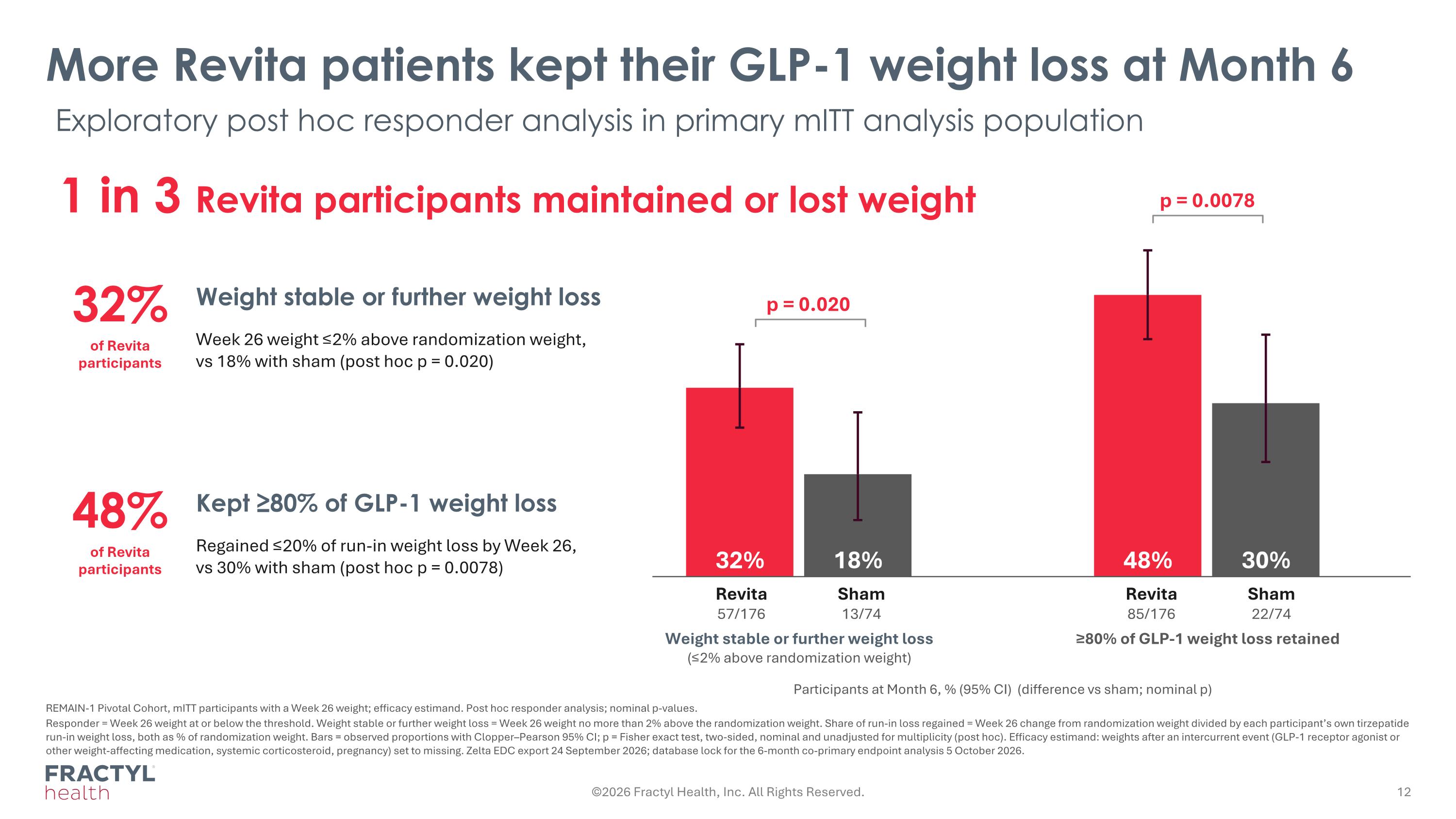
©2026 Fractyl Health, Inc. All Rights Reserved. More Revita patients kept their GLP-1 weight loss at Month 6 1 in 3 Revita participants maintained or lost weight 32% of Revita participants Weight stable or further weight loss Week 26 weight ≤2% above randomization weight, vs 18% with sham (post hoc p = 0.020) 48% of Revita participants Kept ≥80% of GLP-1 weight loss Regained ≤20% of run-in weight loss by Week 26, vs 30% with sham (post hoc p = 0.0078) p = 0.020 p = 0.0078 Revita 57/176 Sham 13/74 Revita 85/176 Sham 22/74 Weight stable or further weight loss (≤2% above randomization weight) ≥80% of GLP-1 weight loss retained Participants at Month 6, % (95% CI) (difference vs sham; nominal p) REMAIN-1 Pivotal Cohort, mITT participants with a Week 26 weight; efficacy estimand. Post hoc responder analysis; nominal p-values. Responder = Week 26 weight at or below the threshold. Weight stable or further weight loss = Week 26 weight no more than 2% above the randomization weight. Share of run-in loss regained = Week 26 change from randomization weight divided by each participant’s own tirzepatide run-in weight loss, both as % of randomization weight. Bars = observed proportions with Clopper–Pearson 95% CI; p = Fisher exact test, two-sided, nominal and unadjusted for multiplicity (post hoc). Efficacy estimand: weights after an intercurrent event (GLP-1 receptor agonist or other weight-affecting medication, systemic corticosteroid, pregnancy) set to missing. Zelta EDC export 24 September 2026; database lock for the 6-month co-primary endpoint analysis 5 October 2026. Exploratory post hoc responder analysis in primary mITT analysis population
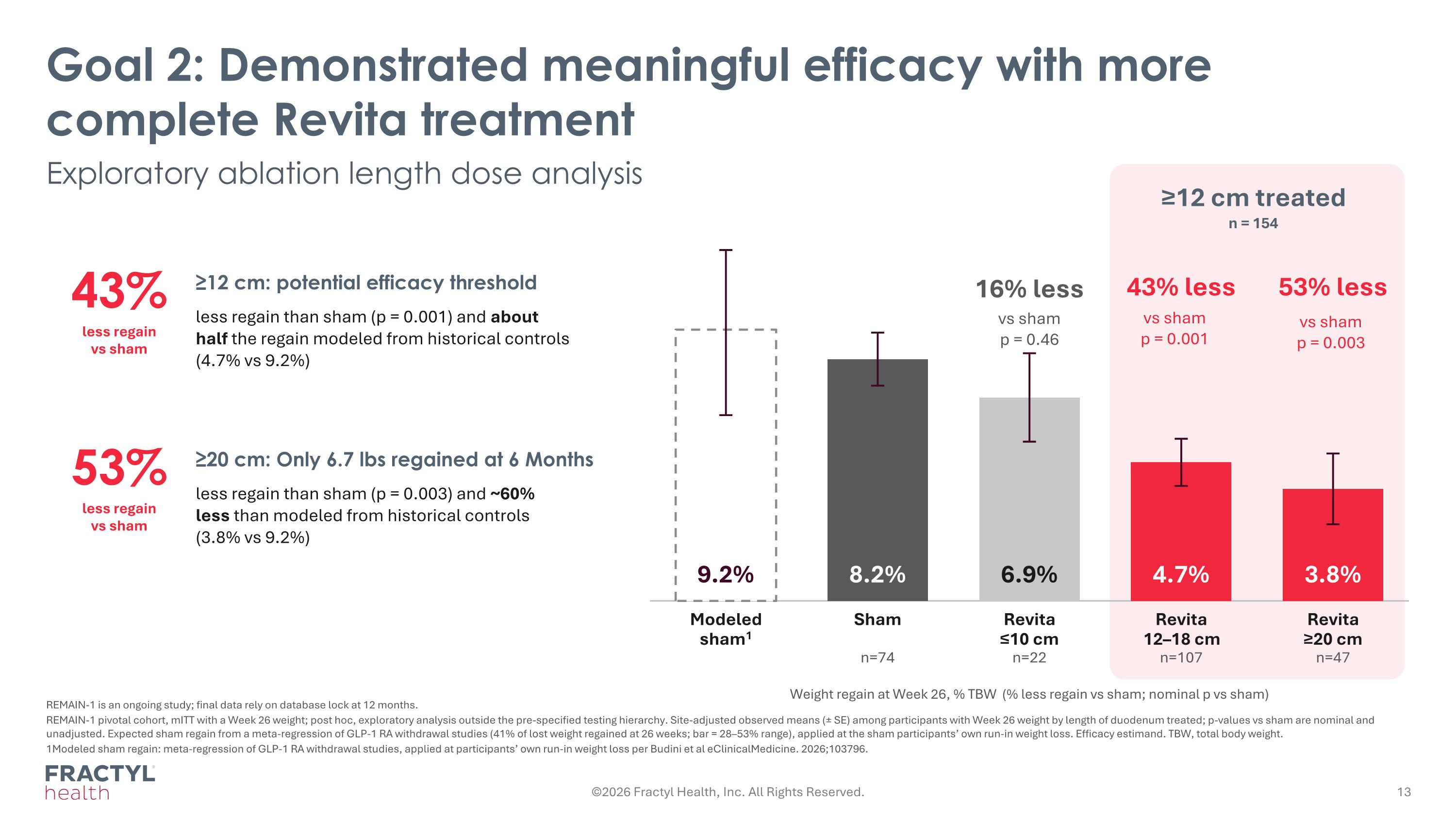
Goal 2: Demonstrated meaningful efficacy with more complete Revita treatment Exploratory ablation length dose analysis ≥12 cm treated n = 154 9.2% Modeled sham1 8.2% Sham n=74 6.9% Revita ≤10 cm n=22 16% less vs sham p = 0.46 4.7% Revita 12–18 cm n=107 43% less vs sham p = 0.001 3.8% Revita ≥20 cm n=47 53% less vs sham p = 0.003 Weight regain at Week 26, % TBW (% less regain vs sham; nominal p vs sham) 43% less regain vs sham ≥12 cm: potential efficacy threshold less regain than sham (p = 0.001) and about half the regain modeled from historical controls (4.7% vs 9.2%) 53% less regain vs sham ≥20 cm: Only 6.7 lbs regained at 6 Months less regain than sham (p = 0.003) and ~60% less than modeled from historical controls (3.8% vs 9.2%) REMAIN-1 is an ongoing study; final data rely on database lock at 12 months. REMAIN-1 pivotal cohort, mITT with a Week 26 weight; post hoc, exploratory analysis outside the pre-specified testing hierarchy. Site-adjusted observed means (± SE) among participants with Week 26 weight by length of duodenum treated; p-values vs sham are nominal and unadjusted. Expected sham regain from a meta-regression of GLP-1 RA withdrawal studies (41% of lost weight regained at 26 weeks; bar = 28–53% range), applied at the sham participants’ own run-in weight loss. Efficacy estimand. TBW, total body weight. 1Modeled sham regain: meta-regression of GLP-1 RA withdrawal studies, applied at participants’ own run-in weight loss per Budini et al eClinicalMedicine. 2026;103796. ©2026 Fractyl Health, Inc. All Rights Reserved.
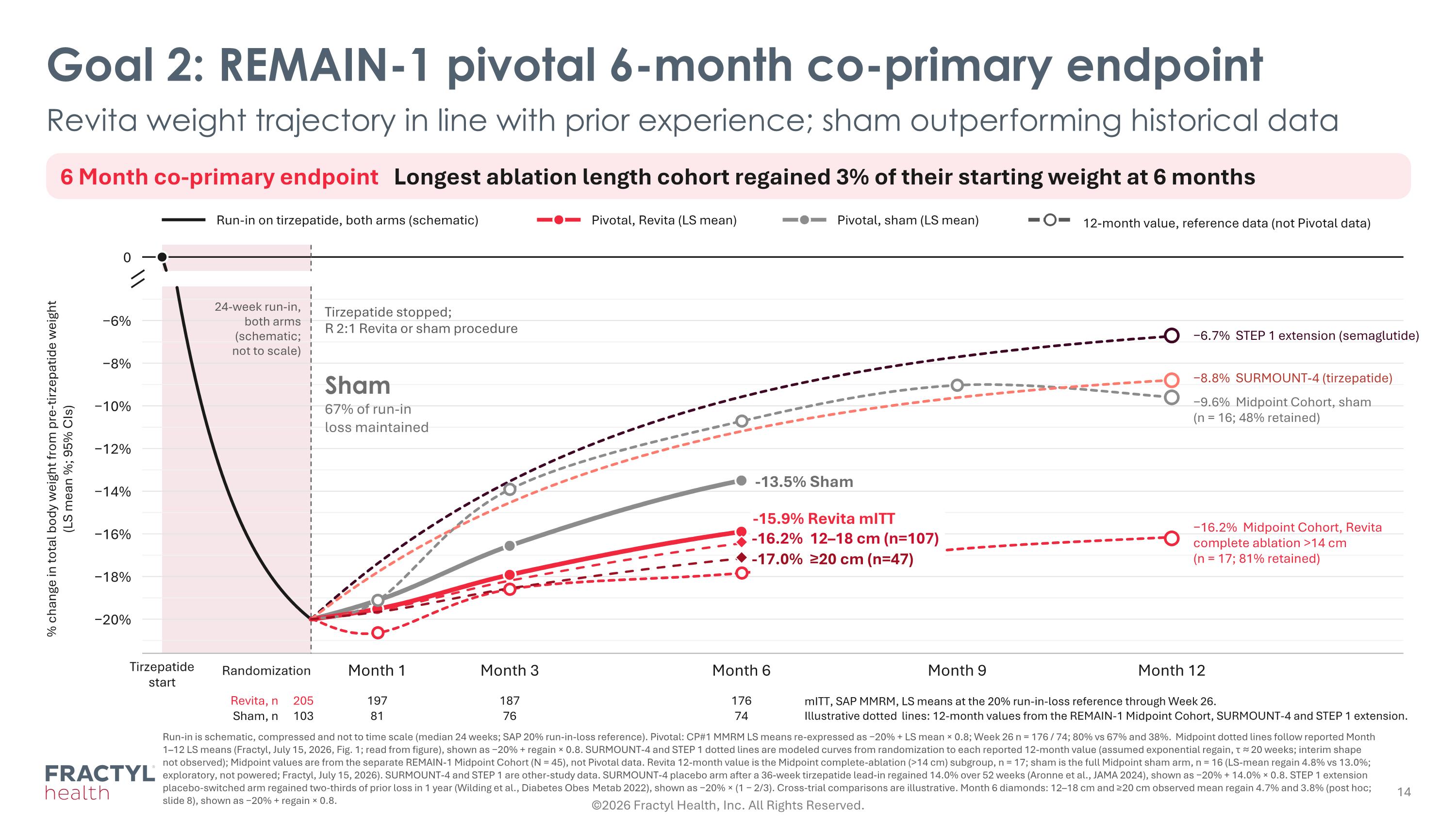
Goal 2: REMAIN-1 pivotal 6-month co-primary endpoint Revita weight trajectory in line with prior experience; sham outperforming historical data 6 Month co-primary endpoint Longest ablation length cohort regained 3% of their starting weight at 6 months Run-in on tirzepatide, both arms (schematic) Pivotal, Revita (LS mean) Pivotal, sham (LS mean) 12-month value, reference data (not Pivotal data) 0 −20% −18% −16% −14% −12% −10% −8% −6% % change in total body weight from pre-tirzepatide weight (LS mean %; 95% CIs) Tirzepatide start Randomization Month 1 Month 3 Month 6 Month 12 Month 9 Revita, n 205 197 187 176 Sham, n 103 81 76 74 24-week run-in, both arms (schematic; not to scale) Tirzepatide stopped; R 2:1 Revita or sham procedure −6.7% STEP 1 extension (semaglutide) −8.8% SURMOUNT-4 (tirzepatide) −9.6% Midpoint Cohort, sham (n = 16; 48% retained) −16.2% Midpoint Cohort, Revita complete ablation >14 cm (n = 17; 81% retained) -13.5% Sham Sham 67% of run-in loss maintained mITT, SAP MMRM, LS means at the 20% run-in-loss reference through Week 26. Illustrative dotted lines: 12-month values from the REMAIN-1 Midpoint Cohort, SURMOUNT-4 and STEP 1 extension. Run-in is schematic, compressed and not to time scale (median 24 weeks; SAP 20% run-in-loss reference). Pivotal: CP#1 MMRM LS means re-expressed as −20% + LS mean × 0.8; Week 26 n = 176 / 74; 80% vs 67% and 38%. Midpoint dotted lines follow reported Month 1–12 LS means (Fractyl, July 15, 2026, Fig. 1; read from figure), shown as −20% + regain × 0.8. SURMOUNT-4 and STEP 1 dotted lines are modeled curves from randomization to each reported 12-month value (assumed exponential regain, τ ≈ 20 weeks; interim shape not observed); Midpoint values are from the separate REMAIN-1 Midpoint Cohort (N = 45), not Pivotal data. Revita 12-month value is the Midpoint complete-ablation (>14 cm) subgroup, n = 17; sham is the full Midpoint sham arm, n = 16 (LS-mean regain 4.8% vs 13.0%; exploratory, not powered; Fractyl, July 15, 2026). SURMOUNT-4 and STEP 1 are other-study data. SURMOUNT-4 placebo arm after a 36-week tirzepatide lead-in regained 14.0% over 52 weeks (Aronne et al., JAMA 2024), shown as −20% + 14.0% × 0.8. STEP 1 extension placebo-switched arm regained two-thirds of prior loss in 1 year (Wilding et al., Diabetes Obes Metab 2022), shown as −20% × (1 − 2/3). Cross-trial comparisons are illustrative. Month 6 diamonds: 12–18 cm and ≥20 cm observed mean regain 4.7% and 3.8% (post hoc; slide 8), shown as −20% + regain × 0.8. -15.9% Revita mITT -16.2% 12–18 cm (n=107) -17.0% ≥20 cm (n=47) ©2026 Fractyl Health, Inc. All Rights Reserved.
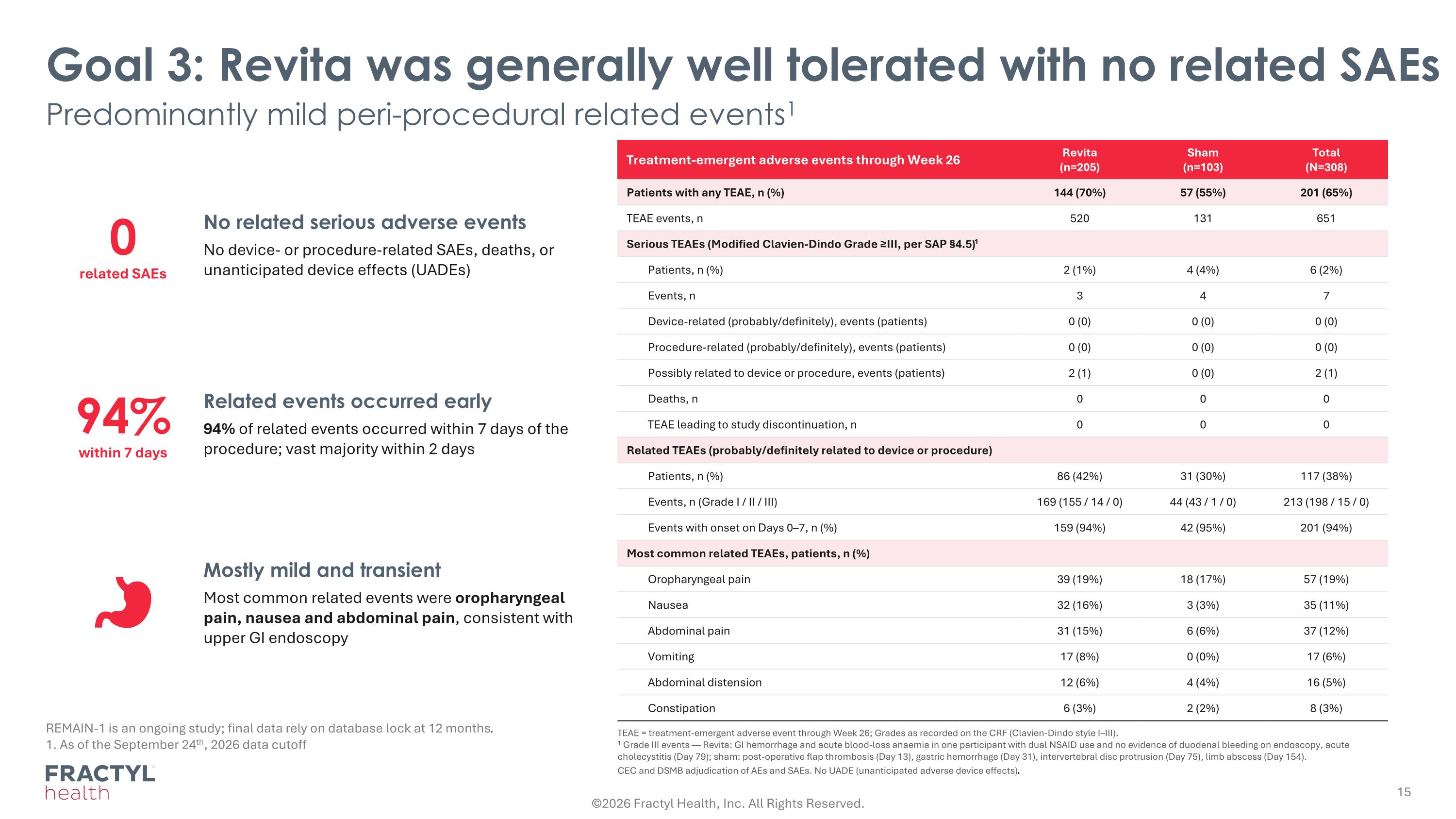
Goal 3: Revita was generally well tolerated with no related SAEs Predominantly mild peri-procedural related events1 REMAIN-1 is an ongoing study; final data rely on database lock at 12 months. 1. As of the September 24th, 2026 data cutoff Treatment-emergent adverse events through Week 26 Revita (n=205) Sham (n=103) Total (N=308) Patients with any TEAE, n (%) 144 (70%) 57 (55%) 201 (65%) TEAE events, n 520 131 651 Serious TEAEs (Modified Clavien-Dindo Grade ≥III, per SAP §4.5)1 Patients, n (%) 2 (1%) 4 (4%) 6 (2%) Events, n 3 4 7 Device-related (probably/definitely), events (patients) 0 (0) 0 (0) 0 (0) Procedure-related (probably/definitely), events (patients) 0 (0) 0 (0) 0 (0) Possibly related to device or procedure, events (patients) 2 (1) 0 (0) 2 (1) Deaths, n 0 0 0 TEAE leading to study discontinuation, n 0 0 0 Related TEAEs (probably/definitely related to device or procedure) Patients, n (%) 86 (42%) 31 (30%) 117 (38%) Events, n (Grade I / II / III) 169 (155 / 14 / 0) 44 (43 / 1 / 0) 213 (198 / 15 / 0) Events with onset on Days 0–7, n (%) 159 (94%) 42 (95%) 201 (94%) Most common related TEAEs, patients, n (%) Oropharyngeal pain 39 (19%) 18 (17%) 57 (19%) Nausea 32 (16%) 3 (3%) 35 (11%) Abdominal pain 31 (15%) 6 (6%) 37 (12%) Vomiting 17 (8%) 0 (0%) 17 (6%) Abdominal distension 12 (6%) 4 (4%) 16 (5%) Constipation 6 (3%) 2 (2%) 8 (3%) TEAE = treatment-emergent adverse event through Week 26; Grades as recorded on the CRF (Clavien-Dindo style I–III). 1 Grade III events — Revita: GI hemorrhage and acute blood-loss anaemia in one participant with dual NSAID use and no evidence of duodenal bleeding on endoscopy, acute cholecystitis (Day 79); sham: post-operative flap thrombosis (Day 13), gastric hemorrhage (Day 31), intervertebral disc protrusion (Day 75), limb abscess (Day 154). CEC and DSMB adjudication of AEs and SAEs. No UADE (unanticipated adverse device effects). 0 related SAEs No related serious adverse events No device- or procedure-related SAEs, deaths, or unanticipated device effects (UADEs) 94% within 7 days Related events occurred early 94% of related events occurred within 7 days of the procedure; vast majority within 2 days Mostly mild and transient Most common related events were oropharyngeal pain, nausea and abdominal pain, consistent with upper GI endoscopy ©2026 Fractyl Health, Inc. All Rights Reserved.
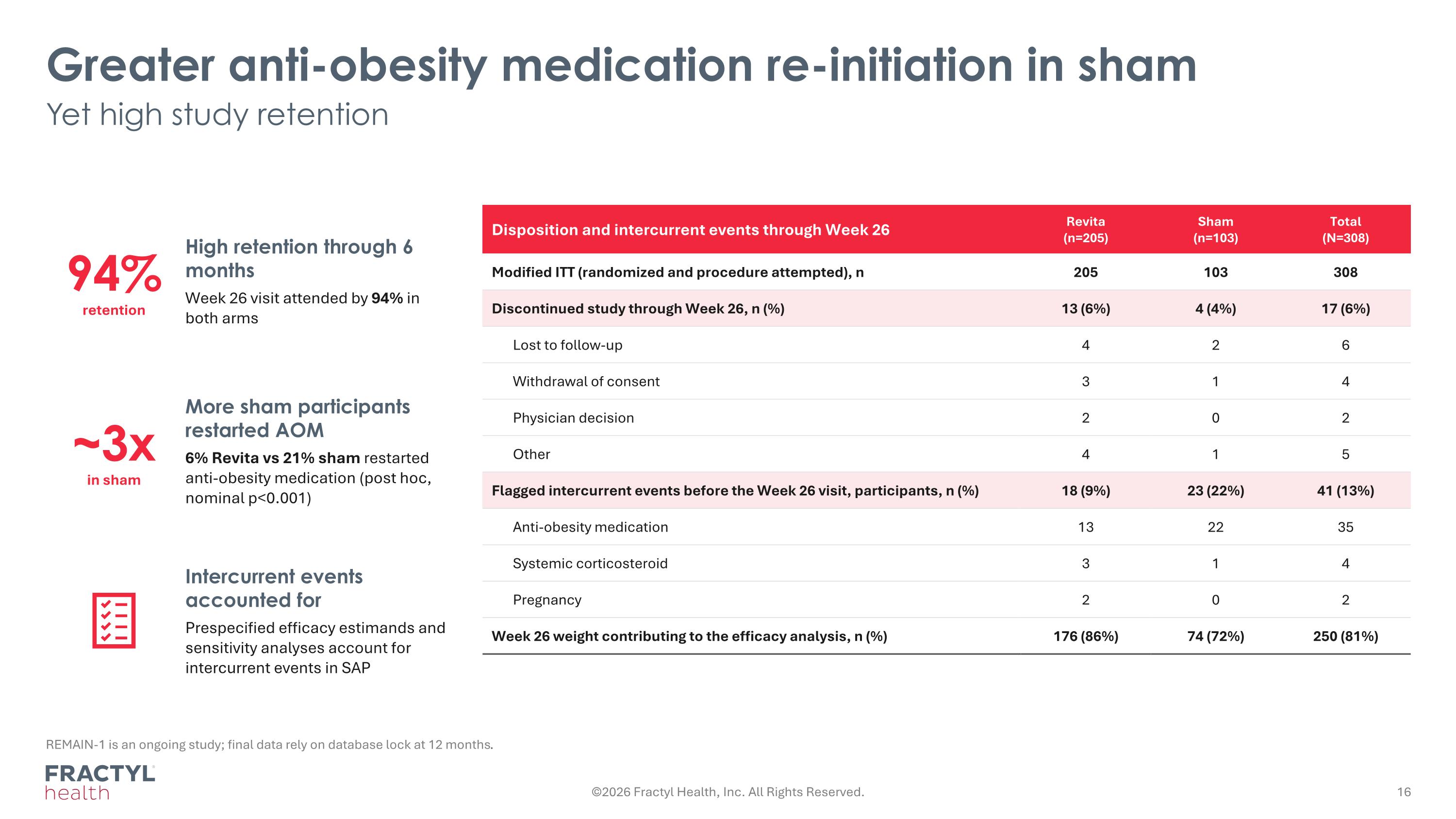
Greater anti-obesity medication re-initiation in sham Yet high study retention REMAIN-1 is an ongoing study; final data rely on database lock at 12 months. Disposition and intercurrent events through Week 26 Revita (n=205) Sham (n=103) Total (N=308) Modified ITT (randomized and procedure attempted), n 205 103 308 Discontinued study through Week 26, n (%) 13 (6%) 4 (4%) 17 (6%) Lost to follow-up 4 2 6 Withdrawal of consent 3 1 4 Physician decision 2 0 2 Other 4 1 5 Flagged intercurrent events before the Week 26 visit, participants, n (%) 18 (9%) 23 (22%) 41 (13%) Anti-obesity medication 13 22 35 Systemic corticosteroid 3 1 4 Pregnancy 2 0 2 Week 26 weight contributing to the efficacy analysis, n (%) 176 (86%) 74 (72%) 250 (81%) 94% retention High retention through 6 months Week 26 visit attended by 94% in both arms ~3x in sham More sham participants restarted AOM 6% Revita vs 21% sham restarted anti-obesity medication (post hoc, nominal p<0.001) Intercurrent events accounted for Prespecified efficacy estimands and sensitivity analyses account for intercurrent events in SAP ©2026 Fractyl Health, Inc. All Rights Reserved.
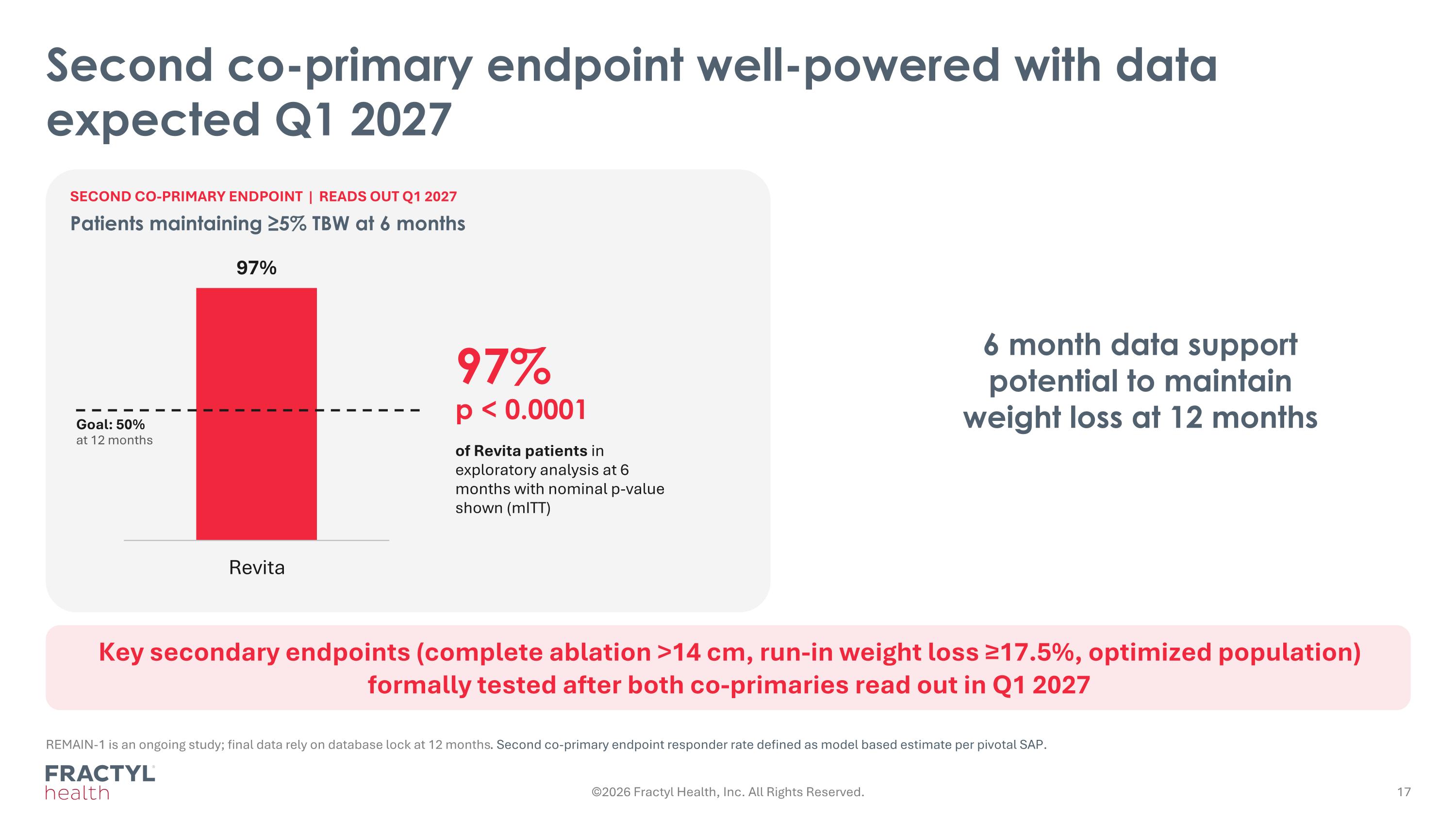
Second co-primary endpoint well-powered with data expected Q1 2027 Key secondary endpoints (complete ablation >14 cm, run-in weight loss ≥17.5%, optimized population) formally tested after both co-primaries read out in Q1 2027 REMAIN-1 is an ongoing study; final data rely on database lock at 12 months. Second co-primary endpoint responder rate defined as model based estimate per pivotal SAP. SECOND CO-PRIMARY ENDPOINT | READS OUT Q1 2027 Patients maintaining ≥5% TBW at 6 months 97% p < 0.0001 of Revita patients in exploratory analysis at 6 months with nominal p-value shown (mITT) Goal: 50% at 12 months ©2026 Fractyl Health, Inc. All Rights Reserved. 6 month data support potential to maintain weight loss at 12 months
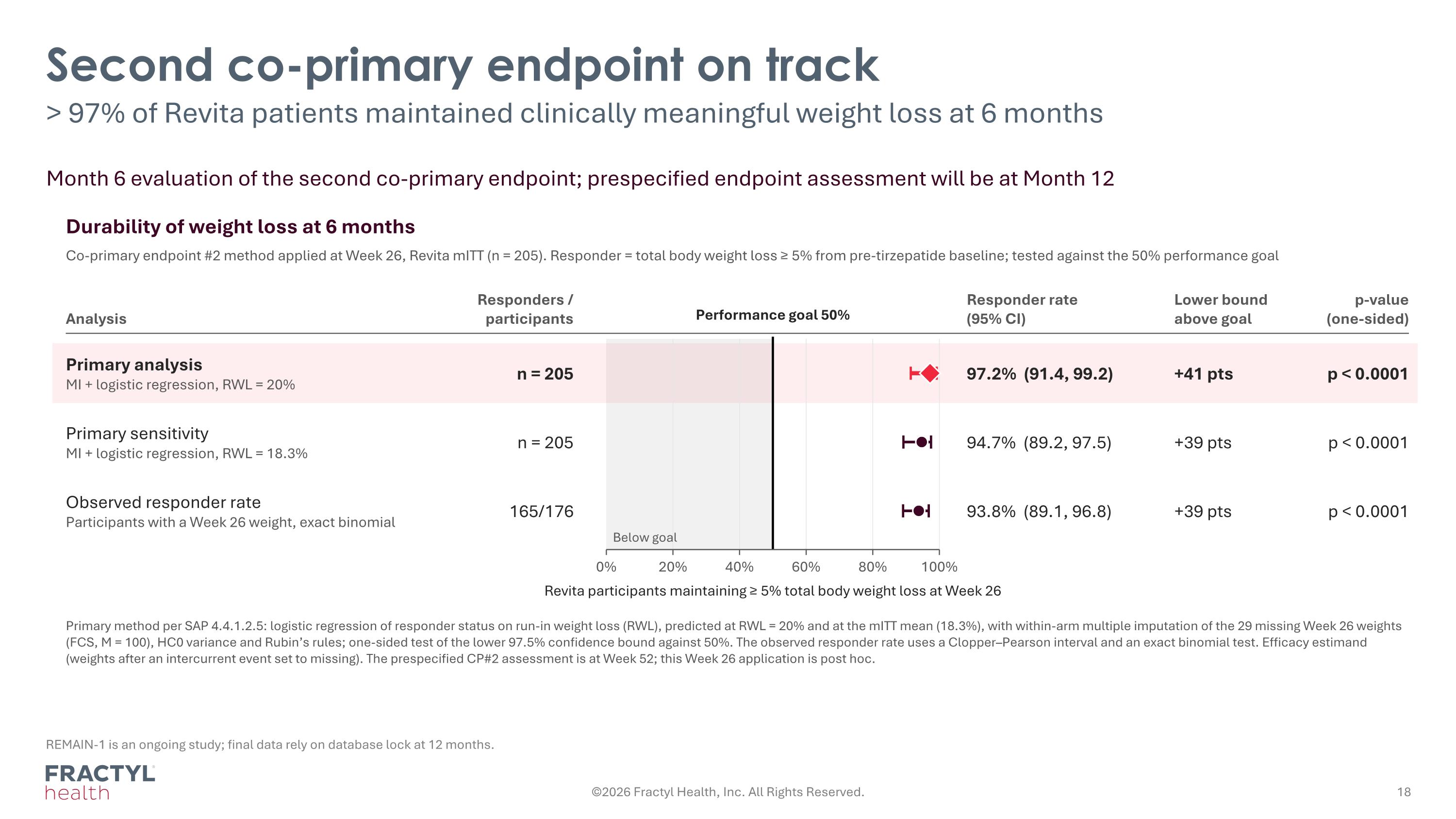
Second co-primary endpoint on track > 97% of Revita patients maintained clinically meaningful weight loss at 6 months REMAIN-1 is an ongoing study; final data rely on database lock at 12 months. Month 6 evaluation of the second co-primary endpoint; prespecified endpoint assessment will be at Month 12 Durability of weight loss at 6 months Co-primary endpoint #2 method applied at Week 26, Revita mITT (n = 205). Responder = total body weight loss ≥ 5% from pre-tirzepatide baseline; tested against the 50% performance goal Analysis Responders / participants Responder rate (95% CI) Lower bound above goal p-value (one-sided) Performance goal 50% 0% 20% 40% 60% 80% 100% Revita participants maintaining ≥ 5% total body weight loss at Week 26 Below goal Primary analysis MI + logistic regression, RWL = 20% n = 205 97.2% (91.4, 99.2) +41 pts p < 0.0001 Primary sensitivity MI + logistic regression, RWL = 18.3% n = 205 94.7% (89.2, 97.5) +39 pts p < 0.0001 Observed responder rate Participants with a Week 26 weight, exact binomial 165/176 93.8% (89.1, 96.8) +39 pts p < 0.0001 Primary method per SAP 4.4.1.2.5: logistic regression of responder status on run-in weight loss (RWL), predicted at RWL = 20% and at the mITT mean (18.3%), with within-arm multiple imputation of the 29 missing Week 26 weights (FCS, M = 100), HC0 variance and Rubin’s rules; one-sided test of the lower 97.5% confidence bound against 50%. The observed responder rate uses a Clopper–Pearson interval and an exact binomial test. Efficacy estimand (weights after an intercurrent event set to missing). The prespecified CP#2 assessment is at Week 52; this Week 26 application is post hoc. ©2026 Fractyl Health, Inc. All Rights Reserved.
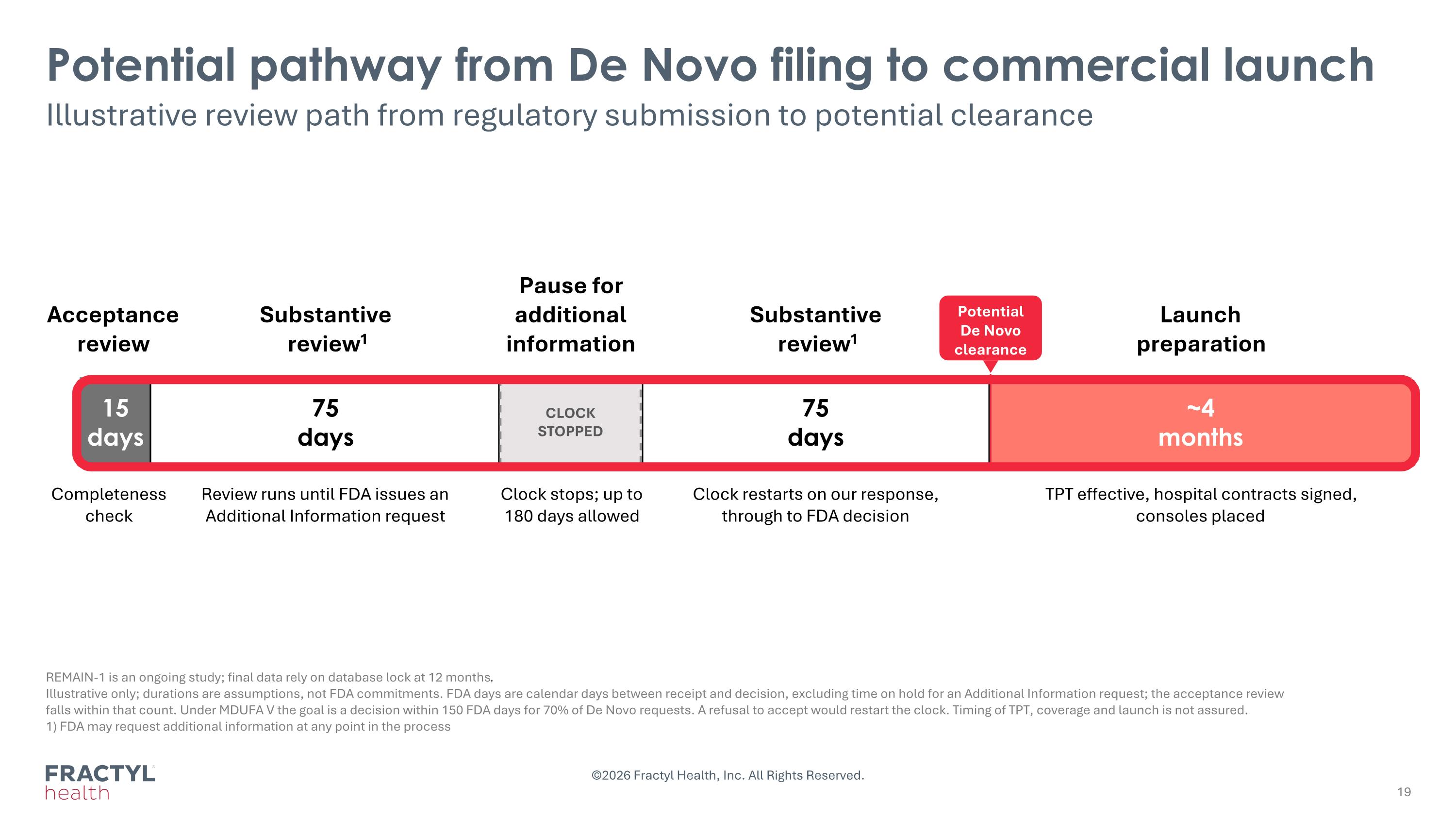
Potential pathway from De Novo filing to commercial launch Illustrative review path from regulatory submission to potential clearance REMAIN-1 is an ongoing study; final data rely on database lock at 12 months. Illustrative only; durations are assumptions, not FDA commitments. FDA days are calendar days between receipt and decision, excluding time on hold for an Additional Information request; the acceptance review falls within that count. Under MDUFA V the goal is a decision within 150 FDA days for 70% of De Novo requests. A refusal to accept would restart the clock. Timing of TPT, coverage and launch is not assured. 1) FDA may request additional information at any point in the process 15 days Acceptance review Completeness check 75 days Substantive review1 Review runs until FDA issues an Additional Information request CLOCK STOPPED Pause for additional information Clock stops; up to 180 days allowed 75 days Substantive review1 Clock restarts on our response, through to FDA decision ~4 months Launch preparation TPT effective, hospital contracts signed, consoles placed Potential De Novo clearance ©2026 Fractyl Health, Inc. All Rights Reserved.
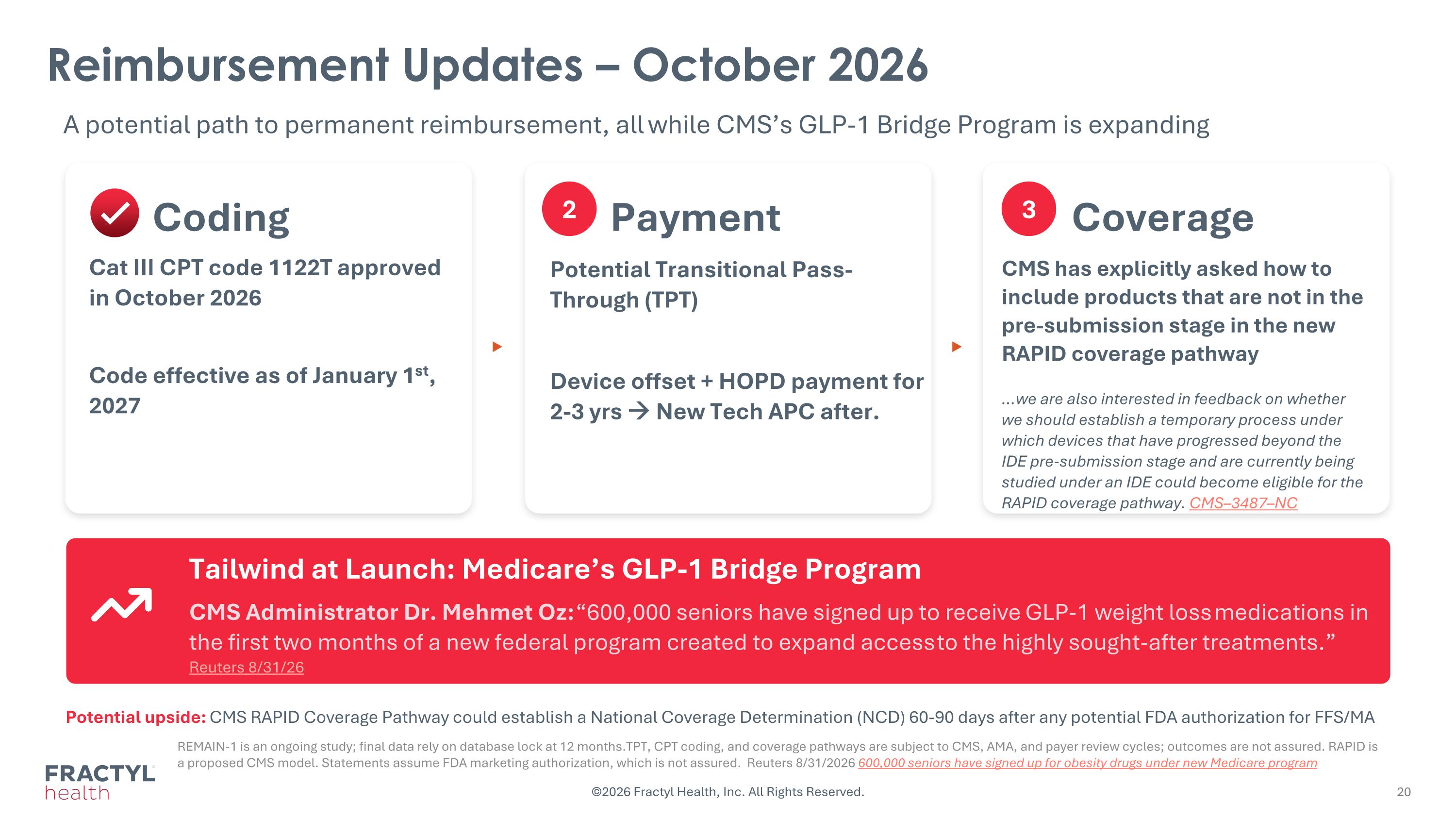
Reimbursement Updates – October 2026 A potential path to permanent reimbursement, all while CMS’s GLP-1 Bridge Program is expanding 1 2 Coding Cat III CPT code 1122T approved in October 2026 Code effective as of January 1st, 2027 3 Coverage CMS has explicitly asked how to include products that are not in the pre-submission stage in the new RAPID coverage pathway …we are also interested in feedback on whether we should establish a temporary process under which devices that have progressed beyond the IDE pre-submission stage and are currently being studied under an IDE could become eligible for the RAPID coverage pathway. CMS–3487–NC ▶ ▶ Tailwind at Launch: Medicare’s GLP-1 Bridge Program CMS Administrator Dr. Mehmet Oz: “600,000 seniors have signed up to receive GLP-1 weight loss medications in the first two months of a new federal program created to expand access to the highly sought-after treatments.” Reuters 8/31/26 Potential upside: CMS RAPID Coverage Pathway could establish a National Coverage Determination (NCD) 60-90 days after any potential FDA authorization for FFS/MA REMAIN-1 is an ongoing study; final data rely on database lock at 12 months.TPT, CPT coding, and coverage pathways are subject to CMS, AMA, and payer review cycles; outcomes are not assured. RAPID is a proposed CMS model. Statements assume FDA marketing authorization, which is not assured. Reuters 8/31/2026 600,000 seniors have signed up for obesity drugs under new Medicare program Payment Potential Transitional Pass-Through (TPT) Device offset + HOPD payment for 2-3 yrs New Tech APC after. ©2026 Fractyl Health, Inc. All Rights Reserved.
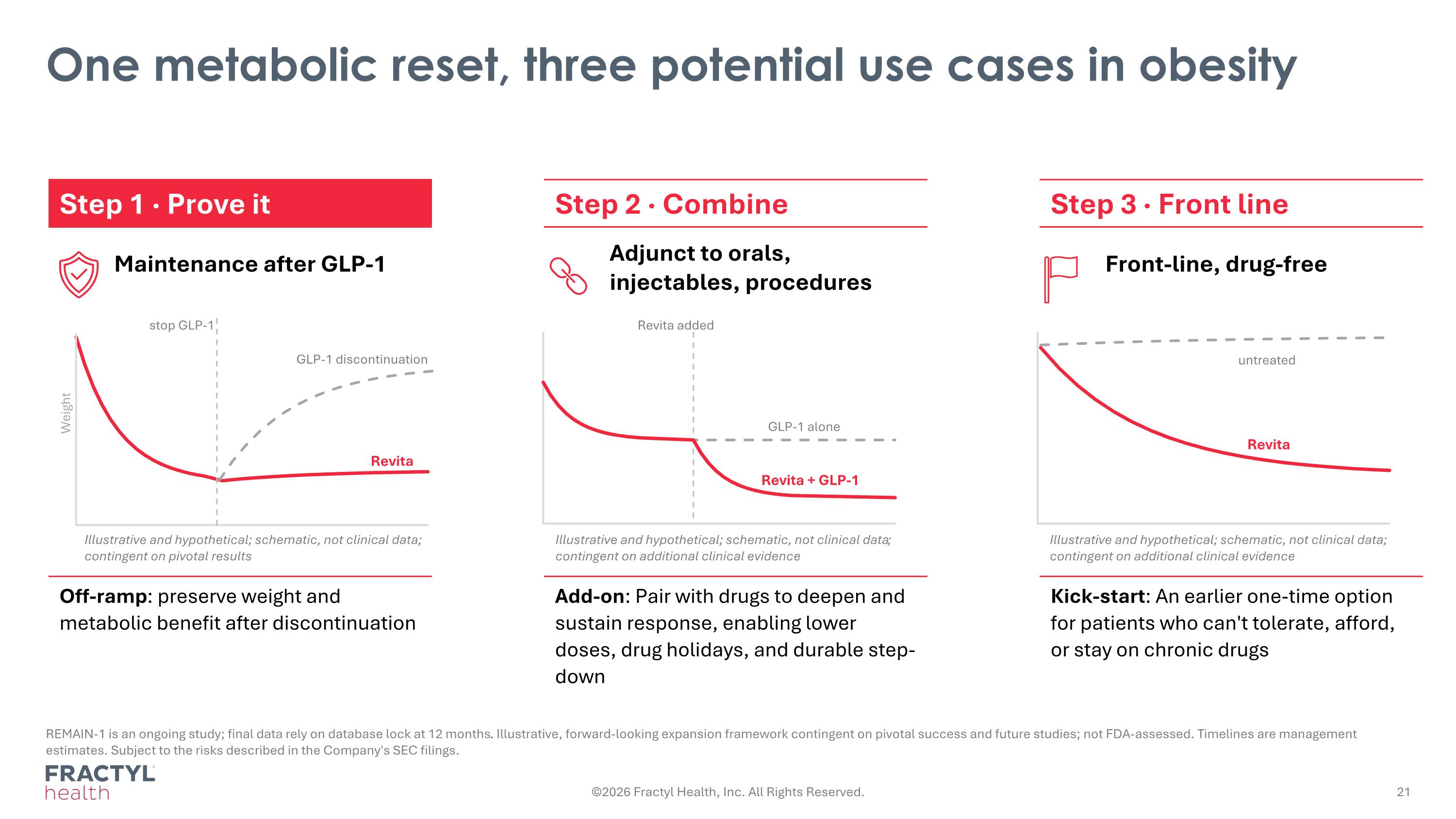
One metabolic reset, three potential use cases in obesity REMAIN-1 is an ongoing study; final data rely on database lock at 12 months. Illustrative, forward-looking expansion framework contingent on pivotal success and future studies; not FDA-assessed. Timelines are management estimates. Subject to the risks described in the Company's SEC filings. Step 1 · Prove it Step 2 · Combine Step 3 · Front line Maintenance after GLP-1 Adjunct to orals, injectables, procedures Front-line, drug-free Off-ramp: preserve weight and metabolic benefit after discontinuation Add-on: Pair with drugs to deepen and sustain response, enabling lower doses, drug holidays, and durable step-down Kick-start: An earlier one-time option for patients who can't tolerate, afford, or stay on chronic drugs untreated Revita stop GLP-1 GLP-1 discontinuation Revita Weight Revita + GLP-1 GLP-1 alone Revita added ©2026 Fractyl Health, Inc. All Rights Reserved. Illustrative and hypothetical; schematic, not clinical data; contingent on additional clinical evidence Illustrative and hypothetical; schematic, not clinical data; contingent on additional clinical evidence Illustrative and hypothetical; schematic, not clinical data; contingent on pivotal results
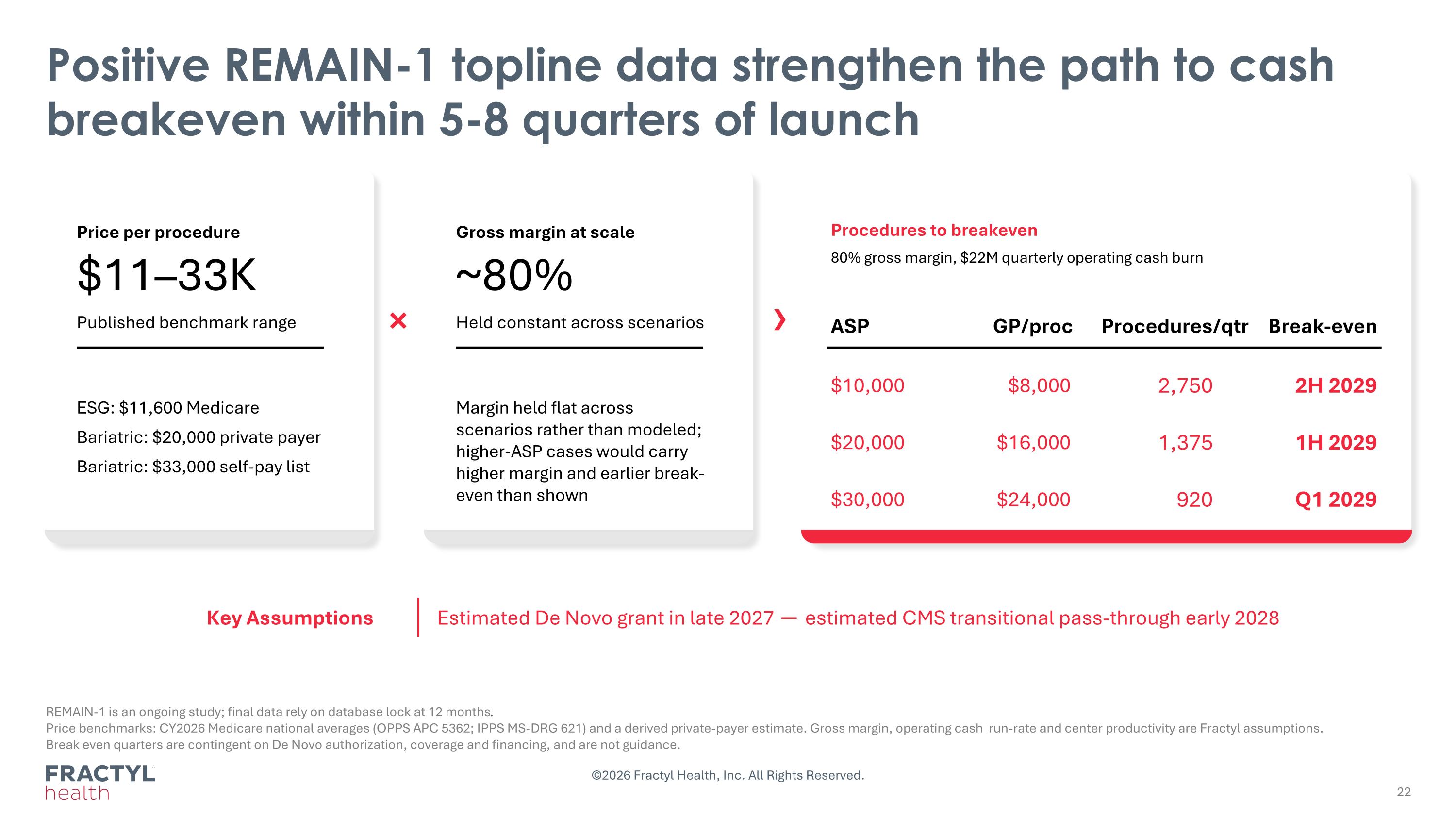
Positive REMAIN-1 topline data strengthen the path to cash breakeven within 5-8 quarters of launch REMAIN-1 is an ongoing study; final data rely on database lock at 12 months. Price benchmarks: CY2026 Medicare national averages (OPPS APC 5362; IPPS MS-DRG 621) and a derived private-payer estimate. Gross margin, operating cash run-rate and center productivity are Fractyl assumptions. Break even quarters are contingent on De Novo authorization, coverage and financing, and are not guidance. Price per procedure $11–33K Published benchmark range ESG: $11,600 Medicare Bariatric: $20,000 private payer Bariatric: $33,000 self-pay list × Gross margin at scale ~80% Held constant across scenarios Margin held flat across scenarios rather than modeled; higher-ASP cases would carry higher margin and earlier break-even than shown Procedures to breakeven 80% gross margin, $22M quarterly operating cash burn ASP GP/proc Procedures/qtr Break-even $10,000 $8,000 2,750 2H 2029 $20,000 $16,000 1,375 1H 2029 $30,000 $24,000 920 Q1 2029 Key Assumptions Estimated De Novo grant in late 2027 ─ estimated CMS transitional pass-through early 2028 ©2026 Fractyl Health, Inc. All Rights Reserved.
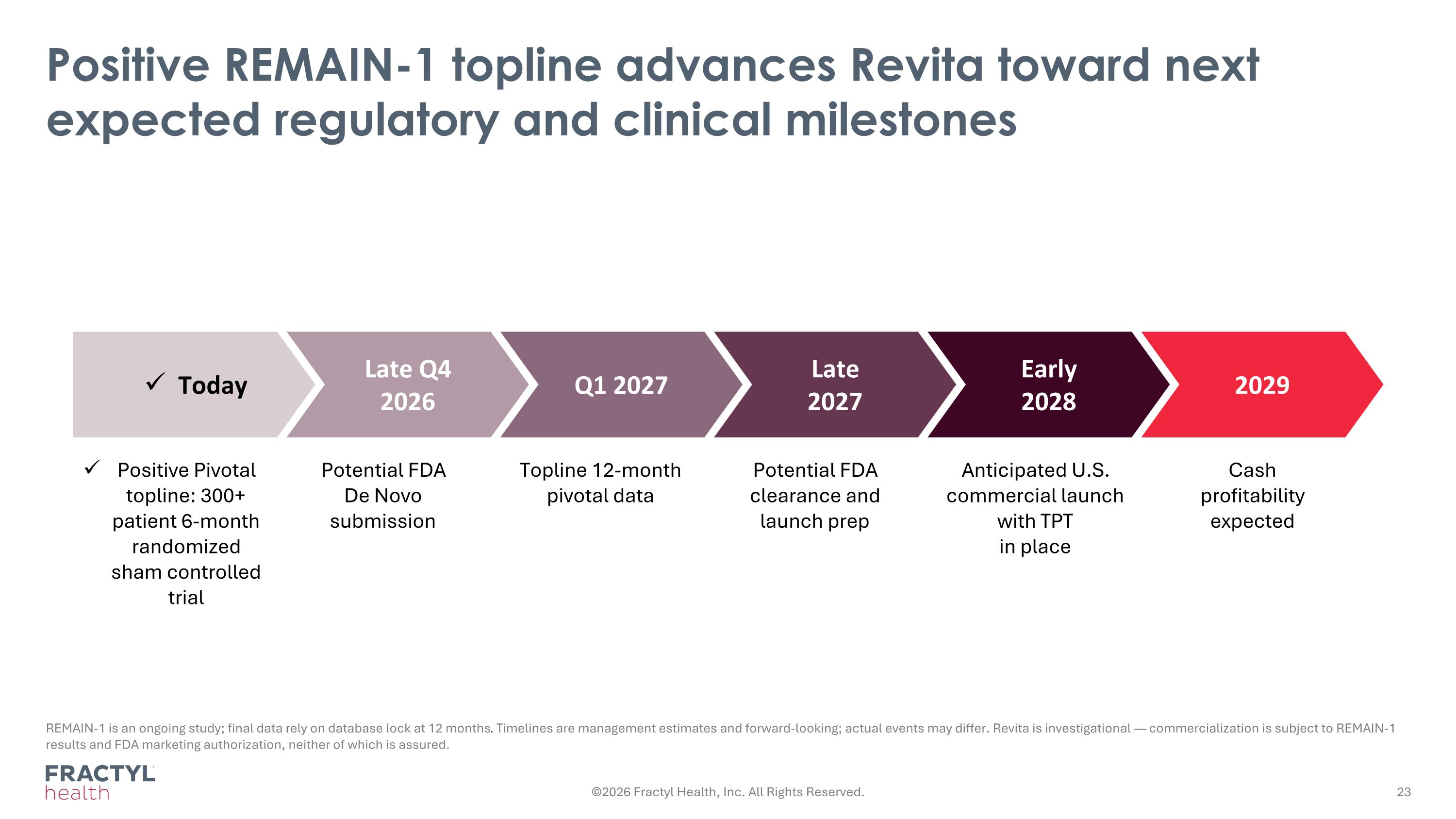
Positive REMAIN-1 topline advances Revita toward next expected regulatory and clinical milestones REMAIN-1 is an ongoing study; final data rely on database lock at 12 months. Timelines are management estimates and forward-looking; actual events may differ. Revita is investigational — commercialization is subject to REMAIN-1 results and FDA marketing authorization, neither of which is assured. Positive Pivotal topline: 300+ patient 6-month randomized sham controlled trial Potential FDA De Novo submission Topline 12-month pivotal data Potential FDA clearance and launch prep Anticipated U.S. commercial launch with TPT in place Cash profitability expected Late 2027 Early 2028 2029 Today Late Q4 2026 Q1 2027 ©2026 Fractyl Health, Inc. All Rights Reserved.
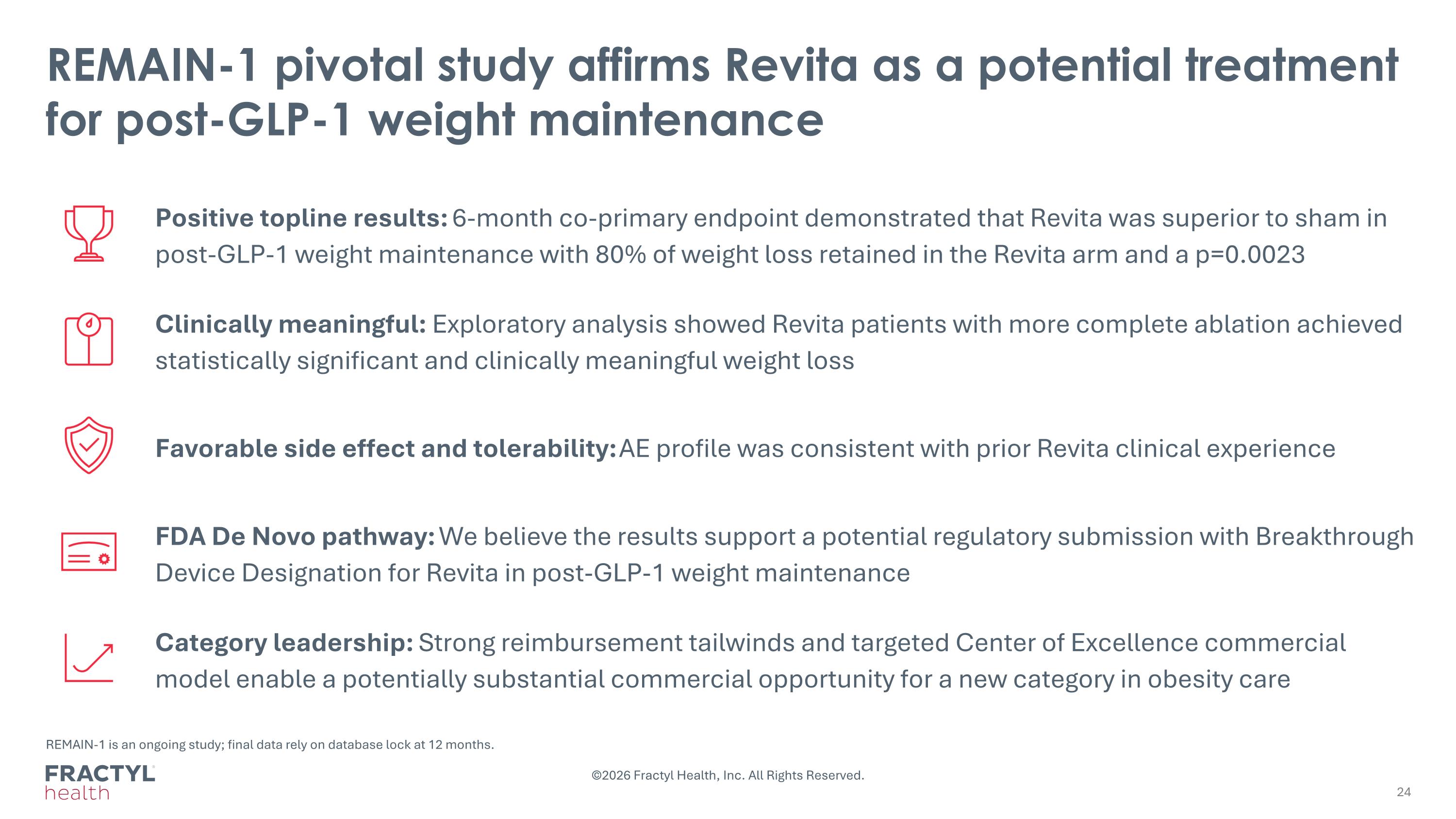
REMAIN-1 pivotal study affirms Revita as a potential treatment for post-GLP-1 weight maintenance REMAIN-1 is an ongoing study; final data rely on database lock at 12 months. Positive topline results: 6-month co-primary endpoint demonstrated that Revita was superior to sham in post-GLP-1 weight maintenance with 80% of weight loss retained in the Revita arm and a p=0.0023 Clinically meaningful: Exploratory analysis showed Revita patients with more complete ablation achieved statistically significant and clinically meaningful weight loss Favorable side effect and tolerability: AE profile was consistent with prior Revita clinical experience FDA De Novo pathway: We believe the results support a potential regulatory submission with Breakthrough Device Designation for Revita in post-GLP-1 weight maintenance Category leadership: Strong reimbursement tailwinds and targeted Center of Excellence commercial model enable a potentially substantial commercial opportunity for a new category in obesity care ©2026 Fractyl Health, Inc. All Rights Reserved.
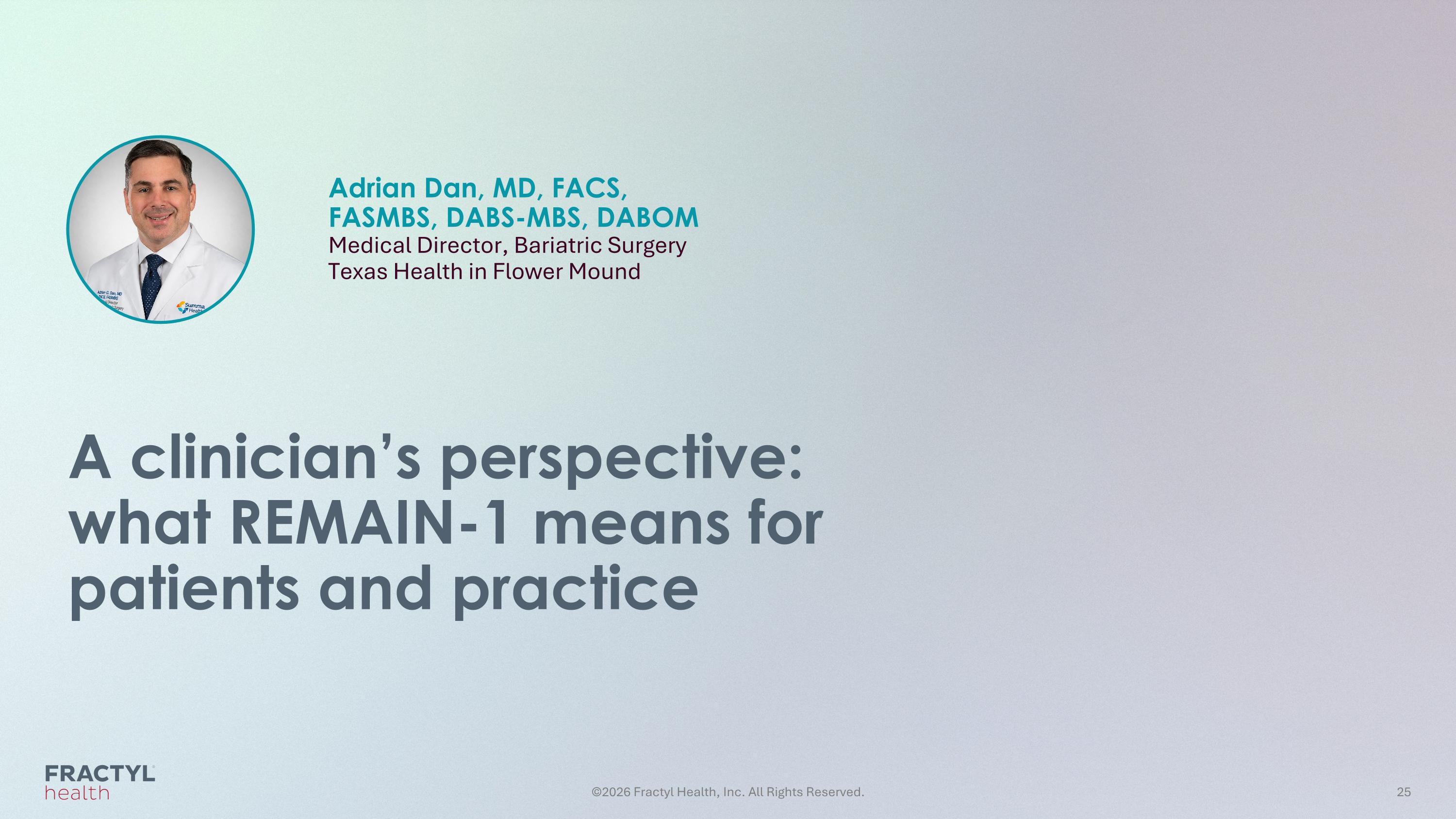
A clinician’s perspective: what REMAIN-1 means for patients and practice Adrian Dan, MD, FACS, FASMBS, DABS-MBS, DABOM Medical Director, Bariatric Surgery Texas Health in Flower Mound
Q&A ©2026 Fractyl Health, Inc. All Rights Reserved.

Appendix ©2026 Fractyl Health, Inc. All Rights Reserved.
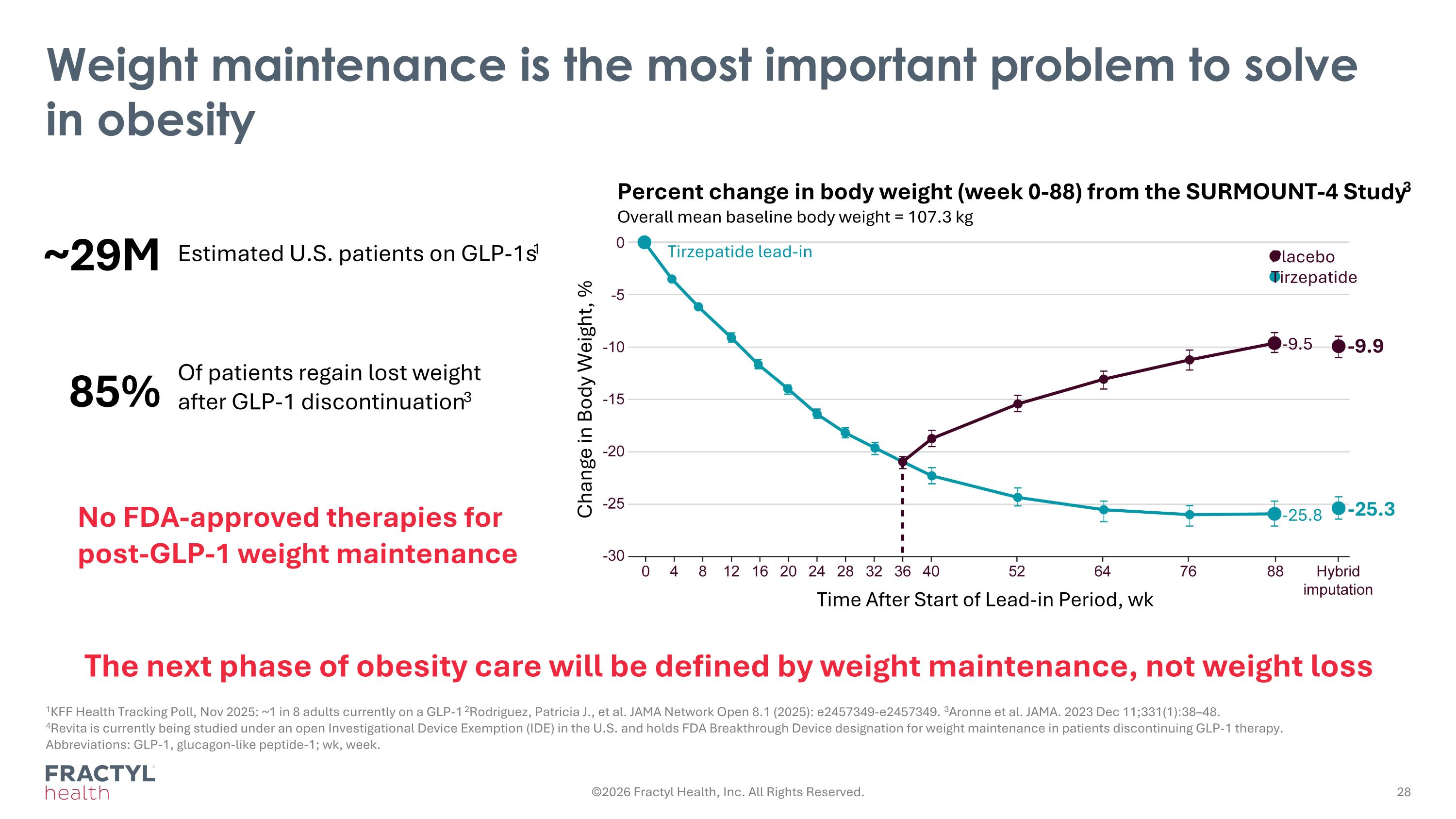
Weight maintenance is the most important problem to solve in obesity 1KFF Health Tracking Poll, Nov 2025: ~1 in 8 adults currently on a GLP-1 2Rodriguez, Patricia J., et al. JAMA Network Open 8.1 (2025): e2457349-e2457349. 3Aronne et al. JAMA. 2023 Dec 11;331(1):38–48. 4Revita is currently being studied under an open Investigational Device Exemption (IDE) in the U.S. and holds FDA Breakthrough Device designation for weight maintenance in patients discontinuing GLP-1 therapy. Abbreviations: GLP-1, glucagon-like peptide-1; wk, week. Estimated U.S. patients on GLP-1s1 Of patients regain lost weight after GLP-1 discontinuation3 ~29M 85% Percent change in body weight (week 0-88) from the SURMOUNT-4 Study3 Overall mean baseline body weight = 107.3 kg Tirzepatide Placebo Tirzepatide lead-in Change in Body Weight, % Time After Start of Lead-in Period, wk -9.9 -25.3 -9.5 -25.8 The next phase of obesity care will be defined by weight maintenance, not weight loss No FDA-approved therapies for post-GLP-1 weight maintenance ©2026 Fractyl Health, Inc. All Rights Reserved.
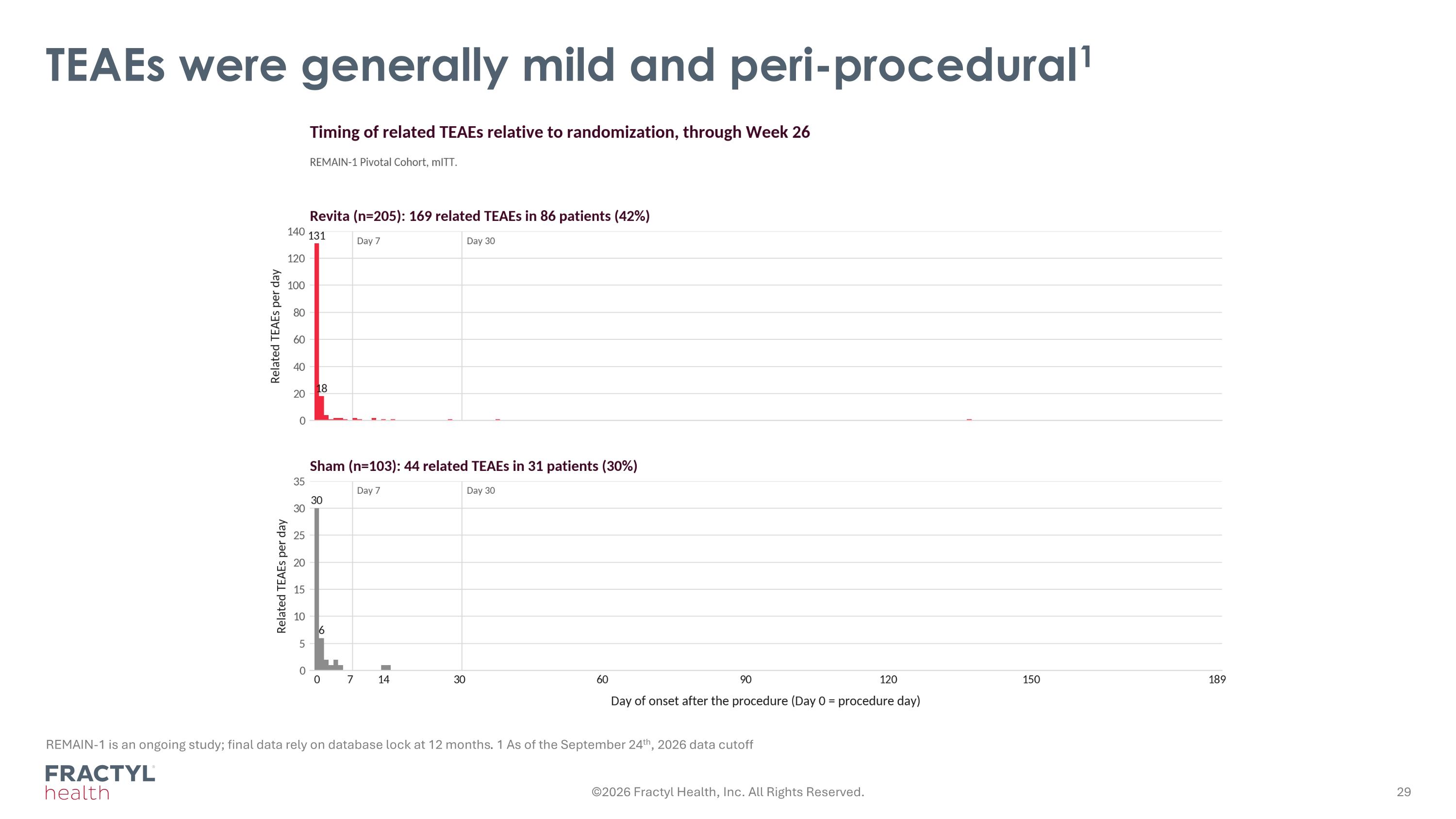
TEAEs were generally mild and peri-procedural1 REMAIN-1 is an ongoing study; final data rely on database lock at 12 months. 1 As of the September 24th, 2026 data cutoff ©2026 Fractyl Health, Inc. All Rights Reserved.