Exhibit 99.1
The share exchange described in this document involves securities of a Japanese company. The share exchange is subject to disclosure requirements of Japan that are different from those of the United States. Financial information included in this document, if any, was excerpted from financial statements prepared in accordance with foreign accounting standards that may not be comparable to the financial statements of United States companies.
It may be difficult for you to enforce your rights and any claim you may have arising under the U.S. federal securities laws, since the issuer is located in Japan and some or all of its officers and directors reside outside of the United States. You may not be able to sue a Japanese company or its officers or directors in a Japanese court for violations of the U.S. securities laws. It may be difficult to compel a Japanese company and its affiliates to subject themselves to a U.S. court’s judgment.
You should be aware that the issuer may purchase securities otherwise than under the share exchange, such as in the open market or through privately negotiated purchases.
|
Securities Code: 4178 |
| Extraordinary General Meeting of Shareholders |
| Notice of Convocation |
| Date and Time | Contents | |||
| October 26, 2026 (Monday) at 1:00 p.m. Doors scheduled to open at 12:30 p.m. |
Notice of Convocation of the Extraordinary General Meeting of Shareholders | 2 | ||
| (Please note that the starting time differs from that of the 18th Annual General Meeting of Shareholders.) | Reference Documents for the General Meeting of Shareholders | 5 | ||
| Venue | ||||
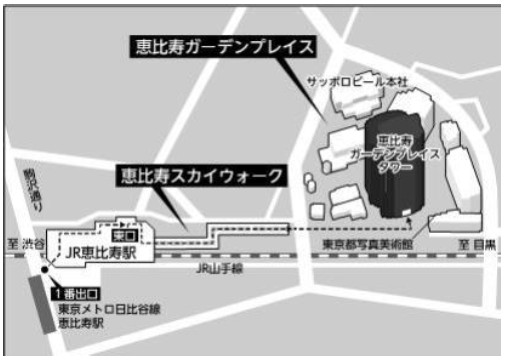
| 4-20-3 Ebisu, Shibuya-ku, Tokyo 8th Floor, Ebisu Garden Place Tower Head Office Conference Room, Sharing Innovations Inc. |
||||
| Matter to Be Resolved | ||||
| Proposal: Approval of the Share Exchange Agreement between the Company and Orchestra Holdings Inc. | ||||
Sharing Innovations Inc.
| To Our Shareholders |
| Securities Code: 4178 |
| October 9, 2026 (Date of commencement of electronic provision measures: October 2, 2026) |
| 4-20-3 Ebisu, Shibuya-ku, Tokyo |
| Sharing Innovations Inc. |
| President and Representative Director Takahiro Tsutsumi |
Notice of Convocation of the Extraordinary General Meeting of Shareholders
We would like to express our sincere gratitude for your continued support.
We hereby notify you that an Extraordinary General Meeting of Shareholders of the Company will be held as described below.
In convening this General Meeting of Shareholders, the Company has taken electronic provision measures with respect to the information constituting the content of the Reference Documents for the General Meeting of Shareholders, etc. (matters subject to electronic provision measures), and such information is posted on the Company’s website on the Internet. Please access the following website to review it.
The Company’s website (https://sharing-innovations.com/)
(Please access the above website, select “IR” and then “Stock Information,” and select “General Meeting of Shareholders” on that web page.)
In addition to the Company’s website, the matters subject to electronic provision measures are also posted on the website of the Tokyo Stock Exchange (TSE). Please refer to the following.
Tokyo Stock Exchange website (TSE Listed Company Search)
https://www2.jpx.co.jp/tseHpFront/JJK010010Action.do?Show=Show
(Please access the above TSE website, enter “Sharing Innovations” in “Issue name (company name)” or the Company’s securities code “4178” in “Code,” and search. Then select “Basic information” and “Documents for public inspection/PR information,” in that order, and refer to the “Notice of General Shareholders Meeting/Informational Materials for a General Shareholders Meeting” section under “Filed information available for public inspection.” However, after the Company’s shares have been delisted, please access the above TSE website, select the “Delisted companies” section, enter “Sharing Innovations” in “Issue name (company name)” or the Company’s securities code “4178” in “Code,” search, select “Basic information,” and then refer to “Filed information available for public inspection.”)
2
If you are unable to attend the meeting on the day, please review the Reference Documents for the General Meeting of Shareholders, indicate your approval or disapproval of the Proposal on the voting form, and return it so that it arrives no later than 7:00 p.m. on October 23, 2026 (Friday).
Sincerely,
| Particulars | ||||
| 1. | Date and Time | October 26, 2026 (Monday) at 1:00 p.m. (doors scheduled to open at 12:30 p.m.) Please note that the starting time differs from that of the 18th Annual General Meeting of Shareholders. | ||
| 2. | Venue | 8th Floor, Ebisu Garden Place Tower, 4-20-3 Ebisu, Shibuya-ku, Tokyo | ||
| Head Office Conference Room, Sharing Innovations Inc. | ||||
| 3. | Purpose of the Meeting Matter to Be Resolved Proposal | Approval of the Share Exchange Agreement between the Company and Orchestra Holdings Inc. | ||
| 4. | Matters Determined for the Convocation | |||
| If no indication of approval or disapproval of the Proposal is made on a voting form for voting rights exercised in writing (by mail), it will be treated as an indication of approval. | ||||
End
| | When attending the meeting, please submit the voting form at the reception desk at the venue. In order to save resources, please also bring this “Notice of Convocation” with you. |
| | If any revisions are made to the matters subject to electronic provision measures, a notice to that effect, together with the matters before and after the revision, will be posted on the Company’s website and the TSE website mentioned above. |
3
| | To shareholders who have made a request for delivery of paper-based documents, the Company will also send a document stating the matters subject to electronic provision measures; however, pursuant to laws and regulations and the provisions of Article 15, Paragraph 2 of the Company’s Articles of Incorporation, such document excludes the following matters: |
| ① | The Articles of Incorporation of Orchestra Holdings Inc. |
| ② | The financial statements, etc. of Orchestra Holdings Inc. for its most recent fiscal year (from January 1, 2025 to December 31, 2025) |
| | No notice of resolutions of the General Meeting of Shareholders will be sent; the results of this General Meeting are scheduled to be posted on the Company’s website mentioned above. |
4
Reference Documents for the General Meeting of Shareholders
| Proposal | Approval of the Share Exchange Agreement between the Company and Orchestra Holdings Inc. |
By resolutions of their respective Boards of Directors dated August 25, 2026, the Company and Orchestra Holdings Inc. (“Orchestra Holdings”; the Company and Orchestra Holdings are collectively referred to as “both companies”) decided to conduct a share exchange in which Orchestra Holdings will be the wholly owning parent company in the share exchange and the Company will be the wholly owned subsidiary in the share exchange (the “Share Exchange”), and on the same date, both companies entered into a share exchange agreement (the “Share Exchange Agreement”).
Accordingly, we hereby request your approval of the Share Exchange Agreement under this Proposal.
The Share Exchange is scheduled to be conducted with an effective date of November 30, 2026, with Orchestra Holdings following the procedures for a simplified share exchange pursuant to the main text of Article 796, Paragraph 2 of the Companies Act (Act No. 86 of 2005, including subsequent amendments; the same applies hereinafter) without obtaining approval by resolution of its general meeting of shareholders, and with the Company obtaining approval of the Share Exchange Agreement at this Extraordinary General Meeting of Shareholders.
Prior to the effective date of the Share Exchange (November 30, 2026 (scheduled)), the common shares of the Company (the “Company Shares”) are scheduled to be delisted from the Growth Market of Tokyo Stock Exchange, Inc. (the “Tokyo Stock Exchange”) on November 26, 2026 (with the last trading day being November 25, 2026).
The reasons for conducting the Share Exchange, the content of the Share Exchange Agreement, and other matters relating to this Proposal are as follows.
1. Reasons for the Share Exchange
Orchestra Holdings has been developing DX businesses such as system development and software testing, while expanding its business domains through the active use of M&A. In recent years, the environment surrounding the DX business has changed significantly due to the rapid spread of generative AI, increasingly sophisticated customer needs, and intensifying competition to acquire IT personnel, and Orchestra Holdings believes that, in order to respond swiftly to such changes, it is necessary to utilize the management resources within the group in a more integrated and efficient manner.
Meanwhile, since its establishment in June 2008 for the purpose of software development, etc., the Company, under its mission of “Continuing to create innovation through the power of technology and people,” has accurately captured accelerating technology trends, actively engaged in the education and training of engineers and the development of services relating to cloud integration, data analytics, AI, and other fields, and worked to provide services that respond to technological innovation in society. In January 2019, the Company commenced providing cloud integration services and, as a consulting partner, supports the implementation of cloud-based CRM (customer relationship management), SFA (sales force automation), and other tools provided by Salesforce.com. In recent years, in the field of data utilization, the Company provides solutions aimed at improving operational efficiency and the accuracy of decision-making, supporting everything from the proposal and implementation of optimal BI tools to operational support, including support for building environments that enable companies to utilize their data assets and promote internal analysis. The Company is also engaged in the planning, development, and operation of native apps with fortune-telling as the main category, and its principal service, “Urara, an online chat fortune-telling app where you can talk via chat,” enables fortune-telling readings through real-time communication between fortune tellers and users. The Company is a subsidiary of Orchestra Holdings and conducts its business as a member of the Orchestra Holdings group.
5

Amid significant changes in the business environment surrounding the DX business, Orchestra Holdings recognized that, in order to sustainably enhance the corporate value of the group as a whole, it is necessary to make decisions more swiftly and flexibly than before and to utilize the management resources within the group in an integrated and efficient manner, and has repeatedly considered the ideal form of collaboration with the Company. In that process, discussions and considerations were held, centered on the management of both companies, regarding measures for future growth and the ideal capital relationship from the perspectives of business strategy, organizational structure, human resources and technology, customer base, and other matters. As a result, it was determined that, under the current capital relationship in which the Company maintains its listing, certain constraints may arise with respect to the mutual utilization of management resources, transactions between both companies, investment decisions, etc. out of consideration for minority shareholders, whereas making the Company a wholly owned subsidiary would align the interests of both companies and make it possible to expedite decision-making. Accordingly, Orchestra Holdings concluded that making the Company a wholly owned subsidiary is the optimal choice for enhancing the corporate value of both companies and the Orchestra Holdings group as a whole, as it would enable the earlier and more certain realization of synergies such as strengthening the capability to handle large-scale and advanced projects through the mutual utilization of development and sales resources, improving development quality and productivity through the sharing of human resources and technical know-how, and creating cross-selling and new project opportunities through the mutual utilization of customer bases.
In addition, while reviewing the circumstances recently surrounding listed subsidiaries, including published materials such as the Tokyo Stock Exchange’s “Investors’ Perspectives on Parent-Subsidiary Listings, etc.” (February 4, 2025) and “Casebook on Parent-Subsidiary Listings, etc.” (December 26, 2025), as well as trends in the actual number of listed subsidiaries, the Company had considered that becoming a wholly owned subsidiary of Orchestra Holdings was one of the options for its capital policy. On June 29, 2026, the Company received an initial letter of intent from Orchestra Holdings regarding making the Company a wholly owned subsidiary, and began examining the impact of becoming a wholly owned subsidiary in more concrete terms. In June 2017, the Company became a wholly owned subsidiary of Digital Identity Inc. (currently Orchestra Holdings), and subsequently, in 2021, the Company listed its shares with the aim of enhancing its credibility and name recognition and raising the funds necessary for the recruitment and development of human resources. In 2019, the Company launched, as a new business, the cloud integration business, which supports the implementation of Salesforce products, and achieved rapid growth by assigning newly graduated engineers it had hired to projects. However, from around 2022, demand for Salesforce products among small and medium-sized enterprises ran its course, and as the utilization rate of engineers declined, the Company decided not to hire new graduates from 2024 onward, resulting in a downward trend in the number of homegrown personnel. Furthermore, although the Company launched businesses in the fields of data utilization/AI and IT consulting, where high market growth is expected, they have not grown enough to drive the Company as a whole, and the Company’s overall sales and profits have contracted, reducing its capacity for investment. On the other hand, in the recent environment surrounding the Company, competition for securing human resources has intensified and the use of generative AI has advanced rapidly, increasing the need for investment that is not constrained by short-term profit and loss. Moreover, the Company currently incurs costs of approximately ¥40 million to ¥50 million per year to maintain its listing. Although there is already business collaboration with its parent company, Orchestra Holdings, various measures are required with respect to the fairness and transparency of governance of a listed subsidiary, and consideration must be given to the interests of the Company’s minority shareholders. Accordingly, transactions with companies of the Orchestra Holdings group have been subject to resolutions of the Company’s Board of Directors, and there have been aspects in which swift collaboration could not be achieved as the Orchestra Holdings group. In order to address these management issues, the Company also came to the conclusion that it is desirable for the Company to become a wholly owned subsidiary of Orchestra Holdings.
6
Both companies anticipate the following as the specific measures following the Share Exchange and the main synergies to be realized based thereon.
① Strengthening competitiveness in winning orders through the mutual utilization of development and sales resources
By establishing a structure that allows the cross-company utilization of development personnel, including the engineers of both companies, as well as their technical capabilities and sales resources, it will become possible to flexibly combine the personnel and technologies required for each project. Through this, both companies aim to enhance their capability to handle large-scale projects and projects requiring advanced and complex technologies, which have previously been difficult for each company to win on its own due to constraints such as staffing structures and the technical areas they can cover, and to strengthen their proposal capabilities and competitiveness in winning orders.
② Improving development quality and productivity through the sharing of human resources and technical know-how
Both companies will share and consolidate the specialized personnel, technical know-how, project expertise, etc. that are currently dispersed between them, and will promote personnel exchanges beyond company boundaries as well as joint education and training. Through this, both companies will develop an environment in which engineers can gain experience in a wider range of technical areas and projects, expanding the expertise and scope of their personnel, and aim to improve development quality and productivity through the sharing of development processes and best practices. In addition, by making investments in recruitment, education, and training in an integrated manner, both companies will also strengthen their capacity to develop human resources across the DX business as a whole.
③ Expanding cross-selling and earnings opportunities through the mutual utilization of customer bases
By mutually utilizing the customer bases, project information, and sales know-how held by each company, and making proposals that combine the services and technologies of both companies in accordance with customer needs, both companies will promote cross-selling to existing customers. In addition, by strengthening coordination of sales activities and project information, such as one company providing its services and expertise to the customers of the other, both companies will expand customer touchpoints and proposal opportunities, and seek to expand earnings opportunities through the creation of new projects and the expansion of transactions per customer.
7
④ Other synergies
Because the Company is a listed subsidiary of Orchestra Holdings, intra-group transactions, resource allocation, and information sharing must go through conflict of interest management procedures (verification of transaction terms, ensuring an independent decision-making process by the Company, etc.), resulting in costs in terms of decision-making and procedures. Orchestra Holdings believes that, after the Company becomes a wholly owned subsidiary through the Share Exchange, such structural constraints will be eliminated, and a structure can be established under which (i) group-wide investment decisions, such as AI-related investments, (ii) allocation of resources for jointly handling large-scale projects, (iii) mutual utilization and reassignment of personnel, (iv) integrated formulation of business plans and budgets, etc. can be decided and executed flexibly. Furthermore, since the Company will become a wholly owned subsidiary of Orchestra Holdings and be delisted following the Share Exchange, the Company believes that the Share Exchange will lead to a reduction in the workload and costs associated with maintaining its listing, enabling the Company to focus on resolving its business and management issues.
Both companies also considered the disadvantages associated with the Share Exchange, and determined that the impact of each is limited, as described below.
8
① Impact on the Company’s business partners
The delisting of the Company’s shares through the Share Exchange may reduce the Company’s name recognition and social credibility, potentially affecting its relationships with business partners. However, the Company is already one of the group companies of Orchestra Holdings, which is listed on the Prime Market of the Tokyo Stock Exchange, and this capital relationship is widely recognized by business partners. Therefore, even if the Company becomes a wholly owned subsidiary of Orchestra Holdings through the Share Exchange, its social credibility will not immediately decline, and it is unlikely that the Share Exchange will have an impact significant enough to cause business partners to suspend transactions. Accordingly, the Company believes that the impact on its relationships with business partners will not be significant.
② Impact on future means of financing
Since the Company’s shares will be delisted through the Share Exchange, the Company will lose advantages such as the diversification of financing means through equity financing. However, after the Share Exchange, the Company, as a member of the Orchestra Holdings group, will be able to raise funds by utilizing the group financing of the Orchestra Holdings group, and the Company believes that there will be practically no disadvantage to its financing resulting from the loss of the means of equity financing.
③ Impact on future recruitment
Since the Company’s shares will be delisted through the Share Exchange, a decline in the Company’s name recognition and social credibility may affect its future recruitment of personnel. However, even after the Share Exchange, the Company will remain a subsidiary of Orchestra Holdings, which is listed on the Prime Market of the Tokyo Stock Exchange, and its name recognition and social credibility will be maintained to a certain degree as a member of the Orchestra Holdings group. Therefore, the Company believes that there will be practically no adverse effect on its recruitment, etc.
④ Impact on the morale, etc. of existing employees
Since the Company’s shares will be delisted through the Share Exchange and the Company will become a wholly owned subsidiary of Orchestra Holdings, there may be an impact on the morale, etc. of existing employees who place importance on the fact that the Company has operated its business independently as a listed company. However, after the announcement of the Share Exchange, both companies plan to carefully explain the significance of the Share Exchange and its benefits to employees (expanded career opportunities, enhanced investment in education, etc.). Also taking into account that, even after the Share Exchange, the Company’s employees will continue to work as members of the Orchestra Holdings group, which is listed on the Prime Market of the Tokyo Stock Exchange, the Company believes that the impact on the morale, etc. of existing employees will be minor.
9
Having thus held repeated discussions on the method of making the Company a wholly owned subsidiary, both companies decided around August 2026 to select the Share Exchange as the method for doing so. Both companies determined that the Share Exchange is a desirable scheme, because by delivering common shares of Orchestra Holdings (the “Orchestra Holdings Shares”) to the Company’s general shareholders as consideration for the Share Exchange, it will be possible to provide the Company’s general shareholders, through their ownership of the Orchestra Holdings Shares, with the opportunity to enjoy the effects expected from the implementation of the various measures envisioned after the Share Exchange, the business development and earnings expansion of the Orchestra Holdings group resulting from the realization of such effects, and any consequent rise in the share price of the Orchestra Holdings Shares, etc., and also from the perspective that, since the Orchestra Holdings Shares have sufficient liquidity and can be converted into cash at any time through market transactions, it will be possible to provide the Company’s general shareholders with the choice of either continuing to hold the Orchestra Holdings Shares or selling them for cash.
Based on the above, both companies determined that making the Company a wholly owned subsidiary of Orchestra Holdings will contribute to further enhancing the corporate value of the Orchestra Holdings group and the Company going forward, and will also be beneficial to the shareholders of both companies, and accordingly, on August 25, 2026, decided to conduct the Share Exchange and to enter into the Share Exchange Agreement.
Furthermore, in order to maximize the synergies from the Share Exchange, both companies anticipate proceeding with discussions and considerations toward implementing, at an early stage after the effective date of the Share Exchange, a reorganization within the Orchestra Holdings group, including mergers and company splits.
The Company is a subsidiary of Orchestra Holdings and conducts its business as a member of the Orchestra Holdings group. The history of the capital relationship is as follows.
In June 2017, Orchestra Holdings acquired all of the shares of Ayuta Inc. (currently the Company) and made it a consolidated subsidiary. Subsequently, in July 2018, the trade name of that company was changed to “Sharing Innovations Inc.”
In March 2021, the Company was listed on the Mothers Market of the Tokyo Stock Exchange (as a result of the market restructuring, it is currently listed on the Growth Market of the Tokyo Stock Exchange). Upon the listing, Orchestra Holdings offered 985,000 of the shares it held for sale, and the Company carried out a series of new share issuances (including a third-party allotment relating to the secondary offering through over-allotment), as a result of which Orchestra Holdings’ shareholding ratio in the Company changed from 100% to 71.60%.
Thereafter, due to factors such as an increase in the total number of the Company’s issued shares as a result of new share issuances upon the exercise of stock acquisition rights and the Company’s acquisition of treasury shares, Orchestra Holdings’ current shareholding ratio is 71.46%. The number of the Company’s shares held by Orchestra Holdings is 2,675,000 shares, and Orchestra Holdings continues to treat the Company as a consolidated subsidiary.
10
2. Details of the Share Exchange Agreement
The details of the Share Exchange Agreement are as follows.
Share Exchange Agreement
Orchestra Holdings Inc. (“Party A”) and Sharing Innovations Inc. (“Party B”) hereby enter into a share exchange agreement (“this Agreement”) as of August 25, 2026, as follows.
Article 1 (The Share Exchange)
Party A and Party B shall, in accordance with the provisions of this Agreement, carry out a share exchange in which Party A will be the wholly owning parent company in the share exchange and Party B will be the wholly owned subsidiary in the share exchange (the “Share Exchange”), and Party A shall, through the Share Exchange, acquire all of the issued shares of Party B (excluding, however, the shares of Party B held by Party A; the same applies hereinafter).
Article 2 (Trade Names and Addresses)
The trade names and addresses of Party A and Party B are as follows, respectively.
| (1) | Party A (wholly owning parent company in the share exchange) |
Trade name: Orchestra Holdings Inc.
Address: 4-20-3 Ebisu, Shibuya-ku, Tokyo
| (2) | Party B (wholly owned subsidiary in the share exchange) |
Trade name: Sharing Innovations Inc.
Address: 4-20-3 Ebisu, Shibuya-ku, Tokyo
11
Article 3 (Shares to Be Delivered upon the Share Exchange and Allotment Thereof)
| 1. | Upon the Share Exchange, Party A shall deliver to the shareholders of Party B as of the time immediately preceding the time at which Party A acquires all of the issued shares of Party B through the Share Exchange (the “Record Time”) (meaning the shareholders after the cancellation of Party B’s treasury shares pursuant to Article 8, and excluding Party A; the “Allotted Shareholders”), in exchange for the shares of common stock of Party B held by them, the number of shares of common stock of Party A obtained by multiplying the total number of shares of common stock of Party B held by them by 0.478. |
| 2. | Upon the Share Exchange, Party A shall allot to the Allotted Shareholders 0.478 shares of common stock of Party A for each share of common stock of Party B held by them. |
| 3. | If the number of shares of common stock of Party A to be allotted to the Allotted Shareholders pursuant to the provisions of the preceding two paragraphs includes any fraction of less than one share, Party A shall handle such fraction in accordance with the provisions of Article 234 of the Companies Act and other relevant laws and regulations. |
12
Article 4 (Stock Acquisition Rights to Be Delivered upon the Share Exchange and Allotment Thereof)
| 1. | Upon the Share Exchange, Party A shall deliver to the holders of stock acquisition rights of each series of stock acquisition rights of Party B set forth in the column “Class of stock acquisition rights held by holders of stock acquisition rights of Sharing Innovations” in Appendix 1 as of the Record Time, in exchange for each of the stock acquisition rights of Party B held by them, the stock acquisition rights of Party A of the class set forth in the column “Class of Consideration Stock Acquisition Rights” in Appendix 1 (collectively, the “Consideration Stock Acquisition Rights”), in a number equal to the total number of the respective stock acquisition rights of Party B multiplied by the number set forth in “Number of Consideration Stock Acquisition Rights” in Appendix 1. |
| 2. | With respect to the allotment of the Consideration Stock Acquisition Rights, Party A shall allot to each holder of stock acquisition rights of each series of stock acquisition rights of Party B set forth in the column “Class of stock acquisition rights held by holders of stock acquisition rights of Sharing Innovations” in Appendix 1 as of the Record Time, for each such stock acquisition right held by them, the number set forth in “Number of Consideration Stock Acquisition Rights” in Appendix 1 of the Consideration Stock Acquisition Rights of Party A of the class set forth in the column “Class of Consideration Stock Acquisition Rights” in Appendix 1. |
Article 5 (Matters Concerning Stated Capital and Reserves)
The amounts of stated capital and reserves of Party A to be increased through the Share Exchange shall be as follows, respectively.
(1) Amount of increase in stated capital: ¥0
(2) Amount of increase in capital reserve: The amount separately determined by Party A in accordance with Article 39 of the Regulation on Corporate Accounting
(3) Amount of increase in retained earnings reserve: ¥0
13
Article 6 (Effective Date of the Share Exchange)
The date on which the Share Exchange becomes effective (the “Effective Date”) shall be November 30, 2026; provided, however, that Party A and Party B may change such date upon mutual consultation and agreement if necessary due to the needs of the progress of the procedures for the Share Exchange or for any other reason.
Article 7 (Approval of this Agreement)
| 1. | Pursuant to the main text of Article 796, Paragraph 2 of the Companies Act, Party A shall carry out the Share Exchange without obtaining approval of this Agreement by a resolution of a general meeting of shareholders as provided for in Article 795, Paragraph 1 of the Companies Act; provided, however, that if approval of this Agreement by a resolution of a general meeting of shareholders becomes necessary pursuant to the provisions of Article 796, Paragraph 3 of the Companies Act, Party A shall seek approval of this Agreement by a resolution of a general meeting of shareholders by the day immediately preceding the Effective Date. |
| 2. | Party B shall seek approval of this Agreement by a resolution of a general meeting of shareholders as provided for in Article 783, Paragraph 1 of the Companies Act by the day immediately preceding the Effective Date. |
Article 8 (Cancellation of Treasury Shares)
By a resolution of the Board of Directors of Party B to be adopted by the day immediately preceding the Effective Date, Party B shall cancel, as of the Record Time, all of the treasury shares held by Party B as of the Record Time (including treasury shares to be acquired by Party B in response to share purchase demands by dissenting shareholders made pursuant to Article 785, Paragraph 1 of the Companies Act in connection with the Share Exchange).
14
Article 9 (Restrictions on Dividends of Surplus, Etc.)
Except with the written consent of the other party, after the execution date of this Agreement, neither Party A nor Party B shall (i) adopt a resolution for a dividend of surplus with a record date on any day prior to the Effective Date, or (ii) adopt a resolution for an acquisition of treasury shares with an acquisition date on any day prior to the Effective Date (excluding acquisitions of treasury shares in cases where it is required to acquire its own shares in response to the exercise of shareholders’ rights in accordance with applicable laws and regulations).
Article 10 (Business Operations and Management of Assets)
During the period from the execution date of this Agreement until the Effective Date, Party A and Party B shall each operate their respective businesses and manage their respective assets with the due care of a prudent manager, and shall, when performing any act that may have a material effect on their assets or rights and obligations, do so upon consultation and agreement with the other party.
Article 11 (Amendment and Termination of this Agreement)
If, during the period from the execution date of this Agreement until the day immediately preceding the Effective Date, a material change occurs in the financial condition or business condition of Party A or Party B, a situation arises that would materially impede the implementation of the Share Exchange, or it otherwise becomes difficult to achieve the purpose of this Agreement, Party A and Party B may amend or terminate this Agreement upon mutual consultation and agreement.
15
Article 12 (Effectiveness of this Agreement)
This Agreement shall cease to be effective if, by the day immediately preceding the Effective Date, (i) approval of this Agreement is not obtained at a general meeting of shareholders of Party A (limited, however, to cases where approval of this Agreement by a general meeting of shareholders of Party A has become necessary pursuant to the provisions of Article 796, Paragraph 3 of the Companies Act) or approval of this Agreement is not obtained at a general meeting of shareholders of Party B, (ii) approvals, etc. of relevant governmental authorities, etc. required under domestic or foreign laws and regulations, etc. for the implementation of the Share Exchange are not obtained, or (iii) this Agreement is terminated pursuant to the preceding Article.
Article 13 (Governing Law and Jurisdiction)
| 1. | This Agreement shall be governed by and construed in accordance with the laws of Japan. |
| 2. | The Tokyo District Court shall have exclusive agreed jurisdiction as the court of first instance over any and all disputes between Party A and Party B relating to this Agreement. |
Article 14 (Matters for Consultation)
With respect to any matters not set forth in this Agreement or any doubts that arise regarding the contents of this Agreement, Party A and Party B shall consult with each other in good faith and seek to resolve such matters.
(The remainder of this page is intentionally left blank.)
In witness whereof, two (2) originals of this Agreement have been prepared, and each party shall affix its name and seal hereto and retain one (1) original each.
August 25, 2026
16
Party A: 4-20-3 Ebisu, Shibuya-ku, Tokyo
Orchestra Holdings Inc.
Yoshiro Nakamura, President and Representative Director
Party B: 4-20-3 Ebisu, Shibuya-ku, Tokyo
Sharing Innovations Inc.
Takahiro Tsutsumi, President and Representative Director
17
Appendix 1
Details of the Consideration Stock Acquisition Rights
| Class of stock acquisition rights held by holders of stock acquisition rights of Sharing Innovations |
Class of Consideration Stock Acquisition Rights |
Number of Consideration Stock Acquisition Rights | ||
| 1st Series Stock Acquisition Rights (Appendix 1-1-1) |
5th Series Stock Acquisition Rights (Appendix 1-1-2) |
1 | ||
| 2nd Series Stock Acquisition Rights (Appendix 1-2-1) |
6th Series Stock Acquisition Rights (Appendix 1-2-2) |
1 | ||
| 3rd Series Stock Acquisition Rights (Appendix 1-3-1) |
7th Series Stock Acquisition Rights (Appendix 1-3-2) |
1 |
18
Appendix 1-1-1
Sharing Innovations Inc. 1st Series Stock Acquisition Rights
| 1. | Number of Stock Acquisition Rights |
350 units
Note that the total number of shares that may be delivered upon exercise of the Stock Acquisition Rights shall be 3,500 shares of common stock of the Company; provided, however, that if the number of granted shares for the Stock Acquisition Rights is adjusted pursuant to 2. below, the total number shall be the number obtained by multiplying the number of granted shares after adjustment by the number of the Stock Acquisition Rights.
| 2. | Class, Details and Number of Shares Underlying the Stock Acquisition Rights |
Common stock: 3,500 shares
Note that the number of shares underlying each stock acquisition right shall be 10 shares of common stock of the Company.
However, if the Company conducts a stock split or reverse stock split after the allotment date of the stock acquisition rights, the number of granted shares shall be adjusted in accordance with the following formula, and any fraction of less than one share resulting from the adjustment shall be rounded down.
Number of granted shares after adjustment = Number of granted shares before adjustment × Ratio of stock split or reverse stock split
19
| 3. | Amount to Be Paid upon Exercise of the Stock Acquisition Rights |
The property to be contributed upon exercise of the stock acquisition rights shall be cash, and its value shall be the amount obtained by multiplying the amount per share to be paid upon exercise of the stock acquisition rights (hereinafter, the “exercise price”) by the number of shares underlying each stock acquisition right.
The exercise price shall be ¥230.
If the Company conducts a stock split or reverse stock split after the allotment date of the stock acquisition rights, the exercise price shall be adjusted in accordance with the following formula, and any fraction of less than one yen resulting from the adjustment shall be rounded up.
| Exercise price after adjustment = Exercise price | 1 |
|||
| before adjustment × | Ratio of stock split or reverse stock split |
20
In addition, if, after the allotment date of the stock acquisition rights, the Company issues new shares or disposes of treasury shares at a price below the market price, the exercise price shall be adjusted in accordance with the following formula, and any fraction of less than one yen resulting from the adjustment shall be rounded up.
In the above formula, the “number of shares already issued” shall be the total number of issued shares of common stock of the Company less the number of treasury shares of common stock of the Company, and in the case of a disposal of treasury shares of common stock of the Company, the “number of newly issued shares” shall be read as the “number of treasury shares to be disposed of.”
Furthermore, in addition to the above, if, after the allotment date of the stock acquisition rights, the Company merges with another company, conducts a company split, or in any other case equivalent thereto in which an adjustment of the exercise price is required, the Company may appropriately adjust the exercise price to a reasonable extent.
| 4. | Exercise Period of the Stock Acquisition Rights |
From June 25, 2021 to June 24, 2029.
21
| 5. | Matters Concerning the Stated Capital and Capital Reserve to Be Increased upon Issuance of Shares through Exercise of the Stock Acquisition Rights |
The amount of stated capital to be increased upon issuance of shares through exercise of the Stock Acquisition Rights shall be one-half (1/2) of the maximum amount of increase in stated capital, etc. calculated in accordance with laws and regulations, with any fraction of less than one yen resulting from the calculation rounded up. The remaining amount shall be credited to capital reserve.
| 6. | Conditions for Exercise of the Stock Acquisition Rights |
| (1) | A holder of stock acquisition rights must, at the time of exercise of the stock acquisition rights as well, be a director or employee of the Company or an affiliated company of the Company; provided, however, that this shall not apply in the case of retirement due to expiration of term of office, retirement upon reaching the mandatory retirement age, or any other case in which the Board of Directors recognizes that there is a justifiable reason. |
| (2) | Exercise of the Stock Acquisition Rights by an heir of a holder of stock acquisition rights shall not be permitted. |
| (3) | The Stock Acquisition Rights may not be exercised if such exercise would cause the total number of issued shares of the Company to exceed the total number of authorized shares at that time. |
| (4) | Each Stock Acquisition Right may not be exercised in a unit of less than one. |
22
| 7. | Matters Concerning Acquisition of the Stock Acquisition Rights |
| (1) | If a merger agreement under which the Company will be the disappearing company, a split agreement or split plan for a company split under which the Company will be the splitting company, or a share exchange agreement or share transfer plan under which the Company will become a wholly owned subsidiary is approved at a General Meeting of Shareholders (or by resolution of the Board of Directors if approval at a General Meeting of Shareholders is not required), the Company may acquire all of the Stock Acquisition Rights without consideration upon the arrival of a date separately determined by the Board of Directors of the Company. |
| (2) | If, before a holder of stock acquisition rights exercises his or her rights, the Stock Acquisition Rights become unexercisable pursuant to the provisions set forth in 6. above, the Company may acquire such stock acquisition rights without consideration. |
| (3) | The Company may acquire without consideration any Stock Acquisition Rights that have not become subject to inheritance, and the notice to the holders of the Stock Acquisition Rights under Article 274, Paragraph 3 of the Companies Act shall be deemed sufficient if given to such person among the legal heirs of the holders of the Stock Acquisition Rights as the Company deems appropriate; provided, however, that if such notice is deemed unnecessary under the interpretation of laws and regulations, the Company may omit such notice and acquire the Stock Acquisition Rights without consideration. |
| 8. | Matters Concerning Transfer of the Stock Acquisition Rights |
Any transfer of stock acquisition rights shall require approval by resolution of the Board of Directors of the Company.
23
| 9. | Matters Concerning the Treatment of the Stock Acquisition Rights upon Organizational Restructuring by the Company |
If a contract, plan or other document prepared in connection with an organizational restructuring provides that stock acquisition rights of the relevant stock company set forth below are to be delivered, stock acquisition rights of such stock company set forth below shall be delivered in accordance with the ratio of such organizational restructuring.
| (1) | Merger (limited to cases where the Company is the disappearing company) |
The stock company surviving the merger or the stock company incorporated through the merger
| (2) | Absorption-type company split |
The stock company that succeeds to all or part of the rights and obligations held by the stock company conducting the absorption-type company split in connection with its business
| (3) | Incorporation-type company split |
The stock company incorporated through the incorporation-type company split
| (4) | Share exchange |
The stock company that acquires all of the issued shares of the stock company conducting the share exchange
| (5) | Share transfer |
The stock company incorporated through the share transfer
End
24
Appendix 1-1-2
Orchestra Holdings Inc. 5th Series Stock Acquisition Rights
| 1. | Number of Stock Acquisition Rights |
350 units
Note that the total number of shares that may be delivered upon exercise of the Stock Acquisition Rights shall be 1,750 shares of common stock of the Company; provided, however, that if the number of granted shares for the Stock Acquisition Rights is adjusted pursuant to 2. below, the total number shall be the number obtained by multiplying the number of granted shares after adjustment by the number of the Stock Acquisition Rights.
| 2. | Class, Details and Number of Shares Underlying the Stock Acquisition Rights |
Common stock: 1,750 shares
The number of shares underlying each stock acquisition right shall be 5 shares of common stock of the Company.
However, if the Company conducts a stock split or reverse stock split after the allotment date of the stock acquisition rights, the number of granted shares shall be adjusted in accordance with the following formula, and any fraction of less than one share resulting from the adjustment shall be rounded down.
Number of granted shares after adjustment = Number of granted shares before adjustment × Ratio of stock split or reverse stock split
25
| 3. | Amount to Be Paid upon Exercise of the Stock Acquisition Rights |
The property to be contributed upon exercise of the Stock Acquisition Rights shall be cash, and its value shall be the amount obtained by multiplying the amount per share to be paid upon exercise of the stock acquisition rights (hereinafter, the “exercise price”) by the number of shares underlying each stock acquisition right.
The exercise price shall be ¥482.
If the Company conducts a stock split or reverse stock split after the allotment date of the stock acquisition rights, the exercise price shall be adjusted in accordance with the following formula, and any fraction of less than one yen resulting from the adjustment shall be rounded up.
| Exercise price after adjustment = Exercise price | 1 |
|||
| before adjustment × | Ratio of stock split or reverse stock split |
26
In addition, if, after the allotment date of the stock acquisition rights, the Company issues new shares or disposes of treasury shares at a price below the market price, the exercise price shall be adjusted in accordance with the following formula, and any fraction of less than one yen resulting from the adjustment shall be rounded up.
In the above formula, the “number of shares already issued” shall be the total number of issued shares of common stock of the Company less the number of treasury shares of common stock of the Company, and in the case of a disposal of treasury shares of common stock of the Company, the “number of newly issued shares” shall be read as the “number of treasury shares to be disposed of.”
Furthermore, in addition to the above, if, after the allotment date of the stock acquisition rights, the Company merges with another company, conducts a company split, or in any other case equivalent thereto in which an adjustment of the exercise price is required, the Company may appropriately adjust the exercise price to a reasonable extent.
| 4. | Exercise Period of the Stock Acquisition Rights |
From November 30, 2026 to June 24, 2029.
27
| 5. | Matters Concerning the Stated Capital and Capital Reserve to Be Increased upon Issuance of Shares through Exercise of the Stock Acquisition Rights |
The amount of stated capital to be increased upon issuance of shares through exercise of the Stock Acquisition Rights shall be one-half (1/2) of the maximum amount of increase in stated capital, etc. calculated in accordance with laws and regulations, with any fraction of less than one yen resulting from the calculation rounded up. The remaining amount shall be credited to capital reserve.
| 6. | Conditions for Exercise of the Stock Acquisition Rights |
| (1) | A holder of stock acquisition rights must, at the time of exercise of the stock acquisition rights as well, be a director or employee of the Company or an affiliated company of the Company; provided, however, that this shall not apply in the case of retirement due to expiration of term of office, retirement upon reaching the mandatory retirement age, or any other case in which the Board of Directors recognizes that there is a justifiable reason. |
| (2) | Exercise of the Stock Acquisition Rights by an heir of a holder of stock acquisition rights shall not be permitted. |
| (3) | The Stock Acquisition Rights may not be exercised if such exercise would cause the total number of issued shares of the Company to exceed the total number of authorized shares at that time. |
| (4) | Each Stock Acquisition Right may not be exercised in a unit of less than one. |
28
| 7. | Matters Concerning Acquisition of the Stock Acquisition Rights |
| (1) | If a merger agreement under which the Company will be the disappearing company, a split agreement or split plan for a company split under which the Company will be the splitting company, or a share exchange agreement or share transfer plan under which the Company will become a wholly owned subsidiary is approved at a General Meeting of Shareholders (or by resolution of the Board of Directors if approval at a General Meeting of Shareholders is not required), the Company may acquire all of the Stock Acquisition Rights without consideration upon the arrival of a date separately determined by the Board of Directors of the Company. |
| (2) | If, before a holder of stock acquisition rights exercises his or her rights, the Stock Acquisition Rights become unexercisable pursuant to the provisions set forth in 6. above, the Company may acquire such stock acquisition rights without consideration. |
| (3) | The Company may acquire without consideration any Stock Acquisition Rights that have not become subject to inheritance, and the notice to holders of stock acquisition rights under Article 274, Paragraph 3 of the Companies Act shall be deemed sufficient if given to such person among the legal heirs of holders of stock acquisition rights as the Company deems appropriate; provided, however, that if such notice is deemed unnecessary under the interpretation of laws and regulations, the Company may omit such notice and acquire the Stock Acquisition Rights without consideration. |
| 8. | Matters Concerning Transfer of the Stock Acquisition Rights |
Any transfer of stock acquisition rights shall require approval by resolution of the Board of Directors of the Company.
29
| 9. | Matters Concerning the Treatment of the Stock Acquisition Rights upon Organizational Restructuring by the Company |
If a contract, plan or other document prepared in connection with an organizational restructuring provides that stock acquisition rights of the relevant stock company set forth below are to be delivered, stock acquisition rights of such stock company set forth below shall be delivered in accordance with the ratio of such organizational restructuring.
| (1) | Merger (limited to cases where the Company is the disappearing company) |
The stock company surviving the merger or the stock company incorporated through the merger
| (2) | Absorption-type company split |
The stock company that succeeds to all or part of the rights and obligations held by the stock company conducting the absorption-type company split in connection with its business
| (3) | Incorporation-type company split |
The stock company incorporated through the incorporation-type company split
| (4) | Share exchange |
The stock company that acquires all of the issued shares of the stock company conducting the share exchange
| (5) | Share transfer |
The stock company incorporated through the share transfer
End
30
Appendix 1-2-1
Sharing Innovations Inc. 2nd Series Stock Acquisition Rights
| 1. | Number of Stock Acquisition Rights |
26,050 units
Note that the total number of shares that may be delivered upon exercise of the Stock Acquisition Rights shall be 260,500 shares of common stock of the Company; provided, however, that if the number of granted shares for the Stock Acquisition Rights is adjusted pursuant to 2. below, such total number shall be the number obtained by multiplying the number of granted shares after adjustment by the number of the Stock Acquisition Rights.
| 2. | Class, Details and Number of Shares Underlying the Stock Acquisition Rights |
Common stock: 260,500 shares
The number of shares underlying each stock acquisition right (hereinafter, the “number of granted shares”) shall be 10 shares of common stock of the Company. If, after the allotment date of the Stock Acquisition Rights, the Company conducts a share split (including a gratis allotment of shares of common stock of the Company; the same applies hereinafter) or a share consolidation, the number of granted shares shall be adjusted in accordance with the following formula.
However, such adjustment shall be made only to the number of shares underlying those Stock Acquisition Rights that have not been exercised as of such time, and any fraction of less than one share resulting from the adjustment shall be rounded down.
Number of granted shares after adjustment = Number of granted shares before adjustment × Ratio of split or consolidation
31
| 3. | Amount to Be Paid upon Exercise of the Stock Acquisition Rights |
The property to be contributed upon exercise of the Stock Acquisition Rights shall be cash, and its value shall be the amount obtained by multiplying the amount per share to be paid upon exercise of the stock acquisition rights (hereinafter, the “exercise price”) by the number of shares underlying each stock acquisition right.
The exercise price shall be ¥230.
If, after the allotment date of the Stock Acquisition Rights, the Company conducts a share split or a share consolidation, the exercise price shall be adjusted in accordance with the following formula, and any fraction of less than one yen resulting from the adjustment shall be rounded up.
| Exercise price after adjustment = Exercise price | 1 | |||
| before adjustment × | Ratio of split or consolidation |
32
In addition, if, after the allotment date of the Stock Acquisition Rights, the Company issues new shares or disposes of treasury shares of common stock of the Company at a price below the market price (excluding the issuance of new shares and disposal of treasury shares upon exercise of stock acquisition rights, and the transfer of treasury shares through a share exchange), the exercise price shall be adjusted in accordance with the following formula, and any fraction of less than one yen resulting from the adjustment shall be rounded up.
In the above formula, the “number of shares already issued” shall be the total number of issued shares of common stock of the Company less the number of treasury shares of common stock of the Company, and in the case of a disposal of treasury shares of common stock of the Company, the “number of newly issued shares” shall be read as the “number of treasury shares to be disposed of.”
Furthermore, in addition to the above, if, after the allotment date of the Stock Acquisition Rights, the Company merges with another company, conducts a company split, or is otherwise in a situation equivalent to these cases that requires adjustment of the exercise price, the Company may appropriately adjust the exercise price to a reasonable extent.
| 4. | Exercise Period of the Stock Acquisition Rights |
From June 28, 2019 to June 27, 2029.
33
| 5. | Matters Concerning the Stated Capital and Capital Reserve to Be Increased upon Issuance of Shares through Exercise of the Stock Acquisition Rights |
The amount of stated capital to be increased upon issuance of shares through exercise of the Stock Acquisition Rights shall be one-half of the maximum amount of increase in stated capital, etc. calculated in accordance with laws and regulations, and any fraction of less than one yen resulting from the calculation shall be rounded up. The remaining amount shall be credited to capital reserve.
| 6. | Conditions for Exercise of the Stock Acquisition Rights |
| (1) | The person who received the allotment of the Stock Acquisition Rights (hereinafter, the “Trustee”) may not exercise the Stock Acquisition Rights, and, unless otherwise provided, only persons who have been granted the Stock Acquisition Rights by the Trustee (hereinafter, the “Holders of the Stock Acquisition Rights”) may exercise the Stock Acquisition Rights. |
| (2) | If any of the following events occurs during the period from the allotment date of the Stock Acquisition Rights until the expiration date of the exercise period, the holders of stock acquisition rights may not exercise any of the remaining Stock Acquisition Rights. |
34
| (a) | When shares of common stock of the said company are issued, etc. for consideration at a price below the exercise price set forth in “3. Amount to Be Paid upon Exercise of the Stock Acquisition Rights” above (excluding cases where the amount to be paid is an “especially favorable amount” as provided in Article 199, Paragraph 3 and Article 200, Paragraph 2 of the Companies Act, cases where the price is deemed to differ from the share price of the common stock, and cases where such issuance, etc. of shares is made by way of an allotment to shareholders, etc.). |
| (b) | When stock acquisition rights are issued with an exercise price below the exercise price set forth in “3. Amount to Be Paid upon Exercise of the Stock Acquisition Rights” above (excluding cases where such stock acquisition rights are issued with the exercise price set at a price different from the share price of common stock of the said company at the time of issuance of such stock acquisition rights). |
| (c) | In the case where the shares of common stock of the Company underlying the Stock Acquisition Rights are not listed on any financial instruments exchange in Japan, when a sale and purchase or other transaction is conducted for consideration at a price below the exercise price set forth in “3. Amount to Be Paid upon Exercise of the Stock Acquisition Rights” above (excluding cases where the transaction is conducted at a price deemed to be significantly lower than the share price at the time of such transaction). |
| (d) | In the case where the shares of common stock of the Company underlying the Stock Acquisition Rights are listed on any financial instruments exchange in Japan, when, on or after the listing date, the closing price of the Company’s common stock in regular trading on such financial instruments exchange falls below the exercise price set forth in “3. Amount to Be Paid upon Exercise of the Stock Acquisition Rights” above. |
35
| (3) | The Holders of the Stock Acquisition Rights must continuously be a director, employee or outsourcing contractor of the Company or an affiliated company of the Company until the time of exercise of the Stock Acquisition Rights; provided, however, that this shall not apply in the case of retirement due to expiration of the term of office, retirement at mandatory retirement age, or other cases where the Board of Directors of the said company recognizes that there is a justifiable reason. |
| (4) | Exercise of the Stock Acquisition Rights by an heir of a Holder of the Stock Acquisition Rights shall not be permitted. |
| (5) | If the exercise of the Stock Acquisition Rights would cause the total number of issued shares of the Company to exceed the total number of authorized shares as of such time, such Stock Acquisition Rights may not be exercised. |
| (6) | Each Stock Acquisition Right may not be exercised in a unit of less than one. |
36
| 7. | Matters Concerning Acquisition of the Stock Acquisition Rights |
| (1) | If a merger agreement under which the Company will be the disappearing company, an absorption-type company split agreement or incorporation-type company split plan under which the Company will be the splitting company, or a share exchange agreement or share transfer plan under which the Company will become a wholly owned subsidiary is approved at a General Meeting of Shareholders (or by a resolution of the Board of Directors if approval at a General Meeting of Shareholders is not required), the Company may acquire all of the Stock Acquisition Rights without consideration upon the arrival of a date separately determined by the Board of Directors of the Company. |
| (2) | If a holder of stock acquisition rights becomes unable to exercise the Stock Acquisition Rights pursuant to the provisions set forth in 6 above before exercising such rights, the Company may acquire such stock acquisition rights without consideration. |
| (3) | The Company may acquire without consideration any Stock Acquisition Rights that have not become subject to inheritance, and it shall suffice for the notice to the Holder of the Stock Acquisition Rights under Article 274, Paragraph 3 of the Companies Act to be given to the person among the legal heirs of such Holder of the Stock Acquisition Rights whom the Company deems appropriate; provided, however, that if such notice is deemed unnecessary under the interpretation of laws and regulations, the Company may omit the notice and acquire the Stock Acquisition Rights without consideration. |
| 8. | Matters Concerning Transfer of the Stock Acquisition Rights |
Any transfer of the stock acquisition rights shall require approval by a resolution of the Board of Directors of the Company.
37
| 9. | Matters Concerning the Treatment of the Stock Acquisition Rights upon Implementation of Organizational Restructuring by the Company |
If the agreement, plan, etc. prepared in connection with an organizational restructuring provides that stock acquisition rights of the stock company set forth below shall be delivered, stock acquisition rights of the stock company set forth below shall be delivered in accordance with the ratio of such organizational restructuring.
| (1) | Merger (limited to cases where the Company is extinguished) |
The stock company surviving the merger or the stock company incorporated through the merger
| (2) | Absorption-type company split |
The stock company that succeeds to all or part of the rights and obligations held by the stock company conducting the absorption-type company split in connection with its business
| (3) | Incorporation-type company split |
The stock company incorporated through the incorporation-type company split
| (4) | Share exchange |
The stock company that acquires all of the issued shares of the stock company conducting the share exchange
| (5) | Share transfer |
The stock company incorporated through the share transfer
End
38
Appendix 1-2-2
Orchestra Holdings Inc. 6th Series Stock Acquisition Rights
| 1. | Number of Stock Acquisition Rights |
26,050 units
The total number of shares that may be delivered upon exercise of the Stock Acquisition Rights shall be 130,250 shares of common stock of the Company; provided, however, that if the number of granted shares for the Stock Acquisition Rights is adjusted pursuant to 2. below, such total number shall be the number obtained by multiplying the number of granted shares after adjustment by the number of the Stock Acquisition Rights.
| 2. | Class, Details and Number of Shares Underlying the Stock Acquisition Rights |
Common stock: 130,250 shares
The number of shares underlying each stock acquisition right (hereinafter, the “number of granted shares”) shall be 5 shares of common stock of the Company. If, after the allotment date of the Stock Acquisition Rights, the Company conducts a share split (including a gratis allotment of shares of common stock of the Company; the same applies hereinafter) or a share consolidation, the number of granted shares shall be adjusted in accordance with the following formula.
However, such adjustment shall be made only to the number of shares underlying those Stock Acquisition Rights that have not been exercised as of such time, and any fraction of less than one share resulting from the adjustment shall be rounded down.
Number of granted shares after adjustment = Number of granted shares before adjustment × Ratio of split or consolidation
39
| 3. | Amount to Be Paid upon Exercise of the Stock Acquisition Rights |
The property to be contributed upon exercise of the Stock Acquisition Rights shall be money, and its value shall be the amount obtained by multiplying the amount per share to be paid upon exercise of the stock acquisition rights (hereinafter, the “exercise price”) by the number of shares underlying each stock acquisition right.
The exercise price shall be ¥482.
If, after the allotment date of the Stock Acquisition Rights, the Company conducts a share split or a share consolidation, the exercise price shall be adjusted in accordance with the following formula, and any fraction of less than one yen resulting from the adjustment shall be rounded up.
| Exercise price after adjustment = Exercise price | 1 | |||
| before adjustment × | Ratio of split or consolidation |
40
In addition, if, after the allotment date of the Stock Acquisition Rights, the Company issues new shares or disposes of treasury shares of common stock of the Company at a price below the market price (excluding the issuance of new shares and disposal of treasury shares upon exercise of stock acquisition rights, and the transfer of treasury shares through a share exchange), the exercise price shall be adjusted in accordance with the following formula, and any fraction of less than one yen resulting from the adjustment shall be rounded up.
In the above formula, the “number of shares already issued” shall be the total number of issued shares of common stock of the Company less the number of treasury shares of common stock of the Company, and in the case of a disposal of treasury shares of common stock of the Company, the “number of newly issued shares” shall be read as the “number of treasury shares to be disposed of.”
Furthermore, in addition to the above, if, after the allotment date of the stock acquisition rights, the Company merges with another company, conducts a company split, or is otherwise in a situation equivalent to these cases that requires adjustment of the exercise price, the Company may appropriately adjust the exercise price to a reasonable extent.
| 4. | Exercise Period of the Stock Acquisition Rights |
From November 30, 2026 to June 27, 2029.
41
| 5. | Matters Concerning the Stated Capital and Capital Reserve to Be Increased upon Issuance of Shares through Exercise of the Stock Acquisition Rights |
The amount of stated capital to be increased upon issuance of shares through exercise of the Stock Acquisition Rights shall be one-half of the maximum amount of increase in stated capital, etc. calculated in accordance with laws and regulations, and any fraction of less than one yen resulting from the calculation shall be rounded up. The remaining amount shall be credited to capital reserve.
| 6. | Conditions for Exercise of the Stock Acquisition Rights |
| (1) | If any of the following events occurs during the period from the allotment date of the Stock Acquisition Rights until the expiration date of the exercise period, the holders of stock acquisition rights may not exercise any of the remaining Stock Acquisition Rights. |
| (a) | When shares of common stock of the Company are issued, etc. for consideration at a price below the exercise price set forth in “3. Amount to Be Paid upon Exercise of the Stock Acquisition Rights” above (excluding cases where the amount to be paid is an “especially favorable amount” as provided in Article 199, Paragraph 3 and Article 200, Paragraph 2 of the Companies Act, cases where the price is deemed to differ from the share price of the common stock, and cases where such issuance, etc. of shares is made by way of an allotment to shareholders, etc.). |
| (b) | When stock acquisition rights are issued with an exercise price below the exercise price set forth in “3. Amount to Be Paid upon Exercise of the Stock Acquisition Rights” above (excluding cases where such stock acquisition rights are issued with the exercise price set at a price different from the share price of common stock of the Company at the time of issuance of such stock acquisition rights). |
42
| (2) | The holders of stock acquisition rights must continuously be a director, employee or outsourcing contractor of the Company or an affiliated company of the Company until the time of exercise of the Stock Acquisition Rights; provided, however, that this shall not apply in the case of retirement due to expiration of the term of office, retirement at mandatory retirement age, or other cases where the Board of Directors of the Company recognizes that there is a justifiable reason. |
| (3) | Exercise of the Stock Acquisition Rights by an heir of a holder of stock acquisition rights shall not be permitted. |
| (4) | If the exercise of the Stock Acquisition Rights would cause the total number of issued shares of the Company to exceed the total number of authorized shares as of such time, such Stock Acquisition Rights may not be exercised. |
| (5) | Each Stock Acquisition Right may not be exercised in a unit of less than one. |
43
| 7. | Matters Concerning Acquisition of the Stock Acquisition Rights |
| (1) | If a merger agreement under which the Company will be the disappearing company, an absorption-type company split agreement or incorporation-type company split plan under which the Company will be the splitting company, or a share exchange agreement or share transfer plan under which the Company will become a wholly owned subsidiary is approved at a General Meeting of Shareholders (or by a resolution of the Board of Directors if approval at a General Meeting of Shareholders is not required), the Company may acquire all of the Stock Acquisition Rights without consideration upon the arrival of a date separately determined by the Board of Directors of the Company. |
| (2) | If a holder of stock acquisition rights becomes unable to exercise the Stock Acquisition Rights pursuant to the provisions set forth in 6 above before exercising such rights, the Company may acquire such stock acquisition rights without consideration. |
| (3) | The Company may acquire without consideration any Stock Acquisition Rights that have not become subject to inheritance, and it shall suffice for the notice to the holder of stock acquisition rights under Article 274, Paragraph 3 of the Companies Act to be given to the person among the legal heirs of such holder of stock acquisition rights whom the Company deems appropriate; provided, however, that if such notice is deemed unnecessary under the interpretation of laws and regulations, the Company may omit the notice and acquire the Stock Acquisition Rights without consideration. |
| 8. | Matters Concerning Transfer of the Stock Acquisition Rights |
Any transfer of the stock acquisition rights shall require approval by a resolution of the Board of Directors of the Company.
44
| 9. | Matters Concerning the Treatment of the Stock Acquisition Rights upon Implementation of Organizational Restructuring by the Company |
If the agreement, plan, etc. prepared in connection with an organizational restructuring provides that stock acquisition rights of the stock company set forth below shall be delivered, stock acquisition rights of the stock company set forth below shall be delivered in accordance with the ratio of such organizational restructuring.
| (1) | Merger (limited to cases where the Company is extinguished) |
The stock company surviving the merger or the stock company incorporated through the merger
| (2) | Absorption-type company split |
The stock company that succeeds to all or part of the rights and obligations held by the stock company conducting the absorption-type company split in connection with its business
| (3) | Incorporation-type company split |
The stock company incorporated through the incorporation-type company split
| (4) | Share exchange |
The stock company that acquires all of the issued shares of the stock company conducting the share exchange
| (5) | Share transfer |
The stock company incorporated through the share transfer
End
45
Appendix 1-3-1
Sharing Innovations Inc. 3rd Series Stock Acquisition Rights
| 1. | Number of Stock Acquisition Rights |
6,092 units
The total number of shares that may be delivered upon exercise of the Stock Acquisition Rights shall be 60,920 shares of common stock of the Company; provided, however, that if the number of granted shares for the Stock Acquisition Rights is adjusted pursuant to 2. below, such total number shall be the number obtained by multiplying the number of granted shares after adjustment by the number of the Stock Acquisition Rights.
| 2. | Class, Details and Number of Shares Underlying the Stock Acquisition Rights |
Common stock: 60,920 shares
The number of shares underlying each stock acquisition right shall be 10 shares of common stock of the Company.
However, if the Company conducts a share split or share consolidation after the allotment date of the stock acquisition rights, the number of granted shares shall be adjusted in accordance with the following formula, and any fraction of less than one share resulting from the adjustment shall be rounded down.
Number of granted shares after adjustment = Number of granted shares before adjustment × Ratio of split or consolidation
46
| 3. | Amount to Be Paid upon Exercise of the Stock Acquisition Rights |
The property to be contributed upon exercise of the stock acquisition rights shall be cash, and its value shall be the amount obtained by multiplying the amount per share to be paid upon exercise of the stock acquisition rights (hereinafter, the “exercise price”) by the number of shares underlying each stock acquisition right.
The exercise price shall be ¥690.
If the Company conducts a share split or share consolidation after the allotment date of the stock acquisition rights, the exercise price shall be adjusted in accordance with the following formula, and any fraction of less than ¥1 resulting from the adjustment shall be rounded up.
| Exercise price after adjustment = Exercise price | 1 | |||
| before adjustment × | Ratio of split or consolidation |
47
In addition, if, after the allotment date of the stock acquisition rights, the Company issues new shares or disposes of treasury shares at a price below market value, the exercise price shall be adjusted in accordance with the following formula, and any fraction of less than ¥1 resulting from the adjustment shall be rounded up.
In the above formula, the “number of shares already issued” shall be the number obtained by deducting the number of treasury shares of common stock of the Company from the total number of issued shares of common stock of the Company, and in the case of a disposal of treasury shares of common stock of the Company, the “number of newly issued shares” shall be read as the “number of treasury shares to be disposed of.”
Furthermore, in addition to the above, if, after the allotment date of the stock acquisition rights, the Company merges with another company, conducts a company split, or otherwise requires an adjustment of the exercise price in cases equivalent thereto, the Company may appropriately adjust the exercise price to a reasonable extent.
| 4. | Exercise Period of the Stock Acquisition Rights |
From July 16, 2022 to July 15, 2030.
| 5. | Matters Concerning the Stated Capital and Capital Reserve to Be Increased Upon Issuance of Shares Through the Exercise of the Stock Acquisition Rights |
The amount of stated capital to be increased upon issuance of shares through the exercise of the Stock Acquisition Rights shall be one-half of the maximum amount of increase in stated capital, etc. calculated in accordance with laws and regulations, and any fraction of less than ¥1 resulting from the calculation shall be rounded up. The remaining amount shall be credited to capital reserve.
48
| 6. | Conditions for Exercise of the Stock Acquisition Rights |
| (1) | The holder of stock acquisition rights must be a director or employee of the Company or an affiliated company of the Company at the time of exercise of the stock acquisition rights; provided, however, that this shall not apply in the case of retirement due to expiration of term of office, retirement at mandatory retirement age, or other cases where the Board of Directors recognizes that there is a justifiable reason. |
| (2) | Exercise of the Stock Acquisition Rights by an heir of a holder of stock acquisition rights shall not be permitted. |
| (3) | The Stock Acquisition Rights may not be exercised if such exercise would cause the total number of issued shares of the Company to exceed the total number of authorized shares at that time. |
| (4) | A fraction of less than one (1) Stock Acquisition Right may not be exercised. |
49
| 7. | Matters Concerning Acquisition of the Stock Acquisition Rights |
| (1) | If a merger agreement under which the Company will be the disappearing company, a split agreement or split plan for a company split under which the Company will be the splitting company, or a share exchange agreement or share transfer plan under which the Company will become a wholly owned subsidiary is approved at a General Meeting of Shareholders (or by a resolution of the Board of Directors if approval at a General Meeting of Shareholders is not required), the Company may acquire all of the Stock Acquisition Rights without consideration upon the arrival of a date separately determined by the Board of Directors of the Company. |
| (2) | If the Stock Acquisition Rights become unexercisable pursuant to the provisions set forth in 6 above before the holder of stock acquisition rights exercises them, the Company may acquire such stock acquisition rights without consideration. |
| (3) | The Company may acquire without consideration any Stock Acquisition Rights that have not become subject to inheritance, and it shall suffice for the notice to the holder of the Stock Acquisition Rights under Article 274, Paragraph 3 of the Companies Act to be given to such person among the statutory heirs of the holder of the Stock Acquisition Rights as the Company deems appropriate; provided, however, that if such notice is deemed unnecessary under the interpretation of laws and regulations, the Company may omit such notice and acquire the Stock Acquisition Rights without consideration. |
| 8. | Matters Concerning Transfer of the Stock Acquisition Rights |
Any transfer of the stock acquisition rights shall require the approval by a resolution of the Board of Directors of the Company.
50
| 9. | Matters Concerning the Treatment of the Stock Acquisition Rights upon Organizational Restructuring by the Company |
If the agreement, plan or similar document prepared in connection with an organizational restructuring provides that stock acquisition rights of the stock company specified below shall be delivered, stock acquisition rights of the stock company specified below shall be delivered in accordance with the ratio of such organizational restructuring.
| (1) | Merger (only in the case where the Company is extinguished) |
The stock company surviving the merger or the stock company incorporated through the merger
| (2) | Absorption-type company split |
The stock company that succeeds to all or part of the rights and obligations held by the stock company effecting the absorption-type company split in connection with its business
| (3) | Incorporation-type company split |
The stock company incorporated through the incorporation-type company split
| (4) | Share exchange |
The stock company that acquires all of the issued shares of the stock company effecting the share exchange
| (5) | Share transfer |
The stock company incorporated through the share transfer
End
51
Appendix 1-3-2
Orchestra Holdings Inc. 7th Series Stock Acquisition Rights
| 1. | Number of Stock Acquisition Rights |
6,092 units
The total number of shares that may be delivered upon exercise of the Stock Acquisition Rights shall be 30,460 shares of common stock of the Company; provided, however, that if the number of granted shares relating to the Stock Acquisition Rights is adjusted pursuant to 2 below, such total number shall be the number obtained by multiplying the number of granted shares after adjustment by the number of the Stock Acquisition Rights.
| 2. | Class, Details and Number of Shares Underlying the Stock Acquisition Rights |
Common stock: 30,460 shares
The number of shares underlying each stock acquisition right shall be 5 shares of common stock of the Company.
However, if the Company conducts a share split or share consolidation after the allotment date of the stock acquisition rights, the number of granted shares shall be adjusted in accordance with the following formula, and any fraction of less than one share resulting from the adjustment shall be rounded down.
Number of granted shares after adjustment = Number of granted shares before adjustment × Ratio of split or consolidation
52
| 3. | Amount to Be Paid upon Exercise of the Stock Acquisition Rights |
The property to be contributed upon exercise of the Stock Acquisition Rights shall be cash, and its value shall be the amount obtained by multiplying the amount per share to be paid upon exercise of the stock acquisition rights (hereinafter, the “exercise price”) by the number of shares underlying each stock acquisition right.
The exercise price shall be ¥1,444.
If the Company conducts a share split or share consolidation after the allotment date of the stock acquisition rights, the exercise price shall be adjusted in accordance with the following formula, and any fraction of less than ¥1 resulting from the adjustment shall be rounded up.
| Exercise price after adjustment = Exercise price before adjustment × |
1 |
|||
| Ratio of split or consolidation |
53
In addition, if, after the allotment date of the stock acquisition rights, the Company issues new shares or disposes of treasury shares at a price below market value, the exercise price shall be adjusted in accordance with the following formula, and any fraction of less than ¥1 resulting from the adjustment shall be rounded up.
In the above formula, the “number of shares already issued” shall be the number obtained by deducting the number of treasury shares of common stock of the Company from the total number of issued shares of common stock of the Company, and in the case of a disposal of treasury shares of common stock of the Company, the “number of newly issued shares” shall be read as the “number of treasury shares to be disposed of.”
Furthermore, in addition to the above, if, after the allotment date of the stock acquisition rights, the Company merges with another company, conducts a company split, or otherwise requires an adjustment of the exercise price in cases equivalent thereto, the Company may appropriately adjust the exercise price to a reasonable extent.
| 4. | Exercise Period of the Stock Acquisition Rights |
From November 30, 2026 to July 15, 2030.
| 5. | Matters Concerning the Stated Capital and Capital Reserve to Be Increased Upon Issuance of Shares Through the Exercise of the Stock Acquisition Rights |
The amount of stated capital to be increased upon issuance of shares through the exercise of the Stock Acquisition Rights shall be one-half of the maximum amount of increase in stated capital, etc. calculated in accordance with laws and regulations, and any fraction of less than ¥1 resulting from the calculation shall be rounded up. The remaining amount shall be credited to capital reserve.
54
| 6. | Conditions for Exercise of the Stock Acquisition Rights |
| (1) | The holder of stock acquisition rights must be a director or employee of the Company or an affiliated company of the Company at the time of exercise of the stock acquisition rights; provided, however, that this shall not apply in the case of retirement due to expiration of term of office, retirement at mandatory retirement age, or other cases where the Board of Directors recognizes that there is a justifiable reason. |
| (2) | Exercise of the Stock Acquisition Rights by an heir of a holder of stock acquisition rights shall not be permitted. |
| (3) | The Stock Acquisition Rights may not be exercised if such exercise would cause the total number of issued shares of the Company to exceed the total number of authorized shares at that time. |
| (4) | A fraction of less than one (1) Stock Acquisition Right may not be exercised. |
55
| 7. | Matters Concerning Acquisition of the Stock Acquisition Rights |
| (1) | If a merger agreement under which the Company will be the disappearing company, a split agreement or split plan for a company split under which the Company will be the splitting company, or a share exchange agreement or share transfer plan under which the Company will become a wholly owned subsidiary is approved at a General Meeting of Shareholders (or by a resolution of the Board of Directors if approval at a General Meeting of Shareholders is not required), the Company may acquire all of the Stock Acquisition Rights without consideration upon the arrival of a date separately determined by the Board of Directors of the Company. |
| (2) | If the Stock Acquisition Rights become unexercisable pursuant to the provisions set forth in 6 above before the holder of stock acquisition rights exercises them, the Company may acquire such stock acquisition rights without consideration. |
| (3) | The Company may acquire without consideration any Stock Acquisition Rights that have not become subject to inheritance, and it shall suffice for the notice to the holder of stock acquisition rights under Article 274, Paragraph 3 of the Companies Act to be given to such person among the statutory heirs of the holder of stock acquisition rights as the Company deems appropriate; provided, however, that if such notice is deemed unnecessary under the interpretation of laws and regulations, the Company may omit such notice and acquire the Stock Acquisition Rights without consideration. |
| 8. | Matters Concerning Transfer of the Stock Acquisition Rights |
Any transfer of the stock acquisition rights shall require the approval by a resolution of the Board of Directors of the Company.
56
| 9. | Matters Concerning the Treatment of the Stock Acquisition Rights upon Organizational Restructuring by the Company |
If the agreement, plan or similar document prepared in connection with an organizational restructuring provides that stock acquisition rights of the stock company specified below shall be delivered, stock acquisition rights of the stock company specified below shall be delivered in accordance with the ratio of such organizational restructuring.
| (1) | Merger (only in the case where the Company is extinguished) |
The stock company surviving the merger or the stock company incorporated through the merger
| (2) | Absorption-type company split |
The stock company that succeeds to all or part of the rights and obligations held by the stock company effecting the absorption-type company split in connection with its business
| (3) | Incorporation-type company split |
The stock company incorporated through the incorporation-type company split
| (4) | Share exchange |
The stock company that acquires all of the issued shares of the stock company effecting the share exchange
| (5) | Share transfer |
The stock company incorporated through the share transfer
End
57
3. Matters Concerning the Appropriateness of the Consideration for the Exchange
(1) Matters Concerning the Appropriateness of the Total Number and Allotment of the Consideration for the Exchange
① Details of the Allotment in the Share Exchange
| Orchestra Holdings (Wholly owning parent company in the share exchange) |
The Company (Wholly owned subsidiary in the share exchange) | |||
| Allotment ratio for the Share Exchange | 1 | 0.478 | ||
| Number of shares to be delivered through the Share Exchange | Common stock of Orchestra Holdings: 510,791 shares (planned) | |||
(Note 1) Allotment ratio for the Share Exchange
Orchestra Holdings will allot and deliver 0.478 shares of Orchestra Holdings stock for each share of the Company’s stock; provided, however, that no shares will be allotted through the Share Exchange with respect to the shares of the Company held by Orchestra Holdings as of the Record Time (2,675,000 shares). The allotment ratio for the Share Exchange set forth in the table above (hereinafter referred to as the “Share Exchange Ratio”) may be changed by agreement following consultation between both companies if any material change occurs in the various conditions that form the basis of the calculation.
(Note 2) Number of shares of Orchestra Holdings stock to be delivered through the Share Exchange
Upon the Share Exchange, Orchestra Holdings plans to allot and deliver to the shareholders of the Company as of the Record Time (meaning the shareholders after the cancellation of treasury shares described below, and excluding Orchestra Holdings), in exchange for the shares of the Company held by them, the number of shares of Orchestra Holdings stock calculated based on the Share Exchange Ratio. Orchestra Holdings plans to use the treasury shares it holds (510,791 shares) for the shares of Orchestra Holdings stock to be delivered.
The Company plans to cancel, as of the Record Time, all of the treasury shares it holds as of the Record Time (49,700 shares) (including the shares to be acquired in response to share purchase demands by dissenting shareholders under Article 785, Paragraph 1 of the Companies Act in connection with the Share Exchange), by resolution of the Board of Directors of the Company to be held by the day immediately preceding the effective date of the Share Exchange.
(Note 3) Treatment of shares less than one unit
Shareholders of the Company who will come to hold shares less than one unit (shares less than 100 shares) of Orchestra Holdings as a result of the Share Exchange will not be able to sell such shares less than one unit on a financial instruments exchange market. Shareholders who will come to hold such shares less than one unit may request Orchestra Holdings to purchase the shares less than one unit held by them, pursuant to the provisions of Article 192, Paragraph 1 of the Companies Act.
58
(Note 4) Treatment of fractions of less than one share
For shareholders of the Company who will receive an allotment of a fraction of less than one share of Orchestra Holdings stock as a result of the Share Exchange, in accordance with Article 234 of the Companies Act and other relevant laws and regulations, Orchestra Holdings will sell the number of shares of Orchestra Holdings stock equivalent to the total number of such fractions (with any fraction of less than one share in such total to be rounded down), and will deliver the proceeds of such sale to such shareholders in proportion to their respective fractions.
59
② Basis, etc. for the Details of the Allotment in the Share Exchange
I. Basis and Reasons for the Details of the Allotment
In order to ensure the fairness and appropriateness of the Share Exchange Ratio set forth in ① “Details of the Allotment in the Share Exchange” above and of the Share Exchange as a whole, both companies decided to separately request a third-party valuation institution independent of both companies to calculate the share exchange ratio, and to receive legal advice from a legal advisor independent of both companies. Orchestra Holdings then selected SBI SECURITIES Co., Ltd. (hereinafter referred to as “SBI SECURITIES”), which is independent of both companies, as its financial advisor and third-party valuation institution, and the Company selected Akasaka International Accounting Co., Ltd. (hereinafter referred to as “Akasaka International Accounting”), which is independent of both companies, as its financial advisor and third-party valuation institution. In addition, Orchestra Holdings selected Kurahashi Law Office, which is independent of both companies, and the Company selected Anderson Mōri & Tomotsune (Gaikokuho Kyodo Jigyo) (hereinafter referred to as “Anderson Mōri & Tomotsune”), which is independent of both companies, as their respective legal advisors.
Each of the two companies carefully considered the matter with reference to the results of the calculation of the share exchange ratio to be used in the Share Exchange by the third-party valuation institution it had selected and the advice from its legal advisor, and in light of, among other things, the results of the due diligence it conducted on the other party, and, after comprehensively taking into account factors such as their respective financial conditions, asset conditions and future outlooks, both companies carefully engaged in multiple rounds of consultations and negotiations with each other regarding the share exchange ratio.
Orchestra Holdings, as described in (3) “Matters Taken into Consideration so as Not to Harm the Interests of the Company’s Shareholders” below, carefully consulted on and examined the matter in light of, among other things, the valuation report on the share exchange ratio dated August 24, 2026 obtained from SBI SECURITIES, its third-party valuation institution, the advice from Kurahashi Law Office, its legal advisor, and the results of the due diligence conducted by Orchestra Holdings on the Company. As a result, Orchestra Holdings concluded that the Share Exchange Ratio is appropriate and contributes to the interests of the shareholders of Orchestra Holdings, and therefore determined that it is appropriate to conduct the Share Exchange at the Share Exchange Ratio.
Meanwhile, the Company, as described in (3) “Matters Taken into Consideration so as Not to Harm the Interests of the Company’s Shareholders” below, carefully consulted on and examined the matter in light of, among other things, the valuation report on the share exchange ratio dated August 24, 2026 obtained from Akasaka International Accounting, the Company’s third-party valuation institution (hereinafter referred to as the “Share Exchange Ratio Valuation Report (Akasaka International Accounting)”), the advice from Anderson Mōri & Tomotsune, its legal advisor, the results of the due diligence conducted by the Company on Orchestra Holdings, and the instructions and advice from the Special Committee composed solely of members who are independent of both companies and of the success or failure of the Share Exchange (hereinafter referred to as the “Special Committee”), as well as the contents of the written report received from the Special Committee dated August 24, 2026 (hereinafter referred to as the “Report”; for details, please refer to (3) “Matters Taken into Consideration so as Not to Harm the Interests of the Company’s Shareholders” below; for the contents of the Report, please also refer to the “Written Report” dated August 24, 2026 attached to the “Notice Concerning Execution of a Share Exchange Agreement for Making Sharing Innovations Inc. a Wholly Owned Subsidiary of Orchestra Holdings Inc. (Simplified Share Exchange)” published by the Company on August 25, 2026). As a result, the Company concluded that the Share Exchange Ratio is appropriate and contributes to the interests of the Company’s minority shareholders, and therefore determined that it is appropriate to conduct the Share Exchange at the Share Exchange Ratio.
60
As announced in the “Notice Concerning Revision of Full-Year Earnings Forecast” dated November 14, 2025, the Company made a downward revision to its full-year earnings forecast for the fiscal year ended December 31, 2025. However, since the Company subsequently published the actual full-year results for the fiscal year ended December 31, 2025 in the “Consolidated Financial Results for the Fiscal Year Ended December 31, 2025 [Japanese GAAP]” dated February 13, 2026, the Company believes that its market share price can be evaluated as having been formed on the basis of such actual results, that the past downward revision of the earnings forecast for a fiscal year for which actual results have already been published does not affect the appropriateness of the value per share of the Company’s stock, and that the examination of the share exchange ratio, including the examination of the simple average closing share price for the six-month period up to the calculation reference date (August 24, 2026) under the market price method, has been appropriately conducted. In addition, as announced in the “Notice Concerning Withdrawal of the Medium-Term Management Plan” dated February 13, 2026, the Company withdrew its medium-term management plan for 2025 through 2027, having determined that achieving the medium-term management plan would be difficult due to divergences from the assumptions made at the time the medium-term management plan was formulated, such as changes in the external environment surrounding the Company (in the Salesforce domain, the growth of the CRM market and the marketing automation market for small and medium-sized enterprises has slowed; while the Company has been shifting its focus toward mid-sized and enterprise customers since 2024, the increase in the difficulty and size of projects has accelerated, increasing the need for project managers (PMs) and project leaders (PLs) capable of handling such difficulty and size, resulting in a shortage of PM and PL personnel; in the SES (partner) domain, in-house development has progressed across the industry, needs have shifted toward highly specialized markets, and market needs in the legacy and low-skill domains have declined) and the change of the President and Representative Director, and also in order to further clarify its future vision and conduct management with greater emphasis on execution. As described in 1. “Reasons for the Share Exchange” above, the background to the Company’s decision to enter into the Share Exchange is a judgment made in response to, among other things, a decrease in its capacity for investment. However, since the market share price has been on a downward trend due to the disclosure of the full-year results for the fiscal year ended December 31, 2025 and the withdrawal of the medium-term management plan, in considering the Share Exchange, the Company formulated a business plan for 2026 through 2030 based on its best estimates as of August 25, 2026 (hereinafter referred to as the “Business Plan”), and has examined the Share Exchange Ratio so as to achieve transaction terms that are fairer to the Company’s minority shareholders, taking into account not only the market share price, which has been on a downward trend in response to already published information, but also the valuation results under the DCF method based on the Business Plan.
Accordingly, as both companies concluded that the Share Exchange Ratio is appropriate and contributes to the interests of their respective shareholders, both companies decided to conduct the Share Exchange at the Share Exchange Ratio based on the resolutions of their respective Boards of Directors on August 25, 2026.
The Share Exchange Ratio may be changed by agreement following consultation between both companies if any material change occurs in the various conditions that form the basis of the calculation.
61
II. Matters Concerning the Calculation
(i) Names of the valuation institutions and their relationships with both companies
Both SBI SECURITIES, the third-party valuation institution of Orchestra Holdings, and Akasaka International Accounting, the third-party valuation institution of the Company, are valuation institutions independent of both companies, do not fall under the category of related parties of either company, and have no material interests to be disclosed in connection with the Share Exchange.
The fees payable to SBI SECURITIES in connection with the Share Exchange include a success fee payable subject to the consummation, etc. of the Share Exchange. However, taking into account, among other things, general practices in similar transactions, Orchestra Holdings has determined that the independence of SBI SECURITIES is not negated by the inclusion of a success fee payable subject to the consummation, etc. of the Share Exchange.
In addition, the fee payable to Akasaka International Accounting in connection with the Share Exchange consists solely of a fixed fee payable regardless of whether the Share Exchange is completed, and does not include any success fee contingent upon the announcement or completion, etc. of the Share Exchange.
(ii) Overview of the Valuation
(a) Valuation by SBI SECURITIES
With respect to Orchestra Holdings, since the shares of Orchestra Holdings are listed on the Prime Market of the Tokyo Stock Exchange and a market share price exists, SBI SECURITIES conducted its valuation using the average market price method (with August 24, 2026 as the valuation record date, adopting the closing price on the Tokyo Stock Exchange on the valuation record date and the simple averages of the closing prices for the most recent one-month, three-month and six-month periods up to the valuation record date).
With respect to the Company, since the Company’s shares are listed on the Growth Market of the Tokyo Stock Exchange and a market share price exists, SBI SECURITIES conducted its valuation using the average market price method (with August 24, 2026 as the valuation record date, adopting the closing price on the Tokyo Stock Exchange on the valuation record date and the simple averages of the closing prices for the most recent one-month, three-month and six-month periods up to the valuation record date), and, in order to reflect the status of future business activities in the valuation, the discounted cash flow method (hereinafter referred to as the “DCF method”).
The results of the calculation of the share exchange ratio, where the value per share of Orchestra Holdings shares under each valuation method is set at 1, are as follows.
| Method adopted |
Calculated share exchange ratio | |
| Average market price method | 0.407 – 0.487 | |
| DCF method | 0.419 – 0.616 |
62
In calculating the share exchange ratio, SBI SECURITIES has assumed that all publicly available information and all information provided to SBI SECURITIES is accurate and complete, and has not independently verified the accuracy or completeness thereof. SBI SECURITIES has not independently evaluated, appraised or assessed the assets or liabilities (including financial derivatives, off-balance-sheet assets and liabilities, and other contingent liabilities) of either company or their affiliates, including analysis and evaluation of individual assets and liabilities, nor has it requested any third-party institution to conduct an appraisal or assessment thereof. SBI SECURITIES has assumed that the Company’s financial forecasts and other forward-looking information have been reasonably considered or prepared based on the best forecasts and judgments available to the Company’s management as of August 25, 2026. SBI SECURITIES’ calculation reflects the information obtained by SBI SECURITIES and the economic conditions up to August 24, 2026. SBI SECURITIES’ calculation is solely intended to serve as reference for the Board of Directors of Orchestra Holdings in considering the Share Exchange Ratio, and does not express any opinion as to the fairness of the Share Exchange Ratio.
The Company’s financial forecasts on which SBI SECURITIES based its calculation under the DCF method do not include any fiscal year in which a significant increase or decrease in profit or free cash flow is expected. In addition, such financial forecasts are not premised on the implementation of the Share Exchange.
63
(b) Valuation by Akasaka International Accounting
With respect to Orchestra Holdings, since it is listed on the Prime Market of the Tokyo Stock Exchange and a market share price exists, Akasaka International Accounting conducted its valuation using the market price method. With respect to the Company, since it is listed on the Growth Market of the Tokyo Stock Exchange and a market share price exists, Akasaka International Accounting adopted the market price method, and, in order to reflect the status of future business activities in the valuation, the DCF method. The results of the calculation of the share exchange ratio, where the value per share of Orchestra Holdings under each valuation method is set at 1, are as follows.
| Method adopted |
Calculated share exchange ratio | |
| Market price method | 0.408 – 0.487 | |
| DCF method | 0.423 – 0.662 |
Under the market price method, with August 24, 2026 as the valuation record date, the closing price on the valuation record date and the simple averages of the closing prices for the one-month, three-month and six-month periods up to the valuation record date were adopted.
Under the DCF method, the corporate value was evaluated by discounting to present value, at a certain discount rate, the future cash flows based on the financial forecasts in the Business Plan prepared by the Company. Since it is difficult to specifically estimate, as of August 25, 2026, the synergy effects expected to be realized through the Share Exchange, such financial forecasts have been prepared on the basis of the Company’s stand-alone plan, which does not take such synergies into account. A weighted average cost of capital (WACC) of 12.5% to 14.2% was adopted as the discount rate. Furthermore, in calculating the cost of capital, a size risk premium was added, taking into consideration the Company’s corporate size, etc. In addition, the perpetual growth rate method and the exit multiple method were adopted in calculating the terminal value; under the perpetual growth rate method, the perpetual growth rate was set at 0.0% to 1.0% based on a comprehensive consideration of the external environment, etc., and under the exit multiple method, an EV/EBITDA multiple of 2.8x to 4.1x was adopted with reference to the EV/EBITDA multiples of listed companies similar to the Company in terms of business content, business scale, etc., resulting in a calculated terminal value of ¥593 million to ¥1,380 million.
64
The Business Plan on which the valuation of the Company’s share value under the DCF method was based was prepared by the Company for the purpose of considering the Share Exchange, and covers the period from the fiscal year ending December 2026 to the fiscal year ending December 2030, being the period for which the best estimates can be made in light of the Company’s business content, business environment, etc. In formulating the Business Plan, no new businesses were included in the business content; the Business Plan is premised on the growth of existing businesses and anticipates growth in the data and AI domain of the existing businesses (in the area of data, the Company supports the realization of improved operational efficiency and more accurate decision-making by utilizing companies’ data assets, improving accuracy through the centralized management of data in various formats, enhanced sharing of information among departments, data cleansing, etc., and by providing total support ranging from the proposal and implementation of optimal BI tools to operational support. In the area of AI, after hearing customers’ needs, including the purposes and goals of implementation, the Company explores together with customers the possibilities of utilizing AI and provides total support from selection and implementation through operation; recently, inquiries regarding such needs for the utilization of data and AI have been increasing. In terms of the Company’s business, this data and AI domain is included in the new domains on which the Company has been focusing since 2025). The financial forecasts based on the Business Plan used as the premise for the valuation are as follows, and do not include any fiscal year in which a significant increase or decrease in profit or free cash flow is expected on a year-on-year basis.
| (Unit: millions of yen) | ||||||||||||||||||||
| FY2026 (ending Dec.) |
FY2027 (ending Dec.) |
FY2028 (ending Dec.) |
FY2029 (ending Dec.) |
FY2030 (ending Dec.) |
||||||||||||||||
| Net sales |
4,051 | 3,959 | 4,089 | 4,225 | 4,411 | |||||||||||||||
| Operating profit |
120 | 146 | 173 | 209 | 251 | |||||||||||||||
| EBITDA |
241 | 267 | 294 | 330 | 372 | |||||||||||||||
| Free cash flow |
207 | 220 | 182 | 205 | 229 | |||||||||||||||
In calculating the share exchange ratio, Akasaka International Accounting has, in principle, used the materials and information provided to it and publicly available information as they are, and has assumed that all materials and information subject to its analysis and review are accurate and complete and that there are no facts undisclosed to Akasaka International Accounting that could have a material impact on the calculation of the share exchange ratio, etc.; it has not independently verified the accuracy or completeness of such materials and information, nor does it assume any obligation to do so.
Akasaka International Accounting has not independently evaluated, appraised or assessed any of the assets or liabilities (including, but not limited to, financial derivatives, off-balance-sheet assets and liabilities, and other contingent liabilities) of Orchestra Holdings, the Company or their respective affiliates, including analysis and evaluation of individual assets and liabilities, nor has it requested any third party to conduct an evaluation, appraisal or assessment thereof. Akasaka International Accounting has assumed that the information provided regarding the Company’s financial forecasts has been reasonably prepared based on the best forecasts and judgments available to management as of August 25, 2026, and, with the consent of the Company, has relied on such information without independent verification. Akasaka International Accounting’s calculation is premised on the financial, economic, market and other conditions as of August 24, 2026.
65
(2) Reasons for Selecting Such Type of Property as Consideration for the Exchange
Both companies have selected Orchestra Holdings shares as the consideration for the Share Exchange. Orchestra Holdings considers the above selection to be appropriate with respect to such consideration for the exchange, taking into account that (i) Orchestra Holdings shares are listed on the Prime Market of the Tokyo Stock Exchange and opportunities for trading on that market will continue to be ensured after the Share Exchange becomes effective, and (ii) the Company’s shareholders can also be expected to enjoy the synergies arising from the Share Exchange by receiving Orchestra Holdings shares as consideration for the exchange.
As a result of the Share Exchange, the Company will become a wholly owned subsidiary of Orchestra Holdings as of November 30, 2026 (scheduled), the effective date thereof. Accordingly, the Company’s shares are scheduled to be delisted on November 26, 2026 (with the last trading day being November 25, 2026) through the prescribed procedures in accordance with the delisting criteria of the Growth Market of the Tokyo Stock Exchange. After delisting, the Company’s shares will no longer be tradable on the Growth Market of the Tokyo Stock Exchange. If the currently scheduled effective date of the Share Exchange is changed, the delisting date is also expected to be changed.
Even after the Company’s shares are delisted, since the Orchestra Holdings shares to be allotted to the Company’s shareholders through the Share Exchange are listed on the Prime Market of the Tokyo Stock Exchange, shares constituting one or more share units will remain tradable on a financial instruments exchange on and after the effective date of the Share Exchange, and we therefore believe that liquidity of the shares can continue to be provided.
Shares constituting less than one share unit cannot be sold on the Prime Market of the Tokyo Stock Exchange; however, shareholders may, at their request, use the system for the purchase of shares less than one unit. For details of such treatment, please refer to (Note 3) “Treatment of shares less than one unit” under (1) ① “Details of the allotment in the Share Exchange” above.
In addition, for details of the treatment of fractions of less than one share arising from the Share Exchange, please refer to (Note 4) “Treatment of fractions of less than one share” under (1) ① “Details of the allotment in the Share Exchange” above.
The Company’s shareholders may continue to trade their Company shares on the Growth Market of the Tokyo Stock Exchange as before until November 25, 2026 (scheduled), the last trading day, and may also exercise their lawful rights under the Companies Act and other laws and regulations until the Record Time.
(3) Matters Taken into Consideration so as Not to Harm the Interests of the Company’s Shareholders
As of August 25, 2026, Orchestra Holdings already holds 2,675,000 shares of the Company (representing an ownership ratio of 71.46% of the number of shares obtained by deducting the number of treasury shares as of December 31, 2025 (49,700 shares) from the total number of issued shares as of the same date (3,793,300 shares)); the Company is a consolidated subsidiary of Orchestra Holdings, and Orchestra Holdings falls under the category of the Company’s parent company. Accordingly, both companies determined that, in conducting the Share Exchange, it was necessary to avoid conflicts of interest and ensure the fairness of the Share Exchange, and have implemented the following measures to ensure fairness (including measures to avoid conflicts of interest).
66
① Obtaining of Valuation Reports from Independent Third-Party Valuation Institutions by Both Companies
Orchestra Holdings selected SBI SECURITIES, a third-party valuation institution independent of both companies, and the Company selected Akasaka International Accounting, a third-party valuation institution independent of both companies, as their respective third-party valuation institutions, and each obtained a valuation report on the share exchange ratio.
For an overview of the valuation reports, please refer to (1) ② II. “Matters Concerning the Valuation” above. Neither company has obtained from its third-party valuation institution an opinion (fairness opinion) to the effect that the Share Exchange Ratio is appropriate or fair from a financial point of view.
② Advice from Independent Law Firms to Both Companies
Orchestra Holdings selected Kurahashi Law Office as its legal advisor, and has received legal advice from the firm regarding the various procedures for the Share Exchange and the method and process, etc. of decision-making by Orchestra Holdings. Kurahashi Law Office is a law firm independent of both companies and has no material interest in either company.
Meanwhile, the Company selected Anderson Mōri & Tomotsune as its legal advisor, and has received legal advice from the firm regarding the various procedures for the Share Exchange and the method and process, etc. of decision-making by the Company. Anderson Mōri & Tomotsune is a law firm independent of both companies and has no material interest in either company. In addition, at the first Special Committee meeting held on July 10, 2026, the Special Committee confirmed that there were no particular issues regarding the independence of Anderson Mōri & Tomotsune and approved its appointment as the Company’s legal advisor.
③ Establishment of an Independent Special Committee by the Company and Obtaining of a Written Report from the Special Committee
I. Background to the Establishment, etc.
On June 29, 2026, the Company received a proposal for the Share Exchange from Orchestra Holdings. In commencing specific consideration of the Share Exchange, and prior to the deliberation and resolution by the Company’s Board of Directors on whether to proceed with the Share Exchange, the Company, on July 5, 2026, established the Special Committee, consisting of three members who are independent of Orchestra Holdings and of the success or failure of the Share Exchange, namely Takehiko Mizutani and Norio Uemura, Outside Directors of the Company who have been registered as independent officers with the Tokyo Stock Exchange, and Naoki Tomita, Outside Audit & Supervisory Board Member (full-time Audit & Supervisory Board Member). The purposes of establishing the Special Committee were to ensure that the Board of Directors exercised due care in its decision-making regarding the Share Exchange, to eliminate arbitrariness and the risk of conflicts of interest in the decision-making process of the Board of Directors and ensure its fairness, and to obtain an opinion as to whether a decision by the Board of Directors to carry out the Share Exchange can be considered fair to the Company’s general shareholders. Although Naoki Tomita was employed by Orchestra Holdings until July 2019, while at that company he belonged to the Internal Audit Office and was engaged in auditing the business execution divisions, which does not constitute the execution of business; he assumed office as an Audit & Supervisory Board Member of the Company in March 2019, and a considerable period of time has passed since he assumed such office; and at present there is no personal, capital or business relationship between Naoki Tomita and Orchestra Holdings, and he is not subject to the influence of Orchestra Holdings. Accordingly, the Company determined that there is no issue with the independence required of a member of the Special Committee, and, taking into consideration his extensive knowledge of finance and accounting as a certified public accountant, appointed him as a member of the Special Committee. In addition, Takehiko Mizutani was selected as the chairperson of the Special Committee by mutual election among the members of the Special Committee. The remuneration of the members of the Special Committee consists solely of fixed remuneration payable regardless of the success or failure of the Share Exchange or the content of the Report, and does not include any success fee payable on the condition of the completion of the Share Exchange.
67
In addition, the Company consulted the Special Committee on (a) whether the purpose of the Share Exchange is deemed reasonable (including whether the Share Exchange will contribute to enhancing the corporate value of the Company), (b) whether the fairness of the terms and conditions of the Share Exchange (including the share exchange ratio in the Share Exchange) is ensured, (c) whether due consideration has been given to the interests of the Company’s general shareholders in the Share Exchange through fair procedures, and (d) in addition to (a) through (c) above, whether the Share Exchange is considered fair to the general shareholders (such consultation matters are hereinafter referred to as the “Consultation Matters”). Furthermore, in consulting the Special Committee on the Consultation Matters, the Company’s Board of Directors resolved that its decision-making regarding the Share Exchange would be made with the utmost respect for the judgment of the Special Committee, and that, if the Special Committee determines that the transaction terms of the Share Exchange are not appropriate, the Board of Directors will not carry out the Share Exchange on such transaction terms.
At the same time, the Company’s Board of Directors resolved to grant the Special Committee (A) the authority to substantially participate in the negotiation process concerning the transaction terms, etc. of the Share Exchange, by confirming in advance the policy for negotiations by the Company concerning the transaction terms, etc. of the Share Exchange, receiving timely reports on the status thereof, expressing opinions, and giving instructions and making requests, etc.; (B) the authority to engage a third-party valuation institution, etc. to perform the share valuation of Orchestra Holdings and the Company, provide a fairness opinion concerning the Share Exchange, and any other matters the Special Committee deems necessary (with reasonable expenses in such case to be borne by the Company); and (C) in order to ensure appropriate judgment, the authority to require the Company’s directors, employees and any other persons the Special Committee deems necessary to attend meetings of the Special Committee and to request explanations of necessary information.
II. Process of Consideration
The Special Committee met a total of eight times from July 10, 2026 to August 24, 2026, and also, outside of its meetings, gathered information via e-mail, etc. and held discussions, etc. as necessary from time to time, thereby carefully considering the Consultation Matters.
Specifically, the Special Committee confirmed that there were no issues with the independence and expertise of Akasaka International Accounting, the third-party valuation institution appointed by the Company, or Anderson Mōri & Tomotsune, the legal advisor appointed by the Company, and approved their appointments. In addition, the Special Committee confirmed that it would obtain expert advice from the Company’s advisors, etc. as necessary, and that it would not independently appoint its own advisors, etc.
68
On that basis, the Special Committee sent a total of four written questionnaires to both companies in July 2026, and received responses regarding, among other things, the background leading to the Share Exchange, the details of the synergies to be created by the Share Exchange, the appropriateness of the Share Exchange as a transaction structure, and the growth strategy following the Share Exchange. The Special Committee also received explanations from the Company regarding the Company’s deliberations, etc. on the Share Exchange, including the above matters, and conducted question-and-answer sessions. Furthermore, the Special Committee received explanations from the Company regarding the preparation procedures and content of the Company’s business plan, which serves as the premise for the calculation of the Share Exchange Ratio, as well as the material assumptions and the background to its preparation, etc., and confirmed and approved its reasonableness. The Special Committee has also received advice from Anderson Mōri & Tomotsune, the Company’s legal advisor, regarding the method and process, etc. of decision-making by the Company’s Board of Directors concerning the Share Exchange, the operation of the Special Committee and other measures to ensure the procedural fairness of the Share Exchange, and measures to avoid conflicts of interest. Furthermore, the Special Committee received explanations from Akasaka International Accounting, the Company’s third-party valuation institution, regarding the method and results of the calculation of the Share Exchange Ratio, and conducted question-and-answer sessions.
The Special Committee received timely reports on the background and content of the discussions and negotiations between both companies regarding the Share Exchange, and, until the final proposal regarding the Share Exchange Ratio was received from Orchestra Holdings, deliberated on the negotiation policy, etc. on multiple occasions and expressed its opinions to the Company, etc., thereby substantially participating in the negotiation process with Orchestra Holdings.
Under the above process, as a result of careful deliberation and consideration of the Consultation Matters, the Special Committee unanimously submitted to the Company’s Board of Directors, as of August 24, 2026, a written report to the effect that the Share Exchange is fair to the Company’s general shareholders. For the content of the Report, please refer to the “Written Report” dated August 24, 2026, attached to the “Notice Concerning Execution of a Share Exchange Agreement for Making Sharing Innovations Inc. a Wholly Owned Subsidiary of Orchestra Holdings Inc. (Simplified Share Exchange)” published by the Company on August 25, 2026.
④ Approval of All Disinterested Directors and Opinion of All Disinterested Audit & Supervisory Board Members That They Have No Objection at the Company
Based on the legal advice obtained from Anderson Mōri & Tomotsune, the advice from a financial point of view obtained from Akasaka International Accounting, the content of the Share Exchange Ratio Valuation Report (Akasaka International Accounting), the Report obtained from the Special Committee, the content of the continuous discussions held on multiple occasions between the Special Committee and both companies, and other relevant materials, the Company carefully discussed and examined whether the Share Exchange would contribute to the enhancement of the Company’s corporate value and whether the transaction terms of the Share Exchange, including the Share Exchange Ratio, are appropriate. As a result, at the meeting of the Board of Directors of the Company held on August 25, 2026, the Company unanimously resolved to execute the Share Exchange Agreement. In addition, at such meeting of the Board of Directors, all of the Audit & Supervisory Board Members of the Company expressed their opinion that they had no objection to the adoption of such resolution. Of the Directors of the Company, Keita Yanagi served as a Director of Orchestra Holdings until around January 2019; however, since a considerable period of time has elapsed since his transfer to the Company, and it was determined that he is not under the influence of Orchestra Holdings, he participated in the deliberations and resolution of the Board of Directors of the Company concerning the Share Exchange. Furthermore, of the Audit & Supervisory Board Members of the Company, Naoki Tomita was employed by Orchestra Holdings until July 2019; however, since a considerable period of time has elapsed since his appointment as an Audit & Supervisory Board Member of the Company, and it was determined that he is not under the influence of Orchestra Holdings, he attended the meeting of the Board of Directors of the Company concerning the Share Exchange.
69
⑤ Establishment of an independent examination structure at the Company
The Company established an internal structure for examining, negotiating, and making decisions regarding the Share Exchange from a standpoint independent of Orchestra Holdings. Specifically, based on the advice of Anderson Mōri & Tomotsune, in June 2026, the Company established a structure that, from the date on which it received the proposal for the Share Exchange from Orchestra Holdings onward, excludes persons concurrently serving as officers or employees of Orchestra Holdings and persons seconded from Orchestra Holdings from the examination of the Share Exchange (including the preparation of the business plan serving as the basis for the calculation of the share exchange ratio) and from the discussions and negotiations with Orchestra Holdings.
⑥ Securing opportunities for acquisition proposals by other acquirers (market check)
Both companies have not entered into any agreement that would restrict a party making an acquisition proposal other than Orchestra Holdings (hereinafter referred to as a “Competing Acquisition Proposer”) from contacting the Company, such as an agreement containing deal protection provisions that prohibit the Company from contacting a Competing Acquisition Proposer.
In addition, the Extraordinary General Meeting of Shareholders of the Company to approve the Share Exchange Agreement is scheduled to be held on October 26, 2026, two months after the announcement of the execution of the Share Exchange Agreement, and the Company believes that, compared with other corporate acquisition cases, sufficient opportunity has been secured for Competing Acquisition Proposers.
⑦ Approval by all disinterested Directors and opinion of no objection from all Audit & Supervisory Board Members at Orchestra Holdings
At the meeting of the Board of Directors of Orchestra Holdings held on August 25, 2026, at which the proposal concerning the Share Exchange was resolved, the implementation of the Share Exchange was resolved unanimously after deliberation by four of the six Directors of Orchestra Holdings, excluding Yoshiro Nakamura and Toshiki Sato. Yoshiro Nakamura and Toshiki Sato are beneficiaries of the 2nd Series Stock Acquisition Rights issued by the Company and have, or may have, a conflict of interest in relation to the Share Exchange; accordingly, neither of them participated in the deliberations and resolution concerning the Share Exchange at the meeting of the Board of Directors of Orchestra Holdings, nor did they participate in the discussions and negotiations with the Company concerning the Share Exchange on behalf of Orchestra Holdings.
70
In addition, all three Audit & Supervisory Board Members of Orchestra Holdings attended the above meeting of the Board of Directors, and each of them expressed the opinion that they had no objection to the adoption of the above resolution.
4. Matters to Be Referred to Regarding the Consideration for the Exchange
(1) Provisions of the Articles of Incorporation of Orchestra Holdings
Pursuant to laws and regulations and Article 15, Paragraph 2 of the Articles of Incorporation of the Company, the Articles of Incorporation of Orchestra Holdings are omitted from the paper-based documents (documents stating the matters subject to electronic provision measures) delivered to shareholders who have made a request for delivery of paper-based documents. Please access the respective websites on which the matters subject to electronic provision measures are posted to review them.
(2) Matters Concerning the Method of Converting the Consideration for the Exchange into Cash
① Market on which the consideration for the exchange is traded
Orchestra Holdings shares are traded on the Prime Market of the Tokyo Stock Exchange.
② Persons acting as intermediaries, brokers, or agents for transactions of the consideration for the exchange
Orchestra Holdings shares are handled through intermediation, brokerage, etc. by financial instruments business operators (securities companies, etc.) nationwide.
③ Details of any restrictions on the transfer or other disposition of the consideration for the exchange
Not applicable.
(3) Matters Concerning the Market Price of the Consideration for the Exchange
The simple averages of the closing prices of Orchestra Holdings shares on the Prime Market of the Tokyo Stock Exchange for the one-month, three-month, and six-month periods up to and including the record date, which is the business day immediately preceding the date of announcement of the execution of the Share Exchange Agreement (August 25, 2026) (rounded to the nearest yen), were ¥1,211, ¥1,130, and ¥1,088, respectively. The market price, etc. of Orchestra Holdings shares can be viewed on the website of the Tokyo Stock Exchange (https://www.jpx.co.jp/), etc.
(4) Details of the Balance Sheets of Orchestra Holdings for Each Fiscal Year Ended in the Past Five Years
Since Orchestra Holdings has submitted annual securities reports pursuant to Article 24, Paragraph 1 of the Financial Instruments and Exchange Act for each of the fiscal years, the description is omitted.
71
5. Matters Concerning the Appropriateness of the Provisions on Stock Acquisition Rights in Connection with the Share Exchange
As of August 25, 2026, the Company has issued the outstanding stock acquisition rights listed in the column “Stock acquisition rights issued by the Company” in the table below (a total of 32,492 units, with a total of 324,920 shares of the Company as the underlying shares). The Company has not issued any bonds with stock acquisition rights.
| Stock acquisition rights issued by the Company |
Stock acquisition rights to be issued by Orchestra Holdings | |||||||||||||
| Series |
Number of units | Underlying shares (Note 1) |
Exercise price (Note 2) |
Series | Number of units (Note 3) |
Underlying shares (Note 3) (Note 4) |
Exercise price (Note 2) | |||||||
| 1st Series |
350 units | 3,500 shares | ¥230 | 5th Series | 350 units | 1,750 shares | ¥482 | |||||||
| 2nd Series |
26,050 units | 260,500 shares | ¥230 | 6th Series | 26,050 units | 130,250 shares | ¥482 | |||||||
| 3rd Series |
6,092 units | 60,920 shares | ¥690 | 7th Series | 6,092 units | 30,460 shares | ¥1,444 | |||||||
| (Note 1) | The class of underlying shares is shares of the Company. In the table above, the number of shares stated is obtained by multiplying the number of shares of the Company underlying one unit of each series of stock acquisition rights by the number of units of the stock acquisition rights. |
| (Note 2) | The exercise price of each of the stock acquisition rights stated is the amount per share to be paid upon exercise of the stock acquisition rights, and is subject to adjustment. |
| (Note 3) | If any of the stock acquisition rights issued by the Company that are exercisable are exercised, the number of stock acquisition rights to be issued by Orchestra Holdings and the number of underlying shares will decrease in accordance with the number so exercised. |
| (Note 4) | The class of underlying shares is Orchestra Holdings shares. In the table above, the number of shares stated is obtained by multiplying the number of Orchestra Holdings shares underlying one unit of each series of stock acquisition rights by the number of units of the stock acquisition rights. |
In connection with the Share Exchange, Orchestra Holdings will allot, to the holders of the 1st Series through 3rd Series Stock Acquisition Rights issued by the Company as of the time immediately preceding the time at which Orchestra Holdings acquires all of the issued shares of the Company (excluding the shares of the Company held by Orchestra Holdings) through the Share Exchange, the 5th Series through 7th Series Stock Acquisition Rights to be issued by Orchestra Holdings, respectively, as shown in the table above, for each unit of the stock acquisition rights held by them, taking into account the terms of each series of stock acquisition rights and the share exchange ratio of the Share Exchange.
Accordingly, in connection with the Share Exchange, Orchestra Holdings plans to acquire the 1st Series through 3rd Series Stock Acquisition Rights issued by the Company as of the Record Time and, simultaneously, allot and deliver the newly issued Orchestra Holdings 5th Series through 7th Series Stock Acquisition Rights. Orchestra Holdings plans to cancel the 1st Series through 3rd Series Stock Acquisition Rights issued by the Company acquired as described above.
72
6. Matters Concerning Financial Statements, etc.
(1) Details of the Financial Statements, etc. of Orchestra Holdings for the Most Recent Fiscal Year
Pursuant to laws and regulations and Article 15, Paragraph 2 of the Articles of Incorporation of the Company, the details of the financial statements, etc. of Orchestra Holdings for the most recent fiscal year (from January 1, 2025 to December 31, 2025) are omitted from the paper-based documents (documents stating the matters subject to electronic provision measures) delivered to shareholders who have made a request for delivery of paper-based documents. Please access the respective websites on which the matters subject to electronic provision measures are posted to review them.
(2) Matters Concerning the Disposal of Important Assets, the Assumption of Significant Obligations, and Other Events Having a Material Impact on the Status of Corporate Assets That Occurred after the Last Day of the Most Recent Fiscal Year at the Company and Orchestra Holdings
① The Company
I. Execution of the Share Exchange Agreement
At the meeting of the Board of Directors held on August 25, 2026, the Company decided to conduct a share exchange with Orchestra Holdings in which Orchestra Holdings will become the wholly owning parent company in the share exchange and the Company will become the wholly owned subsidiary in the share exchange, and executed the Share Exchange Agreement on the same date. The details of the Share Exchange Agreement are as described in 2. “Details of the Share Exchange Agreement” above.
II. Cancellation of treasury shares
By a resolution of the Board of Directors to be held no later than the day immediately preceding the effective date of the Share Exchange, the Company plans to cancel, as of the Record Time, all of the treasury shares it holds as of the Record Time (49,700 shares) (including shares to be acquired in response to share purchase demands made by dissenting shareholders pursuant to Article 785, Paragraph 1 of the Companies Act in connection with the Share Exchange).
② Orchestra Holdings
I. Execution of the Share Exchange Agreement
At the meeting of the Board of Directors held on August 25, 2026, Orchestra Holdings resolved to conduct a share exchange with the Company in which Orchestra Holdings will become the wholly owning parent company in the share exchange and the Company will become the wholly owned subsidiary in the share exchange, and executed the Share Exchange Agreement on the same date. The details of the Share Exchange Agreement are as described in 2. “Details of the Share Exchange Agreement” above.
73
II. Acquisition of treasury shares
At the meeting of the Board of Directors held on February 13, 2026, Orchestra Holdings determined the matters concerning the acquisition of treasury shares as follows.
| | Class of shares to be acquired: Orchestra Holdings shares |
| | Total number of shares that may be acquired: 150,000 shares (maximum) |
(1.59% of the total number of issued shares (excluding treasury shares))
| | Total acquisition cost of shares: ¥100 million (maximum) |
| | Period of acquisition of treasury shares: February 16, 2026 to April 30, 2026 (on a trade date basis) |
| | Method of acquisition: Purchase on the market |
III. Revision of dividend forecast
At the meeting of the Board of Directors held on June 22, 2026, Orchestra Holdings revised the dividend forecast for the fiscal year ending December 2026 announced on February 13, 2026, and decided to increase the ordinary dividend in the year-end dividend forecast for the fiscal year ending December 2026 and to pay a commemorative dividend on the occasion of the 10th anniversary of its listing on the Tokyo Stock Exchange.
End
74
| Guide Map to the Venue of the Extraordinary General Meeting of Shareholders |
| Venue | 8th Floor, Ebisu Garden Place Tower, 4-20-3 Ebisu, Shibuya-ku, Tokyo Head Office Conference Room, Sharing Innovations Inc. |
| Access | ● From the East Exit of Ebisu Station on the JR Yamanote Line and Saikyo Line:
Approximately 5 minutes on foot via the Ebisu Skywalk | |
● From Exit 1 of Ebisu Station on the Tokyo Metro Hibiya Line:
Take the escalator in front of you; from the East Exit of JR Ebisu Station, approximately 10 minutes on foot via the Ebisu Skywalk | ||
| * | As no parking is available, we kindly ask that you refrain from coming by car. |
75
76