Exhibit 99.3
Overview
We are a clinical stage biotechnology company with experienced immunology drug developers seeking to improve and expand treatment options for patients suffering from
debilitating autoimmune conditions. On July 28, 2026, we acquired Vidya Therapeutics, Inc. (Vidya) pursuant to the terms of an Agreement and Plan of Merger. The acquisition brought into our pipeline Vidya’s lead asset, VT7208, is an orally
available, covalent binding, irreversible, central nervous system (CNS) penetrant, Bruton’s tyrosine kinase (BTK) inhibitor that was rationally designed to optimize for selectivity, potency, and tolerability. In connection with the acquisition, we
received $200 million in gross proceeds, before deducting placement agent and other offering expenses, from a private placement financing of shares of our non-voting convertible preferred stock from a syndicate of new and existing investors,
including Bain Capital Life Sciences, Janus Henderson Investors, RA Capital Management, SilverArc Capital, ADAR1 Capital Management, Cormorant Asset Management, Integral Health Asset Management, Marshall Wace, Octagon Capital, Soleus Capital, a
large mutual fund, and other institutional investors. Following the acquisition, our lead product candidate is VT7208.
BTK is critical to human immunity, mediating both adaptive and innate immune responses. Dysregulated BTK signaling has been clinically validated as a therapeutic
target across multiple autoimmune diseases and B-cell malignancies. We believe BTK inhibition represents a compelling opportunity in autoimmune disease, offering a potentially differentiated approach across multiple disease indications with
significant unmet need that is supported by a substantial body of mechanistic understanding and clinical validation.
The full potential of BTK inhibition in autoimmune diseases has yet to be realized, as previous members of the class have demonstrated limitations that may be
inconsistent with the safety, tolerability and pharmacologic profile required for long-term, chronic treatment. Based on initial data, we believe VT7208 is differentiated from existing BTK inhibitors, particularly with respect to its rapid onset of
action, potency at low doses and initial tolerability profile. We believe VT7208 has the potential to become a once-daily, orally available BTK inhibitor suitable for chronic treatment of both peripheral and CNS autoimmune diseases.
We are advancing VT7208 in three chronic autoimmune indications: food allergy, chronic spontaneous urticaria (CSU) and multiple sclerosis (MS). We selected these
indications based on their significant unmet medical need, strong mechanistic rationale and established clinical precedent for BTK inhibition, alignment with the differentiated profile of VT7208, well-defined regulatory pathways and substantial
commercial potential.
Our Pipeline
We are also continuing the development of our legacy pharmaceutical assets, including PCS499
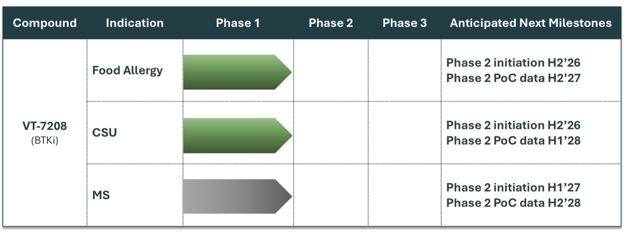
for the treatment of primary glomerular disease, PCS12852 for the treatment of gastroparesis and constipation disorders and PCS11T for the treatment of lung,
pancreatic, ovarian, colorectal, gastric, cervical and other cancers, while evaluating strategic opportunities designed to maximize their clinical and long-term value.
Our Strengths
We believe the attributes of our lead clinical asset, VT7208, together with the experience and capabilities of our team, position us to achieve our principal corporate
objective: to build a world-leading immunology company by fully realizing the potential of BTK inhibition in chronic autoimmune disease and establishing a durable, multi-indication franchise around VT7208.
A broad, validated target, uniquely situated within the immune system.
BTK offers a breadth of therapeutic reach that few targets can match due to its positioning at the nexus
of the innate and adaptive arms of the immune system where it relays signaling downstream of high-affinity IgE (FcεRI), IgG (FcγRI) and B-cell (BCR) receptors. We believe this unique, critical functionality in adaptive immune cells that make autoantibodies and innate immune cells that respond to autoantibodies coupled with its ability to act in
both the periphery and CNS offers the potential for disease modification across numerous autoimmune conditions.
VT7208, a potent, specific and durable oral BTK inhibitor
In preclinical studies, VT7208 displayed high selectivity and rapid, potent and durable peripheral and CNS BTK inactivation. VT7208 had strong activity across
peripheral and CNS-relevant disease models where pathology is driven by FcR signaling and B cells, including models of arthritis, CNS inflammation and multiple sclerosis. In Phase 1 studies, VT7208 demonstrated near-complete target occupancy
within hours, and therapeutic durability beyond 48 hours when administered at our lowest studied dose of 5 mg.
VT7208’s initial liver-safety profile appears consistent with needs of chronic use
VT7208 is designed to achieve durable peripheral and CNS BTK inhibition without the high systemic exposure, or broad off-target pharmacology that has often led to
liver-safety issues in the BTKi class. At a projected 10 mg QD dose in our Phase 1 trial, VT7208 had an FDA drug-induced liver injury (DILI)-risk algorithm
score of 2.1, which we believe supports a low predicted DILI-risk classification (0-3 range). This starting profile was further augmented by initial patient data from our Phase 1 studies, as no dose-limiting toxicities, serious adverse events, or
treatment-related discontinuations were observed.
Multiple large market opportunities
We are advancing VT7208 across three indications of significant unmet need and substantial size, food allergies, CSU and MS, which we believe may provide us with
several independent opportunities to generate value from VT7208.
An efficient path to clinical proof of concept across indications
Each of our programs is designed to establish clinical proof of concept via precedented, near-term biomarker or challenge endpoints with the potential to generate data
in a short period of time. Pursued in parallel, we believe these program designs offer a capital-efficient path to establishing human validation of VT7208’s differentiated profile across a portfolio of indications.
An experienced immunology team, led by a proven founder
Our team, which worked collectively to identify and optimize VT7208, has broad experience across autoimmune drug discovery, formulation and development anchored by our
founder, Sheila Gujrathi, M.D., who led the clinical development of ocrelizumab (Ocrevus®), the current standard of care in relapsing MS, during her tenure at Roche Pharmaceuticals.
Our Strategy
Our core strategy is to broadly and efficiently validate the potentially differentiated profile of VT7208 by generating initial clinical data across three distinct
indications. If successful, we believe this strategy may position our CSU and food allergy programs to enter potentially pivotal studies in the near term and could allow our MS program to capture the full breadth of VT7208’s opportunity in each
disease subtype over time. The key elements of our strategy include:
| • |
Establishing human proof of concept across multiple indications
|
| • |
Designing efficient late-stage trials in food allergy and CSU
|
| • |
Maximizing VT7208’s potential breadth in all forms of MS
|
| • |
Leveraging near-term value creation to expand the franchise into other indications
|
Our Target:
Bruton’s Tyrosine Kinase (BTK): A Dual-Acting Immunomodulatory Node
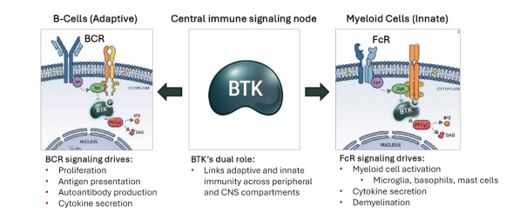
BTK is an intracellular signaling enzyme that occupies a distinctive position in human immunity. Its
activity impacts both the innate and the adaptive arms of the immune system where BTK signaling activates cells whose dysregulation underlies the pathology of many antibody-mediated autoimmune diseases. On the innate side, BTK relays signal
downstream of Fc receptors, most notably FcεRI and FcγR1 on mast cells and basophils that drive the release of histamine, cytokines and other mediators of
allergic and inflammatory responses. On the adaptive side, BTK is an essential node in the B cell receptor (BCR) signaling cascade, governing B-cell activation, proliferation and survival and the production of autoantibodies and pro-inflammatory
cytokines. Though BTK is expressed in B cells and cells of the myeloid lineage including CNS-resident microglia, it is absent from T cells and antibody-secreting plasma cells. This expression pattern underlies BTK’s therapeutic appeal by
positioning the enzyme at the intersection of the two immune arms whose interplay drives antibody-mediated disease, while leaving important categories of immune cells untouched.
Importantly, BTK inhibition modulates pathogenic signaling without depleting immune-cell populations further distinguishing it from other autoimmune drug classes which
target B cells, as illustrated below.
BTK Inhibitors (BTKi): Clinical Validation in Cancer, Unrealized Potential in Immunology
The first regulatory approval for the BTK inhibitor class was the November 2013 FDA approval of ibrutinib, known commercially as Imbruvica®, for the
treatment of mantle cell lymphoma. This first approval was followed by multiple subsequent approvals for both ibrutinib and other members of the class across a range of B-cell cancers. Based on the ability to durably interrupt B cell signaling
driving proliferation, a compelling scientific rationale was made for extending the development of BTK inhibitors into antibody-mediated autoimmune diseases.
Clinical efficacy of BTK inhibitors has been demonstrated in several autoimmune diseases; however, this has been slow to translate into regulatory approvals due to
challenging risk/benefit profiles. In chronic autoimmune disease, where therapies typically treat non-fatal conditions and may be taken for decades, the bar for acceptable tolerability is far higher than in cancer, where greater toxicity is
tolerated in exchange for extending survival. As a result, several members of the BTK inhibitor class have seen their development plans in immunology either halted or impeded by tolerability limitations.
The defining safety concern associated with the BTK inhibitor class in
autoimmune disease has been hepatotoxicity. Evobrutinib and fenebrutinib were each placed on partial clinical hold following cases of liver-enzyme elevation, and the development of tolebrutinib, despite an EMA approval in progressive MS, has
likewise been impacted by hepatic-safety findings. We believe these hepatic liabilities are the principal reason the substantial potential of BTK inhibition in immunologic diseases has not been fully realized. For a molecule to meet the safety
requirements for chronic, long-term use and succeed in the autoimmune arena, it must not only have best-in-class efficacy benefits but also be less impactful on the liver. Creating a BTKi that could meet those dual objectives guided our discovery efforts and rational design of VT7208.
Our Solution: VT7208, a differentiated oral BTK inhibitor
Our development of VT7208 began with its identification from amongst a library of potential candidates as we recognized that its baseline qualities were a promising
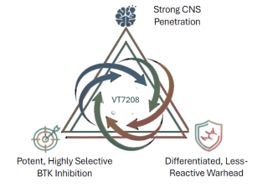
starting point for an immunology-focused BTK inhibitor. We then further augmented those properties by utilizing rational drug design to optimize the molecule for potency, selectivity, metabolic stability and CNS-penetration to create the overall
therapeutic profile we believe has the potential to maximize VT7208’s likelihood of clinical success: rapid onset and persistence of robust target occupancy in periphery and CNS from a low dose that minimizes systemic drug burden. This therapeutic
profile is illustrated below. Based on data from the studies we have conducted to date, we believe that VT7208 has established initial evidence of differentiation across these key domains.
Rapid onset, robust, long duration effects from a low dose
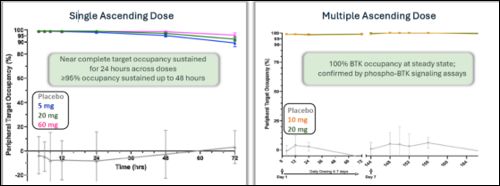
At the lowest dose tested in our Phase 1 single-ascending-dose (SAD) study, which was a single 5mg oral dose of VT7208, greater than 95% BTK target occupancy was
achieved at the earliest timepoint assessed, four hours, which rose to greater than 99%, and was sustained above 95% for approximately 48 hours post-dose. This profile of rapid, near-complete and durable target occupancy at low, once-daily doses
was confirmed in our multiple-ascending-dose (MAD) cohorts where a 10 mg dose achieved 100% target occupancy and signaling inhibition. These results are illustrated below. We believe rapid onset and durable, around-the-clock target coverage from a
low once-daily dose are directly relevant to chronic autoimmune disease, where consistent suppression of pathogenic signaling and simple dosing are central to real-world clinical effectiveness and patient satisfaction.
CNS penetration
The ability to reach the CNS at meaningful, sustained concentrations is a prerequisite for addressing the brain neuroinflammation that drives
disability progression in MS. Therefore, to establish VT7208’s ability to achieve CNS penetration, we have conducted multiple preclinical studies where VT7208 levels could be measured in the brains of animal models and be compared head-to-head with
to the CNS penetration achieved by other BTKi. In addition, we
also measured VT7208 levels in the cerebral spinal fluid (CSF) of the participants in our Phase 1 trial. In the preclinical studies, VT7208 exhibited greater
levels of CNS penetration than either tolebrutinib or remibrutinib, two leading BTKi that are either being studied or have been approved in autoimmune indications. Further, in the Phase 1 trial, we observed CNS penetration data for VT7208
consistent with our preclinical studies.
Preclinical mouse target occupancy in the brain
In preclinical studies in naïve mice with an intact blood-brain barrier, which may not be predictive of pharmacologic activity in humans and should be
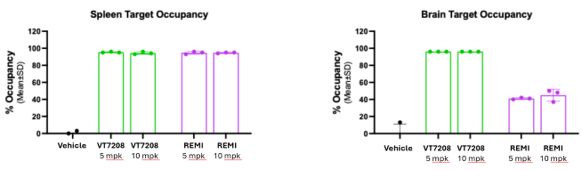
interpreted with caution, VT7208 demonstrated substantially greater BTK target occupancy in the brain than tolebrutinib or remibrutinib administered at the same dose in the two separate head-to-head studies. As depicted below, at steady state,
VT7208 achieved approximately 95% brain BTK target occupancy at both 5 mg/kg and 10 mg/kg, compared with approximately 40% and 45%, respectively, for remibrutinib and 66% and 96% for tolebrutinib. In contrast, all three BTK inhibitors achieved
approximately 95% BTK target occupancy in the spleen at these doses. We believe the substantially higher brain target occupancy observed with VT7208, despite comparable peripheral target occupancy, provides preclinical evidence of its potential to
achieve greater pharmacologic activity within the CNS.
|
Dose
|
Tolebrutinib*
|
VT-7208*
|
||
|
Mouse spleen Target Occupancy
|
5 mg/kg
|
95%
|
95%
|
|
|
Mouse Brain Target Occupancy
|
66%
|
91%
|
||
|
Mouse spleen Target Occupancy
|
10 mg/kg$
|
95%
|
95%
|
|
|
Mouse Brain Target Occupancy
|
96%
|
99%
|
||
|
*oral dose x 3 days, occupancy determined 1 hour after last dose
$10 mg/kg dose is similar to 50 mg human dose by allometric scaling
|
||||
|
Dose
|
Remibrutinib*
|
VT-7208*
|
||
|
Mouse spleen Target Occupancy
|
5 mg/kg
|
95%
|
95%
|
|
|
Mouse Brain Target Occupancy
|
41%
|
96%
|
||
|
Mouse spleen Target Occupancy
|
10 mg/kg$
|
95%
|
95%
|
|
|
Mouse Brain Target Occupancy
|
45%
|
97%
|
||
|
*oral dose x 3 days, occupancy determined 1 hour after last dose
$10 mg/kg dose is similar to 50 mg human dose by allometric scaling
|
||||
Preclinical NHP brain exposure study vs tolebrutinib
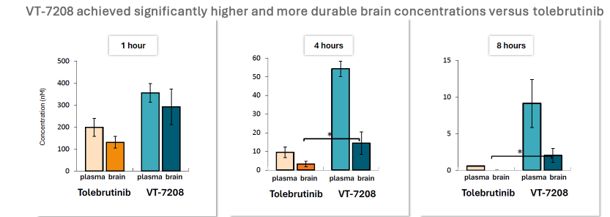
VT-7208 demonstrated higher and more sustained brain exposure than tolebrutinib in a head-to-head preclinical study. At one hour following administration, VT-7208
achieved higher concentrations in both plasma and brain relative to tolebrutinib. At four and eight hours, the difference in brain exposure was more pronounced, with VT-7208 maintaining measurable brain concentrations while tolebrutinib
concentrations declined substantially and were minimal by eight hours. The higher brain concentrations of VT-7208 relative to tolebrutinib at the later time points were statistically significant. We believe these results demonstrate the ability of
VT-7208 to penetrate the blood-brain barrier and maintain exposure in the brain and, together with its BTK potency and target occupancy profile, support the potential of VT-7208 to provide sustained BTK inhibition within the CNS. These results are
illustrated below. Because these findings were generated in a preclinical model, they may not be predictive of CNS exposure or pharmacologic activity in humans, and these comparisons should be interpreted with caution.
|
(nM)
|
Time post dose
|
Tolebrutinib
|
VT-7208
|
|
|
NHP Plasma
|
1 hr
|
198
|
355
|
|
|
NHP Brain
|
130
|
292
|
||
|
NHP Plasma
|
4 hr
|
9.6
|
54.2
|
|
|
NHP Brain
|
3.2
|
14.4
|
||
|
NHP Plasma
|
8 hr
|
0.6
|
9.1
|
|
|
NHP Brain
|
0
|
2.0
|
VT7208 CSF concentration levels in phase 1 trial participants
Based on human pharmacokinetic data in our Phase 1 trial, a 10 mg once-daily dose of VT-7208 resulted
in a CSF concentration of approximately 2 nM, compared with an IC₅₀ of 0.26 nM for inhibition of TNF-α production in a human microglial assay, representing approximately 7.7-fold coverage of the microglial IC₅₀. We believe these data support the
potential for VT7208 to achieve pharmacologically relevant CNS exposure at a relatively low projected clinical dose.
Reduced Hepatotoxicity Risk
Based on our understanding of the underlying hepatic safety concerns associated with the BTKi class, we designed VT7208 to minimize its potential
metabolic burden by using a butynamide warhead in contrast to most current clinical and commercial stage BTK inhibitors, which use an inherently more reactive acrylamide warhead. We believe the properties of a butynamide warhead are more consistent
with the requirements of a chronically administered drug due to its less promiscuous binding and lower intrinsic metabolite reactivity. To date, VT7208 has demonstrated a balanced profile and low intrinsic off-target reactivity which reduces the
formation of reactive metabolites that can contribute to idiosyncratic toxicity and are associated with greater immune-mediated drug induced liver injury (DILI) risk. In preclinical studies, VT7208 showed minimal glutathione (GSH) adduct formation
(~1% of the parent compound), a key determinant of reactive metabolite risk that is associated with DILI and produced FDA drug-induced liver injury (DILI)-risk algorithm score of 2.1 which placed it in the low-risk classification (0-3 range).
We believe these properties coupled with the low therapeutic doses we have established, starting at 5 mg, may increase our chances of achieving our
objective of optimizing VT7208’s tolerability for chronic use. This potential is best represented by the wide therapeutic window that we have observed for VT7208, as measured by the more than 50-fold margin between therapeutic doses and the lowest
no observed adverse-effect dose level (NOAEL in dogs considered the most sensitive species) established in our GLP toxicity studies.
Phase 1 Trial
As depicted below, our first human study of VT7208 was a combined single ascending dose (SAD), and multiple ascending dose (MAD), Phase 1 study at doses ranging from 5
mg to 60 mg. The effect of food was examined in a separate food effect cohort. The study included 24 healthy volunteers, 8 per study arm. In the fasting arm of the SAD study and the MAD study, participants were randomized 6:2 to the treatment and
placebo arms, while in the fed cohort of the SAD study, all 8 participants received only VT7208. The trial design is illustrated below.
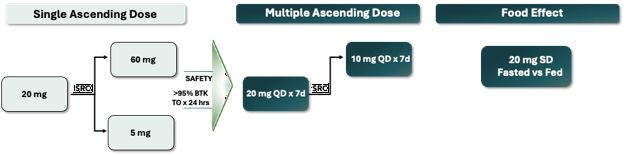
The primary objectives of the trial were the establishment of VT7208’s safety, tolerability, and pharmacokinetic profiles, while the secondary endpoints assessed BTK
target engagement and impact on certain translational biomarkers.
Results
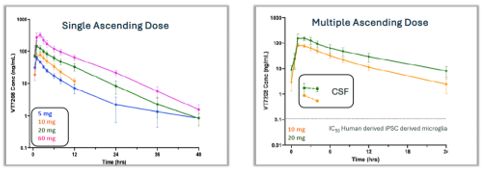
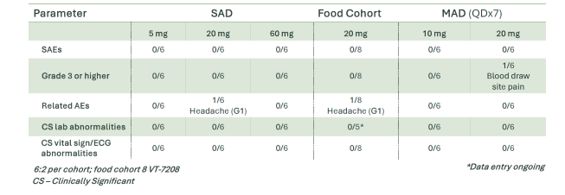
As depicted above and below, results from the completed Phase 1 SAD and MAD studies demonstrated that VT7208 exhibited a predictable PK profile with nearly dose
proportional exposures across all evaluated dosage levels and was also generally well tolerated. Across all dosage levels, there were no dose-limiting toxicities observed, no serious adverse events reported, no treatment-related discontinuations,
and no liver-safety signal or bleeding-related events observed. There was no clinically meaningful food effect observed as VT7208’s PK and tolerability profiles were consistent in both fasted and fed states. These findings are depicted below.
Preclinical and Phase 1 data collectively suggests that VT7208 has a differentiated profile within the BTK inhibitor class
While representing early-stage findings in a limited number of subjects, we believe the collective preclinical data we have generated when combined with the results of
our Phase 1 trial provide compelling evidence of VT7208’s potential as a rapid-acting, potent, selective, durable inhibitor of BTK with an initial tolerability profile consistent with the requirements of chronic utilization that is well matched
with our targeted indications.
Our Targeted Indications
We selected each of our three initial indications of food allergy, chronic spontaneous urticaria (CSU) and multiple sclerosis (MS) based on the strong mechanistic
rationale for VT7208 and the opportunity to balance rapid establishment of human proof of concept with exploration of its broad therapeutic potential. We believe the two allergic indications provide expeditious pathways to clinically meaningful
readouts, while MS may offer the opportunity to leverage VT7208’s dual peripheral and central activity across multiple forms of a disease with profound unmet need.
Food allergy
Overview
Allergic reactions to certain types of food, including allergies to shellfish and peanuts, occur most
commonly when food-allergen-specific IgE, bound to the high-affinity IgE receptor (FcεRI) on the surface of mast cells and basophils misidentifies food proteins as pathogenic causing those cells in turn to release inflammatory mediators
upon repeated exposure to the offending food. There is considerable variability in the symptomatic presentation from individuals suffering from an allergic reaction ranging from mild itching and rash to severe, life-threatening anaphylaxis.
Approximately 17 million Americans, including an estimated 3.6 million children, suffer from some form of food allergy, and more than 40% of those impacted have experienced at least
one reaction categorized as severe in their lifetime.
Due to the limited treatment options currently available, food allergies are most often managed through exposure avoidance and rescue therapies as needed.
BTK mechanistic rationale for treating food allergies
As an essential signaling component immediately downstream of FcεRI, BTK is well
positioned to disrupt the allergic cascade before mast-cell and basophil activation triggers the allergic reaction that most commonly drives food allergies. We believe this makes BTK inhibition one of the most biologically aligned mechanisms for
this indication. Our conviction is further supported by the FDA approval of the injectable treatment Xolair® for food
allergies and clinical trial data generated by the oral, twice-daily BTK inhibitor remibrutinib. In a controlled study, one month of BID treatment with remibrutinib led to a clinically relevant, dose-dependent increase in the proportion
of patients able to tolerate a peanut-protein oral challenge without dose-limiting symptoms in as little as seven days, with responder rates rising proportionately across ascending doses.
VT7208’s potential to differentiate in food allergies
If approved, we believe that VT7208 is well positioned to build on these achievements while also offering potential differentiation as a longer acting, well tolerated,
once daily oral treatment which may combine to increase overall treatment adherence and reduce lapses in protection. Given the large pediatric component of the overall food allergy population, this added layer of protection may be particularly
compelling to both parents and physicians as it may reduce the risk of accidental exposure by either an unsupervised child or a child in the care of a non-parental third party who is unaware of the allergic risk.
VT7208 clinical development plan in food allergies
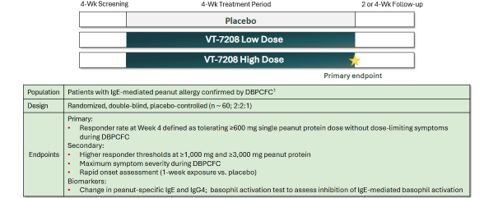
As depicted above, our initial Phase 2 trial in food allergy is planned as a four-week, randomized, controlled study of approximately 60 patients with confirmed
IgE-mediated peanut allergy, followed by a two- to four-week follow-up period. Patients will be randomized to low-dose VT7208, high-dose VT7208 or placebo. The primary endpoint will be responder rate, defined as tolerating a single peanut-protein
dose of ≥600 mg without dose-limiting symptoms. The secondary endpoints are higher responder thresholds (≥1,000 mg and ≥3,000 mg of peanut protein), maximum symptom severity, and a rapid-onset assessment at one week versus placebo; we will also
measure changes in peanut-specific IgE and IgG4 and in basophil activation. We intend to initiate this trial in the second half of 2026 and expect to report proof of concept data in the second half of 2027.
Chronic spontaneous urticaria (CSU)
Overview
CSU is a chronic inflammatory skin disease characterized by the recurrent development of itching, hives (wheals) and angioedema in the absence of a specific external
trigger which affects an estimated 1.6 to 2 million U.S. adults with a roughly two-to-one female predominance. Though not typically life-threatening, CSU imposes a significant quality of life burden on patients as they often experience daily or
near-daily hives and intense, often nocturnal, itching which leads to sleep disruption, daily productivity losses, and elevated rates of anxiety and depression. It is estimated that at least half of patients remain symptomatic following treatment
with second-generation H1-antihistamines, which have long been the standard of care for first line therapy.
BTK mechanistic rationale the for the treatment of CSU
Like food allergies, activation of mast cells and basophils is central to the pathogenesis of CSU, which we believe again positions BTK to arrest the dysregulated
immune cascade that drives the disease. This potential was recently validated by the FDA’s September 2025 approval of remibrutinib (Rhapsido®) as the first oral BTK inhibitor for CSU patients who remain symptomatic despite antihistamine
therapy, joining omalizumab (Xolair®) and Dupilimab, (Dupixient®) as approved IgE pathway targeting therapies for the condition.
In its pivotal trials, remibrutinib achieved a clinically meaningful improvement of USA7, its primary endpoint, while also driving well-controlled disease in about
half of patients and complete responses in roughly a third, with benefits sustained through 52 weeks. One particularly disease relevant differentiating feature of remibrutinib was its speed of onset as patients reported itch improvement within
roughly twelve hours of the first dose, in contrast with the more gradual onsets of treatment benefits, often measured in weeks, of omalizumab and dupilimab.
Potential for VT7208 to differentiate from the class in CSU
We believe VT7208’s potential for differentiation in CSU rests on three attributes that could be particularly meaningful in the specific context of the patient
experience: once daily dosing, speed to onset and durability of symptomatic control.
Once daily dosing. VT7208 is designed for convenient once-daily dosing, and
its durable target occupancy has the potential to sustain BTK blockade across the full dose interval versus remibrutinib’s twice-daily regimen which increases the likelihood of an end of treatment interval diminution of effect and missed doses
leading to on-treatment symptomatic breakthrough.
Increased speed to onset. VT7208’s rapid pharmacodynamic onset may have the
potential to translate into faster symptom relief.
Durability of control. Maintaining long duration relief from the symptoms of
CSU without experiencing reemergence could be especially meaningful in this setting given the typical multiyear disease course of CSU marked by continuous, symptomatic burden.
Clinical Development Plans in CSU
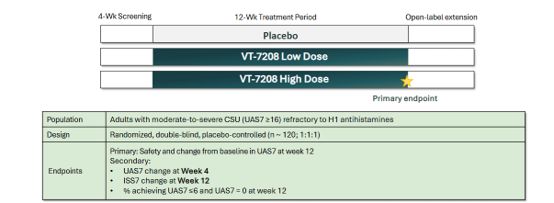
As depicted above, our Phase 2 study in CSU is planned as a 12-week study of approximately 120 adults with moderate-to-severe CSU (UAS7 ≥16) who are refractory to
H1-antihistamines, with an open-label extension. Patients will be randomized equally to low-dose VT7208, high-dose VT7208 or placebo. The co-primary endpoints will be safety and change from baseline in UAS7 at week 12, with secondary endpoints of
UAS7 change at week 4, ISS7 change at week 12, and the proportions of patients achieving UAS7 ≤6 and UAS7 = 0 at week 12. We intend to initiate this trial in the second half of 2026 and expect to report proof of concept data in the first half of
2028.
Multiple Sclerosis (MS)
Overview
MS is a chronic autoimmune disease in which dysregulated immune cells, including B cells, infiltrate the CNS and, together with CNS-resident microglia, drive the
inflammation and neurodegeneration that ultimately produce progressive and irreversible disability. Approximately 1.25 million Americans live with MS. The disease is presented in two principal forms:
Relapsing MS
Relapsing MS (RMS), which represents the substantial majority (approximately 1 million) of cases at diagnosis, is defined by discrete attacks of neurological symptoms
that typically last for weeks before a remission. These relapses reflect episodes of acute inflammation, producing symptoms such as vision loss, numbness, tingling and fatigue as the immune system attacks the myelin insulating nerve fibers. RMS is
the most common presentation at initial diagnosis and the most responsive to currently available disease-modifying therapies.
Progressive MS
Progressive MS (PMS) is defined by a steady, gradual worsening of neurological function and accumulating disability over time, driven less by acute peripheral
inflammatory attacks than by ongoing CNS nerve-fiber degeneration, and is considerably less responsive to current treatments. Within progressive MS there are two subtypes: (1) secondary progressive MS (SPMS) develops in approximately 10% of
relapsing patients over time, typically years to decades after diagnosis, as accumulated injury shifts the disease from a relapsing-remitting pattern to continuous decline and (2) primary progressive MS (PPMS), which represents an estimated 150,000
annual MS cases, typically presents at an older age and drives disability steadily from onset without a preceding relapsing phase.
Current standard of care
The current first-line MS therapies, anti-CD20 antibodies, which are administered by infusion or injection, deplete circulating B cells in the periphery and have
proven highly effective at dramatically reducing the acute attacks that characterize RMS and delaying the onset of SPMS. These therapies, despite being approved in PMS, show more limited benefits once the disease progression is independent of
relapse activity. Progression independent of relapse activity (PIRA) and the associated accumulation of disabilities is now understood to be driven by inflammation compartmentalized within the CNS which limits the utility of therapies, like
anti-CD20 antibodies, that cannot cross the blood brain barrier. In addition, non-selective B-cell depletion makes no distinction between pathogenic and healthy B cells, which leaves patients at greater risk of infection and frequently unable to
mount successful responses to vaccination.
Rationale for a once daily CNS-penetrant BTKi to address the entire MS disease spectrum
We believe that dual inhibition of peripheral and CNS BTK signaling has a compelling rationale for addressing the limitations of the current standard of care B-cell
depletion treatments, as it has shown the potential to both modulate pathogenic B cells in the periphery rather than deplete the overall B-cell population and also penetrate the CNS blood-brain barrier to act upon the microglia that drive the
smoldering inflammation underlying PIRA/disability progression. This mechanistic benefit of BTK inhibition has been validated by clinical data from tolebrutinib, a once-daily, oral, CNS-penetrant BTK inhibitor which, in clinical trials,
demonstrated the ability to both impact relapses and slow disability progression. Tolebrutinib’s development, however, despite receiving an approval from the EMA in PMS, has been hindered in the U.S. by hepatic safety concerns, which we believe
underscores VT7208’s potential to fulfill the mechanistic promise of BTK inhibition in MS while addressing the tolerability limitations that have heretofore precluded it from becoming reality.
Potential for VT7208 to differentiate from the class in MS
We believe that once-daily VT7208 holds the potential to improve upon the therapeutic profile demonstrated to date in the class by potentially improving both efficacy
and tolerability. VT7208 may have greater impact on CNS-resident inflammation by achieving higher and longer-duration drug concentration levels in the brain, while reducing the likelihood of hepatic impact as a result of its low dose, enhanced
target selectivity and stable metabolic profile. If borne out in larger randomized controlled trials, this combination of deeper CNS exposure and improved tolerability would be directly responsive to the two factors that have constrained the
CNS-penetrant BTK approach to date in MS.
Clinical Development Plans in MS
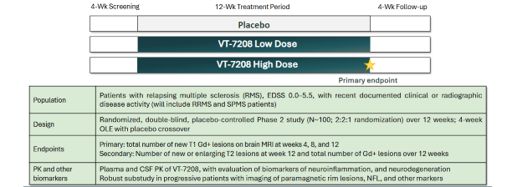
As depicted above our Phase 2 RMS study is planned as a 12-week study with a four-week open-label extension in approximately 100 patients with relapsing MS (EDSS
0.0–5.5) who have recent documented clinical or radiographic disease activity, designed to establish early clinical and radiographic evidence of disease impact and to inform potential future registrational RMS and progressive-MS programs. Patients
will be randomized to high- or low-dose VT7208 or placebo, with an opportunity for patients initially assigned to placebo to cross over during the open-label extension. The primary endpoint will be the total number of new T1 gadolinium-enhancing
lesions on brain MRI at weeks 4, 8 and 12, with secondary endpoints of the number of new or enlarging T2 lesions at week 12 and the total number of gadolinium-enhancing lesions over 12 weeks. We will also assess VT7208’s brain penetration by
measuring plasma and cerebrospinal-fluid concentrations and its effect on biomarkers of neuroinflammation and neurodegeneration, and we will conduct a sub-study in enrolled progressive patients with imaging of paramagnetic rim lesions,
neurofilament light chain (NfL) and other markers. We intend to initiate this trial in the first half of 2027 and expect to report proof of concept data in the second half of 2028.
Commercial Opportunity
We believe there is considerable commercial potential for VT7208, if approved, in each of its targeted indications given the chronic nature of the conditions, the size
of the patient populations, the urgency of the unmet medical need and the potential for differentiation. The development of the commercial markets for each of these indication, however, is at varying stages. Both food allergies and CSU are nascent
markets for branded therapeutics with many FDA approvals only occurring in within recent years, whereas MS represents a well-established market of more than 25 years with clear predicates for the sales potential of new agents that offer a
differentiated profile. Our belief in the commercial potential of VT7208 in food allergy and CSU is therefore based on the large size of the patient populations, approximately 17 million and 1.7 million respectively, and the significant unmet need
,while in MS we can base our view on the documented sales totals achieved by MS therapeutics.
In 2025, the total market for branded MS treatments was approximately $20 billion based on publicly disclosed sales figures with the leading four treatments, Ocrevus®
(Roche) Kesimpta® (Novartis), Tysabri® (Biogen) and Mavenclad® (Merck KgA), each achieving greater than $1 billion in sales and collectively representing greater than $15 billion of sales.
We believe our optimism for the commercial potential of the food allergy and CSU markets is supported by the product guidance and public commentary of two leading
global pharmaceutical companies who have products that are used to treat both indications: Roche Holding AG and Novartis AG. Roche management specifically credited food allergy as the leading cause of Xolair’s® 2025 sales acceleration (+32% growth
year-over-year), while Novartis’ marketing materials cite remibrutinib, known commercially as Rhapsido® as amongst a group of emerging products with potential to generate at least $3 billion dollars annually at peak and cited CSU and food allergies
as key drivers of that potential. This view has also been expressed in the projection of equities research analysts who forecast Rhapsido to reach $3 billion in sales by 2029. In addition, development stage biotechnology company, Rapt Therapeutics
has stated their lead clinical candidate ozureprubart, a long-acting anti-IgE agent, presents a $5.5 billion opportunity in food allergy and CSU combined.
Given our stage of development, however, we will not likely achieve any sales for many years, and we have not yet established either a commercial organization or
distribution capabilities.
Competition
The biotechnology and pharmaceutical industries are characterized by rapidly advancing technologies, intense competition and a strong emphasis on intellectual
property. While we believe the unique attributes of VT7208 provide us with competitive advantages, we face potential competition from many different sources, including pharmaceutical and biotechnology companies, academic institutions and
governmental agencies, as well as public and private research institutions. Our competitors may have significantly greater financial resources, established presence in the market and expertise in research and development, manufacturing, preclinical
and clinical testing, obtaining regulatory approvals and reimbursement and marketing approved products than we do. These competitors also compete with us in recruiting and retaining qualified scientific, sales, marketing and management personnel
and establishing clinical trial sites and patient registration for clinical trials, as well as in acquiring technologies complementary to or necessary for, our programs. Smaller or early-stage companies may also prove to be significant competitors,
particularly through collaborative arrangements with large and established companies.
The markets for autoimmune and allergic disease therapies are highly competitive and characterized by rapid innovation. In our target indications, we expect to compete
with established therapeutic classes as well as other BTK inhibitors that are approved or in clinical development. We believe VT7208’s potential points of differentiation described above may provide meaningful competitive advantages.
Following a comprehensive search of publicly available databases, we have identified the following programs across our targeted indications that may present a
competitive threat to our ability to successfully commercialize VT7208, if approved.
Food allergy
|
Stage
|
Drug
|
Sponsor
|
Mechanism of Action
|
Route of
Administration
|
|||||
|
Approved
|
Peanut allergen powder-dnfp (Palforzia)
|
Stallergenes Greer
|
Characterized oral immunotherapy (allergen desensitization)
|
Oral (powder in capsules/sachet, mixed with food)
|
|||||
|
Approved
|
Omalizumab (Xolair)
|
Genentech / Novartis
|
Anti-IgE monoclonal antibody
|
Subcutaneous
|
|||||
|
Phase 3 / BLA filing
|
Viaskin Peanut patch (DBV712)
|
DBV Technologies
|
Epicutaneous immunotherapy (allergen desensitization)
|
Epicutaneous (skin patch)
|
|
Stage
|
Drug
|
Sponsor
|
Mechanism of Action
|
Route of
Administration
|
|||||
|
Phase 3
|
Remibrutinib (Rhapsido)
|
Novartis
|
Covalent BTK inhibitor
|
Oral
|
|||||
|
Phase 3
|
Epinephrine nasal powder (FMXIN002)
|
Nasus Pharma
|
Alpha/beta adrenergic agonist (rescue)
|
Intranasal (dry powder)
|
|||||
|
Phase 2
|
RPT904
|
RAPT Therapeutics / GSK
|
Long-acting anti-IgE monoclonal antibody
|
Injection; Not specified in registry
|
|||||
|
Phase 2
|
LP-003
|
Longbio Pharma
|
Anti-IgE monoclonal antibody
|
Injection; Not specified in registry
|
|||||
|
Phase 2
|
Tezepelumab
|
NIAID (CoFAR)
|
Anti-TSLP monoclonal antibody
|
Subcutaneous
|
|||||
|
Phase 2
|
Dupilumab (Dupixent)
|
Regeneron / Sanofi
|
Anti-IL-4Rα monoclonal antibody (blocks IL-4/IL-13)
|
Subcutaneous
|
|||||
|
Phase 2
|
Acalabrutinib
|
Johns Hopkins University
|
BTK inhibitor
|
Oral
|
|||||
|
Phase 2
|
Abatacept
|
Investigator-led (CHU Sainte-Justine)
|
CTLA4-Ig T-cell costimulation blocker (adjuvant to oral immunotherapy)
|
Subcutaneous or intravenous; Not specified in registry
|
|||||
|
Phase 2
|
PVX-108
|
Aravax
|
T-cell peptide immunotherapy
|
Injection; Not specified in registry
|
|||||
|
Phase 2
|
ADP101
|
Alladapt Immunotherapeutics
|
Multi-food characterized oral immunotherapy
|
Oral
|
|||||
|
Phase 2
|
Peanut SLIT-tablet
|
ALK-Abelló
|
Sublingual allergen immunotherapy
|
Sublingual (tablet)
|
|||||
|
Phase 2
|
INP20
|
InnoUp Farma
|
Nanoparticle-encapsulated oral immunotherapy
|
Oral
|
|||||
|
Phase 2
|
VE416 (± vancomycin)
|
Massachusetts General Hospital / Vedanta
|
Live bacterial consortium (microbiome modulation) with peanut OIT
|
Oral (capsule)
|
|||||
|
Phase 2
|
ENP-501
|
N-Fold
|
Allergen immunotherapy
|
Not specified in registry
|
|||||
|
Phase 2
|
UKK-0018
|
Ukko
|
Undisclosed (immune re-education)
|
Injection; Not specified in registry
|
|||||
|
Phase 1
|
IGNX001
|
IgGenix
|
Human anti-peanut IgG allergen-blocking antibody
|
Injection; Not specified in registry
|
|
Phase 1
|
MY006
|
Mabylon
|
Allergen-blocking human antibody
|
Subcutaneous
|
|||||
|
Phase 1
|
LCA-0061
|
Lycia Therapeutics
|
Extracellular IgE-degrading bifunctional molecule
|
Subcutaneous
|
|||||
|
Phase 1
|
Linvoseltamab + dupilumab
|
Regeneron
|
BCMA×CD3 bispecific (plasma-cell depletion) + anti-IL-4Rα
|
Intravenous (linvoseltamab) + subcutaneous (dupilumab)
|
|||||
|
Phase 1
|
Abrocitinib
|
Icahn School of Medicine at Mount Sinai
|
JAK1 inhibitor
|
Oral
|
|||||
|
Phase 1
|
INT301
|
Intrommune Therapeutics
|
Oral-mucosal allergen immunotherapy (toothpaste)
|
Oral mucosal (toothpaste)
|
|||||
|
Phase 1
|
VLP Peanut
|
Allergy Therapeutics / Saiba
|
Virus-like-particle peanut allergen vaccine
|
Not specified in registry
|
|||||
|
Phase 1
|
HAL-MPE1
|
HAL Allergy
|
Chemically modified, alum-adsorbed peanut allergen extract
|
Subcutaneous
|
|||||
|
Phase 1
|
IN-001 epinephrine sublingual spray
|
Insignis Therapeutics
|
Alpha/beta adrenergic agonist (rescue)
|
Sublingual (spray)
|
CSU
|
Stage
|
Drug
|
Sponsor
|
Mechanism of Action
|
Route of
Administration
|
|||||
|
Approved
|
Cetirizine, levocetirizine, fexofenadine, bilastine, desloratadine, rupatadine (2nd-gen H1 antihistamines)
|
Multiple
|
Histamine H1-receptor inverse agonist (first-line, up to 4x dose in guidelines)
|
Oral
|
|||||
|
Approved
|
Omalizumab (Xolair)
|
Genentech / Novartis
|
Anti-IgE monoclonal antibody
|
Subcutaneous
|
|||||
|
Approved
|
Remibrutinib (Rhapsido)
|
Novartis
|
Covalent BTK inhibitor
|
Oral (tablet)
|
|||||
|
Approved
|
Dupilumab (Dupixent)
|
Regeneron / Sanofi
|
Anti-IL-4Rα monoclonal antibody (blocks IL-4/IL-13)
|
Subcutaneous
|
|||||
|
Phase 3 / BLA filing
|
Barzolvolimab (CDX-0159)
|
Celldex Therapeutics
|
Anti-KIT monoclonal antibody (mast-cell depletion)
|
Subcutaneous
|
|||||
|
Phase 3
|
JYB1904
|
Jemincare
|
Anti-IgE monoclonal antibody
|
Subcutaneous injection
|
|||||
|
Phase 3
|
CMAB007
|
Taizhou Mabtech
|
Omalizumab biosimilar (anti-IgE mAb)
|
Subcutaneous
|
|||||
|
Phase 2/3
|
ICP-332
|
InnoCare Pharma
|
TYK2 (JH2) inhibitor
|
Oral (tablet)
|
|||||
|
Phase 2
|
Briquilimab
|
Jasper Therapeutics
|
Anti-KIT monoclonal antibody (mast-cell depletion)
|
Subcutaneous
|
|||||
|
Phase 2
|
Rilzabrutinib
|
Sanofi
|
Reversible covalent BTK inhibitor
|
Oral
|
|||||
|
Phase 2
|
Povorcitinib
|
Incyte
|
JAK1 inhibitor
|
Oral
|
|||||
|
Phase 2
|
TAS5315
|
Taiho Pharmaceutical
|
BTK inhibitor
|
Oral
|
|||||
|
Phase 2
|
Fenebrutinib (GDC-0853)
|
Genentech
|
Non-covalent BTK inhibitor
|
Oral
|
|||||
|
Phase 2
|
EVO756
|
Evommune
|
Oral MRGPRX2 antagonist (mast-cell activation blocker)
|
Oral
|
|||||
|
Phase 2
|
EP262
|
Escient Pharmaceuticals
|
MRGPRX2 antagonist
|
Oral
|
|||||
|
Phase 2
|
UB-221
|
United BioPharma
|
Anti-IgE monoclonal antibody (binds IgE and CD23)
|
Intravenous infusion
|
|||||
|
Phase 2
|
YH35324
|
Yuhan Corporation
|
High-affinity IgE Trap-Fc fusion protein
|
Subcutaneous
|
|||||
|
Phase 2
|
Tezepelumab
|
Amgen / AstraZeneca
|
Anti-TSLP monoclonal antibody
|
Subcutaneous
|
|||||
|
Phase 2
|
TLL-018
|
Highlightll Pharmaceutical
|
JAK1/TYK2 inhibitor
|
Oral (tablet)
|
|||||
|
Phase 2
|
CM512
|
Keymed Biosciences
|
Not specified in registry
|
Injection; Not specified in registry
|
|||||
|
Phase 2
|
LP-003
|
Longbio Pharma
|
Anti-IgE monoclonal antibody
|
Injection; Not specified in registry
|
|||||
|
Phase 2
|
BBT001
|
Bambusa Therapeutics
|
Not specified in registry
|
Injection; Not specified in registry
|
|||||
|
Phase 2
|
Ritlecitinib
|
Investigator-led (Mount Sinai)
|
JAK3 / TEC-family kinase inhibitor
|
Oral
|
|||||
|
Phase 1
|
AK006
|
Allakos
|
Anti-Siglec-6 monoclonal antibody (mast-cell inhibition)
|
Intravenous and subcutaneous
|
|||||
|
Phase 1
|
HRS-3095
|
Hengrui / Atridia
|
Not specified in registry
|
Not specified in registry
|
MS
|
Stage
|
Drug
|
Sponsor
|
Mechanism of
Action
|
|
Route of
Administration
|
Patient Population
|
|||||
|
Approved
|
Interferon beta-1a (Avonex, Rebif)
|
Biogen; EMD Serono
|
Type I interferon immunomodulator
|
Intramuscular (Avonex) / subcutaneous (Rebif)
|
Relapsing forms of MS (CIS, RRMS, active SPMS), adults
|
||||||
|
Approved
|
Peginterferon beta-1a (Plegridy)
|
Biogen
|
PEGylated type I interferon
|
Subcutaneous or intramuscular
|
Relapsing forms of MS (CIS, RRMS, active SPMS), adults
|
||||||
|
Approved
|
Interferon beta-1b (Betaseron, Extavia)
|
Bayer; Novartis
|
Type I interferon immunomodulator
|
Subcutaneous
|
Relapsing forms of MS (CIS, RRMS, active SPMS), adults
|
||||||
|
Approved
|
Glatiramer acetate (Copaxone, Glatopa)
|
Teva; Sandoz
|
Random amino-acid copolymer; immune deviation
|
Subcutaneous
|
Relapsing forms of MS (CIS, RRMS, active SPMS), adults
|
||||||
|
Approved
|
Teriflunomide (Aubagio + generics)
|
Sanofi; generics
|
Dihydroorotate dehydrogenase (pyrimidine synthesis) inhibitor
|
Oral (tablet)
|
Relapsing forms of MS (CIS, RRMS, active SPMS), adults
|
||||||
|
Approved
|
Dimethyl fumarate (Tecfidera + generics)
|
Biogen; generics
|
Nrf2 activator / immunomodulator
|
Oral (DR capsule)
|
Relapsing forms of MS (CIS, RRMS, active SPMS), adults
|
||||||
|
Approved
|
Diroximel fumarate (Vumerity)
|
Biogen
|
Nrf2 activator (MMF prodrug)
|
Oral (DR capsule)
|
Relapsing forms of MS (CIS, RRMS, active SPMS), adults
|
||||||
|
Approved
|
Monomethyl fumarate (Bafiertam)
|
Banner Life Sciences
|
Nrf2 activator (active fumarate metabolite)
|
Oral (DR capsule)
|
Relapsing forms of MS (CIS, RRMS, active SPMS), adults
|
||||||
|
Approved
|
Fingolimod (Gilenya + generics)
|
Novartis; generics
|
S1P receptor modulator (non-selective)
|
Oral (capsule)
|
Relapsing forms of MS (CIS, RRMS, active SPMS), patients ≥10 years
|
||||||
|
Approved
|
Siponimod (Mayzent)
|
Novartis
|
S1P1/S1P5 receptor modulator
|
Oral (tablet)
|
Relapsing forms of MS (CIS, RRMS, active SPMS), adults — positioned for active SPMS
|
||||||
|
Approved
|
Ozanimod (Zeposia)
|
Bristol Myers Squibb
|
S1P1/S1P5 receptor modulator
|
Oral (capsule)
|
Relapsing forms of MS (CIS, RRMS, active SPMS), adults
|
||||||
|
Approved
|
Ponesimod (Ponvory)
|
Johnson & Johnson
|
S1P1 receptor modulator
|
Oral (tablet)
|
Relapsing forms of MS (CIS, RRMS, active SPMS), adults
|
||||||
|
Approved
|
Cladribine (Mavenclad + generics)
|
EMD Serono; generics
|
Purine analogue; selective lymphocyte depletion
|
Oral (tablet)
|
RRMS and active SPMS, adults (not for CIS); after inadequate response to another DMT
|
|
Stage
|
Drug |
Sponsor
|
Mechanism of
Action
|
Route of
Administration
|
Patient Population
|
||||||
|
Approved
|
Natalizumab (Tysabri; biosimilar Tyruko)
|
Biogen; Sandoz
|
Anti-α4-integrin mAb (blocks CNS lymphocyte trafficking)
|
Intravenous (also SC in EU)
|
Relapsing forms of MS (CIS, RRMS, active SPMS), adults
|
||||||
|
Approved
|
Ocrelizumab (Ocrevus; Ocrevus Zunovo SC)
|
Genentech / Roche
|
Anti-CD20 B-cell-depleting mAb
|
Intravenous; subcutaneous with hyaluronidase
|
Relapsing forms of MS (CIS, RRMS, active SPMS) in adults; PPMS in adults; RRMS in children ≥10 years
|
||||||
|
Approved
|
Ofatumumab (Kesimpta)
|
Novartis
|
Anti-CD20 B-cell-depleting mAb
|
Subcutaneous (autoinjector)
|
Relapsing forms of MS (CIS, RRMS, active SPMS), adults
|
||||||
|
Approved
|
Ublituximab (Briumvi)
|
TG Therapeutics
|
Glycoengineered anti-CD20 mAb
|
Intravenous
|
Relapsing forms of MS (CIS, RRMS, active SPMS), adults
|
||||||
|
Approved
|
Alemtuzumab (Lemtrada)
|
Sanofi
|
Anti-CD52 depleting mAb (immune reconstitution)
|
Intravenous
|
Relapsing forms of MS (CIS, RRMS, active SPMS), adults; reserved for inadequate response to ≥2 DMTs
|
||||||
|
Approved
|
Mitoxantrone (Novantrone + generics)
|
Generics
|
Type II topoisomerase inhibitor / immunosuppressant
|
Intravenous
|
SPMS, progressive-relapsing MS, or worsening RRMS
|
||||||
|
Approved (symptomatic)
|
Dalfampridine (Ampyra + generics)
|
Amneal; generics
|
Potassium-channel blocker (improves walking speed)
|
Oral (ER tablet)
|
Any MS subtype, adults — symptomatic, not disease-modifying
|
||||||
|
Approved (EU) / FDA CRL
|
Tolebrutinib (Cenrifki)
|
Sanofi
|
CNS-penetrant covalent BTK inhibitor
|
Oral
|
nrSPMS — EU approval June 2026 (HERCULES, NCT04411641; 31% reduction in 6-month CDP). FDA CRL Dec 2025 citing severe DILI risk and no subgroup with favorable
benefit-risk. Provisionally approved UAE Jul 2025. PPMS (PERSEUS, NCT04458051) missed its primary endpoint; RMS GEMINI 1/2 missed primary but met pooled disability worsening.
|
||||||
|
Phase 3
|
Fenebrutinib
|
Genentech / Roche
|
CNS-penetrant non-covalent BTK inhibitor
|
Oral
|
RMS (FENhance 1/2) and PPMS (FENtrepid)
|
||||||
|
Phase 3
|
Frexalimab (SAR441344)
|
Sanofi
|
Anti-CD40L mAb (costimulation blockade)
|
Intravenous and subcutaneous
|
RMS (FREXALT) and nrSPMS (FREVIVA)
|
||||||
|
Phase 3
|
Vidofludimus calcium (IMU-838)
|
Immunic
|
DHODH inhibitor / Nurr1 activator
|
Oral (tablet)
|
RRMS (ENSURE 1/2) and PMS (CALLIPER)
|
||||||
|
Phase 3
|
Divozilimab (BCD-132)
|
Biocad
|
Anti-CD20 mAb
|
Intravenous
|
RRMS / SPMS (Russia)
|
||||||
|
Phase 3
|
Remibrutinib
|
Novartis
|
Covalent BTK inhibitor
|
Oral
|
RMS (NCT05147220, NCT06846281) and SPMS (NCT07225504)
|
| Stage | Drug | Sponsor |
Mechanism of
Action
|
Route of
Administration
|
Patient Population
|
||||||
|
Phase 3
|
Orelabrutinib
|
InnoCare / Biogen
|
Covalent BTK inhibitor
|
Oral
|
RRMS (Phase 2); Phase 3 in SPMS (NCT07299019) and PPMS (NCT07067463)
|
||||||
|
Phase 3
|
Simvastatin
|
UCL (MS-STAT2)
|
HMG-CoA reductase inhibitor; neuroprotection
|
Oral
|
SPMS (MS-STAT2, NCT03387670)
|
||||||
|
Phase 3 (suspended)
|
Masitinib
|
AB Science
|
Tyrosine kinase inhibitor (mast cell / microglia)
|
Oral
|
Non-active SPMS and PPMS (NCT05441488 suspended)
|
||||||
|
Phase 2/3
|
CNM-Au8
|
Clene Nanomedicine
|
Catalytic gold nanocrystal (CNS bioenergetics / remyelination)
|
Oral (suspension)
|
RMS with chronic optic neuropathy (NCT04626921)
|
||||||
|
Phase 2
|
BIIB091
|
Biogen
|
BTK inhibitor (± diroximel fumarate)
|
Oral
|
Relapsing forms of MS
|
||||||
|
Phase 2
|
KYV-101
|
Kyverna Therapeutics / academic sites
|
Fully human autologous CD19 CAR-T
|
Intravenous (single infusion)
|
Progressive MS (PPMS and SPMS)
|
||||||
|
Phase 2
|
Obexelimab
|
Zenas BioPharma
|
Bifunctional CD19 × FcγRIIb inhibitory antibody
|
Subcutaneous
|
Relapsing MS
|
||||||
|
Phase 2
|
Foralumab
|
Tiziana Life Sciences
|
Nasal anti-CD3 mAb (regulatory T-cell induction)
|
Intranasal
|
Non-active SPMS
|
||||||
|
Phase 2
|
Autologous HSCT
|
Academic consortia (e.g. BEAT-MS)
|
Immunoablation and immune reconstitution
|
Intravenous (transplant procedure)
|
Relapsing MS refractory to DMTs; also progressive MS
|
||||||
|
Phase 2
|
Clemastine fumarate
|
UCSF (investigator-led)
|
H1 antihistamine repurposed as remyelinating agent (M1R antagonism)
|
Oral
|
RRMS with chronic optic neuropathy
|
||||||
|
Phase 2
|
Metformin (± clemastine)
|
Academic (Cambridge/UCL)
|
AMPK activator; OPC rejuvenation / remyelination
|
Oral
|
RRMS and progressive MS
|
||||||
|
Phase 1/2
|
Rapcabtagene autoleucel (YTB323)
|
Novartis
|
Autologous CD19 CAR-T (B-cell reset)
|
Intravenous (single infusion)
|
RMS (NCT06617793) and progressive MS (NCT06675864)
|
||||||
|
Phase 1/2
|
PIPE-307
|
Contineum Therapeutics / J&J
|
Selective M1 muscarinic receptor antagonist (remyelination)
|
Oral
|
RRMS
|
Intellectual Property
A key component of our business is generating, protecting, and enhancing proprietary technology, inventions, improvements and other rights that are commercially
important to our business, including seeking, maintaining and defending patent rights, trademark rights, and trade secrets. With respect to patents, our policy is to seek to protect our proprietary position by, among other methods, filing patent
applications in the United States and in jurisdictions outside of the United States related to our proprietary technology, inventions, improvements and product candidates that are important to the development and implementation of our business. We
additionally rely on data exclusivity and market exclusivity. Our commercial success will depend in part on our ability to obtain and maintain patents and other proprietary protection for our technology, inventions, and improvements; to preserve
the confidentiality of our trade secrets; to maintain our licenses to use intellectual property owned by third parties; to defend and enforce our proprietary rights, including our patents; and to operate without infringing on the valid and
enforceable patents and other proprietary rights of third parties.
Our intellectual property strategy is intended to protect the VT7208 composition of matter, and its methods of use across our target indications. As of August 31,
2026, we currently hold an issued patent in the United States and pending patent applications in various jurisdictions, including Australia, Brazil, Canada, China, Europe, Hong Kong, Israel, Japan, Korea, New Zealand, Singapore, and the United
States, covering the composition of matter, and uses of VT7208.
Agreement with Gossamer
On May 17, 2024, we entered into an Agreement and Plan of Merger (the Gossamer Agreement) with Gossamer Bio, Inc. (Gossamer) and GB005, Inc. (GB005), a wholly-owned
subsidiary of Gossamer, and our wholly-owned subsidiary, Vidya Merger Sub, Inc. Pursuant to the Gossamer Agreement, Vidya Merger Sub, Inc. merged with and into GB005, with GB005 surviving as our wholly-owned subsidiary. Through this acquisition, we
obtained Gossamer’s BTK inhibitor program, including certain compounds (the Gossamer Compounds) and related program assets. In consideration of the transaction, we made an initial cash payment to Gossamer of $250,000. The Gossamer Agreement
additionally provided for future contingent cash payments consisting of:
| • |
one-time development and regulatory milestone payments upon achievement of specified milestone events, up to an aggregate of $165.5 million, with each milestone payment payable
only once upon first achievement of the applicable milestone;
|
| • |
tiered net sales-based earn-out payments on sales of products derived from the Gossamer Compounds at rates ranging from low- to mid-single digit percentages depending on certain
annual net sales thresholds, payable on a product-by-product and country-by-country basis during the applicable term, which begins on the first commercial sale of such product in a country and continues until the latest of (i) expiration of
the last valid patent claim covering such product in that country, (ii) expiration of any period of regulatory exclusivity in that country, and (iii) the fifteenth anniversary of first commercial sale of such product in that country,
subject to a 50% reduction on a product-by-country basis where there is neither patent coverage nor regulatory exclusivity or where there is an approved generic entrant; and
|
| • |
if we undergo a qualifying transaction involving a change of control of the Company, sale of the Gossamer Compounds or substantially all of the program assets, subject to certain
exceptions, Gossamer has the option, exercisable within 5 days of notice of the transaction, to elect to receive a payment form us equal to 2.5% of the consideration in such qualifying transaction up to $200 million and 5.0% of the
consideration in such qualifying transaction above $200 million, in lieu of any further milestone, sales-based, or other contingent payments; upon such election, all such further payments terminate. For the avoidance of doubt, no payments
were made to Gossamer in connections with the Vidya acquisition.
|
All milestone, sales-based, and acquisition-based payments are subject to a 20% reduction (applied on a country-by-country basis where the partnership does not cover
the United States or the European Union and United Kingdom in their entirety) if we enter into an exclusive or co-exclusive third-party license covering the development, marketing, or commercialization of any Gossamer Compound or the assets that
includes the United States, or the European Union (in its entirety) and the United Kingdom. Sales-based payments may additionally be reduced by up to 50% (in any year) to reflect royalties we pay to a third party for intellectual property rights
necessary to manufacture or sell a product.
Our liability for indemnification claims under the Gossamer Agreement is limited solely to a right of setoff, on a dollar-for-dollar basis, against any contingent
payments otherwise payable to Gossamer, subject to a certain deductible (which does not apply to tax-related claims). Other than for tax-related claims, our maximum recovery is further capped at 50% of each of the first three development milestone
payments and 5% of each of the remaining development milestone payments, which in the aggregate equals $15.25 million. The Gossamer Agreement contained representations and warranties customary for a transaction of this type.
Legacy Processa Intellectual Property
Our current patent portfolio with respect to the legacy Processa assets consists of the number of patents related to our drug candidates licensed from each third-party
licensor. In addition to the international patents and/or international and U.S. patent applications licensed from our third-party licensors, we have licensed at least the following number of U.S. patents:
|
Sun Pharmaceuticals
|
Yuhan
|
Aposense
|
Total
|
|||||||||||||
|
U.S. patents
|
9
|
6
|
3
|
17 |
||||||||||||
Besides relying on patents, we may also rely on trade secrets, proprietary know-how and continuing innovation to develop and maintain our competitive position with
respect to the legacy Processa assets, especially when we do not believe that patent protection is appropriate or can be obtained. In addition, we continuously evaluate opportunities to obtain exclusivity through our regulatory filings with the
FDA. We seek protection of these trade secrets, proprietary know-how and any continuing innovation, in part, through confidentiality and proprietary information agreements. However, these agreements may not provide meaningful protection for, or
adequate remedies to protect, our technology in the event of unauthorized use or disclosure of information. Furthermore, our trade secrets may otherwise become known to, or be independently developed by, our competitors.
Chemistry, Manufacturing, and Controls
We do not currently own or operate, and have no plans to establish, any manufacturing facilities. All of our preclinical and clinical drug supply development,
manufacturing, storage, distribution, and testing is outsourced to third-party manufacturers and facilities. Our manufacturing strategy enables us to more efficiently direct financial resources to the research, development, and commercialization of
VT7208 rather than diverting resources to internally develop and maintain manufacturing facilities.
The quality and amount of the current VT7208 drug supply (DS) and drug product (DP) is appropriate for our current and expected Phase 2 trials. Further CMC development
is ongoing, including activities leading to the manufacture of batches in support of potential future registrational trials, NDA submissions, and required regulatory validation of DS/DP manufacturing processes in anticipation of any potential
commercial launch.
Government Regulation
Government authorities in the United States, at the federal, state and local level, and in other countries extensively regulate, among other things, the research,
development, testing, manufacture, packaging, storage, recordkeeping, labeling, advertising, promotion, distribution, pricing, reimbursement, marketing, import and export of pharmaceutical products such as those Slate is developing. The processes
for obtaining regulatory approvals in the United States and in foreign countries, along with subsequent compliance with applicable statutes and regulations, require the expenditure of substantial time and financial resources.
U.S. Drug Development Process
In the United States, the FDA regulates drugs under the federal Food, Drug, and Cosmetic Act (FDCA) and its implementing regulations. The process of obtaining
regulatory approvals and the subsequent compliance with appropriate federal, state and local statutes and regulations require the expenditure of substantial time and financial resources. The process required by the FDA before a drug may be marketed
in the United States generally involves the following:
| • |
completion of certain preclinical laboratory tests, animal studies and formulation studies in accordance with Good Laboratory Practice regulations (GLPs) and other applicable
regulations;
|
| • |
submission to the FDA of an Investigational New Drug application (IND), which must become effective before human clinical trials may begin;
|
| • |
approval by an independent institutional review board (IRB), or ethics committee at each clinical site before each trial may be initiated;
|
| • |
performance of adequate and well-controlled human clinical trials in accordance with Good Clinical Practice regulations (GCPs) to evaluate the safety and efficacy of the product
candidate for its intended use;
|
| • |
preparation and submission to the FDA of an NDA;
|
| • |
satisfactory completion of an FDA advisory committee review, if applicable;
|
| • |
satisfactory completion of an FDA inspection of the manufacturing facility or facilities at which the drug is produced to assess compliance with current Good Manufacturing Practice
requirements (cGMPs) to assure that the facilities, methods and controls are adequate to preserve the drug’s identity, strength, quality and purity;
|
| • |
satisfactory completion of potential inspection of selected clinical investigation sites to assess compliance with GCPs; and
|
| • |
FDA review and approval of the NDA to permit commercial marketing of the product for particular indications for use in the United States.
|
Once a product candidate is identified for development, it enters the preclinical testing stage. Preclinical tests include laboratory evaluations of product chemistry,
toxicity and formulation, as well as animal studies. An IND sponsor must submit the results of the preclinical tests, together with manufacturing information and analytical data, to the FDA as part of an IND. An IND is a request for allowance from
the FDA to administer an investigational drug product to humans. An IND will also include a protocol detailing, among other things, the objectives of the clinical trial, the parameters to be used in monitoring safety, and any effectiveness criteria
to be evaluated. Some preclinical testing may continue even after the IND is submitted. The IND automatically becomes effective 30 days after receipt by the FDA, unless the FDA, within the 30-day time period, places the clinical trial on a clinical
hold. In such a case, the IND sponsor and the FDA must resolve any outstanding concerns before the clinical trial can begin. Clinical holds also may be imposed by the FDA at any time before or during clinical trials due to safety concerns about
on-going or proposed clinical trials or non-compliance with specific FDA requirements, and the trials may not begin or continue until the FDA notifies the sponsor that the hold has been lifted.
All clinical trials must be conducted under the supervision of one or more qualified investigators in accordance with GCPs, which include, among other things, the
requirement that all research subjects provide their informed consent in writing for their participation in any clinical trial. Clinical trials must be conducted under protocols detailing the objectives of the trial, dosing procedures, subject
selection and exclusion criteria and the safety and effectiveness criteria to be evaluated. Each protocol must be submitted to the FDA as part of the IND, and a separate submission to the existing IND must be made for each successive clinical trial
conducted during product development and for any subsequent protocol amendments. While the IND is active, progress reports summarizing the results of the clinical trials and nonclinical studies performed since the last progress report, among other
information, must be submitted at least annually to the FDA, and written IND safety reports must be submitted to the FDA and investigators for serious and unexpected suspected adverse events, findings from other studies suggesting a significant
risk to humans exposed to the same or similar drugs, findings from animal or in vitro testing suggesting a significant risk to humans, and any clinically important increased incidence of a serious suspected adverse reaction compared to that listed
in the protocol or investigator brochure.
Furthermore, an independent IRB covering the institutions participating in the clinical trial must review and approve each protocol before a clinical trial commences
at that institution and must also approve the information regarding the trial and the consent form that must be provided to each trial subject or his or her legal representative, monitor the study until completed and otherwise comply with IRB
regulations. The FDA or the sponsor may suspend a clinical trial at any time on various grounds, including a finding that the research subjects or patients are being exposed to an unacceptable health risk. Similarly, an IRB can suspend or terminate
approval of a clinical trial at its institution if the clinical trial is not being conducted in accordance with the IRB’s requirements or if the drug has been associated with unexpected serious harm to patients. In addition, some clinical trials
are overseen by an independent group of qualified experts organized by the sponsor, known as a data safety monitoring board or committee. Depending on its charter, this group may determine whether a trial may move forward at designated check points
based on access to certain data from the trial. There are also requirements governing the reporting of ongoing clinical studies and clinical study results to public registries, including clinicaltrials.gov.
Human clinical trials are typically conducted in three sequential phases that may overlap or be combined:
| • |
Phase 1: The product candidate is initially introduced into healthy human subjects, or in some cases, patients with the target disease or condition, and tested for safety, dosage
tolerance, absorption, metabolism, distribution and excretion and, if possible, to gain an early indication of its effectiveness.
|
| • |
Phase 2: The product candidate is administered to a limited patient population with a specified disease or condition to identify possible adverse effects and safety risks, to
preliminarily evaluate the efficacy of the product candidate for specific targeted diseases and to determine dosage tolerance and appropriate dosage.
|
| • |
Phase 3: The product candidate is administered to an expanded patient population to further evaluate dosage, to provide substantial evidence of efficacy and to further test for
safety, generally at multiple geographically dispersed clinical trial sites. These clinical trials are intended to establish the overall risk-benefit ratio of the product candidate and provide an adequate basis for product labeling.
|
Post-approval trials, sometimes referred to as Phase 4 studies, may be conducted after initial regulatory approval. These trials are used to gain additional experience
from the treatment of patients in the intended therapeutic indication. In certain instances, the FDA may mandate the performance of Phase 4 clinical trials as a condition of approval of an NDA.
Concurrent with clinical trials, companies usually complete additional animal studies and must also develop additional information about the chemistry and physical
characteristics of the drug and finalize a process for manufacturing the product in commercial quantities in accordance with cGMPs. The manufacturing process must be capable of consistently producing quality batches of the product candidate and,
among other things, the manufacturer must develop methods for testing the identity, strength, quality and purity of the final drug. In addition, appropriate packaging must be selected and tested, and stability studies must be conducted to
demonstrate that the product candidate does not undergo unacceptable deterioration over its shelf life.
U.S. Review and Approval Process
The results of product development, including results from preclinical and other non-clinical studies and clinical trials, along with descriptions of the manufacturing
process, analytical tests conducted on the chemistry of the drug, proposed labeling and other relevant information are submitted to the FDA as part of an NDA requesting approval to market the product. The submission of an NDA is subject to the
payment of substantial user fees; a waiver of such fees may be obtained under certain limited circumstances.
In addition, the Pediatric Research Equity Act (PREA), requires a sponsor to conduct pediatric clinical trials for most drugs, for a new active ingredient, new
indication, new dosage form, new dosing regimen or new route of administration. Under PREA, NDAs and certain supplements must contain a pediatric assessment unless the sponsor has received a deferral or waiver. The required assessment must evaluate
the safety and effectiveness of the product for the claimed indications in all relevant pediatric subpopulations and support dosing and administration for each pediatric subpopulation for which the product is deemed safe and effective. The sponsor
or FDA may request a deferral of pediatric clinical trials for some or all of the pediatric subpopulations. A deferral may be granted for several reasons, including a finding that the drug is ready for approval for use in adults before pediatric
clinical trials are complete or that additional safety or effectiveness data needs to be collected before the pediatric clinical trials begin. The FDA must send a non-compliance letter to any sponsor that fails to submit the required assessment,
keep a deferral current or fails to submit a request for approval of a pediatric formulation.
Once an NDA has been submitted, the FDA conducts a preliminary review of the application within the first 60 days after submission, before accepting it for filing, to
determine whether it is sufficiently complete to permit substantive review. The FDA may request additional information rather than accept an NDA for filing. In this event, the NDA must be resubmitted with the additional information. The resubmitted
application also is subject to review before the FDA accepts it for filing. Once filed, the FDA reviews an NDA to determine, among other things, whether a product is safe and effective for its intended use and whether its manufacturing is
cGMP-compliant to assure and preserve the product’s identity, strength, quality and purity. Under the Prescription Drug User Fee Act (PDUFA), guidelines that are currently in effect, the FDA has a goal of ten months from the date of “filing” of a
standard NDA for a new molecular entity to review and act on the submission. This review typically takes twelve months from the date the NDA is submitted to FDA because the FDA has approximately two months to make a “filing” decision after it the
application is submitted. The FDA’s review of the application may also be extended for a three-month period to enable the FDA to respond to new information deemed a “major amendment” to the application.
The FDA may refer an application for a novel drug to an advisory committee. An advisory committee is a panel of independent experts, including clinicians and other
scientific experts, that reviews, evaluates and provides a recommendation as to whether the application should be approved and under what conditions. The FDA is not bound by the recommendations of an advisory committee, but it considers such
recommendations carefully when making decisions.
Before approving an NDA, the FDA will typically inspect the facility or facilities where the product is manufactured. Additionally, before approving an NDA, the FDA
may inspect one or more clinical trial sites to assure compliance with GCPs. After the FDA evaluates an NDA and conducts any required inspections of clinical trial sites or the manufacturing facilities where the investigational product and/or its
drug substance will be produced, the FDA may issue an approval letter or a Complete Response Letter (CRL). An approval letter authorizes commercial marketing of the drug with prescribing information for specific indications. A CRL indicates that
the review cycle of the application is complete, and the application will not be approved in its present form. A CRL usually describes the specific deficiencies in the NDA identified by the FDA and may require additional clinical data, or other
significant and time-consuming requirements related to clinical trials, nonclinical studies or manufacturing. If a CRL is issued, the sponsor must resubmit the NDA addressing all of the deficiencies identified in the letter, or otherwise withdraw
the application. Even if responsive data and information are submitted, the FDA may decide that the resubmitted NDA does not satisfy the criteria for approval.
If a product receives regulatory approval, the approved indications for use may more be limited than those initially sought by the Sponsor, which may restrict the
commercial value of the product. In addition, the FDA may require a sponsor to conduct post-marketing studies to further evaluate the safety or efficacy of the product, and may require additional testing and surveillance programs to monitor the
safety of the commercialized product. The FDA may also place other conditions on approval, including the requirement for a Risk Evaluation and Mitigation Strategy (REMS), to assure the safe use of the drug. If the FDA concludes a REMS is needed,
the sponsor of the NDA must submit a proposed REMS, which could include medication guides, physician communication plans or elements to assure safe use, such as restricted distribution methods, patient registries and other risk minimization tools.
The FDA will not approve an NDA without an approved REMS, if required. Any of these limitations on approval or marketing could restrict the commercial promotion, distribution, prescription or dispensing of drug products.
Expedited Development and Review Programs
The FDA has a number of programs intended to expedite the development or review of a marketing application for an investigational drug. For example, the fast track
designation program is intended to expedite or facilitate the process for developing and reviewing product candidates that meet certain criteria. Specifically, investigational drugs are eligible for fast track designation if they are intended to
treat a serious or life-threatening disease or condition and demonstrate the potential to address unmet medical needs for the disease or condition. The sponsor of a fast track product candidate has opportunities for more frequent interactions with
the applicable FDA review team during product development and, once an NDA is submitted, the application may be eligible for priority review. With regard to a fast track product candidate, the FDA may consider for review sections of the NDA on a
rolling basis before the complete application is submitted if the sponsor provides a schedule for the submission of the sections of the NDA, the FDA agrees to accept sections of the NDA and determines that the schedule is acceptable, and the
sponsor pays any required user fees upon submission of the first section of the NDA.
A product candidate intended to treat a serious or life-threatening disease or condition may also be eligible for breakthrough therapy designation to expedite its
development if preliminary clinical evidence indicates that the product candidate, whether alone or in combination with one or more other drugs or biologics, may demonstrate substantial improvement over existing therapies on one or more clinically
significant endpoints, such as substantial treatment effects observed early in clinical development. The designation includes all of the fast track program features, as well as more intensive FDA interaction and guidance beginning as early as Phase
1 and an organizational commitment to expedite the development and review of the product candidate, including involvement of senior FDA managers.
In addition, an NDA may also be eligible for priority review if the underlying product candidate is designed to treat a serious condition, and if approved, would
provide a significant improvement in safety or efficacy compared to available therapies. The FDA will attempt to direct additional resources to the evaluation of a NDA designated for priority review in an effort to facilitate the review. The FDA
endeavors to review priority review applications within six months of the filing date as compared to ten months for review of new molecular entity NDAs under current PDUFA review goals.
In addition, depending on the design of the applicable clinical trials, a product candidate may be eligible for accelerated approval. Specifically, drugs intended to
treat serious or life-threatening diseases or conditions may be eligible for accelerated approval upon a determination that the product candidate has an effect on a surrogate endpoint that is reasonably likely to predict clinical benefit, or on a
clinical endpoint that can be measured earlier than irreversible morbidity or mortality, that is reasonably likely to predict an effect on irreversible morbidity or mortality or other clinical benefit, taking into account the severity, rarity, or
prevalence of the condition and the availability or lack of alternative treatments. As a condition of approval, the FDA generally requires that a sponsor of a drug receiving accelerated approval perform adequate and well-controlled confirmatory
clinical trials, and may require that such confirmatory trials be underway prior to granting accelerated approval. Drugs receiving accelerated approval may be subject to expedited withdrawal procedures if the sponsor fails to conduct the required
confirmatory trials in a timely manner or if such trials fail to verify the predicted clinical benefit. In addition, the FDA requires as a condition of accelerated approval pre-approval of promotional materials, which could adversely impact the
timing of the commercial launch of the product.
Fast track designation, breakthrough therapy designation, priority review, and accelerated approval do not change the standards for approval but may expedite the
development or approval process. Even if a product candidate qualifies for one or more of these programs, the FDA may later decide that the product no longer meets the conditions for qualification or decide that the time period for FDA review or
approval will not be shortened.
Post-approval requirements
Any products manufactured or distributed pursuant to FDA approvals are subject to pervasive and continuing regulation by the FDA, including, among other things,
requirements relating to record-keeping, reporting of adverse experiences, periodic reporting, product sampling and distribution, and advertising and promotion of the product. After approval, most changes to the approved product, such as adding new
indications, certain manufacturing changes and additional labeling claims, are subject to further FDA review and approval.
Drug manufacturers and other entities involved in the manufacture and distribution of approved drugs are required to register their establishments with the FDA and
certain state agencies and are subject to periodic unannounced inspections by the FDA and certain state agencies for compliance with cGMPs and other laws and regulations. Changes to the manufacturing process are strictly regulated, and, depending
on the significance of the change, may require prior FDA approval before being implemented. Accordingly, manufacturers must continue to expend time, money and effort in the area of production and quality control to maintain compliance with cGMPs
and other aspects of regulatory compliance.
The FDA may withdraw approval if compliance with regulatory requirements and standards is not maintained or if problems occur after the product reaches the market.
Later discovery of previously unknown problems with a product, including adverse events of unanticipated severity or frequency, or with manufacturing processes, or failure to comply with regulatory requirements, may result in revisions to the
approved labeling to add new safety information; imposition of requirements for post-market studies or clinical studies to assess new safety risks; or imposition of distribution restrictions or other restrictions under a REMS program. Other
potential consequences include, among other things:
| • |
restrictions on the marketing or manufacturing of the product, complete withdrawal of the product from the market or product recalls;
|
| • |
fines, warning letters, or untitled letters;
|
| • |
clinical holds on ongoing or planned clinical studies;
|
| • |
refusal of the FDA to approve pending applications or supplements to approved applications, or suspension or revocation of approvals;
|
| • |
product seizure or detention, or refusal to permit the import or export of products;
|
| • |
consent decrees, corporate integrity agreements, debarment or exclusion from federal healthcare programs;
|
| • |
mandated modification of promotional materials and labeling and the issuance of corrective information;
|
| • |
the issuance of safety alerts, Dear Healthcare Provider letters, press releases and other communications containing warnings or other safety information about the product; or
|
| • |
injunctions or the imposition of civil or criminal penalties.
|
In addition, the FDA closely regulates the marketing, labeling, advertising and promotion of drug products. A company can make only those claims relating to safety and
efficacy that are approved by the FDA and in accordance with the provisions of the approved label. The FDA and other agencies actively enforce the laws and regulations prohibiting the promotion of off-label uses. Failure to comply with these
requirements can result in, among other things, adverse publicity, warning letters, corrective advertising and potential civil and criminal penalties. Physicians may prescribe legally available products for uses that are not described in the
product’s labeling and that differ from those tested by us and approved by the FDA. Such off-label uses are common across medical specialties. Physicians may believe that such off-label uses are the best treatment for many patients in varied
circumstances. The FDA does not regulate the behavior of physicians in their choice of treatments. The FDA does, however, restrict manufacturer’s communications on the subject of off-label use of their products.
Marketing exclusivity
Regulatory exclusivity provisions under the FDCA can delay the submission or the approval of certain marketing applications that seek to reference an FDA-approved
product. The FDCA provides a five-year period of non-patent data exclusivity within the United States to the first applicant to obtain approval of an NDA for a new chemical entity. A drug is a new chemical entity if the FDA has not previously
approved any other new drug containing the same active moiety, which is the molecule or ion responsible for the action of the drug substance. During the exclusivity period, the FDA may not accept for review an Abbreviated New Drug Application
(ANDA), or an NDA submitted under section 505(b)(2) of the FDCA (505(b)(2) NDA) for another version of such drug where the applicant does not own or have a legal right of reference to such data, if required for approval. However, such applications
may be submitted after four years if it contains “Paragraph IV” certification attesting that the new product will not infringe the already approved product’s listed patents, or that such patents are invalid.
The FDCA alternatively provides three years of non-patent exclusivity for an NDA, 505(b)(2) NDA, or supplement to an existing NDA, if new clinical investigations,
other than bioavailability studies, that were conducted or sponsored by the applicant are deemed by the FDA to be essential to the approval of the application, for example new indications, dosages or strengths of an existing drug. This three-year
exclusivity covers only the modification for which the drug received approval on the basis of the new clinical investigations and does not prohibit the FDA from approving ANDAs or 505(b)(2) NDAs referencing the approved application for drugs
containing the active agent for the original indication or condition of use. Five-year and three-year exclusivity will not delay the submission or approval of a full NDA that does not reference the approved application. However, an applicant
submitting a full NDA would be required to conduct or obtain a right of reference to all of the preclinical studies and adequate and well-controlled clinical trials necessary to demonstrate safety and effectiveness.
Pediatric exclusivity is another type of marketing exclusivity available in the United States. If granted, pediatric exclusivity provides for the attachment of an
additional six months of marketing exclusivity to the term of any existing regulatory exclusivity or certain listed patents. Pediatric exclusivity is not a patent term extension, but it effectively extends the regulatory period during which the FDA
cannot approve certain applications. A product candidate may be eligible for this six-month period of exclusivity if the NDA sponsor conducts clinical trials in children and submits information requested in writing by the FDA, referred to as a
Written Request, relating to the use of the product’s active moiety in children. The issuance of a Written Request does not require the sponsor to undertake the described clinical trials. In addition, the clinical trial data do not need to show the
product to be effective in the pediatric population studied; rather, the additional protection is granted if the pediatric clinical trial is deemed to have fairly responded to the FDA’s Written Request. Although the FDA may issue a Written Request
for studies on either approved or unapproved indications, it may only do so where it determines that information relating to that use of a product candidate in a pediatric population, or part of the pediatric population, may produce health benefits
in that population.
Other Healthcare Laws
Pharmaceutical companies are subject to additional healthcare regulation and enforcement by the federal government and by authorities in the states and foreign
jurisdictions in which they conduct their business, which may constrain the financial arrangements and relationships through which we conduct research, as well as sell, market and distribute any products for which we obtain marketing approval. Such
laws include, without limitation, federal and state anti-kickback, fraud and abuse, false claims, and physician and other health care provider transparency laws and regulations. Violation of any of these laws or any other governmental regulations
that apply include, without limitation, administrative, civil and criminal penalties, damages, fines, disgorgement, the curtailment or restructuring of operations, additional reporting requirements and/or oversight if the manufacturer becomes
subject to a corporate integrity agreement or similar agreement to resolve allegations of non-compliance with these laws, exclusion from participation in federal and state healthcare programs and imprisonment.
Coverage and Reimbursement
Sales of any product depend, in part, on the extent to which such product will be covered by third-party payors, such as federal, state, and foreign government
healthcare programs, commercial insurance and managed healthcare organizations, and the level of reimbursement for such product by third-party payors. Decisions regarding the extent of coverage and amount of reimbursement to be provided are made on
a plan-by-plan basis. These third-party payors are increasingly reducing reimbursements for medical products, drugs, and services. In addition, the U.S. government, state legislatures, and foreign governments have continued implementing
cost-containment programs, including price controls, restrictions on coverage and reimbursement and requirements for substitution of generic products. Adoption of price controls and cost-containment measures, and adoption of more restrictive
policies in jurisdictions with existing controls and measures, could further limit sales of any product. Decreases in third-party reimbursement for any product or a decision by a third-party payor not to cover a product could reduce physician usage
and patient demand and also have a material adverse effect on sales.
Healthcare Reform
In the United States and certain foreign jurisdictions, there have been, and we expect there will continue to be, a number of legislative and regulatory changes to the
healthcare system. In March 2010, the Patient Protection and Affordable Care Act, as amended by the Health Care and Education Reconciliation Act (collectively the ACA) was signed into law, which substantially changed the way healthcare is financed
by both governmental and private insurers in the United States. The ACA contained a number of provisions, including those governing enrollment in federal healthcare programs, reimbursement adjustments and fraud and abuse changes. Additionally, the
ACA increased the minimum level of Medicaid rebates payable by manufacturers of brand name drugs from 15.1% to 23.1%; required collection of rebates for drugs paid by Medicaid managed care organizations; imposed a non-deductible annual fee on
pharmaceutical manufacturers or importers who sell certain “branded prescription drugs” to specified federal government programs, implemented a new methodology by which rebates owed by manufacturers under the Medicaid Drug Rebate Program are
calculated for drugs that are inhaled, infused, instilled, implanted, or injected; expanded eligibility criteria for Medicaid programs; created a new Patient-Centered Outcomes Research Institute to oversee, identify priorities in, and conduct
comparative clinical effectiveness research, along with funding for such research; and established a Center for Medicare & Medicaid Innovation at CMS to test innovative payment and service delivery models to lower Medicare and Medicaid
spending, potentially including prescription drug spending. Since its enactment, there have been judicial, executive and Congressional challenges to certain aspects of the ACA. On June 17, 2021, the U.S. Supreme Court dismissed the most recent
judicial challenge to the ACA without specifically ruling on the constitutionality of the ACA.
Other legislative changes have been proposed and adopted since the ACA was enacted. On March 11, 2021, the American Rescue Plan Act of 2021 was signed into law, which
eliminates the statutory cap on drug manufacturers’ Medicaid drug rebate program liability, beginning January 1, 2024. The rebate was previously capped at 100% of a drug’s average manufacturer price.
Moreover, there has recently been heightened governmental scrutiny over the manner in which manufacturers set prices for their marketed products, which has resulted in
several Congressional inquiries and proposed and enacted legislation designed, among other things, to bring more transparency to product pricing, review the relationship between pricing and manufacturer patient programs and reform government
program reimbursement methodologies for pharmaceutical products. On August 16, 2022, the Inflation Reduction Act of 2022, or IRA, was signed into law. Among other things, the IRA requires manufacturers of certain drugs to engage in price
negotiations with Medicare, with prices that can be negotiated subject to a cap; imposes rebates under Medicare Part B and Medicare Part D to penalize price increases that outpace inflation (first due in 2023); and replaces the Part D coverage gap
discount program with a new discounting program (beginning in 2025). The IRA permits the Secretary of the Department of Health and Human Services (HHS) to implement many of these provisions through guidance, as opposed to regulation, for the
initial years. CMS has published the negotiated prices for the initial ten drugs, which went into effect in January 2026, and the subsequent 15 drugs, which will first be effective in 2027, as well as the next set of 15 drugs that will be subject
to price negotiations. HHS has issued and will continue to issue guidance implementing the IRA, although the Medicare drug price negotiation program is currently subject to legal challenges. While the impact of the IRA on the pharmaceutical
industry cannot yet be fully determined, it is likely to be significant.
The One Big Beautiful Bill Act, which was enacted in July 2025, imposes significant reductions in the funding of the Medicaid program. Such reductions are expected to
decrease the number of persons enrolled in Medicaid and reduce the services covered by Medicaid, which could adversely affect our sales of any product candidate that we commercialize.
The Trump administration is also pursuing a two-fold strategy to reduce drug costs in the U.S. While it is unclear whether and how the Trump proposals will be
implemented, the Trump policies are likely to have a negative impact on the pharmaceutical industry and on our ability to receive adequate revenues for any product candidate that we commercialize. On the one hand, President Trump threatened to
impose significant tariffs on pharmaceutical manufacturers that do not adopt pricing policies such as most favored nation pricing, which would tie the price for drugs in the U.S. to the lowest price in a group of other countries. In response,
multiple manufacturers entered into confidential pricing agreements with the federal government. In April 2026, the Trump administration issued a proclamation imposing tariffs under Section 232 of the Trade Expansion Act on imports of brand
pharmaceuticals, biologics and associated pharmaceutical ingredients, beginning July 31, 2026. Exempted from these tariffs, among others, are companies that have executed or are negotiating agreements with the federal government regarding most
favored nation pricing and onshoring of production and research and development. On the other hand, the Trump administration is pursuing traditional regulatory pathways to impose drug pricing policies, and published two proposed regulations in
December 2025, referred to as Globe and Guard. If finalized, these regulations would implement mandatory payment models under which manufacturers of eligible drugs would be required to pay rebates to the federal government on a portion of the
units of their drugs that are reimbursed by Medicare, with the rebate amount based on most favored nation pricing. While the impact of the Globe and Guard proposed regulations, if finalized, cannot yet be determined, it is likely to be
significant. Even regulatory proposals or executive actions that are ultimately deemed unlawful could negatively impact the U.S. pharmaceutical sector and our business.
Individual states in the United States have also become increasingly active in implementing regulations designed to control pharmaceutical product pricing, including
price or patient reimbursement constraints, discounts, restrictions on certain product access, marketing cost disclosure, drug price reporting and other transparency measures. Some states have enacted legislation creating so-called prescription
drug affordability boards, which ultimately may attempt to impose price limits on certain drugs in these states, and at least one state board is imposing an upper payment limit. Some states are also seeking to implement general, across the board
price caps for pharmaceuticals, or are seeking to regulate drug distribution. Some measures are designed to encourage importation from other countries. These types of initiatives may result in additional reductions in Medicare, Medicaid, and other
healthcare funding, and may otherwise affect the prices we may obtain for our investigational products that receive approval. Furthermore, there has been increased interest by third-party payors and governmental authorities in reference pricing
systems and publication of discounts and list prices. Adoption of other new legislation or regulation at the federal, state, or foreign level could further limit reimbursement for pharmaceuticals, including our product candidates if approved.
We expect that additional state and federal healthcare reform measures will be adopted in the future, any of which could limit the amounts that federal and state
governments will pay for healthcare products and services, which could result in reduced demand for our product candidates, if approved, or additional pricing pressures.
Data Privacy and Security Laws
Numerous state, federal, and foreign laws, regulations and standards govern the collection, use, access to, confidentiality, and security of health-related and other
personal information, and could apply now or in the future to our operations or the operations of our partners. In the United States, numerous federal and state laws and regulations, including data breach notification laws, health information
privacy and security laws, and consumer protection laws and regulations govern the collection, use, disclosure, and protection of health-related and other personal information. In addition, certain foreign laws govern the privacy and security of
personal data, including health-related data. In particular, the General Data Protection Regulation 2016/679 (GDPR) and implementing legislation in individual European countries impose specific compliance obligations relating to the processing and
transfer of personal data of natural persons, including certain kinds of clinical trial data. Privacy and security laws, regulations, and other obligations are constantly evolving, may conflict with each other to complicate compliance efforts, and
can result in investigations, proceedings, or actions that lead to significant civil and/or criminal penalties and restrictions on data processing.
Operating Digital Asset Treasury Strategy
On August 7, 2025, we announced that we were evaluating corporate digital asset treasury strategies as part of our broader financial and growth objectives and
commenced certain strategic engagement with emerging financial technologies, including select digital assets such as CHZ and other cryptocurrencies, tokens, and rights of a similar nature (collectively, Digital Assets) that we believed possessed
potential yield-generating capabilities. As of June 30, 2026, we had 26.517 million CHZ tokens, with a cost basis of approximately $1.0 million and fair value of $472,003. We are currently evaluating our Digital Asset strategy.
Corporate Information
We were incorporated under the laws of the State of Delaware in 2011. Our principal executive offices are located at 601 21st Street, Suite 300 Vero Beach, FL 32960
and our telephone number is (772) 453-2899.
Facilities
We are currently a remote-based company with a distributed workforce, and substantially all of our employees work remotely. We do not own any real property and to the
extent we need additional or alternative space, we believe we can find suitable space in the future on commercially reasonable terms.
Legal Proceedings
From time to time, we have been involved in and may be involved in legal proceedings arising in the ordinary course of our business.
On July 23, 2026, we entered into a settlement agreement with Elion Oncology, Inc. (Elion) to resolve all claims arising from the parties’ litigation concerning the
license agreement dated August 23, 2020, relating to the commercialization of PCS6422 that was previously being developed in advanced/metastatic breast cancer (the Elion License Agreement). Under the settlement agreement, the Elion License
Agreement was terminated, the PCS6422 program was returned to Elion, and the parties exchanged mutual releases of all claims relating to the Elion License Agreement, the PCS6422 program, and the related litigation. In connection with the
settlement, we paid Elion $650,000 towards its attorneys’ fees and other out-of-pocket costs. we agreed to grant to Elion a non-voting equity interest equal to 7.5% of the fully diluted pre-money equity capitalization of any newly formed entity
(NewCo) whose assets include one or more of PCS499, PCS11-T and/or PCS12852, if the formation or spin-out of NewCo is completed within 365 days following the effective date of the settlement agreement. On August 7, 2026, the stipulation of
dismissal became effective, resulting in the dismissal of the litigation with prejudice.
On December 3, 2024, Jason Assad and Marc Gyimesi, two of the investors in our February 2021 private offering, filed a lawsuit that has been assigned to the Commercial
Division of the Supreme Court of the State of New York, New York County alleging fraud and negligent misrepresentation in connection therewith regarding alleged company communication and statements and are seeking monetary damages. In addition to
being an investor, Mr. Assad was a former investor relations and communications consultant to the Company from September 1, 2021 through June 30, 2024. On April 25, 2025, the Company filed a motion to dismiss the complaint in its entirety. The
motion was decided in September 2025. The court dismissed two of the three counts of the complaint (for constructive fraud and negligent misrepresentation) and dismissed that part of the remaining cause of action for fraud to the extent that it
related to the retention of Plaintiffs’ investment (leaving only the portion of the claim in which Plaintiffs allege they were fraudulently induced to invest in the Company in February 2021). The court also dismissed all claims against Patrick Lin
and George Ng. Our and David Young’s answer was submitted during October 2025. In January 2026, Plaintiffs were granted leave to amend their complaint to add a claim for breach of contract against us and David Young based on the same factual
allegations. Our and David Young’s response to the amended complaint (a motion to dismiss) was submitted on March 2, 2026 and is still pending before the Court. At the Court’s request, we also filed a non-substantive submission concerning oral
argument. We expect to draft and file a motion for summary judgment in the fourth quarter.
We intend to vigorously defend ourselves in these lawsuits and cannot at this time predict the likely outcome of any litigation, reasonably determine either the
probability of a material adverse result or any estimated range of potential exposure, or reasonably determine how these matters or any future matters might impact our business, our financial condition, or our results of operations, although such
impact, including the costs of defense, as well as any judgments or indemnification obligations, among other things, could be materially adverse to us.
Employees and Human Capital Resources
As of September 15, 2026, we had 9 full-time employees, 3 of whom are primarily engaged in research, development and manufacturing activities, and 1 of whom have an
M.D. and/or Ph.D. Our employees are important to the achievement of the company’s mission and goals.