NOTE 2 – SUMMARY OF SIGNIFICANT ACCOUNTING POLICIES
GOING CONCERN
The accompanying consolidated financial statements (“CFS”) were prepared assuming the Company will continue as a going concern, which contemplates continuity of operations, realization of assets, and liquidation of liabilities in the normal course of business. For the years ended June 30, 2026, 2025 and 2024, the Company had a net loss of approximately $2.19 million, $5.09 million and $11.38 million, respectively. The Company had an accumulated deficit of approximately $46.71 million as of June 30, 2026, and cash flow from operating activities of approximately $1.98 million, $(2.37) million and $(6.40) million for the years ended June 30, 2026, 2025 and 2024, respectively. The historical operating results including recurring losses from operations raise substantial doubt about the Company’s ability to continue as a going concern.
If deemed necessary, management could seek to raise additional funds by way of admitting strategic investors, or private or public offerings, or by seeking to obtain loans from banks or others, to support the Company’s research and development (“R&D”), procurement, marketing and daily operation. While management of the Company believes in the viability of its strategy to generate sufficient revenues and its ability to raise additional funds on reasonable terms and conditions, there can be no assurances to that effect. The ability of the Company to continue as a going concern depends upon the Company’s ability to further implement its business plan and generate sufficient revenue and its ability to raise additional funds by way of a public or private offering. There is no assurance that the Company will be able to obtain funds on commercially acceptable terms, if at all. There is also no assurance that the amount of funds the Company might raise will enable the Company to complete its initiatives or attain profitable operations. If the Company is unable to raise additional funding to meet its working capital needs in the future, it may be forced to delay, reduce or cease its operations.
BASIS OF PRESENTATION AND CONSOLIDATION
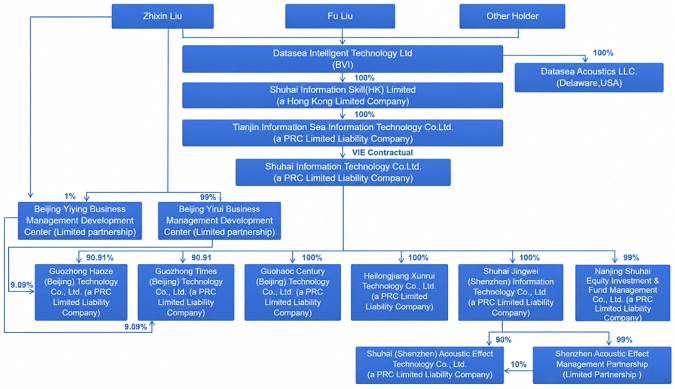
The CFS were prepared in accordance with accounting principles generally accepted in the United States of America (“U.S. GAAP”) and applicable rules and regulations of the SEC regarding CFS. The accompanying CFS include the financial statements of the Company and its 100% owned subsidiaries Shuhai Information Skill (HK) Limited (“Shuhai Skill (HK)”), and Tianjin Information Sea Information Technology Co., Ltd. (“Tianjin Information”), and its VIE, Shuhai Beijing, and Shuhai Beijing’s 100% owned subsidiaries – Heilongjiang Xunrui Technology Co. Ltd. (“Xunrui”), Guozhong Times (Beijing) Technology Ltd. (“Guozhong Times”), Guohao Century (Beijing) Technology Ltd. (“Guohao Century”), Guozhong Haoze, and Shuhai Jingwei (Shenzhen) Information Technology Co., Ltd. (“Jingwei”), and Shuhai Beijing’s 99% owned subsidiary Nanjing Shuhai Equity Investment Fund Management Co. Ltd. (“Shuhai Nanjing”). During the year ended June 30, 2022, the Company incorporated two new subsidiaries Shuhai (Shenzhen) Acoustic Effect Technology Co., Ltd (“Shuhai Acoustic”) and Shenzhen Acoustic Effect Management Partnership (“Shenzhen Acoustic MP”). All significant inter-company transactions and balances were eliminated in consolidation. The chart below depicts the corporate structure of the Company as of June 30, 2026.
VARIABLE INTEREST ENTITY
Pursuant to the Financial Accounting Standards Board (“FASB”) Accounting Standards Codification (“ASC”) Section 810, “Consolidation” (“ASC 810”), the Company is required to include in its CFS, the financial statements of Shuhai Beijing, its VIE. ASC 810 requires a VIE to be consolidated if the Company is subject to a majority of the risk of loss for the VIE or is entitled to receive a majority of the VIE’s residual returns. A VIE is an entity in which a company, through contractual arrangements, bears the risk of, and enjoys the rewards of such entity, and therefore the Company is the primary beneficiary of such entity.
Under ASC 810, a reporting entity has a controlling financial interest in a VIE, and must consolidate that VIE, if the reporting entity has both of the following characteristics: (a) the power to direct the activities of the VIE that most significantly affect the VIE’s economic performance; and (b) the obligation to absorb losses, or the right to receive benefits, that could potentially be significant to the VIE. The reporting entity’s determination of whether it has this power is not affected by the existence of kick-out rights or participating rights, unless a single enterprise, including its related parties and de - facto agents, have the unilateral ability to exercise those rights. Shuhai Beijing’s actual stockholders do not hold any kick-out rights that affect the consolidation determination.
Through the VIE agreements, Tianjin Information, an indirect subsidiary of Datasea is deemed the primary beneficiary of Shuhai Beijing and its subsidiaries. Accordingly, the results of Shuhai Beijing and its subsidiaries were included in the accompanying CFS. Shuhai Beijing has no assets that are collateral for or restricted solely to settle their obligations. The creditors of Shuhai Beijing do not have recourse to the Company’s general credit.
VIE Agreements
Operation and Intellectual Property Service Agreement – The Operation and Intellectual Property Service Agreement allows Tianjin Information Sea Information Technology Co., Ltd (“WFOE”) to manage and operate Shuhai Beijing and collect an operating fee equal to Shuhai Beijing’s pre-tax income, per month. If Shuhai Beijing suffers a loss and as a result does not have pre-tax income, such loss shall be carried forward to the following month to offset the operating fee to be paid to WFOE if there is pre-tax income of Shuhai Beijing the following month.
Furthermore, if Shuhai Beijing cannot pay off its debts, WFOE shall pay off the debt on Shuhai Beijing’s behalf. If Shuhai Beijing’s net assets fall lower than its registered capital balance, WFOE shall provide capital for Shuhai Beijing to make up for the deficit.
Under the terms of the Operation and Intellectual Property Service Agreement, Shuhai Beijing entrusts Tianjin Information to manage its operations, manage and control its assets and financial matters, and provide intellectual property services, purchasing management services, marketing management services and inventory management services to Shuhai Beijing. Shuhai Beijing and its stockholders shall not make any decisions nor direct the activities of Shuhai Beijing without Tianjin Information’s consent.
Stockholders’ Voting Rights Entrustment Agreement – Tianjin Information has entered into a stockholders’ voting rights entrustment agreement (the “Entrustment Agreement”) under which Zhixin Liu and Fu Liu (collectively the “Shuhai Beijing Stockholders”) have vested their voting power in Shuhai Beijing to Tianjin Information or its designee(s). The Entrustment Agreement does not have an expiration date, but the parties can agree in writing to terminate the Entrustment Agreement. Zhixin Liu, is the Chairman of the Board, President, CEO of DataSea and Corporate Secretary, and Fu Liu, a Director of DataSea (Fu Liu is the father of Zhixin Liu).
Equity Option Agreement – the Shuhai Beijing Stockholders and Tianjin Information entered into an equity option agreement (the “Option Agreement”), pursuant to which the Shuhai Beijing Stockholders have granted Tianjin Information or its designee(s) the irrevocable right and option to acquire all or a portion of Shuhai Beijing Stockholders’ equity interests in Shuhai Beijing for an option price of RMB0.001 for each capital contribution of approximately US$0.15. Pursuant to the terms of the Option Agreement, Tianjin Information and the Shuhai Beijing Stockholders have agreed to certain restrictive covenants to safeguard the rights of Tianjin Information under the Option Agreement. Tianjin Information agreed to pay approximately US$0.15 annually to Shuhai Beijing Stockholders to maintain the option rights. Tianjin Information may terminate the Option Agreement upon prior written notice. The Option Agreement is valid for a period of 10 years from the effective date and renewable at Tianjin Information’s option.
Equity Pledge Agreement – Tianjin Information and the Shuhai Beijing Stockholders entered into an equity pledge agreement on October 27, 2015 (the “Equity Pledge Agreement”). The Equity Pledge Agreement serves to guarantee the performance by Shuhai Beijing of its obligations under the Operation and Intellectual Property Service Agreement and the Option Agreement. Pursuant to the Equity Pledge Agreement, Shuhai Beijing Stockholders have agreed to pledge all of their equity interests in Shuhai Beijing to Tianjin Information. Tianjin Information has the right to collect any and all dividends, bonuses and other forms of investment returns paid on the pledged equity interests during the pledge period. Pursuant to the terms of the Equity Pledge Agreement, the Shuhai Beijing Stockholders have agreed to certain restrictive covenants to safeguard the rights of Tianjin Information. Upon an event of default or certain other agreed events under the Operation and Intellectual Property Service Agreement, the Option Agreement and the Equity Pledge Agreement, Tianjin Information may exercise the right to enforce the pledge.
As of this report date, there were no dividends paid from the VIE to the U.S. parent company or the shareholders of the Company. There has been no change in facts and circumstances to consolidate the VIE. The following financial statement amounts and balances of the VIE were included in the accompanying CFS as of June 30, 2026 and 2025, and for the years ended June 30, 2026, 2025 and 2024, respectively.
Condensed Consolidating Statements of Operation Information:
| Year Ended June 30, 2026 | ||||||||||||||||||||||||
| PARENT | SUBSIDIARY | WFOE | VIE | Elimination | Consolidated | |||||||||||||||||||
| Revenue - third parties | $ | $ | $ | $ | 40,698,799 | $ | 40,698,799 | |||||||||||||||||
| Revenue-Parent provides service to WFOE | 436,800 | (436,800 | ) | |||||||||||||||||||||
| Revenue-Parent provides service to VIE | 99,200 | (99,200 | ) | |||||||||||||||||||||
| Revenue – WFOE provides service to VIE | 393,343 | (393,343 | ) | |||||||||||||||||||||
| Cost of Revenue - third parties | 858 | 36,541,135 | 36,541,993 | |||||||||||||||||||||
| Gross profit | 536,000 | 392,485 | 4,157,664 | (929,343 | ) | 4,156,806 | ||||||||||||||||||
| Operating expenses | 1,901,861 | 12,309 | 1,215,669 | 3,330,168 | 6,460,007 | |||||||||||||||||||
| Operating expenses - WFOE provides service to VIE | 393,343 | (393,343 | ) | |||||||||||||||||||||
| Operating expenses - Parent provides service to WFOE | 435,717 | (435,717 | ) | |||||||||||||||||||||
| Operating expenses - Parent provides service to VIE | 100,724 | (100,724 | ) | |||||||||||||||||||||
| Loss from operations | (1,365,861 | ) | (12,309 | ) | (1,258,901 | ) | 333,429 | 441 | (2,303,201 | ) | ||||||||||||||
| Other income (expenses), net | 109,191 | (107 | ) | 34,814 | (27,639 | ) | 116,259 | |||||||||||||||||
| Income tax expense | ||||||||||||||||||||||||
| Loss before noncontrolling interest | (1,256,670 | ) | (12,416 | ) | (1,224,087 | ) | 305,790 | 441 | (2,186,942 | ) | ||||||||||||||
| Less: loss attributable to noncontrolling interest | (502 | ) | (502 | ) | ||||||||||||||||||||
| Net loss attribute to the Company | $ | (1,256,670 | ) | $ | (12,416 | ) | $ | (1,224,087 | ) | $ | 306,292 | 441 | $ | (2,186,440 | ) | |||||||||
| Year Ended June 30, 2025 | ||||||||||||||||||||||||
| Parent | Subsidiaries | WFOE | VIE | Elimination | Consolidated | |||||||||||||||||||
| Revenue - third parties | $ | $ | $ | $ | 71,616,820 | $ | 71,616,820 | |||||||||||||||||
| Revenue - Parent provides service to WFOE | 99,200 | (99,200 | ) | |||||||||||||||||||||
| Revenue - Parent provides service to VIE | 154,200 | (154,200 | ) | |||||||||||||||||||||
| Revenue - WFOE provides service to VIE | 1,350,560 | (1,350,560 | ) | |||||||||||||||||||||
| Revenue - VIE purchases materials from WFOE | 121,072 | (121,072 | ) | |||||||||||||||||||||
| Revenue - from VIE’s label that is used by WFOE | 926,286 | (926,286 | ) | |||||||||||||||||||||
| Revenue - WFOE purchases materials from VIE | 400 | (400 | ) | |||||||||||||||||||||
| - | ||||||||||||||||||||||||
| Cost of Revenue - third parties | 90,763 | 69,082,109 | 69,172,872 | |||||||||||||||||||||
| COST - VIE purchases materials from WFOE | 400 | (400 | ) | |||||||||||||||||||||
| COST - WFOE purchase materials from VIE | 121,072 | (121,072 | ) | |||||||||||||||||||||
| Gross profit | 253,400 | 1,380,469 | 3,340,325 | (2,530,246 | ) | 2,443,948 | ||||||||||||||||||
| Operating expenses | 2,391,610 | 130,465 | 2,410,541 | 2,666,047 | 7,598,663 | |||||||||||||||||||
| Operating expenses - WFOE provides service to VIE | 1,350,560 | (1,350,560 | ) | |||||||||||||||||||||
| Operating expenses - VIE’s label that is used by WFOE | 926,286 | (926,286 | ) | |||||||||||||||||||||
| Operating expenses - Parent provides service to WFOE | 100,641 | (100,641 | ) | |||||||||||||||||||||
| Operating expenses - Parent provides service to VIE | 155,799 | (155,799 | ) | |||||||||||||||||||||
| Loss from operations | (2,138,210 | ) | (130,465 | ) | (2,056,999 | ) | (832,081 | ) | 3,040 | (5,154,715 | ) | |||||||||||||
| Other income (expenses), net | 2,533 | (5 | ) | 119,757 | (47,100 | ) | 75,185 | |||||||||||||||||
| Income tax expense | 6,596 | 6,596 | ||||||||||||||||||||||
| Loss before noncontrolling interest | (2,135,677 | ) | (130,470 | ) | (1,937,242 | ) | (885,777 | ) | 3,040 | (5,086,126 | ) | |||||||||||||
| Less: loss attributable to noncontrolling interest | (432 | ) | (432 | ) | ||||||||||||||||||||
| Net loss to the Company from continuing operation | (2,135,677 | ) | (130,470 | ) | (1,937,242 | ) | (885,345 | ) | 3,040 | (5,085,694 | ) | |||||||||||||
| Year Ended June 30, 2024 | ||||||||||||||||||||||||
| Parent | Subsidiaries | WFOE | VIE | Elimination | Consolidated | |||||||||||||||||||
| Revenue - third parties | $ | $ | $ | 69,541 | $ | 23,906,326 | $ | 23,975,867 | ||||||||||||||||
| Revenue - Parent provided service to WFOE | 275,100 | (275,100 | ) | |||||||||||||||||||||
| Revenue - Parent provided service to VIE | 143,600 | (143,600 | ) | |||||||||||||||||||||
| Revenue - WFOE provided service to VIE | 489,386 | (489,386 | ) | |||||||||||||||||||||
| Revenue - VIE purchased materials from WFOE | 57,082 | (57,082 | ) | |||||||||||||||||||||
| Revenue - from VIE’s label that was used by WFOE | 264,533 | (264,533 | ) | |||||||||||||||||||||
| Revenue - WFOE purchased materials from VIE | 57,082 | (57,082 | ) | |||||||||||||||||||||
| - | ||||||||||||||||||||||||
| Cost of Revenue - third parties | 69,156 | 23,432,606 | 23,501,762 | |||||||||||||||||||||
| COST - VIE purchased materials from WFOE | 57,082 | (57,082 | ) | |||||||||||||||||||||
| COST - WFOE purchased materials from VIE | 57,082 | (57,082 | ) | |||||||||||||||||||||
| - | - | |||||||||||||||||||||||
| Gross profit | 418,700 | 489,771 | 738,253 | (1,172,619 | ) | 474,105 | ||||||||||||||||||
| Operating expenses | 6,996,227 | 324,954 | 3,535,554 | 1,742,757 | 12,599,492 | |||||||||||||||||||
| Operating expenses - VIE expenses, corresponding to services provided by WFOE | 489,386 | (489,386 | ) | |||||||||||||||||||||
| Operating expenses - WFOE expenses for using VIE’s label | 264,533 | (264,533 | ) | |||||||||||||||||||||
| Operating expenses – WFOE expenses, corresponding to services provided by Parent | 278,862 | (278,862 | ) | |||||||||||||||||||||
| Operating expenses - VIE expenses, corresponding to services provided by Parent | 146,150 | (146,150 | ) | |||||||||||||||||||||
| Loss from operations | (6,577,527 | ) | (324,954 | ) | (3,589,178 | ) | (1,640,040 | ) | 6,312 | (12,125,387 | ) | |||||||||||||
| Other income (expenses), net | (1,665 | ) | (61 | ) | 3,108 | (97,300 | ) | (95,918 | ) | |||||||||||||||
| Income tax expense | ||||||||||||||||||||||||
| Loss before noncontrolling interest | (6,579,192 | ) | (325,015 | ) | (3,586,070 | ) | (1,737,340 | ) | 6,312 | (12,221,305 | ) | |||||||||||||
| Less: loss attributable to noncontrolling interest | (10,695 | ) | (10,695 | ) | ||||||||||||||||||||
| Net loss to the Company | (6,579,192 | ) | (325,015 | ) | (3,586,070 | ) | (1,726,645 | ) | 6,312 | (12,210,610 | ) | |||||||||||||
Condensed Consolidating Balance Sheets Information:
| As of June 30, 2026 | ||||||||||||||||||||||||
| PARENT | SUBSIDIARY - | WFOE | VIE | Elimination | Consolidated | |||||||||||||||||||
| Cash | $ | 113,207 | $ | 1,491 | $ | 5,149 | $ | 311,399 | $ | 431,246 | ||||||||||||||
| Restricted Cash | 176,676 | 176,676 | ||||||||||||||||||||||
| Accounts receivable | 829,379 | 117,512 | 946,891 | |||||||||||||||||||||
| Accounts receivable - WFOE | 33,388 | (33,388 | ) | |||||||||||||||||||||
| Inventory | 119,408 | 119,408 | ||||||||||||||||||||||
| Inventory - WFOE | 50,015 | (50,015 | ) | |||||||||||||||||||||
| Value-added tax prepayment | 49 | 67,024 | 67,073 | |||||||||||||||||||||
| Other receivables -Subsidiaries | 40,015 | 5,146 | 2,540 | (47,701 | ) | |||||||||||||||||||
| Other receivables - VIE | 4,241,403 | 14,679,970 | (18,921,373 | ) | ||||||||||||||||||||
| Other receivables - WFOE | 11,737,732 | 949,635 | (12,687,367 | ) | ||||||||||||||||||||
| Other receivables - Parent | 5,000 | (5,000 | ) | |||||||||||||||||||||
| Other current assets | 195,000 | 21,386 | 1,313,315 | 1,529,701 | ||||||||||||||||||||
| Total current assets | 16,327,357 | 6,491 | 15,541,079 | 3,140,912 | (31,744,844 | ) | 3,270,995 | |||||||||||||||||
| Property and equipment, net | 6,901 | 15,788 | 22,689 | |||||||||||||||||||||
| Intangible assets, net | 3,480,952 | 7,818,820 | (48,452 | ) | 11,251,320 | |||||||||||||||||||
| Right of use asset, net | 222,487 | 222,487 | ||||||||||||||||||||||
| Investment into subsidiaries | 15,820,480 | (15,820,480 | ) | |||||||||||||||||||||
| Investment into WFOE | 13,949,894 | (13,949,894 | ) | |||||||||||||||||||||
| Total non-current assets | 15,820,480 | 13,949,894 | 3,487,853 | 8,057,095 | (29,818,826 | ) | 11,496,496 | |||||||||||||||||
| Total Assets | $ | 32,147,837 | $ | 13,956,385 | $ | 19,028,932 | $ | 11,198,007 | (61,563,670 | ) | $ | 14,767,491 | ||||||||||||
| Accounts payable | $ | - | 5,000 | $ | 6,737 | $ | 135,263 | $ | 147,000 | |||||||||||||||
| Accounts payable - VIE | 33,388 | (33,388 | ) | |||||||||||||||||||||
| Contract liability | 485 | 621,535 | 622,020 | |||||||||||||||||||||
| Accrued expenses and other payables | 192,750 | 1,639 | 964,442 | (259,023 | ) | 899,808 | ||||||||||||||||||
| Due to related parties | 43,460 | 8,564 | 52,024 | |||||||||||||||||||||
| Lease liability | 174,629 | 174,629 | ||||||||||||||||||||||
| Loan payable | 5,579,292 | 5,579,292 | ||||||||||||||||||||||
| Other payables - Parent | 40,015 | 12,029,936 | 4,014,362 | (16,084,313 | ) | |||||||||||||||||||
| Other payables - Subsidiaries | 5,000 | (5,000 | ) | |||||||||||||||||||||
| Other payables - VIE | 2,536 | 949,635 | (952,171 | ) | ||||||||||||||||||||
| Other payables - WFOE | 4,986 | 14,679,970 | (14,684,956 | ) | ||||||||||||||||||||
| Total current liabilities | 197,750 | 52,537 | 13,065,280 | 26,178,057 | (32,018,851 | ) | 7,474,773 | |||||||||||||||||
| Lease liability - noncurrent | 45,136 | 45,136 | ||||||||||||||||||||||
| Total non-current liabilities | 45,136 | 45,136 | ||||||||||||||||||||||
| Total liabilities | 197,750 | 52,537 | 13,065,280 | 26,223,193 | (32,018,851 | ) | 7,519,909 | |||||||||||||||||
| Accumulated deficit | (16,776,582 | ) | (1,916,632 | ) | (12,876,152 | ) | (15,063,967 | ) | (79,123 | ) | (46,712,456 | ) | ||||||||||||
| Other equity | 48,726,669 | 15,820,480 | 18,839,804 | 38,781 | (29,465,696 | ) | 53,960,038 | |||||||||||||||||
| Total equity | 31,950,087 | 13,903,848 | 5,963,652 | (15,025,186 | ) | (29,544,819 | ) | 7,247,582 | ||||||||||||||||
| Total liabilities and stockholders’ equity | $ | 32,147,837 | $ | 13,956,385 | $ | 19,028,932 | $ | 11,198,007 | (61,563,670 | ) | $ | 14,767,491 | ||||||||||||
| As of June 30, 2025 | ||||||||||||||||||||||||
| Parent | Subsidiaries | WFOE | VIE | Elimination | Consolidated | |||||||||||||||||||
| Cash | $ | 24,488 | $ | 1,598 | $ | 14,481 | $ | 580,240 | $ | 620,807 | ||||||||||||||
| Accounts receivable | 789,095 | 585,085 | 1,374,180 | |||||||||||||||||||||
| Accounts receivable - VIE | ||||||||||||||||||||||||
| Accounts receivable - WFOE | 31,766 | (31,766 | ) | |||||||||||||||||||||
| Inventory | 206,610 | 206,610 | ||||||||||||||||||||||
| Inventory - VIE | ||||||||||||||||||||||||
| Inventory - WFOE | 47,738 | (47,738 | ) | |||||||||||||||||||||
| Value-added tax prepayment | 22,088 | 114,937 | 137,025 | |||||||||||||||||||||
| Other receivables-Subsidiaries | 32,515 | 2,666 | 2,417 | (37,598 | ) | |||||||||||||||||||
| Other receivables - VIE | 993,088 | 14,187,221 | (15,180,309 | ) | ||||||||||||||||||||
| Other receivables - WFOE | 10,249,731 | 1,423,840 | (11,673,571 | ) | ||||||||||||||||||||
| Other receivables - Parent | 5,000 | (5,000 | ) | |||||||||||||||||||||
| Other current assets | 336,120 | 247,530 | 583,650 | |||||||||||||||||||||
| Total current assets | 11,299,822 | 6,598 | 15,351,671 | 3,240,163 | (26,975,982 | ) | 2,922,272 | |||||||||||||||||
| Property and equipment, net | 6,920 | 18,640 | 25,560 | |||||||||||||||||||||
| Intangible assets, net | 3,045,369 | 503,000 | (52,385 | ) | 3,495,984 | |||||||||||||||||||
| Right of use asset, net | 7,720 | 284,345 | 292,065 | |||||||||||||||||||||
| Investment into subsidiaries | 15,820,480 | (15,820,480 | ) | |||||||||||||||||||||
| Investment into WFOE | 13,949,894 | (13,949,894 | ) | |||||||||||||||||||||
| Total non-current assets | 15,820,480 | 13,949,894 | 3,060,009 | 805,985 | (29,822,759 | ) | 3,813,609 | |||||||||||||||||
| Total Assets | $ | 27,120,302 | $ | 13,956,492 | $ | 18,411,680 | 4,046,148 | (56,798,741 | ) | $ | 6,735,881 | |||||||||||||
| Accounts payable | $ | 260,700 | 2,500 | $ | 41,066 | $ | 115,772 | $ | 420,038 | |||||||||||||||
| Accounts payable - VIE | 31,766 | (31,766 | ) | |||||||||||||||||||||
| Accounts payable - WFOE | ||||||||||||||||||||||||
| Short term loan | ||||||||||||||||||||||||
| Contract liability | 461 | 149,627 | 150,088 | |||||||||||||||||||||
| Accrued expense and other payable | 750 | 1,117 | 804,862 | (259,023 | ) | 547,706 | ||||||||||||||||||
| Due to related parties | 4,961 | 1,165 | 6,126 | |||||||||||||||||||||
| Lease liability | 5,764 | 122,761 | 128,525 | |||||||||||||||||||||
| Loan payable | 2,374,767 | 2,374,767 | ||||||||||||||||||||||
| Other payables - Parent | 32,514 | 10,031,174 | 726,742 | (10,790,430 | ) | |||||||||||||||||||
| Other payables - Subsidiaries | 5,000 | (5,000 | ) | |||||||||||||||||||||
| Other payables - VIE | 2,536 | 1,423,840 | (1,426,376 | ) | ||||||||||||||||||||
| Other payables - WFOE | 2,677 | 14,187,221 | (14,189,898 | ) | ||||||||||||||||||||
| Total current liabilities | 266,450 | 40,227 | 11,540,149 | 18,482,917 | (26,702,493 | ) | 3,627,250 | |||||||||||||||||
| Lease liability - noncurrent | 166,436 | 166,436 | ||||||||||||||||||||||
| Total non-current liabilities | 166,436 | 166,436 | ||||||||||||||||||||||
| Total liabilities | 266,450 | 40,227 | 11,540,149 | 18,649,353 | (26,702,493 | ) | 3,793,686 | |||||||||||||||||
| Accumulated deficit | (15,519,912 | ) | (1,904,215 | ) | (11,652,066 | ) | (15,363,739 | ) | (86,084 | ) | (44,526,016 | ) | ||||||||||||
| Other equity | 42,373,764 | 15,820,480 | 18,523,597 | 760,534 | (30,010,164 | ) | 47,468,211 | |||||||||||||||||
| Total equity | 26,853,852 | 13,916,265 | 6,871,531 | (14,603,205 | ) | (30,096,248 | ) | 2,942,195 | ||||||||||||||||
| Total liabilities and stockholders’ equity | $ | 27,120,302 | $ | 13,956,492 | $ | 18,411,680 | $ | 4,046,148 | (56,798,741 | ) | $ | 6,735,881 | ||||||||||||
Condensed Consolidating Cash Flows Information:
| Year Ended June 30, 2026 | ||||||||||||||||||||||||
| PARENT | SUBSIDIARIES - HK entity | WFOE | VIE | Elimination | Consolidated | |||||||||||||||||||
| Net cash provided by/(used in) operating activities | $ | 306,872 | $ | (9,917 | ) | $ | 553,947 | $ | 1,125,256 | $ | 1,976,158 | |||||||||||||
| Net cash provided by/(used in) investing activities | (4,928,957 | ) | (4,928,957 | ) | ||||||||||||||||||||
| Net cash provided by/(used in) investing activities (Parent to WFOE) | (1,737,759 | ) | 1,737,759 | |||||||||||||||||||||
| Net cash provided by/(used in) investing activities (WFOE to VIE) | (306,710 | ) | 306,710 | |||||||||||||||||||||
| Net cash provided by/(used in) investing activities (Parent to VIE) | (2,787,347 | ) | 2,787,347 | |||||||||||||||||||||
| Net cash provided by/(used in) financing activities | 37,194 | 3,005,704 | 3,042,898 | |||||||||||||||||||||
| Net cash provided by/(used in) financing activities (Parent to VIE) | 1,277,791 | 3,161,195 | (4,438,986 | ) | ||||||||||||||||||||
| Net cash provided by/(used in) financing activities (Parent to subsidiaries) | (7,500 | ) | 7,500 | |||||||||||||||||||||
| Net cash provided by/(used in) financing activities (WFOE to parent) | (1,488,001 | ) | 1,445,813 | 42,188 | ||||||||||||||||||||
| Net cash provided by/(used in) financing activities (WFOE to subsidiaries) | 2,308 | (2,279 | ) | (29 | ) | |||||||||||||||||||
| Net cash provided by/(used in) financing activities (WFOE to VIE) | 306,710 | (306,710 | ) | |||||||||||||||||||||
| Net increase (decrease) in cash and cash equivalents | $ | 88,720 | $ | (109 | ) | $ | (9,331 | ) | $ | (92,164 | ) | $ | (12,885 | ) | ||||||||||
| Year Ended June 30, 2025 | ||||||||||||||||||||||||
| Parent | Subsidiaries | WFOE | VIE | Elimination | Consolidated | |||||||||||||||||||
| Net cash provided by/(used in) operating activities | $ | (258,984 | ) | $ | (29,428 | ) | $ | (186,960 | ) | $ | (1,899,308 | ) | $ | (2,374,680 | ) | |||||||||
| Net cash provided by/(used in) operating activities (WFOE to VIE) | ||||||||||||||||||||||||
| - | ||||||||||||||||||||||||
| Net cash provided by/(used in) investing activities | (3,847,448 | ) | (237,749 | ) | (4,085,197 | ) | ||||||||||||||||||
| Net cash provided by/(used in) investing activities (Parent to subsidiaries) | (1,500,000 | ) | 1,500,000 | |||||||||||||||||||||
| Net cash provided by/(used in) investing activities (Parent to WFOE) | ||||||||||||||||||||||||
| Net cash provided by/(used in) investing activities (Subsidiaries to WFOE) | (1,499,554 | ) | 1,524,032 | (24,478 | ) | |||||||||||||||||||
| Net cash provided by/(used in) investing activities (WFOE to VIE) | (1,255,657 | ) | 1,255,657 | |||||||||||||||||||||
| Net cash provided by/(used in) investing activities (Parent to VIE) | ||||||||||||||||||||||||
| Net cash provided by/(used in) financing activities | 5,939,133 | (102,795 | ) | 1,109,032 | 6,945,370 | |||||||||||||||||||
| Net cash provided by/(used in) financing activities (Parent to VIE) | (258,842 | ) | 3,875,709 | 259,782 | (3,876,649 | ) | ||||||||||||||||||
| Net cash provided by/(used in) financing activities (Parent to subsidiaries) | (27,500 | ) | 1,527,500 | (1,500,000 | ) | |||||||||||||||||||
| Net cash provided by/(used in) financing activities (VIE to subsidiaries) | ||||||||||||||||||||||||
| Net cash provided by/(used in) financing activities (WFOE to parent) | (3,945,505 | ) | 3,945,505 | |||||||||||||||||||||
| Net cash provided by/(used in) financing activities (WFOE to subsidiaries) | 1,830 | (1,830 | ) | |||||||||||||||||||||
| Net cash provided by/(used in) financing activities (WFOE to VIE) | 1,255,657 | (1,255,657 | ) | |||||||||||||||||||||
| Net increase (decrease) in cash and cash equivalents | $ | (51,698 | ) | $ | (2,691 | ) | $ | 6,848 | 487,086 | $ | 439,545 | |||||||||||||
USE OF ESTIMATES
The preparation of CFS in conformity with U.S. GAAP requires management to make estimates and assumptions that affect the reported amounts of assets and liabilities and disclosure of contingent assets and liabilities at the date of the financial statements and the reported amounts of revenues and expenses during the reporting periods. Actual results could differ from those estimates. The significant areas requiring the use of management estimates include, but are not limited to, the estimated useful life and residual value of property, plant and equipment, provision for staff benefits, recognition and measurement of deferred income taxes and the valuation allowance for deferred tax assets. Although these estimates are based on management’s knowledge of current events and actions management may undertake in the future, actual results may ultimately differ from those estimates and such differences may be material to the CFS.
CONTINGENCIES
Certain conditions may exist as of the date the CFS are issued, which may result in a loss to the Company but which will only be resolved when one or more future events occur or fail to occur. The Company’s management and legal counsel assess such contingent liabilities, and such assessment inherently involves an exercise of judgment. In assessing loss contingencies related to legal proceedings that are pending against the Company or unasserted claims that may result in such proceedings, the Company’s legal counsel evaluates the perceived merits of any legal proceedings or unasserted claims as well as the perceived merits of the amount of relief sought or expected to be sought. If the assessment of a contingency indicates that it is probable that a material loss has been incurred and the amount of the liability can be estimated, the estimated liability would be accrued in the Company’s CFS.
If the assessment indicates that a potential material loss contingency is not probable but is reasonably possible, or is probable but cannot be estimated, the nature of the contingent liability, together with an estimate of the range of possible loss if determinable and material, would be disclosed. As of June 30, 2026 and 2025, the Company has no such contingencies.
CASH
Cash includes cash on hand and demand deposits that are highly liquid in nature and have original maturities when purchased of three months or less.
RESTRICTED CASH
Restricted cash is an amount of cash deposited with banks in conjunction with borrowings from banks. Restriction on the use of such cash and the interest earned thereon is imposed by the banks and remains effective throughout the terms of the bank borrowings and notes payable. As of June 30, 2026 and 2025, the Company had restricted cash of $176,676 and , respectively.
ACCOUNTS RECEIVABLE
The Company’s policy is to maintain an allowance for potential credit losses on accounts receivable. The Company adopted Accounting Standards Update (“ASU”) 2016-13, Financial Instruments – Credit Losses (Topic 326): Measurement of Credit losses on financial instruments later codified as Accounting Standard codification (“ASC”) 326 (“ASC 326”), on July 1, 2023. The guidance introduces a revised approach to the recognition and measurement of credit losses, emphasizing an updated model based on expected losses rather than incurred losses. There was no significant impact on the date of adoption of ASC 326.
Under ASC 326, accounts receivable are recorded at the invoiced amount, net of allowance for expected credit losses. The Company’s primary allowance for credit losses is the allowance for doubtful accounts. The allowance for doubtful accounts reduces the accounts receivable balance to the estimated net realizable value. The Company used a combination of method Aging schedule and Roll-rate method to assess the reasonability and adequacy of current allowance.
In establishing any required allowance, management considers historical losses adjusted for current market conditions, the Company’s customers’ financial condition, the amount of any receivables in dispute, the current receivables aging, current payment terms and expectations of forward-looking loss estimates.
All provisions for the allowance for doubtful accounts are included as a component of general and administrative expenses on the accompanying consolidated statements of operations and comprehensive loss. Accounts receivable deemed uncollectible are charged against the allowance for credit losses when identified. Subsequent recoveries of amounts previously written off are credited to earnings in the period recovered. As of June 30, 2026 and 2025, the Company had a $0 bad debt allowance for credit losses.
INVENTORY
Inventory is comprised principally of intelligent temperature measurement face recognition terminal and identity information recognition products, and is valued at the lower of cost or net realizable value. The value of inventory is determined using the moving weighted average method. The Company periodically estimates an inventory allowance for estimated unmarketable inventories when necessary. Inventory amounts are reported net of such allowances. There were $192,298 and $152,907 allowances for slow-moving and obsolete inventory (mainly for Smart-Student Identification cards) as of June 30, 2026 and 2025, respectively.
PROPERTY AND EQUIPMENT
Property and equipment are stated at cost, less accumulated depreciation. Major repairs and improvements that significantly extend original useful lives or improve productivity are capitalized and depreciated over the period benefited. Maintenance and repairs are expensed as incurred. When property and equipment are retired or otherwise disposed of, the related cost and accumulated depreciation are removed from the respective accounts, and any gain or loss is included in operations. Depreciation of property and equipment is provided using the straight-line method over estimated useful lives as follows:
| Furniture and fixtures | 3-5 years | |
| Office equipment | 3-5 years | |
| Vehicles | 5 years |
Leasehold improvements are depreciated utilizing the straight-line method over the shorter of their estimated useful lives or remaining lease term.
INTANGIBLE ASSETS
Intangible assets with finite lives are amortized using the straight-line method over their estimated period of benefit. Evaluation of the recoverability of intangible assets is made to take into account events or circumstances that warrant revised estimates of useful lives or that indicate that impairment exists. All of the Company’s intangible assets are subject to amortization. In accordance with the Generally Accepted Accounting Principles (ASC) 360-10-35-21 of the United States, no impairment of intangible assets has been identified as of the balance sheet date.
Intangible assets include licenses, certificates, patents and other technology and are amortized over their useful life of to five years.
FAIR VALUE (“FV”) OF FINANCIAL INSTRUMENTS
The carrying value of the Company’s short-term financial instruments, such as cash, accounts receivable, prepaid expenses, accounts payable, contract liability, accrued expenses and other payables approximates their FV due to their short maturities. FASB ASC Topic 825, “Financial Instruments,” requires disclosure of the FV of financial instruments held by the Company. The carrying amounts reported in the balance sheets for current liabilities qualify as financial instruments and are a reasonable estimate of their FV because of the short period of time between the origination of such instruments and their expected realization and the current market rate of interest.
FAIR VALUE MEASUREMENTS AND DISCLOSURES
FASB ASC Topic 820, “Fair Value Measurements,” defines FV, and establishes a three-level valuation hierarchy for disclosures that enhances disclosure requirements for FV measures. The three levels are defined as follows:
| ● | Level 1 inputs to the valuation methodology are quoted prices (unadjusted) for identical assets or liabilities in active markets. |
| ● | Level 2 inputs to the valuation methodology include other than those in level 1 quoted prices for similar assets and liabilities in active markets, and inputs that are observable for the asset or liability, either directly or indirectly, for substantially the full term of the financial instrument. |
| ● | Level 3 inputs to the valuation methodology are unobservable and significant to the FV measurement. |
As of June 30, 2026 and 2025, the Company did not identify any assets or liabilities required to be presented on the balance sheet at FV on a recurring basis.
IMPAIRMENT OF LONG-LIVED ASSETS
In accordance with FASB ASC 360-10, “Accounting for the Impairment or Disposal of Long-Lived Assets”, long-lived assets such as property and equipment are reviewed for impairment whenever events or changes in circumstances indicate that the carrying value of an asset may not be recoverable, or it is reasonably possible that these assets could become impaired as a result of technological or other changes. The determination of recoverability of assets to be held and used is made by comparing the carrying amount of an asset to future undiscounted cash flows expected to be generated by the asset.
If such assets are considered impaired, the impairment to be recognized is measured as the amount by which the carrying amount of the asset exceeds its FV. FV generally is determined using the asset’s expected future undiscounted cash flows or market value, if readily determinable. Assets to be disposed of are reported at the lower of the carrying amount or FV less cost to sell. For the years ended June 30, 2026, 2025 and 2024, there was impairment loss recognized on long-lived assets.
CONTRACT LIABILITY
The Company records payments received in advance from its customers or sales agents for the Company’s products as contract liability, mainly consisting of deposits or prepayment for 5G products from the Company’s sales agencies. These orders normally are delivered based upon contract terms and customer demand, and the Company will recognize it as revenue when the products are delivered to the end customers.
LEASES
The Company determines if an arrangement is a lease at inception under FASB ASC Topic 842. Right of Use Assets (“ROU”) and lease liabilities are recognized at commencement date based on the present value of remaining lease payments over the lease term. For this purpose, the Company considers only payments that are fixed and determinable at the time of commencement. As most of its leases do not provide an implicit rate, it uses its incremental borrowing rate based on the information available at commencement date in determining the present value of lease payments. The Company’s incremental borrowing rate is a hypothetical rate based on its understanding of what its credit rating would be. The ROU assets include adjustments for prepayments and accrued lease payments. The ROU asset also includes any lease payments made prior to commencement and is recorded net of any lease incentives received. The Company’s lease terms may include options to extend or terminate the lease when it is reasonably certain that it will exercise such options.
ROU assets are reviewed for impairment when indicators of impairment are present. ROU assets from operating and finance leases are subject to the impairment guidance in ASC 360, Property, Plant, and Equipment, as ROU assets are long-lived nonfinancial assets.
ROU assets are tested for impairment individually or as part of an asset group if the cash flows related to the ROU asset are not independent from the cash flows of other assets and liabilities. An asset group is the unit of accounting for long-lived assets to be held and used, which represents the lowest level for which identifiable cash flows are largely independent of the cash flows of other groups of assets and liabilities. The Company recognized no impairment of ROU assets as of June 30, 2026 and 2025.
REVENUE RECOGNITION
The Company follows Accounting Standards Codification Topic 606, Revenue from Contracts with Customers (ASC 606).
The core principle underlying FASB ASC 606 is that the Company will recognize revenue to represent the transfer of goods and services to customers in an amount that reflects the consideration to which the Company expects to be entitled in such exchange. This will require the Company to identify contractual performance obligations and determine whether revenue should be recognized at a point in time or over time, based on when control of goods and services transfers to a customer. The Company’s revenue streams are identified when possession of goods and services is transferred to a customer.
FASB ASC Topic 606 requires the use of a five-step model to recognize revenue from customer contracts. The five-step model requires the Company (i) identify the contract with the customer, (ii) identify the performance obligations in the contract, (iii) determine the transaction price, including variable consideration to the extent that it is probable that a significant future reversal will not occur, (iv) allocate the transaction price to the respective performance obligations in the contract, and (v) recognize revenue when (or as) the Company satisfies each performance obligation.
The Company derives its revenues from product sales and AI-enabled services, including AI Multimodal Communication Services, AI Multimodal Digital Solutions, AI Digital Technical Services and AI Agent Services.
| - | AI Multimodal Communication Services: AI-enabled communication solutions supporting text, image, voice, SMS, RCS, multimedia and conversational messaging. |
| - | AI Multimodal Digital Solutions: AI technology solutions for customers’ new media operations and digital marketing activities. |
| - | AI Digital Technical Services: Digital service platforms, related applications and technical support for business customers. |
| - | AI Agent Services: Enterprise AI agent applications supporting customer interaction, business operations and marketing execution, together with related technical services. |
The Company’s customer contracts contain a single performance obligation to provide the goods or services specified in the contract. The transaction price is established based on the agreed-upon contractual terms. Because each contract contains a single performance obligation, the entire transaction price is allocated to that performance obligation.
The Company recognizes revenue at a point in time when the performance obligation is satisfied through the transfer of control of the contracted goods or services to the customer. In determining when control transfers, the Company considers the applicable contractual terms and relevant indicators of control, including its present right to payment, the customer’s physical possession of the goods or receipt of the completed services, the transfer of significant risks and rewards of ownership, and customer acceptance, as applicable. Accordingly, revenue is recognized upon delivery of the goods or completion of the services when control has transferred to the customer in accordance with the contractual terms.
For its 5G business, the Company evaluates whether it acts as a principal or an agent by assessing whether it controls the specified goods or services before they are transferred to the customer. The Company has concluded that it acts as a principal because it controls the specified goods or services before their transfer to the customer. Accordingly, revenue from the Company’s 5G business is recognized on a gross basis in the amount of consideration to which the Company expects to be entitled. The related costs incurred to provide those goods or services are recognized separately as cost of revenue.
The following table shows the Company’s revenue by revenue sources:
| For the | For the | For the | ||||||||||
| Year | Year | Year | ||||||||||
| Ended | Ended | Ended | ||||||||||
| June 30, | June 30, | June 30, | ||||||||||
| 2026 | 2025 | 2024 | ||||||||||
| AI Multimodal Communication | $ | 39,962,087 | $ | 70,682,408 | $ | 23,600,693 | ||||||
| AI multimodal communication Services | 36,274,575 | 69,438,410 | 23,600,693 | |||||||||
| AI multimodal digital solutions | 2,209,180 | |||||||||||
| AI digital technical service | 885,624 | 1,243,998 | ||||||||||
| AI agent services | 592,708 | |||||||||||
| All Other | ||||||||||||
| Acoustic Intelligence Business | 631,132 | 584,788 | 3,988 | |||||||||
| Ultrasonic Sound Air Disinfection Equipment | 606,945 | 40,109 | 3,988 | |||||||||
| Upgraded Sonic Sterilization and Purification Guardian | 11,784 | 246,616 | ||||||||||
| Sleep Monitor | 12,403 | 298,063 | ||||||||||
| Software licensing | 325,908 | |||||||||||
| Project for China Unicom and China Mobile | 100,791 | |||||||||||
| Smart City business | 37,113 | |||||||||||
| Other | 4,789 | 23,716 | 334,073 | |||||||||
| Total revenue | $ | 40,698,799 | $ | 71,616,820 | $ | 23,975,867 | ||||||
SEGMENT INFORMATION
On July 1, 2024, the Company adopted ASU 2023-07, “Segment Reporting (Topic 280): Improvements to Reportable Segment Disclosures.” The Company applies the “management approach” to identify operating segments, as required by ASC 280-10-50. Under this approach, operating segments are components of the business whose operating results are regularly reviewed by the chief operating decision maker (“CODM”) to assess performance and allocate resources. The Company’s Chief Executive Officer acts as the Company’s CODM and reviews its consolidated operating results for the purpose of allocating resources and evaluating financial performance.
The Company derives revenue primarily from high technology and advanced information systems (“TAIS”), including AI-enabled services: AI Multimodal Communication Services, AI Multimodal Digital Solutions, AI Digital Technical Services and AI Agent Services. These services are aggregated as AI Multimodal Communication segment because they contain similar products and services managed within the same division, are economically similar, and share similar types of customers, production, and distribution.
The Company also provides solutions that meet the security and disinfection needs of the consumers including sale and upgrade of Ultrasonic Sound Air Disinfection and Purification Equipment, and provides other non-recurring services, which accounted for 1.81%, 1.30% and 1.56% of total revenue for the years ended June 30, 2026, 2025 and 2024, respectively. Management analyzes these business activities and concludes that none of these business activities warrants separate presentation as a reportable segment as they would not provide additional useful information to the readers of the financial statements. Therefore, the remaining segments are aggregated into an “All Other” category.
The Company’s CODM uses net income (loss) to measure segment profit or loss and assesses performance against expectations to make resource allocation decisions. Additionally, the CODM reviews and uses functional expenses included in net income (loss) to manage the Company’s operations and assess operating profitability. The Company operates as one operating and reportable segment, and as such the significant segment expenses regularly provided to the CODM are those presented on the consolidated statements of income. These significant segment expenses include cost of goods sold, and selling, general and administrative expenses. Other segment items that are presented on the consolidated statements of income include interest and other income, and provision for income taxes.
In accordance with ASC 280-10-50-41, the Company reports geographic information based on the physical location of its assets and the location of its customers. For the years ended June 30, 2026, 2025 and 2024, substantially all of the Company’s assets were located in the PRC and substantially all of its revenue was derived from customers located in the PRC. Therefore, no geographical segments are presented. The Company’s entity-wide disclosures, including the disaggregation of revenue, are included in “Note 2 — Revenue recognition”.
INCOME TAXES
The Company uses the asset and liability method of accounting for income taxes in accordance with FASB ASC Topic 740, “Income Taxes.” Under this method, income tax expense is recognized for the amount of: (i) taxes payable or refundable for the current period and (ii) deferred tax consequences of temporary differences resulting from matters that have been recognized in an entity’s financial statements or tax returns. Deferred tax assets also include the prior years’ net operating losses carried forward. Deferred tax assets and liabilities are measured using enacted tax rates expected to apply to taxable income in the years in which those temporary differences are expected to be recovered or settled. The effect on deferred tax assets and liabilities of a change in tax rates is recognized in the results of operations in the period that includes the enactment date. A valuation allowance is provided to reduce the deferred tax assets reported if based on the weight of the available positive and negative evidence, it is more likely than not some portion or all of the deferred tax assets will not be realized.
The Company follows FASB ASC Topic 740, which prescribes a more-likely-than-not threshold for financial statement recognition and measurement of a tax position taken or expected to be taken in a tax return. FASB ASC Topic 740 also provides guidance on recognition of income tax assets and liabilities, classification of current and deferred income tax assets and liabilities, accounting for interest and penalties associated with tax positions, accounting for income taxes in interim periods, and income tax disclosures.
Under the provisions of FASB ASC Topic 740, when tax returns are filed, it is likely some positions taken would be sustained upon examination by the taxing authorities, while others are subject to uncertainty about the merits of the position taken or the amount of the position that would be ultimately sustained. The benefit of a tax position is recognized in the financial statements in the period during which, based on all available evidence, management believes it is more likely than not that the position will be sustained upon examination, including the resolution of appeals or litigation processes, if any. Tax positions taken are not offset or aggregated with other positions. Tax positions that meet the more-likely-than-not recognition threshold are measured as the largest amount of tax benefit that is more than 50 percent likely of being realized upon settlement with the applicable taxing authority. The portion of the benefits associated with tax positions taken that exceeds the amount measured as described above is reflected as a liability for unrecognized tax benefits in the accompanying balance sheets along with any associated interest and penalties that would be payable to the taxing authorities upon examination. Interest associated with unrecognized tax benefits is classified as interest expense and penalties are classified in selling, general and administrative expenses in the statement of income. As of June 30, 2026 and 2025, the Company had unrecognized tax positions and no charges during the years ended June 30, 2026, 2025 and 2024, and accordingly, the Company did not recognize any interest or penalties related to unrecognized tax benefits. The Company files a U.S. and PRC income tax return. With few exceptions, the Company’s U.S. income tax returns filed for the years ending on June 30, 2022 and thereafter are subject to examination by the relevant taxing authorities; the Company uses calendar year-end for its PRC income tax return filing, PRC income tax returns filed for the years ending on December 31, 2021 and thereafter are subject to examination by the relevant taxing authorities.
RESEARCH AND DEVELOPMENT EXPENSES
Research and development expenses are expensed in the period when incurred. These costs primarily consist of cost of materials used, salaries paid for the Company’s development department, and fees paid to third parties.
NONCONTROLLING INTERESTS
The Company follows FASB ASC Topic 810, “Consolidation,” governing the accounting for and reporting of noncontrolling interests (“NCIs”) in partially owned consolidated subsidiaries and the loss of control of subsidiaries. Certain provisions of this standard indicate, among other things, that NCI (previously referred to as minority interests) be treated as a separate component of equity, not as a liability, that increases and decreases in the parent’s ownership interest that leave control intact be treated as equity transactions rather than as step acquisitions or dilution gains or losses, and that losses of a partially-owned consolidated subsidiary be allocated to non-controlling interests even when such allocation might result in a deficit balance.
The net income (loss) attributed to NCI was separately designated in the accompanying statements of operations and comprehensive income (loss). Losses attributable to NCI in a subsidiary may exceed a non-controlling interest’s interests in the subsidiary’s equity. The excess attributable to NCIs is attributed to those interests. NCIs shall continue to be attributed their share of losses even if that attribution results in a deficit NCI balance. On December 20, 2022, Guohao Century acquired a 30% ownership noncontrolling interests of Zhangxun from Zhengmao Zhang at the price of approximately US$0.15. The Company recognized a paid in capital deficit of $982,014 from this purchase due to continued loss of Zhangxun. Subsequent to this purchase, the Company ultimately holds a 99.9% ownership of Zhangxun. On July 20, 2023, the Company sold Zhangxun to a third party for approximately US$0.15.
Zhangqi was 1% owned by noncontrolling interest, in November 2023, the Company dissolved Zhangqi. As of December 31, 2023, Shuhai Nanjing was 1% owned by noncontrolling interest, Shenzhen Acoustic MP was 1% owned by noncontrolling interest, Shuhai Shenzhen Acoustic was 0.1% owned by noncontrolling interest, Guozhong Times was 0.091% owned by noncontrolling interest, and Guozhong Haoze was 0.091% owned by noncontrolling interest. During the years ended June 30, 2026, 2025 and 2024, the Company had net loss of $502, $432 and $10,695 attributable to the noncontrolling interest from continuing operations, respectively.
CONCENTRATION OF CREDIT RISK
The Company maintains cash deposits with state-owned banks and other financial institutions in the People’s Republic of China (“PRC”). Under applicable PRC regulations, deposits with qualifying financial institutions are insured up to approximately $76,000 per depositor, per financial institution. Cash deposits in excess of the insured limit are subject to credit risk. If a financial institution at which the Company maintains deposits were to become insolvent, or if the Company were otherwise unable to access or withdraw its funds, the Company could incur losses with respect to such deposits. The Company has not experienced any losses on its deposits with financial institutions in the PRC and monitors its exposure to such credit risk.
As of June 30, 2026 and 2025, the Company held RMB-denominated cash with U.S. dollar equivalents of $316,548 and $594,722, respectively, in accounts at financial institutions located in the PRC. The RMB is not freely convertible into foreign currencies and the conversion and remittance of funds out of the PRC are subject to applicable PRC foreign exchange regulations and administrative requirements.
Cash held in accounts at U.S. financial institutions is insured by the Federal Deposit Insurance Corporation or other programs subject to certain limitations up to $250,000 per depositor. As of June 30, 2026 and 2025, cash of $113,207 and $24,487 was maintained at U.S. financial institutions. Cash was maintained at financial institutions in Hong Kong, and was insured by the Hong Kong Deposit Protection Board up to a limit of HK $500,000 ($64,000). As of June 30, 2026 and 2025, the cash balance of $1,491 and $1,598 was maintained at financial institutions in Hong Kong. The Company, its subsidiaries and VIE have not experienced any losses in such accounts and do not believe the cash is exposed to any significant risk.
FOREIGN CURRENCY TRANSLATION AND COMPREHENSIVE INCOME (LOSS)
The accounts of the Company’s Chinese entities are maintained in RMB and the accounts of the U.S. parent company are maintained in United States dollar (“USD”). The financial statements of the Chinese entities were translated into USD in accordance with FASB ASC Topic 830 “Foreign Currency Matters.” All assets and liabilities were translated at the exchange rate on the balance sheet date; stockholders’ equity is translated at historical rates and the statements of operations and cash flows are translated at the weighted average exchange rate for the period. The resulting translation adjustments are reported under other comprehensive income (loss) in accordance with FASB ASC Topic 220, “Comprehensive Income.” Gains and losses resulting from foreign currency transactions are reflected in the statements of operations.
The Company follows FASB ASC Topic”220-10, “Comprehensive Income (loss).” Comprehensive income (loss) comprises net income (loss) and all changes to the statements of changes in stockholders’ equity, except those due to investments by stockholders, changes in additional paid-in capital and distributions to stockholders.
The exchange rates used to translate amounts in RMB to USD for the purposes of preparing the CFS were as follows:
| June 30, | June 30, | June 30, | ||||||||||
| 2026 | 2025 | 2024 | ||||||||||
| Period-end date USD: RMB exchange rate | 6.8109 | 7.1586 | 7.1268 | |||||||||
| Average USD for the reporting period: RMB exchange rate | 7.0034 | 7.1599 | 7.1326 | |||||||||
BASIC AND DILUTED EARNINGS (LOSS) PER SHARE (EPS)
Basic EPS is computed by dividing income available to common shareholders by the weighted average number of common shares outstanding for the period. Diluted EPS is computed similarly, except that the denominator is increased to include the number of additional common shares that would have been outstanding if the potential common shares had been issued and if the additional common shares were dilutive. Diluted EPS is based on the assumption that all dilutive convertible shares and stock options were converted or exercised. Dilution is computed by applying the treasury stock method. Under this method, options and warrants are assumed to have been exercised at the beginning of the period (or at the time of issuance, if later), and as if funds obtained thereby were used to purchase common stock at the average market price during the period. The Company did not have any diluted shares during the years ended June 30, 2026, 2025 and 2024.
STATEMENT OF CASH FLOWS
In accordance with FASB ASC Topic 230, “Statement of Cash Flows,” cash flows from the Company’s operations are calculated based upon the local currencies. As a result, amounts shown on the statement of cash flows may not necessarily agree with changes in the corresponding asset and liability on the balance sheet.
RECENT ACCOUNTING PRONOUNCEMENTS
In October 2023, the FASB issued ASU No. 2023-06, “Disclosure Improvements — Codification Amendments in Response to the SEC’s Disclosure Update and Simplification Initiative.” The ASU amends the disclosure or presentation requirements related to various subtopics in the FASB ASC. The ASU was issued in response to the SEC’s August 2018 final amendments in Release No. 33-10532, Disclosure Update and Simplification that updated and simplified disclosure requirements that the SEC believed were duplicative, overlapping, or outdated. The guidance in ASU 2023-06 is intended to align GAAP requirements with those of the SEC and to facilitate the application of GAAP for all entities. The amendments introduced by ASU 2023-06 are effective if the SEC removes the related disclosure or presentation requirement from its existing regulations by June 30, 2027. If, by June 30, 2027, the SEC has not removed the applicable requirements from its existing regulations, the pending content of the associated amendment will be removed from the ASC and will not become effective for any entities. Early adoption is permitted. The adoption of ASU 2023-06 is not expected to have a material impact on the Company’s consolidated financial statements or related disclosures.
On November 4, 2024, the FASB issued an ASU No. 2024-03, Disaggregation of Income Statement Expenses (“ASU 2024 03”) to improve the disclosures about a public business entity’s expenses and address requests from investors for more detailed information about the types of expenses in commonly presented expense captions (such as cost of sales; selling, general, and administrative expenses; and research and development). The amendments in the ASU require disclosure in the notes to financial statements of specified information about certain costs and expenses. The amendments require that at each interim and annual reporting period an entity: 1.Disclose the amounts of (a) purchases of inventory, (b) employee compensation, (c) depreciation, (d) intangible asset amortization, and (e) depreciation, depletion, and amortization recognized as part of oil- and gas-producing activities (or other amounts of depletion expense) included in each relevant expense caption. A relevant expense caption is an expense caption presented on the face of the income statement within continuing operations that contains any of the expense categories listed in (a)–(e). 2. Include certain amounts that are already required to be disclosed under current generally accepted accounting principles in the same tabular disclosure as the other disaggregation requirements. 3. Disclose a qualitative description of the amounts remaining in relevant expense captions that are not separately disaggregated quantitatively. 4) Disclose the total amount of selling expenses and, in annual reporting periods, an entity’s definition of selling expenses. In January 2025, the FASB issued ASU No. 2025-01, Clarifying the Effective Date (“ASU 2025-01”). The amendments, as clarified by ASU 2025-01, are effective for annual reporting periods beginning after December 15, 2026, and interim reporting periods within annual reporting periods beginning after December 15, 2027. Early adoption is permitted. The amendments in this ASU should be applied either (1) prospectively to financial statements issued for reporting periods after the effective date of the ASU or (2) retrospectively to any or all prior periods presented in the financial statements. The Company is evaluating the impact that ASU 2024-03 will have on its consolidated financial statements and related disclosures.
In May 2025, the FASB issued ASU 2025-03, Business Combinations (Topic 805) and Consolidation (Topic 810): Determining the Accounting Acquirer in the Acquirer in the Acquisition of a Variable Interest Entity. The amendments provide guidance on identifying the accounting acquirer in transactions involving a variable interest entity. The amendments are effective for annual reporting periods beginning after December 15, 2026, and interim reporting period within those annual periods. Early adoption is permitted as of the beginning of an interim or annual reporting period. The Company is currently evaluating the impact of this amendment and does not expect that the adoption of this guidance will have a material impact on its financial position, results of operations, or cash flows.
In May 2025, the FASB issued ASU 2025-04, Compensation - Stock Compensation (Topic 18) and Revenue from contracts with Customers (Topic 606): Clarifications to Share-Based Consideration Payable to a Customer. The amendments provide guidance on identifying the accounting acquirer in transactions involving a variable interest entity. The amendments clarify the accounting for share-based consideration payable to a customer under Topic 718 and Topic 606. The amendments are effective for annual reporting periods, including interim reporting period within those annual periods, beginning after December 15, 2026. Early adoption is permitted. The Company is currently evaluating the impact of this amendment and does not expect that the adoption of this guidance will have a material impact on its financial position, results of operations, or cash flows.
In July 2025, the FASB issued ASU 2025-05, Financial Instruments – Credit Losses (Topic 326): Measurement of Credit Losses for Accounts Receivable and Contract Assets. The amendments provide a practical expedient and, if applicable, an accounting policy election to simplify the measurement of credit losses for certain receivables and contract assets. The amendments are effective for annual reporting periods beginning after December 15, 2025, and interim reporting periods within those annual reporting periods. Early adoption is permitted in any interim or annual period in which financial statements have not been issued or made available for issuance. The Company is currently evaluating the impact of this amendment and does not expect that the adoption of this guidance will have a material impact on its financial position, results of operations, or cash flows.
The Company does not believe other recently issued but not yet effective accounting standards, if currently adopted, would have a material effect on the Company’s consolidated financial position, statements of comprehensive income and cash flows.
Recently Issued Accounting Pronouncements - Adopted
In December 2023, the FASB issued ASU 2023-09 Income Taxes (Topic 740): Improvements to Income Tax Disclosures. The guidance in this ASU enhances the transparency and decision functionality of income tax disclosures to provide investors information to better assess how an entity’s operations and related tax risks, tax planning and operational opportunities affect its tax rate and prospects for future cash flow. The amendments in this ASU require public entities to disclose the following specific categories in the rate reconciliation by both percentages and reporting currency amounts: the effect of state and local income tax, net of federal (national) income tax, foreign tax effects, effects of changes in tax laws or rates enacted in the current period, effects of cross-border tax laws, tax credits, changes in valuation allowances, non-taxable or non-deductible items and changes in unrecognized tax benefits. The amendments in ASU 2023-09 also require public entities to provide additional information for reconciling items that meet the qualitative threshold (if the effect of those reconciling items is equal to or greater than 5 percent of the amount computed by multiplying pre-tax income (loss) by the applicable statutory income tax rate). The ASU requires reporting entities to annually disclose the year-to-date amount of income taxes paid (net of refunds received) disaggregated by federal, state and foreign localities. The Company adopted the provisions of ASU 2023-09 in the fourth quarter of fiscal year 2026. ASU 2023-09 is a requirement for additional disclosure, as such it did not impact the consolidated financial statements.
In November 2023, the FASB issued ASU 2023-07, *Segment Reporting (Topic 280): Improvements to Reportable Segment Disclosures*, which enhances segment disclosure requirements, primarily through additional disclosures about significant segment expenses. The amendments require public entities to disclose significant segment expenses regularly provided to the chief operating decision maker (“CODM”) and included in each reported measure of segment profit or loss; other segment items by reportable segment and a description of their composition; and the CODM’s title and position and how the CODM uses the reported measures of segment profit or loss to assess performance and allocate resources. The amendments also require certain annual disclosures about segment profit or loss and assets in interim periods and permit disclosure of additional measures of segment profit or loss used by the CODM. The Company adopted ASU 2023-07 for the fiscal year ended June 30, 2025, with retrospective application to prior periods presented, and first applied the interim disclosure requirements in the quarter ended September 30, 2025. Adoption did not affect the amounts recognized in the consolidated financial statements but resulted in expanded segment disclosures.