Exhibit 99.2
EADV Analyst and Investor Event October 1, 2026
Forward-Looking Statements 2 Safe Harbor Statement This presentation and any accompanying oral discussion contains forward-looking statements within the meaning of the Private Securities Litigation Reform Act of 1995, including, but not limited to, express or implied statements regarding Nektar Therapeutics' (the "Company" or "Nektar")'s plans, progress, and timing relating to the Company's rezpegaldesleukin programs in alopecia areata, atopic dermatitis and T1 diabetes, timing for the 52-week off drug durability data from the Phase 2b REZOLVE-AD (atopic dermatitis) trial and the presentation of data, rezpegaldesleukin's potential to be a first-in-class T regulatory cell therapy, the potential market opportunity in alopecia areata, atopic dermatitis and T1 diabetes and high unmet need for a new mechanism of action, the Company's current and future research and development plans or expectations, the structure, timing and success of the Company's planned clinical trials, the potential benefits of any of the Company's current or future product candidates in treating patients, and the Company's goals and strategy. Nektar intends such forward-looking statements to be covered by the safe harbor provisions for forward-looking statements contained in Section 21E of the Securities Exchange Act of 1934 and the Private Securities Litigation Reform Act of 1995. In some cases, you can identify forward-looking statements by terms such as, but not limited to, "may," "might," "will," "objective," "intend," "should," "could," "can," "would," "expect," "believe," "anticipate," "project," "target," "design," "estimate," "predict," "potential," "plan," "on track," or similar expressions or the negative of those terms. Such forward-looking statements are based upon current expectations that involve risks, changes in circumstances, assumptions, and uncertainties. The express or implied forward-looking statements included in this presentation are only predictions and are subject to a number of risks, uncertainties and assumptions, including, without limitation: risks related to the success, cost, and timing of the Company's development activities and clinical trials, risks related to the Company's dependence on the success of rezpegaldesleukin, the outcomes of competitive immunotherapy clinical trials, significant competition for the Company's product candidates, the risk that preliminary and interim data from the Company's clinical studies are subject to audit and verification procedures that could result in material changes in the final data and may change as more patient data become available, risks related to delays in clinical trials, risks related to dependence on third parties to conduct clinical trials, risks regarding future capital requirements, risks related to dependence on the Company's collaboration agreements, risks related to the Company's reliance on contract manufacturers and suppliers, risks related to obtaining regulatory approval for the Company's drug candidates, risks related to the Company's ability to protect and maintain its intellectual property position, risks related to legal proceedings and related litigation costs and liabilities and other risk factors that are described in the "Risk Factors" and "Management's Discussion and Analysis of Financial Condition and Results of Operations" sections of Nektar's most recent Annual Report on Form 10-K, subsequent Quarterly Reports on Form 10-Q and any other filings that Nektar has made or may make with the U.S. Securities and Exchange Commission in the future. Any forward-looking statements contained in this presentation represent Nektar's views only as of the date hereof and should not be relied upon as representing its views as of any subsequent date. Except as required by law, Nektar explicitly disclaims any obligation to update any forward-looking statements. Certain information contained in this presentation may be derived from information provided by industry sources. The Company believes such information is accurate and that the sources from which it has been obtained are reliable. However, the Company cannot guarantee the accuracy of, and has not independently verified, such information.

Jonathan Zalevsky, Ph.D. Chief Research Development Officer of Nektar Therapeutics Mary Tagliaferri, M.D. Chief Medical Officer of Nektar Therapeutics Benjamin N. Ungar, M.D. Assistant Professor, Waldman Department of Dermatology, Icahn School of Medicine at Mount Sinai Director of the Alopecia Center of Excellence and Director of the Rosacea Seborrheic Dermatitis Clinic Today's Speakers
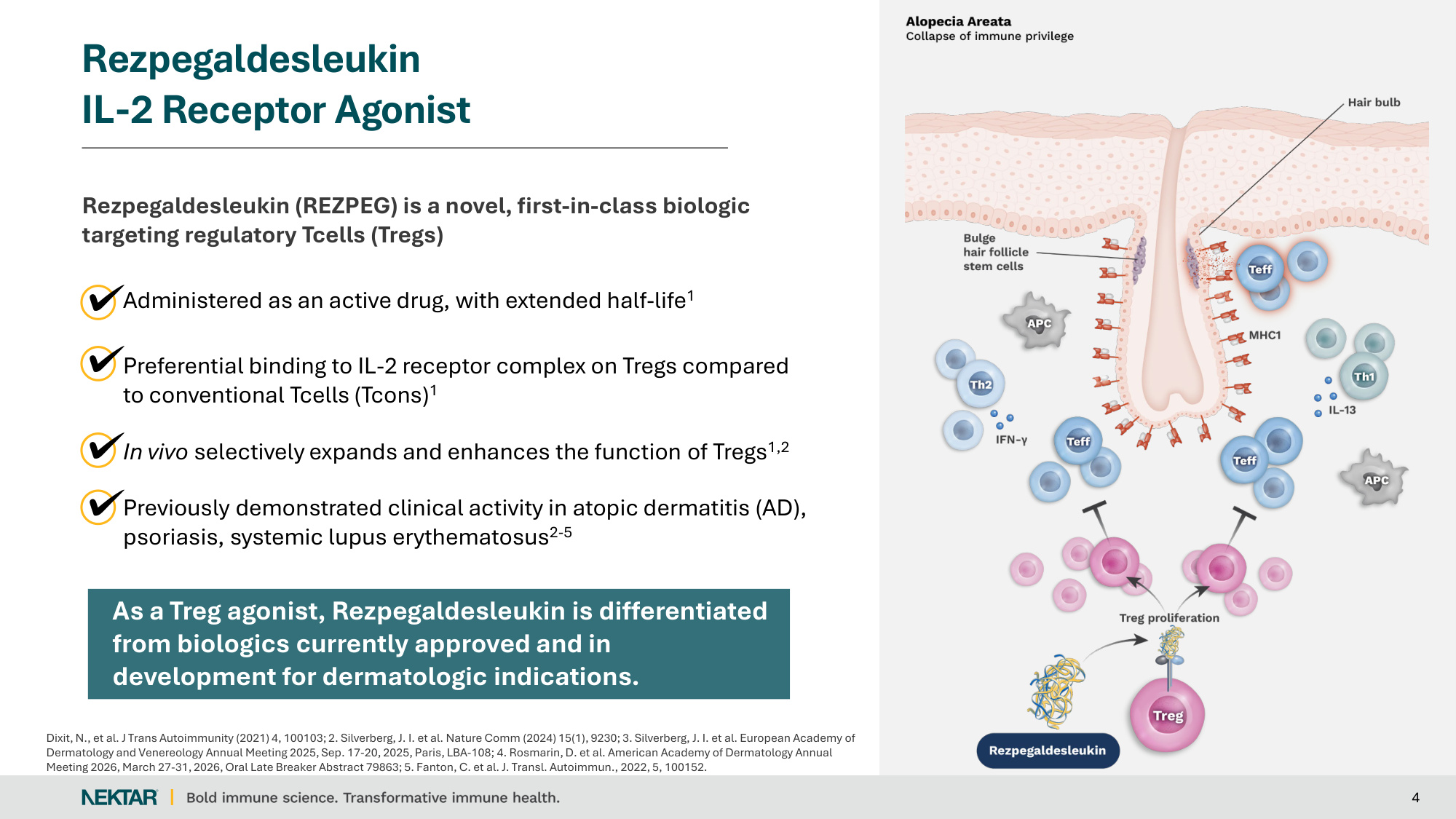
Rezpegaldesleukin (REZPEG) is a novel, first-in-class biologic targeting regulatory Tcells (Tregs) Administered as an active drug, with extended half-life1 Preferential binding to IL-2 receptor complex on Tregs compared to conventional Tcells (Tcons)1 In vivo selectively expands and enhances the function of Tregs1,2 Previously demonstrated clinical activity in atopic dermatitis (AD), psoriasis, systemic lupus erythematosus2-5 4 Rezpegaldesleukin IL-2 Receptor Agonist As a Treg agonist, Rezpegaldesleukin is differentiated from biologics currently approved and in development for dermatologic indications. Dixit, N., et al. J Trans Autoimmunity (2021) 4, 100103; 2. Silverberg, J. I. et al. Nature Comm (2024) 15(1), 9230; 3. Silverberg, J. I. et al. European Academy of Dermatology and Venereology Annual Meeting 2025, Sep. 17-20, 2025, Paris, LBA-108; 4. Rosmarin, D. et al. American Academy of Dermatology Annual Meeting 2026, March 27-31, 2026, Oral Late Breaker Abstract 79863; 5. Fanton, C. et al. J. Transl. Autoimmun., 2022, 5, 100152.
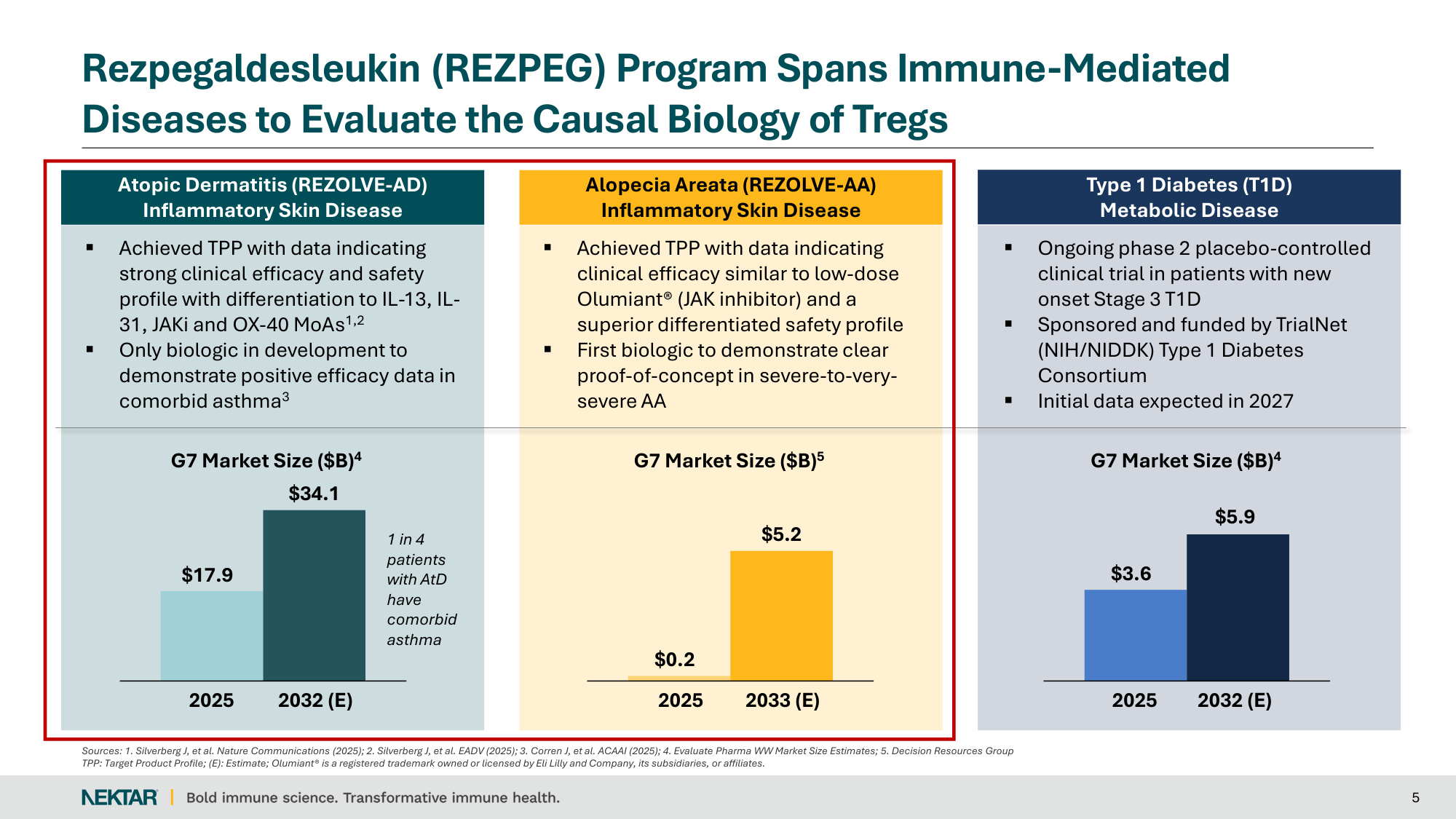
Rezpegaldesleukin (REZPEG) Program Spans Immune-Mediated Diseases to Evaluate the Causal Biology of Tregs 5 Atopic Dermatitis (REZOLVE-AD) Inflammatory Skin Disease Alopecia Areata (REZOLVE-AA) Inflammatory Skin Disease Type 1 Diabetes (T1D) Metabolic Disease $17.9 $34.1 2025 2032 (E) $0.2 $5.2 2025 2033 (E) $3.6 $5.9 2025 2032 (E) G7 Market Size ($B)4 G7 Market Size ($B)5 G7 Market Size ($B)4 1 in 4 patients with AtD have comorbid asthma Achieved TPP with data indicating clinical efficacy similar to low-dose Olumiant® (JAK inhibitor) and a superior differentiated safety profile First biologic to demonstrate clear proof-of-concept in severe-to-very- severe AA Achieved TPP with data indicating strong clinical efficacy and safety profile with differentiation to IL-13, IL- 31, JAKi and OX-40 MoAs1,2 Only biologic in development to demonstrate positive efficacy data in comorbid asthma3 Ongoing phase 2 placebo-controlled clinical trial in patients with new onset Stage 3 T1D Sponsored and funded by TrialNet (NIH/NIDDK) Type 1 Diabetes Consortium Initial data expected in 2027 Sources: 1. Silverberg J, et al. Nature Communications (2025); 2. Silverberg J, et al. EADV (2025); 3. Corren J, et al. ACAAI (2025); 4. Evaluate Pharma WW Market Size Estimates; 5. Decision Resources Group TPP: Target Product Profile; (E): Estimate; Olumiant® is a registered trademark owned or licensed by Eli Lilly and Company, its subsidiaries, or affiliates.
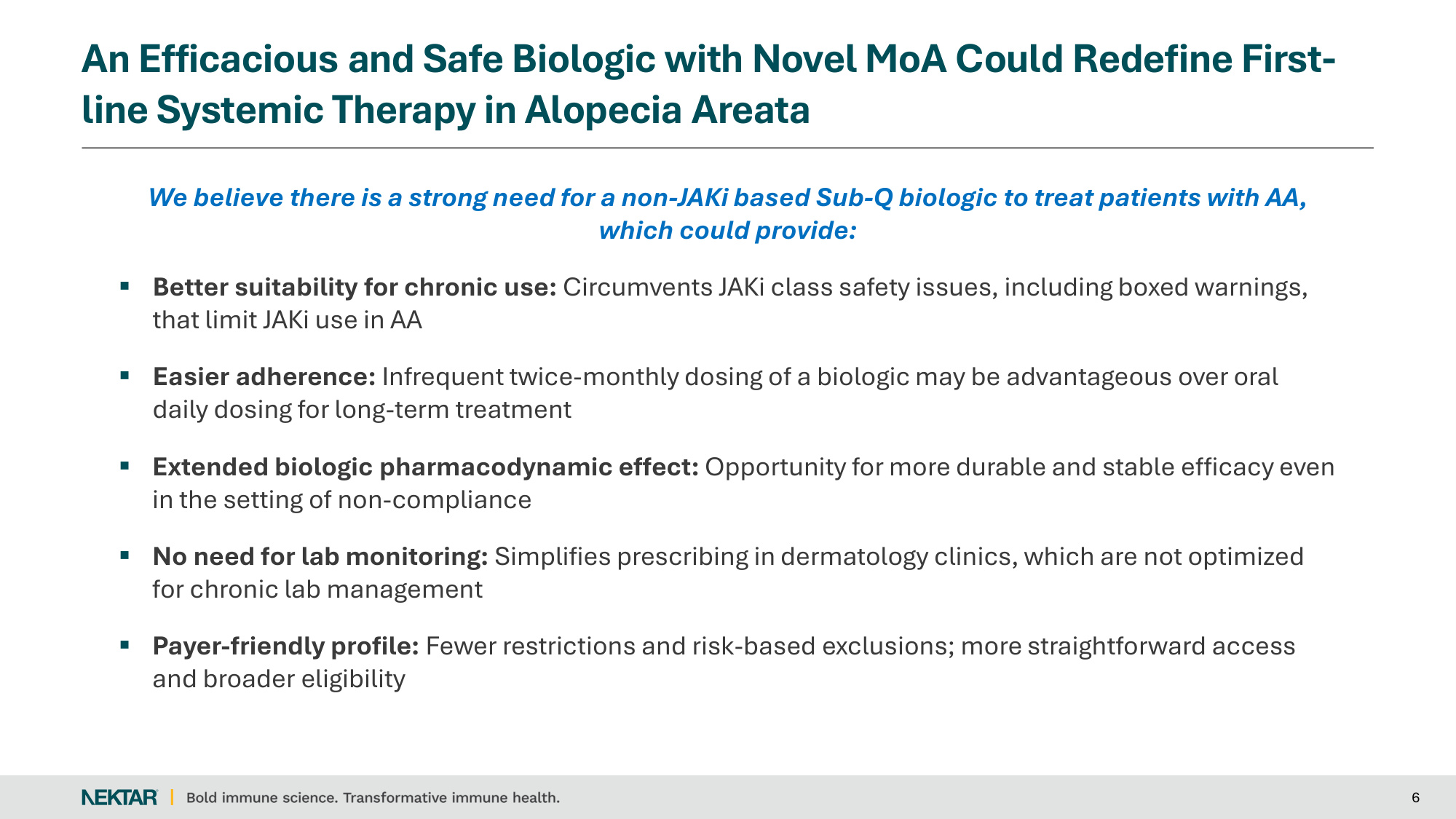
An Efficacious and Safe Biologic with Novel MoA Could Redefine First- line Systemic Therapy in Alopecia Areata 6 We believe there is a strong need for a non-JAKi based Sub-Q biologic to treat patients with AA, which could provide: Better suitability for chronic use: Circumvents JAKi class safety issues, including boxed warnings, that limit JAKi use in AA Easier adherence: Infrequent twice-monthly dosing of a biologic may be advantageous over oral daily dosing for long-term treatment Extended biologic pharmacodynamic effect: Opportunity for more durable and stable efficacy even in the setting of non-compliance No need for lab monitoring: Simplifies prescribing in dermatology clinics, which are not optimized for chronic lab management Payer-friendly profile: Fewer restrictions and risk-based exclusions; more straightforward access and broader eligibility
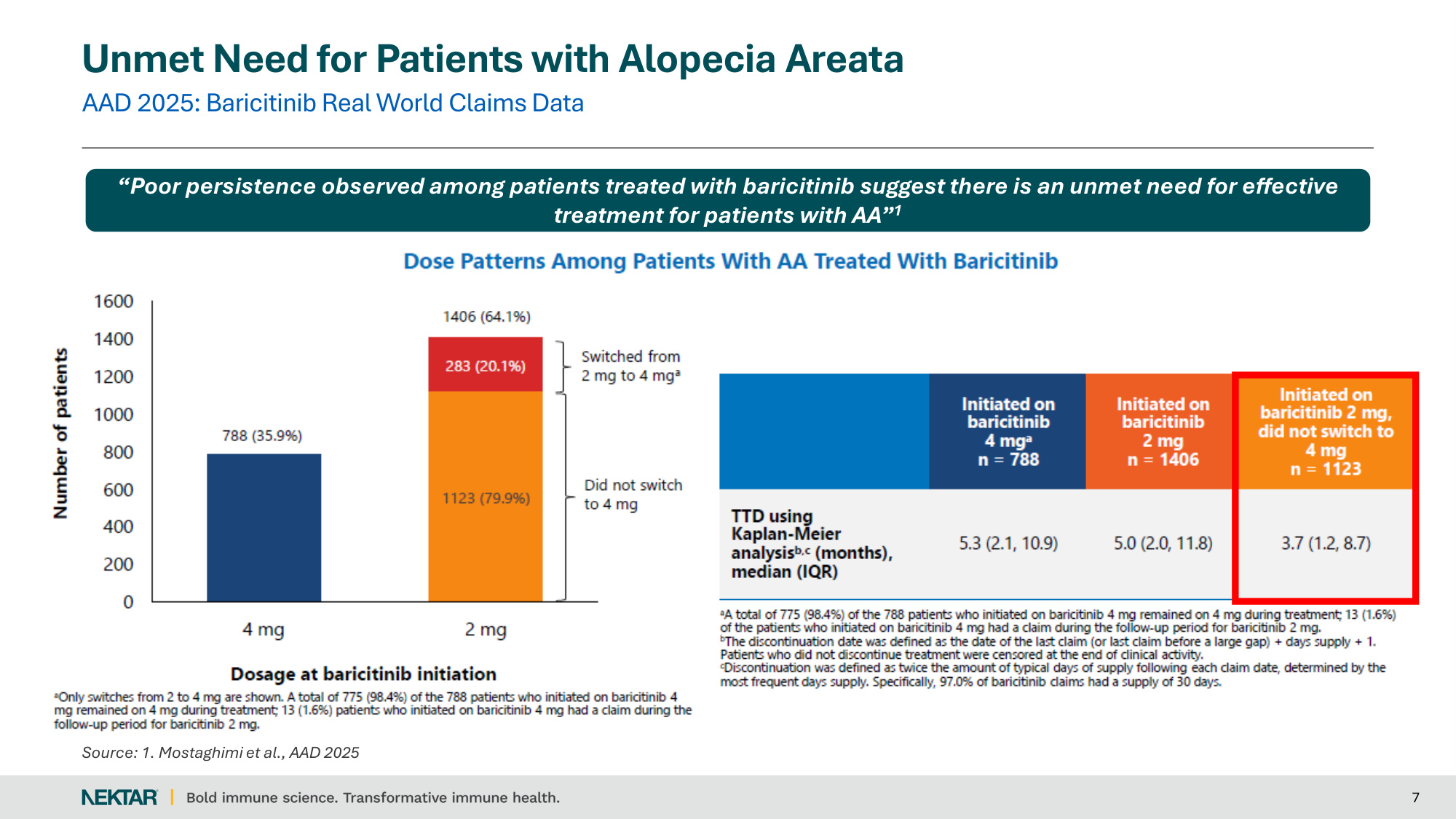
AAD 2025: Baricitinib Real World Claims Data Unmet Need for Patients with Alopecia Areata 7 "Poor persistence observed among patients treated with baricitinib suggest there is an unmet need for effective treatment for patients with AA"1 Source: 1. Mostaghimi et al., AAD 2025
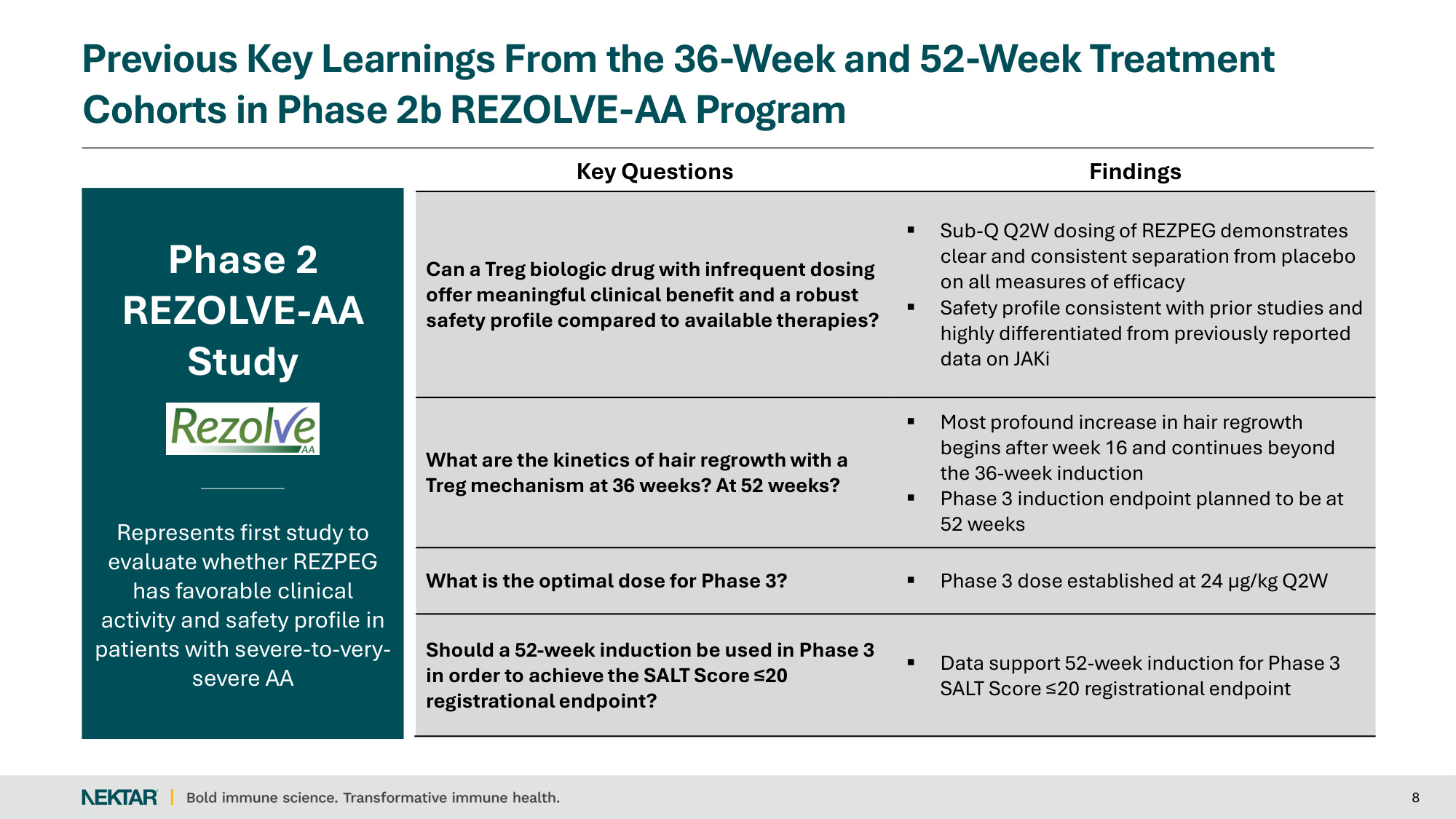
Key Questions Findings Can a Treg biologic drug with infrequent dosing offer meaningful clinical benefit and a robust safety profile compared to available therapies? Sub-Q Q2W dosing of REZPEG demonstrates clear and consistent separation from placebo on all measures of efficacy Safety profile consistent with prior studies and highly differentiated from previously reported data on JAKi What are the kinetics of hair regrowth with a Treg mechanism at 36 weeks? At 52 weeks? Most profound increase in hair regrowth begins after week 16 and continues beyond the 36-week induction Phase 3 induction endpoint planned to be at 52 weeks What is the optimal dose for Phase 3? Phase 3 dose established at 24 µg/kg Q2W Should a 52-week induction be used in Phase 3 in order to achieve the SALT Score ≤20 registrational endpoint? Data support 52-week induction for Phase 3 SALT Score ≤20 registrational endpoint Previous Key Learnings From the 36-Week and 52-Week Treatment Cohorts in Phase 2b REZOLVE-AA Program 8 Phase 2 REZOLVE-AA Study Represents first study to evaluate whether REZPEG has favorable clinical activity and safety profile in patients with severe-to-very- severe AA
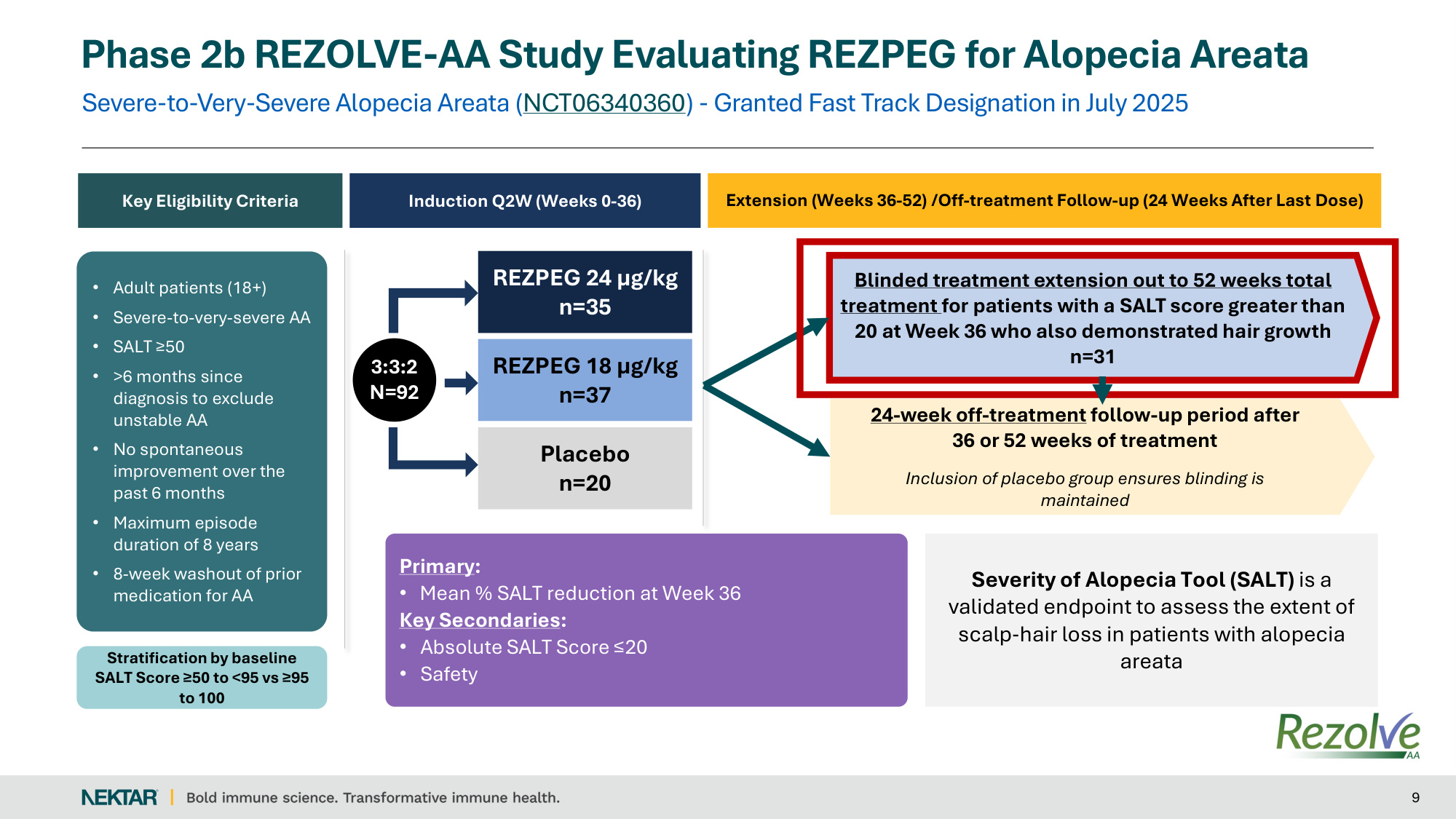
Severe-to-Very-Severe Alopecia Areata (NCT06340360) - Granted Fast Track Designation in July 2025 Phase 2b REZOLVE-AA Study Evaluating REZPEG for Alopecia Areata 9 Key Eligibility Criteria Induction Q2W (Weeks 0-36) Severity of Alopecia Tool (SALT) is a validated endpoint to assess the extent of scalp‐hair loss in patients with alopecia areata REZPEG 24 µg/kg n=35 Placebo n=20 REZPEG 18 µg/kg n=37 3:3:2 N=92 • Adult patients (18+) • Severe-to-very-severe AA • SALT ≥50 • >6 months since diagnosis to exclude unstable AA • No spontaneous improvement over the past 6 months • Maximum episode duration of 8 years • 8-week washout of prior medication for AA Stratification by baseline SALT Score ≥50 to <95 vs ≥95 to 100 Primary: • Mean % SALT reduction at Week 36 Key Secondaries: • Absolute SALT Score ≤20 • Safety Blinded treatment extension out to 52 weeks total treatment for patients with a SALT score greater than 20 at Week 36 who also demonstrated hair growth n=31 Extension (Weeks 36-52) /Off-treatment Follow-up (24 Weeks After Last Dose) 24-week off-treatment follow-up period after 36 or 52 weeks of treatment Inclusion of placebo group ensures blinding is maintained
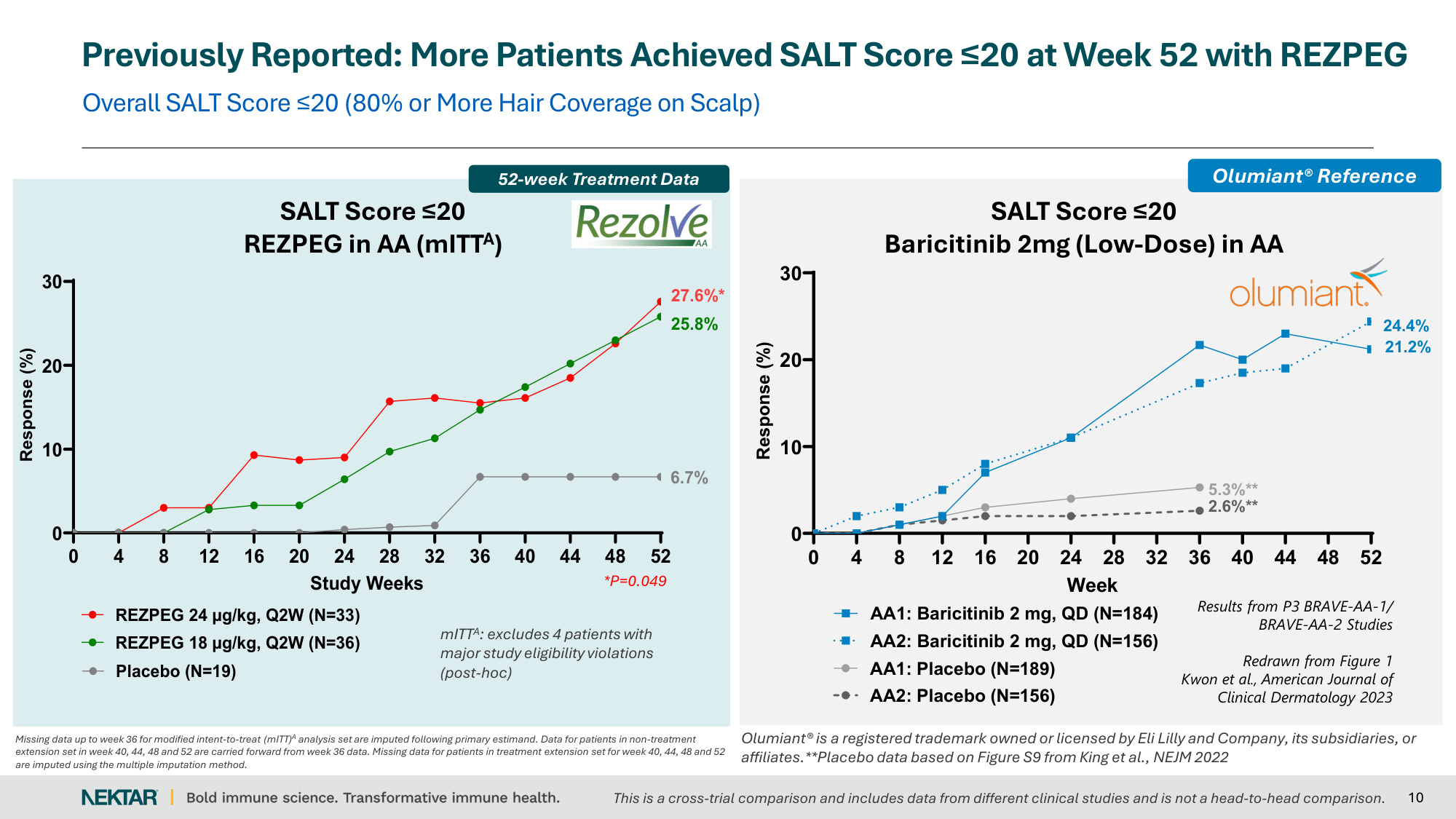
10 Overall SALT Score ≤20 (80% or More Hair Coverage on Scalp) Previously Reported: More Patients Achieved SALT Score ≤20 at Week 52 with REZPEG 0 4 8 12 16 20 24 28 32 36 40 44 48 52 0 10 20 30 SALT Score ≤ 20 Week Response (%) 24.4% 21.2% AA2: Baricitinib 2 mg, QD (N=156) AA1: Baricitinib 2 mg, QD (N=184) 5.3%** 2.6%** AA1: Placebo (N=189) AA2: Placebo (N=156) Results from P3 BRAVE-AA-1/ BRAVE-AA-2 Studies Redrawn from Figure 1 Kwon et al., American Journal of Clinical Dermatology 2023 Olumiant® Reference 0 4 8 12 16 20 24 28 32 36 40 44 48 52 0 10 20 30 SALT≤20 (Week 52 Readout) (mITTA) Study Weeks Response (%) 6.7% 27.6%* 25.8% REZPEG 18 µg/kg, Q2W (N=36) REZPEG 24 µg/kg, Q2W (N=33) Placebo (N=19) SALT Score ≤20 REZPEG in AA (mITTA) SALT Score ≤20 Baricitinib 2mg (Low-Dose) in AA *P=0.049 mITTA: excludes 4 patients with major study eligibility violations (post-hoc) 52-week Treatment Data Missing data up to week 36 for modified intent-to-treat (mITT)A analysis set are imputed following primary estimand. Data for patients in non-treatment extension set in week 40, 44, 48 and 52 are carried forward from week 36 data. Missing data for patients in treatment extension set for week 40, 44, 48 and 52 are imputed using the multiple imputation method. Olumiant® is a registered trademark owned or licensed by Eli Lilly and Company, its subsidiaries, or affiliates.**Placebo data based on Figure S9 from King et al., NEJM 2022 This is a cross-trial comparison and includes data from different clinical studies and is not a head-to-head comparison.
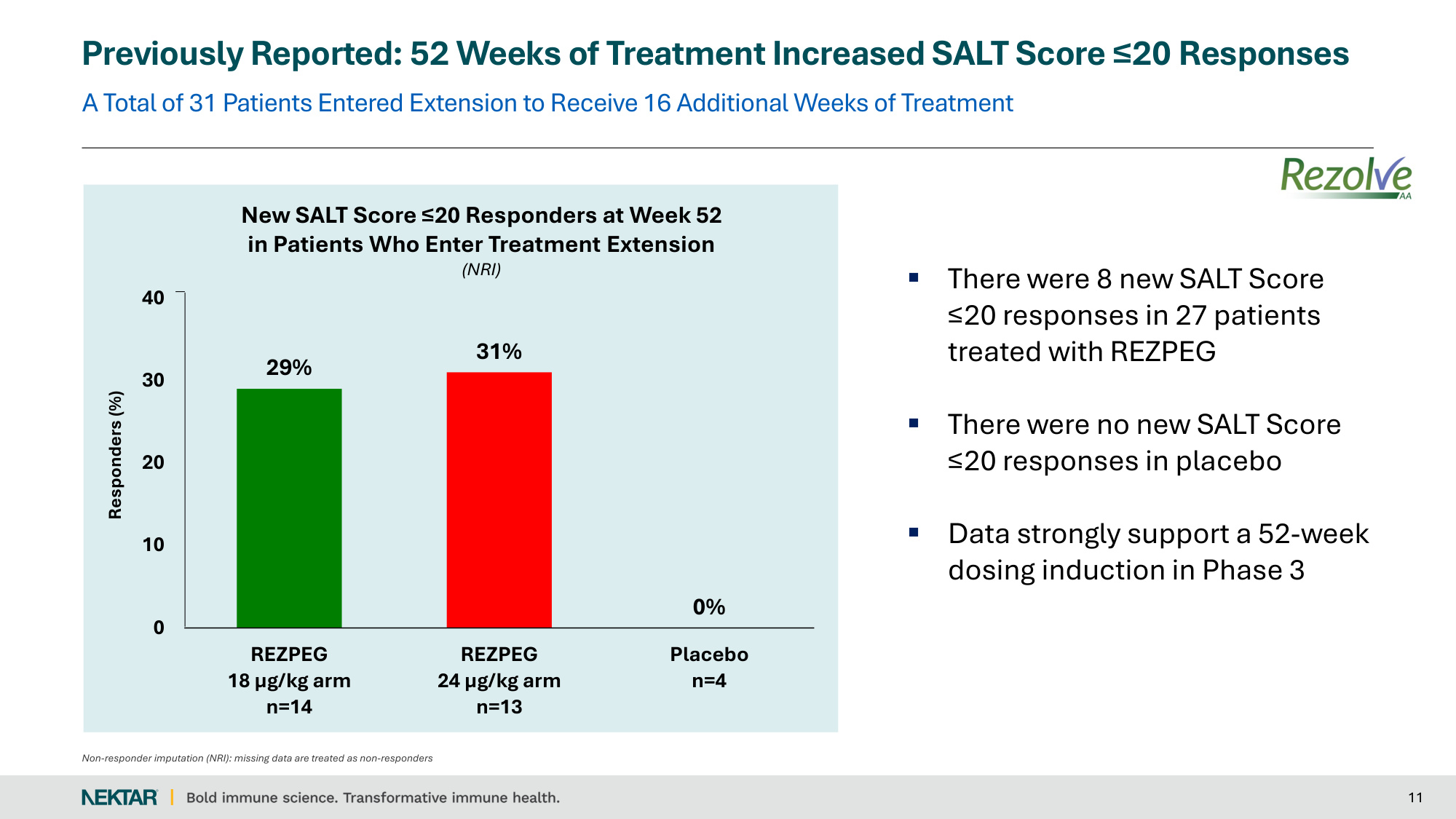
A Total of 31 Patients Entered Extension to Receive 16 Additional Weeks of Treatment 11 29% 31% 0% 0 10 20 30 40 REZPEG 18 µg/kg arm n=14 REZPEG 24 µg/kg arm n=13 Placebo n=4 Previously Reported: 52 Weeks of Treatment Increased SALT Score ≤20 Responses There were 8 new SALT Score ≤20 responses in 27 patients treated with REZPEG There were no new SALT Score ≤20 responses in placebo Data strongly support a 52-week dosing induction in Phase 3 Responders (%) Non-responder imputation (NRI): missing data are treated as non-responders New SALT Score ≤20 Responders at Week 52 in Patients Who Enter Treatment Extension (NRI)
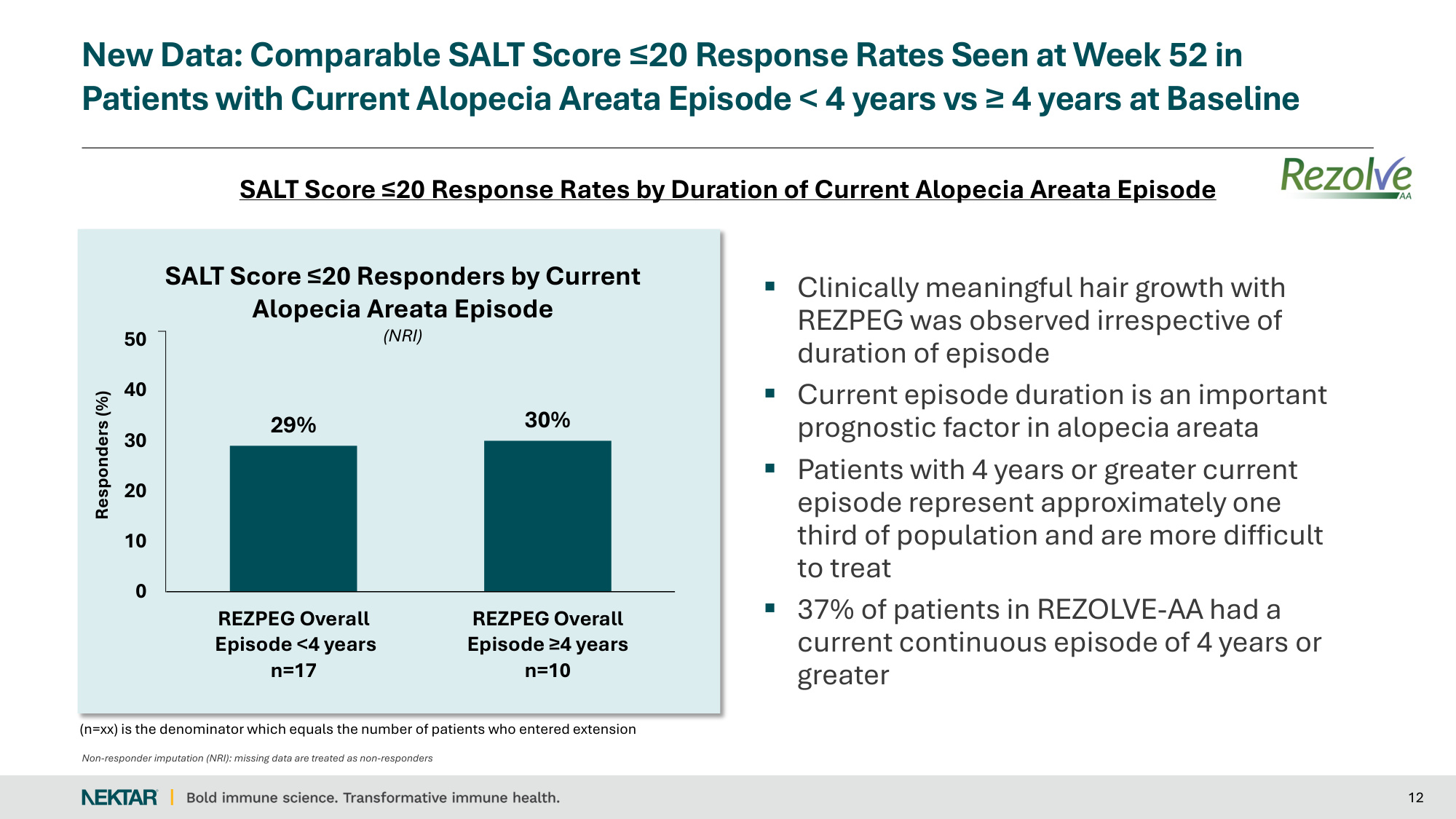
New Data: Comparable SALT Score ≤20 Response Rates Seen at Week 52 in Patients with Current Alopecia Areata Episode < 4 years vs ≥ 4 years at Baseline 12 Clinically meaningful hair growth with REZPEG was observed irrespective of duration of episode Current episode duration is an important prognostic factor in alopecia areata Patients with 4 years or greater current episode represent approximately one third of population and are more difficult to treat 37% of patients in REZOLVE-AA had a current continuous episode of 4 years or greater SALT Score ≤20 Response Rates by Duration of Current Alopecia Areata Episode Non-responder imputation (NRI): missing data are treated as non-responders (n=xx) is the denominator which equals the number of patients who entered extension 29% 30% 0 10 20 30 40 50 REZPEG Overall Episode <4 years n=17 REZPEG Overall Episode ≥4 years n=10 Responders (%) SALT Score ≤20 Responders by Current Alopecia Areata Episode (NRI)
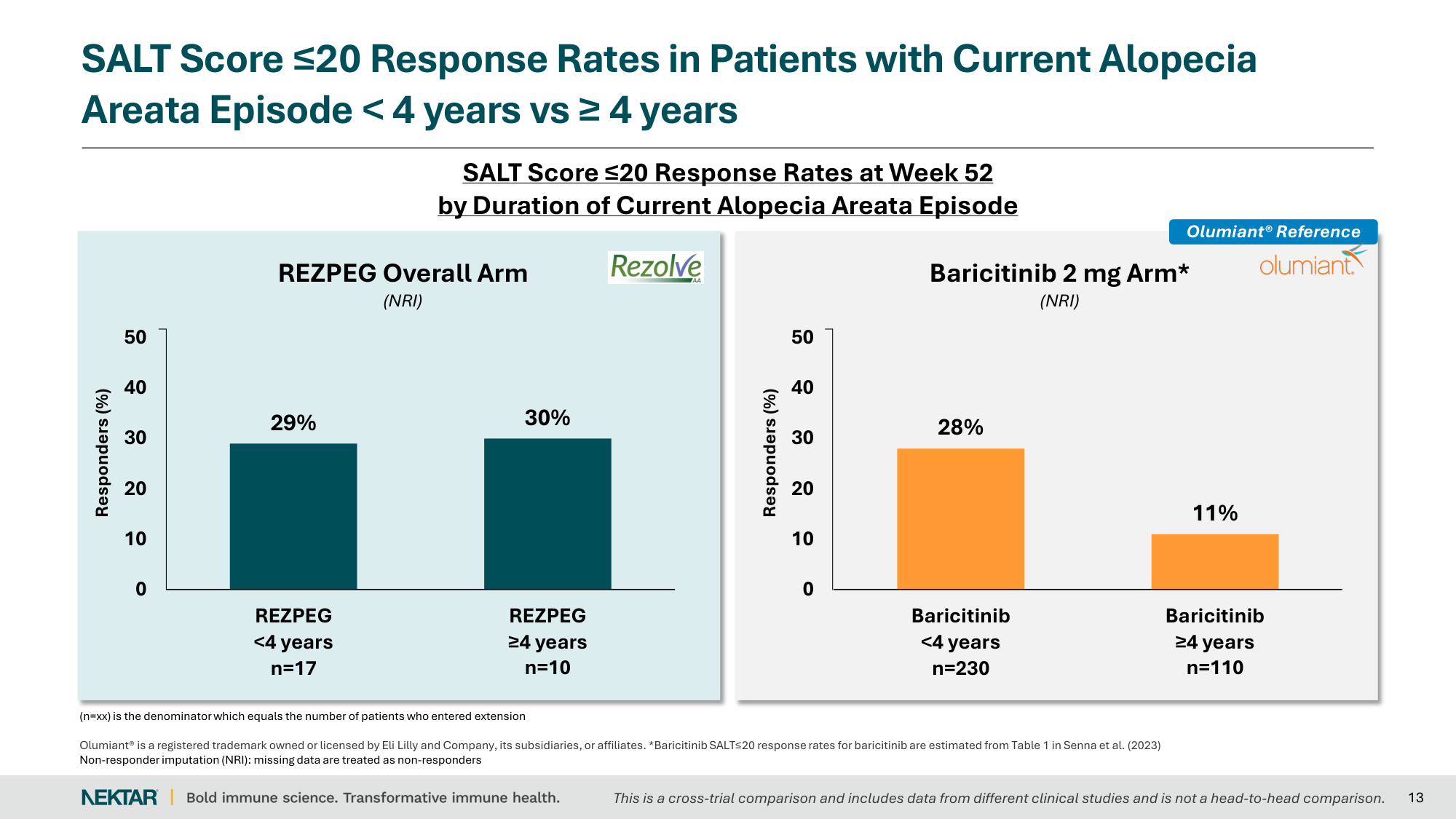
SALT Score ≤20 Response Rates in Patients with Current Alopecia Areata Episode < 4 years vs ≥ 4 years 13 REZPEG Overall Arm (NRI) 28% 11% 0 10 20 30 40 50 Baricitinib <4 years n=230 Baricitinib ≥4 years n=110 Responders (%) Baricitinib 2 mg Arm* (NRI) SALT Score ≤20 Response Rates at Week 52 by Duration of Current Alopecia Areata Episode 29% 30% 0 10 20 30 40 50 REZPEG <4 years n=17 REZPEG ≥4 years n=10 Responders (%) (n=xx) is the denominator which equals the number of patients who entered extension Olumiant® is a registered trademark owned or licensed by Eli Lilly and Company, its subsidiaries, or affiliates. *Baricitinib SALT≤20 response rates for baricitinib are estimated from Table 1 in Senna et al. (2023) Non-responder imputation (NRI): missing data are treated as non-responders Olumiant® Reference This is a cross-trial comparison and includes data from different clinical studies and is not a head-to-head comparison.
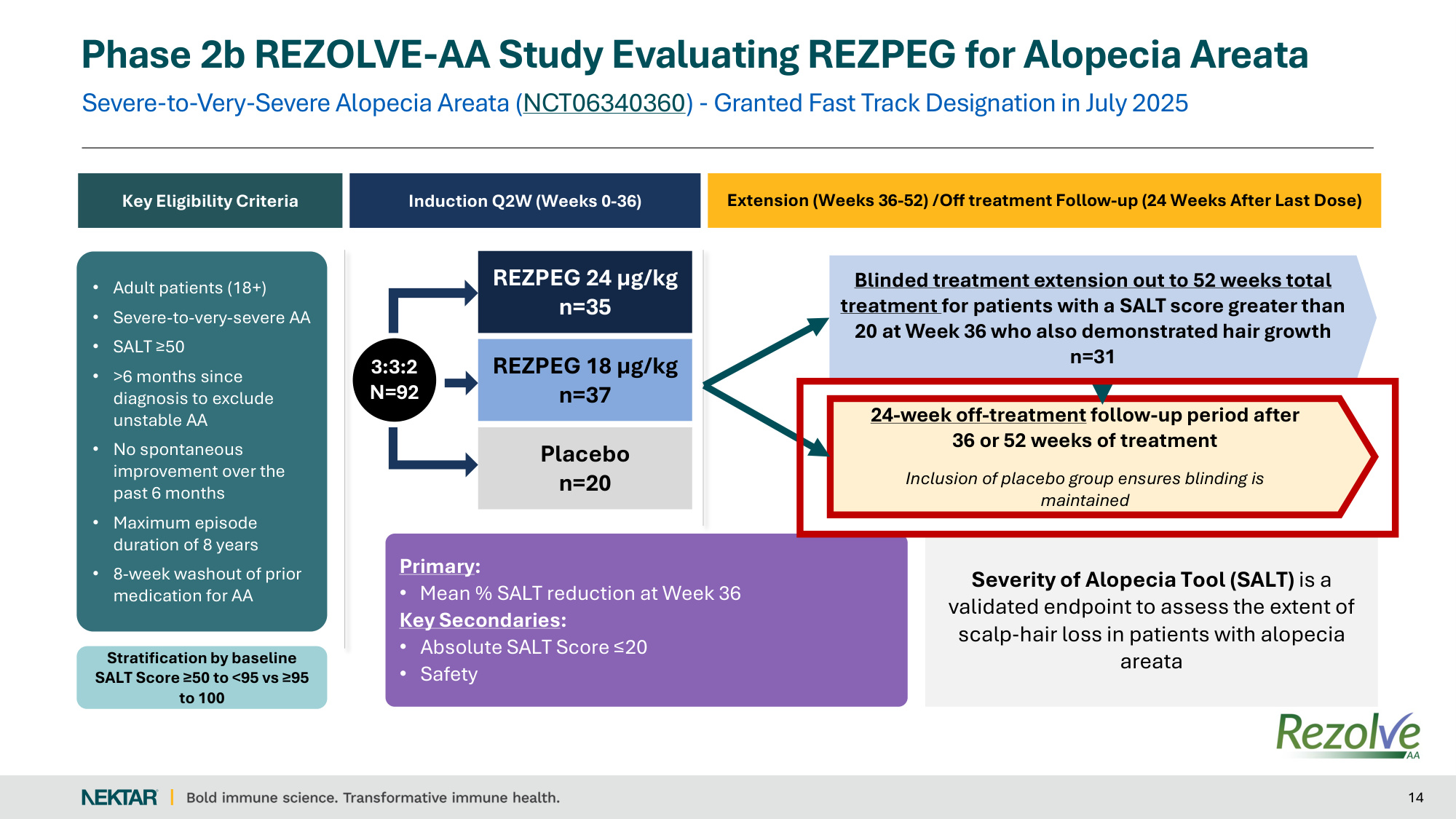
Severe-to-Very-Severe Alopecia Areata (NCT06340360) - Granted Fast Track Designation in July 2025 Phase 2b REZOLVE-AA Study Evaluating REZPEG for Alopecia Areata 14 Key Eligibility Criteria Induction Q2W (Weeks 0-36) Severity of Alopecia Tool (SALT) is a validated endpoint to assess the extent of scalp‐hair loss in patients with alopecia areata REZPEG 24 µg/kg n=35 Placebo n=20 REZPEG 18 µg/kg n=37 3:3:2 N=92 Primary: • Mean % SALT reduction at Week 36 Key Secondaries: • Absolute SALT Score ≤20 • Safety Extension (Weeks 36-52) /Off treatment Follow-up (24 Weeks After Last Dose) 24-week off-treatment follow-up period after 36 or 52 weeks of treatment Inclusion of placebo group ensures blinding is maintained Blinded treatment extension out to 52 weeks total treatment for patients with a SALT score greater than 20 at Week 36 who also demonstrated hair growth n=31 • Adult patients (18+) • Severe-to-very-severe AA • SALT ≥50 • >6 months since diagnosis to exclude unstable AA • No spontaneous improvement over the past 6 months • Maximum episode duration of 8 years • 8-week washout of prior medication for AA Stratification by baseline SALT Score ≥50 to <95 vs ≥95 to 100
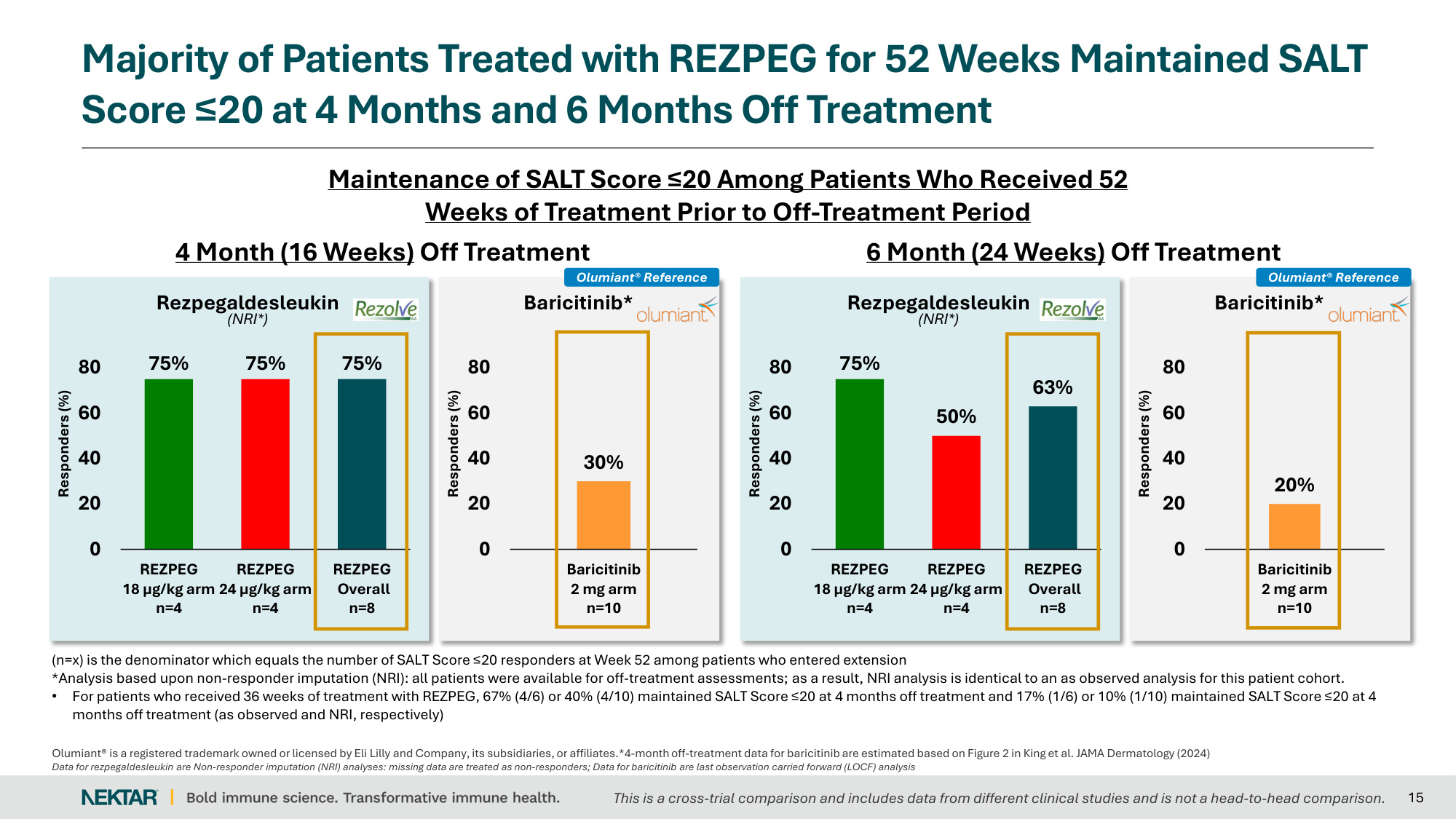
Olumiant® is a registered trademark owned or licensed by Eli Lilly and Company, its subsidiaries, or affiliates.*4-month off-treatment data for baricitinib are estimated based on Figure 2 in King et al. JAMA Dermatology (2024) Data for rezpegaldesleukin are Non-responder imputation (NRI) analyses: missing data are treated as non-responders; Data for baricitinib are last observation carried forward (LOCF) analysis Majority of Patients Treated with REZPEG for 52 Weeks Maintained SALT Score ≤20 at 4 Months and 6 Months Off Treatment 15 75% 50% 63% 0 20 40 60 80 REZPEG 18 µg/kg arm n=4 REZPEG 24 µg/kg arm n=4 REZPEG Overall n=8 Responders (%) Rezpegaldesleukin (NRI*) 20% 0 20 40 60 80 Baricitinib 2 mg arm n=10 Responders (%) Baricitinib* 6 Month (24 Weeks) Off Treatment 75% 75% 75% 0 20 40 60 80 REZPEG 18 µg/kg arm n=4 REZPEG 24 µg/kg arm n=4 REZPEG Overall n=8 Responders (%) Rezpegaldesleukin (NRI*) 30% 0 20 40 60 80 Baricitinib 2 mg arm n=10 Responders (%) Baricitinib* 4 Month (16 Weeks) Off Treatment Maintenance of SALT Score ≤20 Among Patients Who Received 52 Weeks of Treatment Prior to Off-Treatment Period Olumiant® Reference Olumiant® Reference (n=x) is the denominator which equals the number of SALT Score ≤20 responders at Week 52 among patients who entered extension *Analysis based upon non-responder imputation (NRI): all patients were available for off-treatment assessments; as a result, NRI analysis is identical to an as observed analysis for this patient cohort. • For patients who received 36 weeks of treatment with REZPEG, 67% (4/6) or 40% (4/10) maintained SALT Score ≤20 at 4 months off treatment and 17% (1/6) or 10% (1/10) maintained SALT Score ≤20 at 4 months off treatment (as observed and NRI, respectively) This is a cross-trial comparison and includes data from different clinical studies and is not a head-to-head comparison.
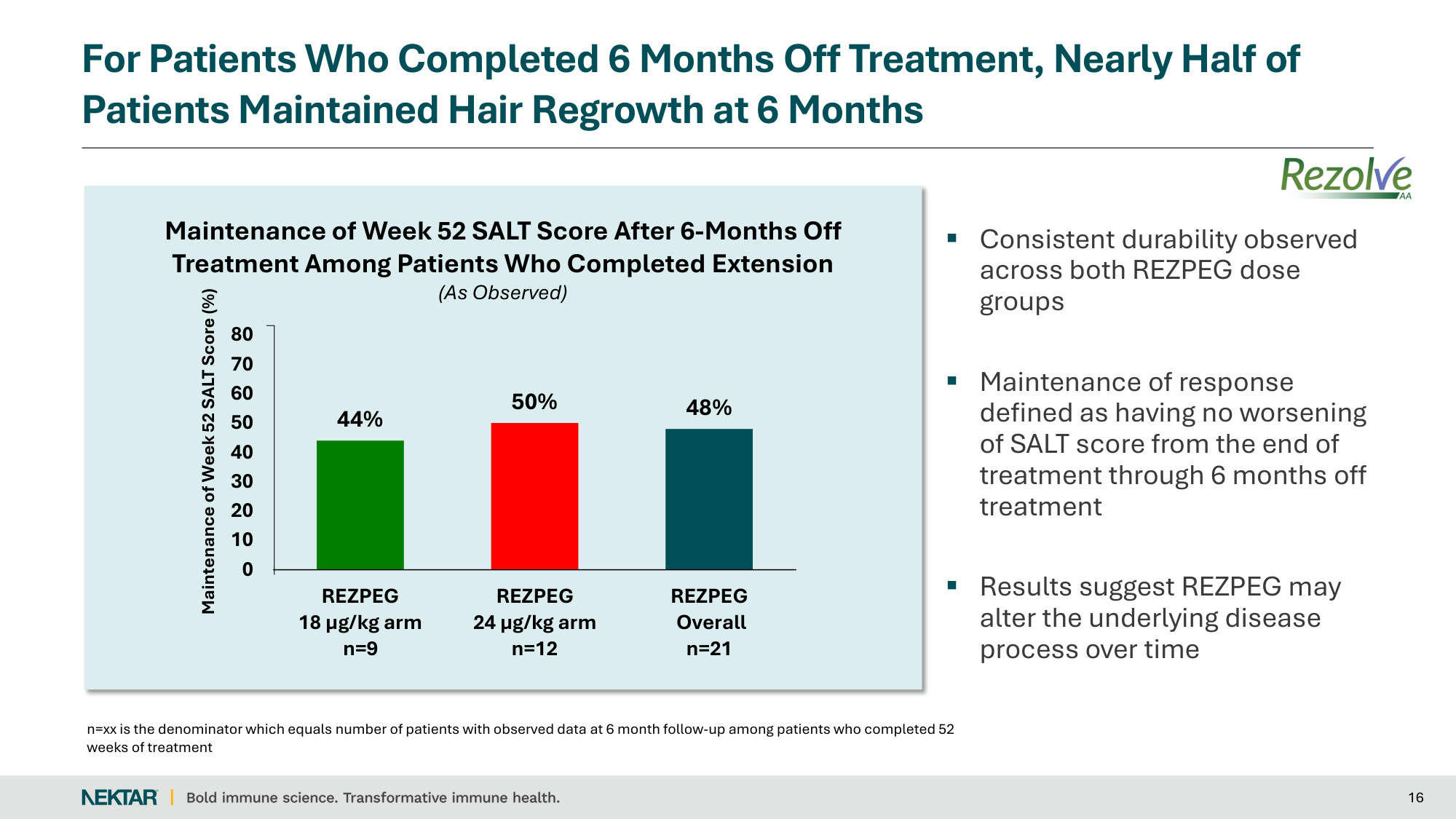
For Patients Who Completed 6 Months Off Treatment, Nearly Half of Patients Maintained Hair Regrowth at 6 Months 16 44% 50% 48% 0 10 20 30 40 50 60 70 80 REZPEG 18 µg/kg arm n=9 REZPEG 24 µg/kg arm n=12 REZPEG Overall n=21 Maintenance of Week 52 SALT Score (%) Maintenance of Week 52 SALT Score After 6-Months Off Treatment Among Patients Who Completed Extension (As Observed) Consistent durability observed across both REZPEG dose groups Maintenance of response defined as having no worsening of SALT score from the end of treatment through 6 months off treatment Results suggest REZPEG may alter the underlying disease process over time n=xx is the denominator which equals number of patients with observed data at 6 month follow-up among patients who completed 52 weeks of treatment
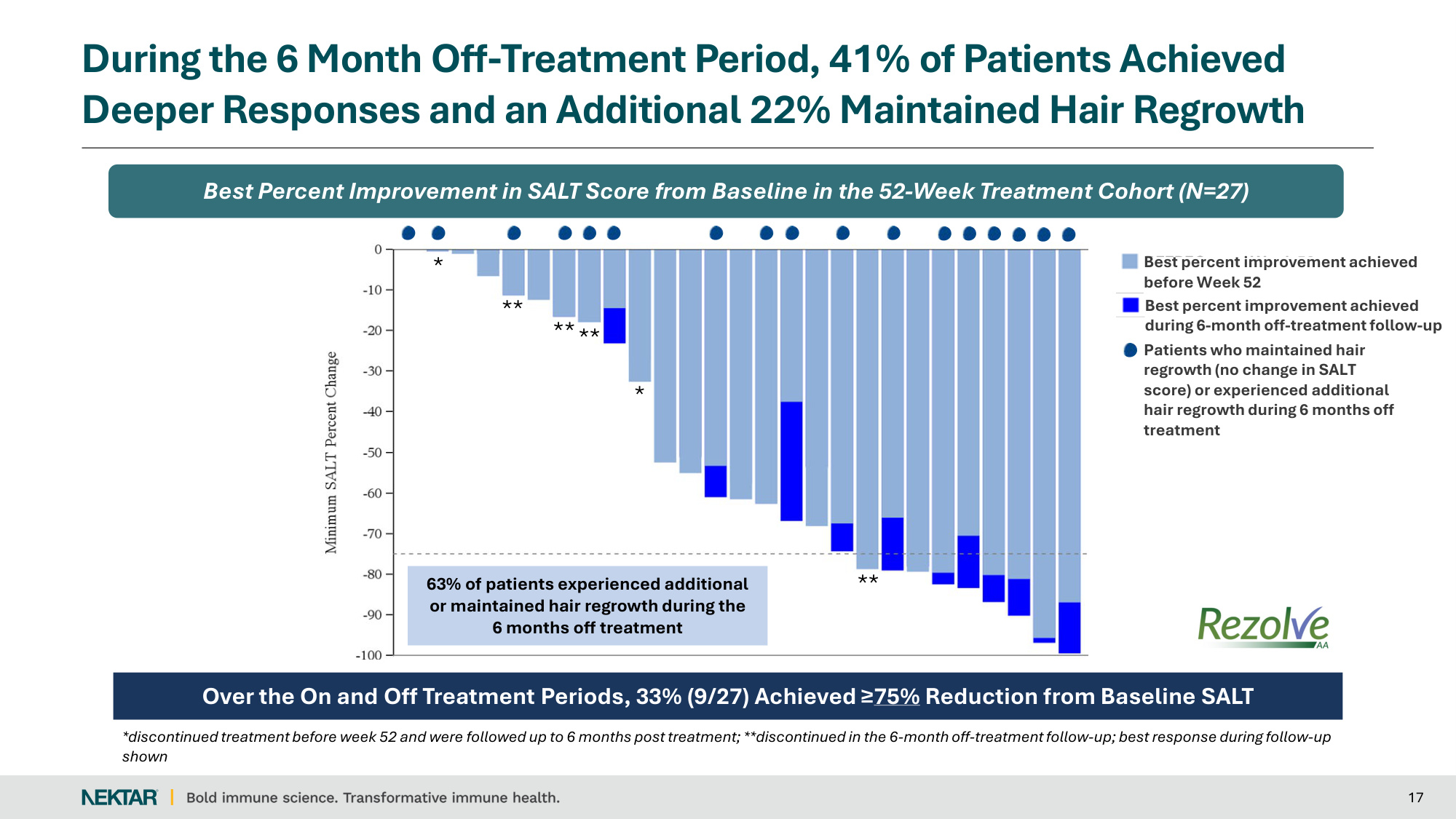
During the 6 Month Off-Treatment Period, 41% of Patients Achieved Deeper Responses and an Additional 22% Maintained Hair Regrowth 17 Best Percent Improvement in SALT Score from Baseline in the 52-Week Treatment Cohort (N=27) Over the On and Off Treatment Periods, 33% (9/27) Achieved ≥75% Reduction from Baseline SALT REZPEG up to Week 52 Best percent improvement achieved during 6-month off-treatment follow-up Patients who maintained hair regrowth (no change in SALT score) or experienced additional hair regrowth during 6 months off treatment 63% of patients experienced additional or maintained hair regrowth during the 6 months off treatment * * *discontinued treatment before week 52 and were followed up to 6 months post treatment; **discontinued in the 6-month off-treatment follow-up; best response during follow-up shown ** **** ** Best percent improvement achieved before Week 52
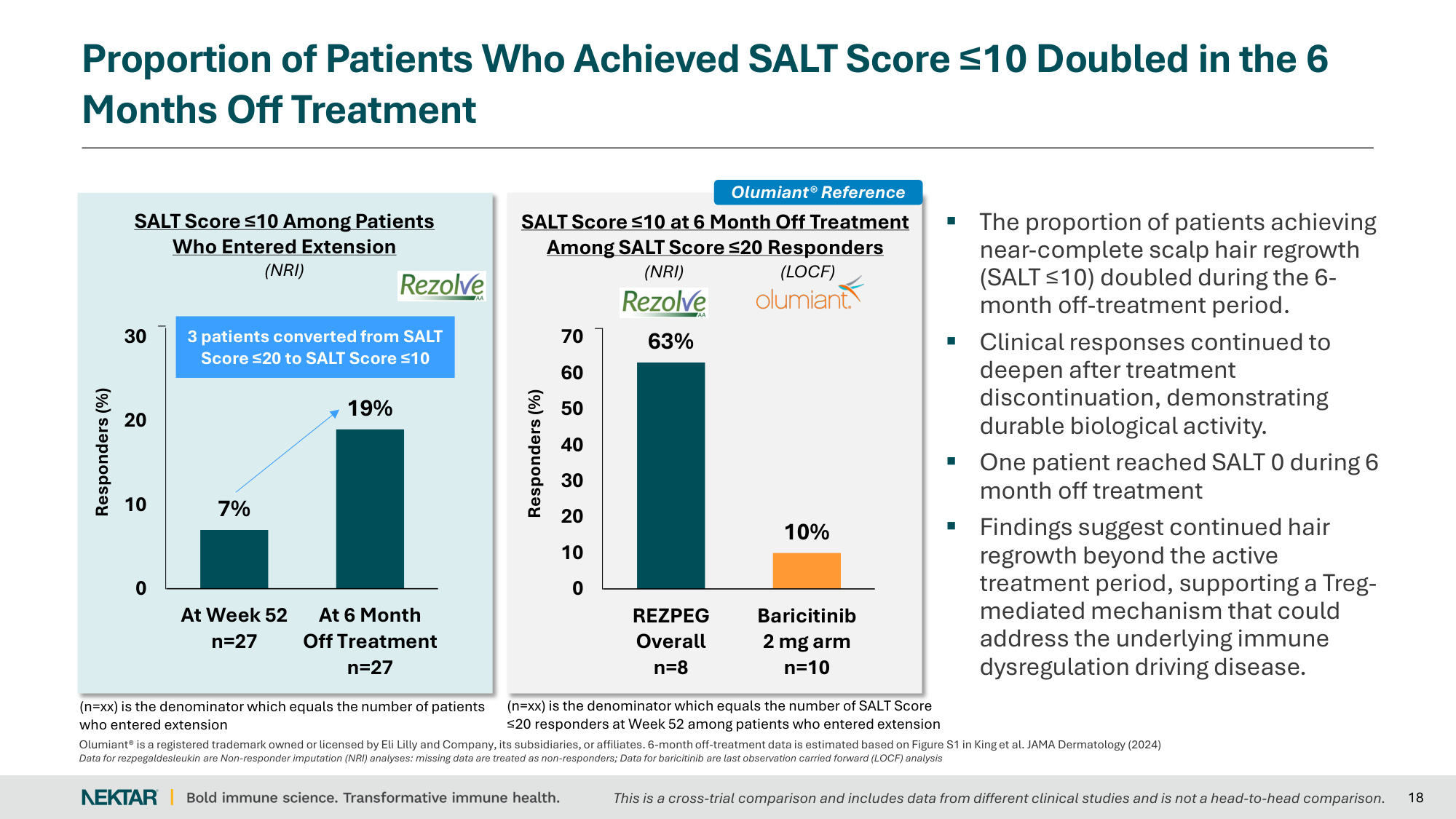
Proportion of Patients Who Achieved SALT Score ≤10 Doubled in the 6 Months Off Treatment 18 The proportion of patients achieving near-complete scalp hair regrowth (SALT ≤10) doubled during the 6- month off-treatment period. Clinical responses continued to deepen after treatment discontinuation, demonstrating durable biological activity. One patient reached SALT 0 during 6 month off treatment Findings suggest continued hair regrowth beyond the active treatment period, supporting a Treg- mediated mechanism that could address the underlying immune dysregulation driving disease. (n=xx) is the denominator which equals the number of patients who entered extension Responders (%) SALT Score ≤10 Among Patients Who Entered Extension (NRI) 3 patients converted from SALT Score ≤20 to SALT Score ≤10 63% 10% 0 10 20 30 40 50 60 70 REZPEG Overall n=8 Baricitinib 2 mg arm n=10 SALT Score ≤10 at 6 Month Off Treatment Among SALT Score ≤20 Responders Responders (%) (n=xx) is the denominator which equals the number of SALT Score ≤20 responders at Week 52 among patients who entered extension Olumiant® Reference 7% 19% 0 10 20 30 At Week 52 n=27 At 6 Month Off Treatment n=27 Olumiant® is a registered trademark owned or licensed by Eli Lilly and Company, its subsidiaries, or affiliates. 6-month off-treatment data is estimated based on Figure S1 in King et al. JAMA Dermatology (2024) Data for rezpegaldesleukin are Non-responder imputation (NRI) analyses: missing data are treated as non-responders; Data for baricitinib are last observation carried forward (LOCF) analysis (NRI) (LOCF) This is a cross-trial comparison and includes data from different clinical studies and is not a head-to-head comparison.
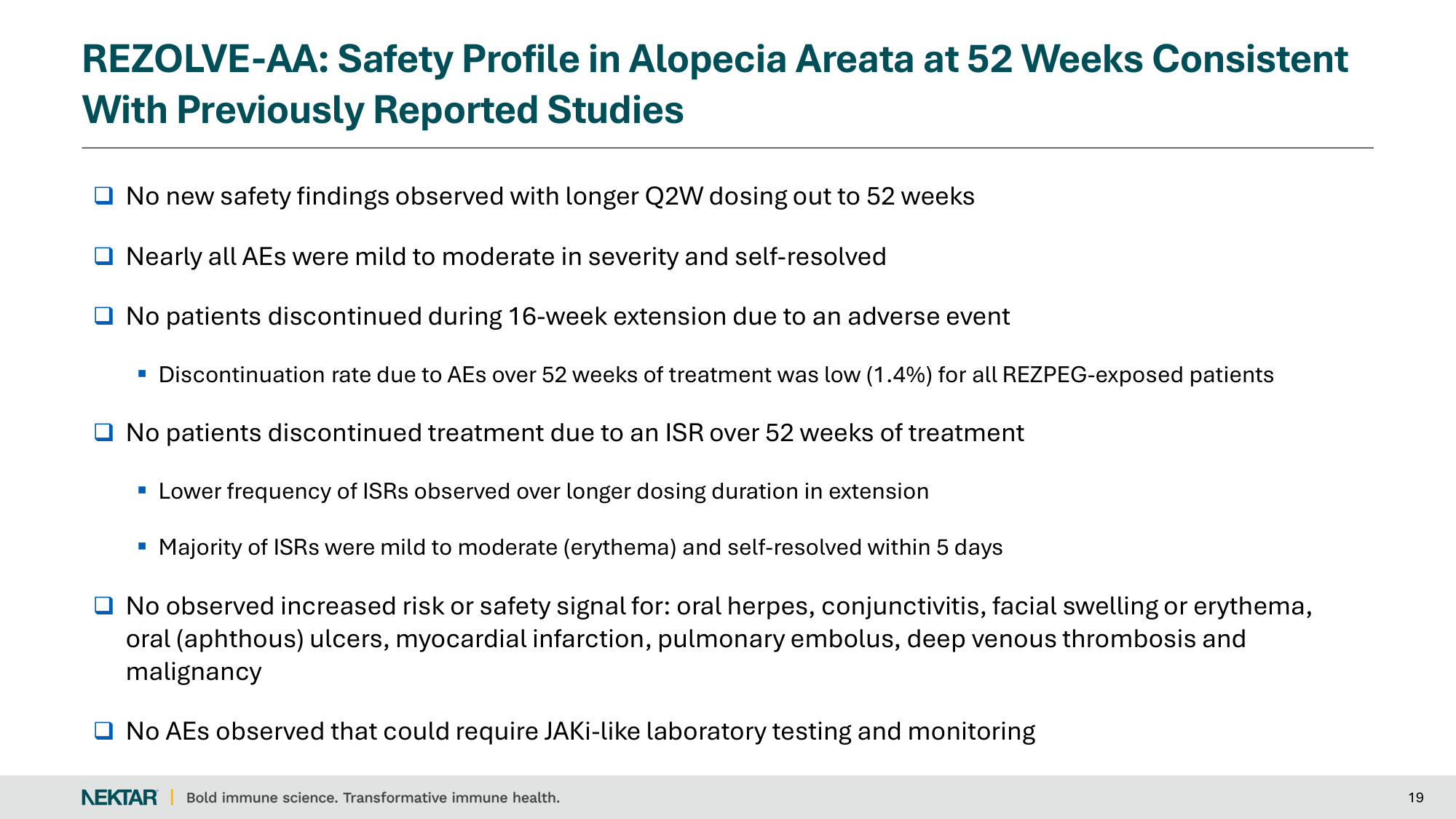
REZOLVE-AA: Safety Profile in Alopecia Areata at 52 Weeks Consistent With Previously Reported Studies No new safety findings observed with longer Q2W dosing out to 52 weeks Nearly all AEs were mild to moderate in severity and self-resolved No patients discontinued during 16-week extension due to an adverse event Discontinuation rate due to AEs over 52 weeks of treatment was low (1.4%) for all REZPEG-exposed patients No patients discontinued treatment due to an ISR over 52 weeks of treatment Lower frequency of ISRs observed over longer dosing duration in extension Majority of ISRs were mild to moderate (erythema) and self-resolved within 5 days No observed increased risk or safety signal for: oral herpes, conjunctivitis, facial swelling or erythema, oral (aphthous) ulcers, myocardial infarction, pulmonary embolus, deep venous thrombosis and malignancy No AEs observed that could require JAKi-like laboratory testing and monitoring 19
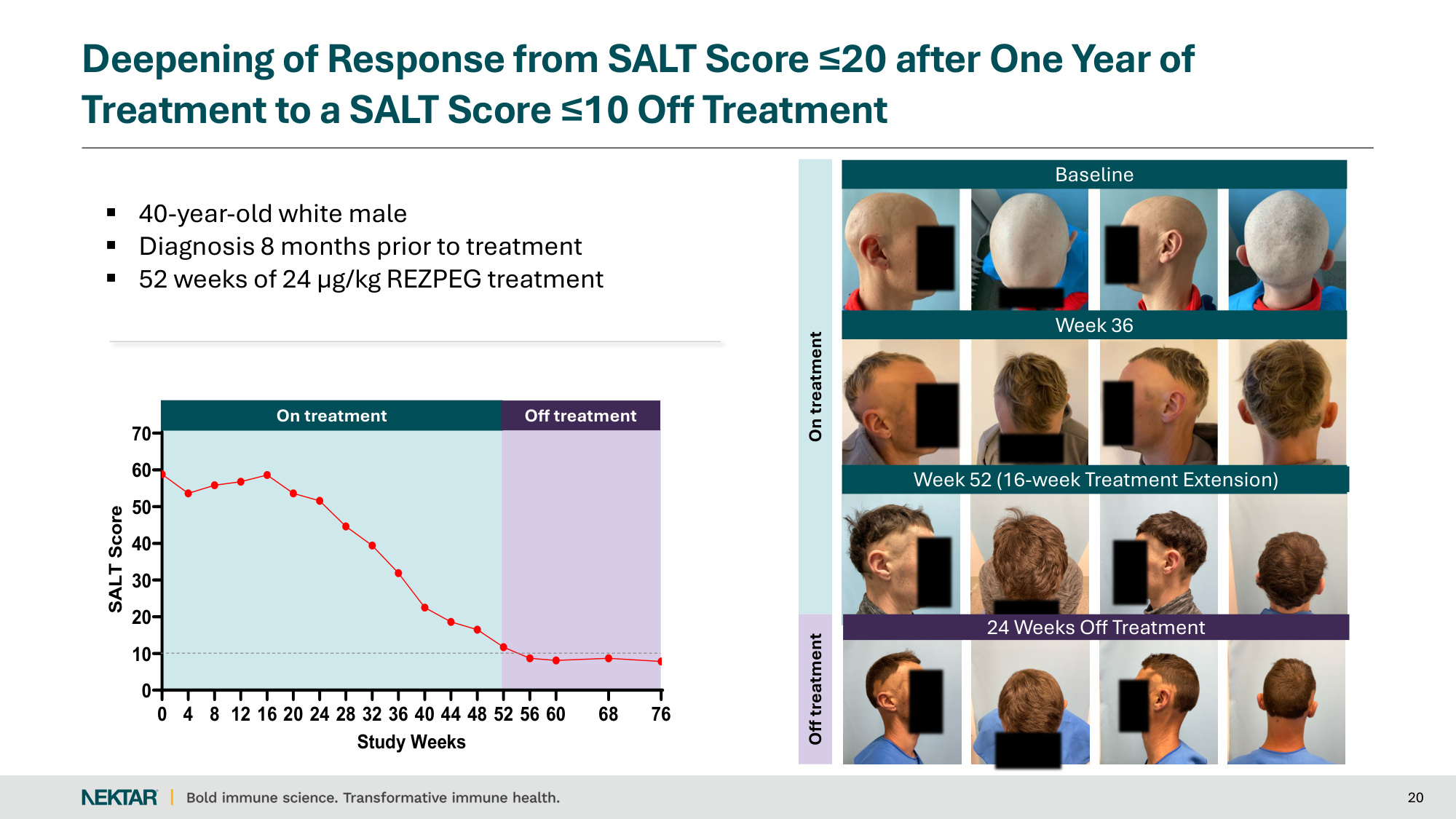
Baseline Week 36 Week 52 20 Deepening of Response from SALT Score ≤20 after One Year of Treatment to a SALT Score ≤10 Off Treatment 40-year-old white male Diagnosis 8 months prior to treatment 52 weeks of 24 µg/kg REZPEG treatment On treatment Off treatment Week 52 (16-week Treatment Extension) 24 Weeks Off Treatment 0 10 20 30 40 50 60 70 2663-6076 Study Weeks SALT Score 0 4 8 12 16 20 24 28 32 36 40 44 48 52 56 60 68 76 On treatment Off treatment
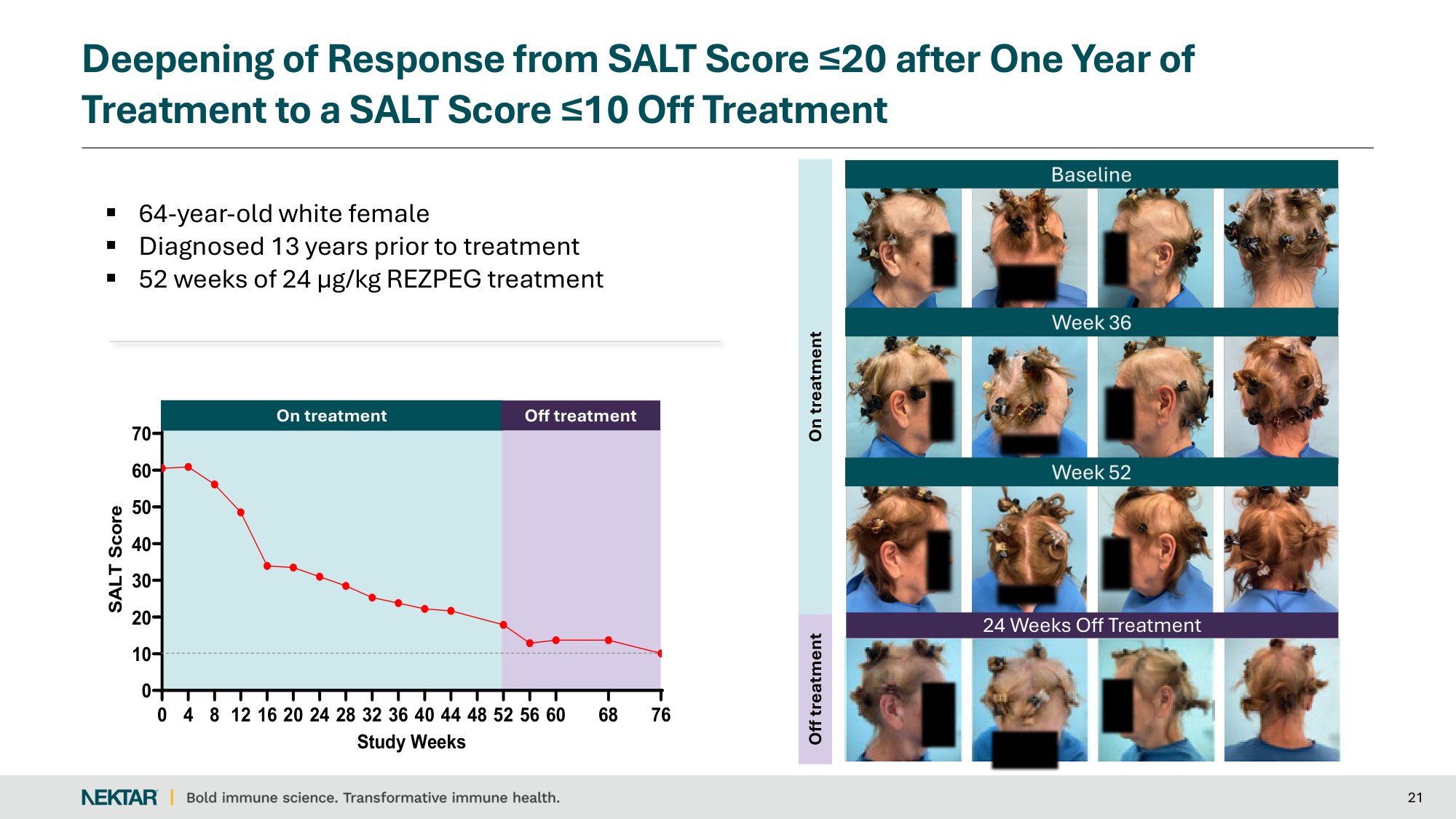
On treatment Off treatment 21 Deepening of Response from SALT Score ≤20 after One Year of Treatment to a SALT Score ≤10 Off Treatment 64-year-old white female Diagnosed 13 years prior to treatment 52 weeks of 24 µg/kg REZPEG treatment 0 10 20 30 40 50 60 70 2660-6047 Study Weeks SALT Score 0 4 8 12 16 20 24 28 32 36 40 44 48 52 56 60 68 76 On treatment Off treatment 24 Weeks Off Treatment
Rezpegaldesleukin in Severe-to-Very-Severe Alopecia Areata Patients Key Takeaways from the Phase 2b REZOLVE-AA Study
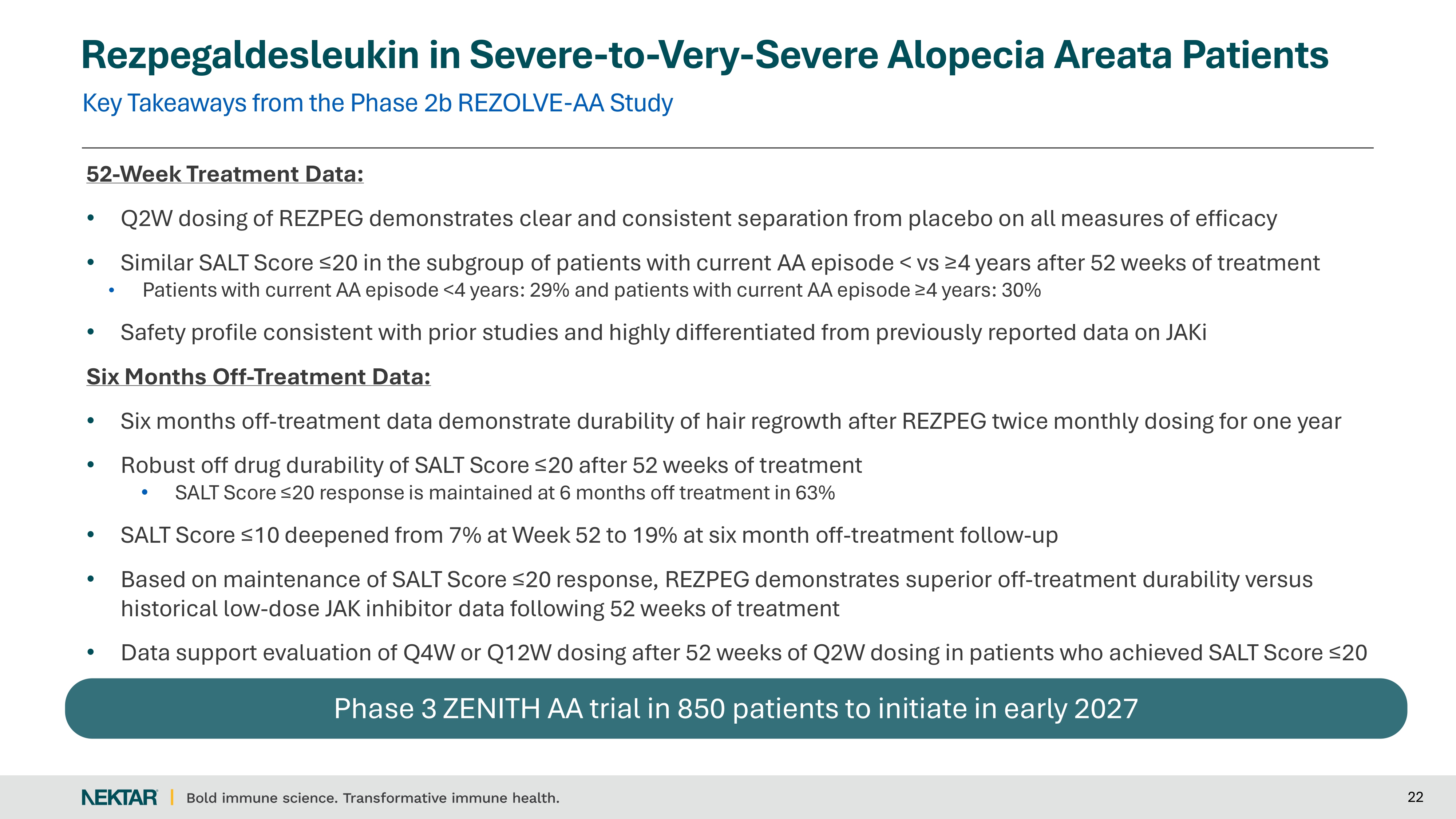
52-Week Treatment Data:. Q2W dosing of REZPEG demonstrates clear and consistent separation from placebo on all measures of efficacy . Similar SALT Score ≤20 in the subgroup of patients with current AA episode < vs ≥4 years after 52 weeks of treatment . Patients with current AA episode <4 years: 29% and patients with current AA episode ≥4 years: 30% . Safety profile consistent with prior studies and highly differentiated from previously reported data on JAKi Six Months Off-Treatment Data:. Six months off-treatment data demonstrate durability of hair regrowth after REZPEG twice monthly dosing for one year. Robust off drug durability of SALT Score ≤20 after 52 weeks of treatment . SALT Score ≤20 response is maintained at 6 months off treatment in 63% . SALT Score ≤10 deepened from 7% at Week 52 to 19% at six month off-treatment follow-up . Based on maintenance of SALT Score ≤20 response, REZPEG demonstrates superior off-treatment durability versus historical low-dose JAK inhibitor data following 52 weeks of treatment. Data support evaluation of Q4W or Q12W dosing after 52 weeks of Q2W dosing in patients who achieved SALT Score ≤20
Phase 3 ZENITH AA trial in 850 patients to initiate in early 2027
Bold immune science. Transformative immune health.
Multi-omic profiling identifies early molecular responses to rezpegaldesleukin, a novel regulatory T cell-inducing therapy, in atopic dermatitis Meredith Manson1, Flavia Manzo Margiotta1, Ester Del Duca1, Ying Zi (Jessy) Mei1, Joel Correa da Rosa1, Christine Butawo1, Manishkumar Patel1, Yeriel Estrada1, Sohail Chaudhry2, Mary Tagliaferri2, Cat Haglund2, Christie Fanton2, Jonathan Zalevsky2, Emma Guttman-Yassky1 1 Icahn School of Medicine at Mount Sinai, Dermatology, New York, United States 2 Nektar Therapeutics, San Francisco, California, United States
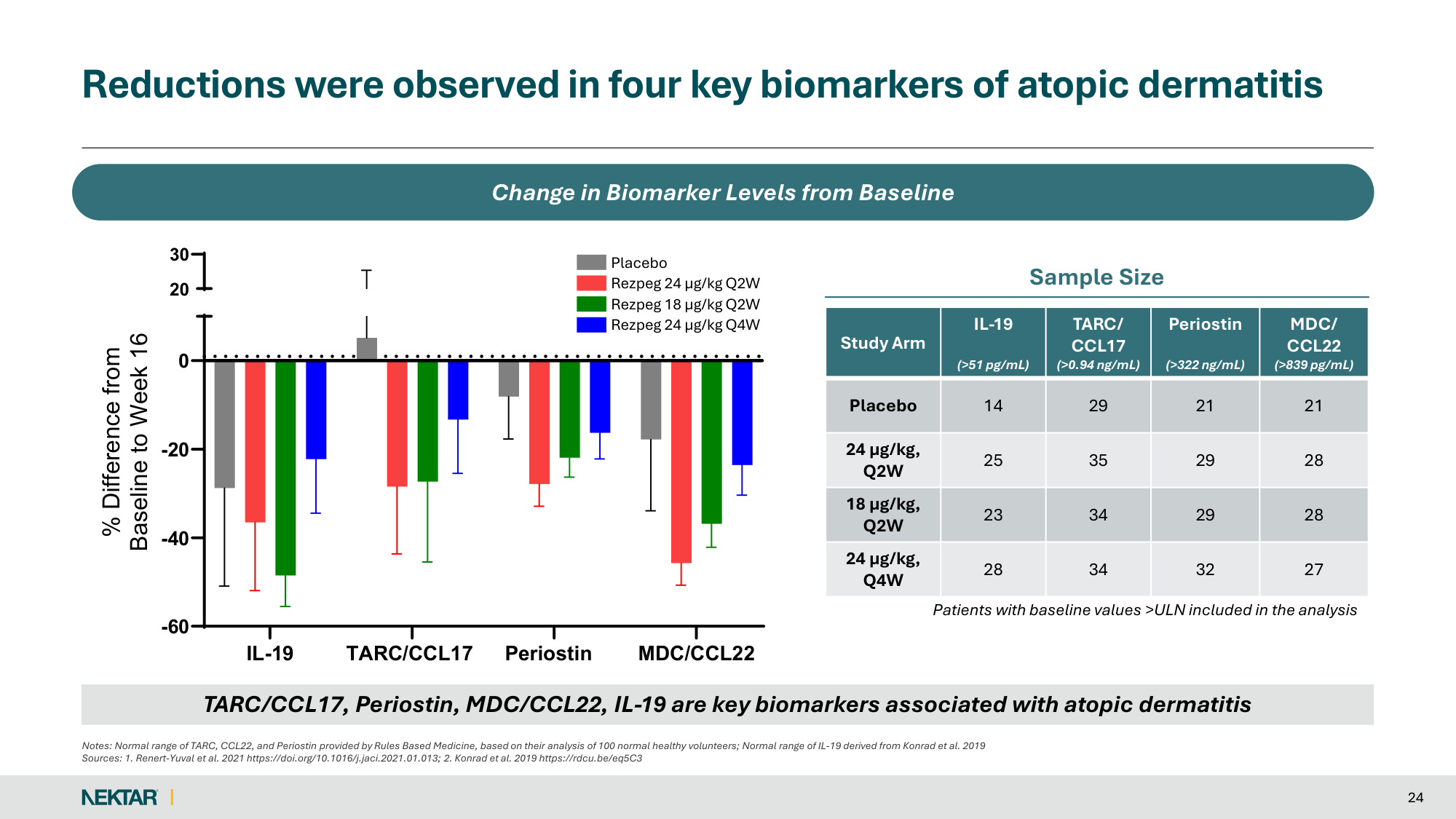
Reductions were observed in four key biomarkers of atopic dermatitis Notes: Normal range of TARC, CCL22, and Periostin provided by Rules Based Medicine, based on their analysis of 100 normal healthy volunteers; Normal range of IL-19 derived from Konrad et al. 2019 Sources: 1. Renert-Yuval et al. 2021 https://doi.org/10.1016/j.jaci.2021.01.013; 2. Konrad et al. 2019 https://rdcu.be/eq5C3 24 Change in Biomarker Levels from Baseline IL-19 TARC/CCL17 Periostin MDC/CCL22 -60 -40 -20 0 20 30 % Difference from Baseline to Week 16 Placebo Rezpeg 24 µg/kg Q2W Rezpeg 18 µg/kg Q2W Rezpeg 24 µg/kg Q4W TARC/CCL17, Periostin, MDC/CCL22, IL-19 are key biomarkers associated with atopic dermatitis Study Arm IL-19 (>51 pg/mL) TARC/ CCL17 (>0.94 ng/mL) Periostin (>322 ng/mL) MDC/ CCL22 (>839 pg/mL) Placebo 14 29 21 21 24 µg/kg, Q2W 25 35 29 28 18 µg/kg, Q2W 23 34 29 28 24 µg/kg, Q4W 28 34 32 27 Patients with baseline values >ULN included in the analysis Sample Size
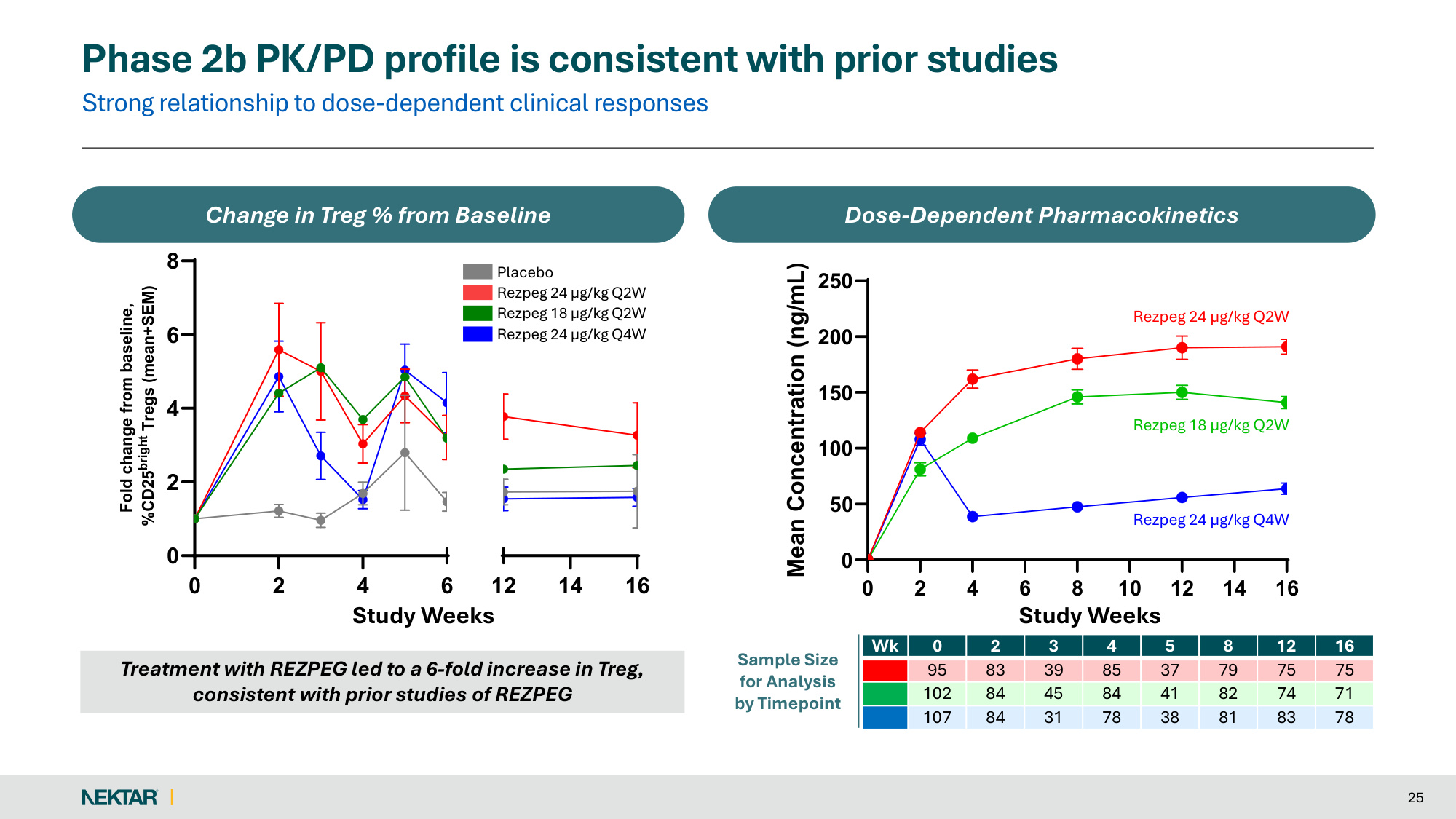
Strong relationship to dose-dependent clinical responses Phase 2b PK/PD profile is consistent with prior studies 25 Change in Treg % from Baseline Dose-Dependent Pharmacokinetics 0 2 4 6 0 2 4 6 8 12 14 16 Study Weeks Fold change from baseline, %CD25bright Tregs (mean+SEM) Placebo Rezpeg 24 µg/kg Q2W Rezpeg 18 µg/kg Q2W Rezpeg 24 µg/kg Q4W 0 2 4 6 8 10 12 14 16 0 50 100 150 200 250 Mean Concentration (ng/mL) Rezpeg 24 µg/kg Q2W Rezpeg 18 µg/kg Q2W Rezpeg 24 µg/kg Q4W Sample Size for Analysis by Timepoint Study Weeks Study Weeks Wk 0 2 3 4 5 8 12 16 95 83 39 85 37 79 75 75 102 84 45 84 41 82 74 71 107 84 31 78 38 81 83 78 Treatment with REZPEG led to a 6-fold increase in Treg, consistent with prior studies of REZPEG
30 September 2026 EADV Congress • Vienna 26
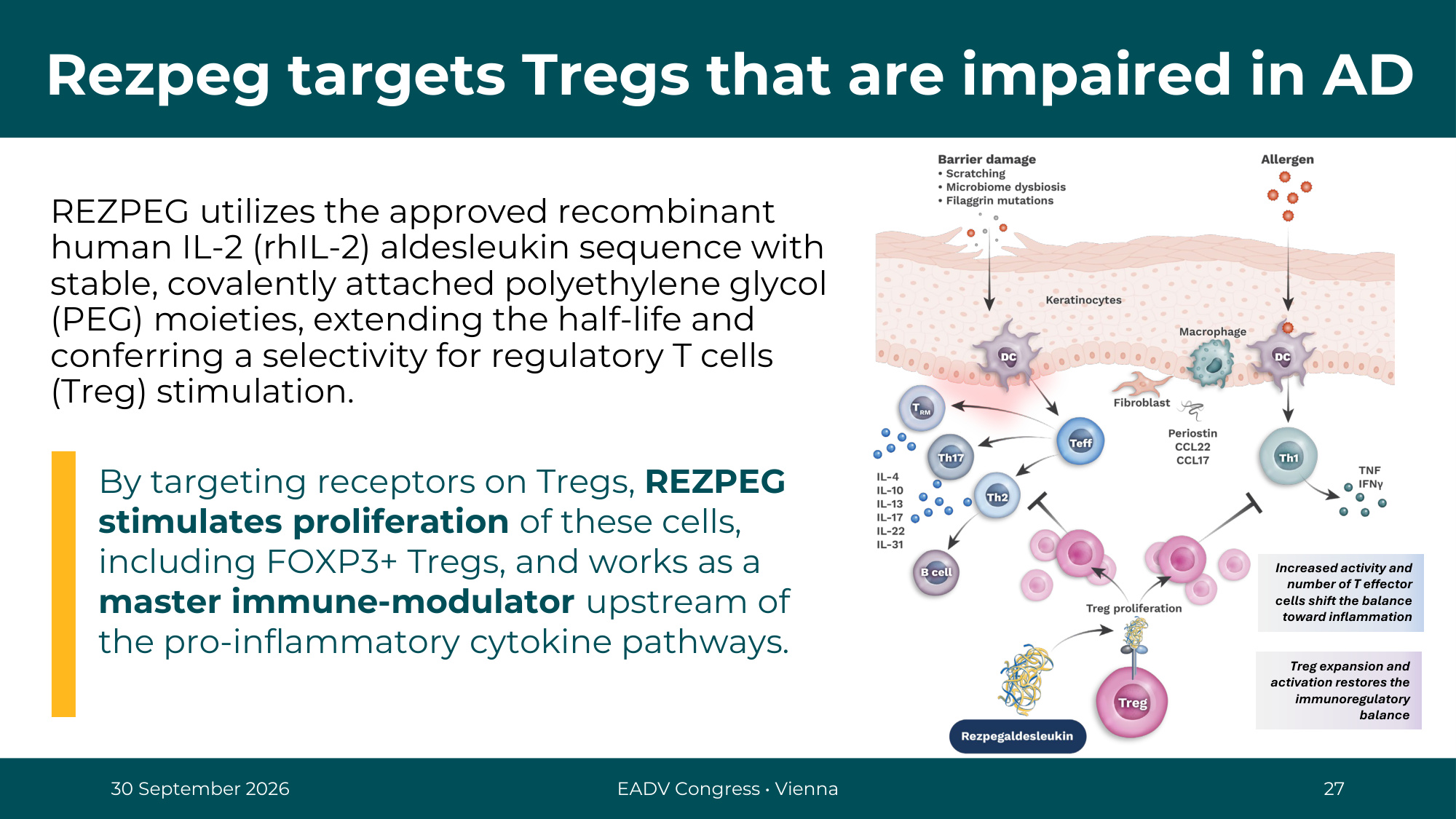
30 September 2026 EADV Congress • Vienna 27 Rezpeg targets Tregs that are impaired in AD Treg expansion and activation restores the immunoregulatory balance Increased activity and number of T effector cells shift the balance toward inflammation REZPEG utilizes the approved recombinant human IL-2 (rhIL-2) aldesleukin sequence with stable, covalently attached polyethylene glycol (PEG) moieties, extending the half-life and conferring a selectivity for regulatory T cells (Treg) stimulation. By targeting receptors on Tregs, REZPEG stimulates proliferation of these cells, including FOXP3+ Tregs, and works as a master immune-modulator upstream of the pro-inflammatory cytokine pathways.
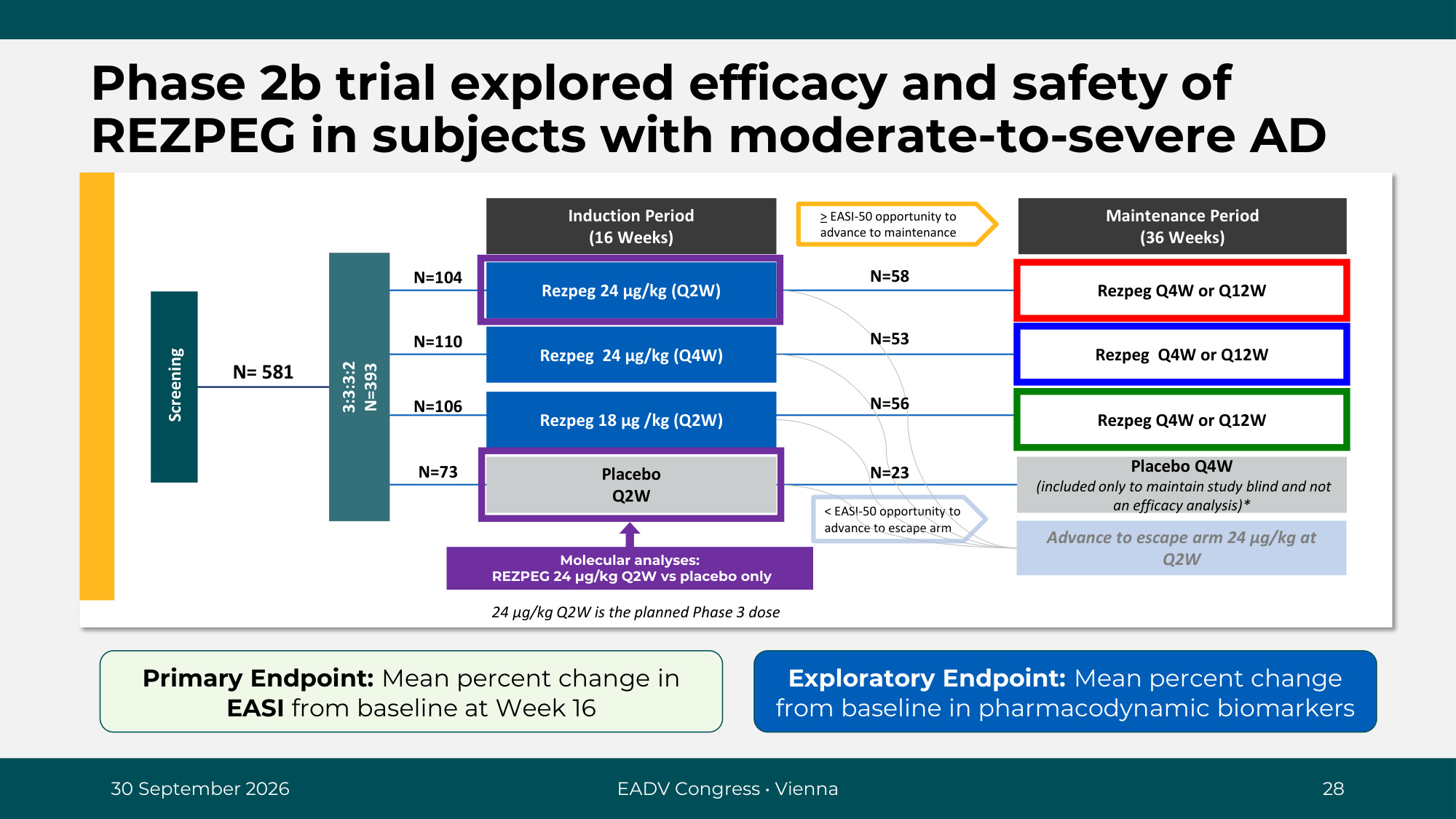
Phase 2b trial explored efficacy and safety of REZPEG in subjects with moderate-to-severe AD Induction Period (16 Weeks) Maintenance Period (36 Weeks) 3:3:3:2 N=393 Rezpeg Q4W or Q12W Rezpeg 24 µg/kg (Q2W) Rezpeg 18 µg /kg (Q2W) Placebo Q4W (included only to maintain study blind and not an efficacy analysis)* Rezpeg 24 µg/kg (Q4W) Placebo Q2W Screening N= 581 N=110 N=106 N=73 N=104 Rezpeg Q4W or Q12W Rezpeg Q4W or Q12W > EASI-50 opportunity to advance to maintenance < EASI-50 opportunity to advance to escape arm Advance to escape arm 24 µg/kg at Q2W N=58 N=53 N=56 N=23 Primary Endpoint: Mean percent change in EASI from baseline at Week 16 Exploratory Endpoint: Mean percent change from baseline in pharmacodynamic biomarkers 30 September 2026 EADV Congress • Vienna 28 Molecular analyses: REZPEG 24 µg/kg Q2W vs placebo only 24 µg/kg Q2W is the planned Phase 3 dose
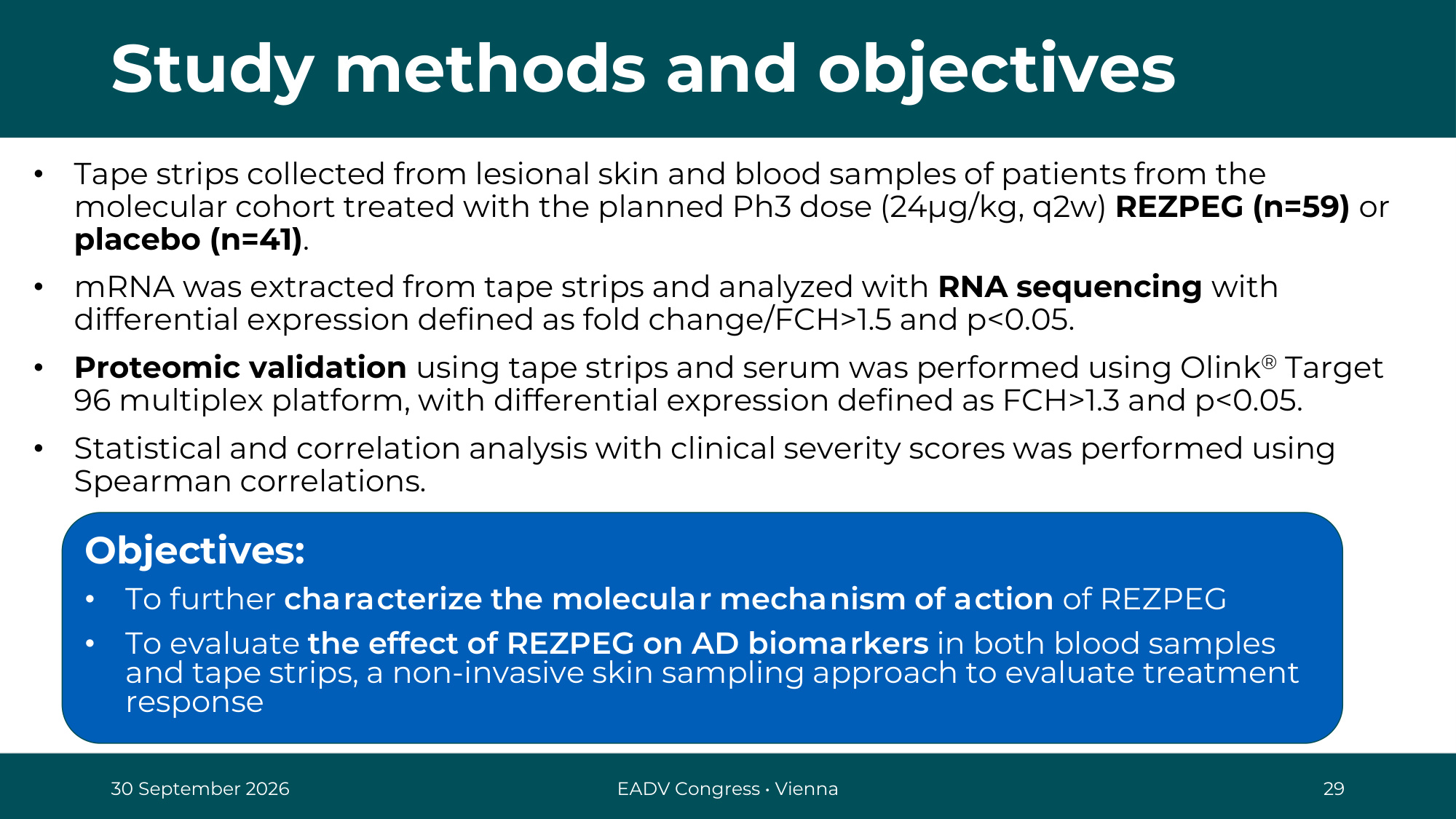
Objectives: • To further characterize the molecular mechanism of action of REZPEG • To evaluate the effect of REZPEG on AD biomarkers in both blood samples and tape strips, a non-invasive skin sampling approach to evaluate treatment response • Tape strips collected from lesional skin and blood samples of patients from the molecular cohort treated with the planned Ph3 dose (24µg/kg, q2w) REZPEG (n=59) or placebo (n=41). • mRNA was extracted from tape strips and analyzed with RNA sequencing with differential expression defined as fold change/FCH>1.5 and p<0.05. • Proteomic validation using tape strips and serum was performed using Olink® Target 96 multiplex platform, with differential expression defined as FCH>1.3 and p<0.05. • Statistical and correlation analysis with clinical severity scores was performed using Spearman correlations. Study methods and objectives 30 September 2026 EADV Congress • Vienna 29
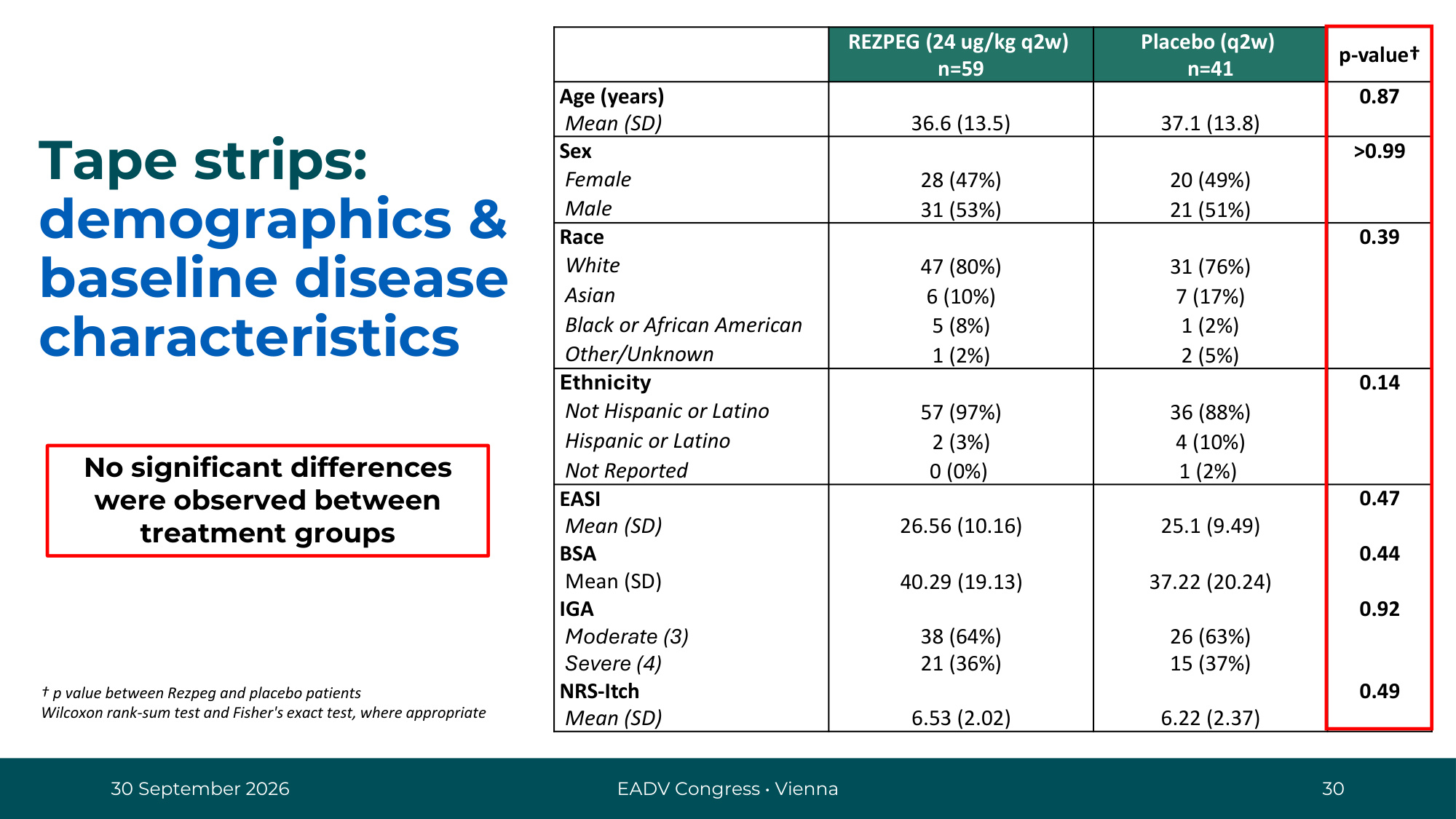
REZPEG (24 ug/kg q2w) n=59 Placebo (q2w) n=41 p-value† Age (years) 0.87 Mean (SD) 36.6 (13.5) 37.1 (13.8) Sex >0.99 Female 28 (47%) 20 (49%) Male 31 (53%) 21 (51%) Race 0.39 White 47 (80%) 31 (76%) Asian 6 (10%) 7 (17%) Black or African American 5 (8%) 1 (2%) Other/Unknown 1 (2%) 2 (5%) Ethnicity 0.14 Not Hispanic or Latino 57 (97%) 36 (88%) Hispanic or Latino 2 (3%) 4 (10%) Not Reported 0 (0%) 1 (2%) EASI 0.47 Mean (SD) 26.56 (10.16) 25.1 (9.49) BSA 0.44 Mean (SD) 40.29 (19.13) 37.22 (20.24) IGA 0.92 Moderate (3) 38 (64%) 26 (63%) Severe (4) 21 (36%) 15 (37%) NRS-Itch 0.49 Mean (SD) 6.53 (2.02) 6.22 (2.37) Tape strips: demographics & baseline disease characteristics No significant differences were observed between treatment groups † p value between Rezpeg and placebo patients Wilcoxon rank-sum test and Fisher's exact test, where appropriate 30 September 2026 EADV Congress • Vienna 30
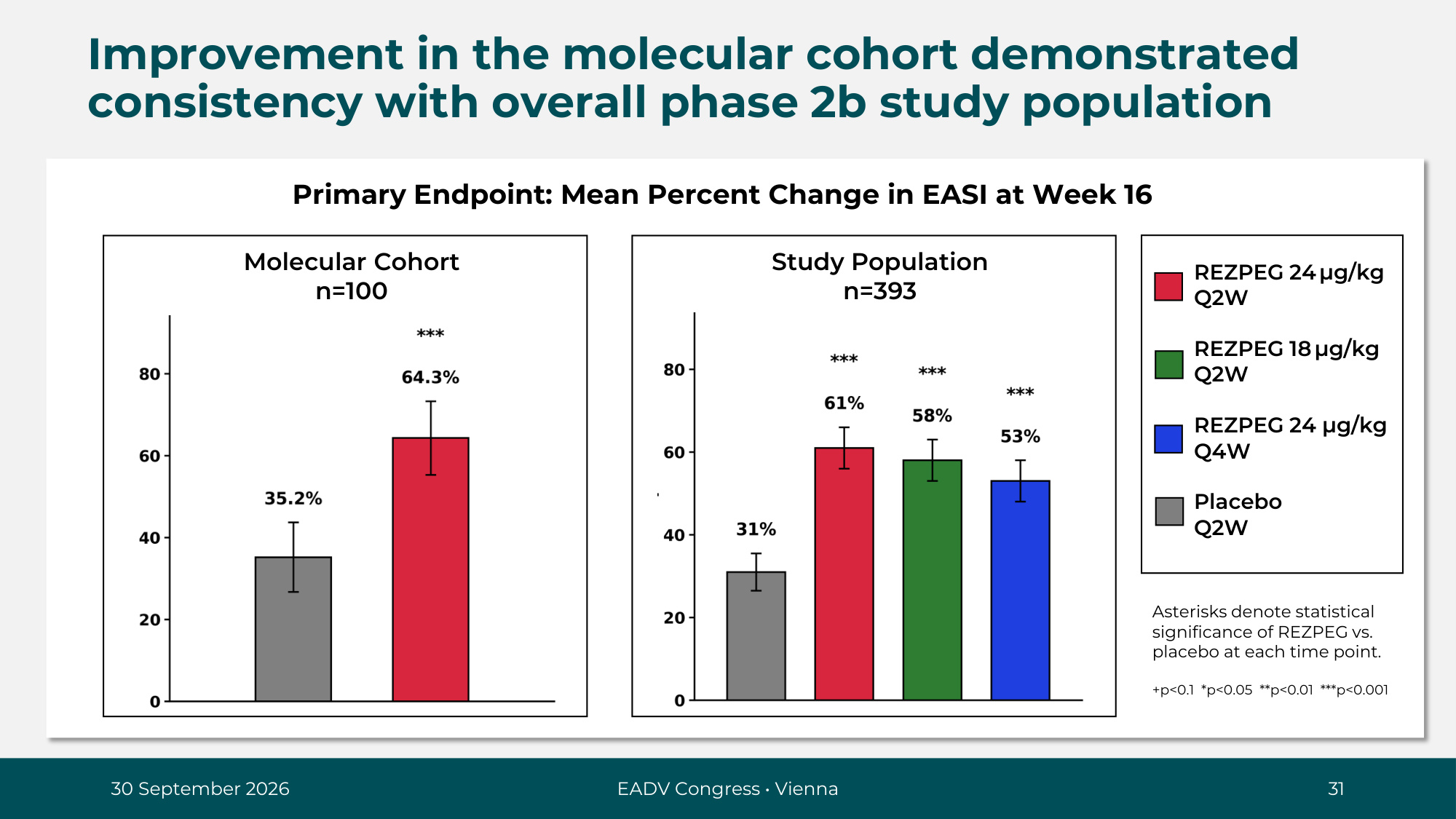
Improvement in the molecular cohort demonstrated consistency with overall phase 2b study population Primary Endpoint: Mean Percent Change in EASI at Week 16 Study Population n=393 Molecular Cohort n=100 REZPEG 24 µg/kg Q2W REZPEG 18 µg/kg Q2W REZPEG 24 µg/kg Q4W Placebo Q2W 30 September 2026 EADV Congress • Vienna 31 Asterisks denote statistical significance of REZPEG vs. placebo at each time point. +p<0.1 *p<0.05 **p<0.01 ***p<0.001
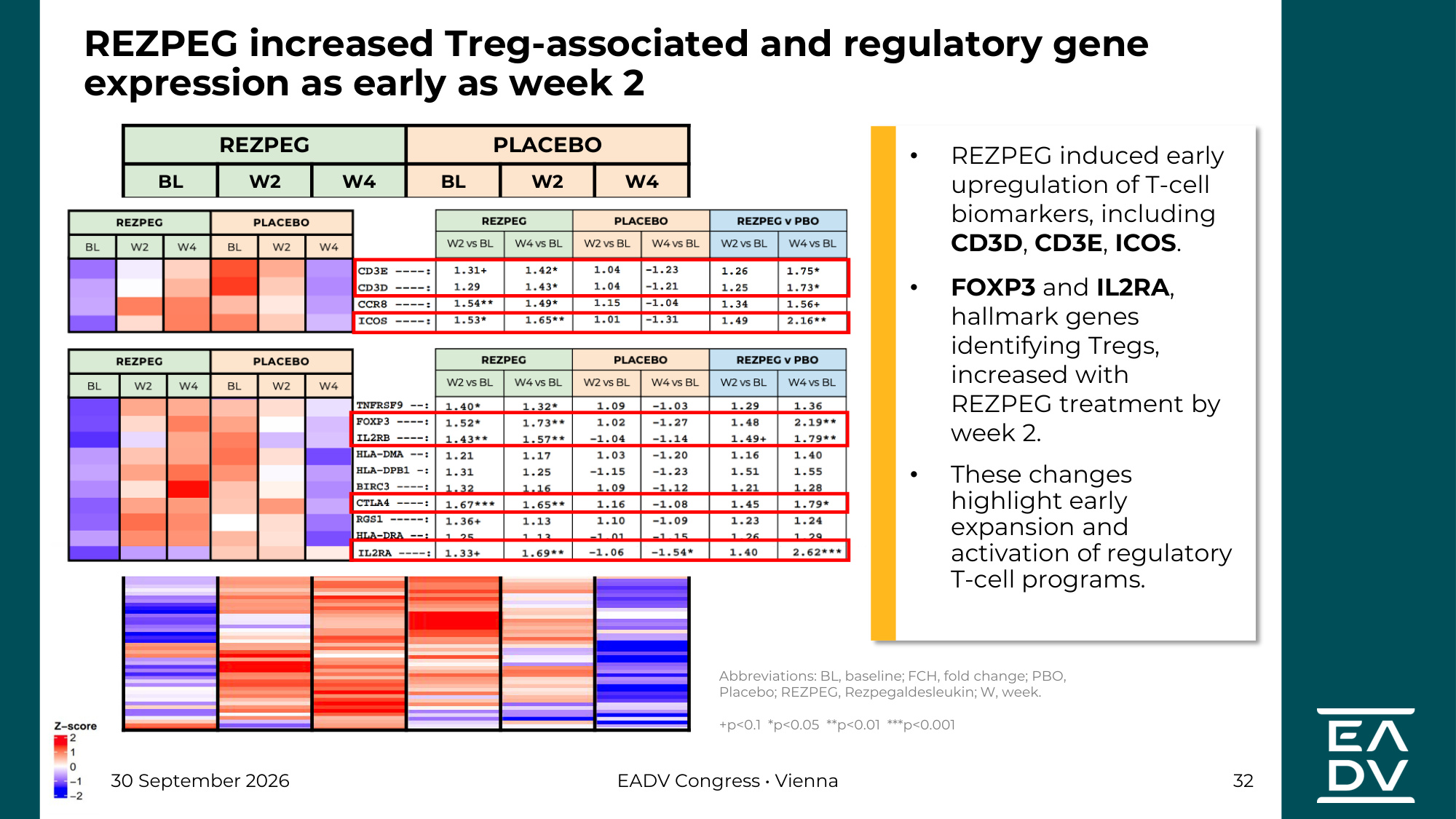
REZPEG PLACEBO BL W2 W4 BL W2 W4 REZPEG increased Treg-associated and regulatory gene expression as early as week 2 Abbreviations: BL, baseline; FCH, fold change; PBO, Placebo; REZPEG, Rezpegaldesleukin; W, week. +p<0.1 *p<0.05 **p<0.01 ***p<0.001 30 September 2026 EADV Congress • Vienna 32 • REZPEG induced early upregulation of T-cell biomarkers, including CD3D, CD3E, ICOS. • FOXP3 and IL2RA, hallmark genes identifying Tregs, increased with REZPEG treatment by week 2. • These changes highlight early expansion and activation of regulatory T-cell programs.
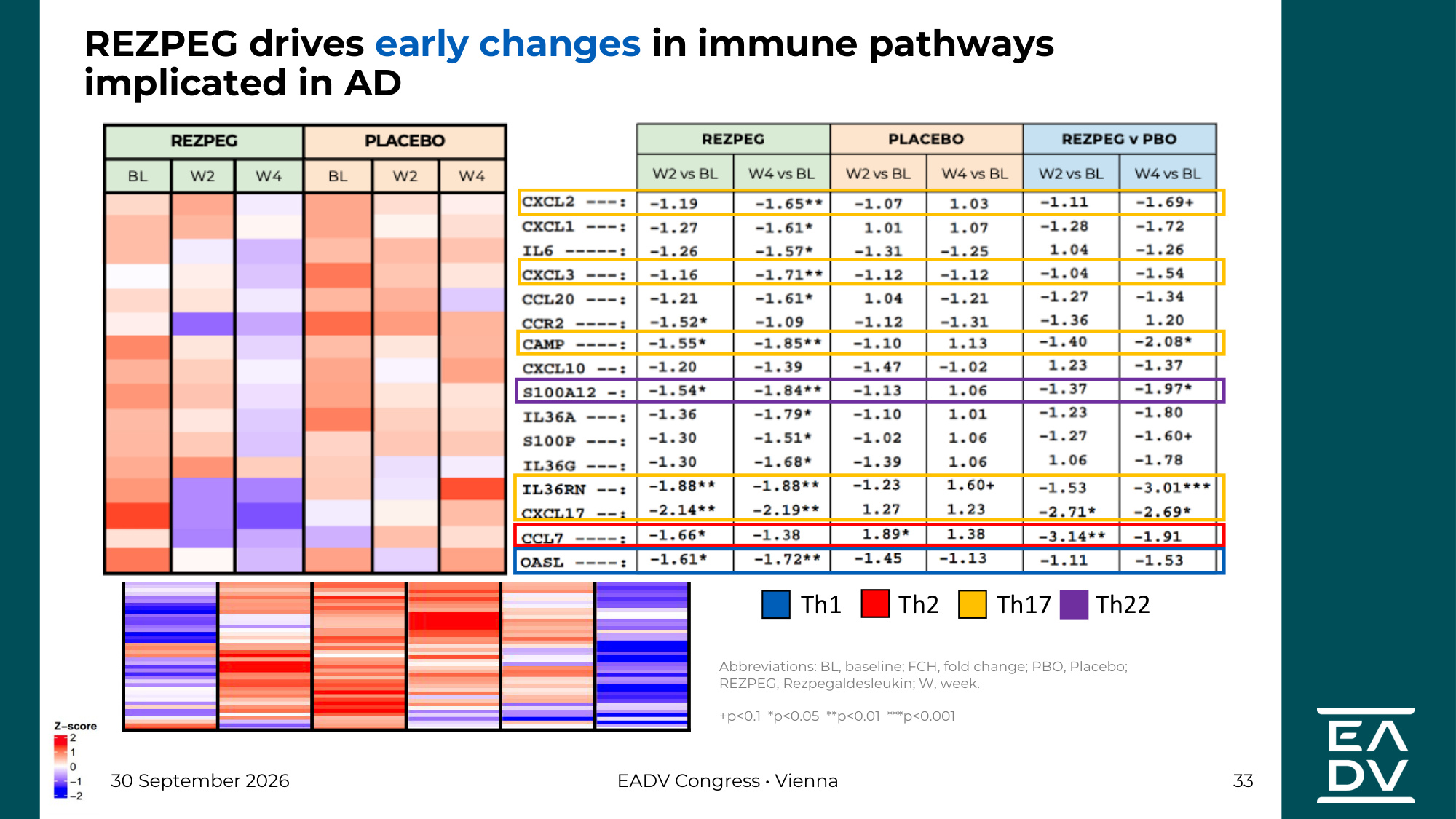
REZPEG PLACEBO BL W2 W4 BL W2 W4 Abbreviations: BL, baseline; FCH, fold change; PBO, Placebo; REZPEG, Rezpegaldesleukin; W, week. +p<0.1 *p<0.05 **p<0.01 ***p<0.001 30 September 2026 EADV Congress • Vienna 33 Th1 Th2 Th17 Th22 REZPEG drives early changes in immune pathways implicated in AD
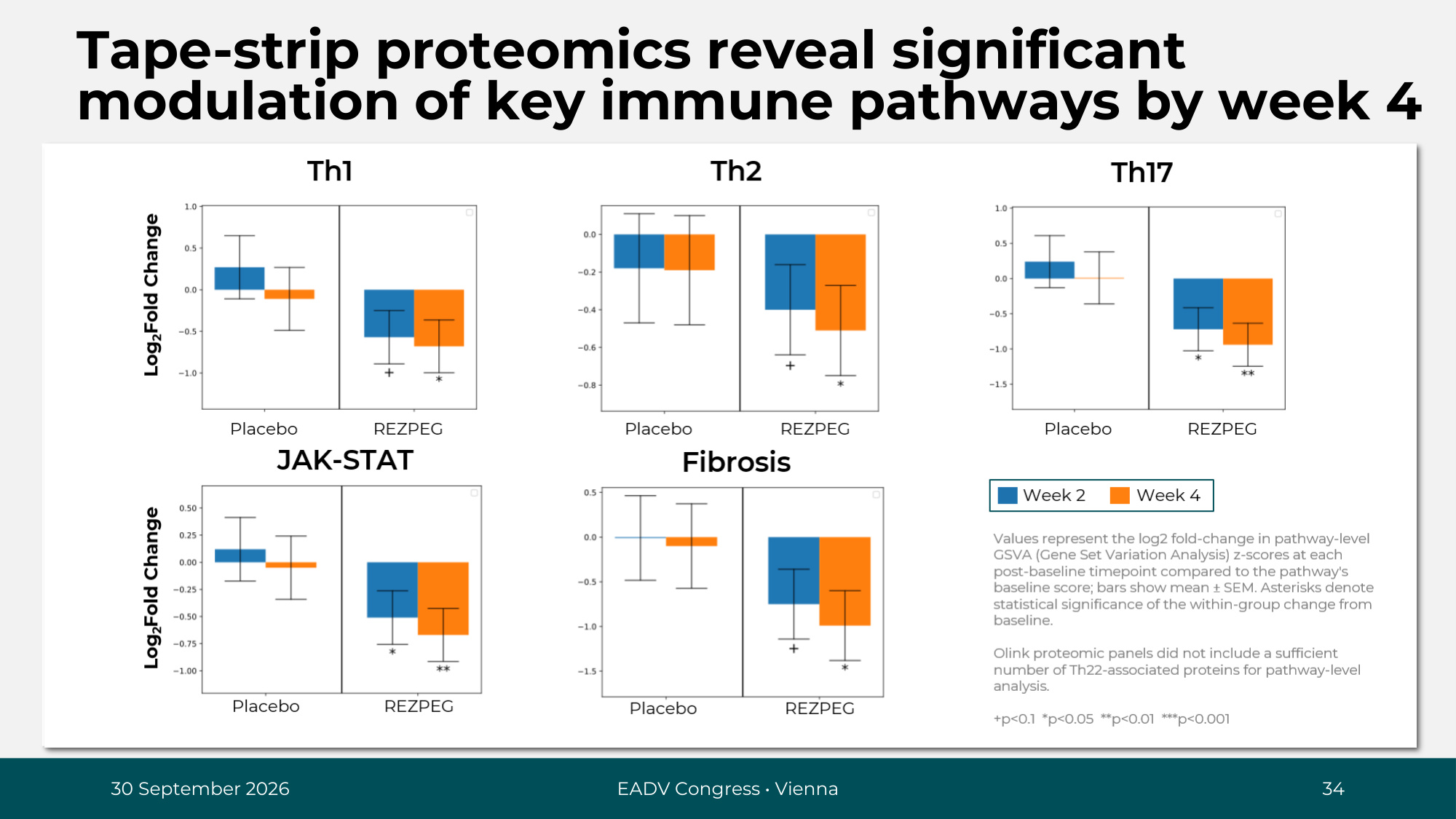
30 September 2026 EADV Congress • Vienna 34 Th1 Th2 Th17 JAK-STAT Fibrosis Values represent the log2 fold-change in pathway-level GSVA (Gene Set Variation Analysis) z-scores at each post-baseline timepoint compared to the pathway's baseline score; bars show mean ± SEM. Asterisks denote statistical significance of the within-group change from baseline. Olink proteomic panels did not include a sufficient number of Th22-associated proteins for pathway-level analysis. +p<0.1 *p<0.05 **p<0.01 ***p<0.001 Log2Fold Change Placebo REZPEG Placebo REZPEG Placebo REZPEG Placebo REZPEG Placebo REZPEG Week 2 Week 4 Tape-strip proteomics reveal significant modulation of key immune pathways by week 4 Log2Fold Change
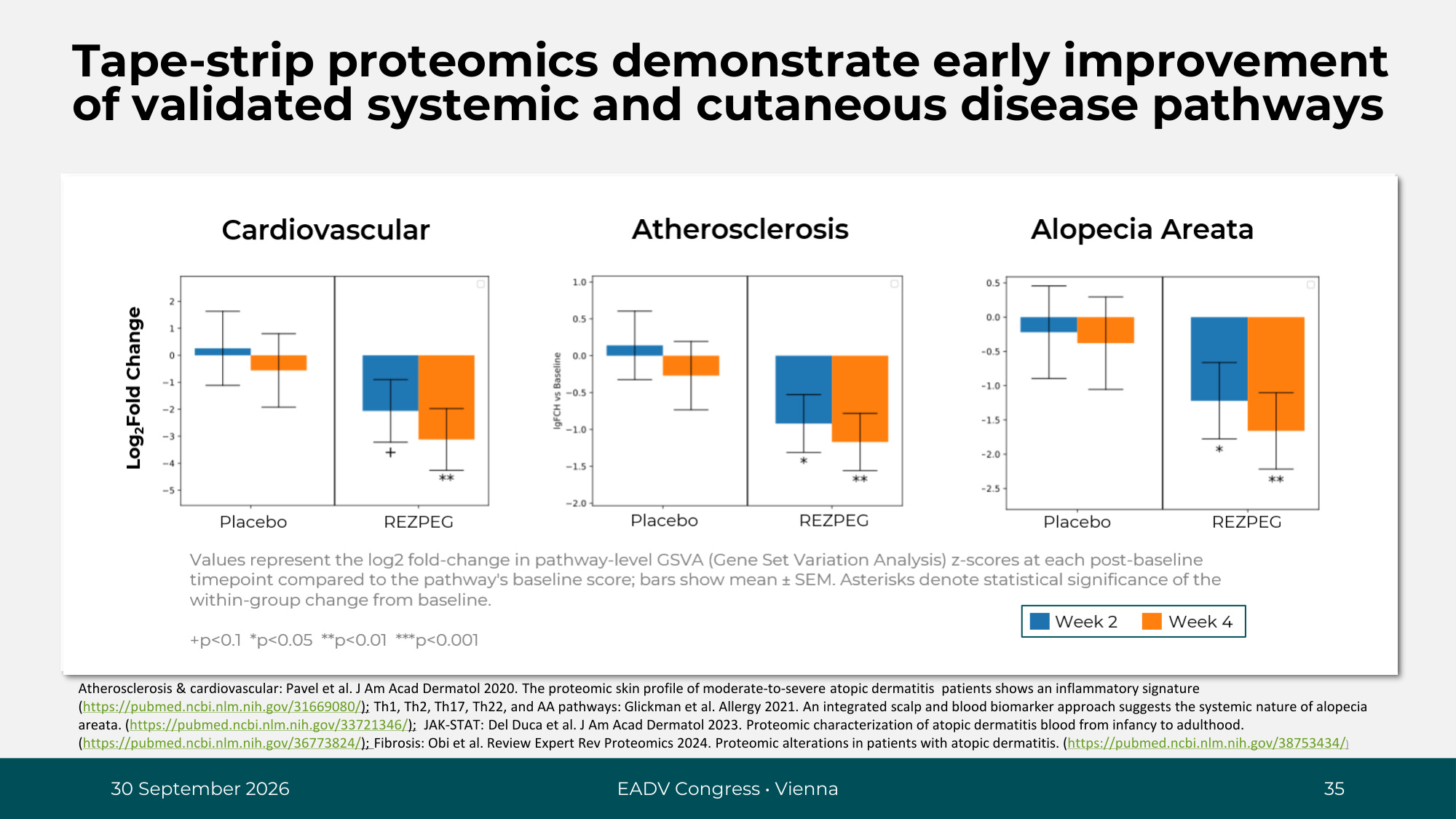
30 September 2026 EADV Congress • Vienna 35 Cardiovascular Atherosclerosis Values represent the log2 fold-change in pathway-level GSVA (Gene Set Variation Analysis) z-scores at each post-baseline timepoint compared to the pathway's baseline score; bars show mean ± SEM. Asterisks denote statistical significance of the within-group change from baseline. +p<0.1 *p<0.05 **p<0.01 ***p<0.001 Log2Fold Change Placebo REZPEG Placebo REZPEG Placebo REZPEG Alopecia Areata Week 2 Week 4 Tape-strip proteomics demonstrate early improvement of validated systemic and cutaneous disease pathways Atherosclerosis & cardiovascular: Pavel et al. J Am Acad Dermatol 2020. The proteomic skin profile of moderate-to-severe atopic dermatitis patients shows an inflammatory signature (https://pubmed.ncbi.nlm.nih.gov/31669080/); Th1, Th2, Th17, Th22, and AA pathways: Glickman et al. Allergy 2021. An integrated scalp and blood biomarker approach suggests the systemic nature of alopecia areata. (https://pubmed.ncbi.nlm.nih.gov/33721346/); JAK-STAT: Del Duca et al. J Am Acad Dermatol 2023. Proteomic characterization of atopic dermatitis blood from infancy to adulthood. (https://pubmed.ncbi.nlm.nih.gov/36773824/); Fibrosis: Obi et al. Review Expert Rev Proteomics 2024. Proteomic alterations in patients with atopic dermatitis. (https://pubmed.ncbi.nlm.nih.gov/38753434/)
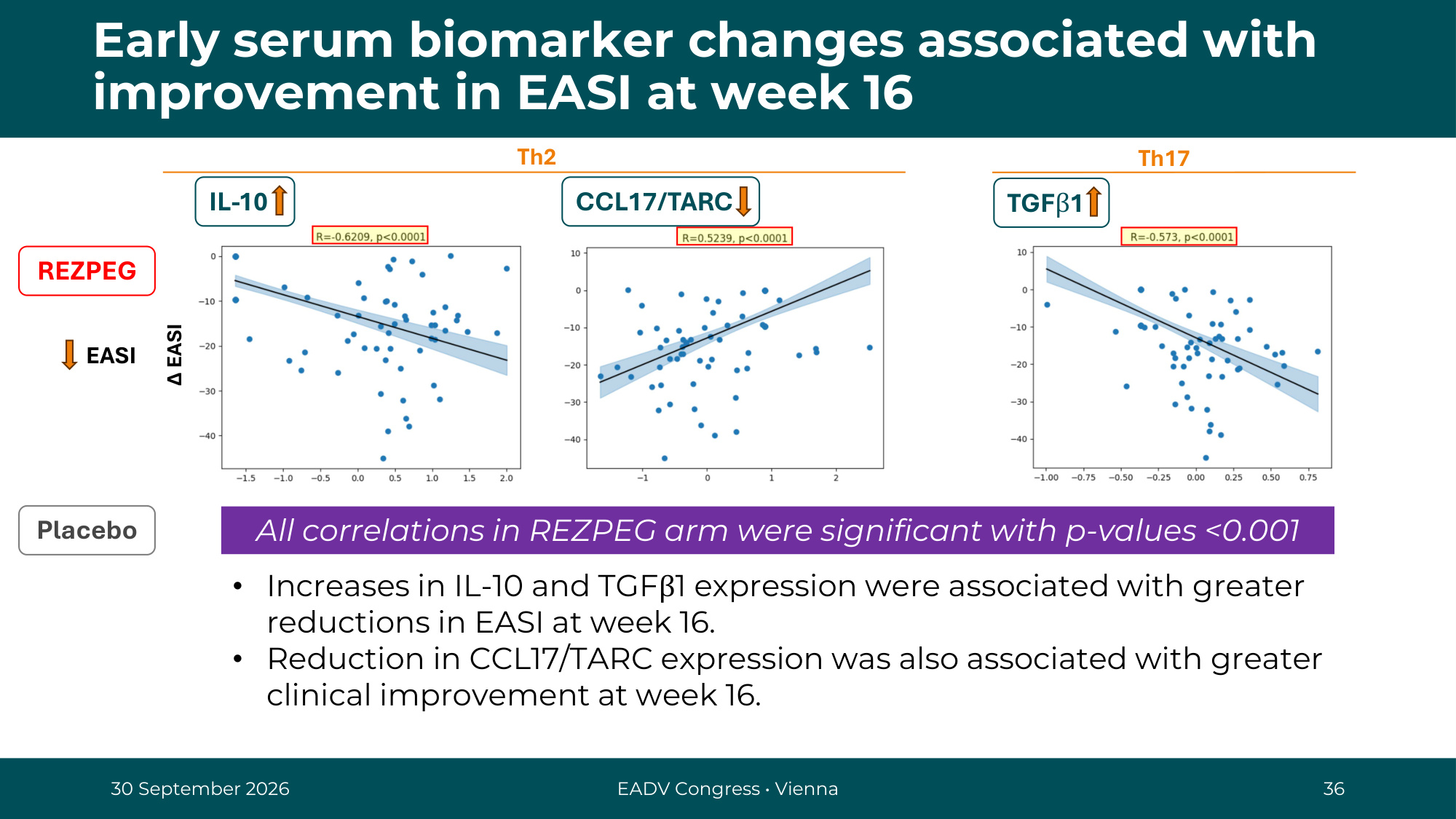
∆ EASI Early serum biomarker changes associated with improvement in EASI at week 16 30 September 2026 EADV Congress • Vienna 36 Th2 Th17 EASI ∆ EASI lg(FCH) lg(FCH) lg(FCH) IL-10 CCL17/TARC TGFβ1 REZPEG Placebo All correlations in REZPEG arm were significant with p-values <0.001 • Increases in IL-10 and TGFβ1 expression were associated with greater reductions in EASI at week 16. • Reduction in CCL17/TARC expression was also associated with greater clinical improvement at week 16.
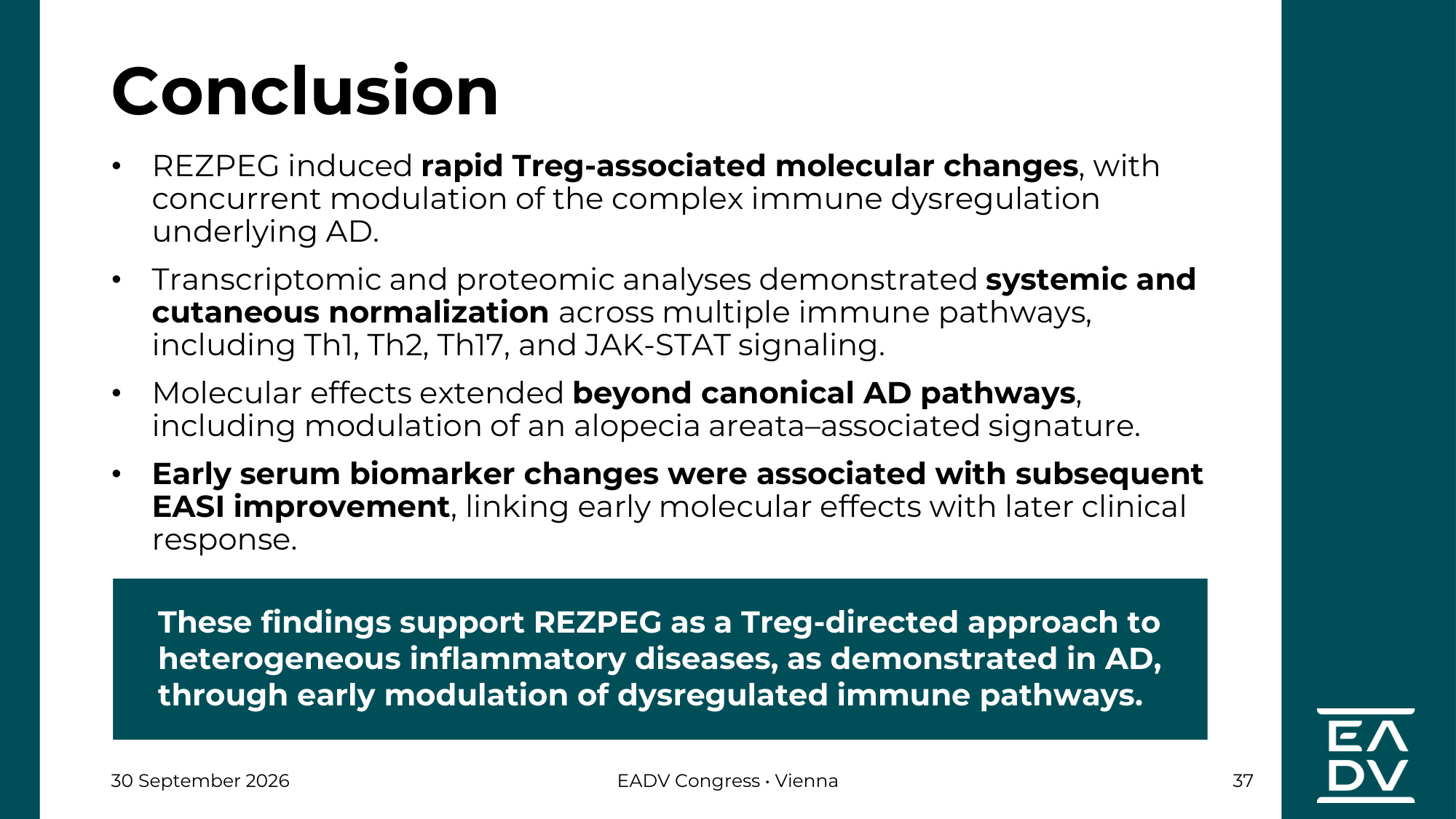
30 September 2026 EADV Congress • Vienna 37 • REZPEG induced rapid Treg-associated molecular changes, with concurrent modulation of the complex immune dysregulation underlying AD. • Transcriptomic and proteomic analyses demonstrated systemic and cutaneous normalization across multiple immune pathways, including Th1, Th2, Th17, and JAK-STAT signaling. • Molecular effects extended beyond canonical AD pathways, including modulation of an alopecia areata–associated signature. • Early serum biomarker changes were associated with subsequent EASI improvement, linking early molecular effects with later clinical response. Conclusion These findings support REZPEG as a Treg-directed approach to heterogeneous inflammatory diseases, as demonstrated in AD, through early modulation of dysregulated immune pathways.

Jonathan Zalevsky, Ph.D. Chief Research & Development Officer of Nektar Therapeutics Mary Tagliaferri, M.D. Chief Medical Officer of Nektar Therapeutics Benjamin N. Ungar, M.D. Assistant Professor, Waldman Department of Dermatology, Icahn School of Medicine at Mount Sinai Director of the Alopecia Center of Excellence and as Director of the Rosacea & Seborrheic Dermatitis Clinic Today's Speakers