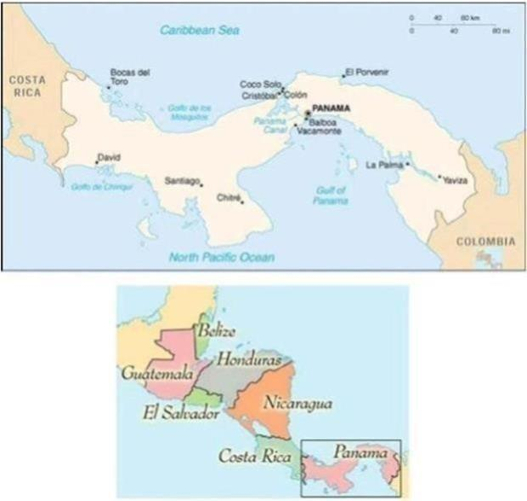
EXHIBIT D
Republic of Panama
This description of the Republic of Panama is dated as of September 30, 2026 and appears as Exhibit D to the Republic of Panama’s Annual Report on Form 18-K to the U.S. Securities and Exchange Commission for the fiscal year ended December 31, 2025.
TABLE OF CONTENTS
| Page | ||||
| PRESENTATION OF ECONOMIC AND OTHER INFORMATION |
D-3 | |||
| RECENT DEVELOPMENTS |
D-4 | |||
| THE REPUBLIC OF PANAMA |
D-26 | |||
| THE PANAMANIAN ECONOMY |
D-31 | |||
| STRUCTURE OF THE PANAMANIAN ECONOMY |
D-43 | |||
| THE PANAMA CANAL |
D-51 | |||
| THE COLÓN FREE ZONE |
D-65 | |||
| EMPLOYMENT AND LABOR |
D-69 | |||
| PUBLIC FINANCE |
D-77 | |||
| FINANCIAL SYSTEM |
D-84 | |||
| FOREIGN TRADE AND BALANCE OF PAYMENTS |
D-97 | |||
| PUBLIC SECTOR DEBT |
D-111 | |||
| TABLES AND SUPPLEMENTARY INFORMATION |
D-124 | |||
The fiscal year of the Government of the Republic of Panama (the “Government”) ends on December 31. The twelve-month period ended December 31, 2025 is referred to in this description of the Republic of Panama as “2025” and other years are referred to in a similar manner unless otherwise indicated. All references to “U.S.$”, “$” or “dollars” are to United States Dollars.
Totals in certain tables in this description of the Republic of Panama may differ from the sum of the respective individual items in such tables due to rounding.
D-1
INDEX OF TABLES
| Page | ||||
| TABLE NO. 1 Selected Panamanian Economic Indicators |
D-24 | |||
| TABLE NO. 2 Inflation (percentage change from previous period) |
D-40 | |||
| TABLE NO. 3 Gross Domestic Product |
D-40 | |||
| TABLE NO. 4 Sectoral Origin of Gross Domestic Product (in millions of dollars) |
D-41 | |||
| TABLE NO. 5 Percentage Change from Prior Year for Sectoral Origin of Gross Domestic Product (percentage change) |
D-41 | |||
| TABLE NO. 6 Sectoral Origin of Gross Domestic Product (as percentage of GDP) |
D-42 | |||
| TABLE NO. 7 Selected State-Owned Enterprises 2025 Financial Statistics (in millions of dollars) |
D-45 | |||
| TABLE NO. 8 Panama Canal Principal Statistics |
D-52 | |||
| TABLE NO. 9 Panama Canal Direct Contributions to Central Government |
D-57 | |||
| TABLE NO. 10 Panama Canal Contributions to Gross Domestic Product |
D-58 | |||
| TABLE NO. 11 Labor Force and Employment |
D-70 | |||
| TABLE NO. 12 Average Real Monthly Wages |
D-72 | |||
| TABLE NO. 13 Budgeted Expenditures of the Central Government by Function (in millions) |
D-78 | |||
| TABLE NO. 14 Fiscal Performance—Central Government |
D-80 | |||
| TABLE NO. 15 Fiscal Performance—Consolidated Non-Financial Public Sector |
D-81 | |||
| TABLE NO. 16 Central Government Operations (in millions of dollars) |
D-81 | |||
| TABLE NO. 17 Consolidated Non-Financial Public Sector Operations (in millions of dollars) |
D-82 | |||
| TABLE NO. 18 International Reserves (in millions of dollars) |
D-83 | |||
| TABLE NO. 19 Largest Banking Institutions (assets in millions of dollars) |
D-84 | |||
| TABLE NO. 20 The Banking Sector (in millions of dollars) |
D-85 | |||
| TABLE NO. 21 Banco Nacional de Panamá Balance Sheet (in millions of dollars) |
D-94 | |||
| TABLE NO. 22 Composition of Merchandise Exports, F.O.B. (in millions of dollars) |
D-99 | |||
| TABLE NO. 23 Composition of Merchandise Imports, C.I.F. (in millions of dollars) |
D-100 | |||
| TABLE NO. 24 Direction of Merchandise Trade (as percentage of total) |
D-101 | |||
| TABLE NO. 25 Foreign Direct Investment in Panama by Investor Residence |
D-104 | |||
| TABLE NO. 26 Foreign Direct Investment in Panama by Category of Economic Activity |
D-107 | |||
| TABLE NO. 27 Balance of Payments (in millions of dollars) |
D-109 | |||
| TABLE NO. 28 Public Sector Internal Debt (in millions of dollars) |
D-114 | |||
| TABLE NO. 29 Public Sector External Debt (in millions of dollars) |
D-116 | |||
| TABLE NO. 30 Public Sector External Debt Amortization (in millions of dollars) |
D-116 | |||
| TABLE NO. 31 External Direct Debt of the Republic, Central Government |
D-124 | |||
| TABLE NO. 32 External Debt Guaranteed by the Republic Decentralized Institutions |
D-125 | |||
| TABLE NO. 33 Internal Funded Debt Securities of the Republic |
D-125 | |||
D-2
PRESENTATION OF ECONOMIC AND OTHER INFORMATION
The Office of the Comptroller General has updated the base year used for the System of National Accounts from 2007 to 2018. International best practices call for updating the constant GDP base year at least every 10 years to reflect structural changes in production, consumption and prices, and to ensure that the National Accounts provide an accurate depiction of the economy given its dynamism.
Government financial statistics and related tables are presented in accordance with the IMF Government Finance Statistics Manual 2014 (“GFSM2014”). Real sector statistics are presented in accordance with the UN 2008 System of National Accounts (“SNA 2008”). Balance of payments statistics for 2021 to 2025 were calculated pursuant to the Sixth Edition of the Balance of Payments and International Investment Position Manual published by the International Monetary Fund (“IMF”).
Panama is a member of the IMF. Under Article IV of the IMF’s Articles of Agreement, the IMF holds bilateral discussions with its member countries, usually every year, to assess their economic health. See “Public Sector Debt—External Debt—International Financial Institutions—IMF.”
Open unemployment figures are no longer presented. Unemployment figures are now used.
D-3
RECENT DEVELOPMENTS
For recent developments since December 31, 2025, see the material below.
Republic of Panama
Immigration
On March 7, 2026, Panama joined the “Shield of the Americas” initiative, a United States-led regional alliance that spans 12 countries and establishes a coordinated framework to enhance security cooperation, intelligence sharing, and joint operational strategies in combating drug trafficking, transnational criminal organizations, and irregular migration. President José Raúl Mulino attended the ceremony held in Miami alongside other regional leaders.
On May 27, 2026, the U.S. Embassy in Panama announced a U.S.$3 million partnership with the Government to support the environmental restoration of the Darién region, an area heavily affected by the mass transit of irregular migrants in recent years. The initiative, developed in coordination with Panama’s Ministry of Environment and local communities, includes the removal of waste and debris, improvements in wastewater management, and actions to protect public health and enhance the quality of life in the area. The announcement was made during the graduation of 285 border agents and 39 migration inspectors, highlighting that these efforts are part of broader bilateral cooperation to strengthen border security and mitigate the impact of irregular migration.
During the seven-month period ended July 31, 2026, a total of 320 migrants crossed the Darién Gap from Colombia into Panama, representing a decrease of approximately 89% compared to the seven-month period in 2025, where approximately 2,934 migrants crossed the Darién Gap. Forty-nine minors were reported in migration reception centers along the Panamanian border, compared to 474 minors during the same seven-month period in 2025. The countries of origin with the highest number of migrants included Venezuela (51%), Ecuador (16%), Colombia (15%) and Ghana (4%). The significant decline reflects a substantial reduction in irregular migration flows through the Darién region.
On June 17, 2026, the U.S. Embassy in Panama announced U.S.$5 million in assistance to the Ministry of Public Security (MINSEG), including U.S.$2 million to reinforce protection of the Panama Canal and interrupt and dismantle marine operations of transnational criminal organizations, and U.S.$3 million to support migration management, strengthen operational capabilities in the Darién region and help deter irregular migration flows toward the United States. The assistance forms part of ongoing bilateral cooperation between Panama and the United States on border security, migration management and the fight against organized crime.
Social and Economic Situation
On January 8, 2026, Chiquita Panama announced the start of its first banana production after reactivating its operations, reaching around 30,000 boxes destined for the domestic market. On January 22, 2026, the Minister of Labor and Labor Development, Jackeline Muñoz, reported that, following the reactivation of the banana sector in the province of Bocas del Toro, 1,600 employment contracts remained in force and 967 workers had been registered with the Ministry of Labor and Labor Development.
On March 31, 2026, the Government issued Cabinet Resolution No. 24-26, authorizing the Ministry of Economy and Finance to implement a temporary fuel price stabilization program applicable to public passenger transportation, freight transportation, agricultural machinery, and artisanal fishing activities. Under this measure, the price of 91-octane gasoline was set at U.S.$3.33 per gallon (U.S.$0.88 per liter) and the price of low-sulfur diesel was set at U.S.$3.41 per gallon (U.S.$0.90 per liter) for a period of up to ten months and with a maximum aggregate allocation of U.S.$100 million. The program is intended to mitigate the effects of increased international fuel prices on domestic transportation costs and essential economic activities and will be subject to inter-institutional oversight; its duration may be shortened if global energy market conditions improve.
D-4
On May 6, 2026, Panama’s Ministry of Commerce and Industries reported that the reactivation of the banana sector in Bocas del Toro had resulted in the recovery of more than 5,000 jobs (5,065 workers rehired) and the reestablishment of operations by Chiquita Panama, including the reactivation of approximately 5,000 hectares of cultivation and the reopening of packing facilities operating at increased capacity. The Government highlighted that these results stem from the implementation of the 2025 Memorandum of Understanding. Exports of bananas began to show signs of recovery, after declining from 17.5% to 7.5% of total exports in 2025, signaling a gradual normalization of the banana sector and its contribution to the national economy.
On July 9, 2026, President Mulino toured Chiquita Panama’s operations in Bocas del Toro, where the company announced the resumption of banana exports to European and United States markets. Chiquita projects exports of approximately 11 million boxes during 2026 and approximately 15 million boxes in 2027, which would restore export volumes to levels recorded before the suspension of its operations. As of that date, approximately 5,000 hectares were in production across approximately 20 plantation zones, supporting approximately 6,000 direct jobs, with weekly processing of approximately 350,000 boxes and 17 farms operating under the company’s new business model. The company reported investments of approximately U.S.$30 million pursuant to its agreements with the Government and monthly payroll disbursements exceeding U.S.$5 million, inclusive of social security contributions. Effective June 1, 2026, packing facilities extended operations from five to six days per week on two daily shifts.
Recent Government Actions
Panama Ports Company — Concession Contract
On January 29, 2026, the Plenary of the Supreme Court declared unconstitutional Law No. 5 of January 16, 1997, and its addenda, which set forth the Government’s concession contract with Panama Ports Company S.A. (“PPC”) relating to the Ports of Balboa and Cristobal.
The ruling became final on February 23, 2026 and is not subject to appeal. Pursuant to Executive Decree No. 23 of 2026, the Government ordered the occupation of both terminals by the Panama Maritime Authority for reasons of urgent social interest, and assumed administrative and operational control of the port assets to ensure operational continuity pending the award of a new concession, expected within 18 months.
Under transitional arrangements of up to 18 months, a subsidiary of A.P. Moller-Maersk (APM Terminals) was designated to operate the Balboa terminal on the Pacific side, and a subsidiary of Mediterranean Shipping Company (Terminal Investment Limited) was designated to operate the Cristóbal terminal on the Atlantic side. The Government expects that the transition will proceed without layoffs while a new long-term concession framework is developed.
On February 3, 2026, PPC initiated an arbitration against Panama, within the framework of the port concession contract and in accordance with the Arbitration Rules of the International Chamber of Commerce. The arbitration seeks an affirmation of the concession contract and money damages. PPC later announced that it had expanded its claims in the arbitration against Panama to more than U.S.$2 billion, alleging damages arising from the Government’s takeover of the Balboa and Cristóbal ports, the occupation of facilities, access to company assets and documentation, and other actions that PPC considers unlawful and in breach of its contractual rights.
On May 15, 2026, the ICC tribunal issued a decision excluding CK Hutchison Holdings Limited, PPC’s parent company, from the arbitration, leaving Panama Ports Company, S.A. and the Republic of Panama as parties. The arbitration proceeding remains pending.
On August 20, 2026, CK Hutchison Holdings Limited initiated an arbitration proceeding against the Republic of Panama, alleging breaches of an investment protection treaty and damage to its port investments in the country, and claiming compensation exceeding U.S.$1.5 billion.
Recent Political Developments
In 2016, Panama began investigating alleged money laundering by construction company Odebrecht, creating a specialized prosecutor’s office, and ultimately charging 25 Panamanians with the crimes of money laundering and corruption of public servants. On January 12, 2026, hearings in the Odebrecht case began. Among the more than twenty defendants were former President Ricardo Martinelli, former Housing Minister and 2014 presidential candidate José Domingo Arias, and former ministers Demetrio Papadimitriu, Federico Suárez, and Frank De Lima.
D-5
Former Public Works Minister Jaime Ford, also charged in connection with the Odebrecht investigation, was subject to a separate proceeding before the Supreme Court of Justice due to his status member of the Central American Parliament (PARLACEN).
The Odebrecht trial concluded on February 27, 2026, after 24 days of hearings. The Anti-Corruption Prosecutor’s Office requested convictions for money laundering against 16 of the defendants — including former President Martinelli and five former ministers — and acquittal for five, as well as economic compensation to the Government. Defense counsel requested acquittal of their respective clients and raised procedural objections, including prescription and lack of competence, which the Court indicated would be resolved in the judgment. The judgment has not yet been issued.
On January 15, 2026, the media reported that the Superior Court for the Settlement of Criminal Cases overturned the acquittal of and sentenced former Minister of Public Works Federico Pepe Suárez to eight years in prison for the crime of aggravated embezzlement in a case related to the expansion of the Arraiján-La Chorrera highway. The case arose from alleged irregularities in the contract for the design, construction, rehabilitation, and expansion of the Arraiján-La Chorrera highway, which was carried out between 2010 and 2017. In addition to the prison sentence, the Court imposed on Mr. Suárez a ban from holding public office for eight years after the completion of his prison term.
On January 26, 2026, former Vice President José Gabriel Carrizo Jaén was arrested upon his arrival at Tocumen International Airport, in compliance with a formal arrest and detention order issued by the Anti-Corruption Prosecutor’s Office, within the framework of an investigation for the alleged commission of crimes against public administration in the form of unjust enrichment. Two days later, on January 28, 2026, Judge Oris Medina charged Mr. Carrizo with the crime of unjust enrichment and imposed precautionary measures of house arrest and prohibition from leaving the country.
The investigation into Mr. Carrizo concerns alleged unjust enrichment of approximately U.S.$1.9 million, arising from a report submitted to the Public Ministry by the Comptroller General. According to the report, issued by the National Directorate of Investigations and Forensic Auditing, irregularities were detected in Mr. Carrizo’s assets corresponding to the period during which he simultaneously held the positions of Vice President and Minister of the Presidency between 2019 and 2024. The investigation and criminal proceeding remains ongoing, and Mr. Carrizo remains subject to house arrest and a prohibition on leaving the country.
On May 29, 2026, Luis Oliva, the former director of the Government Innovation Authority (the “AIG”), during the administration of former President Laurentino Cortizo Cohen, was arrested for alleged unjust enrichment. Oliva had been ordered to report periodically to the Anti-Corruption Prosecutor’s Office since September 10, 2025, as a precautionary measure during the investigation. The investigation, led by the Anti-Corruption Prosecutor’s Office, stems from a complaint regarding the improper transfer of exclusive rights to two companies to profit from the Vale Digital platform, a program commissioned by AIG (and later renamed Listo Wallet) in December 2022.
On July 1, 2026, Deputy Shirley Castañeda was elected President of the National Assembly for the 2026-2027 term, after securing 42 votes.
On July 8, 2026, Noriel Antonio Araúz Villarreal, former administrator of the Panama Maritime Authority during the administration of former President Laurentino Cortizo Cohen, was arrested at Tocumen International Airport upon his arrival on a flight from Asunción, Paraguay. The arrest was carried out pursuant to an order issued by the Anti-Corruption Prosecutor’s Office as part of an investigation into the alleged crime of unjust enrichment. An audit report prepared by the Office of the Comptroller General revealed that Araúz recorded investments, financial transactions, disbursements, and bank balances totaling U.S.$2,355,670.77, but his income from identified sources only amounted to U.S.$1,035,686.35.
On August 10, 2026, Publio De Gracia, who previously served as Director General of Revenue for Panama’s Dirección General de Ingresos from 2019 to 2024, was apprehended by Panama’s Anti-Corruption Prosecutor’s Office in connection with an investigation into alleged unjust enrichment and money laundering. The investigation reportedly stems from an audit conducted by the Office of the Comptroller General that identified a purported unexplained increase in wealth and a potential loss to the Government of U.S.$724,682. Authorities also ordered the seizure of assets allegedly linked to the investigation, including real estate properties, high-end vehicles, and bank accounts.
D-6
On August 12, 2026, Lucy Molinar resigned as Minister of Education after 25 months in office, and Roberto Sevillano Shin resigned as Administrative Vice Minister of Panama’s Ministry of Education. Two days later, on August 14, 2026, Agnes De León resigned as Academic Deputy of Panama’s Ministry of Education. The Government has not disclosed the reasons for the departures. Their resignations followed other leadership changes within the Ministry, including the departure of Delia Marcela Herrera from her position as Vice Minister of Educational Infrastructure.
On August 13, 2026, President José Raúl Mulino appointed Ventura Vega Osorio as Panama’s new Minister of Education following the resignation of Lucy Molinar. Prior to his appointment, Vega served as Secretary General of the Office of the Comptroller General and previously held senior positions in various public institutions, including the National Transit and Land Transportation Authority and the Ministry of Public Security.
The Economy
Economic Performance
In the three-month period ended March 31, 2026, estimated GDP growth totaled 4.8%, compared to the same period in 2025. Inflation increased by 2.5% in May 2026 compared to May 2025.
The transportation, storage and mail sector grew by an estimated 8.2% in the three-month period ended March 31, 2026, compared to the same period in 2025, representing 13.9% of GDP. Growth in the transportation, storage and mail sector was primarily due to increased operations in the Panama Canal as well as increased activity in land and air transportation.
Mining activities increased by an estimated 5.7% in the three-month period ended March 31, 2026, compared to the same period in 2025, representing 1.3% of GDP. Growth in mining activities was primarily due to an increase in the consumption of basic materials, especially stone and sand and clay, by the construction sector.
The information and communications sector grew by an estimated 2.7% in the three-month period ended March 31, 2026, compared to the same period in 2025, representing 2.0% of GDP. Growth in the information and communications sector was primarily due to an increase in demand for mobile phone, internet and cable TV services.
The construction sector grew by an estimated 6.5% in the three-month period ended March 31, 2026, compared to the same period in 2025, representing 21.2% of GDP. Growth in the construction sector was primarily due to an increase in the development of private residential and public infrastructure projects.
The financial and insurance sector contracted by an estimated 0.6% in the three-month period ended March 31, 2026, compared to the same period in 2025, representing 5.4% of GDP. Contraction in the financial and insurance sector was attributable mainly to a decline in domestic financial services due to weaker performance in lending to the construction and manufacturing sectors and the public sector.
The manufacturing sector grew by an estimated 3.4% in the three-month period ended March 31, 2026, compared to the same period in 2025, representing 4.7% of GDP. Growth in the manufacturing sector was primarily due to an increase in the production of meat products.
The agricultural and fisheries sector contracted by an estimated 4.3% in the three-month period ended March 31, 2026, compared to the same period in 2025, representing 2.0% of GDP. Contraction in the agricultural and fisheries sector was primarily due to a decrease in the production of bananas, fresh, chilled, and frozen fish, and shrimp.
The commerce, hotels and restaurants sector grew by 6.3% in the three-month period ended March 31, 2026, compared to the same period in 2025, representing 20.4% of GDP. The growth in the commerce, hotels and restaurants sector was mainly due to an increase in the sales volume of wholesale fuels, construction materials, and machinery and equipment.
D-7
Structure of the Panamanian Economy
Principal Sectors of the Economy
Service Sector. The Panamanian economy is based primarily on the service sector. Services include real estate; transportation, storage and mail; commerce, restaurants and hotels; financial intermediation; public administration; the Panama Canal; the Colon Free Zone (the “CFZ”); and public utilities. While the commerce sector, real estate sector and transportation sector represent significant percentages of real GDP (estimated to be 20.4%, 13.2% and 8.7%, respectively, of real GDP in 2025, and 18.7%, 12.9% and 13.9%, respectively, of real GDP in the first quarter of 2026), the Panamanian economy is distinguished by the economic benefits generated by the Panama Canal and the CFZ.
Commerce. Commerce, which includes wholesale and retail activities as well as restaurants and hotels, is the largest component of the service sector. Commerce represented an estimated 22.2% of real GDP in 2025. In 2025, commerce activities increased by 3.6% compared to 2024, mainly due to an increase in the sales volume of personal effects and household goods, car sales and fuels, among others. In 2025, the restaurants and hotels sector increased by 5.9% compared to 2024, mainly due to the performance of restaurant services and the increase in the entry of tourists and visitors to the country. In the first quarter of 2026, commerce represented an estimated 18.7% of real GDP, and commerce activities increased 6.4% compared to the same period in 2025, mainly due to an increase in the sales volume of construction supplies, wholesale food products, beverages, textiles, and car sales.
Real Estate. The second largest component of the service sector is real estate, which consists of rental income and the imputed rental value of real estate that is occupied but not rented. Real estate represented an estimated 8.7% of GDP in chained volume measure in 2025, and an estimated 12.9% of GDP in chained volume measure in the first quarter of 2026.
Transportation, Storage and Mail. The transportation, storage and mail sector, which includes ports, airports and rails, is the third largest component of the service sector and has been an important component of the Panamanian economy in recent years. In 2025, this sector represented an estimated 13.2% of real GDP in chained volume measure, and in the first quarter of 2026, it represented an estimated 13.9% of real GDP in chained volume measure.
Financial Services and Insurance. The financial services and insurance sector represented an estimated 6.0% of GDP in chained volume measure in 2025, and an estimated 5.4% of GDP in chained volume measure in the first quarter of 2026. An important component of the financial services and insurance sector’s contribution to GDP is attributable to the banking sector, which, as of May 31, 2026, consisted of two state-owned banks (BNP and Caja de Ahorros) and 61 private banks, including general license banks, international license banks, and foreign banks with representative offices. As of December 31, 2025, banking sector assets and deposits totaled approximately U.S. $163.0 billion and U.S. $116.8 billion, respectively. As of March 31, 2026, banking sector assets and deposits totaled approximately U.S.$164.2 billion and U.S.$118.5 billion, respectively.
Colón Free Zone. The CFZ has become the largest duty-free zone in the Western Hemisphere in terms of commercial activity. Total imports to the CFZ totaled U.S. $11.7 billion in 2025, a decrease of 8.0% compared to 2024. Total re-exports in 2025 were U.S. $11.0 billion, a decrease of 10.4% compared to 2024. During the four-month period ended April 30, 2026, CFZ value added (implied by the value of re-exports minus the value of imports) increased by an estimated 11.5%, compared to the same period in 2025, mainly due to a 0.8% increase in CIF imports and a 22.6% increase in FOB re-exports.
Industrial Sector. After the service sector, the next largest segment of the economy consists of the industrial activities of manufacturing and construction. The industrial sector collectively represented an estimated 20.2% of GDP in chained volume measure in 2025, and manufacturing represented an estimated 4.5% of GDP in chained volume measure in 2025. The industrial sector collectively represented an estimated 25.8% of GDP in chained volume measure in the first quarter of 2026, and manufacturing represented an estimated 4.7% of GDP in chained volume measure the first quarter of 2026. Manufacturing is principally geared to the production of processed foods and beverages and, to a lesser extent, clothing, chemical products and construction materials for the domestic market.
D-8
Construction activity represented an estimated 15.6% of GDP and increased by 2.7% in 2025. Growth in this sector was mainly due to public investment in infrastructure and residential private investment. Construction activity represented an estimated 21.2% of GDP and increased by 6.5% in the first quarter of 2026, compared to the same period in 2025. Growth in the construction sector was primarily due to an increase in the development of private residential projects and public investment in infrastructure such as: repair and construction of roads and highways and work on Line 3 of Metro de Panama.
Agriculture, Fisheries and Mining Sector. The agriculture, fisheries and mining sector accounted for an estimated 3.7% of real GDP in 2025. Agriculture and fisheries activities employ a significant percentage of the Panamanian employed workforce, totaling 12.9% in 2025. Principal agricultural products include bananas, fish, shrimp, sugar, coffee, meat, dairy products, tropical fruits, rice, corn and beans. In 2025, the value of agricultural production (which includes fisheries production) is estimated to have decreased by 1.7%, after having increased by 8.0% in 2024. After a decrease of 60.2% in 2024, mainly due to the cessation of copper ore and concentrate extraction operations, the value of the mining sector is estimated to have increased by 3.3% in 2025, mainly due to the increase in production of construction supplies. The Panamanian agriculture and fisheries sector has been protected by significant tariff and non-tariff barriers.
The agriculture, fisheries and mining sector accounted for an estimated 3.4% of real GDP in the first quarter of 2026. During the first quarter of 2026, the value of agricultural production (which includes fisheries production) is estimated to have decreased by 4.3%, compared to the same period in 2025. During the first quarter of 2026, the value of the mining sector increased by 5.7% compared to the same period in 2025, mainly due to an increase in the consumption of basic materials, especially stone and sand and clay, by the construction sector.
Panama Canal. During the Panama Canal Authority’s (“PCA”) 2025 fiscal year (ending September 30, 2025), canal transits increased to 13,404 transits (from 11,240 transits in 2024), while cargo tonnage increased to 262.3 million long tons (from 210.3 million long tons in 2024). According to the PCA, toll revenues for fiscal year 2025 reached U.S. $4,007.9 million, an increase of 26.1% compared to U.S.$3,179.1 million in fiscal year 2024, representing 4.4% of Panama’s estimated GDP for 2025 measured in nominal dollars.
The Role of the Government in the Economy
General Government current expenditures (including the Government, Caja de Seguro Social and consolidated agencies, but excluding state-owned financial institutions and interest payments) totaled U.S. $12.6 billion in 2025, and totaled U.S.$4.1 billion during the four-month period ended April 30, 2026.
The FAP’s total assets were U.S.$3.2 billion as of March 31, 2026. As of December 31, 2025, audited financial statements by BNP, trustee of the fund, show total FAP assets of U.S. $3.2 billion.
The FAP Technical Secretariat has invested part of the principal of the FAP with Goldman Sachs Asset Management L. P., Morgan Stanley Investment Management Inc., BlackRock Financial Management Inc., Neuberger Berman Investment Adviser LLC, Crestline Direct Lending IV, L.P., StepStone Private Credit Fund SP, StepStone Tactical Growth Fund IV, L.P., Varsity Healthcare Partners Fund IV, L.P., March Capital Partners Fund IV, L.P., AlpInvest Partners (The Carlyle Group), JPM Global Infrastructure Fund IV, and BlackRock Global Infrastructure Fund IV. As of December 31, 2025, the international asset managers had U.S. $3.1 billion under management.
Energy and Electricity
As of December 31, 2025, Panama had an installed generating base of 5,120.2 megawatts (“MW”), of which 1,847.6 MW (36.1%) were hydroelectric, 2,166.0 MW (42.3%) were thermoelectric, 770.6 MW (15.1%) were photovoltaic power and 336.0 MW (6.6%) were wind power. In 2025, total energy generation in Panama remained the same at 13,147.0 GWh, of which 59.8% was hydroelectric, 25.3% was thermoelectric and 14.9% was from renewable sources.
D-9
In 2025, the Government received U.S. $120.5 million of dividends from its shares in electricity companies. In 2025, AES Panama, S.A. paid U.S. $50.9 million in dividends, Enel Fortuna paid U.S. $23.4 million in dividends, ESEPSA paid U.S. $4.2 million in dividends, EDEMET- EDECHI paid U.S. $9.8 million in dividends and Elektra Noreste, S.A. paid U.S. $32.3 million in dividends. ETESA, and Bahia Las Minas Corp did not pay dividends in 2025.
As of 2025, the total length of ETESA’s 230 kV lines was 2,885.9 km in double circuit lines and 93.9 km in simple circuit lines, while the total length of 115 kV lines was 272.3 km in double circuit lines and 40.8 km in simple circuit lines. On December 30, 2025, ETESA issued U.S. $75,000,000.00 aggregate principal amount of its 6.5% Bonds due 2030.
Panama currently has high electricity rates. As of December 31, 2025, the electricity rate averaged 23.3 cents per kilowatt-hour, and demand for electricity in 2025 decreased by 0.7% from 2024. As of June 30, 2026, the electricity rate averaged 20.8 cents per kilowatt-hour. Demand for electricity for the five-month period ended May 31, 2026 increased by 3.0% compared to the same period ending May 31, 2025.
Telecommunications
As of December 31, 2025, there were approximately 959,312 operating telephone lines in the country with an estimated line penetration rate of 21.0 lines per 100 inhabitants. As of December 31, 2025, there were approximately 5.1 million active cellular telephone lines. As of July 2, 2026, there were approximately 961,757 operating telephone lines in the country with an estimated line penetration rate of lines per 100 inhabitants of 20.8%. As of July 2, 2026, there were approximately 5.1 million active cellular telephone lines. As of July 2, 2026, the telecommunications market comprised approximately 225 operating companies and 420 companies authorized to operate telecommunication concessions, which has remained unchanged since 2025.
For its fiscal year ended December 31, 2025, Cable & Wireless (Panamá) S.A. (“C&W Panama”) did not pay dividends to the Government. In its fiscal year ended December 31, 2025, C&W Panama experienced a 10.0% increase in revenue compared to the same period in 2024, mainly because of the strong performance of business-to-business delivering 24% growth on a rebased basis, due to higher revenue from new government-related projects.
By contrast, during the first quarter of 2026, C&W Panama experienced a 1.0% decrease in revenues compared to the same period in 2025, mainly due to a 47% decrease in business-to-business revenues.
Air Transportation
In 2025, the Tocumen International Airport (Aeropuerto Internacional de Tocumen, S.A. or “AITSA”) handled 21.0 million passengers and had 45 airlines in operation. In 2025, AITSA paid U.S.$54.0 million in dividends to the Government.
During the five-month period ended May 31, 2026, AITSA handled a total of 9.6 million passengers, compared to 8.3 million passengers during the same period in 2025. As of the date hereof, AITSA had 34 airlines in operation.
Ports
In 2025, the Manzanillo International Terminal (“MIT”) handled approximately 2.9 million TEUs of cargo and containers. In 2025, the container port in Colón moved approximately 1.7 million TEUs of cargo and containers. In 2025, Port Balboa handled approximately 2.8 million TEUs of cargo and containers. In 2025, the Port of Cristobal handled approximately 1.2 million TEUs of cargo and containers.
During the first six months of 2026, MIT handled approximately 1.3 million TEUs of cargo and containers, compared to approximately 1.1 million TEUs in the same period of 2025. During the first six months of 2026, the container port in Colón moved approximately 0.8 million TEUs of cargo and containers, compared to approximately 0.7 million TEUs in the same period of 2025. During the first six months of 2026, Port Balboa handled approximately 0.9 million TEUs of cargo and containers, compared to approximately 1.1 million TEUs in the same period of 2025. During the first six months of 2026, the Port of Cristobal handled approximately 0.3 million TEUs of cargo and containers, compared to approximately 0.5 million TEUs in in the same period of 2025.
D-10
Banking
Collectively, BNP and Caja de Ahorros had approximately 15.8% of deposits and 14.7% of assets in the national banking system as of December 31, 2025. As of March 31, 2026, the two institutions had 14.6% of deposits and 13.7% of assets in the national banking system. See “Financial System—Public Sector Banking Institutions” for more information on BNP and Caja de Ahorros. The Panamanian public sector includes two other significant financial institutions that are not part of the banking sector: Banco de Desarrollo Agropecuario and Banco Hipotecario Nacional. As of the date hereof, the Government had not announced any plans to privatize these financial institutions.
Panama Canal
Transits through the Panama Canal increased by 22% between October 1 and December 31, 2025 (the first quarter of the Panama Canal’s fiscal year), reaching 3,336 ship crossings (with Neopanamax vessels accounting for 12.5% and Panamax vessels accounting for 23.1% of the crossings) compared to 2,774 ship crossings in the same period in 2024.
During the six-month period ended June 30, 2026, vessel traffic through the Panama Canal increased by 7.1%, compared to the same period in 2025. During the six-month period ended June 30, 2026, the Panama Canal collected U.S.$2.2 billion in toll revenues, an increase of 9.5% compared to U.S.$2.0 billion in the same period in 2025.
On February 24, 2026, the Panama Canal reported that its operations continued to run normally and safely following the Supreme Court of Justice’s declaration that the law governing the administration of the Balboa and Cristóbal ports was unconstitutional. The Canal maintains communication with Central Government entities to coordinate vessel operations at these port terminals and reaffirmed a transparent, technically rigorous management approach to ensure continuous operation.
The Permanent Neutrality Treaty of the Panama Canal is a bilateral treaty between the United States and the Republic of Panama. See “The Panama Canal – The Panama Canal Treaty of 1977”. The Treaty is accompanied by a separate protocol, open to accession by other nations, through which more than 40 countries have already acceded to date. On March 1, 2026, Panama invited 12 additional countries, including Algeria, Australia, Armenia and Vietnam, to accede to the Protocol, as part of a diplomatic effort to strengthen the legal security of global trade and reaffirm international support for the Canal’s neutral operation. The invitation, extended by Foreign Minister Javier Martínez-Acha during meetings in Mexico, also aims to reinforce Panama’s image as a safe and stable nation essential for the smooth functioning of the Panama Canal.
On March 7, 2026, President José Raúl Mulino presented to U.S. officials the progress of the gas pipeline project through the Panama Canal, a strategic megaproject aimed at positioning the country as a regional energy hub by leveraging the Canal’s infrastructure to transport natural gas and strengthen the nation’s energy competitiveness. The gas pipeline is currently in its initial development phase. During the meeting, U.S. Cabinet Secretaries Howard Lutnick (Commerce) and Chris Wright (Energy) expressed the United States’ willingness to collaborate.
On March 10, 2026, the PCA reported fiscal year 2025 results showing earnings above projections, supported by stronger performance in the container and LPG segments. Fiscal year 2025 net income reached U.S.$4.1 billion, exceeding budget projections by U.S.$372 million, while total revenues increased to U.S.$5.7 billion. The PCA highlighted critical progress on long-term infrastructure programs, including the expansion of the Mendoza Water Treatment Plant, which has reached 28% completion and is expected to enter operation in February 2027. Once finalized, this project is expected to add 20 million gallons per day of potable water to the supply system serving Panama West.
On March 12, 2026, the PCA executed a new collective bargaining agreement with the Non-Professional Workers’ Unit (comprising the National Maritime Union, the Panama Canal and Caribbean Union, and the Panama Area Metal Trades Council), with a seven-year term extending through September 2032. The agreement establishes progressive basic salary adjustments of 4.0% in 2026; 3.5% in 2027, 2028, 2029, and 2030; and 3.25% in 2031 and 2032, and includes a one-time extraordinary payment equivalent to 150 hours, scheduled for March 30, 2026.
On March 27, 2026, the PCA announced the launch of the LoTSA 2.5 program, an enhanced version of its long-term slot allocation system, aimed at providing greater certainty, flexibility, and operational efficiency to Canal customers. The new program maintains the overall structure of the previous scheme while introducing key
D-11
improvements, including the redistribution of slots by package type and transit direction, sequential competitive processes by service category, and expanded options for date adjustments, slot deferrals, and changes in transit direction, depending on the package purchased. LoTSA 2.5 offers segmented service packages (Fix, Flex, and Flex+) designed to meet different levels of operational flexibility. Implementation began on May 16, 2026, covering transits scheduled between July 5, 2026, and January 2, 2027.
On April 9, 2026, the PCA signed a new collective bargaining agreement with the Union of Captains and Deck Officers (“UCOC”), with validity through 2033. The agreement establishes a progressive basic salary increase of 3.5% annually from 2027 to 2033, along with improvements to collective bargaining processes. It also includes annual increases of 2% in special and piloting compensations from 2029 to 2033 and a 14-hour rest period for FE-15 tugboat captains following high-risk operations.
On April 23, 2026, the PCA reported that, between October 2025 and March 2026, the Panama Canal recorded 6,288 transits and 254 million CP/SUAB tons, driven mainly by strong performance in containerized cargo and energy products. The PCA emphasized that the Canal is operating with optimal water levels and demand-management mechanisms such as advance reservations and auctions, while implementing preventive water-saving measures to ensure service continuity amid potential adverse climate scenarios.
On July 3, 2026, the Panama Canal incorporated five new hybrid tugboats into its operational fleet, further advancing its modernization and sustainability strategy. The vessels (Isla Farallón, Isla Cébaco, Isla Cañas, Isla Coiba, and Isla Boná) are equipped with hybrid propulsion systems that combine diesel engines, electric motors, and battery energy storage systems, improving operational efficiency and environmental performance.
On July 22, 2026, the Panama Canal reported operating results for the first nine months of its 2026 fiscal year (October 2025 - June 2026), recording 10,726 transits and an average of 35 daily transits, representing a 5.2% increase compared to 10,191 transits in the same period of fiscal year 2025. Canal traffic reached 389.96 million CP/SUAB tons, up 7.2% from 363.66 million tons in the prior year, driven primarily by an increase in container ships and LPG carriers. Financial performance also improved, with transit revenues reaching U.S.$4.8 billion, a 17% year-over-year increase, while net income totaled U.S.$3.6 billion, an increase of 19% compared to the prior year. At the same time, the Canal continues advancing strategic projects, including the port terminal, pipeline, Río Indio reservoir, and logistics corridor, while preparing operational measures to address the potential impact of a severe El Niño event expected to affect water availability and transit capacity.
On August 6, 2026, Panama published Resolution No. 190 of July 27, 2026, creating the Joint Command for Security in Specific Areas of the Panama Canal (CCSCP) under the Ministry of Public Security. The initiative supports the safeguarding of critical Canal infrastructure, the watershed, and adjacent areas in response to environmental, cybersecurity, social, and transnational threats. The resolution is part of a broader cooperation framework between the PCA and the Ministry of Public Security aimed at ensuring the safe, continuous, and efficient operation of the Canal.
On August 12, 2026, the PCA reported that strong demand for transit slots has driven a significant increase in the prices paid in last-minute transit slot auctions, with some vessels paying more than U.S.$1 million and, in exceptional cases, up to U.S.$4 million to secure passage through the Canal. The PCA stated that these amounts reflect temporary market conditions, including increased global demand and disruptions affecting international trade, particularly in the energy cargo segment, and clarified that they do not represent changes to the Canal’s official tolls.
On August 25, 2026, a new record was set in the Panama Canal transit slot auction system when South Korean shipping company SK Shipping paid U.S.$5.3 million to secure a transit slot for its LPG carrier G. Spirit. The record bid reflected strong demand for Canal transits amid global energy trade disruptions, capacity constraints, and ongoing water management measures affecting transit availability. The PCA emphasized that the auction results were driven by market conditions and customer demand rather than increases in Canal tariffs.
On September 1, 2026, the PCA presented its fiscal year 2027 budget proposal to the Cabinet Council. The proposed 2027 fiscal year budget contemplates revenues of U.S.$5.6 billion and direct contributions to the National Treasury of U.S.$3.6 billion. The latter represents an increase of U.S.$414 million in direct contributions compared to the U.S.$3.2 billion approved in the fiscal year 2026 budget. . The proposed 2027 fiscal year budget also estimates an additional U.S.$329 million in payments, consisting of income tax, social security, and educational insurance for
D-12
Canal employees, made to the Republic. Total contributions to the Republic are expected to reach U.S.$3.9 billion. The budget is based on projections of 10,750 deep-draft vessel transits and 457.3 million CP/SUAB tons, with a focus on operational sustainability and strategic investments. The proposed 2027 fiscal year budget includes U.S.$82 million allocated to the Río Indio Reservoir Project to begin the first resettlement and compensation processes, as well as the tendering process for the project’s design and construction. For more details about the Río Indio Reservoir Project, see “The Panama Canal – Water Conservation and management – Río Indio Reservoir Project”. Following its approval by the Cabinet Council, the budget proposal will continue the process established under the Constitution and the PCA Organic Law and will be submitted to the National Assembly for consideration.
On September 4, 2026, the Board of Directors of the Panama Canal appointed Rubén Gustavo Pérez Pinzón as Acting Deputy Administrator, effective September 7, 2026, following the assumption of office of Ilya Espino de Marotta as Administrator and the resulting vacancy in the Deputy Administrator position. Pérez Pinzón, currently Vice President of Human Capital, brings 35 years of experience at the Panama Canal, having held leadership roles in human resources, transit operations, and maritime operations. The temporary appointment is intended to ensure continuity of management and operations while the Board completes the selection process for a permanent Deputy Administrator.
On September 7, 2026, Ilya Espino de Marotta officially assumed the role of Administrator of the Panama Canal for the 2026-2033 term, becoming the first woman to lead the Canal in its history after more than four decades of service to the institution. Espino de Marotta served as Deputy Administrator of the Panama Canal since 2020 and has more than 40 years of experience with the institution, holding senior engineering, operations, and executive positions and overseeing strategic projects, including the Panama Canal Expansion Program. As Administrator, she will lead the implementation of the Canal’s 2025-2035 Strategic Vision, focusing on water security, operational reliability and resilience, service diversification, and major infrastructure projects, including the Río Indio Reservoir Project, new port terminals, and logistics and energy corridor initiatives aimed at strengthening Panama’s position as a global maritime and logistics hub.
On September 10, 2026, the Board of Directors of the Panama Canal appointed Miguel Antonio Lorenzo Fábrega as Deputy Administrator of the Panama Canal. Lorenzo, who has served the Canal for 28 years, currently holds the position of Vice President for Infrastructure and Engineering and played a key role in the Canal Expansion Program.
On September 14, 2026, the Budget Committee of Panama’s National Assembly approved in its first debate the Panama Canal’s fiscal year 2027 budget, which projects revenues of U.S.$5.6 billion and direct contributions to the National Treasury of U.S.$3.6 billion, representing a 12.9% increase compared with fiscal year 2026. The proposed budget remains subject to the remaining legislative approval process.
Water Conservation and Management
The PCA reported that, as of March 9, 2026, Lake Gatún had reached a level of 88.32 feet (26.92 m), very close to its operational maximum of 88.93 feet (27.10 m). Lake Alajuela, meanwhile, registered a water level of 251.52 feet (76.66 m), just below its maximum operational level of 252 feet (76.81 m). These conditions reflect exceptionally high water levels for the month of March 2026, driven by an unusually rainy February.
Despite these exceptionally high water levels, the PCA continues to maintain monitoring protocols due to the risk of extreme droughts, noting that climate variability remains a threat to the stability of Canal operations.
On March 18, 2026, the PCA announced the completion of the first phase of the dialogue process with the families located in the area of the Río Indio Reservoir Project, which was carried out over a nine-month period, from May 2025 to February 2026. This process included more than 200 meetings, consisting of over 60 community meetings and approximately 150 individual meetings, held across nine geographic zones encompassing 38 communities that will be resettled. As a result of the dialogue, the Canal presented a written commitment outlining compensation and resettlement measures related to housing, land, economic livelihoods, and sociocultural aspects, under uniform criteria applicable to all communities. The process is part of the Resettlement Action Plan and Livelihood Restoration Plan, aligned with IFC Performance Standard 5, and includes parallel local development initiatives related to potable water, education, and environmental sustainability.
D-13
On April 20, 2026, the PCA awarded the design and construction of two new roads in the area of the Río Indio Reservoir Project, with a total length of 15.1 kilometers. The project is aimed at improving access, connectivity, and quality of life for local communities. The road project is being developed in coordination with the Ministry of Public Works and will be complemented by a future phase of 10.6 kilometers, bringing the area’s road network to 25.6 kilometers.
On May 18, 2026, the Panama Canal reported that the historically high water levels in Lake Gatún and other complementary water-saving measures implemented since late 2025, allowed it to sustain 38 daily transits and stable operations. The PCA indicated that, based on current projections, no transit restrictions are expected through December 31, 2026.
On June 5, 2026, the PCA announced an adjustment to the maximum draft for Neopanamax vessels to 49.5 feet, effective July 3, 2026, as part of its water management strategy. The measure is expected to impact less than 1.7% of vessels, while daily transit capacity remains unchanged, and responds to projected Lake Gatún levels and potential El Niño conditions (expected in late 2026 to early 2027).
On June 5, 2026, World Environment Day, the Panama Canal reaffirmed its commitment to sustainability as a central focus of its management, promoting actions aimed at protecting the watershed, water security, and resilience to climate change. Through its various programs, the Panama Canal has protected 9,400 hectares of forest, benefited 724 families across 230 communities, and invested more than U.S.$4 million to incentivize forest conservation. Additionally, the PCA is advancing decarbonization efforts through the use of emissions inventories, the addition of 10 hybrid tugboats, and the award of a solar power plant expected to generate 26 GWh per year (approximately 15% of the Canal’s energy consumption).
On August 5, 2026, the PCA announced additional draft adjustments for Neopanamax vessels as part of its water management and operational sustainability strategy. The maximum authorized draft was reduced to 48.0 feet effective August 26, 2026, and will be further reduced to 47.5 feet effective September 3, 2026. The adjustments are based on current and projected Lake Gatún levels and ongoing hydrological monitoring. The PCA indicated that daily transit capacity is expected to remain unchanged, and the measures form part of the water conservation actions implemented since December 2025 in preparation for the 2026 dry season.
On August 5, 2026, the PCA provided an update on the Río Indio Reservoir Project, a strategic infrastructure initiative aimed at enhancing the long-term water security of the Panama Canal and supporting potable water supply for a significant portion of Panama’s population. The PCA indicated that the project has progressed into key implementation phases, including property appraisals, execution of the compensation framework, and evaluation of resettlement sites for affected communities. The first relocations are expected to commence in late 2027, while construction of the reservoir’s primary infrastructure is anticipated to begin in 2028.
On August 20, 2026, the PCA announced temporary operational measures to address reduced rainfall in the Panama Canal Watershed, including a reduction in daily transit slots to nine at the Neopanamax locks and 25 at the Panamax locks effective September 3, 2026, with Panamax slots further reduced to 23 effective September 15, 2026. The PCA also postponed the implementation of the 48.0-foot and 47.5-foot Neopanamax draft restrictions to September 2 and October 1, 2026, respectively, and reorganized Neopanamax auction slots into four market segments to optimize capacity allocation and water usage. The PCA noted that the lower number of available transit slots could result in longer waiting times for vessels without confirmed reservations.
Subsequently, on August 28, 2026, the PCA introduced temporary modifications to its Transit Booking System for Neopanamax vessels. These measures do not alter the previously announced transit capacity limits but are intended to provide greater flexibility in the reservation process, improve the allocation of available capacity, and promote fairer access to booking slots under the reduced-capacity operating environment. Effective August 30, 2026, for booking dates beginning September 13, 2026, customers may secure multiple reservation slots for the same date or for consecutive dates. The revised system provides 63 weekly booking slots for Neopanamax vessels, including slots allocated through the LoTSA and NetZero programs, with minimum allocations of five slots per booking date for full container vessels, three slots per booking date each for LPG and LNG vessels, and three weekly slots for RoRo/car carriers, bulk carriers, and other vessel types.
D-14
On September 4, 2026, the PCA announced that it will maintain the current maximum authorized draft of 48 feet for Neopanamax vessels, postponing the previously scheduled reduction to 47.5 feet that was set to take effect on October 1, 2026. The decision was based on the latest assessment of Lake Gatun water levels and updated weather forecasts, providing customers with greater certainty for voyage planning and vessel scheduling. The PCA stated that it will continue monitoring hydrological conditions and will provide advance notice of any future draft changes, reaffirming its commitment to safe, efficient, and reliable operations.
The Fourth Bridge over the Panama Canal
On February 20, 2026, the Fourth Bridge Panama Consortium, announced significant progress in the construction of the fourth bridge over the Panama Canal (the “Fourth Bridge”), highlighting the successful concrete pour of the first vertical segment of the East Main Tower, marking the start of its vertical construction. This segment measures 4.95 meters and includes 190 m³ of concrete and 62 tons of reinforcing steel, along with a temperature-controlled piping system designed to ensure structural quality. The East Main Tower will reach approximately 186 meters in height and, together with the West Main Tower, will support the bridge’s cable-stayed system.
Considered one of the most complex infrastructure projects currently being executed in Panama, the Fourth Bridge will be a cable-stayed steel and concrete bridge and will include six traffic lanes and a dedicated corridor for Metro Line 3.
On July 31, 2026, Panama’s Ministry of Public Works reported that the Fourth Bridge had reached approximately 40% physical completion, with 27 active construction fronts and work progressing on foundations, columns and other key structural elements. Construction of the Fourth Bridge’s main deck is expected to begin in mid-2027.
On August 4, 2026, Panama’s Ministry of Public Works announced a major construction milestone for the Fourth Bridge with the completion of a continuous 30-hour concrete pour totaling 1,600 cubic meters for the pile cap of the West Main Tower. The structure forms part of the foundation of one of the bridge’s two principal towers. The pile cap is supported by 20 piles and a 770-ton steel box, providing the stability required for the cable-stayed bridge.
On September 2, 2026, the Fourth Bridge met a key construction milestone as its East Main Tower reached 53 meters in height, paving the way for the installation of the first crossbeam that will connect the tower’s two columns and mark the start of the next phase of construction. Project officials indicated that installation of the bridge deck could begin in 2027, while deck fabrication is expected to start later in 2026.
Oil Pipeline – Petroterminal de Panamá, S.A.
Petroterminal de Panamá, S.A. (“PTP”) owns and operates a 131-kilometer trans-isthmus crude oil pipeline connecting oil terminals at Chiriquí Grande, on the Atlantic coast, and Puerto Armuelles, on the Pacific coast, together with associated crude oil storage facilities. PTP was established in 1977 under a contract of association approved by Law No. 30 of 1977, as amended (the “Contract of Association”).
By Cabinet Decree No. 9 of July 16, 2026, the Cabinet Council authorized the exercise of the Government’s purchase right pursuant to the Contract of Association, by which the Republic may acquire all shares of PTP held by other shareholders. The notice of the Government’s intention to exercise this option was delivered on July 17, 2026, and the purchase was executed on August 31, 2026. The Republic acquired from the existing shareholders the remaining 82,000 shares of PTP, representing 41% of its outstanding capital, for a total amount of U.S.$191,701,240.00 (or U.S.$2,337.82 per share). This amount was determined pursuant to a formula required by the Contract of Association, based on PTP’s latest audited financial statements and excluding any revaluation of assets. As a result, the Republic now holds 100% of PTP’s outstanding shares. PTP’s operations continue under its existing management contract.
D-15
The acquisition of the 41% shareholding in PTP was funded through a credit facility of up to U.S.$200 million, provided by Banco Nacional de Panamá to a trust established for that purpose. No funds were disbursed from the National Treasury, and no assets of the Republic nor shares of PTP were pledged. The funding commitment under the facility constitutes a contingent liability for the Republic.
The Colón Free Zone
During the seven-month period ended July 31, 2026, imports to the CFZ were preliminarily estimated at U.S.$7.0 billion, an increase from U.S.$6.8 billion during the seven-month period ended July 31, 2025. In comparison, during the seven-month period ended July 31, 2026, Panama’s non-CFZ merchandise imports were preliminarily estimated at U.S.$9.5 billion, an increase from U.S.$8.1 billion during the seven-month period ended July 31, 2025.
During the seven-month period ended July 31, 2026, re-exports to the CFZ were preliminarily estimated at U.S.$8.0 billion, an increase from U.S.$6.4 billion during the seven-month period ended July 31, 2025. In comparison, during the seven-month period ended July 31, 2026, Panama’s non-CFZ merchandise exports were preliminarily estimated at U.S.$0.7 billion, a decrease from U.S.$0.9 billion during the seven-month period ended July 31, 2025.
On July 1, 2026, President José Raúl Mulino announced that, as part of the Government’s plan to support Panama’s position as a regional logistics hub, it planned to invest approximately U.S.$250 million in the expansion of the CFZ, including the implementation of a shopping tourism visa system to attract international purchasers to the CFZ. The expansion work is expected to begin in November 2026.
Employment and Labor
SIACAP
Since its inception in July 2000 through August 31, 2026, the Savings and Pension Capitalization System for Public Servants (Sistema de Ahorro y Capitalización de Pensiones de los Servidores Públicos, or “SIACAP”) has managed approximately U.S.$2.3 billion in participant contributions and revenues, a 4.5% increase from the U.S.$2.2 billion in aggregate contributions and revenues administered as of August 31, 2025.
As of August 31, 2026, SIACAP had 617,051 participants, reflecting a 2.5% increase from the 601,837 participants registered as of August 31, 2025. As of August 31, 2026, SIACAP carried a balance of U.S.$1,073.0 million under management in participant contributions, representing an 8.6% increase from U.S.$987.8 million as of August 31, 2025.
Public Finance
Central Government Budget
For the five-month period ended May 31, 2026, Panama’s non-financial public sector balance registered a deficit of approximately U.S.$1.7 billion (1.8% of nominal GDP), a decrease in the deficit of 22.4% compared to a deficit of approximately U.S.$2.2 billion (2.5% of nominal GDP) for the same period in 2025, in part due to a 14.0% increase in CSS current revenues, a 3.0% increase in the Central Government’s current revenues and a 7,593.1% increase in capital revenues. This increase in capital revenues is due to the sale of land from the Government to the PCA in January 2026.
For the five-month period ended May 31, 2026, the Central Government’s overall balance registered a deficit of approximately U.S.$2.4 billion (2.5% of nominal GDP), a decrease of 23.4% in the deficit compared to a deficit of approximately U.S.$3.1 billion (3.4% of nominal GDP) for the same period in 2025, in part due to a 3.6% increase in current revenues, a 6.2% decrease in current expenditures and a 37,522.3% increase in capital revenues. The increase in current revenues was influenced in part by increased direct tax revenues (mainly as a result of higher income tax,
D-16
payroll tax and import and sales tax collections). Likewise, selective consumption taxes recorded significant increases, particularly for automobiles and cigarettes. The increase in capital revenues is due to the sale of land from the Government to the PCA in January 2026.
Taxation
For the five-month period ended May 31, 2026, preliminary figures indicate that approximately 81.3% of the Central Government’s current revenues came from various forms of taxation. For the five-month period ended May 31, 2026, Central Government tax revenues were U.S.$2.7 billion, an increase of 6.6% from U.S.$2.6 billion in tax revenues for the same period in 2025. For the five-month period ended May 31, 2026, approximately 54.9% of tax revenues were from direct taxes, compared to 55.9% of tax revenues for the same period in 2025. For the five-month period ended May 31, 2026, direct tax revenues were U.S.$1.5 billion, a 4.7% increase from U.S.$1.4 billion for the same period in 2025.
Revenues and Expenditures
For the five-month period ended May 31, 2026, the Central Government’s total revenues were approximately U.S.$3.6 billion, a 9.7% increase compared to approximately U.S.$3.3 billion for the same period in 2025. For the five-month period ended May 31, 2026, capital expenditures were approximately U.S.$1.2 billion, a 7.5% decrease compared to approximately U.S.$1.3 billion for the same period in 2025. For the five-month period ended May 31, 2026, the Central Government’s current savings registered a deficit of approximately U.S.$1.4 billion, a 24.2% decrease compared to a deficit of approximately U.S.$1.8 billion for the same period in 2025, mainly due to a 24.1% decrease in transfers.
For the five-month period ended May 31, 2026, the non-financial public sector, which includes the Central Government, decentralized agencies (including CSS and principal universities) and non-financial public enterprises, had total revenues of approximately U.S.$6.0 billion, a 9.5% increase compared to approximately U.S.$5.5 billion for the same period in 2025, in part due to a 7.1% increase in the general government’s current revenues. For the five-month period ended May 31, 2026, current savings for the non-financial public sector registered a deficit of approximately U.S.$0.5 billion, a 19.4% decrease in the deficit compared to a deficit of approximately U.S.$0.7 billion for the same period in 2025, mainly due to a 7.1% increase in the general government’s current revenues.
Administration of Public Funds
As of June 30, 2026, the Treasury Single Account (“TSA”) initiative was in phase III, having incorporated over 96.8% of accounts holding public funds. For additional information on the TSA and its implementation, please see “Public Finance—Revenues and Expenditures —Administration of Public Funds”.
International Reserves
As of March 31, 2026, BNP’s foreign assets amounted to U.S.$2.3 billion, a decrease of 12.4% compared to U.S.$2.7 billion as of March 31, 2025, mainly due to an 11.0% decrease in foreign term deposits.
Financial System
The Banking Sector
As of May 31, 2026, two state-owned banks, 37 private sector general license banks, 14 international license banks and 10 representative offices constituted the banking sector. Of the 37 private sector general license banks, 12 were incorporated in Panama and the rest abroad.
As of May 31, 2026, measured by assets, the largest banks based in Panama are Banco General, S.A., with U.S.$19.8 billion in assets; Banco Nacional de Panamá, with U.S.$14.6 billion in assets; BAC International Bank Inc., with U.S.$14.3 billion in assets; and Banco Latinoamericano de Comercio Exterior, S.A. (BLADEX), with U.S.$13.6
D-17
billion in assets. The largest international license banks, based on assets, are Bancolombia (Panama), S.A., with U.S.$6.1 billion in assets; GNB Sudameris Bank, S.A., with U.S.$3.2 billion in assets; and Popular Bank Ltd., Inc., with U.S.$1.8 billion in assets.
As of May 31, 2026, total assets of Panama’s Sistema Bancario Nacional (International Banking Center, or the “IBC”) were approximately U.S.$167,440.4 million, 6.8% more than U.S.$156,776.0 million as of May 31, 2025. As of May 31, 2026, deposits in the IBC were approximately U.S.$121,090.3 million, 7.4% higher than U.S.$112,720.5 million as of May 31, 2025.
As of May 31, 2026, the legal liquidity index of the IBC was 60.0% (against a regulatory minimum of 30.0%), and the capital adequacy ratio was 16.0% (against a regulatory minimum of 8.0%). The net credit portfolio of the IBC as of May 31, 2026 totaled U.S.$102,191.2 million, a 3.7% increase from U.S.$98,506.0 million as of May 31, 2025. Asset quality indicators also showed improvement, with the delinquency ratio declining to 1.47% as of May 31, 2026, from 1.58% as of May 31, 2026, and the non-performing loan ratio decreasing to 2.19% as of May 31, 2026, from 2.27% as of May 31, 2025.
As of May 31, 2026, the balance of Panama’s Centro Bancario Nacional (National Banking System) local credit portfolio was approximately U.S.$64,768.7 million, 0.2% higher than U.S.$64,652.4 million as of May 31, 2025.
Public Sector Banking Institutions
Banco Nacional de Panamá. BNP offers a wide range of commercial banking services through its 95 branches and 482 ATMs throughout Panama as of May 31, 2026. In accordance with the law that governs BNP, the Republic of Panama is responsible for the liabilities of BNP. BNP is the largest public sector banking institution in Panama in terms of domestic credit, local deposits and savings deposits. BNP’s total assets as of May 31, 2026, were U.S.$14.6 billion, its total deposits were U.S.$10.5 billion, and its net loans were U.S.$6.8 billion.
As of May 31, 2026, BNP’s capital and reserves represented 5.5% of its bank deposits and 8.1% of its total assets. BNP generated net income of U.S.$102.7 million during the five-month period ended May 31, 2026, compared to net income of U.S.$112.5 million for the same period in 2025. The decrease reflects prevailing market conditions characterized by lower interest rates in international markets, which adversely affected yields on BNP’s investment portfolio and term deposits.
Caja de Ahorros. Caja de Ahorros, the state-owned savings bank, had 60 branches and 314 ATMs throughout Panama as of May 31, 2026. In accordance with the law that governs Caja de Ahorros, the Republic of Panama is responsible for the liabilities of Caja de Ahorros. Caja de Ahorros is primarily a mortgage lender specializing in financing medium-income customers. Due to its liquidity position in recent years, however, Caja de Ahorros has begun to promote personal loans. Total assets of Caja de Ahorros as of May 31, 2026, amounted to U.S.$7.0 billion, and total deposits amounted to U.S.$5.8 billion. Total net loans held by Caja de Ahorros as of May 31, 2026, amounted to U.S.$4.6 billion. Caja de Ahorros had net income of U.S.$24.5 million during the five-month period ended May 31, 2026, compared to net income of U.S.$12.8 million for the same period in 2025.
Other Public Sector Institutions. Panama created Banco de Desarrollo Agropecuario (“BDA”) to provide a source of financing for agricultural development. As of May 31, 2026, BDA had U.S.$219.4 million in net loans and U.S.$485.3 million in total assets. During the five-month period ended May 31, 2026, BDA had a net loss of U.S.$2.5 million.
Banco Hipotecario Nacional (“BHN”) was established in 1973 to provide a source of financing for national housing projects and to foster the development of savings associations. As of June 30, 2026, BHN’s net loan portfolio was U.S.$104.0 million and its total assets amounted to U.S.$339.6 million. During the six-month period ended June 30, 2026, BHN had a net loss of U.S.$0.9 million.
On May 26, 2026, the Cabinet Council approved the submission to the National Assembly of Bill No. 1-26, which would order the total, progressive closure of the operations of BHN, to be completed by December 31, 2027. Under the proposal, the functions of housing policy, subsidies and social-interest housing programs would be transferred to the Ministry of Housing and Territorial Planning, while mortgage financing, credit administration and the migration of BHN’s loan portfolios would be assumed by Caja de Ahorros under a special regime, separate from its regular banking operations. The Government does not intend for these actions to constitute a bank merger. The bill remains subject to approval by the National Assembly.
D-18
Private Sector Banking Institutions
As of May 31, 2026, total assets of the private banking sector were approximately U.S.$127,194.3 million, approximately 7.0% higher than U.S.$118,834.0 million as of May 31, 2025. Total net loans of the private banking sector as of May 31, 2026, were U.S.$79,445.9 million (a 3.7% increase compared to U.S.$76,602.9 million as of May 31, 2025). As of May 31, 2026, deposits in the private banking sector were U.S.$88,730.1 million, approximately 7.1% higher than U.S.$82,873.9 million as of May 31, 2025.
Other Financial System Components
While La Bolsa Latinoamericana de Valores (also known as Latinex) has experienced considerable growth, with aggregate trades increasing from U.S.$30.6 million in 1991 to U.S.$5.4 billion during the six-month period ended June 30, 2026, Latinex remains a small portion of the financial services sector. Equity trades represented 14.2% of trading volume during the six-month period ended June 30, 2026. During the five-month period ended May 31, 2026, local secondary market transactions (which include both equity and debt trades) in Panama totaled U.S.$921.0 million.
Interest Rates. During the five-month period ended May 31, 2026, the average interest rate paid by Panamanian banks for one-year deposits was 4.73%, while the interest rate charged for personal credit transactions averaged 8.93%. In general terms, the differential between borrowing and lending interest rates for Panamanian banks was 4.20% during the five-month period ended May 31, 2026.
Insurance. As of May 31, 2026, there were 22 insurance companies and 3,493 insurance brokerages in Panama. The 3,493 brokerages consisted of 2,837 individual brokers, 378 brokerage companies and 278 operating under temporary licenses. As of June 30, 2026, the registered assets of insurance companies totaled U.S.$5.0 billion.
Financial Services. A small non-deposit-taking financial services industry provides leasing, consumer durables financing and other small-scale lending. As of August 15, 2026, there were 217 locally incorporated companies participating in this industry.
Foreign Trade and Balance of Payments
Composition of Foreign Trade
In the seven-month period ended July 31, 2026, Panama’s exports of goods (FOB), excluding the CFZ, recorded a preliminary total of U.S.$654.8 million, a decrease of 30.0% compared to U.S.$935.3 million in the same period of 2025. This decline was mainly driven by reduced exports of copper and copper concentrate and lower exports of fishmeal.
In the seven-month period ended July 31, 2026, Panama’s imports of goods (CIF), excluding the CFZ, recorded a total of U.S.$9.5 billion, an increase of 16.9% compared to U.S.$8.1 billion in the same period of 2025, influenced in particular by an increase in imports of intermediate goods such as raw materials and intermediate products for industry (excluding construction), as well as construction materials.
In the seven-month period ended July 31, 2026, banana and pineapple exports recorded a preliminary total of U.S.$73.7 million, an increase of 14.3% compared to U.S.$64.5 million in the same period of 2025.
In the seven-month period ended July 31, 2026, shrimp exports recorded a preliminary total of U.S.$77.6 million, a 11.5% increase from U.S.$69.6 million in the same period of 2025.
In the seven-month period ended July 31, 2026, exports of fish, including fresh and frozen fish filets, recorded a preliminary total of U.S.$39.1 million, a 24.7% decrease from U.S.$51.9 million in the same period of 2025.
In the seven-month period ended July 31, 2026, fishmeal and fish oil exports recorded a preliminary total of U.S.$37.1 million, a 42.7% increase from U.S.$26.0 million in the same period of 2025.
D-19
Foreign Direct Investment
Panama’s foreign direct investment (“FDI”) in the first quarter of 2026 totaled U.S.$213.3 million, an decrease of U.S.$340.6 million, or 61.5%, from U.S.$553.9 million in the first quarter of 2025. In the first quarter of 2026, reinvested earnings were the source of U.S.$41.8 million of FDI, and there was an additional FDI inflow of U.S.$196.2 million from other capital. There was an FDI outflow of U.S.$24.6 million from purchases of shares of domestic companies by non-resident investors. Of gross FDI, U.S.$71.2 million corresponded to capital invested in the CFZ in the first quarter of 2026.
Cobre Panama Copper Mine and Mining Concession Contract
Cobre Panama is a large open-cast copper mine development project in Panama, located 120 km west of Panama City and 20 km from the coast of the Caribbean Sea in Donoso District, Colón province. In 2023, Panama’s renegotiation of the Cobre Panama copper mine concession contract with Minera Panamá, S.A. sparked nationwide protests by teachers’ unions, labor unions, environmentalists, which included strikes, demonstrations, school closures, and roadblocks. After weeks of protests across the country in opposition to the new concession contract for the Cobre Panama mine, on November 3, 2023, the National Assembly approved, and former President Cortizo enacted, Law 407, which established an indefinite moratorium on the exploration, extraction, transportation and profit generation from metallic mining in Panama. Ultimately, on November 27, 2023, the Supreme Court of Justice declared the mining concession contract between the Government and Minera Panamá S.A. unconstitutional. As a result of the Supreme Court’s ruling, President Cortizo announced that a process would begin for an orderly and safe closure of the Cobre Panama mine. On December 8, 2023, the Ministry of Commerce and Industries (“MICI”) notified First Quantum, the majority owner of Minera Panamá S.A., of the termination of its copper extraction and processing operations at the Cobre Panama mine. These actions prompted a number of arbitration requests. See “Foreign Trade and Balance of Payments—Cobre Panama Copper Mine and Mining Concession Contract”.
As of today’s date, the arbitrations initiated by First Quantum and by Franco-Nevada Corporation against Panama in connection with the Cobre Panama mine have been suspended.
In late 2025, Panama’s Ministry of Environment announced the launch of a comprehensive audit of the Cobre Panamá mine project, to be conducted by SGS Panama Control Services Inc., to assess compliance with environmental, legal, labor, and tax obligations under the project’s Category III Environmental Impact Study, reviewing critical areas such as biodiversity, reforestation, water management, waste handling, greenhouse gas emissions, and community relations, while also verifying reports from the construction and operational phases. On June 19, 2026, SGS Panama Control Services Inc. delivered to the Ministry of Environment the final report of the comprehensive audit of the Cobre Panamá mine project. The independent audit assessed the project’s legal, administrative, fiscal, environmental, technical and operational performance, including compliance with the 370 commitments established under the Category III Environmental Impact Assessment and the applicable Environmental Adaptation and Management Programs. The audit found that the project had complied with most of its commitments and identified certain operational strengths, while also highlighting matters requiring additional monitoring or corrective action, particularly in the areas of administrative management, biodiversity, ecological restoration and environmental monitoring. The Government stated that the report does not constitute a decision regarding the future of the project but rather provides technical and independently verified information to support its evaluation of potential next steps within the applicable legal framework.
Balance of Payments
In the first quarter of 2026, Panama registered an estimated overall balance of payments deficit of U.S.$2.0 billion, compared to an overall deficit of U.S$2.4 billion in the first quarter of 2025, mainly due to an increase in exports and an increase of goods, services and rent balance.
In the first quarter of 2026, the current account balance recorded a surplus of U.S.$1.3 billion, an increase of 817.3% compared to a current account deficit of U.S.$179.8 million in the first quarter of 2025. This was in part due to a 12.9% increase in services, which grew to U.S.$4.6 billion in the first quarter of 2026 compared to U.S.$4.1 billion in the first quarter of 2025.
D-20
In the first quarter of 2026, the capital and financial account balance recorded a surplus of U.S.$ 821.7 million, an increase of 122.9% compared to a deficit of U.S.$3.6 billion in the first quarter of 2025. The capital and financial account posted a surplus of US$821.7 million in the first quarter of 2026, compared with a deficit of approximately US$3.6 billion in the first quarter of 2025, an improvement of approximately US$4.4 billion year-over-year. This improvement was driven primarily by changes in other financial-account components, while FDI inflows decreased relative to the corresponding period of 2025.
In the first quarter of 2026, foreign direct investment as calculated by the Instituto Nacional de Estadísticas y Censo de Panamá (“INEC”) recorded net outflows of U.S.$12.9 million, a decrease of 103.4% compared to net inflows of U.S.$378.6 million in the first quarter of 2025. In the first quarter of 2026, foreign portfolio investment recorded net inflows of U.S.$81.9 million, compared to net outflows of U.S.$3.8 billion in the first quarter of 2025. In the first quarter of 2026, other capital recorded net inflows of U.S.$751.0 million, compared to net outflows of U.S.$151.6 million in the first quarter of 2025.
Public Debt
As of August 31, 2026, Panama’s public debt totaled U.S.$61,918.4 million, an increase from U.S.$57,816.0 million as of August 31, 2025. As of August 31, 2026, Panama’s internal public debt accounted for 16.2% of total debt (a decrease from 19.0% as of August 31, 2025), while external public debt accounted for 83.8% of total debt (an increase from 81.0% as of August 31, 2025). As of August 31, 2026, the average maturity of the debt portfolio was 11.1 years, with an average duration of 7.2 years. The average maturity of the debt portfolio as of August 31, 2025, was 12.4 years, with an average duration of 7.7 years. During the eight-month period ended August 31, 2026, local secondary market transactions in treasury securities reached U.S.$786.4 million, an increase from U.S.$358.8 million during the eight-month period ended August 31, 2025.
Internal Debt
During the nine-month period ended September 30, 2026, Panama issued U.S.$1,885.4 million in Treasury Bills. Of this amount, U.S.$1,612.3 million was sold through public auctions, while U.S.$273.1 million was sold in direct placements executed on the same day as the corresponding auction, and using the same debt instrument being auctioned.
Through Cabinet Decree No. 34 of August 6, 2024, the Republic authorized the Revolving Treasury Notes Program for an amount of up to U.S.$6,000,000,000, in order to strategically develop the domestic public debt market and partially cover the financing needs of the General State Budget for each fiscal year. As part of the Revolving Treasury Notes Program, on March 27, 2026, Panama issued the first tranche for U.S.$43.9 million of its 5.250% Treasury Notes due 2033. On May 22, 2026, Panama issued the second tranche for U.S.$23.5 million of its 5.250% Treasury Notes due 2033. On August 28, 2026, Panama issued the second tranche for U.S.$38.8 million of its 5.250% Treasury Notes due 2033.
BNP
In January 2026, BNP granted the Government, through the Ministry of Economy and Finance, an interim line of credit for up to U.S.$500.0 million for partial financing of the 2026 budget. The full amount of U.S.$500.0 million was disbursed to the Government on April 1, 2026.
External Debt
On January 20, 2026, the Government entered into a loan agreement to borrow up to JPY 219,478,000,000 from BBVA, to be disbursed in its equivalent in United States dollars, with guarantees provided by the World Bank Group, to partially finance the liquidity needs of the Government’s budget. The loan has an interest rate based on daily compounded TONAR plus a 0.47% margin. On January 26, 2026, the loan was disbursed in full.
Cabinet Decree No. 11, dated February 11, 2025, Government authorized the Ministry of Economy and Finance to issue global bonds in international markets for a maximum amount of U.S.$6.0 billion. Based on this authorization,
D-21
in February 2026, the Republic issued U.S.$1.49 billion of its 5.227% Global Bonds due 2034 and U.S.$1.49 billion of its 5.662% Global Bonds due 2038. The proceeds of this global bond issuance were used in a liability management transaction for the partial repurchase of nine previously outstanding global bonds in an aggregate amount of U.S.$2.97 billion.
On April 9, 2026, the Government entered into a loan agreement to borrow up to CHF1,975,000,000 from Citibank, N.A. to partially finance the liquidity needs of the Government’s budget and liability management transactions. The loan has a fixed interest rate of 2.39% per annum and matures on March 20, 2029. On April 14, 2026, the loan was disbursed in full.
On September 10, 2024, Cabinet Decree No. 39 authorized the Ministry of Economy and Finance to enter into certain risk mitigation transactions, such as interest rate swaps.
On April 14, 2026, the Government entered into a fixed-to-fixed rate cross currency swap to exchange the 2.39% interest payments in the Citibank CHF-denominated loan to 2.66% in USD for the purpose of mitigating the currency risk related to the loan. The termination date for this swap is March 20, 2029.
On May 20, 2026, the Government
entered into a fixed-to-fixed rate cross-currency swap with Morgan Stanley Capital Group Inc. to exchange USD-denominated
interest payments at a fixed rate of 5.227% on a notional amount of U.S.$1,490,000,000 for CHF-denominated interest payments at a fixed rate of 4.565% on a notional amount of CHF1,170,991,000. This transaction
was executed in relation to the 2034 Global Bond for the purpose of
reducing interest rate costs. The termination date for this swap is February 23, 2029.
On May 21, 2026, the Government entered into a
fixed-to-fixed rate cross-currency swap with Morgan Stanley Capital Group Inc. to exchange USD-denominated interest payments at a
fixed rate of 5.662% on a notional amount of U.S.$745,000,000 for CHF-denominated interest payments at a fixed rate of 4.632% on a notional amount of CHF588,885,250. This transaction was executed
in relation to the 2038 Global Bond for the purpose of
reducing interest rate costs. The termination date for this swap is February 23, 2029.
On May 26, 2026, the Government entered into a
fixed-to-fixed rate cross-currency swap with Morgan Stanley Capital Group Inc. to exchange USD-denominated interest payments at a
fixed rate of 5.662% on a notional amount of U.S.$745,000,000 for CHF-denominated interest payments at a fixed rate of 4.6445% on a notional amount of CHF587,656,000. This transaction was executed
in relation to the 2038 Global Bond for the purpose of
reducing interest rate costs. The termination date for this swap is February 23, 2029.
On May 28, 2026, the Government entered into a fixed-to-fixed rate cross-currency swap with Merril Lynch International to exchange USD-denominated interest payments at a fixed rate of 9.375% on a notional amount of U.S.$407,335,000 for CHF-denominated interest payments at a fixed rate of 8.8070% on a notional amount of CHF 319,957,161.82. This transaction was executed in relation to the 2029 Global Bond for the purpose of reducing interest rate costs. The termination date for this swap is April 1, 2029.
On July 21, 2026, the Government entered into Amendment No. 1 to the EUR1,200,000,000 loan agreement with Banco Santander, S.A. to mitigate market risks and extend the maturity of the Government’s budget financing facility. Under the amendment, the interest rate was changed from six-month EURIBOR plus 2.45% per annum to a fixed interest rate of 4.83% per annum, and the loan maturity was extended to five years from the amendment date.
On July 21, 2026, the Government entered into a loan agreement to borrow up to EUR1,700,000,000 from Merrill Lynch International. The facility consists of EUR1.2 billion to refinance the outstanding balance of the original loan and an additional EUR500 million in new financing to partially finance the liquidity needs of the Government’s budget. The loan has a fixed interest rate of 4.67% per annum, an additional margin of 0.20% per annum on the outstanding balance, matures five years after the utilization date, and is repayable in equal semiannual installments beginning on the third anniversary of the utilization date. On July 28, 2026, the Government voluntarily prepaid the original loan in the amount of EUR1,224,264,200, including principal, accrued interest and the prepayment premium, and the new facility was disbursed in full.
On September 9, 2026, the Republic of Panama through the Ministry of Economy and Finance as borrower entered into a senior unsecured term loan agreement with Bladex, Inc., as lender. The details of the loan are as follows: (i) total commitment of the loan is for $1,000,000,000; (ii) the loan will mature on September 9, 2027; (iii) interest on the loan will be calculated based on Term SOFR, plus a 1.20% margin; and (iv) the proceeds will be used for general budgetary purposes. An initial disbursement of U.S.$500,000,000 was made on September 11, 2026, and a second disbursement of U.S.$500,000,000 was made on September 24, 2026.
D-22
International Financial Institutions
The World Bank
On January 20, 2026, Panama signed a loan agreement with the World Bank for U.S.$500.0 million to finance Panama’s fiscal management and growth development policy.
Subscriptions
CABEI
On May 7, 2026, Panama paid the sixth installment of its CABEI subscription, in the amount of U.S.$3.2 million. As of May 30, 2026, Panama’s total paid-in capital to CABEI was U.S.$358.4 million.
IMF
As of May 31, 2026, Panama’s total subscriptions in the IMF (which correspond to its IMF quota) were SDR 376.8 million.
International Bank for Reconstruction and Development
As of April 16, 2026, Panama’s total paid-in capital to the International Bank for Reconstruction and Development was U.S.$113.8 million.
IFC
As of April 16, 2026, Panama’s total paid-in capital to IFC was U.S.$9.9 million.
CAF
As of May 31, 2026, Panama’s total paid-in capital to CAF was U.S.$796.6 million.
IADB
As of June 30, 2026, Panama’s paid-in capital to the IADB was U.S.$793.1 million.
IIC
As of May 31, 2026, Panama’s total paid-in capital to IIC was U.S.$20.0 million.
D-23
TABLE NO. 1
Selected Panamanian Economic Indicators(1)
The following table sets forth Panama’s principal economic indicators for the years 2021 through 2025:
| 2021 | 2022 | 2023(P) | 2024(E) | 2025(E) | ||||||||||||||||
| Economic Data: |
||||||||||||||||||||
| GDP (millions, nominal dollars) |
$ | 67,396 | $ | 76,479 | $ | 83,812 | $ | 86,524 | $ | 90,463 | ||||||||||
| GDP (millions, constant dollars)(2) |
$ | 66,429 | $ | 73,762 | $ | 79,048 | $ | 81,220 | $ | 84,753 | ||||||||||
| GDP (% change, constant dollars)(2) |
16.5 | % | 11.0 | % | 7.2 | % | 2.7 | % | 4.4 | % | ||||||||||
| Service Sector (% change, constant dollars)(2)(3) |
11.9 | % | 10.2 | % | 6.0 | % | 4.8 | % | 5.4 | % | ||||||||||
| Other (% change, constant dollars)(2)(4) |
6.1 | % | 6.4 | % | 2.9 | % | 4.1 | % | 2.1 | % | ||||||||||
| GDP Per Capita (constant dollars)(2) |
$ | 15,315 | $ | 16,782 | $ | 17,752 | $ | 18,011 | $ | 18,431 | ||||||||||
| Population (millions) |
4.39 | 4.44 | 4.50 | 4.55 | 4.60 | |||||||||||||||
| CPI—Period Average (% change)(8) |
1.6 | % | 2.9 | % | 1.5 | % | 0.7 | % | (0.1 | %) | ||||||||||
| Unemployment |
11.3 | % | 9.9 | % | 7.4 | % | 9.7 | % | 10.4 | % | ||||||||||
| Public Finance: |
||||||||||||||||||||
|
Total Consolidated Non-Financial Public Sector Revenues (millions) |
$ | 11,661 | $ | 13,282 | $ | 14,652 | $ | 14,605 | $ | 15,614 | ||||||||||
|
Total Consolidated Non-Financial Public Sector
Expenditures |
$ | 16,006 | $ | 16,326 | $ | 17,923 | $ | 19,995 | $ | 18,935 | ||||||||||
| Overall Surplus (Deficit) (millions) |
$ | (4,345 | ) | $ | (3,045 | ) | $ | (3,271 | ) | $ | (5,390 | ) | $ | (3,321 | ) | |||||
| As % of Current GDP |
(6.5 | %) | (4.0 | %) | (4.0 | %) | (6.2 | %) | (3.7 | %) | ||||||||||
| Central Government Surplus (Deficit) (millions) |
$ | (4,496 | ) | $ | (3,148 | ) | $ | (3,317 | ) | $ | (6,557 | ) | $ | (4,701 | ) | |||||
| As % of Current GDP |
(6.7 | %) | (4.1 | %) | (4.0 | %) | (7.6 | %) | (5.2 | %) | ||||||||||
| Public Debt (at December 31): |
||||||||||||||||||||
| Internal Debt (millions) |
$ | 7,644 | $ | 7,421 | $ | 7,037 | $ | 9,461 | $ | 10,669 | ||||||||||
| External Debt (millions) |
$ | 32,844 | $ | 36,853 | $ | 39,899 | $ | 44,276 | $ | 48,681 | ||||||||||
| Public Debt (as % of Current GDP) |
||||||||||||||||||||
| Internal Debt |
11.3 | % | 9.7 | % | 8.4 | % | 11.0 | % | 11.8 | % | ||||||||||
| External Debt |
48.7 | % | 48.2 | % | 48.0 | % | 51.3 | % | 53.8 | % | ||||||||||
| Total Public Debt (millions) |
$ | 40,487.8 | $ | 44,274.0 | $ | 47,025.3 | $ | 53,737.0 | $ | 59,349.3 | ||||||||||
D-24
| Trade Data: |
||||||||||||||||||||
| Exports (f.o.b.) Goods(6)(7) (millions) |
$ | 15,012 | $ | 17,962 | $ | 17,050 | $ | 16,010 | $ | 15,710 | ||||||||||
| Imports (c.i.f.) Goods(6)(7) (millions) |
$ | (20,323 | ) | $ | (27,150 | ) | $ | (30,028 | ) | $ | (26,503 | ) | $ | (28,203 | ) | |||||
| Goods Trade Balance(7) (millions) |
$ | (5,311 | ) | $ | (9,188 | ) | $ | (12,977 | ) | $ | (10,493 | ) | $ | (12,493 | ) | |||||
| Current Account Surplus(7) (Deficit) (millions) |
$ | (779 | ) | $ | 29 | $ | (2,677 | ) | $ | 568 | $ | (169.0 | ) | |||||||
| Overall Balance of Payments Surplus (Deficit)(7) (millions) |
$ | (2,492 | ) | $ | (1,879 | ) | $ | (630 | ) | $ | 86 | $ | (3,510 | ) | ||||||
| Total Official Reserves (at December 31) (millions) |
$ | 7,328 | $ | 4,165 | $ | 3,757 | $ | 4,020 | $ | 3,843 |
Note: Totals may differ due to rounding.
| (R) | Revised Figures. | |
| (E) | Estimated Figures. | |
| (P) | Preliminary figures. | |
| (1) | All monetary amounts in millions of U.S. dollars at current prices, unless otherwise noted. | |
| (2) | Constant GDP figures are based on 2018 constant dollars in chained volume measure. | |
| (3) | Including real estate, public administration, commerce, restaurants and hotels, financial services, the Colon Free Zone (“CFZ”), the Panama Canal, transportation and communications, public utilities and other services. | |
| (4) | Including mining, manufacturing, agriculture and construction. | |
| (5) | Including interest payments. | |
| (6) | Including the CFZ. | |
| (7) | Figures have been calculated pursuant to the sixth edition of the IMF Balance of Payments Manual. | |
| (8) | Consumer Price Index figures are published using 2024 as the base year (2024 = 100), starting in September 2025. | |
| The unemployment rate corresponds to the end of September 2025. | ||
| n/a | Figures have not yet been published. |
Sources: Directorate of Analysis and Economic Policies, Office of the Comptroller General, Banco Nacional de Panamá (“BNP”) and Ministry of Economy and Finance.
D-25
THE REPUBLIC OF PANAMA
Area and Population
Panama is a republic located on the narrowest point of the Central American isthmus, which connects the continents of North America and South America. It has a coastline of approximately 1,868 miles on the Caribbean Sea and Pacific Ocean and is bordered on the east by Colombia and on the west by Costa Rica. Panama has a national territory of approximately 29,157 square miles situated within its coastline and 345 miles of land borders, and includes numerous coastal islands. The Panama Canal, one of the most important commercial waterways in the world, which connects the Atlantic and Pacific Oceans, bisects the country running northwest to southeast. Panama’s climate is primarily tropical.
As of July 2025, Panama had an estimated population of 4.59 million and a population density of 61.7 people per square kilometer. Panama Province, the Republic’s largest province, is estimated to be the home of 35.8% of Panama’s total population, and Colón Province, located at the northern terminus of the Panama Canal, is estimated to be the home of 6.8% of the total population.
During the period from 2021 to 2025, the population increased by an average of 1.2% per annum, primarily driven by positive net migration and increasing life expectancy. Approximately 65.8% of Panama’s population lives in cities and towns with more than 1,500 inhabitants and 34.2% lives in rural areas. Approximately 6.6% of the population is indigenous. Of the Panamanian population, 24.7% is under 15 years of age, 65.3% is between the ages of 15 and 64, and 10.0% is over the age of 65. Average life expectancy in Panama is 79.5 years. The infant mortality rate for 2024 was estimated at 13.4 per 1,000 births. Panama’s official language is Spanish.
Panama’s estimated per capita GDP for 2025, expressed in chained volume measure, was approximately U.S.$18,431. According to the 2023 census, education indicators show that Panama’s literacy rate for people over the age of ten years is approximately 96.3%. Estimates for 2023 show that 21.7% of the population is considered to be living in poverty, of which 9.6% is considered to be living in extreme poverty.
Historical Information
Panama gained independence from Spain in 1821 and subsequently joined the Confederation of Greater Colombia, from which Panama declared its independence on November 3, 1903. Several weeks after gaining independence, Panama signed the Hay/Bunau-Varilla Treaty with the United States, which, among other things, granted the United States the right to occupy a ten-mile wide zone and a concession for the construction, maintenance, operation and protection of the Panama Canal (the “Canal Zone”). See “The Panama Canal—General”.
Panama adopted its first constitution in 1904. Between 1904 and 1968, Panama generally experienced social and political stability and economic growth under a constitutional democracy. During the period immediately following World War II, the Panamanian military interfered with the civilian government, although this interference largely ended by the mid-1950s.
Constitutional government continued until October 1968, when the National Guard mounted a military coup and replaced the civilian government. Although the military made nominal efforts during the late 1970s to return to civilian government, the military generally remained in control of the Government until 1989.
Issues related to control of the Panama Canal and the Canal Zone caused considerable unrest in Panama. In 1977, following 13 years of negotiations, Panama signed treaties with the United States that provided for abolishing the Canal Zone in 1979 and the eventual turnover of the Panama Canal to Panama in 1999. See “The Panama Canal—The Canal Treaty of 1977”.
In 1983, General Manuel Antonio Noriega (“Noriega”) became Commander of the National Guard and assumed effective control of the Government. In the spring of 1987, a political crisis galvanized Noriega opponents and resulted in the formation of a major civilian protest and opposition movement widely supported by civilian organizations, political parties and the business community. This political crisis generated an economic crisis as well.
D-26
In response to the ensuing political crisis, in March 1988, the United States suspended its Agency for International Development (“AID”) programs to Panama and blocked preferential sugar quotas, causing further economic disruption. The United States imposed additional economic sanctions that year, including a freeze on all United States payments for the Panama Canal (at that time, approximately U.S.$6 million per month), an order prohibiting American citizens and companies from making payments to the Government and a freeze on all Government accounts (and certain additional assets) in the United States.
In December 1989, relations between Panama and the United States deteriorated, culminating in a United States military intervention that resulted in the removal of Noriega. Guillermo Endara (“Endara”), who had been elected by a significant majority of the popular vote earlier in the year, was subsequently sworn in as President. Since the end of 1989, Panama has enjoyed political and economic stability under democratically elected governments.
Relations with the United States have been fully restored. Endara finished his presidential term and, in the spring of 1994, orderly national elections were held. Ernesto Pérez Balladares, who was elected President with 33% of the vote in May 1994, finished his presidential term in August 1999. Mireya Moscoso, who was elected with 44.8% of the vote in May 1999, took office on September 1, 1999 and completed her presidential term on August 31, 2004. On May 2, 2004, Martín Torrijos was elected President with 47.4% of the vote. He took office on September 1, 2004 and completed his presidential term on June 30, 2009. Ricardo Martinelli, who was elected President with 60.0% of the vote on May 3, 2009, took office on July 1, 2009 and completed his presidential term on June 30, 2014. On May 4, 2014, Juan Carlos Varela was elected President with 39.1% of the vote obtained by the “El Pueblo Primero” alliance composed of the Partido Popular and Partido Panameñista. President Varela took office on July 1, 2014 and completed his presidential term on June 30, 2019. On May 5, 2019, Laurentino Cortizo Cohen was elected President with 33.1% of the vote. He took office on July 1, 2019 and completed his presidential term on June 30, 2024. President José Raúl Mulino, elected on May 5, 2024, succeeded to the presidency on July 1, 2024.
The Panamanian military was disbanded in 1990 and, in 1994, by constitutional amendment, the military was abolished. Costa Rica, Panama’s western neighbor, also does not have a military. If Panama were attacked by a foreign force and the neutrality of the Panama Canal were jeopardized, the United States would have the right under treaties related to the Panama Canal to take measures to protect the neutrality of the Canal. The national police force of Panama also has certain defensive capabilities.
Form of Government and Political Parties
Panama is a republic with a representative form of government. In 1972, the original version of the current Constitution was adopted (the fourth in Panama’s history), setting forth the structure of the Government, individual and collective rights and duties, and the division of powers among the executive, legislative and judicial branches.
Executive power is vested in the President and the presidentially-appointed Ministers, who constitute the Cabinet. The President and the Vice President are each elected by direct, universal suffrage for a term of five years. The President and the Vice President may not be re-elected to the same office within ten years after the expiration of their term. In the event the President is unable to finish a term, the Vice President would succeed to the presidency.
National legislative power is vested in the National Assembly, Panama’s unicameral legislative body. The number of electoral districts, each comprising an average of approximately 60,000 persons, determines the number of legislators; as of December 31, 2025, the National Assembly had 71 seats. The full National Assembly is elected by universal suffrage every five years. Members of the National Assembly are not subject to limits on the number of terms in office to which they may be elected. The National Assembly has, among other powers, the authority to enact legislation, ratify treaties, approve the budget and ratify the appointment of the Comptroller General, the Attorney General and justices of the Supreme Court of Justice (the “Supreme Court”). To be enacted, legislation must be approved after three separate readings by a majority of all legislators or by a majority of legislators present at the session, depending on the substance of the legislation being enacted. The President may veto bills adopted by the National Assembly, but the National Assembly may override presidential vetoes by a vote of two-thirds of its members. Pursuant to the Constitution, the National Assembly may empower the President and the Cabinet to adopt legislation when the National Assembly is not in session.
D-27
The National Assembly has the power to amend the Constitution. Amendments to the Constitution may be adopted either by a majority vote of all legislators in two different National Assemblies or by a majority vote of all legislators in two sessions of the same National Assembly and a public referendum.
On May 5, 2024, general elections were held in Panama. In the presidential elections, José Raúl Mulino of the Realizando Metas party was elected president of the Republic with approximately 34.2% of the votes. In the National Assembly elections, independent candidates won 20 seats, Realizando Metas won 14 seats, Partido Revolucionario Democrático won 13 seats, Cambio Democrático Movimiento won 8 seats, Partido Panameñista won 8 seats, Movimiento Otro Camino won 3 seats, Partido Popular won 2 seats, Partido Alianza won 2 seats and Liberal Republicano Nacionalista (MOLIRENA) won 1 seat. The new government took office on July 1, 2024, for a five-year term.
Judicial power is vested in the Supreme Court and various lower tribunals. The President appoints the nine justices of the Supreme Court for staggered ten-year terms, with two justices being selected every two years, subject to ratification by the National Assembly. Lower court judges are appointed by the Supreme Court. The judicial branch prepares its own budget and sends it to the executive branch for inclusion in the general budget presented to the National Assembly for approval. The Supreme Court is the final court of appeal and has the power to declare null and void laws, regulations or other acts of the executive or legislative branches that conflict with the Constitution.
Panama is administratively divided into ten provinces and three territories. In each province, executive power is exercised by a Governor who is appointed by the President. There are no provincial legislative or judicial bodies. Provincial governments do not have their own independent budgets. Within each province are municipalities that are, in turn, divided into precincts. Each municipality has a municipal council and a mayor who exercises executive power. Mayors and members of municipal councils are elected by direct, universal suffrage for five-year terms. Municipalities levy and collect municipal taxes and adopt their own budgets for financing local projects.
Foreign Affairs and International Organizations
Panama maintains diplomatic relations with 165 countries. Panama is a charter member of the United Nations (“U.N.”) and a member of various other international organizations, including the IMF and the Inter-American Development Bank (“IADB”). Panama is a founding member of the Organization of American States (“OAS”) and is also a member of the International Bank for Reconstruction and Development (“World Bank”) and the World Bank affiliates, including the International Finance Corporation (“IFC”) and the Multilateral Investment Guaranty Agency (“MIGA”) (collectively, the “World Bank Group”). On September 6, 1997, Panama acceded to membership in the World Trade Organization (“WTO”).
Panama consults with several international agencies, such as the World Bank Group and the IADB, regarding its economic program, objectives, projections and policies. In recent years, Panama has utilized the IADB and the World Bank Group for significant external financing. See “Public Sector Debt—External Debt”.
In 2010, the National Assembly approved legislation implementing the Corporación Andina de Fomento (“CAF” or “Development Bank of Latin America”) agreement and Panama became a Series A country member. CAF is a development bank created in 1970 and owned by 19 sovereigns, 17 from Latin America and the Caribbean and Spain and Portugal, as well as by 13 private banks in the Latin America region. It promotes sustainable development through loans and grants, and support in the technical and financial structuring of projects in the public and private sectors of Latin America. As of December 31, 2025, the Republic had outstanding borrowings of U.S.$2,449.1 million from CAF. See “Public Sector Debt—External Debt”.
On October 13, 2025, President Mulino enacted Law No. 489, which approves Economic Complementation Agreement No. 76 between the member states of the Southern Common Market (MERCOSUR) and the Republic of Panama, signed on December 6, 2024. Among the agreement’s principal objectives are: to create a free trade area through the progressive elimination of tariffs and restrictions affecting trade in goods, services and investment among the member states; to establish a regulatory framework to promote and protect reciprocal investment; and to promote economic and trade cooperation among the member states.
D-28
Social and Economic Situation
National Roundtable for Dialogue
On July 6, 2022, nationwide protests began in Panama over the rise in the prices of fuel and food. Social groups, including teachers, students and construction workers, joined the protests. The protestors also demanded a larger education budget, a general salary increase and the adoption of measures to curb corruption and reduce inequality. The protests, which lasted for approximately one month, shut down roads in major cities in Panama, causing shortages of food, fuel, medicine and other products.
In response, then President Cortizo initiated a National Roundtable for Dialogue to discuss the concerns of the protestors. The National Roundtable for Dialogue moved to the city of Penonomé and included representatives of the United Community Alliance for Life, the National Association for the Rights of the Organized People, leaders of the Ngäbe-Buglé Comarca, the Single Union of Construction and Similar Workers (SUNTRACS), and representatives of the different institutions of the Government. Roundtable discussions, which were facilitated by the Catholic Church’s Archbishop José Domingo Ulloa, centered around eight points: (i) reduction and freezing of prices in the basic consumer basket, (ii) reduction and freezing of fuel prices, (iii) reduction of prices and increase in supply of medicines from the CSS and the Ministry of Health, (iv) the allocation of 6% of GDP towards education, (v) reduction in electricity prices, (vi) reforms to the CSS, (vii) corruption and transparency, and (viii) an intersectoral follow-up roundtable.
As a result of Roundtable negotiations, the Government committed to allocate 5.5% and 6% of the national budget during the years 2023 and 2024, respectively, to improve the infrastructure and equipment of schools, and promulgated (i) Executive Decree No. 16 of July 26, 2022, approving the reduction of the cost of the basic consumer basket by 30%, through the price control of 72 products, with mechanisms to protect small and medium producers; (ii) Cabinet Resolution No. 80 of July 18, 2022, which set the maximum cost of gasoline and diesel at U.S.$3.25 per gallon for a period of three months; (iii) Executive Decree No. 17 of August 10, 2022, which approved a 30% discount on certain medicines for a period of six months, with the possibility of extension; (iv) Cabinet Resolution No. 90 of August 17, 2022, which authorized the Minister of Health to propose a bill which allows the import of certain medicines by pharmacies; and (v) Executive Decree No. 215, creating the National Citizens’ Commission to Fight Corruption.
Although further phases of the National Roundtable for Dialogue were contemplated, they never materialized due to a lack of consensus among the participants.
Immigration
Panama’s National Immigration Service estimates that in 2023, approximately 520,085 migrants moved through the Darién Gap, a stretch of jungle between Colombia and Panama, with the goal of crossing the Panamanian territory and continuing their journey through Central America on their way to reach the U.S. and Canada. In comparison, the number of migrants estimated to have crossed the Darién Gap into Panama was approximately 6,465 in 2020, 133,726 in 2021 and 248,284 in 2022.
In 2024, a total of 302,203 migrants crossed the Darién Gap from Colombia into Panama. Of these, 64,764 were minors, as recorded at migration reception centers along the Panamanian border. The countries of origin with the highest number of migrants included Venezuela (69%), Colombia (6%), Ecuador (5%), and China (4%). This figure represents a 42% decrease in migration flows through the Darién Gap compared to 2023.
In 2025, a total of 3,091 migrants crossed the Darién Gap from Colombia into Panama, compared to 302,203 during 2024, representing a decrease of approximately 99% and returning transit volumes to levels last recorded in 2012 and 2013. Venezuelan nationals remained the largest group of migrants, accounting for approximately 45.6% of total arrivals, while the number of minors declined to 488 (approximately 16% of total arrivals) from 64,764 (approximately 21% of total arrivals) in the prior-year period.
The Government has been working individually and jointly with other countries and organizations to address the flow of migration into Panama through the Darién Gap and other issues stemming from illegal immigration such as environmental degradation, poverty, human trafficking and crime.
D-29
Humanitarian Relief
In October 2023, the Ministry of Environment estimated that the cost of environmental restoration for damages associated with migration in the Darien region totaled U.S.$11.9 million. Each migrant is estimated to leave behind approximately 20 pounds of waste during the journey through the Darien Gap.
In December 2023, the Cabinet Council approved the allocation of U.S.$3.3 million for the provision of food to migrants arriving through the Darien Gap. Panama spent approximately U.S.$70.0 million from 2019 to 2023 on the provision of food, healthcare and other services to migrants.
On March 11, 2024, the U.S. Embassy in Panama announced the donation of U.S.$500,000 worth of materials such as camping tents, cots, sheets and mosquito nets to Panama to be used for migrants and communities affected by the migration crisis in the Darien Gap area.
Criminal Organizations and Smuggling
In 2023, the National Border Service rescued 730 migrants from organized crime networks in the province of Darien and the Guna Yala region and apprehended 72 people responsible, including both Panamanians and foreigners. In December 2023, Interpol Colombia announced that, with the support of the United States Office of Homeland Security Investigations, they dismantled a criminal network tied to the Clan del Golfo that had smuggled approximately 294 migrants (including nine minors) through the Darien Gap into Panama, charging such migrants up to U.S.$4,500 for the passage.
On June 11, 2024, the United States government announced that it would offer a reward of up to U.S.$8 million for information leading to the capture of organized criminal group Clan del Golfo members involved in migrant smuggling in the Darien Gap.
International Collaboration
On July 1, 2024, the United States and Panama signed a memorandum of understanding regarding a new migration management program, to be funded by the U.S. Department of State, to assist the Panamanian government with the repatriation of foreign nationals who do not have a legal basis to remain in Panama.
On October 25, 2024, Executive Decree 194, issued by the Ministry of Security, was published in the Official Gazette. The Decree states that persons who enter the country irregularly, through any point of entry or as part of the migratory flow that crosses the Darien Gap, will be sanctioned with fines ranging from U.S.$300 to more than U.S.$1,000, depending on the number of times the infraction is committed.
During 2024, 7,757 migrants were transferred from Panama to Colombia, in coordination with Costa Rica, within a framework of cooperation and order.
In March 2025, Deputy Minister of Public Security Luis Felipe Icaza held a meeting with Costa Rica’s Minister of Public Security, and the countries agreed on a protocol to manage reverse migration flows, including the operation of a Migrant Assistance Center in Costa Rica through which migrants are transferred to Panama for repatriation. During the meeting, it was reported that irregular migration through the Darién toward the north had been reduced by 99%, compared to March 2024.
On May 6, 2025, the U.S. Embassy in Panama reported that, under the memorandum of understanding signed with Panama to manage irregular migration, 48 charter flights and 20 tickets on commercial flights have been financed, enabling the deportation of 1,969 irregular migrants to their countries of origin. The Embassy also highlighted that the U.S. government has contributed approximately U.S.$14 million to cover costs such as transportation, escorts, and logistics, emphasizing that this program has significantly contributed to the reduction of irregular migration in the Darién region. On May 14, 2025, the Government finalized the complete closure of the Lajas Blancas Temporary Migration Reception Station.
On June 24, 2025, in a joint operation between Panama and the United States, Panama’s Minister of Public Security, the U.S. Secretary of Homeland Security, Kristi Noem, and the Director General of Panama’s National Migration Service led the deportation flight of 32 Colombian citizens. This operation is part of the Memorandum of Understanding on Migration between the two countries, a key alliance for regional security, through which Panama has returned 2,044 migrants, including 1,242 Colombians, who have been transported on 51 flights, 49 financed by the United States and two by Panama.
D-30
THE PANAMANIAN ECONOMY
General
Panama’s unique geographic position, service economy (including the Panama Canal) and monetary regime anchored on the use of the U.S. dollar as legal tender are major factors in Panama’s economic performance.
Panama has used the U.S. dollar as its legal tender since shortly after gaining its independence in 1903. The national currency, the Balboa, is used primarily as a unit of account linked to the U.S. dollar at a ratio of one dollar per one Balboa. The Government does not print paper currency, although a limited amount of coinage is minted. Panama’s monetary system is based on its Constitution (beginning with the 1904 Constitution, which established the Balboa) and Panamanian laws expressly recognizing the U.S. dollar as legal tender. There are no Panamanian foreign exchange controls or reporting requirements, and capital moves freely in and out of the country, without local currency risk. Under Panama’s unique monetary system, foreign exchange reserves are not needed to support the currency.
The absence of both a national printed currency and a Balboa exchange market diminishes the significance of the balance of payments as an indicator of the Government’s external debt service capacity. Fiscal policy, therefore, is a more relevant indicator of the accumulation and drawdown of Government reserves available for sovereign debt service. Moreover, this monetary system imposes an element of discipline on Panamanian authorities in the areas of monetary and fiscal policy. Panama is limited in its ability to conduct monetary policy to stimulate the economy and can finance public sector deficits only through borrowing.
In 2021, the non-financial public sector deficit fell to 6.4% of GDP. In 2022, the non-financial public sector deficit fell to 4.0% of GDP. In 2023, the non-financial public sector deficit fell to 3.9% of GDP. In 2024, the non-financial public sector deficit increased to 6.2% of GDP. In 2025 the non-financial public sector deficit fell to 3.7% of GDP.
From 2021 to 2025, Panama experienced an average annual rate of inflation, as measured by the average consumer price index (“CPI”), of 1.2%. In 2025, the annual rate of inflation, as measured by the average CPI with a base year of 2024, was estimated at 0.4%.
The Panamanian economy is dominated by a large service sector, which represented 72.0%, 71.5%, 70.7%, 72.2% and 72.8% of GDP in 2021, 2022, 2023, 2024 and 2025 respectively. The manufacturing and the agricultural and fisheries sectors represented far smaller percentages of GDP, 4.5% and 2.5%, respectively, in 2025. Historically, the Panamanian economy has been characterized by an imbalance between the open, internationally-oriented service sector and the relatively closed manufacturing and agricultural sectors, where productivity has been lower and government policies may have affected resource allocation. See “Structure of the Panamanian Economy—Principal Sectors of the Economy”. Ongoing investments are designed to promote Panama as a hub for logistic, maritime and air transport services.
While much of the service sector’s economic activity is represented by public administration, commerce and real estate, the internationally-oriented activities of the service sector, particularly transportation, storage, mail and financial intermediation, distinguish the Panamanian economy. For instance, during the Canal’s 2025 fiscal year (which ended September 30, 2025), commercial ocean traffic totaled 13,404 transits, and the Canal’s toll revenue was U.S.$4,007.9 million, representing 4.4% of Panama’s estimated GDP for 2025 measured in nominal dollars.
D-31
As a result of the dollar-based economy, the international trade associated with the Panama Canal and the CFZ, and certain legislative initiatives, Panama has also developed an important financial and insurance sector which represented 5.7% and 5.7% of GDP in 2024 and 2025, respectively. There is no lender of last resort or deposit insurance in Panama. See “Financial System—The Banking Sector”.
Reforms and Development Programs
Social Security. In December 2005, the National Assembly approved Law No. 51, which reformed Panama’s social security system by, among other things, requiring employees to make contributions into the social security system for 20 years (up from the prior 15-year requirement) before becoming eligible to receive benefits and gradually transitioning from a defined benefits system to personal savings accounts. Law No. 51 also established the obligation to support the Disability, Old Age and Death Benefit System (Régimen de Invalidez, Vejez y Muerte (the “IVM system”)) with annual deposits by the Government to an administration and investment trust created for the sustainability of the IVM of U.S.$75 million in each of the years 2007, 2008 and 2009, U.S.$100 million in each of the years 2010, 2011 and 2012, and U.S.$140 million in each of the years 2013 through 2060.
On March 18, 2025, President Mulino enacted Law No. 462, reforming Panama’s Social Security system. The law replaces the former defined-benefit scheme, based on intergenerational solidarity where active workers’ contributions financed current retirees, with an individual capitalization system in which each worker accumulates savings in a personal account to fund his or her own pension. While the reform makes the system primarily individual, it also establishes a solidarity component that guarantees a minimum monthly pension of $144.
Under Law No. 462, effective March 18, 2025, employers will pay a contribution equivalent to 13.25% of their employees’ salaries, and from March 1, 2027, to February 28, 2029, the contribution will be equivalent to 14.25% of their employees’ salaries. The contribution paid by self-employed workers will be 9.36% of their taxable income to cover benefits under the IVM system, and 8.5% of their taxable income for voluntary contributions to cover illness and maternity risks. Likewise, the Government will provide a $20.5 million annual subsidy to offset fluctuations or decreases in interest rates on bonds or other securities held by the Social Security Fund, in addition to a $25 million annual contribution to the Sickness and Maternity Risk Fund. To cover the actuarial deficit, the Government will contribute $966 million annually, which will be adjusted annually based on an actuarial analysis.
Trade Liberalization. Trade liberalization advanced with Panama’s accession to the WTO, which became effective September 6, 1997. Panama has also negotiated free trade agreements with many of its trading partners, such as the United States, Canada, the European Free Trade Association, Mexico, Colombia, Chile and Central American countries. See “Foreign Trade and Balance of Payments—Tariffs and Other Trade Restrictions”.
Government Procurement. On May 10, 2011, Law No. 22 of 2006, which established a system for government procurement in Panama, was modified by Law No. 48 of 2011. The modification grants the Dirección General de Contrataciones Públicas (“Public Contracting Authority”) the power to impose fines. In addition, it expanded the scope of the law to include regulation of acquisitions by the Caja de Seguro Social (the “Social Security Fund” or “CSS”) of pharmaceutical products as well as contracts with funding supplied by foreign governments.
Export Processing Zones & Free Zones. During 2007, the first two export processing zones (“EPZs”) were created in Panama. EPZs are well-defined areas for establishing industrial, commercial and service facilities for operation in a free trade system. As of August 31, 2026, there were 18 active EPZs in Panama.
Fiscal Reforms. On June 5, 2008, Law No. 34 of 2008 was ratified, establishing a Social and Fiscal Responsibility Regime to promote sound fiscal policies and management. This law came into effect on January 1, 2009. The Social and Fiscal Responsibility Regime requires any new government to present, during the first six months of its administration, a multi-year social strategy, a five-year financial plan and the macroeconomic criteria to manage public expenditures and to incentivize current savings.
On December 27, 2024, the Mulino administration published its Plan Estratégico de Gobierno 2025-2029 (the “PEG”), which, among other things, presented a five-year financial plan and macroeconomic criteria for managing public expenditures. The PEG identifies four strategic pillars for the 2025-2029 period: (i) growth-oriented investment
D-32
in the logistics and Canal corridor, agro-industrial and tourism sectors, and technology adoption; (ii) expanded access to early childhood, technical, and vocational education, potable water, sanitation, and electricity coverage, and targeted poverty-reduction and housing programs; (iii) fiscal, governance, and institutional strengthening; and (iv) environmental sustainability and natural resource management. See “Public Finance—Central Government Budget” and “Republic of Panama—Social and Economic Situation”.
In addition to creating the Fondo de Ahorro de Panamá (Panama Saving Fund, or the “FAP”), Law No. 38 of June 5, 2012 amended the Social and Fiscal Responsibility Law to set a ceiling on the annual non-financial public sector adjusted deficit. The amendment also allows a temporary suspension of the fiscal deficit ceiling in cases of emergency or a deceleration in economic activity. For example, during fiscal years 2019 and 2024, the Government modified the Social and Fiscal Responsibility Regime before year-end to account for a higher than projected deficit.
On November 25, 2020, then President Cortizo enacted Law No. 185, which allowed an increase in the maximum ceiling of the Republic’s fiscal deficit for the following five years. Under Law No. 185, the Republic’s permitted fiscal deficit was increased to 9.0-10.5% of GDP in 2020, 7.0-7.5% of GDP in 2021, 4.0% of GDP in 2022, 3.0% of GDP in 2023, 2.0% of GDP in 2024 and 1.5% of GDP in 2025. On October 28, 2024, President Mulino enacted a reform of the Social and Fiscal Responsibility Regime. The amended law established a non-financial public deficit limit of 4.0% of GDP for 2025, 3.5% of GDP for 2026, 3.0% of GDP for 2027, 2.5% of GDP for 2028, 2.0% of GDP for 2029, and 1.5% of GDP for 2030 onwards.
In 2021, the non-financial public sector deficit was U.S.$4,345.2 million, equivalent to 6.4% of GDP. The non-financial public sector deficit for 2022 was U.S.$3,044.7 million, equivalent to 4.0% of GDP. The non-financial public sector deficit for 2023 was U.S.$3,270.6 million, equivalent to 3.9% of GDP. The non-financial public sector deficit for 2024 was U.S.$5,390.3 million, equivalent to 6.2% of GDP. The non-financial public sector deficit for 2025 was U.S.$3,320.8 million, equivalent to 3.7% of GDP.
Social Developments. Panama’s social spending generally focuses on spending in the social sectors of health, education and housing. In 2024 and 2025, social spending represented approximately 44.3% and 46.4% of the Government’s budget, respectively.
In June 2012, the Government created the FAP pursuant to Law No. 38 of 2012. The initial capital of the FAP came from the Development Trust Fund, which has now ceased to exist. The FAP was capitalized and began operations on June 7, 2012. According to the FAP’s accumulation rule, amended by Law No. 51 of 2018, every year, 50% of the contributions from the Panama Canal to the Treasury exceeding 2.5% of GDP for 2018 and 2019 and 2.25% from 2020 onwards will be transferred to the FAP. On October 28, 2024, the National Assembly approved modifications to the FAP’s accumulation rule, suspending the Canal’s contributions during 2024, 2025 and 2026, while maintaining the rest of the contributions established by law, in order to allow the Government to honor commitments to suppliers. The FAP has two main objectives: (1) macroeconomic stability in cases of national emergencies and (2) long-term national savings. Once the size of the FAP reaches 5.0% of GDP, it may also repurchase and retire Panamanian sovereign debt. The FAP Secretary reports to the Ministry of Economy and Finance, which establishes investment guidelines for the FAP. In addition, Law No. 38 provides for the BNP to serve as the FAP’s Trustee and for an independent Board of Directors to safeguard FAP assets. In 2025, the FAP generated interest and dividends totaling U.S.$68.1 million compared to U.S.$52.3 million in 2024 and had net assets of U.S.$3,084.8 million, an increase of 100.0% from U.S.$1,542.1 million in 2024.
In August 2009, Law No. 44 of 2009 was ratified, establishing a Special Program of Economic Assistance under the Ministry of Social Development. The program consists of issuing a monthly payment of U.S.$100 to all Panamanians who are 70 years or older and who do not receive retirement or pension benefits. With this program, the Government seeks to improve the quality of life for the elderly living in poverty. Law No. 15 of 2010 decreased the eligible age for the program to 65 years. In August 2013, Cabinet Resolution No. 147 authorized the Minister of Social Development to modify Law No. 86 of November 2010 to raise the monthly payment amount by U.S.$20 to U.S.$120, beginning in fiscal year 2014. Since January 2014, the Ministry of Social Development has been paying U.S.$120 monthly to the program’s beneficiaries.
D-33
In August 2009, Executive Decree No. 55 created the Fondo Solidario de Vivienda under the Ministry of Housing. This fund gives low-income families up to U.S.$5,000 per family to use on the purchase of a home not to exceed U.S.$30,000. This contribution was given to families that have an income of less than U.S.$800 a month. In 2011, Executive Decree No. 55 was modified to increase the maximum purchase price of a property to U.S.$35,000. Through Executive Decree No. 393 of December 16, 2014, the contribution from the Fondo Solidario de Vivienda was increased to U.S.$10,000 per family to use on the purchase of a home not to exceed U.S.$50,000. This contribution is made available to families that have an income of less than U.S.$1,200 per month. On July 24, 2018, the maximum value of a property was increased to U.S.$60,000 and the contribution was made available to families that have an income of less than U.S.$1,500 per month.
On May 23, 2017, the Government enacted Law No. 25, which promotes the competitive development of the industrial and agro-industrial sectors of the economy by granting certain tax benefits and incentives.
On March 15, 2024, Panama signed a loan with the Inter-American Development Bank in the amount of U.S.$150.0 million in order to finance the creation and development of the Panama’s Guarantee Fund, which aims to increase financing for micro, small and medium-sized companies in Panama by guaranteeing loans issued to such companies. Through Cabinet Decree No 38 of September 3, 2024, a trust was created, with the Ministry of Economy and Finance as trustor and the National Bank of Panama as trustee, to administer the loan funding for the Guarantee Fund.
Environmental Law. During 2008 and 2009, numerous executive decrees were enacted concerning environmental policies, including decrees relating to the protection of whale sharks, establishing a national committee on climate change and changing the general environmental law. In addition, many resolutions were enacted in 2009, including resolutions for protection of specific regions, for a management plan for a national park and for wildlife preservation. Through Law No. 8 of March 25, 2015, the Ministerio de Ambiente (the “Ministry of Environment”) was created to direct matters related to the protection, conservation, preservation and restoration of the environment and the sustainable use of natural resources, to promote compliance with laws and with the National Environment Policy. This new Ministry replaced the former Autoridad Nacional del Ambiente (National Authority of Environment). On April 22, 2016, Panama signed the Paris Agreement on climate change. Upon signing, Panama became one of 175 initial signatories committed to the reduction of greenhouse gases and to environmental management.
Infrastructure. Since 2007, Panama has experienced a significant increase in infrastructure development spending. In July 2009, Executive Decree No. 150 created the Secretariat of the Metro for Panama, which is part of the Ministry of the Presidency and is responsible for the organization and execution of all necessary actions with respect to the design, execution, administration, operation and maintenance of the metro transportation system project, known as “El Metro de Panamá”. The first line, Metro Line 1, was constructed by a consortium, “Consorcio Linea Uno”, that consisted of Odebrecht, S.A. (a Brazilian company) and FCC (a Spanish company). Construction started in 2011 and concluded in 2014, and Metro Line 1 was inaugurated on April 5, 2014. The cost of Metro Line 1 was approximately U.S.$1.88 billion, which the Government financed through central government borrowings from multilateral and bilateral lending institutions. See “Public Sector Debt—External Debt.”
Law No. 109 of November 25, 2013 created Metro de Panama, S.A., a public company in charge of planning, promoting, managing and executing the Metro system. The company’s stock is 100% owned by the Government. Metro de Panama S.A. announced the public procurement process for Metro Line 2 on September 15, 2014, and construction began in October 2015. In April 2019, former President Varela inaugurated Metro Line 2. Metro Line 2 is 21 kilometers long and has a capacity of 40,000 passengers per direction per hour. In February 2020, Panama’s cabinet approved the construction of the two-kilometer extension of Metro Line 2 to Tocumen International Airport. On March 16, 2023, the extension of Line 2 of the Metro de Panama, which connects to Tocumen International Airport, was inaugurated. This extension connects the Superior Specialized Technical Institute (ITSE) and Tocumen Airport stations.
In April 2016, a loan agreement between Metro de Panama S.A. and the Japan International Cooperation Agency (“JICA”) was signed for a total amount up to U.S.$2.6 billion for the construction of Line 3 of the Metro de Panama. The agreement includes U.S.$35 million of non-reimbursable technical cooperation funds for the hiring of a project manager. On May 26, 2016, JICA hired a consortium, consisting of Nippon Koei Co. Ltd., Tonichi Engineering Consultant Inc. and Nippon Koei Latin America – Caribbean Co. Ltd., to serve as project manager. On September 5,
D-34
2018, representatives of Metro de Panama signed a memorandum of understanding with Hitachi Ansaldo STS and Mitsubishi Corporation to provide the equipment and train cars for the monorail system for Metro Line 3. Plans for Metro Line 3 call for an elevated metro system with 14 stations connecting Albrook with Ciudad Futuro. Metro Line 3 is expected to have a total length of 25 kilometers with the capacity to transport up to 20,000 passengers during peak hours. As of June 25, 2026, the Metro Line 3 project had reached 77% overall progress, with the elevated section 85% completed, the underground section 66% completed, and the tunnel beneath the Panama Canal 90% completed. The line is expected to become operational in 2028.
On March 14, 2022, Metro de Panama awarded the design and construction of the tunnel that will pass under the Panama Canal to the HPH joint venture formed by Hyundai Engineering & Construction Co., Ltd. and Posco Engineering Construction, which is also in charge of constructing the rest of Metro Line 3. On November 22, 2022, through Cabinet Resolution 132, the Government of Panama, approved a new contract with the PMTS Line 3 Consortium, comprising Nippon Koei Latin America Caribbean, Nippon Koei LAC Inc., and Nippon Koei Co., Ltd., for project management interface coordination, and technical assistance, specifically for the underground section beneath the Canal, for an amount of U.S.$13,729,073.75. HPH Joint Venture, the contractor awarded the contract for the construction of Metro Line 3, signed an agreement with China Railway Tunnel Group, which will serve as a sub-contractor operating the tunnel boring machine during the construction of the tunnel. In March 2023, Metro de Panama submitted for approval the environmental impact study for the building of a construction area for the tunnel-boring machine to be used for Metro Line 3.
The construction of the Metro Line 3 tunnel, which is expected to have a total length of 6.1 kilometers, will be divided into two sections, East and West. The West section would pass through Balboa Station, cross the Panama Canal underground, and then ascend through similar transition structures to join the elevated viaduct and reach the Panama Pacifico Station.
On December 23, 2023, Metro de Panama announced that the tunnel boring machine to be used to excavate the Metro Line 3 tunnel would begin to be assembled in 2024. The tunnel boring machine, which cost approximately U.S.$45 million, comprises 99 pieces and will be 93 meters long with an external diameter of 13.50 meters. The tunnel boring machine is expected to extract more than one million cubic meters of excavated material at a rate of 220 cubic meters per month. Work on the tunnel boring machine began on September 18, 2024 with President Mulino in attendance. On February 2, 2026, the tunnel boring machine reached its first point in Balboa after completing 3.1 kilometers of excavation, an area near the port, and continue its excavation for a kilometer and a half until it reaches an area near the Albrook station. It is estimated that the tunnel boring machine will reach Albrook during the last quarter of 2026.
In September 2012, Odebrecht, a Brazilian construction company, won a bid to build a second terminal for Tocumen International Airport that would be called Terminal No. 2. Construction of Terminal No. 2 started in March 2013. In April 2019, former President Varela inaugurated Terminal No. 2. The expansion provides Tocumen International Airport the capacity to handle more than 20 million passengers per year. The airport expansion represented a total investment of approximately U.S.$1.2 billion. On May 13, 2016, Tocumen International Airport, a state-owned enterprise, issued U.S.$575 million of 5.625% Senior Secured Notes due 2036. The proceeds were used for the construction of Terminal No. 2. On May 11, 2017, Tocumen International Airport issued U.S.$225 million of 6.000% Senior Secured Notes due 2048. The proceeds were used for the construction of a third runway, as well as for the upkeep of existing facilities and other complementary projects. On August 6, 2021, Tocumen International Airport issued U.S.$555 million of 4.000% Senior Secured Notes due 2041 and U.S.$1,300 million of 5.125% Senior Secured Notes due 2061. The proceeds were used to increase liquidity and fund a liability management transaction to redeem of all of its 5.625% Senior Secured Notes due 2036 and 6.000% Senior Secured Notes due 2048. On October 3, 2022, Tocumen International Airport (“Tocumen”) filed a lawsuit against CNO, S.A. (previously known as Constructora Norberto Odebrecht, S.A., or Odebrecht) claiming damages of at least U.S.$20 million, for alleged losses caused by Terminal No. 2 not being delivered as agreed to in the contractual terms and conditions. Tocumen sustained a part of its claim based on costs incurred and costs to be incurred, which included, among others, fines for delays, supervision costs, security costs and personnel expenses. On June 22, 2022, the new Terminal No. 2 of Tocumen International Airport began operations. On August 23, 2024, the arbitral tribunal hearing Tocumen’s case against CNO, S.A. issued its award, ordering CNO, S.A. to pay Tocumen U.S.$29.1 million in lost profits and U.S.$1.6 million in damages. As of May 5, 2026, CNO, S.A. had not paid Tocumen the award amount.
D-35
Law No. 93 of September 19, 2019 created the Public-Private Partnership (“PPP”) Regime for Development as an incentive for private investment, social development and job creation. The law seeks to attract capital from private investors who provide experience, knowledge, equipment, technology, and technical and financial capabilities. The law establishes a maximum duration of 30 years for PPP contracts, a period that can be extended up to 10 additional years. On January 4, 2021, the Government promulgated regulations pursuant to Law No. 93 of September 19, 2019, which clarify technical concepts in the Law, expand on the procedures for the evaluation of projects (including cost-benefit, socioeconomic impact, risk distribution and environmental sustainability analyses), and provide a guide for the efficient structuring, bidding and monitoring of projects.
As of August 31, 2026, there were five active PPP projects in different stages. The Rehabilitation, Improvement and Maintenance of the West Pan-American Highway is in the execution stage, ETESA’s fourth 500kV transmission line is in the feasibility stage, the Rehabilitation, Improvement and Maintenance of the East Pan-American Highway is in the execution stage, the Rehabilitation, Improvement and Maintenance of the Centenario Highway is in the bidding stage, and the Maximum-Security Correctional Facility is in the feasibility stage. See “Structure of the Panamanian Economy–Public Sector Enterprises” for information about the fourth transmission line.
On July 3, 2024, the Cabinet Council approved the creation of the National Railway Secretariat. The National Railway Secretariat is affiliated with the Ministry of the Presidency and will oversee the study, planning and the construction of a railway transportation system for goods and passengers, which will be called “Panama-David Railway.” The National Railway Secretariat signed a technical advisory contract in the amount of U.S.$4.2 million with American company AECOM USA for an update of the Panama-David-Frontera Railway Master Plan (“Master Plan”); the Cabinet Council authorized the contract through Resolution No. 145-25 on January 13, 2026. The contract establishes three phases of the Master Plan: (i) evaluation of criteria and preliminary analysis; (ii) development of the Master Plan with demand studies, conceptual designs, and budget estimates; and (iii) an optional pre-feasibility study for a specific portion of the track. On May 5, 2025, President Mulino officially announced the planned route for the Panama-David Railway, which comprises 475 kilometers of railway track between Panamá Pacífico and David, along with stations located at Ciudad de la Salud, Albrook, Panamá Pacífico, La Chorrera, Chame/Coronado, Río Hato, Penonomé, Divisa, Santiago, Soná, San Félix, David, Bugaba, and Paso Canoas-Border. The project contemplates an express route between Panama City and David with a travel time of three hours or less, featuring a maximum design speed of 180 km/hour for passenger trains and 100 km/hour for freight trains. . On January 13, 2026, the National Railway Secretariat reported that a portion of the track for Phase 1 was 20% complete, and that procurement was underway for an environmental impact assessment, target population and market analysis, and financial, economic, and social evaluations.
The first electricity generation plant in Central America based on liquefied natural gas was inaugurated on August 17, 2018 on Telfers Island, in the province of Colón. The project represented an investment of U.S.$1,150 million, added 381 MW to the country’s energy matrix as part of the National Energy Plan 2015-2050 and includes a regasification terminal with a storage capacity of 180,000 m3.
Economic Performance—2021 through 2025
Economic Performance in 2021. In 2021, real GDP growth was 16.5%, compared to a 17.8% contraction in 2020, mainly due to the progressive lifting of the COVID-19 quarantine measures. Inflation, as measured by the average CPI with base year 2013, was 1.6% in 2021, compared to (1.6%) in 2020. The unemployment rate decreased from 18.5% in 2020 to 11.3% in 2021.
The transportation, storage and mail sector grew by 19.0% in 2021 compared to 2020, representing 11.2% of GDP in 2021. Growth in the transportation, storage and mail sector was primarily due to increased operations in the Panama Canal as well as increased activity in ports and in air and ground transportation. Mining activities increased by 104.7% in 2021 compared to 2020, representing 4.2% of GDP in 2021. Growth in mining activities was primarily due to increased exports of copper concentrate.
The construction sector grew by 28.7% in 2021 compared to 2020, representing 13.2% of GDP. Growth in the construction sector was primarily due to the execution of public and private projects. The financial and insurance sector grew by 6.0% in 2021 compared to 2020, representing 6.7% of GDP.
D-36
The manufacturing sector grew by 11.0% in 2021 compared to 2020, representing 5.1% of GDP in 2021. Growth in the manufacturing sector was primarily due to an increase in the production of meat and poultry products and in dairy products. The agricultural and fisheries sector grew by 4.7% in 2021 compared to 2020, representing 2.8% of GDP in 2021. Growth in the agricultural and fisheries sector was primarily due to an increase in the production of rice and corn and an increase in the export of shrimp. The commerce, hotels and restaurants sector grew by 19.7% in 2021 compared to 2020, representing 20.2% of GDP in 2021. The growth in the commerce, hotels and restaurants sector was primarily due to an increase in sales of fuel, food, beverages and tobacco and also due to an increase in the income of restaurants which were partially or totally closed during 2020.
The Central Government’s current savings in 2021 registered a deficit of U.S.$1,124.4 million (1.7% of nominal GDP) compared to a deficit of U.S.$1,391.7 million in 2020 (2.4% of nominal GDP). The Government’s overall deficit decreased to U.S.$4,495.5 million in 2021 (6.7% of nominal GDP) from U.S.$4,928.8 million in 2020 (8.6% of nominal GDP). In 2021, Panama’s non-financial public sector balance registered a deficit of U.S.$4,345.2 million (6.4% of nominal GDP), a decrease from a deficit of U.S.$5,521.5 million (9.7% of nominal GDP) in 2020.
Economic Performance in 2022. In 2022, preliminary GDP growth was 10.8%, compared to 16.5% GDP growth in 2021, mainly due to continued recovery of all economic activities due to the control of the COVID-19 pandemic, which allowed the full opening of the economy. Inflation was 2.9% in 2022 compared to 1.6% in 2021. The unemployment rate decreased from 11.3% in 2021 to 9.9% in 2022.
The transportation, storage and mail sector grew by 16.7% in 2022 compared to 2021, representing 11.8% of GDP in 2022. Growth in the transportation, storage and mail sector was primarily due to increased operations in the Panama Canal as well as increased activity in ports and in air and ground transportation. Mining activities increased by 5.4% in 2022 compared to 2021, representing 4.0% of GDP in 2022. Growth in mining activities was primarily due to increased demand for basic materials such as stone, sand and clay. The information and communications sector contracted by 1.1% in 2022 compared to 2021, representing 2.3% of GDP in 2022.
The construction sector grew by 17.7% in 2022 compared to 2021, representing 14.0% of GDP in 2022. Growth in the construction sector was primarily due to public investment in infrastructure and construction of residential and non-residential projects. The financial and insurance sector grew by 2.8% in 2022 compared to 2021, representing 6.2% of GDP in 2022. Growth in the financial and insurance sector was attributable mainly to higher performance of the banking sector.
The manufacturing sector grew by 7.0% in 2022 compared to 2021, representing 4.9% of GDP in 2022. Growth in the manufacturing sector was primarily due to an increase in the production of meat and meat products. The agricultural and fisheries sector grew by 3.0% in 2022 compared to 2021, representing 2.6% of GDP in 2022. Growth in the agricultural and fisheries sector was primarily due to an increase in the production of rice. The commerce, hotels and restaurants sector grew by 17.8% in 2022 compared to 2021, representing 21.5% of GDP in 2022. The growth in the commerce, hotels and restaurants sector was mainly due to an increase in the sales volume of wholesale food products, beverages, textiles, clothing, construction materials and fuel.
The Central Government’s current savings in 2022 registered a surplus of U.S.$618.2 million (0.8% of nominal GDP) compared to a deficit of U.S.$1,124.4 million in 2021 (1.7% of nominal GDP). The Government’s overall deficit decreased to U.S.$3,147.6 million in 2022 (4.1% of nominal GDP) from U.S.$4,495.5 million in 2021 (6.7% of nominal GDP). In 2022, Panama’s non-financial public sector balance registered a deficit of U.S.$3,044.7 million (4.0% of nominal GDP), a decrease from a deficit of U.S.$4,345.2 million (6.4% of nominal GDP) in 2021.
Economic Performance in 2023. In 2023, estimated GDP growth was 7.2%, compared to 11.0% GDP growth in 2022. Inflation was 1.5% in 2023 compared to 2.9% in 2022. The unemployment rate decreased from 9.9% in 2022 to 7.4% in 2023.
The transportation, storage and mail sector grew by 8.2% in 2023 compared to 2022, representing 11.8% of GDP in 2023. Growth in the transportation, storage and mail sector was primarily due to increased activity in ground and air transportation as well as increased operations in the Panama Canal. Mining activities contracted by 11.8% in 2023 compared to 2022, representing 3.3% of GDP in 2023. The contraction in mining activities was primarily due to the cessation of mining operations. The information and communications sector grew by 6.3% in 2023 compared to 2022, representing 2.3% of GDP in 2023. Growth in the information and communications sector was primarily due to an increase in demand for mobile phone and internet services.
D-37
The construction sector grew by 19.3% in 2023 compared to 2022, representing 15.6% of GDP in 2023. Growth in the construction sector was primarily due to public investment in infrastructure and construction of residential and non-residential projects. The financial and insurance sector grew by 1.3% in 2023 compared to 2022, representing 5.8% of GDP in 2023. Growth in the financial and insurance sector was attributable mainly to higher performance of the banking sector.
The manufacturing sector grew by 2.8% in 2023 compared to 2022, representing 4.7% of GDP in 2023. Growth in the manufacturing sector was primarily due to an increase in the production of meat and meat products. The agricultural and fisheries sector grew by 3.0% in 2023 compared to 2022, representing 2.5% of GDP in 2023. Growth in the agricultural and fisheries sector was primarily due to an increase in the production of rice and corn. The commerce, hotels and restaurants sector grew by 8.4% in 2023 compared to 2022, representing 21.7% of GDP in 2023. The growth in the commerce, hotels and restaurants sector was mainly due to an increase in the sales volume of wholesale food products, beverages, tobacco, personal effects and household goods.
The Central Government’s current savings in 2023 registered a deficit of U.S.$330.4 million (0.4% of nominal GDP) compared to a surplus of U.S.$618.2 million in 2022 (0.8% of nominal GDP). The Government’s overall deficit increased to U.S.$3,316.6 million in 2023 (4.0% of nominal GDP) from U.S.$3,147.6 million in 2022 (4.1% of nominal GDP). In 2023, Panama’s non-financial public sector balance registered a deficit of U.S.$3,270.6 million (3.9% of nominal GDP), an improvement from a deficit of U.S.$3,044.7 million (4.0% of nominal GDP) in 2022.
Economic Performance in 2024. In 2024, estimated GDP growth was 2.7%, compared to 7.4% GDP growth in 2023. Inflation was 0.7% in 2024 compared to 1.5% in 2023. The unemployment rate increased from 7.4% in August 2023 to 9.5% in October 2024.
The transportation, storage and mail sector grew by 4.6% in 2024 compared to 2023, representing 12.0% of GDP in 2024. Growth in the transportation, storage and mail sector was primarily due to increased operations in the Panama Canal as well as increased activity in port services and ground transportation. Mining activities contracted by 60.2% in 2024 compared to 2023, representing 1.3% of GDP in 2024. Contraction in mining activities was primarily due to the cessation of copper ore and concentrate extraction operations. The information and communications sector grew by 6.3% in 2024 compared to 2023, representing 2.4% of GDP in 2024. Growth in the information and communications sector was primarily due to an increase in demand for mobile phone and internet and cable TV services.
The construction sector grew by 4.6% in 2024 compared to 2023, representing 15.9% of GDP in 2024. Growth in the construction sector was primarily due to public investment in infrastructure and construction of residential and non-residential projects. The financial and insurance sector grew by 4.7% in 2024 compared to 2023, representing 5.9% of GDP in 2024. Growth in the financial and insurance sector was attributable mainly to higher performance of the banking sector.
The manufacturing sector grew by 2.0% in 2024 compared to 2023, representing 4.7% of GDP in 2024. The agricultural and fisheries sector grew by 8.0% in 2024 compared to 2023, representing 2.6% of GDP in 2024. Growth in the agricultural and fisheries sector was primarily due to an increase in the production of rice and corn. The commerce, hotels and restaurants sector grew by 5.9% in 2024 compared to 2023, representing 22.3% of GDP in 2024. The growth in the commerce, hotels and restaurants sector was mainly due to an increase in the sales volume of personal effects and household goods and fuels, as well as an increase in restaurant services and in the number of tourists and visitors to the country.
The Central Government’s current savings in 2024 registered a deficit of U.S.$2,849.6 million (3.3% of nominal GDP) compared to a deficit of U.S.$330.4 million in 2023 (0.4% of nominal GDP). The Government’s overall deficit increased to U.S.$6,557.2 million in 2024 (7.6% of nominal GDP) from U.S.$3,316.6 million in 2023 (4.0% of nominal GDP). The increase in Panama’s overall deficit was largely due to an increase of U.S.$1,113.1 million in transfers (a 34.0% increase compared to 2023), a decrease of U.S.$539.6 million in direct tax revenue (a 14.2% decrease compared to 2023), and an increase of U.S.$372.4 million in interest on debts paid (a 17.3% increase
D-38
compared to 2023). In 2024, Panama’s non-financial public sector balance registered a deficit of U.S.$5,390.3 million (6.2% of nominal GDP), an increase from a deficit of U.S.$3,270.6 million (3.9% of nominal GDP) in 2023. The increase in Panama’s non-financial public sector deficit was largely due an increase of U.S.$1,904.2 million in current expenditures (a 14.1% increase compared to 2023), and an increase of U.S.$372.4 million in interest paid on debt (a 17.3% increase compared to 2023), as part of the Government’s plan to pay off accumulated debts and other liabilities, settle obligations to suppliers, and increase liquidity in the business sector.
Economic Performance in 2025. In 2025, estimated GDP growth was 4.4%, compared to 2.7% GDP growth in 2024. Inflation increased by 0.4% in 2025 compared to 2024. The unemployment rate increased from 9.7% in September 2024 to 10.4% in September 2025.
The transportation, storage and mail sector grew by 14.5% in 2025 compared to 2024, representing 13.2% of GDP in 2025. Growth in the transportation, storage and mail sector was primarily due to increased operations in the Panama Canal as well as increased activity in ground and air transportation.
Mining activities grew by 3.3% in 2025 compared to 2024, representing 1.3% of GDP in 2025. Growth in mining activities was primarily due to an increase in the consumption of basic materials, especially stone, sand and clay, by the construction sector.
The information and communications sector grew by 1.4% in 2025 compared to 2024, representing 2.3% of GDP in 2025. Growth in the information and communications sector was primarily due to an increase in demand for mobile phone, internet and cable TV services.
The construction sector grew by 2.7% in 2025 compared to 2024, representing 15.6% of GDP in 2025. Growth in the construction sector was primarily due to public infrastructure works and construction of private residential projects.
The financial and insurance sector grew by 5.2% in 2025 compared to 2024, representing 6.0% of GDP in 2025. Growth in the financial and insurance sector was driven primarily by financial services for the external sector and commissions earned on intermediation services. The local loan portfolio balance showed positive performance, driven primarily by an increase in personal consumer loans, mortgage loans, and trade financing, among others.
The manufacturing sector grew by 1.1% in 2025 compared to 2024, representing 4.5% of GDP in 2025. Growth in the manufacturing sector was primarily due to an increase in the production of meat and meat products. The agricultural and fisheries sector contracted by 1.7% in 2025 compared to 2024, representing 2.5% of GDP in 2025. Contraction in the agricultural and fisheries sector was primarily due to a decrease in exports of bananas and of fresh, chilled, and frozen fish. The commerce, hotels and restaurants sector grew by 3.8% in 2025 compared to 2024, representing 22.2% of GDP in 2025. The growth in the commerce, hotels and restaurants sector was mainly due to an increase in the sales volume of food, textiles, clothing and automobiles, as well as an increase in restaurant services and in the number of tourists and visitors to the country.
The Central Government’s current savings in 2025 registered a deficit of U.S.$2,001.5 million (2.2% of nominal GDP) compared to a deficit of U.S.$2,849.6 million in 2024 (3.3% of nominal GDP). The Government’s overall deficit decreased to U.S.$4,701.2 million in 2025 (5.2% of nominal GDP) from U.S.$6,557.2 million in 2024 (7.6% of nominal GDP). The decrease in Panama’s overall deficit was in part due to an increase of U.S.$910.3 million in current revenues (a 9.4% increase compared to 2024), an increase of U.S.$532.2. million in tax revenues (a 9.0% increase compared to 2024). In 2025, Panama’s non-financial public sector balance registered a deficit of U.S.$3,320.8 million (3.7% of nominal GDP), a decrease from a deficit of U.S.$5,390.3 million (6.3% of nominal GDP) in 2024. The decrease in Panama’s non-financial public sector deficit was in part due an increase of U.S.$933.5 million in General Government current revenues (a 6.5% increase compared to 2024), and a decrease of U.S.$931.8 million in capital expenditures (a 20.4% decrease compared to 2024).
The Government has entered into various turnkey and deferred payment contracts with multiyear completion and payment schedules. Under Panamanian law, the contracts must receive priority over other capital expenditures in the preparation of the budget. The contracts include certain infrastructure projects, such as highways, hospitals,
D-39
national security infrastructure and sports facilities. According to Panamanian law, the amount of the Government’s total commitments under these contracts must be included in the Republic’s budget for the year in which each payment is due, and they are not categorized as debt instruments. As of December 31, 2025, the total estimated amount of payments scheduled under outstanding turnkey and deferred payment contracts from 2026 to 2029 was approximately U.S.$3,581.7 million, up from U.S.$3,098.7 million as of December 31, 2024.
The following table sets forth Panama’s principal price indicators for each of the years 2021 through 2025:
TABLE NO. 2
Inflation
(percentage change from previous period) (1)
| 2021 | 2022 | 2023 | 2024 | 2025 | ||||||||||||||||
| Annual Percentage Change: |
||||||||||||||||||||
| Consumer Price Index |
1.6 | % | 2.9 | % | 1.5 | % | (0.2 | )% | 0.4 | % | ||||||||||
| (1) | The CPI inflation base year is 2013 for years 2021 to 2023. The CPI inflation base year is 2024 for years 2024 and 2025. |
Note: Totals may differ due to rounding.
Source: Office of the Comptroller General.
The following tables set forth Panama’s GDP, including sectoral origin (in dollars and as a percentage of GDP) and percentage change from 2021 to 2025:
TABLE NO. 3
Gross Domestic Product
| 2021 | 2022 | 2023 (P) | 2024 (E) | 2025 (E) | ||||||||||||||||
| Gross Domestic Product in chained volume measure (millions of dollars)(1) |
$ | 66,428.7 | $ | 73,761.5 | $ | 79,047.5 | $ | 81,219.5 | $ | 84,752.9 | ||||||||||
| % Change over Previous Year |
16.5 | % | 11.0 | % | 7.2 | % | 2.7 | % | 4.4 | % | ||||||||||
| Gross Domestic Product in nominal prices (millions of dollars) |
$ | 67,396.4 | $ | 76,479.3 | $ | 83,812.2 | $ | 86,524.0 | $ | 90,462.6 | ||||||||||
| % Change over Previous Year |
18.1 | % | 13.5 | % | 9.6 | % | 3.2 | % | 4.6 | % | ||||||||||
Note: Totals may differ due to rounding.
| (R) | Revised figures. |
| (E) | Estimated figures. |
| (1) | Figures are based on 2018 constant dollars. |
Source: Office of the Comptroller General.
D-40
TABLE NO. 4
Sectoral Origin of Gross Domestic Product
(in millions of dollars)(1)
| 2021 | 2022 | 2023 (P) | 2024 (E) | 2025 (E) | ||||||||||||||||
| Primary Activities: |
||||||||||||||||||||
| Agriculture and Fisheries |
$ | 1,863.8 | $ | 1,920.5 | $ | 1,979.0 | $ | 2,136.6 | $ | 2,100.5 | ||||||||||
| Mining |
2,778.2 | 2,927.8 | 2,583.1 | 1,027.3 | 1,061.5 | |||||||||||||||
| Total |
$ | 4,641.9 | $ | 4,848.3 | $ | 4,562.2 | $ | 3,163.9 | $ | 3,162.0 | ||||||||||
| Industrial Activities: |
||||||||||||||||||||
| Manufacturing |
$ | 3,393.2 | $ | 3,632.9 | $ | 3,734.9 | $ | 3,810.6 | $ | 3,852.8 | ||||||||||
| Construction |
8,775.2 | 10,329.4 | 12,319.1 | 12,882.9 | 13,229.1 | |||||||||||||||
| Total |
$ | 12,168.4 | $ | 13,962.4 | $ | 16,054.0 | $ | 16,693.5 | $ | 17,081.9 | ||||||||||
| Services: |
||||||||||||||||||||
| Public utilities |
$ | 1,609.0 | $ | 1,682.3 | $ | 1,797.1 | $ | 1,886.3 | $ | 1,953.5 | ||||||||||
| Commerce, restaurants and hotels |
13,406.8 | 15,817.7 | 17,139.8 | 18,142.6 | 18,832.1 | |||||||||||||||
| Information and communications |
1,723.8 | 1,706.4 | 1,832.0 | 1,948.3 | 1,976.3 | |||||||||||||||
| Transportation, storage and mail |
7,418.9 | 8,640.4 | 9,347.3 | 9,774.5 | 11,189.1 | |||||||||||||||
| Financial and insurance |
4,426.5 | 4,550.9 | 4,608.5 | 4,823.6 | 5,073.4 | |||||||||||||||
| Real estate activities |
6,380.5 | 6,645.8 | 6,861.3 | 7,137.3 | 7,397.9 | |||||||||||||||
| Public administration |
3,682.6 | 3,736.2 | 3,883.7 | 3,975.8 | 4,033.5 | |||||||||||||||
| Other services |
9,173.7 | 9,969.1 | 10,424.7 | 10,918.6 | 11,232.2 | |||||||||||||||
| Total |
$ | 47,821.8 | $ | 52,748.8 | $ | 55,894.4 | $ | 58,607.0 | $ | 61,688.1 | ||||||||||
| Plus Import Taxes(2) |
1,775.2 | 2,070.8 | 2,180.2 | 2,253.5 | 2,330.2 | |||||||||||||||
| Less Imputed Banking Services |
— | — | — | — | — | |||||||||||||||
| Gross Domestic Product in chained volume measure(3) |
$ | 66,428.7 | $ | 73,761.5 | $ | 79,047.5 | $ | 81,219.6 | $ | 84,752.9 | ||||||||||
Note: Totals may differ due to rounding.
| (R) | Revised figures. |
| (E) | Estimated figures. |
| (1) | Figures are based on 2018 constant dollars and include the Central Government, CSS and consolidated agencies. Figures do not include the PCA or CFZ. |
| (2) | Including value-added tax. |
| (3) | The discrepancy between each total and the sum of its components is due to statistical differences originating from utilization of moving base price structures, in accordance with the suggested methodology from the SNA 1993. |
Source: Office of the Comptroller General.
TABLE NO. 5
Percentage Change from Prior Year for
Sectoral Origin of Gross Domestic Product (percentage change)(1)
| 2021 | 2022 | 2023 (P) | 2024 (E) | 2025 (E) | ||||||||||||||||
| Primary Activities: |
||||||||||||||||||||
| Agriculture and Fisheries |
4.7 | % | 3.0 | % | 3.0 | % | 8.0 | % | (1.7 | )% | ||||||||||
| Mining |
104.7 | % | 5.4 | % | (11.8 | )% | (60.2 | )% | 3.3 | % | ||||||||||
| Total |
47.9 | % | 4.4 | % | (5.9 | )% | (30.6 | )% | (0.1 | )% | ||||||||||
| Industrial Activities: |
||||||||||||||||||||
| Manufacturing |
11.0 | % | 7.1 | % | 2.8 | % | 2.0 | % | 1.1 | % | ||||||||||
| Construction |
28.7 | % | 17.7 | % | 19.3 | % | 4.6 | % | 2.7 | % | ||||||||||
| Total |
23.2 | % | 14.7 | % | 15.0 | % | 4.0 | % | 2.3 | % | ||||||||||
| Services:(2) |
||||||||||||||||||||
| Public utilities |
10.0 | % | 4.6 | % | 6.8 | % | 5.0 | % | 3.6 | % | ||||||||||
| Commerce, restaurants and hotels |
19.7 | % | 18.0 | % | 8.4 | % | 5.9 | % | 3.8 | % | ||||||||||
| Information and communications |
6.0 | % | (1.0 | )% | 7.4 | % | 6.3 | % | 1.4 | % | ||||||||||
| Transportation, storage and mail |
19.0 | % | 16.5 | % | 8.2 | % | 4.6 | % | 14.5 | % | ||||||||||
| Financial and insurance |
6.0 | % | 2.8 | % | 1.3 | % | 4.7 | % | 5.2 | % | ||||||||||
| Real estate activities |
3.8 | % | 4.2 | % | 3.2 | % | 4.0 | % | 3.7 | % | ||||||||||
D-41
| Public administration |
7.6 | % | 1.5 | % | 3.9 | % | 2.4 | % | 1.5 | % | ||||||||||
| Other services |
10.2 | % | 8.7 | % | 4.6 | % | 4.7 | % | 2.9 | % | ||||||||||
| Total |
12.3 | % | 10.3 | % | 6.0 | % | 4.9 | % | 5.3 | % | ||||||||||
| Plus Import Taxes(3) |
21.8 | % | 16.7 | % | 5.3 | % | 3.4 | % | 3.4 | % | ||||||||||
| Less Imputed Banking Services |
— | — | — | — | — | |||||||||||||||
| Gross Domestic Product in chained volume measure |
16.5 | % | 11.0 | % | 7.2 | % | 2.7 | % | 4.4 | % |
Note: Totals may differ due to rounding.
| (R) | Revised figures. |
| (E) | Estimated figures. |
| (1) | Figures are based on 2018 constant dollars. |
| (2) | Panama Canal and CFZ figures are not based on 2018 constant dollars and are therefore not included in this table. |
| (3) | Including value-added tax. |
Source: Office of the Comptroller General
TABLE NO. 6
Sectoral Origin of Gross Domestic Product
(as percentage of GDP)(1)
| 2021 | 2022 | 2023 (P) | 2024 (E) | 2025 (E) | ||||||||||||||||
| Primary Activities: |
||||||||||||||||||||
| Agriculture and fisheries |
2.8 | % | 2.6 | % | 2.5 | % | 2.6 | % | 2.5 | % | ||||||||||
| Mining |
4.2 | % | 4.0 | % | 3.3 | % | 1.3 | % | 1.3 | % | ||||||||||
| Total |
7.0 | % | 6.6 | % | 5.8 | % | 3.9 | % | 3.7 | % | ||||||||||
| Industrial Activities: |
||||||||||||||||||||
| Manufacturing |
5.1 | % | 4.9 | % | 4.7 | % | 4.7 | % | 4.5 | % | ||||||||||
| Construction |
13.2 | % | 14.0 | % | 15.6 | % | 15.9 | % | 15.6 | % | ||||||||||
| Total |
18.3 | % | 18.9 | % | 20.3 | % | 20.6 | % | 20.2 | % | ||||||||||
| Services (2) |
||||||||||||||||||||
| Public utilities |
2.4 | % | 2.3 | % | 2.3 | % | 2.3 | % | 2.3 | % | ||||||||||
| Commerce, restaurants and hotels |
20.2 | % | 21.4 | % | 21.7 | % | 22.3 | % | 22.2 | % | ||||||||||
| Information and communications |
2.6 | % | 2.3 | % | 2.3 | % | 2.4 | % | 2.3 | % | ||||||||||
| Transportation, storage and mail |
11.2 | % | 11.7 | % | 11.8 | % | 12.0 | % | 13.2 | % | ||||||||||
| Financial and insurance |
6.7 | % | 6.2 | % | 5.8 | % | 5.9 | % | 6.0 | % | ||||||||||
| Real estate activities |
9.6 | % | 9.0 | % | 8.7 | % | 8.8 | % | 8.7 | % | ||||||||||
| Public administration |
5.5 | % | 5.1 | % | 4.9 | % | 4.9 | % | 4.8 | % | ||||||||||
| Other services |
13.8 | % | 13.5 | % | 13.2 | % | 13.4 | % | 13.3 | % | ||||||||||
| Total |
72.0 | % | 71.5 | % | 70.7 | % | 72.2 | % | 72.8 | % | ||||||||||
| Plus Import Taxes(3) |
2.7 | % | 2.8 | % | 2.8 | % | 2.8 | % | 2.7 | % | ||||||||||
| Less Imputed Banking Services |
— | % | — | % | — | % | — | % | — | % | ||||||||||
| Gross Domestic Product in chained volume measure(4) |
100.0 | % | 100.0 | % | 100.0 | % | 100.0 | % | 100.0 | % | ||||||||||
Note: Totals may differ due to rounding.
| (R) | Revised figures. |
| (P) | Preliminary figures. |
| (E) | Estimated figures. |
| (1) | Figures are based on 2018 constant dollars. |
| (2) | Including value-added tax. |
| (3) | Panama Canal and CFZ figures are not based on 2018 constant dollars, thus are not included in this table. |
| (4) | The discrepancy between each total and the sum of its components is due to statistical differences originating from utilization of moving base price structures, in accordance with the suggested methodology from the SNA 1993. |
Source: Office of the Comptroller General.
D-42
STRUCTURE OF THE PANAMANIAN ECONOMY
Principal Sectors of the Economy
Service Sector. The Panamanian economy is based primarily on the service sector, which accounted for an average of 71.8% of GDP in chained volume measure from 2021 to 2025. Services include real estate; transportation, storage and mail; information and communications; commerce, restaurants and hotels; financial and insurance; public administration; the Panama Canal; the CFZ; and public utilities. While the commerce sector, transportation, storage and mail sector and real estate sector represent significant percentages of real GDP (estimated to be 22.2%, 8.7% and 13.2%, respectively, of real GDP in 2025), the Panamanian economy is distinguished by the economic benefits generated by the Panama Canal and the CFZ.
Commerce. Commerce, which includes wholesale and retail activities as well as restaurants and hotels, is the largest component of the service sector and represented an estimated 22.2% of real GDP in 2025, 22.4% of real GDP in 2024, 21.7% of real GDP in 2023, 21.5% of real GDP in 2022, and 20.2% of real GDP in 2021. In 2025, commerce activities increased by 3.6% compared to 2024, mainly due to an increase in the sales volume of food, textiles, clothing and automobiles. In 2025, the restaurants and hotels sector increased by 5.9% compared to 2024, mainly due to the positive performance of restaurant services and the increase in the entry of tourists and visitors to the country.
Transportation, Storage and Mail. The transportation, storage and mail sector, which includes ports, airports and rails, is the second largest component of the service sector and has been an important component of the Panamanian economy in recent years. It represented an estimated 13.2% of real GDP in chained volume measure in 2025, 11.8% of real GDP in 2024, 11.6% of real GDP in 2023, 11.8% of real GDP in 2022, and 11.2% of real GDP in 2021.
Real Estate. The third largest component of the service sector is real estate, which consists of rental income and the imputed rental value of real estate that is occupied but not rented. Real estate activities represented an estimated 8.7% of GDP in chained volume measure in 2025, 8.8% of GDP in 2024, 8.7% of GDP in 2023, 9.0% of GDP in 2022, and 9.6% of GDP in 2021.
Financial Services and Insurance. The financial services and insurance sector represented an estimated 6.0% of GDP in chained volume measure in 2025, 6.1% of GDP in 2024, 5.8% of GDP in 2023, 6.2% of GDP in 2022, and 6.7% of GDP in 2021. An important component of the sector’s contribution to GDP is attributable to the banking sector, which, as of December 31, 2025, consisted of two state-owned banks (BNP and Caja de Ahorros) and 61 private banks. The banking sector includes general license banks, international license banks, and foreign banks with representative offices. As of December 31, 2025, banking sector assets and deposits totaled approximately U.S.$163.0 billion and U.S.$116.8 billion, respectively. See “Financial System”.
Colón Free Zone. The CFZ has become the largest duty-free zone in the Western Hemisphere in terms of commercial activity. As of December 31, 2025, approximately 2,650 companies used the CFZ service facilities for a variety of trading activities. Total imports to the CFZ totaled U.S.$11.9 billion in 2025, a decrease of 6.0% compared to 2024. Total re-exports in 2025 were U.S.$11.2 billion, a decrease of 8.3% compared to 2024.
Panama Canal. In the PCA’s 2025 fiscal year, canal transits increased to 13,404 transits from 11,240 transits in 2024, while cargo tonnage increased to 262.3 million long tons from 210.3 million long tons in 2024. According to the PCA, toll revenues for fiscal year 2025 reached U.S.$4,007.9 million, an increase of 26.1% compared to U.S.$3,179.1 million in fiscal year 2024, representing 4.7% of Panama’s estimated GDP for 2025 measured in nominal dollars. See “Recent Developments — Panama Canal”.
D-43
Industrial Sector. After the service sector, the next largest segment of the economy consists of the industrial activities of manufacturing and construction, collectively representing an estimated 20.2% of GDP in chained volume measure in 2025, 20.4% of GDP in 2024, 20.3% of GDP in 2023, 19.0% of GDP in 2022, and 18.3% of GDP in 2021.
Manufacturing represented an estimated 4.5% of GDP in chained volume measure in 2025, 4.6% of GDP in 2024, 4.7% of GDP in 2023, 4.9% of GDP in 2022, and 5.1% of GDP in 2021.Manufacturing is principally geared to the production of processed foods and beverages and, to a lesser extent, clothing, chemical products and construction materials for the domestic market. Traditionally, manufacturing industries have been protected by high tariffs and fiscal incentives. In connection with Panama’s accession to the WTO and conclusion of other trade agreements, such protections have decreased significantly. See “Foreign Trade and Balance of Payments—Tariffs and Other Trade Restrictions.” Manufacturing facilities are primarily located in the Panama City and Colón areas, although agricultural processing facilities tend to be located closer to raw materials.
Construction activity increased by 28.7% in 2021 and represented an estimated 13.2% of GDP. This was due to the execution of private residential projects and public investment in infrastructure projects and single-family social housing programs. Construction activity increased by 17.7% in 2022 and represented an estimated 14.0% of GDP. This was mainly due to the development of public investment in infrastructure works, as well as the construction of residential and non-residential projects. Construction activity increased by 19.1% in 2023 and represented an estimated 15.6% of GDP. This was mainly due to the development of public investment in infrastructure works, as well as the construction of residential and non-residential projects. Construction activity increased by 4.7% in 2024 and represented an estimated 15.8% of GDP. This was mainly due to public investment in infrastructure, such as the construction of Line 3 of the Metro de Panama and the construction and rehabilitiation of roads, highways, streets, and sidewalks. Construction activity increased by 2.7% in 2025 and represented an estimated 15.6% of GDP. This was mainly due to public investment in infrastructure and residential private investment.
Agriculture, Fisheries and Mining Sector. The agriculture, fisheries and mining sector accounted for an estimated 3.7% of real GDP in 2025, 4.5% of real GDP in 2024, 6.3% of real GDP in 2023, 6.6% of real GDP in 2022, and 7.0% of GDP in 2021. Agriculture and fisheries activities employ a significant percentage of the Panamanian employed workforce, 12.9% in 2025. Principal agricultural products include bananas, fish, shrimp, sugar, coffee, meat, dairy products, tropical fruits, rice, corn and beans. In 2025, the value of agricultural production (which includes fisheries production) is estimated to have decreased by 1.7%, after having increased by 8.0% in 2024. In 2025, the value of the mining sector is estimated to have increased by 3.3%, mainly due to the increase in production of construction supplies, after having decreased by 60.2% in 2024, mainly due to the closure of copper ore and concentrate extraction operations. .The Panamanian agriculture and fisheries sector has been protected by significant tariff and non-tariff barriers.Agricultural products are controlled principally by the Ministry of Agriculture and the Agricultural Marketing Institute. See “Foreign Trade and Balance of Payments—Tariffs and Other Trade Restrictions.”
The Role of the Government in the Economy
The Government plays a significant role in the economy through, among other means, its ownership of certain public utilities and other enterprises. General Government current expenditures (including the Central Government, Caja de Seguro Social and consolidated agencies, but excluding state-owned financial institutions and interest payments) totaled U.S. $12.6 billion in 2025. The Government also has a significant impact on the economy through various statutory and other governmental initiatives, including enforcement of a labor code, subsidies and tariff policies.
D-44
The following table sets forth summary financial information on principal public sector businesses for fiscal year 2025:
TABLE NO. 7
Selected State-Owned Enterprises(1)
2025 Financial Statistics(2)
(in millions of dollars)
| Total Assets |
Capital and Reserves |
Gross Revenues |
Net Income |
Dividends Paid to the Government |
||||||||||||||||
| Banco Nacional de Panamá (banking) |
$ | 14,482.0 | 1,516.4 | 743.3 | 248.7 | 122.5 | ||||||||||||||
| Empresa Nacional de Autopistas (“ENA”) (highway) |
$ | 971.8 | 395.9 | 177.0 | 59.0 | 0.0 | ||||||||||||||
| Empresa de Transmisión Eléctrica (“ETESA”) (electric transmission) |
$ | 1,393.2 | 389.8 | 139.6 | 13.3 | 0.0 | ||||||||||||||
| Metro de Panama, S.A. (railway) |
$ | 7,427.0 | 4,832.0 | 53.4 | (180.0 | ) | 0.0 | |||||||||||||
| Aeropuerto Internacional de Tocumen (“AITSA”) (airport) |
$ | 2,228.0 | 343.7 | 315.1 | 12.1 | 54.0 | (3) | |||||||||||||
| Caja de Ahorros (banking) |
$ | 6,910.8 | 425.2 | 410.4 | 41.1 | 10.0 | ||||||||||||||
Note: Totals may differ due to rounding.
| (1) | All enterprises are 100% owned by the Government. |
| (2) | For fiscal year ended December 31, 2025. |
| (3) | The U.S.$54.0 million in dividends paid to the Government by AITSA in 2025 were paid out of funds set aside for dividends declared but not distributed in 2023 and 2024, as approved by AITSA’s board of directors. |
Sources: BNP, ENA, ETESA, Metro de Panama, AITSA and Caja de Ahorros.
In June 2012, the Government created the FAP pursuant to Law No. 38 of 2012. As of December 31, 2025, audited financial statements by BNP, trustee of the fund, show total assets of the fund totaling U.S. $3.2 billion. As of December 31, 2024, audited financial statements showed total assets of the fund totaling U.S. $1.6 billion. Audited financial statements show total assets of the fund as U.S. $1.5 billion and U.S. $1.5 billion as of December 31, 2023 and December 31, 2022, respectively. As of December 31, 2021, audited financial statements showed total assets of the fund totaling U.S. $1.5 billion, compared to total assets of U.S. $1.5 billion as of December 31, 2020. The FAP Technical Secretariat has invested part of the principal of the FAP with Goldman Sachs Asset Management L. P., Morgan Stanley Investment Management Inc., BlackRock Financial Management Inc., Neuberger Berman Investment Adviser LLC, Crestline Direct Lending IV, L.P., StepStone Private Credit Fund SP, StepStone Tactical Growth Fund IV, L.P., Varsity Healthcare Fund IV, L.P., March Capital Partners Fund IV, L.P., AlpInvest Partners (The Carlyle Group), JPM Global Infrastructure Fund IV, and BlackRock Global Infraestructure Fund IV. As of December 31, 2025, the international asset managers had U.S. $3.1 billion under management. See “The Panamanian Economy —Reforms and Development Programs —Social Development” for more information regarding the FAP.
Public Sector Enterprises
Electric Power. Created in 1969, Instituto de Recursos Hidráulicos y de Electrificación (“IRHE”) was the autonomous state entity having exclusive control of the electricity sector in Panama. Since the privatization of IRHE in 1998, the successors to the assets and liabilities of IRHE have set their own rates, which are subject to review by the Autoridad Nacional de los Servicios Públicos (“ASEP”).
Pursuant to legislation authorizing the restructuring and privatization of IRHE, the company was split into nine corporate entities with 100% of the stock of each entity owned initially by the Government. These entities included three hydroelectric generating companies, one thermoelectric generating company, four distribution companies and a transmission company, as successors to the assets and liabilities of IRHE under the privatization scheme. Following completion of the restructuring, a public bidding process commenced to sell 51% (or more) of the stock in each of the thermoelectric and distribution companies and up to 49% of the hydroelectric companies. The law provided that up to 10% of the stock of each company would be made available for the benefit of employees. In 1998 and 1999, 51% of the stock of three IRHE distribution companies, 49% of the stock of the hydroelectric generating companies and 51% of the stock of the thermoelectric generating company were sold. Pursuant to Panamanian law, the transmission company, Empresa de Transmisión Eléctrica, S.A. (“ETESA”), remains 100% state-owned. In 2025, the Government received U.S.$120.5 million of dividends from its shares in electricity companies. In 2025, AES Panama, S.A. paid
D-45
U.S. $50.9 million in dividends, Enel Fortuna paid U.S. $23.4 million in dividends, ESEPSA paid U.S. $4.2 million in dividends, EDEMET- EDECHI paid U.S. $9.8 million in dividends and Elektra Noreste, S.A. paid U.S. $32.3 million in dividends. ETESA, and Bahia Las Minas Corp did not pay dividends in 2025.
ETESA is authorized by ASEP to provide high-tension electric energy transmission service to the public under a concession contract that was valid until 2025 and was extended through 2049. ETESA offers use of the transmission network with open access and regulated fees. ETESA’s electric transmission system consists of transmission lines of 230 kV and 115 kV. As of 2025, the total length of the 230 kV lines was 2,885.9 km in double circuit lines and 93.9 km in simple circuit lines, while the total length of the 115 kV lines was 272.3 km in double circuit lines and 40.8 km in simple circuit lines. On May 2, 2019, ETESA issued U.S. $500,000,000 aggregate principal amount of its 5.125% Global Bonds due 2049, the net proceeds of which were used to repay short-term debt. On July 14, 2022, ETESA issued U.S. $120,000,000 aggregate principal amount of its 4.850% Bonds due 2027 and U.S. $55,000,000 aggregate principal amount of its 5.400% Bonds due 2032, in order to finance projects pertaining to the Expansion Plan for the National Interconnected System in the following years. On December 30, 2025, ETESA issued U.S. $75,000,000.00 aggregate principal amount of its 6.5% Bonds due 2030.
With the aim of increasing the high voltage power transmission capacity, reducing system losses, increasing security and offering support to the National Interconnected System, ETESA is overseeing the construction of the fourth transmission line coming from the west of the country, in Bocas del Toro, from a new substation called Chiriquí Grande, to the new Panama III substation in Panama City. This new line will run through the Atlantic sector of the country. The construction of the fourth transmission line is part of the Expansion Plan for the National Interconnected System, which was approved by ASEP through Resolution AN No. 16062-Elec of April 28, 2020. The project has an estimated construction period of three years and is expected to yield a 500 kV double circuit line with an approximate length of 330 km. The new line is expected to have a transmission capacity at the 230kV stage of 589MW under normal operating conditions and 797MW in emergency conditions, and a transmission capacity at the 500kV stage of 1280MW under normal operating conditions and 1,856MW in emergency conditions. In July 2025, ETESA delivered to ASEP the Expansion Plan for the National Interconnected System (“PESIN”) 2024-2025, which includes as a long-term project the Fourth Transmission Line Chiriquí Grande – Panama. ETESA is performing feasibility studies with respect to the project.
Panama currently has high electricity rates (an average of 23.3 cents per kilowatt-hour as of December 31, 2025), and demand for electricity in 2025 decreased by 0.7% from 2024. As of December 31, 2025, Panama had an installed generating base of 5,120.2 megawatts (“MW”), of which 1,847.6 MW (36.1%) were hydroelectric, 2,166.0 MW (42.3%) were thermoelectric, 770.7 MW (15.1%) were photovoltaic power and 336.0 MW (6.6%) were wind power. In 2021, total energy generation in Panama increased by 5.1% to 11,439.0 GWh, of which 71.3% was hydroelectric, 19.0% thermoelectric and 9.8% from renewable sources. In 2022, total energy generation in Panama increased by 3.6% to 11,845.9 GWh, of which 68.7% was hydroelectric, 20.6% was thermoelectric and 10.7% was from renewable sources. In 2023, total energy generation in Panama increased by 20.6% to 14,285.6 GWh, of which 42.8% was hydroelectric, 45.7% was thermoelectric and 11.5% was from renewable sources. In 2024, total energy generation in Panama decreased by 8.0% to 13,147.0 GWh, of which 60.1% was hydroelectric, 27.1% was thermoelectric and 12.9% was from renewable sources. In 2025, total energy generation in Panama remained the same at 13,147.0 GWh, of which 59.8% was hydroelectric, 25.3% was thermoelectric and 14.9% was from renewable sources. This was in part due to a redistribution of electricity generation among the different power plants following the significant incorporation of photovoltaic power into the Panamanian power generation system.
Liquefied Natural Gas. On August 17, 2018, a liquefied natural gas (“LNG”) terminal was inaugurated on Telfers Island, in the province of Colón. The project represents an investment of U.S. $1,150 million and added 381 MW to the country’s energy matrix as part of the National Energy Plan 2015-2050. The project also includes a regasification terminal with a storage capacity of 180,000 m3.
Gatun Generating Plant. On October 1, 2024 Generadora Gatún, a natural-gas-fired power plant located on Telfers Island, in the province of Colón, began commercial operations. The project represents an investment of U.S. $1.2 billion and is being developed by Grupo Energético Gas Panamá, with InterEnergy Group and AES Panama contributing 51% and 49% of the investment amount, respectively.
D-46
The plant currently has a total capacity to 670 MW to the Panamanian electricity system. With its total installed capacity, the plant seeks to strengthen the sustainability and reliability of Panama’s electricity system, reducing costs and improving supply. A 20-year contract with local distributors Ensa and Naturgy would allow for lower rates, and its scale opens up the possibility of exporting energy to the region.
Telecommunications. INTEL, S.A. (“INTEL”) was the state-owned telecommunications company with a monopoly over local and long distance landline service. In 1997, the then Ministry of the Treasury auctioned 49% of INTEL’s stock. Cable & Wireless of the United Kingdom won the public auction by bidding U.S. $652 million for the shares. INTEL was subsequently renamed Cable & Wireless (Panamá) S.A. (“C&W Panama”). Although Cable & Wireless Communications plc, is not a majority owner of C&W Panama, it has operational and managerial control of C&W Panama. The Republic retains 49% of the shares of C&W Panama, and the remaining 2% of the shares of C&W Panama are held in a trust fund for C&W Panama’s unionized employees. INTEL was historically profitable and regularly paid dividends in the pre-1996 period, but dividends decreased significantly following privatization, in part because Panama holds only 49% of the shares of C&W Panama. On May 16, 2016, Liberty Global plc completed its acquisition of Cable & Wireless Communications plc. Cable & Wireless Communications plc was delisted from the London Stock Exchange on that date and subsequently re-registered as a private limited company. On May 20, 2016, Cable & Wireless Communications plc converted into Cable & Wireless Communications Limited. To conform with the accounting procedures of Liberty Global plc, C&W Panama changed its fiscal year end from March 31 to December 31, effective for the fiscal year 2016. On January 2, 2018, Liberty Latin America Ltd. announced the completion of its spin-off from Liberty Global plc and its launch as an independent company with publicly traded shares on the NASDAQ Global Select Market, including Cable & Wireless Communications Limited among its group of companies.
On July 1, 2022, C&W Panama announced that it had completed the acquisition of the Panamanian operations of América Móvil S.A.B. through a purchase of the shares of Claro Panamá, S.A. for U.S. $200.0 million.
For the company’s fiscal year ended December 31, 2021, C&W Panama paid U.S.$18.0 million in dividends to the Central Government. For the company’s fiscal year ended December 31, 2022, C&W Panama did not pay dividends to the Central Government. For the company’s fiscal year ended December 31, 2023, C&W Panama paid U.S. $44.9 million in dividends to the Central Government. For the company’s fiscal year ended December 31, 2024, C&W Panama paid U.S. $34.9 million in dividends to the Central Government. For the company’s fiscal year ended December 31, 2025, C&W Panama did not pay dividends to the Central Government.
In its fiscal year ended December 31, 2021, C&W Panama experienced a 9.0% increase in revenue compared to the same period in 2020, mainly due to increased non-recurring revenue from long-term government-related projects, some of which were put on hold during 2020 due to the impact of COVID-19. In its fiscal year ended December 31, 2023, C&W Panama experienced a 2.0% increase in revenue compared to the same period in 2022, mainly to lower debt expense and value capture activities related to the Claro Panamá acquisition, partly offset by higher direct costs in connection with government-related projects. In its fiscal year ended December 31, 2024, C&W Panama experienced a 1.0% increase in revenue compared to the same period in 2023, mainly by the combination of products and synergies from the acquisition of Claro Panamá. In its fiscal year ended December 31, 2025, C&W Panama experienced a 3.0% increase in revenue compared to the same period in 2024, mainly supported by strong performance in the business-to-business and business-to-government lines.
As of December 31, 2025, the telecommunications market comprised approximately 225 operating companies and another 424 companies authorized to operate telecommunication concessions. As of December 31, 2025, there were approximately 959,312 operating telephone lines in the country with an estimated line penetration rate of 21 lines per 100 inhabitants. As of December 31, 2025, there were approximately 5.1 million active cellular telephone lines.
Water. The national water and sewage utility is IDAAN, which, as of 2024, serves approximately 73% of the population for which it is responsible (which constitutes 75% of the total population) through its 54 water purification plants, 2 filtration galleries, 201 pumping stations, and 604 underground wells. Inefficiency in IDAAN’s operations and management, combined with leakage, has led to an estimated unaccounted-for water rate of 37%. Unlike INTEL and IRHE, which had generally paid dividends to the Central Government on an annual basis prior to privatization and required no Central Government funding, IDAAN has required periodic transfer payments from the Central Government to meet its operating and capital expenses.
D-47
Air Transportation. Law No. 23 of January 29, 2003 prescribes the regulatory framework for the administration of Panama’s airports and airdromes and establishes that the companies covered by it will be autonomous, but 100% of shares shall be owned by the state and non-transferable.
AITSA, which was inaugurated in 1947, was under the administration of the Civil Aviation Authority until 2003. After the implementation of Law No. 23 of 2003, the new administrative structure led to the creation of AITSA, an autonomous company whose shares are 100% owned by the state. AITSA plays a fundamental role within the national airport system and the logistics network of the country. In 2021, AITSA handled 9.2 million passengers and had 36 airlines in operation. In 2021, AITSA did not declare dividends to the Central Government mainly due to a loss on the modification of bonded indebtedness. In 2023, AITSA handled 17.8 million passengers and had 31 airlines in operation. In 2023, AITSA paid U.S. $18.5 million in dividends to the Central Government. In 2024, AITSA handled 19.3 million passengers and had 42 airlines in operation. In 2024, AITSA did not pay dividends to the Central Government. In 2025, AITSA handled 21.0 million passengers and had 45 airlines in operation. In 2025, AITSA paid U.S. $54.0 million in dividends to the Central Government.
On August 6, 2021, AITSA issued U.S.$1,855,000,000 aggregate principal amount of its Senior Secured Notes due 2041 and 2061. The proceeds from the issuance were used to increase liquidity, service debt and repurchase its 5.625% Senior Secured Notes due 2036 (the “2036 Notes”) and 6.000% Senior Secured Notes due 2048 (the “2048 Notes”) by means of a tender offer. After the tender offer, AITSA redeemed all of the remaining 2036 Notes and 2048 Notes that were not tendered.
On June 22, 2022, AITSA’s new Terminal 2 began operations. The new terminal has 20 boarding gates and the installed capacity to handle up to 10 million additional passengers per year. The new terminal increases the airport’s total operational capacity to 54 boarding gates and 12 remote aircraft parking positions.
Road Transportation. The national highway company is ENA, which was created by Law No. 76 of November 15, 2010, as a Panamanian corporationy whose shares are 100% owned by the Government. ENA’s main activity is the acquisition of shares from companies to which the Government has granted concessions for the construction, conservation, maintenance and management of roads and highways. Through ENA’s subsidiaries ENA Sur, S.A., ENA Norte, S.A., and ENA Este, S.A., the company operates the Corredor Norte, Corredor Sur and Corredor Este toll roads.
On November 19, 2020, ENA Master Trust issued U.S.$400,000,000 aggregate principal amount of its 4.000% Senior Secured Notes due 2048, which proceeds were used (i) to redeem in full ENA Sur Trust’s 5.750% Series 2011 Class A Notes Due 2025, ENA Sur Trust’s 5.250% 2011 Class B Series Notes Due 2025 and ENA Este Trust’s 6.000% Notes Due 2024; (ii) to fund certain accounts of ENA Master Trust; (iii) to invest in capital projects of ENA Sur and ENA Este; (iv) to pay certain expenses; and (v) for other general corporate purposes.
Ports. The Panama Maritime Authority owns and controls most of Panama’s ports. A number of Panama’s ports have been privatized through the grant of concessions.
The Manzanillo International Terminal (“MIT”) is a container port located at the former United States military base at Coco Solo and is managed and operated by a joint venture formed between Stevedoring Services of America and Motores Internacionales, S.A. In 2021, MIT handled approximately 2.8 million TEUs of cargo and containers. In 2022, MIT handled approximately 2.7 million TEUs of cargo and containers. In 2023, MIT handled approximately 2.6 million TEUs of cargo and containers. In 2024, MIT handled approximately 2.7 million TEUs of cargo and containers. In 2025, MIT handled approximately 2.9 million TEUs of cargo and containers.
Evergreen International, S.A. (“Evergreen”), a subsidiary of the Evergreen Group of Taiwan, manages and operates the container port in Colón. The initial investment was U.S. $80 million, and Evergreen began operations in the fourth quarter of 1997. In 2021, the container port in Colón moved approximately 1.1 million TEUs of cargo and containers. In 2022, the container port in Colón moved approximately 1.4 million TEUs of cargo and containers. In
D-48
2023, the container port in Colón moved approximately 1.4 million TEUs of cargo and containers. In 2024, the container port in Colón moved approximately 1.6 million TEUs of cargo and containers. In 2025, the container port in Colón moved approximately 1.7 million TEUs of cargo and containers.
Through Law No. 5 of 1997, the Government granted the Panama Ports Company (“PPC”), a subsidiary of Hutchinson Whampoa, Ltd. of Hong Kong, a renewable 25-year concession to operate the existing ports at Balboa and Cristobal at the entrances to the Panama Canal. Pursuant to the concession contract, annual payments to the Government were set at approximately U.S.$22.2 million plus 10.0% of revenues. In addition, an initial upfront grant to the Government of 10.0% of the shares in the operating company was required under the concession. In June 2002, Panama agreed to forego the U.S.$22.2 million annual rental payments in view of Hutchinson Whampoa’s investments in terminal expansion, but in September 2005, the Torrijos administration overturned the decision. On October 18, 2005, PPC paid the Central Government U.S.$102 million in back fees and initiated an expansion of the Port of Cristobal, which is part of its U.S.$1.0 billion ports expansion program. PPC has already invested approximately U.S.$500 million in the expansion of maritime operations of both ports. In 2021, through Resolution J.D. No. 043-2021 , the Panama Maritime Authority authorized the automatic extension of concession rights granted to PPC for an additional period of 25 years (until January 31, 2047). In addition, the resolution instructed the Government to subscribe to the Shareholders Agreement that guarantees a minimum annual payment of dividends in favor of the Government, in the amount of U.S.$7.0 million.
However, on January 29, 2026, the Plenary of the Supreme Court declared unconstitutional Law No. 5 of January 16, 1997, and its addenda, which set forth the Government’s concession contract with PPC relating to the Ports of Balboa and Cristobal. The ruling became final on February 23, 2026 and was not subject to appeal. Pursuant to Executive Decree No. 23 of 2026, the Government ordered the occupation of both terminals by the Panama Maritime Authority for reasons of urgent social interest, and assumed administrative and operational control of the port assets to ensure operational continuity pending the award of a new concession, expected within 18 months. Under transitional arrangements of up to 18 months, a subsidiary of A.P. Moller-Maersk (APM Terminals) was designated to operate the Balboa terminal on the Pacific side, and a subsidiary of Mediterranean Shipping Company (Terminal Investment Limited) was designated to operate the Cristóbal terminal on the Atlantic side. These changes have resulted in certain legal disputes. See “Recent Developments—Recent Government Actions”.
As of December 31, 2021, the container terminal at Port Balboa spanned 182 hectares and had 108 cranes (25 quay cranes and 83 rubber-tired gantry (“RTG”) cranes), while the Port of Cristobal spanned 142 hectares and had 60 cranes (13 quay cranes and 47 RTG cranes). As of December 31, 2022, the container terminal at Port Balboa spanned 182 hectares and had 108 cranes (25 quay cranes and 83 RTG cranes), while the Port of Cristobal spanned 142 hectares and had 60 cranes (13 quay cranes and 47 RTG cranes). As of December 31, 2023, the container terminal at Port Balboa spanned 182 hectares and had 108 cranes (25 quay cranes and 83 RTG cranes), while the Port of Cristobal spanned 142 hectares and had 60 cranes (13 quay cranes and 47 RTG cranes). As of December 31, 2024, the container terminal at Port Balboa spanned 182 hectares and had 73 cranes (25 quay cranes and 48 RTG cranes), while the Port of Cristobal spanned 142 hectares and had 42 cranes (13 quay cranes and 29 RTG cranes). As of December 31, 2025, the container terminal at Port Balboa spanned 179 hectares and 6,136 square meters, and had 150 cranes (50 quay cranes and 100 RTG cranes), while the Port of Cristobal spanned 146 hectares and 8,462 square meters and had 81 cranes (26 quay cranes and 55 RTG cranes),
In 2021, Port Balboa handled approximately 2.3 million TEUs of cargo and containers. In 2022, Port Balboa handled approximately 2.2 million TEUs of cargo and containers. In 2023, Port Balboa handled approximately 2.3 million TEUs of cargo and containers. In 2024, Port Balboa handled approximately 2.6 million TEUs of cargo and containers. In 2025, Port Balboa handled approximately 2.7 million TEUs of cargo and containers.
In 2021, the Port of Cristobal handled approximately 1.1 million TEUs of cargo and containers. In 2022, the Port of Cristobal handled approximately 913,911 TEUs of cargo and containers. In 2023, the Port of Cristobal handled approximately 888,306 TEUs of cargo and containers. In 2024, the Port of Cristobal handled approximately 1.1 million TEUs of cargo and containers. In 2025, the Port of Cristobal handled approximately 1.2 million TEUs of cargo and containers.
Banking. The public banking sector consists of two institutions: BNP and Caja de Ahorros (a savings bank). By law, the Government is responsible for the liabilities of these institutions. BNP is the country’s largest deposit-taking
D-49
financial institution and Caja de Ahorros is among the largest deposit-taking financial institutions. Collectively, the two institutions had approximately 15.8% of deposits and 14.7% of assets in the national banking system as of December 31, 2025. As of December 31, 2025, the Government had not announced any plans to privatize these financial institutions. The Panamanian public sector includes two other significant financial institutions that are not part of the banking sector: Banco de Desarrollo Agropecuario and Banco Hipotecario Nacional. See “Financial System—the Banking System—Public Sector Banking Institutions”.
Other Privatizations
Under a privatization law that governs the privatization program for various state-owned entities other than the ports, IRHE, IDAAN and INTEL, the privatization of public enterprises may be effected by any of the following means: (i) transforming state enterprises into regular stock corporations and subsequently selling all of their shares to the private sector; (ii) transforming state enterprises into mixed capital companies whose capital is divided between the Government and the private sector, and in which the Government retains a minority participation; (iii) selling operating concessions; or (iv) leasing or selling the assets of the public enterprises. Such privatization provides the Republic with non-tax revenue. In 2009, ASEP carried out a public bid to award two concessions to provide personal communications services in Panama. On May 14, 2008, in Cabinet Resolutions No. 66 and No. 67, ASEP awarded Claro Panamá S.A. and Digicel Panamá S.A contracts to provide personal communications services in the Republic. Claro Panamá S.A.’s contract was awarded for U.S.$73.1 million, and Digicel Panamá S.A.’s contract was awarded for U.S.$86.0 million. On June 22, 2022, through Cabinet Resolution No. 69, C&W Panama was authorized to substitute Radiomovil Dipsa, S.A. de C.V. as operator of Claro Panamá, S.A. within the concession granted through Concession Contract No.11-2008 of May 27, 2008, and ASEP was authorized to unify the concession contracts of C&W Panama and Claro Panamá, S.A.
In August 2013, Law No. 48 was approved, which modified Law No. 38 of 2012, which created the FAP. The amendment establishes that funds resulting from future sales of government-owned companies will be accumulated in the FAP and may only be used to finance reconstruction efforts for damage caused by natural disasters when such damage represents at least 0.5% of nominal GDP or more. According to the FAP’s accumulation rule, amended by Law 51 of 2018, every year, 50% of the contributions from the Panama Canal to the National Treasury exceeding 2.25% of GDP from 2020 onwards will be transferred to the FAP.
D-50
THE PANAMA CANAL
General
Following Panama’s declaration of independence from Colombia, Panama ratified the Hay/Bunau-Varilla Treaty with the United States on December 2, 1903. Under the terms of the treaty, Panama ceded to the United States the Canal Zone, a ten-mile wide strip of Panama’s territory, to build, operate, maintain and protect an interoceanic canal across the isthmus, in return for annual payments. The Panama Canal is approximately 50 miles from the Atlantic Ocean to the Pacific Ocean. The former Canal Zone encompassed a land area of 94,385 hectares (364 square miles) and a water surface of 45,594 hectares (176 square miles) and included military bases, ports, airports, schools, hospitals and housing units.
The Panama Canal plays a significant role in the Panamanian economy. In the Panama Canal Authority’s (“PCA”) fiscal year ending on September 30, 2025, Canal transits increased to 13,404 from 11,240 in fiscal year ending on September 30, 2024, while cargo tonnage in fiscal year 2025 increased to 262.3 million long tons from 210.3 million long tons in fiscal year 2024. Increases in transits and cargo tonnage were mainly due to strong demand, improved slot management, and the restoration of operational capacity as hydrological conditions normalized following drought conditions during fiscal year 2024. According to the PCA, toll revenues for fiscal year 2025 amounted to U.S.$4,007.9 million, an increase of 26.1% compared to U.S.$3,179.1 million in fiscal year 2024. In fiscal year 2024, Canal transits decreased to 11,240 from 14,080 in fiscal year ending September 30, 2023, while cargo tonnage in fiscal year 2024 decreased to 210.3 million long tons from 285.8 million long tons in fiscal year 2023. According to the PCA, toll revenues for fiscal year 2024 reached U.S.$3,179.1 million, a decrease of 5.1% compared to U.S.$3,348.4 million in fiscal year 2023. In fiscal year 2023, Canal transits decreased to 14,080 from 14,239 in fiscal year ending September 30, 2022, while cargo tonnage in fiscal year 2023 decreased to 285.8 million long tons
D-51
from 294.1 million long tons in fiscal year 2022. According to the PCA, toll revenues for fiscal year 2023 reached U.S.$3,348.4 million, an increase of 10.6% compared to U.S.$3,028.0 million in fiscal year 2022. In fiscal year 2022, Canal transits increased to 14,239 from 13,342 in fiscal year ending September 30, 2021, while cargo tonnage in fiscal year 2022 increased to 294.1 million long tons from 291.7 million long tons in fiscal year 2021. According to the PCA, toll revenues for fiscal year 2022 reached U.S.$3,028.0 million, an increase of 2.0% compared to U.S.$2,968.2 million in fiscal year 2021. In fiscal year 2021, Canal transits decreased to 13,342 from 13,368 in fiscal year ending September 30, 2020, while cargo tonnage in fiscal year 2021 increased to 291.7 million long tons from 255.7 million long tons in fiscal year 2020. According to the PCA, toll revenues for fiscal year 2021 reached U.S.$2,968.2 million, an increase of 11.5% compared to U.S.$2,663.2 million in fiscal year 2020.
On average, from fiscal year 2021 through fiscal year 2025, transits through the Canal increased by 0.9% and cargo tonnage increased by 2.1% per annum. The increase in Canal transits and cargo tonnage over the five-year period was driven by the recovery in global trade flows, continued operational measures to optimize capacity utilization, and effective management of water resources; however, results were also constrained by external factors, particularly climatic conditions On average, from fiscal year 2021 to fiscal year 2025, toll revenues increased by 9.0% per annum, primarily attributable to a higher transit volume of bulk carriers, tankers and chemical tankers.
As of September 30, 2025, the Canal’s total work force (which includes temporary and permanent workers) was 9,014. Of the 2025 total work force, 7,892 were men (88%) and 1,122 were women (12%).
The following table sets forth the Canal’s statistical and financial information for fiscal year 2021 through fiscal year 2025 (each ended on September 30):
TABLE NO. 8
Panama Canal Principal Statistics
| Fiscal Year |
Number of Transits |
Tolls (millions of U.S. dollars) |
Long Tons of Cargo (millions) |
|||||||||
| 2021 |
13,342 | $ | 2,968 | $ | 291.7 | |||||||
| 2022 |
14,239 | $ | 3,028 | $ | 294.0 | |||||||
| 2023 |
14,080 | $ | 3,348 | $ | 285.8 | |||||||
| 2024 |
11,240 | $ | 3,179 | $ | 210.3 | |||||||
| 2025 |
13,404 | $ | 4,007 | $ | 262.3 | |||||||
Source: Panama Canal Authority.
The Panama Canal Treaty of 1977
In September 1977, the governments of Panama and the United States signed two treaties with regard to the Canal, both effective as of October 1, 1979. The first treaty, known as the Panama Canal Treaty of 1977, terminated all prior treaties between the United States and Panama concerning the Canal and abolished the Canal Zone. The Panama Canal Treaty of 1977 also granted the United States the right to continue to manage, operate and maintain the Canal until the expiration of the treaty on December 31, 1999, at which time Panama assumed full responsibility for the Canal and its facilities. The second treaty, known as the 1977 Treaty Concerning the Permanent Neutrality and Operation of the Panama Canal, committed Panama and the United States to continue to protect the Canal and to ensure its permanent neutrality beyond the expiration of the Panama Canal Treaty of 1977. Pursuant to the Panama Canal Treaty of 1977, the United States gradually transferred former Canal Zone land and facilities to Panama beginning in 1979. On December 31, 1999, Panama acquired full title to the former Canal Zone from the United States.
D-52
The Panama Canal Commission, Panama Canal Expansion Project and Panama Canal Authority
The Panama Canal Commission
The Panama Canal Treaty of 1977 dissolved the former Panama Canal Company and established the Panama Canal Commission (“PCC”), a bi-national agency of the executive branch of the United States government responsible for managing and operating the Canal until the expiration of the Panama Canal Treaty on December 31, 1999, when Panama assumed full responsibility for the Canal. The PCC was supervised by a nine-member Board of Directors. Five members were nationals of the United States and four were Panamanian citizens nominated by the Panamanian Government and approved by the United States government. From 1990 to 1999, the Administrator of the PCC was a Panamanian. The PCC’s primary mission was to service world shipping by operating the Canal in an efficient and orderly manner, while also ensuring the smooth and orderly transfer of the Canal to Panama on December 31, 1999. Following the transfer of the Canal to Panama on December 31, 1999, the PCC was closed.
Pursuant to the Panama Canal Treaty of 1977, the Canal was expected to be operated by the PCC on a not-for-profit basis, with its income not to exceed its costs. The PCC was expected to recover through tolls and other revenues all costs of operations, maintenance and Canal improvements. The PCC’s operation of the Canal was conducted on a self-financing basis. The PCC independently set the Canal’s tolls.
The PCC’s long-term investment planning was designed to ensure that a reliable and efficient service would be continually provided and would be based primarily on future traffic projections. Investment was financed with PCC’s resources derived from toll and other revenues. In the 1980s, the Canal typically operated at close to capacity in terms of numbers of transits, and the PCC decided to increase capacity to avoid backlog and permit overhaul work. Hence, the PCC (and later, the PCA, which assumed management of the Canal from the PCC on December 31, 1999) planned and undertook several major Canal improvement projects, including the widening of the Canal’s Atlantic entrance; the widening of the Gaillard Cut (the narrowest point in the Canal) to permit two-way traffic; and the overhaul of the Gatun, Miraflores, and Pedro Miguel locks. In November 2001, the PCA completed the widening of the Gaillard Cut, a project that the PCC had begun in 1992 and which cost approximately U.S.$232.3 million. Other major maintenance programs, such as the overhaul of the locks, were successfully completed. The PCA initiated the deepening of Lake Gatun and the Gaillard Cut in 2002, and completed the project in September 2009 for approximately U.S.$113.6 million.
The Panama Canal Expansion Project
The National Assembly approved a canal expansion plan on July 14, 2006, which was approved in a national referendum on October 22, 2006. The expansion plan included Pacific locks, water supply improvements, Atlantic locks, waterway improvements, and improvement of access channels for new locks and existing navigational channels. The plan provided that the project would be funded entirely by the PCA, either with its own resources or from borrowing to be repaid with its own resources and not with resources of the Republic. The PCA would obtain a portion of these resources through an increase in tolls. Water-saving basins would be built alongside the new locks, which would reuse 60% of the water from each transit.
On June 26, 2016, a third set of canal locks, which resulted from the Panama Canal expansion project, started operations. These locks are located at the Atlantic Ocean (the locks of Agua Clara) and Pacific Ocean (the locks of Cocolí) entrances to the Canal. Each of the new complexes of locks consists of three chambers, nine water reutilization basins, a side filling and emptying system and a redundant system with eight rolling gates. The chambers measure 55 meters wide, 427 meters long and 18.3 meters deep. The third set of locks allows for the passage of larger vessels with beams of 32.6 meters or greater, lengths of 294.4 meters or greater, or cargo capacities of approximately 14,000 TEU (“Neopanamax vessels”) which cannot cross through the Canal’s smaller locks.
In contrast, the Canal’s smaller Miraflores, Pedro Miguel and Gatun locks measure 33.5 meters wide and 304.8 meters long, and the largest vessels that can be accommodated in these locks are known as “Panamax” vessels. Vessels of “Panamax” dimensions, but which require a draft larger than 39.5 feet are known as “Panamax plus” vessels. “Regular” vessels (with beams of less than 27.7 meters) and “super” vessels (with beams between 27.7 and 32.62 meters, lengths up to 294.4 meters, and drafts up to 39.5 feet) also transit the Canal’s locks.
During fiscal year 2021, approximately 516.7 million tons of cargo transited the locks of Cocolí, on the Pacific side of the Canal, and Agua Clara, on the Atlantic side of the Canal. Of the total, approximately 273.0 million tons (53%) transited in Neopanamax vessels, 210.6 million tons (41%) transited in supertankers, 22.0 million tons (4%) transited in regular ships and 11.1 million tons (2%) transited in Panamax plus ships.
D-53
During fiscal year 2022, approximately 518.8 million tons of cargo transited the locks of Cocolí, on the Pacific side of the Canal, and Agua Clara, on the Atlantic side of the Canal. Of the total, approximately 265.3 million tons (51%) transited in Neopanamax vessels, 220.0 million tons (42%) transited in supertankers, 23.7 million tons (5%) transited in regular ships and 9.9 million tons (2%) transited in Panamax plus ships. During fiscal year 2023, approximately 511.1 million tons of cargo transited the locks of Cocolí, on the Pacific side of the Canal, and Agua Clara, on the Atlantic side of the Canal. Of the total, approximately 267.1 million tons (52%) transited in Neopanamax vessels, 210.8 million tons (41%) transited in supertankers, 25.9 million tons (5%) transited in regular ships and 7.3 million tons (2%) transited in Panamax plus ships.
During fiscal year 2024, approximately 423.1 million tons of cargo transited through the locks of Cocolí, on the Pacific side of the Canal, and Agua Clara, on the Atlantic side of the Canal. Of the total, approximately 227.0 million tons (54%) transited on Neopanamax vessels, 175.7 million tons (41%) transited in supertankers, 20.2 million tons (5%) transited in regular ships, and 0.2 million tons (0.1%) transited on Panamax plus ships. During fiscal year 2025, approximately 489.2 million tons of cargo transited the locks of Cocolí, on the Pacific side of the Canal, and Agua Clara, on the Atlantic side of the Canal. Of the total, approximately 252.3 million tons (52%) transited on Neopanamax vessels, 212.2 million tons (43%) transited on supertankers, 23.3 million tons (5%) transited on regular ships, and 1.3 million tons (0.3%) transited in Panamax plus ships.
In December 2008, the PCA signed a U.S.$2.3 billion agreement with five multilateral and development organizations to finance the Canal’s expansion project, which was estimated to cost approximately U.S.$5.25 billion. The Japan Bank for International Cooperation (“JBIC”), the European Investment Bank (“EIB”), the IADB, CAF and the International Finance Corporation (“IFC”) agreed to provide approximately U.S.$800 million, U.S.$500 million, U.S.$400 million, U.S.$300 million and U.S.$300 million, respectively, in financing to the PCA. By September 2014, the PCA had received the full U.S.$2.3 billion disbursement. The remaining funds for the expansion project derived from capital market transactions and the Canal’s regular business operations, including the implementation of toll increases. To reduce the risk of a toll increase causing lower demand, the PCA employed a three-year phase-in period designed to generate the appropriate cash flows needed to finance a significant portion of the expansion project. On September 24, 2015, the PCA issued U.S.$450 million of bonds due 2035 to contribute to the financing of the construction of the Atlantic bridge.
In July 2009, the construction of the third set of locks was awarded to the Grupo Unidos por el Canal (“GUPCSA”) consortium, composed of Sacyr Vallehermoso, S.A. (“Sacyr”), Impregilo S.p.A., Jan de Nul n.v., and Constructora Urbana, S.A., for a total base price of approximately U.S.$3.1 billion.
On June 24, 2019, GUPCSA completed a three-year maintenance contract with the PCA in the Expanded Canal. Maintenance activity has since been taken over by the PCA’s internal locks management division.
Disputes Related to the Construction of the Third Set of Locks
The Panama Canal expansion project was originally scheduled to start operations by year-end 2014, with the third set of locks to be completed by November 2014. However, many issues arose during construction of the third set of locks, including cost overruns and construction delays.
Pursuant to the contract for construction of the third set of locks, disputes could be submitted to a Dispute Adjudication Board (“DAB”), whose determinations could be challenged in an arbitration conducted pursuant to the International Chamber of Commerce (“ICC”) Rules of Arbitration. Both the PCA and GUPCSA filed a large number of claims with the DAB. The DAB claims were eventually challenged and consolidated into five ICC arbitrations:
| 1. | The first, known as the arbitration concerning the cofferdam (the “Cofferdam Arbitration”), involved a claim by GUPCSA for U.S.$194 million in alleged added costs and for a 247-day extension due to allegedly unanticipated and unforeseeable ground conditions in the area of the cofferdam at the Pacific entrance to the Canal which required additional dredging work and a re-design of the cofferdam. GUPCSA’s claim was denied by the ICC tribunal. The Cofferdam Arbitration concluded in July 2017 with an award denying compensation and the 247- day extension and awarding the PCA over U.S.$22 million to cover legal fees in connection with the arbitration, as well as U.S.$900,000 towards arbitration costs. |
D-54
| 2. | The second, known as the “Concrete Aggregate Arbitration”, involved claims by GUPCSA related to cost overruns as a result of (a) unforeseen foundation conditions, (b) the alleged unsuitability of the concrete aggregates onsite, (c) the PCA’s refusal to accept noncompliant concrete mix designs, and (d) the PCA’s requirement that onsite testing laboratories be run by third parties, among other issues. In September 2020, the arbitral tribunal issued a partial award, dismissing GUPCSA’s claims related to the concrete aggregate suitability and the concrete mix designs, but accepting that certain of the foundation conditions resulted in additional expenses for GUPCSA and that the requirement to have onsite laboratories run by third party organizations was a variance from the contract for which GUPCSA was entitled to compensation. The tribunal also dismissed GUPCSA’s claim for a time extension and the PCA’s counterclaim for delay damages. On November 25, 2020, GUPCSA filed with the United States District Court for the Southern District of Florida a motion to vacate the tribunal’s partial award. In February 2021, the arbitral tribunal issued a final award, ordering GUPCSA to pay U.S.$271.8 million to the PCA. The PCA submitted a motion in opposition and a cross-motion to the District Court for the Southern District of Florida to confirm and enforce the award. On November 18, 2021, the District Court issued an order denying GUPCSA’s motion to vacate and granting the PCA’s motion to confirm and enforce the arbitral award. On December 17, 2021, GUPCSA filed a notice of appeal as to the District Court’s order. After considering the appeal, on August 18, 2023, the United States Court of Appeals for the Eleventh Circuit affirmed the District Court’s order, confirming the arbitral award in favor of the PCA. GUPCSA sought to appeal the Eleventh Circuit’s decision, but the United States Supreme Court denied certiorari, effectively upholding the arbitral award in favor of the PCA. |
| 3. | The third, known as the arbitration concerning the Lock Gates, involved a claim by GUPCSA against the PCA, seeking to obtain approximately U.S.$671 million for additional costs incurred during construction of the lock gates, increased labor costs and shareholder claims for return on investment. The final hearing was held between July 27, 2022 and July 28, 2022. In 2023, the ICC arbitral tribunal issued its final award, rejecting all of GUPCSA’s claims related to additional construction costs and shareholder claims, but concluding that GUPCSA could be entitled to receive partial compensation of approximately U.S.$34 million for increased labor costs, subject to the final conclusion of the so-called “Disruptions Arbitration” (described below). Finally, the tribunal ordered GUPCSA to pay the PCA approximately U.S.$20.6 million for legal costs and expenses. |
| 4. | The fourth, known as the arbitration concerning the Advance Payments, involved claims by the PCA to recover advance payments it had made to GUPCSA during the construction of the third set of locks. In 2018, the arbitral tribunal issued its final award, ordering GUPCSA to repay the advance payments to the PCA totaling approximately U.S.$847 million, and allowing the PCA to draw on over U.S.$13 million pursuant to an additional guarantee for interest on delayed payment of the initial advance. GUPCSA was also ordered to pay most of the PCA’s legal fees and costs, amounting to approximately U.S.$6 million. |
| 5. | The fifth, known as the “Disruptions Arbitration”, involves disruptions which allegedly affected GUPCSA’s performance of the contract. On October 15, 2021, GUPCSA presented a consolidated claim for payment of U.S.$3,586 million from the PCA in connection with this arbitration. The claim is detailed as the sum of U.S.$2,435 million owed to GUPC; U.S.$615.2 million owed to Sacyr; U.S.$469.5 million owed to Webuild S.p.A (formerly Impregilo S.p.A.); and U.S.$67.1 million owed to Jan De Nul n.v. This is the only arbitration by GUPCSA against the PCA that remains ongoing. The first hearing on the merits was held from January 19 to February 6, 2026, and the second hearing on the merits was held from March 9 to March 31, 2026. Following the completion of the merits hearings, the parties are currently awaiting the tribunal’s final award. |
Individual shareholders of the GUPCSA consortium have also filed arbitrations against the Republic of Panama pursuant to bilateral investment treaties:
| 1. | In August 2018, Sacyr filed a request for arbitration against the Republic of Panama pursuant to the UNCITRAL Arbitration Rules and the bilateral investment treaty between Spain and Panama. Sacyr, without specifying a claim amount, alleged that the Republic violated several of the treaty’s provisions, thereby failing to protect Sacyr’s investment with respect to the Canal expansion project. In February 2022, the arbitral tribunal rejected Panama’s preliminary arguments that the PCA’s actions could not be attributed to the Republic. After bifurcating the merits and damages phases of the arbitration in early 2024, the tribunal held a hearing on the merits in June 2024. On October 31, 2025, the tribunal dismissed Sacyr’s claim in full, finding that Sacyr failed to prove its allegations and that the grievances were fundamentally commercial and contractual risks, rather than actionable breaches of an international treaty. The tribunal ordered Sacyr to pay U.S.$6.39 million to Panama to cover legal fees and arbitration costs, a sum which Sacyr paid in full in the fall of 2025. |
D-55
| 2. | In 2020, Salini-Impregilo S.p.A., now known as Webuild S.p.A., filed a formal request for arbitration against the Republic of Panama at the International Centre for Settlement of Investment Disputes pursuant to the bilateral investment treaty between Italy and Panama. Webuild claimed that actions and omissions of the Republic had affected its rights under the investment treaty with respect to the design and construction of the third set of locks of the Panama Canal, and that it should be compensated for damages that it estimated to exceed U.S.$2.2 billion. The tribunal held a hearing on preliminary objections and the merits in October 2025, and its decision is pending. |
The aforementioned arbitrations are against the Republic of Panama, and are therefore being managed, by the Ministry of Economy and Finance, which legally represents the Republic of Panama in all arbitrations brought against it.
The Panama Canal Authority
Recognizing the importance of the Canal to Panama, the Government took a number of actions to ensure that the Canal would continue to operate efficiently following its reversion to Panama in 1999. A 1994 Constitutional amendment created the PCA, an autonomous public entity which assumed management of the Canal from the PCC on December 31, 1999. The PCA’s annual budget must be prepared in accordance with a three-year financial plan and submitted for approval by the Cabinet and the National Assembly. Under the terms of the 1994 amendment, this budget is not included in the budget of the Central Government. The revised public-sector accounting practices used to calculate the non-financial public sector results do not consolidate the net financial results of the PCA with the Government’s own non-financial public-sector results.
As was the case with the PCC, the PCA makes annual payments to the Central Government based upon the amount of tonnage that transits the Canal. By law, the rate (as measured on a per ton basis) for such payments may not be set at a level that will generate lower payments than those paid to Panama by the PCC on December 31, 1999. In addition, the PCA transfers to the Central Government any net surpluses generated by the Canal after covering the funds for its investment program and necessary reserves. The PCA is exempt from paying any tax, duty, fee, charge or contribution, of a national or municipal nature, with the exception of social security, educational insurance, professional risks and fees for public services.
In fiscal year 2021, the PCA had a surplus of U.S.$2,136.0 million, an increase of 24.9% compared to U.S.$1,710.1 million in 2020. In 2021, the PCA transferred U.S.$2,080.6 million to the Central Government. In fiscal year 2022, the PCA had a surplus of U.S.$2,411.6 million, an increase of 12.9% compared to U.S.$2,136.0 million in 2021. In 2022, the PCA transferred U.S.$2,494.4 million to the Central Government. In fiscal year 2023, the PCA had a surplus of U.S.$3,205.7 million, an increase of 32.9% compared to U.S.$2,411.6 million in 2022. In 2023, the PCA transferred U.S.$2,544.5 million to the Central Government. In fiscal year 2024, the PCA had a surplus of U.S.$3,438.6 million, an increase of 7.3% compared to U.S.$3,205.7 million in 2023. In 2024, the PCA transferred U.S.$2,470.8 million to the Central Government. In fiscal year 2025, the PCA had a surplus of U.S.$4,093.1 million, an increase of 19.0% compared to U.S.$3,438.6 million in 2024. In 2025, the PCA transferred U.S.$2,964.6 to the Central Government.
On August 27, 2024, the plenary session of the National Assembly approved the PCA’s Budget for fiscal year 2025, which estimated revenues of U.S.$5,623.5 million for the fiscal period running from October 1, 2024 to September 30, 2025. The budget projected dividends to the Central Government of U.S.$2,789.5 million, a 12.9% increase over U.S.$2,470.8 million in dividends projected for 2024. On September 25, 2025, the plenary session of the National Assembly approved the PCA’s Budget for fiscal year 2026, which estimated revenues of U.S.$5,207.2 million for the fiscal period running from October 1, 2025 to September 30, 2026. The budget projects dividends to the Central Government of U.S.$3,193.8 million, a 14.5% increase over U.S.$2,789.5 million in dividends projected for 2025.
D-56
The following table sets forth the Canal’s financial contributions to the Government for PCA fiscal year 2021 through fiscal year 2025 (each ended on September 30):
TABLE NO. 9
Panama Canal Direct Contributions to Central Government
| Fiscal Year |
Fiscal Surplus Transferred |
Portion of Revenues from Tolls and Public Services Transferred |
Total Transferred to National Treasury |
|||||||||
| (in millions of U.S. Dollars) | ||||||||||||
| 2021 |
$ | 1,487.8 | $ | 592.8 | $ | 2,080.6 | ||||||
| 2022 |
$ | 1,894.0 | $ | 600.4 | $ | 2,494.4 | ||||||
| 2023 |
$ | 1,942.7 | $ | 601.9 | $ | 2,544.5 | ||||||
| 2024 |
$ | 1,952.4 | $ | 518.4 | $ | 2,470.8 | ||||||
| 2025 |
$ | 2,371.6 | $ | 593.0 | $ | 2,964.6 | ||||||
Source: Panama Canal Authority.
For fiscal year 2025, the PCA paid the Central Government U.S.$2,964.6 million in dividends, an increase of 20.0% compared to U.S.$2,470.8 million in dividends the PCA paid to the Central Government in fiscal year 2024. For fiscal year 2024, the PCA paid the Central Government U.S.$2,470.8 million in dividends, a decrease of 2.9% compared to U.S.$2,544.6 million in dividends the PCA paid to the Central Government in fiscal year 2023. For fiscal year 2023, the PCA paid the Central Government U.S.$2,544.5 million in dividends, an increase of 2.0% compared to U.S.$2,494.4 million in dividends the PCA paid to the Central Government in fiscal year 2022. For fiscal year 2022, the PCA paid the Central Government U.S.$2,494.4 million in dividends, an increase of 19.9% compared to U.S.$2,080.6 million in dividends the PCA paid to the Central Government in fiscal year 2021. For fiscal year 2021, the PCA paid the Central Government U.S.$2,080.6 million in dividends, an increase of 14.0% compared to U.S.$1,824.1 million in dividends the PCA paid to the Central Government in fiscal year 2020.
Of the total dividends paid to the Central Government for fiscal year 2025, the PCA paid U.S.$593.0 million from tolls and services, an increase of 14.4% compared to U.S.$518.4 million for fiscal year 2024. Of the total dividends paid to the Central Government for fiscal year 2024, the PCA paid U.S.$518.4 million from tolls and services, a decrease of 13.9% compared to U.S.$601.9 million for the 2023 fiscal year. Of the total dividends paid to the Central Government for fiscal year 2023, the PCA paid U.S.$601.9 million from tolls and services, an increase of 0.2% compared to U.S.$600.4 million for fiscal year 2022. Of the total dividends paid to the Central Government for fiscal year 2022, the PCA paid U.S.$600.4 million from tolls and services, an increase of 1.2% compared to U.S.$592.8 million for fiscal year 2021. Of the total dividends paid to the Central Government for fiscal year 2021, the PCA paid U.S.$592.8 million from tolls and services, an increase of 9.2% compared to U.S.$542.7 million for fiscal year 2020.
On August 15, 2025, the Panama Canal celebrated 111 years of operations. Over the past 25 years under Panamanian administration, the Canal contributed U.S.$28.3 billion in direct contributions to the National Treasury. In addition, it has contributed U.S.$15 billion to the economy of Panama in investments in capital projects, operational maintenance, and watershed management.
The following table sets forth the Panama Canal’s contribution’s to Panama’s GDP, both in the form of direct contributions to the Government and in the form of indirect contributions to the economy, including the provision of salaries to workers, payment of taxes, and spending on goods and services:
D-57
TABLE NO. 10
Panama Canal Contributions to Gross Domestic Product
| Fiscal Year |
Direct Contributions (Surpluses, Services and Tolls) |
Total Contributions (Direct and indirect contributions to the economy) |
||||||
| (as a percentage of GDP) | ||||||||
| 2021 |
4.0 | % | 5.3 | % | ||||
| 2022 |
3.7 | % | 5.1 | % | ||||
| 2023 |
3.1 | % | 4.5 | % | ||||
| 2024(E) |
2.9 | % | 4.2 | % | ||||
| 2025(E) |
3.4 | % | 4.9 | % | ||||
| (E) | Estimated Figures |
Source: Panama Canal Authority.
Water Conservation and Management
The lakes surrounding the Panama Canal, in addition to supplying water to the Canal for its operations, also supply water for more than 50% of the country’s population. The water consumed by more than 2 million people living in the provinces of Panama, Panama Oeste, and Colón comes from Lake Gatún and Lake Alajuela, created in 1913 and 1935, respectively. Further, eight water treatment plants obtain water from Lake Gatun, while Lake Alahuela supplies water to the Federico Guardia Conte water treatment plant in Chilibre, the largest water treatment plant in the country.
In view of the climatic changes that impact the availability of water in and around the Panama Canal (including levels of rainfall, the El Niño phenomenon, drought, and flooding), in 2020, the PCA began implementing a series of water conservation and protection measures with the purpose of ensuring sufficient water for use by the surrounding population as well as the Canal.
In 2020, the PCA began imposing a variable surcharge fee for the use of potable water due to climate change and drought. The surcharge varied between 1% and 10% of the cost of the transit toll depending on the water levels of Lake Gatun, and generated revenues of U.S.$457 million from February 2020 to September 2022. Later, in October 2023, the PCA reduced the variable surcharge fee by 50% given the rising water levels of Lake Gatun.
In 2022, the Panama Canal began implementing its Flood Control Plan. The Flood Control Plan is executed annually during the period of the highest rainfall in the Panama Canal Watershed. The Flood Control Plan includes adjusting floodgates and hydraulic structures and the constant monitoring of the Panama Canal Watershed’s hydro-meteorological conditions by a team of meteorologists and hydrologists with the objective of identifying, preventing, and responding to any flood threat to the surrounding communities, workers and canal structures. As of September 2022, the Panama Canal Watershed had received 1,579 millimeters of rain, 25% above the historical average, as a result of the La Niña phenomenon.
In 2023, the Panama Canal Watershed faced an extensive and severe dry season due to the El Niño phenomenon, recording the third driest year in history, with 30% less rainfall than usual. The PCA began to implement measures to address these conditions, including (i) the use of a cross-locking process in the Panamax locks to combine water from one side of a lock with the other; (ii) the scheduling of transits to be able to reuse the same amount of water for multiple vessel transits; and (iii) draft reductions in the locks.
In April 2023, the PCA reduced the draft in the Neopanamax locks from the maximum allowed of 50 feet to 47.5 feet, which also reduced the volume of cargo that ships could carry during transit. In July 2023, the PCA again lowered the draft to 44 feet, which allowed an average of 32 vessels to pass through the Canal per day. In August 2023, the PCA announced that the draft would remain low for up to one year, allowing a maximum of 32 vessels per day to transit the Canal. The reduction of the draft and the resulting decrease in the maximum number of daily transits through the Canal increased wait times.
Despite the drought conditions prevailing in late 2023 and the first half of 2024, the Panama Canal was able to continue supplying water to over 50% of the country’s population, including drinking water and treated water, due to its water conservation measures.
D-58
In light of the water conservation measures adopted in 2023, the slight increase in rainfall in 2024, and higher water levels in the Canal and surrounding lakes, the PCA was able to gradually increase daily transits through the Canal in 2024. On March 11, 2024, the PCA increased the number of daily transits from 24 to 27, with two additional slots to be offered by auction, to accommodate the growing demand for transits. On April 15, 2024, the PCA announced that the number of daily transits would increase to 32 as of June 1, 2024, and the maximum permitted draft for vessels transiting the Neopanamax locks would increase from 44 feet to 45 feet as of June 15, 2024. On June 26, 2024, the number of daily transits increased to 35, and the PCA announced that the maximum permitted draft was increased to 47 feet, with a further increase to 48 feet on July 11, 2024. As of September 1, 2024, the number of vessels able to cross through the Panama Canal each day returned to 36, which was the normal daily crossing limit in place prior to the transit limitations imposed in 2023 due to extended drought.
The PCA is preparing a 50-year plan to address lower levels of rainfall. The PCA board of directors has considered various projects for inclusion in the plan, such as relocating the water intake for the Miraflores water treatment plant 14 kilometers in the direction of Gamboa, where the water has a lower concentration of salt. Another project, which was recommended by the U.S. Army Corps of Engineers, consists of dredging the navigation channel. While this project would likely have the greatest impact, its execution would be costly and complex because the work must be done during the transit of vessels.
As an additional sustainability measure, the PCA created a U.S.$8.5 billion investment program with the purpose of modernizing the Canal infrastructure, improving water management and adopting greener technologies between 2024 and 2030. Of these funds, U.S.$3.5 billion are expected to be invested in infrastructure and equipment, including the installation of a photovoltaic (solar) power plant and the acquisition of electric vehicles and hybrid tugboats, and U.S.$2.0 billion are expected to be invested in water projects to promote a stable water supply, which is crucial for Canal operations.
On January 17, 2024, the Panama Canal Administrator, Ricaurte Vásquez Morales, announced that two proposals had been presented to the Executive Branch to help mitigate the lack of water resources: (i) eliminating an existing legal restriction on the construction of new reservoirs, and (ii) redefining the limits of the Panama Canal Watershed to include the contiguous basin of the Río Indio.
On January 18, 2024, a lawsuit was filed before the Supreme Court challenging the constitutionality of Law 20 of June 21, 2006, which modified the limits of the Panama Canal Watershed. The lawsuit alleged that Law 20 of June 21, 2006 was unconstitutional because it was approved by the National Assembly without consultation with the PCA, and that it has caused serious damage to the Panama Canal by limiting the availability of vital water resources for its operation. On July 3, 2024, the Supreme Court declared Law 20 of June 21, 2006 unconstitutional. The new redefined limits of the Panama Canal Watershed include the Western Watershed, the area in which the Río Indio is located.
Rio Indio Reservoir Project
Over the past 30 years, the PCA has evaluated more than 28 alternatives to ensure future water availability. The creation of a reservoir on the Río Indio is considered to be the most efficient and reliable solution.
On September 12, 2023, the Panama Canal Administrator announced at a press conference that a study by the U.S. Army Corps of Engineers confirmed that building a dam and water reservoir on the Río Indio (the “Rio Indio Reservoir Project”) would be the most viable way to manage water availability in the long term. Therefore, the PCA began evaluating the modifications which would need to be made to Law No. 28 of July 17, 2006, which provides that no reservoirs will be built for the operation of the third set of locks.
The Panama Canal Water Projects Office announced that the Rio Indio Reservoir is expected to store a volume of water similar to that stored by Lake Gatún. The Rio Indio Reservoir Project involves the construction of a roller-compacted concrete dam, with operating levels ranging from 40 to 80 meters above sea level, and also includes a nine-kilometer tunnel with a diameter of five meters that will allow water to be transported by gravity directly to Lake Gatún, without the need for pumping or electricity consumption. During the construction phase of the Rio Indio Reservoir Project, which will involve a projected investment of U.S.$1.6 billion, the PCA estimates that between 1,000 and 1,500 direct jobs will be created, in addition to thousands of indirect jobs that will boost sectors such as
D-59
commerce, transportation, food, accommodation, construction, and services. The Rio Indio Reservoir Project is expected to take approximately six years to complete and is expected to be one of Panama’s most important public investments of the decade.
From September 2023 to September 2024, the PCA held some 40 community meetings with residents of Río Indio, attended by around 2,000 people, with the aim of addressing residents’ concerns. In addition, five community relations offices were set up, home visits were made, and a helpline was established with the aim of achieving greater outreach to the community.
In August 2024, the PCA initiated a census in the Río Indio Basin to determine the number of people residing in the area. It is estimated that around 2,264 people live in the area to be affected by the Río Indio Reservoir Project. With the census results, the PCA plans to formulate a resettlement plan and to implement compensation measures for the communities that will be affected.
On February 21, 2025, the Panama Canal Board of Directors approved, through Resolution No. ACP-JD-RM 25-1542, the necessary resources within the investment budget for the Rio Indio Reservoir Project.
On August 19, 2025, the Cabinet Council approved a resolution declaring the Río Indio Reservoir Project a project of public interest, thereby accelerating the requirement that all state institutions actively collaborate in the orderly development of the project and address the needs of the community to ensure efficient and coordinated support.
On September 2, 2025, the Panama Canal and the Technological University of Panama (“UTP”) ratified a framework cooperation agreement to reinforce the technical viability of the Río Indio Reservoir Project. The project opens up opportunities for participation by UTP students and faculty, integrating academia into a process of high social, environmental, and engineering relevance.
The Fourth Bridge over the Panama Canal
The Fourth Bridge over the Panama Canal is a landmark infrastructure project designed to ease congestion and improve transit and mobility between the city of Panama and Panama Oeste. The Fourth Bridge will be a cable-stayed bridge with a length of 965 meters, a width of 363.87 meters and a central span of 485 meters.This project contemplates an extension of 3.6 kilometers, including east and west access, with six lanes of traffic.
The Fourth Bridge is expected to impact the lives of more than 1.7 million Panamanians and expedite the daily movement of more than 70,000 vehicles from the western area of the country to the capital. Construction of the Fourth Bridge is expected to take four and a half years. The Government estimates that the work will generate more than 5,000 jobs and will cost U.S.$1,372 million in design, construction and tax payments, plus approximately U.S.$676 million in financing costs.
On March 29, 2023, the Ministry of Public Works and the Fourth Bridge Panama Consortium (composed of China Communications Construction Company Ltd. (“CCCC”) and China Harbour Engineering Company Ltd.) signed an addendum to the original contract for the construction of the Fourth Bridge over the Panama Canal. The initial construction contract, with a value of approximately U.S.$1.5 billion, entered into force on November 29, 2018. The addendum incorporates modifications to the design and construction of the project and reduces the cost of the work to approximately U.S.$1.4 billion, after separating its construction from Line 3 of the Metro de Panama. The addendum was approved by the Contraloria on April 20, 2023.
CCCC, a member of the Fourth Bridge Panama Consortium, is currently designated by the U.S. government as a “Non-SDN Chinese Military-Industrial Complex Company” (“NS-CMIC”). The NS-CMIC list maintained by the U.S. Department of the Treasury’s Office of Foreign Assets Control (“OFAC”) identifies certain private Chinese companies that support the People’s Republic of China in connection with its military, intelligence, and security development and modernization and fund such support by selling securities to United States investors. On December 18, 2020, the U.S. Department of Commerce’s Bureau of Industry and Security (“BIS”) also included CCCC on its entity list for its role in helping the Chinese military construct and militarize artificial islands in the South China Sea. This list is a tool utilized by BIS to restrict the export, re-export, and transfer (in-country) of items subject to the Export Administration Regulations to persons (individuals, organizations, companies) reasonably believed to
D-60
be involved, or to pose a significant risk of becoming involved, in activities contrary to the national security or foreign policy interests of the United States. In consequence of the above, the Ministry of Public Works has developed methodologies and processes so that the project complies with applicable U.S. export controls.
On February 14, 2024, the Minister of Public Works confirmed that Mizuho Bank and Banistmo had agreed to finance the construction of the Fourth Bridge. On March 12, 2024, the Minister of Public Works announced the start of construction of the Fourth Bridge. On August 27, 2024, excavation began on the viaduct that gives access to the east side of the Fourth Bridge. Soil improvement also began on the west side of the bridge.
On October 21, 2024, the project superintendent of the Fourth Bridge Panama Consortium reported that the initial work had progressed as planned. The excavation of four of the 10 surface foundations that will support the main bridge span was completed, and drilling for the anchorages had begun. This drilling work were subsequently completed and the project has since advanced to the construction of major foundation and structural elements.
On January 2, 2025, the Minister of Public Works, José Luis Andrade, reported that work on the Fourth Bridge was 17% to 18% complete. The most complex works include the construction of the first permanent pilaster of one of the two main towers, known as tower H, which began on December 12, 2024 in the east area. This structure is key, as it will support the cables that will support the cable-stayed bridge. In total, two H towers will be built: one on the east (Arenera) and one on the west side of the project (Veracruz). The load of the 965 meters of the main bridge will be distributed between the two H-towers, with each tower distributing the load on its two legs.
On July 1, 2025, the Minister of Public Works reported that the Fourth Bridge over the Canal was 21% complete. The Minister also announced that the Fourth Bridge would have a permanent toll. The toll level has not yet been determined and will depend on technical studies that are currently underway.
On December 18, 2025, the Fourth Bridge reached approximately 30% completion, with significant progress in deep foundations and structural works. Key milestones included the installation of 360 bridge piling, the completion of a major concrete pour for the East main tower (M3), and substantial progress in the construction of the eastern access viaduct. The project continues to scale up construction activities with multiple active fronts and is progressing toward full structural development.
Other Panama Canal Initiatives
On August 2, 2019, the Atlantic Bridge, the third bridge over the Canal, located at the North entrance of the Agua Clara Locks in the Expanded Canal, was inaugurated. The Atlantic Bridge is, 4.6 kilometers long and holds a world record as the longest four-lane concrete cable-stayed bridge with the longest spacing between central columns in the world. The cost of the Atlantic Bridge was more than U.S.$500 million.
Line 3 of the Metro de Panama, which is currently under construction, includes a tunnel which will pass under the Panama Canal. See “The Panamanian Economy—Reforms and Development Programs—Infrastructure”.
On January 1, 2023, a new toll system for transiting the Panama Canal went into effect. Approximately 430 different toll rates were consolidated into 60 toll rates, with overall higher effective rates.
On January 16, 2023, the Panama Canal celebrated 21 years of reforestation efforts through the Panama Canal Economic Incentives Program, during which five million trees have been planted in the Canal Watershed with the purpose of protecting the environment and water resources. This figure has great significance and symbolism because it represents one tree for each Panamanian. The Program has allowed the reforestation of 10,846 hectares, of which 3,650 correspond to agroforestry (coffee, cocoa and fruit trees) and 4,776 correspond to silvopasture (on cattle farms). The remaining 2,420 hectares have been dedicated to conservation and commercial reforestation with the aim of enriching scrublands to establish new forest plantations, mainly within national parks, river courses, Canal heritage areas and other strategic zones.
In January 2024, the Panama Canal announced that Engineer Ilya Espino de Marotta, Deputy Administrator of the Canal, will also serve as the Canal’s first Sustainability Officer. This new position at the Panama Canal will promote the creation of a more robust sustainability strategy and lead to the development of a comprehensive sustainability strategy focused on decarbonization, adaptation, and the corresponding transition.
D-61
On August 1, 2024, the PCA announced the introduction of a long-term reservation allocation method for Neopanamax vessels as part of the transit reservation system, with the objective of increasing transit certainty and flexibility for customers. The PCA will auction annual packages consisting of a specific number of weekly or monthly transit reservations. The auctions began on September 6, 2024 for transit dates beginning in January 2025.
On January 1, 2025, the PCA began to auction exclusive transit slots for Neopanamax vessels that meet the criteria for the PCA’s green vessel classification. The PCA’s green vessel classification considers energy efficient design, type of fuel used, and strength of the vessel’s displacement. The purpose of this pilot program is to encourage the transit of vessels equipped with energy efficient technologies or alternative fuels, thus contributing to the reduction of greenhouse gas emissions.
On March 25, 2025, the PCA announced the launch of the “NetZero Slot” initiative, through which transit spaces will be reserved for low-carbon vessels, with the aim of meeting the PCA’s goal of achieving net zero emissions by 2050. On October 5, 2025, the first phase of the NetZero Slot initiative began with a weekly slot for Neopanamax vessels. This first phase will recognize ships equipped with dual-fuel engines that use, at a minimum, fuel with a carbon intensity of less than 75 grams of CO2(e) per megajoule of energy produced, from extraction to combustion. The vessels selected for the NetZero Slot will be eligible for: (i) choice of transit date within the week offered, (ii) a guaranteed transit time of 24 hours, and (iii) just-in-time service, which allows vessels to arrive at the Panama Canal closer to their scheduled transit time.
Reversion of Former Canal Zone Properties
In 1993, the Government established the Interoceanic Region Authority (“ARI”) to assist with the orderly transfer of the Canal and the former Canal Zone. ARI was an autonomous Government agency charged with integrating the former Canal Zone properties and resources into the Panamanian economy to enhance the country’s economic and social development. To this end, ARI was responsible for administering and managing the former Canal Zone areas (other than the Canal itself) after their reversion to Panamanian control. On December 27, 2005, the Cabinet issued Cabinet Resolution No. 108 transferring ARI’s functions and responsibilities to the Ministry of Economy and Finance. On January 1, 2006, the Ministry of Economy and Finance began overseeing the integration of former Canal Zone properties and resources into the Panamanian economy. In May 2006, ARI’s name was changed to the Administrative Unit of Reverted Properties (Unidad Administrativa de Bienes Revertidos, or “UABR”) by Executive Decree No. 67 dated May 25, 2006. Proceeds from the sale of the reverted properties are to be transferred to the Development Trust Fund. From September 2004 to June 2012, contributions to the Development Trust Fund from the UABR amounted to approximately U.S.$144.0 million. However, once the FAP was created in June 2012, through Law 38 of June 5, 2012, all the assets of the Development Trust Fund, and the income of the UABR became part of the FAP. In September 2013, the Treasury System and the Single Treasury Account were created by Law 56 of September 17, 2013, and the contributions of the UABR were transferred to the National Treasury Account. For fiscal year 2024, the UABR contributed U.S.$9.4 million to the Government from commercial and housing leases, real estate concessions, and sale of assets, among others sources. For fiscal year 2025, the UABR contributed U.S.$25.6 million to the Government from commercial and housing leases, real estate concessions, and sale of assets, among others sources. See “The Panamanian Economy—Reforms and Development Programs—Social Developments”.
Other Trans-Isthmus Transportation
The dimensions of the expanded Canal permit much of the world’s commercial maritime fleet to transit. However, certain classes of ships, principally the largest capacity tankers and container ships, are too large to transit the expanded Canal. This limitation, combined with the fact that the Canal has generally operated at capacity in terms of units, has caused the exploration of other trans-isthmus modes of transportation as a means of connecting the Atlantic and Pacific. For instance, a railway was constructed in the former Canal Zone, an oil pipeline was constructed outside the former Canal Zone, and toll highways were constructed to connect Panama City and Colón.
D-62
Railway. In February 1998, Panama granted a renewable 25-year concession to the Panama Canal Railway Co., a joint venture between two United States corporations, Kansas City Southern Industries, Inc. and MI-JACK Products, Inc., to renovate and reopen the trans-isthmus railway, principally to connect the container ship ports on both coasts. Under the terms of this concession, the Panama Canal Railway Co. is required to pay to the Government 5.0% of its gross revenue until it recovers its initial investment; after recovery of its initial investment, the Panama Canal Railway Co. will be required to pay the Government 10.0% of its gross revenue. Since 2014, the Government has been entitled to receive a 5.0% payment of the railway’s gross revenue. In 2021, 2022, 2023, 2024 and 2025, Panama Canal Railway Co. contributed U.S.$6.5 million, U.S.$4.7 million, U.S.$6.2 million, U.S.$6.3 million and U.S.$5.8 million, respectively, to the Government.
Due to the temporary reduction of the draft and the resulting decrease in the maximum number of daily transits through the Panama Canal, shipping lines increased their use of road and rail cargo transportation, opting to unload containers in the Atlantic and Pacific ports to reduce the weight of the vessels continuing through the Canal. For example, since the imposition of transit restrictions at the Panama Canal, the Port of Balboa has handled 42 additional ship arrivals and moved more than 20,000 containers, which have then been transported by land to the Panamanian Atlantic ports. The increased use of land transportation has increased the volume of cargo transported by land transportation companies by 40% to 50%, while the volume of cargo transported by railroad has increased by 20%.
Oil Pipeline. The trans-isthmus oil pipeline, completed in 1982, was constructed because the world’s largest oil tankers could not transit the Panama Canal. The pipeline operated in an eastward direction, in large part to service the market for Alaskan crude oil shipments to oil refineries on the east coast of the United States. On November 28, 1995, the United States Congress rescinded the ban on the exportation of Alaskan crude oil, thereby allowing the export of Alaskan crude oil to Asia and eliminating the need to transport Alaskan crude oil to the east coast of the United States by means of the trans-isthmus oil pipeline. In June 1995, the Government signed a contract with Petroterminales de Panamá S.A. (a joint venture between the Government and Northville Industries Corp.) allowing Petroterminales de Panamá S.A. to expand the pipeline’s terminal ports at Chiriquí Grande on the Caribbean and Puerto Armuelles on the Pacific into general cargo ports until 2016. On March 9, 2016, the Cabinet issued Cabinet Resolution No. 29 authorizing a 20-year extension of the contract. The Pacific and Atlantic terminals are connected by a 131-kilometer (approximately 81-mile) pipeline. Since the completion of a pipeline reversal project in August 2009, oil has been pumped from the Atlantic to the Pacific Terminal. The pipeline has a pumping capacity of approximately 800,000 barrels per day.
Toll Road. During the first quarter of 2011, the Government created ENA to provide the financing for, and to acquire ownership of, the Corredor Sur and Corredor Norte toll highways in Panama. In August 2011, ENA acquired Corredor Sur and issued U.S.$395.0 million in bonds to finance the acquisition of the toll road. The Government contributed U.S.$50 million to ENA in connection with the purchase. In 2012, ENA entered into agreements for the acquisition of Phases I and IIA and the Panama-Madden segments of Corredor Norte, for a purchase price of U.S.$647 million. ENA issued U.S.$600 million in bonds, and the Government contributed approximately U.S.$76.2 million in connection with the purchase. In February 2013, ENA Este S.A., a subsidiary of ENA, acquired the concessions for Phase IIB, also referred to as ENA Este. ENA Este is an expansion of Corredor Norte that connects with the Panamerican Highway, itself a continuation of Corredor Sur, and is intended mainly for purposes of commuting, with an expectation that 90% of the traffic will consist of automobiles. Construction began in March 2012 and was completed in November 2015. The Government did not contribute directly to the construction of the road. In October 2012, the concession was transferred from ENA Este to the ENA Este Trust, which issued U.S.$212.0 million in senior secured notes in March 2014 as part of the financing for construction of the road. See “Structure of the Panamanian Economy—Public Sector Enterprises—Road Transportation” for more information about ENA.
Liquefied Natural Gas. On August 17, 2018, a liquefied natural gas (LNG) terminal was inaugurated on Telfers Island, in the province of Colón. The project represents an investment of U.S.$1,150 million and added 381 MW to the country’s energy matrix as part of the National Energy Plan 2015-2050. The project also includes a regasification terminal with a storage capacity of 180,000 m3.
Gatun Generating Plant. The largest natural gas-fired power plant in Central America, the Gatun Generating Plant, began operating on October 1, 2024. The project is located on Telfers Island, in the province of Colon, and represents an investment of U.S.$1,200 million, and has a total production capacity of 670 MW. Initially, it will supply the Panamanian electricity system with around 440 MW.
D-63
Dry Canal. On March 13, 2024, the Cabinet Council approved the creation of a multimodal dry canal, integrated by rail, roads, airports, special zones and ports, with the objective of expediting the shipment of goods and easing traffic through the Panama Canal. Although this system was already being used, its formal support by the Government is expected to result in a greater integration of railroad operations and land transportation to move merchandise between the Pacific and Atlantic ports and vice versa. In addition, the Government aims to modernize the logistics platform, streamline customs procedures, and maintain competitiveness in the transportation sector.
Gas Pipeline. On September 18, 2025, the PCA announced plans for a trans-isthmus gas pipeline as part of a broader energy corridor initiative. The project calls for a pipeline approximately 76 km long, with an estimated capacity of up to 2.5 million barrels per day, supported by terminal infrastructure on both the Atlantic and Pacific coasts. The pipeline will primarily transport liquefied petroleum gas (LPG) products and ethane between the U.S. Gulf Coast and Asian markets, bypassing the Canal’s transit constraints. The project aims to strengthen Panama’s competitiveness and address a strategic need in the global energy market. It is expected to be developed under a concession model, with an estimated investment ranging from U.S.$4 billion to U.S.$8 billion. The concession award process is underway, and the PCA is expected select a concessionaire by the end of 2026.
Port Terminals Development Initiative. On October 27, 2025, the PCA initiated a market engagement process with global port operators and shipping lines for the development of new container terminals on both the Atlantic and Pacific coasts. The project contemplates an estimated investment of approximately U.S.$2.6 billion and a projected economic impact ranging between 0.4% and 0.8% of GDP. The initiative aims to increase shipment capacity by approximately 5.0 million TEUs per year, helping to address existing capacity constraints in the Canal region.The project is expected to generate approximately 8,100 jobs during the construction phase and around 9,000 jobs once operational. The development will be structured under a concession model, including feasibility studies, a competitive prequalification process, and the selection of a concessionaire, which is expected to take place in the fourth quarter of 2026.
D-64
THE COLÓN FREE ZONE
The CFZ was created by the Panamanian Government in 1948 to take advantage of Panama’s unique geographic location and to boost trading activity in the province of Colón. The CFZ, located at the Atlantic entrance of the Panama Canal, has developed into the largest duty-free zone in the Western Hemisphere in terms of commercial activity. As of December 31, 2025, approximately 2,650 companies used the CFZ facilities for a variety of trading activities.
In addition to being exempt from tariffs and duties, companies operating in the CFZ enjoy preferential tax treatment. In the past, the income of CFZ companies was taxed at graduated rates from 2.5% to 8.5%. Under the Ley de Universalización de Incentivos Tributarios a la Producción, the income tax was changed to a flat rate of 15%. However, significant protests, including a refusal by some CFZ companies to pay taxes, resulted in the elimination of all taxes on international operations income for CFZ companies, effective January 1, 1997.
The main competitors of the CFZ at a regional level are the Miami (USA) and Cartagena (Colombia) free zones. At a national level, the Panama Pacifico area and the City of Knowledge represent important contenders, mainly due to tax benefits, modern infrastructure, as well as their paperwork and process facilities. Traditionally, the CFZ has enjoyed several competitive advantages over certain of its competitors, including the CFZ’s use of the U.S. dollar as legal tender, the absence of restrictions on capital movements and access to frequently traveled land, air and sea routes. Global and regional trends in trade patterns and capital liberalization, however, have narrowed several of these competitive advantages and affect the CFZ’s prospects for continued growth. Law No. 8 of April 4, 2016 provided a new framework for the CFZ, replacing Decree-Law No. 18 of 1948, which previously regulated the CFZ. Among other changes, the law provided for (a) an anti-money laundering/combating the financing of terrorism regime for the CFZ; (b) several revisions to the tax code, including exemptions from value-added tax in certain circumstances and providing for the Panamanian tax authority to communicate collection efforts through e-mail, phone, SMS text messaging and social networks; (c) reduction of the rate of the annual operation notice tax (from 1% to 0.5% on capital within the band of U.S.$100 to U.S.$50,000), which applies also to other free trade zones in Panama; (d) modifications
D-65
to the activities that businesses may conduct within the CFZ, including services related to aviation, services by data centers and storage of digital information, international sale of goods through e-commerce, multi-modal services, services to individuals or entities located outside Panama and any other activity permitted by the duly authorized board of directors of the CFZ; and (e) establishment of an immigration regime for foreign workers and foreign investors in the CFZ.
The CFZ has a significant impact on the Panamanian economy. From 2021 through 2025, it contributed an average of 2.7% of GDP annually. The value of goods passing through the CFZ is considerable, particularly in relation to the Panamanian economy as a whole. In 2021, total imports to the CFZ were preliminarily estimated at U.S.$9.0 billion, while total re-exports were preliminarily estimated at U.S.$9.6 billion. By contrast, Panama’s non-CFZ merchandise exports were preliminarily estimated at U.S.$3.6 billion, while non-CFZ merchandise imports were preliminarily estimated at U.S.$11.3 billion in 2021. In 2022, total imports to the CFZ were preliminarily estimated at U.S.$14.0 billion, while total re-exports were preliminarily estimated at U.S.$11.6 billion. By contrast, Panama’s non-CFZ merchandise exports were preliminarily estimated at U.S.$3.7 billion, while non-CFZ merchandise imports were preliminarily estimated at U.S.$15.2 billion in 2022. In 2023, total imports to the CFZ were preliminarily estimated at U.S.$19.7 billion, while total re-exports were preliminarily estimated at U.S.$13.4 billion. By contrast, Panama’s non-CFZ merchandise exports were preliminarily estimated at U.S.$3.4 billion, while non-CFZ merchandise imports were preliminarily estimated at U.S.$14.5 billion in 2023. In 2024, total imports to the CFZ were preliminarily estimated at U.S.$12.7 billion, while total re-exports were preliminarily estimated at U.S.$12.2 billion. By contrast, Panama’s non-CFZ merchandise exports were preliminarily estimated at U.S.$0.9 billion, while non-CFZ merchandise imports were preliminarily estimated at U.S.$14.0 billion in 2024. In 2025, total imports to the CFZ were preliminarily estimated at U.S.$11.9 billion, while total re-exports were preliminarily estimated at U.S.$11.2 billion. By contrast, Panama’s non-CFZ merchandise exports were preliminarily estimated at U.S.$1.3 billion, while non-CFZ merchandise imports were preliminarily estimated at U.S.$14.2 billion in 2025.
In 2021, the activities of the CFZ increased by 29.0% compared to 2020, reflecting a contribution of 2.7% of GDP. The commercial area of the CFZ experienced a growth in re-exports of 23.4%, due to the economic reactivation, mainly in the sectors of medicine, clothing, footwear and electronics. In 2022, the activities of the CFZ increased by 37.8% compared to 2021, reflecting a contribution of 2.9% of GDP. The commercial area of the CFZ experienced a growth in re-exports of 21.4% due to economic reactivation, mainly in the sectors of medicine, clothing, footwear and electronics. In 2023, the activities of the CFZ increased by 29.1% compared to 2022, reflecting a contribution of 2.6% of GDP. The commercial area of the CFZ experienced a growth in re-exports of 14.9% due to demand for medicine, electronics, clothing and footwear. In 2024, the activities of the CFZ decreased by 24.7% compared to 2023, reflecting a contribution of 2.6% of GDP. The commercial area of the CFZ experienced a contraction in re-exports of 8.5%, mainly due to a decrease in re-exports of raw materials used in the manufacture of medicines. In 2025, the activities of the CFZ decreased by 7.2% compared to 2024, reflecting a contribution of 2.5% of GDP. The commercial area of the CFZ experienced a contraction in re-exports of 8.3%, mainly due to a decrease in four tariff sections that account for a significant share of the CFZ’s commercial activity; such as: footwear and accessories (25.0%), machinery and electrical equipment (23.0%), chemical industry products (14.4%), and textiles (3.4%).
On April 6, 2016, the government enacted Law No. 7 as part of an initiative to revitalize the CFZ. In accordance with this law, Panamanian residents are permitted, every six months, to buy up to U.S.$1,000 of tax-free merchandise for personal use. Also, the law provides incentives for infrastructure and enterprise investments in the CFZ, including certain tax exemptions.
Diplomatic and trade disputes with countries in the region have affected the CFZ. On March 6, 2014, Venezuela’s President Nicolas Maduro announced that Venezuela would break diplomatic and economic relations with Panama after Panama sought a meeting with regional diplomats in the OAS to discuss protests taking place in Venezuela. As a consequence, there were delays to the resolution of a series of overdue payments for the importation of goods into Venezuela from Panama’s CFZ; the overdue debts had resulted in part from exchange controls implemented by the Venezuelan National Center for Foreign Commerce (CENCOEX, formerly CADIVI), restricting the availability of U.S. dollars to Venezuelan importers. Estimates of the amount owed by Venezuelan companies range from U.S.$0.5 billion to U.S.$2.0 billion. Resolution of claims by Panamanian exporters will likely involve a protracted process. Diplomatic relations between both countries were restored as of July 8, 2014. In October 2014, a diplomatic mission, led by the Minister of Commerce and Industry and the Vice Minister of Foreign Affairs, traveled
D-66
to Venezuela to meet with Venezuelan authorities regarding outstanding debts owed to CFZ reexporters and Copa Airlines. As a result of these meetings, the Binational Technical Commission was reactivated, with the objective of promoting a resolution of this matter. During 2015, Panamanian officials continued to visit Venezuela to advance the process. In 2016, the CFZ and Venezuela agreed to a new methodology to determine the amount due by Venezuelan businesses on accounts payable to their Panamanian counterparts. In accordance with the new methodology, the total amount owed to CFZ reexporters decreased from U.S.$530 million to U.S.$41 million. However, the CFZ Users Association has stated that the new methodology does not properly reflect the outstanding debt, which they estimate amounts to U.S.$300 million.
In January 2013, Colombia imposed supplemental import tariffs on certain textiles, apparel and footwear coming from countries with which no trade agreement with Colombia was in force. In June 2013, Panama lodged a complaint at the WTO against Colombia claiming that the effective import tariff applied to those products was higher than the maximum allowed under WTO agreements. In November 2015, a WTO panel issued a report in which it concluded that the Colombian measures were inconsistent with WTO agreements. In a report dated May 12, 2016, the WTO Appellate Body rejected Colombia’s appeal and recommended that Colombia bring its tariffs into conformity with Colombia’s WTO obligations. In a notice dated September 6, 2017, the WTO Secretariat announced that panels had been composed to examine whether subsequent measures taken by Colombia were in conformity with its WTO obligations and to examine whether Panama may suspend the application of WTO concessions and other obligations in the amount of U.S.$210.0 million in respect of services, intellectual property, and the Multilateral Agreements on Trade in Goods. On October 2018, the WTO concluded that the tariff measures applied by Colombia to the Panamanian re-exports of footwear and textiles did not violate the regulations of the organization. In November 2018, the Government of Panama filed an appeal against the WTO’s decision. On January 15, 2019, the WTO issued a statement informing that it would not be able to issue its appeal report after the expiration of the 60-day period provided for in Article 17.5 of the Dispute Settlement Understanding (the “DSU”), nor within the 90-day period provided for in paragraph 5 of Article 17 of the DSU, due to administrative procedure of the Appellate Body. The WTO Appellate Body advised that the Dispute Settlement Body would inform the parties when the hearing on this appeal could be scheduled. Due to an impasse at the WTO concerning the Appellate Body, the case has not progressed.
In December 2019, the Government assumed a debt of U.S.$83.4 million owed by the CFZ to the National Bank of Panama. In December 2019, the Ministry of Economy and Finance issued U.S.$83.4 million of its 2.85% PANOTAs due 2027 and used the proceeds to pay the CFZ’s debt entirely. The assumption and payment of these obligations was part of a financial strategy executed by the Government to organize and improve public finances and to revive the economy and employment in Panama.
In July 2020, the CFZ carried out its first e-commerce transaction on its new Electronic Declaration of Commercial Movement (Declaración de Movimiento Comercial Electrónico, or DMCE 2.0) platform, a historic milestone which promoted the evolution of the CFZ into a regional distribution center for e-commerce sales.
On August 31, 2020, then President Cortizo enacted Law No. 159, which created the Special Regime for the Establishment and Operation of Multinational Companies for the Provision of Services Related to Manufacturing (“EMMA”). The EMMA Regime encourages the establishment of multinational manufacturing companies in the CFZ through fiscal and immigration benefits. The law’s intent is to promote job creation and economic growth in the country.
On November 30, 2020, a Memorandum of Intent of Agreement was signed between the CFZ and the Cobija-Bolivia Free Zone with the goal of importing new Bolivian products, as well as re-exporting goods from the CFZ to the Bolivian market. The memorandum has a term of ten years, effective as of the date of signature.
On February 10, 2022, the CFZ reported that electronic commerce transactions totaling more than U.S.$300,000 were carried out in the CFZ during 2021. In addition, the 25 companies that had an electronic commerce operation key had carried out commercial merchandise transactions through the DMCE 2.0 platform with destination to Central America, the United States, the Dominican Republic, Peru, Argentina and Bolivia.
D-67
On June 14, 2022, the CFZ and the Suez Canal Economic Zone signed a Cooperation Agreement that sought to enhance cooperation between the two regions and the exchange of information to attract investors from different regions.
On November 21, 2023, Law No. 412 (Bill No. 620) was published in the Official Gazette. Law No. 412 modifies Law No. 8, which regulates the operation of the CFZ. Among its changes, Law No. 412 (i) adds to the functions of the CFZ’s board of directors, enabling the board to authorize judicial and extrajudicial settlements and investments or contracts with values of over $750,000; (ii) enacts certain tax benefits for companies operating within the CFZ, including exempting any transfers of securities to companies in the CFZ from income tax and exempting any commercial and industrial improvements within the CFZ from property tax; (iii) establishes new activities that companies may perform within the CFZ; (iv) permits eligible CFZ companies to access the benefits of the EMMA Regime; and (v) aligns the CFZ’s employment regime with those offered by other special economic zones within Panama, such as the Panama Pacifico Area.
On July 16, 2025, the Government announced a revitalization and expansion plan for the CFZ and the province of Colón. With this plan, the Government aims to promote investment by businesses already established in the CFZ, attract new businesses, create jobs, and strengthen Panama’s position as a regional logistics hub. The plan includes: (1) the reclamation of 250 hectares of land near the Colón airport, valued at U.S.$500 million, to allow for the expansion of the free trade zone and provide greater capacity for new businesses; (2) the redesign of new concession contracts; (3) the implementation of training agreements for residents of Colón, including through partnerships with the Ministry of Labor and Workforce Development and use of digital platforms for job placement, training, and career guidance, to facilitate their employment; and (4) the establishment of the Single Window for Procedures, which is already in operation, to streamline the process of approving documentation and plans necessary for the management of warehouses, permits and facilities within the CFZ. The Comptroller General also introduced the new “Panama Logistics” tool, an interactive map that consolidates information from Panama’s logistics sector to facilitate the identification and evaluation of key infrastructure (ports, free zones, airports and railway and road networks), with the purpose of optimizing the strategic planning of the national logistics system, oriented towards efficiency, modernization and sustainability.
D-68
EMPLOYMENT AND LABOR
Labor Force
As of September 2025, Panama’s labor force was preliminarily estimated at 2.20 million people, which represented approximately 64.0% of the total working age population, an increase from 2.15 million people as of October 2024.
As of September 2025, the service segment (principally consisting of real estate, commerce and tourism, public administration, the Panama Canal, banking, the CFZ and public utilities) employed 70.3% of the employed labor force, compared to 16.7% for the industrial sector (principally consisting of manufacturing, mining and construction) and 12.9% for the primary sector (consisting of agriculture and fisheries). As of October, 2024, the service segment employed 68.9% of the employed labor force, compared to 17.4% for the industrial sector and 13.7% for the primary sector.
As of October 2021, the unemployment rate was 11.3%, compared to 18.5% in September 2020, which decrease was mainly due to the relaxation of the sanitary measures and the gradual reactivation of commercial activity, which had remained inactive as a result of the pandemic caused by COVID-19. As of April 2022, the unemployment rate was 9.9%, compared to 11.3% in October 2021, which decrease was mainly due to the economic reactivation following the height of the COVID-19 pandemic. As of August 2023, the unemployment rate was 7.4%, down from 9.9% in April 2022, which decrease was mainly due to the recovery of the Panamanian economy. As of October 2024, the unemployment rate was 9.7%, up from 7.4% in August 2023, mainly due to the decline in economic activity resulting from the closure of the Cobre Panama mine. As of September 2025, the unemployment rate was 10.4%, up from 9.7% in October 2024, mainly due to the lingering effects of previous crises and structural changes in the economy.
D-69
Historically, Panama’s unemployment rate has been influenced by the service-oriented nature of the economy, which is not labor intensive. Previous administrations introduced programs aimed at reducing unemployment, including Government-sponsored job fairs, training programs for those entering the work force for the first time, and policies to stimulate foreign trade and investment and to enhance education. Since 2009, the Government has sought to stimulate employment through long-term investment in infrastructure projects. Training programs such as My First Job (Mi Primer Empleo) and other similar programs have contributed to reducing unemployment levels; these programs have been executed by the Ministry of Work and Labor Development (Ministerio de Trabajo y Desarrollo Laboral, or “MITRADEL”), the National Institute of Professional and Human Development (El Instituto Nacional de Formación Profesional y Capacitación para el Desarrollo Humano or “INADEH”) and the Micro, Small and Medium Enterprise Authority (AMPYME).
Panamanian private sector workers have the legal right to join unions of their choice, subject to the unions’ registration with the Government. As of September 2025, approximately 9.9% of Panama’s private sector employees were unionized, with the transportation, storage, communication and mail sector union being the largest. Unions engage in collective bargaining, primarily involving the negotiation of wages. The law prohibits anti-union discrimination by employers and most workers enjoy the right to strike. Certain public service workers vital to public welfare and security (e.g., police, health, and PCA employees) are not entitled to strike. While there were significant strikes during the economic and political disruptions of the mid-to-late 1980s, the number of strikes in the early 2000s was generally limited.
However, protests including strikes have become more prevalent in recent years. In 2022, various sectors in Panama—teachers, construction workers, health workers, transport workers, students, indigenous communities, and citizens—staged strikes and protests against rising fuel prices, the high cost of living, medicine shortages, and the precarious state of education and health care. Their demands included freezing basic prices, increasing the education budget, and demanding greater transparency in the face of corruption. See “The Republic of Panama—Social and Economic Situation—National Roundtable for Dialogue”. In 2023, Panama’s renegotiation of the Cobre Panama copper mine concession contract with Minera Panamá, S.A. sparked nationwide protests by teachers’ unions, labor unions, and environmentalists, which included strikes, demonstrations, school closures, and roadblocks. Ultimately, the Supreme Court of Justice declared the mining concession contract unconstitutional. See “Foreign Trade and Balance of Payments—Cobre Panama Copper Mine and Mining Concession Contract”. In 2025, strikes and protests were led by teachers, banana worker unions, construction workers, students, and indigenous groups against the passage of Law 462, which purported to reform the CSS. See “—CSS Reform”. As a result of these protests, there were mass layoffs in the banana agroindustry (including by Chiquita Banana). See “Recent Developments—Republic of Panama—Social and Economic Situation”.
The following table presents selected labor force and unemployment statistics from October 2021 through September 2025:
TABLE NO. 11
Labor Force and Employment
| 2021(4) | 2022(5) | 2023(6) | 2024(7) | 2025(8) | ||||||||||||||||
| Total Population(1) |
4,385.7 | 4,440.7 | 4,496.2 | 4,548.7 | 4,598.4 | |||||||||||||||
| Working-Age Population(1) |
3,258.2 | 3,291.9 | 3,354.8 | 3,391.4 | 3,433.6 | |||||||||||||||
| Labor Force |
||||||||||||||||||||
| Employed(1) |
1,744.4 | 1,846.4 | 1,938.6 | 1,941.2 | 1,968.7 | |||||||||||||||
| Unemployed(1) |
222.1 | 203.3 | 155.6 | 209.4 | 227.3 | |||||||||||||||
| Total |
1,966.5 | 2,049.6 | 2,094.2 | 2,150.6 | 2,196.1 | |||||||||||||||
| (annual percentage change) | ||||||||||||||||||||
| Total Population |
2.5 | % | 1.3 | % | 1.2 | %) | 1.2 | % | 1.1 | % | ||||||||||
| Working-Age Population |
2.4 | % | 1.0 | % | 1.9 | % | 1.1 | % | 1.2 | % | ||||||||||
| Labor Force |
||||||||||||||||||||
| Employed |
6.9 | % | 5.8 | % | 5.0 | % | 0.1 | % | 1.4 | % | ||||||||||
| Unemployed |
(40.2 | %) | (8.5 | %) | (23.5 | %) | 34.6 | % | 8.5 | % | ||||||||||
| Total |
(1.8 | %) | 4.2 | % | 2.2 | % | 2.7 | % | 2.1 | % | ||||||||||
D-70
| (in percent) | ||||||||||||||||||||
| Labor Force: |
||||||||||||||||||||
| Participation Rate(2) |
60.4 | % | 62.3 | % | 62.4 | % | 63.4 | % | 64.0 | % | ||||||||||
| Employment Rate(3) |
88.7 | 90.1 | 92.6 | 90.3 | 89.6 | |||||||||||||||
| Unemployment Rate |
11.3 | 9.9 | 7.4 | 9.7 | 10.4 | |||||||||||||||
Notes:
| (1) | In thousands. |
| (2) | Total labor force as percentage of working-age population. |
| (3) | Employed labor force as percentage of total labor force. |
| (4) | For the year 2021, the data is recorded as of October, due to COVID-19 restrictions. |
| (5) | For the year 2022, the data is recorded as of April, as the unemployment rate decreased to 9.9% after the lifting of COVID-19 restrictions. |
| (6) | For the year 2023, the data is recorded as of August. The decrease in population between 2022 and 2023 is due in part to the new population count recorded during the 2023 Census. A full census is typically undertaken every decade. The last full census occurred in 2010. Total population figures for the years between 2010 and 2023 were all estimates based on the 2010 Census. According to the estimate of the Office of the Comptroller General, the lower-than-expected population growth rate between 2010 and 2023 is mainly due to a decrease in the childbirth rate at the national level. |
| (7) | For the year 2024, the data is recorded as of October. |
| (8) | For the year 2025, the data is recorded as of September. |
Source: Office of the Comptroller General.
Salaries and Wages
Panamanian labor law provides for a basic minimum wage (starting at U.S.$1.64 per hour as of January 16, 2026, depending upon the worker’s location and economic activity). Workers are also entitled to minimum benefits and working conditions including a cap on hours worked weekly (48 hours/week), specified holidays, vacations, retirement and severance benefits, and health and safety regulations. The Panamanian economy, however, has a substantial informal sector in which workers earn below the minimum wage and do not enjoy many of the benefits required by law. The informal economy, which is estimated to involve approximately one-third of the labor force, includes street vendors, operators and employees of unlicensed businesses and certain other self-employed persons. While overall GDP statistics include economic contributions of the informal sector, the Government has not found it feasible to quantify fully the GDP contribution of this sector.
By law, the minimum wage is subject to review every two years. Executive Decree No. 1 of January 10, 2024 increased the minimum wage to its current range of U.S.$1.64 to U.S.$4.95 per hour, depending on the area of the country, type of economic activity, type of profession and size of the employer company. Executive Decree No. 13 of December 31, 2025 increased the minimum wage to its current range of U.S.$1.64 to U.S.$5.01 per hour, depending on the area of the country, type of economic activity, type of profession and size of the employer company.
Although Canal Zone workers have been within the jurisdiction of Panamanian laws since the abolition of the Canal Zone in 1979, numerous treaty provisions and legislative and administrative actions have permitted the former Canal Zone workers who continue to work to be subject to United States wage and labor laws and benefits. Private sector employees rendering services related to the Panama Canal must be paid a significantly higher minimum wage than is applicable in the rest of Panama. PCC employees and civilian employees of the United States military were subject to special labor and social security regimes, depending on their nationality and the date of their original employment. By an amendment to the Constitution adopted in 1994, PCA employees did not have their wages or benefits diminished when the PCA assumed control of the Panama Canal on December 31, 1999.
In 2024, the average monthly wage in all sectors of the Panamanian economy was U.S.$1,310.4, an increase of 1.7% compared to 2023. In 2023, the average monthly wage in all sectors of the Panamanian economy was U.S.$1,287.9, an increase of 1.0% compared to 2022. In 2022, the average monthly wage in all sectors of the Panamanian economy was U.S.$1,275.3, a decrease of 0.3% compared to 2021. In 2021, the average monthly wage
D-71
in all sectors of the Panamanian economy was U.S.$1,278.5, an increase of 2.4% compared to 2020. In 2020, the average monthly wage in all sectors of the Panamanian economy was U.S.$1,248.7, an increase of 5.4% compared to 2019.
In 2024, the average monthly wage for Central Government employees was U.S.$1,616.0, an increase of 1.8% compared to 2023. In 2023, the average monthly wage for Central Government employees was U.S.$1,587.2, a decrease of 0.6% compared to 2022. In 2022, the average monthly wage for Central Government employees was U.S.$1,596.1, an increase of 2.1% compared to 2021. In 2021, the average monthly wage for Central Government employees was U.S.$1,563.8, an increase of 1.9% compared to 2020. In 2020, the average monthly wage for Central Government employees was U.S.$1,533.9, an increase of 8.5% compared to 2019.
In 2024, the average monthly wage for municipal public sector employees was U.S.$834.4, an increase of 3.1% compared to 2023. In 2023, the average monthly wage for municipal public sector employees was U.S.$809.4, an increase of 2.8% compared to 2022. In 2022, the average monthly wage for municipal public sector employees was U.S.$787.4, an increase of 1.6% compared to 2021. In 2021, the average monthly wage for municipal public sector employees was U.S.$775.1, an increase of 0.3% compared to 2020. In 2020, the average monthly wage for municipal public sector employees was U.S.$773.1, an increase of 2.4% compared to 2019.
For the year 2024, the average banana plantation monthly wage was U.S.$723.6, an increase of 4.1% compared to 2023. In 2023, the average banana plantation monthly wage was U.S.$694.8, an increase of 3.9% compared to 2022. In 2022, the average banana plantation monthly wage was U.S.$669.0, an increase of 15.5% compared to 2021. In 2021, the average banana plantation monthly wage was U.S.$579.0, a decrease of 1.3% compared to 2020. In 2020, the average banana plantation monthly wage was U.S.$586.7, an increase of 10.9% compared to 2019.
In 2024, the average monthly public sector wage (which includes the wages of employees of the Central Government, municipalities, autonomous agencies, social security and public enterprises) was U.S.$1,689.3, an increase of 2.6% compared to 2023. In 2023, the average monthly public sector wage was U.S.$1,646.4, an increase of 0.9% compared to 2022. In 2022, the average monthly public sector wage was U.S.$1,631.7, an increase of 1.8% compared to 2021. In 2021, the average monthly public sector wage was U.S.$1,603.0, an increase of 1.5% compared to 2020. In 2020, the average monthly public sector wage was U.S.$1,579.8, an increase of 5.2% compared to 2019.
The following table presents average real monthly wage data for the five-year period from August 2020 through August 2024:
TABLE NO. 12
Average Real Monthly Wages
| 2020 | 2021 | 2022(R) | 2023 | 2024 | ||||||||||||||||
| Public Sector: |
||||||||||||||||||||
| Central Government |
$ | 1,533.9 | $ | 1,563.8 | $ | 1,596.1 | $ | 1,587.2 | $ | 1,616.0 | ||||||||||
| Autonomous agencies |
1,513.8 | 1,577.0 | 1,569.3 | 1,639.1 | 1,669.1 | |||||||||||||||
| Social Security |
1,705.2 | 1,733.1 | 1,766.9 | 1,791.9 | 1,827.6 | |||||||||||||||
| Municipalities |
773.1 | 775.1 | 787.4 | 809.4 | 834.4 | |||||||||||||||
| Public Enterprises |
2,069.6 | 1,993.5 | 2,087.4 | 2,156.5 | 2,208.8 | |||||||||||||||
| All Public Sector |
1,579.8 | 1,603.0 | 1,631.7 | 1,646.4 | 1,689.3 | |||||||||||||||
| Private Enterprise |
1,047.1 | 1,097.3 | 1,111.2 | 1,125.0 | 1,145.3 | |||||||||||||||
| Banana Plantations |
586.7 | (1) | 579.0 | (1) | 669.0 | (2) | 694.8 | (2) | 723.6 | (2) | ||||||||||
| All Employees |
$ | 1,248.7 | $ | 1,278.5 | $ | 1,275.3 | $ | 1,287.9 | $ | 1,310.4 | ||||||||||
| 2020 | 2021 | 2022(R) | 2023 | 2024 | ||||||||||||||||
| (annual percentage change) | ||||||||||||||||||||
| Public Sector: |
||||||||||||||||||||
| Central Government |
8.5 | % | 1.9 | % | 2.1 | % | (0.6 | )% | 1.8 | % | ||||||||||
| Autonomous Agencies |
7.8 | % | 4.2 | % | (0.5 | )% | 4.4 | % | 1.8 | % | ||||||||||
D-72
| Social Security |
2.4 | % | 1.6 | % | 2.0 | % | 1.4 | % | 2.0 | % | ||||||||||
| Municipalities |
2.4 | % | 0.3 | % | 1.6 | % | 2.8 | % | 3.1 | % | ||||||||||
| Public Enterprises |
(3.6 | )% | (3.7 | )% | 4.7 | % | 3.3 | % | 2.4 | % | ||||||||||
| All Public Sector |
5.2 | % | 1.5 | % | 1.8 | % | 0.9 | % | 2.6 | % | ||||||||||
| Private Enterprise |
(1.1 | )% | 4.8 | % | 1.3 | % | 1.2 | % | 1.8 | % | ||||||||||
| Banana Plantations |
10.9 | % | (1.3 | )% | 15.5 | % | 3.9 | % | 4.1 | % | ||||||||||
| All Employees |
5.4 | % | 2.4 | % | (0.3 | )% | 1.0 | % | 1.7 | % |
Note: Totals may differ due to rounding.
Notes:
| (R) | Revised |
| (1) | For 2020 and 2021, the calculation of the average monthly banana plantation salary excludes workers who worked less than 22 days in a referenced month. |
| (2) | For 2022, 2023 and 2024 the calculation of the average monthly banana plantation salary was based on the administrative records of the Directory of Companies and Premises. |
Source: Office of the Comptroller General.
Social Security
Social security benefits covering private sector and public sector employees are provided by the Social Security Administration (Caja de Seguro Social, or the “CSS”) with additional benefits for public sector employees provided through the Complementary Pension Fund for Civil Servants (“CPF”). The main sources of CSS revenue are employer and employee contributions, transfers from the Central Government, and investment income.
Law No. 462 of 2025 reformed Panama’s social security system, replacing the former social security scheme, based on intergenerational solidarity, where active workers’ contributions financed current retirees, with an individual capitalization system in which each worker accumulates savings in a personal account to fund his or her own pension. While the reform makes the system primarily individual, it also establishes a solidarity component that guarantees a minimum monthly pension of U.S.$144.
As most recently updated by Law No. 462 of 2025, contributions by employees are equivalent to 9.75% of wages, and contributions by employers are equivalent to 13.25% of wages (from April 1, 2025 through February 28, 2027), and will increase progressively to 14.25% of wages (for the time period from March 1, 2027 through February 28, 2029), and to 15.25% of wages from March 1, 2029 onward. The contribution paid by self-employed workers is equivalent to 9.36% of their taxable income to cover benefits under the IVM system, and 8.5% of their taxable income for voluntary contributions to cover illness and maternity risks. Likewise, the Government will provide a $20.5 million annual subsidy to offset fluctuations or decreases in interest rates held by the CSS in bonds or other securities, in addition to a $25 million annual contribution to the Sickness and Maternity Risk Fund. To cover the current deficit, the Government will contribute $966 million annually, which will be adjusted annually based on an actuarial analysis.
In 2025, the CSS’s revenues and expenditures amounted to 4.8% and 5.3% of nominal GDP, respectively.
The CSS provides benefits in the following areas: health, pensions and disability (the “IVM program”), workers’ compensation and program administration. Demographic trends, such as an aging population and increase in the number of pension beneficiaries, have contributed to a decline in the financial position of the IVM program.
To provide annual funds to the CSS’s IVM program as mandated by Law No. 51 of 2005, Panama, represented by the Ministry of Economy and Finance, executed an Administration and Investment Trust (“IVM Trust”) in September 2008. Pursuant to Law No. 51 of 2005, Panama disbursed U.S.$75.0 million per year to the IVM Trust from 2007 to 2009; U.S.$100.0 million per year from 2010 to 2012; U.S.$140.0 million per year in 2013 and 2014; and is scheduled to continue to disburse U.S.$140.0 million per year until 2060. To cover IVM deficits, the CSS requests transfers from the IVM Trust. In 2017, the IVM program had a surplus of U.S.$1.8 million. In 2018, the IVM program had a deficit of U.S.$48.0 million. In 2019, the IVM program had a deficit of U.S.$249.9 million. In 2020,
D-73
the IVM program had a deficit of U.S.$517.5 million. In 2021, the IVM program had a deficit of U.S.$166.1 million, after extraordinary contributions from the IVM Trust totaling U.S.$297.9 million, corresponding to the deficit for 2018 and 2019. In 2022, the IVM program had a deficit of U.S.$654.6 million. In 2023, the IVM program had a deficit of U.S.$156.1 million, after extraordinary contributions from the IVM Trust totaling U.S.$517.5 million, corresponding to the deficit for 2020. In 2024, the IVM program had a deficit of U.S.$359.7 million, after extraordinary contributions from the IVM Trust totaling U.S.$464.0 million, corresponding to the deficit for 2021. In 2025, the IVM program had a surplus of U.S.$505.4 million, after extraordinary contributions from the IVM Trust totaling U.S.$1,416.4 million.
On May 11, 2024, the CSS transferred more than U.S.$500 million to the IVM Trust, in compliance with Article 102 of Law 51 of December 27, 2005. This amount represented 75% of the surplus generated by the CSS between 2010 and 2023.
The CPF, created in 1975, facilitates payment of pensions to retired public sector employees, including those eligible to receive pensions under certain special laws that generally allow retirement before the CSS’s statutory retirement ages with pensions of up to 100% of the most recently earned salary. Some of the special laws date back to the 1930s when the Government began granting benefits to particular categories of public sector employees. Once the statutory retirement age is reached and CSS pensions are received, the special laws provide additional pensions so as to maintain 100% of the most recently earned salary (up to certain maximums).
To finance the CPF’s pension payments, public sector employees contribute 2.0% of their salaries to the CPF and employers pay 0.3% of their employees’ wages to cover the CPF’s administrative costs. Law No. 8 of 1997 reformed the CPF and established the SIACAP, a defined contribution pension plan for most public sector employees. Only public sector employees who retired or were eligible for CPF pensions on or before December 31, 1999 continue to be CPF participants. Other public sector employees were immediately transferred to SIACAP. SIACAP participants have individual accounts funded initially with Government-issued bonds equal to CPF contributions previously made by the participant plus interest at 5.0% per annum since contribution. Subsequent contributions have been made by participants and the Government as a percentage of the participant’s wages. Because SIACAP is a defined contribution plan, the value of future retirement benefits will depend on the assets in an individual’s account, thus eliminating future unfunded pension liability for the CPF for SIACAP participants.
Because SIACAP participants no longer make contributions to the CPF, the CPF has no revenues and will run annual deficits, although its annual deficits will decline as the number of participants falls.
Since its inception in July 2000 through December 31, 2025, SIACAP had managed approximately U.S.$2.3 billion in participant contributions. As of December 31, 2025, SIACAP had 607,455 participants and carried a balance of U.S.$1,024.2 million in contributions from its participants. As of December 31, 2024, SIACAP had 590,018 participants and carried a balance of U.S.$942.9 million in contributions from its participants. As of December 31, 2023, SIACAP had 574,013 participants and carried a balance of U.S.$875.6 million in contributions from its participants. As of December 31, 2022, SIACAP had 578,794 participants and carried a balance of U.S.$821.2 million in contributions from its participants. As of December 31, 2021, SIACAP had 535,988 participants and carried a balance of U.S.$838.7 million in contributions from its participants.
On December 18, 2020, Law No. 191 of 2020 was published, temporarily allowing current and former public employees economically affected by the COVID-19 pandemic to receive an advance of between 50% and 70% of the funds they had saved in SIACAP, depending on their eligibility. Current public employees could withdraw 50% of their savings if they could show that their spouse or children were unemployed. Former public employees could withdraw 50% of their savings if they could show that they were unemployed in the private sector. Current and former public employees who were within 12 months of retirement age (age 57 for women and age 62 for men) could elect to withdraw up to 70% of their savings.
CSS National Dialogue
On January 18, 2021, the director of the CSS began the National Dialogue of the CSS with the objective of: (i) strengthening the IVM program by improving its financial situation, (ii) including informal workers in the social security system, (iii) improving the efficiency of the CSS administration with a view to ensuring the future viability
D-74
of the CSS, and (iv) focusing the economic benefits of the Sickness and Maternity Program. Commissions were formed to focus on the administration of the CSS, the independent sector, the Sickness and Maternity Program and the IVM program during the CSS National Dialogue. Each commission was focused on providing solutions to each of the main objectives, following a work methodology in phases where the conclusions and thematic proposals would be submitted to a plenary session and, if approved, would be sent to the Executive and the National Assembly.
From October 11 to October 21, 2021, the proposals from the Commission on Economic Benefits were evaluated, and issues of illness and maternity, professional risks, economic benefits, lack of medicines and the mechanisms for the supply of medicine were addressed.
On November 8, 2021, the CSS National Dialogue held a plenary session, during which the agreed proposals from the Commission on the Administration of the CSS were presented. The Commission on the Administration of the CSS proposed a modification to the competencies of the CSS Board of Directors to include the responsibility for creating policies for the modernization and betterment of the CSS and ensuring the implementation of such policies so that the CSS continues to meet its objectives. The proposal was approved during the plenary session.
On December 15, 2021, the CSS National Dialogue concluded, and each of the commissions (with the exception of the IVM Commission, which waited to base its proposals in part on an ILO report about the IVM system) submitted a report concerning the progress made during the year.
Within the framework of the CSS National Dialogue, the International Labor Organization (“ILO”) developed a preliminary actuarial study and report on the IVM program’s pension funds to help guide the IVM Commission’s pension reform proposal. On September 19, 2022, the CSS published the ILO actuarial report, which warns of the mixed subsystem’s poor design, the possible exhaustion of the total reserve of the defined benefits subsystem by 2024 and the contributions that the Government should make to continue the payment of pensions under the IVM program.
Additionally, the ILO report contained nine recommendations for the CSS, namely to (i) discuss and define reform options for the sustainability of the Panamanian pension system within the framework of the CSS National Dialogue; (ii) share reform options with the ILO; (iii) submit the ratification of the ILO Convention number 102 (International Standard) for discussion; (iv) design and implement a coverage extension strategy, based on studies and technical evaluations; (v) provide a modernization plan for CSS management of the IVM program, with a long-term vision and financing for its implementation; (vi) apply actuarial best practices in the valuations carried out by CSS technical departments; (vii) prepare a proposal to optimize the mechanism that allows short-term use of the defined benefit subsystem trust funds; (viii) establish mechanisms for the automatic adjustment of benefits, minimum and maximum contribution limits and pension amounts based on transparent indicators; and (ix) analyze the gender inequities in the Panamanian pension system to generate proposals for compensatory measures for women.
On August 17, 2023, the Board of Directors of the CSS received a presentation from the ILO on the actuarial report prepared about the Panamanian pension system. The CSS planned to organize a new National Dialogue to discuss this issue, with participation from the Ecumenical Committee of Panama, the Council of Educators, the ILO, the Government, the private sector and workers.
On November 27, 2023, the Supreme Court of Justice declared the mining concession contract between the Government and Minera Panamá S.A. unconstitutional. See “Foreign Trade and Balance of Payments-Foreign Direct Investment—Cobre Panama Copper Mine and Mining Concession Contract”. The concession contract was expected to include provisions for the transfer of: (i) 50% of the annual royalties under such contract to the IVM pension system, and (ii) 20% of the annual royalties under such contract to the CSS to help increase monthly pensions to U.S.$350 per month for retirees and pensioners.
Throughout August 2024, President Mulino met with representatives from the country’s political parties, labor unions, medical associations and private sector to discuss and gather input for possible reforms to the CSS with the aim of alleviating consistent deficits and putting the pension system on a more sustainable basis.
On September 12, 2024, President Mulino announced a strategy to reform the CSS, based on the feedback gathered from his meetings. The strategy includes (i) the implementation of a “single purchase” program to coordinate purchases by the Ministry of Health and the CSS of medicines and supplies for laboratories, diagnostic imaging and
D-75
surgical material, with the aim of eliminating bureaucracy and improving prices; (ii) the digitization of the medical appointment system, with the aim of increasing efficiency and improving wait times; and (iii) improvement of the IVM Trust’s financial situation, a process which will include managing debt owed by public and private sector entities to the IVM Trust, taking inventory of the IVM Trust’s assets, and establishing a system for workers to have access to information about their contributions.
In addition, President Mulino announced that from September 16, 2024, to October 31, 2024, working groups made up of representatives from several sectors of society would be set up to evaluate initiatives and proposals for the CSS reform. The working groups conducted feasibility analyses, and considered funding sources for the proposals. Once the working groups completed their evaluations, their input were used to draft a bill regarding the CSS reform, which was presented to the National Assembly.
On November 6, 2024, the Executive Branch submitted to the National Assembly Bill No. 163 with the purpose of amending Law No. 51 of December 27, 2005, which amends the Organic Law of the CSS. Among the main changes proposed were: (i) an increase to the current retirement age for men and women who are under 55 and 50 years old, respectively; (ii) an increase in the employer’s contribution from 4.25% to 7.25%; (iii) annual mandatory Government contributions of U.S.$966 million to cover the actuarial deficit of the IVM program; (iv) a return to a single funded social security system with a solidarity guarantee, where the reserves of the defined benefit system and the mixed pension system are integrated; and (v) annual adjustments of economic benefits indexed to the Consumer Price Index so that beneficiaries can maintain their purchasing power.
D-76
PUBLIC FINANCE
Public finance in Panama is heavily influenced by the U.S. dollar-based monetary arrangements in place since 1904. The lack of a printed national currency and the general absence of domestic budgetary financing through the banking system, except to a limited extent, have imposed constraints on fiscal and monetary policy that are not present in countries that can finance their deficits by printing local currency.
Central Government Budget
The Government’s fiscal year is the calendar year. Pursuant to the Panamanian Constitution, responsibility for the preparation of the Central Government budget rests with the executive branch. Under Article 184 of the Constitution, the executive branch must submit a budget proposal to the National Assembly by October 1 of each year.
Prior to December 31 of each year, the National Assembly may accept, reject or suggest revisions to the budget proposal. If the National Assembly accepts either the original or a revised budget proposal, it becomes law. If the National Assembly rejects the budget proposal or the National Assembly suggests revisions to the executive branch budget proposal and the executive branch does not reflect the revisions in the form of a new budget proposal submitted to the National Assembly, then, for most expenditures, the prior year’s budget remains in force until a new budget is approved. For certain limited classes of expenditures, including budgeted debt service payments, the budget proposal must be implemented each year regardless of National Assembly action. If the National Assembly fails to take action on the budget by December 31 by accepting, rejecting or suggesting revisions, the new budget automatically becomes law on January 1.
The National Assembly approved Panama’s 2025 budget on October 31, 2024. The 2025 budget contemplates total expenditures of U.S.$30.1 billion, with budget estimates based on an anticipated nominal GDP of U.S.$92.6 billion (6.0% real growth from 2024) and an anticipated consolidated non-financial public sector deficit of approximately U.S.$3.7 billion (approximately 4.0% of preliminary nominal GDP) for 2025. The 2025 budget allocates public recurrent and capital expenditures as follows: 46.4% to social services; 13.1% to financial services; 11.5% to general services; 6.0% to infrastructure development; 2.3% to development and promotion of production; 1.0% to environment and technology; and 19.8% to other services. Article 10 of the Social and Fiscal Responsibility Law, establishes a ceiling for the fiscal deficit adjusted balance of the non-financial public sector of 4.0% of nominal GDP projected in the budget for the 2025 fiscal year, 3.5% of nominal GDP projected in the budget for the 2026 fiscal year, 3.0% of nominal GDP projected in the budget for the 2027 fiscal year, 2.5% of nominal GDP projected in the budget for the fiscal year 2028, 2.0% of nominal GDP projected in the budget for the fiscal year 2029 and 1.5% of nominal GDP projected in the budget for the fiscal year 2030 and subsequent years.
D-77
The National Assembly approved Panama’s 2026 budget on October 27, 2025. The 2026 budget contemplates total expenditures of U.S.$34.9 billion, with budget estimates based on an anticipated nominal GDP of U.S.$95.1 billion (4.0% real growth from 2025) and an anticipated consolidated non-financial public sector deficit of approximately U.S.$3.2 billion (approximately 3.5% of anticipated nominal GDP) for 2026. The assumptions set forth above represent Panama’s estimates of the 2026 economic results prepared for budgetary purposes. While Panama believes that these assumptions were reasonable when made, some are beyond the control or significant influence of Panama, and actual outcomes will depend on future events. Accordingly, no assurance can be given that economic results will not differ materially from the figures set forth above. The 2026 budget allocates public recurrent and capital expenditures as follows: 39.4% to social services; 18.2% to financial services; 10.0% to general services; 6.3% to infrastructure development; 1.9% to development and promotion of production; 0.8% to environment and technology; and 23.4% to other services.
The table below sets forth the budgeted expenditures of the Central Government by function for the indicated budget years:
TABLE NO. 13
Budgeted Expenditures of the Central Government by Function(1)
(in millions of dollars)
| Itemization |
2022 | 2023 | 2024 | 2025 | 2026(2) | |||||||||||||||
| Legislative |
144.0 | 150.0 | 150.0 | 98.7 | 98.7 | |||||||||||||||
| Judiciary |
205.6 | 330.3 | 385.1 | 351.2 | 351.2 | |||||||||||||||
| General Comptroller |
150.9 | 147.4 | 125.6 | 128.0 | 127.9 | |||||||||||||||
| Presidency |
218.1 | 225.0 | 191.8 | 200.0 | 212.4 | |||||||||||||||
| Government |
537.2 | 677.0 | 452.4 | 466.0 | 493.6 | |||||||||||||||
| Foreign Affairs |
68.6 | 67.1 | 71.3 | 72.3 | 81.0 | |||||||||||||||
| Education |
2,623.7 | 2,876.8 | 4,996.5 | 5,071.6 | 4,859.7 | |||||||||||||||
| Commerce and Industry |
74.6 | 81.0 | 73.2 | 63.8 | 54.4 | |||||||||||||||
| Public Works |
728.7 | 1,243.7 | 1,265.6 | 912.5 | 1,185.1 | |||||||||||||||
| Agriculture |
334.8 | 437.7 | 398.8 | 276.3 | 238.6 | |||||||||||||||
| Health |
2,532.1 | 2,555.5 | 2,636.4 | 2,489.9 | 3,503.9 | |||||||||||||||
| Labor |
36.3 | 39.8 | 113.7 | 92.6 | 79.8 | |||||||||||||||
| Housing |
188.1 | 148.5 | 131.5 | 134.7 | 79.8 | |||||||||||||||
| Economy and Finance |
795.4 | 758.1 | 745.9 | 632.3 | 670.1 | |||||||||||||||
| Social Development |
703.7 | 306.8 | 304.0 | 267.0 | 238.7 | |||||||||||||||
| Security |
847.1 | 903.1 | 946.1 | 1,032.7 | 985.0 | |||||||||||||||
| Public Ministry |
207.1 | 251.1 | 275.9 | 276.6 | 276.6 | |||||||||||||||
| Environment |
55.5 | 77.6 | 84.2 | 101.1 | 90.0 | |||||||||||||||
| Electoral Tribunal |
94.4 | 159.5 | 234.6 | 112.6 | 112.6 | |||||||||||||||
| Tax Administrative Court |
2.6 | 3.9 | 3.5 | 3.9 | 3.9 | |||||||||||||||
| Court of Accounts |
3.8 | 4.1 | 5.3 | 5.0 | 4.8 | |||||||||||||||
| Prosecutor of Accounts |
4.3 | 5.0 | 7.0 | 5.8 | 5.8 | |||||||||||||||
| Ombudsman |
6.3 | 7.5 | 8.0 | 7.3 | 7.3 | |||||||||||||||
| Culture |
42.3 | 52.5 | 100.2 | 114.3 | 147.0 | |||||||||||||||
| Other expenses |
3.815.8 | 4,409.4 | 5,702.2 | 5,673.5 | 8,007.0 | |||||||||||||||
| Women |
0.0 | 0.0 | 11.8 | 11.5 | 7.3 | |||||||||||||||
| Total |
$ | 14,421.1 | $ | 15,918.4 | $ | 19,408.9 | $ | 18,601.1 | $ | 21,922.3 | ||||||||||
Note: Totals may differ due to rounding.
D-78
| (1) | Excluding transfers, subsidies and debt service. |
| (2) | Original 2025 budget, before modifications. |
Source: Ministry of Economy and Finance.
In 2025, Panama’s non-financial public sector balance registered a deficit of approximately U.S.$3.3 billion (3.7% of nominal GDP), a decrease in the deficit of 38.4% compared to a deficit of approximately U.S.$5.4 billion in 2024 (6.2% of nominal GDP). The decrease in Panama’s non-financial public sector deficit was largely due an increase of U.S.$933.5 million in general current revenues (a 6.5% increase compared to 2024), and a decrease of U.S.$931.8 million in capital expenditures interest (a 20.4% decrease compared to 2024), as part of the Government’s plan to consolidate more efficient and targeted public spending management in 2025.
In 2025, the Central Government’s overall balance registered a deficit of approximately U.S.$4.7 billion (5.2% of nominal GDP), a decrease of 28.3% compared to a deficit of approximately U.S.$6.6 billion (7.6% of nominal GDP) in 2024, in part due to a 9.4% increase in current revenues and a 5.9% decrease in total expenditures. In 2024, the Central Government’s overall balance registered a deficit of approximately U.S.$6.6 billion (7.6% of nominal GDP), an increase of 97.7% compared to a deficit of approximately U.S.$3.3 billion (4.0% of nominal GDP) in 2023, in part due to a 19.7% increase in current expenditures. The Central Government’s overall balance registered a deficit of approximately U.S.$3.1 billion (4.1% of nominal GDP) in 2022, and a deficit of approximately U.S.$4.5 billion (6.7% of nominal GDP) in 2021.
Taxation
The Panamanian Constitution authorizes the levying and collection of taxes by taxing authorities at both the national and municipal levels. The Central Government collects taxes on personal and corporate income, real property and certain securities. In addition, the Central Government collects import and export duties and a value-added tax on all personal property, except food, medicine and other minor items. In July 2010, the value-added tax increased from 5.0% to 7.0%. Municipalities are permitted to collect taxes from sources of a more local nature, such as taxes on public performances, sales of alcoholic beverages, quarry activities and forestry.
Preliminary figures indicate that approximately 60.9% of the Central Government’s current revenues in 2025 came from various forms of taxation. Central Government tax revenues in 2025 were U.S.$6.4 billion, an increase of 9.0% from U.S.$5.9 billion in tax revenues in 2024, in part due to a 10.9% increase in corporate income tax revenue, a 38.6% increase in individual income tax revenue and a 29.0% increase in property tax revenue in 2025. Approximately 58.0% of 2025 tax revenues were from direct taxes, compared to 55.3% of tax revenues in 2024. Direct tax revenues in 2025 were U.S.$3.7 billion, a 14.4% increase from U.S.$3.3 billion in 2024, primarily due to an increase in income tax.
Personal income tax rates vary at incremental levels based on the individual’s annual earnings. Each tax bracket includes a fixed component as well as a variable percentage assessed on income above the minimum income level for the applicable bracket. Corporate income taxes are 30% of non-CFZ income, as a result of the 1995 Ley de Universalización de Incentivos Tributarios a la Producción (the “LUIT”). Domestic transaction taxes, such as the value-added tax, a tax on petroleum products, tobacco and beverage taxes and other indirect taxes, accounted for 42.0% of 2025 tax revenues.
Pursuant to Law No. 8 of 2010, beginning on January 1, 2012, companies in the categories of electricity distribution, reinsurance, certain financial activities, cement production, gambling, mining and banks pay income tax at the rate of 27.5%, down from the previous rate of 30%. This rate decreased further to 25% as of January 1, 2014. Companies that fall under these categories and have a gross income of U.S.$1.5 million or more will pay the scheduled income tax or, in the alternative, will pay 4.6% of their gross income towards income tax, whichever is higher. Companies that are owned 40% or more by the Republic will pay 30% of their gross income towards income tax.
As a result of the LUIT, Panama’s accession to the WTO and other trade agreements, the rates and computation of various import duties have changed and can be expected to continue to change in the future. See “Foreign Trade and Balance of Payments— Tariffs and Other Trade Restrictions.”
D-79
The Dirección General de Ingresos (“General Directorate of Taxation” or “DGI”) of the Ministry of Economy and Finance serves as the national tax authority. In addition to the Central Government and municipalities, other public sector entities also have taxing authority. These include the CSS, whose various taxes and assessments generally equal approximately 9.75% of an employee’s wages and 12.25% of an employer’s wage bill, while the education tax is equal to 1.25% of an employee’s wages and 1.5% of an employer’s wage bill.
Revenues and Expenditures
Year Ended December 31, 2025
The Central Government’s total revenues for 2025 were approximately U.S.$10.6 billion, a 9.3% increase compared to approximately U.S.$9.7 billion in 2024. In 2025, capital expenditures were approximately U.S.$2.7 billion, an 27.2% decrease compared to approximately U.S.$3.7 billion in 2024. In 2025, the Central Government’s current savings registered a deficit of approximately U.S.$2.0 billion, approximately 2.2% of preliminary 2025 GDP and an 29.8% decrease compared to a deficit of approximately U.S.$2.8 billion in 2024, mainly due to a 9.0% increase in tax revenues.
The table below sets forth the revenues and the expenditures of the Central Government for the periods indicated:
TABLE NO. 14
Fiscal Performance—Central Government
| Period Ended December 31, (in millions of dollars) |
||||||||
| 2025(P) | 2024(R) | |||||||
| Total Revenues |
10,570.5 | 9,669.2 | ||||||
| Adjusted Current Revenue |
10,552.7 | 9,642.4 | ||||||
| Tax Revenue |
6,425.8 | 5,893.6 | ||||||
| Non Tax Revenues |
4,126.9 | 3,748.7 | ||||||
| Capital Income |
17.8 | 26.9 | ||||||
| Donations |
0.0 | 0.0 | ||||||
| Total Expenditures |
15,271.7 | 16,226.4 | ||||||
| Current Expenditures |
12,554.2 | 12,491.9 | ||||||
| Current Savings |
(2,001.5 | ) | (2,849.6 | ) | ||||
| Capital Expenditures |
2,717.5 | 3,734.5 | ||||||
| Deficit |
(4,701.2 | ) | (6,557.2 | ) | ||||
| % of GDP |
(5.2 | )% | (7.6 | )% | ||||
Note: Totals may differ due to rounding.
(P) Preliminary figures.
Source: Ministry of Economy and Finance
The non-financial public sector, which includes the Central Government, decentralized agencies (including the CSS and principal universities) and non-financial public enterprises, had total revenues of approximately U.S.$15.6 billion during 2025, a 6.9% increase compared to approximately U.S.$14.6 billion in 2024, mainly due to an increase in the Central Government’s current revenues. Current savings for the non-financial public sector registered a surplus of approximately U.S.$292.0 million in 2025, a 134.6% increase compared to a deficit of approximately U.S.$842.8 million in 2024, mainly due to a 6.5% increase in the Central Government’s current revenues.
The following table sets forth the revenues, by purpose, and expenditures, by sector, of the consolidated non-financial public sector for the periods indicated.
D-80
TABLE NO. 15
Fiscal Performance—Consolidated Non-Financial Public Sector
| Period Ended December 31, (in millions of dollars) |
||||||||
| 2025(P) | 2024(R) | |||||||
| Total Revenues |
15,614.4 | 14,604.7 | ||||||
| Adjusted Current Revenue |
15,344.7 | 14,411.2 | ||||||
| Capital Income |
24.0 | 32.1 | ||||||
| Donations |
0.0 | 0.0 | ||||||
| Total Expenditures |
18,935.2 | 19,995.0 | ||||||
| Current Expenditures |
15,304.1 | 15,432.0 | ||||||
| Current Savings |
292.0 | (842.8 | ) | |||||
| Capital Expenditures |
3,631.2 | 4,563.0 | ||||||
| Deficit |
(3,320.8 | ) | (5,390.3 | ) | ||||
| % of GDP |
(3.7 | )% | (6.2 | )% | ||||
Note: Totals may differ due to rounding.
(P) Preliminary figures.
Source: Ministry of Economy and Finance.
The following tables set forth the revenues, by purpose, and expenditures, by sector, of the Central Government and the consolidated non-financial public sector for the years 2021 through 2025. Under the terms of the 1994 amendments to the Constitution, the Panama Canal Authority budget is not included in the budget of the Central Government.
TABLE NO. 16
Central Government Operations
(in millions of dollars)
| 2021 | 2022 | 2023 | 2024(R) | 2025(P) | ||||||||||||||||
| Total Revenues |
$ | 7,932.6 | 9,292.4 | 10,621.7 | 9,669.2 | 10,570.5 | ||||||||||||||
| Current Revenues |
7,932.6 | 9,292.4 | 10,103.0 | 9,642.4 | 10,552.7 | |||||||||||||||
| Tax Revenues |
4,579.6 | 5,866.0 | 6,291.8 | 5,893.6 | 6,425.8 | |||||||||||||||
| Direct |
2,490.2 | 3,340.7 | 3,796.7 | 3,257.1 | 3,725.8 | |||||||||||||||
| Indirect |
2,089.4 | 2,525.3 | 2,495.1 | 2,636.5 | 2,700.0 | |||||||||||||||
| Non Tax Revenues |
3,340.7 | 3,420.9 | 3,811.1 | 3,748.7 | 4,126.9 | |||||||||||||||
| Adjustments to Rent |
||||||||||||||||||||
| Capital Gains |
12.3 | 5.6 | 518.8 | 26.9 | 17.8 | |||||||||||||||
| Donations |
0.0 | 0.0 | 0.0 | 0.0 | 0.0 | |||||||||||||||
| Total Expenditures |
$ | 12,428.1 | 12,440.0 | 13,938.3 | 16,226.4 | 15,271.7 | ||||||||||||||
| Current Expenses |
9,057.0 | 8,674.2 | 10,433.4 | 12,491.9 | 12,554.2 | |||||||||||||||
| Wages and Salaries |
3,791.8 | 3,899.3 | 4,078.5 | 4,442.6 | 4,453.5 | |||||||||||||||
| Goods and Services |
609.3 | 751.6 | 852.1 | 852.7 | 800.3 | |||||||||||||||
| Transfers |
2,877.6 | 2,626.2 | 3,277.0 | 4,390.1 | 4,233.5 | |||||||||||||||
| Interest |
1,539.9 | 1,317.5 | 2,147.0 | 2,519.4 | 2,717.6 | |||||||||||||||
| Others |
238.3 | 79.7 | 78.8 | 287.3 | 349.3 | |||||||||||||||
| Current Savings |
$ | (1,124.4 | ) | 618.2 | (330.4 | ) | (2,849.6 | ) | (2,001.5 | ) | ||||||||||
| % of GDP |
(1.7 | )% | 0.8 | % | (0.4 | )% | 3.3 | % | (2.2 | )% | ||||||||||
| Total Savings |
(1,124.4 | ) | 618.2 | 188.3 | (2,822.7 | ) | (1,983.7 | ) | ||||||||||||
| % of GDP |
(1.7 | )% | 0.8 | % | 0.2 | % | 3.3 | % | (2.2 | )% | ||||||||||
| Capital Expenditures |
$ | 3,371.2 | 3,765.8 | 3,504.9 | 3,734.5 | 2,717.5 | ||||||||||||||
| Primary Balance |
$ | (2,955.6 | ) | (1,830.1 | ) | (1,169.6 | ) | (4,037.8 | ) | (1,983.6 | ) | |||||||||
D-81
| % of GDP |
(4.4 | )% | (2.4 | )% | (1.4 | )% | (4.7 | )% | (2.2 | )% | ||||||||||
| Surplus or Deficit |
(4,495.5 | ) | (3,147.6 | ) | (3,316.6 | ) | (6,557.2 | ) | (4,701.2 | ) | ||||||||||
| % of GDP |
(6.7 | )% | (4.1 | )% | (4.0 | )% | (7.6 | )% | (5.2 | )% |
Note: Totals may differ due to rounding.
(P) Preliminary figures.
Source: Ministry of Economy and Finance.
TABLE NO. 17
Consolidated Non-Financial Public Sector Operations
(in millions of dollars)(1)
| 2021 | 2022 | 2023 | 2024(R) | 2025(P) | ||||||||||||||||
| Revenues: |
||||||||||||||||||||
| General Government |
||||||||||||||||||||
| Central Government |
$ | 7,782.3 | $ | 9,168.5 | $ | 9,981.3 | $ | 9,488.2 | $ | 10,403.6 | ||||||||||
| CSS |
3,415.8 | 3,720.6 | 3,918.1 | 4,706.9 | 4,684.7 | |||||||||||||||
| Consolidated agencies |
174.2 | 219.5 | 263.7 | 216.0 | 256.4 | |||||||||||||||
| Total |
11,389.5 | 13,119.9 | 14,163.0 | 14,411.2 | 15,344.7 | |||||||||||||||
| Public Enterprises Operations Surplus (Deficit) |
(6.8 | ) | (10.7 | ) | 48.9 | 97.9 | 104.7 | |||||||||||||
| Nonconsolidated Agencies Surplus and Others |
288.4 | 189.1 | (68.8 | ) | 80.1 | 146.6 | ||||||||||||||
| Capital Revenues |
17.1 | 11.3 | 523.2 | 32.1 | 24.0 | |||||||||||||||
| Donations |
0.0 | 0.0 | 0.0 | 0.0 | 0.0 | |||||||||||||||
| Total |
$ | 11,660.8 | $ | 13,281.7 | $ | 14,651.9 | $ | 14,604.7 | $ | 15,614.4 | ||||||||||
| Expenditures: |
||||||||||||||||||||
| General Government |
||||||||||||||||||||
| Central Government |
6,444.6 | 6,548.0 | 6,771.9 | 8,131.7 | 7,363.5 | |||||||||||||||
| CSS |
3,891.8 | 4,001.0 | 4,261.1 | 4,398.2 | 4,832.4 | |||||||||||||||
| Consolidated agencies |
327.7 | 346.4 | 347.8 | 382.7 | 390.5 | |||||||||||||||
| Total(2) |
$ | 10,664.2 | $ | 10,895.5 | $ | 11,380.8 | $ | 12,912.6 | $ | 12,586.5 | ||||||||||
| Capital Expenditures |
3,801.9 | 4,113.5 | 4,394.7 | 4,563.0 | 3,631.2 | |||||||||||||||
| Total |
$ | 14,466.1 | $ | 15,009.0 | $ | 15,775.5 | $ | 17,475.6 | $ | 16,217.7 | ||||||||||
| Debt Interest Paid |
1,539.9 | 1,317.5 | 2,147.0 | 2,519.4 | 2,717.6 | |||||||||||||||
|
Total Consolidated Non-Financial Public Sector Expenditures |
$ | 16,006.0 | $ | 16,326.4 | $ | 17,922.5 | $ | 19,995.0 | $ | 18,835.2 | ||||||||||
| Balance |
(2,805.3 | ) | (1,727.2 | ) | (1,123.6 | ) | (2,871.0 | ) | (603.2 | ) | ||||||||||
| Overall Surplus (Deficit) |
$ | (4,345.2 | ) | $ | (3,044.7 | ) | $ | (3,270.6 | ) | $ | (5,390.3 | ) | $ | (3,320.8 | ) | |||||
| Percentage of GDP (nominal) |
(6.4 | %) | (4.0 | %) | (3.9 | %) | (6.2 | %) | (3.7 | %) | ||||||||||
Note: Totals may differ due to rounding.
(P) Preliminary figures.
| (1) | Non-Financial Public Sector excludes PCA, BNP and Caja de Ahorros. |
| (2) | Excluding interest payments. |
Sources: Office of the Comptroller General, Ministry of Economy and Finance and other public institutions.
D-82
Administration of Public Funds
Law No. 56 of September 17, 2013 created the Treasury Single Account (“TSA”), an official bank account administered by the Ministry of Economy and Finance in which all public revenues will be deposited and from which payment of the obligations of public institutions will be made. Law No. 19 of September 30, 2014, which amends Law No. 56 of 2013, excludes municipalities and community boards, the PCA, the CSS, Tocumen, S.A., Empresa Nacional de Autopista, S.A., Empresa de Transmisión Eléctrica, S.A., state universities and financial intermediaries.
The TSA initiative allows for greater efficiency, transparency and security in the administration of public funds. Implementation of the TSA has led to modernization of the Treasury, standardization of operating procedures, timely and reliable information regarding balances and financial availability of the National Treasury and an increase in liquidity and in the efficiency of the management of public funds. The TSA has become an essential tool for consolidating and managing the Government’s cash resources, thereby reducing borrowing needs and costs. On May 28, 2015, the TSA was launched and unified 5,818 accounts that public entities held in local banks.
Pursuant to Law No. 56 of 2013, phase I of implementation of the TSA applied only to central government institutions, followed by phase II for decentralized entities and, lastly, phase III to public enterprises. In March 2016, the General Directorate of Treasury began investing TSA funds in short-term and overnight investments, resulting in aggregate interest income of approximately U.S.$50.1 million to the National Treasury as of December 31, 2025.
International Reserves
Because Panama uses the U.S. dollar as legal tender and prints no domestic paper currency, Panama does not have foreign currency reserves in the conventional sense. In Panama, in contrast to many other countries, foreign currency reserves are not necessary for providing the private sector economy with foreign currency to pay for imports or for managing exchange rates for a domestic currency. Panama’s foreign currency reserves are generally considered to consist of BNP’s U.S. dollar-denominated foreign assets. Panama also maintains deposits denominated in euros and Japanese yen. As of December 31, 2025, BNP’s foreign assets amounted to U.S.$3.75 billion, a decrease of 2.1% compared to U.S.$3.83 billion as of December 31, 2024. As of December 31, 2024, BNP’s foreign assets amounted to U.S.$3.8 billion, an increase of 8.1% compared to U.S.$3.5 billion as of December 31, 2023. As of December 31, 2022, BNP’s foreign assets amounted to U.S.$4.0 billion, a decrease of 43.5% compared to U.S.$7.0 billion as of December 31, 2021. As of December 31, 2021, BNP’s foreign assets amounted to U.S.$7.0 billion, a decrease of 11.7% compared to U.S.$8.0 billion as of December 31, 2020.
The following table sets forth certain information regarding Panama’s international reserves at December 31 for the years indicated:
TABLE NO. 18
International Reserves(1)
| 2021 | 2022 | 2023 | 2024 | 2025 | ||||||||||||||||
| Foreign Exchange |
$ | 6,946.9 | 3,893.9 | 3,474.9 | 3,763.3 | 3,678.9 | ||||||||||||||
| Reserve Position in IMF |
76.2 | 72.4 | 73.0 | 71.0 | 74.5 | |||||||||||||||
| Total(2) |
$ | 7,023.0 | $ | 3,966.3 | $ | 3,547.9 | $ | 3,834.3 | $ | 3,753.5 | ||||||||||
Note: Totals may differ due to rounding.
| (1) | In millions of dollars |
| (2) | Foreign assets of BNP in millions of dollars |
Source: IMF and BNP.
D-83
FINANCIAL SYSTEM
In 2025, the financial service and insurance sector represented an estimated 6.0% of GDP in chained volume measure. In 2024, 2023, 2022 and 2021, the financial service and insurance sector represented 5.9%, 5.8%, 6.2% and 6.7% of GDP in chained volume measure, respectively.
The Banking Sector
Development of the banking sector has benefitted from the use of the U.S. dollar as the legal tender, the liberal banking law in effect from 1970 to 1998, the current Banking Law enacted in 1998, tax advantages and large flows of trade fostered by the Panama Canal and the CFZ. The most distinctive feature of the banking sector is its international orientation with numerous foreign banks playing an important role.
Banks in Panama are classified into four groups: (i) official banks, which are those owned by the Government and authorized to carry out banking business in the domestic market and abroad; (ii) general license banks, which can undertake domestic or international operations; (iii) international license banks, which do not undertake domestic operations but are authorized to direct, from their Panamanian offices, transactions that are negotiated, carried out or produce their results abroad; and (iv) foreign banks with representative offices, which may not book transactions in Panama. As of December 31, 2025, two official banks, 37 private sector general license banks, 14 international license banks and 10 representative offices constituted the banking sector. Of the 37 private sector general license banks, 12 were incorporated in Panama and the rest abroad.
As of December 31, 2025, measured by assets, the largest bank based in Panama was Banco General, S.A., with U.S.$19.4 billion in assets, and the second largest bank based in Panama was Banco Nacional de Panamá (“BNP”) with U.S.$14.5 billion in assets. Two of the other largest banks are BAC International Bank Inc. and Banco Latinoamericano de Comercio Exterior, S.A. (BLADEX). The largest international license banks are Bancolombia (Panamá), S.A., Banco Davivienda (Panamá), S.A. and GNB Sudameris Bank, S.A.
The following table sets forth information regarding the largest banks in Panama based on their assets at December 31, 2025 in each of three categories:
TABLE NO. 19
Largest Banking Institutions
(assets in millions of dollars)
| Total Assets | ||||||||
| Official Banks |
||||||||
| Banco Nacional de Panamá(1) |
U.S.$ | 14,478.8 | ||||||
| Caja de Ahorros |
U.S.$ | 6,930.9 | ||||||
| General License Banks(2) |
||||||||
| Banco General, S.A. |
U.S.$ | 19,399.0 | ||||||
| BAC International Bank Inc. |
U.S.$ | 13,265.2 | ||||||
| Banco Latinoamericano de Comercio Exterior, S.A. |
U.S.$ | 12,824.1 | ||||||
| International License Banks |
||||||||
| Bancolombia (Panamá), S.A. |
U.S.$ | 5,553.5 | ||||||
| Banco Davivienda (Panamá), S.A. |
U.S.$ | 5,345.2 | ||||||
| GNB Sudameris Bank, S.A. |
U.S.$ | 3,222.5 | ||||||
| (1) | Also considered a general license bank. |
| (2) | Other than BNP and Caja de Ahorros. |
Source: Superintendency of Banks.
As of December 31, 2025, total assets of the banking sector were approximately U.S.$163.0 billion, 4.2% higher than approximately U.S.$156.4 billion as of December 31, 2024. As of December 31, 2025, deposits in the banking sector were approximately U.S.$116.8 billion, 5.7% higher than approximately U.S.$110.5 billion as of December 31, 2024.
D-84
The table below sets forth information on the banking sector at December 31 for each of the years 2021 through 2025:
TABLE NO. 20
The Banking Sector (in millions of dollars)
| 2021 | 2022 | 2023 | 2024 | 2025 | ||||||||||||||||
| Assets: |
||||||||||||||||||||
| Liquid Assets: |
||||||||||||||||||||
| Deposits in local banks |
$ | 3,400 | $ | 3,352 | $ | 3,119 | $ | 3,259 | $ | 3,496 | ||||||||||
| Deposits in foreign banks |
19,786 | 15,338 | 16,226 | 15,317 | 15,200 | |||||||||||||||
| Other |
1,046 | 1,237 | 1,133 | 1,062 | 960 | |||||||||||||||
| Total Liquid Assets |
24,210 | 19,919 | 20,469 | 19,629 | 19,646 | |||||||||||||||
| Loans |
74,455 | 83,341 | 87,210 | 95,187 | 100,000 | |||||||||||||||
| Investments in Securities |
27,763 | 29,258 | 31,961 | 34,196 | 35,897 | |||||||||||||||
| Other assets |
6,923 | 7,521 | 7,891 | 7,380 | 7,472 | |||||||||||||||
| Total Assets |
133,350 | 140,039 | 147,531 | 156,391 | 163,015 | |||||||||||||||
| Liabilities: |
||||||||||||||||||||
| Deposits: |
||||||||||||||||||||
| Internal: |
||||||||||||||||||||
| Official |
11,613 | 12,100 | 13,238 | 13,694 | 11,918 | |||||||||||||||
| Public |
47,989 | 46,913 | 48,160 | 51,189 | 54,692 | |||||||||||||||
| Banks |
3,413 | 3,623 | 3,399 | 3,675 | 3,632 | |||||||||||||||
| Total Internal Deposits |
63,015 | 62,635 | 64,797 | 68,558 | 70,242 | |||||||||||||||
| External: |
||||||||||||||||||||
| Official |
350 | 245 | 318 | 243 | 275 | |||||||||||||||
| Public |
26,241 | 28,055 | 31,251 | 31,465 | 36,560 | |||||||||||||||
| Banks |
7,409 | 7,445 | 8,751 | 10,219 | 9,732 | |||||||||||||||
| Total External Deposits |
34,000 | 35,745 | 40,320 | 41,927 | 46,568 | |||||||||||||||
| Total Deposits |
97,015 | 98,380 | 105,117 | 110,485 | 116,810 | |||||||||||||||
| Obligations |
16,843 | 21,507 | 20,837 | 23,255 | 22,919 | |||||||||||||||
| Other Liabilities |
3,569 | 3,934 | 4,399 | 4,398 | 4,341 | |||||||||||||||
| Total Liabilities |
117,427 | 123,821 | 130,354 | 138,138 | 144,070 | |||||||||||||||
| Capital and Reserves |
15,923 | 16,218 | 17,178 | 18,254 | 18,945 | |||||||||||||||
| Total Liabilities and Capital |
$ | 133,350 | $ | 140,039 | $ | 147,531 | $ | 156,392 | $ | 163,015 | ||||||||||
Note: Totals may differ due to rounding
Source: Superintendency of Banks.
Banking Law
On February 26, 1998, the President of the Republic, upon authority granted by the National Assembly, adopted Law No. 9 of February 26, 1998 (the “Banking Law”), a comprehensive revision and restatement of the 1970 banking law of Panama. The Banking Law became effective on June 13, 1998. Among the significant changes introduced by the Banking Law were the replacement of the National Banking Commission with the Superintendency of Banks, a more independent regulatory agency with greater supervisory powers, the establishment of new minimum capital requirements and the adoption of capital adequacy standards consistent with those contained in the Basel Accords at the time. This law was later modified by Decree Law No. 2 of February 2, 2008, described below.
The Banking Law established the Superintendency of Banks as an autonomous agency of the Government with its own assets and independent governance. The principal governing body of the Superintendency of Banks is a seven-member board of directors (the “Board of Directors”). Members of the Board of Directors must meet certain qualifications and are appointed by the President, without need for legislative ratification. Board members are appointed to eight-year terms, with the possibility of one additional term, and may be removed only for cause. To
D-85
provide for staggered terms, the initial terms of three members of the Board of Directors were for less than eight years. In addition to exercising administrative functions, the Board of Directors is responsible for approving regulations concerning the interpretation and implementation of banking laws and setting capital adequacy standards.
The Banking Law also established the Office of the Superintendent of Banks, a full-time government official appointed by the President (without legislative ratification) for a maximum of two five-year terms. As with the members of the Board of Directors, the Superintendent of Banks must meet certain minimum qualifications and may be removed only for cause. As chief administrative officer of the Superintendency of Banks, the Superintendent of Banks is charged with managing the day-to-day operations of the agency, granting banking licenses, authorizing new branches, ordering intervention and the liquidation of banks, performing banking inspections required by law or ordered by the Board of Directors, overseeing the activities of banks in the system, imposing sanctions and, in general, exercising all powers that are not reserved to the Board of Directors.
All banks operating in Panama, including BNP and other official banks, are supervised by the Superintendency of Banks. BNP and other official banks are also supervised by the Comptroller General.
Under the Banking Law, general license banks must have paid-in capital of not less than U.S.$10 million. Additionally, general license banks must maintain minimum capital of 8.0% of their total risk-weighted assets. Capital is defined to include primary capital and secondary capital. Primary capital (also known as tier one capital) consists of paid-in capital, declared reserves and retained earnings, and secondary capital (also known as tier two capital) includes undeclared reserves, revaluation reserves, general reserves for losses, certain hybrid instruments and certain subordinated indebtedness. Secondary capital may not exceed primary capital. The Superintendency of Banks is authorized to increase the minimum capital requirement percentage in accordance with generally accepted international capitalization standards.
General license banks are required to maintain 30.0% of their global deposits in liquid assets of the type prescribed by the Superintendency of Banks. In addition, general license banks are required to maintain local assets in Panama in an amount not less than 85.0% of their local deposits. The Superintendency of Banks may, in accordance with economic and financial conditions of the Republic, increase the required levels of local assets up to 100% of the local deposits.
Regulations regarding interest rate ceilings in the prior banking law were abolished by the Banking Law. Currently, each bank in Panama fixes the amount of interest that it charges on loans and other facilities. Banks are required to indicate the effective interest rates of loans and deposits in their statements to clients or at a client’s request. Under the Banking Law, deposits from central banks and other similar institutions are immune from attachment or seizure. Compared to the prior banking law, the Banking Law provides for lower lending limits to a single borrower and certain related parties. Under the new limits, no bank in Panama may make loans, assume obligations or otherwise extend credit or issue guarantees to any one person or group of related persons in excess of 25.0% of the bank’s total capital. A higher lending limit of 30.0% of total capital applies to banks whose shares are owned by governmental and private institutions, whose principal office is located in Panama and whose main line of business is lending to other banks.
The Banking Law also provides for additional limitations and restrictions on the ability of a bank to extend credit and issue guarantees to parties related to such bank. Related parties include the bank’s officers and directors and certain shareholders owning individually 5.0% or more of the capital stock of the bank.
Banks in Panama are subject to inspection by the Superintendency of Banks at least once every two years. The supervisory powers of the Superintendency of Banks also extend to each bank’s subsidiaries and branches. Each bank is required to file monthly balance sheets and quarterly and annual statements indicating the performance of its credit facilities and other reports and information as prescribed by the Superintendency of Banks. In addition, each bank is required to make available for inspection its accounting records, minutes, reports on cash on hand, securities, receipts and any other reports or documents that are necessary for the Superintendency of Banks to ensure such bank’s compliance with Panamanian banking laws and regulations. Banks subject to supervision may be fined by the Superintendency of Banks for violations of banking laws and regulations.
D-86
Under the Banking Law, the Superintendency of Banks may order the reorganization of a bank without first replacing the management when it considers this course of action to be in the best interests of the depositors and to guarantee the solvency and continuity of the bank. The Superintendency of Banks has broad powers under the Banking Law to reorganize banks and can require shareholders to pay in additional capital or to authorize the issuance of new shares and their sale to third parties at prices determined by the Superintendency of Banks. Furthermore, the Superintendency of Banks may require a bank to restructure itself more fundamentally. For example, the Superintendency of Banks may require a bank to merge or consolidate with other banks, negotiate bridge loans, sell or partially liquidate assets and grant security interests in connection with such reorganization. Ultimately, if reorganization efforts fail, the Superintendency of Banks is empowered to begin the liquidation process.
The Banking Law established an annual supervisory charge to be paid by general license banks equal to U.S.$30,000 plus U.S.$35.00 per each U.S.$1.0 million in assets, up to a maximum charge of U.S.$100,000. The cost of an international license totals U.S.$15,000 and the cost of a representation license totals U.S.$5,000.00.
In 2008, the Banking Law was reformed by Decree Law No. 2 of February 22, 2008, effective as of August 25, 2008 (“Banking Reform Law”). The Banking Reform Law targeted new challenges and competition faced by the Panamanian banking system, with particular emphasis on the international market. Principal amendments included the following:
| | extending the regulatory authority of the Superintendency of Banks to cover corporations that, together with banks, form a bank group that includes bank holding companies. This authority also extends to nonbanking corporations affiliated with a bank group; |
| | granting the Superintendency of Banks legal authority to take into consideration other types of risks, such as market risk, operational risk and country risk, in connection with capital requirements; |
| | modifying the procedures to deal with banks with problems or financial distress to make them more expeditious and enhancing the ability of depositors to recover their savings; and |
| | expanding the sanctioning authority of the Superintendency of Banks to cover the following areas: (i) noncompliance with provisions to prevent money laundering, funding of terrorism and related crimes; (ii) legal requirements on capital; (iii) banking liquidity; (iv) submission of documents and reports to the Superintendency of Banks; and (v) prohibitions and limitations imposed by the Banking Reform Law on banks and banking groups, including obligations of confidentiality. |
In 2011, Law No. 67 of September 1, 2011 established the system of inter-institutional cooperation among financial oversight entities, created the Securities Market Superintendency, and amended the Banking Law by making the following adjustments:
| | Expanded the Board of Directors of the Superintendency of Banks from five to seven directors, with the additional two directors to be appointed by the boards of directors of the Securities Market Superintendency and the Superintendency of Insurance and Reinsurance; |
| | Increased the quorum of the Board of Directors of the Superintendency of Banks from three to four directors; and |
| | Established that the Superintendent of the Superintendency of Banks must take office as of January 1 after the beginning of each ordinary presidential term. |
In 2012, Law No. 12 of April 3, 2012, which regulates insurance activities, provided that the two directors on the Board of Directors of the Superintendency of Banks to be appointed by the Securities Market Superintendency and the Superintendency of Insurance and Reinsurance must also be members of their own boards of directors.
On June 6, 2023, the Superintendency of Banks issued Agreement No. 003-2023. The agreement establishes a requirement for branches of foreign banks to have a mandatory provision of no less than 1.25% of their risk-weighted assets.
Through Agreement No. 005-2023, the Superintendency of Banks established the capital conservation buffer, which requires banks to set aside an additional 2.5% capital above the minimum capital requirement. Banks must increase their capital reserves by 0.50% starting from July 1, 2024, 0.75% from July 1, 2025, and 1.25% from July 1, 2026.
D-87
On August 5, 2025, the Superintendency of Banks issued Agreement No. 7-2025, which establishes a capital buffer framework applicable to “systemically important domestic banks”. Under the agreement, designated institutions will be subject to an additional capital buffer requirement ranging from 0.5% to 1.0% of risk-weighted assets, based on their systemic importance classification. The agreement becomes effective on July 1, 2027, with a transition period extending through 2032 for full compliance with the applicable buffer requirements.
Anti-Money Laundering and Combatting the Financing of Terrorism
Financial Action Task Force
In June 2014, FATF placed Panama on its list of jurisdictions with strategic AML and CFT deficiencies, also referred to as the “grey list”. In June 2014, Panama made a high-level political commitment to work with the FATF and the Grupo de Acción Financiera de Latinoamérica (“GAFILAT,” formerly the Grupo de Acción Financiera de Sudamérica, “GAFISUD”) to address its strategic AML/CFT deficiencies. Panama followed the recommended FATF plan, and it was removed from the FATF’s grey list on February 18, 2016. In May 2017, GAFILAT representatives conducted a two-week visit to Panama as part of the Fourth Round of Mutual Evaluation, which involves an evaluation of Panama’s AML and CFT systems and mechanisms; a final report from the evaluation, the MER, was presented during the GAFILAT plenary meeting in December 2017.
Since the completion of the Mutual Evaluation Report (the “MER”) in 2017, Panama has made progress on a number of its MER recommended actions to improve technical compliance and effectiveness, including enacting Law No. 70 of January 31, 2019, which introduced new tax offenses, making them predicate offences for money laundering, increasing obligations for resident agents, and addressing the shortcomings in the timeframe to submit suspicious activity reports. Panama is working on the implementation of its Action Plan by: (1) strengthening its understanding of the national and sectoral AML/CFT risk and using the findings to shape its national policies to mitigate the identified risks; (2) proactively identifying unlicensed money remitters, applying a risk-based approach to supervision of the Designated Non-Financial Businesses and Professions (“DNFBP”) sector and ensuring effective, proportionate, and dissuasive sanctions against AML/CFT violations; (3) ensuring adequate verification and update of beneficial ownership information by covered entities, establishing an effective mechanism to monitor the activities of offshore entities, assessing the existing risks of misuse of legal persons and arrangements to define and implement specific measures to prevent the misuse of nominee shareholders and directors, and ensuring timely access to adequate and accurate beneficial ownership information; and (4) ensuring effective use of financial intelligence units for money laundering investigations, demonstrating its ability to investigate and prosecute money laundering crimes involving foreign tax crimes and to provide constructive and timely international cooperation to investigate such offences, and continuing to focus on money laundering investigations in relation to high-risk areas identified in the MER. On August 27, 2019, GAFILAT published the second enhanced follow-up report on Panama. The report concluded that Panama continues to make significant progress in addressing the technical deficiencies identified in the MER and upgraded Panama’s compliance rating. Panama assured that it will continue to report and enhance its implementation process.
On June 21, 2019, in part as a result of tightened requirements since 2017, FATF added Panama back to the grey list. Since that decision was announced, the Superintendency of Banks stated its intention to continue its efforts to implement Panama’s Action Plan, including continued strengthening of the regulatory framework in accordance with international standards and continued enforcement efforts, including by the creation of the Superintendency of Non-Financial Subjects.
On November 11, 2021, Law No. 254 was published in the Official Gazette. It amends the legislation on international tax transparency and the prevention of money laundering, terrorist financing and financing of the proliferation of weapons of mass destruction, including by updating (i) the composition and decision-making process of the National Commission against Money Laundering, Terrorist Financing and Financing of the Proliferation of Weapons of Mass Destruction, and (ii) the duties of the Financial Analysis Unit for the Prevention of the Crimes of Money Laundering and Terrorist Financing, to include the sharing of its analyses with the Public Ministry, the Ministry of Economy and Finance, and other governmental entities, when it suspects wrongdoing.
D-88
On October 27, 2023, the FATF excluded Panama from its grey list, after finding that Panama had implemented important measures to combat money laundering and the financing of terrorism following its June 2019 FATF Action Plan. Panama is therefore no longer subject to the FATF’s increased monitoring process.
U.S. Financial Regulation and Sanctions
On May 5, 2016, the U.S. Treasury designated Abdul Waked, Nidal Waked and three other associates as drug kingpins and froze all of their U.S. assets and the U.S. assets of approximately 70 companies owned or controlled by them, among them a department store chain, a multi-use property development with an office building and a shopping mall, and Balboa Bank & Trust, Corp. On that same date, the Superintendency of Banks assumed administrative and operational control of Balboa Bank & Trust, Corp., a Panamanian bank, as a result of a notice from the Office of Foreign Assets Control (“OFAC”) of the U.S. Department of the Treasury, indicating that the bank was implicated in illicit activities conducted by the Waked Money Laundering Organization (“Waked MLO”). Also on May 5, 2016, OFAC determined that the Waked MLO had participated in trade-based schemes to launder drug proceeds on behalf of multiple international drug traffickers and their organizations. OFAC designated the Waked MLO, its two leaders, six Panama-based MLO associates, and 68 companies tied to the drug money laundering network each as Specially Designated Narcotics Traffickers pursuant to the Foreign Narcotics Kingpin Designation Act. As a result of the designations, the U.S. government froze all assets of the listed entities and individuals that were under the jurisdiction of the United States or in the control of U.S. persons and generally prohibited U.S. persons from entering into transactions with the listed entities and individuals, absent an appropriate license or other authorization. Abdul Waked proceeded to put his ownership interest in the three major properties into trust with BNP and all have subsequently been sold. On June 3, 2016, the Superintendency of Banks issued a statement reiterating the stability and soundness of the Panamanian banking system and stating that the designations do not represent a risk of contagion to the rest of the system. On October 6, 2017, Balboa Bank & Trust was acquired by Grupo Bancario BCT, and all economic sanctions imposed on this bank by the United States in 2016 were lifted.
Abdul Waked remains listed as a drug kingpin. In 2017 and 2018, Abdul Waked initiated two lawsuits against BNP and the Republic, alleging that BNP was part of a conspiracy to coerce him to sell his properties and claiming an aggregate U.S.$1.4 billion in damages. The trial court judge dismissed a parallel lawsuit concerning a U.S.$165 million damages claim in connection with the sale of the department store chain, and Waked appealed to the Supreme Court. In 2019, the Supreme Court rejected Waked’s appeal relating to the department store chain sale.
In the pending lawsuit, Abdul Waked has presented a U.S.$1,268.7 million damages claim in connection with BNP’s management of Waked’s trusts and the sale of the underlying properties, alleging that BNP was part of a conspiracy to coerce him to sell his properties after he was designated as a sanctioned person by the U.S. Department of the Treasury on activities related to alleged money laundering and drug trafficking. The Republic presented a motion to dismiss on the grounds that it had not been served properly, alleging lack of jurisdiction of the Supreme Court of Justice and lack of notice. On September 4, 2020, the Third Contentious Administrative Chamber of the Supreme Court of Justice denied the motion for lack of jurisdiction, returning the lawsuit to the admission stage. On April 28, 2023, the Supreme Court of Justice announced its decision to admit the lawsuit. Under Panamanian law, the Republic is ultimately responsible for BNP’s liabilities. Although the Republic considers that the likelihood of recovery is remote, due to the vagaries of litigation, the outcome and the amount of a potential loss is difficult to ascertain.
Panamanian Laws regarding AML/CFT
Panama’s Financial Analysis Unit (Unidad de Análisis Financiero or “UAF”), was established pursuant to Executive Decree No. 136 of June 9, 1995, published in Official Gazette No. 22802 on June 12, 1995. The UAF was created to serve as the national authority responsible for collecting, analyzing and disseminating financial intelligence related to suspicious transactions and potential money laundering activities. As part of Panama’s AML/CFT framework, the UAF supports competent authorities in the prevention, detection and investigation of money laundering, terrorist financing and other related financial crimes.
Law No. 23 of April 27, 2015 (“Law 23”), published in Official Gazette No. 27768-B on April 27, 2015, is the cornerstone of Panama’s AML/CFT regime. The law was adopted to align Panama’s regulatory framework with international standards for combating money laundering, terrorist financing and the financing of the proliferation of weapons of mass destruction, while enhancing the integrity and transparency of the country’s financial system. Law
D-89
23 (i) provided regulatory guidance for various supervisory agencies, individuals and legal entities to monitor, control, promote and strengthen international cooperation regarding AML/CFT efforts, and (ii) created mechanisms for national coordination by establishing (a) institutions and obligations for collecting, receiving and analyzing financial intelligence information, including requirements in connection with conduct customer due diligence, beneficial ownership identification, transaction monitoring, record retention and suspicious activity reporting, and (b) criteria for the imposition of sanctions. . The law is complemented by Executive Decree No. 363 of August 13, 2015, published in Official Gazette No. 27845-B on August 13, 2015, which further develops the operational and compliance requirements applicable to regulated entities.
On January 24, 2017, Panama published for the first time a “National Risk Evaluation for Prevention of Money Laundering and Financing of Terrorism.” The analysis identified the risks of money laundering associated with different sectors of the economy for the purpose of determining areas for further work and dedication of public resources.
On May, 10, 2017, the Republic enacted Law No. 21 which increases supervision over trust funds and conforms such trust funds to international AML/CFT standards.
On December 3, 2019, the National Assembly approved bill No. 56, which created the Superintendency of Non-Financial Subjects. The Superintendency is composed of a director, a deputy director and a board of directors made up of representatives from the government and the private sector, and aims to combat money laundering, terrorist financing and the proliferation of weapons of mass destruction. The law entered into force on January 7, 2020.
Law No. 129 of March 17, 2020, published in Official Gazette No. 28985-C on March 20, 2020, established the “Private and Sole System for the Registration of Beneficial Owners of Legal Entities” (“Registro de Beneficiarios Finales”). The purpose of this law is to enhance corporate transparency by requiring the identification and maintenance of beneficial ownership information for Panamanian legal entities, thereby facilitating access to such information by competent authorities for the prevention, investigation, and prosecution of money laundering, terrorist financing, and proliferation financing offenses.
Law No. 254 of November 11, 2021, published in Official Gazette No. 29,413-A on November 11, 2021, forms part of Panama’s ongoing legislative reforms to strengthen its AML/CFT regime. The law was adopted to enhance corporate transparency, support the availability of beneficial ownership and other relevant information to competent authorities, and further align Panama’s regulatory framework with internationally recognized AML/CFT standards.
Prosecution of Money Laundering and Corruption
In 2016, Panama began investigating alleged money laundering by construction company Odebrecht, creating a specialized prosecutor’s office, and ultimately charging 25 Panamanians, including former presidents Ricardo Martinelli and Juan Carlos Varela, and several former ministers, with the crimes of money laundering and corruption of public servants. On January 12, 2026, hearings in the Odebrecht case began in the Supreme Court. Among the more than twenty defendants are former President Ricardo Martinelli, 2014 presidential candidate José Domingo Arias, and former ministers during Martinelli’s term: Demetrio Papadimitriu, Federico Suárez, and Frank De Lima. Neither former President Juan Carlos Varela nor Martinelli’s sons, Ricardo and Luis Enrique Martinelli Linares, were mentioned, as their membership in the Central American Parliament (Parlacen) means their case falls outside the jurisdiction of the Supreme Court. For more information about the Odebrecht trial, see “Recent Developments–Political Developments”.
On March 13, 2023, the Second Criminal Trial Court of the First Judicial Circuit of Panama sentenced Adolfo “Chichi” De Obarrio, former Secretary of the Presidency during the presidential term of Ricardo Martinelli, to 10 years in prison for money laundering related to the “Blue Apple” case and levied a fine in the amount of U.S.$5,091,486.92 that must be paid to the National Treasury. The Blue Apple case involves a criminal investigation of the company Blue Apple Services Inc., which was allegedly formed by members of the Martinelli government for the purpose of laundering money from bribes received for concession of various construction contracts with the Government.
D-90
On March 13, 2023, the Supreme Court upheld the 50-month prison sentences of Gustavo Pérez and Alejandro Garúz, former secretaries of Panama’s National Security Council during the presidential term of Ricardo Martinelli, under the charges of being primary accomplices in the commission of the crime of unauthorized wiretapping.
On July 17, 2023, the Second Criminal Trial Court of the First Judicial Circuit issued a judgment in the New Business case. The New Business case involves an investigation into alleged money laundering, which was launched after the Prosecutor’s Office found evidence that the purchase of the shares of Editora Panamá América, a company dedicated to the publication of several newspapers with national circulation, was made with the proceeds of bribes paid by companies who were granted infrastructure construction contracts. The court found former President Ricardo Martinelli guilty of money laundering, sentenced him to 128 months in prison and imposed a U.S.$19.2 million fine. The court found four other people guilty of money laundering with varying degrees of responsibility as well.
On August 22, 2023, the first hearing in the Blue Apple case began. The Blue Apple case involves a criminal investigation begun in 2017 of the company Blue Apple Services Inc., which was allegedly formed by members of the Martinelli government for the purpose of receiving and laundering money from bribes received for concession of various construction contracts with the Government. According to the investigation, approximately U.S.$78 million were laundered through Blue Apple Services, Inc., of which the Prosecutor’s Office recovered U.S.$31.6 million.
On November 13, 2023, the Second Criminal Trial Court of the First Judicial Circuit issued a mixed ruling in relation to the Blue Apple case. The court found Federico José Suárez Cedeño, former Minister of Public Works during the Martinelli administration, responsible for crimes against collective security, sentenced him to 168 months in prison and ordered the payment of U.S.$27,401,837.54 to the National Treasury as a penalty. The court also found Jaime Ford, former Minister of Public Works during the Martinelli administration, responsible for crimes against the economic order, sentenced him to 80 months in prison and ordered the payment of U.S.$11,428,933.52 to the National Treasury as a penalty.
On December 5, 2023, businessman David Ochy, a presidential candidate for the Realizando Metas party, was arrested in Costa Rica and was investigated in connection with alleged money laundering. Mr. Ochy was also being investigated in Panama for alleged money laundering in connection with the New Business case, in which he could not be tried due to the immunity he had as a presidential candidate. On July 2, 2025, Mr. Ochy was extradited to Panama, to be held in a penitentiary center while the Supreme Court determined judicial proceedings.
On February 22, 2024, Judge Baloisa Marquinez issued a preventive arrest warrant for former President Ricardo Martinelli in connection with his involvement in the New Business and Odebrecht cases. Former President Martinelli, currently isolated in the Nicaraguan Embassy in Panama after being granted asylum by the government of Nicaragua, was convicted of money laundering in July 2023 by the Second Criminal Trial Court of the First Judicial Circuit in the New Business case and sentenced to 128 months in prison and a U.S.$19.2 million fine as a result.
On August 21, 2024, lawyers representing former President Ricardo Martinelli filed a claim of unconstitutionality against former President Martinelli’s sentence in the New Business case, asserting that the sentence violated Panama’s Constitution and the American Convention on Human Rights. A central point in the claim of unconstitutionality was derived from the extradition treaty between Panama and the United States, which establishes that, without his consent, an extradited person cannot be prosecuted for crimes other than those that motivated his extradition. Former President Martinelli’s lawyers argue that he was extradited from the United States to Panama in 2018 in connection with wiretapping charges, and the trial and conviction in the New Business case ignore this principle. On December 19, 2024, the Supreme Court refused to admit the constitutional challenge filed by former President Ricardo Martinelli’s legal team, holding that the claim lacked sufficient legal basis to be admitted.
On January 22, 2025, Congressman Jonathan Vega filed a criminal complaint with the Public Prosecutor’s Office against former Comptroller General Gerardo Solís after Attorney General Luis Gómez reported that at least 166 requests for audits had not been responded to by the Comptroller General’s office during his tenure. This is the second complaint that has been filed against Mr. Solís; Congressman Ernesto Cedeño filed a complaint against Mr. Solis in August 2024 alleging abuse of authority and failure to fulfill public duties.
D-91
On March 10, 2025, the First Court of Criminal Cases approved Sentencing Agreement No. 1 of 2025 signed between the Public Prosecutor’s Office and Mario Martinelli, brother of former President Ricardo Martinelli, for irregularities in the purchase of grains (rice and legumes) with funds from the defunct National Aid Program (“PAN”). Once the agreement was approved, Judge Águeda Rentería Sánchez issued the 40-month prison sentence and ordered the seizure of several bank accounts, totaling U.S.$2.4 million, previously seized during the investigation. This criminal case originated in August 2014 following a public complaint about overpricing in the purchase of rice and legumes. Later, an audit by the Comptroller General revealed that the financial loss exceeded U.S.$12.3 million.
On March 27, 2025, Panama’s Ministry of Foreign Affairs recognized the asylum granted by the Republic of Nicaragua to former President Ricardo Martinelli at the Nicaraguan embassy in Panama City and granted a safe travel permit for former President Martinelli to travel to Nicaragua for humanitarian reasons. The safe-travel permit was granted from March 27, 2025 until midnight on March 31, 2025 and was later extended for an additional 72 hours, until the end of the day on Thursday, April 3, 2025, after Nicaragua refused to admit former President Martinelli due to the unclear status of an alleged Interpol arrest warrant. On April 4, 2025, the Ministry of Foreign Affairs reported that it had not received a response from Nicaraguan authorities regarding former President Martinelli’s travel, so he remained in asylum at the Nicaraguan embassy in Panama City, Panama.
On September 3, 2025, the media reported that Attorney General Luis Carlos Manuel Gómez Rudy confirmed the opening of an investigation into former congressman Héctor Brands. The investigation arose from reports by the Financial Analysis Unit (the Unidad de Análisis Financiero, or “UAF”) flagging to the Public Ministry suspicious transactions totaling U.S.$28.3 million in accounts associated with Mr. Brands and three related companies: Multi Servicios Modernos, Services Solutions, and MSM Production & Consulting Corp. These companies have directors with direct family ties to Mr. Brands, including his brother and son.
On October 24, 2025, former congressman Héctor Brands, under investigation by the Attorney General’s Office, was denied entry into the United States. Immigration authorities informed Mr. Brands that his visa had been revoked, so he returned to Panama on a flight that same night.
On November 6, 2025, news outlets reported that, through Resolution No. 3757-2025-LEG/PJ, the Comptroller General had ordered the seizure of assets and bank accounts belonging to former Vice President and former Minister of the Presidency, José Gabriel Carrizo Jaén, due to alleged unjust enrichment exceeding U.S.$1.3 million. According to a report issued by the National Directorate of Investigations and Forensic Auditing, irregularities in the amount of U.S.$1,313,818.33 were detected in Mr. Carrizo’s assets corresponding to the period during which he simultaneously held the positions of Vice President and Minister of the Presidency between 2019 and 2024. The seizure of assets and bank accounts is a precautionary measure based on the powers granted by Articles 279 and 280 of the Political Constitution, as well as by Law 32 of 1984, amended by Law 351 of 2022, which empowers the Comptroller General to suspend payments or order preventive measures when there are indications of serious irregularities in the handling of public funds. For more information about the investigation into former Minister of the Presidency, José Gabriel Carrizo Jaén, see “Recent Developments–Political Developments”.
Tax Transparency and Cooperation
In April 2009, the Group of Twenty Finance Ministers and Central Bank Governors (“G-20”) announced an agreement targeting tax havens. The G-20 noted that the OECD had published a “grey list” of approximately 40 jurisdictions, including Panama, that had committed to internationally agreed-upon tax reporting standards, but had not yet fully implemented them.
As of the date hereof, Panama had signed Tax Information Exchange Agreements with Canada, Denmark, Ecuador, Faroe Islands, Finland, Greenland, Iceland, Japan, Norway, Sweden and the United States. Panama also has treaties for the avoidance of double taxation and prevention of tax evasion with 20 countries. In total, Panama collaborates with 30 countries on issues related to tax information exchange, double taxation and prevention of tax evasion.
On April 27, 2016, Panama entered into a Model I Intergovernmental Agreement (“IGA”) with the United States to improve international tax compliance with respect to the Foreign Accounts Tax and Compliance Act (“FATCA”). This agreement, approved by Law No. 47 of 2016, was the first step for implementation of FATCA in Panama and
D-92
initiated the automated exchange of information between Panamanian tax authorities and the U.S. Internal Revenue Service. On August 7, 2017, the General Directorate of Revenues announced the launch of a new tool to allow financial institutions to comply with the information disclosure requirement under the IGA.
In February 2017, the National Assembly approved Panama’s accession to the Convention on Mutual Administrative Assistance in Tax Matters (“MAC”) that Panama had signed in October 2016. By acceding to the MAC, the number of jurisdictions with which Panama may formally exchange information increased to 107. On February 21, 2017, the Republic enacted Law No. 5 which incorporated the Convention on MAC into Panamanian law. The convention’s main priority is to prevent tax evasion and avoidance.
On February 18, 2020, the European Union finance ministers added Panama to its list of non-cooperative jurisdictions on tax matters for allegedly having shortcomings with respect to the exchange of tax information based on the OECD’s Global Forum on Transparency and Exchange of Information for Tax Purposes (“Global Forum”) report published in November 2019. The report rated Panama as “partially compliant” on tax transparency issues. On March 20, 2020, during a visit to Panama, the Director of the Centre for Tax Policy and Administration of the OECD, Pascal Saint-Amans acknowledged that Panama had taken important steps to follow international standards of fiscal transparency. Mr. Saint-Amans further recognized that Panama was actively working to provide additional accounting information for certain entities. He stated that Panama’s inclusion on the blacklist of tax havens was temporary and was expected to be resolved in the near future. During the same visit to Panama, Zayda Manatta, the head of the Global Forum, stated that Panama was improving relations with its peers and international transparency. On February 22, 2021, the Council of the European Union updated the EU list of non-cooperative jurisdictions on tax matters, keeping Panama on the list because it had not yet achieved a rating of “largely compliant” by the Global Forum. The Council of the European Union most recently updated the list on February 17, 2026, and Panama remains as one of ten non-cooperative jurisdictions on tax matters.
Public Sector Banking Institutions
Banco Nacional de Panamá
BNP, created in 1904, functions as a governmental bank. The General Manager of the bank is appointed by the Executive Branch of the Republic. BNP is responsible for supplying banks operating in Panama with U.S. dollars and has authority to issue and distribute coins in Panama. BNP is the Government’s banker and financial agent and acts as a clearinghouse for checks and other instruments for all other Panamanian banks. BNP also offers a wide range of commercial banking services through its 94 branches and 477 ATMs throughout Panama, as of December 31, 2025. In accordance with the law that governs BNP, the Government is responsible for the liabilities of BNP.
Given Panama’s U.S. dollar-based economy, BNP does not make monetary policy or print paper currency and is not a lender of last resort for Panama. BNP has no direct regulatory authority over Panamanian banks and, under the Banking Law, BNP has no representation in the Superintendency of Banks. BNP does not use rediscount or loan mechanisms with other commercial banks. There are no restrictions on its activities other than those imposed on commercial banks in Panama. BNP, like the commercial banks, has the ability to make direct loans to the Government and to purchase notes issued by Panama. BNP has certain competitive advantages compared to the rest of the Panamanian banking system in that it enjoys a monopoly on public sector deposits. The Banking Law, however, subjects BNP to regulation by the Superintendency of Banks.
BNP is the largest public sector banking institution in Panama in terms of domestic credit, local deposits and savings deposits. Total assets of BNP, as of December 31, 2025, were U.S.$14.5 billion, deposits were U.S.$3.8 billion, and net loans were U.S.$6.4 billion, of which U.S.$863.2 million were made to the public sector and U.S.$5.7 billion were made to the private sector.
As of December 31, 2025, BNP’s capital and reserves represented 40.1% of its deposits and 10.5% of its total assets. BNP generated gross income of U.S.$743.2 million in 2025, U.S.$806.9 million in 2024, U.S.$702.8 million in 2023, U.S.$470.0 million in 2022 and U.S.$339.4 million in 2021. BNP’s net income was U.S.$248.7 million in 2025, U.S.$323.2 million in 2024, U.S.$291.0 million in 2023, U.S.$195.1 million in 2022 and U.S.$122.0 million in 2021.
D-93
As of December 31, 2025, BNP’s foreign assets totaled U.S.$3.66 billion, a decrease of 2.2% compared to U.S.$3.75 billion as of December 31, 2024, mainly due to BNP increasing the proportion of its investment portfolio and loan portfolio in private sector debt and the ordinary withdrawal of government deposits.
The Government periodically takes loans from BNP through the Ministry of Economy and Finance to finance a portion of the liquidity needs of the General Budget of the State. See “Public Debt”.
The following table sets forth BNP’s balance sheet at December 31 for the years 2021 through 2025:
TABLE NO. 21
Banco Nacional de Panamá
Balance Sheet
(in millions of dollars)
| 2021 | 2022 | 2023 | 2024 | 2025 | ||||||||||||||||
| Assets: |
||||||||||||||||||||
| Cash and checks |
$ | 297.3 | $ | 408.5 | $ | 321.6 | $ | 275.5 | $ | 278.3 | ||||||||||
| Bank deposits |
7,251.8 | 4,199.4 | 3,735.3 | 3,963.6 | 3,779.4 | |||||||||||||||
| Total |
7,549.1 | 4,607.9 | 4,056.9 | 4,239.2 | 4,057.7 | |||||||||||||||
| Loans: |
||||||||||||||||||||
| Domestic loans: |
||||||||||||||||||||
| Public sector |
851.4 | 833.3 | 837.6 | 1,490.0 | 863.2 | |||||||||||||||
| Private sector |
4,336.7 | 5,134.8 | 5,647.9 | 6,049.6 | 5,736.6 | |||||||||||||||
| Less provisions(1) |
(153.5 | ) | (140.3 | ) | (144.8 | ) | (157.1 | ) | (159.6 | ) | ||||||||||
| Total (net) |
5,034.6 | 5,799.9 | 6,312.3 | 7,320.7 | 6,386.1 | |||||||||||||||
| Investments: |
2,421.8 | 3,608.9 | 4,521.4 | 4,344.1 | 3,750.2 | |||||||||||||||
| Net Fixed Assets |
83.3 | 82.5 | 97.8 | 111.9 | 117.4 | |||||||||||||||
| Other Assets |
172.5 | 307.0 | 312.3 | 135.7 | 167.2 | |||||||||||||||
| Total |
15,306.4 | 14,603.9 | 15,300.6 | 16,269.4 | 14,481.9 | |||||||||||||||
| Liabilities: |
||||||||||||||||||||
| Deposits |
12,363.8 | 11,678.1 | 12,249.9 | 12,253.8 | 10,475.3 | |||||||||||||||
| Other Liabilities |
215.4 | 258.0 | 276.1 | 267.5 | 273.9 | |||||||||||||||
| Total |
14,281.1 | 13,462.4 | 13,990.3 | 14,884.3 | 12,965.6 | |||||||||||||||
| Capital and Reserves |
1,025.2 | 1,141.5 | 1,310.2 | 1,385.1 | 1,516.4 | |||||||||||||||
| Total Liabilities and Capital |
$ | 15,306.4 | $ | 14,603.9 | $ | 15,300.6 | $ | 16,269.4 | $ | 14,481.9 | ||||||||||
| (1) | Includes unearned interest and commissions and loan loss reserves. |
Note: Totals may differ due to rounding.
Source: BNP.
Caja de Ahorros, the state-owned savings bank, had 60 branches as well as 316 automated teller machines throughout Panama as of December 31, 2025. Caja de Ahorros is primarily a mortgage lender specializing in financing medium-income customers. Due to its liquidity position in recent years, however, Caja de Ahorros has begun to promote personal loans. Total assets of Caja de Ahorros as of December 31, 2025, were U.S.$6.9 billion (a 4.6% increase from 2024) and total deposits were U.S.$374.1 million (a 10.7% decrease from 2024). Total net loans held by Caja de Ahorros, as of December 31, 2025, were U.S.$4.9 billion (a 3.8% increase from 2024). Caja de Ahorros had net income of U.S.$41.1 million in 2025, compared to net income of U.S.$34.7 million in 2024, mainly due to an increase in income from interest, commissions and other incomes. In accordance with the law that governs Caja de Ahorros, the Government is responsible for the liabilities of Caja de Ahorros.
Other Public Sector Institutions. The Panamanian public sector includes two other institutions that are not part of the banking sector. They are the agricultural development bank, Banco de Desarrollo Agropecuario (“BDA”), and the national mortgage bank, Banco Hipotecario Nacional (“BHN”). Panama created BDA to provide a source of
D-94
financing for agricultural development. BDA’s activities have mainly focused on providing financing to medium and small producers. Historically, BDA has experienced significant losses. An external audit was completed in May 2001 to identify ways to improve BDA’s operational efficiency. After evaluating BDA’s loan portfolio, the external audit estimated a possible loss due to unrecoverable loans of up to U.S.$9.0 million in principal and U.S.$15.4 million in net interest. Under the LUIT, one-half of a surcharge on consumer and commercial loans (which previously was used exclusively to subsidize certain BDA and commercial bank agricultural loans) has been allocated to bolster BDA’s capital. Additionally, the LUIT tightened eligibility for BDA’s subsidized loans. As of December 31, 2025, figures indicated that BDA had U.S.$225.8 million in net loans on its books. As of December 31, 2025, the total assets of BDA were U.S.$480.2 million. BDA had a net loss of approximately U.S.$10.1 million as of December 31, 2025.
On July 28, 2025, Resolution No. 17A-2025 was published in Official Gazette No. 30331, establishing the temporary closure and merger of twelve branches of the Banco de Desarrollo Agropecuario (BDA) as part of its institutional restructuring process. This measure is based on Cabinet Resolution No. 57 of June 10, 2025, through which the Executive Branch implemented a fiscal adjustment plan aimed at controlling public spending. In this context, the decision seeks to optimize the bank’s operational efficiency, concentrate resources in strategic locations, and ensure the continuity of services through the redistribution of operations to other branches.
BHN was established in 1973 to provide a source of financing for national housing projects and to foster the development of savings associations. As of December 31, 2025, BHN’s net loan portfolio was U.S.$19.3 million and its total assets amounted to U.S.$252.0 million. BHN had a net loss of U.S.$0.9 million in 2025.
Private Sector Banking Institutions
As of December 31, 2025, total assets of the private banking sector were approximately U.S.$124.3 billion, 5.8% higher than approximately U.S.$117.5 billion as of December 31, 2024. Total net loans of the private banking sector as of December 31, 2025 were approximately U.S.$78.8 billion (a 4.6% increase from 2024). As of December 31, 2025, deposits in the private banking sector were approximately U.S.$85.7 billion, 6.1% higher than approximately U.S.$80.8 billion as of December 31, 2024.
Other Financial System Components
Stock Exchange. In 1990, a private stock exchange, La Bolsa de Valores de Panamá (“La Bolsa”), was created. While it has had considerable growth, with aggregate trades increasing from U.S.$30.6 million in 1991 to U.S.$22.0 billion in 2025, La Bolsa remains a small portion of the financial services sector. Equity trades represented 6.7% of 2025 trading volume.
In June 2021, La Bolsa de Valores de Panamá changed its name to La Bolsa Latinoamericana de Valores, also known as Latinex. This change is part of the exchange’s strategy of expanding horizons and becoming an international stock market hub.
Clearing System. On April 29, 2014, La Central Latinoamericana de Valores S.A., or LatinClear, the clearing system for Panama, launched the “iLink” platform in connection with Euroclear Bank. The link allows institutional investors in the Euroclear system to buy, sell, settle and have held in custody applicable asset classes registered and issued locally under the LatinClear system. On February 2024, LatinClear implemented phase 2 of Euroclear’s iLink, making corporate debt issuances and those of multilateral and/or supranational organizations available to international investors.
Interest Rates. In 2025, the average interest rate paid by Panamanian banks for one-year deposits was 4.94%, while the interest rate for personal credit transactions averaged 8.90%. In general terms, the differential between borrowing and lending interest rates for Panamanian banks was 4.86% in 2025.
Insurance. In 1984, Panama adopted legislation intended to foster offshore insurance activity. In July 1996, the National Assembly passed a law establishing a new insurance regulatory structure. As of December 31, 2025, there were 22 insurance companies and 3,443 insurance brokerages. The 3,443 insurance brokerages consisted of 2,800 individual brokers, 377 brokerage companies and 266 temporary permissions. The total registered assets of insurance
D-95
companies, as of December 31, 2025, equaled U.S.$4.8 billion. In 2021, the insurance sector grew 3.4% compared to 2020. In 2022, the insurance sector grew 0.3% compared to 2021. In 2023, the insurance sector grew 8.6% compared to 2022. In 2024, the insurance sector grew 9.0% compared to 2023. In 2025, the insurance sector grew 10.7% compared to 2024.
Financial Services. A small non-deposit-taking financial services industry exists that provides leasing, consumer durables financing and other small-scale lending. As of December 31, 2025, there were 210 locally incorporated companies participating in this industry.
D-96
FOREIGN TRADE AND BALANCE OF PAYMENTS
General
Foreign trade plays a significant role in Panama’s economy because of the internationally-oriented service sector and the limited scope of domestic manufacturing capability and agricultural production. These factors have made it necessary to import significant amounts of manufactured goods, raw materials and other merchandise. Notwithstanding a history of significant tariff and non-tariff barriers, imports cover a wide range of raw materials and manufactured goods used throughout the economy.
Because of the use of the U.S. dollar as legal tender and the absence of a Balboa exchange market, Panamanian private sector imports and exports do not affect the Government’s foreign currency reserves. Thus, the balance of payments is less significant than fiscal policy in assessing the external debt service capacity of the Republic.
Tariffs and Other Trade Restrictions
In the 1990s, the Government enacted a number of trade reforms in preparation for WTO accession. Panama became a member of the WTO on September 6, 1997. In November 1997, the Government passed Cabinet Decree No. 68 of 1997, which reduced import duties for most products to levels significantly below those agreed to under the WTO accession process and in certain cases eliminated the duties altogether.
One of the major changes in Panamanian tariffs since 1990 has been the movement away from specific tariffs and mixed specific and ad valorem tariffs to a solely ad valorem system. Panama’s accession to the WTO required Panama to streamline its customs valuation system to conform to international standards. Additionally, Panama changed its international trade classification system from the Customs Cooperation Council Nomenclature and Brussels Tariff Nomenclature to the Harmonized Tariff System, which became effective for the year 1998.
Panama, Costa Rica, El Salvador, Guatemala, Honduras and Nicaragua signed the Free Trade Agreement between Central America and Panama on March 6, 2002 in Panama City, Panama. The Agreement entered into force on November 21, 2009, and contains provisions for the establishment of a tariff reduction program, specific rules of origin, rules for treatment of investors and cross-border trade in services.
A trade agreement with Peru that was approved by the National Assembly in December 2011 became effective on May 1, 2012.
Panama and the United States signed a trade agreement in 2007 that entered into force on October 31, 2012, immediately eliminating 99.7% of U.S. tariffs on industrial goods from Panama.
The European Free Trade Association (“EFTA”) States, composed of Iceland, Liechtenstein, Norway and Switzerland, signed a trade agreement with Panama and Costa Rica on June 24, 2013. The EFTA trade agreement was approved by Panama through Law No. 4 of April 7, 2014, and entered into force on August 19, 2014. The EFTA agreement covers trade in goods and services, investment, competition, protection of intellectual property rights, government procurement, sustainable development and cooperation.
Panama and Mexico signed a trade agreement on April 3, 2014 that became effective on July 1, 2015.
D-97
In November 2015, Panama submitted to the WTO its acceptance of the Protocol for the Trade Facilitation Agreement, which contains provisions for expediting the movement, release, and clearance of goods, including goods in transit, and sets forth measures for cooperation between customs and other appropriate authorities on trade facilitation and customs compliance issues. The WTO Trade Facilitation Agreement entered into force on February 22, 2017.
In December 2009, Panama and Colombia announced that they would begin negotiations on an agreement to increase trade and economic integration. On September 20, 2013, Panama and Colombia signed a trade agreement intended to replace the Panama-Colombia Partial Scope Agreement, which had been in place since 1995. In January 2015, Panama suspended ratification of the 2013 trade agreement with Colombia due to an unresolved tariff dispute that Panama has submitted to WTO dispute settlement. For more information on the trade agreement and tariff dispute with Colombia, see “Foreign Trade and Balance of Payments— Composition of Foreign Trade”.
Panama signed a partial scope agreement with Trinidad and Tobago on October 3, 2013 that the National Assembly approved on March 20, 2015. During 2015, Panamanian exports to Trinidad and Tobago, other than CFZ exports, totaled U.S.$7.6 million (1.1% of total 2015 exports). Imports from Trinidad and Tobago, other than CFZ imports, amounted to U.S.$9.4 million (0.1% of total 2015 imports).
On February 21, 2018, Panama signed a free trade agreement with the Republic of Korea (the “Korea FTA”) that will gradually eliminate duties on approximately 95 percent of the goods and services traded between the two countries. Panama’s National Assembly approved the Korea FTA on July 9, 2020. The Korea FTA entered into force for Panama on March 1, 2021.
On May 17, 2018, Panama and Israel signed a free trade agreement, which was ratified by the Cabinet on August 27, 2019, and by the National Assembly on October 31, 2019.
On July 9, 2018, Panama and China launched their first round of trade negotiations towards a trade agreement. The second round of negotiations was held in Beijing in August 2018. The third round of negotiations was held in Panama City in October 2018. The fourth round of negotiations was held in Panama City in November 2018. The fifth round of negotiations took place in Beijing from April 24-26, 2019. During the fifth round of negotiations, progress was made with respect to intellectual property, electronic trade, movement of natural persons, technical barriers to trade, sanitary measures, legal matters, and dispute resolution. Market access, rules of origin, investments, and trade in services and financial services remain pending for further negotiation.
On July 18, 2019, Costa Rica, El Salvador, Guatemala, Honduras, Nicaragua, Panama and the United Kingdom signed the United Kingdom-Central America Association Agreement in Managua, Nicaragua. The agreement ensures that Central America and the United Kingdom will benefit from continued trade after the latter withdraws from the European Union. On October 28, 2019, Panama’s National Assembly approved the United Kingdom-Central America Association Agreement. The United Kingdom-Central America Association Agreement entered into force on January 1, 2021.
In May 2021, the governments of Ecuador and Panama signed a document known as the Terms of Reference, which establishes the objectives, general principles, scope and product coverage for future negotiations with respect to a trade agreement.
Composition of Foreign Trade
In 2025, Panama’s exports of goods (FOB), excluding the CFZ, recorded a preliminary total of U.S.$1.32 billion, a 48.3% increase from U.S.$890.1 million in 2024, due to the increase of nonagricultural products exports. In 2025, Panama’s imports of goods (CIF), excluding the CFZ, recorded a total of U.S.$14.2 billion, an increase of 1.2% compared to U.S.$14.0 billion in 2024, in part due to higher imports of consumer goods, specifically food products and related products.
In 2025, banana and pineapple exports recorded a preliminary total of U.S.$86.6 million, a 47.3% decrease from U.S.$164.2 million in 2024, primarily due to lower exports of bananas. In 2024, banana and pineapple exports recorded a preliminary total of U.S.$164.2 million, an 8.0% increase from U.S.$152.1 million in 2023, primarily due
D-98
to higher exports of bananas. In 2023, banana and pineapple exports recorded a total of U.S.$152.1 million, a 13.7% increase from U.S.$133.8 million in 2022, primarily due to higher exports of bananas. In 2022, banana and pineapple exports recorded a total of U.S.$133.8 million, a 12.6% decrease from U.S.$153.1 million in 2021, primarily due to lower exports of bananas.
In 2025, shrimp exports recorded a preliminary total of U.S.$130.2 million, a 43.0% increase from U.S.$91.1 million in 2024. In 2024, shrimp exports recorded a preliminary total of U.S.$91.1 million, a 79.0% increase from U.S.$51.0 million in 2023. In 2023, shrimp exports recorded a total of U.S.$51.0 million, a 21.9% decrease from U.S.$65.2 million in 2022. In 2022, shrimp exports recorded a total of U.S.$65.2 million, a 119.0% increase from U.S.$29.8 million in 2021.
In 2025, exports of frozen yellow fin tuna and fresh and frozen fish filets recorded a preliminary total of U.S.$83.3 million, a 2.3% increase from U.S.$81.4 million in 2024. In 2024, exports of frozen yellow fin tuna and fresh and frozen fish filets recorded a preliminary total of U.S.$81.4 million, a 25.3% increase from U.S.$65.0 million in 2023. In 2023, exports of frozen yellow fin tuna and fresh and frozen fish filets recorded a preliminary total of U.S.$65.0 million, a 26.6% increase from U.S.$51.3 million in 2022. In 2022, exports of frozen yellow fin tuna and fresh and frozen fish filets recorded a total of U.S.$51.3 million, a 1.0% decrease from U.S.$51.9 million in 2021.
In 2025, fishmeal exports recorded a preliminary total of U.S.$38.0 million, a 16.9% decrease from U.S.$45.7 million in 2024. In 2024, fishmeal exports recorded a preliminary total of U.S.$45.7 million, an 19.6% decrease from U.S.$56.9 million in 2023. In 2023, fishmeal exports recorded a preliminary total of U.S.$56.9 million, a 119.7% increase from U.S.$25.9 million in 2022. In 2022, fishmeal exports recorded a total of U.S.$25.9 million, a 11.1% increase from U.S.$23.3 million in 2021.
The following tables set forth the composition and geographical distribution of Panama’s imports and exports for the years indicated:
TABLE NO. 22
Composition of Merchandise Exports, F.O.B.(1)
(in millions of dollars)
| 2021(R) | 2022(R) | 2023(R) | 2024(R) | 2025(P) | ||||||||||||||||
| Petroleum(2) |
— | — | — | — | — | |||||||||||||||
| Non-petroleum Merchandise Exports: |
||||||||||||||||||||
| Copper minerals and concentrates |
2,938.2 | 2,797.2 | 2,469.2 | 0.0 | 339.9 | |||||||||||||||
| Bananas |
148.0 | 127.4 | 145.4 | 156.8 | 73.4 | |||||||||||||||
| Muskmelon |
0.8 | 0.8 | 0.2 | 0.8 | 0.8 | |||||||||||||||
| Watermelon |
8.4 | 10.2 | 12.8 | 12.0 | 19.1 | |||||||||||||||
| Sugar |
21.5 | 24.5 | 20.7 | 34.4 | 26.4 | |||||||||||||||
| Shrimp |
29.8 | 65.2 | 50.9 | 91.1 | 130.2 | |||||||||||||||
| Coffee |
25.8 | 25.4 | 29.4 | 29.7 | 37.5 | |||||||||||||||
| Fishmeal(3) |
23.3 | 25.9 | 56.9 | 45.7 | 37.9 | |||||||||||||||
| Fresh and frozen fish filet |
51.9 | 51.3 | 66.8 | 85.9 | 83.3 | |||||||||||||||
| Other seafood |
1.8 | 0.8 | 3.5 | 7.1 | 3.7 | |||||||||||||||
| Pineapple |
5.0 | 6.3 | 6.6 | 7.5 | 13.1 | |||||||||||||||
| Clothing |
4.7 | 4.1 | 3.0 | 3.6 | 5.2 | |||||||||||||||
| Cattle Meat |
17.4 | 20.2 | 16.3 | 11.0 | 14.8 | |||||||||||||||
| Leather and similar products |
2.6 | 3.5 | 2.9 | 2.5 | 3.3 | |||||||||||||||
| Other |
264.0 | 334.1 | 341.6 | 299.4 | 427.9 | |||||||||||||||
| Total |
3,646.3 | 3,604.5 | 3,336.6 | 890.1 | 1,320.0 | |||||||||||||||
| Re-exports other than CFZ |
207.0 | 173.1 | 165.6 | 211.2 | 349.1 | |||||||||||||||
| Total |
$ | 3,646.3 | $ | 3,604.5 | $ | 3,336.6 | $ | 890.1 | $ | 1,320.0 | ||||||||||
Note: Totals may differ due to rounding.
D-99
| (R) | Revised figures. |
| (P) | Preliminary figures. |
| (1) | Excluding the CFZ. |
| (2) | Excluding sales to ships and aircraft. |
| (3) | Including fish oil. |
Source: Office of the Comptroller General and Ministry of Economy and Finance.
TABLE NO. 23(1)
Composition of Merchandise Imports, C.I.F.
(in millions of dollars)
| 2021(R) | 2022(R) | 2023(R) | 2024(R) | 2025(P) | ||||||||||||||||
| Consumer Goods |
$ | 5,796.0 | $ | 7,687.5 | $ | 6,993.4 | $ | 7,082.7 | $ | 7,226.2 | ||||||||||
| Non-durable |
2,077.0 | 2,421.8 | 2,297.8 | 2,517.9 | 2,670.4 | |||||||||||||||
| Semi-durable |
1,356.3 | 1,502.6 | 1,449.9 | 1,498.1 | 1,569.0 | |||||||||||||||
| Domestic utensils |
522.0 | 419.2 | 429.0 | 457.9 | 469.1 | |||||||||||||||
| Fuels and lubricants |
1,840.8 | 3,344.0 | 2,816.7 | 2,608.7 | 2,517.7 | |||||||||||||||
| Intermediate Goods |
3,163.7 | 4,074.6 | 3,679.5 | 3,306.7 | 3,170.7 | |||||||||||||||
| Agricultural raw materials |
373.5 | 450.8 | 410.7 | 383.7 | 360.9 | |||||||||||||||
| Industrial raw materials |
1,947.2 | 2,534.1 | 2,231.8 | 2,065.9 | 2,036.7 | |||||||||||||||
| Construction materials |
724.5 | 958.4 | 910.4 | 741.0 | 663.1 | |||||||||||||||
| Other intermediate goods |
118.5 | 131.3 | 126.7 | 116.2 | 110.0 | |||||||||||||||
| Capital Goods |
2,560.4 | 3,427.4 | 3,837.6 | 3,602.8 | 3,758.8 | |||||||||||||||
| Agricultural |
60.0 | 76.7 | 83.5 | 83.1 | 86.3 | |||||||||||||||
| Industrial, construction and electricity |
801.1 | 1,137.0 | 1,345.1 | 1,024.6 | 998.6 | |||||||||||||||
| Transportation equipment and telecommunication |
756.3 | 1,029.7 | 1,225.9 | 1,285.5 | 1,496.9 | |||||||||||||||
| Other capital goods |
942.9 | 1,184.3 | 1,155.0 | 1,209.7 | 1,176.9 | |||||||||||||||
| Total |
$ | 11,520.1 | $ | 15,189.7 | $ | 14,482.5 | $ | 13,992.3 | $ | 14,155.7 | ||||||||||
Note: Totals may differ due to rounding.
| (R) | Revised figures. |
| (P) | Preliminary figures. |
| (1) | Excluding the CFZ. |
Source: Office of the Comptroller General.
The United States has historically been Panama’s most important trading partner. In 2024, trade with the United States represented 18.8% and 17.3% of total goods exported and imported, respectively. In 2023, trade with the United States represented 4.4% and 18.9% of total goods exported and imported, respectively. In 2022, trade with the United States represented 3.4% and 24.2% of total goods exported and imported, respectively. In 2021, trade with the United States represented 3.5% and 25.4% of total goods exported and imported, respectively. Historically, Panama’s other significant trading partners have included China and Japan as an export destination and China and Mexico as sources of imports.
In 2024, Panama’s largest trading partners for exports were the United States, Netherlands and Taiwan, with exports amounting to U.S.$167.5 million, U.S.$139.2 million, and U.S.$99.8 million, respectively. In 2023, Panama’s largest trading partners for exports were China, Japan and South Korea, with exports amounting to U.S.$1.3 billion, U.S.$442.2 million, and U.S.$233.1 million, respectively.
D-100
In 2024, Panama’s largest trading partners for imports were the United States, China and Mexico, with imports amounting to U.S.$2.4 billion, U.S.$2.1 billion and U.S.$627.0 million, respectively. In 2023, Panama’s largest trading partners for imports were the United States, China and Mexico, with imports amounting to U.S.$2.7 billion, U.S.$1.8 billion and U.S.$622.8 million, respectively.
In 2025, Panama’s imports from the CFZ totaled U.S.$944.2 million, an increase of 8.3% compared to U.S.$871.5 million in 2024.
TABLE NO. 24
Direction of Merchandise Trade
(as percentage of total)(1)
| 2021(R) | 2022(R) | 2023(R) | 2024(P) | |||||||||||||
| Exports (F.O.B): |
||||||||||||||||
| Western Hemisphere: |
||||||||||||||||
| United States and Canada |
6.2 | % | 4.9 | % | 4.6 | % | 18.8 | % | ||||||||
| Mexico |
0.8 | 1.0 | 1.4 | 4.8 | ||||||||||||
| Central America and the Caribbean: |
||||||||||||||||
| Costa Rica |
0.9 | 1.1 | 1.1 | 4.3 | ||||||||||||
| Guatemala |
0.5 | 0.5 | 0.3 | 1.5 | ||||||||||||
| Colón Free Zone |
1.4 | 1.9 | 2.2 | 5.3 | ||||||||||||
| Other |
1.8 | 2.1 | 2.2 | 8.3 | ||||||||||||
| Total |
4.6 | 5.6 | 5.8 | 43.5 | ||||||||||||
| South America: |
||||||||||||||||
| Venezuela |
0.1 | 0.2 | 0.2 | 0.4 | ||||||||||||
| Colombia |
0.4 | 0.4 | 0.3 | 1.5 | ||||||||||||
| Brazil |
2.4 | 0.2 | 0.2 | 1.0 | ||||||||||||
| Other |
0.5 | 0.5 | 0.8 | 2.5 | ||||||||||||
| Total |
3.4 | 1.1 | 1.5 | 5.4 | ||||||||||||
| TOTAL |
13.7 | 13.2 | 13.3 | 48.8 | ||||||||||||
| Europe: |
||||||||||||||||
| Germany |
5.0 | 6.5 | 4.3 | 0.7 | ||||||||||||
| Spain |
9.5 | 4.3 | 6.1 | 1.5 | ||||||||||||
| Italy |
0.2 | 0.3 | 0.2 | 0.7 | ||||||||||||
| Netherlands |
3.1 | 3.1 | 2.7 | 15.6 | ||||||||||||
| United Kingdom |
0.6 | 0.5 | 1.1 | 2.7 | ||||||||||||
| Other |
4.0 | 5.4 | 7.3 | 7.3 | ||||||||||||
| Total |
22.4 | 20.2 | 21.7 | 25.7 | ||||||||||||
| Other Countries |
63.8 | 66.6 | 67.8 | 25.5 | ||||||||||||
| TOTAL |
100.0 | % | 100.0 | % | 100.0 | % | 100.0 | % | ||||||||
| Imports (C.I.F.): |
||||||||||||||||
| Western Hemisphere: |
||||||||||||||||
| United States and Canada |
26.1 | % | 24.8 | % | 19.5 | % | 17.9 | % | ||||||||
| Mexico |
4.9 | 4.3 | 4.3 | 4.5 | ||||||||||||
| Central America and the Caribbean: |
||||||||||||||||
| Costa Rica |
4.0 | 3.3 | 3.4 | 3.5 | ||||||||||||
| Guatemala |
2.1 | 1.8 | 1.8 | 1.9 | ||||||||||||
| Colón Free Zone |
7.5 | 5.6 | 5.9 | 6.4 | ||||||||||||
| Other |
15.7 | 22.9 | 25.8 | 25.1 | ||||||||||||
| Total |
61.2 | 62.6 | 60.8 | 58.6 | ||||||||||||
D-101
| South America: |
||||||||||||||||
| Venezuela |
0.0 | 0.0 | 0.0 | 0.0 | ||||||||||||
| Colombia |
3.2 | 3.0 | 3.0 | 2.4 | ||||||||||||
| Brazil |
1.7 | 2.2 | 2.1 | 1.4 | ||||||||||||
| Other |
3.2 | 3.5 | 4.3 | 3.8 | ||||||||||||
| Total |
8.2 | 8.7 | 9.3 | 7.7 | ||||||||||||
| TOTAL |
70.4 | 71.4 | 70.2 | 66.3 | ||||||||||||
| Europe: |
||||||||||||||||
| Germany |
1.6 | 1.5 | 1.7 | 1.5 | ||||||||||||
| Spain |
2.0 | 2.0 | 2.1 | 2.3 | ||||||||||||
| Italy |
1.1 | 1.1 | 1.0 | 1.1 | ||||||||||||
| Netherlands |
0.4 | 0.5 | 0.5 | 0.8 | ||||||||||||
| United Kingdom |
0.4 | 0.4 | 0.4 | 0.4 | ||||||||||||
| Other |
3.6 | 3.3 | 3.2 | 3.8 | ||||||||||||
| Total |
9.2 | 8.7 | 9.0 | 9.8 | ||||||||||||
| Japan |
1.7 | 1.7 | 1.9 | 1.8 | ||||||||||||
| China |
12.0 | 10.8 | 12.1 | 15.4 | ||||||||||||
| Other Countries |
6.7 | 7.4 | 7.8 | 6.3 | ||||||||||||
| TOTAL |
100.0 | % | 100.0 | % | 100.0 | % | 100.0 | % |
Note: Totals may differ due to rounding.
| (P) | Preliminary figures. |
| (R) | Revised figures. |
| (1) | Includes exports and imports between the CFZ and Panama. |
Source: Office of the Comptroller General.
Foreign Direct Investment
Panama’s foreign direct investment (“FDI”) for 2025 was U.S.$905.1 million, a decrease of U.S.$1.5 billion or 63.1% from U.S.$2.5 billion in 2024. In 2025, reinvested earnings were the source of U.S.$235.0 million of FDI, purchases of shares of domestic companies by non-resident investors were the source of U.S.$166.9 million of FDI, and the remaining U.S.$503.2 million of FDI was from other capital. Of gross FDI, U.S.$373.0 million corresponds to capital invested in the CFZ in 2025, an increase of U.S.$52.4 million compared to the same period in 2024.
Cobre Panama Copper Mine and Mining Concession Contract
Cobre Panama is a large open-cast copper mine development project in Panama, located 120 km west of Panama City and 20 km from the coast of the Caribbean Sea in Donoso District, Colón province. The Government granted a concession for the operation of the mine to Minera Panamá, S.A., a Panamanian company whose majority owner is First Quantum Minerals, Ltd. (“First Quantum”). The concession was initially agreed upon for a period of 20 years, beginning on February 28, 1997, and had two extension options for two subsequent 20-year periods. Resolution No. 128 of 2016 approved the first 20-year extension.
On June 14, 2019, Minera Panamá made the first shipment abroad with a ship loaded with 31,200 tons of copper. In 2023, Cobre Panama produced 330,863 tons of copper concentrate, 129,854 ounces of gold and 2.7 million ounces of silver. Cobre Panama generated gross sales of US$2,513 million in 2023. In 2022, Cobre Panama produced 350,438 tons of copper concentrate and generated gross sales of US$2,959 million. In 2021, Cobre Panama produced 331,000 tons of copper concentrate and generated gross sales of US$3,160 million.
On December 21, 2017, the Supreme Court of Justice ruled that the original concession contract was unconstitutional, due in part to the lack of a public tender for the granting of the concession, as required by Law 56 of 1995 on General Public Procurement. On December 19, 2022, the Ministry of Commerce and Industries (“MICI”) published Resolution No. 2022-234, by which it announced compliance with the Supreme Court of Justice’s 2017 ruling.
D-102
On March 8, 2023, the Government of Panama and Minera Panamá S.A. announced that they had reached agreement on the final text of a new concession contract to govern the long-term operation of the Cobre Panama project. The proposed new concession contract had an initial 20-year term, with a 20-year extension option, and met the Government’s objectives with respect to equitable sharing of royalties and taxes for Panama’s natural resources, with expected minimum revenues for the Government of U.S.$375 million each year (approximately 10 times more than the Government received under the 1997 concession contract). On March 24, 2023, the Ministry of Commerce and Industries published the proposed concession contract agreed with Minera Panamá, S.A. for the Cobre Panamá mining project and invited the general public to participate in a public consultation on the draft concession contract. After the 30-day public consultation process, the concession contract was approved by the Cabinet Council on June 14, 2023. The concession contract was sent to the Comptroller General for approval and subsequently submitted for approval by the National Assembly on August 3, 2023. The Commerce Committee of the National Assembly recommended the amendment of certain terms of the concession contract. Minera Panamá, S.A. and the Government agreed to modifications to the contract based on these recommendations after a brief negotiation. The proposed concession contract, with amended terms, was resubmitted to and approved by the Commerce Committee of the National Assembly on October 17, 2023. On October 20, 2023, the National Assembly approved Bill 1100, the proposal for approval of the new concession contract for the Cobre Panama mine, in the third debate of the plenary session with a vote of 47 in favor out of a total of 55 votes registered. On the same day, President Cortizo enacted Bill 1100 into Law 406. Law 406 was subsequently published in the Official Gazette.
After the approval of the mining concession contract, marches and protests against the contract began in Panama City and other regions of the country, causing road closures. The groups of protestors included members of the Construction Workers Union, teachers, university students, health personnel, indigenous groups and other citizens. Several strikes were also declared, including by members of the Association of Teachers of the Republic of Panama, the National Medical Negotiating Committee and the Association of Medical Specialists of the Santo Tomás Hospital. Several stretches of the Interamerican Highway, which connects Panama with the rest of Central and North America, were blocked by indigenous groups due to their discontent with the mining contract. The provinces of Bocas del Toro and Chiriquí were cut off by land from the rest of the country, causing shortages of gasoline and cooking gas. Similarly, agricultural products were blocked from reaching the capital, causing food prices to skyrocket. The protests continued for over one month, through November 2023.
After weeks of protests across the country in opposition to the new concession contract for the Cobre Panama mine, on November 3, 2023, the National Assembly approved, and then President Cortizo enacted, Law 407, which established an indefinite moratorium on the exploration, extraction, transportation and benefit from metallic mining in Panama.
As of November 16, 2023, Minera Panamá S.A. had made combined royalty and tax payments totaling U.S.$567 million covering the period from December 2021 to October 2023, in accordance with its contractual responsibilities to the Government. Then President Cortizo ordered that all royalty payments from Minera Panama S.A. be placed into a separate, restricted account at the BNP and remain unused, in compliance with the terms of the concession contract.
On November 27, 2023, the Supreme Court of Justice declared Law 406 of October 20, 2023, which enacted the new mining concession contract, unconstitutional, due to its violation of 25 articles of the Panamanian Constitution, including the right to live in a pollution-free environment, the obligation of the Government to protect the health of minors and its commitment to promote the economic and political engagement of indigenous and rural communities. The Court’s ruling was published in the Official Gazette on December 2, 2023.
As a result of the Supreme Court of Justice’s ruling, then President Cortizo announced that a process would begin for an orderly and safe closure of the Cobre Panama mine. On December 8, 2023, MICI notified First Quantum, the majority owner of Minera Panamá S.A., of the termination of its copper extraction and processing operations at the Cobre Panama mine.
Between November and December 2023, First Quantum and Minera Panamá announced their intention to initiate two international arbitrations against Panama, one based on rights under the mining concession contract, and another based on the Canada-Panama Free Trade Agreement.
On December 16, 2023, Minera Panamá S.A. announced the creation of a special voluntary retirement program as a result of the Cobre Panama mine closure. The program, which was opened to more than 2,500 employees, includes payment of: (i) all wages owed, (ii) accumulated vacation days, (iii) accumulated thirteenth month pay, (iv) seniority premiums, and (v) any other compensation required by Panama’s Labor Code. On January 16, 2024, Minera Panamá S.A. announced that it had extended its voluntary retirement program to another 1,500 employees.
D-103
On December 29, 2023, MICI requested Minera Panamá S.A. to prepare a preservation and safety management plan to ensure the stability and environmental management of the mine, including personnel requirements and monitoring and evaluation procedures. Minera Panamá S.A. submitted the preservation and safety management plan to MICI on January 16, 2023.
On January 26, 2024, Korean news media reported that Korea Mine Rehabilitation and Mineral Resources Corp., which holds 10% of the shares of Minera Panamá S.A., was considering an investor-state arbitration against Panama in the amount of U.S.$747 million due to the closure of the Cobre Panamá mine.
On August 16, 2025, Panama’s Ministry of Environment announced the launch of a comprehensive audit of the Cobre Panamá mine project, following a broad public consultation held earlier this year with over 260 organizations. The audit, to be carried out by SGS Panama Control Services, assessed compliance with environmental, legal, labor, and tax obligations under the project’s Category III Environmental Impact Study. It reviewed critical areas such as biodiversity, reforestation, water management, waste handling, greenhouse gas emissions, and community relations, while also verifying reports from the construction and operational phases. The initiative aims to ensure transparency, safeguard national interests, and align with international environmental standards, with citizens invited to consult the audit documents on the Ministry’s website in accordance with Panama’s transparency laws.
For additional updates on the status of the Cobre Panama mine, see “Recent Developments”.
The following table sets forth the foreign direct investment in Panama by investor residence for each year 2021 through 2024:
TABLE NO. 25
Foreign Direct Investment in Panama by Investor Residence
| 2021(R) | 2022(P) | 2023(P) | 2024(P) | |||||||||||||
| Investor Residence Country | ||||||||||||||||
| TOTAL |
2,130,445 | 2,113,933 | 2,070,724 | 2,454,216 | ||||||||||||
| EUROPE |
674,083 | 754,309 | 859,370 | 719,783 | ||||||||||||
| European Union |
279,973 | (16,198 | ) | 501,131 | 385,074 | |||||||||||
| Germany |
146,371 | (36,472 | ) | (94,686 | ) | 64,250 | ||||||||||
| Belgium |
30,781 | 11,716 | 199,259 | 71,095 | ||||||||||||
| Denmark |
976 | (360 | ) | 23,448 | 17,693 | |||||||||||
| Spain |
59,971 | 88,666 | 15,473 | 350,439 | ||||||||||||
| France |
8,381 | (10,446 | ) | 13,256 | (19,350 | ) | ||||||||||
| Italy |
46,456 | 40,146 | 57,972 | 36,635 | ||||||||||||
| Netherlands |
(3,062 | ) | (175,203 | ) | 180,372 | 223,372 | ||||||||||
| United Kingdom |
(39,150 | ) | 18,776 | (9,803 | ) | (280,604 | ) | |||||||||
| Sweden |
(5,067 | ) | (284 | ) | 5,397 | 2,782 | ||||||||||
| Other Countries(1): |
|
34,316 |
|
47,263 | 110,443 | (81,239 | ) | |||||||||
D-104
| Other European Countries |
394,110 | 770,507 | 358,239 | 334,709 | ||||||||||||
| Norway |
1,631 | 288 | (190 | ) | (2,481 | ) | ||||||||||
| Switzerland |
409,697 | 768,294 | 342,461 | 322,588 | ||||||||||||
| Other countries(1): Andorra, Liechtenstein, Turkey and Ukraine |
(17,217 | ) | 1,925 | 15,968 | 14,602 | |||||||||||
| AMERICA |
1,405,210 | 1,310,611 | 778,378 | 1,684,375 | ||||||||||||
| North America |
341,808 | 292,786 | (62,304 | ) | 726,216 | |||||||||||
| Canada |
(22,782 | ) | (77,492 | ) | (38,587 | ) | 41,938 | |||||||||
| United States |
216,028 | 58,046 | (44,867 | ) | 624,685 | |||||||||||
| Mexico |
148,562 | 312,232 | 21,150 | 59,593 | ||||||||||||
| Central America and the Caribbean |
499,954 | 195,380 | 678,234 | 483,088 | ||||||||||||
| Bahamas |
30,993 | (992 | ) | 31,806 | 15,861 | |||||||||||
| Barbados |
17,090 | (233,293 | ) | 172,601 | 66,516 | |||||||||||
| Costa Rica |
89,191 | 79,432 | 87,821 | 40,233 | ||||||||||||
| Cuba |
911 | 2,746 | 2,552 | 6,442 | ||||||||||||
| El Salvador |
264 | 7,831 | (1,354 | ) | 16,825 | |||||||||||
| Guatemala |
97,556 | (40,387 | ) | 55,782 | 78,678 | |||||||||||
| Honduras |
9,978 | 13,895 | 14,290 | 16,645 | ||||||||||||
| Virgin Islands (USA) |
2,937 | (425 | ) | 2,027 | 2,450 | |||||||||||
| Jamaica |
67,906 | 226,810 | 65,188 | (18,792 | ) | |||||||||||
| Nicaragua |
(27,527 | ) | 22,009 | 20,331 | 31,443 | |||||||||||
| Puerto Rico |
15,958 | 7,392 | (13,624 | ) | 71,117 | |||||||||||
| Dominican Republic |
23,707 | 40,205 | 58,902 | 54,961 | ||||||||||||
| Other countries(1): |
170,990 | 70,156 | 181,909 | 100,708 | ||||||||||||
| South America |
563,448 | 822,445 | 162,449 | 475,071 | ||||||||||||
| Argentina |
(15,275 | ) | (13,857 | ) | 38,980 | 24,866 | ||||||||||
| Bolivia |
(3,922 | ) | 34 | (257 | ) | 154 | ||||||||||
| Brazil |
(27,771 | ) | 118,009 | 137,514 | 25,738 | |||||||||||
| Chile |
12,470 | 12,941 | (27,889 | ) | (6,896 | ) | ||||||||||
| Colombia |
516,226 | 784,021 | 221,074 | 472,198 |
D-105
| Ecuador |
(12,460 | ) | (25,126 | ) | (14,988 | ) | (64,527 | ) | ||||||||
| Peru |
6,450 | (17,235 | ) | (334,009 | ) | (26,019 | ) | |||||||||
| Uruguay |
(79 | ) | (186 | ) | 72 | 1,253 | ||||||||||
| Venezuela |
32,265 | (36,156 | ) | 141,952 | 48,304 | |||||||||||
| ASIA |
189,092 | 34,690 | 417,960 | 9,132 | ||||||||||||
| Middle and Near East |
492 | 455 | 481 | 783 | ||||||||||||
| Israel |
492 | 455 | 481 | 783 | ||||||||||||
| Central Asia, southern and other Persian Gulf countries |
56,669 | 14,962 | 15,692 | 49,102 | ||||||||||||
| India |
31,706 | (1,703 | ) | (2,534 | ) | (4,287 | ) | |||||||||
| Singapore |
24,637 | 16,023 | 17,533 | 52,629 | ||||||||||||
| Other countries (1): Philippines, Pakistan and United Arab Emirates |
326 | 642 | 693 | 761 | ||||||||||||
| East Asia |
131,932 | 19,274 | 401,787 | (40,754 | ) | |||||||||||
| China, Hong Kong |
12,490 | (9,775 | ) | (1,300 | ) | 16,690 | ||||||||||
| China, People’s Republic of |
95,001 | 52,241 | 73,475 | 45,440 | ||||||||||||
| Republic of Korea (South of Korea) |
(95,859 | ) | (108,961 | ) | (24,994 | ) | (53,298 | ) | ||||||||
| Japan |
20,775 | 118,490 | 12,459 | (24,521 | ) | |||||||||||
| Republic of China (Taiwan) |
99,525 | (32,722 | ) | 342,147 | (25,065 | ) | ||||||||||
| OTHER COUNTRIES: (1) Angola, Uruguay, South Africa, Australia and Pacific Islands |
(137,941 | ) | 14,322 | 15,016 | 40,926 |
Note: Totals may differ due to rounding.
| (1) | Due to statistical confidentiality, countries with up to two companies making direct investments have been included in this line. |
| (R) | Revised data. |
| (P) | Preliminary data. |
Source: Office of the Comptroller General.
D-106
The following table sets forth foreign direct investment in Panama by category of economic activity for each year 2021 through 2024:
TABLE NO. 26
Foreign Direct Investment in Panama by Category of Economic Activity
| Category of Economic Activity | ||||||||||||||||
| 2021(R) | 2022(P) | 2023(P) | 2024(P) | |||||||||||||
| (in thousands of U.S.$) | ||||||||||||||||
| TOTAL |
2,130,445 | 2,113,933 | 2,070,724 | 2,454,216 | ||||||||||||
| Agriculture, cattle, hunting and forestry |
(5,714 | ) | (501 | ) | 24,099 | (1,488 | ) | |||||||||
| Mining and quarrying |
22,267 | (365,268 | ) | 191,635 | 20,746 | |||||||||||
| Manufacturing industries |
254,900 | 137,617 | (42,350 | ) | 172,470 | |||||||||||
| Electricity, gas and water supplies |
71,491 | 65,039 | 325,840 | 201,607 | ||||||||||||
| Construction |
(37,068 | ) | 70,627 | 43,477 | 69,936 | |||||||||||
| Wholesale and retail |
737,263 | 1,576,612 | 663,783 | 902,502 | ||||||||||||
| Transport, storage and mail |
(250,472 | ) | (142,835 | ) | 387,210 | 28,931 | ||||||||||
| Hotels and restaurants |
25,348 | (1,794 | ) | (10,719 | ) | 87,133 | ||||||||||
| Information and communication |
343,099 | 102,674 | (11,389 | )3 | (56,221 | ) | ||||||||||
| Finance and insurance activities |
690,775 | 652,053 | 459,461 | 802,374 | ||||||||||||
| Real estate activities |
(24,902 | ) | 5,756 | (10,043 | ) | 1,051 | ||||||||||
| Professional, scientific and technical activities |
40,719 | 18,602 | 43,862 | 83,569 | ||||||||||||
| Administrative activities and support services |
200,391 | (17,041 | ) | (12,572 | ) | 100,845 | ||||||||||
| Education |
73,557 | 5,422 | 28,650 | 11,696 | ||||||||||||
| Social and health related services |
(633 | ) | 5,590 | 10,747 | 11,961 | |||||||||||
| Arts, entertainment and related activities |
(15,144 | ) | (1,617 | ) | (15,639 | ) | 12,042 | |||||||||
| Other services activities |
4,568 | 2,997 | (5,329 | ) | 5,063 | |||||||||||
Notes:
| (R) | Revised figures. |
| (P) | Preliminary figures. |
Source: Office of the Comptroller General.
D-107
Balance of Payments
The nature of the Panamanian monetary system and unusual features of the economy cause the balance of payments to be a less important indicator than fiscal policy for purposes of assessing the Government’s debt service capacity. Specifically, in the absence of a national printed currency and a Balboa exchange market, balance of payments surpluses or deficits have less effect than fiscal policy on the accumulation or drawdown of Government foreign exchange reserves. Panamanian exporters retain the foreign exchange earned from their overseas sales, and Panamanian importers utilize their domestic U.S. dollar-denominated revenues to pay for foreign shipments. In addition, given the absence of a national printed currency and the role of BNP in the economy, it is often difficult to register capital movements in an orderly manner. Thus, errors and omissions in the balance of payments figures have tended to be significant.
Figures for years 2021 to 2025 have been calculated pursuant to the Sixth Edition of the IMF Balance of Payments and International Investment Position Manual.
In 2025, Panama registered an estimated overall deficit of U.S.$3.5 billion, compared to an overall surplus of U.S$86.0 million in 2024, mainly due to a decrease in current account. In 2024, Panama registered an estimated overall surplus of U.S.$86.0 million, compared to an overall deficit of U.S.$629.9 million in 2023, mainly due to an increase in portfolio investment. In 2023, Panama registered an estimated overall deficit of U.S.$629.9 million, compared to an overall deficit of U.S$1.9 billion in 2022. In 2022, Panama registered an estimated overall deficit of U.S.$1.9 billion, compared to an overall deficit of U.S.$2.5 billion in 2021.
In 2025, the current account balance recorded a deficit of U.S.$169.0 million, a decrease of 129.8% compared to a current account surplus of U.S.$568.1 million in 2024. This was primarily due to a 129.8% decrease in the balance of goods, services, income and current transfers in 2025 compared to 2024. In 2024, the current account balance recorded a surplus of U.S.$568.1 million, an increase of 121.2% compared to a current account deficit of U.S.$2,676.8 million in 2023. This was primarily due to a 308.3% increase in the balance of goods and services in 2024 compared to 2023. In 2023, the current account balance recorded a deficit of U.S.$2,676.8 million, an increase in the deficit of 9,404.5% compared to a current account surplus of U.S.$28.8 million in 2022. This was primarily due to a 9,304.5% decrease in the balance of goods, services, income and current transfers in 2023 compared to 2022. In 2022, the current account balance recorded a surplus of U.S.$28.8 million, an increase of 103.7% compared to 2021, which recorded a deficit of U.S.$788.8 million.
For 2025, the capital and financial account balance recorded a surplus of U.S.$199.5 million, a decrease of 93.0% compared to a capital and financial account surplus of U.S.$2,867.8 million in 2024, mainly due to a 216.4% increase in other investment, specifically, an increase in loans. For 2024, the capital and financial account balance recorded a surplus of U.S.$2,867.8 million, an increase of 132.2% compared to a capital and financial account surplus of U.S.$1,235.2 million in 2023, mainly due to a 71.4% increase in foreign direct investment and a 1,726.7% increase in other investment, specifically, an increase in loans. For 2023, the capital and financial account balance recorded a surplus of U.S.$1,235.2 million, a decrease of 60.6% compared to a capital and financial account surplus of U.S.$3,132.0 million in 2022, mainly due to the increase in the value of direct investment, principally in wholesale and retail trade. For 2022, the capital and financial account balance recorded a surplus of U.S.$3,132.0 million, an increase of 274.9% compared to a capital and financial account deficit of U.S.$1,790.6 million in 2021, mainly due to the increase in the value of direct investment, principally in wholesale and retail trade.
In 2025, foreign direct investment as calculated by the Instituto Nacional de Estadísticas y Censo de Panamá (“INEC”) recorded net inflows of U.S.$1,809.3 million, a decrease of 9.6% compared to net inflows of U.S.$2,001.5 million in 2024. In 2025, foreign portfolio investment recorded net outflows of U.S.$6,023.9 million, compared to net outflows of U.S.$740.7 million in 2024. In 2025, other capital recorded net inflows of U.S.$4,411.8 million, compared to net inflows of U.S.$1,604.4 million in 2024.
In reviewing Panamanian balance of payments statistics for merchandise imports and exports, it is important to consider the effect of the Colon Free Trade Zone (“CFZ”) and the significant amount of merchandise passing through it. In 2025, Panama had U.S.$12,856.4 million in non-CFZ merchandise imports, an increase of 1.5% from U.S.$12,667.2 million during 2024. Imports to the CFZ for 2025 were U.S.$11,674.4 million, a 8.0% decrease from U.S.$12,694.4 million for 2024. In 2025, non-CFZ merchandise exports totaled an estimated U.S.$1,320.0 million, a 36.9% increase compared to U.S.$964.3 million for 2024. CFZ re-exports for 2025 were estimated to be U.S.$10,940.8 million, a 10.4% decrease from U.S.$12,217.2 million for 2024. In 2024, Panama had U.S.$12,667.2 million in non-
D-108
CFZ merchandise imports, a decrease of 3.7% from U.S.$13,153.9 million during 2023. Imports to the CFZ for 2024 were U.S.$12,694.4 million, a 35.7% decrease from U.S.$19,740.1 million for 2023. In 2024, non-CFZ merchandise exports totaled an estimated U.S.$964.3 million, a 71.1% decrease compared to U.S.$3,336.6 million for 2023. CFZ re-exports for 2024 were estimated to be U.S.$12,217.2 million, a 8.5% decrease from U.S.$13,353.1 million for 2023.
Excluding the CFZ, Panama has historically registered large merchandise trade deficits. The deficit, excluding the CFZ, was U.S.$13.2 billion (15.6% of GDP in chained volume measure) in 2025, a decrease from U.S.$13.3 billion (16.3% of GDP in chained volume measure) during 2024. The deficit, excluding the CFZ, was U.S.$13.6 billion (17.2% of GDP in chained volume measure) in 2023, a decrease from U.S.$10.0 billion (13.5% of GDP in chained volume measure) during 2022 and from U.S.$.6.3 billion (9.5% of GDP in chained volume measure) during 2021.
However, these deficits have been significantly offset by the economic value added by the CFZ. In 2025, the merchandise trade deficit including the CFZ was U.S.$12.5 billion (14.7% of GDP in chained volume measure), a decrease from U.S.$10.5 billion (12.9% of GDP in chained volume measure) in 2024. In 2024, the merchandise trade deficit including the CFZ was U.S.$10.5 billion (12.9% of GDP in chained volume measure), a decrease from U.S.$13.0 billion (16.4% of GDP in chained volume measure) in 2023. In 2023, the merchandise trade deficit including the CFZ was U.S.$13.0 billion (16.4% of GDP in chained volume measure), an increase from U.S.$9.2 billion (12.5% of GDP in chained volume measure) in 2022. In 2022, the merchandise trade deficit including the CFZ was U.S.$9.2 billion (12.5% of GDP in chained volume measure), an increase from U.S.$5.3 billion (8.0% of GDP in chained volume measure) in 2021.
Other segments within the service sector of the Panamanian economy, including ports and the Panama Canal, also help to offset the merchandise trade deficit. In 2025, the service sector had a net balance of payments surplus of U.S.$16.3 billion, an increase of 10.0% from U.S.$14.8 billion in 2024. In 2024, the service sector had a net balance of payments surplus of U.S.$14.8 billion, an increase of 5.7% from U.S.$14.0 billion in 2023. In 2023, the service sector had a net balance of payments surplus of U.S.$14.0 billion, an increase of 19.3% from U.S.$11.8 billion in 2022. In 2022, the service sector had a net balance of payments surplus of U.S.$11.8 billion, an increase of 46.7% from U.S.$8.0 billion in 2021.
The following table sets forth Panama’s balance of payments for the years 2021 through 2025:
TABLE NO. 27
Balance of Payments(1)
(in millions of dollars)
| 2021(p) | 2022(p) | 2023(p) | 2024(p) | 2025(E) | ||||||||||||||||
| Current Account: |
||||||||||||||||||||
| Goods Trade(2) |
||||||||||||||||||||
| Exports |
15,012.2 | 17,962.3 | 17,050.3 | 16,009.5 | 15,709.5 | |||||||||||||||
| Imports |
(20,323.1 | ) | (27,149.8 | ) | (30,027.6 | ) | (26,502.6 | ) | (28,202.8 | ) | ||||||||||
| Balance |
(5,310.8 | ) | (9,187.5 | ) | (12,977.3 | ) | (10,493.2 | ) | (12,493.3 | ) | ||||||||||
| Services |
8,024.4 | 11,774.3 | 14,042.6 | 14,842.5 | 16,322.8 | |||||||||||||||
| Rent(3) |
(3,675.9 | ) | (2,513.5 | ) | (3,599.6 | ) | (3,596.9 | ) | (3,776.2 | ) | ||||||||||
| Unilateral Transfers(4) |
183.6 | (44.5 | ) | (142.5 | ) | (184.2 | ) | (222.3 | ) | |||||||||||
| Balance |
(778.8 | ) | 28.8 | (2,676.8 | ) | 568.1 | (169.0 | ) | ||||||||||||
| Capital and Financial Account: |
||||||||||||||||||||
| Capital Account |
4.3 | 8.9 | 9.2 | 2.6 | 2.3 | |||||||||||||||
| Financial Account |
(1,794.9 | ) | 3,123.2 | 1,226.1 | 2,865.2 | 197.2 | ||||||||||||||
| Direct Investment |
1,361.4 | 2,279.0 | 1,270.3 | 2,001.5 | 1,809.3 | |||||||||||||||
D-109
| Portfolio Investment |
(5,110.2 | ) | 3,274.5 | (171.4 | ) | (740.7 | ) | (6,023.9 | ) | |||||||||||
| Other Capital |
1,953.9 | (2,430.4 | ) | 127.2 | 1,604.4 | 4,411.8 | ||||||||||||||
| Assets |
(2,596.5 | ) | (7,333.6 | ) | (3,700.4 | ) | (4,792.1 | ) | (5,067.3 | ) | ||||||||||
| Liabilities |
4,550.4 | 4,903.2 | 3,827.6 | 6,396.4 | 9,479.1 | |||||||||||||||
| Balance |
(1,790.6 | ) | 3,132.0 | 1,235.2 | 2,867.8 | 199.5 | ||||||||||||||
| Errors and Omissions (net) |
77.8 | (5,040.2 | ) | 811.7 | (3,350.0 | ) | (3,540.2 | ) | ||||||||||||
| Overall Surplus (Deficit) |
(2,491.6 | ) | (1,879.4 | ) | (629.9 | ) | 86.0 | (3,509.8 | ) | |||||||||||
| Financing |
2,491.6 | 1,879.4 | 629.9 | (86.0 | ) | 3,509.8 | ||||||||||||||
| Total Reserves |
1,087.1 | 1,919.6 | 123.6 | (115.6 | ) | 2,808.7 | ||||||||||||||
| Use of IMF credit and IMF loans |
— | — | (125.4 | ) | (249.5 | ) | (124.7 | ) | ||||||||||||
| Exceptional Financing |
(1,404.5 | ) | (40.2 | ) | 631.7 | 279.2 | 825.8 |
Note: Totals may differ due to rounding.
| (P) | Preliminary figures. |
| (R) | Revised figures. |
| (E) | Estimated figures. |
| (1) | Calculated pursuant to the Sixth Edition of the IMF Balance of Payments and International Investment Position Manual. |
| (2) | Includes CFZ figures. |
| (3) | Includes wages and investment profits. |
| (4) | Unilateral transfers consist of transactions without a quid pro quo, many of which are gifts and remittances. |
Source: INEC
D-110
PUBLIC SECTOR DEBT
As of December 31, 2025, total public debt was U.S.$59,349.3 million. Internal public debt accounted for 18.0% of total debt, while external public debt accounted for 82.0% of total debt.
Internal Debt
As of December 31, 2025, outstanding public sector internal debt totaled approximately U.S.$10,668.5 million, an increase of 12.8% compared to U.S.$9,460.8 million as of December 31, 2024, primarily due to the issuance of U.S.$2,414,218,488 Treasury Bills; the reopening of U.S.$779,381,000 of 3.362% Treasury Bonds due 2031; line of credit from the National Bank of Panama (BNP) of U.S.$500,000,000; and the reopening of U.S.$461,248,000 of 6.625% Treasury Notes due 2029. As of December 31, 2025, Panama’s public sector internal debt as a percentage of GDP was 11.8% (based on estimated nominal GDP of U.S.$90.5 billion for 2025), compared to 10.9% as of December 31, 2024 (based on estimated nominal GDP of U.S.$86.5 billion for 2024). As of December 31, 2025, Panama’s public sector internal debt represented approximately 18.0% of total public sector debt, compared to 17.6% as of December 31, 2024.
As of December 31, 2025, public sector entities, the FAP, official banking institutions and BNP collectively held U.S.$502.9 million or 4.7% of Panama’s internal debt. The remaining U.S.$10,165.6 million or 95.3% of Panama’s internal debt was outstanding in the market and held by private creditors. The average maturity of the debt portfolio as of December 31, 2025 was 12.0 years, with an average duration of 7.5 years. In 2025, local secondary market transactions in treasury securities totaled U.S.$702.9 million.
D-111
In the domestic market, the Ministry of Economy and Finance from time to time issues by auction, bills (with maturities up to 12 months), notes (with maturities from three to seven years) and bonds (with maturities greater than seven years).
In 2021, Panama conducted nine auctions and issued an aggregate amount of U.S.$282.1 million in Treasury Bills, all of which were outstanding as of December 31, 2021. Additionally, the Republic issued Treasury Bills in an aggregate amount of U.S.$16.3 million, to pay off loans owed by Bahía Las Minas Corp. to BNP, as part of a plan to wind up Bahia Las Minas Corp.’s operations due to the company’s financial difficulties as the economy moved towards decarbonizing the energy matrix. See “Structure of the Panamanian Economy—Public Sector Enterprises”. In addition, in 2021, Panama issued U.S.$1,250,000,000 of its 3.362% Euroclearable Treasury Bonds due 2031. On February 5, 2021, Panama’s 4.875% Treasury Notes due 2021 matured, and the Republic paid the remaining outstanding amount of U.S.$412,434,000. On June 30, 2021, the Republic made an amortization payment in the amount of U.S.$303,006,000 for its 5.625% Treasury Bonds due 2022.
In 2022, Panama conducted nine auctions and issued an aggregate amount of U.S.$298.4 million in Treasury Bills, all of which were outstanding as of December 31, 2022. Additionally, on July 5, 2022, Panama issued U.S.$713,412,000 of its 5.20% Treasury Bonds due 2034. On July 25, 2022, Panama’s 5.625% Treasury Bonds due 2022 matured, and the Republic paid the remaining outstanding amount of U.S.$936,031,000.
In 2023, Panama conducted nine auctions and issued an aggregate amount of U.S.$298.4 million in Treasury Bills, all of which were outstanding as of December 31, 2023. Additionally, on July 25, 2023, Panama issued U.S.$700,000,000 aggregate principal amount of its 6.375% Euroclearable Treasury Bonds due 2033. On December 28, 2023, Panama issued U.S.$205,869,000 aggregate principal amount of its 6.500% Treasury Notes due 2028. Between March and April 2023, the Republic made amortization payments in the aggregate amount of U.S.$408,003,000 for its 4.950% Treasury Bonds due 2024. On September 29, 2023, Panama’s 3.000% Treasury Notes due 2023 matured, and the Republic paid the remaining outstanding amount of U.S.$748,500,000.
In 2024, Panama conducted ten auctions and issued an aggregate amount of U.S.$607.4 million in Treasury Bills. On April 19, 2024, Panama issued U.S.$626,673,000 aggregate principal amount of its 7.00% Treasury Notes due 2029. On May 24, 2024, Panama’s 4.950% Treasury Bonds due 2024 matured, and the Republic paid the remaining outstanding amount of U.S.$1,087,997,000, which completed the full retirement of this series. Through Cabinet Decree No. 34 of August 6, 2024, the Republic authorized a Revolving Treasury Notes Program for an amount of up to U.S.$6,000,000,000, in order to develop the domestic public debt market and partially cover the financing needs of the General State Budget for each fiscal year. As part of the Revolving Treasury Notes Program, on August 23, 2024, Panama issued a first tranche in the amount of U.S.$188,690,000 of its 6.625% Treasury Notes due 2029. On September 20, 2024, Panama issued a second tranche in the amount of U.S.$221,653,000 of its 6.625% Treasury Notes due 2029. On October 25, 2024, Panama issued a third tranche in the amount of U.S.$107,601,000 of its 6.625% Treasury Notes due 2029. On November 22, 2024, Panama issued a fourth tranche in the amount of U.S.$18,708,000 of its 6.625% Treasury Notes due 2029. On February 28, 2025, Panama issued a fifth tranche in the amount of U.S.$76,944,000 of its 6.625% Treasury Notes due 2029. On March 28, 2025, Panama issued a sixth tranche in the amount of U.S.$53,400,000 of its 6.625% Treasury Notes due 2029. On June 27, 2025, Panama issued a seventh tranche in the amount of U.S.$108,008,000 of its 6.625% Treasury Notes due 2029. On September 26, 2025, Panama issued an eighth tranche in the amount of U.S.$222,896,000 of its 6.625% Treasury Notes due 2029.
Cabinet Decree No. 43, dated November 24, 2020, authorized the Government, through the Ministry of Economy and Finance, to receive an interim line of credit for up to U.S.$500,000,000 for partial financing of the budget for fiscal year 2021 through fiscal year 2024. The interim credit line from BNP was disbursed in full on June 26, 2024 and fully repaid on December 26, 2024.
Cabinet Decree No. 25, dated October 27, 2021, authorized the Government, through the Ministry of Economy and Finance, to borrow up to U.S.$500,000,000 from BNP pursuant to a loan agreement, with an interest rate of 2.90% per year and a maturity of December 26, 2026. On December 21, 2021, U.S.$300,000,000 was disbursed, and on June 26, 2024, the remaining U.S.$200,000,000 was disbursed.
On June 30, 2024, the Republic issued four promissory notes committing the Government to pay to the FAP an aggregate amount of U.S.$1,272,367,000 for pending Government contributions due for the years 2020 through 2023.
D-112

The promissory notes have a term of 10 years, an interest rate of 7.45% and require semi-annual payments starting in 2026. On August 26, 2025, Cabinet Decree No. 33 authorized the Ministry of Economy and Finance, representing the Republic of Panama, to issue and deliver debt securities to the FAP in order to exchange and cancel the promissory notes previously delivered as payment for contributions, authorized by Cabinet Decree No. 29 of June 4, 2024. Pursuant to Decree No. 33, on September 30, 2025, the Ministry of Economy and Finance delivered to the FAP government bonds with a face value of U.S.$1.5 billion, equivalent to approximately U.S.$1.39 billion in market value. See “—External Debt—Global Notes and Bonds—Issuances”.
On September 16, 2024, Ministry Resolution 2024-2445 authorized the Ministry of Economy and Finance to enter into a loan agreement to borrow up to U.S.$500,000,000 from BNP to partially finance the liquidity needs of the Government’s budget. The loan had an interest rate of 5.175% per annum and matured on September 11, 2025. The loan was disbursed in full on September 23, 2024, and fully repaid on September 11, 2025. Additionally, on December 24, 2024, Ministry Resolution 2024-3706 authorized the Ministry of Economy and Finance to enter into a loan agreement to borrow up to U.S.$200,000,000 from BNP to partially finance the liquidity needs of the Government’s budget. The loan had an interest rate of three-month SOFR plus 1.35% per annum and matured in three months, with an optional renewal provision. The loan from BNP was disbursed in full on December 30, 2024 and fully repaid on March 31, 2025.
In 2025, Panama issued U.S.$2,414.2 million in Treasury Bills. Of this amount, U.S.$2,172.9 million was sold through public auctions, while U.S.$241.3 million was sold in direct placements executed on the same day as the corresponding auction, and using the same debt instrument being auctioned. MEF initiated a direct placement mechanism following the amendments adopted in Cabinet Decree No. 15 of March 18, 2025, and subsequently in Cabinet Decree No. 12 of April 10, 2025, which authorized the Ministry of Economy and Finance to issue Treasury Bills for the payment of tax credits, including obligations related to the payment of preferential interest subsidies to financial institutions. This measure expands the traditional use of Treasury Bills beyond liquidity management, allowing them to be used as instruments to meet specific fiscal commitments established by law. Based on this legal framework, the Ministry of Economy and Finance decided to allocate, effective June 13, 2025, an approximate amount of U.S.$40 million per Treasury Bill auction for the payment of preferential interest subsidies, regardless of the amount actually negotiated in the auction.
On February 13, 2025, BNP granted the Government, through the Ministry of Economy and Finance, an interim line of credit for up to U.S.$500,000,000 for partial financing of the 2025 budget. The interim credit line was disbursed in full, on February 20, 2025 and fully repaid on December 22, 2025.
On April 16, 2025, the Government entered into a loan agreement to borrow up to U.S.$200,000,000 from BNP to partially finance the liquidity needs of the Government’s budget. The loan had an interest rate of three-month SOFR plus 1.35% per annum and matured in three months, with an optional renewal provision. The loan from BNP was disbursed in full on April 24, 2025 and fully repaid on July 23, 2025.
The following table sets forth Panama’s outstanding public sector internal debt at year-end for the years 2021 through 2025:
TABLE NO. 28
Public Sector Internal Debt
(in millions of U.S. dollars)
| December 31, | ||||||||||||||||||||
| 2021 | 2022 | 2023 | 2024 | 2025 | ||||||||||||||||
| Private Sector Sources: |
||||||||||||||||||||
| Treasury bills (maturity up to 12 months) |
$ | 298.4 | $ | 298.4 | $ | 298.4 | $ | 607.4 | $ | 2,414.2 | ||||||||||
| Treasury notes (maturity from 3 years to 7 years) |
$ | 2,538.4 | $ | 2,538.4 | $ | 1,995.7 | $ | 3,159.1 | $ | 3,886.3 | ||||||||||
| Domestic bonds (maturity greater than 7 years) |
$ | 4,103.4 | $ | 3,880.8 | $ | 4,172.8 | $ | 3,084.8 | $ | 3,864.2 | ||||||||||
| Long-term private financing |
$ | 400.9 | $ | 400.9 | $ | 267.6 | $ | 134.2 | $ | 0.9 | ||||||||||
| Total |
$ | 7,341.1 | $ | 7,118.5 | $ | 6,734.5 | $ | 6,985.5 | $ | 10,165.6 | ||||||||||
D-113
| Public Sector Sources: |
||||||||||||||||||||
| Official banking institutions |
$ | 302.9 | $ | 302.9 | $ | 302.9 | $ | 1,202.9 | $ | 502.9 | ||||||||||
| Panama Savings Fund |
$ | 0.0 | $ | 0.0 | $ | 0.0 | $ | 1,272.4 | $ | 0.0 | ||||||||||
| Total |
$ | 302.9 | $ | 302.9 | $ | 302.9 | $ | 2,475.3 | $ | 502.9 | ||||||||||
| Total Public Sector Internal Debt |
$ | 7,644.0 | $ | 7,421.4 | $ | 7,037.4 | $ | 9,460.8 | $ | 10,668.5 |
Source: Ministry of Economy and Finance.
External Debt
As of December 31, 2025, total public sector external debt (i.e., external debt of the Central Government) was U.S.$48,680.8 million, an increase of U.S.$4,404.8 million from December 31, 2024, due primarily to gross disbursements of loans from commercial banks in the amount of U.S.$5,778.6 million; from multilateral agencies in the amount of U.S.$1,122.8 million; and from bilateral agencies in the amount of U.S.$8.8 million. Panama’s public sector external debt as a percentage of GDP was 53.8% as of December 31, 2025 (based on an estimated GDP of U.S.$90.5 billion for 2025), which represents an increase of 2.6% compared to a ratio of public sector external debt to GDP of 51.2% as of December 31, 2024 (based on an estimated nominal GDP of U.S.$86.5 billion for 2024). As of December 31, 2025, U.S.$35,759.8 million of total public sector external debt had a fixed interest rate, representing 73.5% of total public sector external debt; while U.S.$12,920.9 million had a floating interest rate, representing 26.5% of total public sector external debt.
As of December 31, 2025, approximately 78.7% of total public sector external debt was owed to commercial lenders and bondholders, with 20.0% owed to multilateral institutions and 1.3% owed to bilateral lenders. As of December 31, 2024, approximately 77.0% of total public sector external debt was owed to commercial lenders and bondholders, with 21.6% owed to multilateral institutions and 1.4% owed to bilateral lenders. As of December 31, 2023, approximately 75.5% of total public sector external debt was owed to commercial lenders and bondholders, with 23.4% owed to multilateral institutions and 1.1% owed to bilateral lenders. As of December 31, 2022, approximately 73.9% of total public sector external debt was owed to commercial lenders and bondholders, with 25.4% owed to multilateral institutions and 0.7% owed to bilateral lenders. As of December 31, 2021, approximately 72.4% of total public sector external debt was owed to commercial lenders and bondholders, with 27.0% owed to multilateral institutions and 0.6% owed to bilateral lenders.
In August 2022, as part of its cash flow management strategy, the Republic entered into a Cash Flow Swap Agreement with Citibank N.A., London Branch. The Swap Agreement reduced the interest payable on the Republic’s external bond obligations in the year 2022 in an approximate amount of U.S.$363.9 million, and increased the interest payments due between 2024 and 2026. The transaction included an amount in Swiss Francs equivalent to approximately U.S.$121.0 million in interest, but subject to foreign exchange fluctuations.
On August 6, 2024, through Cabinet Decree No. 33, the Ministry of Economy and Finance was authorized to enter into certain financing agreements with local and international financial entities for an aggregate amount of up to U.S.$3,000,000,000 to meet the Government’s seasonal liquidity needs. Cabinet Decree No. 33 was later amended by Cabinet Decree No. 7 of February 4, 2025, authorizing the Ministry of Economy and Finance to enter into certain financing agreements with local and international financial entities for an aggregate amount of up to US$6,000,000,000 to meet the Government’s seasonal liquidity needs.
On October 16, 2024, Ministry Resolution 2024-2847 authorized the Ministry of Economy and Finance to enter into a loan agreement for U.S.$1,000,000,000 with JP Morgan to partially finance the liquidity needs of the Government’s budget. The loan is divided into two interest rate periods. The first period runs from October 23, 2024 (the disbursement date of the loan) until December 30, 2025, at an interest rate of six-month SOFR plus 1.50% per annum, unless Panama issues relevant external debt in that time period, in which case the rate would increase by the prevailing credit spread. The second period runs from December 31, 2025 until October 23, 2027 (the maturity date of the loan), as the higher of (i) 3.00% per annum, or (ii) the product of (1) 1.5 and (2) the credit spread as determined by the facility agent. The loan from JP Morgan was disbursed in full on October 23, 2024 and fully repaid on July 8, 2025.
D-114
On December 23, 2024, Ministry Resolution 2024-3683 authorized the Ministry of Economy and Finance to enter into a loan agreement to borrow up to U.S.$200,000,000 from The Bank of Nova Scotia to partially finance the liquidity needs of the General Budget of the State. The loan has an interest rate of six-month SOFR plus 1.375% per annum and matured on December 30, 2025. On December 31, 2024, the loan was disbursed in full.
On March 5, 2025, the Government entered into a loan agreement to borrow up to EUR1,200,000,000 from Bank of America Merrill Lynch to partially finance the liquidity needs of the Government’s budget. The loan has an interest rate of six-month EURIBOR plus 2.11% per annum and matures in 24 months. This loan was disbursed in full on March 10, 2025 and subsequently fully repaid on July 28, 2026.
On March 21, 2025, the Government entered into a loan agreement to borrow up to EUR1,200,000,000 from Banco Santander S.A. to partially finance the liquidity needs of the Government’s budget. The loan has an interest rate of six-month EURIBOR plus 2.45% per annum and matures in 24 months, on April 1, 2027. On April 1, 2025, the loan was disbursed in full. On July 21, 2026, the loan was amended to extend the maturity date to July 21, 2031. See “Recent Developments – Public Sector Debt – External Debt”.
On June 26, 2025, the Government entered into a loan agreement to borrow up to CHF1,000,000,000 from Citibank, N.A. to partially finance the liquidity needs of the Government’s budget and liability management transactions. The loan has a fixed interest rate of 2.39% per annum and matures on June 20, 2028. On July 3, 2025, the loan was disbursed in full. On July 3, 2025, the Government entered into a fixed-to-fixed rate cross currency swap to exchange the 2.39% interest payments in the Citibank CHF-denominated loan to 2.67% in USD for the purpose of mitigating the currency risk related to the loan. The termination date for this swap is June 20, 2028.
On July 11, 2025, the Government entered into a loan agreement to borrow up to CHF900,000,000 from Banco Bilbao Vizcaya Argentaria S.A. to partially finance the liquidity needs of the Government’s budget. The loan has an interest rate of six-month SARON plus 2.06% per annum and matures in 36 months. On July 18, 2025, the loan was disbursed in full.
On September 10, 2025, the Government entered into a loan agreement to borrow up to CHF258,000,000 from Citibank, N.A. to partially finance the liquidity needs of the Government’s budget and liability management transactions. The loan has a fixed interest rate of 2.39% per annum and matures on June 20, 2028. On September 12, 2025, the loan was disbursed in full. On September 12, 2025, the Government entered into a fixed-to-fixed rate cross currency swap to exchange the 2.39% interest payments in the Citibank CHF-denominated loan to 2.67% in USD for the purpose of mitigating the currency risk related to the loan. The termination date for this swap is June 20, 2028.
On December 10, 2025 the Government entered into a loan agreement to borrow up to JPY75,000,000,000 from Sumitomo Mitsui Banking Corporation to partially finance the liquidity needs of the Government’s budget, as authorized by Ministry Resolution 2025-3469. The loan has an interest rate based on the benchmark rate for the “3-year JPY Swap-OIS” published on Bloomberg page “JYSO3”, which shall in no event be lower than 2.90% or higher than 3.00% per annum. The loan matures on January 30, 2029. On December 15, 2025, the loan was disbursed in full.
On December 23, 2025, Cabinet Decree No. 41 authorized the Ministry of Economy and Finance to enter into (i) a loan agreement in an amount of U.S.$500,000,000 with the International Bank for Reconstruction and Development (the “IBRD”); (ii) a Guarantee-Based Program with the IBRD in an amount of U.S.$600,000,000; and (iii) a financing structure with international financial institutions in an amount of U.S.$1,400,000,000, partially backed by guarantees from the IBRD and MIGA; to partially finance the General State Budget for fiscal year 2026 and other fiscal years.
The following tables set forth the composition of public sector external debt outstanding at year-end for the years 2021 through 2025 and the scheduled amortizations for public sector external debt for each of the years indicated:
D-115
TABLE NO. 29
Public Sector External Debt(1)
(in millions of U.S. dollars)
| December 31, | ||||||||||||||||||||
| 2021 | 2022 | 2023 | 2024 | 2025 | ||||||||||||||||
| Commercial banks |
$ | 250.6 | $ | 181.6 | $ | 95.6 | $ | 1,256.1 | $ | 6,058.9 | ||||||||||
| Bonds |
23,511.4 | 27,026.5 | 30,087.6 | 32,835.4 | 32,281.4 | |||||||||||||||
| Multilateral agencies |
8,879.1 | 9,378.7 | 9,374.4 | 9,549.8 | 9,721.7 | |||||||||||||||
| Bilateral entities |
202.7 | 265.8 | 430.3 | 634.6 | 618.8 | |||||||||||||||
| Total |
$ | 32,843.8 | $ | 36,852.6 | $ | 39,987.9 | $ | 44,275.9 | $ | 48,680.8 | ||||||||||
| (1) | Debt stated at its outstanding principal amount and not at trading value in the secondary market. All external debt of the Republic is funded debt. Currencies other than U.S. dollars are translated into U.S. dollars at the exchange rate as of December 31, 2025. |
Source: Ministry of Economy and Finance.
TABLE NO. 30
Public Sector External Debt Amortization
(in millions of U.S. dollars)(1)(2)
| 2026 | 2027 | 2028 | 2029 | 2030-2063 | ||||||||||||||||
| Multilaterals |
||||||||||||||||||||
| World Bank |
119.9 | 123.4 | 139.9 | 141.1 | 1,361.7 | |||||||||||||||
| IADB |
354.3 | 344.9 | 315.5 | 324.6 | 3,109.3 | |||||||||||||||
| CAF |
235.7 | 243.8 | 254.9 | 245.1 | 1,469.6 | |||||||||||||||
| EIB |
3.4 | 3.3 | 3.4 | 3.3 | 35.7 | |||||||||||||||
| OFID |
11.7 | 11.7 | 10.3 | 10.3 | 91.6 | |||||||||||||||
| CABEI |
28.4 | 34.0 | 37.6 | 49.6 | 603.7 | |||||||||||||||
| IMF |
0.0 | 0.0 | 0.0 | 0.0 | 0.0 | |||||||||||||||
| Total |
$ | 753.4 | $ | 761.1 | $ | 761.6 | $ | 774.0 | $ | 6,671.6 | ||||||||||
| Bilateral |
18.7 | 19.6 | 19.6 | 48.5 | 512.4 | |||||||||||||||
| Bonds |
980.0 | 975.0 | 1,750.0 | 951.4 | 27,625.0 | |||||||||||||||
| Commercial Debt |
12.5 | 2,827.4 | 2,734.8 | 484.2 | 0.0 | |||||||||||||||
| Total |
$ | 1,011.2 | $ | 3,822.0 | $ | 4,504.4 | $ | 1,484.1 | $ | 28,137.4 | ||||||||||
| (1) | Projections based on outstanding balance as of December 31, 2025. |
| (2) | Figures include external debt guaranteed by the Republic. |
Source: Ministry of Economy and Finance.
Panama has not defaulted on its external debt in the last thirty years.
Estimated Funding Needs During Fiscal Year 2026
Law No. 494 of October 29, 2025, which establishes the General State Budget, anticipates that during fiscal year 2026, Panama’s funding needs will be U.S.$8.6 billion, expected to be funded through budgetary assistance loans, external financing for social investment projects, and local and international capital markets. Of this total anticipated funding need, U.S.$4.2 billion is expected to fund the Central Government’s deficit, U.S.$4.4 billion is expected to fund servicing of public debt, and U.S.$69.4 million is expected to fund financial investments.
D-116
International Financial Institutions
IADB
The IADB has been an important source of financing for Panama. As of December 31, 2025, Panama had agreements with the IADB totaling U.S.$1.7 billion in loans. These financing agreements correspond to contracted social investment projects that are currently in the process of execution.
In 2021, Panama signed six loans with the IADB: (i) one for U.S.$150.0 million to finance a global credit program to promote sustainability and economic recovery in Panama; (ii) a second for U.S.$30.0 million to finance an immediate public health response program to contain and control COVID-19 and mitigate its effects; (iii) a third for U.S.$150.0 million to finance a program for the promotion of competitiveness and economic diversification; (iv) a fourth for U.S.$41.0 million to finance a sustainable and inclusive agricultural innovation program; (v) a fifth for U.S.$85.0 million to finance a resilient urban basin program and; (vi) a sixth for U.S.$150.0 million to finance a program in support of gender equality policies.
In 2022, Panama signed three loans with the IADB: (i) one for U.S.$400.0 million to finance a risk and disaster program; (ii) a second for U.S.$60.0 million to finance a Digital Panama program; and (iii) a third for U.S.$20.0 million to finance a fiscal intelligence program to improve spending quality in Panama.
In 2023, Panama signed three loans with the IADB: (i) one for U.S.$200.0 million to finance a program to support a clean and sustainable energy transition; (ii) a second for U.S.$160.0 million to finance a global credit program for sustainable economic revival; and (iii) a third for U.S.$20.0 million to finance the second phase of a social development and inclusion program.
In 2024, Panama signed three loans with the IADB: (i) one for U.S.$150.0 million to finance the creation and development of Panama’s Guarantee Fund, which aims to increase financing for micro, small and medium-sized companies by guaranteeing loans issued to such companies; (ii) a second for U.S.$30.0 million to provide financial support for the digital transformation of the Panamanian judiciary; and (iii) a third for U.S.$25.0 million to finance a program for the promotion of research and innovation in productivity.
In 2025, Panama signed four loans with the IADB: (i) one for U.S.$350.0 million to finance the improvement program for the pension system of the social security fund of Panama; (ii) a second for U.S.$300.0 million to finance Panama’s social protection strengthening support program; (iii) a third for U.S.$20.0 million; and (iv) a fourth for U.S.$18.0 million, both to finance the Comprehensive Electromobility and Public Transport Infrastructure Resilience Project for Panama City.
IMF
Panama is a member of the IMF. Under Article IV of the IMF’s Articles of Agreement, the IMF holds bilateral discussions with its member countries, usually every year, to assess their economic health.
On July 28, 2025, the IMF Executive Board Concluded the 2025 Article IV Consultation with Panama, addressing issues such as the economic recovery following the closure of the Cobre Panama mine, with projected GDP growth of 4.5% by 2025; moderate inflation following the pandemic; the expenditure reduction plan approved by the cabinet to meet fiscal targets; pension system reform to address structural deficits; the need to safeguard financial stability in a dollarized economy; progress in financial sector supervision and compliance with anti-money laundering and counter-terrorist financing (AML/CFT) legislation; and the importance of improving governance, rural infrastructure, and education to reduce inequality and boost long-term growth. The 2025 Article IV report was published on the IMF website on August 25, 2025.
In 2020, the IMF approved a loan of 376.8 million in Special Drawing Rights (“SDR”) (approximately U.S.$513.5 million) under the Rapid Financing Instrument (“RFI”). The loan is repayable in seven installments between 2023 and 2025. Between August 2023 and December 2024, the Government made quarterly amortization payments under the RFI in a cumulative amount of U.S.$375.0 million, resulting in a remaining balance of approximately U.S.$122.8 million outstanding as of December 31, 2024. In 2025, the loan from the IMF was fully repaid.
D-117
On January 19, 2021, the IMF approved a two-year arrangement for Panama under a Precautionary and Liquidity Line (“PLL”) in the amount of SDR 1.884 billion (approximately U.S.$2.5 billion), or 500% of Panama’s IMF quota. This facility expired in January 2023 without any drawings thereunder. Panama treated the PLL as precautionary, serving as insurance against economic shocks during the COVID-19 pandemic. The IMF’s PLL provides liquidity to countries that demonstrate strong economic performance and strong records of policy implementation. As part of the PLL program, Panama committed to (i) supporting its population during the COVID-19 pandemic, followed by gradual fiscal consolidation aimed at post-pandemic economic recovery; (ii) strengthening its anti-money laundering and terrorist financing regime to address deficiencies identified by the FATF and facilitate removal from the FATF grey list, which was accomplished October 27, 2023 (see Financial System – Anti-Money Laundering and Combatting the Financing of Terrorism – Financial Action Task Force); (iii) supporting the stability of its financial system by ensuring liquidity and improving its macroprudential framework; (iv) strengthening data adequacy; (v) improving its public financial management practices to increase fiscal transparency and avoid domestic arrears; and (vi) complying with indicative targets for government and bank liquidity. Access to funds under the PLL was limited to 250% of the quota (SDR 942 million) for the first year and the remaining SDR 942 million in the second year (for a total of SDR 1.884 billion); during this time the IMF conducted semiannual reviews.
On July 28, 2021, the Executive Board of the IMF concluded the first review within the framework of the PLL agreement granted to Panama. The Executive Board concluded that Panama had adopted policies and met quantitative indicative targets envisaged under the PLL arrangement and continued to meet the PLL qualification criteria by working to strengthen institutional frameworks, including its AML/CFT regime in accordance with the FATF action plan, its statistics reporting, multiannual budgeting and financial regulation and supervision. On July 15, 2022, the Executive Board of the IMF completed its second review under the PLL.
On August 23, 2021, Panama received a general allocation of SDR 361.1 million from the IMF. The general SDR allocation was made to IMF members that participated in the Special Drawing Rights Department in proportion to their existing quotas with the intent of helping countries cope with COVID-19.
CABEI
In 2024, Panama signed a loan agreement with CABEI for U.S.$240.0 million to finance policies in support of the energy transition to confront climate change.
In 2025, Panama signed a loan agreement with CABEI for U.S.$75.0 million to finance a development policy operation to support the promotion of conservation and restoration of forest cover in the Republic of Panama.
CAF
In 2021, Panama signed two loan agreements with CAF: one for U.S.$350.0 million to finance a support program for the digital transformation and inclusion strategy in Panama; and a second for U.S.$50.0 million to finance a transformation and improvement plan for the Instituto Nacional de Formación Profesional y Capacitación para el Desarrollo Humano (“INADEH”).
In 2022, CAF approved a U.S.$320 million loan to Panama to finance a support program for the National Climate Change Policy.
In 2023, Panama signed two loan agreements with CAF: one for U.S.$75.0 million to finance the second phase of the Highly Specialized Technical Institute (ITSE) implementation project; and a second for U.S.$19.0 million to finance a controlled environment agriculture research and production center project.
In 2024, Panama signed a loan agreement with CAF for U.S.$200.0 million to finance the National Energy and Environmental Transition Policy.
In 2025, Panama signed two loan agreements with CAF: one for U.S.$300.0 million to finance a support program for Panama’s national forestry policy; and (ii) a second for U.S.$251.0 million from an uncommitted and non-revolving line of credit for U.S.$491,066,335.00, with an initial operation to partially finance a sanitation system improvement and expansion program.
D-118
The World Bank
In 2020, Panama signed two loans with the World Bank: one for U.S.$20.0 million to finance a COVID-19 emergency response; and a second for U.S.$300.0 million to finance a pandemic response and growth recovery policy.
In 2022, Panama signed three loans with the World Bank: (i) one for U.S.$250.0 million to finance a pandemic response and growth recovery policy; (ii) a second for U.S.$100.0 million for additional financing for the COVID-19 emergency response; and (iii) a third for U.S.$100.0 million to finance the development of a disaster risk management program, which included a deferred drawdown option in the event of catastrophes.
In 2023, Panama signed two loans with the World Bank: one for U.S.$150.0 million to finance Panama’s Climate Resilience and Growth Development Policy; and a second for U.S.$7.5 million to help finance the development of Panama’s public-private partnership recovery project.
In 2024, Panama signed two loans with the World Bank: one for U.S.$350.0 million to finance Panama’s Climate Resilience and Growth Development Policy; and a second for U.S.$40.0 million to finance the consolidation of Panama’s public financial management information system.
Other Institutions
The Republic has entered into several multilateral and bilateral agreements to finance the construction of the Metro de Panama. The cost of the first phase, which consisted of Metro Line 1, is estimated to be approximately U.S.$1.88 billion and was financed through Central Government borrowings from multilateral and bilateral lending institutions. Between 2011 and 2014, the Republic entered into various credit facilities to finance the Metro de Panama Project. As of December 31, 2024, two loan agreements from CAF, in the amounts of U.S.$400.0 million and U.S.$100.0 million, remained outstanding. In March 2017, the Government signed a contract with ING Bank, a branch of ING-DiBa AG, and Citibank, N.A., for a U.S.$137.3 million loan (“ING CESCE Facility”) for modifications to the Panama Metro Line 1 and the supply of 70 new train cars. On December 29, 2017, the first disbursement, for an amount of U.S.$47.3 million was made. On June 21, 2019, the second disbursement, for an amount of U.S.$34.6 million was made. On June 1, 2022, the last disbursement, for an amount of U.S.$36.6 million was made. The Republic requested that the U.S.$18.9 million remaining undisbursed under the ING CESCE Facility be cancelled.
In 2021, the Agencia Española de Cooperación Internacional para el Desarrollo (“AECID”) approved a U.S.$15.0 million loan to Panama to finance a program for universal energy access.
In 2023, the Japan International Cooperation Agency (JICA) approved a U.S.$625.9 million loan to Panama to help finance Line 3 of the Metro de Panama.
In 2025, the Japan International Cooperation Agency approved an approximately U.S.$1,009.5 million (¥159,496,000,000) loan to help finance the Panama Metro Line 3 Development Project.
Subscriptions
On February 15, 2006, Cabinet Decree No. 2 of 2006 authorized Panama to join the Central American Bank for Economic Integration (“CABEI”) as a non-regional and non-founding member and to pay a subscription of U.S.$57.6 million, with 25% as paid-in capital and 75% as callable capital if required by CABEI to meet its obligations for funds borrowed or loans guaranteed by it. Article 2 of Cabinet Decree No. 2 of 2006 authorized the subscription of the Association Agreement through participation certificates, for the incorporation of Panama as a non-founding beneficiary country of CABEI for an amount of U.S.$1.0 million.
D-119
On April 26, 2016, Cabinet Decree No. 18 authorized Panama to subscribe to “B” Series shares in CABEI for the amount of U.S.$197.4 million, of which 25% was designated as a cash payment and 75% was designated as callable capital, increasing its shareholding to U.S.$256.0 million. On September 16, 2016, Panama paid the first installment of this increase, U.S.$12.3 million, which allowed Panama to appoint a Principal Director to the Board of Directors of CABEI. On August 22, 2017, Panama paid the second installment of the CABEI subscription, in the amount of U.S.$12.3 million. On September 12, 2018, payment of the third installment was made in the amount of U.S.$12.3 million. On September 19, 2019, the fourth and last installment was paid in the amount of U.S.$12.3 million.
On April 6, 2021, Cabinet Decree No. 6 of 2021 authorized Panama to subscribe to additional “B” Series shares in CABEI and to increase its shareholding by U.S.$102.4 million, of which 25% was designated as a cash payment and 75% was designated as callable capital. On May 11, 2021, Panama paid the first installment of the CABEI subscription, in the amount of U.S.$3.2 million. On April 11, 2022, Panama paid the second installment of the CABEI subscription, in the amount of U.S.$3.2 million. On April 26, 2023, Panama paid the third installment of the CABEI subscription, in the amount of U.S.$3.2 million. On May 28, 2024, Panama paid the fourth installment of its CABEI subscription, in the amount of U.S.$3.2 million. On June 20, 2025, Panama paid the fifth installment of its CABEI subscription, in the amount of U.S.$3.2 million As of December 31, 2025, Panama’s total paid-in capital to CABEI was U.S.$358.4 million.
As of December 31, 2025, Panama’s total subscriptions in the IMF (which correspond to its IMF quota) were SDR 376.8 million.
As of December 31, 2021, Panama’s total subscriptions in the International Bank for Reconstruction and Development were 891 shares, corresponding to U.S.$89.1 million. On December 15, 2021, Cabinet Decree No. 32 of 2021 authorized Panama to subscribe for 247 additional shares in the International Bank for Reconstruction and Development. On July 29, 2022, Panama paid U.S.$3.4 million corresponding to the last subscription. As of December 31, 2025, Panama’s total subscriptions in the International Bank for Reconstruction and Development were 1,138 shares which correspond to paid-in capital of U.S.$113.8 million.
As of June 30, 2025, Panama’s total paid-capital to MIGA was SDR 2.3 million.
On March 28, 2023, Cabinet Decree No. 14 of 2023 authorized Panama to subscribe for 2,178 additional shares in the International Finance Corporation (“IFC”) for an amount of U.S.$2.2 million. As of December 15, 2023, Panama’s total paid-in capital to the IFC was U.S.$7.7 million. On January 5, 2024, the IFC confirmed receipt of U.S.$2,178,000 from Panama as full payment for the 2,178 shares issued in connection with Panama’s paid-in capital to the 2018 General Capital Increase of the IFC. As of December 31, 2025, Panama’s total paid-in capital to IFC was U.S.$9.9 million.
As of December 31, 2021, Panama’s total subscriptions to Series A and Series B ordinary shares in CAF were U.S.$527.3 million. On September 20, 2021, Panama paid U.S.$34.6 million to CAF for 2,434 shares. On June 22, 2022, Cabinet Decree No. 15 of 2022 authorized Panama to subscribe for 18,961“B” Series shares in CAF and to increase its shareholding by U.S.$269.2 million. On September 27, 2022, Panama paid U.S.$34.6 million to CAF for 2,434 shares. On September 11, 2023, Panama paid U.S.$25.0 million to CAF for 1,761 shares. On January 21, 2025, Panama paid U.S.$28.8 million to CAF for 2,031 shares, corresponding to the 2024 quota. On October 7, 2025, Panama paid U.S.$30.8 million to CAF for 2,167 shares. As of December 31, 2025, Panama’s total paid-in capital to CAF was U.S.$796.6 million.
As of December 31, 2025, Panama’s paid-in capital to the IADB was U.S.$793.1 million.
On March 13, 1998, Cabinet Decree No. 11 of 1998 authorized Panama’s acceptance, ratification and accession to the Agreement Establishing the IADB’s Multilateral Investment Fund (MIF I) and approved a contribution of U.S.$0.6 million. On July 18, 2007, Law No. 35 of 2007 approved the Agreement Establishing the IADB’s Multilateral Investment Fund II (MIF II) and approved a contribution by Panama of U.S.$0.4 million. On November 13, 2017, Panama approved total contributions of U.S.$8.0 million to the IADB’s Multilateral Investment Fund III (“MIF III”). On June 12, 2019, the first Contribution Fee to MIF III was paid in the amount of U.S.$2.7 million. On August 5, 2020, the second Contribution Fee to MIF III was paid in the amount of
D-120
U.S.$2.7 million. On September 15, 2021, the third and final Contribution Fee to MIF III was paid in the amount of U.S.$2.7 million. On May 20, 2025, Cabinet Decree No. 23 of 2025 authorized Panama’s acceptance, ratification and accession to the Agreement, establishing the IADB’s Multilateral Investment Fund (MIF IV) and approved a contribution of U.S.$5.5 million. As of December 31, 2025, Panama’s total contribution to the IADB’s Multilateral Investment Funds were U.S.$9.0 million.
Pursuant to Law No. 21 of December 30, 1985, Panama approved the Constitutive Agreement of the Inter-American Investment Corporation (“IIC”). On February 28, 2024, the IIC made a transfer in favor of Panama in the amount of U.S.$650,691.15 (corresponding to 41 shares) in accordance with Resolution AG-9/15 and CII/AG-2/15. As of December 31, 2024, Panama had 1,176 shares in IIC, corresponding to a total subscription amount of U.S.$17.0 million. On March 18, 2025, Cabinet Decree No. 16 of 2025 authorized Panama to subscribe for 1,000 additional shares in the IIC for an amount of U.S.$21.0 million. On July 8, 2025, Panama paid the first installment of its IIC subscription in the amount of U.S.$3.0 million. As of December 31, 2025, Panama had 2,176 shares in IIC, corresponding to a total subscription amount of U.S.$20.0 million.
Global Notes and Bonds
Global Bond Maturity
On January 13, 2023, Panama’s 9.375% Global Bonds due 2023 matured, and the Republic paid the remaining outstanding amount of U.S.$138,900,000.
On September 20, 2024, Panama’s 4.000% Global Bonds due 2024 matured. The Republic paid the outstanding amount of U.S.$352,127,000 in principal and U.S.$7,042,540 in interest, which completed the full retirement of this series.
On March 14, 2025, Panama’s 3.750% Global Bonds due 2025 matured. The Republic paid the outstanding amount of U.S.$1,250,000,000 in principal and U.S.$23,437,500 in interest, which completed the full retirement of this series.
Issuances
On January 27, 2021, Panama issued U.S.$1,200,000,000 aggregate principal amount of its 3.870% Global Bonds due 2060 and U.S.$1,250,000,000 aggregate principal amount of its 2.252% Global Bonds due 2032.
On June 30, 2021, Panama issued U.S.$750,000,000 aggregate principal amount of its 4.500% Global Bonds due 2050 and U.S.$1,250,000,000 aggregate principal amount of its 3.362% Euroclearable Treasury Bonds (Bonos del Tesoro) due 2031. Concurrently with the issuance of bonds, Panama conducted a local tender offer to purchase for cash its 5.625% PABONT due 2022 and a global tender offer to purchase for cash its 4.000% Global Bonds due 2024. As a result of the tender offers, the Republic repurchased U.S.$303,006,000 million of the 5.625% PABONT due 2022 and U.S.$412,925,000 million of the 4.000% Global Bonds due 2024.
On January 19, 2022, Panama issued U.S.$1,500,000,000 aggregate principal amount of its 4.500% Global Bonds due 2063 and U.S.$1,000,000,000 aggregate principal amount of its 3.298% Global Bonds due 2033.
On November 21, 2022, Panama issued U.S.$1,500,000,000 aggregate principal amount of its 6.400% Global Bonds due 2035 as a prefunding transaction for the 2023 budget. Shortly thereafter, on December 1, 2022, Panama repurchased U.S.$484,948,000 aggregate principal amount of its 4.000% Global Bonds due 2024.
On March 28, 2023, Panama issued U.S.$800,000,000 aggregate principal amount of its 6.400% Global Bonds due 2035 and U.S.$1,000,000,000 aggregate principal amount of its 6.853% Global Bonds due 2054.
On October 4, 2023, Panama issued U.S.$400,000,000 aggregate principal amount of its 6.853% Global Bonds due 2054 and U.S.$1,000,000,000 aggregate principal amount of its 6.875% Global Bonds due 2036.
D-121
On February 29, 2024, Panama issued U.S.$1,100,000,000 aggregate principal amount of its 7.500% Global Bonds due 2031, U.S.$1,250,000,000 aggregate principal amount of its 8.000% Global Bonds due 2038 and U.S.$750,000,000 aggregate principal amount of its 7.875% Global Bonds due 2057, with the proceeds to be used for general budgetary purposes.
On September 30, 2025, Panama issued to the FAP U.S.$200,000,000 of its 6.400% Definitive Bonds due 2035 and U.S.$496,000,000 of its 3.875% Definitive Bonds due 2028, (together, the “Definitive Bonds”). On the same date, the Ministry of Economy and Finance and the FAP executed an agreement under which the FAP agreed to coordinate resale of the Definitive Bonds with the Ministry of Economy and Finance, and the Ministry of Economy and Finance agreed to register an offer and sale with the U.S. Securities and Exchange Commission. Also on the same date, Panama issued to the FAP U.S.$779,381,000 of its 3.362% PABONTs due 2031 (the “2031 PABONTs”). In exchange for the Definitive Bonds and the 2031 PABONTs, the FAP delivered to MEF for cancellation four promissory notes issued to the FAP on June 12, 2024, and previously delivered to the FAP to fund the Republic’s obligations to the FAP under Law No. 38 of June 5, 2012, as amended.
On December 23, 2025, Panama issued U.S.$266,000,000 of 5.00% Notes due 2030 with the proceeds used to partially cover the Government’s mandatory annual contribution towards the IVM system’s U.S.$966,000,000 deficit.
Global Bonds Fiscal Agency Agreement
On September 4, 2003, Panama filed with the SEC Amendment No. 1 to Panama’s fiscal agency agreement, dated as of September 26, 1997, between Panama and The Bank of New York Mellon (as successor in interest to JPMorgan Chase Bank) to provide for the issuance in the future of global bonds with collective action clauses that, among other things, permit Panama to amend certain key terms of the bonds, including the maturity date, interest rate and other payment terms, with the consent of the holders of not less than 75% of the aggregate principal amount of outstanding bonds of the same series.
On February 19, 2015, Panama filed with the SEC Amendment No. 2 to Panama’s fiscal agency agreement with The Bank of New York Mellon to provide for modification of the payment provisions of any series of debt securities and other reserve matters listed in the fiscal agency agreement with the written consent of Panama and the affirmative vote or consent of the holders of: (1) with respect to a single series of debt securities, holders of more than 75% of the aggregate principal amount of the outstanding debt securities of such series; (2) with respect to two or more series of debt securities, if certain “uniformly applicable” requirements are met, holders of more than 75% of the aggregate principal amount of the outstanding debt securities of all series affected by the proposed modification, taken in the aggregate; or (3) with respect to two or more series of debt securities, holders of more than 66 2/3% of the aggregate principal amount of the outstanding debt securities of all series affected by the proposed modification, taken in the aggregate, and holders of more than 50% of the aggregate principal amount of the outstanding debt securities of each series affected by the proposed modification, taken individually. This amendment applies to securities of any series issued after February 19, 2015 that are in their terms explicitly stated to be Aggregated Collective Action Securities.
Amendment No. 2 to Panama’s fiscal agency agreement with The Bank of New York Mellon also provided for “Equal Ranking Securities” that will rank without any preference among themselves and equally with all other unsecured and unsubordinated public indebtedness of Panama. It is understood that this provision shall not be construed so as to require Panama to make payments under the debt securities ratably with payments being made under any other public indebtedness.
On October 26, 2016, Panama filed with the SEC Amendment No. 3 to Panama’s fiscal agency agreement with The Bank of New York Mellon. Amendment No. 3 clarifies that (a) if certain “uniformly applicable” requirements are not met, then a modification to the payment provisions of any series of debt securities and other reserve matters listed in the fiscal agency agreement, in so far as such modification affects the securities of two or more series, must be effected with the written consent of Panama and the affirmative vote or consent of holders of more than 66 2/3% of the aggregate principal amount of the outstanding debt securities of all series affected by the proposed modification, taken in the aggregate, and holders of more than 50% of the aggregate principal amount of the outstanding debt securities of each series affected by the proposed modification, taken individually; and that (b) if certain “uniformly applicable” requirements are met, then a modification to the payment provisions of any series of debt securities and other reserve matters listed in the fiscal agency agreement, in so far as such modification affects the securities of two
D-122
or more series, may be effected, at Panama’s option, by the aforementioned method or with the written consent of Panama and the affirmative vote or consent of holders of more than 66 2/3% of the aggregate principal amount of the outstanding debt securities of all series affected by the proposed modification, taken in the aggregate, and holders of more than 50% of the aggregate principal amount of the outstanding debt securities of each series affected by the proposed modification, taken individually. Amendment No. 3 also amends the definition of “public sector instrumentality” and clarifies the definition of “uniformly applicable” in Panama’s fiscal agency agreement with The Bank of New York Mellon.
D-123
TABLES AND SUPPLEMENTARY INFORMATION
TABLE NO. 31
External Direct Debt of the Republic
Central Government
| Interest | Issue Date | Final Maturity |
Amortization | December 31, 2025(1) (in millions of dollars) |
||||||||||||||||
| MULTILATERAL ORGANIZATIONS |
$ | 9,716.1 | ||||||||||||||||||
| Inter-American Development Bank(2) |
Various | Various | Various | Semiannually | 4,443.1 | |||||||||||||||
| World Bank |
Various | Various | Various | Semiannually | 1,885.9 | |||||||||||||||
| European Investment Bank |
Floating | Various | Various | Semiannually | 49.1 | |||||||||||||||
| Development Bank of Latin America |
Floating | Various | Various | Semiannually | 2,449.1 | |||||||||||||||
| OPEC Fund for International Development |
Fixed | Various | Various | Semiannually | 135.6 | |||||||||||||||
| Central American Bank for Economic Integration |
753.3 | |||||||||||||||||||
| BILATERAL ORGANIZATIONS |
$ | 618.8 | ||||||||||||||||||
| Banks with Official Guarantees(2) |
Various | Various | Various | Semiannually | 6.4 | |||||||||||||||
| Government Direct Creditors(2) |
Fixed | Various | Various | Semiannually | 612.4 | |||||||||||||||
| COMMERCIAL BANKS |
Various | Various | Various | Various | $ | 6,058.9 | ||||||||||||||
| GLOBAL BONDS |
Various | Various | Various | Various | $ | 32,281.4 | ||||||||||||||
| Global 2027 |
8.88 | % | Sep 26, 1997 | Sep 30, 2027 | Bullet | 975.0 | ||||||||||||||
| Global 2029 |
9.38 | % | Mar 31, 1999 | Apr 1, 2029 | Bullet | 951.4 | ||||||||||||||
| Global 2034 |
8.13 | % | Jan 28, 2004 | Apr 28, 2034 | Bullet | 172.8 | ||||||||||||||
| Global 2026 |
7.13 | % | Nov 29, 2005 | Jan 29, 2026 | Bullet | 980.0 | ||||||||||||||
| Global 2036 |
6.70 | % | Jan 26, 2006 | Jan 26, 2036 | Various | 2,033.9 | ||||||||||||||
| Global 2053 |
4.30 | % | Apr 29, 2013 | Apr 29, 2053 | Various | 1,750.0 | ||||||||||||||
| Global 2028 |
3.87 | % | Mar 17, 2016 | Mar 17, 2028 | Bullet | 1,750.0 | ||||||||||||||
| Global 2047 |
4.50 | % | May 15, 2017 | May 15, 2047 | Various | 1,168.3 | ||||||||||||||
| Global 2050 |
4.50 | % | Apr 16, 2018 | Apr 16, 2050 | Various | 2,500.0 | ||||||||||||||
| Global 2030 |
3.16 | % | Jul 23, 2019 | Jan 23, 2030 | Bullet | 1,550.0 | ||||||||||||||
| Global 2060 |
3.87 | % | Jul 23, 2019 | Jul 23, 2060 | Various | 2,950.0 | ||||||||||||||
| Global 2032 |
2.252 | % | Sept 29, 2020 | Sept 29, 2032 | Bullet | 2,500.0 | ||||||||||||||
| Global 2056 |
4.5 | % | Apr 1, 2020 | Apr 1, 2056 | Various | 2,500.0 | ||||||||||||||
| Global 2033 |
3.298 | % | Jan 19, 2022 | Jan 19, 2033 | Bullet | 1,000.0 | ||||||||||||||
| Global 2063 |
4.500 | % | Jan 19, 2022 | Jan 19, 2063 | Bullet | 1,500.0 | ||||||||||||||
| Global 2035 |
6.400 | % | Nov 21, 2022 | Feb 14, 2035 | Bullet | 2,500.0 | ||||||||||||||
| Global 2036 |
6.875 | % | Oct 4, 2023 | Jan 31, 2036 | Bullet | 1,000.0 | ||||||||||||||
| Global 2054 |
6.853 | % | Mar and Oct 2023 | March 28, 2054 | Bullet | 1,400.0 | ||||||||||||||
D-124
| Global 2031 |
7.000 | % | Feb 29, 2024 | Mar 1, 2031 | Bullet | 1,100.0 | ||||||||||||||
| Global 2038 |
8.000 | % | Feb 29, 2024 | Mar 1, 2038 | Various | 1,250.0 | ||||||||||||||
| Global 2057 |
7.875 | % | Feb 29, 2024 | Mar 1, 2057 | Bullet | 750.0 | ||||||||||||||
| TOTAL |
$ | 48,675.2 |
Note: Totals may differ due to rounding.
| (1) | All obligations are denominated in U.S. dollars unless otherwise indicated. Currencies other than U.S. dollars are translated into U.S. dollars by the exchange rate as of December 31, 2025. |
| (2) | Various currencies. |
Source: Ministry of Economy and Finance.
TABLE NO. 32
External Debt Guaranteed by the Republic
Decentralized Institutions
| Interest | Issue Date |
Maturity | Amortization | December 31, 2025 (1) (in millions of dollars) |
||||||||||||||||
| Multilateral Organizations |
||||||||||||||||||||
| Inter-American Development Bank(2) |
Various | Various | Various | Semiannually | $ | 5.51 | ||||||||||||||
| Total |
$ | 5.51 | ||||||||||||||||||
Note: Totals may differ due to rounding.
| (1) | All obligations are denominated in U.S. dollars unless otherwise indicated. Currencies other than U.S. dollars are translated into U.S. dollars by the exchange rate as of December 31, 2025. |
| (2) | Various currencies. |
Source: Ministry of Economy and Finance.
TABLE NO. 33
Internal Funded Debt Securities of the Republic
| Name |
Interest Rate |
Amortization | Issuance Date |
Final Maturity |
December 31, 2025 (in millions of dollars) |
|||||||||||||||
| Bonds |
||||||||||||||||||||
| Treasury Bonds 2029 |
3.0 | % | Bullet | Dec 26, 2019 | Dec 27, 2029 | $ | 421.4 | |||||||||||||
| Treasury Bonds 2031 |
3.4 | % | Bullet | June 23, 2021 | June 30, 2031 | $ | 2,029.4 | |||||||||||||
| Treasury Bonds 2034 |
5.2 | % | Bullet | Jul 5, 2022 | Jul 5, 2034 | $ | 713.4 | |||||||||||||
| Euroclearable Treasury Bonds 2033 |
6.4 | % | Bullet | Jul 25, 2023 | Jul 25, 2033 | 700.0 | ||||||||||||||
| Total Treasury Bonds |
$ | 3,864.2 | ||||||||||||||||||
| Notes |
||||||||||||||||||||
| Euroclearable Treasury Note 2026 |
3.8 | % | Bullet | Apr 17, 2019 | Apr 17, 2026 | $ | 1,000.0 | |||||||||||||
| Euroclearable Treasury Note 2026 |
3.8 | % | Bullet | Sept 29, 2020 | Apr 17, 2026 | $ | 325.0 | |||||||||||||
| Subtotal |
$ | 1,325.0 | ||||||||||||||||||
| Treasury Notes 2027 |
2.9 | % | Bullet | Dec 20, 2019 | Jun 27, 2027 | $ | 83.4 | |||||||||||||
| Treasury Notes 2027 |
2.9 | % | Bullet | Dec 23, 2019 | Jun 27, 2027 | $ | 381.5 | |||||||||||||
| Subtotal |
$ | 464.9 | ||||||||||||||||||
D-125
| Treasury Notes 2028 |
6.5 | % | Bullet | Dec 28, 2023 | Dec 28, 2028 | $ | 205.9 | |||||||||||||
| Subtotal |
$ | 205.9 | ||||||||||||||||||
| Treasury Notes 2029 |
7.0 | % | Bullet | Apr 24, 2024 | Apr 19, 2029 | $ | 626.7 | |||||||||||||
| Treasury Notes 2029 |
6.6 | % | Bullet | Aug 20, 2024 | Aug 23, 2029 | $ | 188.7 | |||||||||||||
| Treasury Notes 2029 |
6.6 | % | Bullet | Sept 17, 2024 | Aug 23, 2029 | $ | 221.7 | |||||||||||||
| Treasury Notes 2029 |
6.6 | % | Bullet | Oct 22, 2024 | Aug 23, 2029 | $ | 107.6 | |||||||||||||
| Treasury Notes 2029 |
6.6 | % | Bullet | Nov 19, 2024 | Aug 23, 2029 | $ | 18.7 | |||||||||||||
| Treasury Notes 2029 |
6.6 | % | Bullet | Feb 25, 2025 | Aug 23, 2029 | $ | 76.9 | |||||||||||||
| Treasury Notes 2029 |
6.6 | % | Bullet | Mar 25, 2025 | Aug 23, 2029 | $ | 53.4 | |||||||||||||
| Treasury Notes 2029 |
6.6 | % | Bullet | Jun 24, 2025 | Aug 23, 2029 | $ | 108.0 | |||||||||||||
| Treasury Notes 2029 |
6.6 | % | Bullet | Sept 23, 2025 | Aug 23, 2029 | $ | 222.90 | |||||||||||||
| Subtotal |
$ | 1,624.6 | ||||||||||||||||||
| Treasury Notes 2030 |
5.0 | % | Bullet | Dec 19, 2025 | Dec 23, 2030 | $ | 266.0 | |||||||||||||
| Subtotal |
$ | 266.0 | ||||||||||||||||||
| Total Treasury Notes |
$ | 3,886.3 | ||||||||||||||||||
| TOTAL TREASURY BONDS AND NOTES |
$7,750.5 |
Note: Totals may differ due to rounding.
Source: Ministry of Economy and Finance.
D-126