
Exhibit (d)(6)
Clywedog Therapeutics August, 2026
Disclosure Cautionary Statement Regarding Forward - Looking Statements This presentation contains forward - looking statements within the meaning of federal securities laws, including the “safe harbor” provisions of the Private Securities Litigation Reform Act of 1995. Such statements are bas ed upon current plans, estimates and expectations of management of Clywedog Therapeutics, Inc. (“Clywedog”) and Barinthus Biotherapeutics plc (“ Barinthus Bio”) (NASDAQ: BRNS), in light of historical results and trends, current conditions and potential future developments, and are subject to various risks and uncertainties that could cause actual results to differ materially from such statements. The inclusion of forward - looking statem ents should not be regarded as a representation that such plans, estimates and expectations will be achieved. Words such as “ ant icipate,” “believe,” “contemplate,” “continue,” “could,” “estimate,” “expect,” “forecast,” “guidance,” “intend,” “likely,” “may,” “mig ht, ” “objective,” “ongoing,” “plan,” “predict,” “possible,” “potential,” “project,” “pursue,” “should,” “target,” “will,” “woul d” and words and terms of similar substance used in connection with any discussion of future plans, actions or events identify forward - looking statements. All statements, o ther than historical facts, including express or implied statements regarding the proposed Merger transaction by and among Clywedog, Barinthus Bio and other parties (the “proposed transaction”) or the combined entity resulting from the proposed transaction; the conver si on of equity interests contemplated by the Merger Agreement; the issuance of shares of common stock of newly formed combined company contemplated by the Merger Agreement, including the final exchange ratios; implementation of the proposed tr ans action through a UK scheme of arrangement and the merger of Clywedog into a wholly owned subsidiary of combined company; the anticipated percentage of the combined company securities to be received by Clywedog and Barinthus Bio shareholders in connection with the proposed transaction; the expected timing of the closing of the proposed transaction; t he ability of the parties to complete the proposed transaction considering the various closing conditions; the expected benefits of the proposed transaction; the compe tit ive ability and position of the combined company after completion of the proposed transaction; future events and anticipated res ults of operations; business strategies; the anticipated impact of the proposed transaction on the combined company’s business and fu tur e financial and operating results, including without limitation the expected cash runway of the combined company; the expecte d o r estimated amount, achievability, sources, impact and timing of cost synergies and revenue, growth, operational enhancement, e xpa nsion and other value creation opportunities from the proposed transaction; and any assumptions underlying any of the foregoi ng, are forward - looking statements. Important factors that could cause actual results to differ materially from Clywedog’s and Barinthus Bio’s plans, estimates or expectations described in such forward - looking statements could include, but are not limited to: (i) the risk that the proposed transaction may not be completed in a timely manner or at all, which may adversely affect Clywedog’s and Barinthus Bio’s businesses and the price of their respective securities; (ii) uncertainties as to the timing of the consummation of the p roposed transaction; (iii) the potential failure to receive, on a timely basis or otherwise, the required approvals of the proposed transaction, i ncl uding stockholder approvals by both Clywedog’s shareholders and Barinthus Bio’s shareholders and the sanction of the High Court of Justice of England and Wales to the Scheme of Arrangement, and the potential failure to satisfy the other conditions to the consummation of the transaction, including the consummation of the Self - Tender Offer; (iv) that the proposed transaction may involve unexpected costs, liabilities or delays; (v) the effect of the announcement, pendency or completion of the proposed transaction on each of Clyw edo g’s or Barinthus Bio’s ability to attract, motivate, retain and hire key personnel and maintain relationships with customers, distributors, suppliers and others with whom Clywedog or Barinthus Bio does business, or on Clywedog’s or Barinthus Bio’s operating results and business generally; (vi) that the proposed transaction may divert management’s attention from eac h of Clywedog’s and Barinthus Bio’s ongoing business operations; (vii) the risk of any legal proceedings related to the proposed transaction or otherwise, or the im pact of the proposed transaction thereupon, including resulting expense or delay; (viii) that Clywedog or Barinthus Bio may be adversely affected by other economic, business and/or competitive factors; (ix) the occurrence of any event, change or other circumstance that c oul d give rise to the termination of the Merger Agreement relating to the proposed transaction; (x) the risk that restrictions d uri ng the pendency of the proposed transaction may impact Clywedog’s or Barinthus Bio’s ability to pursue certain business opportunities or strategic transactions; (xi) the risk that Clywedog or Barinthus Bio may be unable to obtain governmental and regulatory approvals required for the proposed transaction, or that required governmental and regulatory approvals may delay the consummation of the proposed trans act ion or result in the imposition of conditions that could reduce the anticipated benefits of the proposed transaction or cause th e parties to abandon the proposed transaction; (xii) the risk that the anticipated benefits of the proposed transaction may otherwise not be fully realized or may take longer to realize than expected; (xiii) the impact of legislative, regulatory, economic, competiti ve and technological changes; (xiv) risks relating to the value of the combined company securities to be issued in the proposed transaction; (xv) the risk that integration of the proposed transaction post - closing may not occur as anticipated or the combined company may not be able to achieve the growth prospects expected from the transaction; (xvi) the effect of the announcement, pendency or completion of t he proposed transaction on the market price of the ADSs of Barinthus Bio; (xvii) the implementation of each of Clywedog’s and Barinthus Bio’s business model and strategic plans for product candidates and pipeline, and challenges inherent in developing, commercializin g, manufacturing, launching, marketing and selling potential existing and new products; (xviii) the scope, progress, results and co sts of developing Clywedog’s and Barinthus Bio’s product candidates and any future product candidates, including conducting preclinical studies and clinical trials, and o therwise related to the research and development of Clywedog’s and Barinthus Bio’s pipeline; (xix) the timing and costs involved in obtaining and maintaining regulatory approval for Clywedog’s and Barinthus Bio’s current or future product candidates, and any related restrictions, limitations and/or warnings in the label of an appr ov ed product; (xx) the market for, adoption (including rate and degree of market acceptance) and pricing and reimbursement of Clywedog’s and Barinthus Bio’s product candidates and their respective abilities to compete with therapies and procedures that are rapidly growing and e volving; (xxi) uncertainties in contractual relationships, including collaborations, partnerships, licensing or other arrangements and the performance of thi rd - party suppliers and manufacturers; (xxii) the ability of each of Clywedog and Barinthus Bio to establish and maintain intellectual property protection for their respective product candidates and products or avoid or defend claims of infringement; (xxiii) exposure t o i nflation, currency rate and interest rate fluctuations and risks associated with doing business locally and internationally, as well as fluctuations in the market price of the ADSs of Barinthus Bio; (xxiv) risks relating to competition within the industry in which each of Clywedog and Barinthus Bio operates; (xxv) the unpredictability and severity of catastrophic events, including, but not limited to, acts of terroris m or outbreak of war or hostilities; (xxvi) whether the termination of any of Clywedog’s or Barinthus Bio’s license agreements and/or collaboration agreements may impact the combined company’s ability to license in additional p ro grams in the future and the risk of delays or unforeseen costs in terminating such arrangements; and (xxvii) Clywedog’s and Barinthus Bio’s response to any of the aforementioned factors. Additional factors that may affect the future results of the combined entity and/or Barinthus Bio are set forth in Barinthus Bio’s filings with the U.S. Securities and Exchange Commission (the “SEC”), including Barinthus Bio’s most recently filed Annual Report on Form 10 - K, subsequent Quarterly Reports on Form 10 - Q, Current Reports on Form 8 - K an d other filings with the SEC, which are available on the SEC’s website at www.sec.gov. See in particular Item 1A of each of Barinthus Bio’s Annual Report on Form 10 - K for the fiscal year ended December 31, 2025 and Quarterly Report on Form 10 - Q for the quarterly period ended March 31, 2026 under the headings “Risk Factors.” The risks and uncertainties described above and in the SEC filings cited above are not exclusive and fu rther information concerning Clywedog and Barinthus Bio and their respective businesses, including factors that potentially could materially affect their respective businesses, financial conditions or operating results, may emerge from time to time. Readers are urge d t o consider these factors carefully in evaluating these forward - looking statements, and not to place undue reliance on any forwar d - looking statements, which speak only as of the date hereof. Except as required by law, each of Clywedog and Barinthus Bio assumes no obligation to update or revise these forward - looking statements, whether as a result of new information, future events or otherwise. 2
Disclosure Additional Information Regarding the Merger and Where to Find It In connection with the proposed transaction, the parties have filed with the SEC and mailed or otherwise provided to applicab le investors and security holders a registration statement on Form S - 4 that contained a joint proxy statement/prospectus (the “Registration Statement”). INVESTORS AND SECURITY HOLDERS ARE UR GED TO CAREFULLY READ THE REGISTRATION STATEMENT IN ITS ENTIRETY AND ANY OTHER DOCUMENTS FILED WITH THE SEC IN CONNECTION WITH THE PROPOSED TRANSACTION OR INCORPORATED BY REFERENCE THEREIN BECAUSE THEY WILL CONTAIN IMPORTANT INFORMATION ABOUT THE PROPOSED TRANSACTION AND THE PART IES TO THE PROPOSED TRANSACTION. Investors and security holders may obtain a free copy of the Registration Statement and other documents that the combined com pan y files with the SEC (when available) from the SEC’s website at www.sec.gov or at investors.barinthusbio.com. No Offer or Solicitation This presentation is not intended to and shall not constitute an offer to buy or sell or the solicitation of an offer to buy or sell any securities, nor shall there be any offer, solicitation or sale of securities in any jurisdiction in which such offer, solicitation or sale would be unlawful prior to registration or qualif ica tion under the securities laws of any such jurisdiction. No offering of securities shall be made except by means of a prospectus meeting the requirements of Section 10 of the Securities Act of 1933 , a s amended (the “Securities Act”), and otherwise in accordance with applicable law. ANY SECURITIES TO BE OFFERED IN ANY TRANSACTION CONTEMPLATED HEREBY HAVE NOT BEEN REGISTERED UNDER THE SECURITIES ACT OR ANY APP LICABLE STATE OR FOREIGN SECURITIES LAWS. ANY SECURITIES TO BE OFFERED IN ANY TRANSACTION CONTEMPLATED HEREBY HAVE NOT BEEN APPROVED OR DISAPPROVED BY THE SEC, ANY STATE SECURITIES COMMISSION OR OTHER UNITED STATES OR FOREIGN REGULATORY AUTHORITY, AND WILL BE O FFE RED AND SOLD SOLELY IN RELIANCE ON THE EXEMPTION FROM THE REGISTRATION REQUIREMENTS PROVIDED BY THE SECURITIES ACT AND RULES AND REGU LAT IONS PROMULGATED THEREUNDER (INCLUDING REGULATION D) OR REGULATION S UNDER THE SECURITIES ACT. Participants in the Solicitation Clywedog, Barinthus Bio and their respective directors, executive officers, other members of management, certain employees and other persons may be deemed to be participants in the solicitation of proxies from the security holders of Barinthus Bio in connection with the proposed transaction. Security holders may obtain information regarding the names, affiliations an d interests of Barinthus Bio’s directors and executive officers in Barinthus Bio’s Annual Report on Form 10 - K for the fiscal year ended December 31, 2025, which was filed with the SEC on March 13, 2026, and Barinthus Bio’s definitive proxy statement on Schedule 14A for its 2026 annual meeting of stockholders, which was filed with the SEC on J une 10, 2026. To the extent holdings of Barinthus Bio’s securities by Barinthus Bio’s directors and executive officers have changed since the amounts set forth in such Annual Report on Form 10 - K, such changes have been or will be reflected on subsequent Statements of Changes in Beneficial Ownership on Form 4 filed with the S EC. Additional information regarding the interests of such individuals in the proposed transaction will be included in the Registration Statement relating to the proposed transact ion when it is filed with the SEC. These documents (when available) may be obtained free of charge from the SEC’s website at www.sec.gov and Barinthus Bio’s website at investors.barinthusbio.com. 3
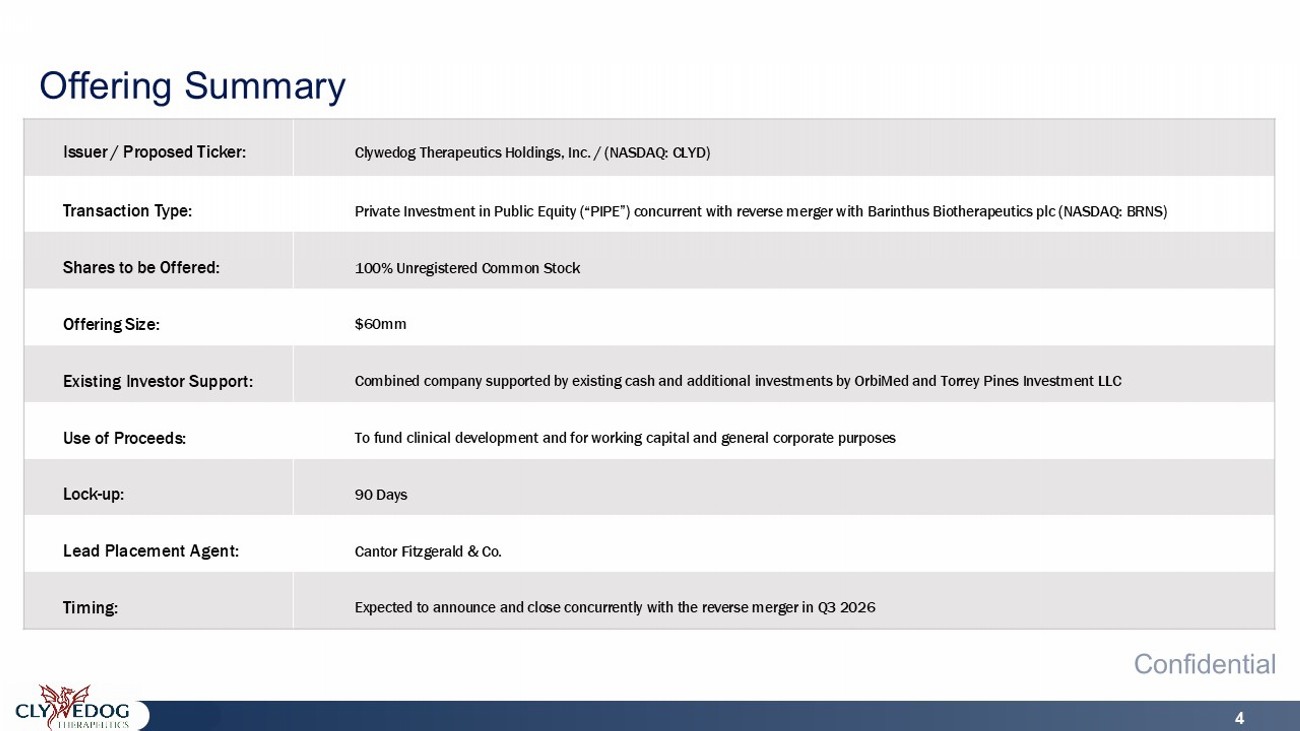
Offering Summary 4 Clywedog Therapeutics Holdings, Inc. / (NASDAQ: CLYD) Issuer / Proposed Ticker: Private Investment in Public Equity (“PIPE”) concurrent with reverse merger with Barinthus Biotherapeutics plc (NASDAQ: BRNS) Transaction Type: 100% Unregistered Common Stock Shares to be Offered: $60mm Offering Size : Combined company supported by existing cash and additional investments by OrbiMed and Torrey Pines Investment LLC Existing Investor Support: To fund clinical development and for working capital and general corporate purposes Use of Proceeds: 90 Days Lock - up : Cantor Fitzgerald & Co. Lead Placement Agent: Expected to announce and close concurrently with the reverse merger in Q3 2026 Timing:
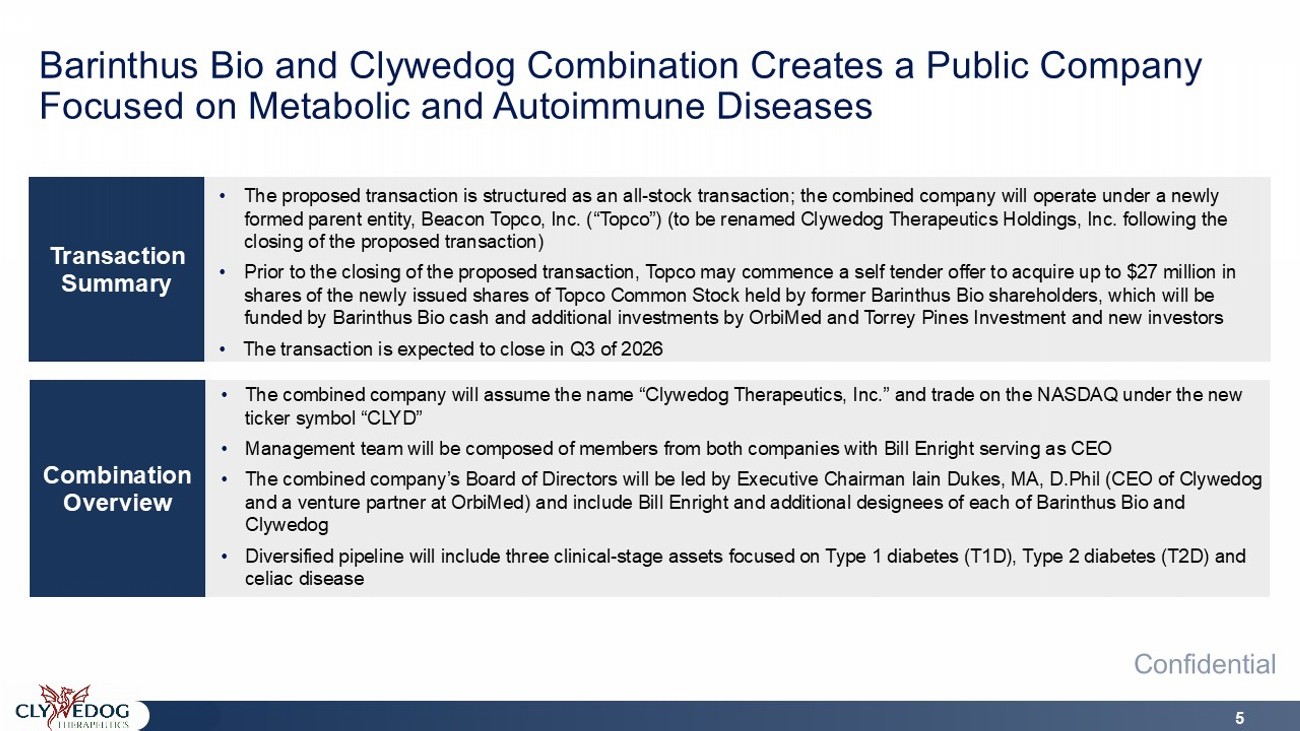
Barinthus Bio and Clywedog Combination Creates a Public Company Focused on Metabolic and Autoimmune Diseases 5 Transaction Summary • The proposed transaction is structured as an all - stock transaction; the combined company will operate under a newly formed parent entity, Beacon Topco, Inc. (“Topco”) (to be renamed Clywedog Therapeutics Holdings, Inc. following the closing of the proposed transaction) • Prior to the closing of the proposed transaction, Topco may commence a self tender offer to acquire up to $27 million in shares of the newly issued shares of Topco Common Stock held by former Barinthus Bio shareholders, which will be funded by Barinthus Bio cash and additional investments by OrbiMed and Torrey Pines Investment and new investors • The transaction is expected to close in Q3 of 2026 Combination Overview • The combined company will assume the name “Clywedog Therapeutics, Inc.” and trade on the NASDAQ under the new ticker symbol “CLYD” • Management team will be composed of members from both companies with Bill Enright serving as CEO • The combined company’s Board of Directors will be led by Executive Chairman Iain Dukes, MA, D.Phil (CEO of Clywedog and a venture partner at OrbiMed ) and include Bill Enright and additional designees of each of Barinthus Bio and Clywedog • Diversified pipeline will include three clinical - stage assets focused on Type 1 diabetes (T1D), Type 2 diabetes (T2D) and celiac disease
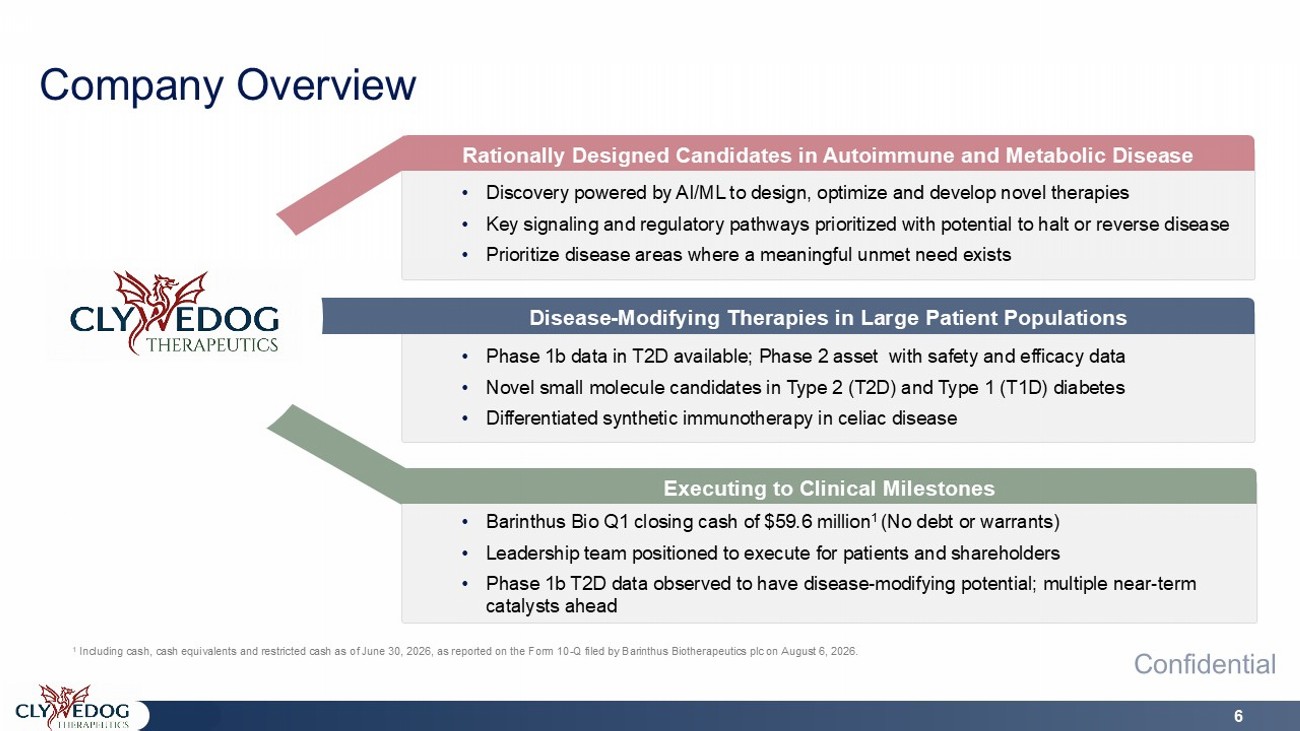
Rationally Designed Candidates in Autoimmune and Metabolic Disease Company Overview 1 Including cash, cash equivalents and restricted cash as of June 30 , 2026, as reported on the Form 10 - Q filed by Barinthus Biotherapeutics plc on August 6 , 2026. 6 Disease - Modifying Therapies in Large Patient Populations Executing to Clinical Milestones • Barinthus Bio Q1 closing cash of $59.6 million 1 (No debt or warrants) • Leadership team positioned to execute for patients and shareholders • Phase 1b T2D data observed to have disease - modifying potential; multiple near - term catalysts ahead • Discovery powered by AI/ML to design, optimize and develop novel therapies • Key signaling and regulatory pathways prioritized with potential to halt or reverse disease • Prioritize disease areas where a meaningful unmet need exists • Phase 1b data in T2D available; Phase 2 asset with safety and efficacy data • Novel small molecule candidates in Type 2 (T2D) and Type 1 (T1D) diabetes • Differentiated synthetic immunotherapy in celiac disease
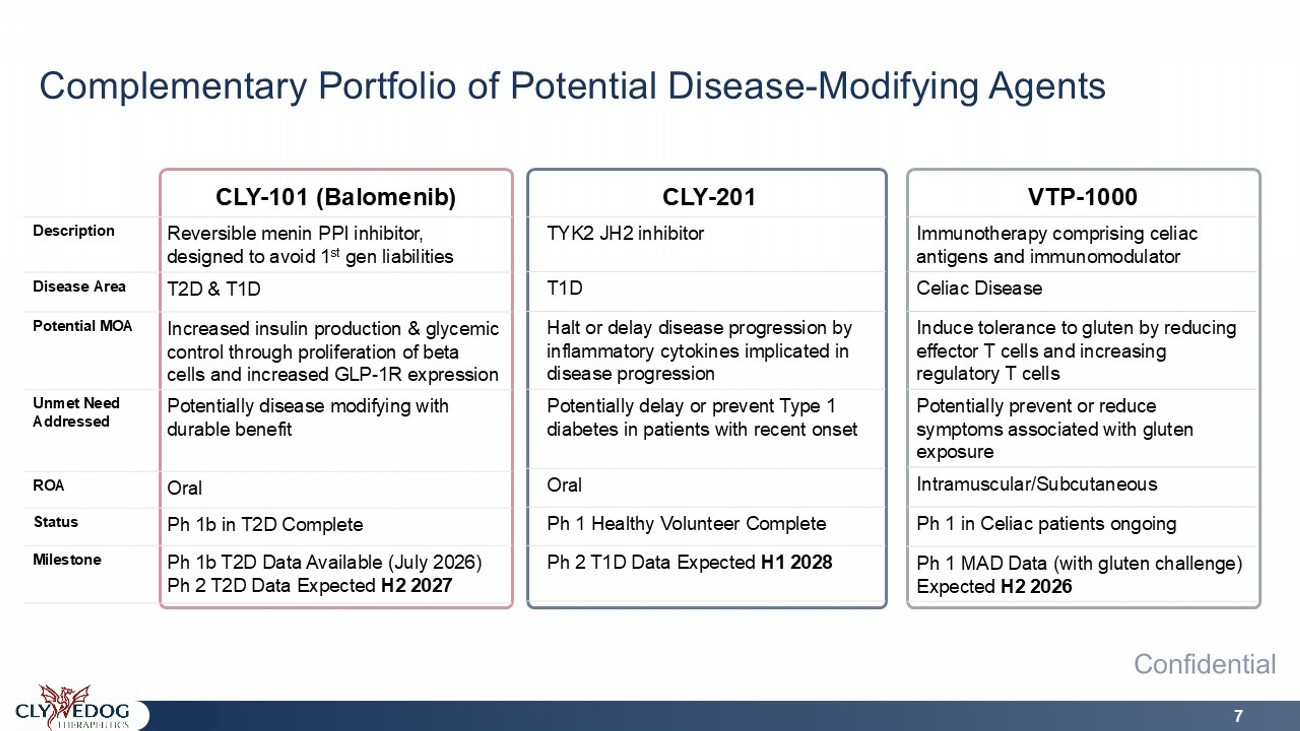
Complementary Portfolio of Potential Disease - Modifying Agents 7 CLY - 201 CLY - 101 ( Balomenib ) Reversible menin PPI inhibitor, designed to avoid 1 st gen liabilities Description T2D & T1D Disease Area Increased insulin production & glycemic control through proliferation of beta cells and increased GLP - 1R expression Potential MOA Potentially disease modifying with durable benefit Unmet Need Addressed Oral ROA Ph 1b in T2D Complete Status Ph 1b T2D Data Available (July 2026) Ph 2 T2D Data Expected H2 2027 Milestone TYK2 JH2 inhibitor T1D Halt or delay disease progression by inflammatory cytokines implicated in disease progression Potentially delay or prevent Type 1 diabetes in patients with recent onset Oral Ph 1 Healthy Volunteer Complete Ph 2 T1D Data Expected H1 2028 VTP - 1000 Immunotherapy comprising celiac antigens and immunomodulator Celiac Disease Induce tolerance to gluten by reducing effector T cells and increasing regulatory T cells Potentially prevent or reduce symptoms associated with gluten exposure Intramuscular/Subcutaneous Ph 1 in Celiac patients ongoing Ph 1 MAD Data (with gluten challenge) Expected H2 2026

CLY - 101 ( Balomenib ) Confidential
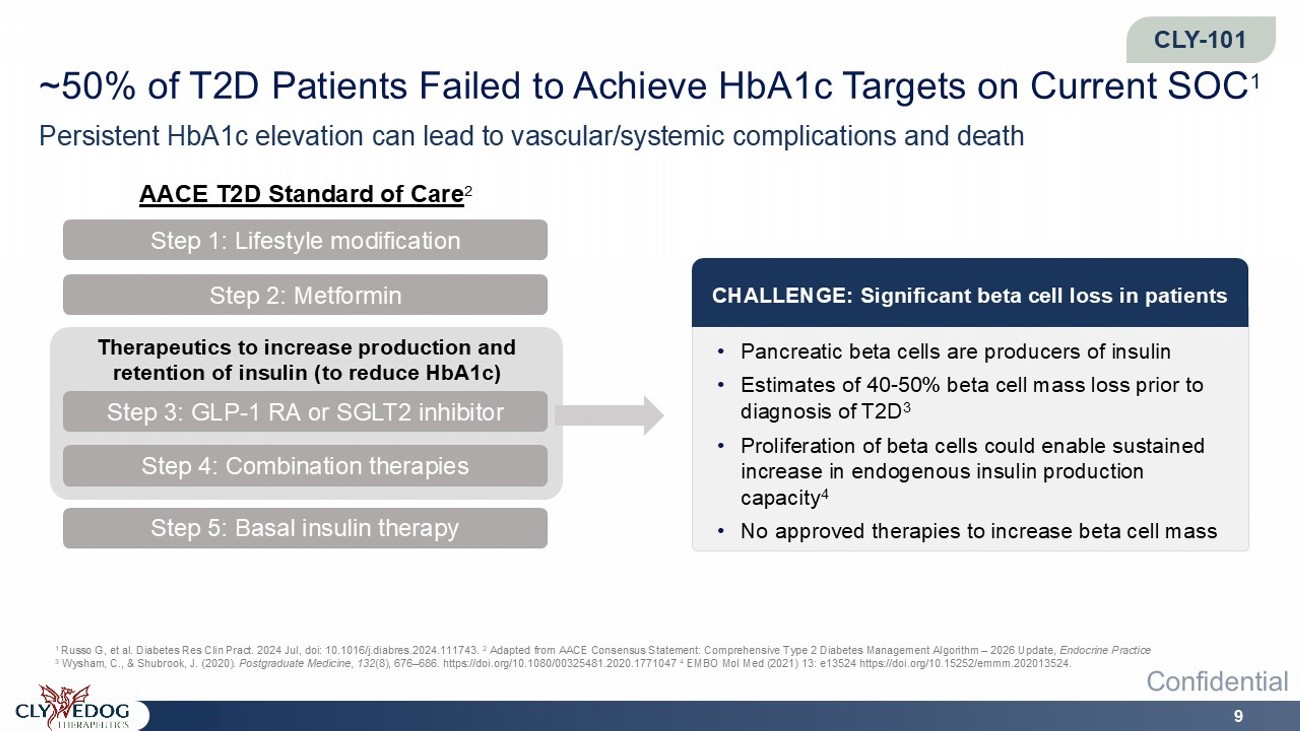
~50% of T2D Patients Failed to Achieve HbA1c Targets on Current SOC 1 9 CLY - 101 AACE T2D Standard of Care 2 Persistent HbA1c elevation can lead to vascular/systemic complications and death Step 1: Lifestyle modification Step 2: Metformin Step 3: GLP - 1 RA or SGLT2 inhibitor Step 4: Combination therapies Step 5: Basal insulin therapy Therapeutics to increase production and retention of insulin (to reduce HbA1c) CHALLENGE: Significant beta cell loss in patients • Pancreatic beta cells are producers of insulin • Estimates of 40 - 50 % beta cell mass loss prior to diagnosis of T2D 3 • Proliferation of beta cells could enable sustained increase in endogenous insulin production capacity 4 • No approved therapies to increase beta cell mass 1 Russo G, et al. Diabetes Res Clin Pract . 2024 Jul, doi : 10.1016/j.diabres.2024.111743. 2 Adapted from AACE Consensus Statement: Comprehensive Type 2 Diabetes Management Algorithm – 2026 Update, Endocrine Practice 3 Wysham , C., & Shubrook , J. (2020). Postgraduate Medicine , 132 (8), 676 – 686. https://doi.org/10.1080/00325481.2020.1771047 4 EMBO Mol Med (2021) 13: e13524 https://doi.org/10.15252/emmm.202013524.
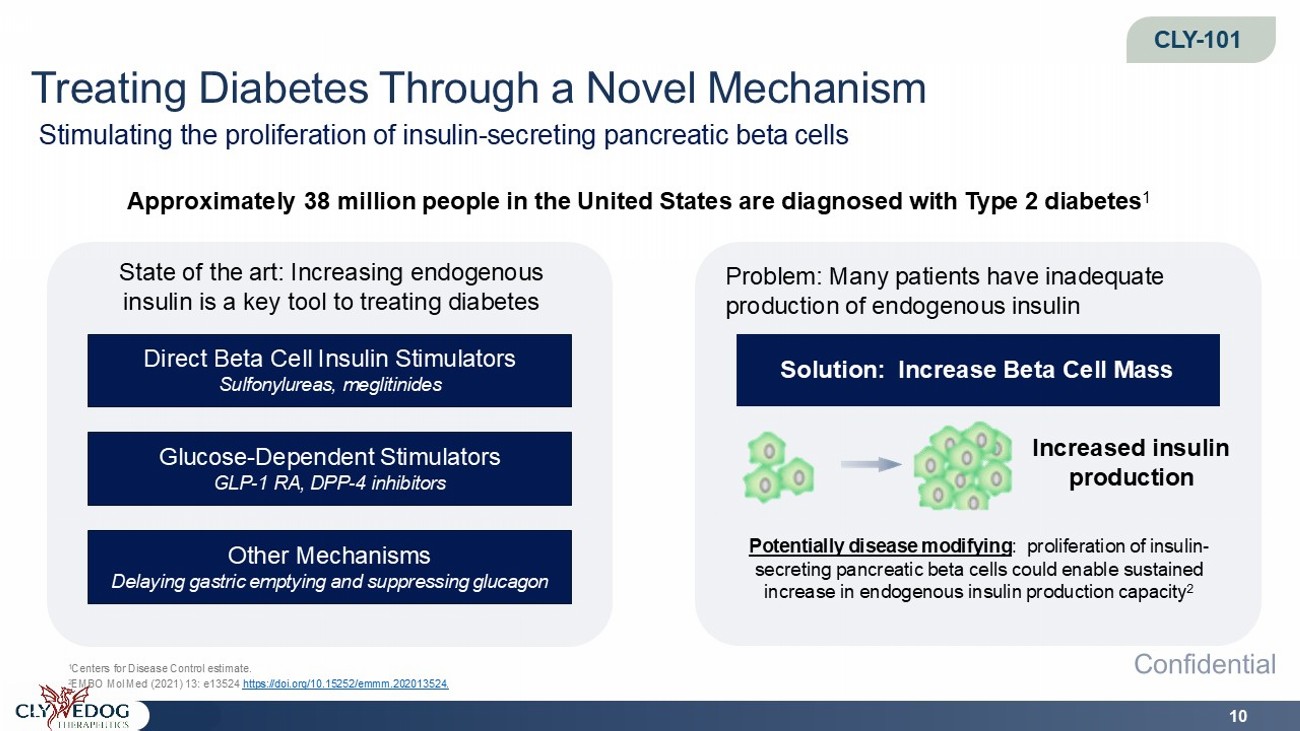
CLY - 101 State of the art: Increasing endogenous insulin is a key tool to treating diabetes Stimulating the proliferation of insulin - secreting pancreatic beta cells Approximately 3 8 million people in the United States are diagnosed with Type 2 diabetes 1 Direct Beta Cell Insulin Stimulators Sulfonylureas, meglitinides Glucose - Dependent Stimulators GLP - 1 RA, DPP - 4 inhibitors Other Mechanisms Delaying gastric emptying and suppressing glucagon Potentially disease modifying : proliferation of insulin - secreting pancreatic beta cells could enable sustained increase in endogenous insulin production capacity 2 Solution: Increase Beta Cell Mass 10 1 Centers for Disease Control estimate. 2 EMBO Mol Med (2021) 13: e13524 https://doi.org/10.15252/emmm.202013524. Increased insulin production Problem: Many patients have inadequate production of endogenous insulin Treating Diabetes Through a Novel Mechanism 10
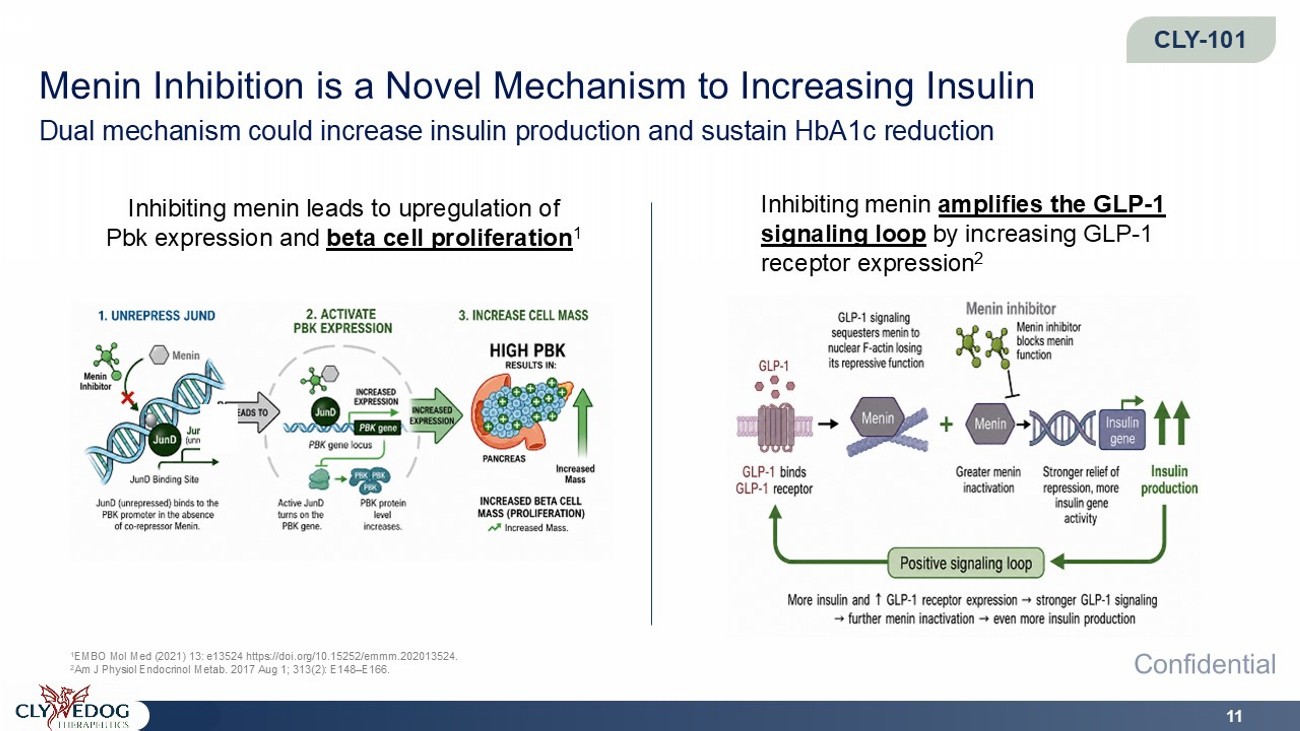
11 Inhibiting menin leads to upregulation of Pbk expression and beta cell proliferation 1 Inhibiting menin amplifies the GLP - 1 signaling loop by increasing GLP - 1 receptor expression 2 Dual mechanism could increase insulin production and sustain HbA1c reduction CLY - 101 Menin Inhibition is a Novel Mechanism to Increasing Insulin 1 EMBO Mol Med (2021) 13: e13524 https://doi.org/10.15252/emmm.202013524. 2 Am J Physiol Endocrinol Metab . 2017 Aug 1; 313(2): E148 – E166.
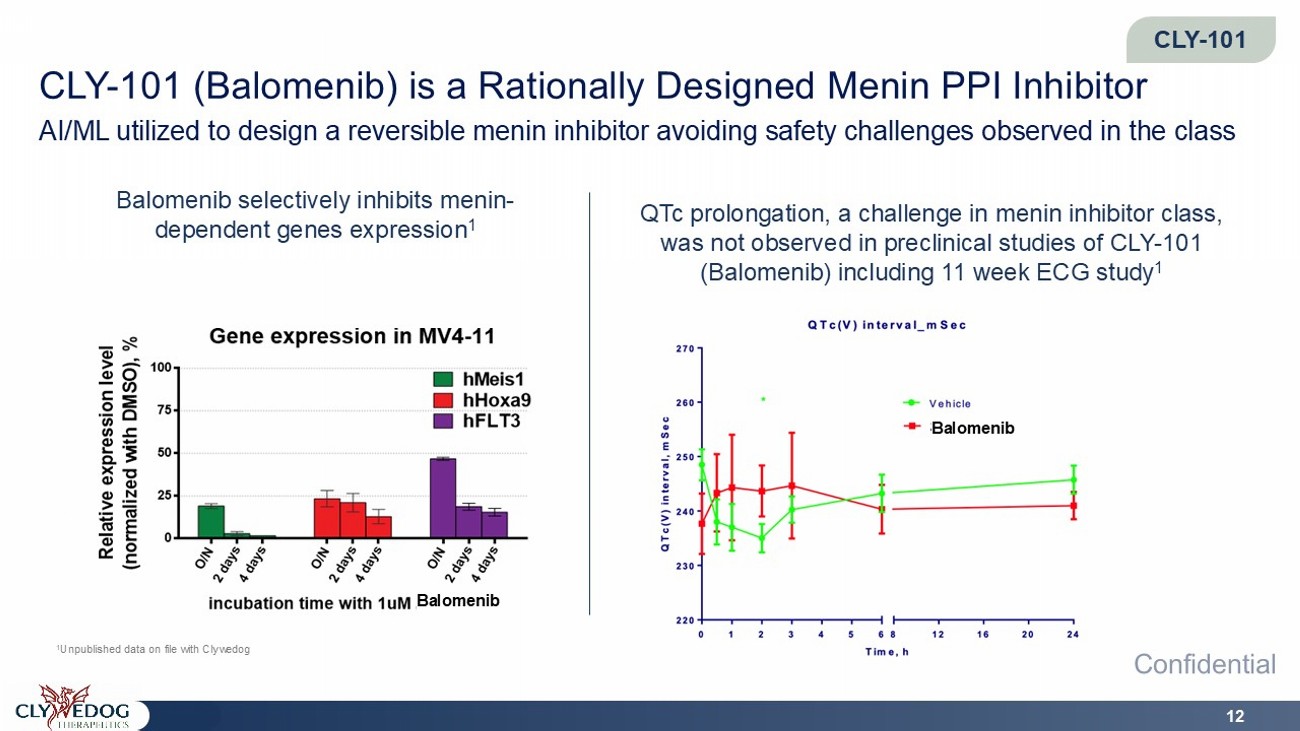
12 Balomenib selectively inhibits menin - dependent genes expression 1 1 Unpublished data on file with Clywedog AI/ML utilized to design a reversible menin inhibitor avoiding safety challenges observed in the class CLY - 101 Balomenib CLY - 101 ( Balomenib ) is a Rationally Designed Menin PPI Inhibitor QTc prolongation, a challenge in menin inhibitor class, was not observed in preclinical studies of CLY - 101 ( Balomenib ) including 11 week ECG study 1 Balomenib
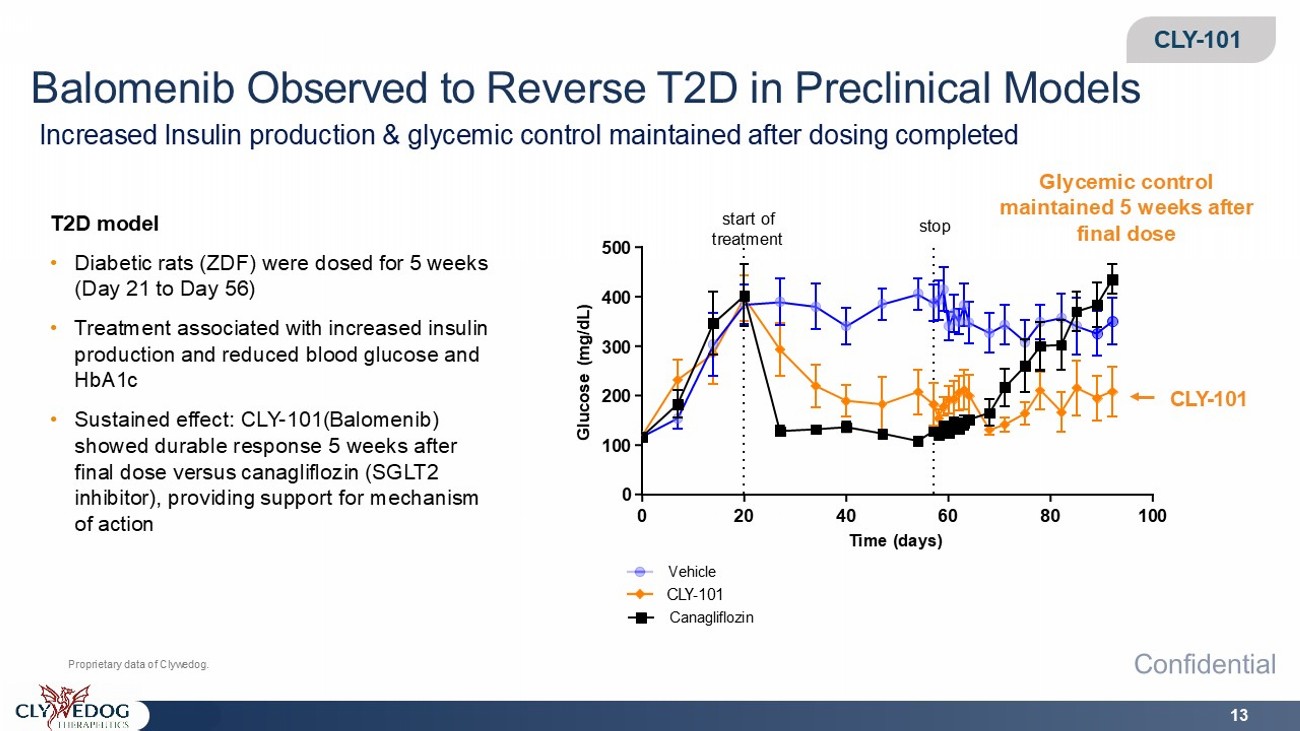
Balomenib Observed to Reverse T2D in Preclinical Models CLY - 101 T2D model • Diabetic rats (ZDF) were dosed for 5 weeks (Day 21 to Day 56) • Treatment associated with increased insulin production and reduced blood glucose and HbA1c • Sustained effec t: CLY - 101( Balomenib ) showed durable response 5 weeks after final dose versus canagliflozin (SGLT2 inhibitor) , providing support for mechanism of action Glycemic control maintained 5 weeks after final dose Increased Insulin production & glycemic control maintained after dosing completed 40 60 Time (days) Glucose (mg/dL) 0 20 80 100 0 100 200 300 400 500 CLYD - 101 Vehicle CLY - 101 Canagliflozin stop start of treatment CLY - 101 Proprietary data of Clywedog. 13 13
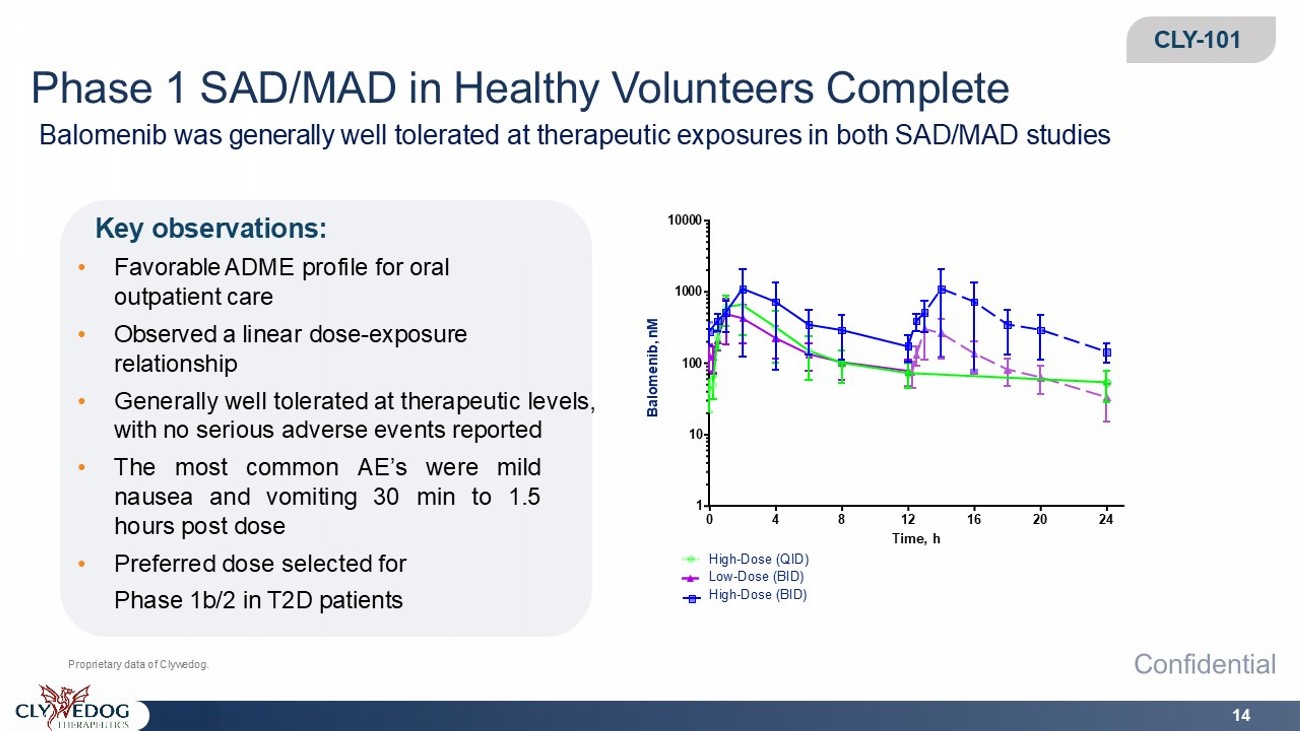
Phase 1 SAD/MAD in Healthy Volunteers Complete CLY - 101 Key observations: • Favorable ADME profile for oral outpatient care • Observed a linear dose - exposure relationship • Generally w ell tolerated at therapeutic levels, with no serious adverse events reported • The most common AE’s were mild nausea and vomiting 30 min to 1 . 5 hours post dose • Preferred dose selected for Phase 1 b/ 2 in T 2 D patients 12 Time, h Balamenib, nM 0 4 8 16 20 24 1 10 100 1000 10000 High Dose QD Low Dose BID High Dose BID High - Dose (QID) Low - Dose (BID) High - Dose (BID) Balomenib, nM Proprietary data of Clywedog. 14 Balomenib was generally well tolerated at therapeutic exposures in both SAD/MAD studies 14
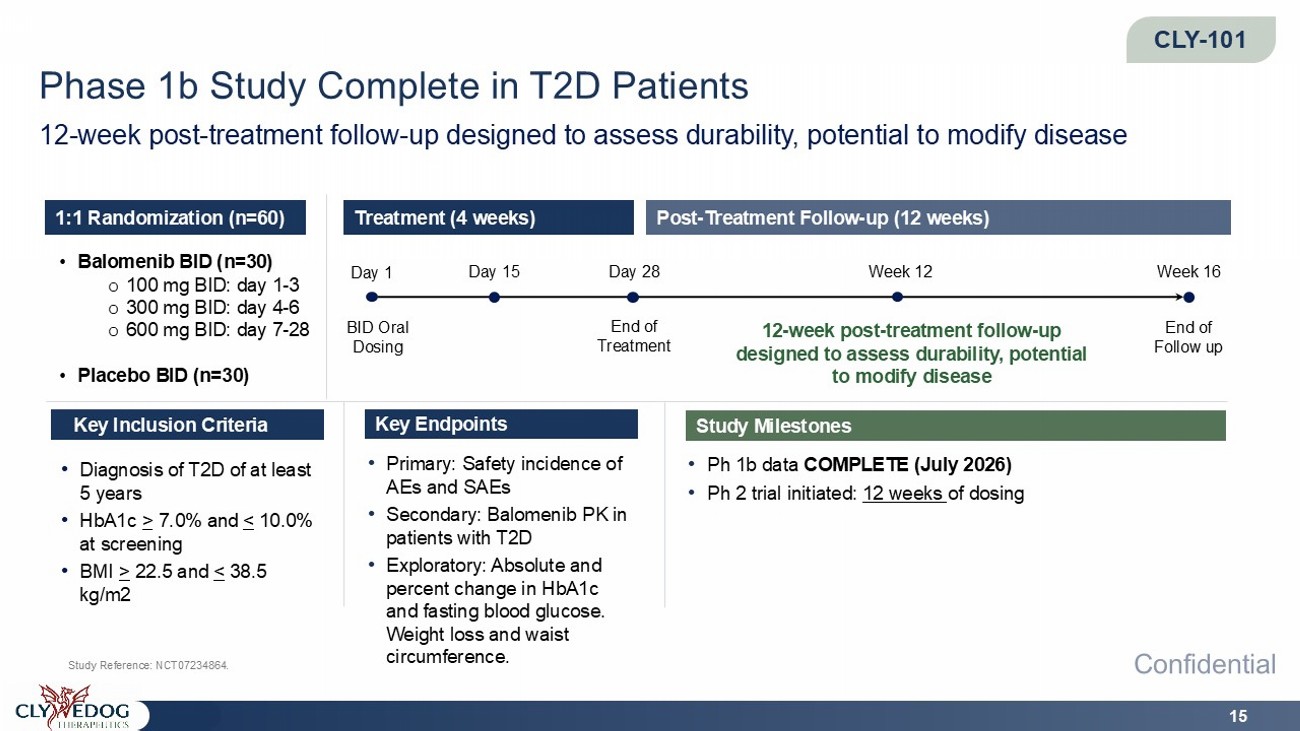
Key Inclusion Criteria Key Endpoints • Primary: Safety incidence of AEs and SAEs • Secondary: Balomenib PK in patients with T2D • Exploratory: Absolute and percent change in HbA1c and fasting blood glucose. Weight loss and waist circumference. • Diagnosis of T2D of at least 5 years • HbA1c > 7.0% and < 10.0% at screening • BMI > 22.5 and < 38.5 kg/m2 Study Reference: NCT07234864 . Day 15 Day 28 End of Treatment Phase 1b Study Complete in T2D Patients 12 - week post - treatment follow - up designed to assess durability, potential to modify disease 15 Post - Treatment Follow - up (12 weeks) End of Follow up Week 12 Week 16 Treatment (4 weeks) 12 - week post - treatment follow - up designed to assess durability, potential to modify disease 1:1 Randomization (n=60) • Balomenib BID (n=30) o 100 mg BID: day 1 - 3 o 300 mg BID: day 4 - 6 o 600 mg BID: day 7 - 28 • Placebo BID (n=30) CLY - 101 Day 1 BID Oral Dosing Study Milestones • Ph 1b data COMPLETE (July 2026) • Ph 2 trial initiated: 12 weeks of dosing
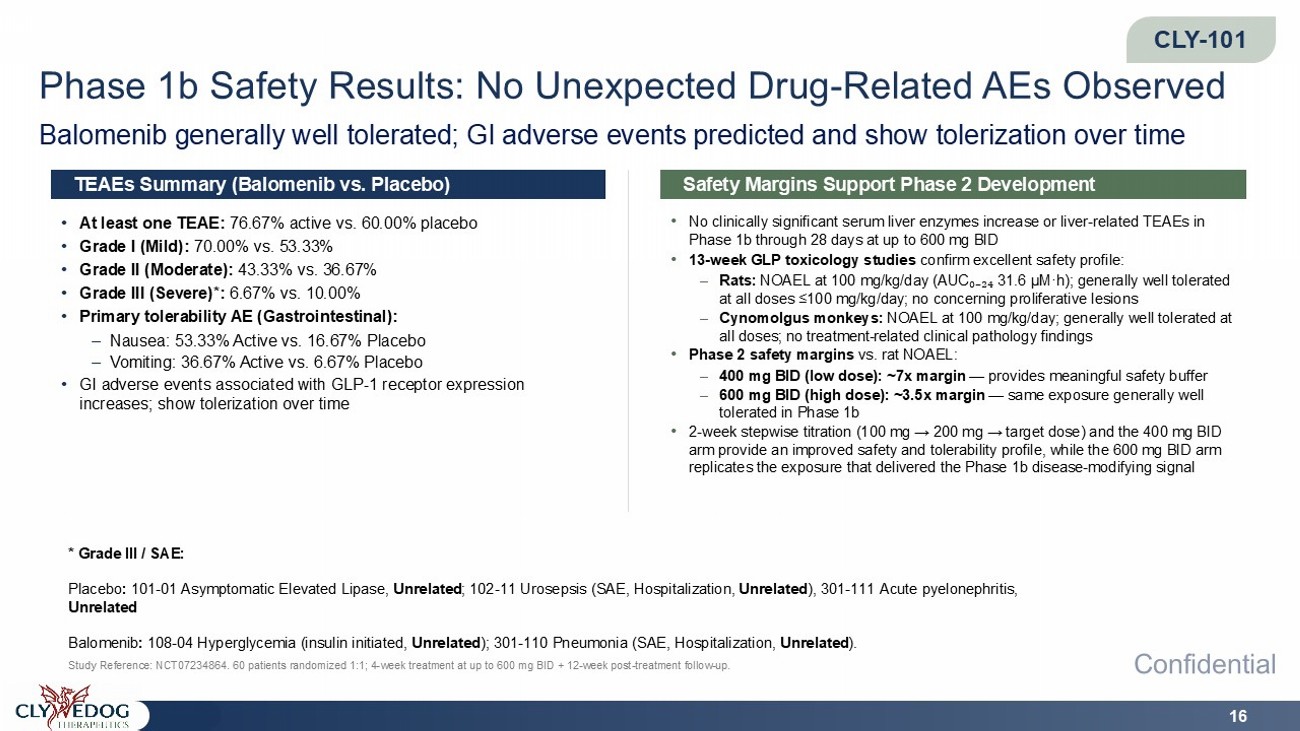
Phase 1b Safety Results: No Unexpected Drug - Related AEs Observed Balomenib generally well tolerated; GI adverse events predicted and show tolerization over time TEAEs Summary (Balomenib vs. Placebo) • At least one TEAE: 76.67% active vs. 60.00% placebo • Grade I (Mild): 70.00% vs. 53.33% • Grade II (Moderate): 43.33% vs. 36.67% • Grade III (Severe)*: 6.67% vs. 10.00% • Primary tolerability AE (Gastrointestinal): – Nausea: 53.33% Active vs. 16.67% Placebo – Vomiting: 36.67% Active vs. 6.67% Placebo • GI adverse events associated with GLP - 1 receptor expression increases; show tolerization over time Safety Margins Support Phase 2 Development • No clinically significant serum liver enzymes increase or liver - related TEAEs in Phase 1b through 28 days at up to 600 mg BID • 13 - week GLP toxicology studies confirm excellent safety profile: – Rats: NOAEL at 100 mg/kg/day (AUC ₀₋₂₄ 31.6 µ M·h ); generally well tolerated at all doses ≤100 mg/kg/day; no concerning proliferative lesions – Cynomolgus monkeys: NOAEL at 100 mg/kg/day; generally well tolerated at all doses; no treatment - related clinical pathology findings • Phase 2 safety margins vs. rat NOAEL: – 400 mg BID (low dose): ~7x margin — provides meaningful safety buffer – 600 mg BID (high dose): ~3.5x margin — same exposure generally well tolerated in Phase 1b • 2 - week stepwise titration (100 mg → 200 mg → target dose) and the 400 mg BID arm provide an improved safety and tolerability profile, while the 600 mg BID arm replicates the exposure that delivered the Phase 1b disease - modifying signal CLY - 101 Study Reference: NCT07234864. 60 patients randomized 1:1; 4 - week treatment at up to 600 mg BID + 12 - week post - treatment follow - u p. 16 * Grade III / SAE: Placebo : 101 - 01 Asymptomatic Elevated Lipase, Unrelated ; 102 - 11 Urosepsis (SAE, Hospitalization, Unrelated ), 301 - 111 Acute pyelonephritis, Unrelated Balomenib : 108 - 04 Hyperglycemia (insulin initiated, Unrelated ); 301 - 110 Pneumonia (SAE, Hospitalization, Unrelated ).
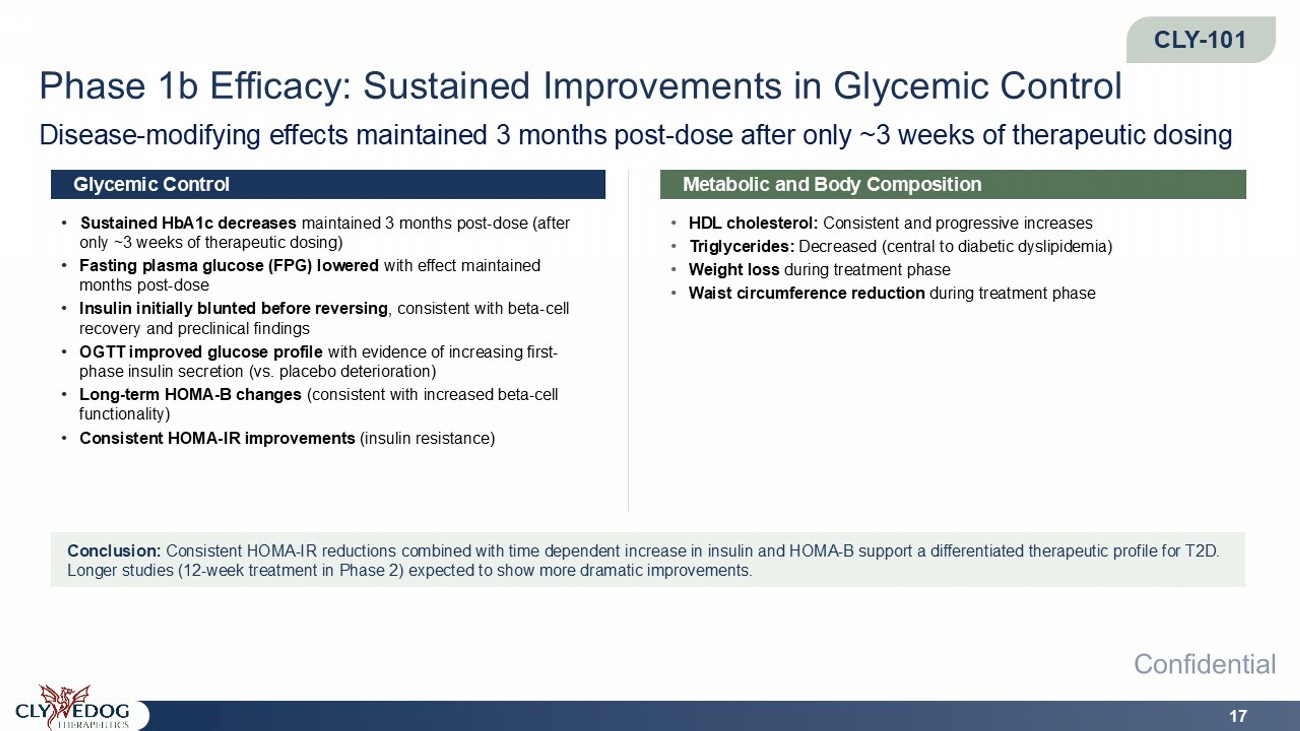
Phase 1b Efficacy: Sustained Improvements in Glycemic Control Disease - modifying effects maintained 3 months post - dose after only ~3 weeks of therapeutic dosing Glycemic Control • Sustained HbA1c decreases maintained 3 months post - dose (after only ~3 weeks of therapeutic dosing) • Fasting plasma glucose (FPG) lowered with effect maintained months post - dose • Insulin initially blunted before reversing , consistent with beta - cell recovery and preclinical findings • OGTT improved glucose profile with evidence of increasing first - phase insulin secretion (vs. placebo deterioration) • Long - term HOMA - B changes (consistent with increased beta - cell functionality) • Consistent HOMA - IR improvements (insulin resistance) Metabolic and Body Composition • HDL cholesterol: Consistent and progressive increases • Triglycerides: Decreased (central to diabetic dyslipidemia) • Weight loss during treatment phase • Waist circumference reduction during treatment phase CLY - 101 Conclusion: Consistent HOMA - IR reductions combined with time dependent increase in insulin and HOMA - B support a differentiated therapeutic p rofile for T2D. Longer studies (12 - week treatment in Phase 2) expected to show more dramatic improvements. 17
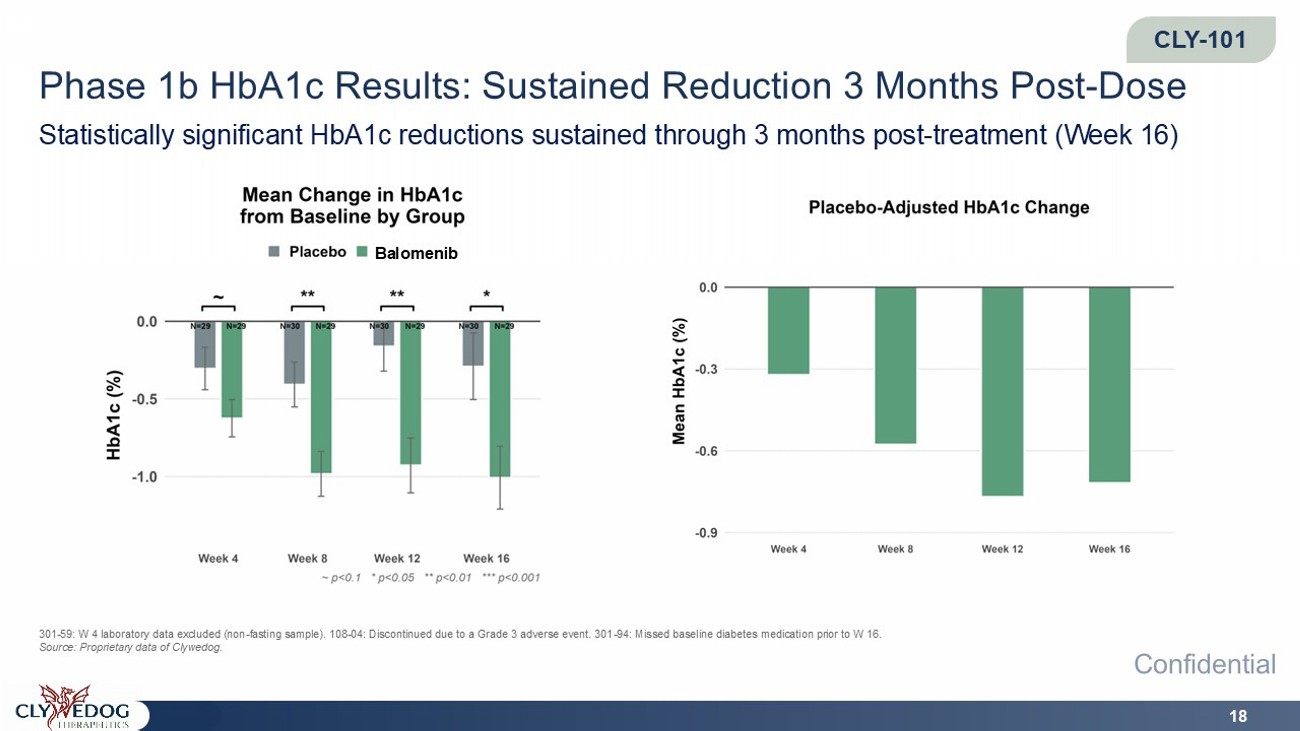
Phase 1b HbA1c Results: Sustained Reduction 3 Months Post - Dose Statistically significant HbA1c reductions sustained through 3 months post - treatment (Week 16) 301 - 59: W 4 laboratory data excluded (non - fasting sample). 108 - 04: Discontinued due to a Grade 3 adverse event. 301 - 94: Missed b aseline diabetes medication prior to W 16. Source: Proprietary data of Clywedog. CLY - 101 18 Balomenib
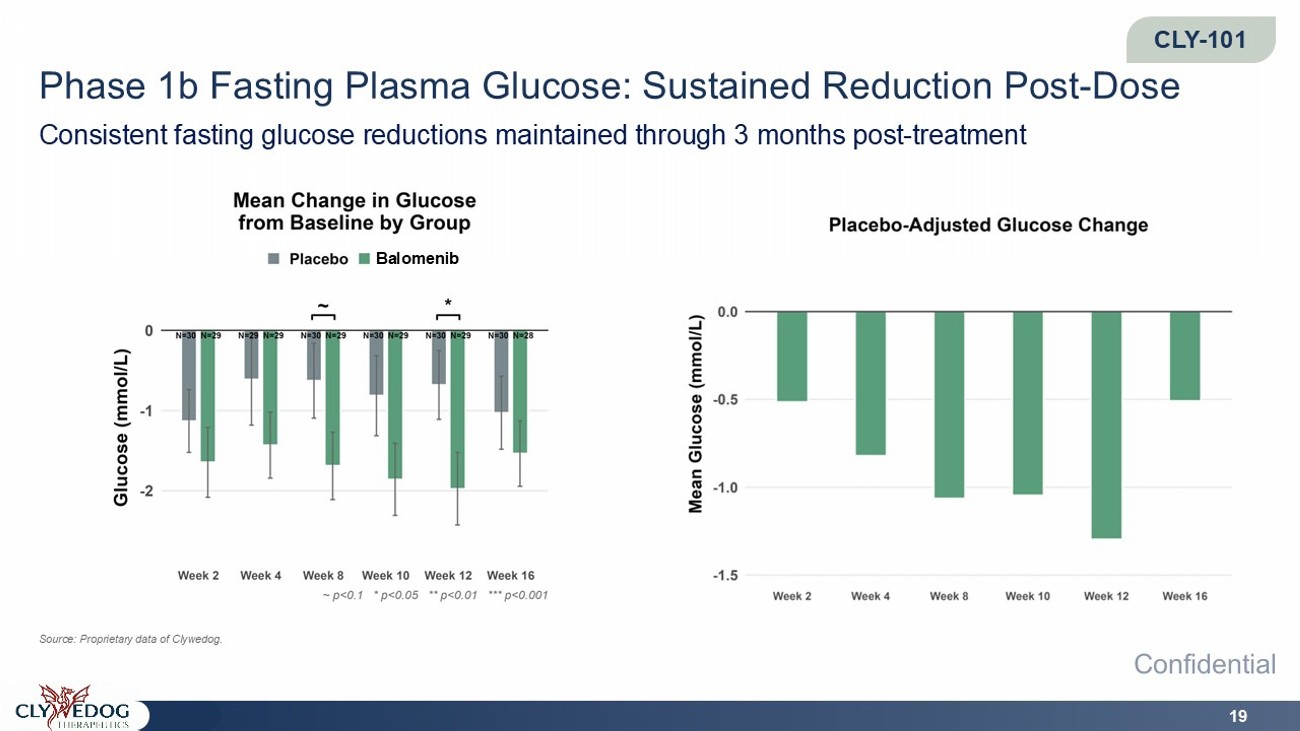
Phase 1b Fasting Plasma Glucose: Sustained Reduction Post - Dose Consistent fasting glucose reductions maintained through 3 months post - treatment Source: Proprietary data of Clywedog. CLY - 101 19 Balomenib
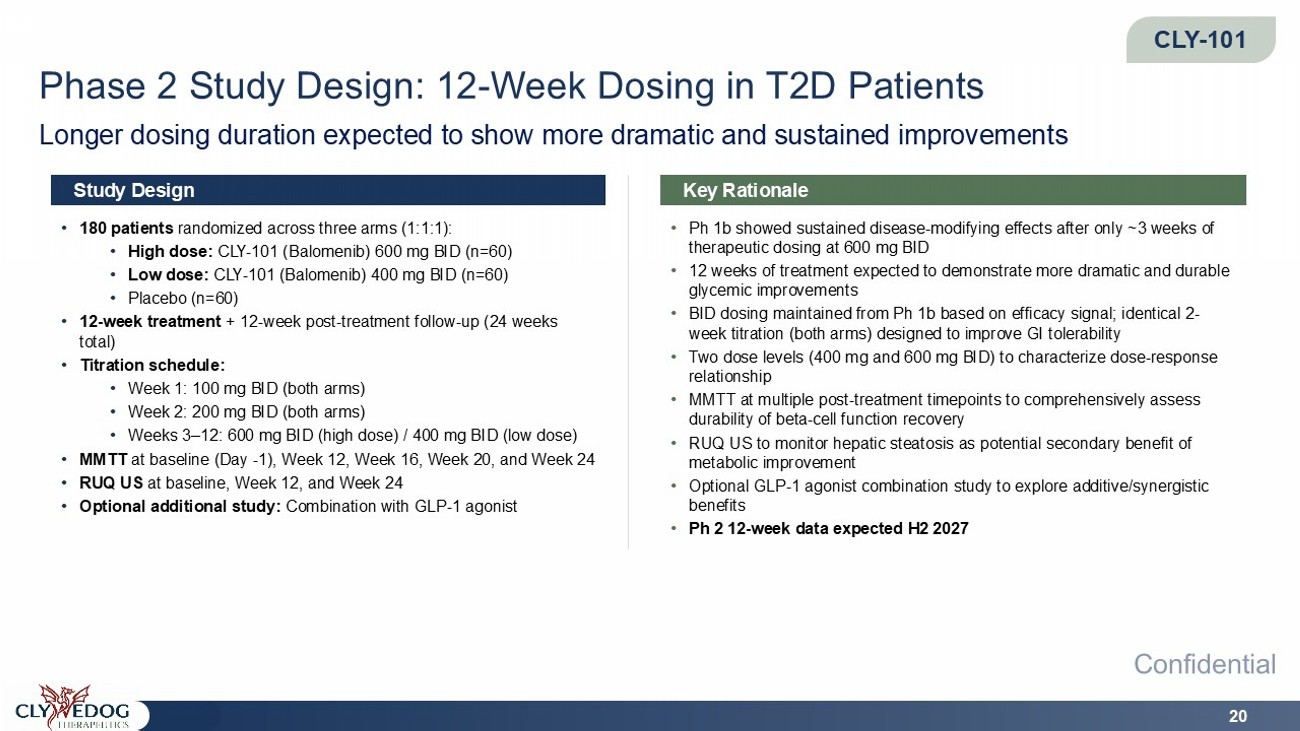
Phase 2 Study Design: 12 - Week Dosing in T2D Patients Longer dosing duration expected to show more dramatic and sustained improvements Study Design • 180 patients randomized across three arms (1:1:1): • High dose: CLY - 101 ( Balomenib ) 600 mg BID (n=60) • Low dose: CLY - 101 ( Balomenib ) 400 mg BID (n=60) • Placebo (n=60) • 12 - week treatment + 12 - week post - treatment follow - up (24 weeks total) • Titration schedule: • Week 1: 100 mg BID (both arms) • Week 2: 200 mg BID (both arms) • Weeks 3 – 12: 600 mg BID (high dose) / 400 mg BID (low dose) • MMTT at baseline (Day - 1), Week 12, Week 16, Week 20, and Week 24 • RUQ US at baseline, Week 12, and Week 24 • Optional additional study: Combination with GLP - 1 agonist Key Rationale • Ph 1b showed sustained disease - modifying effects after only ~3 weeks of therapeutic dosing at 600 mg BID • 12 weeks of treatment expected to demonstrate more dramatic and durable glycemic improvements • BID dosing maintained from Ph 1b based on efficacy signal; identical 2 - week titration (both arms) designed to improve GI tolerability • Two dose levels (400 mg and 600 mg BID) to characterize dose - response relationship • MMTT at multiple post - treatment timepoints to comprehensively assess durability of beta - cell function recovery • RUQ US to monitor hepatic steatosis as potential secondary benefit of metabolic improvement • Optional GLP - 1 agonist combination study to explore additive/synergistic benefits • Ph 2 12 - week data expected H2 2027 CLY - 101 20

CLY - 201 Confidential
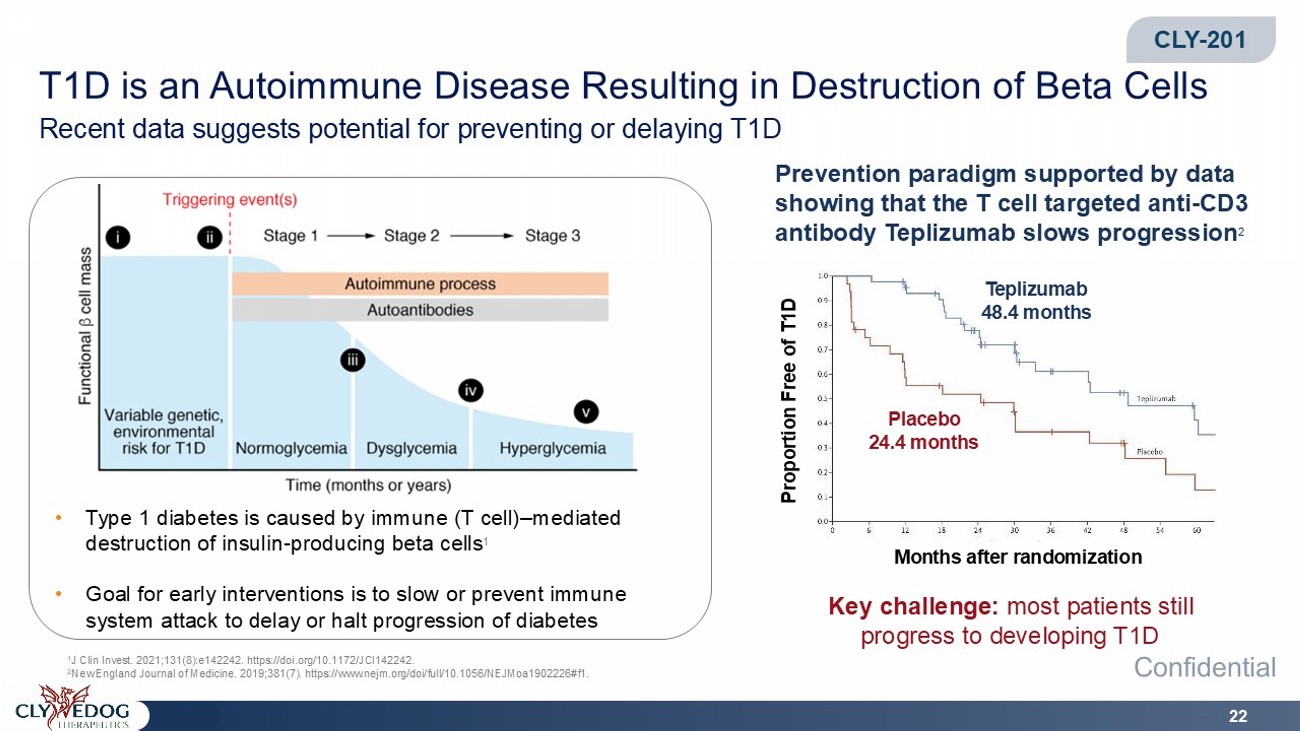
T1D is an Autoimmune Disease Resulting in Destruction of Beta Cells 22 CLY - 201 • Type 1 diabetes is caused by immune (T cell) – mediated destruction of insulin - producing beta cells 1 • Goal for early interventions is to slow or prevent immune system attack to delay or halt progression of diabetes 1 J Clin Invest. 2021;131(8):e142242. https://doi.org/10.1172/JCI142242. 2 New England Journal of Medicine . 2019;381(7). https://www.nejm.org/doi/full/10.1056/NEJMoa1902226#f1. Key challenge: most patients still progress to developing T1D Prevention paradigm supported by data showing that the T cell targeted anti - CD3 antibody Teplizumab slows progression 2 Months after randomization Proportion Free of T1D Teplizumab 48.4 months Placebo 24.4 months Recent data suggests potential for preventing or delaying T1D
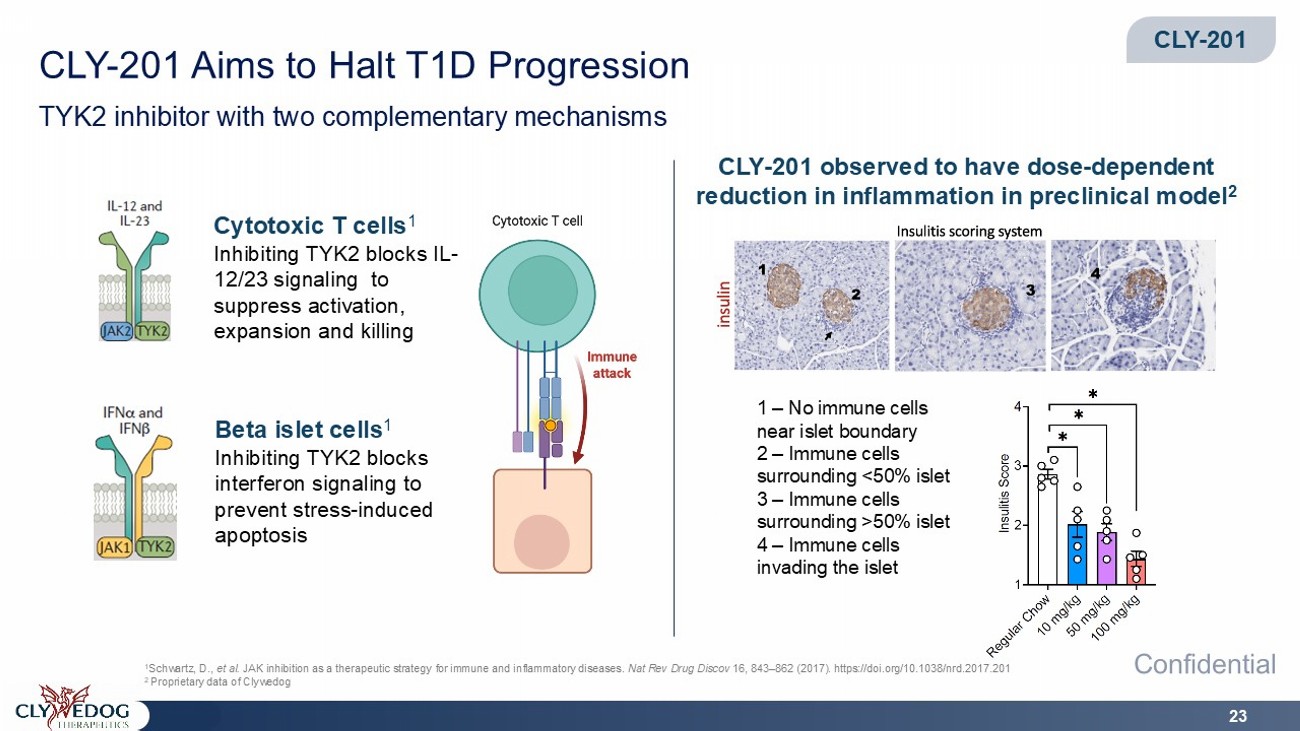
CLY - 201 Aims to Halt T1D Progression 23 Cytotoxic T cells 1 Inhibiting TYK2 blocks IL - 12/23 signaling to suppress activation, expansion and killing Beta islet cells 1 Inhibiting TYK2 blocks interferon signaling to prevent stress - induced apoptosis 1 – No immune cells near islet boundary 2 – Immune cells surrounding <50% islet 3 – Immune cells surrounding >50% islet 4 – Immune cells invading the islet CLY - 201 observed to have dose - dependent reduction in inflammation in preclinical model 2 TYK2 inhibitor with two complementary mechanisms CLY - 201 1 Schwartz, D., et al. JAK inhibition as a therapeutic strategy for immune and inflammatory diseases. Nat Rev Drug Discov 16, 843 – 862 (2017). https://doi.org/10.1038/nrd.2017.201 2 Proprietary data of Clywedog
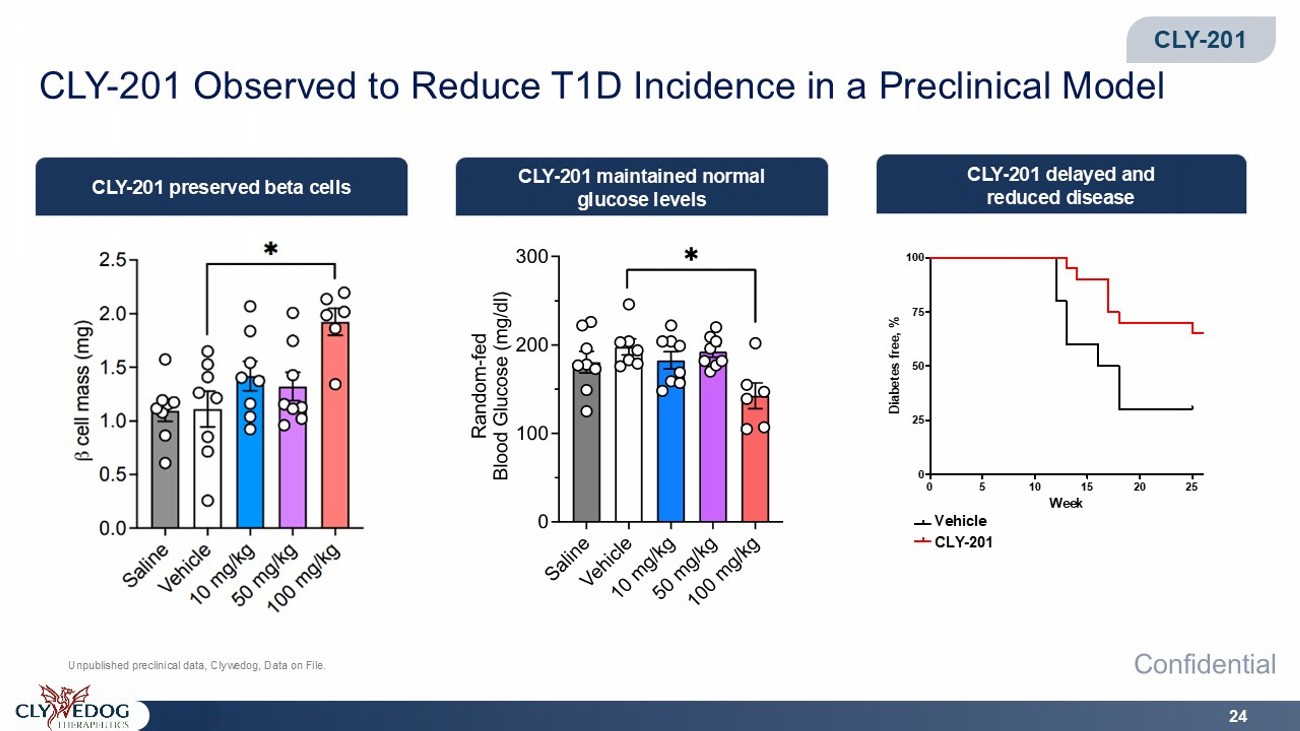
CLY - 201 delayed and reduced disease CLY - 201 maintained normal glucose levels CLY - 201 Observed to Reduce T1D Incidence in a Preclinical Model 24 Vehicle CLY - 201 CLY - 201 preserved beta cells CLY - 201 Unpublished preclinical data, Clywedog, Data on File.
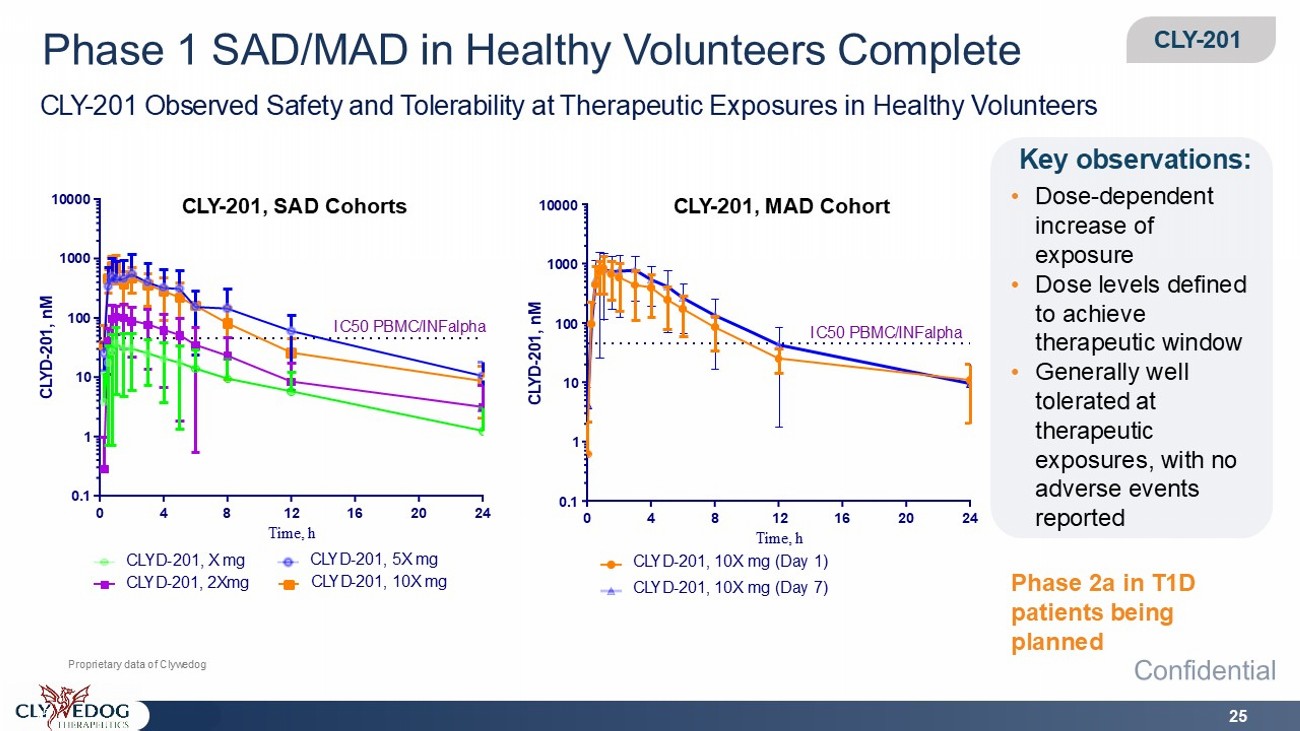
12 Time, h CLYD - 201, nM 0 4 8 CLYD - 201, X mg CLYD - 201, 2Xmg 16 20 24 0.1 1 10 100 1000 10000 IC50 PBMC/INFalpha CLYD - 201, 5X mg CLYD - 201, 10X mg 12 Time, h CLYD - 201, nM 0 4 8 16 20 24 0.1 1 10 100 1000 10000 IC50 PBMC/INFalpha CLYD - 201, 10X mg (Day 1) CLYD - 201, 10X mg (Day 7) CLY - 201 Proprietary data of Clywedog 25 Phase 1 SAD/MAD in Healthy Volunteers Complete CLY - 201, SAD Cohorts CLY - 201, MAD Cohort • Dose - dependent increase of exposure • Dose levels defined to achieve therapeutic window • Generally w ell tolerated at therapeutic exposures, with no adverse events reported CLY - 201 Observ ed Safety and Tolerability at Therapeutic Exposures in Healthy Volunteers Key observations: Phase 2a in T1D patients being planned 25

VTP - 1000 Confidential
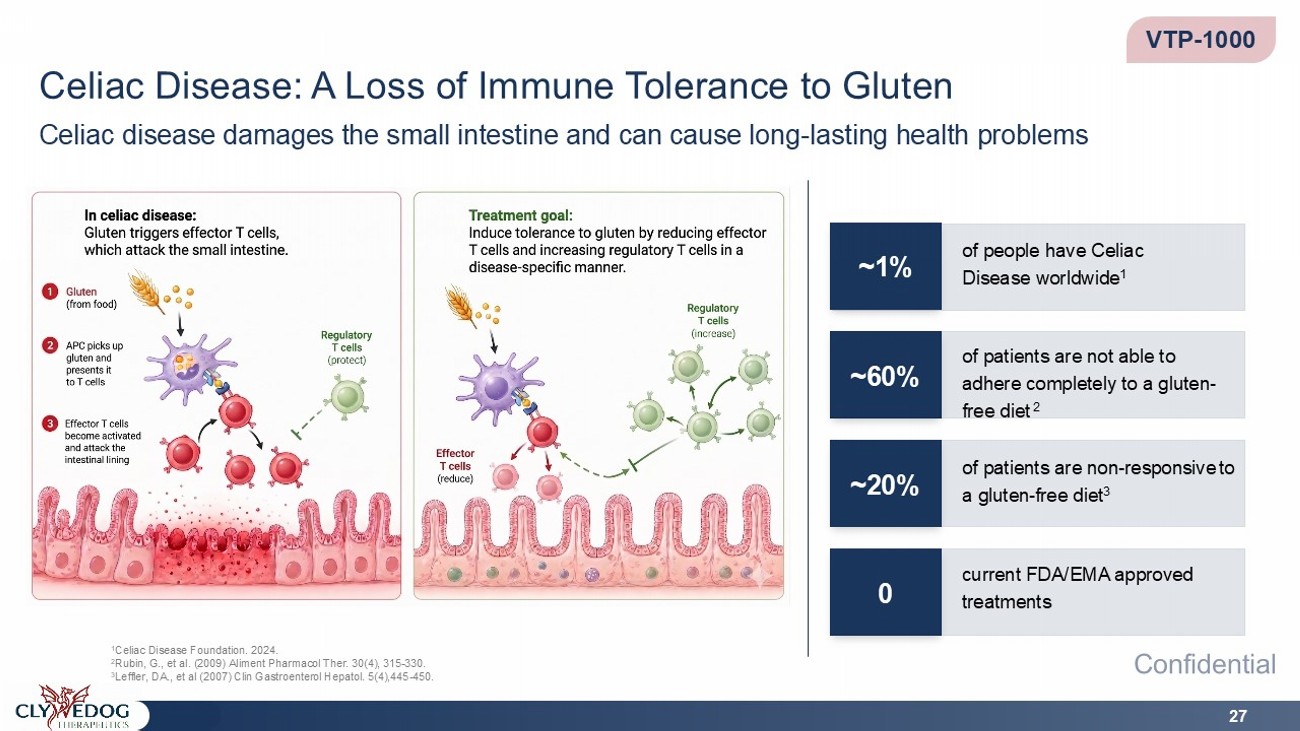
Celiac Disease: A Loss of Immune Tolerance to Gluten 27 VTP - 1000 of people have Celiac Disease worldwide 1 ~1% of patients are not able to adhere completely to a gluten - free diet 2 ~60% of patients are non - responsive to a gluten - free diet 3 ~20% current FDA/EMA approved treatments 0 1 Celiac Disease Foundation. 2024. 2 Rubin, G., et al. (2009) Aliment Pharmacol Ther . 30(4), 315 - 330. 3 Leffler, DA., et al (2007) Clin Gastroenterol Hepatol. 5(4),445 - 450. Celiac disease damages the small intestine and can cause long - lasting health problems
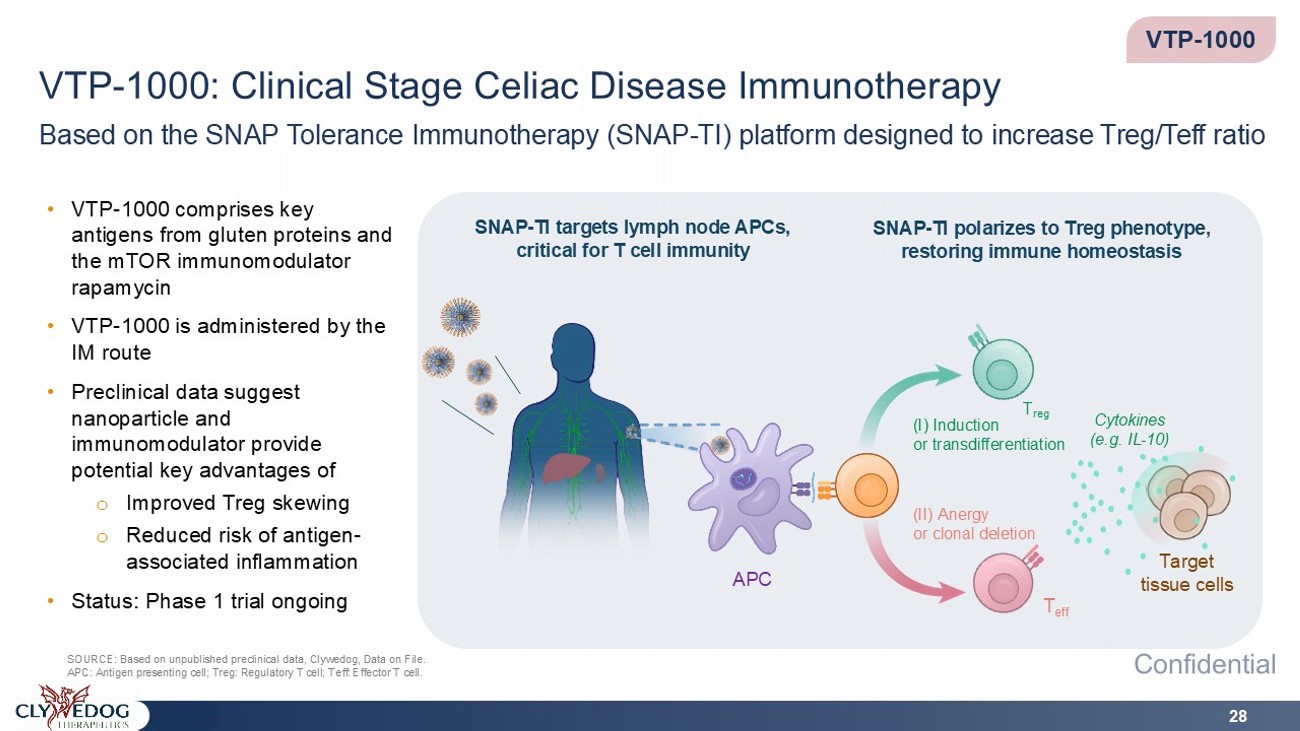
T eff SOURCE: Based on unpublished preclinical data, Clywedog, Data on File. APC: Antigen presenting cell; Treg: Regulatory T cell; Teff: Effector T cell. (II) Anergy or clonal deletion (I) Induction or transdifferentiation SNAP - TI targets lymph node APCs, critical for T cell immunity T reg SNAP - TI polarizes to Treg phenotype, restoring immune homeostasis Cytokines (e.g. IL - 10) APC Target tissue cells • VTP - 1000 comprises key antigens from gluten proteins and the mTOR immunomodulator rapamycin • VTP - 1000 is administered by the IM route • Preclinical data suggest nanoparticle and immunomodulator provide potential key advantages of o Improved Treg skewing o Reduced risk of antigen - associated inflammation • Status: Phase 1 trial ongoing VTP - 1000: Clinical Stage Celiac Disease Immunotherapy Based on the SNAP Tolerance Immunotherapy (SNAP - TI) platform designed to increase Treg/Teff ratio VTP - 1000 28
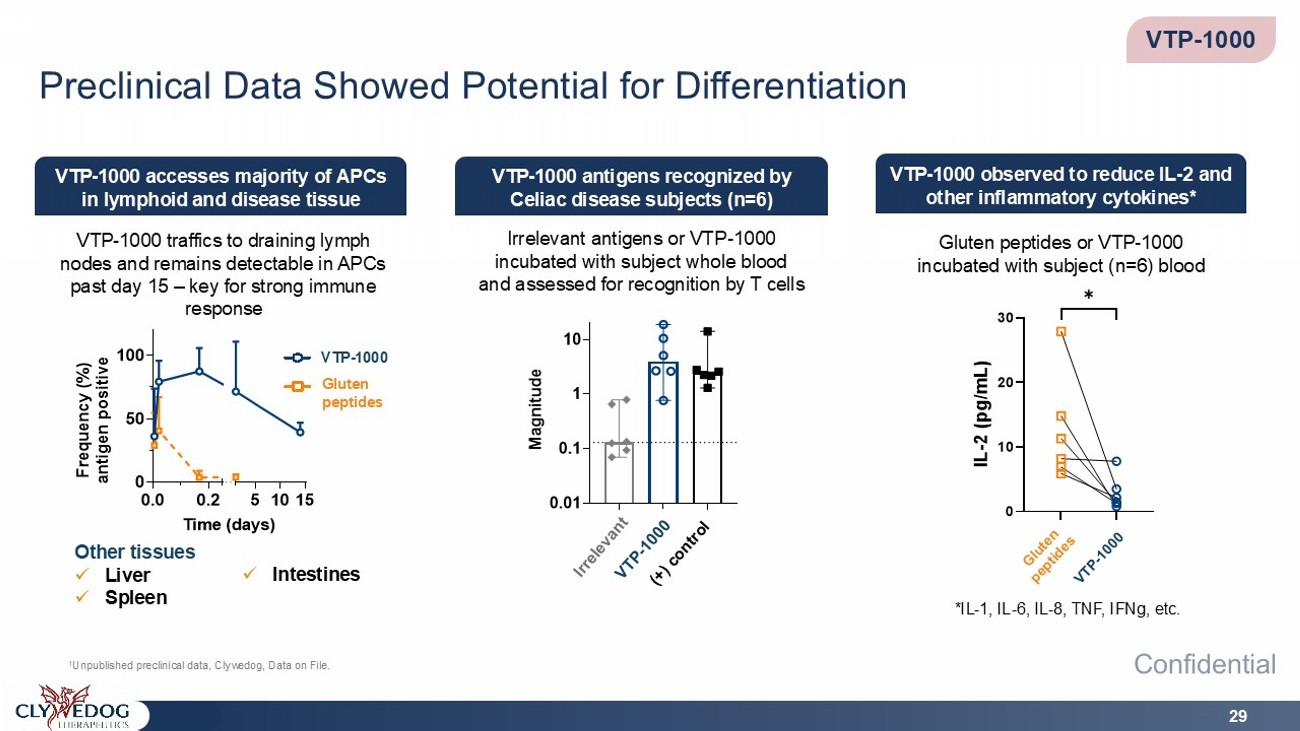
VTP - 1000 antigens recognized by Celiac disease subjects (n=6) VTP - 1000 observed to reduce IL - 2 and other inflammatory cytokines* *IL - 1, IL - 6, IL - 8, TNF, IFNg , etc. 1 Unpublished preclinical data, Clywedog, Data on File. Irrelevant antigens or VTP - 1000 incubated with subject whole blood and assessed for recognition by T cells Other tissues x Liver x Spleen 0.0 0.1 0.2 5 10 15 1 10 100 Time (days) F l u o r e s c e n c e i n t e n s i t y ( F o l d c h a n g e ) Intestines VTP-1000 Free peptide VTP - 1000 Gluten peptides Gluten peptides or VTP - 1000 incubated with subject (n=6) blood VTP - 1000 traffics to draining lymph nodes and remains detectable in APCs past day 15 – key for strong immune response 0.0 0.2 5 1015 0 50 100 Time (days) F r e q u e n c y ( % ) a n t i g e n p o s i t i v e 0.01 0.1 1 10 M a g n i t u d e x Intestines VTP - 1000 accesses majority of APCs in lymphoid and disease tissue Preclinical Data Showed Potential for Differentiation VTP - 1000 29
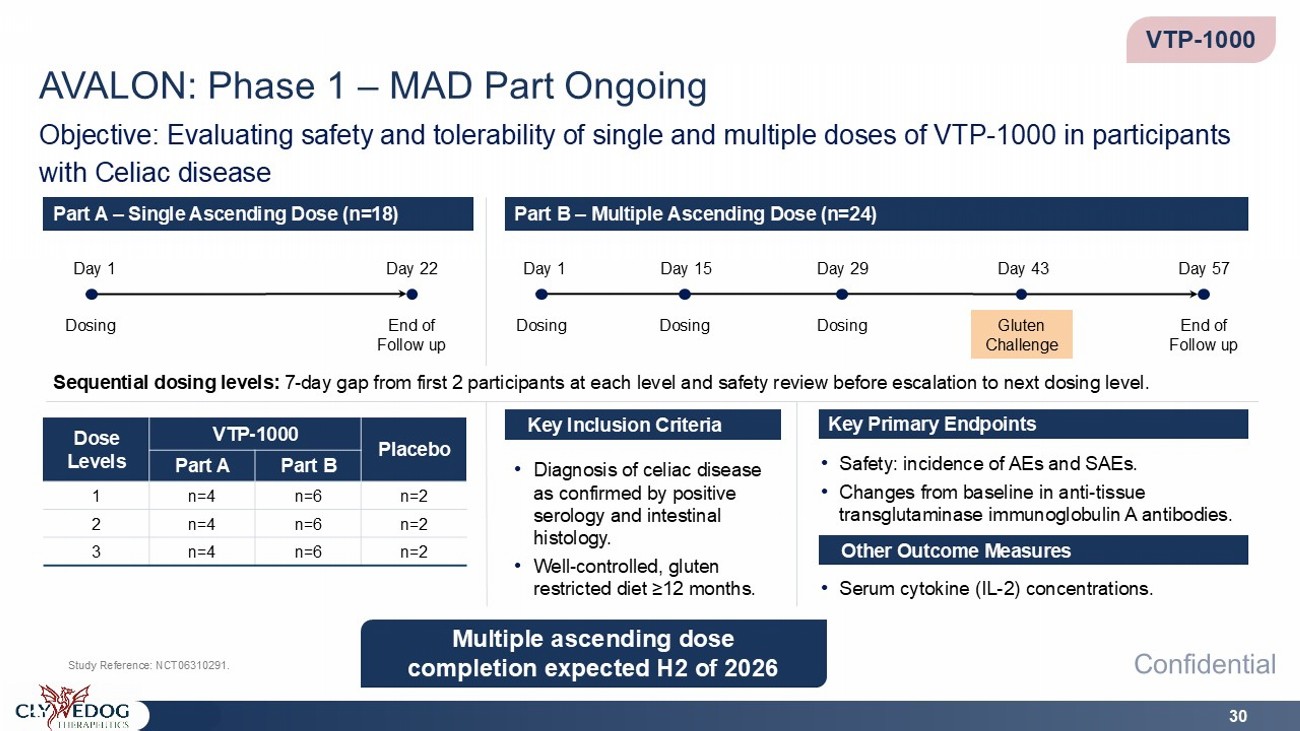
30 Key Inclusion Criteria Part A – Single Ascending Dose (n=18) Part B – Multiple Ascending Dose ( n=24) Key Primary Endpoints Placebo VTP - 1000 Dose Levels Part B Part A n=2 n=6 n=4 1 n=2 n=6 n=4 2 n=2 n=6 n=4 3 • Safety: incidence of AEs and SAEs. • Changes from baseline in anti - tissue transglutaminase immunoglobulin A antibodies. Other Outcome Measures • Serum cytokine (IL - 2) concentrations. • Diagnosis of celiac disease as confirmed by positive serology and intestinal histology. • Well - controlled, gluten restricted diet ≥12 months. Study Reference: NCT06310291. Dosing End of Follow up Day 1 Day 22 Day 1 Day 57 Day 15 Day 29 Day 43 Dosing Dosing Dosing End of Follow up Gluten Challenge Sequential dosing levels: 7 - day gap from first 2 participants at each level and safety review before escalation to next dosing level. Multiple ascending dose completion expected H2 of 2026 AVALON: Phase 1 – MAD Part Ongoing Objective: Evaluating safety and tolerability of single and multiple doses of VTP - 1000 in participants with Celiac disease VTP - 1000 30
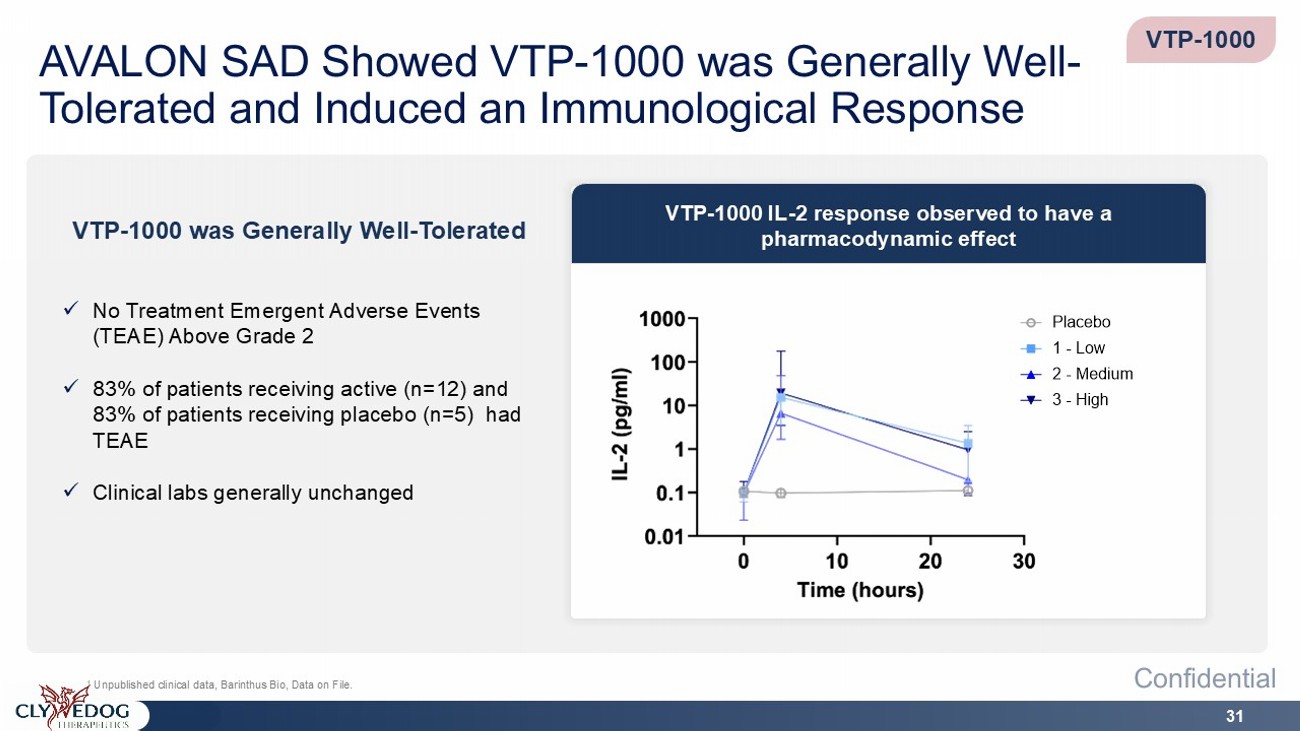
AVALON SAD Showed VTP - 1000 was Generally Well - Tolerated and Induced an Immunological Response 31 VTP - 1000 VTP - 1000 IL - 2 response observed to have a pharmacodynamic effect VTP - 1000 was Generally Well - Tolerated x No Treatment Emergent Adverse Events (TEAE) Above Grade 2 x 83% of patients receiving active (n=12) and 83% of patients receiving placebo (n=5) had TEAE x Clinical labs generally unchanged 1 Unpublished clinical data, Barinthus Bio, Data on File.
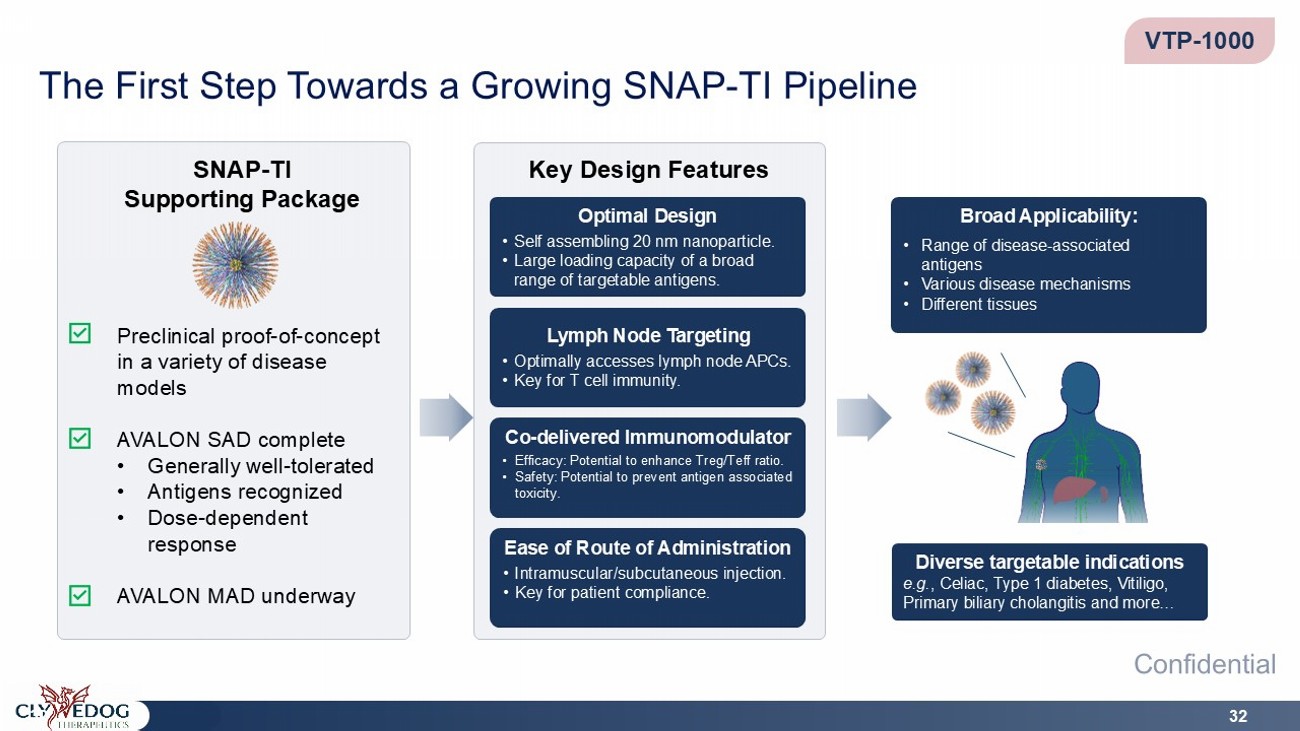
32 Key Design Features Optimal Design • Self assembling 20 nm nanoparticle. • Large loading capacity of a broad range of targetable antigens. Lymph Node Targeting • Optimally accesses lymph node APCs. • Key for T cell immunity. Co - delivered Immunomodulator • Efficacy: Potential to enhance Treg/Teff ratio. • Safety: Potential to prevent antigen associated toxicity. Ease of Route of Administration • Intramuscular/subcutaneous injection. • Key for patient compliance. SNAP - TI Supporting Package VTP - 1000 Diverse targetable indications e.g . , Celiac, Type 1 diabetes, Vitiligo, Primary biliary c holangitis and more… Broad Applicability: • Range of disease - associated antigens • Various disease mechanisms • Different tissues The First Step Towards a Growing SNAP - TI Pipeline Preclinical proof - of - concept in a variety of disease models AVALON SAD complete • Generally w ell - tolerated • Antigens recognized • Dose - dependent response AVALON MAD underway 32

Company Highlights Confidential
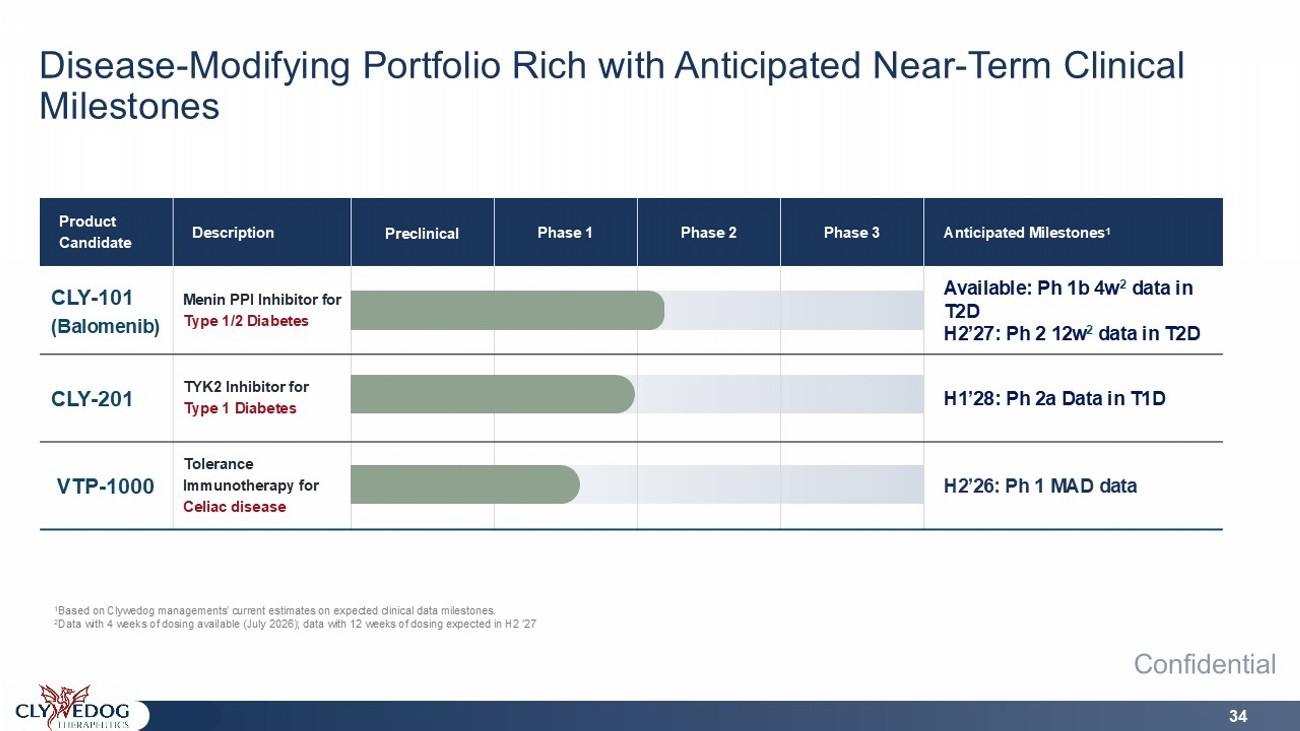
Anticipated Milestones 1 Phase 3 Phase 2 Phase 1 Preclinical Description Product Candidate Available: Ph 1b 4w 2 data in T2D H2’27: Ph 2 12w 2 data in T2D Menin PPI Inhibitor for Type 1/2 Diabetes CLY - 101 ( Balomenib ) H1’28: Ph 2a Data in T1D TYK2 Inhibitor for Type 1 Diabetes CLY - 201 H2’26 : Ph 1 MAD data Tolerance Immunotherapy for Celiac disease VTP - 1000 Disease - Modifying Portfolio Rich with Anticipated Near - Term Clinical Milestones 34 1 Based on Clywedog managements’ current estimates on expected clinical data milestones. 2 Data with 4 weeks of dosing available (July 2026); data with 12 weeks of dosing expected in H2 ’27
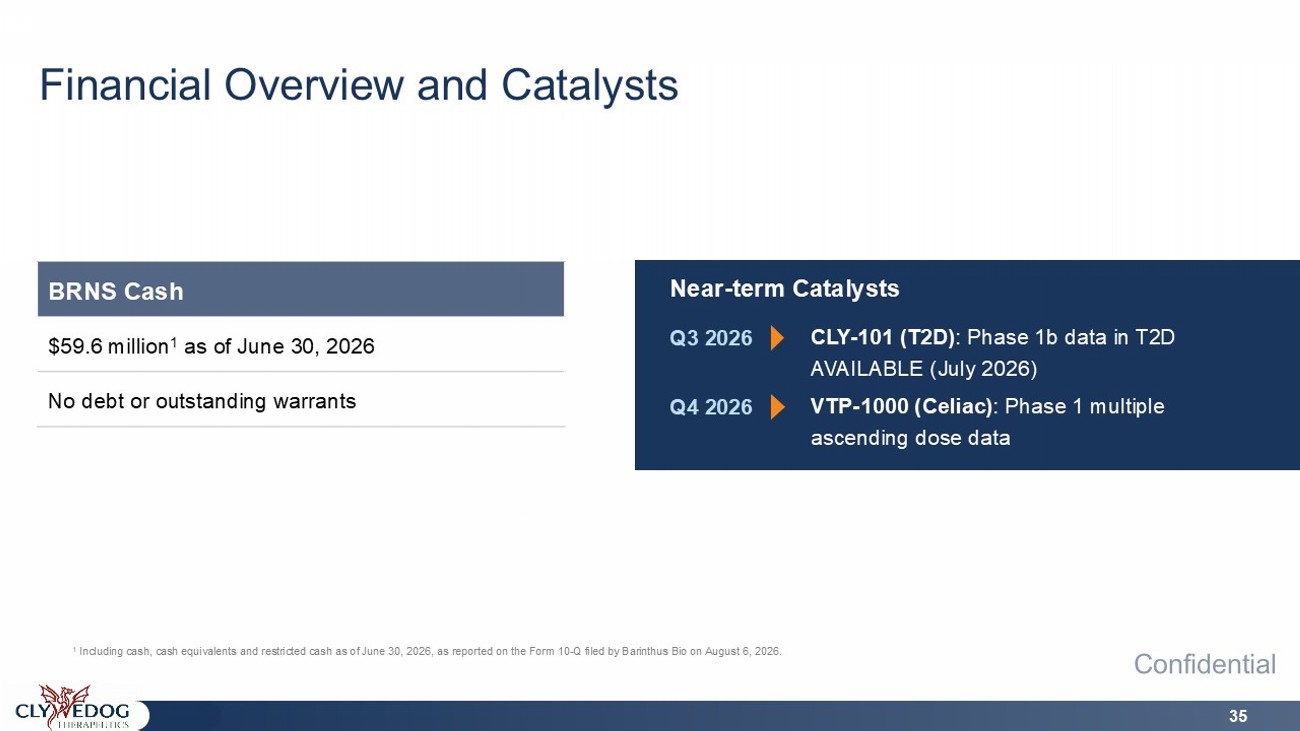
Financial Overview and Catalysts Near - term Catalysts Q4 2026 VTP - 1000 (Celiac) : Phase 1 multiple ascending dose data Q3 2026 CLY - 101 (T2D) : Phase 1b data in T2D AVAILABLE (July 2026) 1 Including cash, cash equivalents and restricted cash as of June 30, 2026, as reported on the Form 10 - Q filed by Barinthus Bio on August 6, 2026. BRNS Cash $59.6 million 1 as of June 30, 2026 No debt or outstanding warrants 35

Thank you