Exhibit 99.2 CUE-221 Phase 2 Chronic Spontaneous Urticaria September 2026 ©© 20 20 26 26 C C ue ue B B ioip oh pa hr a ma rma ©2024 Cue Biopharma CONFIDENTIAL DO NOT DISTRIBUTE
Forward-Looking Statements & Disclaimer • This presentation contains forward-looking statements within the meaning of the Private Securities Litigation Reform Act of 1995. Such forward-looking statements include, but are not limited to, those regarding the potential of CUE-221, including its potential future benefit to patients, the company's plans with respect to CUE-221, including the initiation of a Phase 2b/3 clinical trial in chronic spontaneous urticaria and a Phase 2 clinical trial in food allergy and the timings thereof, the company's expectations regarding the presentation of full clinical data from the Phase 2 CUE-221 trial, and the company's expectations regarding the company's growth, and the company's business strategies, plans, and prospects. Forward-looking statements, which are based on certain assumptions and describe the company's future plans, strategies and expectations, can generally be identified by the use of forward-looking terms such as “believe,” “expect,” “may,” “will,” “should,” “would,” “could,” “seek,” “intend,” “plan,” “goal,” “project,” “estimate,” “anticipate,” “strategy,” “future,” “likely,” “promise,” “potential” or other comparable terms, although not all forward-looking statements contain these identifying words. All statements other than statements of historical facts included in this presentation regarding the company's strategies, prospects, financial condition, operations, costs, plans, and objectives are forward-looking statements. Important factors that could cause the company's actual results and financial condition to differ materially from those indicated in the forward-looking statements include, among others, the company's ability to maintain and establish collaboration, licensing and other arrangements; the company's limited operating history, limited cash and a history of losses; the company's ability to obtain adequate financing to fund its business operations in the future; the company's ability to achieve profitability; potential setbacks in the company's research and development efforts for its current and future drug product candidates, including negative or inconclusive results from its preclinical studies or clinical trials or the company's ability to replicate in later clinical trials positive results found in preclinical studies and early-stage clinical trials of its product candidates; serious and unexpected drug-related side effects or other safety issues experienced by participants in clinical trials; potential challenges associated with clinical trials conducted in China and the company's access to, and acceptability of, the data therefrom; its ability to secure required U.S. Food and Drug Administration (FDA) or other governmental approvals for its product candidates and the breadth of any approved indication; delays and changes in regulatory requirements, policy and guidelines including potential delays in submitting required regulatory applications to the FDA; the company's reliance on licensors, collaborators, contract research organizations, suppliers and other business partners; the company's ability to maintain and enforce necessary patent and other intellectual property protection; competitive factors; general economic and market conditions and the other risks and uncertainties described in the Risk Factors and Management's Discussion and Analysis of Financial Condition and Results of Operations sections of the company's most recently filed Annual Report on Form 10-K and any subsequently filed Quarterly Report(s) on Form 10-Q. Any forward-looking statement made by the company in this presentation is based only on information currently available to the company and speaks only as of the date on which it is made. The company undertakes no obligation to publicly update any forward-looking statement, whether written or oral, that may be made from time to time, whether as a result of new information, future developments or otherwise. • This presentation also contains estimates, projections and other statistical data made by independent parties and by the company relating to market size and growth and other data about the company’s industry and business. This data involves a number of assumptions and limitations, and you are cautioned not to give undue weight to such estimates. The company has not independently verified the accuracy and completeness of the information obtained by CONFIDENTIAL third parties included in this presentation. In addition, projections, assumptions and estimates of the company’s future performance and the future performance of the markets in which the company operates are necessarily subject to a high degree of uncertainty and risk. CONFIDENTIAL ©2026 Cue Biopharma ©2024 Cue Biopharma CONFIDENTIAL DO NOT DISTRIBUTE 2
Positive Results from CUE-221 Phase 2 CSU Study Demonstrate Robust and Durable Clinical Benefit • Robust Dose-Responsive Results: Primary endpoint of complete resolution of hives (HSS7=0) vs. placebo at week 12 was met, with treatment effect peaking at Week 22 • Potent Disease Control: Secondary endpoint of complete response (UAS7=0) was statistically significant in the high-dose group, further supporting clinically meaningful impact • Favorable Safety and Tolerability: including no hypersensitivity reactions (i.e. anaphylaxis) • Durable Benefit: both observations of complete hives resolution and complete response persisted for 12 weeks off-drug for the high-dose group, but not for omalizumab, pointing to fundamental biological differences • Potential as Disease Modifier: We believe the stark contrast observed off-drug at week 28 against a sole IgE neutralizer provides clinical evidence supportive of CUE-221 engineered dual MOA with both neutralization and down-regulation of IgE synthesis • Next Steps: Based on demonstrated potential for differentiated efficacy in CSU and clinical evidence of relevance for the dual MOA, we will plan both P2b/3 in CSU and P2 in food allergy ©2026 Cue Biopharma ©2024 Cue Biopharma CONFIDENTIAL DO NOT DISTRIBUTE 3
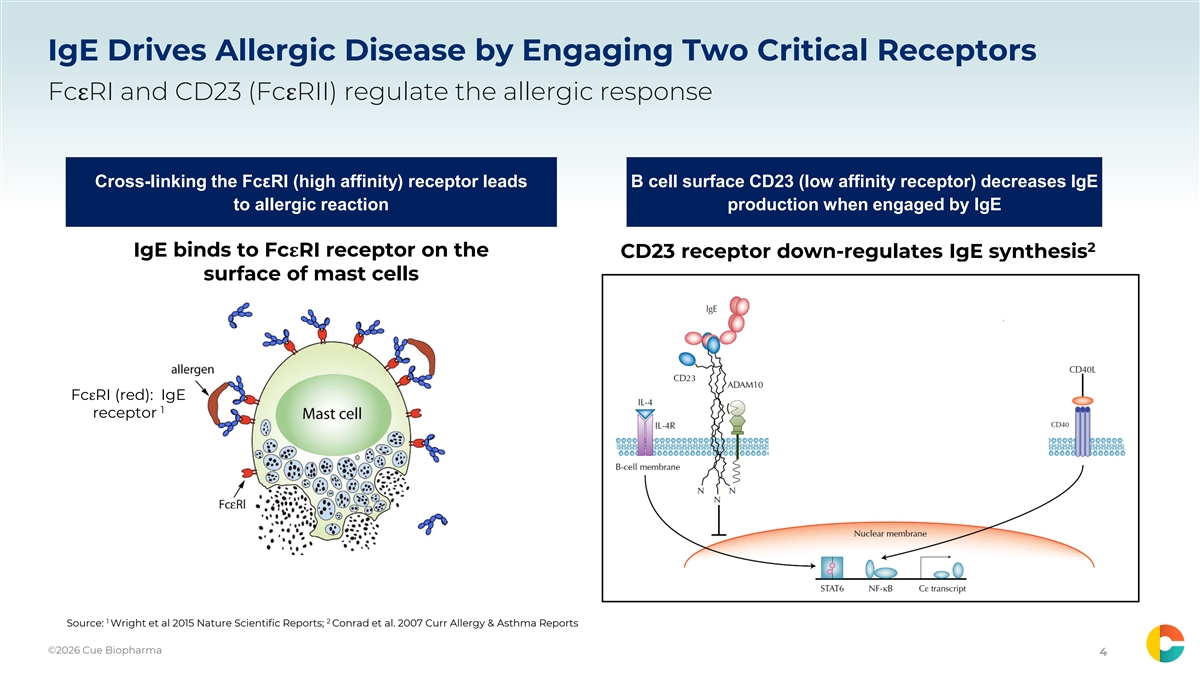
IgE Drives Allergic Disease by Engaging Two Critical Receptors FcεRI and CD23 (FcεRII) regulate the allergic response Cross-linking the FcεRI (high affinity) receptor leads B cell surface CD23 (low affinity receptor) decreases IgE to allergic reaction production when engaged by IgE 2 IgE binds to FcεRI receptor on the CD23 receptor down-regulates IgE synthesis surface of mast cells FcεRI (red): IgE 1 receptor 1 2 Source: Wright et al 2015 Nature Scientific Reports; Conrad et al. 2007 Curr Allergy & Asthma Reports ©2026 Cue Biopharma ©2024 Cue Biopharma CONFIDENTIAL DO NOT DISTRIBUTE 4
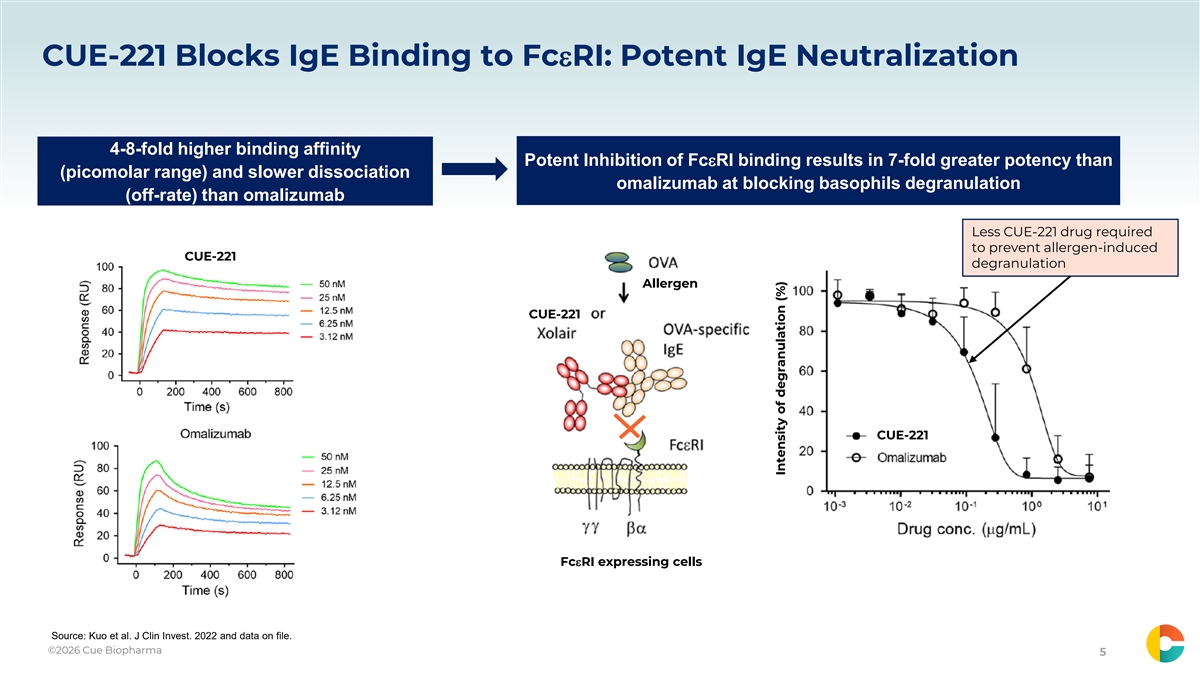
CUE-221 Blocks IgE Binding to FcεRI: Potent IgE Neutralization 4-8-fold higher binding affinity Potent Inhibition of FcεRI binding results in 7-fold greater potency than (picomolar range) and slower dissociation omalizumab at blocking basophils degranulation (off-rate) than omalizumab Less CUE-221 drug required to prevent allergen-induced CUE-221 degranulation Allergen CUE-221 CUE-221 FcεRI expressing cells Source: Kuo et al. J Clin Invest. 2022 and data on file. ©2026 Cue Biopharma ©2024 Cue Biopharma CONFIDENTIAL DO NOT DISTRIBUTE 5 Intensity of degranulation (%)
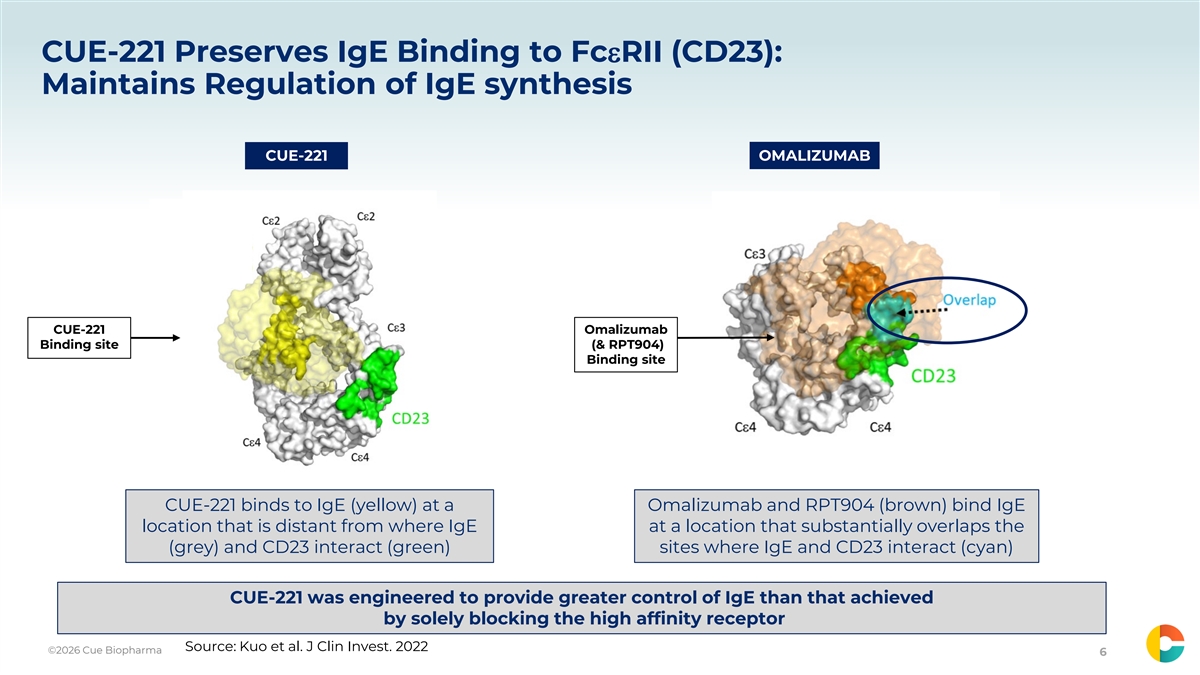
CUE-221 Preserves IgE Binding to FcεRII (CD23): Maintains Regulation of IgE synthesis CUE-221 OMALIZUMAB CUE-221 Omalizumab Binding site (& RPT904) Binding site CUE-221 binds to IgE (yellow) at a Omalizumab and RPT904 (brown) bind IgE location that is distant from where IgE at a location that substantially overlaps the (grey) and CD23 interact (green) sites where IgE and CD23 interact (cyan) CUE-221 was engineered to provide greater control of IgE than that achieved by solely blocking the high affinity receptor Source: Kuo et al. J Clin Invest. 2022 ©2026 Cue Biopharma ©2024 Cue Biopharma CONFIDENTIAL DO NOT DISTRIBUTE 6
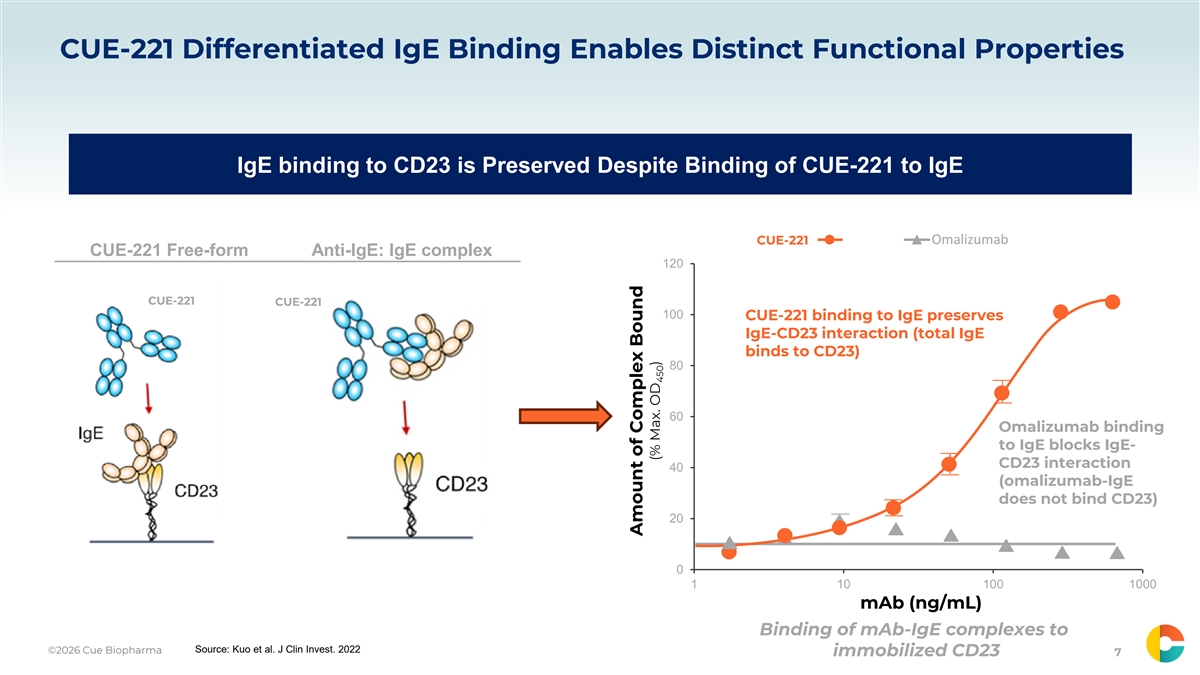
CUE-221 Differentiated IgE Binding Enables Distinct Functional Properties IgE binding to CD23 is Preserved Despite Binding of CUE-221 to IgE Omalizumab CUE-221 UB-221 CUE-221 Free-form Anti-IgE: IgE complex 120 CUE-221 CUE-221 100 CUE-221 binding to IgE preserves IgE-CD23 interaction (total IgE binds to CD23) 80 60 Omalizumab binding to IgE blocks IgE- CD23 interaction 40 (omalizumab-IgE does not bind CD23) 20 0 1 10 100 1000 mAb (ng/mL) Binding of mAb-IgE complexes to Source: Kuo et al. J Clin Invest. 2022 ©2026 Cue Biopharma ©2024 Cue Biopharma CONFIDENTIAL DO NOT DISTRIBUTE immobilized CD23 7 Amount of Complex Bound (% Max. OD ) 450
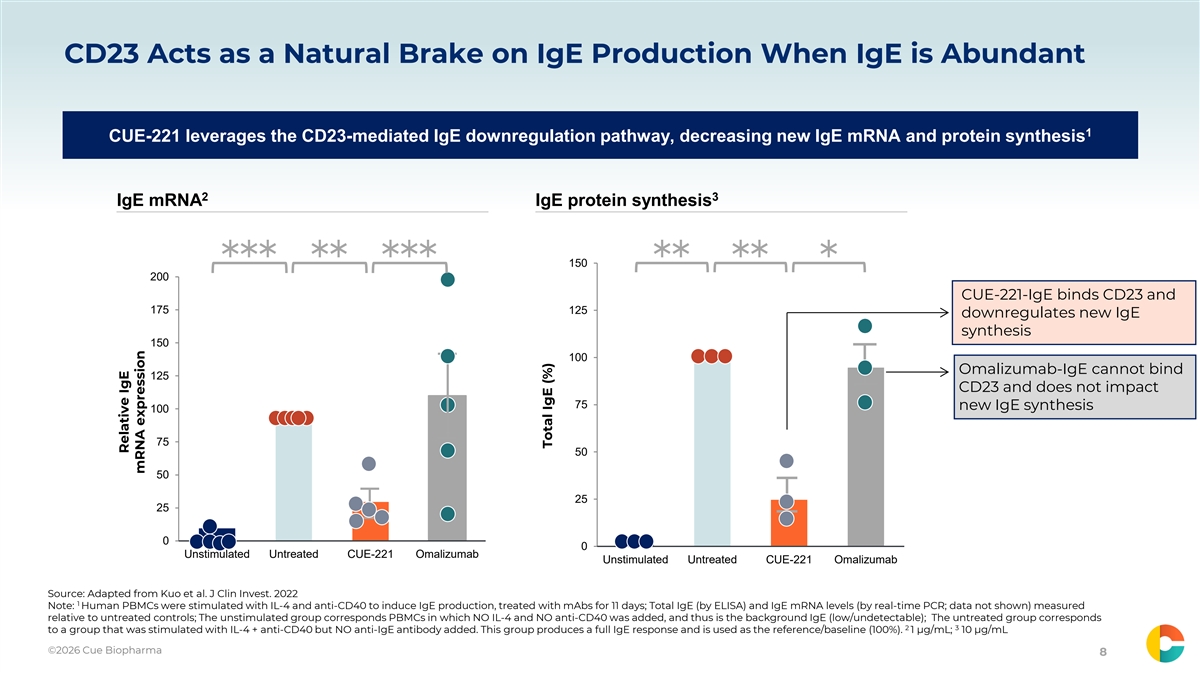
CD23 Acts as a Natural Brake on IgE Production When IgE is Abundant 1 CUE-221 leverages the CD23-mediated IgE downregulation pathway, decreasing new IgE mRNA and protein synthesis 2 3 IgE mRNA IgE protein synthesis 150 *** ** *** ** ** * 200 CUE-221-IgE binds CD23 and 175 125 downregulates new IgE synthesis 150 100 Omalizumab-IgE cannot bind 125 CD23 and does not impact 75 new IgE synthesis 100 75 50 50 25 25 0 0 Unstimulated Untreated CUE-221 Omalizumab Unstimulated Untreated CUE-221 Omalizumab Source: Adapted from Kuo et al. J Clin Invest. 2022 1 Note: Human PBMCs were stimulated with IL-4 and anti-CD40 to induce IgE production, treated with mAbs for 11 days; Total IgE (by ELISA) and IgE mRNA levels (by real-time PCR; data not shown) measured relative to untreated controls; The unstimulated group corresponds PBMCs in which NO IL-4 and NO anti-CD40 was added, and thus is the background IgE (low/undetectable); The untreated group corresponds 2 3 to a group that was stimulated with IL-4 + anti-CD40 but NO anti-IgE antibody added. This group produces a full IgE response and is used as the reference/baseline (100%). 1 µg/mL; 10 µg/mL ©2026 Cue Biopharma ©2024 Cue Biopharma CONFIDENTIAL DO NOT DISTRIBUTE 8 Relative IgE mRNA expression Total IgE (%)
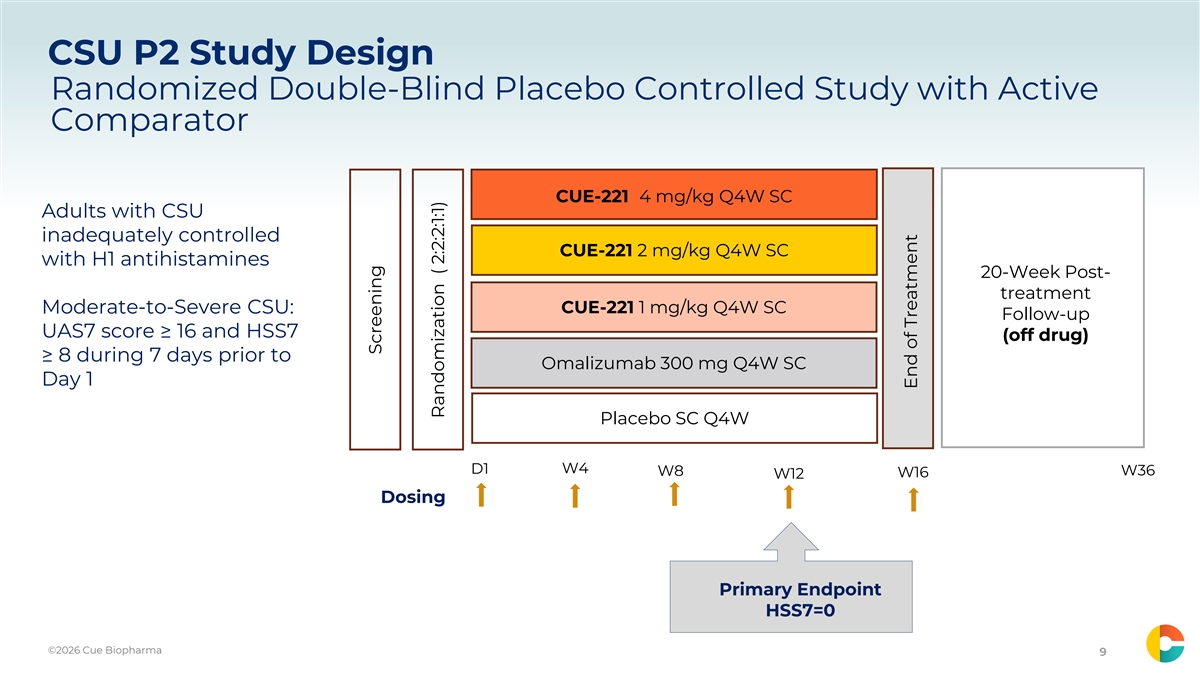
CSU P2 Study Design Randomized Double-Blind Placebo Controlled Study with Active Comparator CUE-221 4 mg/kg Q4W SC Adults with CSU inadequately controlled CUE-221 2 mg/kg Q4W SC with H1 antihistamines 20-Week Post- treatment Moderate-to-Severe CSU: CUE-221 1 mg/kg Q4W SC Follow-up UAS7 score ≥ 16 and HSS7 (off drug) ≥ 8 during 7 days prior to Omalizumab 300 mg Q4W SC Day 1 Placebo SC Q4W D1 W4 W8 W36 W16 W12 Dosing Primary Endpoint HSS7=0 ©2026 Cue Biopharma ©2024 Cue Biopharma CONFIDENTIAL DO NOT DISTRIBUTE 9 Screening Randomization ( 2:2:2:1:1) End of Treatment
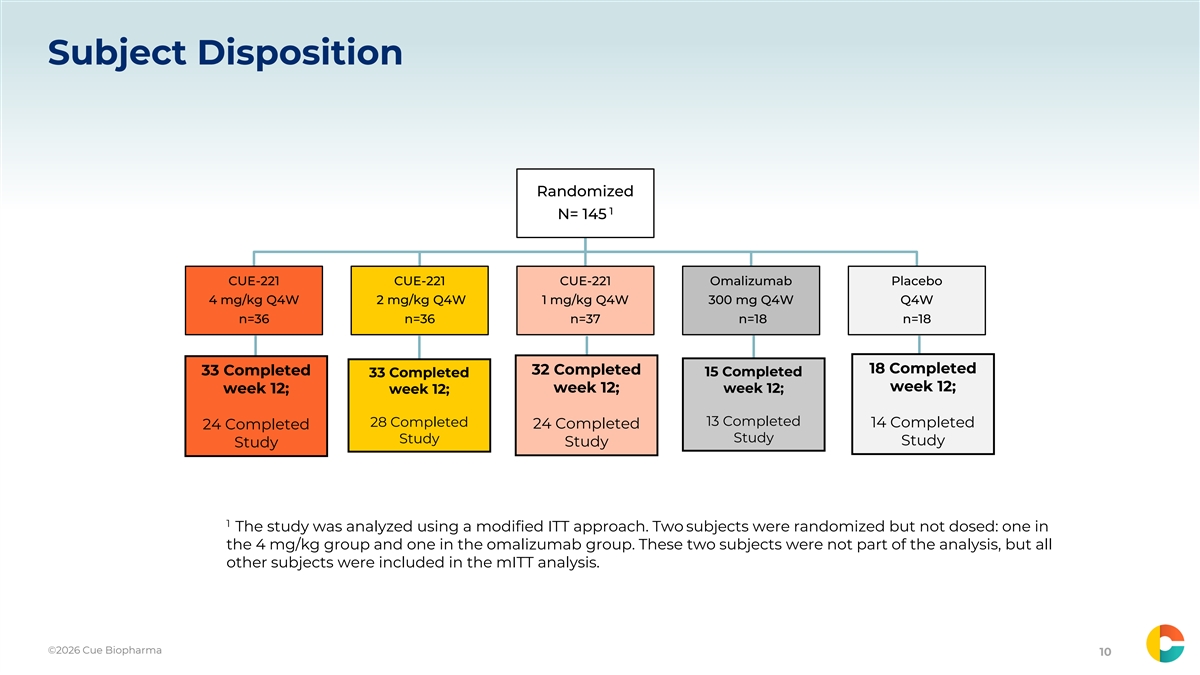
Subject Disposition Randomized 1 N= 145 CUE-221 CUE-221 CUE-221 Omalizumab Placebo 4 mg/kg Q4W 2 mg/kg Q4W 1 mg/kg Q4W 300 mg Q4W Q4W n=36 n=36 n=37 n=18 n=18 18 Completed 33 Completed 32 Completed 15 Completed 33 Completed week 12; week 12; week 12; week 12; week 12; 13 Completed 28 Completed 14 Completed 24 Completed 24 Completed Study Study Study Study Study 1 The study was analyzed using a modified ITT approach. Two subjects were randomized but not dosed: one in the 4 mg/kg group and one in the omalizumab group. These two subjects were not part of the analysis, but all other subjects were included in the mITT analysis. ©2026 Cue Biopharma ©2024 Cue Biopharma CONFIDENTIAL DO NOT DISTRIBUTE 10
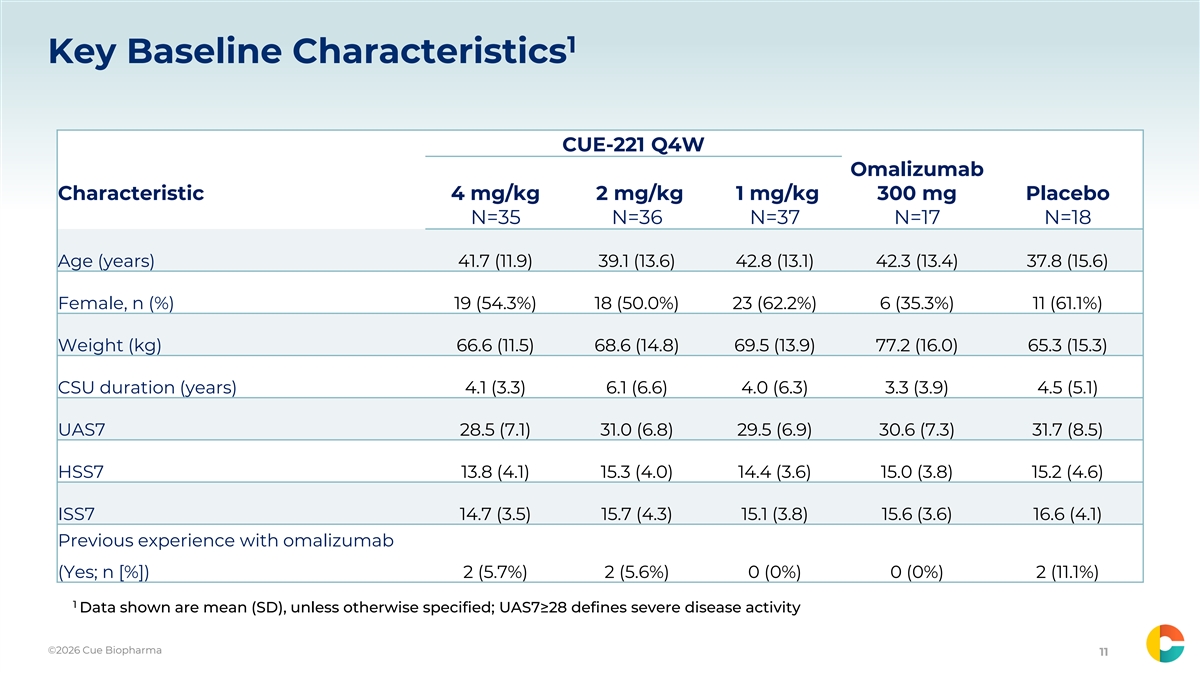
1 Key Baseline Characteristics CUE-221 Q4W Omalizumab Characteristic 4 mg/kg 2 mg/kg 1 mg/kg 300 mg Placebo N=35 N=36 N=37 N=17 N=18 Age (years) 41.7 (11.9) 39.1 (13.6) 42.8 (13.1) 42.3 (13.4) 37.8 (15.6) Female, n (%) 19 (54.3%) 18 (50.0%) 23 (62.2%) 6 (35.3%) 11 (61.1%) Weight (kg) 66.6 (11.5) 68.6 (14.8) 69.5 (13.9) 77.2 (16.0) 65.3 (15.3) CSU duration (years) 4.1 (3.3) 6.1 (6.6) 4.0 (6.3) 3.3 (3.9) 4.5 (5.1) UAS7 28.5 (7.1) 31.0 (6.8) 29.5 (6.9) 30.6 (7.3) 31.7 (8.5) HSS7 13.8 (4.1) 15.3 (4.0) 14.4 (3.6) 15.0 (3.8) 15.2 (4.6) ISS7 14.7 (3.5) 15.7 (4.3) 15.1 (3.8) 15.6 (3.6) 16.6 (4.1) Previous experience with omalizumab (Yes; n [%]) 2 (5.7%) 2 (5.6%) 0 (0%) 0 (0%) 2 (11.1%) 1 Data shown are mean (SD), unless otherwise specified; UAS7≥28 defines severe disease activity ©2026 Cue Biopharma ©2024 Cue Biopharma CONFIDENTIAL DO NOT DISTRIBUTE 11
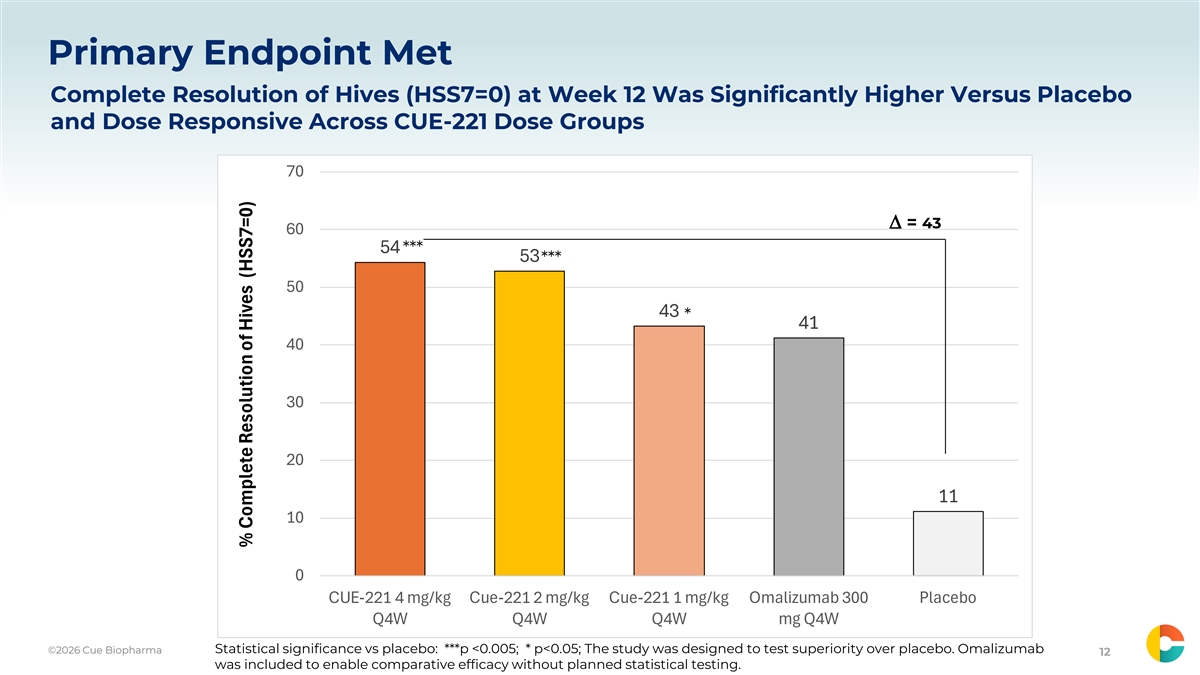
Primary Endpoint Met Complete Resolution of Hives (HSS7=0) at Week 12 Was Significantly Higher Versus Placebo and Dose Responsive Across CUE-221 Dose Groups 70 ∆ = 43 60 54 *** 53 *** 50 43 * 41 40 30 20 11 10 0 CUE-221 4 mg/kg Cue-221 2 mg/kg Cue-221 1 mg/kg Omalizumab 300 Placebo Q4W Q4W Q4W mg Q4W ©2026 Cue Biopharma Statistical significance vs placebo: ***p <0.005; * p<0.05; The study was designed to test superiority over placebo. Omalizumab ©2024 Cue Biopharma CONFIDENTIAL DO NOT DISTRIBUTE 12 was included to enable comparative efficacy without planned statistical testing. % Complete Resolution of Hives (HSS7=0)
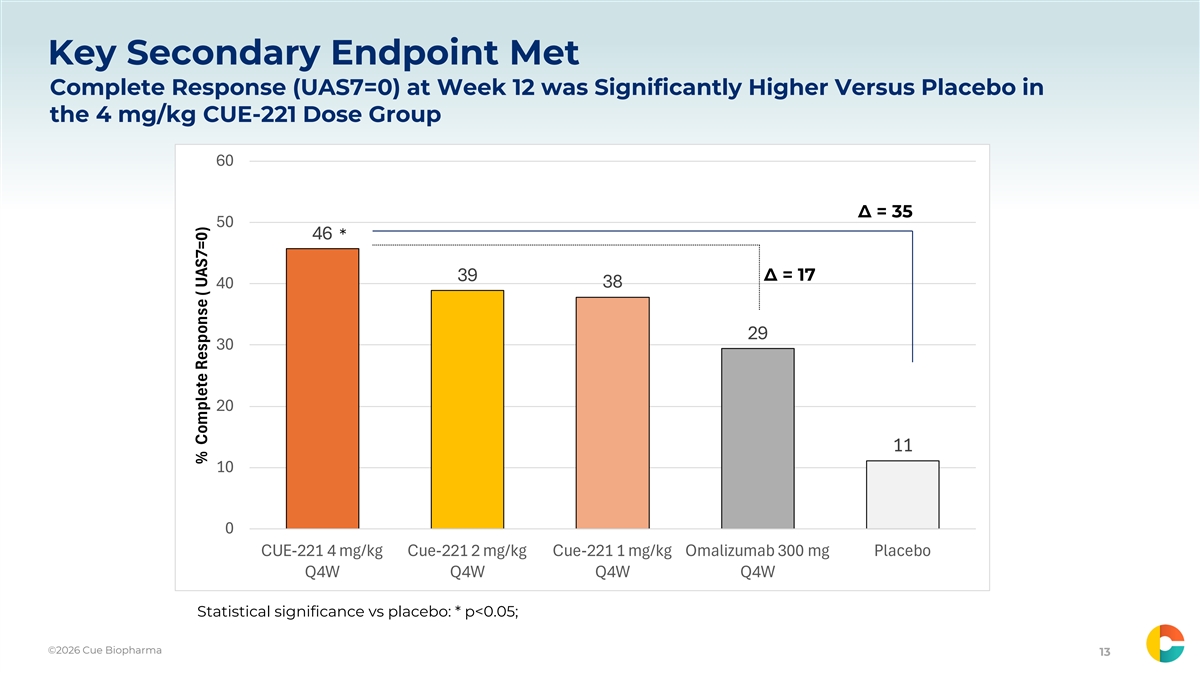
Key Secondary Endpoint Met Complete Response (UAS7=0) at Week 12 was Significantly Higher Versus Placebo in the 4 mg/kg CUE-221 Dose Group 60 ∆ = 35 50 46 * 39 ∆ = 17 38 40 29 30 20 11 10 0 CUE-221 4 mg/kg Cue-221 2 mg/kg Cue-221 1 mg/kg Omalizumab 300 mg Placebo Q4W Q4W Q4W Q4W Statistical significance vs placebo: * p<0.05; ©2026 Cue Biopharma ©2024 Cue Biopharma CONFIDENTIAL DO NOT DISTRIBUTE 13 % Complete Response ( UAS7=0)
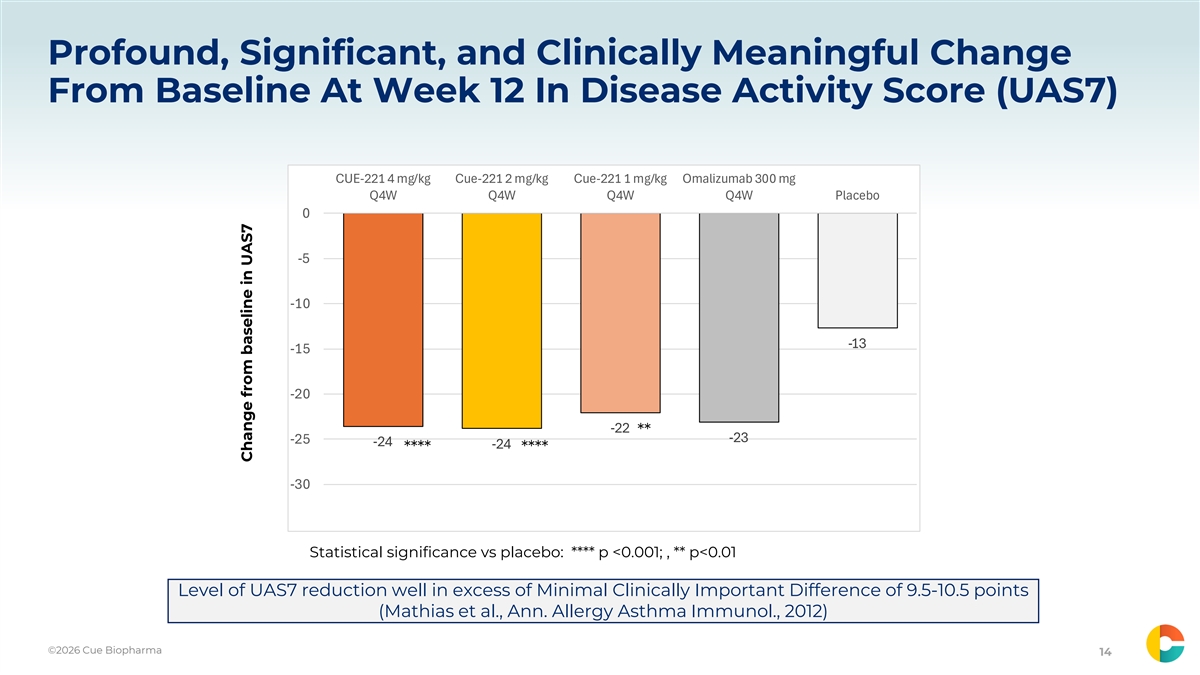
Profound, Significant, and Clinically Meaningful Change From Baseline At Week 12 In Disease Activity Score (UAS7) CUE-221 4 mg/kg Cue-221 2 mg/kg Cue-221 1 mg/kg Omalizumab 300 mg Q4W Q4W Q4W Q4W Placebo 0 -5 -10 -13 -15 -20 -22 ** -23 -25 -24 -24 **** **** -30 Statistical significance vs placebo: **** p <0.001; , ** p<0.01 Level of UAS7 reduction well in excess of Minimal Clinically Important Difference of 9.5-10.5 points (Mathias et al., Ann. Allergy Asthma Immunol., 2012) ©2026 Cue Biopharma ©2024 Cue Biopharma CONFIDENTIAL DO NOT DISTRIBUTE 14 Change from baseline in UAS7
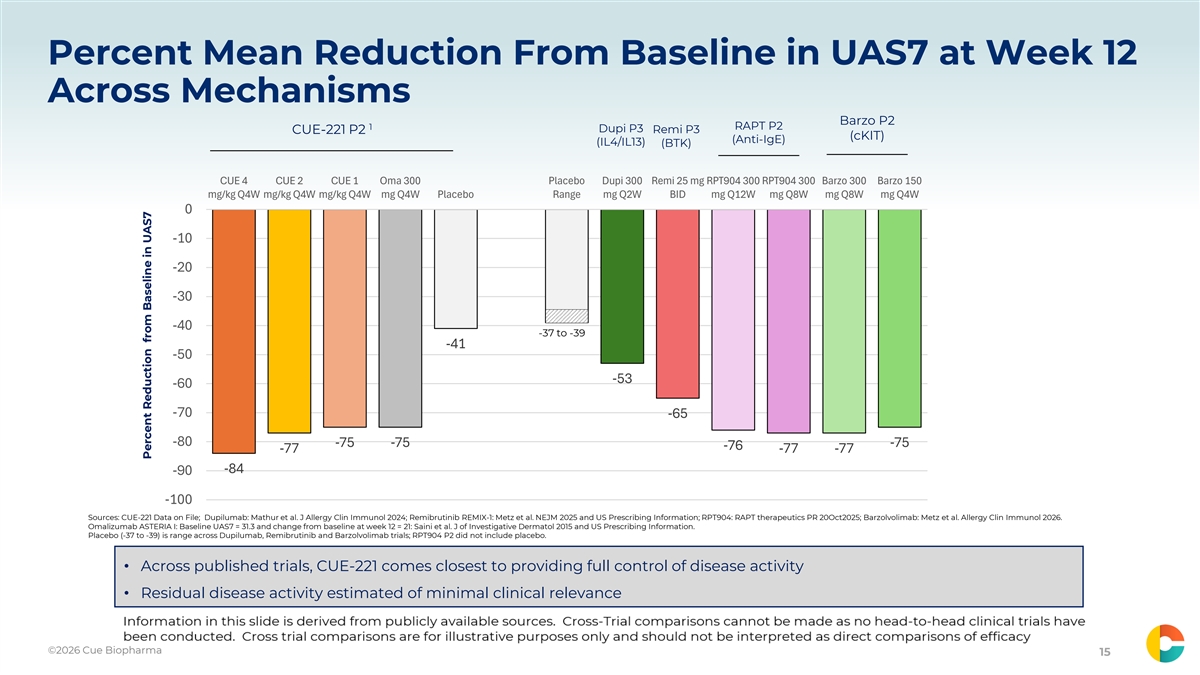
Percent Mean Reduction From Baseline in UAS7 at Week 12 Across Mechanisms Barzo P2 1 RAPT P2 Dupi P3 CUE-221 P2 Remi P3 (cKIT) (Anti-IgE) (IL4/IL13) (BTK) CUE 4 CUE 2 CUE 1 Oma 300 Placebo Dupi 300 Remi 25 mg RPT904 300 RPT904 300 Barzo 300 Barzo 150 mg/kg Q4W mg/kg Q4W mg/kg Q4W mg Q4W Placebo Range mg Q2W BID mg Q12W mg Q8W mg Q8W mg Q4W 0 -10 -20 -30 -40 -37 to -39 -41 -50 -53 -60 -70 -65 -80 -75 -75 -75 -76 -77 -77 -77 -84 -90 -100 Sources: CUE-221 Data on File; Dupilumab: Mathur et al. J Allergy Clin Immunol 2024; Remibrutinib REMIX-1: Metz et al. NEJM 2025 and US Prescribing Information; RPT904: RAPT therapeutics PR 20Oct2025; Barzolvolimab: Metz et al. Allergy Clin Immunol 2026. Omalizumab ASTERIA I: Baseline UAS7 = 31.3 and change from baseline at week 12 = 21: Saini et al. J of Investigative Dermatol 2015 and US Prescribing Information. Placebo (-37 to -39) is range across Dupilumab, Remibrutinib and Barzolvolimab trials; RPT904 P2 did not include placebo. • Across published trials, CUE-221 comes closest to providing full control of disease activity • Residual disease activity estimated of minimal clinical relevance ©2026 Cue Biopharma ©2024 Cue Biopharma CONFIDENTIAL DO NOT DISTRIBUTE 15 Percent Reduction from Baseline in UAS7
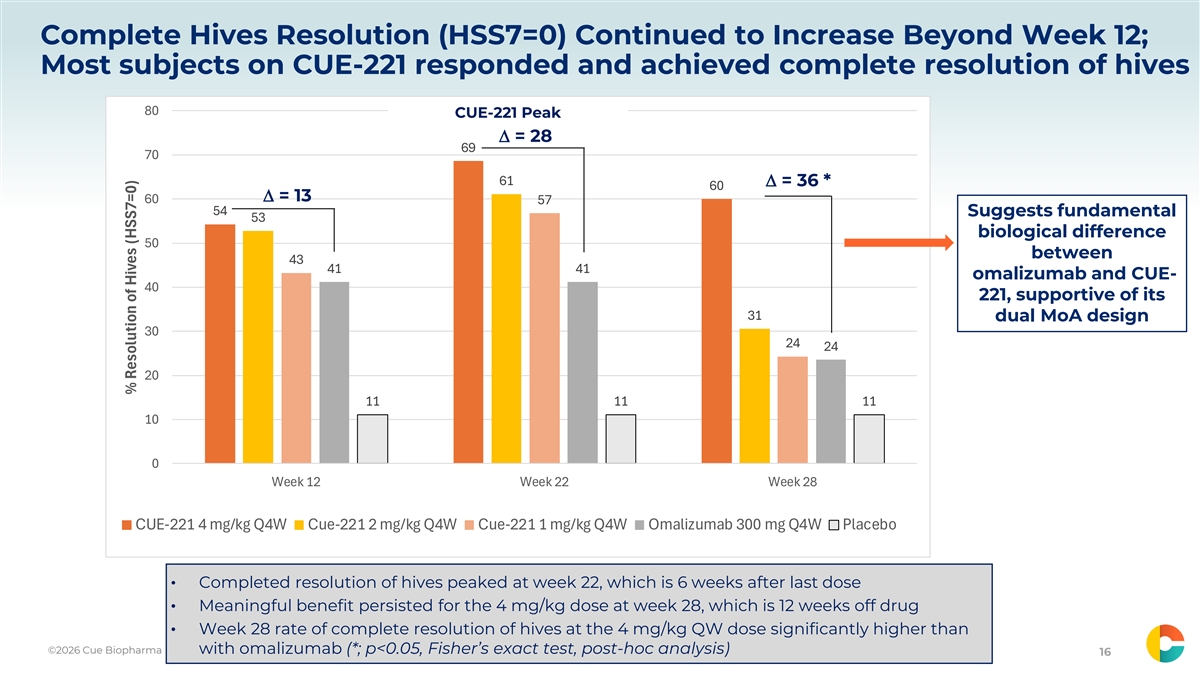
Complete Hives Resolution (HSS7=0) Continued to Increase Beyond Week 12; Most subjects on CUE-221 responded and achieved complete resolution of hives 80 CUE-221 Peak ∆ = 28 69 70 61 ∆ = 36 * 60 ∆ = 13 60 57 54 Suggests fundamental 53 biological difference 50 between 43 41 41 omalizumab and CUE- 40 221, supportive of its 31 dual MoA design 30 24 24 20 11 11 11 10 0 Week 12 Week 22 Week 28 CUE-221 4 mg/kg Q4W Cue-221 2 mg/kg Q4W Cue-221 1 mg/kg Q4W Omalizumab 300 mg Q4W Placebo • Completed resolution of hives peaked at week 22, which is 6 weeks after last dose • Meaningful benefit persisted for the 4 mg/kg dose at week 28, which is 12 weeks off drug • Week 28 rate of complete resolution of hives at the 4 mg/kg QW dose significantly higher than ©2026 Cue Biopharma with omalizumab (*; p<0.05, Fisher’s exact test, post-hoc analysis) ©2024 Cue Biopharma CONFIDENTIAL DO NOT DISTRIBUTE 16 % Resolution of Hives (HSS7=0)
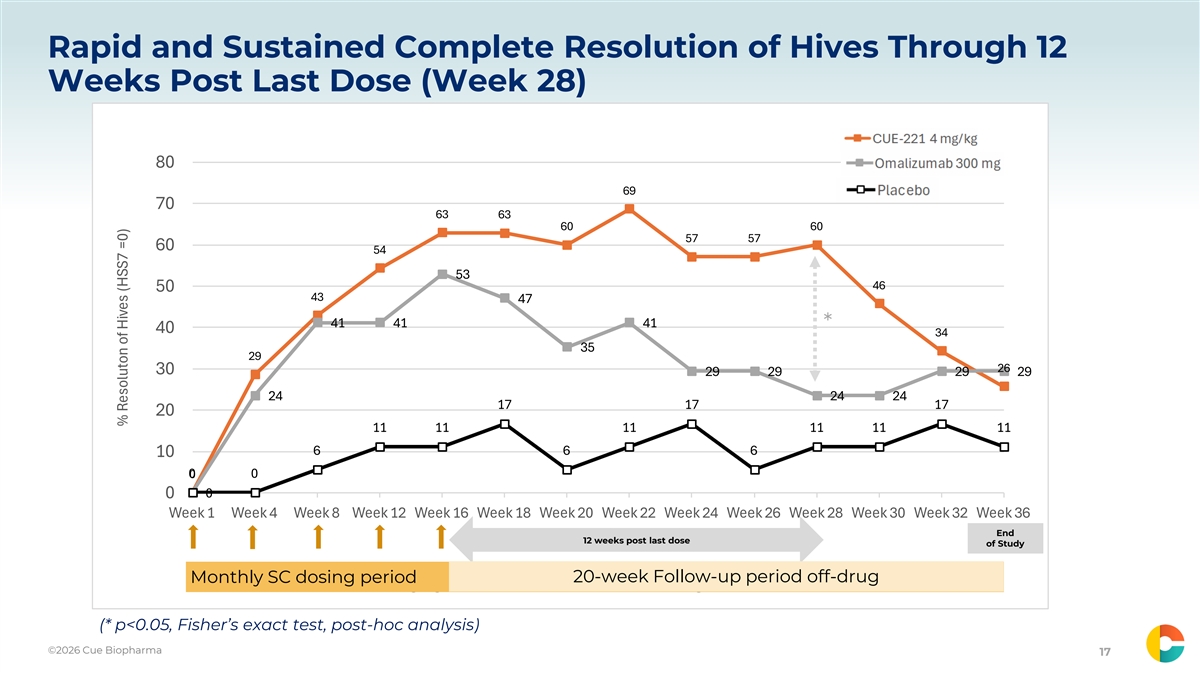
Rapid and Sustained Complete Resolution of Hives Through 12 Weeks Post Last Dose (Week 28) 80 69 70 63 63 60 60 57 57 60 54 53 46 50 43 47 41 41 41 * 40 34 35 29 26 30 29 29 29 29 24 24 24 17 17 17 20 11 11 11 11 11 11 6 6 6 10 0 0 0 0 0 Week 1 Week 4 Week 8 Week 12 Week 16 Week 18 Week 20 Week 22 Week 24 Week 26 Week 28 Week 30 Week 32 Week 36 End 12 weeks post last dose of Study 20-week Follow-up period off-drug Monthly SC dosing period 20-week Follow-up period off-drug CUE-221 4 mg/kg Q4W Omalizumab 300 mg Q4W Placebo (* p<0.05, Fisher’s exact test, post-hoc analysis) ©2026 Cue Biopharma ©2024 Cue Biopharma CONFIDENTIAL DO NOT DISTRIBUTE 17 % Resoluton of Hives (HSS7 =0)
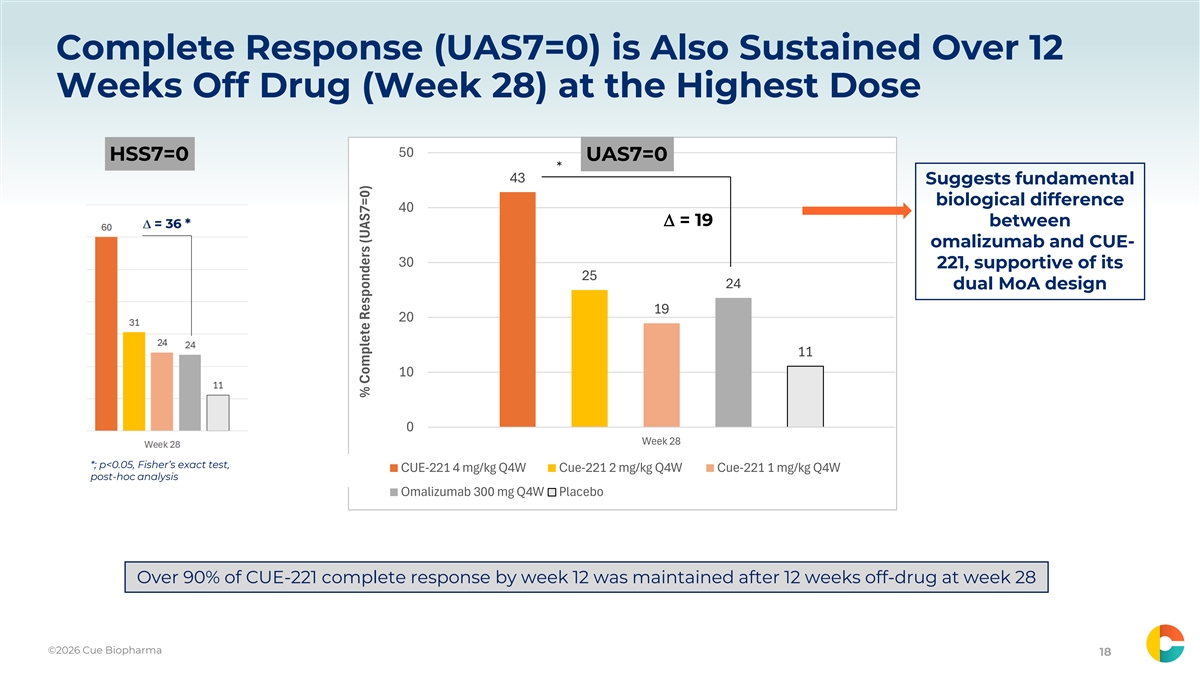
Complete Response (UAS7=0) is Also Sustained Over 12 Weeks Off Drug (Week 28) at the Highest Dose 50 HSS7=0 UAS7=0 * 43 Suggests fundamental biological difference 40 ∆ = 19 between omalizumab and CUE- 30 221, supportive of its 25 24 dual MoA design 19 20 11 10 0 Week 28 *; p<0.05, Fisher’s exact test, CUE-221 4 mg/kg Q4W Cue-221 2 mg/kg Q4W Cue-221 1 mg/kg Q4W post-hoc analysis Omalizumab 300 mg Q4W Placebo Over 90% of CUE-221 complete response by week 12 was maintained after 12 weeks off-drug at week 28 ©2026 Cue Biopharma ©2024 Cue Biopharma CONFIDENTIAL DO NOT DISTRIBUTE 18 % Complete Responders (UAS7=0)
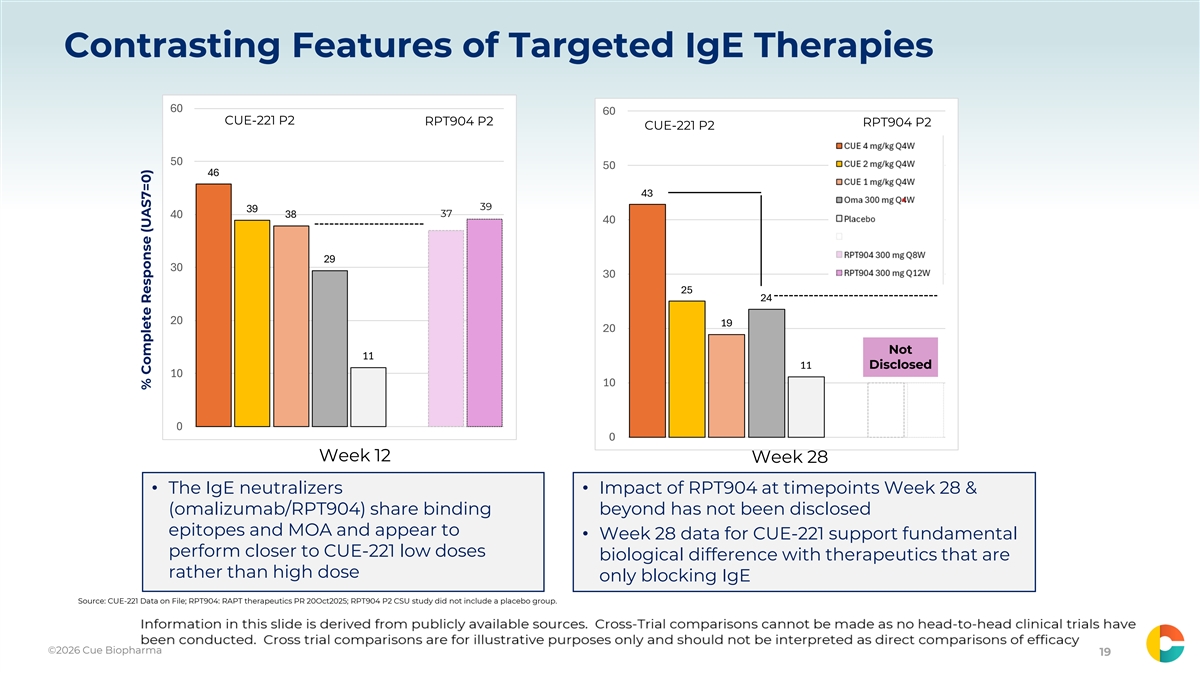
Contrasting Features of Targeted IgE Therapies 60 60 CUE-221 P2 RPT904 P2 RPT904 P2 CUE-221 P2 RPT904 P2 50 50 46 43 39 39 38 37 40 40 29 30 30 25 24 20 19 20 Not 11 11 Disclosed 10 10 0 0 Week 12 Week 28 • The IgE neutralizers • Impact of RPT904 at timepoints Week 28 & (omalizumab/RPT904) share binding beyond has not been disclosed epitopes and MOA and appear to • Week 28 data for CUE-221 support fundamental perform closer to CUE-221 low doses biological difference with therapeutics that are rather than high dose only blocking IgE Source: CUE-221 Data on File; RPT904: RAPT therapeutics PR 20Oct2025; RPT904 P2 CSU study did not include a placebo group. ©2026 Cue Biopharma ©2024 Cue Biopharma CONFIDENTIAL DO NOT DISTRIBUTE 19 % Complete Response (UAS7=0)
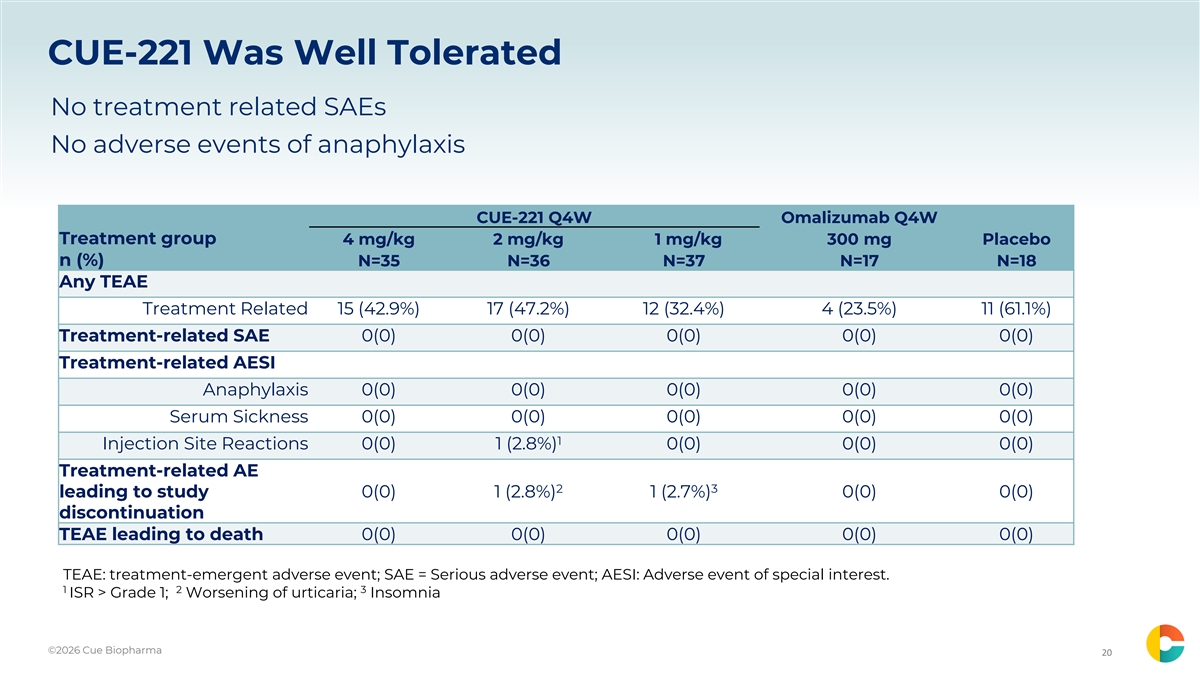
CUE-221 Was Well Tolerated No treatment related SAEs No adverse events of anaphylaxis CUE-221 Q4W Omalizumab Q4W Treatment group 4 mg/kg 2 mg/kg 1 mg/kg 300 mg Placebo n (%) N=35 N=36 N=37 N=17 N=18 Any TEAE Treatment Related 15 (42.9%) 17 (47.2%) 12 (32.4%) 4 (23.5%) 11 (61.1%) Treatment-related SAE 0(0) 0(0) 0(0) 0(0) 0(0) Treatment-related AESI Anaphylaxis 0(0) 0(0) 0(0) 0(0) 0(0) Serum Sickness 0(0) 0(0) 0(0) 0(0) 0(0) 1 Injection Site Reactions 0(0) 1 (2.8%) 0(0) 0(0) 0(0) Treatment-related AE 2 3 leading to study 0(0) 1 (2.8%) 1 (2.7%) 0(0) 0(0) discontinuation TEAE leading to death 0(0) 0(0) 0(0) 0(0) 0(0) TEAE: treatment-emergent adverse event; SAE = Serious adverse event; AESI: Adverse event of special interest. 1 2 3 ISR > Grade 1; Worsening of urticaria; Insomnia ©2026 Cue Biopharma ©2024 Cue Biopharma CONFIDENTIAL DO NOT DISTRIBUTE 20
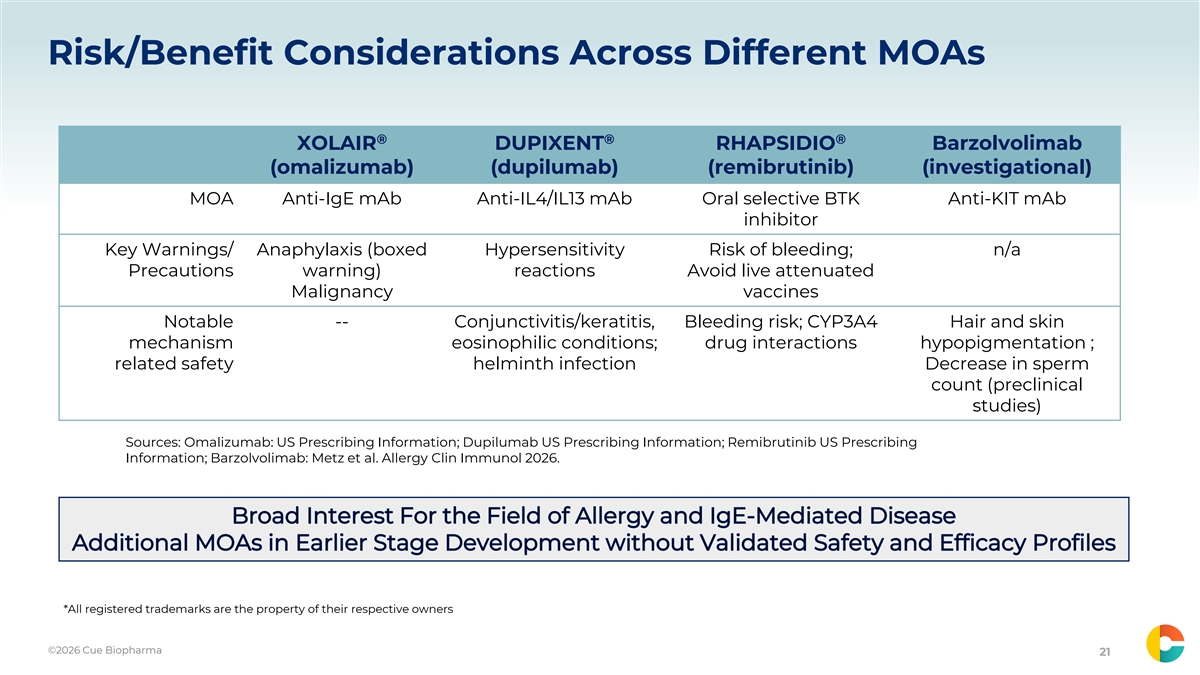
Risk/Benefit Considerations Across Different MOAs ® ® ® XOLAIR DUPIXENT RHAPSIDIO Barzolvolimab (omalizumab) (dupilumab) (remibrutinib) (investigational) MOA Anti-IgE mAb Anti-IL4/IL13 mAb Oral selective BTK Anti-KIT mAb inhibitor Key Warnings/ Anaphylaxis (boxed Hypersensitivity Risk of bleeding; n/a Precautions warning) reactions Avoid live attenuated Malignancy vaccines Notable -- Conjunctivitis/keratitis, Bleeding risk; CYP3A4 Hair and skin mechanism eosinophilic conditions; drug interactions hypopigmentation ; related safety helminth infection Decrease in sperm count (preclinical studies) Sources: Omalizumab: US Prescribing Information; Dupilumab US Prescribing Information; Remibrutinib US Prescribing Information; Barzolvolimab: Metz et al. Allergy Clin Immunol 2026. *All registered trademarks are the property of their respective owners ©2026 Cue Biopharma ©2024 Cue Biopharma CONFIDENTIAL DO NOT DISTRIBUTE 21
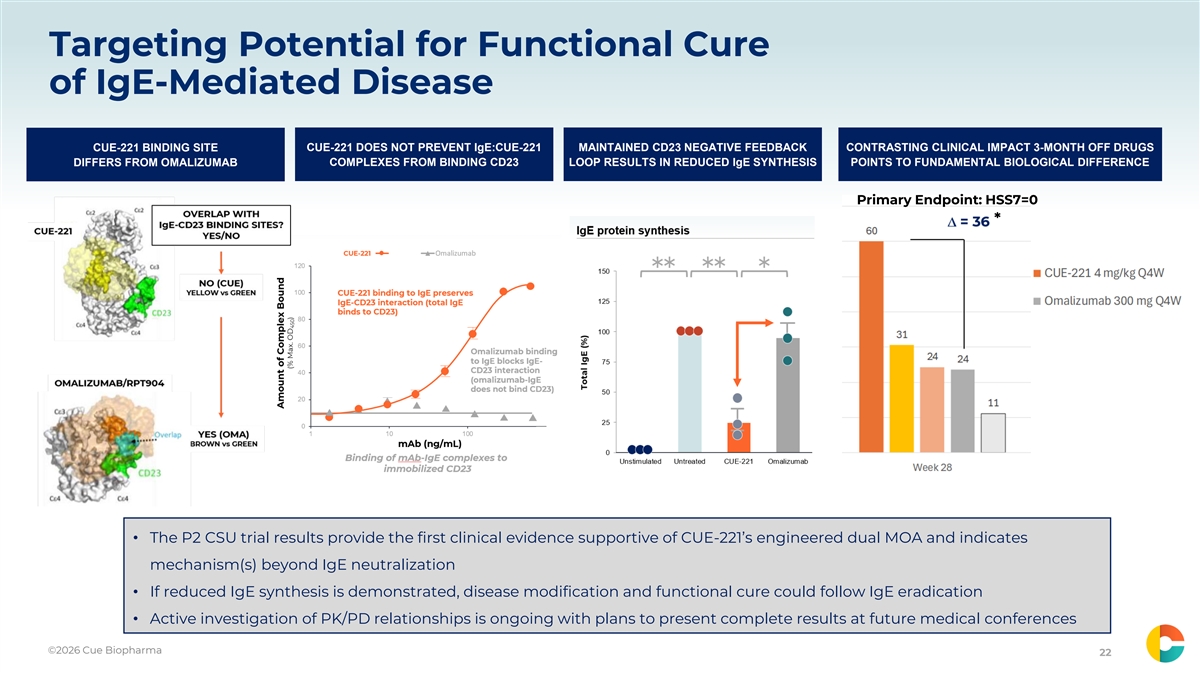
Targeting Potential for Functional Cure of IgE-Mediated Disease CUE-221 BINDING SITE CUE-221 DOES NOT PREVENT IgE:CUE-221 MAINTAINED CD23 NEGATIVE FEEDBACK CONTRASTING CLINICAL IMPACT 3-MONTH OFF DRUGS DIFFERS FROM OMALIZUMAB COMPLEXES FROM BINDING CD23 LOOP RESULTS IN REDUCED IgE SYNTHESIS POINTS TO FUNDAMENTAL BIOLOGICAL DIFFERENCE Primary Endpoint: HSS7=0 * • The P2 CSU trial results provide the first clinical evidence supportive of CUE-221’s engineered dual MOA and indicates mechanism(s) beyond IgE neutralization • If reduced IgE synthesis is demonstrated, disease modification and functional cure could follow IgE eradication • Active investigation of PK/PD relationships is ongoing with plans to present complete results at future medical conferences ©2026 Cue Biopharma ©2024 Cue Biopharma CONFIDENTIAL DO NOT DISTRIBUTE 22
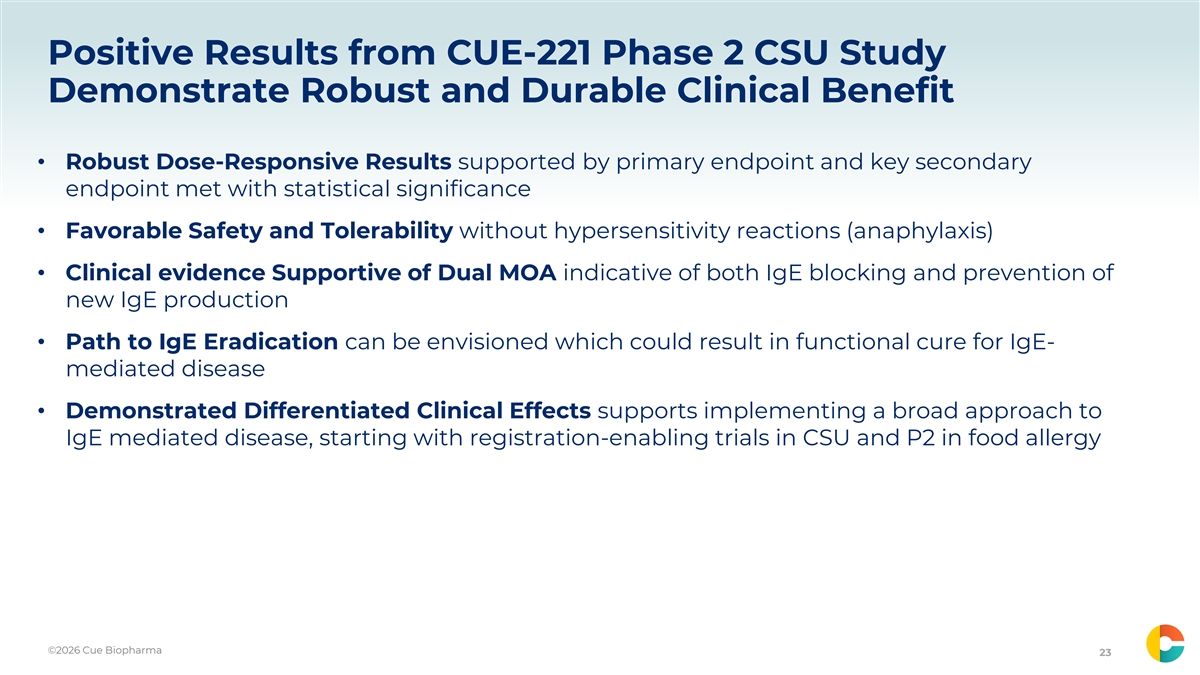
Positive Results from CUE-221 Phase 2 CSU Study Demonstrate Robust and Durable Clinical Benefit • Robust Dose-Responsive Results supported by primary endpoint and key secondary endpoint met with statistical significance • Favorable Safety and Tolerability without hypersensitivity reactions (anaphylaxis) • Clinical evidence Supportive of Dual MOA indicative of both IgE blocking and prevention of new IgE production • Path to IgE Eradication can be envisioned which could result in functional cure for IgE- mediated disease • Demonstrated Differentiated Clinical Effects supports implementing a broad approach to IgE mediated disease, starting with registration-enabling trials in CSU and P2 in food allergy ©2026 Cue Biopharma ©2024 Cue Biopharma CONFIDENTIAL DO NOT DISTRIBUTE 23