Exhibit
99.3
| September
10, 2026 |
|
| Due Diligence Narrative
Report |
|

| Clayton
Contact Information |
2 |
| Overview |
2 |
| Originators |
2 |
| Clayton’s
Third Party Review (“TPR”) Scope of Work |
3 |
| Review
scope |
3 |
| #
of Files Reviewed |
3 |
| Loan
Grading |
3 |
| TPR
Component Review Scope |
4 |
| Credit
Review |
4 |
| Property
Valuation Review |
4 |
| Regulatory
Compliance Review |
5 |
| Data
Integrity |
6 |
| Data
Capture |
7 |
| Data
Compare Results |
7 |
| Clayton
Due Diligence Results |
8 |
| Clayton
Third Party Reports Delivered |
10 |
| Appendix
A: Credit Review Scope |
11 |
| Appendix
B: Origination Appraisal Assessment |
14 |
| Appendix
C: Regulatory Compliance Review Scope |
17 |
| BINOM 2026-NQM2 Due Diligence Narrative Report | Page | 1 | | September 10, 2026 |
Clayton
Contact Information
Client
Service Management:
 |
Michael Santarsiere |
Client Service Director |
| |
|
Phone: (813) 371-0280/E-mail: msantarsiere@clayton.com |
| |
|
|
|
Joe Ozment |
Vice President – Client Services & Securitization |
| |
|
Phone: (813) 261-0733/E-mail: jozment@clayton.com |
Overview
On
behalf of SG Capital Partners, Inc., Clayton Services LLC (“Clayton”) conducted an independent third-party pre-securitization
due diligence review of 2 residential loans.
SLC
BINOM Sponsor LLC subsequently purchased these loans via reliance letter and selected these loans for the BINOM 2026-NQM2 transaction.
The
loans referenced in this narrative report were reviewed on a flow loan basis from November 2025 to December 2025. This narrative report
provides information about the scope of work performed by Clayton, and the results of Clayton’s review.
Originators
Origination channels
for the loans in this review:
| Origination
Channel |
Loan
Count |
Percentage |
| Broker |
1 |
50.00% |
| Retail |
1 |
50.00% |
| Total |
2
|
100.00% |
| BINOM 2026-NQM2 Due Diligence Narrative Report | Page | 2 | | September 10, 2026 |
Clayton’s
Third Party Review (“TPR”) Scope of Work
The
scope of work for this transaction consisted of a credit review, property valuation review, regulatory compliance review, and data integrity
check.
Review
scope |
#
of Files Reviewed |
| Credit
Review |
2 |
|
| Property
Valuation Review |
2 |
|
| Regulatory
Compliance Review |
0 |
|
| Data
Integrity Check |
2 |
|
Loan
Grading
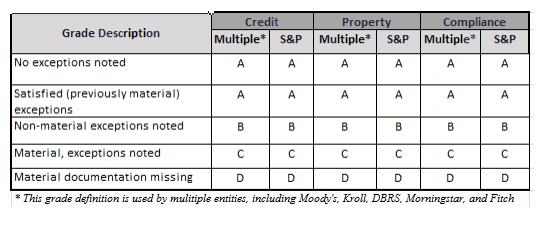
Each
loan received an “initial” and a “final” grade. The “initial” grade was assigned during the initial
loan review. The “final” grade takes into account additional information and supporting documentation that may have been
provided by the originators to clear outstanding conditions. Clayton’s loan grading is solely based on Clayton’s independent
assessment of all guideline exceptions and compensating factors for each of the component reviews. Clayton is providing a comprehensive
loan-level analysis as part of this pre-securitization reporting package that includes initial grades, final grades and detailed commentary
on the rationale for any changes in grades and sets forth compensating factors and waivers.
Clayton’s
loan grading complied with rating agency grading definitions published by Moody’s, Standard and Poor’s, Fitch, Morningstar,
Kroll and DBRS.
| BINOM 2026-NQM2 Due Diligence Narrative Report | Page | 3 | | September 10, 2026 |
TPR
Component Review Scope
Clayton
examined the selected loan files with respect to the presence or absence of relevant documents, enforceability of mortgage loan documents,
and accuracy and completeness of data fields. Clayton relied on the accuracy of information contained in the loan documentation provided
to Clayton.
Credit
Review
Clayton’s
Credit scope of review conducted on 2 loans on this transaction included the following elements (for more detail, please refer to Appendix
A):
| ■ | Compared
the loan documentation found in the loan file to the origination guidelines; |
| ■ | Re-calculated
LTV, CLTV, income, liabilities, and debt-to-income ratios (DTI) and compared these against
the stated seller origination guidelines; |
| ■ | Analyzed
asset statements in order to determine that funds to close and reserves were within origination
guidelines; |
| ■ | Confirmed
that credit scores (FICO) and credit histories were within origination guidelines; |
| ■ | Evaluated
for evidence of borrower’s willingness and ability to repay the obligation; |
| ■ | Examined
income, employment, assets, and occupancy status for reasonability; |
| ■ | Reviewed
the occupancy, VOE and self/employed business documents within the loan file, as applicable; |
| ■ | Listed
the property type as Coop, as applicable; |
| ■ | Reviewed
for condo warranty documentation, as applicable; |
PROPERTY VALUATION REVIEW
Clayton’s
Property Valuation scope of review conducted included the following elements:
| ■ | Original
Appraisal Assessment (2 loans) |
| - | Clayton
reviewed the original appraisal provided to determine whether the original appraisal was
complete, thorough and the original appraised value was reasonably supported. |
| - | For
more detail on the original appraisal review, please refer to Appendix
B and to the guidelines cited above. |
| ■ | Value
Supported Analysis (2 loans) |
Clayton
applied a cascade methodology to determine if the original appraised value was supported when compared to an independent third party
valuation product. Loans were held to a -10% tolerance utilizing the following waterfall;
For
further detail please refer to the BINOM 2026-NQM2 Valuations Summary Report
| BINOM 2026-NQM2 Due Diligence Narrative Report | Page | 4 | | September 10, 2026 |
Regulatory
Compliance Review
Clayton’s
regulatory compliance scope of review conducted on 0 loans on this transaction included the elements summarized below. (For more detail,
please refer to Appendix
C.)
Clayton
utilized its proprietary eCLAS engine for regulatory compliance testing.
The
scope of the compliance review performed is summarized below:
| ■ | Tested
for certain applicable federal, state and local high cost and/or anti-predatory laws; |
| ■ | Tested
for state-specific consumer protection laws including late charge and prepayment penalty
provisions; |
| ■ | Truth-in-lending/regulation
Z (TILA) testing included the following: |
| - | Notice
of Right to Cancel (Right of Rescission) adherence if applicable; |
| - | TIL
Disclosure Timing (3/7/3) and disclosure content; |
| - | TIL
APR and Finance charge tolerances; |
| - | Timeliness
of ARM Disclosures (if applicable); |
| - | Section
32 APR and Points and Fees Thresholds and prohibited practices; |
| - | Section
35 Higher Priced Mortgage Loans thresholds and applicable escrow and appraisal requirements; |
| - | Prohibited
Acts or Practices including Loan Originator compensation rules, NMLSR ID on documents, financing
credit Insurance, mandatory arbitration clauses, and NegAm Counseling; |
| - | Prepayment
Penalty restrictions; and |
| - | QM/ATR
Review: On applicable loans;, test compliance with applicable Qualified Mortgage (QM) and
Ability to Repay (ATR) requirements defined under the Dodd-Frank Wall Street Reform and Consumer
Protection Act as promulgated by the Consumer Financial Protection Bureau any loan subject
to that regulation, as further described on Appendix
C. attached hereto. |
| - | TILA/RESPA
Integrated Disclosure Scope (‘Covered Loans’ with an Application Date => 10/3/2015);
SFIG RMBS 3.0 TRID Compliance Review Scope as further described on Appendix
C. attached hereto. |
| ■ | Real
Estate Settlement Procedures Act (RESPA) laws and regulations testing included the following,
for loans other than ‘Covered Loans’ and loans with an Application Date prior
to 10/3/2015: |
| - | GFE
initial disclosure timing and content; |
| - | Confirmed
the file contains the final HUD1 Settlement Statement; |
| - | GFE
to HUD1 evaluation for 0% and 10% fee tolerances; |
| - | Homeownership
Counseling Notice; |
| - | Affiliated
Business Disclosure if applicable. |
OF
NOTE: As of October 3, 2015 (“TRID Effective Date”), Clayton commenced testing applicable loans subject to the TRID Effective
date against a TRID scope of review that was based on outside counsel’s interpretations of the published regulations as of the
TRID Effective Date. Clayton’s scope was commercially reasonable as it relates to a Third Party Review (“TPR”) firm’s
role as TPR conducting an independent third-party pre-securitization due diligence review (“Initial TRID Scope”). The Initial
TRID Scope was created with guidance from outside counsel.
On,
June 15th, 2016 SFIG published its RMBS 3.0 TRID Compliance Review Scope © documentation, developed under the leadership of members
from Third Party Review (“TPR”) firms across the industry and SFIG’s RMBS 3.0 Due Diligence, Data and Disclosure Working
Group. The RMBS 3.0 TRID Compliance Review Scope was created with an aim to facilitate a uniform testing and risk identification standard
as it would apply to an assignee, as a result of a consistent Truth-In-Lending Act liability interpretation according to the understanding
of prevailing legal precedent and informal written guidance and webinars offered by the CFPB, as it applies to the Know Before You Owe
/ Truth In Lending Act (“TILA) – Real Estate Settlement Procedures Act (“RESPA”) Integrated Disclosure (“TRID”)
Rule (78 FR 79730, as amended). RMBS 3.0 TRID Compliance Review Scope may be formally amended by the SFIG RMBS 3.0 Due Diligence, Data
and Disclosure Working
| BINOM 2026-NQM2 Due Diligence Narrative Report | Page | 5 | | September 10, 2026 |
Group
as clarifying regulations may be promulgated on a go forward basis, as well as any binding judicial interpretations of the underlying
law.
Following
the June 15th formal publication of the RMBS 3.0 TRID Compliance Review Scope ©, Clayton reviewed prior testing results
dating back to the TRID Effective Date, and applied the enhanced RMBS 3.0 TRID Compliance Review Scope to such loans upon the affirmative
election by SLC BINOM Sponsor LLC.
Compliance
Review (Business Purpose, Non-Owner Occupied)
Non-Owner
Occupied Scope: Most consumer protection laws are designed to afford protection to borrowers who are entering into a loan that will be
secured by their residence. For most high cost and higher-priced laws, as well as rescission, the only loans covered by the
law are loans secured by the borrower’s (or in the case of rescission a title holder’s) principal residence.
Most other consumer protection laws extend to a borrower’s secondary residence, which under TILA and RESPA is a residence that
they occupy at least 2 weeks during the year. Further, if the loan is for a business purpose it is often excluded from consumer
protection laws regardless of occupancy, including TILA (whereas if it is secured by non-owner occupied but for a personal, family or
household purpose it is more likely to be covered).
Therefore,
the list of laws that Clayton tests that apply to a loan secured by non-owner occupied property for a business purpose is limited. Regulatory
Compliance testing of Business Purpose Loans consists of the following:
State
and Federal High Cost and Higher-Priced:
| ● | Cook
County High Cost Ordinance |
| ● | Chicago
High Cost Ordinance |
Clayton
currently tests the Chicago and Cook County ordinances due to vague language around loans for a business purpose not related to the property.
While the state of Illinois has similar language, Clayton’s audit law firm determined that only principal residences should be
tested for IL high cost.
Anti-predatory
lending laws
| ● | Virginia
Lender and Broker Act after 6/1/2008 |
| ● | Minnesota
§58 on or after 8/1/2008 |
Prepayment
Penalties and Late Charges in certain states
National
Flood Insurance Program for 1-4 unit residential properties (Transaction Date on or after 1/1/2016 for regulated lenders)
| ● | Escrow
of insurance payments |
Data
Integrity
Clayton
utilized its proprietary eCLAS tool to determine tape-to-file accuracy of 2 reviewed loans, by completing the following steps:
| ■ | Tape
data received from seller/client is stored in eCLAS; |
| ■ | Loan
reviewer collects validated loan data in eCLAS; |
| ■ | Each
received data point is compared to its counterpart collected data point; |
| ■ | Discrepancies
found during comparison are stored; |
| ■ | Each
discrepancy is reported in a Loan Level Tape Compare Upload. |
| BINOM 2026-NQM2 Due Diligence Narrative Report | Page | 6 | | September 10, 2026 |
Data
Capture
Clayton
collected data fields required to create American Securitization Forum (“ASF”) data tape. The file format was provided as
part of the pre-securitization reporting package. Additionally, Clayton captured rating agency required data points relating to ATR/QM
determination, which is provided in the reporting package.
data
Compare Results
Clayton
provided SLC BINOM Sponsor LLC, with a copy of the Loan Level Tape Compare Upload which shows the differences between the data received
from the sellers versus the data captured by Clayton during the loan review in relation to the 2 loans reviewed.
No
Tape Discrepancies reported
| BINOM 2026-NQM2 Due Diligence Narrative Report | Page | 7 | | September 10, 2026 |
Clayton
Due Diligence Results
Below are
the initial and final overall loan grades for this review, as well as the credit, property valuation, and regulatory compliance component
review grades.
Initial
and Final Overall Loan Grade Results (S&P)
| |
Overall
Grade Migration |
| |
Initial |
| Final |
|
A |
B |
C |
D |
Total |
| A |
1
|
|
|
1 |
2 |
| B |
|
|
|
|
0 |
| C |
|
|
|
|
0 |
| D |
|
|
|
|
0 |
| Total |
1 |
0 |
0 |
1 |
2 |
Initial
and Final Overall Loan Grade Results (KBRA)
| |
Overall
Grade Migration |
| |
Initial |
| Final |
|
A |
B |
C |
D |
Total |
| A |
1
|
|
|
1 |
2 |
| B |
|
|
|
|
0 |
| C |
|
|
|
|
0 |
| D |
|
|
|
|
0 |
| Total |
1
|
0 |
0 |
1 |
2 |
The overall grade
summary reflects the combination of the credit, property valuation and regulatory compliance component reviews into one overall grade.
The overall grade assigned is the most severe grade from each of the component reviews.
Initial
and Final Credit Component Grade Results (S&P)
| |
Credit
Grade Migration |
| |
Initial |
| Final |
|
A |
B |
C |
D |
Total |
| A |
1
|
|
|
1 |
2 |
| B |
|
|
|
|
0 |
| C |
|
|
|
|
0 |
| D |
|
|
|
|
0 |
| Total |
1
|
0 |
0 |
1 |
2 |
| BINOM 2026-NQM2 Due Diligence Narrative Report | Page | 8 | | September 10, 2026 |
Initial
and Final Credit Component Grade Results (KBRA)
| |
Credit
Grade Migration |
| |
Initial |
| Final |
|
A |
B |
C |
D |
Total |
| A |
1
|
|
|
1 |
2 |
| B |
|
|
|
|
0 |
| C |
|
|
|
|
0 |
| D |
|
|
|
|
0 |
| Total |
1
|
0 |
0 |
1 |
2 |
Initial
and Final Property Valuation Grade Results (S&P)
| |
Property
Valuation Grade Migration |
| |
Initial |
| Final |
|
A |
B |
C |
D |
Total |
| A |
2
|
|
|
|
2 |
| B |
|
|
|
|
0 |
| C |
|
|
|
|
0 |
| D |
|
|
|
|
0 |
| Total |
2
|
0 |
0 |
0 |
2 |
Initial
and Final Property Valuation Grade Results (KBRA)
| |
Property
Valuation Grade Migration |
| |
Initial |
| Final |
|
A |
B |
C |
D |
Total |
| A |
2
|
|
|
|
2 |
| B |
|
|
|
|
0 |
| C |
|
|
|
|
0 |
| D |
|
|
|
|
0 |
| Total |
2 |
0 |
0 |
0 |
2 |
Initial
and Final Regulatory Compliance Grade Results (S&P)
| |
Compliance
Grade Migration |
| |
Initial |
| Final |
|
A |
B |
C |
D |
Total |
| A |
|
|
|
|
0 |
| B |
|
|
|
|
0 |
| C |
|
|
|
|
0 |
| D |
|
|
|
|
0 |
| Total |
0 |
0 |
0 |
0 |
0 |
*Compliance results
may not tie to total loan count based on business entity loans not being subject to a regulatory compliance review (2 loans in pool)
| BINOM 2026-NQM2 Due Diligence Narrative Report | Page | 9 | | September 10, 2026 |
Initial
and Final Regulatory Compliance Grade Results (KBRA)
| |
Compliance
Grade Migration |
| |
Initial |
| Final |
|
A |
B |
C |
D |
Total |
| A |
|
|
|
|
0 |
| B |
|
|
|
|
0 |
| C |
|
|
|
|
0 |
| D |
|
|
|
|
0 |
| Total |
0 |
0 |
0 |
0 |
0 |
*Compliance results
may not tie to total loan count based on business entity loans not being subject to a regulatory compliance review (2 loans in pool)
Clayton
Third Party Reports Delivered
Clayton
furnished the following reports on this transaction:
| 1. | Narrative Report |
| 2. | ASF Upload
Report |
| 3. | Non ATR QM
Upload |
| 4. | Conditions
Report |
| 5. | Valuation Summary |
| 6. | Loan Level
Tape Compare |
| 7. | Waived Conditions
Summary |
| 8. | Attestation
Forms |
| 9. | 15E Form |
| BINOM 2026-NQM2 Due Diligence Narrative Report | Page | 10 | | September 10, 2026 |
Appendix
A: Credit Review Scope
For each
mortgage loan, Clayton performed a guideline review utilizing specific guidelines furnished at the time of the review.
| A. | Verified that
the characteristics of the mortgage loan and borrower conformed to the Sponsor Acquisition
Criteria requirements including: |
| o | Property
type and use eligibility; and if the property type was a condominium or cooperative, assessed
project adherence |
| o | Borrower
eligibility, including: |
-
Citizenship status
-
Non- occupant co-borrower
| o | Transaction
eligibility, including: |
-
Maximum loan amount
-
Loan purpose
-
Occupancy
| o | Noted
any approved exceptions or waivers by the originator and/or aggregator to guidelines; verified
that approved exceptions included required, documented compensating factors |
| B. | As part of the
guideline review, Clayton performed a credit analysis during which various documents were
examined, including: |
| o | Uniform
Residential Loan Application reviewed to determine: |
| - | Initial
loan application was in the loan file and was signed by all borrowers |
| - | Final
loan application was in the loan file and was complete |
| - | Information
and debts disclosed on loan application aligned with related documentation in the loan file |
| o | Employment
analyzed and verified through use of various documents, including: |
| - | Verbal
and/or written verifications of employments (VVOE, VOE) |
| - | Tax
transcripts (IRS Form 4506-T) |
| - | Other
documentation in loan file |
| - | Required
income documentation for all borrowers was present and within required time period |
| - | Documents
did not appear to have been altered or inconsistent |
| ■ | Signed
by all borrowers and processed by the originator |
| ■ | Compared
IRS tax transcripts to income documentation and noted any inconsistencies |
| - | Income
was recalculated and was documented with applicable documentation, including: |
| BINOM 2026-NQM2 Due Diligence Narrative Report | Page | 11 | | September 10, 2026 |
| ■ | Other
documentation in loan file |
| - | Asset
documentation required to verify down payment, closing costs, prepaid items and reserves
was present and within required timeframe, including: |
| ■ | Verification
of deposits (VOD) |
| ■ | Depository
account statements |
| ■ | Stock
or security account statements |
| ■ | Other
evidence of conveyance and transfer of funds, if a sale of assets was involved |
| ■ | Other
documentation in loan file |
| - | Asset
documents were reviewed to determine any large deposits and appropriate sourcing of funds |
| o | Credit
Report review included: |
| - | Complete
copy of report was in loan file |
| - | Report
was dated within required timeframe |
| - | All
borrowers were included in the report |
| - | Checked
any fraud alerts against related loan file documentation |
| - | Verified
all disclosed mortgage debt on credit report against the loan application (under the schedule
of real estate owned) for accurate debt ratio calculation |
| - | Compared
liabilities listed on the credit report against the loan application for accurate debt ratio
calculation |
| - | Captured
and utilized appropriate credit score for guideline review |
| o | Title
policy review included: |
| - | Title
interest – determined if |
| - | Appropriate
vestee(s) were listed on title policy |
| - | Amount
of coverage was greater than or equal to the original principal amount of the mortgage |
| - | Applicable
title endorsements were present |
| - | Checked
for any encumbrances, encroachments and other title exceptions affecting the lien identified
through the title search; verified that each issues was addressed in the transaction |
| - | Reviewed
the chain of title and duration of ownership by seller or borrower (whichever was applicable) |
| - | Captured
monthly tax payments in debt ratio calculation |
| o | HUD1
(Settlement Statement) review included: |
| - | Funds
to close identified and analyzed against borrower’s assets |
| - | Seller
contributions did not exceed maximum allowed |
| - | Subject
property, seller and borrower aligned with other loan documentation |
| - | Disbursements
and pay-offs included in debt ratio calculations |
| o | Hazard/Flood
insurance review included: |
| - | Verified
presence of required hazard insurance and flood insurance (if required) |
| - | Confirmed
that any required insurance was for the: |
| BINOM 2026-NQM2 Due Diligence Narrative Report | Page | 12 | | September 10, 2026 |
| ■ | Life
of loan, if flood insurance required |
| - | Confirmed
that any required insurance minimum coverage amount and policy period |
| - | Reviewed
for evidence that any required insurance policy premium was paid |
| - | Confirmed
that the mortgagee clause listed the lender’s name and “it’s successors
and assigns” |
| - | Confirmed
that the payment amount on any required insurance was included in the debt ratio calculation |
| o | Mortgage
Insurance review included: |
| - | Determined
if mortgage insurance is required |
| - | Captured
mortgage insurance name, certificate # and percentage guarantee (when required) |
| C. | For each mortgage
loan, Clayton examined the mortgage or deed of trust for evidence of recordation. In lieu
of a copy of the mortgage or deed of trust with recording information, a copy of the mortgage
or deed of trust that is stamped “true and certified copy” by the escrow/settlement
agent plus recording directions on closing instruction documentation was utilized as evidence
for recording. |
| D. | For each mortgage
loan, Clayton utilized the results from an independent, third-party fraud tool along with
information in the loan file to identify and address any potential misrepresentations including: |
| - | Social
Security inconsistencies |
| - | Borrower
name variations |
| - | Borrower
address history |
| - | Subject
property ownership history |
| o | Licensing
– reviewed NMLS data for: |
| - | Mortgage
lender/originator |
| BINOM 2026-NQM2 Due Diligence Narrative Report | Page | 13 | | September 10, 2026 |
Appendix
B: Origination Appraisal Assessment
For
each Mortgage Loan, Clayton performed the following origination appraisal analysis:
| A. | Verified
that the mortgage loan file contained an appraisal report and that it met the following criteria: |
| o | Appraisal
report used standard GSE forms, appropriate to the property type: |
| - | FNMA
1004/FHLMC 70 – Uniform Residential Appraisal Report. Used for 1-unit properties, units
in planned unit developments (detached PUDs) and condominium projects that consist solely
of detached dwelling (site condominium) |
| - | FNMA
1073/FHLMC 465 – Individual Condominium Report. Used to appraise a unit in a condominium
project or a condominium unit in a PUD (attached PUD) |
| - | FNMA
1025/FHLMC 72 – Small Residential Income Property Appraisal Report. Used for all two-to-four
unit residential income properties, including two-to-four unit properties in a PUD |
| - | FNMA
2090 – Individual Cooperative Appraisal Report. Used for individual cooperative units |
| - | FNMA
2000/FHLMC 1032 – One Unit Residential Appraisal Field Review |
| - | FNMA
2000a/FHLMC 1072 – Two to Four Unit Residential Appraisal Field Review |
| o | Appraisal
report was reasonably complete and included: |
| - | Appraisal
report form, certification, statement of limiting conditions and scope of work |
| - | Accurate
identification of the subject property |
| - | Accurate
identification of the subject loan transaction |
| - | Accurate
identification of the property type, in both land and improvements |
| - | All
required attachments including: |
| ■ | Subject
front, rear and street photos and valued features |
| ■ | Subject
interior photos – kitchen, all baths, main living area, updates/upgrades, deferred
maintenance |
| ■ | Photos
of all comparable sales and listings |
| ■ | Exterior
sketch of property with dimensions |
| ■ | 1004MC
Market Conditions Report |
| - | Evidence
that appraisal report was made “As Is” or provided satisfactory evidence of completion
for all material conditions |
| - | Appraisal
date met supplied Sponsor Acquisition Criteria |
| - | If
applicable to Sponsor Acquisition Criteria requirements, a second full appraisal was furnished
and met Sponsor Acquisition Criteria |
| B. | Performed
a general credibility assessment of the results of the appraisal per Title XI of FIRREA and
USPAP based on the following criteria: |
| - | Determined
that either the appraiser or supervisory appraiser was appropriately licensed by verifying
the appraiser’s license included in the appraisal. |
| - | Reviewed
for the presence of any “red flags” related to the mortgaged property that may
have posed a risk to the property or occupants |
| - | Confirmed
that the appraiser’s certification is present and executed within the original appraisal. |
| BINOM 2026-NQM2 Due Diligence Narrative Report | Page | 14 | | September 10, 2026 |
| C. | Reviewed
and graded the appraisal valuation to the following criteria: |
| o | Appraised
value was reasonably supported. Utilized the following review in making value supported determination: |
| - | Comps
used were located reasonably close to the subject property and if not the reason was satisfactorily
explained |
| - | Comps
used were reasonably recent in transaction date and if not the reason was furnished |
| - | Comps
used were reasonably similar to the subject property and if not an explanation was supplied |
| - | Appraised
value of the subject was bracketed by the sales prices of the comps and if not the reason
was furnished |
| - | Adjustments
were reviewed and appeared reasonable utilizing the 15% net/25% gross guideline. |
| o | Property
was complete. However, if the property was not 100% complete, then any unfinished portion
had no material impact to the value, safety, soundness, structural integrity, habitability
or marketability of the subject property |
| o | Appraisal
was reviewed for any indication of property or marketability issues. Utilized the following
key points in making determination: |
| - | Appraisal
was made on an “As Is” basis or provides satisfactory evidence of completion
of all material conditions |
| - | Property
usage was reviewed for zoning compliance |
| - | Property
utilization was reviewed to determine it was “highest and best use” |
| - | Neighborhood
values were reviewed to determine if declining |
| - | Market
conditions were reviewed to determine indication of possible marketability issues: |
| - | Physical
condition of the property was reviewed to determine that the property condition was average
or better |
| - | Style
of property was reviewed to determine if unique property |
| - | Any
health and safety issues were noted and/or remediated |
| - | Locational
and/or environmental concerns adequately addressed if present |
| D. | Property
Eligibility Criteria – Clayton reviewed the property to determine that the property
met the client supplied eligibility requirements. Examples of ineligible property types may
include: |
| o | 3
to 4 unit owner occupied properties |
| o | 2
to 4 unit second homes |
| o | Unwarrantable
or limited review condominiums |
| o | Manufactured
or mobile homes |
| o | Working
farms, ranches or orchards |
| o | Properties
subject to existing oil or gas leases |
| o | Properties
located in Hawaii Lava Zones 1 and 2 |
| o | Properties
exceeding Sponsor Acquisition Criteria requirements for excess acreage |
| E. | Properties
Affected by Disasters Criteria – Clayton reviewed the appraisal date against any FEMA
Declared Disaster Areas that were designated for Individual and/or Public Assistance due
to a federal government disaster declaration. |
| o | If
the appraisal date is before the FEMA Effective Date for any of the disasters listed, Clayton
will specify whether or not there has been a property inspection since the date listed, the
latest inspection date, whether or not new damage has been indicated, and the amount of said
damage. |
| BINOM 2026-NQM2 Due Diligence Narrative Report | Page | 15 | | September 10, 2026 |
| o | The
individuals performing the aforementioned original appraisal assessment are not persons providing
valuations for purposes of the Uniform Standards of Professional Appraisal Practice (“USPAP”)
or necessarily licensed as appraisers under Federal or State law, and the services being
performed by such persons do not constitute “appraisal reviews” for purposes
of USPAP or Federal or State law. |
| o | Clayton
makes no representation or warranty as to the value of any mortgaged property, notwithstanding
that Clayton may have reviewed valuation information for reasonableness |
| o | Clayton
is not an ‘AMC’ (appraisal management company) and therefore Clayton does not
opine on the actual value of the underlying property |
| o | Clayton
is not a ‘creditor’ within the meaning of ECOA or other lending laws and regulations,
and therefore Clayton will not have any communication with or responsibility to any individual
consumer concerning property valuation. |
| o | Clayton
does not check to see if the appraiser is on the Freddie Mac exclusionary list |
| BINOM 2026-NQM2 Due Diligence Narrative Report | Page | 16 | | September 10, 2026 |
Appendix
C: Regulatory Compliance Review Scope
This appendix
provides an overview of Clayton’s proprietary compliance system for 1-4 family residential mortgage loans in the due diligence
process to determine, to the extent possible and subject to the caveats below, whether the loans comply with federal, state and local
laws. The Disclaimer section explains limitations that you should be aware of. Additional details on the items listed below as well as
Clayton’s state, county and municipal testing can be provided upon request. The compliance engine is fully integrated into Clayton’s
proprietary due diligence platform, eCLAS.
Federal
Law
| A. | RESPA
and Regulation X: Loan level analysis on the following: |
| o | GFE/HUD1:
confirm the correct version of the GFE and HUD1 were properly completed under the Regulation
X Final Rule that became mandatory on January 1, 2010 |
| o | Initial
Good Faith Estimate, (GFE): timing and content of the initial disclosure |
| o | Final
GFE: Verification that increases to fees from the initial GFE were disclosed within 3 days
of valid changed circumstance documentation within the loan file |
| o | Final
HUD1 Settlement Statement: verify the loan file contains the final HUD1 and the loan terms
on the HUD1 correspond to the actual loan terms from the Note |
| o | Final
GFE to HUD1 tolerance fee evaluation: confirm the fees charged on the HUD1 do not exceed
the Final GFE in the 0% or 10% fee tolerance categories, including a review for a Settlement
Service Provider List if the lender excludes fees that the borrower can shop for. |
| o | Affiliated
Business Disclosure: if the loan file indicates the lender or broker referred the borrower
to a known affiliate, confirm the disclosure was provided to the borrower |
| o | Homeownership
Counseling Notice: for loan applications on or after 1/10/2014, confirm the notice was provided
to the borrower within 3 days of application |
| B. | Truth
in Lending Act and Regulation Z - Loan level analysis on the following: |
| o | TIL
Disclosure: Content of Disclosures – perform an independent recalculation of the finance
charges and APR to determine whether the amounts disclosed on the final TIL were within allowable
tolerances. Payment schedule accuracy, including under the Mortgage Disclosure Improvement
Act for loans applications on or after January 30, 2010. Additional disclosure content with
a focus on the consistency of the prepayment penalty disclosure and assumption policy with
the note and security instrument. |
| o | Mortgage
Disclosure Improvement Act, (3/7/3 rule): Confirm the timing of the initial TIL disclosure
within 3 days of application, 7 days prior to consummation, and corrected TIL disclosures
provided at least 3 days prior to consummation for applications received on or after July
30, 2009 (Section 19) |
| o | ARM
Disclosure: confirm these disclosures are in the file within 3 days of application, or 3
days of the borrower discussing ARM programs identified within the loan file |
| o | Right
of Rescission – Review the disclosure form type, disclosure timing, disclosed dates,
other material disclosures, and the loan disbursement (Section 23) |
| o | High
Cost mortgage thresholds for points and fees (Section 32) |
| o | High
Cost Prohibited Acts and Practices upon request (Section 33) |
| o | Higher
Priced Mortgage Loan thresholds for APR in relation to the APOR. Including Escrow and appraisal
requirements (Section 35) |
| o | Prohibited
Acts or Practices including testing the Loan Originator compensation rules, NMLSR ID on documents,
financing Credit Insurance, mandatory arbitration clauses, and NegAm Counseling (Section
36) |
| o | ATR/QM
Ability to Repay, aka Minimum Standards for Transactions: for applications on or after 1/10/2014,
confirm the loan file contains documentation to evidence the lender considered and verified
the borrower has the ability to repay in accordance with the ATR requirements This included
identifying whether QM loans met agency exemptions or were underwritten in accordance with
Appendix Q. Non QM loans will be reviewed to ensure the lender documented that they considered
and verified the 8 underwriting factors as required for ATR compliance. This review also
includes evaluating loans against the new TILA prepayment penalty restrictions (Section 43) |
| o | TILA/RESPA
Integrated Disclosures (“TRID”) |
| BINOM 2026-NQM2 Due Diligence Narrative Report | Page | 17 | | September 10, 2026 |
| ■ | Test
whether or not the loan is subject to disclosure on TRID documents, the Loan Estimate (“LE”)
and Closing Disclosure (“CD”) |
| ■ | Pre-application
Requirement Testing: |
| ● | Pre-application
forms cannot look similar to the LE |
| ● | Pre-application
forms must contain the required disclaimer (“Your actual rate, payment, and costs could
be higher. Get an official Loan Estimate before choosing a loan”). |
| ● | The
LE was delivered or placed in the mail within 3 business days of the broker or lender receiving
an application. |
| ● | The
loan does not consummate (Clayton looks to the later of the note date or notary date) until
the later of seven business days after the LE is delivered or placed in the mail and three
business days after the CD (or Corrected CD when a new three-day waiting period is triggered)
is received. |
| ● | That
a revised LE or CD is provided within three business days of the lender having knowledge
of the information that led to the change. |
| ● | Zero
and ten percent tolerance fees are only reset with a valid and timely change of circumstance. |
| ● | If
a credit or refund is made, that it is sufficient to cover Clayton’s calculated under-disclosure. |
| ■ | Payment
Schedule Accuracy: |
| ● | The
number of columns and timing of changes to payments as well as the mortgage insurance drop-off
match Clayton’s calculated payment schedule. |
| ● | Interest-only
periods and final balloon payments are accurately completed. |
| ● | The
total of the principal and interest payment, mortgage insurance and escrow amounts add up
correctly. |
| ● | When
applicable, that the AIR and AP tables are consistent with Clayton’s calculations. |
| ■ | Accuracy
of the Loan Calculations |
| ● | Total
interest percentage |
| ● | Compliance
with the TRID rounding rules. |
| ● | Compliance
with specified formatting requirements. |
| ● | Compliance
with date entry requirements (such as when a field, if not applicable, must be present and
left blank). |
| ● | Alphabetization
of fees. |
| ● | Title
fees preceded by “Title –.” |
| ● | Column
or similar limits such as four columns for Projected Payments and a maximum of thirteen Origination
Charges on the LE. |
| ■ | Consistency
within and across forms |
| ● | Once
a fee is disclosed it must remain substantially the same name across disclosures. |
| ● | Consistency
between the Costs at Closing and Calculating Cash to Close tables, for which there is a version
for transactions with a seller and an optional, but not required, version for transactions
without a seller. They should be consistent within and across disclosures. |
| ● | Where
amounts in a table reference that they are derived from another section of the form, that
the amounts match the amount in the section referenced. |
| BINOM 2026-NQM2 Due Diligence Narrative Report | Page | 18 | | September 10, 2026 |
| ● | Escrow
amounts disclosed in the Projected Payments section tie out to the escrow amounts detailed
in the Loan Disclosures section. |
| ■ | Completion
of the LE and CD |
| ● | All
required fields not specifically listed herein are completed or left blank in accordance
with TRID rules; creditor information, contact information, rate lock information, etc. |
| ● | For
areas where multiple options are provided, such as Assumption, Negative Amortization and
Liability after Foreclosure, only one option is indicated. |
| ● | That
there is either a signature or a Loan Acceptance statement on the form. |
| ● | Clayton
will capture if the borrower waived their waiting period and the sufficiency of the waiver
under TRID. However, based on past experience with clients, Clayton will also issue an exception
for the loan closing early. |
| ■ | Corrected
CD requiring a new waiting period |
| ● | Whether
the APR increased or decreased outside of tolerance requiring a new waiting period and whether
that waiting period was provided. For APR decreases Clayton will look to whether the APR
decreased due to a reduced finance charge, which will be considered to be within tolerance. |
| ● | Whether
the product or a product feature changed which requires a new waiting period and whether
that waiting period was provided. |
| ● | Whether
a prepayment penalty was added requiring a new waiting period and whether that waiting period
was provided. |
| ● | Corrected
CD’s provided with a post-close refund. |
| ● | Post-close
CD’s to correct numerical errors based on events (such as recording) occurring within
30 days of consummation. |
| ● | Post-close
CD’s to correct non-numerical clerical errors required within 60 days of consummation. |
| ● | Provision
and timing of Your Home Loan Toolkit (first lien, purchase-money loans) |
| ● | Written
List of Providers, when there are items in in the Services You Can Shop For category (can
impact fee tolerances) |
| ● | Affiliated
Business Disclosure (can impact fee tolerances) |
| ■ | Outside
of Clayton’s default TRID scope: |
| ● | Accuracy
of the LE in terms of whether fees are within the correct category and loan terms where we
would need a Note to verify. More detailed testing will occur by comparing the final CD to
the Note terms. |
| ● | Whether
the Liability after Foreclosure selection is correct for the property state. |
| ● | Accuracy
of the Aggregate Adjustment amount. |
| ● | Presence
and accuracy of the Seller’s Transaction columns of the Summaries of Transactions section. |
| ● | Accuracy
of the Contact Information for the lender, broker and settlement agent. Clayton will look
for discrepancies across forms, but is not independently verifying the information. |
| C. | FACTA
- the Credit Score, Key Factors, and Notice to Home Loan Applicant disclosures |
| D. | HMDA
– Whether the loans is Rate Spread threshold reportable. |
| BINOM 2026-NQM2 Due Diligence Narrative Report | Page | 19 | | September 10, 2026 |
STATE, COUNTY
and MUNICIPAL LAW
Clayton test whether
a loan meets the thresholds for a higher-priced, rate spread, subprime or nonprime mortgage loan, and whether such loan meets regulatory
requirements, in the following states:
| Higher-Priced |
| California |
Maryland |
New
York |
| Connecticut |
Massachusetts
(subprime ARMS to first time homebuyers) |
North
Carolina |
| Maine |
Minnesota |
|
Clayton test whether
a loan meets the thresholds for a high cost or covered loan in the following states, counties and municipalities, and also tests for
compliance with provisions in such laws that apply to all loans subject to high cost testing:
| State/Local
High Cost |
| Arkansas |
Maine |
Pennsylvania |
| California |
Maryland |
Rhode
Island, including the Providence ordinance |
| Colorado |
Massachusetts |
South
Carolina |
| Connecticut |
Nevada |
Tennessee |
| District
of Columbia |
New
Jersey |
Texas |
| Florida |
New
Mexico |
Utah |
| Georgia |
New
York |
Vermont
(High
Rate, High Point law) |
| Illinois,
including the Cook County and Chicago ordinances |
North
Carolina |
Wisconsin |
| Indiana |
Ohio,
including
Cleveland
Heights ordinance |
|
| Kentucky |
Oklahoma |
|
Several states
have laws that do not create a separate class of high cost or higher-priced mortgage loans, but set APR or finance charge ceilings and
may also set forth similar anti-predatory lending restrictions as found in high cost laws. Clayton tests for compliance with such laws
in the following states:
| ● | Minnesota
(Mortgage Originator and Service Licensing Act) |
| ● | Puerto
Rico (Office Regulation 5722) |
| ● | Texas
(Texas Finance Code) |
| ● | West
Virginia (Residential Mortgage Lender, Broker and Servicer Act). |
| BINOM 2026-NQM2 Due Diligence Narrative Report | Page | 20 | | September 10, 2026 |
Clayton uses a
module that reports to the client the factors that the client can weigh to determine whether or not the loan is in the borrower’s
interest, and also makes a mathematical determination as to whether or not there is at least one benefit. This module is only used in
the following states, where the laws or releases by the regulators provide an indication of some standards that can be applied.
| Borrower’s
Interest |
| Maine |
Ohio |
South
Carolina |
| Massachusetts |
Rhode
Island |
|
Several states
have laws that neither create a separate class of high cost or higher-priced mortgage loan, nor impose a ceiling on the overall fees
or APR, but nonetheless contain requirements and restrictions on mortgage loans that may impact the assignee or the lien. Clayton tests
for compliance with such laws, including late charge and prepayment penalty provisions, in the following states and municipalities:
| Consumer
Protection |
| Alabama
(the “Mini-code”) |
Nebraska
(Mortgage Bankers Registration and Licensing Act and the Installment Loan Act) |
| Hawaii
(Financial Services Loan Company Act) |
Nevada
(AB 440 |
| Idaho
(Residential Mortgage Practices Act) |
Ohio
(Consumer Sales Practices Act; whether the loan is in Summit County) |
| Illinois
(both versions of the Cook County Predatory Lending Database; Illinois Residential Mortgage Licensing Act) |
Texas
(Article XVI, Section 50(a)(6) of the Texas Constitution) |
| Iowa
(Consumer Credit Code) |
Utah
(Consumer Credit Code) |
| Kansas
(Consumer Credit Code) |
Virginia
(Mortgage Lender and Broker Act) |
| Kentucky
(HB 552) |
Washington
(Consumer Loan Act and Responsible Mortgage Lending Act) |
| Maryland
(DLLR Regulations, Commercial Law) |
West
Virginia (Consumer Credit Protection Act) |
| Massachusetts
(Attorney General regulations) |
Wyoming
(Residential Mortgage Practices Act) |
| Michigan
(Consumer Mortgage Protection Act) |
|
See attached
Exhibit A - Consumer Protection Laws for additional details on the specific components of the aforementioned Consumer Protection laws
that are evaluated as part of the Clayton Compliance Review Scope:
In addition to
identifying whether Texas refinances are cash out transactions subject to the Texas Constitution Article 16 Section 50(a)(6) requirements,
Clayton reviews the title report to confirm prior loans being refinanced are continuous purchase money and not (a)(6) loans. In the event
a loan is determined to be a Texas Home Equity loan, the underwriter reviews the loan images to
| BINOM 2026-NQM2 Due Diligence Narrative Report | Page | 21 | | September 10, 2026 |
confirm the loan
meets the Texas requirements including maximum LTV/CLTV, 3% fee cap, product restrictions and the required disclosures were provided
to the borrower in accordance with required timelines.
GSE Testing
Clayton can review
loans to determine whether they comply with Fannie Mae’s and Freddie Mac’s Points and Fees threshold tests. These fee limitations
of 5% for all loans with application dates prior to 1/10/2014 were reduced to 3% on Primary and Second Homes for applications on or after
1/10/2014. If requested, loans can be reviewed to determine whether the loan is a residential mortgage transaction ineligible for delivery
due to its APR or fees exceeding the HOEPA thresholds. Clayton offers Lender Letter and non-traditional mortgage testing for Fannie Mae.
(Note: Fannie Mae requires a non-disclosure agreement between the client and Fannie Mae for Clayton to report these results.)
Disclaimer
Please be advised
that Clayton has not determined whether the Loans comply with federal, state or local laws, constitutional provisions, regulations or
ordinances, including, but not limited to, licensing and general usury laws that set rate and/or fee limitations, unless listed above.
Clayton’s review is focused on issues that raise concerns for secondary market investors and other assignees, based on potential
for assignee liability, an adverse impact on the lien, and regulatory, litigation and headline risk. Clayton’s review is not designed
to fully test a lender’s compliance with all applicable disclosure and licensing requirements. Furthermore, the findings reached
by Clayton are dependent upon its receiving complete and accurate data regarding the Loans from loan originators and other third parties.
Please be further advised that Clayton and its employees do not engage in the practice of law, and the findings set forth in the reports
prepared by Clayton do not constitute legal advice or opinions.
© 2026 Clayton
Services LLC. All rights reserved.
This material is
confidential and may not be copied, used, or distributed without the written permission of Clayton Services LLC
| BINOM 2026-NQM2 Due Diligence Narrative Report | Page | 22 | | September 10, 2026 |