
Investor Presentation September 2026 Exhibit 99.2
Disclaimer This presentation contains forward-looking statements within the meaning of the Private Securities Litigation Reform Act of 1995. Statements in this presentation that are not statements of historical fact are forward-looking statements. Such forward-looking statements include, without limitation, statements regarding: expectations of Beta Bionics, Inc. (the “Company,” “we,” “our” or “us”) regarding the potential benefits, effectiveness, and safety of the iLet, Mint, 3D Intelligence algorithm and other product candidates; our expectations with regard to the design, results and timing of our research and development efforts, clinical trials and real world use or experience, including the timing and availability of data from such trials and real world use; our regulatory development plans for the iLet, Mint, iLet 3D, Mint 3D and bi-hormonal system and other product candidates, including the timing for potential regulatory approvals; the markets and market opportunities for the iLet, Mint and other product candidates, if approved; the timing, likelihood or success of our business strategy, including commercialization and our multi-channel reimbursement strategy, as well as plans and objectives of management for future operations including market and indication expansion; and our anticipated growth and other measures of future operating results and financial performance including 2026 full year guidance regarding revenue, new patient starts through pharmacy, and gross margin. In some cases, you can identify forward-looking statements by terms such as “expect,” “should,” “plan,” “anticipate,” “could,” “intend,” “target,” “project,” “believe,” “estimates,” “potential” or “continue” or the negative of these terms or other similar expressions. These forward-looking statements are based on the beliefs of the management of the Company as well as assumptions made by and information currently available to the Company. These statements involve substantial known and unknown risks, uncertainties and other factors that may cause our actual results, timing of results, levels of activity, performance, or achievements to be materially different from the information expressed or implied by these forward-looking statements. Other factors that may cause the Company’s actual results to differ from current expectations are discussed in the Company’s filings with the Securities and Exchange Commission (the “SEC”), including in its Annual Report on Form 10-K for the year ended December 31, 2025, filed with the SEC on February 24, 2026, as updated by its Quarterly Report on Form 10-Q for the quarter ended June 30, 2026, filed with the SEC on July 29, 2026, and other filings that the Company may make from time to time with the SEC the section titled “Risk Factors” in the Company’s Form 10-Q for the quarter ended June 30, 2026, filed with the SEC on June 30, 2026. You are cautioned not to place undue reliance on these forward-looking statements, which speak only as of the date this presentation is given. Except as required by law, the Company undertakes no obligation to publicly update any forward-looking statements, whether as a result of new information, future events or otherwise. We operate in a very competitive and rapidly changing environment, and new risks emerge from time to time. It is not possible for our management to predict all risks, nor can we assess the impact of all factors on our business or the extent to which any factor, or combination of factors, may cause actual results to differ materially and adversely from those anticipated or implied in the forward-looking statements. We may not actually achieve the plans, intentions, or expectations disclosed in our forward-looking statements, and you should not place undue reliance on our forward-looking statements. Actual results or events could differ materially from the plans, intentions and expectations disclosed in the forward-looking statements we make. The forward-looking statements in this presentation represent our views as of the date of this presentation. We anticipate that subsequent events and developments will cause our views to change. However, while we may elect to update these forward-looking statements at some point in the future, we have no current intention of doing so except to the extent required by applicable law. Except as required by law, neither we nor any other person assumes responsibility for the accuracy and completeness of the forward-looking statements in this presentation and the accompanying oral commentary. You should, therefore, not rely on these forward-looking statements as representing our views as of any date subsequent to the date of this presentation.
Disclaimer (Cont’d) This presentation contains trademarks, service marks, trade names and copyrights of the Company and other companies which are the property of their respective owners. This presentation discusses certain product candidates that have not yet received marketing authorization or clearance by the U.S. Food and Drug Administration. No representation is made as to the safety, effectiveness or likelihood of marketing authorization or clearance of these product candidates. In addition to the financial information presented in accordance with U.S. generally accepted accounting principles (GAAP), this presentation and accompanying oral presentation includes certain non-GAAP financial measures. These measures are presented for supplemental informational purposes only, have limitations as analytical tools and should not be considered in isolation or as a substitute for financial information presented in accordance with GAAP. Our calculations of each of these measures may differ from the calculations of measures with the same or similar titles by other companies and therefore comparability may be limited. Because of these limitations, when evaluating our performance, you should consider each of these non-GAAP financial measures alongside other financial performance measures, including the most directly comparable financial measure calculated in accordance with GAAP and our other GAAP results. A reconciliation of non-GAAP measures to the most directly comparable GAAP measures are included in the Appendix to this presentation and can be found in our filings with the SEC. We have not provided the forward-looking GAAP equivalents for certain forward-looking non-GAAP measures presented in this presentation or the accompanying oral presentation, or a GAAP reconciliation, as a result of the uncertainty regarding, and the potential variability of, reconciling items such as stock-based compensation expense. Accordingly, a reconciliation of these non-GAAP guidance metrics to their corresponding forward-looking GAAP equivalents is not available without unreasonable effort. However, it is important to note that material changes to reconciling items could have a significant effect on future GAAP results.
Our mission is to simplify and alleviate the burden of managing diabetes with life-changing solutions.
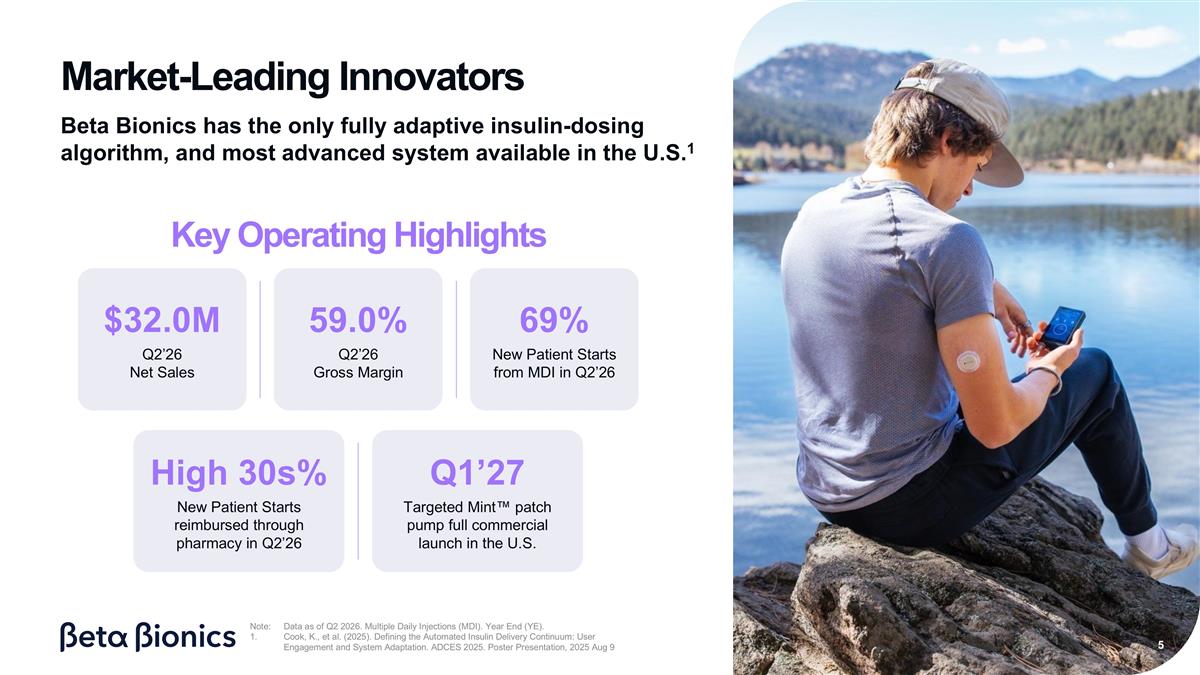
Market-Leading Innovators Beta Bionics has the only fully adaptive insulin-dosing algorithm, and most advanced system available in the U.S.1 Note:Data as of Q2 2026. Multiple Daily Injections (MDI). Year End (YE). Cook, K., et al. (2025). Defining the Automated Insulin Delivery Continuum: User Engagement and System Adaptation. ADCES 2025. Poster Presentation, 2025 Aug 9 69% New Patient Starts from MDI in Q2’26 $32.0M Q2’26 Net Sales 59.0% Q2’26 Gross Margin Key Operating Highlights High 30s% New Patient Starts reimbursed through pharmacy in Q2’26 Q1’27 Targeted Mint™ patch pump full commercial launch in the U.S.
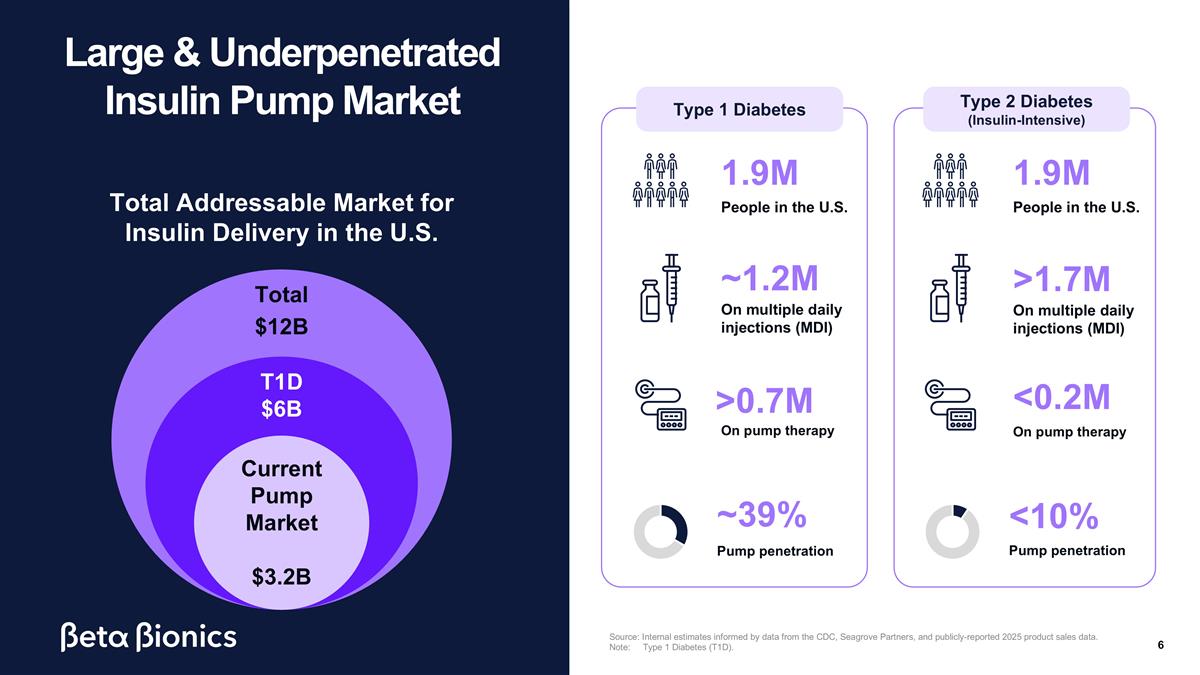
Total $12B Total Addressable Market for Insulin Delivery in the U.S. ~1.2M On multiple daily injections (MDI) >1.7M On multiple daily injections (MDI) >0.7M On pump therapy <0.2M On pump therapy 1.9M People in the U.S. 1.9M People in the U.S. Pump penetration ~39% Pump penetration <10% Type 1 Diabetes Type 2 Diabetes (Insulin-Intensive) Source: Internal estimates informed by data from the CDC, Seagrove Partners, and publicly-reported 2025 product sales data. Note: Type 1 Diabetes (T1D). T1D $6B Current Pump Market $3.2B Large & Underpenetrated Insulin Pump Market
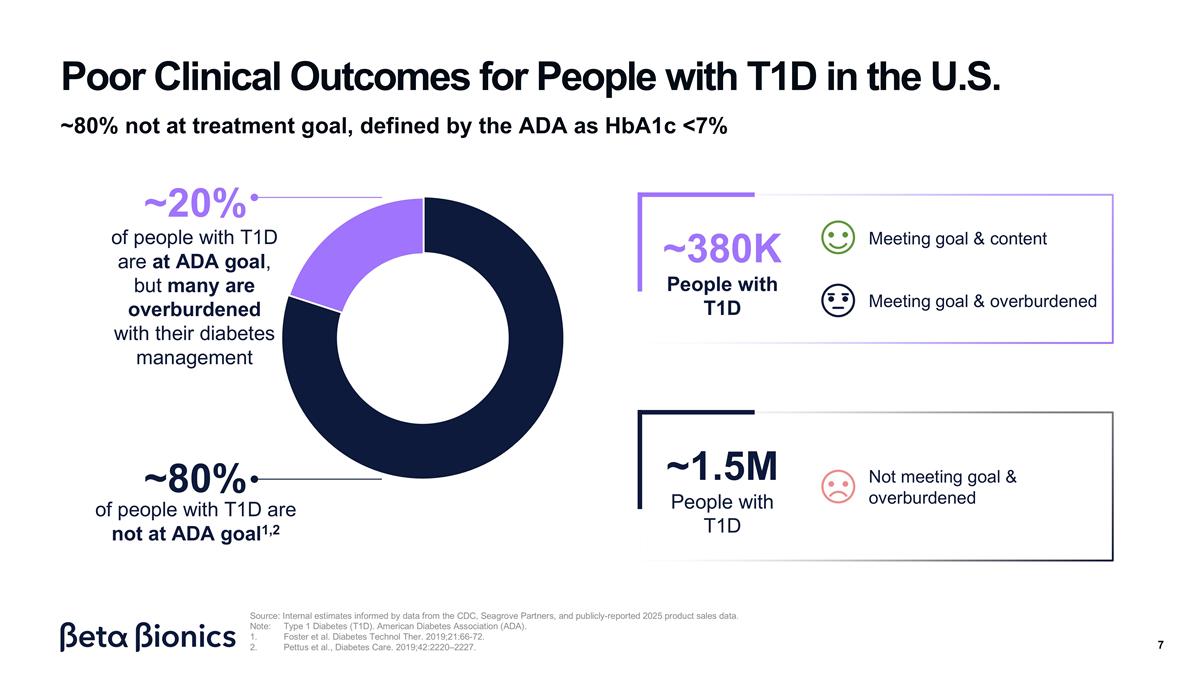
~80% not at treatment goal, defined by the ADA as HbA1c <7% ~80% of people with T1D are not at ADA goal1,2 ~20% of people with T1D are at ADA goal, but many are overburdened with their diabetes management ~380K People with T1D Not meeting goal & overburdened ~1.5M People with T1D Meeting goal & overburdened Meeting goal & content Source: Internal estimates informed by data from the CDC, Seagrove Partners, and publicly-reported 2025 product sales data. Note:Type 1 Diabetes (T1D). American Diabetes Association (ADA). Foster et al. Diabetes Technol Ther. 2019;21:66-72. Pettus et al., Diabetes Care. 2019;42:2220–2227. Poor Clinical Outcomes for People with T1D in the U.S.
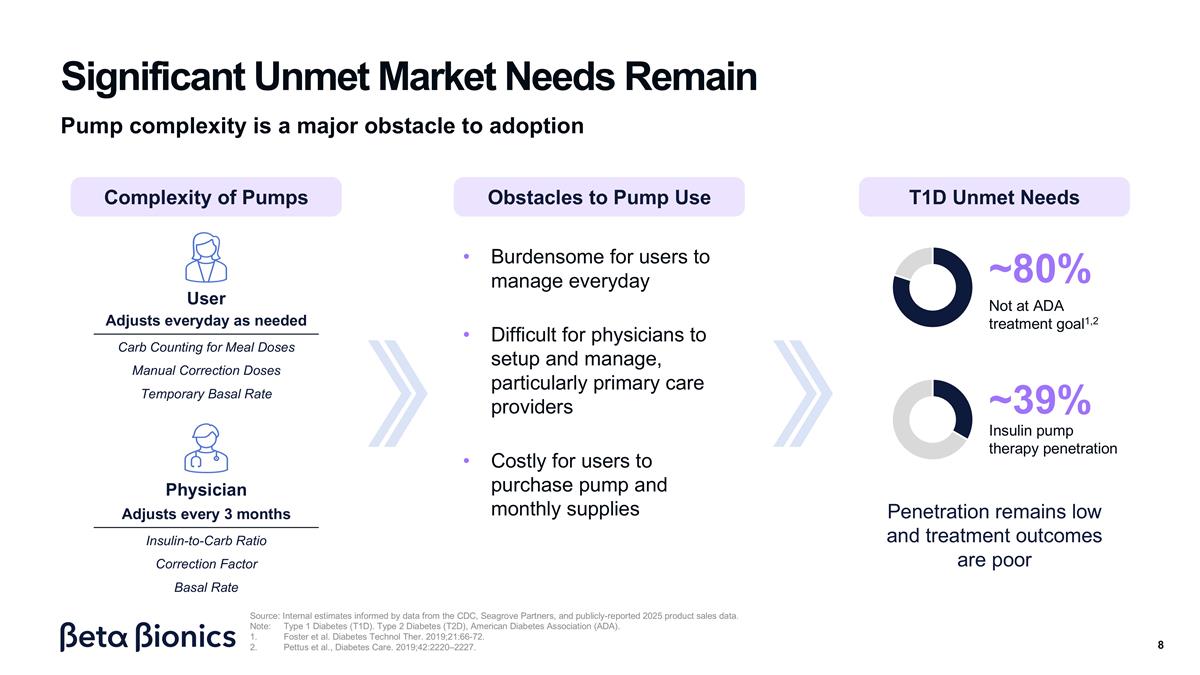
Penetration remains low and treatment outcomes are poor Source: Internal estimates informed by data from the CDC, Seagrove Partners, and publicly-reported 2025 product sales data. Note:Type 1 Diabetes (T1D). Type 2 Diabetes (T2D), American Diabetes Association (ADA). Foster et al. Diabetes Technol Ther. 2019;21:66-72. Pettus et al., Diabetes Care. 2019;42:2220–2227. Burdensome for users to manage everyday Difficult for physicians to setup and manage, particularly primary care providers Costly for users to purchase pump and monthly supplies Obstacles to Pump Use Insulin pump therapy penetration ~39% Not at ADA treatment goal1,2 ~80% T1D Unmet Needs Complexity of Pumps Physician Adjusts every 3 months Insulin-to-Carb Ratio Correction Factor Basal Rate User Adjusts everyday as needed Carb Counting for Meal Doses Manual Correction Doses Temporary Basal Rate Significant Unmet Market Needs Remain Pump complexity is a major obstacle to adoption
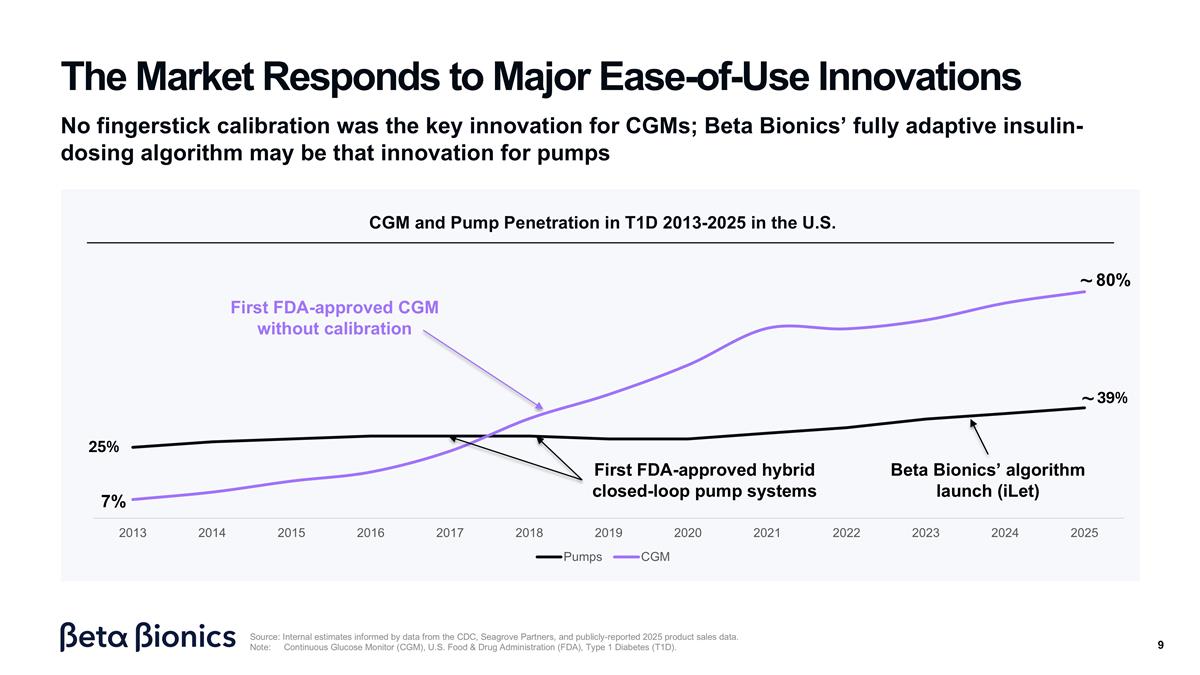
First FDA-approved CGM without calibration CGM and Pump Penetration in T1D 2013-2025 in the U.S. Source: Internal estimates informed by data from the CDC, Seagrove Partners, and publicly-reported 2025 product sales data. Note: Continuous Glucose Monitor (CGM), U.S. Food & Drug Administration (FDA), Type 1 Diabetes (T1D). First FDA-approved hybrid closed-loop pump systems The Market Responds to Major Ease-of-Use Innovations No fingerstick calibration was the key innovation for CGMs; Beta Bionics’ fully adaptive insulin-dosing algorithm may be that innovation for pumps Beta Bionics’ algorithm launch (iLet) ~ ~
We believe we can do more for people with diabetes.
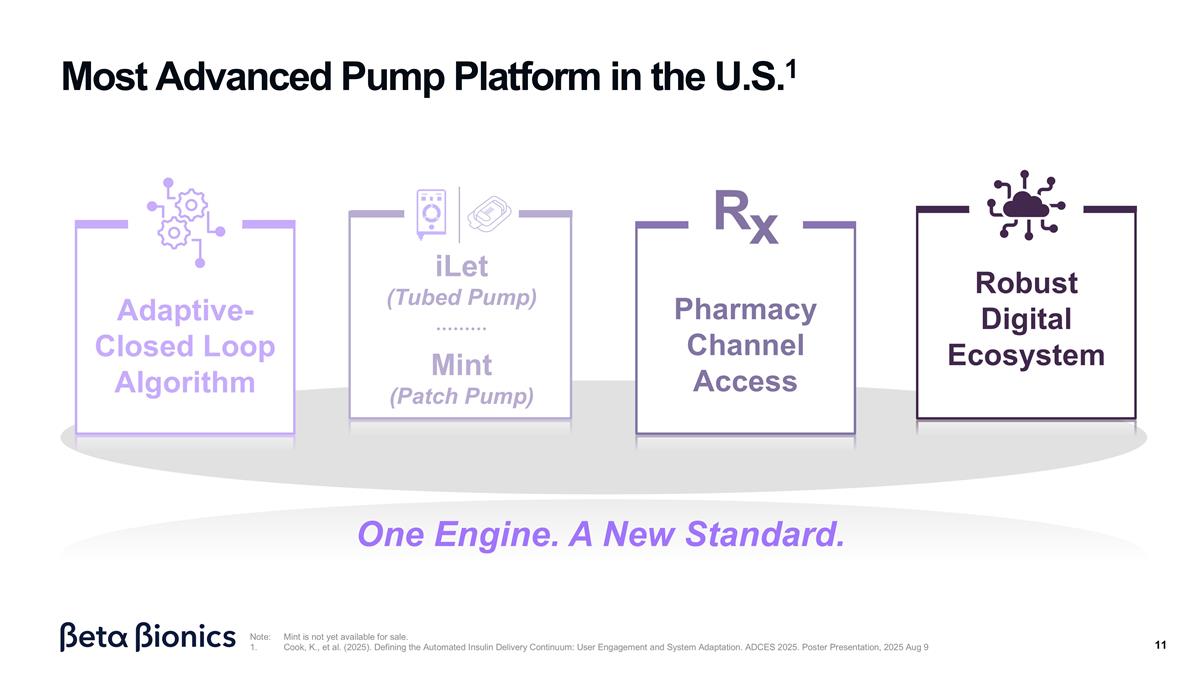
Most Advanced Pump Platform in the U.S.1 Adaptive-Closed Loop Algorithm Robust Digital Ecosystem Pharmacy Channel Access One Engine. A New Standard. iLet (Tubed Pump) Mint (Patch Pump) Note:Mint is not yet available for sale. Cook, K., et al. (2025). Defining the Automated Insulin Delivery Continuum: User Engagement and System Adaptation. ADCES 2025. Poster Presentation, 2025 Aug 9
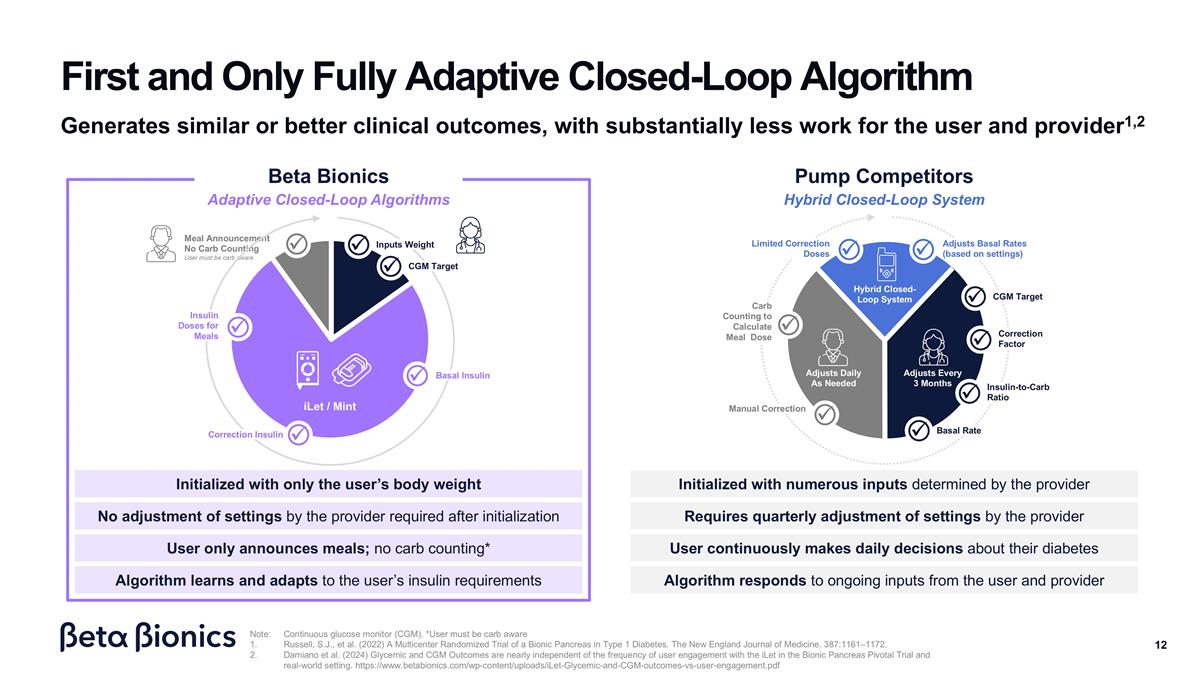
Meal Announcement No Carb Counting User must be carb aware Beta Bionics Adaptive Closed-Loop Algorithms Algorithm learns and adapts to the user’s insulin requirements Initialized with only the user’s body weight User only announces meals; no carb counting* No adjustment of settings by the provider required after initialization First and Only Fully Adaptive Closed-Loop Algorithm Generates similar or better clinical outcomes, with substantially less work for the user and provider1,2 Note:Continuous glucose monitor (CGM). *User must be carb aware Russell, S.J., et al. (2022) A Multicenter Randomized Trial of a Bionic Pancreas in Type 1 Diabetes. The New England Journal of Medicine. 387:1161–1172. Damiano et al. (2024) Glycemic and CGM Outcomes are nearly independent of the frequency of user engagement with the iLet in the Bionic Pancreas Pivotal Trial and real-world setting. https://www.betabionics.com/wp-content/uploads/iLet-Glycemic-and-CGM-outcomes-vs-user-engagement.pdf Requires quarterly adjustment of settings by the provider Adjusts Daily As Needed Adjusts Every 3 Months Hybrid Closed-Loop System Adjusts Basal Rates (based on settings) Limited Correction Doses Carb Counting to Calculate Meal Dose Manual Correction ü ü ü ü CGM Target ü Correction Factor ü Insulin-to-Carb Ratio ü Basal Rate ü Pump Competitors Hybrid Closed-Loop System Algorithm responds to ongoing inputs from the user and provider Initialized with numerous inputs determined by the provider User continuously makes daily decisions about their diabetes iLet / Mint Insulin Doses for Meals ü Correction Insulin ü Basal Insulin ü Inputs Weight ü CGM Target ü ü
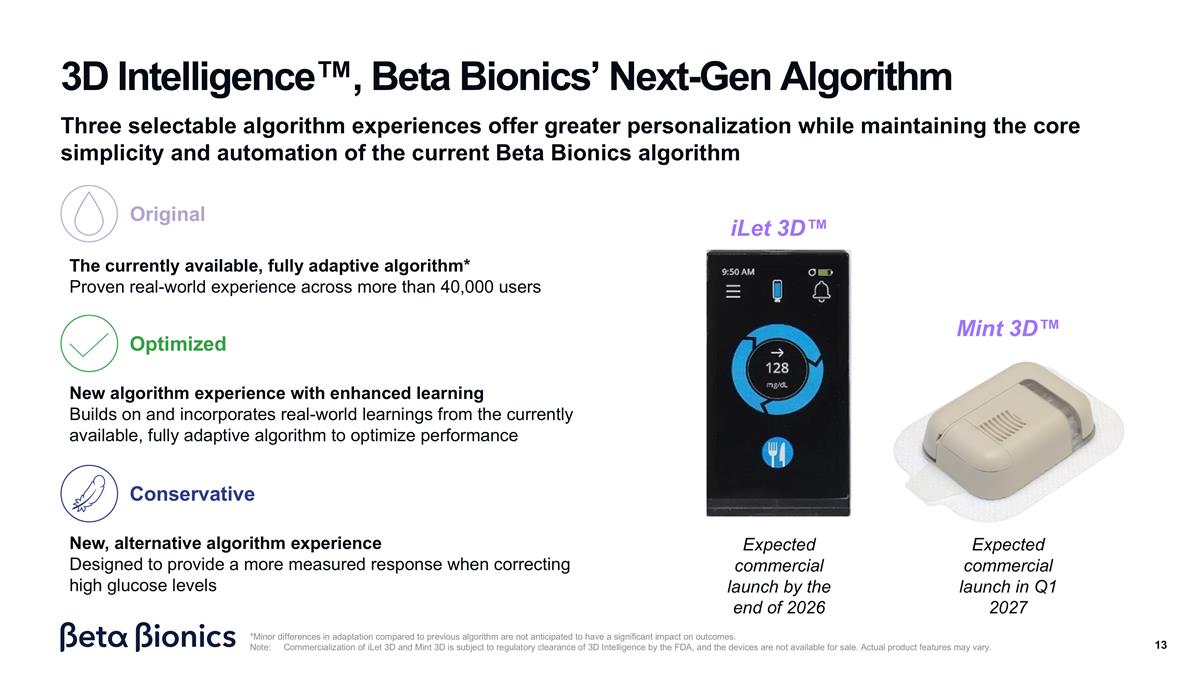
*Minor differences in adaptation compared to previous algorithm are not anticipated to have a significant impact on outcomes. Note:Commercialization of iLet 3D and Mint 3D is subject to regulatory clearance of 3D Intelligence by the FDA, and the devices are not available for sale. Actual product features may vary. 3D Intelligence™, Beta Bionics’ Next-Gen Algorithm Three selectable algorithm experiences offer greater personalization while maintaining the core simplicity and automation of the current Beta Bionics algorithm iLet 3D™ Mint 3D™ Original The currently available, fully adaptive algorithm* Proven real-world experience across more than 40,000 users Optimized New algorithm experience with enhanced learning Builds on and incorporates real-world learnings from the currently available, fully adaptive algorithm to optimize performance Conservative New, alternative algorithm experience Designed to provide a more measured response when correcting high glucose levels Expected commercial launch by the end of 2026 Expected commercial launch in Q1 2027
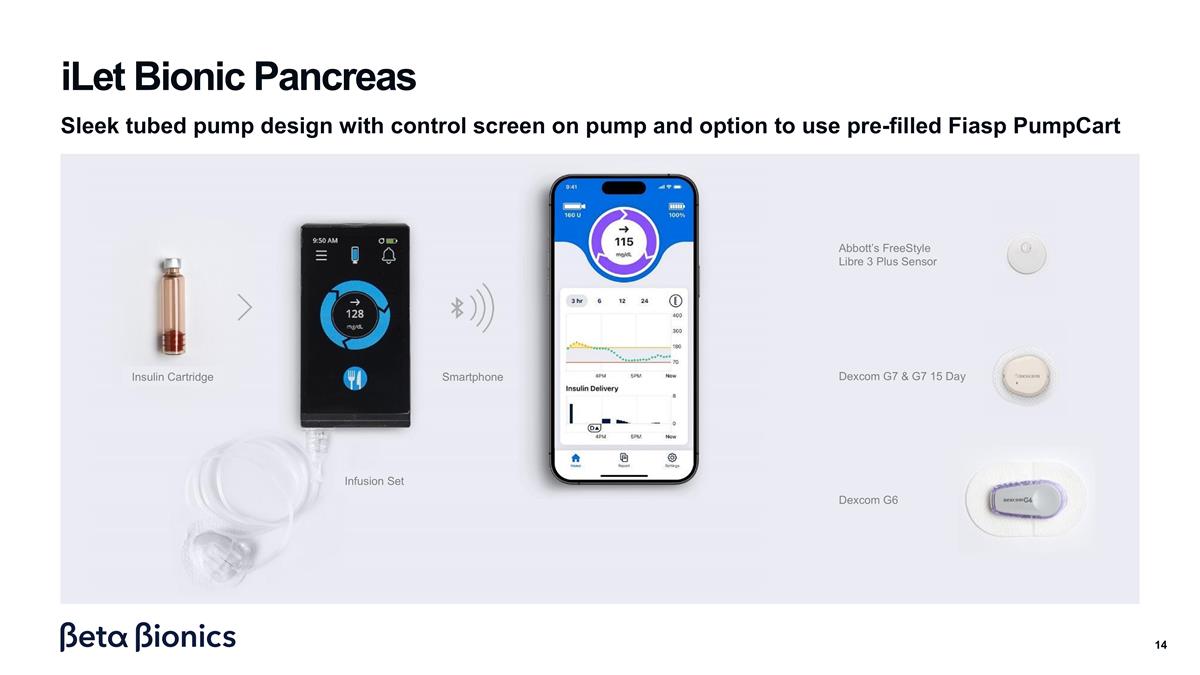
iLet Bionic Pancreas Sleek tubed pump design with control screen on pump and option to use pre-filled Fiasp PumpCart Abbott’s FreeStyle Libre 3 Plus Sensor Dexcom G7 & G7 15 Day Dexcom G6 Smartphone Insulin Cartridge Infusion Set
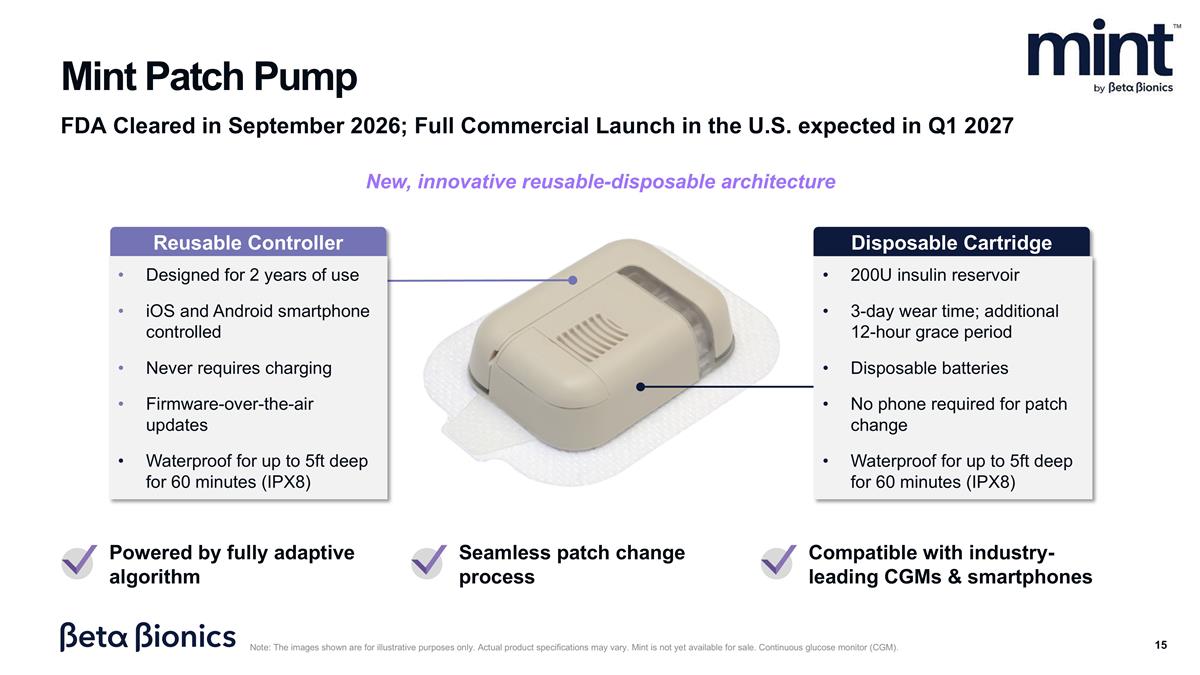
Note: The images shown are for illustrative purposes only. Actual product specifications may vary. Mint is not yet available for sale. Continuous glucose monitor (CGM). Mint Patch Pump FDA Cleared in September 2026; Full Commercial Launch in the U.S. expected in Q1 2027 New, innovative reusable-disposable architecture Reusable Controller Designed for 2 years of use iOS and Android smartphone controlled Never requires charging Firmware-over-the-air updates Waterproof for up to 5ft deep for 60 minutes (IPX8) Disposable Cartridge 200U insulin reservoir 3-day wear time; additional 12-hour grace period Disposable batteries No phone required for patch change Waterproof for up to 5ft deep for 60 minutes (IPX8) Powered by fully adaptive algorithm Seamless patch change process Compatible with industry-leading CGMs & smartphones
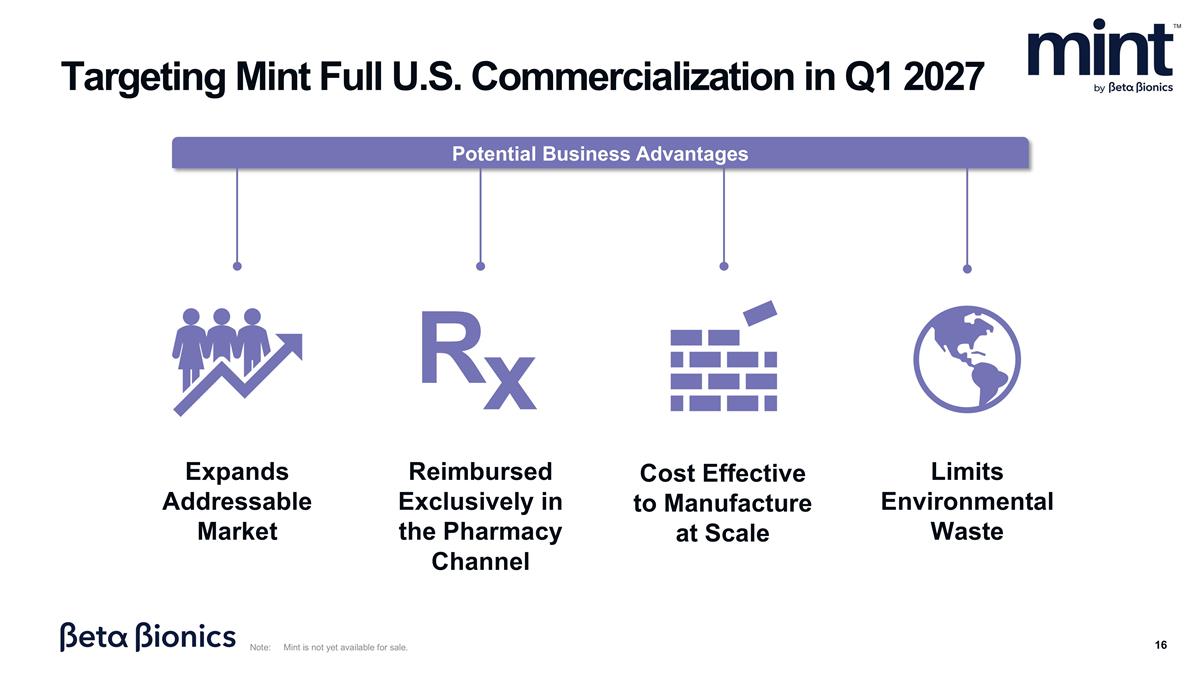
Potential Business Advantages Expands Addressable Market Reimbursed Exclusively in the Pharmacy Channel Cost Effective to Manufacture at Scale Limits Environmental Waste R x Targeting Mint Full U.S. Commercialization in Q1 2027 Note: Mint is not yet available for sale.
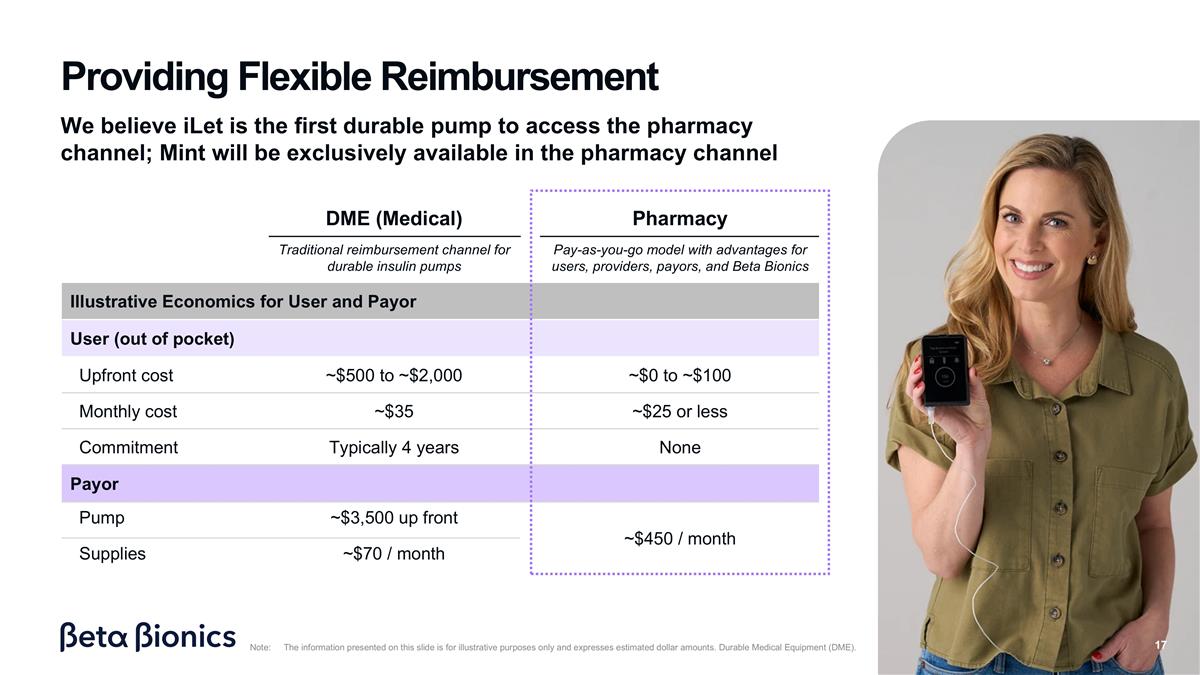
Note:The information presented on this slide is for illustrative purposes only and expresses estimated dollar amounts. Durable Medical Equipment (DME). DME (Medical) Pharmacy Traditional reimbursement channel for durable insulin pumps Pay-as-you-go model with advantages for users, providers, payors, and Beta Bionics Illustrative Economics for User and Payor User (out of pocket) Upfront cost ~$500 to ~$2,000 ~$0 to ~$100 Monthly cost ~$35 ~$25 or less Commitment Typically 4 years None Payor Pump ~$3,500 up front ~$450 / month Supplies ~$70 / month Providing Flexible Reimbursement We believe iLet is the first durable pump to access the pharmacy channel; Mint will be exclusively available in the pharmacy channel
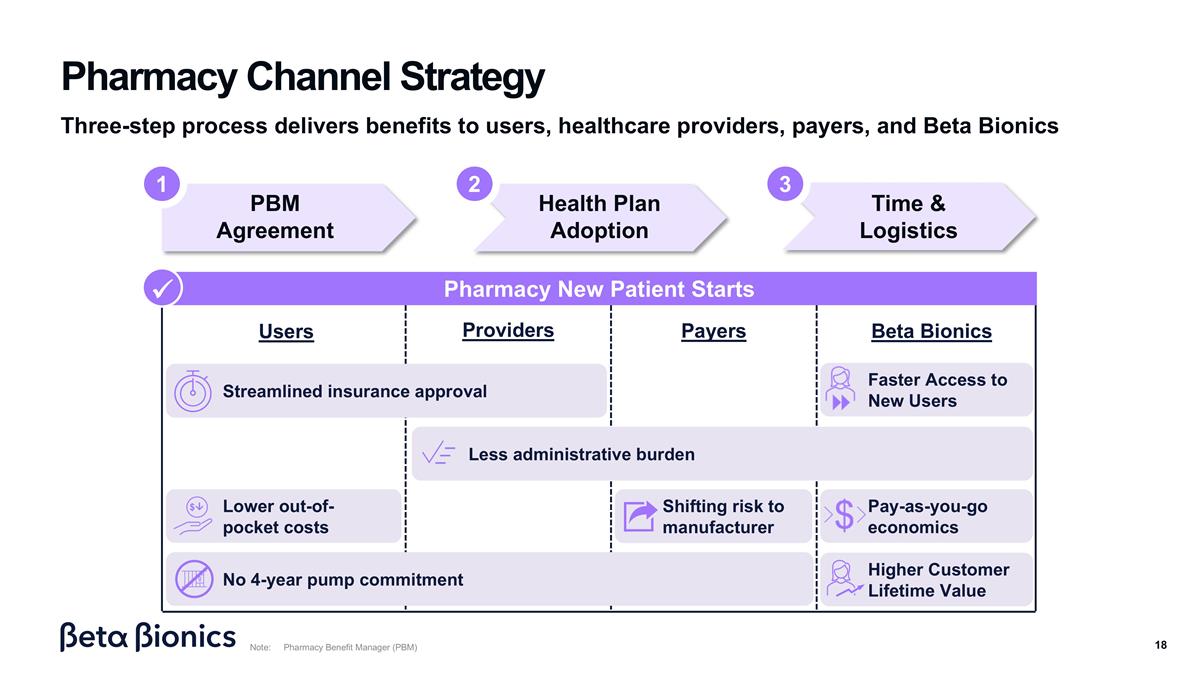
Pharmacy Channel Strategy Streamlined insurance approval Users Providers Payers Beta Bionics Less administrative burden Lower out-of-pocket costs Higher Customer Lifetime Value No 4-year pump commitment Faster Access to New Users Pay-as-you-go economics PBM Agreement 1 Health Plan Adoption 2 Time & Logistics 3 Pharmacy New Patient Starts ü Shifting risk to manufacturer Note:Pharmacy Benefit Manager (PBM) Three-step process delivers benefits to users, healthcare providers, payers, and Beta Bionics
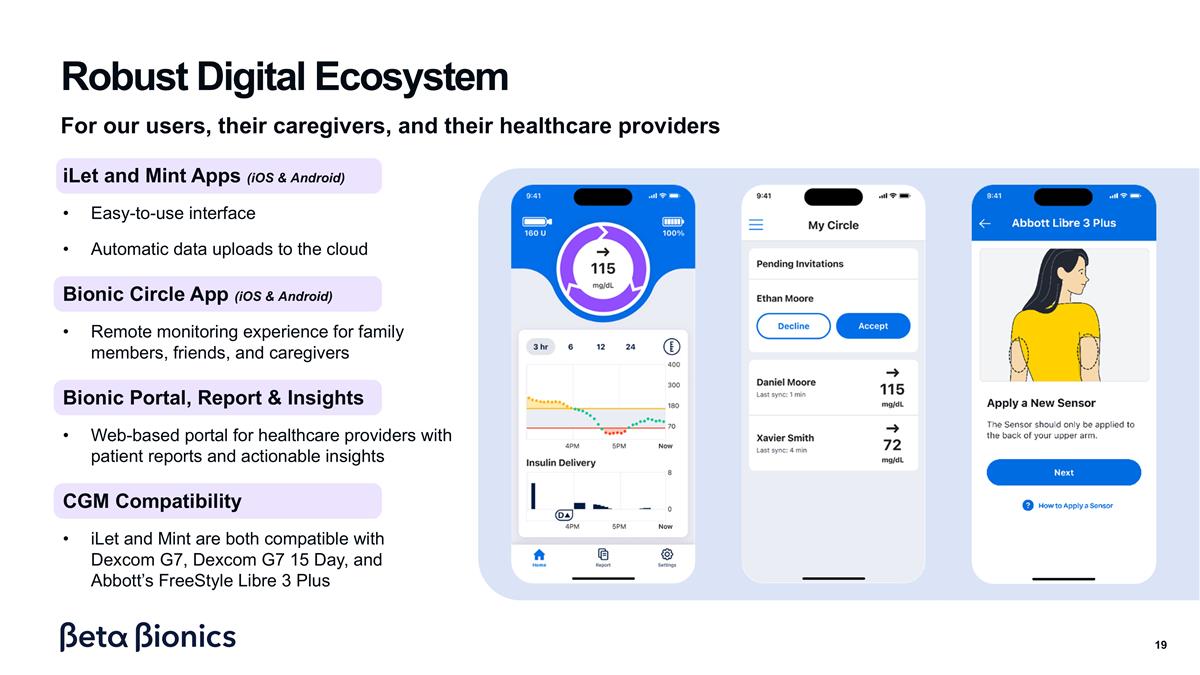
Robust Digital Ecosystem For our users, their caregivers, and their healthcare providers iLet and Mint Apps (iOS & Android) Easy-to-use interface Automatic data uploads to the cloud Bionic Circle App (iOS & Android) Remote monitoring experience for family members, friends, and caregivers Bionic Portal, Report & Insights Web-based portal for healthcare providers with patient reports and actionable insights CGM Compatibility iLet and Mint are both compatible with Dexcom G7, Dexcom G7 15 Day, and Abbott’s FreeStyle Libre 3 Plus
Positioning for success
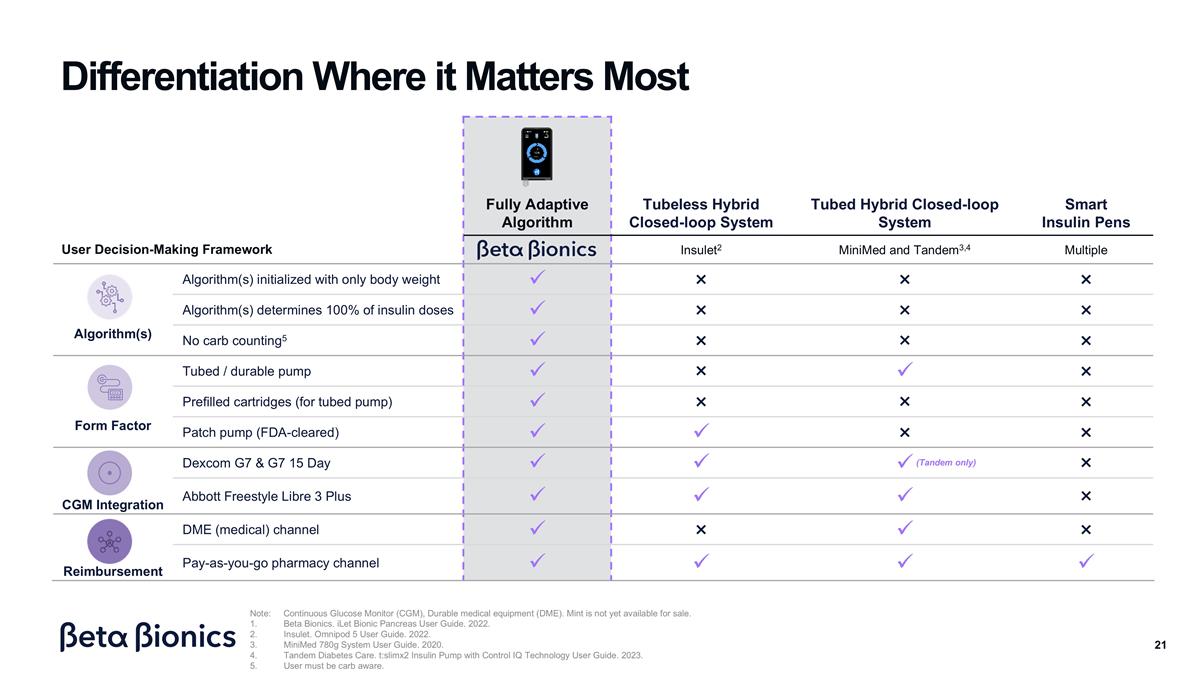
Fully Adaptive Algorithm Tubeless Hybrid Closed-loop System Tubed Hybrid Closed-loop System Smart Insulin Pens Insulet2 MiniMed and Tandem3,4 Multiple Algorithm(s) Algorithm(s) initialized with only body weight ü × × × Algorithm(s) determines 100% of insulin doses ü × × × No carb counting5 ü × × × Form Factor Tubed / durable pump ü × ü × Prefilled cartridges (for tubed pump) ü × × × Patch pump (FDA-cleared) ü ü × × CGM Integration Dexcom G7 & G7 15 Day ü ü ü × Abbott Freestyle Libre 3 Plus ü ü ü × Reimbursement DME (medical) channel ü × ü × Pay-as-you-go pharmacy channel ü ü ü ü Note: Continuous Glucose Monitor (CGM), Durable medical equipment (DME). Mint is not yet available for sale. Beta Bionics. iLet Bionic Pancreas User Guide. 2022. Insulet. Omnipod 5 User Guide. 2022. MiniMed 780g System User Guide. 2020. Tandem Diabetes Care. t:slimx2 Insulin Pump with Control IQ Technology User Guide. 2023. User must be carb aware. User Decision-Making Framework (Tandem only) Differentiation Where it Matters Most
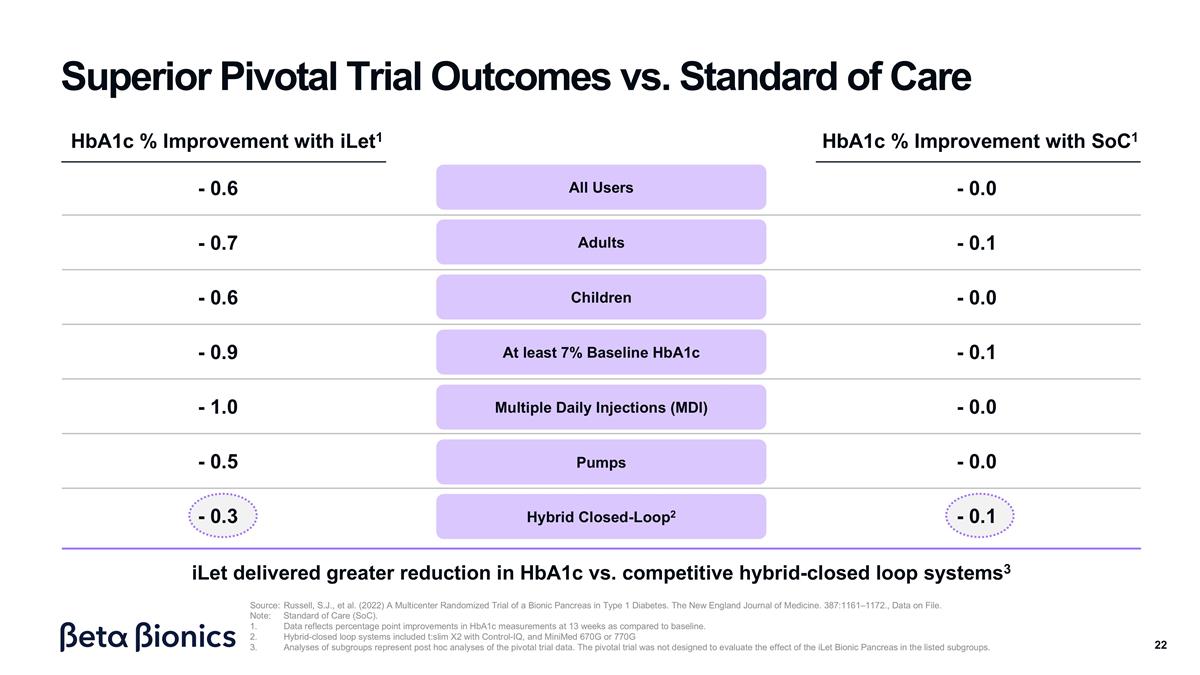
- 0.6 - 0.0 - 0.7 - 0.1 - 0.6 - 0.0 - 0.9 - 0.1 - 1.0 - 0.0 - 0.5 - 0.0 - 0.3 - 0.1 HbA1c % Improvement with iLet1 HbA1c % Improvement with SoC1 All Users Adults Children At least 7% Baseline HbA1c Multiple Daily Injections (MDI) Pumps Hybrid Closed-Loop2 iLet delivered greater reduction in HbA1c vs. competitive hybrid-closed loop systems3 Source:Russell, S.J., et al. (2022) A Multicenter Randomized Trial of a Bionic Pancreas in Type 1 Diabetes. The New England Journal of Medicine. 387:1161–1172., Data on File. Note: Standard of Care (SoC). Data reflects percentage point improvements in HbA1c measurements at 13 weeks as compared to baseline. Hybrid-closed loop systems included t:slim X2 with Control-IQ, and MiniMed 670G or 770G Analyses of subgroups represent post hoc analyses of the pivotal trial data. The pivotal trial was not designed to evaluate the effect of the iLet Bionic Pancreas in the listed subgroups. Superior Pivotal Trial Outcomes vs. Standard of Care
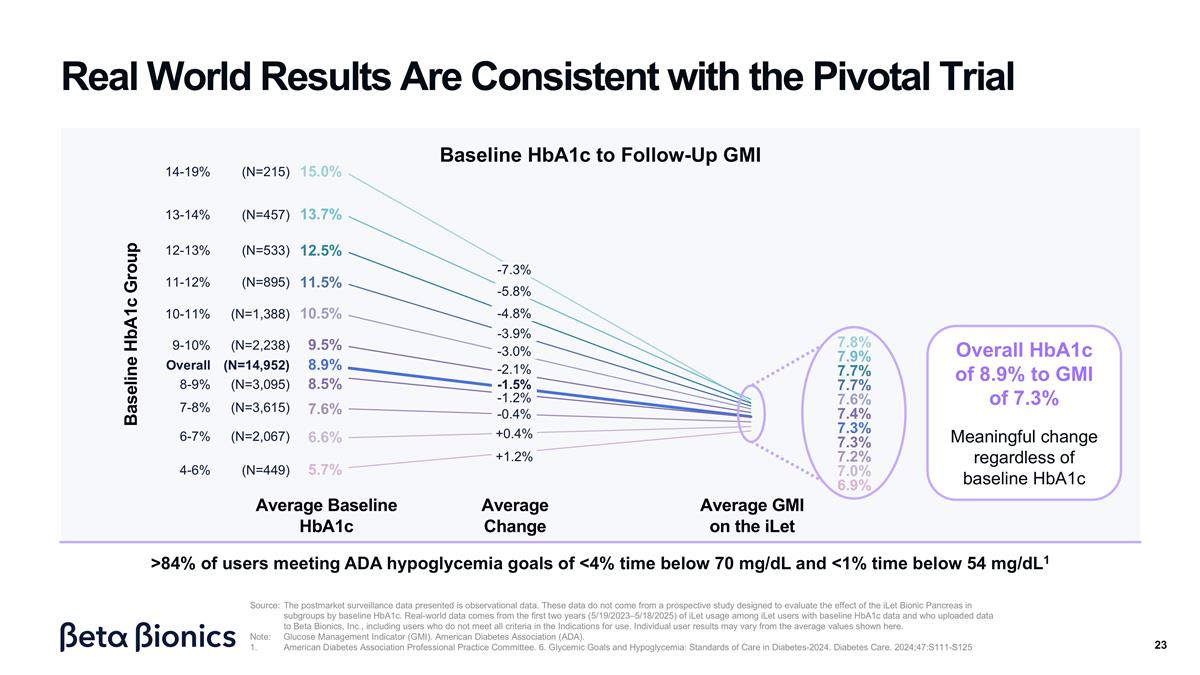
Baseline HbA1c Group Average Baseline HbA1c Average Change Average GMI on the iLet 15.0% 13.7% 12.5% 11.5% 10.5% 9.5% 8.9% 8.5% 7.6% 6.6% 5.7% 14-19% 13-14% 12-13% 11-12% 10-11% 9-10% 8-9% Overall 7-8% 6-7% 4-6% (N=215) (N=457) (N=533) (N=895) (N=1,388) (N=2,238) (N=14,952) (N=3,095) (N=3,615) (N=2,067) (N=449) Overall HbA1c of 8.9% to GMI of 7.3% Meaningful change regardless of baseline HbA1c -7.3% -5.8% -4.8% -3.9% -3.0% -2.1% -1.5% -1.2% -0.4% +0.4% +1.2% >84% of users meeting ADA hypoglycemia goals of <4% time below 70 mg/dL and <1% time below 54 mg/dL1 Baseline HbA1c to Follow-Up GMI 7.8% 7.9% 7.7% 7.7% 7.6% 7.4% 7.3% 7.3% 7.2% 7.0% 6.9% Source:The postmarket surveillance data presented is observational data. These data do not come from a prospective study designed to evaluate the effect of the iLet Bionic Pancreas in subgroups by baseline HbA1c. Real-world data comes from the first two years (5/19/2023–5/18/2025) of iLet usage among iLet users with baseline HbA1c data and who uploaded data to Beta Bionics, Inc., including users who do not meet all criteria in the Indications for use. Individual user results may vary from the average values shown here. Note: Glucose Management Indicator (GMI). American Diabetes Association (ADA). American Diabetes Association Professional Practice Committee. 6. Glycemic Goals and Hypoglycemia: Standards of Care in Diabetes-2024. Diabetes Care. 2024;47:S111-S125 Real World Results Are Consistent with the Pivotal Trial
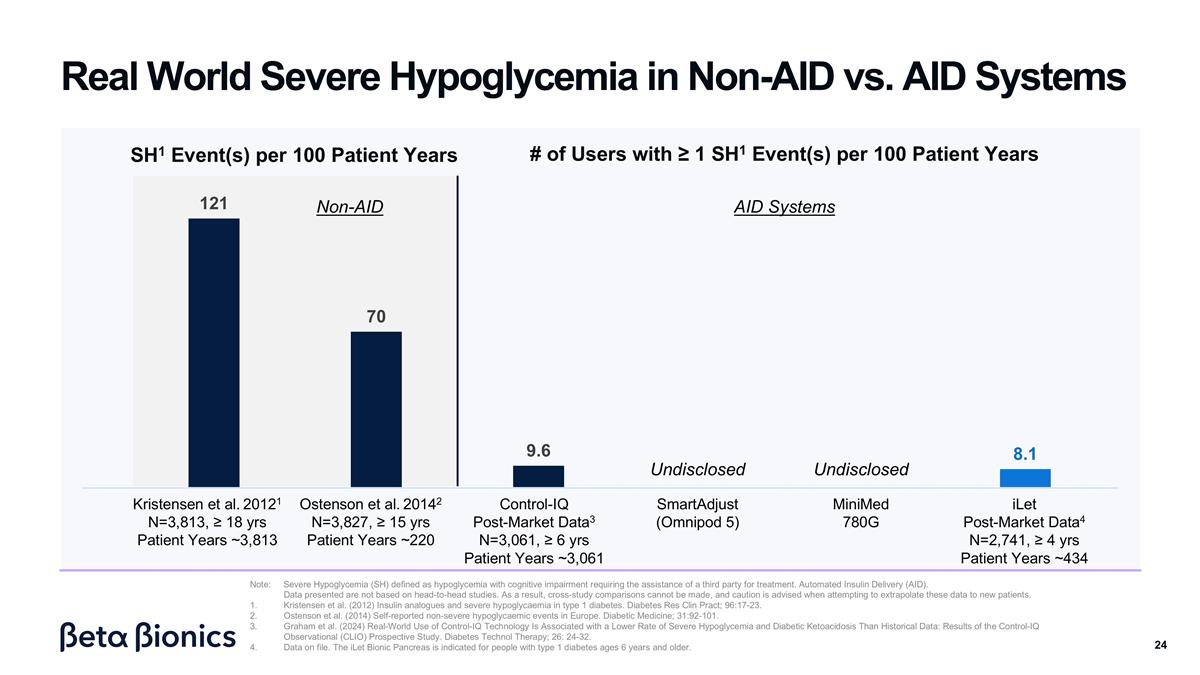
SH1 Event(s) per 100 Patient Years Note: Severe Hypoglycemia (SH) defined as hypoglycemia with cognitive impairment requiring the assistance of a third party for treatment. Automated Insulin Delivery (AID). Data presented are not based on head-to-head studies. As a result, cross-study comparisons cannot be made, and caution is advised when attempting to extrapolate these data to new patients. Kristensen et al. (2012) Insulin analogues and severe hypoglycaemia in type 1 diabetes. Diabetes Res Clin Pract; 96:17-23. Ostenson et al. (2014) Self-reported non-severe hypoglycaemic events in Europe. Diabetic Medicine; 31:92-101. Graham et al. (2024) Real-World Use of Control-IQ Technology Is Associated with a Lower Rate of Severe Hypoglycemia and Diabetic Ketoacidosis Than Historical Data: Results of the Control-IQ Observational (CLIO) Prospective Study. Diabetes Technol Therapy; 26: 24-32. Data on file. The iLet Bionic Pancreas is indicated for people with type 1 diabetes ages 6 years and older. Real World Severe Hypoglycemia in Non-AID vs. AID Systems iLet Post-Market Data4 N=2,741, ≥ 4 yrs Patient Years ~434 Kristensen et al. 20121 N=3,813, ≥ 18 yrs Patient Years ~3,813 Ostenson et al. 20142 N=3,827, ≥ 15 yrs Patient Years ~220 Control-IQ Post-Market Data3 N=3,061, ≥ 6 yrs Patient Years ~3,061 SmartAdjust (Omnipod 5) MiniMed 780G Undisclosed Undisclosed Non-AID AID Systems # of Users with ≥ 1 SH1 Event(s) per 100 Patient Years
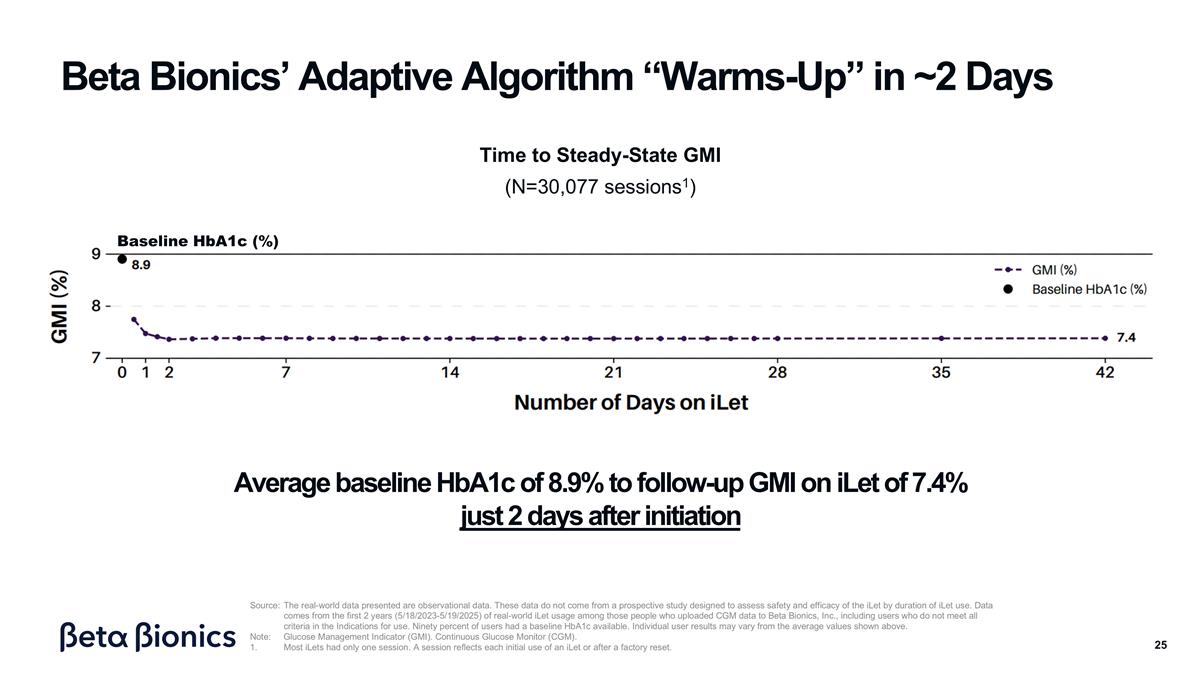
Time to Steady-State GMI (N=30,077 sessions1) Average baseline HbA1c of 8.9% to follow-up GMI on iLet of 7.4% just 2 days after initiation Baseline HbA1c (%) Source:The real-world data presented are observational data. These data do not come from a prospective study designed to assess safety and efficacy of the iLet by duration of iLet use. Data comes from the first 2 years (5/18/2023-5/19/2025) of real-world iLet usage among those people who uploaded CGM data to Beta Bionics, Inc., including users who do not meet all criteria in the Indications for use. Ninety percent of users had a baseline HbA1c available. Individual user results may vary from the average values shown above. Note: Glucose Management Indicator (GMI). Continuous Glucose Monitor (CGM). Most iLets had only one session. A session reflects each initial use of an iLet or after a factory reset. Beta Bionics’ Adaptive Algorithm “Warms-Up” in ~2 Days
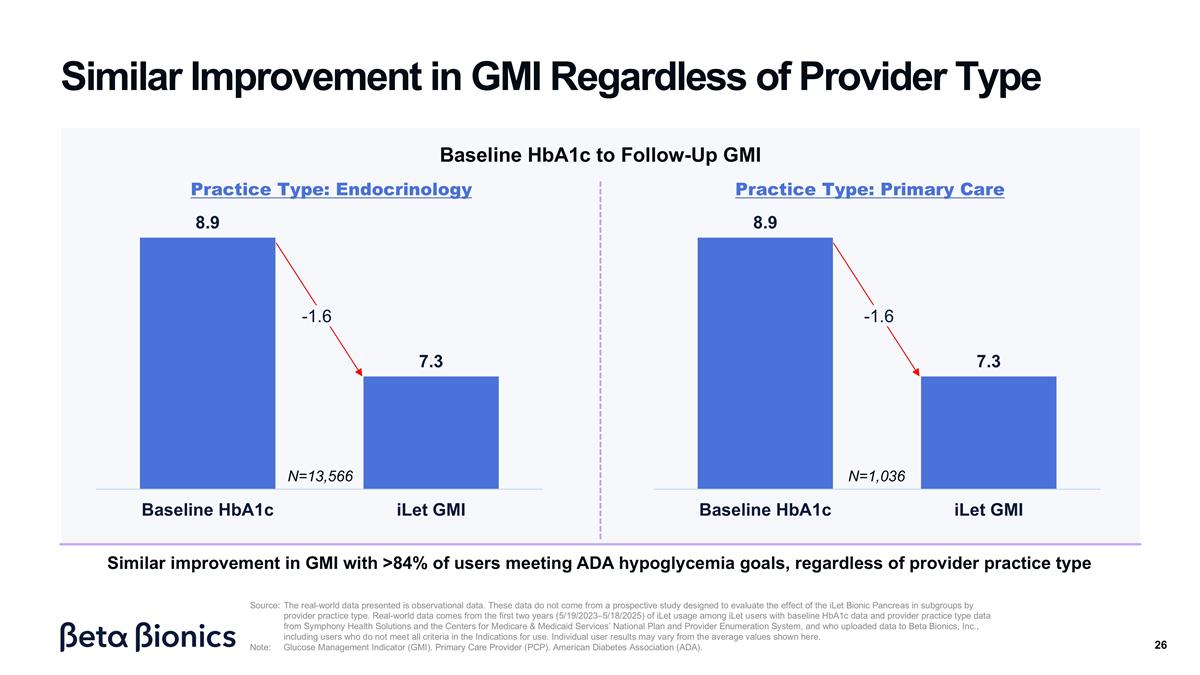
-1.6 Baseline HbA1c to Follow-Up GMI Practice Type: Endocrinology Practice Type: Primary Care -1.6 Similar improvement in GMI with >84% of users meeting ADA hypoglycemia goals, regardless of provider practice type N=13,566 N=1,036 Source:The real-world data presented is observational data. These data do not come from a prospective study designed to evaluate the effect of the iLet Bionic Pancreas in subgroups by provider practice type. Real-world data comes from the first two years (5/19/2023–5/18/2025) of iLet usage among iLet users with baseline HbA1c data and provider practice type data from Symphony Health Solutions and the Centers for Medicare & Medicaid Services’ National Plan and Provider Enumeration System, and who uploaded data to Beta Bionics, Inc., including users who do not meet all criteria in the Indications for use. Individual user results may vary from the average values shown here. Note: Glucose Management Indicator (GMI). Primary Care Provider (PCP). American Diabetes Association (ADA). Similar Improvement in GMI Regardless of Provider Type
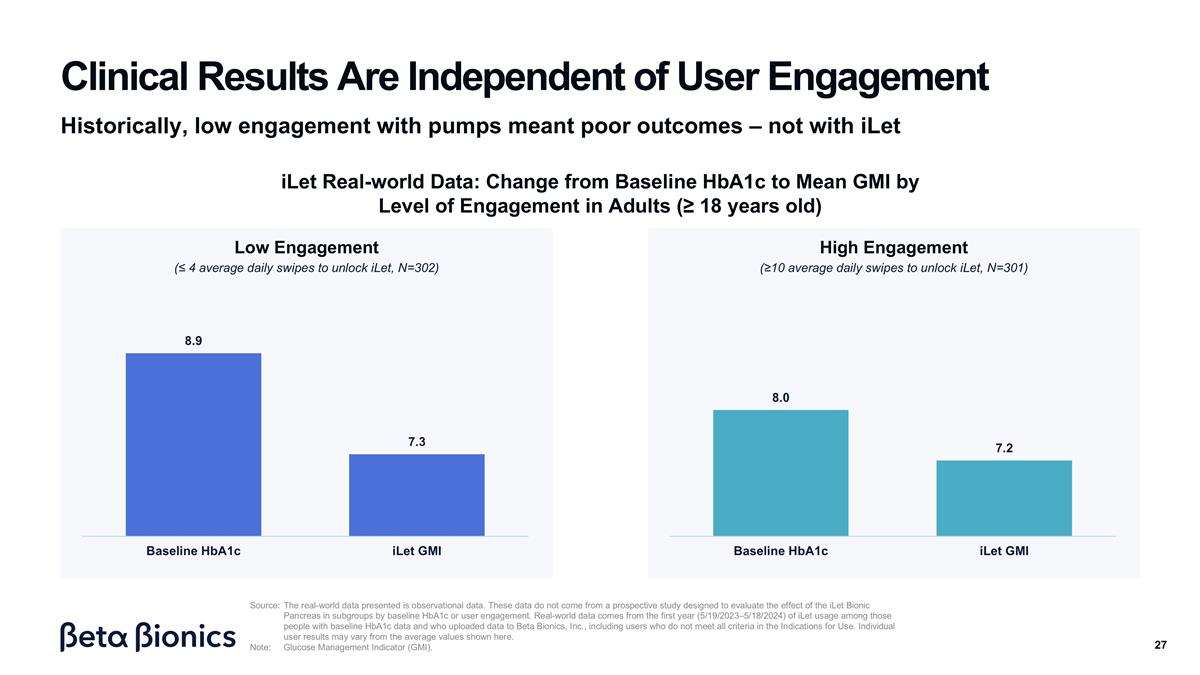
iLet Real-world Data: Change from Baseline HbA1c to Mean GMI by Level of Engagement in Adults (≥ 18 years old) Source:The real-world data presented is observational data. These data do not come from a prospective study designed to evaluate the effect of the iLet Bionic Pancreas in subgroups by baseline HbA1c or user engagement. Real-world data comes from the first year (5/19/2023–5/18/2024) of iLet usage among those people with baseline HbA1c data and who uploaded data to Beta Bionics, Inc., including users who do not meet all criteria in the Indications for Use. Individual user results may vary from the average values shown here. Note: Glucose Management Indicator (GMI). Low Engagement (≤ 4 average daily swipes to unlock iLet, N=302) High Engagement (≥10 average daily swipes to unlock iLet, N=301) Clinical Results Are Independent of User Engagement Historically, low engagement with pumps meant poor outcomes – not with iLet
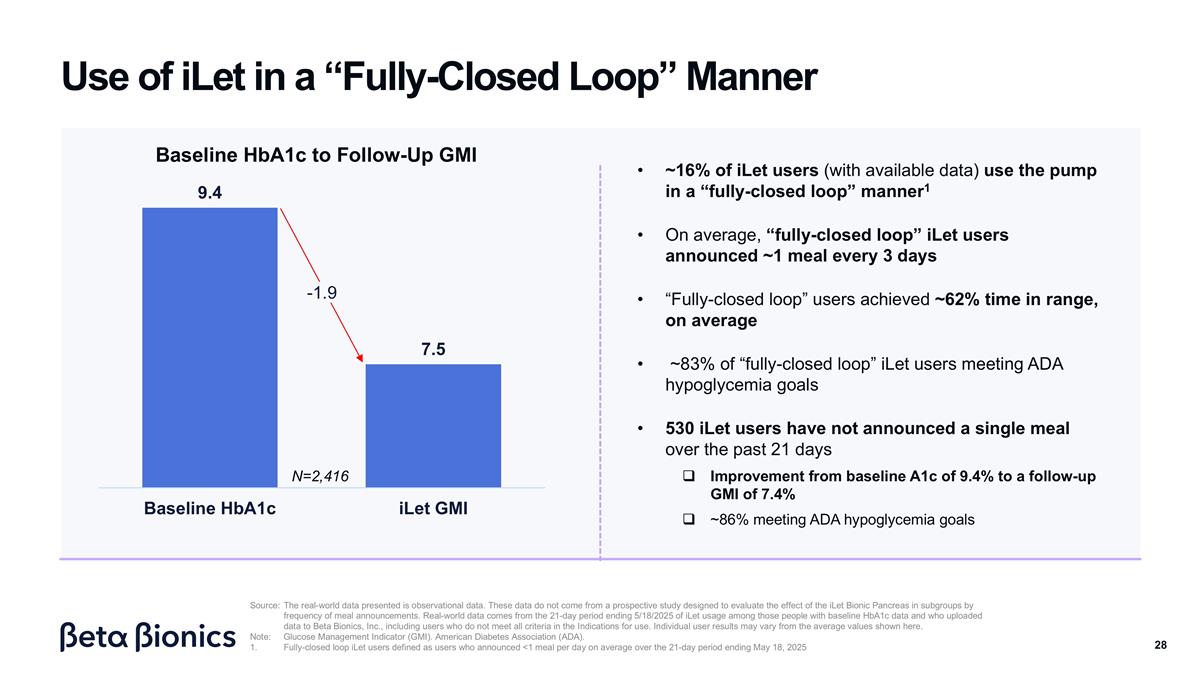
-1.9 Baseline HbA1c to Follow-Up GMI ~16% of iLet users (with available data) use the pump in a “fully-closed loop” manner1 On average, “fully-closed loop” iLet users announced ~1 meal every 3 days “Fully-closed loop” users achieved ~62% time in range, on average ~83% of “fully-closed loop” iLet users meeting ADA hypoglycemia goals 530 iLet users have not announced a single meal over the past 21 days Improvement from baseline A1c of 9.4% to a follow-up GMI of 7.4% ~86% meeting ADA hypoglycemia goals N=2,416 Source:The real-world data presented is observational data. These data do not come from a prospective study designed to evaluate the effect of the iLet Bionic Pancreas in subgroups by frequency of meal announcements. Real-world data comes from the 21-day period ending 5/18/2025 of iLet usage among those people with baseline HbA1c data and who uploaded data to Beta Bionics, Inc., including users who do not meet all criteria in the Indications for use. Individual user results may vary from the average values shown here. Note: Glucose Management Indicator (GMI). American Diabetes Association (ADA). Fully-closed loop iLet users defined as users who announced <1 meal per day on average over the 21-day period ending May 18, 2025 Use of iLet in a “Fully-Closed Loop” Manner
Where we are going next
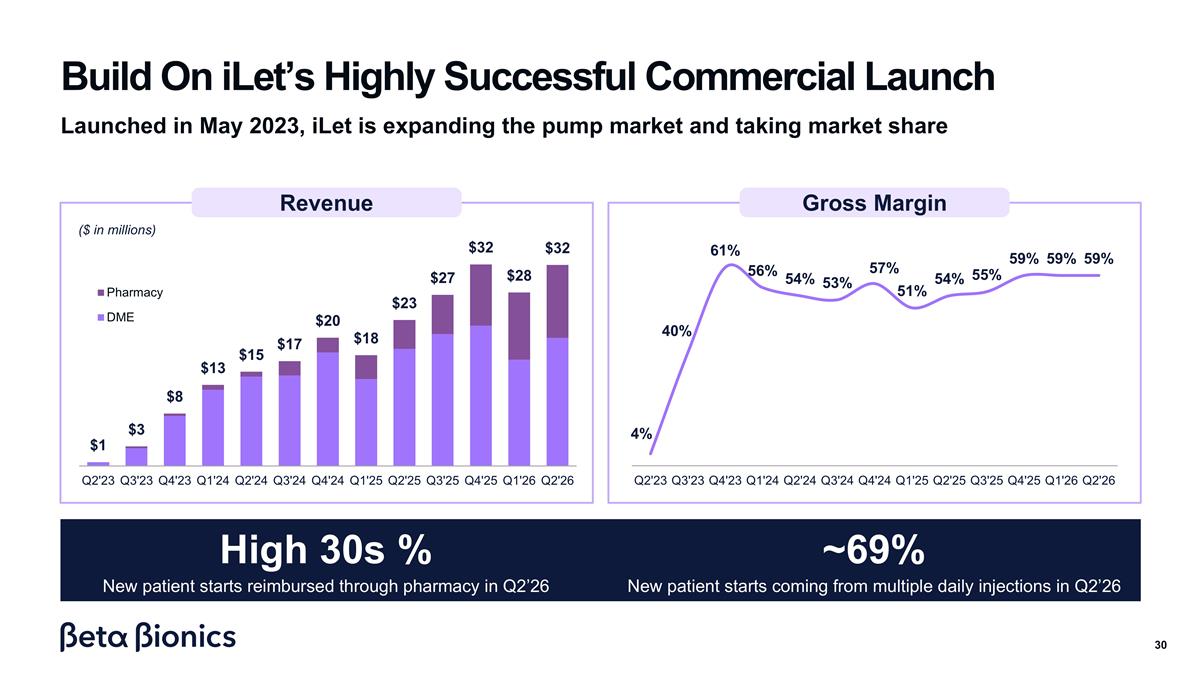
~69% New patient starts coming from multiple daily injections in Q2’26 High 30s % New patient starts reimbursed through pharmacy in Q2’26 Gross Margin ($ in millions) Build On iLet’s Highly Successful Commercial Launch Launched in May 2023, iLet is expanding the pump market and taking market share Revenue
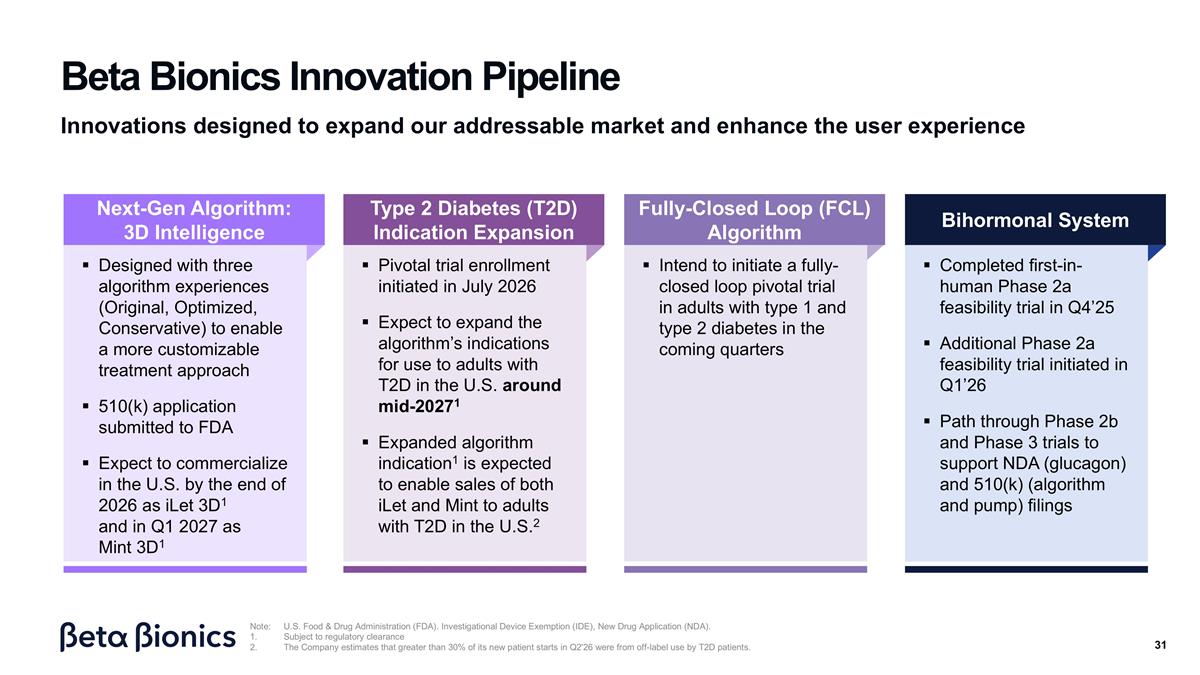
Next-Gen Algorithm: 3D Intelligence Type 2 Diabetes (T2D) Indication Expansion Fully-Closed Loop (FCL) Algorithm Bihormonal System Note: U.S. Food & Drug Administration (FDA). Investigational Device Exemption (IDE), New Drug Application (NDA). Subject to regulatory clearance The Company estimates that greater than 30% of its new patient starts in Q2'26 were from off-label use by T2D patients. Beta Bionics Innovation Pipeline Innovations designed to expand our addressable market and enhance the user experience Designed with three algorithm experiences (Original, Optimized, Conservative) to enable a more customizable treatment approach 510(k) application submitted to FDA Expect to commercialize in the U.S. by the end of 2026 as iLet 3D1 and in Q1 2027 as Mint 3D1 Pivotal trial enrollment initiated in July 2026 Expect to expand the algorithm’s indications for use to adults with T2D in the U.S. around mid-20271 Expanded algorithm indication1 is expected to enable sales of both iLet and Mint to adults with T2D in the U.S.2 Intend to initiate a fully-closed loop pivotal trial in adults with type 1 and type 2 diabetes in the coming quarters Completed first-in-human Phase 2a feasibility trial in Q4’25 Additional Phase 2a feasibility trial initiated in Q1’26 Path through Phase 2b and Phase 3 trials to support NDA (glucagon) and 510(k) (algorithm and pump) filings
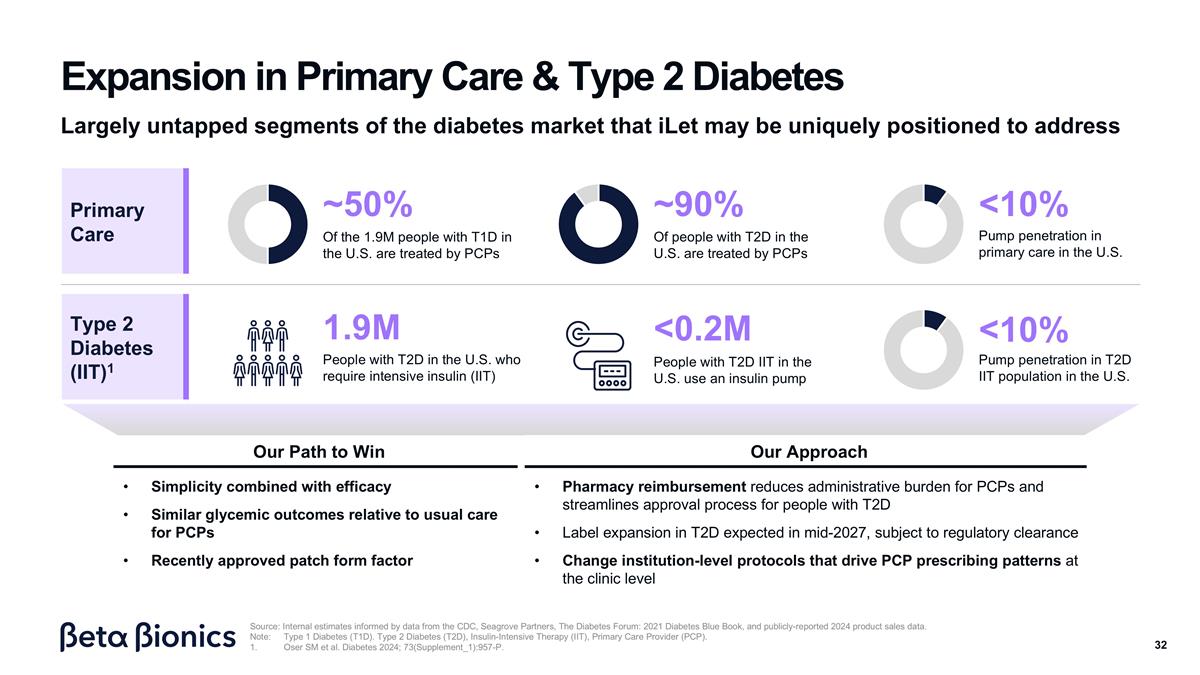
Of the 1.9M people with T1D in the U.S. are treated by PCPs ~50% Of people with T2D in the U.S. are treated by PCPs ~90% Pump penetration in primary care in the U.S. <10% 1.9M People with T2D in the U.S. who require intensive insulin (IIT) Pump penetration in T2D IIT population in the U.S. <10% <0.2M People with T2D IIT in the U.S. use an insulin pump Primary Care Type 2 Diabetes (IIT)1 Pharmacy reimbursement reduces administrative burden for PCPs and streamlines approval process for people with T2D Label expansion in T2D expected in mid-2027, subject to regulatory clearance Change institution-level protocols that drive PCP prescribing patterns at the clinic level Simplicity combined with efficacy Similar glycemic outcomes relative to usual care for PCPs Recently approved patch form factor Our Path to Win Our Approach Source: Internal estimates informed by data from the CDC, Seagrove Partners, The Diabetes Forum: 2021 Diabetes Blue Book, and publicly-reported 2024 product sales data. Note:Type 1 Diabetes (T1D). Type 2 Diabetes (T2D), Insulin-Intensive Therapy (IIT), Primary Care Provider (PCP). Oser SM et al. Diabetes 2024; 73(Supplement_1):957-P. Expansion in Primary Care & Type 2 Diabetes Largely untapped segments of the diabetes market that iLet may be uniquely positioned to address
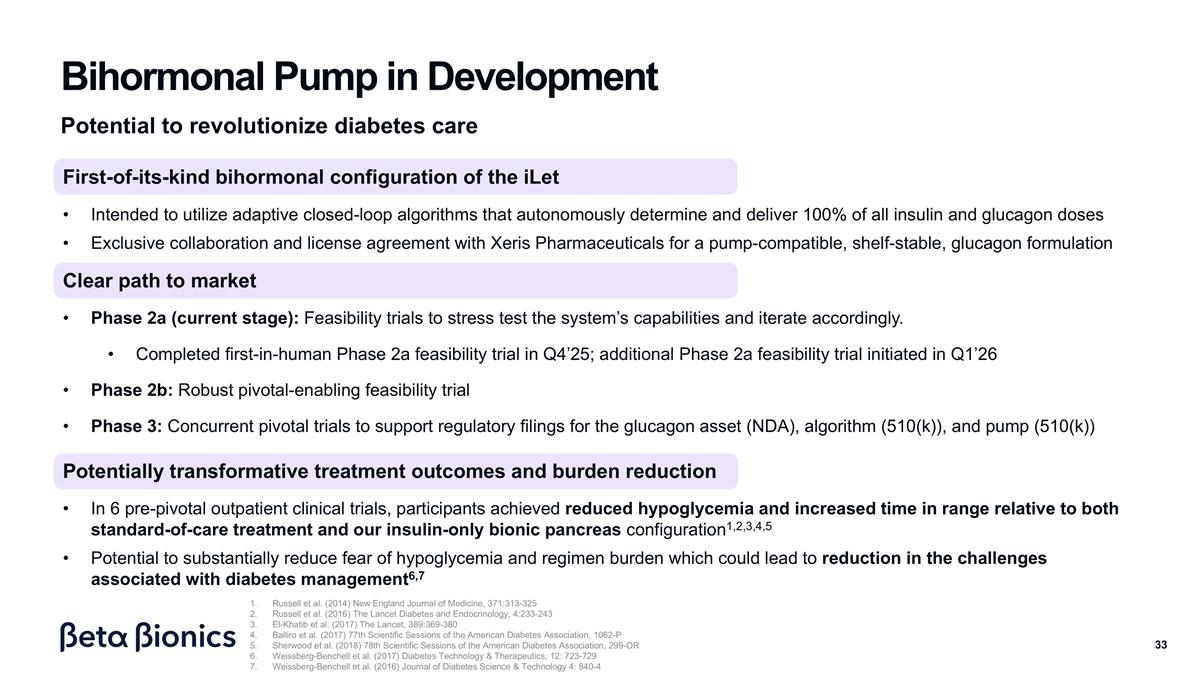
First-of-its-kind bihormonal configuration of the iLet Intended to utilize adaptive closed-loop algorithms that autonomously determine and deliver 100% of all insulin and glucagon doses Exclusive collaboration and license agreement with Xeris Pharmaceuticals for a pump-compatible, shelf-stable, glucagon formulation Clear path to market Phase 2a (current stage): Feasibility trials to stress test the system’s capabilities and iterate accordingly. Completed first-in-human Phase 2a feasibility trial in Q4’25; additional Phase 2a feasibility trial initiated in Q1’26 Phase 2b: Robust pivotal-enabling feasibility trial Phase 3: Concurrent pivotal trials to support regulatory filings for the glucagon asset (NDA), algorithm (510(k)), and pump (510(k)) Potentially transformative treatment outcomes and burden reduction In 6 pre-pivotal outpatient clinical trials, participants achieved reduced hypoglycemia and increased time in range relative to both standard-of-care treatment and our insulin-only bionic pancreas configuration1,2,3,4,5 Potential to substantially reduce fear of hypoglycemia and regimen burden which could lead to reduction in the challenges associated with diabetes management6,7 Russell et al. (2014) New England Journal of Medicine, 371:313-325 Russell et al. (2016) The Lancet Diabetes and Endocrinology, 4:233-243 El-Khatib et al. (2017) The Lancet, 389:369-380 Balliro et al. (2017) 77th Scientific Sessions of the American Diabetes Association, 1062-P Sherwood et al. (2018) 78th Scientific Sessions of the American Diabetes Association, 299-OR Weissberg-Benchell et al. (2017) Diabetes Technology & Therapeutics, 12: 723-729 Weissberg-Benchell et al. (2016) Journal of Diabetes Science & Technology 4: 840-4 Bihormonal Pump in Development Potential to revolutionize diabetes care
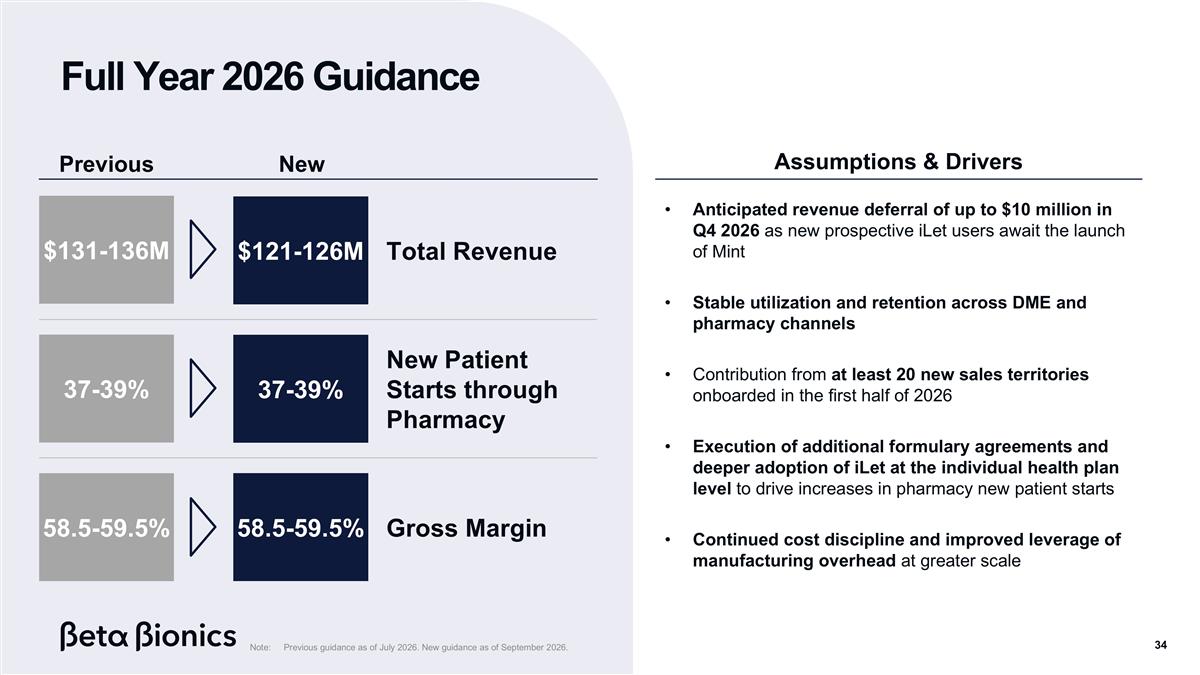
Anticipated revenue deferral of up to $10 million in Q4 2026 as new prospective iLet users await the launch of Mint Stable utilization and retention across DME and pharmacy channels Contribution from at least 20 new sales territories onboarded in the first half of 2026 Execution of additional formulary agreements and deeper adoption of iLet at the individual health plan level to drive increases in pharmacy new patient starts Continued cost discipline and improved leverage of manufacturing overhead at greater scale Assumptions & Drivers $121-126M Total Revenue 37-39% New Patient Starts through Pharmacy 58.5-59.5% Gross Margin $131-136M 37-39% 58.5-59.5% Previous New Note:Previous guidance as of July 2026. New guidance as of September 2026. Full Year 2026 Guidance
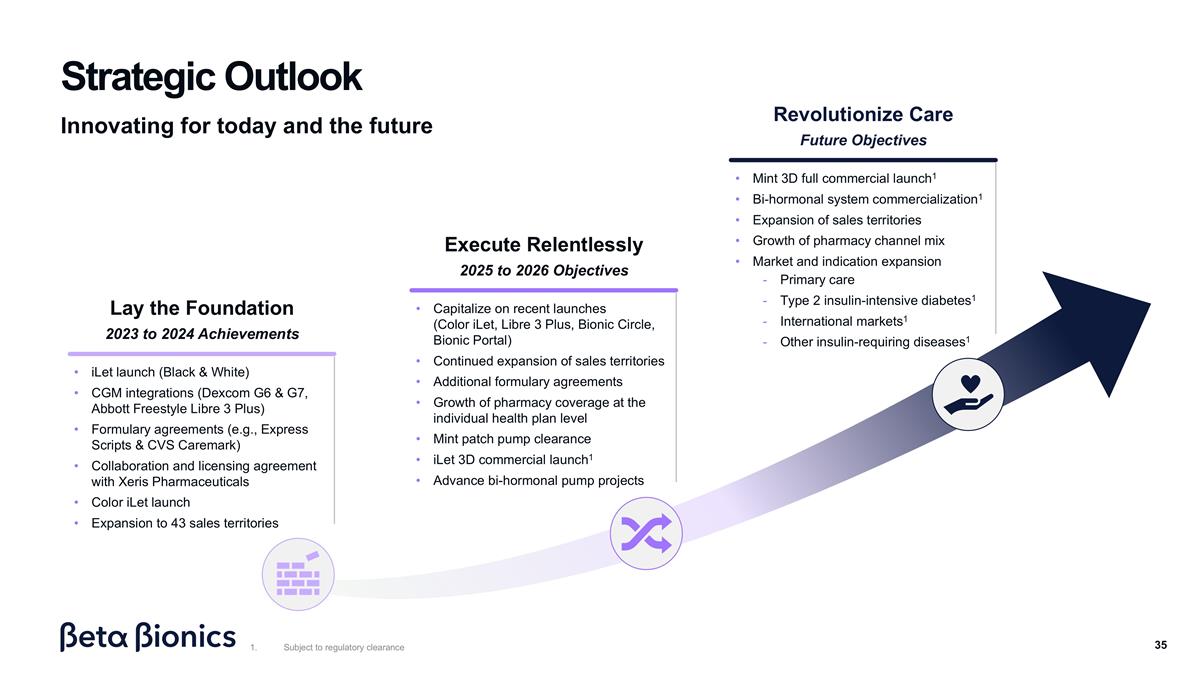
Innovating for today and the future Strategic Outlook iLet launch (Black & White) CGM integrations (Dexcom G6 & G7, Abbott Freestyle Libre 3 Plus) Formulary agreements (e.g., Express Scripts & CVS Caremark) Collaboration and licensing agreement with Xeris Pharmaceuticals Color iLet launch Expansion to 43 sales territories Lay the Foundation 2023 to 2024 Achievements Capitalize on recent launches (Color iLet, Libre 3 Plus, Bionic Circle, Bionic Portal) Continued expansion of sales territories Additional formulary agreements Growth of pharmacy coverage at the individual health plan level Mint patch pump clearance iLet 3D commercial launch1 Advance bi-hormonal pump projects Execute Relentlessly 2025 to 2026 Objectives Mint 3D full commercial launch1 Bi-hormonal system commercialization1 Expansion of sales territories Growth of pharmacy channel mix Market and indication expansion Primary care Type 2 insulin-intensive diabetes1 International markets1 Other insulin-requiring diseases1 Revolutionize Care Future Objectives Subject to regulatory clearance
Appendix
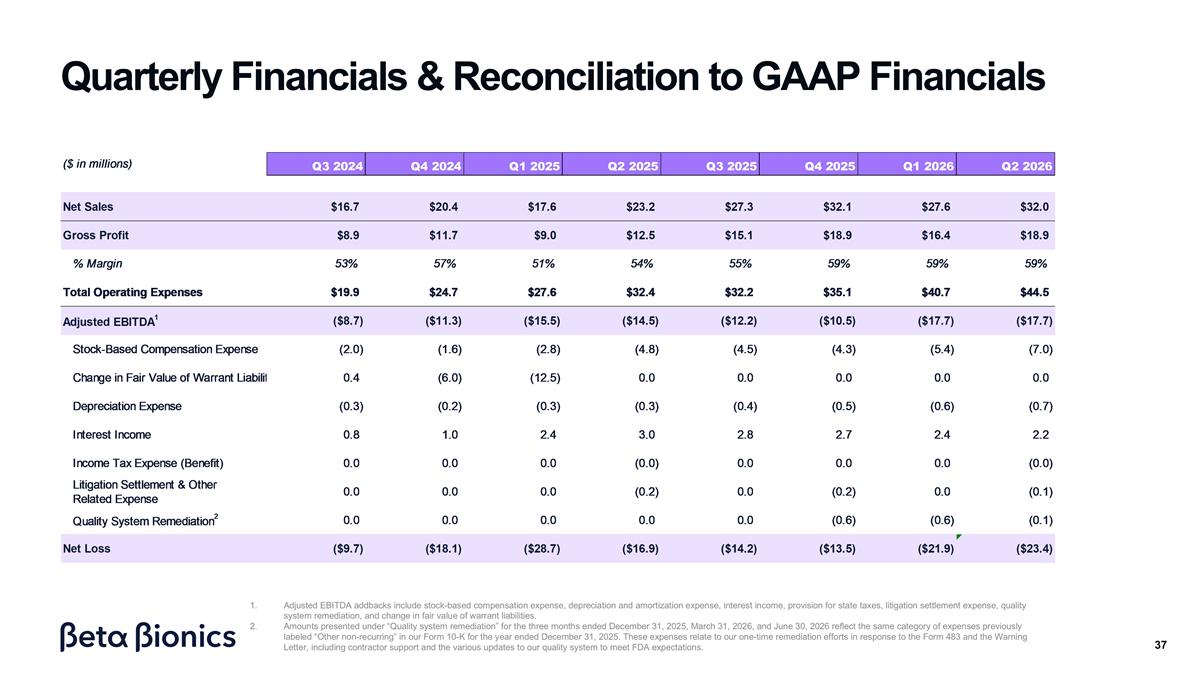
Adjusted EBITDA addbacks include stock-based compensation expense, depreciation and amortization expense, interest income, provision for state taxes, litigation settlement expense, quality system remediation, and change in fair value of warrant liabilities. Amounts presented under “Quality system remediation” for the three months ended December 31, 2025, March 31, 2026, and June 30, 2026 reflect the same category of expenses previously labeled “Other non-recurring” in our Form 10-K for the year ended December 31, 2025. These expenses relate to our one-time remediation efforts in response to the Form 483 and the Warning Letter, including contractor support and the various updates to our quality system to meet FDA expectations. Quarterly Financials & Reconciliation to GAAP Financials