Exhibit 99.2
PART I, ITEM 1. BUSINESS
Overview
Yarrow Bioscience, Inc. (“Yarrow”) is a clinical-stage biotechnology company focused on developing transformative therapies for autoimmune thyroid diseases. Yarrow’s lead product candidate, YB-101 (also known as GenSci098), is a humanized, monoclonal antibody targeting the thyroid-stimulating hormone receptor (“TSHR”), which Yarrow plans to develop for the treatment of Graves’ disease (“GD”) and thyroid eye disease (“TED”). Both GD and TED are serious and poorly treated autoimmune diseases in which autoantibodies against TSHR attack and overstimulate the receptor, leading to a wide spectrum of thyroidal and extra-thyroidal clinical sequelae.
YB-101 was designed to selectively bind to TSHR and block autoantibody-induced receptor activation, thereby directly inhibiting the pathogenic activity of thyroid-stimulating autoantibodies that drive disease progression in GD and TED as well as the biological pathway responsible for hyperthyroidism and orbitopathy. Yarrow believes that this novel and targeted approach represents a potential breakthrough for patients with GD and TED and has the potential to address an important unmet need for therapies with differentiated risk-benefit profiles.
YB-101
In December 2025, Yarrow in-licensed from Changchun Genescience Pharmaceutical Company, Ltd. (“GenSci”) the exclusive rights to develop YB-101 for the treatment of GD and TED outside of China. Yarrow’s development strategy is to advance YB-101 in GD and explore a clinical development plan for TED with the goal of becoming the first company to commercialize an anti-TSHR antibody in the United States and other territories outside of China. YB-101 is currently being evaluated by GenSci in an ongoing Phase 1 single ascending dose (“SAD”) and multiple ascending dose (“MAD”) trial in patients with TED in China. Yarrow submitted the GenSci SAD clinical data to the U.S. Food and Drug Administration (“FDA”) as part of a new IND to support the initiation of a GD trial by Yarrow in the United States, which was cleared by the FDA in March 2026. Yarrow also submitted an application for Fast Track designation for YB-101 in GD to the FDA in March 2026 and received notice of Fast Track designation from the FDA on May 20, 2026. In addition, third-party clinical data from two SAD trials of another anti-TSHR antibody, K1-70, further support the therapeutic potential of targeting TSHR in patients with GD and TED. In June 2026, Yarrow initiated a combined Phase 2a/Phase 2b trial of YB-101 in patients with GD, with or without concurrent TED. Data from the Phase 2a portion of the trial are expected in the second half of 2027.
Graves’ disease and thyroid eye disease
Both GD and TED are chronic in nature, although they can exhibit a relapsing-remitting pattern. GD typically presents in middle age and affects women more frequently than men. GD is characterized by both local thyroid effects and extra-thyroidal effects. There have been no new drugs approved for GD in the United States since 1950. Initial treatment for GD typically consists of oral anti-thyroid drugs (“ATDs”), which are associated with significant side effects (including, but not limited to, agranulocytosis, hepatotoxicity, aplastic anemia, thrombocytopenia, and vasculitis) and are not effective or tolerated in all patients. The second-line treatment for GD consists of either radioactive iodine treatment or thyroidectomy, both of which result in permanent loss of thyroid function. As a result, considering the significant toxicities associated with ATDs and the permanent loss of thyroid function associated with ablative second-line treatments, there is a significant need for a targeted therapeutic treatment that can safely and effectively treat GD while preserving the thyroid.
TED is a serious, chronic and debilitating condition that represents an extra-thyroidal manifestation of GD. TED is characterized by inflammation within the orbit of the eye, which may result in proptosis (eye bulging), pain, redness, swelling, diplopia (double vision), and, in severe cases, vision loss. Current treatment options for TED are limited. Initial therapy often includes systemic glucocorticoids, which may provide temporary benefit but are associated with significant side effects and relapse risk. Only one class of therapies, IGF-1R inhibitors, has been approved for TED in recent years — TEPEZZA® (teprotumumab-trbw) and LUMVOA™ (veligrotug-vvze) — both of which are also associated with certain safety risks, including those related to hyperglycemia and hearing impairment including hearing loss. As a result, there remains a significant unmet medical need for targeted therapies that can effectively treat TED with an improved safety and tolerability profile compared to the current standard of care.
Yarrow estimates that the initial U.S. addressable population for YB-101 consists of both newly diagnosed GD patients who have received ATD therapy for at least three months and existing GD patients currently maintained on ATDs. GD affects nearly 1% of the U.S. population, with annual incidence estimated at approximately 20 to 40 cases per 100,000 persons. Published U.S. treatment-pattern data indicate that ATDs are the most common first-line therapy. Assuming patients become eligible after three months of ATD therapy within the standard 12-to-18-month treatment period, Yarrow estimates an annual incident eligible population of approximately 34,000 to 68,000 patients and a prevalent eligible population of approximately 1,000,000 patients in the United States.
Prescription data indicate that approximately 1.3 million prescriptions for methimazole, the most commonly used ATD, are written annually in the United States, further illustrating the size of the treated population. In addition, U.S. studies suggest that approximately up to 30% of patients with GD progress to ablative therapies, such as radioactive iodine treatment or surgery, following first-line ATD treatment, and such patients may represent an additional population that could be treated with YB-101 as an alternative to receiving ablative therapy.
There may also be additional opportunity in patients with moderate-to-severe active TED. Moderate-to-severe active TED is estimated to have an annual incidence of approximately 4 to 8 cases per 100,000 persons, corresponding to approximately 11,000 to 22,000 new cases per year in the United States. Among moderate-to-severe TED patients who are treated with TEPEZZA® (teprotumumab-trbw), approximately 40% experience relapse, underscoring that this population has a significant unmet need for new treatment options.
Yarrow believes YB-101, as an anti-TSHR antibody treatment, has the potential to be a safer, more targeted and more convenient treatment option for patients suffering from GD and TED, compared to existing and investigational therapies, and may allow patients to achieve rapid disease control without requiring ablative treatments that result in permanent loss of thyroid function.
Yarrow’s history and team
Yarrow was founded in October 2025 and is backed by leading healthcare investor RTW Investments, LP. (“RTW”). To support Yarrow’s development strategy, Yarrow has assembled a deeply experienced management team which has collectively advanced multiple biotherapeutic products through clinical development and successful global regulatory approval.
Yarrow’s strategy
Yarrow’s goal is to develop a potential first-in-class anti-TSHR antibody for the treatment of GD and TED in the United States and other territories outside of China. Yarrow’s strategy to achieve this is as follows:
| · | Rapidly advance YB-101 into clinical development for GD outside of China. TSHR is a validated biological target for GD. Yarrow’s anti-TSHR antibody, YB-101, represents an opportunity to bring a TSHR-targeted biologic treatment for GD to market. Yarrow plans to conduct multiple clinical trials of YB-101 to evaluate the safety and efficacy of YB-101 in patients with GD outside of China and has received GD IND clearance from the FDA in March 2026. |
| · | Pursue the fastest pathway to registration in GD. The available body of clinical data of YB-101 supports initiation by Yarrow of a Phase 2 clinical trial in GD outside of China. In March 2026, Yarrow received IND clearance from the FDA to initiate a Phase 2 trial in GD in the United States and in June 2026, Yarrow initiated a Phase 2a/Phase 2b trial of YB-101 in patients with GD. This trial is a combined two-part Phase 2a (Part 1) and Phase 2b dose-range-finding (Part 2) clinical trial of YB-101 versus placebo in adult patients with GD who are well-controlled with ATDs. Patients will be required to have normal free triiodothyronine (“FT3”) and free thyroxine (“FT4”) levels at screening and may have either normal or suppressed thyroid-stimulating hormone (“TSH”) levels at screening. In the Phase 2a portion of the trial, multiple doses of YB-101 versus placebo will be evaluated in four cohorts of eight patients each. Part 1 will evaluate the safety, pharmacokinetics (“PK”), pharmacodynamics (“PD”) and efficacy of multiple YB-101 dosing regimens in order to select dose regimens for the Phase 2b portion. Patients enrolled in the Phase 2b portion of the trial will enroll in an open-label extension, which will collect longer-term safety and efficacy data of YB-101. Yarrow also submitted an application for Fast Track designation for YB-101 in GD to the FDA in March 2026 and received notice of Fast Track designation from the FDA on May 20, 2026. |
| These approaches are intended to shorten the time to registration by leveraging streamlined development strategies and regulatory flexibility programs for investigational products that address significant unmet medical needs. It is important to note that Fast Track designation does not guarantee a faster development process, review or approval as compared to the conventional FDA approval process. Following Phase 2 development, Yarrow expects to work closely with regulators in the United States and other territories outside of China to determine the most expeditious pathway to registration for YB-101. |
| · | Leverage ongoing YB-101 development in TED in China. Yarrow’s licensing partner GenSci is currently conducting a Phase 1 SAD and MAD trial of YB-101 versus placebo in adult patients with active TED in China. Patients enrolled in this trial have underlying GD with moderate to severe active TED. Yarrow has submitted clinical data from the SAD portion of this trial to the FDA as part of the IND submission to initiate a GD trial in the United States. In March 2026, Yarrow received IND clearance from the FDA to initiate a Phase 2a/2b GD trial. After complete and unblinded MAD data are available from the TED trial, Yarrow intends to explore a clinical development plan for YB-101 in patients with active TED outside of China; however, there can be no assurance that the clinical data being generated by GenSci in China will be accepted by the FDA or comparable foreign regulatory authorities for purposes of supporting regulatory approval of YB-101 for TED outside of China. If such data are not accepted, Yarrow may be required to conduct one or more additional clinical trials prior to seeking regulatory approval, which would result in additional costs and delays. |
| · | Build a deeply experienced team of clinical drug developers. Yarrow has recruited and plans to continue to recruit seasoned executives and managers who have proven track records in successfully developing novel biologic drugs for immune diseases across the globe. |
YB-101, a product candidate for the treatment of GD and TED
GD background
GD is a chronic autoimmune disease in which antibodies target TSHR, a receptor expressed in the thyroid as well as in other cells, including adipocytes and fibroblasts. GD affects approximately one percent of the U.S. population. GD typically presents in middle age, affects women more frequently than men, and may follow a relapsing-remitting disease course. It is possible, although less common, to diagnose GD in children, adolescents or older adults.
GD is characterized by both local thyroid effects and extra-thyroidal effects. Local thyroidal effects may include diffuse thyroid enlargement (goiter) and increased vascularity of the thyroid, while extra-thyroidal manifestations may include eye involvement and a wide range of both immune-mediated and hormone-mediated effects. These include tremor, anxiety, gastrointestinal changes, reproductive function disturbances, TED, atrial fibrillation (due to excess thyroid hormone effects on cardiac tissue), hyperhidrosis, osteopenia and dermopathy. Patients with GD also face an increased risk of thyroid cancer and increased all-cause mortality risk.
Current treatment options for GD
Initial treatment for GD typically consists of oral ATDs, which are associated with significant side effects (including, but not limited to, agranulocytosis, hepatotoxicity, aplastic anemia, thrombocytopenia, and vasculitis) and are not effective or tolerated in all patients. Patients who cannot be adequately treated with ATDs have no other approved pharmacologic alternatives. The second-line treatment for GD consists of either radioactive iodine treatment or thyroidectomy, both of which result in permanent loss of thyroid function. Considering the limited treatment options and their associated risks, there is a significant need for a targeted therapeutic treatment that can safely and effectively treat GD while preserving the thyroid.
Evaluation of GD therapies in clinical trials
In clinical trials of product candidates for the treatment of GD, outcome measures include thyroid hormone levels as well as utilization of ATDs. Specifically, levels of FT3, FT4 and TSH are measured and considered to be relevant biomarkers for GD. In patients who have hyperthyroidism due to GD, FT3 and FT4 are typically elevated (above normal range or high normal range), while TSH is typically suppressed (below lower limit of normal). Normalization of all three biomarkers is classified as achieving euthyroid status, which can be evaluated as a composite endpoint. Reduction or discontinuation of ATDs can be another measure of efficacy either alone or included in a composite endpoint, along with euthyroid status. The incidence of TED and the time to onset of TED may also be evaluated as an exploratory endpoint in patients with GD.
TED background
TED is a serious, chronic and debilitating condition that represents an extra-thyroidal manifestation of GD. TED is characterized by inflammation within the orbit of the eye, which may result in proptosis (eye bulging), pain, redness, swelling, diplopia (double vision), and, in severe cases, vision loss. Studies indicate that approximately forty percent or more of patients with GD develop TED during the course of their disease.
TED may follow a relapsing-remitting course and can cause substantial functional impairment and reduced quality of life. Patients with poorly controlled GD, elevated thyroid autoantibody levels, or a history of smoking are at increased risk of developing TED and of experiencing more severe disease manifestations. TED can be characterized as either active or chronic. In the active phase, patients experience significant inflammation in the orbital area. Active TED can persist for months to years. In the chronic phase, patients progress to a fibrotic state, which is caused by persistent inflammation and associated fibrotic changes in the orbital tissue. Fibrosis can cause the eye tissue to become stiff, and patients can experience more problematic lid retraction. Patients with chronic TED may require surgical intervention.
Current treatment options for TED
Current treatment options for TED are limited. Initial therapy often includes systemic glucocorticoids, which may provide temporary benefit but are associated with significant side effects and relapse risk.
TEPEZZA®, a humanized monoclonal antibody targeting IGF-1R, is approved in the United States for the treatment of TED and has demonstrated clinical efficacy; however, its use is associated with potentially serious adverse effects, including hearing impairment, hearing loss and hyperglycemia, which may lead to treatment discontinuation. LUMVOA™ (veligrotug-vvze) was approved by the FDA for the treatment of TED in June 2026. There are other third-party product candidates in development for the treatment of TED. In addition, radioactive iodine therapy, a second-line treatment for GD, is generally contraindicated in patients with TED due to the risk of disease exacerbation. As a result, there remains a significant unmet medical need for targeted therapies that can effectively treat TED with an improved safety and tolerability profile compared to the current standard of care.
Evaluation of TED in clinical trials
Clinical trials in TED measure validated outcomes specifically associated with the manifestations of TED in the eye, mainly proptosis and clinical activity score (“CAS”). Proptosis is the degree of eye bulging and is measured by a trained ophthalmologist using a standardized measurement tool and method (exophthalmometry) or calculated using orbital magnetic resonance imaging. CAS measures orbital inflammation using a point scale across seven clinical signs of inflammation (orbital pain, pain with eye movement, eyelid erythema, conjunctival redness, eyelid swelling, conjunctival edema and inflammation of caruncle) with each item scored as 0 or 1 point. A CAS score of less than three is considered less active disease whereas a CAS score of three or greater is considered active disease. Changes in proptosis and CAS over time can be used to assess efficacy of a therapeutic agent.
TSHR as an emerging target for the treatment of GD and TED
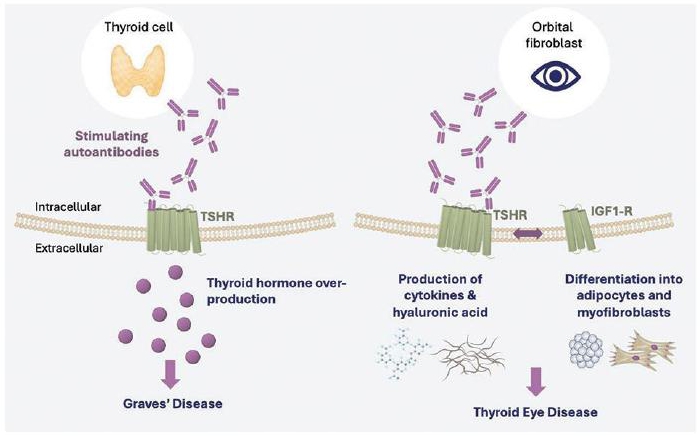
Yarrow believes that TSHR is an optimal target for the treatment of GD and TED given that TSHR is the single common target of all autoantibodies in GD and TED. TSHR is a membrane-associated G-protein-coupled receptor expressed in high levels on thyroid follicular cells and low levels on orbital fibroblasts, dermal fibroblasts and adipose tissue. TSHR possesses a large extracellular domain which binds its natural ligand, TSH as well as autoantibodies (Figure 1) and exogenous antibodies such as YB-101 (Figure 2). Normal binding of TSH at TSHR promotes thyroid hormone synthesis, namely, T3 (an active thyroid hormone) and T4 (a precursor thyroid hormone that is converted to T3), as well as stimulating production of thyroglobulin and thyroid peroxidase.
Figure 1. Autoantibody over-stimulation of TSHR in tissues affected by GD and TED
In the context of autoantibody formation, TSHR also functions as an autoantigen. GD and TED are immune diseases in which autoantibodies to the TSHR cause excessive stimulation and dysregulation of thyroid hormones. Both diseases are polyclonal, meaning that patients develop a variety of autoantibody clones that target TSHR, of which some or all will exert stimulatory function. Stimulatory autoantibodies are the main drivers of GD and TED from an immunobiology perspective.
Despite the polyclonal nature of autoantibodies to TSHR, all anti-TSHR autoantibodies bind to the same TSHR. By occupying TSHR with a therapeutic antibody, it is possible to inhibit the actions of multiple autoantibody clones. A highly specific and potent therapeutic antibody may successfully out- compete autoantibodies for binding to TSHR (Figure 2). This approach directly disrupts the disease process while preserving thyroid tissue. Furthermore, other third-party anti-TSHR antibodies have been shown to have a rapid onset of action and to achieve potent activity with low doses as compared to therapeutic antibodies that target more abundant proteins such as autoantibodies.
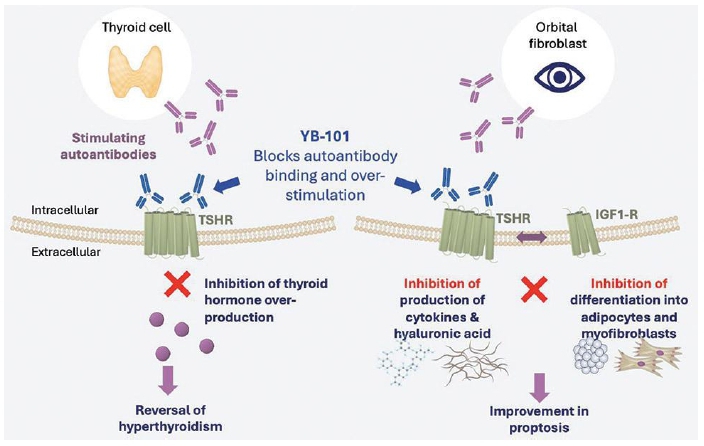
Figure 2. YB-101 blockade of autoantibody binding to TSHR in tissues affected by GD and TED
This common effector site makes TSHR a rational target for therapeutic intervention to disrupt the disease process. The biology of TSHR in GD and TED has been well characterized and third-party clinical studies of anti-TSHR antibodies in patients with GD and TED have illustrated the potential value of inhibiting this receptor for therapeutic benefit. Based on currently available third-party clinical data, the risk associated with TSHR inhibition appears to be possibly limited to hypothyroidism, which can be effectively treated with thyroid replacement therapy, specifically levothyroxine, which is a safe and effective intervention to normalize thyroid levels. Significant off-tissue adverse effects have not been observed in third-party clinical studies of anti-TSHR antibodies to date.
Limitations of current treatment options
Current treatment options for GD and TED have significant limitations. GD has historically been treated with small molecule ATDs, such as methimazole and propylthiouracil, which reduce thyroid hormone synthesis but do not directly address the underlying autoimmune mechanism driving disease. ATDs are associated with serious toxicities such as agranulocytosis, hepatotoxicity, aplastic anemia, thrombocytopenia, and vasculitis. There are currently no approved targeted biologics to treat GD. Several ongoing clinical development programs are evaluating the safety and efficacy of biologic modalities that target removal of GD autoantibodies. These modalities include anti-FcRn antibodies, which nonspecifically degrade immunoglobulins, and degraders that specifically target certain subtypes of immunoglobulins. These approaches are administered either intravenously or via subcutaneous injection on a weekly basis. Targeting circulating autoantibodies may involve engagement of a larger and more dynamic target pool compared to targeting the TSH receptor, which is primarily cell-surface localized. As a result, higher or sustained levels of therapeutic exposure of autoantibody degraders may be required to achieve meaningful target engagement, and this may translate to a higher dosing burden as compared to anti-TSHR antibodies. Previous third-party studies of investigational anti-FcRn antibodies have shown limited clinical benefit in patients with TED. To date, clinical data with these modalities in GD remains limited, and none have been approved for the treatment of GD.
Similarly, treatment options for TED have historically focused on systemic glucocorticoids to reduce inflammation caused by autoimmune activity in the eye, which may provide temporary benefit but are associated with significant side effects and relapse risk.
More recently, TEPEZZA® became the first targeted biologic therapy approved for the treatment of TED. Additionally, LUMVOA™ (veligrotug-vvze) was approved in June 2026. Both TEPEZZA® and LUMVOA™ inhibit IGF-1R, which is a receptor expressed in the eye and other tissues and has been shown to indirectly modulate TSHR overstimulation and improve signs and symptoms of TED. However, IGF-1R is widely expressed across multiple tissues, and TEPEZZA® treatment has been associated with safety risks, including hearing impairment, hearing loss and hyperglycemia, which may limit its use in certain patients.
Yarrow’s solution: YB-101, an anti-TSHR antibody for the treatment of GD and TED
Yarrow’s lead product candidate, YB-101 (also known as GenSci098), is a humanized, recombinant IgG4 monoclonal antibody expressed in Chinese hamster ovary cells that targets TSHR. In December 2025, Yarrow in-licensed from GenSci the exclusive rights to develop YB-101 for the treatment of GD and TED outside of China. IgG4 was selected for the engineering of YB-101 due to its lack of Fc-mediated effector function, which is important to prevent immune-mediated destruction of thyroid cells, therefore preserving thyroid tissue.
YB-101 binds specifically to TSHR and inhibits autoantibody-mediated receptor over-stimulation, which is fundamental to the pathogenesis of both GD and TED. By binding selectively to the TSHR and blocking autoantibody-induced receptor activation, YB-101 directly inhibits the biological pathway responsible for hyperthyroidism and orbitopathy. Third-party clinical data from two SAD trials of another anti-TSHR antibody, K1-70, support the therapeutic potential of targeting TSHR in patients with GD and TED. Yarrow believes that this novel and targeted approach represents a potential breakthrough for patients with GD and TED.
In addition, in Phase 1 trials conducted by GenSci, YB-101 is currently being evaluated at projected dose levels of less than 300 milligrams and is administered subcutaneously at intervals of every eight weeks, which Yarrow believes may reduce treatment burden compared to existing and investigational therapies that require more frequent or intravenous administration.
While existing IGF-1R-directed therapies have demonstrated clinical benefit in TED, the broad expression of IGF1-R has been associated with treatment-limiting adverse events in certain patients. As TSHR is more narrowly expressed across tissues, YB-101 is not expected to cause hearing-related and other treatment-limiting adverse events that are associated with IGF-1R therapies, such as TEPEZZA®. In GenSci’s clinical studies to date, no clinically meaningful hearing-related adverse events have been reported in patients treated with YB-101. In addition, based on preclinical studies conducted by GenSci, YB-101 is not expected to be associated with the hepatotoxicity or agranulocytosis risks known to occur with ATDs.
Development of YB-101
Preclinical studies
In GenSci’s preclinical studies, receptor binding assays were used to characterize the binding of YB-101. These binding assays were conducted in vitro using a human HEK293 cell line that overexpresses the TSHR. The half-maximal effective concentration of YB-101 in cells that overexpressed TSHR was 1.11 nM. Additional assays were conducted using the same cell line to investigate the inhibitory activity of YB-101. Upon stimulation with M22 (a research antibody reagent that stimulates TSHR), activity of M22 in cells that overexpressed TSHR was inhibited by YB-101, as measured by half-maximal inhibitory concentration of 2.3 nM.
Additionally, the effects of YB-101 on inflammatory mediators in TED eye tissue have also been evaluated in vitro. Orbital fibroblasts were isolated from patients with active and chronic TED, and these fibroblasts were treated with YB-101 along with a stimulatory antibody in order to mimic the inflammatory conditions of TED. In this assay, YB-101 inhibited the release of proinflammatory mediators (specifically, hyaluronic acid, interleukin-6 and interleukin-8).
YB-101 has also been evaluated in nonclinical pharmacology and toxicology studies in mice and cynomolgus monkeys. PD of YB-101 were evaluated in an M22-induced mouse model of acute GD. In this model, female BALB/c mice were administered the TSHR-stimulating antibody M22 to induce a GD phenotype. Eight groups of 16 mice per group were dosed subcutaneously with one of five dose levels of YB-101, a negative control, or a positive control (K1-70). Results showed that YB-101 reduced serum T4 levels by 50-68% in the top three dose levels at 24 hours post-dose. This activity was similar to what was observed with the positive control.
A four-week repeat dose toxicology study was conducted in mice, and four-week and six-month repeat dose toxicology studies were conducted in cynomolgus monkeys. In the 4-week repeat dose toxicity study in mice, ICR mice were subcutaneously injected with YB-101 at doses of 20, 60, and 200 mg/kg once every two weeks for four weeks (three total doses) followed by a four-week recovery phase. Each dose level group included eight animals (four per sex). Under the experimental conditions of the study, the no-observed-adverse-effect-level (“NOAEL”) was 60 mg/kg for males and 200 mg/kg for females.
In the cynomolgus monkey four-week study, groups were subcutaneously administered YB-101 every two weeks for four weeks (three total doses) at dose levels of 15, 50, or 150 mg/kg with a four-week recovery phase. Each of the three dose level groups included 10 animals (five per sex). Under the experimental conditions of this study, the NOAEL was 50 mg/kg.
In the six-month study, cynomolgus monkeys were subcutaneously injected once a month for 6 consecutive months (7 doses) followed by a 16-week recovery phase. Monkeys were assigned to four groups, including an excipient control group and YB-101 10, 30, 100 mg/kg groups, with five monkeys per sex in each group. Under the experimental conditions of this study, the NOAEL was 30 mg/kg.
Overall, safety studies conducted over four weeks in mice and monkeys, as well as over six months in monkeys, demonstrated that YB-101 has an acceptable safety profile for testing in humans and a wide safety margin for exploring doses in clinical trials.
Phase 1 clinical trial in patients with TED
GenSci is conducting a first-in-human Phase 1 SAD and MAD study evaluating YB-101 versus placebo in adult patients with active TED in China. The primary objective of the study is to evaluate safety and tolerability of YB-101, with secondary objectives including PK and immunogenicity. Exploratory objectives include PD effects of YB-101, including thyroid hormone levels (biomarkers for GD) and preliminary clinical activity, including effects on proptosis (via Hertel exophthalmometer), CAS, diplopia, orbital tissue volume and Graves’ ophthalmopathy quality of life (“GO-QoL”).
Eligible patients included adults with moderate-to-severe active TED who were positive for thyroid-stimulating hormone receptor autoantibodies. Moderate-to-severe TED was defined as disease impacting quality of life and requiring intervention but not threatening vision, based on established clinical criteria, including eyelid retraction, soft tissue involvement, proptosis, and/or diplopia.
At screening, patients were required to have euthyroid status or mild hypo- or hyperthyroidism within protocol-defined limits. Patients could be receiving stable ATD therapy and/or thyroid hormone replacement, be ATD-naïve, or have discontinued ATD therapy due to intolerance, provided protocol-specified stability criteria were met prior to enrollment.
Interim and unblinded data have been analyzed from the SAD portion (Part 1) of the study (Figure 3). Forty patients were enrolled in the SAD, which evaluated five single doses of YB-101 (15 mg, 45 mg, 90 mg, 180 mg and 270 mg) versus placebo (3:1). Patients enrolled in the SAD were adults aged 20-64 with a diagnosis of active TED associated with GD (CAS of 3 or higher in the study eye at baseline in all patients except for two placebo patients with a CAS of 2 at baseline). For the study eye, the mean (SD) proptosis as measured by a Hertel Exophthalmometer was 22.88 (2.141) mm in the YB-101 groups and 22.20 (2.507) mm in the placebo group.
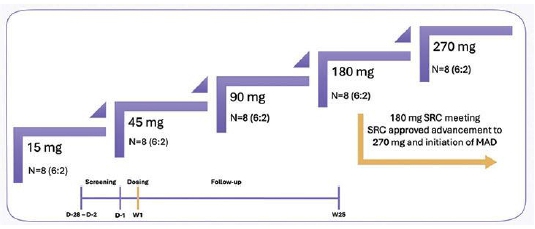
Figure 3. TED Part 1 (SAD) trial design
Safety and Tolerability
In Part 1, a single subcutaneous dose of YB-101 was generally well tolerated across the dose range evaluated. No deaths, no treatment-related serious adverse events and no adverse events leading to dose interruption or study withdrawal have been reported. Two serious adverse events have occurred during the trial, one in the YB-101 90 mg cohort and one in the placebo group, both of which were assessed by the investigator as unrelated to study treatment and resolved.
All treatment-emergent and treatment-related adverse events were mild or moderate in severity, and no severe events were reported. Treatment-related hypothyroidism was reported in 43.3% of YB-101-treated patients overall, compared to 10.0% of placebo-treated patients, with incidence by dose of 16.7%, 0%, 50.0%, 66.7% and 83.3% in the 15 mg, 45 mg, 90 mg, 180 mg and 270 mg cohorts, respectively. These adverse events were mild or moderate in severity and are believed to be consistent with the mechanism of action of YB-101. No clinically meaningful differences were observed between YB-101 and placebo in vital signs, physical examinations, ophthalmologic assessments or other safety evaluations apart from hypothyroidism and related thyroid hormone changes. Hypothyroidism was managed by investigators with ATD dose reduction or discontinuation, and/or initiation of thyroid replacement therapy (e.g. levothyroxine) as guided by the study protocol. The foregoing safety information is reported based on Yarrow’s knowledge and does not reflect a continuous provision of information from our development partner.
Pharmacokinetics and Pharmacodynamics
Following a single subcutaneous dose, YB-101 exposure increased in a linear, dose-proportional manner across the dose range evaluated.
Patients with TED have underlying GD, and both diseases are driven by autoantibody overstimulation of TSHR. It is expected in patients with GD or TED that TSHR inhibition with YB-101 will result in changes in thyroid hormone levels by directly blocking autoantibody-driven overstimulation of TSHR. For this reason, thyroid hormones, particularly FT3, FT4 and TSH, serve as relevant PD and disease biomarkers. In Part 1, changes in thyroid hormones were observed shortly after dosing and were consistent with the expected mechanism of action of YB-101. Treatment with YB-101 was associated with reductions in circulating thyroid hormones, including TT3, TT4, FT3 and FT4, beginning within the first several days following dosing. Decreases in FT3 and FT4 were observed as early as approximately Day 2 to Day 3, with nadirs generally occurring between approximately Day 11 and Day 15. These changes were followed by a compensatory increase in TSH levels starting at approximately Day 3 to Day 5, with peak TSH elevations typically observed between approximately Day 15 and Day 22.
PD effects appeared overall dose-dependent with greater magnitude and longer duration at higher doses, particularly at 180 mg and 270 mg, relative to the lower dose cohorts. For example, larger reductions from baseline in thyroid hormone levels and higher peak TSH elevations were observed in these higher dose groups, and the time required for these parameters to return toward baseline appeared longer compared to lower dose cohorts. Because investigators were permitted to adjust concomitant ATD or thyroid hormone replacement therapy during the study in response to changing thyroid hormone levels, the analysis of YB-101 PD is partially influenced by these background interventions. Although reductions and discontinuations of ATDs were reported in some patients, the study was not designed to prospectively evaluate ATD reduction or discontinuation as an endpoint.
Overall, these PD findings in GD-relevant biomarkers after a single dose of YB-101 are consistent with target engagement and the proposed mechanism of action of YB-101. The observed thyroid hormone changes were also reflected clinically in the increased incidence of treatment-related hypothyroidism observed in the higher dose cohorts. Further evaluation of PD will be conducted in the MAD portion (Part 2) of the study.
Preliminary Clinical Activity
Although Part 1 was not designed or powered to establish efficacy, YB-101 demonstrated preliminary evidence of biological and clinical activity across multiple TED-related endpoints following a single dose.
Across the five YB-101 dose groups, proptosis response rates, overall response rates and diplopia response rates were generally higher than placebo. For proptosis response (a reduction in proptosis of≥2 mm), response rates across YB-101 cohorts ranged up to 66.7% at post-baseline assessments, compared to up to 20.0% for placebo. Mean reductions from baseline in proptosis were also generally greater with YB-101 than with placebo, with the most favorable results observed in the 180 mg and 270 mg cohorts.
YB-101-treated patients also demonstrated higher overall response rates (a reduction of ≥2 points in the CAS plus a reduction in proptosis of ≥2 mm) compared to placebo-treated patients. Across post-baseline assessments, overall response rates reached as high as 66.7% in the 180 mg cohort, compared to a maximum of 10.0% in the placebo group.
With respect to diplopia, reduction response rates for at least one-grade improvement were generally higher in several YB-101 dose groups than in placebo, with the 270 mg cohort showing the most favorable findings.
In addition to these clinical measures, YB-101 treatment was associated with sustained reductions in total extraocular muscle volume and intra-orbital fat volume through follow-up, whereas placebo showed limited change over most of the observation period. Improvements in patient-reported quality of life outcomes, such as GO-QoL were also observed in certain YB-101 dose groups, with the 45 mg and 270 mg cohorts showing the most favorable trends relative to placebo at most visits.
Taken together, Yarrow believes the results from Part 1 provide evidence of biological and preliminary clinical activity of YB-101 in TED following a single dose, with the 180 mg and 270 mg cohorts generally showing the most consistent activity across proptosis and overall response endpoints, and the 270 mg cohort showing the most favorable diplopia-related findings. However, these findings are based on a small number of patients in each cohort, the efficacy endpoints were exploratory, and the study was not powered for formal statistical comparisons.
The MAD portion of the trial is ongoing and remains blinded. Thirty-six patients are planned to be enrolled into three dose escalation cohorts (90 mg every 8 weeks, 180 mg every 8 weeks, and 270 mg every 8 weeks; Figure 4). Each cohort will enroll 12 patients at a 5:1 ratio of YB-101 to placebo. Patients will receive three doses of YB-101 and will be followed for 40 weeks. To date, one serious adverse event has been reported, which was unrelated to the study drug. There have been no deaths, no treatment-related serious adverse events and no dose interruptions or discontinuations due to adverse events. The foregoing safety information is reported based on the Company's knowledge and does not reflect a continuous provision of information from our development partner.
Complete data from Parts 1 and 2 of this study are expected to be presented at a future scientific meeting and/or submitted for publication in a peer-reviewed journal.
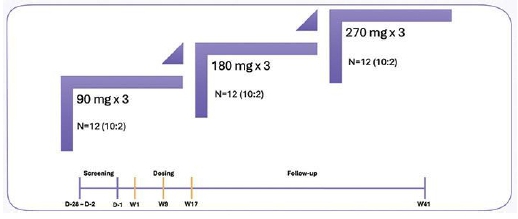
Figure 4. TED Part 2 (MAD) trial design
Phase 1 clinical trial in patients with GD
GenSci has also initiated a randomized, double-blind, placebo-controlled, SAD Phase 1 trial of YB-101 in adult patients with GD in mainland China. This trial is enrolling patients with a confirmed diagnosis of GD who are not receiving ATD treatment or who can discontinue treatment temporarily to participate in the trial, and data are expected in 2027.
Future development of YB-101
Development in GD
In June 2026, Yarrow initiated a randomized, blinded, placebo-controlled combined Phase 2a/Phase 2b trial of YB-101 in adult patients with GD who are well-controlled on ATDs. The trial is being conducted in the United States and other territories outside of China and will consist of two parts. Yarrow also submitted an application for Fast Track designation for YB-101 in GD to the FDA in March 2026 and received notice of Fast Track designation from FDA on May 20, 2026.
Part 1 will be conducted as a Phase 2a, proof-of-concept study of YB-101 versus placebo. In Part 1, patients with GD will receive three subcutaneous doses of YB-101 or placebo administered once every eight weeks or six subcutaneous doses of YB-101 or placebo once every four weeks. Patients will be evaluated for the primary safety, PK, PD and efficacy endpoints at 24 weeks. The planned YB-101 dose levels for Part 1 include 180 mg, 270 mg, and 400 mg administered every eight weeks, as well as 200 mg administered every four weeks, with eight patients planned to be enrolled in each cohort, YB-101 versus placebo (3:1). The 180 mg Q8 week and 270 mg Q8 week cohorts will be enrolled in parallel. The dose levels and frequency of dosing for the remaining two cohorts can be modified based on the recommendation of the data monitoring committee based on the analysis of PK, PD and safety data from the first two cohorts. Data from the Phase 2a portion of the trial are expected in the second half of 2027.
Part 2 is expected to be conducted as a Phase 2b dose-finding study consisting of up to four parallel cohorts. In Part 2, three dose levels of YB-101 are expected to be evaluated against placebo with 50 patients planned for each treatment arm. The selection of doses and dosing intervals for Part 2 is expected to be informed by the safety, efficacy, PK, and PD data generated in Part 1 (Phase 2a).
In both Parts 1 and 2, ATDs will be tapered in accordance with a specific algorithm in the study protocol based on improvements in biomarkers of GD, including FT3, FT4 and TSH. Efficacy assessments will include the proportion of patients who achieve normalization of FT3 and FT4 levels, or the proportion of patients who become euthyroid and achieve reduction or discontinuation of ATD therapy. In both parts, patients who develop hypothyroidism will receive thyroid replacement therapy (levothyroxine) to target a euthyroid state per protocol. A data monitoring committee will review all emerging safety and efficacy data on an ongoing basis.
Development in TED
Yarrow is exploring a clinical development plan for YB-101 in adult patients with TED in the United States and other territories outside of China.
Yarrow’s License Agreement
GenSci License Agreement
On December 15, 2025, GenSci and Yarrow entered into a license agreement (the “GenSci License Agreement”), pursuant to which Yarrow obtained from GenSci an exclusive, royalty-bearing license to develop, manufacture, and commercialize YB-101 (also known as GenSci098), an antibody targeting the TSHR outside Greater China for all fields of use, including the treatment of GD and TED. GenSci retained rights to exploit these assets in Greater China. Under the GenSci License Agreement, and subject to limited exceptions in which GenSci will perform certain development activities outside Greater China, Yarrow is responsible for all development and commercialization activities for YB-101 outside Greater China. GenSci is obligated to provide Yarrow with clinical data relating to YB-101 that exists as of the effective date in connection with the initial know-how transfer. Additionally, each party is obligated to provide the other party with certain clinical data generated by that party during the development of YB-101 as part of the ongoing information exchange.
More specifically, clinical data generated by GenSci will be shared with Yarrow for inclusion in global safety reports and regulatory submissions by Yarrow to global health authorities including the FDA. Yarrow is the manager of the YB-101 global safety database; as a result, data sharing between Yarrow and GenSci will continue during the term of the GenSci License Agreement. Yarrow does not currently anticipate outsourcing preclinical or clinical research to GenSci, but could consider doing so in the future. Manufacturing data generated by GenSci related to the manufacturing and testing of YB-101 will be shared with Yarrow on an ongoing basis to support global regulatory filings related to manufacturing.
Exclusivity
Subject to customary exceptions, during the term of the GenSci License Agreement, neither Yarrow (with respect to activities outside Greater China) nor GenSci (with respect to activities in Greater China), nor their respective affiliates, may directly or indirectly clinically develop or commercialize specified categories of antibodies directed to TSHR.
Financial Consideration
Under the GenSci License Agreement, GenSci received an upfront payment of $70.0 million. GenSci is also eligible to receive up to approximately $1.295 billion in additional contingent payments based on GenSci’s completion of the manufacturing technology transfer, GenSci’s achievement of a development milestone, as well as Yarrow’s achievement of development, regulatory approval, and commercial sales-based milestones. Specifically, GenSci is eligible to receive up to approximately $100 million in contingent payments based on the achievement of specified clinical development milestones by Yarrow or GenSci, including a $50 million near-term development milestone, as applicable, and up to $150 million in contingent payments based on Yarrow’s achievement of specified regulatory approval milestones. In addition, GenSci is eligible to receive tiered royalties ranging from the low teens to the low-mid teens on annual net product sales outside Greater China during the applicable royalty term. The royalty term for a licensed product in a given country commences upon the first commercial sale of the licensed product in that country and continues until the latest of: (a) the expiration of the last royalty-bearing valid claim of the licensed patents covering the licensed product in that country; (b) the tenth anniversary of the first commercial sale of the licensed product in that country; and (c) the expiration of all regulatory exclusivity for the licensed product in that country. The expected expiry of the last-to-expire royalty payment obligation is January 20, 2046.
Termination
The GenSci License Agreement will remain in effect until the expiration of all royalty terms. Either party may terminate the GenSci License Agreement for an uncured material breach or insolvency of the other party. GenSci may terminate the GenSci License Agreement in the event of a specified patent challenge by Yarrow or its affiliates or if Yarrow ceases all development activities outside Greater China for a substantial period of time prior to achieving a specified regulatory approval milestone. Following a specified near-term triggering event, Yarrow may terminate the GenSci License Agreement for convenience upon providing the required notice.
Competition
The biotechnology and biopharmaceutical industries are characterized by continuing technological advancement and significant competition. While Yarrow believes that its product candidate, technology, development experience and scientific knowledge provide it with competitive advantages, Yarrow faces competition from major pharmaceutical and biotechnology companies, academic institutions, governmental agencies and public and private research institutions, among others. Any product candidates that Yarrow successfully develops and commercializes will compete with existing therapies and new therapies currently in clinical development or that may become available in the future. Many of the companies with which Yarrow is currently competing or will compete against in the future have significantly greater financial resources and expertise in research and development, manufacturing, preclinical testing, conducting clinical trials, obtaining regulatory approvals and marketing approved products than Yarrow does. Mergers and acquisitions in the pharmaceutical and biotechnology industry may result in even more resources being concentrated among a smaller number of Yarrow’s competitors. Smaller or early-stage companies may also prove to be significant competitors, particularly through collaborative arrangements with large and established companies. These competitors also compete with Yarrow in recruiting and retaining qualified scientific and management personnel, establishing clinical trial sites, patient enrollment for clinical trials as well as in acquiring technologies complementary to, or necessary for, Yarrow’s product candidates.
Key competitive factors affecting the success of all Yarrow’s product candidates that it will develop, if approved, are likely to be efficacy, safety, convenience, dosing frequency, presentation, price, the level of competition and generic competition and the availability of reimbursement from government and other third-party payors. Some competitors have obtained regulatory approval for products and they or others may also obtain regulatory approvals in the future for products for the treatment of the same indications that Yarrow’s product candidates target more rapidly than Yarrow does, which may result in Yarrow’s competitors establishing a strong market position before Yarrow is able to enter the market.
Specifically, there are several companies developing or marketing treatments that may be approved for the same indications and/or disease as Yarrow’s lead product candidate, YB-101, including major pharmaceutical companies. There can be no assurance that YB-101 will have similar or superior results compared to the current standard of care or to those offered by the evolving treatment landscape.
TEPEZZA® (teprotumumab-trbw), a humanized monoclonal antibody targeting IGF-1R, is approved in the United States for the treatment of TED and has demonstrated clinical efficacy; however, its use is associated with potentially serious adverse effects, including hearing impairment and hyperglycemia, which may lead to treatment discontinuation. Additionally, LUMVOA™ (veligrotug-vvze) was approved in June 2026. The treatment paradigm in GD and TED is rapidly evolving and several companies, including Immunovant, Inc., Biohaven Ltd., Alumis Inc., Argenx SE, Biohaven, Sanofi, Merida Biosciences, H. Lundbeck A/S, Lassen Therapeutics, Roche, Sling Therapeutics, Inc., Novartis AG (which acquired Tourmaline Bio, Inc. in October 2025) and Viridian Therapeutics, Inc., are developing therapeutics for GD and TED currently in clinical development that are expected to be direct competitors with YB-101. Viridian Therapeutics, Inc. and Ethyreal Bio are also developing TSHR-targeted antibody therapeutics for GD and TED that are currently in preclinical development and that are also direct competitors with YB-101.
Manufacturing
Yarrow does not own or operate, and currently has no plans to establish, any manufacturing facilities. Yarrow relies on and expects to continue to rely on GenSci and/or third-party CDMOs for the manufacturing of YB-101 and related raw materials for clinical development, as well as for the commercial manufacturing of any of its product candidates that receive marketing approval in the future. Yarrow currently solely relies on GenSci to provide biological development and manufacturing services. Yarrow believes there are multiple sources for all of the materials required for the manufacturing of YB-101 and may in the future engage additional CDMOs to provide biological development and manufacturing services. As YB-101 and its future product candidates advance through development, Yarrow expects to enter into longer-term commercial supply agreements with key suppliers and manufacturers to fulfill and secure its production needs. If GenSci becomes unavailable to Yarrow for any reason, Yarrow believes that there are a number of potential replacements, and it will need to identify and qualify such replacements.
Yarrow also relies on GenSci to perform all chemistry, manufacturing, and controls activities. Yarrow’s agreements with GenSci may obligate them to develop or transfer upstream and downstream processes, develop or transfer drug product manufacturing processes, develop or transfer suitable analytical methods for release and stability testing and qualify these methods for use with Yarrow’s product candidates, produce drug substance for preclinical testing, and produce drug substance or drug product under Current Good Manufacturing Practices (“cGMP”) for use in clinical trials among other activities. In addition, Yarrow relies on GenSci to operate facilities that meet regulatory requirements for production and testing of clinical and commercial products and to work closely with Yarrow to validate manufacturing processes prior to commercial launch.
Yarrow qualifies CDMOs including GenSci prior to initiation of cGMP regulated activities and periodically thereafter as part of the supplier qualification program. Yarrow oversees CDMOs including GenSci by performing technical and quality assurance review and/or approval of cGMP documentation, establishing quality agreements to define responsibilities and expectations for goods and services, and observing production and testing activities as a person-in-plant, among other activities.
Intellectual Property
Overview
Yarrow strives to protect the proprietary programs and technologies that it believes are important to its business, including seeking and maintaining patent protection intended to cover the composition of matter of its programs, its methods of use and manufacture, and other inventions.
Yarrow has one pending U.S. provisional patent application related to methods of treating GD with YB-101, which was filed in February 2026 at the United States Patent and Trademark Office (“USPTO”). A provisional patent application is an application filed at the USPTO for the purpose of securing an early date of priority for the applicant’s invention. The provisional application must include a written description of what the inventor has discovered, along with a drawing of the invention, but need not include patent claims, statements concerning or disclosing the prior art, or certain other formalities. A provisional patent application allows for an effective filing date to be established with regard to an invention, but once a provisional patent application is filed, either a corresponding non-provisional patent application or a petition to convert the provisional patent application into a non-provisional patent application must be filed within 12 months or such effective filing date will be lost. If a non-provisional patent application claiming priority to this U.S. provisional patent application is filed and issued as a patent, the patent would expire in February 2047, absent any terminal disclaimers, patent term adjustment, or patent term extension, and assuming timely payment is made of all appropriate maintenance, renewal, annuity, or other governmental fees.
Yarrow licenses patent rights to three patent families in jurisdictions outside of Greater China (Chinese mainland, the Hong Kong Special Administrative Region, the Macau Special Administrative Region and Taiwan) from GenSci under the GenSci License Agreement. Under the GenSci License Agreement, Yarrow has the first right to file, prosecute, defend, maintain, and filed Patent Term Extensions for all licensed patents.
The first licensed patent family is directed to compositions of matter, covering monoclonal antibodies targeting the TSHR, including YB-101. The licensed patent applications in this patent family are national stage applications from a PCT application filed August 2023, and are pending in the United States, Australia, United Arab Emirates, Canada, European Patent Organization, Japan, Korea, Russia, Qatar, and Saudi Arabia. If one or more of these patent applications are issued as a patent, the patent would expire August 2043, absent any terminal disclaimers, patent term adjustment, or patent term extension, and assuming timely payment is made of all appropriate maintenance, renewal, annuity, or other governmental fees.
The second licensed patent family is directed to methods of treatment with YB-101. The second licensed patent family includes a pending PCT application filed September 2025. A national stage patent application filed from this pending PCT application, if issued as a patent, would expire September 2045, absent any terminal disclaimers, patent term adjustment, or patent term extension, and assuming timely payment is made of all appropriate maintenance, renewal, annuity, or other governmental fees.
The third licensed patent family is directed to formulations of YB-101. The third licensed patent family includes a pending PCT application filed January 2026. A national stage patent application filed from this pending PCT application, if issued as a patent, would expire January 2046, absent any terminal disclaimers, patent term adjustment, or patent term extension, and assuming timely payment is made of all appropriate maintenance, renewal, annuity, or other governmental fees.
The maximum term of a U.S. patent, excluding extensions and adjustments, begins on the effective filing date of the first non-provisional application claiming the patented invention and ending 20 years from that date. In essence, a provisional patent application provides a patent applicant two principal advantages over filing a non-provisional application. First, it allows the applicant to secure an earlier priority date for its invention than that of an equivalent non-provisional application — up to one year earlier than the filing date of a related non-provisional application. Second, since the term of a patent runs from the effective filing date of the first non-provisional application but does not begin upon filing a provisional application, filing a provisional application provides the applicant an additional year’s time to refine that invention before filing a related non-provisional application without surrendering the earlier priority date. Securing an earlier priority date both ensures that later inventors cannot obtain a patent to the same invention and provides protection against certain arguments that developments in the field arising after the priority date should prevent or invalidate the applicant’s invention.
Other IP Rights
In addition to patents, Yarrow relies upon unpatented trade secrets, know-how and continuing technological innovation to develop and maintain its competitive position. However, trade secrets and know-how can be difficult to protect. Yarrow seeks to protect its proprietary information, in part by executing confidentiality agreements with its collaborators and scientific advisors, and non-competition, non-solicitation, confidentiality and invention assignment agreements with its employees and consultants. Yarrow has also executed agreements requiring assignment of inventions with selected scientific advisors and collaborators. The confidentiality agreements Yarrow enters into are designed to protect its proprietary information and the agreements or clauses requiring assignment of inventions to Yarrow are designed to grant Yarrow ownership of technologies that are developed through its relationship with the respective counterparty. Yarrow cannot guarantee, however, that it has executed such agreements with all applicable counterparties, that such agreements will not be breached, or that these agreements will afford it adequate protection of its intellectual property and proprietary rights. For more information, please see the section titled “Risk Factors — Risks Related to Our Intellectual Property” in Yarrow’s Quarterly Report on Form 10-Q for the quarter ended June 30, 2026 filed with the SEC.
Employees and Human Capital Resources
As of June 30, 2026, Yarrow had seven full-time employees, four of whom have Ph.D. or M.D. degrees and are engaged in research and development. Yarrow also retains independent contractors, as needed, to support its organization’s needs. None of Yarrow’s employees are represented by labor unions or covered under collective bargaining agreements. Yarrow considers its relationship with its employees to be good.
Yarrow believes its employees are critical to its success and ability to achieve its business objectives. To that end, Yarrow is focused on retaining, developing and engaging its existing employees, and attracting high performing talent to join its team. Yarrow’s rewards package (cash and equity-based compensation and 401(k) and health and welfare benefits plans) is a key tool in retaining, engaging and rewarding its team. Yarrow is also committed to the continued learning and development of its employees, which Yarrow believes will enable it to do its best work for patients. Yarrow encourages its team members to attend conferences and seminars and take continuing education courses to further their development.
Yarrow expects to continue to build its team to ensure it can effectively execute against its business plans.
Government Regulation
The FDA and other regulatory authorities at federal, state and local levels, as well as in foreign countries, extensively regulate, among other things, the research, development, testing, manufacture, quality control, import, export, safety, effectiveness, labeling, packaging, storage, distribution, record keeping, approval, advertising, promotion, marketing, post-approval monitoring and post-approval reporting of biologics such as those Yarrow is developing. Yarrow, along with third-party contractors, will be required to navigate the various preclinical, clinical and commercial approval requirements of the governing regulatory agencies of the countries in which Yarrow wishes to conduct studies or seek approval or licensure of its product candidates. Generally, before a new therapeutic product can be marketed, considerable data demonstrating a biological product candidate’s quality, safety, purity and potency, or a small molecule drug candidate’s quality, safety and efficacy, must be obtained, organized into a format specific for each regulatory authority, submitted for review and approved by the regulatory authority. For biological product candidates, potency is similar to efficacy and is interpreted to mean the specific ability or capacity of the product, as indicated by appropriate laboratory tests or by adequately controlled clinical data obtained through the administration of the product in the manner intended, to effect a given result.
Failure to comply with the applicable U.S. requirements at any time during the product development process, approval process or post-marketing may subject an applicant to administrative or judicial sanctions. These sanctions could include, among other actions, the FDA’s refusal to approve pending applications from the sponsor, withdrawal of an approval, a clinical hold, untitled or warning letters, product recalls or market withdrawals, product seizures, total or partial suspension of production or distribution, injunctions, fines, refusals of government contracts, restitution, disgorgement and civil or criminal penalties. Any agency or judicial enforcement action could have a material adverse effect on Yarrow’s company and its products or product candidates.
U.S. Biologics Regulation
In the United States, biological products (or “biologics”) are subject to regulation under the Federal Food, Drug, and Cosmetic Act (“FDCA”), the Public Health Service Act (“PHSA”) and other federal, state, local, and foreign statutes and regulations. The process of obtaining regulatory approvals and the subsequent compliance with appropriate federal, state, and local statutes and regulations requires the expenditure of substantial time and financial resources. Failure to comply with the applicable U.S. requirements at any time during the product development process, approval process or following approval may subject an applicant to administrative action and judicial sanctions. The process required by the FDA before biologic product candidates may be marketed in the United States generally involves the following:
| · | completion of preclinical laboratory tests and animal studies performed in accordance with the FDA’s current Good Laboratory Practices (“GLP”) regulation; |
| · | submission to the FDA of an Investigational New Drug Application (“IND”), which must become effective before clinical trials may begin and must be updated annually or when significant changes are made; |
| · | approval by an independent institutional review board (“IRB”), or ethics committee at each clinical site before the trial is commenced; |
| · | manufacture of the proposed biologic candidate in accordance with cGMPs; |
| · | performance of adequate and well-controlled human clinical trials in accordance with Good Clinical Practice (“GCP”) requirements to establish the safety, purity and potency of the proposed biologic product candidate for its intended purpose; |
| · | preparation of and submission to the FDA of a biologics license application (“BLA”), after completion of all pivotal clinical trials; |
| · | a determination by the FDA within 60 days of its receipt of a BLA to file the application for review; |
| · | satisfactory completion of an FDA Advisory Committee review, if applicable; |
| · | satisfactory completion of an FDA pre-approval inspection of the manufacturing facility or facilities at which the proposed product is produced to assess compliance with cGMPs, and to assure that the facilities, methods and controls are adequate to preserve the biological product’s continued safety, purity and potency, and of selected clinical investigation sites to assess compliance with GCPs; and |
| · | FDA review and approval of a BLA to permit commercial marketing of the product for particular indications for use in the United States. |
Preclinical and Clinical Development
Prior to beginning any clinical trial with a product candidate in the United States, Yarrow must submit an IND to the FDA. An IND is a request for authorization from the FDA to administer an investigational new drug product to humans. The central focus of an IND submission is on the general investigational plan and the protocol or protocols for preclinical studies and clinical trials. The IND also includes results of animal and in vitro studies assessing the toxicology, pharmacokinetics, pharmacology and pharmacodynamic characteristics of the product, chemistry, manufacturing and controls information, and any available human data or literature to support the use of the investigational product. In April 2025, the FDA published a roadmap to reduce animal testing in preclinical safety studies, including those required in INDs, with scientifically validated new approach methodologies (“NAMs”). An IND must become effective before human clinical trials may begin. The IND automatically becomes effective 30 days after receipt by the FDA, unless the FDA, within the 30-day period, raises safety concerns or questions about the proposed clinical trial. In such a case, the IND may be placed on clinical hold and the IND sponsor and the FDA must resolve any outstanding concerns or questions before the clinical trial can begin. Submission of an IND therefore may or may not result in FDA authorization to begin a clinical trial.
Clinical trials involve the administration of the investigational product to human subjects under the supervision of qualified investigators in accordance with GCPs, which include the requirement that all research subjects provide their informed consent for their participation in any clinical study. Clinical trials are conducted under protocols detailing, among other things, the objectives of the study, the parameters to be used in monitoring safety and the effectiveness criteria to be evaluated. A separate submission to the existing IND must be made for each successive clinical trial conducted during product development and for any subsequent protocol amendments. Furthermore, an independent IRB for each site proposing to conduct the clinical trial must review and approve the plan for any clinical trial and its informed consent form before the clinical trial begins at that site, and must monitor the study until completed. Regulatory authorities, the IRB or the sponsor may suspend a clinical trial at any time on various grounds, including a finding that the subjects are being exposed to an unacceptable health risk or that the trial is unlikely to meet its stated objectives. Some studies also include oversight by an independent group of qualified experts organized by the clinical study sponsor, known as a data safety monitoring board, which provides authorization for whether or not a study may move forward at designated check points based on access to certain data from the study and may halt the clinical trial if it determines that there is an unacceptable safety risk for subjects or other grounds, such as no demonstration of efficacy. There are also requirements governing the reporting of ongoing preclinical studies and clinical trials and clinical study results to public registries.
For purposes of BLA approval, human clinical trials are typically conducted in three sequential phases that may overlap.
| · | Phase 1. The investigational product is initially introduced into healthy human subjects or patients with the target disease or condition. These studies are designed to test the safety, dosage tolerance, absorption, metabolism and distribution of the investigational product in humans, the side effects associated with increasing doses, and, if possible, to gain early evidence on effectiveness. |
| · | Phase 2. The investigational product is administered to a limited patient population with a specified disease or condition to evaluate the preliminary efficacy, optimal dosages and dosing schedule and to identify possible adverse side effects and safety risks. Multiple Phase 2 clinical trials may be conducted to obtain information prior to beginning larger and more expensive Phase 3 clinical trials. |
| · | Phase 3. The investigational product is administered to an expanded patient population to further evaluate dosage, to provide statistically significant evidence of clinical efficacy and to further test for safety, generally at multiple geographically dispersed clinical trial sites. These clinical trials are intended to establish the overall risk/benefit ratio of the investigational product and to provide an adequate basis for product approval. |
In some cases, the FDA may require, or companies may voluntarily pursue, additional clinical trials after a product is approved to gain more information about the product. These so-called Phase 4 studies may be made a condition to approval of the BLA. Concurrent with clinical trials, companies may complete additional animal studies and develop additional information about the biological characteristics of the product candidate, and must finalize a process for manufacturing the product in commercial quantities in accordance with cGMP requirements. The manufacturing process must be capable of consistently producing quality batches of the product candidate and, among other things, must develop methods for testing the identity, strength, quality and purity of the final product, or for biologics, the safety, purity and potency.
Additionally, appropriate packaging must be selected and tested and stability studies must be conducted to demonstrate that the product candidate does not undergo unacceptable deterioration over its shelf life.
A sponsor may choose, but is not required, to conduct a foreign clinical study under an IND. When a foreign clinical study is conducted under an IND, all IND requirements must be met unless waived. When the foreign clinical study is not conducted under an IND, the sponsor must ensure that the study complies with certain FDA regulatory requirements in order to use the study as support for an IND or application for marketing approval or licensure, including that the study was conducted in accordance with GCP, including review and approval by an independent ethics committee and use of proper procedures for obtaining informed consent from subjects, and the FDA is able to validate the data from the study through an onsite inspection if the FDA deems such inspection necessary. The GCP requirements encompass both ethical and data integrity standards for clinical studies.
BLA Submission and Review
Assuming successful completion of all required testing in accordance with all applicable regulatory requirements, the results of product development, nonclinical studies and clinical trials are submitted to the FDA as part of a BLA requesting approval to market the product for one or more indications. The BLA must include all relevant data available from pertinent preclinical studies and clinical trials, including negative or ambiguous results as well as positive findings, together with detailed information relating to the product’s chemistry, manufacturing, controls, and proposed labeling, among other things. Data can come from company-sponsored clinical studies intended to test the safety and effectiveness of the product, or from a number of alternative sources, including studies initiated and sponsored by investigators. The submission of a BLA requires payment of a substantial application user fee to the FDA, unless a waiver or exemption applies.
In addition, under the Pediatric Research Equity Act (“PREA”), a BLA or supplement to a BLA must contain data to assess the safety and effectiveness of the biological product candidate for the claimed indications in all relevant pediatric subpopulations and to support dosing and administration for each pediatric subpopulation for which the product is safe and effective. The Food and Drug Administration Safety and Innovation Act requires that a sponsor who is planning to submit a marketing application for a biological product that includes a new active ingredient, new indication, new dosage form, new dosing regimen or new route of administration submit an initial pediatric study plan (“PSP”) within sixty days after an end-of-Phase 2 meeting or as may be agreed between the sponsor and FDA. Unless otherwise required by regulation, PREA does not apply to any biological product for an indication for which orphan designation has been granted, except that the PREA will apply to an original BLA for a new active ingredient that is orphan-designated if the biologic is a molecularly targeted cancer product intended for the treatment of an adult cancer and is directed at a molecular target that the FDA determines to be substantially relevant to the growth or progression of a pediatric cancer.
Within 60 days following submission of the application, the FDA reviews a BLA submitted to determine if it is substantially complete before the agency accepts it for filing. The FDA may refuse to file any BLA that it deems incomplete or not properly reviewable at the time of submission and may request additional information. In this event, the BLA must be resubmitted with the additional information. Once a BLA has been accepted for filing, the FDA’s goal is to review standard applications within ten months after the filing date, or, if the application qualifies for priority review, six months after the FDA accepts the application for filing. In both standard and priority reviews, the review process may also be extended by FDA requests for additional information or clarification. The FDA reviews a BLA to determine, among other things, whether a product is safe, pure and potent and the facility in which it is manufactured, processed, packed or held meets standards designed to assure the product’s continued safety, purity and potency. The FDA may convene an advisory committee to provide clinical insight on application review questions. The FDA is not bound by the recommendations of an advisory committee, but it considers such recommendations carefully when making decisions.
Before approving a BLA, the FDA will typically inspect the facility or facilities where the product is manufactured. The FDA will not approve an application unless it determines that the manufacturing processes and facilities are in compliance with cGMP requirements and adequate to assure consistent production of the product within required specifications. Additionally, before approving a BLA, the FDA will typically inspect one or more clinical sites to assure compliance with GCPs. If the FDA determines that the application, manufacturing process or manufacturing facilities are not acceptable, it will outline the deficiencies in the submission and often will request additional testing or information. Notwithstanding the submission of any requested additional information, the FDA ultimately may decide that the application does not satisfy the regulatory criteria for approval.
After the FDA evaluates a BLA and conducts inspections of manufacturing facilities where the investigational product and/or its drug substance will be produced, the FDA may issue an approval letter or a Complete Response letter. An approval letter authorizes commercial marketing of the product with specific prescribing information for specific indications. A Complete Response letter will describe all of the deficiencies that the FDA has identified in the BLA, except that where the FDA determines that the data supporting the application are inadequate to support approval, the FDA may issue the Complete Response letter without first conducting required inspections, testing submitted product lots and/or reviewing proposed labeling. In issuing the Complete Response letter, the FDA may recommend actions that the applicant might take to place the BLA in condition for approval, including requests for additional information or clarification. The FDA may delay or refuse approval of a BLA if applicable regulatory criteria are not satisfied, require additional testing or information and/or require post-marketing testing and surveillance to monitor safety or efficacy of a product.
If regulatory approval of a product is granted, such approval will be granted for particular indications and may entail limitations on the indicated uses for which such product may be marketed. For example, the FDA may approve the BLA with a REMS to ensure the benefits of the product outweigh its risks. A REMS is a safety strategy to manage a known or potential serious risk associated with a product and to enable patients to have continued access to such medicines by managing their safe use, and could include medication guides, physician communication plans, or elements to assure safe use, such as restricted distribution methods, patient registries and other risk minimization tools. The FDA also may condition approval on, among other things, changes to proposed labeling or the development of adequate controls and specifications. Once approved, the FDA may withdraw the product approval if compliance with pre- and post-marketing requirements is not maintained or if problems occur after the product reaches the marketplace. The FDA may require one or more Phase 4 post-market studies and surveillance to further assess and monitor the product’s safety and effectiveness after commercialization, and may limit further marketing of the product based on the results of these post-marketing studies.
Expedited Development and Review Programs
The FDA offers a number of expedited development and review programs for qualifying product candidates. The Fast Track program is intended to expedite or facilitate the process for reviewing new products that meet certain criteria. Specifically, new products are eligible for Fast Track designation if they are intended to treat a serious or life-threatening disease or condition and data demonstrate the potential to address unmet medical needs for the disease or condition. Fast Track designation applies to the combination of the product and the specific indication for which it is being studied. The sponsor of a Fast Track product has opportunities for more frequent interactions with the review team during product development and, once a BLA is submitted, the product may be eligible for priority review. A Fast Track product may also be eligible for rolling review, where the FDA may consider for review sections of the BLA on a rolling basis before the complete application is submitted, if the sponsor provides a schedule for the submission of the sections of the BLA, the FDA agrees to accept sections of the BLA and determines that the schedule is acceptable, and the sponsor pays any required user fees upon submission of the first section of the BLA. Yarrow also submitted an application for Fast Track designation for YB-101 in GD to the FDA in March 2026 and received notice of Fast Track designation from the FDA on May 20, 2026.
Any marketing application for a biologic submitted to the FDA for approval, including a product with a Fast Track designation, may be eligible for other types of FDA programs intended to expedite the FDA review and approval process, such as priority review A product is eligible for priority review if there is evidence it has the potential to provide a significant improvement in the treatment, diagnosis or prevention of a serious disease or condition. For original BLAs, priority review designation means the FDA’s goal is to take action on the marketing application within six months of the 60-day filing date (as compared to ten months under standard review).
Fast Track designation and priority review do not change the standards for approval but may expedite the development or approval process. Even if a product qualifies for one or more of these programs, the FDA may later decide that the product no longer meets the conditions for qualification or decide that the time period for FDA review or approval will not be shortened.
Orphan Drug Designation and Exclusivity
Under the Orphan Drug Act of 1983, the FDA may grant orphan drug designation to a product candidate intended to treat a rare disease or condition, which is generally a disease or condition that affects fewer than 200,000 individuals in the United States, or 200,000 or more individuals in the United States for which there is no reasonable expectation that the cost of developing and making available in the United States a drug or biologic for this type of disease or condition will be recovered from sales in the United States for that product candidate. Orphan drug designation must be requested before submitting a BLA. After the FDA grants orphan drug designation, the identity of the therapeutic agent and its potential orphan use are disclosed publicly by the FDA. The orphan drug designation does not convey any advantage in, or shorten the duration of, the regulatory review or approval process.
If a product that has orphan drug designation subsequently receives the first FDA approval for the disease or condition for which it has such designation, the product is entitled to orphan drug exclusive approval (or exclusivity), which means that the FDA may not approve any other applications, including a full BLA, to market the same product for the same indication for seven years, except in limited circumstances, such as a showing of clinical superiority to the product with orphan drug exclusivity by means of greater effectiveness, greater safety or providing a major contribution to patient care or if the holder of the orphan drug exclusivity cannot assure the availability of sufficient quantities of the orphan drug to meet the needs of patients with the disease or condition for which the product was designated. Orphan drug exclusivity does not prevent the FDA from approving a different drug or biologic for the same disease or condition, or the same drug or biologic for a different disease or condition. Among the other benefits of orphan drug designation are tax credits for certain research and a waiver of the BLA application fee.
A designated orphan drug may not receive orphan drug exclusivity if it is approved for a use that is broader than the indication for which it received orphan drug designation. In addition, exclusive marketing rights in the United States may be lost if the FDA later determines that the request for designation was materially defective or if the manufacturer is unable to assure sufficient quantities of the product to meet the needs of patients with the rare disease or condition.
There is some uncertainty with respect to the FDA’s interpretation of the scope of orphan drug exclusivity. Historically, exclusivity was specific to the orphan indication for which the drug was approved. As a result, the scope of exclusivity was interpreted as preventing approval of a competing product. However, in 2021, the federal court in Catalyst Pharmaceuticals, Inc. v. Becerra suggested that orphan drug exclusivity covers the full scope of the orphan-designated “disease or condition” regardless of whether a drug obtained approval for a narrower use.
Post-Approval Requirements
Any products manufactured or distributed by Yarrow pursuant to FDA approvals are subject to pervasive and continuing regulation by the FDA, including, among other things, requirements relating to record-keeping, reporting of adverse experiences, periodic reporting, product sampling and distribution, and advertising and promotion of the product. As part of the manufacturing process, the manufacturer is required to perform certain tests on each lot of the product before it is released for distribution. After a BLA is approved for a biological product, the product also may be subject to official lot release. If the product is subject to official release by the FDA, the manufacturer submits samples of each lot of product to the FDA together with a release protocol showing a summary of the history of manufacture of the lot and the results of all of the manufacturer’s tests performed on the lot. The FDA also may perform certain confirmatory tests on lots of some products before releasing the lots for distribution by the manufacturer. In addition, the FDA conducts laboratory research related to the regulatory standards on the safety, purity, and potency or effectiveness of biologics. After approval, most changes to the approved product, such as adding new indications or other labeling claims, are subject to prior FDA review and approval. There also are continuing user fee requirements, under which the FDA assesses an annual program fee for each product identified in an approved BLA. Biologic manufacturers and their subcontractors are required to register their establishments with the FDA and certain state agencies, and are subject to periodic unannounced inspections by the FDA and certain state agencies for compliance with cGMPs, which impose certain procedural and documentation requirements upon Yarrow and its third-party manufacturers. Changes to the manufacturing process are strictly regulated, and, depending on the significance of the change, may require prior FDA approval before being implemented.
FDA regulations also require investigation and correction of any deviations from cGMPs and impose reporting requirements upon Yarrow and any third-party manufacturers that it may decide to use. Accordingly, manufacturers must continue to expend time, money and effort in the area of production and quality control to maintain compliance with cGMPs and other aspects of regulatory compliance.
The FDA may withdraw approval if compliance with regulatory requirements and standards is not maintained or if problems occur after the product reaches the market. Later discovery of previously unknown problems with a product, including adverse events of unanticipated severity or frequency, or with manufacturing processes, or failure to comply with regulatory requirements, may result in revisions to the approved labeling to add new safety information; imposition of post-market studies or clinical studies to assess new safety risks; or imposition of distribution restrictions or other restrictions under a REMS program. Other potential consequences include, among other things:
| · | restrictions on the marketing or manufacturing of a product, complete withdrawal of the product from the market or product recalls; |
| · | fines, warning letters or holds on post-approval clinical studies; |
| · | refusal of the FDA to approve pending applications or supplements to approved applications, or suspension or revocation of existing product approvals; |
| · | product seizure or detention, or refusal of the FDA to permit the import or export of products; |
| · | consent decrees, corporate integrity agreements, debarment or exclusion from federal healthcare programs; |
| · | mandated modification of promotional materials and labeling and the issuance of corrective information; |
| · | the issuance of safety alerts, Dear Healthcare Provider letters, press releases and other communications containing warnings or other safety information about the product; or |
| · | injunctions or the imposition of civil or criminal penalties. |
The FDA closely regulates the marketing, labeling, advertising and promotion of biologics. A company can make only those claims relating to safety and efficacy, purity and potency that are approved by the FDA and in accordance with the provisions of the approved label. The FDA and other agencies actively enforce the laws and regulations prohibiting the promotion of off-label uses. Failure to comply with these requirements can result in, among other things, adverse publicity, warning letters, corrective advertising and potential civil and criminal penalties. Physicians may prescribe legally available products for uses that are not described in the product’s labeling and that differ from those tested by Yarrow and approved by the FDA. Such off-label uses are common across medical specialties. Physicians may believe that such off-label uses are the best treatment for many patients in varied circumstances. The FDA does not regulate the behavior of physicians in their choice of treatments. The FDA does, however, restrict manufacturer’s communications on the subject of off-label use of their products.
Biosimilars and Reference Product Exclusivity
The Affordable Care Act (“ACA”) includes a subtitle called the Biologics Price Competition and Innovation Act (“BPCIA”), which created an abbreviated approval pathway for biological products that are highly similar, or “biosimilar,” to or interchangeable with an FDA-approved reference biological product. The FDA has issued several guidance documents outlining an approach to review and approval of biosimilars.
Biosimilarity, which requires that there be no clinically meaningful differences between the biological product and the reference product in terms of safety, purity, and potency, is generally shown through analytical studies, animal studies, and a clinical study or studies. Interchangeability requires that a product is biosimilar to the reference product and the product must demonstrate that it can be expected to produce the same clinical results as the reference product in any given patient and, for products that are administered multiple times to an individual, the biologic and the reference biologic may be alternated or switched after one has been previously administered without increasing safety risks or risks of diminished efficacy relative to exclusive use of the reference biologic. A product shown to be biosimilar or interchangeable with an FDA-approved reference biological product may rely in part on the FDA’s previous determination of safety and effectiveness for the reference product for approval, which can potentially reduce the cost and time required to obtain approval to market the product. Complexities associated with the larger, and often more complex, structures of biological products, as well as the processes by which such products are manufactured, pose significant hurdles to implementation of the abbreviated approval pathway that are still being worked out by the FDA. The FDA has issued two guidance documents intended to inform prospective applicants and facilitate the development of proposed biosimilars and interchangeable biosimilars, as well as to describe the FDA’s interpretation of certain statutory requirements added by the BPCIA.
Under the BPCIA, an application for a biosimilar product may not be submitted to the FDA until four years following the date that the reference product was first licensed by the FDA. In addition, the approval of a biosimilar product may not be made effective by the FDA until 12 years from the date on which the reference product was first licensed. During this 12-year period of exclusivity, another company may still market a competing version of the reference product if the FDA approves a full BLA for the competing product containing that applicant’s own preclinical data and data from adequate and well-controlled clinical trials to demonstrate the safety, purity and potency of its product. The BPCIA also created certain exclusivity periods for biosimilars approved as interchangeable products. At this juncture, it is unclear whether products deemed “interchangeable” by the FDA will, in fact, be readily substituted by pharmacies, which are governed by state pharmacy law.
A reference biologic is granted twelve years of exclusivity from the time of first licensure of the reference product. The first biologic product submitted under the abbreviated approval pathway that is determined to be interchangeable with the reference product has exclusivity against other biologics submitted under the abbreviated approval pathway for the lesser of (i) one year after the first commercial marketing, (ii) 18 months after approval if there is no legal challenge, (iii) 18 months after the resolution in the applicant’s favor of a lawsuit challenging the biologics’ patents if an application has been submitted, or (iv) 42 months after the application has been approved if a lawsuit is ongoing within the 42-month period.
A biological product can also obtain pediatric market exclusivity in the United States. Pediatric exclusivity, if granted, adds six months to existing exclusivity periods and patent terms. This six-month exclusivity, which runs from the end of other exclusivity protection or patent term, may be granted based on the voluntary completion of a pediatric study in accordance with an FDA-issued “Written Request” for such a study.
The BPCIA is complex and continues to be interpreted and implemented by the FDA. On December 20, 2020, Congress amended the PHSA as part of the COVID-19 relief bill to further simplify the biosimilar review process by making it optional to show that conditions of use proposed in labeling have been previously approved for the reference product, which used to be a requirement of the application. In addition, government proposals have sought to reduce the 12-year reference product exclusivity period. Other aspects of the BPCIA, some of which may impact the BPCIA exclusivity provisions, have also been the subject of recent litigation. As a result, the ultimate impact, implementation, and impact of the BPCIA is subject to significant uncertainty.
Patent Term Extension
In the U.S., after a BLA is approved, owners of relevant drug patents may apply for up to a five-year patent extension, which permits patent term restoration as compensation for the patent term lost during the FDA regulatory process. The allowable patent term extension is typically calculated as one-half the time between, the latter of the effective date of an IND and issue date of the patent for which extension is sought, and the submission date of a BLA, plus the time between BLA submission date and the BLA approval date up to a maximum of five years. The time can be shortened if the FDA determines that the applicant did not pursue licensure with due diligence. The total patent term after the extension may not exceed 14 years from the date of product licensure. Only one patent applicable to a licensed biological product is eligible for extension and only those claims covering the product, a method for using it, or a method for manufacturing it may be extended and the application for the extension must be submitted prior to the expiration of the patent in question. However, Yarrow may not be granted an extension because of, for example, failing to exercise due diligence during the testing phase or regulatory review process, failing to apply within applicable deadlines, failing to apply prior to expiration of relevant patents or otherwise failing to satisfy applicable requirements. Some, but not all, foreign jurisdictions possess patent term extension or other additional patent exclusivity mechanisms that may be more or less stringent and comprehensive than those of the United States.
Other Healthcare Laws and Compliance Requirements
Pharmaceutical companies are subject to additional healthcare regulation and enforcement by the federal government and by authorities in the states and foreign jurisdictions in which they conduct their business. Such laws include, without limitation: the federal Anti-Kickback Statute (“AKS”); the federal False Claims Act (“FCA”); the Health Insurance Portability and Accountability Act of 1996 (“HIPAA”) and similar foreign, federal and state fraud, abuse and transparency laws.
The AKS prohibits, among other things, persons and entities from knowingly and willfully soliciting, receiving, offering or paying remuneration, to induce, or in return for, either the referral of an individual, or the purchase or recommendation of an item or service for which payment may be made under any federal healthcare program. The term remuneration has been interpreted broadly to include anything of value. The AKS has been interpreted to apply to arrangements between pharmaceutical manufacturers on one hand, and prescribers and purchasers on the other. The government often takes the position that to violate the AKS, only one purpose of the remuneration need be to induce referrals, even if there are other legitimate purposes for the remuneration. There are a number of statutory exceptions and regulatory safe harbors protecting some common commercial activities from AKS prosecution, but they are drawn narrowly and practices that involve remuneration, such as consulting agreements, for persons in a position to refer or recommend federally reimbursable healthcare business may be alleged to be intended to induce prescribing, purchasing or recommending, and may be subject to scrutiny if they do not qualify for an exception or regulatory safe harbor. Qualifying for a statutory exception or regulatory safe harbor requires satisfying all of the criteria for the exception or safe harbor. Yarrow’s practices may not in all cases meet all of the criteria for protection under a statutory exception or regulatory safe harbor. Failure to meet all of the requirements of a particular applicable statutory exception or regulatory safe harbor does not make the conduct per se illegal under the AKS, but it does increase the risk of regulatory scrutiny. Ultimately, the legality of the arrangement will be evaluated on a case-by-case basis based on a cumulative review of all of its facts and circumstances. A person or entity does not need to have actual knowledge of the statute or specific intent to violate it in order to have committed a violation.
The FCA, which can be enforced through civil whistleblower or qui tam actions, prohibits, among other things, individuals or entities from knowingly presenting, or causing to be presented, claims for payment of federal government funds, including in federal healthcare programs, that are false or fraudulent. Pharmaceutical and other healthcare companies have been prosecuted under these laws for engaging in a variety of different types of conduct that caused the submission of false claims to federal healthcare programs. Under the AKS, for example, a claim resulting from a violation of the AKS is deemed to be a false or fraudulent claim for purposes of the FCA.
HIPAA created additional federal criminal statutes that prohibit, among other things, executing a scheme to defraud any healthcare benefit program, including private third-party payors, and making false statements relating to healthcare matters. A person or entity does not need to have actual knowledge of the healthcare fraud statute implemented under HIPAA or specific intent to violate the statute in order to have committed a violation.
The FDCA addresses, among other things, the design, production, labeling, promotion, manufacturing, and testing of drugs, biologics and medical devices, and prohibits such acts as the introduction into interstate commerce of adulterated or misbranded drugs or devices. The PHSA also prohibits the introduction into interstate commerce of unlicensed or mislabeled biological products.
The U.S. federal Physician Payments Sunshine Act requires certain manufacturers of drugs, devices, biologics and medical supplies for which payment is available under Medicare, Medicaid or the Children’s Health Insurance Program, with specific exceptions, to annually report to the Centers for Medicaid & Medicare Services (“CMS”) information related to payments or other transfers of value to various healthcare professionals including physicians, physician assistants, nurse practitioners, clinical nurse specialists, certified nurse anesthetists, certified nurse-midwives, and teaching hospitals, as well as ownership and investment interests held by physicians and their immediate family members. Beginning on January 1, 2023, California Assembly Bill 1278 requires California physicians and surgeons to notify patients of the Open Payments database established under the federal Physician Payments Sunshine Act.
Yarrow is also subject to federal price reporting laws and federal consumer protection and unfair competition laws. Federal price reporting laws require manufacturers to calculate and report complex pricing metrics to government programs, where such reported prices may be used in the calculation of reimbursement and/ or discounts on approved products. Federal consumer protection and unfair competition laws broadly regulate marketplace activities and activities that potentially harm consumers.
Yarrow is also subject to additional similar U.S. state and foreign law equivalents of each of the above federal laws, which, in some cases, differ from each other in significant ways, and may not have the same effect, thus complicating compliance efforts. If Yarrow’s operations are found to be in violation of any of such laws or any other governmental regulations that apply, Yarrow may be subject to penalties, including, without limitation, civil, criminal and administrative penalties, damages, fines, exclusion from government-funded healthcare programs, such as Medicare and Medicaid or similar programs in other countries or jurisdictions, integrity oversight and reporting obligations to resolve allegations of non-compliance, disgorgement, individual imprisonment, contractual damages, reputational harm, diminished profits and the curtailment or restructuring of its operations.
Data Privacy and Security
Numerous state, federal, and foreign laws govern the collection, dissemination, use, access to, confidentiality, and security of personal information, including health-related information. In the United States, numerous federal and state laws and regulations, including state data breach notification laws, state health information privacy laws, and federal and state consumer protection laws and regulations, govern the collection, use, disclosure, and protection of health-related and other personal information and could apply to Yarrow’s operations or the operations of its partners.
For example, HIPAA, as amended by the Health Information Technology for Economic and Clinical Health (“HITECH”), and their respective implementing regulations impose data privacy, security, and breach notification obligations on certain health care providers, health plans, and health care clearinghouses, known as covered entities, as well as their business associates and their covered subcontractors that perform certain services that involve using, disclosing, creating, receiving, maintaining, or transmitting individually identifiable protected health information (“PHI”) for or on behalf of such covered entities. These requirements imposed by HIPAA and HITECH on covered entities and business associates include entering into agreements that require business associates protect PHI provided by the covered entity against improper use or disclosure, among other things; following certain standards for the privacy of PHI, which limit the disclosure of a patient’s past, present, or future physical or mental health or condition or information about a patient’s receipt of health care if the information identifies, or could reasonably be used to identify, the individual; ensuring the confidentiality, integrity, and availability of all PHI created, received, maintained, or transmitted in electronic form, to identify and protect against reasonably anticipated threats or impermissible uses or disclosures to the security and integrity of such PHI; and reporting of breaches of PHI to individuals and regulators.
Entities that are found to be in violation of HIPAA may be subject to significant civil, criminal, and administrative fines and penalties and/or additional reporting and oversight obligations if required to enter into a resolution agreement and corrective action plan with the U.S. Department of Health and Human Services (“HHS”) to settle allegations of HIPAA non-compliance. A covered entity or business associate is also liable for civil money penalties for a violation that is based on an act or omission of any of its agents, which may include a downstream business associate, as determined according to the federal common law of agency. HITECH also increased the civil and criminal penalties applicable to covered entities and business associates and gave state attorneys general new authority to file civil actions for damages or injunctions in federal courts to enforce HIPAA and seek attorneys’ fees and costs associated with pursuing federal civil actions. To the extent that Yarrow submits electronic healthcare claims and payment transactions that do not comply with the electronic data transmission standards established under HIPAA and HITECH, payments to us may be delayed or denied.
In addition, state health information privacy laws, such as California’s Confidentiality of Medical Information Act and Washington’s My Health My Data Act, that govern the privacy and security of health-related information, specifically, may apply even when HIPAA does not and impose additional requirements.
Even when HIPAA and state health information privacy laws do not apply, according to the FTC and state attorneys general, violating consumers’ privacy rights or failing to take appropriate steps to keep consumers’ personal information secure may constitute unfair acts or practices in or affecting commerce in violation of Section 5(a) of the Federal Trade Commission Act and state consumer protection laws.
In addition, certain state laws, such as the California Consumer Privacy Act of 2018 (“CCPA”), as amended by the California Privacy Rights Act of 2020, govern the privacy and security of personal information, including health-related information in certain circumstances, some of which are more stringent than HIPAA in various ways. Numerous other states have passed similar laws, but many differ from each other in significant ways and may not have the same effect, thus complicating compliance efforts.
The CCPA applies to personal data of consumers, business representatives, and employees, and imposes obligations on certain businesses that do business in California, including to provide specific disclosures in privacy notices, and affords rights to California residents in relation to their personal information. Health information falls under the CCPA’s definition of personal information where it identifies, relates to, describes, or is reasonably capable of being associated with or could reasonably be linked, directly or indirectly, with a particular consumer or household and is included under a new category of personal information, “sensitive personal information,” which is offered greater protection.
The CCPA and numerous other comprehensive privacy laws that have passed or are being considered in other states, as well as at the federal and local levels, exempt PHI that is subject to HIPAA; and others exempt covered entities and business associates subject to HIPAA altogether, further complicating compliance efforts, and increasing legal risk and compliance costs for us and the third parties upon whom Yarrow relies.
Additionally, Yarrow’s use of artificial intelligence and machine learning may be subject to laws and evolving regulations regarding the use of artificial intelligence and machine learning, controlling for data bias, and antidiscrimination.
Failure to comply with these laws, where applicable, can result in the imposition of significant civil and/or criminal penalties and private litigation. Privacy and security laws, regulations, and other obligations are constantly evolving, may conflict with each other to complicate compliance efforts, and can result in investigations, proceedings, or actions that lead to significant civil and/or criminal penalties and restrictions on data processing.
Coverage and Reimbursement
In the U.S. and markets in other countries, patients generally rely on third-party payors to reimburse all or part of the costs associated with their treatment. Adequate coverage and reimbursement from governmental healthcare programs, such as Medicare and Medicaid, and commercial payors is critical to new product acceptance. Yarrow’s ability to successfully commercialize its product candidates will depend in part on the extent to which coverage and adequate reimbursement for these products and related treatments will be available from government health administration authorities, private health insurers and other organizations. Even if coverage is provided, the approved reimbursement amount may not be high enough to allow it to establish or maintain pricing sufficient to realize a sufficient return on its investment. Government authorities and third-party payors, such as private health insurers and health maintenance organizations, decide which medications they will pay for and establish reimbursement levels.
Significant uncertainty exists as to the coverage and reimbursement status of any pharmaceutical or biological product for which Yarrow obtains regulatory approval. Sales of any product, if approved, depend, in part, on the extent to which such product will be covered by third-party payors, such as federal, state, and foreign government healthcare programs, commercial insurance and managed healthcare organizations, and the level of reimbursement, if any, for such product by third-party payors. Decisions regarding whether to cover any of Yarrow’s product candidates, if approved, the extent of coverage and amount of reimbursement to be provided are made on a plan-by-plan basis. Further, no uniform policy for coverage and reimbursement exists in the United States, and coverage and reimbursement can differ significantly from payor to payor. Third-party payors often rely upon Medicare coverage policy and payment limitations in setting their own reimbursement rates, but also have their own methods and approval process apart from Medicare determinations. As a result, the coverage determination process is often a time-consuming and costly process that will require Yarrow to provide scientific and clinical support for the use of its product candidates to each payor separately, with no assurance that coverage and adequate reimbursement will be applied consistently or obtained in the first instance. Factors payors consider in determining reimbursement are based on whether the product is:
| · | a covered benefit under its health plan; |
| · | safe, effective and medically necessary; |
| · | cost-effective; and |
| · | neither experimental nor investigational. |
Third-party payors are increasingly challenging the prices charged for medical products and services, examining the medical necessity and reviewing the cost effectiveness of pharmaceutical or biological products, medical devices and medical services, in addition to questioning safety and efficacy. Adoption of price controls and cost-containment measures, and adoption of more restrictive policies in jurisdictions with existing controls and measures, could further limit sales of any product that receives approval. Decreases in third-party reimbursement for any product or a decision by a third-party not to cover a product could reduce physician usage and patient demand for the product.
For products administered under the supervision of a physician, obtaining coverage and adequate reimbursement may be particularly difficult because of the higher prices often associated with such drugs. Additionally, separate reimbursement for the product itself or the treatment or procedure in which the product is used may not be available, which may impact physician utilization. In addition, companion diagnostic tests require coverage and reimbursement separate and apart from the coverage and reimbursement for their companion pharmaceutical or biological products. Similar challenges to obtaining coverage and reimbursement, applicable to pharmaceutical or biological products, will apply to companion diagnostics.
In addition, the U.S. government, state legislatures and foreign governments have continued implementing cost-containment programs, including price controls, restrictions on coverage and reimbursement and requirements for substitution of generic products. The Inflation Reduction Act of 2022 (“IRA”) provides CMS with significant new authorities intended to curb drug costs and to encourage market competition. For the first time, CMS will be able to directly negotiate prescription drug prices and to cap out-of-pocket costs. Each year, CMS will select and negotiate a preset number of high-spend drugs and biologics that are covered under Medicare Part B and Part D that do not have generic or biosimilar competition. On August 29, 2023, HHS announced the list of the first ten drugs subject to price negotiations. These price negotiations occurred in 2024. In January 2025, CMS announced a list of 15 additional Medicare Part D drugs that will be subject to price negotiations. The IRA also provides a new “inflation rebate” covering Medicare patients that took effect in 2023 and is intended to counter certain price increases in prescriptions drugs. The inflation rebate provision requires drug manufacturers to pay a rebate to the federal government if the price for a drug or biologic under Medicare Part B and Part D increases faster than the rate of inflation. To support biosimilar competition, beginning in October 2022, qualifying biosimilars may receive a Medicare Part B payment increase for a period of five years. Separately, if a biologic drug for which no biosimilar exists delays a biosimilar’s market entry beyond two years, CMS will be authorized to subject the biologics manufacturer to price negotiations intended to ensure fair competition. Notwithstanding these provisions, the IRA’s impact on commercialization and competition remains largely uncertain.
In addition, net prices for drugs may be reduced by mandatory discounts or rebates required by government healthcare programs or private payors and by any future relaxation of laws that presently restrict imports of drugs from countries where they may be sold at lower prices than in the U.S. Increasingly, third-party payors are requiring that drug companies provide them with predetermined discounts from list prices and are challenging the prices charged for medical products. Yarrow cannot be sure that reimbursement will be available for any product candidate that it may commercialize and, if reimbursement is available, the level of reimbursement. In addition, many pharmaceutical manufacturers must calculate and report certain price reporting metrics to the government, such as average sales price and best price. Penalties may apply in some cases when such metrics are not submitted accurately and timely. Further, these prices for drugs may be reduced by mandatory discounts or rebates required by government healthcare programs.
Finally, in some foreign countries, the proposed pricing for a drug must be approved before it may be lawfully marketed. The requirements governing drug pricing vary widely from country to country. For example, the European Union (“EU”) provides options for its member states to restrict the range of medicinal products for which their national health insurance systems provide reimbursement and to control the prices of medicinal products for human use. To obtain reimbursement or pricing approval, some of these countries may require the completion of clinical trials that compare the cost effectiveness of a particular product candidate to currently available therapies. A member state may approve a specific price for the medicinal product or it may instead adopt a system of direct or indirect controls on the profitability of the company placing the medicinal product on the market. There can be no assurance that any country that has price controls or reimbursement limitations for pharmaceutical products will allow favorable reimbursement and pricing arrangements for any of Yarrow’s product candidates. Historically, products launched in the EU do not follow price structures of the U.S. and generally prices tend to be significantly lower.
Healthcare Reform
The United States and some foreign jurisdictions are considering or have enacted a number of reform proposals to change the healthcare system. There is significant interest in promoting changes in healthcare systems with the stated goals of containing healthcare costs, improving quality or expanding access. In the United States, the pharmaceutical industry has been a particular focus of these efforts and has been significantly affected by federal and state initiatives, including those designed to limit the pricing, coverage, and reimbursement of pharmaceutical and biopharmaceutical products, especially under government-funded health care programs, and increased governmental control of drug pricing.
The ACA, which was enacted in March 2010, substantially changed the way healthcare is financed by both governmental and private insurers in the United States, and significantly affected the pharmaceutical industry. The ACA contains a number of provisions of particular import to the pharmaceutical and biotechnology industries, including, but not limited to, those governing enrollment in federal healthcare programs, a new methodology by which rebates owed by manufacturers under the Medicaid Drug Rebate Program are calculated for drugs that are inhaled, infused, instilled, implanted or injected, and annual fees based on pharmaceutical companies’ share of sales to federal health care programs. Since its enactment, there have been judicial and Congressional challenges to certain aspects of the ACA, and Yarrow expects there will be additional challenges and amendments to the ACA in the future. For example, the IRA, among other things, extends enhanced subsidies for individuals purchasing health insurance coverage in ACA marketplaces through plan year 2025. The IRA also eliminates the “donut hole” under the Medicare Part D program beginning in 2025 by significantly lowering the beneficiary maximum out-of-pocket cost and creating a new manufacturer discount program.
Other legislative changes have been proposed and adopted since the ACA was enacted, including automatic aggregate reductions of Medicare payments to providers of on average 2% per fiscal year as part of the federal budget sequestration under the Budget Control Act of 2011. These reductions went into effect in April 2013 and, due to subsequent legislative amendments, will remain in effect until 2032 unless additional action is taken by Congress. In addition, the Bipartisan Budget Act of 2018, among other things, amended the Medicare Act (as amended by the ACA) to increase the point-of-sale discounts that manufacturers must agree to offer under the Medicare Part D coverage discount program from 50% to 70% off negotiated prices of applicable brand drugs to eligible beneficiaries during their coverage gap period, as a condition for the manufacturer’s outpatient drugs being covered under Medicare Part D.
Moreover, there has recently been heightened governmental scrutiny over the manner in which manufacturers set prices for their marketed products, which has resulted in several Congressional inquiries and proposed and enacted federal and state measures designed to, among other things, reduce the cost of prescription drugs, bring more transparency to product pricing, review the relationship between pricing and manufacturer patient programs, and reform government program reimbursement methodologies for drug products. For example, in May 2019, CMS adopted a final rule allowing Medicare Advantage Plans the option to use step therapy for Part B drugs, permitting Medicare Part D plans to apply certain utilization controls to new starts of five of the six protected class drugs, and requiring the Explanation of Benefits for Part D beneficiaries to disclose drug price increases and lower cost therapeutic alternatives, which went into effect on January 1, 2021. In May 2025, the Trump Administration renewed the idea of international reference pricing through an executive order entitled “Delivering Most-Favored-Nation Prescription Drug Pricing to American Patients,” which, among other things, directs the HHS and other agencies to communicate most-favored-nation price targets to pharmaceutical manufacturers to bring prices for U.S. patients in line with comparably developed nations and to facilitate direct-to-consumer purchasing programs. The HHS subsequently issued guidance indicating the MFN target price will be the lowest price paid in an Organisation for Economic Co-operation and Development country with a gross domestic product (“GDP”) per capita of at least 60% of the U.S. GDP per capital. In addition, in December 2025, CMS proposed new drug payment models to lower drug prices for Medicare beneficiaries; under the models, CMS would explore potential adjustments to Medicare drug inflation rebate calculations by comparison to international drug pricing information. It is currently unclear whether and to what extent these measures will be implemented and what impact any such implementation would have on Yarrow’s business.
Notwithstanding the IRA, continued legislative and enforcement interest exists in the United States with respect to specialty drug pricing practices. Specifically, Yarrow expects government authorities to continue pushing for transparency to drug pricing, reducing the cost of prescription drugs under Medicare, reviewing the relationship between pricing and manufacturer patient programs, and reforming government program reimbursement methodologies for drugs.
Individual states in the U.S. have also become increasingly active in passing legislation and implementing regulations designed to control pharmaceutical and biological product pricing, including price or patient reimbursement constraints, discounts, restrictions on certain drug access and marketing cost disclosure and transparency measures, and designed to encourage importation from other countries and bulk purchasing. Legally mandated price controls on payment amounts by third-party payors or other restrictions could harm Yarrow’s business, financial condition, results of operations and prospects. In addition, regional healthcare authorities and individual hospitals are increasingly using bidding procedures to determine what pharmaceutical products and which suppliers will be included in their prescription drug and other healthcare programs. This could reduce the ultimate demand for its drugs or put pressure on its drug pricing, which could negatively affect Yarrow’s business, financial condition, results of operations and prospects.
Other Government Regulation Outside of the United States
In addition to regulations in the United States, Yarrow is subject to a variety of regulations in other jurisdictions governing, among other things, research and development, clinical trials, testing, manufacturing, safety, efficacy, quality control, labeling, packaging, storage, record keeping, distribution, reporting, export and import, advertising, marketing and other promotional practices involving biological products as well as authorization, approval as well as post-approval monitoring and reporting of its products. Because biologically sourced raw materials are subject to unique contamination risks, their use may be restricted in some countries.
Whether or not Yarrow obtains FDA approval for a product, it must obtain the requisite approvals from regulatory authorities in foreign countries prior to the commencement of clinical trials or marketing of the product in those countries. Certain countries outside of the United States have a similar process that requires the submission of a clinical trial application much like the IND prior to the commencement of human clinical trials.
The requirements and process governing the conduct of clinical trials, including requirements to conduct additional clinical trials, product licensing, safety reporting, post-authorization requirements, marketing and promotion, interactions with healthcare professionals, pricing and reimbursement may vary widely from country to country. No action can be taken to market any product in a country until an appropriate approval application has been approved by the regulatory authorities in that country. The current approval process varies from country to country, and the time spent in gaining approval varies from that required for FDA approval. In certain countries, the sales price of a product must also be approved.
The pricing review period often begins after market approval is granted. Even if a product is approved by a regulatory authority, satisfactory prices may not be approved for such product, which would make launch of such products commercially unfeasible in such countries.
Regulation in the European Union
European Data Laws
The processing of personal data, including health-related personal data in the European Economic Area (“EEA”) is mainly governed by the provisions of the European General Data Protection Regulation (EU) 2016/679 (“GDPR”), and related data protection laws in individual EEA countries. In the United Kingdom, the processing of personal data is mainly governed by the GDPR as incorporated into UK law pursuant to the European Union (Withdrawal) Act 2018 (the “UK GDPR”). The GDPR and UK GDPR impose a number of strict obligations and requirements for the processing, including collecting, analyzing and transferring, of personal data of individuals in the EEA or in the UK, in particular with respect to health data from clinical trials and adverse event reporting. The GDPR and UK GDPR include requirements relating to the legal basis of the processing (such as consent of the individuals to whom the personal data relates), the information provided to the individuals prior to processing their personal data, the personal data breaches which may have to be notified to the national data protection authorities and data subjects, the measures to be taken when engaging processors, and obligations relating to the security and confidentiality of the personal data. EEA countries may also impose additional requirements in relation to the processing of health, genetic and biometric data through their national legislation.
In addition, the GDPR imposes specific restrictions on the transfer of personal data to countries outside of the EEA that are not considered by the European Commission (“EC”) to provide an adequate level of data protection. Appropriate safeguards are required to enable such transfers. Among the appropriate safeguards that can be used, the data exporter may use the standard contractual clauses (“SCCs”). When relying on the appropriate safeguards, data exporters, with the assistance of the data importers, are also required to conduct a transfer risk assessment to verify if anything in the law and/or practices of the third country may impinge on the effectiveness of the safeguards in the context of the transfer at stake and, if so, to identify and adopt supplementary measures that are necessary to bring the level of protection of the data transferred to the EU standard of essential equivalence. Where no supplementary measure is suitable, the data exporter should avoid, suspend or terminate the transfer. With regard to the transfer of data from the EEA to the United States, on July 10, 2023, the EC adopted its adequacy decision for the EU-US Data Privacy Framework. On the basis of the new adequacy decision, personal data can flow from the EEA to U.S. companies participating in the framework.
With regard to the transfer of data from the EEA to the UK, based on the EC’s adequacy decision of June 28, 2021 and subsequent renewals, personal data may continue to flow freely from the EEA to the UK on the basis that the UK is deemed to provide an adequate level of data protection until December 27, 2031. The adequacy decisions will automatically expire unless renewed.
With respect to transfers from the UK to other countries, these transfers are also subject to specific transfer rules under the UK regime. These UK international transfer rules broadly mirror the EU GDPR rules.
On February 2, 2022, the UK Secretary of State laid before the UK Parliament the international data transfer agreement (“IDTA”) and the international data transfer addendum to the EC’s standard contractual clauses for international data transfers (“UK Addendum”) and a document setting out transitional provisions. The IDTA and UK Addendum came into force on March 21, 2022 and are the primary UK-approved mechanisms for putting in place appropriate safeguards for UK restricted transfers, subject to transitional arrangements for legacy SCCs. Regarding transfers from the UK to the EEA, the UK Information Commissioner’s Office (“ICO”) guidance indicates that organizations do not need new arrangements. With regard to the transfer of personal data from the UK to the United States, the UK government has adopted an adequacy decision for the UK Extension to the EU-US Data Privacy Framework, the UK-US Data Bridge, which came into force on October 12, 2023. The UK-US Data Bridge recognizes the United States as offering an adequate level of data protection where the recipient is a U.S. organization certified to the EU-US Data Privacy Framework and participating in the UK Extension to the EU-US Data Privacy Framework.
Failure to comply with the requirements of the GDPR or UK GDPR and the related national data protection laws of the EEA countries may result in significant monetary fines for noncompliance of up to €20 million or £17.5 million (as applicable), 4% of the total worldwide annual turnover (for higher-tier infringements). This is enforced by ICO and is entirely separate from fines under EU GDPR. In addition, violations of national laws can trigger additional, administrative penalties, investigations, corrective orders, temporary or definitive bans, and, in some jurisdictions, and a number of criminal offenses for organizations and, in certain cases, their directors and officers, as well as civil liability claims from individuals whose personal data was processed.
Data protection authorities from the different EEA countries may still implement certain variations, enforce the GDPR and national data protection laws differently, and introduce additional national regulations and guidelines, which adds to the complexity of processing personal data in the EEA.
Furthermore, there are specific requirements relating to processing health data from clinical trials, including public disclosure obligations provided in the EU Clinical Trials Regulation No. 536/2014 (“CTR”), European Medicines Agency (“EMA”) disclosure initiatives and voluntary commitments by industry. Failure to comply with these obligations could lead to government enforcement actions and significant penalties against us, harm to Yarrow’s reputation, and adversely impact its business and operating results.
Drug and Biologic Development Process
Regardless of where they are conducted, all clinical trials included in applications for marketing authorization (“MA”) for human medicines in the EU/EEA must have been carried out in accordance with EU regulations. This means that clinical trials conducted in the EU/EEA have to comply with EU clinical trial legislation but also that clinical trials conducted outside the EU/EEA have to comply with ethical principles equivalent to those set out in the EEA, including adhering to international good clinical practice and the Declaration of Helsinki. The conduct of clinical trials in the EU is governed by the CTR, which entered into force on January 31, 2022. The CTR replaced the Clinical Trials Directive 2001/20/EC, (“Clinical Trials Directive”) and introduced a complete overhaul of the existing regulation of clinical trials for medicinal products in the EU.
Under the CTR, a sponsor is able to submit a single application for approval of a clinical trial through a centralized EU clinical trials portal (the Clinical Trials Information System or “CTIS”). One national regulatory authority (the reporting EU member state proposed by the applicant) will take the lead in validating and evaluating the application consult and coordinate with the other concerned EU Member States. If an application is rejected, it may be amended and resubmitted through the EU clinical trials portal. If an approval is issued, the sponsor may start the clinical trial in all concerned EU Member States. However, a concerned EU member state may in limited circumstances declare an “opt-out” from an approval and prevent the clinical trial from being conducted in such member state. The CTR also aims to streamline and simplify the rules on safety reporting, and introduces enhanced transparency requirements such as mandatory submission of a summary of the clinical trial results to the EU database, including a layperson’s summary. Since January 31, 2023, submission of initial clinical trial applications via CTIS is mandatory and CTIS serves as the single entry point for submission of clinical trial-related information and data. As of January 31, 2025, all ongoing trials approved under the former Clinical Trials Directive need to comply with the CTR and have to be transitioned to CTIS.
Under the CTR, national laws, regulations, and the applicable GCP and GLP standards must also be respected during the conduct of the trials, including the International Council for Harmonization of Technical Requirements for Pharmaceuticals for Human Use (“ICH”) guidelines on Good Clinical Practice and the ethical principles that have their origin in the Declaration of Helsinki. Under the current regime all suspected unexpected serious adverse reactions to the investigated drug that occur during the clinical trial must be reported to the National Competent Authority and to the Ethics Committees of the EU member state where they occur.
During the development of a medicinal product, the EMA and national regulators within the EU provide the opportunity for dialogue and guidance on the development program. At the EMA level, this is usually done in the form of scientific advice, which is given by the Committee for Medicinal Products for Human Use (“CHMP”) on the recommendation of the Scientific Advice Working Party (“SAWP”). A fee is incurred with each scientific advice procedure, but is significantly reduced for designated orphan medicines. Advice from the EMA is typically provided based on questions concerning, for example, quality (chemistry, manufacturing and controls testing), nonclinical testing and clinical studies, and pharmacovigilance plans and risk-management programs. Advice is not legally binding with regard to any future Marketing Authorization Application (“MAA”) of the product concerned.
Drug Marketing Authorization
In the EEA, after completion of all required clinical testing, pharmaceutical products may only be placed on the market after obtaining a MA. To obtain an MA of a drug under European Union regulatory systems, an applicant can submit an MAA through, amongst others, a centralized or decentralized procedure.
To be used or sold in the UK, a drug must have an effective MA granted by the Medicines and Healthcare Products Regulatory Agency (“MHRA”) under the Human Medicines Regulations 2012 (SI 2012/1916), as amended. MA applications are submitted electronically via the MHRA Submissions Portal. Under the MHRA’s national assessment procedure, the MHRA generally aims to reach a decision within 210 “clock-on” days, excluding any “clock-stops” while the applicant prepares responses to MHRA questions.
On August 30, 2023, the MHRA published detailed guidance on its recently announced new International Recognition Procedure (“IRP”) for MAAs. The IRP applies since January 1, 2024 and replaces existing EU reliance procedures to apply for authorizations from seven international regulators (e.g. Health Canada, Swiss Medic, FDA, EMA, among others). The IRP allows medicinal products approved in other jurisdictions that meet certain criteria to undergo a fast-tracked MHRA review to obtain and/or update a MA in the UK. Applicants can submit initial MAAs to the IRP but the procedure can also be used throughout the lifecycle of a product for post-authorization procedures including line extensions, variations and renewals.
Centralized Authorization Procedure
The centralized procedure provides for the grant of a single MA that is issued by the EC following the scientific assessment of the application by the European Medicines Agency (“EMA”) that is valid for all EU Member States as well as in the three additional EEA Member States (Norway, Iceland and Liechtenstein). The centralized procedure is compulsory for specific medicinal products, including for medicines developed by means of certain biotechnological processes, products designated as orphan medicinal products, advanced therapy medicinal products (gene therapy, somatic cell therapy, or tissue engineered medicines) and medicinal products with a new active substance indicated for the treatment of certain diseases (HIV/AIDS, cancer, neurodegenerative disorders, diabetes, auto-immune diseases and other immune dysfunctions, and viral diseases). For medicinal products containing a new active substance not yet authorized in the EEA before May 20, 2004 and indicated for the treatment of other diseases, medicinal products that constitute significant therapeutic, scientific or technical innovations or for which the grant of a MA through the centralized procedure would be in the interest of public health at EU level, an applicant may voluntarily submit an application for a MA through the centralized procedure.
Under the centralized procedure, the CHMP is responsible for conducting the initial assessment of a drug. The CHMP is also responsible for several post-authorization and maintenance activities, such as the assessment of modifications or extensions to an existing MA. Under the centralized procedure, the timeframe for the evaluation of an MAA by the EMA’s CHMP is, in principle, 210 days from receipt of a valid MAA. However, this timeline excludes clock stops, when additional written or oral information is to be provided by the applicant in response to questions asked by the CHMP, so the overall process typically takes a year or more, unless the application is eligible for an accelerated assessment. Accelerated evaluation might be granted by the CHMP in exceptional cases, when a medicinal product is expected to be of a major public health interest, particularly from the point of view of therapeutic innovation. Upon request, the CHMP can reduce the time frame to 150 days if the applicant provides sufficient justification for an accelerated assessment. The CHMP will provide a positive opinion regarding the application only if it meets certain quality, safety and efficacy requirements. This opinion is then transmitted to the EC, which has the ultimate authority for granting MA within 67 days after receipt of the CHMP opinion.
Decentralized Authorization Procedure
Medicines that fall outside the mandatory scope of the centralized procedure have three routes to authorization: (i) they can be authorized under the centralized procedure if they concern a significant therapeutic, scientific or technical innovation, or if their authorization would be in the interest of public health; (ii) they can be authorized under a decentralized procedure where an applicant applies for simultaneous authorization in more than one EU member state; or (iii) they can be authorized in an EU member state in accordance with that state’s national procedures and then be authorized in other EU countries by a procedure whereby the countries concerned agree to recognize the validity of the original, national MA (mutual recognition procedure).
The decentralized procedure permits companies to file identical MA applications for a medicinal product to the competent authorities in various EU Member States simultaneously if such medicinal product has not received marketing approval in any EU Member State before. This procedure is available for pharmaceutical products not falling within the mandatory scope of the centralized procedure. The competent authority of a single EU Member State, the reference member state, is appointed to review the application and provide an assessment report. The competent authorities of the other EU Member States, the concerned member states, are subsequently required to grant a MA for their territories on the basis of this assessment. The only exception to this is where the competent authority of an EU Member State considers that there are concerns of potential serious risk to public health, the disputed points are subject to a dispute resolution mechanism and may eventually be referred to the EC, whose decision is binding for all EU Member States.
Risk Management Plan
All new MAAs must include a Risk Management Plan (“RMP”) describing the risk management system that the company will put in place and documenting measures to prevent or minimize the risks associated with the product. RMPs are continually modified and updated throughout the lifetime of the medicine as new information becomes available. An updated RMP must be submitted: (i) at the request of EMA or a national competent authority, or (ii) whenever the risk-management system is modified, especially as the result of new information being received that may lead to a significant change to the benefit-risk profile or as a result of an important pharmacovigilance or risk-minimization milestone being reached. The regulatory authorities may also impose specific obligations as a condition of the MA. Since October 20, 2023, all RMPs for centrally authorized products are published by the EMA, subject only to limited redactions.
MA Validity Period
MAs have an initial duration of five years. After these five years, the authorization may subsequently be renewed on the basis of a reevaluation of the risk-benefit balance. Once renewed, the MA is valid for an unlimited period unless the EC or the national competent authority decides, on justified grounds relating to pharmacovigilance, to proceed with only one additional five-year renewal. Applications for renewal must be made to the EMA at least nine months before the five-year period expires.
Any authorization which is not followed by the actual placing of the drug on the EU market (in case of centralized procedure) or on the market of the authorizing member state within three years after authorization ceases to be valid.
For the UK, the period of three years during which the drug has not been marketed in Great Britain will be restarted from the date of conversion to a Great Britain MA. Following Windsor Framework changes, which became effective January 1, 2025, European Commission Union authorizations are no longer valid in Northern Ireland and centrally authorized products are instead authorized by the MHRA under UK-wide marketing authorizations; existing licenses for product licensed by the MHRA that covers Great Britain only become geographically valid UK-wide while retaining their license number/prefix.
On the other hand, for the EU, in the case the drug has been marketed in the UK, the placing on the UK market before the end of the period starting when the UK left the EU on January 31, 2020 and ending on December 31, 2020 (the “Brexit Transition Period”) will be taken into account. If, after the end of the Brexit Transition Period, the drug is not placed on any other market of the remaining member states of the EU, the three year period will start running from the last date the drug was placed on the UK market before the end of the Brexit Transition Period.
Exceptional Circumstances/Conditional Approval
Similar to accelerated approval regulations in the United States, conditional MAs can be granted in the EU in exceptional circumstances. A conditional MA can be granted for medicinal products where, although comprehensive clinical data referring to the safety and efficacy of the medicinal product have not been supplied, a number of criteria are fulfilled: (i) the benefit/risk balance of the product is positive, (ii) it is likely that the applicant will be in a position to provide the comprehensive clinical data, (iii) unmet medical needs will be fulfilled by the grant of the MA and (iv) the benefit to public health of the immediate availability on the market of the medicinal product concerned outweighs the risk inherent in the fact that additional data are still required. Once a conditional MA has been granted, the MA holder must fulfil specific obligations within defined timelines. A conditional MA is valid for one year and must be renewed annually, but it can be converted into a standard MA once the MA holder fulfils the obligations imposed and the complete data confirm that the medicine’s benefits continue to outweigh its risks.
Data and Market Exclusivity
As in the United States, it may be possible to obtain a period of market and / or data exclusivity in the EU that would have the effect of postponing the entry into the marketplace of a competitor’s generic, hybrid or biosimilar product (even if the pharmaceutical product has already received a MA) and prohibiting another applicant from relying on the MA holder’s pharmacological, toxicological and clinical data in support of another MA for the purposes of submitting an application, obtaining MA or placing the product on the market. Innovative medicinal products, referred to as New Chemical Entities (“NCEs”) approved in the EU qualify for eight years of data exclusivity and 10 years of marketing exclusivity.
An additional non-cumulative one-year period of marketing exclusivity is possible if during the data exclusivity period (the first eight years of the 10-year marketing exclusivity period), the MA holder obtains an authorization for one or more new therapeutic indications that are deemed to bring a significant clinical benefit compared to existing therapies.
The data exclusivity period begins on the date of the product’s first MA in the EU. After eight years, a generic product application may be submitted and generic companies may rely on the MA holder’s data.
However, a generic product cannot launch until two years later (or a total of 10 years after the first MA in the EU of the innovator product), or three years later (or a total of 11 years after the first MA in the EU of the innovator product) if the MA holder obtains MA for a new indication with significant clinical benefit within the eight-year data exclusivity period. Additionally, another noncumulative one-year period of data exclusivity can be added to the eight years of data exclusivity where an application is made for a new indication for a well-established substance, provided that significant pre-clinical or clinical studies were carried out in relation to the new indication. Another year of data exclusivity may be added to the eight years, where a change of classification of a pharmaceutical product has been authorized on the basis of significant pre-trial tests or clinical trials (when examining an application by another applicant for or holder of market authorization for a change of classification of the same substance the competent authority will not refer to the results of those tests or trials for one year after the initial change was authorized).
Products may not be granted data exclusivity since there is no guarantee that a product will be considered by the EU’s regulatory authorities to include a NCE. Even if a compound is considered to be a NCE and the MA applicant is able to gain the prescribed period of data exclusivity, another company nevertheless could also market another version of the medicinal product if such company can complete a full MAA with their own complete database of pharmaceutical tests, preclinical studies and clinical trials and obtain MA of its product.
On April 26, 2023, the EC submitted a proposal for the reform of the European pharmaceutical legislation and negotiations are still ongoing. The timing for finalization of these negotiations and entry into force are unclear.
The current drafts envisage:
| · | a shortening of the periods of data exclusivity from eight to six years (with transferrable vouchers for an additional year of market protection as an incentive for the development of new antibiotics), |
| · | earlier regulatory guidance and extension of market exclusivity for orphan medicines (depending on certain conditions), |
| · | four-year data exclusivity for additional indications of existing products, and |
| · | rules governing the availability of products (including shortage prevention plans and some supply obligations for manufacturers). |
Orphan Designation and Exclusivity
The criteria for designating an orphan medicinal product in the EU are similar in principle to those in the United States. The EMA grants orphan drug designation if the medicinal product is intended for the diagnosis, prevention or treatment of a life-threatening or chronically debilitating condition affecting no more than five in 10,000 persons in the EU (prevalence criterion). In addition, Orphan Drug Designation can be granted if, for economic reasons, the medicinal product would be unlikely to be developed without incentives and if there is no other satisfactory method approved in the EU of diagnosing, preventing, or treating the condition, or if such a method exists, the proposed medicinal product is a significant benefit to patients affected by the condition. An application for orphan drug designation (which is not a MA, as not all orphan-designated medicines reach the authorization application stage) must be submitted first before an application for MA of the medicinal product is submitted. The applicant will receive a fee reduction for the MAA if the orphan drug designation has been granted, but not if the designation is still pending at the time the MA is submitted, and sponsors must submit an annual report to EMA summarizing the status of development of the medicine. Orphan drug designation does not convey any advantage in, or shorten the duration of, the regulatory review and approval process. Designated orphan medicines are eligible for conditional MA.
The EMA’s Committee for Orphan Medicinal Products (“COMP”) reassesses the orphan drug designation of a product in parallel with the review for a MA; for a product to benefit from market exclusivity it must maintain its orphan drug designation at the time of MA review by the EMA and approval by the EC. Additionally, any MA granted for an orphan medicinal product must only cover the therapeutic indication(s) that are covered by the orphan drug designation. Upon the grant of a MA, orphan drug designation provides up to ten years of market exclusivity in the orphan indication.
During the 10-year period of market exclusivity, with a limited number of exceptions, the regulatory authorities of the EU Member States and the EMA may not accept applications for MA, accept an application to extend an existing MA or grant a MA for other similar medicinal products for the same therapeutic indication. A similar medicinal product is defined as a medicinal product containing a similar active substance or substances as contained in a currently authorized orphan medicinal product, and which is intended for the same therapeutic indication. An orphan medicinal product can also obtain an additional two years of market exclusivity for an orphan-designated condition when the results of specific studies are reflected in the Summary of Product Characteristics (“SmPC”) addressing the pediatric population and completed in accordance with a fully compliant Pediatric Investigation Plan (“PIP”). No extension to any supplementary protection certificate can be granted on the basis of pediatric studies for orphan indications.
The 10-year market exclusivity may be reduced to six years if, at the end of the fifth year, it is established that the product no longer meets the criteria for orphan designation, i.e. the condition prevalence or financial returns criteria under Article 3 of Regulation (“EC”) No. 141/2000 on orphan medicinal products. When the period of orphan market exclusivity for an indication ends, the orphan drug designation for that indication expires as well. Orphan exclusivity runs in parallel with normal rules on data exclusivity and market protection. Additionally, a MA may be granted to a similar medicinal product (orphan or not) for the same or overlapping indication subject to certain requirements.
In the UK, following the post-Brexit transition period, a system for incentivizing the development of orphan medicines was introduced. Overall, the requirements for orphan designation largely replicate the requirements in the EU and the benefit of market exclusivity has been retained. Products with an orphan designation in the EU can be considered for an orphan MA in Great Britain and, marketing authorizations granted for products that fulfil UK orphan criteria are valid UK-wide regardless of whether there is an EU orphan designation. The MHRA will review applications for orphan designation at the time of a MA, and will offer incentives, such as market exclusivity and full or partial refunds for MA fees to encourage the development of medicines in rare diseases. Separately, the MHRA has stated that it is considering updating its licensing framework for orphan medicines, with a draft framework expected by spring 2026.
Pediatric Development
In the EU, companies developing a new medicinal product are obligated to study their product in children and must therefore submit a PIP together with a request for agreement to the EMA. The EMA issues a decision on the PIP based on an opinion of the EMA’s Pediatric Committee (“PDCO”). Companies must conduct pediatric clinical trials in accordance with the PIP approved by the EMA, unless a deferral (e.g. until enough information to demonstrate its effectiveness and safety in adults is available) or waiver (e.g. because the relevant disease or condition occurs only in adults) has been granted by the EMA. The MAA for the medicinal product must include the results of all pediatric clinical trials performed and details of all information collected in compliance with the approved PIP, unless a waiver or a deferral has been granted, in which case the pediatric clinical trials may be completed at a later date. Medicinal products that are granted a MA on the basis of the pediatric clinical trials conducted in accordance with the approved PIP are eligible for a six month extension of the protection under a supplementary protection certificate (if any is in effect at the time of approval) or, in the case of orphan medicinal products, a two- year extension of the orphan market exclusivity. This pediatric reward is subject to specific conditions and is not automatically available when data in compliance with the approved PIP are developed and submitted. An approved PIP is also required when a MA holder wants to add a new indication, medicinal form or route of administration for a medicine that is already authorized and covered by intellectual property rights.
In the UK, the MHRA has published guidance on the procedures for UK PIPs which, where possible, mirror the submission format and requirements of the EU system. From January 1, 2025, EU pediatric requirements are addressed via Windsor Framework categorization: for Category 2 products, both UK and EU pediatric requirements apply, and an EU-agreed PIP must also be in place (unless waived).
PRIME Designation
In March 2016, the EMA launched an initiative to facilitate development of product candidates in indications, often rare, for which few or no therapies currently exist. The Priority Medicines (“PRIME”) scheme is intended to encourage drug development in areas of unmet medical need and provides accelerated assessment of products representing substantial innovation reviewed under the centralized procedure.
Products from small-and medium-sized enterprises may qualify for earlier entry into the PRIME scheme than larger companies on the basis of compelling non-clinical data and tolerability data from initial clinical trials. Many benefits accrue to sponsors of product candidates with PRIME designation, including but not limited to, early and proactive regulatory dialogue with the EMA, frequent discussions on clinical trial designs and other development program elements, and potentially accelerated MAA assessment once a dossier has been submitted. Importantly, once a candidate medicine has been selected for the PRIME scheme, a dedicated contact point and rapporteur from the CHMP or from CAT are appointed facilitating increased understanding of the product at EMA’s Committee level. A kick-off meeting with the CHMP/CAT rapporteur initiates these relationships and includes a team of multidisciplinary experts to provide guidance on the overall development plan and regulatory strategy. PRIME eligibility does not change the standards for product approval, and there is no assurance that any such designation or eligibility will result in expedited review or approval.
Post-Approval Regulation
Similar to the United States, both MA holders and manufacturers of medicinal products are subject to comprehensive regulatory oversight by the EMA, the EC and/or the competent regulatory authorities of the EU Member States. This oversight applies both before and after grant of manufacturing licenses and MAs. It includes control of compliance with EU good manufacturing practices rules, manufacturing authorizations, pharmacovigilance rules and requirements governing advertising, promotion, sale, and distribution, recordkeeping, importing and exporting of medicinal products.
Failure by Yarrow or by any of its third-party partners, including suppliers, manufacturers and distributors, to comply with EU laws and the related national laws of individual EU Member States governing the conduct of clinical trials, manufacturing approval, MA of medicinal products and marketing of such products, both before and after grant of MA, statutory health insurance, bribery and anti-corruption or other applicable regulatory requirements may result in administrative, civil or criminal penalties. These penalties could include delays or refusal to authorize the conduct of clinical trials or to grant MA, product withdrawals and recalls, product seizures, suspension, withdrawal or variation of the MA, total or partial suspension of production, distribution, manufacturing or clinical trials, operating restrictions, injunctions, suspension of licenses, fines and criminal penalties.
The holder of a MA for a medicinal product must also comply with EU pharmacovigilance legislation and its related regulations and guidelines, which entail many requirements for conducting pharmacovigilance, or the assessment and monitoring of the safety of medicinal products.
These pharmacovigilance rules can impose on holders of MAs the obligation to conduct a labor intensive collection of data regarding the risks and benefits of marketed medicinal products and to engage in ongoing assessments of those risks and benefits, including the possible requirement to conduct additional clinical studies or post-authorization safety studies to obtain further information on a medicine’s safety, or to measure the effectiveness of risk-management measures, which may be time consuming and expensive and could impact Yarrow’s profitability. MA holders must establish and maintain a pharmacovigilance system and appoint an individual qualified person for pharmacovigilance, who is responsible for oversight of that system. Key obligations include expedited reporting of suspected serious adverse reactions and submission of Periodic Safety Update Reports (“PSURs”) in relation to medicinal products for which they hold MAs.
The EMA reviews PSURs for medicinal products authorized through the centralized procedure. If the EMA has concerns that the risk benefit profile of a product has varied, it can adopt an opinion advising that the existing MA for the product be suspended, withdrawn or varied. The agency can advise that the MA holder be obliged to conduct post-authorization Phase 4 safety studies. If the EC agrees with the opinion, it can adopt a decision varying the existing MA. Failure by the MA holder to fulfill the obligations for which the EC’s decision provides can undermine the ongoing validity of the MA.
More generally, non-compliance with pharmacovigilance obligations can lead to the variation, suspension or withdrawal of the MA for the product or imposition of financial penalties or other enforcement measures.
The manufacturing process for pharmaceutical products in the EU is highly regulated and regulators may shut down manufacturing facilities that they believe do not comply with regulations. Manufacturing requires a manufacturing authorization, and the manufacturing authorization holder must comply with various requirements set out in the applicable EU laws, regulations and guidance, including Directive 2001/83/EC, Directive 2003/94/EC (repealed by Directive 2017/1572 on January 31, 2022), Regulation (“EC”) No 726/2004 and the European Commission Guidelines for Good Manufacturing Practice (“GMP”) These requirements include compliance with EU GMP standards when manufacturing pharmaceutical products and active pharmaceutical ingredients, including the manufacture of active pharmaceutical ingredients outside of the EU with the intention to import the active pharmaceutical ingredients into the EU. Amendments or replacements of at least Directive 2001/83/EC and Regulation (EC) No 726/2004 are part of the reform proposal for European pharmaceutical legislation. Similarly, the distribution of pharmaceutical products into and within the European Union is subject to compliance with the applicable EU laws, regulations and guidelines, including the requirement to hold appropriate authorizations for distribution granted by the competent authorities of the EU Member States. The manufacturer or importer must have a qualified person who is responsible for certifying that each batch of product has been manufactured in accordance with GMP, before releasing the product for commercial distribution in the EU or for use in a clinical trial. Manufacturing facilities are subject to periodic inspections by the competent authorities for compliance with GMP.
On October 27, 2025, the Council of the EU approved a framework for compulsory licensing of crisis-relevant products (including medicinal products) in crisis situations. While the proposal focuses on voluntary agreements with intellectual property rights holders, it includes rules on compulsory licensing as a measure of last resort upon activation / declaration of a crisis or emergency mode. The European Parliament has not yet voted on the proposal.
Sales and Marketing Regulations
The advertising and promotion of Yarrow’s products is also subject to EU laws concerning promotion of medicinal products, interactions with physicians, misleading and comparative advertising and unfair commercial practices. In addition, other national legislation of individual EU Member States may apply to the advertising and promotion of medicinal products and may differ from one country to another. These laws require that promotional materials and advertising in relation to medicinal products comply with the product’s SmPC as approved by the competent regulatory authorities.
The SmPC is the document that provides information to physicians concerning the safe and effective use of the medicinal product. It forms an intrinsic and integral part of the MA granted for the medicinal product. Promotion of a medicinal product that does not comply with the SmPC is considered to constitute off-label promotion. All advertising and promotional activities for the product must be consistent with the approved SmPC and therefore all off-label promotion is prohibited. Direct-to-consumer advertising of prescription-only medicines is also prohibited in the EU. Violations of the rules governing the promotion of medicinal products in the EU could be penalized by administrative measures, fines and imprisonment. These laws may further limit or restrict the advertising and promotion of Yarrow’s products to the general public and may also impose limitations on its promotional activities with healthcare professionals.
EU regulation with regards to dispensing, sale and purchase of medicines has generally been preserved in the UK following Brexit, through the Human Medicines Regulations 2012. However, organizations wishing to sell medicines online need to register with the MHRA. Following Brexit, the requirements to display the common logo no longer apply to UK-based online sellers, except for those established in Northern Ireland.
Anti-Corruption Legislation
In the EU, interactions between pharmaceutical companies and physicians are also governed by strict laws, regulations, industry self-regulation codes of conduct and physicians’ codes of professional conduct both at EU level and in the individual EU Member States. The provision of benefits or advantages to physicians to induce or encourage the prescription, recommendation, endorsement, purchase, supply, order or use of medicinal products is prohibited in the EU. The provision of benefits or advantages to physicians is also governed by the national anti-bribery laws of the EU Member States. Violation of these laws could result in substantial fines and imprisonment.
Payments made to physicians in certain EU Member States also must be publicly disclosed. Moreover, agreements with physicians must often be the subject of prior notification and approval by the physician’s employer, his/her regulatory professional organization, and/or the competent authorities of the individual EU Member States. These requirements are provided in the national laws, industry codes, or professional codes of conduct, applicable in the individual EU Member States. Failure to comply with these requirements could result in reputational risk, public reprimands, administrative penalties, fines or imprisonment.
In the UK, the pharmaceutical sector is recognized as being particularly vulnerable to corrupt practices, some of which fall within the scope of the Bribery Act 2010. Due to the Bribery Act 2010’s far-reaching territorial application, the potential penalized act does not have to occur in the UK to become within its scope. If the act or omission does not take place in the UK, but the person’s act or omission would constitute an offense if carried out there and the person has a close connection with the UK, an offense will still have been committed. The Bribery Act 2010 is comprised of four offenses that cover (i) individuals, companies and partnerships that give, promise or offer bribes, (ii) individuals, companies and partnerships that request, agree to receive or accept bribes, (iii) individuals, companies and partnerships that bribe foreign public officials, and (iv) companies and partnerships that fail to prevent persons acting on their behalf from paying bribes. The penalties imposed under the Bribery Act 2010 depend on the offence committed, harm and culpability and penalties range from unlimited fines to imprisonment for a maximum term of ten years and in some cases both.
Regulations in the UK and Other Markets
The UK formally left the EU on January 31, 2020 and EU laws now only apply to the UK in respect of Northern Ireland as laid out in the protocol on Ireland and Northern Ireland and as amended by the Windsor Framework sets out a long-term set of arrangements for the supply of medicines into Northern Ireland. The EU and the UK agreed on a trade and cooperation agreement, which includes provisions affecting the life sciences sector (including on customs and tariffs). There are some specific provisions concerning pharmaceuticals, including the mutual recognition of GMP, inspections of manufacturing facilities for medicinal products and GMP issued documents. The TCA does not, however, contain wholesale mutual recognition of UK and EU pharmaceutical regulations and product standards.
The UK government has adopted the Medicines and Medical Devices Act 2021 (“the MMDA”) to enable the UK’s regulatory frameworks to be updated following the UK’s departure from the EU. The MMDA introduces regulation-making, delegated powers covering the fields of human medicines, clinical trials of human medicines, veterinary medicines and medical devices. The MHRA has since been consulting on future regulations for medicines and medical devices in the UK.
For other countries outside of the EU, such as countries in Eastern Europe, Latin America or Asia, the requirements governing the conduct of clinical trials, product licensing, pricing and reimbursement vary from country to country. In all cases, again, the clinical trials must be conducted in accordance with GCP and the applicable regulatory requirements and the ethical principles that have their origin in the Declaration of Helsinki.
If Yarrow fails to comply with applicable foreign regulatory requirements, it may be subject to, among other things, fines, suspension of clinical trials, suspension or withdrawal of regulatory approvals, product recalls, seizure of products, operating restrictions and criminal prosecution.
Additional Regulation
In addition to the foregoing, local, state and federal laws, including in the United States and Israel, regarding such matters as safe working conditions, manufacturing practices, environmental protection, fire hazard control and hazardous substances, including the Occupational Safety and Health Act, the Resource Conservancy and Recovery Act and the Toxic Substances Control Act, affect Yarrow’s business. These and other laws govern Yarrow’s use, handling and disposal of various biological, chemical and radioactive substances used in, and wastes generated by, Yarrow’s operations. If Yarrow’s operations result in contamination of the environment or expose individuals to hazardous or biohazardous substances, Yarrow could be liable for damages, environmental remediation, and/or governmental fines. Yarrow believes that it is in material compliance with applicable environmental laws and occupational health and safety laws that continued compliance therewith will not have a material adverse effect on its business. Yarrow cannot predict, however, how changes in these laws may affect its future operations. Yarrow may incur significant costs to comply with such laws and regulations now or in the future.
Properties and Facilities
Yarrow is a primarily remote company and does not maintain a physical headquarters. Yarrow believes this arrangement supports its current and near-term future anticipated needs. For administrative and coworking purposes, Yarrow leases office space at 470 James Street, Suite 007, New Haven CT 06513. As Yarrow expands, it believes that suitable additional alternative spaces will be available in the future on commercially reasonable terms, if required.
Legal Proceedings
From time to time, Yarrow may be involved in legal proceedings arising in the ordinary course of its business. Yarrow is not presently a party to or aware of any legal proceedings that, in the opinion of management, would have, individually or in the aggregate, a material adverse effect on its business, financial condition or results of operations. Regardless of outcome, litigation can have an adverse impact on Yarrow due to defense and settlement costs, diversion of management resources, negative publicity and reputational harm, and other factors.