A New Approach to Inflammatory Diseases NASDAQ: GRI | gribio.com CORPORATE PRESENTATION SEPT 2026 Exhibit 99.1
Forward Looking Statements 2 This presentation is being presented by GRI Bio, Inc. ("GRI" or the "Company") and contains “forward-looking statements” within the meaning of the “safe harbor” provisions of the Private Securities Litigation Reform Act of 1995. Forward-looking statements may be identified by the use of words such as “anticipate,” “believe,” “contemplate,” “could,” “estimate,” “expect,” “intend,” “seek,” “may,” “might,” “plan,” “potential,” “predict,” “presume”, “project,” “target,” “aim,” “should,” “will,” “would,” or the negative of these words or other similar expressions. These forward-looking statements are based on the Company’s current beliefs and expectations. Forward-looking statements include, but are not limited to, statements regarding: the Company’s expectations with respect to development and commercialization of the Company’s product candidates, the timing of initiation or completion of clinical trials and availability of resulting data, the Company's beliefs and expectations regarding preliminary data, the potential benefits and impact of the Company’s clinical trials and product candidates and any implication that the data or results observed in preclinical trials or earlier studies, topline or interim data or trials will be indicative of results of later studies or clinical trials or final data, that final data will be indicative of a proof-of-concept, the Company’s beliefs and expectations regarding potential shareholder value, its financial performance and future financial posit ion, and future financial performance, the Company’s beliefs about the timing and outcome of regulatory approvals and potential regulatory approval pathways, the Company’s expected future milestones, shareholder value, and the length of time the Company’s current resources will fund its planned operations (which current estimate assumes only initial preparatory activities for GRI-0621 as substantial additional capital or resources will be required to fund a Phase 2b clinical trial of GRI-0621). Actual results may differ from the forward-looking statements expressed by the Company in this presentation and consequently, you should not rely on these forward-looking statements as predictions of future events. These forward-looking statements are subject to inherent uncertainties, risks and assumptions that are difficult to predict, including, without limitation: (1) the inability to maintain the list ing of the Company’s common stock on The Nasdaq Capital Market and to comply with applicable list ing requirements; (2) changes in applicable laws or regulations; (3) the inability of the Company to raise financing in the future; (4) the success, cost and timing of the Company’s product development activities; (5) the inability of the Company to obtain and maintain regulatory clearance or approval for its respective products, and any related restrictions and limitations of any cleared or approved product; (6) the inability of the Company to identify, in-license or acquire additional technology; (7) the inability of the Company to compete with other companies currently marketing or engaged in the development of products and services that the Company is currently developing; (8) the size and growth potential of the markets for the Company’s products and services, and their respective ability to serve those markets, either alone or in partnership with others; (9) that later data or clinical trials may be inconsistent with or contrary to data and observations to date, including that later data may not indicate a proof-of-concept or patient benefit; (10) inaccuracy in the Company’s estimates regarding expenses, future revenue, capital requirements and needs for and the ability to obtain additional financing; (11) the Company’s ability to protect and enforce its intellectual property portfolio, including any newly issued patents and its ability to obtain any expected patent term extensions, adjustments, exclusivities or disclaimers; and (12) other risks and uncertainties indicated from time to time in the Company’s filings with the SEC, including the risks and uncertainties described in the “Risk Factors” section of the Company’s most recent Annual Report on Form 10-K filed with the SEC on January 30, 2026 and subsequently filed reports. Forward-looking statements contained in this announcement are made as of this date, and the Company undertakes no duty to update such information except as required under applicable law. This presentation includes information and statistics regarding market participants in the sectors in which GRI competes and other industry data which was obtained from third-party sources, including reports by market research firms and company filings. None of the information provided by third-party sources has been independently verified. This presentation may contain trademarks, service marks, trade names and copyrights of other companies, which are the property of their respective owners. The use or display of any third-party’s trademarks, service marks, trade names or products in this presentation is not intended to, and does not imply, a relationship with GRI, or an endorsement or sponsorship by GRI. Solely for convenience, the trademarks, service marks and trade names referred to in this presentation may appear without the ®, TM or SM symbols, but such references are not intended to indicate, in any way, that GRI will not assert, to the fullest extent under applicable law, their rights or the right of the applicable licensor to these trademarks, service marks and trade names. - NON CONFIDENTIAL -
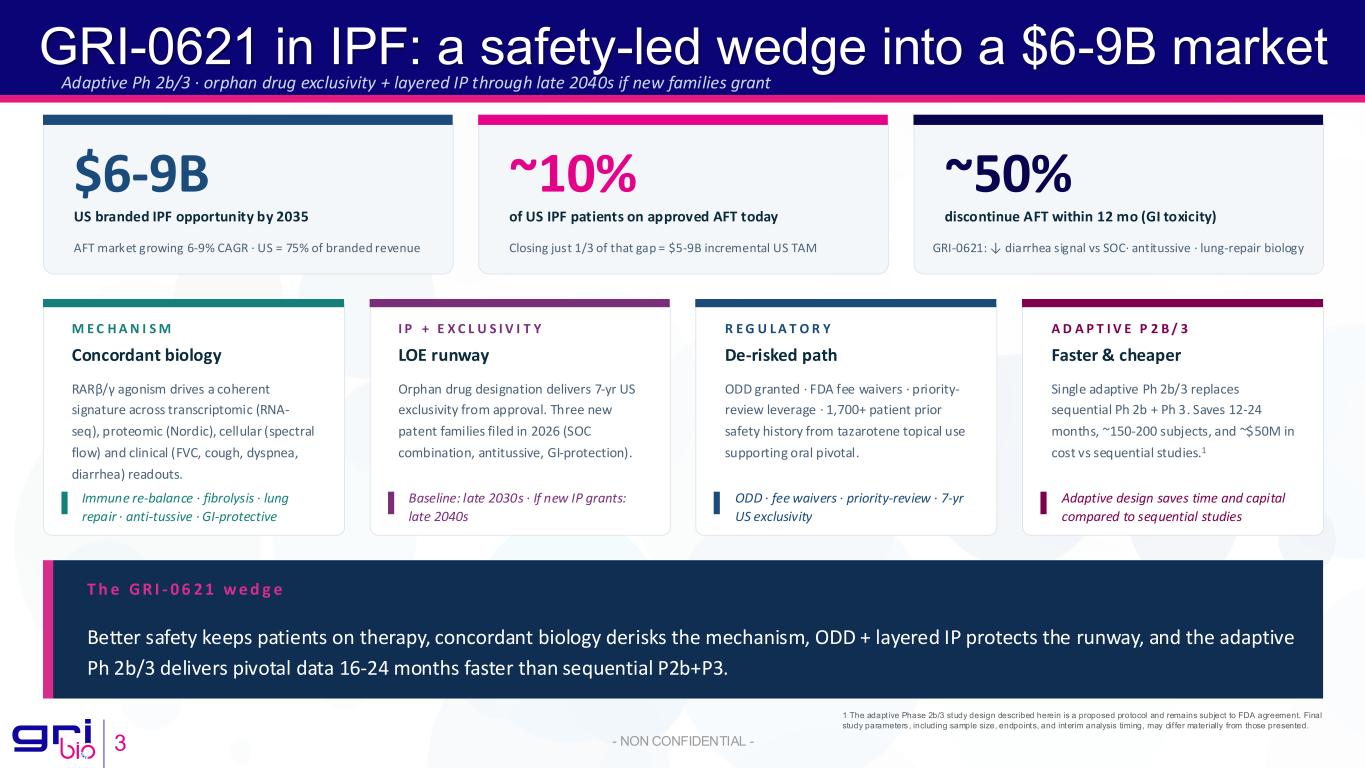
GRI-0621 in IPF: a safety-led wedge into a $6-9B market 3 - NON CONFIDENTIAL - Adaptive Ph 2b/3 · orphan drug exclusivity + layered IP through late 2040s if new families grant $6-9B US branded IPF opportunity by 2035 AFT market growing 6-9% CAGR · US = 75% of branded revenue ~10% of US IPF patients on approved AFT today Closing just 1/3 of that gap = $5-9B incremental US TAM ~50% discontinue AFT within 12 mo (GI toxicity) GRI-0621: ↓ diarrhea signal vs SOC· antitussive · lung-repair biology M E C H A N I S M Concordant biology RARβ/γ agonism drives a coherent signature across transcriptomic (RNA- seq), proteomic (Nordic), cellular (spectral flow) and clinical (FVC, cough, dyspnea, diarrhea) readouts. Immune re-balance · fibrolysis · lung repair · anti-tussive · GI-protective I P + E X C L U S I V I T Y LOE runway Orphan drug designation delivers 7-yr US exclusivity from approval. Three new patent families filed in 2026 (SOC combination, antitussive, GI-protection). Baseline: late 2030s · If new IP grants: late 2040s R E G U L A T O R Y De-risked path ODD granted · FDA fee waivers · priority- review leverage · 1,700+ patient prior safety history from tazarotene topical use supporting oral pivotal. ODD · fee waivers · priority-review · 7-yr US exclusivity A D A P T I V E P 2 B / 3 Faster & cheaper Single adaptive Ph 2b/3 replaces sequential Ph 2b + Ph 3. Saves 12-24 months, ~150-200 subjects, and ~$50M in cost vs sequential studies.1 Adaptive design saves time and capital compared to sequential studies T h e G R I - 0 6 2 1 w e d g e Better safety keeps patients on therapy, concordant biology derisks the mechanism, ODD + layered IP protects the runway, and the adaptive Ph 2b/3 delivers pivotal data 16-24 months faster than sequential P2b+P3. 1 The adapt ive Phase 2b/3 study design described herein is a proposed protocol and remains subject to FDA agreement. Final study parameters , including sample size, endpoints, and interim analysis timing, may dif fer materially from those presented.
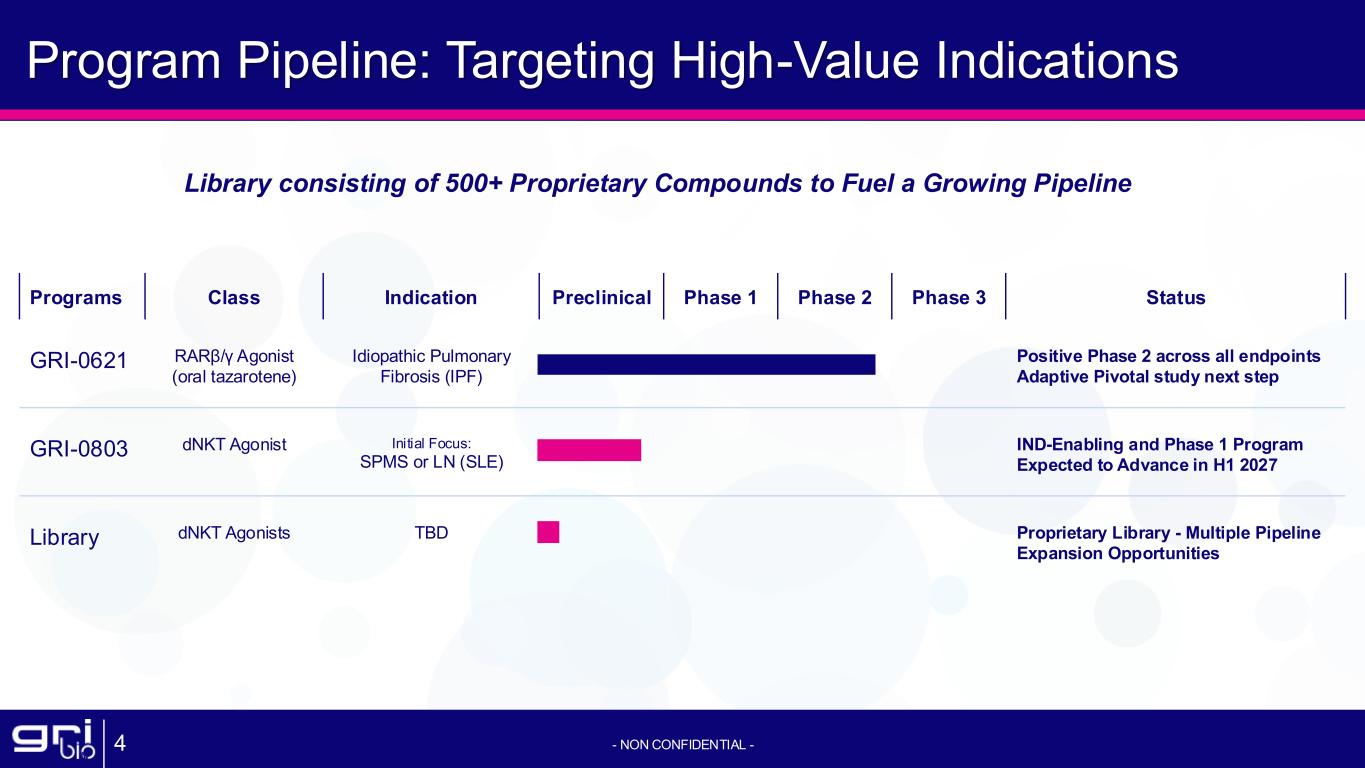
Program Pipeline: Targeting High-Value Indications Programs Class Indication Preclinical Phase 1 Phase 2 Phase 3 Status GRI-0621 RARβ/γ Agonist (oral tazarotene) Idiopathic Pulmonary Fibrosis (IPF) Positive Phase 2 across all endpoints Adaptive Pivotal study next step GRI-0803 dNKT Agonist Initial Focus: SPMS or LN (SLE) IND-Enabling and Phase 1 Program Expected to Advance in H1 2027 Library dNKT Agonists TBD Proprietary Library - Multiple Pipeline Expansion Opportunities Library consisting of 500+ Proprietary Compounds to Fuel a Growing Pipeline 4 - NON CONFIDENTIAL -
5 GRI-0621 (Oral Tazarotene) RARβ / RARγ Selective Agonist Target Indication: Idiopathic Pulmonary Fibrosis (IPF) Positive Phase 2a data Addresses Unmet Needs Orphan Drug Designation Highlights - NON CONFIDENTIAL -
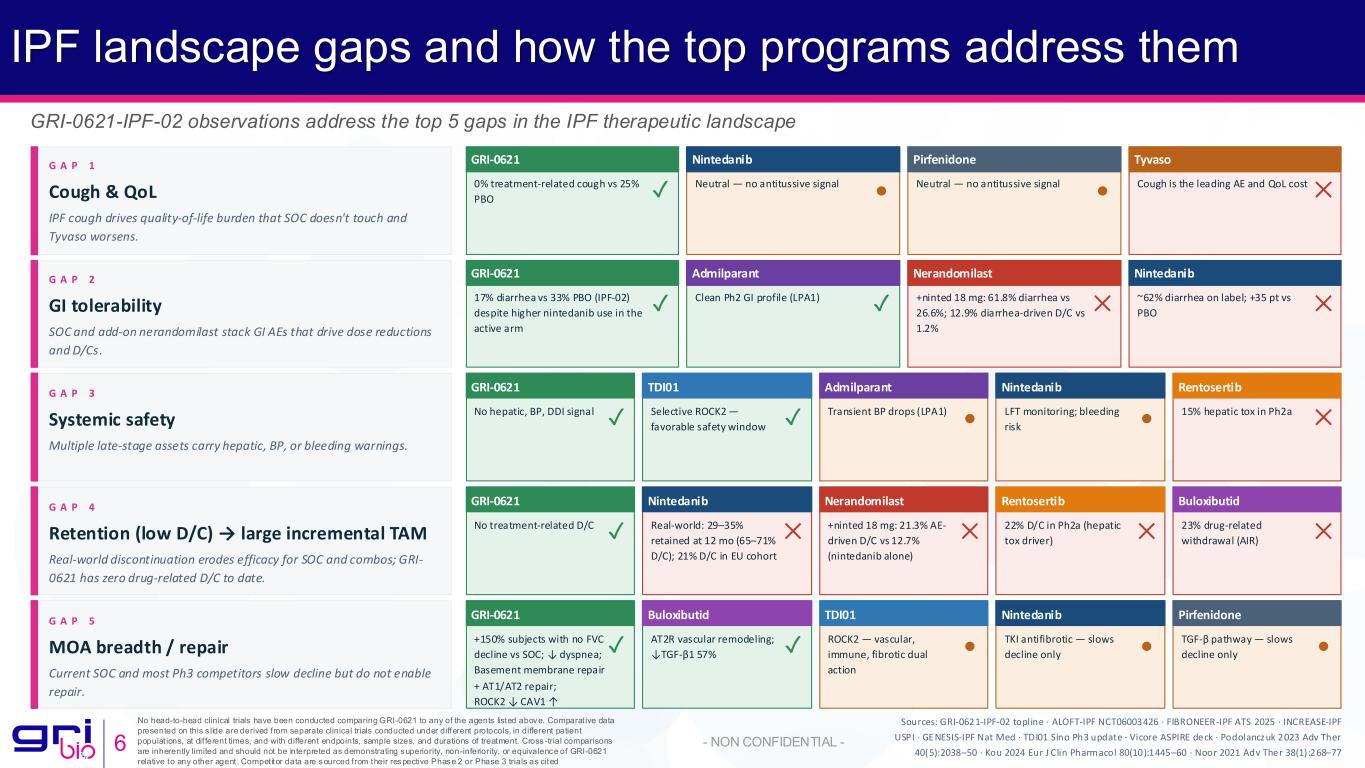
IPF landscape gaps and how the top programs address them 6 - NON CONFIDENTIAL - G A P 1 Cough & QoL IPF cough drives quality-of-life burden that SOC doesn't touch and Tyvaso worsens. GRI-0621 ✓0% treatment-related cough vs 25% PBO Nintedanib ●Neutral — no antitussive signal Pirfenidone ●Neutral — no antitussive signal Tyvaso ✕Cough is the leading AE and QoL cost G A P 2 GI tolerability SOC and add-on nerandomilast stack GI AEs that drive dose reductions and D/Cs. GRI-0621 ✓17% diarrhea vs 33% PBO (IPF-02) despite higher nintedanib use in the active arm Admilparant ✓Clean Ph2 GI profile (LPA1) Nerandomilast ✕+ninted 18 mg: 61.8% diarrhea vs 26.6%; 12.9% diarrhea-driven D/C vs 1.2% Nintedanib ✕~62% diarrhea on label; +35 pt vs PBO G A P 3 Systemic safety Multiple late-stage assets carry hepatic, BP, or bleeding warnings. GRI-0621 ✓No hepatic, BP, DDI signal TDI01 ✓Selective ROCK2 — favorable safety window Admilparant ●Transient BP drops (LPA1) Nintedanib ●LFT monitoring; bleeding risk Rentosertib ✕15% hepatic tox in Ph2a G A P 4 Retention (low D/C) → large incremental TAM Real-world discontinuation erodes efficacy for SOC and combos; GRI- 0621 has zero drug-related D/C to date. GRI-0621 ✓No treatment-related D/C Nintedanib ✕Real-world: 29–35% retained at 12 mo (65–71% D/C); 21% D/C in EU cohort Nerandomilast ✕+ninted 18 mg: 21.3% AE- driven D/C vs 12.7% (nintedanib alone) Rentosertib ✕22% D/C in Ph2a (hepatic tox driver) Buloxibutid ✕23% drug-related withdrawal (AIR) G A P 5 MOA breadth / repair Current SOC and most Ph3 competitors slow decline but do not enable repair. GRI-0621 ✓+150% subjects with no FVC decline vs SOC; ↓ dyspnea; Basement membrane repair + AT1/AT2 repair; ROCK2 ↓ CAV1 ↑ Buloxibutid ✓AT2R vascular remodeling; ↓TGF-β1 57% TDI01 ●ROCK2 — vascular, immune, fibrotic dual action Nintedanib ●TKI antifibrotic — slows decline only Pirfenidone ●TGF-β pathway — slows decline only Sources: GRI-0621-IPF-02 topline · ALOFT-IPF NCT06003426 · FIBRONEER-IPF ATS 2025 · INCREASE-IPF USPI · GENESIS-IPF Nat Med · TDI01 Sino Ph3 update · Vicore ASPIRE deck · Podolanczuk 2023 Adv Ther 40(5):2038–50 · Kou 2024 Eur J Clin Pharmacol 80(10):1445–60 · Noor 2021 Adv Ther 38(1) :268–77 GRI-0621-IPF-02 observations address the top 5 gaps in the IPF therapeutic landscape No head-to-head clinical trials have been conducted comparing GRI-0621 to any of the agents listed above. Comparat ive data presented on this s lide are derived from separate clinical trials conducted under different protocols, in different patient populat ions, at dif ferent times, and with different endpoints, sample sizes, and durations of treatment. Cross -trial comparisons are inherently limited and should not be interpreted as demonstrating superiority, non-inferiority, or equivalence of GRI-0621 relative to any other agent. Competitor data are sourced from their respective Phase 2 or Phase 3 trials as cited
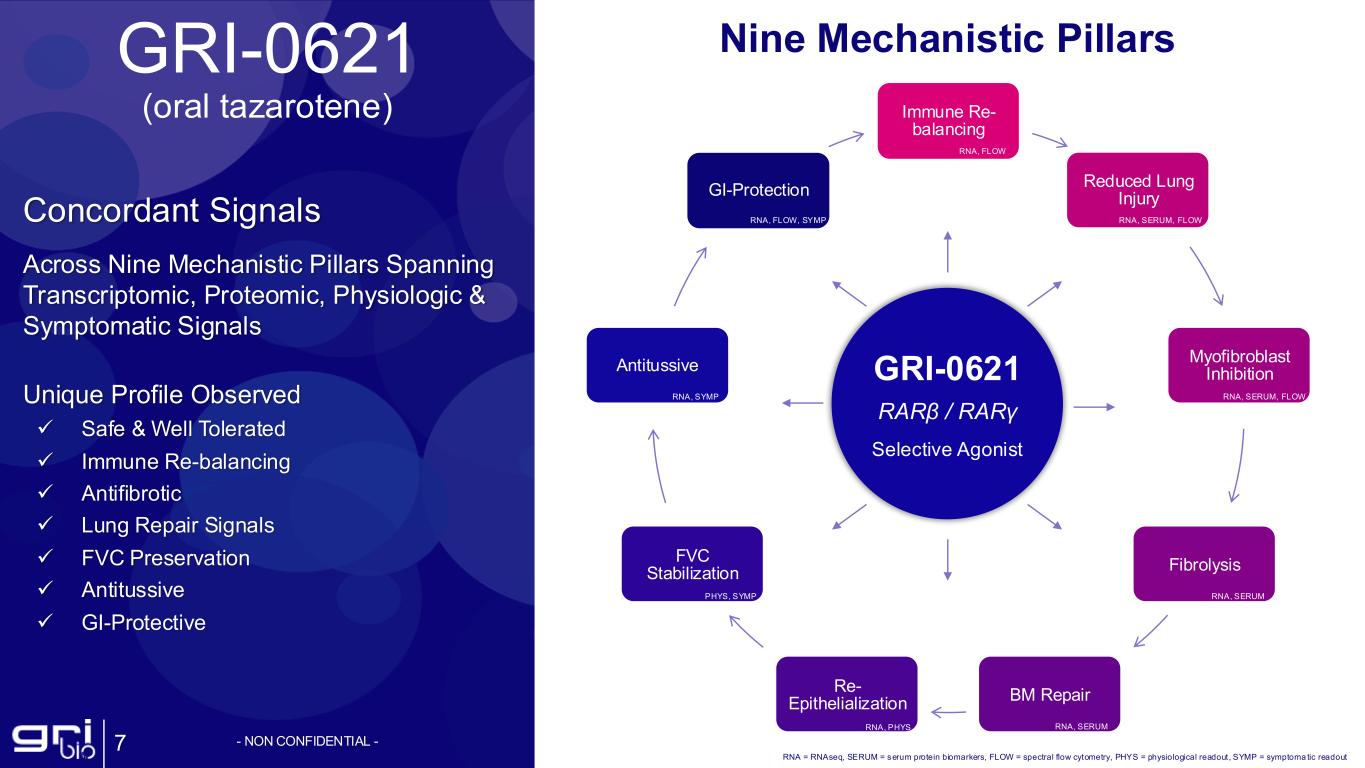
Concordant Signals Across Nine Mechanistic Pillars Spanning Transcriptomic, Proteomic, Physiologic & Symptomatic Signals Unique Profile Observed ✓ Safe & Well Tolerated ✓ Immune Re-balancing ✓ Antifibrotic ✓ Lung Repair Signals ✓ FVC Preservation ✓ Antitussive ✓ GI-Protective 7 GRI-0621 (oral tazarotene) Immune Re- balancing Reduced Lung Injury Myofibroblast Inhibition Fibrolysis BM Repair Re- Epithelialization FVC Stabilization Antitussive GI-Protection GRI-0621 RARβ / RARγ Selective Agonist - NON CONFIDENTIAL - RNA, FLOW RNA, SERUM, FLOW RNA, SERUM, FLOW RNA, SERUM RNA, SERUMRNA, PHYS PHYS, SYMP RNA, SYMP RNA, FLOW, SYMP RNA = RNAseq, SERUM = serum protein biomarkers, FLOW = spectral flow cytometry, PHYS = physiological readout, SYMP = symptoma tic readout Nine Mechanistic Pillars
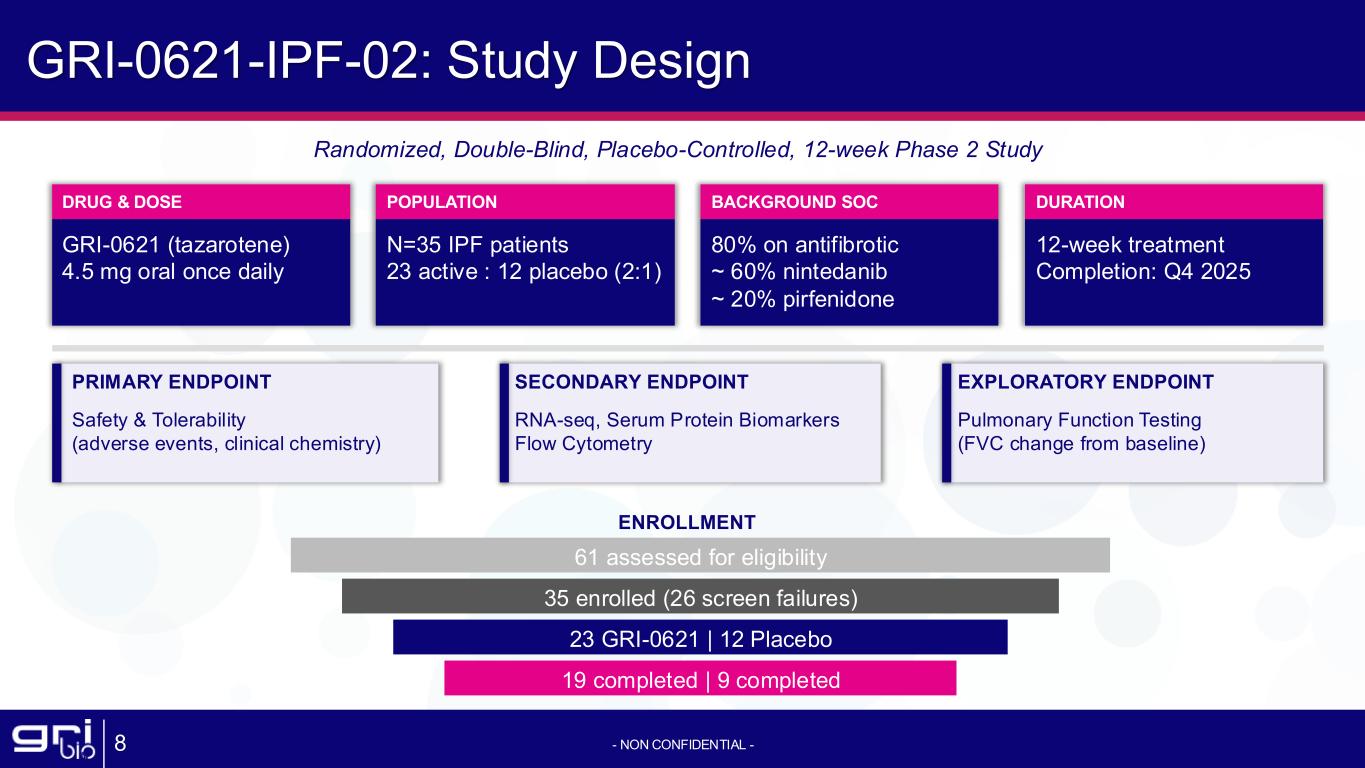
GRI-0621-IPF-02: Study Design 8 Randomized, Double-Blind, Placebo-Controlled, 12-week Phase 2 Study GRI-0621 (tazarotene) 4.5 mg oral once daily DRUG & DOSE N=35 IPF patients 23 active : 12 placebo (2:1) POPULATION 80% on antifibrotic ~ 60% nintedanib ~ 20% pirfenidone BACKGROUND SOC 12-week treatment Completion: Q4 2025 DURATION PRIMARY ENDPOINT Safety & Tolerability (adverse events, clinical chemistry) SECONDARY ENDPOINT RNA-seq, Serum Protein Biomarkers Flow Cytometry EXPLORATORY ENDPOINT Pulmonary Function Testing (FVC change from baseline) ENROLLMENT 61 assessed for eligibility 35 enrolled (26 screen failures) 23 GRI-0621 | 12 Placebo 19 completed | 9 completed - NON CONFIDENTIAL -
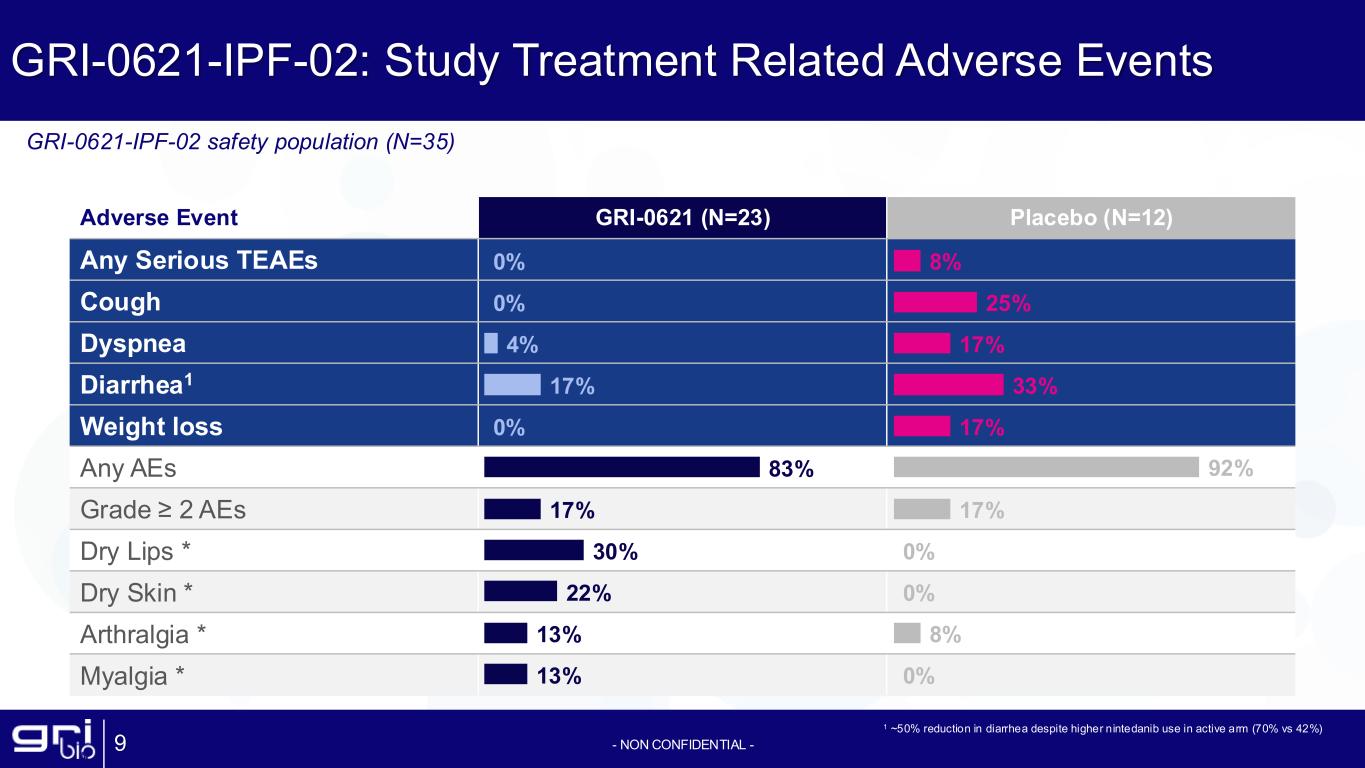
GRI-0621-IPF-02: Study Treatment Related Adverse Events 9 GRI-0621-IPF-02 safety population (N=35) * Dry lips, dry skin, arthralgia and myalgia are retinoid class effects (Grade 1-2), transient, consistent with tazarotene safety database (>1,700 patients). Manageable with standard supportive care; no organ-threatening risks Adverse Event GRI-0621 (N=23) Placebo (N=12) Any Serious TEAEs Cough Dyspnea Diarrhea1 Weight loss Any AEs Grade ≥ 2 AEs Dry Lips * Dry Skin * Arthralgia * Myalgia * 0% 0% 4% 17% 0% 83% 17% 30% 22% 13% 13% 8% 25% 17% 33% 17% 17% 0% 0% 8% 0% 92% - NON CONFIDENTIAL - 1 ~50% reduction in diarrhea despite higher nintedanib use in active arm (70% vs 42%)
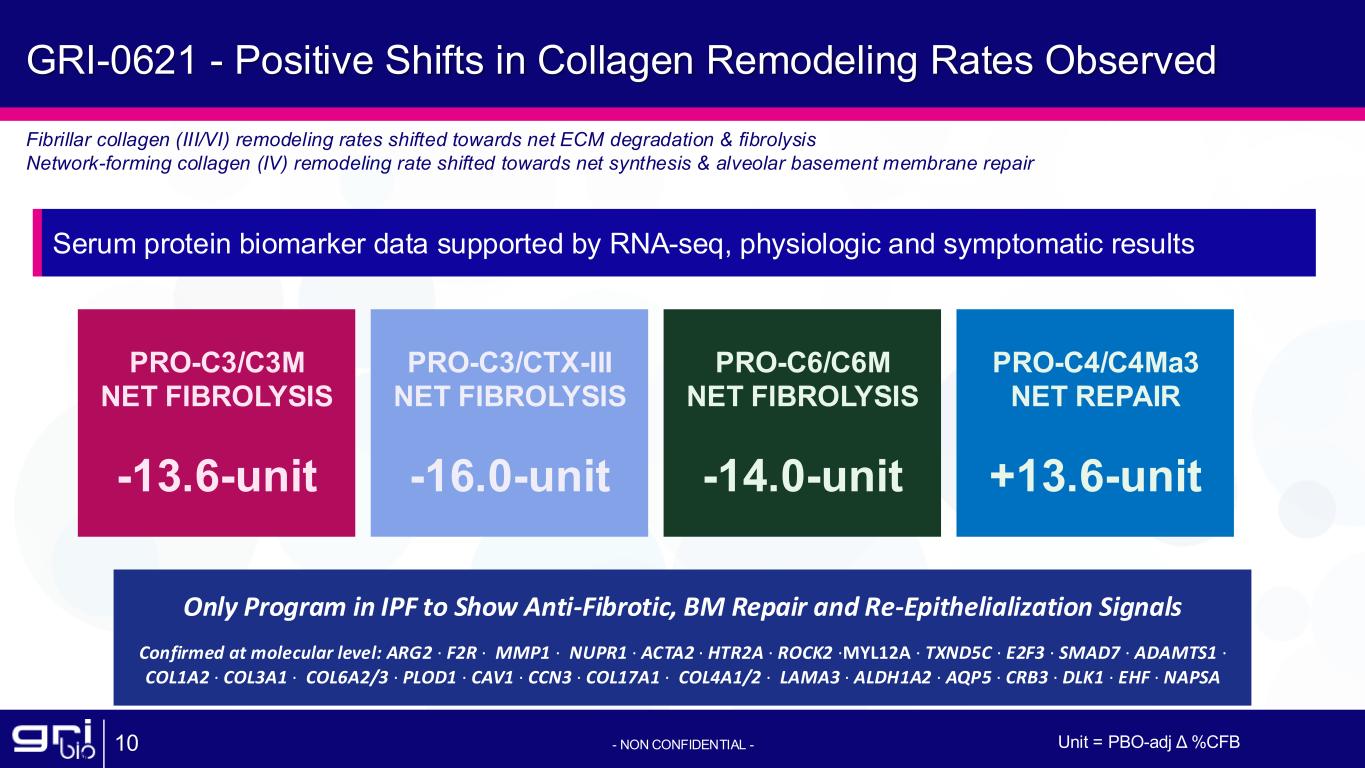
GRI-0621 - Positive Shifts in Collagen Remodeling Rates Observed 10 Fibrillar collagen (III/VI) remodeling rates shifted towards net ECM degradation & fibrolysis Network-forming collagen (IV) remodeling rate shifted towards net synthesis & alveolar basement membrane repair Only Program in IPF to Show Anti-Fibrotic, BM Repair and Re-Epithelialization Signals Confirmed at molecular level: ARG2 · F2R · MMP1 · NUPR1 · ACTA2 · HTR2A · ROCK2 ·MYL12A · TXND5C · E2F3 · SMAD7 · ADAMTS1 · COL1A2 · COL3A1 · COL6A2/3 · PLOD1 · CAV1 · CCN3 · COL17A1 · COL4A1/2 · LAMA3 · ALDH1A2 · AQP5 · CRB3 · DLK1 · EHF · NAPSA Serum protein biomarker data supported by RNA-seq, physiologic and symptomatic results PRO-C6/C6M NET FIBROLYSIS -14.0-unit PRO-C3/C3M NET FIBROLYSIS -13.6-unit PRO-C3/CTX-III NET FIBROLYSIS -16.0-unit - NON CONFIDENTIAL - PRO-C4/C4Ma3 NET REPAIR +13.6-unit Unit = PBO-adj Δ %CFB
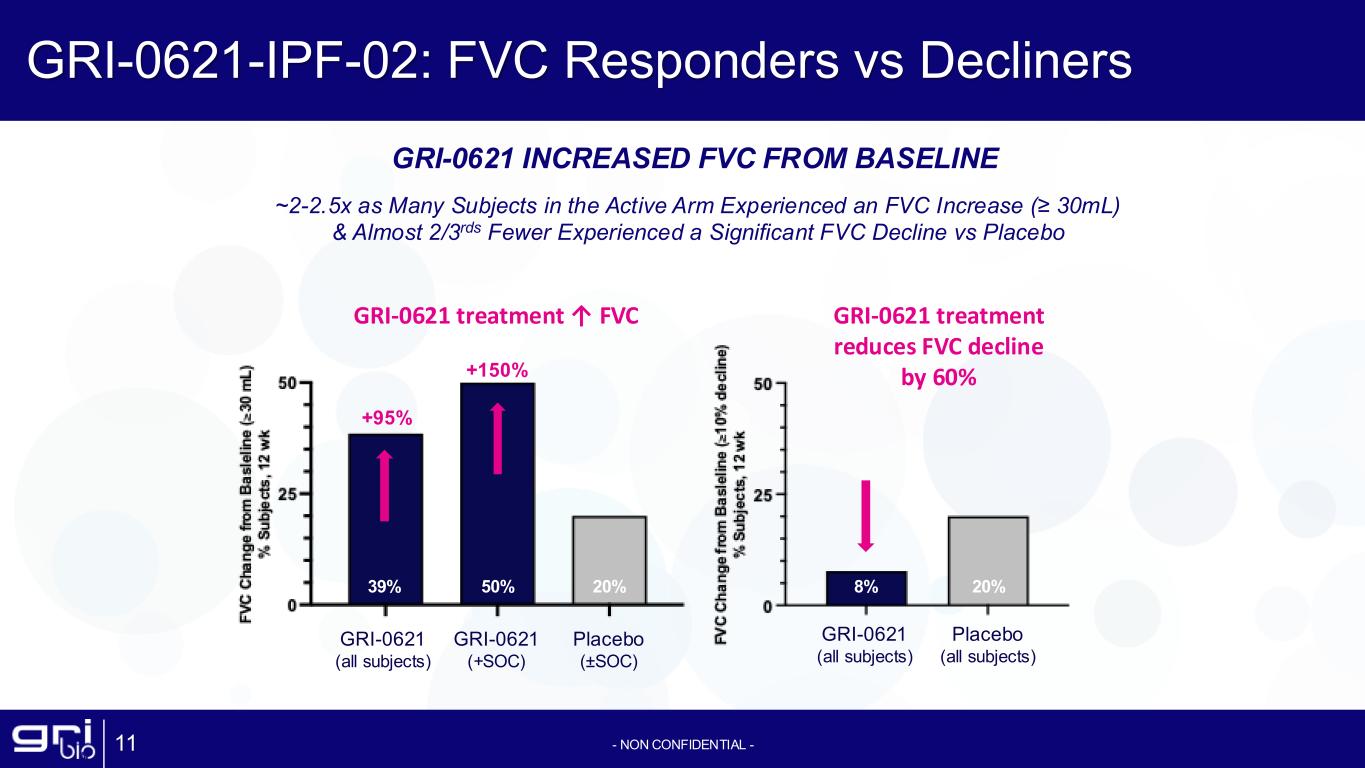
GRI-0621-IPF-02: FVC Responders vs Decliners 11 ~2-2.5x as Many Subjects in the Active Arm Experienced an FVC Increase (≥ 30mL) & Almost 2/3rds Fewer Experienced a Significant FVC Decline vs Placebo - NON CONFIDENTIAL - GRI-0621 INCREASED FVC FROM BASELINE GRI-0621 (all subjects) GRI-0621 (+SOC) Placebo (±SOC) 8% 20%39% 50% 20% GRI-0621 (all subjects) Placebo (all subjects) GRI-0621 treatment ↑ FVC GRI-0621 treatment reduces FVC decline by 60% +95% +150%
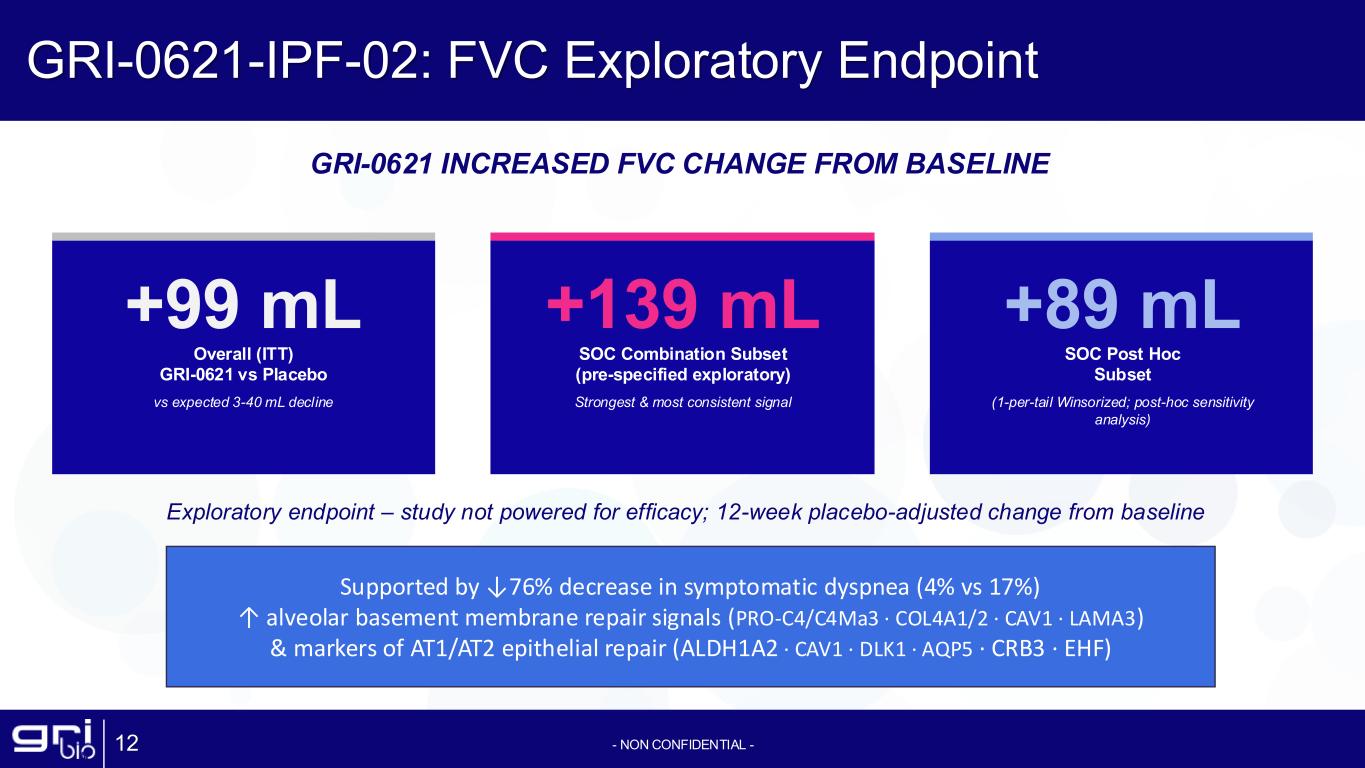
GRI-0621-IPF-02: FVC Exploratory Endpoint 12 Exploratory endpoint – study not powered for efficacy; 12-week placebo-adjusted change from baseline +99 mL Overall (ITT) GRI-0621 vs Placebo vs expected 3-40 mL decline +139 mL SOC Combination Subset (pre-specified exploratory) Strongest & most consistent signal +89 mL SOC Post Hoc Subset (1-per-tail Winsorized; post-hoc sensitivity analysis) - NON CONFIDENTIAL - GRI-0621 INCREASED FVC CHANGE FROM BASELINE Supported by ↓76% decrease in symptomatic dyspnea (4% vs 17%) ↑ alveolar basement membrane repair signals (PRO-C4/C4Ma3 · COL4A1/2 · CAV1 · LAMA3) & markers of AT1/AT2 epithelial repair (ALDH1A2 · CAV1 · DLK1 · AQP5 · CRB3 · EHF)
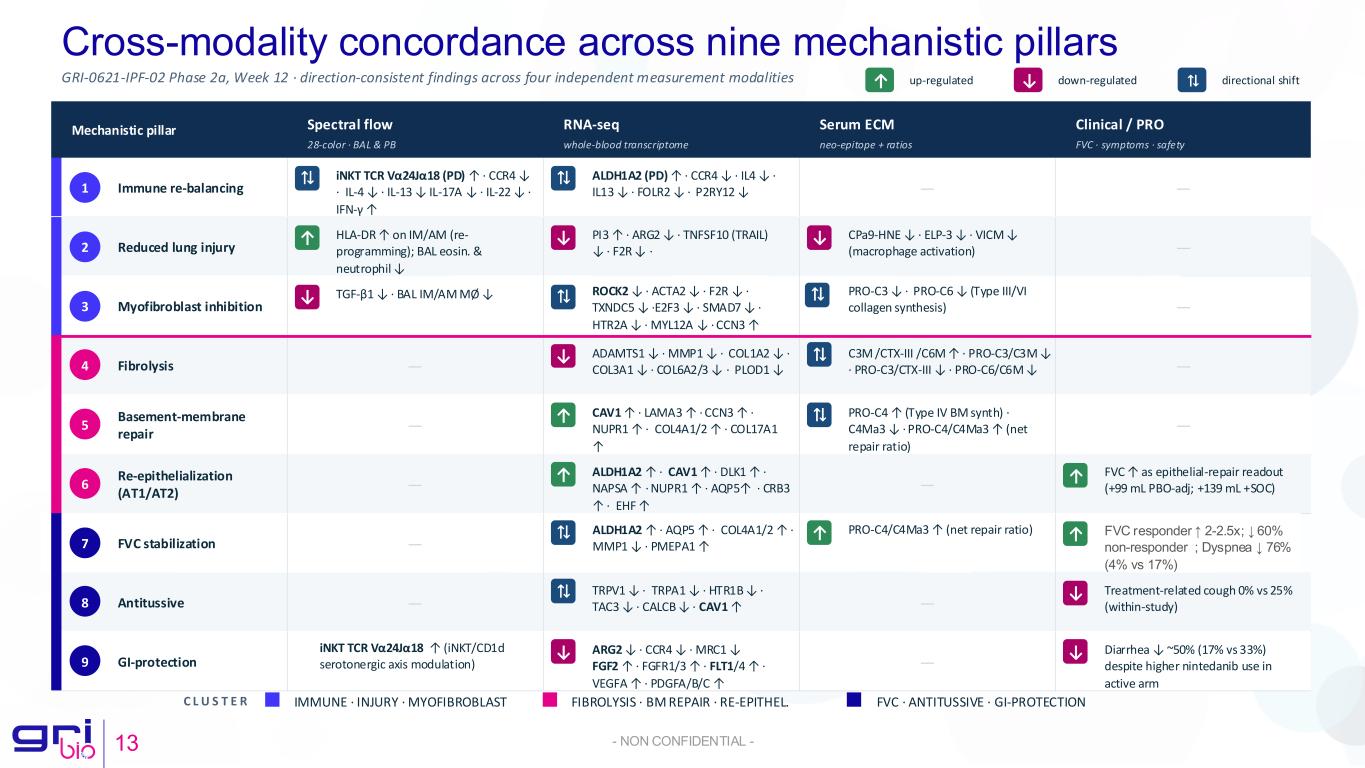
Cross-modality concordance across nine mechanistic pillars 13 - NON CONFIDENTIAL - GRI-0621-IPF-02 Phase 2a, Week 12 · direction-consistent findings across four independent measurement modalities ↑ up-regulated ↓ down-regulated ⇅ directional shift Mechanistic pillar Spectral flow 28-color · BAL & PB RNA-seq whole-blood transcriptome Serum ECM neo-epitope + ratios Clinical / PRO FVC · symptoms · safety 1 Immune re-balancing ⇅ iNKT TCR Vα24Jα18 (PD) ↑ · CCR4 ↓ · IL-4 ↓ · IL-13 ↓ IL-17A ↓ · IL-22 ↓ · IFN-γ ↑ ALDH1A2 (PD) ↑ · CCR4 ↓ · IL4 ↓ · IL13 ↓ · FOLR2 ↓ · P2RY12 ↓ — — 2 Reduced lung injury ↑ HLA-DR ↑ on IM/AM (re- programming); BAL eosin. & neutrophil ↓ ↓ PI3 ↑ · ARG2 ↓ · TNFSF10 (TRAIL) ↓ · F2R ↓ · ↓ CPa9-HNE ↓ · ELP-3 ↓ · VICM ↓ (macrophage activation) — 3 Myofibroblast inhibition ↓ TGF-β1 ↓ · BAL IM/AM MØ ↓ ⇅ ROCK2 ↓ · ACTA2 ↓ · F2R ↓ · TXNDC5 ↓ ·E2F3 ↓ · SMAD7 ↓ · HTR2A ↓ · MYL12A ↓ · CCN3 ↑ PRO-C3 ↓ · PRO-C6 ↓ (Type III/VI collagen synthesis) — 4 Fibrolysis — ↓ ADAMTS1 ↓ · MMP1 ↓ · COL1A2 ↓ · COL3A1 ↓ · COL6A2/3 ↓ · PLOD1 ↓ C3M /CTX-III /C6M ↑ · PRO-C3/C3M ↓ · PRO-C3/CTX-III ↓ · PRO-C6/C6M ↓ — 5 Basement-membrane repair — ↑ CAV1 ↑ · LAMA3 ↑ · CCN3 ↑ · NUPR1 ↑ · COL4A1/2 ↑ · COL17A1 ↑ ⇅ PRO-C4 ↑ (Type IV BM synth) · C4Ma3 ↓ · PRO-C4/C4Ma3 ↑ (net repair ratio) — 6 Re-epithelialization (AT1/AT2) — ↑ ALDH1A2 ↑ · CAV1 ↑ · DLK1 ↑ · NAPSA ↑ · NUPR1 ↑ · AQP5↑ · CRB3 ↑ · EHF ↑ — FVC ↑ as epithelial-repair readout (+99 mL PBO-adj; +139 mL +SOC) 7 FVC stabilization — ↑ FVC responder ↑ 2-2.5x; ↓ 60% non-responder ; Dyspnea ↓ 76% (4% vs 17%) 8 Antitussive — TRPV1 ↓ · TRPA1 ↓ · HTR1B ↓ · TAC3 ↓ · CALCB ↓ · CAV1 ↑ — ↓ Treatment-related cough 0% vs 25% (within-study) 9 GI-protection ↓ ARG2 ↓ · CCR4 ↓ · MRC1 ↓ FGF2 ↑ · FGFR1/3 ↑ · FLT1/4 ↑ · VEGFA ↑ · PDGFA/B/C ↑ — ↓ Diarrhea ↓ ~50% (17% vs 33%) despite higher nintedanib use in active arm C L U S T E R IMMUNE · INJURY · MYOFIBROBLAST FIBROLYSIS · BM REPAIR · RE-EPITHEL. FVC · ANTITUSSIVE · GI-PROTECTION ALDH1A2 ↑ · AQP5 ↑ · COL4A1/2 ↑ · MMP1 ↓ · PMEPA1 ↑ ⇅ ⇅ ⇅ ↑ PRO-C4/C4Ma3 ↑ (net repair ratio) ↑ ⇅ iNKT TCR Vα24Jα18 ↑ (iNKT/CD1d serotonergic axis modulation) ⇅
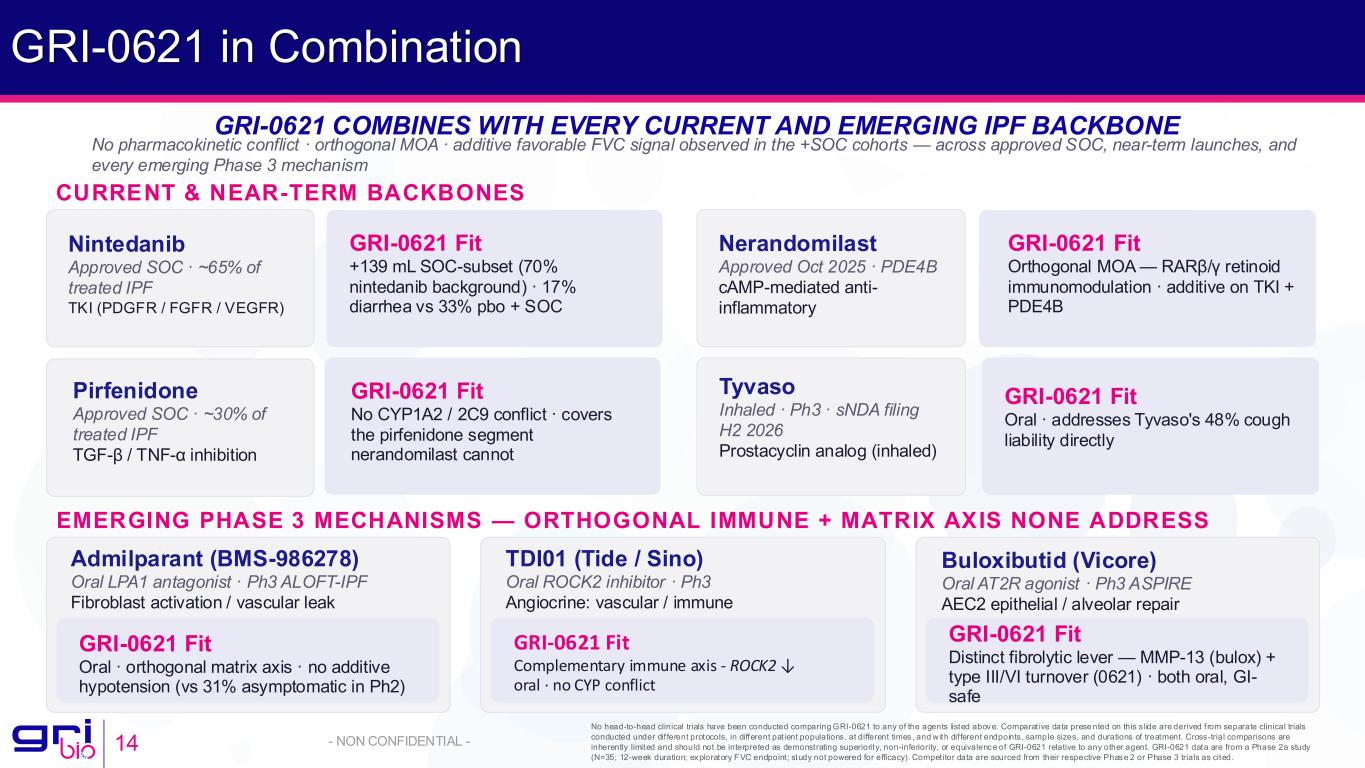
GRI-0621 in Combination 14 - NON CONFIDENTIAL - No pharmacokinetic conflict · orthogonal MOA · additive favorable FVC signal observed in the +SOC cohorts — across approved SOC, near-term launches, and every emerging Phase 3 mechanism CURRENT & NEAR-TERM BACKBONES Nintedanib Approved SOC · ~65% of treated IPF TKI (PDGFR / FGFR / VEGFR) GRI-0621 Fit +139 mL SOC-subset (70% nintedanib background) · 17% diarrhea vs 33% pbo + SOC Pirfenidone Approved SOC · ~30% of treated IPF TGF-β / TNF-α inhibition GRI-0621 Fit No CYP1A2 / 2C9 conflict · covers the pirfenidone segment nerandomilast cannot Nerandomilast Approved Oct 2025 · PDE4B cAMP-mediated anti- inflammatory GRI-0621 Fit Orthogonal MOA — RARβ/γ retinoid immunomodulation · additive on TKI + PDE4B Tyvaso Inhaled · Ph3 · sNDA filing H2 2026 Prostacyclin analog (inhaled) GRI-0621 Fit Oral · addresses Tyvaso's 48% cough liability directly EMERGING PHASE 3 MECHANISMS — ORTHOGONAL IMMUNE + MATRIX AXIS NONE ADDRESS Admilparant (BMS-986278) Oral LPA1 antagonist · Ph3 ALOFT-IPF Fibroblast activation / vascular leak GRI-0621 Fit Oral · orthogonal matrix axis · no additive hypotension (vs 31% asymptomatic in Ph2) TDI01 (Tide / Sino) Oral ROCK2 inhibitor · Ph3 Angiocrine: vascular / immune GRI-0621 Fit Complementary immune axis - ROCK2 ↓ oral · no CYP conflict Buloxibutid (Vicore) Oral AT2R agonist · Ph3 ASPIRE AEC2 epithelial / alveolar repair GRI-0621 Fit Distinct fibrolytic lever — MMP-13 (bulox) + type III/VI turnover (0621) · both oral, GI- safe GRI-0621 COMBINES WITH EVERY CURRENT AND EMERGING IPF BACKBONE No head-to-head clinical trials have been conducted comparing GRI-0621 to any of the agents listed above. Comparat ive data prese nted on this s lide are derived from separate clinical trials conducted under dif ferent protocols, in different pat ient populations , at different times , and w ith dif ferent endpoints , sample sizes, and durations of treatment. Cross-trial comparisons are inherently limited and should not be interpreted as demonstrating superiority, non-inferiority, or equivalence of GRI-0621 relative to any other agent. GRI-0621 data are from a Phase 2a study (N=35; 12-week duration; exploratory FVC endpoint; study not powered for efficacy). Competitor data are sourced from their respective Phase 2 or Phase 3 trials as cited.
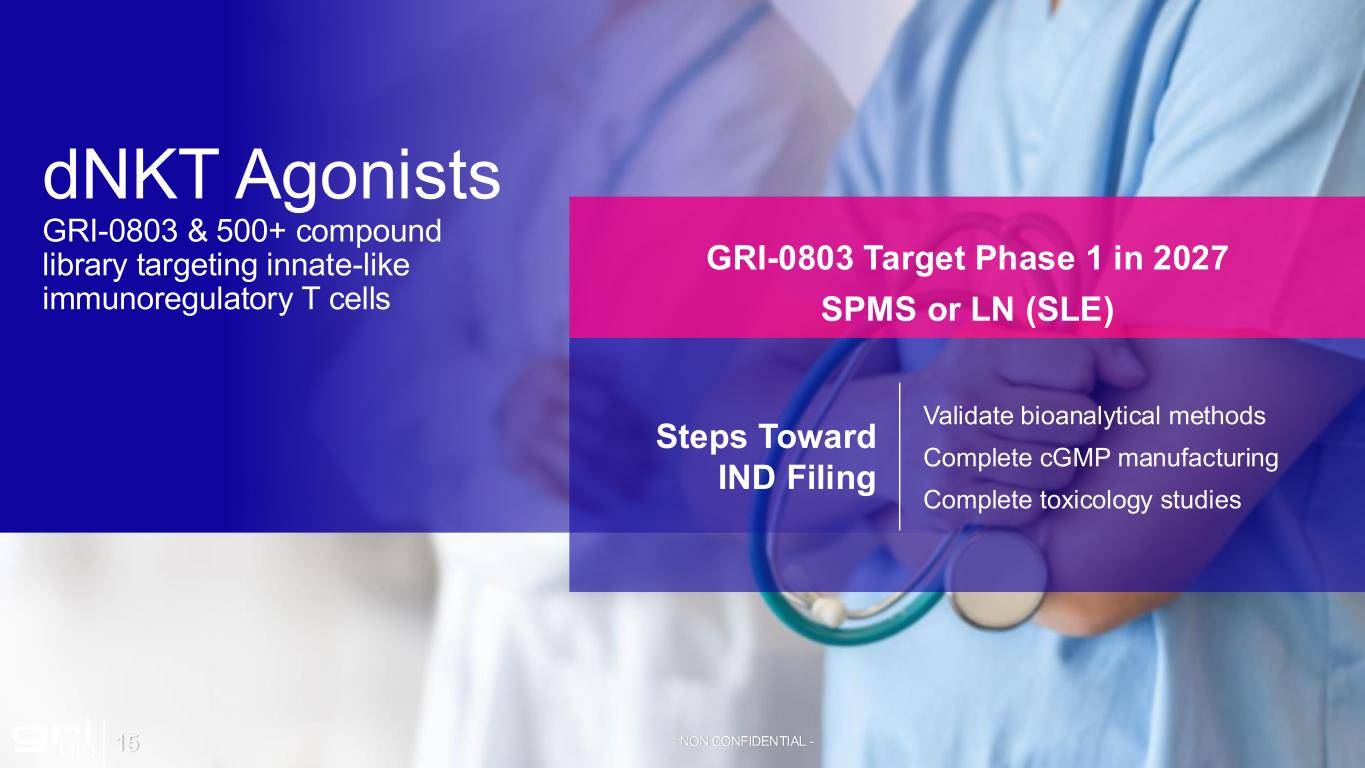
15 dNKT Agonists GRI-0803 & 500+ compound library targeting innate-like immunoregulatory T cells GRI-0803 Target Phase 1 in 2027 SPMS or LN (SLE) Validate bioanalytical methods Complete cGMP manufacturing Complete toxicology studies Steps Toward IND Filing - NON CONFIDENTIAL -
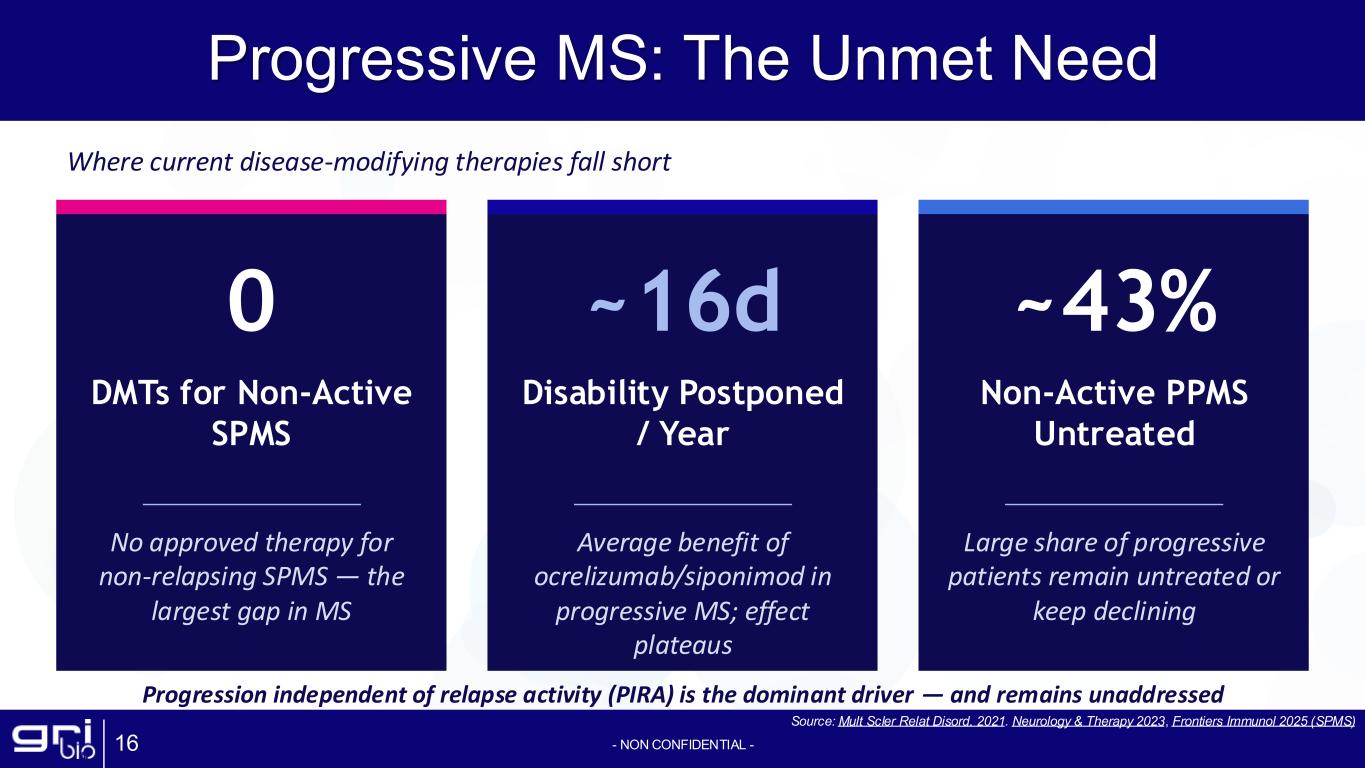
Progressive MS: The Unmet Need 16 Where current disease-modifying therapies fall short 0 DMTs for Non-Active SPMS No approved therapy for non-relapsing SPMS — the largest gap in MS ~16d Disability Postponed / Year Average benefit of ocrelizumab/siponimod in progressive MS; effect plateaus ~43% Non-Active PPMS Untreated Large share of progressive patients remain untreated or keep declining Progression independent of relapse activity (PIRA) is the dominant driver — and remains unaddressed Source: Mult Scler Relat Disord. 2021. Neurology & Therapy 2023, Frontiers Immunol 2025 (SPMS) - NON CONFIDENTIAL -
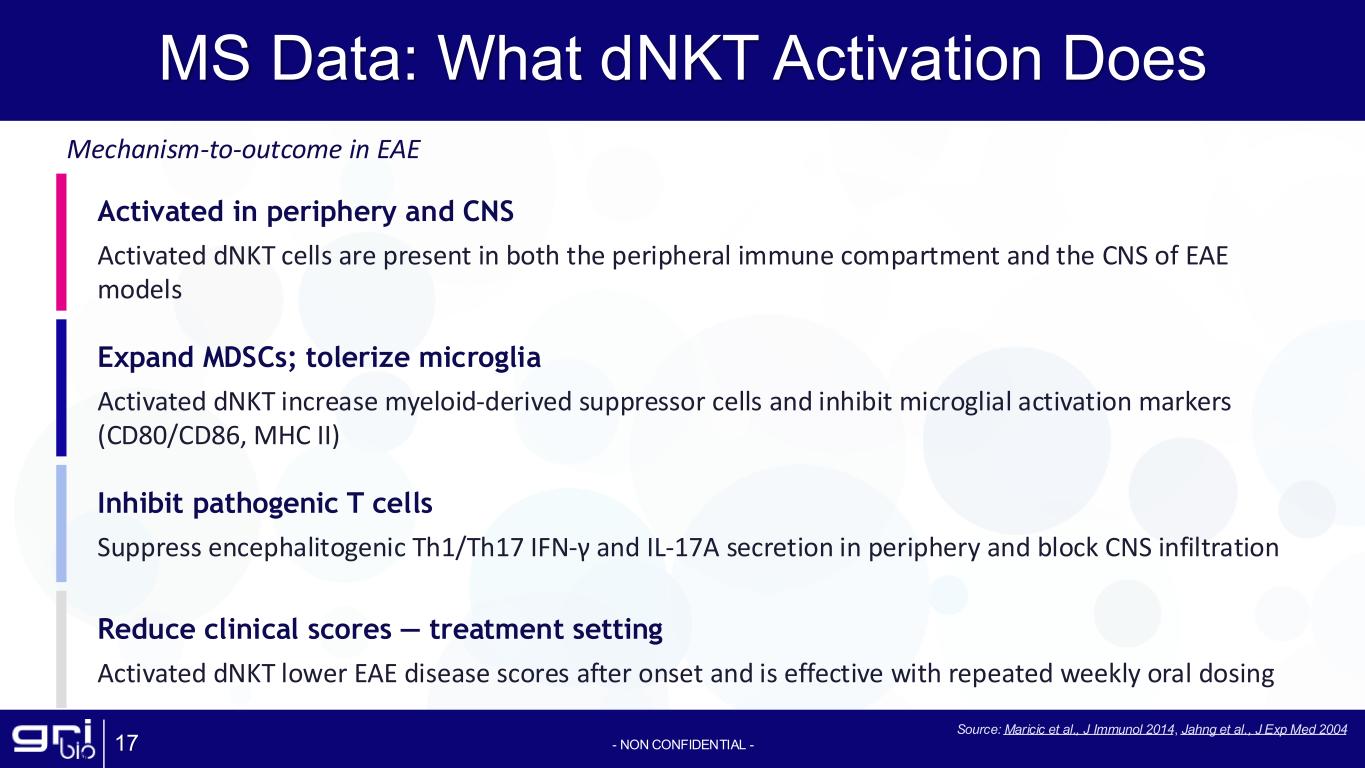
Mechanism-to-outcome in EAE Source: Maricic et al., J Immunol 2014, Jahng et al., J Exp Med 2004 Activated in periphery and CNS Activated dNKT cells are present in both the peripheral immune compartment and the CNS of EAE models Expand MDSCs; tolerize microglia Activated dNKT increase myeloid-derived suppressor cells and inhibit microglial activation markers (CD80/CD86, MHC II) Inhibit pathogenic T cells Suppress encephalitogenic Th1/Th17 IFN-γ and IL-17A secretion in periphery and block CNS infiltration Reduce clinical scores — treatment setting Activated dNKT lower EAE disease scores after onset and is effective with repeated weekly oral dosing MS Data: What dNKT Activation Does 17 - NON CONFIDENTIAL -
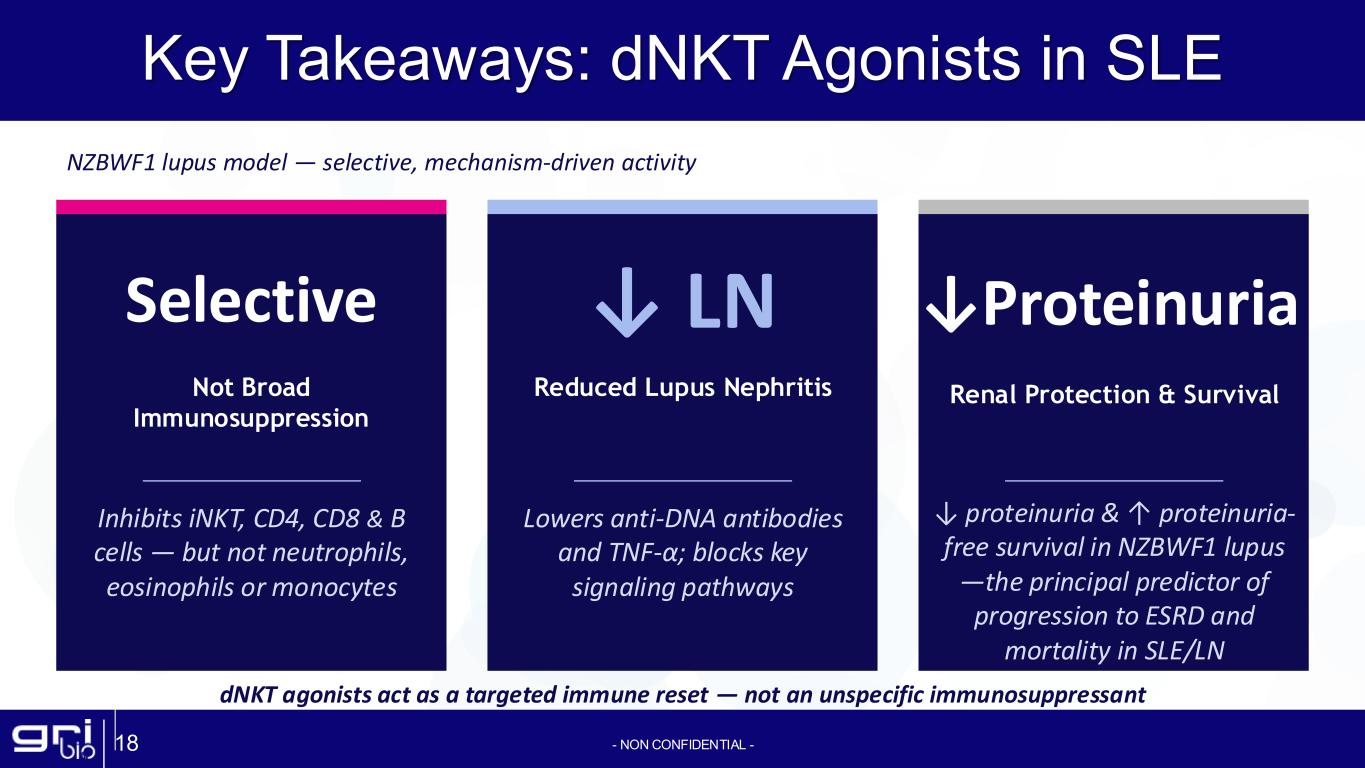
Key Takeaways: dNKT Agonists in SLE 18 NZBWF1 lupus model — selective, mechanism-driven activity Selective Not Broad Immunosuppression Inhibits iNKT, CD4, CD8 & B cells — but not neutrophils, eosinophils or monocytes ↓ LN Reduced Lupus Nephritis Lowers anti-DNA antibodies and TNF-α; blocks key signaling pathways dNKT agonists act as a targeted immune reset — not an unspecific immunosuppressant ↓Proteinuria Renal Protection & Survival ↓ proteinuria & ↑ proteinuria- free survival in NZBWF1 lupus —the principal predictor of progression to ESRD and mortality in SLE/LN - NON CONFIDENTIAL -
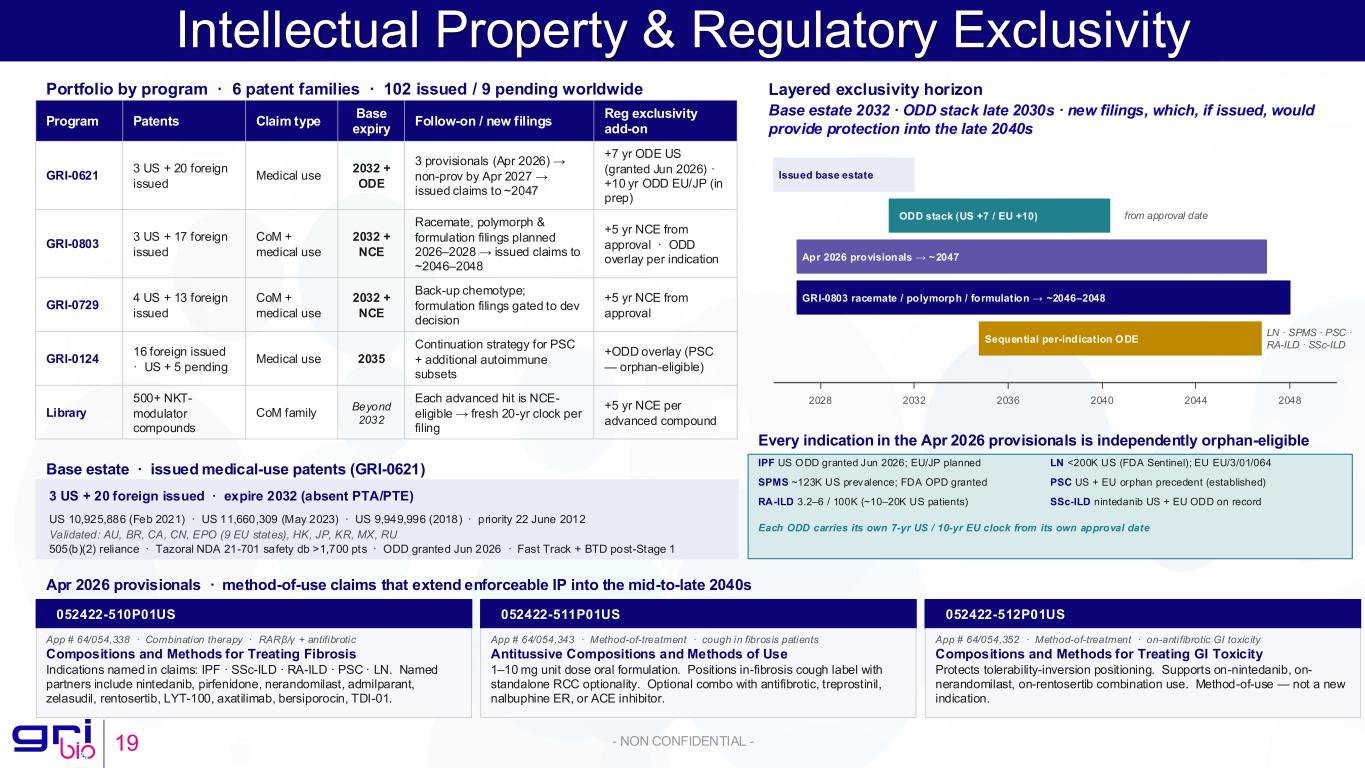
Intellectual Property & Regulatory Exclusivity 19 - NON CONFIDENTIAL - Portfolio by program · 6 patent families · 102 issued / 9 pending worldwide Program Patents Claim type Base expiry Follow-on / new filings Reg exclusivity add-on GRI-0621 3 US + 20 foreign issued Medical use 2032 + ODE 3 provisionals (Apr 2026) → non-prov by Apr 2027 → issued claims to ~2047 +7 yr ODE US (granted Jun 2026) · +10 yr ODD EU/JP (in prep) GRI-0803 3 US + 17 foreign issued CoM + medical use 2032 + NCE Racemate, polymorph & formulation filings planned 2026–2028 → issued claims to ~2046–2048 +5 yr NCE from approval · ODD overlay per indication GRI-0729 4 US + 13 foreign issued CoM + medical use 2032 + NCE Back-up chemotype; formulation filings gated to dev decision +5 yr NCE from approval GRI-0124 16 foreign issued · US + 5 pending Medical use 2035 Continuation strategy for PSC + additional autoimmune subsets +ODD overlay (PSC — orphan-eligible) Library 500+ NKT- modulator compounds CoM family Beyond 2032 Each advanced hit is NCE- eligible → fresh 20-yr clock per filing +5 yr NCE per advanced compound Layered exclusivity horizon Base estate 2032 · ODD stack late 2030s · new filings, which, if issued, would provide protection into the late 2040s Issued base estate ODD stack (US +7 / EU +10) from approval date Apr 2026 provisionals → ~2047 GRI-0803 racemate / polymorph / formulation → ~2046–2048 Sequential per-indication ODE LN · SPMS · PSC · RA-ILD · SSc-ILD 2028 2032 2036 2040 2044 2048 Base estate · issued medical-use patents (GRI-0621) 3 US + 20 foreign issued · expire 2032 (absent PTA/PTE) US 10,925,886 (Feb 2021) · US 11,660,309 (May 2023) · US 9,949,996 (2018) · priority 22 June 2012 Validated: AU, BR, CA, CN, EPO (9 EU states), HK, JP, KR, MX, RU 505(b)(2) reliance · Tazoral NDA 21-701 safety db >1,700 pts · ODD granted Jun 2026 · Fast Track + BTD post-Stage 1 Every indication in the Apr 2026 provisionals is independently orphan-eligible IPF US ODD granted Jun 2026; EU/JP planned LN <200K US (FDA Sentinel); EU EU/3/01/064 SPMS ~123K US prevalence; FDA OPD granted PSC US + EU orphan precedent (established) RA-ILD 3.2–6 / 100K (~10–20K US patients) SSc-ILD nintedanib US + EU ODD on record Each ODD carries its own 7-yr US / 10-yr EU clock from its own approval date Apr 2026 provisionals · method-of-use claims that extend enforceable IP into the mid-to-late 2040s 052422-510P01US App # 64/054,338 · Combination therapy · RARβ/γ + antifibrotic Compositions and Methods for Treating Fibrosis Indications named in claims: IPF · SSc-ILD · RA-ILD · PSC · LN. Named partners include nintedanib, pirfenidone, nerandomilast, admilparant, zelasudil, rentosertib, LYT-100, axatilimab, bersiporocin, TDI-01. 052422-511P01US App # 64/054,343 · Method-of-treatment · cough in fibrosis patients Antitussive Compositions and Methods of Use 1–10 mg unit dose oral formulation. Positions in-fibrosis cough label with standalone RCC optionality. Optional combo with antifibrotic, treprostinil, nalbuphine ER, or ACE inhibitor. 052422-512P01US App # 64/054,352 · Method-of-treatment · on-antifibrotic GI toxic ity Compositions and Methods for Treating GI Toxicity Protects tolerability-inversion positioning. Supports on-nintedanib, on- nerandomilast, on-rentosertib combination use. Method-of-use — not a new indication.
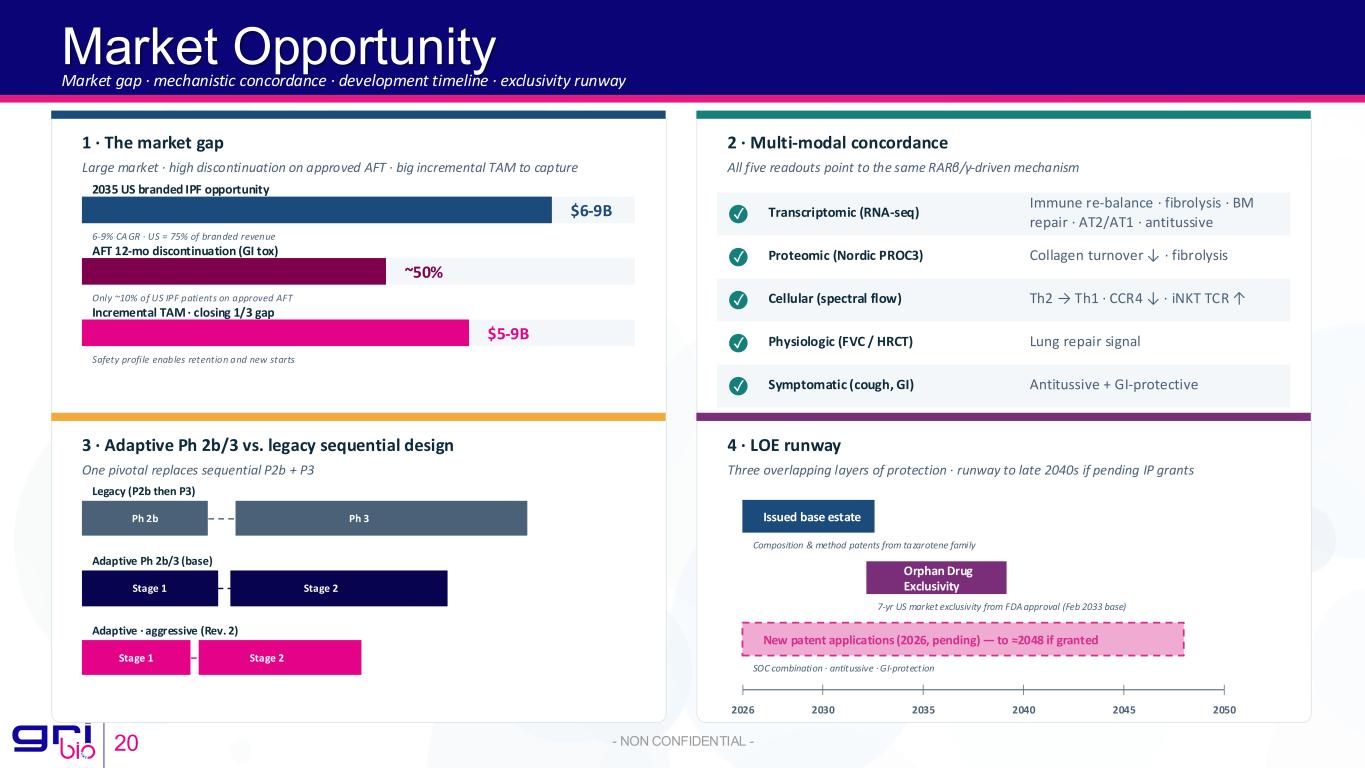
Market Opportunity 20 - NON CONFIDENTIAL - Market gap · mechanistic concordance · development timeline · exclusivity runway 1 · The market gap Large market · high discontinuation on approved AFT · big incremental TAM to capture 2035 US branded IPF opportunity $6-9B 6-9% CA GR · US = 75% of branded revenue AFT 12-mo discontinuation (GI tox) ~50% Only ~10% of US IPF patients on approved AFT Incremental TAM · closing 1/3 gap $5-9B Safety profile enables retention and new starts 2 · Multi-modal concordance All five readouts point to the same RARβ/γ-driven mechanism ✓ Transcriptomic (RNA-seq) Immune re-balance · fibrolysis · BM repair · AT2/AT1 · antitussive ✓ Proteomic (Nordic PROC3) Collagen turnover ↓ · fibrolysis ✓ Cellular (spectral flow) Th2 → Th1 · CCR4 ↓ · iNKT TCR ↑ ✓ Physiologic (FVC / HRCT) Lung repair signal ✓ Symptomatic (cough, GI) Antitussive + GI-protective 3 · Adaptive Ph 2b/3 vs. legacy sequential design One pivotal replaces sequential P2b + P3 Legacy (P2b then P3) Ph 2b Ph 3 Adaptive Ph 2b/3 (base) Stage 1 Stage 2 Adaptive · aggressive (Rev. 2) Stage 1 Stage 2 4 · LOE runway Three overlapping layers of protection · runway to late 2040s if pending IP grants Issued base estate Composition & method patents from tazarotene family Orphan Drug Exclusivity 7-yr US market exclusivity from FDA approval (Feb 2033 base) New patent applications (2026, pending) — to ≈2048 if granted SOC combination · antitussive · GI-protection 2026 2030 2035 2040 2045 2050

A New Approach to Inflammatory Diseases NASDAQ: GRI | gribio.com Thank You! Marc Hertz CEO 619-400-1170 mh@gribio.com Investor Relations JTC Team 833-475-8247 gri@jtcir.com