
Exhibit 99.2
1 Amylin and GLP - 1 Program Updates September 8, 2026
2 This presentation contains “forward - looking statements” within the meaning of the “safe harbor” provisions of the Private Securi ties Litigation Reform Act of 1995. All statements other than statements of historical fact are statements that could be deemed forward - looking statements, including, without limitation, statements concerning: the e stimated addressable patient population, market, and revenue opportunity for aleniglipron; any expectations regarding the potential benefits, tolerability and safety profile, accessibility, dose flexibi lit y, scalability, cost, combinability, capability, efficacy, convenience, expected effects, and future application of ACCG - 2671 and aleniglipron; the potential market demand of oral GLP - 1s; the belief that ACCG - 2671 represents a po tentially first - in - class small molecule amylin agonist and aleniglipron represents a potentially best - in - class small molecule GLP - 1 agonist; any presumption that topline, interim or preliminary data will be repres entative of final data or data in later clinical trials; the expected timing of enrollment completion and data results, as applicable, from the Phase 1/2a ACCG - 2671 MAD trial, Phase 3 aleniglipron trials and other ongoi ng clinical trials; the belief that the Company is building the future of oral chronic weight management medicines and redefining chronic weight management; the Company's anticipated cash runway; and the Company’ s f uture plans and prospects. In addition, when or if used, the words and phrases “believe,” “may,” “potential,” “to be,” “will,” and similar expressions and their variants, as they relate to the Com pan y may identify forward - looking statements. Forward - looking statements are neither historical facts nor assurances of future performance. Although the Company believes the expectations reflected in such forwa rd - looking statements are reasonable, the Company can give no assurance that such expectations will prove to be correct. Readers are cautioned that actual results, levels of activity, safety, performance or eve nts and circumstances could differ materially from those expressed or implied in the Company’s forward - looking statements due to a variety of risks and uncertainties, which include, without limitation: risks and u ncertainties related to topline results that the Company reports is based on preliminary analysis of key efficacy and safety data, and such data may change following a more comprehensive review of the data related to the clinical trial and such topline data may not accurately reflect the complete results of a clinical trial, the preliminary nature of the results due to the length of the study and sample size and results fr om earlier clinical studies not necessarily being predictive of future results; potential delays in the commencement, enrollment and completion of the Company’s planned clinical studies; the Company’s ability to advance aleni gli pron, ACCG - 2671, ACCG - 3535, LTSE - 2578, and its other therapeutic candidates, obtain regulatory approval of, and ultimately commercialize the Company’s therapeutic candidates; competitive pro duc ts or approaches limiting the commercial value of the Company’s product candidates; the timing and results of preclinical and clinical studies; the Company’s ability to fund development activities and achieve development goals; the Company's reliance on third parties, including clinical research organizations, manufacturers, suppliers and collaborators, over which it may not always have full control; general g eop olitical and macroeconomic conditions, including as a result of tariffs and various global conflicts; the Company’s ability to protect its intellectual property; and other risks and uncertainties described in the Company’s filings with the Securities and Exchange Commission (SEC), including the Company’s latest Quarterly Report on Form 10 - Q and future reports the Company may file with the SEC from time to time. All forwa rd - looking statements contained in this presentation speak only as of the date on which they were made and are based on management’s assumptions and estimates as of such date. The Company undertakes no oblig ati on to update such statements to reflect events that occur or circumstances that exist after the date on which they were made, except as required by law. This presentation discusses product candidates that are under clinical study and which have not yet been approved for marketi ng by the U.S. Food and Drug Administration. No representation is made as to the safety or effectiveness of these product candidates for the use for which such product candidates are being studied. This presentation may incorporate publicly - available third - party data that we have not independently verified. There are risks i nherent in conducting cross - trial comparisons and the results should be interpreted with caution. The presentation of such third - party data does not represent a head - to - head comparison of how our product candidates pe rformed against any other third - party product candidate or study. Rather, such third - party data has been pulled by us from publicly - available sources for supplemental informational purposes, only. We caution you that any comparisons against third - party data set forth herein should not be viewed as a side - by - side comparison, and you should not rely on the completeness or accuracy of our presentation of the results of any third - party drug candidate in these slides, due to differences in study design, how other companies quantify or qualify eligibility criteria, and how results are recorded, among other distinguishing factor s a nd uncertainties. Because we may be unaware of or may not adequately present various distinguishing factors and uncertainties, the comparisons set forth herein may not properly present such third - party data, which may differ materially from the data as presented here. Investors are encouraged to independently review third party data and should not rely on our presentation of such data as a single measure to evaluate ou r b usiness. “Structure Therapeutics,” the Structure Therapeutics logo and other trademarks, trade names or service marks of the Company a ppe aring in this presentation are the property of the Company. All other trademarks, trade names and service marks appearing in this presentation are the property of their respective owners. Solely for convenie nce , the trademarks and trade names in this presentation may be referred to without the ® and symbols, but such references should not be construed as any indicator that their respective owners will not assert their righ ts thereto. Forward - Looking Statements
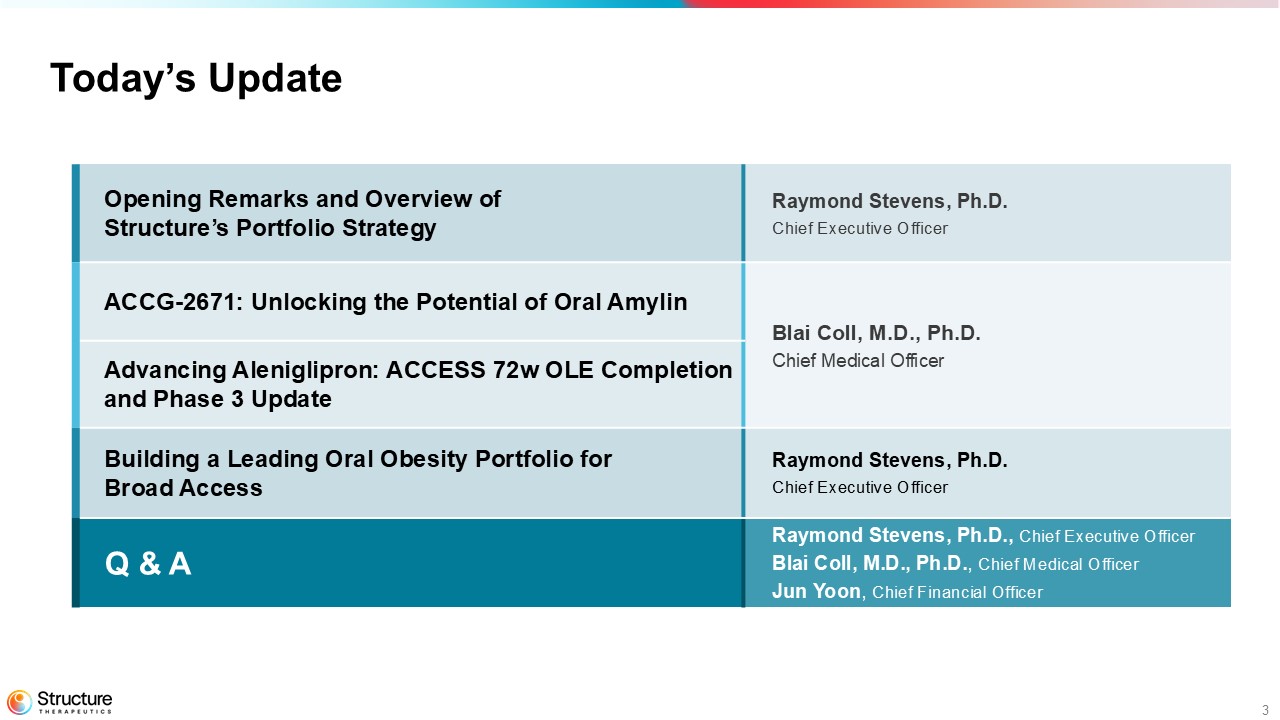
3 Today’s Update Raymond Stevens, Ph.D. Chief Executive Officer Opening Remarks and Overview of Structure’s Portfolio Strategy Blai Coll, M.D., Ph.D. Chief Medical Officer ACCG - 2671: Unlocking the Potential of Oral Amylin Advancing Aleniglipron: ACCESS 72w OLE Completion and Phase 3 Update Raymond Stevens, Ph.D. Chief Executive Officer Building a Leading Oral Obesity Portfolio for Broad Access Raymond Stevens, Ph.D., Chief Executive Officer Blai Coll, M.D., Ph.D. , Chief Medical Officer Jun Yoon , Chief Financial Officer Q & A
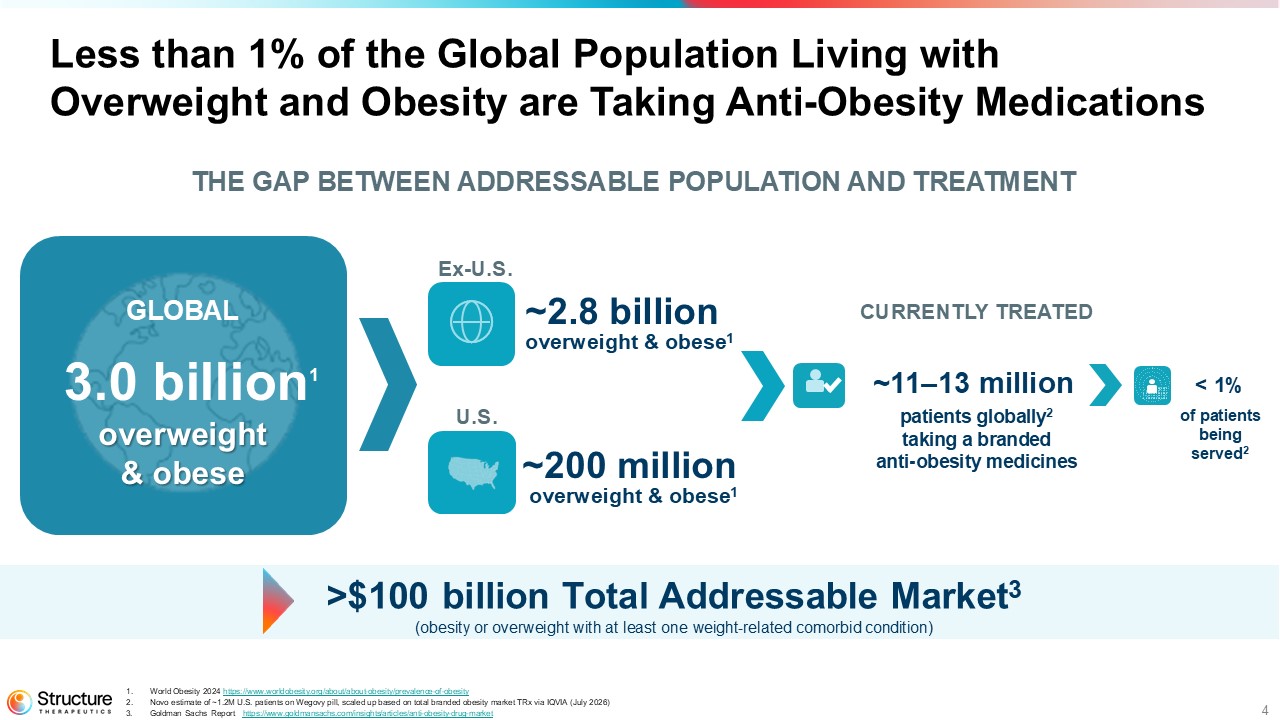
4 Less than 1% of the Global Population Living with Overweight and Obesity are Taking Anti - Obesity Medications CURRENTLY TREATED ~11 – 13 million patients globally 2 taking a branded anti - obesity medicines U.S. ~200 million overweight & obese 1 THE GAP BETWEEN ADDRESSABLE POPULATION AND TREATMENT of patients being served 2 < 1% GLOBAL 3.0 billion 1 overweight & obese >$100 billion Total Addressable Market 3 (obesity or overweight with at least one weight - related comorbid condition ) 1. World Obesity 2024 https:// www.worldobesity.org/about/about - obesity/prevalence - of - obesity 2. Novo estimate of ~1.2M U.S. patients on Wegovy pill, scaled up based on total branded obesity market TRx via IQVIA (July 2026) 3. Goldman Sachs Report https://www.goldmansachs.com/insights/articles/anti - obesity - drug - market Ex - U.S. ~2.8 billion overweight & obese 1
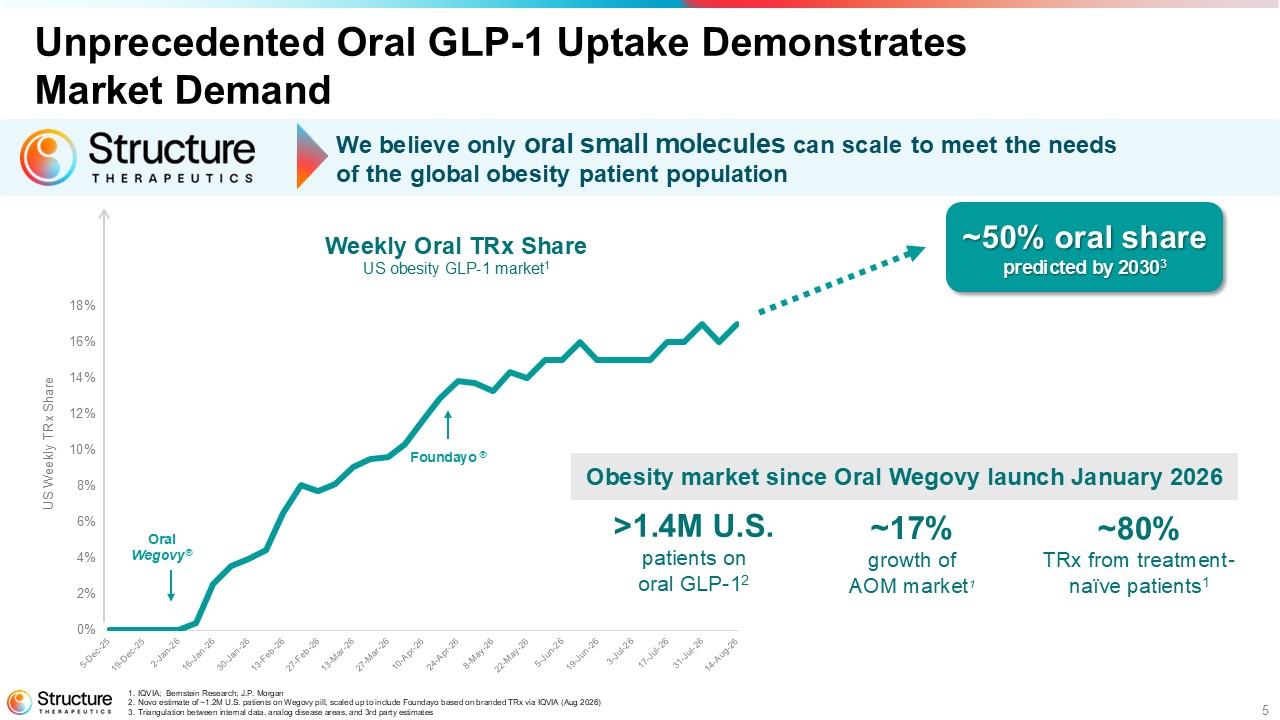
5 Unprecedented Oral GLP - 1 Uptake Demonstrates Market Demand 0% 2% 4% 6% 8% 10% 12% 14% 16% 18% Weekly Oral TRx Share US obesity GLP - 1 market 1 US Weekly TRx Share 1. IQVIA; Bernstein Research; J.P. Morgan 2. Novo estimate of ~1.2M U.S. patients on Wegovy pill, scaled up to include Foundayo based on branded TRx via IQVIA (Aug 2026) 3. Triangulation between internal data, analog disease areas, and 3rd party estimates >1.4M U.S. patients on oral GLP - 1 2 Oral Wegovy ® Foundayo ® ~17% growth of AOM market 1 ~50% oral share predicted by 2030 3 ~80% TRx from treatment - naïve patients 1 Obesity market since Oral Wegovy launch January 2026 We believe only oral small molecules can scale to meet the needs of the global obesity patient population
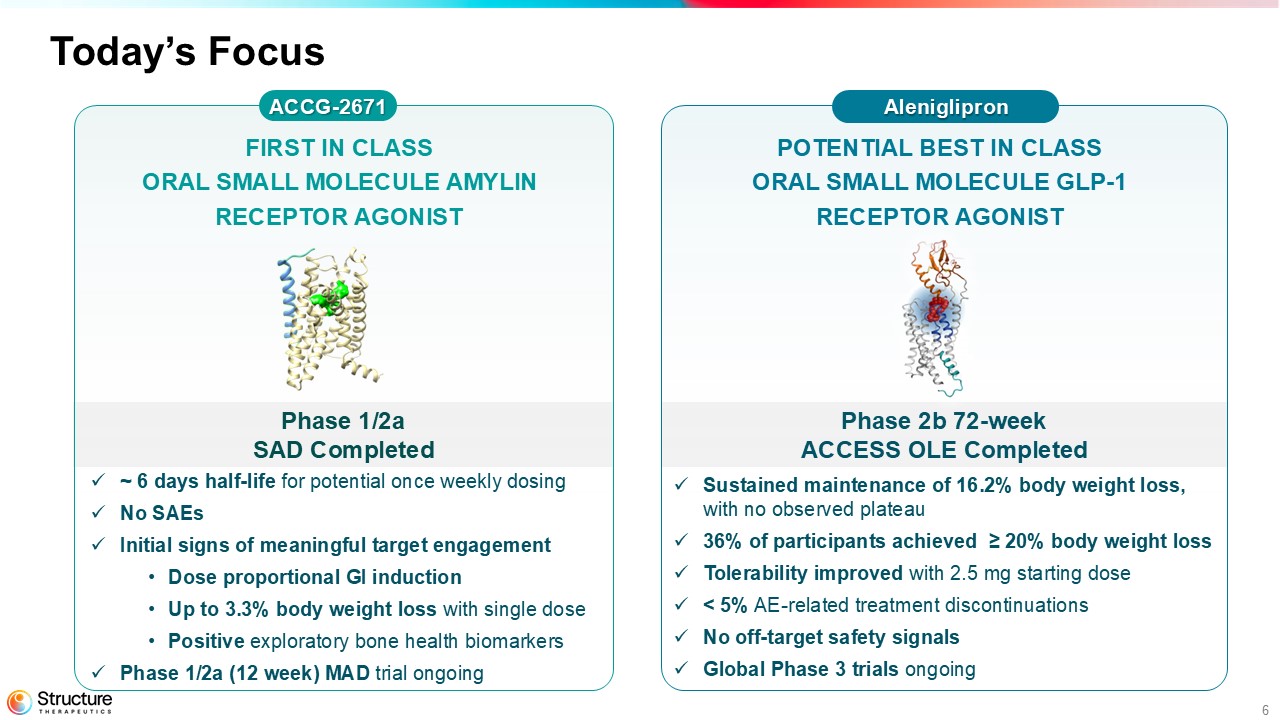
6 Phase 2b 72 - week ACCESS OLE Completed Phase 1/2a SAD Completed Today’s Focus ACCG - 2671 POTENTIAL BEST IN CLASS ORAL SMALL MOLECULE GLP - 1 RECEPTOR AGONIST FIRST IN CLASS ORAL SMALL MOLECULE AMYLIN RECEPTOR AGONIST x ~ 6 days half - life for potential once weekly dosing x No SAEs x Initial signs of meaningful target engagement • Dose proportional GI induction • Up to 3.3% body weight loss with single dose • Positive exploratory bone health biomarkers x Phase 1/2a (12 week) MAD trial ongoing x Sustained maintenance of 16.2% body weight loss, with no observed plateau x 36% of participants achieved ≥ 20% body weight loss x Tolerability improved with 2.5 mg starting dose x < 5% AE - related treatment discontinuations x No off - target safety signals x Global Phase 3 trials ongoing Aleniglipron
7 ACCG - 2671: Unlocking the Potential of Oral Amylin Blai Coll
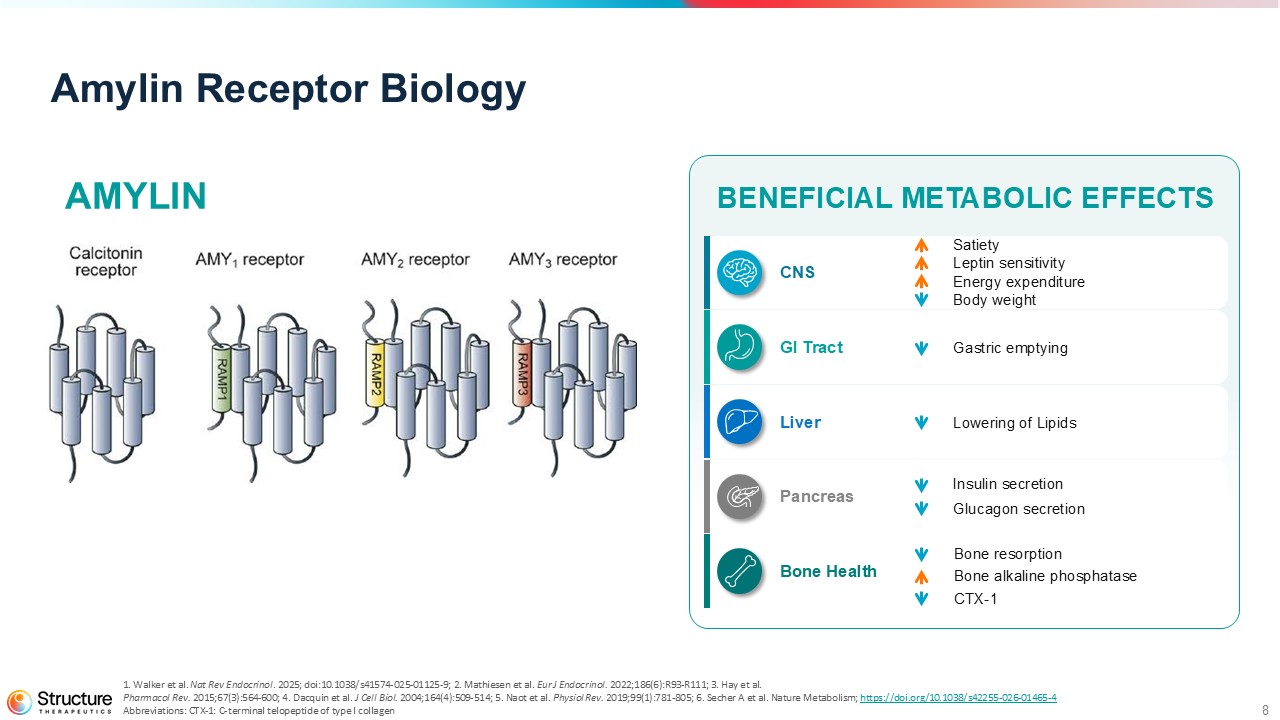
8 Amylin Receptor Biology 1. Walker et al. Nat Rev Endocrinol . 2025; doi:10.1038/s41574 - 025 - 01125 - 9; 2. Mathiesen et al. Eur J Endocrinol. 2022;186(6):R93 - R111; 3. Hay et al. Pharmacol Rev. 2015;67(3):564 - 600; 4. Dacquin et al. J Cell Biol. 2004;164(4):509 - 514; 5. Naot et al. Physiol Rev. 2019;99(1):781 - 805; 6. Secher A et al. Nature Metabolism; https://doi.org/10.1038/s42255 - 026 - 01465 - 4 Abbreviations: CTX - 1: C - terminal telopeptide of type I collagen AMYLIN BENEFICIAL METABOLIC EFFECTS CNS Satiety Leptin sensitivity Energy expenditure Body weight GI Tract Gastric emptying Liver Lowering of Lipids Pancreas Insulin secretion Glucagon secretion Bone Health Bone resorption Bone alkaline phosphatase CTX - 1
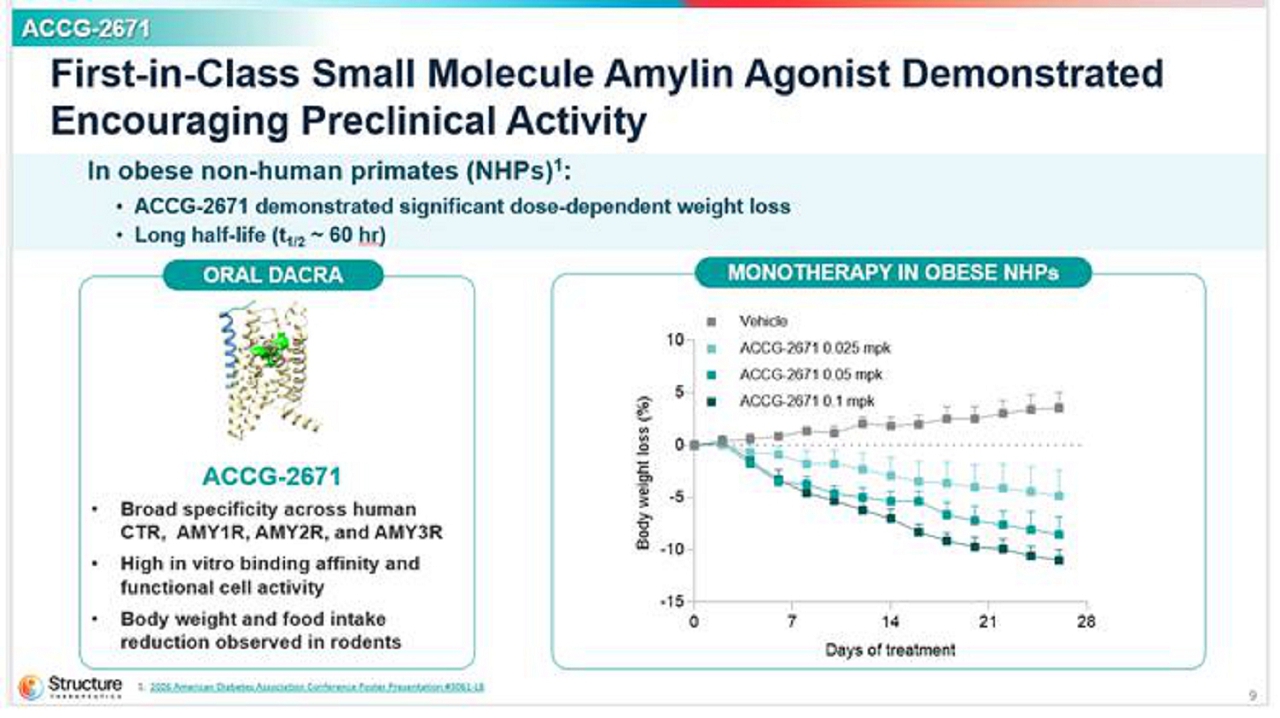
9 ACCG - 2671 First - in - Class Small Molecule Amylin Agonist Demonstrated Encouraging Preclinical Activity 1. 2026 American Diabetes Association Conference Poster Presentation #3061 - LB ORAL DACRA ACCG - 2671 • Broad specificity across human CTR, AMY1R, AMY2R, and AMY3R • High in vitro binding affinity and functional cell activity • Body weight and food intake reduction observed in rodents In obese non - human primates (NHPs) 1 : • ACCG - 2671 demonstrated significant dose - dependent weight loss • Long half - life (t 1/2 ~ 60 hr ) MONOTHERAPY IN OBESE NHPs
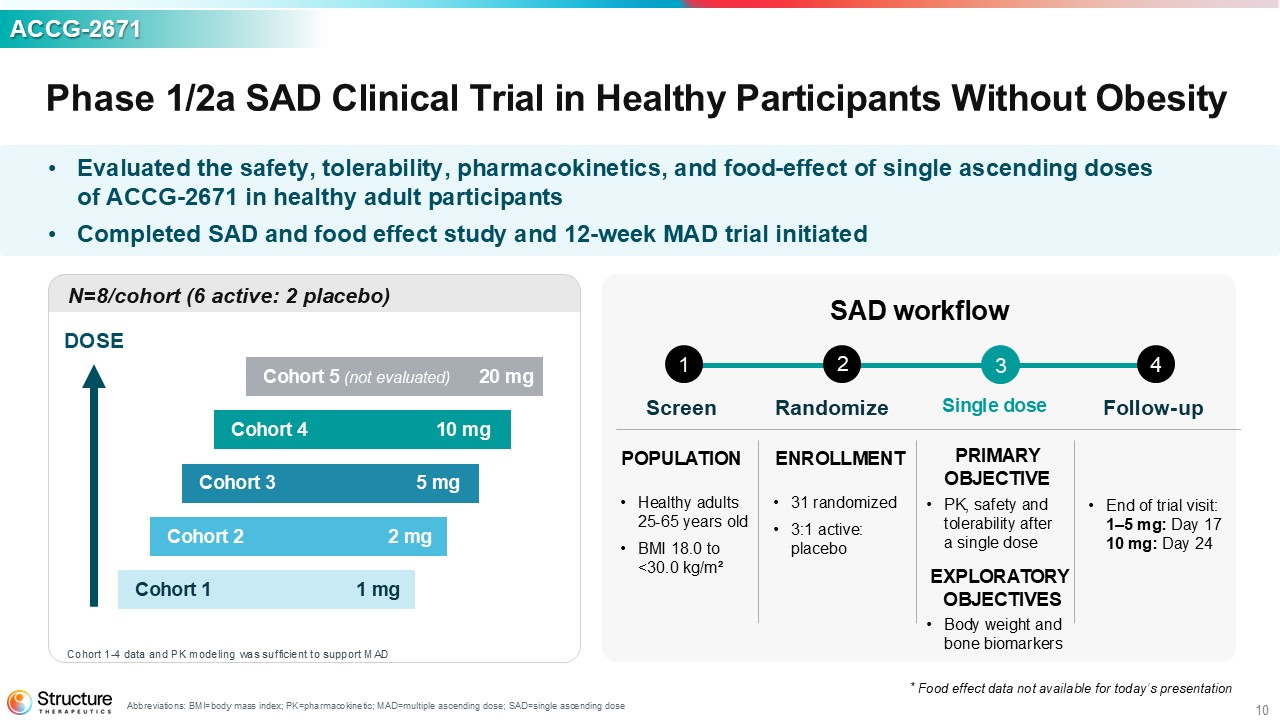
10 Phase 1/2a SAD Clinical Trial in Healthy Participants Without Obesity Abbreviations: BMI=body mass index; PK=pharmacokinetic; MAD=multiple ascending dose; SAD=single ascending dose ACCG - 2671 • Evaluated the safety, tolerability, pharmacokinetics, and food - effect of single ascending doses of ACCG - 2671 in healthy adult participants • Completed SAD and food effect study and 12 - week MAD trial initiated Screen Randomize Single dose Follow - up N=8/cohort (6 active: 2 placebo) DOSE Cohort 1 1 mg Cohort 2 2 mg Cohort 3 5 mg Cohort 4 10 mg Cohort 5 (not evaluated) 20 mg Cohort 1 - 4 data and PK modeling was sufficient to support MAD POPULATION • Healthy adults 25 - 65 years old • BMI 18.0 to <30.0 kg/m² ENROLLMENT • 31 randomized • 3:1 active: placebo PRIMARY OBJECTIVE • PK, safety and tolerability after a single dose • Body weight and bone biomarkers • End of trial visit: 1 – 5 mg: Day 17 10 mg: Day 24 SAD workflow 1 2 3 4 * Food effect d ata not available for today’s presentation EXPLORATORY OBJECTIVES
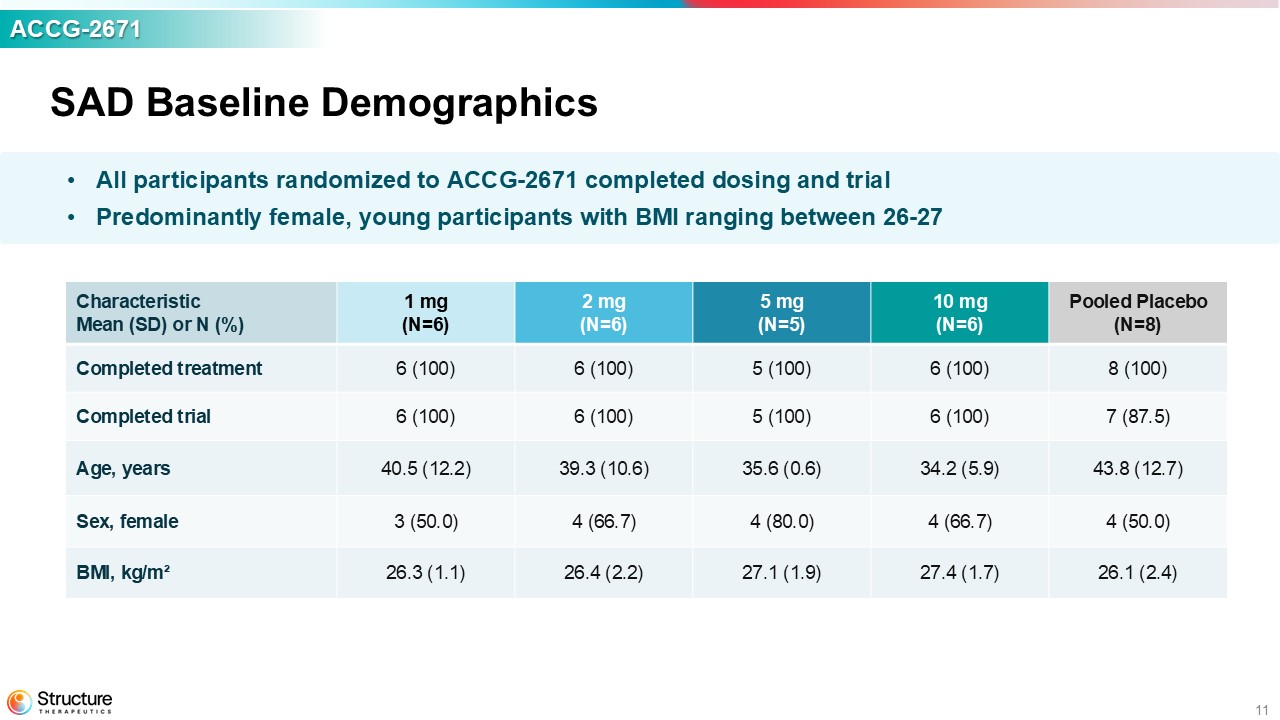
11 ACCG - 2671 SAD Baseline Demographics Pooled Placebo (N=8) 10 mg (N=6) 5 mg (N=5) 2 mg (N=6) 1 mg (N=6) Characteristic Mean (SD) or N (%) 8 (100) 6 (100) 5 (100) 6 (100) 6 (100) Completed treatment 7 (87.5) 6 (100) 5 (100) 6 (100) 6 (100) Completed trial 43.8 (12.7) 34.2 (5.9) 35.6 (0.6) 39.3 (10.6) 40.5 (12.2) Age, years 4 (50.0) 4 (66.7) 4 (80.0) 4 (66.7) 3 (50.0) Sex, female 26.1 (2.4) 27.4 (1.7) 27.1 (1.9) 26.4 (2.2) 26.3 (1.1) BMI, kg/m² • All participants randomized to ACCG - 2671 completed dosing and trial • Predominantly female, young participants with BMI ranging between 26 - 27
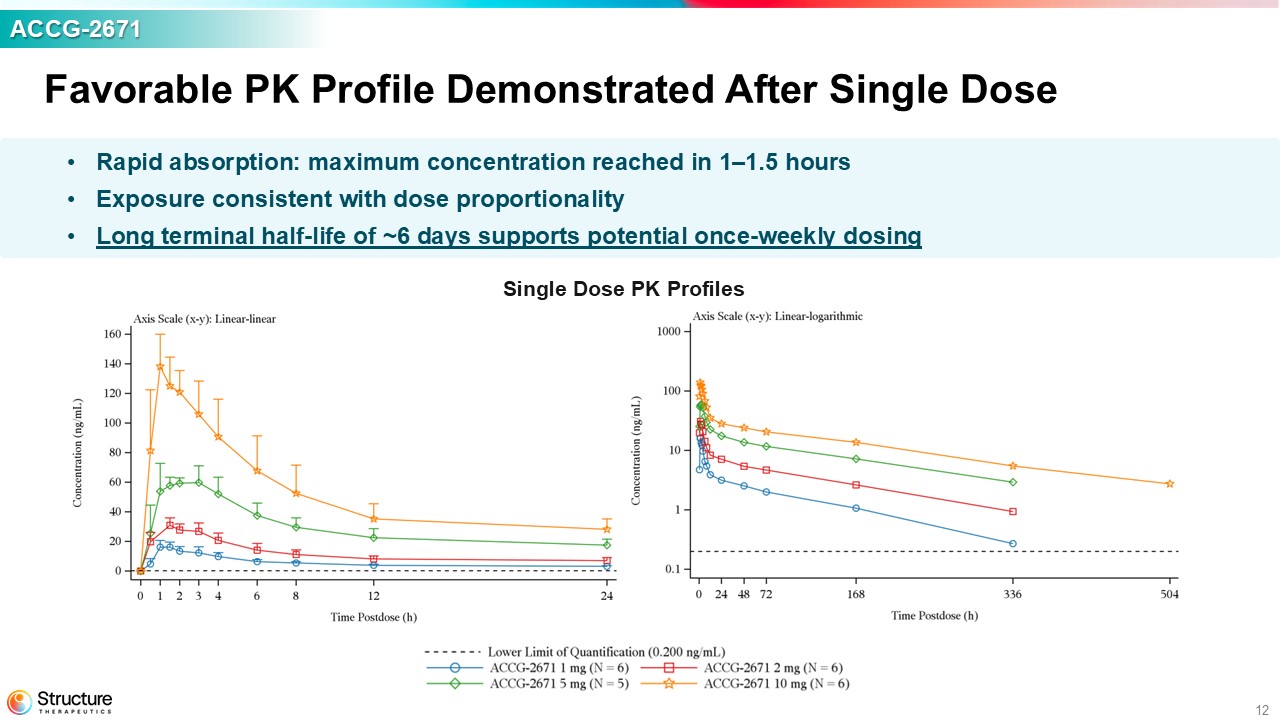
12 Favorable PK Profile Demonstrated After Single Dose Single Dose PK Profiles ACCG - 2671 • Rapid absorption: maximum concentration reached in 1 – 1.5 hours • Exposure consistent with dose proportionality • Long terminal half - life of ~6 days supports potential once - weekly dosing
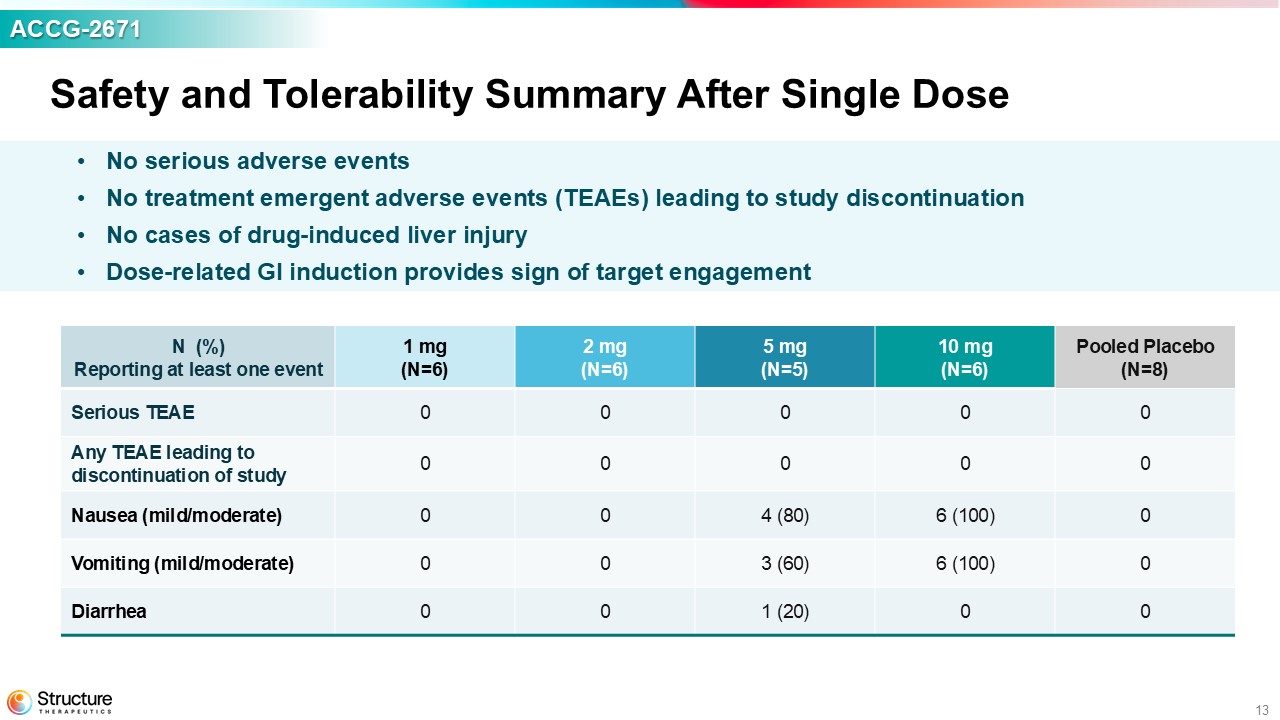
13 Safety and Tolerability Summary After Single Dose ACCG - 2671 • No serious adverse events • No treatment e mergent a dverse e vents (TEAEs) leading to study discontinuation • No cases of drug - induced liver injury • Dose - related GI induction provides sign of target engagement Pooled Placebo (N=8) 10 mg (N=6) 5 mg (N=5) 2 mg (N=6) 1 mg (N=6) N (%) Reporting at least one event 0 0 0 0 0 Serious TEAE 0 0 0 0 0 Any TEAE leading to discontinuation of study 0 6 (100) 4 (80) 0 0 Nausea (mild/moderate) 0 6 (100) 3 (60) 0 0 Vomiting (mild/moderate) 0 0 1 (20) 0 0 Diarrhea
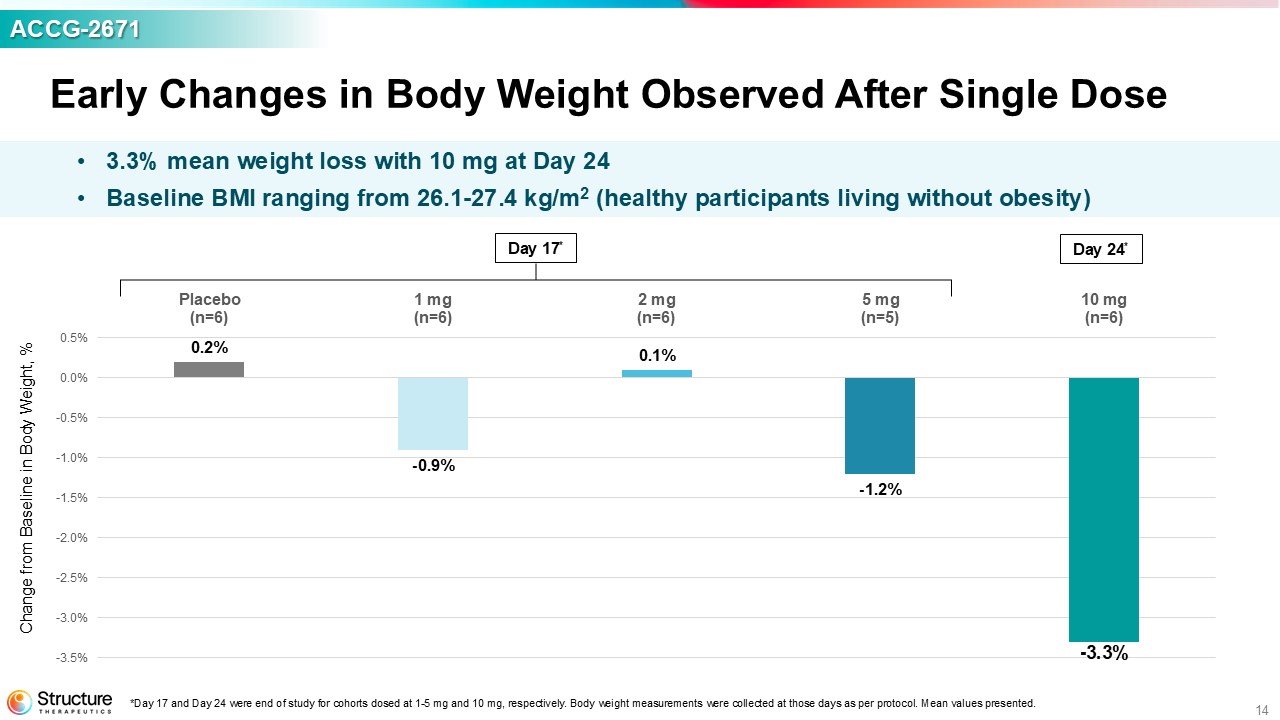
14 ACCG - 2671 Day 17 * 0.2% - 0.9% 0.1% - 1.2% - 3.3% -3.5% -3.0% -2.5% -2.0% -1.5% -1.0% -0.5% 0.0% 0.5% Placebo (n=6) 1 mg (n=6) 2 mg (n=6) 5 mg (n=5) 10 mg (n=6) Day 24 * Change from Baseline in Body Weight, % *Day 17 and Day 24 were end of study for cohorts dosed at 1 - 5 mg and 10 mg, respectively. Body weight measurements were collecte d at those days as per protocol. Mean values presented. • 3.3% mean weight loss with 10 mg at Day 24 • Baseline BMI ranging from 26.1 - 27.4 kg/m 2 (healthy participants living without obesity) Early Changes in Body Weight Observed After Single Dose
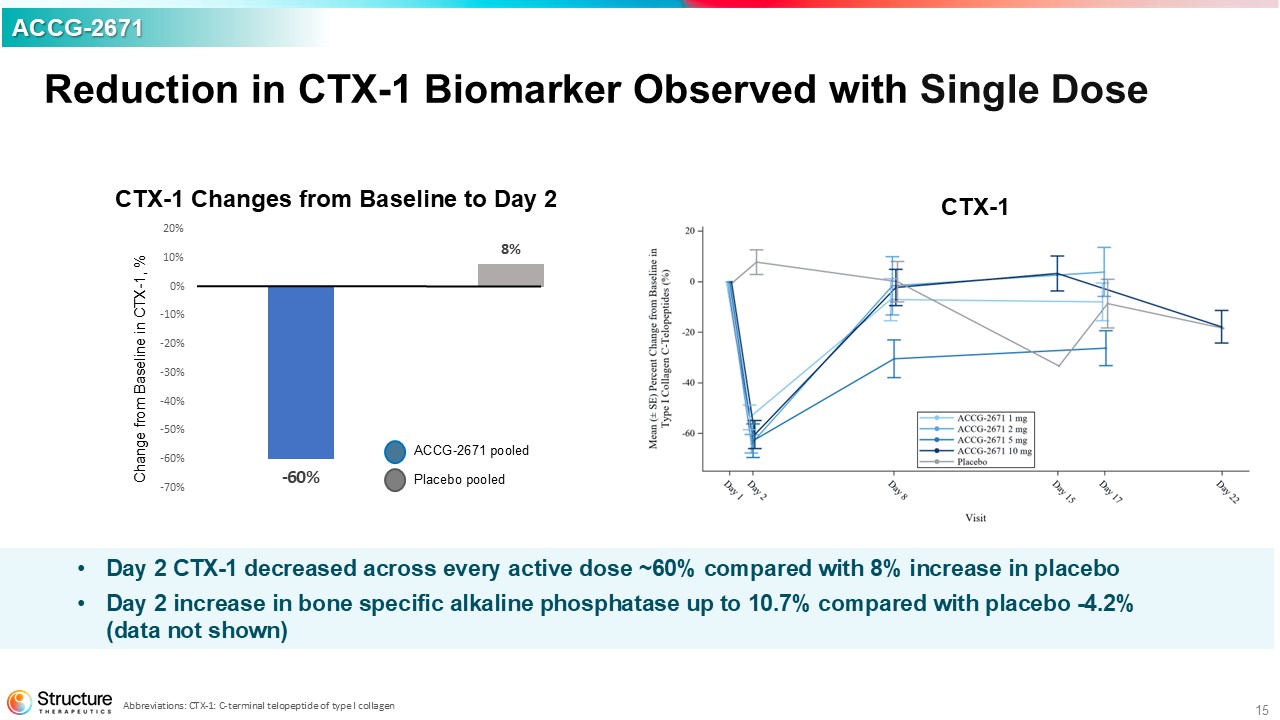
15 • Day 2 CTX - 1 decreased across every active dose ~60% compared with 8% increase in placebo • Day 2 increase in bone specific alkaline phosphatase up to 10.7% compared with placebo - 4.2% (data not shown) CTX - 1 Changes from Baseline to Day 2 CTX - 1 Change from Baseline in CTX - 1, % ACCG - 2671 pooled Placebo pooled - 60% 8% -70% -60% -50% -40% -30% -20% -10% 0% 10% 20% ACCG - 2671 Reduction in CTX - 1 Biomarker Observed with Single Dose Abbreviations: CTX - 1: C - terminal telopeptide of type I collagen
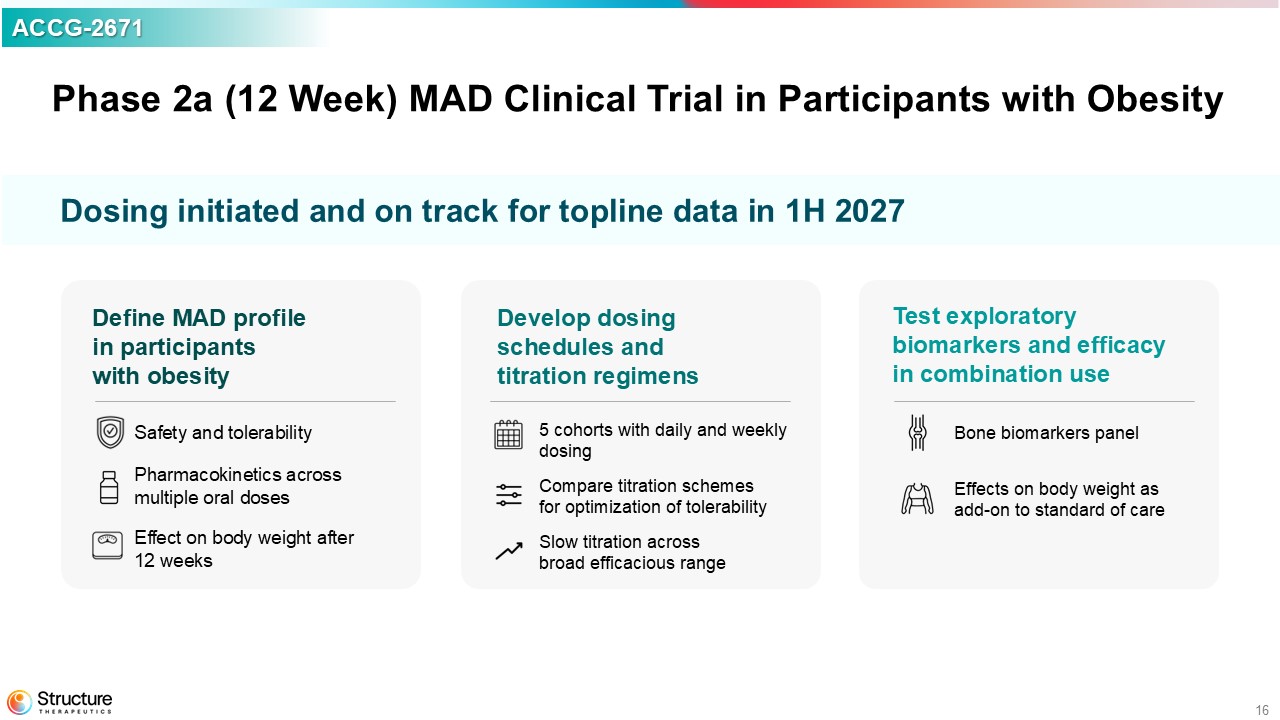
16 Phase 2a (12 Week) MAD Clinical Trial in Participants with Obesity Define MAD profile in participants with obesity Safety and tolerability Pharmacokinetics across multiple oral doses Effect on body weight after 12 weeks Develop dosing schedules and titration regimens 5 cohorts with d aily and weekly dosing Compare titration schemes for optimization of tolerability Slow titration across broad efficacious range Test exploratory biomarkers and efficacy in combination use Bone biomarkers panel Effects on b ody weight as add - on to standard of care ACCG - 2671 Dosing initiated and o n track for topline data in 1H 2027
17 Advancing Aleniglipron : ACCESS OLE Completion and Phase 3 Update Blai Coll
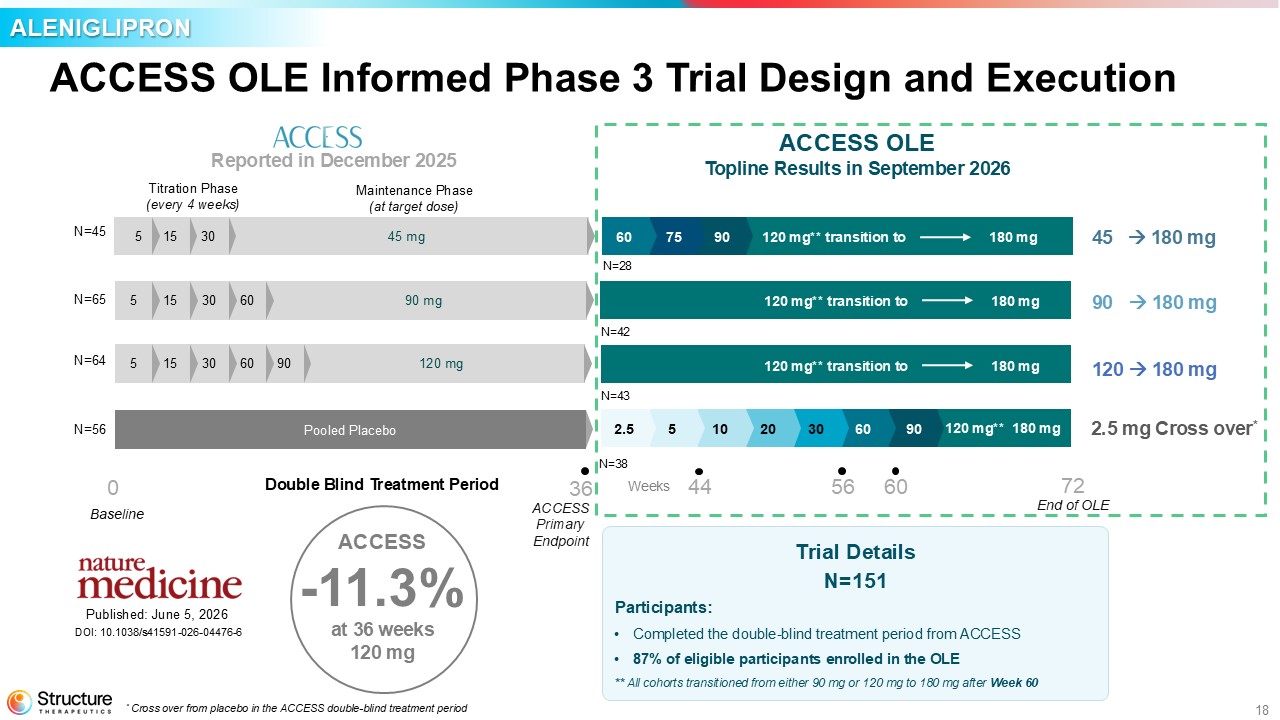
18 ACCESS OLE Informed Phase 3 Trial Design and Execution ALENIGLIPRON ACCESS - 11.3% at 36 weeks 120 mg Baseline Titration Phase (every 4 weeks) Maintenance Phase (at target dose) ACCESS Primary Endpoint 30 15 5 N=45 N=65 N=64 N=56 45 mg 90 mg 60 30 15 5 120 mg 60 30 15 5 90 Pooled Placebo 75 90 60 30 20 10 5 2.5 60 90 End of OLE Trial Details N=151 Participants: • Completed the double - blind treatment period from ACCESS • 87% of eligible participants enrolled in the OLE ** All cohorts transitioned from either 90 mg or 120 mg to 180 mg after Week 60 Double Blind Treatment Period N=28 N=42 N=43 N=38 Weeks 0 36 44 56 72 ACCESS OLE Topline Results in September 2026 Reported in December 2025 180 mg 120 mg** Published: June 5, 2026 DOI: 10.1038/s41591 - 026 - 04476 - 6 60 120 mg** transition to 2.5 mg Cross over * 45 180 mg 90 180 mg 120 180 mg * Cross over from placebo in the ACCESS double - blind treatment period 180 mg 120 mg** transition to 180 mg 120 mg** transition to 180 mg
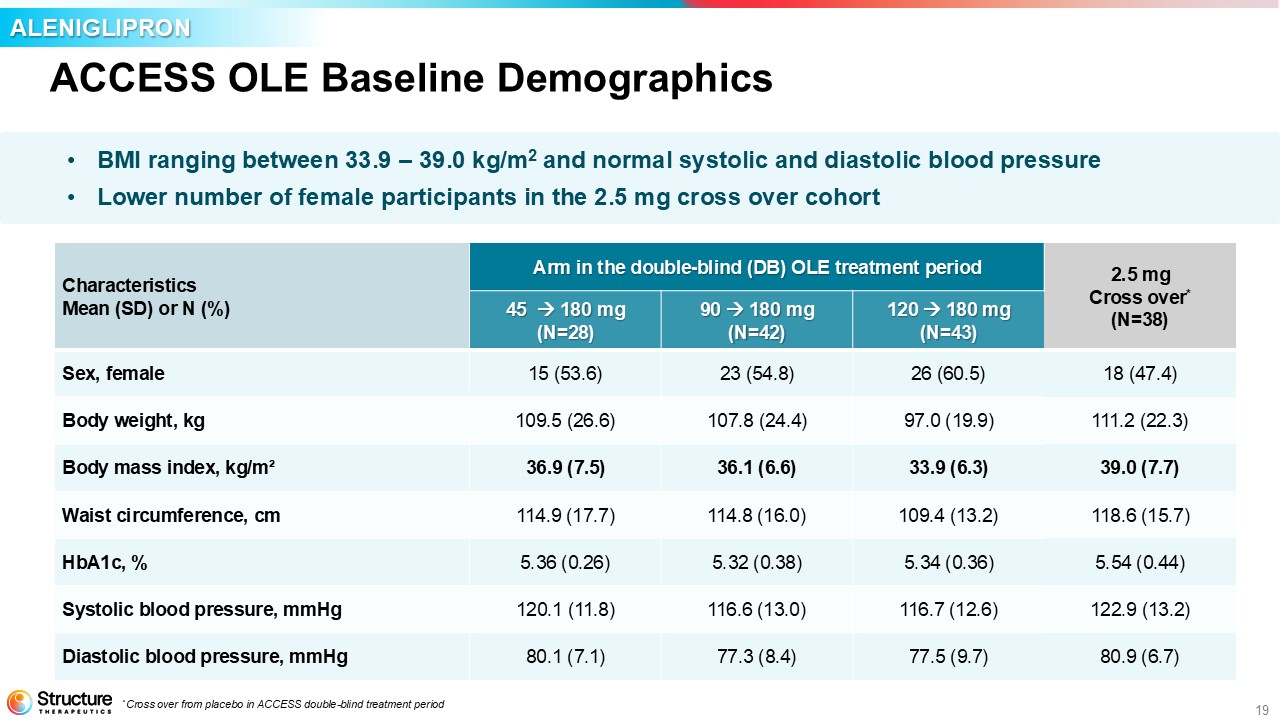
19 ACCESS OLE Baseline Demographics • BMI ranging between 33.9 – 39.0 kg/m 2 and normal systolic and diastolic blood pressure • Lower number of female participants in the 2.5 mg cross over cohort ALENIGLIPRON 2.5 mg Cross over * (N=38) Arm in the double - blind (DB) OLE treatment period Characteristics Mean (SD) or N (%) 120 180 mg (N=43) 90 180 mg (N=42) 45180 mg (N=28) 18 (47.4) 26 (60.5) 23 (54.8) 15 (53.6) Sex, female 111.2 (22.3) 97.0 (19.9) 107.8 (24.4) 109.5 (26.6) Body weight, kg 39.0 (7.7) 33.9 (6.3) 36.1 (6.6) 36.9 (7.5) Body mass index, kg/m² 118.6 (15.7) 109.4 (13.2) 114.8 (16.0) 114.9 (17.7) Waist circumference, cm 5.54 (0.44) 5.34 (0.36) 5.32 (0.38) 5.36 (0.26) HbA1c, % 122.9 (13.2) 116.7 (12.6) 116.6 (13.0) 120.1 (11.8) Systolic blood pressure, mmHg 80.9 (6.7) 77.5 (9.7) 77.3 (8.4) 80.1 (7.1) Diastolic blood pressure, mmHg * Cross over from placebo in ACCESS double - blind treatment period
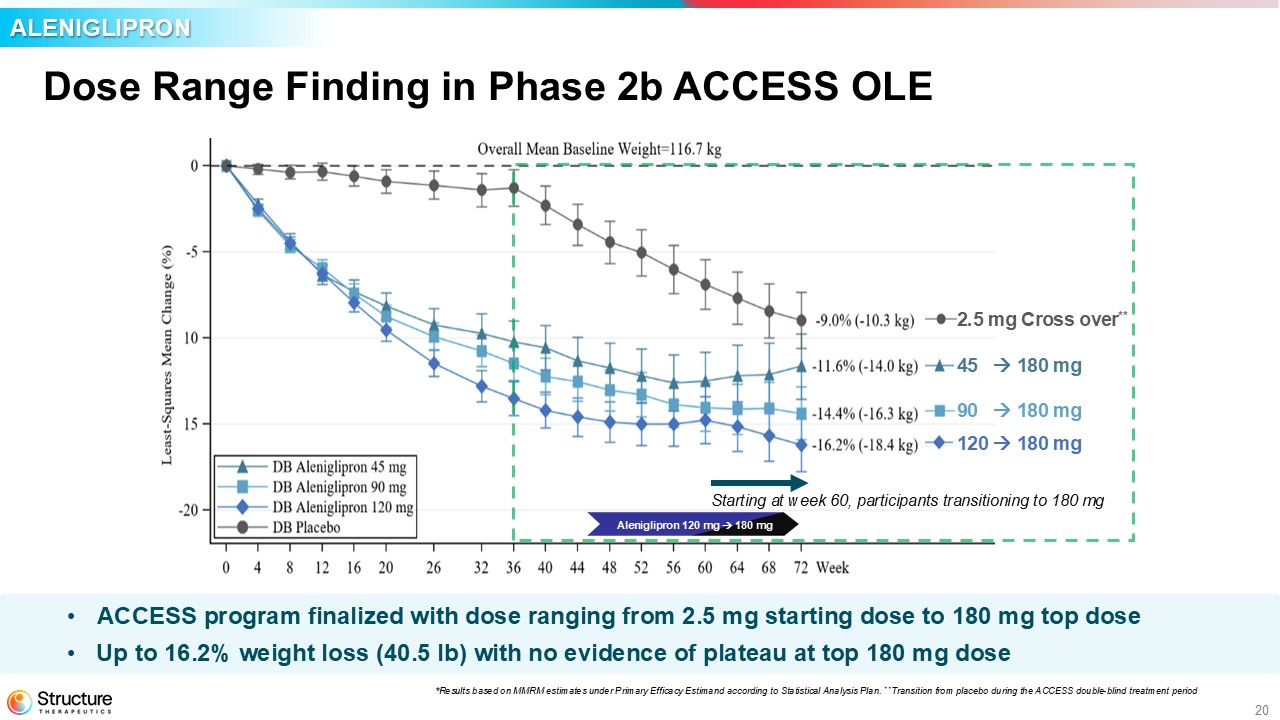
20 • ACCESS program finalized with dose ranging from 2.5 mg starting dose to 180 mg top dose • Up to 16.2% weight loss (40.5 lb ) with no evidence of plateau at top 180 mg dose Dose Range Finding in Phase 2b ACCESS OLE ALENIGLIPRON *Results based on MMRM estimates under Primary Efficacy Estimand according to Statistical Analysis Plan. * * Transition from placebo during the ACCESS double - blind treatment period ACCESS OLE * 2.5 mg Cross over ** 45 180 mg 90 180 mg 120 180 mg Starting at week 60, participants transitioning to 180 mg Aleniglipron 120 mg 180 mg
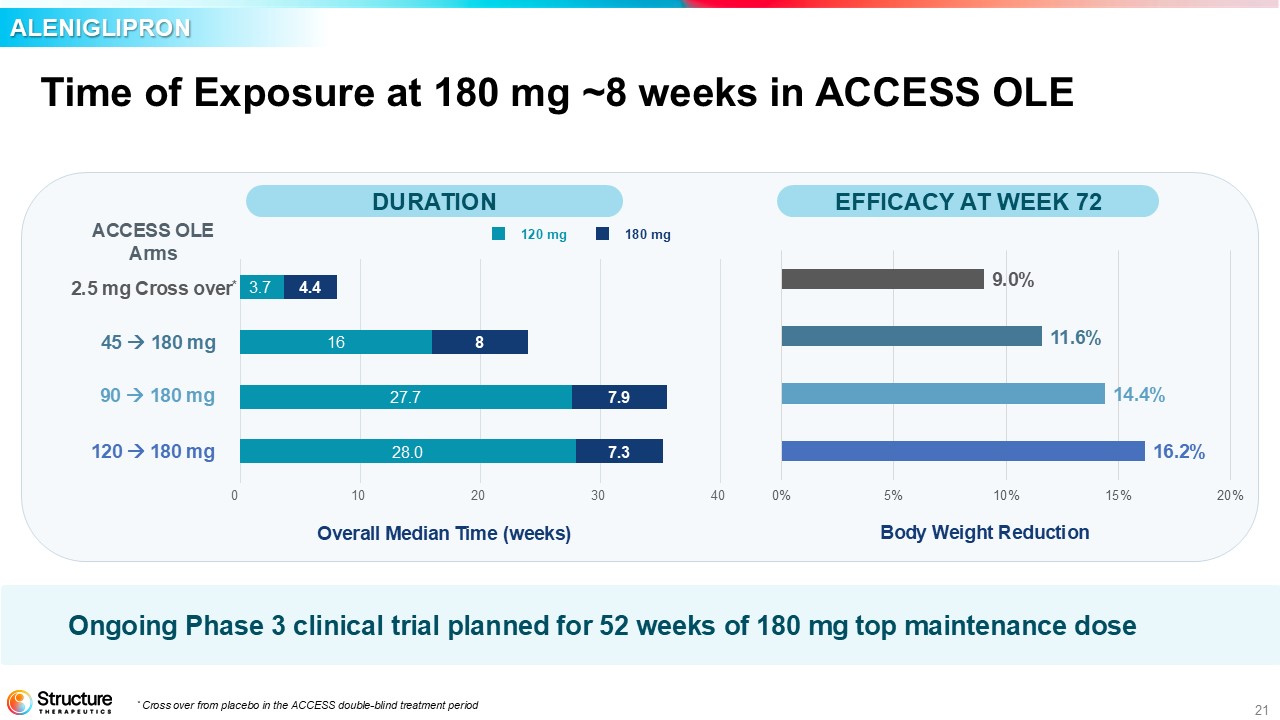
21 Time of Exposure at 180 mg ~8 weeks in ACCESS OLE ACCESS OLE Arms 0 10 20 30 Overall Median T ime ( weeks) 40 120 mg 180 mg 16 8 27.7 7.9 28.0 7.3 3.7 4.4 2.5 mg Cross over * 45 180 mg 90 180 mg 120 180 mg 16.2% 14.4% 11.6% 9.0% 0% 5% 10% 15% 20% Body Weight Reduction * Cross over from placebo in the ACCESS double - blind treatment period ALENIGLIPRON Ongoing Phase 3 clinical trial planned for 52 weeks of 180 mg top maintenance dose DURATION EFFICACY AT WEEK 72
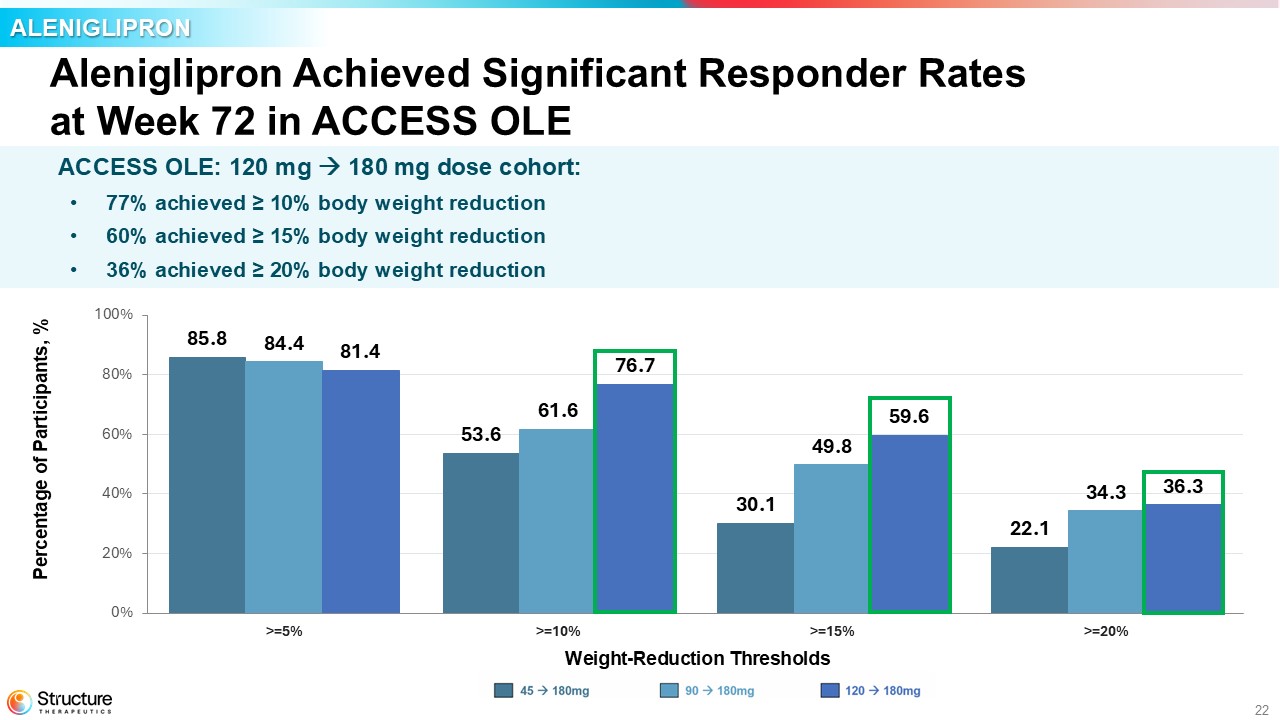
22 Aleniglipron Achieved Significant Responder Rates at Week 72 in ACCESS OLE Percentage of Participants, % ALENIGLIPRON 85.8 53.6 30.1 22.1 84.4 61.6 49.8 34.3 81.4 76.7 59.6 36.3 0% 20% 40% 60% 80% 100% >=5% >=10% >=15% >=20% Weight - Reduction Thresholds DB 45 mg DB 90 mg DB 120 mg 90 180mg 120 180mg 2.5mg Cross over ACCESS OLE: 120 mg 180 mg dose cohort: • 77% achieved ≥ 10% body weight reduction • 60% achieved ≥ 15% body weight reduction • 36% achieved ≥ 20% body weight reduction
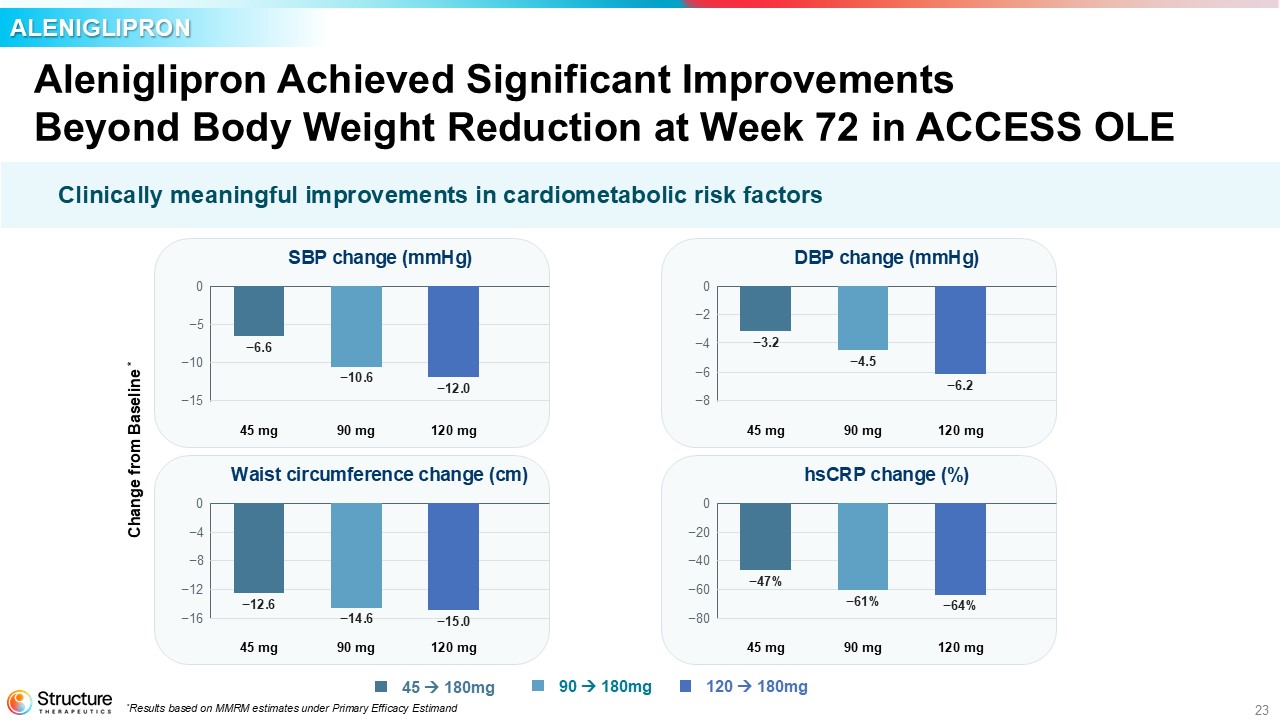
23 Aleniglipron Achieved Significant Improvements Beyond Body Weight Reduction at Week 72 in ACCESS OLE ALENIGLIPRON 45 180mg 90 180mg 120 180mg Clinically meaningful improvements in cardiometabolic risk factors * Results based on MMRM estimates under Primary Efficacy Estimand Change from Baseline * SBP change (mmHg) 0 −5 −10 −15 −6.6 45 mg −10.6 90 mg −12.0 120 mg DBP change (mmHg) 0 −2 −4 −6 −8 −3.2 45 mg −4.5 90 mg −6.2 120 mg Waist circumference change (cm) 0 −4 −8 −12 −16 −12.6 45 mg −14.6 90 mg −15.0 120 mg hsCRP change (%) 0 −20 −40 −60 −80 −47% 45 mg −61% 90 mg −64% 120 mg
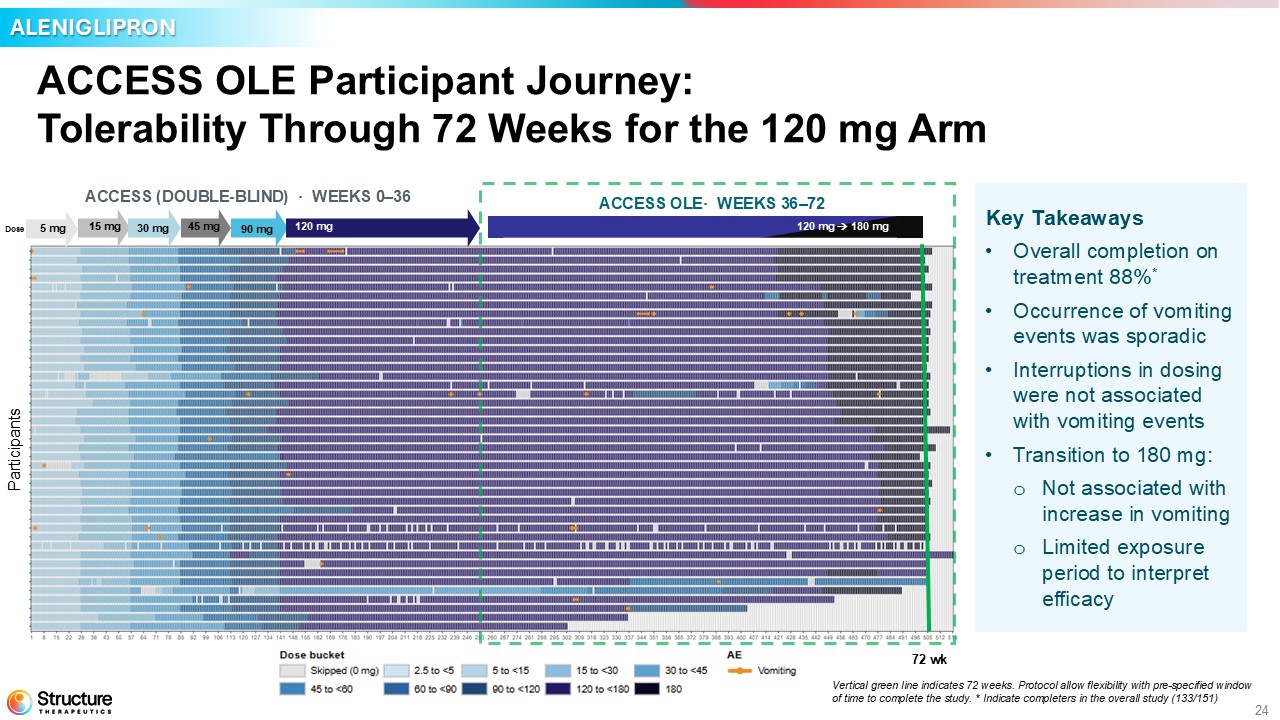
24 ACCESS ( DOUBLE - BLIND ) · WEEKS 0 – 36 ACCESS OLE · WEEKS 36 – 72 5 mg 15 mg 30 mg 45 mg Dose 90 mg 120 mg ACCESS OLE Participant Journey: Tolerability Through 72 Weeks for the 120 mg Arm ALENIGLIPRON Participants 120 mg 180 mg 72 wk Vertical green line indicates 72 weeks. Protocol allow flexibility with pre - specified window of time to complete the study. * Indicate completers in the overall study (133/151) Key Takeaways • Overall completion on treatment 88% * • Occurrence of vomiting events was sporadic • Interruptions in dosing were not associated with vomiting events • Transition to 180 mg: o Not associated with increase in vomiting o Limited exposure period to interpret efficacy
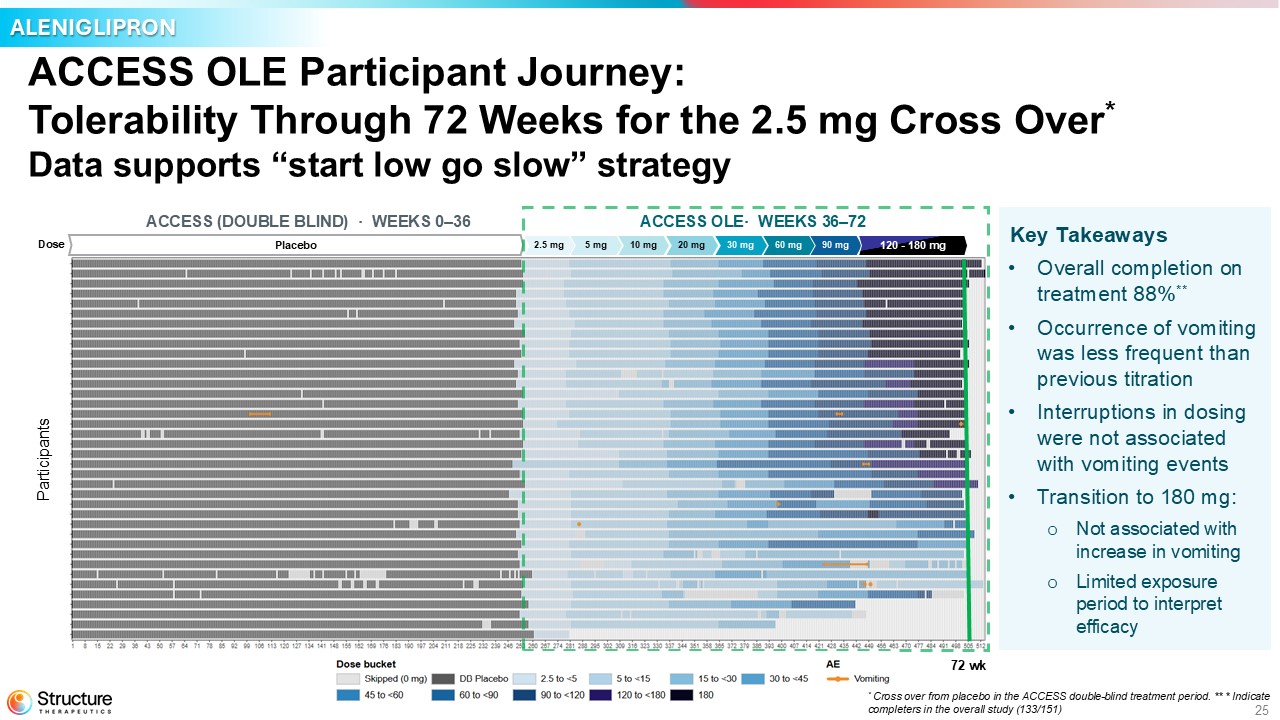
25 ACCESS OLE Participant Journey: Tolerability Through 72 Weeks for the 2.5 mg Cross Over * Data supports “start low go slow” strategy ACCESS (DOUBLE BLIND) · WEEKS 0 – 36 ACCESS OLE· WEEKS 36 – 72 Placebo 2.5 mg 5 mg 10 mg 20 mg 30 mg 60 mg 90 mg 120 - 180 mg Dose ALENIGLIPRON Participants * Cross over from placebo in the ACCESS double - blind treatment period. ** * Indicate completers in the overall study (133/151) 72 wk Key Takeaways • Overall completion on treatment 88% ** • Occurrence of vomiting was less frequent than previous titration • Interruptions in dosing were not associated with vomiting events • Transition to 180 mg: o Not associated with increase in vomiting o Limited exposure period to interpret efficacy
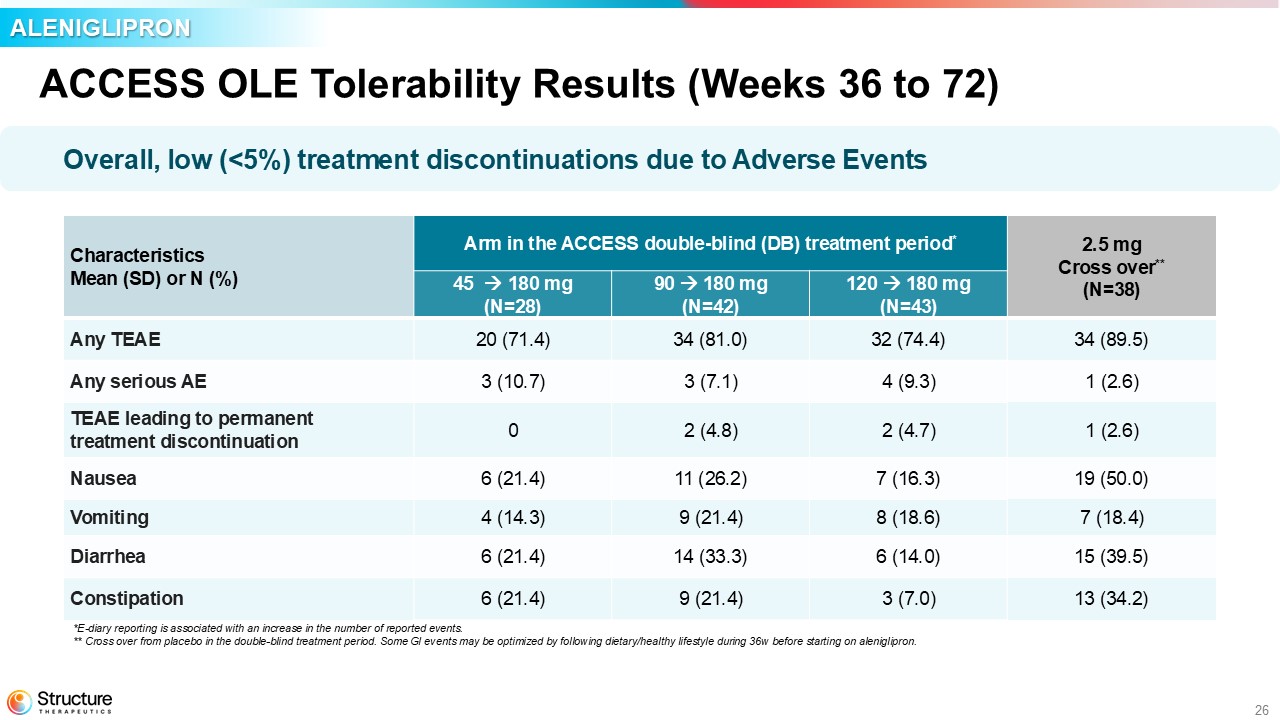
26 ACCESS OLE Tolerability Results (Weeks 36 to 72) Overall, low (<5%) treatment discontinuations due to Adverse Events *E - diary reporting is associated with an increase in the number of reported events. ** Cross over from placebo in the double - blind treatment period. Some GI events may be optimized by following dietary/healthy lifestyle during 36w before starting on aleniglipron. ALENIGLIPRON 2.5 mg Cross over ** (N=38) Arm in the ACCESS double - blind (DB) treatment period * Characteristics Mean (SD) or N (%) 120 180 mg (N=43) 90 180 mg (N=42) 45 180 mg (N=28) 34 (89.5) 32 (74.4) 34 (81.0) 20 (71.4) Any TEAE 1 (2.6) 4 (9.3) 3 (7.1) 3 (10.7) Any serious AE 1 (2.6) 2 (4.7) 2 (4.8) 0 TEAE leading to permanent treatment discontinuation 19 (50.0) 7 (16.3) 11 (26.2) 6 (21.4) Nausea 7 (18.4) 8 (18.6) 9 (21.4) 4 (14.3) Vomiting 15 (39.5) 6 (14.0) 14 (33.3) 6 (21.4) Diarrhea 13 (34.2) 3 (7.0) 9 (21.4) 6 (21.4) Constipation
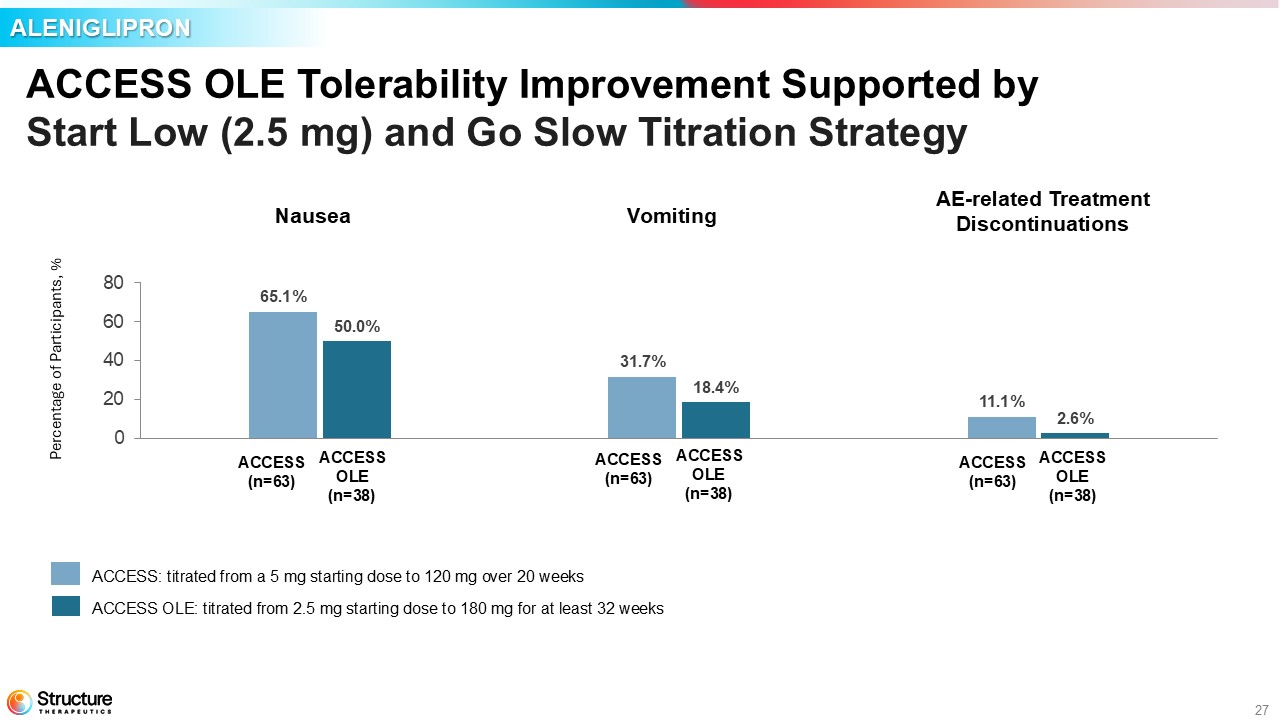
27 ACCESS OLE Tolerability Improvement Supported by Start Low (2.5 mg) and Go Slow Titration Strategy 65.1 % 31.7 % 11.1 % 50.0 % 18.4 % 2.6 % 0 20 40 60 80 Nausea Vomiting TEAE-led discontinuation 120 mg, Weeks 0 – 36 (N=63) DB Placebo → 180 mg, Weeks 36 – 72 (N=38) Percentage of Participants, % ALENIGLIPRON ACCESS (n=63) ACCESS OLE (n=38) ACCESS (n=63) ACCESS OLE (n=38) ACCESS (n=63) ACCESS OLE (n=38) ACCESS: titrated from a 5 mg starting dose to 120 mg over 20 weeks ACCESS OLE: titrated from 2.5 mg starting dose to 180 mg for at least 32 weeks Nausea Vomiting AE - related Treatment Discontinuations
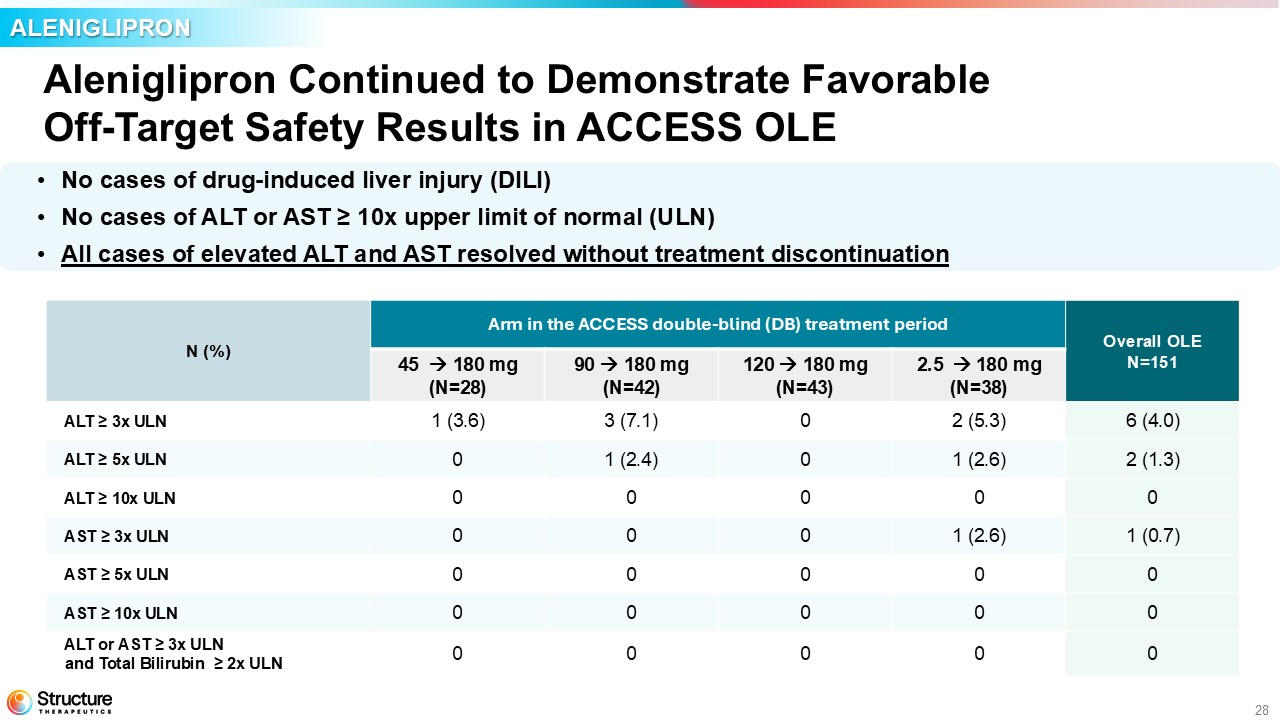
28 Aleniglipron Continued to Demonstrate Favorable Off - Target Safety Results in ACCESS OLE • No cases of drug - induced liver injury (DILI) • No cases of ALT or AST ≥ 10x upper limit of normal (ULN) • All cases of elevated ALT and AST resolved without treatment discontinuation ALENIGLIPRON Overall OLE N=151 Arm in the ACCESS double - blind (DB) treatment period N (%) 2.5 180 mg (N=38) 120 180 mg (N=43) 90 180 mg (N=42) 45 180 mg (N=28) 6 (4.0) 2 (5.3) 0 3 (7.1) 1 (3.6) ALT ≥ 3x ULN 2 (1.3) 1 (2.6) 0 1 (2.4) 0 ALT ≥ 5x ULN 0 0 0 0 0 ALT ≥ 10x ULN 1 (0.7) 1 (2.6) 0 0 0 AST ≥ 3x ULN 0 0 0 0 0 AST ≥ 5x ULN 0 0 0 0 0 AST ≥ 10x ULN 0 0 0 0 0 ALT or AST ≥ 3x ULN and Total Bilirubin ≥ 2x ULN
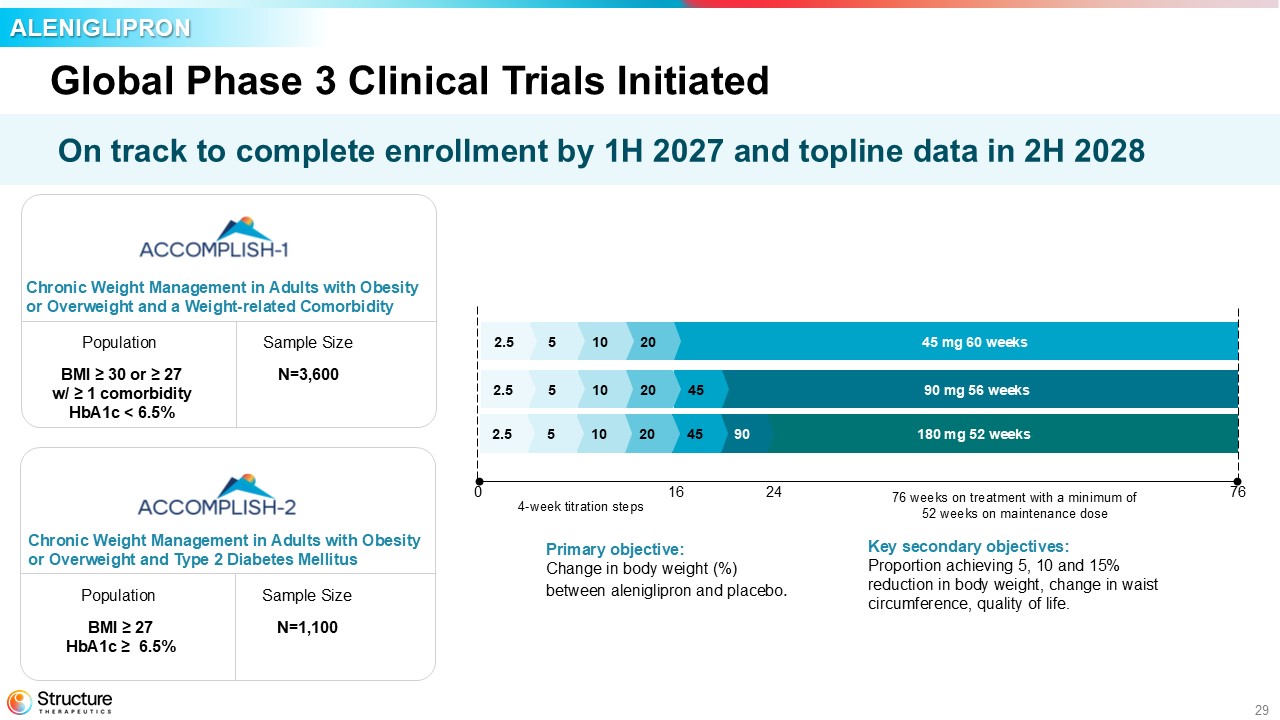
29 Global Phase 3 Clinical Trials Initiated Chronic Weight Management in Adults with Obesity or Overweight and a Weight - related Comorbidity Population Sample Size BMI ≥ 30 or ≥ 27 w/ ≥ 1 comorbidity HbA1c < 6.5% N=3,600 Chronic Weight Management in Adults with Obesity or Overweight and Type 2 Diabetes Mellitus Population Sample Size BMI ≥ 27 HbA1c ≥ 6.5% N=1,100 4 - week titration steps 180 mg 52 weeks 90 45 20 10 5 2.5 90 mg 56 weeks 45 20 10 5 2.5 45 mg 60 weeks 20 10 5 2.5 0 16 24 76 76 weeks on treatment with a minimum of 52 weeks on maintenance dose Key secondary objectives: Proportion achieving 5, 10 and 15% reduction in body weight, change in waist circumference, quality of life. Primary objective: Change in body weight (%) between aleniglipron and placebo . ALENIGLIPRON On track to complete enrollment by 1H 2027 and topline data in 2H 2028
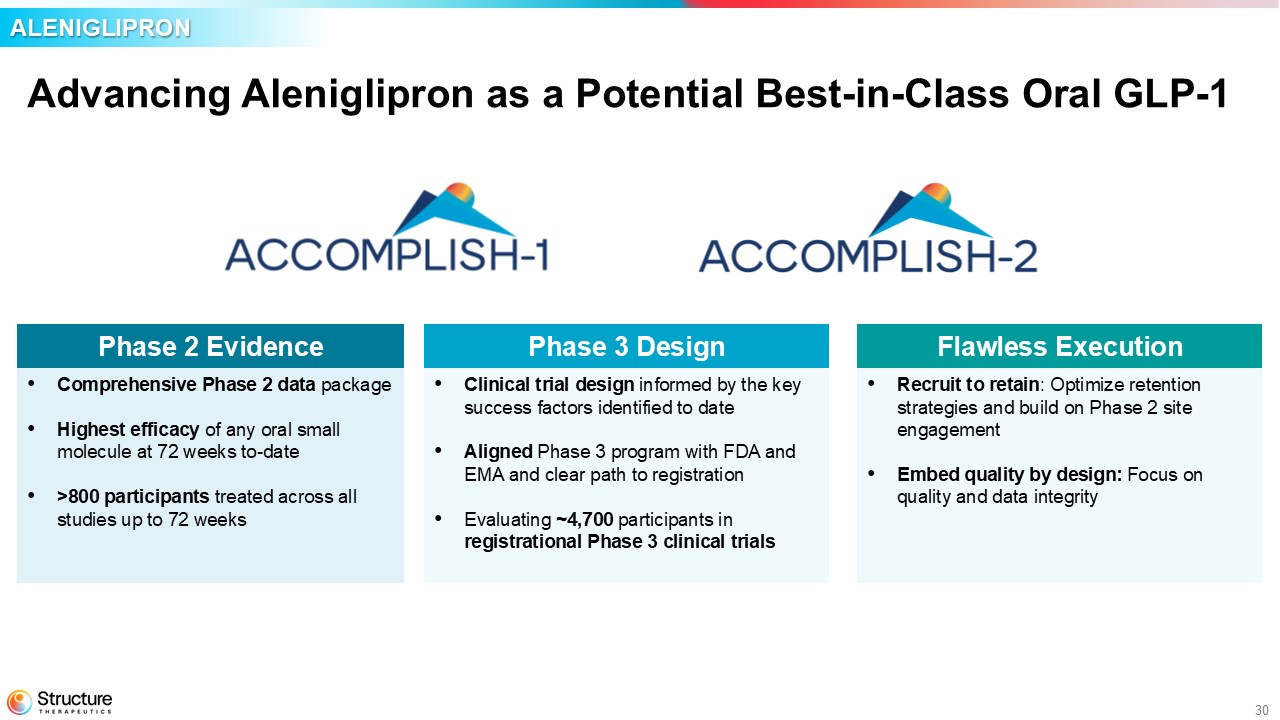
30 Advancing Aleniglipron as a Potential Best - in - Class Oral GLP - 1 Phase 3 Design • Clinical trial design informed by the key success factors identified to date • Aligned Phase 3 program with FDA and EMA and clear path to registration • Evaluating ~4,700 participants in registrational Phase 3 clinical trials Phase 2 Evidence • Comprehensive Phase 2 data package • Highest efficacy of any oral small molecule at 72 weeks to - date • >800 participants treated across all studies up to 72 weeks ALENIGLIPRON Flawless Execution • Recruit to retain : Optimize retention strategies and build on Phase 2 site engagement • Embed quality by design: Focus on quality and data integrity
31 Building a Leading Oral Small Molecule Obesity Portfolio for Broad Access Raymond Stevens
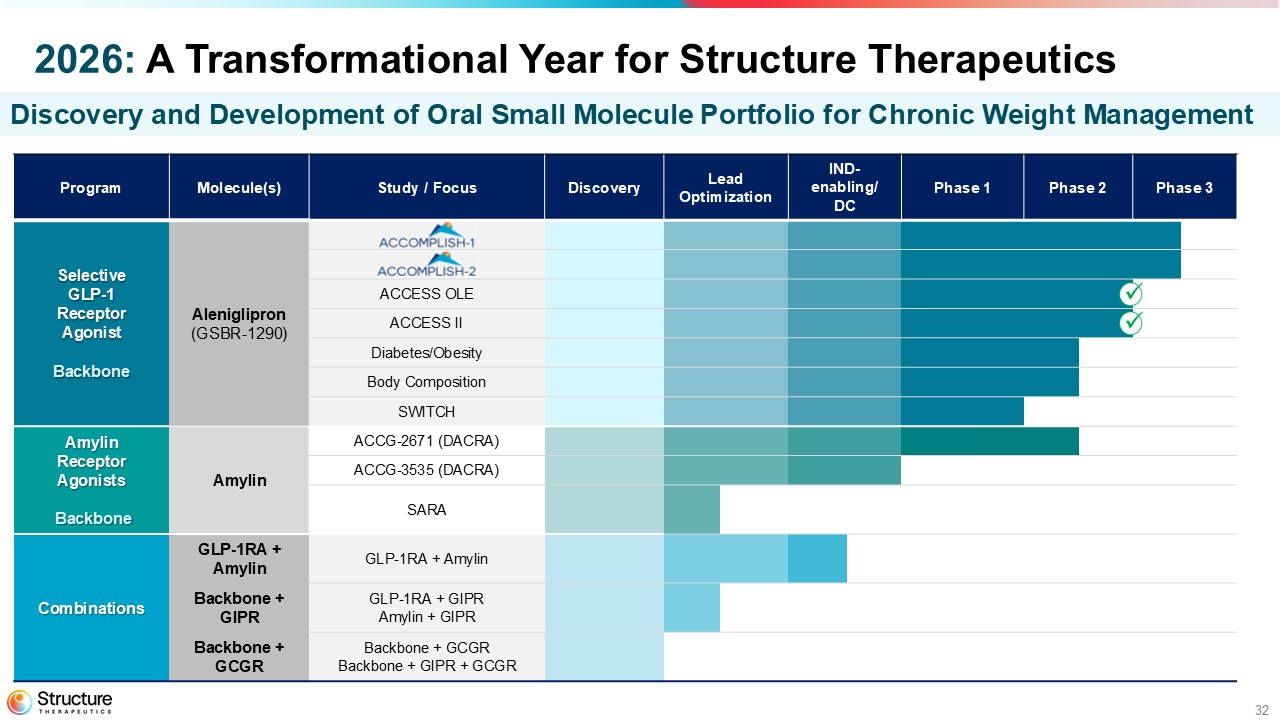
32 Phase 3 Phase 2 Phase 1 IND - enabling/ DC Lead Optimization Discovery Study / Focus Molecule(s) Program Aleniglipron (GSBR - 1290) Selective GLP - 1 Receptor Agonist Backbone ACCESS OLE ACCESS II Diabetes/Obesity Body Composition SWITCH ACCG - 2671 (DACRA) Amylin Amylin Receptor Agonists Backbone ACCG - 3535 (DACRA) SARA GLP - 1RA + Amylin GLP - 1RA + Amylin Combinations GLP - 1RA + GIPR Amylin + GIPR Backbone + GIPR Backbone + GCGR Backbone + GIPR + GCGR Backbone + GCGR 2026: A Transformational Year for Structure Therapeutics Discovery and Development of Oral Small Molecule Portfolio for Chronic Weight Management
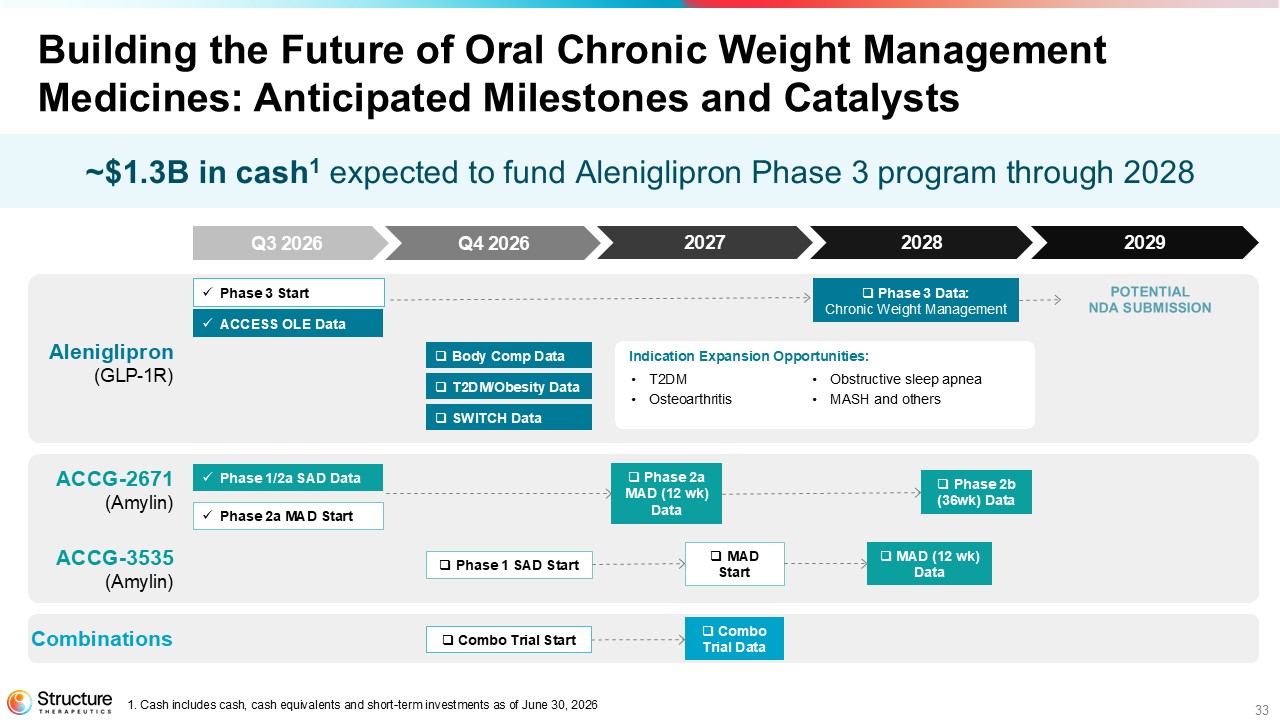
33 1. Cash includes cash, cash equivalents and short - term investments as of June 30, 2026 2028 2027 2029 x Phase 3 Start x ACCESS OLE Data □ Body Comp Data □ T2DM/Obesity Data □ SWITCH Data x Phase 1/2a SAD Data □ Phase 2a MAD (12 wk ) Data □ Phase 2b (36wk) Data □ Phase 1 SAD Start □ Combo Trial Start □ MAD (12 wk ) Data x Phase 2a MAD Start □ MAD Start □ Combo Trial Data Indication Expansion Opportunities: • T2DM • Osteoarthritis • Obstructive sleep apnea • MASH and others ~$1.3B in cash 1 expected to fund Aleniglipron Phase 3 program through 2028 Aleniglipron (GLP - 1R) ACCG - 2671 (Amylin) ACCG - 3535 (Amylin) Combinations □ Phase 3 Data: Chronic Weight Management Building the Future of Oral Chronic Weight Management Medicines: Anticipated Milestones and Catalysts Q3 2026 Q4 2026
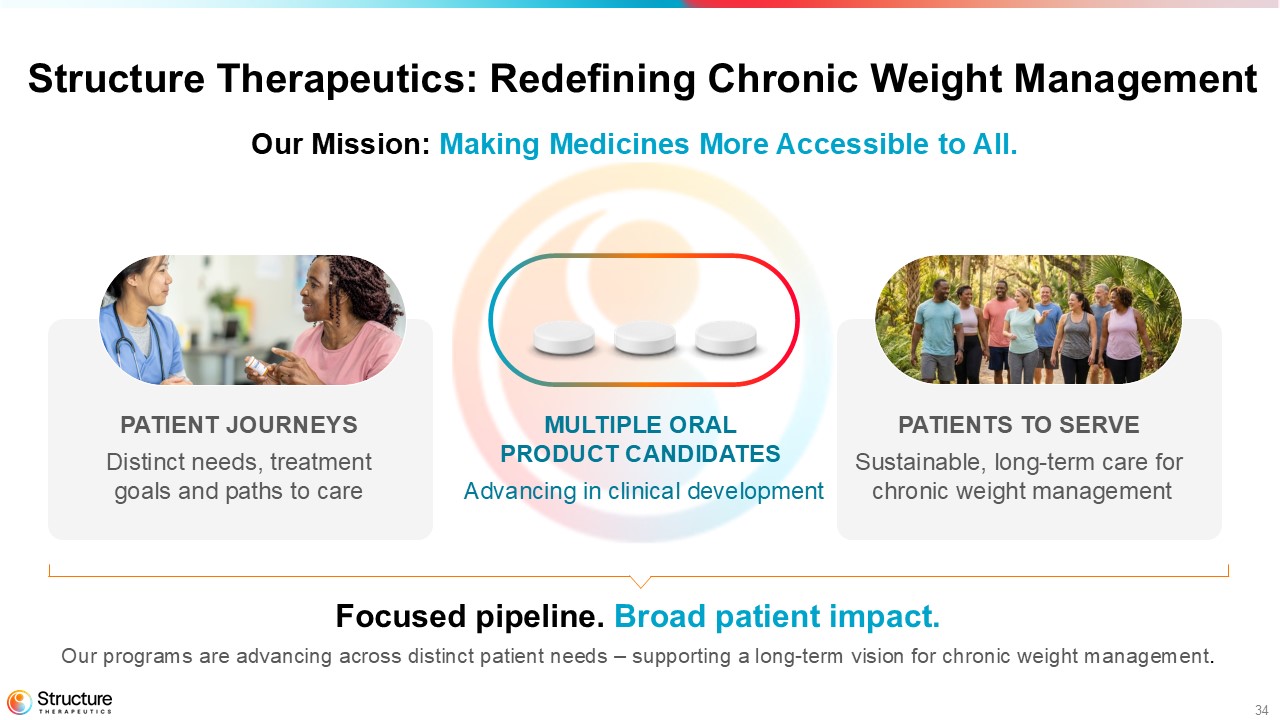
34 Structure Therapeutics: Redefining Chronic Weight Management Our Mission: Making Medicines More Accessible to All. Focused pipeline. Broad patient impact. Our programs are advancing across distinct patient needs – supporting a long - term vision for chronic weight management . MULTIPLE ORAL PRODUCT CANDIDATES Advancing in clinical development PATIENT JOURNEYS Distinct needs, treatment goals and paths to care PATIENTS TO SERVE S ustainable, long - term care for chronic weight management

35 Q&A