
September 8, 2026 CHAPTER-3 Topline Data This presentation includes data for an investigational product not yet approved by regulatory authorities. Exhibit 99.1
Disclaimer This Presentation contains certain “forward‐looking statements” within the meaning of the federal securities laws that involve substantial risks and uncertainties. All statements contained in this Presentation that do not relate to matters of historical fact should be considered forward-looking statements, including, without limitation, statements relating to our future plans, studies and trials, and any statements containing the words “believe,” “anticipate,” “expect,” “estimate,” “may,” “could,” “should,” “would,” “will” and similar expressions. We have based these forward-looking statements largely on our current expectations and projections about future events and trends that we believe may affect our financial condition, results of operations, business strategy and financial needs. Such forward-looking statements are neither promises nor guarantees, and involve known and unknown risks, uncertainties and other important factors which may cause our actual results, financial condition, performance or achievements, or industry results, to be materially different from any future results, performance or achievements expressed or implied by such forward-looking statements. Factors that might cause such a difference include, but are not limited to, uncertainty in the outcome of our interactions with regulatory authorities, including the FDA; the expected timing, progress, or success of our clinical development programs, especially for deucrictibant immediate-release capsules and deucrictibant extended-release tablets, which are in late-stage global clinical trials; the outcome of regulatory approvals, including the outcome of our NDA and MAA for the on-demand treatment of acute attacks of HAE; our ability to replicate the efficacy and safety demonstrated in the RAPIDe-1, RAPIDe-2, RAPIDe-3, CHAPTER-1, and CHAPTER-3 Phase 2 and Phase 3 studies in ongoing and future nonclinical studies and clinical trials, such as CREAATE; risks arising from epidemic diseases, which may adversely impact our business, nonclinical studies, and clinical trials; our ability to potentially use deucrictibant for alternative purposes, for example to treat acquired angioedema due to C1-INH deficiency (AAE-C1INH); the value of our ordinary shares; the timing, costs and other limitations involved in obtaining regulatory approval for our product candidates, including deucrictibant immediate-release capsules and deucrictibant extended-release tablets, or any other product candidate that we may develop in the future; our ability to establish commercial capabilities or enter into agreements with third parties to market, sell, and distribute our product candidates; our ability to compete in the pharmaceutical industry, including with respect to existing therapies, emerging potentially competitive therapies and with competitive generic products; our ability to market, commercialize and achieve market acceptance for our product candidates; our dependence on third parties to perform critical activities related to the research, nonclinical safety and toxicology studies, development and manufacturing of our product candidates; side effects or adverse events associated with the use of our product candidates; our ability to enter into any new licensing agreements or to maintain any licensing agreements with respect to our product candidates; the expense, time and uncertainty involved in the development and consistent manufacturing and supply of our product candidates, some or all of which may never reach the regulatory approval stage; our ability to defend against costly and damaging liability claims resulting from the testing of our product candidates in the clinic or, if, approved, any commercial sales; our ability to produce sufficient amounts of drug product candidates for commercialization; our ability to raise capital when needed and on acceptable terms; regulatory developments in the United States, the European Union and other jurisdictions; our ability to protect our intellectual property and know-how and operate our business without infringing the intellectual property rights or regulatory exclusivity of others; our ability to manage negative consequences from changes in applicable laws and regulations, including tax laws (including the Biosecure Act); our ability to maintain an effective system of internal control over financial reporting; changes and uncertainty in general market conditions; disruptions at the FDA and other agencies; changes and uncertainty in general market, political and economic conditions, including as a result of inflation and the conflict between Russia and Ukraine and the conflict in the Middle East; changes in regulations and customs, tariffs and trade barriers; and the other factors described under the headings "Cautionary Statement Regarding Forward-Looking Statements" and "Item 3. Key Information--D. Risk Factors" in our Annual Report on Form 20-F and other periodic filings with the Securities and Exchange Commission. New risks and uncertainties may emerge from time to time, and it is not possible to predict all risks and uncertainties. We undertake no obligation to publicly update any forward-looking statements, whether as a result of new information, future events or otherwise, except as required by law. This presentation includes data for an investigational product not yet approved by regulatory authorities. Certain information contained in this Presentation relates to or is based on studies, publications, surveys and other data obtained from third-party sources and the Company’s own internal estimates and research. While the Company believes these third-party sources to be reliable as of the date of this presentation, it has not independently verified, and makes no representation as to the adequacy, fairness, accuracy or completeness of, any information obtained from third-party sources. In addition, all of the market data included in this Presentation involves a number of assumptions and limitations, and there can be no guarantee as to the accuracy or reliability of such assumptions. Finally, while we believe our own internal research is reliable, such research has not been verified by any independent source. This presentation includes data for an investigational product not yet approved by regulatory authorities.
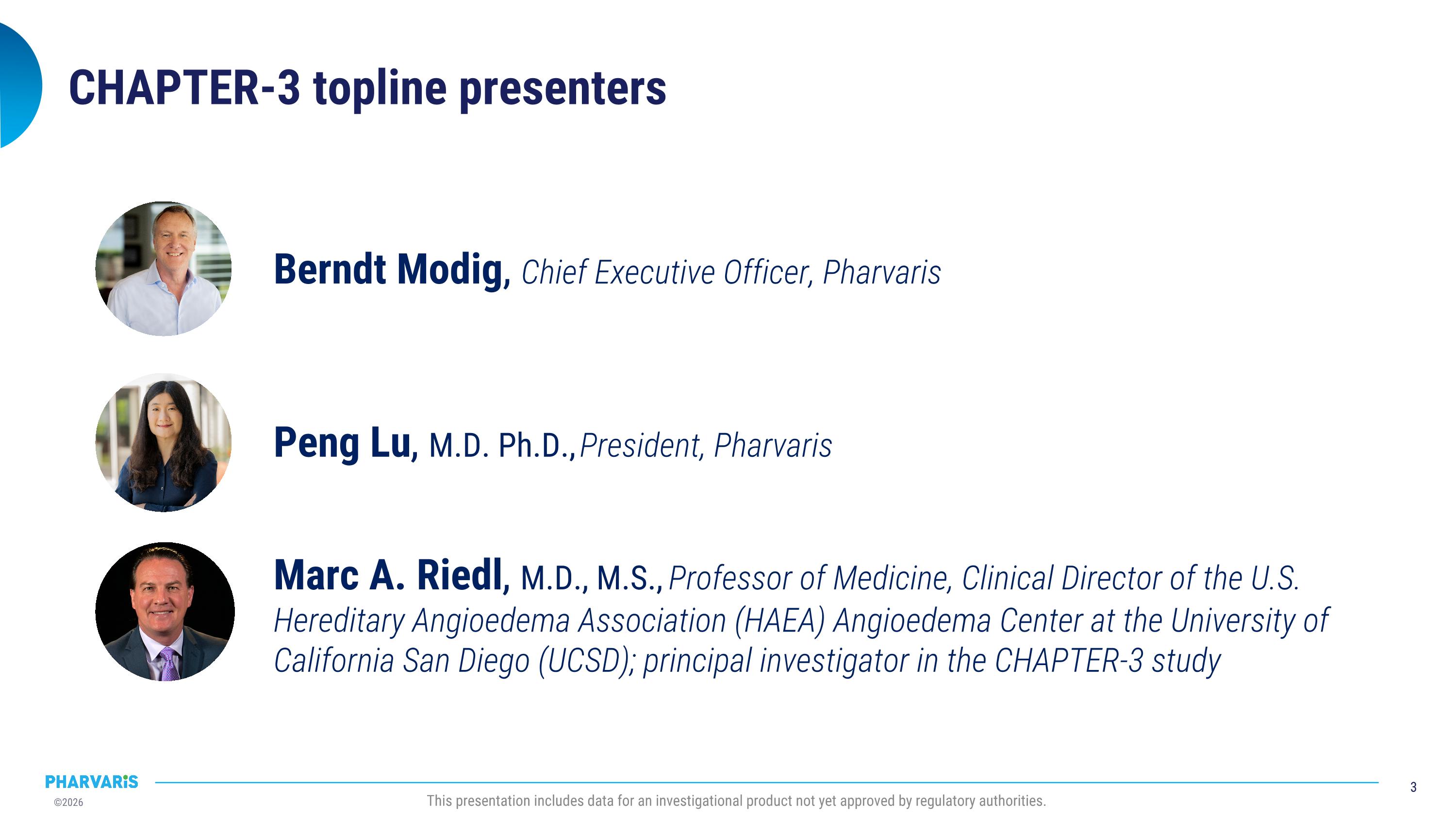
Marc A. Riedl, M.D., M.S., Professor of Medicine, Clinical Director of the U.S. Hereditary Angioedema Association (HAEA) Angioedema Center at the University of California San Diego (UCSD); principal investigator in the CHAPTER-3 study CHAPTER-3 topline presenters Berndt Modig, Chief Executive Officer, Pharvaris Peng Lu, M.D. Ph.D., President, Pharvaris
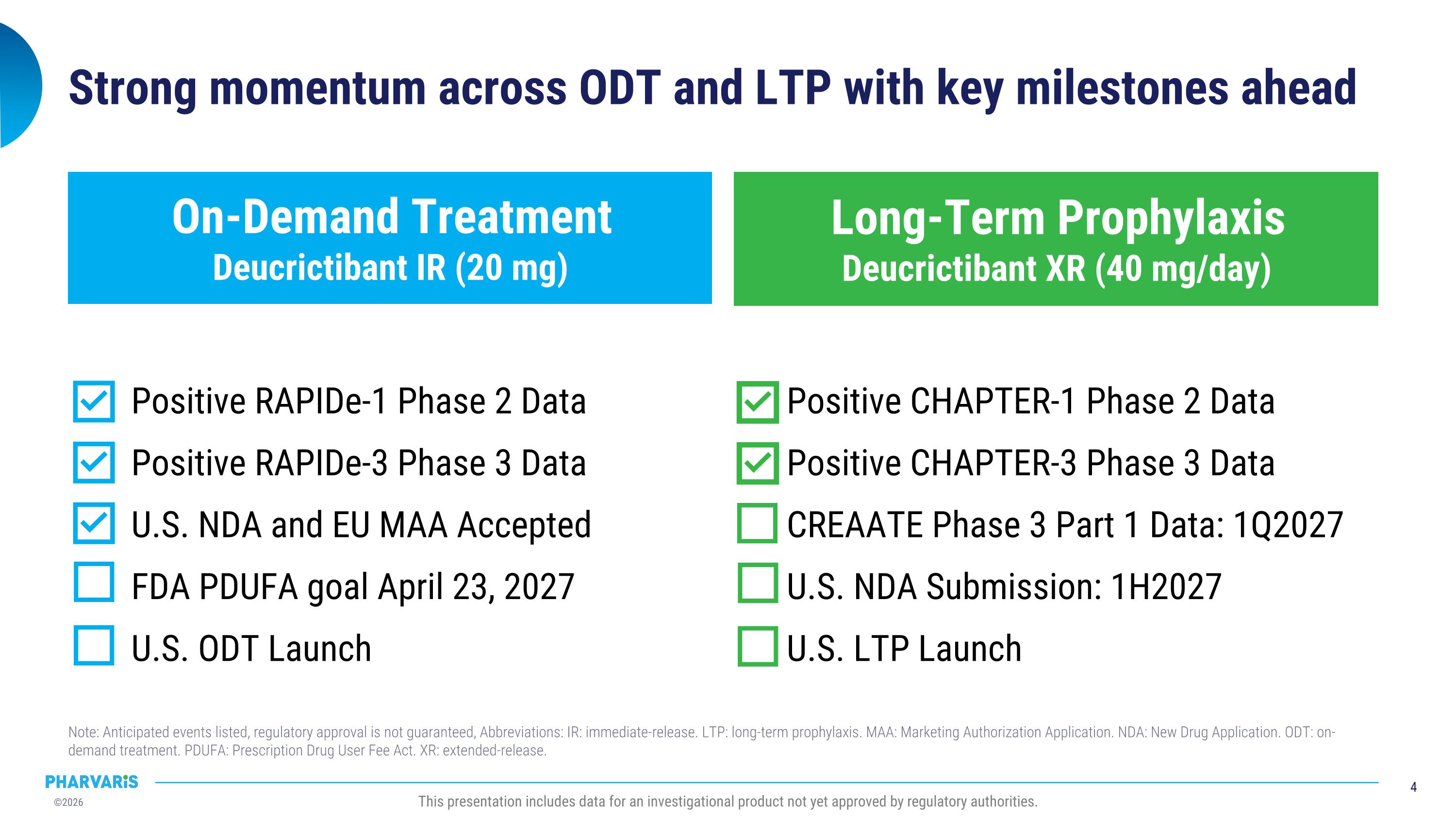
Strong momentum across ODT and LTP with key milestones ahead Positive RAPIDe-1 Phase 2 Data Positive RAPIDe-3 Phase 3 Data U.S. NDA and EU MAA Accepted FDA PDUFA goal April 23, 2027 U.S. ODT Launch Positive CHAPTER-1 Phase 2 Data Positive CHAPTER-3 Phase 3 Data CREAATE Phase 3 Part 1 Data: 1Q2027 U.S. NDA Submission: 1H2027 U.S. LTP Launch On-Demand Treatment Deucrictibant IR (20 mg) Long-Term Prophylaxis Deucrictibant XR (40 mg/day) Note: Anticipated events listed, regulatory approval is not guaranteed, Abbreviations: IR: immediate-release. LTP: long-term prophylaxis. MAA: Marketing Authorization Application. NDA: New Drug Application. ODT: on-demand treatment. PDUFA: Prescription Drug User Fee Act. XR: extended-release. This presentation includes data for an investigational product not yet approved by regulatory authorities.
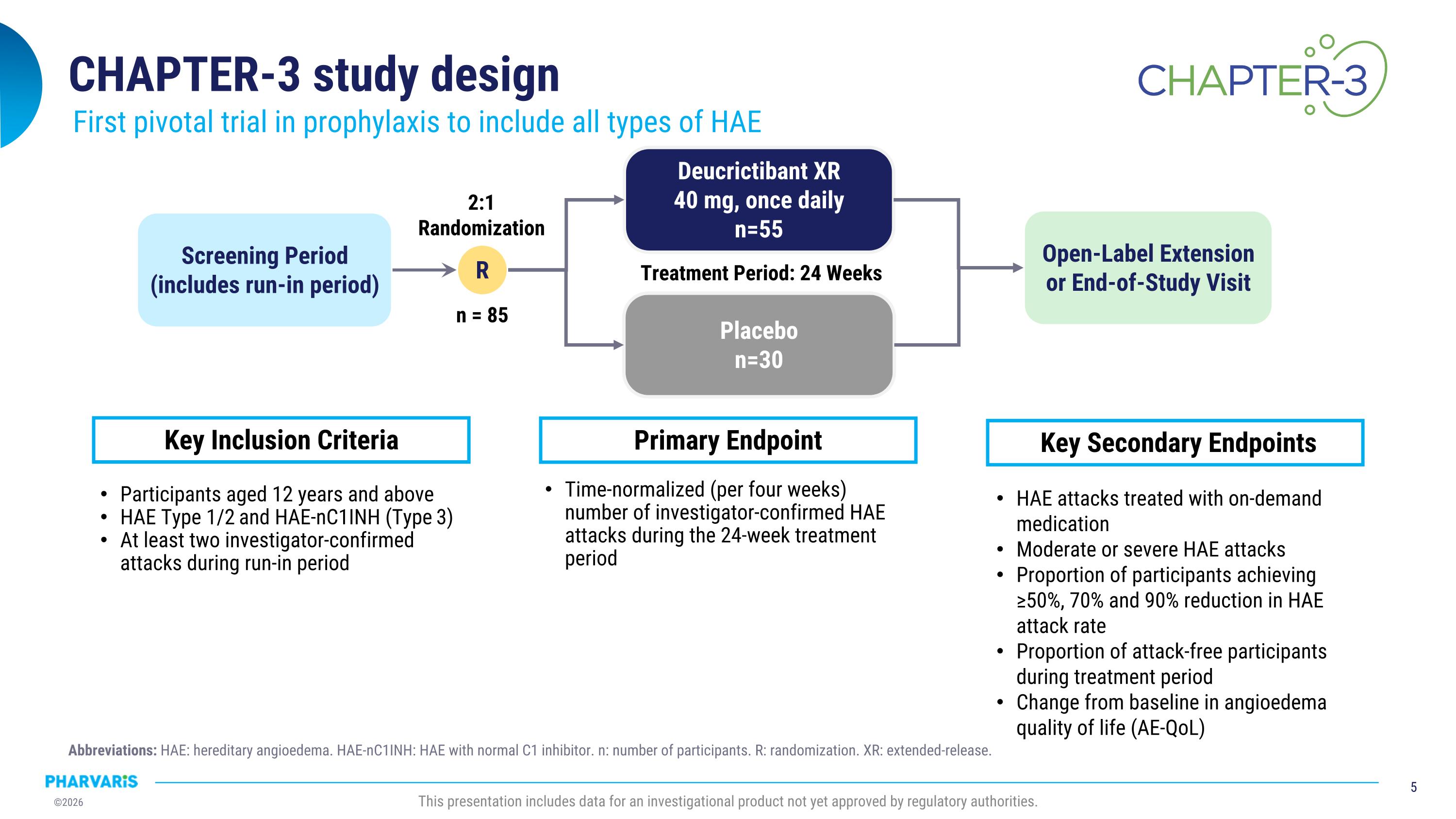
CHAPTER-3 study design First pivotal trial in prophylaxis to include all types of HAE Screening Period (includes run-in period) R Deucrictibant XR 40 mg, once daily n=55 Placebo n=30 Open-Label Extension or End-of-Study Visit Treatment Period: 24 Weeks Participants aged 12 years and above HAE Type 1/2 and HAE-nC1INH (Type 3) At least two investigator-confirmed attacks during run-in period n = 85 2:1 Randomization Key Inclusion Criteria Time-normalized (per four weeks) number of investigator-confirmed HAE attacks during the 24-week treatment period Primary Endpoint HAE attacks treated with on-demand medication Moderate or severe HAE attacks Proportion of participants achieving ≥50%, 70% and 90% reduction in HAE attack rate Proportion of attack-free participants during treatment period Change from baseline in angioedema quality of life (AE-QoL) Key Secondary Endpoints This presentation includes data for an investigational product not yet approved by regulatory authorities. Abbreviations: HAE: hereditary angioedema. HAE-nC1INH: HAE with normal C1 inhibitor. n: number of participants. R: randomization. XR: extended-release.
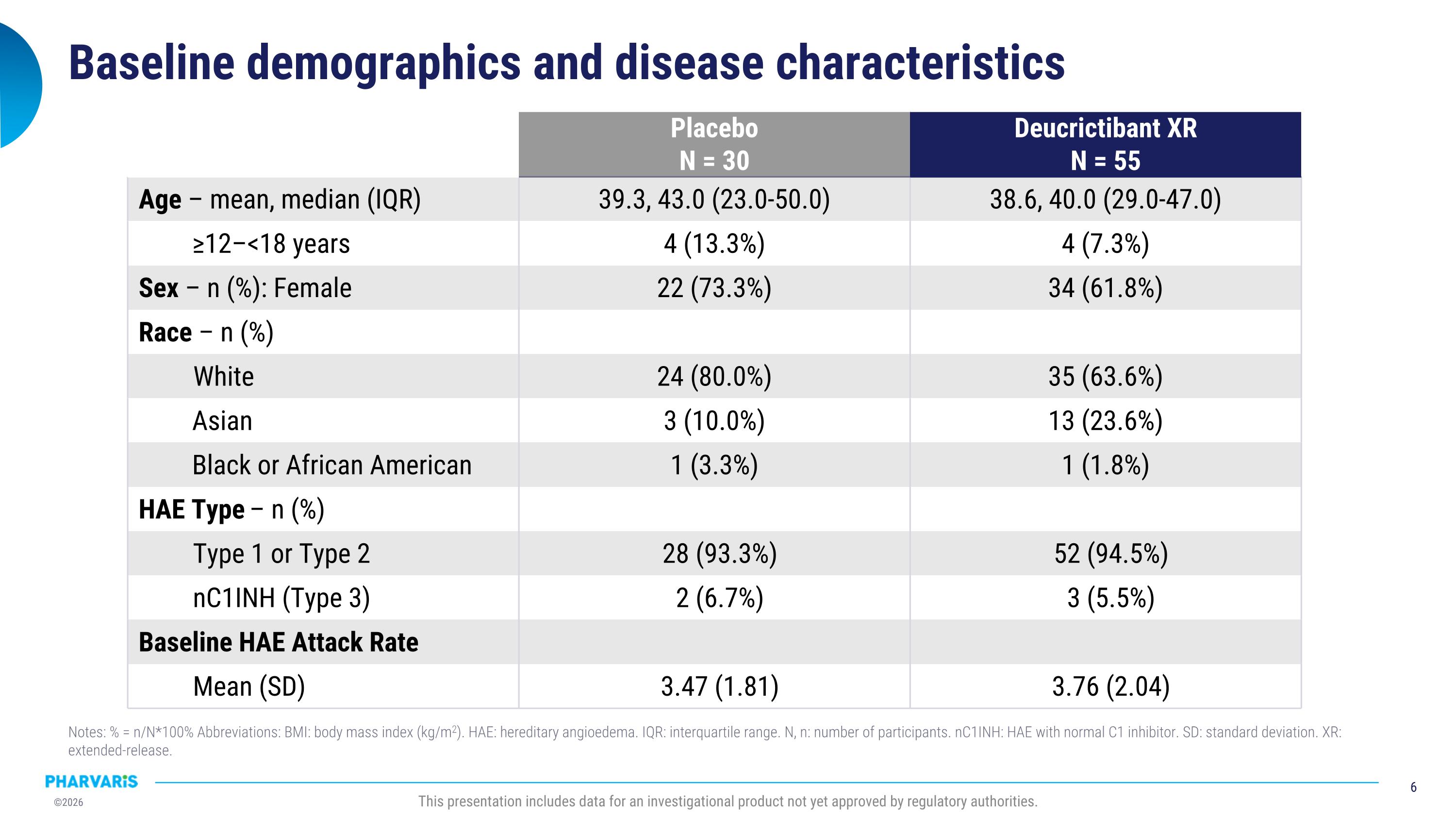
Baseline demographics and disease characteristics Placebo N = 30 Deucrictibant XR N = 55 Age – mean, median (IQR) 39.3, 43.0 (23.0-50.0) 38.6, 40.0 (29.0-47.0) ≥12–<18 years 4 (13.3%) 4 (7.3%) Sex – n (%): Female 22 (73.3%) 34 (61.8%) Race – n (%) White 24 (80.0%) 35 (63.6%) Asian 3 (10.0%) 13 (23.6%) Black or African American 1 (3.3%) 1 (1.8%) HAE Type – n (%) Type 1 or Type 2 28 (93.3%) 52 (94.5%) nC1INH (Type 3) 2 (6.7%) 3 (5.5%) Baseline HAE Attack Rate Mean (SD) 3.47 (1.81) 3.76 (2.04) This presentation includes data for an investigational product not yet approved by regulatory authorities. Notes: % = n/N*100% Abbreviations: BMI: body mass index (kg/m2). HAE: hereditary angioedema. IQR: interquartile range. N, n: number of participants. nC1INH: HAE with normal C1 inhibitor. SD: standard deviation. XR: extended-release.
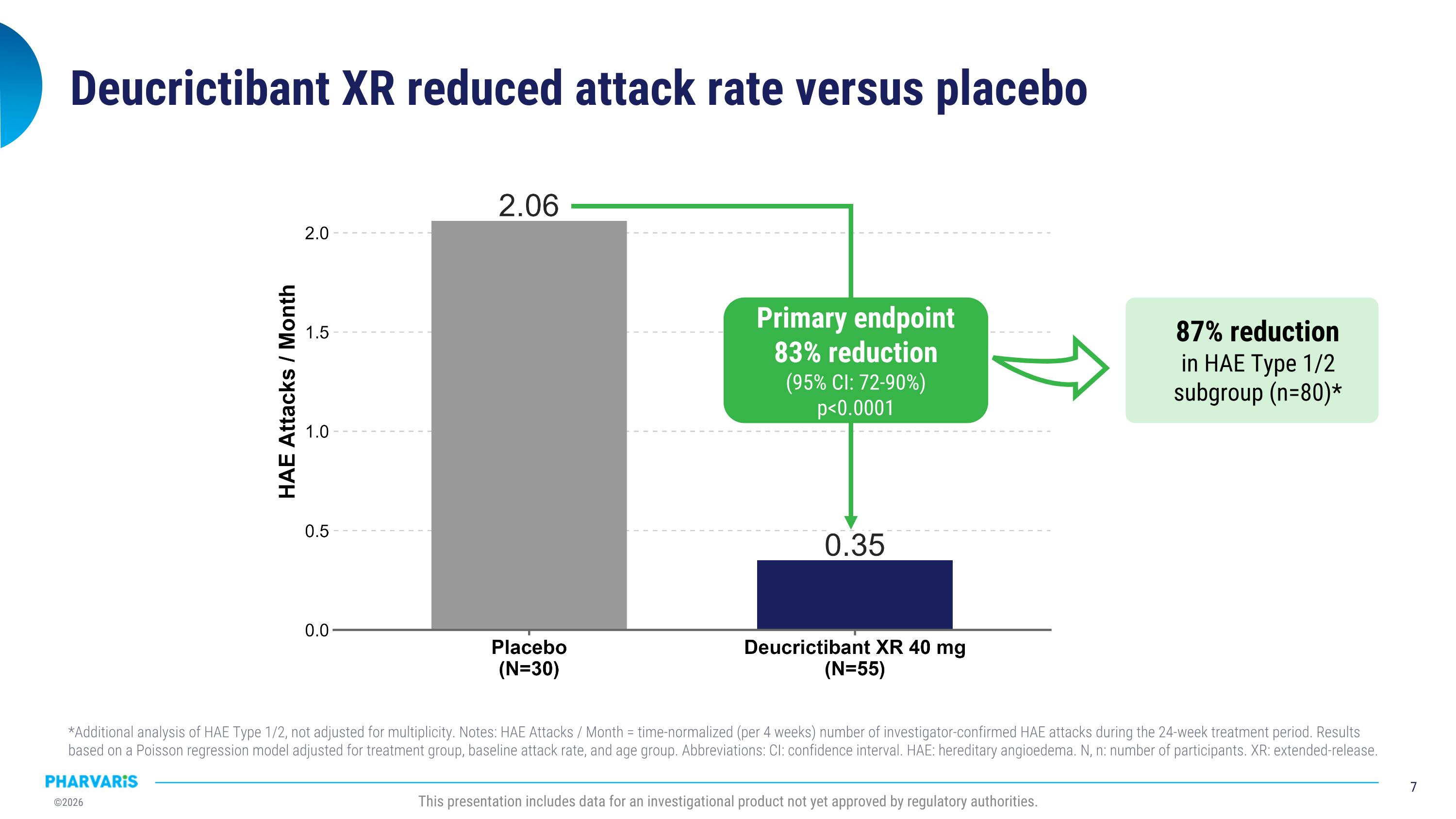
Deucrictibant XR reduced attack rate versus placebo Primary endpoint 83% reduction (95% CI: 72-90%) p<0.0001 87% reduction in HAE Type 1/2 subgroup (n=80)* This presentation includes data for an investigational product not yet approved by regulatory authorities. *Additional analysis of HAE Type 1/2, not adjusted for multiplicity. Notes: HAE Attacks / Month = time-normalized (per 4 weeks) number of investigator-confirmed HAE attacks during the 24-week treatment period. Results based on a Poisson regression model adjusted for treatment group, baseline attack rate, and age group. Abbreviations: CI: confidence interval. HAE: hereditary angioedema. N, n: number of participants. XR: extended-release.
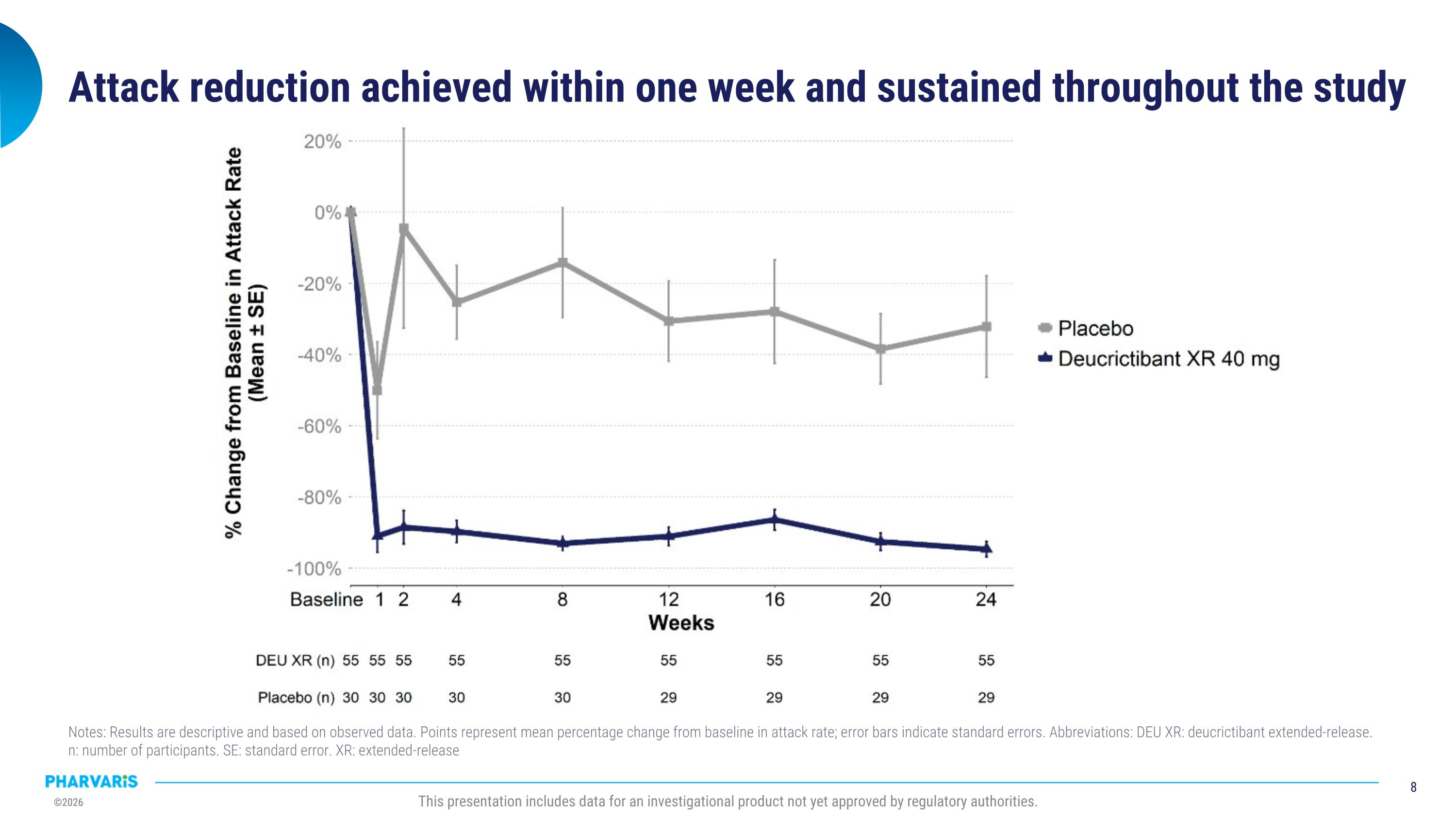
This presentation includes data for an investigational product not yet approved by regulatory authorities. Notes: Results are descriptive and based on observed data. Points represent mean percentage change from baseline in attack rate; error bars indicate standard errors. Abbreviations: DEU XR: deucrictibant extended-release. n: number of participants. SE: standard error. XR: extended-release Attack reduction achieved within one week and sustained throughout the study
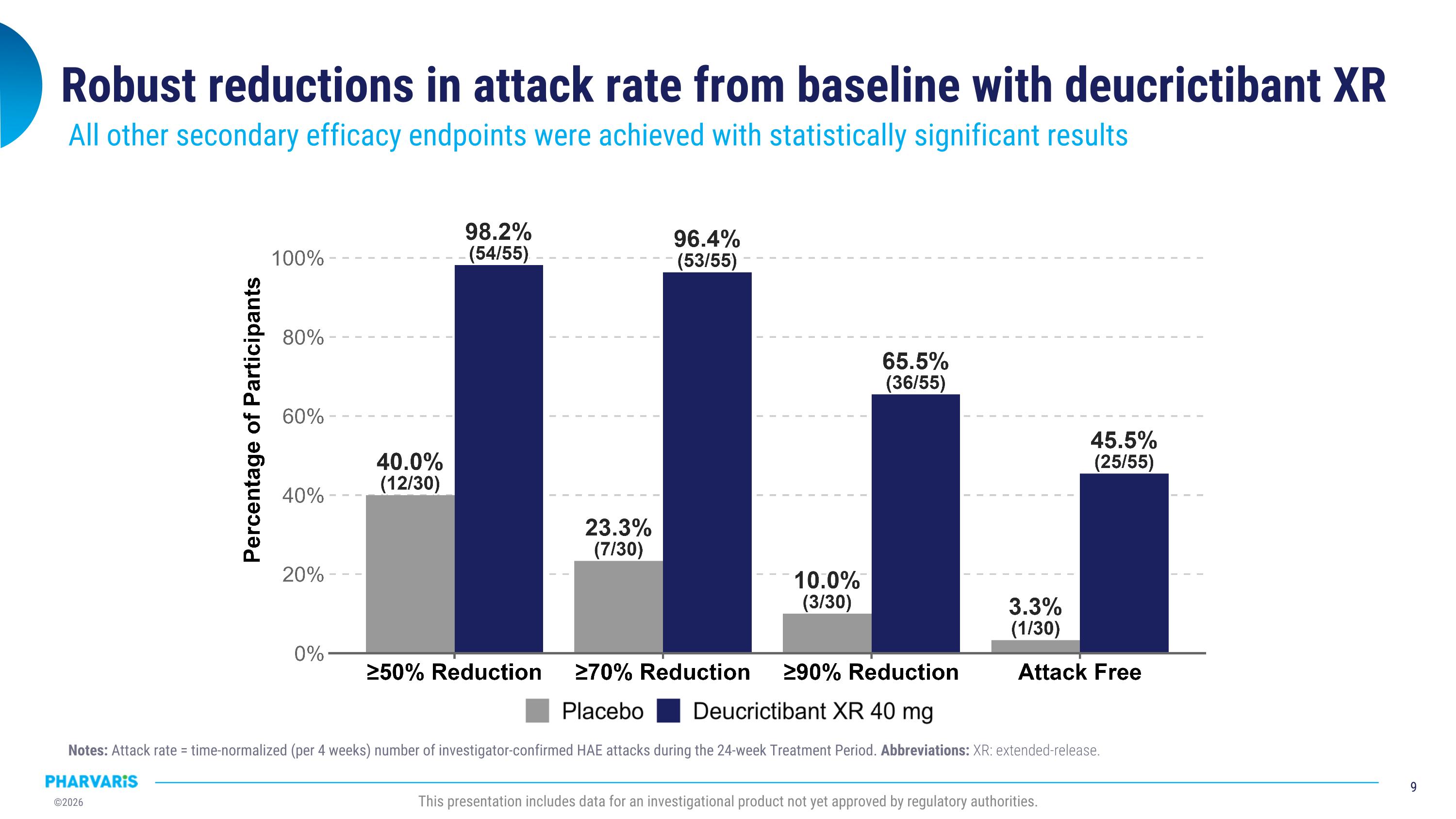
Robust reductions in attack rate from baseline with deucrictibant XR All other secondary efficacy endpoints were achieved with statistically significant results This presentation includes data for an investigational product not yet approved by regulatory authorities. Notes: Attack rate = time-normalized (per 4 weeks) number of investigator-confirmed HAE attacks during the 24-week Treatment Period. Abbreviations: XR: extended-release.
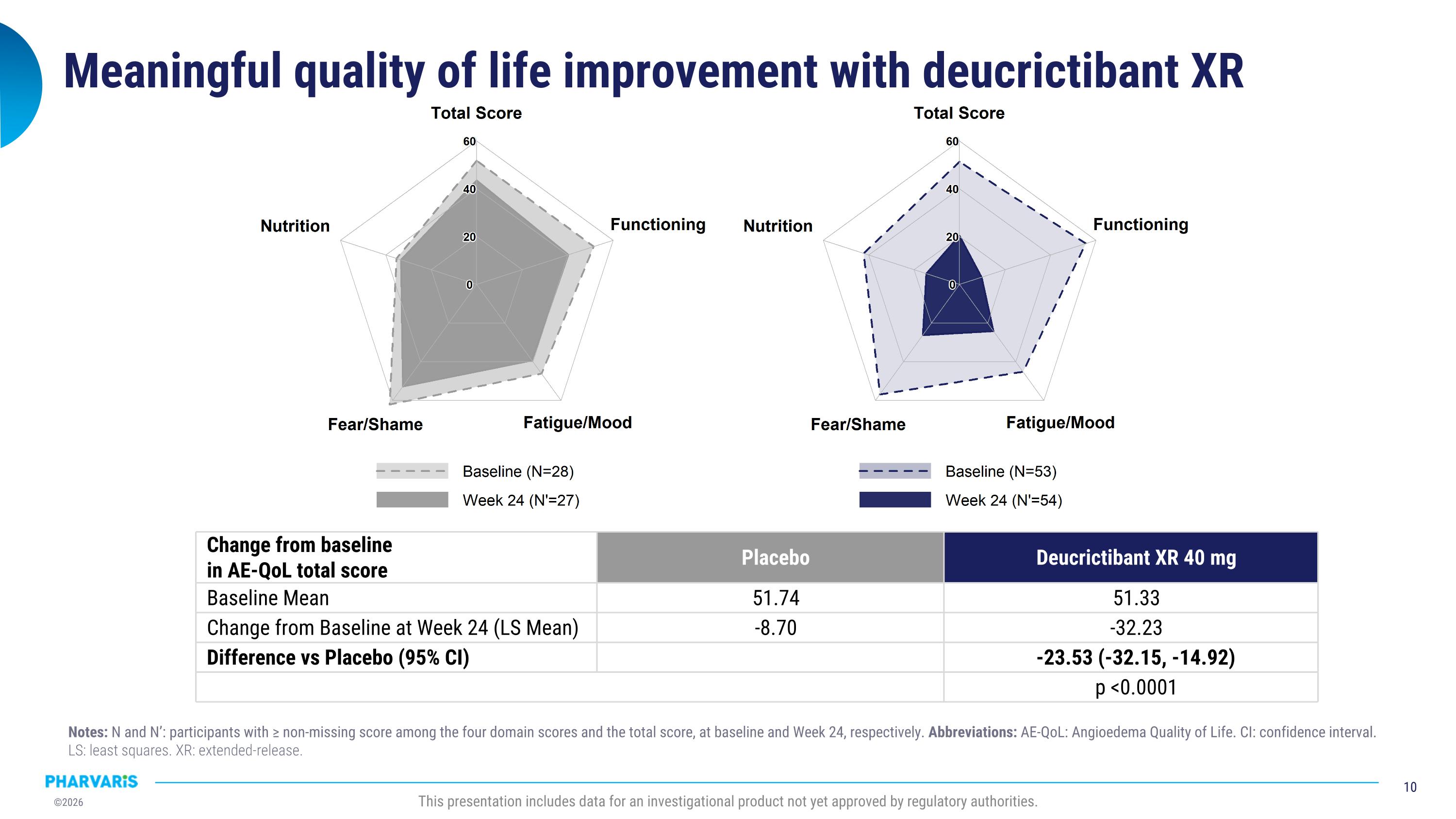
Meaningful quality of life improvement with deucrictibant XR Change from baseline in AE-QoL total score Placebo Deucrictibant XR 40 mg Baseline Mean 51.74 51.33 Change from Baseline at Week 24 (LS Mean) -8.70 -32.23 Difference vs Placebo (95% CI) -23.53 (-32.15, -14.92) p <0.0001 This presentation includes data for an investigational product not yet approved by regulatory authorities. Notes: N and N’: participants with ≥ non-missing score among the four domain scores and the total score, at baseline and Week 24, respectively. Abbreviations: AE-QoL: Angioedema Quality of Life. CI: confidence interval. LS: least squares. XR: extended-release.
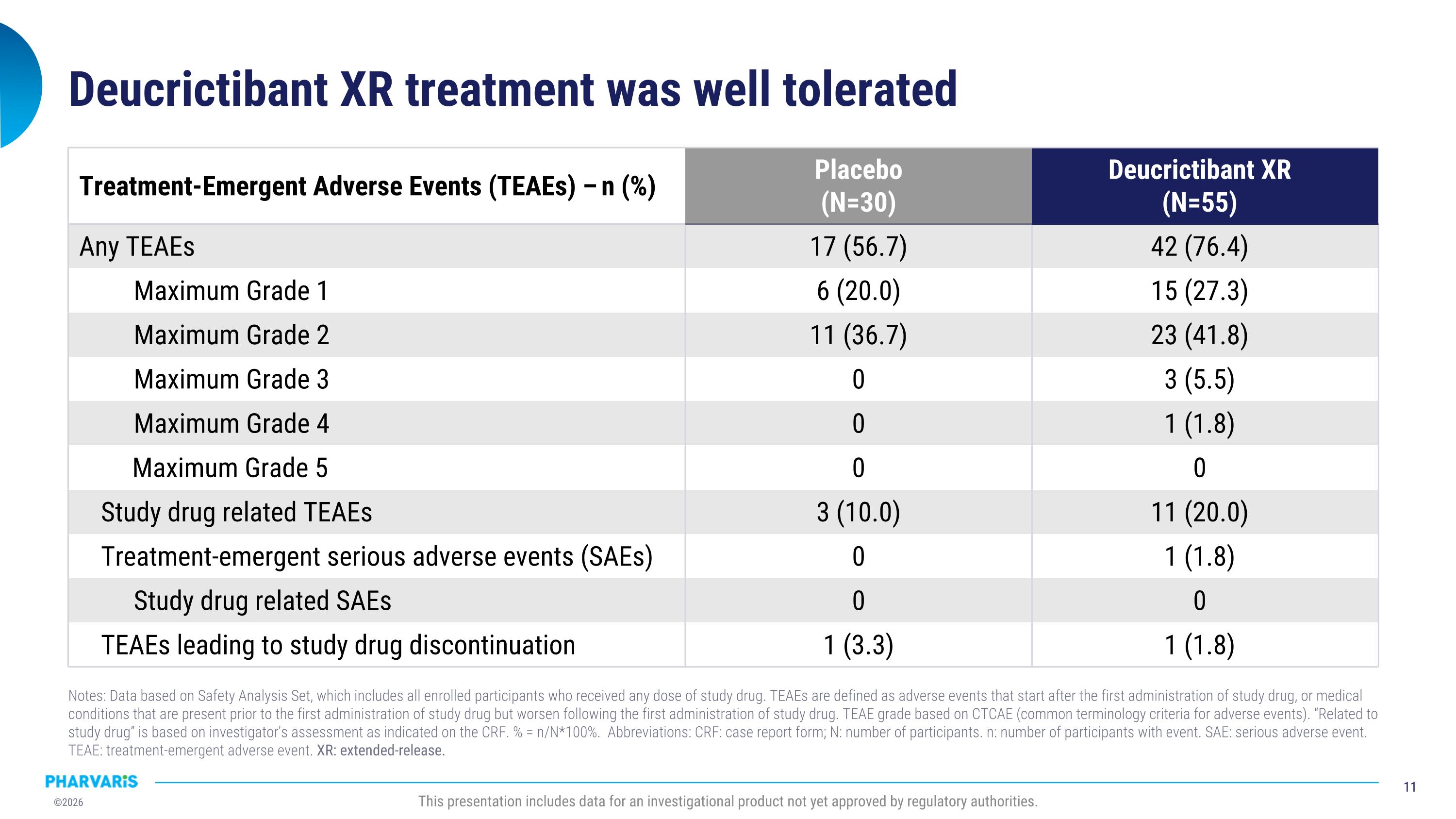
Deucrictibant XR treatment was well tolerated Treatment-Emergent Adverse Events (TEAEs) – n (%) Placebo (N=30) Deucrictibant XR (N=55) Any TEAEs 17 (56.7) 42 (76.4) Maximum Grade 1 6 (20.0) 15 (27.3) Maximum Grade 2 11 (36.7) 23 (41.8) Maximum Grade 3 0 3 (5.5) Maximum Grade 4 0 1 (1.8) Maximum Grade 5 0 0 Study drug related TEAEs 3 (10.0) 11 (20.0) Treatment-emergent serious adverse events (SAEs) 0 1 (1.8) Study drug related SAEs 0 0 TEAEs leading to study drug discontinuation 1 (3.3) 1 (1.8) This presentation includes data for an investigational product not yet approved by regulatory authorities. Notes: Data based on Safety Analysis Set, which includes all enrolled participants who received any dose of study drug. TEAEs are defined as adverse events that start after the first administration of study drug, or medical conditions that are present prior to the first administration of study drug but worsen following the first administration of study drug. TEAE grade based on CTCAE (common terminology criteria for adverse events). “Related to study drug” is based on investigator's assessment as indicated on the CRF. % = n/N*100%. Abbreviations: CRF: case report form; N: number of participants. n: number of participants with event. SAE: serious adverse event. TEAE: treatment-emergent adverse event. XR: extended-release.
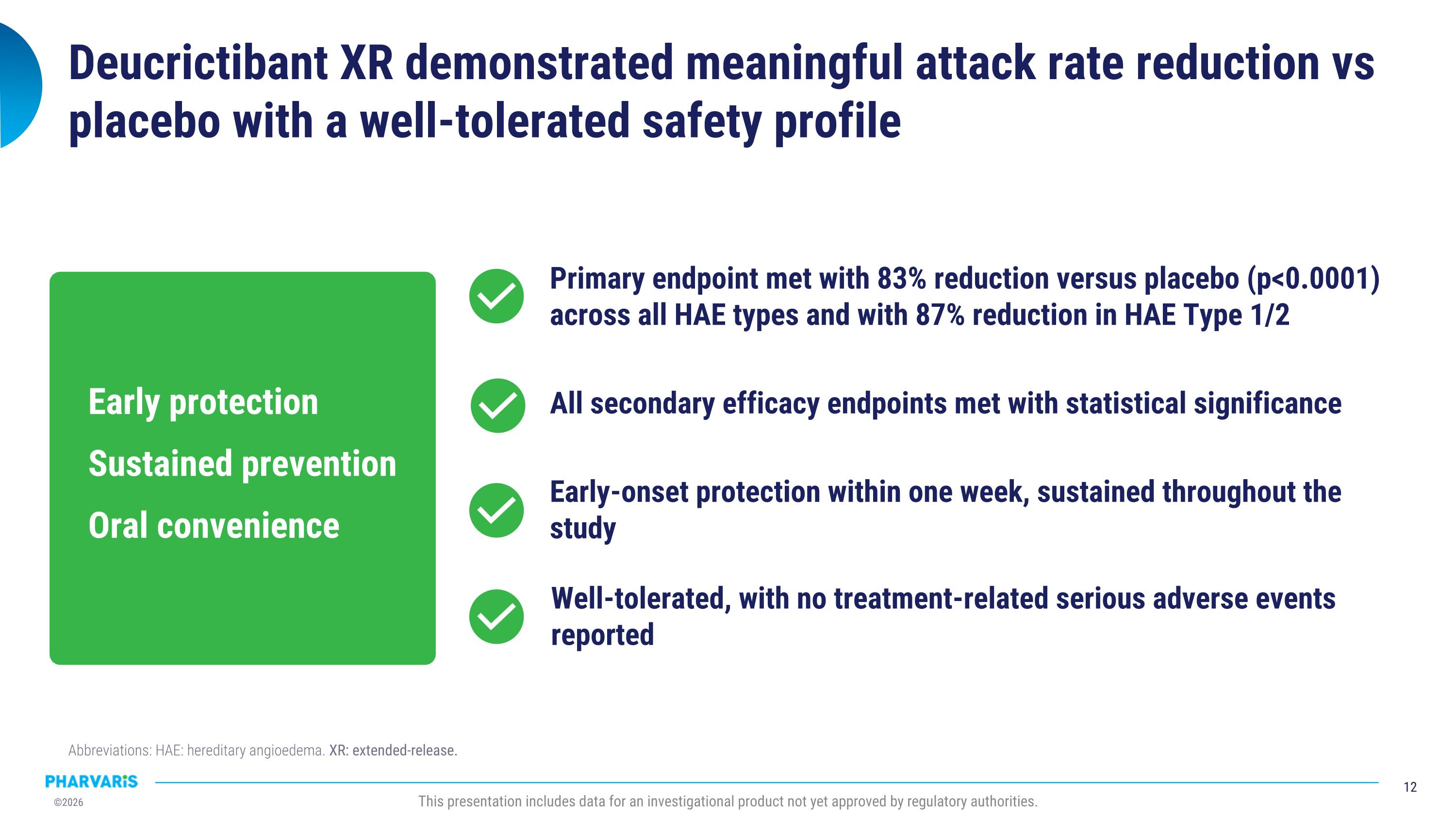
Deucrictibant XR demonstrated meaningful attack rate reduction vs placebo with a well-tolerated safety profile This presentation includes data for an investigational product not yet approved by regulatory authorities. All secondary efficacy endpoints met with statistical significance Early-onset protection within one week, sustained throughout the study Well-tolerated, with no treatment-related serious adverse events reported Primary endpoint met with 83% reduction versus placebo (p<0.0001) across all HAE types and with 87% reduction in HAE Type 1/2 Early protection Sustained prevention Oral convenience Abbreviations: HAE: hereditary angioedema. XR: extended-release.
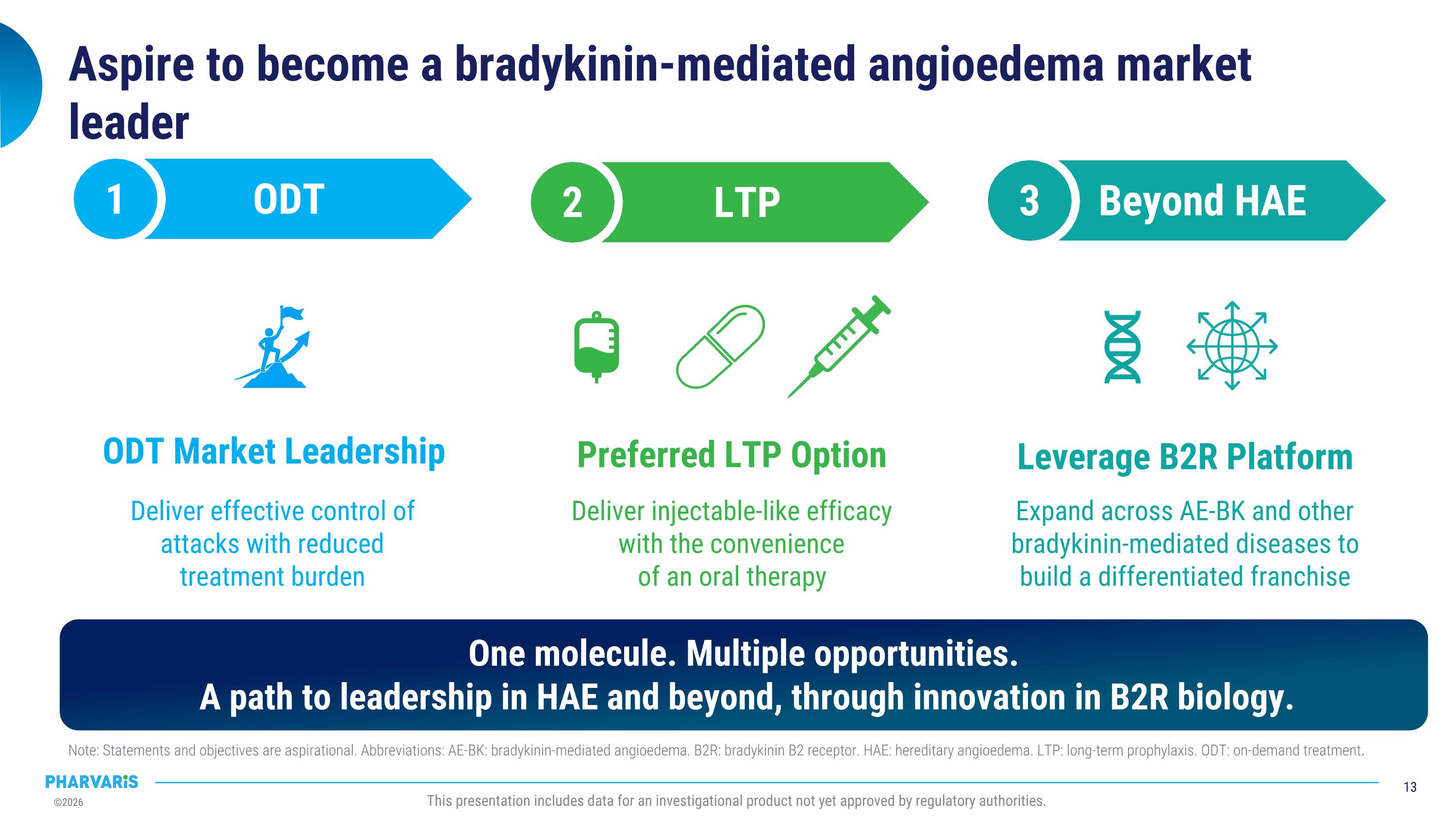
Aspire to become a bradykinin-mediated angioedema market leader ODT 1 Leverage B2R Platform ODT Market Leadership Deliver effective control of attacks with reduced treatment burden Expand across AE-BK and other bradykinin-mediated diseases to build a differentiated franchise One molecule. Multiple opportunities. A path to leadership in HAE and beyond, through innovation in B2R biology. Preferred LTP Option Deliver injectable-like efficacy with the convenience of an oral therapy LTP 2 Beyond HAE 3 Note: Statements and objectives are aspirational. Abbreviations: AE-BK: bradykinin-mediated angioedema. B2R: bradykinin B2 receptor. HAE: hereditary angioedema. LTP: long-term prophylaxis. ODT: on-demand treatment.
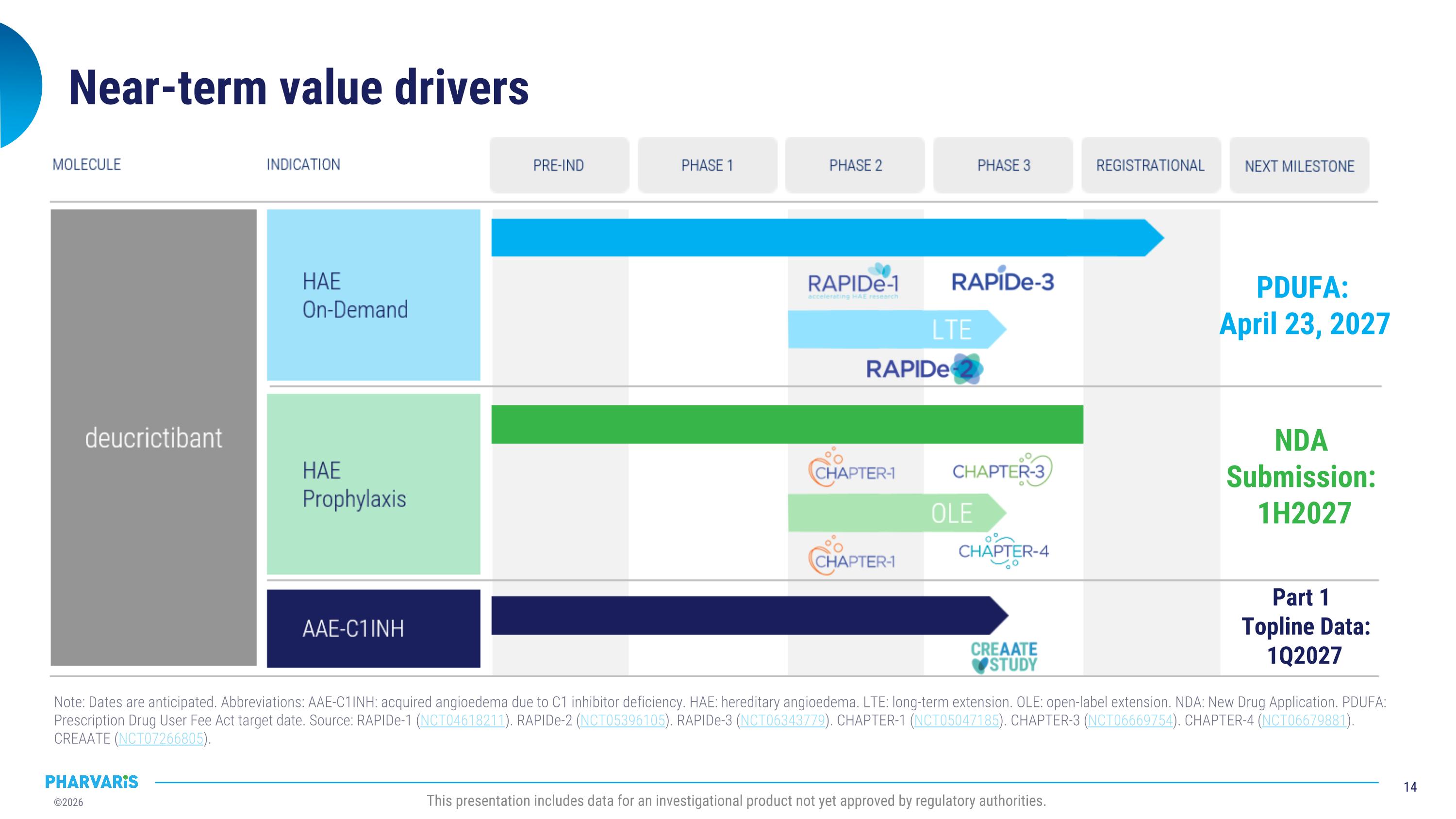
Near-term value drivers Note: Dates are anticipated. Abbreviations: AAE-C1INH: acquired angioedema due to C1 inhibitor deficiency. HAE: hereditary angioedema. LTE: long-term extension. OLE: open-label extension. NDA: New Drug Application. PDUFA: Prescription Drug User Fee Act target date. Source: RAPIDe-1 (NCT04618211). RAPIDe-2 (NCT05396105). RAPIDe-3 (NCT06343779). CHAPTER-1 (NCT05047185). CHAPTER-3 (NCT06669754). CHAPTER-4 (NCT06679881). CREAATE (NCT07266805). PDUFA: April 23, 2027 NDA Submission: 1H2027 Part 1 Topline Data: 1Q2027

NASDAQ: PHVS www.pharvaris.com