Exhibit 99.1
H.C. Wainwright Presentation 60 Degrees Pharmaceuticals, Inc. September 2026 Targeted therapies for vector-borne disease Investment focus A marketed antimalarial platform creates a path to potential indication expansion in babesiosis Commercial base ARAKODA® malaria prophylaxis Clinical vector Babesiosis development program Regulatory arc sNDA strategy + milestones ©2026 60 Degrees Pharmaceuticals, Inc. CONFIDENTIAL All rights reserved. 11
Disclaimer and Forward-Looking Statements DISCLAIMER. The information contained herein has been prepared to assist prospective investors in making their own evaluation of 60 Degrees Pharmaceuticals, Inc. (the "Company") and does not purport to be all- inclusive or to contain all of the information a prospective or existing investor may desire. In all cases, interested parties will be expected to have conducted their own due diligence investigation regarding these and all other matters pertinent to investment in the Company. The Company makes no representation or warrant as to the accuracy or completeness of this information and shall not have any liability for any representations (expressed or implied) regarding information contained in, or for any omissions from, this information or any other written or oral communications transmitted to the recipient in the course of its evaluation of the Company. This presentation and contents herein are the exclusive property of the Company and may not be copied without the express prior written consent of the Company. FORWARD LOOKING STATEMENTS. This communication includes forward-looking statements based on the Company's current expectations and projections about future events. All statements contained in this communication other than statements of historical fact, including any statements regarding our future operations, are forward-looking statements. The words "believe", "may", "will", "estimate", "continue", "anticipate", "intend", "expect", "could", "would", "project", "plan", "potentially", "likely" and similar expressions are intended to identify forward-looking statements as defined in the Private Securities Litigation Reform Act of 1995. Important factors that could cause our actual results and financial conditions to differ materially from those indicated in the forward-looking statements include, among others, the following: there is substantial doubt as to our ability to continue on a going-concern basis; we might not be eligible for Australian government research and development tax rebates; if we are not able to successfully develop, obtain FDA approval for, and otherwise provide for the commercialization of non-malaria prevention indications for Tafenoquine (Arakoda or other regimen) or Celgosivir/Australian Chestbut extracts in a timely manner, we may not be able to expand our business operations; we cannot guarantee our ability to conduct successful clinical trials; and we have no manufacturing capacity which poses the risk of lengthy and costly delays of bringing our products to market. More detailed information about the Company and the risk factors that may affect the realization of forward-looking statements is set forth in the Company's filings with the Securities and Exchange Commission (SEC), including our Annual Report on Form 10-K and our subsequent Quarterly Reports on Form 10-Q. Investors and security holders are urged to read these documents free of charge on the SEC's website at www.sec.gov. As a result of these matters, changes in fact, assumptions not being realized or other circumstances, the Company's actual results may differ materially from the expected results discussed in the forward-looking statements contained in this presentation. In light of these risks, uncertainties and assumptions, you should not place undue reliance on these forward-looking statements, which speak only as of the date of this presentation. Although we believe our expectations are based on reasonable assumptions, we can give no assurance that our expectations will materialize. Unless required by law, we undertake no obligation to update or revise any forward-looking statements, whether as a result of new information, future events, or otherwise. ©2026 60 Degrees Pharmaceuticals, Inc. CONFIDENTIAL All rights reserved. 22
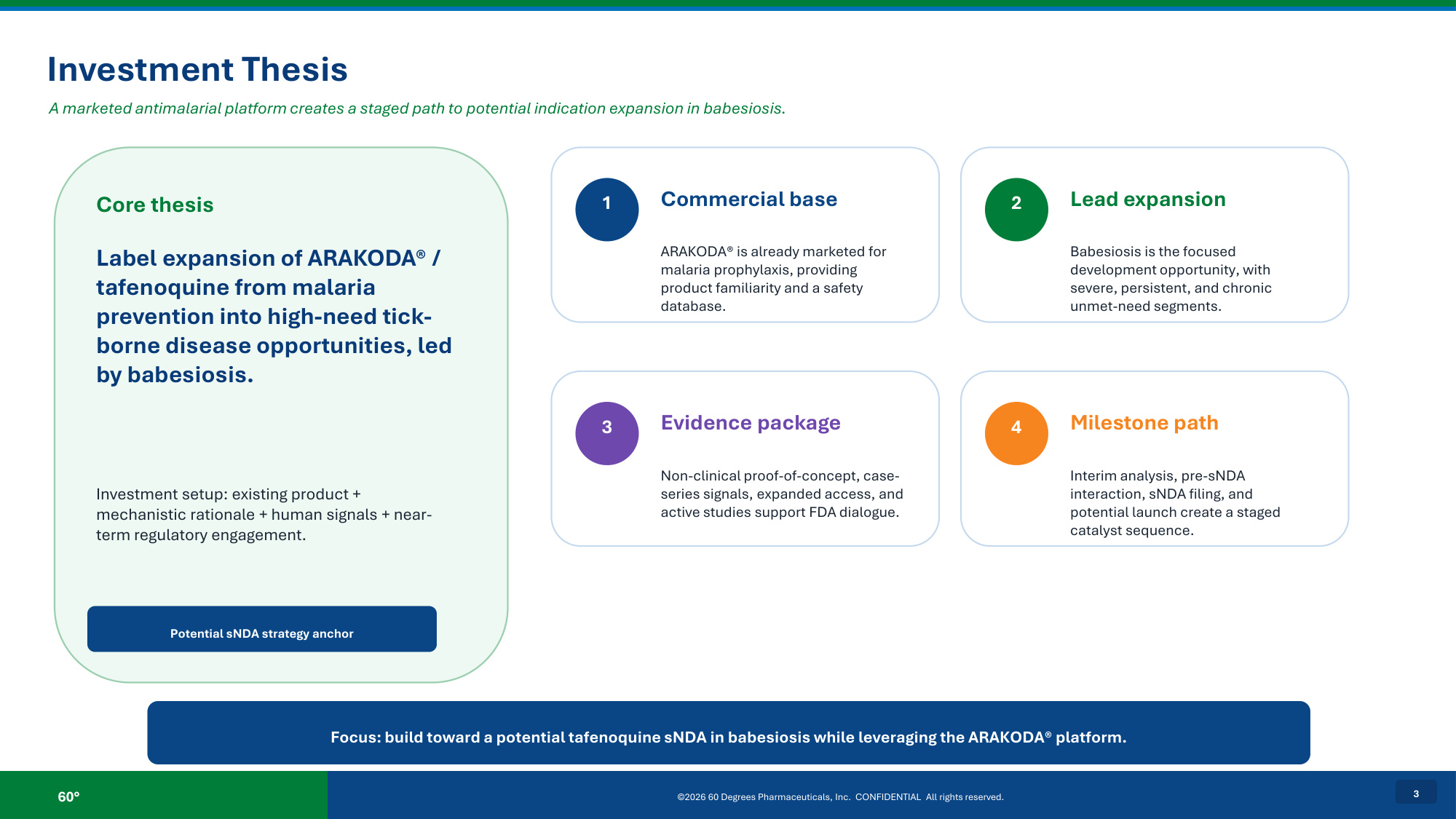
60° ©2026 60 Degrees Pharmaceuticals, Inc. CONFIDENTIAL All rights reserved. 3 Investment Thesis A marketed antimalarial platform creates a staged path to potential indication expansion in babesiosis. Core thesis Label expansion of ARAKODA® / tafenoquine from malaria prevention into high-need tick- borne disease opportunities, led by babesiosis. Investment setup: existing product + mechanistic rationale + human signals + near- term regulatory engagement. Potential sNDA strategy anchor 1 Commercial base ARAKODA® is already marketed for malaria prophylaxis, providing product familiarity and a safety database. 2 Lead expansion Babesiosis is the focused development opportunity, with severe, persistent, and chronic unmet-need segments. 3 Evidence package Non-clinical proof-of-concept, case- series signals, expanded access, and active studies support FDA dialogue. 4 Milestone path Interim analysis, pre-sNDA interaction, sNDA filing, and potential launch create a staged catalyst sequence. Focus: build toward a potential tafenoquine sNDA in babesiosis while leveraging the ARAKODA® platform.
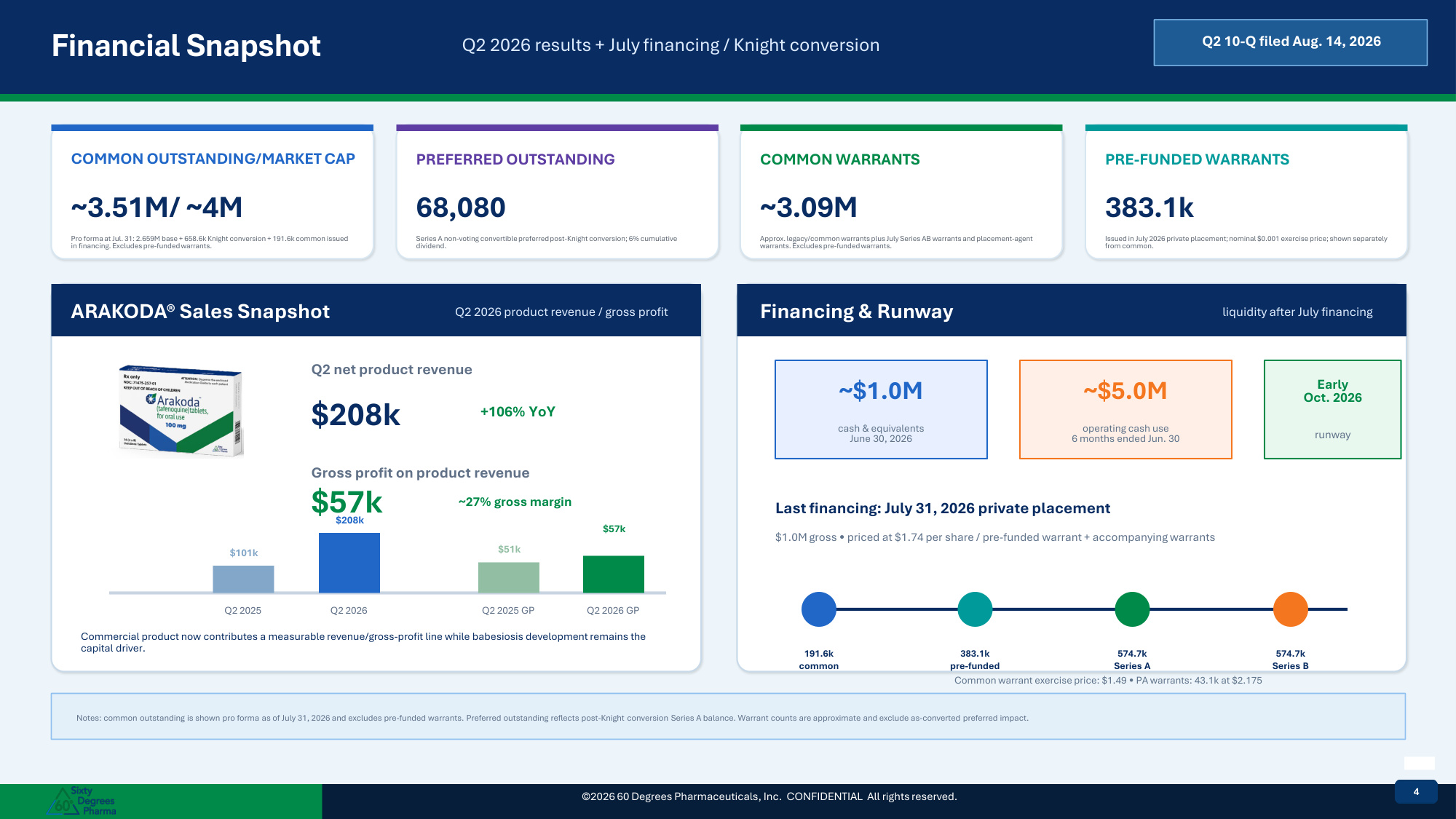
Financial Snapshot Q2 2026 results + July financing / Knight conversion Q2 10-Q filed Aug. 14, 2026 COMMON OUTSTANDING/MARKET CAP ~3.51M/ ~4M Pro forma at Jul. 31: 2.659M base + 658.6k Knight conversion + 191.6k common issued in financing. Excludes pre-funded warrants. PREFERRED OUTSTANDING 68,080 Series A non-voting convertible preferred post-Knight conversion; 6% cumulative dividend. COMMON WARRANTS ~3.09M Approx. legacy/common warrants plus July Series AB warrants and placement-agent warrants. Excludes pre-funded warrants. PRE-FUNDED WARRANTS 383.1k Issued in July 2026 private placement; nominal $0.001 exercise price; shown separately from common. ARAKODA® Sales Snapshot Q2 2026 product revenue / gross profit Q2 net product revenue $208k +106% YoY Gross profit on product revenue $57k ~27% gross margin $101k Q2 2025 $208k Q2 2026 $51k Q2 2025 GP $57k Q2 2026 GP Commercial product now contributes a measurable revenue/gross-profit line while babesiosis development remains the capital driver. Financing & Runway liquidity after July financing ~$1.0M cash & equivalents June 30, 2026 ~$5.0M operating cash use 6 months ended Jun. 30 Early Oct. 2026 runway Last financing: July 31, 2026 private placement $1.0M gross • priced at $1.74 per share / pre-funded warrant + accompanying warrants 191.6k common 383.1k pre-funded 574.7k Series A 574.7k Series B Common warrant exercise price: $1.49 • PA warrants: 43.1k at $2.175 Notes: common outstanding is shown pro forma as of July 31, 2026 and excludes pre-funded warrants. Preferred outstanding reflects post-Knight conversion Series A balance. Warrant counts are approximate and exclude as-converted preferred impact. ©2026 60 Degrees Pharmaceuticals, Inc. CONFIDENTIAL All rights reserved. 44
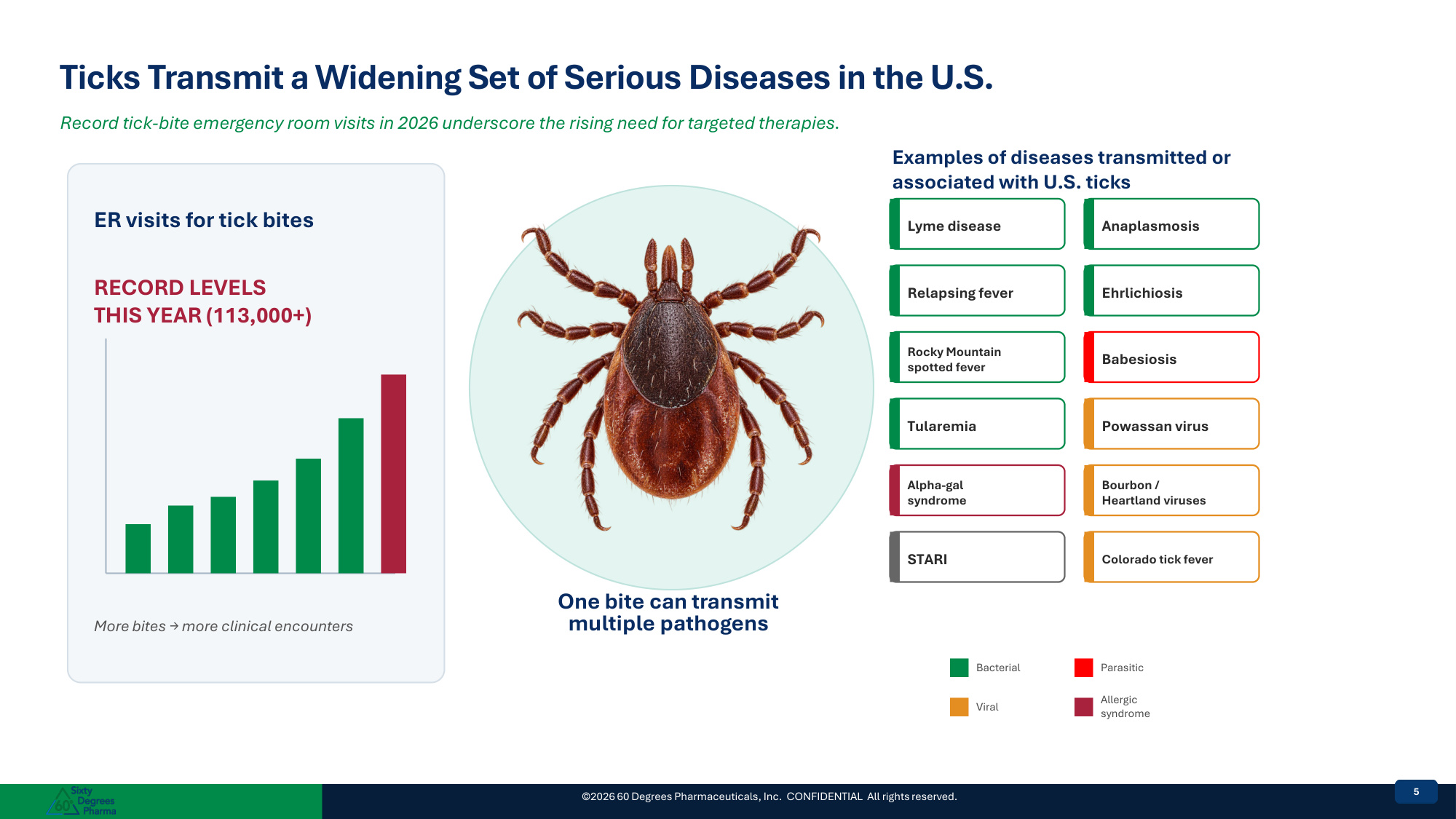
Ticks Transmit a Widening Set of Serious Diseases in the U.S. Record tick-bite emergency room visits in 2026 underscore the rising need for targeted therapies. ER visits for tick bites RECORD LEVELS THIS YEAR (113,000+) More bites → more clinical encounters One bite can transmit multiple pathogens Examples of diseases transmitted or associated with U.S. ticks Lyme disease Anaplasmosis Relapsing fever Ehrlichiosis Rocky Mountain spotted fever Babesiosis Tularemia Powassan virus Alpha-gal syndrome Bourbon / Heartland viruses STARI Colorado tick fever Bacterial Parasitic Viral Allergic syndrome ©2026 60 Degrees Pharmaceuticals, Inc. CONFIDENTIAL All rights reserved. 55
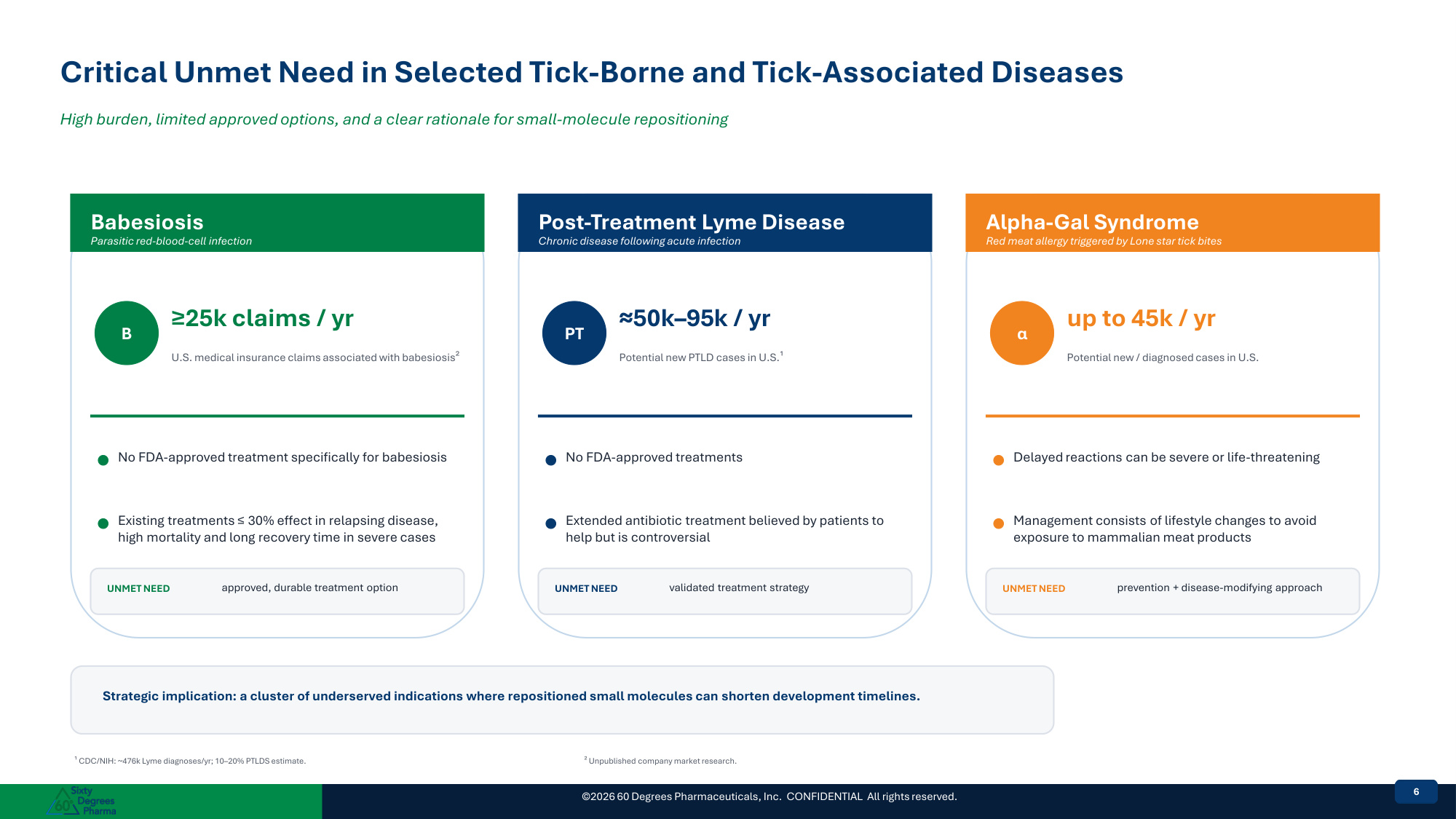
©2026 60 Degrees Pharmaceuticals, Inc. CONFIDENTIAL All rights reserved. 66 Critical Unmet Need in Selected Tick-Borne and Tick-Associated Diseases High burden, limited approved options, and a clear rationale for small-molecule repositioning Babesiosis Parasitic red-blood-cell infection B ≥25k claims / yr U.S. medical insurance claims associated with babesiosis² No FDA-approved treatment specifically for babesiosis Existing treatments ≤ 30% effect in relapsing disease, high mortality and long recovery time in severe cases Standard of care cure rate ≤30% in relapsing immunosuppressed patients and drug resistance UNMET NEED approved, durable treatment option Post-Treatment Lyme Disease Chronic disease following acute infection PT ≈50k–95k / yr Potential new PTLD cases in U.S.¹ No FDA-approved treatments Extended antibiotic treatment believed by patients to help but is controversial Active early trials exist; development remains sparse UNMET NEED validated treatment strategy Alpha-Gal Syndrome Red meat allergy triggered by Lone star tick bites α up to 45k / yr Potential new / diagnosed cases in U.S. Delayed reactions can be severe or life-threatening Management consists of lifestyle changes to avoid exposure to mammalian meat products No vaccine or cure; future tick bites can reactivate reactions UNMET NEED prevention + disease-modifying approach Strategic implication: a cluster of underserved indications where repositioned small molecules can shorten development timelines. ¹ CDC/NIH: ~476k Lyme diagnoses/yr; 10–20% PTLDS estimate. ² Unpublished company market research.
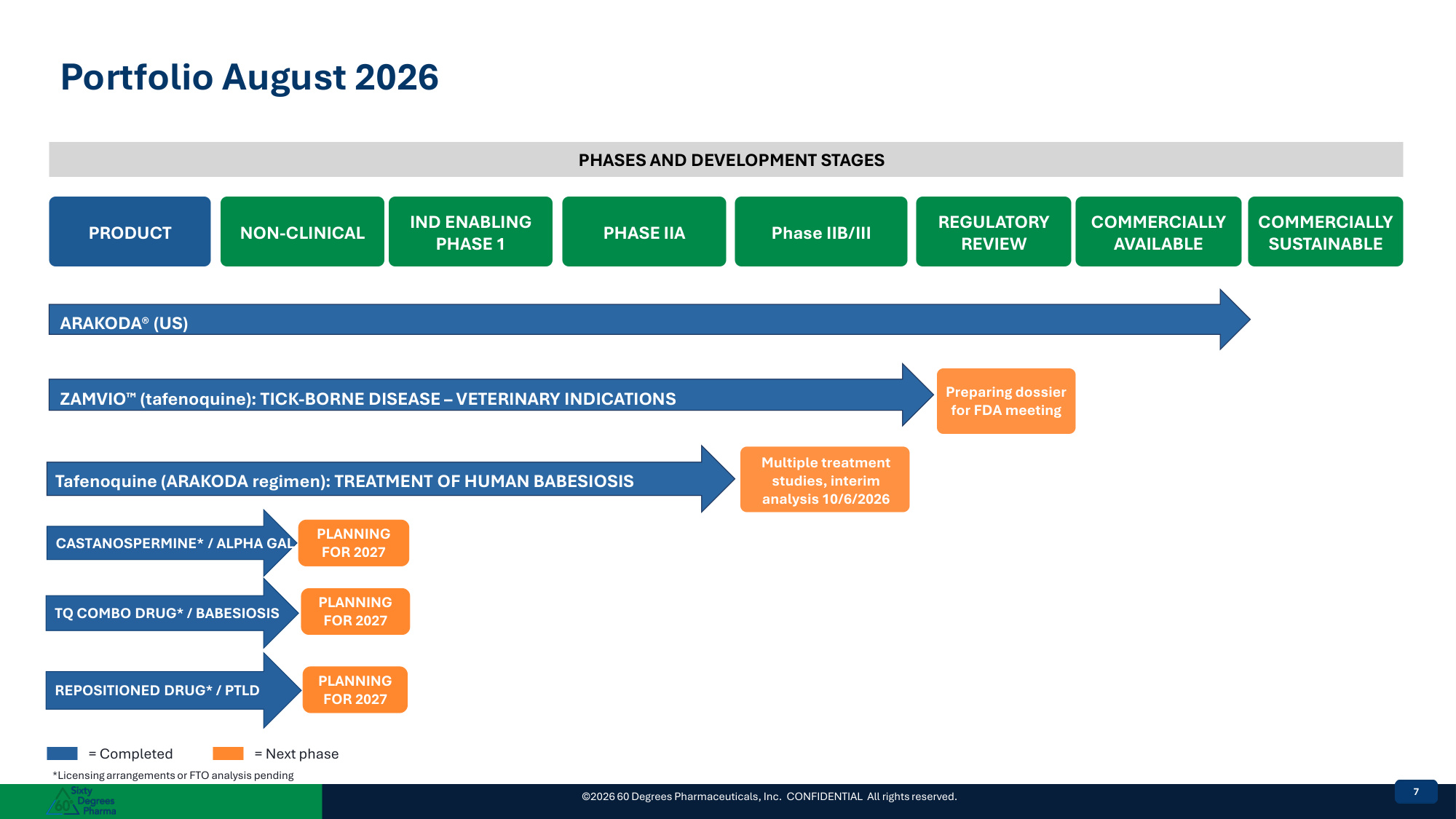
Portfolio August 2026 PHASES AND DEVELOPMENT STAGES PRODUCT NON-CLINICAL IND ENABLING PHASE 1 PHASE IIA Phase IIB/III REGULATORY REVIEW COMMERCIALLY AVAILABLE COMMERCIALLY SUSTAINABLE ARAKODA® (US) ZAMVIO (tafenoquine): TICK-BORNE DISEASE – VETERINARY INDICATIONS Preparing dossier for FDA meeting Tafenoquine (ARAKODA regimen): TREATMENT OF HUMAN BABESIOSIS Multiple treatment studies, interim analysis 10/6/2026 ©2026 60 Degrees Pharmaceuticals, Inc. CONFIDENTIAL All rights reserved. 77 CASTANOSPERMINE* / ALPHA GAL PLANNING FOR 2027 TQ COMBO DRUG* / BABESIOSIS PLANNING FOR 2027 REPOSITIONED DRUG* / PTLD PLANNING FOR 2027 = Completed = Next phase *Licensing arrangements or FTO analysis pending 7
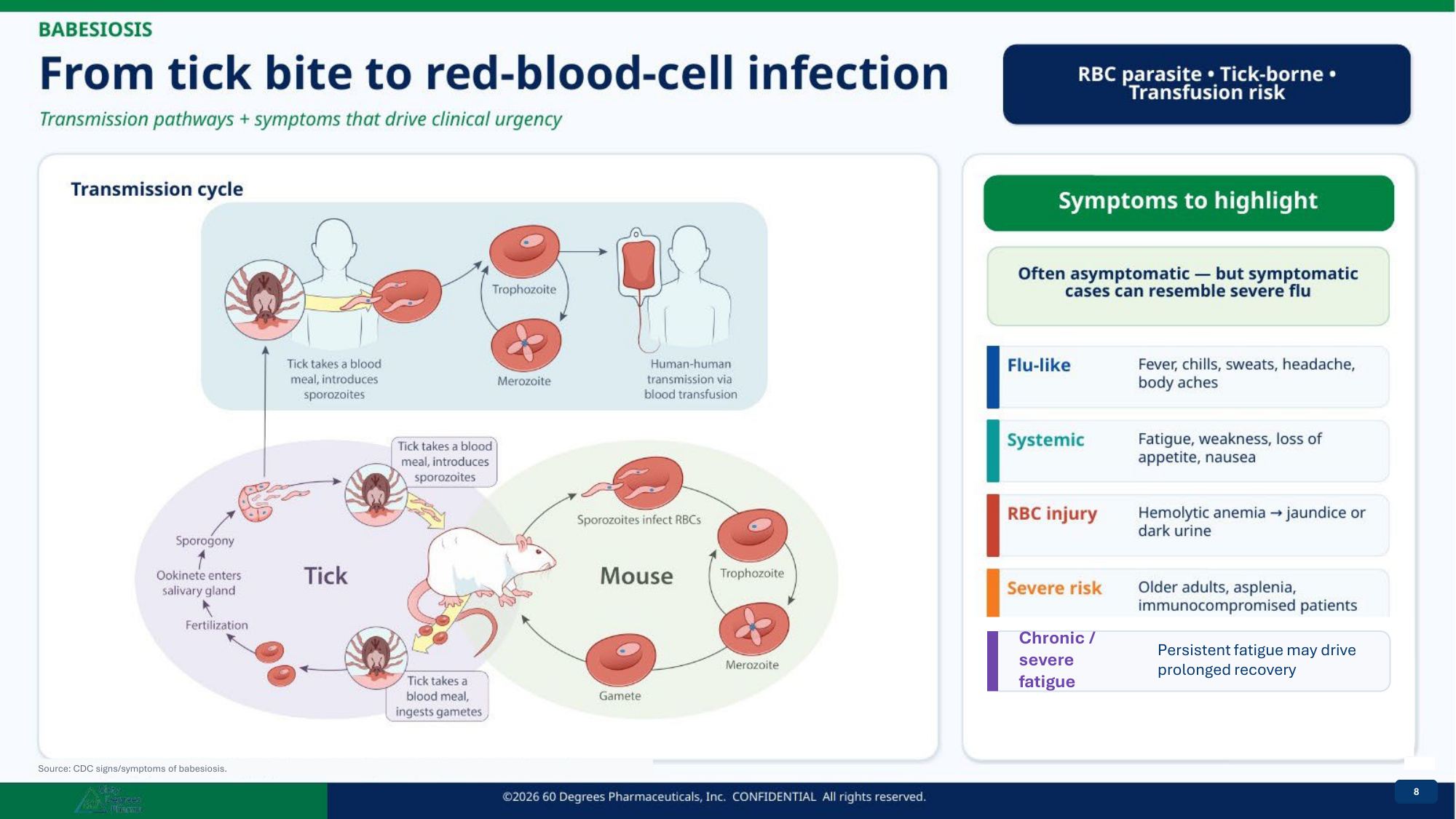
8 Source: CDC signs/symptoms of babesiosis. Chronic / severe fatigue Persistent fatigue may drive prolonged recovery 8
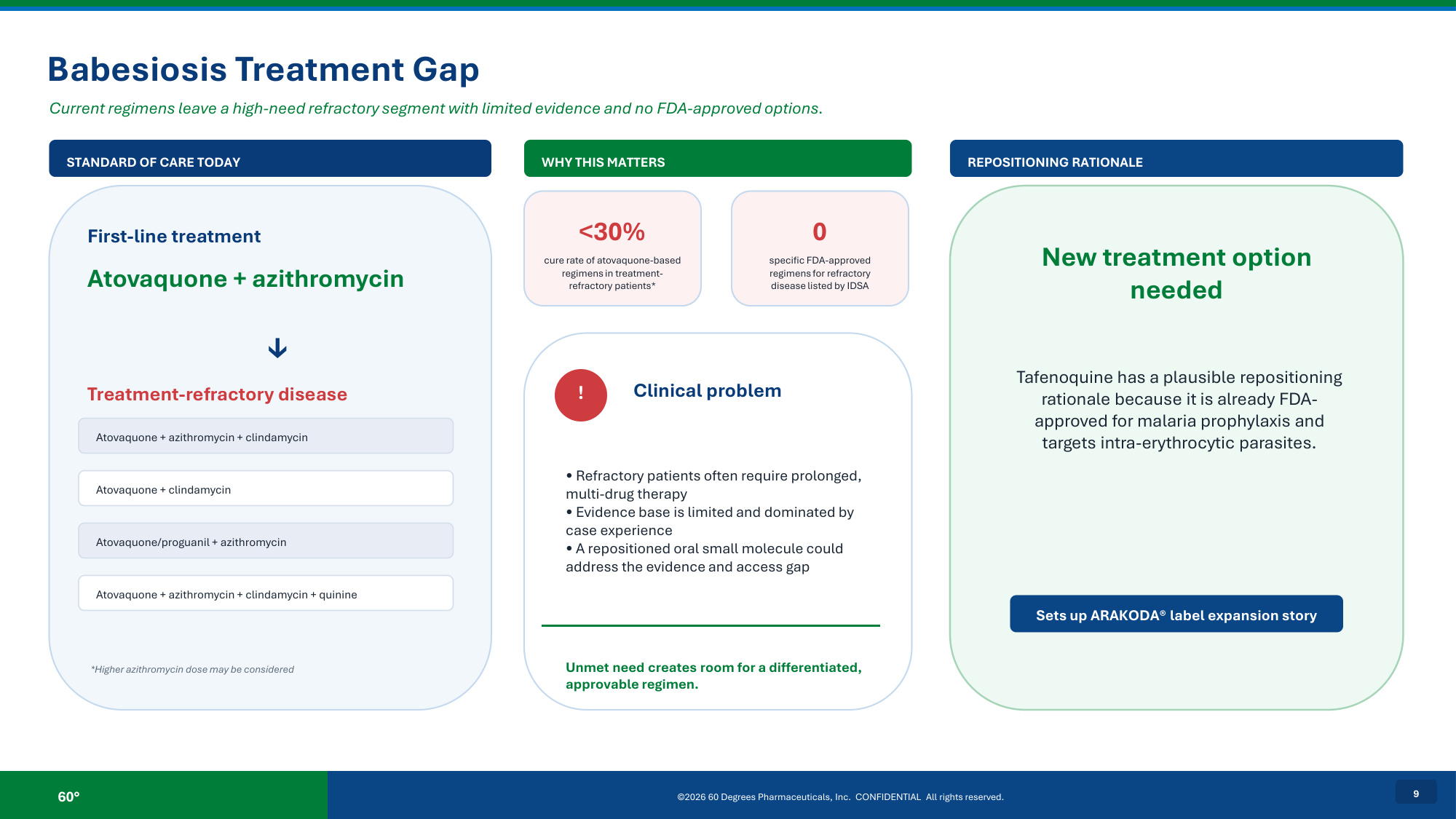
60° ©2026 60 Degrees Pharmaceuticals, Inc. CONFIDENTIAL All rights reserved. 9 Babesiosis Treatment Gap Current regimens leave a high-need refractory segment with limited evidence and no FDA-approved options. STANDARD OF CARE TODAY First-line treatment Atovaquone + azithromycin ↓ Treatment-refractory disease Atovaquone + azithromycin + clindamycin Atovaquone + clindamycin Atovaquone/proguanil + azithromycin Atovaquone + azithromycin + clindamycin + quinine *Higher azithromycin dose may be considered WHY THIS MATTERS <30% cure rate of atovaquone-based regimens in treatment- refractory patients* 0 specific FDA-approved regimens for refractory disease listed by IDSA ! Clinical problem • Refractory patients often require prolonged, multi-drug therapy • Evidence base is limited and dominated by case experience • A repositioned oral small molecule could address the evidence and access gap Unmet need creates room for a differentiated, approvable regimen. REPOSITIONING RATIONALE New treatment option needed Tafenoquine has a plausible repositioning rationale because it is already FDA- approved for malaria prophylaxis and targets intra-erythrocytic parasites. Sets up ARAKODA® label expansion story
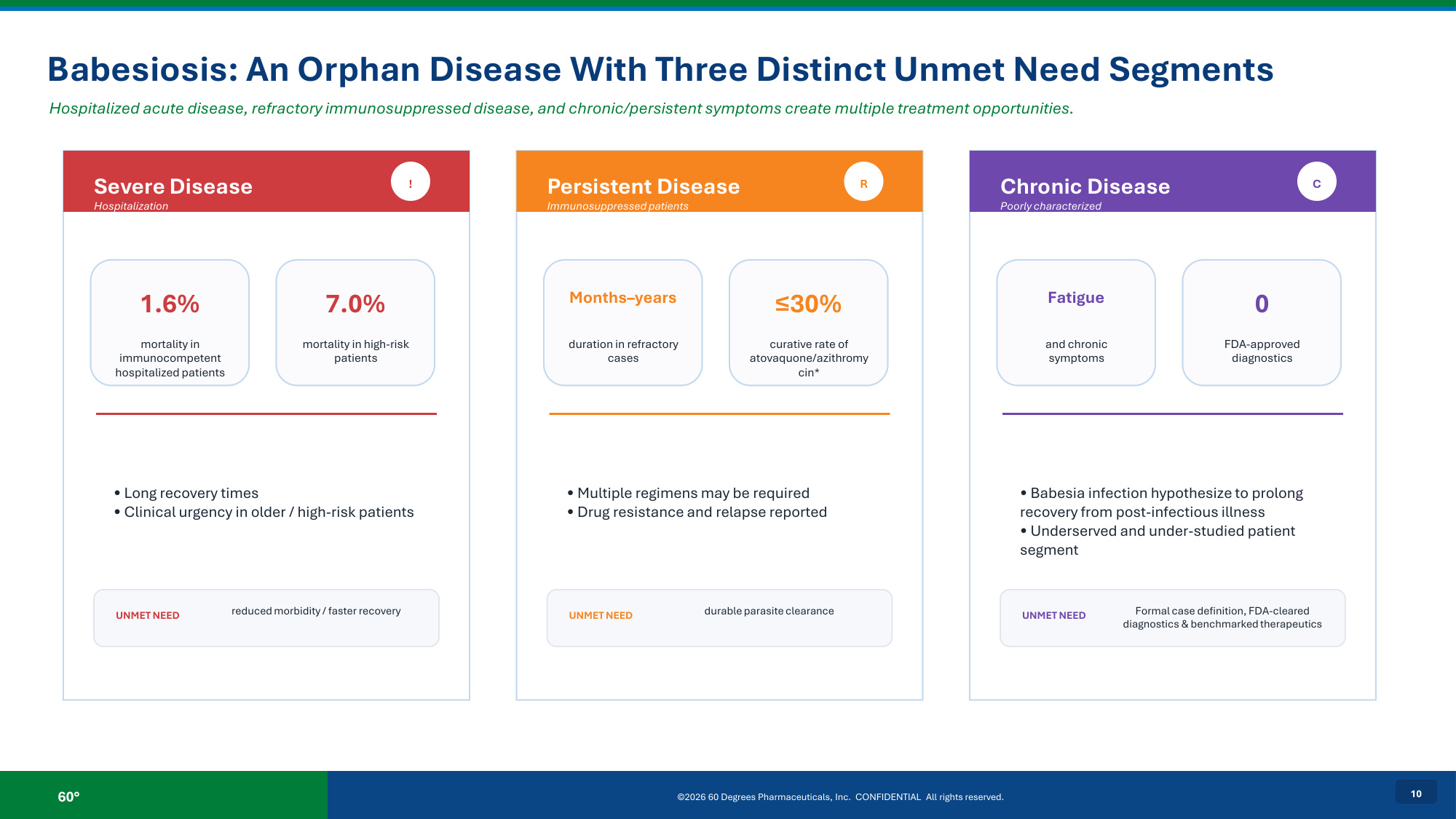
60° ©2026 60 Degrees Pharmaceuticals, Inc. CONFIDENTIAL All rights reserved. 10 Babesiosis: An Orphan Disease With Three Distinct Unmet Need Segments Hospitalized acute disease, refractory immunosuppressed disease, and chronic/persistent symptoms create multiple treatment opportunities. Severe Disease Hospitalization ! 1.6% mortality in immunocompetent hospitalized patients 7.0% mortality in high-risk patients • Long recovery times • Clinical urgency in older / high-risk patients UNMET NEED reduced morbidity / faster recovery Persistent Disease Immunosuppressed patients R Months–years duration in refractory cases ≤30% curative rate of atovaquone/azithromy cin* • Multiple regimens may be required • Drug resistance and relapse reported UNMET NEED durable parasite clearance Chronic Disease Poorly characterized C Fatigue and chronic symptoms 0 FDA-approved diagnostics • Babesia infection hypothesize to prolong recovery from post-infectious illness • Underserved and under-studied patient segment UNMET NEED Formal case definition, FDA-cleared diagnostics & benchmarked therapeutics
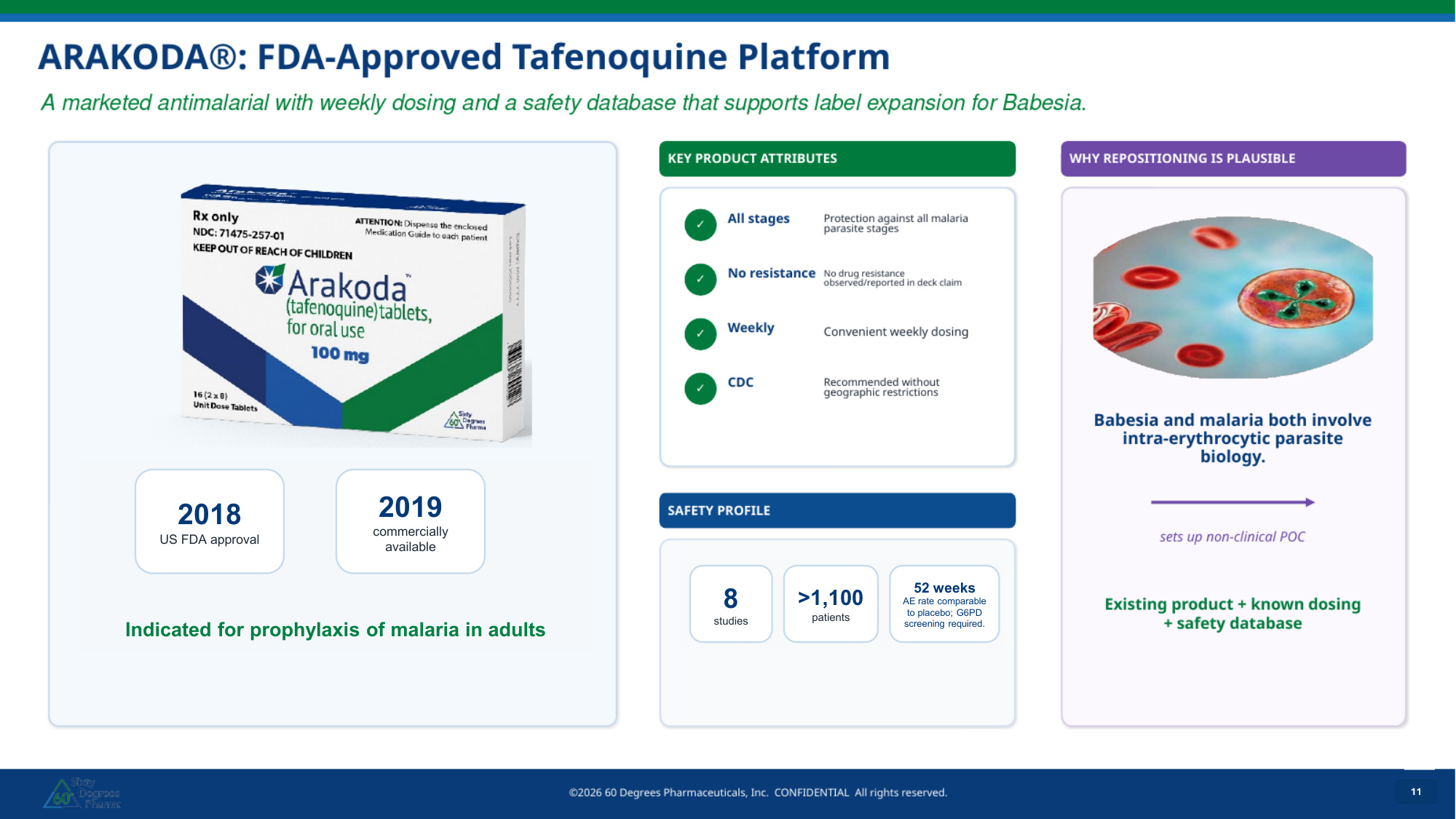
11 adult age group indicated 11 11 11 2018 US FDA approval 2019 commercially available Indicated for prophylaxis of malaria in adults 8 studies >1,100 patients 52 weeks AE rate comparable to placebo; G6PD screening required.
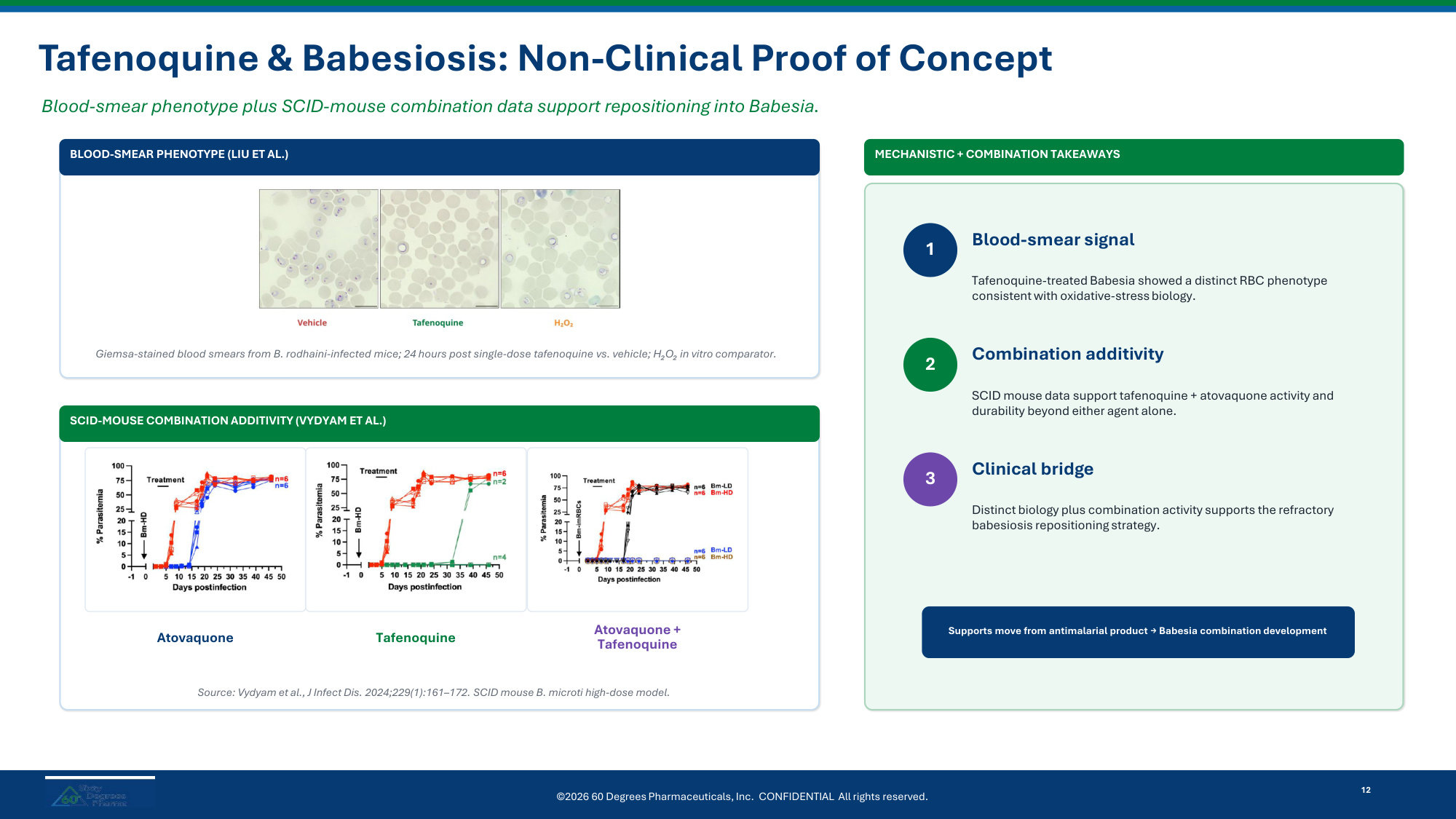
Tafenoquine & Babesiosis: Non-Clinical Proof of Concept Blood-smear phenotype plus SCID-mouse combination data support repositioning into Babesia. BLOOD-SMEAR PHENOTYPE (LIU ET AL.) Giemsa-stained blood smears from B. rodhaini-infected mice; 24 hours post single-dose tafenoquine vs. vehicle; H₂O₂ in vitro comparator. SCID-MOUSE COMBINATION ADDITIVITY (VYDYAM ET AL.) Atovaquone Tafenoquine Atovaquone + Tafenoquine Source: Vydyam et al., J Infect Dis. 2024;229(1):161–172. SCID mouse B. microti high-dose model. MECHANISTIC + COMBINATION TAKEAWAYS 1 Blood-smear signal Tafenoquine-treated Babesia showed a distinct RBC phenotype consistent with oxidative-stress biology. 2 Combination additivity SCID mouse data support tafenoquine + atovaquone activity and durability beyond either agent alone. 3 Clinical bridge Distinct biology plus combination activity supports the refractory babesiosis repositioning strategy. Supports move from antimalarial product → Babesia combination development ©2026 60 Degrees Pharmaceuticals, Inc. CONFIDENTIAL All rights reserved. 12
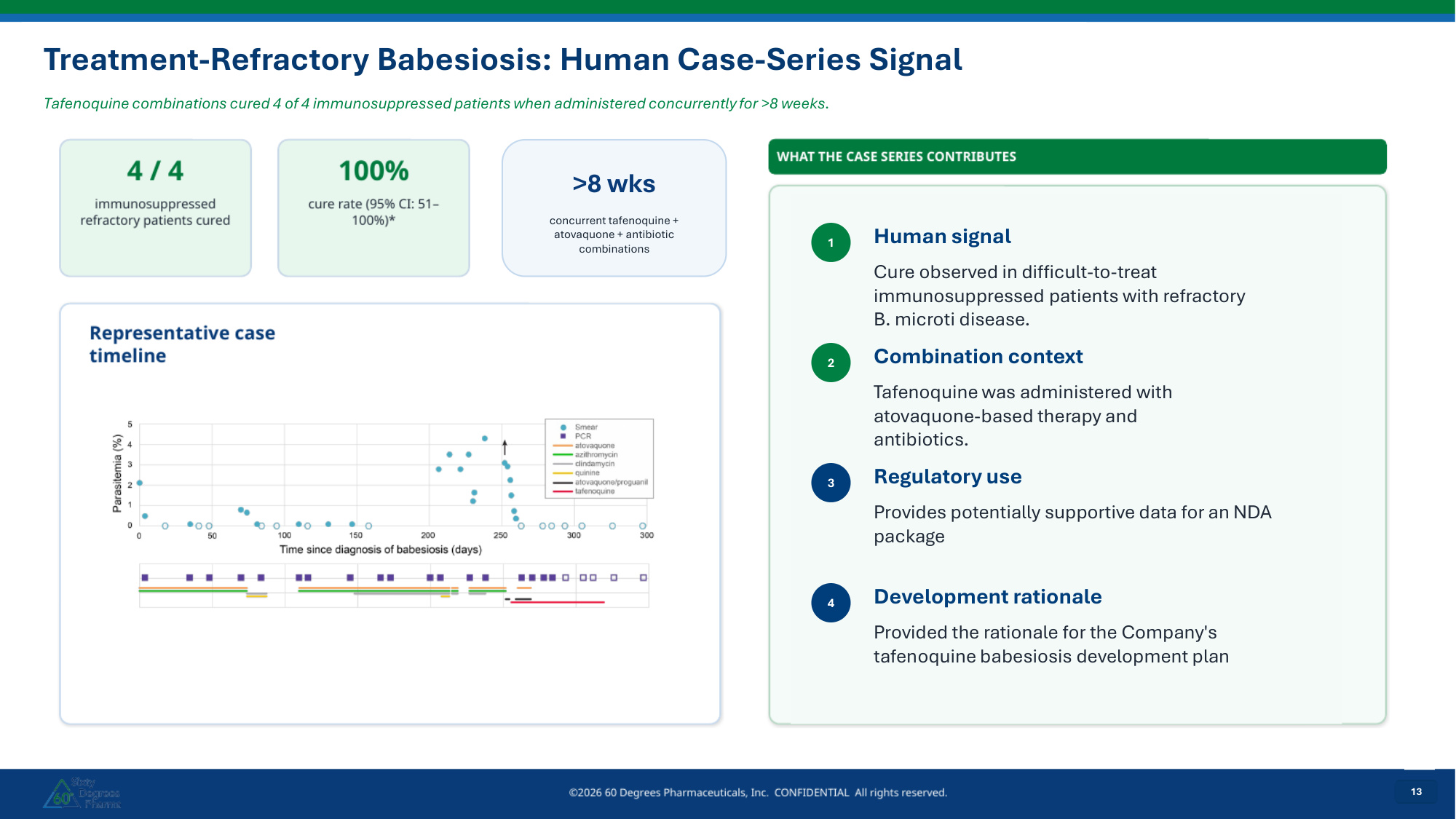
13 13 13 Treatment-Refractory Babesiosis: Human Case-Series Signal Tafenoquine combinations cured 4 of 4 immunosuppressed patients when administered concurrently for >8 weeks. 13 >8 wks concurrent tafenoquine + atovaquone + antibiotic combinations 1 Human signal Cure observed in difficult-to-treat immunosuppressed patients with refractory B. microti disease. 2 Combination context Tafenoquine was administered with atovaquone-based therapy and antibiotics. 3 Regulatory use Provides potentially supportive data for an NDA package 4 Development rationale Provided the rationale for the Company's tafenoquine babesiosis development plan
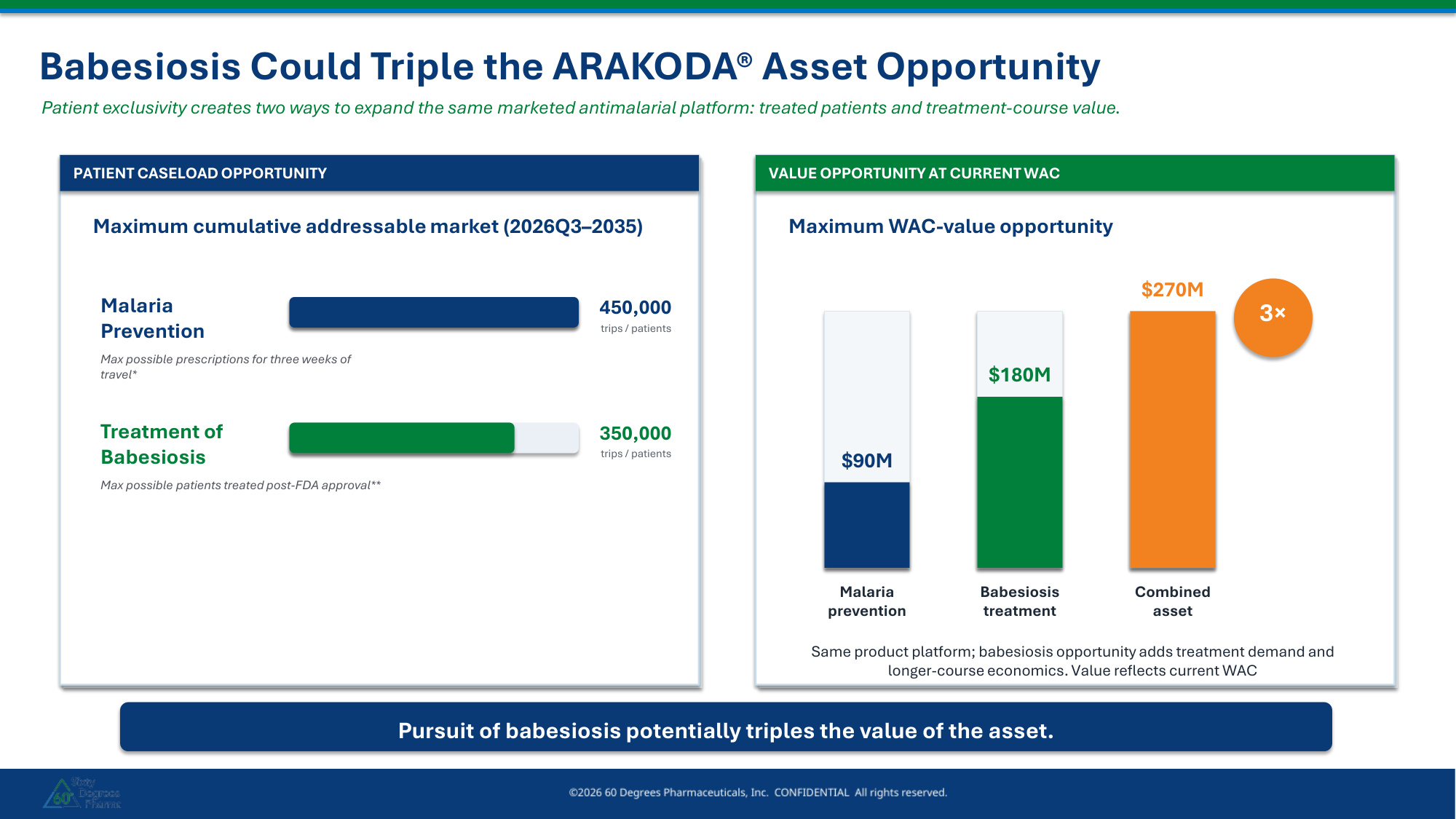
Babesiosis Could Triple the ARAKODA® Asset Opportunity Patient exclusivity creates two ways to expand the same marketed antimalarial platform: treated patients and treatment-course value. PATIENT CASELOAD OPPORTUNITY VALUE OPPORTUNITY AT CURRENT WAC Maximum cumulative addressable market (2026Q3–2035) Malaria Prevention trips / patients 450,000 Treatment of Babesiosis trips / patients 350,000 Max possible prescriptions for three weeks of travel* Max possible patients treated post-FDA approval** Maximum WAC-value opportunity $90M Malaria prevention $180M Babesiosis treatment $270M Combined asset 3× Same product platform; babesiosis opportunity adds treatment demand and longer-course economics. Value reflects current WAC Pursuit of babesiosis potentially triples the value of the asset.
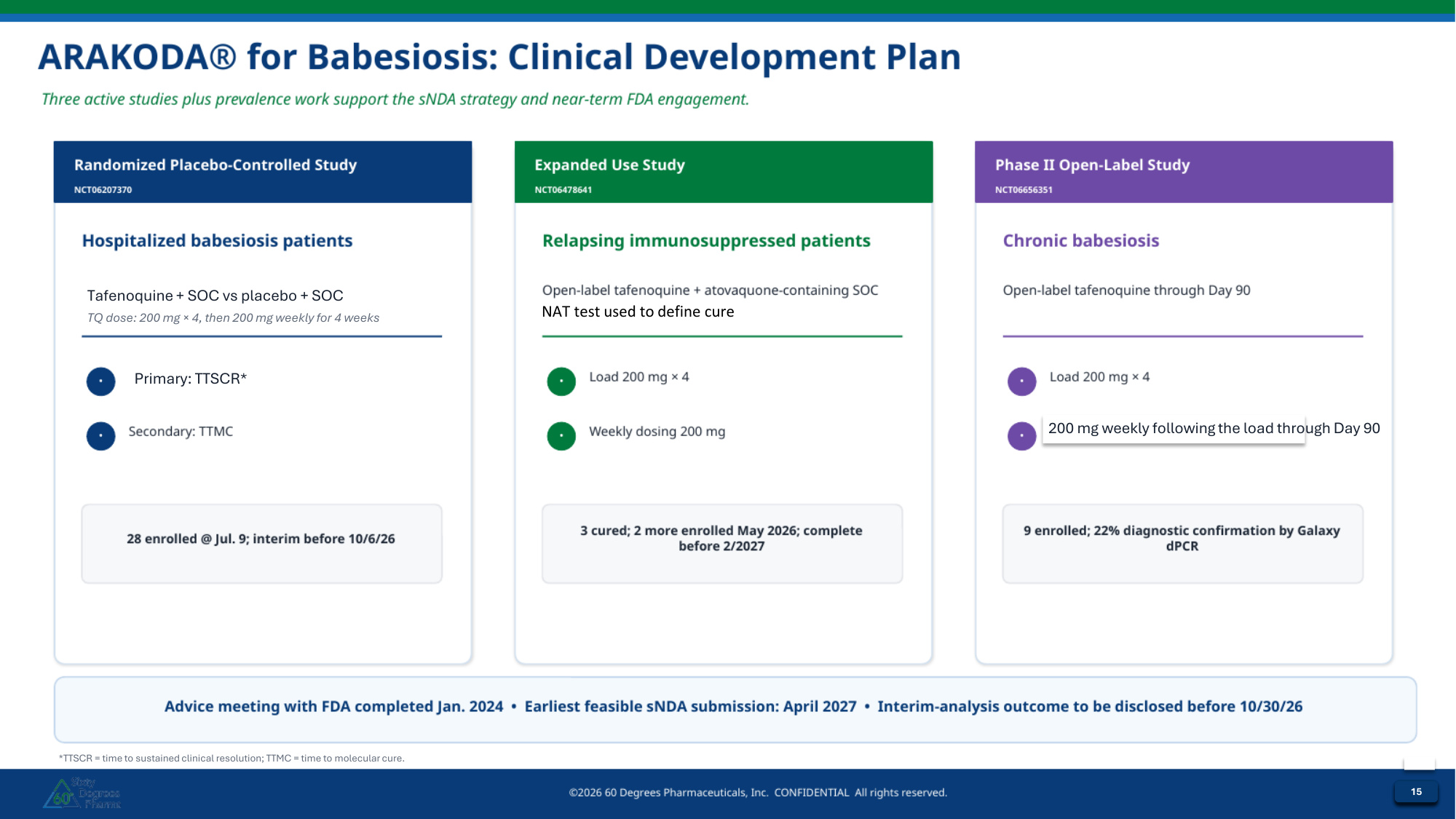
15 Tafenoquine + SOC vs placebo + SOC TQ dose: 200 mg × 4, then 200 mg weekly for 4 weeks Primary: TTSCR* 200 mg weekly following the load through Day 90 *TTSCR = time to sustained clinical resolution; TTMC = time to molecular cure. 15 15 15 NAT test used to define cure
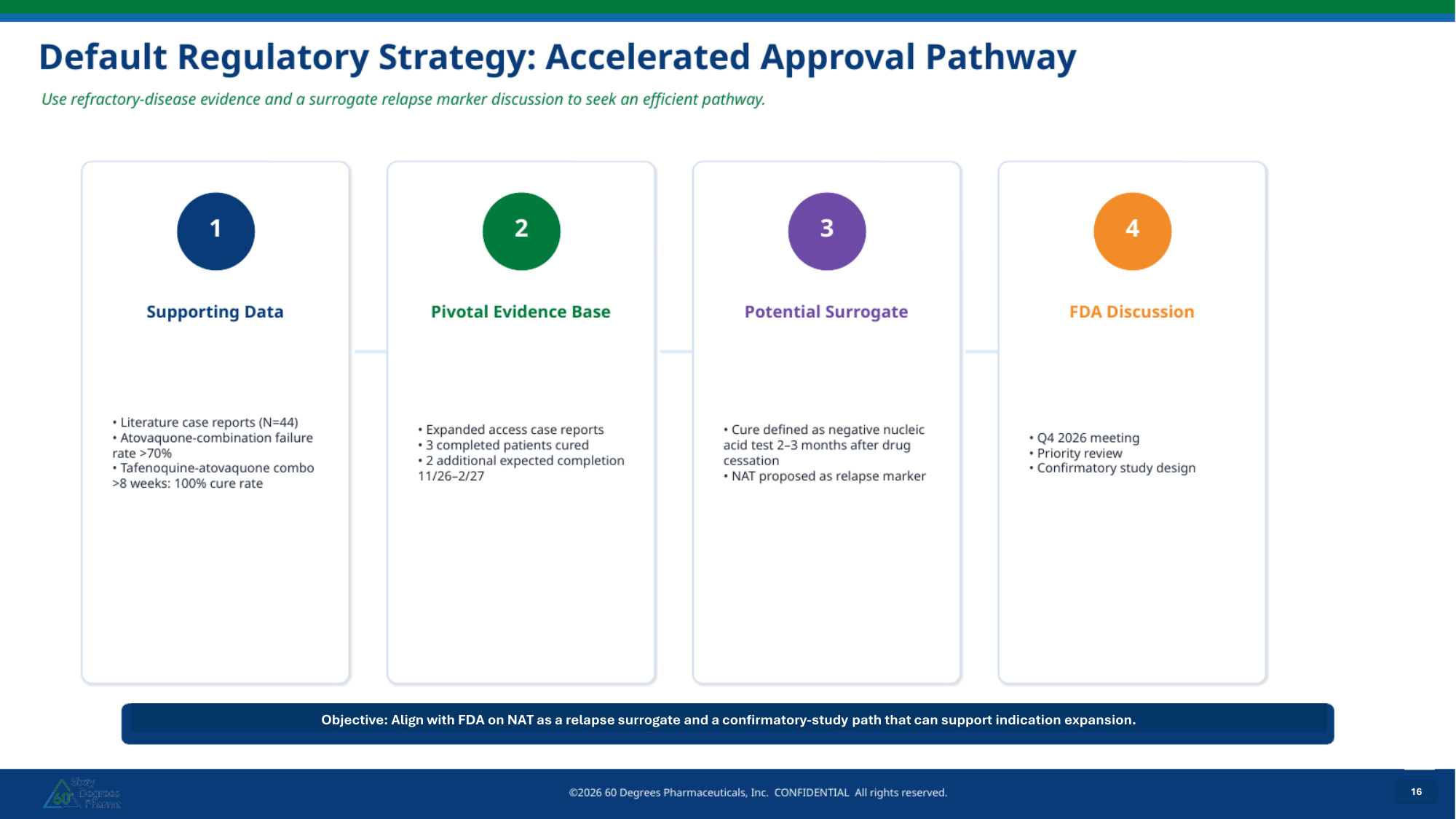
16 Objective: Align with FDA on NAT as a relapse surrogate and a confirmatory-study path that can support indication expansion. 16 16 16
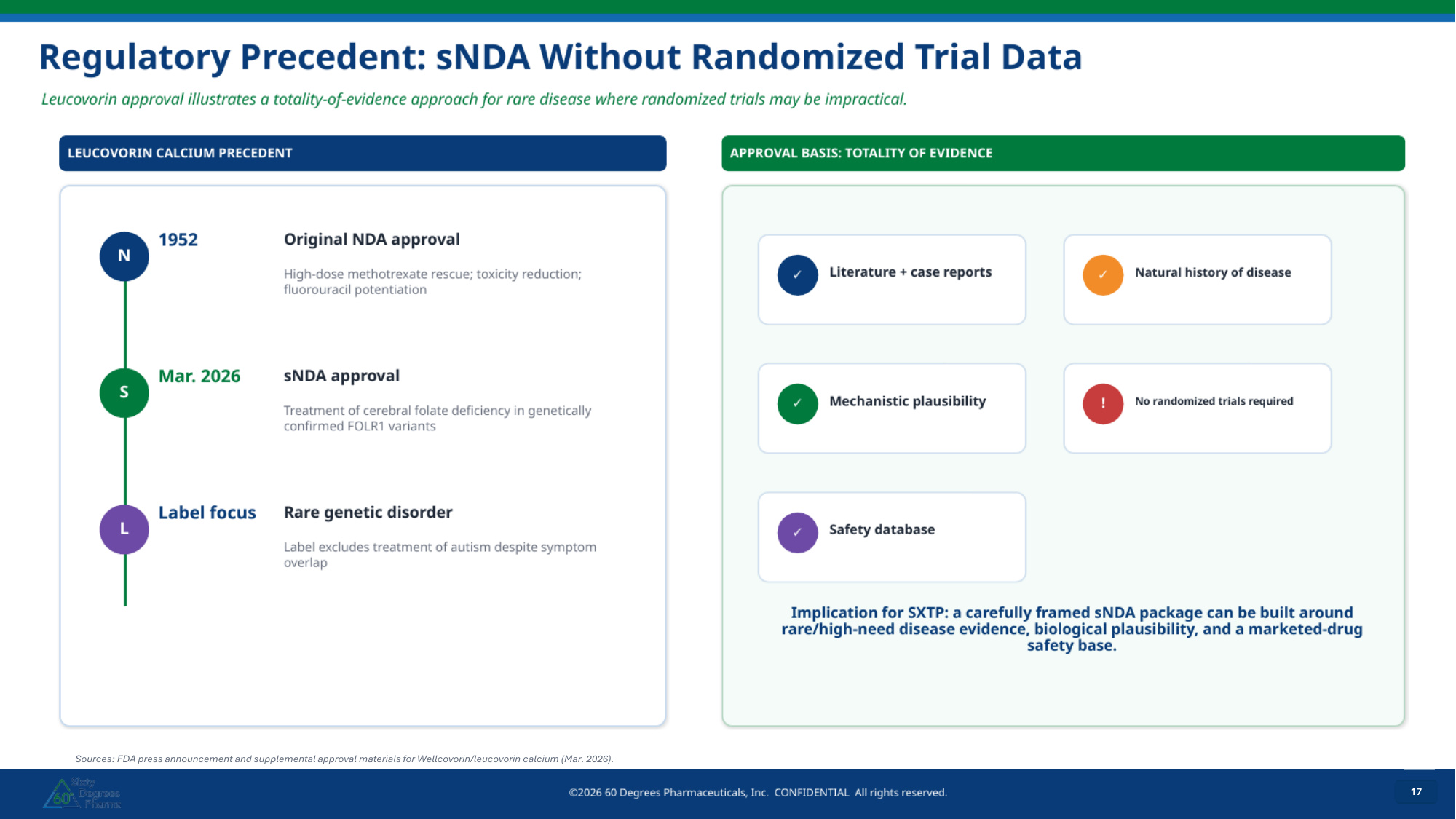
17 Sources: FDA press announcement and supplemental approval materials for Wellcovorin/leucovorin calcium (Mar. 2026). 17 17 17
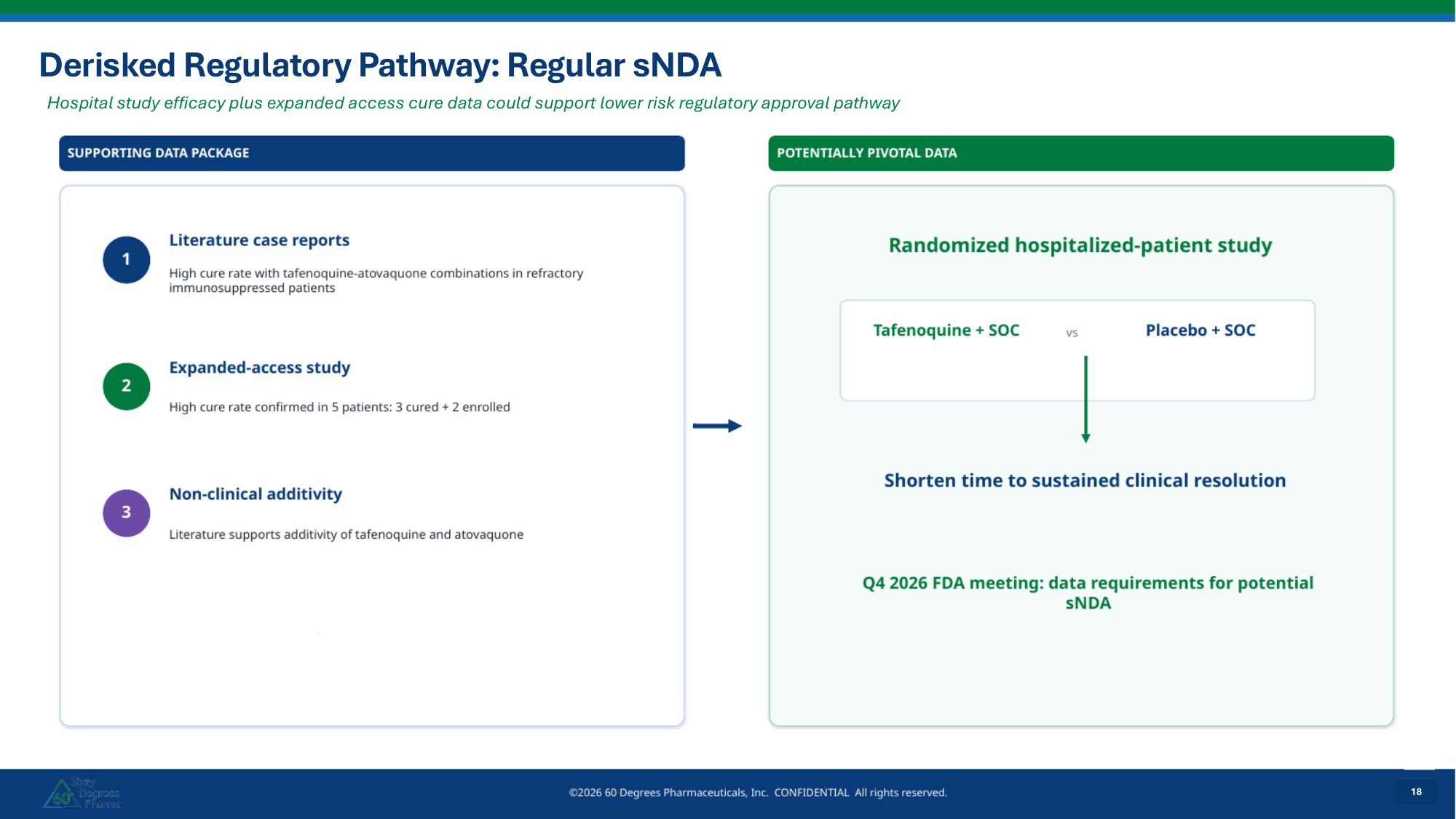
18 Hospital study efficacy plus expanded access cure data could support lower risk regulatory approval pathway 18 18 18 Derisked Regulatory Pathway: Regular sNDA
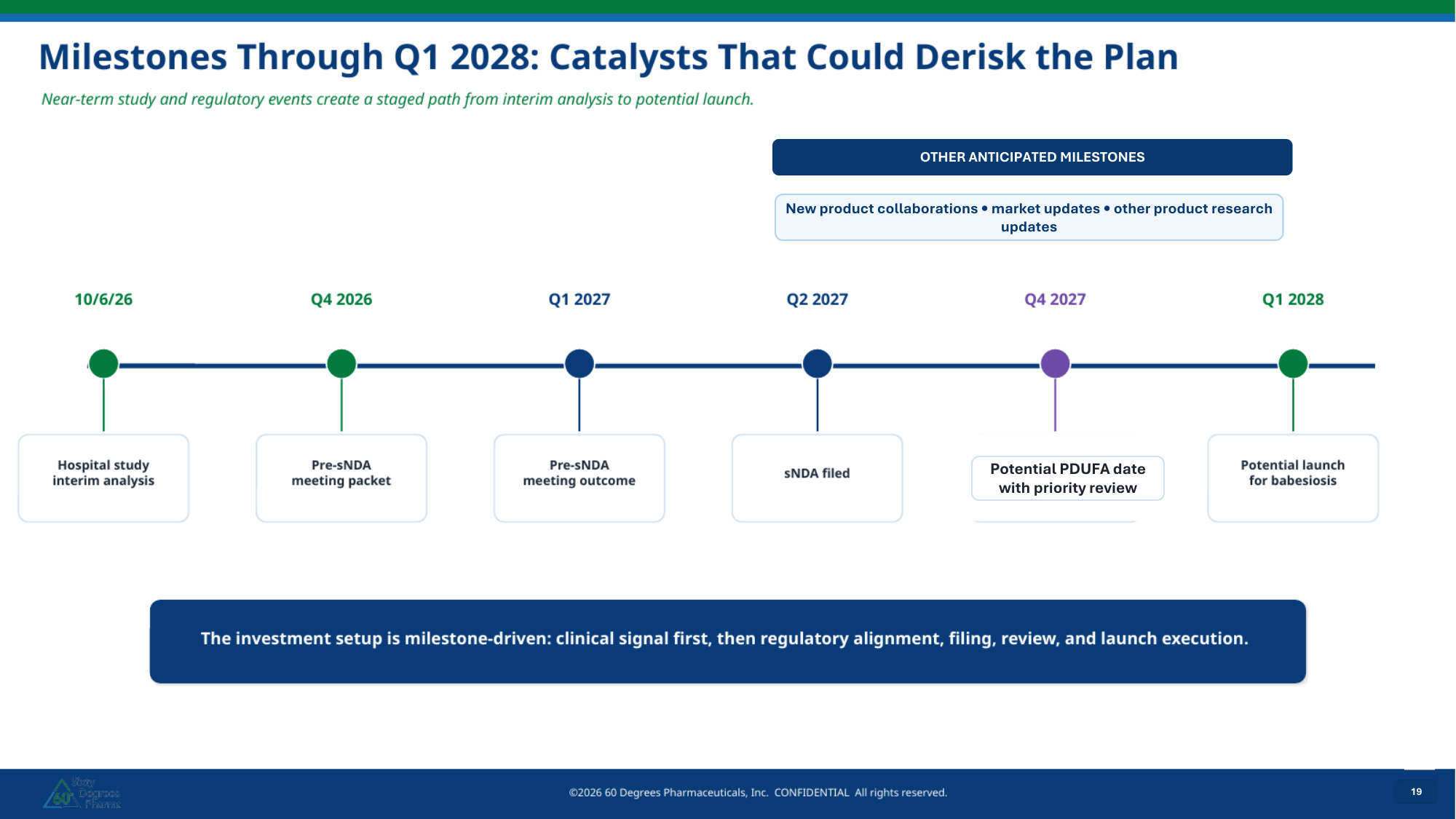
19 Potential PDUFA date with priority review 19 OTHER ANTICIPATED MILESTONES New product collaborations • market updates • other product research updates Potential PDUFA date with priority review 19 OTHER ANTICIPATED MILESTONES New product collaborations • market updates • other product research updates Potential PDUFA date with priority review 19 19