EXHIBIT A
SITE PLAN OF LEASED PREMISES
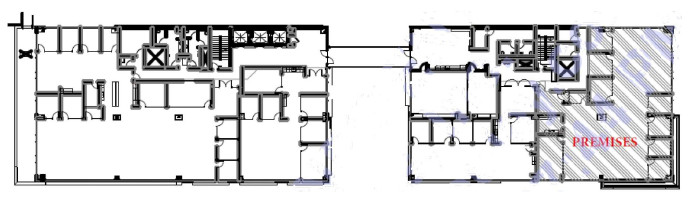
KEY PLAN
HATCH DENOTES AREA OF SUITE
Exhibit A
Exhibit 10.13
OFFICE LEASE
THIS OFFICE LEASE is executed this 8 day of May, 2026, by and between NORTH HILLS OWNER II LP, a Delaware limited partnership (“Landlord”), and SLATE MEDICINES, INC., a Delaware corporation (“Tenant”).
ARTICLE 1 - LEASE OF PREMISES
Section 1.01. Basic Lease Provisions and Definitions.
(a) Premises or Leased Premises (shown outlined on Exhibit A attached hereto): Suite 250 on the second (2nd) floor of the building located at 4114 Center at North Hills Street (the “Building”), Raleigh, North Carolina (the “Property”).
(b) Rentable Area: approximately 5,034 rentable square feet. The Rentable Area includes the useable square footage within the Leased Premises plus a pro rata portion of the square footage of the common areas within the Building, as reasonably determined by Landlord.
(c) Tenant’s Proportionate Share: 5.80%. (based on the Premises having 5,034 square feet and the Building having 86,749 rentable square feet of office space).
(d) Minimum Annual Rent:
| PERIOD | ESTIMATED TOTAL MINIMUM ANNUAL RENT |
MINIMUM ANNUAL RENT PSF | ||
| Month 1 |
$0.00* | $54.00* | ||
| Months 2-12 |
$271,836.00** | $54.00 | ||
| Months 13-24 |
$279,991.08 | $55.62 | ||
| Months 25-36 |
$288,390.81 | $57.29 | ||
| Months 37-48 |
$297,042.54 | $59.01 | ||
| Months 49-60 |
$305,953.81 | $60.78 | ||
| Month 61 |
$26,261.04** | $62.60 |
| * | Subject to Abatement pursuant to Section 3.02 |
| ** | Partial Year |
(e) Monthly Rental Installments:
| PERIOD | ESTIMATED TOTAL MONTHLY RENTAL INSTALLMENT |
MINIMUM ANNUAL RENT PSF | ||
| Month 1 |
$0.00* | $54.00* | ||
| Months 2-12 |
$22,653.00 | $54.00 | ||
| Months 13-24 |
$23,332.59 | $55.62 | ||
| Months 25-36 |
$24,032.57 | $57.29 | ||
| Months 37-48 |
$24,753.54 | $59.01 | ||
| Months 49-60 |
$25,496.15 | $60.78 | ||
| Month 61 |
$26,261.04 | $62.60 |
| * | Subject to Abatement pursuant to Section 3.02 |
(f) Base Year: 2026.
(g) Commencement Date: June 1, 2026.
(h) Lease Term: Five (5) years and one (1) month.
(i) Security Deposit: $90,612, subject to reduction as provided in Section 4 below.
(j) Broker(s): Kane Realty Corporation representing Landlord and Lee & Associates Raleigh-Durham representing Tenant.
(k) Permitted Use: General office purposes.
(l) Address for notices and payments are as follows:
Landlord: North Hills Owner II LP
c/o Kane Realty Corporation
4321 Lassiter at North Hills Ave. Suite 250
Raleigh, North Carolina 27609
With a copy to: Kilpatrick Townsend LLP
Attn: B. Ford Robertson, Esq.
4208 Six Forks Road, Suite 1400
Raleigh, North Carolina 27609
With
Payments to: North Hills Owner II LP
4321 Lassiter at North Hills Ave.
Suite 250
Raleigh, North Carolina 27609
Tenant (prior to occupancy): Slate Medicines, Inc.
c/o RA Capital Management
200 Berkeley Street, 18th Floor
Boston, MA 02116
Tenant (following occupancy): at the Premises
EXHIBITS
Exhibit A - Leased Premises
Exhibit B - Information Sheet
Exhibit C - Rules and Regulations
Exhibit D - LEED Requirements
Section 1.02. Lease of Premises. Landlord hereby leases to Tenant and Tenant hereby leases from Landlord the Leased Premises, under the terms and conditions herein, together with a non-exclusive right, in common with others, to use the following (collectively, the “Common Areas”): the areas of the Building and the underlying land and improvements thereto that are designed for use in common by all tenants of the Building and their respective employees, agents, customers, invitees and others.
- 2 -
ARTICLE 2 - TERM AND POSSESSION
Section 2.01. Term; Early Occupancy. The Lease Term shall commence on the Commencement Date set forth in Section 1.0l(g) above. Tenant shall have the right to enter the Leased Premises for a period of thirty (30) days prior to the Commencement Date in order to install fixtures and otherwise prepare the Leased Premises for occupancy, which right shall expressly exclude making any structural modifications. During any entry prior to the Commencement Date, Tenant shall comply with all terms and conditions of this Lease other than the obligation to pay rent.
Section 2.02. Condition of the Leased Premises; As Is Condition. Prior to the date hereof, Landlord has constructed certain leasehold improvements to the Leased Premises. Tenant has personally inspected the Leased Premises and accepts the same “AS IS” without representation or warranty by Landlord of any kind; provided, however, that Landlord shall deliver the Leased Premises to Tenant on the Commencement Date in professionally cleaned condition, watertight, and with the Premises and all Building systems serving the Premises (including HVAC, electrical, plumbing and life-safety) in good operating condition. Landlord further represents and warrants that, as of the Commencement Date, the Premises (in the condition delivered by Landlord) shall comply with all applicable laws and codes, including applicable building code requirements for seismic and structural strength and the Americans with Disabilities Act (ADA).
Section 2.03. Surrender of the Leased Premises. Upon the expiration or earlier termination of this Lease, Tenant shall, at its sole cost and expense, immediately (a) surrender the Leased Premises to Landlord in broom-clean condition and in good order, condition and repair, (b) remove from the Leased Premises or where located (i) Tenant’s Property (as defined in Section 8.01 below), (ii) all data and communications equipment, wiring and cabling (including above ceiling, below raised floors and behind walls), and (iii) any alterations required to be removed pursuant to Section 7.03 below, and (c) repair any damage caused by any such removal and restore the Leased Premises to the condition existing upon the Commencement Date, reasonable wear and tear excepted. All of Tenant’s Property that is not removed within ten (10) days following Landlord’s written demand therefor shall be conclusively deemed to have been abandoned and Landlord shall be entitled to dispose of such property at Tenant’s cost without incurring any liability to Tenant. This Section 2.03 shall survive the expiration or any earlier termination of this Lease.
Section 2.04. Holding Over. If Tenant retains possession of the Leased Premises after the expiration or earlier termination of this Lease, Tenant shall be a tenant at sufferance for the first three (3) months at one hundred fifty percent (150%), and thereafter at two hundred percent (200%), of the Monthly Rental Installments and Annual Rental Adjustment (as hereinafter defined) for the Leased Premises in effect upon the date of such expiration or earlier termination, and otherwise upon the terms, covenants and conditions herein specified, so far as applicable. Acceptance by Landlord of rent after such expiration or earlier termination shall not result in a renewal of this Lease, nor shall such acceptance create a month-to-month tenancy. In the event a month-to-month tenancy is created by operation of law, either party shall have the right to terminate such month-to-month tenancy upon thirty (30) days’ prior written notice to the other, whether or not said notice is given on the rent paying date. This Section 2.04 shall in no way constitute a consent by Landlord to any holding over by Tenant upon the expiration or earlier termination of this Lease, nor limit Landlord’s remedies in such event.
ARTICLE 3 - RENT
Section 3.01.Base Rent. Subject to Section 3.02 below, Tenant shall pay to Landlord the Minimum Annual Rent in the Monthly Rental Installments in advance, without demand, deduction or offset, beginning on the first day of the second (2 month of the Lease Term (the “Rent Commencement Date” and on or before the first day of each and every calendar month thereafter during the Lease Term. The Monthly Rental Installments for partial calendar months shall be prorated. Tenant hereby authorizes Landlord, commencing
- 3 -
on the Rent Commencement Date and thereafter continuing on the first business day of each calendar month during the Lease Term, to withdraw the Monthly Rental Installments due Landlord hereunder from Tenant’s bank account, as such bank account may be modified from time to time (the “Bank Account”). Upon Landlord’s request, Tenant shall complete an information sheet in substantially the form of Exhibit B attached hereto and made a part hereof (the “Information Sheet”). In the event of a change in Tenant’s Bank Account, Tenant shall have the right to change the information set forth in the Information Sheet upon written notice to Landlord. In addition, Tenant agrees to execute such other documents as may be reasonably requested by Landlord to effectuate Landlord’s withdrawal of funds from the Bank Account pursuant to the preceding sentence. If, at any time during the Lease Term, Landlord elects not to withdraw the Monthly Rental Installments from the Bank Account pursuant to this Section 3.01, Landlord shall so notify Tenant and thereafter, Tenant shall be responsible for delivering the Monthly Rental Installments to the payment address set forth in Section 1.01(1) above in accordance with this Section 3.01.
Section 3.02. Abatement of Minimum Annual Rent. Provided that Tenant shall not then be in default under any of the terms, covenants and conditions contained in this Lease beyond the expiration of any applicable notice and/or cure period, Tenant shall be entitled to an abatement (the “Abatement”) of all Minimum Annual Rent otherwise payable during the period from the Commencement Date to the Rent Commencement Date (the “Abatement Period”); provided, however, that during the Abatement Period, Tenant shall not be relieved of its obligation to pay any Additional Rent attributable to such period. Tenant acknowledges that the consideration for the Abatement is Tenant’s agreement to perform all of the terms, covenants and conditions of this Lease on its part to be performed. Therefore, if this Lease shall be terminated on or before the scheduled expiration date hereof by reason of Tenant’s default beyond the expiration of any applicable notice and grace period, the aggregate amount of all Minimum Annual Rental that was abated shall immediately thereafter become due and payable by Tenant to Landlord. In the event of Tenant’s failure to pay such aggregate amount to Landlord, Landlord shall be entitled to the same rights and remedies as in the event of Tenant’s default in the payment of Minimum Annual Rent.
Section 3.03. Annual Rental Adjustment Definitions.
(a) “Annual Rental Adjustment” shall mean the amount of Tenant’s Proportionate Share of Operating Expenses for a particular calendar year.
(b) “Operating Expenses” shall mean the amount of all of Landlord’s costs and expenses paid or incurred in operating, repairing, replacing and maintaining the Building and the Common Areas in good condition and repair for a particular calendar year, including by way of illustration and not limitation, the following: all Real Estate Taxes (as hereinafter defined), insurance premiums and deductibles; water, sewer, electrical and other utility charges other than the separately billed electrical and other charges paid by Tenant as provided in this Lease (or other tenants in the Building); service and other charges incurred in the repair, replacement, operation and maintenance of the elevators and the heating, ventilation and air-conditioning system; costs associated with providing fitness facilities, if any; cleaning and other janitorial services; tools and supplies; repair costs; landscape maintenance costs; security patrols; license, permit and inspection fees; management fees; administrative fees; supplies, costs, wages and related employee benefits payable for the management, maintenance and operation of the Building; maintenance, repair and replacement of the driveways, parking and sidewalk areas (including snow and ice removal), landscaped areas, and lighting; and maintenance and repair costs, dues, fees and assessments incurred under any covenants or charged by any owners association. If the Building is not fully occupied in any calendar year, only those categories of Operating Expenses that are customarily grossed up in first-class office buildings may be grossed up, and only to reflect an assumed occupancy level of one hundred percent (100%), and in no event shall Real Estate Taxes, insurance, or capital costs be grossed up. Any such gross-up shall be applied consistently and in accordance with generally accepted property management practices.
- 4 -
Notwithstanding the foregoing, Operating Expenses shall not include: (i) costs capital in nature except to the extent expressly permitted below; (ii) leasing commissions, tenant improvement costs, and other costs incurred in connection with leasing space to other tenants; (iii) costs of correcting defects in construction, design, or workmanship of the Building or Common Areas; (iv) costs covered by warranties or insurance proceeds (net of commercially reasonable deductibles); (v) costs incurred to remedy violations of law to the extent arising from the condition of the Building or Common Areas as of the Commencement Date (except to the extent caused by Tenant); (vi) interest, principal, depreciation, or other financing costs; (vii) costs of selling, financing, or refinancing the Building; (viii) overhead or general corporate administrative expenses of any personnel above the grade of property manager (or an equivalent position); (ix) costs for services or amenities not made available generally to tenants of the Building; and (x) any penalties, fines, or interest resulting from Landlord’s failure to pay amounts when due.
(c) The cost of any Operating Expenses that are capital in nature shall be amortized over the useful life of the improvement (as reasonably determined by Landlord), and only the annual amortized portion shall be included in Operating Expenses, and only to the extent such capital item is (A) required by applicable law enacted after the Commencement Date, or (B) a capital improvement that reduces Operating Expenses or improves energy efficiency, in which case only an amount up to the annual savings realized may be included.
(d) “Tenant’s Proportionate Share of Operating Expenses” shall mean an amount equal to the remainder of (i) the product of Tenant’s Proportionate Share times the Operating Expenses less (ii) Tenant’s Proportionate Share times the Operating Expenses for the Base Year, provided that such amount shall not be less than zero.
(e) “Real Estate Taxes” shall mean any form of real estate tax or assessment or service payments in lieu thereof, and any license fee, commercial rental tax, improvement bond or other similar charge or tax (other than inheritance, personal income or estate taxes) imposed upon the Building or Common Areas, or against Landlord’s business of leasing the Building, by any authority having the power to so charge or tax, together with costs and expenses of contesting the validity or amount of the Real Estate Taxes; provided, however, Real Estate Taxes shall not include penalties, interest, or fines attributable to Landlord’s late payment or failure to pay. Landlord and Tenant agree that Real Estate Taxes (including for the Base Year and any subsequent years) shall be determined without consideration of any abatement of Real Estate Taxes or other governmental development incentives which reduce the amount of Real Estate Taxes from amounts of Real Estate Taxes that would have been payable in the absence of such abatement or incentive, including, without limitation, pursuant to the North Carolina Brownfield Program.
Section 3.04. Payment of Additional Rent.
(a) Any amount required to be paid by Tenant hereunder (in addition to Minimum Annual Rent) and any charges or expenses incurred by Landlord on behalf of Tenant under the terms of this Lease shall be considered “Additional Rent” payable in the same manner and upon the same terms and conditions as the Minimum Annual Rent reserved hereunder, except as set forth herein to the contrary. Any failure on the part of Tenant to pay such Additional Rent when and as the same shall become due shall entitle Landlord to the remedies available to it for non-payment of Minimum Annual Rent.
(b) In addition to the Minimum Annual Rent specified in this Lease, commencing as of the Commencement Date, Tenant shall pay to Landlord as Additional Rent for the Leased Premises, in each calendar year or partial calendar year during the Lease Term, an amount equal to the Annual Rental Adjustment for such calendar year. Landlord shall estimate the Annual Rental Adjustment annually, and written notice thereof shall be given to Tenant prior to the beginning of each calendar year. Tenant shall pay to Landlord each month, at the same time the Monthly Rental Installment is due, an amount equal to
- 5 -
one-twelfth (1/12) of the estimated Annual Rental Adjustment. Tenant hereby authorizes Landlord, on the first business day of each calendar month during the Lease Term, to withdraw the estimated Additional Rent due Landlord hereunder from the Bank Account. Tenant agrees to execute such documents as may be reasonably requested by Landlord to effectuate the withdrawal of the Additional Rent from the Bank Account pursuant to the preceding sentence. If, at any time during the Lease Term, Landlord elects not to withdraw the Additional Rent from the Bank Account pursuant to this Section 3.04, Landlord shall so notify Tenant and thereafter, Tenant shall be responsible for delivering the Additional Rent to the payment address set forth in Section 1.01(1) above in accordance with this Section 3.04. If Operating Expenses increase during a calendar year, Landlord may increase the estimated Annual Rental Adjustment during such year by giving Tenant written notice to that effect, and thereafter Tenant shall pay to Landlord, in each of the remaining months of such year, an amount equal to the amount of such increase in the estimated Annual Rental Adjustment divided by the number of months remaining in such year. Within a reasonable time after the end of each calendar year, Landlord shall prepare and deliver to Tenant a statement showing the actual Annual Rental Adjustment. Within thirty (30) days after receipt of the aforementioned statement, Tenant shall pay to Landlord, or Landlord shall credit against the next rent payment or payments due from Tenant, as the case may be, the difference between the actual Annual Rental Adjustment for the preceding calendar year and the estimated amount paid by Tenant during such year. This Section 3.04 shall survive the expiration or any earlier termination of this Lease.
Section 3.05. Late Charges. Tenant acknowledges that Landlord shall incur certain additional unanticipated administrative and legal costs and expenses if Tenant fails to pay timely any payment required hereunder. Therefore, in addition to the other remedies available to Landlord hereunder, if any payment required to be paid by Tenant to Landlord hereunder shall become overdue, such unpaid amount shall bear interest from the due date thereof to the date of payment at the prime rate of interest, as reported in the Wall Street Journal (the “Prime Rate”) plus six percent (6%) per annum; provided, however, such interest rate shall not be less than twelve percent (12%) per annum. Landlord acknowledges and agrees that Tenant’s payments shall not be considered untimely and shall not be charged a fee pursuant to this Section 3.05 to the extent that the Bank Account contained sufficient funds, but Landlord failed to withdraw the Monthly Rental Installments as permitted in Section 3.01 above or the Additional Rent as permitted in Section 3.04 above.
Section 3.06. Cap on Controllable Expenses. Notwithstanding anything to the contrary contained herein, in the event that the amount of Operating Expenses attributable to all items other than Real Estate Taxes, utilities, insurance (including any commercially reasonable deductibles) and snow/ice removal (Operating Expenses attributable to all such other items being referred to collectively herein as “Controllable Expenses”) in any calendar year beginning in 2026 exceeds the amount attributable to Controllable Expenses for the Building during the immediately preceding calendar year by more than six percent (6%) (the “Cap”), on a cumulative and compounding basis, then the amount attributable to Controllable Expenses for the Building, for purposes of determining the amount of Tenant’s Proportionate Share of Operating Expenses, shall be limited to the amount attributable to Controllable Expenses for the Building for the immediately preceding calendar year multiplied by the sum of one hundred percent (100%) and the Cap. Notwithstanding the foregoing, Controllable Expenses shall exclude (i) fines, penalties, and interest resulting from Landlord’s late payment or failure to pay amounts when due, and (ii) amounts paid to affiliates of Landlord in excess of fair market rates for comparable goods or services provided by unaffiliated third parties. In the event that the Cap applies to limit Tenant’s Proportionate Share of Operating Expenses attributable to Operating Expenses for the Building in any calendar year, the excluded amount shall be carried forward to succeeding calendar years so long as the foregoing limit on the increase in the portion of Operating Expenses attributable to Controllable Expenses is not exceeded in any such succeeding year.
- 6 -
Section 3.07. Inspection Rights.
(a) Landlord’s books and records pertaining to Operating Expenses and the calculation thereof (collectively, the “Books and Records”) for the preceding calendar year may be inspected by Tenant (or by an independent certified accountant) at Tenant’s expense, at any reasonable time(s) within six (6) months after Tenant’s receipt of Landlord’s Statement for such calendar year (or portion thereof, if applicable); provided that Tenant shall give Landlord not less than fifteen (15) days’ prior written notice of any such inspection. Landlord agree to cooperate and provide Tenant with the relevant information reasonably requested in a digital format and so that in person inspection shall not be required. If it is determined that Landlord’s calculation of Tenant’s Annual Rental Adjustment for the inspected calendar year was incorrect, Tenant shall be entitled to a credit against Minimum Annual Rent next due under this Lease in the amount of such overpayment together with interest at the Lease Interest Rate (or a refund of any overpayment if the Term has expired, which refund shall be due and payable to Tenant within (30) days after such results are determined) or Tenant shall pay to Landlord the amount of any underpayment, as the case may be.
(b) All of the information obtained through Tenant’s inspection of the Books and Records, as well as any compromise, settlement, or adjustment reached between Landlord and Tenant relative to the results of the inspection, shall be held in strict confidence by Tenant and its officers, agents, and employees, attorneys and accountants; and Tenant shall request its independent certified accountant (if any) and any other independent professionals to be similarly bound. The obligations within this subsection (ii) shall survive the expiration or earlier termination of the Lease. Notwithstanding the foregoing, Tenant, its officers, agents, employees and its independent certified accountant and any other independent professionals shall have the right to disclose any of the above information and terms (x) to partners, affiliates, accountants, attorneys, agents and representatives and lenders who will be directed to treat such information confidentially, (y) as required by applicable law, regulation, or order of a court of competent jurisdiction and (z) in connection with any claim or litigation hereunder.
ARTICLE 4 SECURITY DEPOSIT
Upon execution and delivery of this Lease by Tenant, Tenant shall deposit the Security Deposit with Landlord as security for the performance by Tenant of all of Tenant’s obligations contained in this Lease. In the event of a default by Tenant, Landlord may apply all or any part of the Security Deposit to cure all or any part of such default; provided, however, that any such application by Landlord shall not be or be deemed to be an election of remedies by Landlord or considered or deemed to be liquidated damages. Tenant agrees promptly, upon demand, to deposit such additional sum with Landlord as may be required to maintain the full amount of the Security Deposit. All sums held by Landlord pursuant to this Article 4 shall be without interest and may be commingled by Landlord. At the end of the Lease Term, provided that there is then no uncured default or any repairs required to be made by Tenant pursuant to Section 2.03 above or Section 7.03 below, Landlord shall return the Security Deposit to Tenant.
Notwithstanding the foregoing, but provided (i) no Default by Tenant has theretofore occurred, and (ii) Tenant has at least $20,000,000 of liquid assets (as reasonably evidenced to Landlord), Tenant shall have the right to: (A) request that Landlord reduce the original Security Deposit by 1/4 at any time following the twenty-fourth (24th) month of the Lease Term, and in such event Landlord shall return to Tenant the sum of $22,653 within thirty (30) days thereafter; (B) request that Landlord reduce the original Security Deposit by an additional 1/4 at any time following the thirty-sixth (36th) month of the Lease Term, and in such event Landlord shall return to Tenant the additional sum of $22,653 within thirty (30) days thereafter, (C) request that Landlord reduce the original Security Deposit by an additional 1/4 at any time following the forty-eighth (48th) month of the Lease Term, and in such event Landlord shall return to Tenant the additional sum of $22,653 within thirty (30) days thereafter, and (D) request that Landlord reduce the original Security Deposit by an additional 1/4 at any time following the sixtieth (60tli) month of the Lease Term, and in such event Landlord shall return to Tenant the additional sum of $22,653 within thirty (30) days thereafter.
- 7 -
ARTICLE 5 - OCCUPANCY AND USE
Section 5.01. Use. Tenant shall use the Leased Premises for the Permitted Use together with all customary and incidental uses thereto and for no other purpose without the prior written consent of Landlord.
Section 5.02. Covenants of Tenant Regarding Use.
(a) Tenant shall (i) use and maintain the Leased Premises and conduct its business thereon in a safe, careful, reputable and lawful manner, (ii) comply with all covenants that encumber the Building and all laws, rules, regulations, orders, ordinances, directions and requirements of any governmental authority or agency, now in force or which may hereafter be in force, including, without limitation, those which shall impose upon Landlord or Tenant any duty with respect to or triggered by a change in the use or occupation of, or any improvement or alteration to, the Leased Premises, and (iii) comply with and obey all reasonable directions, rules and regulations of Landlord, including the Building Rules and Regulations attached hereto as Exhibit C and made a part hereof, as may be modified from time to time by Landlord on reasonable notice to Tenant. Notwithstanding the foregoing, any modification to the Building Rules and Regulations shall be reasonable and applied uniformly to similarly situated tenants in the Building and shall not (i) materially increase Tenant’s costs, (ii) materially impair Tenant’s access to or use and enjoyment of the Leased Premises, or (iii) conflict with any express provision of this Lease; and Tenant shall not be deemed in default of any such modification until Tenant has received written notice thereof and a reasonable period to comply.
(b) Tenant shall not do or permit anything to be done in or about the Leased Premises that will in any way cause a nuisance, obstruct or interfere with the rights of other tenants or occupants of the Building or injure or annoy them. Landlord shall not be responsible to Tenant for the non-performance by any other tenant or occupant of the Building of any of Landlord’s directions, rules and regulations, but agrees that any enforcement thereof shall be done uniformly. Tenant shall not use the Leased Premises, nor allow the Leased Premises to be used, for any purpose or in any manner that would (i) invalidate any policy of insurance now or hereafter carried by Landlord on the Building, or (ii) increase the rate of premiums payable on any such insurance policy unless Tenant reimburses Landlord for any increase in premium charged.
Section 5.03. Landlord’s Rights Regarding Use. Without limiting any of Landlord’s rights specified elsewhere in this Lease (a) Landlord shall have the right at any time, without notice to Tenant, to control, change or otherwise alter the Common Areas in such manner as it deems necessary or proper, and (b) Landlord, its agents, employees and contractors and any mortgagee of the Building shall have the right to enter any part of the Leased Premises at reasonable times upon reasonable notice (except in the event of an emergency where no notice shall be required) for the purposes of examining or inspecting the same (including, without limitation, testing to confirm Tenant’s compliance with this Lease), showing the same to prospective purchasers, mortgagees or tenants, and making such repairs, alterations or improvements to the Leased Premises or the Building as Landlord may deem necessary or desirable. Landlord shall incur no liability to Tenant for such entry, nor shall such entry constitute an eviction of Tenant or a termination of this Lease, or entitle Tenant to any abatement of rent therefor. Landlord’s right to enter the Leased Premises for purposes of examining or inspecting the same shall be exercised in a commercially reasonable manner, at reasonable times, so as to minimize interference with Tenant’s business operations and Landlord shall keep confidential all non-public information observed or obtained in connection with such entry.
Section 5.04. Access. Subject to Landlord’s rights herein or any casualty or condemnation, Tenant shall have access to the Leased Premises 24 hours per day, 7 days per week, 365 days per year. The Building will include a security system that includes card access for all tenants of the Building and their employees
- 8 -
to use to enter the main Building lobby and elevators. Landlord shall provide Tenant with up to forty (40) initial Building access cards. Tenant shall have the right to install a separate security system for access to the Leased Premises (which Tenant may configure so as to be integrated with Landlord’s security system), which shall be installed and maintained by Tenant at Tenant’s sole cost and expense, and which may include a card key reader at the entrances to the Leased Premises; provided, however, that Tenant shall provide Landlord with a key or other method of accessing the Leased Premises so that Landlord may access the Leased Premises in the event of emergency or as otherwise permitted by this Lease.
ARTICLE 6 - UTILITIES AND OTHER BUILDING SERVICES
Section 6.01. Services to be Provided. Provided Tenant is not in default, Landlord shall furnish to Tenant, except as noted below, the following utilities and other services to the extent reasonably necessary for Tenant’s use of the Leased Premises for the Permitted Use, or as may be required by law or directed by governmental authority:
(a) Heating, ventilation and air-conditioning between the hours of 8:00 a.m. and 6:00 p.m. Monday through Friday and 9:00 a.m. to 1:00 p.m. on Saturday (upon forty-eight (48) hours prior request from Tenant) of each week except on legal holidays;
(b) Electrical current not to exceed four (4) watts per square foot;
(c) Water in the Common Areas for lavatory and drinking purposes;
(d) Automatic elevator service;
(e) Cleaning and janitorial service in the Leased Premises and Common Areas on Monday through Friday of each week except legal holidays; provided, however, Tenant shall be responsible for carpet cleaning other than routine vacuuming;
(f) Washing of windows at intervals reasonably established by Landlord;
(g) Replacement of all lamps, bulbs, starters and ballasts in Building standard lighting as required from time to time as a result of normal usage; and
(h) Maintenance of the Common Areas, including the removal of rubbish, ice and snow.
Section 6.02. Additional Services.
(a) If Tenant requests utilities or building services in addition to those identified above, or if Tenant uses any of the above utilities or services in frequency, scope, quality or quantity substantially greater than that which Landlord determines is normally required by other tenants in the Building, then Landlord shall use reasonable efforts to attempt to furnish Tenant with such additional utilities or services; it being agreed that Landlord shall be obligated to provide Tenant HVAC at times outside of the periods set forth in Section 6.0l(a) (“Overtime Period”), provided Tenant delivers notice to the Building office requesting such services at least 24 hours prior to the time Tenant requests such services to be provided; provided, however, that Landlord shall use reasonable efforts to arrange such service on such shorter notice as Tenant shall provide. In the event Landlord furnishes such additional utilities or services at Tenant’s request, the costs thereof (which for HVAC shall be Fifty and No/100 Dollars ($50.00) per zone per hour (with a two-hour minimum) through and including the Base Year, subject to increase thereafter based on actual cost increases incurred by Landlord in providing such services) shall be borne by Tenant, who shall reimburse Landlord monthly for the same as Additional Rent. Landlord shall also have the right to submeter
- 9 -
or separately meter the Leased Premises at Tenant’s sole cost, and Tenant shall pay such utilities based on the submeter or separate meter. In the event the Leased Premises are submetered or separately metered for any utility, the costs of such utility shall be paid by Tenant based on such meter and shall be excluded from Operating Expenses and the Annual Rental Adjustment to the extent separately billed to Tenant.
(b) If any lights, density of staff, machines or equipment used by Tenant in the Leased Premises materially affect the temperature otherwise maintained by the Building’s air-conditioning system or generate substantially more heat in the Leased Premises than that which would normally be generated by other tenants in the Building or by tenants in comparable office buildings, then Landlord shall have the right to install any machinery or equipment that Landlord considers reasonably necessary in order to restore the temperature balance between the Leased Premises and the rest of the Building, including, without limitation, equipment that modifies the Building’s air-conditioning system. All costs expended by Landlord to install any such machinery and equipment and any additional costs of operation and maintenance in connection therewith shall be borne by Tenant, who shall reimburse Landlord for the same as provided in this Section 6.02.
Section 6.03. Interruption of Services. Tenant acknowledges and agrees that any one or more of the utilities or other services identified in Sections 6.01 or 6.02 or otherwise hereunder may be interrupted by reason of accident, emergency or other causes beyond Landlord’s control, or may be discontinued or diminished temporarily by Landlord or other persons until certain repairs, alterations or improvements can be made. Landlord shall use commercially reasonable efforts to minimize the duration and impact of any such interruption, to promptly notify Tenant of the nature and expected duration thereof, and to diligently restore the affected services as soon as reasonably practicable. Notwithstanding the foregoing, if Tenant cannot reasonably use the Leased Premises for Tenant’s intended business operations by reason of any interruption in services to be provided by Landlord that is either (a) caused by the negligence or willful misconduct of Landlord, its employees, agents or contractors, (b) the result of Landlord’s failure to perform its obligations under this Lease, or (c) otherwise within Landlord’s reasonable control, and Tenant does not in fact use the Leased Premises, and such condition exists for five (5) consecutive days after Tenant furnishes notice of such interruption to Landlord, then Tenant’s Monthly Rental Installments and Additional Rent shall be equitably abated for that portion of the Leased Premises that Tenant is unable to use for Tenant’s intended business operations after said five (5) day period until the earlier of (i) the date Tenant reoccupies the applicable portion of the Leased Premises for the conduct of its business, or (ii) the date such service is restored to the Leased Premises.
Except as aforesaid, Landlord shall not be liable in damages or otherwise for any failure or interruption of any utility or service and no such failure or interruption shall entitle Tenant to terminate this Lease or withhold sums due hereunder.
ARTICLE 7 - REPAIRS, MAINTENANCE AND ALTERATIONS
Section 7.01. Repair and Maintenance of Building. Landlord shall make all necessary repairs and replacements to the roof, exterior walls, exterior doors, windows, corridors and other Common Areas, and Landlord shall keep the Building in a clean and neat condition and use reasonable efforts to keep all equipment used in common with other tenants in good condition and repair. The cost of such repairs, replacements and maintenance shall be included in Operating Expenses to the extent provided in Section 3.02; provided however, to the extent any such repairs, replacements or maintenance are required because of the negligence, misuse or default of Tenant, its employees, agents, contractors, customers or invitees, Landlord shall make such repairs at Tenant’s sole expense.
Section 7.02. Repair and Maintenance of Leased Premises. Landlord shall keep and maintain the Leased Premises in good condition and repair. Landlord shall perform all repairs and maintenance required
- 10 -
of Landlord hereunder in a timely manner. The cost of such repairs and maintenance to the Leased Premises shall be included in Operating Expenses; provided however, to the extent any repairs or maintenance are required in the Leased Premises because of the negligence, misuse or default of Tenant, its employees, agents, contractors, customers or invitees, Landlord shall make such repairs or perform such maintenance at Tenant’s sole expense. Notwithstanding the above, Tenant shall be solely responsible for any repair or replacement with respect to Tenant’s Property (as defined in Section 8.01 below) located in the Leased Premises, the Building or the Common Areas. Nothing in this Article 7 shall obligate Landlord or Tenant to repair normal wear and tear to any paint, wall covering or carpet in the Leased Premises. In the event of an emergency requiring immediate action to prevent imminent injury to persons or material damage to property, Tenant may, after reasonable efforts to notify Landlord (which may be verbal), perform such emergency repairs and Landlord shall reimburse Tenant for Tenant’s reasonable, documented out-of-pocket costs to the extent such emergency condition was not caused by the negligence or willful misconduct of Tenant or Tenant’s agents, employees, contractors, customers or invitees.
Section 7.03. Alterations. Tenant shall not permit alterations in or to the Leased Premises unless and until Landlord has approved the plans therefor in writing; provided, however, Tenant may, without Landlord’s prior approval, perform non-structural, cosmetic alterations and installations (including, without limitation, painting, wall coverings, shelving, and similar items) that (i) do not affect the structure of the Building or the Leased Premises, (ii) do not affect any Building systems (including HYAC, plumbing, electrical, life-safety, fire protection, or sprinkler systems), (iii) do not require a building permit, and (iv) do not exceed Ten Thousand Dollars ($10,000) in the aggregate cost for any single project (collectively, “Permitted Minor Alterations”); provided Tenant delivers written notice to Landlord describing the Permitted Minor Alterations prior to commencement and performs the same in a good and workmanlike manner and in compliance with all applicable laws. As a condition of such approval, Landlord may require Tenant to remove the alterations and restore the Leased Premises upon termination of this Lease; otherwise, all such alterations shall at Landlord’s option become a part of the realty and the property of Landlord, and shall not be removed by Tenant. Landlord’s right to require removal of any alteration shall be effective only if Landlord’s written approval of such alteration expressly states that such alteration must be removed at the expiration or earlier termination of this Lease; if Landlord’s approval does not so state, Tenant shall have no obligation to remove such alteration. Tenant shall ensure that all alterations shall be made in accordance with all applicable laws, regulations and building codes, in a good and workmanlike manner and of quality equal to or better than the original construction of the Building. No person shall be entitled to any lien derived through or under Tenant for any labor or material furnished to the Leased Premises, and nothing in this Lease shall be construed to constitute Landlord’s consent to the creation of any lien. If any lien is filed against the Leased Premises for work claimed to have been done for or material claimed to have been furnished to Tenant, Tenant shall cause such lien to be discharged of record within thirty (30) days after filing. Tenant shall indemnify Landlord from all costs, losses, expenses and attorneys’ fees in connection with any construction or alteration and any related lien. Tenant agrees that at Landlord’s option, Kane Realty Corporation or other subsidiary or affiliate of Landlord, who shall receive a fee as Landlord’s construction manager or general contractor, shall perform all work on any alterations to the Leased Premises.
ARTICLE 8 - INDEMNITY AND INSURANCE
Section 8.01. Release. All of Tenant’s trade fixtures, merchandise, inventory, special fire protection equipment, telecommunication and computer equipment, supplemental air conditioning equipment, kitchen equipment and all other personal property in or about the Leased Premises, the Building or the Common Areas, which is deemed to include the trade fixtures, carpeting, decorations, merchandise, inventory and personal property of others located in or about the Leased Premises or Common Areas at the invitation, direction or acquiescence (express or implied) of Tenant (all of which property shall be referred to herein, collectively, as “Tenant’s Property”), shall be and remain at Tenant’s sole risk. Landlord shall not be liable
- 11 -
to Tenant or to any other person for, and Tenant hereby releases Landlord (and its affiliates, property managers and mortgagees) from (a) any and all liability for theft or damage to Tenant’s Property, and (b) any and all liability for any injury to Tenant or its employees, agents, contractors, guests and invitees in or about the Leased Premises, the Building or the Common Areas, except to the extent caused directly by the negligence or willful misconduct of Landlord, its agents, employees or contractors. Nothing contained in this Section 8.01 shall limit (or be deemed to limit) the waivers contained in Section 8.06 below. In the event of any conflict between the provisions of Section 8.06 below and this Section 8.01, the provisions of Section 8.06 shall prevail. This Section 8.01 shall survive the expiration or earlier termination of this Lease.
Section 8.02. Indemnification by Tenant. Tenant shall protect, defend, indemnify and hold Landlord, its agents, employees and contractors of all tiers harmless from and against any and all claims, damages, demands, penalties, costs, liabilities, losses, and expenses (including reasonable attorneys’ fees and expenses at the trial and appellate levels) to the extent (a) caused by any act, omission, negligence, or willful misconduct of Tenant or Tenant’s agents, employees, contractors, customers or invitees in or about the Leased Premises, the Building or the Common Areas, (b) caused by or arising out of any of Tenant’s Property, or (c) caused by or arising out of any other act or occurrence within the Leased Premises, in all such cases except to the extent caused by the negligence or willful misconduct of Landlord, its agents, employees or contractors. Nothing contained in this Section 8.02 shall limit (or be deemed to limit) the waivers contained in Section 8.06 below. In the event of any conflict between the provisions of Section 8.06 below and this Section 8.02, the provisions of Section 8.06 shall prevail. This Section 8.02 shall survive the expiration or earlier termination of this Lease.
Section 8.03. Indemnification by Landlord. Landlord shall protect, defend, indemnify and hold Tenant, its agents, employees and contractors of all tiers harmless from and against any and all claims, damages, demands, penalties, costs, liabilities, losses and expenses (including reasonable attorneys’ fees and expenses at the trial and appellate levels) to the extent arising out of or relating to any act, omission, negligence or willful misconduct of Landlord or Landlord’s agents, employees or contractors. Nothing contained in this Section 8.03 shall limit (or be deemed to limit) the waivers contained in Section 8.06 below. In the event of any conflict between the provisions of Section 8.06 below and this Section 8.03, the provisions of Section 8.06 shall prevail. This Section 8.03 shall survive the expiration or earlier termination of this Lease.
Section 8.04. Tenant’s Insurance.
(a) During the Lease Term (and any period of early entry or occupancy or holding over by Tenant, if applicable), Tenant shall maintain, at its sole cost and expense, the following types of insurance, in the amounts specified below or as required by law, whichever is greater:
(i) Commercial General Liability Insurance. Commercial General Liability Insurance, with coverage no less broad than ISO Form CG 00 01, or its equivalent, covering Tenant’s use and occupancy of the Leased Premises against claims for bodily injury (including death or mental anguish), personal injury, advertising injury, property damage (including explosion, collapse, and underground property, as applicable), independent contractors, host liquor liability, premises operations, terrorism, products and completed operations, which insurance shall be primary and non-contributory and shall provide coverage on an occurrence basis with limits of not less than $1,000,000 per occurrence, $2,000,000 general aggregate, $1,000,000 personal and advertising injury, and $2,000,000 products and completed operations aggregate, and such products and completed operations coverage shall be maintained for the greater of the period under which a claim may be properly asserted under the applicable statute of limitations or repose. Such insurance shall: (a) include an extended liability endorsement providing contractual liability coverage (which shall include coverage for Tenant’s indemnification obligations in this Lease); (b) contain a separation of insureds endorsement; and (c) be endorsed to provide a full waiver of subrogation in favor of Landlord Insureds by means of the ISO CG 24 04 endorsement (or its equivalent); and (c) be written on a per location basis.
- 12 -
(ii) Property Insurance. Special Form Insurance in the amount of the full replacement cost of Tenant’s Property (including, without limitation, alterations or additions performed by Tenant pursuant hereto, but excluding those improvements, if any, made pursuant to Section 2.02 above), which insurance shall waive coinsurance limitations.
(iii) Worker’s Compensation Insurance. Worker’s Compensation insurance in amounts required by applicable law; provided, if there is no statutory requirement for Tenant, Tenant shall still obtain Worker’s Compensation insurance coverage. Tenant shall maintain Employer’s Liability Insurance with minimum limits of $1,000,000 each accident-each employee, $1,000,000 disease-each employee, and $1,000,000 disease-policy limit or such greater amounts as may be required by Tenant’s Umbrella/Excess Liability Insurance to effect such coverage.
(iv) Business Interruption Insurance. Business Interruption Insurance with limits not less than an amount equal to twelve (12) months rent hereunder. Notwithstanding the foregoing, Tenant shall not be required to carry business interruption insurance so long as Tenant does not generate recurring operating revenue from activities conducted within the Leased Premises, as reasonably evidenced to Landlord.
(v) Automobile Insurance. Comprehensive Automobile Liability Insurance insuring bodily injury and property damage arising from all vehicles owned by Tenant, if any, with minimum limits of liability of $1,000,000 combined single limit, per accident.
(vi) Umbrella/Excess Liability Insurance. Umbrella/Excess Liability insurance written on a follow-form basis in excess of the Commercial General Liability, Automobile Liability, and Employers Liability insurance required herein with minimum limits of $5,000,000 per occurrence and in the annual general aggregate. Such insurance shall not be more restrictive than the underlying applicable insurance policy and must be endorsed to provide that the coverage provided by such insurance is primary to, and non-contributory with, any other insurance of Landlord and the Additional Insureds, whether such other insurance is primary, excess, self-insurance, or on any other basis. Said endorsement must cause the Umbrella/Excess Liability coverage to be vertically exhausted, whereby such coverage is not subject to any “Other Insurance” provision under Tenant’s Commercial General Liability, Automobile Liability, Employers Liability or Umbrella/Excess Liability policies. Such Umbrella/Excess Liability insurance must be maintained for the greater of the period under which a claim may be properly asserted under the applicable statute of limitations or repose.
(vii) Such other insurance m form and amount as Landlord or any mortgagee of Landlord may require from time to time.
(viii) Tenant Third-Party Insurance. If Tenant shall hire or bring a vendor, consultant or contractor onto the Leased Premises to perform any alterations, work or improvements, Tenant agrees to have a written agreement with such party whereby it will be required to carry the same insurance coverages for commercial general liability, automobile liability, workers compensation, employer’s liability, and umbrella/excess liability insurance as required of Tenant herein. Tenant shall also require that such party’s insurance will meet the same additional terms as required of Tenant herein with regards to adding Landlord, the Additional Insureds and all mortgagees as additional insureds, maintaining primary and non-contributory coverage, waiving all rights of recovery and subrogation, and making certificates of insurance and policy forms available as evidence of all insurance required throughout the term of the work and thereafter as applicable, in advance of all applicable renewals. Tenant shall not allow any vendor, consultant
- 13 -
or contractor to enter the Leased Premises prior to obtaining certificates evidencing the following insurance to be in full force and effect: (a) commercial general liability insurance with limits of not less than $1,000,000 per occurrence, $2,000,000 annual aggregate per location/per project, $1,000,000 personal and advertising injury, and $2,000,000 products completed operations aggregate; (b) automobile insurance covering all owned, non-owned, leased, and hired autos for bodily injury and property damage with a combined single limit of not less than $1,000,000; (c) workers compensation as required by statute and employers liability insurance with limits of not less than $1,000,000 each accident-each employee, $1,000,000 disease-each employee, and $1,000,000 disease-policy limit or such greater amounts as may be required by such parties umbrella/excess liability insurance to effect such coverage; (d) umbrella/excess liability insurance on a follow form basis and not more restrictive than the underlying insurance sitting excess of general liability, automobile liability, and employers liability with limits of not less than $2,000,000 per occurrence and in the annual general aggregate per project; and (e) if applicable, contractors pollution liability insurance with limits of not less than $2,000,000 per occurrence providing coverage for bodily injury, property damage, mold, the accidental release of asbestos, and clean-up costs resulting from pollution conditions and such other terms and conditions satisfactory to Landlord.
(b) All insurance required to be carried or caused to be carried by Tenant hereunder shall: (i) be issued by one or more insurance companies reasonably acceptable to Landlord, licensed to do business in the State in which the Leased Premises is located and having an AM Best’s rating ofA IX or better, (ii) provide that said insurance shall not be materially changed, canceled or permitted to lapse on less than thirty (30) days’ prior written notice to Landlord, (iii) not include defense costs within the limit of liability, (iv) contain deductibles or self-insured retentions not in excess of $25,000 absent the prior written approval of Landlord, and Tenant shall be solely responsible for such deductibles or self-insured retentions; and (v) include a waiver of subrogation in favor of Landlord and the Additional Insureds. In addition, Tenant shall name Landlord; Landlord’s managing agent; and any mortgagee of Landlord, and such other entities as identified by Landlord from time to time, along with each of their respective directors, officers, principals, members, partners, shareholder, employees, successors, and assigns (collectively, the “Additional Insureds”) as additional insureds under its commercial general liability, automobile liability, employers liability, and excess and umbrella policies. On or before the Commencement Date (or the date of any earlier entry or occupancy by Tenant), and thereafter, within thirty (30) days prior to the expiration of each such policy, Tenant shall furnish Landlord with certificates of insurance in the form of ACORD 25 and accompanying endorsements (or other evidence of insurance reasonably acceptable to Landlord), evidencing all required coverages, and that with the exception of Worker’s Compensation insurance, such insurance is primary and non-contributory. Upon Tenant’s receipt of a request from Landlord, Tenant shall provide Landlord with copies of all insurance policies, including all endorsements, evidencing the coverages required hereunder. If Tenant fails to carry such insurance and furnish Landlord with such certificates of insurance or copies of insurance policies (if applicable), Landlord may obtain such insurance on Tenant’s behalf and Tenant shall reimburse Landlord upon demand for the cost thereof as Additional Rent. Landlord reserves the right from time to time to require Tenant to obtain higher minimum amounts or different types of insurance if it becomes customary for other landlords of similar buildings in the area to require similar sized tenants in similar industries to carry insurance of such higher minimum amounts or of such different types. The failure of Tenant to fully and strictly comply with the insurance requirements set forth herein shall be deemed, at Landlord’s election, a material breach of the Lease. The insurance requirements of Tenant are independent from all other obligations of Tenant under the Lease, including, without limitation, all indemnification provisions, and will apply whether or not required by any other provision of the Lease and regardless of the enforceability of any other Lease provision. All insurance limits required of Tenant herein are minimum limits only and are not intended to restrict the liability imposed on Tenant for actions arising in connection with the Lease. Should Tenant carry higher limits than those minimum limits required herein, such higher limits shall be deemed required by this Lease.
- 14 -
(c) Tenant acknowledges that Landlord shall not carry insurance on, and shall not be responsible for damage to, Tenant’s property or any alterations or improvements, and that Landlord shall not carry insurance against, or be responsible for any loss suffered by Tenant due to interruption of Tenant’s business. In addition, Landlord shall not be liable for any injury or damage to persons or property resulting from fire, explosion, falling plaster, steam, gas, electricity, electrical or electronic emanations or disturbance, vandalism, malicious mischief or by any other cause of any nature, unless caused by or due to the gross negligence of Landlord, its agents, servants or employees, and then only after (i) reasonable prior notice to Landlord of the condition claimed to constitute negligence, and (ii) the expiration of a reasonable time after such notice has been received by Landlord and without Landlord having taken all reasonable and practicable means to cure or correct the condition; and pending such cure or correction by Landlord, Tenant shall take all reasonably prudent temporary measures and safeguards to prevent any injury, loss or damage to persons or property, Landlord and Additional Insureds shall not be liable for any personal injury to Tenant, Invitee, or any other person arising from the use, occupancy or condition of the Leased Premises other than to the extent caused by the negligence or willful misconduct of Landlord.
Section 8.05. Landlord’s Insurance. During the Lease Term, Landlord shall maintain the following types of insurance, in the amounts specified below (the cost of which shall be included in Operating Expenses):
(a) Liability Insurance. Commercial General Liability Insurance, ISO Form CG 00 01, or its equivalent, covering the Common Areas against claims for bodily injury or death and property damage, which insurance shall be primary and non-contributory and shall provide coverage on an occurrence basis in amounts reasonably determined by Landlord, which coverage may be satisfied by any combination of primary and excess or umbrella per occurrence policies.
(b) Property Insurance. Special Form Insurance in the amount of the full replacement cost of the Building, including, without limitation, any improvements, if any, made pursuant to Section 2.02 above, but excluding Tenant’s Property and any other items required to be insured by Tenant pursuant to Section 8.04 above.
Section 8.06. Waiver of Subrogation. Notwithstanding anything contained in this Lease to the contrary, Landlord (and its affiliates, property managers and mortgagees) and Tenant (and its affiliates) hereby waive any rights each may have against the other on account of any loss of or damage to their respective property, the Leased Premises, its contents, or other portions of the Building or Common Areas arising from any risk which is required to be insured against by Sections 8.04(a)(ii), 8.04(a)(iii), and 8.05(b) above. The special form property insurance policies and worker’s compensation insurance policies maintained by Landlord and Tenant as provided in this Lease shall include an endorsement containing an express waiver of any rights of subrogation by the insurance company against Landlord and Tenant, as applicable.
ARTICLE 9 - CASUALTY
In the event of total or partial destruction of the Building or the Leased Premises by fire or other casualty, Landlord agrees promptly to restore and repair same; provided, however, Landlord’s obligation hereunder with respect to the Leased Premises shall be limited to the reconstruction of such of the leasehold improvements as were originally required to be made by Landlord pursuant to Section 2.02 above, if any. Rent shall proportionately abate during the time that the Leased Premises or part thereof are unusable because of any such damage. Within thirty (30) days after the date of the casualty, Landlord shall deliver written notice to Tenant estimating the period required to restore and repair the Building and the Leased Premises. If Landlord reasonably estimates that such restoration and repair cannot be substantially completed within two hundred ten (210) days from the casualty date, then either Landlord or Tenant may,
- 15 -
upon thirty (30) days’ written notice to the other party, terminate this Lease with respect to matters thereafter accruing. Notwithstanding the foregoing, if the Leased Premises are destroyed by a casualty that is not covered by the insurance required hereunder or, if covered, such insurance proceeds are not released by any mortgagee entitled thereto or are insufficient to rebuild the Building and the Leased Premises; then, Landlord may, upon thirty (30) days’ written notice to the other party, terminate this Lease with respect to matters thereafter accruing. Tenant waives any right under applicable laws inconsistent with the terms of this paragraph.
ARTICLE 10 - EMINENT DOMAIN
If all or any substantial part of the Building or Common Areas shall be acquired by the exercise of eminent domain, Landlord may terminate this Lease by giving written notice to Tenant on or before the date possession thereof is so taken. If such taking materially and adversely impairs Tenant’s access to the Leased Premises or Tenant’s ability to use the Leased Premises for the Permitted Use, then Tenant may also terminate this Lease by written notice to Landlord delivered on or before the date possession is so taken. If neither Landlord nor Tenant elects to terminate the Lease, then, as of the date possession is so taken, Base Rent and Additional Rent shall be equitably abated (and the Leased Premises equitably reduced, if applicable) to reflect the portion of the Leased Premises taken and the extent of the impairment of Tenant’s use. All damages awarded shall belong to Landlord; provided, however, that Tenant may claim dislocation damages if such amount is not subtracted from Landlord’s award.
ARTICLE 11 - ASSIGNMENT AND SUBLEASE
Section 11.01. Assignment and Sublease.
(a) Tenant shall not assign this Lease or sublet the Leased Premises in whole or in part without Landlord’s prior written consent, not to be unreasonably withheld, conditioned or delayed. In the event of any permitted assignment or subletting, Tenant shall remain primarily liable hereunder, and any extension, expansion, rights of first offer, rights of first refusal or other options granted to Tenant under this Lease shall be rendered void and of no further force or effect. Notwithstanding the foregoing, any such rights shall remain in effect in the event of (i) a sublease of less than all of the Leased Premises, or (ii) an assignment or sublease to a Permitted Transferee (as defined in Section 11.02). The acceptance of rent from any other person shall not be deemed to be a waiver of any of the provisions of this Lease or to be a consent to the assignment of this Lease or the subletting of the Leased Premises. Any assignment or sublease consented to by Landlord shall not relieve Tenant (or its assignee) from obtaining Landlord’s consent to any subsequent assignment or sublease.
(b) By way of example and not limitation, Landlord shall be entitled to withhold consent to a proposed assignment or sublease if in Landlord’s reasonable opinion (i) the Leased Premises are or may be in any way adversely affected; (ii) the business reputation of the proposed assignee or subtenant is unacceptable; (iii) the financial worth of the proposed assignee or subtenant is insufficient to meet the obligations hereunder, or (iv) the prospective assignee or subtenant is a current tenant of the Building or another project owned by Landlord or its affiliate or is a bona-fide third-party prospective tenant. Landlord further expressly reserves the right to refuse to give its consent to any subletting if the proposed rent is publicly advertised to be less than the then current rent for similar premises in the Building. As an alternative, Landlord may, at its option, within thirty (30) days after receiving a request to consent, terminate this Lease by giving Tenant thirty (30) days prior written notice of such termination, whereupon each party shall be released from all further obligations and liability hereunder, except those which expressly survive the termination of this Lease. Notwithstanding the foregoing, in the event Landlord elects to terminate this Lease pursuant to the immediately preceding sentence, Tenant shall have the right to withdraw its assignment or sublet request within ten (10) days after receipt of Landlord’s termination notice, whereupon Landlord’s termination shall be ineffective and this Lease shall continue in full force and effect.
- 16 -
(c) If Tenant shall make any assignment or sublease, with Landlord’s consent, for a rental in excess of the rent payable under this Lease, then, after Tenant recovers Tenant’s reasonable and documented out-of-pocket costs incurred in connection with such assignment or sublease, including brokerage commissions, tenant improvement costs, and reasonable attorneys’ fees, the remaining excess rental (“Net Profits”) shall be shared fifty percent (50%) to Tenant and fifty percent (50%) to Landlord, and Tenant shall pay Landlord its share of Net Profits upon receipt. Tenant agrees to pay Landlord $1,000.00 upon demand by Landlord for reasonable accounting and attorneys’ fees incurred in conjunction with the processing and documentation of any requested assignment, subletting or any other hypothecation of this Lease or Tenant’s interest in and to the Leased Premises as consideration for Landlord’s consent.
Section 11.02. Permitted Transfer. Notwithstanding anything to the contrary contained in Section 11.01 above, Tenant shall have the right, without Landlord’s consent, but upon ten (10) days prior notice to Landlord, to (a) sublet all or part of the Leased Premises to any related corporation or other entity which controls Tenant, is controlled by Tenant or is under common control with Tenant; (b) assign this Lease to any related corporation or other entity which controls Tenant, is controlled by Tenant, or is under common control with Tenant, or to a successor entity into which or with which Tenant is merged or consolidated or which acquires substantially all of Tenant’s assets or property; or (c) effectuate any public offering of Tenant’s stock on the New York Stock Exchange or in the NASDAQ over the counter market, provided that in the event of a transfer pursuant to clause (b), the tangible net worth of the transferee after any such transaction is not less than the tangible net worth of Tenant as of the date hereof and provided further that such successor entity assumes all of the obligations and liabilities of Tenant (any such entity hereinafter referred to as a “Permitted Transferee”). For the purpose of this Article 11 (i) “control” shall mean ownership of not less than fifty percent (50%) of all voting stock or legal and equitable interest in such corporation or entity, and (ii) “tangible net worth” shall mean the excess of the value of tangible assets (i.e. assets excluding those which are intangible such as goodwill, patents and trademarks) over liabilities. Any such transfer shall not relieve Tenant of its obligations under this Lease unless otherwise agreed by Landlord in writing. Nothing in this paragraph is intended to nor shall permit Tenant to transfer its interest under this Lease as part of a fraud or subterfuge to intentionally avoid its obligations under this Lease (for example, transferring its interest to a shell corporation that subsequently files a bankruptcy), and any such transfer shall constitute a Default hereunder. Any change in control of Tenant resulting from a merger, consolidation, or a transfer of partnership or membership interests, a stock transfer, or any sale of substantially all of the assets of Tenant that do not meet the requirements of this Section 11.02 shall be deemed an assignment or transfer that requires Landlord’s prior written consent pursuant to Section 11.01 above. Notwithstanding the foregoing, a change in control of Tenant resulting from an equity financing, recapitalization, or issuance/transfer of stock that does not result in a transfer of Tenant’s assets or this Lease shall not be deemed an assignment requiring Landlord’s consent.
ARTICLE 12 - TRANSFERS BY LANDLORD
Section 12.01. Sale of the Building. Landlord shall have the right to sell the Building and the Property at any time from and after the date hereof, subject only to the rights of Tenant hereunder; and such sale shall operate to release Landlord from liability hereunder after the date of such conveyance. Notwithstanding the foregoing, no sale or other transfer by Landlord shall release Landlord from its obligations under this Lease unless and until the transferee assumes in writing all of Landlord’s obligations under this Lease arising from and after the date of such transfer, and Tenant receives written notice of such transfer and assumption.
- 17 -
Section 12.02. Estoppel Certificate. On the Commencement Date, and thereafter from time to time within ten (10) business days following receipt of a written request from Landlord, Tenant shall execute and deliver to Landlord, without cost to Landlord, an estoppel certificate in such form as Landlord may reasonably request certifying (a) that this Lease is in full force and effect and unmodified or stating the nature of any modification, (b) the date to which rent has been paid, (c) that there are not, to Tenant’s knowledge, any uncured defaults or specifying such defaults if any are claimed, and (d) any other matters or state of facts reasonably required respecting the Lease. Such estoppel may be relied upon by Landlord and by any purchaser or mortgagee of the Building.
Section 12.03. Subordination. Landlord represents that, as of the Commencement Date, the Leased Premises are not encumbered by the lien of any mortgage or deed of trust. This Lease is and shall be expressly subject and subordinate at all times to the lien of any future mortgage or deed of trust encumbering fee title to the Leased Premises. Notwithstanding anything to the contrary contained herein, Tenant’s agreement to subordinate this Lease to any future mortgage or deed of trust shall be conditioned upon Tenant’s receipt of a commercially reasonable subordination, non-disturbance and attornment agreement (SNDA) from Landlord’s Mortgagee. If any such mortgage or deed of trust be foreclosed, upon request of the mortgagee or beneficiary (“Landlord’s Mortgagee”), as the case may be, Tenant will attorn to the purchaser at the foreclosure sale. The foregoing provisions are declared to be self-operative and no further instruments shall be required to effect such subordination and/or attornment. In connection with subordination of this Lease to any present or future mortgage or trust deed, Landlord shall use commercially reasonable efforts to cause Landlord’s Mortgagee to agree that Tenant’s occupancy of the Leased Premises and other rights under this Lease shall not be disturbed by reason of the foreclosure of such mortgage or trust deed, as the case may be, so long as Tenant is not in default under this Lease. From time to time within ten (10) days following receipt of a written request from Landlord, Tenant shall execute and deliver to Landlord, without cost, any instrument that Landlord deems reasonably necessary or desirable to confirm the subordination of this Lease. Tenant shall not be required to execute any instrument that materially increases Tenant’s obligations or materially diminishes Tenant’s rights under this Lease, and Tenant shall be afforded a reasonable period to review and execute any such instrument.
ARTICLE 13 - DEFAULT AND REMEDY
Section 13.01. Default. The occurrence of any of the following shall be a “Default”:
(a) Tenant fails to pay any Monthly Rental Installments or Additional Rent within five (5) days after the same is due and, with respect to the first two (2) such failures in any twelve (12) month period during the Lease Term, Tenant does not pay such amount in full within five (5) days after written notice thereof is given to Tenant. Landlord acknowledges and agrees that Tenant shall not be in Default under this subsection (a) to the extent that the Bank Account contained sufficient funds, but Landlord failed to withdraw the Monthly Rental Installments as permitted in Section 3.01 above or the Additional Rent as permitted in Section 3.03 above.
(b) Tenant fails to perform or observe any other term, condition, covenant or obligation required under this Lease for a period of thirty (30) days after written notice thereof from Landlord; provided, however, that if the nature of Tenant’s default is such that more than thirty (30) days are reasonably required to cure, then such default shall be deemed to have been cured if Tenant commences such performance within said thirty (30) day period and thereafter diligently completes the required action within a reasonable time.
(c) Tenant shall vacate or abandon the Leased Premises, or fail to occupy the Leased Premises or any substantial portion thereof for a period of thirty (30) days other than in connection with casualty, condemnation, Force Majeure, or Landlord’s failure to provide access or essential services.
- 18 -
(d) Tenant shall assign or sublet all or a portion of the Leased Premises in contravention of the provisions of Article 11 of this Lease.
(e) All or substantially all of Tenant’s assets in the Leased Premises or Tenant’s interest in this Lease are attached or levied under execution (and Tenant does not discharge the same within sixty (60) days thereafter); a petition in bankruptcy, insolvency or for reorganization or arrangement is filed by or against Tenant (and Tenant fails to secure a stay or discharge thereof within sixty (60) days thereafter); Tenant is insolvent and unable to pay its debts as they become due; Tenant makes a general assignment for the benefit of creditors; Tenant takes the benefit of any insolvency action or law; the appointment of a receiver or trustee in bankruptcy for Tenant or its assets if such receivership has not been vacated or set aside within thirty (30) days thereafter; or, dissolution or other termination of Tenant’s corporate charter if Tenant is a corporation.
In addition to the defaults described above, the parties agree that if Tenant receives written notice of a violation of the performance of any (but not necessarily the same) material term or condition of this Lease four (4) or more times during any twelve (12) month period, regardless of whether such violations are ultimately cured, then such conduct shall, at Landlord’s option, represent a separate Default.
Section 13.02. Remedies. Upon the occurrence of any Default, Landlord shall have the following rights and remedies, in addition to those stated elsewhere in this Lease and those allowed by law or in equity, any one or more of which may be exercised without further notice to Tenant:
(a) Landlord may re-enter the Leased Premises and cure any Default of Tenant, and Tenant shall reimburse Landlord as Additional Rent for any costs and expenses that Landlord thereby incurs; and Landlord shall not be liable to Tenant for any loss or damage that Tenant may sustain by reason of Landlord’s action.
(b) Landlord may terminate this Lease by giving Tenant notice of termination, in which event this Lease shall expire and terminate on the date specified in such notice of termination and all rights of Tenant under this Lease and in and to the Leased Premises shall terminate. Tenant shall remain liable for all obligations under this Lease arising up to the date of such termination, and Tenant shall surrender the Leased Premises to Landlord on the date specified in such notice. Furthermore, Tenant shall be liable to Landlord for the unamortized balance of any leasehold improvement allowance actually paid by Landlord to or for the benefit of Tenant and brokerage fees actually paid by Landlord in connection with the Lease, in each case only to the extent not recovered by Landlord through a replacement lease or otherwise.
(c) Without terminating this Lease, Landlord may terminate Tenant’s right to possession of the Leased Premises, and thereafter, neither Tenant nor any person claiming under or through Tenant shall be entitled to possession of the Leased Premises. In such event, Tenant shall immediately surrender the Leased Premises to Landlord, and Landlord may re-enter the Leased Premises and dispossess Tenant and any other occupants of the Leased Premises by any lawful means and may remove their effects, without prejudice to any other remedy that Landlord may have. Upon termination of possession, Landlord may re-let all or any part thereof as the agent of Tenant for a term different from that which would otherwise have constituted the balance of the Lease Term and for rent and on terms and conditions different from those contained herein, whereupon Tenant shall be obligated to pay to Landlord an amount equal to (i) the difference between the rent provided for herein and that provided for in any lease covering a subsequent re-letting of the Leased Premises, for the period which would otherwise have constituted the balance of the Lease Term had this Lease not been terminated (said period being referred to herein as the “Remaining Term”), (ii) the actual out-of-pocket costs incurred by Landlord in recovering possession of the Leased Premises and all other expenses, loss or damage incurred by Landlord by reason of Tenant’s Default (“Default Damages”), which shall include, without limitation, expenses of preparing the Leased Premises
- 19 -
for re-letting, demolition, repairs, tenant finish improvements, brokers’ commissions and attorneys’ fees, and (iii) all unpaid Minimum Annual Rent and Additional Rent that accrued prior to the date of termination of possession, plus any interest and late fees due hereunder (the “Prior Obligations”). Neither the filing of any dispossessory proceeding nor an eviction of personalty in the Leased Premises shall be deemed to terminate the Lease. All rents received by Landlord from any re-letting shall be credited against Tenant’s obligations hereunder. Notwithstanding anything to the contrary, Landlord may not recover damages under both Section 13.02(c) and Section 13.02(d) with respect to the same Default.
(d) Landlord may terminate this Lease and recover from Tenant all damages Landlord may incur by reason of Tenant’s default, including, without limitation, an amount which, at the date of such termination is equal to the sum of the following: (i) the value of the excess, if any, discounted at the prime rate of interest (as reported in the Wall Street Journal), of (A) the Minimum Annual Rent, Additional Rent and all other sums that would have been payable hereunder by Tenant for the Remaining Term, less (B) the aggregate reasonable rental value of the Leased Premises for the Remaining Term, as determined by a real estate broker licensed in the State of North Carolina who has at least ten (10) years of experience, (ii) all of Landlord’s Default Damages, and (iii) all Prior Obligations. Landlord and Tenant acknowledge and agree that the payment of the amount set forth in clause (i) above shall not be deemed a penalty, but shall merely constitute payment of liquidated damages, it being understood that actual damages to Landlord are extremely difficult, if not impossible, to ascertain. It is expressly agreed and understood that all of Tenant’s liabilities and obligations set forth in this subsection (d) shall survive termination. Notwithstanding anything to the contrary, Landlord may not recover damages under both Section 13.02(c) and Section 13.02(d) with respect to the same Default.
(e) Landlord may sue for injunctive relief or to recover damages for any loss resulting from the Default.
(f) In all cases, Landlord agrees to use commercially reasonable efforts to mitigate its damages following a Tenant Default.
Section 13.03. Landlord’s Default and Tenant’s Remedies. Landlord shall be in default if it fails to perform any term, condition, covenant or obligation required under this Lease for a period of thirty (30) days after written notice thereof from Tenant to Landlord; provided, however, that if the term, condition, covenant or obligation to be performed by Landlord is such that it cannot reasonably be performed within thirty (30) days, such default shall be deemed to have been cured if Landlord commences such performance within said thirty-day period and thereafter diligently undertakes to complete the same. Upon the occurrence of any such default, Tenant may sue for injunctive relief or to recover damages for any loss directly resulting from the breach, but Tenant shall not be entitled to terminate this Lease or withhold, offset or abate any sums due hereunder. In no event, however, shall Landlord be liable to Tenant for any consequential or punitive damages.
Section 13.04. Limitation of Landlord’s Liability. If Landlord shall fail to perform any term, condition, covenant or obligation required to be performed by it under this Lease and if Tenant shall, as a consequence thereof, recover a money judgment against Landlord, Tenant agrees that it shall look solely to Landlord’s right, title and interest in and to the Building for the collection of such judgment; and Tenant further agrees that no other assets of Landlord shall be subject to levy, execution or other process for the satisfaction of Tenant’s judgment. Notwithstanding the foregoing, Tenant shall be entitled to recover from (i) any insurance proceeds payable to Landlord applicable to the claim, and (ii) Landlord to the extent of Landlord’s willful misconduct.
Section 13.05. Nonwaiver of Defaults. Neither party’s failure or delay in exercising any of its rights or remedies or other provisions of this Lease shall constitute a waiver thereof or affect its right thereafter
- 20 -
to exercise or enforce such right or remedy or other provision. No waiver of any default shall be deemed to be a waiver of any other default. Landlord’s receipt of less than the full rent due shall not be construed to be other than a payment on account of rent then due, nor shall any statement on Tenant’s check or any letter accompanying Tenant’s check be deemed an accord and satisfaction. No act or omission by Landlord or its employees or agents during the Lease Term shall be deemed an acceptance of a surrender of the Leased Premises, and no agreement to accept such a surrender shall be valid unless in writing and signed by Landlord.
Section 13.06. Attorneys’ Fees. If either party defaults in the performance or observance of any of the terms, conditions, covenants or obligations contained in this Lease and the non-defaulting party obtains a judgment against the defaulting party, then the defaulting party agrees to reimburse the non-defaulting party for reasonable attorneys’ fees incurred in connection therewith. In addition, if a monetary Default shall occur and Landlord engages outside counsel to exercise its remedies hereunder, and then Tenant cures such monetary Default, Tenant shall pay to Landlord, on demand, all expenses incurred by Landlord as a result thereof, including reasonable attorneys’ fees, court costs and expenses actually incurred.
ARTICLE 14 - INTENTIONALLY OMITTED
ARTICLE 15 - TENANT’S RESPONSIBILITY REGARDING
ENVIRONMENTAL LAWS AND HAZARDOUS SUBSTANCES
Section 15.01. Environmental Definitions.
(a) “Environmental Laws” shall mean all present or future federal, state and municipal laws, ordinances, rules and regulations applicable to the environmental and ecological condition of the Leased Premises, and the rules and regulations of the Federal Environmental Protection Agency and any other federal, state or municipal agency or governmental board or entity having jurisdiction over the Leased Premises.
(b) “Hazardous Substances” shall mean those substances included within the definitions of “hazardous substances,” “hazardous materials,” “toxic substances” “solid waste” or “infectious waste” under Environmental Laws and petroleum products.
Section 15.02. Restrictions on Tenant. Tenant shall not cause or permit the use, generation, release, manufacture, refining, production, processing, storage or disposal of any Hazardous Substances on, under or about the Leased Premises, or the transportation to or from the Leased Premises of any Hazardous Substances, except as necessary and appropriate for its Permitted Use in which case the use, storage or disposal of such Hazardous Substances shall be performed in compliance with the Environmental Laws and the highest standards prevailing in the industry.
Section 15.03. Notices, Affidavits, Etc. Tenant shall immediately (a) notify Landlord of (i) any violation by Tenant, its employees, agents, representatives, customers, invitees or contractors of any Environmental Laws on, under or about the Leased Premises, or (ii) the presence or suspected presence of any Hazardous Substances on, under or about the Leased Premises, and (b) deliver to Landlord any notice received by Tenant relating to (a)(i) and (a)(ii) above from any source. Tenant shall execute affidavits, representations and the like within five (5) days of Landlord’s request therefor concerning Tenant’s best knowledge and belief regarding the presence of any Hazardous Substances on, under or about the Leased Premises.
Section 15.04. Tenant’s Indemnification. Tenant shall indemnify Landlord and Landlord’s managing agent from any and all claims, losses, liabilities, costs, expenses and damages, including
- 21 -
attorneys’ fees, costs of testing and remediation costs, incurred by Landlord in connection with any breach by Tenant of its obligations under this Article 15. The covenants and obligations under this Article 15 shall survive the expiration or earlier termination of this Lease.
Section 15.05. Existing Conditions. Notwithstanding anything contained in this Article 15 to the contrary, Tenant shall not have any liability to Landlord under this Article 15 resulting from any conditions existing, or events occurring, or any Hazardous Substances existing or generated, at, in, on, under or in connection with the Leased Premises prior to the Commencement Date of this Lease (or any earlier occupancy of the Leased Premises by Tenant) except to the extent Tenant exacerbates the same.
ARTICLE 16 - MISCELLANEOUS
Section 16.01. Benefit of Landlord and Tenant. This Lease shall inure to the benefit of and be binding upon Landlord and Tenant and their respective successors and assigns.
Section 16.02. Governing Law. This Lease shall be governed in accordance with the laws of the State where the Building is located.
Section 16.03. Force Majeure. Landlord and Tenant (except with respect to the payment of any monetary obligation) shall be excused for the period of any delay in the performance of any obligation hereunder when such delay is occasioned by causes beyond its control, including but not limited to work stoppages, boycotts, slowdowns or strikes; shortages of materials, equipment, labor or energy; unusual weather conditions; or acts or omissions of governmental or political bodies. The foregoing shall apply only to the extent such cause actually prevents performance, and the affected party shall use commercially reasonable efforts to mitigate the effects of the Force Majeure event and resume performance as soon as reasonably practicable.
Section 16.04. Examination of Lease. Submission of this instrument by Landlord to Tenant for examination or signature does not constitute an offer by Landlord to lease the Leased Premises. This Lease shall become effective, if at all, only upon the execution by and delivery to both Landlord and Tenant. Execution and delivery of this Lease by Tenant to Landlord constitutes an offer to lease the Leased Premises on the terms contained herein. The offer by Tenant will be irrevocable until 6:00 p.m. EST, fifteen (15) days after the date Landlord receives the Lease executed by Tenant.
Section 16.05. Indemnification for Leasing Commissions. The parties hereby represent and warrant that the only real estate brokers involved in the negotiation and execution of this Lease are the Brokers and that no other party is entitled, as a result of the actions of the respective party, to a commission or other fee resulting from the execution of this Lease. Each party shall indemnify the other from any and all liability for the breach of this representation and warranty on its part and shall pay any compensation to any other broker or person who may be entitled thereto. Landlord shall pay any commissions due Brokers based on this Lease pursuant to separate agreements between Landlord and Brokers.
Section 16.06. Notices. Any notice required or permitted to be given under this Lease or by law shall be deemed to have been given if it is written and delivered in person or by overnight courier or mailed by certified mail, postage prepaid, to the party who is to receive such notice at the address specified in Section 1.01(1). If sent by overnight courier, the notice shall be deemed to have been given one (1) day after sending. If mailed, the notice shall be deemed to have been given on the date that is three (3) business days following mailing. Either party may change its address by giving written notice thereof to the other party.
- 22 -
Section 16.07. Partial Invalidity; Complete Agreement. If any provision of this Lease shall be held to be invalid, void or unenforceable, the remaining provisions shall remain in full force and effect. This Lease represents the entire agreement between Landlord and Tenant covering everything agreed upon or understood in this transaction. There are no oral promises, conditions, representations, understandings, interpretations or terms of any kind as conditions or inducements to the execution hereof or in effect between the parties. No change or addition shall be made to this Lease except by a written agreement executed by Landlord and Tenant.
Section 16.08. Financial Statements. During the Lease Term and any extensions thereof, Tenant shall provide to Landlord on an annual basis, within ninety (90) days following the end of Tenant’s fiscal year, a copy of Tenant’s most recent financial statements prepared as of the end of Tenant’s fiscal year. Such financial statements shall be signed by Tenant or an officer of Tenant, if applicable, who shall attest to the truth and accuracy of the information set forth in such statements provided, however, Tenant shall not be required to provide audited financial statements unless Tenant prepares audited financial statements in the ordinary course of its business, in which case Tenant shall deliver such audited financial statements when available.. All financial statements provided by Tenant to Landlord hereunder shall be prepared in conformity with generally accepted accounting principles, consistently applied. Landlord shall keep all such financial statements confidential and shall use such statements solely for purposes of administering this Lease and evaluating Tenant’s creditworthiness.
Section 16.09. Representations and Warranties.
(a) Tenant hereby represents and warrants that (i) Tenant is duly organized, validly existing and in good standing (if applicable) in accordance with the laws of the State under which it was organized; (ii) Tenant is authorized to do business in the State where the Building is located; and (iii) the individual(s) executing and delivering this Lease on behalf of Tenant has been properly authorized to do so, and such execution and delivery shall bind Tenant to its terms.
(b) Landlord hereby represents and warrants that (i) Landlord is duly organized, validly existing and in good standing (if applicable) in accordance with the laws of the State under which it was organized; (ii) Landlord is authorized to do business in the State where the Building is located; and (iii) the individual(s) executing and delivering this Lease on behalf of Landlord has been properly authorized to do so, and such execution and delivery shall bind Landlord to its terms.
Section 16.10. Signage. Landlord, at its cost and expense, shall provide Tenant with Building standard signage on the main Building directory and at the entrance to the Leased Premises. Any changes requested by Tenant to the initial directory or suite signage shall be made at Tenant’s sole cost and expense and shall be subject to Landlord’s approval. Landlord may install such other signs, advertisements, notices or tenant identification information on the Building directory, tenant access doors or other areas of the Building, as it shall deem necessary or proper. Tenant shall not place any exterior signs on the Leased Premises or interior signs visible from the exterior of the Leased Premises without the prior written consent of Landlord. Notwithstanding any other provision of this Lease to the contrary, Landlord may immediately remove any sign(s) placed by Tenant in violation of this Section 16.10.
Section 16.11. Parking. Tenant shall be entitled to the non-exclusive use of the parking spaces designated for the Building by Landlord, which will serve both the Building and surrounding uses. Tenant agrees not to overburden the parking facilities and agrees to cooperate with Landlord and other tenants in the use of the parking facilities. Landlord reserves the right in its absolute discretion to determine whether parking facilities are becoming crowded and, in such event, to allocate parking spaces between Tenant and other tenants. There will be no assigned parking unless Landlord, in its sole discretion, deems such assigned parking advisable. No vehicle may be repaired or serviced in the parking area and any vehicle brought into
- 23 -
the parking area by Tenant, or any of Tenant’s employees, contractors or invitees, and deemed abandoned by Landlord will be towed and all costs thereof shall be borne by the Tenant. All driveways, ingress and egress, and all parking spaces (other than any reserved or separately designated parking spaces) are for the joint use of all tenants. There shall be no parking permitted on any of the streets or roadways located within the Park, except where expressly authorized. In addition, Tenant agrees that its employees will not park in the spaces designated visitor parking.
Section 16.12. Time. Time is of the essence of each term and provision of this Lease.
Section 16.13. Patriot Act. Each of Landlord and Tenant, each as to itself, hereby represents its compliance and its agreement to continue to comply with all applicable anti-money laundering laws, including, without limitation, the USA Patriot Act, and the laws administered by the United States Treasury Department’s Office of Foreign Assets Control, including, without limitation, Executive Order 13224 (“Executive Order”). Each of Landlord and Tenant further represents (such representation to be true throughout the Lease Term) (i) that it is not, and it is not owned or controlled directly or indirectly by any person or entity, on the SDN List published by the United States Treasury Department’s Office of Foreign Assets Control and (ii) that it is not a person otherwise identified by government or legal authority as a person with whom a U.S. Person is prohibited from transacting business. As of the date hereof, a list of such designations and the text of the Executive Order are published under the internet website address www.ustreas.gov/offices/enforcement/ofac.
Section 16.14. Joint and Several Liability. If more than one natural person and/or entity shall constitute Tenant, then the liability of each such person or entity shall be joint and several. If Tenant is a general partnership or other entity the partners or members of which are subject to personal liability, then the liability of each such partner or member shall be joint and several.
ARTICLE 17 - SPECIAL PROVISIONS
Section 17.01. Building LEED Certification. Tenant shall operate and maintain the Leased Premises in material compliance with the requirements set forth on Exhibit D attached hereto to maintain the LEED certification of the Building to the extent applicable to Tenant’s use and occupancy of the Leased Premises.
Section 17.02. Brownfields Notice. The Property is subject to the Brownfields Agreement attached as Exhibit A to the Notice of Brownfields Property recorded in the Wake County land records, Book 019457, Page 00995-01048.
Section 17.03. Option to Extend Term.
(a) Landlord hereby grants to Tenant two (2) options to extend the Term for a period of five (5) years each, each such option to be exercised by Tenant giving written notice of its exercise to Landlord in the manner provided in this Lease at least three hundred sixty five (365) days prior to the expiration of the Term. No extension option may be exercised by Tenant if a Default has occurred and is then continuing beyond any applicable notice and cure period or any facts or circumstances then exist which, with the giving of notice or the passage of time, or both, would constitute a Default either at the time of exercise of the option or at the time the Term would otherwise have expired if the option had not been exercised.
(b) If Tenant exercises its option(s) to extend the Term, Landlord shall, within thirty (30) days after the receipt of Tenant’s notice of exercise, notify Tenant in writing of Landlord’s reasonable determination of the Minimum Annual Rent for the Leased Premises for the five (5) year option period, which amount shall be based on the Prevailing Market Rate for such space, including annual escalations if
- 24 -
applicable. Tenant shall have thirty (30) days from its receipt of Landlord’s notice to notify Landlord in writing that Tenant does not agree with Landlord’s determination of the Minimum Annual Rent and that Tenant elects to determine the Prevailing Market Rate by appraisal (as described below). If Tenant does not notify Landlord of such election within thirty (30) days of its receipt of Landlord’s notice, Minimum Annual Rent for the Leased Premises for the applicable extended term shall be the Minimum Annual Rent set forth in Landlord’s notice to Tenant. The phrase “Prevailing Market Rate” shall mean the then prevailing market rate for base minimum rental for renewing tenants, including annual escalations if applicable, calculated on a per square foot basis for leases covering buildings comparable to the Building (as adjusted for any variances between such buildings and the Building) located in the North Hills area of Raleigh, North Carolina (hereinafter referred to as the “Market Area”), without consideration of improvement allowances, termination rights, rent abatements or other concessions. If applicable, the Prevailing Market Rate shall be determined by an appraisal procedure as follows:
In the event that Tenant notifies Landlord that Tenant disagrees with Landlord’s determination of the market rate and that Tenant elects to determine the Prevailing Market Rate, then Tenant shall specify, in such notice to Landlord, Tenant’s selection of a real estate appraiser who shall act on
Tenant’s behalf in determining the Prevailing Market Rate. Within twenty (20) days after Landlord’s receipt of Tenant’s selection of a real estate appraiser, Landlord, by written notice to Tenant, shall designate a real estate appraiser, who shall act on Landlord’s behalf in the determination of the Prevailing Market Rate. Within twenty (20) days of the selection of Landlord’s appraiser, the two (2) appraisers shall render a joint written determination of the Prevailing Market Rate, which determination shall take into consideration any differences between the Building and those buildings comparable to the Building located in the Market Area, including without limitation age, location, setting and type of building. If the two (2) appraisers are unable to agree upon a joint written determination within said twenty (20) day period, the two appraisers shall select a third appraiser within such twenty (20) day period. Within twenty (20) days after the appointment of the third appraiser, the third appraiser shall render a written determination of the Prevailing Market Rate by selecting, without change, the determination of one (1) of the original appraisers as to the Prevailing Market Rate and such determination shall be final, conclusive and binding. All appraisers selected in accordance with this subparagraph shall have at least ten (10) years prior experience in the commercial leasing market of the Market Area and shall be members of the American Institute of Real Estate Appraisers or similar professional organization. If either Landlord or Tenant fails or refuses to select an appraiser, the other appraiser shall alone determine the Prevailing Market Rate. Landlord and Tenant agree that they shall be bound by the determination of Prevailing Market Rate pursuant to this paragraph. Landlord shall bear the fee and expenses of its appraiser; Tenant shall bear the fee and expenses of its appraiser; and Landlord and Tenant shall share equally the fee and expenses of the third appraiser, if any.
(c) Except for the Minimum Annual Rent, which shall be determined as set forth in subparagraph (b) above, leasing of the Leased Premises by Tenant for the extended term shall be subject to all of the same terms and conditions set forth in this Lease, including Tenant’s obligation to pay Tenant’s share of Operating Expenses as provided in this Lease; provided, however, that any improvement allowances, termination rights, rent abatements or other concessions applicable to the Leased Premises during the initial Term shall not be applicable during any such extended term, nor shall Tenant have any additional extension options unless expressly provided for in this Lease. Landlord and Tenant shall enter into an amendment to this Lease to evidence Tenant’s exercise of its renewal option. If this Lease is guaranteed, it shall be a condition of Landlord’s granting the renewal that Tenant deliver to Landlord a reaffirmation of the guaranty in which the guarantor acknowledges Tenant’s exercise of its renewal option and reaffirms that the guaranty is in full force and effect and applies to said renewal.
- 25 -
(d) The provisions of this Section 17.03 are personal to the named Tenant herein and shall become null and void upon the occurrence of an assignment of the Lease or a sublet of all of the Leased Premises other than to a Permitted Transferee.
(SIGNATURES CONTAINED ON FOLLOWING PAGE)
- 26 -
IN WITNESS WHEREOF, the parties hereto have executed this Lease as of the day and year first above written.
| LANDLORD:
NORTH HILLS OWNER II LP, a Delaware limited partnership
BY: North Hills General II GP LLC, a Delaware limited liability company, its General Partner | ||||||
| Date of Execution: 5/8/2026 | By: | /s/ John M. Kane | ||||
| Name: John M. Kane | ||||||
| Title: Manager | ||||||
| TENENANT:
SLATE MEDICINES, INC., a Delaware corporation | ||||||
| Date of Execution: 5/12/2026 | By: | /s/ Gregory Oakes | ||||
| Name: Gregory Oakes | ||||||
| Title: CEO, Slate Medicines | ||||||
- 27 -
EXHIBIT A
SITE PLAN OF LEASED PREMISES
KEY PLAN
HATCH DENOTES AREA OF SUITE
Exhibit A
EXHIBITB
Information Sheet
| • | Lease /CompanyName |
| • | Company Address |
| • | City, State, and Zip |
| • | Contact Name |
| • | Contact Phone Number |
| • | Contact Email |
| • | Bank Name |
| • | Bank Address |
| • | City, Address, and Zip |
| • | ABA Number |
| • | Account Number |
| • | Start Date |
| • | Checking _____ Savings ______ Other ______ |
| • | Customer Lease ID |
Note: All ACH debits will be completed on the first business day of each month.
I/We hereby authorize North Hills Owner II LP (landlord) to present debit entries into the bank account referenced above and the depository named above. These debits will pertain to electronic funds transfer payments that the landlord has initiated for payment of all charges billed to your lease.
| Signature Date |
Title |
| Signature Date |
Title |
By signing the above this authority is to remain in full effect until landlord or tenant has received a fifteen (15) day written notification of termination of this arrangement.
Exhibit B
EXHIBIT C
RULES AND REGULATIONS
1. The sidewalks, entrances, passages, courts, elevators, vestibules, stairways, corridors or halls shall not be obstructed or used for any purpose other than ingress and egress. Landlord shall control the Common Areas.
2. No awnings or other projections shall be attached to the outside walls of the Building. No curtains, blinds, shades or screens shall be attached to or hung in, or used in connection with, any window or door of the Leased Premises other than Landlord standard window coverings without Landlord’s prior written approval. All electric ceiling fixtures hung in offices or spaces along the perimeter of the Building must be fluorescent, of a quality, type, design and tube color approved by Landlord. Neither the interior nor the exterior of any windows shall be coated or otherwise sunscreened without written consent of Landlord.
3. No sign, advertisement, notice or handbill shall be exhibited, distributed, painted or affixed by any tenant on, about or from any part of the Leased Premises, the Building or in the Common Areas including the parking area without the prior written consent of Landlord. In the event of the violation of the foregoing by any tenant, Landlord may remove or stop same without any liability, and may charge the expense incurred in such removal or stopping to tenant. The lobby directory will be provided exclusively for the display of the name and location of tenants and tenant clients only, and Landlord reserves the right to exclude any other names therefrom. Nothing may be placed on the exterior of corridor walls or corridor doors other than Landlord’s standard lettering.
4. The sashes, sash doors, windows, and doors that reflect or admit light and air into halls, passageways or other public places in the Building shall not be covered or obstructed by tenant.
5. The sinks and toilets and other plumbing fixtures shall not be used for any purpose other than those for which they were constructed, and no sweepings, rubbish, rags, or other substances shall be thrown therein. All damages resulting from any misuse of the fixtures shall be borne by the tenant who, or whose subtenants, assignees or any of their servants, employees, agents, visitors or licensees shall have caused the same.
6. No tenant shall mark, paint, drill into, or in any way deface any part of the Leased Premises or the Building (except for nails for the display of artwork). No boring, cutting or stringing ofwires or laying of any floor coverings shall be permitted, except with the prior written consent of the Landlord and as the Landlord may direct. Landlord shall direct electricians as to where and how telephone or data cabling are to be introduced. No boring or cutting for wires or stringing of wires will be allowed without written consent of Landlord. The location of telephones, call boxes and other office equipment affixed to the Leased Premises shall be subject to the approval of Landlord. Notwithstanding the foregoing, Tenant may install customary office items that do not affect Building structure or systems (pictures, whiteboards, and similar wall-hung items) without Landlord’s consent.
7. No bicycles, vehicles, birds or animals of any kind (except seeing eye dogs) shall be brought into or kept in or about the Leased Premises, and no cooking shall be done or permitted by any tenant on the Leased Premises, except microwave cooking, and the preparation of coffee, tea, hot chocolate and similar items for tenants and their employees. No tenant shall cause or permit any unusual or objectionable odors to be produced in or permeate from the Leased Premises.
8. The Leased Premises shall not be used for manufacturing or for the storage of merchandise except as such storage may be incidental to the permitted use of the Leased Premises. No tenant shall occupy or permit any portion of the Leased Premises to be occupied as an office for the manufacture or sale of liquor,
Exhibit C
narcotics, or tobacco in any form, or as a medical office, or as a barber or manicure shop, or a dance, exercise or music studio, or any type of school or daycare or copy, photographic or print shop or an employment bureau without the express written consent of Landlord. The Leased Premises shall not be used for lodging or sleeping or for any immoral or illegal purpose.
9. No tenant shall make, or permit to be made any unseemly, excessive or disturbing noises or disturb or interfere with occupants of this or neighboring buildings or premises or those having business with them, whether by the use of any musical instrument, radio, phonograph, unusual noise, or in any other way. No tenant shall throw anything out of doors, windows or down the passageways.
10. No tenant, subtenant or assignee nor any of its servants, employees, agents, v1S1tors or licensees, shall at any time bring or keep upon the Leased Premises any flammable, combustible or explosive fluid, chemical or substance or firearm.
11. No additional locks or bolts of any kind shall be placed upon any of the doors or windows by any tenant, nor shall any changes be made to existing locks or the mechanism thereof, provided that Tenant may place locks on individual doors within the Leased Premises, such locks to be maintained by Tenant and keyed to a building master. Each tenant must upon the termination of his tenancy, restore to the Landlord all keys of doors, offices, and toilet rooms, either furnished to, or otherwise procured by, such tenant and in the event of the loss of keys so furnished, such tenant shall pay to the Landlord the cost of replacing the same or of changing the lock or locks opened by such lost key if Landlord shall deem it necessary to make such changes.
12. No tenant shall overload the floors of the Leased Premises. All damage to the floor, structure or foundation of the Building due to improper positioning or storage items or materials shall be repaired by Landlord at the sole cost and expense of tenant, who shall reimburse Landlord immediately therefor upon demand. All removals or the carrying in or out of any safes, freight, furniture, or bulky matter of any description must take place during the hours that Landlord shall reasonably determine from time to time. The moving of safes or other fixtures or bulky matter of any kind must be done upon previous notice to Landlord and under Landlord’s supervision, and the persons employed by any tenant for such work must be acceptable to Landlord. Landlord reserves the right to inspect all safes, freight or other bulky articles to be brought into the Building and to exclude from the Building all safes, freight or other bulky articles which violate any of these Rules and Regulations or the Lease of which these Rules and Regulations are a part. The Landlord reserves the right to prescribe the weight and position of all safes, which must be placed upon supports approved by Landlord to distribute the weight.
13. Landlord shall have the right to prohibit any advertising by any tenant that, in Landlord’s opinion tends to impair the reputation of the Building or its desirability as an office location, and upon written notice from Landlord any tenant shall refrain from or discontinue such advertising.
14. The business hours for the Building shall be 8:00 a.m. to 6:00 p.m. Monday through Friday, excluding legal holidays. Landlord reserves the right to require all persons entering the Building between the hours of 6:00 p.m. and 8:00 a.m. and at all hours on Saturday, Sunday and legal holidays to register with Landlord’s security personnel. Each tenant shall be responsible for all persons entering the Building at tenant’s invitation, express or implied. Landlord shall in no case be liable for damages for any error with regard to the admission to or exclusion from the Building of any person. In case of an invasion, mob riot, public excitement or other circumstances rendering such action advisable in Landlord’s opinion, Landlord reserves the right to the extent reasonably necessary for safety and security without any abatement of rent to require all persons to vacate the Building and to prevent access to the Building during the continuance of the same for the safety of the tenants and the protection of the Building and the property in the Building.
Exhibit C
15. No tenant shall purchase janitorial or maintenance or other like services, from any person or persons not approved by Landlord, which shall not be unreasonably withheld. Any persons employed by any tenant to do janitorial work or other work in the Leased Premises shall, while in the Building and outside of the Leased Premises, be subject to and under the control and direction of Landlord (but not as an agent or servant of Landlord), and tenant shall be responsible for all acts of such persons.
16. Canvassing, soliciting and peddling in the Building are prohibited, and each tenant shall report and otherwise cooperate to prevent the same.
17. All office equipment of any electrical or mechanical nature shall be placed by tenant in the Leased Premises in settings that will, to the maximum extent possible, absorb or prevent any vibration, noise and annoyance.
18. No air-conditioning unit or other similar apparatus shall be installed or used by any tenant without the written consent of Landlord.
19. There shall not be used in any space, or in the public halls of the Building, either by any tenant or others, any hand trucks except those equipped with rubber tires and rubber side guards.
20. The scheduling of tenant move-ins shall be before or after normal business hours and on weekends, subject to the reasonable discretion of Landlord.
21. The Building is a smoke-free Building. Smoking is strictly prohibited within the Building. Smoking shall only be allowed in areas designated as a smoking area by Landlord. Tenant and its employees, representatives, contractors or invitees shall not smoke within the Building or throw cigar or cigarette butts or other substances or litter of any kind in or about the Building, except in receptacles for that purpose. Landlord may, at its sole discretion, impose a charge against monthly rent of $50.00 per violation by tenant or any of its employees, representatives, contractors or invitees, of this smoking policy.
22. Tenants will use commercially reasonable efforts to insure that all doors are securely locked, and water faucets, electric lights and electric machinery are turned off before leaving the Building.
23. Parking spaces associated with the Building are intended for the exclusive use of passenger automobiles. Except for intermittent deliveries, no vehicles other than passenger automobiles may be parked in a parking space without the express written permission of Landlord. Tenant, its employees, customers, invitees and guests shall, when using the parking facilities in and around the Building, observe and obey all signs regarding fire lanes and no-parking and driving speed zones and designated handicapped and visitor spaces, and when parking always park between the designated lines. Landlord reserves the right to tow away, at the expense of the owner, any vehicle which is improperly parked or parked in a no-parking zone or in a designated handicapped area, and any vehicle which is left in any parking lot in violation of the foregoing regulation. All vehicles shall be parked at the sole risk of the owner, and Landlord assumes no responsibility for any damage to or loss of vehicles except to the extent arising out of the negligence or willful misconduct of Landlord, the managing agent or any of their respective partners, directors, officers, agents or employees.
24. Tenant shall be responsible for and cause the proper disposal of medical waste, including hypodermic needles, created by its employees.
Exhibit C
Landlord reserves the right to make such other and further rules and regulations as in its judgment may from time to time be necessary for the safety, care and cleanliness of the Building and Common Areas, and for the preservation of good order therein.
Exhibit C
EXHIBIT D
LEED REQUIREMENTS
Landlord intends to construct the Building using The Leadership in Energy and Environmental Design (LEED®) Green Building Rating System for Core & Shell Development version 2.0 (LEED-CS). LEED-CS is a set of design and construction criteria used to certify the sustainability of core and shell buildings. It has been developed by the U.S. Green Building Council and is recognized by the industry as the standard by which green buildings are measured. Buildings receive credits in six major categories; Sustainable Sites, Water Use Reduction, Energy and Atmosphere, Materials and Resources, Indoor Environmental Quality, and Innovation in Design.
The LEED Core & Shell Rating System encourages a synergistic relationship between the developer and future tenants so that both can capitalize on green strategies implemented in the core and shell design. Core and shell construction is typically defined as the building structure, envelope, common areas (lobbies, restrooms, mechanical rooms), and building mechanical and electrical distribution systems (main electrical switchgear and transformers, mechanical roof-top units and main trunk ductwork). Branch mechanical and electrical systems (tenant lighting, convenience power, and ductwork from the main branch lines to the diffusers in the ceiling) are typically part of the tenant build-out. The LEED-CS rating system is designed so that the developer/owner can provide the building systems necessary for the tenant to easily pursue a LEED for Commercial Interiors (LEED-CI) certified tenant space without modifications to the building’s shell systems.
The Tenant Design and Construction Guidelines (copy available upon request) describe the strategies pursued during the design and construction of the shell and core building and how those sustainable strategies can be further developed during the tenant improvements, whether or not the tenants decide to pursue LEED-CI certification. While most items listed in the Tenant Design & Construction Guidelines are suggestions for tenants to implement, special attention should be given to the requirements identified below:
Water Use Reduction
Water Use Reduction for retail and office tenants. The core & shell building utilizes low flow water closets, urinals, lavatories, and showers to reduce building water use. As part of the base building certification, tenants are required to limit their plumbing fixture flowrates to the following.
Office Tenants: Water Closet - 1.28 gpf, Urinal - 0.125 gpf, Kitchen sink - 1.0 gpm, Lavatory - 0.2 gpc
First Floor Retail Tenants: Water Closet - 1.28 gpf, Urinal - 0.125 gpf, Kitchen sink - 1.5 gpm, Lavatory - 0.2 gpc, pre-rinse spray valve - 1.6 gpm at 60 psi.
Energy and Atmosphere - Lighting Power Density Reduction
Lighting Power Density reductions for interior and exterior lighting. The core & shell building utilizes two lamp TS fluorescent fixtures capable of achieving the same foot-candle lighting levels as standard fixtures at a reduced watts per square foot. As part of the base building certification, office tenants are required to limit the Lighting Power Density in their spaces to 0.9 watts per square foot. First floor retail tenants are required to limit the Lighting Power Density in their spaces to 1.4 watts per square foot. This is required for all tenants, whether or not the tenants are seeking LEED-CI certification.
Exhibit D
Energy and Atmosphere - Fundamental Refrigeration Management
Tenants are prohibited from using mechanical cooling equipment with CFC-based refrigerants.
Energy and Atmosphere - Enhanced Refrigerant Management
Tenant buildouts shall either use zero refrigerants or the tenant systems shall comply with the maximum ozone depletion requirements per LEED v2009 Core & Shell EA credit 4.
Tenant building shall include zero use ofozone depleting substances in tenant-installed fire suppression systems.
Indoor Environmental Quality - Minimum IAQ Performance
Floor 1 consists ofa Lobby (mechanically ventilated), two shell retail spaces (future mechanically ventilated), and various mechanical/electrical rooms and service areas. The two shell retail spaces on this floor will be constructed with unit heaters for freeze protection, but will be required to install appropriate mechanical equipment in the tenant upfit design to meet ASHRAE Standard 62.1-2007 requirements. This is required, whether or not the tenants are seeking LEED certification. See EA credit 1, EQ credit 1 and EQ credit 7 for specific design requirements. Outside air louvers and hoods will be installed as part ofthe shell construction for these spaces with a capacity of10,000+ cubic feet per min. outside air, a sufficient capacity to meet ASHRAE 62.1-2007.
Indoor Environmental Quality - Outdoor Air Delivery Monitoring
First floor tenants are required to install an outdoor air delivery monitoring in each mechanical ventilation system in the tenant upfit design. The monitoring stations shall be capable of measuring with an accuracy of+/- 15%. The system must be configured to generate an alarm when the conditions vary by 10% or more from setpoint, via either a building automation system alarm to the building operator or via a visual or audible alert to the tenant occupants.
Each densely occupied tenant space shall be provided with space-mounted carbon dioxide sensors with local alarm when space conditions exceed by more than 10% the CO2 setpoint. Densely occupied spaces are those with 25 people per 1000 SF area, or more.
Indoor Environmental Quality - Increased Ventilation
Tenants installing mechanical systems with ventilation air shall exceed the ventilation rate required by the ASHRAE 62.1-2007 Ventilation Rate Procedure by at least 30%.
Indoor Environmental Quality - Thermal Comfort: Design
Strategies should be employed to provide a thermally comfortable environment that supports the productivity and well-being oftenant space occupants. First floor tenant upfit designs must comply with ASHRAE Standard 55-2004, Thermal Comfort Conditions for Human Occupancy using the active conditioning approach (e.g. mechanical HVAC systems). This is required whether or not the tenants are seeking LEED certification. The design team must perform calculations to establish comfort criteria per ASHRAE Standard 55-2004, addressing air temperature, radiant temperature, air speed, and relative humidity. The mechanical engineer must design the tenant space HVAC system to maintain these comfort ranges. The cooling tower piping is designed to serve future water-cooled HVAC equipment on all occupiable floors, and piping stub-outs with isolation valves have been included in the shell construction.
Exhibit D
Technologies and strategies include:
| • | Perform calculations to establish comfort criteria per ASHRAE Standard 55-2004, addressing air temperature, radiant temperature, air speed, and relative humidity. Design the tenant space envelope and HVAC system to maintain these comfort ranges. |
| • | First floor outside air louvers and hoods will be installed as part of the shell construction for these spaces with a capacity of 10,000+ cubic feet per min. outside air, a sufficient capacity to meet ASHRAE 62.1-2007. |
Exhibit D