Exhibit 99.6
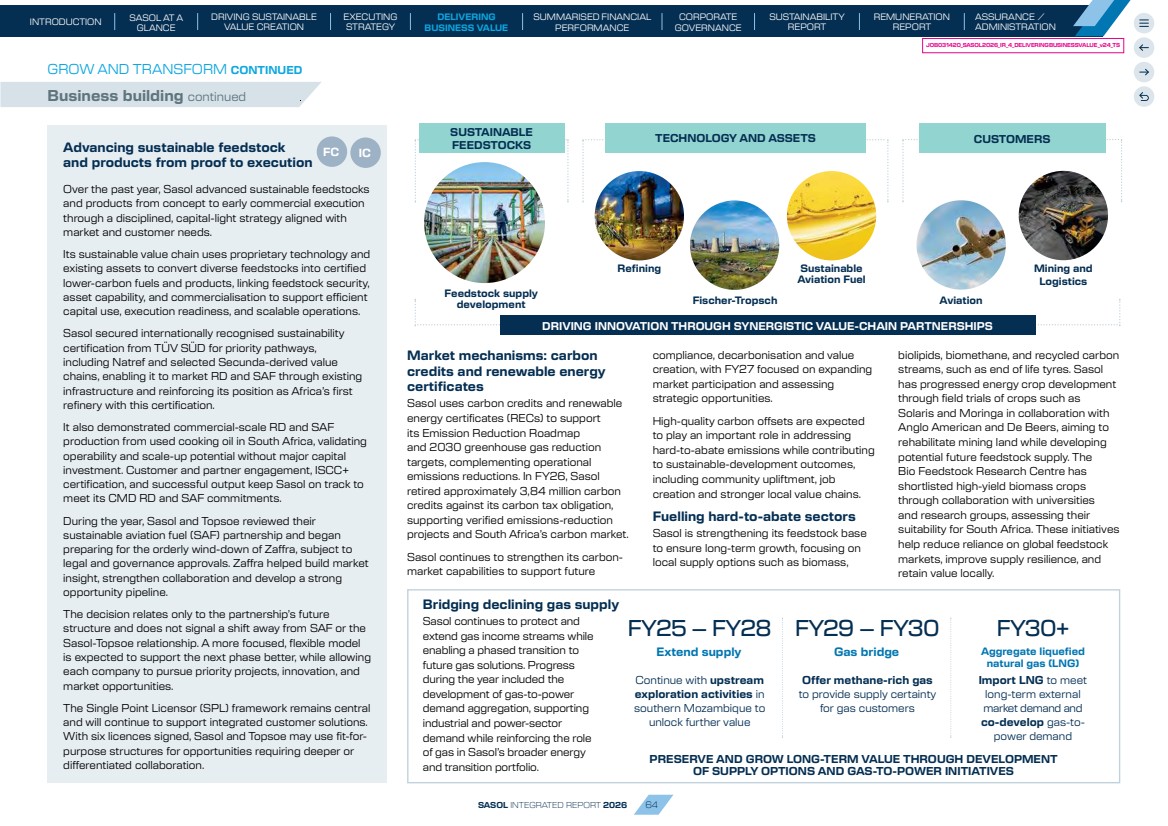
| SOURCE Feedstock/ utilities Gas Supplies the Sasol gas network in South Africa with natural gas produced from the onshore Petroleum Production Agreement (PPA) facilities, and the PSA. Gas is imported from Mozambique via the ROMPCO pipeline. Within South Africa, Sasol’s networks in KwaZulu-Natal and Witbank-Middelburg are supplied with methane-rich gas produced from SO. Gas is also sold to customers in Mozambique. Crude oil Sasol procures approximately 20 million barrels of crude oil per annum from global producers and traders as feedstock for Natref, to produce petrol, diesel, jet fuel and other refined products. Coal Operates six coal mines that supply between 30 and 35 million tons of thermal coal feedstock per annum to operations in Secunda and Sasolburg*. Production from Sasol’s mines is supplemented with external purchases to meet the requirements of the Southern Africa value chain. * Further to the repurposing of the existing export beneficiation plant as a destoning solution, Sasol Mining concluded the last of its export production on 30 June 2025 and last export sales in Q1 FY26. STRENGTHEN OUR FOUNDATION Southern Africa Energy and Chemicals Responsible for Mining, Gas, Operations, and Fuels and Chemicals sales and marketing – through which we provide various petroleum and chemical products to customers, both in South Africa and internationally. South African operations include mining and Sasol’s core manufacturing assets, incorporating Secunda Operations (SO), Sasolburg and Natref Operations. Internationally, the portfolio includes all chemicals produced in South Africa, but sold globally, gas operations in Mozambique and the ORYX GTL operations in Qatar. MARKET Supply customers globally Fuels Markets between 50 to 54 million barrels of liquid fuels per annum, supplying approximately 30% of South Africa’s domestic fuel needs through retail, commercial and wholesale channels and operating approximately 400 retail sites. Gas As the only supplier of gas at scale in South Africa, supplies 58 to 61 billion standard cubic feet (bscf) of gas per annum to the external market through a 1 428 km owned and operated gas pipeline network, supporting 282 customers from approximately 457 supply points. Chemicals Markets between 3 and 4 million metric tons of chemicals produced in South Africa. The product range consists of more than 300 unique grades of chemicals, ranging from basic commodities to specialised solutions. Sasol is the largest chemical producer in Southern Africa, supporting both local and global customers through a distribution network that covers all major markets and serves customers in more than 100 countries. Salient features Sasol remains steadfast in our commitment to pursue a workplace with Zero Harm but regrettably we recorded two fatalities in FY26 Implemented coal destoning and continuing with other interventions to improve coal quality and enable improved value chain performance Production Sharing Agreement (PSA) achieved beneficial operation in March 2026 Sasolburg was awarded the Green Drop Certification in recognition of excellence in wastewater management All three low carbon steam boilers at Natref achieved beneficial operation (BO) by FY26, completing the transition away from coal derived steam Through our self-build and renewable energy procurement programme, we have secured ~1,37GW from various sources Produced first batch of on-specification fully synthetic jet fuel at Secunda Operations (SO) ORYX GTL focused on safe, stable performance and was shut down in March 2026. Start up commenced in August 2026 ~46% own generation of electricity for South African (SA) operations Marketing and sales initiatives contributed to stronger performance PRODUCE Leveraging unique technologies Operations Secunda Operations (SO) Operates the world’s largest coal based synthetic fuels and chemicals production facility, supported by natural gas as a feedstock. The process uses advanced, high-temperature Fischer Tropsch technology to convert syngas into a range of synthetic fuel components, heating fuels and chemical products. Sasolburg and Natref Operations * ORYX GTL is a gas to liquids facility operated as a joint venture between Qatar Energy (51%) and Sasol (49%), with a design capacity of approximately 34 000 barrels per day, converting natural gas into high quality liquid fuels. Sasolburg Operations Made up of two sites, namely Sasol One and Midland, where natural gas and intermediate products from SO are converted into various chemicals. Natref A deep-conversion refinery designed to upgrade crude and produce ~90% white products. SASOL INTEGRATED REPORT 2026 51 JOB031420_SASOL 2026_IR_4_DELIVERING BUSINESS VALUE_v24_TS INTRODUCTION SUMMARISED FINANCIAL PERFORMANCE SUSTAINABILITY REPORT SASOL AT A GLANCE DRIVING SUSTAINABLE VALUE CREATION EXECUTING STRATEGY DELIVERING BUSINESS VALUE CORPORATE GOVERNANCE ASSURANCE / ADMINISTRATION REMUNERATION REPORT |
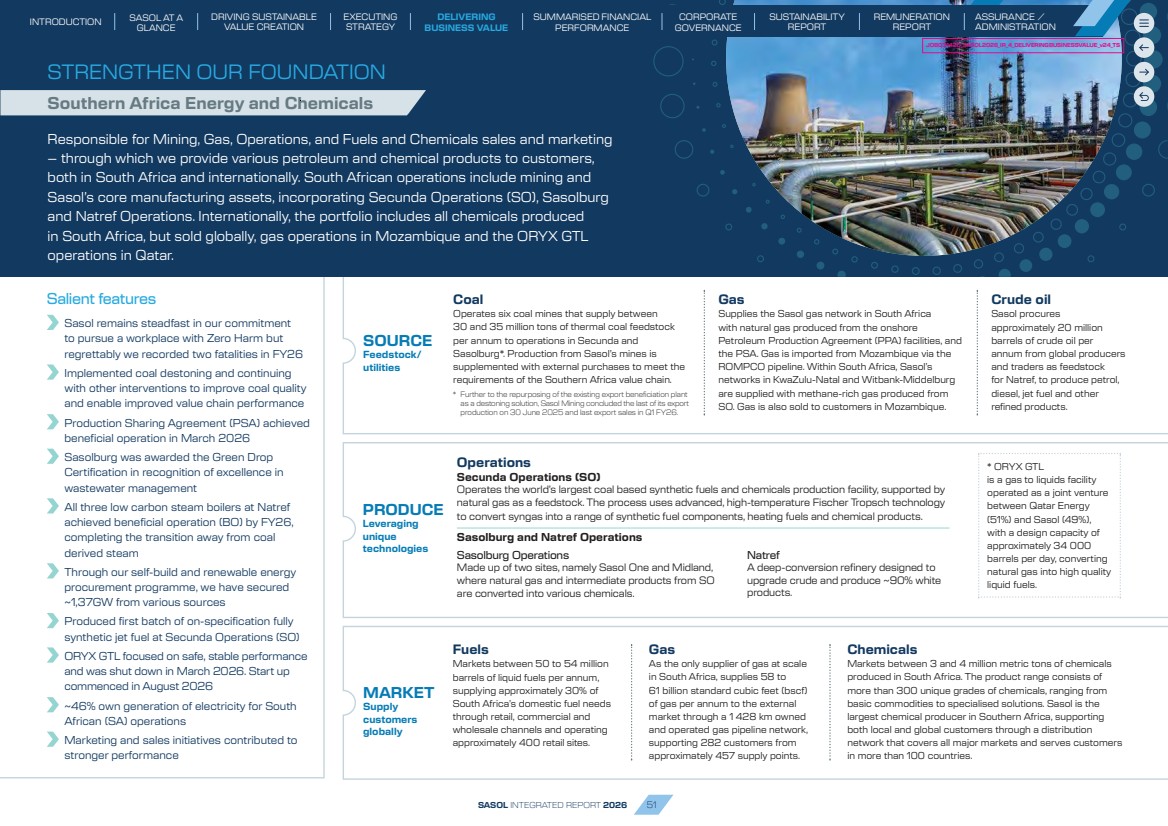
| Safety of our people Safety remains our highest priority. Safety is Sasol’s prioritised value, and across Sasol’s Southern Africa Operations, including Mining, safety remains the fundamental enabler of stable and sustainable performance. The commitment to Zero Harm is embedded through the One Sasol SHE Excellence Approach (OSSEA), which drives accountable leadership, frontline ownership and disciplined risk management in daily operations. Regrettably, during FY26, two fatalities occurred, highlighting the continued importance of compliance with rules and maintaining operational discipline. In a broader context safety has recorded improved indicators towards a reduction in hospitalisation cases and as well in the overall severity of injuries. www Refer to the Occupational Safety page on the Sasol website: https://www.sasol.com/esg/social-investment/safety The reduction in incidents associated with Fires, Explosions and Releases (FER’s) was also achieved in the reporting period. Performance was largely achieved through a targeted focus on high-risk activities, enhanced behavioural interventions and improved service provider accountability, collaboration and assurance activities across Southern Africa operations. Safety remains a key priority, with continued focus on improvement going into FY27. OVERVIEW OF THE YEAR Building on challenges experienced in FY25, FY26 focused on stabilising the Southern Africa value chain amid ongoing macro-economic pressures and feedstock and reliability constraints. While coal quality variability remained a headwind, Operations maintained strong cost and capital discipline, supporting cash flow and margin resilience. Operational stability improved over the course of the year, supported by targeted interventions across Mining and Operations. Improved coal quality, together with more consistent mining execution and enhanced gasifier availability at SO, supported higher SO production exceeding market guidance. Energy security for SA remains a strategic advantage with Sasol’s role underpinning resilience for South Africa (SA) during the Middle East conflict in the second half of FY26. SAFETY IS A TOP PRIORITY HC The Southern Africa value chain demonstrated improved resilience and flexibility in FY26, underpinned by stronger integrated planning and coordinated execution across operations. Despite continued constraints relating to gas feedstock availability, utilities and infrastructure, management actions were focused on maintaining production stability, improving coal feedstock quality and availability, and prioritising margin and cash generation. PROGRAMMES AND PERFORMANCE STRENGTHEN OUR FOUNDATION CONTINUED Southern Africa Energy and Chemicals continued Advantaged market location in the industrial heartland of South Africa A leading brand with established local and global customers Diverse and integrated portfolio enables optimisation across the entire value chain 10% Mining 15% Gas 58% Fuels 16% Chemicals Africa Adjusted EBITDA contribution 2026 64% Fuel MC FC Operational discipline remained a key enabler, allowing the business to respond effectively to both internal and external variability while sustaining performance. SASOL INTEGRATED REPORT 2026 52 JOB031420_SASOL 2026_IR_4_DELIVERING BUSINESS VALUE_v24_TS INTRODUCTION SUMMARISED FINANCIAL PERFORMANCE SUSTAINABILITY REPORT SASOL AT A GLANCE DRIVING SUSTAINABLE VALUE CREATION EXECUTING STRATEGY DELIVERING BUSINESS VALUE CORPORATE GOVERNANCE ASSURANCE / ADMINISTRATION REMUNERATION REPORT |
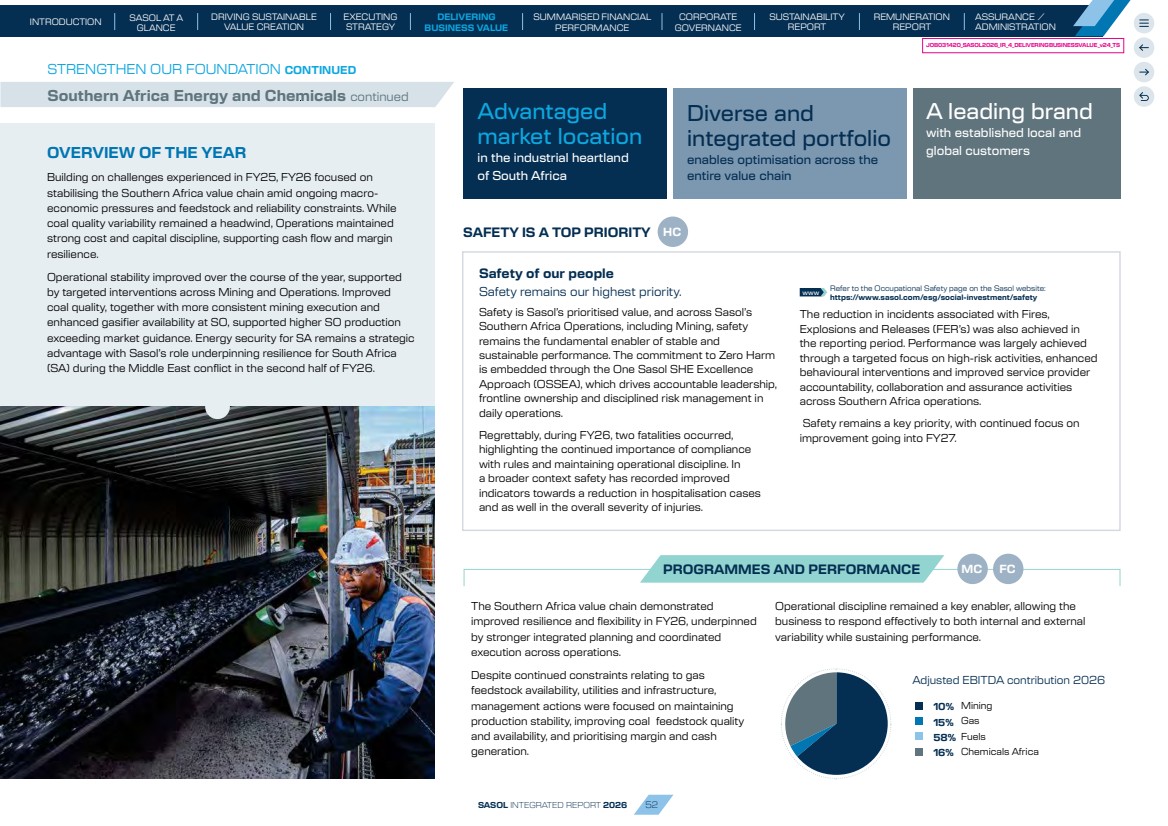
| STRENGTHEN OUR FOUNDATION CONTINUED Southern Africa Energy and Chemicals continued Mining MC FC NC Sasol Mining’s primary objective continues to be enhancing the quality, cost and volume of coal supplied to the Southern Africa operations. The destoning plant commenced beneficial operations in December 2025, which enabled the reactivation of previously closed low-quality sections during HY26. Processing coal through the destoning facility led to improved product quality and reduced reliance on external coal purchases. Consequently, mining saleable production for FY26 reached 28,4 mt, representing a 1% increase over 2025, while external coal procurement declined by 12%. The proportion of sinks has shown notable improvement since the commissioning of the destoning plant, now positioned at sinks less than 12%. Mining costs per sales ton remained aligned with the guidance range of R700 – R750 throughout the year. External sales were systematically discontinued in Q1 FY26, as planned, following the successful commissioning of the destoning plant. Destoning plant operational 7,26mt production from Secunda Operations PSA Gas development online (Mozambique) 57,5 mmbbl fuel sales, ahead of guidance US$ 49/bbl oil breakeven in FY26 Operations MC FC SO’s production volumes of 7,26 million tons for FY26 reflected an improvement compared to FY25 volumes of 6,72 million tons. Performance during FY26 reflected improved operational momentum, supported by increased production, progressive improvements in gasifier availability, and enhanced factory stability, particularly in the latter part of the year. While lower natural gas supply to SO following events such as flooding continued to present constraints, the operation demonstrated increased resilience and stronger overall performance throughout the year. Targeted interventions to improve coal quality, including changes in mining execution and destoning initiatives, together with focused reliability improvements on gasifiers, continued to gain traction during FY26. These actions supported improved operational predictability and increased pure gas production underpinning the pathway toward sustained volume recovery and strengthened profitability over the medium term. Sasolburg Operations delivered a stable operating performance during FY26, supported by disciplined plant operation and effective integration with the broader value chain. Operational flexibility enabled optimisation of product routing, supporting higher margin fuels and chemicals markets amid variable market conditions. The asset continued to play a key role in value protection and margin enhancement, reinforcing its strategic importance within Sasol’s Southern Africa operations. Natref delivered a strong FY26 operating performance, with production approximately 76% higher year-on-year, supported by stable crude supply , high utilisation and additional PRAX SA shareholding capacity. The refinery operated reliably throughout the year without disruption from Middle East conflict, enabling sustained throughput and elevated operating rates that contributed positively to Group liquid fuels output and value creation. Sasol will continue to utilise Prax SA’s shareholding capacity until the merger and acquisition (M&A) process is concluded. ORYX GTL was safely shutdown in March 2026, and put in preservation status in response to regional tensions in the Middle East. Start-up activities and production ramp-up commenced in August 2026, demonstrating the effectiveness of the asset preservation measures implemented during the shutdown period. SASOL INTEGRATED REPORT 2026 53 JOB031420_SASOL 2026_IR_4_DELIVERING BUSINESS VALUE_v24_TS INTRODUCTION SUMMARISED FINANCIAL PERFORMANCE SUSTAINABILITY REPORT SASOL AT A GLANCE DRIVING SUSTAINABLE VALUE CREATION EXECUTING STRATEGY DELIVERING BUSINESS VALUE CORPORATE GOVERNANCE ASSURANCE / ADMINISTRATION REMUNERATION REPORT |
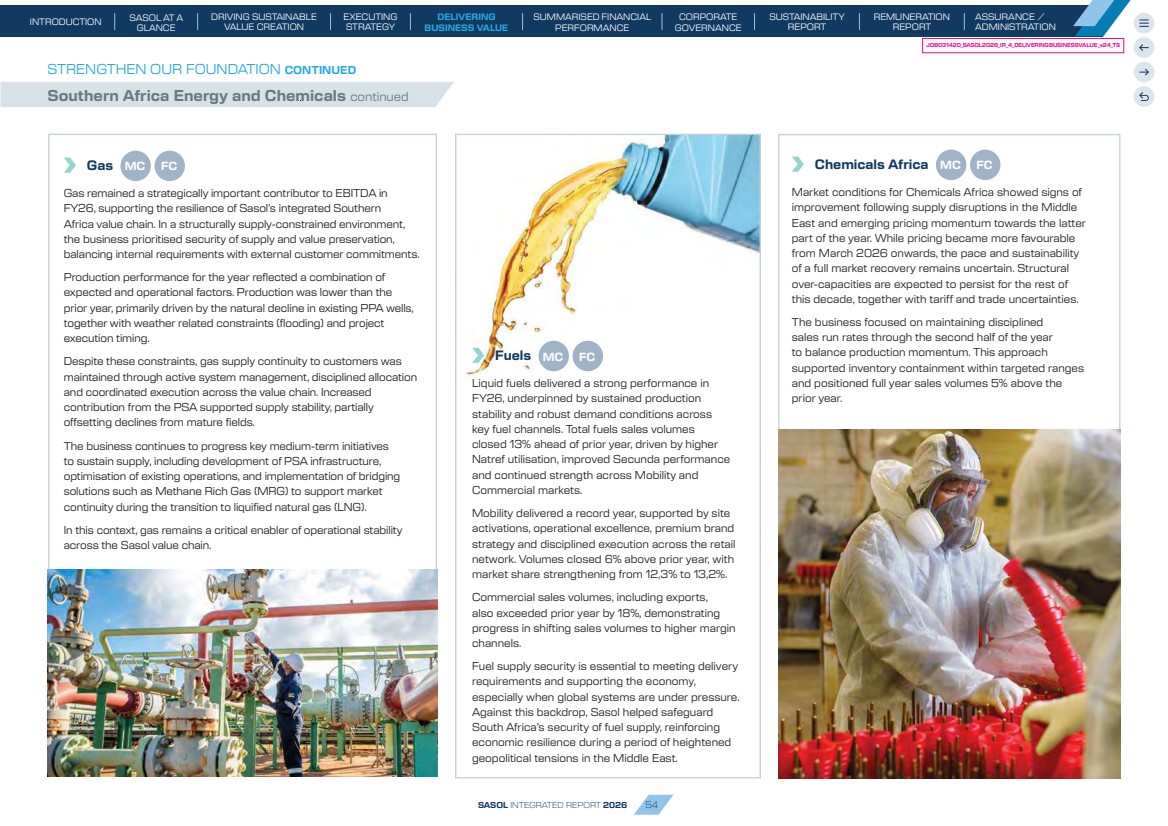
| Chemicals Africa MC FC Market conditions for Chemicals Africa showed signs of improvement following supply disruptions in the Middle East and emerging pricing momentum towards the latter part of the year. While pricing became more favourable from March 2026 onwards, the pace and sustainability of a full market recovery remains uncertain. Structural over-capacities are expected to persist for the rest of this decade, together with tariff and trade uncertainties. The business focused on maintaining disciplined sales run rates through the second half of the year to balance production momentum. This approach supported inventory containment within targeted ranges and positioned full year sales volumes 5% above the prior year. STRENGTHEN OUR FOUNDATION CONTINUED Southern Africa Energy and Chemicals continued Gas MC FC Gas remained a strategically important contributor to EBITDA in FY26, supporting the resilience of Sasol’s integrated Southern Africa value chain. In a structurally supply-constrained environment, the business prioritised security of supply and value preservation, balancing internal requirements with external customer commitments. Production performance for the year reflected a combination of expected and operational factors. Production was lower than the prior year, primarily driven by the natural decline in existing PPA wells, together with weather related constraints (flooding) and project execution timing. Despite these constraints, gas supply continuity to customers was maintained through active system management, disciplined allocation and coordinated execution across the value chain. Increased contribution from the PSA supported supply stability, partially offsetting declines from mature fields. The business continues to progress key medium-term initiatives to sustain supply, including development of PSA infrastructure, optimisation of existing operations, and implementation of bridging solutions such as Methane Rich Gas (MRG) to support market continuity during the transition to liquified natural gas (LNG). In this context, gas remains a critical enabler of operational stability across the Sasol value chain. Fuels MC FC Liquid fuels delivered a strong performance in FY26, underpinned by sustained production stability and robust demand conditions across key fuel channels. Total fuels sales volumes closed 13% ahead of prior year, driven by higher Natref utilisation, improved Secunda performance and continued strength across Mobility and Commercial markets. Mobility delivered a record year, supported by site activations, operational excellence, premium brand strategy and disciplined execution across the retail network. Volumes closed 6% above prior year, with market share strengthening from 12,3% to 13,2%. Commercial sales volumes, including exports, also exceeded prior year by 18%, demonstrating progress in shifting sales volumes to higher margin channels. Fuel supply security is essential to meeting delivery requirements and supporting the economy, especially when global systems are under pressure. Against this backdrop, Sasol helped safeguard South Africa’s security of fuel supply, reinforcing economic resilience during a period of heightened geopolitical tensions in the Middle East. SASOL INTEGRATED REPORT 2026 54 JOB031420_SASOL 2026_IR_4_DELIVERING BUSINESS VALUE_v24_TS INTRODUCTION SUMMARISED FINANCIAL PERFORMANCE SUSTAINABILITY REPORT SASOL AT A GLANCE DRIVING SUSTAINABLE VALUE CREATION EXECUTING STRATEGY DELIVERING BUSINESS VALUE CORPORATE GOVERNANCE ASSURANCE / ADMINISTRATION REMUNERATION REPORT |
| OUTLOOK Unlocking value in the Southern Africa business is anchored in feedstock, operations, and marketing and sales, with feedstock and reliable operations representing the largest levers at our disposal. Our focus • Deliver on volume growth and margin upliftment • Drive disciplined cost reduction with targeted focus on capital efficiency Mining Maintaining a continuous supply of quality, cost-effective coal that meets the requirements for the Southern Africa value chain. Mining saleable production is expected to be between 30 – 32 million tons, higher than FY26, due to restoration of operational capacity and enhanced in-section efficiency. Total cost per sales ton is expected to be within the range of R680 – R750 supported by higher production and cost. Ongoing initiatives to improve destoning plant yield and throughput will drive further quality improvements, with average sinks expected to remain below 12% in FY27. Gas The gas business will continue to optimise existing projects and progress initiatives aimed at extending the gas plateau, supporting security of supply and pursuing economically viable regional opportunities. Combined gas production volumes from the PPA and PSA licences are expected to be 0 – 5% higher than FY26, reflecting the current operating environment and ongoing supply dynamics in Mozambique. Feedstock/utilities SOURCE Operations Secunda Operations FY27 production volume is expected to be 7,2 to 7,4 million tons, supported by continued reliability improvements, improved gasifier availability and the benefits of coal quality initiatives. The Secunda phase shutdown will occur in the first half of FY27. Over 1,37GW of renewable energy has been secured in South Africa, supporting the goal of reaching 2GW by FY30. Sasolburg and Natref Operations In FY27, the focus will remain on sustaining reliability gains achieved in FY26, strengthening steam supply resilience, supporting fuel specification compliance and maximising value from existing assets through targeted optimisation initiatives. This included the commissioning of low-carbon boilers at Natref, strengthening steam supply reliability and reducing emissions, as well as progressing Clean Fuels II to support compliance with FY27 fuel specifications. In parallel, the business continues to assess opportunities to repurpose existing operations through the application of proven technologies and more sustainable feedstock options, supporting longer-term value creation within the Southern Africa value chain. ORYX GTL The ORYX GTL facility was safely shutdown in March 2026, and put in preservation status, in response to the regional tensions within the Middle East. Prior to the shutdown, the asset delivered strong safety performance, solid utilisation and robust margins. Start-up activities and production ramp-up commenced in August 2026. Leveraging unique technologies PRODUCE Fuels Sasol plans to continue optimising the channel mix to enhance financial performance and will continue to build on this success. Overall FY27 sales volumes are expected to be -3 to +3% compared to FY26 supported by stable SO production, however subject to ongoing market volatility and the finalisation of Prax SA M&A process. Chemicals Chemicals Africa sales volumes for FY27 are expected to be 0 – 5% higher than FY26, supported by the anticipated improved production at our operations. Gas The expectation is to continue supplying the South African gas market with natural and methane-rich gas with volumes largely aligned to FY26. Supply customers globally MARKET STRENGTHEN OUR FOUNDATION CONTINUED Southern Africa Energy and Chemicals continued FY27 Ramp-up performance Operational reliability Improve mining own production FY28 Performance restored >7,4mt Secunda Operational volume US$50/bbl oil breakeven by FY28 Restoring the Southern Africa value chain and unlocking value SASOL INTEGRATED REPORT 2026 55 JOB031420_SASOL 2026_IR_4_DELIVERING BUSINESS VALUE_v24_TS INTRODUCTION SUMMARISED FINANCIAL PERFORMANCE SUSTAINABILITY REPORT SASOL AT A GLANCE DRIVING SUSTAINABLE VALUE CREATION EXECUTING STRATEGY DELIVERING BUSINESS VALUE CORPORATE GOVERNANCE ASSURANCE / ADMINISTRATION REMUNERATION REPORT |
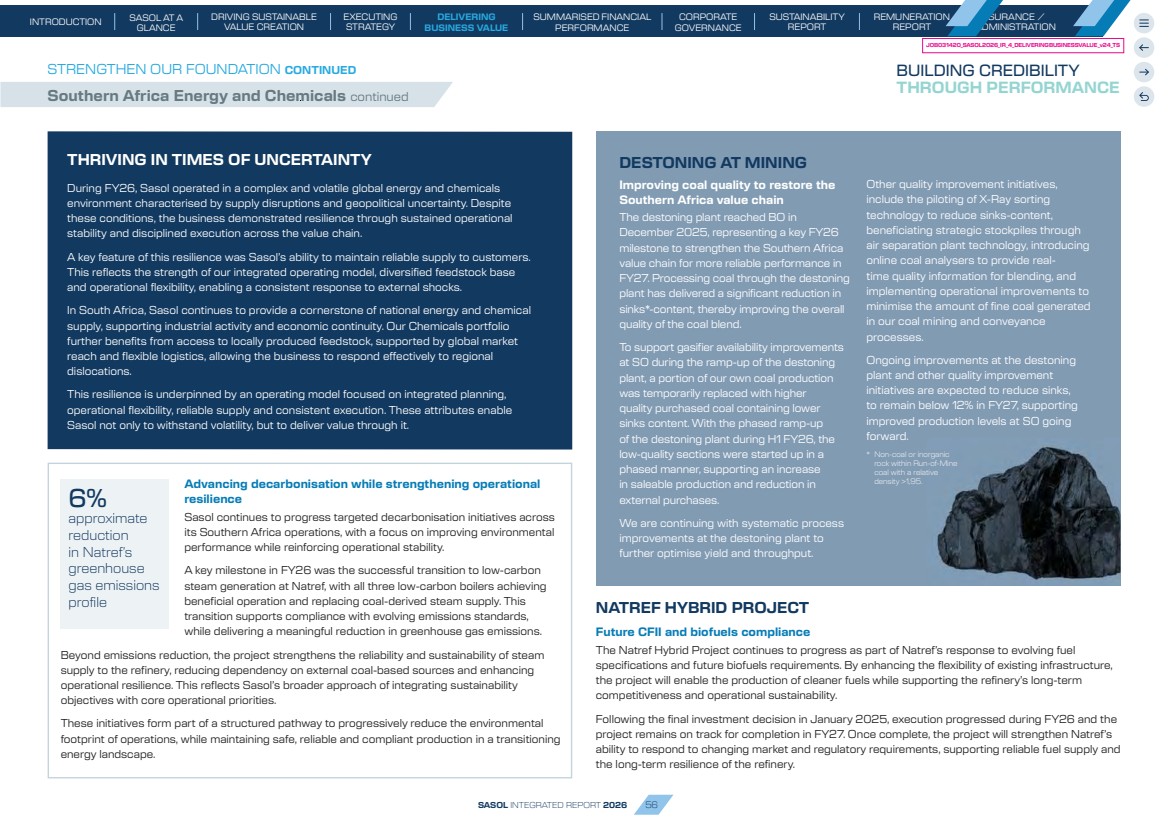
| THRIVING IN TIMES OF UNCERTAINTY During FY26, Sasol operated in a complex and volatile global energy and chemicals environment characterised by supply disruptions and geopolitical uncertainty. Despite these conditions, the business demonstrated resilience through sustained operational stability and disciplined execution across the value chain. A key feature of this resilience was Sasol’s ability to maintain reliable supply to customers. This reflects the strength of our integrated operating model, diversified feedstock base and operational flexibility, enabling a consistent response to external shocks. In South Africa, Sasol continues to provide a cornerstone of national energy and chemical supply, supporting industrial activity and economic continuity. Our Chemicals portfolio further benefits from access to locally produced feedstock, supported by global market reach and flexible logistics, allowing the business to respond effectively to regional dislocations. This resilience is underpinned by an operating model focused on integrated planning, operational flexibility, reliable supply and consistent execution. These attributes enable Sasol not only to withstand volatility, but to deliver value through it. STRENGTHEN OUR FOUNDATION CONTINUED Southern Africa Energy and Chemicals continued BUILDING CREDIBILITY THROUGH PERFORMANCE Improving coal quality to restore the Southern Africa value chain The destoning plant reached BO in December 2025, representing a key FY26 milestone to strengthen the Southern Africa value chain for more reliable performance in FY27. Processing coal through the destoning plant has delivered a significant reduction in sinks*-content, thereby improving the overall quality of the coal blend. To support gasifier availability improvements at SO during the ramp-up of the destoning plant, a portion of our own coal production was temporarily replaced with higher quality purchased coal containing lower sinks content. With the phased ramp-up of the destoning plant during H1 FY26, the low-quality sections were started up in a phased manner, supporting an increase in saleable production and reduction in external purchases. We are continuing with systematic process improvements at the destoning plant to further optimise yield and throughput. Other quality improvement initiatives, include the piloting of X-Ray sorting technology to reduce sinks-content, beneficiating strategic stockpiles through air separation plant technology, introducing online coal analysers to provide real-time quality information for blending, and implementing operational improvements to minimise the amount of fine coal generated in our coal mining and conveyance processes. Ongoing improvements at the destoning plant and other quality improvement initiatives are expected to reduce sinks, to remain below 12% in FY27, supporting improved production levels at SO going forward. * Non-coal or inorganic rock within Run-of-Mine coal with a relative density >1,95. DESTONING AT MINING inorganic Run-of-Mine relative NATREF HYBRID PROJECT Future CFII and biofuels compliance The Natref Hybrid Project continues to progress as part of Natref’s response to evolving fuel specifications and future biofuels requirements. By enhancing the flexibility of existing infrastructure, the project will enable the production of cleaner fuels while supporting the refinery’s long-term competitiveness and operational sustainability. Following the final investment decision in January 2025, execution progressed during FY26 and the project remains on track for completion in FY27. Once complete, the project will strengthen Natref’s ability to respond to changing market and regulatory requirements, supporting reliable fuel supply and the long-term resilience of the refinery. Advancing decarbonisation while strengthening operational resilience Sasol continues to progress targeted decarbonisation initiatives across its Southern Africa operations, with a focus on improving environmental performance while reinforcing operational stability. A key milestone in FY26 was the successful transition to low-carbon steam generation at Natref, with all three low-carbon boilers achieving beneficial operation and replacing coal-derived steam supply. This transition supports compliance with evolving emissions standards, while delivering a meaningful reduction in greenhouse gas emissions. Beyond emissions reduction, the project strengthens the reliability and sustainability of steam supply to the refinery, reducing dependency on external coal-based sources and enhancing operational resilience. This reflects Sasol’s broader approach of integrating sustainability objectives with core operational priorities. These initiatives form part of a structured pathway to progressively reduce the environmental footprint of operations, while maintaining safe, reliable and compliant production in a transitioning energy landscape. 6% approximate reduction in Natref’s greenhouse gas emissions profile SASOL INTEGRATED REPORT 2026 56 JOB031420_SASOL 2026_IR_4_DELIVERING BUSINESS VALUE_v24_TS INTRODUCTION SUMMARISED FINANCIAL PERFORMANCE SUSTAINABILITY REPORT SASOL AT A GLANCE DRIVING SUSTAINABLE VALUE CREATION EXECUTING STRATEGY DELIVERING BUSINESS VALUE CORPORATE GOVERNANCE ASSURANCE / ADMINISTRATION REMUNERATION REPORT |
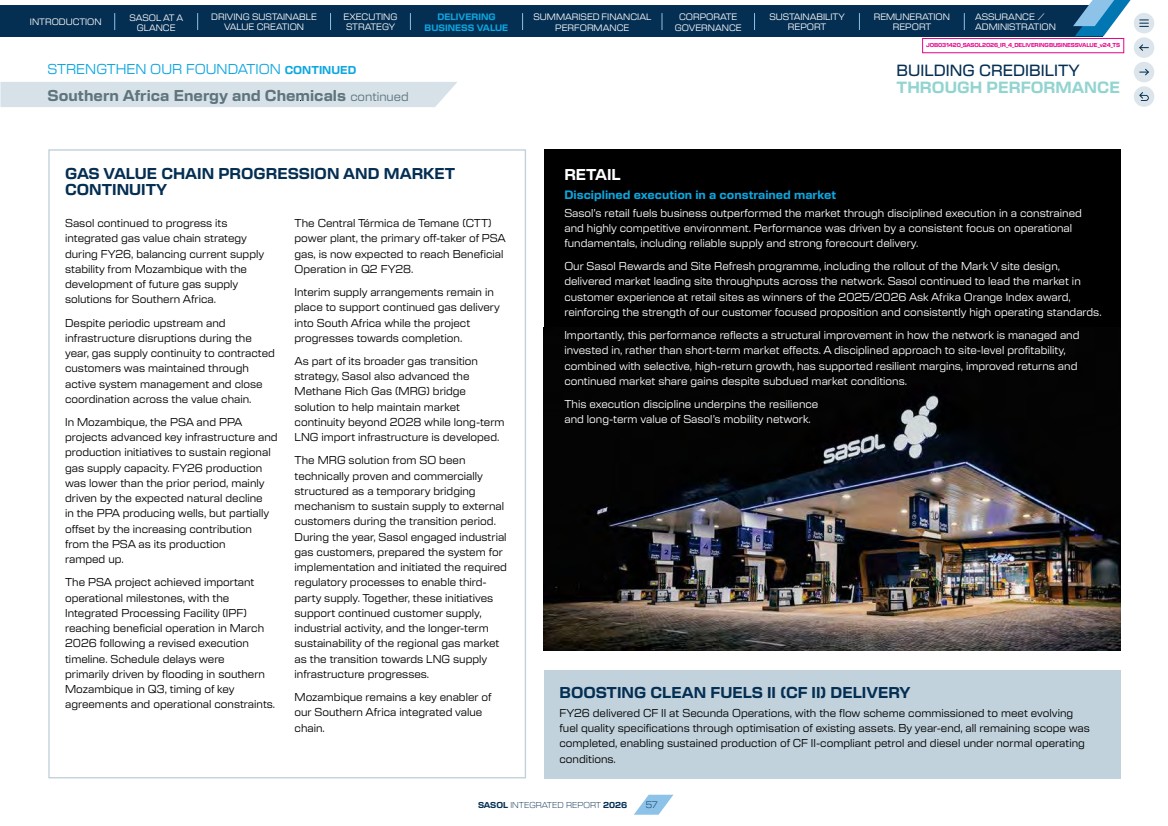
| RETAIL Disciplined execution in a constrained market Sasol’s retail fuels business outperformed the market through disciplined execution in a constrained and highly competitive environment. Performance was driven by a consistent focus on operational fundamentals, including reliable supply and strong forecourt delivery. Our Sasol Rewards and Site Refresh programme, including the rollout of the Mark V site design, delivered market leading site throughputs across the network. Sasol continued to lead the market in customer experience at retail sites as winners of the 2025/2026 Ask Afrika Orange Index award, reinforcing the strength of our customer focused proposition and consistently high operating standards. Importantly, this performance reflects a structural improvement in how the network is managed and invested in, rather than short-term market effects. A disciplined approach to site-level profitability, combined with selective, high-return growth, has supported resilient margins, improved returns and continued market share gains despite subdued market conditions. This execution discipline underpins the resilience and long-term value of Sasol’s mobility network. STRENGTHEN OUR FOUNDATION CONTINUED Southern Africa Energy and Chemicals continued BUILDING CREDIBILITY THROUGH PERFORMANCE Sasol continued to progress its integrated gas value chain strategy during FY26, balancing current supply stability from Mozambique with the development of future gas supply solutions for Southern Africa. Despite periodic upstream and infrastructure disruptions during the year, gas supply continuity to contracted customers was maintained through active system management and close coordination across the value chain. In Mozambique, the PSA and PPA projects advanced key infrastructure and production initiatives to sustain regional gas supply capacity. FY26 production was lower than the prior period, mainly driven by the expected natural decline in the PPA producing wells, but partially offset by the increasing contribution from the PSA as its production ramped up. The PSA project achieved important operational milestones, with the Integrated Processing Facility (IPF) reaching beneficial operation in March 2026 following a revised execution timeline. Schedule delays were primarily driven by flooding in southern Mozambique in Q3, timing of key agreements and operational constraints. The Central Térmica de Temane (CTT) power plant, the primary off-taker of PSA gas, is now expected to reach Beneficial Operation in Q2 FY28. Interim supply arrangements remain in place to support continued gas delivery into South Africa while the project progresses towards completion. As part of its broader gas transition strategy, Sasol also advanced the Methane Rich Gas (MRG) bridge solution to help maintain market continuity beyond 2028 while long-term LNG import infrastructure is developed. The MRG solution from SO been technically proven and commercially structured as a temporary bridging mechanism to sustain supply to external customers during the transition period. During the year, Sasol engaged industrial gas customers, prepared the system for implementation and initiated the required regulatory processes to enable third-party supply. Together, these initiatives support continued customer supply, industrial activity, and the longer-term sustainability of the regional gas market as the transition towards LNG supply infrastructure progresses. Mozambique remains a key enabler of our Southern Africa integrated value chain. BOOSTING CLEAN FUELS II (CF II) DELIVERY FY26 delivered CF II at Secunda Operations, with the flow scheme commissioned to meet evolving fuel quality specifications through optimisation of existing assets. By year-end, all remaining scope was completed, enabling sustained production of CF II-compliant petrol and diesel under normal operating conditions. GAS VALUE CHAIN PROGRESSION AND MARKET CONTINUITY SASOL INTEGRATED REPORT 2026 57 JOB031420_SASOL 2026_IR_4_DELIVERING BUSINESS VALUE_v24_TS INTRODUCTION SUMMARISED FINANCIAL PERFORMANCE SUSTAINABILITY REPORT SASOL AT A GLANCE DRIVING SUSTAINABLE VALUE CREATION EXECUTING STRATEGY DELIVERING BUSINESS VALUE CORPORATE GOVERNANCE ASSURANCE / ADMINISTRATION REMUNERATION REPORT |
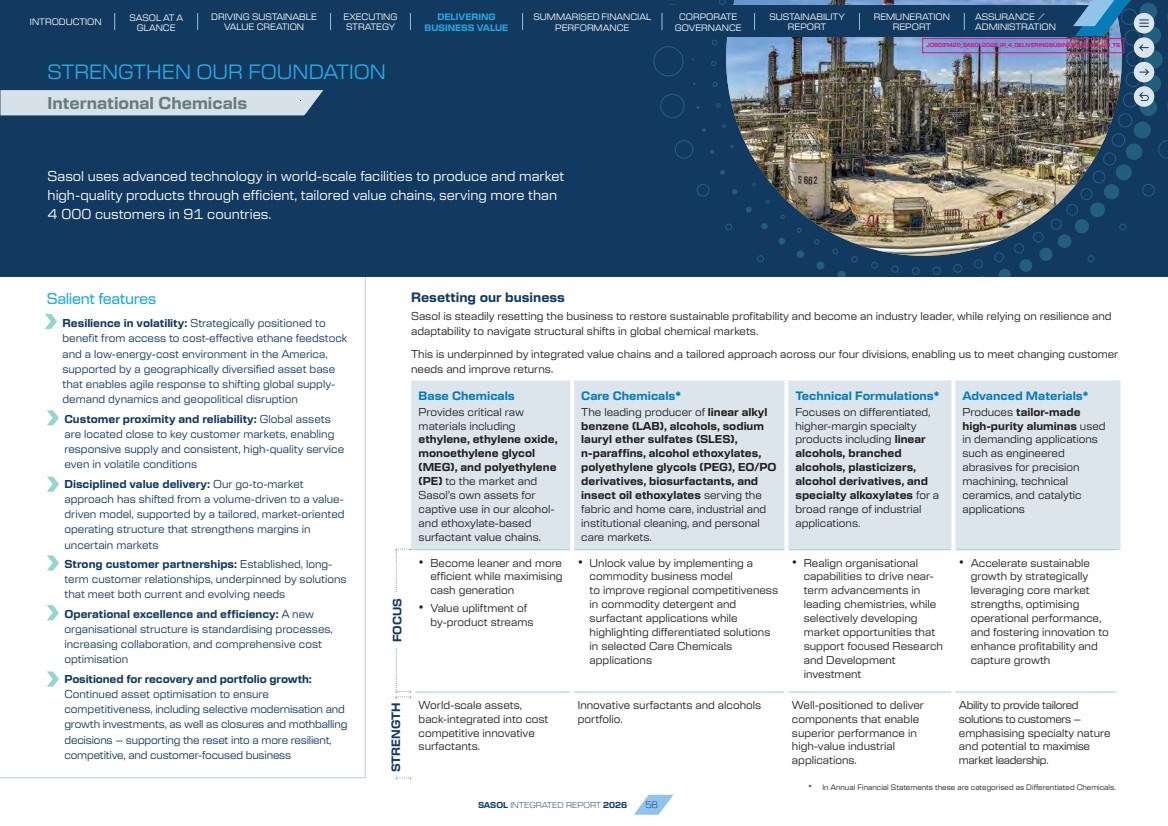
| Sasol uses advanced technology in world-scale facilities to produce and market high-quality products through efficient, tailored value chains, serving more than 4 000 customers in 91 countries. Salient features • Resilience in volatility: Strategically positioned to benefit from access to cost-effective ethane feedstock and a low-energy-cost environment in the America, supported by a geographically diversified asset base that enables agile response to shifting global supply-demand dynamics and geopolitical disruption Customer proximity and reliability: Global assets are located close to key customer markets, enabling responsive supply and consistent, high-quality service even in volatile conditions Disciplined value delivery: Our go-to-market approach has shifted from a volume-driven to a value-driven model, supported by a tailored, market-oriented operating structure that strengthens margins in uncertain markets Strong customer partnerships: Established, long-term customer relationships, underpinned by solutions that meet both current and evolving needs Operational excellence and efficiency: A new organisational structure is standardising processes, increasing collaboration, and comprehensive cost optimisation Positioned for recovery and portfolio growth: Continued asset optimisation to ensure competitiveness, including selective modernisation and growth investments, as well as closures and mothballing decisions – supporting the reset into a more resilient, competitive, and customer-focused business STRENGTHEN OUR FOUNDATION International Chemicals Base Chemicals Provides critical raw materials including ethylene, ethylene oxide, monoethylene glycol (MEG), and polyethylene (PE) to the market and Sasol’s own assets for captive use in our alcohol-and ethoxylate-based surfactant value chains. Care Chemicals* The leading producer of linear alkyl benzene (LAB), alcohols, sodium lauryl ether sulfates (SLES), n-paraffins, alcohol ethoxylates, polyethylene glycols (PEG), EO/PO derivatives, biosurfactants, and insect oil ethoxylates serving the fabric and home care, industrial and institutional cleaning, and personal care markets. Technical Formulations* Focuses on differentiated, higher-margin specialty products including linear alcohols, branched alcohols, plasticizers, alcohol derivatives, and specialty alkoxylates for a broad range of industrial applications. Advanced Materials* Produces tailor-made high-purity aluminas used in demanding applications such as engineered abrasives for precision machining, technical ceramics, and catalytic applications • Become leaner and more efficient while maximising cash generation • Value upliftment of by-product streams • Unlock value by implementing a commodity business model to improve regional competitiveness in commodity detergent and surfactant applications while highlighting differentiated solutions in selected Care Chemicals applications • Realign organisational capabilities to drive near-term advancements in leading chemistries, while selectively developing market opportunities that support focused Research and Development investment • Accelerate sustainable growth by strategically leveraging core market strengths, optimising operational performance, and fostering innovation to enhance profitability and capture growth World-scale assets, back-integrated into cost competitive innovative surfactants. Innovative surfactants and alcohols portfolio. Well-positioned to deliver components that enable superior performance in high-value industrial applications. Ability to provide tailored solutions to customers – emphasising specialty nature and potential to maximise market leadership. FOCUS STRENGTH * In Annual Financial Statements these are categorised as Differentiated Chemicals. Resetting our business Sasol is steadily resetting the business to restore sustainable profitability and become an industry leader, while relying on resilience and adaptability to navigate structural shifts in global chemical markets. This is underpinned by integrated value chains and a tailored approach across our four divisions, enabling us to meet changing customer needs and improve returns. SASOL INTEGRATED REPORT 2026 58 JOB031420_SASOL 2026_IR_4_DELIVERING BUSINESS VALUE_v24_TS INTRODUCTION SUMMARISED FINANCIAL PERFORMANCE SUSTAINABILITY REPORT SASOL AT A GLANCE DRIVING SUSTAINABLE VALUE CREATION EXECUTING STRATEGY DELIVERING BUSINESS VALUE CORPORATE GOVERNANCE ASSURANCE / ADMINISTRATION REMUNERATION REPORT |
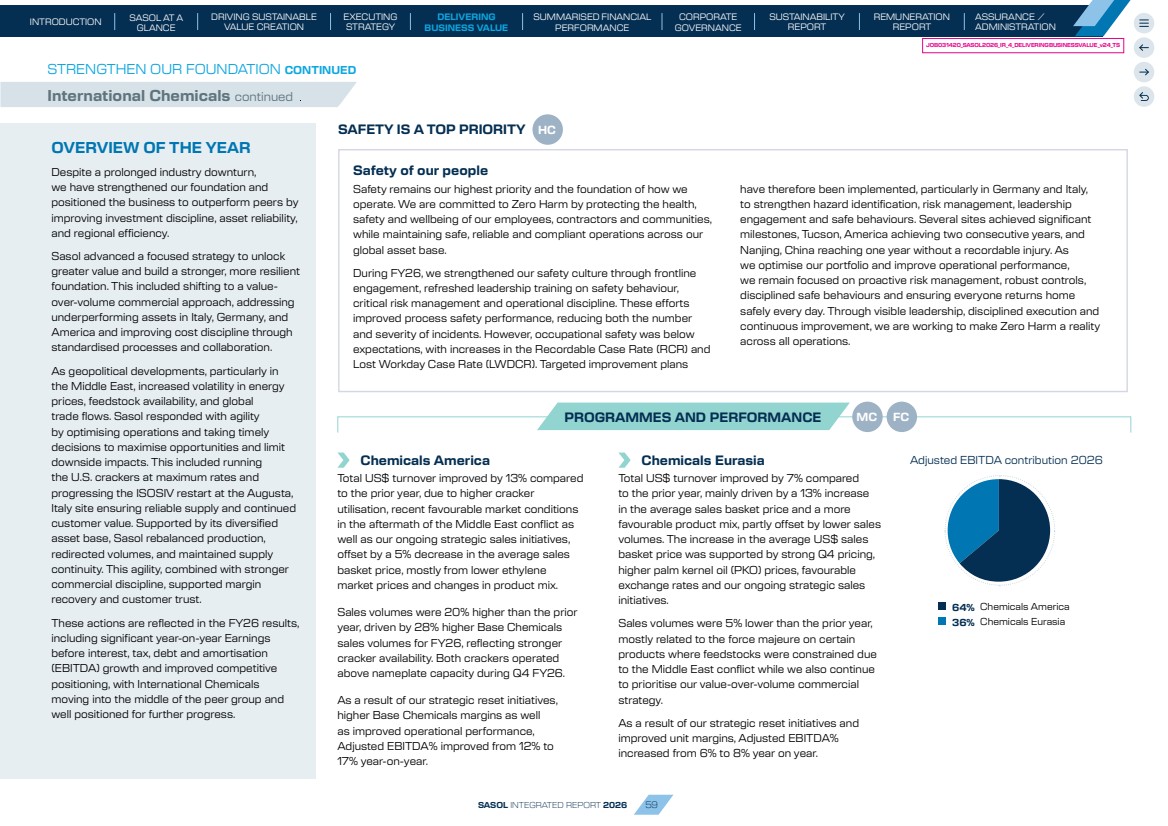
| STRENGTHEN OUR FOUNDATION CONTINUED International Chemicals continued OVERVIEW OF THE YEAR Despite a prolonged industry downturn, we have strengthened our foundation and positioned the business to outperform peers by improving investment discipline, asset reliability, and regional efficiency. Sasol advanced a focused strategy to unlock greater value and build a stronger, more resilient foundation. This included shifting to a value-over-volume commercial approach, addressing underperforming assets in Italy, Germany, and America and improving cost discipline through standardised processes and collaboration. As geopolitical developments, particularly in the Middle East, increased volatility in energy prices, feedstock availability, and global trade flows. Sasol responded with agility by optimising operations and taking timely decisions to maximise opportunities and limit downside impacts. This included running the U.S. crackers at maximum rates and progressing the ISOSIV restart at the Augusta, Italy site ensuring reliable supply and continued customer value. Supported by its diversified asset base, Sasol rebalanced production, redirected volumes, and maintained supply continuity. This agility, combined with stronger commercial discipline, supported margin recovery and customer trust. These actions are reflected in the FY26 results, including significant year-on-year Earnings before interest, tax, debt and amortisation (EBITDA) growth and improved competitive positioning, with International Chemicals moving into the middle of the peer group and well positioned for further progress. 64% Chemicals America 36% Chemicals Eurasia Chemicals America Adjusted EBITDA contribution 2026 Total US$ turnover improved by 13% compared to the prior year, due to higher cracker utilisation, recent favourable market conditions in the aftermath of the Middle East conflict as well as our ongoing strategic sales initiatives, offset by a 5% decrease in the average sales basket price, mostly from lower ethylene market prices and changes in product mix. Sales volumes were 20% higher than the prior year, driven by 28% higher Base Chemicals sales volumes for FY26, reflecting stronger cracker availability. Both crackers operated above nameplate capacity during Q4 FY26. As a result of our strategic reset initiatives, higher Base Chemicals margins as well as improved operational performance, Adjusted EBITDA% improved from 12% to 17% year-on-year. PROGRAMMES AND PERFORMANCE MC FC Chemicals Eurasia Total US$ turnover improved by 7% compared to the prior year, mainly driven by a 13% increase in the average sales basket price and a more favourable product mix, partly offset by lower sales volumes. The increase in the average US$ sales basket price was supported by strong Q4 pricing, higher palm kernel oil (PKO) prices, favourable exchange rates and our ongoing strategic sales initiatives. Sales volumes were 5% lower than the prior year, mostly related to the force majeure on certain products where feedstocks were constrained due to the Middle East conflict while we also continue to prioritise our value-over-volume commercial strategy. As a result of our strategic reset initiatives and improved unit margins, Adjusted EBITDA% increased from 6% to 8% year on year. Safety of our people Safety remains our highest priority and the foundation of how we operate. We are committed to Zero Harm by protecting the health, safety and wellbeing of our employees, contractors and communities, while maintaining safe, reliable and compliant operations across our global asset base. During FY26, we strengthened our safety culture through frontline engagement, refreshed leadership training on safety behaviour, critical risk management and operational discipline. These efforts improved process safety performance, reducing both the number and severity of incidents. However, occupational safety was below expectations, with increases in the Recordable Case Rate (RCR) and Lost Workday Case Rate (LWDCR). Targeted improvement plans have therefore been implemented, particularly in Germany and Italy, to strengthen hazard identification, risk management, leadership engagement and safe behaviours. Several sites achieved significant milestones, Tucson, America achieving two consecutive years, and Nanjing, China reaching one year without a recordable injury. As we optimise our portfolio and improve operational performance, we remain focused on proactive risk management, robust controls, disciplined safe behaviours and ensuring everyone returns home safely every day. Through visible leadership, disciplined execution and continuous improvement, we are working to make Zero Harm a reality across all operations. SAFETY IS A TOP PRIORITY HC SASOL INTEGRATED REPORT 2026 59 JOB031420_SASOL 2026_IR_4_DELIVERING BUSINESS VALUE_v24_TS INTRODUCTION SUMMARISED FINANCIAL PERFORMANCE SUSTAINABILITY REPORT SASOL AT A GLANCE DRIVING SUSTAINABLE VALUE CREATION EXECUTING STRATEGY DELIVERING BUSINESS VALUE CORPORATE GOVERNANCE ASSURANCE / ADMINISTRATION REMUNERATION REPORT |
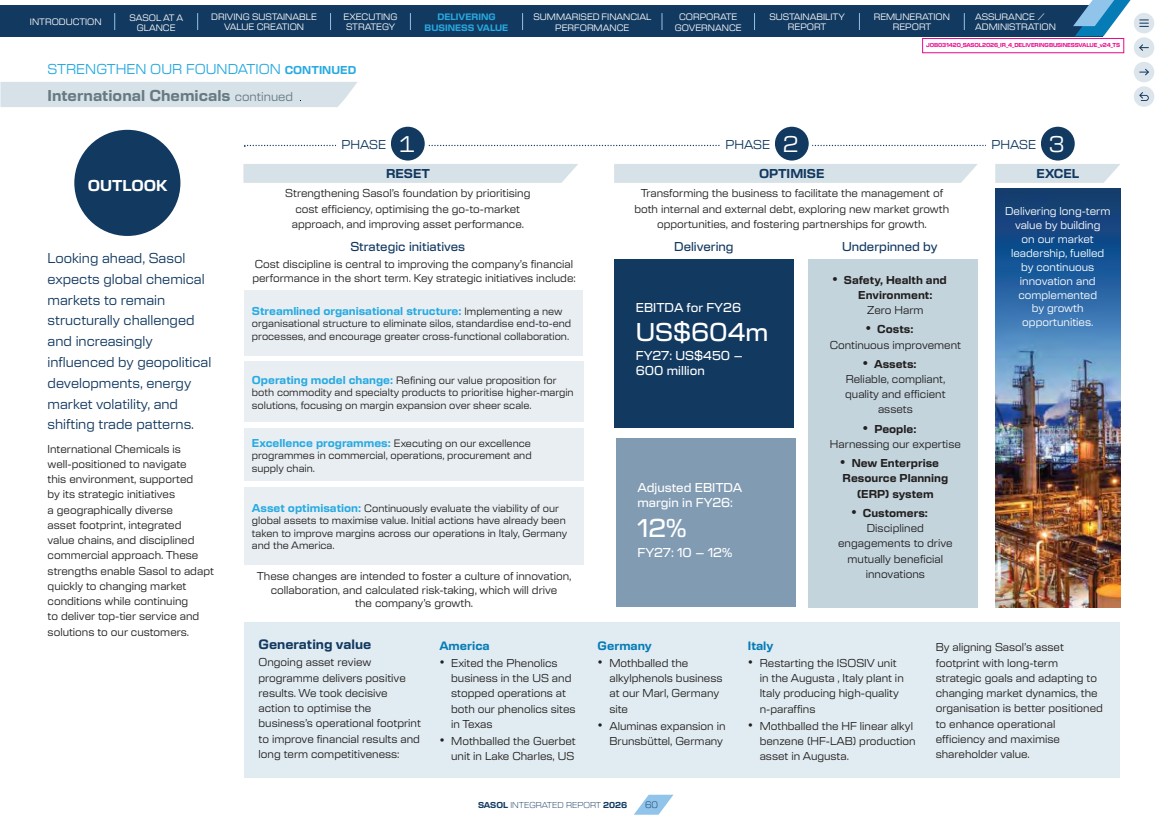
| STRENGTHEN OUR FOUNDATION CONTINUED International Chemicals continued 2 3 RESET OPTIMISE EXCEL 1 Delivering long-term value by building on our market leadership, fuelled by continuous innovation and complemented by growth opportunities. These changes are intended to foster a culture of innovation, collaboration, and calculated risk-taking, which will drive the company’s growth. Streamlined organisational structure: Implementing a new organisational structure to eliminate silos, standardise end-to-end processes, and encourage greater cross-functional collaboration. Operating model change: Refining our value proposition for both commodity and specialty products to prioritise higher-margin solutions, focusing on margin expansion over sheer scale. Excellence programmes: Executing on our excellence programmes in commercial, operations, procurement and supply chain. Asset optimisation: Continuously evaluate the viability of our global assets to maximise value. Initial actions have already been taken to improve margins across our operations in Italy, Germany and the America. PHASE PHASE PHASE OUTLOOK Looking ahead, Sasol expects global chemical markets to remain structurally challenged and increasingly influenced by geopolitical developments, energy market volatility, and shifting trade patterns. . International Chemicals is well-positioned to navigate this environment, supported by its strategic initiatives a geographically diverse asset footprint, integrated value chains, and disciplined commercial approach. These strengths enable Sasol to adapt quickly to changing market conditions while continuing to deliver top-tier service and solutions to our customers. Delivering Strengthening Sasol’s foundation by prioritising cost efficiency, optimising the go-to-market approach, and improving asset performance. EBITDA for FY26: US$604m FY27: US$450 – 600 million Adjusted EBITDA margin in FY26: 12% FY27: 10 – 12% Transforming the business to facilitate the management of both internal and external debt, exploring new market growth opportunities, and fostering partnerships for growth. Underpinned by • Safety, Health and Environment: Zero Harm • Costs: Continuous improvement • Assets: Reliable, compliant, quality and efficient assets • People: Harnessing our expertise • New Enterprise Resource Planning (ERP) system • Customers: Disciplined engagements to drive mutually beneficial innovations Strategic initiatives Cost discipline is central to improving the company’s financial performance in the short term. Key strategic initiatives include: Generating value Ongoing asset review programme delivers positive results. We took decisive action to optimise the business’s operational footprint to improve financial results and long term competitiveness: By aligning Sasol’s asset footprint with long-term strategic goals and adapting to changing market dynamics, the organisation is better positioned to enhance operational efficiency and maximise shareholder value. America • Exited the Phenolics business in the US and stopped operations at both our phenolics sites in Texas • Mothballed the Guerbet unit in Lake Charles, US Germany • Mothballed the alkylphenols business at our Marl, Germany site • Aluminas expansion in Brunsbüttel, Germany Italy • Restarting the ISOSIV unit in the Augusta , Italy plant in Italy producing high-quality n-paraffins • Mothballed the HF linear alkyl benzene (HF-LAB) production asset in Augusta. SASOL INTEGRATED REPORT 2026 60 JOB031420_SASOL 2026_IR_4_DELIVERING BUSINESS VALUE_v24_TS INTRODUCTION SUMMARISED FINANCIAL PERFORMANCE SUSTAINABILITY REPORT SASOL AT A GLANCE DRIVING SUSTAINABLE VALUE CREATION EXECUTING STRATEGY DELIVERING BUSINESS VALUE CORPORATE GOVERNANCE ASSURANCE / ADMINISTRATION REMUNERATION REPORT |
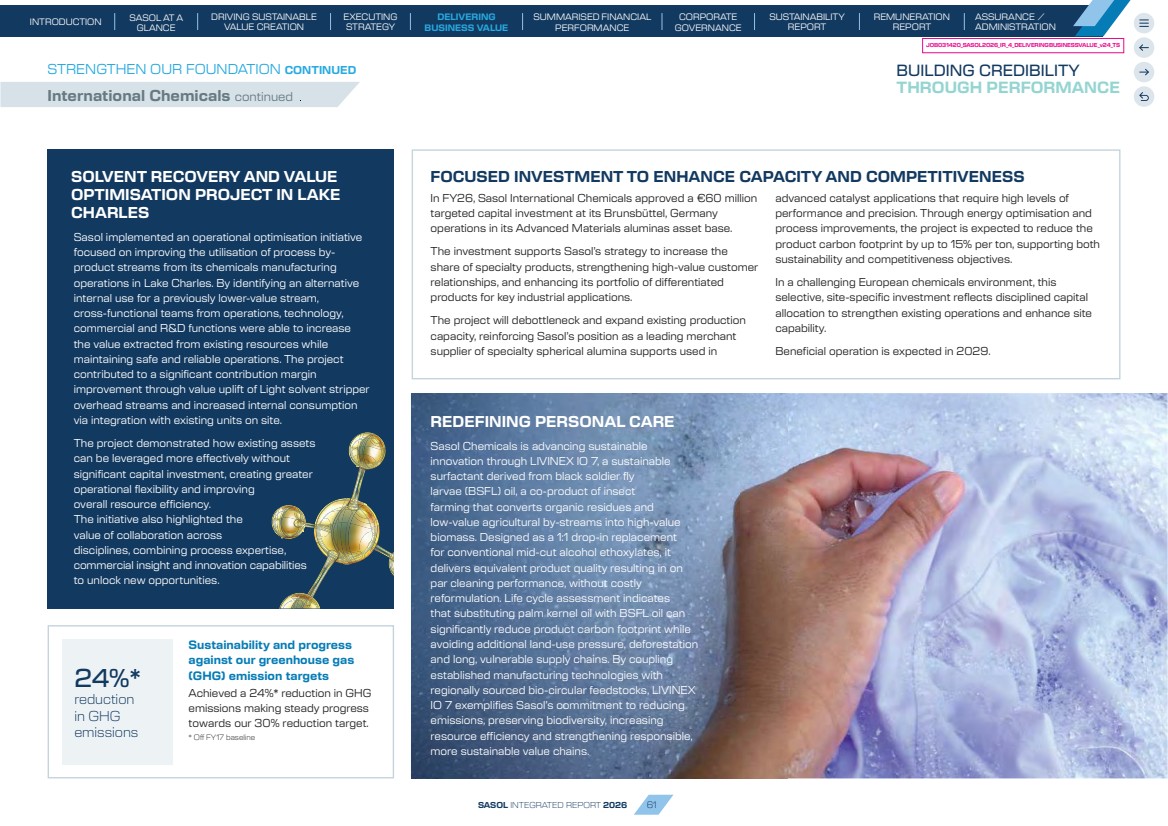
| STRENGTHEN OUR FOUNDATION CONTINUED International Chemicals continued REDEFINING PERSONAL CARE Sasol Chemicals is advancing sustainable innovation through LIVINEX IO 7, a sustainable surfactant derived from black soldier fly larvae (BSFL) oil, a co-product of insect farming that converts organic residues and low-value agricultural by-streams into high-value biomass. Designed as a 1:1 drop-in replacement for conventional mid-cut alcohol ethoxylates, it delivers equivalent product quality resulting in on par cleaning performance, without costly reformulation. Life cycle assessment indicates that substituting palm kernel oil with BSFL oil can significantly reduce product carbon footprint while avoiding additional land-use pressure, deforestation and long, vulnerable supply chains. By coupling established manufacturing technologies with regionally sourced bio-circular feedstocks, LIVINEX IO 7 exemplifies Sasol’s commitment to reducing emissions, preserving biodiversity, increasing resource efficiency and strengthening responsible, more sustainable value chains. Sustainability and progress against our greenhouse gas (GHG) emission targets Achieved a 24%* reduction in GHG emissions making steady progress towards our 30% reduction target. * Off FY17 baseline 24%* reduction in GHG emissions SOLVENT RECOVERY AND VALUE OPTIMISATION PROJECT IN LAKE CHARLES Sasol implemented an operational optimisation initiative focused on improving the utilisation of process by-product streams from its chemicals manufacturing operations in Lake Charles. By identifying an alternative internal use for a previously lower-value stream, cross-functional teams from operations, technology, commercial and R&D functions were able to increase the value extracted from existing resources while maintaining safe and reliable operations. The project contributed to a significant contribution margin improvement through value uplift of Light solvent stripper overhead streams and increased internal consumption via integration with existing units on site. The project demonstrated how existing assets can be leveraged more effectively without significant capital investment, creating greater operational flexibility and improving overall resource efficiency. The initiative also highlighted the value of collaboration across disciplines, combining process expertise, commercial insight and innovation capabilities to unlock new opportunities. In FY26, Sasol International Chemicals approved a €60 million targeted capital investment at its Brunsbüttel, Germany operations in its Advanced Materials aluminas asset base. The investment supports Sasol’s strategy to increase the share of specialty products, strengthening high-value customer relationships, and enhancing its portfolio of differentiated products for key industrial applications. The project will debottleneck and expand existing production capacity, reinforcing Sasol’s position as a leading merchant supplier of specialty spherical alumina supports used in advanced catalyst applications that require high levels of performance and precision. Through energy optimisation and process improvements, the project is expected to reduce the product carbon footprint by up to 15% per ton, supporting both sustainability and competitiveness objectives. In a challenging European chemicals environment, this selective, site-specific investment reflects disciplined capital allocation to strengthen existing operations and enhance site capability. Beneficial operation is expected in 2029. FOCUSED INVESTMENT TO ENHANCE CAPACITY AND COMPETITIVENESS BUILDING CREDIBILITY THROUGH PERFORMANCE SASOL INTEGRATED REPORT 2026 61 JOB031420_SASOL 2026_IR_4_DELIVERING BUSINESS VALUE_v24_TS INTRODUCTION SUMMARISED FINANCIAL PERFORMANCE SUSTAINABILITY REPORT SASOL AT A GLANCE DRIVING SUSTAINABLE VALUE CREATION EXECUTING STRATEGY DELIVERING BUSINESS VALUE CORPORATE GOVERNANCE ASSURANCE / ADMINISTRATION REMUNERATION REPORT |
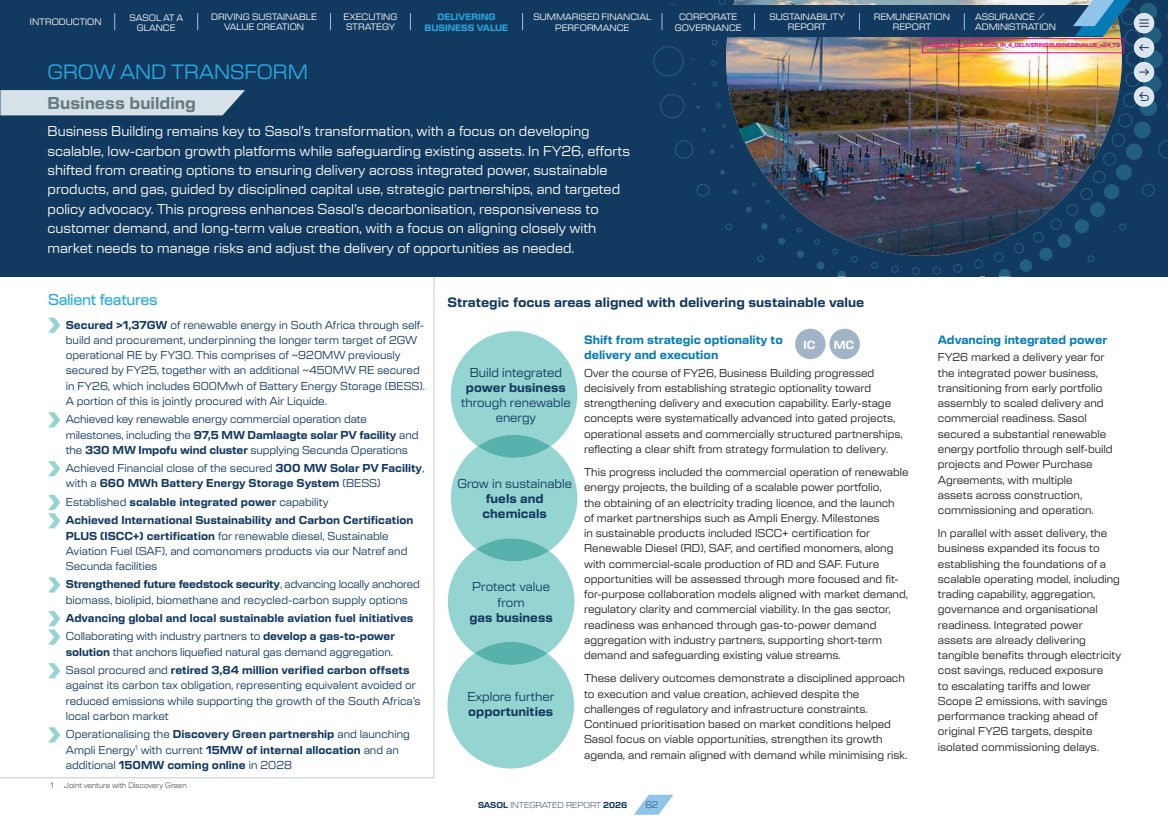
| Business Building remains key to Sasol’s transformation, with a focus on developing scalable, low-carbon growth platforms while safeguarding existing assets. In FY26, efforts shifted from creating options to ensuring delivery across integrated power, sustainable products, and gas, guided by disciplined capital use, strategic partnerships, and targeted policy advocacy. This progress enhances Sasol’s decarbonisation, responsiveness to customer demand, and long-term value creation, with a focus on aligning closely with market needs to manage risks and adjust the delivery of opportunities as needed. Salient features Secured >1,37GW of renewable energy in South Africa through self-build and procurement, underpinning the longer term target of 2GW operational RE by FY30. This comprises of ~920MW previously secured by FY25, together with an additional ~450MW RE secured in FY26, which includes 600Mwh of Battery Energy Storage (BESS). A portion of this is jointly procured with Air Liquide. Achieved key renewable energy commercial operation date milestones, including the 97,5 MW Damlaagte solar PV facility and the 330 MW Impofu wind cluster supplying Secunda Operations Achieved Financial close of the secured 300 MW Solar PV Facility, with a 660 MWh Battery Energy Storage System (BESS) Established scalable integrated power capability Achieved International Sustainability and Carbon Certification PLUS (ISCC+) certification for renewable diesel, Sustainable Aviation Fuel (SAF), and comonomers products via our Natref and Secunda facilities Strengthened future feedstock security, advancing locally anchored biomass, biolipid, biomethane and recycled-carbon supply options Advancing global and local sustainable aviation fuel initiatives Collaborating with industry partners to develop a gas-to-power solution that anchors liquefied natural gas demand aggregation. Sasol procured and retired 3,84 million verified carbon offsets against its carbon tax obligation, representing equivalent avoided or reduced emissions while supporting the growth of the South Africa’s local carbon market Operationalising the Discovery Green partnership and launching Ampli Energy 1 with current 15MW of internal allocation and an additional 150MW coming online in 2028 Strategic focus areas aligned with delivering sustainable value Build integrated power business through renewable energy Grow in sustainable fuels and chemicals Protect value from gas business Explore further opportunities Shift from strategic optionality to delivery and execution Over the course of FY26, Business Building progressed decisively from establishing strategic optionality toward strengthening delivery and execution capability. Early-stage concepts were systematically advanced into gated projects, operational assets and commercially structured partnerships, reflecting a clear shift from strategy formulation to delivery. This progress included the commercial operation of renewable energy projects, the building of a scalable power portfolio, the obtaining of an electricity trading licence, and the launch of market partnerships such as Ampli Energy. Milestones in sustainable products included ISCC+ certification for Renewable Diesel (RD), SAF, and certified monomers, along with commercial-scale production of RD and SAF. Future opportunities will be assessed through more focused and fit-for-purpose collaboration models aligned with market demand, regulatory clarity and commercial viability. In the gas sector, readiness was enhanced through gas-to-power demand aggregation with industry partners, supporting short-term demand and safeguarding existing value streams. These delivery outcomes demonstrate a disciplined approach to execution and value creation, achieved despite the challenges of regulatory and infrastructure constraints. Continued prioritisation based on market conditions helped Sasol focus on viable opportunities, strengthen its growth agenda, and remain aligned with demand while minimising risk. Advancing integrated power FY26 marked a delivery year for the integrated power business, transitioning from early portfolio assembly to scaled delivery and commercial readiness. Sasol secured a substantial renewable energy portfolio through self-build projects and Power Purchase Agreements, with multiple assets across construction, commissioning and operation. In parallel with asset delivery, the business expanded its focus to establishing the foundations of a scalable operating model, including trading capability, aggregation, governance and organisational readiness. Integrated power assets are already delivering tangible benefits through electricity cost savings, reduced exposure to escalating tariffs and lower Scope 2 emissions, with savings performance tracking ahead of original FY26 targets, despite isolated commissioning delays. IC MC GROW AND TRANSFORM Business building 1 Joint venture with Discovery Green SASOL INTEGRATED REPORT 2026 62 JOB031420_SASOL 2026_IR_4_DELIVERING BUSINESS VALUE_v24_TS INTRODUCTION SUMMARISED FINANCIAL PERFORMANCE SUSTAINABILITY REPORT SASOL AT A GLANCE DRIVING SUSTAINABLE VALUE CREATION EXECUTING STRATEGY DELIVERING BUSINESS VALUE CORPORATE GOVERNANCE ASSURANCE / ADMINISTRATION REMUNERATION REPORT |
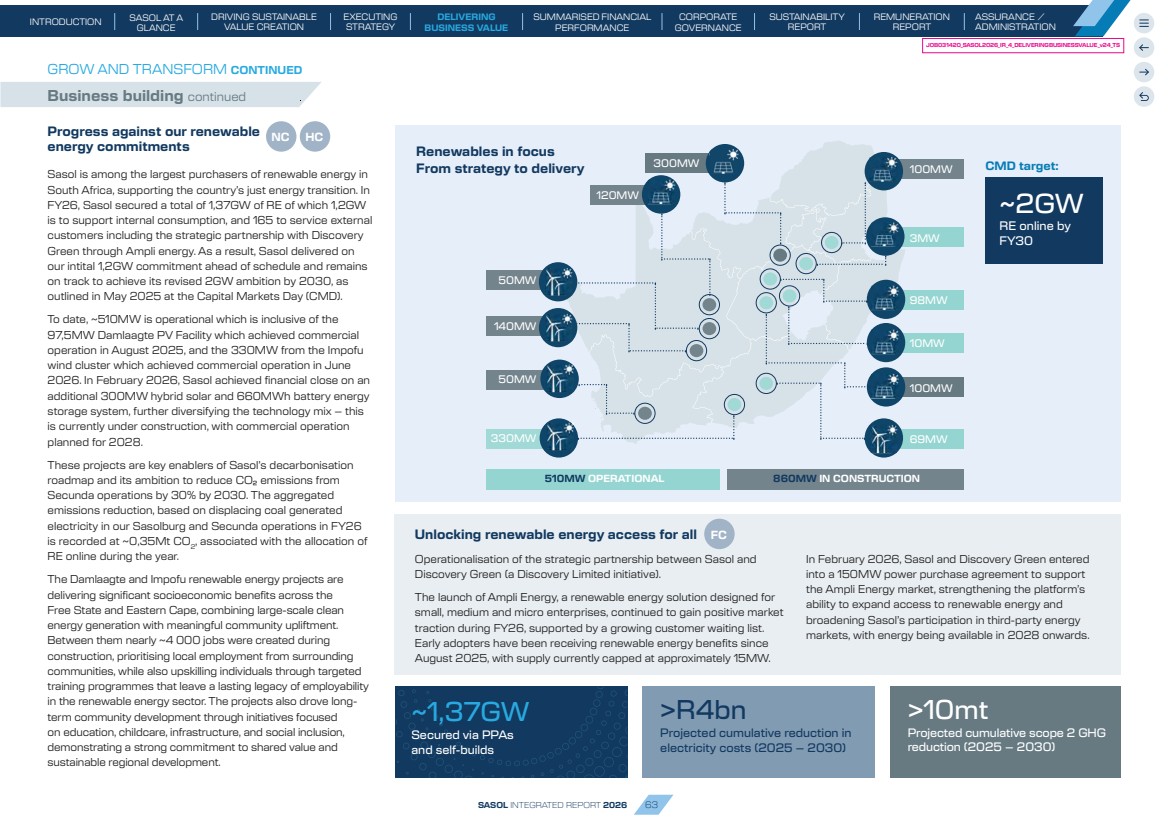
| Progress against our renewable energy commitments Sasol is among the largest purchasers of renewable energy in South Africa, supporting the country’s just energy transition. In FY26, Sasol secured a total of 1,37GW of RE of which 1,2GW is to support internal consumption, and 165 to service external customers including the strategic partnership with Discovery Green through Ampli energy. As a result, Sasol delivered on our intital 1,2GW commitment ahead of schedule and remains on track to achieve its revised 2GW ambition by 2030, as outlined in May 2025 at the Capital Markets Day (CMD). To date, ~510MW is operational which is inclusive of the 97,5MW Damlaagte PV Facility which achieved commercial operation in August 2025, and the 330MW from the Impofu wind cluster which achieved commercial operation in June 2026. In February 2026, Sasol achieved financial close on an additional 300MW hybrid solar and 660MWh battery energy storage system, further diversifying the technology mix – this is currently under construction, with commercial operation planned for 2028. These projects are key enablers of Sasol’s decarbonisation roadmap and its ambition to reduce CO₂ emissions from Secunda operations by 30% by 2030. The aggregated emissions reduction, based on displacing coal generated electricity in our Sasolburg and Secunda operations in FY26 is recorded at ~0,35Mt CO2, associated with the allocation of RE online during the year. The Damlaagte and Impofu renewable energy projects are delivering significant socioeconomic benefits across the Free State and Eastern Cape, combining large-scale clean energy generation with meaningful community upliftment. Between them nearly ~4 000 jobs were created during construction, prioritising local employment from surrounding communities, while also upskilling individuals through targeted training programmes that leave a lasting legacy of employability in the renewable energy sector. The projects also drove long-term community development through initiatives focused on education, childcare, infrastructure, and social inclusion, demonstrating a strong commitment to shared value and sustainable regional development. ~1,37GW Secured via PPAs and self-builds >R4bn Projected cumulative reduction in electricity costs (2025 – 2030) >10mt Projected cumulative scope 2 GHG reduction (2025 – 2030) GROW AND TRANSFORM CONTINUED Business building continued Operationalisation of the strategic partnership between Sasol and Discovery Green (a Discovery Limited initiative). The launch of Ampli Energy, a renewable energy solution designed for small, medium and micro enterprises, continued to gain positive market traction during FY26, supported by a growing customer waiting list. Early adopters have been receiving renewable energy benefits since August 2025, with supply currently capped at approximately 15MW. In February 2026, Sasol and Discovery Green entered into a 150MW power purchase agreement to support the Ampli Energy market, strengthening the platform’s ability to expand access to renewable energy and broadening Sasol’s participation in third-party energy markets, with energy being available in 2028 onwards. ~2GW RE online by FY30 Renewables in focus From strategy to delivery CMD target: 510MW OPERATIONAL 860MW IN CONSTRUCTION 330MW 50MW 140MW 50MW 120MW 69MW 10MW 100MW 98MW 3MW 100MW 300MW NC HC Unlocking renewable energy access for all FC SASOL INTEGRATED REPORT 2026 63 JOB031420_SASOL 2026_IR_4_DELIVERING BUSINESS VALUE_v24_TS INTRODUCTION SUMMARISED FINANCIAL PERFORMANCE SUSTAINABILITY REPORT SASOL AT A GLANCE DRIVING SUSTAINABLE VALUE CREATION EXECUTING STRATEGY DELIVERING BUSINESS VALUE CORPORATE GOVERNANCE ASSURANCE / ADMINISTRATION REMUNERATION REPORT |
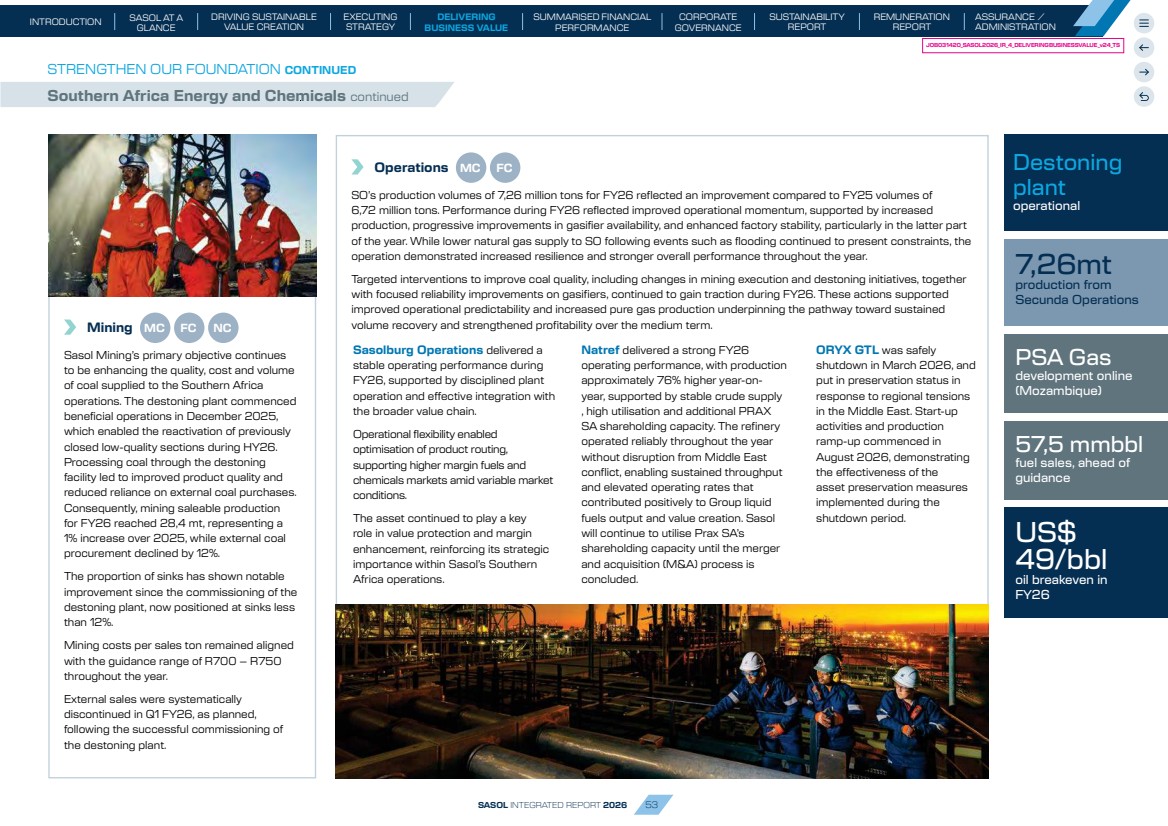
| Market mechanisms: carbon credits and renewable energy certificates Sasol uses carbon credits and renewable energy certificates (RECs) to support its Emission Reduction Roadmap and 2030 greenhouse gas reduction targets, complementing operational emissions reductions. In FY26, Sasol retired approximately 3,84 million carbon credits against its carbon tax obligation, supporting verified emissions-reduction projects and South Africa’s carbon market. Sasol continues to strengthen its carbon-market capabilities to support future compliance, decarbonisation and value creation, with FY27 focused on expanding market participation and assessing strategic opportunities. High-quality carbon offsets are expected to play an important role in addressing hard-to-abate emissions while contributing to sustainable-development outcomes, including community upliftment, job creation and stronger local value chains. Fuelling hard-to-abate sectors Sasol is strengthening its feedstock base to ensure long-term growth, focusing on local supply options such as biomass, biolipids, biomethane, and recycled carbon streams, such as end of life tyres. Sasol has progressed energy crop development through field trials of crops such as Solaris and Moringa in collaboration with Anglo American and De Beers, aiming to rehabilitate mining land while developing potential future feedstock supply. The Bio Feedstock Research Centre has shortlisted high-yield biomass crops through collaboration with universities and research groups, assessing their suitability for South Africa. These initiatives help reduce reliance on global feedstock markets, improve supply resilience, and retain value locally. DRIVING INNOVATION THROUGH SYNERGISTIC VALUE-CHAIN PARTNERSHIPS SUSTAINABLE FEEDSTOCKS Feedstock supply development CUSTOMERS Aviation Mining and Logistics TECHNOLOGY AND ASSETS Refining Sustainable Aviation Fuel Fischer-Tropsch Advancing sustainable feedstock and products from proof to execution Over the past year, Sasol advanced sustainable feedstocks and products from concept to early commercial execution through a disciplined, capital-light strategy aligned with market and customer needs. Its sustainable value chain uses proprietary technology and existing assets to convert diverse feedstocks into certified lower-carbon fuels and products, linking feedstock security, asset capability, and commercialisation to support efficient capital use, execution readiness, and scalable operations. Sasol secured internationally recognised sustainability certification from TÜV SÜD for priority pathways, including Natref and selected Secunda-derived value chains, enabling it to market RD and SAF through existing infrastructure and reinforcing its position as Africa’s first refinery with this certification. It also demonstrated commercial-scale RD and SAF production from used cooking oil in South Africa, validating operability and scale-up potential without major capital investment. Customer and partner engagement, ISCC+ certification, and successful output keep Sasol on track to meet its CMD RD and SAF commitments. During the year, Sasol and Topsoe reviewed their sustainable aviation fuel (SAF) partnership and began preparing for the orderly wind-down of Zaffra, subject to legal and governance approvals. Zaffra helped build market insight, strengthen collaboration and develop a strong opportunity pipeline. The decision relates only to the partnership’s future structure and does not signal a shift away from SAF or the Sasol-Topsoe relationship. A more focused, flexible model is expected to support the next phase better, while allowing each company to pursue priority projects, innovation, and market opportunities. The Single Point Licensor (SPL) framework remains central and will continue to support integrated customer solutions. With six licences signed, Sasol and Topsoe may use fit-for-purpose structures for opportunities requiring deeper or differentiated collaboration. GROW AND TRANSFORM CONTINUED Business building continued Bridging declining gas supply Sasol continues to protect and extend gas income streams while enabling a phased transition to future gas solutions. Progress during the year included the development of gas-to-power demand aggregation, supporting industrial and power-sector demand while reinforcing the role of gas in Sasol’s broader energy and transition portfolio. FY25 – FY28 Extend supply Continue with upstream exploration activities in southern Mozambique to unlock further value FY29 – FY30 Gas bridge Offer methane-rich gas to provide supply certainty for gas customers FY30+ Aggregate liquefied natural gas (LNG) Import LNG to meet long-term external market demand and co-develop gas-to-power demand PRESERVE AND GROW LONG-TERM VALUE THROUGH DEVELOPMENT OF SUPPLY OPTIONS AND GAS-TO-POWER INITIATIVES FC IC SASOL INTEGRATED REPORT 2026 64 JOB031420_SASOL 2026_IR_4_DELIVERING BUSINESS VALUE_v24_TS INTRODUCTION SUMMARISED FINANCIAL PERFORMANCE SUSTAINABILITY REPORT SASOL AT A GLANCE DRIVING SUSTAINABLE VALUE CREATION EXECUTING STRATEGY DELIVERING BUSINESS VALUE CORPORATE GOVERNANCE ASSURANCE / ADMINISTRATION REMUNERATION REPORT |