Exhibit 99.1
CYPRESS Study 0197 Update THERAVANCE BIOPHARMA ® , THERAVANCE ® , the Cross/Star logo and MEDICINES THAT MAKE A DIFFERENCE ® are registered trademarks of the Theravance Biopharma group of companies (in the U.S. and certain other countries). All third - party trademarks used herein are the property of their respective owners. © Theravance Biopharma. All rights reserved. AUG 25 , 2026
Executive Summary for CYPRESS (Study 0197 ) ‣ The primary endpoint, the change in OHSA composite score at week 8 during the double - blind randomized withdrawal period, was not statistically significant ‣ Similar trends were observed in the secondary endpoints at week 8 ‣ Changes in blood pressure, heart rate and norepinephrine levels confirmed a consistent pressor effect and reaffirmed ampreloxetine's biological activity ‣ Ampreloxetine was generally well tolerated, with safety findings consistent with prior studies, including no signal of worsening of supine hypertension ‣ Conducted additional analyses of the CYPRESS dataset and Phase 3 program, in consultation with external experts, to assess whether the data merits further regulatory discussion ‣ Analysis of the overall dataset provided additional lines of evidence supporting a potential pharmacologic and clinically meaningful treatment effect of ampreloxetine ‣ Held a Type B meeting with the FDA regarding the interpretation of the complete Phase 3 CYPRESS Study dataset and FDA has granted request for Type C meeting to obtain feedback on a future study design 2
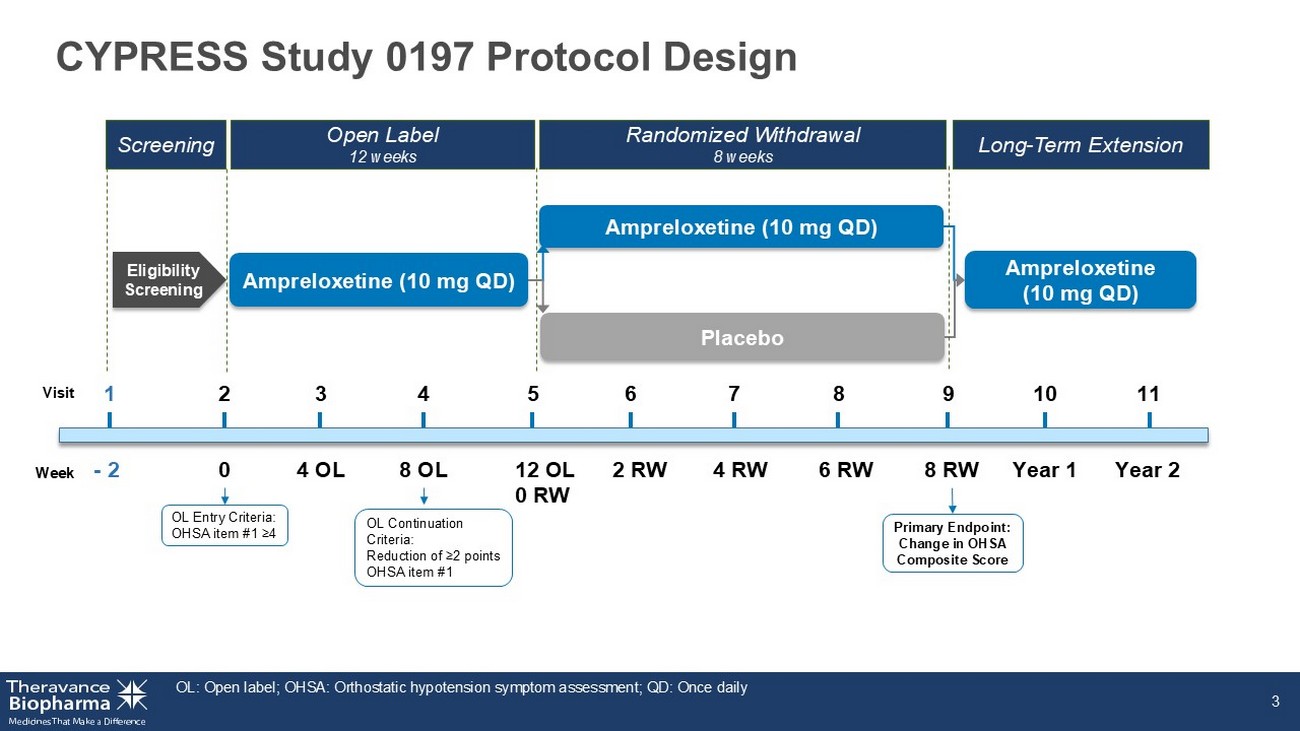
CYPRESS Study 0197 Protocol Design OL: Open label; OHSA: Orthostatic hypotension symptom assessment; QD: Once daily 3 Ampreloxetine (10 mg QD) Placebo Eligibility Screening 0 8 OL 12 OL 0 RW 2 RW 6 RW Year 1 - 2 4 RW 8 RW Visit 1 6 4 10 2 5 7 8 9 3 4 OL Week Ampreloxetine (10 mg QD) Ampreloxetine (10 mg QD) 11 Year 2 Screening Open Label 12 weeks Randomized Withdrawal 8 weeks Long - Term Extension OL Entry Criteria: OHSA item #1 ≥4 OL Continuation Criteria: Reduction of ≥2 points OHSA item #1 Primary Endpoint: Change in OHSA Composite Score
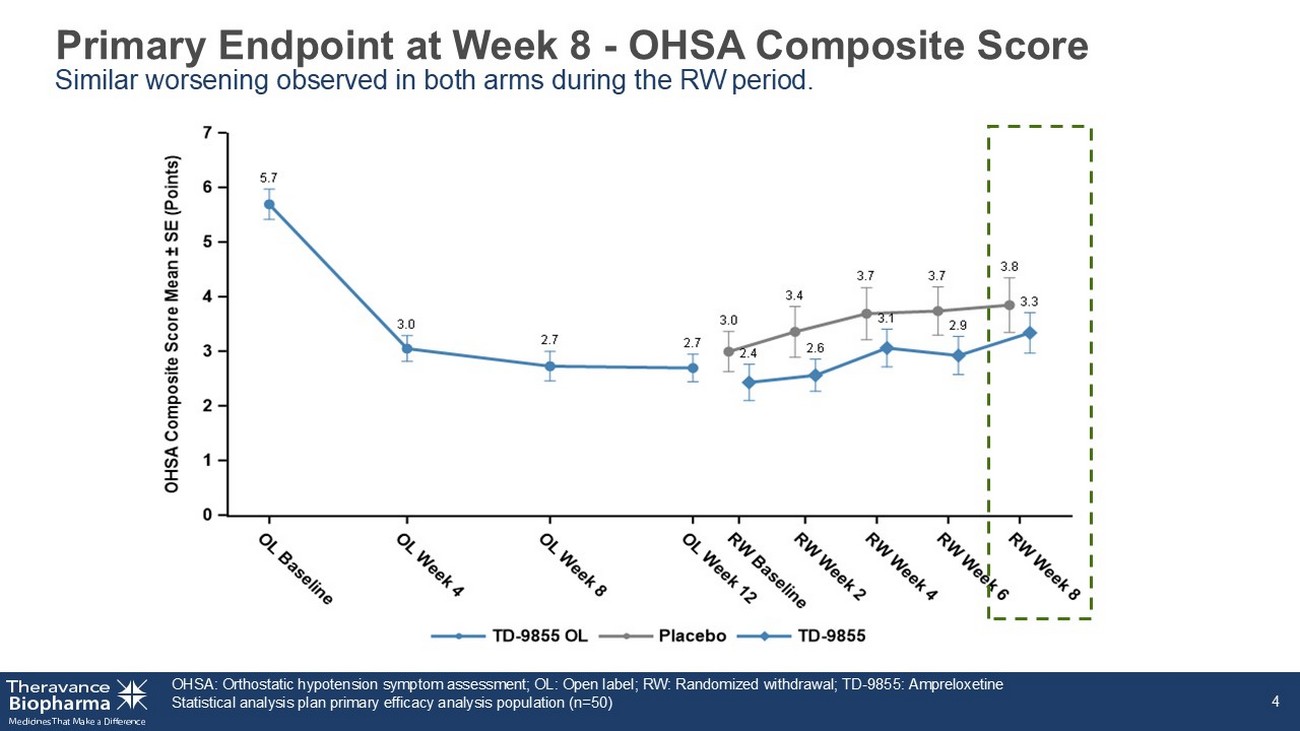
Primary Endpoint at Week 8 - OHSA Composite Score Similar worsening observed in both arms during the RW period. OHSA: Orthostatic hypotension symptom assessment; OL: Open label; RW: Randomized withdrawal; TD - 9855: Ampreloxetine Statistical analysis plan primary efficacy analysis population (n=50) 4
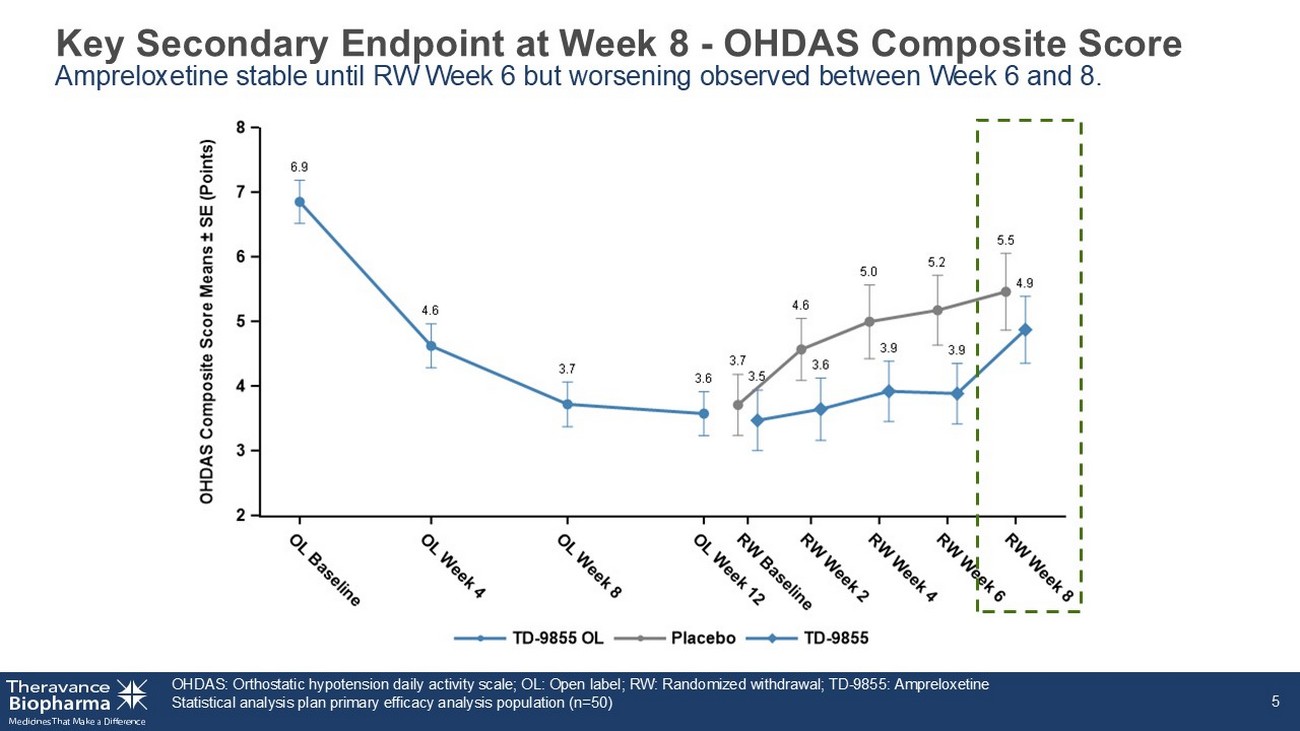
Key Secondary Endpoint at Week 8 - OHDAS Composite Score Ampreloxetine stable until RW Week 6 but worsening observed between Week 6 and 8. OHDAS: Orthostatic hypotension daily activity scale; OL: Open label; RW: Randomized withdrawal; TD - 9855: Ampreloxetine Statistical analysis plan primary efficacy analysis population (n=50) 5
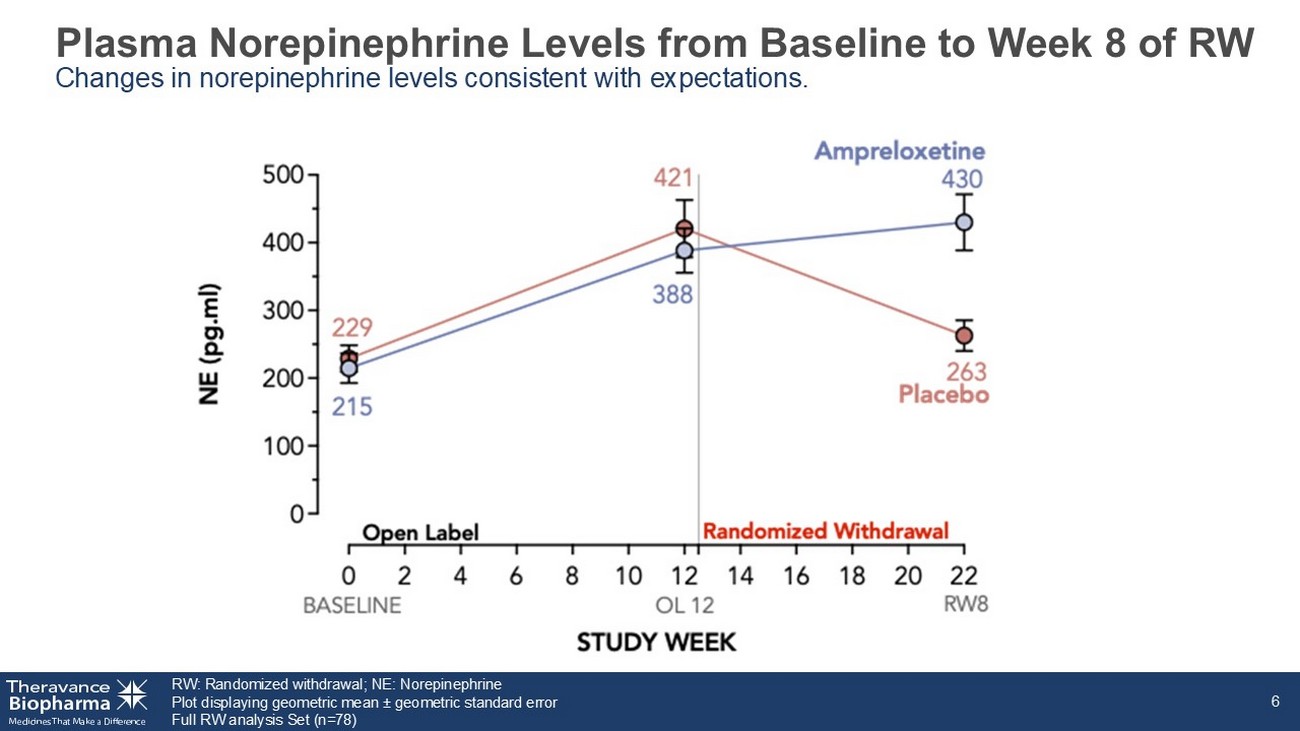
Plasma Norepinephrine Levels from Baseline to Week 8 of RW Changes in norepinephrine levels consistent with expectations. RW: Randomized withdrawal; NE: Norepinephrine Plot displaying geometric mean ± geometric standard error Full RW analysis Set (n=78) 6
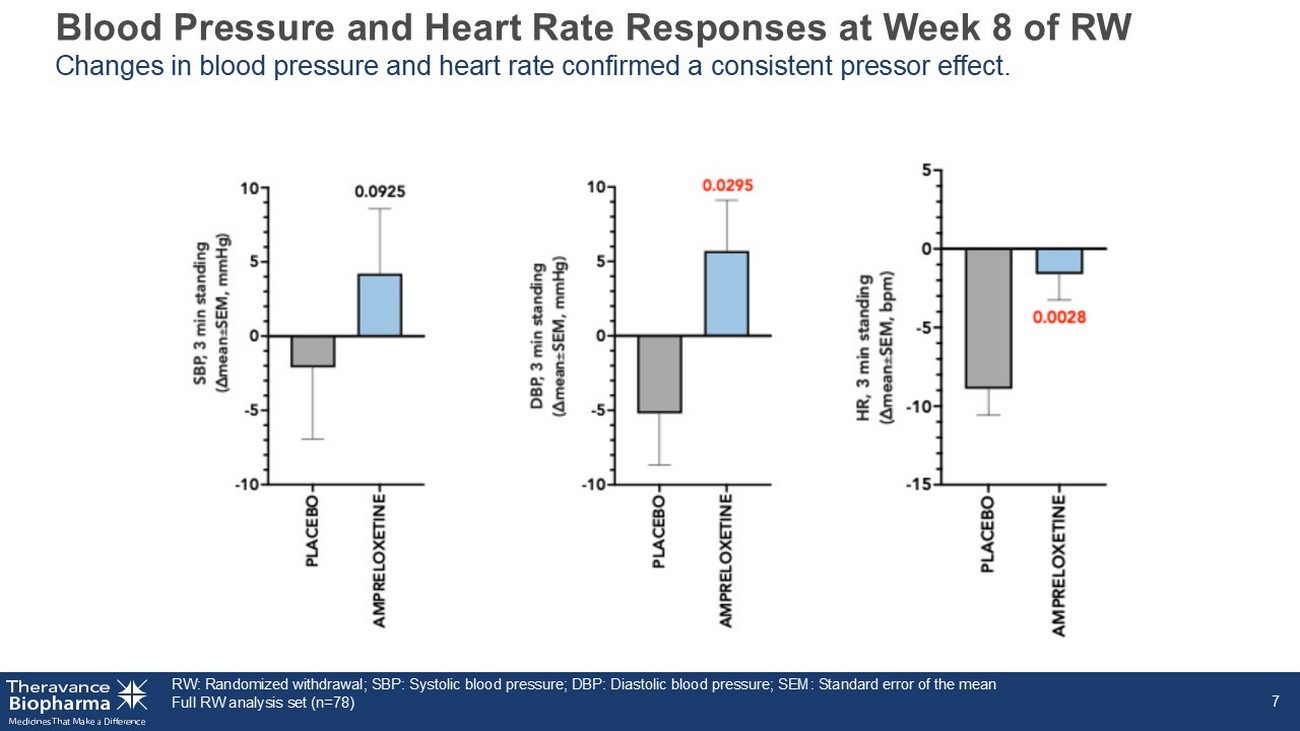
Blood Pressure and Heart Rate Responses at Week 8 of RW Changes in blood pressure and heart rate confirmed a consistent pressor effect. RW: Randomized withdrawal; SBP: Systolic blood pressure; DBP: Diastolic blood pressure; SEM: Standard error of the mean Full RW analysis set (n=78) 7
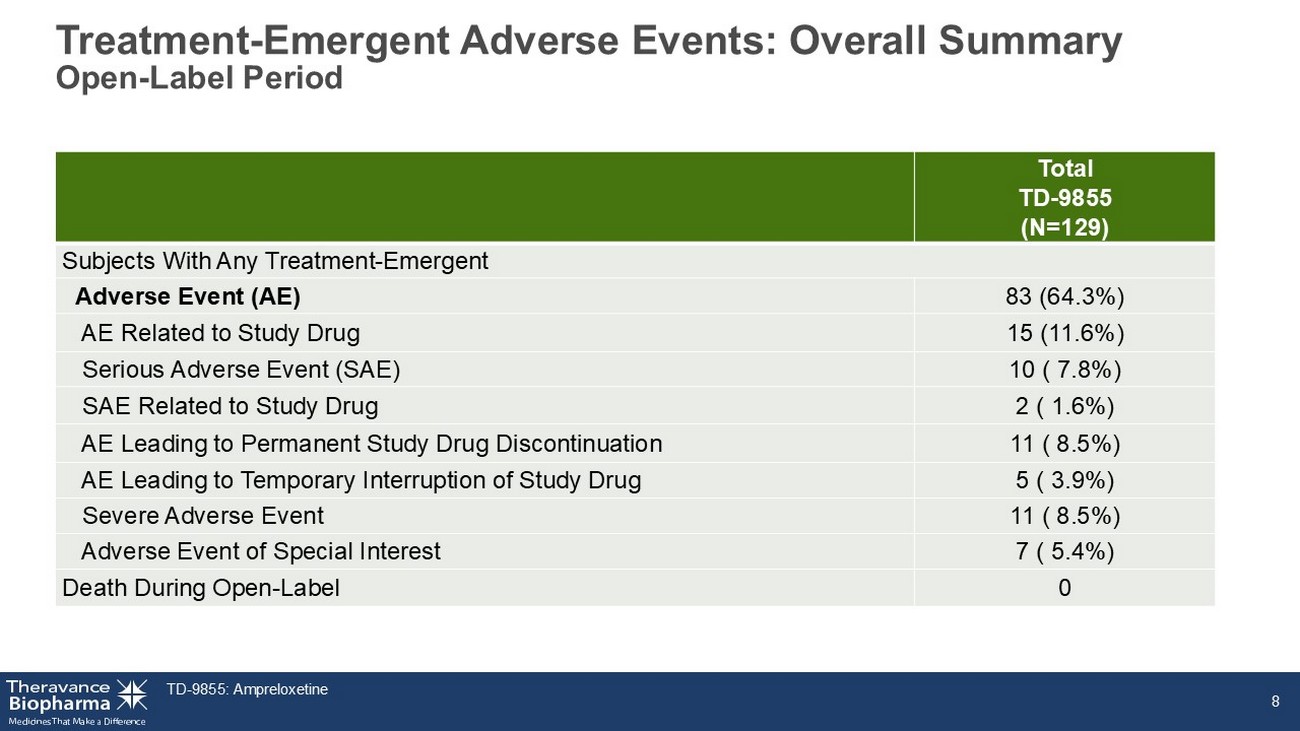
8 Total TD - 9855 (N=129) Subjects With Any Treatment - Emergent 83 (64.3%) Adverse Event (AE) 15 (11.6%) AE Related to Study Drug 10 ( 7.8%) Serious Adverse Event (SAE) 2 ( 1.6%) SAE Related to Study Drug 11 ( 8.5%) AE Leading to Permanent Study Drug Discontinuation 5 ( 3.9%) AE Leading to Temporary Interruption of Study Drug 11 ( 8.5%) Severe Adverse Event 7 ( 5.4%) Adverse Event of Special Interest 0 Death During Open - Label TD - 9855: Ampreloxetine Treatment - Emergent Adverse Events: Overall Summary Open - Label Period
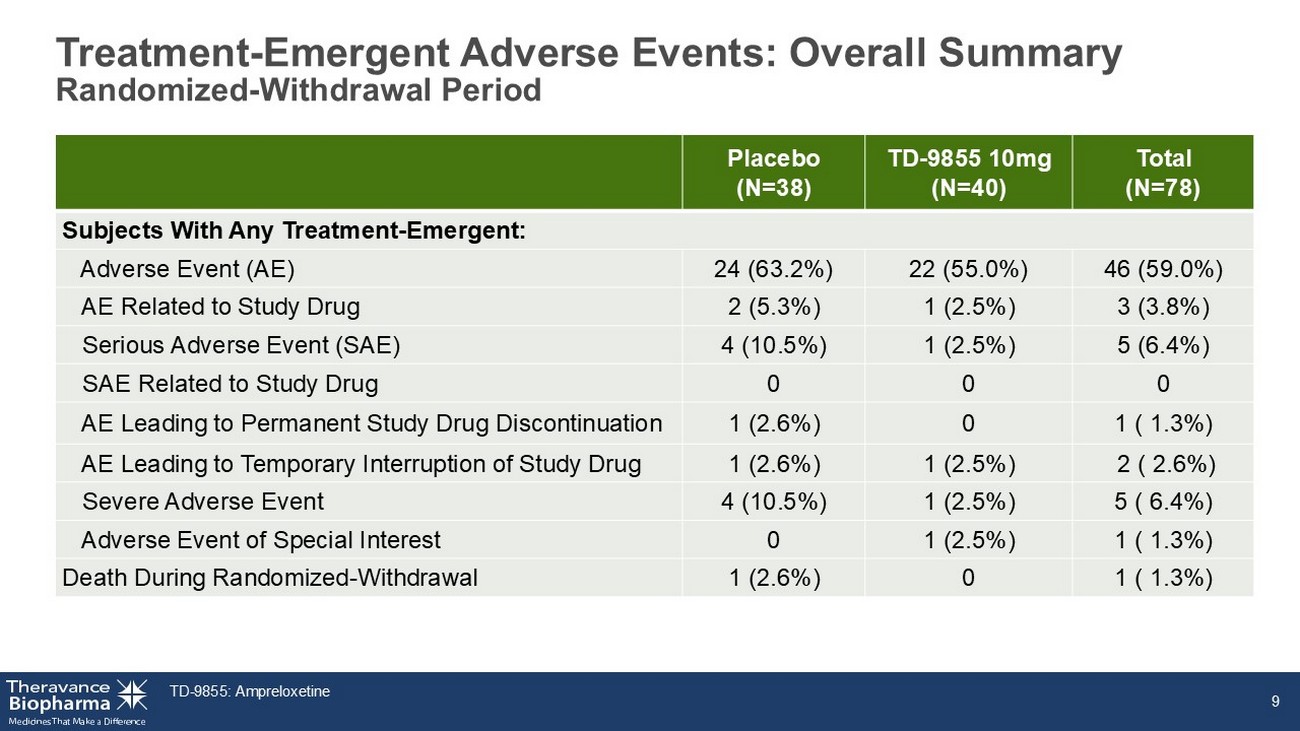
TD - 9855: Ampreloxetine 9 Total (N=78) TD - 9855 10mg (N=40) Placebo (N=38) Subjects With Any Treatment - Emergent: 46 (59.0%) 22 (55.0%) 24 (63.2%) Adverse Event (AE) 3 (3.8%) 1 (2.5%) 2 (5.3%) AE Related to Study Drug 5 (6.4%) 1 (2.5%) 4 (10.5%) Serious Adverse Event (SAE) 0 0 0 SAE Related to Study Drug 1 ( 1.3%) 0 1 (2.6%) AE Leading to Permanent Study Drug Discontinuation 2 ( 2.6%) 1 (2.5%) 1 (2.6%) AE Leading to Temporary Interruption of Study Drug 5 ( 6.4%) 1 (2.5%) 4 (10.5%) Severe Adverse Event 1 ( 1.3%) 1 (2.5%) 0 Adverse Event of Special Interest 1 ( 1.3%) 0 1 (2.6%) Death During Randomized - Withdrawal Treatment - Emergent Adverse Events: Overall Summary Randomized - Withdrawal Period

CYPRESS Post Hoc Data Analyses
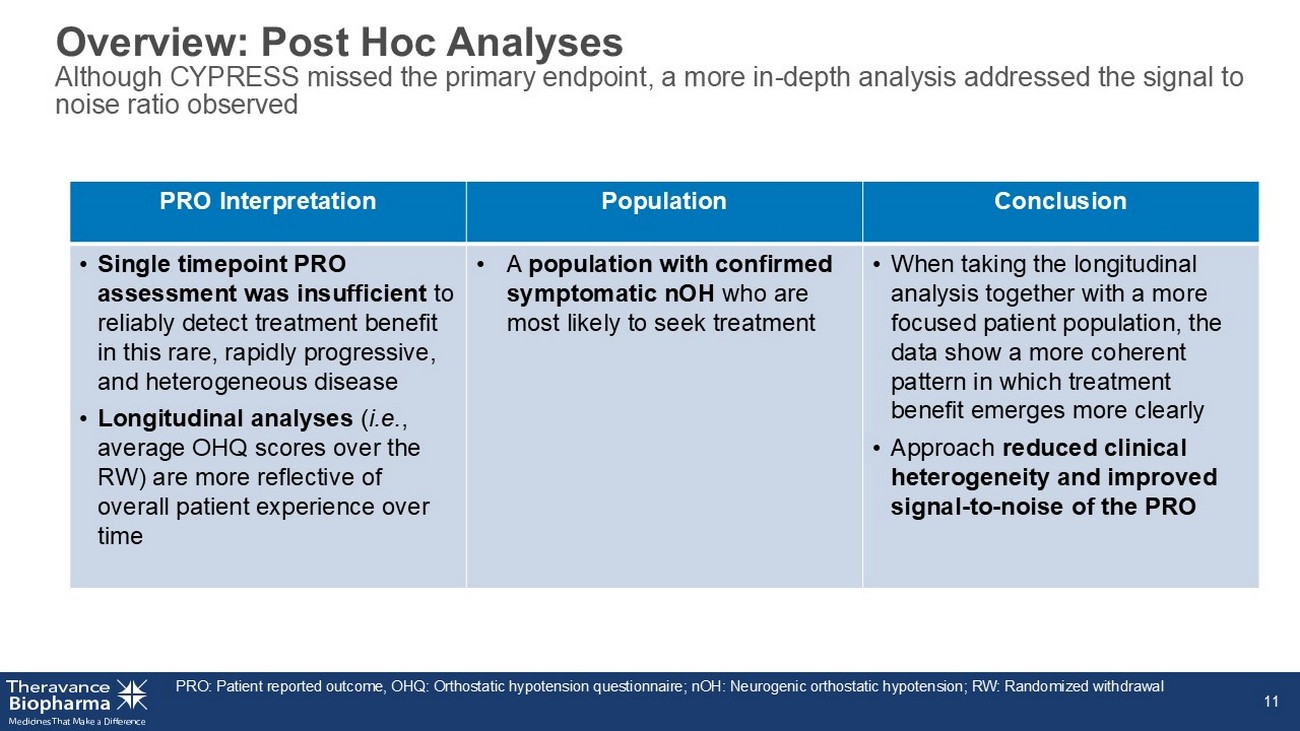
Overview: Post Hoc Analyses Although CYPRESS missed the primary endpoint, a more in - depth analysis addressed the signal to noise ratio observed PRO: Patient reported outcome, OHQ: Orthostatic hypotension questionnaire; nOH: Neurogenic orthostatic hypotension; RW: Rando miz ed withdrawal 11 Conclusion Population PRO Interpretation • When taking the longitudinal analysis together with a more focused patient population, the data show a more coherent pattern in which treatment benefit emerges more clearly • Approach reduced clinical heterogeneity and improved signal - to - noise of the PRO • A population with confirmed symptomatic nOH who are most likely to seek treatment • Single timepoint PRO assessment was insufficient to reliably detect treatment benefit in this rare, rapidly progressive, and heterogeneous disease • Longitudinal analyses ( i.e. , average OHQ scores over the RW) are more reflective of overall patient experience over time
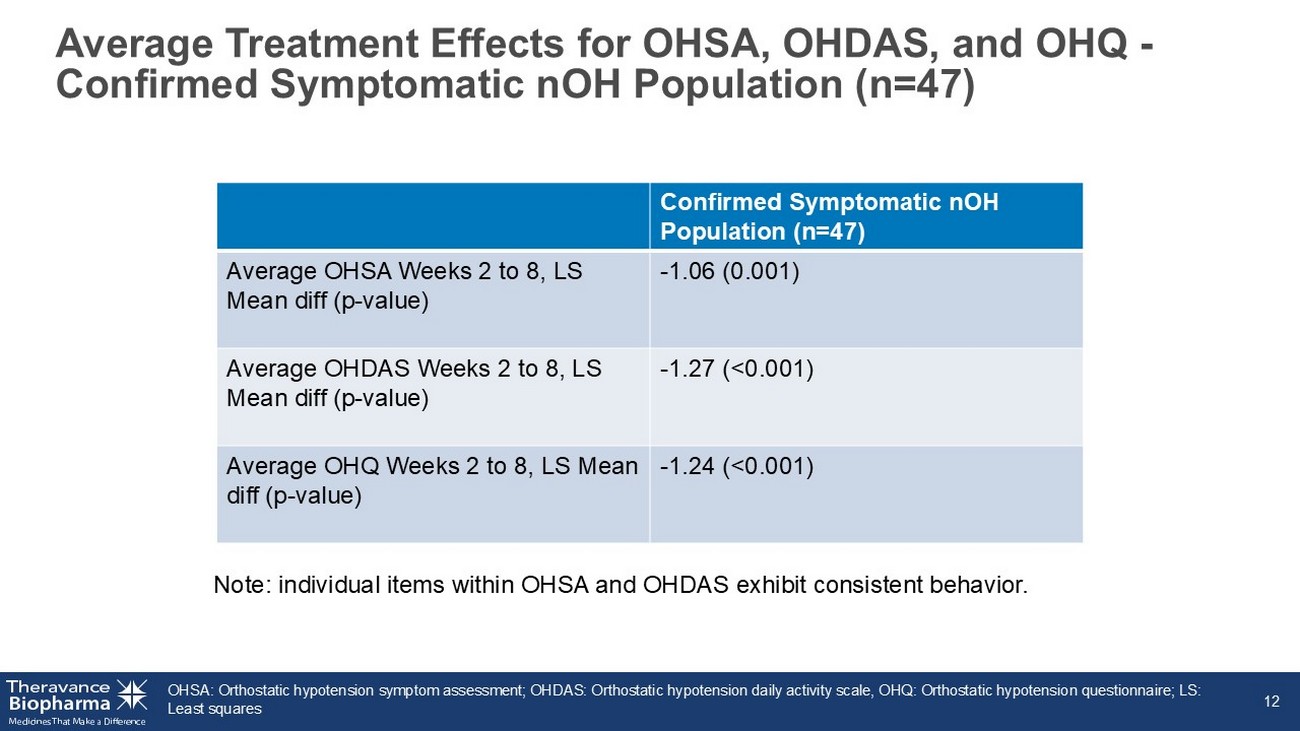
OHSA: Orthostatic hypotension symptom assessment; OHDAS: Orthostatic hypotension daily activity scale, OHQ: Orthostatic hypotens ion questionnaire; LS: Least squares 12 Average Treatment Effects for OHSA, OHDAS, and OHQ - Confirmed Symptomatic nOH Population (n=47) Confirmed Symptomatic nOH Population (n=47) - 1.06 (0.001) Average OHSA Weeks 2 to 8, LS Mean diff (p - value) - 1.27 (<0.001) Average OHDAS Weeks 2 to 8, LS Mean diff (p - value) - 1.24 (<0.001) Average OHQ Weeks 2 to 8, LS Mean diff (p - value) Note: individual items within OHSA and OHDAS exhibit consistent behavior.
Overview of FDA Interactions
FDA Interactions ‣ In May 2026 we held a Type B meeting with the FDA regarding the interpretation of the complete Phase 3 CYPRESS Study dataset, at which the agency indicated that, while the existing clinical data package would not support approval on the current data, an additional pivotal trial leveraging data from previous studies could offer a potential path forward, subject to the opportunities, challenges and uncertainties associated with further clinical development. ‣ In July 2026 we requested a follow up Type C meeting with the FDA to align on the design of a future clinical study with respect to ampreloxetine, including the extent of regulatory flexibility the FDA may consider appropriate, to support a potential future marketing application. 14