Exhibit 99.2
CHEMOMAB THERAPEUTICS LTD.
CAUTIONARY NOTE ABOUT FORWARD-LOOKING STATEMENTS
This Report on Form 6-K contains forward-looking statements. All statements other than statements of historical fact are “forward-looking statements” for purposes of this Report on Form 6-K. These statements involve known and unknown risks, uncertainties and other factors that may cause our actual results, performance or achievements to be materially different from any future results, performance or achievements expressed or implied by the forward-looking statements. In some cases, you can identify forward-looking statements by terms including “anticipates,” “believes,” “could,” “estimates,” “expects,” “intends,” “may,” “plans,” “potential,” “predicts,” “projects,” “should,” “will,” “would,” or the negative of these terms or other similar expressions. Forward-looking statements reflect our current views with respect to future events and are based on assumptions and subject to risks and uncertainties. Actual results or events could differ materially from those set forth or implied by such forward-looking statements and related assumptions due to certain factors, including, without limitation, the risks set forth under the caption “Risk Factors” below, which are incorporated herein by reference as well as those business risks and factors described elsewhere in this report and in our other filings with the Securities and Exchange Commission (the “SEC”), specifically our most recent Annual Report on Form 20-F filed with the SEC on March 23, 2026 (the “2025 Annual Report”) and our Reports of Foreign Private Issuer on Form 6-K. All forward-looking statements speak only as of the date made, and we undertake no obligation to update or revise publicly any forward-looking statements, whether as a result of new information, future events or otherwise, except as required by law.
CERTAIN TERMS USED IN THIS CURRENT REPORT ON FORM 6-K
As used in this Current Report on Form 6-K, unless the context otherwise requires:
| • | references to “Chemomab Therapeutics Ltd.”, “Chemomab,” the “Company,” “us,” “we” and “our” refer to Chemomab Therapeutics Ltd. an Israeli Company and its consolidated subsidiaries, although with respect to the presentation of financial results for historical periods that preceded the merger with Anchiano Therapeutics Ltd. (as described below), these terms refer to the financial results of Chemomab Ltd., which was the accounting acquirer in that transaction; |
| • | references to “ordinary shares,” “our shares” and similar expressions refer to the Company’s ordinary shares, no nominal (par) value; |
| • | references to “ADS” refer to the American Depositary Shares listed on the Nasdaq Capital Market (“Nasdaq”) under the symbol “CMMB,” each representing eighty (80) ordinary shares; |
| • | references to “dollars,” “U.S. dollars” and “$” are to U.S. Dollars; |
| • | references to “NIS” are to New Israeli Shekels; |
| • | references to the “SEC” are to the U.S. Securities and Exchange Commission; |
| • |
references to the “Merger” refer to the proposed transactions involving the Company, Snowdrift Parent Corporation, a Delaware corporation (“Chemomab Parent”), Snowdrift Sub Corp., a Delaware corporation and a wholly owned subsidiary of Chemomab Parent (the “Merger Sub”), Elderwood Ltd., an Israeli company and a wholly owned subsidiary of Chemomab Parent (the “Domestication Merger Sub”), and Scipher, pursuant to which, following the merger of the Domestication Merger Sub with and into the Company, with the Company being the surviving entity and a wholly owned subsidiary of Chemomab Parent (the “Domestication Merger”), and upon satisfaction of additional closing conditions, the Merger Sub will merge with and into Scipher, with Scipher being the surviving entity (the “Surviving Corporation”) and a wholly owned subsidiary of Chemomab Parent; and “Scipher” refers to Scipher Medicine Corporation, a Delaware corporation. |
OPERATING AND FINANCIAL REVIEW AND PROSPECTS
Company Overview
We are a clinical stage biotechnology company focused on the discovery and development of novel drugs to address inflammatory-fibrotic indications with unmet medical needs. Our lead drug candidate targets CCL24, a soluble protein chemokine that promotes fibrosis by regulating the two main processes that drive fibrosis: fibroblast activation and immune cell migration and activation.
Using our deep knowledge of chemokine biology and expertise in monoclonal antibody, or mAb, development, we are developing nebokitug, a proprietary, first-in-class, fully humanized mAb, which extensive research and clinical studies have shown neutralizes CCL24 and by so doing, inhibits both its inflammation and fibrosis disease-related activities. This represents an innovative approach to anti-fibrotic and anti-inflammatory drug discovery and development.
The dual ability of nebokitug to directly attenuate fibroblast activation and concurrently attenuate recruitment of immune cells is novel and could address a wide range of hard-to-treat inflammatory-fibrotic diseases. We have been primarily focused on the orphan indications of primary sclerosis cholangitis (PSC) and systemic sclerosis (SSc) but believe that nebokitug may have additional applications in other inflammatory-fibrotic conditions, where its unique ability to attenuate both inflammation and fibrosis could provide new avenues for more effective treatment of these conditions.
As previously reported, Chemomab has entered into a Merger Agreement with Scipher pursuant to which, if the Merger is consummated, the combined company intends to focus initially on advancing nebokitug into a precision medicine Phase 2 clinical trial in rheumatoid arthritis (RA), leveraging Scipher’s patient-stratification and companion diagnostic capabilities. RA is a chronic autoimmune disease affecting over 20 million patients worldwide and representing a substantial commercial opportunity exceeding $24 billion annually. Despite the size of the market and the widespread use of biologic and advanced therapies, a significant unmet need remains, with only approximately one-third of RA patients currently achieving low disease activity. The RA market also has experienced limited therapeutic innovation in recent years. The last RA drug with a novel mechanism of action approved by the FDA was a janus kinase inhibitor (JAKi) in 2012; the last branded novel RA drug approval was the JAKi Rinvoq® in 2019, and, as of July 2026, we are not aware of any novel RA drugs in Phase 3 development in the United States. In addition, the two leading mechanisms of action in RA―JAKi and tumor necrosis factor inhibitor (TNFi) drugs―which together comprise approximately 72% of the market, carry black box safety warnings, creating a potential opportunity for new mechanisms with differentiated activity and a more favorable safety and tolerability profile, such as nebokitug’s dual activity inhibition of CCL24.
Nebokitug has shown promising anti-fibrotic and anti-inflammatory effects in preclinical studies of liver, skin and lung fibrosis, including significant reductions in fibrotic genes, liver enzymes, bile acid and cholangiocyte proliferation, as well as reductions in dermal thickness, collagen concentration in the skin and the lung, and immune cell infiltration in the lung. In preclinical studies in models of RA, nebokitug showed reductions of arthritis scores and inflammation. If the Merger is consummated, the combined company will initially focus on developing nebokitug for the treatment of RA.
The role of CCL24 in inflammation and fibrosis
CCL24 is a chemokine that promotes various types of cellular processes that regulate inflammatory and fibrotic activities through the CCR3 receptor. This chemokine is known to be expressed by activated T-cells, monocytes, epithelial cells and endothelial cells, as well as by activated fibroblasts. CCL24 induces chemotaxis and activation of CCR3-expressing cells, including immune cells and fibroblasts.
We have been the driving force in establishing the role of CCL24 in the pathogenesis of inflammatory and fibrotic diseases, primarily in liver, skin and lung fibrosis; however, others have highlighted its contribution to other indications, such as cardiac inflammation and fibrosis.
Fibrosis is an accumulation of non-functional tissue and can occur in many different tissues, including lung, liver, kidney, muscle, skin, joints and the gastrointestinal tract, resulting in a number of chronic fibrotic conditions.
Fibrosis begins as part of a repair process activated by tissue damage that includes acute inflammation followed by either successful complete repair of the damage or replacement of the damaged tissue by fibrotic tissue. However, persistent and repeated damage or disease can result in continuous activation of the repair process leading to chronic inflammation, progressive tissue fibrosis and eventual sclerosis.
Fibrosis and inflammation are intrinsically linked―a healthy inflammatory response is necessary for efficient wound healing; however, a prolonged response can contribute to the pathogenesis of fibrosis. In liver diseases, the inflammatory response during chronic liver injury is a dynamic process with intrahepatic accumulation of diverse immune cells. Recruitment and infiltration of these cells to the liver and their localization is mainly determined by chemokines and cytokines that are produced by hepatocytes, immune cells, biliary epithelial cells and endothelial cells. Similarly, for SSc, the early inflammatory phase leading to fibrosis in multiple organs of the body includes activation of the immune cell network of lymphocytes, eosinophils and monocytes, as well as endothelial and endothelial progenitor cells. In advanced SSc, fibroblasts and myofibroblasts take the lead to generate tissue fibrosis.
Similarly, in RA pathogenesis, the migration and activation of inflammatory and stromal cells within the synovium drive the release of cytokines and mediators that sustain inflammation, tissue remodeling and joint destruction. Patients with RA exhibit increased systemic and synovial levels of proinflammatory chemokines, some of which have been associated with disease activity, treatment response and the severity of joint pathology.
Our lead product candidate, nebokitug, is a first-in-class humanized monoclonal antibody targeting CCL24 that has been investigated in two orphan indications: PSC and SSc. CCL24 has been extensively studied in inflammation and fibrosis of the liver, skin and lung.
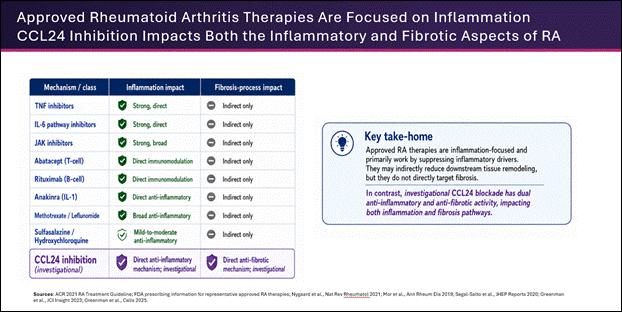
We believe that our approach, selectively targeting fibrotic conditions by attenuating both inflammation and fibrosis, may be an optimal approach for achieving both effectiveness and reduction of toxicity in diseases like RA. As a central regulator of the progression of both inflammation and fibrosis, CCL24 is an ideal target to impact both pathologies.
While CCL24 is found in low levels in blood and tissue samples from healthy volunteers, elevated levels of both CCL24 and its receptor CCR3 have been found in patients with PSC, SSc and metabolic-related steatohepatitis, or MASH. CCL24 levels have also been correlated to different stages of disease. Based on extensive preclinical, nonclinical and clinical studies, we demonstrated that neutralizing CCL24 resulted in anti-fibrotic and anti-inflammatory effects in patients.
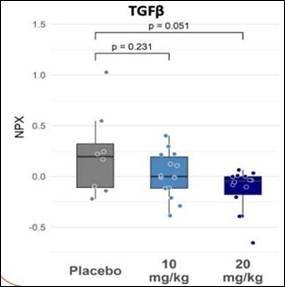
Notably, CCR3, CCL24’s cognate receptor, was shown to be expressed on fibroblasts, where it modulates wound healing and tissue remodelling processes. CCL24 was shown to be involved in pro-inflammatory reactions, specifically contributing to the type 2 immune reaction involving Th2 lymphocytes and M2 macrophages. Accordingly, CCL24 was found to play a dominant role in inducing pro-fibrotic effects and to be overexpressed in fibrotic lungs and bronchoalveolar lavage fluid. CCL24 was shown to promote collagen production in human lung fibroblasts and to be constitutively expressed by dermal fibroblasts. Moreover, CCL24 was shown to promote maladaptive remodelling by aggravating cardiac fibrosis through specific activation of its CCR3 cognate receptor in fibroblasts. Activation of CCR3 in fibroblasts occurs through PI3K-induced Akt (phosphoinositide 3-kinase/protein kinase B) phosphorylation and the release of the key fibrotic cytokine TGF-β (transforming growth factor beta).
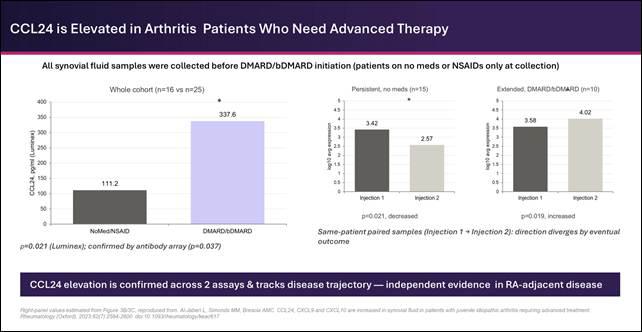
In PSC, CCL24 is elevated in the liver and cholangiocytes (bile duct epithelia) and in immune cells that play a key role in the progression of the disease. Likewise, elevation of CCL24 has been shown in fibrotic lungs and bronchoalveolar lavage fluid from patients with idiopathic pulmonary fibrosis, a disease sharing similar lung dysfunction features with SSc. With our collaborators in the United Kingdom, we conducted studies in a cohort of SSc patients that showed a correlation between CCL24 levels and disease severity and lung involvement. Furthermore, in patients with juvenile idiopathic arthritis, a condition related to RA, CCL24 was found to be elevated in the synovial fluid of patients requiring advanced therapy.
CCL24 is Elevated in Arthritis Patients Who Need Advanced Therapy
The RA treatment landscape has seen limited recent therapeutic innovation. The last RA drug with a novel mechanism of action approved by the FDA was a JAK inhibitor in 2012, and the last branded RA drug approval was for JAKi Rinvoq® in 2019. As of July 2026, there were no RA drugs with novel mechanisms of action in Phase 3 development in the United States. In addition, the two leading mechanisms of action, which together represent approximately 72% of the RA market, carry boxed safety warnings. This creates an opportunity for new therapies with differentiated mechanisms of action and favorable safety and tolerability profiles.
Treatment of moderate-to-severe RA is also characterized by substantial treatment cycling. Most patients who progress to advanced therapy initially receive a TNF inhibitor, driven by established clinical practice and payer requirements. However, despite the availability of several biologic and targeted therapies, more than two-thirds of patients remain with moderate-to-severe disease activity following first-line advanced therapy, and fewer than one-third achieve low disease activity. This persistent treatment failure highlights the need for therapies that address disease mechanisms beyond inflammation alone.
Growing evidence suggests that, in a subset of patients, persistent activation of synovial fibroblasts and fibrotic remodeling of the joint may contribute to treatment-resistant disease. Spatial transcriptomic studies have identified fibrogenic fibroblast populations in RA patients who fail to achieve remission, including after effective suppression of inflammatory immune-cell activity, implicating alternate pathways such as TGF-β-driven fibrosis may play a role in refractory RA. These findings suggest that therapies directed primarily at inflammatory pathways may be insufficient for patients whose disease is sustained by both inflammatory and fibrotic mechanisms. Nebokitug, a first-in-class anti-CCL24 monoclonal antibody, may offer a differentiated approach by targeting both components of RA biology—potentially suppressing inflammation while also modulating fibroblast activation and fibrotic tissue remodeling.
No currently approved drug directly targets the fibrotic aspects of RA
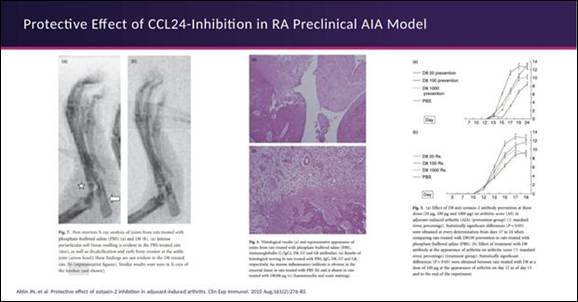
As shown in the example below, preclinical studies in well-established rheumatoid arthritis animal models demonstrated that CCL24 inhibition reduced disease severity, inflammation and joint damage compared with control-treated animals. Anti-CCL24 treatment was associated with lower arthritis scores, decreased inflammatory cell infiltration and preservation of joint structure, with effects observed across both radiographic and histologic assessments.
These findings provided early proof-of-concept that CCL24 plays a role in RA disease biology and support the advancement of nebokitug as a novel therapeutic candidate targeting inflammatory pathways involved in rheumatoid arthritis.
Protective effect of CCL24 inhibition in RA preclinical AIA model
The clinical data package supporting the planned RA clinical development program includes evidence from Chemomab’s Phase 2 SPRING trial in PSC, a progressive fibro-inflammatory liver disease. Nebokitug achieved the primary safety-related endpoints in the double-blind period of the SPRING study, and it continued to demonstrate a favorable safety and tolerability profile over 48-weeks of treatment. The overall treatment-emergent adverse events were mostly mild and distributed similarly across cohorts. No serious treatment-emergent adverse events were related to the study drug, and there were no treatment-emergent adverse events leading to death.
Importantly, in patients with moderate-advanced PSC, the SPRING clinical trial results demonstrated that nebokitug induced dose-dependent downregulation of inflammatory and fibrotic biomarkers in patients following treatment. Nebokitug treatment produced a consistent shift in the circulating proteomic profile toward that observed in healthy controls. Changes were observed in biological processes that are also implicated in RA, including TGF-β signaling, macrophage-associated pathways, adaptive immune activation and extra-cellular matrix remodeling.
Nebokitug Shows Dose Dependent Reductions in RA-Related Biomarkers in PSC Patients (SPRING trial)
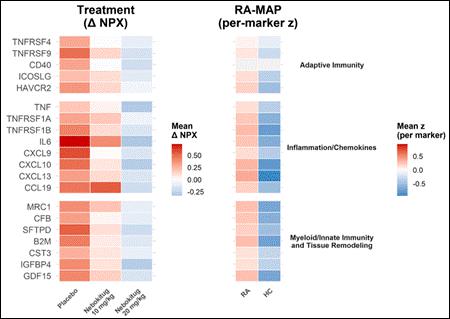
NPX – normalized protein expression
Z score - how many standard deviations a data point is from the mean
HC - healthy controls
RA - rheumatoid arthritis
Nebokitug Shows Dose Dependent Reductions in TGF-beta in PSC Patients (SPRING trial)
SPECTRA™, Scipher’s precision immunology platform, encompasses Scipher’s core proprietary advanced technologies. It is designed to integrate multi-omic data with clinical and real-world evidence to reduce the risk associated with drug discovery and development and to support patient stratification in autoimmune and related diseases. The platform applies advanced data analytics and machine learning/AI to identify biological targets, prioritize disease indications and generate custom molecular treatment-response signature (MTRS) diagnostics associated with therapeutic outcomes. It is intended to facilitate the matching of specific therapies to the patients whose disease biology is most likely to respond, while simultaneously maintaining an acceptable safety profile. By combining large-scale molecular data with network-based computational modeling, this network medicine approach is designed to provide a systematic framework that targets the identification of the right drug with the right mechanism in the right patient.
The platform and related technologies are supported by Scipher’s proprietary intellectual property portfolio, including patent families covering aspects of the SPECTRA™ platform and related applications that are pending in the United States and other jurisdictions.
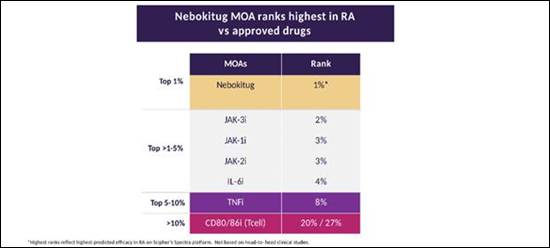
Scipher’s SPECTRA™ precision immunology platform identified CCL24 among the top 1% of clinical-stage therapeutic targets predicted to have potential efficacy in RA, ranking above multiple mechanisms of action represented by currently approved RA therapies, including JAK inhibitors, IL-6 inhibitors, TNF inhibitors and T-cell co-stimulation blockers.
Scipher’s SpectraTM Platform Ranks Nebokitug in Top 1% for RA
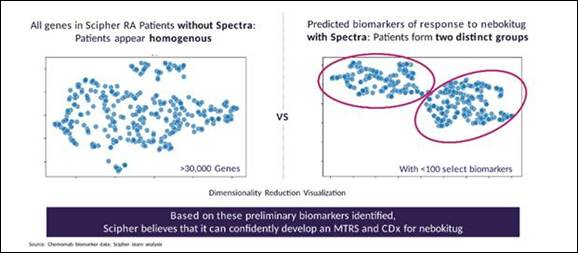
Scipher has also used its platform to identify a preliminary biomarker response pattern using CCL24-related biomarkers that may enable stratification of RA patients and identify those most likely to respond to a CCL24-blocker like nebokitug. As shown below, while RA patients appeared relatively homogeneous when analyzed across more than 30,000 molecular transcripts without SPECTRA™, the use of fewer than 100 selected biomarkers identified by SPECTRA™ separated patients into two distinct groups. Based on early results from these preliminary biomarkers, along with Scipher’s deep experience in segmenting patients based on biomarker signatures, We believe that, if the Merger is consummated, the combined company can develop a rule-in MTRS test to identify those RA patients most likely to respond to nebokitug.
Preliminary CCL24 biomarker response pattern for RA patient stratification
If the Merger is consummated, the combined company intends to focus its clinical development activities on nebokitug, which has demonstrated the potential to treat multiple severe and life-threatening fibrotic and inflammatory diseases. The combined company intends to advance nebokitug into a precision medicine Phase 2 clinical trial in RA, leveraging Scipher’s patient-stratification and companion diagnostic capabilities.
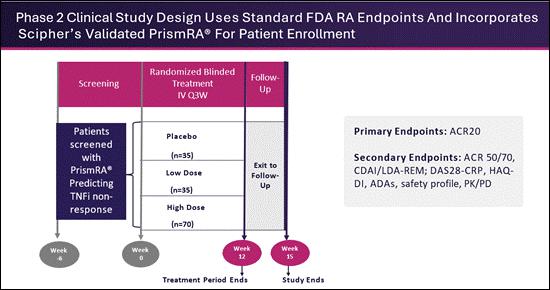
The planned Phase 2 RA clinical study is a randomized, double-blind, placebo-controlled trial using standard RA endpoints. Patients are expected to be screened with PrismRA®, a commercial diagnostic blood test developed by Scipher that can identify potential TNFi non-responders, Participants will be randomized to placebo (n=35), nebokitug 10 mg/kg (n=35), or nebokitug 20 mg/kg (n=70) administered intravenously every three weeks during a 12-week treatment period, followed by safety follow-up through week 15.
The primary endpoint is expected to be ACR20. Secondary endpoints are expected to include ACR50/70, Clinical Disease Activity Index (CDAI) low disease activity and remission, DAS28-CRP, HAQ-DI, presence of anti-drug antibodies and safety profile. The study design uses a standard 12-week RA efficacy endpoint and is intended to generate both clinical proof-of-concept data and the biological samples needed to support development of a rule-in MTRS to identify patients most likely to respond to nebokitug. This strategy is intended to reduce development risk by selecting a more relevant Phase 2 population and, significantly, potentially enriching the subsequent Phase 3 trial with patients most likely to respond to nebokitug.
Planned Phase 2 study overview
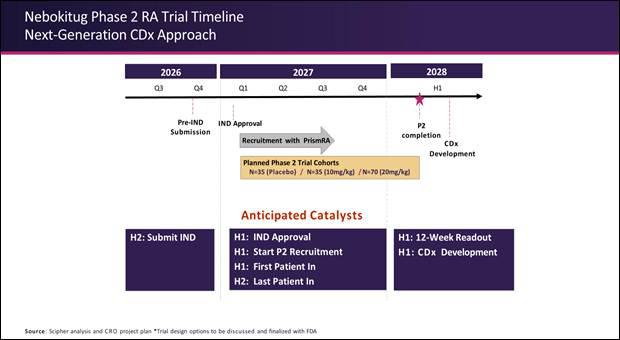
Together with Scipher, we expect to complete pre-IND activities and submit an IND in 2026; The combined company expect to obtain IND approval and begin Phase 2 recruitment in the first half of 2027; complete enrollment during the second half of 2027; and report 12-week Phase 2 data in the first half of 2028. If successful, the Phase 2 readout is expected to be a key clinical catalyst for the combined company, providing evidence of initial efficacy and safety in patients with RA, as well as nebokitug biomarker data in a precision medicine-selected RA population.
Nebokitug Phase 2 RA Trial Timeline
In addition to the development of nebokitug in RA, the opportunity to further advance nebokitug in PSC remains.
In the randomized, placebo-controlled Phase 2 PSC study, nebokitug met its primary endpoint of safety and tolerability and demonstrated anti-fibrotic, anti-inflammatory and anti-cholestatic activity across multiple disease-related secondary endpoints. These included statistically significant improvements in liver stiffness after 15 weeks of treatment, as well as reductions in total bilirubin and pruritus. Together, these findings established clinical proof-of-concept and supported the potential of nebokitug to address multiple components of PSC disease biology. In the open-label extension, nebokitug continued to demonstrate favorable safety and tolerability and sustained anti-fibrotic, anti-inflammatory and anti-cholestatic activity through up to 48 weeks of treatment.
Chemomab and the FDA aligned on the key elements of a potential clinical events-driven Phase 3 trial in PSC. The proposed study would be a randomized, placebo-controlled trial evaluating nebokitug 20 mg/kg administered intravenously every three weeks, with time to first clinical event as the primary endpoint. The composite endpoint would include clinically meaningful events associated with PSC progression, such as acute cholangitis, biliary strictures requiring intervention, portal hypertension, hepatic decompensation, elevated MELD score, liver transplantation, cholangiocarcinoma and death. The study is expected to enroll several hundred patients, with enrichment for patients with moderate-to-advanced disease.
If the merger is consummated, the combined company would continue to evaluate strategic opportunities to advance nebokitug toward Phase 3 development in PSC.
Recent Developments
| · | Entered into Definitive Merger Agreement with Scipher Medicine. On July 8, 2026, Chemomab announced that it had entered into a definitive merger agreement with Scipher Medicine Corporation pursuant to which the companies will effect the Merger, which is to be an all-stock transaction. Under the terms of the merger agreement (the “Merger Agreement”) and prior to the concurrent private placement, Chemomab equity holders are expected to own approximately 32% of the combined company, with Scipher equity holders owning approximately 68%, subject to customary adjustments. The combined company is valued at $150 million prior to a concurrent private placement financing for aggregate gross proceeds of not less than $30 million and is expected to have sufficient cash to fund operations through the Phase 2 readout . The private placement is being led by a syndicate of current Scipher investors, including Northpond Ventures, with participation from Khosla Ventures, Blue Owl Healthcare Opportunities, funds managed by Neuberger, and other leading investors, and includes 100% warrant coverage, with the warrants having an exercise price based on a $75 million valuation. In addition, immediately following the closing, Chemomab shareholders will receive contingent value rights (CVRs), providing the opportunity to receive future payments of $10 million upon FDA approval of nebokitug for any indication and $40 million if Chemomab’s PSC program advances to a Phase 3 clinical trial or if there is a disposition of nebokitug in the indication of PSC which may be settled in cash, stock or a combination thereof, at Chemomab Parent’s election, in each case subject to the terms and conditions of the CVR agreement. Upon completion of the Merger, the combined company is expected to operate as Scipher Medicine Corporation and trade on the Nasdaq Capital Market under the ticker symbol “SCIP.” The combined company plans to initially focus on advancing nebokitug, a first-in-class clinical-stage anti-CCL24 antibody, into a Phase 2 clinical trial for the treatment of rheumatoid arthritis, with topline results expected in the first half of 2028. Following the closing, Dr. Reginald Seeto will serve as Chief Executive Officer of the combined company, and Chemomab co-founder and Chief Executive Officer Dr. Adi Mor will join the combined company’s Board of Directors. |
| · | Presented three abstracts on May 30, 2026 at EASL 2026, the Annual Congress of the European Association for the Study of the Liver in Barcelona, Spain. |
| o | In one EASL 2026 study1, Olink-generated analyses of circulating proteins in patient samples from the nebokitug Phase 2 SPRING trial were used to generate an AI/machine learning model to identify patients who showed a combined improvement in three key fibrosis-related measures. The model showed strong performance and reliability, accurately distinguishing patients who met the combined improvement definition from those who did not. |
| o | A second EASL 2026 study2 examined the impact of nebokitug treatment on four PSC-specific gene expression programs (GEPs). Treatment with nebokitug was associated with statistically significant and dose-dependent reductions in the signatures linked to the PSC-related fibrotic and immune proteins. These findings provide further support for nebokitug’s CCL24 blocking activity as a mechanism-based approach targeting core molecular drivers of PSC pathogenesis. |
| o | A third EASL 2026 study3 examined nebokitug and its CCL24 target in patients with both PSC and inflammatory bowel disease (IBD). This study evaluated whether CCL24 inhibition modulates inflammatory and tissue-remodeling signatures relevant to PSC-IBD pathogenesis. The authors conclude that treatment with nebokitug resulted in improvements across inflammatory and tissue-remodeling proteins relevant to PSC with coexisting intestinal inflammation from ulcerative colitis and Crohn’s disease. These findings suggest that CCL24 inhibition may beneficially impact shared gut–liver inflammatory circuits in patients with co-existing PSC and IBD. |
| · | Presented new data from the company’s Phase 2 SPRING trial of nebokitug in PSC in an oral presentation at Digestive Disease Week® (DDW 2026)4. On May 4, 2026, a new proteomic study showed that treatment with nebokitug resulted in dose-dependent reductions in multiple inflammatory and tissue-remodeling signatures relevant to both primary sclerosing cholangitis and inflammatory bowel disease. The authors conclude that inhibition of nebokitug’s CCL24 target may provide meaningful benefit in PSC patients with concomitant IBD. |
1 - AI-driven proteomic profiling differentiates composite improvement following treatment with nebokitug in PSC; T. Snir, R. Aricha, J. Lawler, C Cirillo, D. Weiner, and A. Mor; EASL 2026 Abstract No. 1839; Immune-mediated and cholestatic disease: Clinical aspects; May 30, 2026, 8:30 - 16:00 CEDT
2 - Nebokitug down-regulates core fibrotic and immune pathways defined by single-cell liver profiling; R Aricha, T Snir, J Lawler, C Cirillo, D Weiner, A Mor; EASL 2026 Abstract No. 1852; Immune-mediated and cholestatic disease: Clinical aspects; May 30, 2026, 8:30 - 16:00 CEDT
3 - Nebokitug modulates gut-liver inflammatory and tissue remodeling signatures in PSC patients with coexisting IBD; R Aricha, T Snir, J Lawler, C Cirillo, D Weiner, and A Mor; EASL 2026 Abstract No. 1859; Immune-mediated and cholestatic disease: Clinical aspects; May 30, 2026, 8:30 - 16:00 CEDT
4 - Nebokitug modulates inflammatory and tissue-remodeling signatures in patients with PSC and coexisting IBD: Biomarker findings from the SPRING Phase 2 trial; Parvez Mantry, T Snir, R Aricha, J Lawler, C Cirillo, D Weiner, A Mor; DDW 2026 Abstract No. 4484827, Advances in the Management of Primary Sclerosing Cholangitis; May 4, 2026, 2:00 - 3:30 PM CDT
| · | Chemomab confidentially submitted a draft registration statement on Form S-4 to the U.S. Securities and Exchange Commission (SEC) in connection with its proposed Merger with Scipher Medicine. The confidential submission enables the SEC review process to begin while certain required financial information is being finalized, helping to support the transaction timeline. The registration statement is expected to be publicly filed following the SEC's initial review process, in accordance with applicable SEC rules. The companies expect the Merger to close in the fourth quarter of 2026, subject to SEC review, shareholder approvals and other customary closing conditions. |
Corporate Information
We were incorporated on November 30, 2011, under the laws of the State of Israel. In March 2021, in connection with the merger of Anchiano Therapeutics Ltd. and Chemomab Ltd., whereby a wholly owned subsidiary of Anchiano Therapeutics Ltd. merged with and into Chemomab Ltd., with Chemomab Ltd. surviving as a wholly owned subsidiary of Anchiano Therapeutics Ltd., we changed our name from Anchiano Therapeutics Ltd. to Chemomab Therapeutics Ltd. and the business conducted by Chemomab Ltd. became primarily the business conducted by the Company. Our principal executive offices are located 10 Habarzel Street, Building C, 10th Floor Tel Aviv 6971010 Israel and our phone number is +972-77-331-0156. Our website is: www.chemomab.com.
Comparison of Period-to-Period Results of Operations
The following tables summarize our results of operations in dollars. The period-to-period comparison of results is not necessarily indicative of results for future periods.
Components of Operating Results
Revenues
To date, we have not generated any revenue. We do not expect to generate revenue unless and until we obtain regulatory approval and commercialize a product candidate, or until we receive revenue from a collaboration such as a co-development or out-licensing agreement. There can be no assurance that we will receive such regulatory approvals, and if any product candidate is approved, that we will be successful in commercializing it.
Research and Development Expenses
Research and development expenses consist primarily of costs incurred in connection with the development of our product candidates. These expenses include:
| • | expenses incurred under agreements with contract research organizations or contract manufacturing organizations, as well as investigative sites and consultants that conduct our clinical trials, preclinical studies and other scientific development services; |
| • | manufacturing scale-up expenses and the cost of acquiring and manufacturing preclinical and clinical trial materials; |
| • | employee-related expenses, including salaries, related benefits, travel and share-based compensation expenses for employees engaged in research and development functions, as well as external costs, such as fees paid to outside consultants engaged in such activities; |
| • | license maintenance fees and milestone fees incurred in connection with various license agreements; |
| • | costs related to compliance with regulatory requirements; and |
| • | depreciation and other expenses. |
We recognize external development costs based on an evaluation of the progress to completion of specific tasks using information provided to us by our service providers.
We do not allocate costs of employees who are not engaged directly in Research and development or facility expenses, including depreciation or other indirect costs, to specific programs because these costs are deployed across multiple programs and, as such, are not separately classified. We use our internal resources primarily to oversee research, as well as for managing our preclinical development, process development, manufacturing and clinical development activities. Our employees work across multiple programs and, therefore, we do not track costs by program.
Research and development activities are fundamental to our business. Product candidates in later stages of clinical development generally have higher development costs than those in earlier stages of clinical development, primarily due to the increased size and duration of later-stage clinical trials. As a result, we expect that our research and development expenses will increase substantially over the next several quarters and years as we continue to advance the development of our product candidates. We also expect to incur additional expenses related to milestone and royalty payments payable to third parties with whom we have entered into license agreements to acquire the rights to its product candidates.
General and Administrative Expenses
General and administrative expenses consist primarily of salaries, related benefits and share-based compensation expenses for personnel in executive and administrative functions. General and administrative expenses also include professional fees for legal, consulting, accounting and audit services.
We anticipate that our general and administrative expenses will increase in the future as we increase headcount and general activities to support our continued research activities and development of our product candidates as well as expanding our presence in the United States. Additionally, if and when we believe that regulatory approval of a product candidate appears likely, we expect to incur an increase in payroll and related expenses as a result of our preparation for commercial operations, especially as it relates to the sales and marketing of any product candidate.
Results of Operations
Six Months Ended June 30, 2026, Compared to the Six Months Ended June 30, 2025
Below is a summary of our results of operations for the periods indicated:
Six Months ended June 30, 2026, compared to the six months ended June 30, 2025
| Six months ended June 30, | Increase/(decrease) | |||||||||||||||
| 2026 | 2025 | $ | % | |||||||||||||
| (in thousands) | ||||||||||||||||
| Operating expenses: | ||||||||||||||||
| Research and development | $ | 2,067 | $ | 3,780 | $ | (1,713 | ) | (45 | )% | |||||||
| General and administrative | $ | 2,024 | $ | 1,969 | $ | 55 | 3 | % | ||||||||
| Operating loss | $ | (4,091 | ) | $ | (5,749 | ) | $ | 1,658 | (29 | )% | ||||||
| Financing income, net | $ | 153 | $ | 369 | $ | (216 | ) | (59 | )% | |||||||
| Income tax | - | - | - | - | ||||||||||||
| Net loss | $ | (3,938 | ) | $ | (5,380 | ) | $ | 1,442 | (27 | )% | ||||||
Our results of operations have varied in the past and can be expected to vary in the future due to numerous factors. We believe that period-to-period comparisons of our operating results are not necessarily meaningful and should not be relied upon as indications of future performance.
Research and development expenses
Research and development expenses decreased by approximately $1.7 million, or 45%, for the six months ended June 30, 2026, compared to the same period in 2025. The decrease was primarily attributable to lower consultants and subcontractors costs following the completion of the Phase 2 SPRING clinical trial, as well as lower salaries and related expenses, partially offset by higher share-based compensation expenses.
General and administrative expenses
General and administrative expenses increased by approximately $55 thousand, or 3%, for the six months ended June 30, 2026, compared to the same period in 2025. The increase was primarily attributable to a $144 thousand increase in professional services and a $46 thousand increase in salaries, fees and related expenses, partially offset by an $81 thousand decrease in share-based compensation expenses and other smaller decreases.
Financing income, net
Financing income, net for the six months ended June 30, 2026, was $153 thousand, compared to $369 thousand in the same period in 2025. The decrease was primarily attributable to lower interest income due to reduced balances held in bank deposits.
Liquidity and Capital Resources
Since inception, we have not generated any revenue and have incurred significant operating losses and negative cash flows from our operations, resulting in an accumulated deficit as of June 30, 2026, of approximately $115.6 million. We have funded our operations to date primarily with proceeds from the sale of our ADSs and Pre-Funded Warrants. Cash in excess of immediate requirements is invested primarily with a view to liquidity and capital preservation.
During the period from April 30, 2021 through October 31, 2023, we sold an aggregate of 400,803 ADSs pursuant to the Sales Agreement, dated April 30, 2021, with Cantor Fitzgerald & Co. for total gross consideration of approximately $17.6 million.
In October 2023, the Company entered into an At-the-Market Offering Agreement (the “Roth ATM Agreement”) with Roth Capital Partners, LLC, (“Roth”). According to the Roth ATM Agreement, the Company may offer and sell, from time to time, its ADSs having an aggregate offering price of up to $2,863,664 through Roth or the Roth ATM Agreement. The Company filed on November 3, 2023, a prospectus supplement as part of a registration statement on Form F-3 (File No. 333-275002). In November 2024, the Company filed a prospectus supplement that amended and supplemented the prospectus supplement, dated November 3, 2023. Under the November 2024 prospectus supplement, the Company may offer and sell, from time to time, its ADSs having an aggregate offering price of up to $8,626,564 through Roth.
From October 30, 2023 through December 31, 2025, the Company issued 847,912 ADSs at an average price of approximately $4.70 per ADS under the Roth ATM Agreement, resulting in net proceeds of $3,691 thousand. The Roth ATM Agreement was terminated by the Company in 2025.
In July 2025, the Company entered into an At-the-Market Offering Agreement (the “LifeSci ATM Agreement”) with LifeSci Capital LLC, pursuant to which the Company may offer and sell, from time to time, ADSs having an aggregate offering price of up to $7,258,687. From August 1, 2025 through June 30, 2026, the Company issued 2,014,746 ADSs at an average price of approximately $3.04 per ADS under the LifeSci ATM Agreement, resulting in net proceeds of $5,882 thousand. During the six months ended June 30, 2026, the Company issued 34,760 ADSs for net proceeds of approximately $68 thousand.
On July 25, 2024, the Company entered into the Securities Purchase Agreement with existing and new investors (the “Purchasers”), pursuant to which the Company agreed to sell to the Purchasers: (i) 1,037,216 ADSs, at a purchase price of $4.94 per ADS; and (ii), in lieu of ADSs, Pre-Funded Warrants to purchase up to 987,075 ADSs at a purchase price of $4.939 per ADS. The Pre-Funded Warrants have an exercise price of $0.0004 per ADS, are immediately exercisable and remain exercisable until exercised in full. In Q2 2025, a total of 202,429 Pre-Funded Warrants were exercised, resulting in the issuance of 202,429 ADSs.
The Private Placement closed on July 30, 2024, and the Company received gross proceeds of approximately $10.0 million before deducting any offering expenses payable by the Company.
As of June 30, 2026, we had approximately $6.7 million of cash, cash equivalents and short-term bank deposits.
Developing product candidates, conducting clinical trials and commercializing products are expensive, and we will need to raise substantial additional funds to achieve our strategic objectives. We believe that our existing cash resources will be sufficient to fund our projected cash requirements through Q1 2027. Nevertheless, we will require significant additional financing in the future to fund our operations, including if and when we progress into additional clinical trials, obtain regulatory approval for any of our product candidates and commercialize the same. We believe that we will need to raise significant additional funds before we have any cash flow from operations, if at all. Our future capital requirements will depend on many factors, including:
| • | the progress and costs of our preclinical studies, clinical trials and other research and development activities; |
| • | the scope, prioritization and number of our clinical trials and other research and development programs; |
| • | the amount of revenues and contributions we receive under future licensing, development and commercialization arrangements with respect to our product candidates; |
| • | the costs of the development and expansion of our operational infrastructure; |
| • | the costs and timing of obtaining regulatory approval for our product candidates; |
| • | the costs of filing, prosecuting, enforcing and defending patent claims and other intellectual property rights; |
| • | the costs and timing of securing manufacturing arrangements for clinical or commercial production; |
| • | the costs of contracting with third parties to provide sales and marketing capabilities for us; |
| • | the costs of acquiring or undertaking development and commercialization efforts for any future products, product candidates or platforms; |
| • | the magnitude of our general and administrative expenses; and |
| • | any cost that we may incur under future in- and out-licensing arrangements relating to our product candidates. |
We currently do not have any commitments for future external funding. In the future, we will need to raise additional funds, and we may decide to raise additional funds even before we need such funds if the conditions for raising capital are favorable. Until we can generate significant recurring revenues, we expect to satisfy our future cash needs through debt or equity financings, credit facilities or by out-licensing applications of our product candidates, or other strategic options. The sale of equity or convertible debt securities may result in dilution to our existing shareholders. The incurrence of indebtedness would result in increased fixed obligations and could also subject us to covenants that restrict our operations. We cannot be certain that additional funding, whether through grants from the Israel Innovation Authority, financings, credit facilities or out-licensing arrangements, will be available to us on acceptable terms, if at all. If sufficient funds are not available, we may be required to delay, reduce the scope of or eliminate research or development plans for, or commercialization efforts with respect to, one or more applications of our product candidates, or obtain funds through arrangements with collaborators or others that may require us to relinquish rights to certain potential products that we might otherwise seek to develop or commercialize independently.
Cash Flows
The table below shows a summary of our cash flow activities for the six months ended June 30, 2026, compared to the six months ended June 30, 2025:
| Six months ended June 30, | Change | |||||||||||||||
| 2026 | 2025 | $ | % | |||||||||||||
| (in thousands) | ||||||||||||||||
| Cash flow activities | ||||||||||||||||
| Net cash used in operating activities | $ | (3,744 | ) | $ | (6,144 | ) | $ | 2,400 | (39 | )% | ||||||
| Net cash provided by investing activities | $ | 2,111 | $ | 4,278 | $ | (2,167 | ) | (51 | )% | |||||||
| Net cash provided by financing activities | $ | 68 | $ | 1,315 | $ | (1,247 | ) | (95 | )% | |||||||
| Net decrease in cash, cash equivalents and restricted cash | $ | (1,565 | ) | $ | (551 | ) | $ | (1,014 | ) | 184 | % | |||||
Operating activities
Net cash used in operating activities decreased by $2.4 million, or 39%, for the six months ended June 30, 2026, compared to the same period in 2025. The decrease was primarily due to a $1.4 million reduction in net loss and favorable changes in accrued expenses and employee and related expenses, partially offset by an unfavorable change in other receivables and prepaid expenses.
Investing activities
Net cash provided by investing activities for the six months ended June 30, 2026 decreased by approximately $2.2 million compared to the same period in 2025. The decrease was primarily attributable to a smaller decrease in short-term bank deposits.
Financing activities
Net cash provided by financing activities for the six months ended June 30, 2026 decreased by approximately $1.2 million compared to the same period in 2025. The decrease was primarily attributable to lower net proceeds from the issuance of ADSs.
Critical Accounting Policies
The Company’s financial statements are prepared in accordance with generally accepted accounting principles in the United States (“GAAP”). The preparation of the Company’s financial statements and related disclosures in accordance with GAAP requires it to make estimates and judgments that affect the reported amounts of assets, liabilities, revenue, costs and expenses, and the disclosure of contingent assets and liabilities in the Company’s financial statements. The Company bases its estimates on historical experience, known trends and events and various other factors that it believes are reasonable under the circumstances, the results of which form the basis for making judgments about the carrying values of assets and liabilities that are not readily apparent from other sources. The Company evaluates its estimates and assumptions on an ongoing basis. The Company’s actual results may differ from these estimates under different assumptions or conditions.
While the Company’s significant accounting policies are described in more detail in Note 2 to the Company’s consolidated financial statements included elsewhere in the 2025 Annual Report, the Company believes that the following accounting estimates are those that include a higher degree of judgment or complexity and are reasonably likely to have a material impact on our financial condition or results of operations and are therefore considered critical accounting estimates.
Share-Based Compensation
We apply Accounting Standard Codification (ASC) 718-10, “Share-Based Payment,” which requires the measurement and recognition of compensation expenses for all share-based payment awards made to employees and directors, including employee options under Chemomab’s option plans based on estimated fair values.
ASC 718-10 requires that we estimate the fair value of equity-based payment awards on the date of grant using an option-pricing model. The fair value of the award is recognized as an expense over the requisite service periods in Chemomab’s statements of comprehensive loss. Chemomab recognizes share-based award forfeitures as they occur, rather than estimate by applying a forfeiture rate.
In June 2018, the Financial Accounting Standards Board (“FASB”) issued Accounting Standards Update (“ASU”) 2018-07, “Compensation-Stock Compensation (Topic 718): Improvements to Nonemployee Share-Based Payment Accounting”, which simplifies the accounting for nonemployee share-based payment transactions by aligning the measurement and classification guidance, with certain exceptions, to that for share-based payment awards to employees. The amendments expand the scope of the accounting standard for share-based payment awards to include share-based payment awards granted to non-employees in exchange for goods or services used or consumed in an entity’s own operations and supersedes the guidance related to equity-based payments to non-employees. We adopted these amendments on January 1, 2019.
We recognize compensation expenses for the fair value of non-employee awards over the requisite service period of each award.
The Company accounts for share-based compensation as an expense in the financial statements based on ASC 718. All awards are equity classified and therefore such costs are measured at the grant date fair value of the award and graded vesting attribution approach to recognize compensation cost over the vesting period. The Company recognizes compensation cost for an award with only service conditions that has a graded vesting schedule on a straight-line basis over the requisite service period for the entire award, provided that the cumulative amount of compensation cost recognized at any date at least equals the portion of the grant-date value of such award that is vested at that date.
The fair value for the Company’s stock options granted to employees, consultants and directors was estimated using Black-Scholes option-pricing model at the grant date, using the inputs detailed in Note 8(C).
The Company has historically not paid dividends and has no foreseeable plans to pay dividends.
The risk-free interest rate is based on the yield from governmental zero-coupon bonds with an equivalent term. The expected option term is calculated for options granted to employees and directors using the “simplified” method. Grants to non-employees are based on the contractual term. Changes in the determination of each of the inputs can affect the fair value of the options granted and the results of operations of the Company.
Recently-Issued Accounting Pronouncements
Certain recently-issued accounting pronouncements are discussed in Note 2, Summary of Significant Accounting Policies, to the audited consolidated financial statements in our 2025 Annual Report.