
© Immatics. Not for further reproduction or distribution. Immatics Corporate Presentation August 18, 2026 Exhibit 99.3
Forward-Looking Statement This presentation (“Presentation”) is provided by Immatics N.V. (“Immatics” or the “Company”) for informational purposes only. The information contained herein does not purport to be all-inclusive and none of Immatics, any of its affiliates, any of its or their respective control persons, officers, directors, employees or representatives makes any representation or warranty, express or implied, as to the accuracy, completeness or reliability of the information contained in this Presentation. Forward-Looking Statements. Certain statements in this presentation may be considered forward-looking statements. Forward-looking statements generally relate to future events or the Company’s future financial or operating performance. For example, statements concerning timing of data read-outs for product candidates, the timing, outcome and design of clinical trials, the nature of clinical trials (including whether such clinical trials will be registration-enabling), the timing of IND or CTA filing for pre-clinical stage product candidates, the timing of BLA filings or commercial launches for clinical stage product candidates, estimated market opportunities of product candidates, manufacturing timetables, capacity and success rates, the Company’s focus on partnerships to advance its strategy, and other metrics are forward-looking statements. In some cases, you can identify forward-looking statements by terminology such as “may”, “should”, “expect”, “plan”, “target”, “intend”, “will”, “estimate”, “anticipate”, “believe”, “predict”, “potential” or “continue”, or the negatives of these terms or variations of them or similar terminology. Such forward-looking statements are subject to risks, uncertainties, and other factors which could cause actual results to differ materially from those expressed or implied by such forward looking statements. These forward-looking statements are based upon estimates and assumptions that, while considered reasonable by Immatics and its management, are inherently uncertain. New risks and uncertainties may emerge from time to time, and it is not possible to predict all risks and uncertainties. Factors that may cause actual results to differ materially from current expectations include, but are not limited to, various factors beyond management's control including general economic conditions and other risks, uncertainties and factors set forth in the Company’s Annual Report on Form 20-F and other filings with the Securities and Exchange Commission (SEC). Nothing in this presentation should be regarded as a representation by any person that the forward-looking statements set forth herein will be achieved or that any of the contemplated results of such forward-looking statements will be achieved. You should not place undue reliance on forward-looking statements, which speak only as of the date they are made. The Company undertakes no duty to update these forward-looking statements. No Offer or Solicitation. This communication is for informational purposes only and does not constitute, or form a part of, an offer to sell or the solicitation of an offer to sell or an offer to buy or the solicitation of an offer to buy any securities, and there shall be no sale of securities, in any jurisdiction in which such offer, solicitation or sale would be unlawful prior to registration or qualification under the securities laws of any such jurisdiction. No offer of securities shall be made except by means of a prospectus meeting the requirements of Section 10 of the Securities Act of 1933, as amended, or in an offering exempt from registration. Certain information contained in this Presentation relates to or is based on studies, publications, surveys and the Company’s own internal estimates and research. In addition, all of the market data included in this presentation involves a number of assumptions and limitations, and there can be no guarantee as to the accuracy or reliability of such assumptions. Finally, while the Company believes its internal research is reliable, such research has not been verified by any independent source. All the scientific and clinical data presented within this presentation are – by definition prior to completion of the clinical trial and a clinical study report – preliminary in nature and subject to further quality checks including customary source data verification.
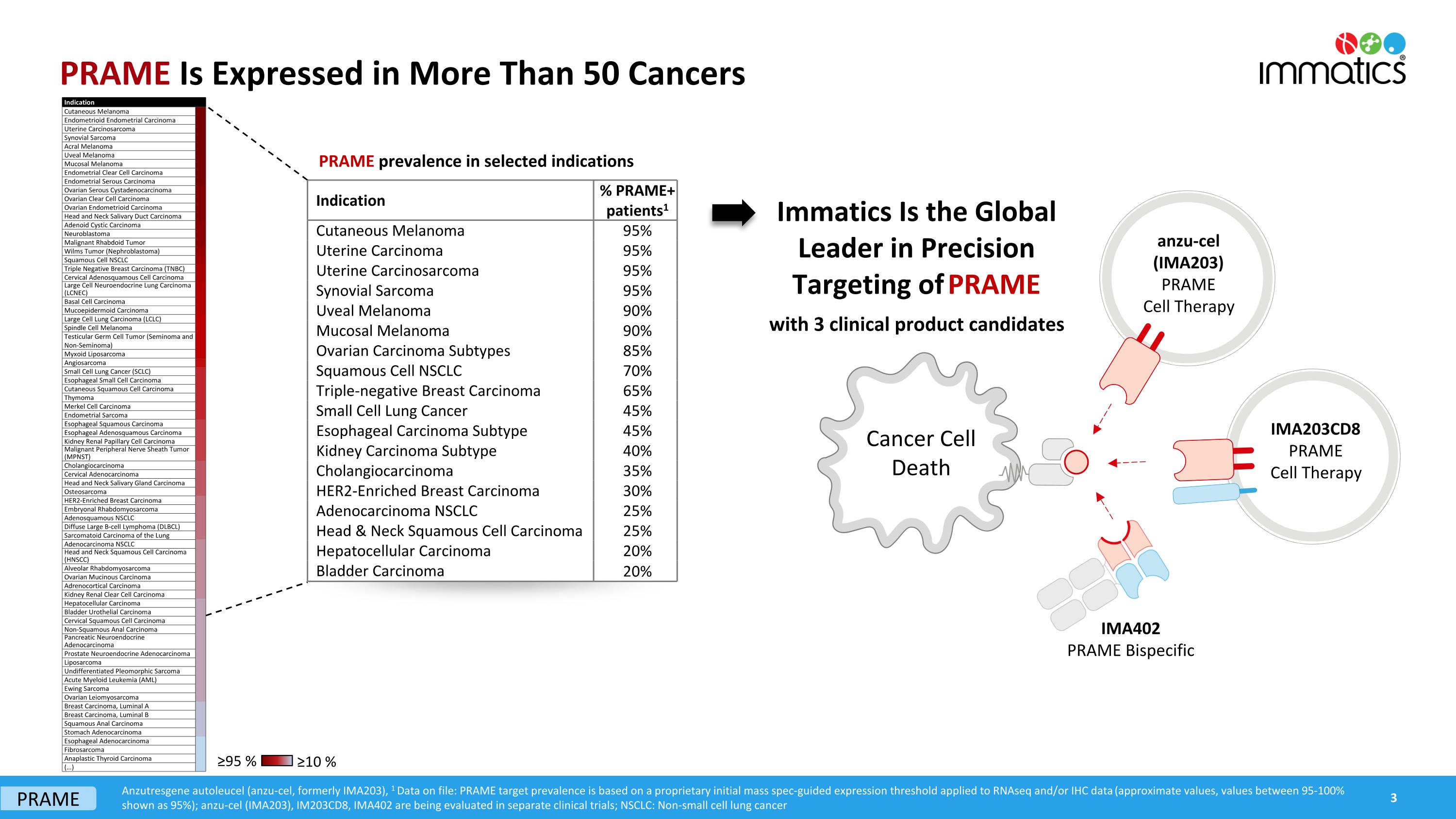
PRAME Is Expressed in More Than 50 Cancers Anzutresgene autoleucel (anzu-cel, formerly IMA203), 1 Data on file: PRAME target prevalence is based on a proprietary initial mass spec-guided expression threshold applied to RNAseq and/or IHC data (approximate values, values between 95-100% shown as 95%); anzu-cel (IMA203), IM203CD8, IMA402 are being evaluated in separate clinical trials; NSCLC: Non-small cell lung cancer ≥95 % ≥10 % Cancer Cell Death IMA402 PRAME Bispecific anzu-cel (IMA203) PRAME Cell Therapy IMA203CD8 PRAME Cell Therapy Immatics Is the Global Leader in Precision Targeting of PRAME with 3 clinical product candidates PRAME prevalence in selected indications Indication % PRAME+ patients1 Cutaneous Melanoma 95% Uterine Carcinoma 95% Uterine Carcinosarcoma 95% Synovial Sarcoma 95% Uveal Melanoma 90% Mucosal Melanoma 90% Ovarian Carcinoma Subtypes 85% Squamous Cell NSCLC 70% Triple-negative Breast Carcinoma 65% Small Cell Lung Cancer 45% Esophageal Carcinoma Subtype 45% Kidney Carcinoma Subtype 40% Cholangiocarcinoma 35% HER2-Enriched Breast Carcinoma 30% Adenocarcinoma NSCLC 25% Head & Neck Squamous Cell Carcinoma 25% Hepatocellular Carcinoma 20% Bladder Carcinoma 20% 3 PRAME Indication Cutaneous Melanoma Endometrioid Endometrial Carcinoma Uterine Carcinosarcoma Synovial Sarcoma Acral Melanoma Uveal Melanoma Mucosal Melanoma Endometrial Clear Cell Carcinoma Endometrial Serous Carcinoma Ovarian Serous Cystadenocarcinoma Ovarian Clear Cell Carcinoma Ovarian Endometrioid Carcinoma Head and Neck Salivary Duct Carcinoma Adenoid Cystic Carcinoma Neuroblastoma Malignant Rhabdoid Tumor Wilms Tumor (Nephroblastoma) Squamous Cell NSCLC Triple Negative Breast Carcinoma (TNBC) Cervical Adenosquamous Cell Carcinoma Large Cell Neuroendocrine Lung Carcinoma (LCNEC) Basal Cell Carcinoma Mucoepidermoid Carcinoma Large Cell Lung Carcinoma (LCLC) Spindle Cell Melanoma Testicular Germ Cell Tumor (Seminoma and Non-Seminoma) Myxoid Liposarcoma Angiosarcoma Small Cell Lung Cancer (SCLC) Esophageal Small Cell Carcinoma Cutaneous Squamous Cell Carcinoma Thymoma Merkel Cell Carcinoma Endometrial Sarcoma Esophageal Squamous Carcinoma Esophageal Adenosquamous Carcinoma Kidney Renal Papillary Cell Carcinoma Malignant Peripheral Nerve Sheath Tumor (MPNST) Cholangiocarcinoma Cervical Adenocarcinoma Head and Neck Salivary Gland Carcinoma Osteosarcoma HER2-Enriched Breast Carcinoma Embryonal Rhabdomyosarcoma Adenosquamous NSCLC Diffuse Large B-cell Lymphoma (DLBCL) Sarcomatoid Carcinoma of the Lung Adenocarcinoma NSCLC Head and Neck Squamous Cell Carcinoma (HNSCC) Alveolar Rhabdomyosarcoma Ovarian Mucinous Carcinoma Adrenocortical Carcinoma Kidney Renal Clear Cell Carcinoma Hepatocellular Carcinoma Bladder Urothelial Carcinoma Cervical Squamous Cell Carcinoma Non-Squamous Anal Carcinoma Pancreatic Neuroendocrine Adenocarcinoma Prostate Neuroendocrine Adenocarcinoma Liposarcoma Undifferentiated Pleomorphic Sarcoma Acute Myeloid Leukemia (AML) Ewing Sarcoma Ovarian Leiomyosarcoma Breast Carcinoma, Luminal A Breast Carcinoma, Luminal B Squamous Anal Carcinoma Stomach Adenocarcinoma Esophageal Adenocarcinoma Fibrosarcoma Anaplastic Thyroid Carcinoma (…)
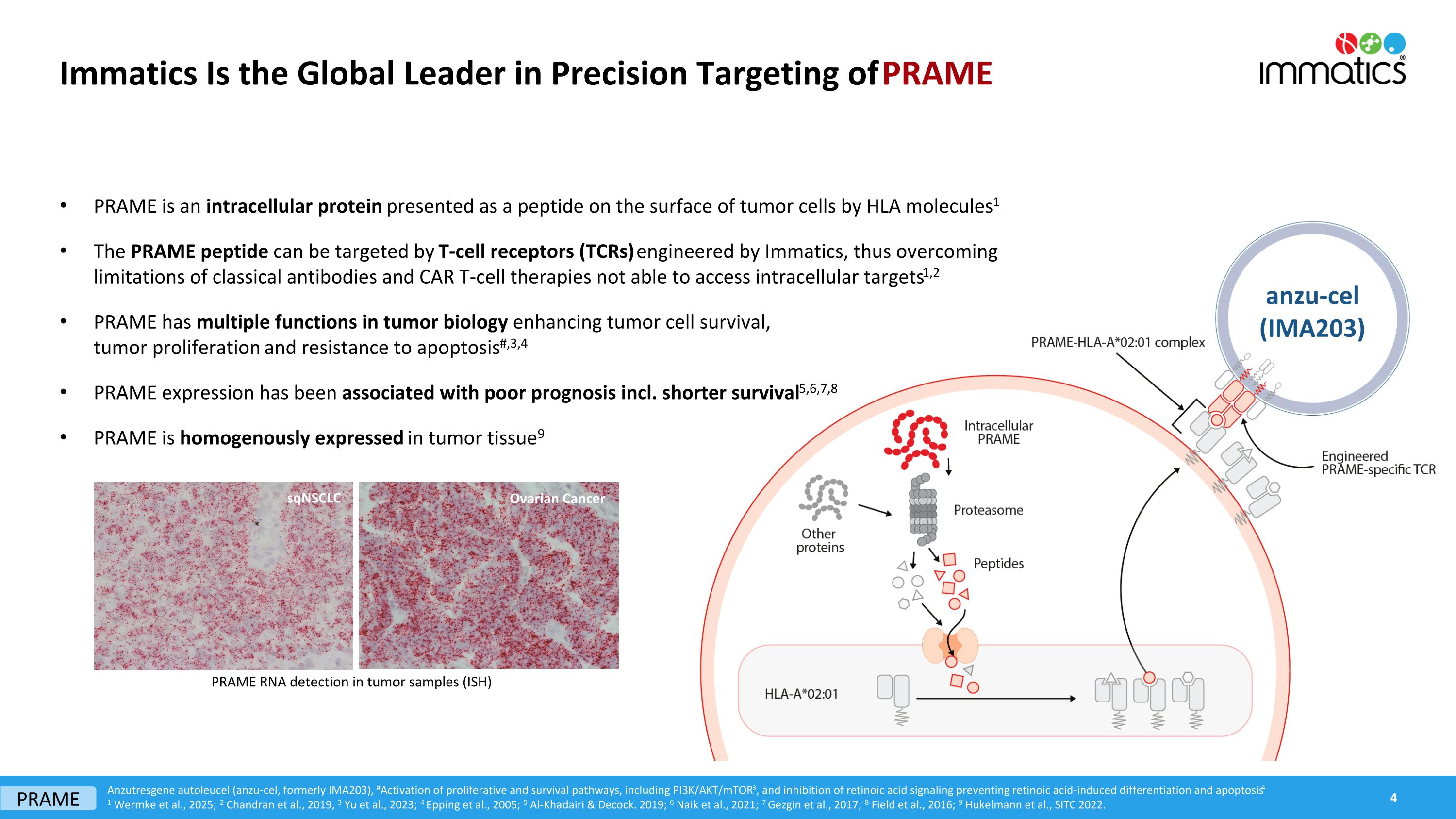
Immatics Is the Global Leader in Precision Targeting of PRAME PRAME is an intracellular protein presented as a peptide on the surface of tumor cells by HLA molecules1 The PRAME peptide can be targeted by T-cell receptors (TCRs) engineered by Immatics, thus overcoming limitations of classical antibodies and CAR T-cell therapies not able to access intracellular targets1,2 PRAME has multiple functions in tumor biology enhancing tumor cell survival, tumor proliferation and resistance to apoptosis#,3,4 PRAME expression has been associated with poor prognosis incl. shorter survival5,6,7,8 PRAME is homogenously expressed in tumor tissue9 sqNSCLC Ovarian Cancer PRAME RNA detection in tumor samples (ISH) Anzutresgene autoleucel (anzu-cel, formerly IMA203), #Activation of proliferative and survival pathways, including PI3K/AKT/mTOR3, and inhibition of retinoic acid signaling preventing retinoic acid-induced differentiation and apoptosis4 1 Wermke et al., 2025; 2 Chandran et al., 2019, 3 Yu et al., 2023; 4 Epping et al., 2005; 5 Al-Khadairi & Decock. 2019; 6 Naik et al., 2021; 7 Gezgin et al., 2017; 8 Field et al., 2016; 9 Hukelmann et al., SITC 2022. PRAME anzu-cel (IMA203)
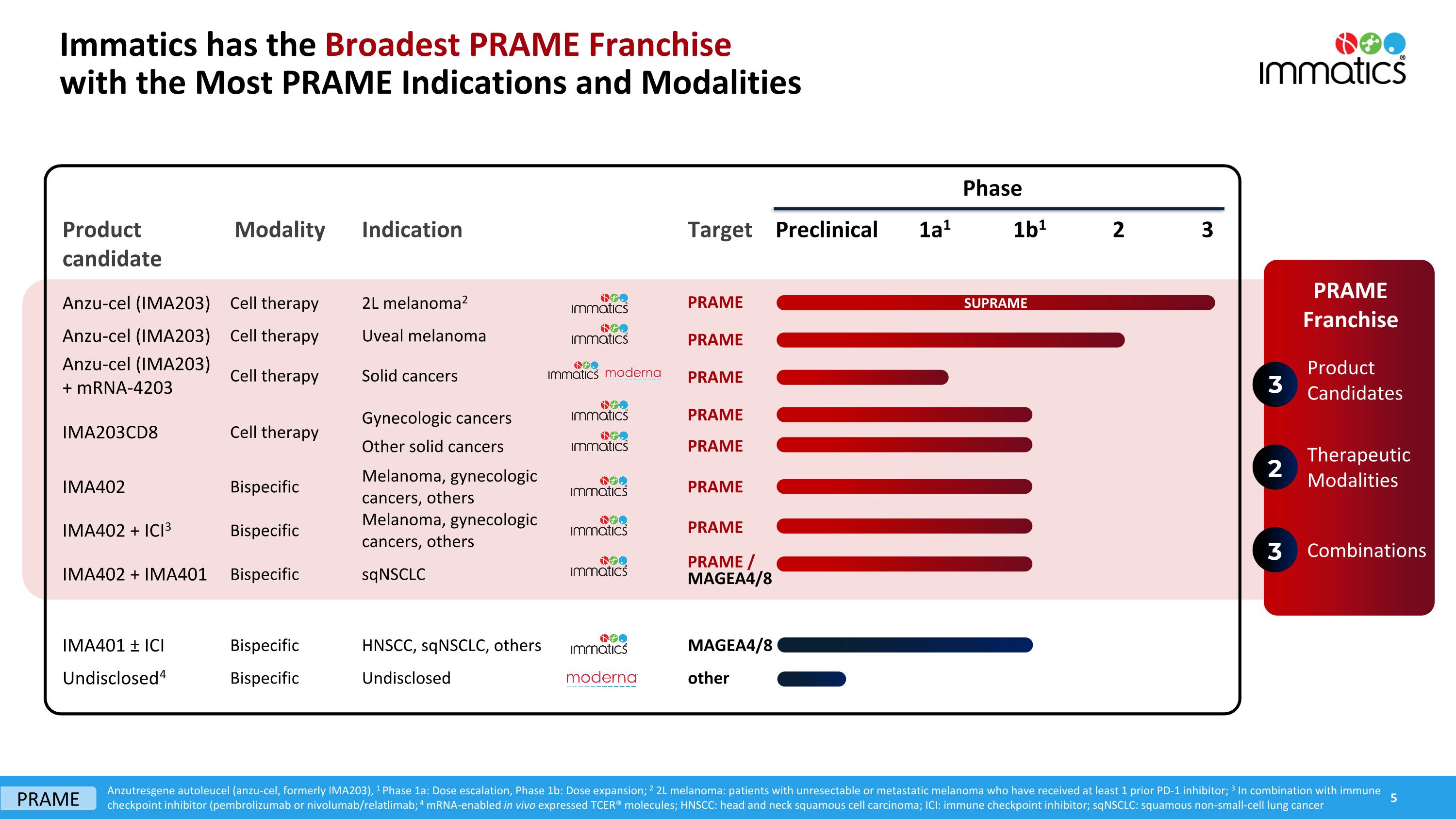
Product candidate Modality Indication Target Anzu-cel (IMA203) Cell therapy 2L melanoma2 Anzu-cel (IMA203) Cell therapy Uveal melanoma Anzu-cel (IMA203) + mRNA-4203 Cell therapy Solid cancers IMA203CD8 Cell therapy Gynecologic cancers Other solid cancers IMA402 Bispecific Melanoma, gynecologic cancers, others IMA402 + ICI3 Bispecific Melanoma, gynecologic cancers, others IMA402 + IMA401 Bispecific sqNSCLC IMA401 ± ICI Bispecific HNSCC, sqNSCLC, others MAGEA4/8 Undisclosed4 Bispecific Undisclosed other Preclinical 1a1 1b1 2 3 SUPRAME Phase Anzutresgene autoleucel (anzu-cel, formerly IMA203), 1 Phase 1a: Dose escalation, Phase 1b: Dose expansion; 2 2L melanoma: patients with unresectable or metastatic melanoma who have received at least 1 prior PD-1 inhibitor; 3 In combination with immune checkpoint inhibitor (pembrolizumab or nivolumab/relatlimab; 4 mRNA-enabled in vivo expressed TCER® molecules; HNSCC: head and neck squamous cell carcinoma; ICI: immune checkpoint inhibitor; sqNSCLC: squamous non-small-cell lung cancer PRAME Franchise PRAME Product Candidates Therapeutic Modalities 3 2 3 Combinations PRAME PRAME PRAME PRAME PRAME PRAME PRAME PRAME / MAGEA4/8 Immatics has the Broadest PRAME Franchise with the Most PRAME Indications and Modalities
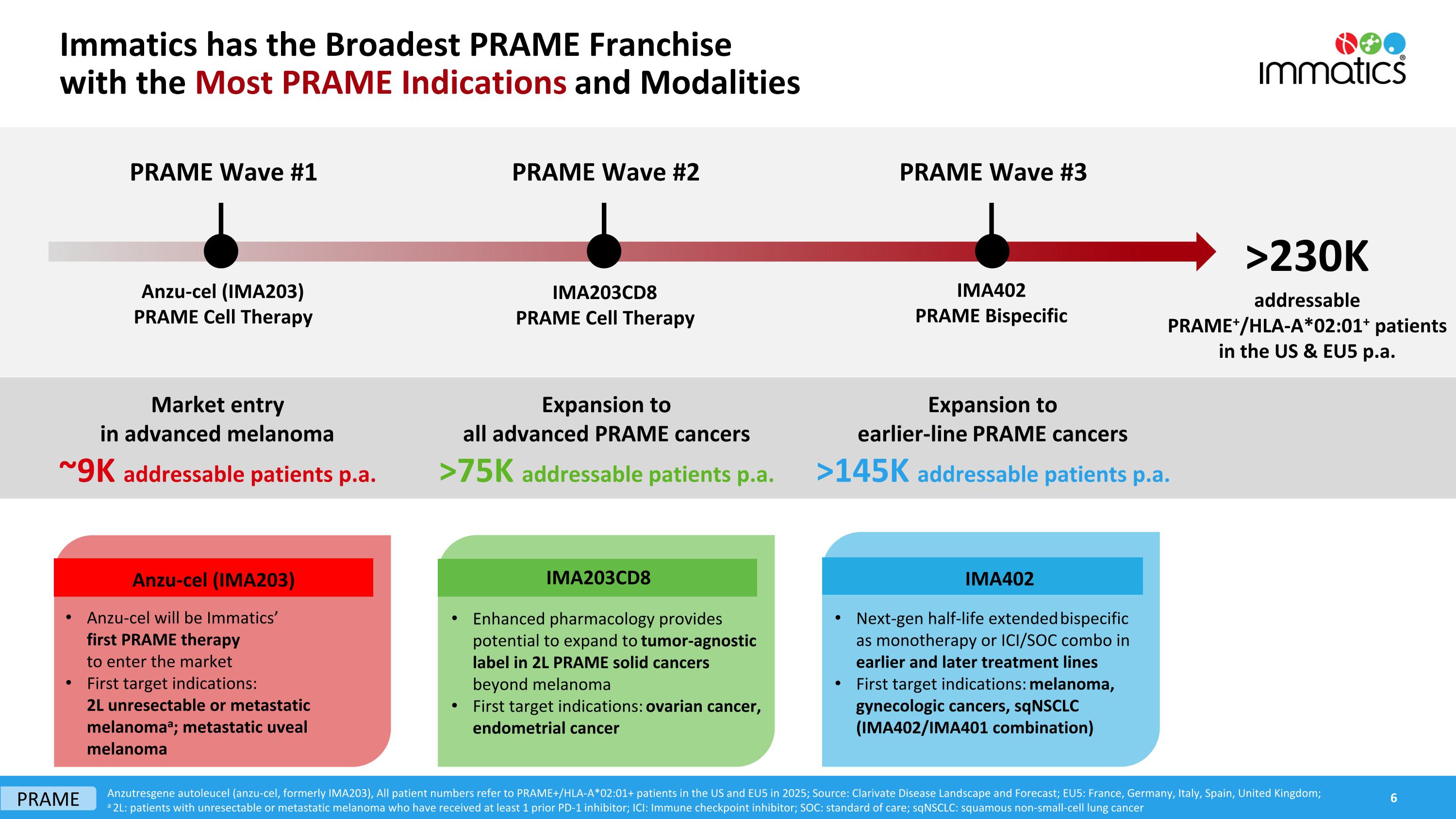
PRAME Wave #2 PRAME Wave #3 Anzutresgene autoleucel (anzu-cel, formerly IMA203), All patient numbers refer to PRAME+/HLA-A*02:01+ patients in the US and EU5 in 2025; Source: Clarivate Disease Landscape and Forecast; EU5: France, Germany, Italy, Spain, United Kingdom; a 2L: patients with unresectable or metastatic melanoma who have received at least 1 prior PD-1 inhibitor; ICI: Immune checkpoint inhibitor; SOC: standard of care; sqNSCLC: squamous non-small-cell lung cancer >230K addressable PRAME+/HLA-A*02:01+ patients in the US & EU5 p.a. IMA203CD8 PRAME Cell Therapy IMA402 PRAME Bispecific Market entry in advanced melanoma ~9K addressable patients p.a. Expansion to all advanced PRAME cancers >75K addressable patients p.a. Expansion to earlier-line PRAME cancers >145K addressable patients p.a. IMA402 Anzu-cel will be Immatics’ first PRAME therapy to enter the market First target indications: 2L unresectable or metastatic melanomaa; metastatic uveal melanoma Anzu-cel (IMA203) PRAME Wave #1 Anzu-cel (IMA203) PRAME Cell Therapy PRAME Next-gen half-life extended bispecific as monotherapy or ICI/SOC combo in earlier and later treatment lines First target indications: melanoma, gynecologic cancers, sqNSCLC (IMA402/IMA401 combination) Enhanced pharmacology provides potential to expand to tumor-agnostic label in 2L PRAME solid cancers beyond melanoma First target indications: ovarian cancer, endometrial cancer IMA203CD8 Immatics has the Broadest PRAME Franchise with the Most PRAME Indications and Modalities
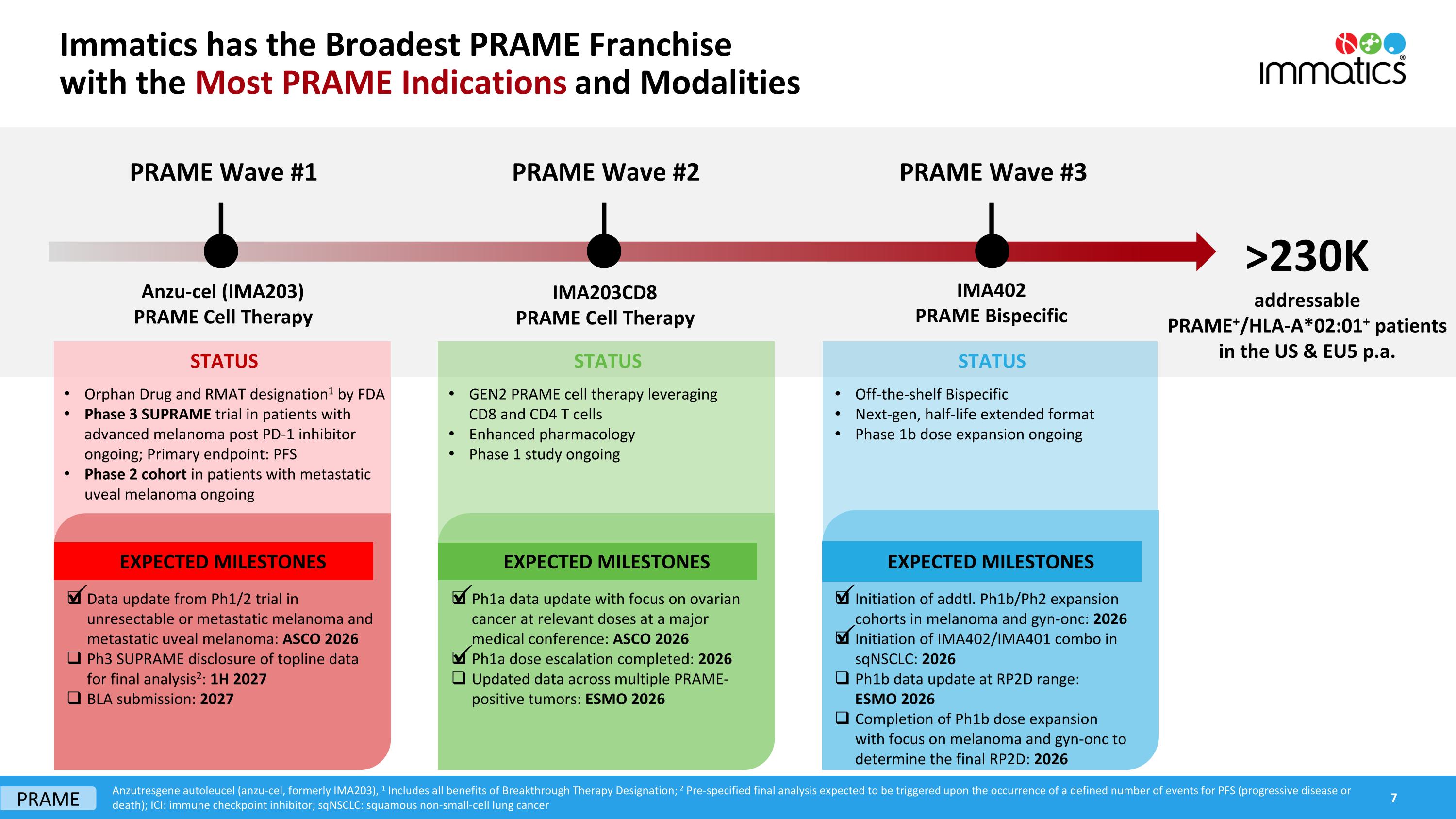
Immatics has the Broadest PRAME Franchise with the Most PRAME Indications and Modalities PRAME Wave #1 PRAME Wave #2 PRAME Wave #3 >230K addressable PRAME+/HLA-A*02:01+ patients in the US & EU5 p.a. Anzu-cel (IMA203) PRAME Cell Therapy IMA203CD8 PRAME Cell Therapy IMA402 PRAME Bispecific Ph1a data update with focus on ovarian cancer at relevant doses at a major medical conference: ASCO 2026 Ph1a dose escalation completed: 2026 Updated data across multiple PRAME-positive tumors: ESMO 2026 EXPECTED MILESTONES STATUS STATUS STATUS GEN2 PRAME cell therapy leveraging CD8 and CD4 T cells Enhanced pharmacology Phase 1 study ongoing Off-the-shelf Bispecific Next-gen, half-life extended format Phase 1b dose expansion ongoing Orphan Drug and RMAT designation1 by FDA Phase 3 SUPRAME trial in patients with advanced melanoma post PD-1 inhibitor ongoing; Primary endpoint: PFS Phase 2 cohort in patients with metastatic uveal melanoma ongoing PRAME Anzutresgene autoleucel (anzu-cel, formerly IMA203), 1 Includes all benefits of Breakthrough Therapy Designation; 2 Pre-specified final analysis expected to be triggered upon the occurrence of a defined number of events for PFS (progressive disease or death); ICI: immune checkpoint inhibitor; sqNSCLC: squamous non-small-cell lung cancer Data update from Ph1/2 trial in unresectable or metastatic melanoma and metastatic uveal melanoma: ASCO 2026 Ph3 SUPRAME disclosure of topline data for final analysis2: 1H 2027 BLA submission: 2027 EXPECTED MILESTONES EXPECTED MILESTONES Initiation of addtl. Ph1b/Ph2 expansion cohorts in melanoma and gyn-onc: 2026 Initiation of IMA402/IMA401 combo in sqNSCLC: 2026 Ph1b data update at RP2D range: ESMO 2026 Completion of Ph1b dose expansion with focus on melanoma and gyn-onc to determine the final RP2D: 2026
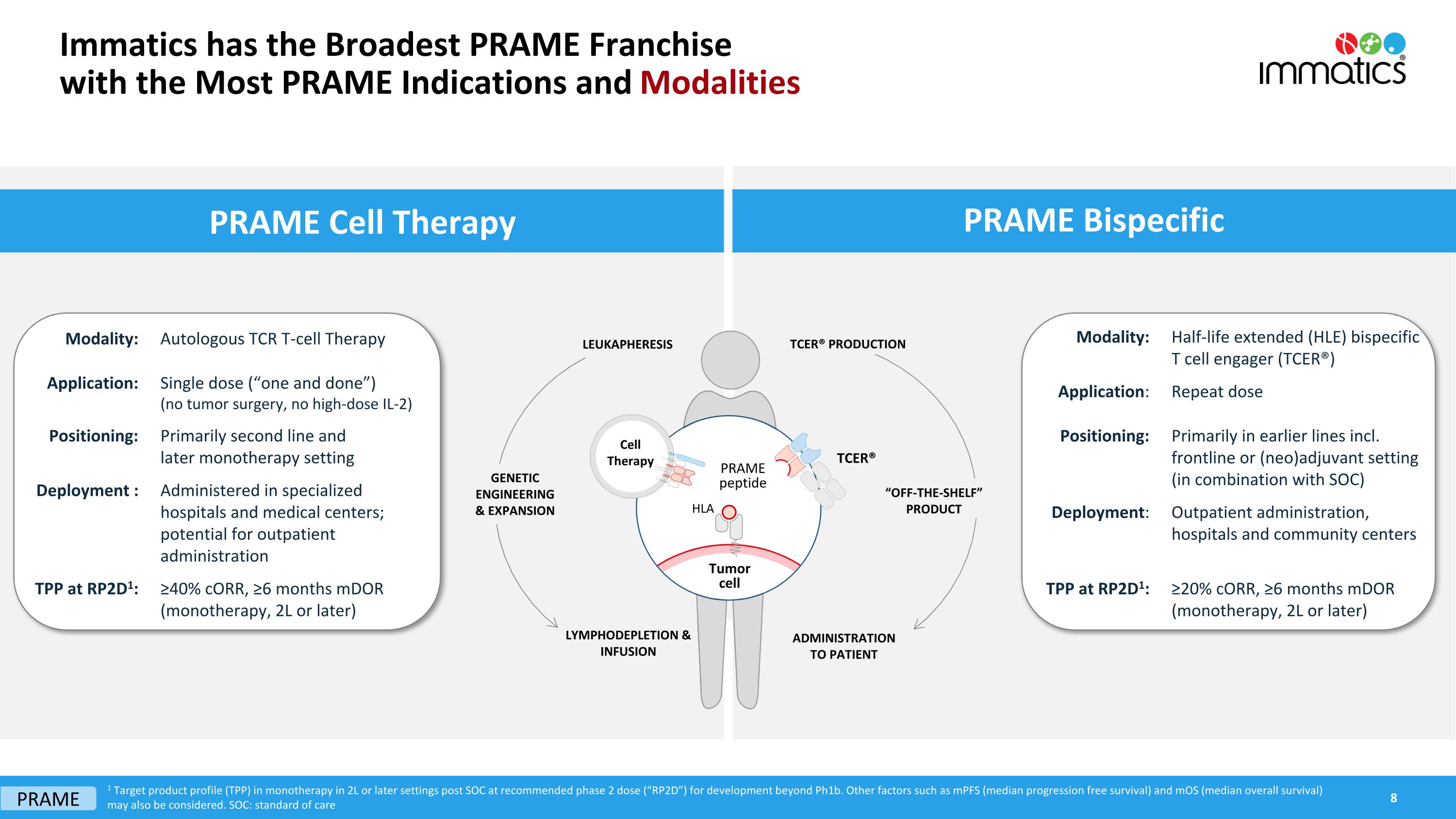
PRAME 1 Target product profile (TPP) in monotherapy in 2L or later settings post SOC at recommended phase 2 dose (“RP2D”) for development beyond Ph1b. Other factors such as mPFS (median progression free survival) and mOS (median overall survival) may also be considered. SOC: standard of care LYMPHODEPLETION & INFUSION Tumor cell HLA PRAME peptide ADMINISTRATION TO PATIENT LEUKAPHERESIS GENETIC ENGINEERING & EXPANSION TCER® PRODUCTION “OFF-THE-SHELF” PRODUCT PRAME Bispecific Modality: Half-life extended (HLE) bispecific T cell engager (TCER®) Application: Repeat dose Positioning: Primarily in earlier lines incl. frontline or (neo)adjuvant setting (in combination with SOC) Deployment: Outpatient administration, hospitals and community centers TPP at RP2D1: ≥20% cORR, ≥6 months mDOR (monotherapy, 2L or later) PRAME Cell Therapy Modality: Autologous TCR T-cell Therapy Application: Single dose (“one and done”) (no tumor surgery, no high-dose IL-2) Positioning: Primarily second line and later monotherapy setting Deployment : Administered in specialized hospitals and medical centers; potential for outpatient administration TPP at RP2D1: ≥40% cORR, ≥6 months mDOR (monotherapy, 2L or later) Cell Therapy TCER® Immatics has the Broadest PRAME Franchise with the Most PRAME Indications and Modalities
Anzu-cel (IMA203) PRAME Cell Therapy Market Entry in Advanced Melanoma PRAME Wave #1 9 Anzutresgene autoleucel (anzu-cel, formerly IMA203)
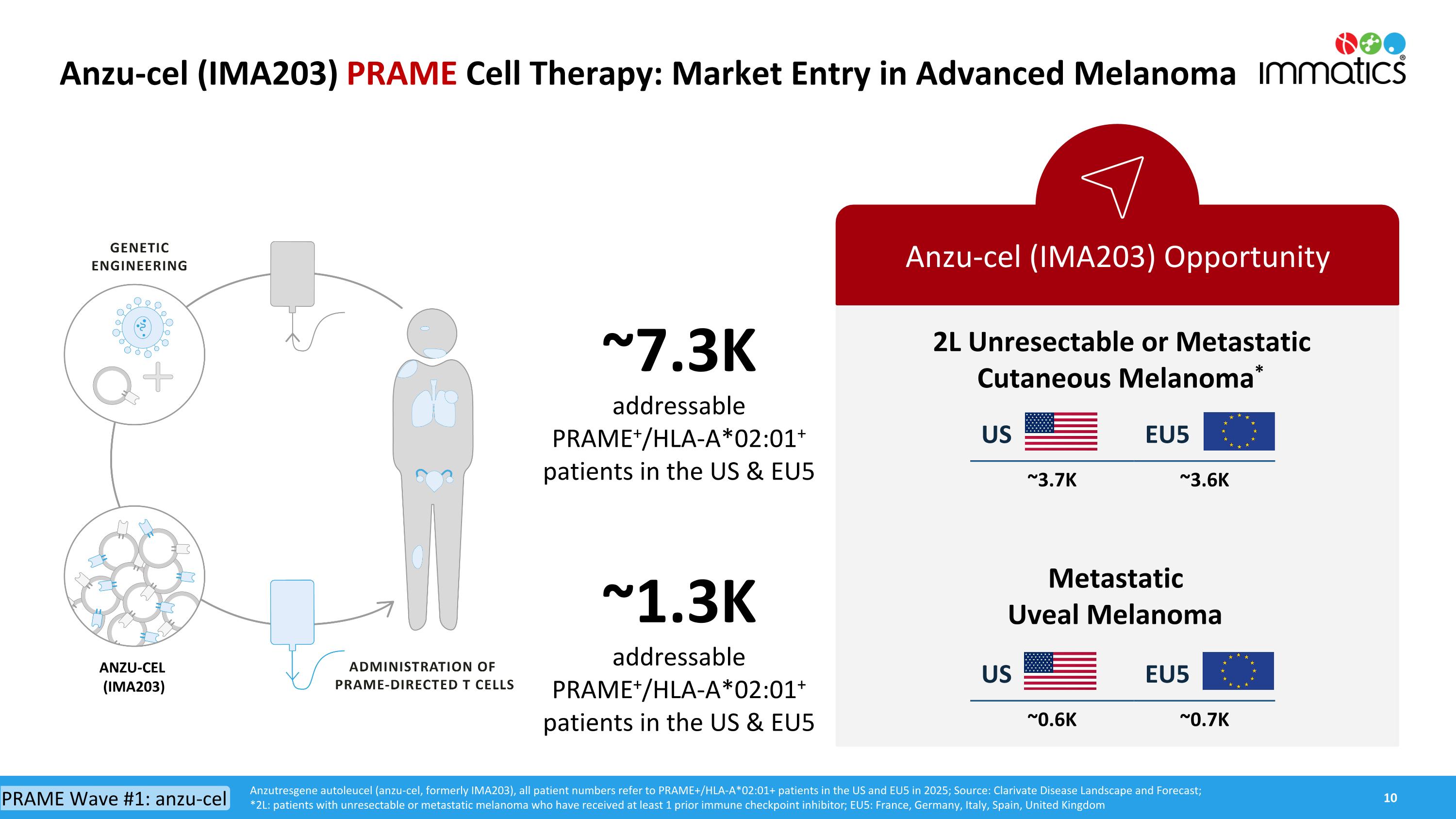
Anzu-cel (IMA203) PRAME Cell Therapy: Market Entry in Advanced Melanoma Anzu-cel (IMA203) Opportunity 2L Unresectable or Metastatic Cutaneous Melanoma* ~7.3K addressable PRAME+/HLA-A*02:01+ patients in the US & EU5 ~1.3K addressable PRAME+/HLA-A*02:01+ patients in the US & EU5 Anzutresgene autoleucel (anzu-cel, formerly IMA203), all patient numbers refer to PRAME+/HLA-A*02:01+ patients in the US and EU5 in 2025; Source: Clarivate Disease Landscape and Forecast; *2L: patients with unresectable or metastatic melanoma who have received at least 1 prior immune checkpoint inhibitor; EU5: France, Germany, Italy, Spain, United Kingdom PRAME Wave #1: anzu-cel US EU5 ~3.7K ~3.6K Metastatic Uveal Melanoma US EU5 ~0.6K ~0.7K ANZU-CEL (IMA203)
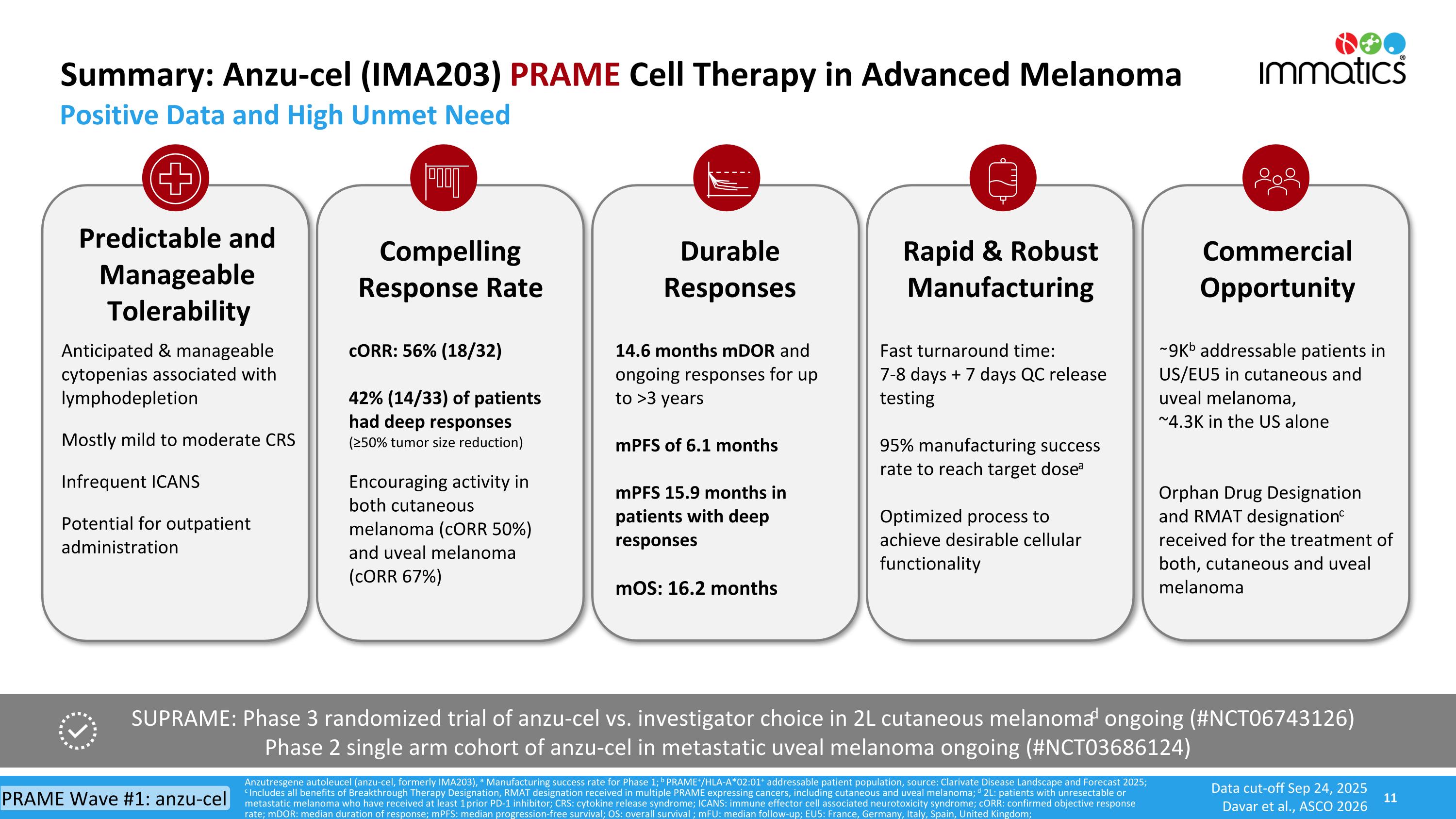
Positive Data and High Unmet Need SUPRAME: Phase 3 randomized trial of anzu-cel vs. investigator choice in 2L cutaneous melanomad ongoing (#NCT06743126) Phase 2 single arm cohort of anzu-cel in metastatic uveal melanoma ongoing (#NCT03686124) Anzutresgene autoleucel (anzu-cel, formerly IMA203), a Manufacturing success rate for Phase 1; b PRAME+/HLA-A*02:01+ addressable patient population, source: Clarivate Disease Landscape and Forecast 2025; c Includes all benefits of Breakthrough Therapy Designation, RMAT designation received in multiple PRAME expressing cancers, including cutaneous and uveal melanoma; d 2L: patients with unresectable or metastatic melanoma who have received at least 1 prior PD-1 inhibitor; CRS: cytokine release syndrome; ICANS: immune effector cell associated neurotoxicity syndrome; cORR: confirmed objective response rate; mDOR: median duration of response; mPFS: median progression-free survival; OS: overall survival ; mFU: median follow-up; EU5: France, Germany, Italy, Spain, United Kingdom; Summary: Anzu-cel (IMA203) PRAME Cell Therapy in Advanced Melanoma Predictable and Manageable Tolerability Anticipated & manageable cytopenias associated with lymphodepletion Mostly mild to moderate CRS Infrequent ICANS Potential for outpatient administration Compelling Response Rate cORR: 56% (18/32) 42% (14/33) of patients had deep responses (≥50% tumor size reduction) Encouraging activity in both cutaneous melanoma (cORR 50%) and uveal melanoma (cORR 67%) Durable Responses 14.6 months mDOR and ongoing responses for up to >3 years mPFS of 6.1 months mPFS 15.9 months in patients with deep responses mOS: 16.2 months Rapid & Robust Manufacturing Fast turnaround time: 7-8 days + 7 days QC release testing 95% manufacturing success rate to reach target dosea Optimized process to achieve desirable cellular functionality Commercial Opportunity ∼9Kb addressable patients in US/EU5 in cutaneous and uveal melanoma, ~4.3K in the US alone Orphan Drug Designation and RMAT designationc received for the treatment of both, cutaneous and uveal melanoma Data cut-off Sep 24, 2025 Davar et al., ASCO 2026 PRAME Wave #1: anzu-cel
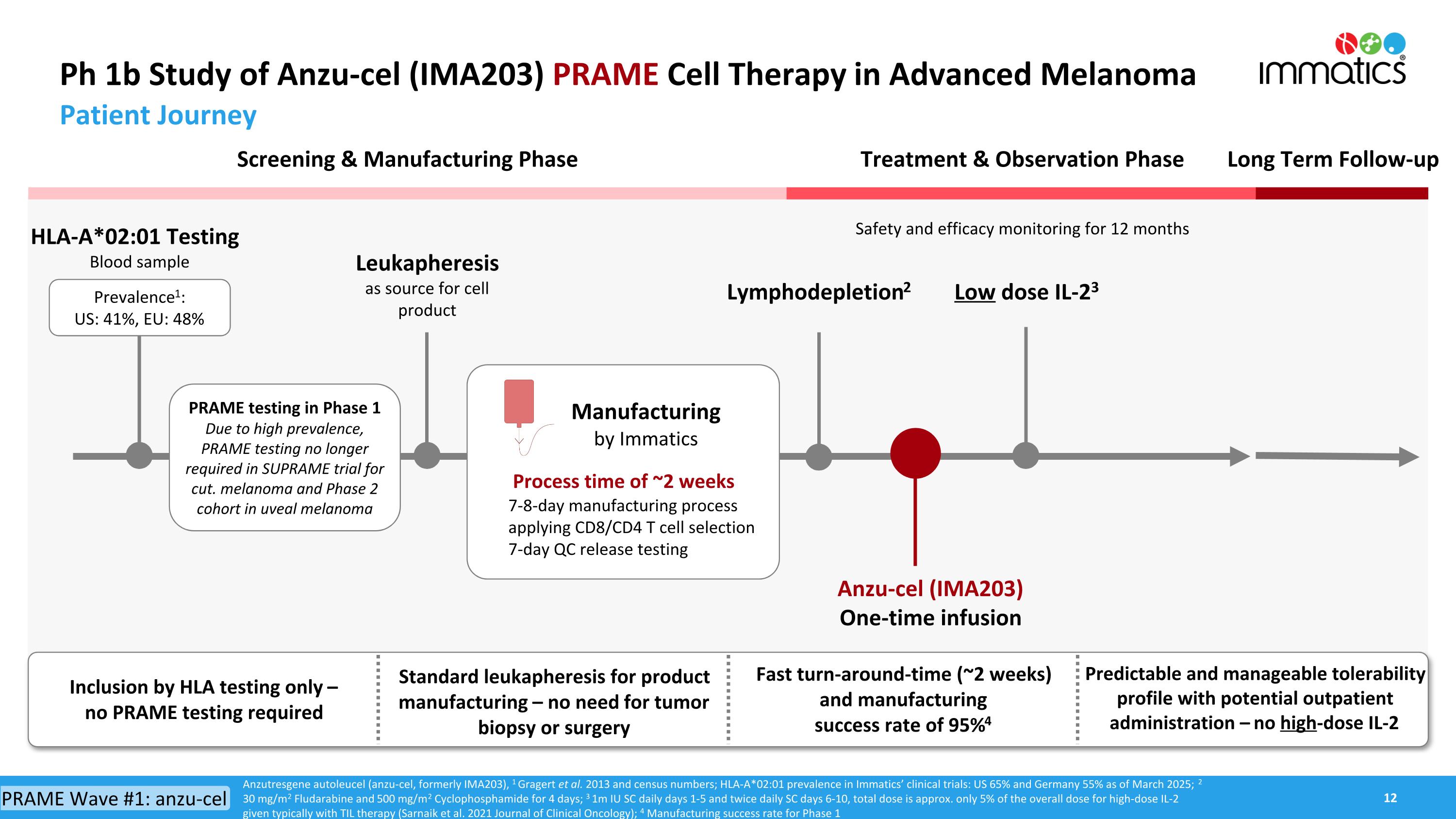
Ph 1b Study of Anzu-cel (IMA203) PRAME Cell Therapy in Advanced Melanoma Patient Journey Anzutresgene autoleucel (anzu-cel, formerly IMA203), 1 Gragert et al. 2013 and census numbers; HLA-A*02:01 prevalence in Immatics’ clinical trials: US 65% and Germany 55% as of March 2025; 2 30 mg/m2 Fludarabine and 500 mg/m2 Cyclophosphamide for 4 days; 3 1m IU SC daily days 1-5 and twice daily SC days 6-10, total dose is approx. only 5% of the overall dose for high-dose IL-2 given typically with TIL therapy (Sarnaik et al. 2021 Journal of Clinical Oncology); 4 Manufacturing success rate for Phase 1 HLA-A*02:01 Testing Blood sample Treatment & Observation Phase Long Term Follow-up Screening & Manufacturing Phase Manufacturing by Immatics Anzu-cel (IMA203) One-time infusion Lymphodepletion2 Low dose IL-23 Safety and efficacy monitoring for 12 months Leukapheresis as source for cell product Process time of ~2 weeks 7-8-day manufacturing process applying CD8/CD4 T cell selection 7-day QC release testing PRAME testing in Phase 1 Due to high prevalence, PRAME testing no longer required in SUPRAME trial for cut. melanoma and Phase 2 cohort in uveal melanoma Inclusion by HLA testing only – no PRAME testing required Fast turn-around-time (~2 weeks) and manufacturing success rate of 95%4 Predictable and manageable tolerability profile with potential outpatient administration – no high-dose IL-2 Standard leukapheresis for product manufacturing – no need for tumor biopsy or surgery Prevalence1: US: 41%, EU: 48% PRAME Wave #1: anzu-cel
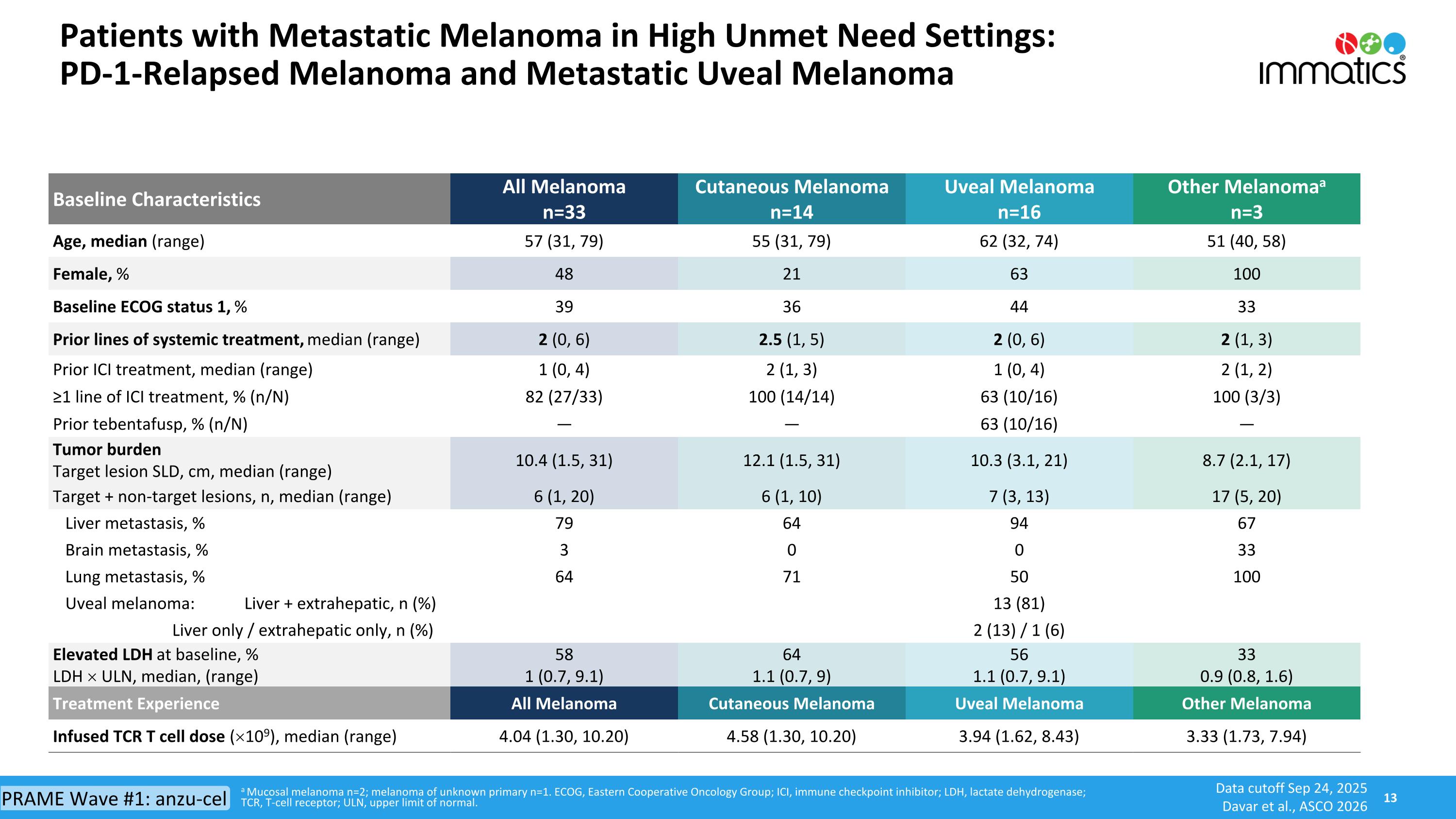
Patients with Metastatic Melanoma in High Unmet Need Settings: PD-1-Relapsed Melanoma and Metastatic Uveal Melanoma a Mucosal melanoma n=2; melanoma of unknown primary n=1. ECOG, Eastern Cooperative Oncology Group; ICI, immune checkpoint inhibitor; LDH, lactate dehydrogenase; TCR, T-cell receptor; ULN, upper limit of normal. Data cutoff Sep 24, 2025 Davar et al., ASCO 2026 PRAME Wave #1: anzu-cel Baseline Characteristics All Melanoma n=33 Cutaneous Melanoma n=14 Uveal Melanoma n=16 Other Melanomaa n=3 Age, median (range) 57 (31, 79) 55 (31, 79) 62 (32, 74) 51 (40, 58) Female, % 48 21 63 100 Baseline ECOG status 1, % 39 36 44 33 Prior lines of systemic treatment, median (range) 2 (0, 6) 2.5 (1, 5) 2 (0, 6) 2 (1, 3) Prior ICI treatment, median (range) 1 (0, 4) 2 (1, 3) 1 (0, 4) 2 (1, 2) ≥1 line of ICI treatment, % (n/N) 82 (27/33) 100 (14/14) 63 (10/16) 100 (3/3) Prior tebentafusp, % (n/N) — — 63 (10/16) — Tumor burden Target lesion SLD, cm, median (range) 10.4 (1.5, 31) 12.1 (1.5, 31) 10.3 (3.1, 21) 8.7 (2.1, 17) Target + non-target lesions, n, median (range) 6 (1, 20) 6 (1, 10) 7 (3, 13) 17 (5, 20) Liver metastasis, % 79 64 94 67 Brain metastasis, % 3 0 0 33 Lung metastasis, % 64 71 50 100 Uveal melanoma: Liver + extrahepatic, n (%) 13 (81) Liver only / extrahepatic only, n (%) 2 (13) / 1 (6) Elevated LDH at baseline, % LDH ULN, median, (range) 58 1 (0.7, 9.1) 64 1.1 (0.7, 9) 56 1.1 (0.7, 9.1) 33 0.9 (0.8, 1.6) Treatment Experience All Melanoma Cutaneous Melanoma Uveal Melanoma Other Melanoma Infused TCR T cell dose (109), median (range) 4.04 (1.30, 10.20) 4.58 (1.30, 10.20) 3.94 (1.62, 8.43) 3.33 (1.73, 7.94)
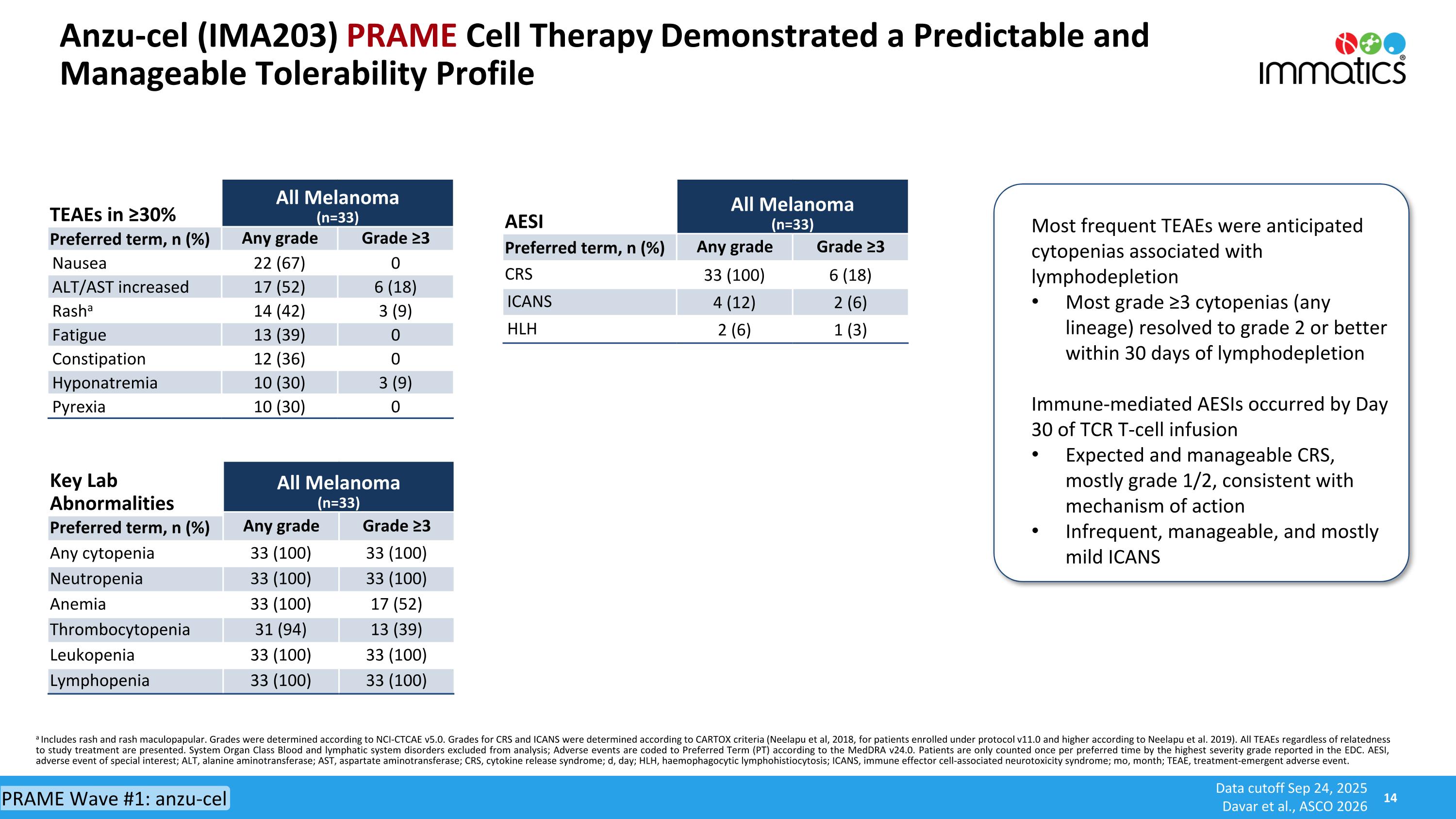
Anzu-cel (IMA203) PRAME Cell Therapy Demonstrated a Predictable and Manageable Tolerability Profile TEAEs in ≥30% All Melanoma (n=33) Preferred term, n (%) Any grade Grade ≥3 Nausea 22 (67) 0 ALT/AST increased 17 (52) 6 (18) Rasha 14 (42) 3 (9) Fatigue 13 (39) 0 Constipation 12 (36) 0 Hyponatremia 10 (30) 3 (9) Pyrexia 10 (30) 0 AESI All Melanoma (n=33) Preferred term, n (%) Any grade Grade ≥3 CRS 33 (100) 6 (18) ICANS 4 (12) 2 (6) HLH 2 (6) 1 (3) Key Lab Abnormalities All Melanoma (n=33) Any grade Grade ≥3 Preferred term, n (%) Any cytopenia 33 (100) 33 (100) Neutropenia 33 (100) 33 (100) Anemia 33 (100) 17 (52) Thrombocytopenia 31 (94) 13 (39) Leukopenia 33 (100) 33 (100) Lymphopenia 33 (100) 33 (100) a Includes rash and rash maculopapular. Grades were determined according to NCI-CTCAE v5.0. Grades for CRS and ICANS were determined according to CARTOX criteria (Neelapu et al, 2018, for patients enrolled under protocol v11.0 and higher according to Neelapu et al. 2019). All TEAEs regardless of relatedness to study treatment are presented. System Organ Class Blood and lymphatic system disorders excluded from analysis; Adverse events are coded to Preferred Term (PT) according to the MedDRA v24.0. Patients are only counted once per preferred time by the highest severity grade reported in the EDC. AESI, adverse event of special interest; ALT, alanine aminotransferase; AST, aspartate aminotransferase; CRS, cytokine release syndrome; d, day; HLH, haemophagocytic lymphohistiocytosis; ICANS, immune effector cell-associated neurotoxicity syndrome; mo, month; TEAE, treatment-emergent adverse event. Data cutoff Sep 24, 2025 Davar et al., ASCO 2026 PRAME Wave #1: anzu-cel Most frequent TEAEs were anticipated cytopenias associated with lymphodepletion Most grade ≥3 cytopenias (any lineage) resolved to grade 2 or better within 30 days of lymphodepletion Immune-mediated AESIs occurred by Day 30 of TCR T-cell infusion Expected and manageable CRS, mostly grade 1/2, consistent with mechanism of action Infrequent, manageable, and mostly mild ICANS
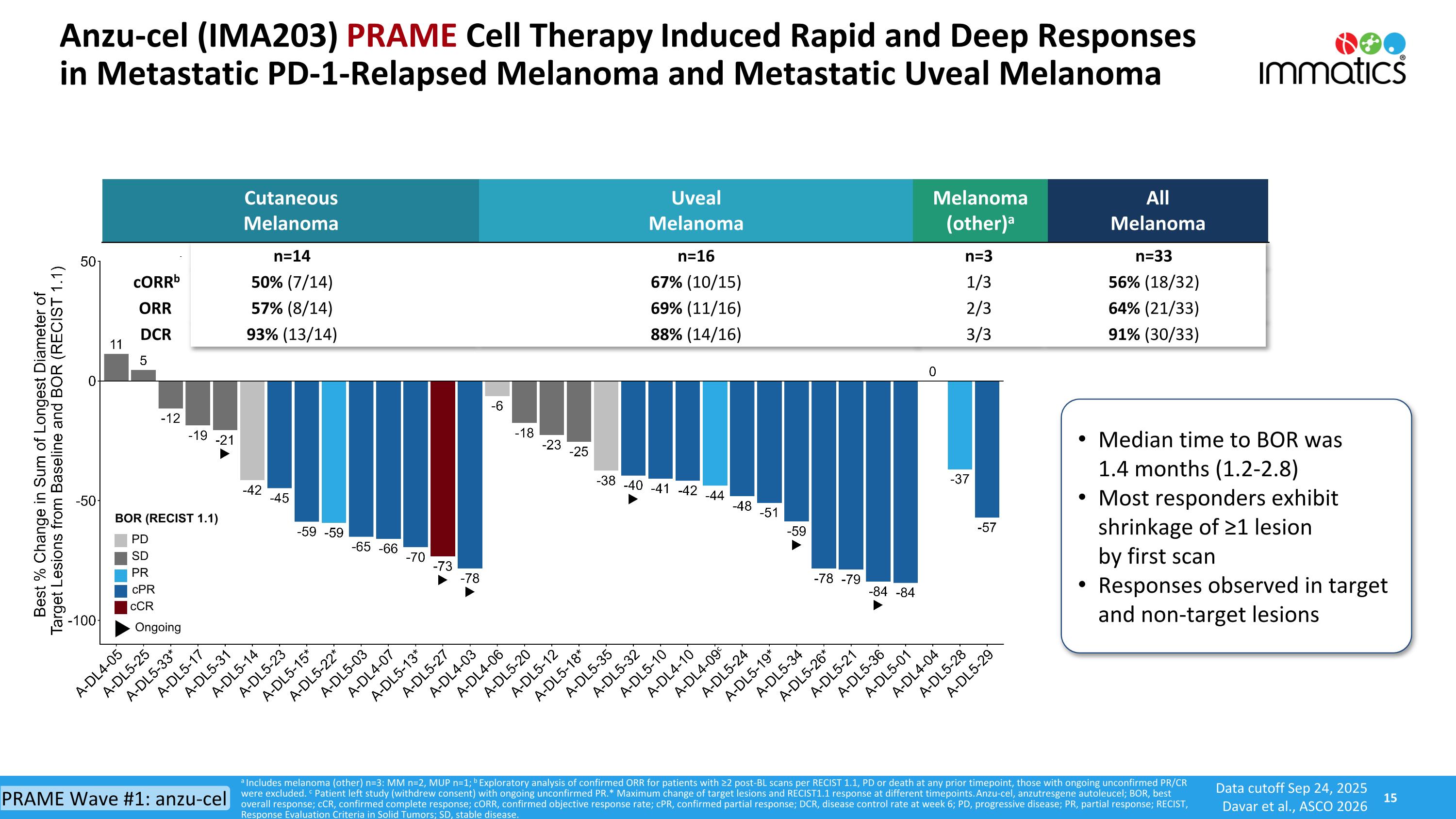
Anzu-cel (IMA203) PRAME Cell Therapy Induced Rapid and Deep Responses in Metastatic PD-1-Relapsed Melanoma and Metastatic Uveal Melanoma Data cutoff Sep 24, 2025 Davar et al., ASCO 2026 PRAME Wave #1: anzu-cel c n=14 n=16 n=3 n=33 cORRb 50% (7/14) 67% (10/15) 1/3 56% (18/32) ORR 57% (8/14) 69% (11/16) 2/3 64% (21/33) DCR 93% (13/14) 88% (14/16) 3/3 91% (30/33) Cutaneous Melanoma Uveal Melanoma Melanoma (other)a All Melanoma Median time to BOR was 1.4 months (1.2-2.8) Most responders exhibit shrinkage of ≥1 lesion by first scan Responses observed in target and non-target lesions BOR (RECIST 1.1) PD SD PR cPR cCR Ongoing a Includes melanoma (other) n=3: MM n=2, MUP n=1; b Exploratory analysis of confirmed ORR for patients with ≥2 post-BL scans per RECIST 1.1, PD or death at any prior timepoint, those with ongoing unconfirmed PR/CR were excluded. c Patient left study (withdrew consent) with ongoing unconfirmed PR.* Maximum change of target lesions and RECIST1.1 response at different timepoints. Anzu-cel, anzutresgene autoleucel; BOR, best overall response; cCR, confirmed complete response; cORR, confirmed objective response rate; cPR, confirmed partial response; DCR, disease control rate at week 6; PD, progressive disease; PR, partial response; RECIST, Response Evaluation Criteria in Solid Tumors; SD, stable disease.
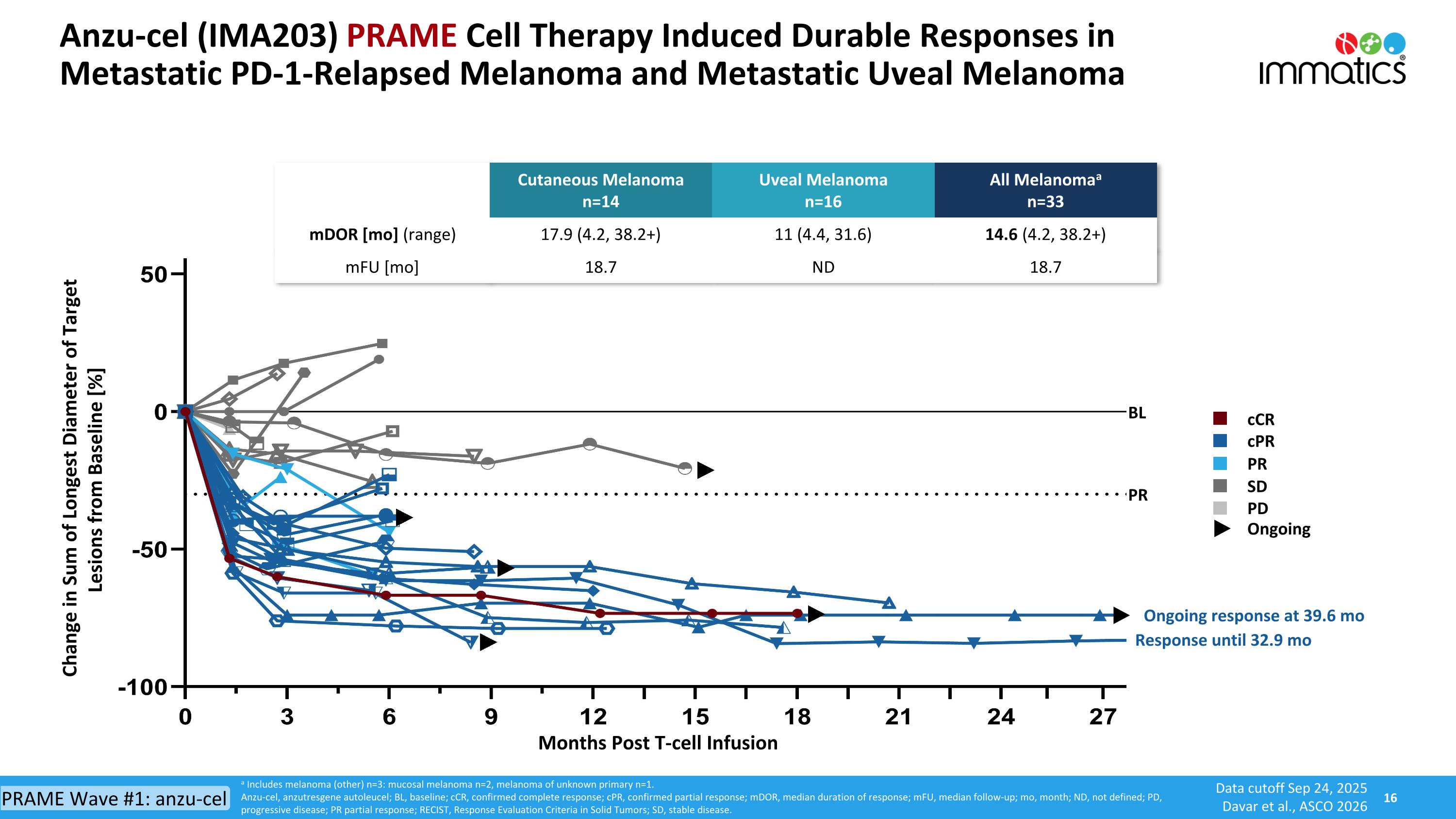
Change in Sum of Longest Diameter of Target Lesions from Baseline [%] Months Post T-cell Infusion Ongoing response at 39.6 mo Response until 32.9 mo BL PR cCR cPR PR SD PD Ongoing Anzu-cel (IMA203) PRAME Cell Therapy Induced Durable Responses in Metastatic PD-1-Relapsed Melanoma and Metastatic Uveal Melanoma Data cutoff Sep 24, 2025 Davar et al., ASCO 2026 PRAME Wave #1: anzu-cel a Includes melanoma (other) n=3: mucosal melanoma n=2, melanoma of unknown primary n=1. Anzu-cel, anzutresgene autoleucel; BL, baseline; cCR, confirmed complete response; cPR, confirmed partial response; mDOR, median duration of response; mFU, median follow-up; mo, month; ND, not defined; PD, progressive disease; PR partial response; RECIST, Response Evaluation Criteria in Solid Tumors; SD, stable disease. Cutaneous Melanoma n=14 Uveal Melanoma n=16 All Melanomaa n=33 mDOR [mo] (range) 17.9 (4.2, 38.2+) 11 (4.4, 31.6) 14.6 (4.2, 38.2+) mFU [mo] 18.7 ND 18.7
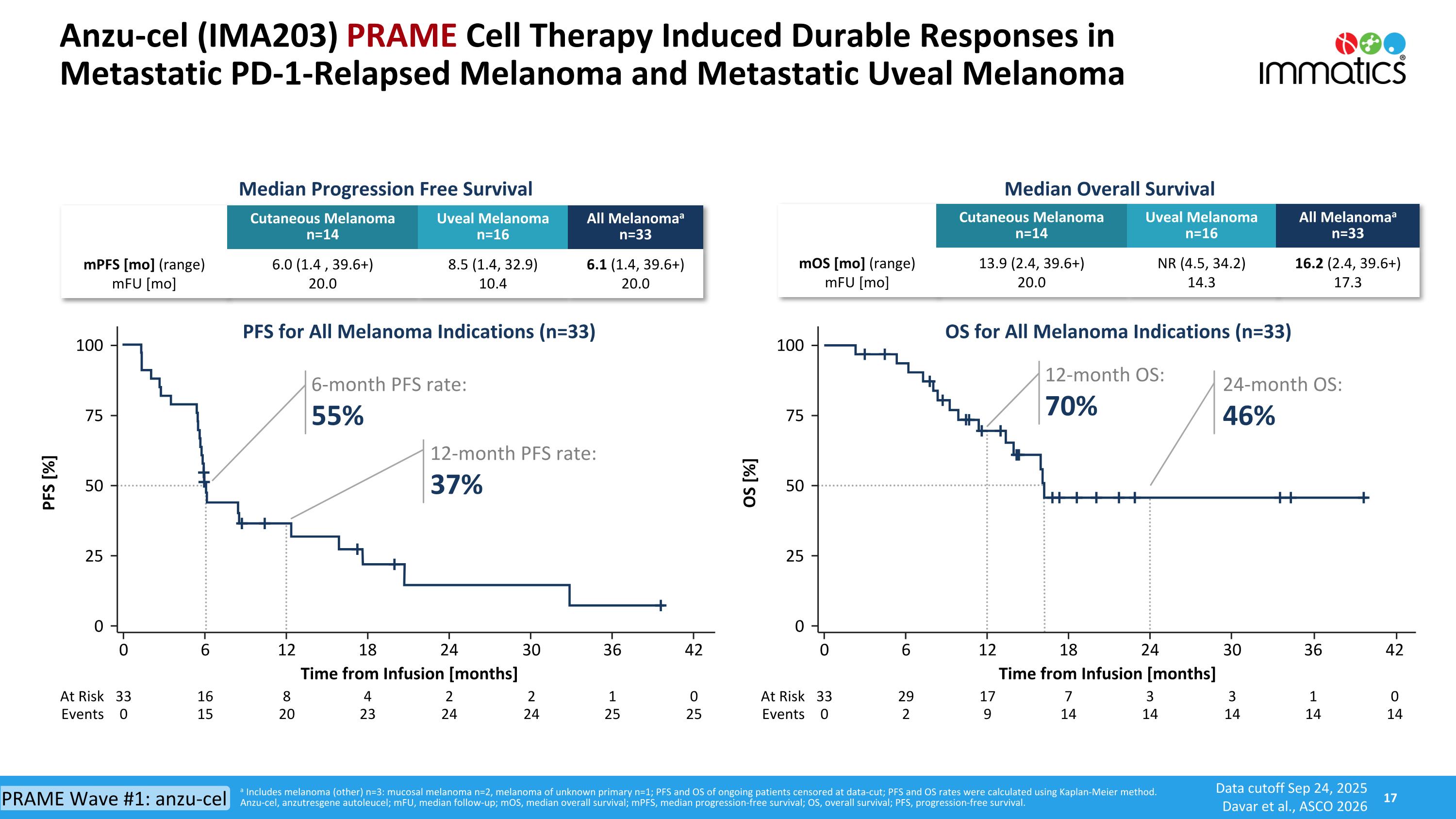
Anzu-cel (IMA203) PRAME Cell Therapy Induced Durable Responses in Metastatic PD-1-Relapsed Melanoma and Metastatic Uveal Melanoma Data cutoff Sep 24, 2025 Davar et al., ASCO 2026 PRAME Wave #1: anzu-cel Median Progression Free Survival Median Overall Survival Cutaneous Melanoma n=14 Uveal Melanoma n=16 All Melanomaa n=33 mPFS [mo] (range) mFU [mo] 6.0 (1.4 , 39.6+) 20.0 8.5 (1.4, 32.9) 10.4 6.1 (1.4, 39.6+) 20.0 Cutaneous Melanoma n=14 Uveal Melanoma n=16 All Melanomaa n=33 mOS [mo] (range) mFU [mo] 13.9 (2.4, 39.6+) 20.0 NR (4.5, 34.2) 14.3 16.2 (2.4, 39.6+) 17.3 6-month PFS rate: 55% 100 PFS [%] 0 75 50 25 0 6 12 18 24 30 36 42 Time from Infusion [months] 33 16 8 4 2 2 1 0 0 15 20 23 24 24 25 25 At Risk Events PFS for All Melanoma Indications (n=33) 12-month PFS rate: 37% 24-month OS: 46% 100 OS [%] 0 75 50 25 0 6 12 18 24 30 36 42 Time from Infusion [months] 33 29 17 7 3 3 1 0 0 2 9 14 14 14 14 14 At Risk Events OS for All Melanoma Indications (n=33) 12-month OS: 70% a Includes melanoma (other) n=3: mucosal melanoma n=2, melanoma of unknown primary n=1; PFS and OS of ongoing patients censored at data-cut; PFS and OS rates were calculated using Kaplan-Meier method. Anzu-cel, anzutresgene autoleucel; mFU, median follow-up; mOS, median overall survival; mPFS, median progression-free survival; OS, overall survival; PFS, progression-free survival.
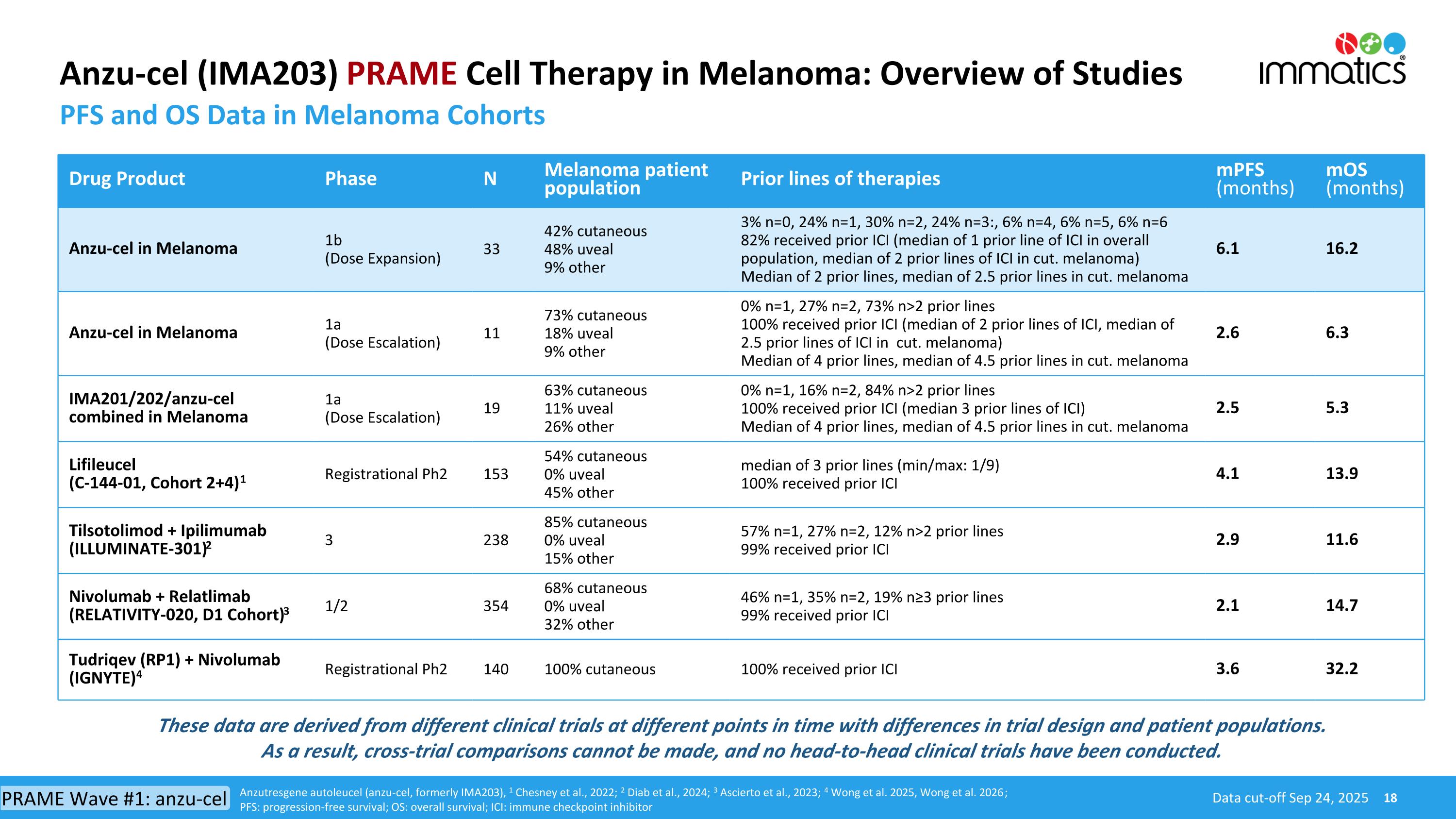
These data are derived from different clinical trials at different points in time with differences in trial design and patient populations. As a result, cross-trial comparisons cannot be made, and no head-to-head clinical trials have been conducted. Anzu-cel (IMA203) PRAME Cell Therapy in Melanoma: Overview of Studies PFS and OS Data in Melanoma Cohorts Drug Product Phase N Melanoma patient population Prior lines of therapies mPFS (months) mOS (months) Anzu-cel in Melanoma 1b (Dose Expansion) 33 42% cutaneous 48% uveal 9% other 3% n=0, 24% n=1, 30% n=2, 24% n=3:, 6% n=4, 6% n=5, 6% n=6 82% received prior ICI (median of 1 prior line of ICI in overall population, median of 2 prior lines of ICI in cut. melanoma) Median of 2 prior lines, median of 2.5 prior lines in cut. melanoma 6.1 16.2 Anzu-cel in Melanoma 1a (Dose Escalation) 11 73% cutaneous 18% uveal 9% other 0% n=1, 27% n=2, 73% n>2 prior lines 100% received prior ICI (median of 2 prior lines of ICI, median of 2.5 prior lines of ICI in cut. melanoma) Median of 4 prior lines, median of 4.5 prior lines in cut. melanoma 2.6 6.3 IMA201/202/anzu-cel combined in Melanoma 1a (Dose Escalation) 19 63% cutaneous 11% uveal 26% other 0% n=1, 16% n=2, 84% n>2 prior lines 100% received prior ICI (median 3 prior lines of ICI) Median of 4 prior lines, median of 4.5 prior lines in cut. melanoma 2.5 5.3 Lifileucel (C-144-01, Cohort 2+4)1 Registrational Ph2 153 54% cutaneous 0% uveal 45% other median of 3 prior lines (min/max: 1/9) 100% received prior ICI 4.1 13.9 Tilsotolimod + Ipilimumab (ILLUMINATE-301)2 3 238 85% cutaneous 0% uveal 15% other 57% n=1, 27% n=2, 12% n>2 prior lines 99% received prior ICI 2.9 11.6 Nivolumab + Relatlimab (RELATIVITY-020, D1 Cohort)3 1/2 354 68% cutaneous 0% uveal 32% other 46% n=1, 35% n=2, 19% n≥3 prior lines 99% received prior ICI 2.1 14.7 Tudriqev (RP1) + Nivolumab (IGNYTE)4 Registrational Ph2 140 100% cutaneous 100% received prior ICI 3.6 32.2 Data cut-off Sep 24, 2025 Anzutresgene autoleucel (anzu-cel, formerly IMA203), 1 Chesney et al., 2022; 2 Diab et al., 2024; 3 Ascierto et al., 2023; 4 Wong et al. 2025, Wong et al. 2026; PFS: progression-free survival; OS: overall survival; ICI: immune checkpoint inhibitor PRAME Wave #1: anzu-cel
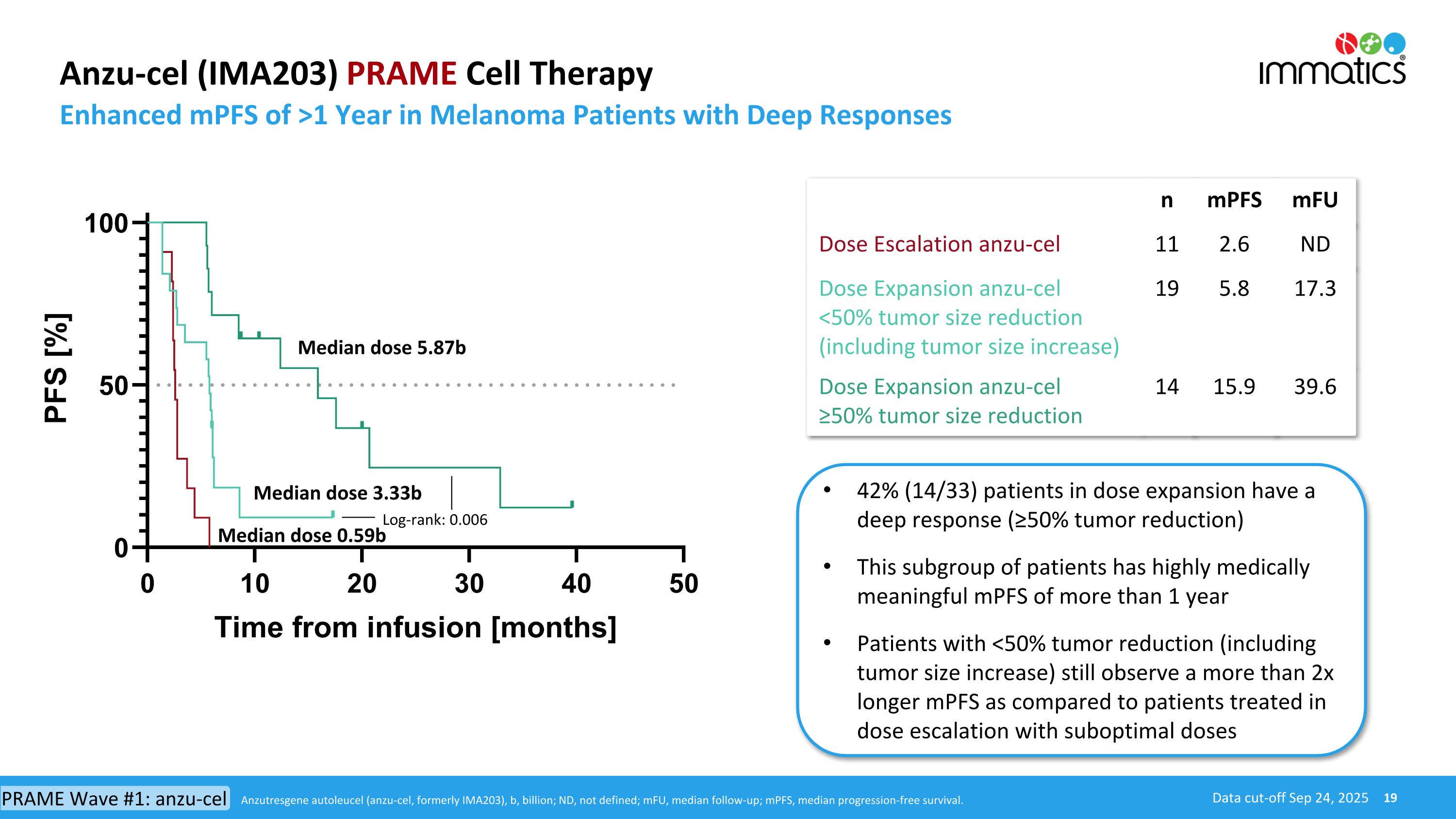
Anzu-cel (IMA203) PRAME Cell Therapy Enhanced mPFS of >1 Year in Melanoma Patients with Deep Responses Data cut-off Sep 24, 2025 42% (14/33) patients in dose expansion have a deep response (≥50% tumor reduction) This subgroup of patients has highly medically meaningful mPFS of more than 1 year Patients with <50% tumor reduction (including tumor size increase) still observe a more than 2x longer mPFS as compared to patients treated in dose escalation with suboptimal doses n mPFS mFU Dose Escalation anzu-cel 11 2.6 ND Dose Expansion anzu-cel <50% tumor size reduction (including tumor size increase) 19 5.8 17.3 Dose Expansion anzu-cel ≥50% tumor size reduction 14 15.9 39.6 Log-rank: 0.006 Anzutresgene autoleucel (anzu-cel, formerly IMA203), b, billion; ND, not defined; mFU, median follow-up; mPFS, median progression-free survival. PRAME Wave #1: anzu-cel Median dose 0.59b Median dose 3.33b Median dose 5.87b
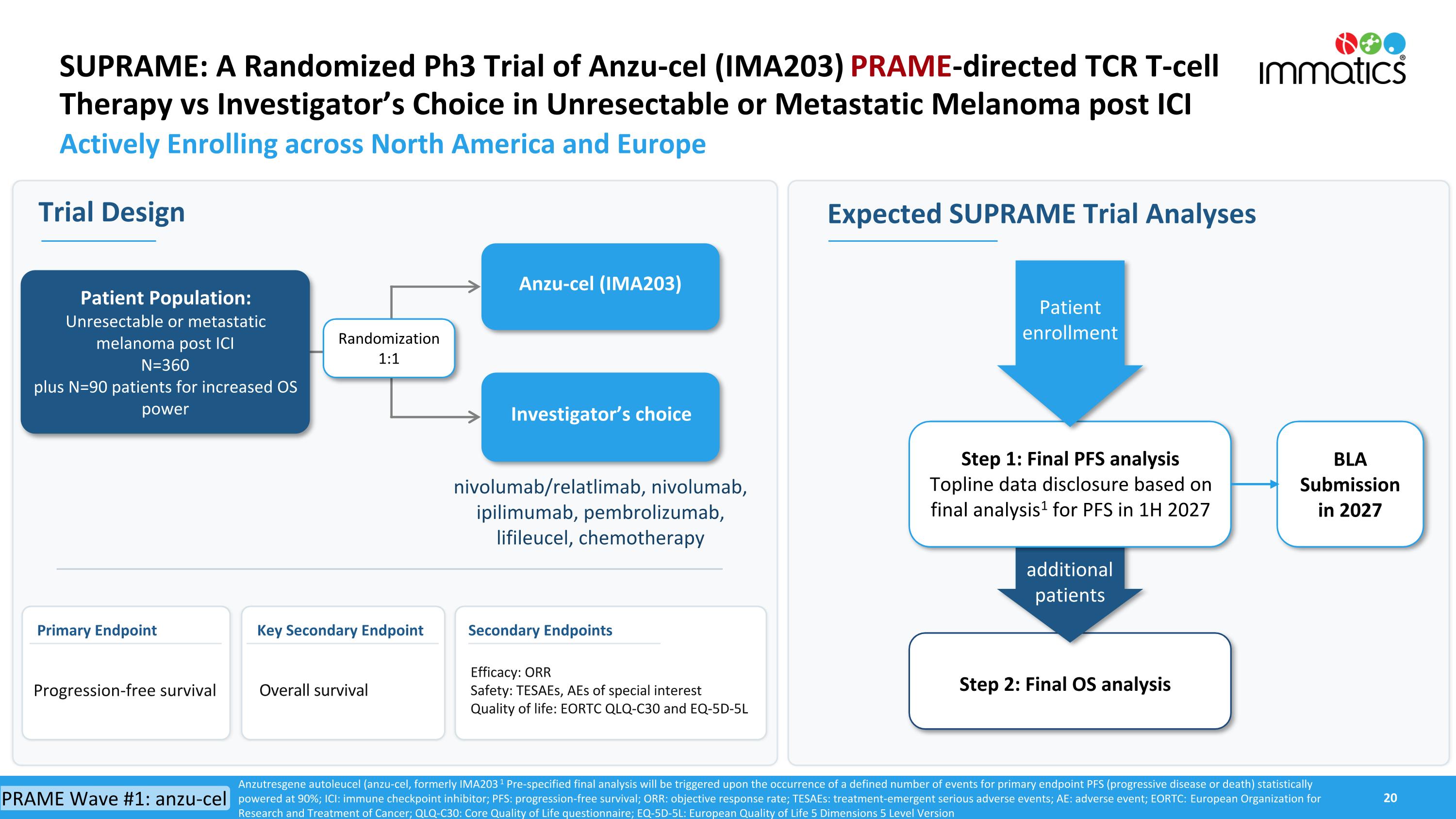
SUPRAME: A Randomized Ph3 Trial of Anzu-cel (IMA203) PRAME-directed TCR T-cell Therapy vs Investigator’s Choice in Unresectable or Metastatic Melanoma post ICI Actively Enrolling across North America and Europe Anzutresgene autoleucel (anzu-cel, formerly IMA203 1 Pre-specified final analysis will be triggered upon the occurrence of a defined number of events for primary endpoint PFS (progressive disease or death) statistically powered at 90%; ICI: immune checkpoint inhibitor; PFS: progression-free survival; ORR: objective response rate; TESAEs: treatment-emergent serious adverse events; AE: adverse event; EORTC: European Organization for Research and Treatment of Cancer; QLQ-C30: Core Quality of Life questionnaire; EQ-5D-5L: European Quality of Life 5 Dimensions 5 Level Version PRAME Wave #1: anzu-cel Anzu-cel (IMA203) Investigator’s choice Randomization 1:1 Patient Population: Unresectable or metastatic melanoma post ICI N=360 plus N=90 patients for increased OS power nivolumab/relatlimab, nivolumab, ipilimumab, pembrolizumab, lifileucel, chemotherapy Expected SUPRAME Trial Analyses Step 2: Final OS analysis additional patients Step 1: Final PFS analysis Topline data disclosure based on final analysis1 for PFS in 1H 2027 Patient enrollment Trial Design BLA Submission in 2027 Primary Endpoint Progression-free survival Key Secondary Endpoint Overall survival Secondary Endpoints Efficacy: ORR Safety: TESAEs, AEs of special interest Quality of life: EORTC QLQ-C30 and EQ-5D-5L
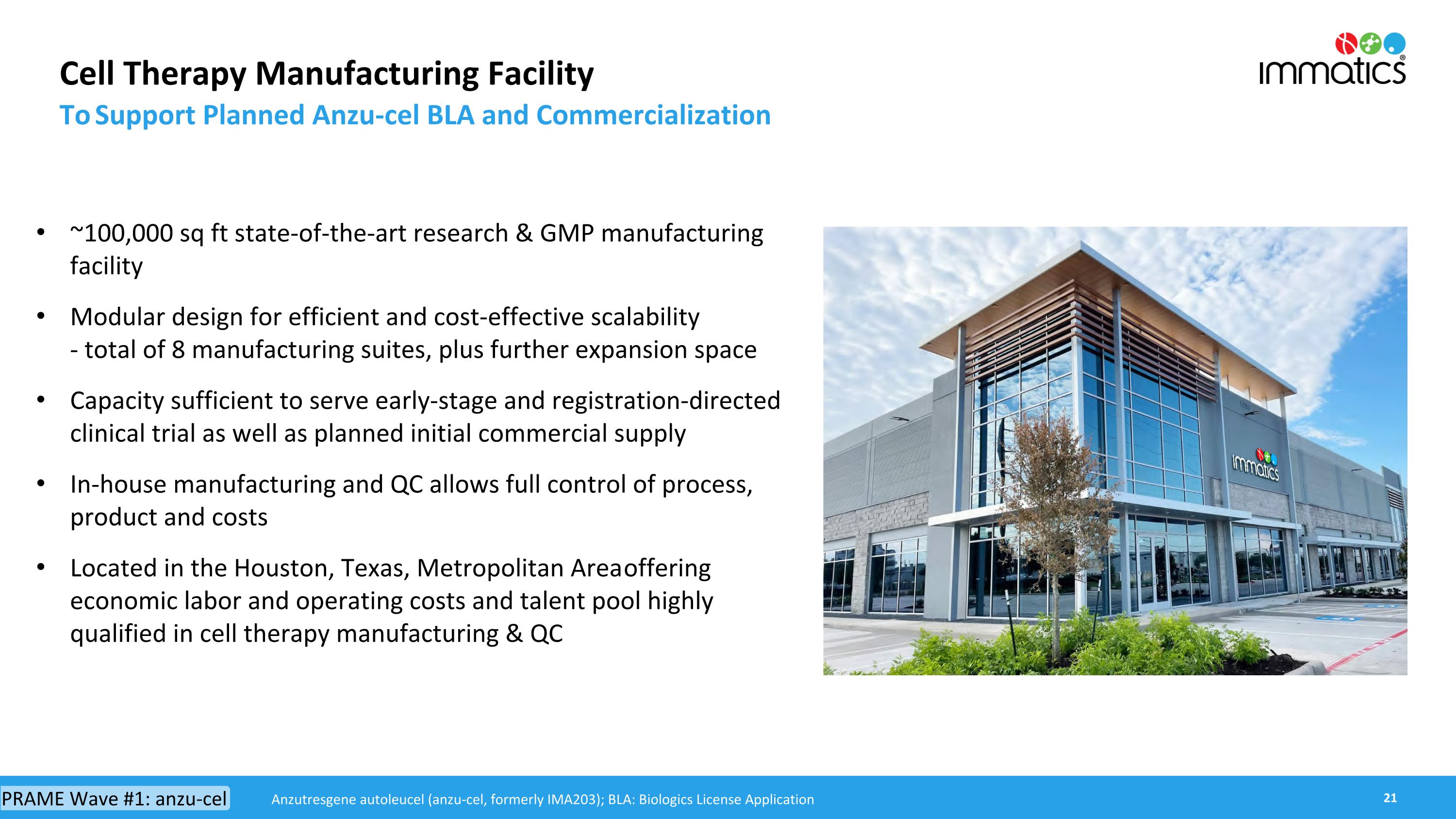
Cell Therapy Manufacturing Facility To Support Planned Anzu-cel BLA and Commercialization ~100,000 sq ft state-of-the-art research & GMP manufacturing facility Modular design for efficient and cost-effective scalability - total of 8 manufacturing suites, plus further expansion space Capacity sufficient to serve early-stage and registration-directed clinical trial as well as planned initial commercial supply In-house manufacturing and QC allows full control of process, product and costs Located in the Houston, Texas, Metropolitan Area offering economic labor and operating costs and talent pool highly qualified in cell therapy manufacturing & QC Anzutresgene autoleucel (anzu-cel, formerly IMA203); BLA: Biologics License Application PRAME Wave #1: anzu-cel
Expansion to all Advanced PRAME Cancers PRAME Wave #2 22 IMA203CD8 PRAME Cell Therapy
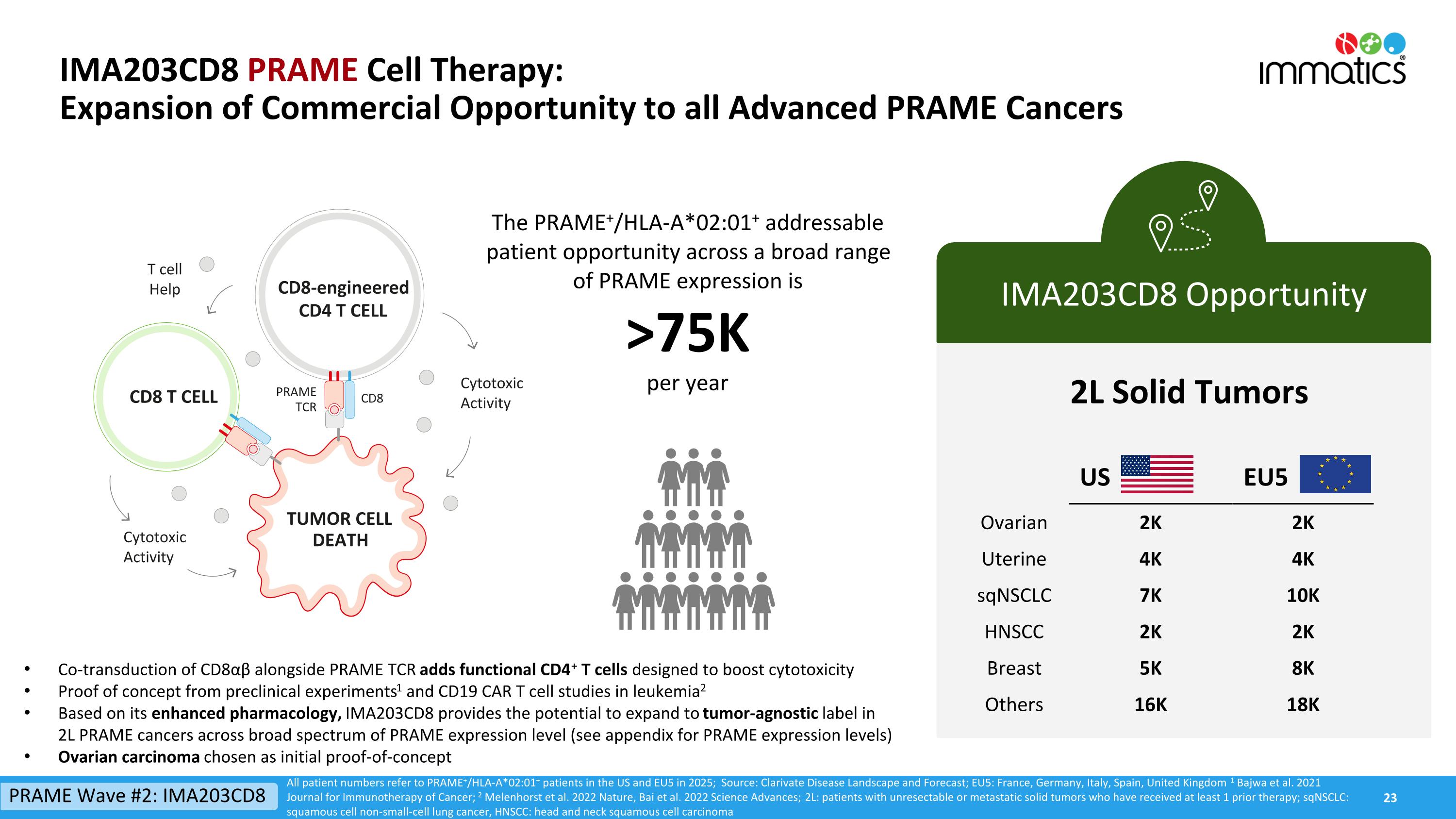
IMA203CD8 PRAME Cell Therapy: Expansion of Commercial Opportunity to all Advanced PRAME Cancers IMA203CD8 Opportunity 2L Solid Tumors All patient numbers refer to PRAME+/HLA-A*02:01+ patients in the US and EU5 in 2025; Source: Clarivate Disease Landscape and Forecast; EU5: France, Germany, Italy, Spain, United Kingdom 1 Bajwa et al. 2021 Journal for Immunotherapy of Cancer; 2 Melenhorst et al. 2022 Nature, Bai et al. 2022 Science Advances; 2L: patients with unresectable or metastatic solid tumors who have received at least 1 prior therapy; sqNSCLC: squamous cell non-small-cell lung cancer, HNSCC: head and neck squamous cell carcinoma The PRAME+/HLA-A*02:01+ addressable patient opportunity across a broad range of PRAME expression is >75K per year Co-transduction of CD8αβ alongside PRAME TCR adds functional CD4+ T cells designed to boost cytotoxicity Proof of concept from preclinical experiments1 and CD19 CAR T cell studies in leukemia2 Based on its enhanced pharmacology, IMA203CD8 provides the potential to expand to tumor-agnostic label in 2L PRAME cancers across broad spectrum of PRAME expression level (see appendix for PRAME expression levels) Ovarian carcinoma chosen as initial proof-of-concept US EU5 Ovarian 2K 2K Uterine 4K 4K sqNSCLC 7K 10K HNSCC 2K 2K Breast 5K 8K Others 16K 18K TUMOR CELL DEATH CD8-engineered CD4 T CELL Cytotoxic Activity CD8 T CELL T cell Help Cytotoxic Activity CD8 PRAME TCR PRAME Wave #2: IMA203CD8
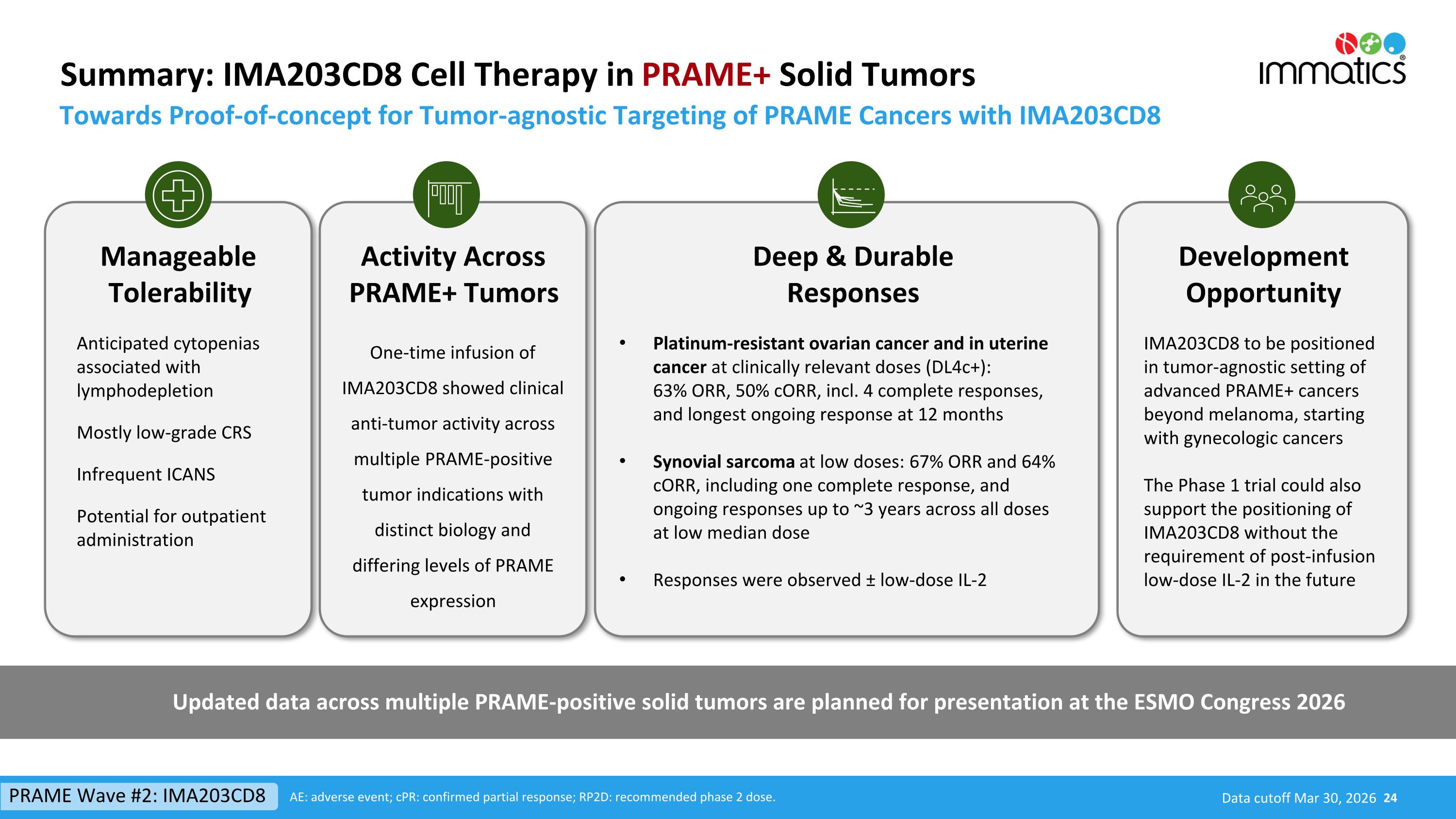
Towards Proof-of-concept for Tumor-agnostic Targeting of PRAME Cancers with IMA203CD8 Updated data across multiple PRAME-positive solid tumors are planned for presentation at the ESMO Congress 2026 AE: adverse event; cPR: confirmed partial response; RP2D: recommended phase 2 dose. Summary: IMA203CD8 Cell Therapy in PRAME+ Solid Tumors Manageable Tolerability Activity Across PRAME+ Tumors One-time infusion of IMA203CD8 showed clinical anti-tumor activity across multiple PRAME-positive tumor indications with distinct biology and differing levels of PRAME expression Deep & Durable Responses Development Opportunity IMA203CD8 to be positioned in tumor-agnostic setting of advanced PRAME+ cancers beyond melanoma, starting with gynecologic cancers The Phase 1 trial could also support the positioning of IMA203CD8 without the requirement of post-infusion low-dose IL-2 in the future Data cutoff Mar 30, 2026 PRAME Wave #2: IMA203CD8 Anticipated cytopenias associated with lymphodepletion Mostly low-grade CRS Infrequent ICANS Potential for outpatient administration Platinum-resistant ovarian cancer and in uterine cancer at clinically relevant doses (DL4c+): 63% ORR, 50% cORR, incl. 4 complete responses, and longest ongoing response at 12 months Synovial sarcoma at low doses: 67% ORR and 64% cORR, including one complete response, and ongoing responses up to ~3 years across all doses at low median dose Responses were observed ± low-dose IL-2
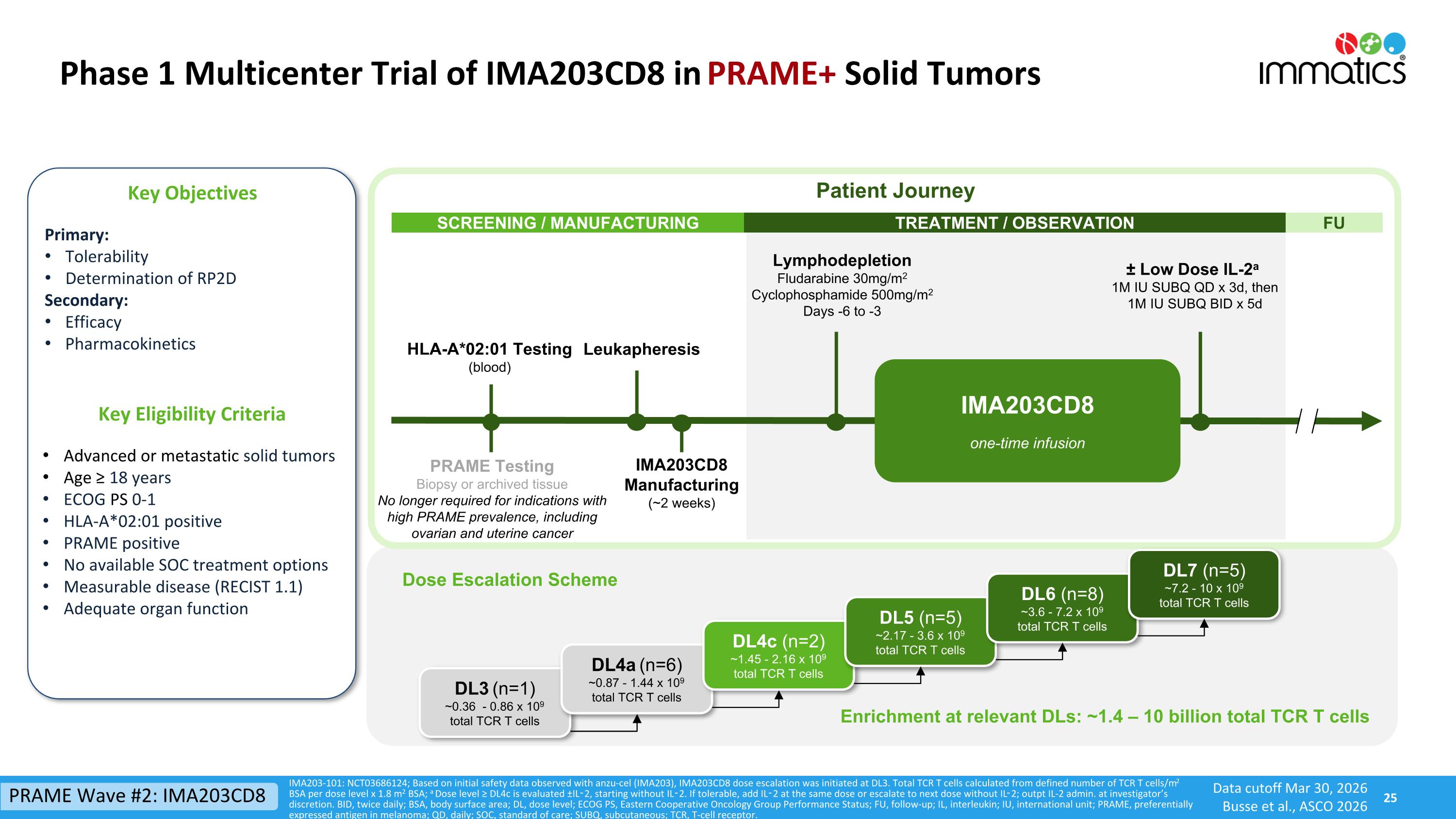
Phase 1 Multicenter Trial of IMA203CD8 in PRAME+ Solid Tumors PRAME Testing Biopsy or archived tissue No longer required for indications with high PRAME prevalence, including ovarian and uterine cancer IMA203CD8 Manufacturing (~2 weeks) Lymphodepletion Fludarabine 30mg/m2 Cyclophosphamide 500mg/m2 Days -6 to -3 ± Low Dose IL-2a 1M IU SUBQ QD x 3d, then 1M IU SUBQ BID x 5d Leukapheresis HLA-A*02:01 Testing (blood) Patient Journey SCREENING / MANUFACTURING TREATMENT / OBSERVATION FU IMA203CD8 one-time infusion Enrichment at relevant DLs: ~1.4 – 10 billion total TCR T cells DL3 (n=1) ~0.36 - 0.86 x 10⁹ total TCR T cells DL4a (n=6) ~0.87 - 1.44 x 10⁹ total TCR T cells DL4c (n=2) ~1.45 - 2.16 x 10⁹ total TCR T cells DL5 (n=5) ~2.17 - 3.6 x 10⁹ total TCR T cells DL6 (n=8) ~3.6 - 7.2 x 10⁹ total TCR T cells DL7 (n=5) ~7.2 - 10 x 109 total TCR T cells Dose Escalation Scheme Key Objectives Primary: Tolerability Determination of RP2D Secondary: Efficacy Pharmacokinetics Key Eligibility Criteria Advanced or metastatic solid tumors Age ≥ 18 years ECOG PS 0-1 HLA-A*02:01 positive PRAME positive No available SOC treatment options Measurable disease (RECIST 1.1) Adequate organ function IMA203-101: NCT03686124; Based on initial safety data observed with anzu-cel (IMA203), IMA203CD8 dose escalation was initiated at DL3. Total TCR T cells calculated from defined number of TCR T cells/m2 BSA per dose level x 1.8 m2 BSA; a Dose level ≥ DL4c is evaluated ±IL‑2, starting without IL‑2. If tolerable, add IL‑2 at the same dose or escalate to next dose without IL‑2; outpt IL-2 admin. at investigator’s discretion. BID, twice daily; BSA, body surface area; DL, dose level; ECOG PS, Eastern Cooperative Oncology Group Performance Status; FU, follow-up; IL, interleukin; IU, international unit; PRAME, preferentially expressed antigen in melanoma; QD, daily; SOC, standard of care; SUBQ, subcutaneous; TCR, T-cell receptor. Data cutoff Mar 30, 2026 Busse et al., ASCO 2026 PRAME Wave #2: IMA203CD8
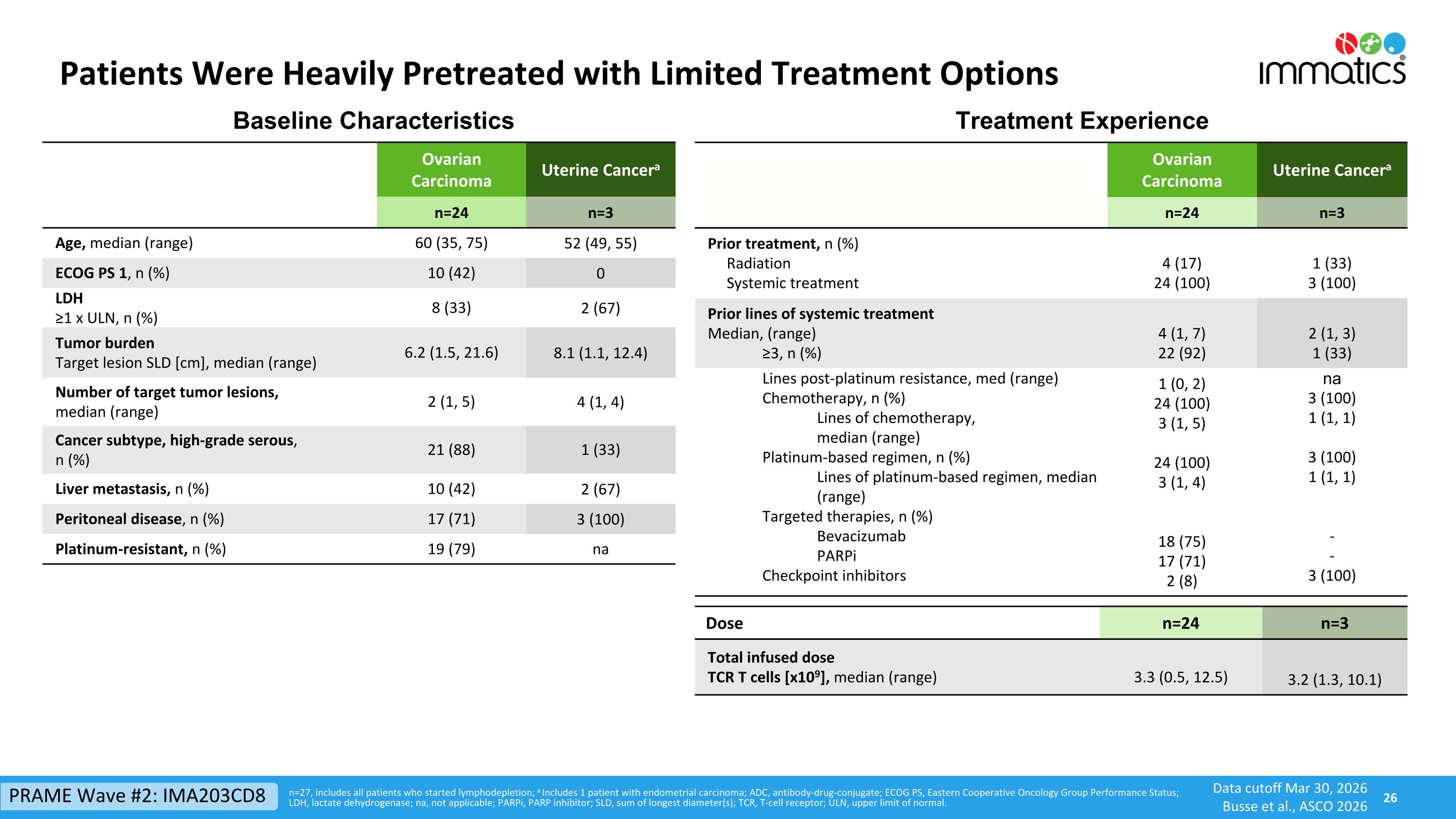
Patients Were Heavily Pretreated with Limited Treatment Options n=27, includes all patients who started lymphodepletion; a Includes 1 patient with endometrial carcinoma; ADC, antibody-drug-conjugate; ECOG PS, Eastern Cooperative Oncology Group Performance Status; LDH, lactate dehydrogenase; na, not applicable; PARPi, PARP inhibitor; SLD, sum of longest diameter(s); TCR, T-cell receptor; ULN, upper limit of normal. Data cutoff Mar 30, 2026 Busse et al., ASCO 2026 PRAME Wave #2: IMA203CD8 Ovarian Carcinoma Uterine Cancera n=24 n=3 Age, median (range) 60 (35, 75) 52 (49, 55) ECOG PS 1, n (%) 10 (42) 0 LDH ≥1 x ULN, n (%) 8 (33) 2 (67) Tumor burden Target lesion SLD [cm], median (range) 6.2 (1.5, 21.6) 8.1 (1.1, 12.4) Number of target tumor lesions, median (range) 2 (1, 5) 4 (1, 4) Cancer subtype, high-grade serous, n (%) 21 (88) 1 (33) Liver metastasis, n (%) 10 (42) 2 (67) Peritoneal disease, n (%) 17 (71) 3 (100) Platinum-resistant, n (%) 19 (79) na Baseline Characteristics Ovarian Carcinoma Uterine Cancera n=24 n=3 Prior treatment, n (%) Radiation Systemic treatment 4 (17) 24 (100) 1 (33) 3 (100) Prior lines of systemic treatment Median, (range) ≥3, n (%) 4 (1, 7) 22 (92) 2 (1, 3) 1 (33) Lines post-platinum resistance, med (range) Chemotherapy, n (%) Lines of chemotherapy, median (range) Platinum-based regimen, n (%) Lines of platinum-based regimen, median (range) Targeted therapies, n (%) Bevacizumab PARPi Checkpoint inhibitors 1 (0, 2) 24 (100) 3 (1, 5) 24 (100) 3 (1, 4) 18 (75) 17 (71) 2 (8) na 3 (100) 1 (1, 1) 3 (100) 1 (1, 1) - - 3 (100) Treatment Experience Dose n=24 n=3 Total infused dose TCR T cells [x109], median (range) 3.3 (0.5, 12.5) 3.2 (1.3, 10.1)
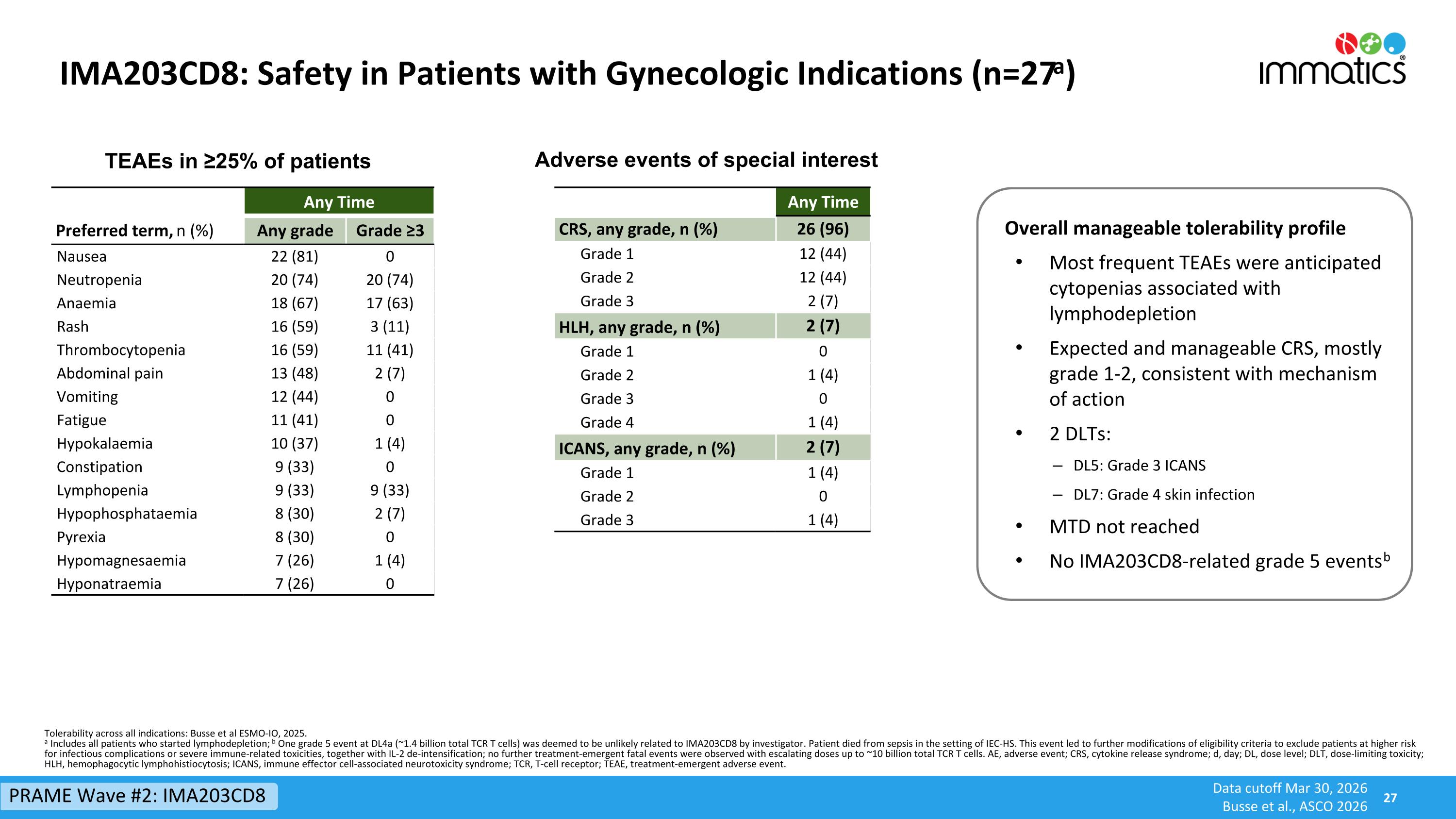
IMA203CD8: Safety in Patients with Gynecologic Indications (n=27a) Tolerability across all indications: Busse et al ESMO-IO, 2025. a Includes all patients who started lymphodepletion; b One grade 5 event at DL4a (~1.4 billion total TCR T cells) was deemed to be unlikely related to IMA203CD8 by investigator. Patient died from sepsis in the setting of IEC-HS. This event led to further modifications of eligibility criteria to exclude patients at higher risk for infectious complications or severe immune-related toxicities, together with IL-2 de-intensification; no further treatment-emergent fatal events were observed with escalating doses up to ~10 billion total TCR T cells. AE, adverse event; CRS, cytokine release syndrome; d, day; DL, dose level; DLT, dose-limiting toxicity; HLH, hemophagocytic lymphohistiocytosis; ICANS, immune effector cell-associated neurotoxicity syndrome; TCR, T-cell receptor; TEAE, treatment-emergent adverse event. Data cutoff Mar 30, 2026 Busse et al., ASCO 2026 PRAME Wave #2: IMA203CD8 Adverse events of special interest TEAEs in ≥25% of patients Any Time Preferred term, n (%) Any grade Grade ≥3 Nausea 22 (81) 0 Neutropenia 20 (74) 20 (74) Anaemia 18 (67) 17 (63) Rash 16 (59) 3 (11) Thrombocytopenia 16 (59) 11 (41) Abdominal pain 13 (48) 2 (7) Vomiting 12 (44) 0 Fatigue 11 (41) 0 Hypokalaemia 10 (37) 1 (4) Constipation 9 (33) 0 Lymphopenia 9 (33) 9 (33) Hypophosphataemia 8 (30) 2 (7) Pyrexia 8 (30) 0 Hypomagnesaemia 7 (26) 1 (4) Hyponatraemia 7 (26) 0 Any Time CRS, any grade, n (%) 26 (96) Grade 1 12 (44) Grade 2 12 (44) Grade 3 2 (7) HLH, any grade, n (%) 2 (7) Grade 1 0 Grade 2 1 (4) Grade 3 0 Grade 4 1 (4) ICANS, any grade, n (%) 2 (7) Grade 1 1 (4) Grade 2 0 Grade 3 1 (4) Overall manageable tolerability profile Most frequent TEAEs were anticipated cytopenias associated with lymphodepletion Expected and manageable CRS, mostly grade 1-2, consistent with mechanism of action 2 DLTs: DL5: Grade 3 ICANS DL7: Grade 4 skin infection MTD not reached No IMA203CD8-related grade 5 eventsb
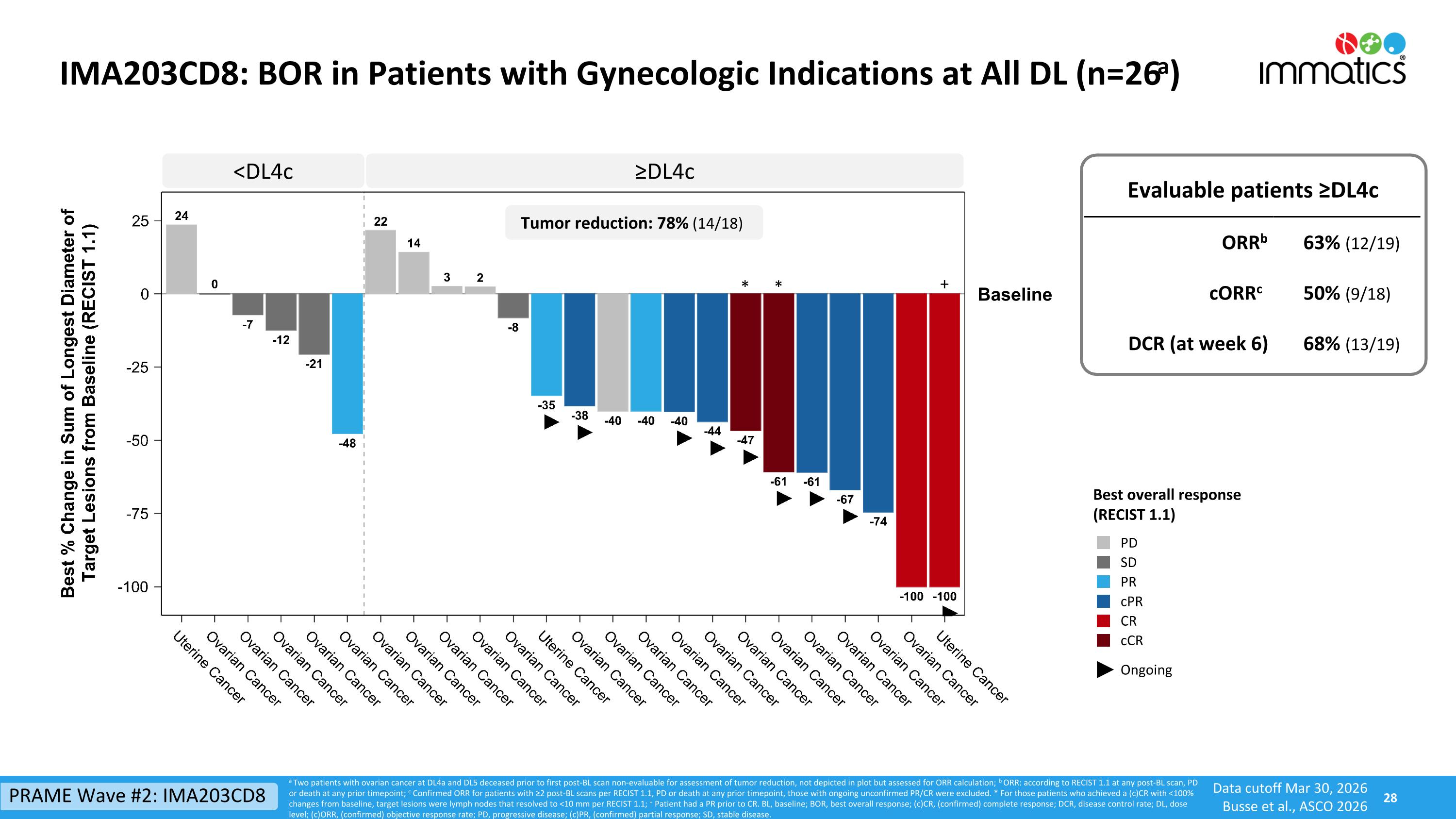
IMA203CD8: BOR in Patients with Gynecologic Indications at All DL (n=26a) Data cutoff Mar 30, 2026 Busse et al., ASCO 2026 PRAME Wave #2: IMA203CD8 * * + ≥DL4c <DL4c Baseline Tumor reduction: 78% (14/18) Evaluable patients ≥DL4c ORRb 63% (12/19) cORRc 50% (9/18) DCR (at week 6) 68% (13/19) PD Best overall response (RECIST 1.1) SD PR cPR CR cCR Ongoing a Two patients with ovarian cancer at DL4a and DL5 deceased prior to first post-BL scan non-evaluable for assessment of tumor reduction, not depicted in plot but assessed for ORR calculation; b ORR: according to RECIST 1.1 at any post-BL scan, PD or death at any prior timepoint; c Confirmed ORR for patients with ≥2 post-BL scans per RECIST 1.1, PD or death at any prior timepoint, those with ongoing unconfirmed PR/CR were excluded. * For those patients who achieved a (c)CR with <100% changes from baseline, target lesions were lymph nodes that resolved to <10 mm per RECIST 1.1; + Patient had a PR prior to CR. BL, baseline; BOR, best overall response; (c)CR, (confirmed) complete response; DCR, disease control rate; DL, dose level; (c)ORR, (confirmed) objective response rate; PD, progressive disease; (c)PR, (confirmed) partial response; SD, stable disease.
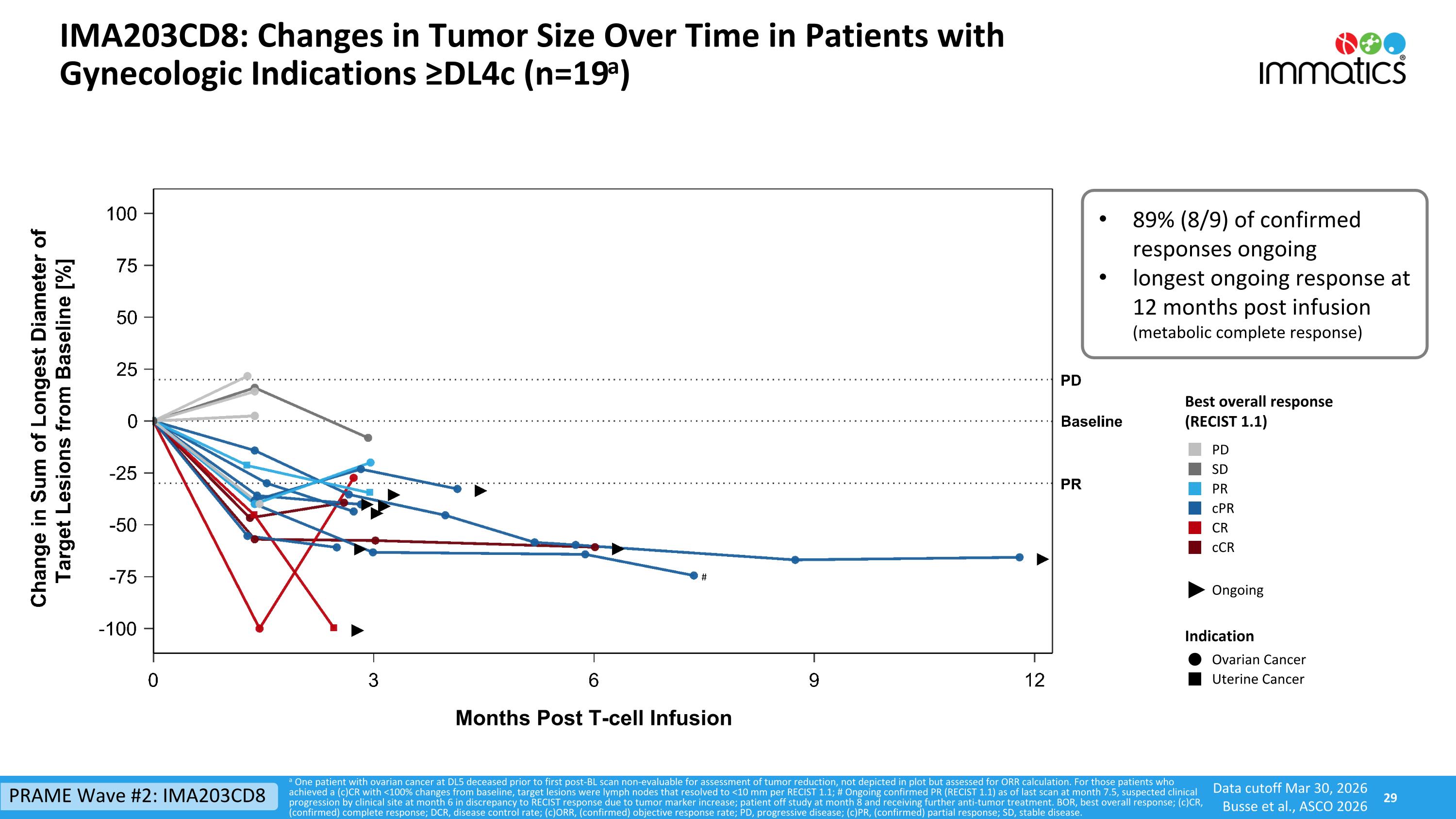
IMA203CD8: Changes in Tumor Size Over Time in Patients with Gynecologic Indications ≥DL4c (n=19a) Data cutoff Mar 30, 2026 Busse et al., ASCO 2026 PRAME Wave #2: IMA203CD8 a One patient with ovarian cancer at DL5 deceased prior to first post-BL scan non-evaluable for assessment of tumor reduction, not depicted in plot but assessed for ORR calculation. For those patients who achieved a (c)CR with <100% changes from baseline, target lesions were lymph nodes that resolved to <10 mm per RECIST 1.1; # Ongoing confirmed PR (RECIST 1.1) as of last scan at month 7.5, suspected clinical progression by clinical site at month 6 in discrepancy to RECIST response due to tumor marker increase; patient off study at month 8 and receiving further anti-tumor treatment. BOR, best overall response; (c)CR, (confirmed) complete response; DCR, disease control rate; (c)ORR, (confirmed) objective response rate; PD, progressive disease; (c)PR, (confirmed) partial response; SD, stable disease. # Months Post T-cell Infusion # PD Best overall response (RECIST 1.1) SD PR cPR CR cCR Ongoing Ovarian Cancer Indication Uterine Cancer 89% (8/9) of confirmed responses ongoing longest ongoing response at 12 months post infusion (metabolic complete response)
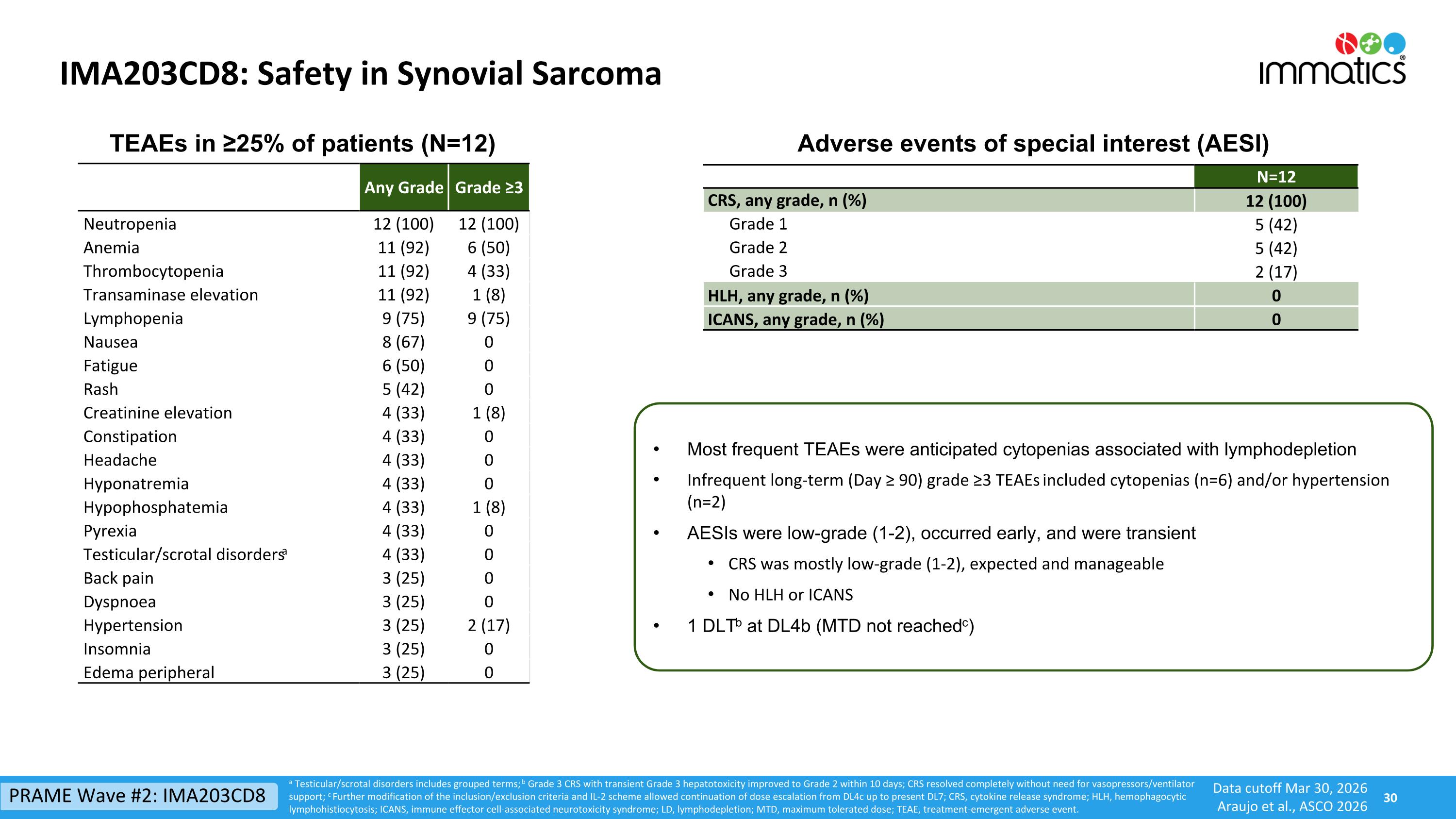
IMA203CD8: Safety in Synovial Sarcoma Data cutoff Mar 30, 2026 Araujo et al., ASCO 2026 PRAME Wave #2: IMA203CD8 a Testicular/scrotal disorders includes grouped terms; b Grade 3 CRS with transient Grade 3 hepatotoxicity improved to Grade 2 within 10 days; CRS resolved completely without need for vasopressors/ventilator support; c Further modification of the inclusion/exclusion criteria and IL-2 scheme allowed continuation of dose escalation from DL4c up to present DL7; CRS, cytokine release syndrome; HLH, hemophagocytic lymphohistiocytosis; ICANS, immune effector cell-associated neurotoxicity syndrome; LD, lymphodepletion; MTD, maximum tolerated dose; TEAE, treatment-emergent adverse event. Adverse events of special interest (AESI) Preferred term, n (%) Any Grade Grade ≥3 Neutropenia 12 (100) 12 (100) Anemia 11 (92) 6 (50) Thrombocytopenia 11 (92) 4 (33) Transaminase elevation 11 (92) 1 (8) Lymphopenia 9 (75) 9 (75) Nausea 8 (67) 0 Fatigue 6 (50) 0 Rash 5 (42) 0 Creatinine elevation 4 (33) 1 (8) Constipation 4 (33) 0 Headache 4 (33) 0 Hyponatremia 4 (33) 0 Hypophosphatemia 4 (33) 1 (8) Pyrexia 4 (33) 0 Testicular/scrotal disordersa 4 (33) 0 Back pain 3 (25) 0 Dyspnoea 3 (25) 0 Hypertension 3 (25) 2 (17) Insomnia 3 (25) 0 Edema peripheral 3 (25) 0 N=12 CRS, any grade, n (%) 12 (100) Grade 1 5 (42) Grade 2 5 (42) Grade 3 2 (17) HLH, any grade, n (%) 0 ICANS, any grade, n (%) 0 TEAEs in ≥25% of patients (N=12) Most frequent TEAEs were anticipated cytopenias associated with lymphodepletion Infrequent long-term (Day ≥ 90) grade ≥3 TEAEs included cytopenias (n=6) and/or hypertension (n=2) AESIs were low-grade (1-2), occurred early, and were transient CRS was mostly low-grade (1-2), expected and manageable No HLH or ICANS 1 DLTb at DL4b (MTD not reachedc)
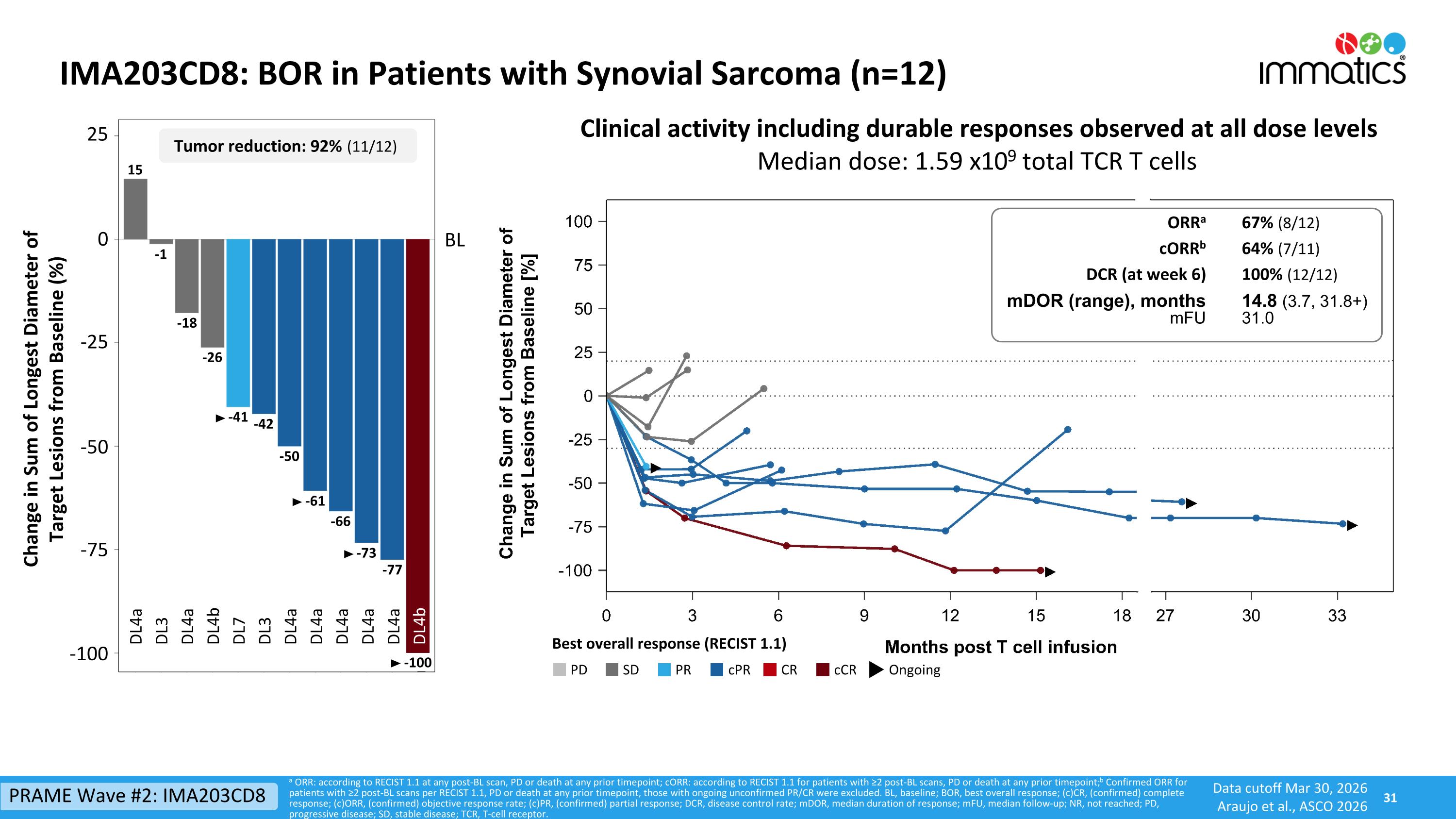
IMA203CD8: BOR in Patients with Synovial Sarcoma (n=12) Data cutoff Mar 30, 2026 Araujo et al., ASCO 2026 PRAME Wave #2: IMA203CD8 a ORR: according to RECIST 1.1 at any post-BL scan, PD or death at any prior timepoint; cORR: according to RECIST 1.1 for patients with ≥2 post-BL scans, PD or death at any prior timepoint; b Confirmed ORR for patients with ≥2 post-BL scans per RECIST 1.1, PD or death at any prior timepoint, those with ongoing unconfirmed PR/CR were excluded. BL, baseline; BOR, best overall response; (c)CR, (confirmed) complete response; (c)ORR, (confirmed) objective response rate; (c)PR, (confirmed) partial response; DCR, disease control rate; mDOR, median duration of response; mFU, median follow-up; NR, not reached; PD, progressive disease; SD, stable disease; TCR, T-cell receptor. Clinical activity including durable responses observed at all dose levels Median dose: 1.59 x10⁹ total TCR T cells Best overall response (RECIST 1.1) PD SD PR cPR CR cCR Ongoing 25 0 -25 -50 -75 -100 Change in Sum of Longest Diameter of Target Lesions from Baseline (%) 15 -1 -18 -26 -41 -42 -50 -61 -66 -73 -77 -100 BL Tumor reduction: 92% (11/12) DL4a DL3 DL4a DL4b DL7 DL3 DL4a DL4a DL4a DL4a DL4a DL4b ORRa 67% (8/12) cORRb 64% (7/11) DCR (at week 6) 100% (12/12) mDOR (range), months mFU 14.8 (3.7, 31.8+) 31.0
IMA402 PRAME Bispecific Expansion to Earlier-Line PRAME Cancers PRAME Wave #3
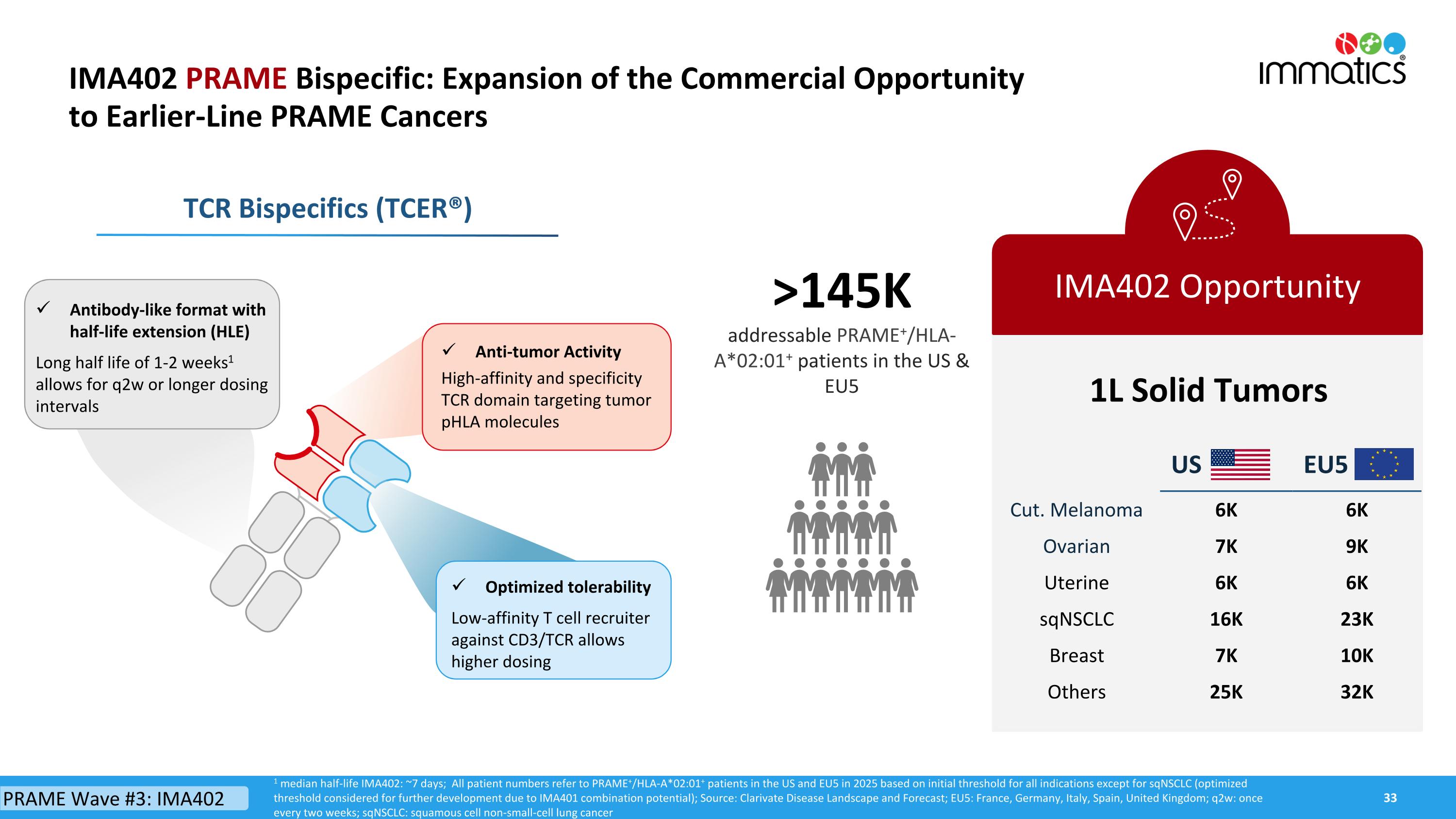
IMA402 PRAME Bispecific: Expansion of the Commercial Opportunity to Earlier-Line PRAME Cancers IMA402 Opportunity 1 median half-life IMA402: ~7 days; All patient numbers refer to PRAME+/HLA-A*02:01+ patients in the US and EU5 in 2025 based on initial threshold for all indications except for sqNSCLC (optimized threshold considered for further development due to IMA401 combination potential); Source: Clarivate Disease Landscape and Forecast; EU5: France, Germany, Italy, Spain, United Kingdom; q2w: once every two weeks; sqNSCLC: squamous cell non-small-cell lung cancer 1L Solid Tumors >145K addressable PRAME+/HLA-A*02:01+ patients in the US & EU5 TCR Bispecifics (TCER®) PRAME Wave #3: IMA402 US EU5 Cut. Melanoma 6K 6K Ovarian 7K 9K Uterine 6K 6K sqNSCLC 16K 23K Breast 7K 10K Others 25K 32K Anti-tumor Activity High-affinity and specificity TCR domain targeting tumor pHLA molecules Antibody-like format with half-life extension (HLE) Long half life of 1-2 weeks1 allows for q2w or longer dosing intervals Optimized tolerability Low-affinity T cell recruiter against CD3/TCR allows higher dosing
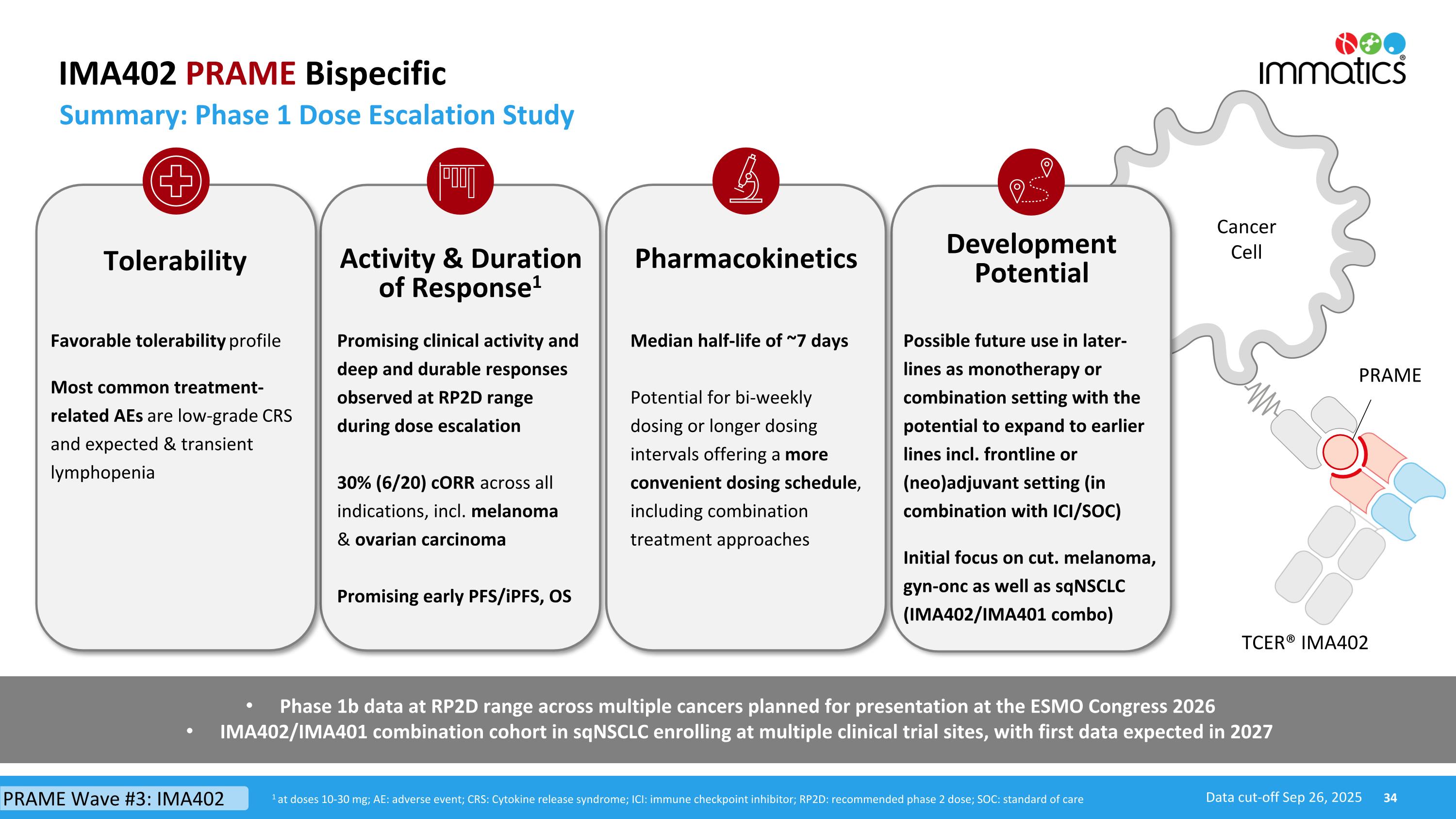
Cancer Cell IMA402 PRAME Bispecific Summary: Phase 1 Dose Escalation Study Tolerability Favorable tolerability profile Most common treatment-related AEs are low-grade CRS and expected & transient lymphopenia Promising clinical activity and deep and durable responses observed at RP2D range during dose escalation 30% (6/20) cORR across all indications, incl. melanoma & ovarian carcinoma Promising early PFS/iPFS, OS Pharmacokinetics Median half-life of ~7 days Potential for bi-weekly dosing or longer dosing intervals offering a more convenient dosing schedule, including combination treatment approaches Activity & Duration of Response1 Development Potential Possible future use in later-lines as monotherapy or combination setting with the potential to expand to earlier lines incl. frontline or (neo)adjuvant setting (in combination with ICI/SOC) Initial focus on cut. melanoma, gyn-onc as well as sqNSCLC (IMA402/IMA401 combo) 1 at doses 10-30 mg; AE: adverse event; CRS: Cytokine release syndrome; ICI: immune checkpoint inhibitor; RP2D: recommended phase 2 dose; SOC: standard of care Data cut-off Sep 26, 2025 PRAME TCER® IMA402 PRAME Wave #3: IMA402 Phase 1b data at RP2D range across multiple cancers planned for presentation at the ESMO Congress 2026 IMA402/IMA401 combination cohort in sqNSCLC enrolling at multiple clinical trial sites, with first data expected in 2027
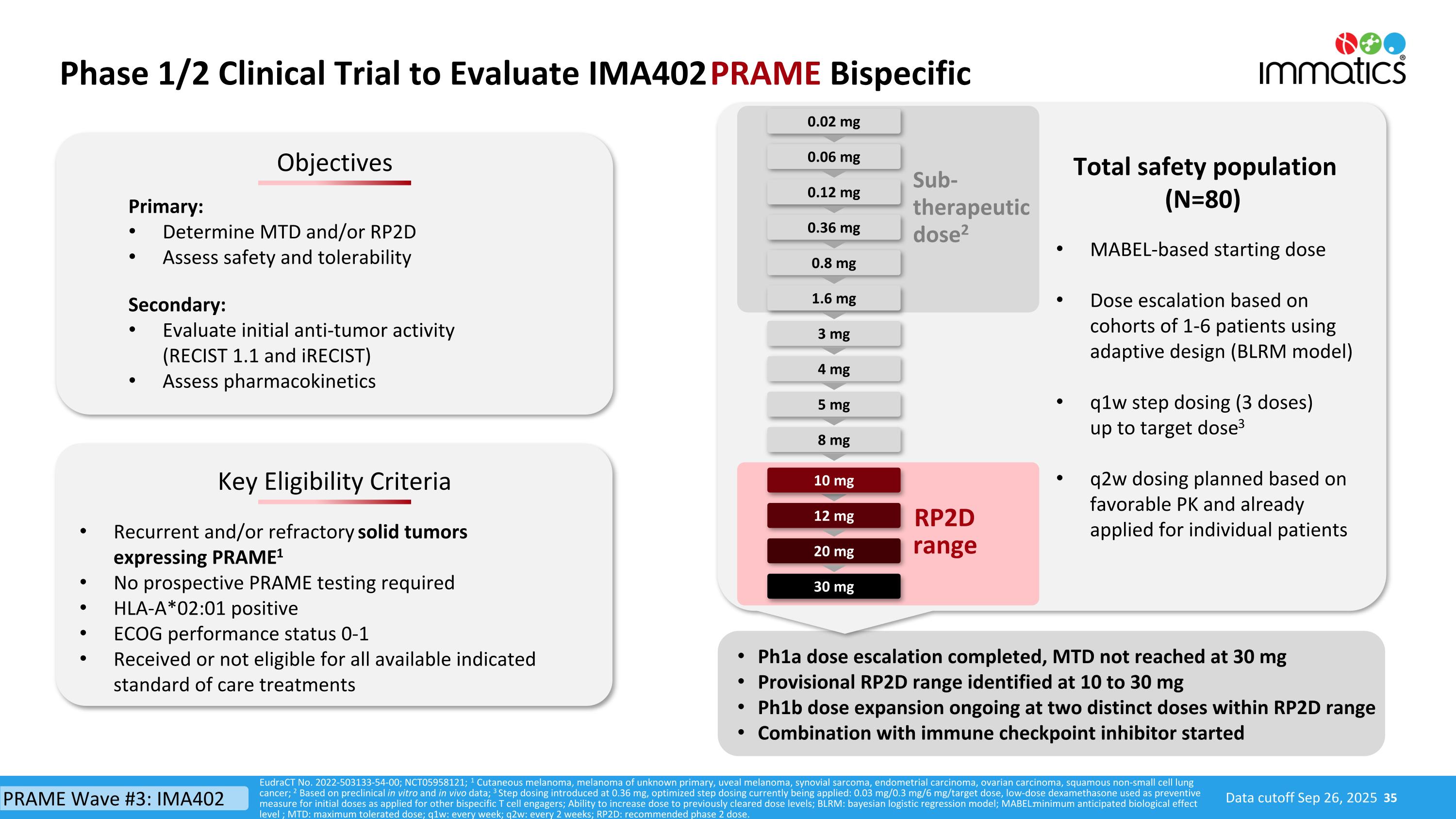
Ph1a dose escalation completed, MTD not reached at 30 mg Provisional RP2D range identified at 10 to 30 mg Ph1b dose expansion ongoing at two distinct doses within RP2D range Combination with immune checkpoint inhibitor started Phase 1/2 Clinical Trial to Evaluate IMA402 PRAME Bispecific EudraCT No. 2022-503133-54-00; NCT05958121; 1 Cutaneous melanoma, melanoma of unknown primary, uveal melanoma, synovial sarcoma, endometrial carcinoma, ovarian carcinoma, squamous non-small cell lung cancer; 2 Based on preclinical in vitro and in vivo data; 3 Step dosing introduced at 0.36 mg, optimized step dosing currently being applied: 0.03 mg/0.3 mg/6 mg/target dose, low-dose dexamethasone used as preventive measure for initial doses as applied for other bispecific T cell engagers; Ability to increase dose to previously cleared dose levels; BLRM: bayesian logistic regression model; MABEL: minimum anticipated biological effect level ; MTD: maximum tolerated dose; q1w: every week; q2w: every 2 weeks; RP2D: recommended phase 2 dose. Key Eligibility Criteria Objectives Primary: Determine MTD and/or RP2D Assess safety and tolerability Secondary: Evaluate initial anti-tumor activity (RECIST 1.1 and iRECIST) Assess pharmacokinetics Recurrent and/or refractory solid tumors expressing PRAME1 No prospective PRAME testing required HLA-A*02:01 positive ECOG performance status 0-1 Received or not eligible for all available indicated standard of care treatments Total safety population (N=80) MABEL-based starting dose Dose escalation based on cohorts of 1-6 patients using adaptive design (BLRM model) q1w step dosing (3 doses) up to target dose3 q2w dosing planned based on favorable PK and already applied for individual patients 0.36 mg 0.8 mg 3 mg 5 mg 0.12 mg 1.6 mg 0.06 mg 0.02 mg 8 mg 4 mg 12 mg 20 mg 30 mg 10 mg RP2D range Sub-therapeutic dose2 Data cutoff Sep 26, 2025 PRAME Wave #3: IMA402
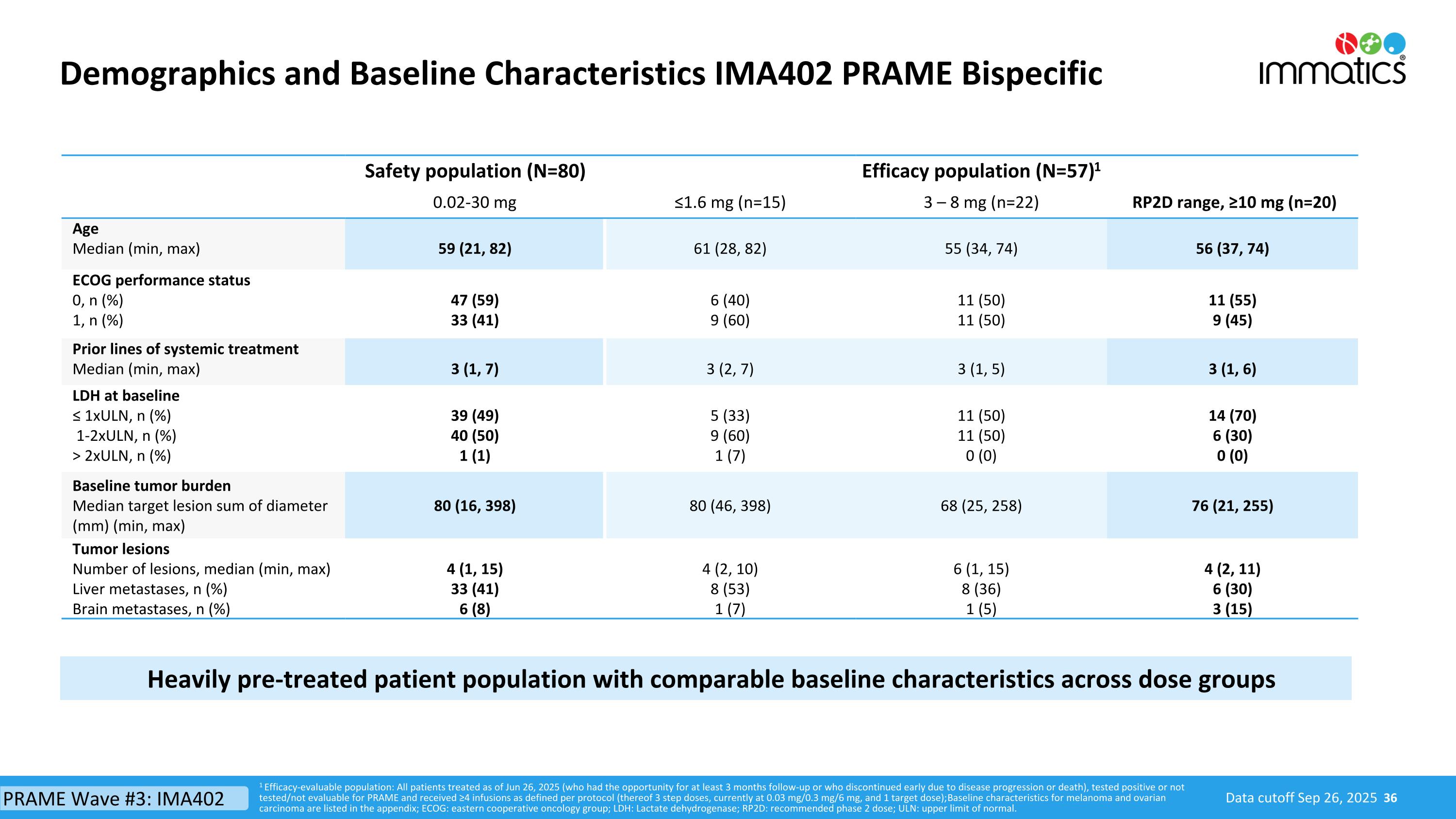
Demographics and Baseline Characteristics IMA402 PRAME Bispecific 1 Efficacy-evaluable population: All patients treated as of Jun 26, 2025 (who had the opportunity for at least 3 months follow-up or who discontinued early due to disease progression or death), tested positive or not tested/not evaluable for PRAME and received ≥4 infusions as defined per protocol (thereof 3 step doses, currently at 0.03 mg/0.3 mg/6 mg, and 1 target dose); Baseline characteristics for melanoma and ovarian carcinoma are listed in the appendix; ECOG: eastern cooperative oncology group; LDH: Lactate dehydrogenase; RP2D: recommended phase 2 dose; ULN: upper limit of normal. Safety population (N=80) Efficacy population (N=57)1 0.02-30 mg ≤1.6 mg (n=15) 3 – 8 mg (n=22) RP2D range, ≥10 mg (n=20) Age Median (min, max) 59 (21, 82) 61 (28, 82) 55 (34, 74) 56 (37, 74) ECOG performance status 0, n (%) 1, n (%) 47 (59) 33 (41) 6 (40) 9 (60) 11 (50) 11 (50) 11 (55) 9 (45) Prior lines of systemic treatment Median (min, max) 3 (1, 7) 3 (2, 7) 3 (1, 5) 3 (1, 6) LDH at baseline ≤ 1xULN, n (%) 1-2xULN, n (%) > 2xULN, n (%) 39 (49) 40 (50) 1 (1) 5 (33) 9 (60) 1 (7) 11 (50) 11 (50) 0 (0) 14 (70) 6 (30) 0 (0) Baseline tumor burden Median target lesion sum of diameter (mm) (min, max) 80 (16, 398) 80 (46, 398) 68 (25, 258) 76 (21, 255) Tumor lesions Number of lesions, median (min, max) Liver metastases, n (%) Brain metastases, n (%) 4 (1, 15) 33 (41) 6 (8) 4 (2, 10) 8 (53) 1 (7) 6 (1, 15) 8 (36) 1 (5) 4 (2, 11) 6 (30) 3 (15) Heavily pre-treated patient population with comparable baseline characteristics across dose groups Data cutoff Sep 26, 2025 PRAME Wave #3: IMA402
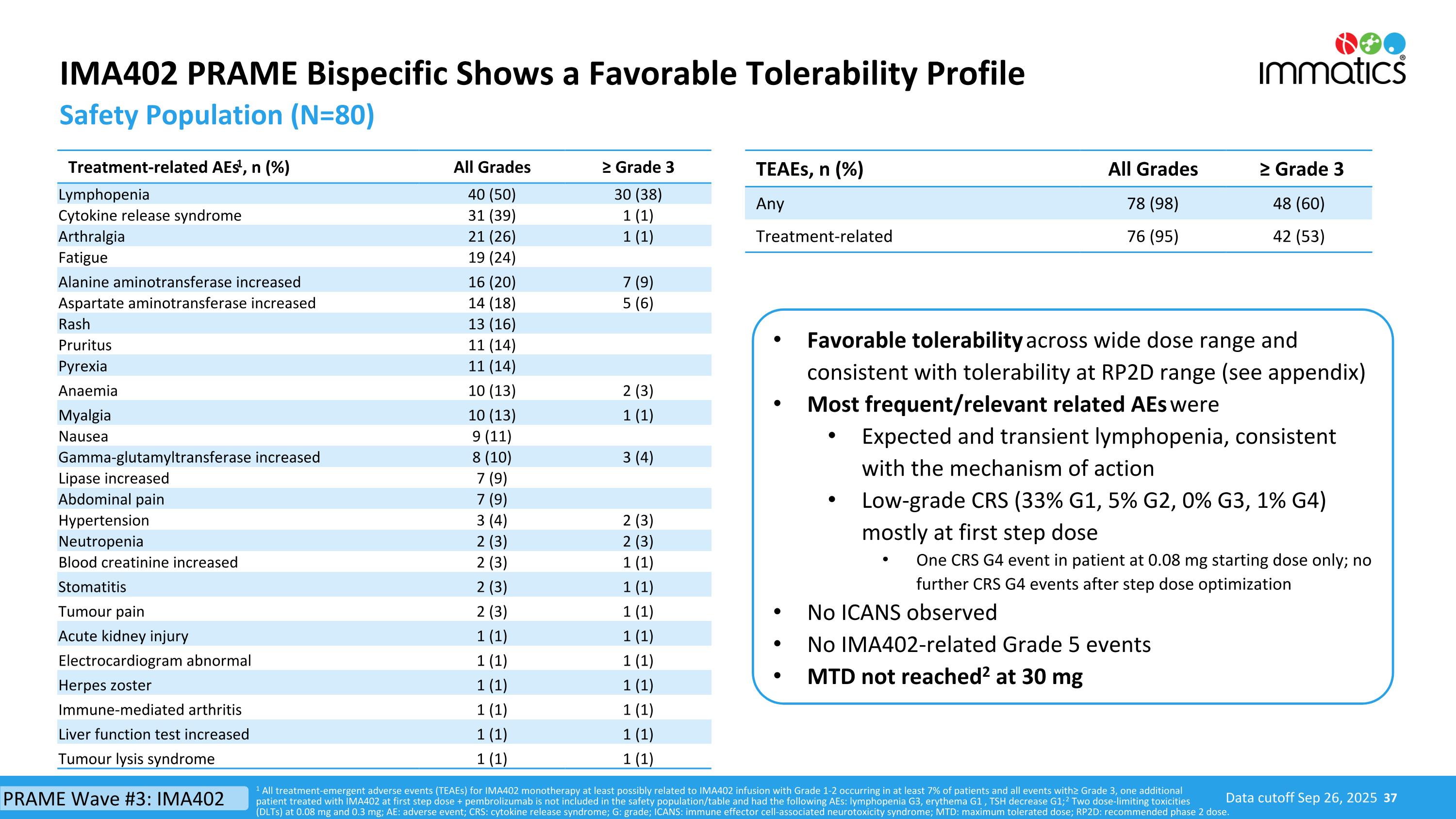
IMA402 PRAME Bispecific Shows a Favorable Tolerability Profile Safety Population (N=80) TEAEs, n (%) All Grades ≥ Grade 3 Any 78 (98) 48 (60) Treatment-related 76 (95) 42 (53) Favorable tolerability across wide dose range and consistent with tolerability at RP2D range (see appendix) Most frequent/relevant related AEs were Expected and transient lymphopenia, consistent with the mechanism of action Low-grade CRS (33% G1, 5% G2, 0% G3, 1% G4) mostly at first step dose One CRS G4 event in patient at 0.08 mg starting dose only; no further CRS G4 events after step dose optimization No ICANS observed No IMA402-related Grade 5 events MTD not reached2 at 30 mg Treatment-related AEs1, n (%) All Grades ≥ Grade 3 Lymphopenia 40 (50) 30 (38) Cytokine release syndrome 31 (39) 1 (1) Arthralgia 21 (26) 1 (1) Fatigue 19 (24) Alanine aminotransferase increased 16 (20) 7 (9) Aspartate aminotransferase increased 14 (18) 5 (6) Rash 13 (16) Pruritus 11 (14) Pyrexia 11 (14) Anaemia 10 (13) 2 (3) Myalgia 10 (13) 1 (1) Nausea 9 (11) Gamma-glutamyltransferase increased 8 (10) 3 (4) Lipase increased 7 (9) Abdominal pain 7 (9) Hypertension 3 (4) 2 (3) Neutropenia 2 (3) 2 (3) Blood creatinine increased 2 (3) 1 (1) Stomatitis 2 (3) 1 (1) Tumour pain 2 (3) 1 (1) Acute kidney injury 1 (1) 1 (1) Electrocardiogram abnormal 1 (1) 1 (1) Herpes zoster 1 (1) 1 (1) Immune-mediated arthritis 1 (1) 1 (1) Liver function test increased 1 (1) 1 (1) Tumour lysis syndrome 1 (1) 1 (1) 1 All treatment-emergent adverse events (TEAEs) for IMA402 monotherapy at least possibly related to IMA402 infusion with Grade 1-2 occurring in at least 7% of patients and all events with ≥ Grade 3, one additional patient treated with IMA402 at first step dose + pembrolizumab is not included in the safety population/table and had the following AEs: lymphopenia G3, erythema G1 , TSH decrease G1; 2 Two dose-limiting toxicities (DLTs) at 0.08 mg and 0.3 mg; AE: adverse event; CRS: cytokine release syndrome; G: grade; ICANS: immune effector cell-associated neurotoxicity syndrome; MTD: maximum tolerated dose; RP2D: recommended phase 2 dose. Data cutoff Sep 26, 2025 PRAME Wave #3: IMA402
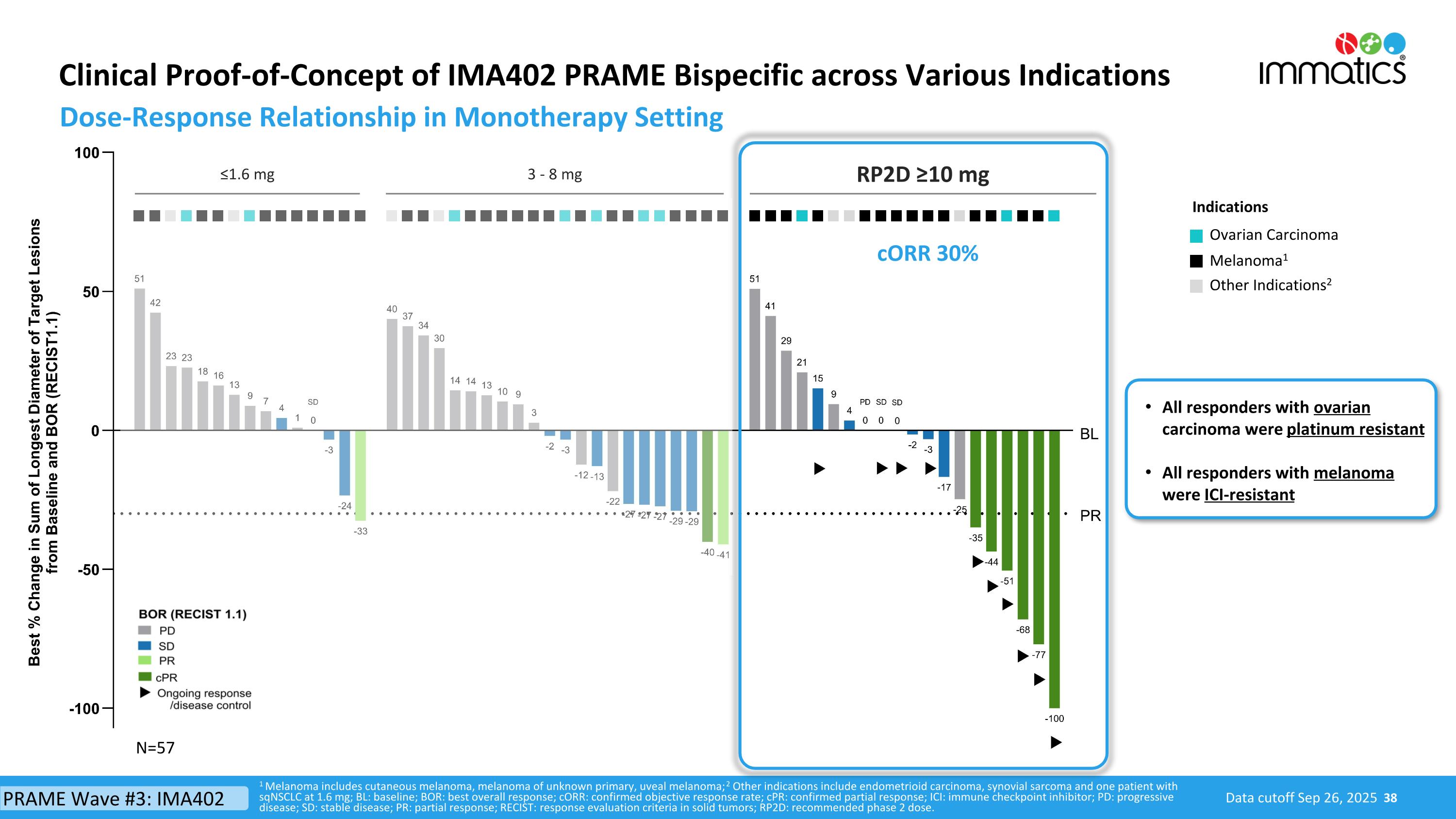
Clinical Proof-of-Concept of IMA402 PRAME Bispecific across Various Indications Dose-Response Relationship in Monotherapy Setting 1 Melanoma includes cutaneous melanoma, melanoma of unknown primary, uveal melanoma; 2 Other indications include endometrioid carcinoma, synovial sarcoma and one patient with sqNSCLC at 1.6 mg; BL: baseline; BOR: best overall response; cORR: confirmed objective response rate; cPR: confirmed partial response; ICI: immune checkpoint inhibitor; PD: progressive disease; SD: stable disease; PR: partial response; RECIST: response evaluation criteria in solid tumors; RP2D: recommended phase 2 dose. Melanoma1 Other Indications2 Ovarian Carcinoma Indications All responders with ovarian carcinoma were platinum resistant All responders with melanoma were ICI-resistant cORR 30% ≤1.6 mg 3 - 8 mg RP2D ≥10 mg Data cutoff Sep 26, 2025 N=57 PRAME Wave #3: IMA402
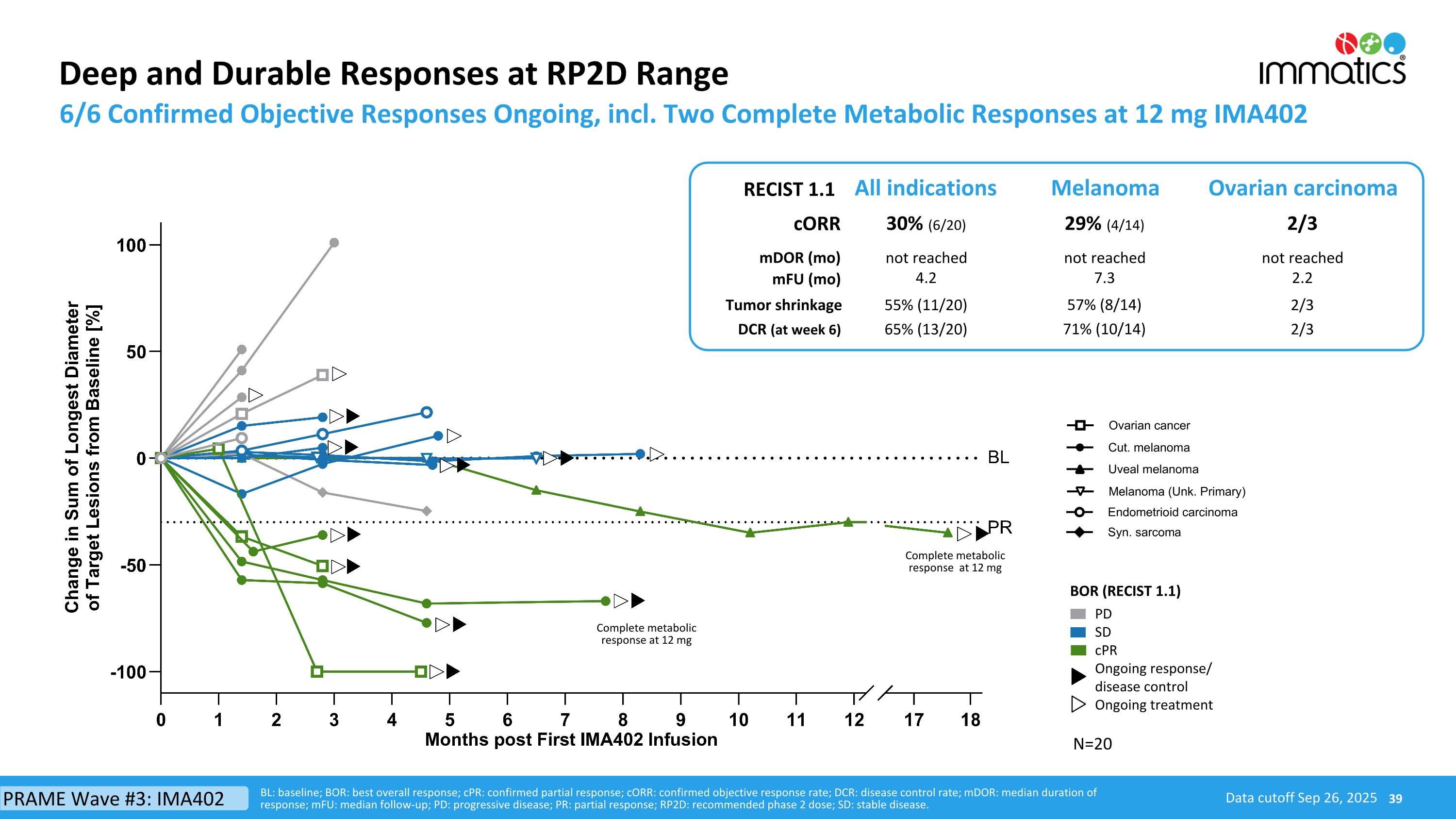
Deep and Durable Responses at RP2D Range 6/6 Confirmed Objective Responses Ongoing, incl. Two Complete Metabolic Responses at 12 mg IMA402 Complete metabolic response at 12 mg PD SD cPR Ongoing response/ disease control Ongoing treatment BOR (RECIST 1.1) All indications Melanoma Ovarian carcinoma cORR 30% (6/20) 29% (4/14) 2/3 mDOR (mo) mFU (mo) not reached 4.2 not reached 7.3 not reached 2.2 Tumor shrinkage 55% (11/20) 57% (8/14) 2/3 DCR (at week 6) 65% (13/20) 71% (10/14) 2/3 RECIST 1.1 BL: baseline; BOR: best overall response; cPR: confirmed partial response; cORR: confirmed objective response rate; DCR: disease control rate; mDOR: median duration of response; mFU: median follow-up; PD: progressive disease; PR: partial response; RP2D: recommended phase 2 dose; SD: stable disease. Complete metabolic response at 12 mg Data cutoff Sep 26, 2025 N=20 PRAME Wave #3: IMA402
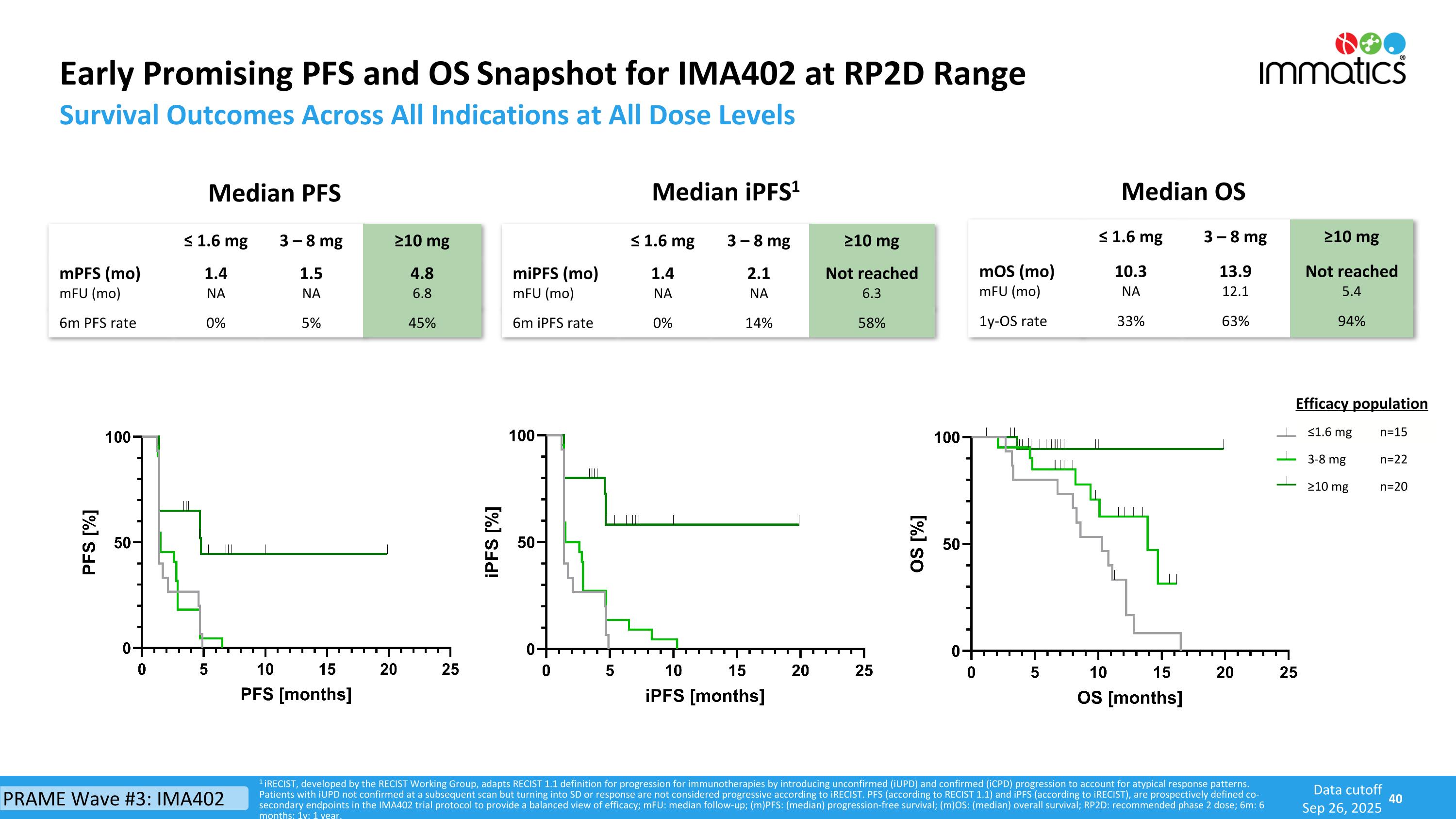
Early Promising PFS and OS Snapshot for IMA402 at RP2D Range Survival Outcomes Across All Indications at All Dose Levels Median PFS Median OS ≤ 1.6 mg 3 – 8 mg ≥10 mg mOS (mo) mFU (mo) 10.3 NA 13.9 12.1 Not reached 5.4 1y-OS rate 33% 63% 94% ≤ 1.6 mg 3 – 8 mg ≥10 mg mPFS (mo) mFU (mo) 1.4 NA 1.5 NA 4.8 6.8 6m PFS rate 0% 5% 45% Median iPFS1 ≤ 1.6 mg 3 – 8 mg ≥10 mg miPFS (mo) mFU (mo) 1.4 NA 2.1 NA Not reached 6.3 6m iPFS rate 0% 14% 58% Efficacy population ≤1.6 mg n=15 3-8 mg n=22 ≥10 mg n=20 1 iRECIST, developed by the RECIST Working Group, adapts RECIST 1.1 definition for progression for immunotherapies by introducing unconfirmed (iUPD) and confirmed (iCPD) progression to account for atypical response patterns. Patients with iUPD not confirmed at a subsequent scan but turning into SD or response are not considered progressive according to iRECIST. PFS (according to RECIST 1.1) and iPFS (according to iRECIST), are prospectively defined co-secondary endpoints in the IMA402 trial protocol to provide a balanced view of efficacy; mFU: median follow-up; (m)PFS: (median) progression-free survival; (m)OS: (median) overall survival; RP2D: recommended phase 2 dose; 6m: 6 months; 1y: 1 year. Data cutoff Sep 26, 2025 PRAME Wave #3: IMA402
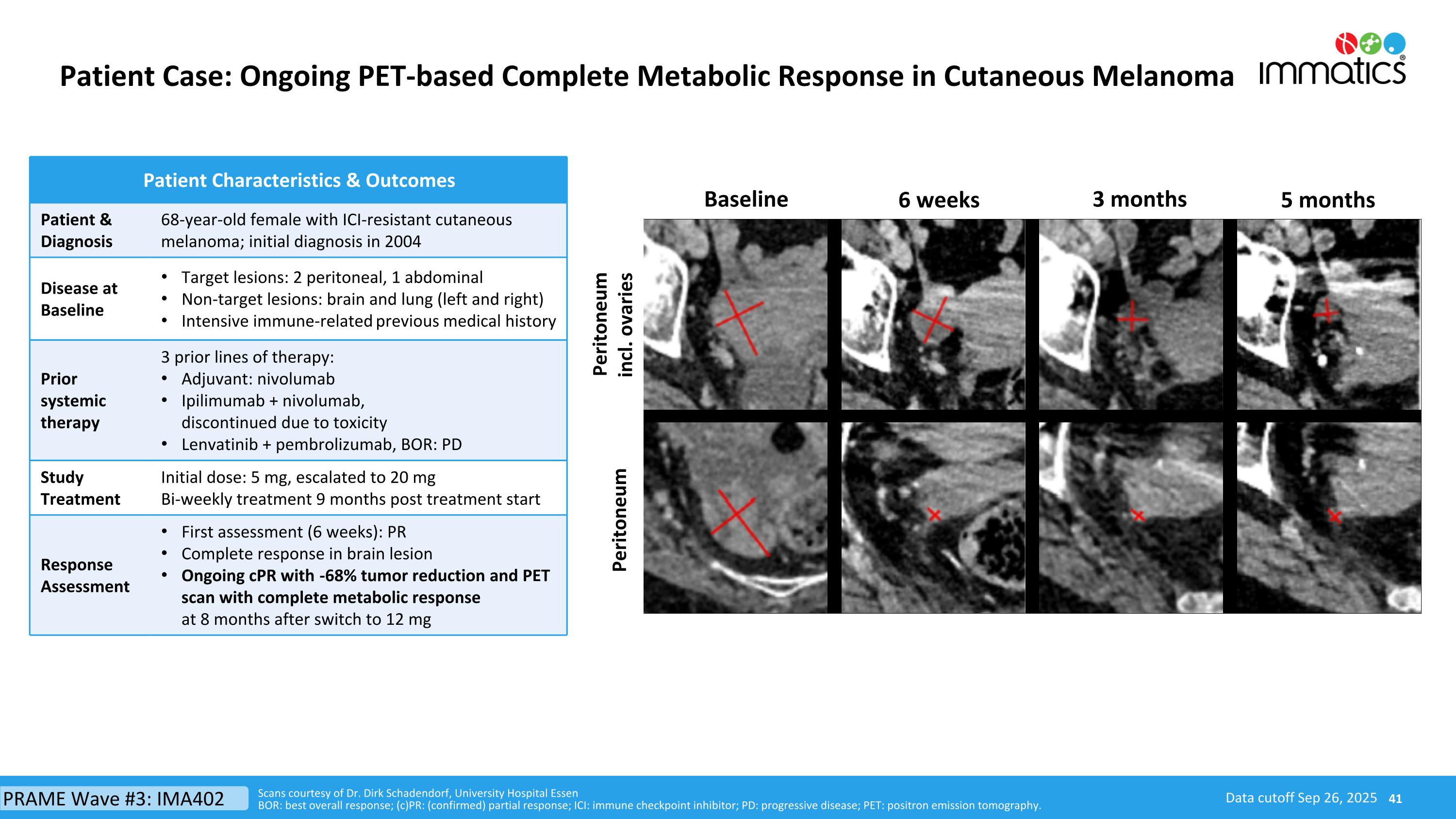
Patient Case: Ongoing PET-based Complete Metabolic Response in Cutaneous Melanoma Patient Characteristics & Outcomes Patient & Diagnosis 68-year-old female with ICI-resistant cutaneous melanoma; initial diagnosis in 2004 Disease at Baseline Target lesions: 2 peritoneal, 1 abdominal Non-target lesions: brain and lung (left and right) Intensive immune-related previous medical history Prior systemic therapy 3 prior lines of therapy: Adjuvant: nivolumab Ipilimumab + nivolumab, discontinued due to toxicity Lenvatinib + pembrolizumab, BOR: PD Study Treatment Initial dose: 5 mg, escalated to 20 mg Bi-weekly treatment 9 months post treatment start Response Assessment First assessment (6 weeks): PR Complete response in brain lesion Ongoing cPR with -68% tumor reduction and PET scan with complete metabolic response at 8 months after switch to 12 mg Scans courtesy of Dr. Dirk Schadendorf, University Hospital Essen BOR: best overall response; (c)PR: (confirmed) partial response; ICI: immune checkpoint inhibitor; PD: progressive disease; PET: positron emission tomography. Baseline 6 weeks 3 months 5 months Peritoneum incl. ovaries Peritoneum Data cutoff Sep 26, 2025 PRAME Wave #3: IMA402
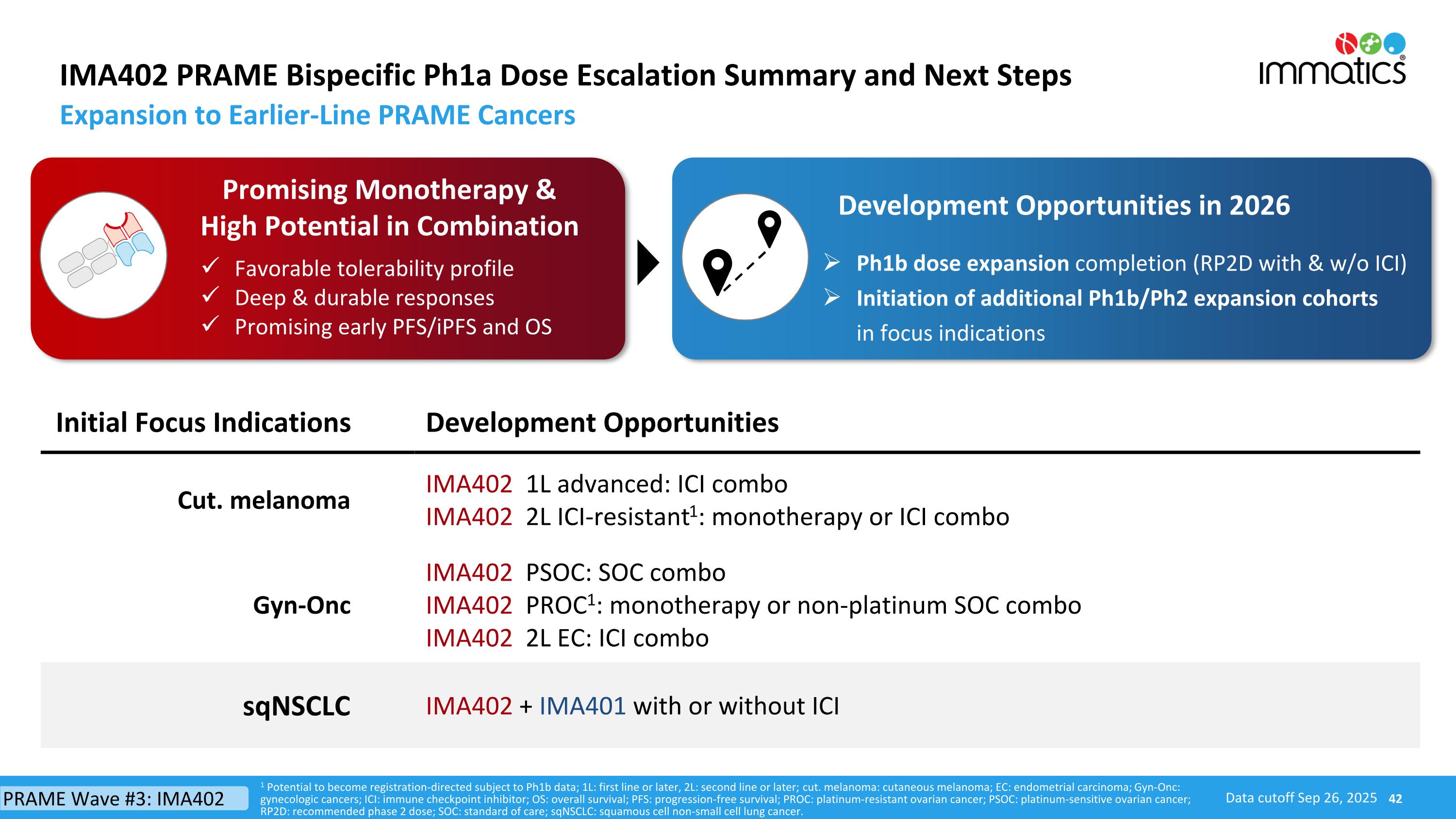
IMA402 PRAME Bispecific Ph1a Dose Escalation Summary and Next Steps Expansion to Earlier-Line PRAME Cancers Promising Monotherapy & High Potential in Combination Favorable tolerability profile Deep & durable responses Promising early PFS/iPFS and OS Initial Focus Indications Development Opportunities Cut. melanoma IMA402 1L advanced: ICI combo IMA402 2L ICI-resistant1: monotherapy or ICI combo Gyn-Onc IMA402 PSOC: SOC combo IMA402 PROC1: monotherapy or non-platinum SOC combo IMA402 2L EC: ICI combo sqNSCLC IMA402 + IMA401 with or without ICI Development Opportunities in 2026 Ph1b dose expansion completion (RP2D with & w/o ICI) Initiation of additional Ph1b/Ph2 expansion cohorts in focus indications 1 Potential to become registration-directed subject to Ph1b data; 1L: first line or later, 2L: second line or later; cut. melanoma: cutaneous melanoma; EC: endometrial carcinoma; Gyn-Onc: gynecologic cancers; ICI: immune checkpoint inhibitor; OS: overall survival; PFS: progression-free survival; PROC: platinum-resistant ovarian cancer; PSOC: platinum-sensitive ovarian cancer; RP2D: recommended phase 2 dose; SOC: standard of care; sqNSCLC: squamous cell non-small cell lung cancer. Data cutoff Sep 26, 2025 PRAME Wave #3: IMA402
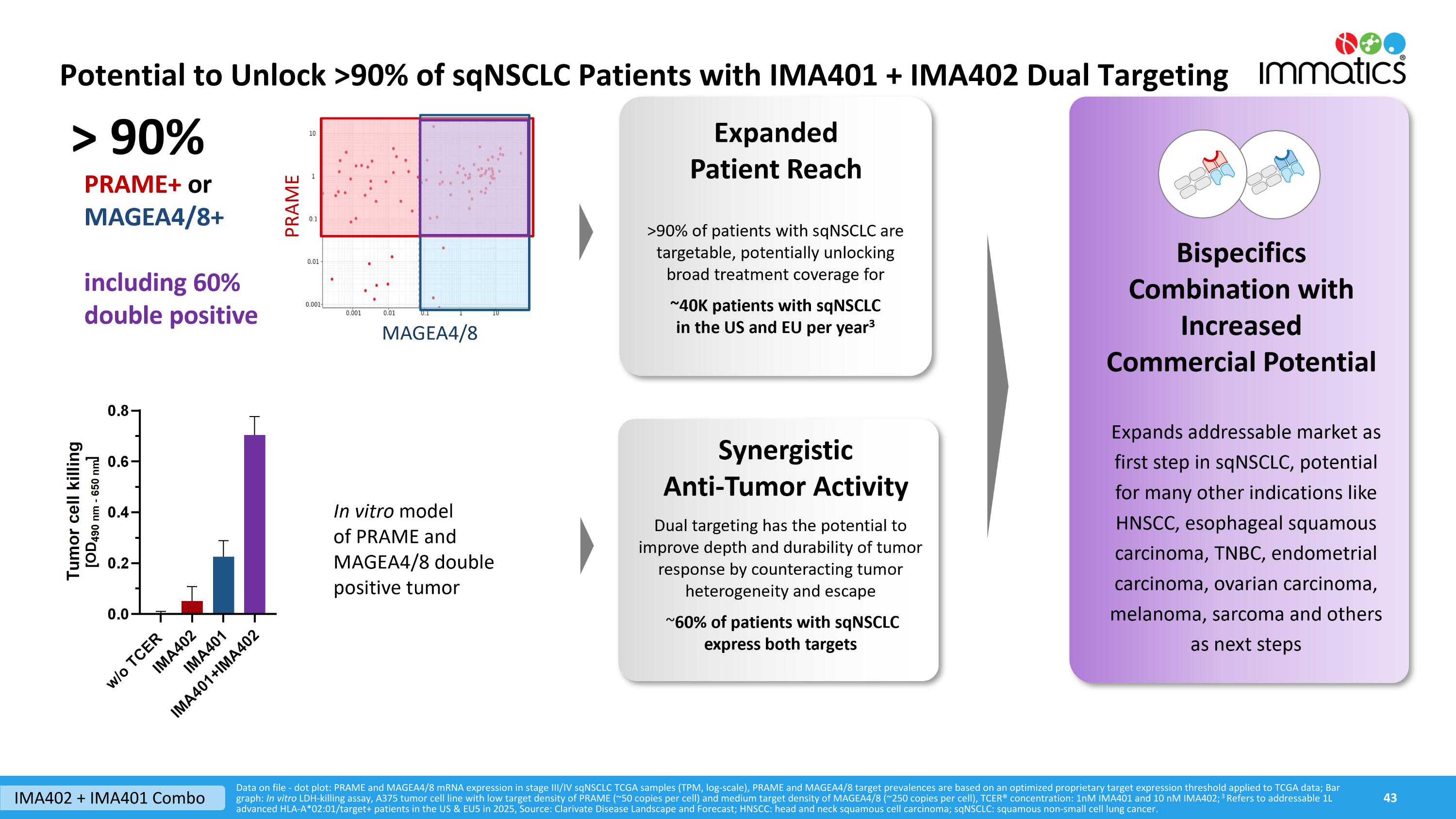
Potential to Unlock >90% of sqNSCLC Patients with IMA401 + IMA402 Dual Targeting Data on file - dot plot: PRAME and MAGEA4/8 mRNA expression in stage III/IV sqNSCLC TCGA samples (TPM, log-scale), PRAME and MAGEA4/8 target prevalences are based on an optimized proprietary target expression threshold applied to TCGA data; Bar graph: In vitro LDH-killing assay, A375 tumor cell line with low target density of PRAME (~50 copies per cell) and medium target density of MAGEA4/8 (~250 copies per cell), TCER® concentration: 1nM IMA401 and 10 nM IMA402; 3 Refers to addressable 1L advanced HLA-A*02:01/target+ patients in the US & EU5 in 2025, Source: Clarivate Disease Landscape and Forecast; HNSCC: head and neck squamous cell carcinoma; sqNSCLC: squamous non-small cell lung cancer. IMA402 + IMA401 Combo
IMA401 MAGEA4/8 Bispecific Maximizing the Potential of Bispecifics Combination Entering the PRAME Franchise
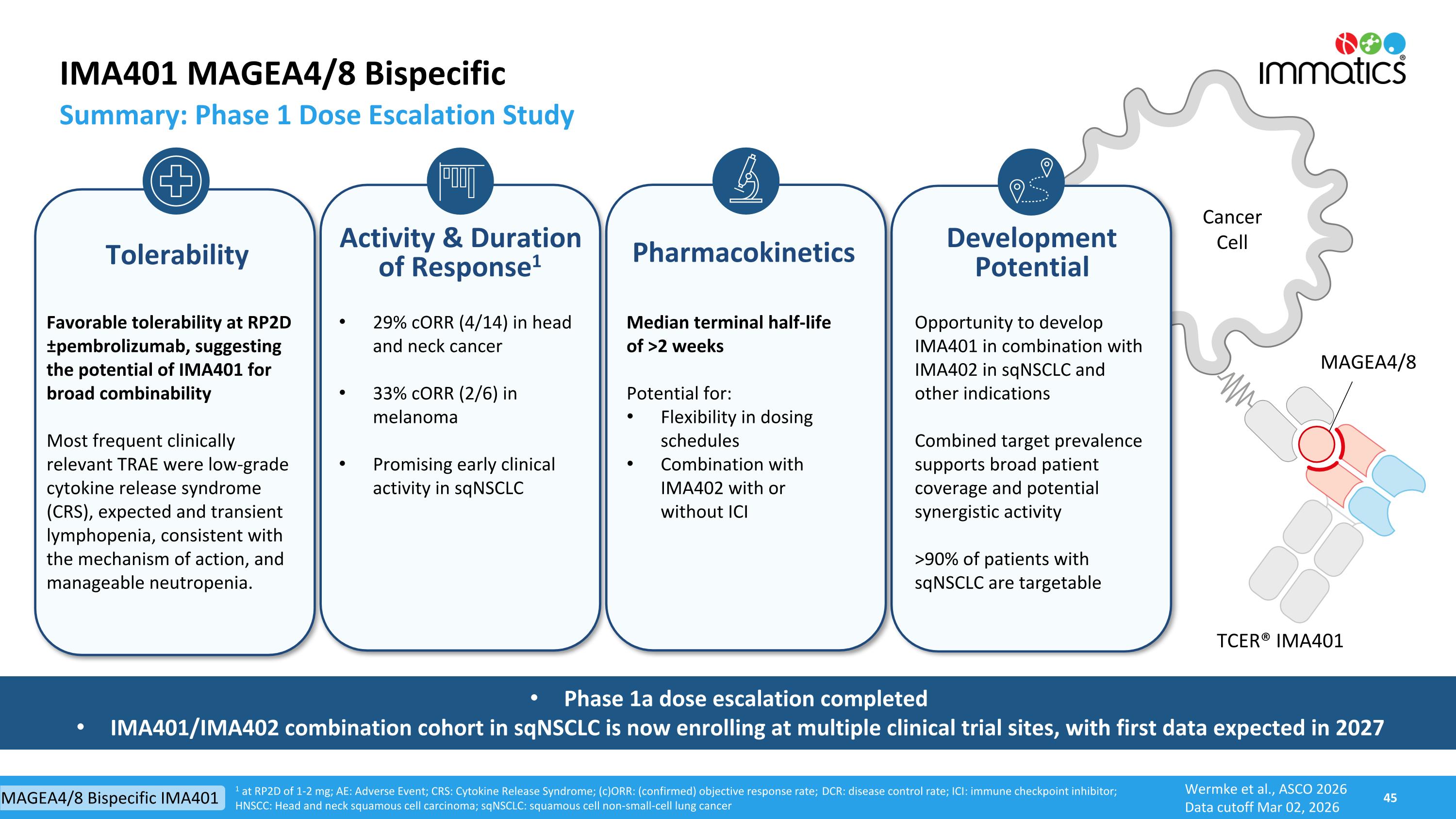
Cancer Cell MAGEA4/8 IMA401 MAGEA4/8 Bispecific Summary: Phase 1 Dose Escalation Study 1 at RP2D of 1-2 mg; AE: Adverse Event; CRS: Cytokine Release Syndrome; (c)ORR: (confirmed) objective response rate; DCR: disease control rate; ICI: immune checkpoint inhibitor; HNSCC: Head and neck squamous cell carcinoma; sqNSCLC: squamous cell non-small-cell lung cancer 29% cORR (4/14) in head and neck cancer 33% cORR (2/6) in melanoma Promising early clinical activity in sqNSCLC Tolerability Activity & Duration of Response1 Opportunity to develop IMA401 in combination with IMA402 in sqNSCLC and other indications Combined target prevalence supports broad patient coverage and potential synergistic activity >90% of patients with sqNSCLC are targetable Development Potential Favorable tolerability at RP2D ±pembrolizumab, suggesting the potential of IMA401 for broad combinability Most frequent clinically relevant TRAE were low-grade cytokine release syndrome (CRS), expected and transient lymphopenia, consistent with the mechanism of action, and manageable neutropenia. Pharmacokinetics Median terminal half-life of >2 weeks Potential for: Flexibility in dosing schedules Combination with IMA402 with or without ICI Phase 1a dose escalation completed IMA401/IMA402 combination cohort in sqNSCLC is now enrolling at multiple clinical trial sites, with first data expected in 2027 TCER® IMA401 MAGEA4/8 Bispecific IMA401 Wermke et al., ASCO 2026 Data cutoff Mar 02, 2026
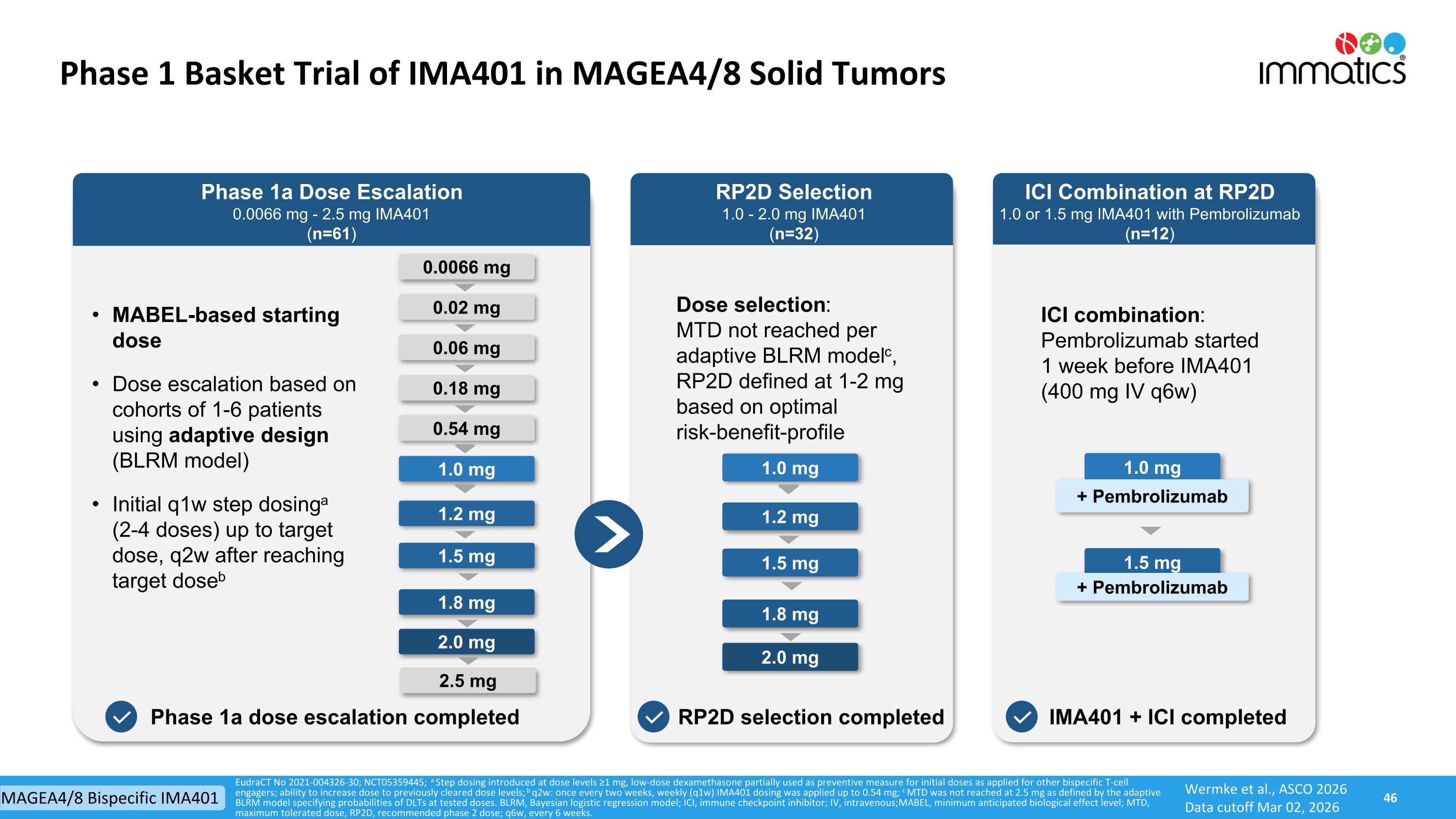
Phase 1 Basket Trial of IMA401 in MAGEA4/8 Solid Tumors EudraCT No 2021-004326-30; NCT05359445; a Step dosing introduced at dose levels ≥1 mg, low-dose dexamethasone partially used as preventive measure for initial doses as applied for other bispecific T-cell engagers; ability to increase dose to previously cleared dose levels; b q2w: once every two weeks, weekly (q1w) IMA401 dosing was applied up to 0.54 mg; c MTD was not reached at 2.5 mg as defined by the adaptive BLRM model specifying probabilities of DLTs at tested doses. BLRM, Bayesian logistic regression model; ICI, immune checkpoint inhibitor; IV, intravenous; MABEL, minimum anticipated biological effect level; MTD, maximum tolerated dose, RP2D, recommended phase 2 dose; q6w, every 6 weeks. MAGEA4/8 Bispecific IMA401 Wermke et al., ASCO 2026 Data cutoff Mar 02, 2026 0.18 mg 0.54 mg 1.8 mg 0.06 mg 1.2 mg 0.02 mg 0.0066 mg 2.0 mg 1.0 mg 1.5 mg 2.5 mg Phase 1a dose escalation completed 1.8 mg 1.2 mg 2.0 mg 1.0 mg 1.5 mg Dose selection: MTD not reached per adaptive BLRM modelc, RP2D defined at 1-2 mg based on optimal risk-benefit-profile 1.0 mg 1.5 mg + Pembrolizumab + Pembrolizumab ICI combination: Pembrolizumab started 1 week before IMA401 (400 mg IV q6w) MABEL-based starting dose Dose escalation based on cohorts of 1-6 patients using adaptive design (BLRM model) Initial q1w step dosinga (2-4 doses) up to target dose, q2w after reaching target doseb Phase 1a Dose Escalation 0.0066 mg - 2.5 mg IMA401 (n=61) RP2D Selection 1.0 - 2.0 mg IMA401 (n=32) ICI Combination at RP2D 1.0 or 1.5 mg IMA401 with Pembrolizumab (n=12) RP2D selection completed IMA401 + ICI completed
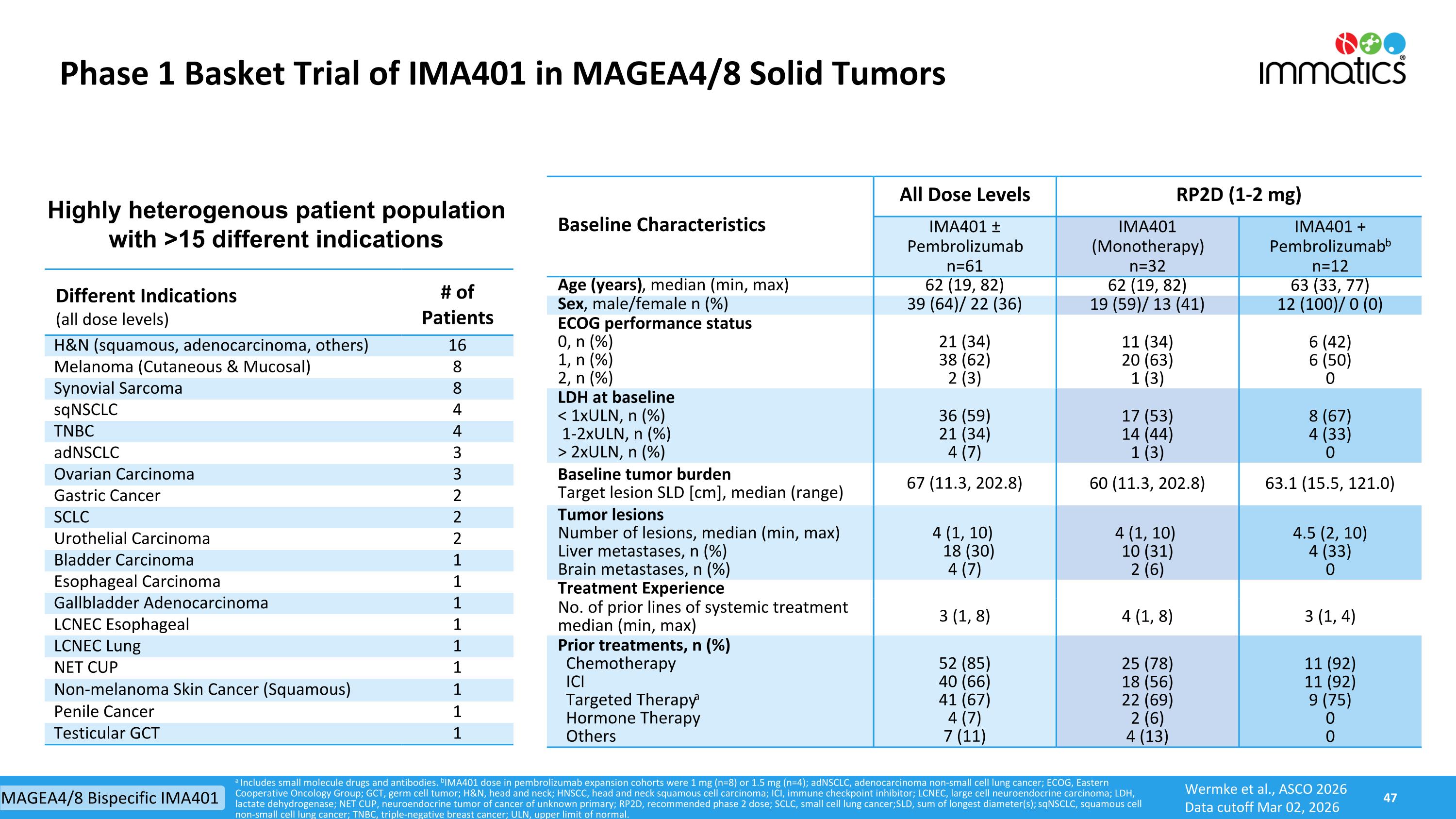
Phase 1 Basket Trial of IMA401 in MAGEA4/8 Solid Tumors a Includes small molecule drugs and antibodies. bIMA401 dose in pembrolizumab expansion cohorts were 1 mg (n=8) or 1.5 mg (n=4); adNSCLC, adenocarcinoma non-small cell lung cancer; ECOG, Eastern Cooperative Oncology Group; GCT, germ cell tumor; H&N, head and neck; HNSCC, head and neck squamous cell carcinoma; ICI, immune checkpoint inhibitor; LCNEC, large cell neuroendocrine carcinoma; LDH, lactate dehydrogenase; NET CUP, neuroendocrine tumor of cancer of unknown primary; RP2D, recommended phase 2 dose; SCLC, small cell lung cancer; SLD, sum of longest diameter(s); sqNSCLC, squamous cell non-small cell lung cancer; TNBC, triple-negative breast cancer; ULN, upper limit of normal. MAGEA4/8 Bispecific IMA401 Wermke et al., ASCO 2026 Data cutoff Mar 02, 2026 Baseline Characteristics All Dose Levels RP2D (1-2 mg) IMA401 ± Pembrolizumab n=61 IMA401 (Monotherapy) n=32 IMA401 + Pembrolizumabb n=12 Age (years), median (min, max) 62 (19, 82) 62 (19, 82) 63 (33, 77) Sex, male/female n (%) 39 (64)/ 22 (36) 19 (59)/ 13 (41) 12 (100)/ 0 (0) ECOG performance status 0, n (%) 1, n (%) 2, n (%) 21 (34) 38 (62) 2 (3) 11 (34) 20 (63) 1 (3) 6 (42) 6 (50) 0 LDH at baseline < 1xULN, n (%) 1-2xULN, n (%) > 2xULN, n (%) 36 (59) 21 (34) 4 (7) 17 (53) 14 (44) 1 (3) 8 (67) 4 (33) 0 Baseline tumor burden Target lesion SLD [cm], median (range) 67 (11.3, 202.8) 60 (11.3, 202.8) 63.1 (15.5, 121.0) Tumor lesions Number of lesions, median (min, max) Liver metastases, n (%) Brain metastases, n (%) 4 (1, 10) 18 (30) 4 (7) 4 (1, 10) 10 (31) 2 (6) 4.5 (2, 10) 4 (33) 0 Treatment Experience No. of prior lines of systemic treatment median (min, max) 3 (1, 8) 4 (1, 8) 3 (1, 4) Prior treatments, n (%) Chemotherapy ICI Targeted Therapya Hormone Therapy Others 52 (85) 40 (66) 41 (67) 4 (7) 7 (11) 25 (78) 18 (56) 22 (69) 2 (6) 4 (13) 11 (92) 11 (92) 9 (75) 0 0 Highly heterogenous patient population with >15 different indications Different Indications (all dose levels) # of Patients H&N (squamous, adenocarcinoma, others) 16 Melanoma (Cutaneous & Mucosal) 8 Synovial Sarcoma 8 sqNSCLC 4 TNBC 4 adNSCLC 3 Ovarian Carcinoma 3 Gastric Cancer 2 SCLC 2 Urothelial Carcinoma 2 Bladder Carcinoma 1 Esophageal Carcinoma 1 Gallbladder Adenocarcinoma 1 LCNEC Esophageal 1 LCNEC Lung 1 NET CUP 1 Non-melanoma Skin Cancer (Squamous) 1 Penile Cancer 1 Testicular GCT 1
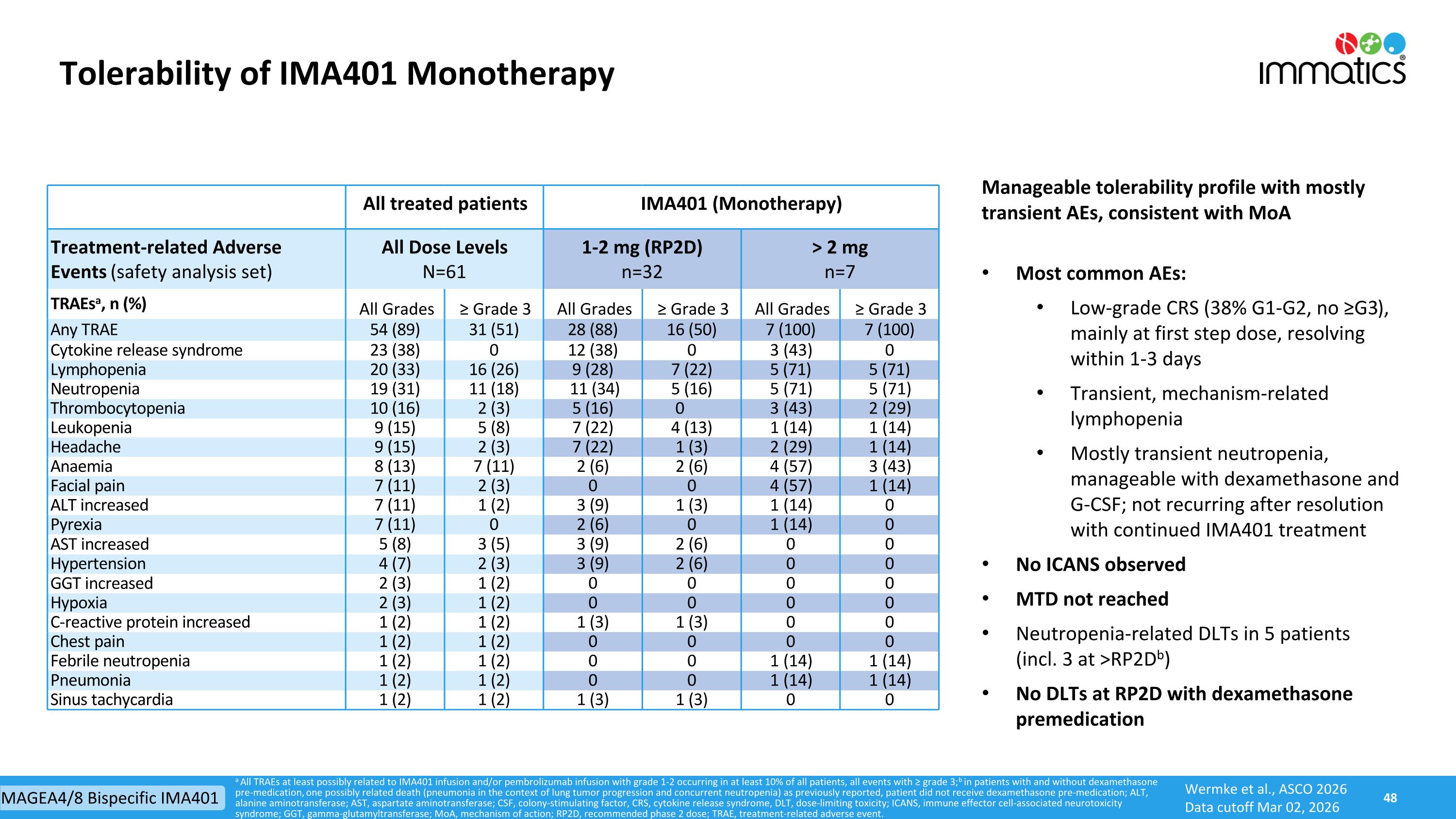
Tolerability of IMA401 Monotherapy a All TRAEs at least possibly related to IMA401 infusion and/or pembrolizumab infusion with grade 1-2 occurring in at least 10% of all patients, all events with ≥ grade 3; b in patients with and without dexamethasone pre-medication, one possibly related death (pneumonia in the context of lung tumor progression and concurrent neutropenia) as previously reported, patient did not receive dexamethasone pre-medication; ALT, alanine aminotransferase; AST, aspartate aminotransferase; CSF, colony-stimulating factor, CRS, cytokine release syndrome, DLT, dose-limiting toxicity; ICANS, immune effector cell-associated neurotoxicity syndrome; GGT, gamma-glutamyltransferase; MoA, mechanism of action; RP2D, recommended phase 2 dose; TRAE, treatment-related adverse event. MAGEA4/8 Bispecific IMA401 Wermke et al., ASCO 2026 Data cutoff Mar 02, 2026 All treated patients IMA401 (Monotherapy) Treatment-related Adverse Events (safety analysis set) All Dose Levels N=61 1-2 mg (RP2D) n=32 > 2 mg n=7 TRAEsa, n (%) All Grades ≥ Grade 3 All Grades ≥ Grade 3 All Grades ≥ Grade 3 Any TRAE 54 (89) 31 (51) 28 (88) 16 (50) 7 (100) 7 (100) Cytokine release syndrome 23 (38) 0 12 (38) 0 3 (43) 0 Lymphopenia 20 (33) 16 (26) 9 (28) 7 (22) 5 (71) 5 (71) Neutropenia 19 (31) 11 (18) 11 (34) 5 (16) 5 (71) 5 (71) Thrombocytopenia 10 (16) 2 (3) 5 (16) 0 3 (43) 2 (29) Leukopenia 9 (15) 5 (8) 7 (22) 4 (13) 1 (14) 1 (14) Headache 9 (15) 2 (3) 7 (22) 1 (3) 2 (29) 1 (14) Anaemia 8 (13) 7 (11) 2 (6) 2 (6) 4 (57) 3 (43) Facial pain 7 (11) 2 (3) 0 0 4 (57) 1 (14) ALT increased 7 (11) 1 (2) 3 (9) 1 (3) 1 (14) 0 Pyrexia 7 (11) 0 2 (6) 0 1 (14) 0 AST increased 5 (8) 3 (5) 3 (9) 2 (6) 0 0 Hypertension 4 (7) 2 (3) 3 (9) 2 (6) 0 0 GGT increased 2 (3) 1 (2) 0 0 0 0 Hypoxia 2 (3) 1 (2) 0 0 0 0 C-reactive protein increased 1 (2) 1 (2) 1 (3) 1 (3) 0 0 Chest pain 1 (2) 1 (2) 0 0 0 0 Febrile neutropenia 1 (2) 1 (2) 0 0 1 (14) 1 (14) Pneumonia 1 (2) 1 (2) 0 0 1 (14) 1 (14) Sinus tachycardia 1 (2) 1 (2) 1 (3) 1 (3) 0 0 Most common AEs: Low-grade CRS (38% G1-G2, no ≥G3), mainly at first step dose, resolving within 1-3 days Transient, mechanism-related lymphopenia Mostly transient neutropenia, manageable with dexamethasone and G-CSF; not recurring after resolution with continued IMA401 treatment No ICANS observed MTD not reached Neutropenia-related DLTs in 5 patients (incl. 3 at >RP2Db) No DLTs at RP2D with dexamethasone premedication Manageable tolerability profile with mostly transient AEs, consistent with MoA
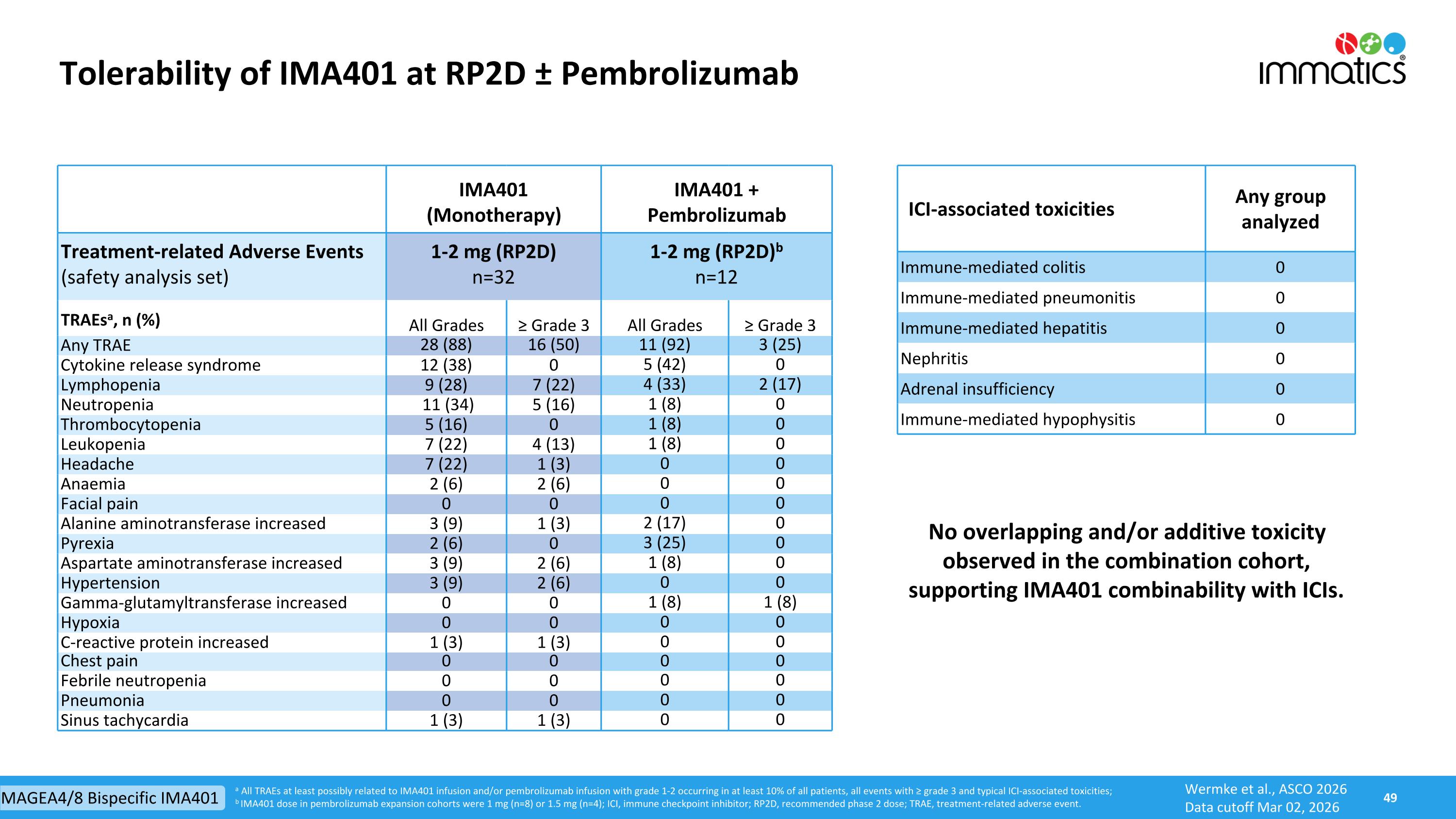
Tolerability of IMA401 at RP2D ± Pembrolizumab a All TRAEs at least possibly related to IMA401 infusion and/or pembrolizumab infusion with grade 1-2 occurring in at least 10% of all patients, all events with ≥ grade 3 and typical ICI-associated toxicities; b IMA401 dose in pembrolizumab expansion cohorts were 1 mg (n=8) or 1.5 mg (n=4); ICI, immune checkpoint inhibitor; RP2D, recommended phase 2 dose; TRAE, treatment-related adverse event. MAGEA4/8 Bispecific IMA401 Wermke et al., ASCO 2026 Data cutoff Mar 02, 2026 IMA401 (Monotherapy) IMA401 + Pembrolizumab Treatment-related Adverse Events (safety analysis set) 1-2 mg (RP2D) n=32 1-2 mg (RP2D)b n=12 TRAEsa, n (%) All Grades ≥ Grade 3 All Grades ≥ Grade 3 Any TRAE 28 (88) 16 (50) 11 (92) 3 (25) Cytokine release syndrome 12 (38) 0 5 (42) 0 Lymphopenia 9 (28) 7 (22) 4 (33) 2 (17) Neutropenia 11 (34) 5 (16) 1 (8) 0 Thrombocytopenia 5 (16) 0 1 (8) 0 Leukopenia 7 (22) 4 (13) 1 (8) 0 Headache 7 (22) 1 (3) 0 0 Anaemia 2 (6) 2 (6) 0 0 Facial pain 0 0 0 0 Alanine aminotransferase increased 3 (9) 1 (3) 2 (17) 0 Pyrexia 2 (6) 0 3 (25) 0 Aspartate aminotransferase increased 3 (9) 2 (6) 1 (8) 0 Hypertension 3 (9) 2 (6) 0 0 Gamma-glutamyltransferase increased 0 0 1 (8) 1 (8) Hypoxia 0 0 0 0 C-reactive protein increased 1 (3) 1 (3) 0 0 Chest pain 0 0 0 0 Febrile neutropenia 0 0 0 0 Pneumonia 0 0 0 0 Sinus tachycardia 1 (3) 1 (3) 0 0 ICI-associated toxicities Any group analyzed Immune-mediated colitis 0 Immune-mediated pneumonitis 0 Immune-mediated hepatitis 0 Nephritis 0 Adrenal insufficiency 0 Immune-mediated hypophysitis 0 No overlapping and/or additive toxicity observed in the combination cohort, supporting IMA401 combinability with ICIs.
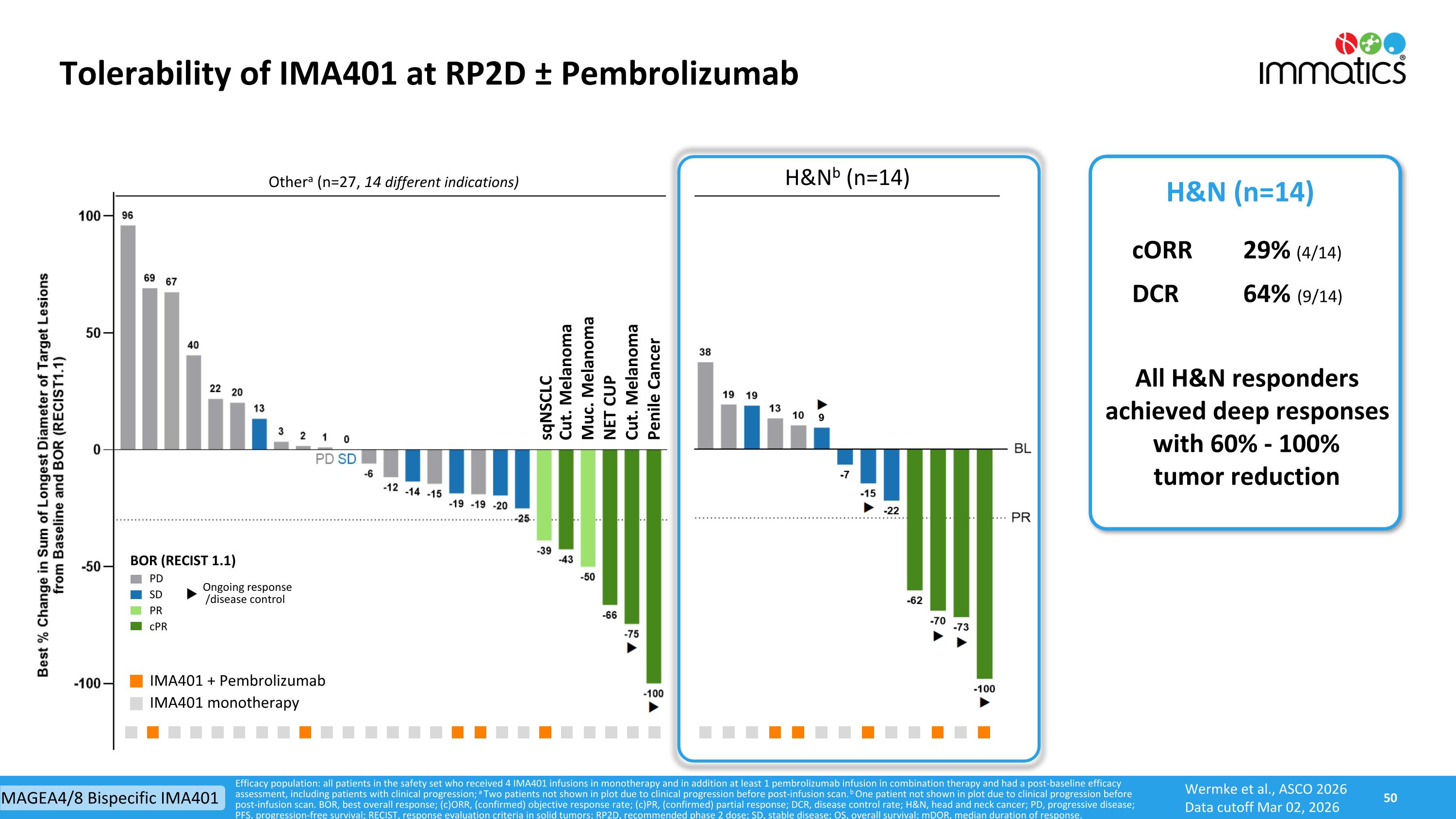
Tolerability of IMA401 at RP2D ± Pembrolizumab Efficacy population: all patients in the safety set who received 4 IMA401 infusions in monotherapy and in addition at least 1 pembrolizumab infusion in combination therapy and had a post-baseline efficacy assessment, including patients with clinical progression; a Two patients not shown in plot due to clinical progression before post-infusion scan. b One patient not shown in plot due to clinical progression before post-infusion scan. BOR, best overall response; (c)ORR, (confirmed) objective response rate; (c)PR, (confirmed) partial response; DCR, disease control rate; H&N, head and neck cancer; PD, progressive disease; PFS, progression-free survival; RECIST, response evaluation criteria in solid tumors; RP2D, recommended phase 2 dose; SD, stable disease; OS, overall survival; mDOR, median duration of response. MAGEA4/8 Bispecific IMA401 Wermke et al., ASCO 2026 Data cutoff Mar 02, 2026 H&Nb (n=14) BOR (RECIST 1.1) PD SD PR cPR Ongoing response /disease control Othera (n=27, 14 different indications) IMA401 monotherapy IMA401 + Pembrolizumab cORR 29% (4/14) DCR 64% (9/14) H&N (n=14) sqNSCLC Cut. Melanoma Cut. Melanoma Muc. Melanoma NET CUP Penile Cancer All H&N responders achieved deep responses with 60% - 100% tumor reduction
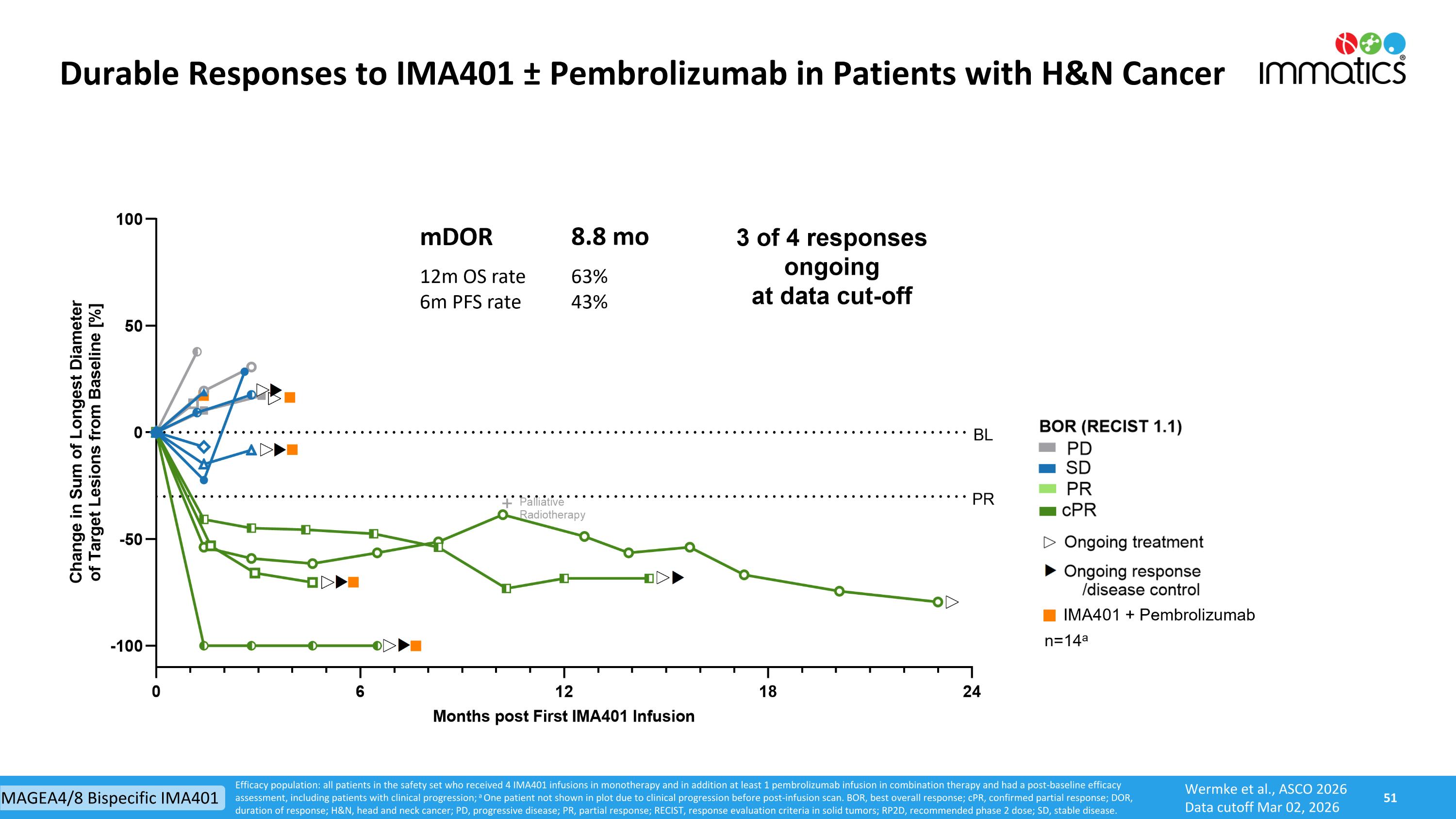
Durable Responses to IMA401 ± Pembrolizumab in Patients with H&N Cancer Efficacy population: all patients in the safety set who received 4 IMA401 infusions in monotherapy and in addition at least 1 pembrolizumab infusion in combination therapy and had a post-baseline efficacy assessment, including patients with clinical progression; a One patient not shown in plot due to clinical progression before post-infusion scan. BOR, best overall response; cPR, confirmed partial response; DOR, duration of response; H&N, head and neck cancer; PD, progressive disease; PR, partial response; RECIST, response evaluation criteria in solid tumors; RP2D, recommended phase 2 dose; SD, stable disease. MAGEA4/8 Bispecific IMA401 Wermke et al., ASCO 2026 Data cutoff Mar 02, 2026
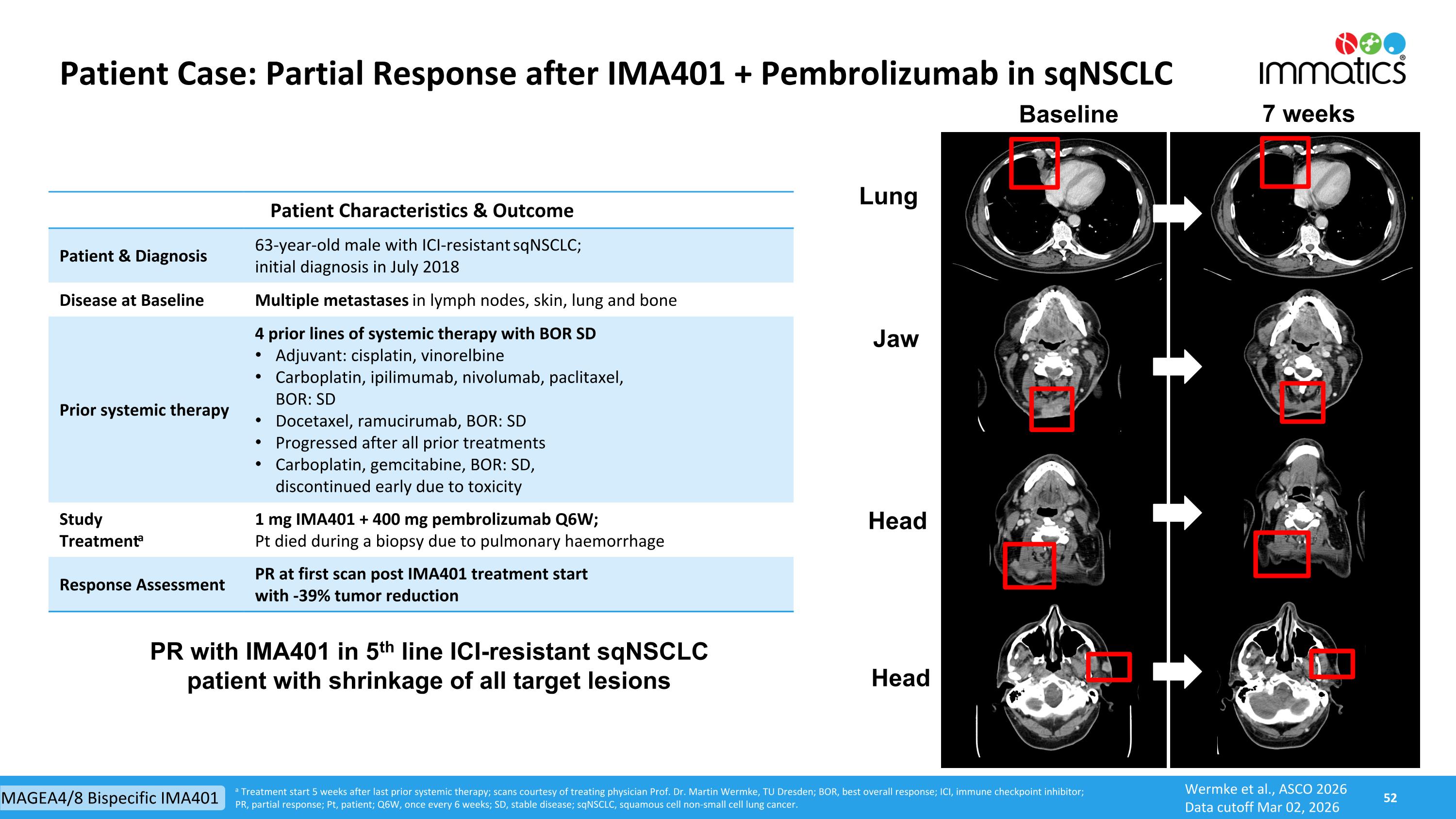
Patient Case: Partial Response after IMA401 + Pembrolizumab in sqNSCLC a Treatment start 5 weeks after last prior systemic therapy; scans courtesy of treating physician Prof. Dr. Martin Wermke, TU Dresden; BOR, best overall response; ICI, immune checkpoint inhibitor; PR, partial response; Pt, patient; Q6W, once every 6 weeks; SD, stable disease; sqNSCLC, squamous cell non-small cell lung cancer. MAGEA4/8 Bispecific IMA401 Wermke et al., ASCO 2026 Data cutoff Mar 02, 2026 Lung Baseline 7 weeks Jaw Head Head PR with IMA401 in 5th line ICI-resistant sqNSCLC patient with shrinkage of all target lesions Patient Characteristics & Outcome Patient & Diagnosis 63-year-old male with ICI-resistant sqNSCLC; initial diagnosis in July 2018 Disease at Baseline Multiple metastases in lymph nodes, skin, lung and bone Prior systemic therapy 4 prior lines of systemic therapy with BOR SD Adjuvant: cisplatin, vinorelbine Carboplatin, ipilimumab, nivolumab, paclitaxel, BOR: SD Docetaxel, ramucirumab, BOR: SD Progressed after all prior treatments Carboplatin, gemcitabine, BOR: SD, discontinued early due to toxicity Study Treatmenta 1 mg IMA401 + 400 mg pembrolizumab Q6W; Pt died during a biopsy due to pulmonary haemorrhage Response Assessment PR at first scan post IMA401 treatment start with -39% tumor reduction

v Appendix
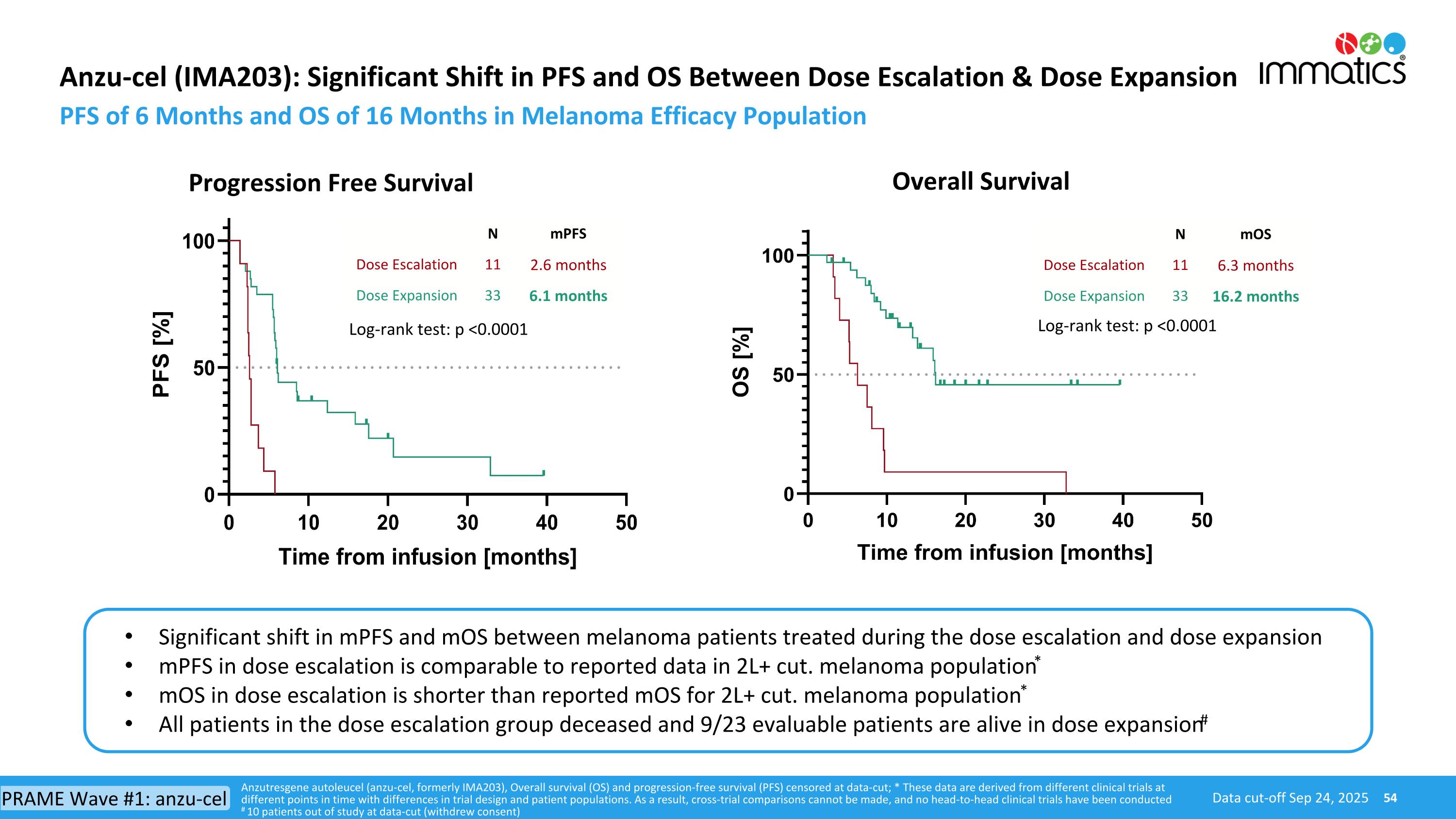
Anzu-cel (IMA203): Significant Shift in PFS and OS Between Dose Escalation & Dose Expansion PFS of 6 Months and OS of 16 Months in Melanoma Efficacy Population Progression Free Survival Data cut-off Sep 24, 2025 Overall Survival N mPFS Dose Escalation 11 2.6 months Dose Expansion 33 6.1 months N mOS Dose Escalation 11 6.3 months Dose Expansion 33 16.2 months Significant shift in mPFS and mOS between melanoma patients treated during the dose escalation and dose expansion mPFS in dose escalation is comparable to reported data in 2L+ cut. melanoma population* mOS in dose escalation is shorter than reported mOS for 2L+ cut. melanoma population* All patients in the dose escalation group deceased and 9/23 evaluable patients are alive in dose expansion# Log-rank test: p <0.0001 Log-rank test: p <0.0001 Anzutresgene autoleucel (anzu-cel, formerly IMA203), Overall survival (OS) and progression-free survival (PFS) censored at data-cut; * These data are derived from different clinical trials at different points in time with differences in trial design and patient populations. As a result, cross-trial comparisons cannot be made, and no head-to-head clinical trials have been conducted # 10 patients out of study at data-cut (withdrew consent) PRAME Wave #1: anzu-cel
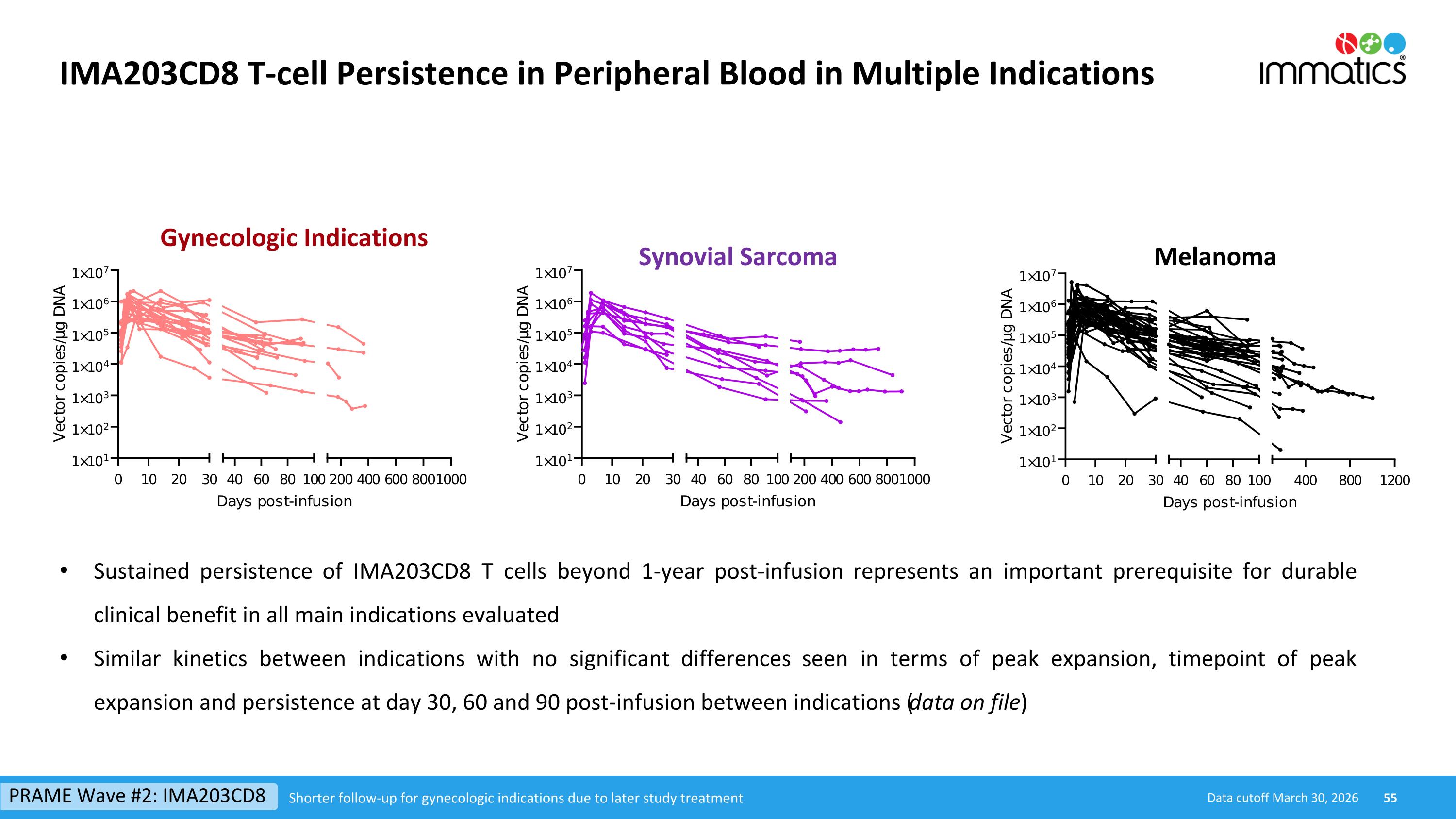
IMA203CD8 T-cell Persistence in Peripheral Blood in Multiple Indications Sustained persistence of IMA203CD8 T cells beyond 1-year post-infusion represents an important prerequisite for durable clinical benefit in all main indications evaluated Similar kinetics between indications with no significant differences seen in terms of peak expansion, timepoint of peak expansion and persistence at day 30, 60 and 90 post-infusion between indications (data on file) Melanoma Data cutoff March 30, 2026 Synovial Sarcoma Gynecologic Indications Shorter follow-up for gynecologic indications due to later study treatment PRAME Wave #2: IMA203CD8
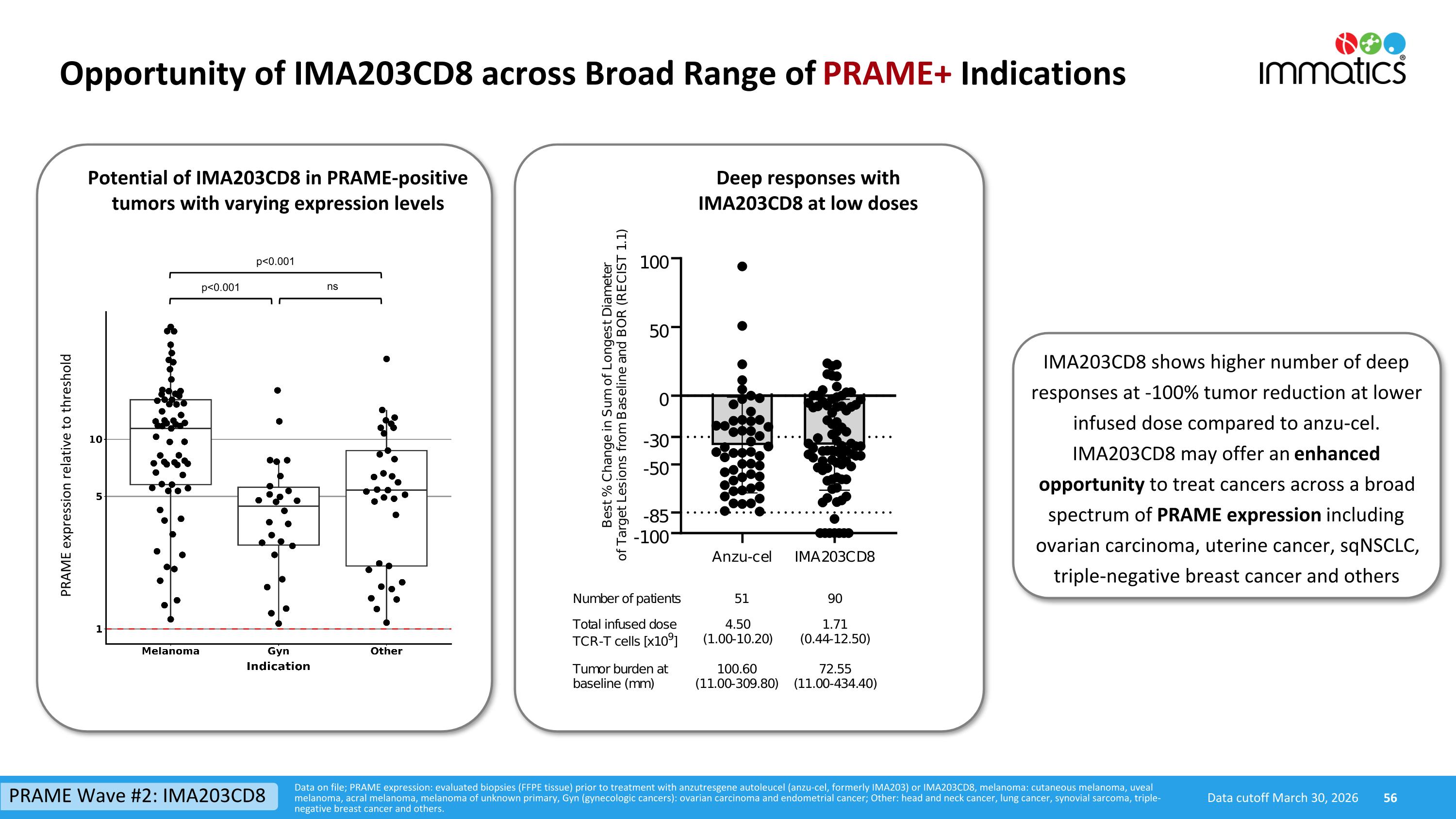
Opportunity of IMA203CD8 across Broad Range of PRAME+ Indications Data on file; PRAME expression: evaluated biopsies (FFPE tissue) prior to treatment with anzutresgene autoleucel (anzu-cel, formerly IMA203) or IMA203CD8, melanoma: cutaneous melanoma, uveal melanoma, acral melanoma, melanoma of unknown primary, Gyn (gynecologic cancers): ovarian carcinoma and endometrial cancer; Other: head and neck cancer, lung cancer, synovial sarcoma, triple-negative breast cancer and others. IMA203CD8 shows higher number of deep responses at -100% tumor reduction at lower infused dose compared to anzu-cel. IMA203CD8 may offer an enhanced opportunity to treat cancers across a broad spectrum of PRAME expression including ovarian carcinoma, uterine cancer, sqNSCLC, triple-negative breast cancer and others Potential of IMA203CD8 in PRAME-positive tumors with varying expression levels Data cutoff March 30, 2026 PRAME expression relative to threshold p<0.001 ns p<0.001 Deep responses with IMA203CD8 at low doses PRAME Wave #2: IMA203CD8
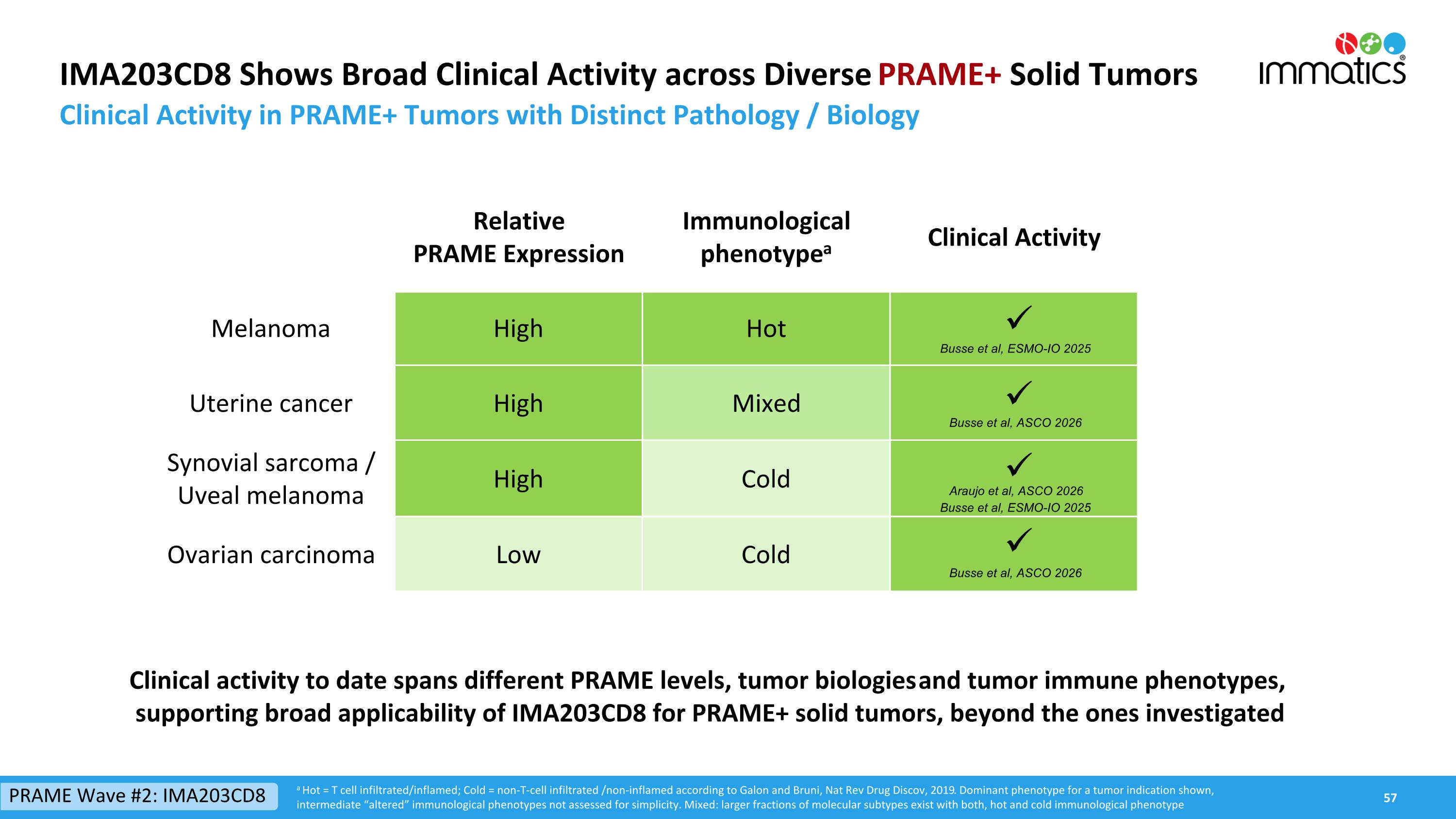
IMA203CD8 Shows Broad Clinical Activity across Diverse PRAME+ Solid Tumors Clinical Activity in PRAME+ Tumors with Distinct Pathology / Biology Relative PRAME Expression Immunological phenotypea Clinical Activity Melanoma High Hot Uterine cancer High Mixed Synovial sarcoma / Uveal melanoma High Cold Ovarian carcinoma Low Cold Clinical activity to date spans different PRAME levels, tumor biologies and tumor immune phenotypes, supporting broad applicability of IMA203CD8 for PRAME+ solid tumors, beyond the ones investigated a Hot = T cell infiltrated/inflamed; Cold = non-T-cell infiltrated /non-inflamed according to Galon and Bruni, Nat Rev Drug Discov, 2019. Dominant phenotype for a tumor indication shown, intermediate “altered” immunological phenotypes not assessed for simplicity. Mixed: larger fractions of molecular subtypes exist with both, hot and cold immunological phenotype PRAME Wave #2: IMA203CD8 Araujo et al, ASCO 2026 Busse et al, ESMO-IO 2025 Busse et al, ESMO-IO 2025 Busse et al, ASCO 2026 Busse et al, ASCO 2026
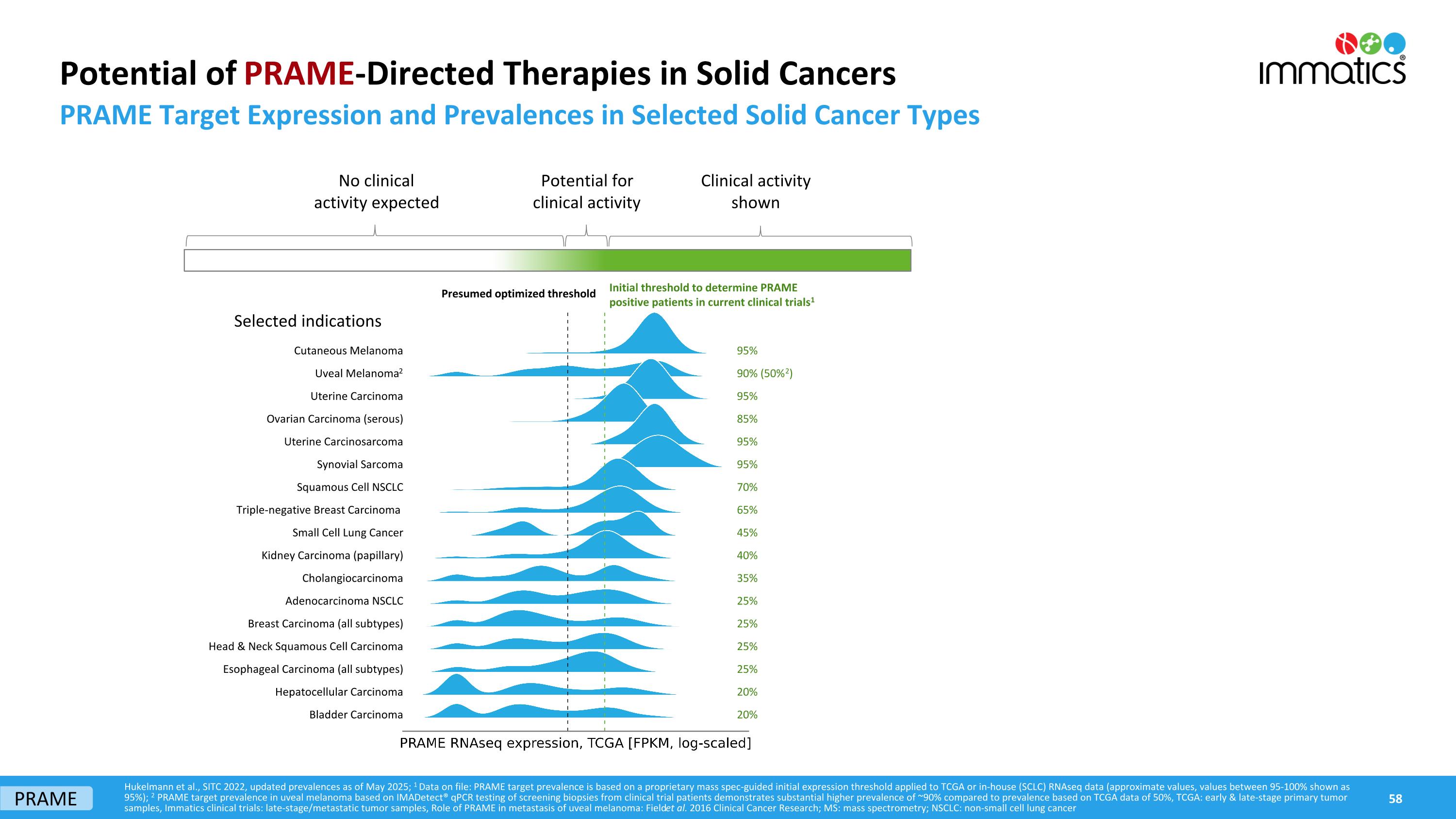
Potential of PRAME-Directed Therapies in Solid Cancers PRAME Target Expression and Prevalences in Selected Solid Cancer Types Hukelmann et al., SITC 2022, updated prevalences as of May 2025; 1 Data on file: PRAME target prevalence is based on a proprietary mass spec-guided initial expression threshold applied to TCGA or in-house (SCLC) RNAseq data (approximate values, values between 95-100% shown as 95%); 2 PRAME target prevalence in uveal melanoma based on IMADetect® qPCR testing of screening biopsies from clinical trial patients demonstrates substantial higher prevalence of ~90% compared to prevalence based on TCGA data of 50%, TCGA: early & late-stage primary tumor samples, Immatics clinical trials: late-stage/metastatic tumor samples, Role of PRAME in metastasis of uveal melanoma: Field et al. 2016 Clinical Cancer Research; MS: mass spectrometry; NSCLC: non-small cell lung cancer Selected indications Clinical activity shown No clinical activity expected Potential for clinical activity 95% 90% (50%2) 95% 85% 95% 95% 70% 65% 45% 40% 35% 25% 25% 25% 25% 20% 20% Cutaneous Melanoma Uveal Melanoma2 Uterine Carcinoma Ovarian Carcinoma (serous) Uterine Carcinosarcoma Synovial Sarcoma Squamous Cell NSCLC Triple-negative Breast Carcinoma Small Cell Lung Cancer Kidney Carcinoma (papillary) Cholangiocarcinoma Adenocarcinoma NSCLC Breast Carcinoma (all subtypes) Head & Neck Squamous Cell Carcinoma Esophageal Carcinoma (all subtypes) Hepatocellular Carcinoma Bladder Carcinoma Initial threshold to determine PRAME positive patients in current clinical trials1 Presumed optimized threshold 58 PRAME

v Thank you Making a Meaningful Impact on the Lives of Patients with Cancer www.immatics.com