Exhibit 99.1 Phase 3 LUCIDITY Trial of Avexitide in Post-Bariatric Hypoglycemia (PBH) Topline Data Conference Call August 18, 2026 Maggie, a mom and advocate living with post-bariatric hypoglycemia (PBH). Pancreatic islet cells

Opening Remarks Lindsey Allen Vice President, Investor Relations & Communications at Amylyx
DISCLAIMER Statements contained in this presentation regarding matters that are not historical facts are “forward-looking statements” within the meaning of the Private Securities Litigation Reform Act of 1995, as amended. Because such statements are subject to risks and uncertainties, actual results may differ materially from those expressed or implied by such forward-looking statements. Such statements include, but are not limited to, Amylyx’s expectations regarding: the therapeutic potential and safety of avexitide as a treatment for PBH; expectations regarding the timing for NDA submission with the U.S. Food and Drug Administration; the potential benefits of regulatory designations held with the FDA; the plan to present data from LUCIDITY at an upcoming medical meeting; and expectations regarding timing and preparedness for potential commercialization of avexitide, if approved. Any forward-looking statements in this presentation are based on management’s current expectations of future events and are subject to a number of risks and uncertainties that could cause actual results to differ materially and adversely from those set forth in or implied by such forward- looking statements. Risks that contribute to the uncertain nature of the forward-looking statements include: the success, cost, and timing of Amylyx’s program development activities, including ongoing and planned clinical trials, Amylyx’s ability to execute on its development and regulatory strategy, regulatory developments, Amylyx’s cash runway and ability to fund operations, as well as the risks and uncertainties set forth in Amylyx’s United States Securities and Exchange Commission (SEC) filings, including Amylyx’s Annual Report on Form 10-K for the year ended December 31, 2025, and subsequent filings with the SEC. All forward-looking statements contained in this presentation speak only as of the date on which they were made. Amylyx undertakes no obligation to update such statements to reflect events that occur or circumstances that exist after the date on which they were made. 3
Phase 3 LUCIDITY Topline Data Camille Bedrosian, MD Chief Medical Officer of Amylyx
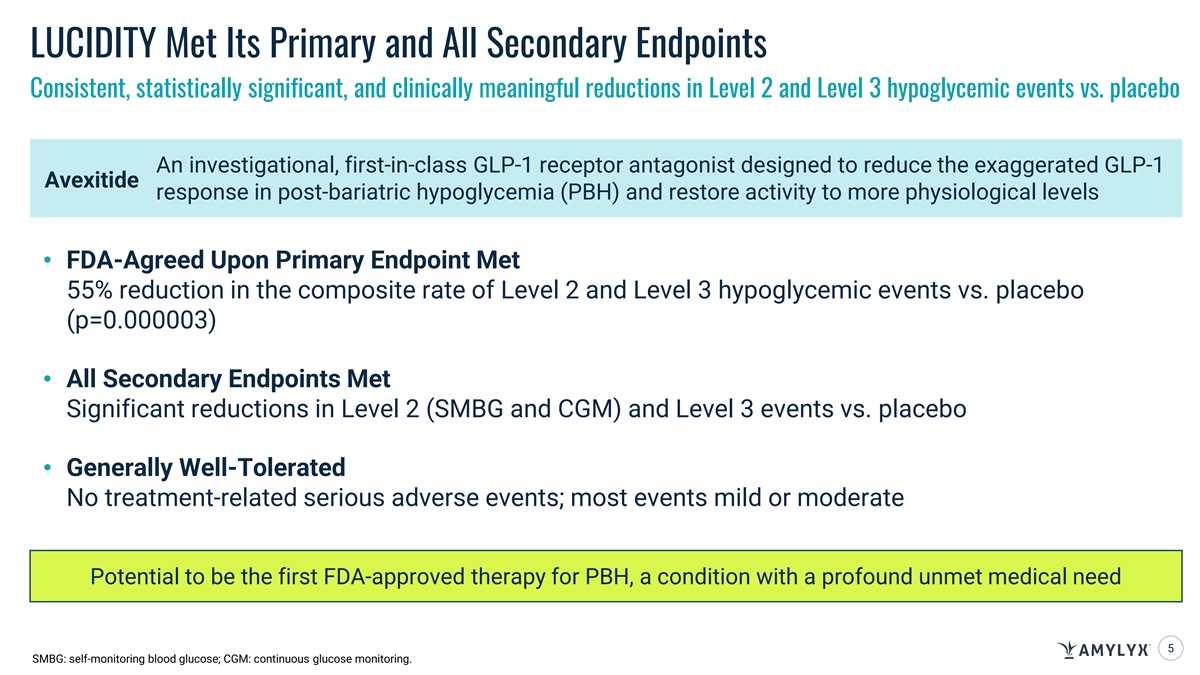
LUCIDITY Met Its Primary and All Secondary Endpoints Consistent, statistically significant, and clinically meaningful reductions in Level 2 and Level 3 hypoglycemic events vs. placebo An investigational, first-in-class GLP-1 receptor antagonist designed to reduce the exaggerated GLP-1 Avexitide response in post-bariatric hypoglycemia (PBH) and restore activity to more physiological levels • FDA-Agreed Upon Primary Endpoint Met 55% reduction in the composite rate of Level 2 and Level 3 hypoglycemic events vs. placebo (p=0.000003) • All Secondary Endpoints Met Significant reductions in Level 2 (SMBG and CGM) and Level 3 events vs. placebo • Generally Well-Tolerated No treatment-related serious adverse events; most events mild or moderate Potential to be the first FDA-approved therapy for PBH, a condition with a profound unmet medical need 5 SMBG: self-monitoring blood glucose; CGM: continuous glucose monitoring.
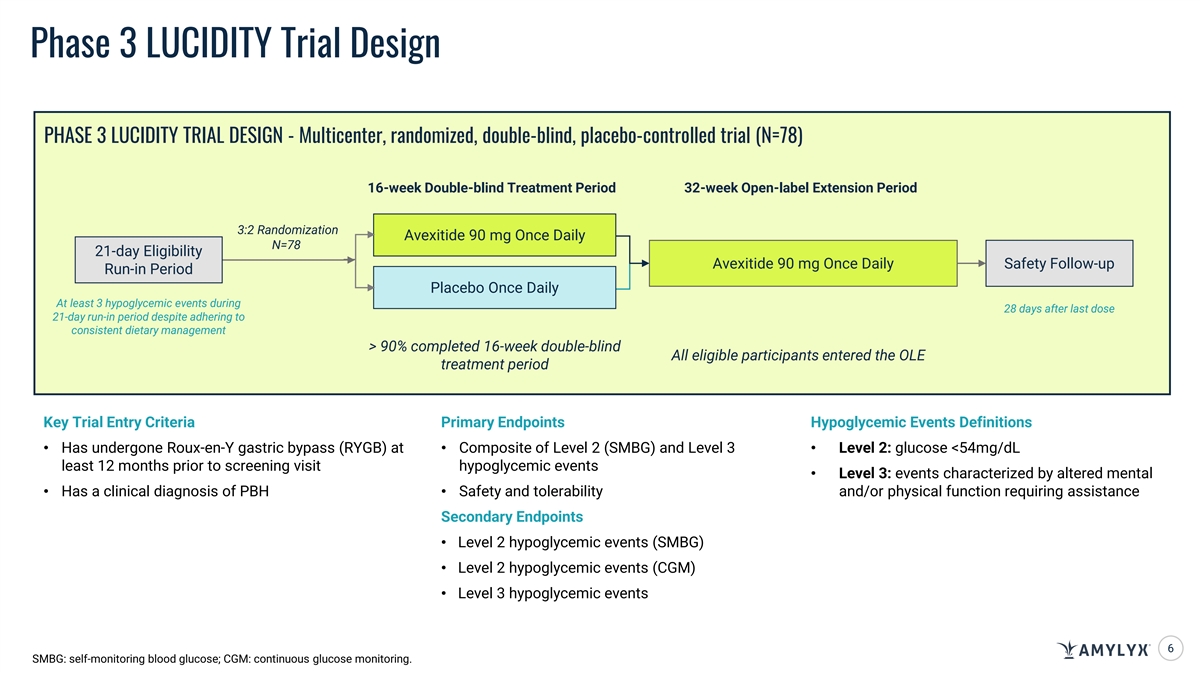
Phase 3 LUCIDITY Trial Design PHASE 3 LUCIDITY TRIAL DESIGN - Multicenter, randomized, double-blind, placebo-controlled trial (N=78) 16-week Double-blind Treatment Period 32-week Open-label Extension Period 3:2 Randomization Avexitide 90 mg Once Daily N=78 21-day Eligibility Avexitide 90 mg Once Daily Safety Follow-up Run-in Period Placebo Once Daily At least 3 hypoglycemic events during 28 days after last dose 21-day run-in period despite adhering to consistent dietary management > 90% completed 16-week double-blind All eligible participants entered the OLE treatment period Key Trial Entry Criteria Primary Endpoints Hypoglycemic Events Definitions • Has undergone Roux-en-Y gastric bypass (RYGB) at • Composite of Level 2 (SMBG) and Level 3 • Level 2: glucose <54mg/dL least 12 months prior to screening visit hypoglycemic events • Level 3: events characterized by altered mental • Has a clinical diagnosis of PBH • Safety and tolerability and/or physical function requiring assistance Secondary Endpoints • Level 2 hypoglycemic events (SMBG) • Level 2 hypoglycemic events (CGM) • Level 3 hypoglycemic events 6 SMBG: self-monitoring blood glucose; CGM: continuous glucose monitoring.
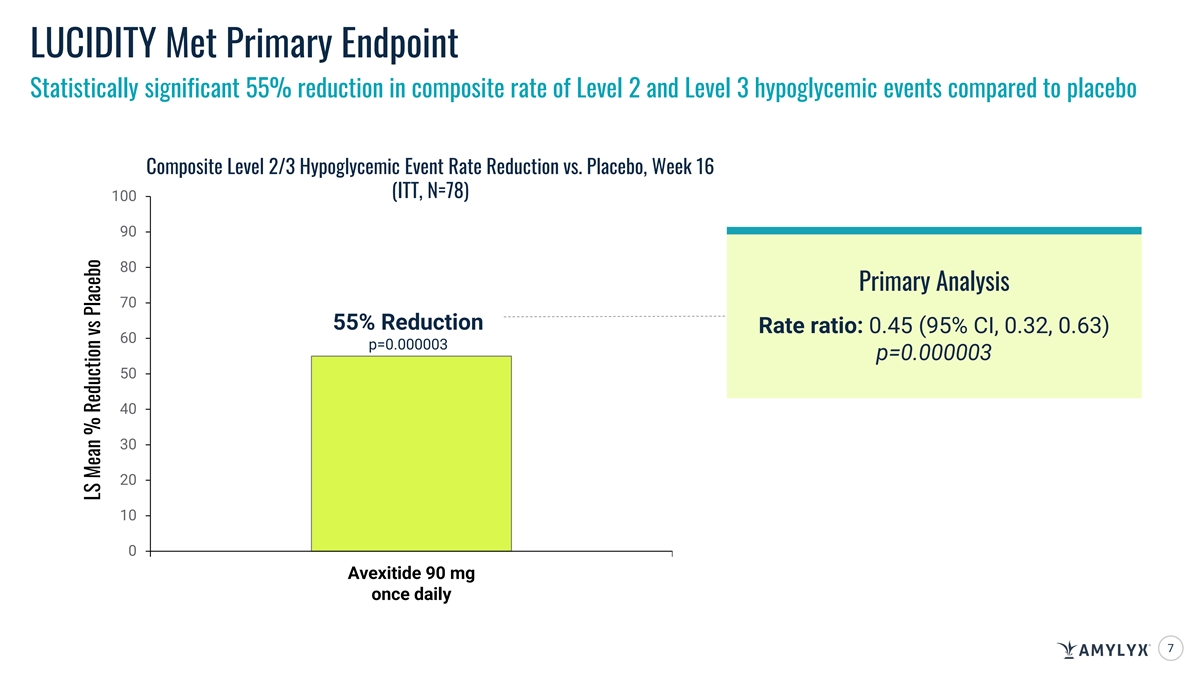
LUCIDITY Met Primary Endpoint Statistically significant 55% reduction in composite rate of Level 2 and Level 3 hypoglycemic events compared to placebo Composite Level 2/3 Hypoglycemic Event Rate Reduction vs. Placebo, Week 16 (ITT, N=78) 100 90 80 Primary Analysis 70 55% Reduction Rate ratio: 0.45 (95% CI, 0.32, 0.63) 60 p=0.000003 p=0.000003 50 40 30 20 10 0 Avexitide 90 mg once daily 7 LS Mean % Reduction vs Placebo
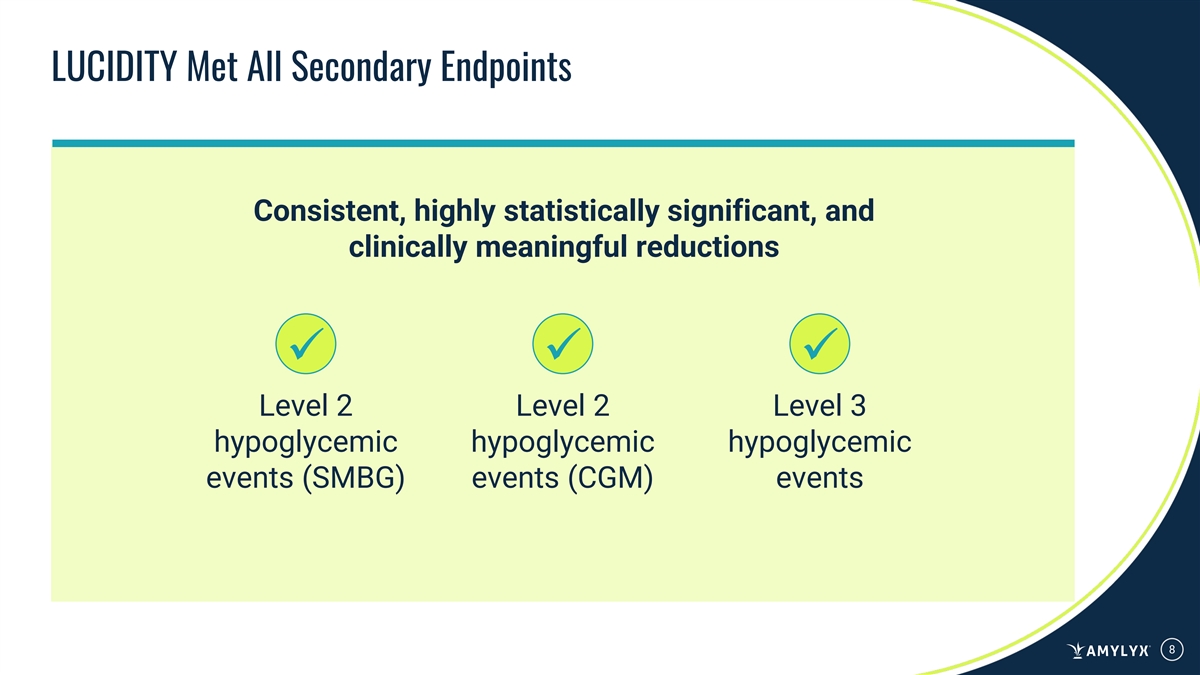
LUCIDITY Met All Secondary Endpoints Consistent, highly statistically significant, and clinically meaningful reductions ü ü ü Level 2 Level 2 Level 3 hypoglycemic hypoglycemic hypoglycemic events (SMBG) events (CGM) events 8
Avexitide was Generally Well-Tolerated with a Favorable Safety Profile Through 16 Weeks • Adverse events were generally mild or moderate • No treatment-related serious adverse events • Most common adverse events were diarrhea, injection site erythema, and injection site bruising • No changes in body weight with avexitide or placebo Safety profile consistent with that observed across all PBH clinical trials completed to date 9
The Burden of PBH Marilyn Tan, MD, FACE Principal Investigator of the LUCIDITY clinical trial and Clinical Professor of Medicine at Stanford University School of Medicine Relevant Disclosures: Dr. Tan has received research payments from Amylyx Pharmaceuticals as primary investigator and received consulting payments.
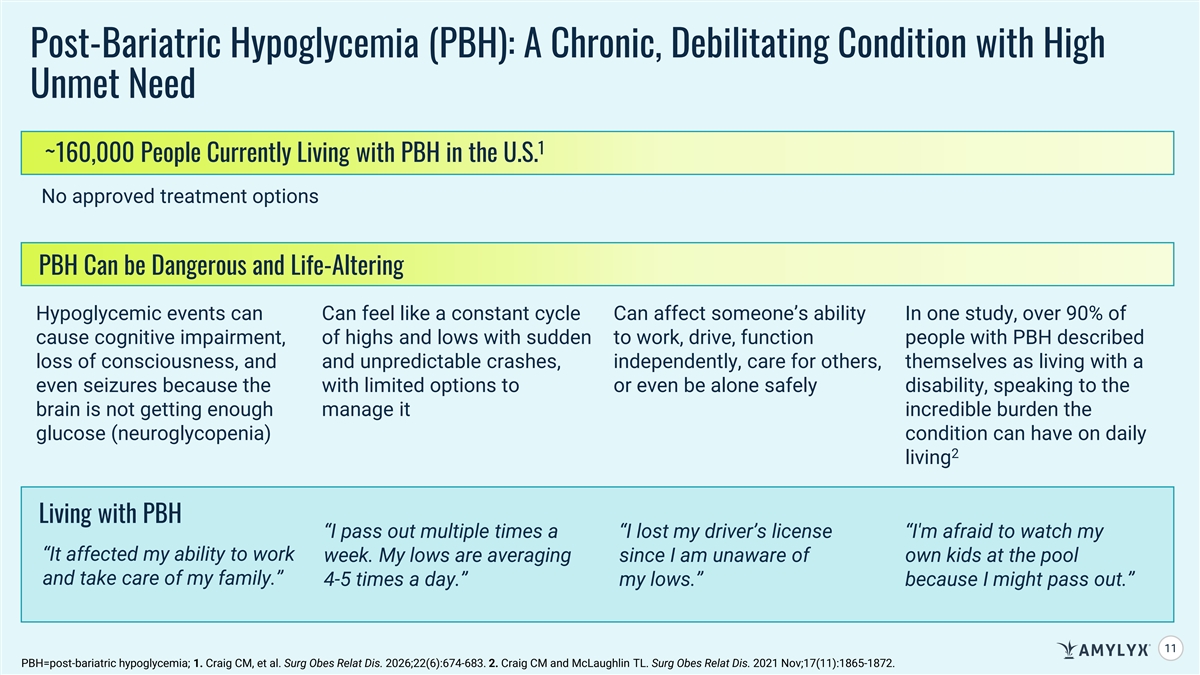
Post-Bariatric Hypoglycemia (PBH): A Chronic, Debilitating Condition with High Unmet Need 1 ~160,000 People Currently Living with PBH in the U.S. No approved treatment options PBH Can be Dangerous and Life-Altering Hypoglycemic events can Can feel like a constant cycle Can affect someone’s ability In one study, over 90% of cause cognitive impairment, of highs and lows with sudden to work, drive, function people with PBH described loss of consciousness, and and unpredictable crashes, independently, care for others, themselves as living with a even seizures because the with limited options to or even be alone safely disability, speaking to the brain is not getting enough manage it incredible burden the glucose (neuroglycopenia) condition can have on daily 2 living Living with PBH “I pass out multiple times a “I lost my driver’s license “I'm afraid to watch my “It affected my ability to work week. My lows are averaging since I am unaware of own kids at the pool and take care of my family.” 4-5 times a day.” my lows.” because I might pass out.” 11 PBH=post-bariatric hypoglycemia; 1. Craig CM, et al. Surg Obes Relat Dis. 2026;22(6):674-683. 2. Craig CM and McLaughlin TL. Surg Obes Relat Dis. 2021 Nov;17(11):1865-1872.
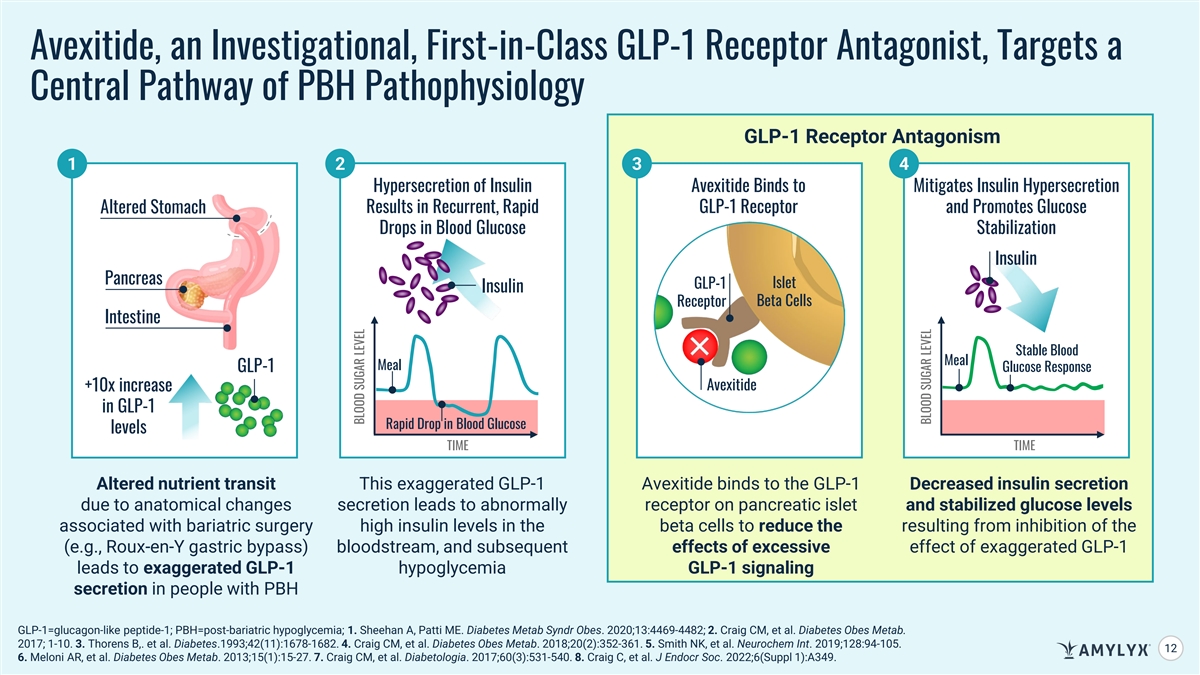
Avexitide, an Investigational, First-in-Class GLP-1 Receptor Antagonist, Targets a Central Pathway of PBH Pathophysiology GLP-1 Receptor Antagonism 1 2 3 4 Hypersecretion of Insulin Avexitide Binds to Mitigates Insulin Hypersecretion Altered Stomach Results in Recurrent, Rapid GLP-1 Receptor and Promotes Glucose Drops in Blood Glucose Stabilization Insulin Pancreas GLP-1 Islet Insulin Beta Cells Receptor Intestine Stable Blood Meal Meal GLP-1 Glucose Response +10x increase Avexitide in GLP-1 Rapid Drop in Blood Glucose levels TIME TIME Altered nutrient transit This exaggerated GLP-1 Avexitide binds to the GLP-1 Decreased insulin secretion due to anatomical changes secretion leads to abnormally receptor on pancreatic islet and stabilized glucose levels associated with bariatric surgery high insulin levels in the beta cells to reduce the resulting from inhibition of the (e.g., Roux-en-Y gastric bypass) bloodstream, and subsequent effects of excessive effect of exaggerated GLP-1 leads to exaggerated GLP-1 hypoglycemia GLP-1 signaling secretion in people with PBH GLP-1=glucagon-like peptide-1; PBH=post-bariatric hypoglycemia; 1. Sheehan A, Patti ME. Diabetes Metab Syndr Obes. 2020;13:4469-4482; 2. Craig CM, et al. Diabetes Obes Metab. 2017; 1-10. 3. Thorens B,. et al. Diabetes.1993;42(11):1678-1682. 4. Craig CM, et al. Diabetes Obes Metab. 2018;20(2):352-361. 5. Smith NK, et al. Neurochem Int. 2019;128:94-105. 12 6. Meloni AR, et al. Diabetes Obes Metab. 2013;15(1):15-27. 7. Craig CM, et al. Diabetologia. 2017;60(3):531-540. 8. Craig C, et al. J Endocr Soc. 2022;6(Suppl 1):A349. BLOOD SUGAR LEVEL BLOOD SUGAR LEVEL
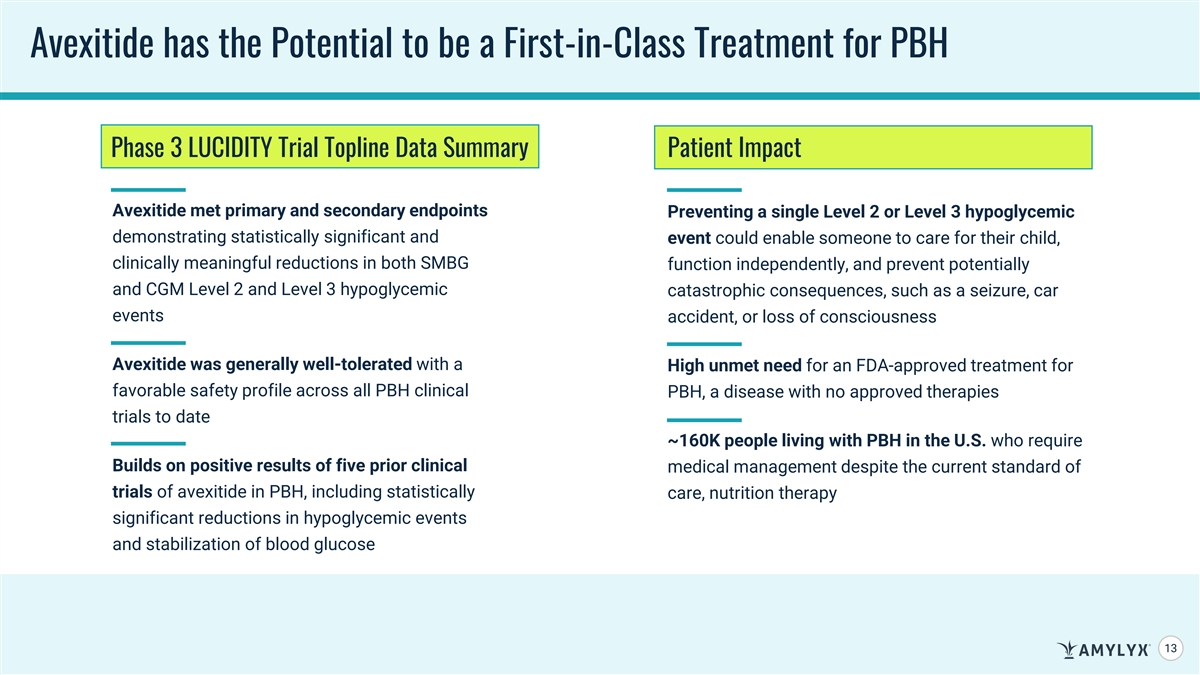
Avexitide has the Potential to be a First-in-Class Treatment for PBH Phase 3 LUCIDITY Trial Topline Data Summary Patient Impact Avexitide met primary and secondary endpoints Preventing a single Level 2 or Level 3 hypoglycemic demonstrating statistically significant and event could enable someone to care for their child, clinically meaningful reductions in both SMBG function independently, and prevent potentially and CGM Level 2 and Level 3 hypoglycemic catastrophic consequences, such as a seizure, car events accident, or loss of consciousness Avexitide was generally well-tolerated with a High unmet need for an FDA-approved treatment for favorable safety profile across all PBH clinical PBH, a disease with no approved therapies trials to date ~160K people living with PBH in the U.S. who require Builds on positive results of five prior clinical medical management despite the current standard of trials of avexitide in PBH, including statistically care, nutrition therapy significant reductions in hypoglycemic events and stabilization of blood glucose 13
Next Steps Josh Cohen Co-Chief Executive Officer & Co-Founder of Amylyx Justin Klee Co-Chief Executive Officer & Co-Founder of Amylyx
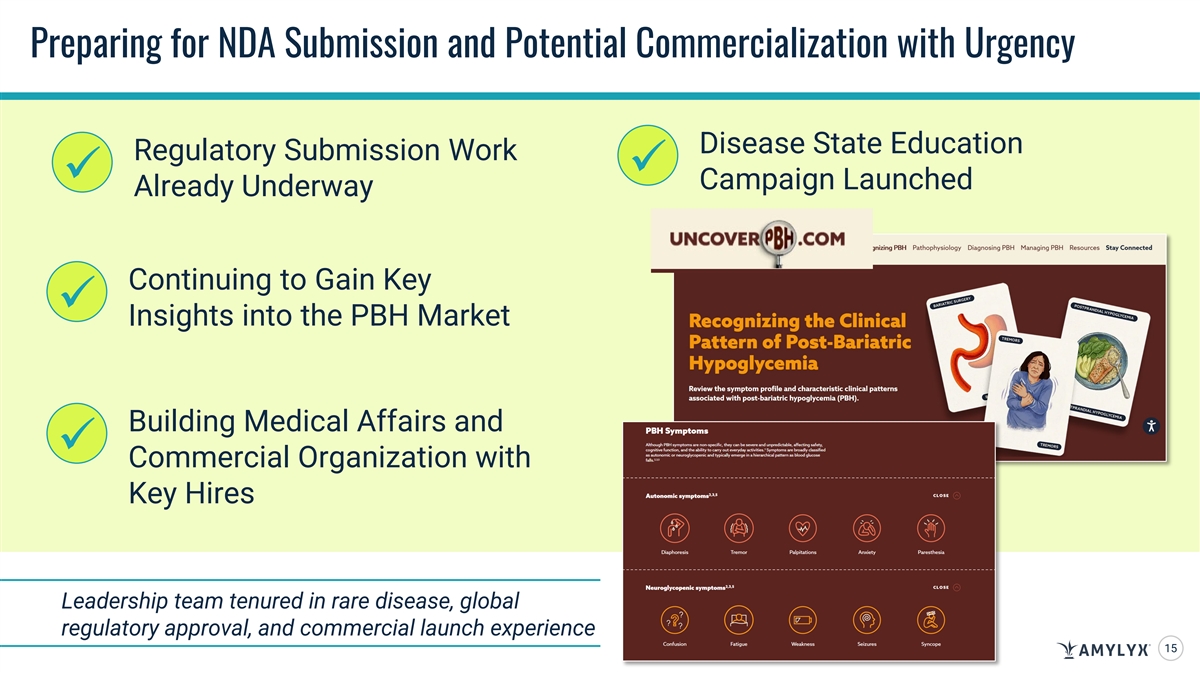
Preparing for NDA Submission and Potential Commercialization with Urgency Disease State Education Regulatory Submission Work ü ü Campaign Launched Already Underway Continuing to Gain Key ü Insights into the PBH Market Building Medical Affairs and ü Commercial Organization with Key Hires Leadership team tenured in rare disease, global regulatory approval, and commercial launch experience 15
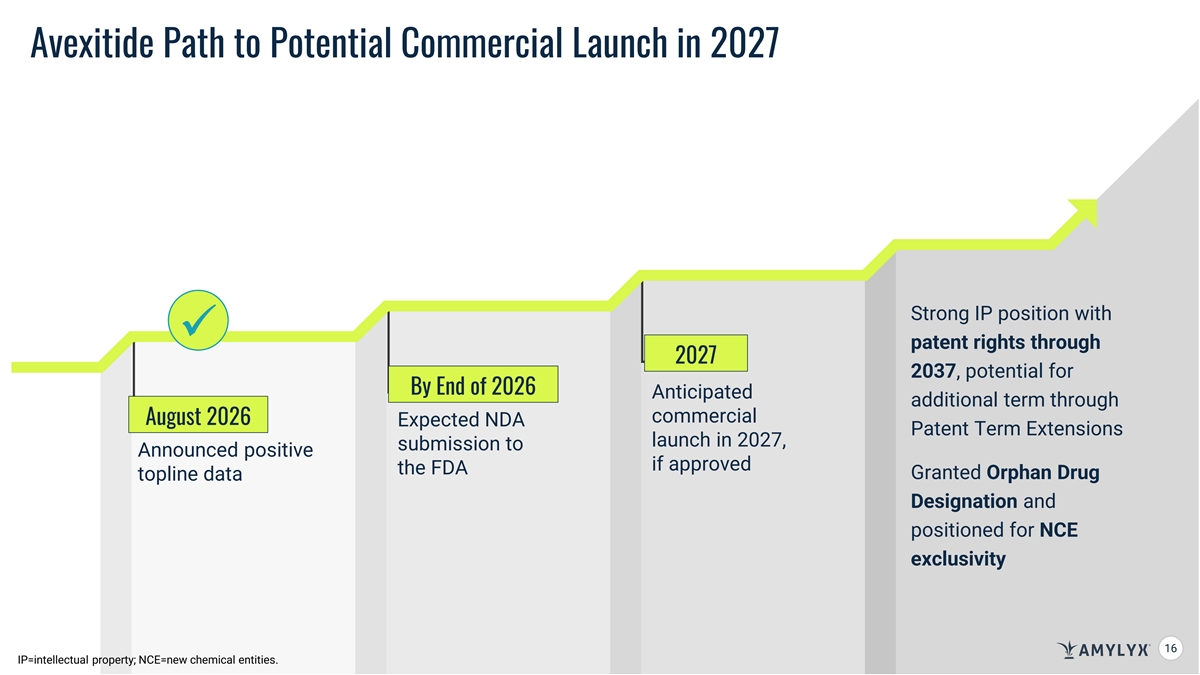
Avexitide Path to Potential Commercial Launch in 2027 Strong IP position with ü patent rights through 2027 2037, potential for By End of 2026 Anticipated additional term through commercial August 2026 Expected NDA Patent Term Extensions launch in 2027, submission to Announced positive if approved the FDA Granted Orphan Drug topline data Designation and positioned for NCE exclusivity 16 16 IP=intellectual property; NCE=new chemical entities.
Q&A