Exhibit 99.2
| ALKIVIA Study Topline Results August 17, 2026 |

| Forward-Looking Statements Forward Looking Statements This presentation has been prepared by argenx se (“argenx” or the “company”) for informational purposes only and not for any other purpose. Nothing contained in this presentation is, or should be construed as, a recommendation, promise or representation by the presenter or the company or any director, employee, agent, or adviser of the company. This presentation does not purport to be all-inclusive or to contain all of the information you may desire. Certain information contained in this presentation relates to or is based on studies, publications, surveys and other data obtained from third-party sources and the company’s own internal estimates and research. While argenx believes these third-party studies, publications, surveys and other data to be reliable as of the date of this presentation, it has not independently verified, and makes no representation as to the adequacy, fairness, accuracy or completeness of, any information obtained from third-party sources. In addition, no independent source has evaluated the reasonableness or accuracy of argenx’s internal estimates or research, and no reliance should be made on any information or statements made in this presentation relating to or based on such internal estimates and research. The contents of this presentation include statements that are, or may be deemed to be, “forward-looking statements.” These forward-looking statements generally can be identified by the use of forward-looking words, such as “aim”, “anticipate”, “aspire”, “believe”, “can”, “continue”, “could”, “estimate”, “expect”, “entail”, “forecast”, “future”, “goals”, “hope”, “intend”, “is designed to”, “likely”, “may”, “might”, “objective”, “plan”, “possible”, “potential”, “pursue”, “project”, “predict”, “seek”, “should”, “strategy”, “target”, “will” and other words and terms of similar meaning and expression, including in connection with any discussion of future operating or financial performance. By their nature, forward-looking statements involve risks and uncertainties and readers are cautioned that any such forward-looking statements are not guarantees of future performance. argenx’s actual results may differ materially from those predicted by the forward-looking statements as a result of various important factors, including but not limited to, the results of argenx’s clinical trials; uncertainties associated with the development of novel drug therapies; preclinical and clinical trial and product development risks and setbacks; interpretation of argenx’s clinical trial data by regulatory authorities and argenx’s ability to obtain regulatory approval; the risk that early stage clinical trials may not be predictive of results in later stage or large scale clinical trials; the occurrence of adverse safety events or participant dropouts; the acceptance of its products and product candidates by its patients as safe, effective, and cost-effective; the impact of governmental laws and regulations, including tariffs, export controls, sanctions and other regulations on its business; the impact of healthcare regulations, including rules on reimbursement for argenx’s products; competition in drug discovery, development and commercialization efforts; its reliance on third-party suppliers, service providers and manufacturers; and instability and conflicts in the regions in which the company has suppliers or markets for its products. A further list and description of these and other risks, uncertainties, and factors that could cause actual results to differ materially from those referred to in the forward-looking statements can be found in argenx’s U.S. Securities and Exchange Commission (SEC) filings and reports, including in argenx’s most recent annual report on Form 20-F filed with the SEC as well as subsequent filings and reports filed by argenx with the SEC. Given these risks and uncertainties, the reader is advised not to place undue reliance on such forward-looking statements. These forward-looking statements speak only as of the date of publication of this presentation. argenx undertakes no obligation to publicly update or revise the information in this presentation, including any forward-looking statements, except as may be required by law. 2 |

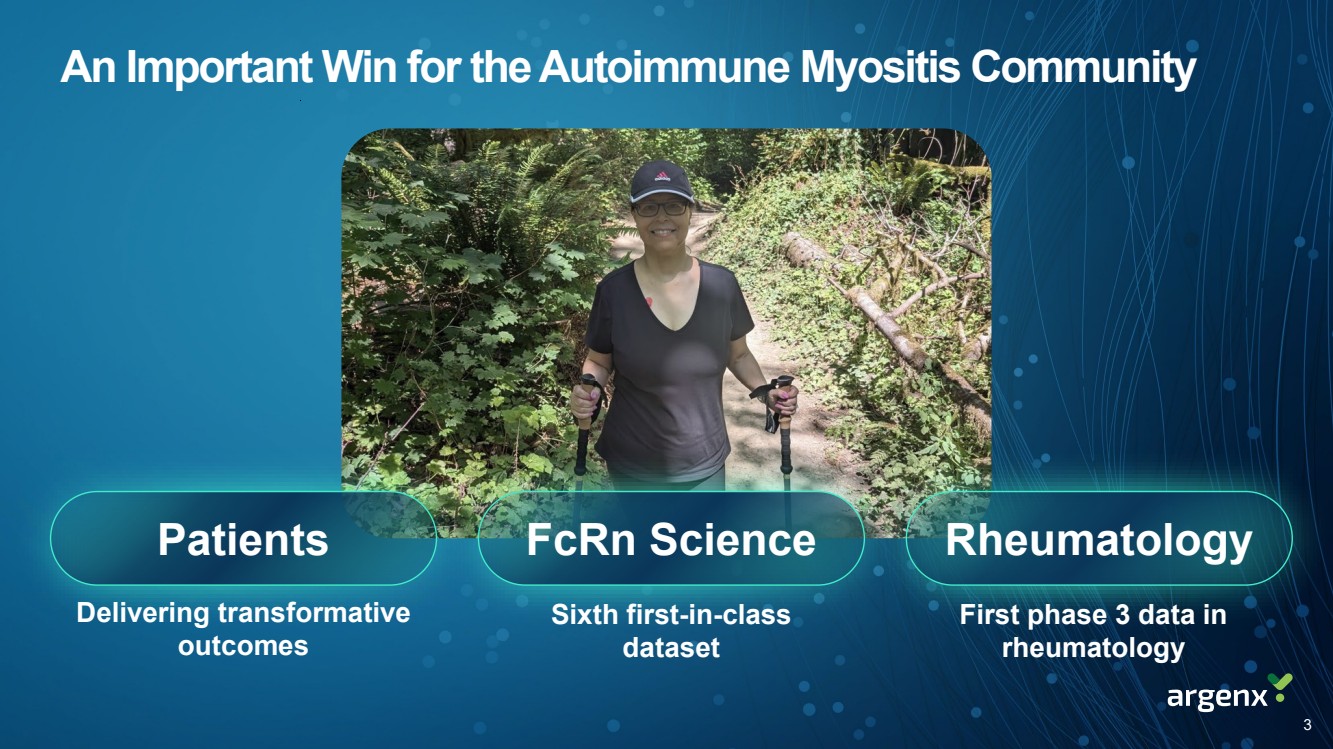
| An Important Win for the Autoimmune Myositis Community Patients FcRn Science Rheumatology Delivering transformative outcomes Sixth first-in-class dataset First phase 3 data in rheumatology 3 |
| A win for both IMNM and DM - met primary endpoint on combined population (p=0.0011), with early and sustained improvements across primary and secondary endpoints Consistent benefit across skin and muscle, with comparable magnitude of treatment effect in both subtypes Safety profile was consistent with prior studies and the known safety profile of efgartigimod First and Only Positive Results in Multiple Subtypes of Autoimmune Myositis Today’s Results For people living with myositis, the goal is straightforward: regain strength and function, and get off long-term steroids. Until now we have had limited targeted therapies to offer patients.” “ – Dr. Rohit Aggarwal 4 |
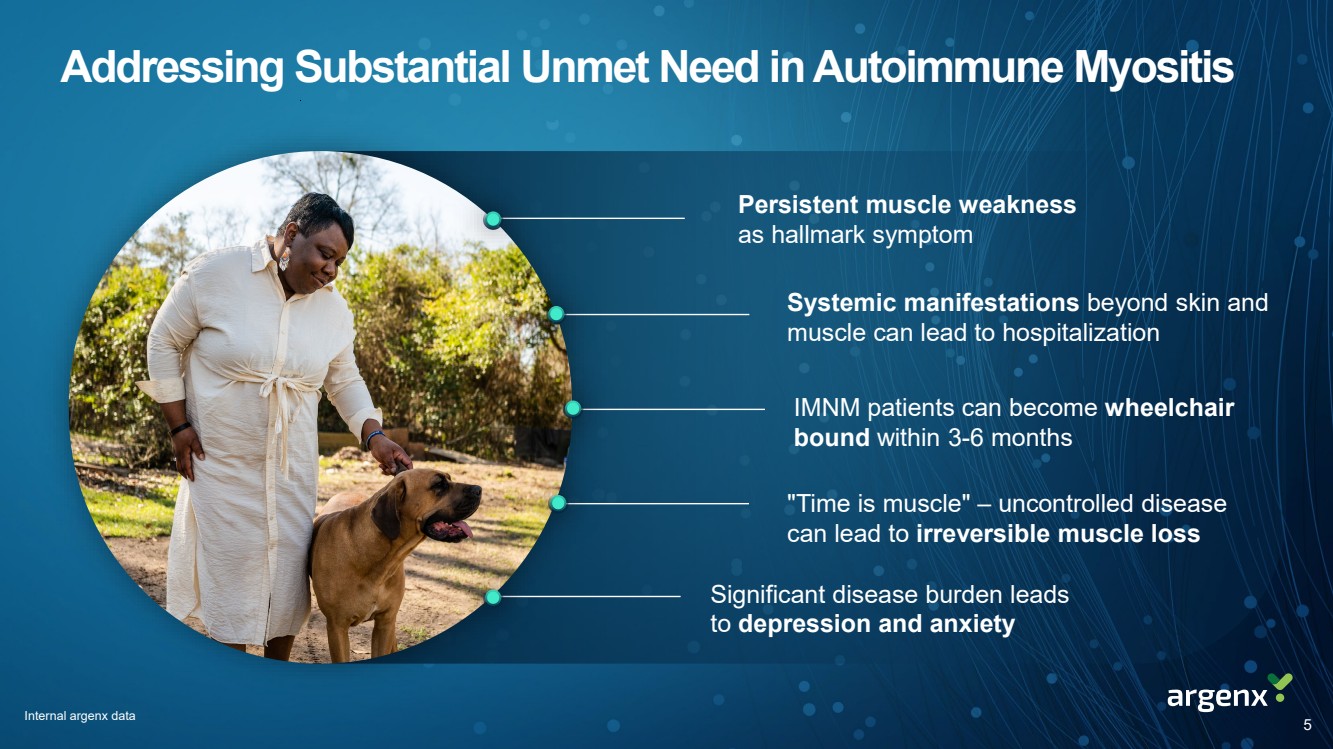
| Addressing Substantial Unmet Need in Autoimmune Myositis Internal argenx data IMNM patients can become wheelchair bound within 3-6 months Persistent muscle weakness as hallmark symptom Systemic manifestations beyond skin and muscle can lead to hospitalization "Time is muscle" – uncontrolled disease can lead to irreversible muscle loss Significant disease burden leads to depression and anxiety 5 |
| Pioneering FcRn Biology with VYVGART Shaping the Treatment Paradigm Signature efficacy profile: rapid, deep, sustained responses Broadest product presentation, empowering patient choice ~25K patient safety years Creating the FcRn Roadmap 6 First-in-Class Phase 3 Data Sets 6 |
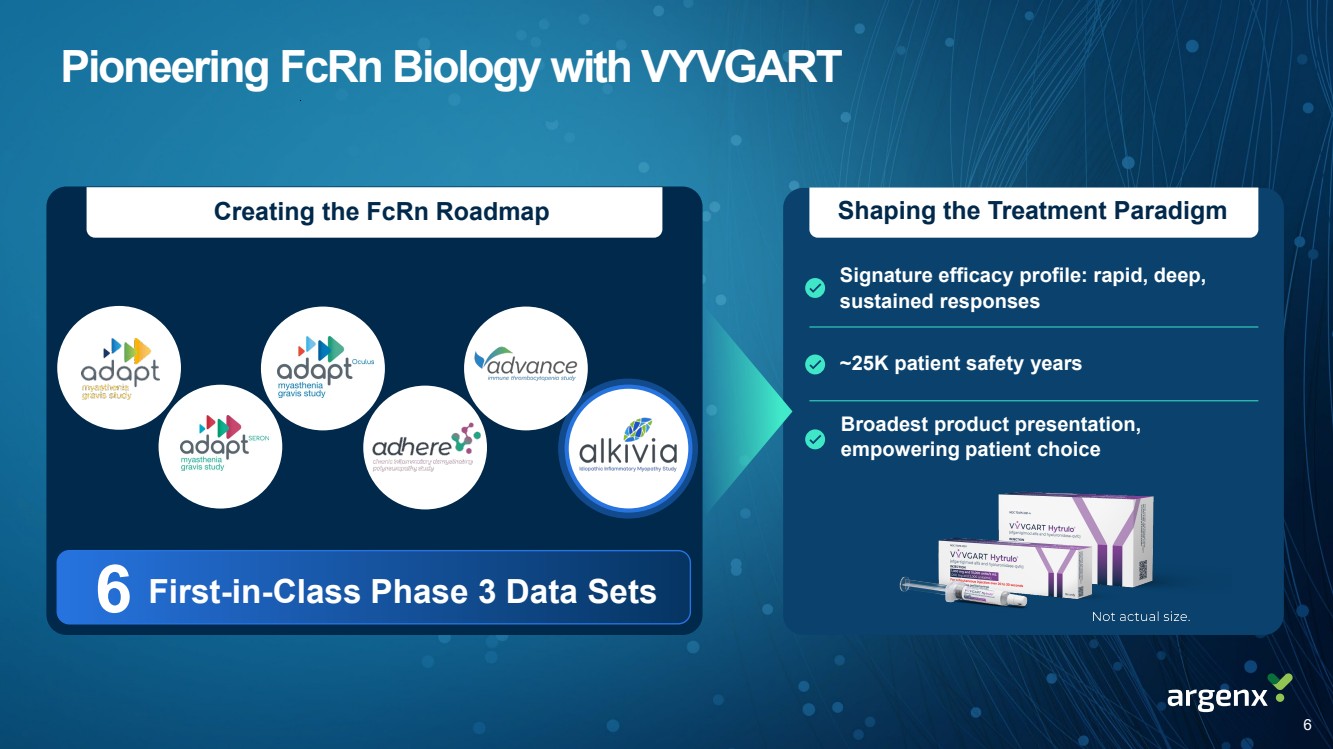
| Bringing our Proven Approach to Rheumatology NEUROLOGY Established Leadership RHEUMATOLOGY Next Frontier Built deep partnerships with physicians, researchers and patients Leverage argenx playbook to build long-term leadership SSc SjD Important entry point and bridge into rheumatology 7 IMNM DM MG CIDP |
| This is an invisible disease. You think you’re the only one, but once you start talking to people with similar experiences it’s amazing. Melissa, living with autoimmune myositis “ 8 |

| ALKIVIA Phase 2/3 Adaptive Basket Study 89 patients (24 weeks) SCREENING 175 patients (52 weeks) steroid taper wk16 wk44 Open Label Extension - OR PHASE 2 ANALYSIS SCREENING PHASE 2 PHASE 3 Data supported continued enrollment across subtypes in Phase 3 Safety Follow Up Enrollment reflects unmet need, prevalence NO ENROLLMENT TARGET PER SUBTYPE ACTIVE MUSCLE WEAKNESS Trial Features *Phase 3 only † US PRIMARY ANALYSIS*† Evaluate strength of evidence by each subtype TAPERING PROTOCOL* Supports real world demand for steroid reduction Despite standard of care 9 |
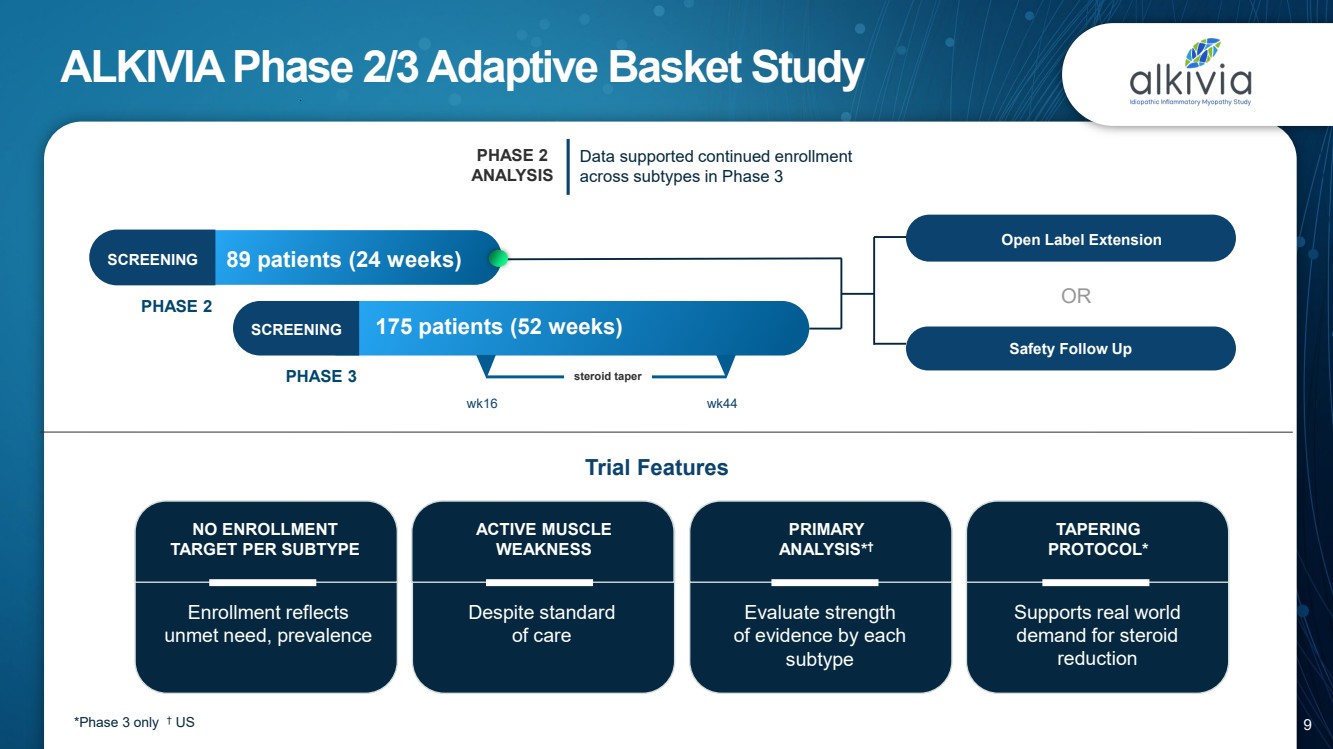
| Rapid, Significant and Sustained Response Through 52 Weeks Consistent across primary and secondary endpoints Consistent across core TIS measures with benefit in both muscle and skin domains Consistent with the VYVGART signature: rapid and sustained response Consistent Treatment Effect Mean TIS Improvement in IMNM + DM Through Week 52 Least Square Mean ( ±SE) Total Improvement Score Week 10 p-value = 0.0011 |
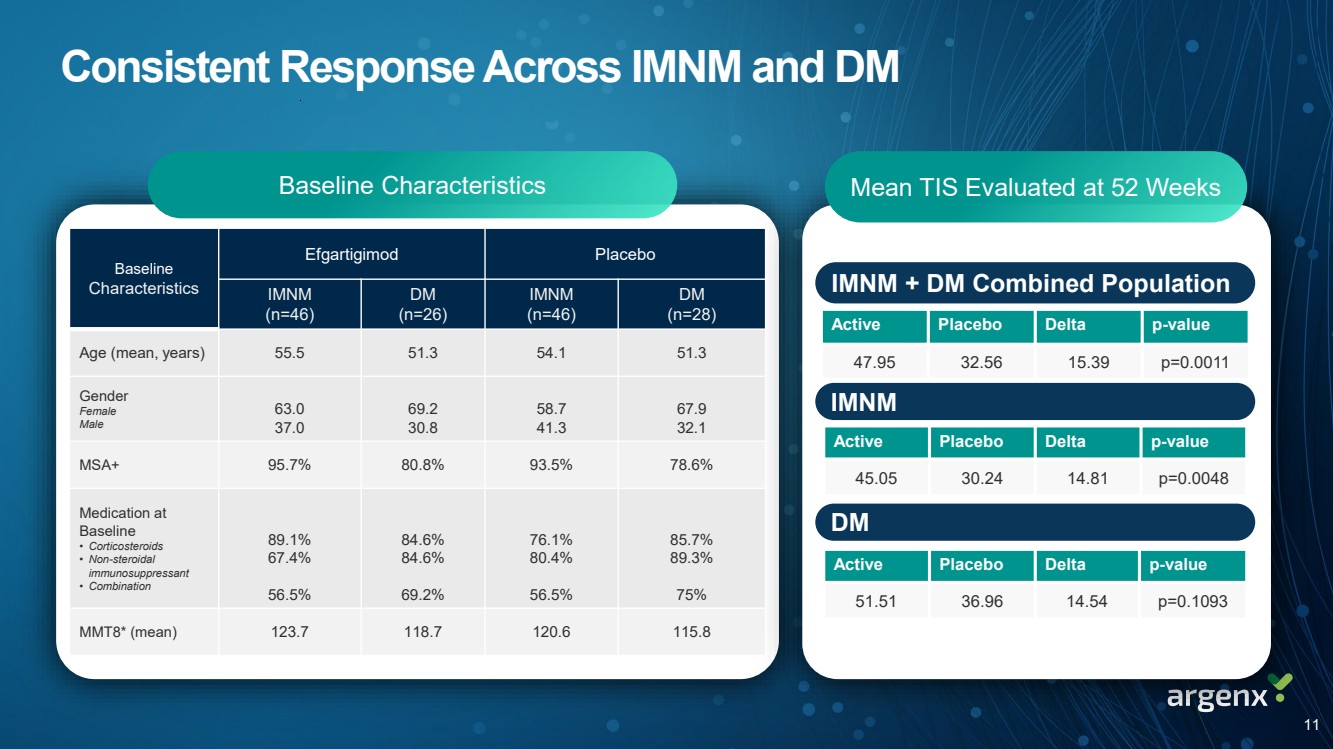
| Consistent Response Across IMNM and DM Baseline Characteristics Mean TIS Evaluated at 52 Weeks IMNM DM Active Placebo Delta p-value 45.05 30.24 14.81 p=0.0048 Active Placebo Delta p-value 51.51 36.96 14.54 p=0.1093 IMNM + DM Combined Population Active Placebo Delta p-value 47.95 32.56 15.39 p=0.0011 Baseline Characteristics Efgartigimod Placebo IMNM (n=46) DM (n=26) IMNM (n=46) DM (n=28) Age (mean, years) 55.5 51.3 54.1 51.3 Gender Female Male 63.0 37.0 69.2 30.8 58.7 41.3 67.9 32.1 MSA+ 95.7% 80.8% 93.5% 78.6% Medication at Baseline • Corticosteroids • Non-steroidal immunosuppressant • Combination 89.1% 67.4% 56.5% 84.6% 84.6% 69.2% 76.1% 80.4% 56.5% 85.7% 89.3% 75% MMT8* (mean) 123.7 118.7 120.6 115.8 11 |
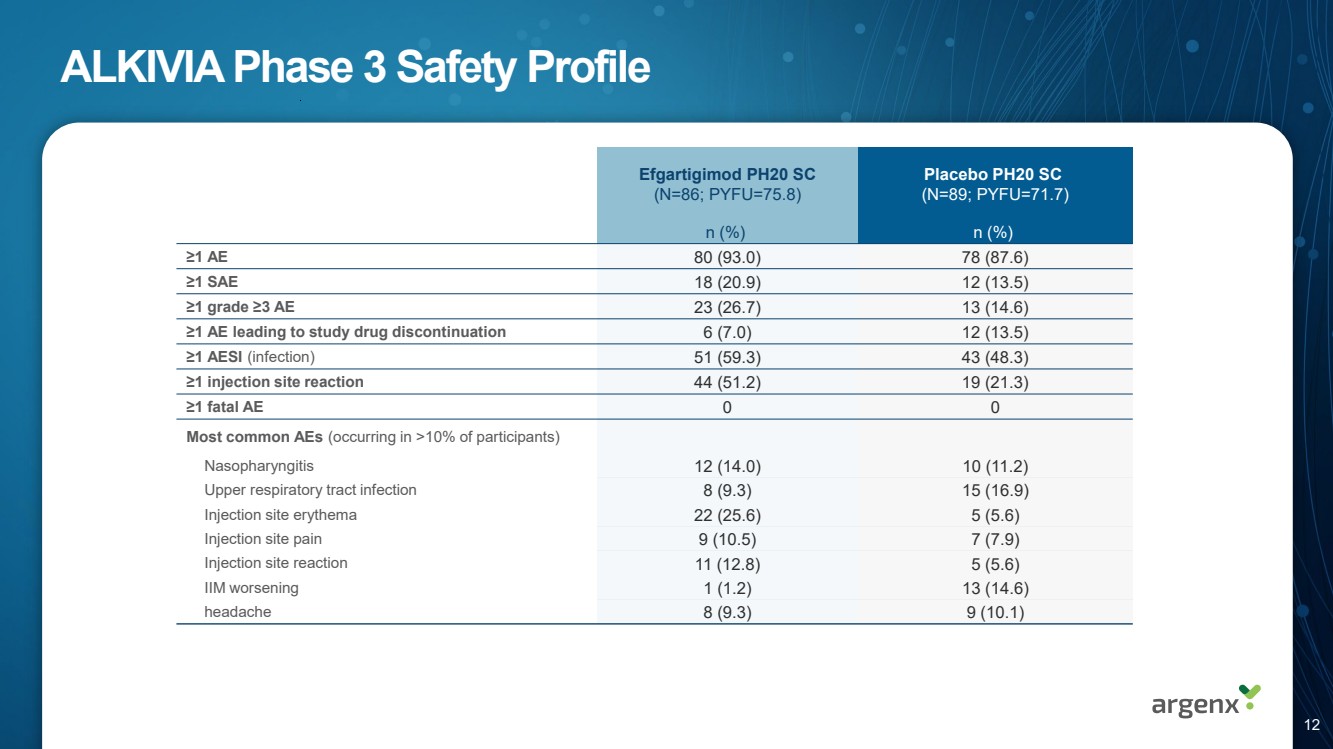
| ALKIVIA Phase 3 Safety Profile Efgartigimod PH20 SC (N=86; PYFU=75.8) Placebo PH20 SC (N=89; PYFU=71.7) n (%) n (%) ≥1 AE 80 (93.0) 78 (87.6) ≥1 SAE 18 (20.9) 12 (13.5) ≥1 grade ≥3 AE 23 (26.7) 13 (14.6) ≥1 AE leading to study drug discontinuation 6 (7.0) 12 (13.5) ≥1 AESI (infection) 51 (59.3) 43 (48.3) ≥1 injection site reaction 44 (51.2) 19 (21.3) ≥1 fatal AE 0 0 Most common AEs (occurring in >10% of participants) Nasopharyngitis 12 (14.0) 10 (11.2) Upper respiratory tract infection 8 (9.3) 15 (16.9) Injection site erythema 22 (25.6) 5 (5.6) Injection site pain 9 (10.5) 7 (7.9) Injection site reaction 11 (12.8) 5 (5.6) IIM worsening 1 (1.2) 13 (14.6) headache 8 (9.3) 9 (10.1) 12 |
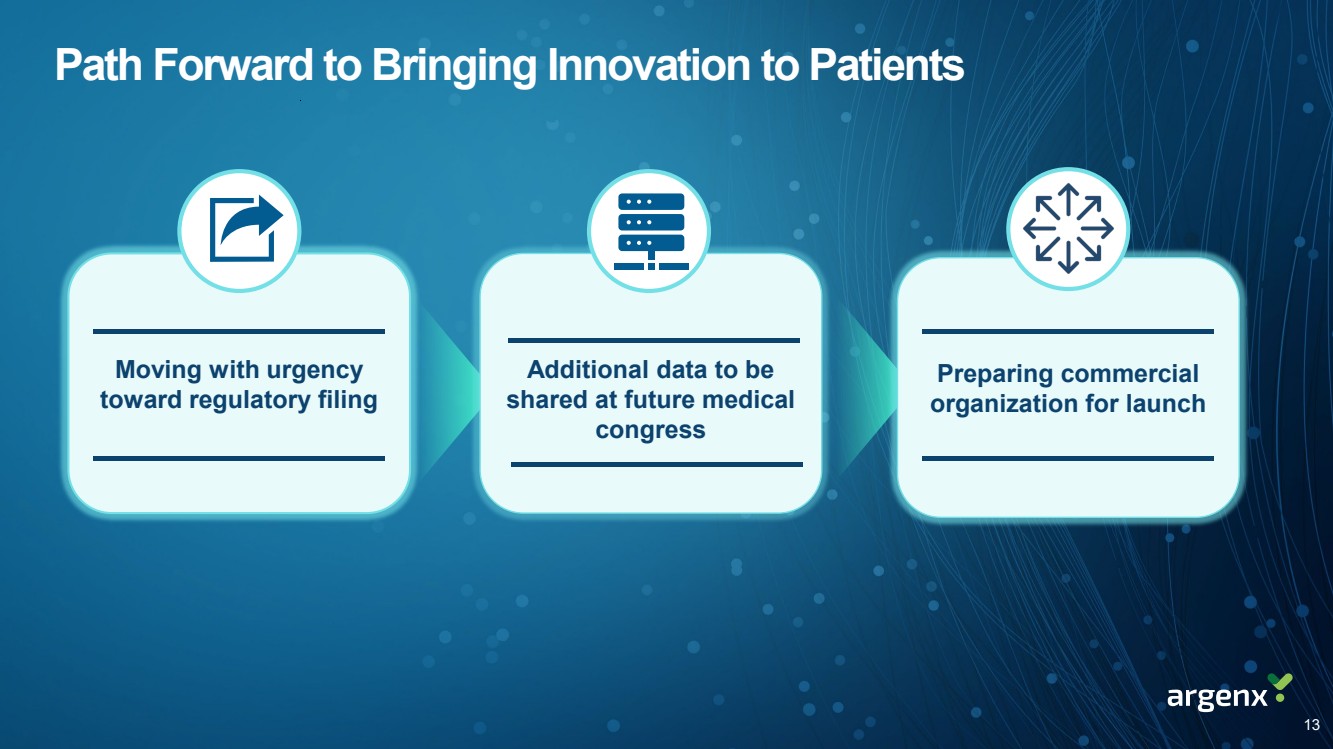
| 13 Path Forward to Bringing Innovation to Patients Moving with urgency toward regulatory filing Additional data to be shared at future medical congress Preparing commercial organization for launch |
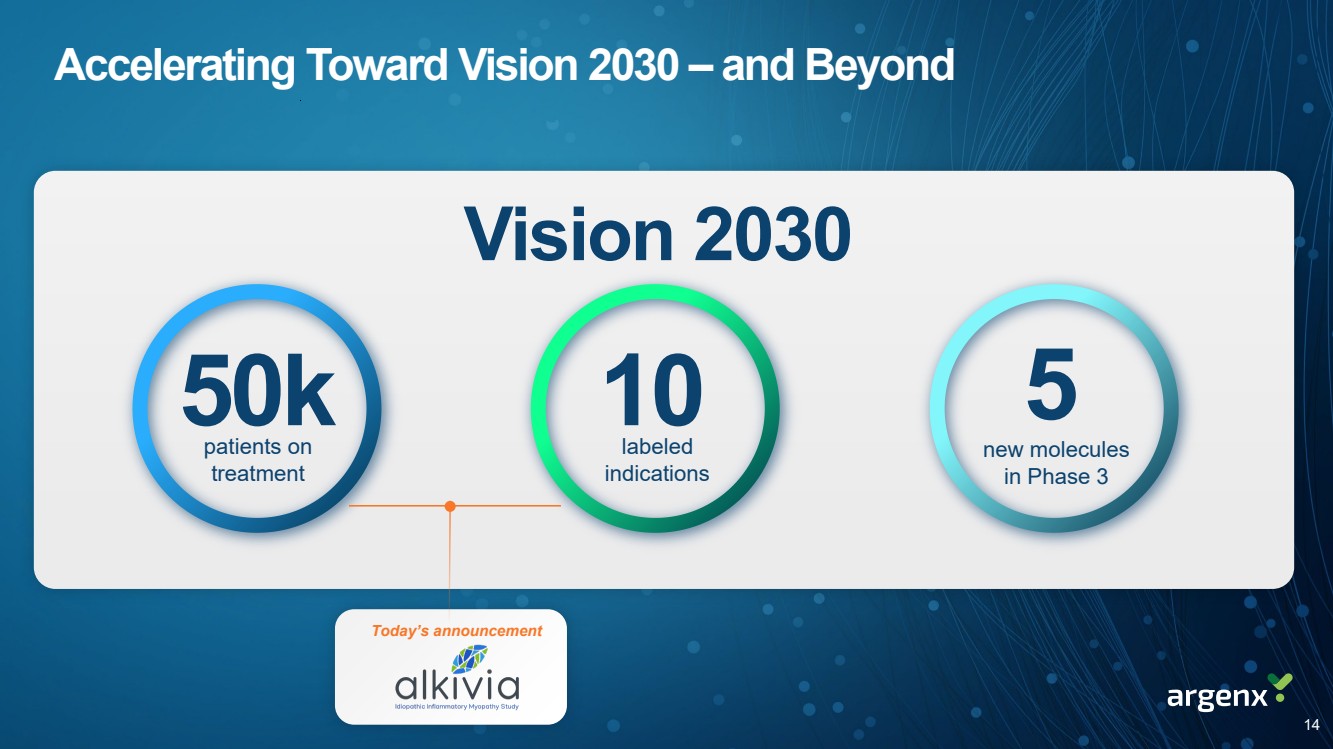
| 50k 10 5 patients on treatment labeled indications new molecules in Phase 3 Vision 2030 Today’s announcement 14 Accelerating Toward Vision 2030 – and Beyond |
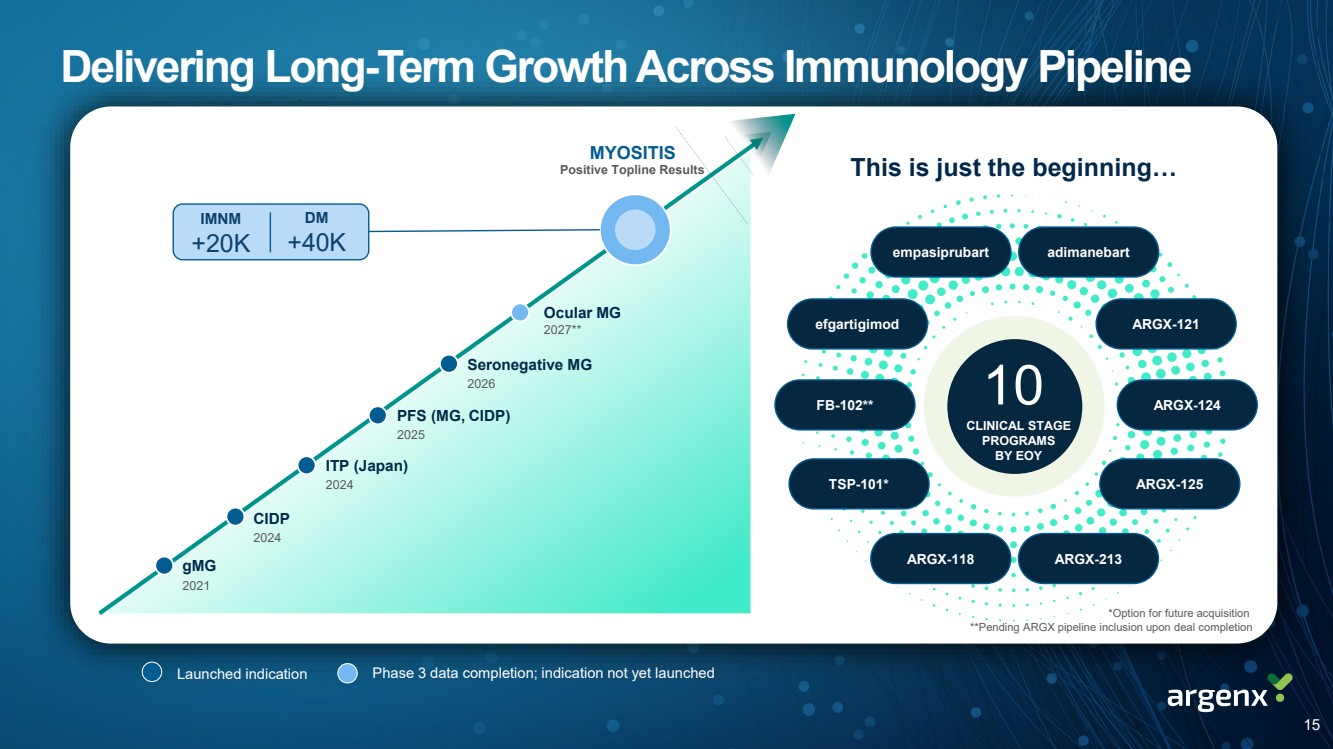
| Delivering Long-Term Growth Across Immunology Pipeline gMG 2021 CIDP 2024 ITP (Japan) 2024 PFS (MG, CIDP) 2025 Seronegative MG 2026 MYOSITIS Ocular MG 2027** Positive Topline Results This is just the beginning… efgartigimod empasiprubart ARGX-121 ARGX-124 ARGX-125 ARGX-213 TSP-101* FB-102** ARGX-118 adimanebart Launched indication Phase 3 data completion; indication not yet launched IMNM +20K DM +40K 10 CLINICAL STAGE PROGRAMS BY EOY *Option for future acquisition **Pending ARGX pipeline inclusion upon deal completion 15 |