Portions of this exhibit, indicated by [***], have been omitted in accordance with Item 601(b)(10)(iv) of Regulation S-K. The omitted information is (i) not material and (ii) of the type that the Registrant treats as private and confidential.
Execution Version
Exhibit 10.1
COLLABORATION AGREEMENT
This Collaboration Agreement (this “Agreement”) is entered into as of this 25th day of May, 2026 (the “Effective Date”), by and between Aptevo Research and Development LLC, a limited liability company existing under the laws of Delaware, having a place of business at 2401 4th Avenue, Suite 1050, Seattle, WA 98121 USA (“Aptevo”), and Niowave, Inc., a Michigan corporation, having a place of business at 1012 N. Walnut Street, Lansing, MI 48906 (“Niowave”). Each of Aptevo and Niowave may be referred to herein individually as a “Party” and collectively as the “Parties.”
WHEREAS, Aptevo has developed certain proprietary molecules for therapeutic uses in humans;
WHEREAS, Niowave has developed certain proprietary radioisotopes for therapeutic uses in humans;
WHEREAS, the Parties desire to collaborate in a 50/50 cost and revenue sharing arrangement to develop products which combine Aptevo’s proprietary molecules and Niowave’s proprietary radioisotopes;
WHEREAS, the Parties are willing to commit specific resources and funds to support each Party’s portion of the research and development activities described in a Development Plan (as defined herein), such activities to be performed by the Parties in collaboration under this Agreement.
NOW, THEREFORE, the Parties hereto, intending to be legally bound, hereby agree as follows:
1.DEFINITIONS; INTERPRETATION
Whenever used in this Agreement with an initial capital letter, the terms defined in this Article 1, whether used in the singular or the plural, shall have the meanings specified below.
1.1“Affiliate” means, with respect to a person, organization or entity, any person, organization or entity controlling, controlled by or under common control with, such person, organization or entity. For purposes of this definition only, “control” of another person, organization or entity will mean the possession, directly or indirectly, of the power to direct or cause the direction of the activities, management or policies of such person, organization or entity, whether through the ownership of voting securities, by contract or otherwise. Without limiting the foregoing, control will be presumed to exist when a person, organization or entity (a) owns or directly controls fifty percent (50%) or more of the outstanding voting stock or other ownership interest of the other organization or entity, or (b) possesses, directly or indirectly, the power to elect or appoint fifty percent (50%) or more of the members of the governing body of the other organization or entity.
1.2“Applicable Laws” all relevant federal, state and local laws, statutes, rules, regulations, directives, decisions, ordinances, guidelines and other pronouncements of any Governmental Authority that are applicable to a Party’s activities or obligations hereunder.
1.3“Aptevo Background IP” means all intellectual property rights owned or Controlled by Aptevo on the Effective Date.
1.4“Aptevo Know-How” means all Know-How (other than the Joint Know-How) that is Controlled by Aptevo as of the Effective Date or at any time during the Term that is necessary or reasonably useful for the Development or Commercialization of the Product; provided that Aptevo Know-How shall not include Know-How related to the Aptevo Platform.
1.5“Aptevo Molecules” means the molecules provided by Aptevo in accordance with this Agreement.
1.6“Aptevo Patent” means any Patent that is Controlled by Aptevo that claims any invention or subject matter included in the Aptevo Know-How, including the Patents listed in Schedule 1.13.
1.7“Aptevo Platform” means technologies relating to (a) single chain polypeptides capable of dimerizing, wherein the dimerized molecule contains two or more antibody derived Binding Domains separated by an CH2 and CH3 immunoglobulin constant domain, and/or (b) single chain polypeptides comprising, from the amino-terminus to the carboxy-terminus, a first antibody derived variable chain region, an immunoglobulin hinge region, immunoglobulin CH2 and CH3 constant region, a linker and a second antibody derived variable domain region, including, for instance, the subject matter disclosed in patent publications WO 2007/146968 and WO 2011/090762; provided, however, that Aptevo Platform shall not include the Product or any other individual molecules.
1.8“Aptevo Technology” means Aptevo Patents and Aptevo Know-How.
1.9“Binding Domain” means the portion of a pharmaceutical or diagnostic product that binds to an antigen or a cell surface molecule, including a variable domain thereof.
1.10“Change of Control” means, with respect to either Party, the occurrence of any of the following after the Effective Date:
1.10.1Any “person” or “group” (as such terms are defined below) (a) becomes the “beneficial owner” (as defined below), directly or indirectly, of shares or other interests (including partnership interests) of a Party then outstanding and normally entitled (without regard to the occurrence of any contingency) to vote in the appointment or election of the directors, the managers, the members of the management board or the members of the supervisory board or similar positions (“Voting Stock”) of such Party representing fifty percent (50%) or more of the total voting power of all outstanding classes of Voting Stock of such Party or (b) has the power, directly or indirectly, to elect a majority of the members of such Party’s directors, managers, management board, supervisory board, or similar governing body (“Board of Directors”); or
1.10.2A Party enters into a merger, consolidation or similar transaction with another Person (whether or not such Party is the surviving entity) and as a result of such merger, consolidation or similar transaction (a) the members of a Board of Directors of such Party immediately prior to such transaction, immediately following such transaction, (i) constitute less than a majority of the members of a Board of Directors of such surviving Person or (ii) do not jointly hold a majority of the voting power within the Board of Directors or (b) the Persons that beneficially owned, directly or indirectly, the shares of Voting Stock of such Party immediately prior to such transaction cease to beneficially own, directly or indirectly, shares of Voting Stock of such Party representing at least a majority of the total voting power of all outstanding classes of Voting Stock of the surviving Person in substantially the same proportions as their ownership of Voting Stock of such Party immediately prior to such transaction; or
1.10.3A Party sells or transfers to any Third Party, in one or more related transactions, properties or assets representing all or substantially all of such Party’s assets to which this Agreement relates; or
1.10.4The general meeting of shareholders of a Party adopt a resolution or the holders of shares or other interests of a Party approve a proposal, as applicable, for the dissolution of such Party or for the approval of a resolutions or a plan, as applicable, resulting in the liquidation of all or substantially all of such Party’s assets.
1.10.5For the purpose of this definition of Change of Control, (a) “person” and “group” have the meanings given such terms under Section 13(d) and 14(d) of the United States Securities Exchange Act of 1934 and the term “group” includes any group acting for the purpose of acquiring, holding or disposing of securities within the meaning of Rule 13d-5(b)(1) under the said Act; (b) a “beneficial owner” shall be determined in accordance with Rule 13d-3 under the aforesaid Act; and (c) the terms “beneficially owned” and “beneficially own” shall have meanings correlative to that of “beneficial owner.”
1.11“Clinical Trial” means human clinical studies in which the Product is administered or otherwise evaluated in humans, including investigator-initiated human clinical studies funded or otherwise supported by either Party or both Parties. The term “Clinical Trial” includes Phase I Clinical Trials (including Phase IA and IB Clinical Trials) and Phase II Clinical Trials, as the context requires.
1.12“CMC Information” means information or data contained in, the drug master files or the chemistry, manufacturing and control (“CMC”) section (or equivalent thereof) of any Regulatory Materials for the Product, or in any IND, and includes any other similar data or information.
1.13“Commercialize”, “Commercializing” or “Commercialization” means all activities covering the marketing, promotion, selling or offering for sale of a Product for an indication, including planning, market research, pre-marketing, advertising, educating, marketing, promoting, importing, exporting, distributing and post-marketing safety surveillance and reporting and medical affairs activities. For clarity, the term “Commercialization” shall not include any activities covering Development of the Product.
1.14“Commercially Reasonable Efforts” means, with respect to a Party’s obligations under this Agreement, those efforts and resources consistent with the usual practices of similarly situated companies in the pharmaceutical, biopharmaceutical and biotechnology industry (but not less than the efforts and resources used by the applicable Party), in each case in pursuing the development, commercialization or manufacture of its own pharmaceutical products that are of similar market potential as a Product, taking into account all relevant factors including product labeling or anticipated labeling, present and future market potential, past performance of such Product, financial return, medical and clinical considerations, present and future regulatory environment and competitive market conditions, all as measured by the facts and circumstances at the time such efforts are due. Commercially Reasonable Efforts shall be determined on a market-by-market basis for a particular Product, and it is anticipated that the level of effort will be different for different markets.
1.15“Control” means, when used in reference to intellectual property (including Patents and Know-How), Confidential Information, other intangible property, or materials, that a Party owns or has a license or sublicense to such intellectual property (including Patents and Know-How), and has the ability to grant access, a license or sublicense, or other right to use such intellectual property without requiring the consent of a Third Party or violating the terms of any agreement or other arrangement with any Third Party.
1.16“Completion” means, with respect to a particular Clinical Trial for the Product, that the last patient has received the last planned dose of the Product in accordance with the protocol and the top-line data is available (i.e., efficacy and safety tables and listings have been generated by from clean data sets).
1.17“Develop,” “Developing” or “Development” means all activities covering research, non-clinical, preclinical and clinical trials, toxicology testing, manufacturing development, formulation development, statistical analysis and reporting, preparation and submission of applications (including CMC Information) for Regulatory Approvals of the Product, that are necessary or reasonably useful or requested or required by a Regulatory Authority as a condition or in support of obtaining or maintaining all Regulatory Approvals for the Product. For clarity, the term “Development” shall not include any activities covering Commercialization or Manufacture.
1.18“Development Activities” means Development activities which are jointly funded by the Parties and that are conducted by or on behalf of a Party with respect to the Product consistent with the Development Plan.
1.19“Development Costs” means the actual costs and expenses, including internal and out-of-pocket costs and expenses, that are incurred by or on behalf of a Party or any Affiliates of a Party in conducting the Development Activities in accordance with the Development Plan, which costs and expenses are directly attributable to, or reasonably allocable to, Development Activities of the Product or to manufacturing of the Product for Development purposes, including without limitation (a) the internal costs incurred by a Party in connection with the performance of Development Activities, excluding corporate management (as opposed to project management) time and costs, which shall be determined by multiplying the applicable FTE Rate by the number of FTEs utilized to conduct such Development Activities, (b) any out-of-pocket expenses incurred
in Prosecuting the Joint Patents, (c) any out-of-pocket expenses incurred in the preparation or filing of Regulatory Materials, (d) the actual amounts paid to one or more Third Parties for performance of Development Activities and/or for obtaining supplies of raw materials or intermediates for the conduct of Development, (e) out-of-pocket fees and expenses incurred in connection with and (e) the Development Costs expressly identified as such in this Agreement, and (f) costs of liability insurance for the conduct of Clinical Trials under the Development Plan obtained and maintained in accordance with Section 2.8.1. For clarity, Development Costs do not include an allocation of overhead (including electricity, water, telephone line rental, gas or oil), service costs or costs of general administration.
1.20“Development Data” means all non-clinical, clinical, technical, chemical, safety, and scientific data and information and other results, including relevant laboratory notebook information, screening data, Regulatory Data, and synthesis schemes, including descriptions in any form, generated by or resulting from the conduct of Development Activities.
1.21“Development Period” means the period commencing on the Effective Date and ending upon the conclusion of all activities under the Development Plan.
1.22“Development Plan” means the written development plan for the Product that includes a GANTT chart, the CMC Plan, the Clinical Plan and the corresponding budgets, in each case, to be appended hereto as Schedule 1.22, as the same may be amended and/or restated from time to time pursuant to the terms of this Agreement, and which shall set forth (a) the research and development activities to be performed by each Party during the Development Period, (b) the key stages in Development that will be used to evaluate advancement to the next stage of such development plan, and (c) the Development Budget and estimated timelines and costs for the Development Activities.
1.23“Dollar” and “$” means United States dollars.
1.24“FDA” means the U.S. Food and Drug Administration and any successor agency thereof.
1.25“FFDCA” means the U.S. Federal Food, Drug and Cosmetics Act and the regulations promulgated thereunder (21 C.F.R. 312.1 et seq).
1.26“Field” means the oncology field, including therapeutic, palliative, prophylactic, diagnostic and research use, in human and animals.
1.27“FTE” means the equivalent of scientific, medical or technical, but for the avoidance of doubt not including financial, legal, marketing or business development, unless otherwise decided by the Steering Committee, work of one (1) person, directly and specifically conducting Development Activities, full time for one (1) year, which equates to a total of 2000 hours annually. For the avoidance of doubt, such work may include, where appropriate, conducting or directing experimental research or other laboratory work, recording and writing up results, reviewing relevant scientific literature and references, and holding scientific discussions.
1.28“FTE Rate” means an hourly rate of (i) $140 per FTE in the event that the relevant FTE is a member of the management team (e.g., director level or above) of a Party and (ii) $70
with respect to any other FTE, subject to increase on an annual basis proportional to the annual increase in the Consumer Price Index. For clarity, the FTE Rate in intended to be a fully-burdened rate and is intended to cover all costs of an individual FTE in a given year, including employee salaries, employee specific benefits, routine laboratory materials and travel costs associated with the performance of Development Activities, unless otherwise explicitly set forth in this Agreement (e.g. expenses of Steering Committee members’ participation in the Steering Committee meetings, as set forth in Section 3.2).
1.29“GAAP” means generally accepted accounting principles.
1.30“Governmental Authority” means any multinational, federal, state, local, municipal or other governmental authority of any nature (including any governmental association, division, prefecture, subdivision, department, agency, bureau, branch, office, commission, committee, council, court or other tribunal, such as statutory health insurance funds and their associations), in each case having jurisdiction over the applicable subject matter.
1.31“IND” means an Investigational New Drug application, including any amendment or supplement thereto, filed with the FDA pursuant to 21 U.S.C. § 355 and 21 C.F.R. Part 312 (or any successor provisions), seeking authorization to conduct a Clinical Trial with respect to a Product.
1.32“Joint Know-How” means any Know-How conceived, generated or otherwise made during the course of conducting Development Activities, whether by employees, consultants or contractors of either Party (or both Parties) or their respective Affiliates or licensees, including Development Data; provided that Joint Know-How shall not include (a) Know-How related to the Aptevo Platform (the “Aptevo Platform Know-How”) (b) Know-How related to the Niowave Platform (the “Niowave Platform Know-How”) or (c) Know-How conceived, developed or reduced to practice solely by or on behalf of one Party (or its Affiliates or Licensees) not in connection with the Development Activities.
1.33“Joint Patent” means any Patent claiming an invention or subject matter included in Joint Know-How.
1.34“Joint Technology” means Joint Patents and Joint Know-How.
1.35“Know-How” means any data, results, material(s), technology and non-public information of any type whatsoever, in any tangible or intangible form, including know-how, trade secrets, practices, techniques, methods, processes, inventions, developments, specifications, formulations, formulae, compositions of matter of any type (patentable or otherwise), software, algorithms, marketing reports and plans, market research, test data (including pharmacological, biological, chemical, biochemical, toxicological, preclinical and clinical test data), analytical and quality control data, stability data, other study data and procedures.
1.36“Net Sales” means with respect to any period, the gross amounts invoiced by or on behalf of a Continuing Party or its Affiliates (a “Selling Party”), as applicable, to unrelated Third Parties for sales of the Product in the Field in the Territory, less the following deductions to the extent included in the gross invoiced sales price for the Product or otherwise directly paid or incurred by a Selling Party with respect to the sale of the Product: (a) trade, quantity or cash
discounts, credits, adjustments or allowances, including those granted on account of price adjustments, billing errors, rejected goods, or damaged goods; (b) rebates and chargebacks allowed, given or accrued (including cash, governmental and managed care rebates, hospital or other buying group chargebacks, and governmental taxes in the nature of a rebate based on usage levels or sales of the Product); (c) sales, excise, turnover, inventory, value-added, and similar taxes assessed on the sale of the Product; (d) bad debts actually written off and attributable to sales of Product; (e) freight and insurance charges, if separately included in the amounts invoiced; and (f) the portion of any management or administrative fees paid during the relevant time period to group purchasing organizations, wholesalers and managed care organizations to the extent determined by sales or utilization of the Product. Net Sales will be determined in accordance with GAAP. Without limiting the generality of the foregoing, sales, transfers or dispositions of Product for charitable, promotional (including samples), pre-clinical, clinical, or regulatory purposes will be excluded from Net Sales. Sales of the Product between a Continuing Party and its Affiliates or its subcontractors (including distributors) for resale shall also be excluded from the computation of Net Sales, but the subsequent resale of the Product to an unrelated Third Party shall be included within the computation of Net Sales.
1.37“Niowave Background IP” means all intellectual property rights owned or Controlled by Niowave on the Effective Date.
1.38“Niowave Know-How” means all Know-How (other than Joint Know-How) that is Controlled by Niowave as of the Effective Date or at any time during the Term that is necessary or reasonably useful for the Development or Commercialization of the Product.
1.39“Niowave Patent” means any Patent that is Controlled by Niowave that claims any invention or subject matter included in the Niowave Know-How, including the Patents listed in Schedule 1.4.
1.40“Niowave Platform” means all technology, intellectual property, Know-How, methods, processes, systems, materials, data and proprietary rights owned or Controlled by Niowave or its Affiliates, whether existing before, during or after the Term, relating to:
(a) particle accelerators, accelerator-driven systems, beam delivery systems, irradiation systems and associated engineering, control and manufacturing technologies;
(b) isotope target materials, target design, target fabrication, target processing, target recovery and recycling technologies; and
(c) radiochemistry, radiochemical processing, isotope production, isotope separation, purification, extraction, handling, formulation, manufacturing and related process technologies.
The Niowave Platform includes all modifications, enhancements, derivatives, optimizations, scale-up methods, manufacturing improvements and other improvements to the foregoing, including any generally applicable technology or Know-How developed in connection with activities under this Agreement.
For clarity, the Niowave Platform excludes Joint Technology directed to the composition, formulation or therapeutic use of the specific Product developed under this Agreement.
1.41“Niowave Radioisotopes” means the radioisotopes provided by Niowave in accordance with this Agreement.
1.42“Niowave Technology” means the Niowave Patents and Niowave Know-How.
1.43“NPV” means the risk-adjusted, discounted net present value of the Revenue proposed to be paid by a potential Third Party Licensee (or, in the case of a Partner Offer, all payments proposed by the applicable Party to be paid to the other Party) during the first 10 years of such agreement, after taking into account all relevant factors.
1.44“Patent” means any patent (including any reissue, extension, substitution, confirmation, re-registrations, re-examination, revival, supplementary protection certificate, patents of addition, continuation, continuation-in-part, or divisional) or patent application (including any provisional application, non-provisional patent application, continuation, continuation-in-part, divisional, PCT international applications or national phase applications).
1.45“Person” means any natural person, general or limited partnership, corporation, limited liability company, limited liability partnership, firm, association or organization or other legal entity.
1.46“Phase I Clinical Trial” means a human clinical trial of the safety of a product that is prospectively designed to generate sufficient data (if successful) to commence a Phase II Clinical Trial, as further defined in 21 C.F.R. §312.21(a), as amended from time to time, or the corresponding regulation in jurisdictions other than the United States.
1.47“Phase II Clinical Trial” means a human clinical trial (a) for which the primary endpoints include a determination of dose ranges or a determination of efficacy in patients being studied, or (b) designed to enroll 20 or more patients of a specific indication at the same dose level, whether or not efficacy is a primary or secondary endpoint, in each case, as described in 21 C.F.R. §312.21(b) with respect to a clinical study performed in the United States, or similar clinical study of a product in any other country
1.48“Phase III Clinical Trial” means a human clinical trial of a compound or product for an indication on a sufficient number of subjects that is designed to establish that the compound or product is safe and efficacious for its intended use, and to determine warnings, precautions, and adverse reactions that are associated with the compound or product in the dosage range to be prescribed, and to support Regulatory Approval of the compound or product for such indication or label expansion of the compound or product as described in 21 C.F.R. §312.21(c), or similar clinical study in a country other than the U.S.
1.49“Process Development” means the development, qualification, validation and scale-up of the process to manufacture the Product, and any analytic development and Product characterization with respect thereto, beginning with final clone selection and upstream process development and terminating upon the completion of the process scale up activities prior to tech transfer to a CMO, in each case, as described in the CMC Plan.
1.50“Product” means a therapeutic product consisting of an Aptevo Molecule and a Niowave Radioisotope.
1.51“Product Know-How” means all Know-How pertaining to the Product, including Know-How relating to its composition of matter, method of use or methods of manufacture; provided that Product Know-How shall not include Aptevo Platform Know-How.
1.52“Product Patents” means all Patents that claim any invention or subject matter included in Product Know-How.
1.53“Prosecute” (and correlative terms) means preparing, filing, prosecuting and maintenance of a Patent, as well as handling re-examinations, and requests for supplementary protection certificates and patent term extensions with respect to such Patent, together with the conduct of any post-grant proceeding, supplemental examination, post-grant review, inter parte review, reexamination, reissue, interference, or opposition proceeding in any patent office. “Prosecute” will not include any enforcement actions taken with respect to a Patent against a Third Party.
1.54“Regulatory Approvals” means all necessary approvals (including any supplements and amendments thereto), licenses, registrations or authorizations of any Governmental Authority, necessary for the manufacture, distribution, use, promotion and sale of the Product in a given country or regulatory jurisdiction, including all required pricing and reimbursement approvals.
1.55“Regulatory Authority” means, in a particular country or regulatory jurisdiction, any applicable Governmental Authority involved in granting Regulatory Approvals in such country or regulatory jurisdiction, including (a) in the U.S., the FDA, and (b) in the European Union, the European Commission and relevant national medicines regulatory authorities.
1.56“Regulatory Data” means any and all research data, pharmacology data, chemistry, manufacturing and control data, preclinical data, clinical data and all other documentation submitted, or required to be submitted, to Regulatory Authorities in association with obtaining or maintaining all INDs and Regulatory Approvals for the Product (including any applicable Drug Master Files (“DMFs”), CMC Information, or similar documentation).
1.57“Regulatory Materials” means regulatory applications, submissions, notifications, communications, correspondence, registrations, Regulatory Approvals and/or other filings made to, received from or otherwise conducted with a Regulatory Authority that are necessary in order to Develop, manufacture (including Manufacture), obtain and maintain INDs and Regulatory Approvals, market, sell or otherwise commercialize the Product in a particular country or regulatory jurisdiction. Regulatory Materials include materials relating to pre-IND meetings, INDs, pre-Marketing Authorization Application (“MAA”) meetings (including the biologics license application filed with the FDA), MAAs, presentations, responses, and applications for other Regulatory Approvals.
1.58“Revenue” means any payments or other consideration (including equity) that a Party receives from a Third Party Licensee, its Affiliates, sublicensees or distributors, other than: (a) loans or other debt obligations (it being understood that any amounts of which are forgiven
shall be deemed to be Revenue); and (b) consideration as reimbursement for costs and expenses, such as research costs, development costs, manufacturing (including manufacturing) costs, promotional expenses and patent costs, incurred after the effective date of the Third Party License Agreement. If a Party or its Affiliates receives non-cash consideration (other than equity) from a Third Party Licensee in connection with a Third Party License Agreement or in the case of transactions not at arm’s length, Revenue will be calculated based on the fair market value of such consideration or transaction, at the time of the transaction, assuming an arm’s length transaction made in the ordinary course of business. If a Party or any of its Affiliates issue equity or debt securities to a Third Party Licensee, only the portion of any consideration received by such Party or any of its Affiliates for such securities in excess of the fair market value of such securities shall be included in Revenue (such fair market value to be determined, (i) if such securities are not then publicly traded, by such Party’s Board of Directors, or (ii) if such securities are then publicly traded, by the method used to determine the amount paid by such Third Party Licensee or if no such method is specified, the average closing price of such securities for the twenty (20) business days preceding the date of issuance of such securities).
1.59“Significant Pharmaceutical Company” means a company substantially engaged in the development and commercialization of pharmaceutical products having a market capitalization of at least $30 billion as listed on a nationally recognized public securities exchange.
1.60“Stage Gate” means those go/no go criteria for the continuation of the Development Activities, which are set forth in Schedule 2.3.4.
1.61“Term” has the meaning set forth in Section 14.1.
1.62“Territory” means the entire world.
1.63“Third Party” means any Person other than Aptevo, Niowave, or an Affiliate of Aptevo or Niowave.
1.64“Third Party Development Funding” means Development Costs paid by a Third Party (other than a Third Party Licensee) to fund the Development of a Product through the Completion of Phase II Clinical Trials following the Termination Date.
1.65“Third Party License Agreement” means (a) any right granted, license given, covenant not to sue, or agreement entered into by one or both of the Parties to or with any Third Party, to exploit a Product in the Field or otherwise permitting or relating to the development, manufacture, marketing, distribution, use, or sale of the Product in the Field, including the Manufacture and supply of Product to such Third Party; (b) any option or other right granted by the Parties to any Third Party to negotiate for or receive any of the rights described under clause (a); or (c) any standstill or similar obligation undertaken by the Parties toward any Third Party not to grant any of the rights described in clause (a) or (b) to any Third Party; in each case, regardless of how such grant of rights, license given or agreement entered to is referred to.
1.66“Third Party Licensee” means any Third Party that enters into a Third Party License Agreement with a Party (or both Parties).
1.67“Valid Claim” means any claim within an issued Patent, which claim has not expired or been held invalid by a non-appealed or unappealable decision by a court or other appropriate body of competent jurisdiction, and that has not been disclaimed or admitted to be invalid or unenforceable through reissue, disclaimer, or otherwise, or any claim within a pending patent application that has been prosecuted in good faith, has not been pending for more than seven (7) years from its earliest priority date, and has not been abandoned or finally rejected without the possibility of appeal.
1.68Interpretation. Except where expressly stated otherwise in this Agreement, the following rules of interpretation apply to this Agreement: (a) “include”, “includes” and “including” are not limiting; (b) “hereof”, “hereto”, “herein” and “hereunder” and words of similar import when used in this Agreement refer to this Agreement as a whole and not to any particular provision of this Agreement; (c) words of one gender include the other gender; (d) references to a contract or other agreement mean such contract or other agreement as from time to time amended, modified or supplemented; (e) references to a Person are also to its permitted successors and assigns; (f) references to an “Article”, “Section”, “Exhibit” or “Schedule” refer to an Article or Section of, or an Exhibit or Schedule to, this Agreement, unless expressly stated otherwise; and (g) references to a law include any amendment or modification to such law and any rules and regulations issued thereunder, whether such amendment or modification is made, or issuance of such rules and regulations occurs, before or after the date of this Agreement.
1.69Other Definitions. The following capitalized terms have the meaning ascribed to them in the corresponding identified section of this Agreement (unless otherwise provided):
|
|
Definition |
Section |
Acquired Third Party IP |
4.7.2 |
Agreement |
Preamble |
Alternative Threshold |
7.2.1 |
Aptevo Platform Know-How |
1.29 |
Niowave Indemnitee |
13.1 |
Allocable Percentage of Revenue / APR |
14.4.1 |
Aptevo |
Preamble |
Aptevo Indemnitees |
13.2 |
Best Offer |
7.3.1 |
BD Committee |
7.5.1 |
Board of Directors |
1.10.1 |
Budget Forecast |
2.3.2 |
CEO Negotiation Period |
15.4.2 |
CEOs |
15.4.2 |
Clinical Plan |
3.1.4 |
CMC |
1.12 |
CMC Plan |
3.1.4 |
CMOs |
6.1.3 |
Confidential Information |
5.1 |
Consideration Period |
14.2.1(b) |
Continuing Party |
14.3.1(b) |
|
|
Definition |
Section |
De Minimis Overage Amount |
9.1.3(b) |
Decision Date |
7.4.1 |
Designated Information |
5.2.2 |
Development Budget |
2.3.2 |
Development Forecast |
2.3.2 |
Development Records |
2.4.1 |
Disclosing Party |
5.1 |
Dispute |
15.4.1 |
DMF |
1.56 |
Effective Date |
Preamble |
Excess Overage Amount |
9.1.3 |
Expected Overrun Notice |
2.3.6 |
Existing CMO |
6.1.3 |
Final Notice |
14.2.1(c) |
Financial Report |
14.4.3 |
ICDR |
15.5 |
Indemnified Party |
13.3 |
Indemnifying Party |
13.3 |
Infringing Product |
11.6.1 |
Infringement Claim |
11.5.1 |
Intellectual Property Subcommittee / IPSC |
3.5 |
Joint Patent Counsel |
11.4.2 |
Jointly Managed Product Patents |
11.1 |
Lead Party |
7.2.1 |
Losses |
13.1 |
MAA |
1.57 |
MTA |
Recitals |
New CMO |
6.1.3 |
Niowave |
Preamble |
NPV Threshold |
7.2.1 |
Opt-Out |
14.2.1(a) |
Opt-Out Date |
14.2.1(c) |
Opt-Out Notice |
14.2.1(a) |
Opt-Out Party |
14.2.1(a) |
Opt-Out Window |
14.2.1(a) |
Party / Parties |
Preamble |
Partner Offer |
7.1 |
Priority Joint Patent |
11.4 |
Proposals |
15.5 |
Receiving Party |
5.1 |
Research License |
2.5 |
Selling Party |
1.36 |
Steering Committee |
3.1 |
Term |
14.1 |
|
|
Definition |
Section |
Terminated Party |
14.3.1 |
Terminating Party |
14.3.1 |
Termination Date |
14.3.1 |
Third Party Claim |
13.1 |
Third Party IP |
4.7.1 |
Third Party IP Agreement |
4.7.1 |
Third Party Proposal |
7.2.2 |
Transition Event |
6.1.3 |
Voting Stock |
1.10.1 |
2.1Performance of Development Activities.
2.1.1General. Each Party shall perform the Development Activities allocated to it in accordance with the Development Plan, including preparation and/or filing of Regulatory Materials. The Parties anticipate that the Development Plan will utilize the specific expertise and capabilities of each Party and that the Parties will mutually agree upon a division of labor and Development Activities that take advantage of this expertise. Although many Development Activities will be jointly conducted, others will be the sole responsibility of Aptevo or Niowave.
2.1.2Allocation. In any given month, quarter or year, the Parties may not be assigned equal responsibilities. Each Party shall use its Commercially Reasonable Efforts to comply with any timelines, schedules and target dates for completing its Development Activities or any portion thereof as set forth in the Development Plan. If a Party’s failure to use such Commercially Reasonable Efforts to complete its Development Activities results in a material delay in the timelines, schedules and/or target dates under the Development Plan, and if any increase in Development Costs is directly attributable to such failure and resultant delay, then the Party responsible for such failure and delay shall be one hundred percent (100%) responsible for the amount of such increase that is incurred during the period beginning from the commencement date of the delay and terminating upon the date of the end of the delay.
2.1.3Requirements. Each Party shall furnish the research and development staff, technical know-how, equipment, instruments, supplies and facilities necessary to carry out the Development Activities assigned to such Party. Each Party shall conduct its Development Activities in accordance with the Development Plan, the terms of this Agreement and all Applicable Laws, Good Clinical Practices (GCPs), Good Laboratory Practices (GLPs) and Good Manufacturing Practices (GMPs). Notwithstanding anything to the contrary in the foregoing, neither Party makes any warranties or representations regarding the achievement of any particular results in connection with its Development Activities.
2.1.4Information Disclosure. Subject to the licenses granted under Article 6, upon written request from the other Party, as applicable, (a) Aptevo shall promptly disclose the Aptevo Know-How to Niowave, and (b) Niowave shall promptly disclose the Niowave Know-How to Aptevo, in each case, to the extent that it is reasonably necessary for the other Party to conduct Development Activities.
2.2Subcontracting of Development Activities. Neither Party may subcontract its obligations or any of its Development Activities under the Development Plan without the prior written consent of the other Party, such consent not to be unreasonably withheld, conditioned, or delayed. Each Party shall ensure that each of its subcontractors accepts and complies with all applicable terms and conditions of this Agreement, all required licenses, permits and accreditations and all Applicable Laws, and each Party shall remain directly responsible for all of its Development obligations and amounts owed to the other Party under this Agreement and for the performance of its subcontractors hereunder. Each subcontract shall (a) be subject and subordinate to the terms and conditions of this Agreement, (b) contain terms and conditions that are not inconsistent with the terms and conditions of this Agreement, (c) not in any way diminish, reduce or eliminate any of such Party’s rights and obligations under this Agreement, and (d) impose on the subcontractor all applicable obligations under the terms of this Agreement, including, to the extent applicable, the assignment of Know-How and other intellectual property rights, reporting, audit, inspection and confidentiality provisions hereunder, as well as a provision prohibiting such subcontractor from subcontracting in violation of the terms of this Agreement. Each Party hereby expressly waives any requirement that the other Party exhausts any right, power or remedy, or proceed against a subcontractor, for any obligation or performance hereunder prior to proceeding directly against such Party.
2.3Stage Gates and Development Plan.
2.3.1Stage Gates. The Stage Gate phase of this Agreement includes three Stage Gates as set forth in Schedule 2.3.4. The Parties will review the data specific to each Stage Gate, at the relevant time set forth in this Section 2.3 (such review process, “Stage Gate Review”). Unless the Parties mutually agree in writing within ninety (90) days of completion of any Stage Gate Review to proceed to the next Stage Gate or continue the Development Activities (in which case this Agreement shall remain in full force and effect), this Agreement will be automatically terminated as of the expiration of such ninety (90) day period. For clarity, the termination of this Agreement pursuant to the foregoing sentence shall comprise an Opt-Out of this Agreement as further described in Section 14.2 hereof.
2.3.2Proof of Concept Study. The Parties shall conduct a proof of concept study (the “POC Study”), which shall comprise the first Stage Gate, pursuant to a plan to be agreed upon in writing by the Parties within thirty (30) days after the Effective Date. Such agreed upon in writing plan shall be referred to as the “POC Study Plan” and shall be appended to this Agreement as Schedule 2.3.1 (the “POC Study”). The POC Study Plan shall provide, among other things, for a budget and list of activities and supplies in relation to the POC Study, including (without limitation) that the Parties shall equally bear the costs of all supplies procured from Third Parties in connection with the POC Study on a cost basis. Niowave shall supply the Niowave Radioisotope and Aptevo shall supply the Aptevo Molecule for the POC Study Plan at no cost. Aptevo shall be paid for any testing and evaluation work related to bispecific development performed by Aptevo on an FTE Rate basis. The POC Study Plan may be amended as mutually agreed to by the Parties. The completion of the POC Study in accordance with the endpoints set forth on Schedule 2.3.1 shall be a condition precedent to commencing the first Stage Gate Review, at which the Parties will determine whether to proceed to the second Stage Gate.
2.3.3cGMP Manufacturing Readiness. Should the Parties agree to proceed to the second Stage Gate, the Parties (a) shall cooperate to adopt a Development Plan pursuant to Section 2.3.5 and (b) shall conduct a cGMP manufacturing readiness study (the “cGMP Manufacturing Readiness Study”) pursuant to a plan to be included within the Development Plan (the “cGMP Manufacturing Readiness Plan”) within thirty (30) days after agreement in writing to continue to the second Stage Gate. The completion of the cGMP Manufacturing Readiness Study in accordance with the endpoints set forth therein shall be a condition precedent to commencing the second Stage Gate Review, at which the Parties will determine whether to proceed to the third Stage Gate.
2.3.4Phase 1 Study. Should the Parties agree to proceed to the third Stage Gate, the Parties shall conduct a Phase 1 readiness study (the “Phase I Study”) pursuant to a plan to be included within the Development Plan (the “Phase I Plan”) within thirty (30) days after agreement in writing to continue to the third Stage Gate. The completion of the Phase I Study in accordance with the endpoints set forth in the Development Plan shall be a condition precedent to commencing the third Stage Gate Review, at which the Parties will determine whether to proceed with the additional Development Activities contemplated by the Development Plan.
2.3.5Development Plan and Budget. The Parties shall conduct the Development Activities pursuant to a comprehensive Development Plan to be agreed by the Parties within sixty (60) days after the mutual election of the Parties to continue to the second Stage Gate phase pursuant to Section 2.3.2. The Development Plan shall set forth, among other things, the following Development Activities through completion of the first Phase II Clinical Trial: (a) preclinical studies, pharmacologic studies, toxicology studies, process development studies and clinical studies; (b) a detailed budget for all Development Costs for the Development Activities in the Development Plan to be conducted in the following 12 months (the “Development Budget”) and a forecast of the projected Development Costs for the Development Activities for at least the next three (3) years (the “Budget Forecast”); (c) the allocation of the Development Activities to be conducted by each Party and the timeline for completing such Development Activities; (d) the plans and timelines for preparing the necessary Regulatory Materials, and the regulatory plans and other elements of obtaining and maintaining Regulatory Approvals; and (f) the number of FTEs necessary for the performance of the Development Activities based on the FTE Rate. Niowave shall supply the Niowave Radioisotope as further set forth in Section 8.1 and Aptevo shall supply the Aptevo Molecule for the Development Activities. The Parties will split all internal and external costs under the Development Plan equally; this will include the supply of Niowave Radioisotopes (at a rate equivalent to the lower of cost or market value) along with all costs associated with manufacturing including, cell line development, process development, formulation development and analytical development. The Development Plan may be amended from time to time as agreed upon in writing by the Parties. The Development Plan will be updated annually as approved by the Parties. In connection with each annual update of the Development Plan the Parties will agree upon an update to the annual Development Budget for the next year and the activities expected to be performed under such budgeted amounts (the “Development Forecast”) and an update for the Budget Forecast covering the following three (3) years. If the Parties are unable to so agree on the annual Development Budget for the next such year, then the budget for such year as set forth in the most recent Budget Forecast shall be automatically adopted as the annual Development Budget for such year.
2.3.6Notice of Budget Overruns. At any time during the Development Period, if a Party reasonably believes that its Development Costs incurred in the conduct of Development Activities in a given year will exceed the annual Development Budget allocated to such Development Activities in such year, then such Party shall provide prompt notice to the other Party prior to incurring such excess costs, with such notice detailing the amount and reasons for such projected overage (the “Expected Overrun Notice”). The Party that receives the Expected Overrun Notice shall promptly acknowledge receipt of the same and, following such acknowledgment, the Parties shall promptly meet to discuss the reasons for such overage and a potential increase or re-allocation of the Development Budgets to cover all or a portion of such overage (taking into account whether the applicable overage was caused by an underestimation, the actions of either Party, and/or events outside of a Party’s reasonable control). For clarity, the Parties shall discuss such overage in good faith, but neither Party will have sole decision-making authority with respect to such increase or re-allocation of the applicable annual Development Budget, and such determinations shall be made only by agreement of the Parties. If the Parties agree to increase or re-allocate the annual Development Budget to cover such increased Development Costs in such year, then the Parties shall promptly amend the applicable Development Budget in accordance with Section 2.3.2. If the Party receiving the Expected Overrun Notice does not respond to the Party that delivered such Expected Overrun Notice within a period of forty-five (45) days following its receipt thereof then the Party that received the Expected Overrun Notice shall be deemed to have consented to an increase of the applicable annual Development Budget to the extent necessary to cover all of such expected overage, and the Parties shall promptly amend the applicable Development Budget to reflect such increase in accordance with Section 2.3.2.
2.4Records and Development Data.
2.4.1Records. Each Party shall create and maintain complete and accurate written records of its Development Activities and of all Development Data generated in the performance of Development Activities (collectively, the “Development Records”) as well as records of data obtained and inventions made pursuant to its Research License. Such records shall properly reflect all work done and results achieved in the performance of the Development Activities in sufficient detail and in good scientific manner appropriate for regulatory and patent purposes. Each Party shall document such Development Activities, including Clinical Trials, to be conducted pursuant to the Development Plan in formal written study reports according to ICH-GCP and other applicable national and international regulatory requirements. All Clinical Trial activities should be documented by setting up, maintaining and controlling a trial master file according to ICH-GCP. Each Party shall maintain the Development Records in compliance with the terms of this Agreement and Applicable Law.
2.4.2Access to Development Records. Each Party shall have the right, during normal business hours and upon reasonable notice, to inspect and copy (or request the other Party to copy) all Development Records of the other Party. Each Party shall make available its employees engaged in the Development Activities upon reasonable notice during normal business hours and at their respective places of employment to consult with the other Party on the progress of the Development Activities and to exchange Joint Know-How.
2.4.3Development Data. All Development Data shall be owned and shared by the Parties as set forth in this Section 2.4.3.
(a)Ownership of Development Data. Development Data and Development Records (in each case, that are not Aptevo Platform Know-How or Niowave Platform Know-How) shall be jointly owned by both Parties and shall be considered Joint Technology for all purposes under this Agreement, and shall be considered the Confidential Information of both Parties.
(b)Sharing of Development Data. With respect to the Development Data generated by or on behalf of a Party, such Party shall promptly provide the other Party with copies of reports and summaries thereof, in each case as such reports and summaries become available to such Party, and no less frequently than each quarter during the Development Period and within sixty (60) days after the expiration or termination of the Development Period. Aptevo will share all Development Data generated by or on behalf of Aptevo or its Affiliates with Niowave free of charge, and Niowave is entitled to disclose such Development Data to its Affiliates in accordance with the terms of this Agreement. Niowave will share all Development Data generated by or on behalf of Niowave or its Affiliates with Aptevo free of charge, and Aptevo is entitled to disclose such Development Data to its Affiliates in accordance with the terms of this Agreement. Aptevo shall ensure that its Affiliates agree to the disclosure of such Development Data to Niowave and its Affiliates, and Niowave shall ensure that its Affiliates agree to the disclosure of such Development Data to Aptevo and its Affiliates.
2.5Grant of Research License. Subject to Section 2.7 and the remainder of this Section 2.5, each Party hereby grants to the other Party a limited, non-exclusive right and license to use Joint Technology without reporting to the grantor Party on the results of such activities, as set forth in additional detail in this Section 2.5 (the “Research License”). All information, data and results obtained by a grantee Party pursuant to its Research License, other than Joint Technology itself, will be solely owned by, and be the Confidential Information of, the grantee Party.
2.6Confidentiality. Subject to the exceptions set forth in Section 5.1 (a)–(e), each Party shall treat the Development Records and the contents of any report of Development Data provided to it under Section 2.4.2 as the other Party’s Confidential Information. Any Confidential Information relating to the Product that is disclosed by a Party, but was not developed, produced or obtained through the Development Activities (for example, a Party’s independently obtained and funded marketing reports, business plans, pricing information and the like), shall be and remain the Confidential Information of the Disclosing Party.
2.7Use. Subject to the terms and conditions set forth in this Agreement (including Section 14.3), each Party may use the Development Data, and may allow its Affiliates to use the Development Data, solely for the performance of Development Activities and efforts to enter into one or more Third Party License Agreements. Except as permitted in Section 2.5, or with respect any intellectual property assigned to Aptevo under this Agreement, neither Aptevo nor Niowave may use the Development Data or Joint Technology outside of the Field.
2.8.1General Responsibilities; Ownership of INDs. Aptevo shall be the regulatory sponsor of any IND and shall be responsible for the preparation of all Regulatory Materials necessary or desirable for conducting any Clinical Trial. Each Party shall have the right to review and approve any essential materials and may provide advice on the proposed strategy and documentation for submission to the Regulatory Authorities and the sponsoring Party shall consider such comments in good faith. To the extent not prohibited by Applicable Laws, each Party shall be entitled to attend key meetings with the relevant Regulatory Authorities and to participate fully in such meetings. Each Party shall cooperate with and provide reasonable assistance to the other Party in connection with all activities undertaken by such Party relating to the obtaining and maintaining of the INDs. All costs incurred in connection with the preparation and filing of INDs for the Product under the Development Plan shall be Development Costs. To the extent required by Applicable Law or otherwise determined by the Steering Committee, the sponsoring Party shall obtain and maintain clinical trial insurance in respect of all Clinical Trials for which it is the sponsor.
2.8.2Reporting and Review.
(a)Each Party shall keep the other Party reasonably and regularly informed in connection with the preparation of all material Regulatory Materials and Regulatory Authority review of Regulatory Materials. Upon reasonable request, each Party shall provide the other Party, in a timely manner, with copies of all material notices, questions, and requests for information in tangible form which it receives from a Regulatory Authority with respect to the Product. Without limiting the foregoing, upon a Party’s reasonable request, the other Party shall copy the requesting Party and seek to cause Regulatory Authorities to copy the requesting Party on all substantive correspondence with any Regulatory Authority related to the Product.
(b)The Parties shall cooperate in communicating with any Regulatory Authority having jurisdiction regarding the Product and each Party shall keep the other Party informed of planned regulatory submissions and material communications, either on its own initiative in accordance with this Agreement or as a result of such a Regulatory Authority initiating contact with such Party in connection therewith.
(c)Aptevo shall be responsible for the collection, review, assessment, tracking and filing of information related to adverse events associated with the Product in the applicable Clinical Trial in accordance with Applicable Laws. Prior to the submission of the first IND, the safety representatives from each of the Parties shall meet and agree upon a written pharmacovigilance agreement to delineate the Parties respective pharmacovigilance obligations and safety data reporting responsibilities for the Product to ensure that there is adequate coordination and sharing of relevant safety information. Such pharmacovigilance agreement shall ensure that adverse event and other safety information is exchanged according to a schedule that will permit each Party (and its Affiliates, or subcontractors) to comply with Applicable Laws.
(d)Each Party shall promptly inform the other Party of notification of any action by, or notification or other information that it receives (directly or indirectly) from, any Regulatory Authority that (i) raises any material concerns regarding the safety or efficacy of the Product, (ii) indicates or suggests a potential material liability of either Party to Third Parties in connection with the Product, or (iii) relates to expedited exchange of individual case safety reports
and periodic safety reports with respect to the Product. Each Party shall reasonably cooperate with and assist the other Party in complying with regulatory obligations, including by providing to the other Party, within two (2) business days after a request, such information and documentation which is in such Party’s possession as may be necessary or reasonably helpful for the other Party to prepare a response to an inquiry from a Regulatory Authority.
3.1Steering Committee; Day-to-Day Activities. Within thirty (30) calendar days after the Effective Date, the Parties shall establish a joint steering committee comprised of an equal number of representatives from Aptevo and Niowave to oversee and guide the Development Activities, and the collaboration of the Parties under this Agreement (the “Steering Committee”). The Steering Committee will act as a forum for information exchange between the Parties, provide high-level guidance and strategy to both Parties with respect to Development Activities, and be responsible for making key strategic decisions in connection with the Development Activities and the conduct thereof, but it is not intended to manage the day-to-day operations of either Party. For the avoidance of doubt, the day-to-day decision making of either Party with respect to its operations and its implementation of the Development Activities for which it is responsible is outside of the purview of the JSC, except to the extent that the JSC defines such roles in the Development Plan, CMC Plan, Clinical Plan and, in each case, the related budget. Without limiting the foregoing, and except to the extent that the Steering Committee expressly agrees to delegate any function or decision to the responsible Party (or to a sub-committee formed by the Steering Committee), the Steering Committee shall perform the following functions and be responsible for the following key decisions:
3.1.1Review, coordinate and discuss the overall strategy for Development Activities, including the overall strategy for seeking Regulatory Approvals for the Product, and approve such overall strategy for Developing the Product, in each case under the Development Plan;
3.1.2Manage and oversee the preparation and implementation of the Development Plan;
3.1.3Review and approve (or decline to recommend) any material amendments to the Development Plan (including, for example, adding or modifying a Stage Gate(s) described in the then-current Development Plan);
3.1.4Review, discuss and approve a plan for (a) the manufacture of Product for clinical development purposes, including the budget for the related Development Costs (the “CMC Plan”), (b) the conduct of clinical Development Activities, including the budget for the related Development Costs (the “Clinical Plan”) and (c) the conduct of other major Development Activities;
3.1.5Review, discuss and approve the design of the Clinical Trial protocols and endpoints and oversee the conduct of all Clinical Trials required as set forth in the Development Plan;
3.1.6Review and discuss the contents of all submissions to Regulatory Authorities and Governmental Authorities for Regulatory Approvals, Regulatory Materials and all necessary filing and registration activities related thereto;
3.1.7Establish procedures for seeking Third Party Licensees and the negotiation of Third Party License Agreements;
3.1.8Resolve disputes which are stated herein to be referred to the Steering Committee for resolution; and
3.1.9Have such other responsibilities as may be assigned to the Steering Committee pursuant to this Agreement or as may be mutually agreed upon by the Parties in writing from time to time.
3.2Membership; Meetings. The Steering Committee shall have up to six (6) members, with up to three (3) representatives designated by Aptevo and up to three (3) representatives designated by Niowave. The initial members of the Steering Committee shall be designated by the Parties within thirty (30) calendar days after the date on which the Steering Committee is established. Each Party may change its Steering Committee representatives from time to time, in its sole discretion, effective upon delivery of written notice to the other Party. The Steering Committee shall be co-chaired by a representative of Aptevo and a representative of Niowave. The co-chairs or their delegates shall coordinate the scheduling of the Steering Committee meetings and the provision of the minutes described below. The Steering Committee shall meet at such times as agreed to by the Steering Committee members, but no less than once per quarter, which meetings shall be held teleconference, videoconference or other similar communications equipment at dates, times and locations/ means as determined by the Steering Committee co-chairs. Each Party shall bear the expense of its respective Steering Committee members’ participation in the Steering Committee meetings. Promptly after each Steering Committee meeting, the Steering Committee co-chairs shall provide the Parties with reasonably detailed written minutes of such meeting. To the extent required in connection with the agenda of a meeting of the Steering Committee, each Party may bring a reasonable number of non-voting observers to observe such meeting, at such Party’s sole expense; provided that (a) such Party notifies the other Party of its non-voting observers reasonably in advance of the Steering Committee meeting, (b) such observers are reasonably acceptable to the other Party, and (c) such observers are subject to obligations of confidentiality owed to the inviting Party that are no less restrictive than those obligations set forth in Article 5.
3.3Voting. Each Party’s representatives on the Steering Committee will collectively have one (1) vote on all matters that are within the responsibility of the Steering Committee. The members of the Steering Committee will use reasonable efforts to reach unanimous consensus on all decisions. If the members of the Steering Committee are unable to reach consensus on a particular issue within twenty (20) business days after such issue is first presented to the Steering Committee, then such issue shall be escalated for resolution pursuant to Section 15.4.2. For the avoidance of doubt, no decision of the Steering Committee may waive or amend a Party’s express rights or obligations under this Agreement or resolve contractual disputes between the Parties.
3.4Subcommittees. The Steering Committee is authorized to propose and form sub‑committees that will focus on specific Development functions throughout the Development Period, which may include (for example) sub-committees for certain research and development functions (such as preclinical and CMC activities), certain patent-related activities, certain Product-related clinical activities and seeking and engaging Third Party Licensees.
3.5Intellectual Property Subcommittee. The Parties shall, within thirty (30) days after formation of the Steering Committee, establish an intellectual property subcommittee of the Steering Committee (the “Intellectual Property Subcommittee” or “IPSC”). The IPSC shall provide a collaborative forum for the Parties to address intellectual property matters under this Agreement. The IPSC shall (a) be the primary point of contact for the Parties regarding the exchange of information on Prosecution, enforcement and defense matters set forth in Article 11, and (b) develop and implement the overall strategy for Prosecuting and enforcing Patent protection and aligning the patenting strategy with other exclusivities available for the Product. A budget for Joint Patents shall not be part of the Development Budget.
4.1Inventorship. Inventorship of patentable inventions shall be determined in accordance with the patent law of the relevant country. Notwithstanding Article 15, if the Parties are unable to agree on inventorship of an invention arising from Development Activities, the Parties will jointly hire (and equally bear the fees and expenses of) an independent patent counsel or patent agent that is licensed to practice in the relevant country to determine inventorship. Such determination shall be used for Patent filing purposes only, and not to determine ownership, which shall be determined as set forth in Section 4.2.
4.2.1All Aptevo Background IP remains the sole property of Aptevo, and all Niowave Background IP remains the sole property of Niowave.
4.2.2Joint Technology shall be jointly owned by the Parties, with each Party owning a fifty percent (50%) undivided interest in all Joint Technology. Except as otherwise provided in this Agreement: (a) neither Party shall be entitled to use the Joint Technology outside the course of conduct of Development Activities without the prior written consent of the other Party, and (b) except as provided in Section 7.5.2, neither Party is entitled to grant licenses or other rights to the Joint Technology without the prior written consent of the other Party.
4.3Disclosure of Inventions. Each Party shall promptly disclose to the other Party in writing, and shall cause its Affiliates and licensees, and its and their employees, consultants, agents and contractors to so disclose, the development, making, conception or reduction to practice of any potentially patentable inventions included in the Joint Know-How.
4.4Obligation to Assign. Each Party will require all of its employees, consultants agents and contractors, and will cause its Affiliates and licensees to require all of their employees, consultants agents and contractors to assign all Joint Know-How that are conceived, generated or otherwise made by such employees, consultants agents and contractors to it or such Affiliate, respectively, for further assignment according to the ownership principles described in this Article
4. The applicable Party shall ensure that such assignment complies with Applicable Laws, including making any required payments to the individual who conceived, generated or otherwise made such Know-How, which payments shall not be Development Costs.
4.5Additions to Schedules. Without limiting a Party’s warranty provided under Article 12, if either Party identifies a Niowave Patent or Aptevo Patent that existed as of the Effective Date but which was not previously included on Schedule 1.4 or Schedule 1.13, then such Patent shall be added to the applicable Schedule.
4.6Disclosure; Confidentiality. Subject to the exceptions set forth in Section 5.1 (a)‑(e), each receiving Party shall (a) treat as Confidential Information of the other Party the contents of any notice provided to it under this Article 4 to the extent such notice discloses Know‑How owned solely by the other Party, and (b) treat as each Party’s Confidential Information the contents of any notice provided to it under this Article 4 to the extent such notice discloses Joint Know‑How.
4.7Third Party IP Rights.
4.7.1If either Party determines that it is necessary or reasonably useful to obtain a license under any Patent of a Third Party relevant to the Development Activities or the Manufacture (“Third Party IP”), it shall inform the IPC of such determination along with documentation supporting such determination. The IPC shall discuss the desirability of obtaining a license to or acquiring such Third Party IP, and, if it is determined by the Parties to obtain a license to or acquire such Third Party IP, discuss and recommend appropriate financial terms and conditions (including the scope of the license to be negotiated) for such license or acquisition agreement (such agreement, a “Third Party IP Agreement”). The IPC shall also designate one Party, or that the Parties jointly, be responsible for handling negotiations of a Third Party IP Agreement. If the Third Party IP is related to the Aptevo Molecules, then Aptevo shall be the negotiating Party unless Aptevo otherwise agrees to permit Niowave to be the negotiating Party. If the Third Party IP is related to the Niowave Radioisotopes, then Niowave shall be the negotiating Party unless Niowave otherwise agrees to permit Aptevo to be the negotiating Party. The negotiating Party shall have responsibility and authority for negotiating and executing such Third Party IP Agreement; provided, that, through their representatives on the IPC, the negotiating Party shall keep the other Party reasonably informed with respect to the negotiations and deal terms relating to such Third Party IP Agreement (including scope of the license and financial terms) and such negotiating Party shall consider in good faith any comments, recommendations or analysis provided by the other Party. The negotiating Party shall not agree to any financial obligations or any other material terms or conditions without the prior written consent of the other Party, not to be unreasonably withheld, conditioned or delayed. To the extent allocable to the Product, all payments under such Third Party IP Agreement incurred during the Development Period shall be Development Costs.
4.7.2Notwithstanding anything to the contrary in this Agreement and except for Third Party IP referred to in Section 4.7.1, the licenses granted under Article 6 shall not include rights to any Know-How or Patents acquired by license or otherwise by either Party from a Third Party after the Effective Date (the “Acquired Third Party IP”), except to the extent the other Party elects to include part of or all of such Know-How or Patents under any such license and
agrees to comply with all obligations to such Third Party applicable to such rights and to include payments to such Third Party that are allocable to the Product as Development Costs.
5.1Definitions. As used in this Agreement, the term “Confidential Information” means all information, whether it be in written form, visually or orally, including all production schedules, lines of products, volumes of business, processes, new product developments, product designs, formulae, technical information, laboratory data, clinical data, patent information, know‑how, trade secrets, financial and strategic information, marketing and promotional information and data, and other material relating to any products, projects or processes of one Party (the “Disclosing Party”), that is provided to, or otherwise obtained by, the other Party (the “Receiving Party”) in connection with this Agreement (including information exchanged prior to the date hereof in connection with the transactions set forth in this Agreement). Confidential Information shall not include any information or materials that:
(a)were already known to the Receiving Party (other than under an obligation of confidentiality) at the time of disclosure by the Disclosing Party, to the extent such Receiving Party has documentary evidence to that effect;
(b)were generally available to the public or otherwise part of the public domain at the time of disclosure thereof to the Receiving Party;
(c)became generally available to the public or otherwise part of the public domain after disclosure or development thereof, as the case may be, and other than through any act or omission of a Party in breach of such Party’s confidentiality obligations under this Agreement;
(d)were rightfully disclosed to a Party, other than under an obligation of confidentiality, by a Third Party; or
(e)were independently discovered or developed by or on behalf of the Receiving Party without the use of the Confidential Information belonging to the other Party, to the extent such Receiving Party has documentary evidence to that effect.
5.2.1Each of Niowave and Aptevo shall keep all Confidential Information received from or on behalf of the other Party with the same degree of care with which it maintains the confidentiality of its own Confidential Information, but in all cases no less than a reasonable degree of care. Neither Receiving Party shall use such Confidential Information for any purpose other than in performance of this Agreement or disclose the same to any Third Party other than to such of its and its Affiliates’ directors, officers, managers, employees, independent contractors, agents, consultants, authorized potential sublicensees, or actual or potential investors who have a need to know such Confidential Information to implement the terms of this Agreement or enforce its rights under this Agreement and who are bound by legally enforceable confidentiality obligations not less strict than those contained herein prior to any such disclosure. A Receiving Party shall advise any of its and its Affiliates’ directors, officers, managers, employees,
independent contractors, agents, consultants, authorized potential sublicensees, or actual or potential investors who receive such Confidential Information of the confidential nature thereof and of the obligations contained in this Agreement relating thereto, and the Receiving Party shall ensure (including, in the case of a Third Party, by means of a written agreement with such Third Party having terms at least as protective as those contained in this Article 5 that all such directors, officers, managers, employees, independent contractors, agents, consultants, authorized (potential) sublicensees, or (potential) investors comply with such obligations). It is understood that receipt of Confidential Information under this Agreement will not limit the Receiving Party from assigning its employees to any particular job or task in any way it may choose, subject to the terms and conditions of this Agreement, including Section 5.2.2. For the avoidance of doubt, neither Party is required to share any solely owned Confidential Information with the other Party except as expressly contemplated by this Agreement.
5.2.2Without limiting any obligation in Section 5.2.1, the Parties understand and agree that certain Confidential Information disclosed by the Parties hereunder may constitute trade secret information. Either Party may specifically indicate to the other Party whether any such information should be subject to the additional terms of this Section 5.2.2 (“Designated Information”). Each Party agrees to limit disclosure of any Designated Information to the fewest number of its employees (and consultants with the prior consent of the disclosing Party, on a case-by-case basis, not to be unreasonably withheld) who reasonably need access to Designated Information for the purpose of conducting or managing Development Activities. Prior to the receipt of any Designated Information, each Party shall implement commercially reasonable levels of protection to prevent the unauthorized access to and unauthorized use of any Designated Information, including implementing physical and technical safeguards.
5.3Return of Confidential Information. Upon the expiration or termination of this Agreement, the Receiving Party shall return or destroy all documents, tapes or other media containing Confidential Information of the Disclosing Party that remain in the possession of the Receiving Party or its directors, officers, managers, employees, independent contractors, agents, consultants, authorized potential sublicensees, actual or potential investors, except that the Receiving Party may keep one (1) copy of the Confidential Information in the legal department files of the Receiving Party, solely for archival purposes to comply with its obligations under this Agreement. Such archival copy shall be deemed to be the property of the Disclosing Party, and shall continue to be subject to the provisions of this Article 5. The provisions of this Section 5.3 shall not apply to copies of electronically exchanged Confidential Information made as a matter of routine information technology backup, provided, that it is not otherwise accessible to Receiving Party other than its information technology representatives responsible for maintaining the Receiving Party’s electronic backup systems, and to Confidential Information or copies thereof which must be stored according to provisions of mandatory Applicable Laws.
5.4Permitted Disclosure and Use. Notwithstanding anything to the contrary in this Article 5: (a) a Receiving Party may disclose Confidential Information belonging to the other Party only to the extent such disclosure is reasonably necessary to comply with Applicable Laws; and (b) a Receiving Party may disclose Confidential Information belonging to the other Party related to a Product only to the extent such disclosure is reasonably necessary to obtain or maintain INDs of a Product to the extent such disclosure is made to a Governmental Authority. If a Receiving Party deems it necessary to disclose Confidential Information of the other Party pursuant to this
Section 5.4, such Receiving Party shall give reasonable advance written notice of such disclosure to the other Party to permit such other Party sufficient opportunity to object to such disclosure or to take measures to ensure confidential treatment of such information, including seeking a protective order or other appropriate remedy.
5.5Notification. The Receiving Party shall notify the Disclosing Party promptly upon discovery of any unauthorized use or disclosure of the Disclosing Party’s Confidential Information, and will cooperate with the Disclosing Party in any reasonably requested fashion to assist the Disclosing Party to regain possession of such Confidential Information and to prevent its further unauthorized use or disclosure.
5.6Publicity; Filing of this Agreement.
5.6.1Publicity. Each Party may issue the press release set forth on Schedule 5.6.1. Except as otherwise provided in this Section 5.6, each Party shall maintain the confidentiality of all provisions of this Agreement, and without the prior written consent of the other Party, which consent shall not be unreasonably withheld, conditioned or delayed, neither Party nor its respective Affiliates shall make any press release or other public announcement of or otherwise disclose the provisions of this Agreement to any Third Party, except for: (a) disclosure to those of its directors, officers, employees, accountants, attorneys, underwriters, lenders and other financing sources, potential strategic partners, authorized potential sublicensees, advisors, and agents whose duties reasonably require them to have access to this Agreement; provided that such directors, officers, employees, accountants, attorneys, underwriters, lenders and other financing sources, advisors, agents, strategic partners or authorized potential sublicensees, are required to maintain the confidentiality of this Agreement; (b) disclosures required by NASDAQ regulation or any listing agreement with a national securities exchange; (c) disclosures as may be required by Applicable Law, in which case the disclosing Party shall provide the non-disclosing Party with prompt advance written notice of such disclosure and cooperate with the non-disclosing Party to seek a protective order or other appropriate remedy, including a request for confidential treatment in the case of a filing with the Securities and Exchange Commission; and (d) other disclosures for which consent has previously been given. A Party may publicly disclose without regard to the preceding requirements of this Section 5.6 any information that was previously publicly disclosed pursuant to this Section 5.6.
5.7Publication. The Parties intend to publish or present the conduct and the outcomes of Clinical Trials, and may mutually agree to publish or present other Development Data and/or Development results, and in each case the Parties will use reasonable efforts to align such publication or presentation to the public. Each Party shall submit, through the Steering Committee, for the other Party’s approval, such approval not to be unreasonably withheld, conditioned or delayed, copies of each proposed academic, scientific, medical and other publication or presentation that contains or refers to the Aptevo Technology, Niowave Technology or otherwise relates to the Product or any research or Development Activities under this Agreement to the other Party at least thirty (30) calendar days in advance of submitting such proposed publication or presentation to a publisher or other Third Party. The other Party shall have the right to review and comment on each such proposed publication or presentation and the publishing Party shall consider any comments in good faith. The other Party shall have the right to remove any of its own Confidential Information prior to submission for publication or presentation by the publishing
Party. The publishing Party shall redact or otherwise modify the proposed publication or presentation to remove any such Confidential Information of the other Party (or any Joint Know‑How). In addition, in the event that the document includes data, information or material generated by the other Party’s scientists, and professional standards for authorship would be consistent with including the other Party’s scientists as co-authors of the document, the names of such scientists will be included as coauthors.
5.8Use of Names. Except as otherwise set forth in this Agreement, neither Party shall use the name of the other Party in relation to this transaction in any public announcement, press release or other public document without the written consent of such other Party, which consent shall not be unreasonably withheld, conditioned or delayed; provided, however, that subject to Section 5.6, either Party may use the name of the other Party in any document filed with any Regulatory Authority or Governmental Authority, including the FDA, EMA and the Securities and Exchange Commission.
5.9Survival. The obligations and prohibitions contained in this Article 5 as they apply to Confidential Information shall survive the expiration or termination of this Agreement for a period of ten (10) years following the effective date of such expiration or termination; provided, that, if the Confidential Information is of the nature that could reasonably be expected to qualify as a trade secret pursuant to Applicable Laws, the obligations contained in this Article 5 as they apply to such Confidential Information shall survive as long as it qualifies as a trade secret pursuant to Applicable Laws, including Confidential Information relating to the development and manufacture of the Product, quality control measures, production, sales, distribution and similar data and information, and compilations of data and results that would reasonably be expected to qualify as a trade secret pursuant to 21 CFR § 20.61.
6.1.1Grant to Niowave. Subject to the terms and conditions set forth in this Agreement, Aptevo hereby grants to Niowave, a co-exclusive license (with Aptevo) under the Aptevo Technology and Aptevo’s right, title and interest in the Joint Technology, in each case, solely to Develop the Product in the Field during the Development Period pursuant to the Development Plan in collaboration with Aptevo.
6.1.2Grant to Aptevo. Subject to the terms and conditions set forth in this Agreement, Niowave hereby grants to Aptevo a co-exclusive license (with Niowave) under the Niowave Technology and Niowave’s right, title and interest in the Joint Technology, in each case, solely to Develop the Product in the Field during the Development Period pursuant to the Development Plan in collaboration with Niowave.
6.1.3Manufacturing. If a Party exercises its right to Opt Out under Section 14.2.1 or terminates this Agreement pursuant to the terms of Sections 14.2.2, 14.2.3 or 14.2.4 (each, a “Transition Event” and such Party the “Non-Continuing Party”), then, promptly following such Transition Event, Aptevo and Niowave shall enter into an agreement that (a) permits the Party that did not Opt-Out or terminate (or, in the case of a termination pursuant to
Section 14.2.4, that elected to continue to the next Stage Gate or to continue the Development Activities, as applicable) (the “Continuing Party”) (as applicable) to have the Product (including without limitation the Aptevo Molecule and Niowave Radioisotope which are the components thereof) manufactured through a Contract Manufacturing Organization (“CMO”), including, as may the case may be, the CMO that is manufacturing the Product as of the effective date of such Transition Event (such CMO, the “Existing CMO”), or a new CMO nominated by the Continuing Party (subject to the remainder of this Section 6.1.3) to replace or supplement such Existing CMO (the “New CMO”). To the extent that Niowave is the Non-Continuing Party, Niowave will, pursuant to the Supply Agreement, between the Parties dated on or about the date hereof in substantially the form attached hereto as Schedule 6.1.3, supply the Niowave Radioisotope that is a component of the Product to Aptevo at commercially reasonable terms to allow Aptevo to perform the activities contemplated by the Development Plan (including, without limitation, pre-clinical and clinical activities) and to Commercialize the Product. If the Continuing Party elects to nominate a New CMO, then such New CMO must be reasonably acceptable to the Non-Continuing Party, provided that Non-Continuing Party may only withhold its acceptance of a New CMO nominated by the Continuing Party by providing the Non-Continuing Party with a commercially reasonable justification therefor (including, for example, a legitimate concern that the use of such New CMO would not provide adequate protection of the Non-Continuing Party’s intellectual property rights). If Non-Continuing Party withholds its acceptance to any nominated New CMO, then the Continuing Party shall nominate an alternate New CMO that is reasonably acceptable to the Non-Continuing Party.
6.1.4Third Party Licensees. If following a Transition Event, the Continuing Party subsequently negotiates and enters into a Third Party License Agreement as contemplated in Article 7 hereof, then the Non-Continuing Party shall, upon the Continuing Party’s request in connection with such Third Party License Agreement, to grant to such Third Party Licensee a license as contemplated in Section 7.5.2, in each case, as such Joint Technology, Aptevo Technology (in the event Aptevo is the Non-Continuing Party) or Niowave Technology (in the event that Niowave is the Non-Continuing Party) exists on the effective date of the applicable Transition Event.
6.2No Other Grant of Rights. Except as otherwise expressly provided herein, nothing in this Agreement will be construed to confer any ownership interest, license, or other rights upon a Party by implication, estoppel, or otherwise as to any technology, intellectual property rights, products, or biological materials of the other Party.
7.THIRD PARTY LICENSE AGREEMENTS
7.1One Party or Both Parties Wish to Obtain Product Rights and Licenses. The intention of the Parties, as of the Effective Date, is to identify, negotiate with and grant to one or more Third Party Licensees exclusive rights to enable such Third Party Licensees to continue Development of the Product after the first Phase II Clinical Trial and to obtain Regulatory Approvals, and thereafter to undertake Commercialization of the Product worldwide. However, the Parties also acknowledge that one or both of the Parties or their Affiliates may wish to become the licensee of the Product rights prior to or upon the conclusion of the first Phase II Clinical Trial of the Product. If a Party or its Affiliate desires to obtain such rights, it shall notify the other Party prior to the initiation of the process described in Section 7.2.1 (but in any event prior to three
months after the dosing of the first patient in the first Phase II Clinical Trial of the Product) and include an offer for such rights (a “Partner Offer”) together with such notice. Following such notice and if such Party (or the relevant Affiliate) reasonably has the resources and capabilities to so Develop and Commercialize the Product in all major markets in the Territory, the Parties shall negotiate in good faith for up to sixty (60) days the terms of appropriate license and other agreements, provided that such period shall terminate on either the acceptance or rejection by the other Party of such Partner Offer, and provided further that each Party may accept or reject a Partner Offer in its sole discretion. If the Parties fail to reach an agreement within such sixty (60) days, despite engaging in good-faith negotiations, then the applicable Partner Offer shall be deemed rejected, and the Parties shall initiate the process of identifying a Third Party Licensee as provided in Section 7.2.
7.2Identification of Potential Third Party Licensees.
7.2.1Potential Third Party Licensees. Except if the Parties have otherwise entered into an agreement with respect to a Partner Offer under Section 7.1, beginning no later than six (6) months following dosing of the first (1st) patient in the first Phase II Clinical Trial conducted under the Development Plan for a Product, the Parties will cooperate in good faith to identify and solicit offers from potential Third Party Licensees for such Product. Prior to soliciting such offers and not later than sixty (60) days following the request by a Party, the Parties will in good faith establish an NPV threshold for the grant of exclusive, worldwide license of the continued Development and Commercialization of the Product to a Significant Pharmaceutical Company (“NPV Threshold”) and an alternative NPV threshold (the “Alternative Threshold”) by mutual agreement for a license agreement with a pharmaceutical company that is not a Significant Pharmaceutical Company. If the Parties are unable to agree on the NPV Threshold or Alternative Threshold within such period, then Parties shall promptly engage a mutually acceptable independent financial advisor having substantial experience with the valuation of license agreements in the pharmaceutical industry for the purpose of assisting the Parties to determine an appropriate NPV Threshold and/or Alternative Threshold within sixty (60) days of the expiration of the period referenced in the preceding sentence, provided that in each case, the NPV Threshold Alternative Threshold must be mutually agreed by the Parties. In the event that the Parties do not agree upon an NPV Threshold and/or Alternative Threshold within such second sixty (60) day period, the dispute resolution provisions set forth in Article 15 hereof shall apply. The Parties will mutually agree upon one Party that will be the lead Party in seeking and negotiating with potential Third Party Licensees in connection with the solicitation of a Third Party Proposal and, if applicable, the later negotiation of a Third Party License with such potential Third Party Licensee (the “Lead Party”), all in accordance with Section 7.5.1. Each Party may be a Lead Party in respect of different potential Third Party Licensees. Notwithstanding the foregoing, if either (a) one Party has undergone a Change of Control prior to the initiation of the process under this Section 7.2 if the acquiring entity (or such Party in the case of a reverse merger) is a Significant Pharmaceutical Company or (b) one Party has made a Partner Offer for the Product, then the other Party shall be designated as the Lead Party. For clarity, if both Parties have undergone an event described in the preceding sentence, then no Party shall be the default Lead Party, and the Parties will mutually agree on a Lead Party.
7.2.2Third Party Proposals. If, at any time, the Parties (or either Party) receive any proposal or indication of interest from any Third Party in the form of a term sheet (or other
bona fide written proposal clearly identifying financial terms and diligence obligations) for the continued Development and Commercialization of the Product in the Territory (each a “Third Party Proposal”), then the receiving Party will promptly notify the other Party and provide copies of any documents embodying a Third Party Proposal within two (2) days following receipt thereof. Without limiting the foregoing, the Parties will also promptly notify each other of any bona fide interest from any Third Party that may not rise to a Third Party Proposal and shall use all reasonable efforts to respond to Third Party Proposals within ten (10) days of receipt. The Parties shall jointly consider any Third Party Proposal in good faith, as set forth and in accordance with the process set forth in Section 7.3.
7.3Third Party Proposal Consideration Process.
7.3.1Determination of Third Party Best Offer. The Parties will consider all Third Party Proposals in good faith following the receipt of any such proposals. If there is more than one Third Party Proposal (or Partner Offer in the case that Section 7.4.1 applies) that exceeds the NPV Threshold (or New NPV threshold in the case that Section 7.4.1 applies) (or, if applicable, the Alternative Threshold), the Parties will work in good faith to jointly agree upon the best offer available for the Product rights taking into account all relevant factors, including the NPV of such proposals. If the Parties agree to accept a Third Party Proposal, then Section 7.5 shall apply to the negotiation of a Third Party License with the applicable Third Party.
7.3.2Disputes. If the Parties fail to agree on which Third Party Proposal in Section 7.3.1 is the best offer available on or prior to the Decision Date, then at the request of either Party, the Parties will resolve which Third Party Proposal is the best offer available through baseball arbitration pursuant to resolution procedure set forth in Section 15.5. The arbitration tribunal shall be directed to determine which offer is reasonably likely to provide the highest NPV after taking into account all relevant factors, including the resources and demonstrated capabilities of each such Third Party in the relevant markets and therapeutic areas. The Third Party Proposal or Partner Offer (as applicable) that is either agreed by the Parties or determined by the arbitrator pursuant to this Section 7.3.1 will be the “Best Offer,” and the Parties shall accept such Best Offer and, in the case of a Best Offer that is a Third Party Proposal, negotiate a definitive license agreement (or other definitive transaction agreement, as applicable) in accordance with the terms of Section 7.5. The definitive license agreement (or other definitive transaction agreement, as applicable) with respect to a Partner Offer shall be subject to the review and approval of both Parties.
7.4Alternative Mechanisms.
7.4.1No Third Party Offers above the NPV Threshold. Subject to Section 7.4.3, if by the date that is six (6) months after the top-line data is available (i.e., efficacy and safety tables and listings have been generated by from clean data sets) from the first Phase II Clinical Trial conducted under the Development Plan for a Product (the “Decision Date”), the Parties have failed to obtain a Third Party Proposal that exceeds the NPV Threshold (or, if applicable, Alternative Threshold), then the following terms shall apply:
(a)In such event, the Parties may in their discretion accept the Partner Offer (if such Partner Offer is renewed by the original offering Party on the same or modified
terms). The definitive license agreement (or other definitive transaction agreement, as applicable) with respect to a Partner Offer shall be subject to the review and approval of both Parties.
(b)If the Parties do not so accept a Partner Offer:
(i)the non-proposing Party may request a one-time determination of a new NPV Threshold which shall be calculated in accordance with Section 7.2.1, taking into account all relevant changes in relevant circumstances, including the offers made for or Third Party interest in the Product (and a new Alternative Threshold shall also be established using the same factor used in determining the original alternative threshold under Section 7.2.1).
(ii)In addition, the Lead Party shall solicit an updated offer(s) from any Third Parties, and either Party shall have the right to submit a new or updated Partner Offer if such Party (or the relevant Affiliate) reasonably has the resources and capabilities to so Develop and Commercialize the Product in all major markets in the Territory, in each case, not later than thirty (30) days from the Decision Date. Following the receipt of such offers, the Parties shall select the Best Offer using the new NPV Threshold (or, if applicable, Alternative Threshold) in accordance with the terms of Section 7.3.
(iii)Notwithstanding the terms of Section 7.3 to the contrary, if following such selection process, the Partner Offer (A) is the Best Offer (i.e. exceeds the new NPV Threshold or, if applicable to such Party, the new Alternative Threshold, and is determined to be the Best Offer by the agreement of the Parties or by the dispute resolution provisions of Article 15) and (B) exceeds the highest offer for substantially similar rights by a Significant Pharmaceutical Company by more than ten percent (10%), then the Parties shall accept the Partner Offer.
(c)The Parties shall use all reasonable efforts to complete such process not later than forty-five (45) days after the Decision Date. Following any acceptance of a Partner Offer, the Parties shall negotiate a definitive license agreement (or other definitive transaction agreement, as applicable) in good faith in accordance with the terms of the Partner Offer and on other commercially reasonable terms to be established by the Parties.
7.4.2No Offers Available. If (a) the Parties do not have an active Third Party Proposal that either Party desires to accept on the Decision Date, and (b) neither Party has made any Partner Offer in accordance with Section 7.4.1, then the Parties will meet in good faith and agree to either (i) terminate this Agreement and cooperate to wind down all Development and Commercialization activities related to the Product pursuant to a separate agreement governing such wind-down activities and the allocation of costs associated therewith or (ii) continue the Development of the Product pursuant to an amendment to this Agreement or a separate agreement governing such continued joint Development.
7.4.3Decision Date Amendment. Notwithstanding Section 7.4.1, if on the Decision Date there is any Third Party Proposal(s) that were received by the Parties less than thirty days (30) prior to the Decision Date, then the Decision Date shall automatically be modified to the date that is thirty (30) days from such initial Decision Date to allow each Party to properly consider
such Third Party Proposal. Without limiting the foregoing, the Decision Date may be modified by mutual agreement of the Parties.
7.5Accepted Third Party Proposals.
7.5.1Solicitation and Negotiation Process. Reasonably in advance of the initiation of the process of contacting potential Third Party Licensees, the Parties shall create a new committee under this Agreement charged with managing the process of soliciting proposals from potential Third Party Licensees and otherwise coordinating such Third Party License Agreement-related activities (the “BD Committee”). The BD Committee will be comprised of an equal number of individuals from each of Niowave and Aptevo. The BD Committee will meet and work in good faith to establish procedures for the Lead Party to contact potential Third Party Licensees and, unless agreed otherwise, each Party shall be responsible for its own expenses associated with such Third Party License Agreement-related activities. Without limiting the foregoing, the Lead Party with respect to soliciting Third Party Proposals from any potential Third Party Licensee shall contemporaneously provide the other Party with all drafts of any term sheet prior to submission of such term sheet to any potential Third Party Licensee and shall seek the other Party’s agreement of any material terms. If the Parties agree to accept any Third Party Proposal as set forth in Section 7.3 or 7.4, then the Lead Party with respect to such potential Third Party Licensee and the other Party shall cooperate, and the other Party will support such Lead Party’s reasonable efforts and strategy, with regard to negotiating the applicable Third Party License Agreement. The BD Committee shall establish procedures for any Lead Party negotiations with potential Third Party Licensees, including timelines, terms and a determination of the overall licensing strategy. The terms proposed and negotiated with any potential Third Party Licensee and the final terms of any such agreement shall be subject to the approval of both Parties. Each Party shall cooperate in the preparation of such information and materials, participate in such presentations, due diligence procedures and other meetings and otherwise contribute toward such efforts as may be required to negotiate and finalize such Third Party License Agreements. The Lead Party shall keep the other Party fully informed of the status of such negotiations. In addition, the Lead Party shall regularly consult with the other Party with regard to the status of any such negotiations, contemporaneously provide the other Party with all drafts of such Third Party License Agreement prior to submission to any potential Third Party Licensee and shall seek the other Party’s agreement of any material terms. The Lead Party shall notify the other Party reasonably in advance of any and all meetings (whether in-person, via telephone or otherwise) with such prospective Third Party Licensee, including negotiations relating to such Third Party License Agreement. The other Party shall have the right, at its expense, to have one employee participate in negotiations with such prospective Third Party Licensee. In addition, the Lead Party shall consult with the other Party regarding the material terms of such Third Party License Agreement, and shall incorporate any reasonable suggestions or requirements communicated by the other Party to the Lead Party. The Parties must jointly agree to the final form of any Third Party License Agreement, such agreement not to be unreasonably withheld.
7.5.2Scope and General Description of Third Party License Agreements. The Parties acknowledge and agree that each Third Party License Agreement will be limited to the Product in the Field, and will include an exclusive license grant under Joint Technology, Aptevo Technology, and/or Niowave Technology, each to the extent necessary for a Third Party Licensee to Develop, manufacture and/or Commercialize the Product in the Field in the Territory. Each
Party shall be a party to each Third Party License Agreement. Each Party shall solely bear its internal costs incurred in connection with identification of and negotiations with each prospective Third Party Licensee; any Third Party costs incurred in connection with identification of and negotiations with each prospective Third Party Licensee shall be deemed Development Costs (and shall be shared by the Parties on a 50:50 basis); provided that the costs of external legal counsel and other professionals engaged by and representing only one Party shall be borne solely by such Party.
7.5.3Delivery and Execution of Third Party License Agreements. The Lead Party shall provide to the other Party a copy of any proposed, final Third Party License Agreement before execution by the Third Party Licensee, for the other Party’s review and approval at least ten (10) days prior to the Parties’ execution thereof. A Party shall not execute any Third Party License Agreement without the prior written consent of the other Party. Each Party shall keep all copies of Third Party License Agreements in its confidential files.
7.6Executed Third Party License Agreements; Expiration or Termination of Third Party License Agreements. A Party shall not amend, modify or waive compliance by any Third Party Licensee with the terms of its Third Party License Agreement without the other Party’s prior written consent, and each Party shall use its Commercially Reasonably Efforts to ensure that such Third Party Licensee complies with the terms and conditions of its Third Party License Agreement. If a Third Party License Agreement is executed, the Parties will amend this Agreement or enter into a new agreement that describes each Party’s rights and obligations after such execution, including (for example) a mutually agreed allocation of risk, indemnification obligations and retained rights, licenses and limitations regarding Joint Technology and Development Data. If, during the Term, a Third Party License Agreement is terminated or expires for any reason, the Parties shall seek to obtain a replacement Third Party Licensee pursuant to the terms of this Article 7.
7.7Third Party License Agreement Revenue Allocation.
7.7.1General. Absent prior agreement of the Parties to the contrary and subject to Sections 7.7.2 and 7.7.3, each Party will be entitled to 50% of all Revenue received under any Third Party License Agreement.
7.7.2Development Costs not Shared Equally. Notwithstanding Section 7.7.1, if one Party pays for more than 50% of the Development Costs, then, absent agreement otherwise and subject to Section 7.7.3, each Party will be entitled to the percentage of Revenue received under any Third Party License Agreement equal to the percentage of Development Costs borne by such Party. For the avoidance of doubt, for the purposes of determining the Revenue allocation between the Parties pursuant to this Section 7.7, any Development Costs borne solely by one Party pursuant to Section 2.3.6 (in the case that the Parties do not amend the Development Budget) or Section 9.1.3 (in the case that the Steering Committee does not elect to share any Excess Overage Amounts equally) shall not be considered for any purposes of such calculation.
7.7.3Opt-Out and Termination. Notwithstanding Section 7.7.1 or 7.7.2, if either Party exercises its right to Opt-Out under Section 14.2.1 prior to the execution of any Third Party License, then the Continuing Party shall retain all Revenue from any Third Party License,
subject to any payment obligations to the Opt-Out Party as contained herein. Additionally, if either Party terminates this Agreement pursuant to 14.2.2 or 14.2.3, all proceeds to the Party that commits material breach or the insolvent Party, respectively, will be limited to those set forth in 14.3.3.
7.8Payment Mechanism. The Parties shall attempt to have the appropriate Revenue split paid directly from the respective Third Party Licensee to each Party. If such an arrangement is not possible, then the Party receiving such payments shall provide the other Party within ten (10) days after receipt of any Revenue a statement detailing the Revenues received in accordance with the royalty or other report provided by the respective Third Party Licensee and the corresponding payment payable to the other Party, and shall concurrently remit the relevant payment to the other Party.
8.1General. Aptevo and Niowave shall use Commercially Reasonable Efforts (a) to perform Development Activities in accordance with the Development Plan, and (b) to enter into one or more Third Party License Agreements, or, in the alternative and subject to Sections 7.1 - 7.4, to enter into a license agreement in connection with a Partner Offer. Without limiting the foregoing, Aptevo agrees to provide up to three (3) Aptevo Molecules, and Niowave agrees to provide up to three (3) Niowave Radioisotopes, in each case for the conduct of the POC Study and the Development Plan. The Parties shall mutually agree upon the Aptevo Molecules to be provided by Aptevo, and the Niowave Radioisotopes to be provided by Niowave, and Schedule 8.1 shall be updated by the Parties to reflect the foregoing. At all times during the Term, (a) Niowave shall supply Aptevo (or a Third Party designated by Aptevo) with the Niowave Radioisotope that meet customary specifications to be agreed upon by the parties, in a quantity sufficient to allow Aptevo to perform the activities contemplated by the Development Plan (including, without limitation, pre-clinical and clinical activities) and on customary delivery, inspection and acceptance terms reasonably acceptable to Aptevo, (b) Niowave shall reasonably cooperate with Aptevo to ensure that the supply activities contemplated by clause (a) above are conducted in compliance with Applicable Law and (c) in the event that Aptevo seeks to purchase additional Niowave Radioisotope in connection with the Development Activities and Niowave is unable to supply such additional Niowave Radioisotopes pursuant to the terms hereof (whether due to insufficient capacity, termination of this Agreement pursuant to the terms hereof, or any other reason), Niowave shall use commercially reasonable efforts to assist Aptevo in locating an additional supplier for such Niowave Radioisotopes.
8.2Change of Control. In the event of a Change of Control of a Party, following the closing date of such Change of Control transaction, such Party that is undergoing the Change of Control (or the assignee of such Party if this Agreement is assigned pursuant to Section 15.14), shall continue to be bound by such Party’s obligations to fund all Development Activities and Develop the Product in accordance with this Agreement and shall commit at least the same levels of personnel and financial resources to the same as were being committed (or expected to have been committed) by the Party undergoing the Change of Control prior to the closing date of such Change of Control (with reference to the definition of ‘Commercially Reasonable Efforts’ as it would apply to the Party undergoing the Change of Control immediately prior to the closing date of such Change of Control, rather than the definition as it would apply to the acquirer or assignee of such Party that is undergoing the Change of Control (or such Party, in the case of a reverse
merger)). Without limiting the foregoing, if, following the effective date of such Change of Control transaction, the Parties (i.e. either Aptevo or Niowave, on the one hand, and such Party that is undergoing the Change of Control (or the assignee of such Party if this Agreement is assigned pursuant to Section 15.14) on the other hand) cannot agree on an update to the Development Plan, then, absent such agreement the Development Forecast shall be automatically adopted as the Development Plan for the next year, and the Parties shall continue to work in good-faith to update the Development Forecast for the following year.
9.1.1Development Costs Through the End of Phase II Clinical Trials. The Parties shall split equally all external costs incurred in Development, including all external costs associated with GMP manufacturing (including cell line development, process development, formulation development and analytical development), which shall, for the avoidance of doubt, constitute Development Costs for all purposes of this Agreement. In addition to external costs of Development Activities, the Parties shall share equally any other Development Costs, and each Party shall keep a record of its FTEs used for Development. In preparing the Development Plan and conducting Development, the Parties will endeavor to contribute a relatively equal number of FTEs, and to avoid potential reimbursement to each other under Section 9.1.2 The Parties acknowledge that the number of FTEs used by a Party may vary at different stages of Development, with the intention of the Parties to achieve a balance over the Development Period. The Parties will exchange draft invoices setting forth each Party’s Development Costs in a given calendar quarter (as further described in Section 9.1.4). The Parties will collaborate and use Commercially Reasonable Efforts to determine a single net payment owed by one Party to reimburse the other Party for fifty percent (50%) of the net excess of the other Party’s Development Costs in such calendar quarter (thereby achieving the Parties’ equal sharing of Development Costs).
9.1.2Development Budget Controls Reimbursement. The Development Budget will control the reimbursable Development Costs incurred by each Party in performing Development Activities. The Development Budget may allow for a certain percentage of excess spending over the budgeted amount, and/or may establish a cap on spending that may not be exceeded without amendment of such Development Budget.
(a)Each Party shall promptly inform the other Party upon determining that it is likely to exceed the budgeted amounts set forth in the current or any future annual Development Budget in accordance with Section 2.3.2.
(b)To the extent that a Party (or its Affiliates or subcontractors) incurs Development Costs for its Development Activities in a particular year that exceed the annual Development Budget allocated to such Party for such year by ten percent (10%) or less (a “De Minimis Overage Amount”), then such De Minimis Overage Amount shall automatically be included in the Development Budget for such Calendar Year.
(c)If a Party (or its Affiliates or subcontractors) incurs Development Costs for its Development Activities in a particular year that exceed the annual Development Budget allocated to such Party by more than ten percent (10%) (such excess over ten percent (10%), the “Excess Overage Amount”), then the Party that has so exceeded its budget shall provide to the Steering Committee a full explanation for so exceeding its budget. The Steering Committee shall promptly review and discuss such Excess Overage Amount and the reasons therefor, and following such discussion the Parties will agree to include some or an equitable percentage of the Excess Overage Amounts in the Development Budget if, in the reasonable good‑faith belief of each Party, the Excess Overage Amount could not have been reasonably foreseen or avoided. If, or to the extent, the Parties do not agree to treat the Excess Overage Amount as Development Costs, then the Party that has exceeded the Development Budget for a Development Activity shall be solely responsible for the Excess Overage Amount, subject to Section 9.1.3(d).
(d)For the avoidance of doubt, and notwithstanding anything to the contrary in this Section 9.1.3, if a Party (or its Affiliates or subcontractors) incurs Development Costs for its Development Activities in a particular year that exceed the annual Development Budget allocated to such Party by more than ten percent (10%), as set forth in Section 9.1.3(c), then if (i) the Party that has so exceeded its budget delivered an Expected Overrun Notice in accordance with Section 2.3.6 and (ii) the other Party failed to timely respond to such Expected Overrun Notice within the time periods set forth in Section 2.3.6, then Parties will automatically include such Excess Overage Amount in the applicable Development Budget to be shared equally by the Parties.
9.1.4Description of Development Costs. No later than the thirtieth (30th) day after the end of each quarter during the Development Period, each Party shall provide to the other Party a description of all Development Costs reasonably incurred in accordance with the Development Budget, including the number of FTEs. Each Party shall provide reasonable evidence supporting any claimed Development Costs upon a reasonable request from the other Party. All amounts specified in this Agreement or in the Development Budget are exclusive of Value Added Tax or any other sales tax or duties.
9.1.5Process for Reimbursement of Development Costs. The Party responsible for a reimbursement payment to the other Party under Section 9.1.1) shall pay such reimbursement amount owed within thirty (30) days after the Parties’ determination of such amount. Where any part of the reimbursement amount is disputed, reimbursement of the non‑disputed part shall occur in accordance with this Section 9.1.5, and the Parties shall resolve the disputed part as expeditiously as possible in accordance with the baseball arbitration procedure set forth in Section 15.5.
9.2Principles for Calculating Development Costs. In calculating any Development Costs the following principles will apply:
9.2.1Any Development Costs will be incurred on an arms-length basis and each Party will use reasonable efforts to minimize any such costs incurred;
9.2.2Where any discounts or reductions are available in relation to any Development Costs incurred, such discounts or reductions will apply to any reimbursement under Section 9.1;
9.2.3All Development Costs shall be calculated in US dollars, unless otherwise expressly provided in this Agreement. Development Costs incurred outside of the US shall be first determined in the currency in which they are incurred, and shall then be converted into an amount in US dollars in accordance with the incurring Party’s standard procedures for accounting in accordance with its standard accounting practices;
9.2.4Where any capital expenditure is required in relation to the Development Plan, such capital expenditure shall not be included in the Development Costs;
9.2.5Any Development Costs will be provided for at the rate actually incurred or otherwise accounted for in the accounts of the Party that incurred such Development Costs;
9.2.6To the extent that any Development Costs incurred by a Party are recoverable from a Third Party, such costs shall not be subject to reimbursement by the other Party under Section 9.1.
9.2.7Where any Development Costs relate to both the Development Activities and any other work effort or research program applicable to either Party, the Development Costs shall be allocated between all applicable research programs on a reasonable pro-rata basis depending on the relative usage for each program; and
9.2.8Any Development Costs shall be incurred in accordance with standard practice of the Parties (including any expense or travel policy) and shall be treated or accounted for in the same way as other similar costs of a Party.
9.3Audit Right. Where either Party disputes that any costs are not necessarily incurred in the performance of the Development Plan, the dispute shall first be referred to the CEOs in accordance with Section 15.4.2. Where the dispute is not resolved within thirty (30) days of such referral, either Party may conduct an audit pursuant to Section 10.2; provided that such audit will not count against a either Party’s right to conduct an additional, general audit in the applicable year pursuant to Section 10.2.
10.TAXES; RECORDS; LATE PAYMENTS
10.1Taxes. All sums payable by one Party to the other Party under this Agreement shall be paid in full without any deductions (including deductions in respect of items such as income, corporation, or other taxes, charges and/or duties) except insofar as either Party is required by law to deduct withholding tax from sums payable to the other Party. If the paying Party is required by law to deduct withholding tax, then the Parties shall co-operate in all respects and take all reasonable steps necessary to (a) lawfully avoid the making of any such deduction or (b) to enable the receiving Party to obtain a tax credit in respect of the amount withheld.
10.2Records. Each Party shall maintain, and shall cause its Affiliates to maintain, complete and accurate records of Revenue and of all FTEs allocated and Development Costs
incurred by such Party and its Affiliates, which records may contain information provided by the other Party with respect to its Development Costs. A Party has the right to confirm the accuracy of any reports or notifications delivered by the other Party under this Section 10.2. Each Party and its Affiliates, as applicable, shall retain such records relating to a given period for at least five (5) years after the conclusion of that period, during which time each Party will have the right, at its expense, to cause an independent, certified public accountant (or, if a non-financial audit, other appropriate auditor) to inspect such records during normal business hours for the purposes of verifying the accuracy of any reports and payments delivered under this Agreement and each Party’s and each Affiliate’s compliance with the terms hereof. Such certified public accountant or other auditor, as applicable, shall not disclose to a Party any information other than information relating to the accuracy of reports and payments delivered under this Agreement. The Parties shall reconcile any underpayment or overpayment within thirty (30) days after the accountant delivers the results of the audit. If any audit performed under this Section 10.2 reveals an underpayment in excess of five percent (5%) in any calendar year, the audited Party shall reimburse the other Party for all amounts incurred in connection with such audit. A Party may exercise its rights under this Section 10.2 only once every year per audited entity, and only with reasonable prior written notice to the audited entity.
10.3Late Payments. Any payments by a Party that are not paid on or before the date such payments are due under this Agreement will bear interest at an annual rate equal the lower of (a) the prime rate effective for the date that payment was first due as reported by The Wall Street Journal plus one percentage point (1%) and (b) the maximum rate allowed by Applicable Law. Interest will accrue beginning on the first day following the due date for payment and will be compounded quarterly. Payment of such interest by a Party shall not limit, in any way, the other Party’s right to exercise any other remedies that the other Party may have as a consequence of the lateness of any payment.
11.PATENT FILING, PROSECUTION AND MAINTENANCE; DEFENSE AND ENFORCEMENT
11.1Patent Prosecution and Maintenance of Aptevo Patents. With the exception of any Product Patents containing one or more claims to an Aptevo Molecule and a Niowave Radioisotope (“Jointly Managed Product Patents”), as between the Parties, Aptevo shall have the sole right to Prosecute the Aptevo Patents, and the costs of Prosecution of such Patents shall be borne by Aptevo.
11.2Patent Prosecution and Maintenance of Niowave Patents. With the exception of any Jointly Managed Product Patents, as between the Parties, Niowave shall have the sole right to Prosecute the Niowave Patents and the costs of Prosecution of Niowave Patents shall be borne by Niowave.
11.3Prosecution Cooperation. The Parties will keep each other informed with regard to the Prosecution of Aptevo Patents and Niowave Patents. The Parties will share and discuss all material aspects of Prosecution, including (a) material communications to and from any patent authorities, and (b) drafts of any material filings or responses to be made to such patent authorities. Such exchange of information shall be made sufficiently in advance in order to allow the other Party to review and comment thereon. The Prosecuting Party shall consider in good faith the
comments of the other Party with respect to strategies for filing and prosecuting such Patents. The Parties shall also strive to coordinate and align their activities under this Agreement in a professional and proactive manner.
11.4Patent Prosecution and Maintenance of Jointly Managed Product Patents and Joint Patents.
11.4.1Initial Phase/Patent filing. The Parties shall jointly decide on the optimal strategy for Prosecution of Jointly Managed Product Patents and Joint Patents through the Intellectual Property Subcommittee. The Parties shall endeavor to Prosecute the Jointly Managed Product Patents and Joint Patents in such a way as to broadly claim all inventions disclosed.
11.4.2Joint Patent Counsel. Aptevo and Niowave shall jointly retain patent counsel(s) (the “Joint Patent Counsel(s)”) to Prosecute the Jointly Managed Product Patents and the Joint Patents with only one Joint Patent Counsel selected for each Jointly Managed Product Patent. Aptevo and Niowave shall both receive all official patent office correspondence relating to the Jointly Managed Product Patents and Joint Patents and shall be included on all material patent prosecution correspondence to and from the Joint Patent Counsel. Both Parties shall be given the opportunity to comment on all actions and review and comment on all draft responses prior to filing. The Parties agree that Aptevo shall be responsible for instructing Joint Patent Counsel on day-to-day Prosecution and any Jointly Managed Product Patents owned by it; provided, however, that such instructions must give reasonable consideration to all comments and changes requested by Niowave. The Parties agree that Niowave shall be responsible for instructing Joint Patent Counsel on day-to-day Prosecution of any Jointly Managed Product Patents owned by it; provided, however, that such instructions must give reasonable consideration to all comments and changes requested by Aptevo.
11.4.3Foreign Filing and Right to Take Over.
(a)The Parties shall collaborate on all Jointly Managed Product Patents and Joint Patent filing decisions, including the decision as to where to file national stage applications and where to validate European granted patents.
(b)If Aptevo or Niowave does not wish to Prosecute a particular Jointly Managed Product Patent or Joint Patent in a territory or jurisdiction, it shall notify the other Party in writing no less than four (4) weeks prior to the next deadline for any action that may be taken with respect to such Jointly Managed Product Patent or Joint Patent in such territory or jurisdiction, to allow the other Party, in its sole discretion, to assume the control and direction of the Prosecution of such Jointly Managed Product Patent or Joint Patent, at its sole expense.
(c)The Party not wishing to Prosecute a particular Jointly Managed Product Patent or Joint Patent shall execute such documents, and perform such acts, at the continuing Party’s expense, as may be reasonably necessary to permit the other Party to Prosecute such Jointly Managed Product Patent or Joint Patent.
11.4.4Costs. Except as provided in Section 11.4.3(b), all external costs associated with Prosecution of the Jointly Managed Product Patents and Joint Patents, including filing fees,
translation, patent counsel or agent fees, and maintenance fees (but no internal costs of a Party), shall be equally shared by the Parties.
11.5Defense of Third Party Claims.
11.5.1Infringement of Third Party Patents. Subject to and without limiting the Parties’ rights and the procedures set forth under this Article 11 and elsewhere in this Agreement, each of the Parties shall promptly, but in any event no later than ten (10) calendar days after receipt of notice thereof, notify the other Party in writing in the event of any claims by a Third Party of alleged patent infringement by a Party or any of their respective Affiliates or sublicensees with respect to the research, development, manufacture, use, sale, offer for sale or importation of a Product (each, an “Infringement Claim”).
11.5.2If a Party shall become engaged in or participate in any suit described in Section 11.5.1, the other Party shall cooperate, and shall cause its and its Affiliates’ employees to cooperate, with such Party in all reasonable respects in connection therewith, including giving testimony and producing documents lawfully requested, and using its reasonable efforts to make available to the other, at no cost to the other (other than reimbursement of actually incurred, reasonable out-of-pocket travel and lodging expenses), such employees who may be helpful with respect to such suit, investigation, claim or other proceeding.
11.5.3Each Party shall keep the other informed of the status of any infringement action or settlement. Any settlement that would involve the waiver of rights (including, but not limited to, the rights to receive payments) or a payment obligation of the other Party shall be deemed a material adverse impact and shall require the consent of the other Party, such consent not to be unreasonably withheld, conditioned or delayed. The Party involved in the litigation dispute shall provide the other Party with copies of all material correspondence from the opposing Third Party and from the court adjudicating the dispute, and shall be provided with draft pleadings and motions prior to submission and any settlement offers and documentation in connection with such Infringement Claim.
11.6Prosecution of Infringers.
11.6.1Notice. Except to the extent conflicting with the terms of a Third Party License Agreement, if either Party receives notice of any declaratory judgment action or becomes aware of any infringement of any issued Aptevo Patent, Niowave Patent or Joint Patent by the development, manufacture, sale or other activity by a Third Party in respect of any pharmaceutical product containing (a) both an Aptevo Molecule and a Niowave Radioisotope or (b) an Aptevo Molecule or Niowave Radioisotope and shares a therapeutic indication as the Product (an “Infringing Product”), it will promptly notify the other Party of such declaratory judgement action or infringement in writing, and the Parties will consult with each other regarding any actions to be taken with respect to such declaratory judgement action or infringing activity. For any infringement action pursued under Section 11.6.2, the Parties shall share with each other all relevant information reasonably available to it regarding such alleged infringement (subject to any confidentiality obligations to Third Parties), pursuant to a mutually agreeable “common interest agreement” executed by the Parties under which the Parties agree to their shared, mutual interest in the outcome of any actions to enforce such Patents against such Infringing Product Infringement.
Unless the Parties otherwise agree, enforcing Party in such action shall be determined in accordance with the rules set forth in Section 11.6.2.
11.6.2Enforcement of Patents.
(a)Aptevo and Niowave Patents. During the Development Period, unless a Party has Opted-Out pursuant to Section 14.2.1 or terminated pursuant to Sections 14.2.2 or 14.2.3, the Parties shall have the joint right, but neither Party shall be obligated, to take the appropriate steps to enforce any Patent within the Niowave Patents, Aptevo Patents, against an Infringing Product.
(b)Joint Patents. During the Development Period, unless a Party has Opted-Out pursuant to Section 14.2.1 or Terminated pursuant to Sections 14.2.2 or 14.2.3, the Parties shall have the joint right, but neither Party shall be obligated, to take the appropriate steps to enforce or defend any Patent within the Joint Patents against any Third Party infringer (such right to not be limited to the Infringing Product).
(c)Joint Enforcement. If Niowave and Aptevo elect to jointly enforce any Patent(s) pursuant to Sections 11.6.2(a) or (b), as applicable, the Parties shall be jointly responsible for, and shall bear equally, all costs and expenses of any such suit brought by them. If one Party elects not to participate in the infringement action and the Parties have not obtained a discontinuance of the infringement, then the other Party shall have the right, but not the obligation, to bring suit; provided that the pursuing Party shall bear all of the expenses of such suit. The other Party will cooperate with the pursuing Party in any such suit, including joining any suit upon request of the other Party, and shall have the right to consult with the pursuing Party and to participate in and be represented by independent counsel in such litigation at its own expense. Any recoveries obtained by the pursuing Party as a result of any such proceeding against a Third Party infringer shall be allocated as follows: (i) such recovery shall first be used to reimburse the pursuing Party for all reasonable out-of-pocket litigation expenses incurred by such pursuing Party, and, then, to reimburse the non-pursuing Party for all out-of-pocket litigation expenses incurred by such non-pursuing Party; and (ii) seventy-five percent (75%) of the remainder of the recovery shall go to the pursuing Party and twenty-five percent (25%) shall go to the other Party. The enforcing Party shall not take any position with respect to, or compromise or settle, any such infringement actions in any way that is reasonably likely to directly and adversely affect the scope, validity or enforceability of any Patents solely owned by the other Party without such other Party’s prior written consent, which consent shall not be unreasonably withheld, conditioned or delayed.
(d)Opt-Out. If either Party Opts-Out pursuant to Section 14.2.1 or the Agreement terminates pursuant to Sections 14.2.2 or 14.2.3 or the Agreement is terminated pursuant to Section 14.2.4, the Continuing Party (and its Third Party Licensees) shall have the sole right (but not the obligation) to take the appropriate steps to enforce any Joint Patents or Patents owned solely by the Continuing Party against a Third Party infringer (other than the Jointly Managed Patents), and the Continuing Party (and its Third Party Licensees) shall have the first right (but not the obligation) to take the appropriate steps to enforce Jointly Managed Product Patents against an Infringing Product; provided that the Continuing Party provides copies of all material correspondence from the opposing party and from the court adjudicating the dispute and the Terminated Party shall be provided with draft pleadings and motions prior to submission. The
Terminated Party shall make any declaration and execute any document necessary for the Continuing Party to take the steps set out in the first sentence of this subsection (d), including joining any suit upon request of the other Party. The enforcing Party shall not take any position with respect to, or compromise or settle, any such infringement action in any way that is reasonably likely to directly and adversely affect the scope, validity or enforceability of any Patents solely owned by the other Party without such other Party’s prior written consent, which consent shall not be unreasonably withheld, conditioned or delayed.
(e)Licenses. If a Third Party License Agreement exists, the Parties shall comply with its terms relating to the enforcement of Patents in respect of an Infringing Product. If the Third Party Licensee exercises its right to sue under the Third Party License Agreement, the Parties shall equally share any funds recovered that are not retained by the Third Party Licensee. If the Third Party Licensee does not exercise its right to sue under the Third Party License Agreement, then the Parties shall have a right to commence such infringement action in accordance with subsections (a) - (c), to the extent not in conflict with the rights granted under such Third Party License Agreement.
12.WARRANTIES; LIMITATION OF LIABILITY
12.1Mutual Representations, Warranties and Covenants. Each Party hereby represents and warrants to the other Party, as of the Effective Date, and covenants that:
12.1.1it is a corporation duly organized, validly existing, and in good standing under the laws of the jurisdiction of its organization;
12.1.2it has the power and authority to execute, deliver and perform this Agreement, including to grant rights under this Agreement to the other Party;
12.1.3it will comply with all Applicable Laws relating to the development, manufacture, use, sale and importation of Products;
12.1.4it is not under any obligation, contractual or otherwise, to any person that conflicts with or is inconsistent in any respect with the terms of this Agreement, or that would impede the diligent and complete fulfillment of its obligations hereunder; and
12.1.5neither it nor any of its Affiliates has been debarred by the FDA, or is subject to any similar sanction of other regulatory authorities, and neither it nor any of its Affiliates has used, or will engage, in any capacity, in connection with this Agreement or any ancillary agreements (if any), any person who either has been debarred by such a regulatory authority, or is the subject of a conviction described in Section 306 of the FFDCA. Each Party shall inform the other Party in writing promptly if it or any person engaged by such Party or any of its Affiliates who is performing any activities under or in connection with this Agreement or any ancillary agreements (if any) is debarred or is the subject of a conviction described in Section 306 of the FFDCA, or if any action, suit, claim, investigation or legal or administrative proceeding is pending or, to its knowledge, is threatened, relating to the debarment or conviction of such Party, any of its Affiliates or any such person performing activities.
12.2Representations, Warranties and Covenants of Niowave. As of the Effective Date, Niowave hereby represents, warrants and covenants to Aptevo that:
12.2.1Schedule 1.4 contains an accurate listing by owner, inventor(s), serial number, filing date, country, and status of all Patents Controlled by Niowave as of the Effective Date that, to Niowave’s knowledge, may be necessary or useful for the Development, Commercialization, manufacture, use, offer for sale, sale or import of the Product as contemplated herein;
12.2.2To Niowave’s knowledge, each of the patent applications listed in Schedule 1.4 or included in the Niowave Patents is currently pending and in good standing, and has not been abandoned.
12.2.3there are no claims, judgments or settlements against or owed by Niowave with respect to the Niowave Technology;
12.2.4there is no fact or circumstance known to Niowave that would cause Niowave to reasonably conclude that any of the issued Niowave Patents is invalid or unenforceable;
12.2.5there are no pending, and to Niowave’s knowledge, no threatened, adverse actions, suits or proceedings (including interferences, reissues, reexaminations, cancellations, oppositions, nullity actions, invalidation actions or post-grant reviews) against Niowave involving the Niowave Technology;
12.2.6Niowave has not received any written notice or written threat from any Third Party asserting or alleging that the use of Niowave Technology (a) infringes the issued patents of such Third Party, or (b) misappropriates the intellectual property rights of such Third Party; and
12.2.7to Niowave’s knowledge, no Third Party is infringing or has infringed any issued Niowave Patent or has misappropriated any Niowave Know-How.
12.2.8Niowave shall obtain and maintain in force, at its own expense, all licenses required by the Nuclear Regulatory Commission for its performance under this Agreement, including a specific license for the manufacture, production, receipt, possession, preparation, use, or transfer of Niowave Radioisotopes, and shall remain in compliance as required under such license.
12.2.9Niowave shall ensure that any Third Party with which it engages related to its performance under the Agreement has obtained and is in compliance with any applicable licenses required by the Nuclear Regulatory Commission regarding the manufacture, production, receipt, possession, preparation, use, or transfer of Niowave Radioisotopes and the Product, provided that the Third Party is engaging in the aforementioned activities.
12.3Representations, Warranties and Covenants of Aptevo. As of the Effective Date, Aptevo hereby represents, warrants and covenants to Niowave that:
12.3.1Schedule 1.4 contains an accurate listing by owner, inventor(s), serial number, filing date, country, and status of all Patents Controlled by Aptevo as of the Effective Date that, to Aptevo’s knowledge, may be necessary or useful for the Development, Commercialization, manufacture, use, offer for sale, sale or import of the Product as contemplated herein;
12.3.2To Aptevo’s knowledge, each of the patent applications listed in Schedule 1.4, or otherwise included in the Aptevo Patents, is currently pending and in good standing, and has not been abandoned.
12.3.3there are no claims, judgments or settlements against or owed by Aptevo with respect to the Aptevo Technology;
12.3.4there is no fact or circumstance known to Aptevo that would cause Aptevo to reasonably conclude that any of the issued Aptevo Patents is invalid or unenforceable;
12.3.5there are no pending, and to Aptevo’s knowledge, no threatened, adverse actions, suits or proceedings (including interferences, reissues, reexaminations, cancellations, oppositions, nullity actions, invalidation actions or post-grant reviews) against Aptevo involving the Aptevo Technology;
12.3.6Aptevo has not received any written notice or written threat from any Third Party asserting or alleging that the use of Aptevo Technology (a) infringes the issued patents of such Third Party, or (b) misappropriates the intellectual property rights of such Third Party; and
12.3.7to Aptevo’s knowledge, (a) no Third Party is infringing or has infringed any issued Aptevo Patent or has misappropriated any Aptevo Know-How.
12.4.1NOTHING CONTAINED HEREIN SHALL BE DEEMED TO BE A WARRANTY BY NIOWAVE OR APTEVO THAT IT CAN OR WILL BE ABLE TO OBTAIN PATENTS ON PATENT APPLICATIONS INCLUDED IN THE PATENTS, OR THAT ANY OF THE PATENTS WILL AFFORD ADEQUATE OR COMMERCIALLY WORTHWHILE PROTECTION.
12.4.2NEITHER PARTY MAKES ANY WARRANTIES WHATSOEVER AS TO THE COMMERCIAL OR SCIENTIFIC VALUE OF DEVELOPMENT, DEVELOPMENT DATA, PATENTS, MATERIALS OR TECHNOLOGY. NEITHER PARTY MAKES ANY REPRESENTATION THAT THE PRACTICE OF THE PATENTS OR USE OF THE DEVELOPMENT DATA, MATERIALS OR TECHNOLOGY, OR THE DEVELOPMENT, MANUFACTURE, USE, SALE OR IMPORTATION OF ANY PRODUCT, OR ANY ELEMENT THEREOF, WILL NOT INFRINGE THE PATENT OR PROPRIETARY RIGHTS OF ANY THIRD PARTY.
12.4.3EXCEPT AS OTHERWISE EXPRESSLY PROVIDED IN THIS AGREEMENT, NEITHER PARTY MAKES ANY WARRANTY WITH RESPECT TO ANY TECHNOLOGY, DEVELOPMENT, DEVELOPMENT DATA, PATENTS, GOODS,
SERVICES, RIGHTS OR OTHER SUBJECT MATTER OF THIS AGREEMENT AND EACH HEREBY DISCLAIMS WARRANTIES OF MERCHANTABILITY, FITNESS FOR A PARTICULAR PURPOSE AND NONINFRINGEMENT WITH RESPECT TO ANY AND ALL OF THE FOREGOING.
12.5Limitation of Liability. A Party will not be liable to the other Party with respect to any subject matter of this Agreement under any contract, negligence, strict liability or other legal or equitable theory for any indirect, incidental, consequential or punitive damages or lost profits, except to the extent such damages are claimed by a Third Party for such Party is required to indemnify the other Party under Article 11, arise out of a breach of Article 5 or from the gross negligence or willful misconduct of a Party.
13.1Aptevo. Aptevo shall indemnify, hold harmless and defend Niowave, its Affiliates and licensors, and their directors, officers, employees and agents (collectively, the “Niowave Indemnitees”) from and against any and all losses, expenses, cost of defense (including reasonable attorneys’ fees, witness fees, damages, judgments, fines and amounts paid in settlement) (“Losses”) arising in connection with any and all charges, complaints, actions, suits, proceedings, hearings, investigations, claims, demands, judgments, orders, decrees, stipulations or injunctions by a Third Party (each a “Third Party Claim”) to the extent resulting or otherwise arising from:
(a)the gross negligence, or willful misconduct or act or failure to act of Aptevo or any of its Affiliates;
(b)any breach by Aptevo of its representations, warranties under this Agreement;
(c)the infringement or misappropriation of intellectual property rights of a Third Party arising from the manufacture of Product, excluding any manufacturing processes specific to the Binding Domains of the Product and further excluding any improvement or modification to the manufacturing process jointly requested by the Parties, in each case, in connection with the Development Activities; and
(d)except to the extent provided in subsections (a) through (c) above or Section 13.2(a) through 13.2(c) below, fifty percent (50%) of all other Losses arising out of Development Activities.
13.2Niowave. Niowave shall indemnify, hold harmless and defend Aptevo, its Affiliates and licensors, and their directors, officers, employees and agents (collectively, the “Aptevo Indemnitees”) from and against any and all Losses arising in connection with any and all Third Party Claims to the extent resulting or otherwise arising from:
(a)the gross negligence, or willful misconduct or act or failure to act of Niowave or any of its Affiliates;
(b)any breach by Niowave of its representations, warranties under this Agreement;
(c)the infringement or misappropriation of intellectual property rights of a Third Party arising from the use of the Niowave antibody library, excluding the use of any Binding Domain in the Product, in each case, in connection with the Development Activities; and
(d)except to the extent provided in subsections (a) through (c) above or Section 13.1(a) through (c) above, 50% of all other Losses arising out of Development Activities.
13.3Procedure. In the event of a Third Party Claim against an Niowave Indemnitee or an Aptevo Indemnitee (an “Indemnified Party”) that is subject to indemnification by the other Party (the “Indemnifying Party”) pursuant to Section 13.1 or 13.2, as applicable, the Indemnified Party shall promptly notify the Indemnifying Party in writing of the Third Party Claim, and the Indemnified Party shall permit the Indemnifying Party to assume direction, undertake and solely manage and control, at its sole expense, the defense of the Third Party Claim (including the right to settle the Third Party Claim solely for monetary consideration). The Indemnified Party shall cooperate with the Indemnifying Party as reasonably requested in the defense of the Third Party Claim, and may, at its option and expense, be represented in any such action or proceeding by counsel of its choice. The Indemnifying Party shall not settle any such Third Party Claim unless such settlement fully and unconditionally releases the Indemnified Party from all liability relating thereto, and does not impose any cost or restriction on the Indemnified Party, unless the Indemnified Party otherwise agrees in writing, which agreement shall not be unreasonably withheld, conditioned, or delayed.
14.1Term. The term of this Agreement shall commence on the Effective Date and, unless earlier terminated as provided in this Article 14, shall continue in full force and effect until the expiration of the last active Third Party License Agreement and the expiration of all payment obligations under this Agreement, including Section 14.4 (the “Term”).
(a)Generally. Each Party shall have the right to elect not to continue the Development Activities and sharing of Development Costs (“Opt-Out”) (the Party so electing hereinafter referred to as the “Opt-Out Party”), by sending notice thereof to the other Party (the “Opt-Out Notice”) during specified time periods (each such period an “Opt-Out Window”). Each Opt-Out Window will commence on the date upon which one of the events specified in Schedule 14.2.1 occurs, and will remain open for a continuous sixty (60) day period following such commencement, as may be extended in accordance with Section 14.2.1.
(b)Consideration Period. If either Party delivers an Opt-Out Notice in accordance with Section 14.2.1(a) above during an Opt-Out Window, then the applicable Opt‑Out Window will be automatically extended for a period of sixty (60) days from the date the non‑Opt‑Out Party received the Opt-Out Notice (the “Consideration Period”) in order to permit such Party to evaluate whether it wishes to continue Development Activities as the sole developing Party. To that end, prior to the expiration of the Consideration Period, the non-Opt-Out Party shall
notify the Opt-Out Party whether it (i) intends to continue the Development Activities as the sole developing Party, or (ii) intends to exercise its right to Opt-Out.
(c)Effective Date of Opt-Out. If only one Party elects to Opt-Out, then the Opt-Out shall be effective one hundred and eighty (180) days after the date of receipt of the Opt-Out Notice (the “Opt-Out Date”). If, during the Consideration Period, the non-Opt-Out Party does not elect to continue Development and delivers a notice to the other Party in respect of the same (the “Final Notice”), then this Agreement shall be deemed mutually terminated (irrespective of which Party delivered the initial Opt-Out Notice) and the Parties will mutually agree upon, in writing a Wind Down plan (the “Wind Down Plan”) describing the Parties’ obligations with respect to winding down Development Activities related to the product, and to cooperate to timely wind down all Development Activities related to the Product. For the avoidance of doubt, if one Party delivers an Opt-Out Notice, and the second Party delivers a Final Notice, then, for the purposes of this Agreement, the Opt-Out Date shall be considered the date of delivery of the Final Notice, and the Parties shall share equally in all Development Costs incurred in the period between the initial Opt-Out Notice and the delivery of the Final Notice.
14.2.2Termination for Default. If a Party commits a material breach of its obligations under this Agreement and fails to cure that breach within sixty (60) days after receiving written notice describing such material breach and demanding its cure, the other Party may terminate this Agreement immediately upon written notice to the breaching Party; provided, that if such breach is unable to be cured within such sixty (60)-day period, but is curable within a longer period, then the non-breaching Party’s right to terminate shall be suspended only if and for so long as the breaching Party has provided to the non-breaching Party a written plan that is reasonably calculated to effect a cure, and the breaching Party uses Commercially Reasonable Efforts to diligently carry out such plan as provided to the non-breaching Party.
14.2.3Bankruptcy. A Party may terminate this Agreement upon notice to the other Party if the other Party becomes insolvent, is adjudged bankrupt, applies for judicial or extra‑judicial settlement with its creditors, makes an assignment for the benefit of its creditors, voluntarily files for bankruptcy or has a receiver or trustee (or the like) in bankruptcy appointed by reason of its insolvency, or if an involuntary bankruptcy action is filed against a Party and not dismissed within sixty (60) days, or if a Party becomes the subject of liquidation or dissolution proceedings or otherwise discontinues doing business.
14.2.4Termination at Stage Gate. Unless the Parties mutually agree in writing within ninety (90) days of completion of any Stage Gate Review to proceed to the next Stage Gate or continue the Development Activities (in which case this Agreement shall remain in full force and effect), this Agreement will be automatically terminated as of the expiration of such ninety (90) day period. Upon any termination pursuant to this Section 14.2.4, Sections 14.2.1, 14.3, 14.4, 14.5 and 14.7 shall apply mutatis mutandis, with the Party that elected to proceed to the next Stage Gate or continue the Development Activities (as applicable) to be deemed the “Continuing Party” and the Party that did not so elect to be deemed the “Opt-Out Party” and the “Non-Continuing Party”.
14.3Effect of Termination
14.3.1Product, Joint Technology and Development Data Are Transferred to Continuing Party. If a Party Opts-Out pursuant to Section 14.2.1 or a Party terminates this Agreement under Sections 14.2.2, or 14.2.3 or this Agreement is terminated under Section 14.2.4 (the Opt-Out Party or such terminating Party, the “Terminating Party”, and the other Party, the “Terminated Party”), then from and after the Opt‑Out Date or the effective date of termination, as applicable (the Opt-Out Date or the effective date of termination, as applicable, the “Termination Date”), the Opt-Out Party or the Terminated Party, as the case may be, shall:
(a)cease all Development Activities, and all rights (except rights in the Joint Technology and Development Data as set forth herein) and licenses granted to such Party shall be automatically terminated and shall revert to the other Party as of the Termination Date (unless the Parties otherwise mutually agree in writing); provided that the Opt‑Out Party or the Terminated Party, as the case may be, shall continue to meet its obligations under this Agreement during the period preceding the Termination Date, including performance of the Development Plan using the same level of effort (on average) as it used to perform Development Activities during the previous two (2) years;
(b)assign to the Continuing Party all INDs in respect of the Product;
(c)grant the Continuing Party an exclusive license (with right to sublicense through multiple tiers) under the Joint Technology and, if Niowave is the Opt-Out Party or Terminated Party, under Niowave Technology or, if Aptevo is the Opt-Out Party or Terminated Party, under Aptevo Technology to Develop and Commercialize the Product in the Territory in the Field.
(d)continue to be obligated to pay for 50% of any Development Costs incurred prior to the Termination Date; and
(e)before or promptly after the Termination Date, transfer to the other Party (by assignment (to the extent possible), contract or otherwise) Product-specific Regulatory Materials, any agreements with Third Parties related to the Development, or Commercialization of the Product (such agreements shall be assigned to the Continuing Party to the extent possible, and if not possible, such rights shall be transferred by means of contract, or with each Party’s full cooperation, by means of a direct agreement between the Continuing Party and such Third Party(ies)) and all jointly owned tangible materials (excluding, for the avoidance of doubt, the Development Data). Each Party shall take all actions and execute such instruments, assignments and documents as may be necessary to effect, evidence, register and record the transfer, assignment or other conveyance of rights under this Section 14.3.1 to the Continuing Party.
(f)For the avoidance of doubt, the Non-Continuing Party shall maintain ownership rights in the Joint Technology and Development Data, pursuant to Sections 2.4.3 and 4.2.2, as applicable.
14.3.2Post-Termination Agreement. Upon request of either Party following the Termination Date, the Parties will negotiate in good faith the commercially reasonable terms and conditions of a license, development and commercialization agreement that will enable such Continuing Party to advance the Product, either itself or with an Affiliate or Third Party, including
the terms set forth in this Agreement that would apply and/or that would clarify the terms set forth in this Agreement with respect to the continuing Development or Commercialization of the Product by the Continuing Party. In any event the Opt-Out Party or, if applicable, the Terminated Party shall be eligible to receive remuneration pursuant to Section 14.4. The Opt-Out Party or, if applicable, the Terminated Party shall be reimbursed by the Continuing Party for reasonable costs that it incurs as part of its activities in 14.3.1.
14.3.3Continuing Party Bears Costs. Following the Termination Date, as between the Parties, the Continuing Party shall be solely responsible for all costs of Development, manufacture, regulatory matters and Commercialization of the Product.
14.4Opt-Out or Termination Financials. In the case of any Opt-Out or termination of this Agreement pursuant to Sections 14.2.2, 14.2.3 or 14.2.4, the Opt-Out Party or, if applicable, the Terminated Party shall be entitled to receive, as applicable, (a) a percentage of Revenue from any Third Party License that is Developing or Commercializing the Product under any Third Party Licensee, as set forth in Section 14.4.1, and, (b) a percentage of Net Sales of the Product made by or on behalf of the Continuing Party or its Affiliates, as set forth in Section 14.2.2. The Continuing Party shall be responsible for making all such payments in accordance with the procedure set forth in Section 14.4.3.
14.4.1Allocable Percentage of Revenue; Revenue Sharing. In the case of any Opt-Out or termination of this Agreement pursuant to Sections 14.2.2 or 14.2.3, the Opt-Out Party or the Terminated Party shall be entitled to a percentage of Revenue received from a Third Party Licensee (prior to any allocation of such Revenue to a Third Party providing Third Party Development Funding) equal to the following percentage (the “Allocable Percentage of Revenue” or the “APR”):
APR = CostOOP x 75%/ (CostOOP + CostCP)
where:
CostOOP equals the total Development Costs paid by the Opt-Out Party; and
CostCP equals the sum of (i) total Development Costs paid by the Continuing Party and (ii) any Third Party Development Funding pursuant to any agreement with a Continuing Party to the extent directly allocable to the continued Development of the Product, in each case, prior to the date of the applicable Third Party License Agreement;
Provided, that (1) if the date of the applicable Third Party License Agreement is 12 months or less after the Termination Date, then the formula shall be adjusted as follows:
APR = CostOOP x 87.5%/ (CostOOP + CostCP)
where:
CostOOP equals the total Development Costs paid by the Opt-Out Party; and
CostCP equals the sum of (i) total Development Costs paid by the Continuing Party and (ii) any Third Party Development Funding pursuant to any agreement with a Continuing Party to the extent directly allocable to the continued Development of the Product, in each case, prior to the date of the applicable Third Party License Agreement;
And provided further that in no event shall the Applicable Percentage of Revenue, in each such case (a) be less than 10% during the initial three years of following the Effective Date and (b) be less than 20% from the third anniversary of the Effective Date through the end of the Term.
For the avoidance of doubt, this Section 14.4.1 does not apply to Revenue generated by sales of Product by the Continuing Party or its Affiliates, which is addressed in Section 14.4.2.
14.4.2Opt-Out Royalty on Net Sales. In the case of any Opt-Out or termination of this Agreement pursuant to Sections 14.2.2 or 14.2.3, the Opt-Out Party or the Terminated Party shall be entitled to a percentage of Net Sales of the Product made by the Continuing Party or its Affiliates equal to the amounts set forth in the table below and based on the Termination Date, which shall be payable for the period commencing upon the first commercial sale of the Product and continue on a Product-by-Product and country-by-country basis, which shall be payable for the period commencing upon the first commercial sale of the Product and continue on a Product‑by-Product and country-by-country basis ending on the later of (a) the expiration of the last to expire Valid Claim of all of the (i) Joint Patents and (ii) any Aptevo Patents (solely in the case that Niowave is the Continuing Party) or (iii) the Niowave Patents (solely in the case that Niowave is the Continuing Party), in each case of (i)-(iii) that covers the composition of matter, method of manufacture, use, sale or import of such Product in such country, and (b) fifteen (15) years from the date of the first commercial sale of such Product in such country.
|
|
Termination Date |
Royalty Rate |
Prior to filing the IND for a Product |
2% of Net Sales of the Product |
After filing the IND and prior to the Completion of the first Phase I Clinical Trial for a Product |
4% of Net Sales of the Product |
After Completion of the first Phase I Clinical Trial for a Product and prior to the Completion of the first Phase II Clinical Trial for a Product |
6% of Net Sales of the Product |
After Completion of the first Phase II Clinical Trial for a Product and prior to the Completion of the first Phase III Clinical Trial for a Product |
8% of Net Sales of the Product |
The Parties agree that, similar to the Revenue sharing in Section 14.4.1 such royalties reflect compensation for the grant of rights (including the license grants to Patents and other intellectual property under Section 14.3.1(c)) and for the costs and risk sharing undertaken by the Terminating Party prior to the Termination Date. Accordingly and for reasons of convenience, the Parties have determined that a single, blended royalty rate, regardless of the existence of any relevant Patents or other intellectual property, will apply and that the utilization of such blended royalty rate is advantageous to both Parties.
14.4.3Payment Terms for Opt Out and Termination Payments. If the Continuing Party (a) receives any Revenue or (b) generates Net Sales, in each case, in a given calendar quarter following the Termination Date, then the Continuing Party shall provide to the other Party, within sixty (60) days after the end of such calendar quarter a written report (each, a “Financial Report”) detailing the Revenue received and/or Net Sales booked in such calendar quarter. The Financial Report shall include: (i) the amount of Revenue received in such calendar quarter (identified by Third Party Licensee); (ii) the Net Sales of Product generated during such calendar quarter by or on Behalf of the Continuing Party and its Affiliates; (iii) a detailed calculation of the Allocable Percentage of Revenue (including an identification and summary of any Project Investment applicable to such calculation); (iv) the total amount of deductions from gross sales invoiced to determine Net Sales and a description of such deductions or credits taken; and (v) the applicable royalty rate for any Product. The Continuing Party shall pay to the Opt-Out Party or Terminated Party any amounts required by Section 14.4 simultaneously with the delivery of the Financial Report.
14.5Accruing Obligations. Expiration or termination of this Agreement shall not relieve the Parties of obligations accruing prior to such termination or expiration, including obligations to pay amounts accruing hereunder up to the effective date of termination or expiration.
14.6Rights in Bankruptcy. All rights and licenses granted under or pursuant to this Agreement by one Party to the other Party are, and will otherwise be deemed to be, for purposes of Section 365(n) of the U.S. Bankruptcy Code or comparable provision of applicable bankruptcy or insolvency laws, licenses of right to “intellectual property” as defined under Section 101 of the U.S. Bankruptcy Code or comparable provision of applicable bankruptcy or insolvency laws. A Party that is a licensee of such rights under this Agreement will retain and may fully exercise all of its rights and elections under the U.S. Bankruptcy Code or comparable provision of applicable bankruptcy or insolvency laws. In the event of the commencement of a bankruptcy proceeding by or against a Party to this Agreement under the U.S. Bankruptcy Code or comparable provision of applicable bankruptcy or insolvency laws, the other Party will be entitled to a complete duplicate of (or complete access to, as appropriate) any such intellectual property and all embodiments of such intellectual property, and same, if not already in its possession, will be promptly delivered to it (a) upon any such commencement of a bankruptcy or insolvency proceeding upon its written request therefor, unless the bankrupt Party elects to continue to perform all of its obligations under this Agreement, or (b) if not delivered under (a) above, following the rejection of this Agreement by or on behalf of the bankrupt Party upon written request therefor by the other Party. The Parties acknowledge and agree that all payments required to be made under Sections 7.7 and 14.4.2 constitute “royalties” within the meaning of Section 365(n) of the Bankruptcy Code or relate to licenses of intellectual property hereunder.
14.7Right to Satisfy Failure to Pay Development Costs. Each Party is authorized by the other Party to set off an amount equal to one hundred and fifty percent (150%) of the undisputed amounts owed by such Party (less any such amount actually paid) as a result of the Parties incurring Development Costs under this Agreement (such amounts either as agreed by the Parties or as determined by final resolution in accordance with Section 15.4), against any Revenue sharing or royalty payments, if any, owed to the other Party under Section 14.4.
14.8Survival. The Parties’ respective rights, obligations and duties under Articles 1, 5, 9 (solely with respect to payment obligations that have accrued prior to the effective date of termination or expiration), 10, 13 and 15, along with individual Sections 2.4.1, 2.4.3(a), 2.6, 2.7, 2.8, 4.1 - 4.7, 6.2, 7.5.2 (with respect to the terms of any Third Party License), 7.8 (with respect to the terms of the Third Party License), 11.6.2(d), 12.4, 12.5, and 14.3 – 14.8 as well as any rights, obligations and duties which by their nature extend beyond the expiration or termination of this Agreement, shall survive any expiration or termination of this Agreement.
15.1Entire Agreement. This Agreement is the sole agreement with respect to the subject matter hereof and except as expressly set forth herein, supersedes all other agreements and understandings between the Parties with respect to the same.
15.2Notices. Unless otherwise specifically provided, all notices required or permitted by this Agreement shall be in writing and may be delivered personally, or may be sent by electronic mail, expedited delivery, or certified mail, return receipt requested, to the following addresses, unless the Parties are subsequently notified of any change of address in accordance with this Section 15.2:
If to Aptevo Aptevo Research and Development LLC
Attn.: General Counsel
Address:
Aptevo Therapeutics
2401 4th Ave. Suite 1050
Seattle, WA 98121
If to Niowave Niowave, Inc.
Attn.: President
Address:
1012 N. Walnut St.
Lansing, MI 49806
Any notice shall be deemed to have been received as follows: (a) by personal delivery, upon receipt; (b) by electronic mail or expedited delivery, one business day after transmission or dispatch; and (c) by certified mail, as evidenced by the return receipt. If notice is sent by electronic mail, a confirming copy of the same shall be sent by mail to the same address.
15.3Governing Law and Jurisdiction. This Agreement, all rights and obligations hereunder, and any claims arising in connection with the activities conducted hereunder or the breach of its terms and conditions, whether sounding in contract, tort or otherwise, will be
governed by, and construed in accordance with, the substantive laws of the State of New York (USA), without giving effect to any choice or conflict of law provision, except that questions affecting the construction and effect of any patent shall be determined by the law of the country in which the patent shall have been granted.
15.4Dispute Resolution Generally.
15.4.1Disputes. The Parties recognize that, from time to time during the Term, disputes may arise as to certain matters which relate to either Party’s rights and/or obligations hereunder. It is the objective of the Parties to establish procedures to facilitate the resolution of disputes arising under this Agreement in an expedient manner by mutual cooperation and without resort to litigation. To accomplish this objective, the Parties agree to follow the procedures set forth in this Section 15.4 to resolve all disputes, controversies or claims arising out of, relating to or in connection with this Agreement (including any question regarding its formation, existence, validity, enforceability, performance, or termination) (a “Dispute”).
15.4.2Negotiation. The Parties shall endeavor in good faith to resolve any Dispute by negotiation. If either Party gives notice in writing to the other Party that a Dispute has arisen, and the Parties are unable to resolve such Dispute within thirty (30) calendar days of such notice, then the Dispute shall be referred to the CEO of Aptevo and the CEO of Niowave (the “CEOs”). If the CEOs are unable to resolve the dispute within thirty (30) calendar days after referral of the Dispute (“the CEO Negotiation Period”), then either Party may submit the Dispute to arbitration in accordance with Section 15.4.3.
15.4.3Arbitration. Except for Disputes resolved by the procedures set forth in Sections 15.5 and other than those intellectual property related disputes described in Section 15.6, all Disputes that remain unresolved after the CEO Negotiation Period shall be finally resolved through arbitration administered by the International Centre for Dispute Resolution (“ICDR”) under its International Arbitration Rules (“ICDR Rules”), as modified by the remainder of this Section 15.4.3.
(a)The number of arbitrators shall be one if the amount in dispute is less than $3,000,000 or three if the amount in dispute is $3,000,000 or higher. The amount in dispute shall be determined following submission of the Answer to the Notice of Arbitration and take into account the monetary value of the counterclaims (if any). If there is a sole arbitrator, that arbitrator shall be nominated jointly by the Parties within fifteen (15) days after submission of the Answer. If there are two arbitrators, the Parties shall each nominate one arbitrator within fifteen (15) days after submission of the Answer, and the third arbitrator, who shall be the presiding arbitrator, shall be jointly nominated by the two-Party nominated arbitrators in consultation with the Parties within fifteen (15) days of the appointment of the second arbitrator. If any arbitrator is not nominated within these time periods, the ICDR shall appoint such arbitrator in accordance with the ICDR Rules. Neither the sole arbitrator nor the presiding arbitrator (as applicable) shall have the same nationality as either Party or its parent company. Each arbitrator shall comply with the requirements of the IBA Guidelines on Conflicts of Interest in International Arbitration.
(b)The seat, or legal place of arbitration shall be New York, New York. The language of the arbitration shall be English. Any written evidence originally in another
language shall be submitted in English translation accompanied by the original or a true copy thereof. In addition to the authority conferred upon the arbitral tribunal by the ICDR Rules, the arbitrators shall have the authority to order production of documents and shall be guided by the IBA Rules on the Taking of Evidence in International Arbitration.
(c)The arbitrators shall be instructed and required (a) to deliver (a) a draft award within 45 days of the conclusion of the taking of evidence, and each of the Parties may provide comments thereon within 10 days after its receipt of such draft resolution; and (b) to render a final award, which shall be delivered to the Parties as expeditiously as possible, but in no event more than 90 days after conclusion of the taking of evidence; provided that, if the arbitrators are unable to meet the foregoing timelines despite the use of their respective best efforts to do so, then the arbitrators shall have the authority to extend any of the foregoing timelines as necessary in connection with delivery of a final award.
(d)The award issued by the arbitrators shall be final and binding. A judgment recognizing or enforcing such award may be entered in any court of competent jurisdiction. Each Party agrees that, notwithstanding any provision of Applicable Law or of this Agreement, it shall not request, and the arbitrators shall have no authority to award, punitive or exemplary damages against any Party. Neither Party shall be permitted to recover amounts that it has previously set-off pursuant to Section 14.7.
(e)Any payment to be made by a Party pursuant to a decision of the arbitrators shall be made payable in United States dollars, without any deductions made for tax obligations or any other deductions.
15.4.4Interim Relief; Confidentiality and other Limitations. Nothing in this Agreement shall limit the right of either Party to apply for any interim relief or provisional relief in aid of arbitration, including a temporary restraining order, preliminary injunction or other interim or conservatory relief without requiring posting a bond or other security. Such injunctive relief may be sought from any court of competent jurisdiction and/or the arbitrators (or, if the arbitrators have not been appointed, pursuant to the emergency relief provisions of the ICDR Rules). The arbitrators shall have the authority to grant any provisional or interim remedy that would be available from a court of law or equity in New York, New York. Except to the extent necessary to confirm or obtain judgment on an award or decision or as may be required by Applicable Law, neither Party may, and the Parties shall instruct the arbitrators not to, disclose the existence, content, or results of an arbitration without the prior written consent of both Parties. In no event shall an arbitration be initiated after the date when commencement of a legal or equitable proceeding based on the Dispute would be barred by the applicable New York statute of limitations, or, if no New York statute of limitation applies, the shortest of any other statutory or other time limitation that may apply to the claim.
15.5Baseball Arbitration. All Disputes arising under Section 7.3.1 or disputes arising in relation to the reimbursement costs, as set forth in Section 9.1.5, shall be determined by arbitration administered by the ICDR in accordance with its Rules and the Final Offer Supplementary Arbitration Rules, as modified herein. Baseball arbitration shall be conducted by one (1) arbitrator who shall be selected jointly by the Parties. If the Parties are unable to select an arbitrator within ten (10) days after commencement of the arbitration, then the arbitrator shall be
appointed by the ICDR in accordance with its Rules. Any arbitrator chosen hereunder shall have educational training and industry experience sufficient to demonstrate a reasonable level of scientific, financial, medical and industry knowledge relevant to the Dispute. Within ten (10) days after commencement of the arbitration, the responding party shall submit its written Answer to the Notice of Arbitration. Within twenty (20) days after appointment of the arbitrator, each Party shall submit to the arbitrator and the other Party a proposed resolution of the Dispute that is the subject of the arbitration, together with any relevant evidence in support thereof (collectively, the “Proposals”). Within fifteen (15) days after the delivery of the last Proposal to the arbitrator, each Party may submit a written rebuttal of the other Party’s Proposal and may also amend and re-submit its original Proposal. The Parties and the arbitrator shall meet within fifteen (15) days after the Parties have submitted their final Proposals (and rebuttals, if any), at which time each Party shall have one (1) hour to argue in support of its Proposal. The Parties may not call any witnesses in support of their arguments, nor compel any production of documents or take any discovery from the other Party in preparation for the hearing. Within thirty (30) days after such hearing, the arbitrator shall issue an award that selects one of the final Proposals so submitted by one of the Parties as the resolution of the Dispute The award may not alter the terms of either final Proposal and may not resolve the Dispute in a manner other than by selection of one of the submitted final Proposals. If a Party fails to submit a Proposal within the initial twenty (20)-day time frame set forth above, the arbitrator will issue an award that selects the Proposal of the other Party as the resolution of the Dispute. The place of arbitration shall be New York City, New York; the language of the arbitration shall be English; the award issued by the arbitrator shall be final and binding; and a judgment recognizing or enforcing such award may be entered in any court of competent jurisdiction.
15.6Intellectual Property Dispute Resolution. Any dispute, controversy or claim relating to the scope, validity, enforceability or infringement by a Party of any Patent rights owned by a Party covering any Product (or any portion thereof) (except in respect of any matter arising under Section 14.4.2), or related to any trademark rights covering the Product (or any portion thereof) shall be submitted to a court of competent jurisdiction in which such Patent rights, trademark rights were granted or arose or, in the case of any alleged trade secret misappropriation, any court of competent jurisdiction.
15.7Cumulative Remedies. Except to the extent expressly stated in this Agreement, no remedy referred to in this Agreement is intended to be exclusive, but each shall be cumulative and in addition to any other remedy referred to in this Agreement or otherwise available under equity or law.
15.8Binding Effect. This Agreement shall be binding upon and inure to the benefit of the Parties and their respective legal representatives, successors and permitted assigns.
15.9Further Assurances. Each Party shall, as and when requested by the other Party, execute all documents as may be reasonably necessary to give effect to the provisions of this Agreement and the obligations herein, including as applicable any such documents that may be necessary to give effect to or to perfect the assignment of any intellectual property right or other proprietary right purported to be assigned hereunder.
15.10Headings. Section and subsection headings are inserted for convenience of reference only and do not form a part of this Agreement.
15.11Counterparts. The Parties may execute this Agreement in one or more counterparts, each of which shall be deemed an original.
15.12Amendment; Waiver. This Agreement may be amended, modified, superseded or canceled, and any of the terms may be waived, only by a written instrument executed by each Party or, in the case of waiver, by the Party waiving compliance. The delay or failure of either Party at any time or times to require performance of any provisions hereof shall in no manner affect the rights at a later time to enforce the same. No waiver by either Party of any condition or of the breach of any term contained in this Agreement, whether by conduct, or otherwise, in any one or more instances, shall be deemed to be, or considered as, a further or continuing waiver of any such condition or of the breach of such term or any other term of this Agreement.
15.13No Agency or Partnership. Nothing contained in this Agreement shall give either Party the right to bind the other, or be deemed to constitute either Party as agent for or partner of the other or any Third Party. Aptevo will not have the right to direct or control the activities of Niowave in performing Development, and Niowave will not have the right to direct or control the activities of Aptevo in performing Development. Niowave and Aptevo shall act hereunder only as independent contractors, and nothing herein contained shall be construed to be inconsistent with that relationship or status.
15.14Assignment and Successors. This Agreement (nor any rights or obligations of either Party) may not be assigned or delegated by either Party without the consent of the other, which consent shall not be unreasonably withheld, conditioned, or delayed, except that each Party may, without such consent:
(a) assign this Agreement and the rights, obligations and interests of such Party to any of its Affiliates so long as such entity remains an Affiliate;
(b) to any purchaser of all or substantially all of its assets, or to any successor entity resulting from any merger or consolidation of such Party with or into such entity; or
(c) subcontract its obligations pursuant to Section 2.2;
provided, in each case, that the assignee agrees in writing to be bound by the terms of this Agreement and the assigning Party remains primarily liable for all of its obligations hereunder. Any assignment purported or attempted to be made in violation of the terms of this Section 15.14 shall be null and void and of no legal effect.
15.15Force Majeure. Neither Party will be responsible for delays resulting from causes beyond the reasonable control of such Party, including fire, explosion, flood, war, strike, or riot, provided that the nonperforming Party uses Commercially Reasonable Efforts to avoid or remove such causes of nonperformance and continues performance under this Agreement with reasonable dispatch whenever such causes are removed.
15.16Severability. In the event that any provision of this Agreement shall be found in any jurisdiction to be in violation of public policy or illegal or unenforceable in law or equity, such finding shall not invalidate any other provision of this Agreement in that jurisdiction. If any provision hereof should be held invalid, illegal or unenforceable in any respect in any jurisdictions then, to the fullest extent permitted by Applicable Law:
(a)all other provisions hereof shall remain in full force and effect in such jurisdiction and shall be liberally construed in order to carry out the intentions of the Parties hereto as nearly as may be possible;
(b)such invalidity, illegality or unenforceability shall not affect the validity, legality or enforceability of such provision in any other jurisdiction; and
(c)the Parties shall promptly negotiate in good faith a replacement provision to carry out the intention of the invalid, illegal or unenforceable provision to the fullest extent permitted by Applicable Law.
(d)To the extent permitted by Applicable Law, each Party hereby waives any provision of Applicable Law that would render any provision hereof prohibited or unenforceable in any aspect.
15.17Affiliates. Any act or omission taken or made by an Affiliate of a Party under this Agreement shall be deemed an act or omission by such Party under this Agreement.
[Signature Page Follows]
IN WITNESS WHEREOF, the Parties hereto have executed this Agreement by their duly authorized representatives as of the Effective Date.
NIOWAVE, INC.
By:
Name: Michael Zamiara
Title: Chief Executive Officer
Aptevo Research and Development LLC
By:
Name: Jeffrey Lamothe
Title: President and Chief Executive Officer
Schedule 1.4
Niowave Patents
None.
Schedule 1.22
Development Plan
Schedule 1.13
Aptevo Patents
Schedule 2.3.1
POC Study Plan
Schedule 2.3.4
STAGE GATES
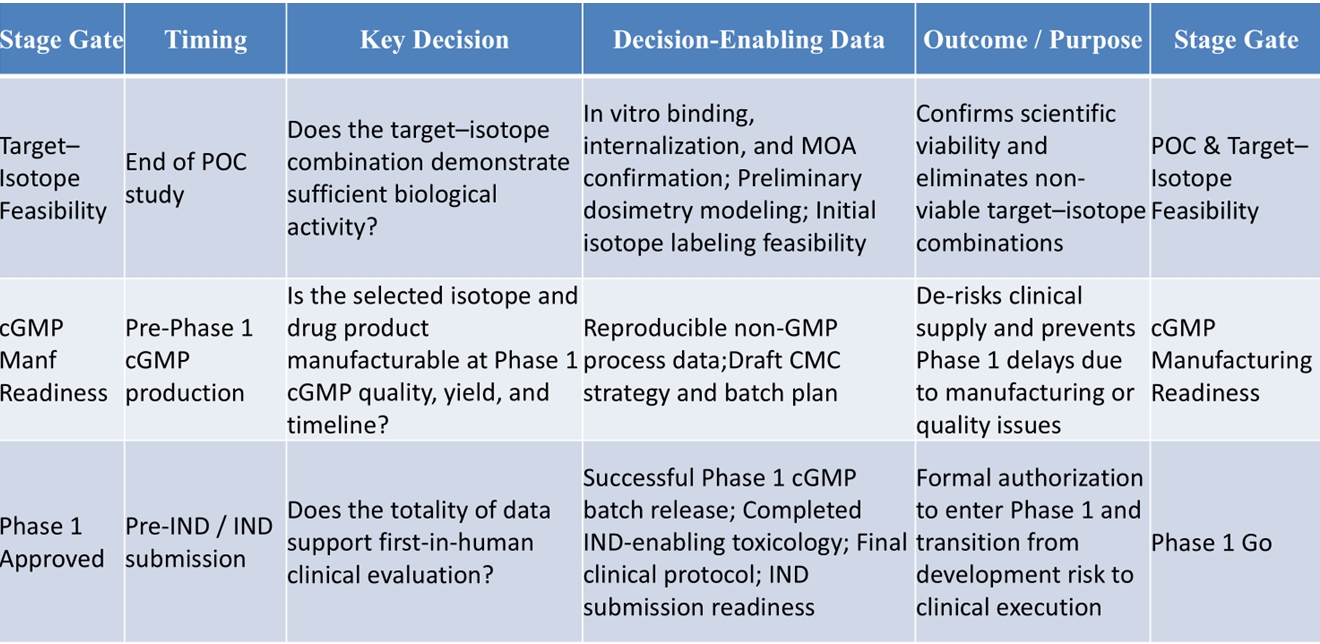
Schedule 5.6.1
Press Release
LEGAL_AMERICAS # 190652508.14
Schedule 6.1.3
Supply Agreement
(See Attached)
Schedule 8.1
Aptevo Molecules
[***]
[TBD]
[TBD]
Niowave Radioisotopes
Actinium-225
[TBD]
[TBD]
Schedule 14.2.1
Opt-Out Windows
oChange in Control of a Party
oAny Stage Gate described in Schedule 2.3.4
oCompletion of an Investigational New Drug (“IND”) application enabling Good Laboratory Practice (“GLP”) tox studies for the Product
oCompletion of Process Development for the Product
oCompletion of Phase I Clinical Trial for the Product
oCompletion of Phase II Clinical Trial for the Product