Creating Extraordinary Medicines Drugging Previously Undruggable Intracellular Drivers of Serious Diseases August 2026
Forward-looking statements & disclaimer PARABILIS MEDICINES This presentation contains "forward-looking statements" within the meaning of Section 27A of the Securities Act of 1933 and Section 21E of the Securities Exchange Act of 1934, each as amended. The words "anticipate," "believe," "continue," "could," "estimate," "expect," "intend," "may," "plan," "potential," "predict," "project," "should," "target," "would" and similar expressions are intended to identify forward-looking statements, although not all forward-looking statements contain these identifying words. Forward-looking statements in this presentation include, without limitation, statements regarding the Company's expected cash runway. Any forward-looking statements in this presentation are based on management's current expectations and beliefs, and are subject to a number of risks and uncertainties that could negatively affect the Company's business, operating results, financial condition and stock value. These forward-looking statements are not guarantees of future performance, and you should not place undue reliance on them. Refer to the Company's "Risk Factors" in the Company's most recent Quarterly Report on Form 10-Q, as well as discussions of potential risks, uncertainties, and other important factors in the Company's subsequent filings with the Securities and Exchange Commission. Any forward-looking statements represent the Company's views only as of today and should not be relied upon as representing its views as of any subsequent date. The Company expressly disclaims any obligation or undertaking to release publicly any updates or revisions to any forward-looking statements contained herein to reflect any change in its expectations or any changes in events, conditions or circumstances on which any such statement is based, except as required by law, and claims the protection of the safe harbor for forward-looking statements contained in the Private Securities Litigation Reform Act of 1995. This presentation concerns therapies that are under clinical investigation and which have not yet been approved for marketing by the U.S. Food and Drug Administration. It is currently limited by federal law to investigational use, and no representation is made as to its safety or effectiveness for the purposes for which it is being investigated. No securities commission or securities regulatory authority in the United States or any other jurisdiction has in any way passed upon the accuracy or adequacy of this presentation.
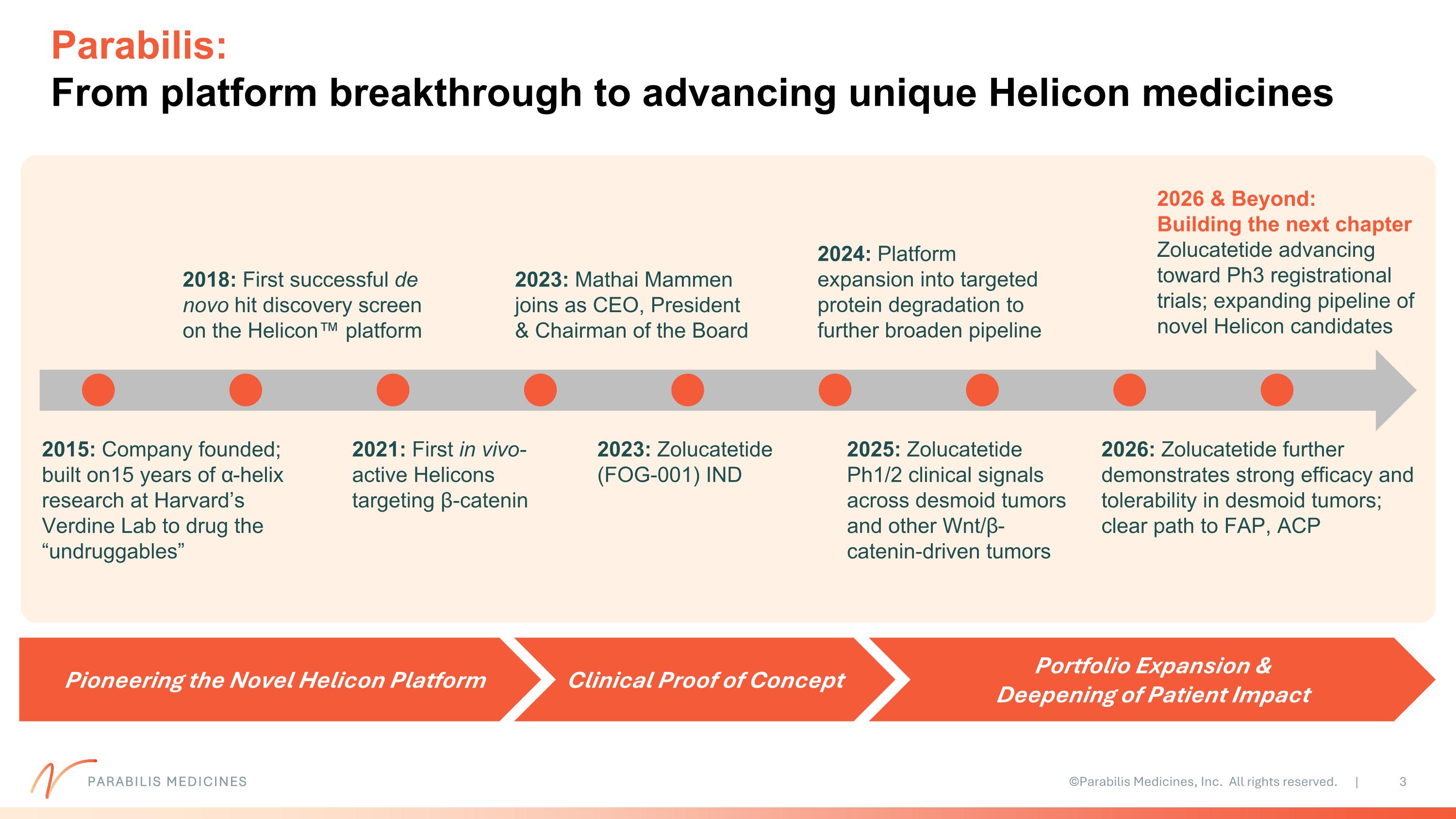
2015: Company founded; built on15 years of α-helix research at Harvard’s Verdine Lab to drug the “undruggables” 2024: Platform expansion into targeted protein degradation to further broaden pipeline 2018: First successful de novo hit discovery screen on the Helicon™ platform 2021: First in vivo-active Helicons targeting β-catenin 2025: Zolucatetide Ph1/2 clinical signals across desmoid tumors and other Wnt/β-catenin-driven tumors 2023: Mathai Mammen joins as CEO, President & Chairman of the Board 2026: Zolucatetide further demonstrates strong efficacy and tolerability in desmoid tumors; clear path to FAP, ACP 2026 & Beyond: Building the next chapter Zolucatetide advancing toward Ph3 registrational trials; expanding pipeline of novel Helicon candidates PARABILIS MEDICINES Parabilis: From platform breakthrough to advancing unique Helicon medicines Pioneering the Novel Helicon Platform Clinical Proof of Concept Portfolio Expansion & Deepening of Patient Impact 2023: Zolucatetide (FOG-001) IND
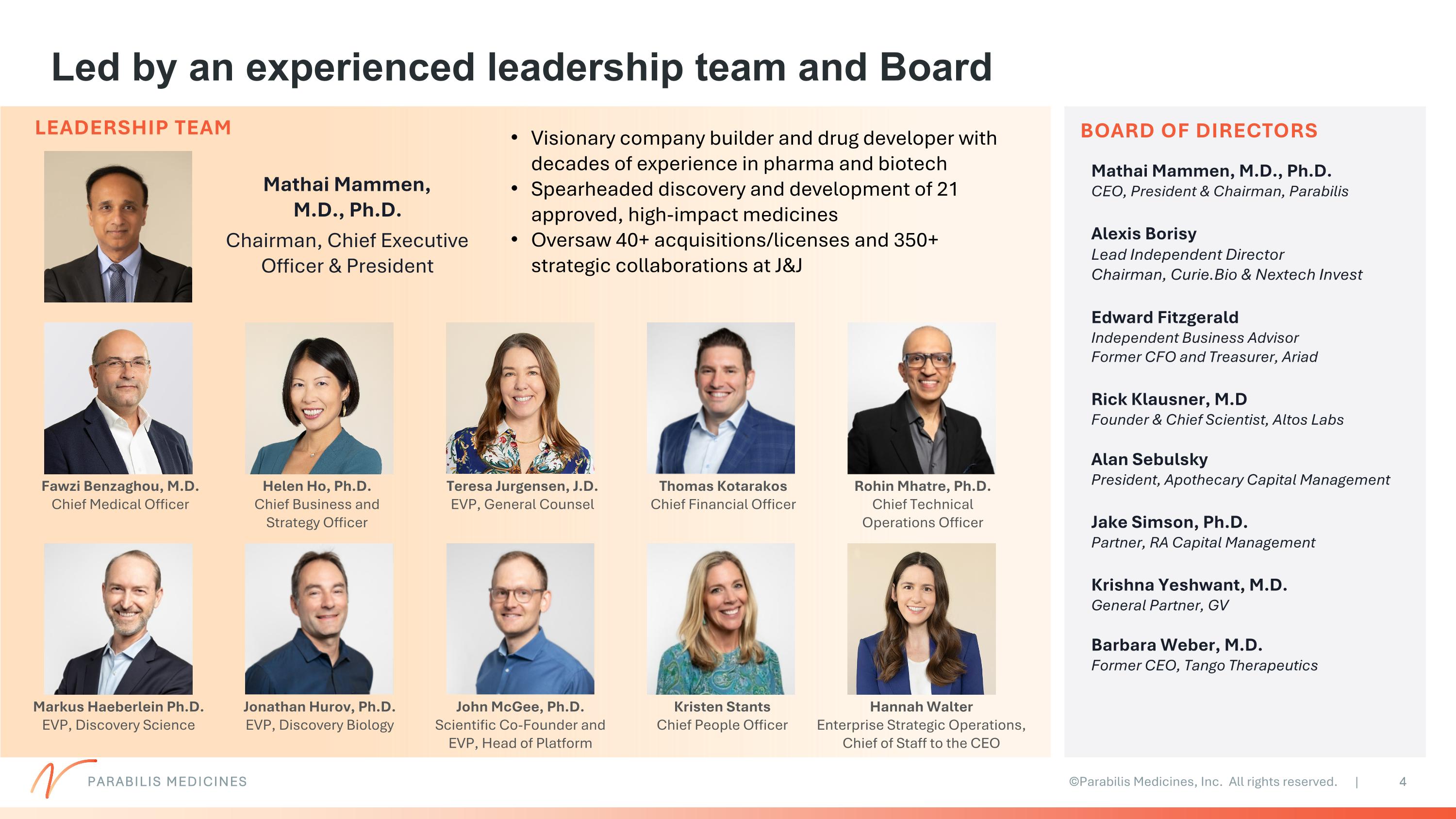
Led by an experienced leadership team and Board 4 Mathai Mammen, M.D., Ph.D. Chairman, Chief Executive Officer & President Kristen Stants Chief People Officer John McGee, Ph.D. Scientific Co-Founder and EVP, Head of Platform Fawzi Benzaghou, M.D. Chief Medical Officer BOARD OF DIRECTORS Mathai Mammen, M.D., Ph.D. CEO, President & Chairman, Parabilis Alexis Borisy Lead Independent Director Chairman, Curie.Bio & Nextech Invest Edward Fitzgerald Independent Business Advisor Former CFO and Treasurer, Ariad Rick Klausner, M.D Founder & Chief Scientist, Altos Labs Alan Sebulsky President, Apothecary Capital Management Jake Simson, Ph.D. Partner, RA Capital Management Krishna Yeshwant, M.D. General Partner, GV Barbara Weber, M.D. Former CEO, Tango Therapeutics Helen Ho, Ph.D. Chief Business and Strategy Officer Hannah Walter Enterprise Strategic Operations, Chief of Staff to the CEO Visionary company builder and drug developer with decades of experience in pharma and biotech Spearheaded discovery and development of 21 approved, high-impact medicines Oversaw 40+ acquisitions/licenses and 350+ strategic collaborations at J&J LEADERSHIP TEAM Teresa Jurgensen, J.D. EVP, General Counsel Markus Haeberlein Ph.D. EVP, Discovery Science Rohin Mhatre, Ph.D. Chief Technical Operations Officer Jonathan Hurov, Ph.D. EVP, Discovery Biology Thomas Kotarakos Chief Financial Officer PARABILIS MEDICINES
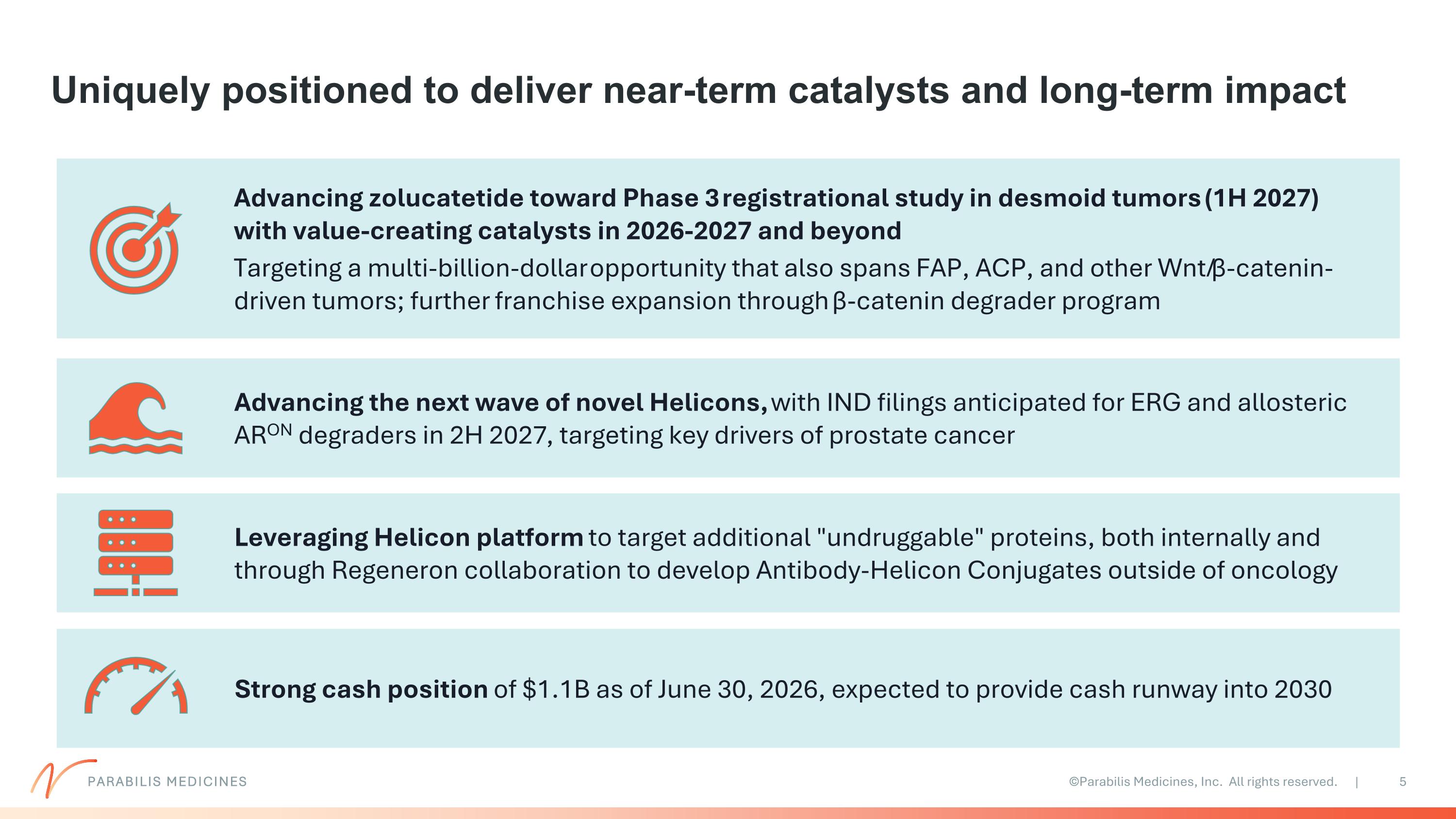
Uniquely positioned to deliver near-term catalysts and long-term impact Advancing zolucatetide toward Phase 3 registrational study in desmoid tumors (1H 2027) with value-creating catalysts in 2026-2027 and beyond Targeting a multi-billion-dollar opportunity that also spans FAP, ACP, and other Wnt/ β-catenin-driven tumors; further franchise expansion through β-catenin degrader program Advancing the next wave of novel Helicons, with IND filings anticipated for ERG and allosteric ARON degraders in 2H 2027, targeting key drivers of prostate cancer Leveraging Helicon platform to target additional "undruggable" proteins, both internally and through Regeneron collaboration to develop Antibody-Helicon Conjugates outside of oncology Strong cash position of $1.1B as of June 30, 2026, expected to provide cash runway into 2030 PARABILIS MEDICINES
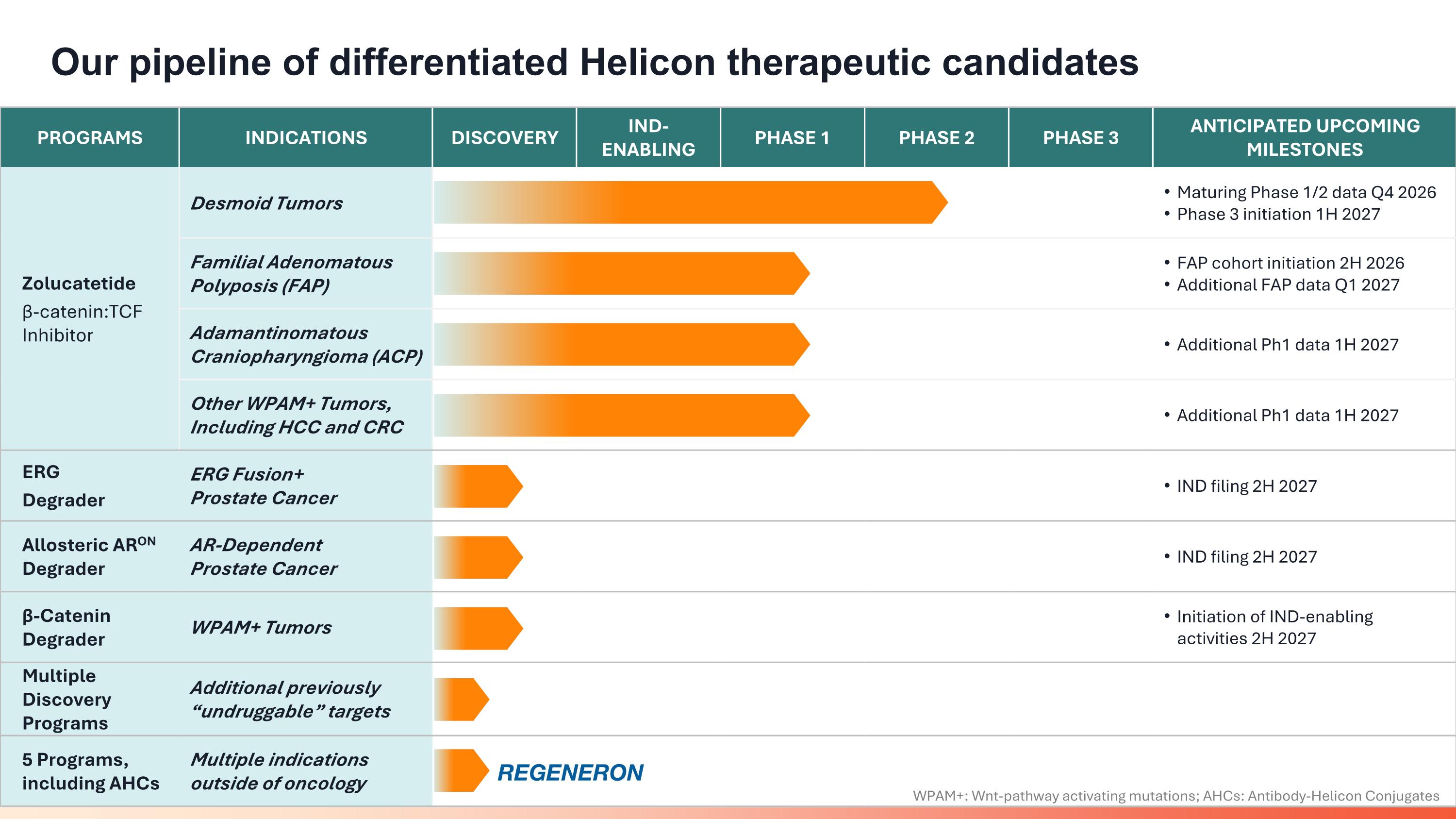
Our pipeline of differentiated Helicon therapeutic candidates PARABILIS MEDICINES PROGRAMS INDICATIONS DISCOVERY IND- ENABLING PHASE 1 PHASE 2 PHASE 3 ANTICIPATED UPCOMING MILESTONES Zolucatetide β-catenin:TCF Inhibitor Desmoid Tumors Maturing Phase 1/2 data Q4 2026 Phase 3 initiation 1H 2027 Familial Adenomatous Polyposis (FAP) FAP cohort initiation 2H 2026 Additional FAP data Q1 2027 Adamantinomatous Craniopharyngioma (ACP) Additional Ph1 data 1H 2027 Other WPAM+ Tumors, Including HCC and CRC Additional Ph1 data 1H 2027 ERG Degrader ERG Fusion+ Prostate Cancer IND filing 2H 2027 Allosteric ARON Degrader AR-Dependent Prostate Cancer IND filing 2H 2027 β-Catenin Degrader WPAM+ Tumors Initiation of IND-enabling activities 2H 2027 Multiple Discovery Programs Additional previously “undruggable” targets 5 Programs, including AHCs Multiple indications outside of oncology WPAM+: Wnt-pathway activating mutations; AHCs: Antibody-Helicon Conjugates
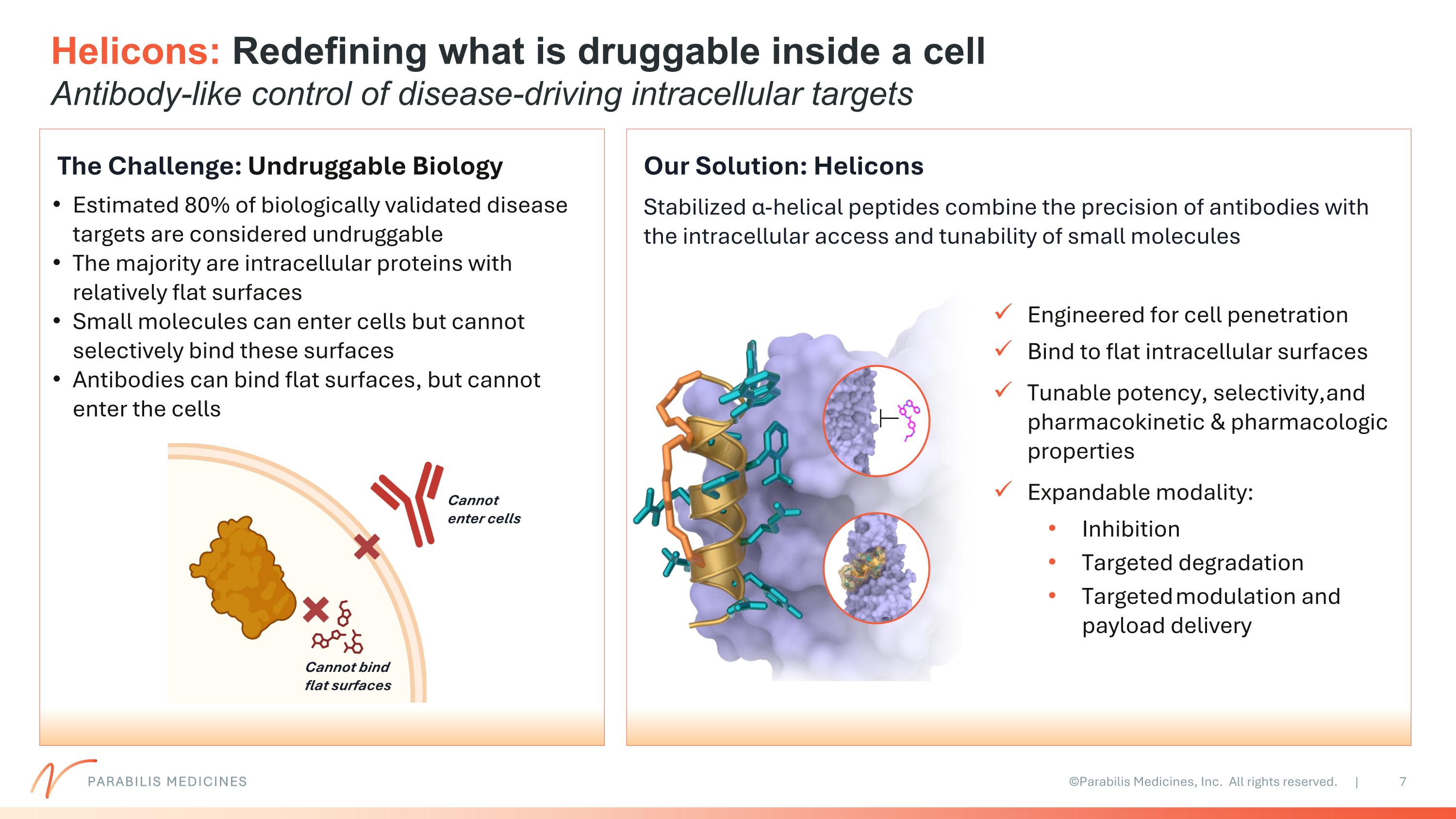
Helicons: Redefining what is druggable inside a cell Antibody-like control of disease-driving intracellular targets The Challenge: Undruggable Biology Our Solution: Helicons Stabilized α-helical peptides combine the precision of antibodies with the intracellular access and tunability of small molecules Cannot enter cells Cannot bind flat surfaces Engineered for cell penetration Bind to flat intracellular surfaces Tunable potency, selectivity, and pharmacokinetic & pharmacologic properties Expandable modality: Inhibition Targeted degradation Targeted modulation and payload delivery Estimated 80% of biologically validated disease targets are considered undruggable The majority are intracellular proteins with relatively flat surfaces Small molecules can enter cells but cannot selectively bind these surfaces Antibodies can bind flat surfaces, but cannot enter the cells PARABILIS MEDICINES
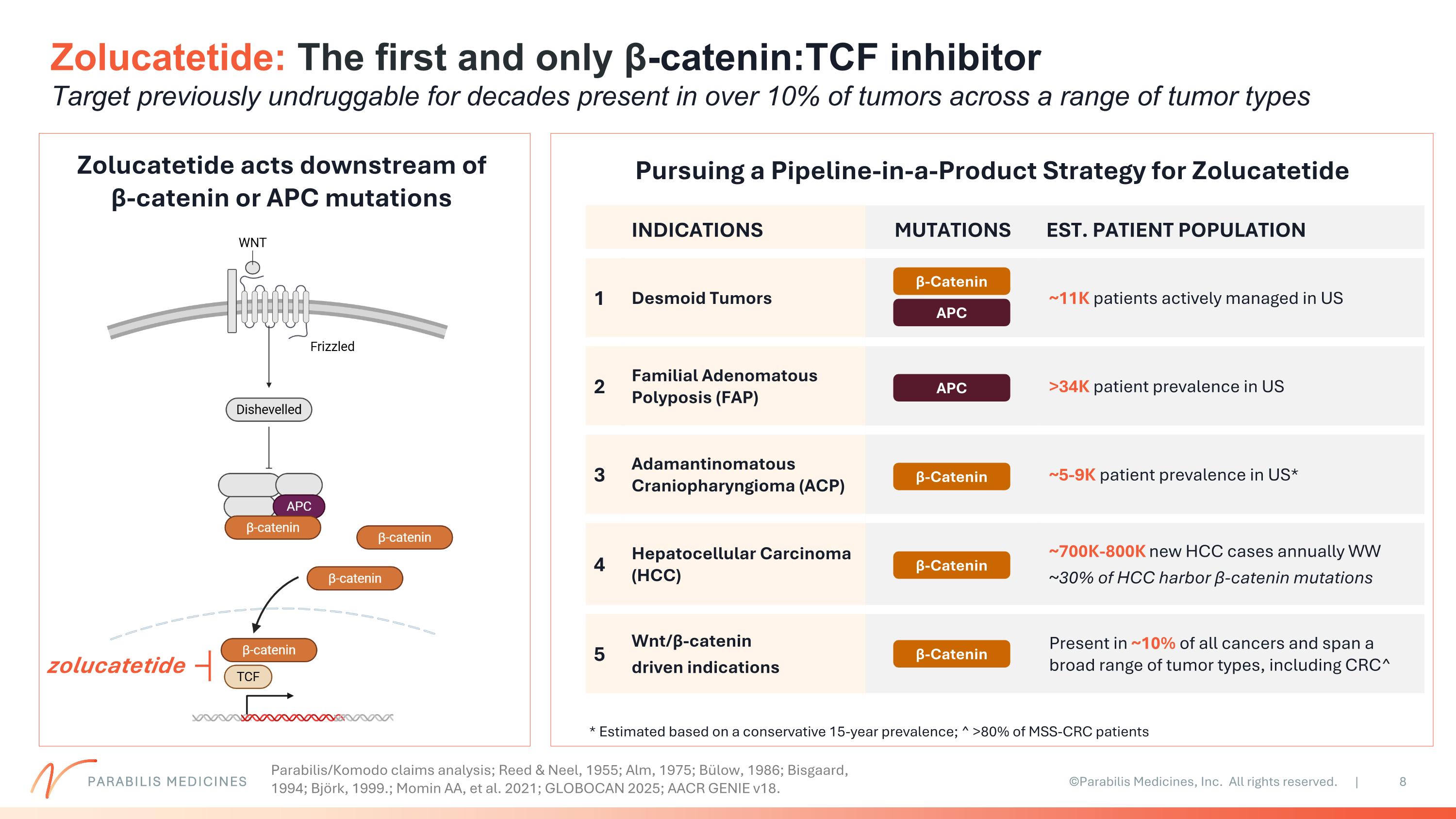
PARABILIS MEDICINES Zolucatetide: The first and only β-catenin:TCF inhibitor Target previously undruggable for decades present in over 10% of tumors across a range of tumor types Zolucatetide acts downstream of β-catenin or APC mutations zolucatetide Pursuing a Pipeline-in-a-Product Strategy for Zolucatetide INDICATIONS MUTATIONS EST. PATIENT POPULATION 1 Desmoid Tumors ~11K patients actively managed in US 2 Familial Adenomatous Polyposis (FAP) >34K patient prevalence in US 3 Adamantinomatous Craniopharyngioma (ACP) ~5-9K patient prevalence in US* 4 Hepatocellular Carcinoma (HCC) ~700K-800K new HCC cases annually WW ~30% of HCC harbor β-catenin mutations 5 Wnt/β-catenin driven indications Present in ~10% of all cancers and span a broad range of tumor types, including CRC^ β-Catenin APC APC β-Catenin * Estimated based on a conservative 15-year prevalence; ^ >80% of MSS-CRC patients β-Catenin β-Catenin Parabilis/Komodo claims analysis; Reed & Neel, 1955; Alm, 1975; Bülow, 1986; Bisgaard, 1994; Björk, 1999.; Momin AA, et al. 2021; GLOBOCAN 2025; AACR GENIE v18.
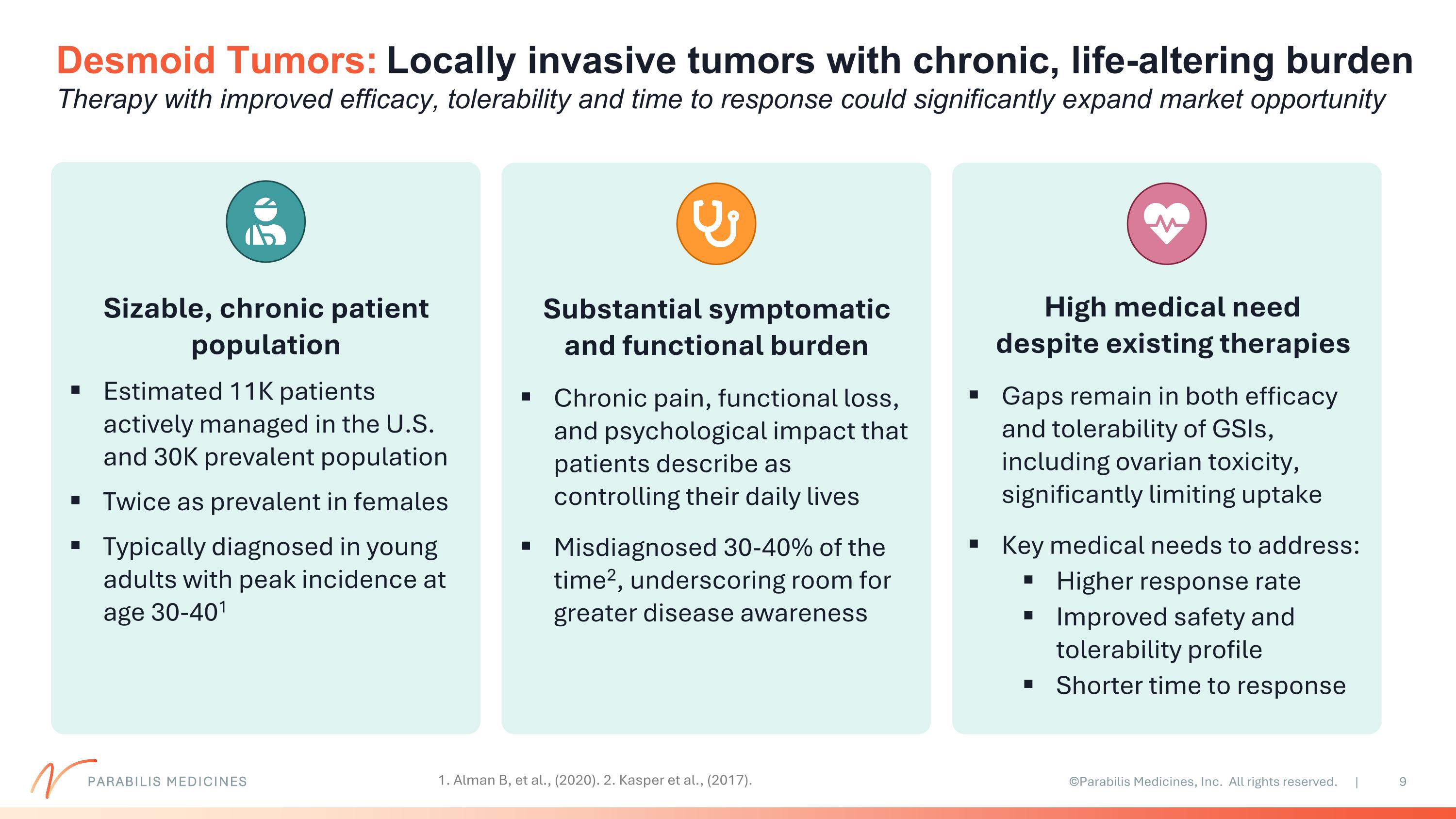
Desmoid Tumors: Locally invasive tumors with chronic, life-altering burden Therapy with improved efficacy, tolerability and time to response could significantly expand market opportunity Sizable, chronic patient population Estimated 11K patients actively managed in the U.S. and 30K prevalent population Twice as prevalent in females Typically diagnosed in young adults with peak incidence at age 30-401 Substantial symptomatic and functional burden Chronic pain, functional loss, and psychological impact that patients describe as controlling their daily lives Misdiagnosed 30-40% of the time2, underscoring room for greater disease awareness High medical need despite existing therapies Gaps remain in both efficacy and tolerability of GSIs, including ovarian toxicity, significantly limiting uptake Key medical needs to address: Higher response rate Improved safety and tolerability profile Shorter time to response 1. Alman B, et al., (2020). 2. Kasper et al., (2017). PARABILIS MEDICINES
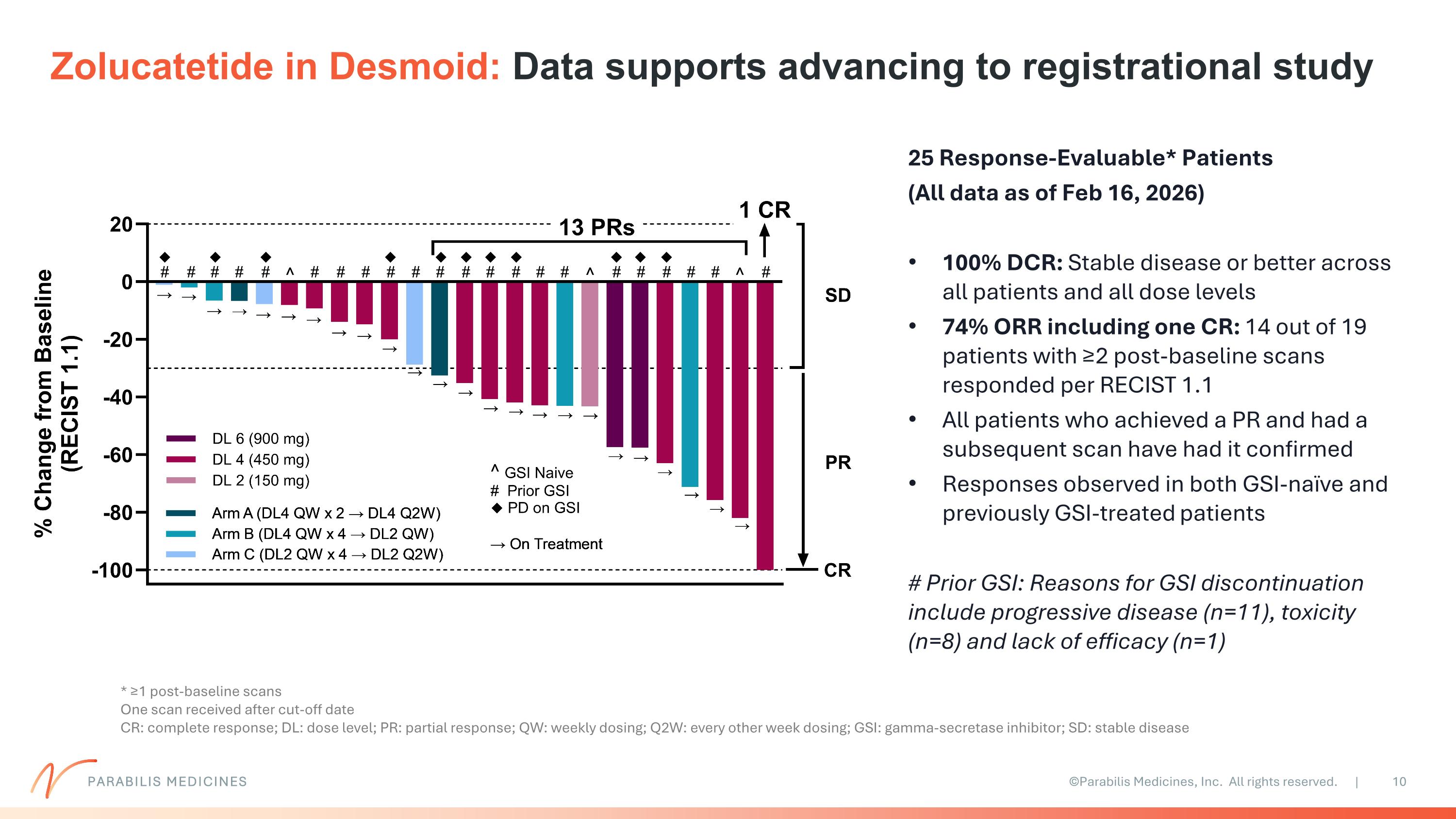
Zolucatetide in Desmoid: Data supports advancing to registrational study 25 Response-Evaluable* Patients (All data as of Feb 16, 2026) 100% DCR: Stable disease or better across all patients and all dose levels 74% ORR including one CR: 14 out of 19 patients with ≥2 post-baseline scans responded per RECIST 1.1 All patients who achieved a PR and had a subsequent scan have had it confirmed Responses observed in both GSI-naïve and previously GSI-treated patients # Prior GSI: Reasons for GSI discontinuation include progressive disease (n=11), toxicity (n=8) and lack of efficacy (n=1) * ≥1 post-baseline scans One scan received after cut-off date CR: complete response; DL: dose level; PR: partial response; QW: weekly dosing; Q2W: every other week dosing; GSI: gamma-secretase inhibitor; SD: stable disease PARABILIS MEDICINES
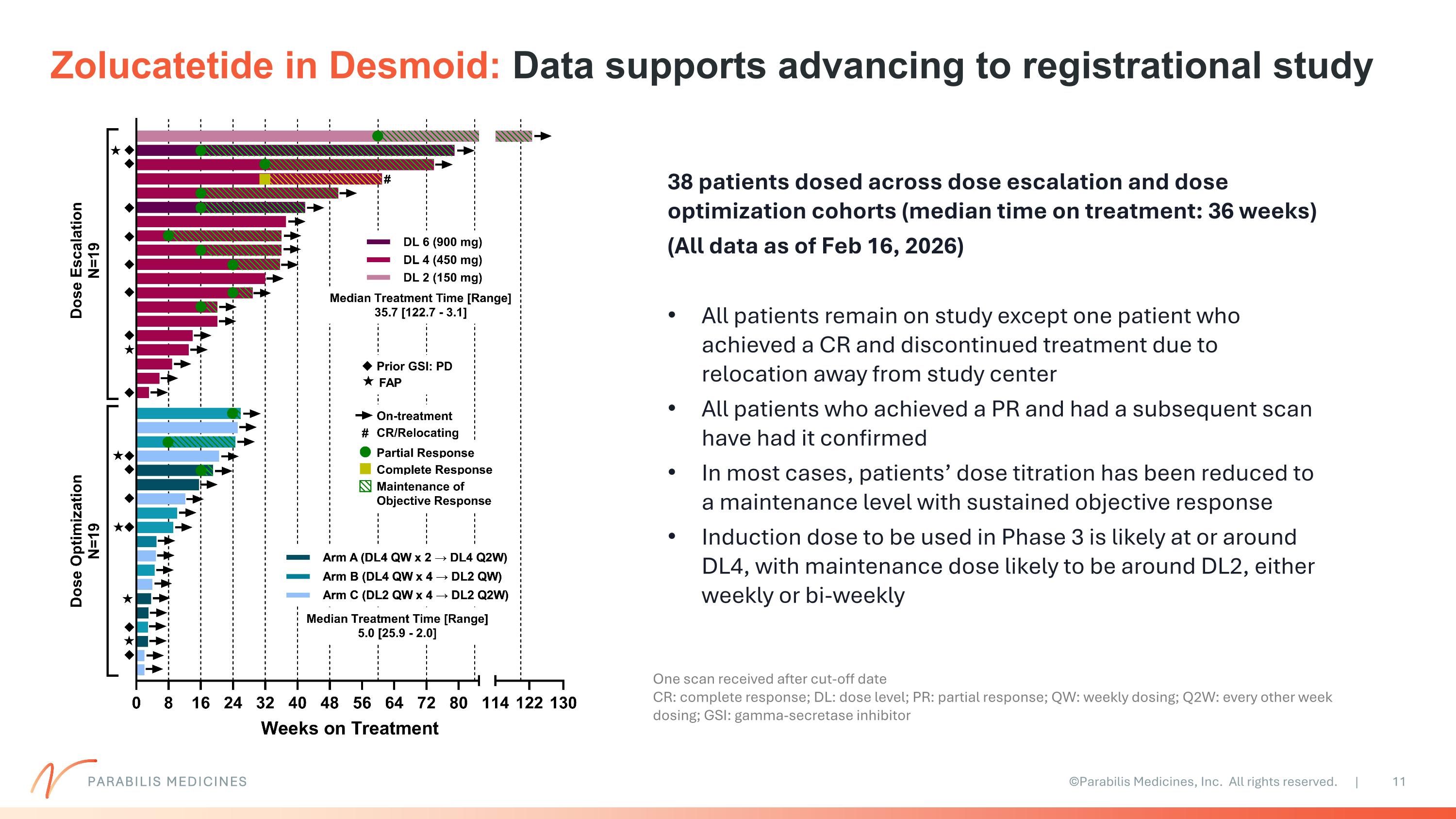
Zolucatetide in Desmoid: Data supports advancing to registrational study One scan received after cut-off date CR: complete response; DL: dose level; PR: partial response; QW: weekly dosing; Q2W: every other week dosing; GSI: gamma-secretase inhibitor 38 patients dosed across dose escalation and dose optimization cohorts (median time on treatment: 36 weeks) (All data as of Feb 16, 2026) All patients remain on study except one patient who achieved a CR and discontinued treatment due to relocation away from study center All patients who achieved a PR and had a subsequent scan have had it confirmed In most cases, patients’ dose titration has been reduced to a maintenance level with sustained objective response Induction dose to be used in Phase 3 is likely at or around DL4, with maintenance dose likely to be around DL2, either weekly or bi-weekly PARABILIS MEDICINES
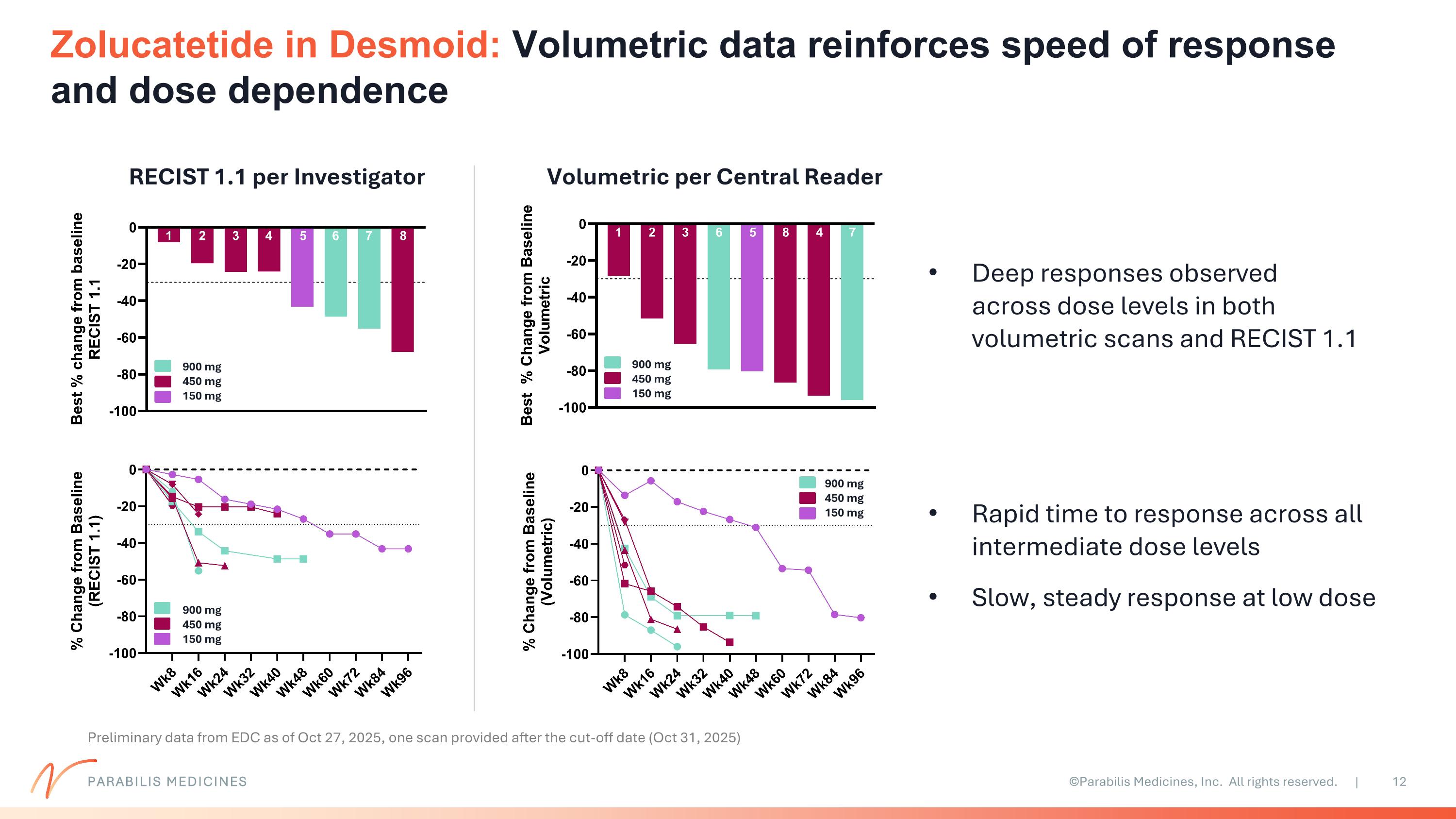
Zolucatetide in Desmoid: Volumetric data reinforces speed of response and dose dependence RECIST 1.1 per Investigator Volumetric per Central Reader Preliminary data from EDC as of Oct 27, 2025, one scan provided after the cut-off date (Oct 31, 2025) 900 mg 450 mg 150 mg 900 mg 450 mg 150 mg 900 mg 450 mg 150 mg 900 mg 450 mg 150 mg Rapid time to response across all intermediate dose levels Slow, steady response at low dose Deep responses observed across dose levels in both volumetric scans and RECIST 1.1 PARABILIS MEDICINES
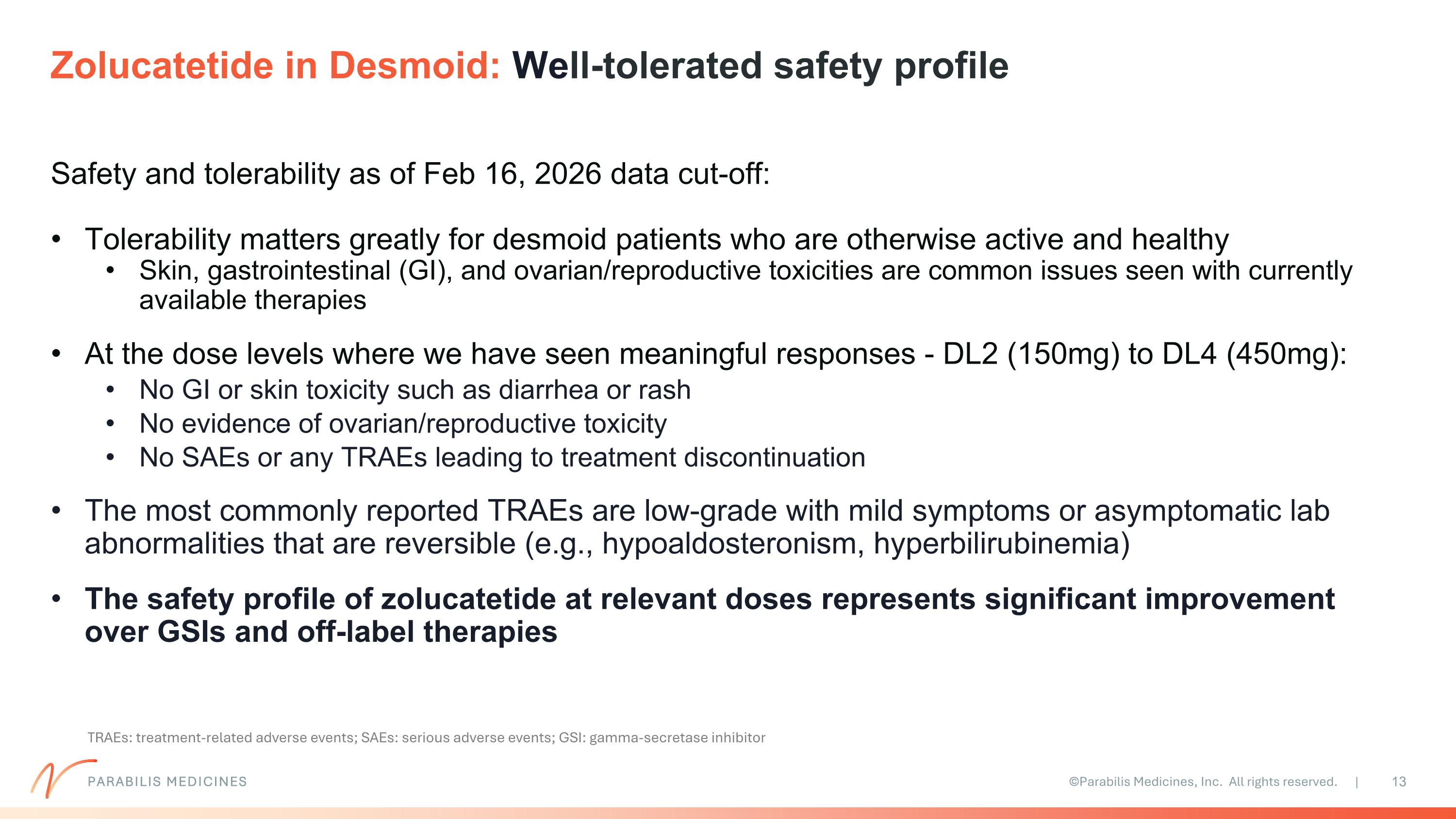
Safety and tolerability as of Feb 16, 2026 data cut-off: Tolerability matters greatly for desmoid patients who are otherwise active and healthy Skin, gastrointestinal (GI), and ovarian/reproductive toxicities are common issues seen with currently available therapies At the dose levels where we have seen meaningful responses - DL2 (150mg) to DL4 (450mg): No GI or skin toxicity such as diarrhea or rash No evidence of ovarian/reproductive toxicity No SAEs or any TRAEs leading to treatment discontinuation The most commonly reported TRAEs are low-grade with mild symptoms or asymptomatic lab abnormalities that are reversible (e.g., hypoaldosteronism, hyperbilirubinemia) The safety profile of zolucatetide at relevant doses represents significant improvement over GSIs and off-label therapies Zolucatetide in Desmoid: Well-tolerated safety profile TRAEs: treatment-related adverse events; SAEs: serious adverse events; GSI: gamma-secretase inhibitor PARABILIS MEDICINES
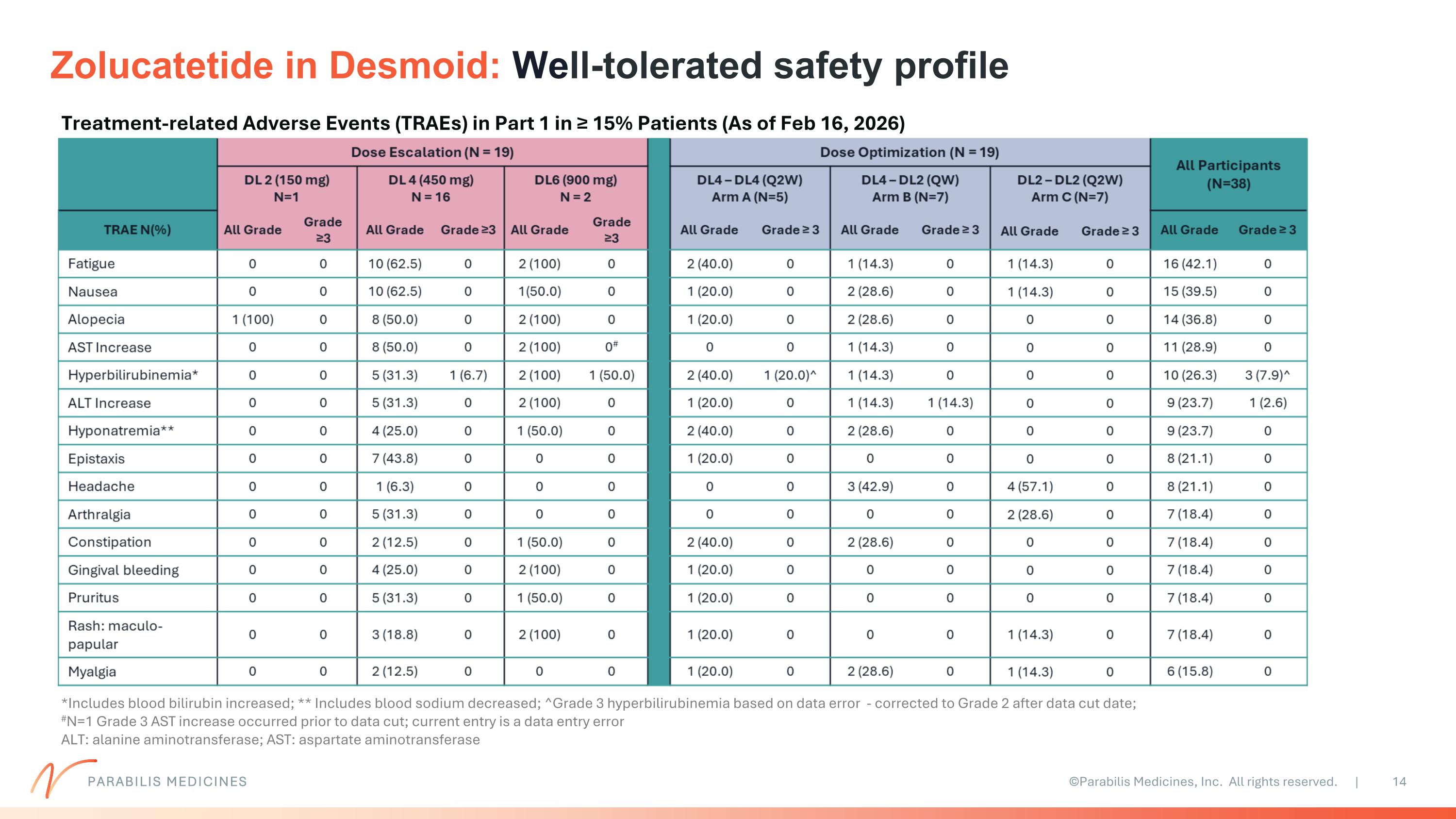
Zolucatetide in Desmoid: Well-tolerated safety profile *Includes blood bilirubin increased; ** Includes blood sodium decreased; ^Grade 3 hyperbilirubinemia based on data error - corrected to Grade 2 after data cut date; #N=1 Grade 3 AST increase occurred prior to data cut; current entry is a data entry error ALT: alanine aminotransferase; AST: aspartate aminotransferase Treatment-related Adverse Events (TRAEs) in Part 1 in ≥ 15% Patients (As of Feb 16, 2026) PARABILIS MEDICINES
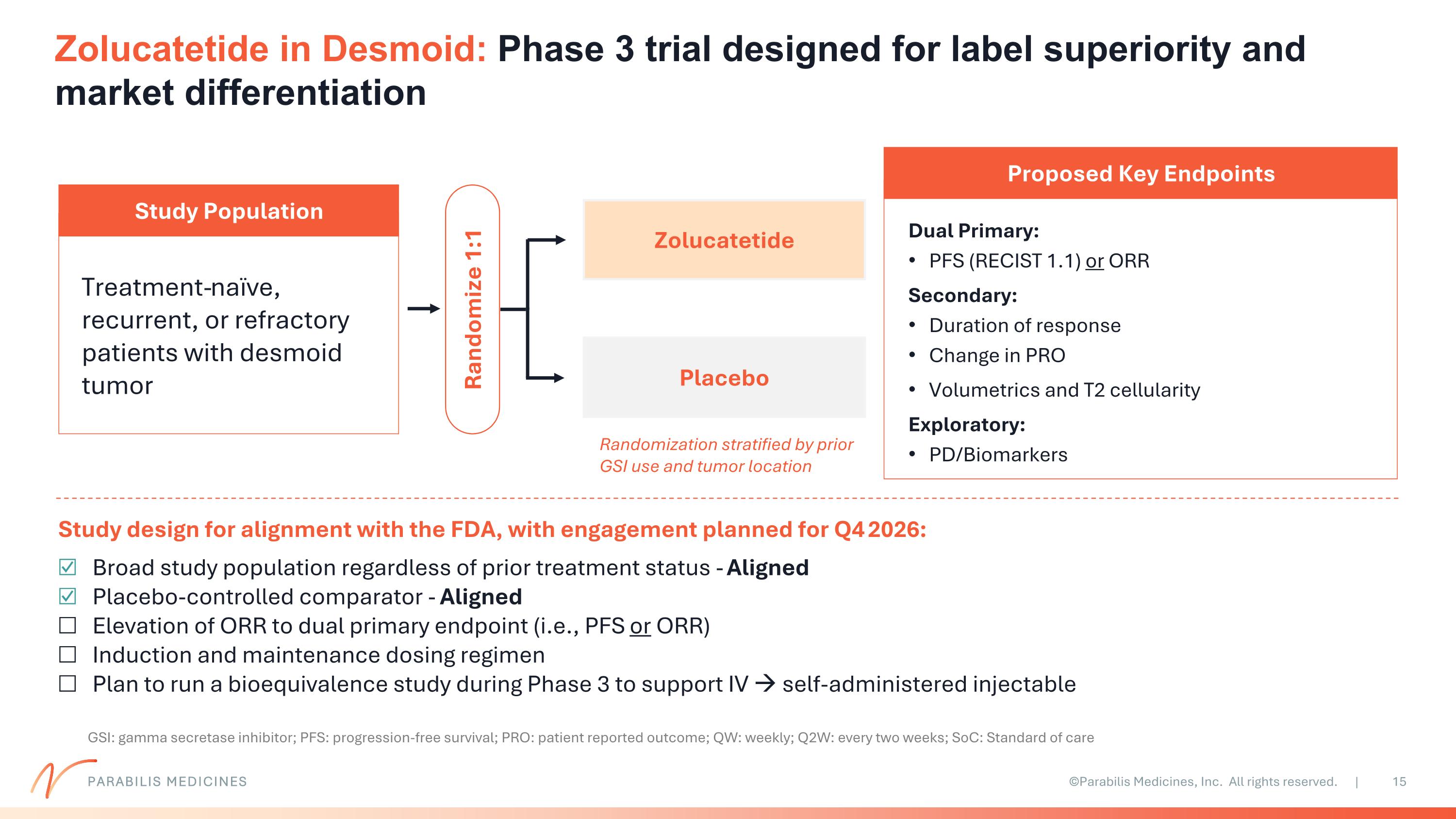
Placebo Zolucatetide Zolucatetide in Desmoid: Phase 3 trial designed for label superiority and market differentiation Treatment-naïve, recurrent, or refractory patients with desmoid tumor Study Population Study design for alignment with the FDA, with engagement planned for Q4 2026: Broad study population regardless of prior treatment status - Aligned Placebo-controlled comparator - Aligned Elevation of ORR to dual primary endpoint (i.e., PFS or ORR) Induction and maintenance dosing regimen Plan to run a bioequivalence study during Phase 3 to support IV self-administered injectable Dual Primary: PFS (RECIST 1.1) or ORR Secondary: Duration of response Change in PRO Volumetrics and T2 cellularity Exploratory: PD/Biomarkers Proposed Key Endpoints Randomize 1:1 Randomization stratified by prior GSI use and tumor location GSI: gamma secretase inhibitor; PFS: progression-free survival; PRO: patient reported outcome; QW: weekly; Q2W: every two weeks; SoC: Standard of care PARABILIS MEDICINES
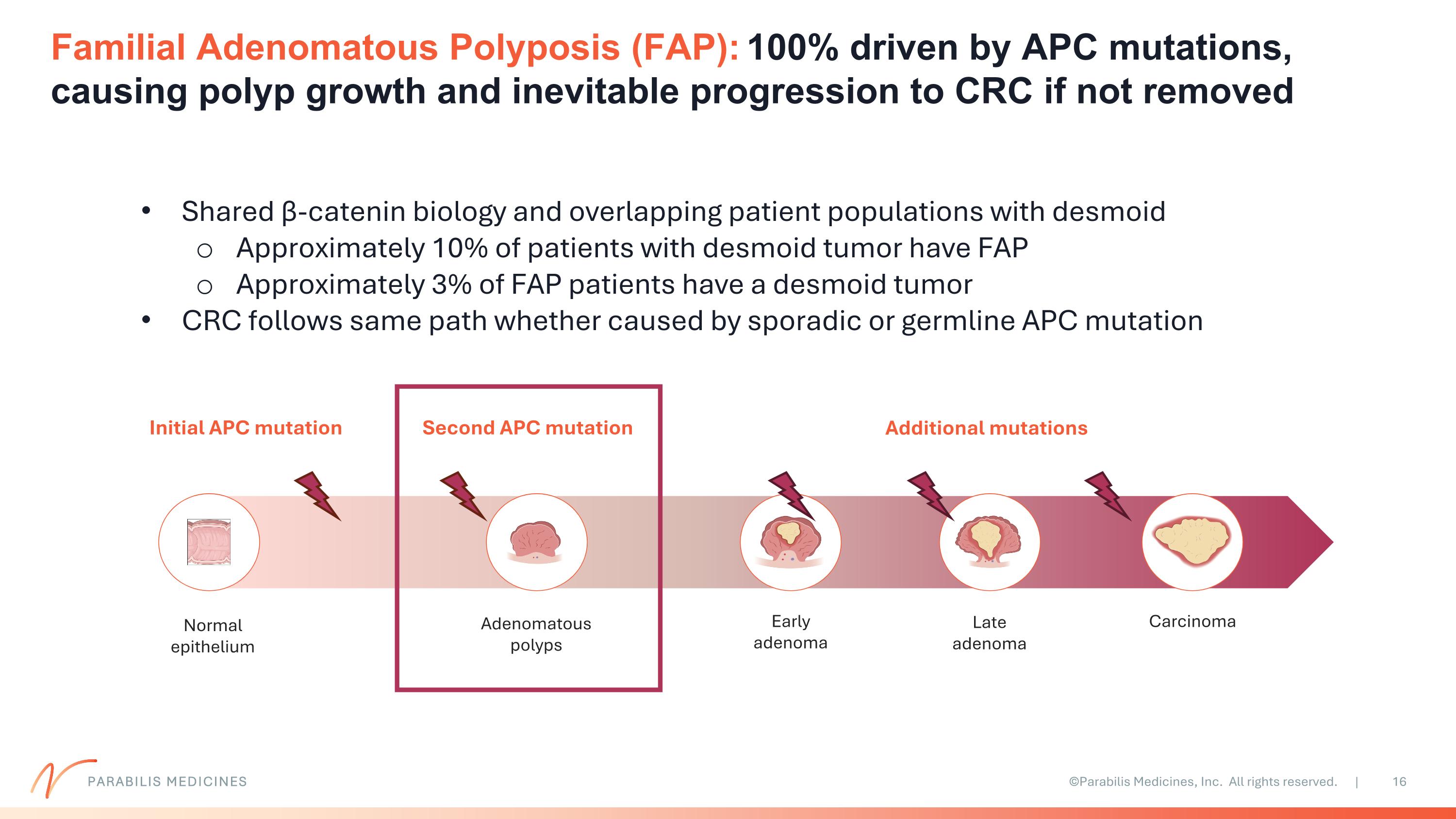
Familial Adenomatous Polyposis (FAP): 100% driven by APC mutations, causing polyp growth and inevitable progression to CRC if not removed Shared β-catenin biology and overlapping patient populations with desmoid Approximately 10% of patients with desmoid tumor have FAP Approximately 3% of FAP patients have a desmoid tumor CRC follows same path whether caused by sporadic or germline APC mutation Normal epithelium Initial APC mutation Adenomatous polyps Carcinoma Second APC mutation Late adenoma Early adenoma Additional mutations PARABILIS MEDICINES
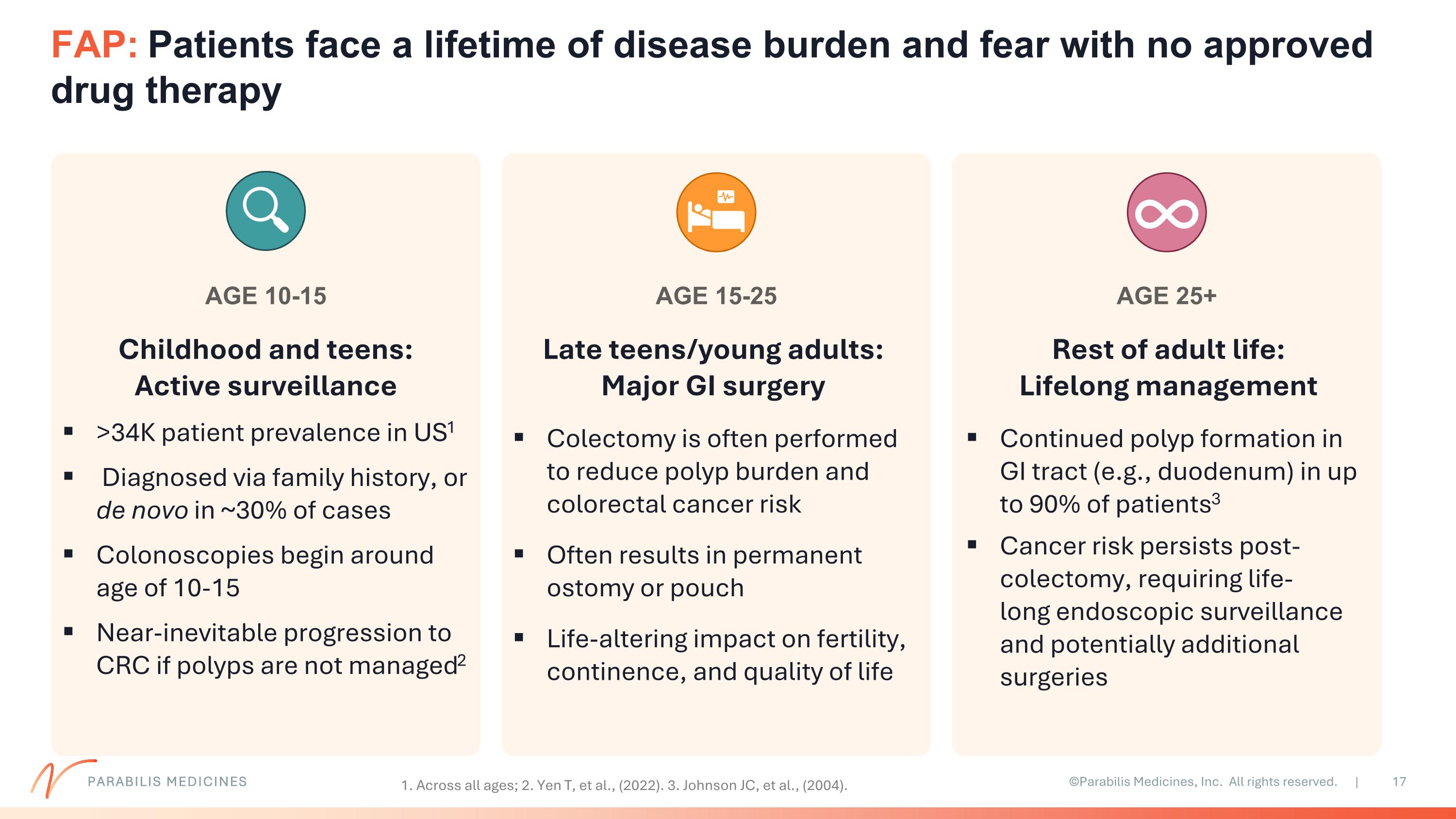
FAP: Patients face a lifetime of disease burden and fear with no approved drug therapy Childhood and teens: Active surveillance >34K patient prevalence in US1 Diagnosed via family history, or de novo in ~30% of cases Colonoscopies begin around age of 10-15 Near-inevitable progression to CRC if polyps are not managed2 Late teens/young adults: Major GI surgery Colectomy is often performed to reduce polyp burden and colorectal cancer risk Often results in permanent ostomy or pouch Life-altering impact on fertility, continence, and quality of life Rest of adult life: Lifelong management Continued polyp formation in GI tract (e.g., duodenum) in up to 90% of patients3 Cancer risk persists post-colectomy, requiring life-long endoscopic surveillance and potentially additional surgeries AGE 10-15 AGE 15-25 AGE 25+ 1. Across all ages; 2. Yen T, et al., (2022). 3. Johnson JC, et al., (2004). PARABILIS MEDICINES
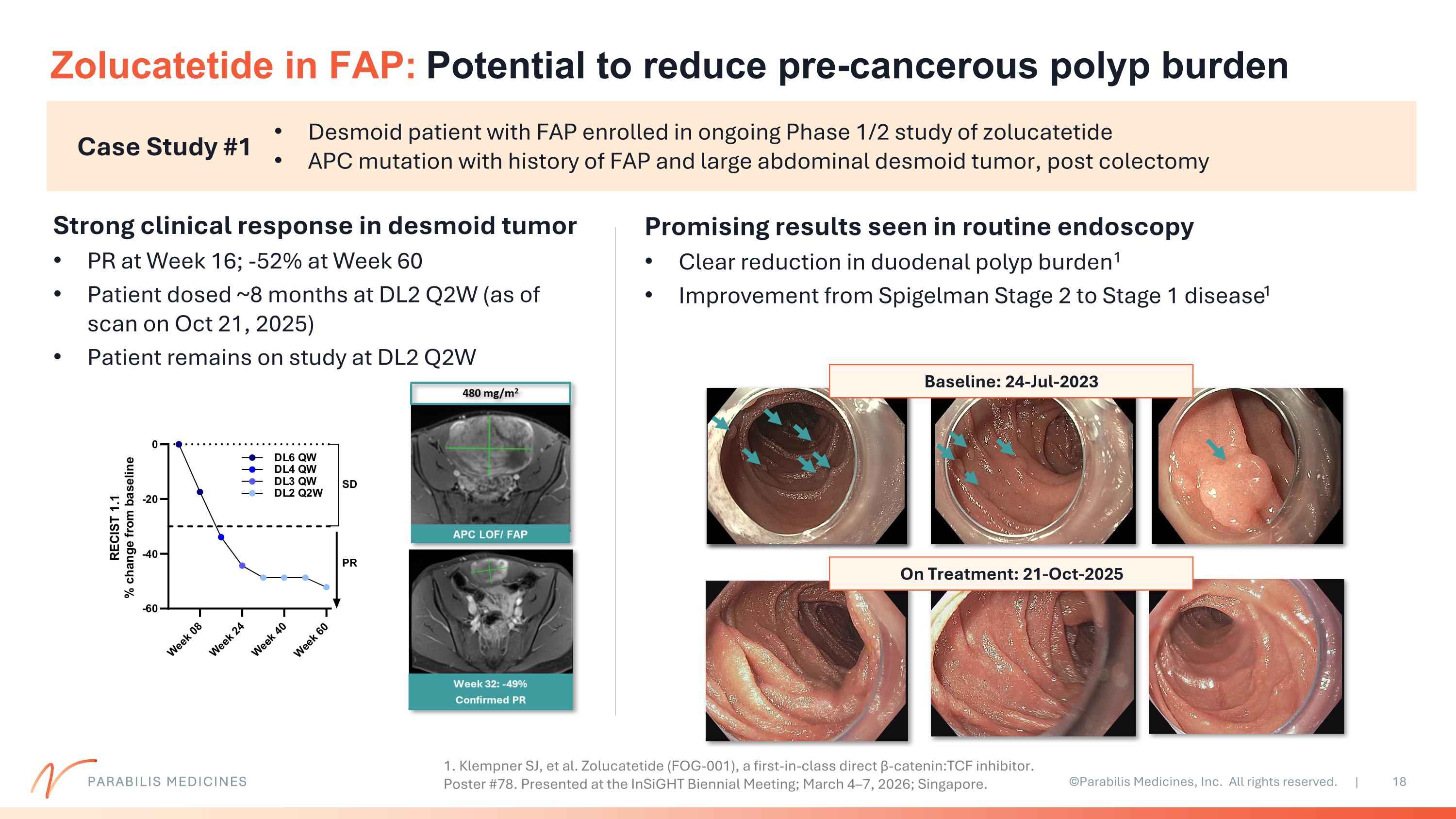
Zolucatetide in FAP: Potential to reduce pre-cancerous polyp burden Case Study #1 Strong clinical response in desmoid tumor PR at Week 16; -52% at Week 60 Patient dosed ~8 months at DL2 Q2W (as of scan on Oct 21, 2025) Patient remains on study at DL2 Q2W Desmoid patient with FAP enrolled in ongoing Phase 1/2 study of zolucatetide APC mutation with history of FAP and large abdominal desmoid tumor, post colectomy Promising results seen in routine endoscopy Clear reduction in duodenal polyp burden1 Improvement from Spigelman Stage 2 to Stage 1 disease1 Baseline: 24-Jul-2023 On Treatment: 21-Oct-2025 1. Klempner SJ, et al. Zolucatetide (FOG-001), a first-in-class direct β-catenin:TCF inhibitor. Poster #78. Presented at the InSiGHT Biennial Meeting; March 4–7, 2026; Singapore. PARABILIS MEDICINES
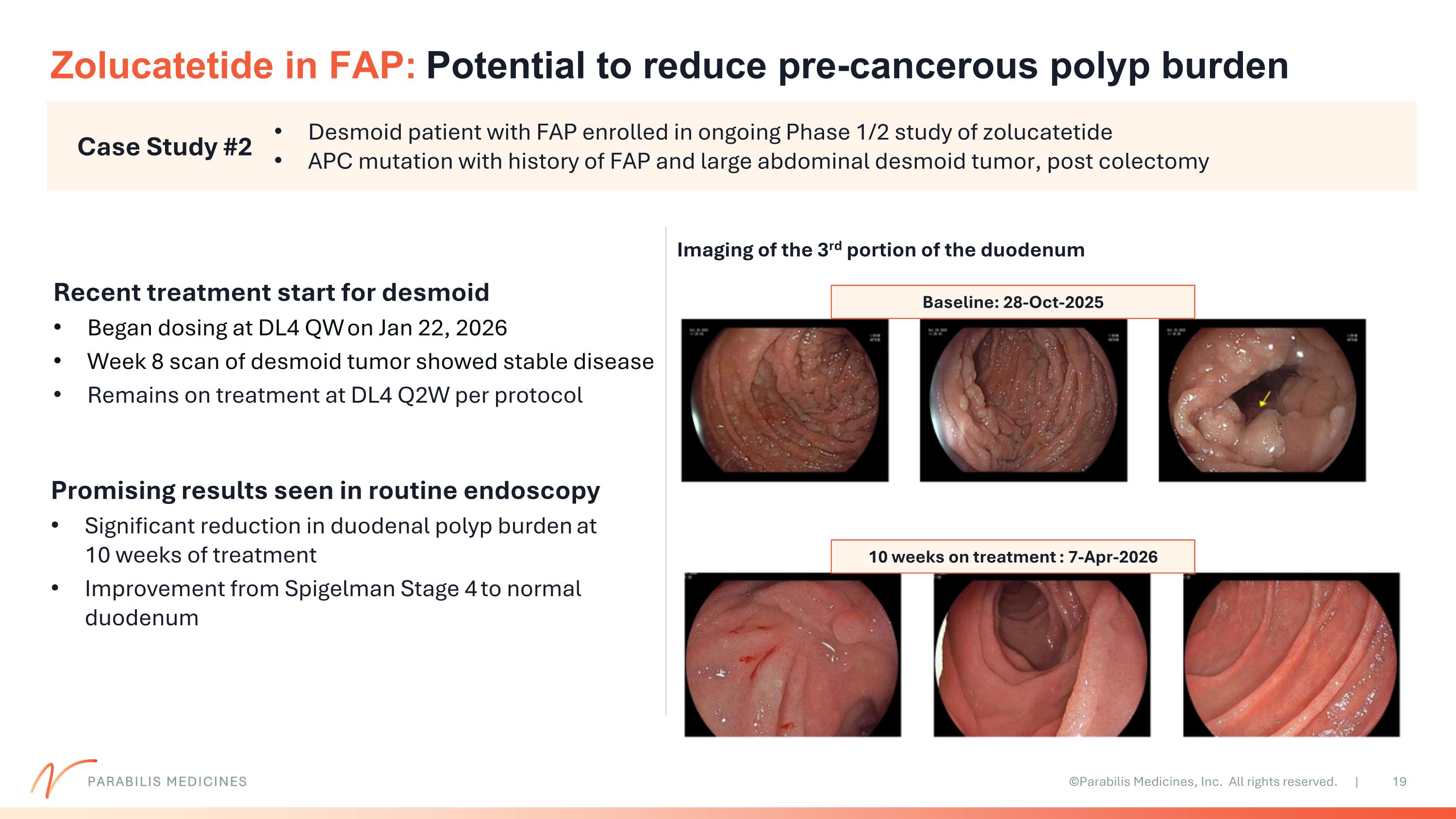
Zolucatetide in FAP: Potential to reduce pre-cancerous polyp burden Case Study #2 Recent treatment start for desmoid Began dosing at DL4 QW on Jan 22, 2026 Week 8 scan of desmoid tumor showed stable disease Remains on treatment at DL4 Q2W per protocol Desmoid patient with FAP enrolled in ongoing Phase 1/2 study of zolucatetide APC mutation with history of FAP and large abdominal desmoid tumor, post colectomy Promising results seen in routine endoscopy Significant reduction in duodenal polyp burden at 10 weeks of treatment Improvement from Spigelman Stage 4 to normal duodenum Baseline: 28-Oct-2025 10 weeks on treatment : 7-Apr-2026 PARABILIS MEDICINES Imaging of the 3rd portion of the duodenum
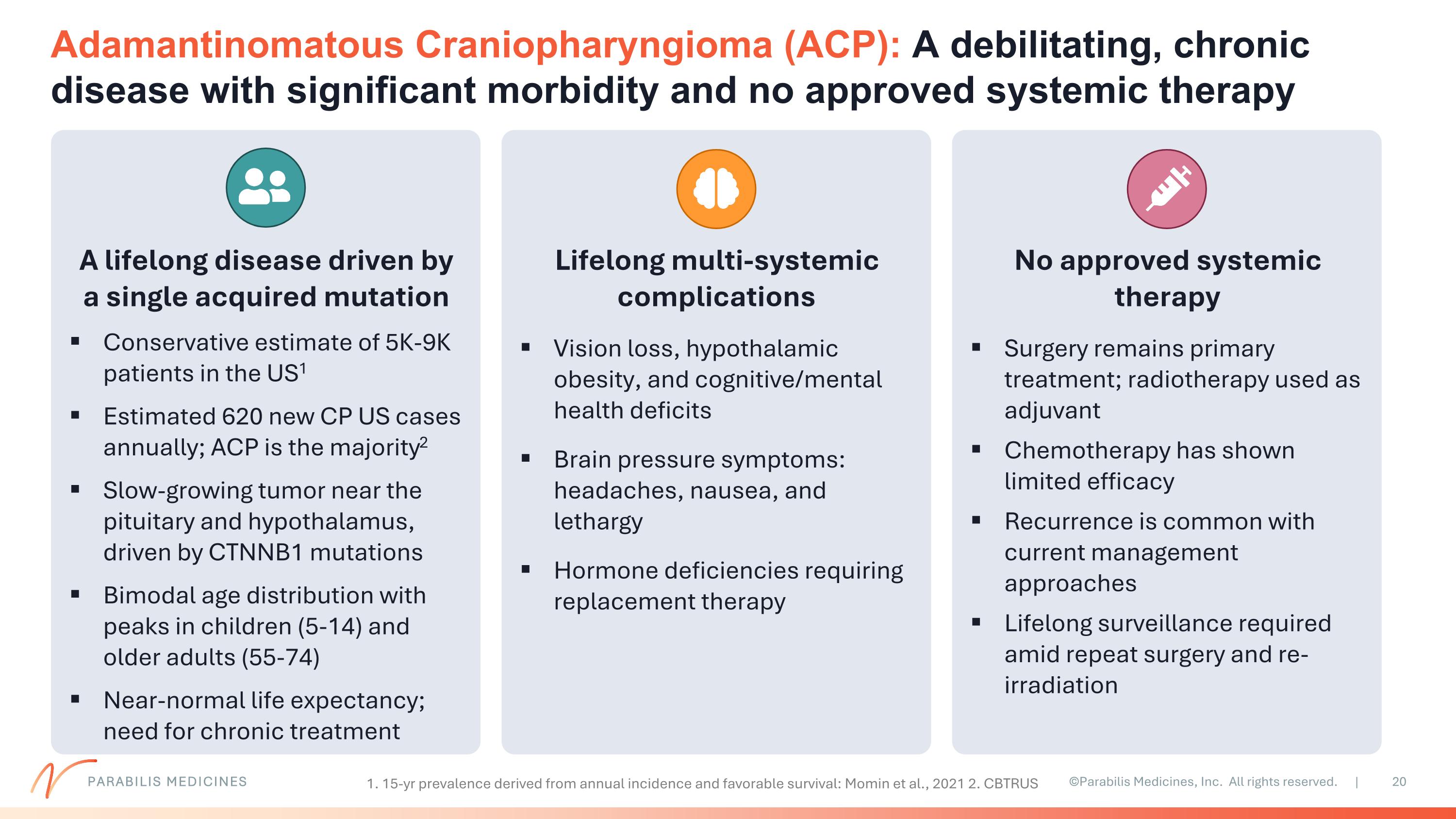
Adamantinomatous Craniopharyngioma (ACP): A debilitating, chronic disease with significant morbidity and no approved systemic therapy A lifelong disease driven by a single acquired mutation Conservative estimate of 5K-9K patients in the US1 Estimated 620 new CP US cases annually; ACP is the majority2 Slow-growing tumor near the pituitary and hypothalamus, driven by CTNNB1 mutations Bimodal age distribution with peaks in children (5-14) and older adults (55-74) Near-normal life expectancy; need for chronic treatment Lifelong multi-systemic complications Vision loss, hypothalamic obesity, and cognitive/mental health deficits Brain pressure symptoms: headaches, nausea, and lethargy Hormone deficiencies requiring replacement therapy No approved systemic therapy Surgery remains primary treatment; radiotherapy used as adjuvant Chemotherapy has shown limited efficacy Recurrence is common with current management approaches Lifelong surveillance required amid repeat surgery and re-irradiation 1. 15-yr prevalence derived from annual incidence and favorable survival: Momin et al., 2021 2. CBTRUS PARABILIS MEDICINES
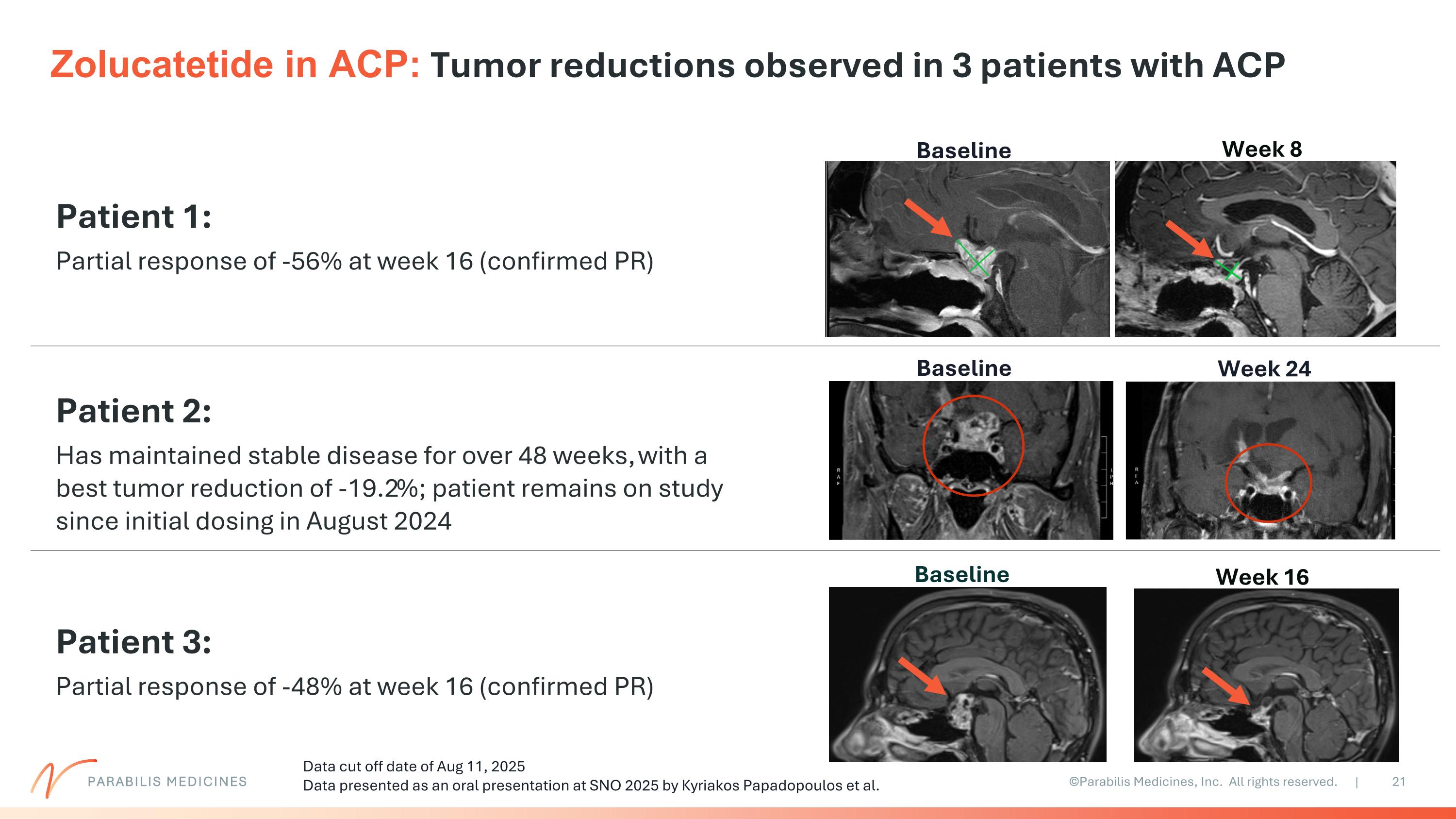
Baseline Week 16 Patient 3: Partial response of -48% at week 16 (confirmed PR) Baseline Week 24 Patient 2: Has maintained stable disease for over 48 weeks, with a best tumor reduction of -19.2%; patient remains on study since initial dosing in August 2024 Baseline Week 8 Patient 1: Partial response of -56% at week 16 (confirmed PR) Zolucatetide in ACP: Tumor reductions observed in 3 patients with ACP PARABILIS MEDICINES Data cut off date of Aug 11, 2025 Data presented as an oral presentation at SNO 2025 by Kyriakos Papadopoulos et al.
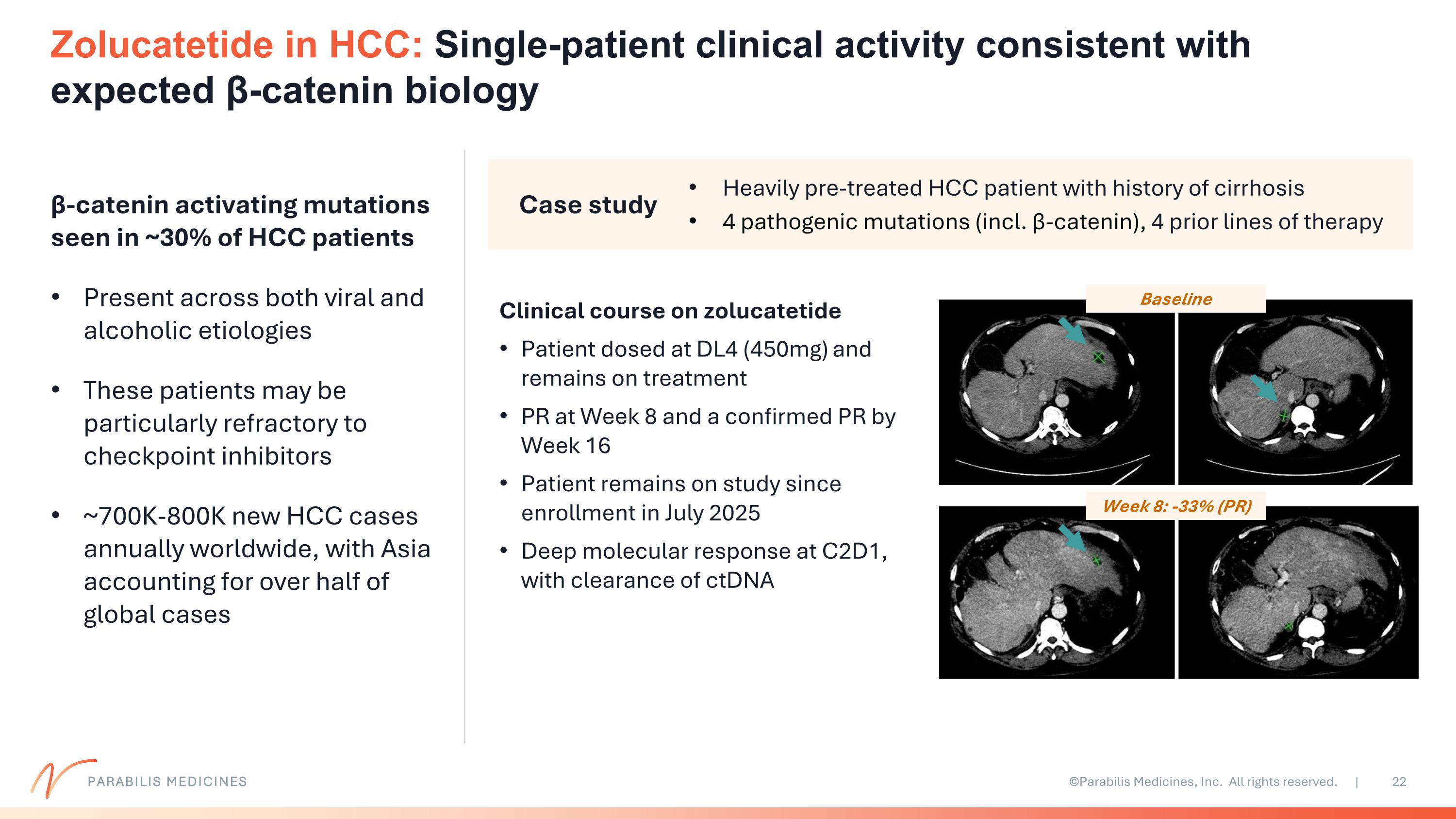
Zolucatetide in HCC: Single-patient clinical activity consistent with expected β-catenin biology Case study Heavily pre-treated HCC patient with history of cirrhosis 4 pathogenic mutations (incl. β-catenin), 4 prior lines of therapy Week 8: -33% (PR) Baseline Clinical course on zolucatetide Patient dosed at DL4 (450mg) and remains on treatment PR at Week 8 and a confirmed PR by Week 16 Patient remains on study since enrollment in July 2025 Deep molecular response at C2D1, with clearance of ctDNA β-catenin activating mutations seen in ~30% of HCC patients Present across both viral and alcoholic etiologies These patients may be particularly refractory to checkpoint inhibitors ~700K-800K new HCC cases annually worldwide, with Asia accounting for over half of global cases PARABILIS MEDICINES
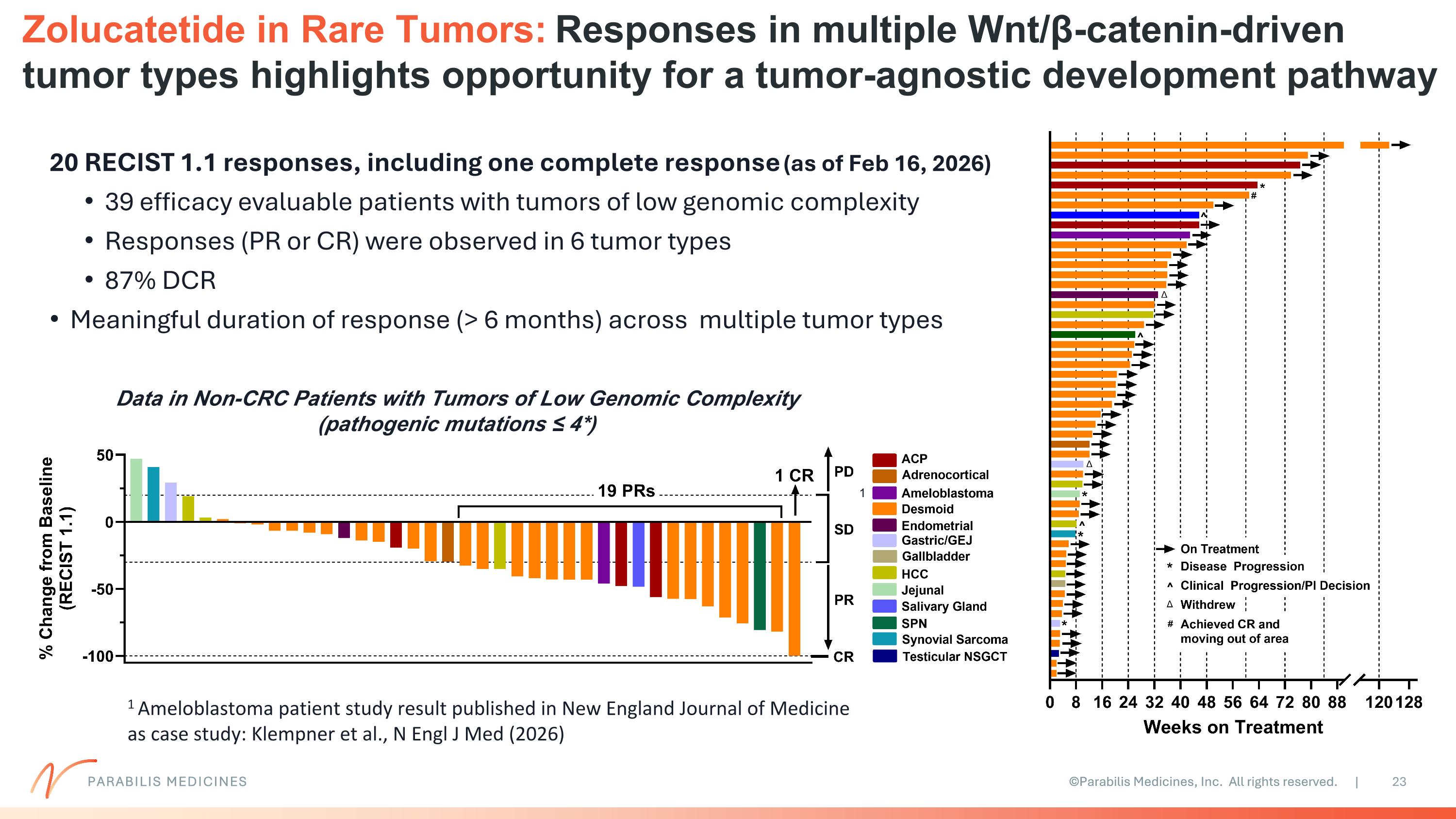
Zolucatetide in Rare Tumors: Responses in multiple Wnt/β-catenin-driven tumor types highlights opportunity for a tumor-agnostic development pathway Data in Non-CRC Patients with Tumors of Low Genomic Complexity (pathogenic mutations ≤ 4*) 20 RECIST 1.1 responses, including one complete response (as of Feb 16, 2026) 39 efficacy evaluable patients with tumors of low genomic complexity Responses (PR or CR) were observed in 6 tumor types 87% DCR Meaningful duration of response (> 6 months) across multiple tumor types 1 1 Ameloblastoma patient study result published in New England Journal of Medicine as case study: Klempner et al., N Engl J Med (2026) PARABILIS MEDICINES
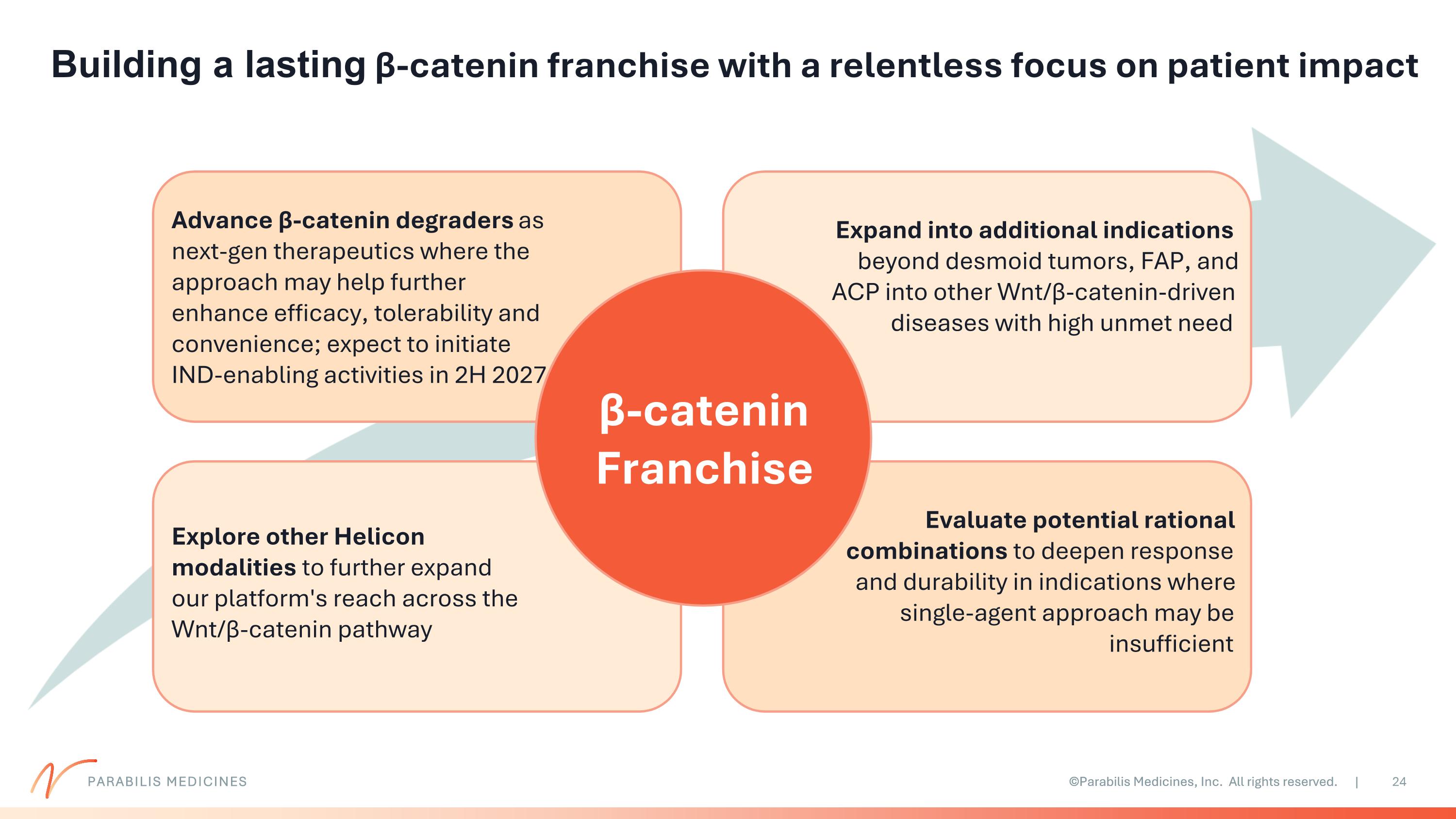
Building a lasting β-catenin franchise with a relentless focus on patient impact PARABILIS MEDICINES β-catenin Franchise Advance β-catenin degraders as next-gen therapeutics where the approach may help further enhance efficacy, tolerability and convenience; expect to initiate IND-enabling activities in 2H 2027 Explore other Helicon modalities to further expand our platform's reach across the Wnt/β-catenin pathway Expand into additional indications beyond desmoid tumors, FAP, and ACP into other Wnt/β-catenin-driven diseases with high unmet need Evaluate potential rational combinations to deepen response and durability in indications where single-agent approach may be insufficient
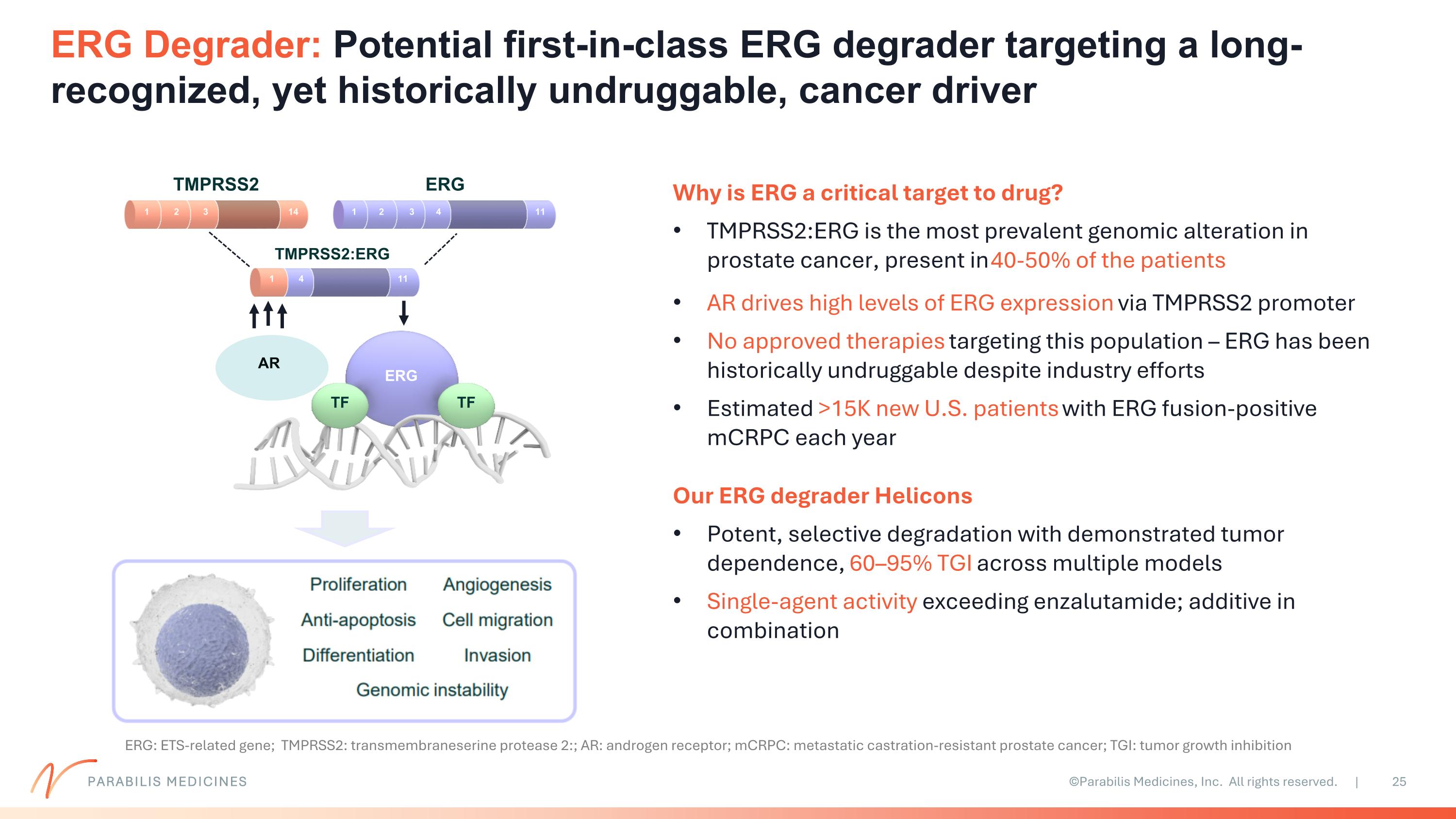
ERG Degrader: Potential first-in-class ERG degrader targeting a long-recognized, yet historically undruggable, cancer driver PARABILIS MEDICINES Why is ERG a critical target to drug? TMPRSS2:ERG is the most prevalent genomic alteration in prostate cancer, present in 40-50% of the patients AR drives high levels of ERG expression via TMPRSS2 promoter No approved therapies targeting this population – ERG has been historically undruggable despite industry efforts Estimated >15K new U.S. patients with ERG fusion-positive mCRPC each year Our ERG degrader Helicons Potent, selective degradation with demonstrated tumor dependence, 60–95% TGI across multiple models Single-agent activity exceeding enzalutamide; additive in combination ERG TF TF TMPRSS2 ERG TMPRSS2:ERG 1 2 14 3 1 2 11 3 4 1 11 4 AR ERG: ETS-related gene; TMPRSS2: transmembraneserine protease 2:; AR: androgen receptor; mCRPC: metastatic castration-resistant prostate cancer; TGI: tumor growth inhibition
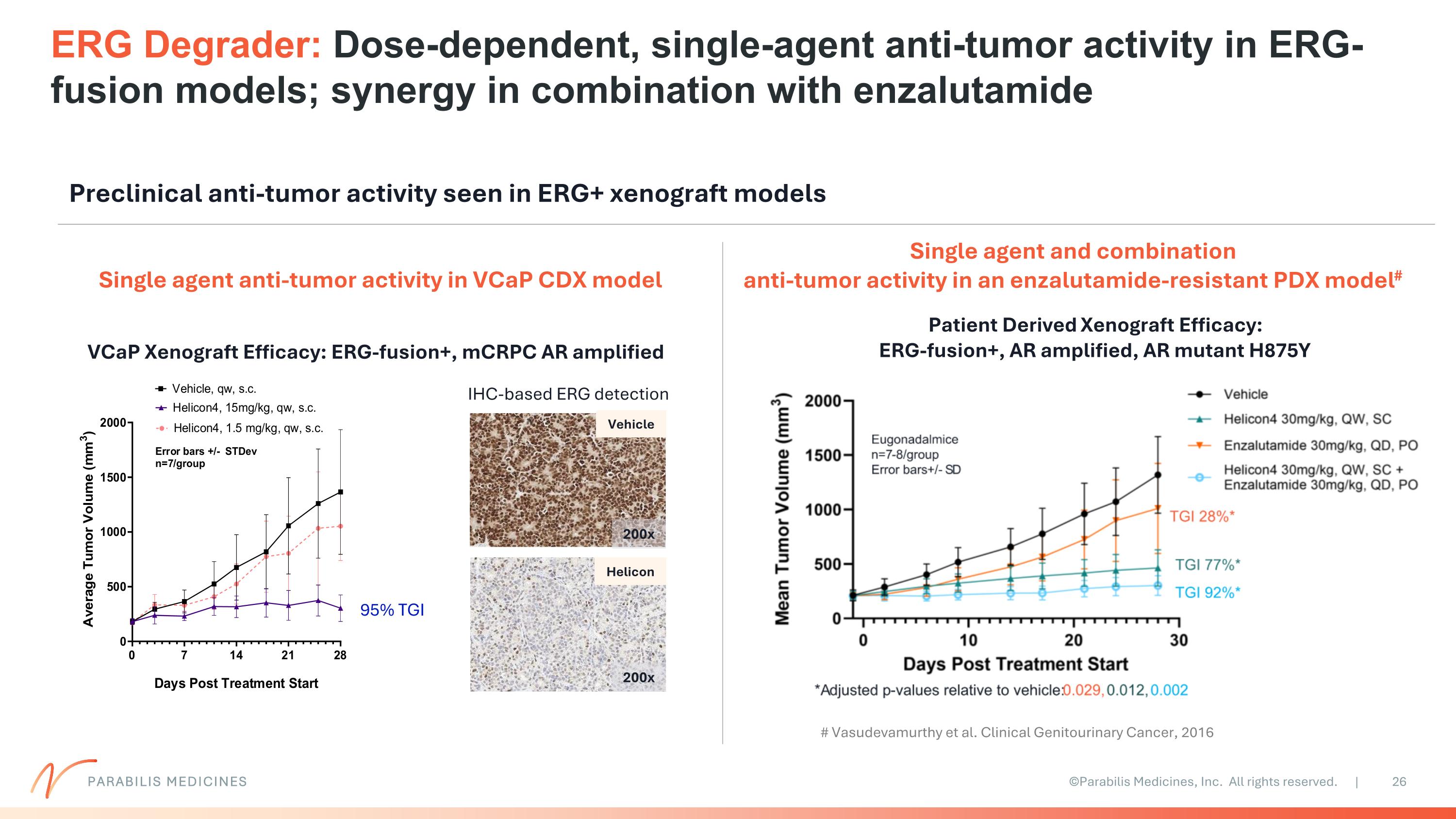
ERG Degrader: Dose-dependent, single-agent anti-tumor activity in ERG-fusion models; synergy in combination with enzalutamide PARABILIS MEDICINES 95% TGI IHC-based ERG detection VCaP Xenograft Efficacy: ERG-fusion+, mCRPC AR amplified Helicon Vehicle 200x 200x Patient Derived Xenograft Efficacy: ERG-fusion+, AR amplified, AR mutant H875Y Single agent anti-tumor activity in VCaP CDX model Single agent and combination anti-tumor activity in an enzalutamide-resistant PDX model# Preclinical anti-tumor activity seen in ERG+ xenograft models # Vasudevamurthy et al. Clinical Genitourinary Cancer, 2016
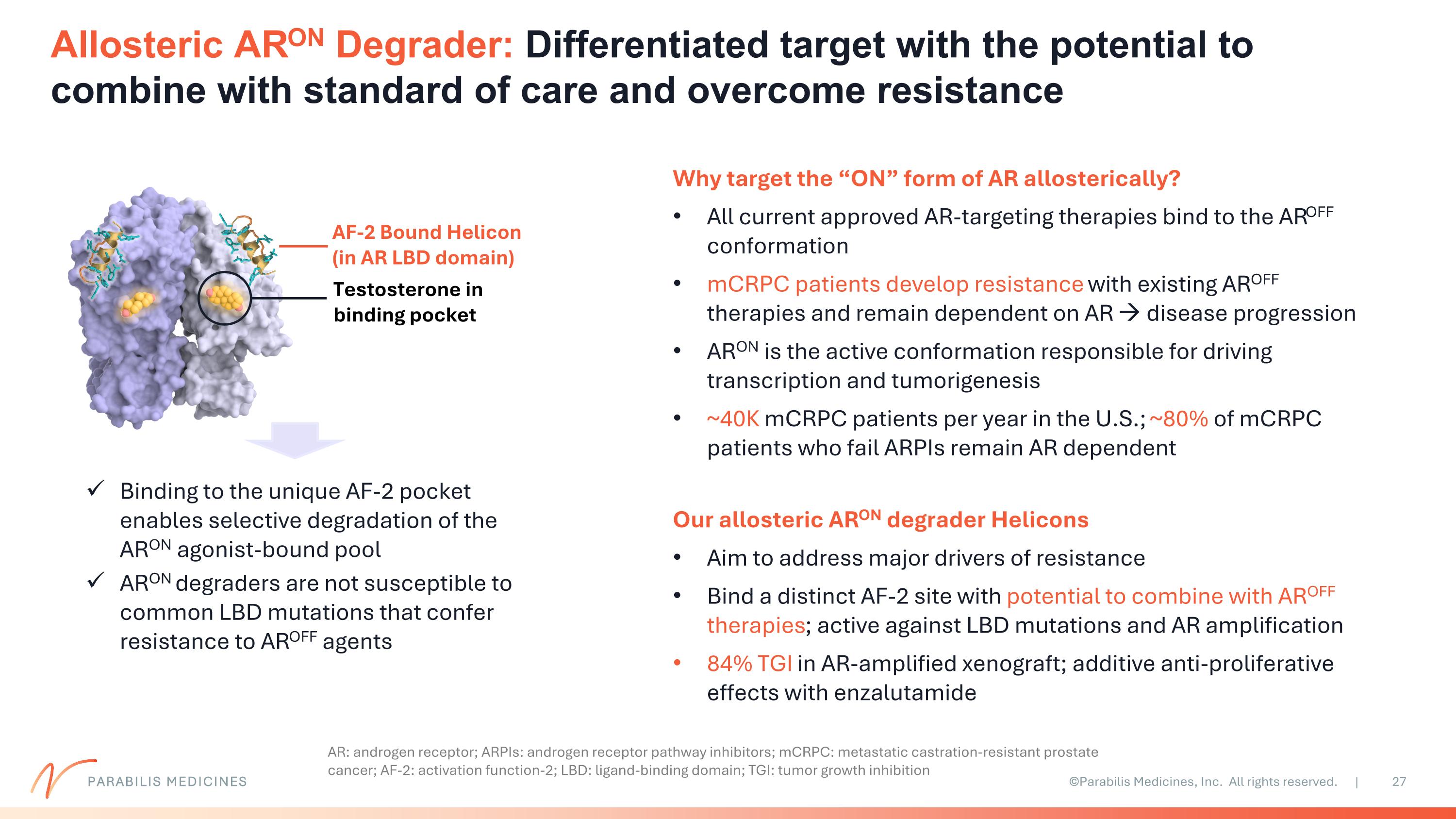
Allosteric ARON Degrader: Differentiated target with the potential to combine with standard of care and overcome resistance PARABILIS MEDICINES Why target the “ON” form of AR allosterically? All current approved AR-targeting therapies bind to the AROFF conformation mCRPC patients develop resistance with existing AROFF therapies and remain dependent on AR disease progression ARON is the active conformation responsible for driving transcription and tumorigenesis ~40K mCRPC patients per year in the U.S.; ~80% of mCRPC patients who fail ARPIs remain AR dependent Our allosteric ARON degrader Helicons Aim to address major drivers of resistance Bind a distinct AF-2 site with potential to combine with AROFF therapies; active against LBD mutations and AR amplification 84% TGI in AR-amplified xenograft; additive anti-proliferative effects with enzalutamide Binding to the unique AF-2 pocket enables selective degradation of the ARON agonist-bound pool ARON degraders are not susceptible to common LBD mutations that confer resistance to AROFF agents Testosterone in binding pocket AF-2 Bound Helicon (in AR LBD domain) AR: androgen receptor; ARPIs: androgen receptor pathway inhibitors; mCRPC: metastatic castration-resistant prostate cancer; AF-2: activation function-2; LBD: ligand-binding domain; TGI: tumor growth inhibition
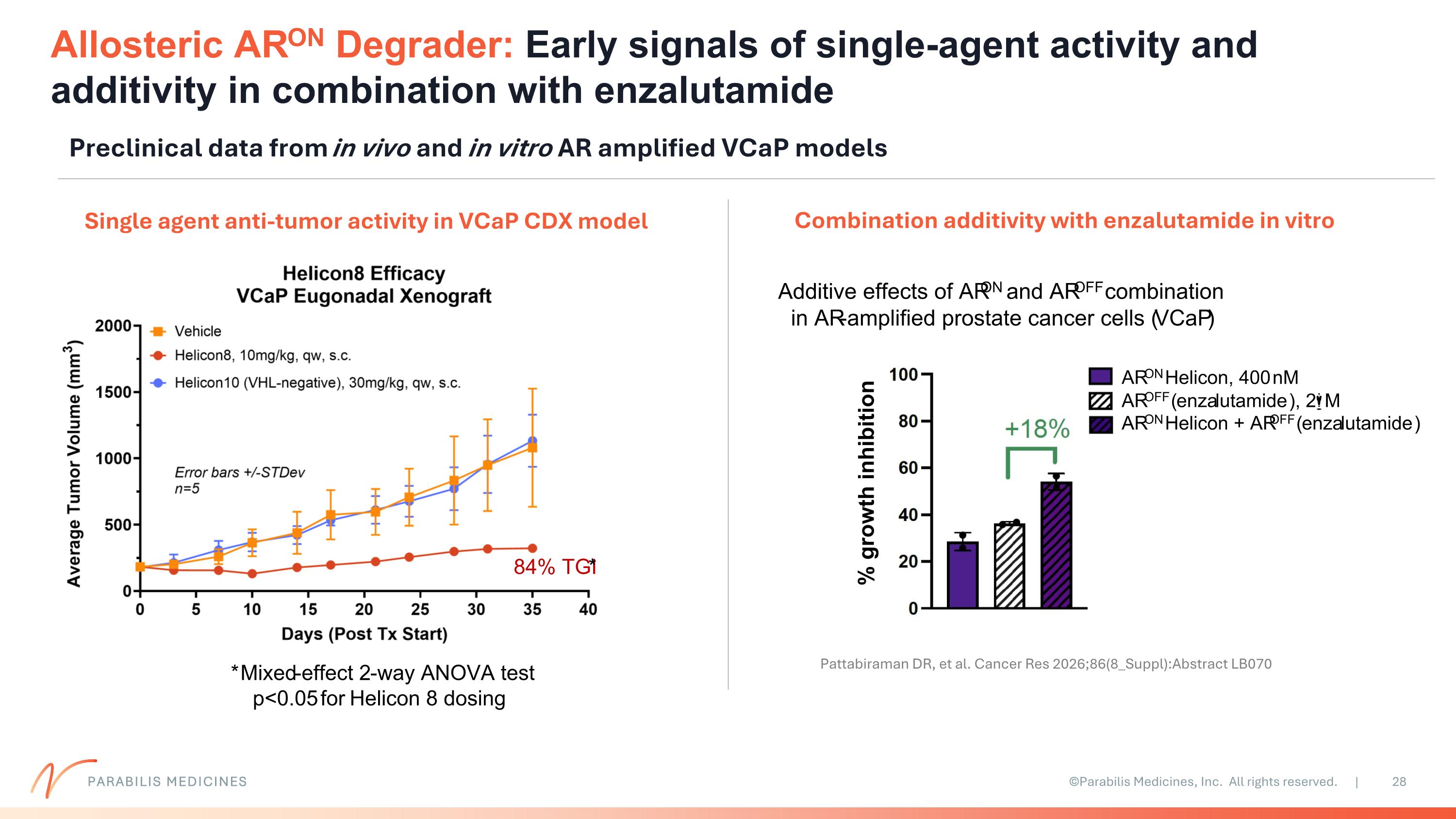
PARABILIS MEDICINES Allosteric ARON Degrader: Early signals of single-agent activity and additivity in combination with enzalutamide Preclinical data from in vivo and in vitro AR amplified VCaP models Single agent anti-tumor activity in VCaP CDX model Combination additivity with enzalutamide in vitro Pattabiraman DR, et al. Cancer Res 2026;86(8_Suppl):Abstract LB070
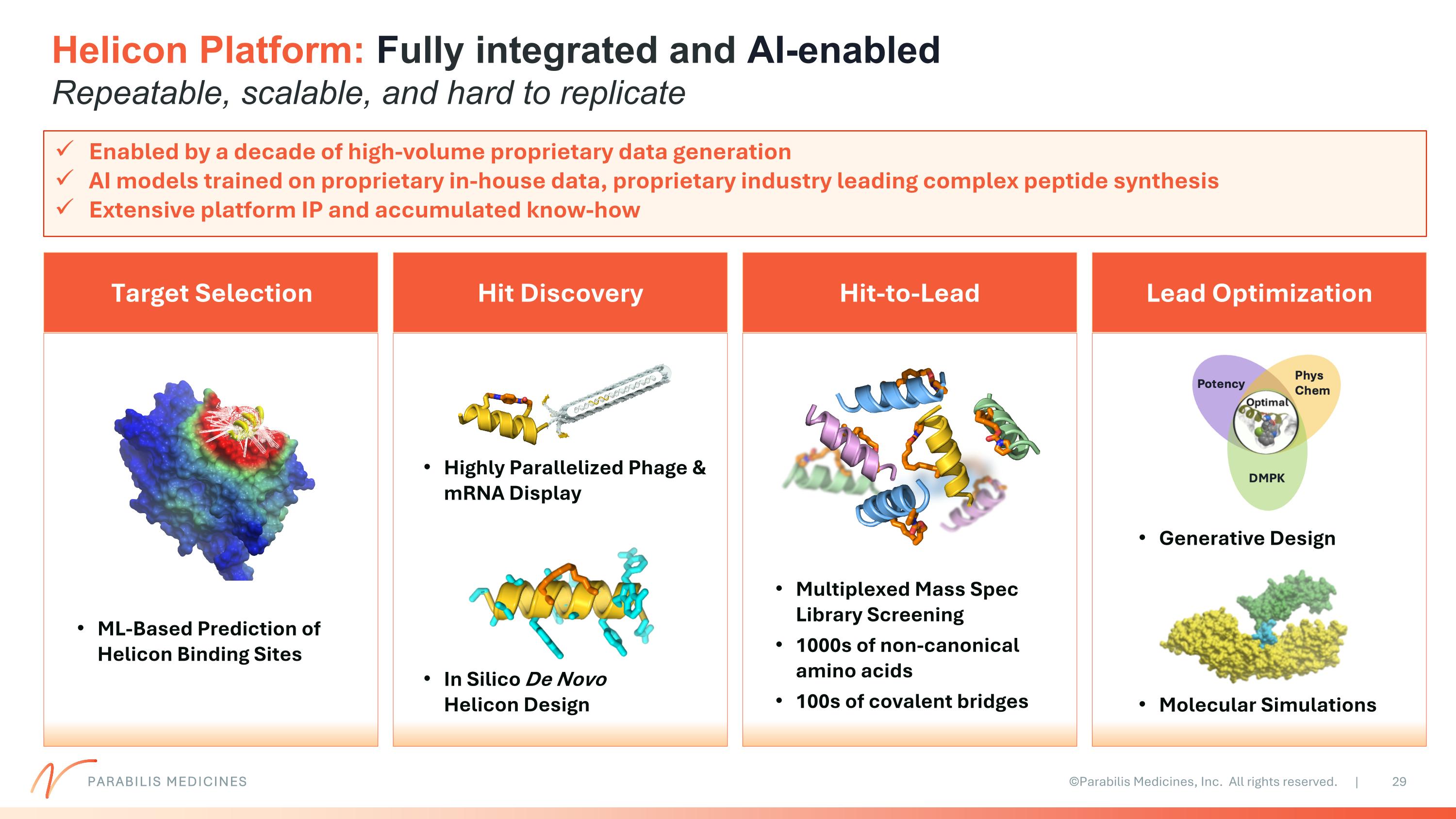
Helicon Platform: Fully integrated and AI-enabled Repeatable, scalable, and hard to replicate Enabled by a decade of high-volume proprietary data generation AI models trained on proprietary in-house data, proprietary industry leading complex peptide synthesis Extensive platform IP and accumulated know-how Target Selection ML-Based Prediction of Helicon Binding Sites Highly Parallelized Phage & mRNA Display In Silico De Novo Helicon Design Hit Discovery Multiplexed Mass Spec Library Screening 1000s of non-canonical amino acids 100s of covalent bridges Hit-to-Lead Lead Optimization Generative Design Molecular Simulations PARABILIS MEDICINES
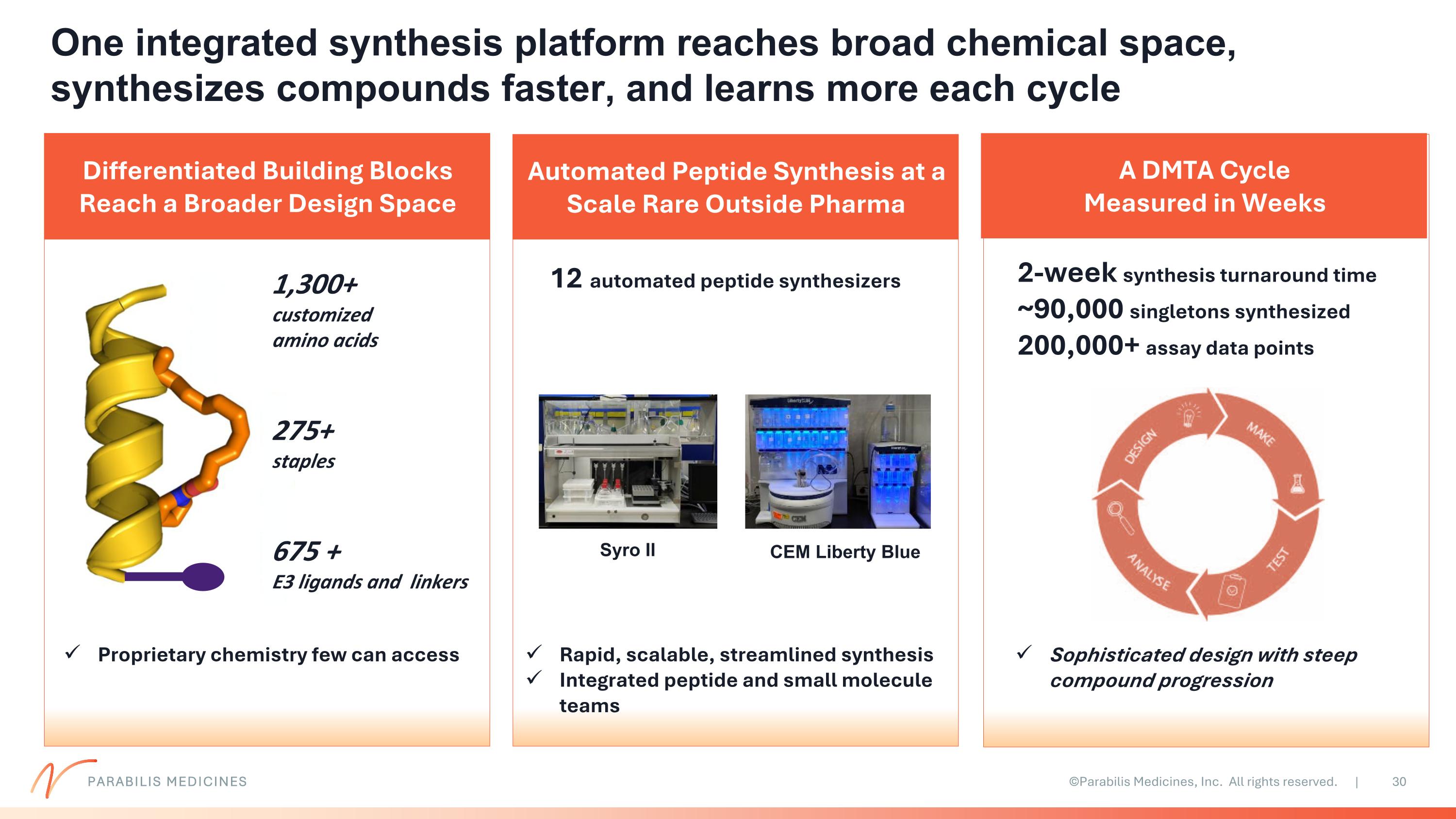
Differentiated Building Blocks Reach a Broader Design Space A DMTA Cycle Measured in Weeks Automated Peptide Synthesis at a Scale Rare Outside Pharma 12 automated peptide synthesizers CEM Liberty Blue Syro II 2-week synthesis turnaround time ~90,000 singletons synthesized 200,000+ assay data points 1,300+ customized amino acids 275+ staples 675 + E3 ligands and linkers Sophisticated design with steep compound progression One integrated synthesis platform reaches broad chemical space, synthesizes compounds faster, and learns more each cycle PARABILIS MEDICINES Proprietary chemistry few can access Rapid, scalable, streamlined synthesis Integrated peptide and small molecule teams
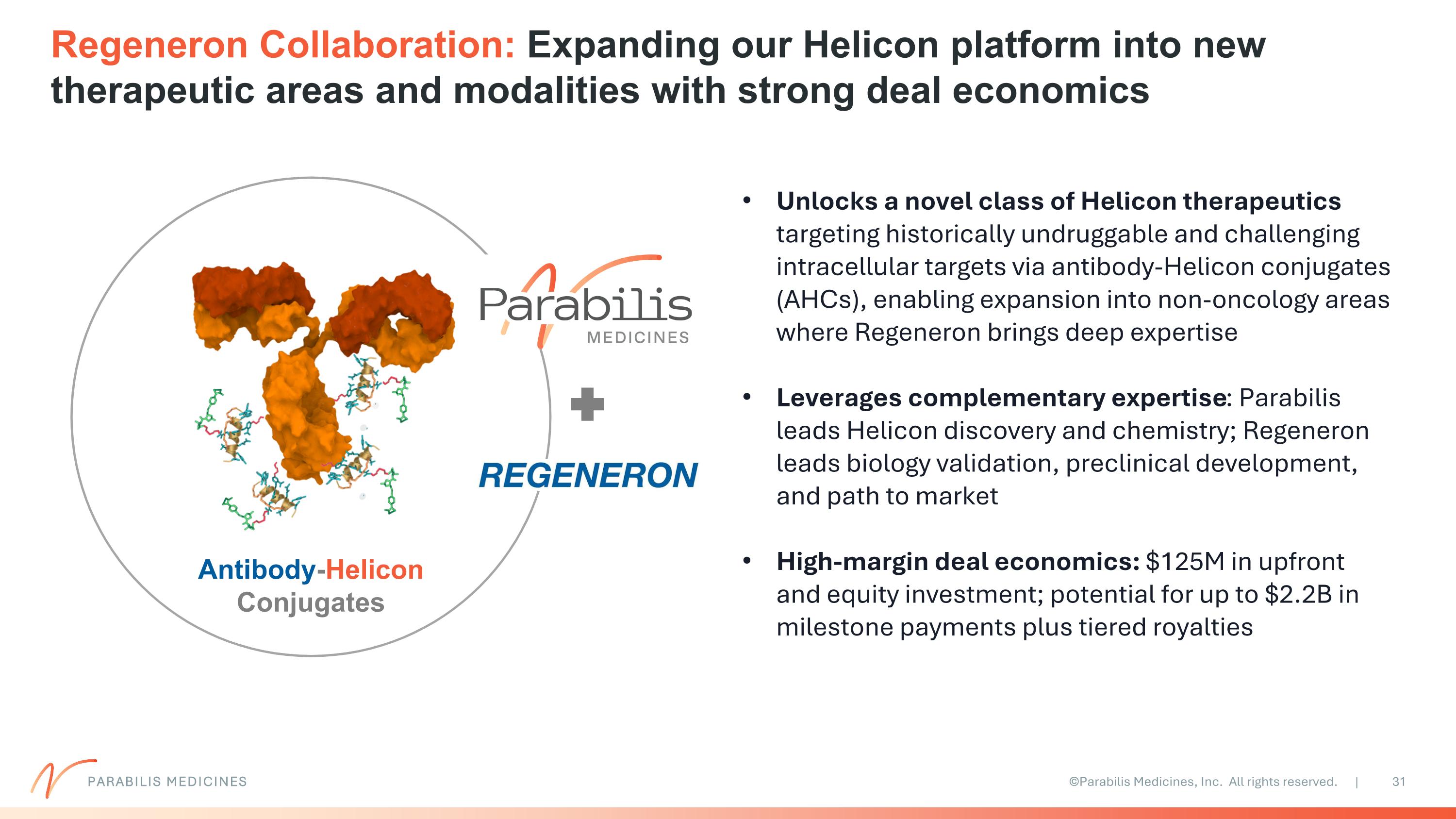
Regeneron Collaboration: Expanding our Helicon platform into new therapeutic areas and modalities with strong deal economics Antibody-Helicon Conjugates Unlocks a novel class of Helicon therapeutics targeting historically undruggable and challenging intracellular targets via antibody-Helicon conjugates (AHCs), enabling expansion into non-oncology areas where Regeneron brings deep expertise Leverages complementary expertise: Parabilis leads Helicon discovery and chemistry; Regeneron leads biology validation, preclinical development, and path to market High-margin deal economics: $125M in upfront and equity investment; potential for up to $2.2B in milestone payments plus tiered royalties PARABILIS MEDICINES
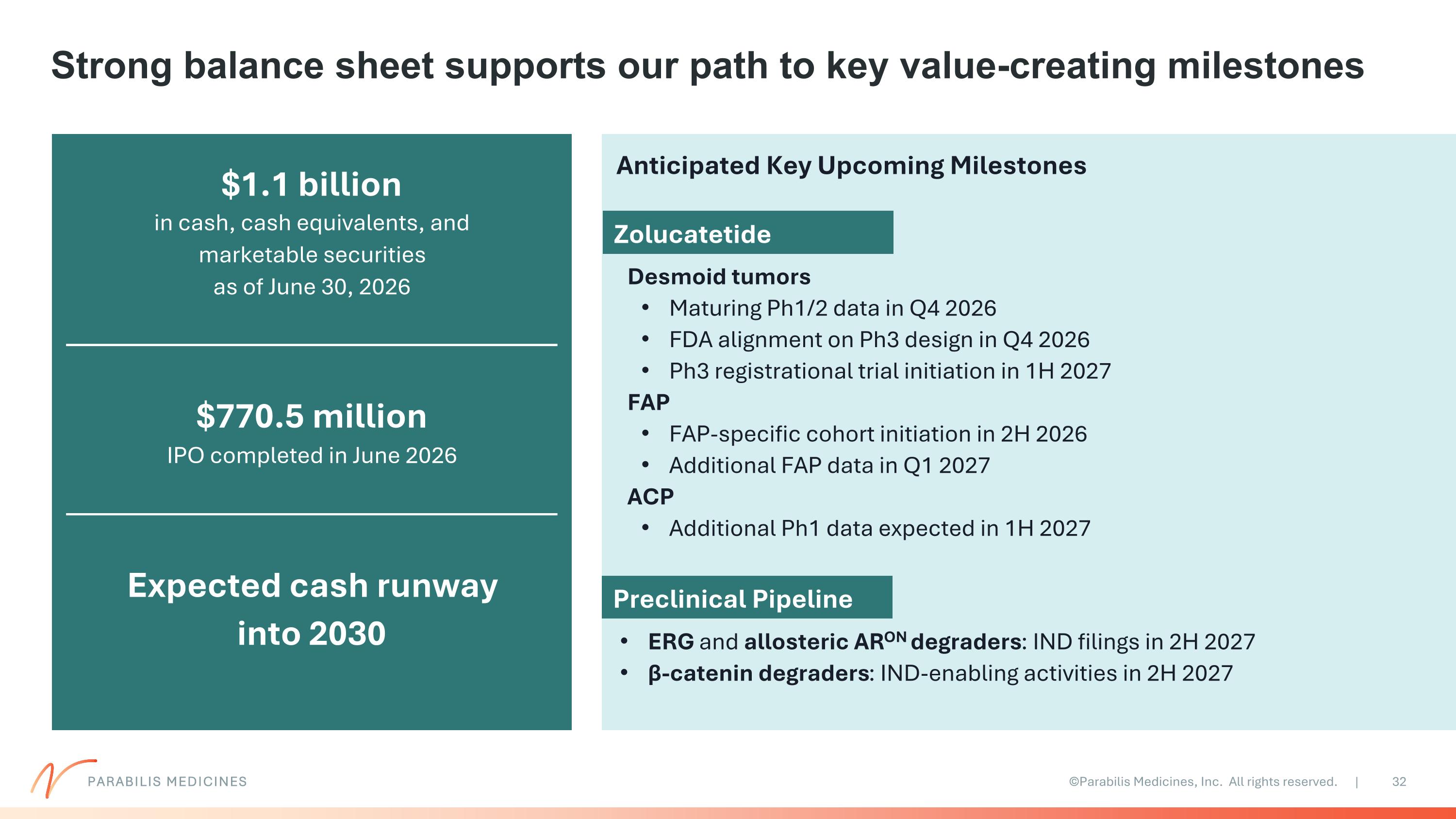
Strong balance sheet supports our path to key value-creating milestones $1.1 billion in cash, cash equivalents, and marketable securities as of June 30, 2026 $770.5 million IPO completed in June 2026 Expected cash runway into 2030 PARABILIS MEDICINES Zolucatetide Preclinical Pipeline Desmoid tumors Maturing Ph1/2 data in Q4 2026 FDA alignment on Ph3 design in Q4 2026 Ph3 registrational trial initiation in 1H 2027 FAP FAP-specific cohort initiation in 2H 2026 Additional FAP data in Q1 2027 ACP Additional Ph1 data expected in 1H 2027 Anticipated Key Upcoming Milestones ERG and allosteric ARON degraders: IND filings in 2H 2027 β-catenin degraders: IND-enabling activities in 2H 2027