Exhibit 99.2
NEO100 - 01 NCT02704858: A Phase 1/2a Safety and Efficacy Study in Recurrent or Progressive Grade III or IV IDH1 - Mutated Glioma Reporting out the Phase 2a objectives August 12, 2026
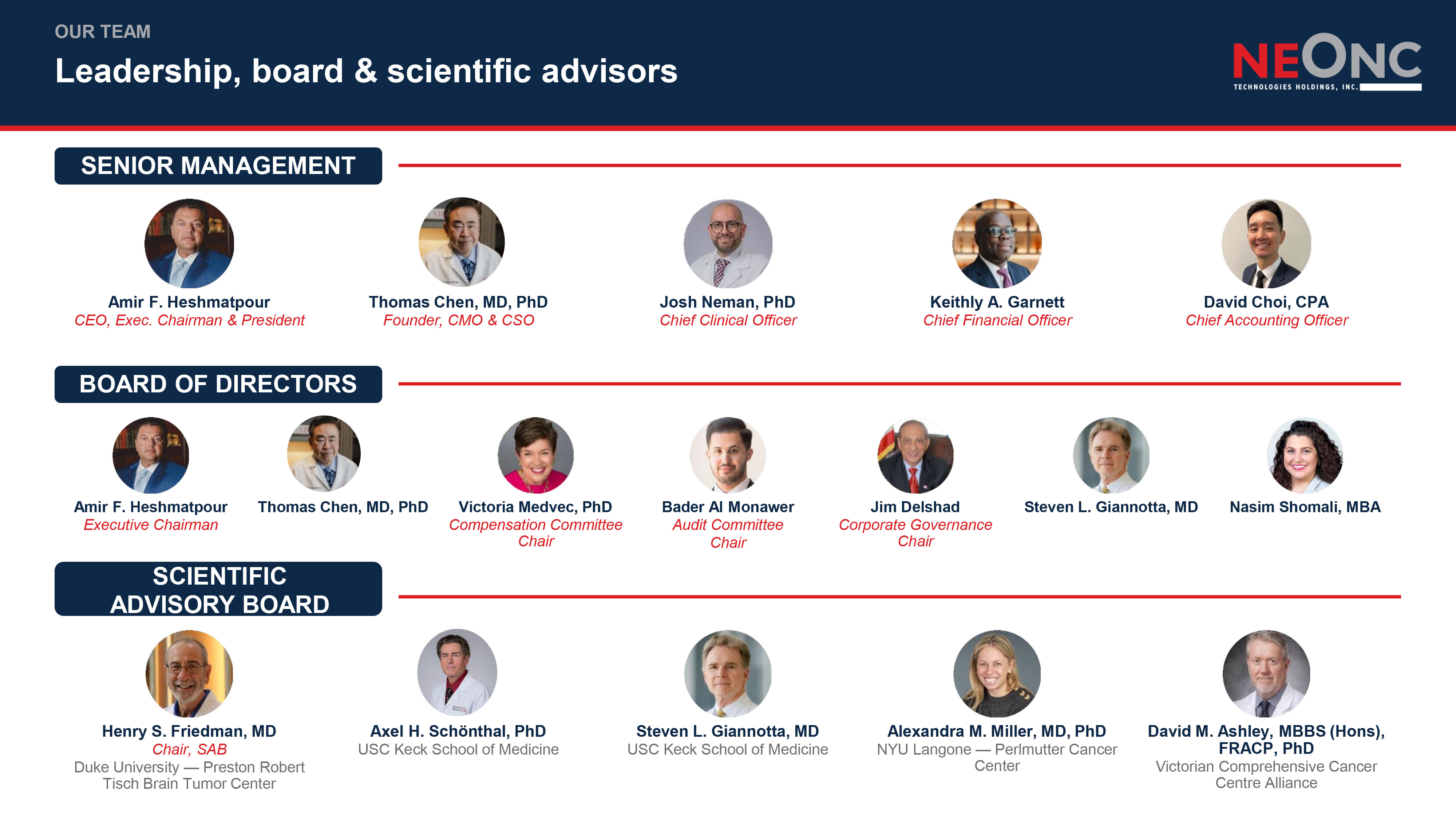
OUR TEAM Leadership, board & scientific advisors SENIOR MANAGEMENT Amir F. Heshmatpour CEO, Exec. Chairman & President Thomas Chen, MD, PhD Founder, CMO & CSO Josh Neman, PhD Chief Clinical Officer Keithly A. Garnett Chief Financial Officer David Choi, CPA Chief Accounting Officer BOARD OF DIRECTORS Amir F. Heshmatpour Executive Chairman Thomas Chen, MD, PhD Victoria Medvec, PhD Compensation Committee Chair Bader Al Monawer Audit Committee Chair Steven L. Giannotta, MD Jim Delshad Corporate Governance Chair Nasim Shomali, MBA SCIENTIFIC ADVISORY BOARD Henry S. Friedman, MD Chair, SAB Duke University — Preston Robert Tisch Brain Tumor Center Axel H. Schönthal, PhD USC Keck School of Medicine Steven L. Giannotta, MD USC Keck School of Medicine Alexandra M. Miller, MD, PhD NYU Langone — Perlmutter Cancer Center David M. Ashley, MBBS (Hons), FRACP, PhD Victorian Comprehensive Cancer Centre Alliance
2
DISCLAIMER Important cautions regarding forward - looking statements This document does not constitute or form part of an invitation or recommendation to subscribe for or purchase any securities. The distribution may be restricted by law in certain jurisdictions and persons into whose possession this document comes should inform themselves about, and observe, any such restriction. Any failure to comply with these restrictions may constitute a violation of the laws of any such jurisdiction. NeOnc Technologies Holdings, Inc. (“ NeOnc ”, “Company,” “our” or “ours”) shall not have any responsibility for any such violations. Any decision to purchase or subscribe for securities in any offering must be made solely on the basis of the information issued in connection with such offering. This document was prepared exclusively for the benefit and internal use of investors to evaluate the feasibility of a possible transaction or transactions and does not carry any right of publication or disclosure to any other party. This document is incomplete without reference to and should be viewed solely in conjunction with, the oral briefing provided by the Company. This presentation may not be used for any other purpose without the prior written consent of the Company. In preparing this document, we have relied upon and assumed, without independent verification, the accuracy and completeness of all information available from public sources or which was provided to us or otherwise reviewed by us. We do not represent that such information is accurate or complete, and it should not be relied on as such. Any opinions expressed herein reflect our judgment at this date, all of which are accordingly subject to change. We have based the forward - looking statements on our current expectations and projections about future events. These forward - looking statements are subject to known and unknown risks, uncertainties, and assumptions about us and our affiliate companies with respect to specific factors identified in this presentation and the Company’s filings with the U.S. Securities Exchange Commission, and which may cause our actual results, levels of activity, performance or achievements expressed or implied by such forward - looking statements differ materially from those currently anticipated in such statements. This presentation has been prepared by the Company for informational purposes only and not for any other purpose. This presentation shall not constitute an offer to sell or the solicitation of an offer to buy, nor shall there be any sale of securities in any jurisdiction in which such offer, solicitation or sale would be unlawful prior to the registration or qualification under the securities laws of any such jurisdiction. THIS PRESENTATION AND ANY OTHER INFORMATION THAT MAY BE FURNISHED BY US INCLUDES OR MAY INCLUDE CERTAIN STATEMENTS, ESTIMATES AND FORWARD - LOOKING PROJECTIONS OF THE COMPANY WITH RESPECT TO THE ANTICIPATED FUTURE PERFORMANCE OF THE COMPANY. SUCH STATEMENTS, ESTIMATES AND FORWARD - LOOKING PROJECTIONS REFLECT VARIOUS ASSUMPTIONS OF MANAGEMENT THAT MAY OR MAY NOT PROVE TO BE CORRECT AND INVOLVE VARIOUS RISKS AND UNCERTAINTIES. © NeOnc Technologies Holdings, Inc. 2022 – 2025. All Rights Reserved. Proprietary.
3
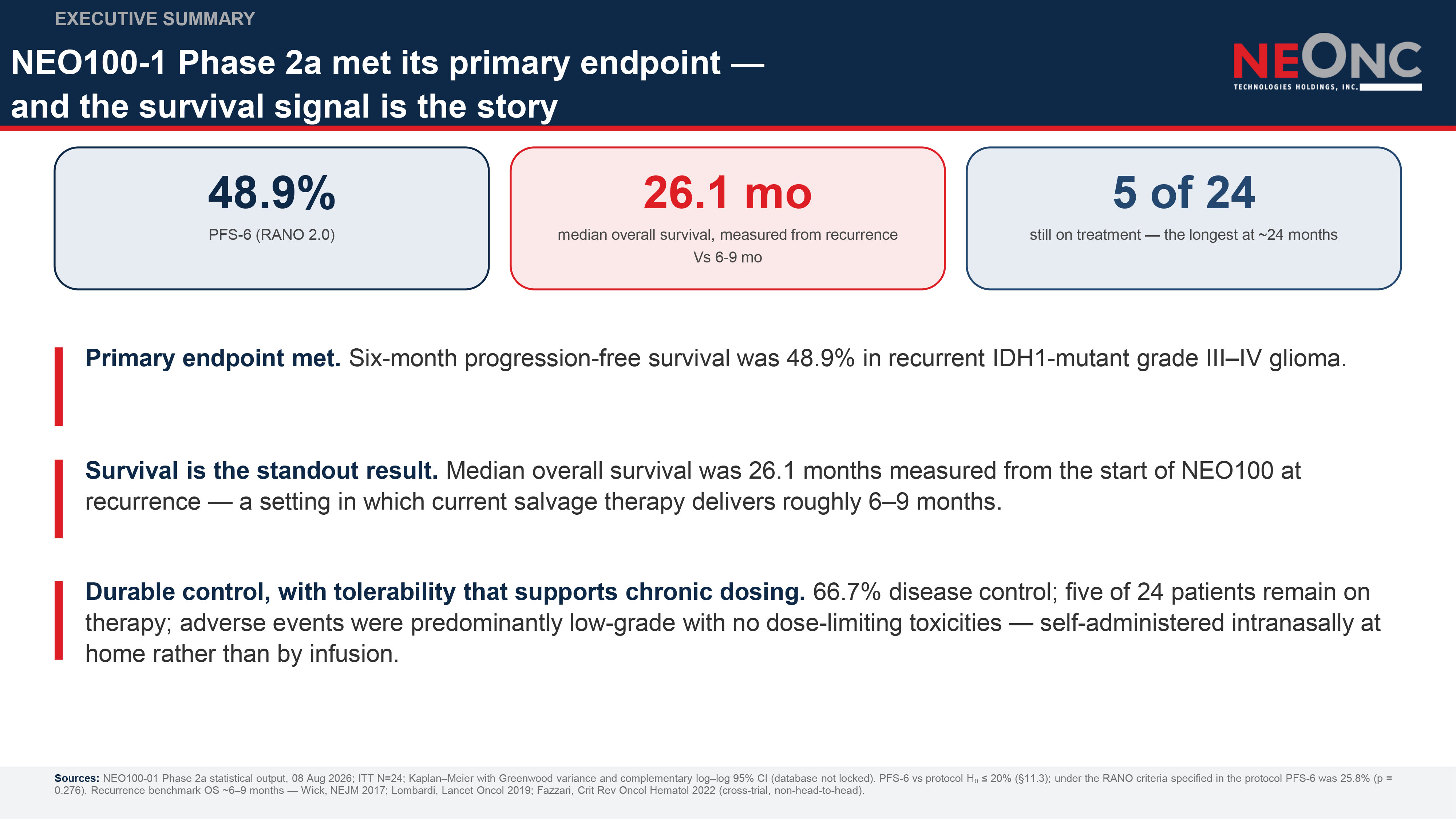
EXECUTIVE SUMMARY NEO100 - 1 Phase 2a met its primary endpoint — and the survival signal is the story 48.9% PFS - 6 (RANO 2.0) 26.1 mo median overall survival, measured from recurrence Vs 6 - 9 mo 5 of 24 still on treatment — the longest at ~24 months Primary endpoint met. Six - month progression - free survival was 48.9 % in recurrent IDH1 - mutant grade III – IV glioma. Survival is the standout result. Median overall survival was 26.1 months measured from the start of NEO100 at recurrence — a setting in which current salvage therapy delivers roughly 6 – 9 months. Durable control, with tolerability that supports chronic dosing. 66.7% disease control; five of 24 patients remain on therapy; adverse events were predominantly low - grade with no dose - limiting toxicities — self - administered intranasally at home rather than by infusion. Sources: NEO100 - 01 Phase 2a statistical output, 08 Aug 2026; ITT N=24; Kaplan – Meier with Greenwood variance and complementary log – log 95% CI (database not locked). PFS - 6 vs protocol H ₀ ≤ 20% ( § 11.3); under the RANO criteria specified in the protocol PFS - 6 was 25.8% (p = 0.276). Recurrence benchmark OS ~6 – 9 months — Wick, NEJM 2017; Lombardi, Lancet Oncol 2019; Fazzari, Crit Rev Oncol Hematol 2022 (cross - trial, non - head - to - head).
4
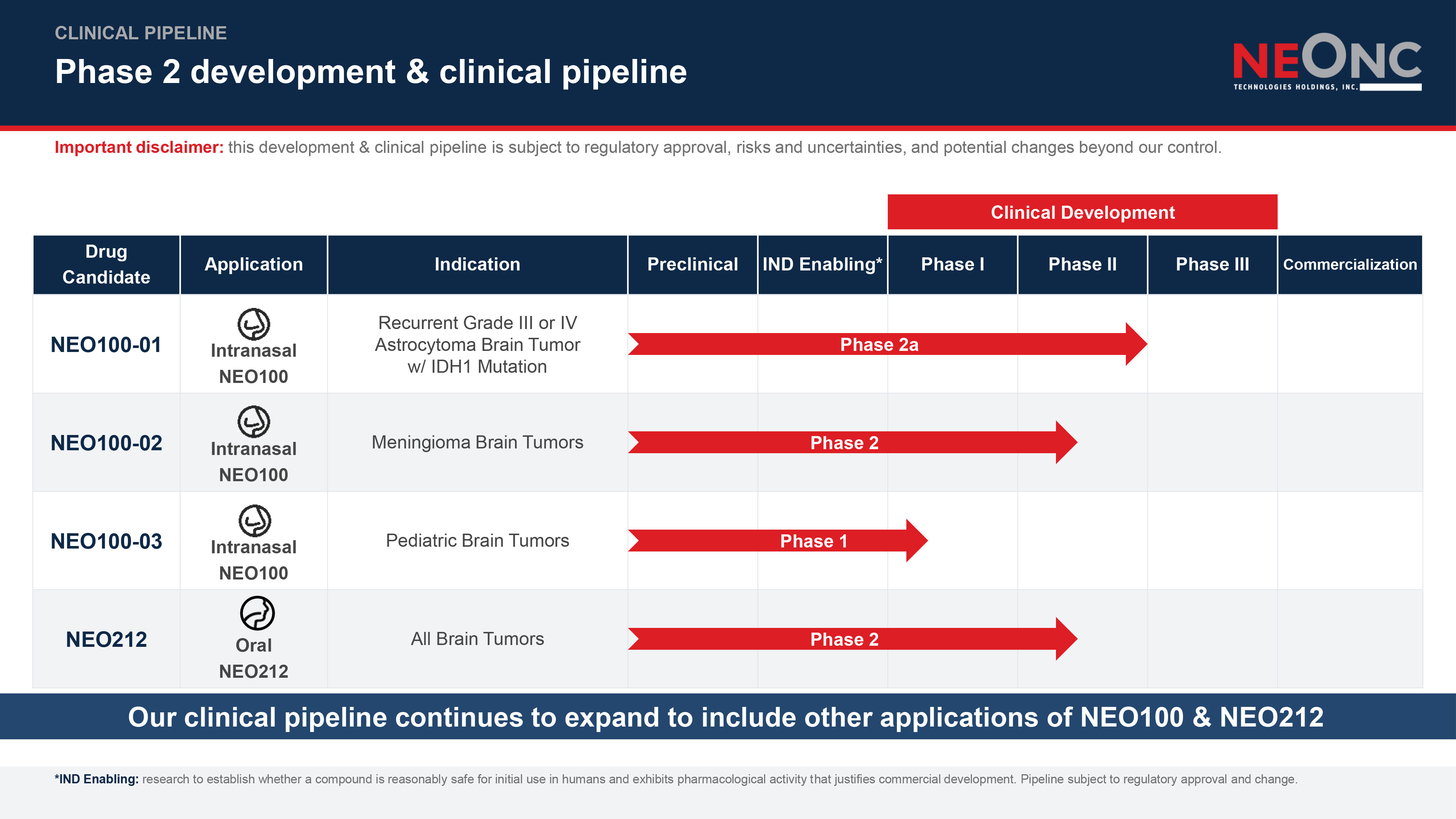
CLINICAL PIPELINE Phase 2 development & clinical pipeline Important disclaimer: this development & clinical pipeline is subject to regulatory approval, risks and uncertainties, and potential changes beyond ou r control. Clinical Development Drug Candidate Application Indication Preclinical IND Enabling* Phase I Phase II Phase III Commercialization NEO100 - 01 Intranasal NEO100 Recurrent Grade III or IV Astrocytoma Brain Tumor w/ IDH1 Mutation NEO100 - 02 Intranasal NEO100 Meningioma Brain Tumors NEO100 - 03 Intranasal NEO100 Pediatric Brain Tumors NEO212 Oral NEO212 All Brain Tumors Phase 2a Phase 2 Phase 1 Phase 2 Our clinical pipeline continues to expand to include other applications of NEO100 & NEO212 *IND Enabling: research to establish whether a compound is reasonably safe for initial use in humans and exhibits pharmacological activity t hat justifies commercial development. Pipeline subject to regulatory approval and change.
5
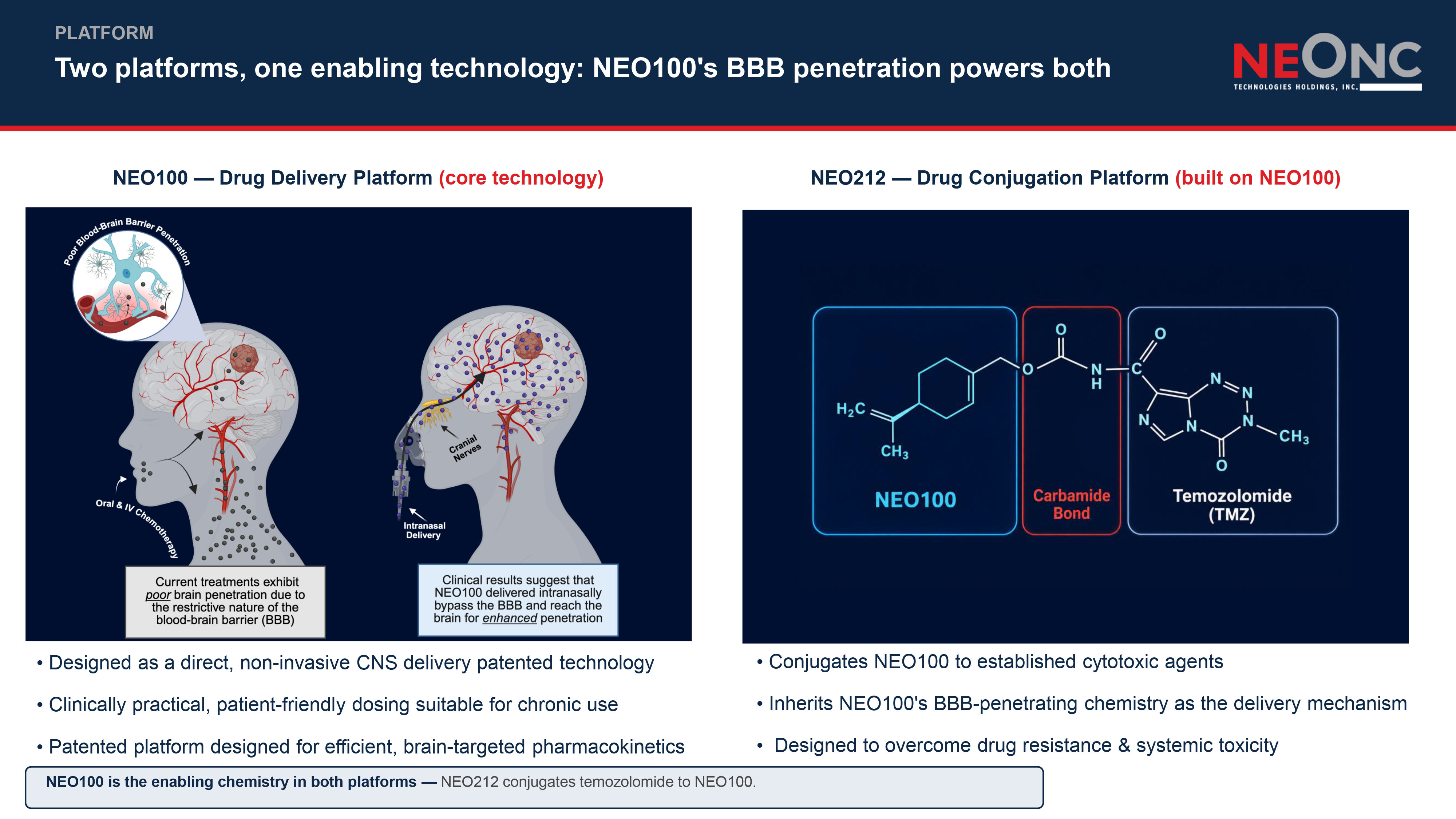
6 NEO100 — Drug Delivery Platform (core technology) NEO212 — Drug Conjugation Platform (built on NEO100) PLATFORM Two platforms, one enabling technology: NEO100's BBB penetration powers both • Conjugates NEO100 to established cytotoxic agents • Inherits NEO100's BBB - penetrating chemistry as the delivery mechanism • Designed to overcome drug resistance & systemic toxicity • Designed as a direct, non - invasive CNS delivery patented technology • Clinically practical, patient - friendly dosing suitable for chronic use • Patented platform designed for efficient, brain - targeted pharmacokinetics NEO100 is the enabling chemistry in both platforms — NEO212 conjugates temozolomide to NEO100.
6
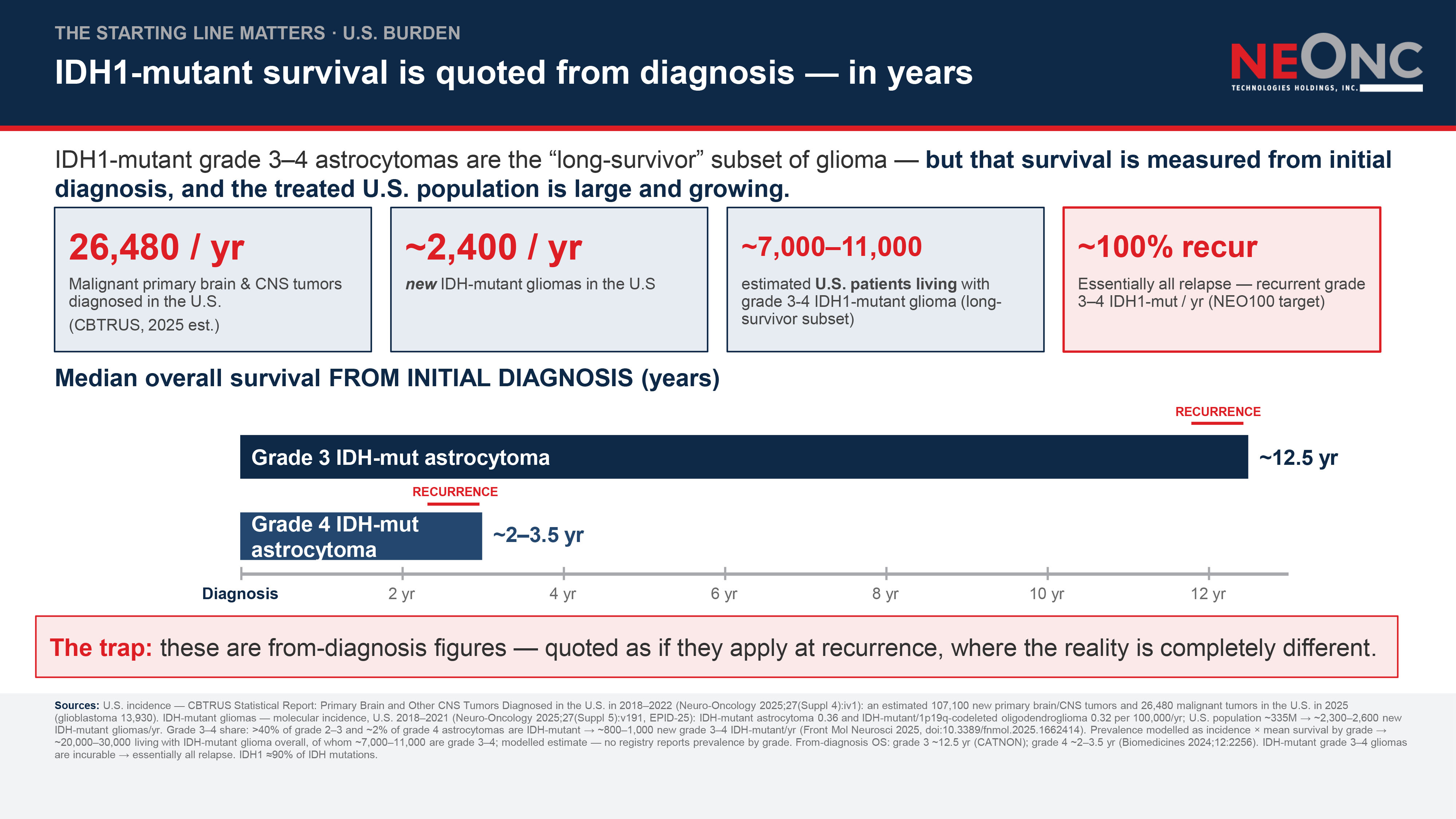
THE STARTING LINE MATTERS · U.S. BURDEN IDH1 - mutant survival is quoted from diagnosis — in years IDH1 - mutant grade 3 – 4 astrocytomas are the “long - survivor” subset of glioma — but that survival is measured from initial diagnosis, and the treated U.S. population is large and growing. 26,480 / yr M alignant primary brain & CNS tumors diagnosed in the U.S. (CBTRUS, 2025 est.) ~2,400 / yr new IDH - mutant gliomas in the U.S ~ 7 ,000 – 11 ,000 estimated U.S. patients living with grade 3 - 4 IDH 1 - mutant glioma (long - survivor subset) ~100% recur Essentially all relapse — recurrent grade 3 – 4 IDH1 - mut / yr (NEO100 target) Median overall survival FROM INITIAL DIAGNOSIS (years) Diagnosis 2 yr 4 yr 6 yr 8 yr 10 yr 12 yr Grade 3 IDH - mut astrocytoma ~12.5 yr Grade 4 IDH - mut astrocytoma ~2 – 3.5 yr The trap: these are from - diagnosis figures — quoted as if they apply at recurrence, where the reality is completely different . Sources: U.S. incidence — CBTRUS Statistical Report: Primary Brain and Other CNS Tumors Diagnosed in the U.S. in 2018 – 2022 (Neuro - Oncolog y 2025;27(Suppl 4):iv1): an estimated 107,100 new primary brain/CNS tumors and 26,480 malignant tumors in the U.S. in 2025 (glioblastoma 13,930). IDH - mutant gliomas — molecular incidence, U.S. 2018 – 2021 (Neuro - Oncology 2025;27(Suppl 5):v191, EPID - 25): IDH - mutant astrocytoma 0.36 and IDH - mutant/1p19q - codeleted oligodendroglioma 0.32 per 100,000/yr; U.S. population ~335M → ~2,30 0 – 2,600 new IDH - mutant gliomas/yr. Grade 3 – 4 share: >40% of grade 2 – 3 and ~2% of grade 4 astrocytomas are IDH - mutant → ~800 – 1,000 new grade 3 – 4 IDH - mutant/yr (Front Mol Neurosci 2025, doi:10.3389/fnmol.2025.1662414). Prevalence modelled as incidence × mean survival by grade → ~20,000 – 30,000 living with IDH - mutant glioma overall, of whom ~7,000 – 11,000 are grade 3 – 4; modelled estimate — no registry repor ts prevalence by grade. From - diagnosis OS: grade 3 ~12.5 yr (CATNON); grade 4 ~2 – 3.5 yr (Biomedicines 2024;12:2256). IDH - mutant grade 3 – 4 gliomas are incurable → essentially all relapse. IDH1 ≈90% of IDH mutations. RECURRENCE RECURRENCE
7
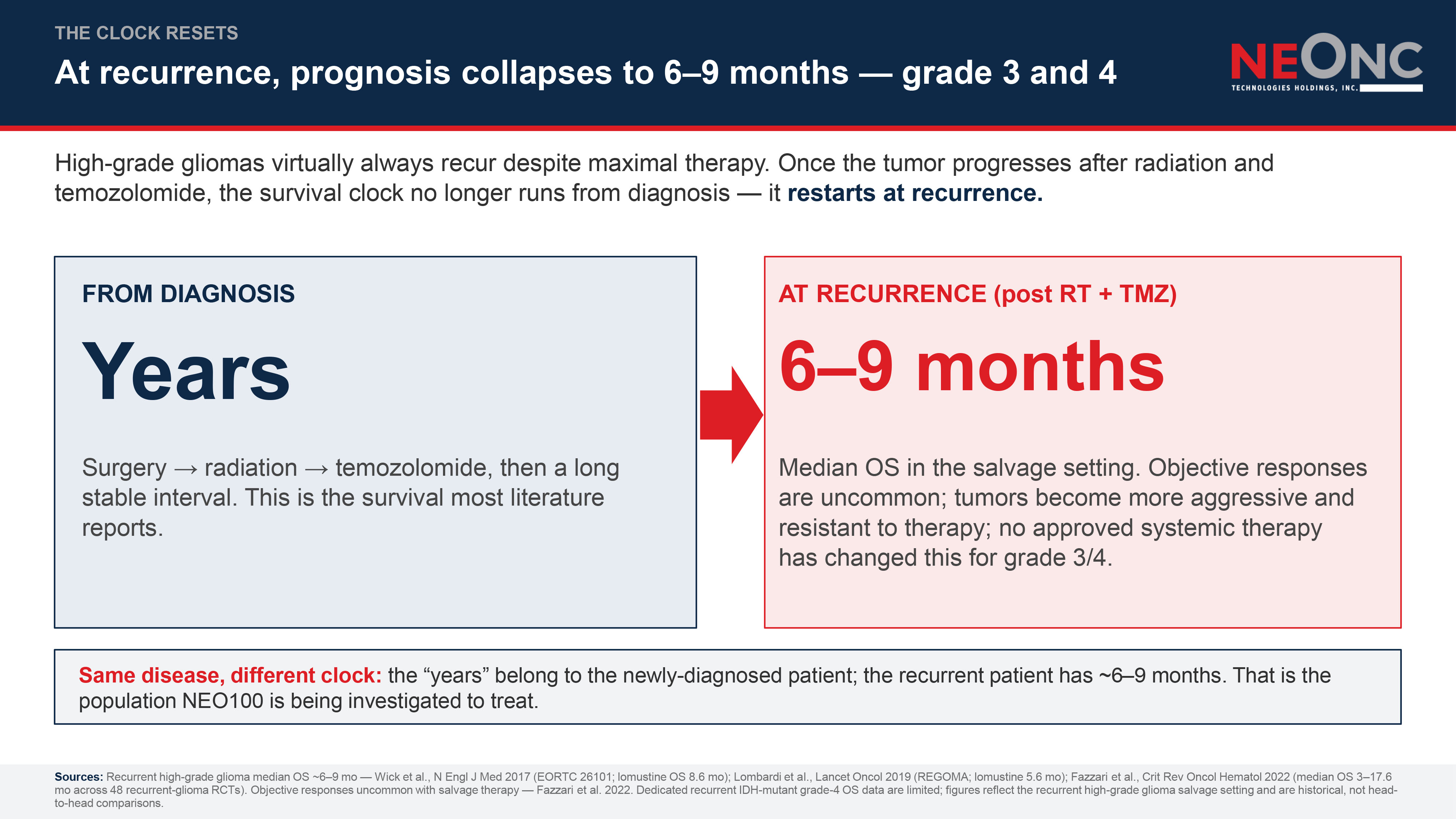
THE CLOCK RESETS At recurrence, prognosis collapses to 6 – 9 months — grade 3 and 4 High - grade gliomas virtually always recur despite maximal therapy. Once the tumor progresses after radiation and temozolomide, the survival clock no longer runs from diagnosis — it restarts at recurrence. FROM DIAGNOSIS Years Surgery → radiation → temozolomide, then a long stable interval. This is the survival most literature reports. AT RECURRENCE (post RT + TMZ) 6 – 9 months Median OS in the salvage setting. Objective responses are uncommon; tumors become more aggressive and resistant to therapy; no approved systemic therapy has changed this for grade 3 / 4. Same disease, different clock: the “years” belong to the newly - diagnosed patient; the recurrent patient has ~6 – 9 months. That is the population NEO100 is being investigated to treat. Sources: Recurrent high - grade glioma median OS ~6 – 9 mo — Wick et al., N Engl J Med 2017 (EORTC 26101; lomustine OS 8.6 mo); Lombardi et a l., Lancet Oncol 2019 (REGOMA; lomustine 5.6 mo); Fazzari et al., Crit Rev Oncol Hematol 2022 (median OS 3 – 17.6 mo across 48 recurrent - glioma RCTs). Objective responses uncommon with salvage therapy — Fazzari et al. 2022. Dedicated recurren t IDH - mutant grade - 4 OS data are limited; figures reflect the recurrent high - grade glioma salvage setting and are historical, no t head - to - head comparisons.
8
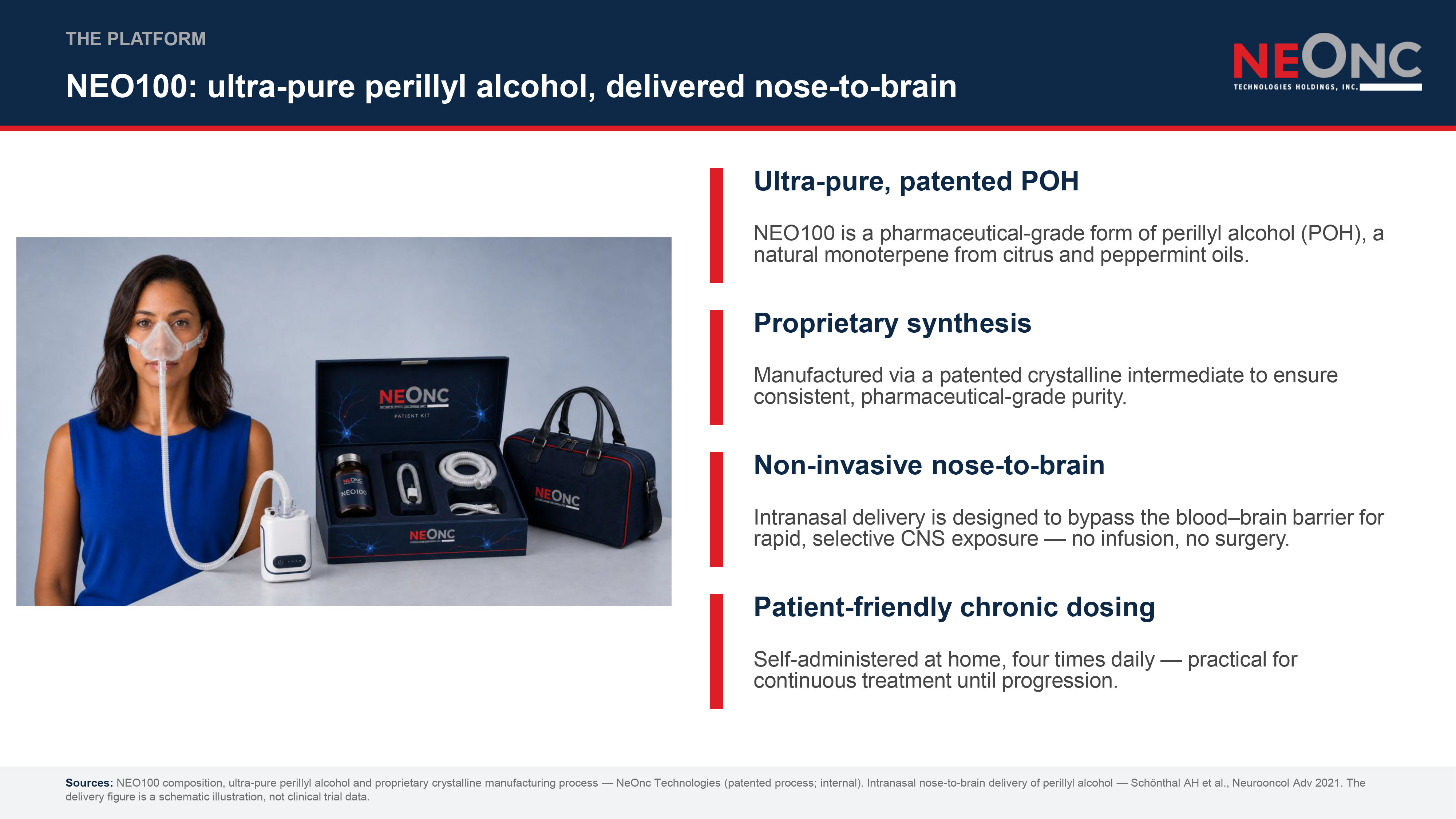
THE PLATFORM NEO100: ultra - pure perillyl alcohol, delivered nose - to - brain Ultra - pure, patented POH NEO100 is a pharmaceutical - grade form of perillyl alcohol (POH), a natural monoterpene from citrus and peppermint oils. Proprietary synthesis Manufactured via a patented crystalline intermediate to ensure consistent, pharmaceutical - grade purity. Non - invasive nose - to - brain Intranasal delivery is designed to bypass the blood – brain barrier for rapid, selective CNS exposure — no infusion, no surgery. Patient - friendly chronic dosing Self - administered at home, four times daily — practical for continuous treatment until progression. Sources: NEO100 composition, ultra - pure perillyl alcohol and proprietary crystalline manufacturing process — NeOnc Technologies (patented process; internal). Intranasal nose - to - brain delivery of perillyl alcohol — Schönthal AH et al., Neurooncol Adv 2021. The delivery figure is a schematic illustration, not clinical trial data.
9
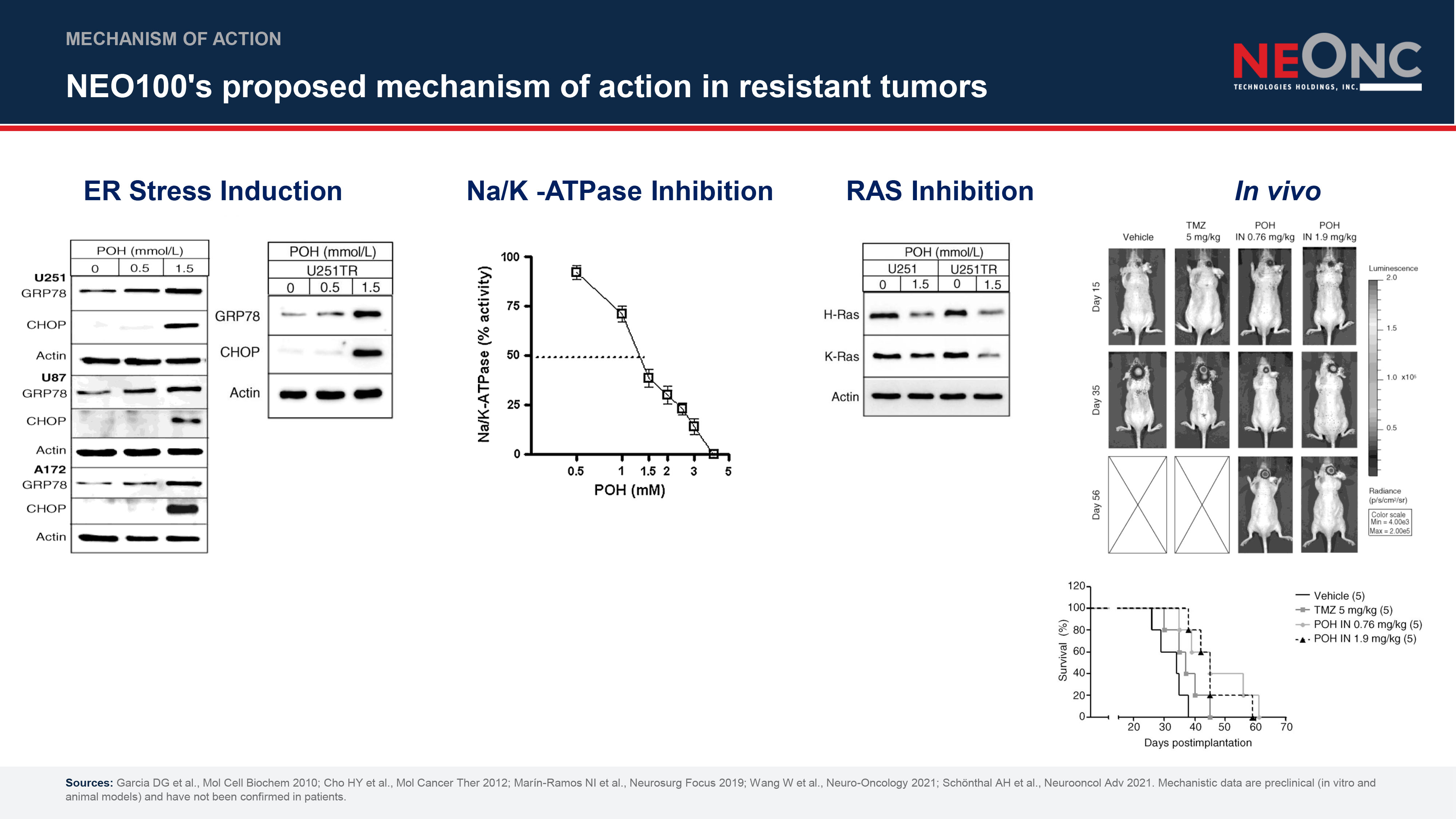
MECHANISM OF ACTION NEO100's proposed mechanism of action in resistant tumors Sources: Garcia DG et al., Mol Cell Biochem 2010; Cho HY et al., Mol Cancer Ther 2012; Marín - Ramos NI et al., Neurosurg Focus 2019; Wang W et al., Neuro - Oncology 2021; Schönthal AH et al., Neurooncol Adv 2021. Mechanistic data are preclinical (in vitro and animal models) and have not been confirmed in patients. ER Stress Induction RAS Inhibition Na/K - ATPase Inhibition In vivo
10
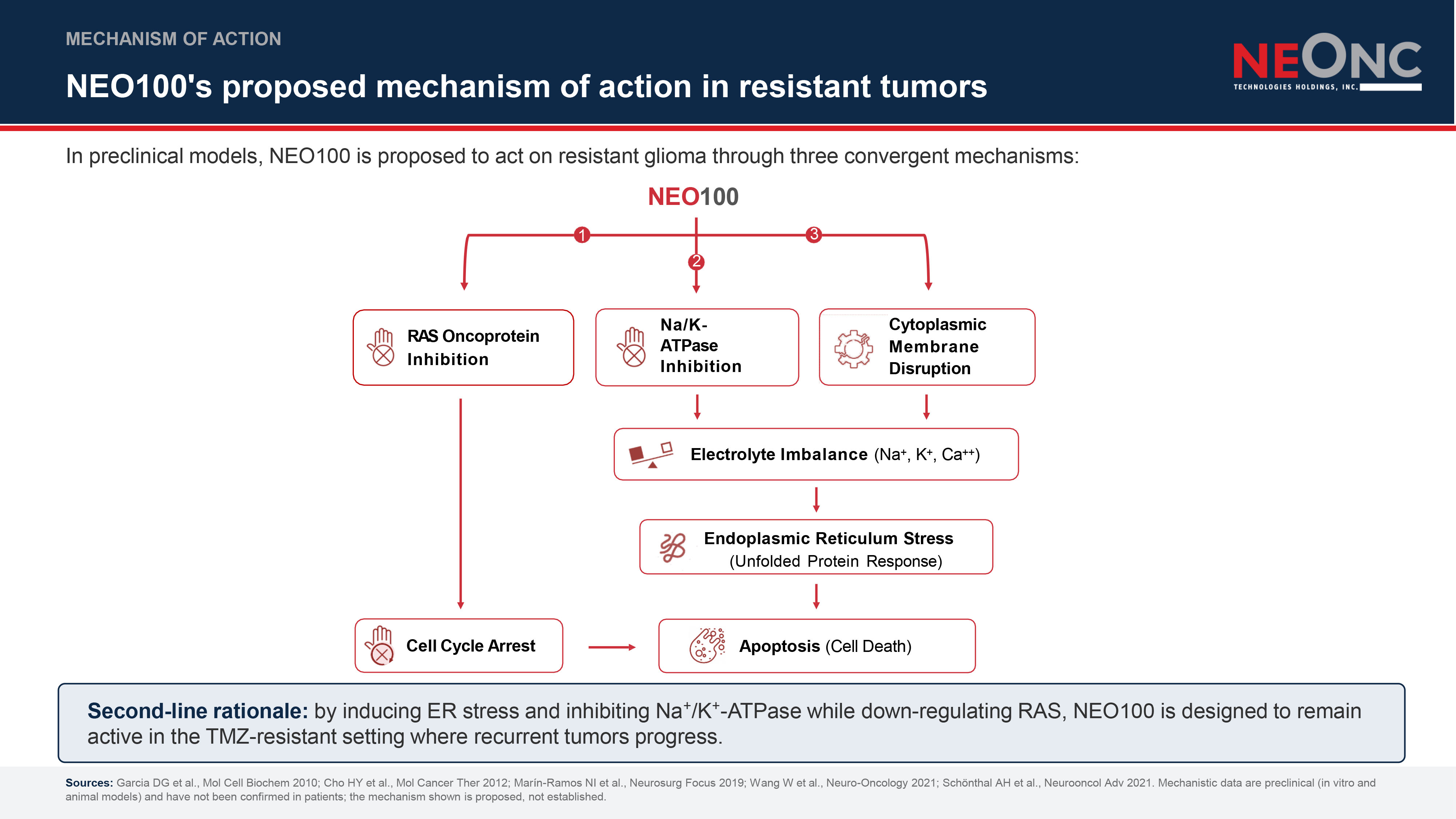
MECHANISM OF ACTION NEO100's proposed mechanism of action in resistant tumors In preclinical models, NEO100 is proposed to act on resistant glioma through three convergent mechanisms: Second - line rationale: by inducing ER stress and inhibiting Na ⁺ /K ⁺ - ATPase while down - regulating RAS, NEO100 is designed to remain active in the TMZ - resistant setting where recurrent tumors progress. Sources: Garcia DG et al., Mol Cell Biochem 2010; Cho HY et al., Mol Cancer Ther 2012; Marín - Ramos NI et al., Neurosurg Focus 2019; Wang W et al., Neuro - Oncology 2021; Schönthal AH et al., Neurooncol Adv 2021. Mechanistic data are preclinical (in vitro and animal models) and have not been confirmed in patients; the mechanism shown is proposed, not established. Na/K - ATPase Inhibition Cytoplasmic Membrane Disruption Endoplasmic Reticulum Stress (Unfolded Protein Response) Cell Cycle Arrest Apoptosis (Cell Death) RAS Oncoprotein Inhibition Electrolyte Imbalance (Na + , K + , Ca ++ ) NEO 100 1 2 3
11
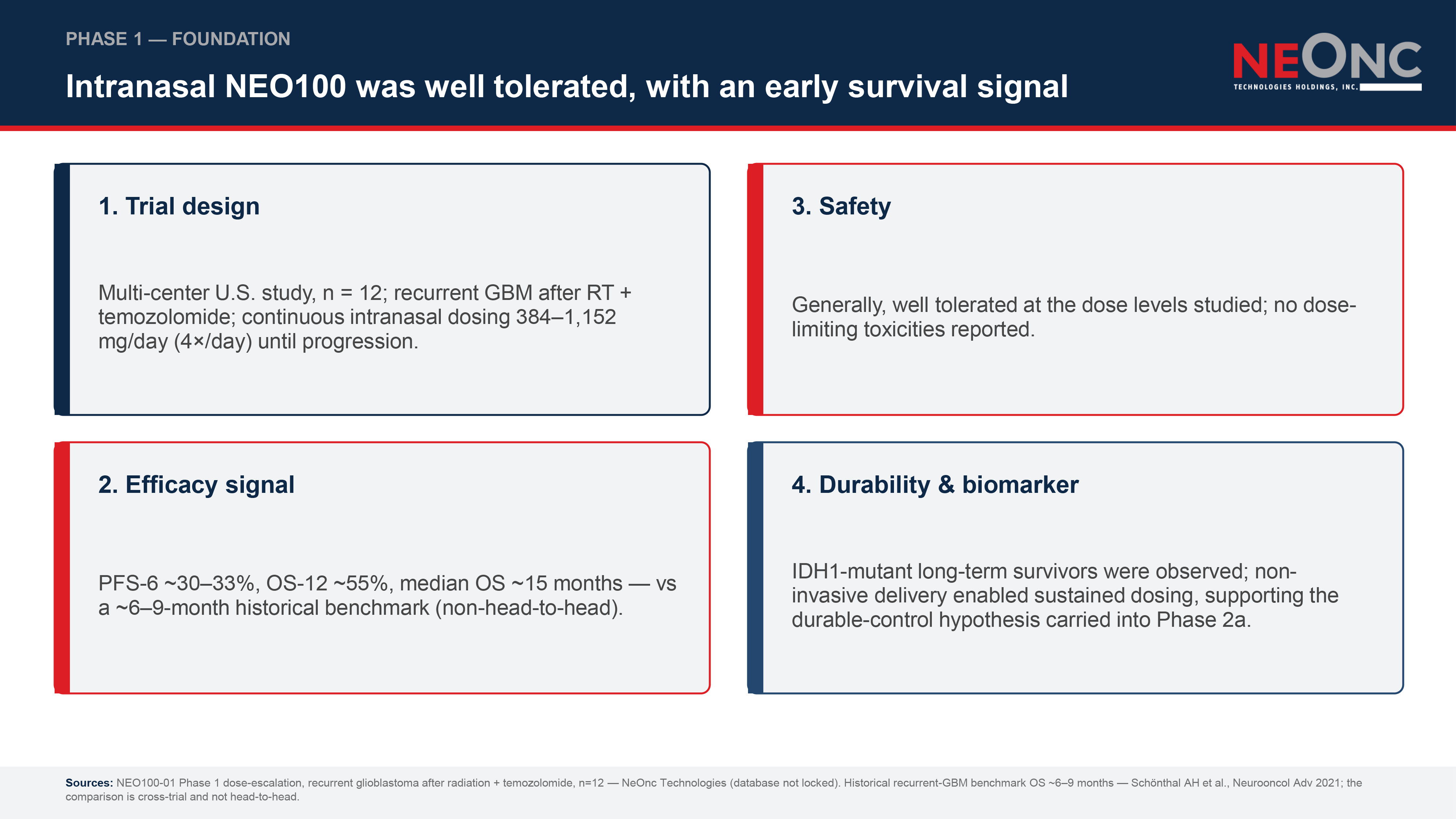
PHASE 1 — FOUNDATION Intranasal NEO100 was well tolerated, with an early survival signal 1. Trial design Multi - center U.S. study, n = 12; recurrent GBM after RT + temozolomide; continuous intranasal dosing 384 – 1,152 mg/day (4 × /day) until progression. 3. Safety Generally, well tolerated at the dose levels studied; no dose - limiting toxicities reported. 2. Efficacy signal PFS - 6 ~30 – 33%, OS - 12 ~55%, median OS ~15 months — vs a ~6 – 9 - month historical benchmark (non - head - to - head). 4.Durability & biomarker IDH1 - mutant long - term survivors were observed; non - invasive delivery enabled sustained dosing, supporting the durable - control hypothesis carried into Phase 2a. Sources: NEO100 - 01 Phase 1 dose - escalation, recurrent glioblastoma after radiation + temozolomide, n=12 — NeOnc Technologies (database no t locked). Historical recurrent - GBM benchmark OS ~6 – 9 months — Schönthal AH et al., Neurooncol Adv 2021; the comparison is cross - trial and not head - to - head.
12
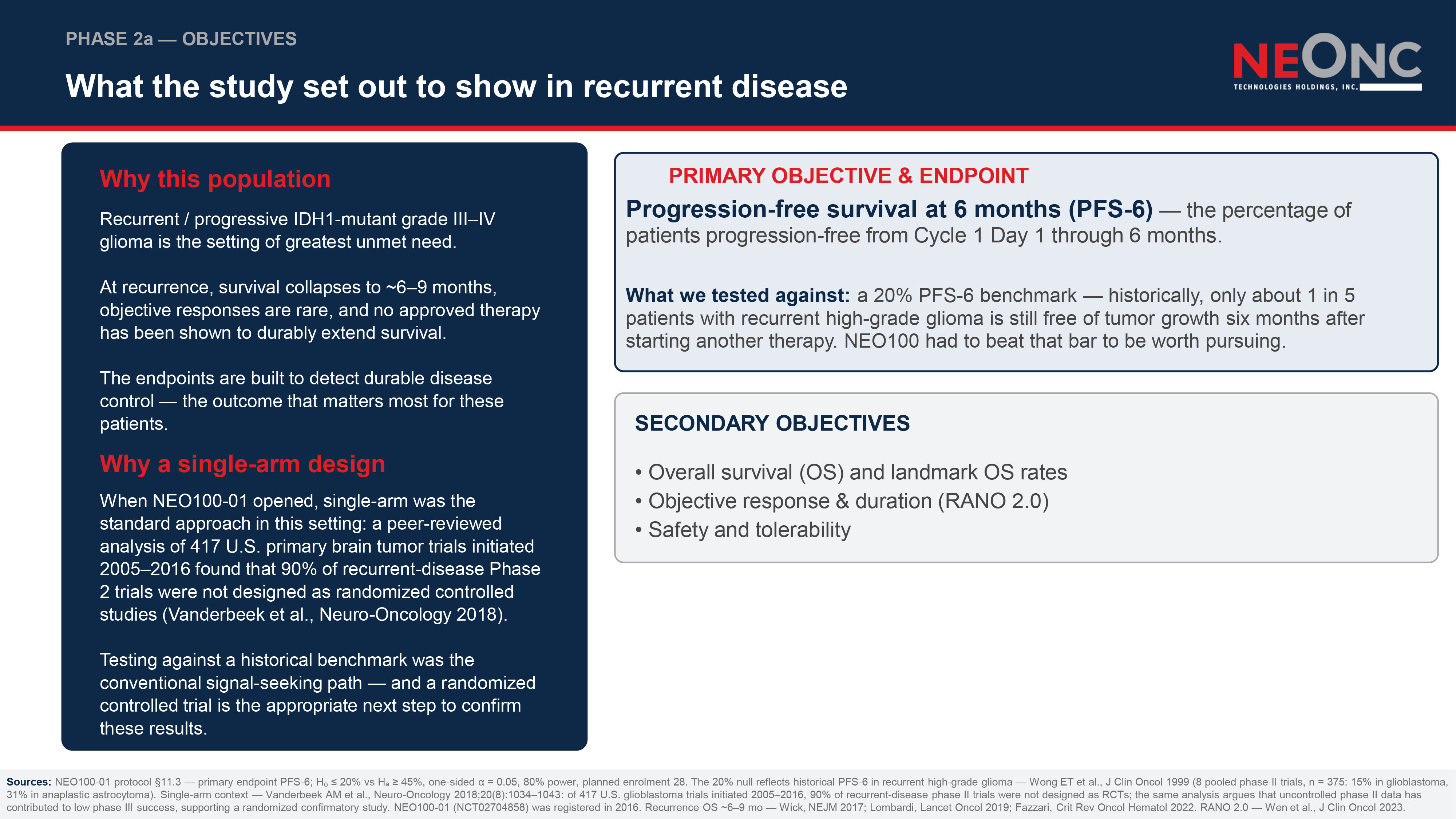
PHASE 2a — OBJECTIVES What the study set out to show in recurrent disease PRIMARY OBJECTIVE & ENDPOINT SECONDARY OBJECTIVES • Overall survival (OS) and landmark OS rates • Objective response & duration (RANO 2.0) • Safety and tolerability Sources: NEO100 - 01 protocol § 11.3 — primary endpoint PFS - 6; H ₀ ≤ 20% vs Hₐ ≥ 45%, one - sided α = 0.05, 80% power, planned enrolment 28. The 20% null reflects historical PFS - 6 in recurrent high - grade glioma — Wong ET et al., J Clin Onco l 1999 (8 pooled phase II trials, n = 375: 15% in glioblastoma, 31% in anaplastic astrocytoma). Single - arm context — Vanderbeek AM et al., Neuro - Oncology 2018;20(8):1034 – 1043: of 417 U.S. glio blastoma trials initiated 2005 – 2016, 90% of recurrent - disease phase II trials were not designed as RCTs; the same analysis argue s that uncontrolled phase II data has contributed to low phase III success, supporting a randomized confirmatory study. NEO100 - 01 (NCT02704858) was registered in 2016 . Recurrence OS ~6 – 9 mo — Wick, NEJM 2017; Lombardi, Lancet Oncol 2019; Fazzari, Crit Rev Oncol Hematol 2022. RANO 2.0 — Wen et al., J Clin Oncol 2023. Why this population Recurrent / progressive IDH1 - mutant grade III – IV glioma is the setting of greatest unmet need. At recurrence, survival collapses to ~6 – 9 months, objective responses are rare, and no approved therapy has been shown to durably extend survival. The endpoints are built to detect durable disease control — the outcome that matters most for these patients. Why a single - arm design When NEO100 - 01 opened, single - arm was the standard approach in this setting: a peer - reviewed analysis of 417 U.S. primary brain tumor trials initiated 2005 – 2016 found that 90% of recurrent - disease Phase 2 trials were not designed as randomized controlled studies (Vanderbeek et al., Neuro - Oncology 2018). Testing against a historical benchmark was the conventional signal - seeking path — and a randomized controlled trial is the appropriate next step to confirm these results. Progression - free survival at 6 months (PFS - 6) — the percentage of patients progression - free from Cycle 1 Day 1 through 6 months. What we tested against: a 20% PFS - 6 benchmark — historically, only about 1 in 5 patients with recurrent high - grade glioma is still free of tumor growth six months after starting another therapy. NEO100 had to beat that bar to be worth pursuing .
13
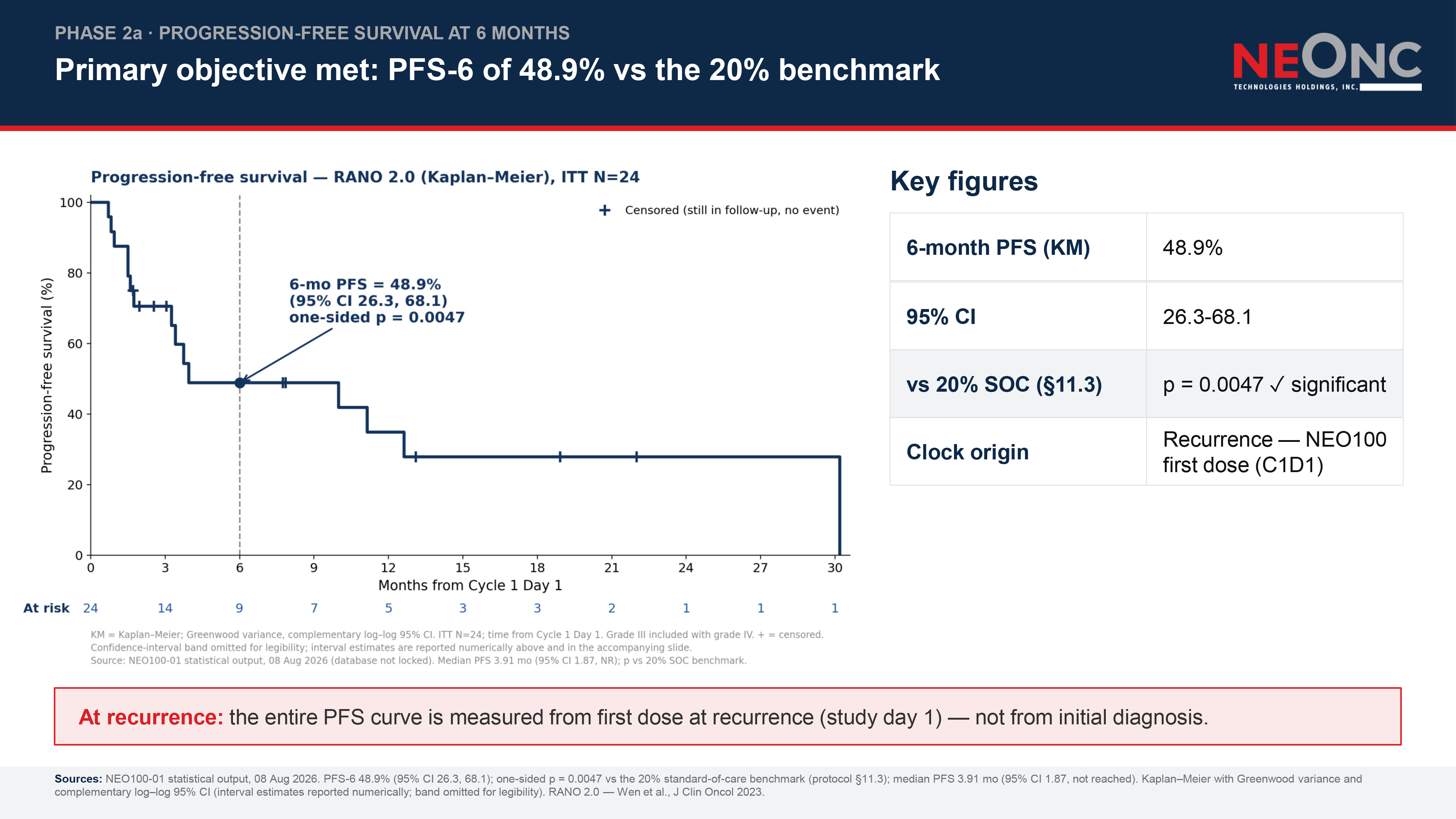
Key figures 6 - month PFS (KM) 48. 9 % 95% CI 26.3 - 68.1 vs 20% SOC ( † 11.3) p = 0. 0 0 47 ض significant Clock origin Recurrence — NEO100 first dose (C1D1) At recurrence: the entire PFS curve is measured from first dose at recurrence (study day 1) — not from initial diagnosis. Sources: NEO100 - 01 statistical output, 08 Aug 2026. PFS - 6 48.9% (95% CI 26.3, 68.1); one - sided p = 0.0047 vs the 20% standard - of - care ben chmark (protocol § 11.3); median PFS 3.91 mo (95% CI 1.87, not reached). Kaplan – Meier with Greenwood variance and complementary log – log 95% CI (interval estimates reported numerically; band omitted for legibility). RANO 2.0 — Wen et al., J Cl in Oncol 2023. Primary objective met: PFS - 6 of 48.9% vs the 20% benchmark PHASE 2a · PROGRESSION - FREE SURVIVAL AT 6 MONTHS
14
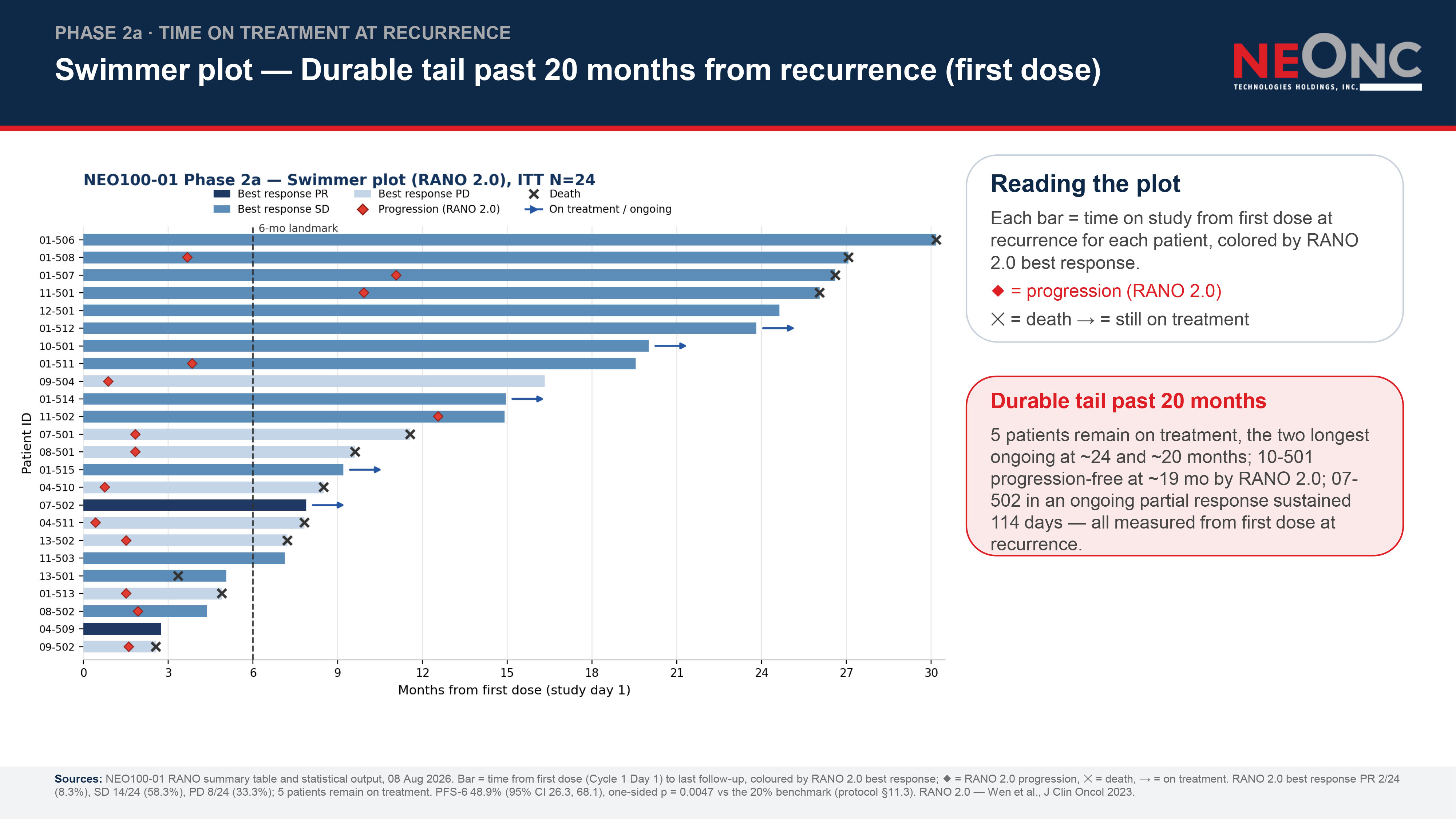
PHASE 2a · TIME ON TREATMENT AT RECURRENCE Swimmer plot — Durable tail past 20 months from recurrence (first dose) Reading the plot Each bar = time on study from first dose at recurrence for each patient , colored by RANO 2.0 best response. ᶺ = progression (RANO 2.0) ظ = death → = still on treatment Durable tail past 20 months 5 patients remain on treatment, the two longest ongoing at ~24 and ~20 months; 10 - 501 progression - free at ~19 mo by RANO 2.0; 07 - 502 in an ongoing partial response sustained 114 days — all measured from first dose at recurrence. Sources: NEO100 - 01 RANO summary table and statistical output, 08 Aug 2026. Bar = time from first dose (Cycle 1 Day 1) to last follow - up, coloured by RANO 2.0 best response; ◆ = RANO 2.0 progression, ✕ = death, → = on treatment. RANO 2.0 best response PR 2/24 (8.3%), SD 14/24 (58.3%), PD 8/24 (33.3%); 5 patients remain on treatment. PFS - 6 48.9% (95% CI 26.3, 68.1), one - sided p = 0.0047 vs the 20% benchmark (protocol § 11.3). RANO 2.0 — Wen et al., J Clin Oncol 2023.
15
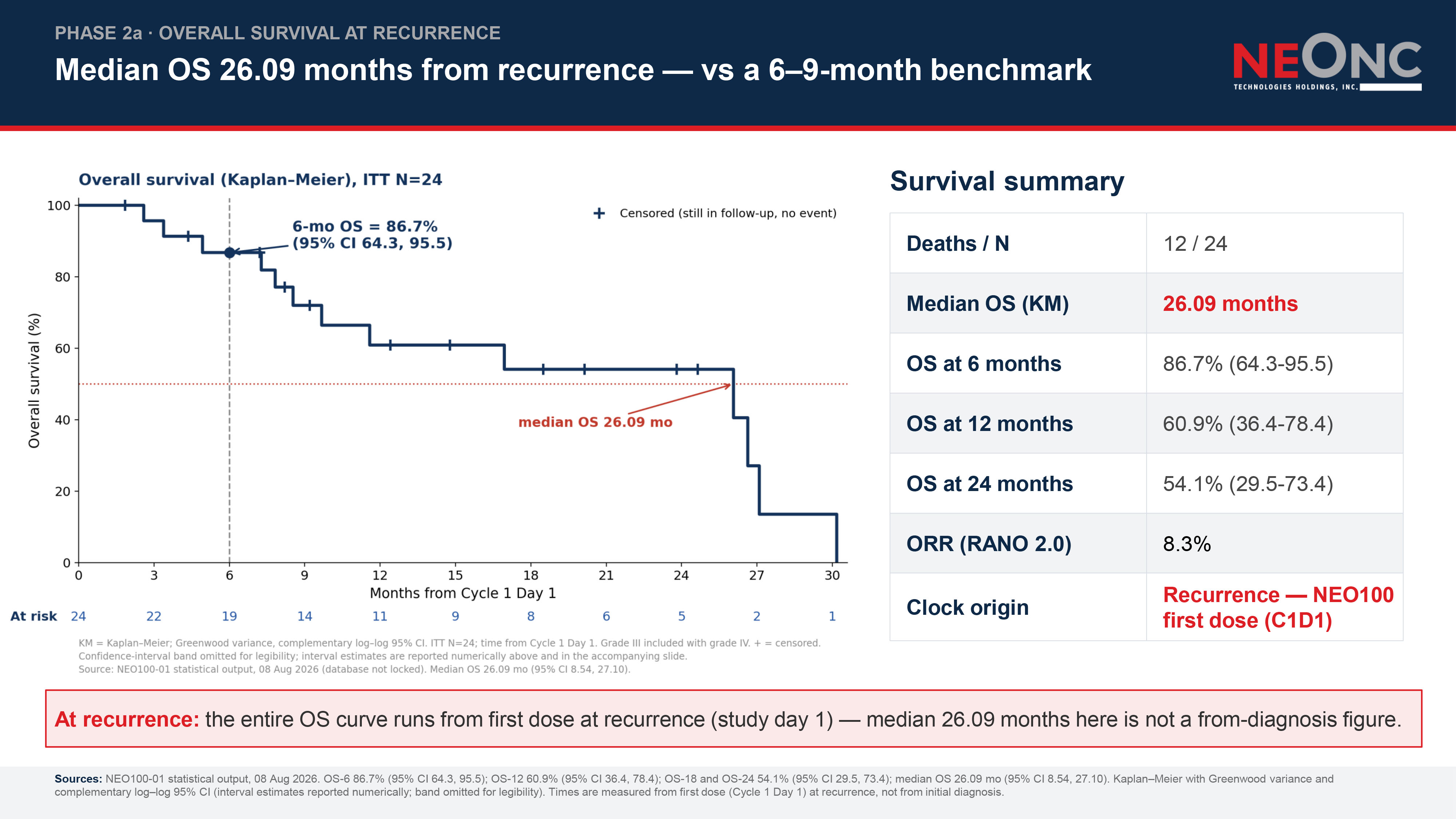
Survival summary Deaths / N 12 / 24 Median OS (KM) 26. 09 months OS at 6 months 86.7% ( 64.3 - 95.5 ) OS at 12 months 6 0.9 % ( 36.4 - 78.4 ) OS at 24 months 54.1 % ( 29.5 - 73.4 ) ORR (RANO 2.0) 8.3% At recurrence: the entire OS curve runs from first dose at recurrence (study day 1) — median 26. 09 months here is not a from - diagnosis figure. Sources: NEO100 - 01 statistical output, 08 Aug 2026. OS - 6 86.7% (95% CI 64.3, 95.5); OS - 12 60.9% (95% CI 36.4, 78.4); OS - 18 and OS - 24 54.1 % (95% CI 29.5, 73.4); median OS 26.09 mo (95% CI 8.54, 27.10). Kaplan – Meier with Greenwood variance and complementary log – log 95% CI (interval estimates reported numerically; band omitted for legibility). Times are measured from fir st dose (Cycle 1 Day 1) at recurrence, not from initial diagnosis. Clock origin Recurrence — NEO100 first dose (C1D1) PHASE 2a · OVERALL SURVIVAL AT RECURRENCE Median OS 26.09 months from recurrence — vs a 6 – 9 - month benchmark
16
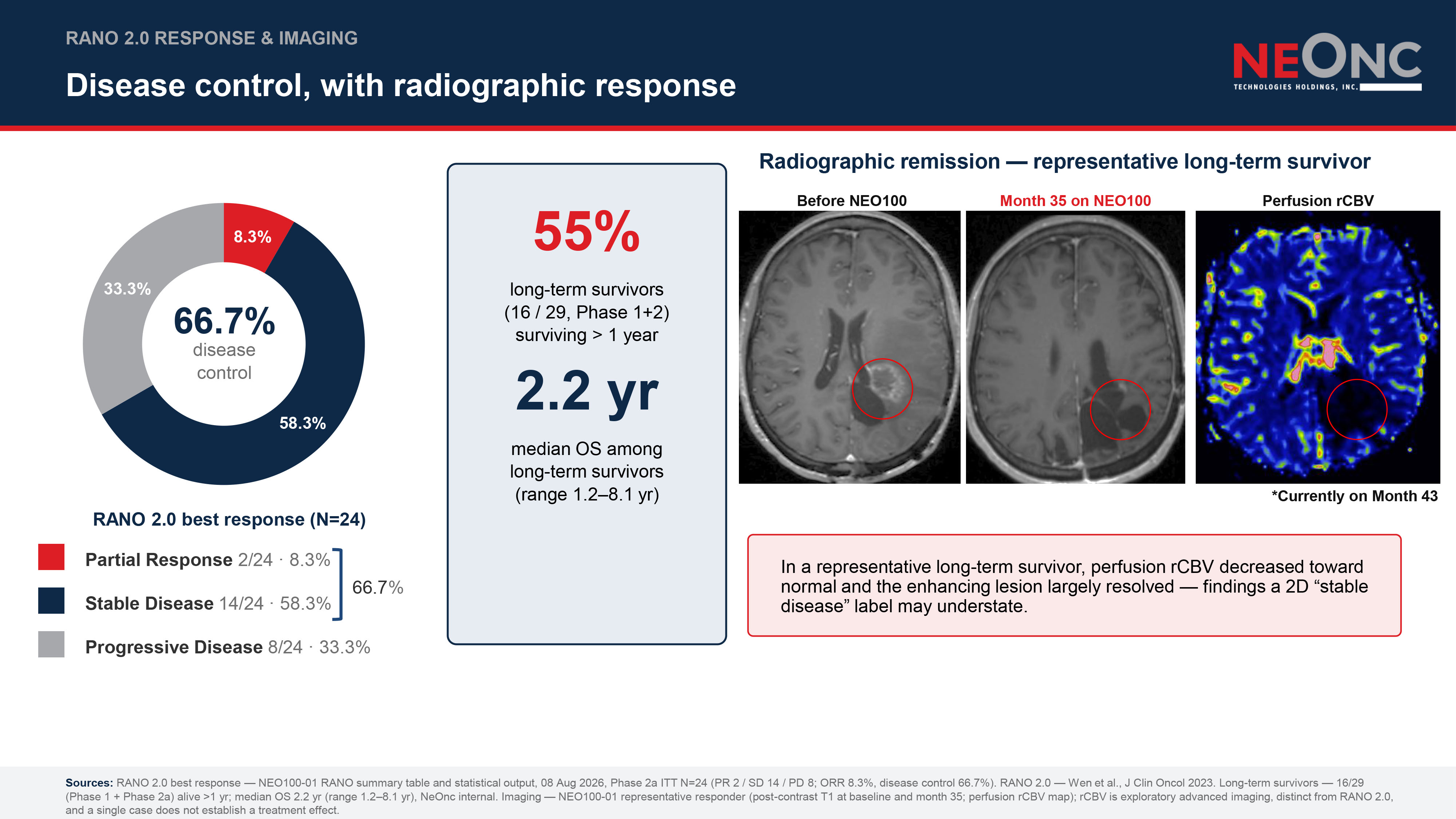
RANO 2.0 RESPONSE & IMAGING Disease control, with radiographic response 8.3% 58.3% 33.3% 66.7% disease control Partial Response 2/24 · 8.3% Stable Disease 14/24 · 58.3% Progressive Disease 8/24 · 33.3% RANO 2.0 best response (N=24) 55% long - term survivors (16 / 29, Phase 1+2) surviving > 1 year 2.2 yr median OS among long - term survivors (range 1.2 – 8.1 yr) Radiographic remission — representative long - term survivor Before NEO100 Month 35 on NEO100 Perfusion rCBV In a representative long - term survivor, perfusion rCBV decreased toward normal and the enhancing lesion largely resolved — findings a 2D “stable disease” label may understate. Sources: RANO 2.0 best response — NEO100 - 01 RANO summary table and statistical output, 08 Aug 2026, Phase 2a ITT N=24 (PR 2 / SD 14 / PD 8; ORR 8.3%, disease control 66.7%). RANO 2.0 — Wen et al., J Clin Oncol 2023. Long - term survivors — 16/29 (Phase 1 + Phase 2a) alive >1 yr; median OS 2.2 yr (range 1.2 – 8.1 yr), NeOnc internal. Imaging — NEO100 - 01 representative responder (post - contrast T1 at baseline and month 35; perfusion rCBV map); rCBV is exploratory advanced imaging, distinct from RANO 2.0, and a single case does not establish a treatment effect. 66.7 % *Currently on Month 43
17
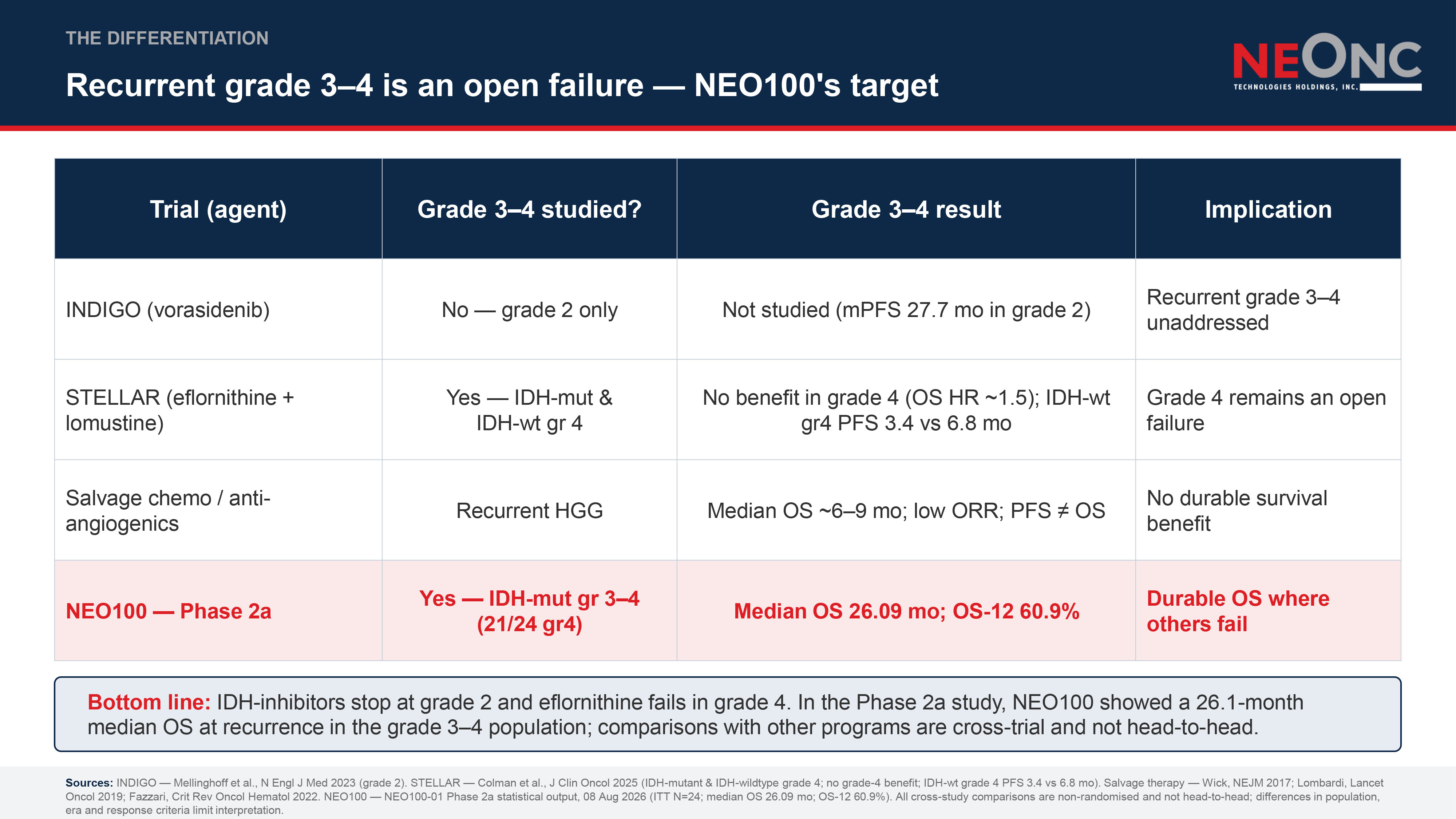
THE DIFFERENTIATION Recurrent grade 3 – 4 is an open failure — NEO100's target Implication Grade 3 – 4 result Grade 3 – 4 studied? Trial (agent) Recurrent grade 3 – 4 unaddressed Not studied (mPFS 27.7 mo in grade 2) No — grade 2 only INDIGO (vorasidenib) Grade 4 remains an open failure No benefit in grade 4 (OS HR ~1.5); IDH - wt gr4 PFS 3.4 vs 6.8 mo Yes — IDH - mut & IDH - wt gr 4 STELLAR (eflornithine + lomustine) No durable survival benefit Median OS ~6 – 9 mo; low ORR; PFS ≠ OS Recurrent HGG Salvage chemo / anti - angiogenics Durable OS where others fail Median OS 26.09 mo ; OS - 12 60.9% Yes — IDH - mut gr 3 – 4 (21/24 gr4) NEO100 — Phase 2a Bottom line: IDH - inhibitors stop at grade 2 and eflornithine fails in grade 4. In the Phase 2a study, NEO100 showed a 26.1 - month median OS at recurrence in the grade 3 – 4 population; comparisons with other programs are cross - trial and not head - to - head. Sources: INDIGO — Mellinghoff et al., N Engl J Med 2023 (grade 2). STELLAR — Colman et al., J Clin Oncol 2025 (IDH - mutant & IDH - wildtype grade 4; no grade - 4 benefit; IDH - wt grade 4 PFS 3.4 vs 6.8 mo ). Salvage therapy — Wick, NEJM 2017; Lombardi, Lancet Oncol 2019; Fazzari, Crit Rev Oncol Hematol 2022. NEO100 — NEO100 - 01 Phase 2a statistical output, 08 Aug 2026 (ITT N=24; median OS 26.09 mo ; OS - 12 60.9%) . All cross - study comparisons are non - randomised and not head - to - head; differences in population, era and response criteria limit interpretation.
18
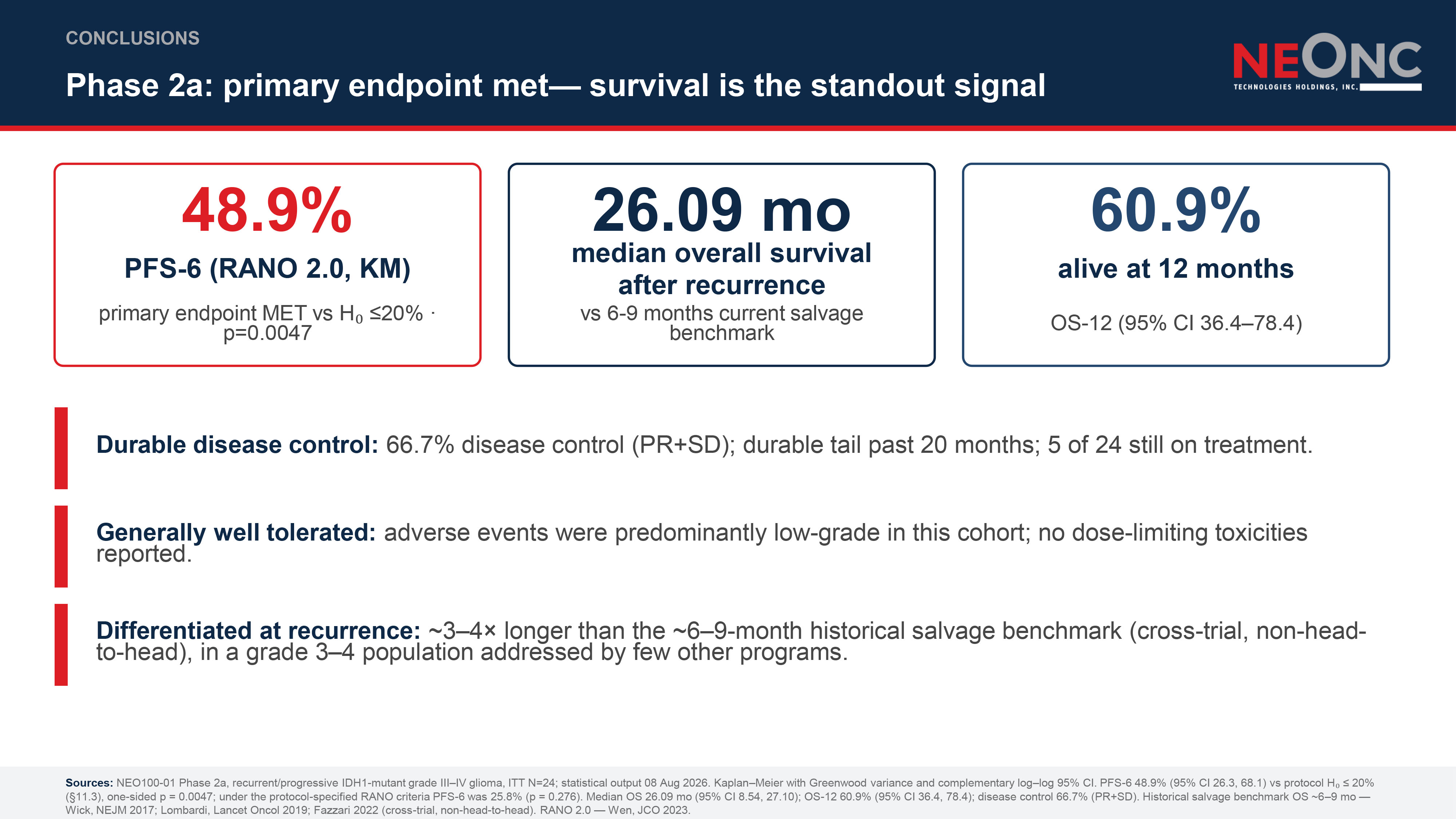
CONCLUSIONS Phase 2a: primary endpoint met — survival is the standout signal 48.9% PFS - 6 (RANO 2.0, KM) primary endpoint MET vs H ₀ ≤20% · p=0.0047 26.09 mo median overall survival after recurrence vs 6 - 9 months current salvage benchmark 60.9% alive at 12 months OS - 12 (95% CI 36.4 – 78.4) Durable disease control: 66.7% disease control (PR+SD); durable tail past 20 months; 5 of 24 still on treatment. Generally well tolerated: adverse events were predominantly low - grade in this cohort; no dose - limiting toxicities reported. Differentiated at recurrence: ~3 – 4 × longer than the ~6 – 9 - month historical salvage benchmark (cross - trial, non - head - to - head), in a grade 3 – 4 population addressed by few other programs. Sources: NEO100 - 01 Phase 2a, recurrent/progressive IDH1 - mutant grade III – IV glioma, ITT N=24; statistical output 08 Aug 2026. Kaplan – Meie r with Greenwood variance and complementary log – log 95% CI. PFS - 6 48.9% (95% CI 26.3, 68.1) vs protocol H ₀ ≤ 20% ( § 11.3), one - sided p = 0.0047; under the protocol - specified RANO criteria PFS - 6 was 25.8% (p = 0.276). Median OS 26.09 mo (95% CI 8.54, 27.10); OS - 12 60.9% (95% CI 36.4, 78.4); disease control 66.7% (PR+SD). Historical salvage benchmark OS ~6 – 9 mo — Wick, NEJM 2017; Lombardi, Lancet Oncol 2019; Fazzari 2022 (cross - trial, non - head - to - head). RANO 2.0 — Wen, JCO 2023.
19
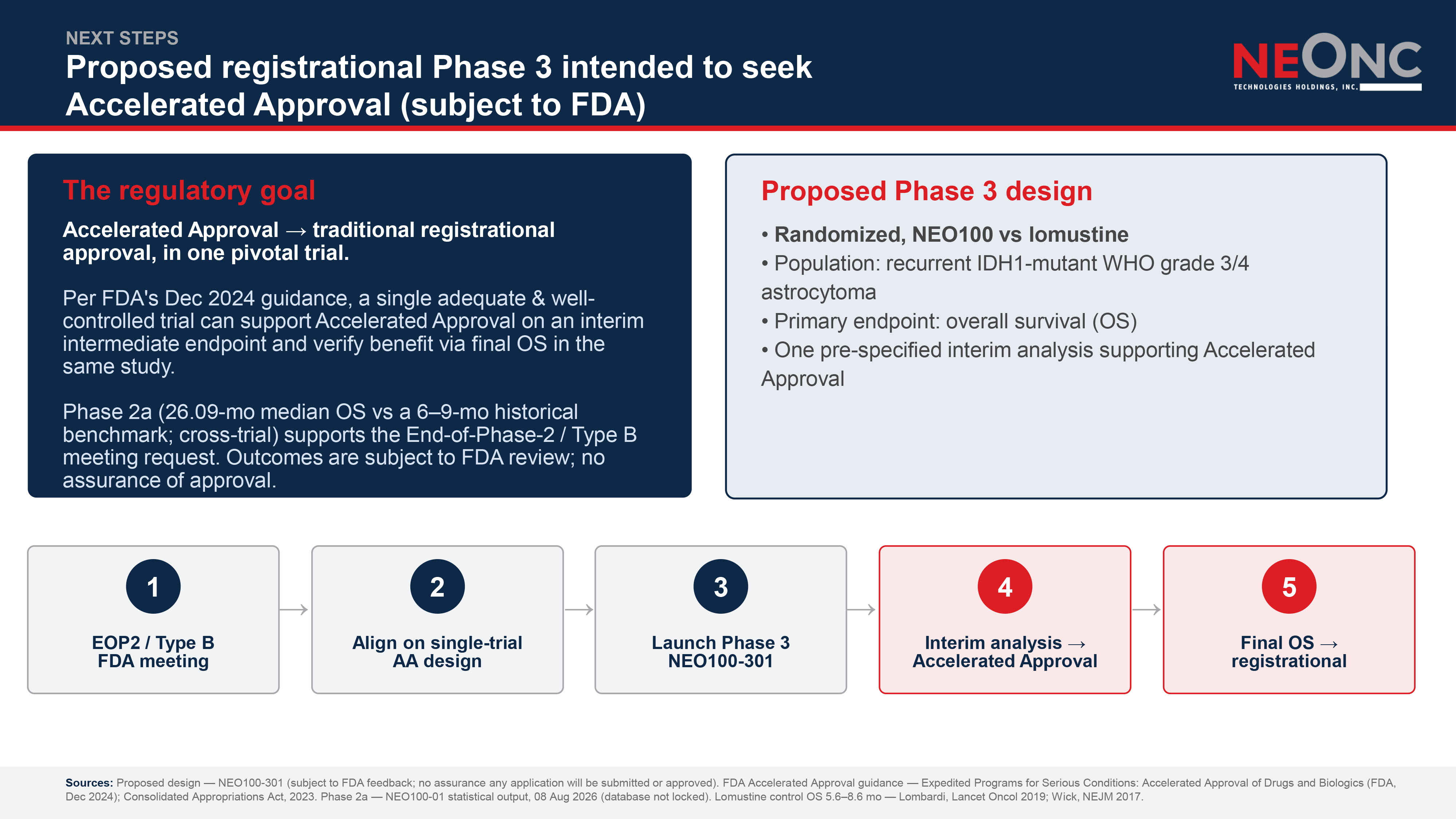
NEXT STEPS Proposed registrational Phase 3 intended to seek Accelerated Approval (subject to FDA) The regulatory goal Accelerated Approval → traditional registrational approval, in one pivotal trial. Per FDA's Dec 2024 guidance, a single adequate & well - controlled trial can support Accelerated Approval on an interim intermediate endpoint and verify benefit via final OS in the same study. Phase 2a (26.09 - mo median OS vs a 6 – 9 - mo historical benchmark; cross - trial) supports the End - of - Phase - 2 / Type B meeting request. Outcomes are subject to FDA review; no assurance of approval. 1 EOP2 / Type B FDA meeting → 2 Align on single - trial AA design → 3 Launch Phase 3 NEO100 - 301 → 4 Interim analysis → Accelerated Approval → 5 Final OS → registrational Sources: Proposed design — NEO100 - 301 (subject to FDA feedback; no assurance any application will be submitted or approved). FDA Accelera ted Approval guidance — Expedited Programs for Serious Conditions: Accelerated Approval of Drugs and Biologics (FDA, Dec 2024); Consolidated Appropriations Act, 2023. Phase 2a — NEO100 - 01 statistical output, 08 Aug 2026 (database not locked). Lo mustine control OS 5.6 – 8.6 mo — Lombardi, Lancet Oncol 2019; Wick, NEJM 2017. Proposed Phase 3 design • Randomized, NEO100 vs lomustine • Population: recurrent IDH1 - mutant WHO grade 3/4 astrocytoma • Primary endpoint: overall survival (OS) • One pre - specified interim analysis supporting Accelerated Approval
20
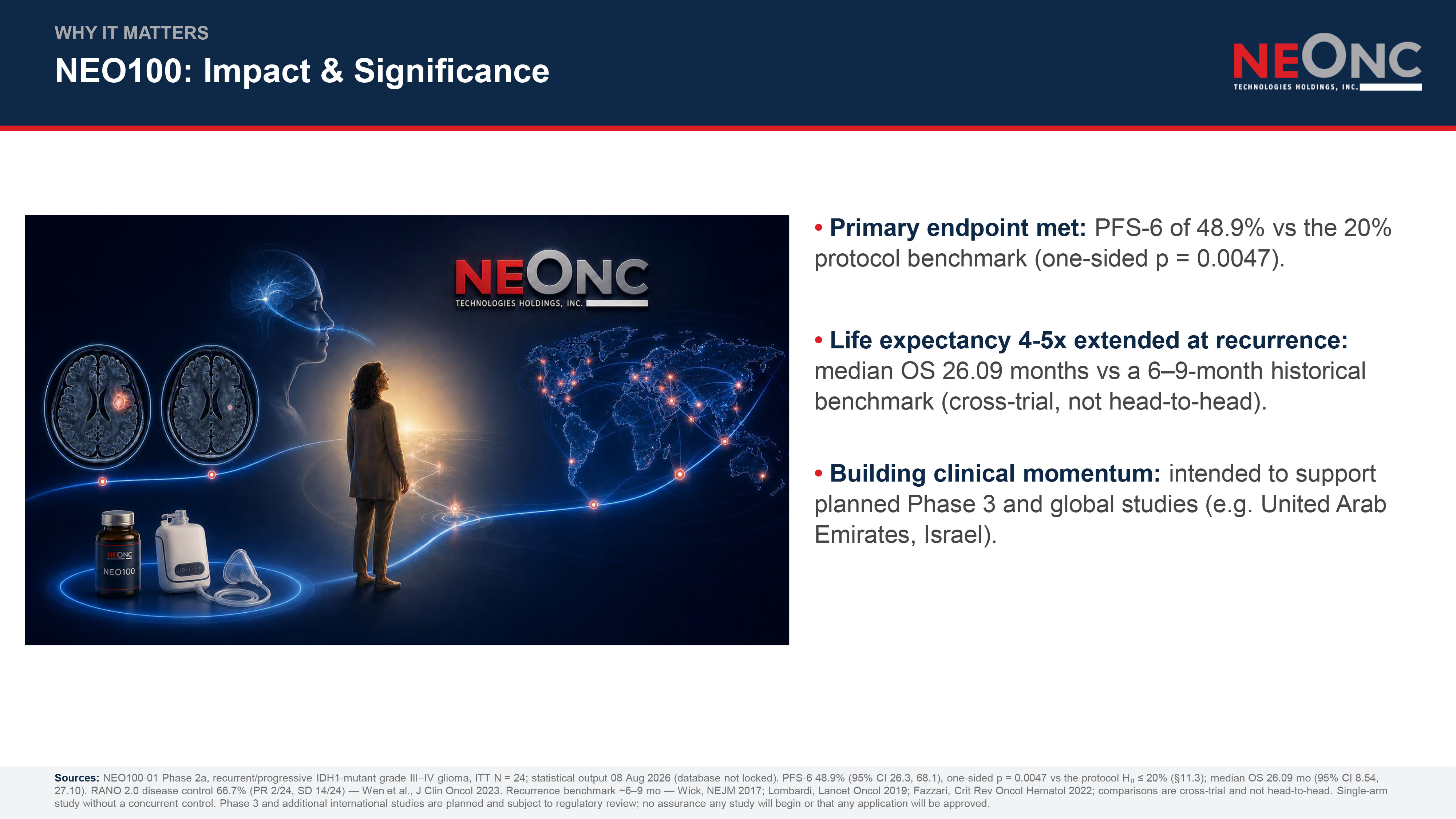
WHY IT MATTERS NEO100: Impact & Significance • Primary endpoint met: PFS - 6 of 48.9% vs the 20% protocol benchmark (one - sided p = 0.0047). • Life expectancy 4 - 5x extended at recurrence: median OS 26.09 months vs a 6 – 9 - month historical benchmark (cross - trial, not head - to - head). • Building clinical momentum: intended to support planned Phase 3 and global studies (e.g. United Arab Emirates, Israel). Sources: NEO100 - 01 Phase 2a, recurrent/progressive IDH1 - mutant grade III – IV glioma, ITT N = 24; statistical output 08 Aug 2026 (database not locked). PFS - 6 48.9% (95% CI 26.3, 68.1), one - sided p = 0.0047 vs the protocol H ₀ ≤ 20% ( § 11.3); median OS 26.09 mo (95% CI 8.54, 27.10). RANO 2.0 disease control 66.7% (PR 2/24, SD 14/24) — Wen et al., J Clin Oncol 2023. Recurrence benchmark ~6 – 9 mo — Wick, NEJM 2017; Lombardi, Lancet Oncol 2019; Fazzari, Crit Rev Oncol Hematol 2022; comparisons are cross - trial and not head - to - head. Single - arm study without a concurrent control. Phase 3 and additional international studies are planned and subject to regulatory review ; n o assurance any study will begin or that any application will be approved.
21
Contact Us Company Contact NeOnc Technologies Holdings, Inc. 23975 Park Sorrento, Suite 205 Calabasas, CA 91302 Tel +1 (818) 470 - NTHI Info@neonc.com · www.neonc.com Investor Relations Jon Nugent Communications Jon Nugent — President & CEO jonnugent.com · jon@jonnugent.com 205 - 566 - 3026 THE FUTURE OF DRUG DELIVERY
22
Appendix
23
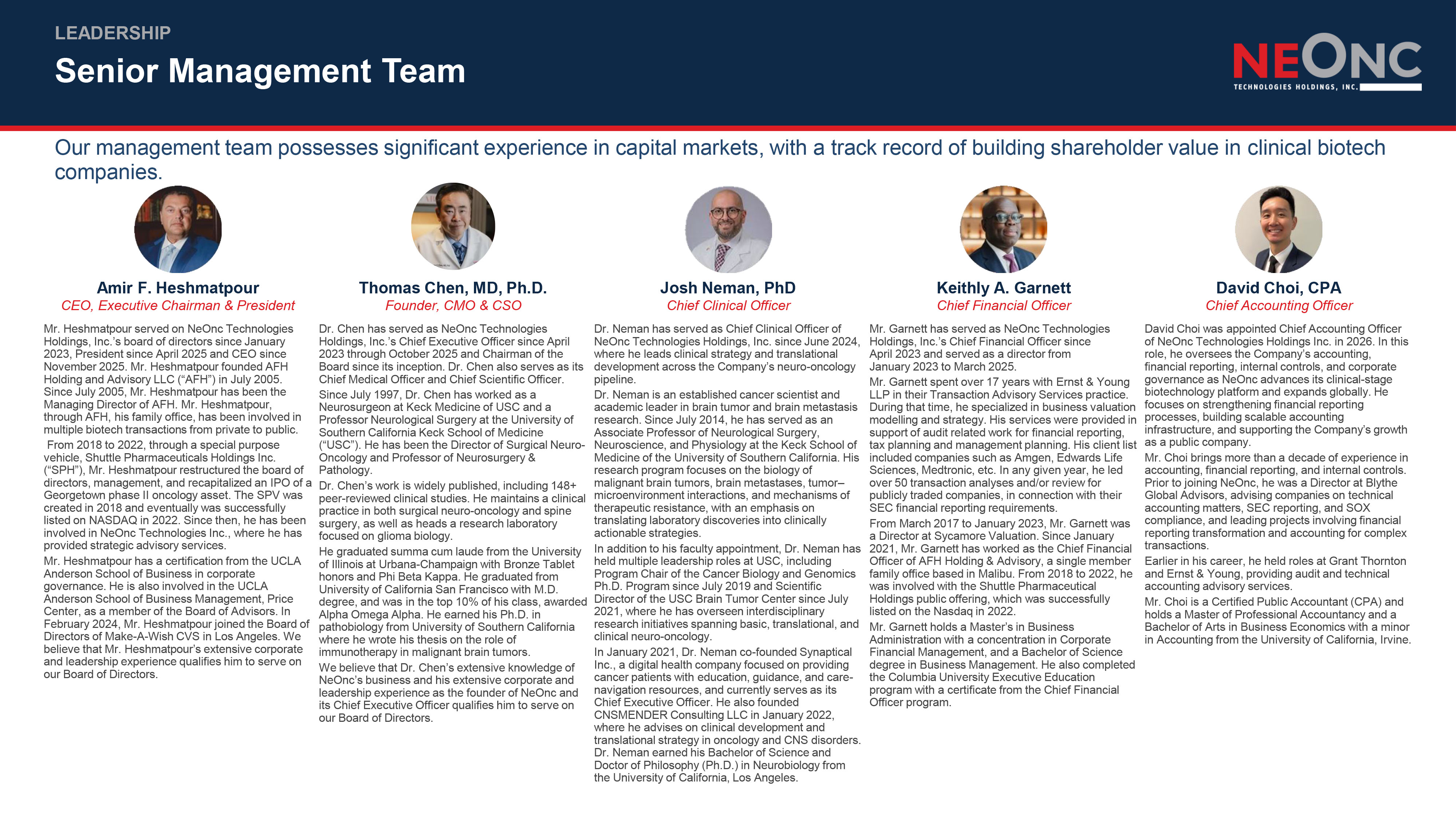
LEADERSHIP Senior Management Team Our management team possesses significant experience in capital markets, with a track record of building shareholder value in cl inical biotech companies. Amir F. Heshmatpour CEO, Executive Chairman & President Mr. Heshmatpour served on NeOnc Technologies Holdings, Inc.’s board of directors since January 2023, President since April 2025 and CEO since November 2025. Mr. Heshmatpour founded AFH Holding and Advisory LLC (“AFH”) in July 2005. Since July 2005, Mr. Heshmatpour has been the Managing Director of AFH. Mr. Heshmatpour, through AFH, his family office, has been involved in multiple biotech transactions from private to public. From 2018 to 2022, through a special purpose vehicle, Shuttle Pharmaceuticals Holdings Inc. (“SPH”), Mr. Heshmatpour restructured the board of directors, management, and recapitalized an IPO of a Georgetown phase II oncology asset. The SPV was created in 2018 and eventually was successfully listed on NASDAQ in 2022. Since then, he has been involved in NeOnc Technologies Inc., where he has provided strategic advisory services. Mr. Heshmatpour has a certification from the UCLA Anderson School of Business in corporate governance. He is also involved in the UCLA Anderson School of Business Management, Price Center, as a member of the Board of Advisors. In February 2024, Mr. Heshmatpour joined the Board of Directors of Make - A - Wish CVS in Los Angeles. We believe that Mr. Heshmatpour’s extensive corporate and leadership experience qualifies him to serve on our Board of Directors. Thomas Chen, MD, Ph.D. Founder, CMO & CSO Dr. Chen has served as NeOnc Technologies Holdings, Inc.’s Chief Executive Officer since April 2023 through October 2025 and Chairman of the Board since its inception. Dr. Chen also serves as its Chief Medical Officer and Chief Scientific Officer. Since July 1997, Dr. Chen has worked as a Neurosurgeon at Keck Medicine of USC and a Professor Neurological Surgery at the University of Southern California Keck School of Medicine (“USC”). He has been the Director of Surgical Neuro - Oncology and Professor of Neurosurgery & Pathology. Dr. Chen’s work is widely published, including 148+ peer - reviewed clinical studies. He maintains a clinical practice in both surgical neuro - oncology and spine surgery, as well as heads a research laboratory focused on glioma biology. He graduated summa cum laude from the University of Illinois at Urbana - Champaign with Bronze Tablet honors and Phi Beta Kappa. He graduated from University of California San Francisco with M.D. degree, and was in the top 10% of his class, awarded Alpha Omega Alpha. He earned his Ph.D. in pathobiology from University of Southern California where he wrote his thesis on the role of immunotherapy in malignant brain tumors. We believe that Dr. Chen’s extensive knowledge of NeOnc’s business and his extensive corporate and leadership experience as the founder of NeOnc and its Chief Executive Officer qualifies him to serve on our Board of Directors. Josh Neman, PhD Chief Clinical Officer Dr. Neman has served as Chief Clinical Officer of NeOnc Technologies Holdings, Inc. since June 2024, where he leads clinical strategy and translational development across the Company’s neuro - oncology pipeline. Dr. Neman is an established cancer scientist and academic leader in brain tumor and brain metastasis research. Since July 2014, he has served as an Associate Professor of Neurological Surgery, Neuroscience, and Physiology at the Keck School of Medicine of the University of Southern California. His research program focuses on the biology of malignant brain tumors, brain metastases, tumor – microenvironment interactions, and mechanisms of therapeutic resistance, with an emphasis on translating laboratory discoveries into clinically actionable strategies. In addition to his faculty appointment, Dr. Neman has held multiple leadership roles at USC, including Program Chair of the Cancer Biology and Genomics Ph.D. Program since July 2019 and Scientific Director of the USC Brain Tumor Center since July 2021, where he has overseen interdisciplinary research initiatives spanning basic, translational, and clinical neuro - oncology. In January 2021, Dr. Neman co - founded Synaptical Inc., a digital health company focused on providing cancer patients with education, guidance, and care - navigation resources, and currently serves as its Chief Executive Officer. He also founded CNSMENDER Consulting LLC in January 2022, where he advises on clinical development and translational strategy in oncology and CNS disorders. Dr. Neman earned his Bachelor of Science and Doctor of Philosophy (Ph.D.) in Neurobiology from the University of California, Los Angeles. Keithly A. Garnett Chief Financial Officer Mr. Garnett has served as NeOnc Technologies Holdings, Inc.’s Chief Financial Officer since April 2023 and served as a director from January 2023 to March 2025. Mr. Garnett spent over 17 years with Ernst & Young LLP in their Transaction Advisory Services practice. During that time, he specialized in business valuation modelling and strategy. His services were provided in support of audit related work for financial reporting, tax planning and management planning. His client list included companies such as Amgen, Edwards Life Sciences, Medtronic, etc. In any given year, he led over 50 transaction analyses and/or review for publicly traded companies, in connection with their SEC financial reporting requirements. From March 2017 to January 2023, Mr. Garnett was a Director at Sycamore Valuation. Since January 2021, Mr. Garnett has worked as the Chief Financial Officer of AFH Holding & Advisory, a single member family office based in Malibu. From 2018 to 2022, he was involved with the Shuttle Pharmaceutical Holdings public offering, which was successfully listed on the Nasdaq in 2022. Mr. Garnett holds a Master’s in Business Administration with a concentration in Corporate Financial Management, and a Bachelor of Science degree in Business Management. He also completed the Columbia University Executive Education program with a certificate from the Chief Financial Officer program. David Choi, CPA Chief Accounting Officer David Choi was appointed Chief Accounting Officer of NeOnc Technologies Holdings Inc. in 2026. In this role, he oversees the Company’s accounting, financial reporting, internal controls, and corporate governance as NeOnc advances its clinical - stage biotechnology platform and expands globally. He focuses on strengthening financial reporting processes, building scalable accounting infrastructure, and supporting the Company’s growth as a public company. Mr. Choi brings more than a decade of experience in accounting, financial reporting, and internal controls. Prior to joining NeOnc, he was a Director at Blythe Global Advisors, advising companies on technical accounting matters, SEC reporting, and SOX compliance, and leading projects involving financial reporting transformation and accounting for complex transactions. Earlier in his career, he held roles at Grant Thornton and Ernst & Young, providing audit and technical accounting advisory services. Mr. Choi is a Certified Public Accountant (CPA) and holds a Master of Professional Accountancy and a Bachelor of Arts in Business Economics with a minor in Accounting from the University of California, Irvine.
24
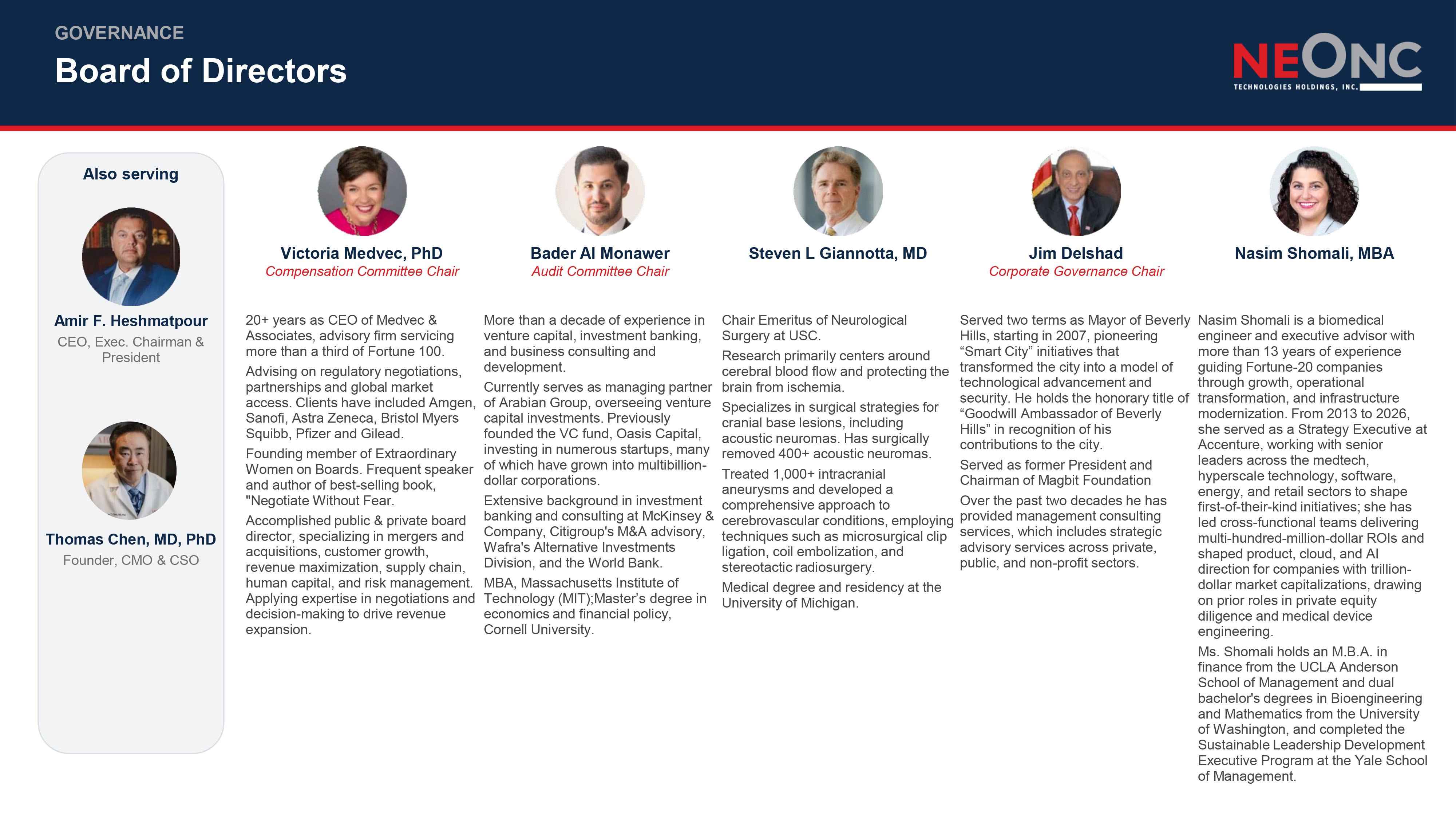
GOVERNANCE Board of Directors Also serving Amir F. Heshmatpour CEO, Exec. Chairman & President Thomas Chen, MD, PhD Founder, CMO & CSO Victoria Medvec, PhD Compensation Committee Chair 20+ years as CEO of Medvec & Associates, advisory firm servicing more than a third of Fortune 100. Advising on regulatory negotiations, partnerships and global market access. Clients have included Amgen, Sanofi, Astra Zeneca, Bristol Myers Squibb, Pfizer and Gilead. Founding member of Extraordinary Women on Boards. Frequent speaker and author of best - selling book, "Negotiate Without Fear. Accomplished public & private board director, specializing in mergers and acquisitions, customer growth, revenue maximization, supply chain, human capital, and risk management. Applying expertise in negotiations and decision - making to drive revenue expansion. Bader Al Monawer Audit Committee Chair More than a decade of experience in venture capital, investment banking, and business consulting and development. Currently serves as managing partner of Arabian Group, overseeing venture capital investments. Previously founded the VC fund, Oasis Capital, investing in numerous startups, many of which have grown into multibillion - dollar corporations. Extensive background in investment banking and consulting at McKinsey & Company, Citigroup's M&A advisory, Wafra's Alternative Investments Division, and the World Bank. MBA, Massachusetts Institute of Technology (MIT);Master’s degree in economics and financial policy, Cornell University. Steven L Giannotta, MD Chair Emeritus of Neurological Surgery at USC. Research primarily centers around cerebral blood flow and protecting the brain from ischemia. Specializes in surgical strategies for cranial base lesions, including acoustic neuromas. Has surgically removed 400+ acoustic neuromas. Treated 1,000+ intracranial aneurysms and developed a comprehensive approach to cerebrovascular conditions, employing techniques such as microsurgical clip ligation, coil embolization, and stereotactic radiosurgery. Medical degree and residency at the University of Michigan. Jim Delshad Corporate Governance Chair Served two terms as Mayor of Beverly Hills, starting in 2007, pioneering “Smart City” initiatives that transformed the city into a model of technological advancement and security. He holds the honorary title of “Goodwill Ambassador of Beverly Hills” in recognition of his contributions to the city. Served as former President and Chairman of Magbit Foundation Over the past two decades he has provided management consulting services, which includes strategic advisory services across private, public, and non - profit sectors. Nasim Shomali, MBA Nasim Shomali is a biomedical engineer and executive advisor with more than 13 years of experience guiding Fortune - 20 companies through growth, operational transformation, and infrastructure modernization. From 2013 to 2026, she served as a Strategy Executive at Accenture, working with senior leaders across the medtech, hyperscale technology, software, energy, and retail sectors to shape first - of - their - kind initiatives; she has led cross - functional teams delivering multi - hundred - million - dollar ROIs and shaped product, cloud, and AI direction for companies with trillion - dollar market capitalizations, drawing on prior roles in private equity diligence and medical device engineering. Ms. Shomali holds an M.B.A. in finance from the UCLA Anderson School of Management and dual bachelor's degrees in Bioengineering and Mathematics from the University of Washington, and completed the Sustainable Leadership Development Executive Program at the Yale School of Management.
25
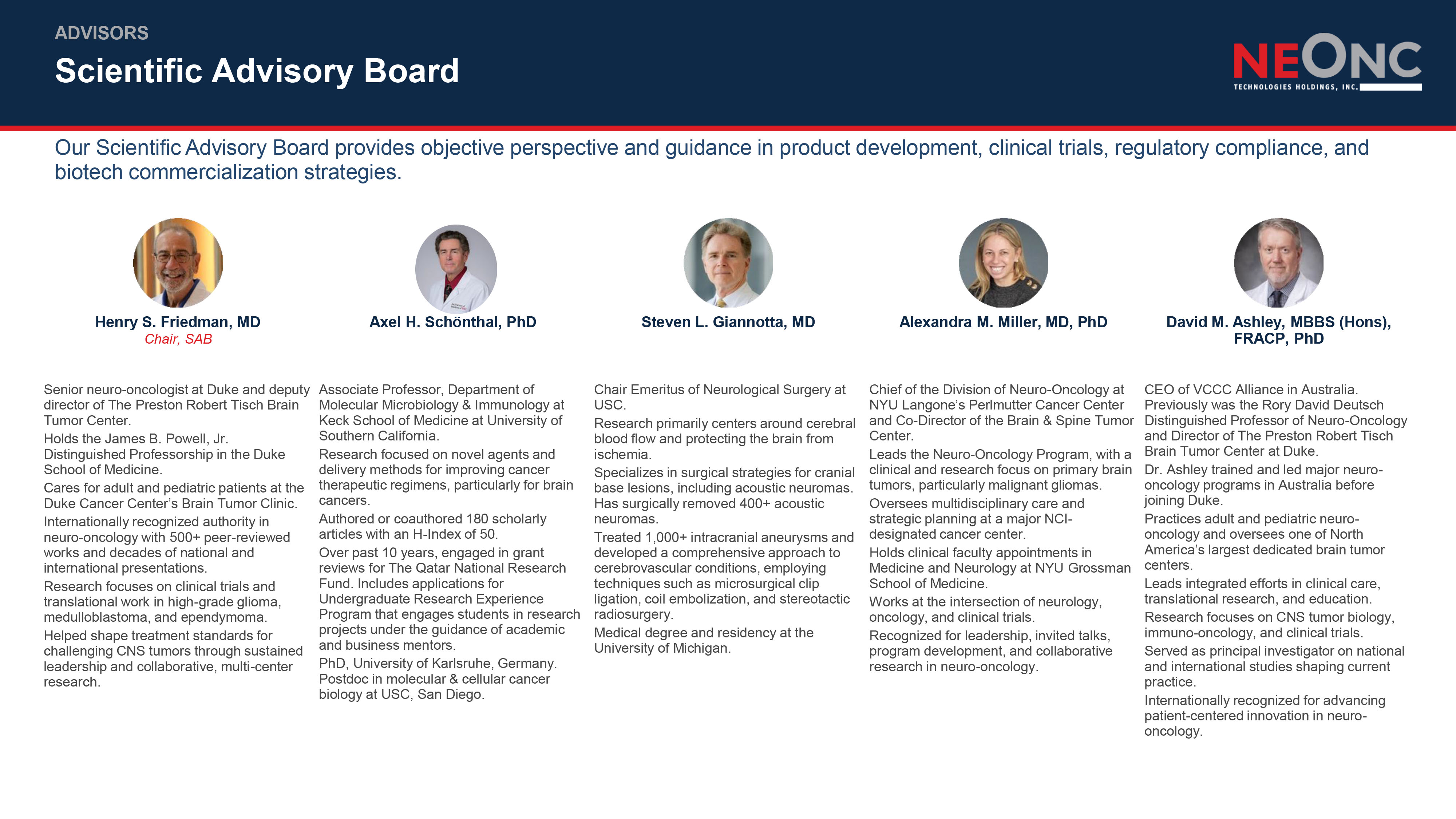
ADVISORS Scientific Advisory Board Our Scientific Advisory Board provides objective perspective and guidance in product development, clinical trials, regulatory co mpliance, and biotech commercialization strategies. Henry S. Friedman, MD Chair, SAB Senior neuro - oncologist at Duke and deputy director of The Preston Robert Tisch Brain Tumor Center. Holds the James B. Powell, Jr. Distinguished Professorship in the Duke School of Medicine. Cares for adult and pediatric patients at the Duke Cancer Center’s Brain Tumor Clinic. Internationally recognized authority in neuro - oncology with 500+ peer - reviewed works and decades of national and international presentations. Research focuses on clinical trials and translational work in high - grade glioma, medulloblastoma, and ependymoma. Helped shape treatment standards for challenging CNS tumors through sustained leadership and collaborative, multi - center research. Axel H. Schönthal, PhD Associate Professor, Department of Molecular Microbiology & Immunology at Keck School of Medicine at University of Southern California. Research focused on novel agents and delivery methods for improving cancer therapeutic regimens, particularly for brain cancers. Authored or coauthored 180 scholarly articles with an H - Index of 50. Over past 10 years, engaged in grant reviews for The Qatar National Research Fund. Includes applications for Undergraduate Research Experience Program that engages students in research projects under the guidance of academic and business mentors. PhD, University of Karlsruhe, Germany. Postdoc in molecular & cellular cancer biology at USC, San Diego. Steven L. Giannotta, MD Chair Emeritus of Neurological Surgery at USC. Research primarily centers around cerebral blood flow and protecting the brain from ischemia. Specializes in surgical strategies for cranial base lesions, including acoustic neuromas. Has surgically removed 400+ acoustic neuromas. Treated 1,000+ intracranial aneurysms and developed a comprehensive approach to cerebrovascular conditions, employing techniques such as microsurgical clip ligation, coil embolization, and stereotactic radiosurgery. Medical degree and residency at the University of Michigan. Alexandra M. Miller, MD, PhD Chief of the Division of Neuro - Oncology at NYU Langone’s Perlmutter Cancer Center and Co - Director of the Brain & Spine Tumor Center. Leads the Neuro - Oncology Program, with a clinical and research focus on primary brain tumors, particularly malignant gliomas. Oversees multidisciplinary care and strategic planning at a major NCI - designated cancer center. Holds clinical faculty appointments in Medicine and Neurology at NYU Grossman School of Medicine. Works at the intersection of neurology, oncology, and clinical trials. Recognized for leadership, invited talks, program development, and collaborative research in neuro - oncology. David M. Ashley, MBBS (Hons), FRACP, PhD CEO of VCCC Alliance in Australia. Previously was the Rory David Deutsch Distinguished Professor of Neuro - Oncology and Director of The Preston Robert Tisch Brain Tumor Center at Duke. Dr. Ashley trained and led major neuro - oncology programs in Australia before joining Duke. Practices adult and pediatric neuro - oncology and oversees one of North America’s largest dedicated brain tumor centers. Leads integrated efforts in clinical care, translational research, and education. Research focuses on CNS tumor biology, immuno - oncology, and clinical trials. Served as principal investigator on national and international studies shaping current practice. Internationally recognized for advancing patient - centered innovation in neuro - oncology.
26
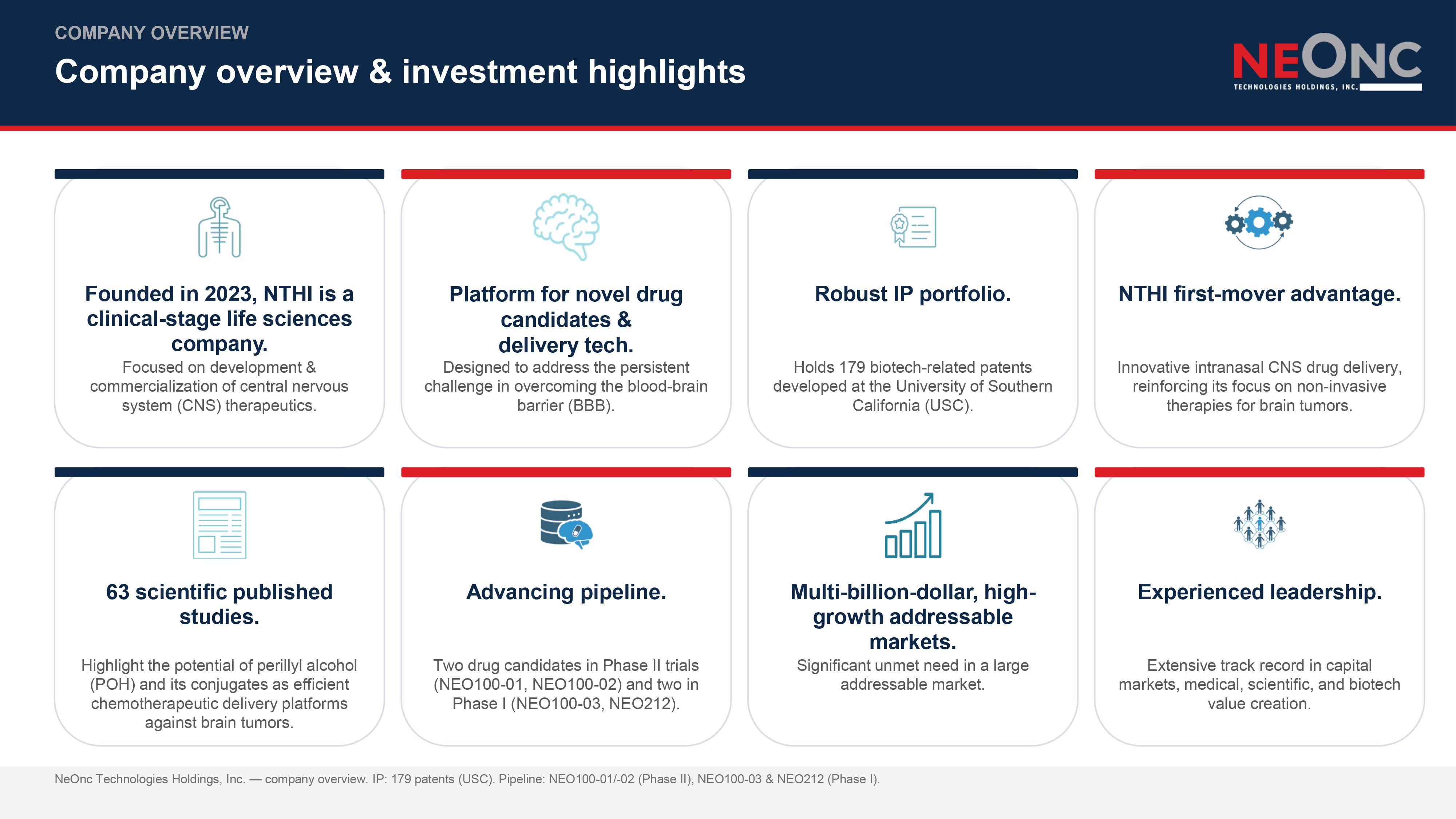
COMPANY OVERVIEW Company overview & investment highlights Founded in 2023, NTHI is a clinical - stage life sciences company. Focused on development & commercialization of central nervous system (CNS) therapeutics. Platform for novel drug candidates & delivery tech. Designed to address the persistent challenge in overcoming the blood - brain barrier (BBB). Robust IP portfolio. Holds 179 biotech - related patents developed at the University of Southern California (USC). NTHI first - mover advantage. Innovative intranasal CNS drug delivery, reinforcing its focus on non - invasive therapies for brain tumors. 63 scientific published studies. Highlight the potential of perillyl alcohol (POH) and its conjugates as efficient chemotherapeutic delivery platforms against brain tumors. Advancing pipeline. Two drug candidates in Phase II trials (NEO100 - 01, NEO100 - 02) and two in Phase I (NEO100 - 03, NEO212). Multi - billion - dollar, high - growth addressable markets. Significant unmet need in a large addressable market. Experienced leadership. Extensive track record in capital markets, medical, scientific, and biotech value creation. NeOnc Technologies Holdings, Inc. — company overview. IP: 179 patents (USC). Pipeline: NEO100 - 01/ - 02 (Phase II), NEO100 - 03 & NEO 212 (Phase I).
27
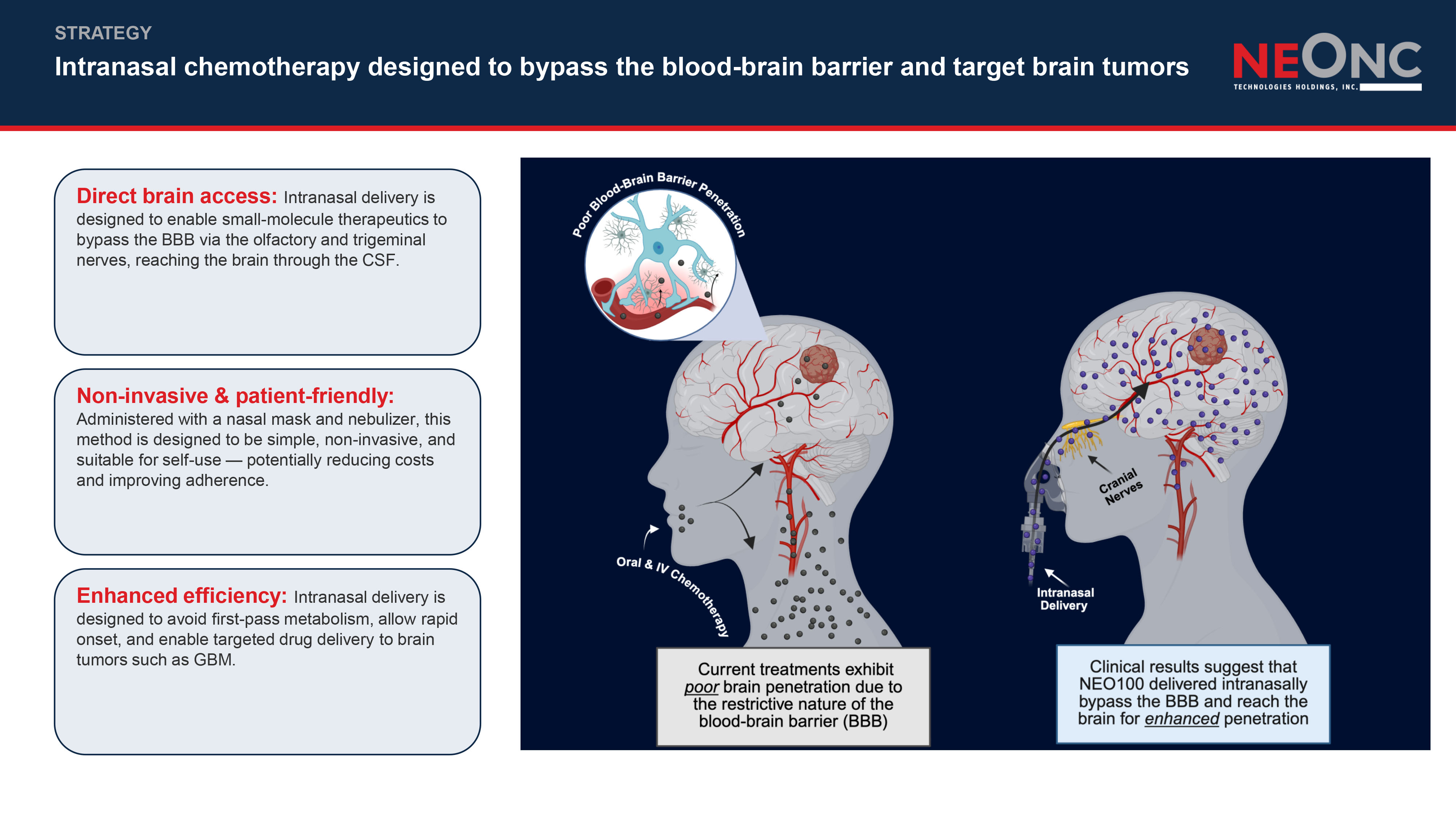
STRATEGY Intranasal chemotherapy designed to bypass the blood - brain barrier and target brain tumors Direct brain access: Intranasal delivery is designed to enable small - molecule therapeutics to bypass the BBB via the olfactory and trigeminal nerves, reaching the brain through the CSF. Non - invasive & patient - friendly: Administered with a nasal mask and nebulizer, this method is designed to be simple, non - invasive, and suitable for self - use — potentially reducing costs and improving adherence. Enhanced efficiency: Intranasal delivery is designed to avoid first - pass metabolism, allow rapid onset, and enable targeted drug delivery to brain tumors such as GBM.
28
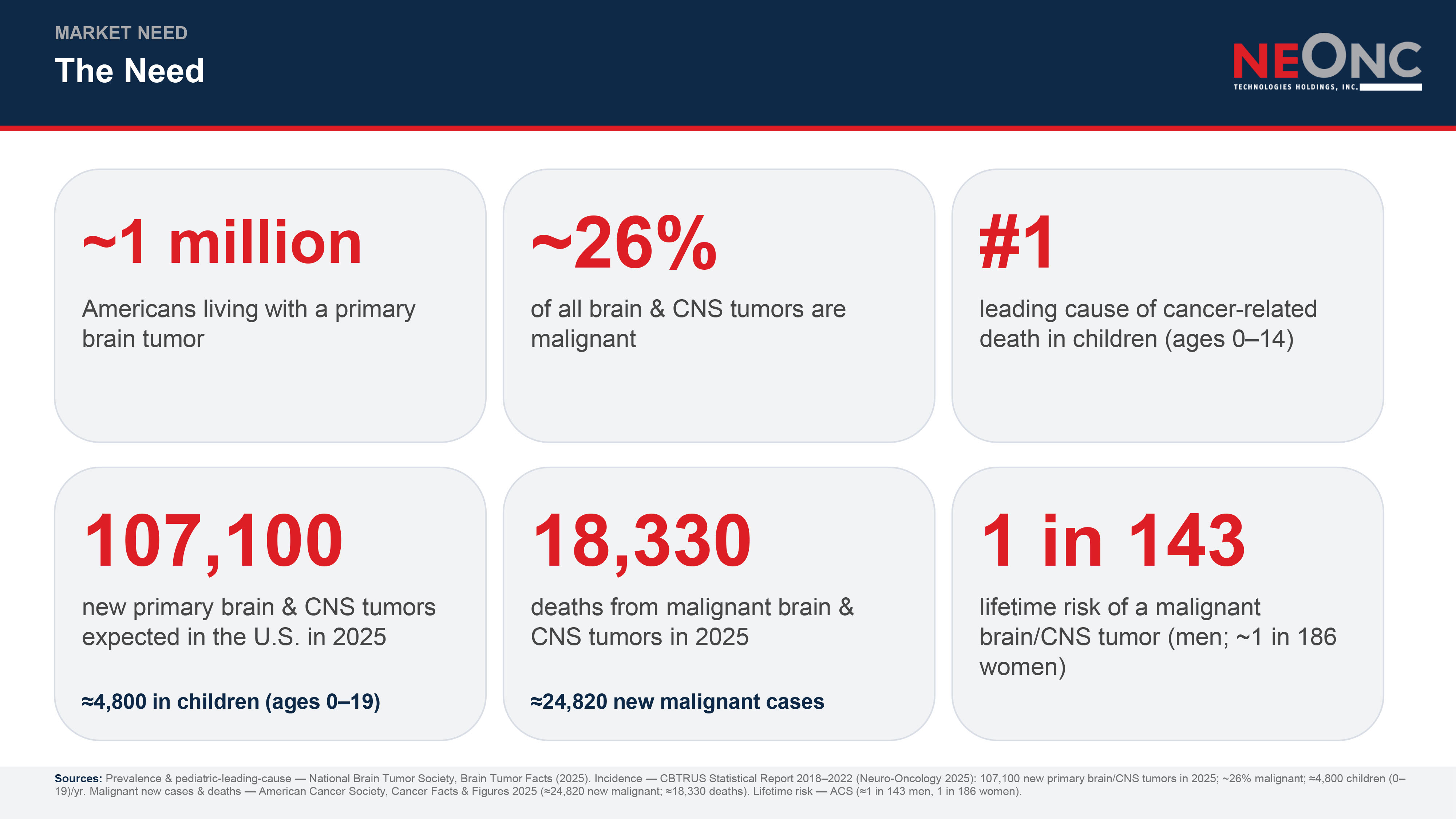
MARKET NEED The Need ~1 million Americans living with a primary brain tumor ~26% of all brain & CNS tumors are malignant #1 leading cause of cancer - related death in children (ages 0 – 14) 107,100 new primary brain & CNS tumors expected in the U.S. in 2025 ≈4,800 in children (ages 0 – 19) 18,330 deaths from malignant brain & CNS tumors in 2025 ≈24,820 new malignant cases 1 in 143 lifetime risk of a malignant brain/CNS tumor (men; ~1 in 186 women) Sources: Prevalence & pediatric - leading - cause — National Brain Tumor Society, Brain Tumor Facts (2025). Incidence — CBTRUS Statistical Re port 2018 – 2022 (Neuro - Oncology 2025): 107,100 new primary brain/CNS tumors in 2025; ~26% malignant; ≈4,800 children (0 – 19)/yr. Malignant new cases & deaths — American Cancer Society, Cancer Facts & Figures 2025 (≈24,820 new malignant; ≈18,330 deat hs). Lifetime risk — ACS (≈1 in 143 men, 1 in 186 women).
29
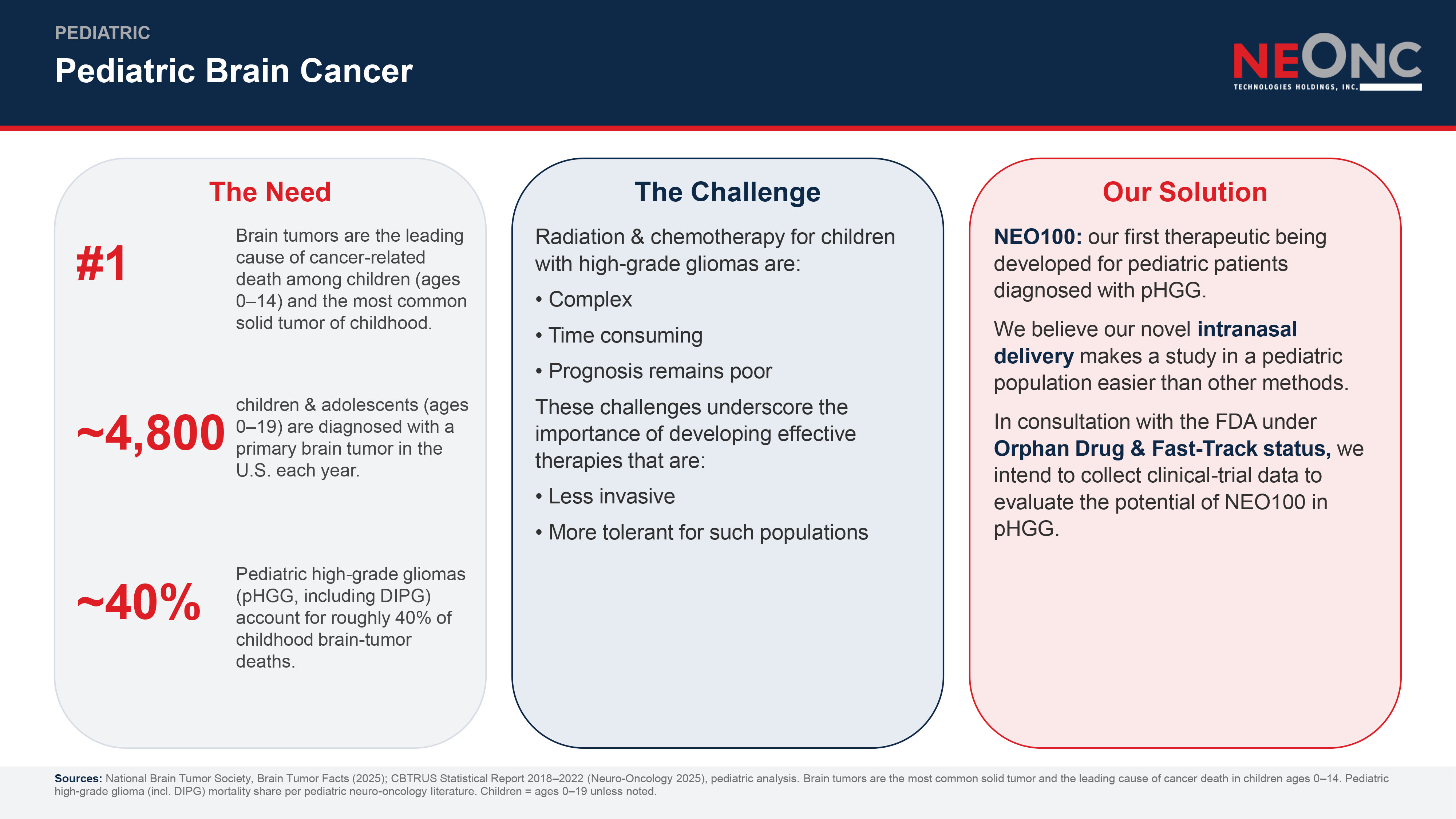
PEDIATRIC Pediatric Brain Cancer The Need #1 Brain tumors are the leading cause of cancer - related death among children (ages 0 – 14) and the most common solid tumor of childhood. ~4,800 children & adolescents (ages 0 – 19) are diagnosed with a primary brain tumor in the U.S. each year. ~40% Pediatric high - grade gliomas ( pHGG , including DIPG) account for roughly 40% of childhood brain - tumor deaths. The Challenge Radiation & chemotherapy for children with high - grade gliomas are: • Complex • Time consuming • Prognosis remains poor These challenges underscore the importance of developing effective therapies that are: • Less invasive • More tolerant for such populations Our Solution NEO100: our first therapeutic being developed for pediatric patients diagnosed with pHGG. We believe our novel intranasal delivery makes a study in a pediatric population easier than other methods. In consultation with the FDA under Orphan Drug & Fast - Track status, we intend to collect clinical - trial data to evaluate the potential of NEO100 in pHGG. Sources: National Brain Tumor Society, Brain Tumor Facts (2025); CBTRUS Statistical Report 2018 – 2022 (Neuro - Oncology 2025), pediatric ana lysis. Brain tumors are the most common solid tumor and the leading cause of cancer death in children ages 0 – 14. Pediatric high - grade glioma (incl. DIPG) mortality share per pediatric neuro - oncology literature. Children = ages 0 – 19 unless noted.
30
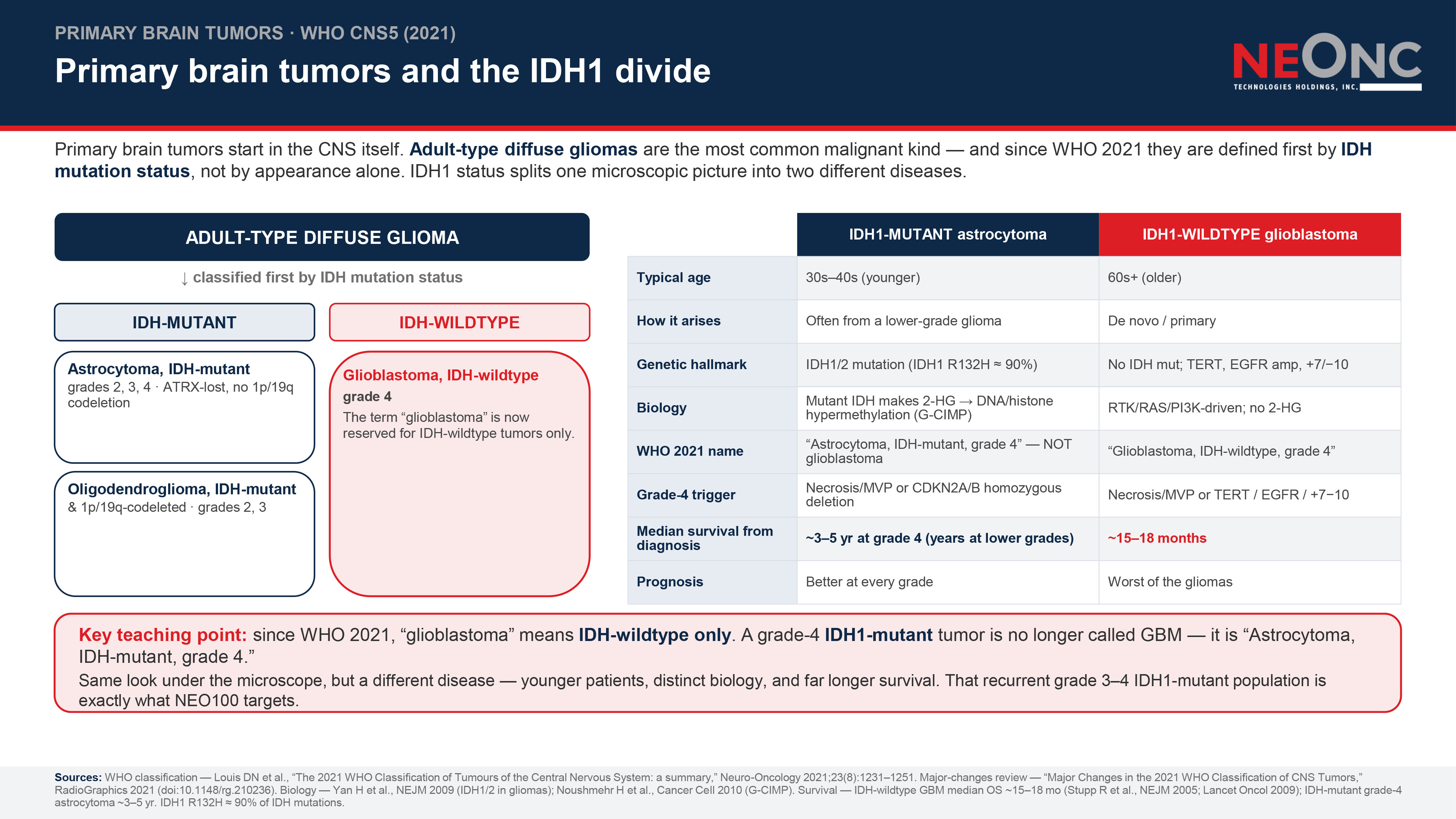
PRIMARY BRAIN TUMORS · WHO CNS5 (2021) Primary brain tumors and the IDH1 divide Primary brain tumors start in the CNS itself. Adult - type diffuse gliomas are the most common malignant kind — and since WHO 2021 they are defined first by IDH mutation status , not by appearance alone. IDH1 status splits one microscopic picture into two different diseases. ADULT - TYPE DIFFUSE GLIOMA ↓ classified first by IDH mutation status IDH - MUTANT Astrocytoma, IDH - mutant grades 2, 3, 4 · ATRX - lost, no 1p/19q codeletion Oligodendroglioma, IDH - mutant & 1p/19q - codeleted · grades 2, 3 IDH - WILDTYPE Glioblastoma, IDH - wildtype grade 4 The term “glioblastoma” is now reserved for IDH - wildtype tumors only. IDH1 - MUTANT astrocytoma IDH1 - WILDTYPE glioblastoma Typical age 30s – 40s (younger) 60s+ (older) How it arises Often from a lower - grade glioma De novo / primary Genetic hallmark IDH1/2 mutation (IDH1 R132H ≈ 90%) No IDH mut; TERT, EGFR amp, +7/−10 Biology Mutant IDH makes 2 - HG → DNA/histone hypermethylation (G - CIMP) RTK/RAS/PI3K - driven; no 2 - HG WHO 2021 name “Astrocytoma, IDH - mutant, grade 4” — NOT glioblastoma “Glioblastoma, IDH - wildtype, grade 4” Grade - 4 trigger Necrosis/MVP or CDKN2A/B homozygous deletion Necrosis/MVP or TERT / EGFR / +7−10 Median survival from diagnosis ~3 – 5 yr at grade 4 (years at lower grades) ~15 – 18 months Prognosis Better at every grade Worst of the gliomas Key teaching point: since WHO 2021, “glioblastoma” means IDH - wildtype only . A grade - 4 IDH1 - mutant tumor is no longer called GBM — it is “Astrocytoma, IDH - mutant, grade 4.” Same look under the microscope, but a different disease — younger patients, distinct biology, and far longer survival. That recu rrent grade 3 – 4 IDH1 - mutant population is exactly what NEO100 targets. Sources: WHO classification — Louis DN et al., “The 2021 WHO Classification of Tumours of the Central Nervous System: a summary,” Neuro - O ncology 2021;23(8):1231 – 1251. Major - changes review — “Major Changes in the 2021 WHO Classification of CNS Tumors,” RadioGraphics 2021 (doi:10.1148/rg.210236). Biology — Yan H et al., NEJM 2009 (IDH1/2 in gliomas); Noushmehr H et al., Cancer Ce ll 2010 (G - CIMP). Survival — IDH - wildtype GBM median OS ~15 – 18 mo (Stupp R et al., NEJM 2005; Lancet Oncol 2009); IDH - mutant gra de - 4 astrocytoma ~3 – 5 yr. IDH1 R132H ≈ 90% of IDH mutations.
31
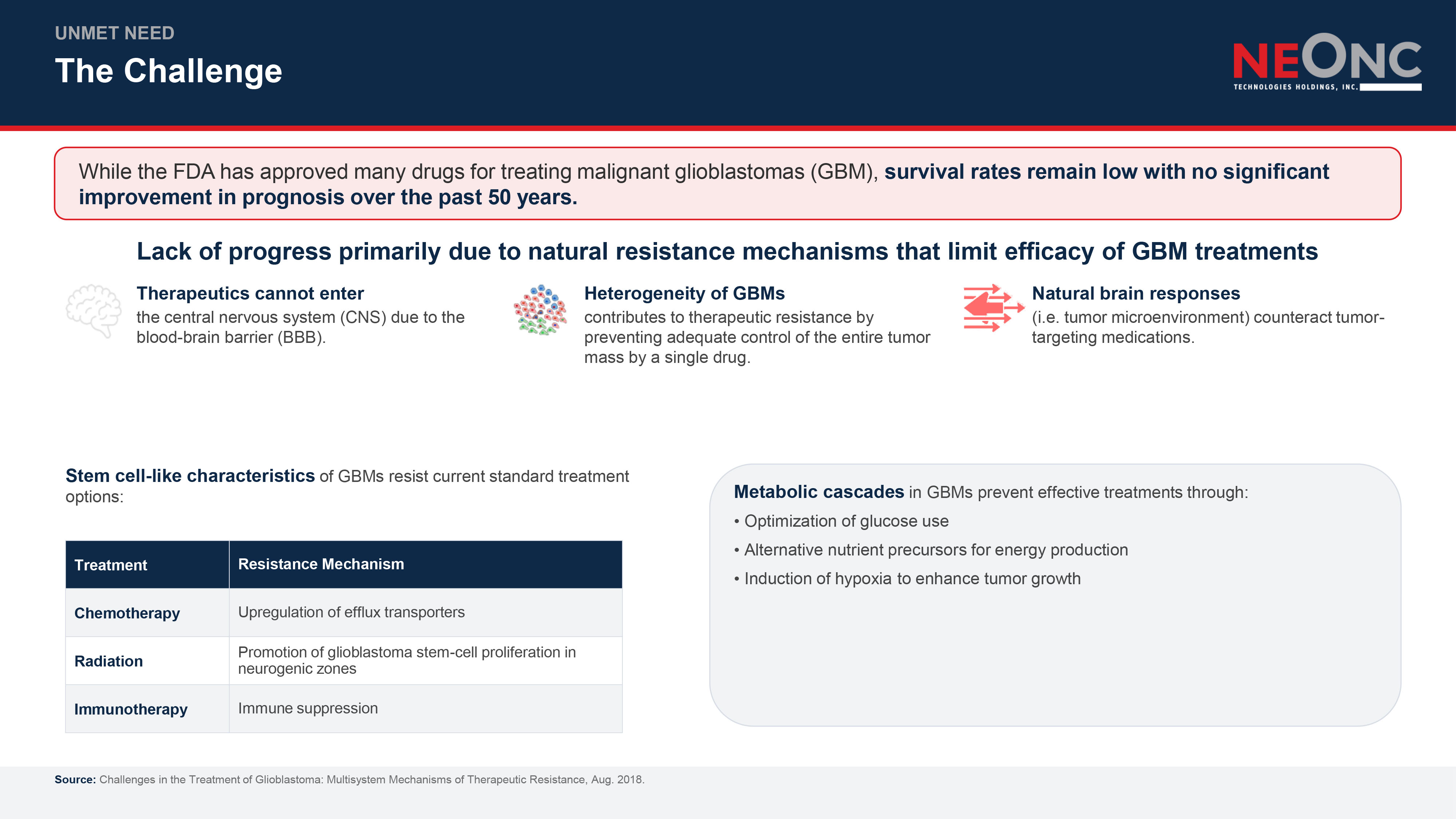
UNMET NEED The Challenge While the FDA has approved many drugs for treating malignant glioblastomas (GBM), survival rates remain low with no significant improvement in prognosis over the past 50 years. Lack of progress primarily due to natural resistance mechanisms that limit efficacy of GBM treatments Therapeutics cannot enter the central nervous system (CNS) due to the blood - brain barrier (BBB). Heterogeneity of GBMs contributes to therapeutic resistance by preventing adequate control of the entire tumor mass by a single drug. Natural brain responses (i.e. tumor microenvironment) counteract tumor - targeting medications. Stem cell - like characteristics of GBMs resist current standard treatment options: Treatment Resistance Mechanism Chemotherapy Upregulation of efflux transporters Radiation Promotion of glioblastoma stem - cell proliferation in neurogenic zones Immunotherapy Immune suppression Metabolic cascades in GBMs prevent effective treatments through: • Optimization of glucose use • Alternative nutrient precursors for energy production • Induction of hypoxia to enhance tumor growth Source: Challenges in the Treatment of Glioblastoma: Multisystem Mechanisms of Therapeutic Resistance, Aug. 2018.
32
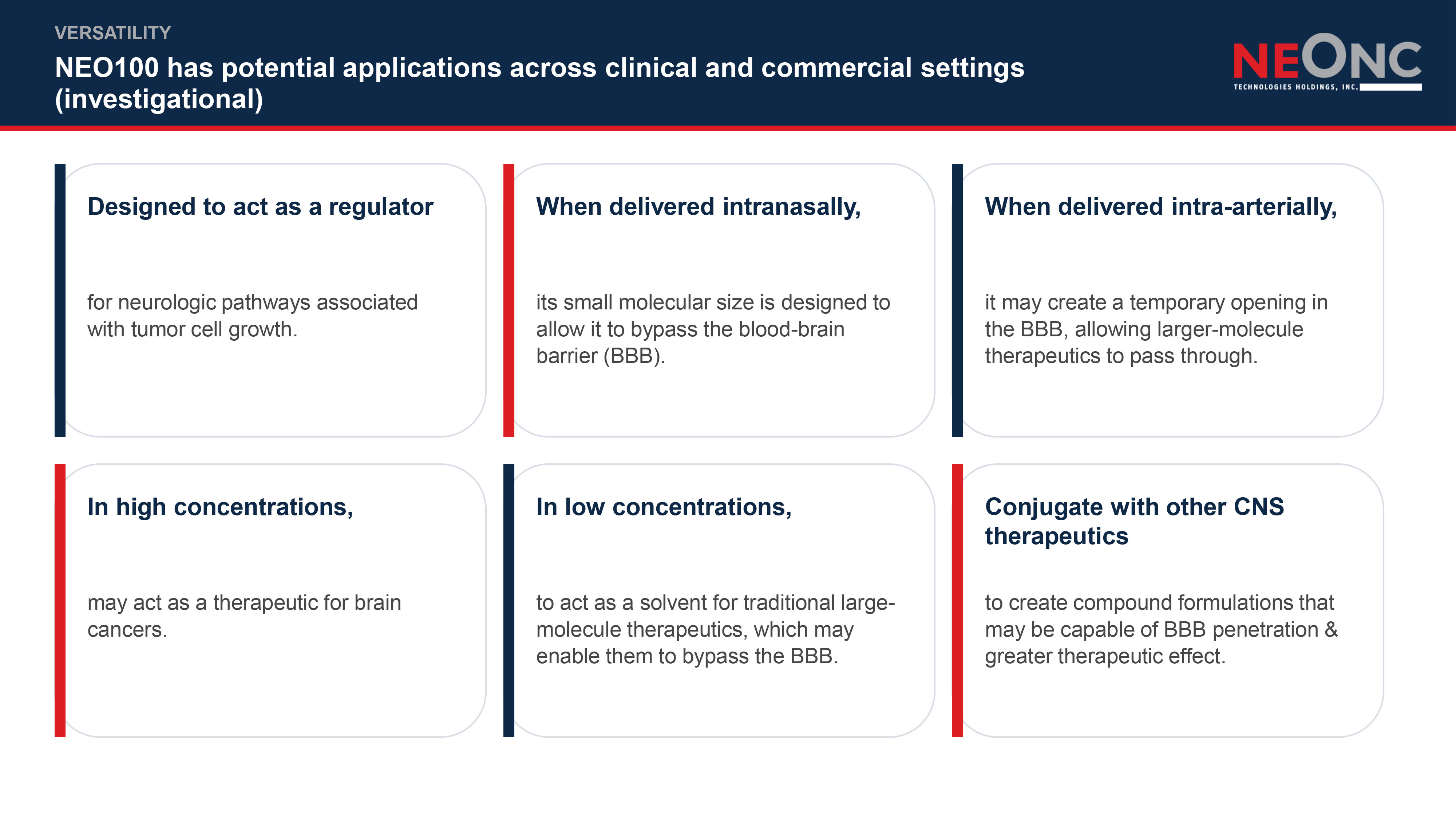
VERSATILITY NEO100 has potential applications across clinical and commercial settings (investigational) Designed to act as a regulator for neurologic pathways associated with tumor cell growth. When delivered intranasally, its small molecular size is designed to allow it to bypass the blood - brain barrier (BBB). When delivered intra - arterially, it may create a temporary opening in the BBB, allowing larger - molecule therapeutics to pass through. In high concentrations, may act as a therapeutic for brain cancers. In low concentrations, to act as a solvent for traditional large - molecule therapeutics, which may enable them to bypass the BBB. Conjugate with other CNS therapeutics to create compound formulations that may be capable of BBB penetration & greater therapeutic effect.
33
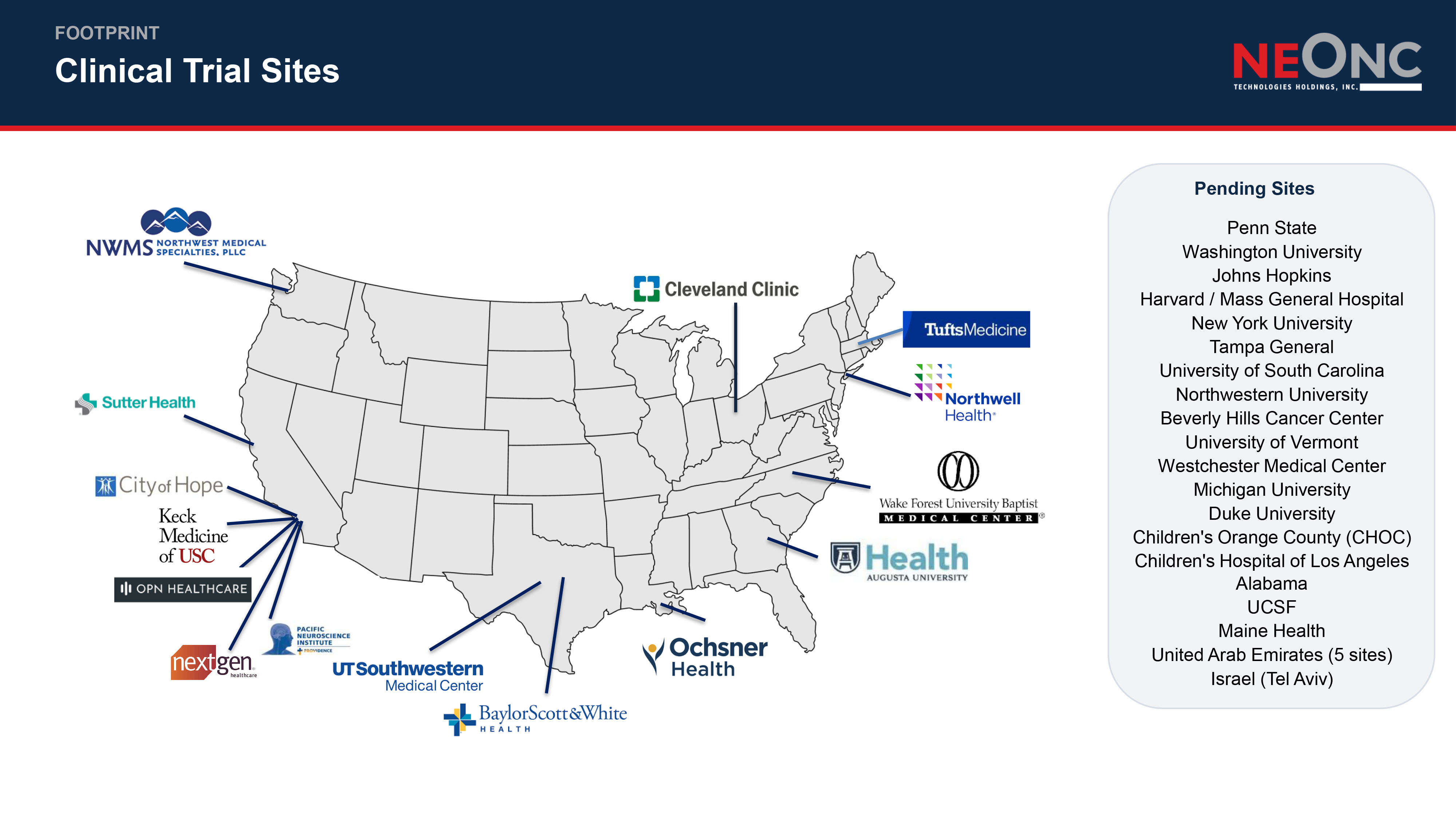
FOOTPRINT Clinical Trial Sites Pending Sites Penn State Washington University Johns Hopkins Harvard / Mass General Hospital New York University Tampa General University of South Carolina Northwestern University Beverly Hills Cancer Center University of Vermont Westchester Medical Center Michigan University Duke University Children's Orange County (CHOC) Children's Hospital of Los Angeles Alabama UCSF Maine Health United Arab Emirates (5 sites) Israel (Tel Aviv)
34
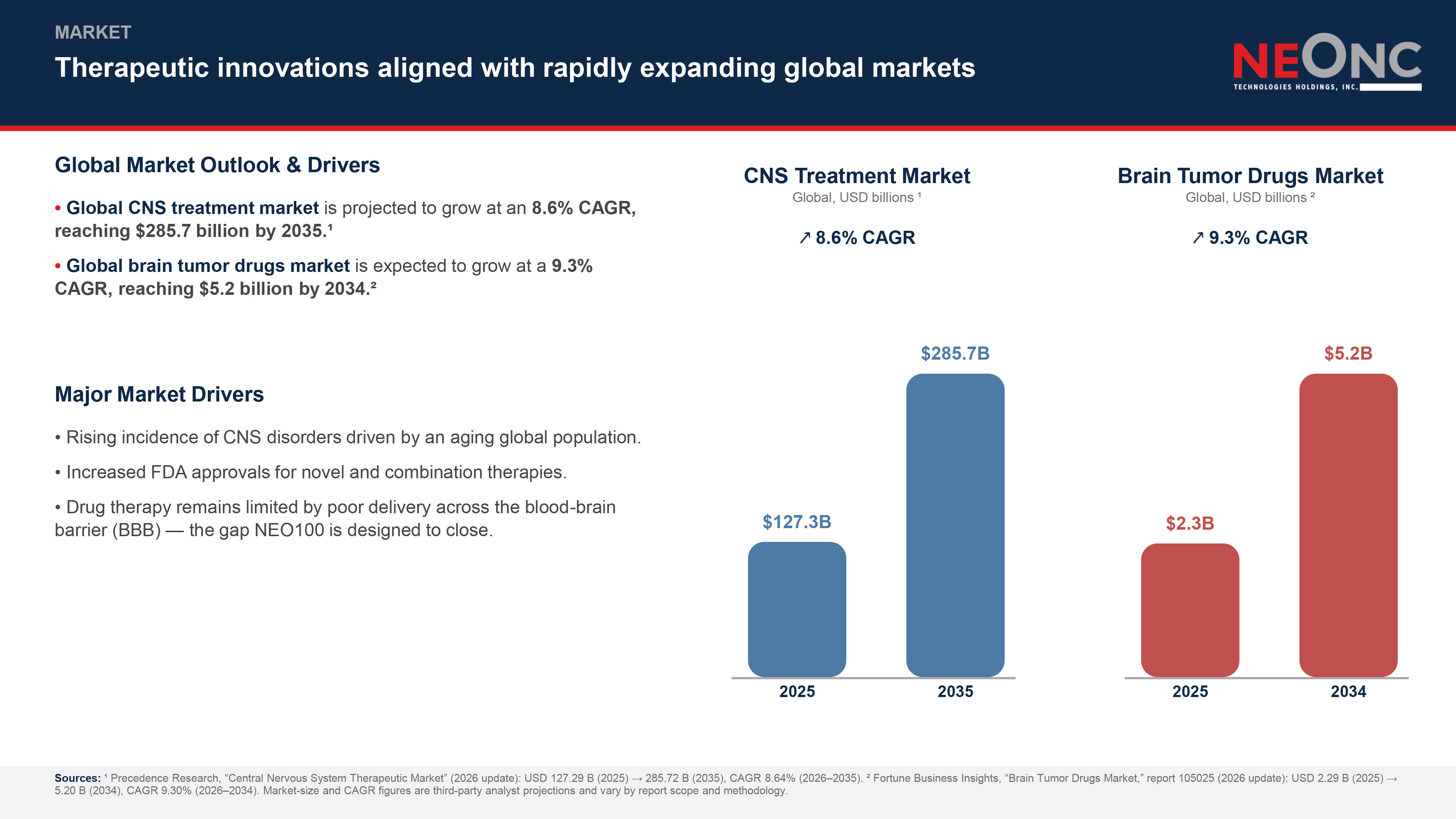
MARKET Therapeutic innovations aligned with rapidly expanding global markets Global Market Outlook & Drivers • Global CNS treatment market is projected to grow at an 8.6% CAGR, reaching $285.7 billion by 2035.¹ • Global brain tumor drugs market is expected to grow at a 9.3% CAGR, reaching $5.2 billion by 2034.² Major Market Drivers • Rising incidence of CNS disorders driven by an aging global population. • Increased FDA approvals for novel and combination therapies. • Drug therapy remains limited by poor delivery across the blood - brain barrier (BBB) — the gap NEO100 is designed to close. CNS Treatment Market Global, USD billions ¹ 8.6% CAGR $127.3B 2025 $285.7B 2035 Brain Tumor Drugs Market Global, USD billions ² 9.3% CAGR $2.3B 2025 $5.2B 2034 Sources: ¹ Precedence Research, “Central Nervous System Therapeutic Market” (2026 update): USD 127.29 B (2025) → 285.72 B (2035), CAGR 8. 64% (2026 – 2035). ² Fortune Business Insights, “Brain Tumor Drugs Market,” report 105025 (2026 update): USD 2.29 B (2025) → 5.20 B (2034), CAGR 9.30% (2026 – 2034). Market - size and CAGR figures are third - party analyst projections and vary by report scope and methodology.
35
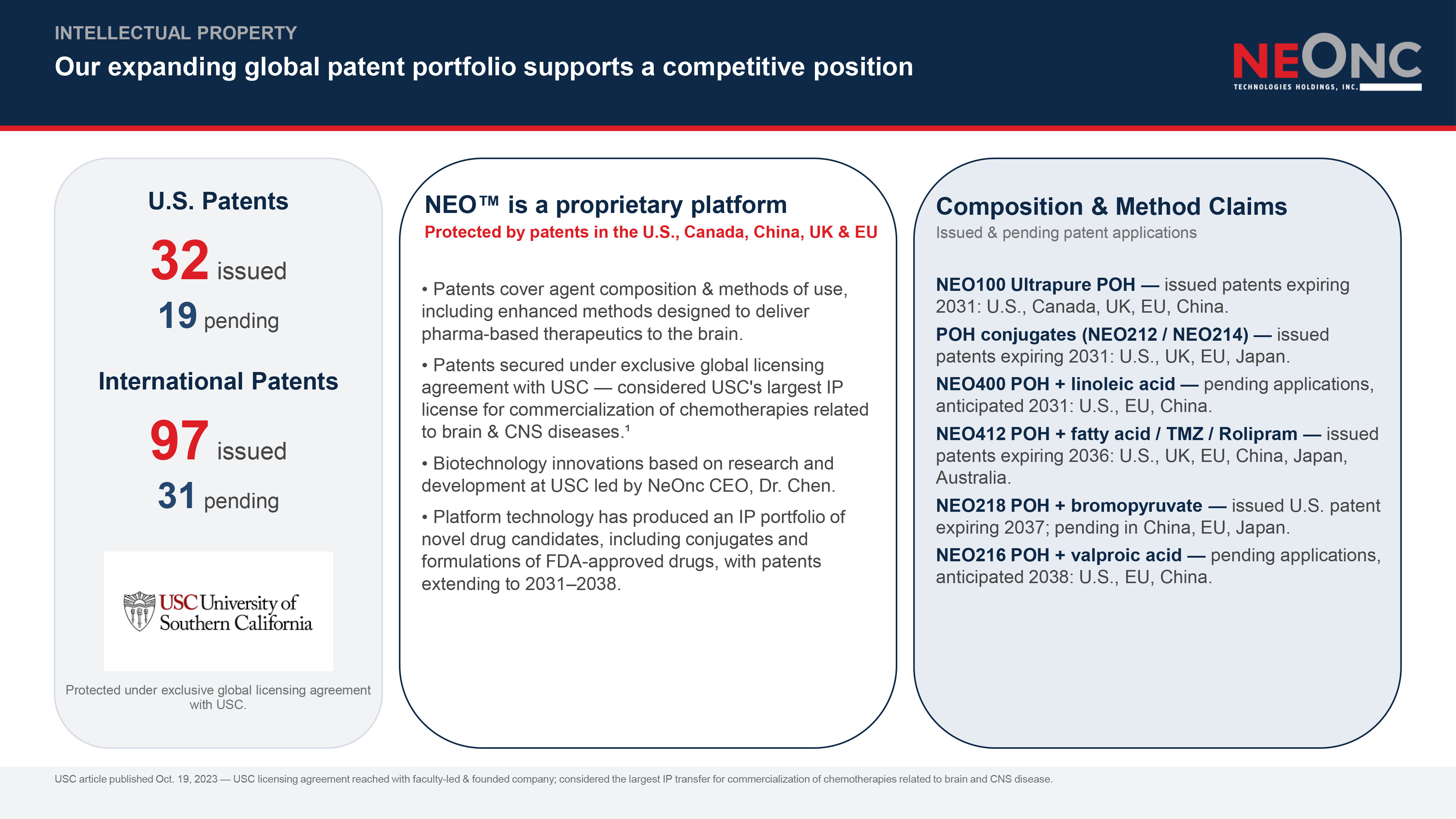
INTELLECTUAL PROPERTY Our expanding global patent portfolio supports a competitive position U.S. Patents 32 issued 19 pending International Patents 97 issued 31 pending Protected under exclusive global licensing agreement with USC. NEO is a proprietary platform Protected by patents in the U.S., Canada, China, UK & EU • Patents cover agent composition & methods of use, including enhanced methods designed to deliver pharma - based therapeutics to the brain. • Patents secured under exclusive global licensing agreement with USC — considered USC's largest IP license for commercialization of chemotherapies related to brain & CNS diseases.¹ • Biotechnology innovations based on research and development at USC led by NeOnc CEO, Dr. Chen. • Platform technology has produced an IP portfolio of novel drug candidates, including conjugates and formulations of FDA - approved drugs, with patents extending to 2031 – 2038. Composition & Method Claims Issued & pending patent applications NEO100 Ultrapure POH — issued patents expiring 2031: U.S., Canada, UK, EU, China. POH conjugates (NEO212 / NEO214) — issued patents expiring 2031: U.S., UK, EU, Japan. NEO400 POH + linoleic acid — pending applications, anticipated 2031: U.S., EU, China. NEO412 POH + fatty acid / TMZ / Rolipram — issued patents expiring 2036: U.S., UK, EU, China, Japan, Australia. NEO218 POH + bromopyruvate — issued U.S. patent expiring 2037; pending in China, EU, Japan. NEO216 POH + valproic acid — pending applications, anticipated 2038: U.S., EU, China. USC article published Oct. 19, 2023 — USC licensing agreement reached with faculty - led & founded company; considered the largest IP transfer for commercialization of chemotherapies related to brain and CNS disease.
36