Exhibit 99.1
Biodefense Is Force Protection: Ready Today, Prepared for Tomorrow
A decorated combat aviator and biotech CEO advocates preparing for novel viral threats before the next crisis.
By Thomas K. Equels
America treats biodefense too much like a public health backstop and not enough like military force protection. That must change.
As a former Army helicopter gunship pilot who flew more than 300 combat missions, an instructor pilot and a TRADOC project officer, I learned that readiness is built before the threat appears. The people we send into danger need training, equipment, intelligence, planning and support before they are asked to take the risk. As CEO of AIM ImmunoTech, I know biological threats require the same mindset.
The history of warfare teaches us that a biological event does not have to begin as an attack to create serious military consequences. A natural outbreak, accidental release or deliberate biological incident can affect deployments, base operations, shipboard readiness, homeland defense and the ability to operate in contested environments. When it is a new viral threat, the force can be exposed before commanders have enough options to respond.
This is a multi-faceted problem. AIM ImmunoTech’s Scientific Advisory Board Chairman, COL. W. Neal Burnette, Ph.D., M.S., U.S. Army (Ret.), described the challenge in Military Medicine in 2008, writing: “Identifying which pathogens pose the greatest threats to the military and developing an appropriate research and development portfolio of countermeasures are serious scientific, health care, and fiscal challenges.”
The practical gap is speed. Biological threats move faster than policy, procurement, budgeting, interagency coordination, government-use approvals and stockpile decisions. By the time a new viral crisis is visible, the defense community is already behind. Surveillance has to catch up. Diagnostics may need to be adapted. Therapeutics and vaccines may still be under evaluation and may not yet have U.S. Food and Drug Administration approval. Manufacturing capacity may be limited. All of this can slow the availability of countermeasures, leaving commanders with far fewer options in the toolbox than they need.
That is why broad-spectrum prophylactic antiviral countermeasures should be part of the force protection conversation from the start.
Serious evaluation of promising prophylactic technology must begin long before a novel virus outbreak. Science requires evidence, discipline, regulatory care and honest assessment. Broad-spectrum antiviral prophylactics often require government-supported evaluation because access to lethal virus samples, high-containment laboratories and emergency-use planning is tightly controlled. Developing protection against unknown future viral threats is difficult without government approval, partnership and support. Government and industry must be proactive, with appropriate FDA-regulated pathways pursued before an outbreak creates operational urgency.
I have seen this challenge from both sides: as a combat veteran who understands the human meaning of readiness and as the CEO of a biotechnology company involved in antiviral research. The point of a broad-spectrum prophylactic in an emerging outbreak is to help protect troops in close quarters or deployed to outbreak sites, as well as medical staff exposed to infections. A well-evaluated antiviral prophylactic tool could help limit the spread of a novel virus for which there is no approved vaccine or specific therapy.
AIM ImmunoTech | Breaking Defense Sponsor-Supplied Article
The Ebola virus presents a clear example of why it is important for the Department of War to follow through on positive data with further steps toward a deployable prophylactic. The recent outbreak of the new Bundibugyo Ebola strain underscores the gap. There is currently no licensed or effective vaccine, nor an approved specific therapeutic, for Bundibugyo virus disease. Vaccine development, evaluation and deployment takes time. A broad-spectrum prophylactic could create a meaningful buffer during that wait.
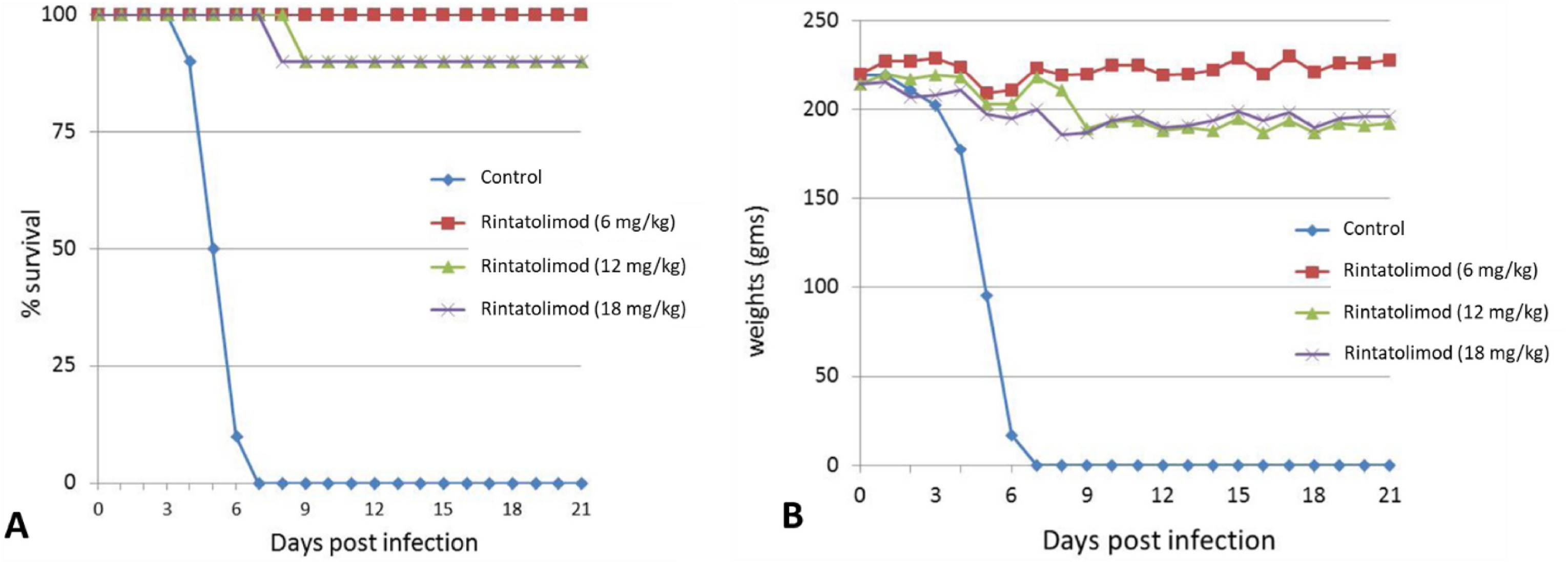
Government-funded preclinical work at the U.S. Army Medical Research Institute of Infectious Diseases’ Biosafety Level 4 laboratories produced compelling results involving AIM ImmunoTech’s drug Ampligen (rintatolimod) as a potential prophylactic or early-onset therapy for Ebola. As described in the peer-reviewed journal Antiviral Research, the study showed 100% survival in one rintatolimod-treated cohort in a lethal mouse model, compared with 100% mortality in controls. The data also support further evaluation of rintatolimod’s mechanism of action as a potential broad-spectrum approach across Ebola variants such as Bundibugyo, and AIM is currently seeking government support for such studies.
Here are the preclinical proof-of-concept findings in the initial experiment. These data illustrate the larger defense-readiness point: if promising broad-spectrum antiviral prophylactics are not advanced through appropriate government-supported and FDA-regulated evaluation pathways, they can remain research findings on the shelf rather than tools available for emergency planning. Promising countermeasure platforms should be fully evaluated and implemented before a crisis creates urgency, not after.
Preclinical mouse-model data from USAMRIID/Antiviral Research: rintatolimod-treated cohorts showed survival and reduced disease signs compared with untreated controls. Findings require further evaluation and do not indicate FDA approval or clinical efficacy. (Antiviral Research)
SARS-CoV-2 (or COVID-19) presented a clear exemplar. Government-funded research at the Institute for Antiviral Research at Utah State University on potential coronavirus antiviral treatments occurred between the SARS-CoV (or SARS) outbreak of 2003 and the COVID-19 outbreak. Analyses of this work were published in Antiviral Chemistry & Chemotherapy and Virology. Those preclinical studies supported further evaluation of Ampligen as a potential early-onset antiviral against SARS-related coronaviruses, but the work did not advance into a ready government-approved countermeasure before the next crisis arrived.
SARS-CoV-2 is genetically very closely related – in fact almost identical – to SARS-CoV. Thus, the broader lesson and the impact on force readiness becomes clear: The time to evaluate potential countermeasures is before a related threat becomes a global emergency. The COVID-19 outbreak aboard the USS Theodore Roosevelt infected approximately 1,200 sailors and disrupted operations of one of America’s most important military assets. Had the government-funded work at the Institute for Antiviral Research been followed up, perhaps a powerful prophylactic might have been available to the commander of the USS Theodore Roosevelt. The broader lesson is that commanders need more evaluated and approved options before an outbreak occurs.
Promising science should not sit outside the readiness conversation until an outbreak forces action. Defense planners should integrate prophylactic antiviral countermeasures more directly into force protection planning, right alongside diagnostics, detection systems, protective equipment, decontamination and operational planning. Promising broad-spectrum prophylactic and early-onset antiviral countermeasure platforms should be evaluated, approved by the FDA where appropriate, manufactured and stockpiled against priority biological threats that could affect deployed forces.
For service members, readiness means protection before exposure. For commanders, it means options before a mission is compromised. For policymakers, it means building systems that can move before the threat dictates the terms.
AIM ImmunoTech | Breaking Defense Sponsor-Supplied Article
Biodefense is force protection.
If we believe this, then medical countermeasures must be treated as part of defense readiness, not merely as public health tools we hope to mobilize after the fact. In Army Aviation, we had a slogan that fits here: “Ready today means prepared for tomorrow.” The next biological threat will not wait for a procurement cycle, a budget cycle or a perfect moment of consensus. We should not wait either. Prepare now so we are not found wanting tomorrow.
Author Bio
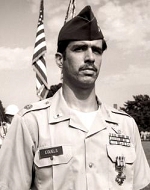 |
Thomas K. Equels is CEO of AIM ImmunoTech. He is a former U.S. Army Chief Warrant Officer, Vietnam combat aviator and two-time recipient of the Distinguished Flying Cross. His military service is recognized by the Smithsonian National Air and Space Museum’s Wall of Honor. |
Disclosure
Disclosure: Thomas K. Equels is CEO of AIM ImmunoTech, a biotechnology company involved in immune modulation and antiviral research. Ampligen (rintatolimod) is not FDA-approved for Ebola virus disease, Bundibugyo virus disease, coronaviruses or any biodefense indication.
Forward-Looking Statements
This article contains forward-looking statements subject to risks and uncertainties. Forward-looking statements include, but are not limited to, statements relating to: the potential of Ampligen as a broad-spectrum prophylactic or early-onset treatment for viral threats, including Ebola virus disease and coronaviruses; preclinical proof-of-concept findings, which are not evidence of FDA approval or clinical activity; expectations regarding Ampligen’s mechanism of action as potentially broad-spectrum to Ebola variants, including Bundibugyo; and the timing and outcome of any future clinical trials, regulatory approvals, government funding decisions or government-supported evaluation pathways.
Words such as “believe,” “may,” “will,” “estimate,” “anticipate,” “intend,” “expect,” “should,” “potential,” “plan,” “project,” and similar expressions identify forward-looking statements. These statements are based on current expectations and are subject to risks and uncertainties that could cause actual results to differ materially. The Company does not undertake to update forward-looking statements except as required by law.
For risk factors and additional information, see AIM ImmunoTech’s U.S. Securities and Exchange Commission filings at www.sec.gov and www.aimimmuno.com. For all forward-looking statements, AIM ImmunoTech claims the protection of the safe harbor for forward-looking statements contained in the Private Securities Litigation Reform Act of 1995.
AIM ImmunoTech | Breaking Defense Sponsor-Supplied Article