1 September 2024 Advancing medicines. Solving problems Advancing medicines. Solving problems. Improving lives. Anaphylm Human Factors and Clinical Study Supplemental Materials August 10, 2026
© 2026 Aquestive Therapeutics, Inc. 2 Forward-Looking Statements and Data Limitations This presentation contains forward-looking statements within the meaning of the Private Securities Litigation Reform Act of 1995. Words such as "believe," "anticipate," "plan," "expect," "estimate," "intend," "may," "will," and similar expressions are intended to identify forward-looking statements. Forward-looking statements in this presentation include, among others, statements regarding: • the significance, interpretation and sufficiency of the Human Factors (HF); • pharmacokinetic (PK), and pharmacodynamic (PD) study results for Anaphylm (dibutepinephrine) sublingual film; • the Company's belief that these results support its planned Anaphylm NDA resubmission; • the timing, review and outcome of the planned NDA resubmission; • potential regulatory submissions outside the United States; • the potential benefits, usability, safety profile, commercial opportunity and market acceptance of Anaphylm, if approved; and • other statements that are not historical facts. The HF, PK and PD information presented reflects topline, summary or exploratory analyses and remains subject to further review, analysis, verification and regulatory evaluation. Results from individual studies, study arms, exploratory analyses, PK/PD assessments or human factors evaluations may differ from final analyses and may be interpreted differently by regulatory authorities. FDA may disagree with the Company's interpretation of the data, request additional information, analyses or studies, or impose requirements that differ from the Company's expectations. Comparisons to manual intramuscular epinephrine, epinephrine autoinjectors, prior Anaphylm studies or historical clinical studies are provided for contextual purposes only and may reflect differences in study design, study populations, endpoints, administration conditions and analytical methodologies. Any labeling, packaging, instructions for use, user-interface materials or administration materials shown in this presentation are proposed or illustrative and remain subject to regulatory review and approval. This presentation is not intended to, and does not, establish clinical efficacy, therapeutic equivalence, superiority, regulatory approval, or the final adequacy of any proposed labeling, packaging, instructions for use, or user-interface materials. Actual results may differ materially from those described in any forward-looking statement due to a number of risks and uncertainties, including those described in the Company's Annual Report on Form 10-K, Quarterly Reports on Form 10-Q, Current Reports on Form 8-K and other filings with the U.S. Securities and Exchange Commission. The Company undertakes no obligation to update any forward-looking statement except as required by law.
3 Background • Aquestive modified its packaging, labeling, and instructions for use for Anaphylm (dibutepinephrine) sublingual film in response to a Complete Response Letter received from the United States Food and Drug Administration (FDA) in January 2026. • After completing a Type A meeting with the FDA in March 2026 and receiving human factors protocol guidance from the FDA in June 2026, the Company conducted a human factors study to evaluate the modified packaging, labeling and instructions for use, self-administration, and purposely misplaced administration of Anaphylm on top-of-tongue. • This presentation provides an overview of topline results from these studies.
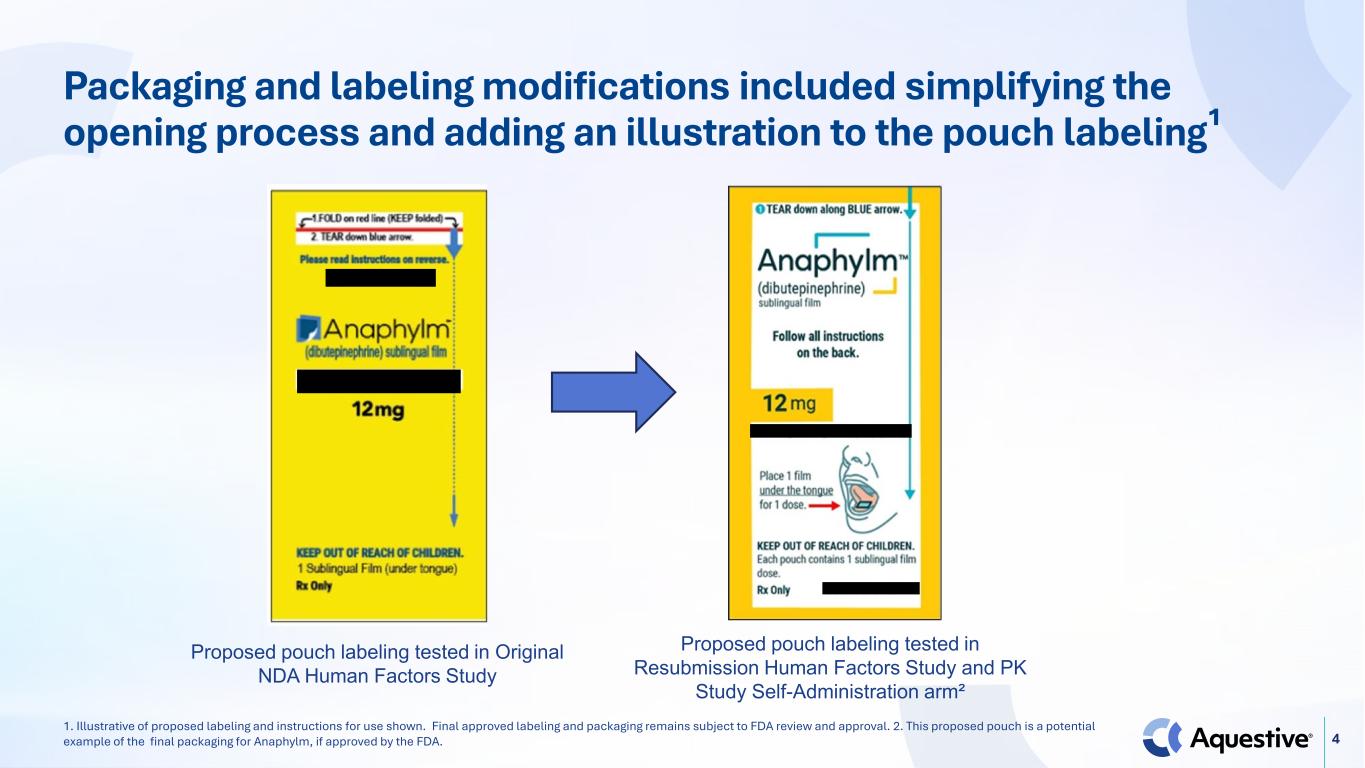
4 Packaging and labeling modifications included simplifying the opening process and adding an illustration to the pouch labeling¹ Proposed pouch labeling tested in Original NDA Human Factors Study Proposed pouch labeling tested in Resubmission Human Factors Study and PK Study Self-Administration arm² 1. Illustrative of proposed labeling and instructions for use shown. Final approved labeling and packaging remains subject to FDA review and approval. 2. This proposed pouch is a potential example of the final packaging for Anaphylm, if approved by the FDA.

Human Factors Results
6 Human factors studies • Aquestive conducted a human factors validation study in 105 untrained participants. Study cohorts included experienced and naïve adults and pediatrics, as well as bystanders, EMTs, and school nurses. • Observations were tracked for a variety of factors including ability to open the pouch, correct administration of the film, ability to maintain the film in the mouth, and instruction comprehension (such as the need to take a second dose or call 911). • In addition, a self-administration arm was included in the pharmacokinetic study where healthy subjects were required to follow the instructions for use without clinician support. Human factors activities were observed and tracked.
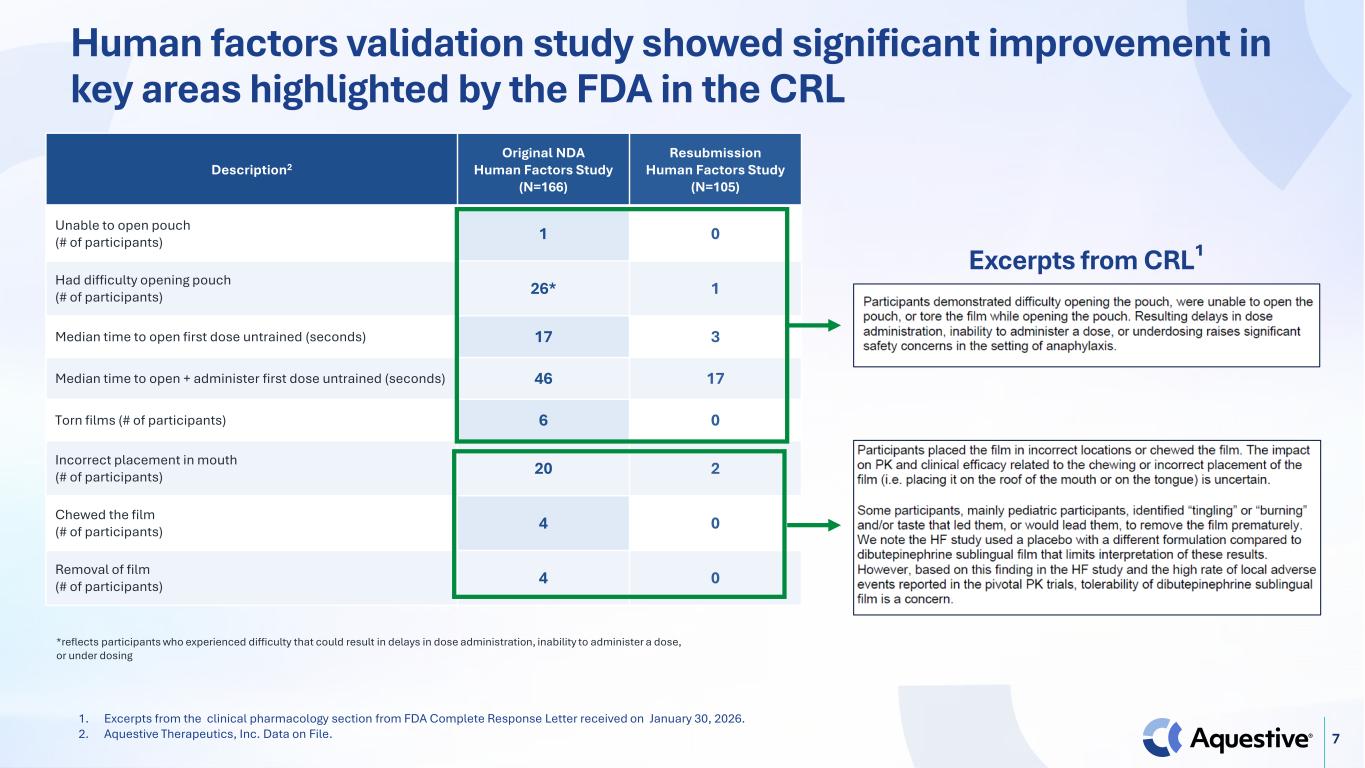
7 Human factors validation study showed significant improvement in key areas highlighted by the FDA in the CRL Description2 Original NDA Human Factors Study (N=166) Resubmission Human Factors Study (N=105) Unable to open pouch (# of participants) 1 0 Had difficulty opening pouch (# of participants) 26* 1 Median time to open first dose untrained (seconds) 17 3 Median time to open + administer first dose untrained (seconds) 46 17 Torn films (# of participants) 6 0 Incorrect placement in mouth (# of participants) 20 2 Chewed the film (# of participants) 4 0 Removal of film (# of participants) 4 0 *reflects participants who experienced difficulty that could result in delays in dose administration, inability to administer a dose, or under dosing 1. Excerpts from the clinical pharmacology section from FDA Complete Response Letter received on January 30, 2026. 2. Aquestive Therapeutics, Inc. Data on File. Excerpts from CRL¹
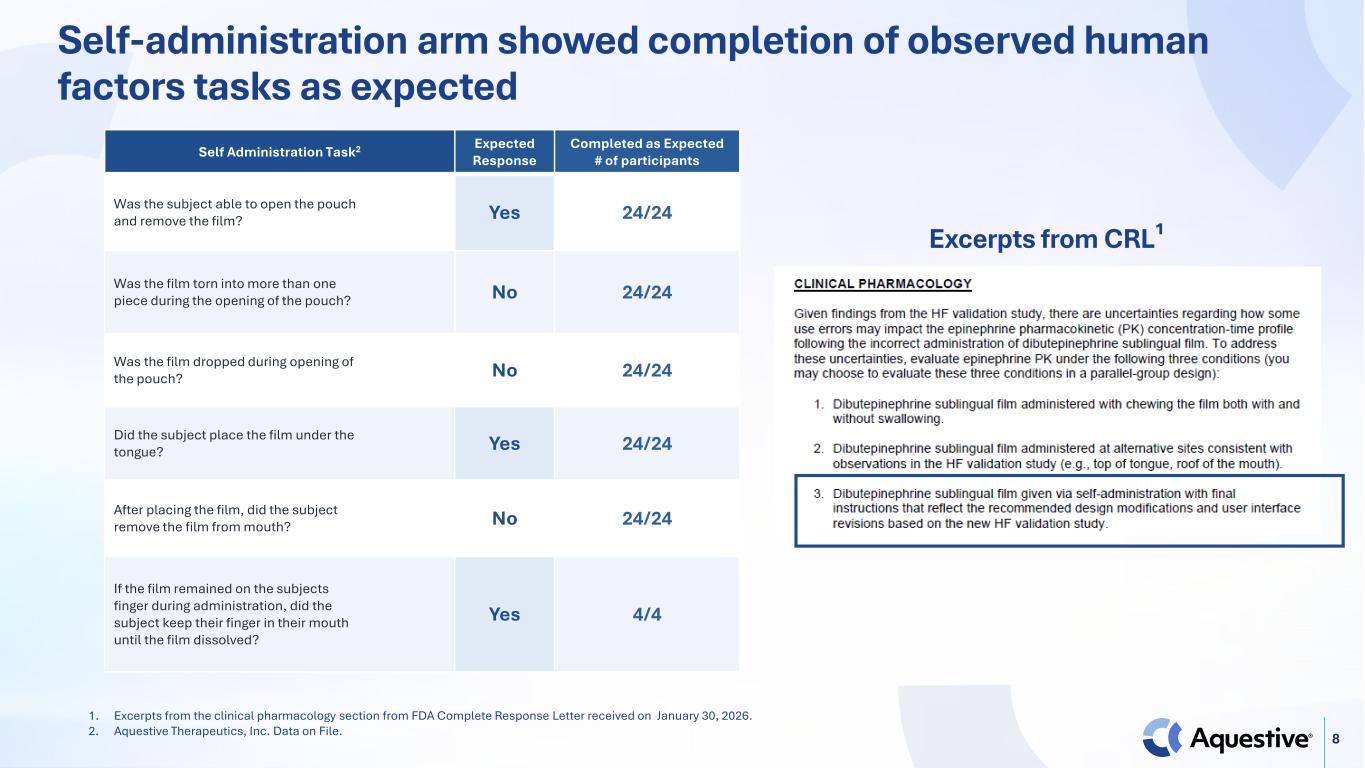
8 Self-administration arm showed completion of observed human factors tasks as expected 1. Excerpts from the clinical pharmacology section from FDA Complete Response Letter received on January 30, 2026. 2. Aquestive Therapeutics, Inc. Data on File. Self Administration Task2 Expected Response Completed as Expected # of participants Was the subject able to open the pouch and remove the film? Yes 24/24 Was the film torn into more than one piece during the opening of the pouch? No 24/24 Was the film dropped during opening of the pouch? No 24/24 Did the subject place the film under the tongue? Yes 24/24 After placing the film, did the subject remove the film from mouth? No 24/24 If the film remained on the subjects finger during administration, did the subject keep their finger in their mouth until the film dissolved? Yes 4/4 Excerpts from CRL¹

Topline Clinical Study Results
10 Pharmacokinetic (PK) study evaluated self-administration and purposely incorrect top-of-tongue placement • Aquestive conducted a PK study in healthy subjects comparing self- administration to clinician-administered using the improved instructions for use. Both manual IM and film were administered by a clinician in the study. • In addition, a single arm was included where clinicians purposely incorrectly administered a single dose of the film on the top of the subject’s tongue. This was requested by the FDA to characterize the associated PK and pharmacodynamic (PD) results.
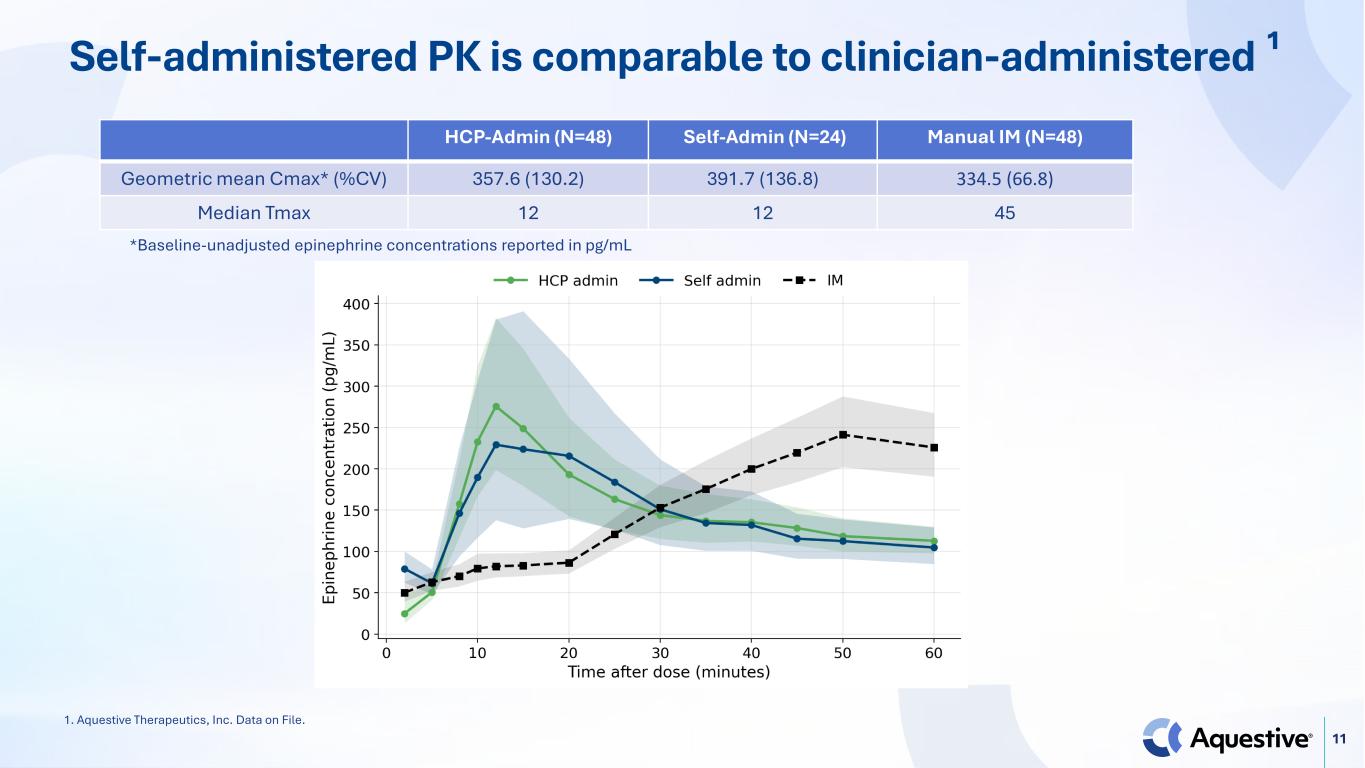
11 Self-administered PK is comparable to clinician-administered ¹ HCP-Admin (N=48) Self-Admin (N=24) Manual IM (N=48) Geometric mean Cmax* (%CV) 357.6 (130.2) 391.7 (136.8) 334.5 (66.8) Median Tmax 12 12 45 *Baseline-unadjusted epinephrine concentrations reported in pg/mL 1. Aquestive Therapeutics, Inc. Data on File.
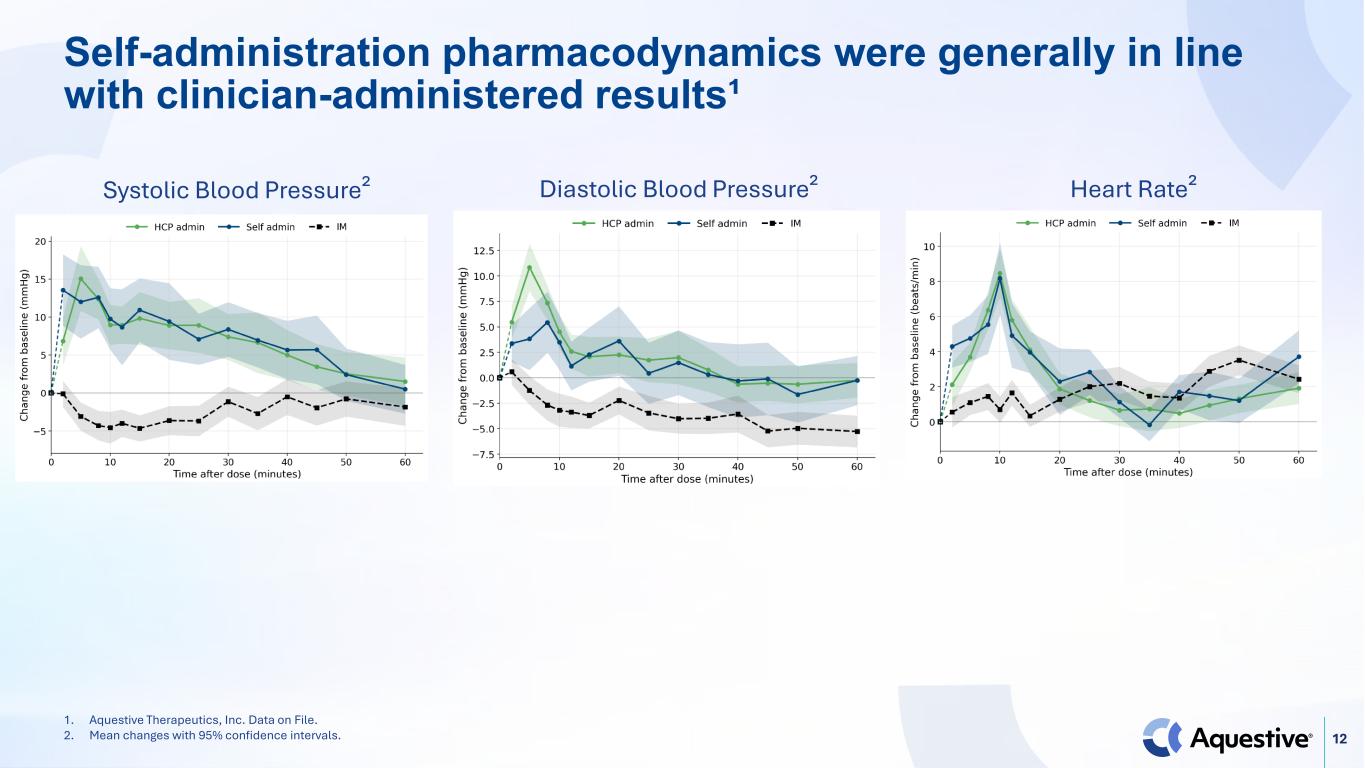
12 Self-administration pharmacodynamics were generally in line with clinician-administered results¹ Systolic Blood Pressure² Diastolic Blood Pressure² Heart Rate² 1. Aquestive Therapeutics, Inc. Data on File. 2. Mean changes with 95% confidence intervals.
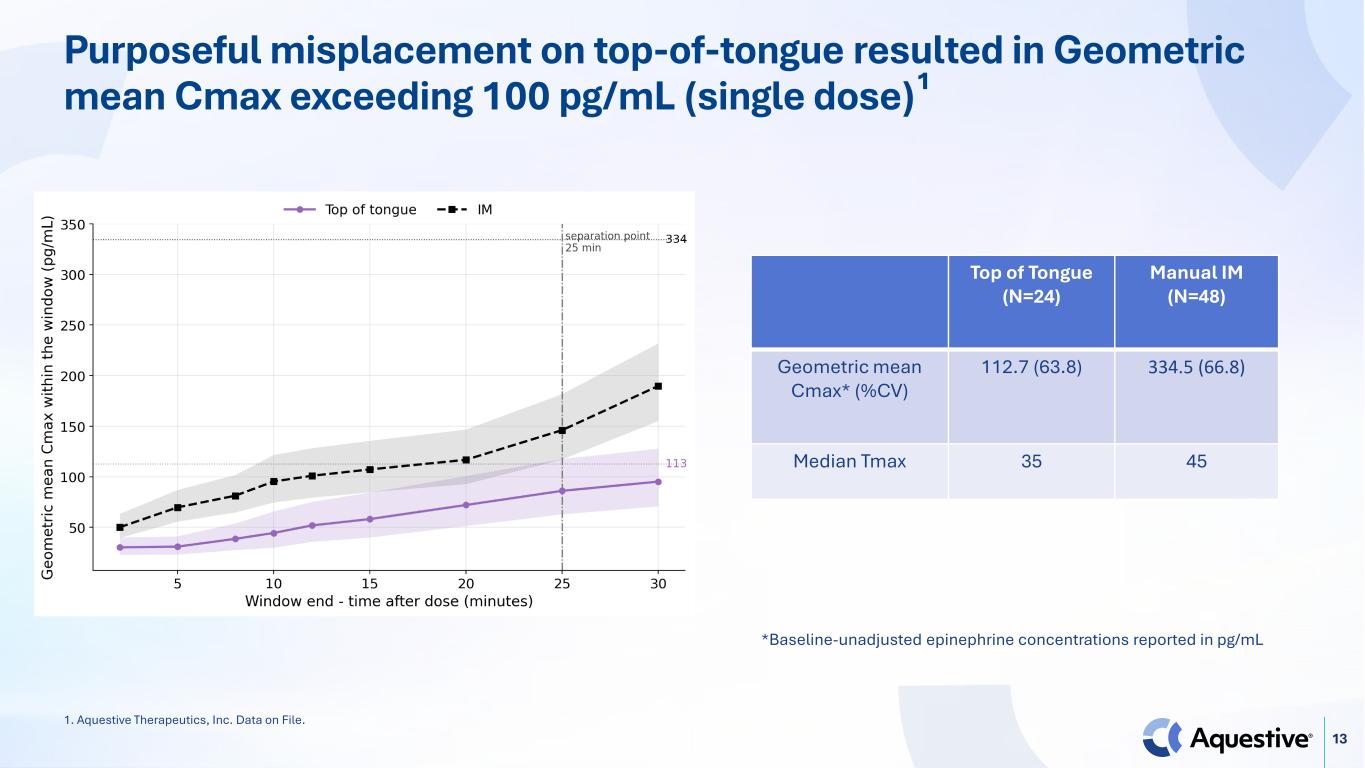
13 Purposeful misplacement on top-of-tongue resulted in Geometric mean Cmax exceeding 100 pg/mL (single dose)¹ Top of Tongue (N=24) Manual IM (N=48) Geometric mean Cmax* (%CV) 112.7 (63.8) 334.5 (66.8) Median Tmax 35 45 *Baseline-unadjusted epinephrine concentrations reported in pg/mL 1. Aquestive Therapeutics, Inc. Data on File.
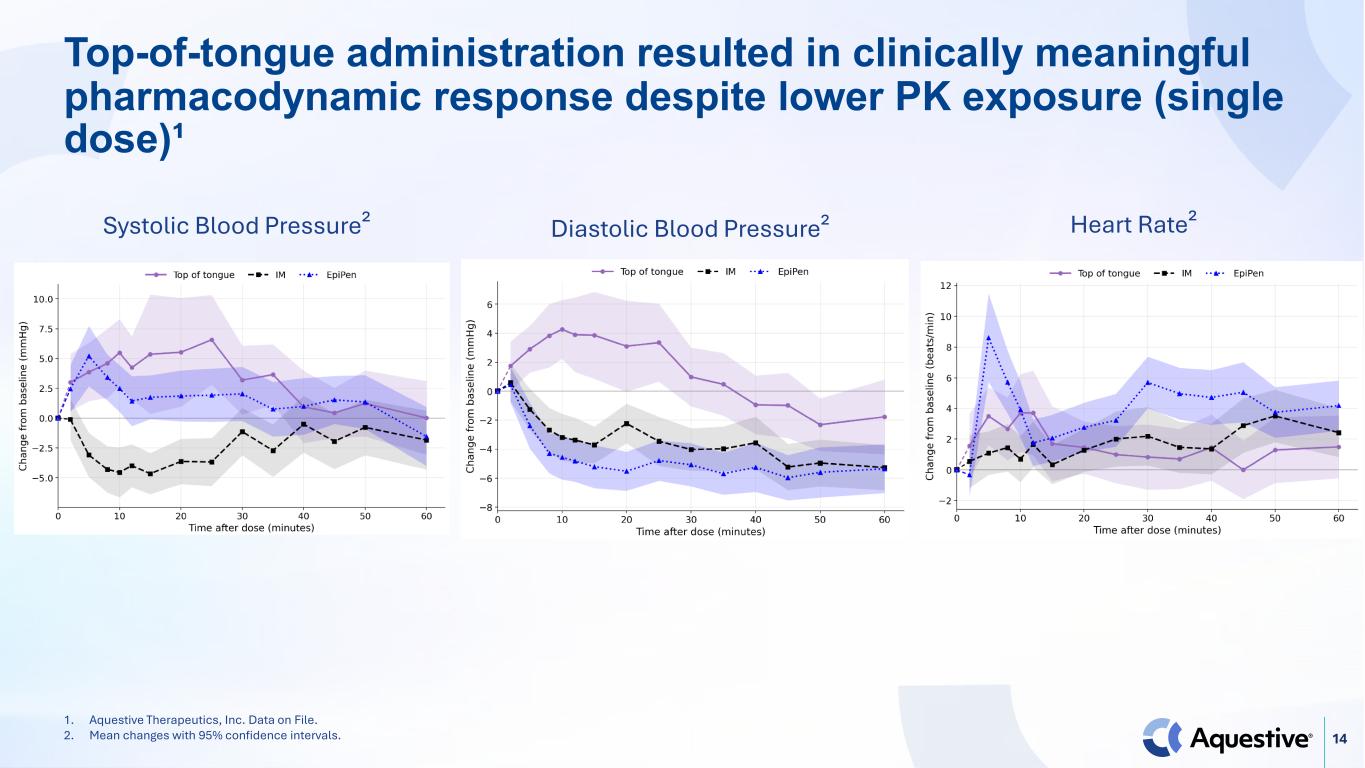
14 Top-of-tongue administration resulted in clinically meaningful pharmacodynamic response despite lower PK exposure (single dose)¹ Systolic Blood Pressure² Diastolic Blood Pressure² Heart Rate² 1. Aquestive Therapeutics, Inc. Data on File. 2. Mean changes with 95% confidence intervals.