CO PY RI GH T © A BC EL LE RA AUGUST 10, 2026 ABCL635 PHASE 2 CLINICAL UPDATE
These statements involve risks, uncertainties and other factors that may cause actual results, levels of activity, performance, or achievements to be materially different from the information expressed or implied by these forward-looking statements. These risks, uncertainties, other factors, and definition of our business metrics are described under “Risk Factors,” “Management’s Discussion and Analysis of Financial Condition and Results of Operations” and elsewhere in our Annual Report on Form 10-K filed with the SEC on February 2, 2026 and the other documents we file with the Securities and Exchange Commission from time to time. We caution you that forward-looking statements are based on a combination of facts and factors currently known by us and our projections of the future, about which we cannot be certain. As a result, the forward-looking statements may not prove to be accurate. The forward-looking statements in this document represent our views as of the date hereof. We undertake no obligation to update any forward-looking statements for any reason, except as required by law. DISCLAIMER This document contains forward-looking statements, including statements made pursuant to the safe harbor provisions of the Private Securities Litigation Reform Act of 1995. The forward-looking statements are based on management’s beliefs and assumptions and on information currently available to management. All statements contained in this document other than statements of historical fact are forward-looking statements, including statements regarding the safety and efficacy profile and therapeutic potential of, and our ability to develop, commercialize and achieve market acceptance of, ABCL635, and the expected addressable market related thereto. The use of certain data derived from cross-study comparisons is not based on any head-to-head clinical trials. Cross-study comparisons are inherently limited and may suggest misleading similarities and differences and are presented for informational purposes. In some cases, you can identify forward-looking statements by the words “may,” “will,” “could,” “would,” “should,” “expect,” “intend,” “plan,” “anticipate,” “believe,” “estimate,” “predict,” “project,” “potential,” “continue,” “ongoing” or the negative of these terms or other comparable terminology, although not all forward-looking statements contain these words. 2 CO PY RI GH T © A BC EL LE RA AB CL 63 5 Ph as e 2 Cl in ic al U pd at e Q3 2 02 6

3 CO PY RI GH T © A BC EL LE RA AB CL 63 5 Ph as e 2 Cl in ic al U pd at e Q3 2 02 6 SPEAKERS Carl Hansen, PhD Chief Executive Officer Sarah Noonberg, MD, PhD Chief Medical Officer CO PY RI GH T © A BC EL LE RA Kelsey Mills, MD Clinical Associate Professor of Obstetrics & Gynecology, University of British Columbia
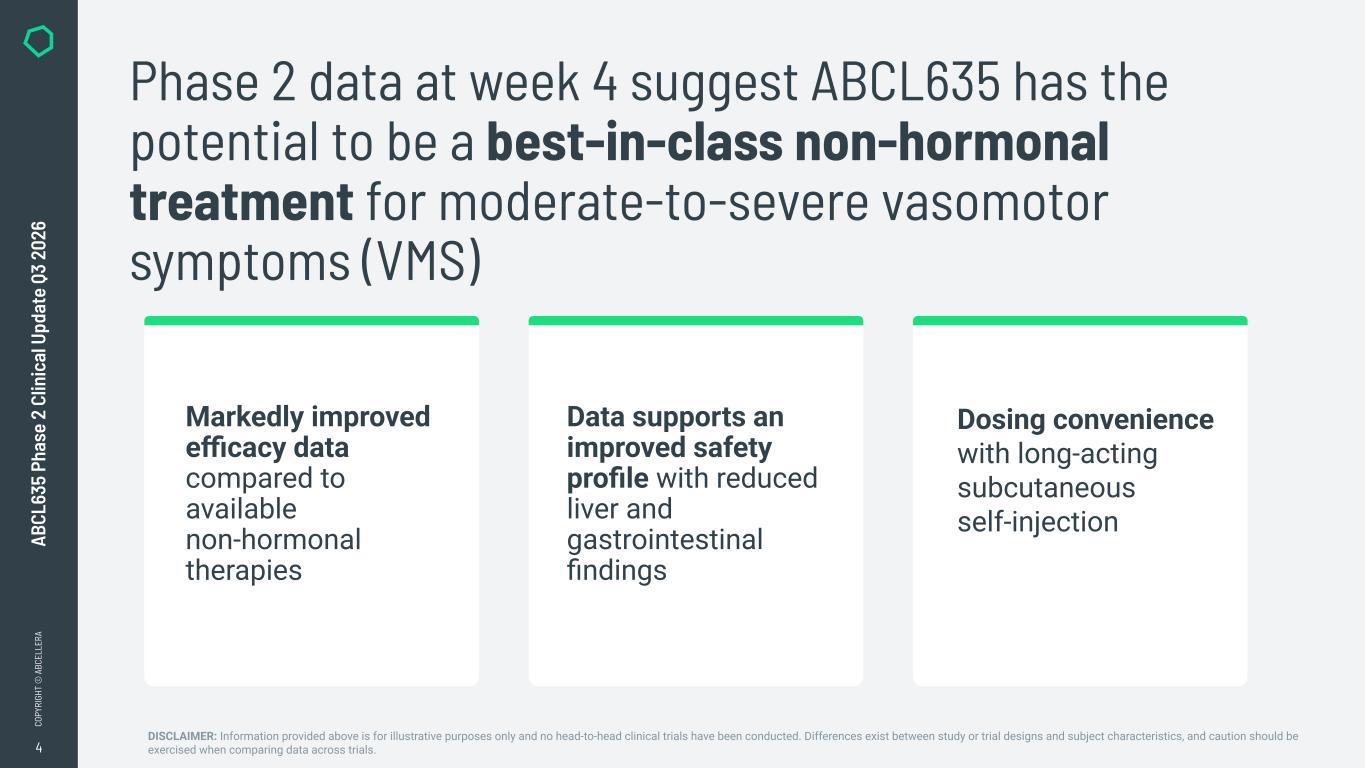
4 CO PY RI GH T © A BC EL LE RA AB CL 63 5 Ph as e 2 Cl in ic al U pd at e Q3 2 02 6 Phase 2 data at week 4 suggest ABCL635 has the potential to be a best-in-class non-hormonal treatment for moderate-to-severe vasomotor symptoms (VMS) Dosing convenience with long-acting subcutaneous self-injection Data supports an improved safety profile with reduced liver and gastrointestinal findings Markedly improved efficacy data compared to available non-hormonal therapies DISCLAIMER: Information provided above is for illustrative purposes only and no head-to-head clinical trials have been conducted. Differences exist between study or trial designs and subject characteristics, and caution should be exercised when comparing data across trials.
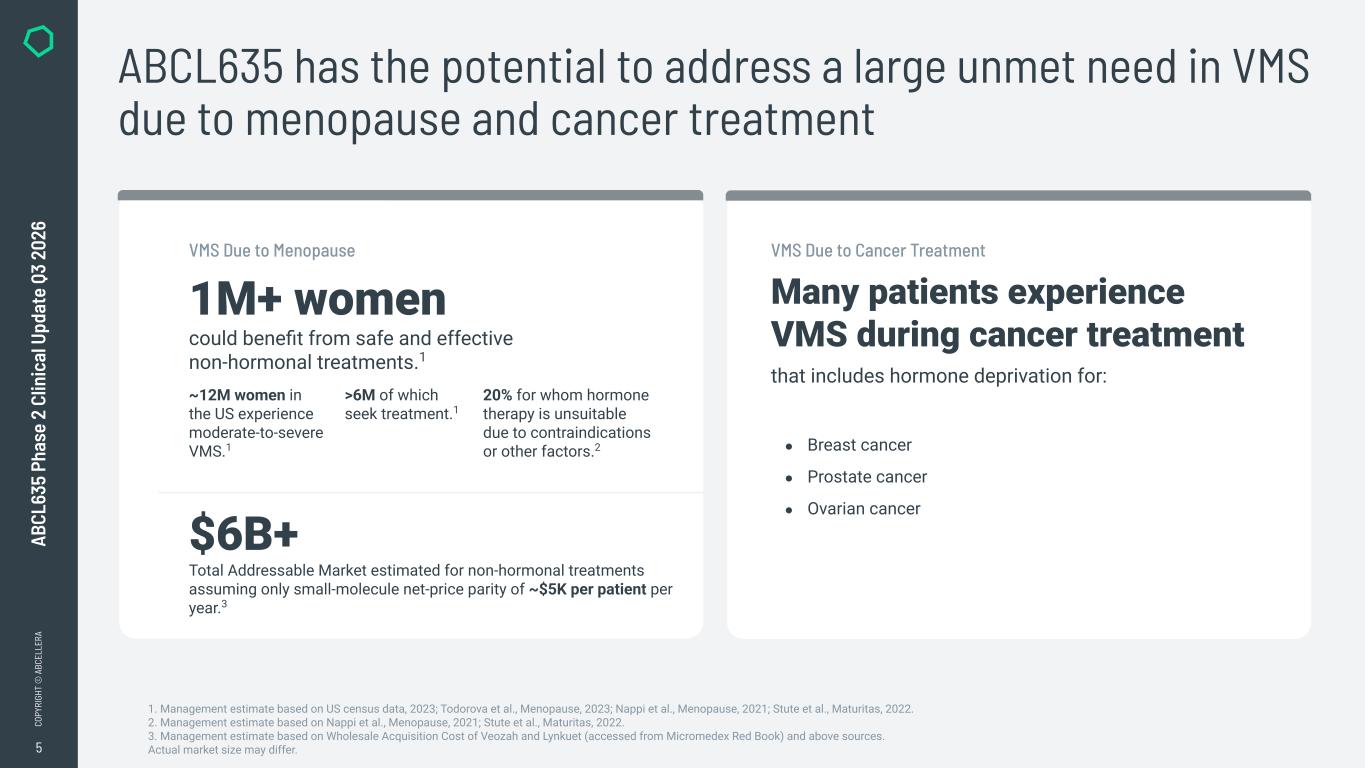
5 CO PY RI GH T © A BC EL LE RA AB CL 63 5 Ph as e 2 Cl in ic al U pd at e Q3 2 02 6 ABCL635 has the potential to address a large unmet need in VMS due to menopause and cancer treatment VMS Due to Menopause 1M+ women could benefit from safe and effective non-hormonal treatments.1 ~12M women in the US experience moderate-to-severe VMS.1 >6M of which seek treatment.1 20% for whom hormone therapy is unsuitable due to contraindications or other factors.2 1. Management estimate based on US census data, 2023; Todorova et al., Menopause, 2023; Nappi et al., Menopause, 2021; Stute et al., Maturitas, 2022. 2. Management estimate based on Nappi et al., Menopause, 2021; Stute et al., Maturitas, 2022. 3. Management estimate based on Wholesale Acquisition Cost of Veozah and Lynkuet (accessed from Micromedex Red Book) and above sources. Actual market size may differ. $6B+ Total Addressable Market estimated for non-hormonal treatments assuming only small-molecule net-price parity of ~$5K per patient per year.3 ● Breast cancer ● Prostate cancer ● Ovarian cancer VMS Due to Cancer Treatment Many patients experience VMS during cancer treatment that includes hormone deprivation for:

Dr. Kelsey Mills MD, MSc HSEd, FRCSC, MSCP Education & Specialized Training • H BSc, Mount Allison University • MD, University of Toronto • Obstetrics and Gynecology Fellowship, University of Toronto • MSc HSEd, McMaster University • Complex Menopause Fellowship, University of Toronto • Menopause Certified Practitioner (The Menopause Society), 2013 - current Academic Appointments • Clinical Associate Professor, University of British Columbia • Affiliate Associate Professor, University of Victoria Professional Leadership • Board Member, Canadian Menopause Society • Advisory Board Member, Menopause Foundation of Canada • Expert Member, Society of Obstetricians and Gynecologists of Canada (Menopause) • Examination Committee Member, Royal College of Surgeons of Canada (Menopause) Clinical Practice • Current Consultant Obstetrician and Gynecologist, Island Health Authority, Vancouver Island • Current Consultant Obstetrician and Gynecologist, BC Women’s Complex Menopause Clinic
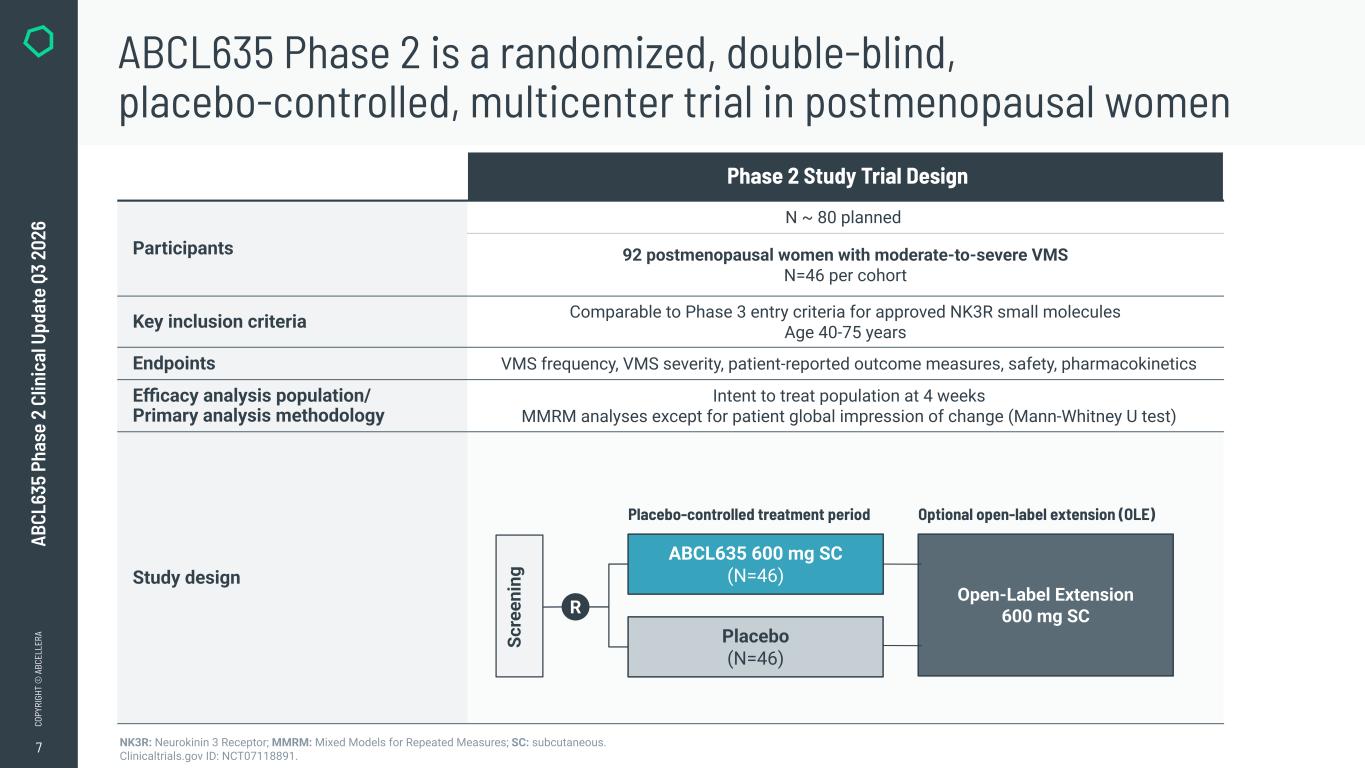
7 CO PY RI GH T © A BC EL LE RA AB CL 63 5 Ph as e 2 Cl in ic al U pd at e Q3 2 02 6 ABCL635 Phase 2 is a randomized, double-blind, placebo-controlled, multicenter trial in postmenopausal women Phase 2 Study Trial Design Participants N ~ 80 planned 92 postmenopausal women with moderate-to-severe VMS N=46 per cohort Key inclusion criteria Comparable to Phase 3 entry criteria for approved NK3R small molecules Age 40-75 years Endpoints VMS frequency, VMS severity, patient-reported outcome measures, safety, pharmacokinetics Efficacy analysis population/ Primary analysis methodology Intent to treat population at 4 weeks MMRM analyses except for patient global impression of change (Mann-Whitney U test) Study design Placebo-controlled treatment period ABCL635 600 mg SC (N=46) Placebo (N=46) Open-Label Extension 600 mg SC Optional open-label extension (OLE) Sc re en in g R NK3R: Neurokinin 3 Receptor; MMRM: Mixed Models for Repeated Measures; SC: subcutaneous. Clinicaltrials.gov ID: NCT07118891.
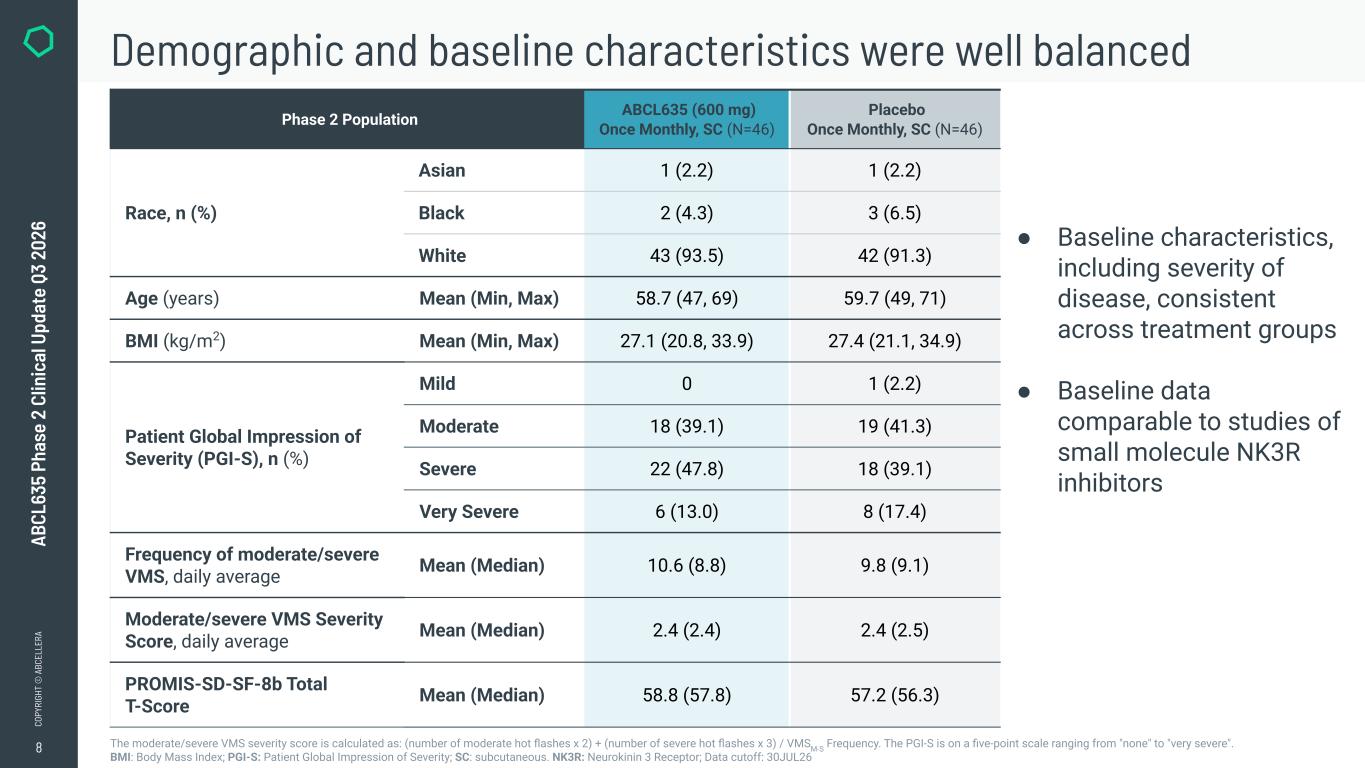
8 CO PY RI GH T © A BC EL LE RA AB CL 63 5 Ph as e 2 Cl in ic al U pd at e Q3 2 02 6 The moderate/severe VMS severity score is calculated as: (number of moderate hot flashes x 2) + (number of severe hot flashes x 3) / VMSM-S Frequency. The PGI-S is on a five-point scale ranging from "none" to "very severe". BMI: Body Mass Index; PGI-S: Patient Global Impression of Severity; SC: subcutaneous. NK3R: Neurokinin 3 Receptor; Data cutoff: 30JUL26 Demographic and baseline characteristics were well balanced ● Baseline characteristics, including severity of disease, consistent across treatment groups ● Baseline data comparable to studies of small molecule NK3R inhibitors Phase 2 Population ABCL635 (600 mg) Once Monthly, SC (N=46) Placebo Once Monthly, SC (N=46) Race, n (%) Asian 1 (2.2) 1 (2.2) Black 2 (4.3) 3 (6.5) White 43 (93.5) 42 (91.3) Age (years) Mean (Min, Max) 58.7 (47, 69) 59.7 (49, 71) BMI (kg/m2) Mean (Min, Max) 27.1 (20.8, 33.9) 27.4 (21.1, 34.9) Patient Global Impression of Severity (PGI-S), n (%) Mild 0 1 (2.2) Moderate 18 (39.1) 19 (41.3) Severe 22 (47.8) 18 (39.1) Very Severe 6 (13.0) 8 (17.4) Frequency of moderate/severe VMS, daily average Mean (Median) 10.6 (8.8) 9.8 (9.1) Moderate/severe VMS Severity Score, daily average Mean (Median) 2.4 (2.4) 2.4 (2.5) PROMIS-SD-SF-8b Total T-Score Mean (Median) 58.8 (57.8) 57.2 (56.3)
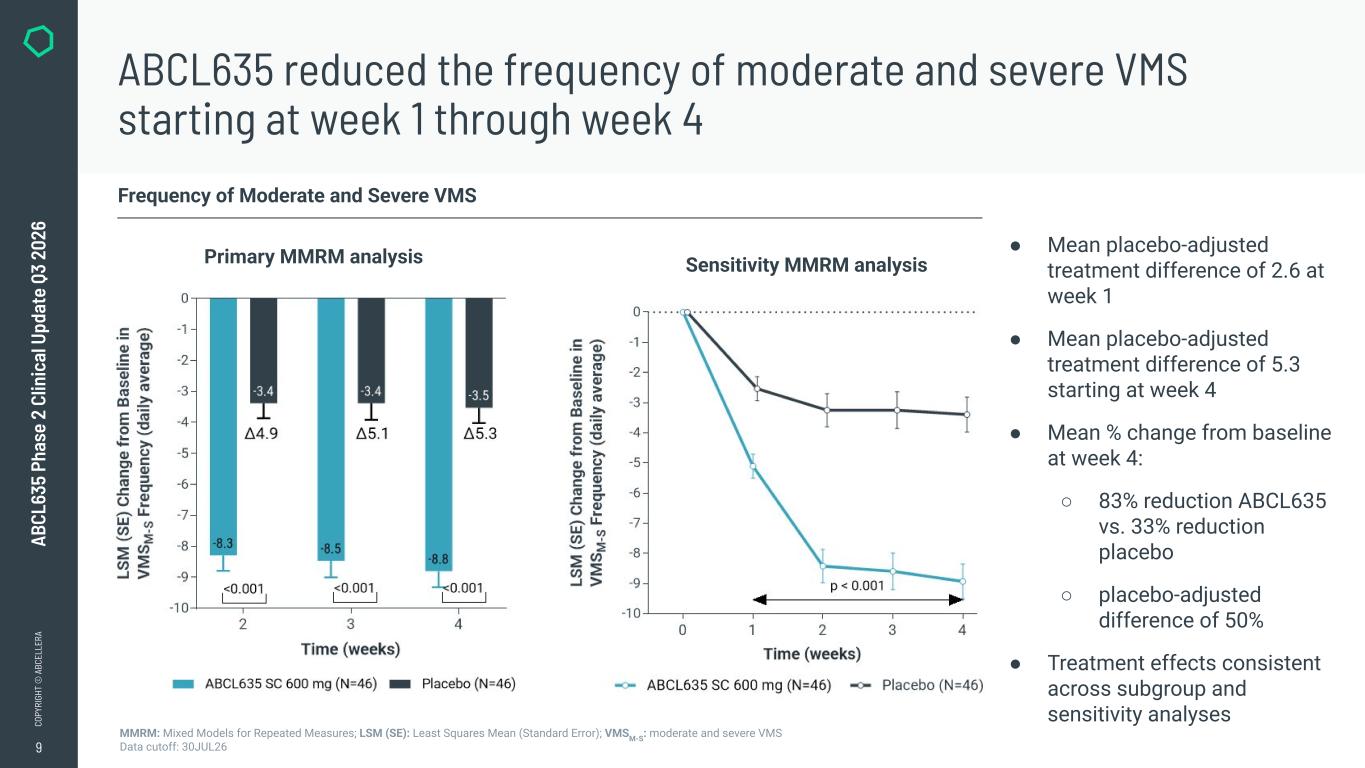
9 CO PY RI GH T © A BC EL LE RA AB CL 63 5 Ph as e 2 Cl in ic al U pd at e Q3 2 02 6 ABCL635 reduced the frequency of moderate and severe VMS starting at week 1 through week 4 MMRM: Mixed Models for Repeated Measures; LSM (SE): Least Squares Mean (Standard Error); VMSM-S: moderate and severe VMS Data cutoff: 30JUL26 Frequency of Moderate and Severe VMS ● Mean placebo-adjusted treatment difference of 2.6 at week 1 ● Mean placebo-adjusted treatment difference of 5.3 starting at week 4 ● Mean % change from baseline at week 4: ○ 83% reduction ABCL635 vs. 33% reduction placebo ○ placebo-adjusted difference of 50% ● Treatment effects consistent across subgroup and sensitivity analyses Primary MMRM analysis Sensitivity MMRM analysis
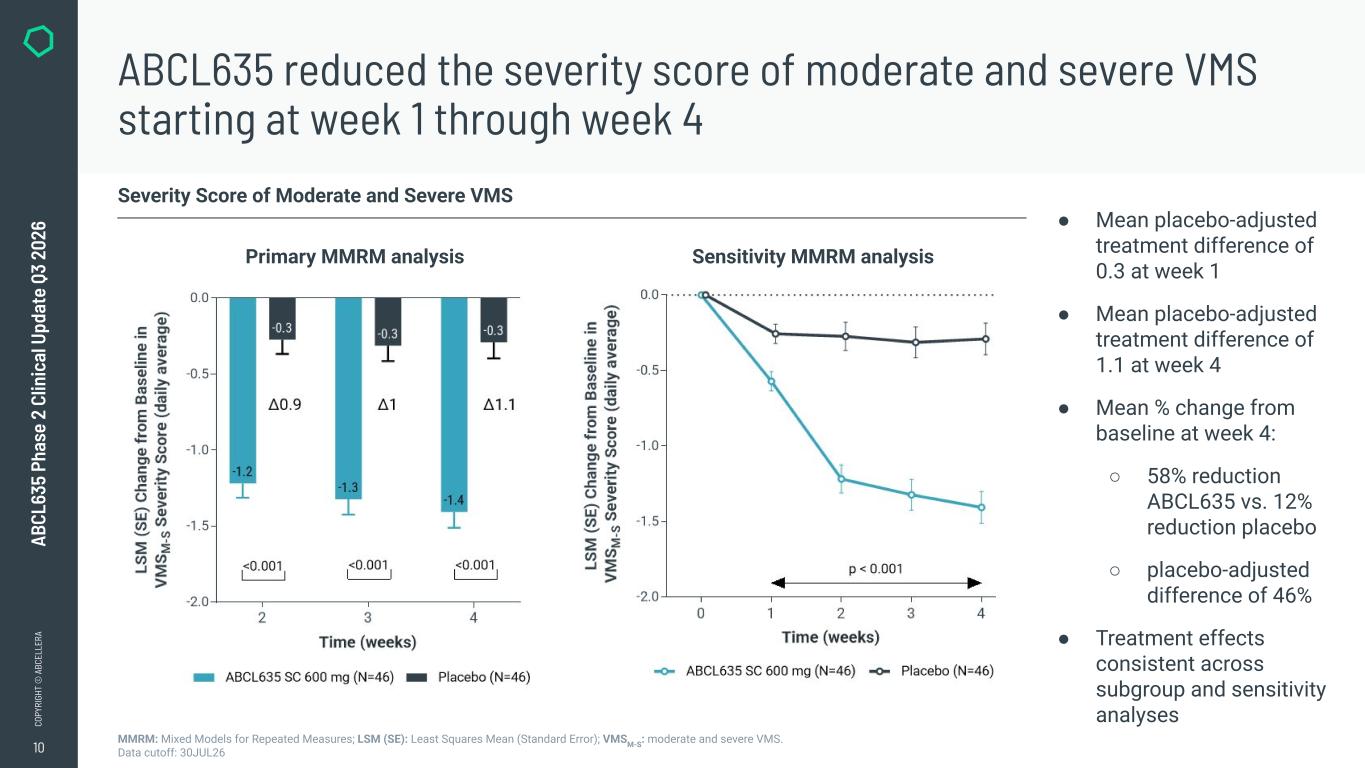
10 CO PY RI GH T © A BC EL LE RA AB CL 63 5 Ph as e 2 Cl in ic al U pd at e Q3 2 02 6 ABCL635 reduced the severity score of moderate and severe VMS starting at week 1 through week 4 MMRM: Mixed Models for Repeated Measures; LSM (SE): Least Squares Mean (Standard Error); VMSM-S: moderate and severe VMS. Data cutoff: 30JUL26 Severity Score of Moderate and Severe VMS ● Mean placebo-adjusted treatment difference of 0.3 at week 1 ● Mean placebo-adjusted treatment difference of 1.1 at week 4 ● Mean % change from baseline at week 4: ○ 58% reduction ABCL635 vs. 12% reduction placebo ○ placebo-adjusted difference of 46% ● Treatment effects consistent across subgroup and sensitivity analyses Primary MMRM analysis Sensitivity MMRM analysis
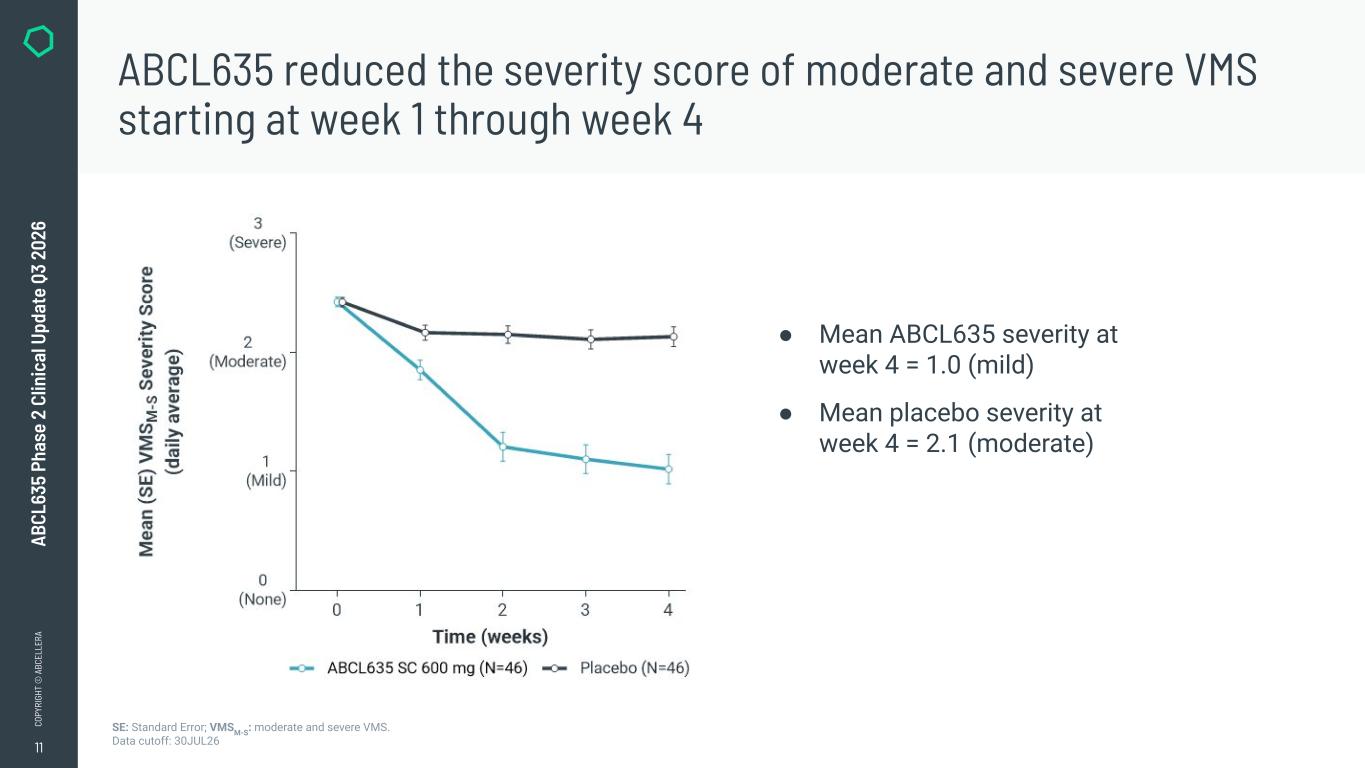
11 CO PY RI GH T © A BC EL LE RA AB CL 63 5 Ph as e 2 Cl in ic al U pd at e Q3 2 02 6 ABCL635 reduced the severity score of moderate and severe VMS starting at week 1 through week 4 ● Mean ABCL635 severity at week 4 = 1.0 (mild) ● Mean placebo severity at week 4 = 2.1 (moderate) SE: Standard Error; VMSM-S: moderate and severe VMS. Data cutoff: 30JUL26
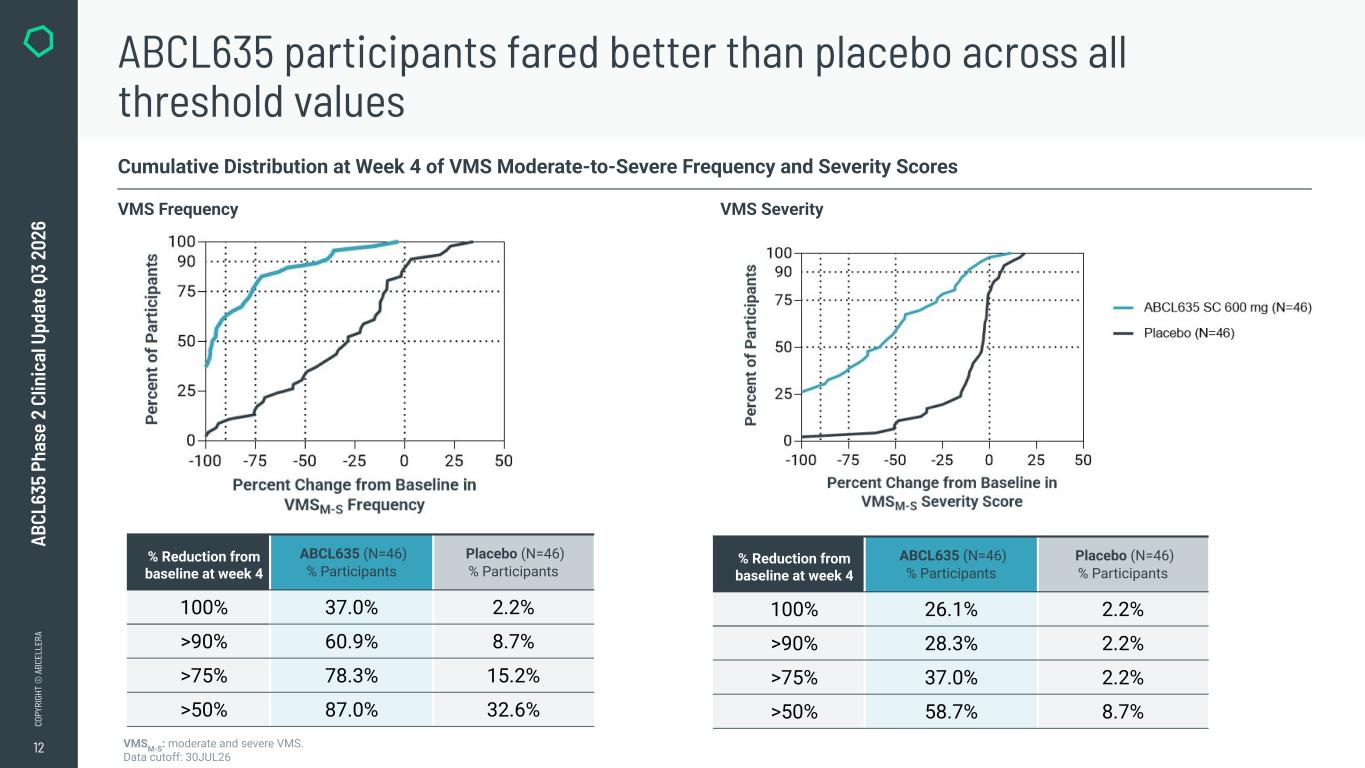
12 CO PY RI GH T © A BC EL LE RA AB CL 63 5 Ph as e 2 Cl in ic al U pd at e Q3 2 02 6 ABCL635 participants fared better than placebo across all threshold values VMSM-S: moderate and severe VMS. Data cutoff: 30JUL26 Cumulative Distribution at Week 4 of VMS Moderate-to-Severe Frequency and Severity Scores VMS Frequency VMS Severity % Reduction from baseline at week 4 ABCL635 (N=46) % Participants Placebo (N=46) % Participants 100% 37.0% 2.2% >90% 60.9% 8.7% >75% 78.3% 15.2% >50% 87.0% 32.6% % Reduction from baseline at week 4 ABCL635 (N=46) % Participants Placebo (N=46) % Participants 100% 26.1% 2.2% >90% 28.3% 2.2% >75% 37.0% 2.2% >50% 58.7% 8.7%
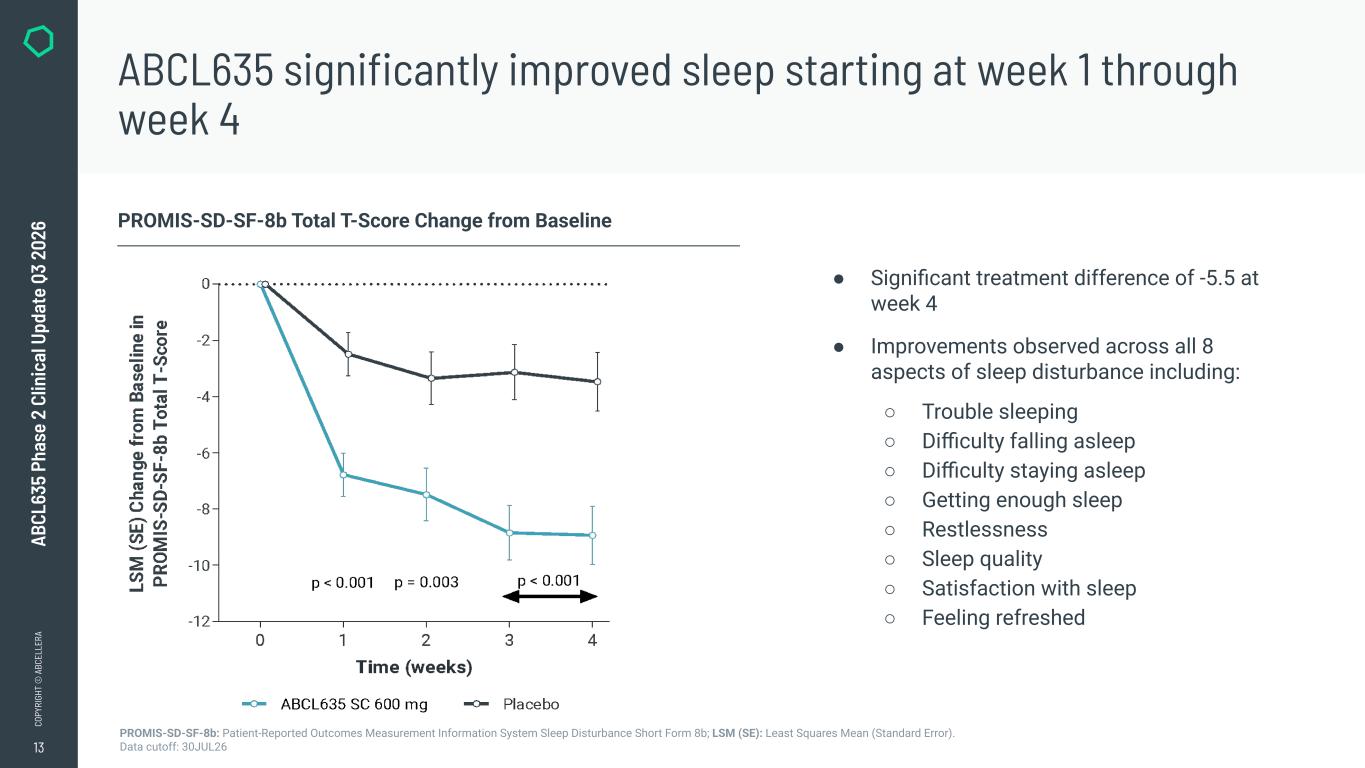
13 CO PY RI GH T © A BC EL LE RA AB CL 63 5 Ph as e 2 Cl in ic al U pd at e Q3 2 02 6 ABCL635 significantly improved sleep starting at week 1 through week 4 PROMIS-SD-SF-8b: Patient-Reported Outcomes Measurement Information System Sleep Disturbance Short Form 8b; LSM (SE): Least Squares Mean (Standard Error). Data cutoff: 30JUL26 PROMIS-SD-SF-8b Total T-Score Change from Baseline ● Significant treatment difference of -5.5 at week 4 ● Improvements observed across all 8 aspects of sleep disturbance including: ○ Trouble sleeping ○ Difficulty falling asleep ○ Difficulty staying asleep ○ Getting enough sleep ○ Restlessness ○ Sleep quality ○ Satisfaction with sleep ○ Feeling refreshed
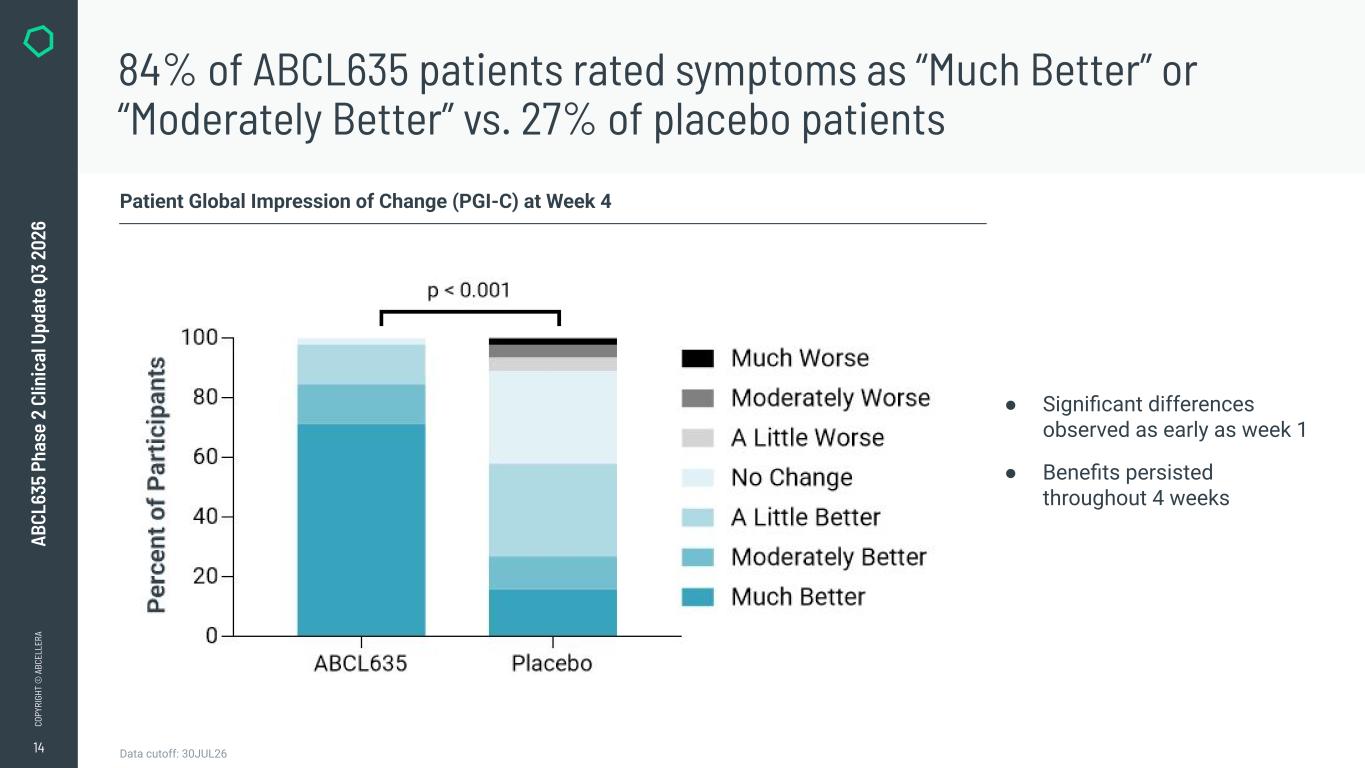
14 CO PY RI GH T © A BC EL LE RA AB CL 63 5 Ph as e 2 Cl in ic al U pd at e Q3 2 02 6 84% of ABCL635 patients rated symptoms as “Much Better” or “Moderately Better” vs. 27% of placebo patients Data cutoff: 30JUL26 Patient Global Impression of Change (PGI-C) at Week 4 ● Significant differences observed as early as week 1 ● Benefits persisted throughout 4 weeks
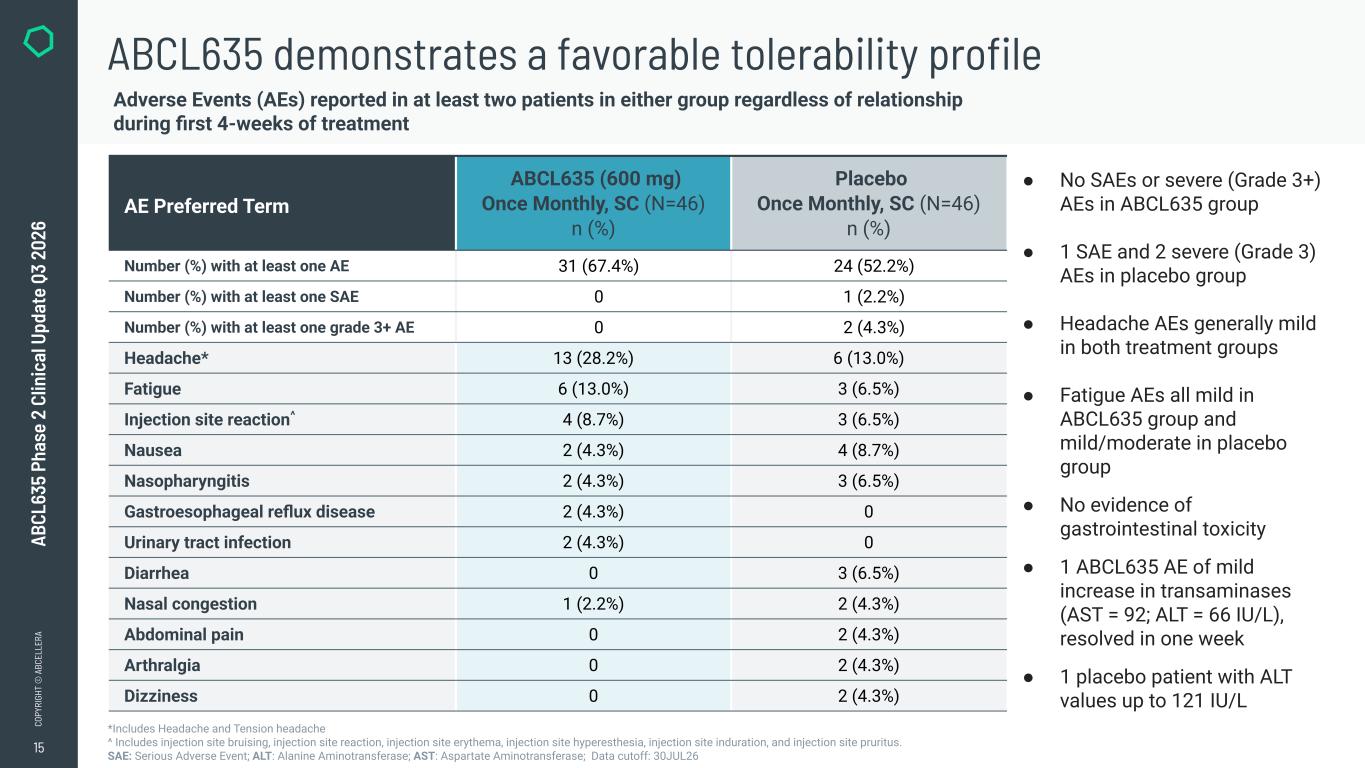
15 CO PY RI GH T © A BC EL LE RA AB CL 63 5 Ph as e 2 Cl in ic al U pd at e Q3 2 02 6 ● No SAEs or severe (Grade 3+) AEs in ABCL635 group ● 1 SAE and 2 severe (Grade 3) AEs in placebo group ● Headache AEs generally mild in both treatment groups ● Fatigue AEs all mild in ABCL635 group and mild/moderate in placebo group ● No evidence of gastrointestinal toxicity ● 1 ABCL635 AE of mild increase in transaminases (AST = 92; ALT = 66 IU/L), resolved in one week ● 1 placebo patient with ALT values up to 121 IU/L *Includes Headache and Tension headache ^ Includes injection site bruising, injection site reaction, injection site erythema, injection site hyperesthesia, injection site induration, and injection site pruritus. SAE: Serious Adverse Event; ALT: Alanine Aminotransferase; AST: Aspartate Aminotransferase; Data cutoff: 30JUL26 ABCL635 demonstrates a favorable tolerability profile Adverse Events (AEs) reported in at least two patients in either group regardless of relationship during first 4-weeks of treatment AE Preferred Term ABCL635 (600 mg) Once Monthly, SC (N=46) n (%) Placebo Once Monthly, SC (N=46) n (%) Number (%) with at least one AE 31 (67.4%) 24 (52.2%) Number (%) with at least one SAE 0 1 (2.2%) Number (%) with at least one grade 3+ AE 0 2 (4.3%) Headache* 13 (28.2%) 6 (13.0%) Fatigue 6 (13.0%) 3 (6.5%) Injection site reaction^ 4 (8.7%) 3 (6.5%) Nausea 2 (4.3%) 4 (8.7%) Nasopharyngitis 2 (4.3%) 3 (6.5%) Gastroesophageal reflux disease 2 (4.3%) 0 Urinary tract infection 2 (4.3%) 0 Diarrhea 0 3 (6.5%) Nasal congestion 1 (2.2%) 2 (4.3%) Abdominal pain 0 2 (4.3%) Arthralgia 0 2 (4.3%) Dizziness 0 2 (4.3%)
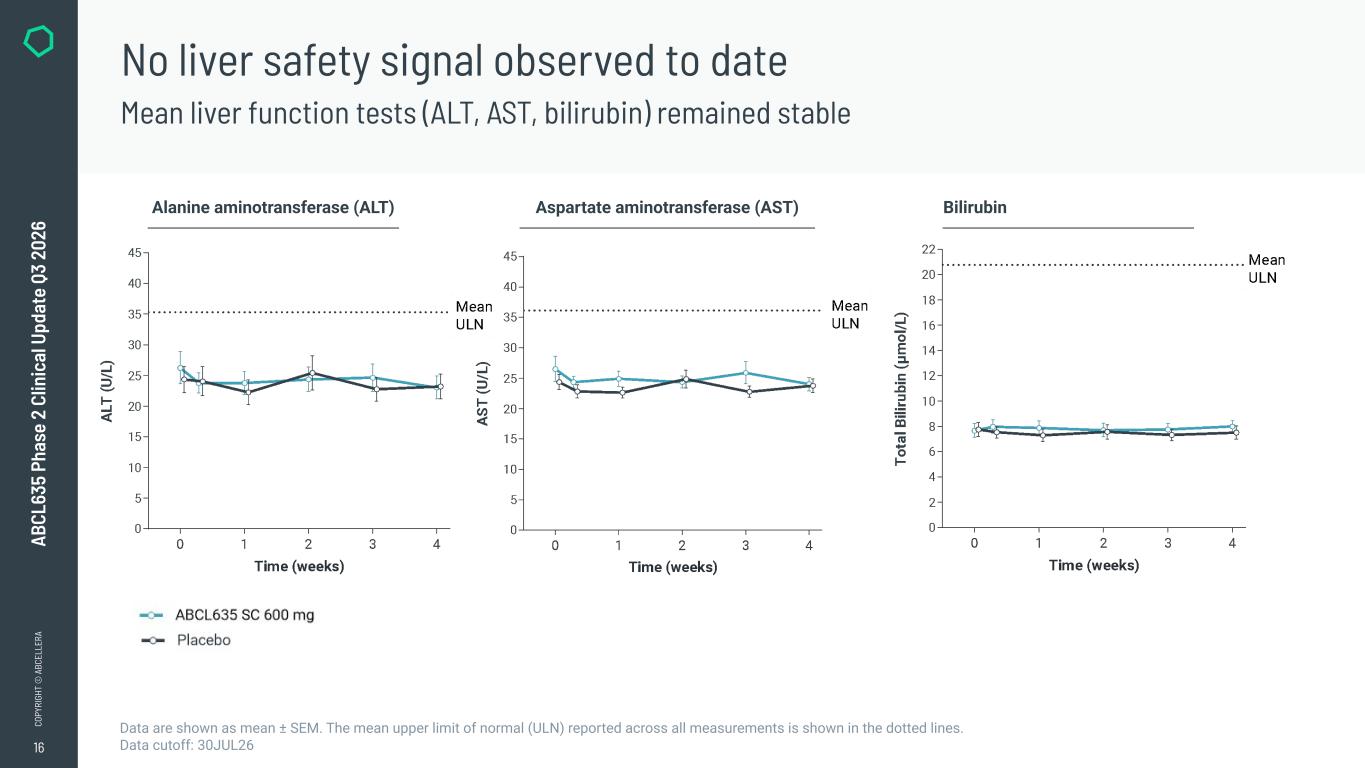
16 CO PY RI GH T © A BC EL LE RA AB CL 63 5 Ph as e 2 Cl in ic al U pd at e Q3 2 02 6 No liver safety signal observed to date Mean liver function tests (ALT, AST, bilirubin) remained stable Data are shown as mean ± SEM. The mean upper limit of normal (ULN) reported across all measurements is shown in the dotted lines. Data cutoff: 30JUL26 Alanine aminotransferase (ALT) Aspartate aminotransferase (AST) Bilirubin
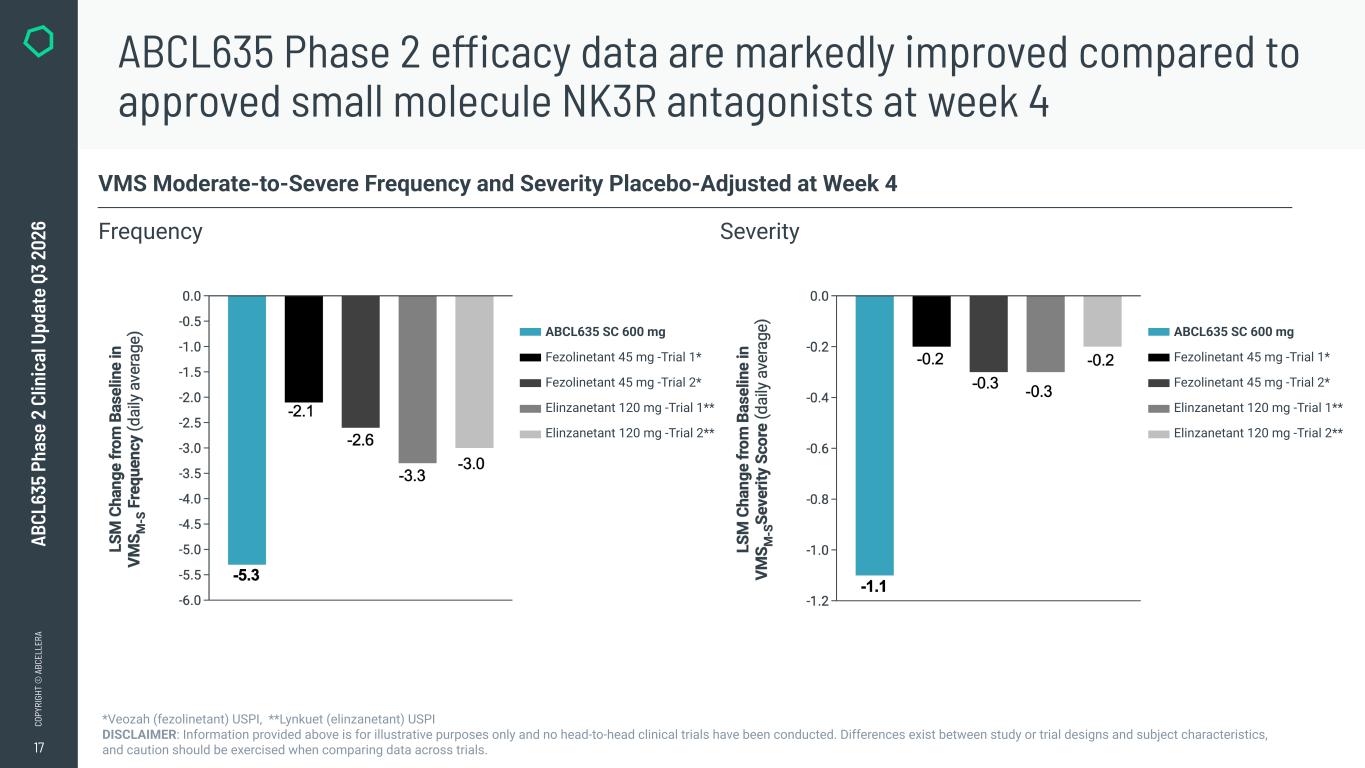
17 CO PY RI GH T © A BC EL LE RA AB CL 63 5 Ph as e 2 Cl in ic al U pd at e Q3 2 02 6 ABCL635 Phase 2 efficacy data are markedly improved compared to approved small molecule NK3R antagonists at week 4 *Veozah (fezolinetant) USPI, **Lynkuet (elinzanetant) USPI DISCLAIMER: Information provided above is for illustrative purposes only and no head-to-head clinical trials have been conducted. Differences exist between study or trial designs and subject characteristics, and caution should be exercised when comparing data across trials. VMS Moderate-to-Severe Frequency and Severity Placebo-Adjusted at Week 4 Frequency Severity ABCL635 SC 600 mg Fezolinetant 45 mg -Trial 1* Fezolinetant 45 mg -Trial 2* Elinzanetant 120 mg -Trial 1** Elinzanetant 120 mg -Trial 2** ABCL635 SC 600 mg Fezolinetant 45 mg -Trial 1* Fezolinetant 45 mg -Trial 2* Elinzanetant 120 mg -Trial 1** Elinzanetant 120 mg -Trial 2**
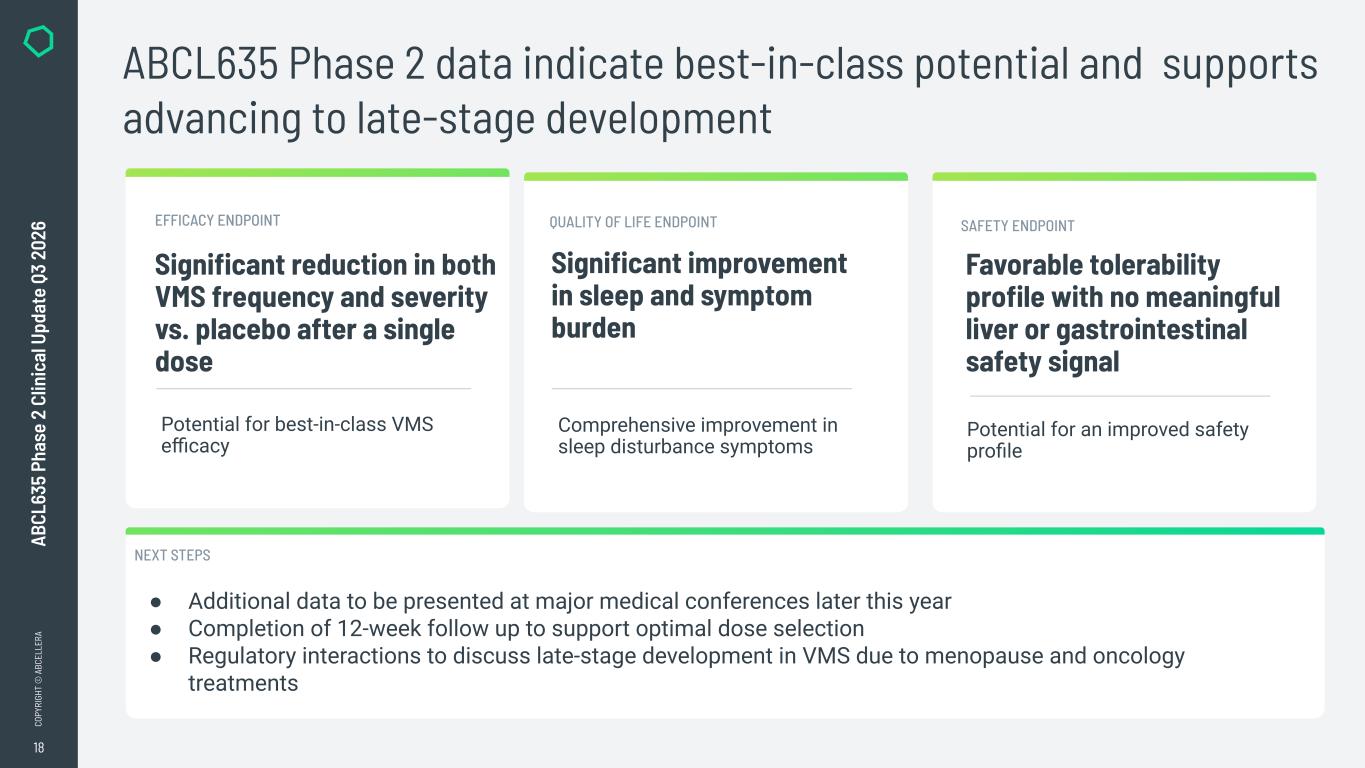
18 CO PY RI GH T © A BC EL LE RA AB CL 63 5 Ph as e 2 Cl in ic al U pd at e Q3 2 02 6 ABCL635 Phase 2 data indicate best-in-class potential and supports advancing to late-stage development Potential for best-in-class VMS efficacy EFFICACY ENDPOINT ● Additional data to be presented at major medical conferences later this year ● Completion of 12-week follow up to support optimal dose selection ● Regulatory interactions to discuss late-stage development in VMS due to menopause and oncology treatments NEXT STEPS Significant improvement in sleep and symptom burden Comprehensive improvement in sleep disturbance symptoms QUALITY OF LIFE ENDPOINT Significant reduction in both VMS frequency and severity vs. placebo after a single dose Favorable tolerability profile with no meaningful liver or gastrointestinal safety signal Potential for an improved safety profile SAFETY ENDPOINT

19 CO PY RI GH T © A BC EL LE RA THANK YOU