LEVEL Clinical Trial Topline Results August 10, 2026 Exhibit 99.2
Today’s Agenda Opening RemarksChris Giordano President and CEO LEVEL Topline ResultsStuart Rich, MD CMO KOL ThoughtsSanjiv Shah, MD Northwestern University Path ForwardChris Giordano CEO Q&AChris Giordano President and CEO Stuart Rich, MD CMO Doug Randall CBO Tom Staab CFO Sanjiv Shah, MD Northwestern University
Forward-Looking Statements Disclaimers Except for historical information, all of the statements, expectations and assumptions contained in this presentation are forward-looking statements. These forward-looking statements may include information concerning our clinical data, our regulatory plans, our future trial designs, and our possible or projected future business operations. Actual results might differ materially from those explicit or implicit in the forward-looking statements. Important factors that could cause actual results to differ materially include: risks of our clinical trials, including, but not limited to, the results of such trials, and the design, timing, delays, costs, location, initiation, and enrollment of any future trials; any delays in regulatory review and approval of product candidates in development; risks regarding the formulation, production, marketing, customer acceptance and clinical utility of our product candidates; risks related to our business strategy, including the prioritization and development of product candidates; reliance on third parties, including Orion Corporation, our manufacturers and CROs; our estimates regarding the potential market opportunity for our product candidates; cash usage and runway may not be within management’s expected ranges; the potential advantages of our product candidates; our competitive position; our ability to maintain our culture and recruit, integrate and retain qualified personnel and advisors, including our executives and members of our Board of Directors; risks associated with our cash needs; intellectual property risks; volatility and uncertainty in the global economy and financial markets in light of unexpected changes in tariffs and the possibility of pandemics, global financial and geopolitical uncertainties, including in the Middle East and the Russian invasion of and war against the country of Ukraine; changes in legal, regulatory and legislative environments in the markets in which we operate and the impact of these changes on our ability to obtain regulatory approval for our products; and other risks and uncertainties set forth from time to time in our SEC filings. Tenax Therapeutics assumes no obligation and does not intend to update these forward-looking statements except as required by law.
Introduction Chris Giordano President and CEO, Tenax Therapeutics
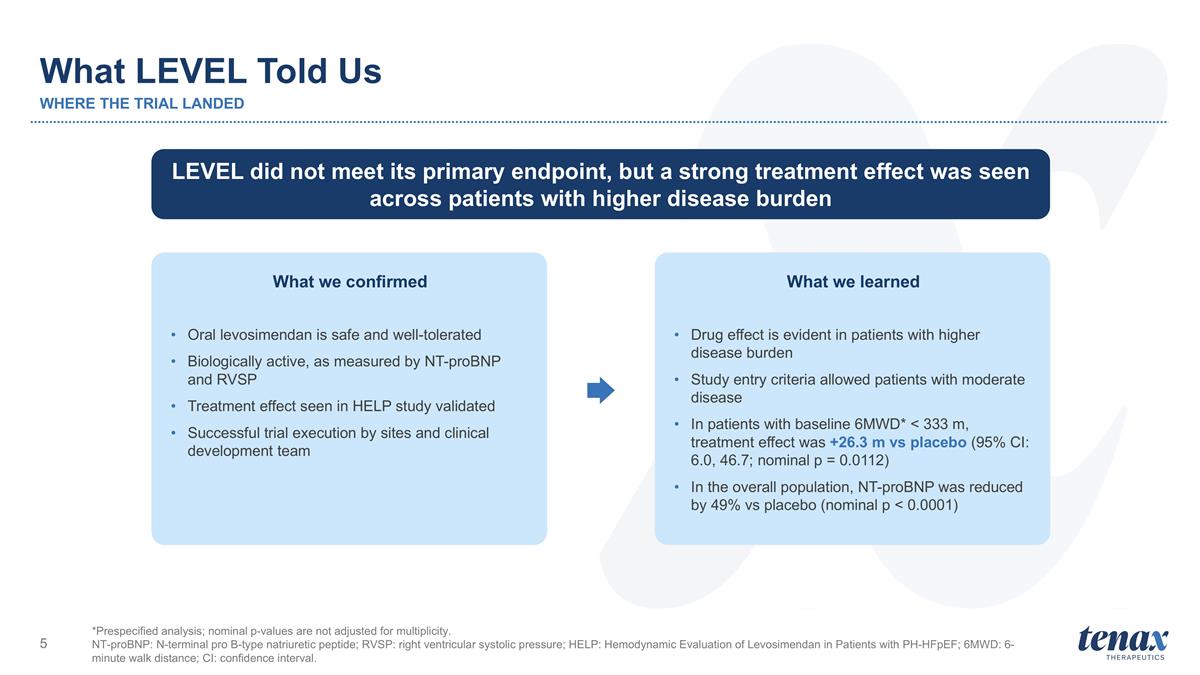
What LEVEL Told Us WHERE THE TRIAL LANDED *Prespecified analysis; nominal p-values are not adjusted for multiplicity. NT-proBNP: N-terminal pro B-type natriuretic peptide; RVSP: right ventricular systolic pressure; HELP: Hemodynamic Evaluation of Levosimendan in Patients with PH-HFpEF; 6MWD: 6-minute walk distance; CI: confidence interval. LEVEL did not meet its primary endpoint, but a strong treatment effect was seen across patients with higher disease burden What we confirmed Oral levosimendan is safe and well-tolerated Biologically active, as measured by NT-proBNP and RVSP Treatment effect seen in HELP study validated Successful trial execution by sites and clinical development team What we learned Drug effect is evident in patients with higher disease burden Study entry criteria allowed patients with moderate disease In patients with baseline 6MWD* < 333 m, treatment effect was +26.3 m vs placebo (95% CI: 6.0, 46.7; nominal p = 0.0112) In the overall population, NT-proBNP was reduced by 49% vs placebo (nominal p < 0.0001)

Phase 3 LEVEL Clinical Trial Topline Results Stuart Rich, MD CMO, Tenax Therapeutics
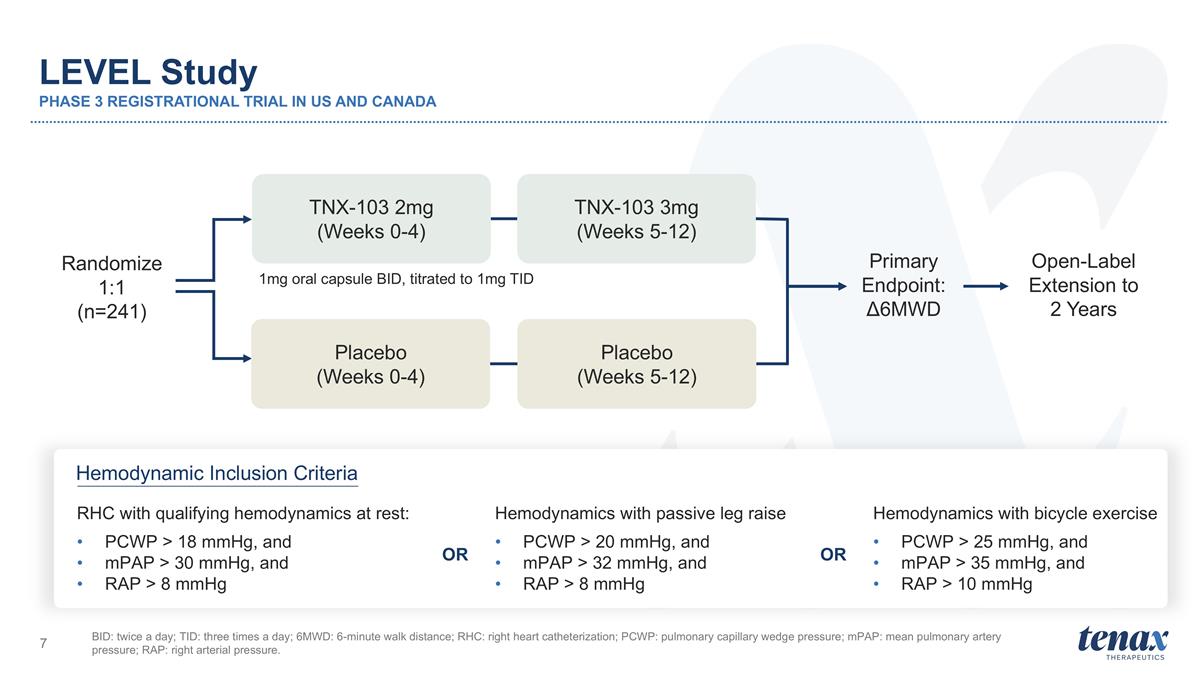
LEVEL Study PHASE 3 REGISTRATIONAL TRIAL IN US AND CANADA BID: twice a day; TID: three times a day; 6MWD: 6-minute walk distance; RHC: right heart catheterization; PCWP: pulmonary capillary wedge pressure; mPAP: mean pulmonary artery pressure; RAP: right arterial pressure. 1mg oral capsule BID, titrated to 1mg TID Open-Label Extension to 2 Years TNX-103 2mg (Weeks 0-4) TNX-103 3mg (Weeks 5-12) Placebo (Weeks 0-4) Placebo (Weeks 5-12) Primary Endpoint: Δ6MWD Hemodynamic Inclusion Criteria Randomize 1:1 (n=241) RHC with qualifying hemodynamics at rest: PCWP > 18 mmHg, and mPAP > 30 mmHg, and RAP > 8 mmHg Hemodynamics with passive leg raise PCWP > 20 mmHg, and mPAP > 32 mmHg, and RAP > 8 mmHg Hemodynamics with bicycle exercise PCWP > 25 mmHg, and mPAP > 35 mmHg, and RAP > 10 mmHg OR OR
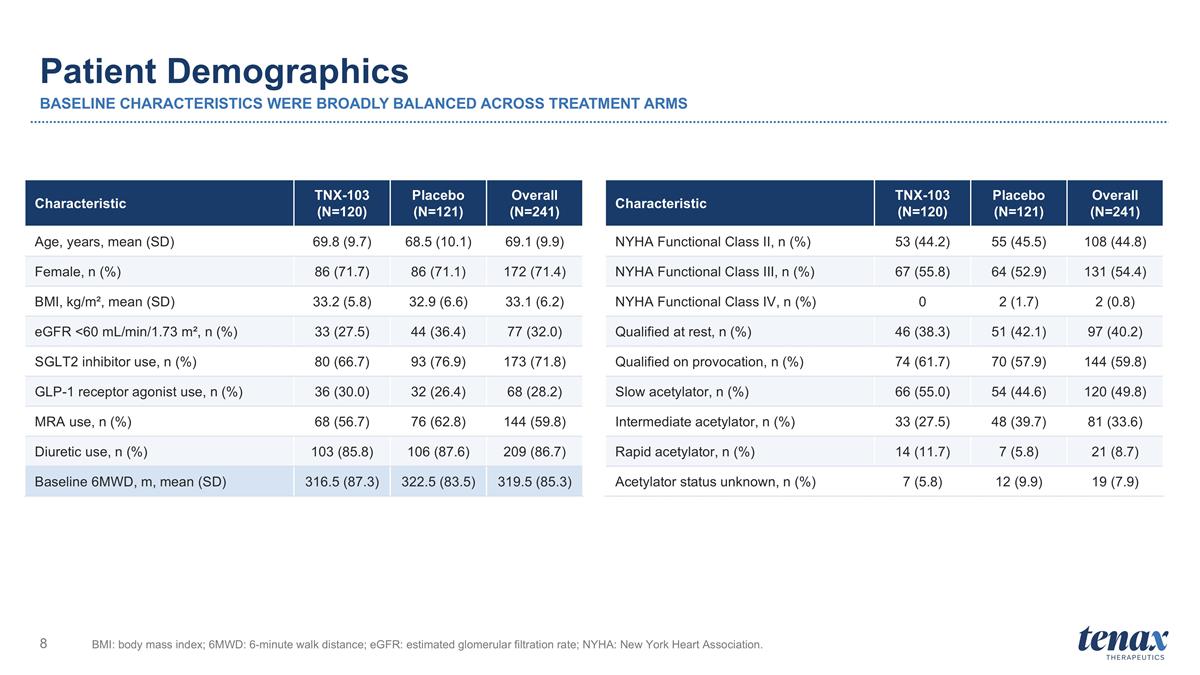
Patient Demographics BASELINE CHARACTERISTICS WERE BROADLY BALANCED ACROSS TREATMENT ARMS BMI: body mass index; 6MWD: 6-minute walk distance; eGFR: estimated glomerular filtration rate; NYHA: New York Heart Association. Characteristic TNX-103 (N=120) Placebo (N=121) Overall (N=241) Age, years, mean (SD) 69.8 (9.7) 68.5 (10.1) 69.1 (9.9) Female, n (%) 86 (71.7) 86 (71.1) 172 (71.4) BMI, kg/m², mean (SD) 33.2 (5.8) 32.9 (6.6) 33.1 (6.2) eGFR <60 mL/min/1.73 m², n (%) 33 (27.5) 44 (36.4) 77 (32.0) SGLT2 inhibitor use, n (%) 80 (66.7) 93 (76.9) 173 (71.8) GLP-1 receptor agonist use, n (%) 36 (30.0) 32 (26.4) 68 (28.2) MRA use, n (%) 68 (56.7) 76 (62.8) 144 (59.8) Diuretic use, n (%) 103 (85.8) 106 (87.6) 209 (86.7) Baseline 6MWD, m, mean (SD) 316.5 (87.3) 322.5 (83.5) 319.5 (85.3) Characteristic TNX-103 (N=120) Placebo (N=121) Overall (N=241) NYHA Functional Class II, n (%) 53 (44.2) 55 (45.5) 108 (44.8) NYHA Functional Class III, n (%) 67 (55.8) 64 (52.9) 131 (54.4) NYHA Functional Class IV, n (%) 0 2 (1.7) 2 (0.8) Qualified at rest, n (%) 46 (38.3) 51 (42.1) 97 (40.2) Qualified on provocation, n (%) 74 (61.7) 70 (57.9) 144 (59.8) Slow acetylator, n (%) 66 (55.0) 54 (44.6) 120 (49.8) Intermediate acetylator, n (%) 33 (27.5) 48 (39.7) 81 (33.6) Rapid acetylator, n (%) 14 (11.7) 7 (5.8) 21 (8.7) Acetylator status unknown, n (%) 7 (5.8) 12 (9.9) 19 (7.9)
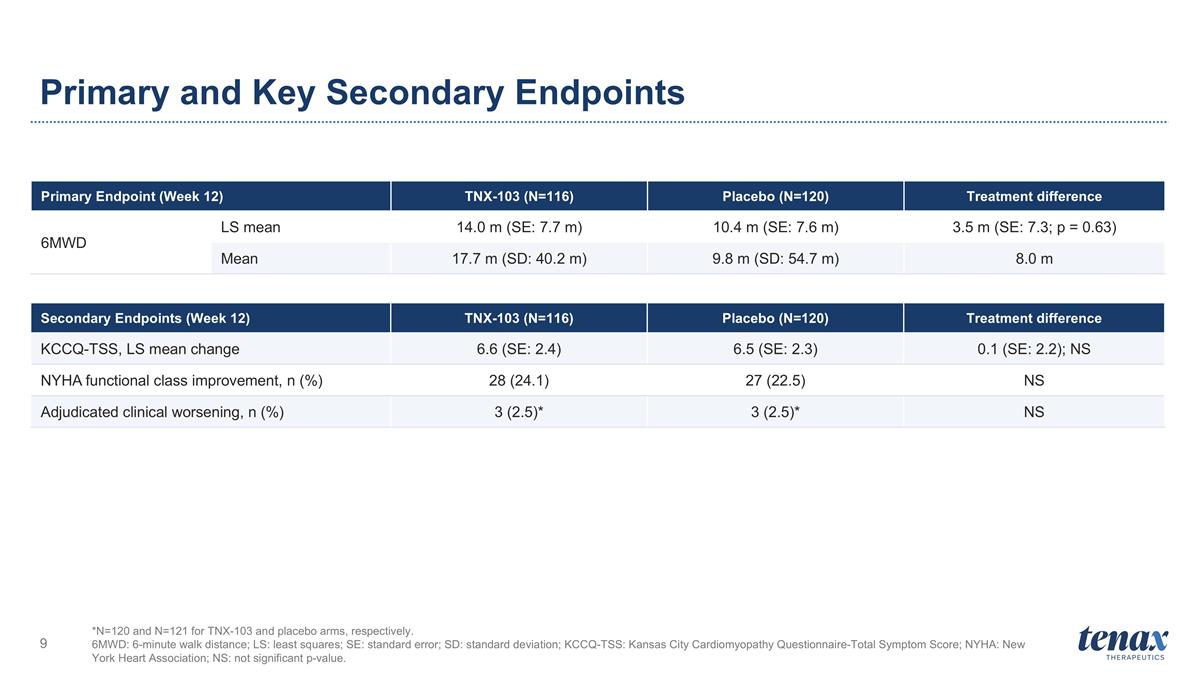
Primary and Key Secondary Endpoints *N=120 and N=121 for TNX-103 and placebo arms, respectively. 6MWD: 6-minute walk distance; LS: least squares; SE: standard error; SD: standard deviation; KCCQ-TSS: Kansas City Cardiomyopathy Questionnaire-Total Symptom Score; NYHA: New York Heart Association; NS: not significant p-value. Primary Endpoint (Week 12) TNX-103 (N=116) Placebo (N=120) Treatment difference 6MWD LS mean 14.0 m (SE: 7.7 m) 10.4 m (SE: 7.6 m) 3.5 m (SE: 7.3; p = 0.63) Mean 17.7 m (SD: 40.2 m) 9.8 m (SD: 54.7 m) 8.0 m Secondary Endpoints (Week 12) TNX-103 (N=116) Placebo (N=120) Treatment difference KCCQ-TSS, LS mean change 6.6 (SE: 2.4) 6.5 (SE: 2.3) 0.1 (SE: 2.2); NS NYHA functional class improvement, n (%) 28 (24.1) 27 (22.5) NS Adjudicated clinical worsening, n (%) 3 (2.5)* 3 (2.5)* NS
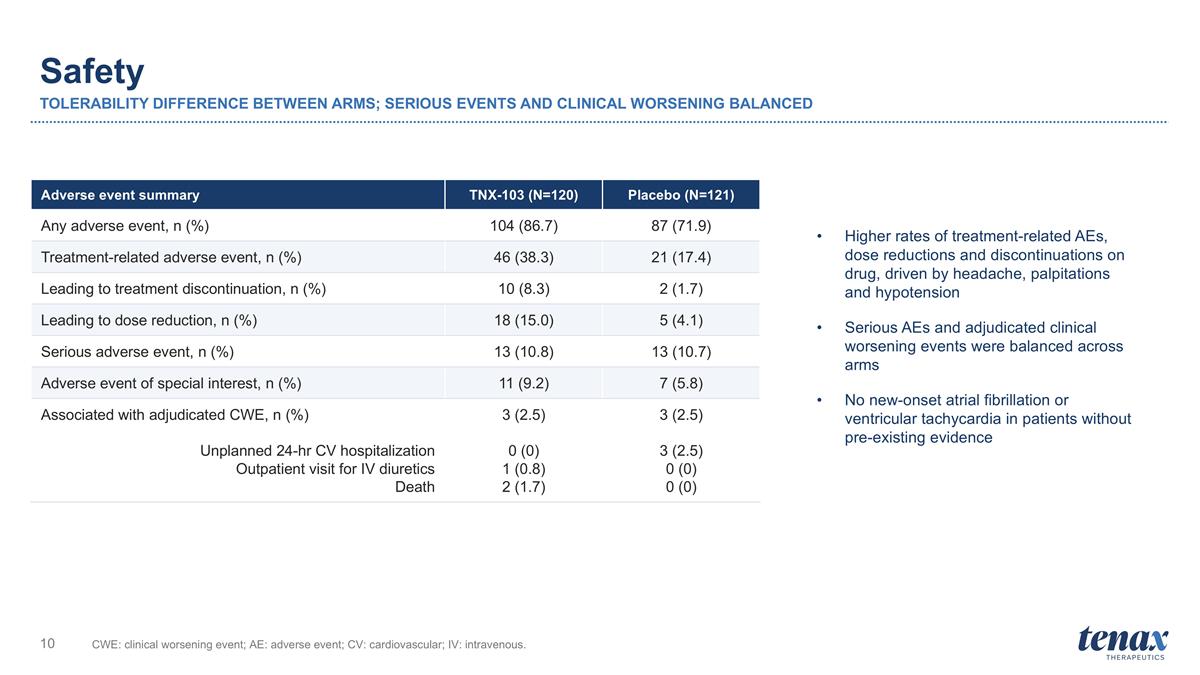
Safety TOLERABILITY DIFFERENCE BETWEEN ARMS; SERIOUS EVENTS AND CLINICAL WORSENING BALANCED CWE: clinical worsening event; AE: adverse event; CV: cardiovascular; IV: intravenous. Adverse event summary TNX-103 (N=120) Placebo (N=121) Any adverse event, n (%) 104 (86.7) 87 (71.9) Treatment-related adverse event, n (%) 46 (38.3) 21 (17.4) Leading to treatment discontinuation, n (%) 10 (8.3) 2 (1.7) Leading to dose reduction, n (%) 18 (15.0) 5 (4.1) Serious adverse event, n (%) 13 (10.8) 13 (10.7) Adverse event of special interest, n (%) 11 (9.2) 7 (5.8) Associated with adjudicated CWE, n (%) Unplanned 24-hr CV hospitalization Outpatient visit for IV diuretics Death 3 (2.5) 0 (0) 1 (0.8) 2 (1.7) 3 (2.5) 3 (2.5) 0 (0) 0 (0) Higher rates of treatment-related AEs, dose reductions and discontinuations on drug, driven by headache, palpitations and hypotension Serious AEs and adjudicated clinical worsening events were balanced across arms No new-onset atrial fibrillation or ventricular tachycardia in patients without pre-existing evidence
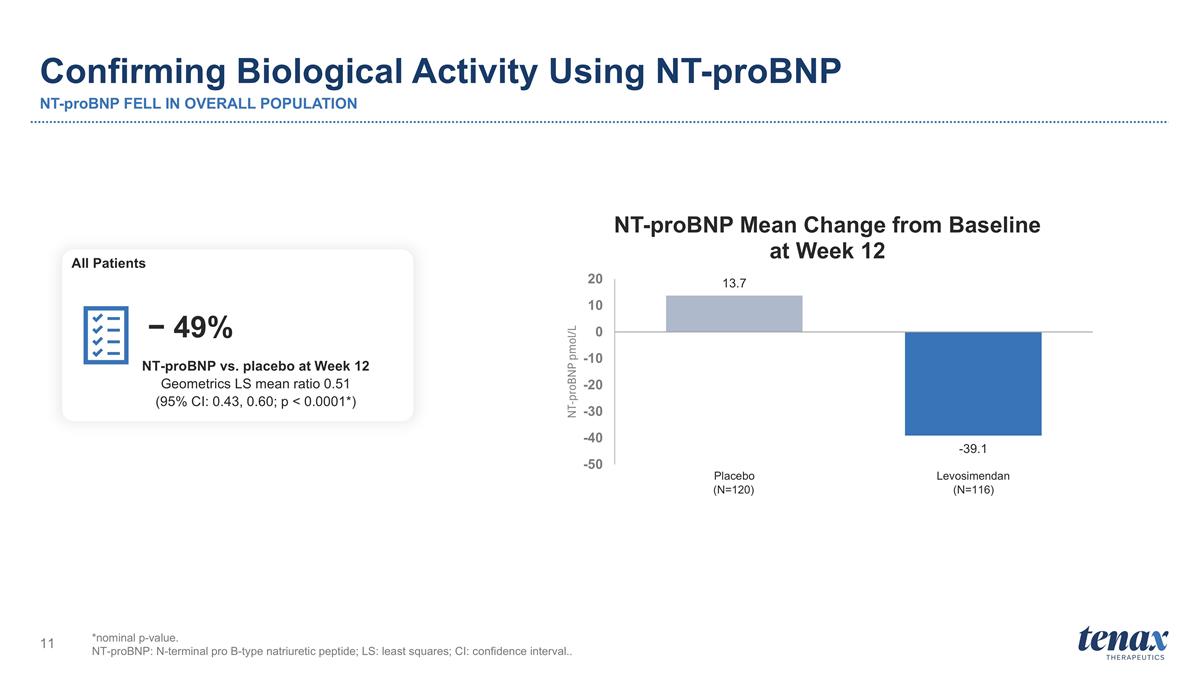
Confirming Biological Activity Using NT-proBNP NT-proBNP FELL IN OVERALL POPULATION *nominal p-value. NT-proBNP: N-terminal pro B-type natriuretic peptide; LS: least squares; CI: confidence interval.. NT-proBNP vs. placebo at Week 12 Geometrics LS mean ratio 0.51 (95% CI: 0.43, 0.60; p < 0.0001*) − 49% All Patients (N=120) (N=116)
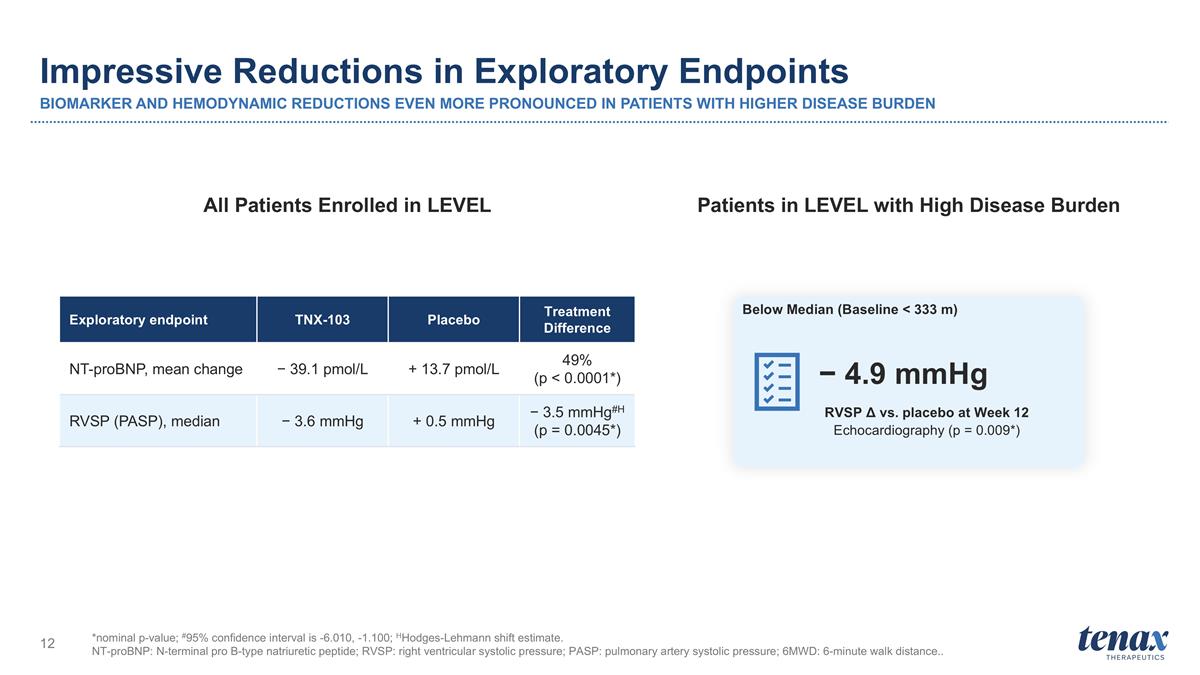
Impressive Reductions in Exploratory Endpoints BIOMARKER AND HEMODYNAMIC REDUCTIONS EVEN MORE PRONOUNCED IN PATIENTS WITH HIGHER DISEASE BURDEN *nominal p-value; #95% confidence interval is -6.010, -1.100; HHodges-Lehmann shift estimate. NT-proBNP: N-terminal pro B-type natriuretic peptide; RVSP: right ventricular systolic pressure; PASP: pulmonary artery systolic pressure; 6MWD: 6-minute walk distance.. Exploratory endpoint TNX-103 Placebo Treatment Difference NT-proBNP, mean change − 39.1 pmol/L + 13.7 pmol/L 49% (p < 0.0001*) RVSP (PASP), median − 3.6 mmHg + 0.5 mmHg − 3.5 mmHg#H (p = 0.0045*) RVSP Δ vs. placebo at Week 12 Echocardiography (p = 0.009*) − 4.9 mmHg All Patients Enrolled in LEVEL Patients in LEVEL with High Disease Burden Below Median (Baseline < 333 m)
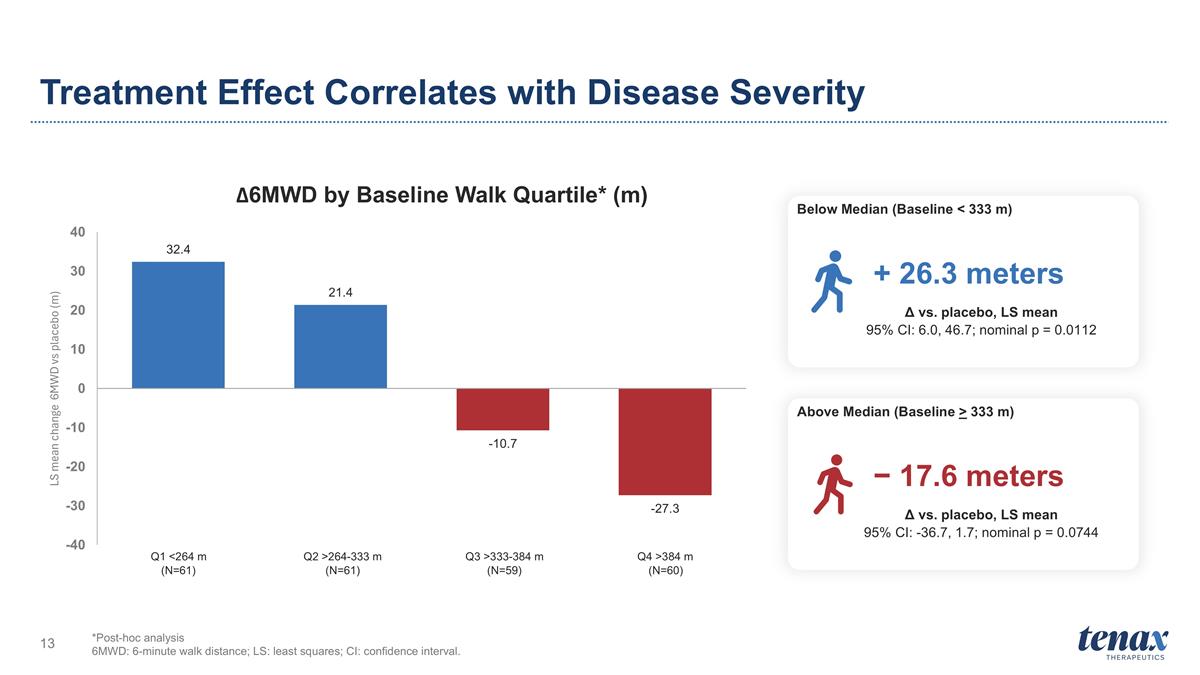
Treatment Effect Correlates with Disease Severity *Post-hoc analysis 6MWD: 6-minute walk distance; LS: least squares; CI: confidence interval. Δ vs. placebo, LS mean 95% CI: 6.0, 46.7; nominal p = 0.0112 + 26.3 meters Δ vs. placebo, LS mean 95% CI: -36.7, 1.7; nominal p = 0.0744 − 17.6 meters Below Median (Baseline < 333 m) Above Median (Baseline > 333 m) Q1 <264 m Q2 >264-333 m Q3 >333-384 m Q4 >384 m (N=61) (N=61) (N=59) (N=60)
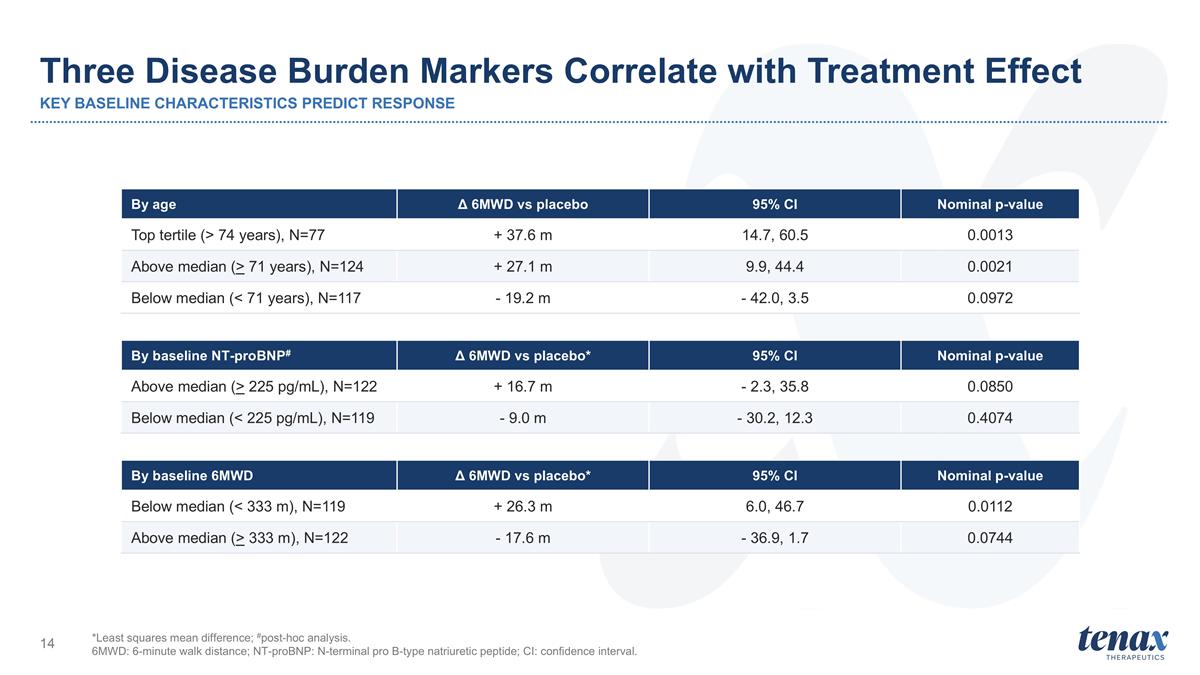
Three Disease Burden Markers Correlate with Treatment Effect KEY BASELINE CHARACTERISTICS PREDICT RESPONSE By age Δ 6MWD vs placebo 95% CI Nominal p-value Top tertile (> 74 years), N=77 + 37.6 m 14.7, 60.5 0.0013 Above median (> 71 years), N=124 + 27.1 m 9.9, 44.4 0.0021 Below median (< 71 years), N=117 - 19.2 m - 42.0, 3.5 0.0972 *Least squares mean difference; #post-hoc analysis. 6MWD: 6-minute walk distance; NT-proBNP: N-terminal pro B-type natriuretic peptide; CI: confidence interval. By baseline NT-proBNP# Δ 6MWD vs placebo* 95% CI Nominal p-value Above median (> 225 pg/mL), N=122 + 16.7 m - 2.3, 35.8 0.0850 Below median (< 225 pg/mL), N=119 - 9.0 m - 30.2, 12.3 0.4074 By baseline 6MWD Δ 6MWD vs placebo* 95% CI Nominal p-value Below median (< 333 m), N=119 + 26.3 m 6.0, 46.7 0.0112 Above median (> 333 m), N=122 - 17.6 m - 36.9, 1.7 0.0744
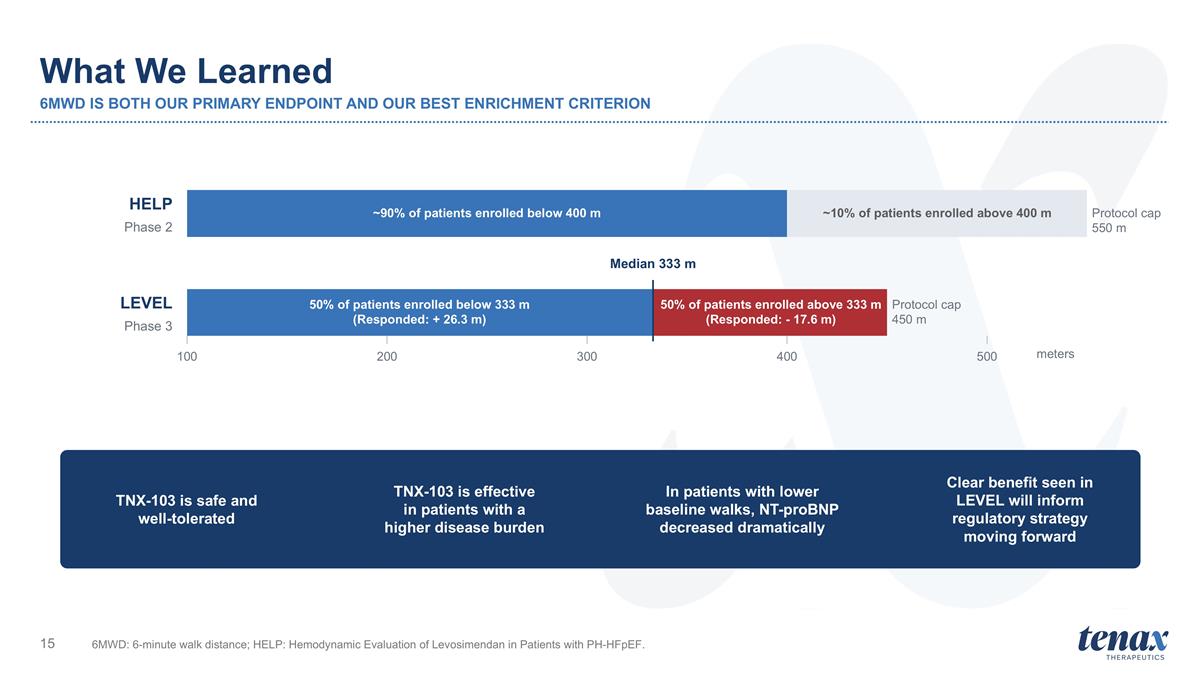
What We Learned 6MWD IS BOTH OUR PRIMARY ENDPOINT AND OUR BEST ENRICHMENT CRITERION 6MWD: 6-minute walk distance; HELP: Hemodynamic Evaluation of Levosimendan in Patients with PH-HFpEF. HELP Phase 2 ~90% of patients enrolled below 400 m Protocol cap 550 m LEVEL Phase 3 50% of patients enrolled below 333 m (Responded: + 26.3 m) 50% of patients enrolled above 333 m (Responded: - 17.6 m) Protocol cap 450 m Median 333 m 100 200 300 400 500 meters TNX-103 is safe and well-tolerated TNX-103 is effective in patients with a higher disease burden In patients with lower baseline walks, NT-proBNP decreased dramatically Clear benefit seen in LEVEL will inform regulatory strategy moving forward ~10% of patients enrolled above 400 m

Additional Thoughts On LEVEL Results Sanjiv Shah, MD Director of HFpEF Program Northwestern University Feinberg School of Medicine Principal Investigator on LEVEL Clinical Trial
Next Steps for Tenax Chris Giordano President and CEO, Tenax Therapeutics
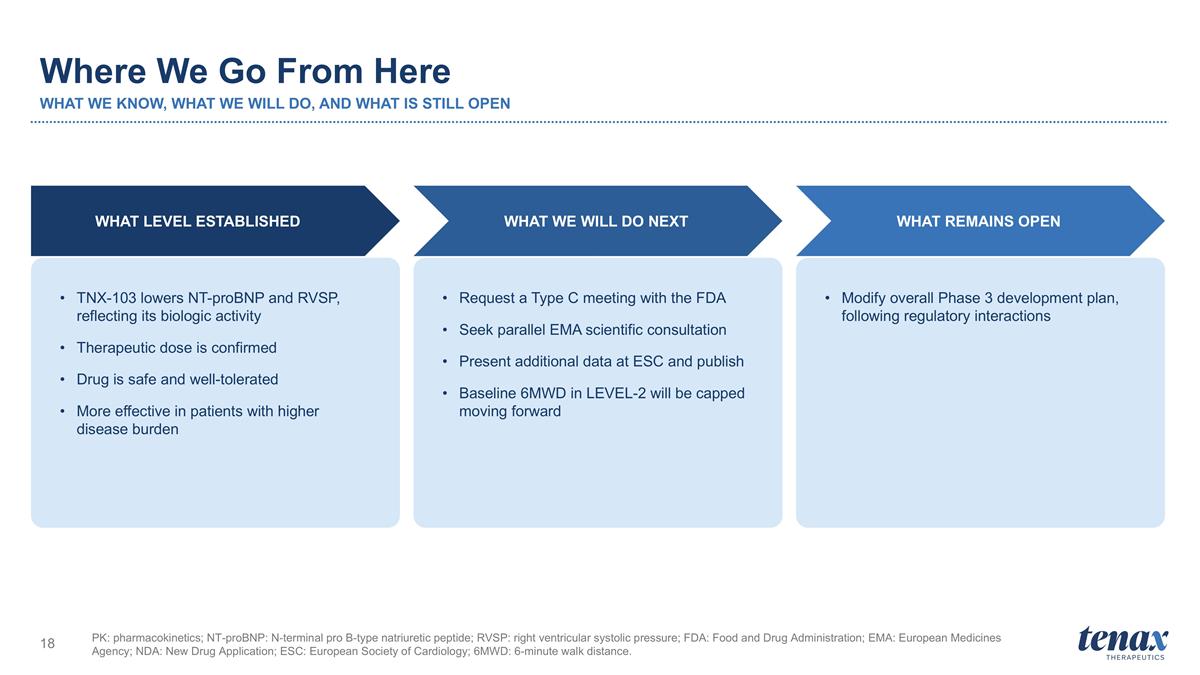
Where We Go From Here WHAT WE KNOW, WHAT WE WILL DO, AND WHAT IS STILL OPEN PK: pharmacokinetics; NT-proBNP: N-terminal pro B-type natriuretic peptide; RVSP: right ventricular systolic pressure; FDA: Food and Drug Administration; EMA: European Medicines Agency; NDA: New Drug Application; ESC: European Society of Cardiology; 6MWD: 6-minute walk distance. TNX-103 lowers NT-proBNP and RVSP, reflecting its biologic activity Therapeutic dose is confirmed Drug is safe and well-tolerated More effective in patients with higher disease burden WHAT LEVEL ESTABLISHED Request a Type C meeting with the FDA Seek parallel EMA scientific consultation Present additional data at ESC and publish Baseline 6MWD in LEVEL-2 will be capped moving forward WHAT WE WILL DO NEXT Modify overall Phase 3 development plan, following regulatory interactions WHAT REMAINS OPEN
Q&A Chris Giordano President and CEO, Tenax Therapeutics Stuart Rich, MD CMO, Tenax Therapeutics Sanjiv Shah, MD Northwestern University Doug Randall CBO, Tenax Therapeutics Tom Staab CFO, Tenax Therapeutics