File No. 024-12574
Offering Circular dated August 4, 2026
An Offering Statement pursuant to Regulation A relating to these securities has been filed with the Securities and Exchange Commission. Information contained in this Offering Circular is subject to completion or amendment. These securities may not be sold nor may offers to buy be accepted before the Offering Statement filed with the Commission is qualified. This Offering Circular does not constitute an offer to sell or the solicitation of an offer to buy nor may there be any sales of these securities in any state in which such offer, solicitation or sale would be unlawful before registration or qualification under the laws of any such state. We may elect to satisfy our obligation to deliver a Final Offering Circular by sending you a notice within two business days after the completion of our sale to you that contains the URL where the Final Offering Circular or the Offering Statement in which such Final Offering Circular was filed may be obtained.
Limitless X Holdings Inc.
9777 Wilshire Blvd., #400
Beverly Hills, CA 90212
(855) 413-7030
Up to 60,000,000 Units, each Unit consisting of one share of Class F Convertible Preferred Stock and one Common Stock Purchase Warrant
This is a public offering of securities (the “Offering”) of Limitless X Holdings Inc., a Delaware corporation (“Limitless X”, the “Company”, “we”, “us”, or “our”). The Company is offering up to 60,000,000 Units. Each unit (each a “Unit” and collectively the “Units”) consists of one share of Class F Convertible Preferred Stock, par value $0.0001 per share (the “Class F Preferred Stock”), and one warrant (the “Warrant” and, together with the Class F Preferred Stock, the “Securities”), each to purchase one (1) share of our common stock, $0.0001 par value per share, of the Company (the “Common Stock”). We will not issue fractional shares. The Units will be sold at an offering price of $1.25 per Unit, for a maximum offering amount of $75,000,000 worth of Units. The offering statement of which this Offering Circular forms a part also relates to the 100,000,000 shares of Common Stock issuable upon conversion of the Class F Preferred Stock and exercise of the Warrants. The Warrants are exercisable at any time within 36 months from the date of issuance. Each Warrant will be exercisable at a price of $3.00 for one (1) share of our Common Stock, subject to customary adjustment.
There is a minimum initial investment amount per investor of $750 for the Units, or 600 Units.
At any time after issuance, each share of our Class F Preferred Stock is convertible into one (1) share of our Common Stock at the option of the holder of such Class F Preferred Stock. At any time after issuance upon the occurrence of any of the following events, the Company shall have a right to direct the mandatory conversion of the Class F Preferred Stock: (a) a change in control; (b) if the closing price of the Common Stock closes at or above $2.50 per share for 5 consecutive trading days; or (c) if the Company’s Common Stock is listed on a National Securities Exchange. “National Securities Exchange” means any national securities exchange registered under Section 6 of the Securities Exchange Act of 1934, as amended including without limitation The Nasdaq Stock Market LLC, the New York Stock Exchange, NYSE American LLC, or any successor thereto. The shares underlying the Class F Preferred Stock will be qualified in this offering (this “Offering”). The Class F Preferred Stock and the Common Stock differ in other characteristics including voting rights. Up to 100,000,000 shares of Common Stock underlying the Class F Preferred Stock are being qualified in this Offering. See “Securities Offered” for more details.
The offering price of the Units is not related to, nor may it reflect the market price of the shares of our Common Stock underlying the Warrants after this Offering. The Units, Class F Preferred Stock and the Warrants are not currently listed or quoted on any exchange and we do not intend to seek a listing for them. The Units have no stand-alone rights and will not be certificated or issued as stand-alone securities. The shares of our Class F Preferred Stock and the Warrants are immediately separable and will be issued separately, but will be purchased together as a Unit in this Offering.
We have engaged Wilson-Davis & Co., Inc., a broker-dealer registered with the SEC and a member of FINRA (“Wilson-Davis” or the “Selling Agent”), to serve as our Selling Agent on a “best efforts” without any minimum offering amount pursuant to the selling agency agreement dated July 24, 2026 (“Selling Agency Agreement.”). See “Plan of Distribution” for more details.
As there is no minimum offering, upon the approval of any subscription to this Offering Circular, we shall immediately deposit said proceeds into our bank account and may utilize the proceeds immediately in accordance with the “Use of Proceeds.” Subscriptions are irrevocable, and the purchase price is non-refundable, as expressly stated in this Offering Circular. All proceeds received from subscribers will be available for Company use upon acceptance of the subscription.
The Company and its subsidiaries are building a dynamic ecosystem designed to help individuals “Look Good and Feel Great” by integrating health, wellness, entertainment, fintech, community building, and brand development. Through its wholly-owned subsidiary, Limitless X Inc., the Company focuses on direct-to-consumer sales, offering innovative nutritional supplements that inspire people to reinvent themselves and achieve their highest potential. Currently, the Company’s products focus on brain health, weight management and recovery. The Company’s common stock is quoted on the OTC Markets under the symbol “LIMX.”
This Offering is being conducted on a “best efforts” basis. This Offering will terminate at the earlier of: (1) the date at which all Units have been sold, (2) the date which is one year after this Offering being re-qualified by the SEC, or (3) the date on which this Offering is earlier terminated by the Company in its sole discretion. This Offering Circular does not constitute an offer to sell or the solicitation of an offer to buy, nor shall there be any sales of these securities in any state or jurisdiction in which such offer, solicitation or sale would be unlawful, prior to registration or qualification under the laws of any such state.
Generally, no sale may be made to non-accredited investors in this Offering if the aggregate purchase price you pay is more than ten percent (10%) of the greater of your annual income or net worth. Different rules apply to accredited investors and non-natural persons. Before making any representation that your investment does not exceed applicable thresholds, we encourage you to review Rule 251(d)(2)(i)(C) of Regulation A. For general information on investing, we encourage you to refer to www.investor.gov.
Investing in the Units involves a high degree of risk. See “Risk Factors” for a discussion of certain risks that you should consider in connection with an investment in the Units.
Per Unit | Total Maximum | |||||||
| Public offering price (1) | $ | 1.25 | $ | 75,000,000 | ||||
| Less: Sales Agent Fees (2) | $ | .0875 | $ | 5,250,000 | ||||
| Net Offering Proceeds (3) | $ | 1.1625 | $ | 69,750,000 | ||||
| (1) | We expect to offer the Units on a continuous, “best efforts” basis, which means there is no guarantee that any minimum amount will be received in this Offering, through our Sales Agent or through sub-agents or selected dealers retained by the Sales Agent. As there is no minimum offering, upon the approval of any subscription to this Offering Circular, we shall immediately deposit said proceeds into our bank account and may dispose of the proceeds in accordance with the section “Use of Proceeds”. |
| (2) | We will pay the Selling Agent a commission of seven percent (7%) of the aggregate gross proceeds raised in this offering (other than for certain purchasers of Units, which fee will be equal to 3% of the aggregate purchase price paid by each such excluded purchaser). The Selling Agent will receive certain other compensation. See “Plan of Distribution.” |
| (3) | This amount does not include total offering expenses, which are estimated to be approximately $365,000 and include legal and professional fees and miscellaneous expenses, regardless of how many Units we sell. |
THE U.S. SECURITIES AND EXCHANGE COMMISSION DOES NOT PASS UPON THE MERITS OF OR GIVE ITS APPROVAL TO ANY SECURITIES OFFERED OR THE TERMS OF THE OFFERING, NOR DOES IT PASS UPON THE ACCURACY OR COMPLETENESS OF ANY OFFERING CIRCULAR OR OTHER SOLICITATION MATERIALS. THESE SECURITIES ARE OFFERED PURSUANT TO AN EXEMPTION FROM REGISTRATION WITH THE COMMISSION; HOWEVER, THE COMMISSION HAS NOT MADE AN INDEPENDENT DETERMINATION THAT THE SECURITIES OFFERED ARE EXEMPT FROM REGISTRATION.
The use of projections or forecasts in this offering is prohibited. No person is permitted to make any oral or written predictions about the benefits you will receive from an investment in the Units.
No sale may be made to you in this Offering if you do not satisfy the investor suitability standards described in this Offering Circular under “Plan of Distribution—State Law Exemption and Offerings to “Qualified Purchasers” on page 23. Before making any representation that you satisfy the established investor suitability standards, we encourage you to review Rule 251(d)(2)(i)(C) of Regulation A. For general information on investing, we encourage you to refer to www.investor.gov.
This Offering Circular follows the disclosure format of Form S-1, pursuant to the General Instructions of Part II(a)(1)(ii) of Form 1-A.
The date of this Offering Circular is August 4, 2026
Table of Contents
| i |
The Company and the Selling Agent are offering to sell, and seeking offers to buy, our securities only in jurisdictions where such offers and sales are permitted. You should rely only on the information contained in this Offering Circular. The Company and the Selling Agent have not authorized anyone to provide you with any information other than the information contained in this Offering Circular. The information contained in this Offering Circular is accurate only as of its date, regardless of the time of its delivery or of any sale or delivery of our securities. Neither the delivery of this Offering Circular nor any sale or delivery of our securities shall, under any circumstances, imply that there has been no change in our affairs since the date of this Offering Circular. This Offering Circular will be updated and made available for delivery to the extent required by the federal securities laws.
This Offering Circular is part of an Offering Statement that we filed with the SEC using a continuous offering process. Periodically, we may provide a Supplement to the Offering Circular that would add, update, or change the information contained in this Offering Circular. We may also file a post-qualification amendment (“PQA”) to reflect any facts or events arising after qualification of the Offering Statement which, individually or in the aggregate, represent a fundamental change in the information set forth in the Offering Statement. Any statement that we make in this Offering Circular (as well as the Offering Statement of which it is a part) will be modified or superseded by any inconsistent statement made by us in a subsequent Offering Circular Supplement or PQA. The Offering Statement we filed with the SEC includes exhibits that provide more detailed descriptions of the matters discussed in this Offering Circular.
The Offering Statement and all supplements and PQAs that we have filed or will file in the future can be read at the SEC website, www.sec.gov.
In this Offering Circular, unless the context indicates otherwise, references to “Limitless X,” “we,” the “Company,” “our” and “us” refer to the activities of and the assets and liabilities of the business and operations of Limitless X Holdings Inc. and its subsidiaries.
Set forth below is a summary of the Risk Factors That Affect Our Business and the Offering
| ● | We have incurred significant losses, we expect to incur losses in the future, and we may not be able to generate sufficient revenue to achieve and maintain profitability. |
| ● | The report of the independent registered public accounting firm includes a going concern uncertainty explanatory paragraph. |
| ● | All of the current brands and products that we sell and promote are owned or controlled by our Chief Executive Officer and we may lose all of our business at any time. |
| ● | If we fail to cost-effectively acquire new consumers or retain our existing consumers, our business could be adversely affected. |
| ● | Use of social media and influencers may materially and adversely affect our reputation or subject us to fines or other penalties. |
| ● | If we fail to retain existing customers, or fail to maintain average order value levels, we may not be able to maintain our revenue base and margins, which would have a material adverse effect on our business and operating results. |
| ● | We rely on third parties for some essential business operations and services, and disruptions or failures in service or changes in terms may adversely affect our ability to deliver goods and services to our customers. |
| ● | Shipping is a critical part of our business and any changes in our shipping arrangements or any interruptions in shipping could adversely affect our operating results. |
| ii |
| ● | Increases in labor costs, including wages, could adversely affect our business, financial condition, and results of operations. |
| ● | If we fail to maintain and enhance awareness of our brand, our business and financial results could be adversely affected. |
| ● | We could face liability for information displayed via our e-commerce webpages and our other websites. |
| ● | Advertising inaccuracies or product mislabeling may have an adverse effect on our business by exposing us to lawsuits, product recalls or regulatory enforcement actions, increasing our operating costs and reducing demand for our product offerings. |
| ● | We are subject to a number of other laws and regulations, which could impact our business. |
| ● | Our future financial performance and our ability to commercialize our products and services and to compete effectively will depend, in part, on our ability to manage any future growth effectively. |
| ● | We have authorized and designated Class A Preferred Convertible Stock, which are held by our Chief Executive Officer and majority shareholder and have voting rights of 60% of our common stock at all times. |
| ● | Jaspreet Mathur, our Chief Executive Officer, owns greater than 50% of our voting securities which will cause us to be deemed a “controlled company” under the rules of NYSE American. |
| ● | Because insiders control our activities, that may cause us to act in a manner that is most beneficial to them and not to an outside shareholder which could cause us not to take actions that outside shareholders might view favorably. |
| ● | We are dependent upon our management, founders, key personnel, and consultants to execute our business plan, and many of them have concurrent responsibilities at other companies. |
| ● | There are limitations on the liability of our directors. |
| ● | We can issue future series of shares of preferred stock without shareholder approval, which could adversely affect the rights of common shareholders. |
| ● | Our securities are considered a penny stock, and therefore are subject to the penny stock rules, and as such, U.S. broker-dealers may be discouraged from effecting transactions in our securities. |
While our shares of our common stock are quoted on the OTCQB, we are required to remain current in our filings with the SEC for our shares of common stock to remain quoted on the OTCQB and not be moved to the OTC Pink Market.
| iii |
CAUTIONARY STATEMENT REGARDING FORWARD-LOOKING STATEMENTS
Some of the statements under “Summary”, “Risk Factors”, “Management’s Discussion and Analysis of Financial Condition and Results of Operations”, “Our Business” and elsewhere in this Offering Circular constitute forward-looking statements. Forward-looking statements relate to expectations, beliefs, projections, future plans and strategies, anticipated events or trends and similar matters that are not historical facts. In some cases, you can identify forward-looking statements by terms such as “anticipate”, “believe”, “could”, “estimate”, “expect”, “intend”, “may”, “plan”, “potential”, “should”, “will” and “would” or the negatives of these terms or other comparable terminology.
You should not place undue reliance on forward looking statements. The cautionary statements set forth in this Offering Circular, including in “Risk Factors” and elsewhere, identify important factors which you should consider in evaluating our forward-looking statements. Although the forward-looking statements in this Offering Circular are based on our beliefs, assumptions, and expectations, taking into account all information currently available to us, we cannot guarantee future transactions, results, performance, achievements or outcomes. No assurance can be made to any investor by anyone that the expectations reflected in our forward-looking statements will be attained, or that deviations from them will not be material and adverse. We undertake no obligation, other than as maybe be required by law, to re-issue this Offering Circular or otherwise make public statements updating our forward-looking statements.
This summary highlights selected information contained elsewhere in this Offering Circular. This summary is not complete and does not contain all the information that you should consider before deciding whether to invest in our Shares. You should carefully read the entire Offering Circular, including the risks associated with an investment in Limitless X discussed in the “Risk Factors” section of this Offering Circular, before making an investment decision. Some of the statements in this Offering Circular are forward-looking statements. See the section entitled “Cautionary Statement Regarding Forward-Looking Statements.”
Overview
Limitless X Holdings, Inc. is a Delaware corporation building a diversified ecosystem across health, wellness, entertainment, and media-driven brand development. As of August 1, 2026, the Company conducts business through four wholly owned subsidiaries: Limitless X, Inc., a Nevada corporation (“Limitless X”), Limitless Films, Inc., a Florida corporation(“Limitless Films”), Limitless Entertainment Group, Inc., a Florida corporation (“Limitless Entertainment”) and BodyCor, Inc., a Nevada corporation (“BodyCor”).
Limitless X, Inc.
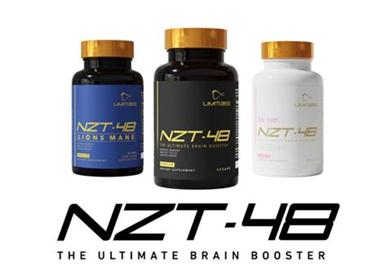
Limitless X operates a direct-to-consumer e-commerce platform offering dietary supplements and consumer packaged goods focused on cognitive support, energy, recovery, weight management, and general wellness. Its product portfolio includes the NZT-48 product line, OneShot Nootropic Pre-Workout, SuperSlim Gummies, HYDR8 Creatine + Hydration Gummies, SuperShrooms Functional Mushroom Gummies, Super Greens Daily Greens, and Nootropic Coffee Concentrates.
The Company has also entered into agreements to develop signature product lines for Manny Pacquiao and Paul Michael DelVecchio Jr. (known professionally as DJ Pauly D). The Company is pursuing international expansion initiatives in the Middle East, the Philippines, and India.
Limitless Films, Inc.
Limitless Films is a film and television company focused on the development, packaging, financing, and monetization of content for domestic and international markets. In 2025, the Company was involved in financing two films, The Gentleman Thief and High Rollers, both starring John Travolta.
| 1 |
Limitless Entertainment Group, Inc.
Limitless Entertainment Group is focused on supporting and scaling professional boxing and combat sports through live event production, fighter development, strategic partnerships, and media initiatives. The Company worked with Manny Pacquiao to launch Pacquiao Prime Boxing, a boxing training facility, in Los Angeles, California, which opened in June 2026. The Company launched an inaugural boxing event in collaboration with Manny Pacquiao in November 2025 in California.
BodyCor, Inc.
BodyCor was established to consolidate technology-driven wellness initiatives across the Limitless X ecosystem, including the development of AI-assisted digital wellness tools. In January 2026, the Company acquired a 60% controlling equity interest in DING, a food and nutrition-focused technology platform with an existing commercial partnership with Instacart.
Leadership
Jas Mathur, our Chairman and Chief Executive Officer, is a transformational health entrepreneur with over 14 years of experience within the health, wellness, and dietary supplements industry and 25+ years of experience as a webmaster and internet marketer. He is the owner of Emblaze One, a global interactive and web development agency with a team of 100+. Mr. Mathur founded Limitless X in 2021, drawing upon his own personal battles with health and his transformative journey that resulted in a remarkable weight loss of over 250 lbs.
Corporate History and Background
The Company was formed in the State of Nevada on June 3, 1996, as Vyta Corp. On November 5, 2010, the Company changed its name to Bio Lab Naturals, Inc. On May 11, 2022, Bio Lab Naturals, Inc., a Delaware corporation (“Bio Lab”), entered into a Share Exchange Agreement (the “Share Exchange Agreement”) with Limitless X, Inc., a Nevada corporation (“Limitless X”), and its 11 shareholders (the “Limitless X Nevada Acquisition”). The parties completed and closed the Limitless X Nevada Acquisition on May 20, 2022.
Concurrently with the Limitless X Nevada Acquisition, Jaspreet Mathur, the founder, and principal shareholder of Limitless X also purchased from Helion Holdings LLC, shares of Bio Lab’s Class A Preferred Convertible Stock (“Class A Stock”), which at all times have a number of votes equal to 60% of all of the issued and outstanding shares of common stock of Bio Lab. On June 10, 2022, the Company changed its name to Limitless X Holdings Inc.
Corporate Information
We are a Delaware corporation. Our corporate headquarters are located at 9777 Wilshire Blvd., #400, Beverly Hills, CA 90210. Our telephone number is (855) 413-7030. We maintain a website at https://www.limitlessx.com. We include our website throughout this report for reference only. The information contained on or connected to our website is not incorporated by reference into this report.
Trading Market
Our common stock is quoted in the OTCQB Best Market under the stock symbol “LIMX.” This Offering is not for the Company’s common stock, and there is no trading market for the preferred stock being offered.
| 2 |
| Issuer: | Limitless X Holdings Inc. | |
| Securities offered: | A “best-efforts” offering of up to 60,000,000 units, each unit consisting of one share of our Class F Convertible Preferred Stock (“Class F Preferred Stock”) and one Warrant to purchase one share of our Common Stock. The shares of our Class F Preferred Stock and the Warrants are immediately separable and will be issued but will be purchased together as a unit in this offering. The minimum purchase amount shall be 600 units or $750.00. | |
| Unit Offering Price: | $1.25 per Unit | |
| Class F Preferred Stock Ranking | The Class F Preferred Stock will rank, as to dividend rights and rights upon our liquidation, dissolution, or winding up: (i) senior to all classes or series of our Common Stock. The terms of the Class F Preferred Stock will not limit our ability to (i) incur indebtedness or (ii) issue additional equity securities that are equal or junior in rank to the shares of our Class F Preferred Stock as to distribution rights and rights upon our liquidation, dissolution or winding up. | |
| No Dividends | The Class F Preferred Stock will not be entitled to dividends. | |
| Class F Preferred Stock Liquidation Preference | The liquidation preference for each share of our Class F Preferred Stock is $1.25. Upon a liquidation, dissolution or winding up of our company, holders of shares of our Class F Preferred Stock will be entitled to receive the liquidation preference with respect to their shares plus an amount equal to any accrued but unpaid dividends (whether or not declared) to, but not including, the date of payment with respect to such shares. | |
| Class F Preferred Maturity Date | The shares of our Class F Preferred Stock have no maturity date, and we will not be required to redeem shares of our Class F Preferred Stock at any time except as otherwise described below under the caption “Class F Preferred Stock Call Rights”. Accordingly, the shares of our Class F Preferred Stock will remain outstanding indefinitely, unless we decide, at our option, to exercise our call right. | |
| Class F Preferred Stock Optional Conversion | At any time after issuance, our Class F Preferred Stock is convertible into 1 (one) share of our Common Stock at the option of the holder. The shares underlying the Class F Preferred Stock will be qualified in this offering. |
| 3 |
| Class F Preferred Stock Mandatory Conversion |
At any time after issuance upon the occurrence of any of the following events, the Company shall have a right to direct the mandatory conversion of the Class F Preferred Stock: (a) a change in control; (b) if the closing price of the Common Stock closes at or above $2.50 per share for 5 consecutive trading days; or (c) if the Company’s Common Stock is listed on a National Securities Exchange. “National Securities Exchange” means any national securities exchange registered under Section 6 of the Securities Exchange Act of 1934, as amended including without limitation The Nasdaq Stock Market LLC, the New York Stock Exchange, NYSE American LLC, or any successor thereto. | |
| Class F Preferred Stock Call | Beginning on the date which is five years from the date of the final closing we may, at our option, redeem the Class F Preferred Stock, in whole or in part, by paying a redemption price of $1.25 per share, plus any accrued and unpaid dividends to the date of redemption. | |
| Class F Preferred Stock Limited Voting Rights | Holders of the Class F Preferred Stock generally will have no voting rights. See “Description of Securities”. | |
| Common Stock Purchase Warrants | The Warrants will be exercisable at any time from the date of issuance through the third anniversary of the date of this offering circular. Each Warrant is exercisable to purchase one share of our Common Stock at an exercise price of $3.00 per share. The Warrants will expire 36 months from issuance. | |
| Listing | Neither the Class F Preferred Stock nor the Warrants shall be listed on a national exchange. | |
| Beneficial Ownership Limitation | Notwithstanding anything herein to the contrary, the Company shall not effect (i) any conversion of Class F Preferred Stock or (ii) any exercise of any Warrant, and a holder shall not have the right to (i) convert any portion of Class F Preferred Stock or (ii) exercise any Warrant, to the extent that, after giving effect to an attempted conversion set forth on an applicable conversion notice or exercise notice, such attempted conversion or exercise would result in the holder (together with such holder’s affiliates, and any other person whose beneficial ownership of Common Stock would be aggregated with the holder’s for purposes of Section 13(d) or Section 16 of the Securities Exchange Act of 1934, as amended (the “Exchange Act”), and the applicable regulations of the Commission, including any “group” of which the holder is a member (the foregoing, “Attribution Parties”) beneficially owning a number of shares of Common Stock in excess of 19.99% (the “Beneficial Ownership Limitation”) | |
| Termination of the Offering | The Offering will terminate at the earlier of: (i) the date on which the maximum number of Units have been sold, (ii) the date which is one year after this Offering is re-qualified by the SEC or (iii) the date on which this Offering is earlier terminated by us, in our sole discretion. | |
| Investor Perks | We intend to offer to eligible investors in this offering certain non-financial perks and benefits (“Investor Perks”). Investor Perks are not investment returns and do not affect the terms or value of the securities being offered. All Investor Perks are subject to availability, applicable laws and regulations, and fulfillment conditions. We reserve the right to modify or discontinue any Investor Perk at any time prior to fulfillment. See “Plan of Distribution—Investor Perks” for more details. |
| 4 |
An investment in the Units involves a high degree of risk. You should carefully consider the following risk factors, as well as the other information contained in this Offering Circular, including our consolidated financial statements and notes thereto, before deciding whether to invest in the Units. Additional risks and uncertainties that we are unaware of may become important factors that affect us. If any of these risks actually occur, our business, financial condition or operating results may suffer, the value of our stock could decline, and you may lose all or part of your investment. Some statements in this Offering Circular, including statements in the following risk factors, constitute forward-looking statements. (See “Cautionary Statement Regarding Forward-Looking Statements”).
RISKS RELATED TO OUR BUSINESS
Our future profitability is uncertain.
We have incurred losses in recent quarters. Because we operate in the highly competitive nutritional supplement industry and are or expect to expand into film and television, regenerative skin care, entertainment, real estate, and potentially even digital assets, we have difficulty predicting our future operating results, and we cannot be certain that our revenue will grow at rates that will allow us to reach or maintain profitability on a quarterly or annual basis.
We have incurred recurring losses and may not be profitable in the future. Our plans to maintain and increase liquidity may not be successful. The report of the independent registered public accounting firm includes a going concern uncertainty explanatory paragraph.
We have a history of operating losses and negative cash flow in operating activities. We have incurred recurring net losses, including net losses from operations before income taxes of $46.1 million for the year ended December 31, 2025 and we had an accumulated deficit of $84.9 million as of December 31, 2025. These factors raise substantial doubt as to our ability to continue as a going concern, and our independent registered public accounting firm has included a going concern uncertainty explanatory paragraph in their report for 2025. Our cash needs will depend on numerous factors, including our revenues, completion of our product development activities, customer and market acceptance of our product, and our ability to reduce and control costs. We expect to devote substantial capital resources to, among other things, fund operations and continue development plans. To support our existing and planned business model, the Company needs to raise additional capital to fund our future operations. The Company has not experienced any difficulty in raising funds through loans, and has not experienced any liquidity problems in settling payables in the normal course of business and repaying loans when they fall due. Successful renewal of our loans, however, is subject to numerous risks and uncertainties. In addition, the increasingly competitive industry conditions under which we operate may negatively impact our results of operations and cash flows. Additional debt financing is anticipated to fund the Company’s operations in the near future. However, there are no current agreements or understandings with regard to the form, time or amount of such financing and there is no assurance that any of this financing can be obtained or that the Company can continue as a going concern.
We have incurred significant losses, we expect to incur losses in the future, and we may not be able to generate sufficient revenue to achieve and maintain profitability.
For the quarter ended, March 31, 2026, we incurred net losses of $28.87 million. We expect to continue to incur significant expenses and operating losses for the foreseeable future as we (i) expand our business into new areas, which includes film and television, regenerative skin-care, entertainment and fin-tech, and which may not come to fruition and prove successful (ii) broaden our customer base, (iii) develop our retail and wholesale distribution platforms, and (iv) make expenditures in an effort to enhance our existing online direct-to-consumer website. Historically, we have devoted most of our financial and other resources on sales and marketing; continued expansion of our business; and general administration expenses, including legal, accounting, and other expenses. We may not succeed in increasing our revenues, which historically have been reliant on our online direct-to-consumer website, in a manner that will be sufficient to offset these higher expenses. Any failure to increase our revenues as we implement initiatives to grow our business could prevent us from achieving profitability. We cannot be certain that we will be able to achieve profitability on a quarterly or annual basis, if at all. If we are unable to address these risks and difficulties as we encounter them, our business, financial condition, and results of operations may suffer.
| 5 |
We have experienced significant declines in revenue in recent years, which may continue.
Our revenues have declined significantly over the past several years. We generated total revenues of approximately $0.9 million for the year ended December 31, 2025, compared to approximately $3.4 million for the year ended December 31, 2024 and approximately $15.5 million for the year ended December 31, 2023. For the quarter ended March 31, 2026, we generated $77,570 in revenue. These declines reflect, among other factors, increased competition in the nutritional supplement market, changes in consumer purchasing behavior, challenges in scaling our direct-to-consumer e-commerce operations, and our expansion into different industries as we attempt to establish ourselves in the applicable markets. There can be no assurance that we will be able to reverse these trends or stabilize our revenue base. Continued declines in revenue could materially adversely affect our business, financial condition, results of operations, and prospects, and may impair our ability to fund operations, pursue growth initiatives, or achieve profitability.
Certain of our lenders may require that a significant portion of the proceeds from this offering be used to repay outstanding indebtedness, which would reduce the amount of proceeds available for other corporate purposes, and failure to comply with such requirements could result in an event of default under the applicable loan agreements.
The Company is party to certain promissory notes with Auctus Fund, LLC and Labrys Fund II, L.P. Under the terms of the such notes, the holders thereof may require that up to 50% of the gross proceeds received by the Company from this offering be immediately applied to repay amounts outstanding under the Notes. As a result, a substantial portion of the proceeds from this offering may not be available to fund the Company’s operations or for other general corporate purposes.
The Company’s failure to comply with this mandatory prepayment covenant, if invoked by the holders of the Notes, would constitute an event of default under either note or both, as applicable. An event of default under the Notes could result in the acceleration of all outstanding amounts due thereunder, the imposition of default interest rates, and the exercise of other remedies available to the holders, any of which could have an adverse effect on the Company’s financial condition, results of operations, and liquidity.
All of the current brands and products that we sell and promote are licensed from Limitless Performance, Inc., an entity owned by our Chief Executive Officer and we may lose all of our business at any time, and royalties at a rate of 4% may begin to accrue as of December 31, 2027
All of the current brands and products, including the NZT-48 products, that we sell and promote are licensed from Limitless Performance, Inc. (“LPI”), an entity owned by Jas Mathur, our Chief Executive Officer. If Mr. Mathur chooses, on behalf of LPI, to terminate our licensing agreement, we will effectively lose all of our current business. We entered into the licensing agreement with LPI for our current marketed brands in 2021 and it has a five-year term with automatic renewal for five years, whereby the licensor is not able to terminate the agreement with us before the end of a given term except “for cause.” However, the licensing agreement only grants us a non-exclusive license to manufacture, market, and distribute the brand’s products. Therefore, there is a possibility that LPI could work with other companies to manufacture, market, and distribute its products or replace us entirely. If this occurs, our revenues will significantly decline or stop completely. In addition, the trademarks for our name, “Limitless X,” and logo, are owned by entities that are owned or controlled by Mr. Mathur. In the event that he chooses, on behalf of LPI, to restrict our use of these trademarks, we will not be able to use our name and logo and would have to change our name.
In addition, after December 31, 2027, royalties under the licensing agreement with LPI, which are currently waived by Mr. Mathur, will begin to accrue at a rate of 4% on gross sales of NZT-48, which will increase our cost structure and could adversely affect our gross margins, cash flows and profitability if Mr. Mathur does not extend the royalty waiver. If our revenues grow faster than expected, the absolute amount of royalty payments would increase correspondingly, potentially diverting significant cash that would otherwise be available for research and development, sales and marketing, working capital and other corporate purposes. The royalty obligation may also disadvantage us relative to competitors that do not bear similar related-party royalty burdens and could limit our pricing flexibility.
| 6 |
If we fail to cost-effectively acquire new consumers or retain our existing consumers, our nutritional supplements business could be adversely affected.
Our success in our nutritional supplements business depends on our ability to attract new customers and engage existing customers cost-effectively. To acquire and engage customers, we must, among other things, promote and sustain our platform, and provide high-quality products, user experiences, and customer service. If customers do not perceive our e-commerce service or products to be reliable and of high quality, if we fail to introduce new and improved products, or if we introduce new products that are not favorably received by the market, we may not be able to attract or retain customers.
We have historically acquired a significant number of our customers through digital advertising on social media. The advertisers we utilize may terminate their agreements with us at any time or introduce factors beyond our control, such as adjustments to algorithms that may decrease user engagement or negatively affect our ability to reach a broad audience; increases in pricing; and changes in policies that may delay or prevent our advertising through these channels, all of which could impact our ability to attract new customers.
We have marketing initiatives designed to acquire customers through increased search engine optimization and streaming digital video services. These new acquisition channels may not perform as well as our historical social media advertising channels. Our efforts to diversify customer acquisition channels may not be effective, which could negatively affect our results of operations.
Customer acquisition costs may fluctuate and rise on the channels that have been successful for us historically and on new channels that we are introducing. Rising costs may limit our ability to expand or maintain our customer acquisition efforts which could negatively affect our results of operations.
Other factors may reduce our ability to acquire, maintain, and further engage with customers, including the effectiveness of our marketing efforts and other expenditures we make to continue to acquire new customers and maintain and increase engagement with existing customers; system updates to advertising platforms; changes in search algorithms by search engines; the development of new search engines or social media sites that reduce traffic on existing search engines and social media sites; and consumer behavior changes as a result of the COVID-19 pandemic or otherwise.
Moreover, consumer preferences may change, and customers may not purchase through our marketplace as frequently or spend as much with us as historically has been the case. As a result of these potential changes, the revenue generated from customer transactions may not be as high as revenue generated from transactions historically.
We must expend resources to maintain consumer awareness of our current nutritional supplement brands, to develop new business divisions in television and film, regenerative skin-care, fintech, entertainment and real estate and generate interest in our current and new products. Our marketing strategies and channels will evolve, and our efforts may or may not be successful.
To remain competitive and expand and keep market share for our current nutritional products (including new and advanced versions of these products) and to develop our new businesses in television and film, regenerative skin care, fintech, entertainment and real estate, across our various channels, we need to increase our marketing and advertising spending. Substantial advertising and promotional expenditures will be e required to maintain or improve our brands’ market position and to develop our new business divisions, which includes our television and entertainment, regenerative skin care, fintech, entertainment and real estate divisions. An increase in our marketing and advertising efforts may not maintain our current reputation, which leads to increased brand awareness, or attract new customers. If we are unable to maintain and promote a favorable perception of our brand and products on a cost-effective basis, our business, financial condition, results of operations, and prospects could be adversely affected.
Use of social media and influencers may materially and adversely affect our reputation or subject us to fines or other penalties.
We use third-party social media platforms as, among other things, marketing tools. We also maintain relationships with many social media influencers and engage in sponsorship initiatives. As existing e-commerce and social media platforms continue to rapidly evolve and new platforms develop, we must continue to maintain a presence on these platforms and establish presences on new or emerging popular social media platforms. If we are unable to cost-effectively use social media platforms as marketing tools or if the social media platforms that we use change their policies or algorithms, we may not be able to fully optimize such platforms, and our ability to maintain and acquire customers and our financial condition may suffer.
| 7 |
Furthermore, as laws and regulations and public opinion rapidly evolve to govern the use of these platforms and devices, the failure by us, our employees, our network of social media influencers, our sponsors or third parties acting at our direction to abide by applicable laws and regulations in the use of these platforms and devices or otherwise could subject us to regulatory investigations, class action lawsuits, liability, fines or other penalties and have a material adverse effect on our business, financial condition and operating results.
In addition, an increase in the use of social media for product promotion and marketing may cause an increase in the burden on us to monitor compliance of such materials and increase the risk that such materials could contain problematic product or marketing claims in violation of applicable regulations. For example, in some cases, the FTC has sought enforcement action where an endorsement has failed to clearly and conspicuously disclose a financial relationship or material connection between an influencer and an advertiser.
We do not prescribe what our influencers post, and if we were held responsible for the content of their posts or their actions, we could be fined or forced to alter our practices, which could have an adverse impact on our business.
Negative commentary regarding us, our products, or influencers and other third parties who are affiliated with us may be posted on social media platforms and may be adverse to our reputation or business. Influencers with whom we maintain relationships could engage in behavior or use their platforms to communicate directly with our customers in a manner that reflects poorly on our brand and may be attributed to us or otherwise adversely affect us. It is not possible to prevent such behavior, and the precautions we take to detect this activity may not be effective in all cases. Our target consumers often value readily available information and often act on such information without further investigation and without regard to its accuracy. The harm may be immediate without affording us an opportunity for redress or correction.
If we fail to retain existing customers, or fail to maintain average order value levels, we may not be able to maintain our revenue base and margins, which would have a material adverse effect on our business and operating results.
A significant portion of our net sales is generated from sales to existing customers. If existing customers no longer find our product offerings appealing, or if we are unable to timely update our product offerings to meet current trends and customer demands, our existing customers may make fewer or smaller purchases in the future. A decrease in the number of our customers who make repeat purchases or a decrease in their spending on the merchandise we offer could negatively impact our operating results. Further, we believe that our future success will depend in part on our ability to increase sales to our existing customers over time, and if we are unable to do so, our business may suffer. If we fail to generate repeat purchases or maintain high levels of customer engagement and average order value, our growth prospects, operating results, and financial condition could be materially adversely affected.
Traffic to our e-commerce webpages and conversion rates may decline.
In order to generate online customer traffic, we depend heavily on e-mailed catalogs, outbound emails, and an affiliate program. Our sales volume and e-commerce webpages traffic generally may be adversely affected by, among other things, a change in any of the above-mentioned dependencies as well as economic downturns, system failures, competition from other internet retailers, and non-internet retailers. A reduction in traffic to the e-commerce webpages as a result of these or any other factors could have a material adverse effect on our business, results of operations, and financial condition. In addition, e-commerce webpages sales conversion rates may decline due to, among other things, system failures and our ability to effectively predict and respond to changing trends and consumer demands, and to translate market trends into appropriate, saleable product offerings in a timely manner, all of which could also have a material adverse effect on our business, results of operations, and financial condition.
| 8 |
We must effectively manage our vendors to minimize inventory risk and maintain our margins.
We seek to avoid maintaining high inventory levels in an effort to limit the risk of outdated merchandise and inventory write-downs. If we underestimate quantities demanded by our customers and our vendors cannot restock, then we may disappoint customers who may then turn to our competitors. We require many of our vendors to meet minimum restocking requirements, but if our vendors cannot meet these requirements and we cannot find alternative vendors, we could be forced to carry more inventory than we have in the past. Our risk of inventory write-downs would increase if we were to hold large inventories of merchandise that prove to be unpopular.
We rely on third parties for some essential business operations and services, and disruptions or failures in service or changes in terms may adversely affect our ability to deliver goods and services to our customers.
We currently depend on third parties for important aspects of our business, such as printing, shipping, paper supplies, and operation of our e-commerce webpages and customer support. We have limited control over these third parties, and we are not their only client. In addition, we may not be able to maintain satisfactory relationships with any of these third parties on acceptable commercial terms. Further, we cannot be certain that the quality or cost of products and services that they provide will remain at currents levels or the levels needed to enable us to conduct our business efficiently and effectively.
Our business, including our costs and supply chain, is subject to risks associated with sourcing, manufacturing, warehousing, distribution, infrastructure, and logistics to third-party providers, and the loss of any of our key suppliers or logistical service providers could negatively impact our business.
All of the products we offer are supplied or manufactured by a limited number of third-party suppliers and manufacturers, and as a result we may be subject to price fluctuations or supply disruptions. Our operating results would be negatively impacted by increases in the costs of our products, and we have no guarantees that costs will not rise. In addition, as we expand into new categories and product types, we expect that we may not have strong purchasing power in these new areas, which could lead to higher costs than we have historically seen in our current categories. We may not be able to pass increased costs on to consumers, which could adversely affect our operating results. Moreover, in the event of a significant disruption in the supply of the materials used in the manufacture of the products we offer, we and the vendors that we work with might not be able to locate alternative suppliers of materials of comparable quality at an acceptable price.
In addition, products and merchandise we receive from manufacturers and suppliers may not be of sufficient quality or free from damage, or such products may be damaged during shipping, while stored in our warehouse fulfillment centers or with third-party e-commerce or retail customers or when returned by consumers. We may incur additional expenses, and our reputation could be harmed if consumers and potential consumers believe that our products do not meet their expectations, are not properly labelled, or are damaged. Quality control problems could also result in regulatory action, such as FDA Warning Letters, restrictions on importation, product liability litigation, product seizures, products of inferior quality or product stock outages or shortages, harming our sales and creating inventory write-downs for unusable products.
We purchase significant amounts of product from a limited number of suppliers with limited supply capabilities. There can be no assurance that our current suppliers will be able to accommodate our anticipated growth or continue to supply current quantities at preferential prices. We generally do not maintain long-term supply contracts with any of our suppliers and any of our suppliers could discontinue selling to us at any time. An inability of our existing suppliers to provide materials in a timely or cost-effective manner could impair our growth and have an adverse effect on our business, financial condition, results of operations, and prospects.
We rely or may rely on software-as-a-service (“SaaS”) technologies from third parties in order to operate critical functions of our business, including financial management services, payment processing, customer relationship management services, website platform services, e-commerce services, email services, supply chain services, and data storage services. If these services become unavailable due to extended outages or interruptions or because they are no longer available on commercially reasonable terms or prices or for any other reason, or if we fail to migrate successfully to new services, our expenses could increase, our ability to manage our finances could be interrupted, our processes for managing sales of our offerings and supporting our consumers could be impaired, our ability to communicate with our suppliers could be weakened and our ability to access or save data stored to the cloud may be impaired until equivalent services, if available, are identified, obtained, and implemented, all of which could have an adverse effect on our business, financial condition, results of operations, and prospects.
| 9 |
We utilize cloud services from third-party data center facilities operated by AWS and Cloudflare. Any damage to, failure of, or interference with our cloud service that is hosted by us, AWS, Cloudfare, or by third-party providers we may utilize in the future, whether as a result of our actions, actions by the third-party data centers, actions by other third parties, or acts of nature, could result in interruptions in our cloud service and/or the loss of our or our customers’ data, including personal information. Impairment of, or interruptions in, our cloud services may subject us to claims and litigation and adversely affect our ability to attract new customers. Our business will also be harmed if our customers and potential customers believe our services are unreliable. Additionally, any limitation of the capacity of our data centers could impede our ability to scale, onboard new customers, or expand the usage of existing customers, which could adversely affect our business, financial condition, and results of operations. While we have disaster recovery arrangements in place, our preparations may not be adequate to account for disasters or similar events that may occur in the future and may not effectively permit us to continue operating in the event of any problems with respect to our systems or those of our third-party data centers or any other third-party facilities. Our disaster recovery and data redundancy measures may be inadequate, and our business interruption insurance may not be sufficient to compensate us for the losses that could occur.
If any of our key suppliers becomes insolvent, ceases, or significantly reduces its operations, or experiences financial distress, or if any environmental, economic, or other outside factors impact their operations, our operations could be substantially disrupted. If we are unable to identify or enter into distribution relationships with new suppliers or to replace the loss of any of our existing suppliers, we may experience a competitive disadvantage, our business may be disrupted and our business, financial condition, results of operations, and prospects could be adversely affected.
If our third-party suppliers and manufacturers do not comply with ethical business practices or with applicable laws and regulations, our reputation, business, financial condition, results of operations, and prospects could be harmed.
We continually seek to expand our base of suppliers, especially as we identify new products that necessitate new or additional materials. We also require our new and existing suppliers to meet our ethical and business partner standards. Suppliers may also have to meet governmental and industry standards and any relevant standards required by our consumers, which may require additional investment and time on behalf of suppliers and us.
Our reputation and our consumers’ willingness to purchase our products depend in part on our suppliers’, manufacturers’, and retail partners’ compliance with ethical employment practices, such as with respect to child labor, wages, and benefits, forced labor, discrimination, safe and healthy working conditions, and with all legal and regulatory requirements relating to the conduct of their businesses. We do not exercise control over our suppliers, manufacturers, and retail partners and cannot guarantee their compliance with ethical and lawful business practices. If our suppliers, manufacturers, or retail partners fail to comply with applicable laws, regulations, safety codes, employment practices, human rights standards, quality standards, environmental standards, production practices, or other obligations, norms, or ethical standards, our reputation and brand image could be harmed, and we could be exposed to litigation, investigations, enforcement actions, monetary liability, and additional costs that would harm our reputation, business, financial condition, results of operations, and prospects.
Shipping is a critical part of our business and any changes in our shipping arrangements or any interruptions in shipping could adversely affect our operating results.
We rely on several vendors for our shipping requirements. If we are not able to negotiate acceptable pricing or other terms with these vendors or if they experience performance problems or other difficulties, it could negatively impact our operating results and our consumer experience. Rising shipping costs and the imposition of surcharges from time to time could negatively impact our operating results. In addition, our ability to receive inbound inventory and ship products to consumers and retailers may be negatively affected by inclement weather, fire, flood, power loss, earthquakes, labor disputes, acts of war or terrorism, trade embargoes, customs and tax requirements, and similar factors. We are also subject to risks of damage or loss during delivery by our shipping vendors. If our products are not delivered in a timely fashion or are damaged or lost during delivery, our consumers could become dissatisfied and cease shopping on our site or retailer, which could have an adverse effect on our business, financial condition, operating results, and prospects.
| 10 |
We are subject to risks related to online payment methods, including third-party payment processing-related risks.
We currently accept payments using a variety of methods, including credit card, debit card, and gift cards. As we offer new payment options to consumers, we may be subject to additional regulations, compliance requirements, fraud, and other risks. We also rely on third parties to provide payment processing services, and for certain payment methods, we pay interchange and other fees, which may increase over time and raise our operating costs and affect our ability to achieve or maintain profitability. We are also subject to payment card association operating rules and certification requirements, including the Payment Card Industry Data Security Standard, or PCI-DSS, and rules governing electronic funds transfers, which could change or be reinterpreted to make it difficult or impossible for us to comply. If we (or a third party processing payment card transactions on our behalf) suffer a security breach affecting payment card information, we may have to pay onerous and significant fines, penalties and assessments arising out of the major card brands’ rules and regulations, contractual indemnifications, or liability contained in merchant agreements and similar contracts, and we may lose our ability to accept payment cards for payment for our goods and services, which could materially impact our operations and financial performance.
Furthermore, as our business changes, we may be subject to different rules under existing standards, which may require new assessments that involve costs above what we currently pay for compliance. As we offer new payment options to consumers, including by way of integrating emerging mobile and other payment methods, we may be subject to additional regulations, compliance requirements, and fraud. If we fail to comply with the rules or requirements of any provider of a payment method we accept, if the volume of fraud in our transactions limits or terminates our rights to use payment methods we currently accept, or if a data breach occurs relating to our payment systems, we may, among other things, be subject to fines or higher transaction fees and may lose, or face restrictions placed upon, our ability to accept credit card payments from consumers or facilitate other types of online payments. In addition, our customers could lose confidence in certain payment types, which may result in a shift to other payment types or potential changes to our payment systems that may result in higher costs.
We also occasionally receive orders placed with fraudulent data and we may ultimately be held liable for the unauthorized use of a cardholder’s card number in an illegal activity and be required by card issuers to pay charge-back fees. Charge-backs result not only in our loss of fees earned with respect to the payment, but also leave us liable for the underlying money transfer amount. If our charge-back rate becomes excessive, card associations also may require us to pay fines or refuse to process our transactions. In addition, we may be subject to additional fraud risk if third-party service providers or our employees fraudulently use consumer information for their own gain or facilitate the fraudulent use of such information. Overall, we may have little recourse if we process a criminally fraudulent transaction. If we fail to adequately control fraudulent credit card transactions, we may face civil liability, diminished public perception of our security measures, and significantly higher credit card-related costs, each of which could harm our business, results of operations and financial condition.
Merchandise returns could harm our business.
We allow our customers to return products, subject to our return policy. If the rate of merchandise returns increases significantly or if merchandise return economics become less efficient, our business, financial condition, and operating results could be harmed. Further, we modify our policies relating to returns from time to time, which may result in customer dissatisfaction or an increase in the number of product returns. From time to time our products are damaged in transit, which can increase return rates and harm our brands.
Our operations are currently dependent on a single warehouse and distribution center, and the loss of, or disruption in, the warehouse and distribution center and other factors affecting the distribution of merchandise could have a material adverse effect on our business and operations.
Our warehouse and fulfillment/distribution functions are currently primarily handled from a single facility. Our current fulfillment/distribution operations are dependent on the continued use of this facility. Any significant interruption in the operation of the warehouse and fulfillment/distribution center due to COVID-19 restrictions, natural disasters, accidents, system issues or failures, or other unforeseen causes that materially impair our ability to access or use our facility, could delay, or impair the ability to distribute merchandise and fulfill online orders, which could cause sales to decline.
| 11 |
We also depend upon third-party carriers for shipment of a significant amount of merchandise directly to our customers. An interruption in service by these third-party carriers for any reason could cause temporary disruptions in business, a loss of sales and profits, and other material adverse effects.
Our film and television operations are subject to significant content production, financing, and distribution risks, and we may not recoup our investments in film projects.
There can be no assurance that any project developed, financed, or co-financed by Limitless Films will be completed on time or within budget, or that completed projects will achieve commercial success or generate sufficient revenues to recoup the Company’s investment. The commercial performance of any film or television project depends on numerous factors that are largely beyond the Company’s control, including audience reception, critical reviews, competition from other entertainment offerings, the availability and cost of distribution channels, the timing of release, general economic conditions, and evolving consumer preferences. In addition, the Company’s film financing model involves providing seed capital to unlock additional financing from third-party sources, including pre-sales, international distribution agreements, and secured lending mechanisms. There can be no assurance that the Company will be able to secure such third-party financing on favorable terms, or at all, or that the collateral or contractual protections underlying such arrangements will be sufficient to protect the Company’s investment. Any failure to successfully develop, finance, produce, or distribute content could have a material adverse effect on the Company’s business, financial condition, and results of operations.
Limitless Films depends on relationships with key creative talent and industry advisors, and the loss of such relationships could impair our ability to develop and produce commercially viable content.
The success of Limitless Films depends in significant part on its ability to attract and retain relationships with established directors, producers, actors, and other creative talent. If the Company is unable to maintain these relationships, or if key talent or advisors become unavailable due to scheduling conflicts, contractual disputes, reputational issues, or other factors, the Company’s ability to develop and produce commercially viable projects could be materially impaired. The entertainment industry is highly competitive for talent, and many of the individuals with whom the Company seeks to work may have commitments to other studios or production companies that take priority over projects developed by Limitless Films.
The film and television industry is highly competitive and subject to rapid technological and market changes, which could adversely affect our ability to successfully monetize content.
The film and television industry is intensely competitive. The Company competes with major studios, independent production companies, streaming platforms, and other content creators for audience attention, distribution opportunities, and creative talent. Many of these competitors have substantially greater financial, technical, and operational resources than the Company. In addition, the industry is undergoing significant disruption driven by the rapid growth of streaming services, changes in consumer viewing habits, and the increasing fragmentation of distribution channels. These trends may reduce the availability or economic value of traditional distribution and licensing arrangements upon which the Company’s business model depends. The Company also faces risks related to piracy and unauthorized distribution of its content, which could reduce revenues. If the Company is unable to adapt to evolving industry conditions, its film and television operations could be materially and adversely affected.
Our entertainment business may be adversely affected if we are unable to maintain relationships with key athletes, promoters, and strategic partners and collaborators, including Manny Pacquiao.
The Company’s entertainment strategy includes strategic relationships with athletes, promoters, media partners, and other industry participants, including Manny Pacquiao. The Company currently collaborates with Manny Pacquiao pursuant to commercial arrangements. These relationships provide opportunities for brand visibility, event promotion, athlete development, content creation, and business expansion. Any loss, reduction, or deterioration of these relationships could negatively impact the Company’s entertainment operations, revenue opportunities, sponsorship activities, and growth prospects.
| 12 |
BodyCor’s technology-driven wellness initiatives are in an early stage of development, and there can be no assurance that its planned AI-assisted tools and digital platforms will be successfully developed, launched, or adopted by consumers.
BodyCor was established to consolidate and scale technology-driven wellness initiatives across the Limitless X ecosystem, including the development of AI-assisted digital wellness tools for personalized nutrition guidance, product education, habit formation, and consumer engagement. These initiatives are in an early stage of development and have not yet generated material revenues. The successful development and commercialization of AI-assisted wellness tools involves significant technical, regulatory, and market risks, including the risk that the Company’s technology may not function as intended, may fail to achieve consumer adoption, or may be rendered obsolete by competing technologies. In addition, AI-based products and services are subject to evolving regulatory scrutiny, and changes in laws or regulations governing the use of artificial intelligence, data privacy, health-related claims, or consumer protection could increase the Company’s compliance costs or restrict its ability to offer certain products or features. There can be no assurance that BodyCor will successfully develop, launch, or commercialize any of its planned products or services, or that such products or services will achieve market acceptance or profitability.
Our acquisition of a controlling interest in DING involves integration risks, and the DING platform’s commercial viability depends on its partnership with Instacart and other third parties.
In January 2026, the Company acquired a 60% controlling equity interest in DING, a food and nutrition-focused technology platform that operates with an existing commercial partnership with Instacart. The integration of DING into the BodyCor subsidiary involves risks common to acquisitions of technology businesses, including the risk of unanticipated liabilities, the loss of key personnel or technology, difficulties in integrating DING’s technology and operations with the Company’s existing platforms, and the potential for disruption to DING’s existing business during the integration process. In addition, DING’s commercial viability is significantly dependent on its partnership with Instacart. Any material change in the terms of DING’s agreement with Instacart, or any termination or non-renewal of that agreement, could materially impair the value of the Company’s investment in DING and its ability to generate revenue through the DING platform. Any additional investment in DING would require additional capital and would involve further integration risks. There can be no assurance that the DING acquisition will achieve the anticipated synergies or financial benefits, or that the Company will realize a return on its investment.
Our revenues and income could decline due to general economic trends and declines in consumer spending.
Our revenues are largely generated by discretionary consumer spending. Consumer spending tends to decline during recessionary periods and may also decline at other times. Accordingly, our revenues could decline during any general economic downturn.
We face risks related to recession, inflation, weak growth, and other economic conditions.
Customer demand for our products may be impacted by weak economic conditions, inflation, weak growth, recession, equity market volatility, or other negative economic factors in the United States or other nations. For example, under these conditions, potential customers may delay or cancel purchases of our products. Further, in the event of a recession, our manufacturing partners, suppliers, and other third-party partners may suffer their own financial and economic challenges and as a result they may demand pricing accommodations, delay payment, or become insolvent, which could harm our ability to meet our customer demands or otherwise could harm our business, financial condition, and results of operations. Similarly, disruptions in financial and credit markets may impact our ability to manage normal commercial relationships with our customers, suppliers, and lenders and might cause us to not be able to access sources of liquidity, and our borrowing costs could increase. If general macroeconomic conditions deteriorate, our business, financial condition, and results of operations could be materially and adversely affected.
In addition, we are also subject to risk from inflation and increasing market prices of certain supplies and raw materials, which are incorporated into our products or used by our suppliers to manufacture our products. These components, supplies, and commodities may from time to time become restricted, or general market factors and conditions may affect pricing of such components, supplies, and commodities, such as inflation or supply chain constraints.
| 13 |
Changes in the economy could have a detrimental impact on our business.
Changes in the general economic climate could have a detrimental impact on our revenue. It is possible that recessionary pressures and other economic factors (such as declining incomes, future potential rising interest rates, higher unemployment, and tax increases) may adversely affect our business. Any of such events or occurrences could have a material adverse effect on our financial results.
Increases in labor costs, including wages, could adversely affect our business, financial condition, and results of operations.
Labor is a significant portion of our cost structure and is subject to many external factors, including unemployment levels, prevailing wage rates, minimum wage laws, potential collective bargaining arrangements, health insurance costs and other insurance costs, and changes in employment and labor legislation or other workplace regulation. From time to time, legislative proposals are made to increase the federal minimum wage in the United States, as well as the minimum wage in California and a number of other states and municipalities, and to reform entitlement programs, such as health insurance and paid leave programs. As minimum wage rates increase or related laws and regulations change, we may need to increase not only the wage rates of our minimum wage employees, but also the wages paid to our other hourly or salaried employees. Any increase in the cost of our labor could have an adverse effect on our business, financial condition, and results of operations or if we fail to pay such higher wages we could suffer increased employee turnover. Increases in labor costs could force us to increase prices, which could adversely impact our sales. If competitive pressures or other factors prevent us from offsetting increased labor costs by increases in prices, our profitability may decline and could have a material adverse effect on our business, financial condition, and results of operations.
We face competition in our market from various companies, most of which have greater financial, technical, and other resources than us.
We face significant competition from other companies operating in the health and wellness space and other industries into which we intend to expand such as film and entertainment, fintech, and real estate. Our operating results could suffer if we fail to compete effectively. These industries are intensely competitive and subject to rapid and significant change. We have competitors both in the United States and internationally. Many of our competitors have substantially greater financial, technical, and other resources, such as larger staff and experienced marketing departments and manufacturing wings. These companies may obtain market acceptance more rapidly than we can and may be more effective in selling and marketing their products and services as well. Smaller or early-stage companies may also prove to be significant competitors, particularly through collaborative arrangements with large, established companies. Our ability to compete depends, in part, upon a number of factors outside our control, including the ability of our competitors to develop products and services that are superior. Competition may increase further as a result of greater availability of capital for investment in these industries. Our competitors may succeed in developing, acquiring, or licensing similar products or services that we may develop. If we fail to successfully compete in our market, or if we incur significant expenses in order to compete, it could have a material adverse effect on our results of operations.
Our business model is evolving.
Our business model is unproven and is evolving. In December 2024 and January 2025, we announced that we were entering into new industries, including television and film, entertainment, fintech, real estate and regenerative skin care. Accordingly, our initial business model may not be successful and may need to be changed. Our ability to generate significant revenues will depend, in large part, on our ability to successfully market our products to potential users who may not be convinced of the need for our products and services or who may be reluctant to rely upon third parties to develop and provide these products. We intend to continue to develop our business model as our market continues to evolve.
| 14 |
If we fail to maintain and enhance awareness of our brand, our business and financial results could be adversely affected.
We believe that maintaining and enhancing awareness of our brand is critical to achieving widespread acceptance and success of our business. We also believe that the importance of brand recognition will increase due to the relatively low barriers to entry in our market. Maintaining and enhancing our brand awareness may require us to spend increasing amounts of money on, and devote greater resources to, advertising, marketing, and other brand-building efforts and these investments may not be successful. Further, even if these efforts are successful, they may not be cost-effective. If we are unable to continuously maintain and enhance our media presence, our market may decrease and we may fail to attract advertisers and subscribers, which could in turn result in lost revenues and adversely affect our business and financial results.
An inability to maintain and enhance product image could harm our business.
It is important that we maintain and enhance a positive perception of any new products. The image and reputation of our products may be impacted for various reasons including, but not limited to, bad publicity, litigation, and complaints from regulatory bodies. Such problems, even when unsubstantiated, could be harmful to our image and the reputation of our products. These claims may not be covered by our insurance policies. Any resulting litigation could be costly for us, divert management attention, and could result in increased costs of doing business, or otherwise have a material adverse effect on our business, results of operations, and financial condition. Any negative publicity generated could damage our reputation and diminish the value of our brand, which could have a material adverse effect on our business, results of operations, and financial condition. Deterioration in our brand equity (brand image, reputation, and product quality) may have a material adverse effect on our financial results.
Our future financial performance and our ability to commercialize our products and services and to compete effectively will depend, in part, on our ability to manage any future growth effectively.
If our operations expand as planned, we will need to manage additional relationships with various strategic partners, suppliers, and other third parties. Our future financial performance and our ability to commercialize our products and services and to compete effectively will depend, in part, on our ability to manage any future growth effectively. To that end, we must be able to manage our development efforts effectively and hire, train, and integrate additional management, administrative and sales and marketing personnel. Our projected growth will place a significant strain on our administrative, operational, and financial resources. If we are unable to successfully manage our future growth, establish and continue to upgrade our operating and financial control systems, recruit and hire necessary personnel, or effectively manage unexpected expansion difficulties, our financial condition and results of operations could be materially and adversely affected.
Our operating plan relies in large part upon our assumptions and analyses. If these assumptions or analyses prove to be incorrect, our actual operating results may be materially different from our forecasted results.
Whether actual operating results and business developments will be consistent with our expectations and assumptions as reflected in our operating plan depends on a number of factors, many of which are outside our control, including, but not limited to:
| ● | whether we can obtain sufficient capital to sustain and grow our business; |
| ● | our ability to manage our growth; |
| ● | results of our research and development activity; |
| ● | demand for our current and proposed products; |
| ● | competition; |
| ● | our ability to retain existing key management and consultants, to integrate recent hires, and to attract, retain, and motivate qualified personnel; and |
| ● | the overall strength and stability of domestic and international economies. |
| 15 |
Unfavorable changes in any of these or other factors, most of which are beyond our control, could materially and adversely affect our business, results of operations, and financial condition.
A judgment creditor has obtained a confessed judgment against us and has initiated garnishment proceedings against our bank accounts, which, if successful, could result in the seizure of our cash and cash equivalents and materially and adversely affect our liquidity, operations, and financial condition.
On February 18, 2026, a confessed judgment was entered in the Circuit Court of Arlington County, Virginia (Case No. CL26000735-00) in favor of Agile Lending LLC and against Limitless X Holdings Inc. in the principal amount of $168,021.68, plus accrued interest, attorneys’ fees, and costs. In connection with the enforcement of that judgment, Agile Lending LLC has commenced garnishment proceedings against bank accounts held at JPMorgan Chase Bank, N.A., naming both Limitless X Holdings Inc. (Case No. CL26001362-00) and Limitless X Inc. (Case No. CL26001361-00) as judgment debtors. Each garnishment proceeding was filed on April 3, 2026, and a garnishment hearing is scheduled for July 2, 2026.
If the garnishment proceedings are successful, the garnishee financial institution may be required to freeze and turn over funds held in our and our subsidiary’s bank accounts up to the full amount of the judgment, together with accrued interest, fees, and costs. As a result, a portion of our cash and cash equivalents could be frozen pending resolution of the proceedings and ultimately seized to satisfy the judgment. Any such freeze or seizure could occur with limited advance notice and could disrupt our ability to access the affected accounts, make payroll, pay vendors and other creditors, and fund our ongoing operations.
The garnishment of our accounts, or the entry of the underlying judgment, could also trigger defaults or cross-defaults under our other financing arrangements and contractual obligations, accelerate other indebtedness, harm our relationships with our banks, lenders, customers, and suppliers, and impair our ability to obtain financing on acceptable terms, or at all. In addition, we may incur significant legal expenses, and our management may be required to devote substantial time and attention, in connection with defending or otherwise responding to these and any related enforcement proceedings. We can provide no assurance that we will be able to satisfy, settle, vacate, stay, or otherwise resolve the judgment or the garnishment proceedings on favorable terms, or at all. The occurrence of any of the foregoing could have a material adverse effect on our liquidity, business, results of operations, and financial condition.
Acts of war or terrorism may seriously harm our business.
Acts of war, any outbreak or escalation of hostilities between the United States and any foreign power, or acts of terrorism may cause disruption to the U.S. economy or the local economies of the markets in which we operate, cause shortages of materials, increase costs associated with obtaining materials, affect job growth and consumer confidence, or cause economic changes that we cannot anticipate, all of which could reduce demand for our products and services and adversely impact our business, prospects, liquidity, financial condition, and results of operations.
RISKS RELATING TO GOVERNMENT REGULATION AND POLICIES
We could face liability for information displayed via our e-commerce webpages and our other websites.
We may be subjected to claims for defamation, negligence, copyright, or trademark infringement, or based on other theories relating to the information we publish on our e-commerce webpages and on any of our websites. These types of claims have been brought, sometimes successfully, against similar companies in the past.
Recently, we entered into a settlement agreement to resolve a legal action that had been filed against the Company and certain of its officers alleging trademark infringement and dilution, unfair competition, false advertising, and violation of the right of publicity, all based on allegations that one of our advertisements contained the unauthorized use of a celebrity’s name and intellectual property. The terms of the settlement are confidential, but the resolution of this matter did not have a material adverse effect on our financial condition or results of operations.
| 16 |
We may face similar claims in the future, and the outcome of any such claims could result in significant monetary damages, injunctive relief, or other remedies that could adversely affect our business. In addition, based on links we provide to third-party websites, we could also be subjected to claims based upon online content we do not control that is accessible from our e-commerce webpages.
Government regulation of the internet and e-commerce is evolving and unfavorable changes or failure by us to comply with these regulations could have an adverse effect on our business, financial condition, results of operations, and prospects.
We are subject to general business regulations and laws as well as regulations and laws specifically governing the internet and e-commerce, including consumer protection regulations that regulate retailers and govern the promotion and sale of merchandise. Existing and future regulations and laws could impede the growth of the Internet, e-commerce, or mobile commerce, which could in turn adversely affect our growth. These regulations and laws may involve taxes, tariffs, privacy and data security, anti-spam, content protection, electronic contracts and communications, consumer protection, sales practices, subscription programs, and internet neutrality. It is possible that general business regulations and laws, or those specifically governing the internet or e-commerce, may be interpreted and applied in a manner that is inconsistent from one jurisdiction to another and may conflict with other rules or our practices. We cannot be sure that our practices have complied, comply, or will comply fully with all such laws and regulations.
Any failure, or perceived failure, by us to comply with any of these laws or regulations could result in damage to our reputation, a loss in business, and proceedings or actions against us by governmental entities, customers, suppliers, or others. Any such proceeding or action could hurt our reputation, force us to spend significant amounts in defense of these proceedings, distract our management, increase our costs of doing business, decrease the use of our website and mobile applications by customers and suppliers, and may result in the imposition of monetary liabilities and burdensome injunctions that could, for example, require changes to our business practices. We may also be contractually liable to indemnify and hold harmless third parties from the costs or consequences of noncompliance with any such laws or regulations. As a result, adverse developments with respect to these laws and regulations could have an adverse effect on our business, financial condition, results of operations, and prospects.
We are subject to a number of other laws and regulations, which could impact our business.
We are subject to a broad range of federal, state, local, and foreign laws and regulations intended to protect public and worker health and safety, natural resources, the environment, and consumers. Our operations are subject to regulation by the Occupational Safety and Health Administration (“OSHA”), the Food and Drug Administration (“FDA”), the Consumer Product Safety Commission (“CPSC”), the United States Department of Agriculture (“USDA”), the Federal Trade Commission (“FTC”), and by various other federal, state, local and foreign authorities regarding the manufacture, processing, packaging, storage, sale, order fulfillment, advertising, labeling, import and export of our products. In addition, we and our manufacturing partners are subject to additional regulatory requirements, including state, local and foreign environmental, health and safety legislative and regulatory authorities and the National Labor Relations Board, covering such areas as discharges and emissions to air and water, the use, management, disposal and remediation of, and human exposure to, hazardous materials and wastes, and public and worker health and safety, and current Good Manufacturing Practice requirements (“GMPs”) enforced by the FDA.
In addition, as the provider of products with a subscription-based element, a variety of laws and regulations govern the ability of users to cancel subscriptions and auto-payment renewals. California’s automatic renewal law in particular has been the basis for both consumer class actions and government enforcement.
Violations of or liability under any of these laws and regulations may result in administrative, civil, or criminal fines, penalties, or sanctions against us, revocation or modification of applicable permits, licenses, or authorizations, environmental, health and safety investigations or remedial activities, voluntary or involuntary product recalls, warning or untitled letters or cease and desist orders against operations that are not in compliance, among other things. Such laws and regulations generally have become more stringent over time and may become more so in the future, and we may incur (directly or indirectly through our manufacturing partners) material costs to comply with current or future laws and regulations or in any required product recalls.
| 17 |
Liabilities under, and/or costs of compliance, and the impacts on us of any non-compliance, with or investigations under any such laws and regulations could have an adverse effect on our business, financial condition, results of operations, and prospects.
Failure by our network of retail and e-commerce partners, suppliers, or manufacturers to comply with product safety, environmental, or other laws and regulations, or with the specifications and requirements of our products, may disrupt our supply of products and adversely affect our business.
If our network of retail and e-commerce partners, suppliers, or manufacturers fail to comply with environmental, health and safety, or other laws and regulations, or face allegations of non-compliance, their operations may be disrupted, and our reputation could be harmed. Additionally, our retail and e-commerce partners, suppliers, and manufacturers are required to maintain the quality of our products and to comply with our standards and specifications. In the event of actual or alleged non-compliance, we might be forced to find alternative retail or e-commerce partners, suppliers, or manufacturers and we may be subject to lawsuits and/or regulatory enforcement actions related to such non-compliance by the suppliers and manufacturers. As a result, our supply of products could be disrupted or our costs could increase, which could adversely affect our business, financial condition, results of operations, and prospects. The failure of any partner or manufacturer to produce products that conform to our standards could adversely affect our reputation in the marketplace and result in product recalls, product liability claims, government, or third-party actions, or economic loss. For example, a manufacturer’s failure to meet GMPs could result in the delivery of a product that is subject to a product recall, product liability litigation, or government investigations and enforcement. Additionally, actions we may take to mitigate the impact of any disruption or potential disruption in our supply of materials or finished inventory, including increasing inventory in anticipation of a potential supply or production interruption, could have an adverse effect on our business, financial condition, results of operations, and prospects.
We, as well as our suppliers, are subject to numerous federal, state and local laws and regulations and our compliance with these laws and regulations, as they currently exist or as modified in the future, may increase our costs, limit or eliminate our ability to sell certain products, require recalls of certain products, raise regulatory enforcement risks not present in the past or otherwise adversely affect our business, results of operations and financial condition.
We are subject to various federal, state, and local laws, regulations and administrative practices that affect our business. Our suppliers and contract manufacturers are also subject to such laws and regulations. The safety, formulation, manufacturing, processing, packaging, importation, labeling, promotion, advertising, and distribution of products we sell in our stores, including private label products, are subject to regulation by several federal agencies, including the FDA, the FTC, the USDA, the CPSC and the EPA, as well as by various state and local agencies.
Our sale of dietary supplements is subject to the FDA’s comprehensive regulatory authority under the FDCA, as amended by the Dietary Supplement Health and Education Act (“DSHEA”). DSHEA greatly expanded the FDA’s regulatory authority over dietary supplements and empowered the FDA to establish good manufacturing practice regulations governing key aspects of the production of dietary supplements, including quality control, packaging, and labeling. Under DSHEA, a person or firm that markets a dietary supplement with structure, function, general well-being or nutrient deficiency claims on the product labeling must notify FDA about the claim within thirty days after first marketing the dietary supplement with the claim and no dietary supplement may bear a statement that expressly or implicitly represents that such supplement will diagnose, cure, treat or prevent a disease. If these laws and regulations were violated by our management, suppliers, distributors or vendors, we could be subject to regulatory enforcement action, public warning letters, product recalls, fines, penalties and sanctions, including injunctions against the future shipment and sale of products, seizure and confiscation of products, prohibition on the operation of our stores, restitution and disgorgement of profits, operating restrictions and even criminal prosecution in some circumstances. In addition, other public and private actors are increasingly targeting dietary supplement retailers and manufacturers with class action lawsuits for selling products that allegedly fail to adhere to the requirements of FDCA, DSHEA, and other federal and state statutes and requirements, including for failing to adhere to current GPMs, making false or misleading product statements, providing inaccurate ingredient identity and potency, and failing to control or disclose allergens, contaminants, residues and adulterants, as well as for state common and statutory laws regarding deceptive trade practices.
| 18 |
We could also be the target of claims relating to false or deceptive advertising in connection with the marketing and advertising of the products we sell, including under the auspices of the FTC, the consumer protection statutes of some states as well as certain non-government watchdog groups and class action law firms. In addition, the FDA has aggressively enforced its regulations with respect to structure/function claims (e.g., “calcium builds strong bones”), nutrient content claims (e.g., “high in antioxidants”) and other claims that impermissibly suggest therapeutic benefits for certain foods or food components. In addition, the number of private consumer class actions relating to false or deceptive advertising against cosmetic, food, beverage and nutritional supplement manufacturers has increased in recent years. These events could interrupt the marketing and sales of products in our stores, including our private label products, severely damage our brand reputation and public image, increase the cost of products in our stores, result in product recalls or litigation, and impede our ability to deliver merchandise in sufficient quantities or quality to our stores, which could result in a material adverse effect on our business, financial condition, results of operations and cash flows.
The storage, processing, and use of data, some of which contain personal information, are subject to complex and evolving privacy and data protection laws and regulations that could adversely affect our business and financial condition.
Some data we store, process, and use, contains personal information, which subjects us to a variety of privacy, rights of publicity, data protection, content, protection of minors, and consumer protection laws and regulations in the United States. These laws and regulations are constantly evolving, can be particularly restrictive, and may impose significant fines or penalties. The application and interpretation of these laws and regulations are often uncertain and could result in investigations, claims, changes to our business practices, and/or increased cost of operations, any of which could have a material adverse effect on our results of operations and financial condition.
A number of states have enacted laws or are considering the enactment of laws governing the protection of credit card or other personal information received from consumers. If we fail to comply with these laws, it could adversely affect our business and financial performance.
We face significant risks relating to cybersecurity threats.
We face significant risks related to cybersecurity threats, which could adversely affect our business, financial condition, and results of operations. Cybersecurity incidents, including but not limited to unauthorized access, data breaches, and other malicious activities, could result in the loss or theft of sensitive information, disruption of our operations, and damage to our reputation. While we have implemented measures to protect our information systems, there can be no assurance that these measures will effectively prevent all cybersecurity incidents.
RISKS RELATED TO OUR ORGANIZATION AND STRUCTURE
We have authorized and designated Class A Stock, which have voting rights of 60% of our common stock at all times.
We have 500,000 shares of our Class A Stock authorized and outstanding. The Class A Stock have a number of votes equal to 60% of all of the issued and outstanding shares of common stock of the Company. At this time, all shares of the Class A Stock are issued to Jaspreet Mathur, our Chief Executive Officer and majority shareholder. Therefore, at all times, our CEO will have voting control over all decisions requiring majority vote or consent.
Jaspreet Mathur, our Chief Executive Officer, owns greater than 50% of our voting securities which will cause us to be deemed a “controlled company” under the rules of NYSE American.
As a result of his ownership of all issued and outstanding shares of our Class A Stock, as well as ownership of our common stock, Mr. Mathur, our Chief Executive Officer currently holds approximately 87% of our voting securities (and will continue to own at least 60% of our voting stock at all times, including after our offering), and as such, we are a “controlled company” under the NYSE American Listing Rules. Under these rules, a company of which more than 50% of the voting power is held by an individual, a group, or another company is a “controlled company” and, as such, may elect to be exempt from certain corporate governance requirements.
| 19 |
Accordingly, should the interests of Mr. Mathur differ from those of other shareholders, the other shareholders may not have the same protections afforded to shareholders of companies that are subject to all of the NYSE American corporate governance standards. Even if we do not avail ourselves of these exemptions, our status as a controlled company could make our common stock less attractive to some investors or otherwise harm our stock price.
Because insiders control our activities, that may cause us to act us in a manner that is most beneficial to them and not to outside shareholder which could cause us not to take actions that outside shareholders might view favorably.
Our officers, directors, and holders of 5% or more of our issued and outstanding common stock beneficially own approximately 92% of our issued and outstanding common stock and our CEO owns all of the Class A Stock. As a result, insiders and particularly our CEO effectively control all matters requiring shareholder approval, including the election of directors, the approval of significant corporate transactions, such as mergers and related party transactions. These insiders also have the ability to delay or perhaps even to block, by their ownership of our stock, an unsolicited tender offer. This concentration of ownership could have the effect of delaying, deterring, or preventing a change in control that you might view favorably.
We are dependent upon our management, founders, key personnel, and consultants to execute our business plan, and many of them have concurrent responsibilities at other companies.
Our success is heavily dependent upon the continued active participation of our current executive officers as well as other key personnel and consultants. Many of them have concurrent responsibilities at other entities. Some of the advisors and consultants, and others to whom our ultimate success may be reliant have not signed contracts with us and may not ever do so. Loss of the services of one or more of these individuals could have a material adverse effect upon our business, financial condition, or results of operations. Further, our success and achievement of our growth plans depend on our ability to recruit, hire, train, and retain other highly qualified personnel. Competition for qualified employees and consultants among companies in the applicable industries is intense, and the loss of any of such persons, or an inability to attract, retain, and motivate any additional highly skilled employees and consultants required for the initiation and expansion of our activities, could have a materially adverse effect on it.
We do not have any key person life insurance policies on any of our officers or employees.
We are dependent upon our officers and key employees to conduct our operations and execute our business plan. However, we have not purchased any life insurance policies for any individuals in the event of their death or disability. Therefore, should any of those officers and key employees die or become disabled, we will not receive any compensation that would assist with such person’s absence. The loss of such person could negatively affect us and our operations.
There are limitations on the liability of our directors.
Delaware General Corporation Laws exclude personal liability of our directors and our shareholders for monetary damages for breach of fiduciary duty except in certain specified circumstances. Accordingly, we will have a much more limited right of action against our directors than otherwise would be the case. This provision does not affect the liability of any director under federal or applicable state securities laws. Our charter documents also provide for the indemnification of directors to the fullest extent permitted by law and, to the extent permitted by such law, eliminate or limit the personal liability of directors for monetary damages for certain breaches of fiduciary duty. Insofar as indemnification for liabilities arising under the Securities Act of 1933, as amended (“the “Securities Act”) may be permitted to directors, officers, or persons controlling us pursuant to the foregoing provisions, we have been informed that in the opinion of the SEC such indemnification is against public policy as expressed in the Securities Act and is therefore unenforceable.
We have agreed to indemnification of officers and directors as is allowed by Delaware General Corporation Law.
Delaware General Corporation Law provides for the indemnification of our directors, officers, employees, and agents, under certain circumstances, against attorney’s fees and other expenses incurred by them in any litigation to which they become a party arising from their association with us or activities our behalf. We will also bear the expenses of such litigation for any of our directors, officers, employees, or agents, upon such person’s promise to repay us therefore if it is ultimately determined that any such person shall not have been entitled to indemnification. This indemnification policy could result in substantial expenditures by us that we will be unable to recoup.
| 20 |
Our officers and directors may have conflicts of interests as to corporate opportunities which we may not be able or allowed to participate in.
Presently there is no requirement contained in our charter documents or minutes which requires officers and directors of our business to disclose to us business opportunities which come to their attention. Our officers and directors do, however, have a fiduciary duty of loyalty to us to disclose to us any business opportunities which come to their attention, in their capacity as an officer and/or director or otherwise. Excluded from this duty would be opportunities which the person learns about through his involvement as an officer and director of another company. See “Certain Relationships and Related Party Transactions”.
RISKS RELATING TO THIS OFFERING AND OWNERSHIP OF THE CLASS F PREFERRED STOCK
We do not intend to pay any dividends following the Offering, nor will we be able to pay dividends on the Class F Preferred Stock unless we have sufficient cash on hand and meet certain financial and solvency requirements of Delaware law relating to the payment of dividends.
The Class F Stock is not entitled to dividends, and we do not intend to declare any cash dividends on the Class F Preferred Stock following the Offering, and our ability to pay cash dividends requires us to have either net profits or positive net assets (total assets less total liabilities). Specifically, we cannot make dividend payments if such payments do not comply with Section 170(a) of the DGCL, which provides that dividend payments may only be paid out of a surplus or the net profits for the fiscal year in which the dividend is declared. We are not certain if we will be able to satisfy these financial requirements for dividend payments. If we are not able to satisfy these requirements, we will not be able to distribute any dividend payments.
Further, we may not have sufficient cash to pay dividends on the on the Class F Preferred Stock. Our ability to pay dividends may be impaired if any of the risks described in this Offering Circular were to occur. Also, payment of any dividends depends upon our financial condition, and other factors as our board of directors may deem relevant from time to time. We cannot assure you that our businesses will generate sufficient cash flow from operations or that future borrowings will be available to us in an amount sufficient to enable us to pay any dividends on the Class F Preferred Stock.
The Class F Preferred Stock ranks junior to our indebtedness, other liabilities, and our other Classes and Series of Preferred Stock.
In the event of our bankruptcy, liquidation, dissolution, or winding-up of our affairs, our assets will be available to pay obligations on the Class F Preferred Stock only after all of our indebtedness and other liabilities have been paid. The rights of holders of the Class F Preferred Stock to participate in the distribution of our assets will rank junior to the prior claims of our current and future creditors. Also, the Class F Preferred Stock effectively ranks junior to all our existing and future indebtedness and to the indebtedness and other liabilities of our existing subsidiaries and any future subsidiaries. Our existing subsidiaries are, and future subsidiaries would be, separate legal entities and have no legal obligation to pay any amounts to us in respect of dividends that may be due on the Class F Preferred Stock. If we are forced to liquidate our assets to pay our creditors, we may not have sufficient assets to pay amounts due on any or all of the Class F Preferred Stock then outstanding. We may in the future incur debt and other obligations that will rank senior to the Class F Preferred Stock.
Additionally, any convertible or exchangeable securities that we issue in the future may have rights, preferences, and privileges more favorable than those of the Class F Preferred Stock and may result in dilution to owners of the Class F Preferred Stock. We and, indirectly, our stockholders, will bear the cost of issuing and servicing such securities. Because our decision to issue debt or equity securities in any future offering will depend on market conditions and other factors beyond our control, we cannot predict or estimate the amount, timing, or nature of our future offerings. The holders of the Class F Preferred Stock will bear the risk of our future offerings, which may reduce the market price of the Class F Preferred Stock and will dilute the value of their holdings in us.
| 21 |
If we redeem the Class F Preferred Stock, investors will no longer be entitled to convert to Common Stock.
On or after the date that is five (5) years after the closing of this Offering, we may, at our option, redeem the Class F Preferred Stock, in whole or in part, at any time or from time-to-time, at a redemption price of $1.25 per share plus any accrued dividends up to the date of redemption. Also, upon the occurrence of a Change of Control (as defined in the Certificate of Designation for the Class F Preferred Stock), we may, at our option, upon not less than 30 and no more than 60 days’ written notice, redeem the Class F Preferred Stock, in whole or in part, within 120 days after the date of such written notice. We may have an incentive to redeem the Class F Preferred Stock voluntarily if market conditions allow us to issue other preferred stock or debt securities. If we redeem the Class F Preferred Stock, then from and after the redemption date, such shares of Class F Preferred Stock shall no longer be deemed outstanding and all rights as a holder, including conversion rights, of those shares will terminate, except the right to receive the redemption price plus accumulated and unpaid dividends, if any, payable upon redemption.
There is no established market for our Class F Preferred Stock, and no assurance that a market will develop and be sustained.
There is no established trading market for our Class F Preferred Stock, and we do not know if a market will develop for the Class F Preferred Stock or, if it does, how active it will be or whether it will be sustained. The liquidity of the market for the Class F Preferred Stock would depend on a number of factors, including prevailing interest rates, our financial condition and operating results, the number of holders of the Class F Preferred Stock, the market for the Class F Preferred Stock, and the interest of securities dealers in making a market in these securities. Further, we cannot predict with certainty the extent of investor interest in the Class F Preferred Stock or how liquid that market will be. Without an active trading market, the liquidity of these securities will be limited.
If you purchase the Shares, you will have no voting rights except for extremely limited voting rights for the Class F Preferred Stock.
The voting rights of a holder of Class F Preferred Stock are limited. Our shares of common stock are the only classes of our securities that carry full voting rights. Our Class A Stock has voting rights of 60% of our common stock at all times.
The holders of Class F Preferred Stock have no voting rights except with respect to voting on amendments to our Charter that materially and adversely affect the rights of the holders of Class F Preferred Stock. Other than the limited circumstances described in the Offering Circular, the Certificate of Designation for the Class F Preferred Stock and except to the extent required by law, holders of Class F Preferred Stock do not have any voting rights.
There is no assurance of an active or sustained trading market for our Common Stock, or that we will uplist to NYSE American.
Our Common Stock is currently quoted on the OTCQB. We cannot predict if the active trading market will be sustained, or how liquid the market will be. The liquidity of our Common Stock will depend on various factors, including prevailing market conditions, our financial condition and operating results, the number of holders, trading interest from investors and dealers, and overall market volatility. Although not a condition of this Offering, we intend to apply to uplist our Common Stock to the NYSE American; however, there is no assurance that our application will be approved or that we will meet or maintain the listing standards. If we do not obtain or maintain a NYSE American listing, our Common Stock may have reduced liquidity, wider bid-ask spreads, increased volatility, less analyst coverage and institutional interest, and we may find it more difficult and costly to raise capital. Without an active trading market, the liquidity of our Common Stock will be limited.
We may issue additional shares of Common Stock and additional series of preferred stock that rank Superior to the Class F Stock as to dividend rights and rights upon liquidation.
We are allowed to issue additional shares of Common Stock and additional classes or series of preferred stock (whether existing or to be created in the future) that could rank on parity with or senior to the Class F Stock as to dividend payments and rights upon our liquidation, dissolution, or winding up of our affairs pursuant to our Amended and Restated Certificate of Incorporation (“Charter”), without any vote of the holders of the Class F Stock. The issuance of additional shares of Common Stock or additional classes or series of preferred stock could have the effect of reducing the amounts available to the holders of Class F Stock in the form of dividends upon our liquidation or dissolution or the winding up of our affairs.
| 22 |
We are authorized to issue “blank check” preferred stock without stockholder approval, which could adversely impact the rights of holders of our securities.
Our Charter authorizes us to issue as many as 30,000,000 shares of blank check preferred stock. Any preferred stock that we issue in the future may rank ahead of our other securities in terms of dividend priority or liquidation preference and may have greater voting rights than our Common Stock or the Class F Stock. In addition, such preferred stock may contain provisions allowing those shares to be converted into shares of Common Stock, which could dilute the value of our Common Stock or Class F Stock to stockholders and could adversely affect the market price, if any, of our Common Stock or Class F Stock. In addition, the preferred stock could be utilized, under certain circumstances, as a method of discouraging, delaying, or preventing a change in control of Limitless X.
Holders of our junior securities may not receive dividends or other distributions until all accumulated and unpaid dividends on our Series D Preferred Stock have been paid in full, and the Series D Preferred Stock accumulates dividends regardless of whether we have earnings.
Dividends on our Series D Preferred Stock accrue and accumulate on a cumulative basis regardless of whether we have earnings, whether there are funds legally available for the payment of those dividends, or whether those dividends are declared by our Board of Directors. As a result, unpaid dividends will continue to accumulate even during periods in which we are not profitable, lack legally available funds, or otherwise determine not to declare a dividend, and over time a substantial amount of accrued and unpaid dividends could build up with respect to the Series D Preferred Stock.
In addition, we may be required to devote substantial cash resources to satisfying accumulated dividends on the Series D Preferred Stock before we can make any distribution to holders of our securities junior to the Series D Stock, and we can provide no assurance that we will have sufficient cash or legally available funds to make any distribution to those holders. These factors could adversely affect the value and liquidity of our common stock and other junior securities.
A significant number of additional shares of our common stock may be issued under the terms of existing securities, which issuances would substantially dilute existing stockholders and may depress the market price of our common stock.
As of May 15, 2026, we have 18,492,220 shares of our common stock issued and outstanding. In addition, we have outstanding stock options and warrants allowing for the purchase of 975,000 shares of our common stock. We have an aggregate of 1,000,000 shares of our common stock that are issuable upon conversion of our Class A Stock and Class B Stock into common stock.
The issuance of common stock pursuant to the conversion of shares of our preferred stock, and exercise of warrants and options would substantially dilute the proportionate ownership and voting power of existing stockholders, and their issuance, or the possibility of their issuance, may depress the market price of our common stock.
This is a “best efforts” offering. No minimum amount of securities is required to be sold, and we may not raise the amount of capital we believe is required for our business plans, including our near-term business plans.
The Sales Agent has agreed to use its reasonable best efforts to solicit offers to purchase the securities in this offering. The Sales Agent has no obligation to buy any of the securities from us or to arrange for the purchase or sale of any specific number or dollar amount of the securities. There is no required minimum number of securities that must be sold as a condition to completion of this offering. Because there is no minimum offering amount required as a condition to the closing of this offering, the actual offering amount, the Sales Agent fees and proceeds to us are not presently determinable and may be substantially less than the maximum amounts set forth above. We may sell fewer than all of the securities offered hereby, which may significantly reduce the amount of proceeds received by us, and investors in this offering will not receive a refund in the event that we do not sell an amount of securities sufficient to support our continued operations, including our near-term continued operations.
| 23 |
Provisions in our Charter and under Delaware law could make an acquisition of Limitless X more difficult, which acquisition may be beneficial to stockholders.
Provisions in our Charter and Amended and Restated Bylaws (“Bylaws”), as well as provisions of the General Corporation Law of the State of Delaware (the “DGCL”), which may discourage, delay or prevent a merger with, acquisition of or other change in control of Limitless X, even if such a change in control would be beneficial to our stockholders, include the following:
| ● | only our board of directors may call special meetings of our stockholders; | |
| ● | a director of the board may be removed only for cause and only by the affirmative vote of at least 75% of the shares then entitled to vote at a meeting of the stockholders called for that purpose; | |
| ● | we have designated preferred stock in the form of Class A Stock, which requires the Company to obtain the written consent of at least 51% of the outstanding shares of such Class A Stock before the company may liquidate, wind-up or effect any Liquidation Event (as defined in the Charter, a Liquidation Event includes a transaction such as a merger with another entity); and | |
| ● | we have authorized, undesignated preferred stock, the terms of which may be established and shares of which may be issued without stockholder approval. |
Additionally, Section 203 of the DGCL prohibits a person who owns in excess of 15% of our outstanding voting stock from merging or combining with us for a period of three years after the date of the transaction in which the person acquired in excess of 15% of our outstanding voting stock, unless the merger or combination is approved in a prescribed manner. We have not opted out of the restriction under Section 203, as permitted under the DGCL.
Provisions in our Bylaws may make it more difficult for shareholders to bring derivative suits and other actions arising under Delaware.
Article XI of our Bylaws provides that the Delaware Court of Chancery is the exclusive forum for state law claims such as any derivative action, any action asserting a claim of breach of a fiduciary duty or other wrongdoing by a director, officer, or employee of the Company, any action asserting a claim against the Company pursuant to the Delaware General Corporate Law or the Company’s Charter or Bylaws, any action to interpret, apply, and enforce the Company’s Charter or Bylaws, and any action against the corporation governed by the internal affairs doctrine. While Article XI of our Bylaws does not apply to claims made under federal securities laws, this provision may increase the cost of litigation and will limit the ability of investors to bring suit against the Company in a jurisdiction and/or forum they find favorable, thereby potentially discouraging investors to litigate claims they may have against the Company.
Failure to obtain uplisting of our Common Stock on the NYSE American would continue to subject our Common Stock to the so-called penny stock rules and will affect the liquidity of Common Stock.
National exchanges like the NYSE American requirements include minimum share price, minimum stockholders’ equity, minimum capitalization and a minimum number of public stockholders. If we fail to obtain quotation or listing (or, if we face delisting for failure to meet the continued listing requirements and rules after having obtained quotation) of our Common Stock on the NYSE American or another major national securities exchange, out Common Stock will continue to be listed on the OTCQB, and our Common Stock will continue to be subjected to the so-called penny stock rules, which impose additional sales practice and market-making requirements on broker-dealers who sell or make a market in such securities. Consequently, failure to obtain (or maintain) listing on NYSE American or on another national market or exchange could affect the ability or willingness of broker-dealers to sell or make a market in our Common Stock and the ability of purchasers of our Common Stock to sell their securities in the secondary market. While our Common Stock is listed on the OTCQB, an investor would find it more difficult to dispose of, or to obtain accurate quotations for the price of, the Common Stock. Further, if the Company also fails to maintain listing on any of the exchanges of the OTCQB, the liquidity and value of our Common Stock may be adversely affected, making it difficult for investors to sell their securities, as they will have to sell their securities through private offerings and/or to institutional investors.
| 24 |
The OTCQB is a thinly traded market and lacks the liquidity of certain other public markets.
The OTCQB is a thinly traded market, lacks the liquidity of certain other public markets, and involves risks in addition to those associated with transactions in securities traded on the securities exchanges, such as the NYSE American (“Exchange-listed stocks”). Many stocks traded on the OTCQB trade less frequently and in smaller volumes than Exchange-listed stocks. Accordingly, our Common Stock is less liquid than it would be otherwise, and stockholders may have difficulty reselling any of our shares owned by them. Also, the prices of stocks traded on the OTCQB are often more volatile than Exchange-listed stocks. Consequently, stock analysts, stock brokers, institutional investors, and others in the investment community that generate or influence sales volume may be reluctant to purchase or recommend the purchase of our shares.
While our shares of common stock are quoted on the OTCQB, we are required to remain current in our filings with the SEC for our shares of common stock to remain quoted on the OTCQB and not be moved to the OTC Pink Market.
While our common stock is quoted on the OTCQB, we will be required to remain current in our filings with the SEC in order for shares of our common stock to be eligible for quotation on the OTCQB. In the event that we become delinquent in our required filings with the SEC, quotation of our common stock on the OTCQB will be terminated following a 30-day grace period if we do not make our required filing during that time, and quotation of our shares of common stock will continue on the OTC Pink Sheets under the “Limited Information” tier. Given the reduced transparency of companies on the OTC Pink Sheets – Limited Information tier, trading for companies listed on this tier tends to be more attenuated and/or unpredictable. Therefore, if our common stock is not eligible for quotation on the OTCQB, investors in our common stock may find it difficult to sell their shares.
Corporate Headquarters
Our executive offices are located in Beverly Hills, California. We do not own any real property, but lease an office space consisting of approximately 1,900 square feet for all of our corporate and subsidiary locations. We believe that substantially all of our property and equipment is in good condition, subject to normal wear and tear, and that our facilities have sufficient capacity to meet the current needs of our business.
Legal Proceedings
The Company is involved in, and may from time to time become involved in, legal proceedings arising in the ordinary course of business. Management does not believe the resolution of the majority of these matters will be material to the Company’s financial condition or results of operations; however, certain matters, if resolved unfavorably, could be material. The Company cannot reasonably estimate the possible loss or range of loss for such matters at this time and accrues for loss contingencies in accordance with ASC 450 when a loss is probable and reasonably estimable.
For additional information, refer to Footnote ___, “Commitments and Contingencies,” in the Company’s Quarterly Report on Form 10-Q for the fiscal quarter ended March 31, 2026 which is included in the Index to the Financial Statements beginning on page F-1.
| 25 |
General
We are offering, on a “best efforts” basis, up to 60,000,000 Units for gross proceeds of $75,000,000, each Unit consisting of one (1) share of Class F Preferred Stock and one (1) Warrant to purchase one (1) share of Common Stock at a price of $1.25 per share. The minimum subscription is $750, or 600 Units per investor.
We intend to market the Units in this Offering through both online and offline means. Online marketing may take the form of contacting potential investors through electronic media and posting this Offering Circular on an online investment platform. This Offering Circular will be furnished to prospective investors via download 24 hours per day, 7 days per week on our website (https://ir.limitlessx.com/) on a landing page that relates to this Offering.
This Offering will terminate at the earlier of the date at which the maximum offering amount has been sold or the date at which this Offering is earlier terminated by us at our sole discretion, and the offering statement of which this Offering Circular forms a part will remain qualified in accordance with Rule 251(d)(3)(i)(F) of Regulation A until the date at which all of our outstanding investor warrants issued pursuant to this Offering have been exercised for shares of Common Stock, which shares of Common Stock are qualified under the offering statement. At least every 12 months after this Offering has been qualified by the SEC, we will file a post-qualification amendment to include our then recent financial statements. This Offering is a Tier 2 offering pursuant to Regulation A and is exempt from state securities law registration pursuant to Section 18 of the Securities Act. Even though this Offering is exempt from state registration, a number of states may require the filing of a notice and the payment of a fee in connection with this Offering.
We intend to complete multiple closings in this Offering. After each closing, funds tendered by investors will be available to us.
Engagement Agreement with Wilson Davis & Co., Inc.
On July 24, 2026, we entered into a Selling Agency Agreement (the “Selling Agency Agreement”) with Wilson-Davis & Co., Inc., a broker-dealer registered with the SEC and a member of FINRA (“Wilson-Davis” or the “Selling Agent”), to act on a “best efforts” basis. Pursuant to the Selling Agency Agreement, Wilson-Davis has agreed to act as our lead selling agent for this Offering, and we will pay the Selling Agent, concurrently with each closing of this offering, a cash placement fee equal to 7.0% of the gross proceeds of such closing, except for with respect to proceeds received from investors sourced by the Company, for which a cash placement fee equal to 3.0% of the gross proceeds attributable to such investors in the applicable closing shall be payable to the Selling Agent. The Selling Agent may engage other broker-dealers to participate in the offering. These broker-dealers, referred to as soliciting dealers or members of the Selling Group, may receive a portion of the fees and expense allowances described herein. Upon execution of a soliciting dealer agreement with Wilson-Davis, such dealers will be entitled to the benefits of our Selling Agency Agreement, including indemnification rights.
Wilson-Davis has made no commitment and is under no obligation to purchase all or any part of the Units being offered and has not committed to arrange for the sale of any specific number or dollar amount of Units. Wilson-Davis has, however, agreed to use commercially reasonable efforts to sell such Units in this Offering. As such, Wilson-Davis is an “underwriter” within the meaning of Section 2(a)(11) of the Securities Act. The Selling Agency Agreement provides that either party may terminate the agreement under specified circumstances. The Selling Agent may terminate the agreement if: (i) FINRA does not provide a notice of non-objection to the Selling Agent’s compensation, (ii) in the Selling Agent’s reasonable judgment, trading in the Units or securities of the Company has been suspended or materially limited, (iii) in the Selling Agent’s reasonable judgment, there has been a Material Adverse Change (as defined the Selling Agency Agreement) in the Company, (iv) in the Selling Agent’s reasonable judgment, the Company has made an untrue statement or omission regarding a material fact or the continuation of the Offering would violate applicable law, or (v) there has been a material breach of the agreement by the Company (including advertising the Offering without the Selling Agent’s prior approval). The Company may terminate the agreement if the Selling Agent makes an untrue statement or omission described in the agreement or is in material breach that cannot be cured or is not cured within 10 days of written notice. The Selling Agency Agreement provides that Wilson-Davis may engage other Financial Industry Regulatory Authority (“FINRA”) member broker-dealers that are registered with the SEC to participate as soliciting dealers for this Offering. We refer to these other broker-dealers as soliciting dealers or members of the selling group. Upon engagement of any such soliciting dealer, Wilson-Davis will be permitted to re-allow all or part of its fees and expense allowance as described below. As of the date hereof, we have been advised that Wilson-Davis intends to retain DealMaker Securities LLC to participate in this Offering as soliciting dealers. No definitive agreement, however, has been entered into between Wilson-Davis and DealMaker Securities LLC. We will not be responsible for paying any placement agency fees, commissions or expense reimbursements to any soliciting dealers retained by Wilson-Davis. None of the soliciting dealers is purchasing any of the Units in this Offering or is required to sell any specific number or dollar amount of Units, but will instead arrange for the sale of Units to investors on a “best efforts” basis, meaning that they need only use their best efforts to sell the Units.
| 26 |
Offering Expenses
We are responsible for all offering fees and expenses, including the following: (i) fees and disbursements of our legal counsel, accountants, and other professionals we engage; (ii) fees and expenses incurred in the production of offering documents, including design, printing, photograph, and written material procurement costs; (iii) all filing fees, including those charged by FINRA; and (iv) all of the legal fees related to FINRA clearance. Additionally, we have agreed to reimburse the Selling Agent for reasonable out-of-pocket expenses related to the offering, including attorney’s fees incurred by the Selling Agent, in an amount not to exceed $50,000, which will be due and payable as follows: $12,500 (“Advance”) was paid upon execution of this Agreement, $12,500 payable when a minimum of $500,000 is raised in the Offering, and the balance payable when $1,000,000 is raised in the Offering. Any unused portion of the Advance will be reimbursed to the Company in accordance with FINRA Rule 5110(g)(4)(A) if the offering is terminated.
Reimbursable Expenses in the Event of Termination
In the event this Offering does not close or the selling agency agreement, when entered into, is terminated for any reason, we have agreed to reimburse Wilson-Davis for all actual unreimbursed, reasonable, documented, out-of-pocket fees, expenses, and disbursements, including its legal fees up to a maximum of $50,000.
Other Expenses of this Offering
The lead selling agent intends to engage DealMaker Securities LLC as a soliciting dealer to assist in the placement of our Units in those states where it is registered to undertake such activities, including soliciting potential investors on a best efforts basis. No agreement is in place, however, as of the date of this filing.
In addition, we have retained DealMaker Reach LLC (“Reach”) for marketing and advisory services. Reach, an affiliate of DealMaker Securities, LLC, will consult and advise on the design and messaging on creative assets, website design and implementation, paid media and email campaigns, advise on optimizing our campaign page to track investor progress, and advise on strategic planning, implementation, and execution of our capital raise marketing budget. We will pay Reach a monthly fee of $15,000 in cash up to a maximum of $180,000. We have also paid Reach a $30,000 launch fee. This launch fee received by Reach will be reimbursed to us to the extent not actually incurred, in compliance with FINRA Rule 5110(g)(4)(a). To the extent services under this agreement are commenced in advance of a FINRA no objection letter being received by us, such amounts shall be considered an advance against accountable expenses anticipated to be incurred, and fully refunded to extent not actually incurred, in compliance with FINRA Rule 5110(g)(4)(a). A maximum of $45,000 or three months of account management fees are payable prior to a no objection letter being received. $10,000 is due on signing and $20,000 is due net 60 days.
We have also engaged, through its agreement with Reach, Novation Solutions Inc. operating as DealMaker (“DealMaker”), an affiliate of DealMaker, to create and maintain the online subscription processing platform for this Offering. After the offering statement of which this Offering Circular forms a part is qualified by the SEC, this Offering will be conducted, in part, using DealMaker’s online subscription processing platform through our website, whereby investors will receive, review, execute and deliver subscription agreements electronically as well as make purchase price payments through a third-party processor by ACH debit transfer, wire transfer or credit card. Novation Solutions, Inc. has not received, is not receiving and will not receive any compensation for its services.
Selling Agents’ Commission
We have agreed that the definitive selling agency agreement will provide for us to pay a cash commission of 7% of the gross proceeds received by us in this Offering, which shall be allocated by Wilson-Davis to members of the selling group and soliciting dealers in its sole discretion (we sometimes refer to Wilson-Davis and such members and dealers collectively as the “Selling Agents”).
| 27 |
The following table shows the total commissions payable to Wilson-Davis on a per-Unit basis in connection with this Offering, assuming a fully subscribed Offering.
| Per Unit | ||||
| Public offering price | $ | 1.50 | ||
| Wilson-Davis commission (7.0%)* | $ | 0.105 | ||
| Proceeds, before expenses, to us, per Unit | $ | 1.395 | ||
| * | Assuming a fully subscribed Offering, Wilson-Davis would receive total cash commissions of $5,250,000. |
Pricing of the Offering
Prior to this Offering, there is no public market for the Units. The offering price has been determined by negotiation between us and Wilson-Davis. The principal factors considered in determining the offering price include:
| ● | the information set forth in the offering statement of which this Offering Circular forms a part and otherwise available to Wilson-Davis; | |
| ● | our history and prospects and the history of and prospects for the industry in which we compete; | |
| ● | our prospects for future earnings and the present state of our development; | |
| ● | an assessment of our management; | |
| ● | the general condition of the securities markets at the time of this Offering; | |
| ● | the recent market prices of, and demand for, publicly traded Common Stock of generally comparable companies; and | |
| ● | other factors deemed relevant by Wilson-Davis and us. |
Indemnification and Control
We have agreed to indemnify the lead selling agent, its affiliates and controlling persons and members of the selling group against certain liabilities, including liabilities under the Securities Act. If we are unable to provide this indemnification, we will contribute to the payments the lead selling agent, its affiliates and controlling persons as may be required to make in respect of these liabilities.
The lead selling agent and its affiliates are engaged in various activities, which may include securities trading, commercial and investment banking, financial advisory, investment management, investment research, principal investment, hedging, financing and brokerage activities. The lead selling agent and its affiliates may in the future perform various financial advisory and investment banking services for us, for which they received or will receive customary fees and expenses.
Our Relationship with the Lead Selling Agent
In the ordinary course of their various business activities, Wilson-Davis and its affiliates may make or hold a broad array of investments and actively trade debt and equity securities (or related derivative securities) and financial instruments (including bank loans) for their own account and for the accounts of their customers, and such investment and securities activities may involve securities and/or instruments of the Company. Wilson-Davis and its affiliates may also make investment recommendations and/or publish or express independent research views in respect of such securities or instruments, or recommend to clients that they acquire, long and/or short positions in such securities and instruments.
| 28 |
Investment Limitations
As set forth in Title IV of the JOBS Act, there would be no limit on how many units an investor may purchase if this Offering results in a listing of our Class F Preferred Stock on Nasdaq or other national securities exchange. However, our Class F Preferred Stock will not be listed on Nasdaq upon the initial qualification of this Offering by the SEC and we do not intend to list our Class F Preferred Stock on Nasdaq.
For individuals who are not accredited investors, no sale may be made to you in this Offering if the aggregate purchase price you pay is more than 10% of the greater of your annual income or net worth (please see under “— Procedures for Subscribing — How to Calculate Net Worth”). Different rules apply to accredited investors and non-natural persons. Before making any representation that your investment does not exceed applicable thresholds, we encourage you to review Rule 251(d)(2)(i)(C) of Regulation A. For general information on investing, we encourage you to refer to www.investor.gov.
Because this is a Tier 2, Regulation A offering, most investors in the case of trading on the over-the-counter markets must comply with the 10% limitation on investment in this Offering. The only investors in this Offering exempt from this limitation, if our Class F Preferred Stock is not listed on Nasdaq, are “accredited investors” as defined under Rule 501 of Regulation D under the Securities Act (each, an “Accredited Investor”). If you meet one of the following tests you should qualify as an Accredited Investor:
| (i) | You are a natural person who has had individual income in excess of $200,000 in each of the two most recent years, or joint income with your spouse in excess of $300,000 in each of these years, and have a reasonable expectation of reaching the same income level in the current year; | |
| (ii) | You are a natural person and your individual net worth, or joint net worth with your spouse, exceeds $1,000,000 at the time you purchase units (please see below under “— How to Calculate Net Worth”; | |
| (iii) | You are an executive officer or general partner of the issuer or a director, executive officer or general partner of the general partner of the issuer; | |
| (iv) | You are a holder in good standing of the General Securities Representative license (Series 7), the Private Securities Offerings Representative license (Series 82), and the Licensed Investment Adviser Representative (Series 65), each as issued by FINRA; |
| (v) | You are a corporation, limited liability company, partnership or are an organization described in Section 501(c)(3) of the Internal Revenue Code of 1986, as amended, a corporation or similar business trust or a partnership, not formed for the specific purpose of acquiring the units, with total assets in excess of $5,000,000; | |
| (vi) | You are a bank or a savings and loan association or other institution as defined in the Securities Act, a broker or dealer registered pursuant to Section 15 of the Exchange Act, an insurance company as defined by the Securities Act, an investment company registered under the Investment Company Act of 1940 (the “Investment Company Act”), or a business development company as defined in that act, any Small Business Investment Company licensed by the Small Business Investment Act of 1958 or a private business development company as defined in the Investment Advisers Act of 1940; and | |
| (vii) | You are an entity (including an Individual Retirement Account trust) in which each equity owner is an accredited investor; |
| (viii) | You are a trust with total assets in excess of $5,000,000, your purchase of units is directed by a person who either alone or with his purchaser representative(s) (as defined in Regulation D promulgated under the Securities Act) has such knowledge and experience in financial and business matters that he is capable of evaluating the merits and risks of the prospective investment, and you were not formed for the specific purpose of investing in the units; |
| 29 |
| (ix) | You are a plan established and maintained by a state, its political subdivisions, or any agency or instrumentality of a state or its political subdivisions, for the benefit of its employees, if such plan has assets in excess of $5,000,000; | |
| (x) | You are a Commission or state-registered investment adviser or a federally exempt reporting adviser; | |
| (xi) | You are a Rural Business Investment Company as defined in section 384A of the Consolidated Farm and Rural Development Act; | |
| (xii) | You are an entity not listed above that that owns “investments,” in excess of $5 million and that was not formed for the specific purpose of investing in the securities offered; and | |
| (xiii) | You are an Investor certifies that (A) it is a “family office” as defined in Rule 202(a)(11)(G)-1 under the Investment Advisers Act of 1940 (i) with at least $5 million in assets under management, (ii) not formed for the specific purpose of acquiring the securities offered and (iii) whose investment is directed by a person who has such knowledge and experience in financial and business matters that such family office is capable of evaluating the merits and risks of the prospective investment or (B) that it is a “family client” as defined in Rule 202(a)(11)(G)-1, of a family office meeting the criteria specified above. |
Procedures for Subscribing
DealMaker Securities LLC
Investors who invest through DealMaker Securities LLC may subscribe through [http:// invest.limitless.com] by tendering funds by wire, credit, or debit card or ACH transfer to the escrow account to be set up at Enterprise Bank & Trust, the Escrow Agent. Tendered funds will remain in escrow until a closing has occurred. Upon each closing, funds tendered by investors will be made available to us for our use. We will not cover credit card fees on behalf of investors.
Procedures for subscribing directly through the Company’s website
The subscription procedure is summarized as follows:
| 1. | Go to the https://[invest.limitless.com] website and click on the “Invest Now” button; |
| 2. | Complete the online investment form; | |
| 3. | Deliver funds directly by wire, debit card, credit card or electronic funds transfer via ACH to the specified escrow account; | |
| 4. | Once funds or documentation are received an automated Anti Money Laundering (“AML”) check will be performed to verify the identity and status of the investor; and | |
| 5. | Once AML is verified, investor will electronically receive, review, execute and deliver to us a subscription agreement. Investors will be required to complete a subscription agreement in order to invest. The subscription agreement will include a representation by the investor to the effect that, if the investor is not an “accredited investor” as defined under securities law, the investor is investing an amount that does not exceed the greater of 10% of his or her annual income or 10% of his or her net worth (excluding the investor’s principal residence. |
Right to Reject Subscriptions
After we receive your complete, executed subscription agreement (a form of which is attached to the offering statement of which this Offering Circular forms a part as Exhibit 4.1) and the funds required under the subscription agreement have been transferred to the Limitless X Holdings Escrow Account or such other selected dealer designated escrow account, we have the right to review and accept or reject your subscription in whole or in part, for any reason or for no reason. If we reject your subscription, we will return all monies from your rejected subscription to you, without interest or deduction.
| 30 |
Acceptance of Subscriptions
Upon our acceptance of a subscription agreement, we will countersign the subscription agreement and issue the shares of subscribed for Units at closing. Once you submit the subscription agreement and it is accepted, you may not revoke or change your subscription or request your subscription funds. All accepted subscription agreements are irrevocable.
Under Rule 251 of Regulation A, unless a company’s offered securities are listed on a national securities exchange, non-accredited, non-natural person investors are subject to the investment limitation and may only invest funds which do not exceed 10% of the greater of the purchaser’s revenue or net assets (as of the purchaser’s most recent fiscal year end). As a result, non-accredited, non-natural persons may only invest funds in our Units which do not exceed 10% of the greater of the purchaser’s annual revenue or net assets (please see below on how to calculate your net worth).
How to Calculate Net Worth
For the purposes of calculating your net worth, it is defined as the difference between total assets and total liabilities. This calculation must exclude the value of your primary residence and may exclude any indebtedness secured by your primary residence (up to an amount equal to the value of your primary residence). In the case of fiduciary accounts, net worth and/or income suitability requirements may be satisfied by the beneficiary of the account or by the fiduciary, if the fiduciary directly or indirectly provides funds for the purchase of the Units.
In order to purchase the Units and prior to the acceptance of any funds from an investor, for so long as our Units are not listed on Nasdaq, an investor in our Units will be required to represent, to the Company’s satisfaction, that he or she is either an accredited investor or is in compliance with the 10% of net worth or annual income limitation on investment in this Offering.
No Minimum Offering Amount
There is no minimum offering amount in this Offering and we may close on any funds that we receive. Potential investors should be aware that there can be no assurance that any other funds will be invested in this Offering other than their own funds.
No Selling Security holders
No securities are being sold for the account of security holders; all net proceeds of this Offering will go to the Company.
Agent and Registrar
Our transfer agent and registrar for our common stock is Mountain Share Transfer, LLC. The transfer agent’s address is 2030 Powers Ferry Road SE, Suite #212, Atlanta, Georgia 30339, and its telephone number is (404) 474-3110.
Mountain Share Transfer, LLC is a registered transfer agent with the SEC, who will serve as transfer agent to maintain stockholder information on a book-entry basis.
Investor Perks
In recognition of investors who share our mission to advance our Look Good Feel Great initiative and the steps we are taking with respect to our other business wings, including in the entertainment and film production space, we intend to offer to eligible investors in this offering certain non-financial perks and benefits (“Investor Perks”). Investor Perks are not investment returns and do not affect the terms or value of the securities being offered. All Investor Perks are subject to availability, applicable laws and regulations, and the fulfillment conditions described below. As described below, we reserve the right to modify or discontinue any Investor Perk at any time prior to fulfillment.
| 31 |
Investor Perk Tiers
The table below describes the Investor Perks we intend to offer to investors who subscribe to purchase Investor Units in this offering and the minimum amount required to be invested in this offering to be eligible to receive the applicable Investor Perk
| Investor Tier Level: | Investment Level | Perks | |
| Bronze | $1,000–$4,999 | ● | Limited edition Limitless X Investor Hat |
| ● | Official numbered Investor T-Shirt (Founders Series) | ||
| ● | Commemorative Digital Investor Certificate | ||
| ● | Early access to ticket pre-sales for Manny Pacquiao Promotions events | ||
| ● | Signed personalized photo from Manny Pacquiao | ||
| Silver | $5,000–$15,000 | ● | All Bronze Perks |
| ● | Limited edition signed memorabilia from Manny Pacquiao (photo or merch) | ||
| ● | VIP access to one future Manny Pacquiao Promotions event (premium seating) | ||
| ● | Early access screening link for one Limitless Films Inc. project | ||
| ● | Exclusive invite to a private virtual Q&A or livestream session | ||
| Gold | $16,000-$35,000 | ● | All Silver Perks |
| ● | Two VIP tickets to a future Manny Pacquiao Promotions event | ||
| ● | Limited signed premium memorabilia (e.g., gloves or collector item) | ||
| ● | Exclusive behind-the-scenes training camp content featuring Manny Pacquiao | ||
| ● | Priority access to limited product drops and brand collaborations | ||
| Platinum | $36,000–$74,999 | ● | All Gold Perks |
| ● | VIP experience at a major Manny Pacquiao Promotions event (premium seating + elevated access) | ||
| ● | VIP access to a live event or private appearance featuring DJ Pauly D | ||
| ● | Cameo role opportunity in a future production by Limitless Films Inc. (subject to casting and production requirements) | ||
| Diamond | $75,000–$100,000+ | ● | All Platinum perks |
| ● | Private meet-and-greet & photo opportunity with Manny Pacquiao (subject to availability) | ||
| ● | Executive Producer or Co-Producer credit on a future Limitless Films Inc. project | ||
| ● | Opportunity for an on-screen role (speaking or non-speaking) in a Limitless production (subject to casting and production needs) | ||
| ● | Custom framed commemorative plaque and premium signed memorabilia |
Investor Perks – General Terms & Conditions
By accepting any Investor Perk, you, the investor, agree to the following terms & conditions, Limitless will seek to coordinate timely delivery and access to the listed perks; however, timing and availability may be subject to logistical, operational, or third-party constraints. Limitless is of the opinion that these Investor Perks do not have any cash value and do not alter the sales price or cost basis of the securities offered hereby. Rather, they are promotional in nature and intended to thank investors for supporting the Company’s mission and growth. Nonetheless, investors are strongly encouraged to consult their personal tax advisors to determine any potential tax consequences arising from the receipt of such Investor Perks in connection with their investment.
| 32 |
Limitless reserves the right to modify, substitute, or discontinue any Investor Perk at its discretion. Investor Perks are non-transferable unless otherwise noted and may be subject to additional eligibility or participation requirements at the time of fulfillment. Investors must complete applicable documents and applications by applicable deadlines to be eligible for the Investor Perks. Investor Perks may include access to and/or attendance at certain events, experiences, or activities (collectively, the “Events”), as designated by Limitless in its sole discretion. Unless expressly stated in writing, the Investor Perks includes only admission to the Events and do not include transportation, lodging, meals, insurance, or other incidental expenses. Investors are solely responsible for all costs and expenses associated with attending the Events, including airfare, hotel accommodations, ground transportation, meals, personal expenses, and travel insurance. Limitless does not reimburse or advance funds for such costs and has no liability for any travel related issues or expenses. Investors assume all risks associated with travel to and attendance at the Events. To the maximum extent permitted by law, investors release Limitless from all liability relating to travel, participation in the Events, or inability to participate. Participation in the Events is voluntary. If investors are unable or unwilling to attend the Events for any reason—including travel issues, illness, scheduling conflicts, visa issues, or force majeure—the applicable Investor Perk is deemed forfeited in its entirety. No alternate Investor Perk, cash equivalent, substitution, refund, or credit will be provided. Any product-related perk will be fulfilled following commercial availability and is subject to product availability and applicable regulations and legal requirements.
The Investor Perks are personal to the investor and may not be transferred, assigned, substituted, or sold without the Company’s prior written consent.
INVESTORS ARE SOLELY RESPONSIBLE FOR ANY AND ALL FEDERAL, STATE, LOCAL, FOREIGN, OR OTHER TAXES, FEES, OR GOVERNMENTAL CHARGES ASSOCIATED WITH ACCEPTANCE OR USE OF INVESTOR PERKS. LIMITLESS HAS NO OBLIGATION TO PAY, REIMBURSE, GROSS-UP, OR OTHERWISE SATISFY ANY SUCH TAX OBLIGATIONS ON BEHALF OF INVESTORS.
Provisions of Note in our Subscription Agreement
Forum Selection Provision
The subscription agreement that investors will execute in connection with this Offering includes a forum selection provision that requires any claims against the Company based on the subscription agreement to be brought in a state or federal court of competent jurisdiction in the State of Delaware, for the purpose of any suit, action or other proceeding arising out of or based upon the agreement. Although we believe the provision benefits us by providing increased consistency in the application of Delaware law in the types of lawsuits to which it applies and in limiting our litigation costs, to the extent it is enforceable, the forum selection provision may limit investors’ ability to bring claims in judicial forums that they find favorable to such disputes and may discourage lawsuits with respect to such claims. The Company has adopted the provision to limit the time and expense incurred by its management to challenge any such claims. As a company with a small management team, this provision allows its officers to not lose a significant amount of time traveling to any particular forum so they may continue to focus on the operations of the Company. Section 22 of the Securities Act creates concurrent jurisdiction for federal and state courts over all suits brought to enforce any duty or liability created by the Securities Act or the rules and regulations thereunder. We believe that the exclusive forum provision applies to claims arising under the Securities Act, but there is uncertainty as to whether a court would enforce such a provision in this context. Section 27 of the Exchange Act creates exclusive federal jurisdiction over all suits brought to enforce any duty or liability created by the Exchange Act or the rules and regulations thereunder. As a result, the exclusive forum provision will not apply to suits brought to enforce any duty or liability created by the Exchange Act or any other claim for which the federal courts have exclusive jurisdiction. Investors will not be deemed to have waived the Company’s compliance with the federal securities laws and the rules and regulations thereunder.
Jury Trial Waiver
The subscription agreement that investors will execute in connection with this Offering provides that subscribers waive the right to a jury trial of any claim they may have against us arising out of or relating to the agreement, other than claims arising under federal securities laws. If we opposed a jury trial demand based on the waiver, a court would determine whether the waiver was enforceable given the facts and circumstances of that case in accordance with applicable case law. In addition, by agreeing to the provision, subscribers will not be deemed to have waived the Company’s compliance with the federal securities laws and the rules and regulations promulgated thereunder.
Offer Restrictions Outside the United States
Other than in the United States, no action has been taken by us or the lead selling agent that would permit a public offering of the securities offered by this offering statement in any jurisdiction where action for that purpose is required. The securities offered by this offering statement may not be offered or sold, directly or indirectly, nor may this offering statement or any other offering material or advertisements in connection with the offer and sale of any such securities be distributed or published in any jurisdiction, except under circumstances that will result in compliance with the applicable rules and regulations of that jurisdiction. Persons into whose possession this offering statement comes are advised to inform themselves about and to observe any restrictions relating to this Offering and the distribution of this offering statement. This offering statement does not constitute an offer to sell or a solicitation of an offer to buy any securities offered by this offering statement in any jurisdiction in which such an offer or a solicitation is unlawful.
| 33 |
For the purpose of calculating the net proceeds from the Offering that we can use, we deducted the approximate offering fees and expenses to determine the amount of net proceeds available for our use. The table below shows that if we sell the maximum of 60,000,000 Units at the price of $1.25 per Unit, we can expect net proceeds of approximately $69,382,000. The table below also shows the estimated net proceeds we would derive from this Offering assuming the sale of only 75%, 50% or 25% of the Units.
We cannot assure you that this Offering will be completed, that we will sell all of the Units such that we raise the maximum amount allowed under this offering of $75,000,000.
| Assumed Percentage of Units Sold | ||||||||||||||||
| 100% | 75% | 50% | 25% | |||||||||||||
| Gross Offering Proceeds | $ | 75,000,000 | $ | 56,250,000 | $ | 37,500,000 | $ | 18,750,000 | ||||||||
| Less: Approximate Offering Fees and Expenses | ||||||||||||||||
| Commissions (1) | $ | 5,250,000 | $ | 3,937,500 | $ | 2,625,000 | $ | 1,312,500 | ||||||||
| Marketing and Advisory Services(2) | $ | 255,000 | 255,000 | 255,000 | 255,000 | |||||||||||
| Miscellaneous expenses | 10,000 | 10,000 | 10,000 | 10,000 | ||||||||||||
| Legal and accounting | 100,000 | 100,000 | 100,000 | 100,000 | ||||||||||||
| Approximate offering fees and expenses | $ | 5,615,000 | $ | 4,302,500 | $ | 2,990,000 | $ | 1,677,500 | ||||||||
| Net Offering Proceeds | $ | 69,385,000 | $ | 51,947,500 | $ | 34,510,000 | $ | 17,072,500 | ||||||||
| (1) | Commissions payable to any Wilson-Davis and other members of the Selling Group is equal to seven percent (7%) of the gross proceeds from sales to investors sourced through the Selling Group. The amount in this line item assumes all sales of Units are subject to commissions payable to the brokers. |
| (2) | Fees payable to Reach for marketing and advisory services payable as a monthly fee of $15,000 in cash up to a maximum of $180,000. We will pay Reach a $30,000 launch fee. A maximum of $45,000 or three months of account management fees are payable prior to a no objection letter being received. $10,000 due on signing and $20,000 due net 60. |
| (3) | Any line-item amounts not expended completely shall be held in reserve as working capital and subject to reallocation to other line-item expenditures as required for ongoing operations. |
We intend to use the net proceeds from this offering for working capital and general corporate purposes, which may include operating expenses, research and development, clinical trial costs, and capital expenditures.
Under the terms of the Auctus Note and the Labrys Note, if the Company or any subsidiary receives cash proceeds from any source—including financings, asset sales, receivable sales or advances, customer payments, warrant exercises, or equity line puts—prior to full repayment or conversion of these notes, the Company must promptly notify Auctus or Labrys. Either party may require that up to 50% of such proceeds be immediately applied to repay amounts due under the Auctus and Labrys Notes. Failure to comply with this covenant would constitute an event of default under the Auctus or Labrys Notes. Subject to satisfying its contractual obligation to Auctus and Labry, the Company will use the net proceeds from this offering to in-license, acquire, or invest in complementary businesses, technologies, products or assets. However, we have no current plans, commitments or obligations to do so.
The precise amounts that we will devote to each of the foregoing items, and the timing of expenditures, will vary depending on numerous factors. We reserve the right to change the use of proceeds at any time.
The expected use of net proceeds from this Offering represents our intentions based upon our current plans and business conditions, which could change in the future as our plans and business conditions evolve and change. The amounts and timing of our actual expenditures, specifically with respect to working capital, may vary significantly depending on numerous factors and which may include amounts required to pay officers’ salaries, bonuses, accrued or deferred compensation, consulting fees, professional fees, ongoing public reporting costs, computer equipment costs, office-related expenses, and other corporate expenses. The precise amounts that we will devote to each of the foregoing items, and the timing of expenditures, will vary depending on numerous factors. As a result, our management will retain broad discretion over the allocation of the net proceeds from this Offering.
In the event we do not sell all of the Units being offered, we may seek additional financing from other sources to support the intended use of proceeds indicated above. If we secure additional equity funding, investors in this Offering would be diluted. In all events, there can be no assurance that additional financing would be available to us when wanted or needed and, if available, on terms acceptable to us.
| 34 |
Overview
Limitless X Holdings, Inc. is a Delaware corporation building a diversified ecosystem across health, wellness, entertainment, and media-driven brand development. As of August 1, 2026, the Company conducts business through four wholly owned subsidiaries: Limitless X, Inc., a Nevada corporation (“Limitless X”), Limitless Films, Inc. ,a Florida corporation(“Limitless Films”), Limitless Entertainment Group, Inc., a Florida corporation (“Limitless Entertainment”) and BodyCor, Inc., a Nevada corporation (“BodyCor”). In addition to its core health and wellness operations conducted through Limitless X, Inc. with respect to the sale of dietary supplements, the Company has established three additional operating subsidiaries to diversify its business across complementary verticals: (i) film and television production; (ii) professional boxing and combat sports, encompassing live event production, fighter development, strategic partnerships, and integrated media initiatives; and (iii) AI-assisted digital wellness tools.
Limitless X, Inc.
Limitless X, operates a direct-to-consumer e-commerce platform supporting a diversified portfolio of health, wellness, and consumer packaged goods, and serves as the Company’s primary commercial engine across direct-to-consumer, Amazon, and retail channels. The Company offers premium dietary supplements and lifestyle products designed for mass-market adoption, with a focus on convenient delivery formats and repeat consumer use. The product portfolio includes the flagship NZT-48 line—comprised of NZT-48 Original, NZT-48 Lion’s Mane, NZT-48 For Her, and NZT-48 NAD+ Gummies—along with OneShot Nootropic Pre-Workout, SuperSlim Gummies, HYDR8 Creatine + Hydration Gummies, SuperShrooms Functional Mushroom Gummies, Super Greens Daily Greens, and Nootropic Coffee Concentrates. These products are designed to address consumer demand for cognitive support, energy, recovery, weight management, and general wellness.
Limitless X entered into agreements to develop signature premium supplement product lines for Manny Pacquiao, considered one of the greatest boxers of all time and the only eight-division world champion in boxing history, and Paul Michael DelVecchio Jr. (known professionally as DJ Pauly D), a professional DJ and music producer and former reality TV star. These partnerships are designed to expand our portfolio of nutritional and consumer packaged goods by leveraging each partner’s global visibility, performance-focused lifestyle, and strong brand influence. The new signature lines will complement the Company’s existing wellness offerings and are intended to strengthen our position in both the health and entertainment-driven consumer markets. The Company is pursuing international expansion initiatives in the Middle East, the Philippines, and India.
Limitless Films, Inc.
Limitless Films is a film and television company focused on the development, packaging, financing, and monetization of premium content for domestic and international markets. In 2025, the Company was involved in financing two films, The Gentlemen Thief and High Rollers, both starring John Travolta.
The Company is and will continue to collaborate with established directors, producers, and recognized acting talent with proven commercial track records, selectively packaging projects with attached creative leadership, principal cast, and defined budgets prior to pursuing financing or distribution to enhance marketability and reduce execution risk.
Limitless Films advisory-led approach is supported by industry veterans with over 100 years of combined experience. Advisors include Arthur Sarkissian, a director of the Company and producer behind the iconic Rush Hour franchise, as well as individuals who have held senior roles with major studios such as Warner Bros., Disney, Paramount Pictures, Universal Pictures, and Netflix.
| 35 |
Limitless Entertainment Group, Inc.
Limitless Entertainment Group is seeking to build a collaborative boxing and mixed martial arts platform focused on supporting, developing, and scaling professional combat sports through live event production, fighter development infrastructure, strategic partnerships, content creation, and related media initiatives. The Company’s objective is to work alongside licensed promoters, managers, trainers, sanctioning bodies, and regulators to enhance operational efficiency, expand market reach, and create opportunities for fighters at various stages of their careers. Many of these initiatives remain in the development stage, and there can be no assurance that the Company will successfully implement its business plan or achieve its anticipated objectives.
The Company is led by an executive team with experience in boxing, mixed martial arts, athlete management, and live event production. The Company also maintains a commercial relationship with Manny Pacquiao and is exploring opportunities to collaborate on content creation, promotional activities, live events, athlete development, and other business initiatives.
The Company worked with Manny Pacquiao to launch Pacquiao Prime Boxing, a boxing training facility, in Los Angeles, California, which opened in June 2026. Pacquiao Prime Boxing is intended to support athlete training, performance development, content creation, and product evaluation activities. In November 2025, the Company collaborated with Manny Pacquiao on a professional boxing event in California, which provided brand visibility and promotional opportunities for the Company. The event was promoted and operated by Manny Pacquiao Promotions and was not a Company-promoted event.
BodyCor, Inc.
BodyCor was established to consolidate and scale technology-driven wellness initiatives across the Limitless X ecosystem. The Company intends to develop AI-assisted digital wellness tools that enhance the customer experience around existing and planned products, including personalized nutrition guidance, product education, habit formation, and engagement. BodyCor will serve as a centralized technology and data innovation layer that supports consumer engagement, personalization, and long-term brand intelligence.
In January 2026, the Company acquired a 60% controlling equity interest in DING, a food and nutrition-focused technology platform that operates with an existing commercial partnership with Instacart, enabling grocery ordering and fulfillment through Instacart’s platform. The Company obtained the contractual right, but not the obligation, to acquire up to 100% of DING. The Company intends to integrate DING under BodyCor to enhance data-driven meal planning, commerce enablement, and nutrition-related engagement capabilities across the Limitless X ecosystem.
Integrated Strategy
The Company’s strategy involves combining consumer product sales, content production, live events, and technology-enabled platforms across its operating subsidiaries. The Company believes this integrated approach may support customer acquisition efficiency and revenue diversification over time. The Company’s competitive advantage is derived from a tightly integrated ecosystem of leadership, operating subsidiaries, strategic partners, and cultural influencers, unified by a disciplined execution framework and a shared vision for scalable brand creation across health, wellness, entertainment, and digital commerce. The Company maintains strategic relationships with globally recognized individuals such as Manny Pacquiao, Floyd Mayweather Jr., and DJ Pauly D, which provide unique reach across sports, entertainment, and lifestyle audiences.
Leadership
Jaspreet (“Jas”) Mathur is a founder-operator with nearly three decades of experience building, scaling, and monetizing digital platforms, consumer brands, and multi-vertical operating businesses. His career spans direct-to-consumer commerce, consumer packaged goods, online media, and entertainment. His operating edge is rooted in customer acquisition, brand economics, capital efficiency, and repeatable execution.
Mr. Mathur began building revenue-generating digital businesses in his early teens, creating proprietary platforms that produced meaningful cash flow while still in high school. By his late teens, he achieved his first seven-figure outcome. Over the following years, he launched and scaled multiple high-growth ventures across performance marketing, online media, consumer electronics, and direct-to-consumer brands, supported by scalable infrastructure and disciplined operating systems.
| 36 |
As an executive and producer, Mr. Mathur is known for assembling high-leverage teams and forming strategic relationships across capital markets, media, sports, and consumer industries. He has structured, financed, and overseen live events and branded media across film and television, leveraging content as a strategic asset to expand distribution, strengthen brand equity, and drive monetization across operating platforms.
In parallel with his operating career, Mr. Mathur executed a complete physical and mental transformation, losing more than 250 pounds through structured nutrition, training, and behavioral discipline. Mr. Mathur’s first-hand experience and perspective helps to inform Limitless X’s product development, brand positioning, and consumer engagement strategy, enabling authentic resonance, retention, and long-term brand trust with a global audience.
In 2022, Mr. Mathur took Limitless X Holdings Inc. public, positioning the Company as a platform designed to unify his operating philosophy into a scalable brand ecosystem and durable revenue engine. As Chairman and Chief Executive Officer, he remains focused on disciplined execution, ecosystem expansion, and long-term shareholder value, grounded in a single core belief: when people are empowered with the right products, systems, and relationships, there are no limits to what they can achieve.
Dietary Supplements and Consumer Packaged Goods
The current products offered by Limitless X are:
NZT-48 Original:
NZT-48 is a nootropic supplement designed to support cognitive function, including memory, mental speed, and focus, and to promote a positive mood. NZT-48’s formula is crafted from over 20 premium ingredients. Notable ingredients include (a) ginkgo biloba, which has traditionally been used to support healthy circulation and cognitive function, and (b) alpha GPC, which is believed to support the body’s natural production of acetylcholine, a neurochemical associated with memory and learning. NZT-48 is formulated to support focus, mental endurance, and sustained energy without the jitters commonly associated with stimulants. The name NZT-48 is (and other similarly-branded products are) inspired by a fictional concept from popular culture and is not intended to suggest that the product provides drug-like effects or therapeutic benefits.
NZT-48 Lions Mane:
NZT-48 Lion’s Mane is an everyday nootropic supplement formulated to support cognitive functions, including memory, mental speed, and focus, and to help promote a positive mood. This product is formulated to help support mental clarity, creativity, and sustained energy, and it is 100% vegan, non-GMO, and gelatin-free. Among the other 20+ clinically coordinated ingredients such as ginkgo biloba, theobromine, and alpha GPC, the namesake ingredient in this product’s formula is Lion’s Mane. Lion’s Mane is a functional mushroom that has been the subject of research exploring its potential role in supporting cognitive health and nerve growth factor (NGF) production.
| 37 |
NZT-48 For Her:
NZT-48 For Her is a nootropic supplement comprising a specially tailored blend for women. This product contains 23+ nutrients, including GABA and DHA, formulated to support mood, creativity, energy, and an overall sense of calm. DHA, a type of Omega-3 fatty acid primarily found in fish oil that has been extensively researched, is a fundamental building block of brain tissue, contributing to mental clarity, focus, and cognitive agility. GABA is a naturally occurring amino acid commonly included in supplements formulated to promote relaxation and support a calm mental state.
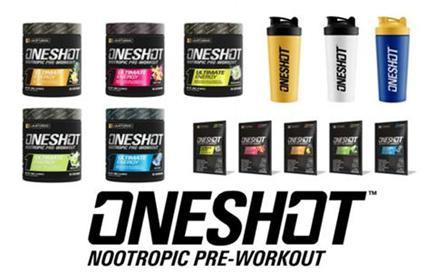
OneShot Nootropic Pre-Workout:
This product is a nootropic pre-workout supplement formulated with nitric oxide precursors, L-Arginine, and BCAAs, and is designed to support focus, endurance, and power during workouts. Additionally, the essential amino acids contained in this product are included to help support muscle recovery and maintenance as part of a regular exercise program.
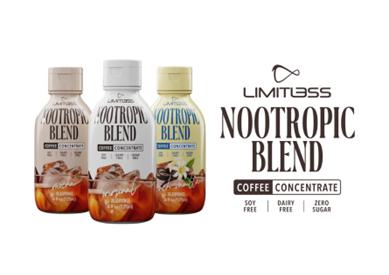
| 38 |
Nootropic Coffee Concentrates:
Nootropic Coffee Concentrates are a line of coffee concentrate products formulated with nootropic ingredients and containing zero sugar. The products are designed to be prepared by mixing with water and are intended to support cognitive function and sustained energy.
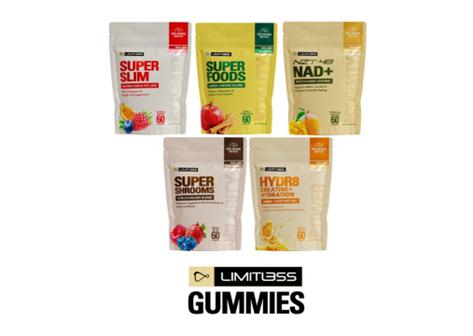
HYDR8 Creatine + Hydration Performance Gummies:
HYDR8 Creatine + Hydration Gummies are a dietary supplement in gummy form containing Creatine HCl, vitamins, and electrolytes. The product is designed to support muscle performance, recovery, and hydration.
SuperSlim Gummies:
SuperSlim Gummies are a dietary supplement formulated to support metabolism, appetite control, and weight management. Key ingredients include Red Orange Extract, Garcinia Cambogia, Fibersol® fiber, and anandamide. The product contains 0g sugar per serving.
SuperShrooms Smart Focus Gummies:
SuperShrooms Smart Focus Gummies are a dietary supplement containing a blend of 10 functional mushroom varieties, including Lion’s Mane, Reishi, Cordyceps, Chaga, Turkey Tail, and Shiitake. The product is designed to support cognitive function, stress management, energy, and immune health.
SuperFoods Super Greens Blend Gummies:
SuperFoods Super Greens Blend Gummies are a dietary supplement in gummy form containing organic greens, antioxidant-rich fruit extracts, and digestive enzymes. The product contains 0g sugar per serving and is designed to support nutritional supplementation and digestive health.
| 39 |
NZT-48 NAD+ Nocotinamide Adenine Gummies:
NZT-48 NAD+ Gummies are a dietary supplement in mango-flavored gummy form containing NAD+ (Nicotinamide Adenine Dinucleotide) and the Company’s NZT-48 Nootropic Blend and is designed to support cognitive function, energy, and recovery.
Licensing of Nutritional Products
NZT-48, our flagship nootropic supplement, is licensed from Limitless Performance, Inc. (“LPI”), a company wholly owned by Jas Mathur, our Chief Executive Officer, pursuant to a Manufacturing & Distribution License Agreement dated December 1, 2021 (the “NZT-48 License Agreement”). The NZT-48 License originally covered multiple products but was partially terminated on November 1, 2023, leaving NZT-48 as the sole product currently licensed under the agreement. In January 2025, we filed the First Amendment to the Manufacturing and Distributorship Licensing Agreement, under which Mr. Mathur agreed to waive all royalty payments under the NZT-48 License Agreement for a period of three years. Under the NZT-48 License Agreement and its amendments, LPI granted the Company a non-exclusive license to design, manufacture, promote, sell, and distribute NZT-48, a nootropic supplement formulated to support cognitive enhancement, including improved memory, speed, focus, and mood. The agreement has a five-year term and automatically renews for additional five-year periods unless either party provides notice of termination at least six months prior to the end of the term. LPI may terminate prior to the end of the term only for cause. After December 31, 2027, if Mr. Mathur does not extend the royalty waiver, the Company will be obligated to pay royalties of 4 percent on the gross sales of NZT-48.
In addition, the Company’s Chairman and Chief Executive Officer holds a separate license to manufacture, market, and distribute products under Floyd Mayweather’s “TMT – The Money Team” brand. The Company intends to bring this license into the Company and leverage it to develop, manufacture, and distribute a line of branded consumer and nutritional products under the TMT name. This initiative is expected to further expand the Company’s branded product portfolio and capitalize on the global recognition and commercial strength of the TMT brand.
Earlier this year, we also entered into agreements to develop signature series product lines for both Manny Pacquiao and Paul Michael DelVecchio Jr. (known professionally as DJ Pauly D). These partnerships are designed to expand our portfolio of nutritional and consumer packaged goods by leveraging each partner’s global visibility, performance-focused lifestyle, and strong brand influence. The new signature lines will complement the Company’s existing wellness offerings and are intended to strengthen our position in both the health and entertainment-driven consumer markets.
Services
Bodycor Inc., the Company is building a platform designed to identify, develop, acquire, and scale distinctive consumer brands and technology-enabled ventures. This platform is intended to support a range of offerings that enhance consumer engagement across the health and wellness value chain, including personalized, goal-oriented solutions tailored to individual preferences, lifestyle behaviors, and performance objectives. As part of this strategy, the Company has acquired a controlling interest in DING, a food and nutrition-focused technology platform that operates with an existing commercial partnership with Instacart, pursuant to which grocery ordering and fulfillment are enabled through Instacart’s infrastructure. The DING platform is expected to generate revenue based on consumer activity and commerce facilitated through Instacart, while also supporting data-driven meal planning, nutrition engagement, and product discovery initiatives that complement the Company’s branded consumer products.
At present, the Company does not offer advisory or service-based programs as standalone offerings, and any future digital, advisory, or experiential components remain in the planning and development stage. There can be no assurance that such offerings will be launched, or if launched, that they will achieve commercial adoption or profitability.
Leveraging management’s experience in business strategy, health and nutrition, technology integration, and brand development, these subsidiaries are intended to serve as the operational vehicles through which e-commerce brands, digital platforms, and related ventures are conceived, launched, and scaled. While the Company’s current primary focus remains on direct-to-consumer product sales, the integration of technology platforms such as DING is intended to enhance consumer engagement, expand monetization opportunities through commerce-enabled partnerships, and support long-term growth, operating leverage, and customer retention across the broader Limitless X ecosystem.
| 40 |
Product Development
We leverage internal resources and strategic partnerships to develop and commercialize premium consumer products in collaboration with major influencers, athletes, and celebrities through structured service arrangements in which the Company holds equity interests, aligning brand growth with long term shareholder value.
This initiative is led by President Daniel Sanders, whose extensive experience spans the full product lifecycle, including concept development, formulation, branding, regulatory positioning, commercialization, and national distribution. Under his leadership, the Company employs a disciplined, compliance first approach to product development, ensuring all formulations, claims, labeling, and marketing materials are designed to meet applicable regulatory standards from inception.
Our development process includes comprehensive market research, competitive analysis, formulation benchmarking, consumer insights, pricing strategy, and go to market planning. Particular emphasis is placed on regulatory readiness, including ingredient vetting, label accuracy, substantiation of product claims, and adherence to FDA, FTC, and applicable state guidelines. For athlete facing products, additional safeguards are implemented to ensure products are athlete safe, compliant with applicable sport’s governing body standards, and suitable for professional and high performance use.
We oversee product concept development, packaging design, and regulatory positioning to ensure each product is built for both direct to consumer performance and long term retail scalability. Mr. Sanders’ prior experience developing products for distribution through major national retailers provides the Company with operational insight into retailer compliance requirements, margin structures, quality documentation, and onboarding processes. In addition, the Company facilitates key introductions to experienced partners across public relations, information technology, legal, regulatory, and logistics functions, while designing scalable operational workflows to support growth.
Product Manufacturing
We maintain comprehensive oversight of the manufacturing lifecycle, including ingredient sourcing, contract manufacturer selection, supply chain management, and ongoing quality assurance. All manufacturing partners are subject to rigorous vetting, including verification of current Good Manufacturing Practices compliance, audit history, and production capacity.
Under Mr. Sanders’ leadership, the Company implements standardized quality control protocols, batch testing procedures, certificate of analysis verification, and documentation processes designed to ensure consistency, traceability, and regulatory compliance. Manufacturing workflows are structured to support product integrity, shelf stability, and scalability while minimizing operational and regulatory risk.
This disciplined approach enables the Company to confidently support professional athletes, brand ambassadors, and retail partners with products that meet stringent safety, quality, and compliance standards.
Product Distribution and Fulfilment
Our product distribution and fulfilment strategy is designed to maximize operational efficiency, data security, and regulatory compliance while supporting scalable growth across sales channels.
For direct to consumer sales, all operations are managed in house. Online sales are conducted through the Company’s owned and operated e commerce platform utilizing Shopify as the primary sales infrastructure. Order management, shipping, and logistics are coordinated through ShipStation, allowing for streamlined fulfillment workflows, real time tracking, and efficient delivery across key markets. This in house model provides the Company with full visibility into sales performance, inventory levels, customer behavior, and fulfillment metrics while ensuring control over brand presentation and customer experience.
| 41 |
At this time, larger scale offline distribution and centralized warehousing have not yet been implemented. The Company’s strategic intention is to expand into a larger, dedicated warehouse facility as volume and distribution requirements increase. This approach is designed to allow the Company to internalize fulfillment operations at scale, maintain ownership and control of proprietary sales and customer data, and minimize reliance on third party logistics providers. By avoiding the use of external 3PL platforms for core fulfillment functions, the Company aims to protect customer data integrity, ensure compliance with applicable privacy standards, and retain direct oversight of inventory, shipping, and returns processes.
This phased distribution strategy supports near term operational efficiency while positioning the Company for long term scalability, data driven decision making, and enhanced operational control as the consumer packaged goods portfolio continues to grow.
Integrated Brand-Led Marketing Execution
The Company’s marketing strategy is designed to increase consumer awareness, demand, and long-term preference for the brands it owns or partners with. The in-house team oversees the full marketing lifecycle—content ideation, creative development, channel selection, distribution strategy, and performance optimization—ensuring consistent brand positioning across all consumer touchpoints.
Marketing execution incorporates a diversified mix of strategies, including product sampling initiatives, participation in consumer and industry trade events, and the production of high-profile, celebrity-driven activations where the Company and its brands are prominently featured. These experiential efforts are complemented by a strong emphasis on social and digital platforms, which serve as the primary drivers for consumer engagement, storytelling, and community building.
Digital advertising and online resources are deployed with a data-driven focus on increasing consumer trial, repeat usage, and brand affinity, while reinforcing premium positioning and regulatory compliance.
Competitive Strengths
The Company believes its competitive position is supported by the integration of its operating subsidiaries, which span consumer products, entertainment and media, and technology-enabled wellness initiatives. The Company’s business model is designed to allow its subsidiaries to support one another through shared customer relationships, marketing resources, and brand visibility. The Company combines branded consumer products, content production, and technology-enabled commerce across its operating subsidiaries.
At the center of this ecosystem is the leadership team assembled by our Chairman and Chief Executive Officer, Jas Mathur, whose three-decade track record spans direct-to-consumer commerce, consumer packaged goods, digital media, and brand-driven operating platforms. However, the Company’s strength extends well beyond any one individual. Limitless X has deliberately built a management structure that combines entrepreneurial execution with institutional discipline, supported by seasoned operators, product innovators, and strategic partners across its operating subsidiaries.
A key pillar of this leadership expansion is the appointment of Daniel Sanders as President. Mr. Sanders brings deep operational expertise in product development, formulation, manufacturing, regulatory navigation, and national retail distribution, having played an integral role in building and scaling consumer health and wellness products distributed through major U.S. retailers including Walmart, Costco, Sam’s Club, Target, Kroger, Whole Foods, and GNC. His background significantly strengthens the Company’s ability to transition from high-margin direct-to-consumer success into large-scale retail, international expansion, and institutional-grade supply chain execution, materially reducing execution risk while expanding the Company’s addressable market.
The Company’s subsidiaries are intentionally structured to reinforce one another rather than operate in isolation. Our direct-to-consumer wellness and consumer products platform provides proprietary customer relationships, recurring revenue, and real-world product validation. Our entertainment and media initiatives create premium brand exposure, culturally relevant content, and differentiated customer acquisition channels. Complementing these efforts, our technology and AI-focused initiatives under BodyCor Inc., including the integration of DING, are designed to enhance personalization, engagement, and monetization across the ecosystem.
| 42 |
Through its controlling interest in DING, a food and nutrition-focused technology platform with an existing commercial partnership with Instacart, the Company gains access to a commerce-enabled distribution layer that connects digital engagement directly to consumer purchasing behavior. DING enables meal planning, nutrition engagement, and grocery fulfillment through Instacart’s infrastructure, allowing the Company to participate economically in commerce activity generated through the platform. This model extends the Company’s reach beyond traditional product sales by embedding Limitless X into everyday consumer decision-making around food, nutrition, and lifestyle, while generating incremental revenue streams tied to commerce activity rather than solely advertising or subscriptions.
Further strengthening this platform is the Company’s access to high-impact cultural and athletic figures who function not as passive endorsers, but as strategic brand partners and ecosystem participants. Longstanding relationships with globally recognized individuals such as Manny Pacquiao, Floyd Mayweather Jr., and DJ Pauly D provide unique reach across sports, entertainment, and lifestyle audiences that are typically inaccessible to emerging brands. These relationships enable authentic storytelling, accelerated trust-building with consumers, and high-efficiency customer acquisition across both product and digital commerce channels, including technology-enabled platforms such as DING.
Importantly, Limitless X does not rely on transactional influencer marketing. Instead, the Company leverages long-term relationship equity, aligned incentives, and platform participation to create sustained brand momentum. This approach enhances content credibility, improves conversion economics, and supports premium brand positioning while mitigating the volatility and rising costs associated with traditional paid media strategies.
The Company uses consumer data and performance analytics to inform product development, marketing, and distribution decisions. These data sources include information derived from the Company’s e-commerce platform and, as development progresses, digital engagement and commerce activity facilitated through platforms such as DING. The Company believes this data-informed approach supports more efficient resource allocation and product development.
Collectively, the integration of experienced leadership, complementary subsidiaries, commerce-enabled technology platforms, proprietary operating infrastructure, and culturally influential strategic partners positions Limitless X to build durable, scalable brands with strong unit economics and multiple monetization pathways. This multi-dimensional platform provides competitive insulation, execution leverage, and a clear pathway toward institutional relevance and long-term shareholder value creation.
Intellectual Property and Brand Ownership
All brands in the Company’s portfolio are owned by Limitless X Inc., except for NZT-48, which is owned by Limitless Performance Inc., a company that is 100% owned by Jaspreet Mathur. This centralized ownership structure enables strong operational oversight, accelerated brand development, and strategic alignment across the portfolio. As the Company continues to grow, this framework provides a scalable foundation for integrating, acquiring, or incubating additional brands while maintaining consistency and control.
Influencer Access, Brand Reach and Strategic Distribution Advantage
Limitless X benefits from a uniquely positioned ecosystem at the intersection of sports, entertainment, wellness, and digital media, built through years of high caliber sponsorships, premium event participation, and deep rooted relationships across complementary industries. Through company sponsored entertainment and sports activations, Limitless X has established strong brand visibility and earned trusted access to elite talent networks that are typically inaccessible through traditional influencer marketing channels.
| 43 |
At the center of this ecosystem is the Company’s Chairman and CEO, whose personal brand and longstanding relationships span professional sports, global entertainment, music, film, social media, and high impact digital creators. With a combined social reach exceeding 11+ million followers on Instagram alone, supported by consistent motivational and transformational content, this presence acts as a funnel for new influencers, athletes, and creators seeking authentic alignment with a credible, purpose driven platform.
This access is further amplified by the development of an exclusive, invitation-only training and performance facility under Limitless Entertainment Group, created in collaboration with Manny Pacquiao. The facility is being designed specifically for elite athletes, celebrities, and top tier influencers, serving not only as a private performance destination but also as a high value content hub. This environment aims for the organic creation of premium, aspirational content across fitness, lifestyle, recovery, and personal transformation, content that influencers want to be part of and audiences actively engage with.
Our influencer network is intentionally curated rather than commoditized. It includes respected figures across music, film, professional athletics, fitness, wellness, nutrition, lifestyle media, social platforms, and public leadership, all unified by a shared belief in the core brand ethos: Look Good and Feel Great. What differentiates this network is not follower count alone, but authentic alignment, credibility, and influence within their respective communities.
The Company maintains strategic flexibility by structuring influencer relationships on a campaign by campaign basis, with compensation terms tailored to the individual, the product, and the target audience. This approach avoids long term restrictive contracts and allows management to deploy the most effective voices for each initiative, ensuring message integrity and audience relevance. Influencers are activated only where brand fit and performance alignment are strongest.
Limitless X executes influencer activation using its internal resources, proprietary relationships, and select external marketing agencies, allowing the Company to source, negotiate, and deploy talent at a fraction of prevailing market rates. This model eliminates the cost inefficiencies of traditional influencer marketplaces and agency markups, while maintaining access to premium talent and high quality content distribution across Instagram, YouTube, podcasts, long form content, live appearances, and experiential events. Influencers distribute pre-approved content aligned with brand standards and are compensated through performance based commissions directly tied to measurable sales outcomes.
All promoted products are distributed through the Company’s owned digital channels, creating a seamless path from content to conversion. This integrated model enables Limitless X to reach audiences ranging from core fitness consumers to high net worth individuals, while maintaining full control over brand messaging, data, and customer relationships.
The Company believes that its relationships across sports, entertainment, and wellness industries, together with its content creation capabilities, provide marketing and distribution advantages. The Company engages influencers on a campaign-by-campaign basis with compensation terms tailored to each initiative, and influencers distribute pre-approved content aligned with brand standards and are compensated through performance-based commissions tied to measurable sales outcomes.
| 44 |
MARKET FOR GLOBAL HEALTH AND WELLNESS
The global health and wellness market represents one of the largest and most resilient consumer-driven sectors worldwide, supported by long-term structural trends rather than short-term economic cycles. Industry research indicates that the wellness economy reached approximately $6.5–$7.0 trillion in 2024, reflecting sustained growth across physical fitness, nutrition, mental health, preventive care, and lifestyle optimization categories.
Current industry forecasts project the market to expand at a compound annual growth rate of approximately 6%–8%, positioning the sector to reach approximately $9–$10 trillion by 2029–2030, assuming stable macroeconomic and regulatory conditions. For example, Zion Market Research estimates that the health and wellness market will reach approximately $8.9 trillion by 2030, representing a compound annual growth rate of approximately 6.9% during the 2023–2030 period.
Market expansion is being driven by several long-term and reinforcing factors, including demographic and behavioral shifts such as aging populations, rising prevalence of chronic conditions, and increasing consumer emphasis on longevity, quality of life, and preventive health. Consumers are increasingly allocating discretionary spending toward proactive health and wellness solutions rather than reactive or episodic care. In parallel, the rapid adoption of digital health technologies, data-driven wellness platforms, and personalized health solutions has expanded accessibility, scalability, and consumer engagement across multiple wellness categories.
Growth is further supported by rising global middle-class populations, particularly in emerging markets, which are contributing to increased demand for wellness-related products and services. Additionally, employer-sponsored wellness initiatives and institutional adoption of preventive health programs continue to support stable demand across economic cycles.
Demand within the health and wellness sector has historically demonstrated relative resilience during periods of economic uncertainty, as consumers increasingly view health-related expenditures as essential rather than discretionary. Subsegments such as nutrition, mental wellness, fitness, and digital health solutions have exhibited particularly strong growth in recent years, including accelerated adoption following the COVID-19 pandemic.
Despite its size and growth trajectory, the global health and wellness market remains highly fragmented, with no single participant holding a dominant market share across the sector. This fragmentation presents opportunities for differentiated brands, technology-enabled platforms, and vertically integrated business models to capture targeted segments of the broader addressable market.
While market forecasts are inherently subject to uncertainty and may be affected by factors such as regulatory developments, changes in consumer preferences, technological disruption, and broader macroeconomic conditions, management believes that the underlying fundamentals of the global health and wellness sector support continued expansion and sustained demand growth over the long term.
LIMX’s business model is designed to address this convergence by operating as a hybrid wellness platform that integrates digital engagement with offline distribution and experiential access. Rather than relying exclusively on a single sales channel, LIMX intends to engage consumers through a combination of proprietary digital platforms, direct-to-consumer fulfillment, and strategic offline partnerships. This structure is intended to expand market reach, diversify revenue streams, and reduce dependence on any single distribution channel.
Through its digital infrastructure, LIMX seeks to support consumer education, personalization, subscription-based offerings, and ongoing engagement, while also leveraging data analytics and customer relationship management systems to better understand purchasing behavior across channels. In parallel, offline distribution is expected to support brand visibility, product trial, and access to consumer segments that may prefer or require in-person engagement. These offline channels may include retail distribution, wellness centers, fitness and lifestyle venues, events, and other third-party partners aligned with LIMX’s wellness-focused positioning.
The integration of digital and physical distribution is further supported by advances in supply chain management, logistics, and inventory optimization technologies, which enable coordinated fulfillment and consistent consumer experiences across channels. By aligning digital engagement with offline access points, LIMX aims to increase customer lifetime value, improve retention, and adapt more efficiently to changes in consumer demand.
As global health and wellness spending is projected to approach approximately $8–10 trillion by the end of the decade, platforms capable of serving consumers across multiple purchasing environments may be positioned to capture a broader share of the addressable market. Management believes that LIMX’s hybrid, omnichannel approach aligns with current and anticipated consumer behavior within the wellness sector, while also providing flexibility to scale across geographies, product categories, and distribution formats over time.
The digital commerce and wellness landscape remains highly competitive and subject to regulatory developments, technological change, shifts in consumer preferences, and operational execution risks. However, management believes that a diversified, omnichannel strategy that integrates digital engagement with offline distribution and partnerships may support sustainable growth and resilience relative to single-channel or narrowly focused business models.
| 45 |
OTHER BUSINESS DIVISIONS
Limitless X Holdings Inc. is a holding company that conducts its operations through a portfolio of wholly owned subsidiaries. Each subsidiary is structured to operate within a distinct vertical while remaining strategically aligned under a centralized corporate, financial, and governance framework. The Company owns 100% of the equity interests in each operating subsidiary, providing full control over strategic direction, capital allocation, intellectual property, and operational execution across the platform.
The Company’s subsidiaries are organized to support an integrated ecosystem spanning health and wellness products, digital commerce, media and content production, live sports and entertainment initiatives, and emerging technology development. While certain subsidiaries may be in varying stages of development, each is intended to contribute to long-term revenue growth, brand expansion, and enterprise value creation for the consolidated holding company.
| 46 |
LIMITLESS X, INC.
Limitless X Inc., a Nevada corporation (“Limitless X”), operates as a direct-to-consumer e-commerce company specializing in innovative health and wellness products, with a primary focus on premium dietary supplements designed to enhance mental health and support brain-boosting performance. The company’s flagship products—NZT-48, NZT-48 Lion’s Mane, NZT-48 For Her, and Oneshot Nootropic Pre-Workout—are developed to enhance cognitive performance, boost energy, and support overall wellness. The name NZT-48 is also the same as the fictional cognitive-enhancing drug featured in the movie Limitless and the subsequent TV series, which is currently available on Disney+.
Leveraging a data-driven strategy, influencer partnerships, and high-performance digital marketing, Limitless X expects to rapidly scale both its customer base and brand footprint. In 2025, the company strategically expanded into the Consumer Packaged Goods (CPG) sector with the launch of its proprietary Nootropic Coffee Concentrate. To date, approximately $50,000 has been invested in development and pre-launch preparation, with an additional $250,000 projected for the commercial rollout, which includes scaling test campaigns, introducing three new flavors, and replenishing initial inventory.
The Coffee Concentrate is formulated for taste and convenience and is intended to be a source of clean energy to support enhanced focus and sustained mental performance. This product directly aligns with the preferences of today’s wellness-focused consumer and represents a strategically important addition to the Limitless X product ecosystem.
The U.S. coffee market exceeds $100 billion annually, with coffee concentrates and ready-to-mix beverages emerging as one of the fastest-growing segments. Competitors such as Jot and newer entrants like Javvy underscore the rising demand for premium, high-potency concentrates that deliver both flavor and functionality. Limitless X differentiates itself by integrating wellness-enhancing ingredients, nutritional upgrades, and a holistic lifestyle connection supported by the broader Limitless X ecosystem.
Building on this momentum, Limitless X plans to introduce an expanded line of specialty coffee concentrates, including nootropic blends, adaptogenic formulas, and other wellness-forward infusions designed to optimize both mind and body. This marks the first phase of a broader CPG rollout. Supported by the CEO’s strategic industry relationships with major retail partners, the company is positioned to scale across multiple verticals, from functional beverages to nutritional snacks and additional wellness-centric consumer goods.
As part of its two-year growth strategy, Limitless X aims to significantly expand its direct-to-consumer (DTC) business by leveraging its core competency: high-performance digital marketing. The DTC model will be driven by conversion-focused advertising across Facebook, TikTok, Taboola, and related platforms, complemented by targeted influencer marketing initiatives. This channel is expected to remain a primary growth driver as the company increases advertising spend in line with projected revenue and return on ad spend.
Currently, we retain approximately 35% of our customers through recurring billing, giving us an average lifetime value (LTV) of about $90 per customer. By 2026, we aim to increase this figure by an additional 50%, bringing LTV to approximately $270, driven by continued customer retention efforts, subscription optimization, and upsell opportunities. While we are optimistic about the projected increase in LTV, these figures are estimates and there is no guarantee or assurance that we will achieve these targets.
In parallel with our DTC push, Limitless X is pursuing big-box retail distribution to further diversify our sales channels and amplify brand visibility. This retail expansion will work hand-in-hand with our digital growth, offering consumers multiple touchpoints to engage with our brand. On a global scale, Limitless X aims to expand into key international markets such as Canada, Latin America, Philippines, India and the MENA region. While these targeted markets offer substantial growth potential and align with our mission to make premium health and wellness products accessible worldwide, such plans are aspirational and may not come to fruition as we do not currently have concrete plans to implement such an expansion.
Together, these strategic initiatives—DTC acceleration, retail expansion, and international market penetration—will better position Limitless X to enhance operations, increase market share, and achieve sustainable, long-term revenue growth. As we execute on this vision, we aspire to build the reputation of Limitless X in the global health and wellness industry.
| 47 |
LIMITLESS FILMS, INC.
Limitless Films, Inc., a Florida corporation (“Limitless Films”), is a film and television company focused on the development, packaging, and financing of premium motion picture and episodic content for domestic and international markets. The Company’s strategy emphasizes disciplined capital deployment, selective project participation, and collaboration exclusively with established, reputable directors, producers, and recognized acting talent with demonstrated commercial track records. By focusing on carefully curated projects and experienced creative partners, the Company seeks to mitigate development, production, and distribution risk. As of January 1, 2026, Limitless Films is a wholly-owned subsidiary of the Company, and the activities of Limitless Films will be consolidated into the financial statements of the Company going forward.
Limitless Films primarily operates through a packaging and structured investment model, whereby projects are assembled with attached creative leadership, principal cast, defined budgets, and clear distribution pathways prior to or early in production. The Company generally seeks to monetize projects through pre-sales, licensing arrangements, secured lending, and distribution agreements with domestic and international buyers, rather than relying solely on speculative box office performance. International markets are expected to play a meaningful role in this strategy, supporting diversified revenue streams and advancing sales opportunities.
Activities of Limitless Films
In January 2025 Limitless Films, in which the Company then only owned a twenty percent (20%) ownership interest, advanced a $1.0 million secured bridge loan to Gentleman Thief LLC (the “Borrower”) to finance a portion of the pre-production budget for the motion picture The Gentleman Thief, starring John Travolta. The loan was secured by copyright interests in both the film and its screenplay. To fund this transaction, an affiliate of the Company, EM1 Capital, LLC—solely owned and managed by the Company’s Chief Executive Officer and Chairman—loaned $1.0 million to Limitless Films pursuant to a separate loan agreement bearing interest at 5.0% per annum and maturing on January 22, 2026. The bridge loan to the Borrower bears interest at 12.5% per annum and was originally structured with a 90-day maturity, subject to extensions at the Company’s discretion.
The maturity date of the bridge loan has been extended multiple times in connection with ongoing project developments. In September 2025, Limitless Films entered into a second addendum to the bridge loan agreement, which extended the maturity date to November 15, 2025 and provided for the rollover of $400,000 of the original loan amount toward the development of a separate motion picture, The Conspiracy, featuring Emile Hirsch, Emma Ishta, Busta Rhymes, and Rich the Kid, among others. As of September 15, 2025, the Borrower had repaid $300,000 of the outstanding balance, leaving a remaining balance of $300,000 at that time.
The Company’s rights with respect to The Conspiracy arise solely pursuant to the terms of the second addendum to the bridge loan agreement. There is no separate security agreement, collateral assignment, copyright pledge, or other standalone agreement governing the Company’s rights in or to The Conspiracy. Accordingly, the Company does not hold a separate perfected security interest in The Conspiracy or its underlying intellectual property apart from the contractual provisions contained in the amended bridge loan documentation.
Although the November 15, 2025 maturity date has passed, the Company agreed to provide an additional extension in consideration of continued project developments, delayed inbound payments related to distribution and sales activity, and the rescheduled premiere of The Gentleman Thief, which is currently expected to open the Miami Film Festival in June 2026. On December 31, 2025, the Company entered into the Third and Final Amendment and Restatement to the Bridge Loan (the “Third Amendment”), which requires the Borrower to pay the Company the remaining balance (including all outstanding principal, interest, late charges, fees, and enforcement costs) under the Bridge Loan Agreement by November 1, 2026, at the latest. The Borrower has made all payments due in accordance with the terms of the Third Amendment and is not currently in default thereunder.
Limitless Films places a strong emphasis on capital preservation, security interests, and structured investment practices. The Company is supported by an advisory group with more than 100 years of combined experience in the entertainment industry, including individuals who have held senior roles and worked extensively with major studios and media companies such as Warner Bros., Disney, Paramount Pictures, Universal Pictures, and Netflix. This advisory support informs project selection, financing structures, packaging decisions, and distribution strategy.
Over the coming years, Limitless Films intends to continue developing and participating in a global slate of film projects, including projects based on proprietary or controlled intellectual property where feasible. In addition, the Company expects to pursue integrated content and commerce opportunities by incorporating influencers, athletes, streamers, and celebrity partners into both the creative and promotional aspects of its films. Where appropriate, projects may feature products and brands wholly owned by Limitless X or in which the broader corporate group maintains equity interests, joint ventures, or co-branded partnerships.
The Company also intends to develop ancillary revenue opportunities around select titles, which may include merchandising programs such as apparel, collectibles, accessories, and limited-edition co-branded or influencer-driven product offerings. Through this integrated approach, each film is intended to function not only as an entertainment asset, but also as a broader brand-building and customer acquisition platform within the Limitless X ecosystem.
| 48 |
Film Financing Strategy:
We plan to produce films with total budgets ranging from 3 million to 10 million dollars, beginning with mid-budget projects in the 3 to 5 million dollar range. These films balance creative ambition with commercial sensibility and allow us to pair rising talent with established A-list actors while maintaining attractive risk-adjusted economics.
Limitless Films expects to finance approximately 10 to 15 percent of each film’s total budget in-house, providing the seed capital that unlocks full financing. The remaining 85 to 90 percent will be sourced through well-established, low-risk channels, including:
| ● | Bank financing backed by state and international tax credits |
(tax credits are pre-sold or monetized through completion-bonded structures)
| ● | Strategic partnerships with studios and distributors |
| ● | Private film financiers and equity partners who co-invest based on creative and commercial viability |
We also utilize domestic paper and other secured lending mechanisms to help increase the likelihood of repayment. These instruments, may be collateralized by tax credits, domestic distribution agreements, minimum guarantees, or presale contracts. This structure is intended to reduce risk and support capital recovery, we intend to align with major distribution partners early in development. This includes potential theatrical distribution deals and direct-to-streaming releases with platforms such as Amazon Prime or Netflix, depending on the target demographic and genre. It should be noted, however, that aside from the Bridge Loan Agreement, we do not currently have any agreements in place with production companies, studios, or distributors, and there is no assurance that we will enter into any such agreements in the future.
Owning or co-owning key intellectual property assets, including scripts, characters, trademarks, and brand integrations, combined with the above capital strategy, is intended to support long-term royalty streams and profit participation for Limitless Films. Except for the Bridge Loan Agreement, which gives Limitless Films a security interest in the underlying rights of The Gentleman Thief, we do not currently have any agreements regarding ownership or co-ownership of key intellectual property assets, and we may never enter into any such agreements.
Strategic Value to Limitless X:
Each film serves as a large-scale marketing engine for Limitless X products and brands. Through organic product placement, lifestyle integration, influencer and athlete involvement, and storyline-driven brand tie-ins, our films become high-visibility platforms that:
| ● | Increase national and international brand awareness | |
| ● | Drive conversion by associating products with A-list talent and culturally relevant storytelling | |
| ● | Cross-promote across our wellness, fitness, and streaming ecosystems | |
| ● | Expand Limitless X into new consumer markets and global audiences |
Through secure financing, strategic distribution, and integrated brand placement, every project functions as both a revenue-generating film and a powerful marketing asset for the Limitless X ecosystem.
Film Revenue Generation Strategy:
We plan to generate revenue from our films through a multi-channel monetization strategy that includes:
| ● | Domestic and international box office receipts; | |
| ● | Global streaming rights sales; | |
| ● | Licensing and syndication to TV and VOD platforms; | |
| ● | Third-party brand sponsorships and product placement; | |
| ● | Royalties from soundtrack and merchandise sales; | |
| ● | International territory sales and pre-sales; and | |
| ● | Ancillary rights (airlines, hotels, inflight entertainment, etc.) |
Led by CEO Jas Mathur and Director Arthur Sarkissian, we are leveraging a powerful network of top-tier entertainment, media, and brand relationships.
Arthur Sarkissian is the producer behind the iconic Rush Hour franchise, one of the most successful action-comedy series in global box office history.
In addition to our core leadership, we maintain strategic alliances with established producers, directors, and industry veterans whose collective portfolios include films starring A-list talent such as Robert De Niro, Al Pacino, Dwayne Johnson, Mark Wahlberg, Bruce Willis, Megan Fox, John Travolta, and many more. These partnerships significantly expand our creative reach, enhance our access to premier talent, and strengthen the commercial potential of our slate and long-term strategy.
Together, our approach combines high-impact storytelling with viral influencer-driven marketing to create content that not only captivates audiences but also drives measurable real-world product awareness and conversion.
Currently, we have four completed scripts, the intellectual property rights to which are owned exclusively by Limitless Films, and several A-list actors who have expressed interest in participating in our projects. We are positioned to begin production upon securing financing through this Offering or other sources. While we currently do not have certain licensing, distribution, trademark, royalty, or other intellectual property-related agreements in place with respect to these projects, we may seek to enter into such agreements in the future, although there can be no assurance that such agreements will be obtained on favorable terms or at all. As we expand our operations, we intend to pursue international rights arrangements, broaden our digital and physical distribution channels, and enhance our marketing and promotional efforts through strategic industry relationships and influencer networks. These initiatives are intended to increase audience reach, strengthen brand awareness, and support the long-term growth of our business.
| 49 |
LIMITLESS ENTERTAINMENT GROUP, INC.
Limitless Entertainment Group, Inc., a Florida corporation (“Limitless Entertainment”), is a wholly owned subsidiary of Limitless X Holdings Inc.. The Company is focused on supporting, developing, and scaling professional boxing through live event production, fighter development infrastructure, strategic partnerships, and integrated media initiatives.
Limitless Entertainment operates as a collaborative platform within the boxing ecosystem. Rather than replacing existing industry participants, the Company works alongside licensed promoters, managers, trainers, sanctioning bodies, and regulatory authorities to enhance operational efficiency, expand market reach, and create sustainable opportunities for fighters at every stage of their careers.
The Company is led by an experienced executive team with more than a decade of direct involvement in boxing and mixed martial arts. Leadership experience includes working with elite professional fighters, negotiating athlete and promotional contracts, securing brand sponsorships, managing regulatory compliance, and producing live combat sports events. This background also includes the operation of an MMA promotions company in Montreal in 2013, providing hands-on expertise in event execution, athletic commission relations, audience development, and venue logistics.
Through its integrated model, Limitless Entertainment aims to deliver high-quality live events, support athlete development pathways, and create compelling content for digital and broadcast distribution. The Company leverages strategic alliances, disciplined operational practices, and industry relationships to build scalable, revenue-generating boxing properties while maintaining the integrity of the sport.
Strategic Collaboration - Training Center Development Division:
Limitless Entertainment is collaborating with Manny Pacquiao in connection with the development, branding, promotion, and launch of the Limitless x Manny Pacquiao Impact Performance Training Center(s). Mr. Pacquiao’s engagement under the Training Center Agreement is limited solely to such training center activities. This collaboration seeks to:
| ● | Leverage Mr. Pacquiao’s global brand recognition and athletic credibility in connection with training center branding and promotional materials; | |
| ● | Create approved promotional content and marketing materials featuring Mr. Pacquiao’s name, image, and likeness for training center initiatives; | |
| ● | Position the training center(s) as premier athletic performance destinations; | |
| ● | Support the commercial launch and ongoing promotion of each approved training center; and | |
| ● | Integrate Limitless X Inc. performance nutrition products within the training center environment. |
This structure enables Limitless Entertainment to support and elevate fighters through promotional, commercial, and developmental resources—while maintaining full compliance with all regulatory requirements and avoiding any activities that may constitute fighter management or interfere with purse-related negotiations. The Company’s collaboration with Manny Pacquiao and Manny Pacquiao is governed by the Strategic Brand Ambassador and Collaboration Agreement (the “SBAC Agreement”) dated July 31, 2025, and the Training Center Collaboration Agreement entered into on June 6, 2026 (the “Training Center Agreement”). The Training Center Agreement supplements the SBAC Agreement by specifically addressing the projects that Mr. Pacquiao will be engaged on and detailing the collaboration with respect to the training center(s). The Training Center Agreement does not require the active engagement of Manny Pacquaio in the day-to-operations of the training centers or the development thereof, but rather relates to the promotional services of Manny Pacquaio and grants the Company a license to Manny Pacquaio’s name, image and likeness.
Flagship Hollywood Training Center & National Expansion
Limitless Entertainment is launching a premier, high-performance training center at the iconic intersection of Hollywood Blvd. & Highland Ave. in Los Angeles, CA—one of the most visible intersections in Los Angeles. Situated at the crossroads of global entertainment, tourism, and culture, this flagship location is designed to command attention while redefining elite athletic performance and lifestyle training.
| 50 |
This landmark facility is the first Limitless Manny Pacquiao Impact Performance & Training Centers, built in collaboration with boxing legend and global icon Manny Pacquiao. The center seeks to integrate world-class coaching, cutting-edge sports science, and the championship mindset—creating an ecosystem where performance, discipline, and inspiration converge.
In addition to elite training and recovery programs, the Hollywood flagship aims to feature a curated retail and experience-driven marketplace, offering:
| ● | Performance and lifestyle products manufactured by Limitless X Inc. | |
| ● | Exclusive Manny Pacquiao and Manny Pacquiao Promotions merchandise, available only through Limitless locations | |
| ● | Elite, premium fighter gear, apparel, and training equipment | |
| ● | Limited-edition memorabilia and collectibles, celebrating iconic moments, championships, and legacy |
In addition to training and recovery programs, the Hollywood flagship will feature a retail and experience-driven marketplace offering performance and lifestyle products manufactured by Limitless X Inc., exclusive Manny Pacquiao merchandise, fighter gear and training equipment, and limited-edition memorabilia (subject to approval by Mr. Pacquiao). The facility is intended to serve as a venue for athlete training, product retail, and marketing content creation, and the Company intends to use this location as a model for potential future expansion into additional markets.
Project Status & Timeline:
| ● | Lease secured: October 2025 | |
| ● | Current phase: Full build-out and facility development underway | |
| ● | Grand opening & ribbon-cutting: Targeted for June 2026 |
Facility Overview:
The Hollywood flagship aims to serve as:
| ● | A world-class performance center for elite athletes, fighters, celebrities, and influencers | |
| ● | The official headquarters for fighter development and training camps | |
| ● | The flagship U.S. location for Manny Pacquiao’s training camps | |
| ● | A high-exposure marketing engine for Limitless Entertainment, Manny Pacquiao Promotions, and Limitless X brands | |
| ● | A content generation studio for behind-the-scenes training footage, documentaries, series, and live digital media | |
| ● | A talent identification and development hub that feeds directly into the Company’s boxing event pipeline |
This facility provides unmatched visibility and cultural relevance, anchoring the Limitless Entertainment brand at one of the world’s busiest intersections and serving as a core driver of fighter development, brand exposure, and content creation.
Description of the Impact Performance Training Center
The Training Center is being funded entirely through internal Company capital, with no third-party loans, construction financing arrangements, or development-related debt associated with the project. Total anticipated capital expenditure is not expected to exceed $300,000, allocated approximately as follows: $175,000 for strength and conditioning equipment and recovery modalities (including a sauna, cold plunge, and hyperbaric chamber); $50,000 for boxing equipment and training infrastructure; and $75,000 for fixtures, minor improvements, audio/visual systems.
| 51 |
The facility is not membership-based and is not intended to operate as a traditional commercial gym; instead, it will function as a private training and performance center serving athletes, influencers, and content production. The location will also include a retail component featuring branded merchandise, memorabilia, accessories, and apparel, including an official Manny Pacquiao retail presence, with initial retail inventory expected to range between $50,000 and $75,000 and funded separately as working capital. Given the Training Center’s proximity to major tourist destinations, including the Hollywood Walk of Fame and the Dolby Theatre, the Company anticipates consistent walk-in traffic supporting retail sales.
Event Production & National Expansion
Limitless Entertainment Group intends to pursue opportunities to collaborate on and support professional boxing events in select markets, including California, New York, Florida, and Montreal, Quebec, subject to regulatory approvals, venue availability, commercial arrangements, and other factors.
In November 2025, the Company collaborated with Manny Pacquiao Promotions on a professional boxing event held at Pechanga Resort Casino in California. Through its participation in the event, the Company gained operational experience, brand exposure, and industry visibility that it intends to leverage as it evaluates additional combat sports and live entertainment opportunities in 2026 and beyond. There can be no assurance that the Company will successfully develop, participate in, or monetize future events. The Company does not currently have any rights relating to the November 2025 event.
Event Revenue:
| ● | Digital pay-per-view (PPV) for select events | |
| ● | Ticketing and VIP hospitality experiences | |
| ● | Corporate sponsorships and brand integrations | |
| ● | Merchandise sales and athlete-branded apparel | |
| ● | Broadcast and media licensing rights | |
| ● | International distribution and content syndication | |
| ● | On-site concessions and food and beverage revenue sharing | |
| ● | Branded fan experiences, meet-and-greets, and VIP access | |
| ● | Ticketed weigh-ins, open workouts, and training sessions | |
| ● | On-demand replays, highlight packages, and event archives | |
| ● | Subscription-based access to behind-the-scenes or premium content | |
| ● | Social media monetization and platform revenue sharing | |
| ● | Fighter appearance fees and promotional participation agreements | |
| ● | Training camps, seminars, and clinics connected to events | |
| ● | Product placement within live events and broadcasts | |
| ● | Naming rights for events, fight series, or venues | |
| ● | Co-branded product launches tied to major fights | |
| ● | Licensing of event formats, brands, or proprietary content libraries | |
| ● | Documentary, film, or episodic content derived from event footage | |
| ● | Gaming, fantasy, and interactive fan experiences | |
| ● | Fan data monetization through compliant marketing partnerships |
| 52 |
Leadership & Industry Advantage:
Limitless Entertainment’s position is further strengthened through its strategic collaboration with Manny Pacquiao, the only eight-division world champion in boxing history and a universally respected Hall of Fame legend, in connection with the development, branding, promotion, and launch of Manny Pacquiao-branded training centers. Pacquiao’s unparalleled legacy, global fan base, and championship pedigree bring instant credibility, authenticity, and worldwide recognition to the Limitless brand—anchoring the company at the highest level of combat sports and athletic performance.
This foundation is reinforced by Sean Gibbons, whose decades-long career spans global matchmaking, elite fighter development, world-title campaigns, and major international event production. Gibbons’ deep relationships across boxing commissions, sanctioning bodies, promoters, broadcasters, and fighters provide Limitless with rare access and institutional knowledge, enabling the company to operate seamlessly across both domestic and international markets.
The Company’s CEO further adds a critical layer of operational and strategic depth, bringing over a decade of hands-on experience working directly with elite fighters, trainers, and promoters. His background includes founding and operating an MMA promotions company in Montreal in 2013, where he gained first-hand expertise in athlete management, live event logistics, regulatory compliance, sponsorship acquisition, and fan engagement. This experience gives Limitless a meaningful competitive advantage in promoter relations, event execution, brand activation, and audience development.
Together, this leadership team uniquely positions Limitless Entertainment at the intersection of elite athletic performance, combat sports, global entertainment, and scalable brand development—combining championship credibility, operational expertise, and industry relationships to build a platform designed for long-term growth and international impact.
AI-Powered Streaming Platform & Digital Media Ecosystem:
Limitless Entertainment intends to develop an advanced, AI-enabled global streaming platform for boxing, designed to operate on customizable technology frameworks and cloud-based infrastructure, including Amazon AWS, to support scalability, performance efficiency, and cost-effective operations. The platform is expected to integrate live and on-demand content, data-driven fan engagement tools, and digital distribution capabilities as development progresses.
Development Cost & Timeline:
| ● | Total development cost: Approximately $750,000 - $1,000,000 | |
| ● | Platform + Smart TV + Mobile app launch timeline: 6 to 9 months | |
| ● | Monthly maintenance (incl. staff): Not exceeding $25,000 USD |
AWS-Driven Scalability:
| ● | The platform will utilize Amazon AWS for servers, CDN delivery, and load balancing, ensuring: | |
| ● | Ultra-low cost per active viewer | |
| ● | High reliability during live fight events |
Platform Features:
| ● | Live and on-demand event streaming | |
| ● | Multi-camera viewing capabilities | |
| ● | Real-time analytics & commentary | |
| ● | AI-powered predictive insights | |
| ● | Fan voting, polls, and interactive tools | |
| ● | Community chat and social engagement | |
| ● | Training camp, behind-the-scenes, and exclusive fighter content | |
| ● | Streaming Revenue Components | |
| ● | Digital PPV sales | |
| ● | Subscription memberships | |
| ● | App store distribution | |
| ● | Advertising & sponsorship sales | |
| ● | Data analytics licensing | |
| ● | Premium digital content & exclusive access packages |
| 53 |
Streaming Revenue Channels:
| ● | Digital PPV sales | |
| ● | Subscription memberships (monthly/annual) | |
| ● | Advertising & sponsorship integrations | |
| ● | App ecosystem distribution | |
| ● | Analytics & audience insights licensing | |
| ● | Premium digital content sales |
Integrated Film & Storytelling Division
Limitless Entertainment Group will collaborate with Limitless Films Inc. to develop and produce a slate of premium documentaries, athlete-driven series, and culturally resonant original content distributed across the United States, Canada, Latin America, and Asia. This content strategy is designed to spotlight athlete journeys, championship moments, behind-the-scenes access, and untold stories that deepen fan connection while expanding global audiences.
By controlling both content creation and athlete narratives, Limitless is positioned to elevate fighters beyond competition and transform them into recognizable global brands with long-term commercial value. Programming will span multiple formats, including long-form documentaries, episodic series, digital-first content, and exclusive behind-the-scenes access tailored for streaming platforms, social media, and broadcast partners.
This integrated, cross-media approach amplifies the entire Limitless Entertainment ecosystem and creates a powerful flywheel that:
| ● | Builds authentic fighter brands and fan loyalty | |
| ● | Expands international reach across high-growth markets | |
| ● | Drives incremental subscription, sponsorship, licensing, and PPV revenue | |
| ● | Enhances event promotion, merchandise sales, and brand partnerships |
By merging elite combat sports with premium storytelling, Limitless Entertainment and Limitless Films Inc. are creating a scalable media platform that extends far beyond the ring and positions the company at the intersection of sports, culture, and global entertainment.
Vision
With meaningful influence across the talent development pipeline, a nationwide portfolio of live boxing events, a flagship Hollywood high-performance training center, and (later) a global AI-powered streaming and media platform, Limitless Entertainment Group Inc. is building a vertically integrated boxing support and development ecosystem designed to strengthen the sport from within.
Limitless is not seeking to reinvent boxing. Instead, the Company exists to support, develop, and elevate fighters, helping them maximize their opportunities both inside and outside the ring. By providing access to elite training, performance science, media exposure, brand-building resources, and global distribution, Limitless empowers athletes to take greater control of their careers while remaining fully aligned with the traditional boxing structure.
The Company is committed to working collaboratively with promoters, managers, trainers, and sanctioning bodies at both the national and international levels. Through partnership rather than competition, Limitless enhances event promotion, expands audiences, and creates additional revenue opportunities that benefit all stakeholders in the ecosystem.
Backed by iconic partners, deep industry relationships, and a robust digital infrastructure, Limitless Entertainment Group is positioning itself as a trusted global platform for fighter development and visibility, bridging performance, media, and opportunity while preserving the integrity and legacy of the sport of boxing.
| 54 |
BODYCOR, INC.
BodyCor Inc., a Nevada corporation formed in July 2025, is a wholly owned subsidiary established to consolidate, develop, and scale technology-driven wellness initiatives across the Limitless X ecosystem. BodyCor is intended to serve as the Company’s centralized technology and data innovation layer, supporting consumer engagement, personalization, and long-term brand intelligence while remaining complementary to the Company’s core nutraceutical, consumer packaged goods, entertainment, and athlete-driven platforms.
BodyCor’s strategic objective is to develop simple, intuitive, and AI-assisted digital wellness tools that enhance the customer experience surrounding the Company’s existing and planned products, without positioning the platform as a medical or diagnostic solution. These tools are intended to support personalized nutrition guidance, product education, habit formation, and engagement, while generating anonymized and aggregated insights that may inform future product development, marketing efficiency, inventory planning, and customer retention strategies across the Company’s subsidiaries.
As part of this strategy, the Company has acquired a 60% controlling equity interest in DING, a food and nutrition-focused technology platform, with the contractual right, but not the obligation, to acquire up to 100% of DING, subject to applicable agreements. DING operates with an existing commercial partnership with Instacart, pursuant to which grocery ordering and fulfillment are enabled through Instacart’s platform. Through this model, the Company expects to participate economically in commerce activity generated through the DING platform, linking digital nutrition engagement directly to consumer purchasing behavior. The integration of DING under BodyCor is intended to expand the Company’s addressable monetization opportunities beyond product sales by embedding the ecosystem into everyday food, nutrition, and lifestyle decision-making.
In addition to consumer applications, BodyCor is expected to support professional fighters and athletes affiliated with Limitless Entertainment Group Inc. through performance-oriented wellness tools focused on routine optimization, recovery awareness, and lifestyle consistency. These tools are intended to integrate with content, athlete engagement, and brand partnerships to create a unified, data-informed wellness experience.
Planned Platform Capabilities (Conceptual)
BodyCor intends to pursue development of a modular technology platform that may include, subject to available capital and execution:
| ● | Personalized nutrition and supplement guidance based on user-provided lifestyle inputs, preferences, and goals | |
| ● | Habit-tracking features addressing sleep, hydration, fitness activity, and supplementation consistency | |
| ● | AI-assisted educational content, coaching prompts, and actionable wellness insights | |
| ● | Automated onboarding, engagement, and retention workflows tied to product usage and content consumption | |
| ● | Athlete-focused tools designed to help track training routines, recovery patterns, and daily readiness | |
| ● | Aggregated, anonymized data analytics to identify emerging consumer trends and inform product innovation | |
| ● | Integration across the Company’s eCommerce, content, athlete, and brand platforms |
Strategic Rationale & Value Creation
If successfully developed and integrated, BodyCor and DING are intended to:
| ● | Increase customer lifetime value through improved engagement and personalization | |
| ● | Support improved conversion and retention across DTC and commerce-enabled channels | |
| ● | Diversify monetization through Instacart-facilitated commerce activity | |
| ● | Enhance data-driven product development, inventory planning, and marketing efficiency | |
| ● | Strengthen athlete, brand, and partner relationships through differentiated digital experiences |
| 55 |
Risk & Forward-Looking Disclosure
This initiative is forward-looking and subject to significant execution, technical, integration, regulatory, and capital risks. There can be no assurance that BodyCor’s planned technologies or DING’s projected growth will be achieved, that the Instacart partnership will continue on current terms, or that these initiatives will generate revenue or positive returns. The Company may modify, delay, scale back, or discontinue development at any time.
Compliance Team
All compliance matters are managed internally by our Chief Operating Officer in close collaboration with our Vice President of Legal Affairs and outside legal counsel which are retained. Together, they oversee and ensure compliance with all applicable legal and regulatory requirements across our operations. This oversight includes data security, privacy protections, and adherence to, and where possible exceeding, relevant governmental standards. Our organization is committed to maintaining the highest levels of transparency, accountability, and ethical conduct across all departments. Management actively monitors developments in the regulatory environment and implements timely updates to our policies and procedures to remain compliant. We place a strong emphasis on safeguarding customer information and privacy while proactively addressing evolving legal requirements to mitigate risk and protect the long-term interests of the business.
Regulatory Compliance – FDA and FTC
We are subject to various federal, state, and local laws, regulations and administrative practices that affect our business. The safety, formulation, manufacturing, processing, packaging, importation, labeling, promotion, advertising, and distribution of our dietary supplements, are subject to regulation by several federal agencies, including the FDA, the FTC, the USDA and the CPSC.
The FDA exercises broad jurisdiction over the labeling and promotion of dietary supplements. Labeling is a broad concept that, under most circumstances, extends even to product-related claims and representations made on package inserts, and in some cases, a company’s website and printed or digital media. All dietary supplements, must bear labeling that provides consumers with specific information with respect to standards of product identity, net quantity/weight, nutrition or supplement facts labeling, ingredient statements, contact information for the manufacturer/packer/distributor, allergens, and certain other disclosures.
The FDA has comprehensive authority to regulate the safety of dietary supplements, dietary ingredients, labeling and current good manufacturing practices. The DSHEA, enacted in 1994, greatly expanded the FDA’s regulatory authority over dietary supplements. Through DSHEA, dietary supplements became a separately regulated subcategory of food, and the FDA was empowered to establish good manufacturing practice regulations governing key aspects of the production of dietary supplements, including quality control, record keeping, packaging, and labeling. DSHEA also expressly permits dietary supplements to make label claims and promotional statements describing how a product affects the structure, function or general well-being of the body if adequate scientific evidence exists to substantiate the claim, although no statement may expressly or implicitly represent that a dietary supplement will diagnose, cure, treat or prevent a disease, which are claims reserved for drug products that are regulated separately by the FDA.
The FDA has broad authority to enforce the provisions of the FDCA applicable to the safety, labeling, manufacturing, transport, and promotion of dietary supplements, including powers to issue a public warning letter to a company, publicize information about illegal, misbranded, or adulterated products, instituting a seizure action, an injunction action, or a criminal prosecution. In the past few years, the FDA has commenced enforcement actions against dietary supplement companies by issuing warning letters regarding products that make impermissible claims related to treatments and cures for various diseases.
In addition to the FDA’s regulatory control over product labeling, the FTC also exercises jurisdiction over the advertising of foods and dietary supplements, including health benefit claim, as well as deceptive advertising methods. The FTC has the power to levy monetary sanctions and demand “consent decrees” or seek judgments that include penalties and restitution to consumers that can severely limit a company’s business practices. In recent years, the FTC has instituted numerous enforcement actions against dietary supplement companies for failure to have adequate substantiation for claims made in advertising or for the use of false or misleading advertising claims. In December of 2022, FTC issued its Health Products Compliance Guidance that suggests that at least one randomized clinical trial may be necessary for any claim regarding the health benefits of a product. In addition to FTC warning letters and enforcement actions, private parties are increasingly initiating broad consumer class actions against food and dietary supplement manufacturers for false or misleading labeling and/or advertising.
| 56 |
As is common in our industry, we rely on our suppliers and contract manufacturers to ensure that the products they manufacture and sell to us comply with all applicable regulatory and statutory requirements. In general, we seek certifications of compliance, representations and warranties, indemnification and insurance from our suppliers and contract manufacturers, directly or through our distributor. However, even with adequate certifications, representations and warranties, insurance and indemnification, any claims of non-compliance could significantly damage our reputation and consumer confidence in the products we sell. In addition, the failure of such products to comply with applicable regulatory and legislative requirements could prevent us from marketing the products or require us to recall or withdraw such products from our stores.
Data Privacy
In the ordinary course of our business, we might collect and store in our internal and external data centers, cloud services and networks sensitive data, including our proprietary business information and that of our customers, suppliers, and business collaborators, as well as personal information of our customers and employees. The secure processing, maintenance and transmission of this information is critical to our operations and business strategy. The number and sophistication of attempted attacks and intrusions that companies have experienced from third parties has increased over the past few years. Despite our security measures, it is impossible for us to eliminate this risk.
A number of states in the United States have enacted data privacy and security laws and regulations that govern the collection, use, disclosure, transfer, storage, disposal, and protection of personal information, such as social security numbers, financial information, and other sensitive personal information. For example, all 50 states and several U.S. territories now have data breach laws that require timely notification to affected individuals, and at times regulators, credit reporting agencies and other bodies, if a company has experienced the unauthorized access or acquisition of certain personal information. Other state laws, particularly the California Consumer Privacy Act, as amended (“CCPA”), among other things, contain disclosure obligations for businesses that collect personal information about residents in their state and afford those individuals new rights relating to their personal information that may affect our ability to collect and/or use personal information. Further, the California Privacy Rights Act (“CPRA”) was recently voted into law by California residents. The CPRA significantly amends the CCPA and imposes additional data protection obligations on covered companies doing business in California, including additional consumer rights processes and opt outs for certain uses of sensitive data. It also creates a new California data protection agency specifically tasked to enforce the law, which would likely result in increased regulatory scrutiny of California businesses in the areas of data protection and security. The substantive requirements for businesses subject to the CPRA went into effect on January 1, 2023, and became enforceable on July 1, 2023. Meanwhile, several other states and the federal government have considered or are considering privacy laws like the CCPA. We will continue to monitor and assess the impact of these laws, which may impose substantial penalties for violations, impose significant costs for investigations and compliance, allow private class-action litigation and carry significant potential liability for our business.
Outside of the United States, data protection laws, including the European Union General Data Protection Regulation (the “GDPR”), also might apply to some of our operations or business collaborators. Legal requirements in these countries relating to the collection, storage, processing, and transfer of personal data/information continue to evolve. The GDPR imposes, among other things, data protection requirements that include strict obligations and restrictions on the ability to collect, analyze and transfer personal data/information of persons located in the European Union, a requirement for prompt notice of data breaches to data subjects and supervisory authorities in certain circumstances, and possible substantial fines for any violations (including possible fines for certain violations of up to the greater of €20 million or 4% of total company revenue). Other governmental authorities around the world have enacted or are considering similar types of legislative and regulatory proposals concerning data protection.
The interpretation and enforcement of the laws and regulations described above are uncertain and subject to change, and may require substantial costs to monitor and implement and maintain adequate compliance programs. Failure to comply with United States and international data protection laws and regulations could result in government enforcement actions (which could include substantial civil and/or criminal penalties), private litigation and/or adverse publicity and could negatively affect our operating results and business.
| 57 |
We rely on a variety of marketing techniques and practices, including email and social media marketing, online targeted advertising, cookie-based processing, and postal mail to sell our products and services and to attract new consumers, and we and our vendors, are subject to various current and future data protection laws and data protection obligations that govern marketing and advertising practices. Governmental authorities continue to evaluate the privacy implications inherent in the use of third-party “cookies” and other methods of online tracking for behavioral advertising and other purposes, such as by regulating the level of consumer notice and consent required before a company can employ cookies or other electronic tracking tools or the use of data gathered with such tools. Additionally, some providers of consumer devices, web browsers and application stores have implemented, or announced plans to implement, means to make it easier for Internet users to prevent the placement of cookies or to block other tracking technologies, require additional consents, or limit the ability to track user activity, which could if widely adopted result in the use of third-party cookies and other methods of online tracking becoming significantly less effective. Laws and regulations regarding the use of these cookies and other current online tracking and advertising practices or a loss in our ability to make effective use of services that employ such technologies could increase our costs of operations and limit our ability to acquire new consumers on cost-effective terms, which, in turn, could have an adverse effect on our business, financial condition, results of operations, and prospects.
Seasonality
We do not experience seasonal variations in our quarterly operating results and capital requirements.
Human Capital
As of the date of this Offering Circular, we have 7 full-time employees and 4 sub-contractors. None of our employees are members of a labor union or covered by a collective bargaining agreement.
Our human capital resources objectives include, as applicable, identifying, recruiting, retaining, incentivizing, and integrating our existing and new employees, advisors, and consultants. The principal purposes of our equity incentive plans are to attract, retain and reward personnel through the granting of equity-based compensation awards in order to increase shareholder value and the success of our business by motivating such individuals to perform to the best of their abilities and achieve our objectives.
Legal Proceedings
The following is a summary of our current outstanding litigation and litigation matters that were settled:
Morgan Quinn, et al. v. Limitless X Inc., et al. On April 22, 2026, a putative class action complaint was filed in the United States District Court for the District of Oregon by plaintiffs Morgan Quinn and Jorge Delgadillo against Limitless X Inc., Limitless X Holdings, Inc., and Limitless Performance Inc. The complaint alleges that defendants engaged in deceptive marketing practices with respect to a dietary supplement product marketed as “NZT-48,” including alleged misrepresentations regarding its ingredients, origin, and efficacy. The complaint asserts claims under Oregon and Florida consumer protection statutes, as well as claims for breach of express and implied warranties and unjust enrichment. Plaintiffs seek unspecified damages, restitution, injunctive relief, and attorneys’ fees on behalf of proposed classes.
Stubbs Alderton LLP – A legal action was filed in the Superior Courts of California, County of Los Angeles, case #24STLC06079 against the Company for unpaid legal fees in the amount of $40,000, which is subject to ongoing settlement discussions between the parties. The amount is recorded as accounts payable as of December 31, 2025 and professional fees for the year ended December 31, 2025. A hearing is scheduled on July 10, 2026.
FKBR LLP – A legal action for fee arbitration was filed with the Orange County Bar Association in Orange County California, MFA case number #JN-025-7058 against the company for unpaid legal fees. This matter has been fully resolved by a confidential settlement agreement, for payment of the amount originally due of $65,111, and will be dismissed upon final payment. The amount owed has been originally recorded as accounts payable and expensed as professional fees as of and for the year ended December 31, 2025, therefore, no loss on settlement is required to be recorded as of December 31, 2025. |
| 58 |
| Blaker – On October 29, 2024 claimant through counsel sent the company a “demand letter” asserting that the company violated California’s Invasion of Privacy Act (“CIPA”) in connection with the Company’s use of third-party “trap and trace” software on its website. The Plaintiff and the company entered into a settlement agreement on March 5, 2025 for the sum of $11,000, which has been accrued in the Company’s financial statements. This settlement has not been paid. The amount is immaterial | ||
| Harpo Inc. – A legal action was filed in the Central District of California against Limitless X Inc. and two of its officers along with Emblaze One, Inc., alleging trademark infringement and dilution, unfair competition, false advertising, and violation of the right of publicity, all based on allegations that one of our advertisements contained the unauthorized use of a celebrity’s name and intellectual property, Harpo Inc. and OW Licensing Company LLC v. Emblaze One, Inc., et al., Case No. 2:23-cv-04459 VAP (ASx). As of November 21, 2025, the parties entered into a confidential settlement agreement in the amount of $275,000. The amount of $68,750 was paid in 2025. The Company accrued $206,250 as of December 31, 2025, and recorded $275,000 as a loss on settlement for the year ended December 31, 2025. The balance of the settlement amount was paid in 2026, and the case was dismissed without prejudice on February 23, 2026. | ||
| Lace Marketing LLC - A case titled Lace Marketing LLC dba Leisurepay v. Limitless X Holdings Inc, et al, (with 9 other unrelated parties named as defendants), Case number 2024L014194 in Circuit Court of Cook County, Illinois was filed on December 18, 2024, and proof of service with respect to the Company was filed on March 27, 2025. The plaintiffs filed a motion for voluntary dismissal of the lawsuit on March 26, 2026. The court entered a voluntary dismissal with leave to refile on March 30, 2026. | ||
| Mentom Eyewear Inc. – A legal action was filed in the Los Angeles Superior Court on October 10, 2023 against Limitless X Holdings Inc., four of its officers, and an unrelated company, alleging the breach of an Implied In-Fact Agreement and other causes of action related to it. The case was dismissed with an entry of dismissal filed without prejudice by Mentom Eyewear Inc. on May 28, 2024. | ||
| Reid Granados – A case was filed in the Superior Courts of Los Angeles, CA. In March 20, 2026, a request for entry of default was filed against Limitless X Inc. by Reid Granados. The court entered a default judgement against Limitless X on April 1, 2026. The Company disputes the allegations asserted by Mr. Granados Mr. Granados was employed by a different, private company, owned by the CEO, Jas Mathur. The Company was not his employer, and the company will defend the case on that basis, as his claims stem from employment and labor allegations only. The plaintiff has agreed to set aside the default by agreement rather than on motion. The Company believes it will be dismissed from this case, as such no liability has been recorded for this litigation because the Company believes that any such liability is not reasonably estimable at this time. | ||
Agile Lending LLC v. Limitless X Holdings Inc., Case No. CL26000735-00 (Arlington County Circuit Court, Virginia). A confessed judgment was filed on February 18, 2026, and resolved in the same date in favor of Agile Lending LLC against Limitless X Holdings Inc. in the principal amount of $168,021.68, plus interest and fees. In connection with this judgment, garnishment proceedings have been initiated by Agile Lending LLC against bank accounts held at JPMorgan Chase Bank, N.A., naming both Limitless X Holdings Inc. (Case No. CL26001362-00, filed April 3, 2026) and Limitless X Inc. (Case No. CL26001361-00, filed April 3, 2026) as judgment debtors. A garnishment hearing is scheduled for July 2, 2026.
Beverly Wilshire Investment Company LLC v. Jaspreet Mathur and Limitless X Inc., Case No. 24SMCV02020 (Superior Court of California, County of Los Angeles, Santa Monica Courthouse). A default judgment was entered on August 8, 2025 in favor of Beverly Wilshire Investment Company LLC against Jaspreet Mathur and Limitless X, Inc. for damages of $39,601.85, attorney fees of $1,578.05, interest of $5,170.83, and costs of $3,618.80, for a total judgment of $49,969.53. The underlying complaint, filed on April 29, 2024, alleged breach of rental/lease contract.
Litefund Solutions LLC- A case was filed in the Supreme Court in the State of New York, County of Monroe, case # E2024019867, on August 21, 2024. The court entered a judgment in the amount of $161,705 against the defendants on August 22, 2025. The amount of $161,705 was accrued as of December 31, 2025 and recorded as loss on settlement for the year ended December 31, 2025. |
| 59 |
PROPERTIES
We have a lease for our corporate headquarters located at 9777 Wilshire Blvd., #400, Beverly Hills, CA 90212.
In addition, we have secured a 5-year lease for the Limitless Manny Pacquiao Impact Performance & Training Center, located at 1724 N Highland Avenue, Suite 270, Los Angeles, CA 90028.
CORPORATE HISTORY AND BACKGROUND
The Company was formed in the State of Nevada on June 3, 1996, as Vyta Corp. On November 5, 2010, the Company changed its name to Bio Lab Naturals, Inc. On May 11, 2022, Bio Lab Naturals, Inc., a Delaware corporation (“Bio Lab”), entered into a Share Exchange Agreement (the “Share Exchange Agreement”) with Limitless X, Inc., a Nevada corporation (“Limitless X”), and its 11 shareholders (the “Limitless X Nevada Acquisition”). The parties completed and closed the Limitless X Acquisition on May 20, 2022. Concurrently with the Limitless X Nevada Acquisition, Jaspreet Mathur, the founder, and principal shareholder of Limitless X, also purchased from Helion Holdings LLC, shares of Bio Lab’s Class A Stock, which at all times have a number of votes equal to 60% of all of the issued and outstanding shares of common stock of Bio Lab. On June 10, 2022, the Company changed its name to Limitless X Holdings Inc.
CORPORATE INFORMATION
We are a Delaware corporation. Our corporate headquarters are located at 9777 Wilshire Blvd., Suite 400, Beverly Hills, California 90212, and our telephone number is (855) 413-7030. We maintain a corporate website at https://www.limitlessx.com/ . Information for investors can be found on our Investor Relations website at https://ir.limitlessx.com .
REPORTS TO SECURITY HOLDERS
We provide an annual report that includes audited financial information to our shareholders. We will make our financial information equally available to any interested parties or investors through compliance with the disclosure rules for a small business issuer under the Exchange Act. We are subject to disclosure filing requirements including filing Form 10-K annually and Form 10-Q quarterly. In addition, we will file Form 8-K and other proxy and information statements from time to time as required. We do not intend to voluntarily file the above reports in the event that our obligation to file such reports is suspended under the Exchange Act. The public may read and copy any materials that we file with the SEC at the SEC’s Public Reference Room at 100 F Street NE, Washington, DC 20549. The public may obtain information on the operation of the Public Reference Room by calling the SEC at 1-800-SEC-0330. The SEC maintains a website (http://www.sec.gov) that contains reports, proxy and information statements, and other information regarding issuers that file electronically with the SEC.
| 60 |
MANAGEMENT’S DISCUSSION AND ANALYSIS OF FINANCIAL CONDITION AND RESULTS OF OPERATIONS
Forward-Looking Statements and Associated Risks.
This Offering Circular contains certain statements that are forward-looking within the meaning of the Private Securities Litigation Reform Act of 1995. For this purpose, any statements contained in this Offering Circular that are not statements of historical fact may be deemed to be forward-looking statements. Without limiting the foregoing, words such as “may,” “expect,” “believe,” “anticipate,” “estimate,” or “continue,” or comparable terminology are intended to identify forward-looking statements. These statements by their nature involve substantial risks and uncertainties, and actual results may differ materially depending on a variety of factors, many of which are not within our control. These factors include but are not limited to economic conditions generally and in the industries in which we may participate; competition within our chosen industry, including competition from much larger competitors; technological advances and failure to successfully develop business relationships. (See “Cautionary Note Concerning Forward-Looking Statements.”)
OVERVIEW
Limitless X Holdings Inc., incorporated in Delaware and based in California, along with its subsidiaries is building a dynamic, and value-driven ecosystem designed to help individuals “Look Good and Feel Great” by integrating health, wellness, entertainment, fintech, community building, and brand development. The Company provides direct-to-consumer e-commerce, offering innovative products that empower people to reinvent themselves and become the best versions of themselves through Limitless X, its wholly-owned subsidiary. The Company’s products are focused on brain health, weight management and recovery.
History
On May 11, 2022, Bio Lab Naturals, Inc. (“Bio Lab”), entered into a Share Exchange Agreement (the “Share Exchange Agreement”) with Limitless X and its 11 shareholders (the “LimitlessX Acquisition”) on May 11, 2022 (the “Merger”). The parties completed and closed the LimitlessX Acquisition on May 20, 2022, by issuing an aggregate of 3,233,334 shares of common stock of Bio Lab to the LimitlessX shareholders (the “Acquisition Closing”). According to the terms of the Share Exchange Agreement, Bio Lab then issued an additional 300,000 shares of common stock to the LimitlessX shareholders pro rata to their interests in approximately six months from the Acquisition Closing as part of the Limitless Acquisition. Concurrently with the LimitlessX Acquisition, Jaspreet Mathur, the founder, and principal shareholder of LimitlessX, also purchased from Helion Holdings LLC, 500,000 shares of Bio Lab’s Class A Stock, which at all times have a number of votes equal to 60% of all of the issued and outstanding shares of common stock of Bio Lab.
For accounting purposes, the Merger was accounted for as a “reverse merger” with LimitlessX as the accounting acquiror (legal acquiree) and Bio Lab as the accounting acquiree (legal acquiror). and, consequently, the transaction was treated as a recapitalization of Bio Lab. Since LimitlessX was deemed to be the accounting acquiror in the Merger, the historical financial information for periods prior to the Merger reflect the financial information and activities solely of LimitlessX and not of Bio Lab. No step-up in basis or intangible assets or goodwill was recorded in this transaction.
On June 10, 2022, Bio Lab changed its name to Limitless X Holdings Inc. From March 2022 through December 31, 2024, the Company’s revenues were generated from the sale of its nutritional supplements.
As of August 1, 2026, the Company conducts business through the following active and wholly-owned subsidiaries: Limitless X, Inc., Limitless Films, Inc., BodyCor Inc., and Limitless Entertainment Group, Inc.
The Company’s subsidiaries, Prime Time Live, Inc., XocelForte Therapeutics Inc., Limitless Living Inc., Limitless Digital Assets, Inc. however, are not active business wings of the Company and are not included in the list above. A detailed description of each active subsidiary and the Company’s expansion plans may be found in the Business – “Other Business Divisions” section of this Offering Circular:
Subsequent Events
The Company entered into four separate financing arrangements in November 2025: (i) a $150,000 convertible note with CFI Capital LLC (“CFI”) at 6% interest, convertible after six months at a 35% discount to market, maturing November 2026; (ii) a $140,000 note with GS Capital Partners LLC (“GS”), including a 12% guaranteed interest added to principal, six monthly amortization payments starting mid-2026, and conversion rights upon default at a 35% discount; (iii) a $110,000 note with Auctus Fund LLC (“Auctus”) bearing a one-time 12% interest charge, monthly payments beginning December 2025, conversion rights after six months at a 40% discount, and two warrants for 157,143 shares; and (iv) a $275,000 note with Labrys Fund II, L.P. (“Labrys”), including an 8% interest charge, monthly amortization starting February 2026, conversion rights at a 15% discount to market, and 6,750 commitment shares. All notes include prepayment options, beneficial ownership limits, and default provisions requiring immediate repayment at 150% of outstanding amounts, with Auctus and Labrys entitled to up to 50% of any cash received by the Company or any of its subsidiaries from any source (equity, debt, MCA/receivables, sales, asset sales, customer payments, etc.) until their notes are repaid.
| 61 |
RESULTS OF OPERATION
For the Three Months Ended March 31, 2026, Compared to the Three Months Ended March 31, 2025:
| Three Months Ended March 31, | ||||||||||||||||||||||||
| 2026 | 2025 | Changes | ||||||||||||||||||||||
| Amount | % of Sales | Amount | % of Sales | Amount | % | |||||||||||||||||||
| Revenue | ||||||||||||||||||||||||
| Product sales | $ | 77,570 | 100.0 | % | $ | 251,936 | 100.0 | % | $ | (174,366 | ) | (69.2 | )% | |||||||||||
| Total revenue | 77,570 | 100.0 | % | 251,936 | 100.0 | % | (174,366 | ) | (69.2 | )% | ||||||||||||||
| Cost of sales | ||||||||||||||||||||||||
| Cost of sales | 1,891 | 2.4 | % | 117,194 | 46.5 | % | (115,303 | ) | (98.4 | )% | ||||||||||||||
| Total cost of sales | 1,891 | 2.4 | % | 117,194 | 46.5 | % | (115,303 | ) | (98.4 | )% | ||||||||||||||
| Gross profit | 75,679 | 97.6 | % | 134,742 | 53.5 | % | (59,063 | ) | (43.8 | )% | ||||||||||||||
| Operating expenses: | ||||||||||||||||||||||||
| General and administrative | 381,769 | 492.2 | % | 170,866 | 67.8 | % | 210,903 | 123.4 | % | |||||||||||||||
| Advertising and marketing | 44,378 | 57.2 | % | 191,134 | 75.9 | % | (146,756 | ) | (76.8 | )% | ||||||||||||||
| Salaries and compensation | 400,000 | 515.7 | % | 3,420,935 | 1357.9 | % | (3,020,935 | ) | (88.3 | )% | ||||||||||||||
| Stock compensation expense | 402,902 | 519.4 | % | 583,851 | 231.7 | % | (180,949 | ) | (31.0 | )% | ||||||||||||||
| Total operating expenses | 1,229,049 | 1584.4 | % | 4,366,786 | 1733.3 | % | (3,137,737 | ) | (71.9 | )% | ||||||||||||||
| Income (loss) from operations | (1,153,370 | ) | (1486.9 | )% | (4,232,044 | ) | (1679.8 | )% | 3,078,674 | (72.7 | )% | |||||||||||||
| Other income (expense) | ||||||||||||||||||||||||
| Interest expense | (119,589 | ) | (154.2 | )% | (463,397 | ) | (183.9 | )% | 343,808 | (74.2 | )% | |||||||||||||
| Other income | 215,157 | 277.4 | % | 2,428 | 1.0 | % | 212,729 | 8761.5 | % | |||||||||||||||
| Loss on conversion of Preferred C to Preferred D | (27,812,576 | ) | (35854.8 | )% | - | 0.0 | % | (27,812,576 | ) | n/a | ||||||||||||||
| Gain (Loss) on debt settlement | - | 0.0 | % | (29,926,400 | ) | (11878.6 | )% | 29,926,400 | (100.0 | )% | ||||||||||||||
| Total other income (expense), net | (27,717,008 | ) | (35731.6 | )% | (30,387,369 | ) | (12061.5 | )% | 2,670,361 | (8.8 | )% | |||||||||||||
| Income (loss) before income tax provision | (28,870,378 | ) | (37218.5 | )% | (34,619,413 | ) | (13741.4 | )% | 5,749,035 | (16.6 | )% | |||||||||||||
| Income tax provision | - | 0.0 | % | - | 0.0 | % | - | n/a | ||||||||||||||||
| Net income (loss) | $ | (28,870,378 | ) | (37218.5 | )% | $ | (34,619,413 | ) | (13741.4 | )% | $ | 5,749,035 | (16.6 | )% | ||||||||||
Product Sales – Our product sales decreased by $0.2 million to $0.1 million for the three months ended March 31, 2026, as compared to $0.6 million for the three months ended March 31, 2025. In 2026, there was a shift in our marketing and selling strategies, including a change in performance marketers and platforms, which resulted in the decrease of product sales.
Cost of Sales – Our cost of sales decreased from $0.1 million, or 46.5% of sales, in the three months ended March 31, 2025, to $nil or 2.4% of sales, in the three months ended March 31, 2026. As operations decreased during the period, so did our costs for freight, inventory, and other supplies.
Operating Expenses – During the three months ended March 31, 2026, we recognized $1.2 million in operating expenses compared to $4.4 million for the three months ended March 31, 2025. The decrease of $3.1 million was primarily due to salaries and compensation.
Other Income or Expense – During the three months ended March 31, 2026, the Company recorded interest expense of approximately $0.1 million and loss on conversion of Preferred C to Preferred D of $27.8 million. During the three months ended March 31, 2025, the Company recorded interest expense of $0.5 million and loss on settlement of debt of $29.9 million.
| 62 |
For the Years Ended December 31, 2025 Compared to the Year Ended December 31, 2024.
| Years Ended December 31, | ||||||||||||||||||||||||
| 2025 | 2024 | Changes | ||||||||||||||||||||||
| Amount | % of Sales | Amount | % of Sales | Amount | % | |||||||||||||||||||
| Revenue | ||||||||||||||||||||||||
| Product sales | $ | 946,563 | 100.0 | % | $ | 3,355,961 | 100.0 | % | $ | (2,409,398 | ) | -71.8 | % | |||||||||||
| Total revenue | 946,563 | 100.0 | % | 3,355,961 | 100.0 | % | (2,409,398 | ) | -71.8 | % | ||||||||||||||
| Cost of sales | ||||||||||||||||||||||||
| Cost of sales | 233,581 | 24.7 | % | 1,105,879 | 33.0 | % | (872,298 | ) | -78.9 | % | ||||||||||||||
| Total cost of sales | 233,581 | 24.7 | % | 1,105,879 | 33.0 | % | (872,298 | ) | -78.9 | % | ||||||||||||||
| Gross profit | 712,982 | 75.3 | % | 2,250,082 | 67.0 | % | (1,537,100 | ) | -68.3 | % | ||||||||||||||
| Operating expenses: | ||||||||||||||||||||||||
| General and administrative | 1,559,242 | 164.7 | % | 1,087,459 | 32.4 | % | 471,783 | 43.4 | % | |||||||||||||||
| Advertising and marketing | 544,777 | 57.6 | % | 1,997,123 | 59.5 | % | (1,452,346 | ) | -72.7 | % | ||||||||||||||
| Salaries and compensation | 2,215,221 | 234.0 | % | 2,879,870 | 85.8 | % | (664,649 | ) | -23.1 | % | ||||||||||||||
| Stock compensation expense | 5,498,021 | 580.8 | % | 168,555 | 5.0 | % | 5,329,466 | 3161.9 | % | |||||||||||||||
| Total operating expenses | 9,817,261 | 1037.1 | % | 6,133,007 | 182.7 | % | 3,684,254 | 60.1 | % | |||||||||||||||
| Income (loss) from operations | (9,104,279 | ) | -961.8 | % | (3,882,925 | ) | -115.7 | % | (5,221,354 | ) | 134.5 | % | ||||||||||||
| Other income (expense) | ||||||||||||||||||||||||
| Interest expense | (954,668 | ) | -100.9 | % | (512,619 | ) | -15.3 | % | (442,049 | ) | 86.2 | % | ||||||||||||
| Other income | 36,186 | 3.8 | % | 10,477 | 0.3 | % | 25,709 | 245.4 | % | |||||||||||||||
| Gain (Loss) on debt settlement | (35,458,137 | ) | -3746.0 | % | 216,914 | 6.5 | % | (35,675,051 | ) | -16446.6 | % | |||||||||||||
| Loss on settlement | (636,705 | ) | -67.3 | % | - | 0.0 | % | (636,705 | ) | n/a | ||||||||||||||
| Gain on disposal of assets | - | 0.0 | % | (26,035 | ) | -0.8 | % | 26,035 | -100.0 | % | ||||||||||||||
| Other expense | - | 0.0 | % | (7,825 | ) | -0.2 | % | 7,825 | -100.0 | % | ||||||||||||||
| Total other income (expense), net | (37,013,324 | ) | -3910.3 | % | (319,088 | ) | -9.5 | % | (36,694,236 | ) | 11499.7 | % | ||||||||||||
| Income (loss) before income tax provision | (46,117,603 | ) | -4872.1 | % | (4,202,013 | ) | -125.2 | % | (41,915,590 | ) | 997.5 | % | ||||||||||||
| Income tax provision | - | 0.0 | % | 915 | 0.0 | % | (915 | ) | -100.0 | % | ||||||||||||||
| Net income (loss) | $ | (46,117,603 | ) | -4872.1 | % | $ | (4,202,928 | ) | -125.2 | % | $ | (41,914,675 | ) | 997.3 | % | |||||||||
Product Sales - Our product sales decreased by $2.4 million to $0.9 million for the year ended December 31, 2025 as compared to $3.4 million for the year ended December 31, 2024. The sales decrease was primarily attributable to changing affiliate marketing strategy to in-house sales through digital marketing. In 2024 partially, there was a shift in our marketing strategies, including strategic advertisement placements with celebrities rather than depending on affiliate marketers who charge significant amount of marketing and affiliate costs.
Cost of Sales
Our cost of sales decreased by $0.9 million to $0.2 million, for the year ended December 31, 2025 compared to $1.1 million for the year ended December 31, 2024. This decrease was primarily due to decrease in product revenue and a result of operations decreasing during the period.
Gross Profit
Gross profit for the year ended December 31, 2025 was $0.7 million or 75.3% of total revenue compared to $2.3 million and 67.0% of total revenue for the year ended December 31, 2024. The decrease in gross profit of $1.5 million was primarily due to decrease product revenue due to decrease in number of customer transactions and volume resulting from reduction in using affiliate third-party marketing. Our gross margin decrease was primarily due to slight increase in product costs.
| 63 |
Operating Expenses
During the year ended December 31, 2025, we recognized $9.8 million in operating expenses compared to $6.1 million for the year ended December 31, 2024. The increase of $3.7 million was due to decrease in advertising and marketing and payroll and off-set by increase in stock compensation expense of $5.3 million.
Other Income (Expense)
For the year ended December 31, 2025, the Company incurred $1.0 million related to interest expense compared to $0.5 million of interest expense for the year ended December 31, 2024. The Company recorded loss on extinguishment of debt of $35.5 million for the year ended December 31, 2025 compared to gain of $0.2 million for the year ended December 31, 2024. The Company recognized loss on settlement of 0.6 million for the year ended December 31, 2025 and none in the previous year.
LIQUIDITY AND CAPITAL RESOURCES
Net Losses
Net losses from operations before income taxes increased by $41.9 million, from $4.2 million for the year ended December 31, 2024 to $46.1 million for the year ended December 31, 2025. This significant increase was driven by two primary factors: (i) a deterioration in operating results of approximately $5.2 million and (ii) a dramatic increase in non-operating other expenses of approximately $36.7 million.
The deterioration in operating results was attributable to a $1.5 million decline in gross profit, reflecting a 71.8% decrease in product sales revenues from $3.4 million to $0.9 million as the Company transitioned its marketing strategy from affiliate marketers to in-house digital marketing, combined with a $3.7 million (60.1%) increase in total operating expenses, from $6.1 million to $9.8 million. The increase in operating expenses was primarily driven by a $5.3 million increase in stock compensation expense related to issuances of common stock to employees, board members, and consultants, as well as restricted stock grants and stock options, partially offset by decreases in advertising and marketing expenses and salaries and compensation.
The most significant factor in the increase in net losses was the dramatic swing in total other income (expense), from a net expense of approximately $0.3 million in 2024 to a net expense of approximately $37.0 million in 2025, representing a deterioration of approximately $36.7 million. This was primarily attributable to non-cash losses on debt settlement of $35.5 million recognized in 2025, principally arising from the conversion of shareholder notes payable and accrued interest into preferred stock, including approximately $26.0 million from the conversion of notes payable to Series C Preferred Stock and approximately $6.5 million from the conversion of notes payable to Series D Preferred Stock as well as losses on conversion of accrued salaries and board compensation into common stock. In the prior year, the Company had recorded a gain on extinguishment of debt of $0.2 million. Additionally, the Company recognized a loss on settlement of approximately $0.6 million in 2025 related to litigation settlements, and interest expense increased by approximately $0.4 million due to additional borrowings and debt discount amortization.
Operating Activities
During the year ended December 31, 2025, net cash used in operating activities was $1.6 million. The cash used in operating activities was primarily due to a net loss of $46.1 million off-set by stock compensation and loss on settlement of debt add back and increase and decrease in accounts payable, inventories, accrued expenses and royalty payable. During the year ended December 31, 2024 net cash used in operating activities was $0.7 million. The cash used in operating activities was primarily due to a net loss of $13.9 million off-set by changes in accounts payable and accrued expenses, royalty payable and inventories. During the three months ended March 31, 2026, net cash used in operating activities was $0.7 million. The cash used in operating activities was primarily due to net loss of approximately $28.9 million and off-set by loss from conversion of Preferred C and Preferred D of $27.8 million.
Investing Activities
Net cash used in investing activities for the three months ended March 31, 2026, was $0.5 million, which represented loans provided under loans receivables of $0.4 million and $0.1 million for purchases of property and equipment and none during the three months ended March 31, 2025.
Financing Activities
Net cash provided by financing activities for the year ended December 31, 2025 was $1.6 million. This amount was incurred by increased borrowings from related parties, and shareholders. Net cash provided by financing activities for the year ended December 31, 2024 was $0.6 million. This amount was incurred by increased borrowings from shareholders and convertible debt. Net cash provided by financing activities for the three months ended March 31, 2026 was $1.3 million. This amount was incurred by increased borrowings from a stockholder and related parties.
Off Balance Sheet Arrangements
None.
| 64 |
Subsequent Financings
Between November 3, 2025 and November 11, 2025, the Company entered into Securities Purchase Agreements with four lenders: CFI Capital, LLC (“CFI”), Labrys Fund II, L.P. (“Labrys”), GS Capital Partners, LLC (“GSCP”), and Auctus Fund, LLC (“Auctus”). Pursuant to these agreements, the Company issued convertible promissory notes with an aggregate principal amount of $675,000. The CFI note has a principal amount of $150,000 (purchase price of $135,000 after a $15,000 original issue discount); the Labrys note has a principal amount of $275,000 (purchase price of $250,000 after a $25,000 original issue discount); the GSCP note has a principal amount of $140,000 (purchase price of $126,000 after a $14,000 original issue discount); and the Auctus note has a principal amount of $110,000 (net proceeds of $101,000 after legal and due diligence costs). All notes mature approximately twelve months from issuance. Interest rates range from 6% (CFI) to 12% (GSCP and Auctus), with Labrys carrying an 8% one-time interest charge. In addition, Labrys received 6,750 commitment shares of Common Stock, and Auctus received two five-year warrants to purchase a total of 157,143 shares of Common Stock at $1.40 per share.
Each note is convertible into shares of the Company’s Common Stock at a discount to market price, with conversion prices ranging from 60% to 85% of the lowest trading or closing bid price during lookback periods of fifteen to twenty trading days prior to conversion. The CFI and Auctus notes have conversion rights that begin six months after issuance (or immediately upon an Event of Default), while the GSCP note is convertible only upon an Event of Default. The Labrys note becomes convertible upon an Event of Default or failure to make required amortization payments. All conversions are subject to beneficial ownership limitations ranging from 4.99% to 9.99% of the Company’s outstanding Common Stock.
Upon an Event of Default under any of the notes, the outstanding amounts become immediately due and payable, with default amounts generally calculated at 150% of outstanding principal plus accrued interest and fees. Default interest rates apply, ranging from 24% per annum (GSCP) to the maximum rate permitted by applicable state law (CFI under Florida law). The Labrys and Auctus agreements require the Company to apply up to 50% of any cash proceeds received from any source to repay amounts due under the respective notes. The agreements include customary representations, warranties, and covenants, including use-of-proceeds restrictions, most favored nation provisions, and requirements to maintain corporate existence and securities listings. All issuances were made in reliance on the exemption from registration provided by Section 4(a)(2) of the Securities Act of 1933 and/or Rule 506(b) of Regulation D promulgated thereunder.
CRITICAL ACCOUNTING ESTIMATES
The preparation of financial statements and related disclosures in conformity with accounting principles generally accepted in the United States of America requires management to make judgments, assumptions and estimates that affect the amounts reported in our financial statements and the accompanying notes. The amounts of assets and liabilities reported on our balance sheet and the amounts of revenues and expenses reported for each of our fiscal periods are affected by estimates and assumptions, which are used for, but not limited to, the accounting for revenue recognition, stock-based compensation, and the valuation of deferred taxes. Actual results could differ from these estimates. The following critical accounting policies are significantly affected by judgments, assumptions and estimates used in the preparation of the financial statements:
Revenue Recognition
We recognize revenue when performance obligations under the terms of a contract with our customers are satisfied. We have determined that fulfilling and delivering products is a single performance obligation. Revenue is recognized at the point in time when we have satisfied our performance obligation, and the customer has obtained control of the products. This generally occurs when the product is delivered to or picked up by the customer based on applicable shipping terms, which is typically within 15 days. Revenue is measured as the amount of consideration expected to be received in exchange for fulfilled product orders,
While customers generally have a right to return defective or non-conforming products, past experience has demonstrated that product returns have been immaterial. Customer remedies for defective or non-conforming products may include a refund or exchange. As a result, the right of return is estimated and recorded as a reduction in revenue at the time of sale, if necessary.
Our customer contracts identify product quantity, price, and payment terms. Payment terms are granted consistent with industry standards. Although some payment terms may be more extended, the majority of our payment terms are less than 30 days. As a result, revenue is not adjusted for the effects of a significant financing component. Amounts billed and due from customers are classified as Accounts Receivables on the Balance Sheet.
| 65 |
DIRECTORS, EXECUTIVE OFFICERS, AND SIGNIFICANT EMPLOYEES
The following table and paragraphs set forth information regarding our executive officers and directors as of August 1, 2026 including the business experience for the past five years (and, in some instances, for prior years) of each such executive officer and director.
| Name | Age | Position with the Company | Date Joined the Company | |||
| Jaspreet Mathur | 40 | Chief Executive Officer and Chairman | May 20, 2022 | |||
| Benjamin Chung | 51 | Chief Financial Officer | May 20, 2022 | |||
| Danielle Young | 38 | Chief Operating Officer | May 20, 2022 | |||
| Rob Cucher | 49 | VP of Legal Affairs | May 20, 2022 | |||
| Bharat Raj Mathur | 72 | Director | May 20, 2022 | |||
| Amanda Saccomanno | 32 | Director | May 20, 2022 | |||
| Dan Fleyshman | 45 | Director | October 3, 2022 | |||
| Leon Anderson | 40 | Director | October 3, 2022 | |||
| Michael Braun | 41 | Director | January 11, 2023 | |||
| Hassan Iddrissu | 49 | Director | January 11, 2023 | |||
| Arthur Sarkissian | 77 | Director | December 31, 2024 | |||
| Daniel C. Sanders | 33 | President | January 5, 2026 |
Executive Officers
Jaspreet Mathur – Chief Executive Officer and Chairman of the Board of Directors
Jas Mathur is an investor and tech entrepreneur who has developed successful brands in the health and wellness industry. Over the years, he has garnered the backing of major figures in sports and entertainment. As a trendsetter with over 10 million Instagram followers (@Limitless), Jas is driven by a passion for helping individuals achieve their health, wellness, and business goals—drawing inspiration from his own transformative journey of losing over 250lbs in his twenties.
On May 20, 2022, Jas became the Chairman and CEO of the company and joined its Board of Directors. His entrepreneurial journey began in January 2011 when he founded Kore Fit Living, a chain of retail stores in Canada specializing in vitamins, supplements, sports nutrition, athletic apparel, and fitness/MMA training equipment. In 2013, Jas launched Emblaze One, a global interactive web agency designed to serve the growing demand for e-commerce. Later, in November 2018, he introduced the Limitless brand, which manufactures health and wellness products while offering B2B services for brand development and digital marketing. In January 2022, Jas partnered with Dr. Mehmet Oz and HealthCorps, a nonprofit organization, to initiate health and wellness programs focused on empowering teens and young adults.
Benjamin Chung – Chief Financial Officer
On May 20, 2022, Benjamin Chung was appointed as our Chief Financial Officer. Mr. Chung has been in public accounting for over 24 years. From 1999 through 2004, Mr. Chung was an Audit Manager at PricewaterhouseCoopers. From May 2004 through June 2007, Mr. Chung was an audit manager at Ernst & Young. He then went on to become the Director of Internal Audit for Big 5 Sporting Goods. In January 2012, Mr. Chung was the founder and managing partner at Benjamin & Ko, a public accounting and consulting firm. In May 2021, Mr. Chung became the CFO of RYVYL Inc. (formerly Greenbox POS) (Nasdaq: RYVL). Additionally, Mr. Chung has also served on the board for multiple public companies, the most recent being Franklin Wireless, which trades on Nasdaq. Mr. Chung resigned from that board in December 2019 and currently does not serve on the board of directors of any publicly traded company.
| 66 |
Danielle Young – Chief Operating Officer
On May 20, 2022, Danielle Young was appointed our Chief Operating Officer. Ms. Young has been in public accounting for over twelve years. In January 2015, she was hired by Benjamin & Young, LLP, a mid-size CPA firm in Orange County, California as part of their tax department. In May 2019, she left Benjamin & Young and joined Benjamin & Ko, as the Director of Internal Audit, spearheading their operations as well as working with major public companies such as The Habit Burger, Aerovironment, and Ducommun Aerospace. After leaving Benjamin & Ko in July 2021, she started her own consulting firm, Irvine Advisory Services which focuses on IPO readiness preparation, internal audit, Sarbanes-Oxley, and corporate management. In June 2022, she was elected to the board of trustees of The Miss America Foundation.
Daniel C. Sanders – President
Daniel Sanders was appointed President of the Company on January 5, 2026. He is an experienced life sciences and advanced manufacturing executive with a background in scaling consumer packaged goods businesses, commercializing science-based products, and implementing GMP-compliant quality systems. Mr. Sanders oversees more than 150,000 square feet of dietary supplement manufacturing space and has played a key role in the development, manufacturing, and scaling of dietary supplement products distributed across seven of the ten largest big-box retailers in the United States.
Mr. Sanders’s experience supports the growth strategy of Limitless X Holdings Inc. and its subsidiaries by strengthening manufacturing operations, supply chain execution, and product scalability for domestic and international retail distribution, including athlete- and brand-driven product lines. He previously served as Vice President of Manufacturing and Director of Operations at Innovative Life Sciences, where he led a capacity expansion exceeding 500%. Mr. Sanders holds a Bachelor of Science in Molecular Biotechnology and Genetics from the University of Arkansas at Little Rock.
Rob Cucher – VP of Legal Affairs
On May 20, 2022, Rob Cucher was appointed as our VP of Legal Affairs. Mr. Cucher is a seasoned attorney with 20 years of courtroom practice and experience representing clients on a wide range of legal matters including civil litigation, corporate governance, labor and employment, and commercial transactions, with a concentration in business law and health care. Since April 2017, Mr. Cucher has served as an officer and director of a technology company finding solutions to tracking chronic care and behavioral health conditions for patients throughout California. In February 2010, Mr. Cucher co-founded Sports for All Children, a non-profit providing athletic opportunities for children with special needs. Additionally, Mr. Cucher became a director in May 2019 of Better Housing Solutions, an affordable housing non-profit currently servicing Palmdale, California. Mr. Cucher graduated cum laude from UCLA and Loyola Law School in Los Angeles and is a current member of the California State Bar and United States District Courts.
Non-Employee Directors
Bharat Raj Mathur – Director
Bharat Raj Mathur joined our board of directors on May 20, 2022. Since July 2016, he has been a columnist and featured contributor at www.bizcatalyst360.com. From March 2014 to April 2016, he was chief operating officer at KORE Fit Living. From August 2004 through April 2016, Mr. Mathur was Vice President, Distribution Channel Management at Incredible Entertainment.
Amanda Saccomanno – Director
Amanda Saccomanno joined our board of directors on May 20, 2022. Ms. Saccomanno is an American professional wrestler, television personality, and fitness and figure competitor. In 2015, Ms. Saccomanno gained major attention from World Wrestling Entertainment (WWE) after scoring second place in its Tough Enough reality show – a competition of contenders vying for a WWE wrestling contract. In May 2015, she signed with the WWE as a Sports Entertainer and starring in their E! Hit Reality Series, Total Divas. Since May 2017, Ms. Saccomanno has developed multiple health platforms and launched an iOS application called “Fit with Mandy.” In 2020, Ms. Saccomanno co-founded and continues to help market and develop a skin care line, with our CEO, Jaspreet Mathur, called Amarose.
| 67 |
Dan Fleyshman – Director
Dan Fleyshman is the CIO and a director of Blockchain Consulting Group, Inc. He founded Elevator Studios in 2015 and is currently its CEO. From 2012 through 2015, he was the CEO of One Penny Ad Agency. Between 2010 and 2012, Mr. Fleyshman consulted for a casino in Nevada. He was the CEO of Victory Poker from 2009 through April 2010. From 1999 through 2009, he was the president of WYD, Inc. located in San Diego, California.
Leon Anderson – Director
From 2002 through 2012, Mr. Anderson became a partner in a London based night club. Mr. Anderson went on to develop public relations and marketing services for major brand deals while in the U.K. for a number of celebrities. Mr. Anderson was recognized for a “first of its kind” buyout on a brand that had no previous history but secured a buyout by ASOS. Since September 2021, Mr. Anderson has continued to run his company, Due Diligence Apparel Ltd.
Michael Braun – Director
Since 2010, Michael Braun has been the Director of Marketing and Sales of Westbank Pacific Realty Corp., a mixed-use real estate development company. Prior to Westbank, Mr. Braun worked for Rennie, a real estate marketing and sales firm in Vancouver. He graduated from the University of British Columbia in 2007 with a Science Major and Commerce Minor. Mr. Braun holds a real estate license in Vancouver, British Columbia.
Hassan Iddrissu – Director
Since 2014, Mr. Iddrissu has been the CFO of First Pinnacle Capital Group, Inc., a real estate company in West Los Angeles. Since 2003, Mr. Iddrissu has also been the co-Founder, Chairman, and CEO of RoadStarr Motorsports, a market leader in the auto boutique with various entities across the luxury car industry including an exotic car rental company Starr Auto Rentals. Mr. Iddrissu is also an active mentor and motivational speaker for various inner-city youth, including the Los Angeles Sheriff Foundation. Mr. Iddrissu has his Bachelor of Business Administration from Loyola Marymount University.
Arthur Sarkissian – Director
On December 31, 2024, our board of directors elected Arthur Sarkissian to the board of directors, effective as of January 1, 2025. His term will expire at our next annual shareholders meeting. Mr. Sarkissian, 75 years old, is an established Hollywood producer. Over the course of his career, Mr. Sarkissian has developed and produced feature films that have dominated the domestic and global landscape, with box office receipts totaling close to one billion dollars. His biggest hits include the $900 million Rush Hour franchise, While You Were Sleeping, Last Man Standing, The Foreigner, The Protégé, Kill the Irishman, Memory, Vegas TV Series on CBS and many more. Since March 2014, Mr. Sarkissian has been the sole owner of Fourteen Films Inc. Mr. Sarkissian is well known for his entrepreneurial spirit and creativity, and we are confident that his experience and skillsets make him an appropriate fit to serve as a director of Limitless X Holdings, Inc.
Family Relationships
Except for Bharat Raj Mathur, who is the father of our CEO, Jaspreet Mathur, there are no family relationships with any of the executive officers or directors of the Company and the above referenced individuals. Other than as may be contemplated by the Share Exchange Agreement, there are no arrangements or understandings between the above referenced individuals and any other persons pursuant to which he or she was selected as a director.
Involvement in Legal Proceedings
With respect to each of the above-named executive officers and directors, none of the events enumerated in Item 10(d) of Form 1-A occurred during the past five years.
| 68 |
Delinquent Section 16(a) Reports
Section 16(a) of the Securities Exchange Act of 1934, as amended (the “Exchange Act”), requires the Company’s directors and executive officers, and persons who own more than 10% of a registered class of the Company’s equity securities, to file reports of securities ownership and changes in such ownership with the SEC.
Based solely upon a review of such forms filed electronically with the SEC or written representations that no Form 4s or 5s were required, the Company believes that all Section 16(a) filing requirements were timely met during the year ended December 31, 2024, except each of Ken Haller and Robby Cucher had one late Form 4 filing reporting one late transaction each, and Jas Mathur had one late Form 4 filing reporting two late transactions.
Board Composition and Independence
While we are not required to do so, we adhere to the rules of NYSE American in determining whether a director is independent. The NYSE American listing standards generally define an “independent director” as a person, other than an executive officer of a company or any other individual having a relationship which, in the opinion of the issuer’s board of directors, would interfere with the exercise of independent judgment in carrying out the responsibilities of a director.
Our Board of Directors has affirmatively determined, after considering all the relevant facts and circumstances, that each of Leon Anderson, Michael Braun, Dan Fleyshman, Amanda Saccomanno and Arthur Sarkissian, are independent, as “independence” is defined under the applicable rules and regulations of the NYSE American, and does not have a relationship with us (either directly or as a partner, stockholder, or officer of an organization that has a relationship with us) that would interfere with their exercise of independent judgment in carrying out their responsibilities as directors. Accordingly, a majority of our directors are independent, as required under the applicable NYSE American Rules.
Audit, Compensation and Nominating Committees
On January 24, 2025, our board of directors authorized the creation of an Audit Committee, a Compensation Committee, and a Nominating Committee (the “Committees”). The Audit Committee consists of three (3) independent directors: Amanda Saccomanno, Dan Fleyshman, and Hassan Iddrissu, with Hassan Iddrissu serving as the chair. The Compensation Committee consists of three (3) independent directors: Leon Anderson, Arthur Sarkissian, and Amanda Saccomanno, with Amanda Saccomanno serving as the chair. The Nominating Committee will consist of three (3) independent directors: Amanda Saccomanno, Hassan Iddrissu, and Leon Anderson, with Leon Anderson serving as the chair.
Role of Our Board of Directors in Risk Oversight
One of the key functions of our board of directors is informed oversight of our risk management process. Our board of directors administers this oversight function directly, along with our Audit Committee, Compensation Committee, and a Nominating Committee, which address risks specific to its respective areas of oversight. Until such time as those committees are formed, the board of directors will manage the process. Our Compensation Committee will assess and monitor whether any of our compensation policies and programs has the potential to encourage excessive risk-taking. Our Nominating Committee will provide oversight with respect to corporate governance and ethical conduct and monitors the effectiveness of our corporate governance guidelines, including whether such guidelines are successful in preventing illegal or improper liability-creating conduct.
Code of Business Conduct and Ethics
Our Board has adopted a Code of Business Conduct and Ethics that applies to all of our employees, including our executive officers and directors. Code of Business Conduct and Ethics will be available on our website at www.limitlessx.com, upon the completion of a successful uplisting on the NYSE. If we amend or grant a waiver of one or more of the provisions of our Code of Ethics and Business Conduct, we intend to satisfy the requirements under Item 5.05 of Form 8-K regarding the disclosure of amendments to or waivers from provisions of our Code of Ethics and Business Conduct that apply to our principal executive officer, financial and accounting officers by posting the required information on our website at the above address within four business days of such amendment or waiver. The information on our website is not part of this Offering Circular.
Our Board, management and all employees of our Company are committed to implementing and adhering to the Code of Business Conduct and Ethics. Therefore, it is up to each individual to comply with the Code of Business Conduct and Ethics and to be in compliance of the Code of Business Conduct and Ethics. If an individual is concerned that there has been a violation of the Code of Business Conduct and Ethics, he or she will be able to report such violation in good faith to his or her superior. While a record of such reports will be kept confidential by our Company for the purposes of investigation, the report may be made anonymously and no individual making such a report will be subject to any form of retribution.
| 69 |
Summary Compensation
The following table summarizes information regarding the compensation for fiscal years 2024 and 2025 for our named executive officers (“NEO’s”).
| Name and Principal Position | Year | Salary ($)(1) | Stock Awards ($)(2) | Option Awards ($)(3) | All Other Compensation ($)(4) | Total ($) | ||||||||||||||||||
Jaspreet Mathur, Chief Excutive Officer and Chairman | 2025 | 1,000,000 | 1,214,999 | 48,000 | - | 2,262,999 | ||||||||||||||||||
| of the Board of Director(5) | 2024 | 1,000,000 | 1,844,104 | - | 17,634 | 2,861,738 | ||||||||||||||||||
| Kenneth Haller, | 2025 | - | - | - | - | - | ||||||||||||||||||
| Former President and Director(6) | 2024 | 250,000 | 932,171 | 10,247 | 1,192,418 | |||||||||||||||||||
| Benjamin Chung, | 2025 | 250,000 | 182,250 | 6000 | - | 438,250 | ||||||||||||||||||
| Chief Financial Officer(7) | 2024 | 250,000 | 52,082 | - | 17,634 | 319,716 | ||||||||||||||||||
| Danielle Young, | 2025 | 250,000 | 286,338 | 18,000 | - | 554,338 | ||||||||||||||||||
| Chief Operating Officer(8) | 2024 | 200,000 | 58,333 | - | 517 | 258,850 | ||||||||||||||||||
| Rob Cucher, | 2025 | 250,000 | 338,470 | 18,000 | - | 606,470 | ||||||||||||||||||
| VP of Legal Affairs(9) | 2024 | 23,870 | 731,388 | - | 17,634 | 772,892 | ||||||||||||||||||
(1) Salary includes salary earned; stock received in lieu of salary is included in Stock Awards at ASC 718 grant-date fair value. Salary amounts for 2024 reflect cash actually paid plus salary amounts settled in shares issued in lieu of cash. 2024 Cash-salary amounts paid: Mathur $23,870; Haller $12,900; Chung $177,083; Young $141,666; Cucher $23,870.
(2) Stock awards reflect FASB ASC Topic 718 grant-date fair value. 2024 and 2025 stock awards include shares issued in lieu of salary, plus additional equity grants per original disclosure.
(3) Options awards reflect ASC 718 grant-date fair value (applicable only to 2025 CEO grant).
(4) All Other Compensation for 2024 consists of Company-paid medical, dental, and vision premiums; none reportable for 2025.
(5) Mr. Mathur: 2025 Stock Awards include $1,041,666 for stock issued in lieu of salary and $173,333 for 333,333 additional shares granted on Jan. 29, 2025.
(6) Mr. Haller resigned as our President effective as of December 31, 2024. His 2024 stock includes 237,000 shares issued for $237,000 of accrued salary.
(7) Mr. Chung: 2025 Stock Awards include $156,250 for stock issued in lieu of salary and $26,000 for 50,000 shares granted Jan. 29, 2025.
(8) Ms. Young: 2025 Stock Awards include $208,338 for stock issued in lieu of salary and $78,000 for 150,000 shares granted Jan. 29, 2025.
(9) Mr. Cucher: 2025 Stock Awards include $260,470 for stock issued in lieu of salary and $78,000 for 150,000 shares granted Jan. 29, 2025.
(10) Because each named executive officer elected to receive stock in lieu of cash salary for fiscal 2025, the amounts reported in the Salary column and the Stock Awards column for fiscal 2025 reflect overlapping compensation. The Salary column reports the contractual salary amount that was forgone, while the Stock Awards column reports the grant date fair value of the stock actually received in satisfaction of that salary obligation. Accordingly, the Total column for fiscal 2025 includes both the forgone salary amount and the fair value of the stock award received in lieu thereof, which results in an aggregate figure that exceeds the actual economic value of compensation received by each executive.
| 70 |
Executive Compensation
We believe that the primary goal of executive compensation is to align the interests of our executive officers with those of our shareholders in a way that allows us to attract and retain the best executive talent.
| ● | Annual Base Salary. Base salary will be designed to compensate our named executive officers at a fixed level of compensation that will be designed to serve as a retention tool throughout the executive’s career. In determining base salaries, our board of directors (or, when enacted, our compensation committee) considers each executive’s role and responsibility, unique skills, future potential with us, salary levels for similar positions in our market and internal pay equity. | |
| ● | Option Plan. We plan to offer option awards to executives and other employees, in the discretion of the board of directors, considering the executive’s role and other compensation. | |
| ● | Health/Welfare Plans. All of our full-time employees are eligible to participate in health and welfare plans, including medical, dental and vision benefits, maintained by the Company. The Company pays 100% of health and welfare plans for all executives and 50% of health and welfare plans for all full-time employees. | |
| ● | PTO Plan. We offer paid time off, which may be used for vacations, rest and relaxation and personal business, and sick days. The PTO varies amongst type of employee and is between two and three weeks. |
Settlement Agreements with Named Executive Officers for Accrued Compensation in Fiscal 2024 and 2025
The Company did not have sufficient cash flow to satisfy its obligations to its executive officers in fiscal 2023 and 2024. Effective as of September 10, 2024, the Company entered into a Settlement Agreement and Release of Claims (each, a “September Settlement Agreement”) with each of (a) Jaspreet Mathur, the Company’s Chief Executive Officer; (b) Kenneth Haller, the Company’s President; and (c) Rob D. Cucher, the Company’s Vice President of Legal Affairs.
Under each September Settlement Agreement, the Company issued to (a) to Mr. Mathur, 1,552,442 shares of the Company’s common stock, the equivalent of $1,552,442.00; (b) to Mr. Haller, 932,171 shares of the Company’s common stock, the equivalent of $932,171.00; and (c) to Mr. Cucher, 658,476 shares of the Company’s common stock, the equivalent of $658,476.00. The shares of the Company’s common stock comprising each Settlement Payment were deemed to have a value of $1.00 per share, are subject to a one-year lock-up period commencing on the effective date of each September Settlement Agreement and ending on the anniversary date of such effective date.
Effective as of January 13, 2025, the Company entered into a Settlement Agreement and Release of Claims (each, a “January Settlement Agreement”) with each of (a) Jaspreet Mathur, the Company’s Chief Executive Officer; (b) Rob D. Cucher, the Company’s Vice President of Legal Affairs; (c) Danielle Young, the Company’s Chief Operating Officer; and (d) Benjamin Chung, the Company’s Chief Financial Officer.
Under each January Settlement Agreement, the Company issued to (a) to Mr. Mathur, 729,155 shares of the Company’s common stock, the equivalent of $291,662; (b) to Mr. Cucher, 182,280 shares of the Company’s common stock, the equivalent of $72,912; (c) to Ms. Young, 145,833 shares of the Company’s common stock, the equivalent of $58,333 and (d) to Mr. Chung, 130,205 shares of the Company’s common stock, the equivalent of $52,082. The shares are deemed to have a value of $0.40 per share and are subject to restrictions on transfer and sale under applicable state and federal securities laws.
Settlement Agreements with Named Executive Officers for Accrued Compensation in Fiscal 2025.
On September 30, 2025, the Company entered into a settlement agreement with each of Mr. Mathur, Mr. Chung, Mr. Cucher and Ms. Young by converting accrued salaries of $1,266,670 for the period from January 1, 2025 through June 30, 2025 into common shares at the price of $1.21 per share which resulted in common stock issuable of 1,046,836. The fair value of the common share price was $2.20 at the date of the settlement, which resulted total fair value of $2,303,039 and a loss on settlement of debt in the amount of $1,036,369 for the year ended December 31, 2025.
| 71 |
Effective as of September 30, 2025, the board of directors (the “Board”) of the Company issued an aggregate of 1,046,834 shares of its common stock to its executive officers in consideration for accrued compensation owed to such officers in connection with services rendered as executive officers of the Company from January 1, 2025 through September 30, 2025. The number of shares issued to each officer was calculated using a price of $1.21 per share. The shares were issued as follows: (a) to Jaspreet Mathur, the Company’s Chief Executive Officer, 654,270 shares of the Company’s common stock, the equivalent of $791,666.70 in accrued compensation; (b) to Rob Cucher, the Company’s Vice President of Legal Affairs, 163,567 shares of the Company’s common stock, the equivalent of $197,916.07 in accrued compensation; (c) to Danielle Young, the Company’s Chief Operating Officer, 130,857 shares of the Company’s common stock, the equivalent of $158,336.97 in accrued compensation; and (d) to Benjamin Chung, the Company’s Chief Financial Officer, 98,140 shares of the Company’s common stock, the equivalent of $118,749.40 in accrued compensation. The shares of the Company’s common stock issued to each officer are “restricted securities” as defined in Rule 144 under the Securities Act and are subject to restrictions on transfer and sale under applicable state and federal securities laws.
Employment Agreements and Equity Compensation
Jaspreet Mathur, Chief Executive Officer
We entered into an employment agreement with Jaspreet Mathur, effective as of May 1, 2022, pursuant to which Mr. Mathur serves as our Chief Executive Officer. Under his employment agreement, Mr. Mathur devotes his full business time and effort to the business affairs of the Company. Mr. Mathur employment agreement provides that his employment is on an at-will basis and can be terminated by either Mr. Mathur or the Company at any time, for “Cause”. Under the agreement, Mr. Mathur receives an annual salary of $1,000,000. In the event that Mr. Mathur’s employment is terminated by the Company without “Cause” or is terminated by Mr. Mathur for “Good Reason”, Mr. Mathur will be entitled to a predetermined severance compensation package which will be negotiated in good faith and be in compliance with all SEC regulations. “Cause” is defined to include dishonesty, misappropriation, willful misconduct, breach of the agreement, and other customary matters. “Good Reason” is defined to include a material adverse change in Mr. Mathur’s compensation or duties and level of responsibility. Mr. Mathur is eligible to participate in the Company’s Equity Incentive Plans (as defined below herein). The employment agreement also contains customary confidentiality and invention-assignment covenants to which Mr. Mathur is subject.
During fiscal 2024 and 2025, Mr. Mathur receive a significant portion of his salary in stock, rather than cash. See “Executive Compensation - Summary Compensation Table.”
Rob D. Cucher, Esq., VP of Legal Affairs
We entered into an employment agreement with Rob D. Cucher, Esq., effective as of May 1, 2022, pursuant to which Mr. Cucher serves as our Vice President of Legal Affairs. Under his employment agreement, Mr. Cucher devotes his full business time and effort to the business affairs of the Company. Mr. Cucher’s employment agreement provides that his employment is on an at-will basis and can be terminated by either Mr. Cucher or the Company at any time, for “Cause”. Under the agreement, Mr. Cucher receives an initial base salary of $250,000 per year. Mr. Cucher’s employment may be terminated by our company for “Good Reason” or without “Cause.” “Cause” is defined to include dishonesty, misappropriation, willful misconduct, breach of the agreement, and other customary matters. “Good Reason” is defined to include a material adverse change in Mr. Cucher’s compensation or duties and level of responsibility. Mr. Cucher is eligible to participate in the Company’s Equity Incentive Plans. The employment agreement also contains customary confidentiality and invention-assignment covenants to which Mr. Cucher is subject.
During fiscal 2024 and 2025, Mr. Cucher receive a significant portion of his salary in stock, rather than cash. See “Executive Compensation - Summary Compensation Table.”
| 72 |
Benjamin Chung, Chief Financial Officer
We entered into an employment agreement with Benjamin Chung, effective as of July 27, 2022, pursuant to which Mr. Chung serves as our Chief Financial Officer. Under his employment agreement, Mr. Chung devotes his full business time and effort to the business affairs of the Company. Mr. Chung employment agreement provides that his employment is on an at-will basis and can be terminated by either Mr. Chung or the Company at any time, for “Cause”. Under the agreement, Mr. Chung receives an initial base salary of $250,000 per year. Mr. Chung’s employment may be terminated by our company for “Good Reason” or without “Cause.” “Cause” is defined to include dishonesty, misappropriation, willful misconduct, breach of the agreement, and other customary matters. “Good Reason” is defined to include a material adverse change in Mr. Chung’s compensation or duties and level of responsibility. Mr. Chung is eligible to participate in the Company’s Equity Incentive Plans. The employment agreement also contains customary confidentiality and invention-assignment covenants to which Mr. Chung is subject.
During fiscal 2024 and 2025, Mr. Chung receive a portion of his salary in stock, rather than cash. See “Executive Compensation - Summary Compensation Table.”
Danielle Young, Chief Operating Officer
We entered into an employment agreement with Danielle Young, effective as of May 1, 2022, pursuant to which Ms. Young serves as our Chief Operating Officer. Under her employment agreement, Ms. Young devotes her full business time and effort to the business affairs of the Company. Ms. Young’s employment agreement provides that her employment is on an at-will basis and can be terminated by either Ms. Young or the Company at any time, for “Cause”. Under the agreement, Ms. Young receives an initial base salary of $200,000 per year. Ms. Young’s employment may be terminated by our company for “Good Reason” or without “Cause.” “Cause” is defined to include dishonesty, misappropriation, willful misconduct, breach of the agreement, and other customary matters. “Good Reason” is defined to include a material adverse change in Ms. Young’s compensation or duties and level of responsibility. Ms. Young is eligible to participate in the Company’s Equity Incentive Plans. The employment agreement also contains customary confidentiality and invention-assignment covenants to which Ms. Young is subject.
During fiscal 2024 and 2025, Ms. Young receive a portion of his salary in stock, rather than cash. See “Executive Compensation - Summary Compensation Table.”
Retirement Plans
We do not currently maintain any retirement plans for our employees.
Outstanding Equity Awards at Fiscal Year-End (December 31, 2025)
The following table sets forth information regarding outstanding equity awards held by our Named Executive Officers as of December 31, 2025. All options listed below were granted on January 29, 2025, vested immediately upon grant, have an exercise price of $0.52 per share, and, pursuant to the Company’s 2022 Incentive and Nonstatutory Stock Option Plan, expire ten years from the date of grant. Accordingly, each option expires on January 29, 2035. No unvested stock awards were outstanding for the Named Executive Officers as of December 31, 2025.
| Option Awards | ||||||||||||||
| Name | Number of securities underlying unexercised options exercisable (#) | Number of securities underlying unexercised options unexercisable (#) | Option exercise price ($) | Option expiration date | ||||||||||
| Jaspreet (Jas) Mathur | 200,000 | 0 | .52 | 01/29/2035 | ||||||||||
| Benjamin (Ben) Chung | 25,000 | 0 | .52 | 01/29/2035 | ||||||||||
| Danielle Young | 75,000 | 0 | .52 | 01/29/2035 | ||||||||||
| Rob Cucher | 75,000 | 0 | .52 | 01/29/2035 | ||||||||||
(1) On January 29, 2025, the Board approved stock option grants to the Named Executive Officers listed above. These options vested immediately upon grant and were granted under the Company’s 2022 Incentive and Nonstatutory Stock Option Plan.
(2) Under the Company’s 2022 Incentive and Nonstatutory Stock Option Plan, options generally expire ten years from the date of grant unless earlier terminated under the plan. Expiration dates shown reflect a ten-year term from the January 29, 2025 grant date.
| 73 |
2020 Stock Incentive Plan 2025
On January 15, 2020, a Stock Option and Award Incentive Plan (the “2020 Stock Incentive Plan”) was approved by our board of directors. There are 2,222 shares of common stock reserved for the 2020 Stock Option Plan.
2022 Stock Option Plan
Effective August 9, 2022, we adopted our 2022 Incentive and Nonstatutory Stock Option Plan (the “2022 Stock Option Plan”). Under the 2022 Stock Option Plan, our board of directors may grant options to purchase common stock to officers, employees, and other persons who provide services to us. A total of 833,333 shares of common stock were reserved for the 2022 Stock Option Plan. In fiscal 2025, the Company granted an aggregate of 475,000 options to its executive officers and certain directors.
2022 Restricted Stock Plan
Effective August 9, 2022, we adopted our 2022 Restricted Stock Plan (the “2022 Restricted Stock Plan”, and together with the 2020 Stock Incentive Plan and the 2022 Stock Option Plan, the “Equity Incentive Plans”). Under the 2022 Restricted Stock Plan, our board of directors may grant restricted stock to officers, directors, and key employees. A total of 833,333 shares of common stock is reserved for the 2022 Restricted Stock Plan. In 2025, the Company granted an aggregate of 683,333 shares of restricted stock to its Named Executive Officers under the 2022 Restricted Plan.
Grants of Equity Compensation in Fiscal 2025
On January 29, 2025, the Company’s Board of Directors approved an award of stock options (“Options”) pursuant to its 2022 Stock Option Plan to purchase shares of common stock to the Company’s executive officers and directors as follows: 200,000 Options to Jaspreet Mathur, the Company’s Chief Executive Officer and Chairman; 75,000 Options to Rob Cucher, the Company’s VP of Legal Affairs; 25,000 Options to Benjamin Chung, the Company’s Chief Financial Officer; 75,000 Options to Danielle Young, the Company’s Chief Operating Officer; 50,000 Options to Bharat Raj Mathur, a member of the Board; and 50,000 Options to Arthur Sarkissian, a member of the Board. These Options, which have an exercise price of $0.52 per share, vested immediately upon grant.
Restricted Stock Awards
On January 29, 2025, the Board also approved an award of shares of Common Stock restricted under Rule 144 of the Securities Act of 1933, as amended (“Restricted Stock”) to the Company’s executive officers as follows: 333,333 shares of Restricted Stock to Jaspreet Mathur, the Company’s Chief Executive Officer and Chairman; 150,000 shares of Restricted Stock Options to Rob Cucher, the Company’s VP of Legal Affairs; 50,000 shares of Restricted Stock to Benjamin Chung, the Company’s Chief Financial Officer; and 150,000 shares of Restricted Stock to Danielle Young, the Company’s Chief Operating Officer. The shares of Restricted Stock were awarded pursuant to the Company’s 2022 Restricted Stock Plan (the “Restricted Stock Plan”).
Policies and Practices Related to the Grant of Certain Equity Awards Close in Time to the Release of Material Nonpublic Information
During 2025, we did not grant any stock options or similar awards to our executives or employees as part of our equity compensation program. If stock options or similar awards are granted in the future, we intend to not grant stock options or similar awards in anticipation of the release of material nonpublic information that is likely to result in changes to the price of our common stock, such as a significant positive or negative earnings announcement, and not time the public release of such information based on stock option grant dates.
| 74 |
Equity Compensation Plan Information
The following table sets forth information as of December 31, 2025, regarding shares of common stock that may be issued upon the exercise of outstanding options granted under our equity compensation plans, consisting of our 2020 Stock Incentive Plan, 2022 Equity Incentive Plan, and our 2022 Restricted Stock Plan. We do not have any non-shareholder approved equity compensation plans.
| Plan Category | Number of securities to be issued upon exercise of outstanding options, warrants and rights | Weighted-average exercise price of outstanding options, warrants and rights | Number of securities remaining available for future issuance under equity compensation plans (excluding securities reflected in column (a)) | |||||||||
| (a) | (b) | (c) | ||||||||||
| Equity compensation plans approved by security holders | 833,333 | $ | - | 0 | ||||||||
| Equity compensation plans not approved by security holders | - | - | - | |||||||||
| Total | 0 | 0 | ||||||||||
| (1) | Includes 2,222 options under the 2020 Stock Incentive Plan; 833,333 options under the 2022 Equity Incentive Plan; and 0 shares of common stock under the 2022 Restricted Stock Plan. |
Director Compensation
For fiscal 2025, the Company did not pay cash retainers to directors, but in the first quarter of 2025 it issued fully vested shares to settle accrued director compensation for service rendered in fiscal 2025. In addition, on January 29, 2025, the board granted stock options to two non-employee directors.
| Name | Fees Earned or Paid in Cash ($) | Stock Awards ($) (1) | Options Awards($) | Total Compensation | ||||||||||||
| Jaspreet Mathur | 0 | 60,000 | - | 60,000 | ||||||||||||
| Bharat Raj Mathur | 0 | 60,000 | $ | 12,000 | 72,000 | |||||||||||
| Amanda Saccomanno | 0 | 60,000 | - | 60,000 | ||||||||||||
| Dan Fleyshman | 0 | 60,000 | - | 60,000 | ||||||||||||
| Leon Anderson | 0 | 60,000 | - | 60,000 | ||||||||||||
| Michael Braun | 0 | 60,000 | - | 60,000 | ||||||||||||
| Hassan Iddrissu | 0 | 60,000 | - | 60,000 | ||||||||||||
| Arthur Sarkissian | 0 | 60,000 | $ | 12,000 | 72,000 | |||||||||||
| (1) | Stock awards reflect ASC 718 grant-date fair value. The stock awards made on January 29, 2025 valued at $0.52 per share. |
| (2) | The amounts reported in the Option awards column reflect the grant date fair value of stock options compared in accordance with FASB ASC Topic 718. On January 29, 2025, the board granted options to purchase 50,000 shares (exercise price $0.52, vested immediately) to each of Bharat Raj Mathur and Arthur Sarkissian under the 2022 Stock Option Plan. |
Director Agreements
We do not have any written agreements with our directors. However, we have agreed to reimburse the directors for any Company-related expenses.
| 75 |
SECURITY OWNERSHIP OF CERTAIN BENEFICIAL OWNERS AND MANAGEMENT
The following table sets forth, as of August 1, 2026, the record and beneficial ownership of our common stock by:
| ● | each of our directors; | |
| ● | each of our named executive officers; | |
| ● | all of our directors and executive officers as a group; and | |
| ● | each person known by us to be the beneficial owner of 5% or more of our outstanding common stock. |
Beneficial ownership is determined in accordance with Rule 13d-3 under the Securities Exchange Act of 1934. Generally, it means that a person has beneficial ownership of a security if he or she possesses sole or shared voting or investment power of that security and includes options, warrants, and other securities convertible or exercisable into shares of common stock, provided that such securities are currently exercisable or convertible or exercisable or convertible within 60 days of August 1, 2026. As of August 1, 2026, there were 18,492,220 shares of our common stock issued and outstanding, a 500,000 shares of our Class A Stock issued and outstanding and 31,081,356 shares of Class B Stock issued and outstanding.
Each share of our Class A Stock is convertible into 2 shares of the Company’s common stock. Each share of Class B Stock is convertible into.067 shares of Common Stock. Each share of Class A Stock is entitled to a number of votes equal, in the aggregate, to 60% of the total voting power of the Company’s outstanding common stock, voting together with the common stock as a single class. The Class B Stock does not have voting rights, except as required by Delaware law.
Except as otherwise indicated, all persons listed below have (i) sole voting power and investment power with respect to their stock, except to the extent that authority is shared by spouses under applicable law, and (ii) record and beneficial ownership with respect to their securities. The mailing address of each of the officers and directors as set forth above is c/o Limitless X Holdings Inc., 9777 Wilshire Blvd. #400, Beverly Hills, California 90212.
| Class A | Class B | |||||||||||||||||||||||||||
| Common Stock | Preferred Stock | Preferred Stock | Percent of | |||||||||||||||||||||||||
| Name of Beneficial Owner | Number of Shares | % of Class | Number of Shares | % of Class | Number of Shares | % of Class | Combined Voting Power (8) | |||||||||||||||||||||
| Officers and Directors: | ||||||||||||||||||||||||||||
| Jaspreet Mathur, Chief Executive Officer, and Chairman (1) | 7,327,688 | 80.45 | % | 500,000 | 100 | % | 550,000 | 50.0 | % | 83.92 | % | |||||||||||||||||
| Benjamin Chung, Chief Financial Officer (2) | 328,678 | 1.66 | % | - | - | - | - | * | ||||||||||||||||||||
| Robby Cucher, VP of Legal Affairs (3) | 1,246,990 | 7.43 | % | - | - | - | - | 2.02 | % | |||||||||||||||||||
| Danielle Young, Chief Operating Officer (4) | 501,690 | 2.54 | % | - | - | - | - | * | ||||||||||||||||||||
| Leon Anderson, Director | 306,154 | 1.79 | % | - | - | - | - | * | ||||||||||||||||||||
| Michael Braun, Director | 286,154 | 1.65 | % | - | - | - | - | * | ||||||||||||||||||||
| Dan Fleyshman, Director | 306,154 | 1.79 | % | - | - | - | - | * | ||||||||||||||||||||
| Hassan Iddrissu, Director | 286,154 | 1.65 | % | - | - | - | - | * | ||||||||||||||||||||
| Bharat R. Mathur, Director (5) | 552,487 | 3.48 | % | - | - | - | - | * | ||||||||||||||||||||
| Amanda Saccomanno, Director (6) | 1,210,200 | 7.91 | % | - | - | % | 2.26 | % | ||||||||||||||||||||
| Arthur Sarkissian, Director (7) | 196,154 | 1.03 | % | - | - | - | - | * | ||||||||||||||||||||
| Directors and Officers as a Group (11 persons) | 41,164,213 | 91.61 | % | 500,000 | 100 | % | 312,156 | 97.52 | % | 92.43 | % | |||||||||||||||||
| 5% Shareholders | ||||||||||||||||||||||||||||
| Ken Haller | 1,083,423 | 7.47 | % | - | - | - | - | 2.02 | % | |||||||||||||||||||
* less than 1%
| (1) | Amount includes (i) 6,627,688 shares of common stock held directly by Mr. Mathur, (ii) options \ to purchase 200,000 shares of common stock, which are immediately exercisable and warrants to purchase 500,000 shares of the common stock, which are immediately exercisable, (iii) 133,333 shares owned by LPI, , a company controlled by Mr. Mathur, (iv) 550,000 shares of Class B Stock owned by Mr. Mathur (convertible into 36,850 shares of common stock). | |
| (2) | Amount includes 313,678 shares of common stock held directly by Mr. Chung, and options to purchase up to 25,000 shares of common stock, which are immediately exercisable. | |
| (3) | Amount includes 1,171,990 shares of common stock held directly by Mr. Cucher, and options to purchase 75,000 shares of common stock, which are immediately exercisable. | |
| (4) | Amount includes 426,690 shares of common stock held directly by Ms. Young, and options to purchase 75,000 shares of common stock, which are immediately exercisable. | |
| (5) | Amount includes 502,487 shares of common stock held directly by Mr. Mathur, and options to purchase 50,000 shares of common stock which, are immediately exercisable. | |
| (6) | Amount includes 467,154 shares of common stock held directly by Ms. Saccomanno. | |
| (7) | Amount includes 146,154 shares of common stock held directly by Mr. Sarkissian, and options to purchase 50,000 shares of common stock, which are immediately exercisable. | |
| (8) | Each share of common stock is entitled to one vote per share. The Class A Stock has a number of votes equal to 60% of all of the issued and outstanding shares of the Company’s common stock. The Class B Stock does not have any voting rights, except as permitted by Delaware law. |
| 76 |
CERTAIN RELATIONSHIPS AND RELATED PARTY TRANSACTIONS
Review, Approval or Ratification of Transactions with Related Parties
The Company has established policies and other procedures regarding approval of transactions between the Company and any employee, officer, director, and certain of their family members and other related persons. These policies and procedures are generally not in writing but are evidenced by long standing principles adhered to by our Board. The disinterested members of the Board review, approve and ratify transactions that involve “related persons” and potential conflicts of interest. Related persons must disclose to the disinterested members of the Board any potentially related personal transactions and must disclose all material facts with respect to such transaction. All such transactions will be reviewed by the disinterested members of the Board and, in their discretion, approved or ratified. In determining whether to approve or ratify a related person transaction the disinterested members of the Board will consider the relevant facts and circumstances of the transaction, which may include factors such as the relationship of the related person with the Company, the materiality or significance of the transaction to the Company and the related person, the business purpose and reasonableness of the transaction, whether the transaction is comparable to a transaction that could be available to the Company on an arms-length basis, and the impact of the transaction on the Company’s business and operations.
We had the following transactions with related parties during the last two fiscal years:
Settlement Agreements with NEOs for Accrued Compensation
Mr. Mathur, Mr. Chung, Mr. Cucher and Ms. Young entered into settlement agreements with the Company for accrued compensation payable to them pursuant to employment agreements in September 2024 and January 2024. Additionally, each of Mr. Mathur, Mr. Chung, Mr. Cucher and Ms. Young entered into settlement agreements for accrued compensation payable to them pursuant to their employment agreements on September 30, 2025, and February 5, 2026. For additional information, please see “Executive Compensation – Settlement Agreements with NEOs for Accrued Compensation.”
Series D Dividend Waiver Agreements signed by Related Parties
Effective as of September 30, 2025, the Company entered into dividend waiver agreement (each, a “Dividend Waiver Agreement” and collectively, the “Dividend Waiver Agreements”) with all holders of the Company’s Series D Preferred Stock. The holders consisted of Jaspreet Mathur, the Company’s Chief Executive Officer (“CEO”); Emblaze One, Inc. (“Emblaze”), an entity wholly owned by the CEO; and EM1 Capital, LLC (“EM1”), an entity wholly owned by the CEO.
As of September 30, 2025, the Company had accrued and unpaid dividends on the Series D Preferred Stock in the amounts of $526,799 owed to Mr. Mathur, $4,658 owed to Emblaze, and $7,968 owed to EM1. Pursuant to the Waiver Agreements, each holder irrevocably waived its right to receive all accrued and unpaid dividends on the Series D Preferred Stock from the date of issuance through and including September 30, 2025, which totaled $539,444 in the aggregate.
License Agreements and Royalty Payments to Affiliated Parties
From the date on which the Limitless X Nevada Acquisition of BioLabs was completed through November 1, 2023, Limitless X, the Company’s wholly-owned subsidiary, had manufacturing and distribution license agreements with (i) Limitless Performance Inc. (“LPI”), SMILZ INC. (“Smilz”), and DIVATRIM INC. (“Divatrim”), which are all companies owned by Jas Mathur, our Chief Executive Officer, Chairman of the Board of Directors, and majority shareholder, and (ii) AMAROSE INC. (“Amarose”), which is owned 50% by Mr. Mathur and 50% by Amanda Saccomanno, one of our directors. LPI, Smilz, Divatrim and Amarose may be collectively referred to as the “Licensors.”
| 77 |
Pursuant to the License Agreements, and each of them, the Company agreed to pay to each Licensor royalty payments equal to 4.00% of gross sales, excluding returns, chargebacks, and other such allowances. On October 1, 2023, the Company terminated each of the License Agreements with Smilz, Divatrim and Amarose; however, the Company maintained its license for NZT-48 with LPI. As of October 1, 2023, the Company had accrued liabilities for royalty payments in the amount of $436,528 to Smilz,, $2,860 to Divatrim, $673,004 to LPI and $320,261 to Amarose, respectively. In the third quarter of 2023, the Company and each of the Licensors agreed to convert their royalty payments into accrued liabilities of the Company in the same amount.
As of November 1, 2023, Limitless X amended its license agreement with LPI, terminating its rights to license two nutritional supplements.
In January 2025 (the “January Amendment”), LPI amended the License Agreement for NZT-48 to waive all royalty payments from the Company for the next 3 years. The term of the License Agreement for NZT-48 is for 5 years and automatically renews for 5 years unless either party gives notice of its intent not to renew, and LPI can only terminate for the end of a term for cause. The License Agreement for NZT-48 only gives the Company a non-exclusive license to design, redesign, manufacture, promote, sell and distribute NZT-48. In May 2025, we further amended the License Agreement to memorialize the understanding and operating relationship between the LPI and Limitless X that the License Agreement and the royalty waivers under the January 2025 Amendment, applied to all NZT-48 related products, including NZT-48, NZT-48 Lions Mane, and NZT-48 For Her, as well as the OneShot Nootropic Pre-Workout and any OneShot related products, whether already developed or that may be developed by LPI in the future.
Effective as of September 2025, the Company and LPI amended the LPI License Agreement pursuant to a Third Amendment (“Third Amendment”) in which LPI waived $260,602 in royalties due through September 30, 2025, and confirmed its waiver of all royalties under the LPI License Agreement for the period ending on December 31, 2027.
Notes Payable to the Majority Shareholder
The Company had various notes payable with its shareholder who is the Chief Executive Officer of the Company. As of September 30, 2024 and December 31, 2023, the Company had $5,144,460 and $5,152,028 outstanding. Refer to Note 7 – Notes Payable to Shareholder in the Company’s unaudited financial statements for the nine months ended September 30, 2024, which are included in this Offering Circular.
On December 10, 2024, Mr. Mathur advanced $145,000 to the Company pursuant to a promissory note accruing interest at the rate of 12% per annum, which matures on the earlier of (i) June 10, 2025, or (ii) the date on which the Company secures funding of at least $1 million in an offering. As consideration for advancing these funds, the Company issued 50,000 shares of its common stock to Mr. Mathur. These shares are “restricted securities” under Rule 144 of the Securities Act, have not been registered and cannot be resold or otherwise transferred without registration or an exemption therefrom.
On December 31, 2024, Mr. Mathur advanced $200,000 to the Company pursuant to a promissory note accruing interest at the rate of 12% per annum, which matures on the earlier of (i) June 27, 2025, or (ii) the date on which the Company secures funding of at least $1 million in an offering, whichever comes first. As consideration for advancing these funds, the Company issued 70,000 shares of the Company’s common stock to Mr. Mathur. The shares are “restricted securities” under Rule 144 of the Securities Act, have not been registered and cannot be resold or otherwise transferred without registration or an exemption therefrom.
On March 21, 2025, Mr. Mathur entered into a promissory note with the Company in the amount of $500,000.00 accruing at the rate of 12.5% per annum, which matures the earlier of (i) September 21, 2025 or (ii) the date on which the Company secures funding of at least $1 million in an offering, whichever comes first. As consideration for advancing these funds, the Company issued 225,000 shares of its common stock and 10,000 shares of the Series D Preferred Stock to Mr. Mathur. These shares are “restricted securities” under Rule 144 of the Securities Act, have not been registered and cannot be resold or otherwise transferred without registration or an exemption therefrom.
Effective January 1, 2026, Mr. Mathur entered into a promissory note with the Limitless Entertainment Group Inc. in the amount of $120,000.00. The promissory note is payable upon demand, within 36-months of the effective date. No interest accrues in the ordinary course, but upon any demand or event of default Limitless Entertainment must pay all costs of collection, including reasonable attorneys’ fees, plus default interest on any unpaid amount at a rate of 3% accruing monthly.
| 78 |
Effective January 1, 2026, Mr. Mathur entered into a promissory note with the Company in the amount of $137,500.00 The promissory note is payable upon demand, within 36-months of the effective date. No interest accrues in the ordinary course, but upon any demand or event of default the Company must pay all costs of collection, including reasonable attorneys’ fees, plus default interest on any unpaid amount at a rate of 3% accruing monthly.
Notes Payable to Related Parties
The Company entered into various notes payable with shareholders of the Company. As of September 30, 2024, and December 31, 2023, the Company had $433,544 and $80,000 outstanding, respectively. Refer to Note 8 of the Company’s unaudited financial statements for the three and nine months ended September 30, 2024, which are included in this Offering Circular.
Mr. Mathur entered into a promissory note dated December 10, 2024 with the Company in the amount of $145,000.00 plus accrued interest at the agreed upon rate of 12% fixed equaling the total sum of $153,700.00. The Company will pay Mr. Mathur the full balance on or before the earlier of (i) June 10, 2025 or (ii) the date on which the Company secures funding of at least $1 million. As consideration for advancing the loan, the Company issued 50,000 shares of its common stock to Mr. Mathur.
Mr. Mathur entered into a promissory note dated December 31, 2024 with the Company in the amount of $200,000 plus accrued interest at the agreed upon rate of 12% fixed equaling the total sum of $212,000. The Company will pay Mr. Mathur the full balance on or before the earlier of (i) June 27, 2025 or (ii) the date on which the Company secures funding of at least $1 million in an offering, whichever comes first. As consideration for advancing the loan, the Company issued 70,000 shares of its common stock to Mr. Mathur.
On January 22, 2025, Limitless Films entered into a promissory note with EM1 Capital, LLC (“EM1”), a company wholly-owned and controlled by Mr. Mathur, pursuant to which EM1 advanced $1 million to Limitless Films to enable Limitless Films to meet its obligations under the Bridge Loan Agreement with Gentleman Thief LLC. The $1 million loan accrues interest at a rate of five percent (5%) and has a maturity date of January 22, 2026.
On March 21, 2025, Mr. Mathur entered into a promissory note with the Company in the amount of $500,000.00 accruing at the rate of 12.5% per annum, which matures the earlier of (i) September 21, 2025 or (ii) the date on which the Company secures funding of at least $1 million in an offering, whichever comes first. As consideration for advancing these funds, the Company issued 225,000 shares of its common stock and 10,000 shares of the Series D Preferred Stock to Mr. Mathur. These shares are “restricted securities” under Rule 144 of the Securities Act, have not been registered and cannot be resold or otherwise transferred without registration or an exemption therefrom.
On June 9, 2025, EM1, an entity controlled by Mr. Mathur, entered into a promissory note with the Company in the amount of $25,000 plus accrued interest at the agreed upon rate of 15% fixed equaling the total sum of $28,750 (the “Full Balance”). The Company is to use the funds received under the promissory note to pay its auditing fees. The Company will pay EM1 the Full Balance on or before the earlier of (i) December 9, 2025 or (ii) the date on which the Company secures funding of at least $1 million in an offering. The note was subsequently amended on June 12, 2025, only to change the governing law provision from California to Delaware. The note was amended again on June/30, 2025 to include consideration payable to EM1 in the form of stock. The Company will issue 5,000 shares of the Company’s common stock to EM1, after obtaining Board approval, which shares are “restricted securities” under Rule 144 of the Securities Act, have not been registered and cannot be resold or otherwise transferred without registration or an exemption therefrom.
On June 11, 2025, EM1 entered into a promissory note with the Company in the amount of $75,000 plus accrued interest at the agreed upon rate of 15% fixed equaling the total sum of $86,250 (the “Full Balance”). The Company is to use the funds received pursuant to promissory note for necessary expenses. The Company will pay EM1 the Full Balance on or before the earlier of (i) December 11, 2025 or (ii) the date on which the Company secures funding of at least $1 million in an offering. In consideration for EM1’s willingness to loan the funds, the Company will issue 15,000 shares of the Company’s common stock to EM1 after obtaining Board approval. These shares will be “restricted securities” under Rule 144 of the Securities Act, have not been registered and cannot be resold or otherwise transferred without registration or an exemption therefrom.
| 79 |
On July 11, 2025 (the “Effective Date”), EM1 entered into a promissory note with the Company in the amount of $250,000 plus accrued interest at the agreed upon rate of 15% fixed per annum, pursuant to which EM1 will advance the funds to the Company for general working capital purposes and growth initiatives between July 11 and August 29, 2025. The Company will pay EM1 the full balance (including principal and interest) of the promissory note on or before the maturity date of July 11, 2026. In consideration for EM1’s willingness to loan the funds, the Company was required to issue 500,000 shares of the Company’s common stock and 500,000 warrants to purchase the Company’s common stock to EM1 on the Effective Date. The warrants have an exercise price of $0.80 per share, the closing price of the Company’s common stock on the Effective Date, and contain terms for cashless exercise and a 5-year term. The issuance of common stock, the warrants, and any common stock issued under the warrants shall be restricted under Rule 144 of the Securities Act, have not been registered and cannot be resold or otherwise transferred without registration or an exemption therefrom.
Debt Conversion Agreements with Mr. Mathur
On January 3, 2025, the Company entered into a debt conversion transaction with Jaspreet Mathur to settle outstanding debt in the amount of $2,152,000, plus accrued interest in the amount of $227,601. In exchange for cancelling this debt, the Company issued an aggregate of 193,680 shares of Class C Stock to Mr. Mathur. The Class C Stock was priced at 12.5% of the total amount of the debt portion settled, plus agreed upon interest of 12%. The shares of the Company’s Class C Stock are “restricted securities” as defined in Rule 144 of the Securities Act and are subject to restrictions on transfer and sale under applicable federal and state securities laws.
On February 7, 2025, the Company entered into a debt conversion transaction with Jaspreet Mathur to settle outstanding debt in the amount of $3,000,000, plus accrued interest the amount of $375,000, for an aggregate debt in the amount of $3,3750,000. In exchange for cancelling this debt, the Company issued an aggregate of 135,000 shares of Series D Stock to Mr. Mathur. The Series D Preferred Stock was priced to 12.5% of the total amount of the debt owed to each vendor plus agreed upon interest at 12.5%. The shares of the Company’s Series D Preferred Stock are “restricted securities” as defined in Rule 144 of the Securities Act and are subject to restrictions on transfer and sale under applicable federal and state securities laws.
On April 14, 2025, the Company entered into debt conversion agreements with each of (i) Jaspreet Mathur and (ii) EM1 Capital, LLC and Emblaze One, LLC, two entities under Mr. Mathur’s control (each of Mr. Mathur and the entities, a “Vendor”, and collectively, the “Vendors”). The Company had an outstanding balance owed to the Vendors in an aggregate amount of $6,505,368 (the “Debt”) in connection with expenses paid on behalf of the Company by each Vendor. In exchange for cancelling the Debt, The Company issued an aggregate of 260,214 shares to the Vendors of the Series D Preferred Stock restricted under Rule 144 of the Securities Act of 1933, as amended, at a price of $25 per share. The Series D Preferred Stock is subject to restrictions on transfer and sale under applicable federal and state securities laws.
Stock Transfer Agreements with Mr. Mathur Regarding Limitless Films and Limitless Entertainment
On January 1, 2026, the Company entered into two Agreements for Transfer of Stock and Promissory Note (each, a “Stock Transfer Agreement” and collectively, the “Stock Transfer Agreements”) with Mr. Mathur with respect to each of (i) Limitless Films, Inc., a Florida corporation (“Limitless Films”), and (ii) Limitless Entertainment Group, Inc., a Florida corporation (“Limitless Entertainment” and, together with Limitless Films, the “Subsidiaries”). Pursuant to each Stock Transfer Agreement, Mr. Mathur agreed to sell, convey, assign, transfer and deliver to the Company 8,000,000 shares of capital stock of each Subsidiary, representing 80% of the issued and outstanding shares of common stock of such Subsidiary, which Mr. Mathur held through an entity under his control, EM1 Capital, LLC. The Company already owned the remaining 20%, or 2,000,000 shares, of each Subsidiary’s outstanding common stock and, upon consummation of each transaction, became the sole owner and shareholder of the applicable Subsidiary.
As consideration for the transfers, the Company issued promissory notes (each, a “Note” and collectively, the “Notes”) in favor of Mr. Mathur in the principal amount of $1,000,000 with respect to Limitless Films and $120,000 with respect to Limitless Entertainment, in each case representing a return of capital contributions previously made by Mr. Mathur to the applicable Subsidiary. Each Note bears interest at a rate of 8% per annum, has a 24-month term, and is due on the earlier of (i) the 24-month anniversary of the effective date, or (ii) any monetary profit distributions paid by the applicable Subsidiary to its shareholders. Interest payments are due at the beginning of each fiscal quarter and may be payable in stock or cash at the election of the Company. At the election of Mr. Mathur, repayment of each Note may be made in cash or by conversion into shares of the Company’s common stock at the 10-day trailing average price prior to conversion, subject to a $50 million valuation cap.
| 80 |
As additional consideration, the Company agreed to cause to be issued an aggregate of 200,000 shares of the Company’s common stock to Mr. Mathur in connection with the Limitless Films transaction and 24,000 shares in connection with the Limitless Entertainment transaction. These shares will be restricted securities under Rule 144 of the Securities Act, and subject to all restrictions on transfer under the Securities Act.
Exchange Agreements with Mr. Mathur
On February 23, 2026, the Company entered into Exchange Agreements (each, an “Exchange Agreement” and collectively, the “Exchange Agreements”) with certain holders of the Company’s Class C Convertible Preferred Stock, par value $0.0001 per share (the “Class C Stock”), pursuant to which such holders agreed to exchange all of their shares of Class C Stock for shares of the Company’s Series D 15% Cumulative Redeemable Perpetual Preferred Stock, par value $0.0001 per share (the “Series D Stock”). The Exchange Agreements were entered into with each of EM1, Amarose, LPI, each of which is controlled by our Chief Executive Officer and greater than 10% shareholder, Jaspreet Mathur. Pursuant to the Exchange Agreements, each holder exchanged its shares of Class C Stock for shares of Series D Stock as follows (pursuant to the table below). The Series D Stock issued pursuant to the Exchange Agreements has not been registered under the Securities Act or under any state securities laws, and was issued in reliance on exemptions thereunder.
| Class C Holder | Class C Shares Exchanged | Series D Shares Received | ||||||
| EM1 | 291,372 | 1,210,793 | ||||||
| LPI | 5,000 | 20,777 | ||||||
| Amarose | 7,892 | 32,795 | ||||||
Class B Memorandum of Understanding
On April 8, 2026, the Company entered into a binding Memorandum of Understanding for Stock Issuance Settlement (the “MOU”) with Mr. Mathur to clarify and settle certain benefits in the amount of $50,000 previously promised to Mr. Mathur under his employment offer letter and related to his efforts to grow the Company’s business. The MOU provides for an accord and settlement of all bonus and incentive stock compensation promised to Mr. Mathur as part of his offer letter and in connection with acquiring celebrity contracts, without affecting any other obligations or rights under such offer letter or other agreements between the parties.
Pursuant to the MOU, and as consideration for all bonuses and incentives earned by Mr. Mathur for meeting milestones on behalf of the Company (including, but not limited to, entering into contracts with high-profile athletes and funding professionals required for public market reporting), the Company agreed to cause to be issued to Mathur a total of 550,000 shares of the Company’s Class B Convertible Preferred Stock (the “Class B Preferred Shares”). The Class B Preferred Shares are intended to constitute full compensation for all bonus payments which are or may be owed to Mathur under his offer letter and as previously promised to him to acquire celebrity contracts.
The Class B Preferred Shares are subject to all terms, conditions and restrictions set forth in the Company’s Certificate of Designation of Class B Convertible Preferred Stock, as amended. The Class B Preferred Shares are restricted securities under the Securities Act of 1933, as amended.
| 81 |
Ding Acquisition
On January 26, 2026, the Company and BodyCor entered into a Binding Letter of Intent with Ding Easy AI, LLC and its equity holders, pursuant to which the Company would acquire 60% of the equity interests of Ding (on a fully diluted basis) at a pre-money valuation of $15.0 million in exchange for shares of the Company’s common stock valued at $9.0 million based on the volume-weighted average trading price, and commit to provide up to $1.75 million in growth capital subject to due diligence, milestone conditions, and a fairness opinion. The LOI also provides the Company with an option to acquire the remaining 40% equity interest upon Ding achieving a specified valuation, in exchange for additional shares of common stock, and includes a 120-day exclusivity period. Ding is wholly owned by Daniel Sanders, who also serves as President of the Company’s wholly owned subsidiary, Limitless X, Inc., and therefore the LOI constitutes a related-party transaction under Item 404(a) of Regulation S-K. The related-party relationship and transaction terms were reviewed and approved by the Company’s Audit Committee.
Notes Payable to Prime Time Live, Inc.
As of December 31, 2024, and 2025, Prime Time Live owed affiliates of the Company $80,000 and $80,000, respectively. These loans each bear interest at the rate of $10 per annum and is due upon demand.
Loan and Sale of Vybe Labs, Inc. to Emblaze One, LLC
On December 31, 2022, the Company entered into a Loan Authorization and Agreement for a loan of $929,401 from Emblaze One, LLC, (“Emblaze’) an affiliated entity of Mr. Mathur, the proceeds of which were to be used for working capital purposes. The loan had an interest rate of 8% per annum and was due on December 1, 2023.
On June 1, 2023, the Company entered into an Agreement for Purchase and Sale of Stock with Emblaze wherein the Company sold all 5,000 of its shares of common stock of Vybe Labs, Inc., as full payment, and settlement of a debt in the principal amount of $929,401 owed by the Company to Emblaze.
Policies and Procedures for Transactions with Related Persons
All future related party transactions will be voted upon by the disinterested board of directors. The Audit Committee of the Board is responsible for evaluating each related party transaction and making a recommendation to the disinterested members of the Board as to whether the transaction at issue is fair, reasonable and within our policy and whether it should be ratified and approved. The Board or the Audit Committee, as applicable, in making its recommendation, will consider various factors, including the benefit of the transaction to us, the terms of the transaction and whether they are at arm’s-length and in the ordinary course of our business, the direct or indirect nature of the related person’s interest in the transaction, the size and expected term of the transaction and other facts and circumstances that bear on the materiality of the related party transaction under applicable law and listing standards. The Board and the Audit Committee will review, at least annually, a summary of our transactions with our directors and officers and with firms that employ our directors, as well as any other related person transactions.
Limitations on Liability and Indemnification of Officers and Directors
Our Charter and Bylaws limit the liability of our officers and directors and provide that we will indemnify our officers and directors, in each case, to the fullest extent permitted by Delaware law.
Insofar as indemnification for liabilities arising under the Securities Act may be permitted to directors or executive officers, we have been informed that in the opinion of the Commission such indemnification is against public policy and is therefore unenforceable.
| 82 |
Charter and Bylaw Provisions
Our Charter and Bylaws include a number of anti-takeover provisions that may have the effect of encouraging persons considering unsolicited tender offers or other unilateral takeover proposals to negotiate with our Board rather than pursue non-negotiated takeover attempts. These provisions include:
Advance Notice Requirements. Our Bylaws establish advance notice procedures with regard to stockholder proposals relating to the nomination of candidates for election as directors or new business to be brought before meetings of stockholders. These procedures provide that notice of stockholder proposals must be timely and given in writing to our corporate Secretary. Generally, to be timely, notice must be received at our principal executive offices not fewer than 75 calendar days nor more than 125 calendar days prior to the first anniversary date of the previous year’s annual meeting of stockholders. The notice must contain the information required by the bylaws, including information regarding the proposal and the proponent.
Removal of Directors. A director may only be removed for cause and upon the affirmative vote of at least 75% of the holders of shares then entitled to vote at a meeting called for that purpose.
Special Meetings of Stockholders. Our Bylaws provides that special meetings of stockholders may only be called by the Board.
Amendment of Bylaws. The Board has the power to amend or repeal any provisions of our Bylaws by an affirmative vote of a majority of the directors then in office. The stockholders may only amend or repeal the Bylaws at a regular or special meeting of the stockholders with a vote of at least 75% of the shares present in person or represented by proxy at such meeting and entitled to vote on such amendment or repeal, voting together as a single class; provided, however, that only a majority of the shares present or represented by proxy at such a meeting is required if the Board recommends that the stockholders approve such amendment or repeal at such meeting of stockholders.
Preferred Stock. Our Charter authorizes our Board to create and issue rights entitling our stockholders to purchase shares of our stock or other securities. The ability of our Board to establish the rights and issue substantial amounts of preferred stock without the need for stockholder approval may delay or deter a change in control of us. See “Preferred Stock” below in “Securities Offered.”
Delaware Takeover Statute
We are subject to Section 203 of the DGCL which, subject to certain exceptions, prohibits a Delaware corporation from engaging in any “business combination” (as defined below) with any interested stockholder for a period of three years following the date that such stockholder became an interested stockholder, unless: (1) prior to such date, the board of directors of the corporation approved either the business combination or the transaction that resulted in the stockholder becoming an interested stockholder; (2) on consummation of the transaction that resulted in the stockholder becoming an interested stockholder, the interested stockholder owned at least 85% of the voting stock of the corporation outstanding at the time the transaction commenced, excluding for purposes of determining the voting stock outstanding those shares owned (a) by persons who are directors and also officers and (b) by employee stock plans in which employee participants do not have the right to determine confidentially whether shares held subject to this plan will be tendered in a tender or exchange offer; or (3) on or subsequent to such date, the business combination is approved by the board of directors and authorized at an annual or special meeting of stockholders, and not by written consent, by the affirmative vote of at least 66 2⁄3% of the outstanding voting stock that is not owned by the interested stockholder.
Section 203 of the DGCL defines generally “business combination” to include: (1) any merger or consolidation involving the corporation and the interested stockholder; (2) any sale, transfer, pledge or other disposition of 10% or more of the assets of the corporation involving the interested stockholder; (3) subject to certain exceptions, any transaction that results in the issuance or transfer by the corporation of any stock of the corporation to the interested stockholder; (4) any transaction involving the corporation that has the effect of increasing the proportionate share of the stock of any class or series of the corporation beneficially owned by the interested stockholder; or (5) the receipt by the interested stockholder of the benefit of any loans, advances, guarantees, pledges or other financial benefits provided by or through the corporation. In general, Section 203 defines an “interested stockholder” as any entity or person beneficially owning 15% or more of the outstanding voting stock of the corporation and any entity or person affiliated with or controlling or controlled by such entity or person.
| 83 |
Current Offering
The Company is offering as much as an aggregate total of 60,000,000 million Units at an offering price of $1.25 per Unit, pursuant to Tier 2 of Regulation A. We will commence sales of the Units within two (2) days after the Offering Circular is qualified by the SEC.
The following is a description of the material terms of our amended and restated certificate of incorporation and our amended and restated bylaws to be in effect upon the completion of this offering. The following description is a summary, does not purport to be complete and is qualified in its entirety by reference to our Charter and Bylaws, which are filed as exhibits to the offering statement of which this prospectus is a part and are incorporated by reference into this prospectus.
General
Limitless X Holdings Inc. is a Delaware corporation governed by the laws of the State of Delaware, our Charter, and our Bylaws. We have authorized 300,000,000 shares of common stock par value $0.0001 per share and 30,000,000 shares of preferred stock, 500,000 of which are designated as Class A Preferred Convertible Stock (the “Class A Stock.”) Additionally, the Company has designated (i) 11,000,000 shares of its preferred stock as Class B Convertible Stock (“Class B Stock”) (ii) 5,000,000 shares of its preferred stock as Class C Convertible Preferred Stock (“Class C Stock”), and (iii) as noted below, 5,000,0000 shares of its preferred stock as Series D 15% Cumulative Redeemable Perpetual Preferred Stock (“Series D Stock”).
Common Stock
Holders of shares of our common stock are entitled to one vote for each share held on all matters submitted to a vote of shareholders. Accordingly, holders of a majority of the shares of our common stock entitled to vote in any election of directors may elect all of the directors standing for election. Holders of shares of our common stock are entitled to receive proportionately any dividends if and when such dividends are declared by our board of directors, subject to any preferential dividend rights of outstanding preferred stock. Upon the liquidation, dissolution or winding up of the company, the holders of our common stock are entitled to receive ratably net assets available after the payment of all debts and other liabilities and subject to the prior rights of holders of any outstanding preferred stock. The rights, preferences, and privileges of holders of our common stock are subject to, and may be adversely affected by, the rights of the holders of shares of any series of preferred stock that we may designate and issue in the future.
As of August 1, 2026, a total of 18,492,220 shares of common stock are issued and outstanding.
Preferred Stock
Our Charter authorize our Board to establish one or more series of preferred stock. Unless required by law or any stock exchange, the authorized but unissued shares of preferred stock will be available for issuance without further action by our shareholders. Our Board is authorized to divide the preferred stock into series and, with respect to each series, to fix and determine the designation, terms, preferences, limitations, and relative rights thereof, including dividend rights, dividend rates, conversion rights, voting rights, redemption rights and terms, liquidation preferences, sinking fund provisions and the number of shares constituting the series. Without shareholder approval, we could issue preferred stock that could impede or discourage an acquisition attempt or other transaction that some, or a majority, of our shareholders may believe is in their best interests or in which they may receive a premium for their common stock over the market price of the common stock.
| 84 |
It is not possible to state the actual effect of the issuance of any shares of preferred stock upon the rights of holders of our common stock until the Board determines the specific rights of the holders of the preferred stock. However, these effects might include:
| ● | restricting dividends on the common stock; | |
| ● | diluting the voting power of the common stock; | |
| ● | impairing the liquidation rights of the common stock; and | |
| ● | delaying or preventing a change in control of the Company. |
Class A Stock
A total of 500,000 shares of the Company’s authorized preferred stock are designated as Class A Stock. As of August 1, 2026, all 500,000 shares of Class A Stock are issued and are owned by our Chief Executive Officer and Chairperson, Jaspreet Mathur.
Rank. The Class A Stock shall rank: (i) senior to any other class or class of outstanding preferred shares or class of capital stock; (ii) prior to all of our common stock (“Common Stock”); and (iii) prior to any other class or class of capital stock hereafter created (“Junior Securities”); and in each case as to distributions of assets upon liquidation, dissolution or winding up of the Company, whether voluntary or involuntary (all such distributions being referred to collectively as “Distributions”).
Dividends. The Class A Stock shall bear no dividends, except that in the event dividends are declared for Common Stock, the same rate of dividend per share shall be due and payable to the Class A Stock shareholders on the same terms.
Liquidation / Merger Preference. So long as a majority of the shares of Class A Stock authorized are outstanding, we will not, without the written consent of the holders of at least 51% of our outstanding Class A Stock, either directly or by amendment, merger, consolidation, or otherwise: (i) liquidate, dissolve or wind-up the affairs of the Company, or effect any Liquidation Event; (ii) amend, alter, or repeal any provision of the Certificate of Incorporation or bylaws in a manner adverse to the Class A Stock; (iii) create or authorize the creation of, or issue any other security convertible into or exercisable for, any equity security, having rights, preferences or privileges senior to the Class A Stock; or (iv) purchase or redeem or pay any dividend on any capital stock prior to the Class A Stock, other than stock repurchased from former employees or consultants in connection with the cessation of their employment/services.
In the event of any liquidation, merger, dissolution or winding up of the Company, either voluntary or involuntary, the holders of shares of Class A Stock shall be entitled to receive, prior in preference to any distribution to Junior Securities, an amount per share equal to $1.00 plus any allocable and due dividends per share.
Upon the completion of the distribution required to holders of Class A Stock (each a “Class A Holder” and collectively the “Class A Holders”), if assets remain in the Company, they shall be distributed to holders of Junior Securities in accordance with our Charter including any duly adopted Certificate(s) of Designation.
Conversion Rights. The Class A Holders may convert, or be converted, to shares of Common Stock as follows: Upon a Liquidation Event, or at the option of the Class A Holder, in the Class A Holder’s sole discretion, any Class A Holder is entitled to convert their shares of Class A Stock into Common Stock on a one share of Class A Stock for two shares of Common Stock basis, subject to adjustment. As a result of a 1-for-30 reverse stock split on December 19, 2022, the conversion rate was adjusted so that every one share of Class A Preferred Stock is now convertible into .0667 shares of Common Stock. Therefore, 500,000 shares of Class A Preferred Stock is convertible to 33,334 shares of Common Stock.
Adjustment to Conversion Rate. The conversion price will be subject to adjustments for stock dividends, splits, and combinations. The Class A Holders may also receive, pursuant to any merger, consolidation exchange of shares, recapitalization, reorganization, or similar event, the same number of shares or consideration that the Class A Stock would have received on an as-converted basis.
Super Majority Voting Rights. The Class A Holders have the right to vote on any matter together with holders of Common Stock and may vote as required on any action which Delaware law provides may or must be approved by vote or consent of the holders of the specific classes of voting preferred shares and the holders of shares of Common Stock. The Class A Holders have the right to vote on any matter with holders of Common Stock voting together as one class. The Class A Holders have a number of votes equal to 60% of all of the issued and outstanding shares of Common Stock. For purposes of determining a quorum for any regular or special meeting of the shareholders, the Class A Stock shall be deemed as the equivalent of 60% of all issued and outstanding shares.
| 85 |
Class B Stock
A total of 11,000,000 shares of Class B Stock are authorized as of August 1, 2026. As of August 1, 2026, a total of 1,081,356 shares are issued and outstanding.
Rank. The Class B Stock shall rank: (i) junior to the Class A Stock; (ii) senior to any other class or series of outstanding Preferred Stock; (iii) prior to all of the Company’s Common Stock; and (iv) prior to any other class or series of capital stock of the Company hereafter created (“Junior Securities”); and in each case as to distributions of assets upon liquidation, dissolution or winding up of the Company, whether voluntary or involuntary.
Dividends. The Class B Stock shall bear no dividends, except that in the event dividends or other distribution of its assets (or rights to acquire assets) to holders of shares of Common Stock, by way of return of capital or otherwise (including, without limitation, any distribution of cash, stock or other securities, property or options by way of a dividend, spin off, reclassification, corporate rearrangement, scheme of arrangement or other similar transaction) (a “Distribution”), at any time after the issuance of this Class B Stock, then, in each such case, the holder of the Class B Stock (each a “Class B Holder” and collectively the “Class B Holders”) shall be entitled to participate in such Distribution to the same extent that the Class B Holder would have participated therein if the Class B Holder had held the number of shares of Common Stock acquirable upon complete conversion of this Class B Stock (without regard to any limitations on conversion hereof, including without limitation, the Beneficial Ownership Limitation (as defined in the applicable Certificate of Designations)) immediately before the date of which a record is taken for such Distribution, or, if no such record is taken, the date as of which the record holders of shares of Common Stock are to be determined for the participation in such Distribution (provided, however, to the extent that the Holder’s right to participate in any such Distribution would result in the Class B Holder exceeding the Beneficial Ownership Limitation, then the Class B Holder shall not be entitled to participate in such Distribution to such extent (or in the beneficial ownership of any shares of Common Stock as a result of such Distribution to such extent) and the portion of such Distribution shall be held in abeyance for the benefit of the Holder until such time, if ever, as its right thereto would not result in the Class B Holder exceeding the Beneficial Ownership Limitation).
Liquidation / Merger Preference. So long as a majority of the shares of Class B Stock are outstanding, the Company will not, without the written consent of the holders of at least 51% of the Company’s outstanding Class B Stock, either directly or by amendment, merger, consolidation, or otherwise: (i) amend, alter, or repeal any provision of the Charter or Bylaws, in a manner adverse to the Class B Stock; (ii) create or authorize the creation of, or issue any other new security convertible into or exercisable for, any equity security, having rights, preferences or privileges senior to the Class B Stock.
In the event of any Liquidation Event (defined below), either voluntary or involuntary, the Class B Holders shall be entitled to receive, prior in preference to any distribution to Common Stock or other Junior Securities, but after distribution to the Class A Stock, an amount per share equal to $3.00 plus any allocable and due dividends per share. A “Liquidation Event” shall include (A) the closing of the sale, transfer or other disposition of all or substantially all of the Company’s assets; (B) the consummation of the merger or consolidation of the Company with or into another entity (except a merger or consolidation in which the holders of capital stock of the Company immediately prior to such merger or consolidation continue to hold more than 50% of the voting or economic power of the outstanding capital stock of the Company (or the surviving or acquiring entity); (C) the closing of the transfer (whether by merger, consolidation or otherwise), in one transaction or a series of related transactions, to a Person or “group” (within the meaning of Section 13(d)(3) of the Securities Exchange Act of 1934, as amended, and the rules and regulations promulgated thereunder (the “Exchange Act”)) (other than an underwriter of the Company’s securities), of the Company’s securities if, after such closing, such Person or “group” (within the meaning of Section 13(d)(3) of the Exchange Act) would own more than 50% of voting or economic power of the outstanding capital stock of the Company (or the surviving or acquiring entity); or (D) a liquidation, dissolution or winding up of the Company; provided that a transaction shall not constitute a Liquidation Event if its sole purpose is to change the jurisdiction of the Company’s incorporation or to create a holding company that will be owned in the same proportions by the persons who held the Company’s securities immediately prior to such transaction.
Upon the completion of the distribution, if assets remain in the Company, they shall be distributed to holders of Junior Securities or Common Stock, as applicable, in accordance with the Charter including any duly adopted Certificate(s) of Designation.
| 86 |
Conversion Rights. The holders of the Class B Stock may convert, or be converted, to shares of Common Stock as follows: Subject to the Beneficial Ownership Limitation, upon a Liquidation Event or at the option of the Holder, in the Holder’s sole discretion, any Class B Holders shall be entitled at the office of the Company or any transfer agent for the Class B Stock designated by the Company to the Class B Holder in writing to the Company’s transfer agent (the “Notice of Conversion”), to convert the shares of Class B Stock into Common Stock by electing, in writing, to convert the shares of Class B Stock then outstanding and held by the Holder into shares of Common Stock of the Company, on a one share of Class B Stock into .067 shares of Common Stock basis subject to adjustment upon tender of a Notice of Conversion.
Adjustment to Conversion Rate. The conversion price will be subject to adjustments for stock dividends, splits, and combinations. The Class B Holders may also receive, pursuant to any merger, consolidation exchange of shares, recapitalization, reorganization, or similar event, the same number of shares or consideration that the Class B Stock would have received on an as-converted basis.
Voting Rights. The holders of the Class B Stock shall have no voting rights except as otherwise set forth in the Company’s Certificate of Designation of Class B Stock or otherwise from time to time as required by law. The Class B Holders shall be entitled to notice of any regular or special meeting of the shareholders for meetings which require the vote of the holders of the Class B Stock.
Class C Preferred Convertible Stock
A total of 5,000,000 shares of Class C Stock are authorized, of which 345,094 shares are issued and outstanding as of July 27, 2026.
Rank. The Class C Stock shall rank: (i) junior to the Class A Stock and the Class B Stock; (ii) senior to any other class or series of outstanding Preferred Stock or the Company’s common stock; (iii) prior to all of the Company’s Common Stock; and (iv) prior to any other class or series of capital stock of the Company hereafter created (“Junior Securities”); and in each case as to distributions of assets upon liquidation, dissolution or winding up of the Company, whether voluntary or involuntary.
Dividends. The Class C Stock shall bear no dividends, except as required by law.
Liquidation / Merger Preference. The Class C Stock shall only be entitled to liquidation rights as required by law.
Upon the completion of the distribution, if assets remain in the Company, they shall be distributed to holders of Junior Securities or Common Stock, as applicable, in accordance with the Company’s Charter any duly adopted Certificate(s) of Designation.
Conversion Rights. At the option of the Holder, in the Holder’s sole discretion, any Class C Holders shall be entitled to convert its shares of Class C Stock into Common Stock by electing, in writing, to convert the shares of Class C Stock then outstanding and held by the Holder into shares of Common Stock of the Company, on a one share of Class C Stock for one hundred (100) shares of Common Stock basis subject to adjustment for stock dividends, stock splits, combinations and similar events.
Voting Rights. The Class C Holders shall have no voting rights except as otherwise set forth in the Company’s Certificate of Designation of Class C Convertible Preferred Stock or otherwise from time to time as required by law. The Class C Holders shall not be entitled to notice of any regular or special of the shareholders (unless required by applicable law).
| 87 |
Series D 15% Cumulative Redeemable Perpetual Preferred Stock
On January 23, 2025, we filed a Certificate of Designation with the Delaware Secretary of State to designate 5,000,000 shares of preferred stock as Series D 15% Cumulative Redeemable Perpetual Preferred Stock (“Series D Preferred Stock”) and the Certificate of Designation of such Series D Preferred Stock the “Series D Certificate”). As of August 1, 2026, a total of 1,669,579 shares of Series D Preferred Stock are issued and outstanding.
Rank. The Series D Preferred Stock will rank, with respect to rights to the payment of dividends and the distribution of assets upon our liquidation, dissolution, or winding up: (1) senior to all classes or series of our common stock, preferred stock, and to all other equity securities issued or to be by us, other than equity securities referred to in clauses (2) and (3) below; (2) on parity with all equity securities issued by us with terms specifically providing that those equity securities rank on parity with the Series D Preferred Stock with respect to rights to the payment of dividends and the distribution of assets upon any liquidation, dissolution, or winding up of the Company; and (3) effectively junior to all existing and future indebtedness (including indebtedness convertible into our common stock or preferred stock) of the Company and to any indebtedness and other liabilities of (as well as any preferred equity interest held by others in) existing subsidiaries or future subsidiaries of the Company
No Maturity, Sinking Fund or Mandatory Redemption. The Series D Preferred Stock has no stated maturity, shall not be subject to any sinking fund or other mandatory redemption, and shall not be convertible into or exchangeable for any of our other securities. Shares of the Series D Preferred Stock will remain outstanding indefinitely unless we decide to redeem or otherwise repurchase them. We are not required to set aside funds to redeem the Series D Preferred Stock.
Dividends. Holders of shares of Series D Preferred Stock are entitled to receive, when, as and if declared by the Board, out of our legally available funds for the payment of dividends, cumulative cash dividends at the rate of 15% of the stated value of $25.00 per share of the Series D Preferred Stock per annum (equivalent to $3.75 per annum per share). Commencing on each Issue Date, dividends shall accrue on the Series D Preferred Stock daily and shall be cumulative from, and including, the applicable Issue Date, and shall be payable on each Dividend Payment Date, which is on quarterly basis in arrears on or after the 15th day after the end of each quarter to the holders of record of Series D Preferred Stock as such holders appear on our stock records at each Dividend Record Date (as defined in the Series D Certificate), which is the close of business on the last day of the preceding fiscal quarter, regardless of whether a business day; provided, that if any Dividend Payment Date is not a business day, then the dividend which would otherwise have been payable on that Dividend Payment Date may be paid on the next succeeding business day with the same force and effect as if paid on such Dividend Payment Date and no interest, additional dividends or other sums will accumulate on the amount so payable for the period from and after such Dividend Payment Date to such next succeeding business day. Dividends payable on the Series D Preferred Stock will be computed on the basis of a 360-day year consisting of twelve 30-day months, provided that for partial dividend periods, dividend payments will be pro-rated. The dividends payable on any Dividend Payment Date shall include dividends accumulated to, but not including, such Dividend Payment Date.
No dividends on shares of Series D Preferred Stock shall be authorized by our Board or paid or set apart for payment by us at any time when the terms and provisions of any agreement of ours, including any agreement relating to our indebtedness, prohibit the authorization, payment, or setting apart for payment thereof or provide that the authorization, payment, or setting apart for payment thereof would constitute a breach of the agreement or a default under the agreement, or if the authorization, payment, or setting apart for payment shall be restricted or prohibited by law. Specifically, we will not make dividend payments if such payments do not comply with Section 170(a) of the DGCL, which provides that dividend payments may only be paid out of a surplus or the net profits for the fiscal year in which the dividend is declared. Any dividends that are not paid on the applicable Dividend Payment Date shall accrue and will be paid to the applicable Series D Preferred Stockholders when the Company can declare dividends in accordance with Section 170(a) of the DGCL.
Notwithstanding the foregoing, dividends on the Series D Preferred Stock will accrue regardless of whether not we have earnings, regardless of whether there are funds legally available for the payment of those dividends and regardless of whether those dividends are declared by our Board. Any dividend payment made on the Series D Preferred Stock shall first be credited against the earliest accumulated but unpaid dividend due with respect to those shares.
| 88 |
Future distributions on our common stock and any other series of preferred stock (if issued), including the Series D Preferred Stock, will be at the discretion of our Board and will depend on, among other things, compliance with Delaware law, our results of operations, cash flow from operations, financial condition and capital requirements, any debt service requirements, and any other factors our Board deems relevant. Accordingly, we cannot guarantee that we will be able to make cash distributions on our Series D Preferred Stock or what the actual distributions will be for any future period. Unless full cumulative dividends on all shares of Series D Preferred Stock have been or contemporaneously are declared and paid or declared and a sum sufficient for the payment thereof has been or contemporaneously is set apart for payment for all past dividend periods, no dividends shall be declared or paid or set aside for payment upon shares of our common stock or preferred stock that we may issue ranking junior to, or on a parity with, the Series D Preferred Stock as to the payment of dividends or upon liquidation, dissolution or winding up. Nor shall any other distribution be declared or made upon shares of our common stock or preferred stock that we may issue ranking junior to, or on a parity with, the Series D Preferred Stock as to the payment of dividends or the distribution of assets upon liquidation, dissolution or winding up.
When dividends are not paid in full (or a sum sufficient for such full payment is not so set apart) upon the Series D Preferred Stock and the shares of any other series of preferred stock that we may issue ranking on a parity as to the payment of dividends with the Series D Preferred Stock, all dividends declared on the Series D Preferred Stock and any other series of preferred stock that we may issue ranking on a parity as to the payment of dividends with the Series D Preferred Stock shall be declared pro rata so that the amount of dividends declared per share of Series D Preferred Stock and such other series of preferred stock that we may issue shall in all cases bear to each other the same ratio that accrued dividends per share on the Series D Preferred Stock and such other series of preferred stock that we may issue (which shall not include any accrual in respect of unpaid dividends for prior dividend periods if such preferred stock does not have a cumulative dividend) bear to each other. No interest, or sum of money in lieu of interest, shall be payable in respect of any dividend payment or payments on the Series D Preferred Stock that may be in arrears.
Liquidation Preference. In the event of our voluntary or involuntary liquidation, dissolution, or winding up, the holders of shares of Series D Preferred Stock will be entitled to be paid out of the assets we have legally available for distribution to our stockholders, with respect to the distribution of assets upon liquidation, dissolution or winding up, a liquidation preference of $25.00 per share, plus an amount equal to any accumulated and unpaid dividends to, but not including, the date of payment, before any distribution of assets is made to holders of our common stock or any other class or series of our capital stock we may issue that ranks junior to the Series D Preferred Stock as to liquidation rights. In the event that, upon any such voluntary or involuntary liquidation, dissolution, or winding up, our available assets are insufficient to pay the amount of the liquidating distributions on all outstanding shares of Series D Preferred Stock and the corresponding amounts payable on all shares of other classes or series of our capital stock that we may issue ranking on a parity with the Series D Preferred Stock in the distribution of assets, then the holders of the Series D Preferred Stock and all other such classes or series of capital stock shall share ratably in any such distribution of assets in proportion to the full liquidating distributions to which they would otherwise be respectively entitled. Holders of Series D Preferred Stock will be entitled to written notice of any such liquidation, dissolution, or winding up of no fewer than thirty (30) days and no more than sixty (60) days prior to the payment date. After payment of the full amount of the liquidating distributions to which they are entitled, the holders of Series D Preferred Stock will have no right or claim to any of our remaining assets. The consolidation or merger of us with or into any other corporation, trust, or entity or of any other entity with or into us, or the sale, lease, transfer, or conveyance of all or substantially all of our property or business, shall not be deemed a liquidation, dissolution or winding up of us (although such events may give rise to the special optional redemption to the extent described below).
Redemption. On and after the date that is two (2) years from the date of each issuance (the “Redemption Period Start Date”), we may, at our option and upon not less than thirty (30) nor more than sixty (60) days’ written notice, redeem the Series D Preferred Stock, in whole or in part, at any time or from time to time, for cash at a redemption price of $25.00 per share, plus any accumulated and unpaid dividends thereon to, but not including, the redemption date. Additionally, the Company may, at its option upon a Change of Control, regardless of whether before or after the two-year anniversary of the applicable Issue Date, upon not less than thirty (30) nor more than sixty (60) days’ written notice, redeem the Series D Preferred Stock, in whole or in part, within 120 days after notice of such Change of Control, for cash at a redemption price of $25.00 per share, plus any accumulated and unpaid dividends thereon up to, but not including, the redemption date. A “Change of Control” is deemed to occur when any person, including any syndicate or group deemed to be a “person” under Section 13(d)(3) of the Exchange Act of beneficial ownership, directly or indirectly, through a purchase, merger or other acquisition transaction or series of purchases, shall have acquired the Company’s stock entitling that person to exercise more than 50% of the total voting power of all the Company’s stock entitled to vote generally in the election of the Company’s directors (except that such person will be deemed to have beneficial ownership of all securities that such person has the right to acquire, whether such rights currently exercisable or is exercisable only upon the occurrence of a subsequent condition).
| 89 |
No Conversion Rights. The Series D Preferred Stock is not convertible into or exchangeable for our common stock.
Voting Rights. Holders of the Series D Preferred Stock do not have any voting rights, except as required by Delaware law. On each matter on which holders of Series D Preferred Stock are entitled to vote under Delaware law, each share of Series D Preferred Stock will be entitled to one vote.
No Preemptive Rights. The holders of the Series D Preferred Stock will not have any preemptive rights to purchase or subscribe to our common stock or any other security.
Class F Convertible Preferred Stock
Immediately prior to commencing the Offering, we will file a Certificate of Designations with the Delaware Secretary of State to designate 60,000,000 shares of preferred stock as Class F Convertible Preferred Stock (“Class F Preferred Stock”) and the Certificate of Designation of such Class F Preferred Stock, the “Class F Certificate”). As of August 1, 2026, no shares of the Class F Preferred Stock are issued and outstanding.
Ranking. The Class F Preferred Stock will rank, with respect to rights to the payment of dividends and the distribution of assets upon the Company’s liquidation, dissolution or winding up, (i) senior to all classes or series of the Company’s common stock and to all other equity securities issued by the Company other than equity securities referenced in clauses (ii) and (iii) of this Section 3, (ii) on parity with all equity securities issued by the Company with terms specifically providing that those equity securities rank on parity with the Class F Preferred Stock with respect to rights to the payment of dividends and the distribution of assets upon the Company’s liquidation, dissolution or winding up; and (iii) effectively junior to the Class A Stock, Class B Stock and Class C, Series D Preferred Stock and all of the Company’s existing and future indebtedness (including indebtedness convertible into the Company’s common stock or Preferred Stock) and to the indebtedness and other liabilities of (as well as any preferred equity interests held by others in) the Company’s existing subsidiaries and any future subsidiaries.
Dividends. Holders of shares of the Class F Preferred Stock are not entitled to receive dividends.
Liquidation Preference. In the event of our voluntary or involuntary liquidation, dissolution, or winding up, the holders of shares of Class F Preferred Stock will be entitled to be paid out of the assets we have legally available for distribution to our stockholders, with respect to the distribution of assets upon liquidation, dissolution or winding up, a liquidation preference of $1.25 per share, plus an amount equal to any accumulated and unpaid dividends to, but not including, the date of payment, before any distribution of assets is made to holders of our common stock or any other class or series of our capital stock we may issue that ranks junior to the Class F Preferred Stock as to liquidation rights. In the event that, upon any such voluntary or involuntary liquidation, dissolution, or winding up, our available assets are insufficient to pay the amount of the liquidating distributions on all outstanding shares of Class F Preferred Stock and the corresponding amounts payable on all shares of other classes or series of our capital stock that we may issue ranking on a parity with the Class F Preferred Stock in the distribution of assets, then the holders of the Class F Preferred Stock and all other such classes or series of capital stock shall share ratably in any such distribution of assets in proportion to the full liquidating distributions to which they would otherwise be respectively entitled. Holders of Class F Preferred Stock will be entitled to written notice of any such liquidation, dissolution, or winding up of no fewer than thirty (30) days and no more than sixty (60) days prior to the payment date. After payment of the full amount of the liquidating distributions to which they are entitled, the holders of Class F Preferred Stock will have no right or claim to any of our remaining assets. The consolidation or merger of us with or into any other corporation, trust, or entity or of any other entity with or into us, or the sale, lease, transfer, or conveyance of all or substantially all of our property or business, shall not be deemed a liquidation, dissolution or winding up of us (although such events may give rise to the special optional redemption or conversion to the extent described below).
Optional Conversion. At any time after issuance, our Class F Preferred Stock is convertible into 1 (one) share of our Common Stock at the option of the holder.
| 90 |
Mandatory Conversion. At any time after issuance upon the occurrence of any of the following events, the Corporation shall have a right to direct the mandatory conversion of the Class F Preferred Stock: (a) a Change in Control (as defined below); (b) if the closing price of the Common Stock closes at or above $2.50 per share for 5 consecutive trading days; or (c) if the Company’s Common Stock is listed on a National Securities Exchange. “National Securities Exchange” means any national securities exchange registered under Section 6 of the Securities Exchange Act of 1934, as amended including without limitation The Nasdaq Stock Market LLC, the New York Stock Exchange, NYSE American LLC, or any successor thereto.
Redemption. On and after the date that is five (5) years from the date of each issuance (the “Redemption Period Start Date”), we may, at our option and upon not less than thirty (30) nor more than sixty (60) days’ written notice, redeem the Class F Preferred Stock, in whole or in part, at any time or from time to time, for cash at a redemption price of $1.25 per share, plus any accumulated and unpaid dividends thereon to, but not including, the redemption date. Additionally, the Company may, at its option upon a Change of Control, regardless of whether before or after the five-year anniversary of the applicable Issue Date, upon not less than thirty (30) nor more than sixty (60) days’ written notice, redeem the Class F Preferred Stock, in whole or in part, within 120 days after notice of such Change of Control, for cash at a redemption price of $1.25 per share, plus any accumulated and unpaid dividends thereon up to, but not including, the redemption date. A “Change of Control” is deemed to occur when any person, including any syndicate or group deemed to be a “person” under Section 13(d)(3) of the Exchange Act of beneficial ownership, directly or indirectly, through a purchase, merger or other acquisition transaction or series of purchases, shall have acquired the Company’s stock entitling that person to exercise more than 50% of the total voting power of all the Company’s stock entitled to vote generally in the election of the Company’s directors (except that such person will be deemed to have beneficial ownership of all securities that such person has the right to acquire, whether such rights currently exercisable or is exercisable only upon the occurrence of a subsequent condition).
Voting Rights. Holders of the Class F Preferred Stock do not have any voting rights, except as required by Delaware law. On each matter on which holders of Class F Preferred Stock are entitled to vote under Delaware law, each share of Class F Preferred Stock will be entitled to one vote.
No Preemptive Rights. The holders of the Class F Preferred Stock will not have any preemptive rights to purchase or subscribe to our common stock or any other security.
Transfer Agent
Our transfer agent and registrar for our common stock is Mountain Share Transfer, LLC. The transfer agent’s address is 2030 Powers Ferry Road SE, Suite #212, Atlanta, Georgia 30339, and its telephone number is (404) 474-3110.
On September 5, 2019, the Company, still named Bio Labs Naturals, Inc. entered into an Agreement Appointing Mountain Share Transfer, LLC as Transfer Agent and Registrant (the “Share Transfer Agreement”). Under the Share Transfer Agreement with Mountain Share Transfer, LLC (“MST”), the Company appointed MST as its transfer agent and registrar for its common stock. MST is authorized originally to issue, register and countersign certificates of the Company’s common stock upon receipt of a written request signed by the appropriate officer of the Company and a certified copy of a board resolution approving such issuance. MST may be appointed to act in another similar capacity as may be agreed upon by the MST and the Company. In addition, MST maintains, on behalf of the Company, stock ledgers regarding certificates issued, cancelled, or transferred. The term of the Share Transfer Agreement is continuous but may be terminated at any time upon 90 days’ prior written notice. However, if the Company terminates the agreement for convenience, the Company must pay a termination fee equal to the fee is six times the average monthly invoice, non-recurring fees excluded.
Record Holders
We and the transfer agent for the Common Stock may deem and treat the record holder of any Common Stock as the true and lawful owner thereof for all purposes, and neither we nor the transfer agent shall be affected by any notice to the contrary.
| 91 |
We have never declared or paid cash dividends on our capital stock. We currently intend to retain any future earnings for use in the operation of our business and do not intend to declare or pay any cash dividends in the foreseeable future, except with respect to the Class F Preferred Stock as described in this Offering Circular. Any further determination to pay dividends on our capital stock will be at the discretion of our Board, subject to applicable laws, and will depend on our financial condition, results of operations, capital requirements, general business conditions, and other factors that our Board considers relevant.
The consolidated financial statements included in this Offering Circular as of December 31, 2025, and 2024, and for the years then ended, have been included herein in reliance upon the report of M&K CPAS, PLLC. independent registered public accounting firm, appearing elsewhere herein, and upon the authority of said firm as experts in accounting and auditing.
Certain legal matters with respect to the Common Stock offered hereby will be passed upon by Fox Rothschild LLP. The Selling Agent is being represented by Michael Best & Friedrich LLP.
WHERE YOU CAN FIND MORE INFORMATION
We file annual, quarterly, and current reports, proxy statements, and other information with the SEC. The SEC maintains an internet website at www.sec.gov that contains periodic and current reports, proxy and information statements, and other information regarding registrants, including us, that file electronically with the SEC.
We have filed with the SEC a Regulation A Offering Circular on Form 1-A under the Securities Act with respect to the to the Common Stock offered hereby. This Offering Circular, which constitutes a part of the offering statement, does not contain all of the information set forth in the offering statement or the exhibits and schedules filed therewith. For further information about us and the Common Stock offered hereby, we refer you to the offering statement and the exhibits and schedules filed therewith. Statements contained in this Offering Circular regarding the contents of any contract or other document that is filed as an exhibit to the offering statement are not necessarily complete, and each such statement is qualified in all respects by reference to the full text of such contract or other document filed as an exhibit to the offering statement. The offering statement, including its exhibits and schedules, may be accessed at the SEC’s website www.sec.gov. These filings will be available as soon as reasonably practicable after we electronically file such material with, or furnish it to, the SEC.
| 92 |
LIMITLESS X HOLDINGS, INC.
INDEX TO CONSOLIDATED FINANCIAL STATEMENTS
| Index to Unaudited Consolidated Financial Statements | |
| Unaudited Consolidated Balance Sheets | F-2 |
| Unaudited Consolidated Statements of Operations | F-3 |
| Unaudited Consolidated Statement of Changes in Stockholders’ Deficit | F-4 |
| Unaudited Consolidated Statements of Cash Flows | F-5 |
| Notes to Unaudited Consolidated Financial Statements | F-6 |
| Report of Independent Registered Public Accounting Firm (PCAOB ID No. 2738) | F-25 |
| F-1 |
UNAUDITED CONDENSED CONSOLIDATED BALANCE SHEETS
| March 31, | December 31, | |||||||
| 2026 (unaudited) | 2025 | |||||||
| ASSETS | ||||||||
| Current Assets: | ||||||||
| Cash | $ | 183,844 | $ | 7,169 | ||||
| Inventories | 142,762 | 140,554 | ||||||
| Prepaid expenses and other current assets | 17,920 | 24,148 | ||||||
| Loan receivable | 400,000 | - | ||||||
| Total current assets | 744,526 | 171,871 | ||||||
| Non-Current Assets: | ||||||||
| Property and equipment, net | 88,463 | 660 | ||||||
| Operating lease right-of-use asset | 941,569 | - | ||||||
| Other assets | 178,268 | 10,985 | ||||||
| Total non-current assets | 1,208,300 | 11,645 | ||||||
| Total assets | $ | 1,952,826 | $ | 183,516 | ||||
| LIABILITIES AND STOCKHOLDERS’ DEFICIT | ||||||||
| Current Liabilities: | ||||||||
| Accounts payable and accrued expenses | $ | 3,581,690 | $ | 3,309,385 | ||||
| Accrued interest | 186,918 | 59,653 | ||||||
| Refunds and chargeback payable | 2,198 | 4,342 | ||||||
| Note payable | 35,000 | 35,000 | ||||||
| Notes payable to shareholder | 257,500 | - | ||||||
| Notes payable to related parties | 1,064,092 | 164,092 | ||||||
| Convertible notes payable, net of debt discount of $87,726 and $124,434, respectively | 552,999 | 550,566 | ||||||
| Loans payable | 542,634 | 339,249 | ||||||
| Current portion of operating lease liabilities | 151,106 | - | ||||||
| Total current liabilities | 6,374,137 | 4,462,287 | ||||||
| Operating lease liabilities, less current portion | 793,423 | - | ||||||
| Total liabilities | 7,167,560 | 4,462,287 | ||||||
| Commitments and contingencies | - | |||||||
| Preferred Stock B - $0.0001 par value; 30,000,000 authorized shares; 531,356 shares issued and outstanding, respectively | 1,742,953 | 1,742,953 | ||||||
| Stockholders’ deficit | ||||||||
| Preferred Stock A - $0.0001 par value; 30,000,000 authorized shares; 500,000 shares issued and outstanding | 50 | 50 | ||||||
| Preferred Stock C - $0.0001 par value; 30,000,000 authorized shares; 337,694 shares issued and outstanding | 1,578,431 | 5,374,996 | ||||||
| Preferred Stock D - $0.0001 par value; 30,000,000 authorized shares; 405,214 shares issued and outstanding and none, respectively | 41,739,491 | 10,130,350 | ||||||
| Common Stock- $0.0001 par value; 300,000,000 authorized shares; 18,506,957 shares and 16,993,811 shares issued and outstanding, respectively | 1,846 | 1,699 | ||||||
| Common stock issuable, 989,236 shares and 2,502,382, respectively | 1,623,568 | 4,661,734 | ||||||
| Additional paid-in-capital | 61,927,837 | 58,767,979 | ||||||
| Accumulated deficit | (113,828,910 | ) | (84,958,532 | ) | ||||
| Total stockholders’ deficit | (6,957,687 | ) | (6,021,724 | ) | ||||
| Total liabilities and stockholders’ deficit | $ | 1,952,826 | $ | 183,516 | ||||
The accompanying notes are an integral part of these unaudited condensed consolidated financial statements.
| F-2 |
UNAUDITED CONDENSED CONSOLIDATED STATEMENTS OF OPERATIONS
| Three Months Ended March 31, | ||||||||
| 2026 | 2025 | |||||||
| Net Revenue | ||||||||
| Product sales | $ | 77,570 | $ | 251,936 | ||||
| Total net revenue | 77,570 | 251,936 | ||||||
| Cost of Revenue | ||||||||
| Cost of revenue | 1,891 | 117,194 | ||||||
| Total cost of sales | 1,891 | 117,194 | ||||||
| Gross profit | 75,679 | 134,742 | ||||||
| Operating expenses: | ||||||||
| General and administrative | 381,769 | 170,866 | ||||||
| Advertising and marketing | 44,378 | 191,134 | ||||||
| Salaries and compensation | 802,902 | 4,004,786 | ||||||
| Total operating expenses | 1,229,049 | 4,366,786 | ||||||
| Loss from operations | (1,153,370 | ) | (4,232,044 | ) | ||||
| Other income (expense) | ||||||||
| Interest expense | (119,589 | ) | (463,397 | ) | ||||
| Other income (expense) | 215,157 | 2,428 | ||||||
| Loss from conversion of Preferred C to Preferred D | (27,812,576 | ) | - | |||||
| Gain (Loss) on debt settlement | - | (29,926,400 | ) | |||||
| Total other income (expense), net | (27,717,008 | ) | (30,387,369 | ) | ||||
| Loss before income tax provision | (28,870,378 | ) | (34,619,413 | ) | ||||
| Income tax provision | - | - | ||||||
| Net loss | $ | (28,870,378 | ) | $ | (34,619,413 | ) | ||
| Earnings (Loss) Per Share: | ||||||||
| Net loss per common share - basic and diluted | $ | (1.61 | ) | $ | (2.68 | ) | ||
| Weighted average number of common shares - basic and diluted | 17,928,032 | 12,906,080 | ||||||
The accompanying notes are an integral part of these unaudited condensed consolidated financial statements.
| F-3 |
UNAUDITED CONDENSED CONSOLIDATED STATEMENTS OF STOCKHOLDERS’ DEFICIT
| Preferred Stock B | Preferred Stock C | Preferred Stock A | Preferred Stock C | Preferred Stock D | Common Stock | Common Stock Issuable | Additional Paid-In | Accumulated | Total Stockholder’s | |||||||||||||||||||||||||||||||||||||||||||||||||||||||||||
| Shares | Amount | Shares | Amount | Shares | Amount | Shares | Amount | Shares | Amount | Shares | Amount | Shares | Amount | Capital |
deficit |
Equity | ||||||||||||||||||||||||||||||||||||||||||||||||||||
| Balance at December 31, 2025 | 531,356 | $ | 1,742,953 | - | $ | - | 500,000 | $ | 50 | 337,694 | $ | 5,374,996 | 405,214 | $ | 10,130,350 | 16,993,811 | $ | 1,699 | 2,502,382 | $ | 4,661,734 | $ | 58,767,979 | $ | (84,958,532 | ) | $ | (6,021,724 | ) | |||||||||||||||||||||||||||||||||||||||
| Employee stock compensation expense - issued from common stock issuable | - | - | - | - | - | - | - | - | - | - | 250,000 | 25 | (250,000 | ) | (550,000 | ) | 549,975 | - | - | |||||||||||||||||||||||||||||||||||||||||||||||||
| Stock compensation for consulting services - issued from common stock issuable | - | - | - | - | - | - | - | - | - | - | 216,310 | 22 | (216,310 | ) | (588,029 | ) | 588,007 | - | - | |||||||||||||||||||||||||||||||||||||||||||||||||
| Stock compensation for consulting services - common stock issuable | - | - | - | - | - | - | - | - | - | - | - | - | - | - | - | - | - | |||||||||||||||||||||||||||||||||||||||||||||||||||
| Conversion of accrued wages to common stock | - | - | - | - | - | - | - | - | - | - | 1,046,836 | 100 | (1,046,836 | ) | (2,303,039 | ) | 2,302,939 | - | - | |||||||||||||||||||||||||||||||||||||||||||||||||
| Stock compensation for consulting services - common stock issuable | - | - | - | - | - | - | - | - | - | - | - | - | 319,132 | 402,902 | - | - | 402,902 | |||||||||||||||||||||||||||||||||||||||||||||||||||
| Conversion of preferred stock C to preferred D stock | - | - | - | - | - | - | (304,264 | ) | (3,796,565 | ) | 1,264,365 | 31,609,141 | - | - | - | - | - | - | 27,812,576 | |||||||||||||||||||||||||||||||||||||||||||||||||
| Additional paid-in capital and retained earnings contribution from related party subsidiary contribution | - | - | - | - | - | - | - | - | - | - | - | - | - | - | (281,063 | ) | - | (281,063 | ) | |||||||||||||||||||||||||||||||||||||||||||||||||
| Net loss | - | - | - | - | - | - | - | - | - | - | - | - | - | - | - | (28,870,378 | ) | (28,870,378 | ) | |||||||||||||||||||||||||||||||||||||||||||||||||
| Balance at March 31, 2026 | 531,356 | $ | 1,742,953 | - | $ | - | 500,000 | $ | 50 | 33,430 | $ | 1,578,431 | 1,669,579 | $ | 41,739,491 | 18,506,957 | $ | 1,846 | 1,308,368 | $ | 1,623,568 | $ | 61,927,837 | $ | (113,828,910 | ) | $ | (6,957,687 | ) | |||||||||||||||||||||||||||||||||||||||
| Balance at December 31, 2024 | 1,062,712 | $ | 1,742,953 | - | $ | - | 500,000 | $ | 50 | - | $ | - | - | $ | - | 8,594,681 | $ | 859 | 133,332 | $ | 83,555 | $ | 23,941,779 | $ | (38,840,929 | ) | $ | (14,814,686 | ) | |||||||||||||||||||||||||||||||||||||||
| Salaries conversion to common stock | - | - | - | - | - | - | - | - | - | - | 1,340,598 | 134 | - | - | 536,117 | - | 536,251 | |||||||||||||||||||||||||||||||||||||||||||||||||||
| Issuances of common stock to board of directors for services - conversion from accrued compensation | - | - | - | - | - | - | - | - | - | - | 1,945,000 | 195 | - | - | 972,305 | - | 972,500 | |||||||||||||||||||||||||||||||||||||||||||||||||||
| Issuances of common stock to board of directors for services | - | - | - | - | - | - | - | - | - | - | 220,000 | 22 | - | - | 219,978 | - | 220,000 | |||||||||||||||||||||||||||||||||||||||||||||||||||
| Consulting services - issuance of common stock | - | - | - | - | - | - | - | - | - | - | 578,757 | 58 | - | - | 403,460 | - | 403,518 | |||||||||||||||||||||||||||||||||||||||||||||||||||
| Restricted stock grants | - | - | - | - | - | - | - | - | - | - | 833,333 | 83 | - | - | 430,083 | - | 430,166 | |||||||||||||||||||||||||||||||||||||||||||||||||||
| Issuances of stock options | - | - | - | - | - | - | - | - | - | - | 708,333 | 71 | - | - | 365,570 | - | 365,641 | |||||||||||||||||||||||||||||||||||||||||||||||||||
| Conversion of notes payable to shareholder to preferred stock C | - | - | 193,680 | 19,368,000 | - | - | - | - | - | - | - | - | - | - | 2,736,361 | - | 2,736,361 | |||||||||||||||||||||||||||||||||||||||||||||||||||
| Conversion of notes payable to shareholder to preferred stock C | - | - | 7,892 | 789,200 | - | - | - | - | - | - | - | - | - | - | 87,892 | - | 87,892 | |||||||||||||||||||||||||||||||||||||||||||||||||||
| Conversion of notes payable to related parties to preferred stock C | - | - | 97,692 | 9,769,200 | - | - | - | - | - | - | - | - | - | - | 1,085,468 | - | 1,085,468 | |||||||||||||||||||||||||||||||||||||||||||||||||||
| Issuance of preferred stock C for services | - | - | 25,000 | 1,037,500 | - | - | - | - | - | - | - | - | - | - | - | - | - | |||||||||||||||||||||||||||||||||||||||||||||||||||
| Conversion of vendor accounts payable to preferred stock C | - | - | 15,830 | 1,583,000 | - | - | - | - | - | - | - | - | - | - | - | - | - | |||||||||||||||||||||||||||||||||||||||||||||||||||
| Issuances of preferred stock C for compensation | - | - | 5,000 | 500,000 | - | - | - | - | - | - | - | - | - | - | - | - | - | |||||||||||||||||||||||||||||||||||||||||||||||||||
| Conversion of notes payable to shareholder to preferred stock D | - | - | - | - | - | - | - | - | 135,000 | 3,375,000 | - | - | - | - | - | - | 3,375,000 | |||||||||||||||||||||||||||||||||||||||||||||||||||
| Conversion of notes payable to shareholder to preferred stock D | - | - | - | - | - | - | - | - | 10,000 | 250,000 | - | - | - | - | - | - | 250,000 | |||||||||||||||||||||||||||||||||||||||||||||||||||
| Common stock issuable for borrowings from shareholder | - | - | - | - | - | - | - | - | - | - | - | - | 225,000 | 177,750 | - | - | 177,750 | |||||||||||||||||||||||||||||||||||||||||||||||||||
| Net Loss | - | - | - | - | - | - | - | - | - | - | - | - | - | - | - | (34,619,413 | ) | (34,619,413 | ) | |||||||||||||||||||||||||||||||||||||||||||||||||
| Balance at March 31, 2025 | 1,062,712 | $ | 1,742,953 | 345,094 | $ | 33,046,900 | 500,000 | $ | 50 | - | $ | - | 145,000 | $ | 3,625,000 | 14,220,702 | $ | 1,422 | 358,332 | $ | 261,305 | $ | 30,779,013 | $ | (73,460,342 | ) | $ | (38,793,552 | ) | |||||||||||||||||||||||||||||||||||||||
The accompanying notes are an integral part of these unaudited condensed consolidated financial statements.
| F-4 |
UNAUDITED CONDENSED CONSOLIDATED STATEMENTS OF CASH FLOWS
| Three Months Ended March 31, | ||||||||
| 2026 | 2025 | |||||||
| Cash flows from operating activities: | ||||||||
| Net loss | $ | (28,870,378 | ) | $ | (34,619,413 | ) | ||
| Adjustments to reconcile net loss to net cash used in operating activities: | ||||||||
| Depreciation | 1,250 | 80 | ||||||
| Amortization of debt discount | 36,708 | - | ||||||
| Salaries conversion to common stock | - | 536,251 | ||||||
| Gain (Loss) on debt settlement | - | 29,926,400 | ||||||
| Loss from conversion of Preferred C to Preferred D | 27,812,576 | - | ||||||
| Stock compensation expense by issuance of Preferred C | - | 1,537,500 | ||||||
| Issuances of common stock to board of directors for services - conversion from accrued compensation | - | 972,500 | ||||||
| Issuances of common stock to board of directors for services | - | 220,000 | ||||||
| Consulting services - issuance of common stock | - | 403,518 | ||||||
| Restricted stock grants | - | 430,166 | ||||||
| Stock option expense | - | 365,641 | ||||||
| Stock compensation for consulting services - common stock issuable | 402,902 | - | ||||||
Stock issued for borrowings | - | 177,750 | ||||||
| Lease accretion | 2,960 | - | ||||||
| Changes in assets and liabilities: | ||||||||
| Accounts receivables, net | - | 24,984 | ||||||
| Inventories | (2,208 | ) | (67,061 | ) | ||||
| Prepaid expenses | 6,228 | (53,366 | ) | |||||
| Other assets | (167,283 | ) | 223 | |||||
| Accounts payable and accrued expenses | 118,507 | (576,341 | ) | |||||
| Royalty payable | - | 9,179 | ||||||
| Refunds and chargeback payable | (2,144 | ) | (47,646 | ) | ||||
| Net cash used in operating activities | (660,882 | ) | (759,635 | ) | ||||
| Cash flows from investing activities: | ||||||||
| Purchases of property and equipment | (89,053 | ) | - | |||||
| Loan provided under loan receivable | (400,000 | ) | - | |||||
| Net cash provided by investing activities | (489,053 | ) | - | |||||
| Cash flows from financing activities: | ||||||||
| Proceeds from convertible debt | (34,275 | ) | - | |||||
| Proceeds from borrowings from stockholder | 257,500 | 500,000 | ||||||
| Proceeds from borrowings from related parties | 900,000 | 279,001 | ||||||
| Proceeds from borrowings from loans payable | 203,385 | (33,424 | ) | |||||
| Net cash provided by financing activities | 1,326,610 | 745,577 | ||||||
| Net increase(decrease) in cash | 176,675 | (14,058 | ) | |||||
| Cash – beginning of period | 7,169 | 53,549 | ||||||
| Cash – end of period | $ | 183,844 | $ | 39,491 | ||||
| Supplemental disclosures of cash flow information | ||||||||
| Cash paid during the periods for: | ||||||||
| Interest | $ | - | $ | - | ||||
| Income taxes | $ | - | $ | - | ||||
| Non-cash investing and financing activities: | ||||||||
| Conversion of accrued salaries to common stock | $ | - | $ | 536,251 | ||||
| Conversion of loans payable and accrued interest to stockholder to Preferred C Shares | $ | - | $ | 5,492,780 | ||||
| Conversion of loans payable and accrued interest to related parties to Preferred C Shares | $ | - | $ | 1,085,468 | ||||
| Conversion of loans payable and accrued interest to stockholder to Preferred D Shares | $ | - | $ | 3,625,000 | ||||
| Net assets acquired from common control acquisition | $ | 281,063 | $ | - | ||||
The accompanying notes are an integral part of these unaudited condensed consolidated financial statements.
| F-5 |
NOTES TO UNAUDITED CONDENSED CONSOLIDATED FINANCIAL STATEMENTS
NOTE 1 – ORGANIZATION AND HISTORY
On May 11, 2022, Bio Lab Naturals, Inc., a Delaware corporation (“Bio Lab”), entered into a Share Exchange Agreement (the “Share Exchange Agreement”) with Limitless X, Inc., a Nevada corporation (“LimitlessX”), and its eleven shareholders (the “LimitlessX Acquisition”). The parties completed and closed the LimitlessX Acquisition on May 20, 2022 by issuing an aggregate of 3,233,334 shares of common stock of Bio Lab to the LimitlessX shareholders (the “Acquisition Closing”). According to the terms of the Share Exchange Agreement, Bio Lab then issued an additional 300,000 shares of common stock to the LimitlessX shareholders pro rata to their interests approximately nine months from the Acquisition Closing as part of the LimitlessX Acquisition. Concurrently with the LimitlessX Acquisition, Jaspreet Mathur, the founder and principal shareholder of LimitlessX, also purchased from Helion Holdings LLC, 500,000 shares of Bio Lab’s Class A Preferred Convertible Stock, which at all times have a number of votes equal to 60% of all of the issued and outstanding shares of common stock of Bio Lab.
On June 10, 2022, Bio Lab changed its name to Limitless X Holdings Inc. (“Limitless”).
The LimitlessX Acquisition was accounted for as a “reverse merger” following the completion of the transaction. For accounting purposes, LimitlessX was deemed to be the accounting acquirer in the transaction and, consequently, the transaction was treated as a recapitalization of Bio Lab. Accordingly, LimitlessX’s assets, liabilities, and results of operations became the historical financial statements of the registrant. No step-up in basis or intangible assets or goodwill was recorded in this transaction.
The Company (as defined below) is a Delaware corporation building a diversified ecosystem across health, wellness, entertainment, and media-driven brand development. As of June 1, 2026, the Company conducts business through four wholly owned subsidiaries: Limitless X, Inc., Limitless Films, Inc., Limitless Entertainment Group, Inc., and BodyCor, Inc.
Through Limitless X, Inc., the Company operates a direct-to-consumer e-commerce platform supporting a portfolio of health, wellness, and consumer packaged goods. Online sales are conducted through the Company’s owned and operated e-commerce platform, and order management, shipping, and logistics are coordinated internally through third-party technology tools. The Company’s current primary focus remains direct-to-consumer product sales, with larger-scale offline distribution and centralized warehousing not yet implemented.
For the periods presented, the Company’s net revenue consisted of product sales. The Company’s current business activities include direct-to-consumer sales of dietary supplements and consumer packaged goods; film and television development, packaging, financing and monetization; professional boxing and combat sports initiatives; and technology-enabled wellness initiatives, including AI-assisted digital wellness tools and the integration of DING under BodyCor.
NOTE 2 – SUMMARY OF SIGNIFICANT ACCOUNTING POLICIES
The accompanying unaudited interim consolidated financial statements as of and for the three months ended March 31, 2026 and 2025 have been prepared in accordance with accounting principles generally accepted in the United States of America (“US GAAP”) for interim financial information and in accordance with the instructions to Form 10-Q. Accordingly, they do not include all of the information and notes required by US GAAP for complete financial statements. In the opinion of management, all adjustments (consisting only of normal recurring accruals) considered necessary for a fair presentation have been included. All intercompany balances and transactions have been eliminated in consolidation. Operating results for the three months ended March 31, 2026 and 2025 are not necessarily indicative of the results that may be expected for any future periods or the year ending December 31, 2026. The accompanying unaudited consolidated financial statements should be read in conjunction with the Company’s Annual Report on Form 10-K for the fiscal year ended December 31, 2025 (“2026 10-K”) filed with the Securities and Exchange Commission (“SEC”) on April 15, 2026.
| F-6 |
Going Concern
The accompanying consolidated financial statements have been prepared assuming the Company will continue as a going concern, which contemplates, among other things, the realization of assets and satisfaction of liabilities in the normal course of business. The Company had an accumulated deficit of approximately $113.8 million on March 31, 2026, and had a net loss of $28.9 million for the three months ended March 31, 2026. These matters raise substantial doubt about the Company’s ability to continue as a going concern.
To support our existing and planned business model, the Company needs to raise additional capital to fund our future operations. The Company has not experienced any difficulty in raising funds through loans and has not experienced any liquidity problems in settling payables in the normal course of business and repaying loans when they fall due. Successful renewal of our loans, however, is subject to numerous risks and uncertainties. In addition, the increasingly competitive industry conditions under which we operate may negatively impacted our results of operations and cash flows. Additional debt financing is anticipated to fund the Company’s operations in near future. However, there are no current agreements or understandings with regard to the form, time or amount of such financing and there is no assurance that any of this financing can be obtained or that the Company can continue as a going concern.
Acquisition of Remaining Ownership Interest in Limitless Film, Inc.
On January 1, 2026, Limitless Holdings, Inc. (the “Company”) acquired the remaining 80% ownership interest in Limitless Entertainment Group, Inc. (“LEG”) and Limitless Film, Inc. (“Limitless Film”) from EM1 Capital, Inc. (“EM1”) for nominal consideration of $1. Prior to the transaction, the Company owned 20% of the outstanding common stock of LEG. EM1 is controlled by the Company’s majority shareholder. As a result, the transaction was determined to be a transfer of equity interests between entities under common control. Accordingly, the transaction was accounted for pursuant to ASC 805-50, Business Combinations – Related Issues. Under ASC 805-50, assets and liabilities transferred between entities under common control are recognized at their historical carrying values and no step-up to fair value, goodwill, or bargain purchase gain is recognized. The difference between the consideration transferred and the historical carrying value of the net assets acquired was recorded as an adjustment to additional paid-in capital within stockholders’ equity. Following completion of the transaction, the Company owns 100% of the outstanding equity interests of LEG and Limitless Film and consolidates the financial position, results of operations, and cash flows of Limitless Film in accordance with ASC 810,
As a result of this transaction, the Company recorded a reduction of $281,063 of additional paid-in capital which represented accumulated deficits of LEG and Limitless Film during the three months ended March 31, 2026.
Principles of Consolidation and Reporting
The accompanying consolidated financial statements include the accounts of Limitless X Holdings Inc. (a holding company) and its wholly owned operating subsidiaries: Limitless X, Inc., Limitless Film, Inc. (became wholly owned subsidiary effective January 1, 2026), and Limitless Entertainment Group, Inc. (became wholly owned subsidiary effective January 1, 2026) and Prime Time Live, Inc. (collectively, the “Company”). All intercompany balances have been eliminated during consolidation.
Use of Estimates in the Preparation of Consolidated Financial Statements
The preparation of consolidated financial statements in conformity with generally accepted accounting principles (“GAAP”) requires management to make estimates and assumptions that affect the reported amounts of assets and liabilities and disclosure of contingent assets and liabilities at the date of the financial statements. Estimates also affect the reported amounts of revenue and expenses during the reporting period. Actual results could differ from those estimates.
Segment Reporting
Operating segments comprised of the components of an entity in which separate information is available for evaluation by the Company’s chief operating decision maker, or group of decision makers, in determining how to allocate resources in evaluating performance. The Company consists of a single reporting segment providing direct to consumer e-commerce services for the Company’s health and wellness products, with a primary emphasis on dietary supplements. The Company’s current lead products are NZT-48, NZT-48 Lions mane, NZT-48 For Her and Oneshot Nootropic Pre-Workout.
The Company’s chief operating decision maker (“CODM”) is its Chief Executive Officer. The accounting policies of the direct-to-consumer ecommerce services segment are as described in the summary of significant accounting policies. The CODM evaluates the performance of the direct-to-consumer ecommerce services segment based on the Company’s net income (loss) as reported in the Statements of Operations. The Company’s segment assets are reported on the Balance Sheets.
The CODM reviews performance based on gross profit, operating profit, net earnings, and net earnings. Operating profit is reviewed to monitor the operating and administrative expenses of the Company. Profitability is important to the Company’s ability to grow and expand operations and strategic initiatives. The Company does not have any operations or sources of revenue outside of the United States. The Company does not have any customer representing more than 10% of total revenues for any period presented. Accordingly, the CODM considers the revenue, operating expenses, and other income (expenses) of our single operating segment as reported on the statement of operations and considers our current and total assets as recorded on the balance sheet. There are no additional expense or asset information that are supplemental to those disclosed in these consolidated financial statements that are regularly provided to the CODM.
| F-7 |
Cash and Cash Equivalents
The Company considers all liquid investments purchased with an initial maturity of three months or less to be cash equivalents. Cash and cash equivalents include demand deposits carried at cost which approximates fair value. The Company maintains its cash in institutions insured by the Federal Deposit Insurance Corporation (“FDIC”).
Concentration of Credit Risk
The Company offers its products and services to a large number of customers. The risk of non-payment by these customers is considered minimal and the Company does not generally obtain collateral for sales. The Company continually monitors the credit standing of its customers.
Accounts Receivable, net
Accounts receivable, net consists primarily of trade receivables, net of allowances for doubtful accounts. The Company sells its products for cash or on credit terms, which are established in accordance with local and industry practices and typically require payment within 30 days of delivery. The Company estimates its allowance for doubtful accounts and the related expected credit loss based upon the Company’s historical credit loss experience, adjusted for asset-specific risk characteristics, current economic conditions, and reasonable forecasts. Accounts receivables are written off when determined to be uncollectible.
Holdback Receivables
The Company primarily sells its products online through a direct-to-consumer ecommerce model. In 2024, the Company began shifting away from third-party affiliate marketers toward in-house sales through digital marketing, including strategic advertisement placements, social media, and influencer-driven marketing. Influencers and other marketing partners may be activated on a campaign-by-campaign basis and compensation through performance-based commissions tied to measurable sales outcomes. All payments are processed through various gateways and are settled through the Company’s payment gateway settler. The Company payment gateway settler is not responsible for settlements that are not paid due to processing bank failure. The Company holds responsibility for all the risk in all transactions and processing systems. The payment gateway settler charges a reserve fee to mitigate the risk on their end for any loss of funds or damages.
Distributions of the holdback receivables from the third-party payment gateway settler are based on several criteria, such as return and chargeback history, associated risk for the specific business vertical, average transaction amount, and so on. In order to mitigate processing risks, there are policies regarding reserve requirements and payment in arrears in place.
The total holdback receivables balance reflects the 0-10% reserve on gross sales and additional reserves by the third-party processor for additional returns and chargebacks if needed.
Inventories
Inventories are valued at the lower-of cost or net realizable value on a first-in, first-out basis, adjusted for the value of inventory that is determined to be excess, obsolete, expired, or unsaleable. Inventories primarily consisted of finished goods.
Advertising and Marketing
Advertising and marketing costs are charged to expense as incurred. Advertising and marketing costs were $44,378 and $191,134 for the three months ended March 31, 2026 and 2025, respectively, are included in operating expenses in the accompanying statements of operations.
| F-8 |
Revenue Recognition
| ● | Product Sales | |
| The Company recognizes revenue when performance obligations under the terms of a contract with a customer are satisfied. The Company has determined that fulfilling and delivering products is a single performance obligation. Revenue is recognized at the point in time when the Company has satisfied its performance obligation and the customer has obtained control of the products. This generally occurs when the product is delivered to or picked up by the customer based on applicable shipping terms, which is typically within 15 days. Revenue is measured as the amount of consideration expected to be received in exchange for fulfilled product orders. | ||
| Customer remedies for defective or non-conforming products may include a refund or exchange. As a result, the right of return is estimated and recorded as a reduction in revenue at the time of sale, if necessary. | ||
| The Company’s customer contracts identify product quantity, price, and payment terms. Payment terms are granted consistent with industry standards. Although some payment terms may be extended, the majority of the Company’s payment terms are less than 30 days. As a result, revenue is not adjusted for the effects of a significant financing component. Amounts billed and due from customers are classified as Accounts Receivables on the Balance Sheet. | ||
| The Company utilizes third-party contract manufacturers for the manufacture of its products. The Company has evaluated whether it is the principal or agent in these relationships. The Company has determined that it is the principal in all cases as it retains the responsibility for fulfillment and risk of loss, as well as for establishing the price. | ||
| In accordance with Accounting Standards Codification (“ASC”) Topic 606, Revenue from Contracts with Customers, the Company has elected the practical expedient to expense the incremental costs to obtain a contract, because the amortization period would be less than one year, and the practical expedient for shipping and handling costs. Shipping and handling costs incurred to deliver products to customers are accounted for as fulfillment activities, rather than a promised service, and as such are included in Cost of Goods Sold in the Statements of Operations. | ||
| ● | Service Revenue | |
| Service revenue consists of digital marketing revenue. Revenue related to digital marketing is recognized over time as services are provided to the customer. The Company sells digital marketing, digital and print design, social media marketing, and direct-to-consumer marketing and thus uses standalone selling prices as the basis for revenue. Payment for digital marketing services is typically received at the point when control transfers to the customer or in accordance with payment terms customary to the business. |
Cost of Sales
Cost of sales includes the cost of inventory sold during the period, as well as commission fees, returns, chargebacks, distribution, and shipping and handling costs. The amount shown is net of various rebates from third-party vendors in the form of payments.
| F-9 |
Refunds Payable
If customers are not satisfied for any reason, they may request a full refund, processed to the original form of payment, within 30 days from the order date. If the order has already been shipped, the Company charges a 20% restocking fee. The Company’s estimate of the reserve is based upon the Company’s most historical experience of actual customer returns.
Chargebacks Payable
Once customers successfully dispute chargebacks with the payment processor, the Company returns such funds to the payment processor to return to the customer.
Income Taxes
The accounting standard on accounting for uncertainty in income taxes addresses the determination of whether tax benefits claimed or expected to be claimed on a tax return should be recorded in the financial statements. Under that guidance, the Company may recognize the tax benefit from an uncertain tax position only if it is more likely than not that the tax position will be sustained upon examination by taxing authorities based on the technical merits of the position. The tax benefits recognized in the financial statements from such a position are measured based on the largest benefit that has a greater than 50% likelihood of being realized upon ultimate settlement.
Equity Based Payments
The Company accounts for equity-based payment accruals under authoritative guidance as set forth in the Topics of the ASC. The guidance requires all equity-based payments to employees and non-employees, including grants of employee and non-employee stock options and warrants, to be recognized in the consolidated financial statements based at their fair values. The Company applies the provisions of ASC 718, “Compensation - Stock Compensation,” using a modified prospective application, and the Black-Scholes model to value stock options. Under this application, the Company records compensation expense for all awards granted. Compensation costs will be recognized over the period that an employee provides service in exchange for the award. During the three months ended March 31, 2026, the Company did not grant any shares under the 2020 Stock Option, and 2022 Restricted Stock Plan.
General Concentrations of Risk
Financial instruments that potentially subject the Company to concentrations of credit risk are accounts receivable and other receivables arising from its normal business activities. The Company has a diversified customer base. The Company controls credit risk related to accounts receivable through credit approvals, credit limits, and monitoring procedures. The Company routinely assesses the financial strength of its customers and, based upon factors surrounding the credit risk, establishes an allowance, if required, for uncollectible accounts and, as a consequence, believes that its accounts receivable related credit risk exposure beyond such allowance is limited.
The Company purchases inventories from a few suppliers, and the Company’s one largest supplier accounted for 99% of total purchases for the three months ended March 31, 2026, and 2025, respectively.
The Company purchases inventories from a few suppliers, and the Company’s one largest supplier accounted for 99% of total purchases for the three months ended March 31, 2026, and 2025, respectively.
Operating Lease
In accordance with ASC 842, Leases, the Company determines whether an arrangement contains a lease at inception. A lease is a contract that provides the right to control an identified asset for a period of time in exchange for consideration. For identified leases, the Company determines whether it should be classified as an operating or finance lease. Operating leases are recorded in the balance sheet as: right-of-use asset (“ROU asset”) and operating lease liability. ROU asset represents the Company’s right to use an underlying asset for the lease term and lease liability represents the Company’s obligation to make lease payments arising from the lease. ROU assets and operating lease liabilities are recognized at the commencement date of the lease and measured based on the present value of lease payments over the lease term. The ROU asset also includes deferred rent liabilities. The Company’s lease arrangements generally do not provide an implicit interest rate. As a result, in such situations the Company uses its incremental borrowing rate based on the information available at commencement date in determining the present value of lease payments. The Company includes options to extend or terminate the lease when it is reasonably certain that it will exercise that option in the measurement of its ROU asset and liability. Lease expense for the operating lease is recognized on a straight-line basis over the lease term. The Company has month-to-month lease as of March 31, 2026.
| F-10 |
Fair Value Measurements
The Company utilizes ASC 820-10, Fair Value Measurement and Disclosure, for valuing financial assets and liabilities measured on a recurring basis. Fair value is defined as the exit price, or the amount that would be received to sell an asset or paid to transfer a liability in an orderly transaction between market participants as of the measurement date. The guidance also establishes a hierarchy for inputs used in measuring fair value that maximizes the use of observable inputs and minimizes the use of unobservable inputs by requiring that the most observable inputs be used when available. Observable inputs are inputs market participants would use in valuing the asset or liability and are developed based on market data obtained from sources independent of the Company. Unobservable inputs are inputs that reflect the Company’s assumptions about the factors market participants would use in valuing the asset or liability. The guidance establishes three levels of inputs that may be used to measure fair value:
| Level 1. | Observable inputs such as quoted prices in active markets; | |
| Level 2. | Inputs, other than the quoted prices in active markets, that are observable either directly or indirectly; and | |
| Level 3. | Unobservable inputs in which there is little or no market data, which require the reporting entity to develop its own assumptions. |
The carrying value of financial assets and liabilities recorded at fair value is measured on a recurring or nonrecurring basis. Financial assets and liabilities measured on a non-recurring basis are those that are adjusted to fair value when a significant event occurs. There were no financial assets or liabilities carried and measured on a nonrecurring basis during the reporting periods. Financial assets and liabilities measured on a recurring basis are those that are adjusted to fair value each time a financial statement is prepared. There have been no transfers between levels.
Earnings Per Common Share
Basic net earnings per share of common stock are computed by dividing net earnings available to common shareholders by the weighted-average number of common stock shares (Common Shares) outstanding during the period. Diluted net earnings per Common Share are determined using the weighted-average number of Common Shares outstanding during the period, adjusted for the dilutive effect of common stock equivalents. In periods when losses are reported, the weighted-average number of common shares outstanding excludes common stock equivalents, because their inclusion would be anti-dilutive.
The dilutive effect of outstanding stock options and warrants is reflected in diluted earnings per share by application of the treasury stock method. The dilutive effect of outstanding convertible securities is reflected in diluted earnings per share by application of the if-converted method.
Recent Accounting Pronouncements
Segment Reporting (Topic 280): Improvements to Reportable Segment Disclosures-In November 2023, the Financial Accounting Standards Board (“FASB”) issued Accounting Standard Update (“ASU”) No. 2023-07, Segment Reporting (Topic 280): Improvements to Reportable Segment Disclosures, which requires a public entity to disclose significant segment expenses and other segment items on an annual and interim basis and provide in interim periods all disclosures about a reportable segment’s profit or loss and assets that are currently required annually. Additionally, it requires a public entity to disclose the title and position of the Chief Operating Decision Maker (“CODM”). The ASU does not change how a public entity identifies its operating segments, aggregates them, or applies the quantitative thresholds to determine its reportable segments. The new standard is effective for fiscal years beginning after December 15, 2023, and interim periods within fiscal years beginning after December 15, 2024, with early adoption permitted. A public entity should apply the amendments in this ASU retrospectively to all prior periods presented in the financial statements. The Company adopted the ASU beginning with its Form 10-K for the year ended December 31, 2024. However, the adoption of the new standard did not have a material impact on the requisite disclosure in its financial statements.
| F-11 |
In November 2024, the FASB issued ASU 2024-03, “Income Statement—Reporting Comprehensive Income—Expense Disaggregation Disclosures (Subtopic 220-40): Disaggregation of Income Statement Expenses,” which is intended to improve disclosures about a public business entity’s expenses and address requests from investors for more detailed information about the types of expenses in commonly presented expense captions. Such information should allow investors to better understand an entity’s performance, assess future cash flows, and compare performance over time and with other entities. The amendments will require public business entities to disclose in the notes to the financial statements, at each interim and annual reporting period, specific information about certain costs and expenses, including purchases of inventory, employee compensation, depreciation, and intangible asset amortization included in each expense caption presented on the face of the income statement, and the total amount of an entity’s selling expenses. The amendments are effective for annual reporting periods beginning after December 15, 2026, and interim reporting periods beginning after December 15, 2027, and may be applied either prospectively or retrospectively. Early adoption is permitted. The Company is currently evaluating the impact of adopting this guidance on the consolidated financial statements.
Other recent accounting pronouncements issued by the FASB (including its Emerging Issues Task Force) and the SEC did not or are not believed by management to have a material impact on the Company’s present or future consolidated financial statements.
NOTE 3 – LOAN RECEIVABLE
Loan receivable of $400,000 represents loan receivable from a non-related company with interest at 12.5% due on November 1, 2026.
NOTE 4 – OTHER ASSETS
Other assets primarily consist of deposit on facility lease.
NOTE 5 – ROYALTY PAYABLES
Limitless Performance Inc. (“LPI”), SMILZ INC. (“Smiles”), DIVATRIM INC. (“Divatrim”), and AMAROSE INC. (“Amarose,” and collectively with LPI, Smiles, and Divatrim, the “Licensors”) are all companies at least 50% owned by a shareholder of the Company. On December 1, 2021, the Company entered into manufacturing and distributorship license agreements (each, a “License Agreement”) with each of the Licensors to distribute each of the Licensors’ respective products and for payments to such Licensor for its product designs and distribution rights. Pursuant to the License Agreements, and each of them, the Company agreed to pay to such Licensors royalty payments equal to 4.00% of gross sales, excluding returns, chargebacks, and other such allowances.
On October 1, 2023, the Company terminated each of the License Agreements; however, the Company maintained its license for NZT-48 with LPI, which was subsequently amended (the “LPI License Agreement”).
The Company was required to start paying all earned royalties under the License Agreements beginning on June 15, 2022. As of October 1, 2023, the royalty payable was $1,557,432 and due to termination of license, all inventories were provided back to the Licensors on the same date of termination. Inventories that were to be provided back to the Licensors was $2,363,151 on October 1, 2023. The net difference resulted in accounts receivables from Licensors in the amount of $805,719. As this net amount of $805,719 was to the Licensors of which these companies are controlled and all owned by the shareholder of the Company, this amount of net receivables was classified as an offset to note payable to the shareholder as of December 31, 2023.
In September 2025, the Company entered into an amendment, to the LPI License Agreement under which it waived payment of all royalties due under the License Agreement through September 30, 2025, totaling $260,602 which were forgiven. In addition, the Company waived the payment of all royalties under the LPI License Agreement for the subsequent three-year period ending December 31, 2027. This resulted in gain from forgiveness of royalty payable and was recorded as additional paid-in capital as this was a related party transaction.
As of March 31, 2026, and December 31, 2025, royalty payables were $0 and $0, respectively.
| F-12 |
NOTE 6 – NOTE PAYABLE
On March 1, 2021, an individual loaned Prime Time Live, Inc. $35,000 in exchange for an unsecured promissory note, with interest at a rate of 10% per annum, and a maturity date of March 1, 2022, which was then extended to May 31, 2023. Interest is due and payable on the first day of each month. As of March 31, 2026 and December 31, 2025, the balance was $35,000.
NOTE 7 – NOTES PAYABLE TO SHAREHOLDER
Notes payable to shareholders consisted of the following:
SCHEDULE OF NOTES PAYABLE TO SHAREHOLDER
| March 31, | December 31, | |||||||
| 2026 | 2025 | |||||||
| January 1, 2026 ($137,500) – Limitless X Holdings | $ | 137,500 | $ | - | ||||
| January 1, 2026 ($120,00) – Limitless Entertainment | 120,000 | - | ||||||
| Total notes payable to stockholder (current) | $ | 257,500 | $ | - | ||||
January 1, 2026 – $137,500
On January 1, 2026, the Company entered into a Loan Authorization and Agreement for a loan of $137,500 from a shareholder, the proceeds of which were to be used for working capital purposes. The loan has an interest rate of 0% per annum and is due on demand.
January 1, 2026 – $120,000
On January 1, 2026, the Company entered into a Loan Authorization and Agreement for a loan of $120,000 from a shareholder, the proceeds of which were to be used for working capital purposes. The loan has an interest rate of 0% per annum and is due on demand.
NOTE 8 – NOTES PAYABLE TO RELATED PARTIES
Notes payable to related parties consisted of the following:
SCHEDULE OF NOTES PAYABLE TO RELATED PARTIES
| March 31, 2026 | December 31, | |||||||
| 2026 | 2025 | |||||||
| May 10, 2022 ($12,500) | $ | 12,500 | $ | 12,500 | ||||
| May 10, 2022 ($12,500) | 12,500 | 12,500 | ||||||
| May 10, 2022 ($20,000) | 20,000 | 20,000 | ||||||
| May 31, 2022 ($5,000) | 5,000 | 5,000 | ||||||
| May 31, 2022 ($15,000) | 15,000 | 15,000 | ||||||
| June 9, 2022 ($15,000) | 15,000 | 15,000 | ||||||
| June and July 2025 (others) | 84,092 | 84,092 | ||||||
| January 1, 2026 ($1,000,000) | 900,000 | - | ||||||
| Total notes payable to related parties (current), net of debt discount. | $ | 1,064,092 | $ | 164,092 | ||||
| ● | May 10, 2022 - $12,500 | |
| On May 10, 2022, a related party of the Company loaned Prime Time Live, Inc. $12,500 in exchange for a promissory note that includes interest at the rate of 10% per annum on the unpaid principal balance, with all unpaid principal and interest due on or before May 10, 2023. Interest began accruing on May 10, 2022. As of March 31, 2026, and December 31, 2025, the loan is due upon demand. |
| F-13 |
| ● | May 10, 2022 - $12,500 | |
| On May 10, 2022, a related party of the Company loaned Prime Time Live, Inc. $12,500 in exchange for a promissory note that includes interest at the rate of 10% per annum on the unpaid principal balance with all unpaid principal and interest due on or before May 10, 2023. Interest began accruing on May 10, 2022. As of March 31, 2026, and December 31, 2025, the loan is due upon demand. |
| ● | May 10, 2022 - $20,000 | |
| On May 10, 2022, a related party of the Company loaned Prime Time Live, Inc. $20,000 in exchange for a promissory note that included interest at the rate of 10% per annum on the unpaid principal balance with all unpaid principal and interest due on or before May 10, 2023. Interest began accruing on May 10, 2022. As of March 31, 2026, and December 31, 2025, the loan is due upon demand. |
| ● | May 31, 2022 - $5,000 | |
| On May 31, 2022, a related party of the Company loaned Prime Time Live, Inc. $5,000 in exchange for a promissory note that included interest at the rate of 10% per annum on the unpaid principal balance with all unpaid principal and interest due on or before May 31, 2023. Interest began accruing on May 31, 2022. As of March 31, 2026, and December 31, 2025, the loan is due upon demand. |
| ● | May 31, 2022 - $15,000 | |
| On May 31, 2022, a related party of the Company loaned Prime Time Live, Inc. $15,000 in exchange for a promissory note that included interest at the rate of 10% per annum on the unpaid principal balance with all unpaid principal and interest due on or before May 31, 2023. Interest began accruing on May 31, 2022. As of March 31, 2026, and December 31, 2025, the loan is due upon demand. |
| ● | June 9, 2022 - $15,000 | |
| On June 9, 2022, the Company loaned share holder of the company $15,000 in exchange for a promissory note that included interest at the rate of 10% per annum on the unpaid principal balance with all unpaid principal and interest due on or before May 10, 2023. Interest began accruing on May 10, 2022. As of March 31, 2026, and December 31, 2025, the loan is due upon demand. |
| ● | March 24, 2025 - $163,515 | |
| On March 24, 2025, Emblaze One, a company owned by the shareholder of the company, a related party, provided $219,001 as a loan that includes interest at the rate of 10% per annum on the unpaid principal balance, with all unpaid principal and interest due on demand. Total amount of $219,001 including interest was converted to preferred stock C during the year ended December 31, 2025. |
| ● | July 2025 - $234,092 | |
| In July 2025, EM1 Capital, a company owned by the shareholder of the company, a related party, provided $234,092 as a loan that includes interest at the rate of 15% per annum on the unpaid principal balance, with all unpaid principal and interest. The amount was partially repaid and the outstanding balance was $84,092 as of March 31, 2026 and December 31, 2025. |
| ● | January 2026 - $1,000,000 | |
| In January 2026, EM1 Capital, a company owned by the shareholder of the company, a related party, provided $1,000,000 as a loan that includes interest at the rate of 5% per annum on the unpaid principal balance, with all unpaid principal and interest due upon demand. The amount was partially repaid and the outstanding balance was $900,000 as of March 31, 2026. |
| F-14 |
NOTE 9 – LOANS PAYABLE
Loans payable consisted of the following:
| March 31, | December 31, | |||||||
| 2026 | 2025 | |||||||
| Merchant Account Loan Payable | $ | 180,134 | $ | 176,749 | ||||
| Loan Payable with a Lender | 162,500 | 162,500 | ||||||
| Initial Amount Received from an Investor | 200,000 | - | ||||||
| Total loans payable – Current | $ | 542,634 | $ | 339,249 | ||||
In July 2024, the Company entered into a merchant account loan payable with Shopify in the amount of $360,000. The loan is payable daily over 306 days with interest rate at 15.51% per annum. The loan payable balance was $180,134 and $176,749 at March 31, 2026 and December 31, 2025, respectively and is expected to be fully paid in 2026.
The Company entered into a loan payable agreement in May 2025 and amended in July 2025 with a lender. The loan is payable $7,300 weekly with payments which total $204,400 maturing on December 29, 2025. The loan is secured by the Company’s merchant account receivables. The loan payable was $162,500 as of March 31, 2026 and December 31, 2025.
In March 2026, the Company received $200,000 from an investor who has committed to fund up to $5,000,000. The terms of the investment agreement have not been finalized, therefore the initial amount received has been recorded as debt as of March 31, 2026.
NOTE 10 – CONVERTIBLE NOTES PAYABLE
Convertible notes payable consisted of the following:
SCHEDULE OF CONVERTIBLE NOTES PAYABLE
| March 31, | December 31, | |||||||
| 2026 | 2025 | |||||||
| November 2025 – Auctus Fund ($110,000) | $ | 98,000 | $ | 110,000 | ||||
| November 2025 – CFI Capital LLC ($150,000) | 150,000 | 150,000 | ||||||
| November 2025 – GS Capital Partners LLC ($140,000) | 140,000 | 140,000 | ||||||
| November 2025 – Labrys Fund II Note ($275,000) | 252,725 | 275,000 | ||||||
| Total convertible notes payable | 640,725 | 675,000 | ||||||
| Debt discount | (87,726 | ) | (124,434 | ) | ||||
| Total notes payable to related parties (current) | $ | 552,999 | $ | 550,566 | ||||
| ● | November 11, 2025 – Auctus Fund, LLC - $110,000 | |
| On November 11, 2025, the Company issued a convertible promissory note (the “Note”) to Auctus Fund, LLC in the principal amount of $110,000 pursuant to a Securities Purchase Agreement. The Note bears a one-time interest charge at 12%, equivalent to $13,200, which was earned in full on the issuance date. The Note matures twelve months from the issuance date, November 11, 2026. The Note may not be prepaid except as explicitly provided in the agreement. Any amounts not paid when due bear default interest at the lesser of 22% per annum or the maximum rate permitted by law. | ||
| Conversion Features – Beginning six months after the issuance date, the holder may convert all or a portion of the outstanding principal and accrued interest into shares of the Company’s common stock. The conversion price is equal to 60% of the lowest trading price of the Company’s common stock during the fifteen (15) trading days prior to the conversion date, subject to certain adjustments. |
| F-15 |
In connection with the issuance of the Note, the Company issued two common stock purchase warrants to the lender:
| ○ | Warrant A - Shares issuable: 78,571 shares with exercise price: $1.40 per share for five years from issuance date |
| ○ | Warrant B (Commitment Fee Warrant) - Shares issuable: 78,572 shares with exercise price: $1.40 per share with term for five years. |
The warrants may be exercised for cash or on a cashless basis if the market price of the Company’s common stock exceeds the exercise price. The Company evaluated the warrant under ASC 470-20, Debt with Conversion and Other Options, and ASC 815-15, Derivatives and Hedging — Embedded Derivatives. The Company calculated the fair value of the warrant using a Black-Scholes based model and then determined the relative fair value of the warrants in relation to the net cash proceeds from the loan in the amount of $69,830, which was recorded as debt discount and additional paid-in capital. The debt discount is amortized over the life of the Note.
The Company evaluated the note terms under ASC 815-40-25 and determined that the Company has sufficient authorized shares to settle conversion, and the CEO has unilateral control to increase shares with no blocking contingencies.
| ● | November 3, 2025 – CFI Capital LLC - $150,000 |
On November 3, 2025, the Company entered into a Securities Purchase Agreement with CFI Capital LLC pursuant to which the Company issued a 6% Convertible Redeemable Note with a principal amount of $150,000 (the “Note”). The Note bears interest at 6% per annum and matures on November 3, 2026. Interest may be paid in shares of the Company’s common stock at the holder’s election. The Note contains an original issue discount (“OID”) of $20,000, resulting in net proceeds of $130,000 received by the Company.
Conversion Features – Beginning six months after the issuance date, the holder may convert all or part of the outstanding principal and accrued interest into shares of the Company’s common stock. The conversion price is 65% of the lowest trading price of the Company’s common stock during the twenty trading days prior to the conversion date.
The Company evaluated the terms under ASC 815-40-25 and determined that the Company has sufficient authorized shares to settle conversion, and the CEO has unilateral control to increase shares with no blocking contingencies.
| ● | November 10, 2025 – GS Capital Partners, LLC - $140,000 |
On November 10, 2025, the Company entered into a Securities Purchase Agreement with GS Capital Partners, LLC pursuant to which the Company issued a Convertible Promissory Note with a principal amount of $140,000. The note was issued with an original issue discount (“OID”) of $18,000, resulting in cash proceeds to the Company of $122,000. The note bears interest at a rate of 12% per annum. A full twelve-month interest amount is guaranteed and added to the principal balance on the issue date. The note matures on November 10, 2026, at which time all outstanding principal and interest become due and payable. Principal is scheduled to be repaid in six monthly installments of approximately $26,133 beginning on the 181st day after issuance unless earlier prepaid or converted in accordance with the terms of the note.
Conversion Feature – Upon the occurrence of an event of default, the holder has the right to convert all or a portion of the outstanding principal, accrued interest, and other amounts due under the note into shares of the Company’s common stock. The conversion price is equal to 65% of the lowest trading price of the Company’s common stock during the 15 trading days preceding the conversion notice.
The Company evaluated the terms under ASC 815-40-25 and determined that the Company has sufficient authorized shares to settle conversion, and the CEO has unilateral control to increase shares with no blocking contingencies.
| F-16 |
| ● | November 5, 2025 - Labrys Fund II Note - $275,000 |
On November 5, 2025, the Company entered into a Securities Purchase Agreement with Labrys Fund II, L.P. pursuant to which the Company issued a convertible promissory note with a principal amount of $275,000 (the “Note”). The Note was issued with an original issue discount (“OID”) of $30,000, resulting in gross proceeds of $245,000 received by the Company at issuance. The Note bears a one-time interest charge equal to 8% of the principal amount ($22,000) which is deemed earned upon issuance. The Note matures on November 5, 2026, at which time the outstanding principal amount, together with any accrued and unpaid interest and other applicable fees, becomes due and payable unless earlier converted in accordance with the terms of the Note.
The holder may convert all or any portion of the outstanding principal and accrued interest into shares of the Company’s common stock. The conversion price is equal to 85% of the lowest closing bid price of the Company’s common stock during the fifteen (15) trading days immediately preceding the applicable conversion date, subject to customary adjustments for stock splits, dividends, and similar transactions.
In connection with the issuance of the Note, the Company also issued 6,750 shares of common stock (“Commitment Shares”) to the investor as additional consideration under the Securities Purchase Agreement.
The Company evaluated the terms under ASC 815-40-25 and determined that the Company has sufficient authorized shares to settle conversion, and the CEO has unilateral control to increase shares with no blocking contingencies.
NOTE 11 – STOCKHOLDERS’ DEFICIT
Common Stock
As of March 31, 2026, and December 31, 2025, the Company has 300,000,000 authorized shares of common stock par value $0.0001 per share.
Preferred Stock
As of March 31, 2026, and December 31, 2025, the Company has authorized 30,000,000 shares of preferred stock, 500,000 shares of which were designated as Class A Convertible Preferred Stock (“Class A Preferred Stock”). and 11,000,000 shares of which were designated as Class B Convertible Preferred Stock.
Class A Convertible Stock
As of March 31, 2026, and December 31, 2025, there were a total of 500,000 shares of Class A Preferred Stock issued and outstanding. The Class A Preferred Stock, when voting as a single class, has the votes of at least 60% of the voting power of the Company. Further, the holder of the Class A Preferred Stock can convert one share of Class A Preferred Stock into two shares of the Company’s common stock, subject to adjustment. In addition, the holder of the Class A Preferred Stock is entitled to a liquidation preference of the Company senior to all other securities of the Company.
Class B Convertible Stock
As of March 31, 2026, and December 31, 2025, there were a total of 531,356 shares of Class B Preferred Stock issued and outstanding. On October 23, 2023, pursuant to certain Conversion Agreements, the Company issued an aggregate of 10,349,097 shares of Class B Preferred Stock and extinguished $9,675,000 of convertible debt including accumulated interest as of October 23, 2023, in the amount of $674,097. The holders of the Class B Preferred Stock are entitled to a liquidation preference senior to common stock, and junior to the Class A Preferred Stock at a liquidation price of $3.00 per share of Class B Preferred Stock. The Class B Preferred Stock also has conversion rights, whereby each share of Class B Preferred Stock is convertible into 0.067 shares of Common Stock at the discretion of the holder, subject to beneficial ownership limitations. The holders of the Class B Preferred Stock have no voting rights, unless otherwise provided for in its Certificate of Designation or by law.
| F-17 |
On September 9, 2024, pursuant to the conversion agreement, the convertible B shareholders converted 9,286,385 shares of Class B Preferred Stock in exchange for 311,100 Common Stock. The conversion amount of Class B Preferred Stock was $15,230,601 at the date of conversion.
Class C Convertible Stock
As of March 31, 2026, and December 31, 2025, there were 33,430 and 337,694 shares, respectively, of Class C Convertible Preferred Stock issued and outstanding. Effective January 2, 2025, the Company filed a Certification of Designation of Class C Convertible Preferred Stock (the “Certificate”) with the Delaware Secretary of State in accordance with the Delaware General Corporation Law (“DGCL”). The Certificate designates 5,000,000 shares of the Company’s Preferred Stock as Class C Convertible Preferred Stock with a par value of $0.0001 per share (the “Class C Stock”). The Class C Stock ranks (i) junior to the Class A Preferred Stock and Class B Preferred Stock, (ii) senior to any other class or series of outstanding Preferred Stock or Common Stock, and (iii) prior to any other class or series of capital stock of the Company hereafter created, in each case with respect to distributions of assets upon liquidation, dissolution, or winding up of the Company, whether voluntary or involuntary (the “Class C Stock Distribution Ranking”). The Class C Preferred Stock is not entitled to dividends except as required by law. The Class C Preferred Stock shall have no voting rights other than as set forth in the Certificate or as required by law.
On each matter on which holders of Class C Preferred Stock are entitled to vote, each share of Class C Preferred Stock will be entitled to one vote.
Effective as of September 30, 2025, the Company filed a Second Amended and Restated Certificate of Designation of the Class C Convertible Preferred Stock (the “Second Class C Certificate”) with the Delaware Secretary of State The Second Class C Certificate serves to (i) change the liquidation preference of the Class C Stock so that the Class C Stock shall only be entitled to liquidation rights as required by law, and (ii) removes conversion rights of the Class C Stock in connection with a Liquidation Event (as that term is defined in the First Amended Certificate)
As a result of this amendment, the Company reclassed $32,306,900 from mezzanine liability to equity in the amount of $5,374,996 and additional paid in capital of $26,931,904. The $26,931,904 was deemed as deemed dividend as this was a related party transaction which resulted in recording in additional paid-in capital.
During the three months ended March 31, 2026, the Company converted an aggregate of 304,264 shares of Series C preferred stock into 1,264,365 shares of Series D preferred stock pursuant to an exchange agreement. As a result of the conversion, the Company recognized a loss on conversion of Preferred C to Preferred D of $27,812,576 for the three months ended March 31, 2026.
During the three months ended March 31, 2025, the Company issued the following Class C Convertible Stock:
| ● | Pursuant to the conversion agreement, the notes payable to shareholder including accrued interest in the amount of $2,824,253 was converted to 201,572 shares of Class C Preferred Stock. The conversion amount of Class C Preferred Stock was $20,157,200 at the date of conversion. The Company recognized loss from settlement of debt in the amount of $20,157,200 during the three months ended March 31, 2025. |
| ● | The Company issued 5,000 shares of Class C Preferred Stock to Limitless Performance, Inc., related to settlement of license related to manufacturing and distributorship. The company recognized stock compensation expense of $500,000 during the three months ended March 31, 2025 which was the fair value based on common stock trading price at the date of conversion. |
| ● | Pursuant to the conversion agreement, the notes payable to related party including accrued interest in the amount of $1,085,468 was converted to 97,692 shares of Class C Preferred Stock. The conversion amount of Class C Preferred Stock was $9,769,200 at the date of conversion. The Company recognized loss from settlement of debt in the amount of $9,769,200 during the three months ended March 31, 2025. |
| F-18 |
| ● | The Company issued 25,000 shares of Class C Preferred Stock to consultant for services. The Company recognized stock compensation expense of $1,037,500 during the three months ended March 31, 2025 which was the fair value based on common stock trading price at the date of conversion. |
| ● | Pursuant to the conversion agreement, the vendor accounts payable of $1,583,000 was converted to 15,830 shares of Class C Preferred Stock. The conversion amount of Class C Preferred Stock was $1,583,000 at the date of conversion which was fair value based on common stock trading at the date of conversion. As a result, no gain or loss was recognized. |
As a result of converting various related party notes payable to preferred C shares, the Company recognized total loss from settlement of debt as summarized below:
Three Months Ended March 31, | ||||
| 2025 | ||||
| Conversion of $2,824,253 notes payable to shareholder | $ | 20,157,200 | ||
| Conversion of $1,085,468 notes payable to related party | 9,769,200 | |||
| Total loss from settlement of notes payable to shareholder and related parties | $ | 29,926,400 | ||
Class D Convertible Preferred Stock
Effective as of January 23, 2025, the Company filed a Certificate of Designation of Series D 15% Cumulative Redeemable Perpetual Preferred Stock (the “Certificate”) with the Delaware Secretary of State. The Certificate designates 5,000,000 shares of the Company’s Preferred Stock as Series D 15% Cumulative Redeemable Perpetual Preferred Stock, par value of $0.0001 per share (“Series D Stock”). The Series D Stock ranks (i) junior to the Class A Stock, Class B Stock, and Class C Stock and all of the Company’s existing and future indebtedness (including indebtedness convertible into the Company’s Common Stock or Preferred Stock) and to the indebtedness and other liabilities of (as well as any preferred equity interests held by others in) the Company’s existing subsidiaries and any future subsidiaries, (ii) senior to any other class or series of outstanding Preferred Stock or Common Stock, (iii) on parity with all equity securities issued by the Company with terms specifically providing that those equity securities rank on parity with the Series D Stock with respect to rights to the payment of dividends and the distribution of assets upon the Company’s liquidation, dissolution, or winding up, and (iv) senior to any other class or series of capital stock of the Company hereafter created, and in each case as to distributions of assets upon liquidation, dissolution, or winding up of the Company, whether voluntary or involuntary (the ranking of the Series D Stock in relation to items (i)-(iv), the “Series D Stock Distribution Ranking”). Holders of the Series D Stock are entitled to receive cumulative cash dividends at the rate of 15% on the stated value of $25.00 per share of the Series D Preferred Stock per annum (equivalent to $3.75 per annum per share) (the “Series D Stock Dividend”). The Series D Stock Dividend is payable every quarter as and if declared by the Company’s board of directors and as permitted by law.
On September 30, 2025, the Company entered into an accrued dividend waiver agreement (“Waiver Agreement”) which the CEO, the sole owner of shares of the Company’s Series D Preferred Stock, in which he waived his right to receive all accrued and unpaid dividends on the Series D Preferred Shares through and including September 30, 2025, in the aggregate amount of $539,444 (the “Accrued Dividends”). to the Accrued Dividends.
During the three months ended March 31, 2026, the Company converted an aggregate of 304,264 shares of Series C preferred stock into 1,264,365 shares of Series D preferred stock pursuant to an exchange agreement. As a result of the conversion, the Company recognized a loss on conversion of Preferred C to Preferred D of $27,812,576 for the three months ended March 31, 2026.
| F-19 |
During the three months ended March 31, 2025, the Company issued the following Class D Convertible Stock:
| ● | Pursuant to the conversion agreement, the notes payable to shareholder including accrued interest in the amount of $3,375,000 was converted to 135,000 shares of Class D Preferred Stock. The conversion amount of Class C Preferred Stock was $3,375,000 or $25 per share at the date of conversion. |
| ● | On March 21, 2025, the Company entered into a Loan Authorization and Agreement for a loan of $500,000 from a shareholder, the proceeds of which were to be used for working capital purposes. Under this agreement, the Company also provided 10,000 preferred D shares. The Company recorded 10,000 preferred D shares at $250,000 or $25 per share which is deemed at fair value as the previous conversion rate for notes payable to shareholder was at $25 per share. |
NOTE 12 – EQUITY BASED PAYMENTS
The Company accounts for equity-based payment accruals under authoritative guidance as set forth in the Topics of the ASC. The guidance requires all equity-based payments to employees and non-employees, including grants of employee and non-employee stock options and warrants, to be recognized in the consolidated financial statements based at their fair values.
Stock Incentive Plans
The Company has the following stock incentive plans:
| ● | Stock Option Plan |
Effective January 15, 2020, the Company adopted its 2020 Stock Option and Award Plan (the “2020 Stock Incentive Plan”). A total of 2,222 shares of the Company’s common stock were reserved for the 2020 Stock Incentive Plan. As of March 31, 2026, and 2025, there were no grants made under the 2020 Stock Incentive Plan. On May 4, 2023, the Company terminated the 2020 Stock Incentive Plan.
Effective August 9, 2022, the Company adopted its 2022 Incentive and Non-statutory Stock Option Plan (the “2022 Stock Option Plan”). Under the 2022 Stock Option Plan, the Board of Directors may grant options to purchase common stock to officers, employees, and other persons who provide services to the Company. A total of 833,333 shares of the Company’s common stock is reserved for the 2022 Stock Option Pla, which were issued to officers and directors in fiscal 2025 and there are no any shares outstanding under the 2022 Stock Option Plan.
| ● | Restricted Stock Plan |
Effective August 9, 2022, the Company adopted its 2022 Restricted Stock Plan (the “2022 Restricted Stock Plan”). Under the 2022 Restricted Stock Plan, the Board of Directors may grant restricted stock to officers, directors, and key employees. A total of 833,333 shares of common stock is reserved for the 2022 Restricted Stock Plan, which were all issued to officers, directors, and employees in fiscal year 2025. The 2020 Plan does not have any shares issued under it as of today’s date.
At time to time, the Company issues common stock to its Board of Directors, outside service providers or consultants.
The Company had the following common stock issuances during the three months ended March 31, 2026:
| ● | Issuances of Shares for Accrued Salaries Settlement from Shares Issuable – The Company issued 1,046,836 common stock shares to its employees from shares issuable from December 31, 2025 during the three months ended March 31, 2026. | |
| ● | Issuances of Shares for Employee Bonus from Shares Issuable – The Company issued 250,000 common stock shares to its employee from shares issuable from December 31, 2025 during the three months ended March 31, 2026. | |
| ● | Issuances of Shares for Consulting Services from Shares Issuable – The Company issued 216,310 common stock shares to consultants from shares issuable from December 31, 2025 during the three months ended March 31, 2026. |
The Company had the following common stock issuable during the three months ended March 31, 2026:
| ● | Common Shares Issuable for Consulting Services – The Company recorded common share issuable for consulting services of 319,132 common stock shares to consultants and recorded stock compensation expense of $402,902 during the three months ended March 31, 2026. |
| F-20 |
The Company had the following common stock issuances during the three months ended March 31, 2025:
| ● | Issuances of Shares for Accrued Board of Directors Compensation Settlement – The Company issued 1,945,000 common stock shares to its Board of Directors for prior year services of which the Company had accrued $972,500 as accrued board compensation at December 31, 2024. The accrued amount of $972,500 was settled with issuance of 1,945,000 common shares. |
| ● | Issuances of Shares for Board of Directors Compensation – The Company issued 220,000 common stock shares to its Board of Directors for its services. The common stock share trading price was $1.00 per share at the time of issuance and the Company recognized $220,000 as stock compensation expense during the three months ended March 31, 2025. |
| ● | Issuances of Shares to Consultants for Services – The Company issued 578,757 common stock shares to consultants. Some of these consultants require entire year of 2025 services, therefore, some of stock compensation expense of $403,518 was recorded as prepaid at March 31, 2025. The prepaid amount was $58,073 at March 31, 2025 and is recorded as prepaid expenses in the consolidated balance sheets. |
| ● | Issuances of Shares for Accrued Salaries Settlement – The Company issued 1,340,598 common stock shares to its employees for prior year accrued wages of $536,251. The accrued amount of $536,251 was settled with issuance of 1,340,598 common shares. |
| ● | Common Stock and Preferred D Shares Issuable from Additional Borrowings from Notes Payable to Shareholder ($500,000) – On March 21, 2025, the Company entered into a Loan Authorization and Agreement for a loan of $500,000 from a shareholder, the proceeds of which were to be used for working capital purposes. The loan has an interest rate of 12.5% per annum and is due within 6 months from the date of the agreement. Furthermore, the Company is required to issue 10,000 preferred C shares (issued on April 10, 2025) and 225,000 common stock shares (issued on April 10, 2025) under the agreement. These shares were calculated at fair value at the date of issuance and the Company recorded interest expense of $427,750. The $500,000 was converted to preferred stock C during the three months ended March 31, 2025. |
NOTE 13 – LEASES
On October 15, 2025, the Company entered into a non-cancelable retail facility lease with RWBP Highland, L.P. for approximately 3,815 rentable square feet of space located at 1724 N Highland Avenue, Suite 270, Los Angeles, California 90028. The lease is for the operation of a first-class studio fitness, private fitness training facility, company promotional events and company content creation. The lease term is five years, commencing on the rent commencement date of February 1, 2026, and expiring on January 31, 2031. The lease also includes one five-year renewal option; however, the renewal option has not been included in the lease term as the Company has not concluded that exercise of the option is reasonably certain.
| F-21 |
The lease requires monthly base rent ranging from approximately $14,306 to $16,214 during the initial lease term, plus fixed additional rent for common area costs, taxes and insurance starting at $1.00 per rentable square foot per month, subject to annual escalation. The Company classified the lease as an operating lease under ASC 842 and recognized a right-of-use asset and lease liability using an incremental borrowing rate of 8.00%.
SCHEDULE OF OPERATING LEASE LIABILITIES
| For the Three Months Ended March 31, | 2026 | 2025 | ||||||
| Operating lease expense | $ | 39,203 | - | |||||
| Total lease expense | 39,203 | - | ||||||
| In accordance with ASC 842, other information related to leases was as follows: | ||||||||
| For the Three Months Ended March 31, | ||||||||
| Operating cash flows from operating leases | $ | 36,243 | - | |||||
| Cash paid for amounts included in the measurement of lease liabilities | 36,243 | - | ||||||
| Maturities of operating lease liabilities as of March 31, 2026 were as follows: | ||||||||
| 2026 (remaining nine months) | $ | 163,091 | - | |||||
| 2027 | 230,464 | - | ||||||
| 2028 | 232,906 | - | ||||||
| 2029 | 245,190 | - | ||||||
| 2030 | 247,555 | - | ||||||
| Thereafter | 20,639 | - | ||||||
| Total undiscounted cash flows | $ | 1,139,846 | - | |||||
| Less: Imputed Interest | 195,317 | - | ||||||
| Present value of lease liabilities | 944,529 | - | ||||||
| Reconciliation of lease liabilities: | ||||||||
| Weighted-average remaining lease terms | 4.83 Years | - | ||||||
| Weighted-average discount rate | 8.00 | % | - | |||||
| Lease liabilities—current | $ | 151,106 | - | |||||
| Lease liabilities—long-term | 793,423 | - | ||||||
| Lease liabilities—total | 944,529 | - | ||||||
| Operating lease right-of-use asset, net | $ | 941,569 | - | |||||
NOTE 14 – RELATED PARTY TRANSACTIONS
The Company had the following related party transactions:
| ● | Share Exchange Agreements - Effective February 23, 2026, the Company entered into exchange agreements with EM1, Limitless Performance Inc., and Amarose, Inc. (“Amarose”), each of which is controlled by the Company’s Chief Executive Officer and greater than 10% shareholder, Jaspreet Mathur, pursuant to which such affiliates exchanged an aggregate of 304,264 shares of the Company’s Class C Convertible Preferred Stock for an aggregate of 1,264,365 shares of the Company’s Series D 15% Cumulative Redeemable Perpetual Preferred Stock. No additional cash consideration was paid in connection with the exchanges, except for cash payable in lieu of any fractional share.
Royalty Payables –LPI, SMILZ INC. (“Smiles”), DIVATRIM INC. (“Divatrim”), and Amarose. (“Amarose,” and collectively with LPI, Smiles, and Divatrim, the “Licensors”) are all companies at least 50% owned by a shareholder of the Company. On December 1, 2021, the Company entered into manufacturing and distributorship license agreements (each, a “License Agreement”) with each of the Licensors to distribute each of the Licensors’ respective products and for payments to such Licensor for its product designs and distribution rights. Pursuant to the License Agreements, and each of them, the Company agreed to pay to such Licensors royalty payments equal to 4.00% of gross sales, excluding returns, chargebacks, and other such allowances. On October 1, 2023, the Company terminated each of the License Agreements; however, the Company maintained its license for NZT-48 with LPI. As of March 31, 2026 and 2025, the royalty payable was $0 and $0, respectively. |
| ● | Notes Payable to Shareholder – The Company had various notes payable with its shareholder who is the Chief Executive Officer of the Company. As of March 31, 2026 and December 31, 2025, the Company had $257,500 and $0 outstanding, respectively | |
| ● | Notes Payable to Related Parties – The Company entered into various notes payable with shareholders of the Company. As of March 31, 2026, and December 31, 2025, the Company had $1,264,092 and $164,092 outstanding, respectively. |
| F-22 |
NOTE 15 – COMMITMENTS AND CONTINGENCIES
Contingencies
From time to time, the Company may be involved in certain legal actions and claims arising in the normal course of business. Management is of the opinion that such matters will be resolved without material effect on the Company’s financial condition or results of operations. The Company did not have any legal actions or claims that had a material effect on the results of operation or financial position of the Company.
From time to time, the Company is involved in legal proceedings. arising in the ordinary course of our business, the resolution of the majority of these matters which we do not anticipate would have, individually or in the aggregate, a material adverse effect on our business, financial condition, or results of operations. The following is a summary of our current outstanding litigation and litigation matters that were settled:
Morgan Quinn, et al. v. Limitless X Inc., et al. On April 22, 2026, a putative class action complaint was filed in the United States District Court for the District of Oregon by plaintiffs Morgan Quinn and Jorge Delgadillo against Limitless X Inc., Limitless X Holdings, Inc., and Limitless Performance Inc. The complaint alleges that defendants engaged in deceptive marketing practices with respect to a dietary supplement product marketed as “NZT-48,” including alleged misrepresentations regarding its ingredients, origin, and efficacy. The complaint asserts claims under Oregon and Florida consumer protection statutes, as well as claims for breach of express and implied warranties and unjust enrichment. Plaintiffs seek unspecified damages, restitution, injunctive relief, and attorneys’ fees on behalf of proposed classes. The outcome is unknown and the Company does not believe any contingent accrual is required as of March 31, 2026.
Stubbs Alderton LLP – A legal action was filed in the Superior Courts of California, County of Los Angeles, case #24STLC06079 against the Company for unpaid legal fees in the amount of $40,000, which is subject to ongoing settlement discussions between the parties. The amount is recorded as accounts payable as of December 31, 2025, and professional fees for the year ended December 31, 2025. A hearing is scheduled for July 10, 2026. The outcome is unknown and the Company does not believe any contingent accrual is required as of March 31, 2026.
FKBR LLP – A legal action for fee arbitration was filed with the Orange County Bar Association in Orange County California , MFA case number #JN-025-7058 against the company for unpaid legal fees. This matter has been fully resolved by a confidential settlement agreement, for payment of the amount originally due of $65,111, and will be dismissed upon final payment. The amount owed has been originally recorded as accounts payable and expensed as professional fees as of and for the year ended December 31, 2025, therefore, no loss on settlement is required to be recorded as of December 31, 2025.
Blaker – On October 29, 2024, claimant through counsel sent the company a “demand letter” asserting that the company violated Californias Invasion of Privacy Act (“CIPA”) in connection with the companies’ use of third-party “trap and trace” software on its website. The Plaintiff and the company entered into a settlement agreement on March 5, 2025, for the sum of $11,000, which has been accrued in the Company’s financial statements. This settlement has not been paid. The amount is immaterial
Harpo Inc. – A legal action was filed in the Central District of California against Limitless X Inc. and two of its officers along with Emblaze One, Inc., alleging trademark infringement and dilution, unfair competition, false advertising, and violation of the right of publicity, all based on allegations that one of our advertisements contained the unauthorized use of a celebrity’s name and intellectual property, Harpo Inc. and OW Licensing Company LLC v. Emblaze One, Inc., et al., Case Number 2:23-cv-04459 VAP (ASx). As of November 21, 2025, the parties entered into a confidential settlement agreement in the amount of $275,000. The amount of $68,500 was paid in 2025. The Company accrued $206,250 as of December 31, 2025, and recorded $275,000 as a loss on settlement for the year ended December 31, 2025. The balance of the settlement amount was paid in 2026, and the case was dismissed without prejudice on February 23, 2026.
| F-23 |
Lace Marketing LLC - A case was filed and just served to us in early April 2025. The case is titled Lace Marketing LLC dba Leisurepay v. Limitless X Holdings Inc, et al, (with nine other unrelated parties named as defendants), Case number 2024L014194 in Circuit Court of Cook County, Illinois. The plaintiffs filed a motion for voluntary dismissal of the lawsuit on March 26, 2026. The court entered a voluntary dismissal with leave to refile on March 30, 2026.
Mentom Eyewear Inc. – A legal action was filed in the Los Angeles Superior Court on October 10, 2023, against Limitless X Holdings Inc., four of its officers, and an unrelated company, alleging the breach of an Implied In-Fact Agreement and other causes of action related to it. We argued that there was no such agreement and demanded a dismissal of the action. The case was dismissed with an entry of dismissal filed without prejudice by Mentom Eyewear Inc. on May 28, 2024.
Reid Granados – A case was filed in the Superior Courts of Los Angeles, CA. On March 20, 2026, a request for entry of default was filed against Limitless X Inc. by Reid Granados. The court entered a default judgement against Limitless X on April 1, 2026. The Company disputes the allegations asserted by Mr. Granados Mr. Granados was employed by a different, private company, owned by the CEO, Jas Mathur. The Company was not his employer, and the company will defend the case on that basis, as his claims stem from employment and labor allegations only. The company believes it will be dismissed from this case, as such no liability has been recorded for this litigation because the Company believes that any such liability is not reasonably estimable at this time.
Agile Lending LLC v. Limitless X Holdings Inc., Case No. CL26000735-00 (Arlington County Circuit Court, Virginia). A confessed judgment was filed on February 18, 2026, and resolved on the same date in favor of Agile Lending LLC against Limitless X Holdings Inc. in the principal amount of $168,021.68, plus interest and fees, and has been recorded in accounts payable and accrued expenses. In connection with this judgment, garnishment proceedings have been initiated by Agile Lending LLC against bank accounts held at JPMorgan Chase Bank, N.A., naming both Limitless X Holdings Inc. (Case No. CL26001362-00, filed April 3, 2026) and Limitless X Inc. (Case No. CL26001361-00, filed April 3, 2026) as judgment debtors. A garnishment hearing is scheduled for July 2, 2026.
Beverly Wilshire Investment Company LLC v. Jaspreet Mathur and Limitless X Inc., Case No. 24SMCV02020 (Superior Court of California, County of Los Angeles, Santa Monica Courthouse). A default judgment was entered on August 8, 2025, in favor of Beverly Wilshire Investment Company LLC against Jaspreet Mathur and Limitless X, Inc. for damages of $39,601.85, attorney fees of $1,578.05, interest of $5,170.83, and costs of $3,618.80, for a total judgment of $49,969.53. The underlying complaint, filed on April 29, 2024, alleged breach of rental/lease contract. The amount is recorded as accounts payable as of March 31, 2026.
Litefund Solutions LLC - A case was filed in the Supreme Court in the State of New York, County of Monroe, case # E2024019867, on August 21, 2024. The court entered a judgment in the amount of $161,705 against the defendants on August 22, 2025. The amount of $161,705 was accrued as of December 31, 2025, and recorded as loss on settlement for the year ended December 31, 2025.
NOTE 16 – SUBSEQUENT EVENTS
The Company evaluated all events or transactions that occurred after March 31, 2026. During this period, the Company did not have any material recognizable subsequent events required to be disclosed.
| F-24 |

REPORT OF INDEPENDENT REGISTERED PUBLIC ACCOUNTING FIRM
To the Board of Directors and Stockholders of Limitless X Holdings, Inc.
Opinion on the Financial Statements
We have audited the accompanying consolidated balance sheets of Limitless X Holdings, Inc. (the Company) as of December 31, 2025 and 2024, and the related consolidated statements of operations, stockholders’ deficit, and cash flows for each of the years in the two-year period ended December 31, 2025, and the related notes (collectively referred to as the financial statements). In our opinion, the financial statements present fairly, in all material respects, the financial position of the Company as of December 31, 2025 and 2024, and the results of its operations and its cash flows for each of the years in the two-year period ended December 31, 2025, in conformity with accounting principles generally accepted in the United States of America.
Going Concern
The accompanying financial statements have been prepared assuming the Company will continue as a going concern. As discussed in Note 2 to the financial statements, the Company has yet to achieve profitable operations, has negative cash flows from operating activities, and is dependent upon future issuances of equity or other financings to fund ongoing operations all of which raises substantial doubt about its ability to continue as a going concern. Management’s plans regarding these matters are also described in Note 2. The financial statements do not include any adjustments that might result from the outcome of this uncertainty.
Basis for Opinion
These financial statements are the responsibility of the Company’s management. Our responsibility is to express an opinion on the Company’s financial statements based on our audits. We are a public accounting firm registered with the Public Company Accounting Oversight Board (United States) (PCAOB) and are required to be independent with respect to the Company in accordance with the U.S. federal securities laws and the applicable rules and regulations of the Securities and Exchange Commission and the PCAOB.
We conducted our audits in accordance with the standards of the PCAOB. Those standards require that we plan and perform the audit to obtain reasonable assurance about whether the financial statements are free of material misstatement, whether due to error or fraud. The Company is not required to have, nor were we engaged to perform, an audit of its internal control over financial reporting. As part of our audits, we are required to obtain an understanding of internal control over financial reporting, but not for the purpose of expressing an opinion on the effectiveness of the Company’s internal control over financial reporting. Accordingly, we express no such opinion.
Our audits included performing procedures to assess the risks of material misstatement of the financial statements, whether due to error or fraud, and performing procedures that respond to those risks. Such procedures included examining, on a test basis, evidence regarding the amounts and disclosures in the financial statements. Our audits also included evaluating the accounting principles used and significant estimates made by management, as well as evaluating the overall presentation of the financial statements. We believe that our audits provide a reasonable basis for our opinion.
Critical Audit Matters
The critical audit matter communicated below is a matter arising from the current period audit of the financial statements that were communicated or required to be communicated to the audit committee and that: (1) relate to accounts or disclosures that are material to the financial statements and (2) involved our especially challenging, subjective, or complex judgments. The communication of critical audit matter does not alter in any way our opinion on the financial statements, taken as a whole, and we are not, by communicating the critical audit matter below, providing separate opinions on the critical audit matter or on the accounts or disclosures to which it relates.
Going Concern
Due to recurring net losses and negative cash flows from operations for the year, the company evaluated the need for a going concern listed in Note 2. Auditing management’s evaluation of a going concern involves significant judgement given the fact that the Company uses management’s estimates on future revenues and expenses, which are not able to be easily substantiated. We evaluated the appropriateness of the going concern, we examined and evaluated the financial information along with management’s plans to mitigate the going concern and management’s disclosure on going concern.
| /s/ M&K CPAS, PLLC |
We have served as the Company’s auditor since 2024.
The Woodlands, TX
April 15, 2026
| F-25 |
CONSOLIDATED BALANCE SHEETS
| December 31, | December 31, | |||||||
| 2025 | 2024 | |||||||
| ASSETS | ||||||||
| Current Assets: | ||||||||
| Cash | $ | 7,169 | $ | 53,549 | ||||
| Accounts receivables, net | - | 24,984 | ||||||
| Inventories | 140,554 | 18,415 | ||||||
| Prepaid expenses | 24,148 | 11,700 | ||||||
| Total current assets | 171,871 | 108,648 | ||||||
| Non-Current Assets: | ||||||||
| Property and equipment, net | 660 | 980 | ||||||
| Other assets | 10,985 | 11,208 | ||||||
| Total non-current assets | 11,645 | 12,188 | ||||||
| Total assets | $ | 183,516 | $ | 120,836 | ||||
| LIABILITIES AND STOCKHOLDERS’ DEFICIT | ||||||||
| Current Liabilities: | ||||||||
| Accounts payable and accrued expenses | $ | 3,309,385 | $ | 6,024,556 | ||||
| Accrued interest | 59,653 | 1,035,842 | ||||||
| Royalty payable | - | 220,535 | ||||||
| Refunds and chargeback payable | 4,342 | 55,296 | ||||||
| Note payable | 35,000 | 35,000 | ||||||
| Notes payable to shareholder | - | 5,144,460 | ||||||
| Notes payable to related parties | 164,092 | 436,747 | ||||||
| Convertible notes payable, net of debt discount of $124,434 | 550,566 | - | ||||||
| Loans payable | 339,249 | 240,133 | ||||||
| Total current liabilities | 4,462,287 | 13,192,569 | ||||||
| Total liabilities | 4,462,287 | 13,192,569 | ||||||
| Commitments and contingencies | - | - | ||||||
| Preferred Stock B - $0.0001 par value; 30,000,000 authorized shares; 531,356 shares issued and outstanding, respectively | 1,742,953 | 1,742,953 | ||||||
| Stockholders’ deficit | ||||||||
| Preferred Stock A - $0.0001 par value; 30,000,000 authorized shares; 500,000 shares issued and outstanding | 50 | 50 | ||||||
| Preferred Stock C - $0.0001 par value; 30,000,000 authorized shares; 337,694 shares issued and outstanding | 5,374,996 | - | ||||||
| Preferred Stock D - $0.0001 par value; 30,000,000 authorized shares; 405,214 shares issued and outstanding and none, respectively | 10,130,350 | - | ||||||
| Common Stock- $0.0001 par value; 300,000,000 authorized shares; 16,993,811 shares and 8,594,681 shares issued and outstanding, respectively | 1,699 | 859 | ||||||
| Common stock issuable, 2,502,382 shares and 133,332, respectively | 4,661,734 | 83,555 | ||||||
| Additional paid-in-capital | 58,767,979 | 23,941,779 | ||||||
| Accumulated deficit | (84,958,532 | ) | (38,840,929 | ) | ||||
| Total stockholders’ deficit | (6,021,724 | ) | (14,814,686 | ) | ||||
| Total liabilities and stockholders’ deficit | $ | 183,516 | $ | 120,836 | ||||
The accompanying notes are an integral part of these consolidated financial statements.
| F-26 |
CONSOLIDATED STATEMENTS OF OPERATIONS
| Years Ended December 31, | ||||||||
| 2025 | 2024 | |||||||
| Net Revenue | ||||||||
| Product sales | $ | 946,563 | $ | 3,355,961 | ||||
| Total net revenue | 946,563 | 3,355,961 | ||||||
| Cost of Revenue | ||||||||
| Cost of revenue | 233,581 | 1,105,879 | ||||||
| Total cost of sales | 233,581 | 1,105,879 | ||||||
| Gross profit | 712,982 | 2,250,082 | ||||||
| Operating expenses: | ||||||||
| General and administrative | 1,559,242 | 1,087,459 | ||||||
| Advertising and marketing | 544,777 | 1,997,123 | ||||||
| Salaries and compensation | 2,215,221 | 2,879,870 | ||||||
| Stock compensation expense | 5,498,021 | 168,555 | ||||||
| Total operating expenses | 9,817,261 | 6,133,007 | ||||||
| Loss from operations | (9,104,279 | ) | (3,882,925 | ) | ||||
| Other income (expense) | ||||||||
| Interest expense | (954,668 | ) | (512,619 | ) | ||||
| Other income (expense) | 36,186 | 10,477 | ||||||
| Gain (Loss) on debt settlement | (35,458,137 | ) | 216,914 | |||||
| Loss on settlement | (636,705 | ) | - | |||||
| Gain on disposal of assets | - | (26,035 | ) | |||||
| Other expense | - | (7,825 | ) | |||||
| Total other income (expense), net | (37,013,324 | ) | (319,088 | ) | ||||
| Loss before income tax provision | (46,117,603 | ) | (4,202,013 | ) | ||||
| Income tax provision | - | 915 | ||||||
| Net loss | $ | (46,117,603 | ) | $ | (4,202,928 | ) | ||
| Dividends accrued during the period | 539,444 | - | ||||||
| Dividends forgiven during the period | (539,444 | ) | - | |||||
| Deemed dividends during the period related to extinguishment of related party preferred stock C from mezzanine to equity | (26,931,904 | ) | - | |||||
| Net loss allocable to common shareholders | $ | (19,185,699 | ) | $ | (4,202,928 | ) | ||
| Earnings (Loss) Per Share: | ||||||||
| Net loss per common share - basic and diluted | $ | (1.23 | ) | $ | (0.83 | ) | ||
| Weighted average number of common shares - basic and diluted | 15,415,997 | 5,068,134 | ||||||
The accompanying notes are an integral part of these consolidated financial statements.
| F-27 |
CONSOLIDATED STATEMENTS OF STOCKHOLDERS’ DEFICIT
Preferred Stock B | Preferred Stock C | Preferred Stock A | Preferred Stock C | Preferred Stock D | Preferred Stock D Issuable | Common Stock | Common Stock Issuable | Additional Paid-In | Accumulated | Total Stockholder’s | ||||||||||||||||||||||||||||||||||||||||||||||||||||||||||||||||||
| Shares | Amount | Shares | Amount | Shares | Amount | Shares | Amount | Shares | Amount | Shares | Amount | Shares | Amount | Shares | Amount | Capital | deficit | Equity | ||||||||||||||||||||||||||||||||||||||||||||||||||||||||||
| Balance at December 31, 2023 | 10,349,097 | $ | 16,973,554 | - | $ | - | 500,000 | $ | 50 | - | $ | - | - | $ | - | - | $ | - | 3,992,234 | $ | 399 | - | $ | - | $ | 4,793,068 | $ | (34,638,001 | ) | $ | (29,844,484 | ) | ||||||||||||||||||||||||||||||||||||||||||||
| Salaries conversion to common stock | - | - | - | - | - | - | - | - | - | - | - | - | 3,202,464 | 320 | - | - | 3,202,144 | - | 3,202,464 | |||||||||||||||||||||||||||||||||||||||||||||||||||||||||
| Conversion of Preferred Stock B to common stock | (9,817,741 | ) | (15,230,601 | ) | - | - | - | - | - | - | - | - | - | - | 311,100 | 31 | - | - | 15,230,570 | - | 15,230,601 | |||||||||||||||||||||||||||||||||||||||||||||||||||||||
| Conversion of accrued wages to common stock | - | - | - | - | - | - | - | - | - | - | - | - | 788,883 | 79 | - | - | 631,027 | - | 631,106 | |||||||||||||||||||||||||||||||||||||||||||||||||||||||||
| Conversion of Preferred Stock B to common stock | - | - | - | - | - | - | - | - | - | - | - | - | 300,000 | 30 | - | - | 84,970 | - | 85,000 | |||||||||||||||||||||||||||||||||||||||||||||||||||||||||
| Conversion of accrued wages to common stock | - | - | - | - | - | - | - | - | - | - | - | - | - | - | 133,332 | 83,555 | - | - | 83,555 | |||||||||||||||||||||||||||||||||||||||||||||||||||||||||
| Net loss | - | - | - | - | - | - | - | - | - | - | - | - | - | - | - | - | - | (4,202,928 | ) | (4,202,928 | ) | |||||||||||||||||||||||||||||||||||||||||||||||||||||||
| Balance at December 31, 2024 | 531,356 | $ | 1,742,953 | - | $ | - | 500,000 | $ | 50 | - | $ | - | - | $ | - | - | $ | - | 8,594,681 | $ | 859 | 133,332 | $ | 83,555 | $ | 23,941,779 | $ | (38,840,929 | ) | $ | (14,814,686 | ) | ||||||||||||||||||||||||||||||||||||||||||||
| Salaries conversion to common stock | - | - | - | - | - | - | - | - | - | - | - | - | 1,340,598 | 134 | - | - | 1,126,095 | - | 1,126,229 | |||||||||||||||||||||||||||||||||||||||||||||||||||||||||
| Issuances of common stock to board of directors for services - conversion from accrued compensation | - | - | - | - | - | - | - | - | - | - | - | - | 1,945,000 | 195 | - | - | 1,653,055 | - | 1,653,250 | |||||||||||||||||||||||||||||||||||||||||||||||||||||||||
| Issuances of common stock to board of directors for services | - | - | - | - | - | - | - | - | - | - | - | - | 220,000 | 22 | - | - | 146,978 | - | 147,000 | |||||||||||||||||||||||||||||||||||||||||||||||||||||||||
| Consulting services - issuance of common stock | - | - | - | - | - | - | - | - | - | - | - | - | 578,757 | 58 | - | - | 403,460 | - | 403,518 | |||||||||||||||||||||||||||||||||||||||||||||||||||||||||
| Restricted stock grants | - | - | - | - | - | - | - | - | - | - | - | - | 833,333 | 83 | - | - | 430,095 | - | 430,178 | |||||||||||||||||||||||||||||||||||||||||||||||||||||||||
| Issuances of stock options | - | - | - | - | - | - | - | - | - | - | - | - | 708,333 | 71 | - | - | 430,077 | - | 430,148 | |||||||||||||||||||||||||||||||||||||||||||||||||||||||||
| Common stock issuable for borrowings from shareholder | - | - | - | - | - | - | - | - | - | - | - | - | - | - | 225,000 | 177,750 | - | - | 177,750 | |||||||||||||||||||||||||||||||||||||||||||||||||||||||||
| Conversion of notes payable and accrued interest to shareholder to preferred stock C | - | - | 193,680 | 19,368,000 | - | - | - | - | - | - | - | - | - | - | - | - | 2,736,361 | - | 2,736,361 | |||||||||||||||||||||||||||||||||||||||||||||||||||||||||
| Conversion of notes payable and accrued interest to shareholder to preferred stock C | - | - | 97,692 | 9,769,200 | - | - | - | - | - | - | - | - | - | - | - | - | 1,085,468 | - | 1,085,468 | |||||||||||||||||||||||||||||||||||||||||||||||||||||||||
| Conversion of notes payable and accrued interest to related parties to preferred stock C | - | - | 7,892 | 789,200 | - | - | - | - | - | - | - | - | - | - | - | - | 87,892 | - | 87,892 | |||||||||||||||||||||||||||||||||||||||||||||||||||||||||
| Issuance of preferred stock C for services | - | - | 25,000 | 1,037,500 | - | - | - | - | - | - | - | - | - | - | - | - | - | - | - | |||||||||||||||||||||||||||||||||||||||||||||||||||||||||
| Conversion of vendor accounts payable to preferred stock C | - | - | 15,830 | 1,583,000 | - | - | - | - | - | - | - | - | - | - | - | - | - | - | - | |||||||||||||||||||||||||||||||||||||||||||||||||||||||||
| Issuances of preferred stock C for compensation | - | - | 5,000 | 500,000 | - | - | - | - | - | - | - | - | - | - | - | - | - | - | - | |||||||||||||||||||||||||||||||||||||||||||||||||||||||||
| Conversion of notes payable accrued interest to shareholder to preferred stock D | - | - | - | - | - | - | - | - | 135,000 | 3,375,000 | - | - | - | - | - | - | - | - | 3,375,000 | |||||||||||||||||||||||||||||||||||||||||||||||||||||||||
| Conversion of notes payable and accrued interest to shareholder to preferred stock D | - | - | - | - | - | - | - | - | 10,000 | 250,000 | - | - | - | - | - | - | - | - | 250,000 | |||||||||||||||||||||||||||||||||||||||||||||||||||||||||
| Common stock issued from issuable | - | - | - | - | - | - | - | - | - | - | - | - | 225,000 | 23 | (225,000 | ) | (177,750 | ) | 177,727 | - | - | |||||||||||||||||||||||||||||||||||||||||||||||||||||||
| Issuances of common stock for conversion of vendor debt | - | - | - | - | - | - | - | - | - | - | - | - | 739,002 | 74 | - | - | 738,928 | - | 739,002 | |||||||||||||||||||||||||||||||||||||||||||||||||||||||||
| Consulting services - issuance of common stock - Draper | - | - | - | - | - | - | - | - | - | - | - | - | 222,220 | 22 | - | - | 136,161 | - | 136,183 | |||||||||||||||||||||||||||||||||||||||||||||||||||||||||
| Consulting services - issuance of common stock from issuable | - | - | - | - | - | - | - | - | - | - | - | - | 133,332 | 13 | (133,332 | ) | (83,555 | ) | 83,542 | - | - | |||||||||||||||||||||||||||||||||||||||||||||||||||||||
| Shares issuable for consulting services | - | - | - | - | - | - | - | - | - | - | - | - | - | - | 44,448 | 20,070 | - | - | 20,070 | |||||||||||||||||||||||||||||||||||||||||||||||||||||||||
| Issuances of preferred stock D as compensation | - | - | - | - | - | - | - | - | 260,214 | 6,505,350 | - | - | - | - | - | - | (3,909,721 | ) | - | 2,595,629 | ||||||||||||||||||||||||||||||||||||||||||||||||||||||||
| Dividends | - | - | - | - | - | - | - | - | - | - | - | - | - | - | - | - | (204,555 | ) | - | (204,555 | ) | |||||||||||||||||||||||||||||||||||||||||||||||||||||||
| Extinguishment of preferred stock C from mezzanine to equity due to change in terms | - | - | (337,694 | ) | (32,306,900 | ) | - | - | 337,694 | 32,306,900 | - | - | - | - | - | - | - | - | - | - | 32,306,900 | |||||||||||||||||||||||||||||||||||||||||||||||||||||||
| Deemed dividends | - | - | - | - | - | - | - | (26,931,904 | ) | - | - | - | - | - | - | - | - | 26,931,904 | - | - | ||||||||||||||||||||||||||||||||||||||||||||||||||||||||
| Conversion of notes payable and accrued interest to shareholder to common shares | - | - | - | - | - | - | - | - | - | - | - | - | 520,000 | 52 | - | - | 334,040 | - | 334,092 | |||||||||||||||||||||||||||||||||||||||||||||||||||||||||
| Conversion of preferred stock C to common stock | - | - | (7,400 | ) | (740,000 | ) | - | - | - | - | - | - | - | - | 740,000 | 74 | - | - | 1,368,926 | - | 1,369,000 | |||||||||||||||||||||||||||||||||||||||||||||||||||||||
| Consulting services - issuance of common stock | - | - | - | - | - | - | - | - | - | - | - | - | 100,000 | 10 | - | - | 398,990 | - | 399,000 | |||||||||||||||||||||||||||||||||||||||||||||||||||||||||
| Dividends | - | - | - | - | - | - | - | - | - | - | - | - | - | - | - | - | (334,889 | ) | - | (334,889 | ) | |||||||||||||||||||||||||||||||||||||||||||||||||||||||
| Dividends - amendment to forgivess dividends | - | - | - | - | - | - | - | - | - | - | - | - | - | - | - | - | 539,444 | - | 539,444 | |||||||||||||||||||||||||||||||||||||||||||||||||||||||||
| Settlement of royalty payables - related party | - | - | - | - | - | - | - | - | - | - | - | - | - | - | - | - | 260,602 | - | 260,602 | |||||||||||||||||||||||||||||||||||||||||||||||||||||||||
| Common stock issuable on settlement of accrued salaries | - | - | - | - | - | - | - | - | - | - | - | - | - | - | 1,046,836 | 2,303,039 | - | - | 2,303,039 | |||||||||||||||||||||||||||||||||||||||||||||||||||||||||
| Consulting services - issuance of common stock - Irth and Lavry | - | - | - | - | - | - | - | - | - | - | - | - | 93,555 | 9 | - | - | 135,790 | - | 135,799 | |||||||||||||||||||||||||||||||||||||||||||||||||||||||||
| Employee stock compensation expense - common stock issuable | - | - | - | - | - | - | - | - | - | - | - | - | - | - | 250,000 | 550,000 | - | - | 550,000 | |||||||||||||||||||||||||||||||||||||||||||||||||||||||||
| Stock compensation to board of directors for services - common stock issuable | - | - | - | - | - | - | - | - | - | - | - | - | - | - | 369,232 | 480,000 | - | - | 480,000 | |||||||||||||||||||||||||||||||||||||||||||||||||||||||||
| Stock compensation for consulting services - common stock issuable | - | - | - | - | - | - | - | - | - | - | - | - | - | - | 791,866 | 1,308,625 | - | - | 1,308,625 | |||||||||||||||||||||||||||||||||||||||||||||||||||||||||
| Warrant valuation from convertible debt | - | - | - | - | - | - | - | - | - | - | - | - | - | - | - | - | 69,830 | - | 69,830 | |||||||||||||||||||||||||||||||||||||||||||||||||||||||||
| Net Loss | - | - | - | - | - | - | - | - | - | - | - | - | - | - | - | - | - | (46,117,603 | ) | (46,117,603 | ) | |||||||||||||||||||||||||||||||||||||||||||||||||||||||
| Balance at December 31, 2025 | 531,356 | $ | 1,742,953 | - | $ | - | 500,000 | $ | 50 | 337,694 | $ | 5,374,996 | 405,214 | $ | 10,130,350 | - | $ | - | 16,993,811 | $ | 1,699 | 2,502,382 | $ | 4,661,734 | $ | 58,767,979 | $ | (84,958,532 | ) | $ | (6,021,724 | ) | ||||||||||||||||||||||||||||||||||||||||||||
The accompanying notes are an integral part of these consolidated financial statements.
| F-28 |
CONSOLIDATED STATEMENTS OF CASH FLOWS
| Years Ended December 31, | ||||||||
| 2025 | 2024 | |||||||
| Cash flows from operating activities: | ||||||||
| Net loss | $ | (46,117,603 | ) | $ | (4,202,928 | ) | ||
| Adjustments to reconcile net loss to net cash used in operating activities: | ||||||||
| Depreciation | 320 | 2,392 | ||||||
| Amortization of debt discount | 791,740 | - | ||||||
| Loss on disposal of fixed assets | - | 26,035 | ||||||
| Stock compensation - Issuances of common stock to board of directors for services | 147,000 | - | ||||||
| Stock compensation - Consulting services | 2,403,195 | 168,555 | ||||||
| Stock compensation - Restricted stock grants | 430,178 | - | ||||||
| Stock compensation - Stock options | 430,148 | - | ||||||
| Stock compensation - Issuance of preferred stock C for services and compensation | 1,537,500 | - | ||||||
| Stock compensation - Employee stock compensation expense | 550,000 | - | ||||||
| Loss on settlement of debt - Salaries conversion to common stock | 589,989 | - | ||||||
| Loss on settlement of debt - Issuances of common stock to board of directors for services to settle accrued compensation | 680,750 | - | ||||||
| Loss on settlemetn of debt | - | (216,914 | ) | |||||
| Loss on settlement of debt - settlement of accrued salaries | 1,036,369 | - | ||||||
| Loss on settlement of debt - Issuances of preferred stock D as compensation | 6,505,350 | - | ||||||
| Loss on settlement of debt - Conversion of preferred stock C to common stock | 629,000 | - | ||||||
| Loss on settlement of debt - Conversion of notes payable and accrued interest to shareholder to preferred stock C | 26,016,679 | - | ||||||
| Loss on legal settlement | 636,705 | - | ||||||
| Changes in assets and liabilities: | ||||||||
| Accounts receivables, net | 24,984 | 91,904 | ||||||
| Inventories | (122,139 | ) | 3,442 | |||||
| Prepaid expenses | (12,448 | ) | 800 | |||||
| Other assets | 223 | (223 | ) | |||||
| Accounts payable and accrued expenses | 2,246,358 | 3,261,507 | ||||||
| Royalty payable | 40,067 | 220,535 | ||||||
| Refunds and chargeback payable | (50,954 | ) | (6,968 | ) | ||||
| Net cash used in operating activities | (1,606,589 | ) | (651,863 | ) | ||||
| Cash flows from financing activities: | ||||||||
| Loan provided under loan receivable | - | - | ||||||
| Net cash provided by financing activities | - | - | ||||||
| Cash flows from financing activities: | ||||||||
| Proceeds from convertible debt, net of OID | 598,000 | - | ||||||
| Proceeds from borrowings from stockholder | 500,000 | (7,568 | ) | |||||
| Net borrowings from related parties | 363,093 | 356,747 | ||||||
| Net borrowings from loans payable | 99,116 | 240,133 | ||||||
| Net cash provided by financing activities | 1,560,209 | 589,312 | ||||||
| Net increase(decrease) in cash | (46,380 | ) | (62,551 | ) | ||||
| Cash – beginning of period | 53,549 | 116,100 | ||||||
| Cash – end of period | $ | 7,169 | $ | 53,549 | ||||
| Supplemental disclosures of cash flow information Cash paid during the periods for: | ||||||||
| Interest | $ | - | $ | - | ||||
| Income taxes | $ | - | $ | - | ||||
| Non-cash investing and financing activities: | ||||||||
| Salaries conversion to common stock | $ | 536,240 | $ | 3,202,464 | ||||
| Issuances of common stock to board of directors for services - conversion from accrued compensation | $ | 1,452,500 | $ | - | ||||
| Common stock issuable on settlement of accrued salaries | $ | 1,266,670 | $ | - | ||||
| Conversion of Preferred B Shares to common stock | $ | - | $ | 15,230,601 | ||||
| Conversion of vendor accounts payable to preferred stock C | $ | 1,583,000 | $ | - | ||||
| Issuances of common stock for conversion of vendor debt | $ | 739,002 | $ | 788,881 | ||||
| Settlement of royalty payables - related party | $ | 260,602 | $ | - | ||||
| Conversion of notes payable and accrued interest to shareholder to preferred stock C | $ | 2,736,361 | $ | - | ||||
| Conversion of notes payable and accrued interest to shareholder to preferred stock C | $ | 1,085,468 | $ | - | ||||
| Conversion of notes payable accrued interest to shareholder to preferred stock D | $ | 3,375,000 | $ | - | ||||
| Common stock issued for borrowings from shareholder | $ | 177,750 | $ | - | ||||
| Conversion of notes payable and accrued interest to shareholder to preferred stock D | $ | 250,000 | $ | - | ||||
| Common stock issued for borrowing and relative fair value of warrants issued for borrowing from shareholder | $ | 334,092 | $ | - | ||||
| Conversion of notes payable and accrued interest to related parties to preferred stock C | $ | 87,892 | $ | - | ||||
| Gain on forgiveness of dividends payable - related party | $ | 539,444 | $ | - | ||||
| Dividends payable - related party | $ | 539,444 | $ | - | ||||
| Relative fair value of warrants issued on convertible notes payable | $ | 69,830 | $ | - | ||||
| Shares issued from stock payable | $ | 83,555 | $ | - | ||||
| Deemed dividend on preferred stock C - related party | $ | 26,931,904 | $ | - | ||||
| Conversion of preferred stock C to common stock | $ | 740,000 | $ | - | ||||
The accompanying notes are an integral part of these consolidated financial statements.
| F-29 |
NOTES TO CONSOLIDATED FINANCIAL STATEMENTS
NOTE 1 – ORGANIZATION AND HISTORY
On May 11, 2022, Bio Lab Naturals, Inc., a Delaware corporation (“Bio Lab”), entered into a Share Exchange Agreement (the “Share Exchange Agreement”) with Limitless X, Inc., a Nevada corporation (“LimitlessX”), and its 11 shareholders (the “LimitlessX Acquisition”). The parties completed and closed the LimitlessX Acquisition on May 20, 2022 by issuing an aggregate of 3,233,334 shares of common stock of Bio Lab to the LimitlessX shareholders (the “Acquisition Closing”). According to the terms of the Share Exchange Agreement, Bio Lab then issued an additional 300,000 shares of common stock to the LimitlessX shareholders pro rata to their interests approximately six months from the Acquisition Closing as part of the LimitlessX Acquisition. Concurrently with the LimitlessX Acquisition, Jaspreet Mathur, the founder and principal shareholder of LimitlessX, also purchased from Helion Holdings LLC, 500,000 shares of Bio Lab’s Class A Preferred Convertible Stock, which at all times have a number of votes equal to 60% of all of the issued and outstanding shares of common stock of Bio Lab.
On June 10, 2022, Bio Lab changed its name to Limitless X Holdings Inc. (“Limitless”).
The LimitlessX Acquisition was accounted for as a “reverse merger” following the completion of the transaction. For accounting purposes, LimitlessX was deemed to be the accounting acquirer in the transaction and, consequently, the transaction was treated as a recapitalization of Bio Lab. Accordingly, LimitlessX’s assets, liabilities, and results of operations became the historical financial statements of the registrant. No step-up in basis or intangible assets or goodwill was recorded in this transaction.
The Company (as defined below) is a lifestyle brand, focused in the health and wellness industry. Initially, the Company focused on nutritional supplements, wellness studies, and interactive training videos and has since focused its business on performance marketing, sales of digital services, and sales of products. The Company’s mission is to provide businesses a turnkey solution to sell their products. Company teams include sales, marketing, user interface design (UI), user experience design (UX), fulfillment, customer support, labeling, product manufacturing, consulting, retailing, and payment processing, among others.
The Company currently offers products online only. The Company has manufacturing and distribution licensing agreements to market, manufacture, sell, and distribute branded products on behalf of its clients. The Company orders products from third party partner manufacturers that make the products according to the Company’s custom formulations, and brands them using the Company’s licensed trademarks. Products are then marketed and sold direct to consumers online. Orders are fulfilled and shipped directly from the Company’s licensors. The Company plans to offer global marketing services across all areas of the sales process, including market research, brand and product development, and digital advertising operating as an integrated marketing agency.
The Company operates in the following product and service sectors: (i) health products and (ii) digital marketing services. The health products sector included the sales of health products in two primary vertical markets: (1) health & wellness; and (2) beauty & skincare. The digital marketing service sector includes digital marketing; digital and print design; social media marketing; and direct-to-consumer marketing.
NOTE 2 – SUMMARY OF SIGNIFICANT ACCOUNTING POLICIES
Principles of Consolidation and Reporting
The accompanying consolidated financial statements include the accounts of Limitless X Holdings Inc. (a holding company) and its wholly owned operating subsidiaries: Limitless X, Inc., and Prime Time Live, Inc. (collectively, the “Company”). All intercompany balances have been eliminated during consolidation.
Going Concern
The accompanying consolidated financial statements have been prepared assuming the Company will continue as a going concern, which contemplates, among other things, the realization of assets and satisfaction of liabilities in the normal course of business. The Company had an accumulated deficit of $84.96 million at December 31, 2025, and had a net loss of $46.1 million for the year ended December 31, 2025. These matters raise substantial doubt about the Company’s ability to continue as a going concern.
| F-30 |
To support our existing and planned business model, the Company needs to raise additional capital to fund our future operations. The Company generally has not experienced any difficulty in raising funds and has not experienced liquidity problems in settling payables in the normal course of business and loan payments when they fall due. Successful renewal of our loans, however, is subject to numerous risks and uncertainties. In addition, the increasingly competitive industry conditions under which we operate may negatively impacted our results of operations and cash flows. Additional debt financing is anticipated to fund the Company’s operations in near future. However, there are no current agreements or understandings with regard to the form, time or amount of such financing and there is no assurance that any of this financing can be obtained or that the Company can continue as a going concern.
Use of Estimates in the Preparation of Consolidated Financial Statements
The preparation of consolidated financial statements in conformity with generally accepted accounting principles (“GAAP”) requires management to make estimates and assumptions that affect the reported amounts of assets and liabilities and disclosure of contingent assets and liabilities at the date of the financial statements. Estimates also affect the reported amounts of revenue and expenses during the reporting period. Actual results could differ from those estimates.
Segment Reporting
Operating segments comprised of the components of an entity in which separate information is available for evaluation by the Company’s chief operating decision maker, or group of decision makers, in determining how to allocate resources in evaluating performance. The Company consists of a single reporting segment providing direct to consumer e-commerce services for the Company’s health and wellness products, with a primary emphasis on dietary supplements. The Company’s current lead products are NZT-48, NZT-48 Lions mane, NZT-48 For Her and Oneshot Nootropic Pre-Workout.
The Company’s other businesses Limitless Films, Inc. (formed December 2024), XocelForte Therapeutics Inc. (formed in Augusts 2024), Limitless Entertainment, Inc. (December 2024), Limitless Digital Assets, Inc. (formed in December 2024) and Limitless Living Inc. (formed in December 2024) did not have any transactions during 2024 and 2025.
The Company’s chief operating decision maker (“CODM”) is its Chief Executive Officer. The accounting policies of the direct-to-consumer ecommerce services segment are as described in the summary of significant accounting policies. The CODM evaluates the performance of the direct-to-consumer ecommerce services segment based on the Company’s net income (loss) as reported in the Statements of Operations. The Company’s segment assets are reported on the Balance Sheets.
The CODM reviews performance based on gross profit, operating profit, net earnings and net earnings. Operating profit is reviewed to monitor the operating and administrative expenses of the Company. Profitability is important to the Company’s ability to grow and expand operations and strategic initiatives. The Company does not have any operations or sources of revenue outside of the United States. The Company does not have any customer representing more than 10% of total revenues for any period presented. Accordingly, the CODM considers the revenue, operating expenses, and other income (expenses) of our single operating segment as reported on the statement of operations and considers our current and total assets as recorded on the balance sheet. There are no additional expense or asset information that are supplemental to those disclosed in these consolidated financial statements that are regularly provided to the CODM.
Cash and Cash Equivalents
The Company considers all liquid investments purchased with an initial maturity of three months or less to be cash equivalents. Cash and cash equivalents include demand deposits carried at cost which approximates fair value. The Company maintains its cash in institutions insured by the Federal Deposit Insurance Corporation (“FDIC”).
Concentration of Credit Risk
The Company offers its services to a small number of clients. This risk of non-payment by these clients is considered minimal and the Company does not generally obtain collateral for sales. The Company continually monitors the credit standing of its clients.
Accounts Receivable, net
Accounts receivable, net consists primarily of trade receivables, net of allowances for doubtful accounts. The Company sells its products and services for cash or on credit terms, which are established in accordance with local and industry practices and typically require payment within 30 days of delivery. The Company estimates its allowance for doubtful accounts and the related expected credit loss based upon the Company’s historical credit loss experience, adjusted for asset-specific risk characteristics, current economic conditions, and reasonable forecasts. Accounts receivables are written off when determined to be uncollectible. The Company did not require and did not have an allowance for doubtful accounts.
| F-31 |
Inventories
Inventories are valued at the lower-of-cost or net realizable value on a first-in, first-out basis, adjusted for the value of inventory that is determined to be excess, obsolete, expired, or unsaleable. Inventories primarily consisted of finished goods.
Advertising and Marketing
Advertising and marketing costs are charged to expense as incurred. Advertising and marketing costs were approximately $544,777 and $1,997,123 for the years ended December 31, 2025 and 2024, respectively, and are included in operating expenses in the accompanying statements of operations.
Property and Equipment, net
Property and equipment is recorded at cost. Expenditures for major additions and improvements are capitalized and minor replacements, maintenance, and repairs are charged to expense as incurred. When property and equipment is retired or otherwise disposed of, the cost and accumulated depreciation are removed from the accounts and any resulting gain or loss is included in the results of operations for the respective period. Depreciation of property and equipment is over the estimated useful life of 5five to ten years using the straight-line method.
SCHEDULE OF PROPERTY AND EQUIPMENT
| December 31, 2025 | December 31, 2024 | |||||||
| Machinery and equipment | $ | 1,604 | $ | 1,604 | ||||
| Total | 1,604 | 1,604 | ||||||
| Less: accumulated depreciation | (944 | ) | (624 | ) | ||||
| Total equipment, net | $ | 660 | $ | 980 | ||||
Depreciation expense was $320 and $2,392 for the years ended December 31, 2025 and 2024, respectively. The Company disposed approximately $37,000 of equipment and recorded a loss on disposal of fixed assets of approximately $26,000 for the year ended December 31, 2024.
Revenue Recognition
Product Sales
The Company recognizes revenue when performance obligations under the terms of a contract with its customer are satisfied. The Company has determined that fulfilling and delivering products is a single performance obligation. Revenue is recognized at the point in time when the Company has satisfied its performance obligation and the customer has obtained control of the products or when the service is fully. This generally occurs when the product is delivered to or picked up by the customer based on applicable shipping terms, which is typically within 15 days. Revenue is measured as the amount of consideration expected to be received in exchange for fulfilled product orders,
While customers generally have a right to return defective or non-conforming products, past experience has demonstrated that product returns have been immaterial. Customer remedies for defective or non-conforming products may include a refund or exchange. As a result, the right of return is estimated and recorded as a reduction in revenue at the time of sale, if necessary.
The Company’s customer contracts identify product quantity, price, and payment terms. Payment terms are granted consistent with industry standards. Although some payment terms may be more extended, the majority of the Company’s payment terms are less than 30 days. As a result, revenue is not adjusted for the effects of a significant financing component. Amounts billed and due from customers are classified as Accounts Receivables on the Balance Sheet.
| F-32 |
The Company utilizes third-party contract manufacturers for the manufacture of its products. The Company has evaluated whether it is the principal or agent in these relationships. The Company has determined that it is the principal in all cases, as it retains the responsibility for fulfillment and risk of loss, as well as for establishing the price.
In accordance with Accounting Standards Codification (“ASC”) Topic 606, Revenue from Contracts with Customers, the Company has elected the practical expedient to expense the incremental costs to obtain a contract, because the amortization period would be less than one year, and the practical expedient for shipping and handling costs. Shipping and handling costs incurred to deliver products to customers are accounted for as fulfillment activities, rather than a promised service, and as such are included in Cost of Goods Sold in the Statements of Operations.
Cost of Sales
Cost of goods sold includes the cost of inventory sold during the period as well as certain commission fees, returns, chargebacks, distribution and shipping and handling costs. The amount shown is net of various rebates from third-party vendors in the form of payments.
Refunds Payable
If customers are not satisfied for any reason, they may request a full refund, processed to the original form of payment, within 30 days from the order date. If the order has already been shipped, the Company charges a 20% restocking fee. The Company’s estimate of the reserve is based upon the Company’s most historical experience of actual customer returns. Additionally, the Company considers other factors in estimating the reserve, such as hiring a new internal team with more resources for the refund process.
Chargebacks Payable
Once customers successfully dispute chargebacks with the payment processor, the Company returns such funds to the payment processor to return to the customer.
Other Comprehensive Loss
The Company has no material components of other comprehensive loss and accordingly, net loss is equal to comprehensive loss for the period.
Income Taxes
The accounting standard on accounting for uncertainty in income taxes addresses the determination of whether tax benefits claimed or expected to be claimed on a tax return should be recorded in the financial statements. Under that guidance, the Company may recognize the tax benefit from an uncertain tax position only if it is more likely than not that the tax position will be sustained on examination by taxing authorities based on the technical merits of the position. The tax benefits recognized in the financial statements from such a position are measured based on the largest benefit that has a greater than 50% likelihood of being realized upon ultimate settlement.
Earnings (Loss) per Share
The Company calculates earnings per share in accordance with Financial Accounting Standards Board (“FASB”) ASC 260, Earnings Per Share, which requires a dual presentation of basic and diluted earnings per share. Basic earnings per share (“EPS”) is computed by dividing earnings (losses) attributable to common shareholders by the weighted average number of common shares outstanding for the periods. Diluted EPS reflects the potential dilution that could occur if securities or other contracts to issue common stock were exercised or converted into common stock. The Company had a loss for the years ended December 31, 2025 and 2024.
| F-33 |
Equity Based Payments
The Company accounts for equity-based payment accruals under authoritative guidance as set forth in the Topics of the ASC. The guidance requires all equity-based payments to employees and non-employees, including grants of employee and non-employee stock options and warrants, to be recognized in the consolidated financial statements based at their fair values. The Company applies the provisions of ASC 718, “Compensation - Stock Compensation,” using a modified prospective application, and the Black-Scholes model to value stock options. Under this application, the Company records compensation expense for all awards granted. Compensation costs will be recognized over the period that an employee provides service in exchange for the award. During the year ended December 31, 2025 and the year ended December 31, 2024, the Company granted no options under the 2020 Stock Incentive Plan and 2022 Stock Option Plan.
General Concentrations of Risk
Financial instruments that potentially subject the Company to concentrations of credit risk are accounts receivable and other receivables arising from its normal business activities. The Company has a diversified customer base. The Company controls credit risk related to accounts receivable through credit approvals, credit limits, and monitoring procedures. The Company routinely assesses the financial strength of its customers and, based upon factors surrounding the credit risk, establishes an allowance, if required, for uncollectible accounts and, as a consequence, believes that its accounts receivable related credit risk exposure beyond such allowance is limited.
The Company purchases merchandise from 6 suppliers, and the Company’s 2 largest suppliers accounted for 62% of total purchases for the year ended December 31, 2024 and 2 largest suppliers accounted for 72% of total purchases for the year ended December 31, 2025. A significant portion of the Company’s inventory is manufactured abroad in Asia. Foreign imports subject the Company to the risks of changes in, or the imposition of new, import tariffs, duties or quotas, new restrictions on imports, loss of “most favored nation” status with the United States for a particular foreign country, antidumping or countervailing duty orders, retaliatory actions in response to illegal trade practices, work stoppages, delays in shipment, freight expense increases, product cost increases due to foreign currency fluctuations or revaluations, public health issues that could lead to temporary closures of facilities or shipping ports, such as the recent outbreak of COVID-19, and other economic uncertainties. If a disruption of trade were to occur from the countries in which the suppliers of the Company’s vendors are located, the Company may be unable to obtain sufficient quantities of products to satisfy its requirements, or the cost of obtaining products may increase.
A substantial amount of the Company’s inventory is manufactured abroad. From time to time, shipping ports experience capacity constraints (such as delays associated with COVID-19), labor strikes, work stoppages or other disruptions that may delay the delivery of imported products. A contract dispute may lead to protracted delays in the movement of the Company’s products, which could further delay the delivery of products to the Company’s stores and impact net sales and profitability. In addition, other conditions outside of the Company’s control, such as adverse weather conditions or acts of terrorism or war, such as the current conflict in Ukraine, could significantly disrupt operations at shipping ports or otherwise impact transportation of the imported merchandise we sell, either through supply chain disruptions, or rising freight and fuel costs.
| F-34 |
Operating Lease
In accordance with ASC 842, Leases, the Company determines whether an arrangement contains a lease at inception. A lease is a contract that provides the right to control an identified asset for a period of time in exchange for consideration. For identified leases, the Company determines whether it should be classified as an operating or finance lease. Operating leases are recorded in the balance sheet as: right-of-use asset (“ROU asset”) and operating lease liability. ROU asset represents the Company’s right to use an underlying asset for the lease term and lease liability represents the Company’s obligation to make lease payments arising from the lease. ROU assets and operating lease liabilities are recognized at the commencement date of the lease and measured based on the present value of lease payments over the lease term. The ROU asset also includes deferred rent liabilities. The Company’s lease arrangement generally do not provide an implicit interest rate. As a result, in such situations the Company uses its incremental borrowing rate based on the information available at commencement date in determining the present value of lease payments. The Company includes options to extend or terminate the lease when it is reasonably certain that it will exercise that option in the measurement of its ROU asset and liability. Lease expense for the operating lease is recognized on a straight-line basis over the lease term. The Company has a lease agreement with lease and non-lease components, which are accounted for as a single lease component and are month-to-month during the year ended December 31, 2025 and 2024.
Recent Accounting Pronouncements
Segment Reporting (Topic 280): Improvements to Reportable Segment Disclosures-In November 2023, the Financial Accounting Standards Board (“FASB”) issued Accounting Standard Update (“ASU”) No. 2023-07, Segment Reporting (Topic 280): Improvements to Reportable Segment Disclosures, which requires a public entity to disclose significant segment expenses and other segment items on an annual and interim basis and provide in interim periods all disclosures about a reportable segment’s profit or loss and assets that are currently required annually. Additionally, it requires a public entity to disclose the title and position of the Chief Operating Decision Maker (“CODM”). The ASU does not change how a public entity identifies its operating segments, aggregates them, or applies the quantitative thresholds to determine its reportable segments. The new standard is effective for fiscal years beginning after December 15, 2023, and interim periods within fiscal years beginning after December 15, 2024, with early adoption permitted. A public entity should apply the amendments in this ASU retrospectively to all prior periods presented in the financial statements. The Company adopted the ASU beginning with its Form 10-K for the year ended December 31, 2025. However, the adoption of the new standard did not have a material impact on the requisite disclosure in its financial statements.
In November 2024, the FASB issued ASU 2024-03, “Income Statement—Reporting Comprehensive Income—Expense Disaggregation Disclosures (Subtopic 220-40): Disaggregation of Income Statement Expenses,” which is intended to improve disclosures about a public business entity’s expenses and address requests from investors for more detailed information about the types of expenses in commonly presented expense captions. Such information should allow investors to better understand an entity’s performance, assess future cash flows, and compare performance over time and with other entities. The amendments will require public business entities to disclose in the notes to the financial statements, at each interim and annual reporting period, specific information about certain costs and expenses, including purchases of inventory, employee compensation, depreciation, and intangible asset amortization included in each expense caption presented on the face of the income statement, and the total amount of an entity’s selling expenses. The amendments are effective for annual reporting periods beginning after December 15, 2026, and interim reporting periods beginning after December 15, 2027, and may be applied either prospectively or retrospectively. Early adoption is permitted. The Company is currently evaluating the impact of adopting this guidance on the consolidated financial statements.
Other recent accounting pronouncements issued by the FASB (including its Emerging Issues Task Force) and the SEC did not or are not believed by management to have a material impact on the Company’s present or future consolidated financial statements
NOTE 3 – FAIR VALUE MEASUREMENTS
The Company utilizes ASC 820-10, Fair Value Measurement and Disclosure, for valuing financial assets and liabilities measured on a recurring basis. Fair value is defined as the exit price, or the amount that would be received to sell an asset or paid to transfer a liability in an orderly transaction between market participants as of the measurement date. The guidance also establishes a hierarchy for inputs used in measuring fair value that maximizes the use of observable inputs and minimizes the use of unobservable inputs by requiring that the most observable inputs be used when available. Observable inputs are inputs market participants would use in valuing the asset or liability and are developed based on market data obtained from sources independent of the Company. Unobservable inputs are inputs that reflect the Company’s assumptions about the factors market participants would use in valuing the asset or liability. The guidance establishes three levels of inputs that may be used to measure fair value:
| Level 1. | Observable inputs such as quoted prices in active markets; |
| Level 2. | Inputs, other than the quoted prices in active markets, that are observable either directly or indirectly; and |
| Level 3. | Unobservable inputs in which there is little or no market data, which require the reporting entity to develop its own assumptions. |
The carrying value of financial assets and liabilities recorded at fair value is measured on a recurring or nonrecurring basis. Financial assets and liabilities measured on a non-recurring basis are those that are adjusted to fair value when a significant event occurs. There were no financial assets or liabilities carried and measured on a nonrecurring basis during the reporting periods. Financial assets and liabilities measured on a recurring basis are those that are adjusted to fair value each time a financial statement is prepared. There have been no transfers between levels.
| F-35 |
NOTE 4 – ROYALTY PAYABLES
On October 1, 2023, the Company terminated each of the License Agreements; however, the Company maintained its license for NZT-48 with LPI.
Limitless Performance Inc. (“LPI”), SMILZ INC. (“Smiles”), DIVATRIM INC. (“Divatrim”), and AMAROSE INC. (“Amarose,” and collectively with LPI, Smiles, and Divatrim, the “Licensors”) are all companies at least 50% owned by a shareholder of the Company. On December 1, 2021, the Company entered into manufacturing and distributorship license agreements (each, a “License Agreement”) with each of the Licensors to distribute each of the Licensors’ respective products and for payments to such Licensor for its product designs and distribution rights. Pursuant to the License Agreements, and each of them, the Company agreed to pay to such Licensors royalty payments equal to 4.00% of gross sales, excluding returns, chargebacks, and other such allowances.
On October 1, 2023, the Company terminated each of the License Agreements; however, the Company maintained its license for NZT-48 with LPI, which was subsequently amended (the “LPI License Agreement”).
The Company was required to start paying all earned royalties under the License Agreements beginning on June 15, 2022. As of October 1, 2023, the royalty payable was $1,557,432 and due to termination of license, all inventories were provided back to the Licensors on the same date of termination. Inventories that were to be provided back to the Licensors was $2,363,151 on October 1, 2023. The net difference resulted in accounts receivables from Licensors in the amount of $805,719. As this net amount of $805,719 was to the Licensors of which these companies are controlled and all owned by the shareholder of the Company, this amount of net receivables was classified as an offset to note payable to the shareholder as of December 31, 2023.
In September 2025, the Company entered into an amendment, to the LPI License Agreement under which it waived payment of all royalties due under the License Agreement through September 30, 2025, totaling $260,602 which were forgiven. In addition, the Company waived the payment of all royalties under the LPI License Agreement for the subsequent three-year period ending December 31, 2027. This resulted in gain from forgiveness of royalty payable and was recorded as additional paid-in capital as this was a related party transaction.
As of December 31, 2025 and December 31, 2024, royalty payables were $0 and $220,535, respectively.
NOTE 5 – NOTE PAYABLE
On March 1, 2021, an individual loaned the predecessor company $35,000 in exchange for an unsecured promissory note that included interest at the rate of 10% per annum on the unpaid principal balance with all unpaid principal and interest due on or before March 1, 2022. The maturity date was extended to December 31, 2022. Interest is due and payable on the first day of each month. As of December 31, 2025 and 2024, the Company owes $35,000 in principal and accrued interest of $16,845 and $13,345 as of December 31, 2025 and 2024, respectively.
NOTE 6 – NOTES PAYABLE TO SHAREHOLDER
Notes payable to shareholder consisted of the following:
SCHEDULE OF NOTES PAYABLE TO SHAREHOLDER
| December 31, | December 31, | |||||||
| 2025 | 2024 | |||||||
| December 6, 2021 ($50,000) | $ | - | $ | 50,000 | ||||
| February 11, 2022 ($150,000) | - | 150,000 | ||||||
| May 8, 2022 ($550,000) | - | 550,000 | ||||||
| May 16, 2022 ($1,100,000) | - | 1,100,000 | ||||||
| May 18, 2022 ($450,000) | - | 450,000 | ||||||
| June 1, 2022 ($500,000) | - | 500,000 | ||||||
| June 30, 2022 ($922,028) | - | 922,028 | ||||||
| August 25, 2022 ($290,000) | - | 290,000 | ||||||
| November 15, 2022 ($450,000) | - | 450,000 | ||||||
| May 16, 2023 ($150,000) | - | 150,000 | ||||||
| May 18, 2023 ($50,000) | - | 50,000 | ||||||
| June 5, 2023 ($150,000) | - | 150,000 | ||||||
| June 20, 2023 ($50,000) – Funding Commitment | - | 50,000 | ||||||
| July 13, 2023 ($50,000) – Funding Commitment | - | 50,000 | ||||||
| August 1, 2023 ($190,000) – Funding Commitment | - | 190,000 | ||||||
| August 7, 2023 ($50,000) – Funding Commitment | - | 42,432 | ||||||
| March 23, 2025 ($500,000) | - | - | ||||||
| Total notes payable to stockholder (current) | $ | - | $ | 5,144,460 | ||||
| ● | December 6, 2021 – $50,000 |
On December 6, 2021, the Company entered into a Loan Authorization and Agreement for a loan of $50,000 from a shareholder, the proceeds of which were used to be used for working capital purposes. Beginning on June 1, 2022, the loan required a payment of $4,303 per month, which included principal and interest with an interest rate of 6 % per annum. The total balance of principal and interest was due on May 1, 2023. As of December 31, 2024, the loan is due upon demand. The total balance of principal and interest of $57,427 was converted to preferred C shares during the three months ended March 31, 2025.
| F-36 |
| ● | February 11, 2022 – $150,000 |
On February 11, 2022, the Company entered into a Loan Authorization and Agreement for a loan of $150,000 from a shareholder, the proceeds of which were to be used for working capital purposes. Beginning on June 1, 2022, the loan required a payment of $12,910 per month, which included principal and interest with an interest rate of 6% per annum. The total balance of principal and interest was due on May 1, 2023. As of December 31, 2024, the loan is due upon demand. The total balance of principal and interest of $172,280 was converted to preferred C shares during the year ended December 31, 2025.
| ● | May 8, 2022 – $550,000 |
On May 8, 2022, the Company entered into a Loan Authorization and Agreement for a loan of $550,000 from a shareholder, the proceeds of which were to be used for working capital purposes. As of September 30, 2023 and December 31, 2022, the principal balance was $550,000 and $550,000, respectively. Beginning on June 1, 2022, the loan required a payment of $47,337 per month, which included principal and interest with an interest rate of 6% per annum. The total balance of principal and interest was due on May 1, 2023. As of December 31, 2024, the loan is due upon demand. The total balance of principal and interest of $631,695 was converted to preferred C shares during the year ended December 31, 2025.
| ● | May 16, 2022 – $1,100,000 |
On May 16, 2022, the Company entered into a Loan Authorization and Agreement for a loan of $1,100,000 from a shareholder, the proceeds of which were to be used for working capital purposes. Interest began accruing at the rate of 8.5% per annum on June 17, 2022 and was due on May 16, 2023. As of December 31, 2024, the loan is due upon demand. The total balance of $1,268,116 principal and interest was converted to preferred C shares during the during the year ended December 31, 2025.
| ● | May 18, 2022 – $450,000 |
On May 18, 2022, the Company entered into a Loan Authorization and Agreement for a loan of $450,000 from a shareholder, the proceeds of which were to be used for working capital purposes. Interest began accruing at the rate of 8.5% per annum on June 19, 2022 and was due on May 18, 2023. As of December 31, 2024, the loan is due upon demand. During the year ended December 31, 2025, approximately $547,333 of this amount including accrued interest was converted to preferred C shares and $150,000 including accrued interest was converted to preferred D shares.
| ● | June 1, 2022 – $500,000 |
On June 1, 2022, the Company entered into a Loan Authorization and Agreement for a loan of $500,000 from a shareholder, the proceeds of which were to be used for working capital purposes. Beginning on August 1, 2022, the loan required a payment of $43,494 per month, which included principal and interest with an interest rate of 8% per annum. The total balance of principal and interest of $604,490 was due on July 1, 2023. During the during the year ended December 31, 2025, this amount including accrued interest was converted to preferred D shares.
| ● | June 30, 2022 – $922,028 |
On June 30, 2022, the Company entered into a Loan Authorization and Agreement for a loan of $922,028 from a shareholder, the proceeds of which were to be used for working capital purposes. Beginning on August 1, 2022, the loan required a payment of $80,206 per month, which included principal and interest with an interest rate of 8% per annum. The total balance of principal and interest of $1,101,463 was due on August 1, 2023. During the year ended December 31, 2025, this amount including accrued interest was converted to preferred D shares.
| ● | August 25, 2022 – $290,000 |
On August 25, 2022, the Company entered into a Loan Authorization Agreement for a loan of $290,000 from a shareholder, the proceeds of which were to be used for working capital purposes. The loan has an interest rate of 10% per annum and is due on demand. During the year ended December 31, 2025, total amount of $357,667 including accrued interest was converted to preferred D shares.
| ● | November 15, 2022 – $450,000 |
On November 15, 2022, the Company entered into a Loan Authorization and Agreement for a loan of $450,000 from a shareholder, the proceeds of which were to be used for working capital purposes. The loan has an interest rate of 10% per annum and is due on demand. During the year ended December 31, 2025, total amount of $549,375 including accrued interest was converted to preferred D shares.
| ● | May 16, 2023 – $150,000 |
On May 16, 2023, the Company entered into a Loan Authorization and Agreement for a loan of $150,000 from a shareholder, the proceeds of which were to be used for working capital purposes. The loan has an interest rate of 10% per annum and is due on demand. During the year ended December 31, 2025, total amount of $175,661 including accrued interest was converted to preferred D shares.
| ● | May 18, 2023 – $50,000 |
On May 18, 2023, the Company entered into a Loan Authorization and Agreement for a loan of $50,000 from a shareholder, the proceeds of which were to be used for working capital purposes. The loan has an interest rate of 10% per annum and is due on demand. During the year ended December 31, 2025, total amount $58,527 including accrued interest was converted to preferred D shares.
| F-37 |
| ● | June 5, 2023 – $150,000 |
On June 5, 2023, the Company entered into a Loan Authorization and Agreement for a loan of $150,000 from a shareholder, the proceeds of which were to be used for working capital purposes. The loan has an interest rate of 10% per annum and is due on demand. During the year ended December 31, 2025, total amount of $174,839 including accrued interest was converted to preferred D shares.
| ● | Funding Commitment Agreement |
On June 3, 2023, the Company entered into a Funding Commitment Agreement (the “Funding Commitment”) with its Chief Executive Officer and Chairman of the Board of Directors, Jaspreet Mathur, wherein Mr. Mathur committed to provide up to $1,000,000 of working capital to the Company over the next six months. Mr. Mathur agreed to the Funding Commitment in exchange for a one year convertible promissory note for each drawdown amount advanced to the Company with an annual interest rate of 10% and a balloon payment of principal and interest due at maturity, unless Mr. Mathur elects to convert the outstanding principal and interest into Class B Preferred Stock of the Company at the conversion price of $1.50 per share; provided, however, Mr. Mathur may only covert each note within the term of the Funding Commitment, in the event of the occurrence of the earlier of a public offering of securities of the Company pursuant to a registration statement filed with the SEC and declared effective pursuant to the Securities Act of 1933, upon completion of which the Company has a class of stock registered under the Securities Exchange Act of 1934 and that stock is listed on a national stock exchange, or a liquidation, merger, acquisition, sale of voting control or sale of substantially all of the assets of the Company in which the shareholders of the Company do not own a majority of the outstanding shares of the surviving corporation. For the avoidance of doubt, a national stock exchange includes Nasdaq, NYSE, and NYSE American, but excludes any over-the-counter quotation systems or trading platforms. The balance of the Funding Commitment are as follows:
SCHEDULE OF FUNDING COMMITMENT
December 31, 2025 | December 31, 2024 | |||||||
| June 20, 2023 ($50,000) | $ | - | $ | 50,000 | ||||
| July 13, 2023 ($50,000) | - | 50,000 | ||||||
| August 1, 2023 ($190,000) | - | 190,000 | ||||||
| August 7, 2023 ($50,000) | - | 42,432 | ||||||
| Total Funding Commitment | $ | - | $ | 332,432 | ||||
During the year ended December 31, 2025, this amount including accrued interest was converted to preferred D shares. The total debt converted was $384,229.
| ● | March 21, 2025 – $500,000 |
On March 21, 2025, the Company entered into a Loan Authorization and Agreement for a loan of $500,000 from a shareholder, the proceeds of which were to be used for working capital purposes. The loan has an interest rate of 12.5% per annum and is due within 6 months from the date of the agreement. Furthermore, the Company is required to issue 10,000 preferred C shares (issued on April 10, 2025) and 225,000 common stock shares (issued on April 10, 2025) under the agreement. These shares were calculated at fair value at the date of issuance and the Company recorded interest expense of $427,750. This loan balance of $500,000 was converted to preferred stock C during the year ended December 31, 2025.
NOTE 7 – NOTES PAYABLE TO RELATED PARTIES
Notes payable to related party consisted of the following:
SCHEDULE OF NOTES PAYABLE TO RELATED PARTIES
| December 31, | December 31, | |||||||
| 2025 | 2024 | |||||||
| May 10, 2022 ($12,500) | $ | 12,500 | $ | 12,500 | ||||
| May 10, 2022 ($12,500) | 12,500 | 12,500 | ||||||
| May 10, 2022 ($20,000) | 20,000 | 20,000 | ||||||
| May 31, 2022 ($5,000) | 5,000 | 5,000 | ||||||
| May 31, 2022 ($15,000) | 15,000 | 15,000 | ||||||
| June 9, 2022 ($15,000) | 15,000 | 15,000 | ||||||
| March 27, 2024 ($100,000) | - | 100,000 | ||||||
| April 22, 2024 ($49,139) | - | 45,763 | ||||||
| April 26, 2024 ($45,000) | - | 45,000 | ||||||
| June 25, 2024 ($32,000) | - | 32,000 | ||||||
| June 28, 2024, 2024 ($25,000) | - | 15,000 | ||||||
| March 15, 2024 ($419,428) | - | 118,984 | ||||||
| June and July 2025 (others) | 84,092 | - | ||||||
| Total notes payable to related parties (current) | $ | 164,092 | $ | 436,747 | ||||
| F-38 |
| ● | May 10, 2022 - $12,500 |
On May 10, 2022, a related party of the Company loaned Prime Time Live, Inc. $12,500 in exchange for a promissory note that includes interest at the rate of 10% per annum on the unpaid principal balance, with all unpaid principal and interest due on or before May 10, 2023. Interest began accruing on May 10, 2022. As of December 31, 2025 and 2024, the loan is due upon demand.
| ● | May 10, 2022 - $12,500 |
On May 10, 2022, a related party of the Company loaned Prime Time Live, Inc. $12,500 in exchange for a promissory note that includes interest at the rate of 10% per annum on the unpaid principal balance with all unpaid principal and interest due on or before May 10, 2023. Interest began accruing on May 10, 2022. As of December 31, 2025 and 2024, the loan is due upon demand.
| ● | May 10, 2022 - $20,000 |
On May 10, 2022, a related party of the Company loaned Prime Time Live, Inc. $20,000 in exchange for a promissory note that included interest at the rate of 10% per annum on the unpaid principal balance with all unpaid principal and interest due on or before May 10, 2023. Interest began accruing on May 10, 2022. As of December 31, 2025 and 2024, the loan is due upon demand.
| ● | May 31, 2022 - $5,000 |
On May 31, 2022, a related party of the Company loaned Prime Time Live, Inc. $5,000 in exchange for a promissory note that included interest at the rate of 10% per annum on the unpaid principal balance with all unpaid principal and interest due on or before May 31, 2023. Interest began accruing on May 31, 2022. As of December 31, 2025 and 2024, the loan is due upon demand.
| ● | May 31, 2022 - $15,000 |
On May 31, 2022, a related party of the Company loaned Prime Time Live, Inc. $15,000 in exchange for a promissory note that included interest at the rate of 10% per annum on the unpaid principal balance with all unpaid principal and interest due on or before May 31, 2023. Interest began accruing on May 31, 2022. As of December 31, 2025 and 2024, the loan is due upon demand.
| ● | June 9, 2022 - $15,000 |
On June 9, 2022, the Company loaned share holder of the company $15,000 in exchange for a promissory note that included interest at the rate of 10% per annum on the unpaid principal balance with all unpaid principal and interest due on or before May 10, 2023. Interest began accruing on May 10, 2022. As of December 31, 2025 and 2024, the loan is due upon demand.
| ● | March 15, 2024 - $419,428 |
On March 15, 2024, Emblaze One, a company owned by the shareholder of the company, a related party, provided $419,428 as a loan that includes interest at the rate of 10% per annum on the unpaid principal balance, with all unpaid principal and interest due on demand. The amount including interest was converted to preferred stock C during the six months ended June 30, 2025.
| ● | March 27, 2024 - $100,000 |
On March 27, 2024, EM1 Capital, a company owned by the shareholder of the company, a related party, provided $100,000 as a loan that includes interest at the rate of 10% per annum on the unpaid principal balance, with all unpaid principal and interest due on demand. The amount including interest was converted to preferred stock C during the six months ended June 30, 2025.
| ● | April 22, 2024 - $49,139 |
On April 22, 2024, EM1 Capital, a company owned by the shareholder of the company, a related party, provided $49,139 as a loan that includes interest at the rate of 10% per annum on the unpaid principal balance, with all unpaid principal and interest due on demand. The amount including interest was converted to preferred stock C during the six months ended June 30, 2025.
| ● | April 26, 2024 - $45,000 |
On April 26, 2024, EM1 Capital, a company owned by the shareholder of the company, a related party, provided $45,000 as a loan that includes interest at the rate of 10% per annum on the unpaid principal balance, with all unpaid principal and interest due on demand. The amount including interest was converted to preferred stock C during the six months ended June 30, 2025.
| F-39 |
| ● | June 25, 2024 - $32,000 |
On June 25, 2024, EM1 Capital, a company owned by the shareholder of the company, a related party, provided $32,000 as a loan that includes interest at the rate of 10% per annum on the unpaid principal balance, with all unpaid principal and interest due on demand. The amount including interest was converted to preferred stock C during the six months ended June 30, 2025.
| ● | June 28, 2024 - $25,000 |
On June 28, 2024, EM1 Capital, a company owned by the shareholder of the company, a related party, provided $25,000 as a loan that includes interest at the rate of 10% per annum on the unpaid principal balance, with all unpaid principal and interest due on demand. The amount including interest was converted to preferred stock C during the six months ended June 30, 2025.
| ● | March 24, 2025 - $163,515 |
On March 24, 2025, Emblaze One, a company owned by the shareholder of the company, a related party, provided $219,001 as a loan that includes interest at the rate of 10% per annum on the unpaid principal balance, with all unpaid principal and interest due on demand. Total amount of $219,001 including interest was converted to preferred stock C during the year ended December 31, 2025.
| ● | June 9, 2025 - $100,000 |
On June 9, 2025, EM1 Capital, a company owned by the shareholder of the company, a related party, provided $25,000 as a loan that includes interest at the rate of 15% per annum on the unpaid principal balance, with all unpaid principal and interest due on December 9, 2025.
On June 11, 2025, EM1 Capital, a company owned by the shareholder of the company, a related party, provided $75,000 as a loan that includes interest at the rate of 15% per annum on the unpaid principal balance, with all unpaid principal and interest due on December 11, 2025. The amount was fully paid as of December 31, 2025.
| ● | July 2025 - $234,092 |
In July 2025, EM1 Capital, a company owned by the shareholder of the company, a related party, provided $234,092 as a loan that includes interest at the rate of 15% per annum on the unpaid principal balance, with all unpaid principal and interest. The amount was partially repaid and the outstanding balance was $84,092 as of December 31, 2025.
NOTE 8 – LOAN PAYABLE
In July 2024, the Company entered into a merchant account loan payable with Shopify in the amount of $360,000. The loan is payable daily over 306 days with interest rate at 15.51% per annum. The loan payable balance was $176,749 at December 31, 2025 and is expected to be fully paid in 2026. The balance was $240,133 at December 31, 2024.
The Company entered into a loan payable agreement in May 2025 and amended in July 2025 with a lender. The loan is payable $7,300 weekly with payments which total $204,400 maturing on December 29, 2025. The loan is secured by the Company’s merchant account receivables. The loan payable was $162,500 as of December 31, 2025.
NOTE 9 – CONVERTIBLE NOTES PAYABLE
Convertible notes payable consisted of the following:
SCHEDULE OF CONVERTIBLE NOTES PAYABLE
| December 31, | December 31, | |||||||
| 2025 | 2024 | |||||||
| November 2025 – Auctus Fund ($110,000) | $ | 110,000 | $ | - | ||||
| November 2025 – CFI Capital LLC ($150,000) | 150,000 | - | ||||||
| November 2025 – GS Capital Partners LLC ($140,000) | 140,000 | - | ||||||
| November 2025 – Labrys Fund II Note ($275,000) | 275,000 | - | ||||||
| Total convertible notes payable | 675,000 | - | ||||||
| Debt discount | (124,434) | - | ||||||
| Total notes payable to related parties (current) | $ | 550,566 | $ | - | ||||
| ● | November 11, 2025 – Auctus Fund, LLC - $110,000 |
On November 11, 2025, the Company issued a convertible promissory note (the “Note”) to Auctus Fund, LLC in the principal amount of $110,000 pursuant to a Securities Purchase Agreement. The Note bears a one-time interest charge at 12%, equivalent to $13,200, which was earned in full on the issuance date. The Note matures twelve months from the issuance date, November 11, 2026. The Note may not be prepaid except as explicitly provided in the agreement. Any amounts not paid when due bear default interest at the lesser of 22% per annum or the maximum rate permitted by law.
| F-40 |
Conversion Features – Beginning six months after the issuance date, the holder may convert all or a portion of the outstanding principal and accrued interest into shares of the Company’s common stock. The conversion price is equal to 60% of the lowest trading price of the Company’s common stock during the fifteen (15) trading days prior to the conversion date, subject to certain adjustments.
In connection with the issuance of the Note, the Company issued two common stock purchase warrants to the lender:
| ○ | Warrant A - Shares issuable: 78,571 shares with exercise price: $1.40 per share for five years from issuance date |
| ○ | Warrant B (Commitment Fee Warrant) - Shares issuable: 78,572 shares with exercise price: $1.40 per share with term for five years. |
The warrants may be exercised for cash or on a cashless basis if the market price of the Company’s common stock exceeds the exercise price. The Company evaluated the warrant under ASC 470-20, Debt with Conversion and Other Options, and ASC 815-15, Derivatives and Hedging — Embedded Derivatives. The Company calculated the fair value of the warrant using a Black-Scholes based model and then determined the relative fair value of the warrants in relation to the net cash proceeds from the loan in the amount of $69,830, which was recorded as debt discount and additional paid-in capital. The debt discount is amortized over the life of the Note.
The Company evaluated the note terms under ASC 815-40-25 and determined that the Company has sufficient authorized shares to settle conversion, and the CEO has unilateral control to increase shares with no blocking contingencies.
| ● | November 3, 2025 – CFI Capital LLC - $150,000 |
On November 3, 2025, the Company entered into a Securities Purchase Agreement with CFI Capital LLC pursuant to which the Company issued a 6% Convertible Redeemable Note with a principal amount of $150,000 (the “Note”). The Note bears interest at 6% per annum and matures on November 3, 2026. Interest may be paid in shares of the Company’s common stock at the holder’s election. The Note contains an original issue discount (“OID”) of $20,000, resulting in net proceeds of $130,000 received by the Company.
Conversion Features – Beginning six months after the issuance date, the holder may convert all or part of the outstanding principal and accrued interest into shares of the Company’s common stock. The conversion price is 65% of the lowest trading price of the Company’s common stock during the twenty trading days prior to the conversion date.
The Company evaluated the terms under ASC 815-40-25 and determined that the Company has sufficient authorized shares to settle conversion, and the CEO has unilateral control to increase shares with no blocking contingencies.
| ● | November 10, 2025 – GS Capital Partners, LLC - $140,000 |
On November 10, 2025, the Company entered into a Securities Purchase Agreement with GS Capital Partners, LLC pursuant to which the Company issued a Convertible Promissory Note with a principal amount of $140,000. The note was issued with an original issue discount (“OID”) of $18,000, resulting in cash proceeds to the Company of $122,000. The note bears interest at a rate of 12% per annum. A full twelve-month interest amount is guaranteed and added to the principal balance on the issue date. The note matures on November 10, 2026, at which time all outstanding principal and interest become due and payable. Principal is scheduled to be repaid in six monthly installments of approximately $26,133 beginning on the 181st day after issuance unless earlier prepaid or converted in accordance with the terms of the note.
Conversion Feature – Upon the occurrence of an event of default, the holder has the right to convert all or a portion of the outstanding principal, accrued interest, and other amounts due under the note into shares of the Company’s common stock. The conversion price is equal to 65% of the lowest trading price of the Company’s common stock during the 15 trading days preceding the conversion notice.
The Company evaluated the terms under ASC 815-40-25 and determined that the Company has sufficient authorized shares to settle conversion, and the CEO has unilateral control to increase shares with no blocking contingencies.
| ● | November 5, 2025 - Labrys Fund II Note - $275,000 |
On November 5, 2025, the Company entered into a Securities Purchase Agreement with Labrys Fund II, L.P. pursuant to which the Company issued a convertible promissory note with a principal amount of $275,000 (the “Note”). The Note was issued with an original issue discount (“OID”) of $30,000, resulting in gross proceeds of $245,000 received by the Company at issuance. The Note bears a one-time interest charge equal to 8% of the principal amount ($22,000) which is deemed earned upon issuance. The Note matures on November 5, 2026, at which time the outstanding principal amount, together with any accrued and unpaid interest and other applicable fees, becomes due and payable unless earlier converted in accordance with the terms of the Note.
The holder may convert all or any portion of the outstanding principal and accrued interest into shares of the Company’s common stock. The conversion price is equal to 85% of the lowest closing bid price of the Company’s common stock during the fifteen (15) trading days immediately preceding the applicable conversion date, subject to customary adjustments for stock splits, dividends, and similar transactions.
| F-41 |
In connection with the issuance of the Note, the Company also issued 6,750 shares of common stock (“Commitment Shares”) to the investor as additional consideration under the Securities Purchase Agreement.
The Company evaluated the terms under ASC 815-40-25 and determined that the Company has sufficient authorized shares to settle conversion, and the CEO has unilateral control to increase shares with no blocking contingencies.
NOTE 10 – CREDIT CARD SETTLEMENT
The Company had settled American Express credit card liability of $292,251 as of December 31, 2024 to $200,000 which resulted a gain in settlement of debt of $92,251 for the year ended December 31, 2024. The gain in settlement of debt is recorded in other income in the statements of operations.
NOTE 11 – CLASS B PREFERRED STOCK
On October 23, 2023, pursuant to certain Conversion Agreements, the Company issued an aggregate of 10,349,097 shares of Class B Preferred Stock and extinguished $9,675,000 of convertible debt including accumulated interest as of October 23, 2023 in the amount of $674,097. The conversion resulted in recording of loss in settlement of debt of $6,624,457 based on the market price of common stock at the date of conversion.
The holders of the Class B Preferred Stock are entitled to a liquidation preference senior to common stock and junior to the Class A Preferred Stock at a liquidation price of $3.00 per share of Class B Preferred Stock. The Class B Preferred Stock also has conversion rights, whereby each share of Class B Preferred Stock is convertible into two shares of Common Stock at the discretion of the holder, subject to beneficial ownership limitations. The holders of the Class B Preferred Stock have no voting rights, unless otherwise provided for in its Certificate of Designation or by law.
On January 3, 2017, the Company filed an Amendment to Certificate of Designation with the Nevada Secretary of State defining the rights and preferences of the Series A Convertible Preferred shares. Series A Convertible Preferred stock shall be convertible into common shares at the rate of the closing market price on the day of the conversion notice equal to the dollar amount of the value of the Series A Convertible Preferred shares, and holders shall have no voting rights on corporate matters, unless and until they convert their Series A Convertible Preferred shares into Common shares, at which time they will have the same voting rights as all Common Shareholders have; their consent shall not be required for taking any corporate action.
The Class B Preferred Stock has been classified outside of permanent equity and liabilities since it embodies a conditional obligation that the Company may settle by issuing a variable number of equity shares and the monetary value of the obligation is based on a fixed monetary amount known at inception. The Company has recorded $16,972,519, which represents 10,349,097 Series B Preferred Stock at $1.64 per share, issued and outstanding as of December 31, 2023, outside of permanent equity and liabilities.
In October 2024, 9,286,385 Series B Preferred Stock were converted into 311,100 shares of common stock. The Company recorded a reduction of $15,230,601 of Series B Preferred Stock amount at the time of conversion.
NOTE 12 – STOCKHOLDERS’ EQUITY
Common Stock
As of December 31, 2025 and 2024, the Company has 300,000,000 authorized shares of common stock par value $0.0001 per share.
Preferred Stock
As of December 31, 2025 and 2024, the Company has authorized 30,000,000 shares of preferred stock, 500,000 shares of which were designated as Class A Convertible Preferred Stock (Class A Preferred Stock”). and 11,000,000 shares of which were designated as Class B Convertible Preferred Stock, 5,000,000 shares of which were designated as Class C Convertible Preferred Stock (“Class C Preferred Stock”), and 5,000,000 shares of which were designated as Class D Convertible Preferred Stock (“Class D Preferred Stock”).
| F-42 |
Class A Convertible Stock
As of December 31, 2025 and 2024, there were a total of 500,000 shares of Class A Preferred Stock issued and outstanding. The Class A Preferred Stock, when voting as a single class, has the votes of at least 60% of the voting power of the Company. Further, the holder of the Class A Preferred Stock can convert one share of Class A Preferred Stock into two shares of the Company’s common stock, subject to adjustment. In addition, the holder of the Class A Preferred Stock is entitled to a liquidation preference of the Company senior to all other securities of the Company.
Class B Convertible Stock
As of December 31, 2025 and 2024, there were a total of 1,062,712 shares of Class B Preferred Stock issued and outstanding. On October 23, 2023, pursuant to certain Conversion Agreements, the Company issued an aggregate of 10,349,097 shares of Class B Preferred Stock and extinguished $9,675,000 of convertible debt including accumulated interest as of October 23, 2023 in the amount of $674,097. The holders of the Class B Preferred Stock are entitled to a liquidation preference senior to common stock and junior to the Class A Preferred Stock at a liquidation price of $3.00 per share of Class B Preferred Stock. The Class B Preferred Stock also has conversion rights, whereby each share of Class B Preferred Stock is convertible into 0.067 shares of Common Stock at the discretion of the holder, subject to beneficial ownership limitations. The holders of the Class B Preferred Stock have no voting rights, unless otherwise provided for in its Certificate of Designation or by law.
On September 9, 2024, pursuant to the conversion agreement, the convertible B shareholders converted 9,286,385 shares of Class B Preferred Stock in exchange for 311,100 common stock. The conversion amount of Class B Preferred Stock was $15,230,601 at the date of conversion.
Class C Convertible Stock
As of December 31, 2025, there were a total of 337,694 shares of Class C Convertible Preferred Stock issued and outstanding. Effective as of January 2, 2025, the Company filed a Certification of Designation of Class C Convertible Preferred Stock (the “Certificate”) with the Delaware Secretary of State and in accordance with the Delaware General Corporation Law. (DGCL) The Class C Certificate designates 5,000,000 shares of the Company’s Preferred Stock as Class C Convertible Preferred Stock with a par value of $0.0001 per share (“Class C Stock”). The Class C Stock ranks (i) junior to the Class A Preferred Stock and Class B Preferred Stock, (ii) senior to any other class or series of outstanding Preferred Stock or Common Stock, and (iii) prior to any other class or series of capital stock of the Company hereafter created, and in each case as to distributions of assets upon liquidation, dissolution, or winding up of the Company, whether voluntary or involuntary (the “Class C Stock Distribution Ranking”). The Class C Preferred Stock is not entitled to dividends except as required by law. The Class C Preferred Stock shall have no voting rights other than as set forth in the Certificate or as required by law.
On each matter on which holders of Class C Preferred Stock are entitled to vote, each share of Class C Preferred Stock will be entitled to one vote.
Effective as of September 30, 2025, the Company filed a Second Amended and Restated Certificate of Designation of the Class C Convertible Preferred Stock (the “Second Class C Certificate”) with the Delaware Secretary of State The Second Class C Certificate serves to (i) change the liquidation preference of the Class C Stock so that the Class C Stock shall only be entitled to liquidation rights as required by law, and (ii) removes conversion rights of the Class C Stock in connection with a Liquidation Event (as that term is defined in the First Amended Certificate)
In 2025, the Company issued the following Class C Convertible Stock:
| ● | Pursuant to the conversion agreement dated April 14, 2025, the notes payable to shareholder including accrued interest in the amount of $2,824,253 was converted to 201,572 shares of Class C Preferred Stock. The conversion amount of Class C Preferred Stock was $20,157,200 at the date of conversion. The Company recognized loss from settlement of debt in the amount of $17,332,947 in 2025. |
| ● | The Company issued 5,000 shares of Class C Preferred Stock to Limitless Performance, Inc., an entity wholly-owned by the CEO, related to settlement of license related to manufacturing and distributorship. The company recognized stock compensation expense of $500,000 during the three months ended March 31, 2025 which was the fair value based on common stock trading price at the date of conversion. | |
| ● | Pursuant to the conversion agreement dated April 14, 2025, the notes payable to related party including accrued interest in the amount of $1,085,468 was converted to 97,692 shares of Class C Preferred Stock. The conversion amount of Class C Preferred Stock was $9,769,200 at the date of conversion. The Company recognized loss from settlement of debt in the amount of $8,683,732 during the year ended December 31, 2025. |
| F-43 |
| ● | The Company issued 25,000 shares of Class C Preferred Stock to consultant for services. The Company recognized stock compensation expense of $1,037,500 during the three months ended March 31, 2025 which was the fair value based on common stock trading price at the date of conversion. |
| ● | Pursuant to the conversion agreement, the vendor accounts payable of $1,583,000 was converted to 15,830 shares of Class C Preferred Stock. The conversion amount of Class C Preferred Stock was $1,583,000 at the date of conversion which was fair value based on common stock trading at the date of conversion. As a result, no gain or loss was recognized. |
| ● | On July 14, 2025, the Class C Convertible shareholder converted 7,400 Class C Convertible stock to common shares in accordance with the conversion price and shares and was issued 740,000 (1 to 100 conversion with conversion price at $1.00). The fair value of the common share price was $1.85 at the date of conversion which resulted a loss on settlement of debt in the amount of $629,000 during the year ended December 31, 2025. |
On September 30,2025 the company Amended and Restated the Certificate of Designation of the Class C Convertible Preferred Stock. The amendment removed the liquidation event from section 5C and states that in the event any shares of Class C Convertible Preferred Stock shall be converted pursuant to Section 5 hereof, the shares so converted shall be cancelled and shall return to the status of authorized but unissued Preferred Stock of no designated class, and shall not be issuable by the Company as Class C Convertible Preferred Stock.
As a result of this amendment, the Company reclassed $32,306,900 from mezzanine liability to equity in the amount of $5,374,996 and additional paid in capital of $26,931,904. The $26,931,904 was deemed as deemed dividend as this was a related party transaction which resulted in recording in additional paid-in capital.
Class D Convertible Preferred Stock
Effective as of January 23, 2025, the Company filed a Certificate of Designation of Series D 15% Cumulative Redeemable Perpetual Preferred Stock (the “Certificate”) with the Delaware Secretary of State The Certificate designates 5,000,000 shares of the Company’s Preferred Stock as Series D 15% Cumulative Redeemable Perpetual Preferred Stock, par value of $0.0001 per share (“Series D Stock”). The Series D Stock ranks (i) junior to the Class A Stock, Class B Stock, and Class C Stock and all of the Company’s existing and future indebtedness (including indebtedness convertible into the Company’s Common Stock or Preferred Stock) and to the indebtedness and other liabilities of (as well as any preferred equity interests held by others in) the Company’s existing subsidiaries and any future subsidiaries, (ii) senior to any other class or series of outstanding Preferred Stock or Common Stock, (iii) on parity with all equity securities issued by the Company with terms specifically providing that those equity securities rank on parity with the Series D Stock with respect to rights to the payment of dividends and the distribution of assets upon the Company’s liquidation, dissolution, or winding up, and (iv) senior to any other class or series of capital stock of the Company hereafter created, and in each case as to distributions of assets upon liquidation, dissolution, or winding up of the Company, whether voluntary or involuntary (the ranking of the Series D Stock in relation to items (i)-(iv), the “Series D Stock Distribution Ranking”). Holders of the Series D Stock are entitled to receive cumulative cash dividends at the rate of 15% on the stated value of $25.00 per share of the Series D Preferred Stock per annum (equivalent to $3.75 per annum per share) (the “Series D Stock Dividend”). The Series D Stock Dividend is payable every quarter as and if declared by the Company’s board of directors and as permitted by law.
On September 30, 2025, the Company entered into an accrued dividend waiver agreement (“Waiver Agreement”) which the CEO, the sole owner of shares of the Company’s Series D Preferred Stock, in which he waived his right to receive all accrued and unpaid dividends on the Series D Preferred Shares through and including September 30, 2025, in the aggregate amount of $539,444 (the “Accrued Dividends”).
to the Accrued Dividends.
During the year ended December 31, 2025, the Company issued the following Class D Convertible Stock:
| ● | Pursuant to the conversion agreement, the notes payable to shareholder including accrued interest in the amount of $3,375,000 was converted to 135,000 shares of Class D Preferred Stock. The conversion amount of Class D Preferred Stock was $3,375,000 or $25 per share at the date of conversion. |
| ● | On March 21, 2025, the Company entered into a Loan Authorization and Agreement for a loan of $500,000 from a shareholder, the proceeds of which were to be used for working capital purposes. Under this agreement, the Company also provided 10,000 preferred D shares. The Company recorded 10,000 preferred D shares at $250,000 or $25 per share which is deemed at fair value as the previous conversion rate for notes payable to shareholder was at $25 per share. |
On April 14, 2025, the Company entered into a Class D Convertible Preferred Stock agreement whereby the Company will issue 260,214 to related parties. These Class D Convertible Preferred Stock were issued on July 18, 2025.
| F-44 |
The Company recorded 260,214 preferred D shares at $6,505,350 or $25 per share which is deemed at fair value as the previous conversion rate for notes payable to shareholder was at $25 per share and recorded loss on settlement of debt in the amount of $6,505,350 for the year ended December 31, 2025.
In July 2025, preferred D shares issuable of 260,214 were issued.
Conversion of Class C Convertible Stock to Common Shares
On July 14, 2025, the Class C Convertible shareholder converted 7,400 Class C Convertible stock to common shares in accordance with the conversion price and shares and was issued 740,000 (1 to 100 conversion with conversion price at $1.00). The fair value of the common share price was $1.85 at the date of conversion which resulted a loss on settlement of debt in the amount of $629,000 for the year ended December 31, 2025.
Conversion of Accrued Salaries to Common Stock Issuable
On September 30, 2025, the Company entered into a settlement agreement with its employees by converting accrued salaries of $1,266,670 for the period from January 1, 2025 through June 30, 2025 into common shares at the price of $1.21pr share which resulted in common stock issuable of 1,046,836. The fair value of the common share price was $2.20 at the date of the settlement, which resulted total fair value of $2,303,039 and a loss on settlement of debt in the amount of $1,036,369 for the year ended December 31, 2025.
The Company issued the following common stock during 2025:
SCHEDULE OF STOCK BY CLASS
| Stock | Gain (loss) | |||||||||||
| Number of | Compensation | On Settlement | ||||||||||
| Shares | Expense | Debt | ||||||||||
| Common Stock Issued: | ||||||||||||
| January 2025 – Accrued salaries conversion | 1,340,598 | $ | - | $ | (589,989 | ) | ||||||
| January 2025 – Board of directors for services – conversion from accrued compensation | 1,945,000 | - | (680,750 | ) | ||||||||
| January 2025 – Compensation for board of directors | 220,000 | 147,000 | - | |||||||||
| Various during 2025 – Compensation for consulting services | 894,532 | 675,500 | - | |||||||||
| February 2025 – Stock options to employees | 708,333 | 430,148 | - | |||||||||
| February 2025 – Restricted stock to employees | 833,333 | 430,178 | ||||||||||
| April 2025 – Stock issued from issuable | 225,000 | - | - | |||||||||
| April 2025 – Conversion of vendor debt | 739,002 | - | - | |||||||||
| May 2025 – Stock issued from issuable | 133,332 | - | - | |||||||||
| July 2025 – Conversion of notes payable and accrued interest | 520,000 | - | - | |||||||||
| July 2025 – Conversion of preferred C | 740,000 | - | (629,000 | ) | ||||||||
| July 2025 – Compensation for services | 100,000 | 399,000 | - | |||||||||
| Total common stock issued in 2025 | 8,399,130 | 2,081,826 | $ | (1,899,739 | ) | |||||||
| - | ||||||||||||
| Common Stock Issuable: | ||||||||||||
| January 2025 – Conversion of loans payable to shareholder | 225,000 | - | - | |||||||||
| April 2025 – Issued from issuable | (225,000 | ) | - | - | ||||||||
| May 2025 – Issued from issuable from prior year | (133,332 | ) | - | - | ||||||||
| June 2025 – Consulting services | 44,448 | 20,070 | - | |||||||||
| September 2025 – Settlement of accrued salaries | 1,046,836 | - | (1,036,369 | ) | ||||||||
| December 2025 – Employee stock compensation | 250,000 | 550,000 | - | |||||||||
| December 2025 – Stock compensation for board of directors | 369,232 | - | - | |||||||||
| Various 2025 – Consulting services | 791,866 | 1,308,625 | - | |||||||||
| Total notes payable to related parties (current) | 2,369,050 | $ | 1,878,695 | $ | (1,036,369 | ) | ||||||
| Preferred Stock C Issued: | ||||||||||||
| March 2025 – Conversion of notes payable and accrued interest to shareholder | 299,264 | - | (26,016,679 | ) | ||||||||
| March 2025 – Consulting services | 25,000 | 1,037,500 | - | |||||||||
| March 2025 – Conversion of vendor payable | 15,830 | - | - | |||||||||
| March 2025 – Compensation | 5,000 | 500,000 | - | |||||||||
| July 2025 – Conversion to common stock | (7,400 | ) | - | - | ||||||||
| Total Preferred Stock C Issued: | 337,694 | 1,537,500 | $ | (26,016,679 | ) | |||||||
| Preferred Stock D Issued: | ||||||||||||
| March 2025 – Conversion of notes payable and accrued interest to shareholder | 145,000 | - | - | |||||||||
| April 2025 – Conversion of notes payable and accrued interest to shareholder | 260,214 | - | (6,505,350 | ) | ||||||||
| Total Preferred Stock D Issued: | 405,214 | - | $ | (6,505,350 | ) | |||||||
| Total Stock Compensation and Loss on Settlement of Debt | $ | 5,498,021 | $ | (35,458,137 | ) | |||||||
| F-45 |
Common stock issued:
| ● | Issuances of Shares for Accrued Salaries Settlement – The Company issued 1,340,598 common stock shares to its employees for prior year accrued wages of $536,251. The accrued amount of $536,251 was settled with issuance of 1,340,598 common shares. As a result, the Company recorded a loss on debt settlement of $589,989 based on fair value during the year ended December 31, 2025. |
| ● | Issuances of Shares for Accrued Board of Directors Compensation Settlement – The Company issued 1,945,000 common stock shares to its Board of Directors for prior year services of which the Company had accrued $972,500 as accrued board compensation at December 31, 2024. The accrued amount of $972,500 was settled with issuance of 1,945,000 common shares. As a result, the Company recorded a loss on debt settlement of $680,750 based on fair value during the year ended December 31, 2025. |
| ● | Issuances of Shares for Board of Directors Compensation – The Company issued 220,000 common stock shares to its Board of Directors for its services. The common stock share trading price was $1.00 per share at the time of issuance and the Company recognized $147,000 as stock compensation expense during the three months ended March 31, 2025 and none during the year ended December 31, 2025. |
| ● | Common Stock Issued for Services – In 2025, the Company issued 894,532 shares of common stock for services provided to the Company. These shares were valued at fair value at the time of issuance and recorded stock compensation expense of $675,500 for the year ended December 31, 2025. |
| ● | Common Stock Issued as Stock Options – In January 2025, the Company issued 708,333 shares of common stock as stock options to its employees which vests immediately with no exercise price. These shares were valued at fair value at the time of issuance and recorded stock compensation expense of $430,148, for the year ended December 31, 2025. |
| ● | Common Stock Issued as Restricted Stock – In January 2025, the Company issued 833,333 shares of common stock to its employees which vests immediately with no exercise price. These shares were valued at fair value at the time of issuance and recorded stock compensation expense of $430,178 for the year ended December 31, 2025. |
| ● | Common Stock Issued from Conversion of Vendor Debt – The Company issued 739,002 common stock shares to settle vendor debt valued at $739,002 during the year ended December 31, 2025. |
| ● | Common Stock Issued for Related Party Loan Payable – In July 2025, the Company issued 520,000 common shares for related party loan inducement with the fair value at $334,092. The amount of $187,299 relates to the shares that were issued with the debt and $146,793 relates to the relative fair value of warrants granted with the debt. | |
| ● | Common Stock Issued from Conversion of Vendor Debt – The Company issued 739,002 common stock shares to settle vendor debt valued at $739,002 during the year ended December 31, 2025. |
| ● | Common Stock Issued from Conversion of Preferred Stock C – The Company issued 740,000 common stock shares through conversion of Preferred Stock C which resulted in a loss in settlement of debt of $629,000 in 2025. |
| ● | Common Stock Issued for Services – The Company issued 100,000 common stock shares to a consultant for services which resulted in compensation expense of $399,000 in 2025. |
| F-46 |
Common stock issuable as of December 31, 2025:
| ● | Common Stock and Preferred D Shares Issuable from Additional Borrowings from Notes Payable to Shareholder ($500,000) – On March 21, 2025, the Company entered into a Loan Authorization and Agreement for a loan of $500,000 from a shareholder, the proceeds of which were to be used for working capital purposes. The loan has an interest rate of 12.5% per annum and is due within 6 months from the date of the agreement. Furthermore, the Company is required to issue 10,000 preferred C shares (issued on April 10, 2025) and 225,000 common stock shares (issued on April 10, 2025) under the agreement. These shares were calculated at fair value at the date of issuance and the Company recorded interest expense of $427,750. The $500,000 was converted to preferred stock C during the year ended December 31, 2025.
| |
| ● | Common Share Issuable of 44,448 valued at $20,070 – During the year ended December 31, 2025, the Company recorded 44,448 as common share issuable valued at $20,070 for consulting services. |
| ● | Shares Issuable for Accrued Salaries Settlement – The Company has common shar issuable of 1,046,836 to its employees for accrued wages of $1,266,670. The accrued amount of $1,266,670 was settled with issuance of 1,046,836 common shares. As a result, the Company recorded a loss on debt settlement of $1,036,369 based on fair value in 2025. |
| ● | Shares Issuable for Employee Compensation – The Company had common share issuable of 250,000 to its employee which had fair value of $313,000, resulting in compensation expense of 550,000 in 2025. |
| ● | Shares Issuable for Board of Directors Compensation – The Company had common share issuable of 369,232 to its Board of Directors for current year services which was approximately $480,000 and accrued as accrued compensation as of December 31, 2025. |
| ● | Shares Issuable for Consulting Services – The Company had common share issuable of 791,866 for consulting services which had fair value of $588,029, resulting in compensation expense of $1,308,625 in 2025. | |
| ● | Shares Issued From Issuable – In December 2024, the Company had common stock issuable of 133,332 shares of common stock for services provided to the Company. These shares were valued at fair value at the time of issuance and recorded stock compensation expense of $83,555 for the year ended December 31, 2024. These shares were issued in 2025. |
Common Stock Issued and Issuable - 2024
| ● | Common Stock Issued for Services – In December 2024, the Company issued approximately 300,000 shares of common stock for services provided to the Company. These shares were valued at fair value at the time of issuance and recorded stock compensation expense of $85,000, for the year ended December 31, 2024. |
| ● | Common Stock Issuable for Services – In December 2024, the Company had common stock issuable of 133,332 shares of common stock for services provided to the Company. These shares were valued at fair value at the time of issuance and recorded stock compensation expense of $83,555 for the year ended December 31, 2024. | |
| ● | Vendor Debt Conversion to Common Stock – In December 2024, the Company had vendor payable in the amount of $788,801 that was converted to common stock and issued 788,883 shares of common stock. As a result of the conversion, the Company recorded as gain of $157,775 which was recorded as a gain in debt settlement in other income in the statements of operations and off-set against additional paid-in capital netting to $631,106. | |
| ● | Salaries Conversion to Common Stock – In December 2024, the Company had accrued compensation in the amount of $3,202,464 that was converted to common stock and issued 3,202,464 shares of common stock. |
NOTE 13 – EQUITY BASED PAYMENTS
The Company accounts for equity-based payment accruals under authoritative guidance as set forth in the Topics of the ASC. The guidance requires all equity-based payments to employees and non-employees, including grants of employee and non-employee stock options and warrants, to be recognized in the consolidated financial statements based at their fair values.
| F-47 |
Stock Incentive Plans
The Company has the following stock incentive plans:
| ● | Stock Option Plan |
Effective January 15, 2020, the Company adopted its 2020 Stock Option and Award Plan (the “2020 Stock Incentive Plan”). A total of 2,222 shares of the Company’s common stock were reserved for the 2020 Stock Incentive Plan. As of March 31, 2025 and December 31, 2024, there were no grants made under the 2020 Stock Incentive Plan. On May 4, 2023, the Company terminated the 2020 Stock Incentive Plan.
Effective August 9, 2022, the Company adopted its 2022 Incentive and Non-statutory Stock Option Plan (the “2022 Stock Option Plan”). Under the 2022 Stock Option Plan, the Board of Directors may grant options to purchase common stock to officers, employees, and other persons who provide services to the Company. A total of 833,333 shares of the Company’s common stock is reserved for the 2022 Stock Option Plan.
The Company granted and issued the following stock options during the year ended December 31, 2025:
| ○ | The Company granted and issued 708,333 shares of common stock under the 2022 Stock Option Plan to its employees during the year ended December 31, 2025. Under the stock option grant, these shares were fully vested at the time of issuance with no exercise price. The common stock share trading price was $0.52 per share at the time of issuances and the Company recognized $365,641 as stock compensation expense during the year ended December 31, 2025. |
The Company did not have any stock options outstanding as of December 31, 2025 as the previously issued stock options were immediately vested, exercised, and issued.
| ● | Restricted Stock Plan |
Effective August 9, 2022, the Company adopted its 2022 Restricted Stock Plan (the “2022 Restricted Stock Plan”). Under the 2022 Restricted Stock Plan, the Board of Directors may grant restricted stock to officers, directors, and key employees. A total of 833,333 shares of common stock is reserved for the 2022 Restricted Stock Plan.
The Company granted and issued the following restricted stock during the year ended December 31, 2025:
| ○ | The Company granted and issued 833,333 shares of common stock under the 2022 Restricted Stock Plan to its employees during the year ended December 31, 2025. Under the plan, these shares were fully vested at the time of issuance with no exercise price. The common stock share trading price was $0.52 per share at the time of issuances and the Company recognized $430,166 as stock compensation expense during the year ended December 31, 2025. |
The Company did not have any restricted stock options outstanding as of December 31, 2025 as the previously issued stock options were immediately vested, exercised, and issued.
| ● | Stock Compensation - Others |
At time to time, the Company issues common stock to its Board of Directors, outside service providers or consultants.
NOTE 14 – RELATED PARTY TRANSACTIONS
The Company had the following related party transactions:
| ● | Royalty Payables – Limitless Performance Inc. (“LPI”), SMILZ INC. (“Smiles”), DIVATRIM INC. (“Divatrim”), and AMAROSE INC. (“Amarose,” and collectively with LPI, Smiles, and Divatrim, the “Licensors”) are all companies at least 50% owned by a shareholder of the Company. On December 1, 2021, the Company entered into manufacturing and distributorship license agreements (each, a “License Agreement”) with each of the Licensors to distribute each of the Licensors’ respective products and for payments to such Licensor for its product designs and distribution rights. Pursuant to the License Agreements, and each of them, the Company agreed to pay to such Licensors royalty payments equal to 4.00% of gross sales, excluding returns, chargebacks, and other such allowances. On October 1, 2023, the Company terminated each of the License Agreements; however, the Company maintained its license for NZT-48 with LPI. As of December 31, 2025 and December 31, 2024, the royalty payable was $0 and $220,535, respectively. |
| ● | Notes Payable to Shareholder – The Company had various notes payable with its shareholder who is the Chief Executive Officer of the Company. As of December 31, 2025 and 2024, the Company had $0 and $5,144,460 outstanding. The amount outstanding at December 31, 2024 was converted to preferred C and D shares during the year ended December 31, 2025. |
| ● | Notes Payable to Related Parties – The Company entered into various notes payable with shareholders of the Company. As of December 31, 2025 and 2024, the Company had $164,092 and $436,747 outstanding, respectively. The amount outstanding at December 31, 2024 was converted to preferred C shares during the year ended December 31, 2025. |
| F-48 |
NOTE 15 – INCOME TAX PROVISION
Total income tax (benefit) expense consists of the following:
SCHEDULE OF INCOME TAX PROVISION (BENEFIT)
| Years ended December 31, | 2025 | 2024 | ||||||
| Current provision (benefits): | ||||||||
| Federal | $ | - | $ | - | ||||
| State | - | 915 | ||||||
| Total current provision (benefits): | $ | - | $ | 915 | ||||
| Deferred provision (benefits): | ||||||||
| Federal | $ | - | $ | - | ||||
| State | - | - | ||||||
| Total deferred provision (benefits) | $ | - | $ | - | ||||
| Total tax provision (benefits) | $ | - | $ | 915 | ||||
A reconciliation of the Company’s effective tax rate to the statutory federal rate is as follows:
SCHEDULE OF RECONCILIATION OF STATUTORY FEDERAL INCOME TAX RATE AND EFFECTIVE INCOME TAX RATE
| Years ended December 31, | 2025 | 2024 | ||||||
| Effective tax rates: | ||||||||
| Statutory federal rate | 21.00 | % | 21.00 | % | ||||
| State income taxes | 8.84 | % | 8.84 | % | ||||
| Permanent differences for tax purposes and others | - | % | - | % | ||||
| Change in valuation allowance | (29.84 | )% | (29.84 | )% | ||||
| Effective tax rate | - | % | - | % | ||||
The income tax benefit differs from the amount computed by applying the U.S. federal statutory tax rate of 21% and California state income taxes of 8.84% due to the change in the valuation allowance.
SCHEDULE OF DEFERRED TAX ASSETS AND LIABILITIES
| Years ended December 31, | 2025 | 2024 | ||||||
| Deferred tax assets: | ||||||||
| Net operating loss | $ | 9,491,000 | $ | 8,153,000 | ||||
| Other temporary differences | - | - | ||||||
| Total deferred tax assets (liabilities) | 9,491,000 | $ | 8,153,000 | |||||
| Less – valuation allowance | (9,491,000 | ) | (8,153,000 | ) | ||||
| Total deferred tax assets, net of valuation allowance | $ | - | $ | - | ||||
Deferred income taxes reflect the temporary differences between the carrying amounts of assets and liabilities for financial reporting purposes and the amounts used for income tax purposes. The components of deferred tax assets and liabilities are as follows:
As of December 31, 2025 and 2024, the Company had available net operating loss carryovers of approximately $31.8 million and $27.3 million, respectively. Per the Tax Cuts and Jobs Act (TCJA) implemented in 2018, the two-year carryback provision was removed and now allows for an indefinite carryforward period. The carryforwards are limited to 80% of each subsequent year’s net income. As a result, net operating loss may be applied against future taxable income and expires at various dates subject to certain limitations. The Company has a deferred tax asset arising substantially from the benefits of such net operating loss deduction and has recorded a valuation allowance for the full amount of this deferred tax asset since it is more likely than not that some or all of the deferred tax asset may not be realized.
The Company files income tax returns in the U.S. federal jurisdiction and California and is subject to income tax examinations by federal tax authorities for tax year ended 2018 and later and subject to California authorities for tax year ended 2018 and later. The Company currently is not under examination by any tax authority. The Company’s policy is to record interest and penalties on uncertain tax positions as income tax expense. As December 31, 2025 and December 31, 2024, the Company has no accrued interest or penalties related to uncertain tax positions.
| F-49 |
NOTE 16 – COMMITMENTS AND CONTINGENCIES
Commitments
Operating lease ROU assets and liabilities are recognized at commencement date based on the present value of lease payments over the lease term. ROU assets represent our right to use an underlying asset for the lease term and lease liabilities represent the Company’s obligation to make lease payments arising from the lease. Generally, the implicit rate of interest in arrangements is not readily determinable and the Company utilizes its incremental borrowing rate in determining the present value of lease payments. The Company’s incremental borrowing rate is a hypothetical rate based on its understanding of what its credit rating would be. The operating lease ROU asset includes any lease payments made and excludes lease incentives. The Company’s variable lease payments primarily consist of maintenance and other operating expenses from their real estate leases. Variable lease payments are excluded from the ROU assets and lease liabilities and are recognized in the period in which the obligation for those payments is incurred. The Company’s lease terms may include options to extend or terminate the lease when it is reasonably certain that the Company will exercise that option. Lease expense for minimum lease payments is recognized on a straight-line basis over the lease term.
The Company does not have any long-term leases and leases are on a month-to-month basis as of December 31, 2025 and 2024. Total rent expense was $nil and $69,389 for the years ended December 31, 2025 and 2024, respectively.
Contingencies
From time to time, the Company is involved in legal proceedings. The Company records a liability for those legal proceedings when it determines it is probable that a loss has been incurred, and the amount of the loss can be reasonably estimated. The Company also discloses when it is reasonably possible that a material loss may be incurred, however, the amount cannot be reasonably estimated. From time to time, the Company may enter into discussions regarding settlement of these matters, and may enter into settlement agreements, if it believes settlement is in the best interest of the Company and its shareholders.
The following is a summary of our current outstanding litigation and litigation matters that were settled:
| ● | Mentom Eyewear Inc. – A legal action was filed in the Los Angeles Superior Court on October 10, 2023 against Limitless X Holdings Inc., four of its officers, and an unrelated company, alleging the breach of an Implied In-Fact Agreement and other causes of action related to it. We argued that there was no such agreement and demanded a dismissal of the action. The case was dismissed with an entry of dismissal filed without prejudice by Mentom Eyewear Inc. on May 28, 2024. | |
| ● | Harpo Inc. – A legal action was filed in the Central District of California against Limitless X Inc. and two of its officers along with Emblaze One, Inc., alleging trademark infringement and dilution, unfair competition, false advertising, and violation of the right of publicity, all based on allegations that one of our advertisements contained the unauthorized use of a celebrity’s name and intellectual property, Harpo Inc. and OW Licensing Company LLC v. Emblaze One, Inc., et al., Case Number 2:23-cv-04459 VAP (ASx). As of November 21, 2025, the parties entered into a confidential settlement agreement in the amount of $275,000. The amount of $68,500 was paid in 2025. The Company accrued $206,250 as of December 31, 2025 and recorded $275,000 as a loss on settlement for the year ended December 31, 2025. The balance of the settlement amount was paid in 2026 and the case was dismissed without prejudice on February 23, 2026. | |
| ● | Stubbs Alderton LLP – A legal action was filed in the Superior Courts of California, County of Los Angeles, case #24STLC06079 against the Company for unpaid legal fees in the amount of $40,000, which is subject to ongoing settlement discussions between the parties. The amount is recorded as accounts payable as of December 31, 2025 and professional fees for the year ended December 31, 2025. A hearing is scheduled on July 10, 2026. | |
| ● | Lace Marketing LLC - A new case was filed and just served on us in early April 2025. The case is titled Lace Marketing LLC dba Leisurepay v. Limitless X Holdings Inc, et al, (with 9 other unrelated parties named as defendants), Case number 2024L014194 in Circuit Court of Cook County, Illinois. The plaintiffs filed a motion for voluntary dismissal (without prejudice) of the lawsuit on March 26, 2026. The court entered a voluntary dismissal with leave to refile on March 30, 2026. | |
| ● | FKBR LLP – A legal action for fee arbitration was filed with the Orange County Bar Association in Orange County, California, MFA Case No. JN-025-7058, against the Company for unpaid legal fees. The parties previously entered into a confidential settlement agreement for payment of the original amount due of $65,111; however, the Company did not make payment by the anticipated payment date of May 4, 2026. As a result, the amount remains outstanding, and opposing counsel is pursuing entry of judgment. The Company has been in communication with opposing counsel and plans to pay the outstanding balance in full on or before July 31, 2026, as the Company expects to receive funding. The amount owed was previously recorded as accounts payable and expensed as professional fees for the year ended December 31, 2025. Accordingly, no additional loss on settlement has been recorded as of December 31, 2025, except for any additional amounts, if any, that may arise from the pending judgment process. | |
| ● | Reid Granados – A case was filed in the Superior Courts of Los Angeles, CA. In March 20, 2026, a request for entry of default was filed against Limitless X Inc. by Reid Granados. The court entered a default judgement against Limitless X on April 1, 2026. The Company disputes the allegations asserted by Mr. Granados Mr. Granados was employed by a different, private company, owned by the CEO, Jas Mathur. The company was not his employer, and the company will defend the case on that basis, as his claims stem from employment and labor allegations only. The company believes it will be dismissed from this case, as such no liability has been recorded for this litigation because the Company believes that any such liability is not reasonably estimable at this time. | |
| ● | Blaker –On October 29, 2024 claimant through counsel sent the company a “demand letter” asserting that the company violated Californias Invasion of Privacy Act (“CIPA”) in connection with the companies use of third-party “trap and trace” software on its website. The Plaintiff and the company entered into a settlement agreement on March 5, 2025 for the sum of $11,000, which has been accrued in the Company’s financial statements. This settlement has not been paid. The amount is immaterial. | |
| ● | Argyle Payments LLC- Argyle Payments LLC – A case was filed on May 7, 2024, in the Orange County Superior Court, Orange County, California, Case No. 30-2024-01397998. The matter was resolved pursuant to a confidential settlement agreement under which Limitless X Holdings and its principal agreed to pay a total of $200,000 in installments through December 30, 2024. Following a missed settlement payment, a judgment was entered on December 31, 2024. The Company is currently working with legal counsel regarding resolution of the judgment and payment obligations. The amount of $200,000 was accrued as of December 31, 2025, and recorded as loss on settlement for the year ended December 31, 2025. | |
| ● | Litefund Solutions LLC- A case was filed in the Supreme Court in the State of New York, County of Monroe, case # HAUA4017867, on August 21, 2024. The court entered a judgment in the amount of $161,708 against the defendants on August 22, 2028. The Company is currently working with its legal counsel to negotiate a settlement of this matter and anticipates resolving the matter through payment of $120,000 on or before September 2026. The amount of $161,708 was accrued as of December 31, 2028 and recorded as loss on settlement for the year ended December 31, 2028. |
NOTE 17 – SUBSEQUENT EVENTS
The Company evaluated all events or transactions that occurred after December 31, 2025. During this period, the Company did not have any material recognizable subsequent events required to be disclosed other than the following:
| ● | February 5, 2026 – The Company had 1,046,836 shares issuable as of December 31, 2025 related to accrued salaries settlement of which these shares were issued on February 5, 2026. | |
| ● | February 5, 2026 – The Company had 250,000 shares issuable as of December 31, 2025 related to executive compensation of which these shares were issued on February 5, 2026. | |
| ● | February 10, 2026 – The Company had 34,649 shares issuable as of December 31, 2025 related to consulting services of which these shares were issued on February 10, 2026. | |
| ● | January 22, 2026 – The Company had 181,661 shares issuable as of December 31, 2025 related to consulting services of which these shares were issued on January 22, 2026. | |
| ● | January 1, 2026- On January 1, 2026, the Company purchased 80% interest of Limitless Films, Inc. from EM1 Capital LLC for $1.00. Limitless Film, Inc. was formed in December 2024. The Company previously held 20% of Limitless Film, Inc. and Limitless Film, Inc. had very limited activities in 2025 or since formation. | |
| ● | January 1, 2026 – On January 1, 2026, the Company purchased 80% of the interest of Limitless Entertainment Group, Inc. from EM1 Capital LLC for a $1.00. The Company previously held 20% of Limitless Entertainment Group, Inc. and Limitless Entertainment Group, Inc. had very limited activities in 2025 or since formation. |
| F-50 |
PART III - EXHIBITS
| III-1 |
| III-2 |
| III-3 |
*To be filed by amendment
| III-4 |
Pursuant to the requirements of Regulation A, the issuer certifies that it has reasonable grounds to believe that it meets all of the requirements for filing on Form 1-A and has duly caused this offering statement to be signed on its behalf by the undersigned, thereunto duly authorized, in the City of Beverly Hills, State of California, on August 6, 2026.
| LIMITLESS X HOLDINGS INC. | ||
| By: | /s/ Jaspreet Mathur | |
| Name: | Jaspreet Mathur | |
| Title: | Chief Executive Officer and Chairman of the Board of Directors | |
KNOWN ALL MEN BY THESE PRESENTS, that each person whose signature appears below hereby constitutes and appoints Jaspreet Mathur and Benjamin Chung, and each of them, as his or her true and lawful attorneys-in-fact and agents, with full power of substitution and resubstitution, for him or her and in his or her name, place and stead, in any and all capacities, to sign any and all amendments (including post-effective amendments) to this offering statement, and to file the same, with all exhibits thereto, and other documents in connection therewith, with the Securities and Exchange Commission, granting unto said attorneys-in-fact and agents, and each of them, full power and authority to do and perform each and every act and thing requisite and necessary to be done, as fully to all intents and purposes as he or she might or could do in person, hereby ratifying and confirming all that said attorneys-in-fact and agents, or any of them, or his or her substitute or substitutes, may lawfully do or cause to be done by virtue hereof.
This offering statement has been signed by the following persons in the capacities and on the dates indicated.
| Signature | Title | Date | ||
| /s/ Jaspreet Mathur | Chief Executive Officer and Chairman of the Board of Directors | August 6, 2026 | ||
| Jaspreet Mathur | (Principal Executive Officer) | |||
| /s/ Benjamin Chung | Chief Financial Officer | August 6, 2026 | ||
| Benjamin Chung | (Principal Financial Officer and Principal Accounting Officer) | |||
| /s/ Bharat Raj Mathur | Director | August 6, 2026 | ||
| Bharat Raj Mathur | ||||
| /s/ Amanda Saccomanno | Director | August 6, 2026 | ||
| Amanda Saccomanno | ||||
| /s/ Leon Anderson | Director | August 6, 2026 | ||
| Leon Anderson | ||||
| /s/ Dan Fleyshman | Director | August 6, 2026 | ||
| Bharat Raj Mathur | ||||
| /s/ Michael Braun | Director | August 6, 2026 | ||
| Amanda Saccomanno | ||||
| /s/ Hassan Iddrissu | Director | August 6, 2026 | ||
| Leon Anderson | ||||
| /s/ Arthur Sarkissian | Director | August 6, 2026 | ||
| Arthur Sarkissian |
| III-5 |