
Corporate Overview August 2026

2 This presentation may contain “forward-looking statements” within the meaning of the Private Securities Litigation Reform Act of 1995 relating to our business, operations, and financial conditions, including but not limited to express or implied statements regarding our current beliefs, expectations and assumptions regarding the future of our business and our future plans and strategies, including statements about the estimated market for our product candidates, if approved; our development plans and progress; our preclinical and clinical results and other future developments, including our cash runway; and regulatory submissions, approvals and timing thereof of any of our product candidates. Any forward-looking statements in this presentation are based on management’s current expectations and beliefs and are subject to a number of risks, uncertainties and important factors that may cause actual events or results to differ materially from those expressed or implied by any forward-looking statements contained in this presentation, including, without limitation, risks relating to: (i) the success and timing of our ongoing clinical trials, (ii) the success and timing of our product development activities and initiating clinical trials, (iii) the success and timing of our collaboration partners’ product development activities, (iv) the timing of and our ability to obtain and maintain regulatory approval of any of our product candidates, (v) our plans to research, discover and develop additional product candidates, (vi) our ability to enter into collaborations for the development of new product candidates, (vii) our ability to establish manufacturing capabilities, and our collaboration partners’ abilities to manufacture our product candidates and scale production, (viii) our ability to meet any specific milestones set forth herein, and (ix) the potential addressable market sizes for product candidates. New risks and uncertainties may emerge from time to time, and it is not possible to predict all risks and uncertainties. Except as required by applicable law, we do not plan to publicly update or revise any forward-looking statements contained herein, whether as a result of any new information, future events, changed circumstances or otherwise. Although we believe the expectations reflected in such forward-looking statements are reasonable, we can give no assurance that such expectations will prove to be correct. Accordingly, readers are cautioned not to place undue reliance on these forward-looking statements. For further information regarding the risks, uncertainties and other factors that may cause differences between our expectations and actual results, you should review the “Risk Factors” section of our Annual Report on Form 10-K for the year ended December 31, 2025 and other filings made with the Securities and Exchange Commission . Certain information contained in this presentation relates to or is based on studies, publications, surveys and other data obtained from third-party sources and our own internal estimates and research. While we believe these third-party sources to be reliable as of the date of this presentation, we have not independently verified, and make no representation as to the adequacy, fairness, accuracy or completeness of, any information obtained from third-party sources. In addition, all of the market data included in this presentation involves a number of assumptions and limitations, and there can be no guarantee as to the accuracy or reliability of such assumptions. Finally, while we believe our own internal research is reliable, such research has not been verified by any independent source. Forward Looking Statements
3 The needs of patients with CNS disorders are devastatingly urgent. Our mission is to help patients by delivering life-altering treatments faster and more effectively than has ever been done before — and to do it again and again. PRAXIS’ MISSION
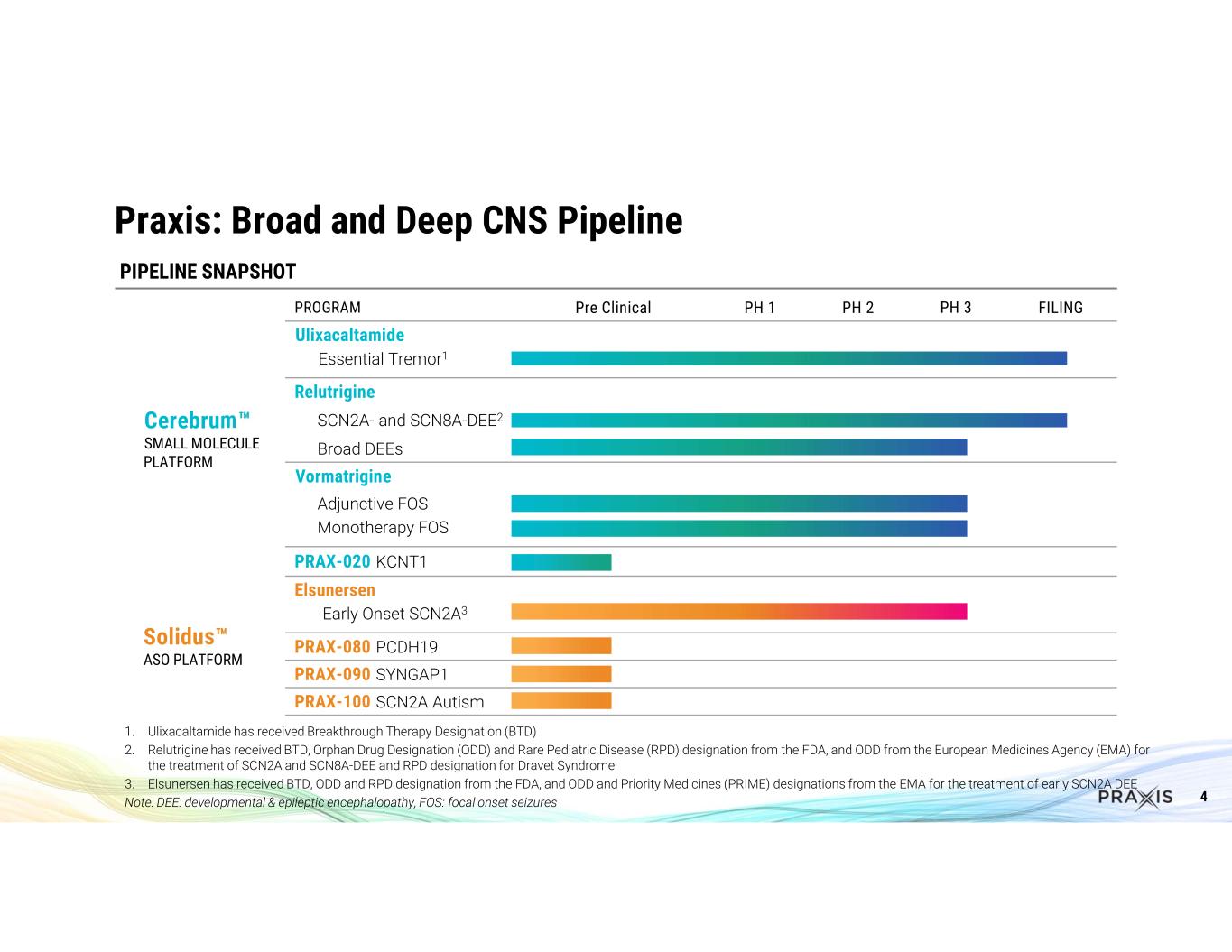
4 FILINGPH 3PH 2PH 1Pre ClinicalPROGRAM Ulixacaltamide Cerebrum SMALL MOLECULE PLATFORM Essential Tremor1 Relutrigine SCN2A- and SCN8A-DEE2 Broad DEEs Vormatrigine Adjunctive FOS Monotherapy FOS PRAX-020 KCNT1 Elsunersen Solidus ASO PLATFORM Early Onset SCN2A3 PRAX-080 PCDH19 PRAX-090 SYNGAP1 PRAX-100 SCN2A Autism 1. Ulixacaltamide has received Breakthrough Therapy Designation (BTD) 2. Relutrigine has received BTD, Orphan Drug Designation (ODD) and Rare Pediatric Disease (RPD) designation from the FDA, and ODD from the European Medicines Agency (EMA) for the treatment of SCN2A and SCN8A-DEE and RPD designation for Dravet Syndrome 3. Elsunersen has received BTD, ODD and RPD designation from the FDA, and ODD and Priority Medicines (PRIME) designations from the EMA for the treatment of early SCN2A DEE Note: DEE: developmental & epileptic encephalopathy, FOS: focal onset seizures PIPELINE SNAPSHOT Praxis: Broad and Deep CNS Pipeline
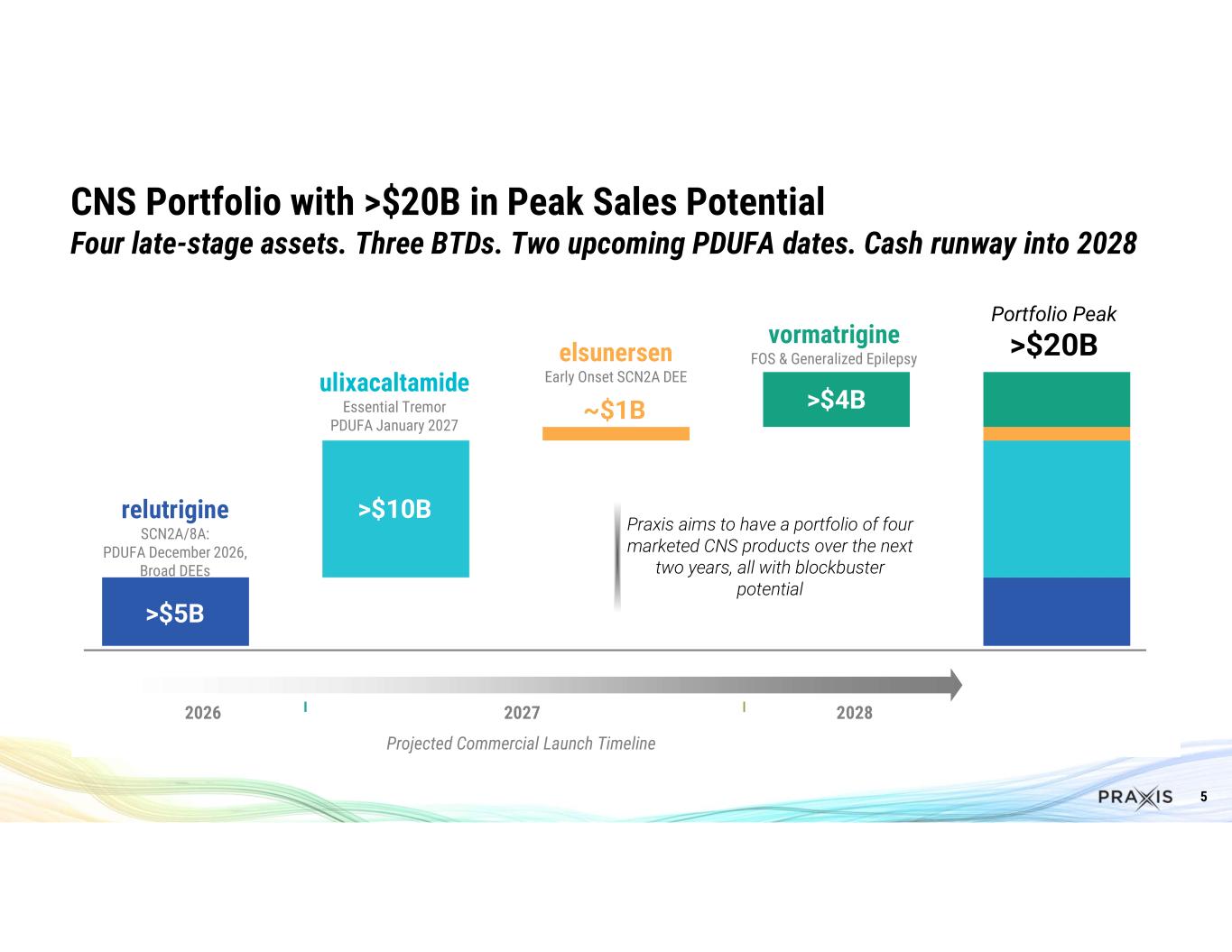
5 CNS Portfolio with >$20B in Peak Sales Potential Four late-stage assets. Three BTDs. Two upcoming PDUFA dates. Cash runway into 2028 ulixacaltamide Essential Tremor PDUFA January 2027 relutrigine SCN2A/8A: PDUFA December 2026, Broad DEEs vormatrigine FOS & Generalized Epilepsyelsunersen Early Onset SCN2A DEE >$10B >$5B ~$1B >$4B Portfolio Peak >$20B 2026 2027 2028 Projected Commercial Launch Timeline Praxis aims to have a portfolio of four marketed CNS products over the next two years, all with blockbuster potential
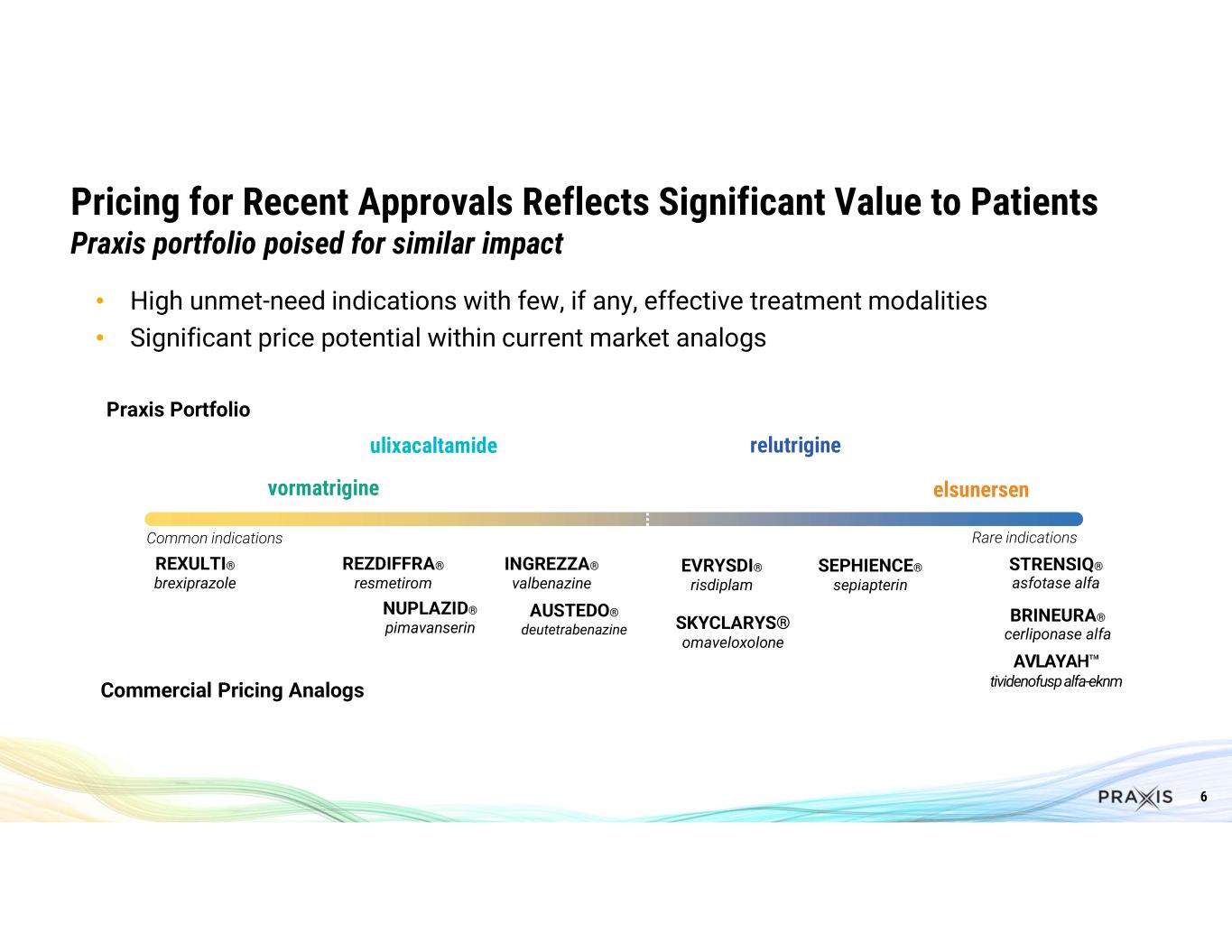
6 Pricing for Recent Approvals Reflects Significant Value to Patients Praxis portfolio poised for similar impact • High unmet-need indications with few, if any, effective treatment modalities • Significant price potential within current market analogs SKYCLARYS® omaveloxolone EVRYSDI® risdiplam SEPHIENCE® sepiapterin STRENSIQ® asfotase alfa BRINEURA® cerliponase alfa relutrigineulixacaltamide REZDIFFRA® resmetirom NUPLAZID® pimavanserin INGREZZA® valbenazine AUSTEDO® deutetrabenazine vormatrigine elsunersen Praxis Portfolio Commercial Pricing Analogs Common indications Rare indications REXULTI® brexiprazole AVLAYAH tividenofuspalfa-eknm
7 MOVEMENT DISORDERS: Ulixacaltamide for Essential Tremor
8 • An estimated 7 million people in the U.S. live with ET • Major functional impacts affecting writing, eating, drinking and social activities • High psychosocial burden (frustration, anxiety, embarrassment, isolation) • Significant proportion receive no or inadequate treatment Essential Tremor: A Major Unmet Need No ET-specific FDA-approved therapies
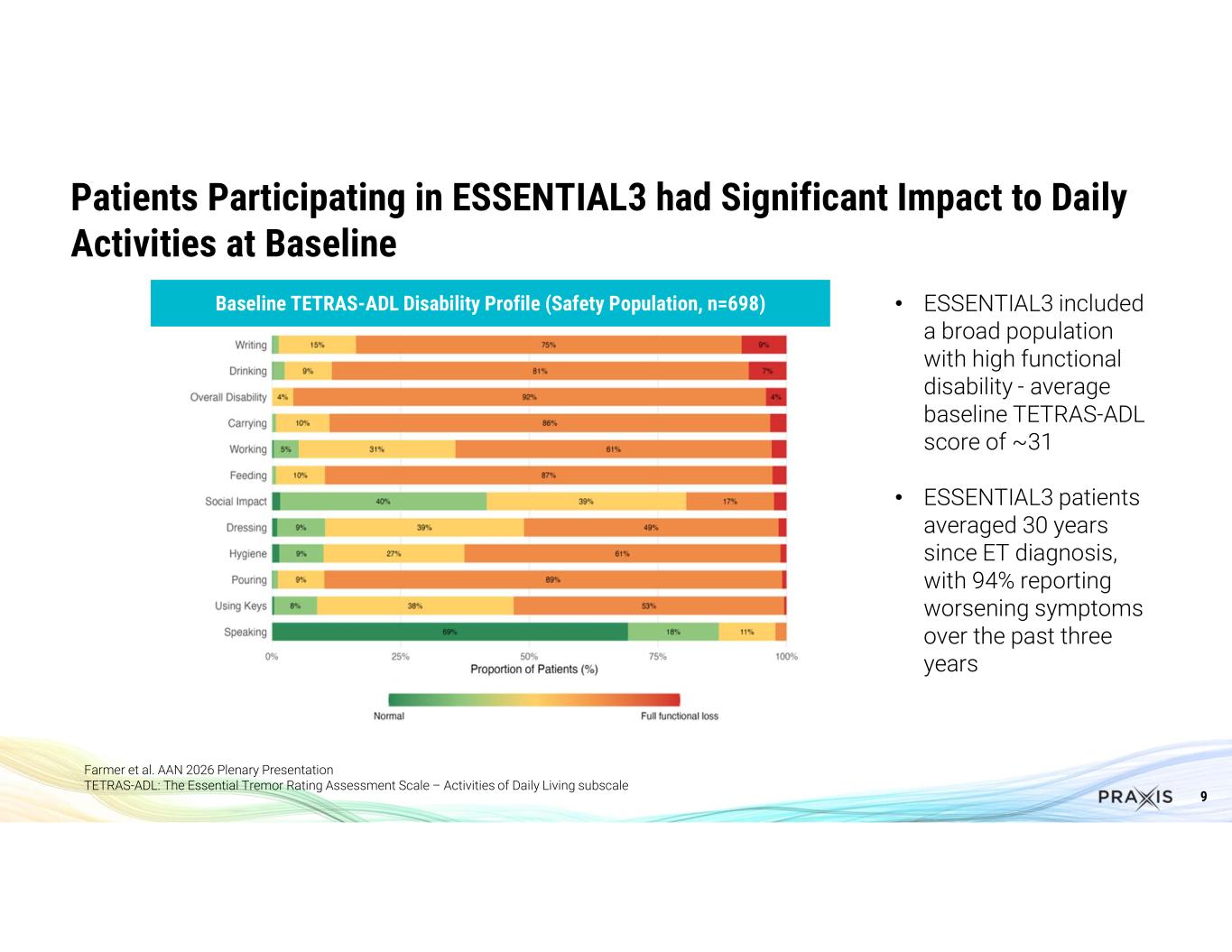
9 Patients Participating in ESSENTIAL3 had Significant Impact to Daily Activities at Baseline Farmer et al. AAN 2026 Plenary Presentation TETRAS-ADL: The Essential Tremor Rating Assessment Scale – Activities of Daily Living subscale Baseline TETRAS-ADL Disability Profile (Safety Population, n=698) • ESSENTIAL3 included a broad population with high functional disability - average baseline TETRAS-ADL score of ~31 • ESSENTIAL3 patients averaged 30 years since ET diagnosis, with 94% reporting worsening symptoms over the past three years
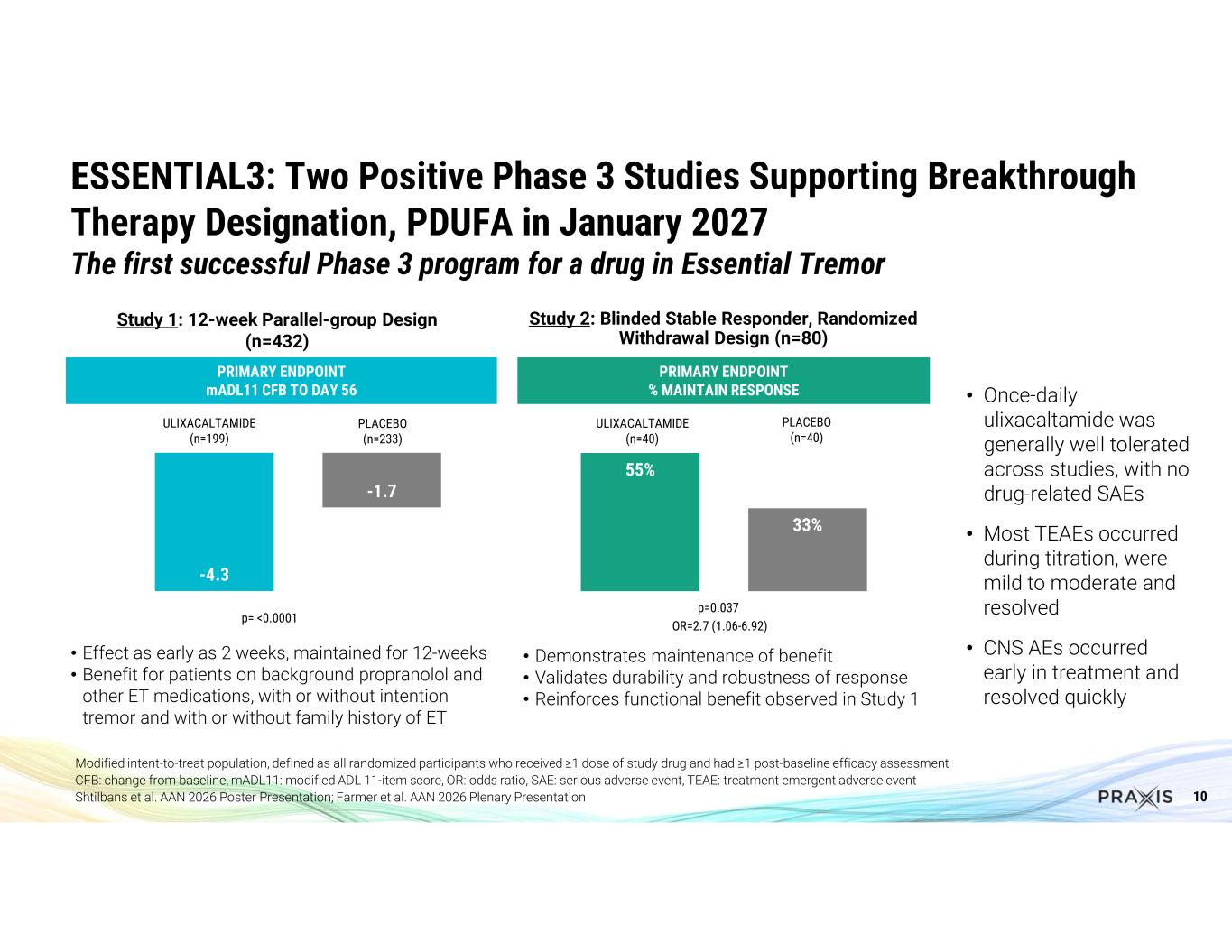
10 PRIMARY ENDPOINT % MAINTAIN RESPONSE ESSENTIAL3: Two Positive Phase 3 Studies Supporting Breakthrough Therapy Designation, PDUFA in January 2027 The first successful Phase 3 program for a drug in Essential Tremor -4.3 -1.7 p= <0.0001 ULIXACALTAMIDE (n=199) PLACEBO (n=233) 55% 33% p=0.037 ULIXACALTAMIDE (n=40) PLACEBO (n=40) OR=2.7 (1.06-6.92) • Effect as early as 2 weeks, maintained for 12-weeks • Benefit for patients on background propranolol and other ET medications, with or without intention tremor and with or without family history of ET • Demonstrates maintenance of benefit • Validates durability and robustness of response • Reinforces functional benefit observed in Study 1 Modified intent-to-treat population, defined as all randomized participants who received ≥1 dose of study drug and had ≥1 post-baseline efficacy assessment CFB: change from baseline, mADL11: modified ADL 11-item score, OR: odds ratio, SAE: serious adverse event, TEAE: treatment emergent adverse event Shtilbans et al. AAN 2026 Poster Presentation; Farmer et al. AAN 2026 Plenary Presentation PRIMARY ENDPOINT mADL11 CFB TO DAY 56 Study 1: 12-week Parallel-group Design (n=432) Study 2: Blinded Stable Responder, Randomized Withdrawal Design (n=80) • Once-daily ulixacaltamide was generally well tolerated across studies, with no drug-related SAEs • Most TEAEs occurred during titration, were mild to moderate and resolved • CNS AEs occurred early in treatment and resolved quickly
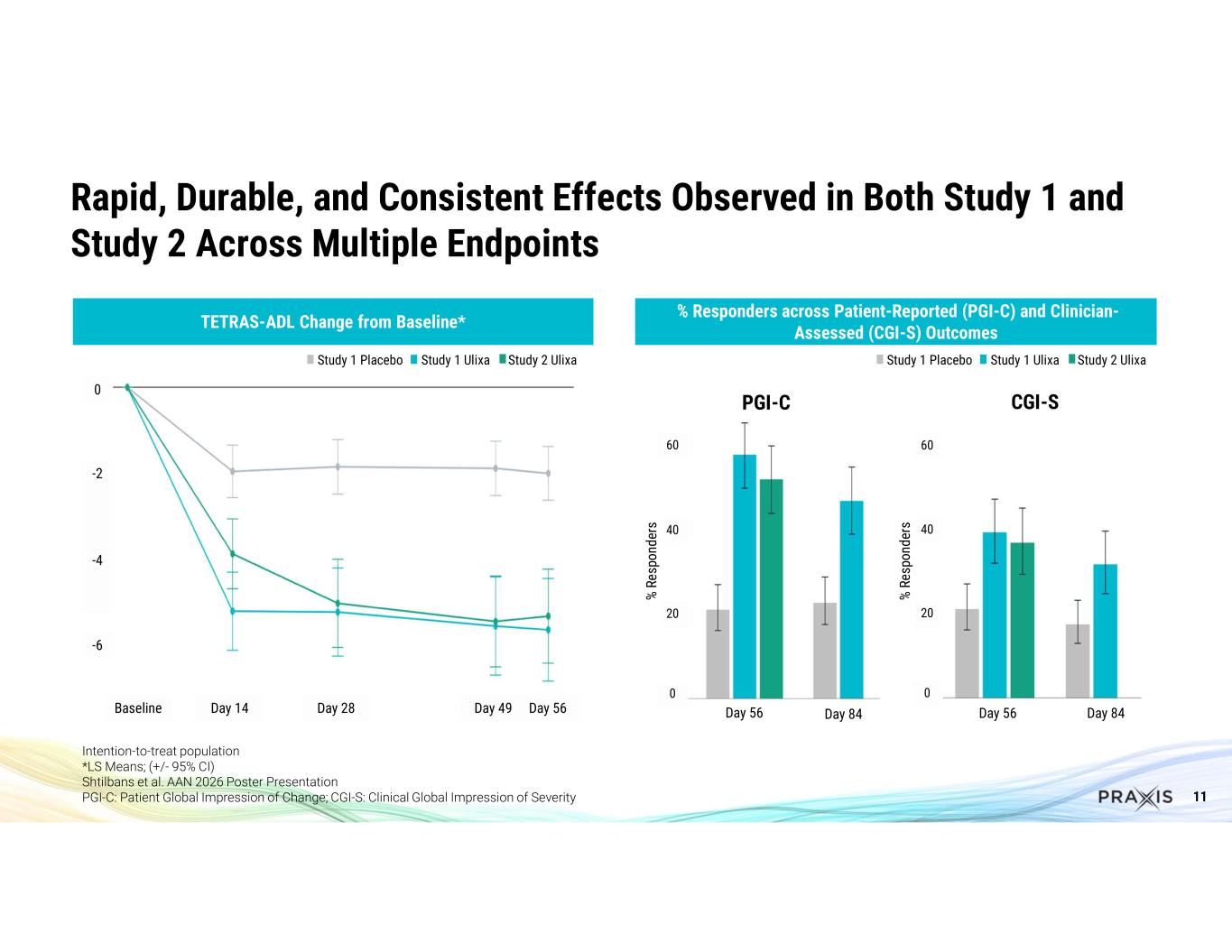
11 Rapid, Durable, and Consistent Effects Observed in Both Study 1 and Study 2 Across Multiple Endpoints Intention-to-treat population *LS Means; (+/- 95% CI) Shtilbans et al. AAN 2026 Poster Presentation PGI-C: Patient Global Impression of Change; CGI-S: Clinical Global Impression of Severity 0 -2 -4 -6 Baseline Day 14 Day 28 Day 49 Day 56 TETRAS-ADL Change from Baseline* Study 1 Placebo Study 1 Ulixa Study 2 Ulixa PGI-C Day 56 Day 84 60 40 20 0 CGI-S Day 56 Day 84 60 40 20 0 % R es po nd er s % Responders across Patient-Reported (PGI-C) and Clinician- Assessed (CGI-S) Outcomes Study 1 Placebo Study 1 Ulixa Study 2 Ulixa % R es po nd er s
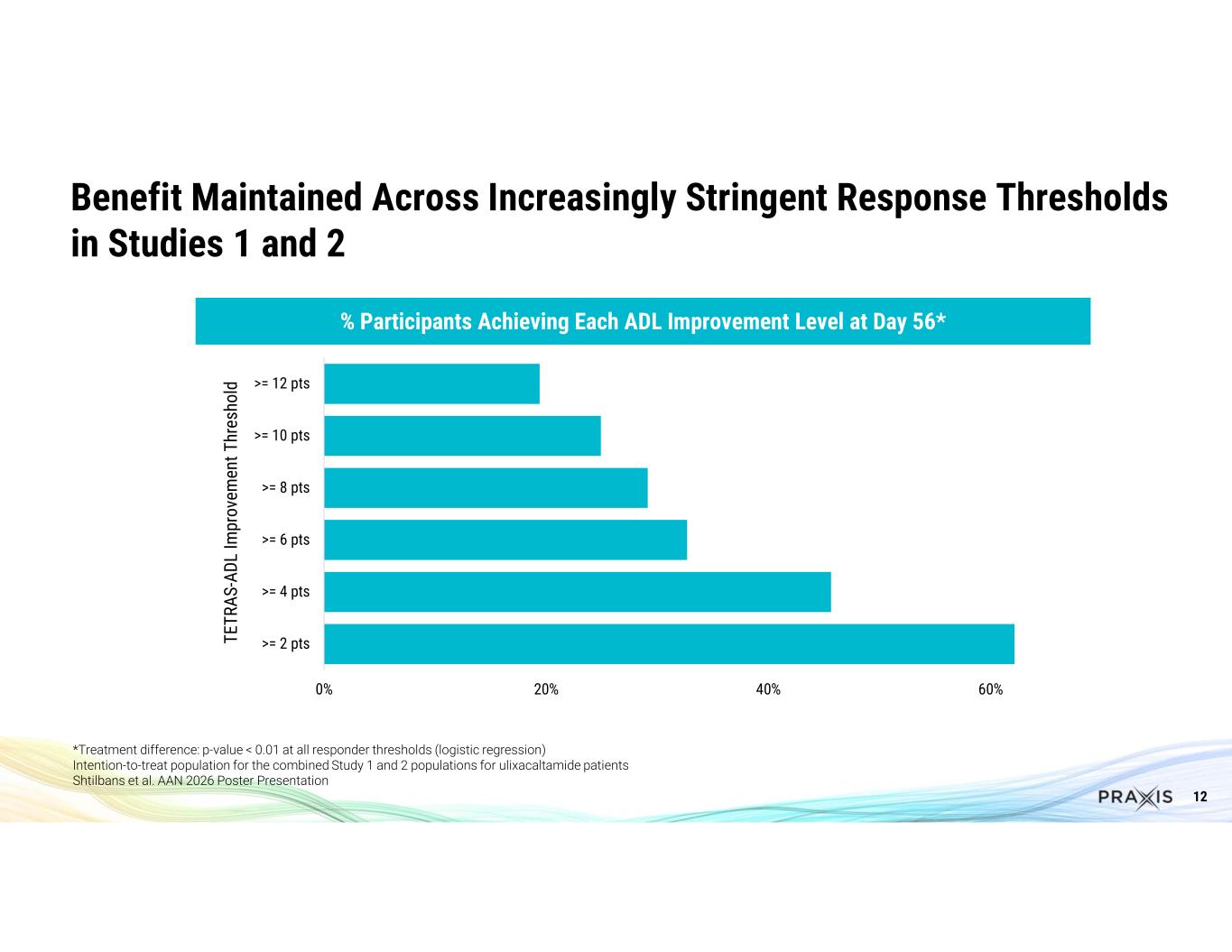
12 Benefit Maintained Across Increasingly Stringent Response Thresholds in Studies 1 and 2 *Treatment difference: p-value < 0.01 at all responder thresholds (logistic regression) Intention-to-treat population for the combined Study 1 and 2 populations for ulixacaltamide patients Shtilbans et al. AAN 2026 Poster Presentation 0% 20% 40% 60% >= 2 pts >= 4 pts >= 6 pts >= 8 pts >= 10 pts >= 12 pts TE TR AS -A DL Im pr ov em en t T hr es ho ld % Participants Achieving Each ADL Improvement Level at Day 56*
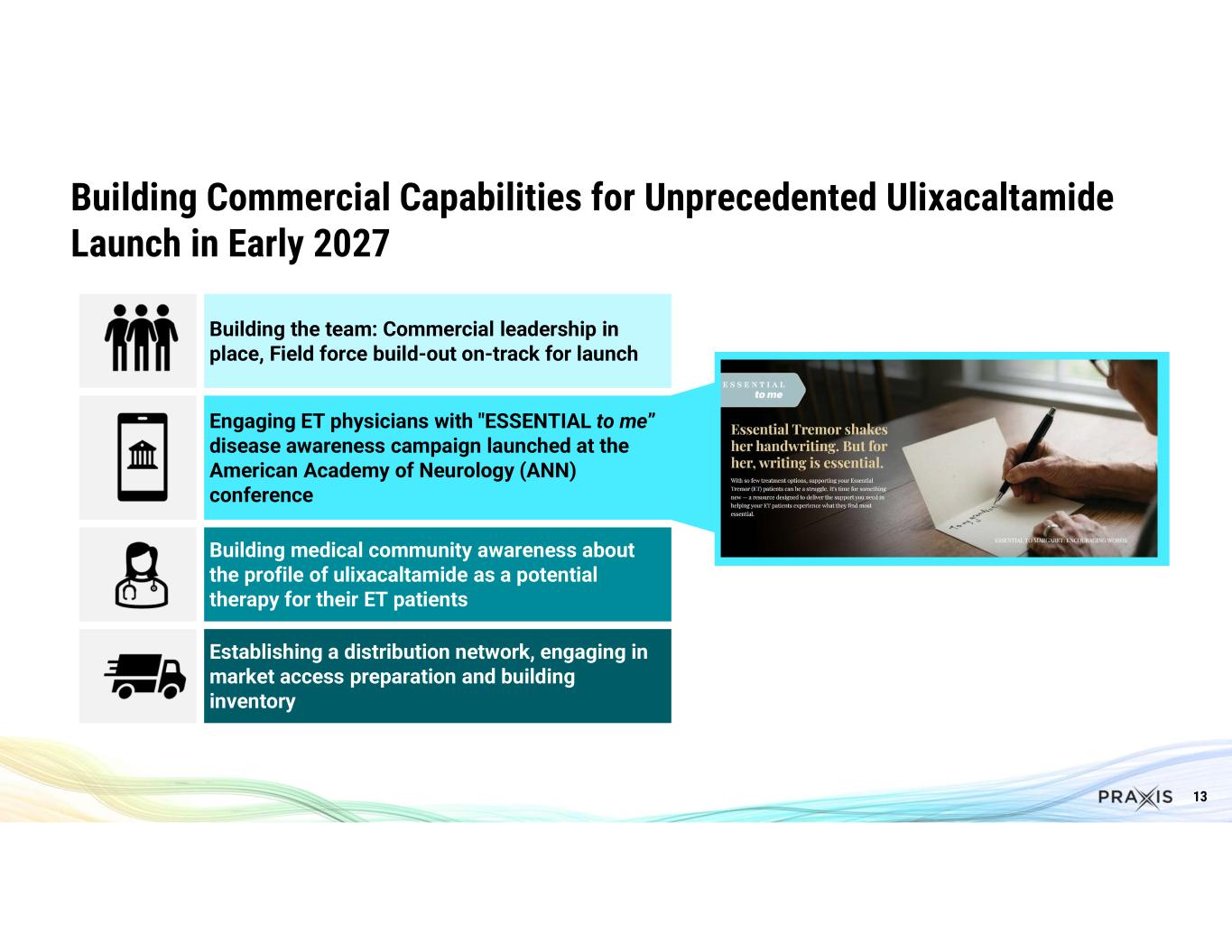
13 Building the team: Commercial leadership in place, Field force build-out on-track for launch Engaging ET physicians with "ESSENTIAL to me” disease awareness campaign launched at the American Academy of Neurology (ANN) conference Building medical community awareness about the profile of ulixacaltamide as a potential therapy for their ET patients Establishing a distribution network, engaging in market access preparation and building inventory Building Commercial Capabilities for Unprecedented Ulixacaltamide Launch in Early 2027
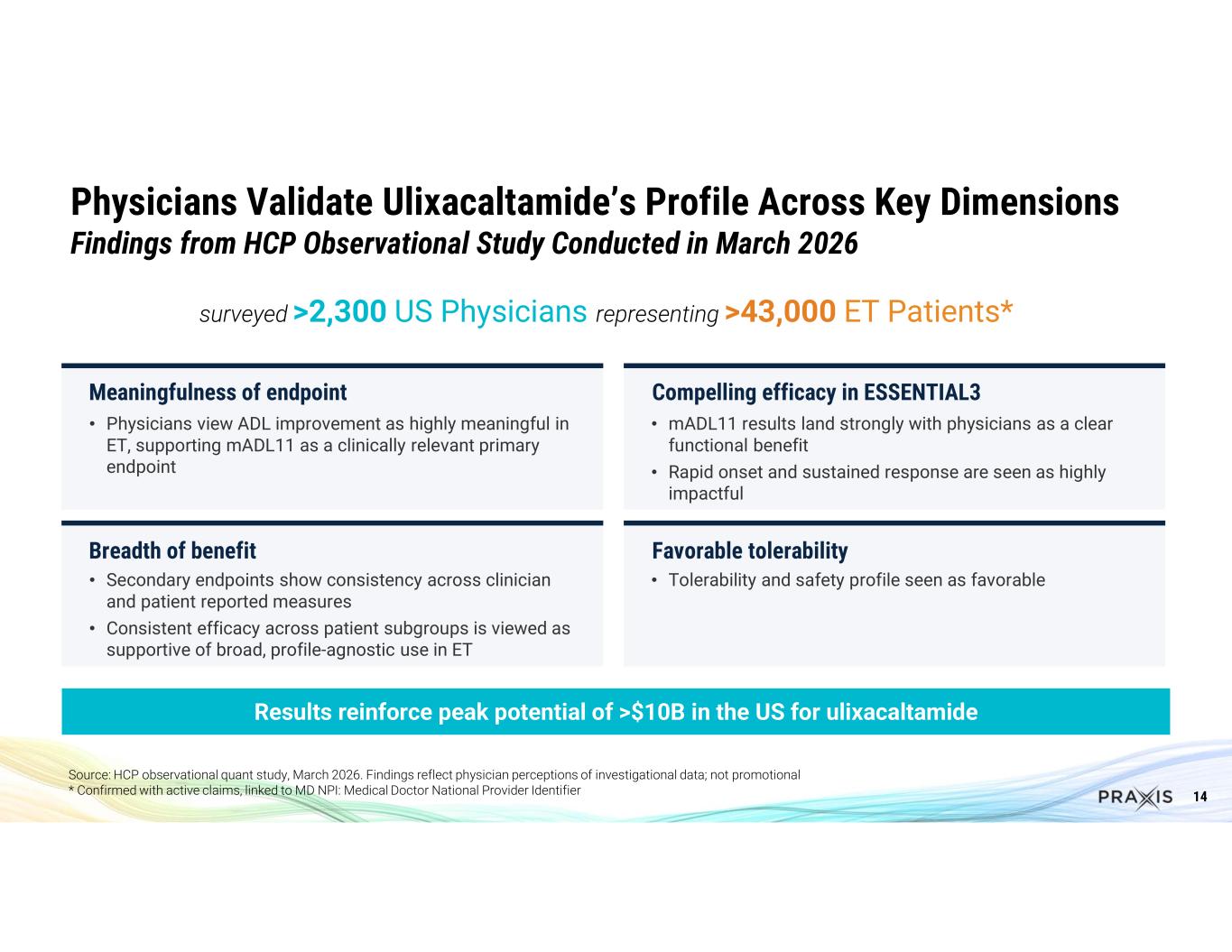
14 Physicians Validate Ulixacaltamide’s Profile Across Key Dimensions Findings from HCP Observational Study Conducted in March 2026 Results reinforce peak potential of >$10B in the US for ulixacaltamide surveyed >2,300 US Physicians representing >43,000 ET Patients* Meaningfulness of endpoint • Physicians view ADL improvement as highly meaningful in ET, supporting mADL11 as a clinically relevant primary endpoint Compelling efficacy in ESSENTIAL3 • mADL11 results land strongly with physicians as a clear functional benefit • Rapid onset and sustained response are seen as highly impactful Breadth of benefit • Secondary endpoints show consistency across clinician and patient reported measures • Consistent efficacy across patient subgroups is viewed as supportive of broad, profile-agnostic use in ET Favorable tolerability • Tolerability and safety profile seen as favorable Source: HCP observational quant study, March 2026. Findings reflect physician perceptions of investigational data; not promotional * Confirmed with active claims, linked to MD NPI: Medical Doctor National Provider Identifier
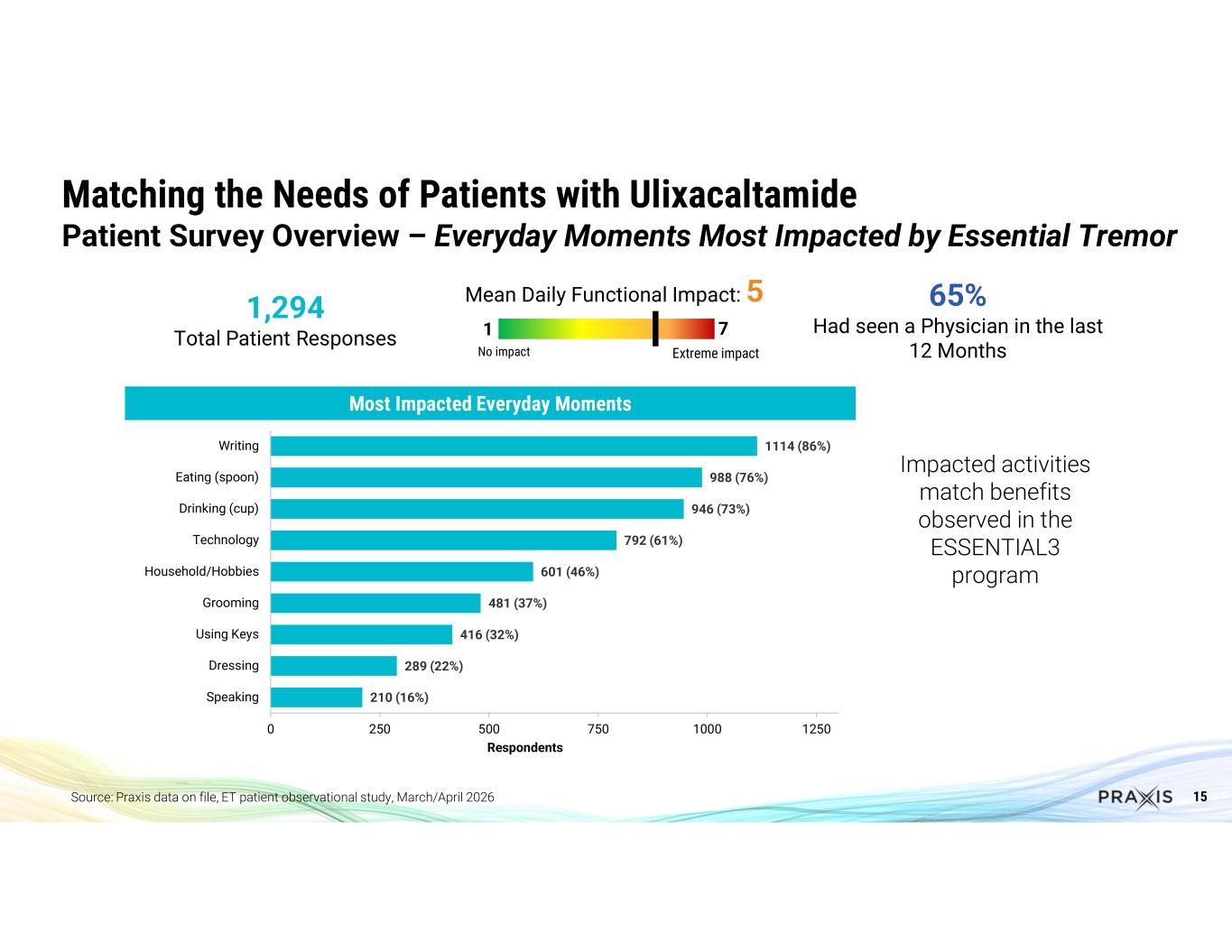
15 65% Had seen a Physician in the last 12 Months 1,294 Total Patient Responses Matching the Needs of Patients with Ulixacaltamide Patient Survey Overview – Everyday Moments Most Impacted by Essential Tremor 210 (16%) 289 (22%) 416 (32%) 481 (37%) 601 (46%) 792 (61%) 946 (73%) 988 (76%) 1114 (86%) 0 250 500 750 1000 1250 Speaking Dressing Using Keys Grooming Household/Hobbies Technology Drinking (cup) Eating (spoon) Writing Respondents Source: Praxis data on file, ET patient observational study, March/April 2026 Impacted activities match benefits observed in the ESSENTIAL3 program Most Impacted Everyday Moments Mean Daily Functional Impact: 5 No impact Extreme impact 1 7
16 DEVELOPMENTAL & EPILEPTIC ENCEPHALOPATHIES (DEEs): Relutrigine Elsunersen
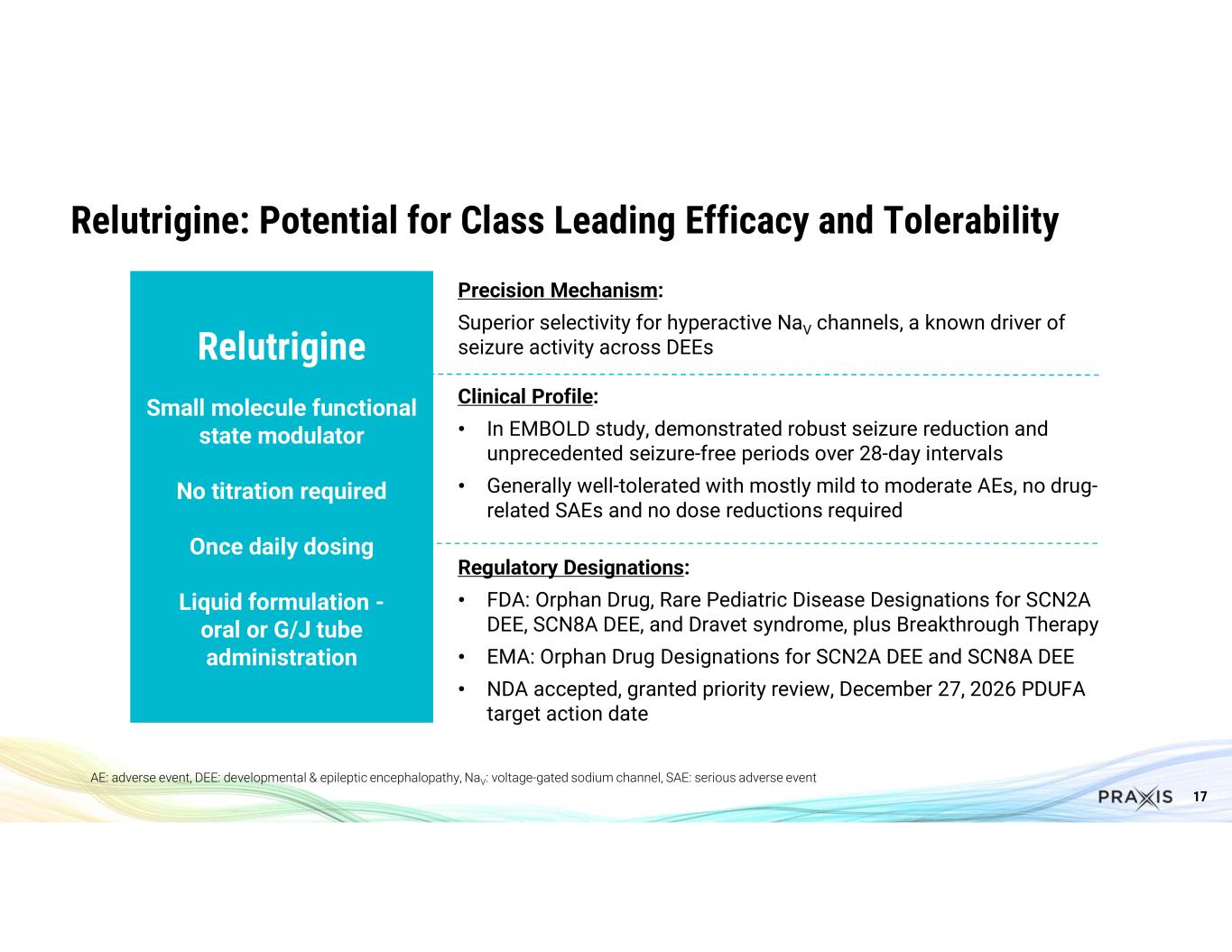
17 Relutrigine: Potential for Class Leading Efficacy and Tolerability AE: adverse event, DEE: developmental & epileptic encephalopathy, NaV: voltage-gated sodium channel, SAE: serious adverse event Relutrigine Small molecule functional state modulator No titration required Once daily dosing Liquid formulation - oral or G/J tube administration Precision Mechanism: Superior selectivity for hyperactive NaV channels, a known driver of seizure activity across DEEs Clinical Profile: • In EMBOLD study, demonstrated robust seizure reduction and unprecedented seizure-free periods over 28-day intervals • Generally well-tolerated with mostly mild to moderate AEs, no drug- related SAEs and no dose reductions required Regulatory Designations: • FDA: Orphan Drug, Rare Pediatric Disease Designations for SCN2A DEE, SCN8A DEE, and Dravet syndrome, plus Breakthrough Therapy • EMA: Orphan Drug Designations for SCN2A DEE and SCN8A DEE • NDA accepted, granted priority review, December 27, 2026 PDUFA target action date
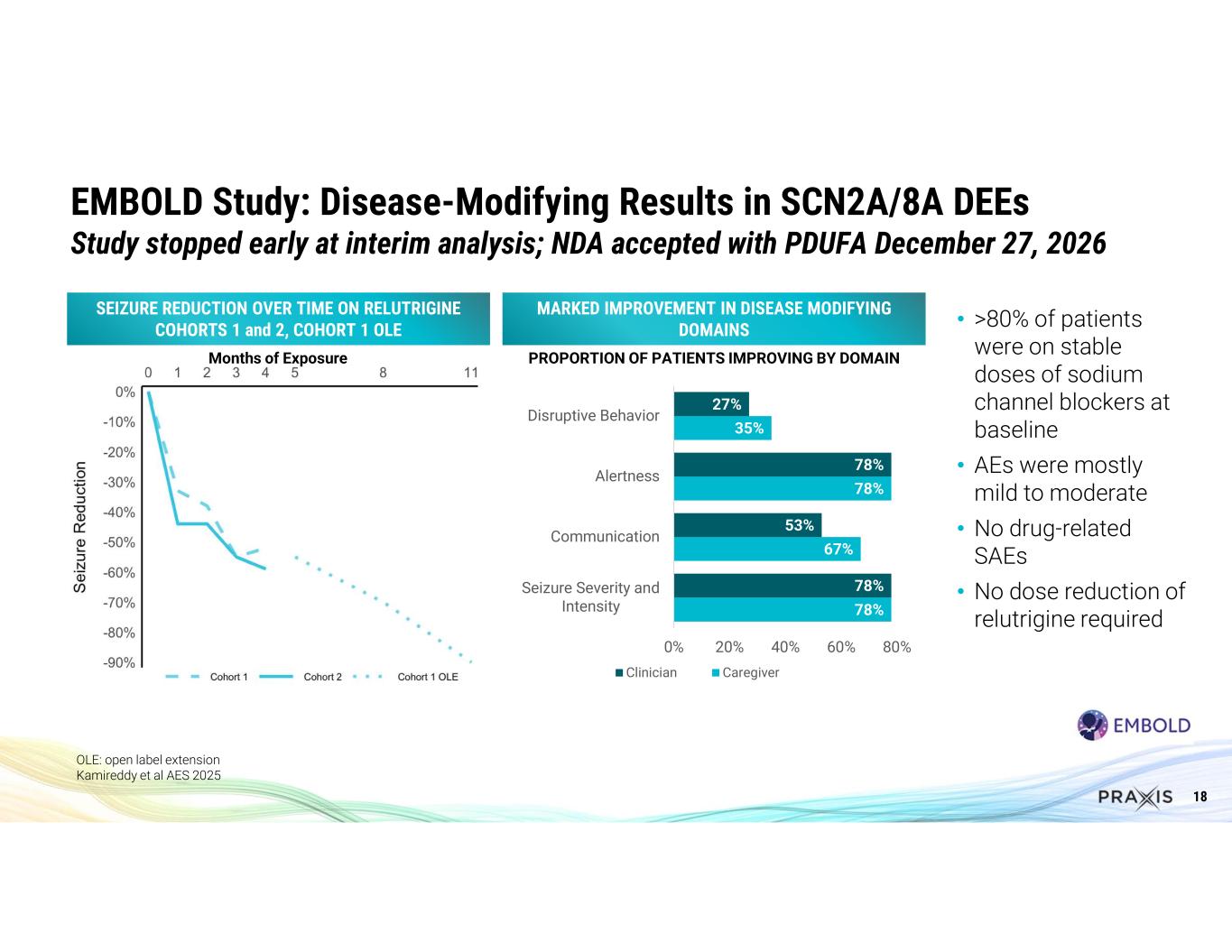
18 OLE: open label extension Kamireddy et al AES 2025 EMBOLD Study: Disease-Modifying Results in SCN2A/8A DEEs Study stopped early at interim analysis; NDA accepted with PDUFA December 27, 2026 • >80% of patients were on stable doses of sodium channel blockers at baseline • AEs were mostly mild to moderate • No drug-related SAEs • No dose reduction of relutrigine required MARKED IMPROVEMENT IN DISEASE MODIFYING DOMAINS 78% 67% 78% 35% 78% 53% 78% 27% 0% 20% 40% 60% 80% Seizure Severity and Intensity Communication Alertness Disruptive Behavior Clinician Caregiver SEIZURE REDUCTION OVER TIME ON RELUTRIGINE COHORTS 1 and 2, COHORT 1 OLE PROPORTION OF PATIENTS IMPROVING BY DOMAINMonths of Exposure
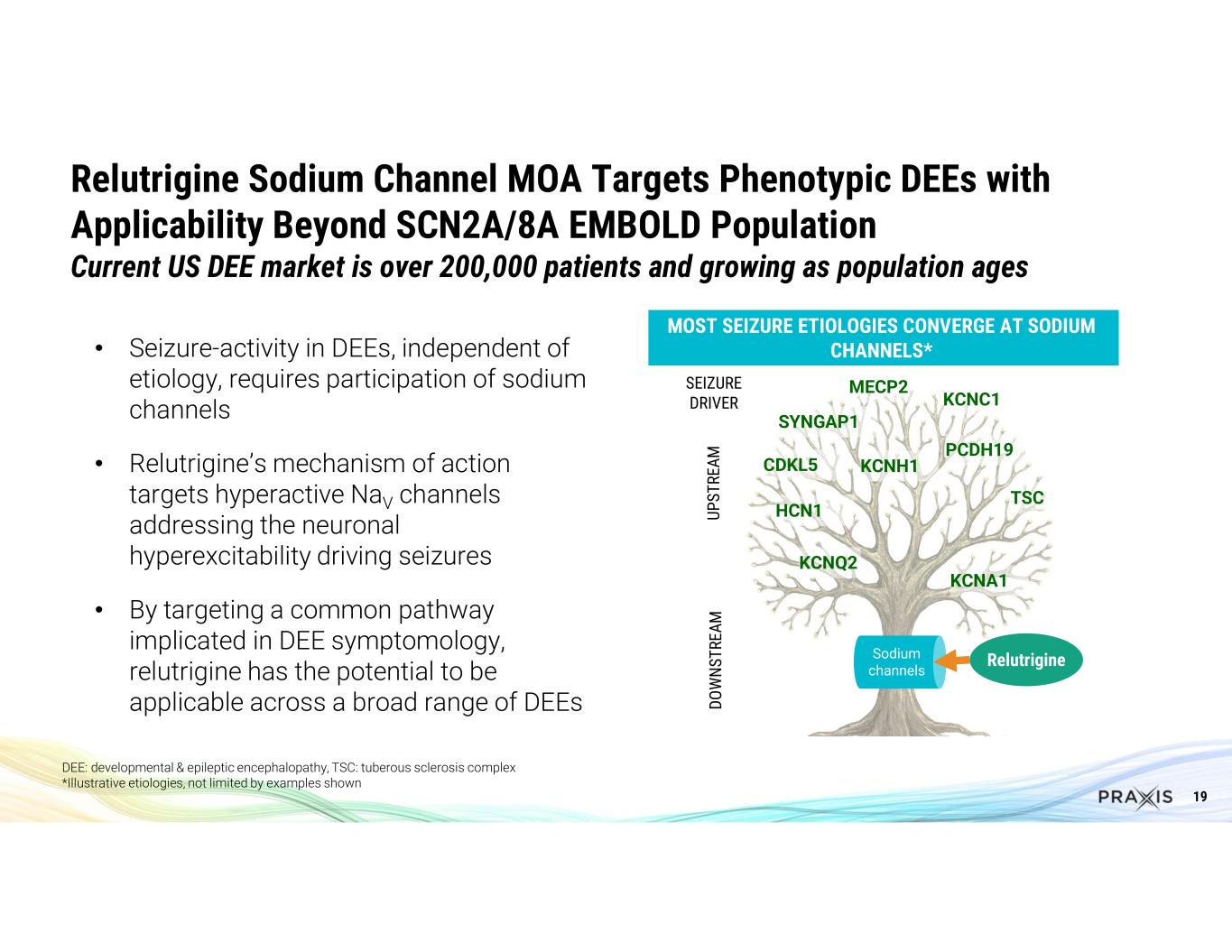
19 • Seizure-activity in DEEs, independent of etiology, requires participation of sodium channels • Relutrigine’s mechanism of action targets hyperactive NaV channels addressing the neuronal hyperexcitability driving seizures • By targeting a common pathway implicated in DEE symptomology, relutrigine has the potential to be applicable across a broad range of DEEs Relutrigine Sodium Channel MOA Targets Phenotypic DEEs with Applicability Beyond SCN2A/8A EMBOLD Population Current US DEE market is over 200,000 patients and growing as population ages DEE: developmental & epileptic encephalopathy, TSC: tuberous sclerosis complex *Illustrative etiologies, not limited by examples shown CDKL5 KCNQ2 TSC MECP2 UP ST RE AM DO W N ST RE AM KCNH1 KCNC1 KCNA1 HCN1 PCDH19 SYNGAP1 SEIZURE DRIVER MOST SEIZURE ETIOLOGIES CONVERGE AT SODIUM CHANNELS* Sodium channels Relutrigine
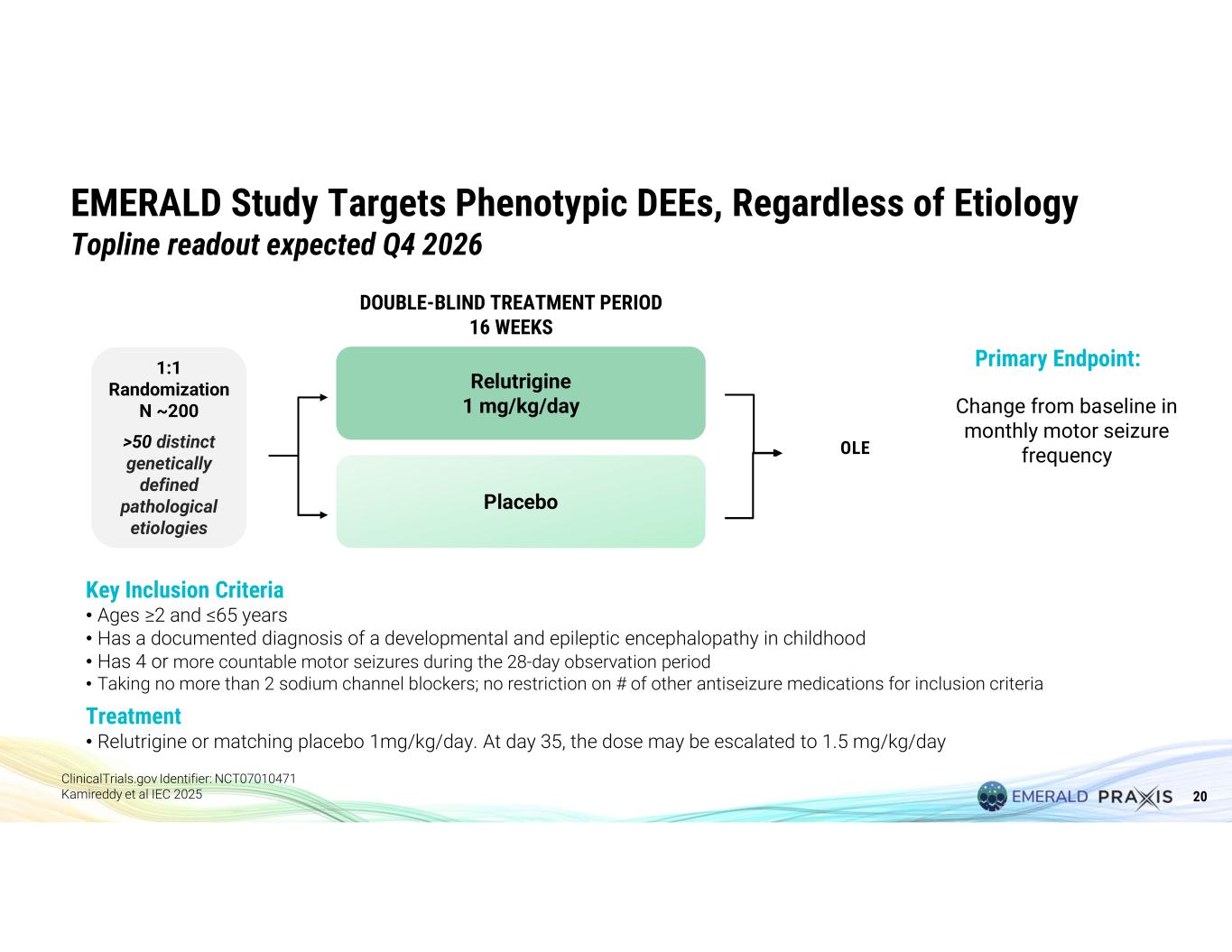
20 EMERALD Study Targets Phenotypic DEEs, Regardless of Etiology Topline readout expected Q4 2026 Key Inclusion Criteria • Ages ≥2 and ≤65 years • Has a documented diagnosis of a developmental and epileptic encephalopathy in childhood • Has 4 or more countable motor seizures during the 28-day observation period • Taking no more than 2 sodium channel blockers; no restriction on # of other antiseizure medications for inclusion criteria Treatment • Relutrigine or matching placebo 1mg/kg/day. At day 35, the dose may be escalated to 1.5 mg/kg/day Relutrigine 1 mg/kg/day 1:1 Randomization N ~200 >50 distinct genetically defined pathological etiologies Placebo OLE DOUBLE-BLIND TREATMENT PERIOD 16 WEEKS Primary Endpoint: Change from baseline in monthly motor seizure frequency ClinicalTrials.gov Identifier: NCT07010471 Kamireddy et al IEC 2025
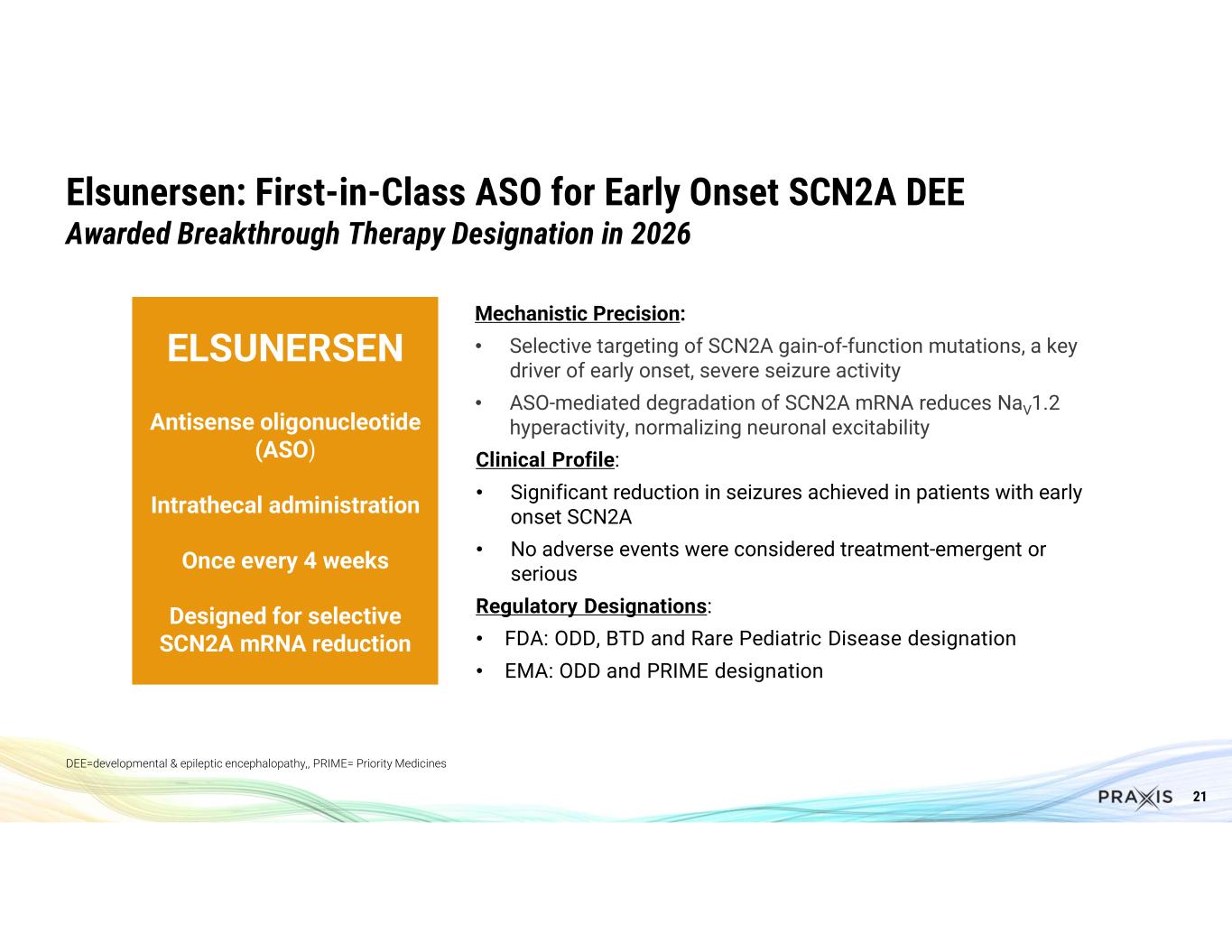
21 Mechanistic Precision: • Selective targeting of SCN2A gain-of-function mutations, a key driver of early onset, severe seizure activity • ASO-mediated degradation of SCN2A mRNA reduces NaV1.2 hyperactivity, normalizing neuronal excitability Clinical Profile: • Significant reduction in seizures achieved in patients with early onset SCN2A • No adverse events were considered treatment-emergent or serious Regulatory Designations: • FDA: ODD, BTD and Rare Pediatric Disease designation • EMA: ODD and PRIME designation Elsunersen: First-in-Class ASO for Early Onset SCN2A DEE Awarded Breakthrough Therapy Designation in 2026 ELSUNERSEN Antisense oligonucleotide (ASO) Intrathecal administration Once every 4 weeks Designed for selective SCN2A mRNA reduction DEE=developmental & epileptic encephalopathy,, PRIME= Priority Medicines
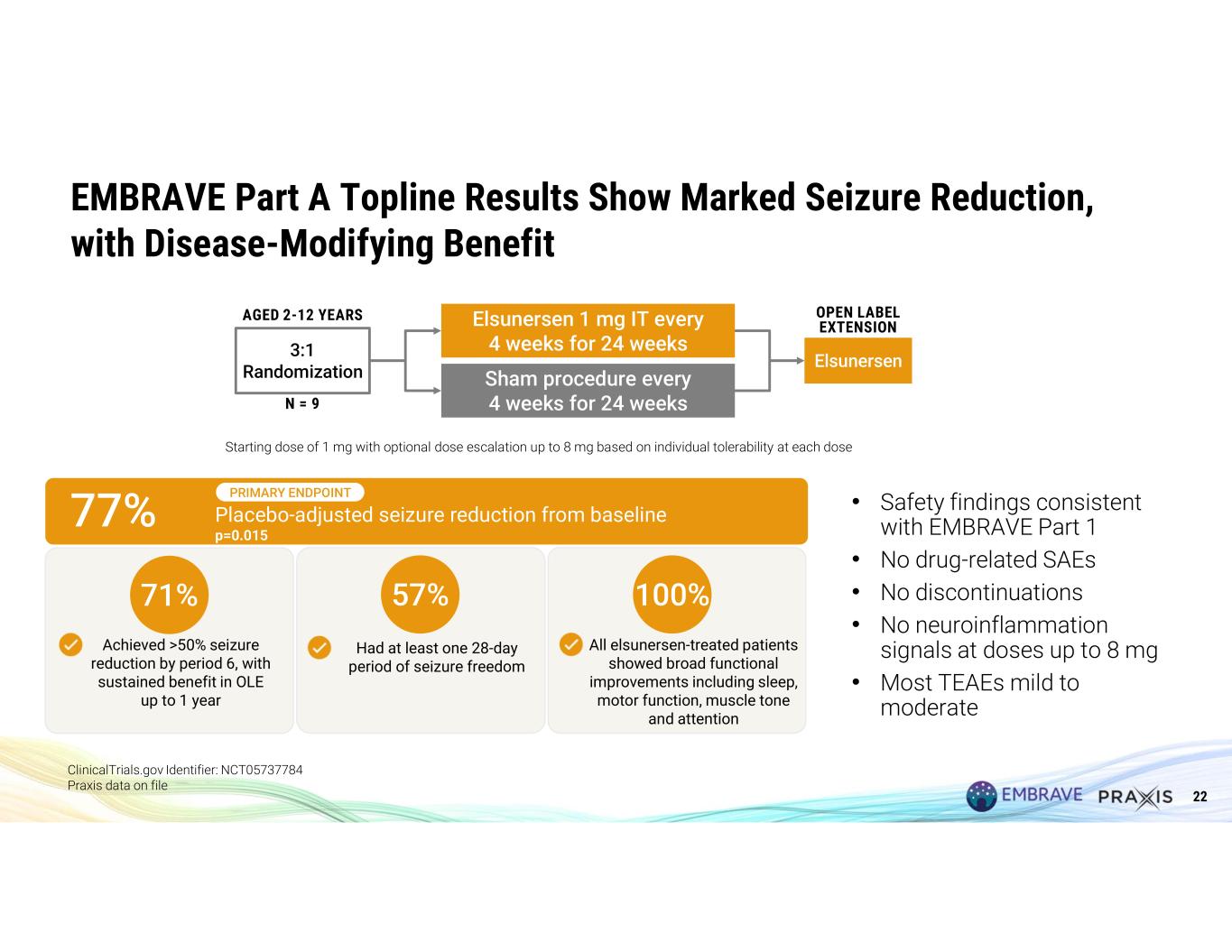
22 EMBRAVE Part A Topline Results Show Marked Seizure Reduction, with Disease-Modifying Benefit ClinicalTrials.gov Identifier: NCT05737784 Praxis data on file Elsunersen 3:1 Randomization OPEN LABEL EXTENSIONElsunersen 1 mg IT every 4 weeks for 24 weeks Sham procedure every 4 weeks for 24 weeks AGED 2-12 YEARS N = 9 Starting dose of 1 mg with optional dose escalation up to 8 mg based on individual tolerability at each dose 77% Placebo-adjusted seizure reduction from baseline p=0.015 PRIMARY ENDPOINT All elsunersen-treated patients showed broad functional improvements including sleep, motor function, muscle tone and attention Achieved >50% seizure reduction by period 6, with sustained benefit in OLE up to 1 year Had at least one 28-day period of seizure freedom 71% 57% 100% • Safety findings consistent with EMBRAVE Part 1 • No drug-related SAEs • No discontinuations • No neuroinflammation signals at doses up to 8 mg • Most TEAEs mild to moderate
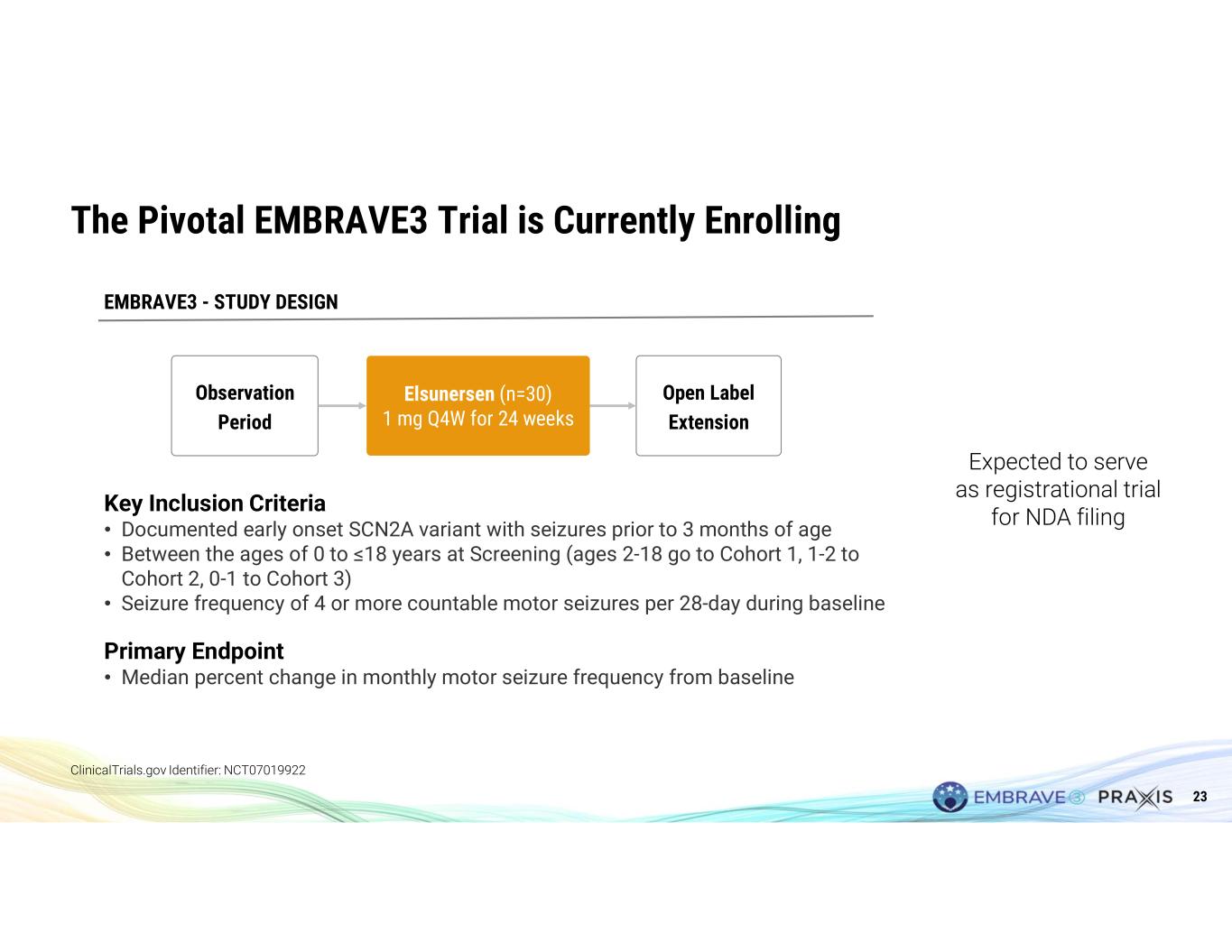
23 The Pivotal EMBRAVE3 Trial is Currently Enrolling ClinicalTrials.gov Identifier: NCT07019922 EMBRAVE3 - STUDY DESIGN Key Inclusion Criteria • Documented early onset SCN2A variant with seizures prior to 3 months of age • Between the ages of 0 to ≤18 years at Screening (ages 2-18 go to Cohort 1, 1-2 to Cohort 2, 0-1 to Cohort 3) • Seizure frequency of 4 or more countable motor seizures per 28-day during baseline Primary Endpoint • Median percent change in monthly motor seizure frequency from baseline Elsunersen (n=30) 1 mg Q4W for 24 weeks Open Label Extension Observation Period Expected to serve as registrational trial for NDA filing
24 COMMON EPILEPSY: Vormatrigine
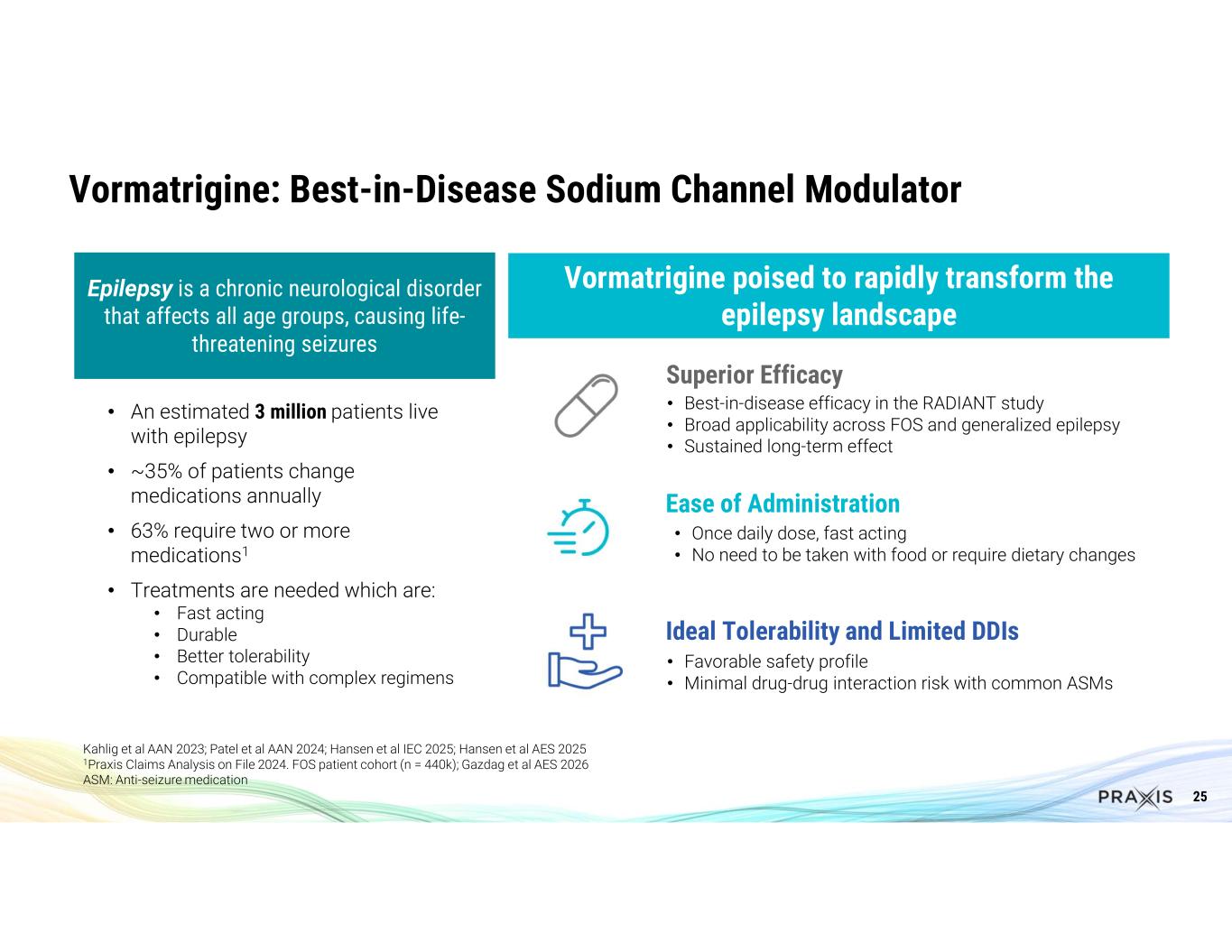
25 Kahlig et al AAN 2023; Patel et al AAN 2024; Hansen et al IEC 2025; Hansen et al AES 2025 1Praxis Claims Analysis on File 2024. FOS patient cohort (n = 440k); Gazdag et al AES 2026 ASM: Anti-seizure medication • An estimated 3 million patients live with epilepsy • ~35% of patients change medications annually • 63% require two or more medications1 • Treatments are needed which are: • Fast acting • Durable • Better tolerability • Compatible with complex regimens Vormatrigine poised to rapidly transform the epilepsy landscape • Once daily dose, fast acting • No need to be taken with food or require dietary changes Ease of Administration • Favorable safety profile • Minimal drug-drug interaction risk with common ASMs Ideal Tolerability and Limited DDIs Vormatrigine: Best-in-Disease Sodium Channel Modulator • Best-in-disease efficacy in the RADIANT study • Broad applicability across FOS and generalized epilepsy • Sustained long-term effect Superior Efficacy Epilepsy is a chronic neurological disorder that affects all age groups, causing life- threatening seizures
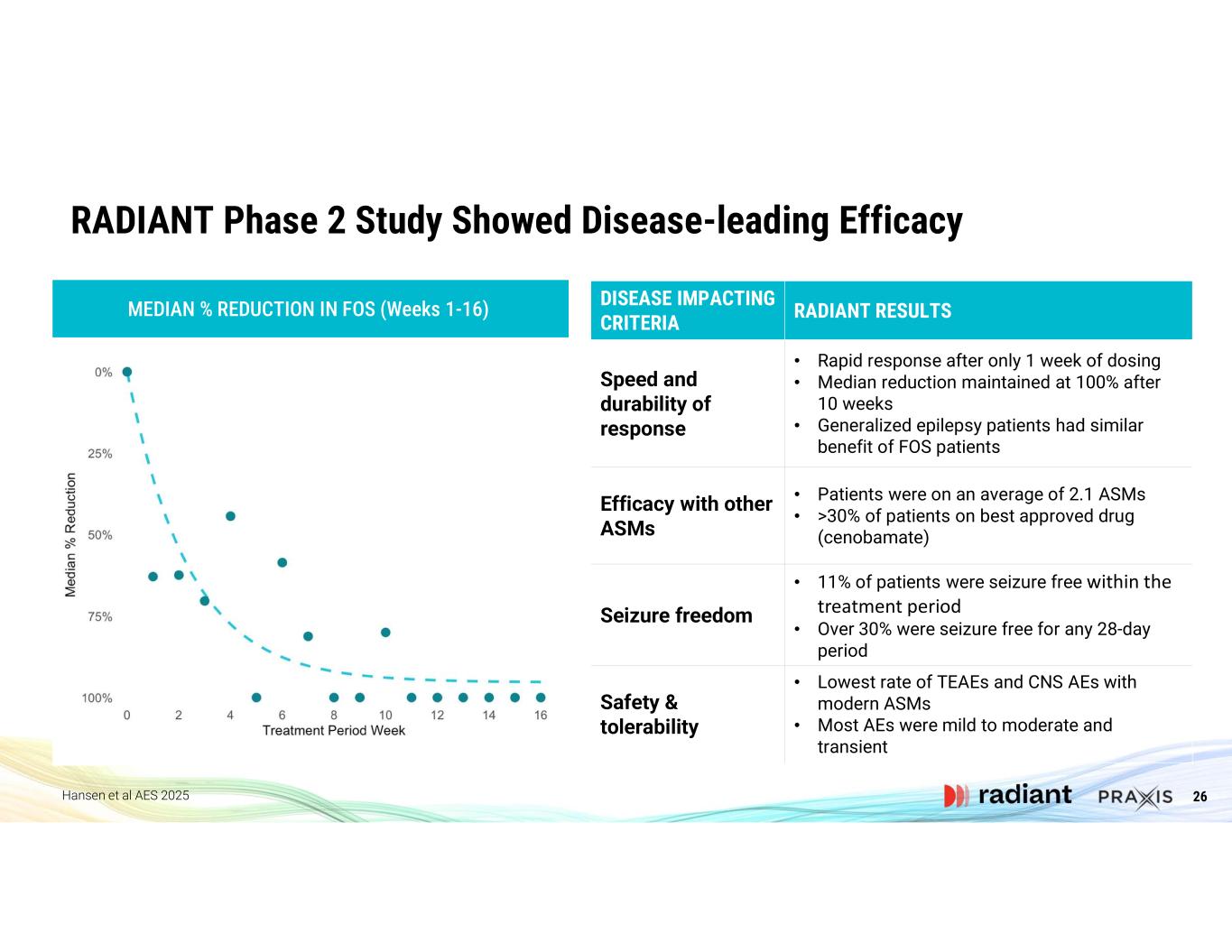
26 MEDIAN % REDUCTION IN FOS (Weeks 1-16) RADIANT Phase 2 Study Showed Disease-leading Efficacy Hansen et al AES 2025 RADIANT RESULTS DISEASE IMPACTING CRITERIA • Rapid response after only 1 week of dosing • Median reduction maintained at 100% after 10 weeks • Generalized epilepsy patients had similar benefit of FOS patients Speed and durability of response • Patients were on an average of 2.1 ASMs • >30% of patients on best approved drug (cenobamate) Efficacy with other ASMs • 11% of patients were seizure free within the treatment period • Over 30% were seizure free for any 28-day period Seizure freedom • Lowest rate of TEAEs and CNS AEs with modern ASMs • Most AEs were mild to moderate and transient Safety & tolerability
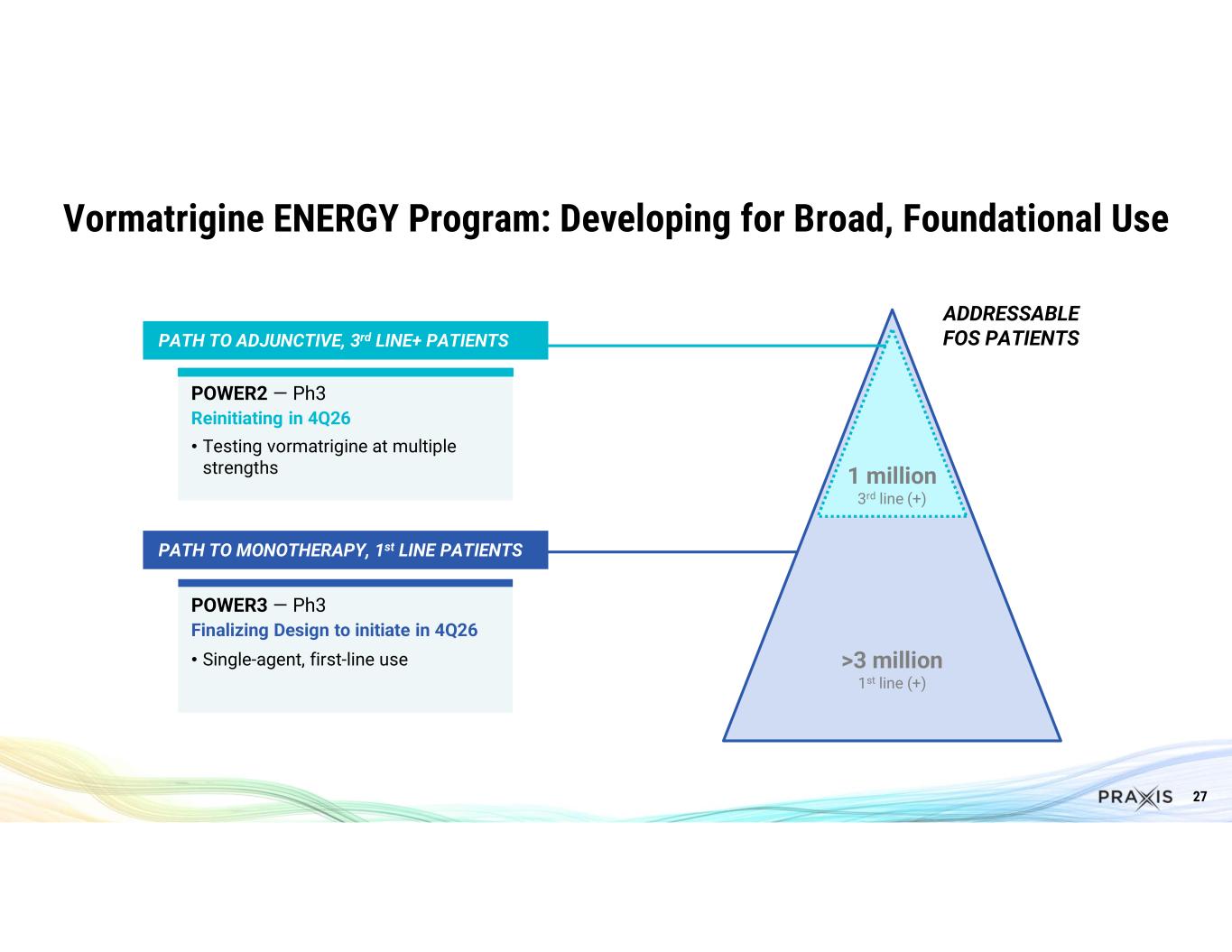
27 Vormatrigine ENERGY Program: Developing for Broad, Foundational Use POWER2 — Ph3 Reinitiating in 4Q26 • Testing vormatrigine at multiple strengths POWER3 — Ph3 Finalizing Design to initiate in 4Q26 • Single-agent, first-line use ADDRESSABLE FOS PATIENTSPATH TO ADJUNCTIVE, 3rd LINE+ PATIENTS PATH TO MONOTHERAPY, 1st LINE PATIENTS 1 million 3rd line (+) >3 million 1st line (+)
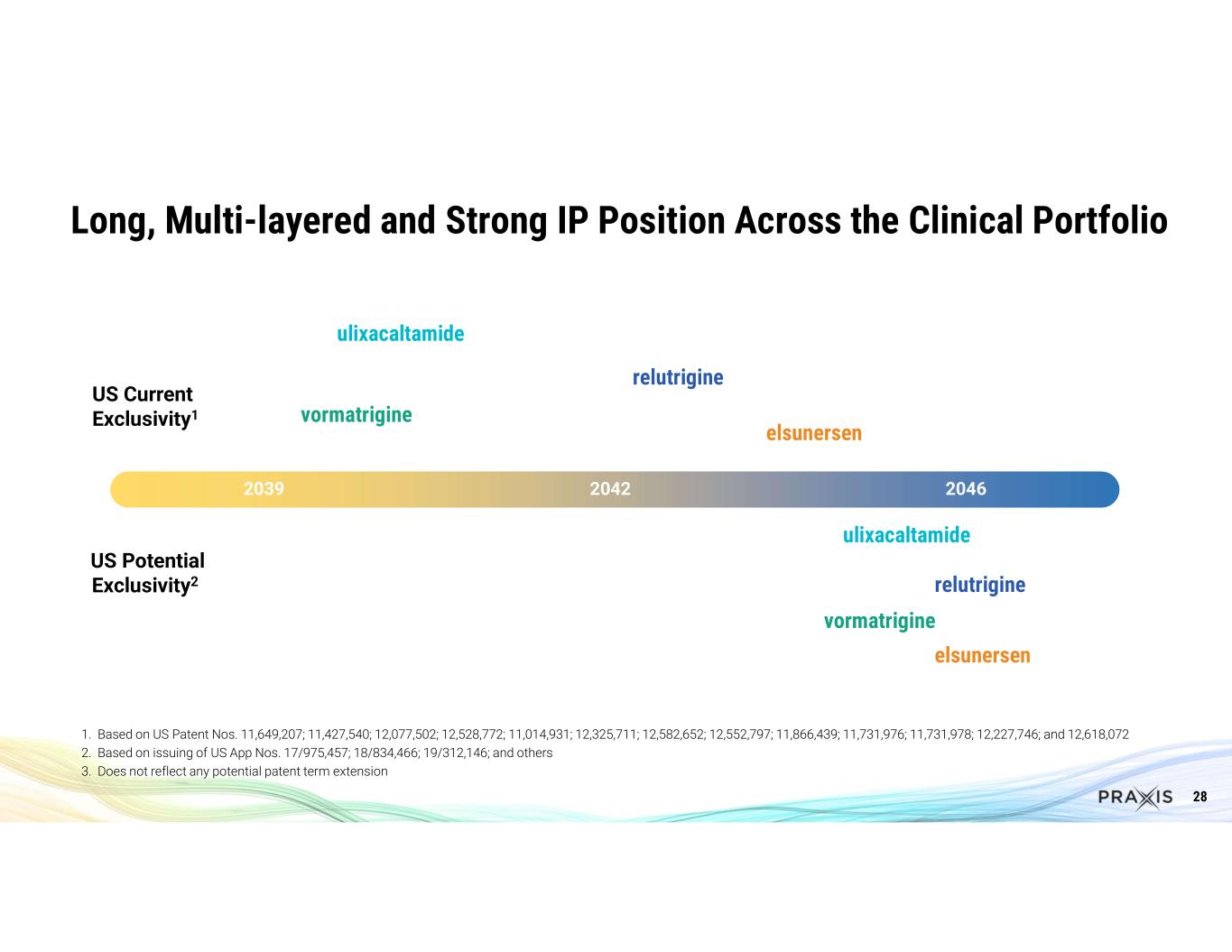
28 Long, Multi-layered and Strong IP Position Across the Clinical Portfolio 2039 2042 2046 relutrigine ulixacaltamide vormatrigine US Current Exclusivity1 US Potential Exclusivity2 ulixacaltamide relutrigine vormatrigine elsunersen elsunersen 1. Based on US Patent Nos. 11,649,207; 11,427,540; 12,077,502; 12,528,772; 11,014,931; 12,325,711; 12,582,652; 12,552,797; 11,866,439; 11,731,976; 11,731,978; 12,227,746; and 12,618,072 2. Based on issuing of US App Nos. 17/975,457; 18/834,466; 19/312,146; and others 3. Does not reflect any potential patent term extension
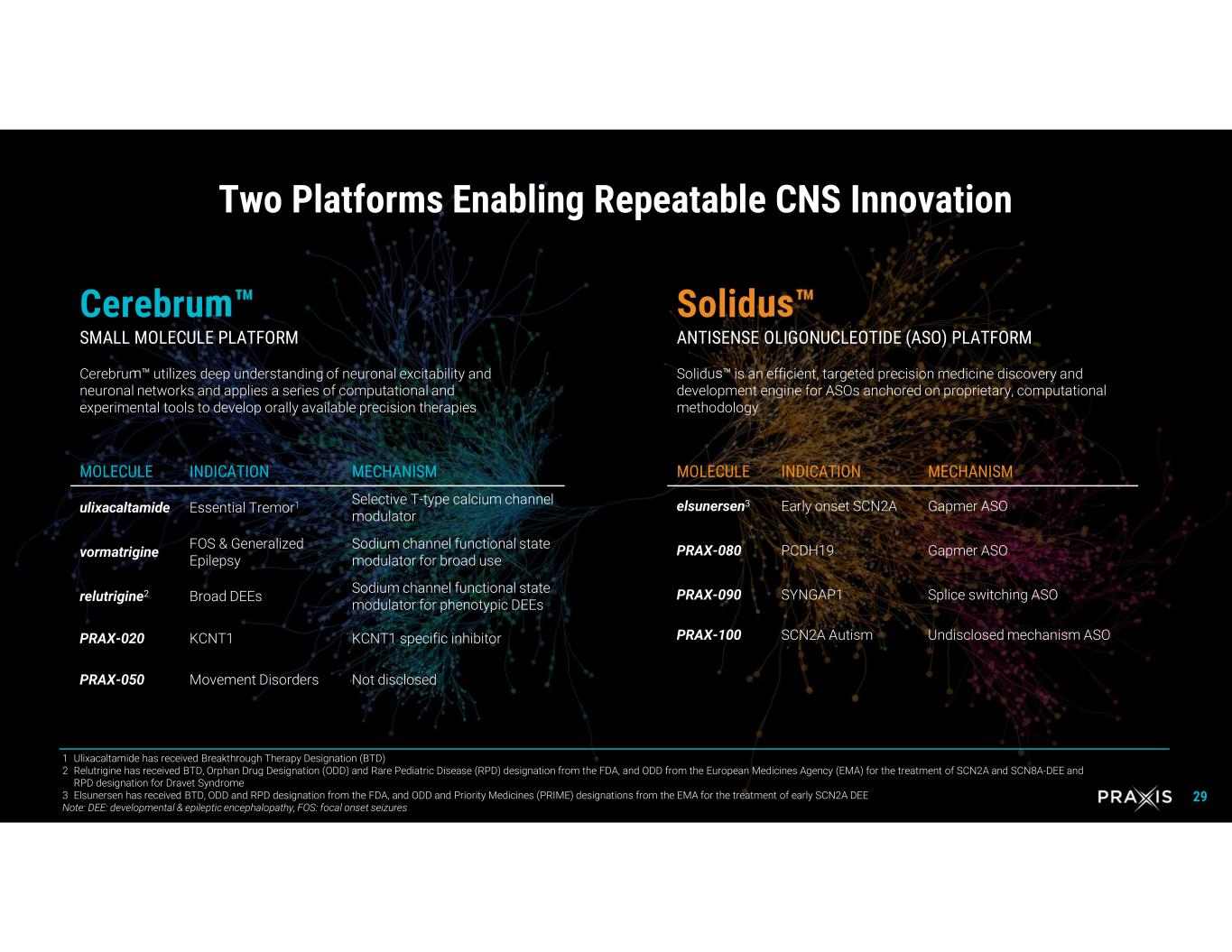
29 Two Platforms Enabling Repeatable CNS Innovation 1 Ulixacaltamide has received Breakthrough Therapy Designation (BTD) 2 Relutrigine has received BTD, Orphan Drug Designation (ODD) and Rare Pediatric Disease (RPD) designation from the FDA, and ODD from the European Medicines Agency (EMA) for the treatment of SCN2A and SCN8A-DEE and RPD designation for Dravet Syndrome 3 Elsunersen has received BTD, ODD and RPD designation from the FDA, and ODD and Priority Medicines (PRIME) designations from the EMA for the treatment of early SCN2A DEE Note: DEE: developmental & epileptic encephalopathy, FOS: focal onset seizures Cerebrum SMALL MOLECULE PLATFORM Cerebrum utilizes deep understanding of neuronal excitability and neuronal networks and applies a series of computational and experimental tools to develop orally available precision therapies Solidus ANTISENSE OLIGONUCLEOTIDE (ASO) PLATFORM Solidus is an efficient, targeted precision medicine discovery and development engine for ASOs anchored on proprietary, computational methodology MECHANISMINDICATIONMOLECULE Selective T-type calcium channel modulator Essential Tremor1ulixacaltamide Sodium channel functional state modulator for broad use FOS & Generalized Epilepsy vormatrigine Sodium channel functional state modulator for phenotypic DEEs Broad DEEsrelutrigine2 KCNT1 specific inhibitorKCNT1PRAX-020 Not disclosedMovement Disorders PRAX-050 MECHANISMINDICATIONMOLECULE Gapmer ASOEarly onset SCN2Aelsunersen3 Gapmer ASOPCDH19PRAX-080 Splice switching ASOSYNGAP1PRAX-090 Undisclosed mechanism ASOSCN2A AutismPRAX-100

®