
Recursion August 2026
This presentation of Recursion Pharmaceuticals, Inc. (“Recursion,” “we,” “us,” or “our”) and any accompanying discussion contain statements that are not historical facts may be considered forward-looking statements under federal securities laws and may be identified by words such as “anticipates,” “believes,” “estimates,” “expects,” “intends,” “plans,” “potential,” “predicts,” “projects,” “seeks,” “should,” “will,” or words of similar meaning and include, but are not limited to, statements regarding the impact of the acceptance of the target validated option milestone by Genentech on future developments and potential treatments; the impact of REC-4881 trial on the Recursion OS and other clinical and preclinical programs; the anticipated benefits of our agentic AI tools, including expected improvements in scientific productivity, design and analysis cycle times, and clinical trial enrollment rates;financial position, cash runway, and ability to reduce our cash expense; our ability to use AI to translate complex science into medicines faster and better;Recursion’s OS industrializing first- and best-in-class drug discovery; our ability to industrialize clinical development and the effect of doing so on clinical trial outcomes;the occurrence or realization of potential milestones and their potential timing or amounts; current and future preclinical and clinical studies, including timelines for enrollment in studies, data readouts, progression toward IND-enabling and other potential studies, and engagement with the FDA; advancements of and other decisions regarding ourpipeline, partnerships, and data strategies;the potential size of the market opportunity for our drug candidates; outcomes and benefits from licenses, partnerships and collaborations, including option exercises by partners;the initiation, timing, progress, results, and cost of our research and development programs; advancements of our Recursion OS;and many others. Other important factors and information are contained inRecursion’smost recent Annual Report on Form10-K, Quarterly Report on Form 10-Q, and the Company’s other filings with the U.S. Securities and Exchange Commission (the “SEC”), which can be accessed at https://ir.recursion.com, or www.sec.gov. All forward-looking statements are qualified by these cautionary statements and apply only as of the date they are made. Recursion does not undertake any obligation to update any forward-looking statement, whether as a result of new information, future events or otherwise. Certain information contained in this presentation relates to or is based on studies, publications, surveys and other data obtained from third-party sources and the company’s own internal estimates and research. While the company believes these third-party sources to be reliable as of the date of this presentation, it has not independently verified, and makes no representation as to the adequacy, fairness, accuracy or completeness of, any information obtained from third- party sources. In addition, all of the market data included in this presentation involves a number of assumptions and limitations, and there can be no guarantee as to the accuracy or reliability of such assumptions. Finally, while the company believes its own internal research is reliable, such research has not been verified by any independent source. Information contained in, or that can be accessed through our website is not a part of and is not incorporated into this presentation. Cross-trial or cross-candidate information about other investigational assets and drug candidates are not based on head-to-head studies and are presented for informational purposes; data presented are based on publicly available information for other clinical trials and other drug candidates. ® 2026 Recursion Pharmaceuticals, Inc. Recursion and its related logo are registered trademarks of Recursion Pharmaceuticals, Inc. All other trademarks are property of their respective owners. Important Information 2
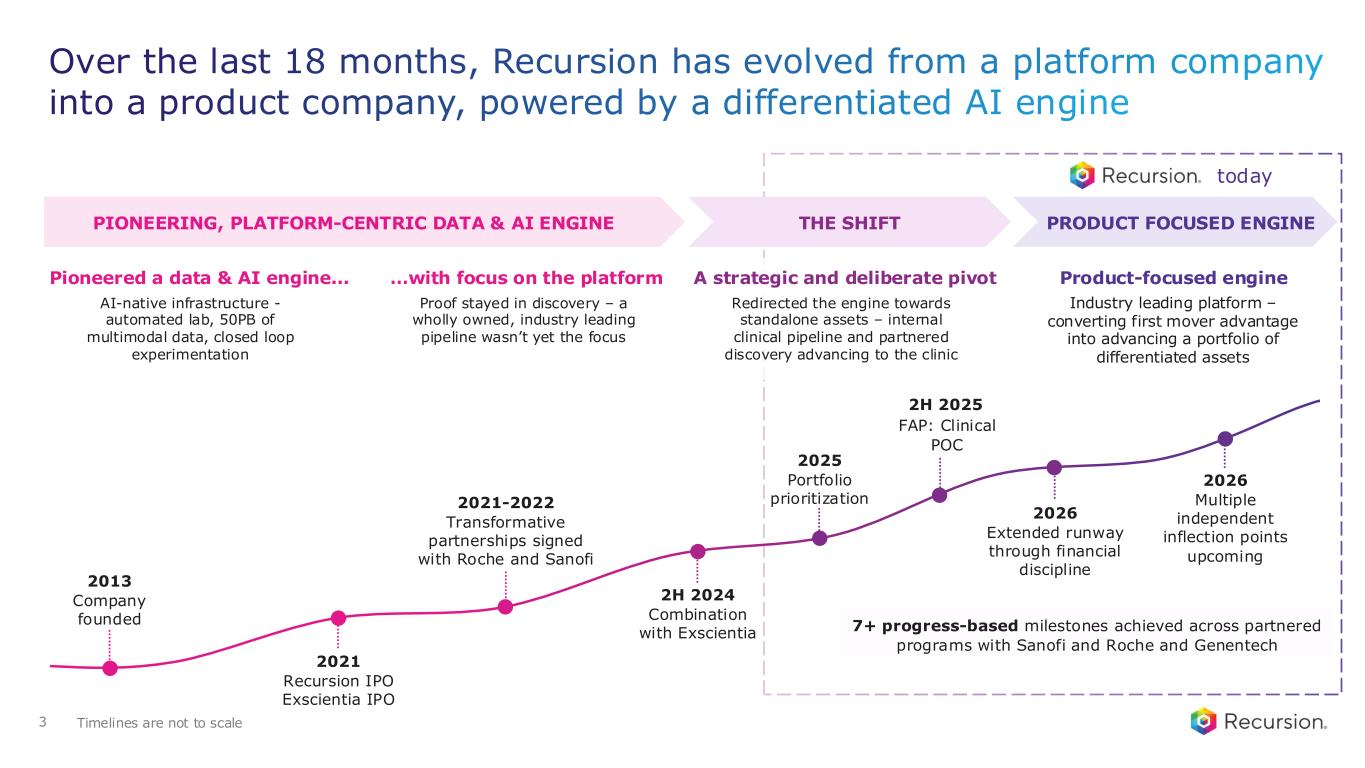
Over the last 18 months, Recursion has evolved from a platform company into a product company, powered by a differentiated AI engine 3 PIONEERING, PLATFORM-CENTRIC DATA & AI ENGINE PRODUCT FOCUSED ENGINE Pioneered a data & AI engine... AI-native infrastructure - automated lab, 50PB of multimodal data, closed loop experimentation …with focus on the platform Proof stayed in discovery – a wholly owned, industry leading pipeline wasn’t yet the focus A strategic and deliberate pivot Redirected the engine towards standalone assets – internal clinical pipeline and partnered discovery advancing to the clinic Product-focused engine Industry leading platform – converting first mover advantage into advancing a portfolio of differentiated assets THE SHIFT 2013 Company founded 2026 Multiple independent inflection points upcoming 2H 2025 FAP: Clinical POC 2H 2024 Combination with Exscientia today 2021-2022 Transformative partnerships signed with Roche and Sanofi 2021 Recursion IPO Exscientia IPO 2026 Extended runway through financial discipline 2025 Portfolio prioritization Timelines are not to scale 7+ progress-based milestones achieved across partnered programs with Sanofi and Roche and Genentech
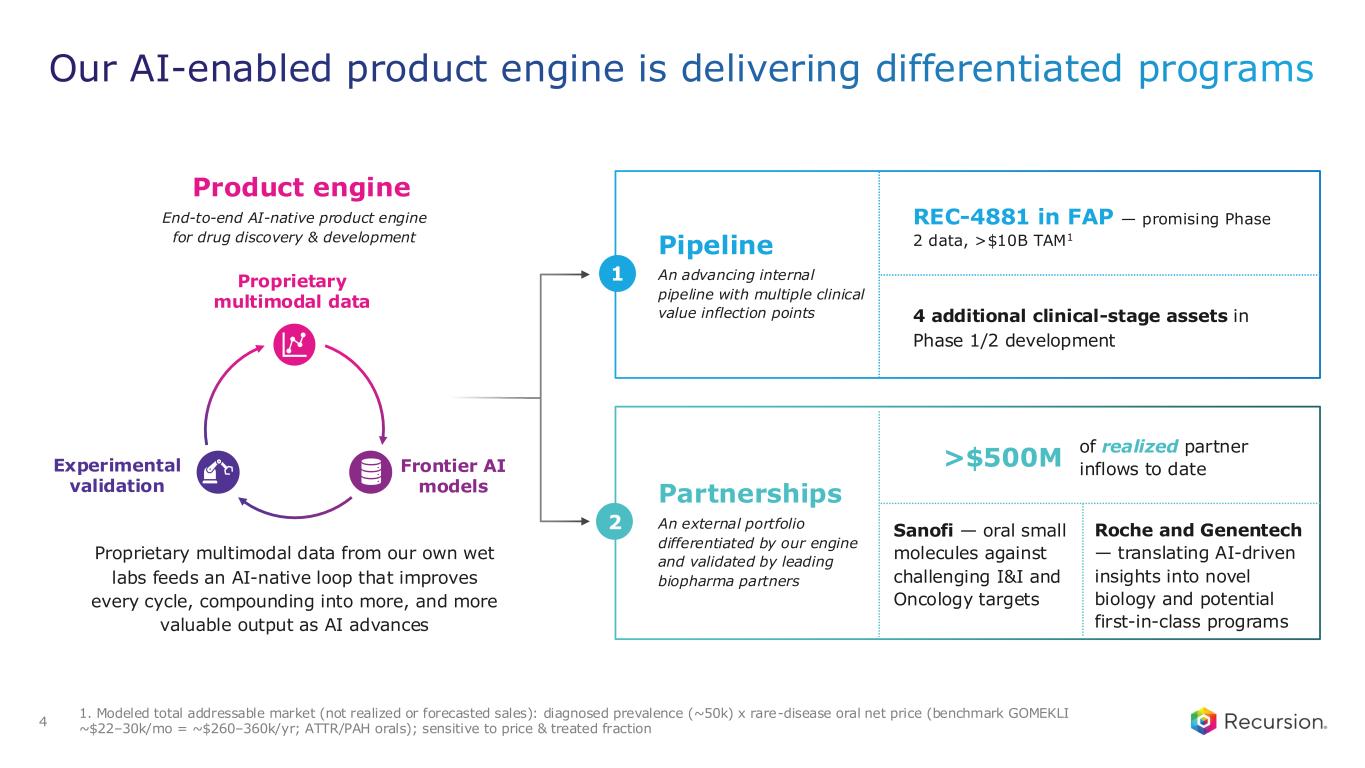
1. Modeled total addressable market (not realized or forecasted sales): diagnosed prevalence (~50k) x rare-disease oral net price (benchmark GOMEKLI ~$22–30k/mo = ~$260–360k/yr; ATTR/PAH orals); sensitive to price & treated fraction Our AI-enabled product engine is delivering differentiated programs 4 Product engine End-to-end AI-native product engine for drug discovery & development Proprietary multimodal data from our own wet labs feeds an AI-native loop that improves every cycle, compounding into more, and more valuable output as AI advances 1 Pipeline An advancing internal pipeline with multiple clinical value inflection points REC-4881 in FAP — promising Phase 2 data, >$10B TAM1 4 additional clinical-stage assets in Phase 1/2 development 2 Partnerships An external portfolio differentiated by our engine and validated by leading biopharma partners >$500M of realized partner inflows to date Sanofi — oral small molecules against challenging I&I and Oncology targets Roche and Genentech — translating AI-driven insights into novel biology and potential first-in-class programs Experimental validation Proprietary multimodal data Frontier AI models
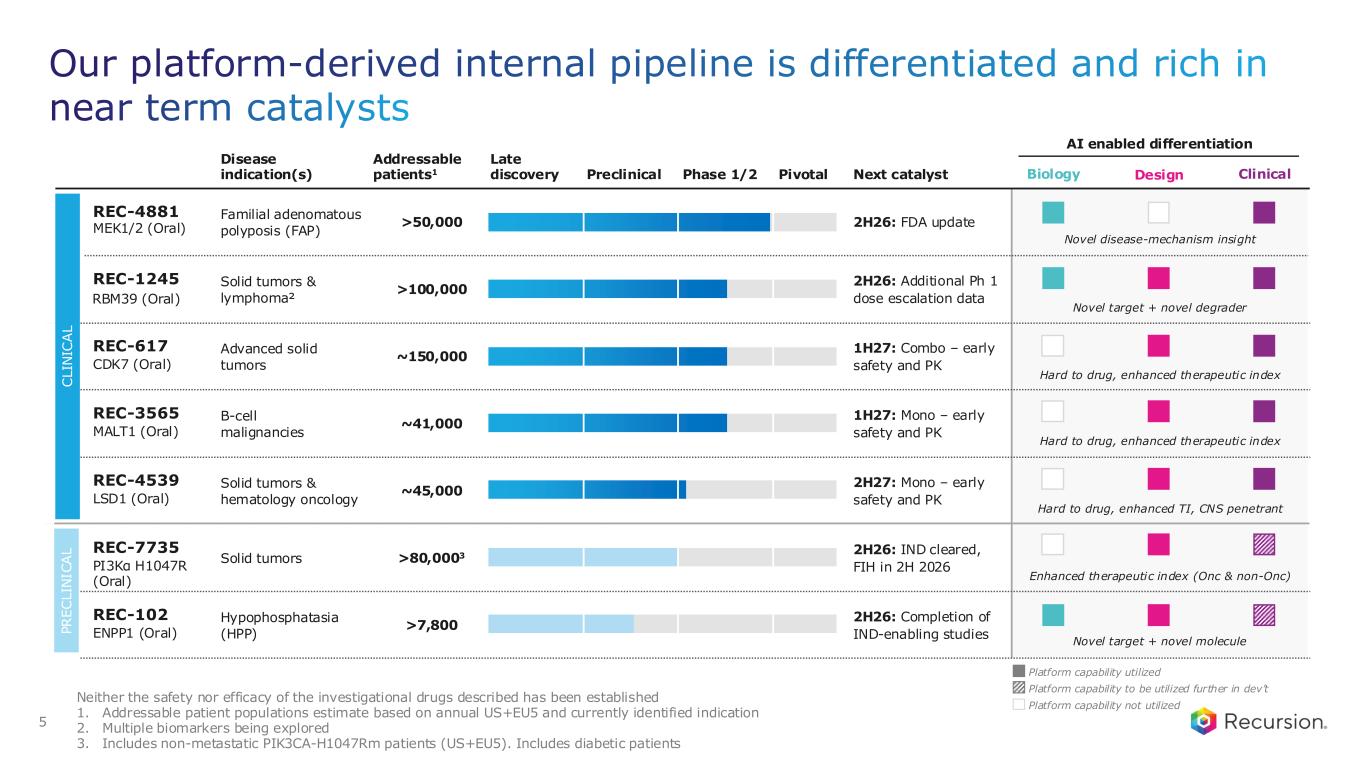
Disease indication(s) Addressable patients1 Next catalyst AI enabled differentiation Late discovery Preclinical Phase 1/2 Pivotal Familial adenomatous polyposis (FAP) >50,000 2H26: FDA update Advanced solid tumors ~150,000 1H27: Combo – early safety and PK Solid tumors & lymphoma² >100,000 2H26: Additional Ph 1 dose escalation data B-cell malignancies ~41,000 1H27: Mono – early safety and PK Solid tumors & hematology oncology ~45,000 2H27: Mono – early safety and PK Solid tumors >80,0003 2H26: IND cleared, FIH in 2H 2026 Hypophosphatasia (HPP) >7,800 2H26: Completion of IND-enabling studies Neither the safety nor efficacy of the investigational drugs described has been established 1. Addressable patient populations estimate based on annual US+EU5 and currently identified indication 2. Multiple biomarkers being explored 3. Includes non-metastatic PIK3CA-H1047Rm patients (US+EU5). Includes diabetic patients C L IN IC A L P R E C L IN IC A L Our platform-derived internal pipeline is differentiated and rich in near term catalysts 5 Design Clinical REC-4881 MEK1/2 (Oral) REC-617 CDK7 (Oral) REC-1245 RBM39 (Oral) REC-3565 MALT1 (Oral) REC-4539 LSD1 (Oral) REC-7735 PI3Kα H1047R (Oral) REC-102 ENPP1 (Oral) Biology Novel disease-mechanism insight Hard to drug, enhanced therapeutic index Novel target + novel degrader Hard to drug, enhanced therapeutic index Hard to drug, enhanced TI, CNS penetrant Enhanced therapeutic index (Onc & non-Onc) Novel target + novel molecule Platform capability utilized Platform capability not utilized Platform capability to be utilized further in dev’t
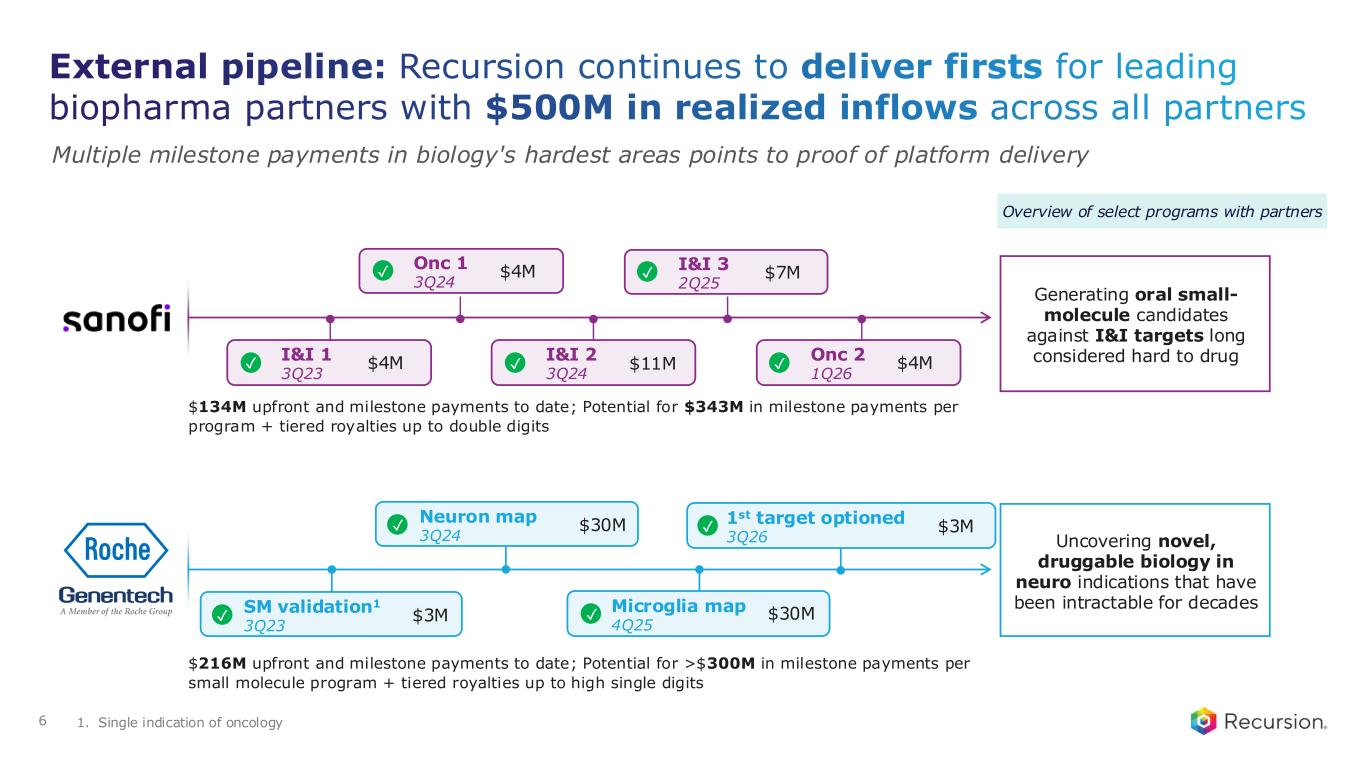
Overview of select programs with partners Generating oral small- molecule candidates against I&I targets long considered hard to drug Onc 1 3Q24 $4M I&I 3 2Q25 $7M I&I 1 3Q23 $4M I&I 2 3Q24 $11M Onc 2 1Q26 $4M $134M upfront and milestone payments to date; Potential for $343M in milestone payments per program + tiered royalties up to double digits Uncovering novel, druggable biology in neuro indications that have been intractable for decadesSM validation1 3Q23 ✓ $3M $216M upfront and milestone payments to date; Potential for >$300M in milestone payments per small molecule program + tiered royalties up to high single digits External pipeline: Recursion continues to deliver firsts for leading biopharma partners with $500M in realized inflows across all partners Multiple milestone payments in biology's hardest areas points to proof of platform delivery 1. Single indication of oncology Neuron map 3Q24 $30M✓ Microglia map 4Q25 $30M✓ ✓ ✓ ✓ ✓ ✓ 6 1st target optioned 3Q26 $3M✓
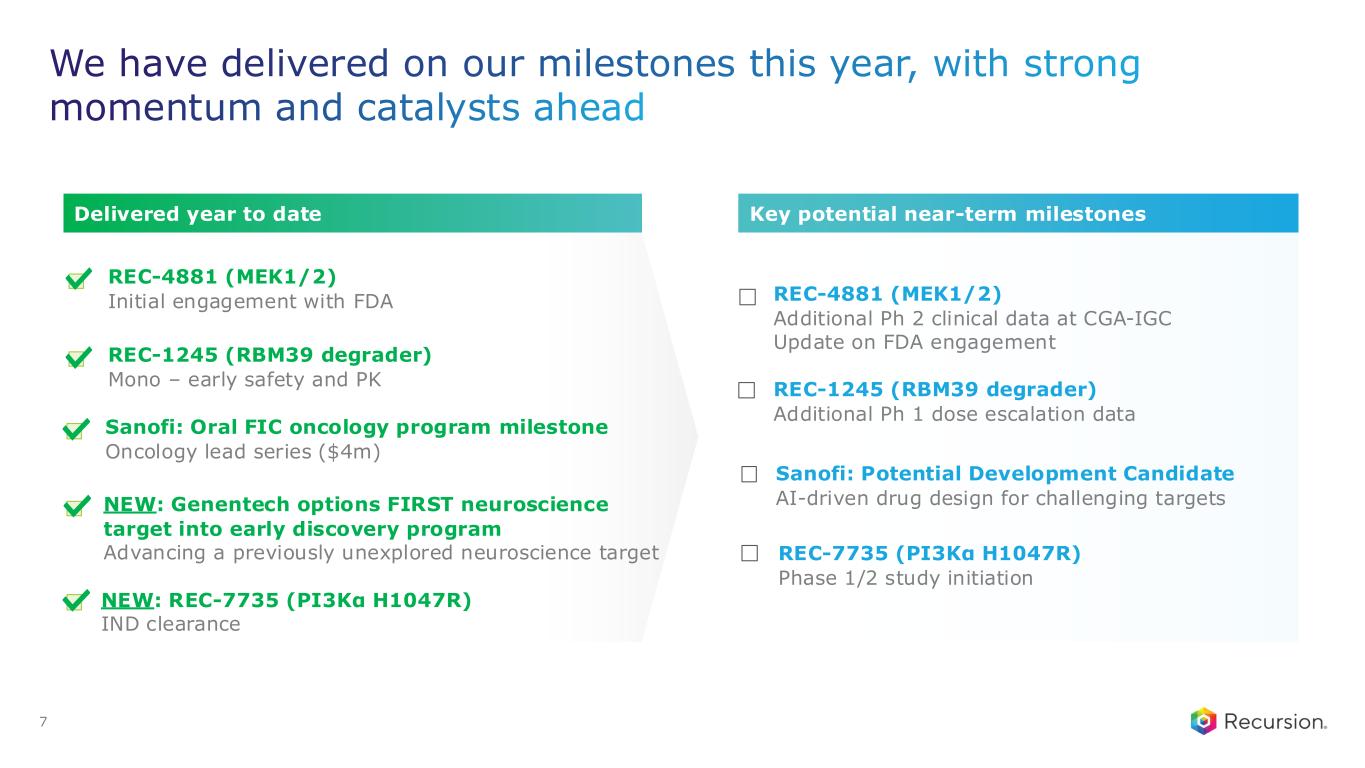
We have delivered on our milestones this year, with strong momentum and catalysts ahead 7 REC-4881 (MEK1/2) Additional Ph 2 clinical data at CGA-IGC Update on FDA engagement REC-1245 (RBM39 degrader) Additional Ph 1 dose escalation data Sanofi: Potential Development Candidate AI-driven drug design for challenging targets REC-7735 (PI3Kα H1047R) Phase 1/2 study initiation Key potential near-term milestones REC-4881 (MEK1/2) Initial engagement with FDA REC-1245 (RBM39 degrader) Mono – early safety and PK NEW: Genentech options FIRST neuroscience target into early discovery program Advancing a previously unexplored neuroscience target NEW: REC-7735 (PI3Kα H1047R) IND clearance Sanofi: Oral FIC oncology program milestone Oncology lead series ($4m) Delivered year to date
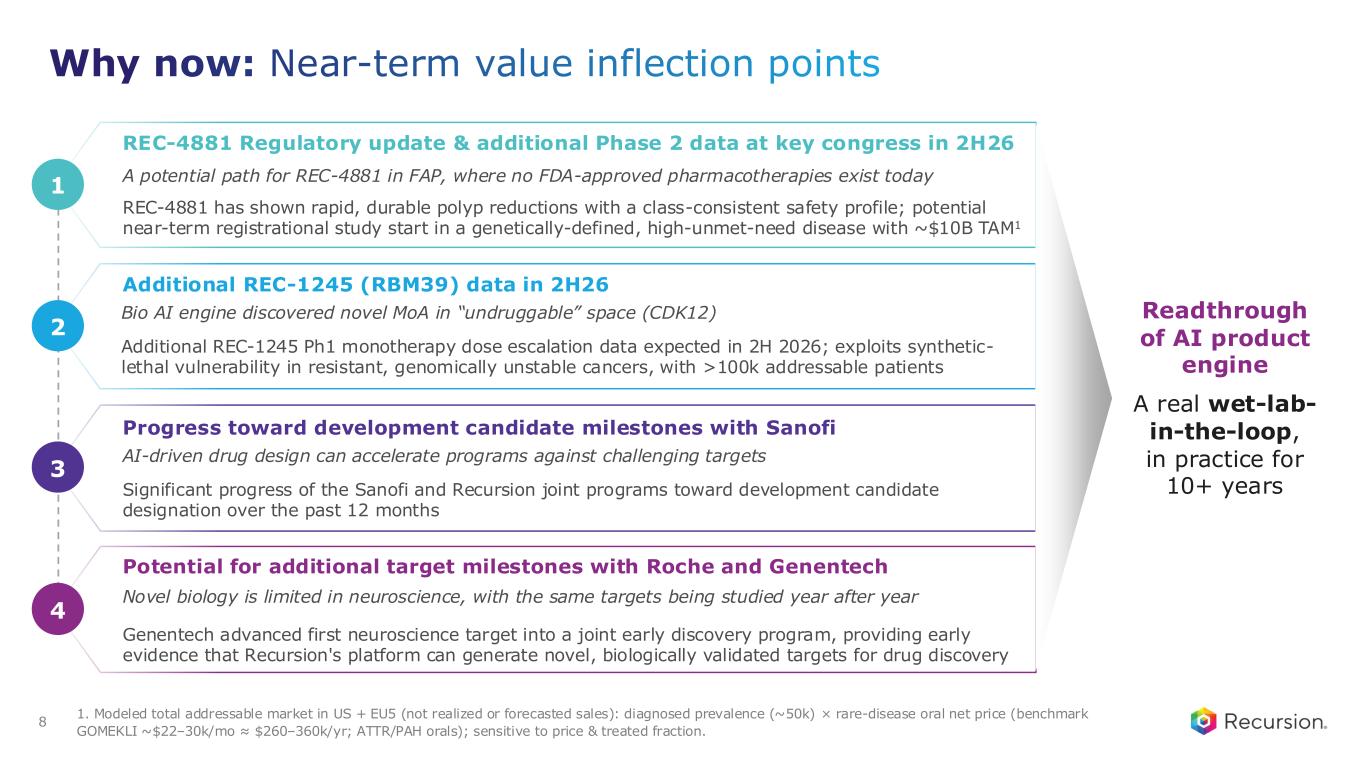
Why now: Near-term value inflection points Additional REC-1245 (RBM39) data in 2H26 Bio AI engine discovered novel MoA in “undruggable” space (CDK12) Additional REC-1245 Ph1 monotherapy dose escalation data expected in 2H 2026; exploits synthetic- lethal vulnerability in resistant, genomically unstable cancers, with >100k addressable patients 2 Progress toward development candidate milestones with Sanofi AI-driven drug design can accelerate programs against challenging targets Significant progress of the Sanofi and Recursion joint programs toward development candidate designation over the past 12 months 3 REC-4881 Regulatory update & additional Phase 2 data at key congress in 2H26 A potential path for REC-4881 in FAP, where no FDA-approved pharmacotherapies exist today REC-4881 has shown rapid, durable polyp reductions with a class-consistent safety profile; potential near-term registrational study start in a genetically-defined, high-unmet-need disease with ~$10B TAM1 1 Potential for additional target milestones with Roche and Genentech Novel biology is limited in neuroscience, with the same targets being studied year after year Genentech advanced first neuroscience target into a joint early discovery program, providing early evidence that Recursion's platform can generate novel, biologically validated targets for drug discovery 4 Readthrough of AI product engine A real wet-lab- in-the-loop, in practice for 10+ years 8 1. Modeled total addressable market in US + EU5 (not realized or forecasted sales): diagnosed prevalence (~50k) × rare-disease oral net price (benchmark GOMEKLI ~$22–30k/mo ≈ $260–360k/yr; ATTR/PAH orals); sensitive to price & treated fraction.
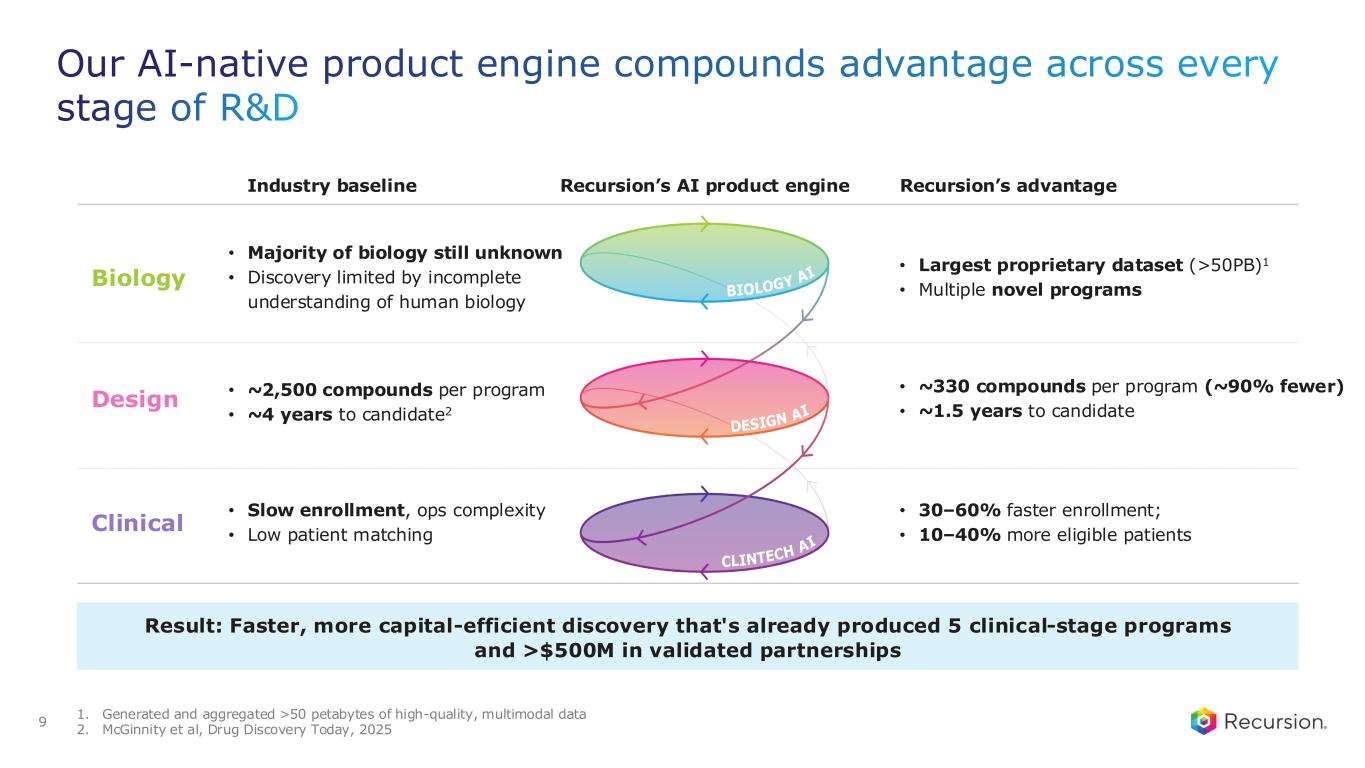
1. Generated and aggregated >50 petabytes of high-quality, multimodal data 2. McGinnity et al, Drug Discovery Today, 2025 Our AI-native product engine compounds advantage across every stage of R&D Industry baseline Recursion’s AI product engine Recursion’s advantage • Majority of biology still unknown • Discovery limited by incomplete understanding of human biology • Largest proprietary dataset (>50PB)1 • Multiple novel programs • ~2,500 compounds per program • ~4 years to candidate2 • ~330 compounds per program (~90% fewer) • ~1.5 years to candidate • Slow enrollment, ops complexity • Low patient matching • 30–60% faster enrollment; • 10–40% more eligible patients 9 Result: Faster, more capital-efficient discovery that's already produced 5 clinical-stage programs and >$500M in validated partnerships Biology Design Clinical
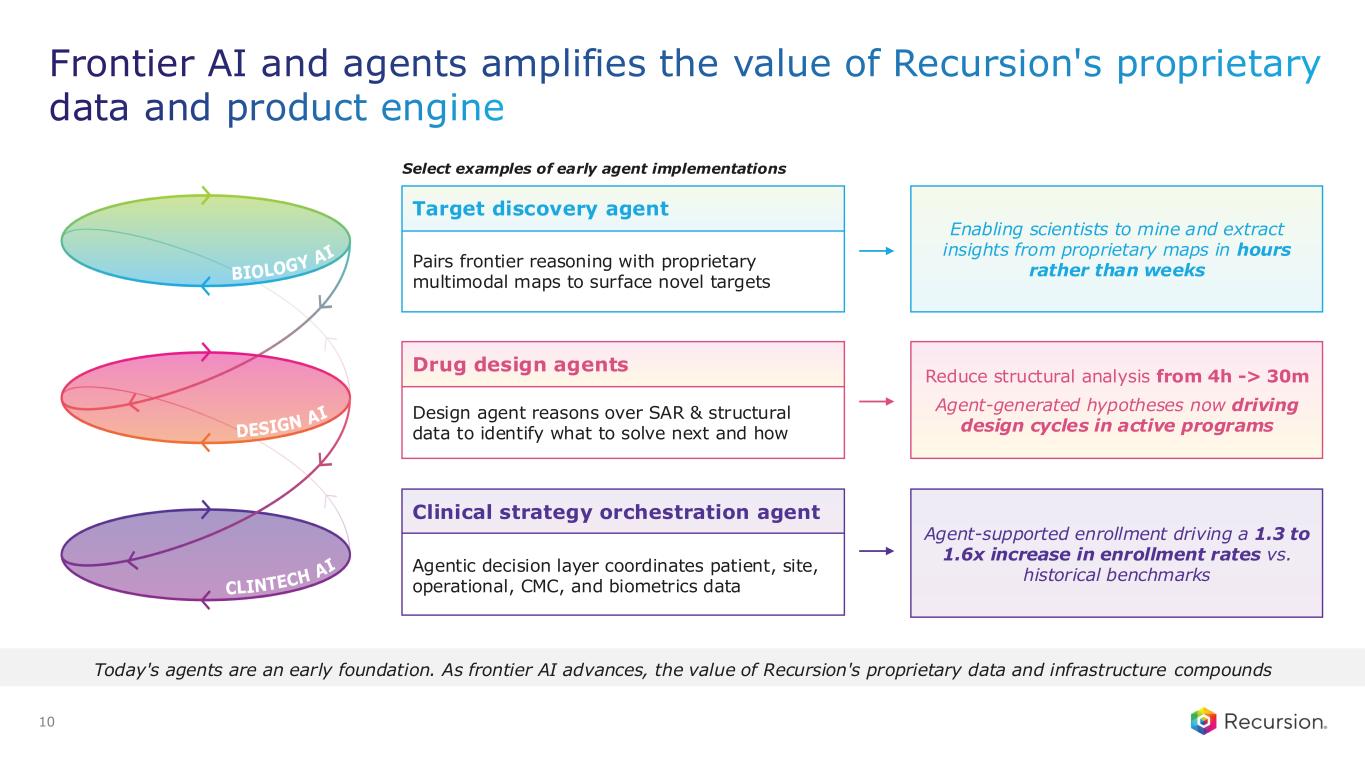
10 Today's agents are an early foundation. As frontier AI advances, the value of Recursion's proprietary data and infrastructure compounds Select examples of early agent implementations Frontier AI and agents amplifies the value of Recursion's proprietary data and product engine Pairs frontier reasoning with proprietary multimodal maps to surface novel targets Target discovery agent Enabling scientists to mine and extract insights from proprietary maps in hours rather than weeks Design agent reasons over SAR & structural data to identify what to solve next and how Drug design agents Reduce structural analysis from 4h -> 30m Agent-generated hypotheses now driving design cycles in active programs Agentic decision layer coordinates patient, site, operational, CMC, and biometrics data Clinical strategy orchestration agent Agent-supported enrollment driving a 1.3 to 1.6x increase in enrollment rates vs. historical benchmarks
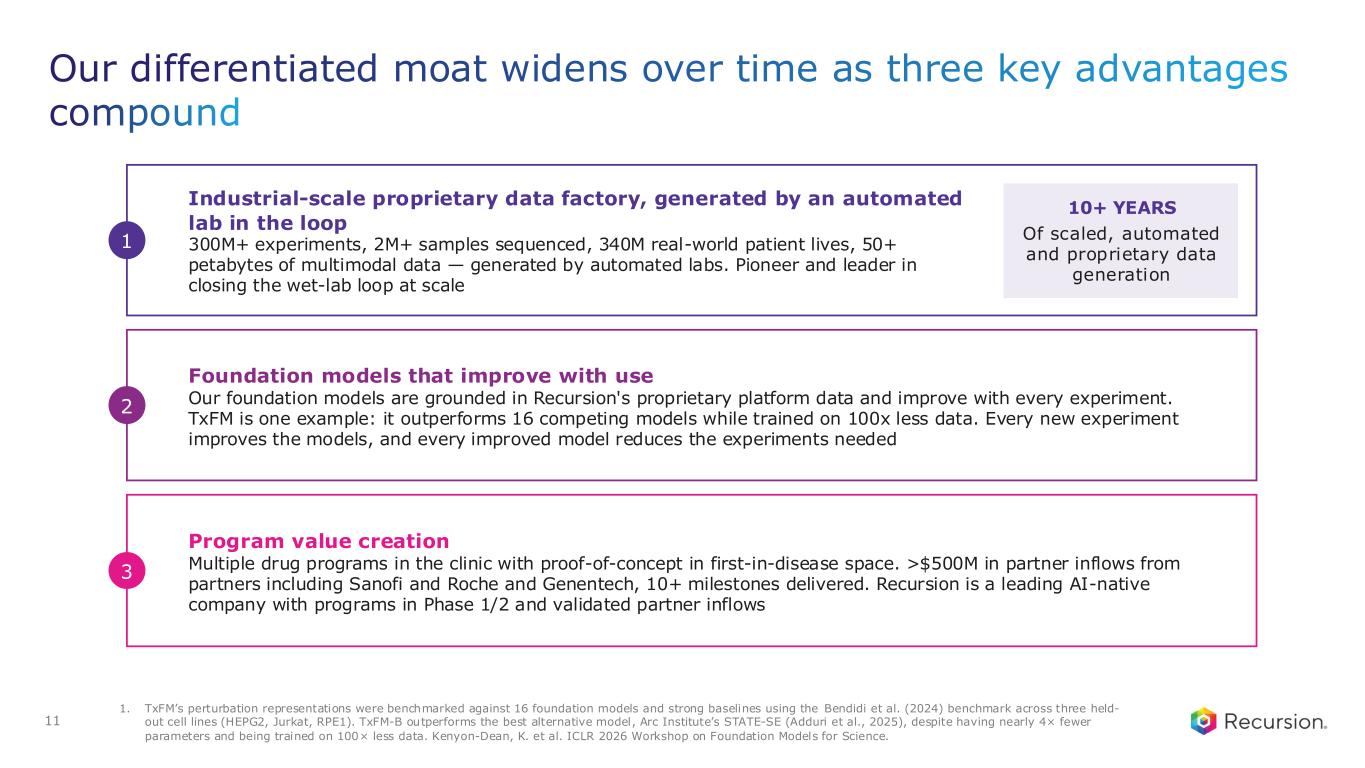
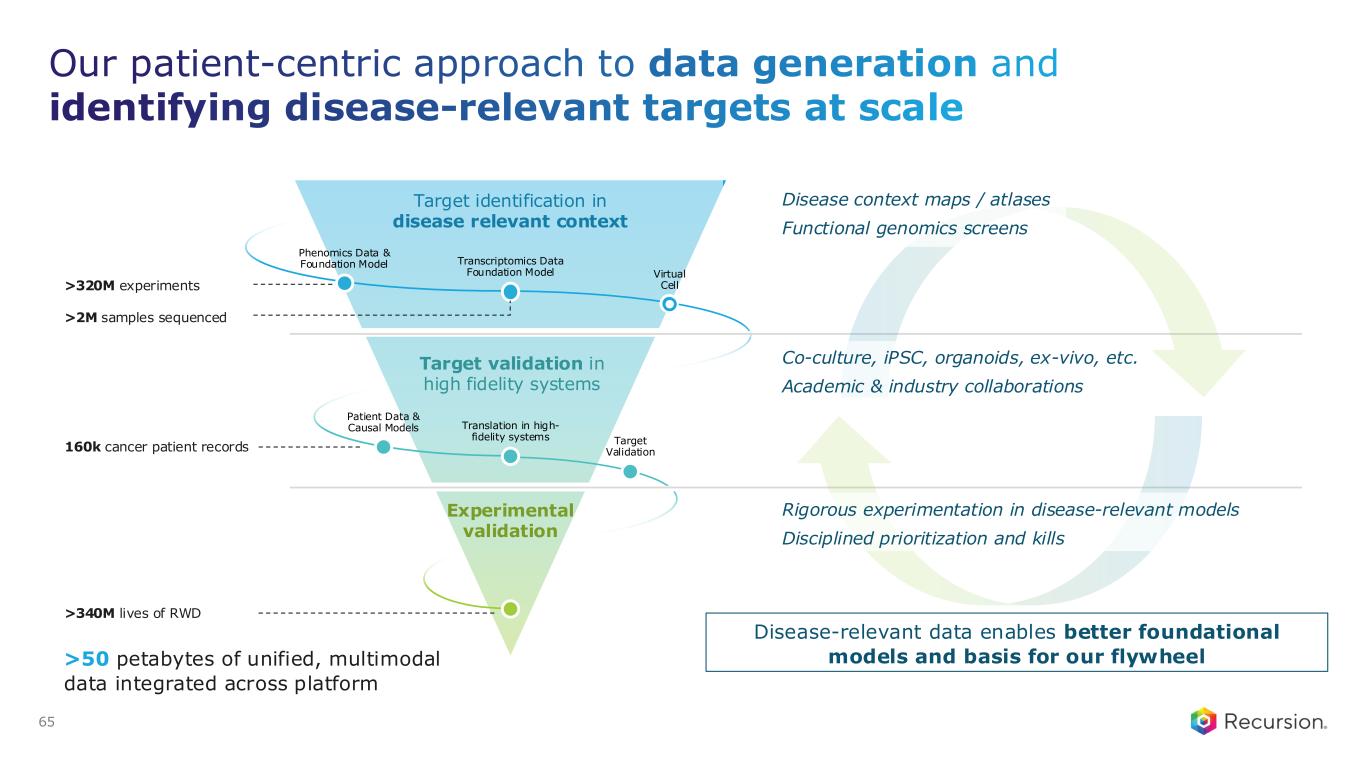
Industrial-scale proprietary data factory, generated by an automated lab in the loop 300M+ experiments, 2M+ samples sequenced, 340M real-world patient lives, 50+ petabytes of multimodal data — generated by automated labs. Pioneer and leader in closing the wet-lab loop at scale 10+ YEARS Of scaled, automated and proprietary data generation 1 Foundation models that improve with use Our foundation models are grounded in Recursion's proprietary platform data and improve with every experiment. TxFM is one example: it outperforms 16 competing models while trained on 100x less data. Every new experiment improves the models, and every improved model reduces the experiments needed 2 Program value creation Multiple drug programs in the clinic with proof-of-concept in first-in-disease space. >$500M in partner inflows from partners including Sanofi and Roche and Genentech, 10+ milestones delivered. Recursion is a leading AI-native company with programs in Phase 1/2 and validated partner inflows 3 Our differentiated moat widens over time as three key advantages compound 1. TxFM’s perturbation representations were benchmarked against 16 foundation models and strong baselines using the Bendidi et al. (2024) benchmark across three held- out cell lines (HEPG2, Jurkat, RPE1). TxFM-B outperforms the best alternative model, Arc Institute’s STATE-SE (Adduri et al., 2025), despite having nearly 4× fewer parameters and being trained on 100× less data. Kenyon-Dean, K. et al. ICLR 2026 Workshop on Foundation Models for Science. 11
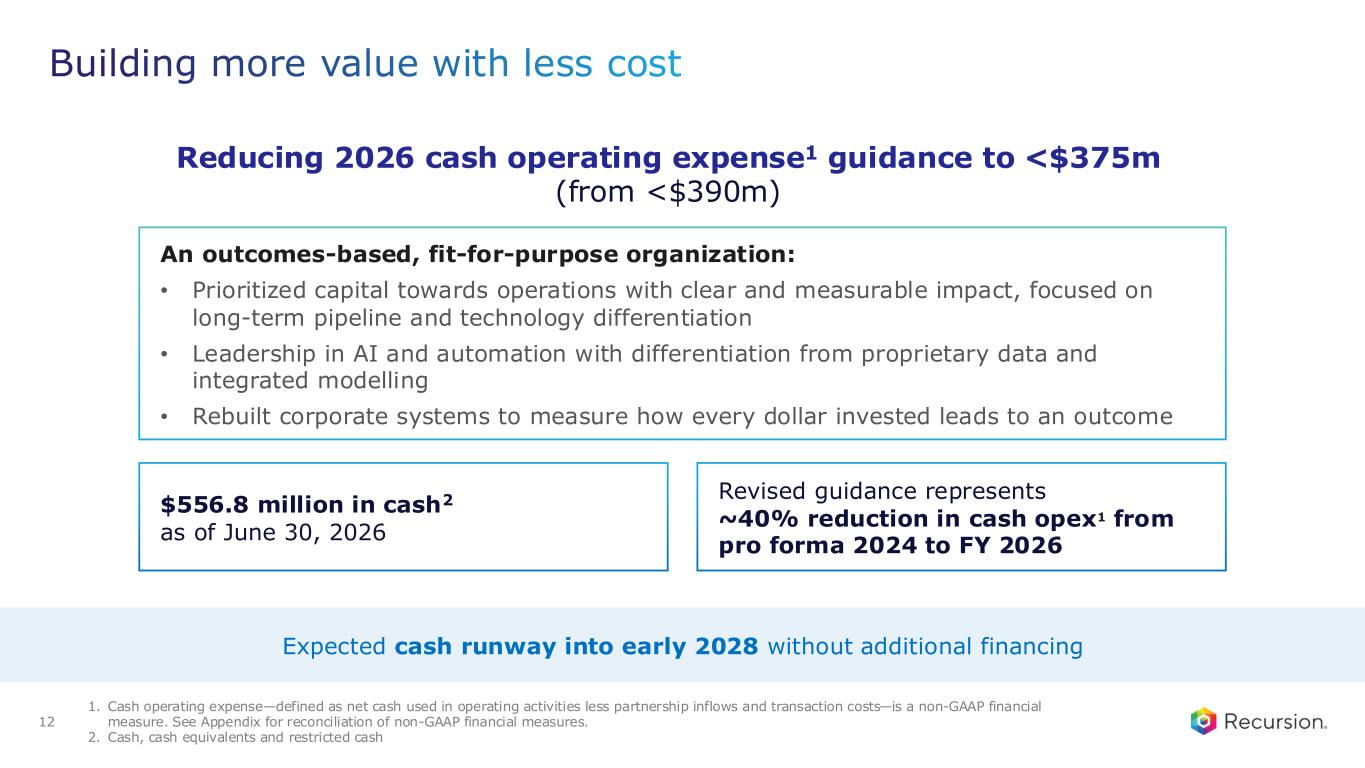
Building more value with less cost 12 Expected cash runway into early 2028 without additional financing An outcomes-based, fit-for-purpose organization: • Prioritized capital towards operations with clear and measurable impact, focused on long-term pipeline and technology differentiation • Leadership in AI and automation with differentiation from proprietary data and integrated modelling • Rebuilt corporate systems to measure how every dollar invested leads to an outcome $556.8 million in cash2 as of June 30, 2026 Reducing 2026 cash operating expense1 guidance to <$375m (from <$390m) 1. Cash operating expense—defined as net cash used in operating activities less partnership inflows and transaction costs—is a non-GAAP financial measure. See Appendix for reconciliation of non-GAAP financial measures. 2. Cash, cash equivalents and restricted cash Revised guidance represents ~40% reduction in cash opex1 from pro forma 2024 to FY 2026
REC-4881 MEK1/2 Translating proof to products
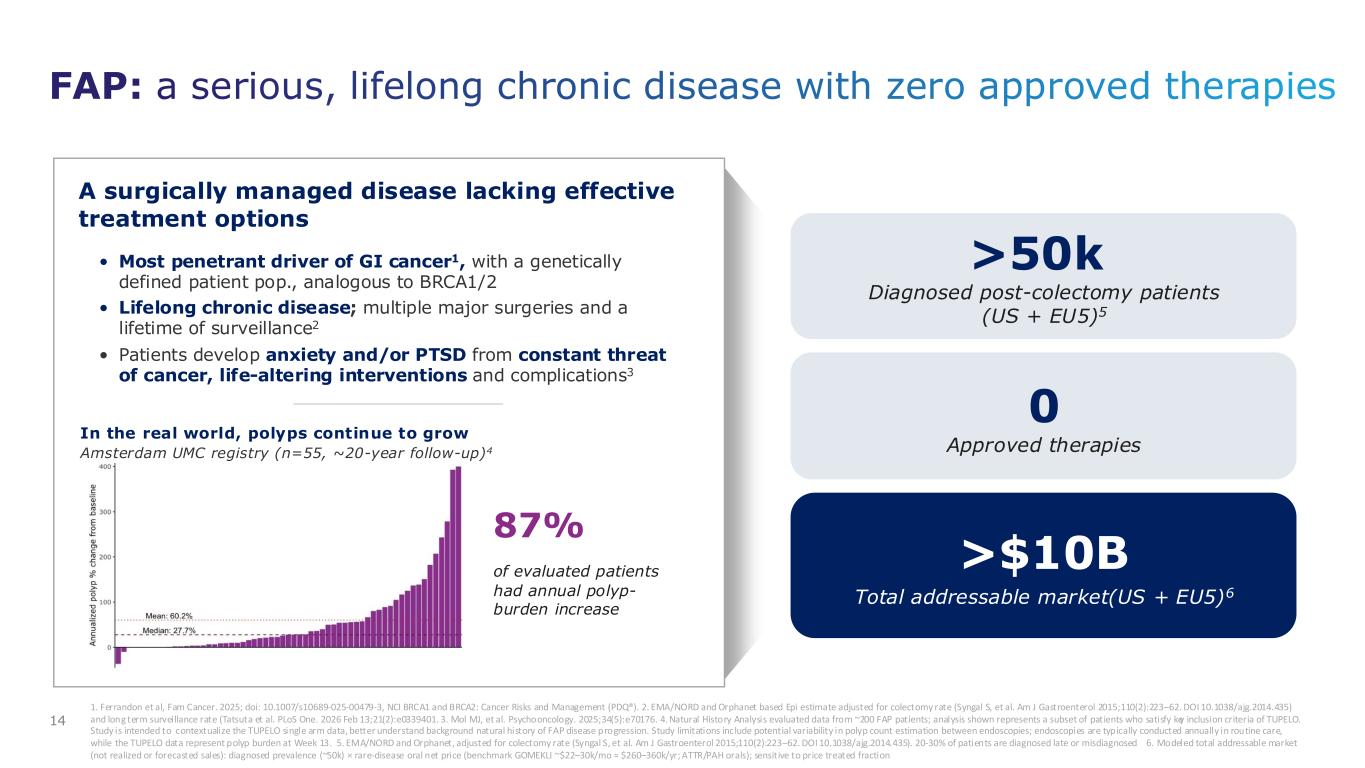
FAP: a serious, lifelong chronic disease with zero approved therapies 1. Ferrandon et al, Fam Cancer. 2025; doi: 10.1007/s10689-025-00479-3, NCI BRCA1 and BRCA2: Cancer Risks and Management (PDQ®). 2. EMA/NORD and Orphanet based Epi estimate adjusted for colectomy rate (Syngal S, et al. Am J Gastroenterol 2015;110(2):223–62. DOI 10.1038/ajg.2014.435) and long term surveillance rate (Tatsuta et al. PLoS One. 2026 Feb 13;21(2):e0339401. 3. Mol MJ, et al. Psychooncology. 2025;34(5):e70176. 4. Natural History Analysis evaluated data from ~200 FAP patients; analysis shown represents a subset of patients who satisfy key inclusion criteria of TUPELO. Study is intended to contextualize the TUPELO single arm data, better understand background natural history of FAP disease progression. Study limitations include potential variability in polyp count estimation between endoscopies; endoscopies are typically conducted annually in routine care, while the TUPELO data represent polyp burden at Week 13. 5. EMA/NORD and Orphanet, adjusted for colectomy rate (Syngal S, et al. Am J Gastroenterol 2015;110(2):223–62. DOI 10.1038/ajg.2014.435). 20-30% of patients are diagnosed late or misdiagnosed 6. Modeled total addressable market (not realized or forecasted sales): diagnosed prevalence (~50k) × rare-disease oral net price (benchmark GOMEKLI ~$22–30k/mo ≈ $260–360k/yr; ATTR/PAH orals); sensitive to price treated fraction >$10B Total addressable market(US + EU5)6 >50k Diagnosed post-colectomy patients (US + EU5)5 0 Approved therapies • Most penetrant driver of GI cancer1, with a genetically defined patient pop., analogous to BRCA1/2 • Lifelong chronic disease; multiple major surgeries and a lifetime of surveillance2 • Patients develop anxiety and/or PTSD from constant threat of cancer, life-altering interventions and complications3 In the real world, polyps continue to grow Amsterdam UMC registry (n=55, ~20-year follow-up)4 87% of evaluated patients had annual polyp- burden increase A surgically managed disease lacking effective treatment options 14
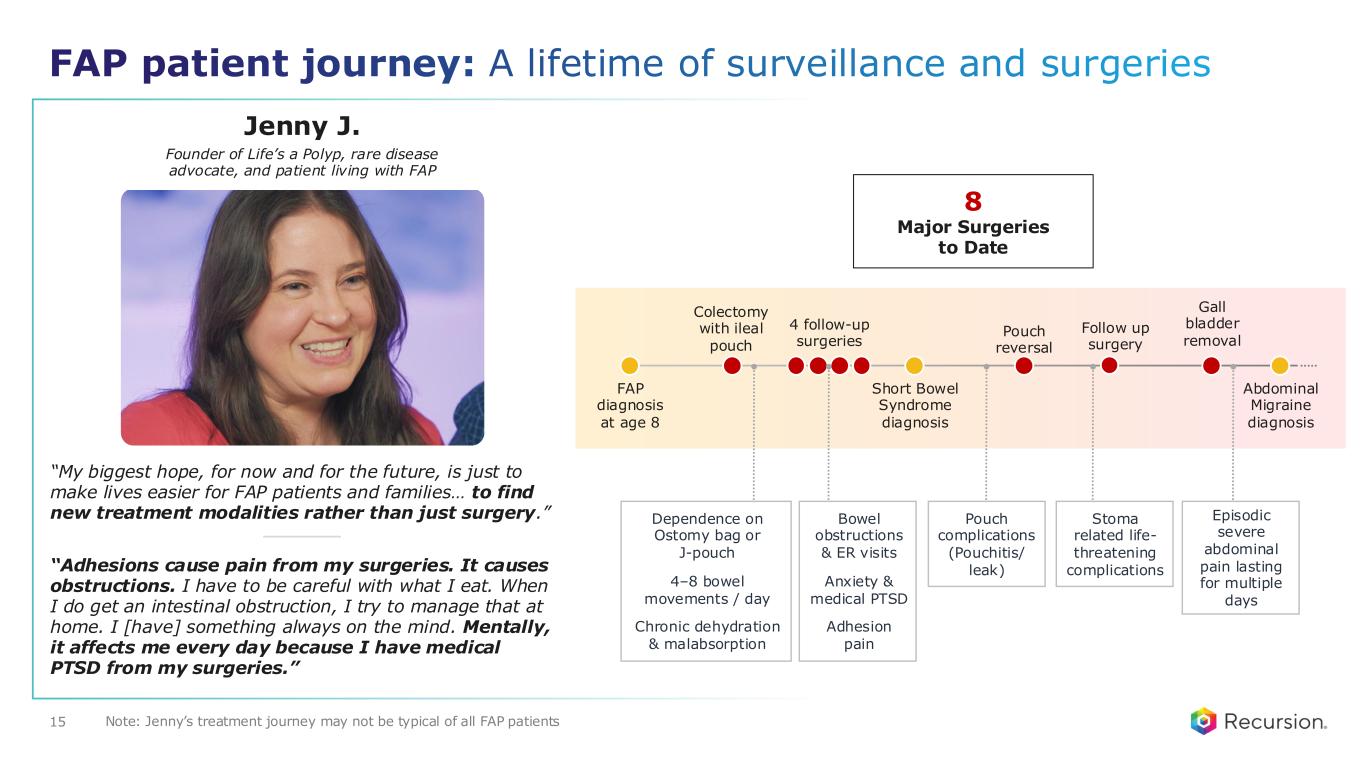
“Adhesions cause pain from my surgeries. It causes obstructions. I have to be careful with what I eat. When I do get an intestinal obstruction, I try to manage that at home. I [have] something always on the mind. Mentally, it affects me every day because I have medical PTSD from my surgeries.” “My biggest hope, for now and for the future, is just to make lives easier for FAP patients and families… to find new treatment modalities rather than just surgery.” Jenny J. Founder of Life’s a Polyp, rare disease advocate, and patient living with FAP FAP diagnosis at age 8 Colectomy with ileal pouch 8 Major Surgeries to Date 4 follow-up surgeries Short Bowel Syndrome diagnosis Pouch reversal Gall bladder removal Follow up surgery Abdominal Migraine diagnosis FAP patient journey: A lifetime of surveillance and surgeries Bowel obstructions & ER visits Anxiety & medical PTSD Adhesion pain Episodic severe abdominal pain lasting for multiple days Dependence on Ostomy bag or J-pouch 4–8 bowel movements / day Chronic dehydration & malabsorption Pouch complications (Pouchitis/ leak) Stoma related life- threatening complications Note: Jenny’s treatment journey may not be typical of all FAP patients15
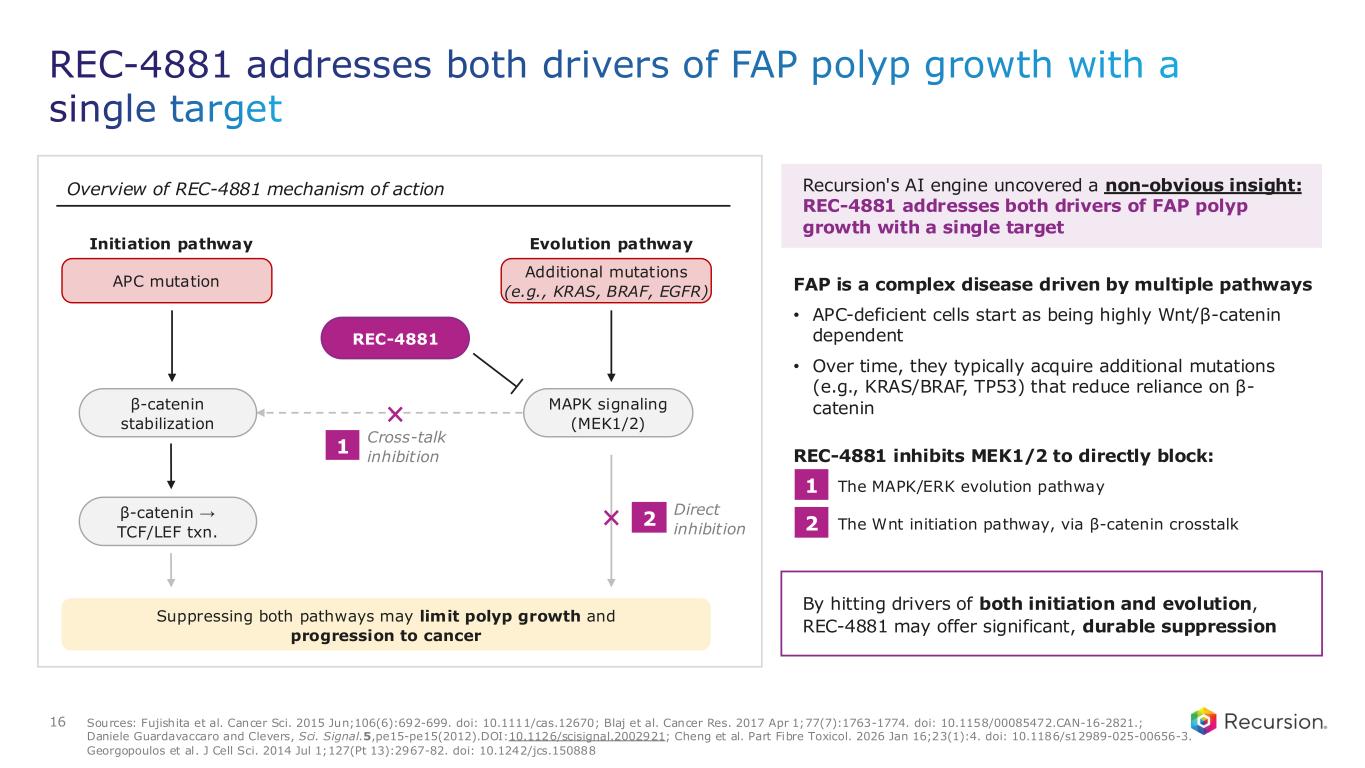
REC-4881 addresses both drivers of FAP polyp growth with a single target Overview of REC-4881 mechanism of action Suppressing both pathways may limit polyp growth and progression to cancer Initiation pathway APC mutation β-catenin stabilization β-catenin → TCF/LEF txn. Evolution pathway Additional mutations (e.g., KRAS, BRAF, EGFR) MAPK signaling (MEK1/2) REC-4881 Cross-talk inhibition 1 Direct inhibition 2 Recursion's AI engine uncovered a non-obvious insight: REC-4881 addresses both drivers of FAP polyp growth with a single target FAP is a complex disease driven by multiple pathways • APC-deficient cells start as being highly Wnt/β-catenin dependent • Over time, they typically acquire additional mutations (e.g., KRAS/BRAF, TP53) that reduce reliance on β- catenin REC-4881 inhibits MEK1/2 to directly block: 1 The MAPK/ERK evolution pathway 2 The Wnt initiation pathway, via β-catenin crosstalk By hitting drivers of both initiation and evolution, REC-4881 may offer significant, durable suppression 1 2 16 Sources: Fujishita et al. Cancer Sci. 2015 Jun;106(6):692-699. doi: 10.1111/cas.12670; Blaj et al. Cancer Res. 2017 Apr 1;77(7):1763-1774. doi: 10.1158/00085472.CAN-16-2821.; Daniele Guardavaccaro and Clevers, Sci. Signal.5,pe15-pe15(2012).DOI:10.1126/scisignal.2002921; Cheng et al. Part Fibre Toxicol. 2026 Jan 16;23(1):4. doi: 10.1186/s12989-025-00656-3. Georgopoulos et al. J Cell Sci. 2014 Jul 1;127(Pt 13):2967-82. doi: 10.1242/jcs.150888
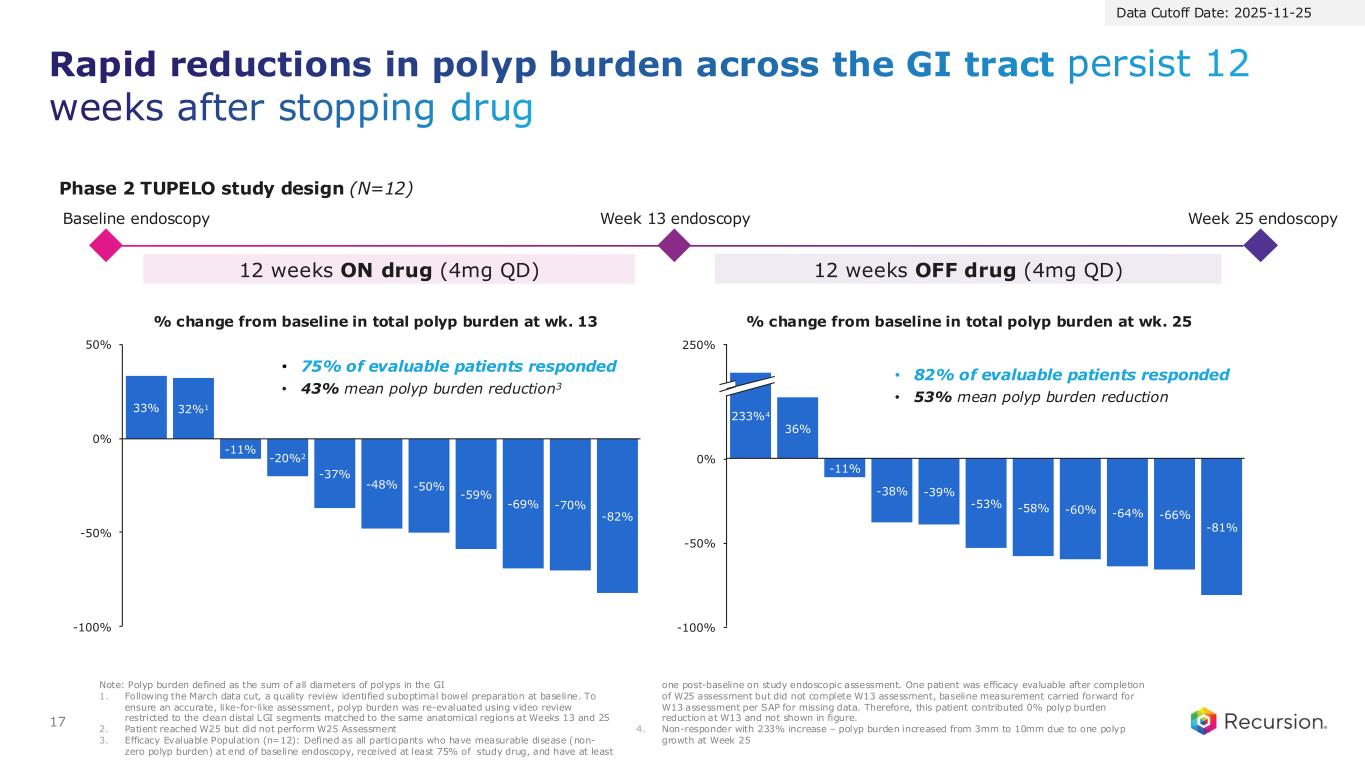
Rapid reductions in polyp burden across the GI tract persist 12 weeks after stopping drug 17 Baseline endoscopy Week 13 endoscopy Week 25 endoscopy 12 weeks ON drug (4mg QD) 12 weeks OFF drug (4mg QD) 33% 32%1 -11% -20%2 -37% -48% -50% -59% -69% -70% -82% -100% -50% 0% 50% 36% -11% -38% -39% -53% -58% -60% -64% -66% -81% -100% -50% 0% 250% 233%4 Note: Polyp burden defined as the sum of all diameters of polyps in the GI 1. Following the March data cut, a quality review identified suboptimal bowel preparation at baseline. To ensure an accurate, like-for-like assessment, polyp burden was re-evaluated using video review restricted to the clean distal LGI segments matched to the same anatomical regions at Weeks 13 and 25 2. Patient reached W25 but did not perform W25 Assessment 3. Efficacy Evaluable Population (n=12): Defined as all participants who have measurable disease (non- zero polyp burden) at end of baseline endoscopy, received at least 75% of study drug, and have at least one post-baseline on study endoscopic assessment. One patient was efficacy evaluable after completion of W25 assessment but did not complete W13 assessment, baseline measurement carried forward for W13 assessment per SAP for missing data. Therefore, this patient contributed 0% polyp burden reduction at W13 and not shown in figure. 4. Non-responder with 233% increase – polyp burden increased from 3mm to 10mm due to one polyp growth at Week 25 Phase 2 TUPELO study design (N=12) • 43% mean polyp burden reduction3 • 75% of evaluable patients responded • 53% mean polyp burden reduction • 82% of evaluable patients responded % change from baseline in total polyp burden at wk. 13 % change from baseline in total polyp burden at wk. 25 Data Cutoff Date: 2025-11-25
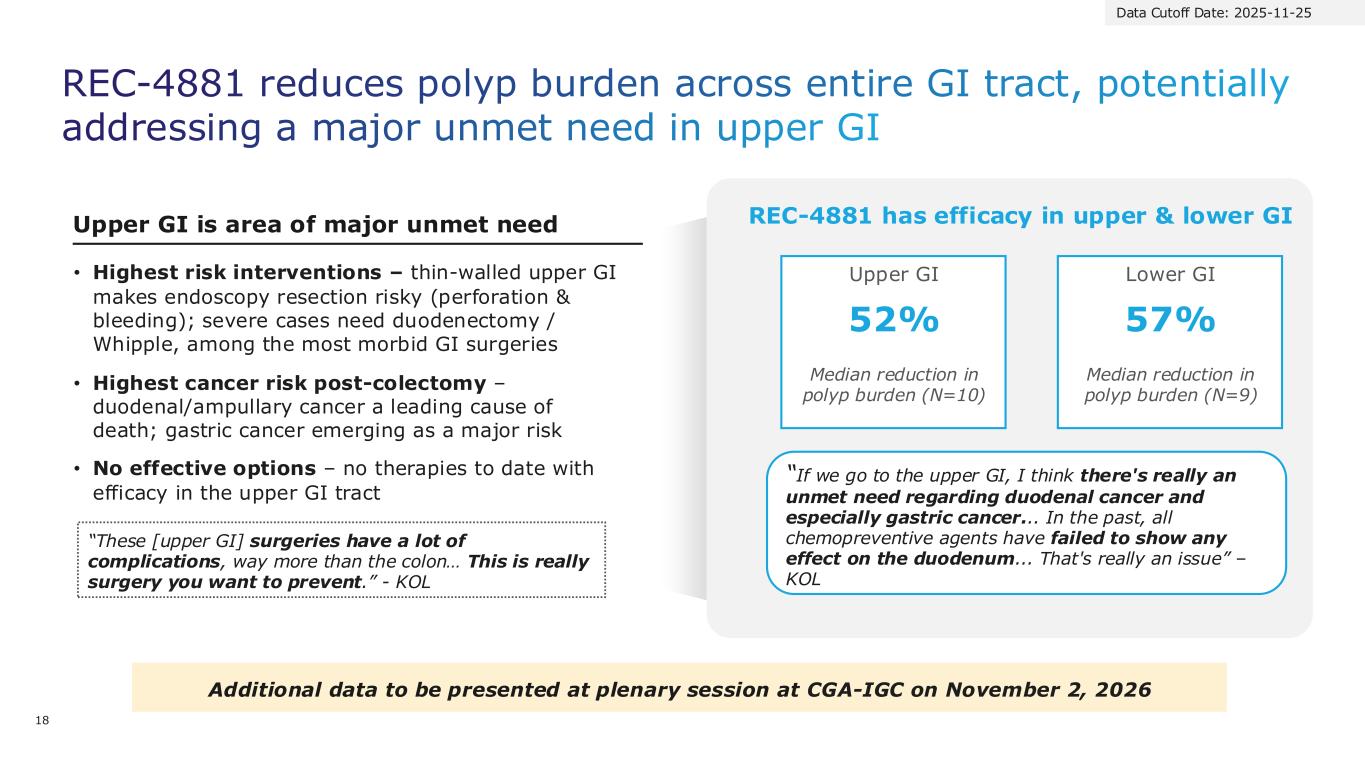
REC-4881 reduces polyp burden across entire GI tract, potentially addressing a major unmet need in upper GI • Highest risk interventions – thin-walled upper GI makes endoscopy resection risky (perforation & bleeding); severe cases need duodenectomy / Whipple, among the most morbid GI surgeries • Highest cancer risk post-colectomy – duodenal/ampullary cancer a leading cause of death; gastric cancer emerging as a major risk • No effective options – no therapies to date with efficacy in the upper GI tract Upper GI is area of major unmet need REC-4881 has efficacy in upper & lower GI Lower GI 57% Median reduction in polyp burden (N=9) Upper GI 52% Median reduction in polyp burden (N=10) Additional data to be presented at plenary session at CGA-IGC on November 2, 2026 “These [upper GI] surgeries have a lot of complications, way more than the colon… This is really surgery you want to prevent.” - KOL “If we go to the upper GI, I think there's really an unmet need regarding duodenal cancer and especially gastric cancer... In the past, all chemopreventive agents have failed to show any effect on the duodenum... That's really an issue” – KOL Data Cutoff Date: 2025-11-25 18
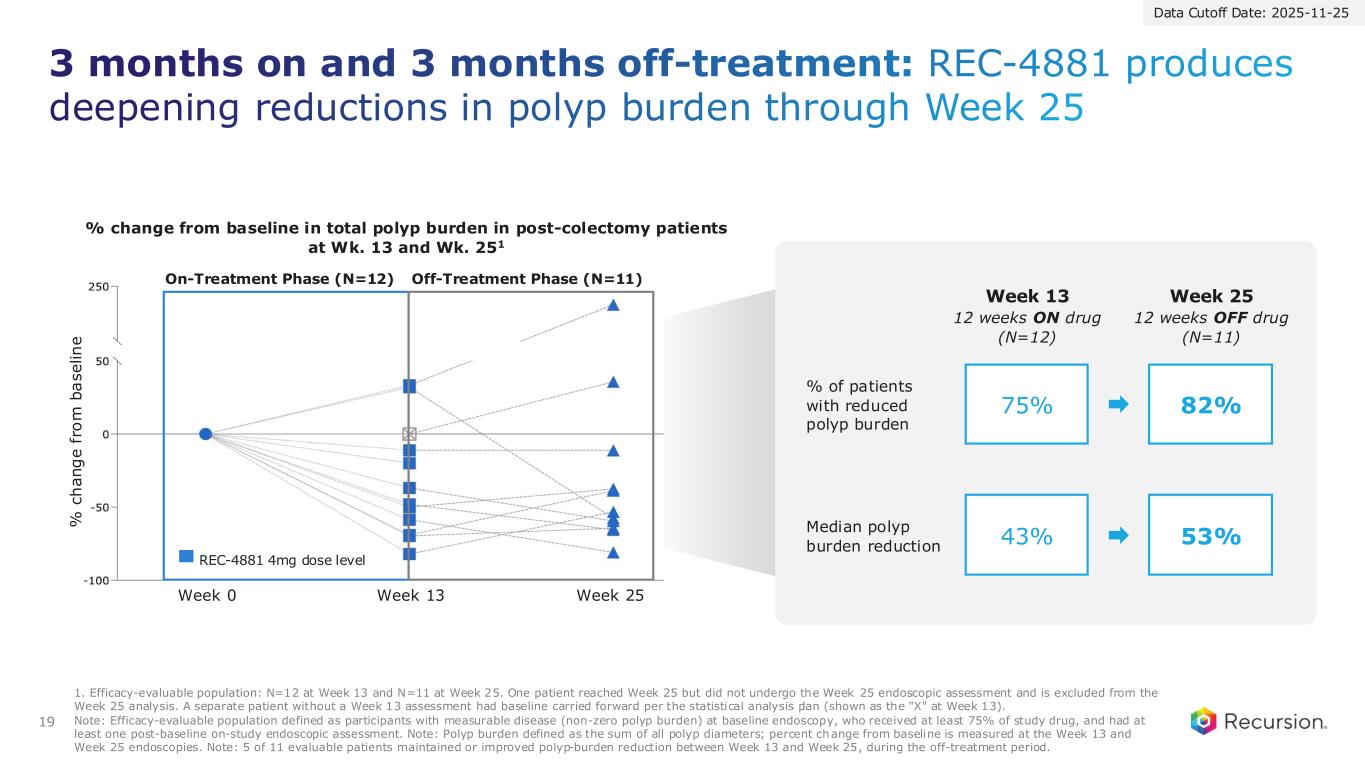
19 3 months on and 3 months off-treatment: REC-4881 produces deepening reductions in polyp burden through Week 25 % change from baseline in total polyp burden in post-colectomy patients at Wk. 13 and Wk. 251 REC-4881 4mg dose level % c h a n g e f ro m b a s e li n e Week 0 Week 13 Week 25 Data Cutoff Date: 2025-11-25 Week 13 Week 25 43% 53% Median polyp burden reduction 75% 82% % of patients with reduced polyp burden 12 weeks ON drug (N=12) 12 weeks OFF drug (N=11) On-Treatment Phase (N=12) Off-Treatment Phase (N=11) 1. Efficacy-evaluable population: N=12 at Week 13 and N=11 at Week 25. One patient reached Week 25 but did not undergo the Week 25 endoscopic assessment and is excluded from the Week 25 analysis. A separate patient without a Week 13 assessment had baseline carried forward per the statistical analysis plan (shown as the "X" at Week 13). Note: Efficacy-evaluable population defined as participants with measurable disease (non-zero polyp burden) at baseline endoscopy, who received at least 75% of study drug, and had at least one post-baseline on-study endoscopic assessment. Note: Polyp burden defined as the sum of all polyp diameters; percent change from baseline is measured at the Week 13 and Week 25 endoscopies. Note: 5 of 11 evaluable patients maintained or improved polyp-burden reduction between Week 13 and Week 25, during the off-treatment period.
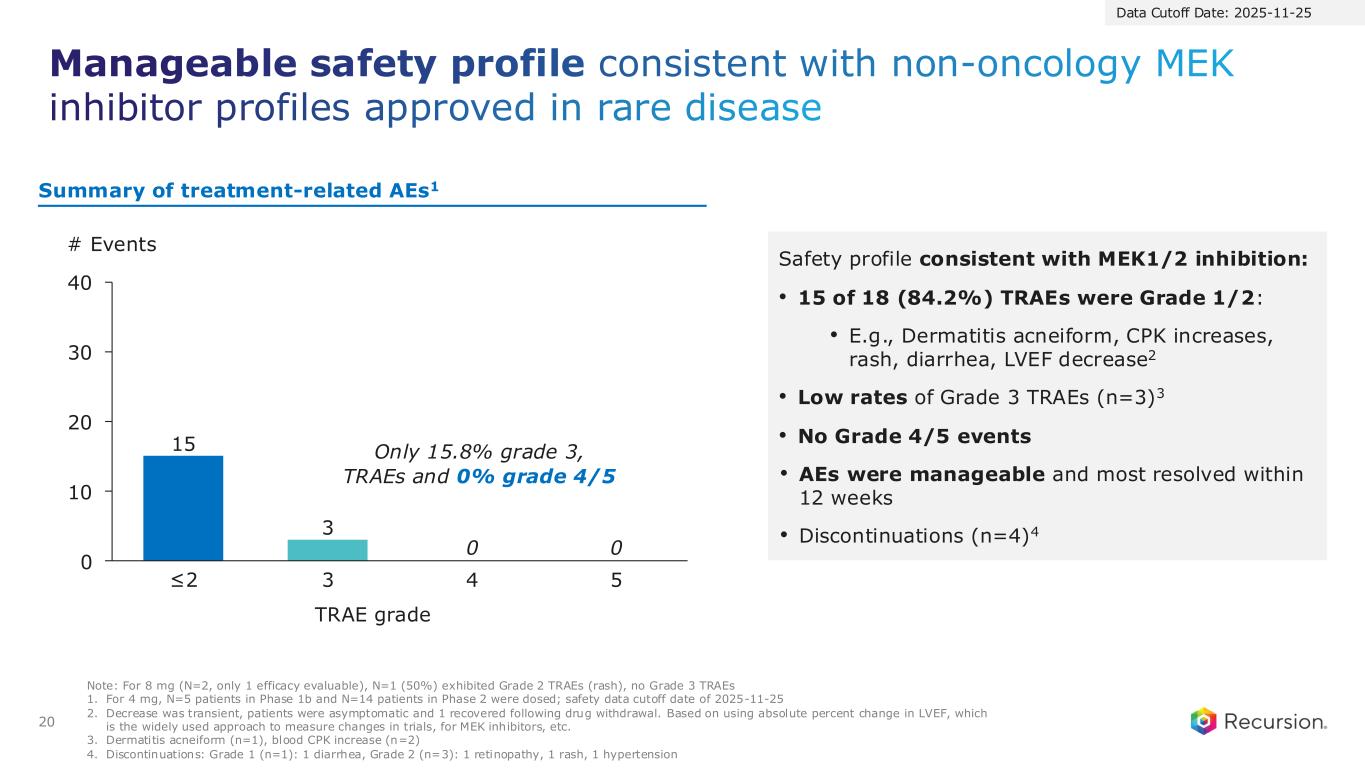
Manageable safety profile consistent with non-oncology MEK inhibitor profiles approved in rare disease 20 Note: For 8 mg (N=2, only 1 efficacy evaluable), N=1 (50%) exhibited Grade 2 TRAEs (rash), no Grade 3 TRAEs 1. For 4 mg, N=5 patients in Phase 1b and N=14 patients in Phase 2 were dosed; safety data cutoff date of 2025-11-25 2. Decrease was transient, patients were asymptomatic and 1 recovered following drug withdrawal. Based on using absolute percent change in LVEF, which is the widely used approach to measure changes in trials, for MEK inhibitors, etc. 3. Dermatitis acneiform (n=1), blood CPK increase (n=2) 4. Discontinuations: Grade 1 (n=1): 1 diarrhea, Grade 2 (n=3): 1 retinopathy, 1 rash, 1 hypertension Safety profile consistent with MEK1/2 inhibition: • 15 of 18 (84.2%) TRAEs were Grade 1/2: • E.g., Dermatitis acneiform, CPK increases, rash, diarrhea, LVEF decrease2 • Low rates of Grade 3 TRAEs (n=3)3 • No Grade 4/5 events • AEs were manageable and most resolved within 12 weeks • Discontinuations (n=4)4 15 3 0 10 20 30 40 # Events ≤2 3 4 5 0 0 TRAE grade Only 15.8% grade 3, TRAEs and 0% grade 4/5 Summary of treatment-related AEs1 Data Cutoff Date: 2025-11-25
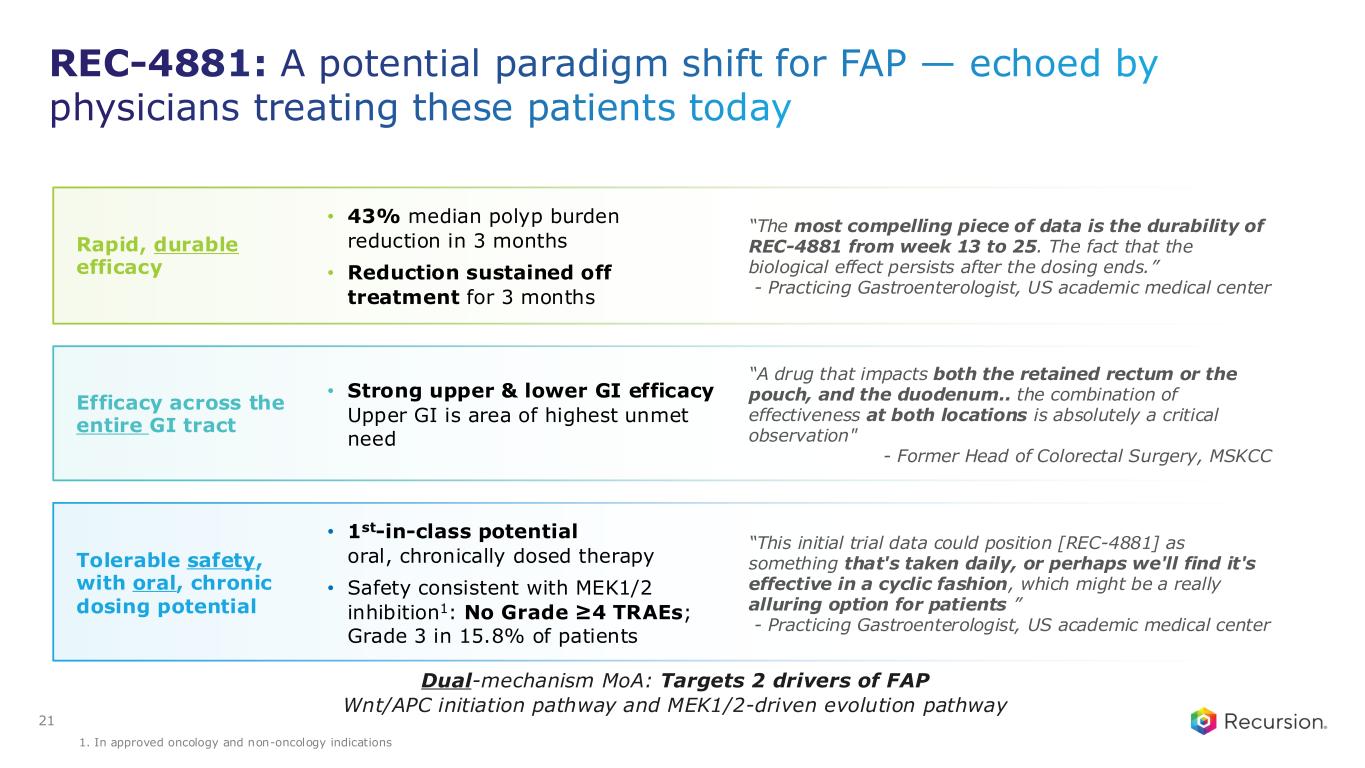
Tolerable safety, with oral, chronic dosing potential • 1st-in-class potential oral, chronically dosed therapy • Safety consistent with MEK1/2 inhibition1: No Grade ≥4 TRAEs; Grade 3 in 15.8% of patients “This initial trial data could position [REC-4881] as something that's taken daily, or perhaps we'll find it's effective in a cyclic fashion, which might be a really alluring option for patients ” - Practicing Gastroenterologist, US academic medical center Rapid, durable efficacy “The most compelling piece of data is the durability of REC-4881 from week 13 to 25. The fact that the biological effect persists after the dosing ends.” - Practicing Gastroenterologist, US academic medical center • 43% median polyp burden reduction in 3 months • Reduction sustained off treatment for 3 months Efficacy across the entire GI tract “A drug that impacts both the retained rectum or the pouch, and the duodenum.. the combination of effectiveness at both locations is absolutely a critical observation" - Former Head of Colorectal Surgery, MSKCC • Strong upper & lower GI efficacy Upper GI is area of highest unmet need 21 REC-4881: A potential paradigm shift for FAP — echoed by physicians treating these patients today Dual-mechanism MoA: Targets 2 drivers of FAP Wnt/APC initiation pathway and MEK1/2-driven evolution pathway 1. In approved oncology and non-oncology indications
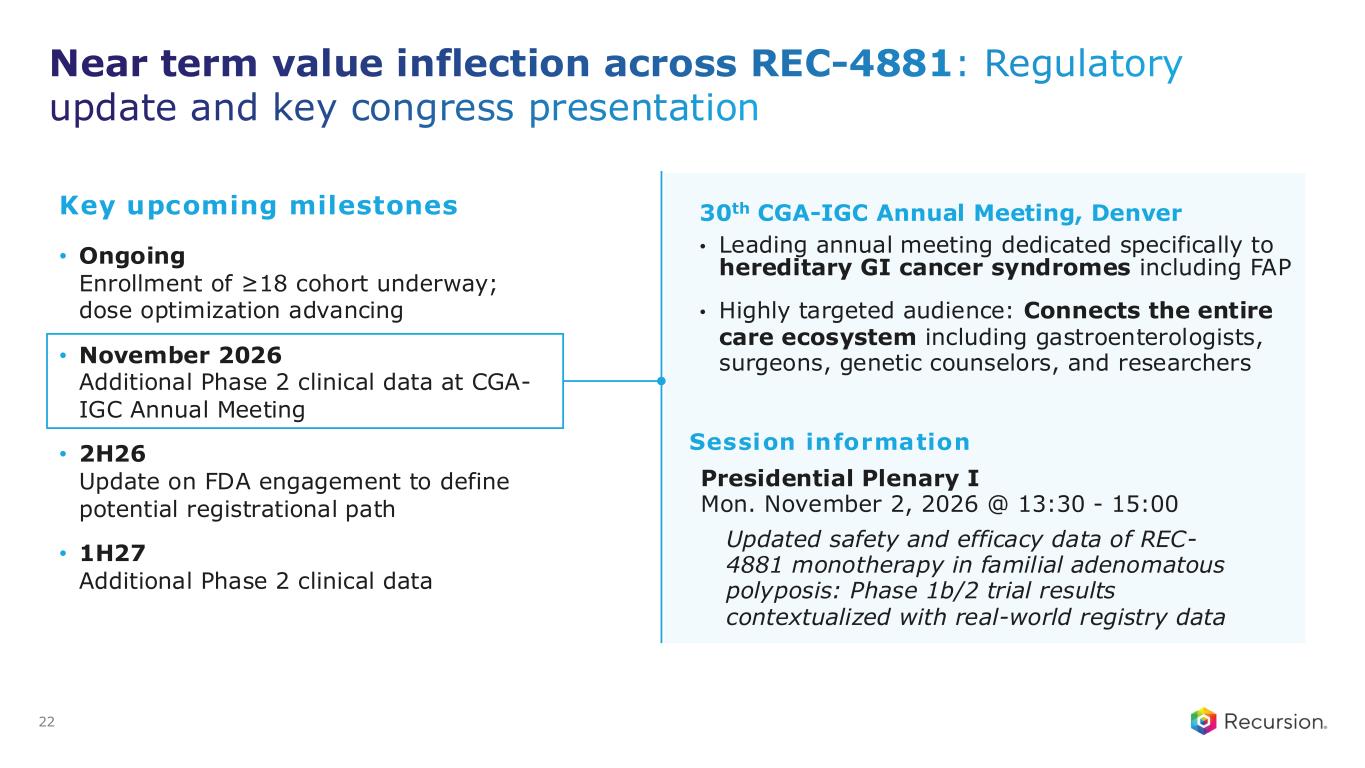
Presidential Plenary I Mon. November 2, 2026 @ 13:30 - 15:00 Near term value inflection across REC-4881: Regulatory update and key congress presentation 30th CGA-IGC Annual Meeting, Denver • Leading annual meeting dedicated specifically to hereditary GI cancer syndromes including FAP • Highly targeted audience: Connects the entire care ecosystem including gastroenterologists, surgeons, genetic counselors, and researchers 22 Updated safety and efficacy data of REC- 4881 monotherapy in familial adenomatous polyposis: Phase 1b/2 trial results contextualized with real-world registry data Key upcoming milestones • Ongoing Enrollment of ≥18 cohort underway; dose optimization advancing • November 2026 Additional Phase 2 clinical data at CGA- IGC Annual Meeting • 2H26 Update on FDA engagement to define potential registrational path • 1H27 Additional Phase 2 clinical data Session information
REC-1245 RBM39 Translating proof to products
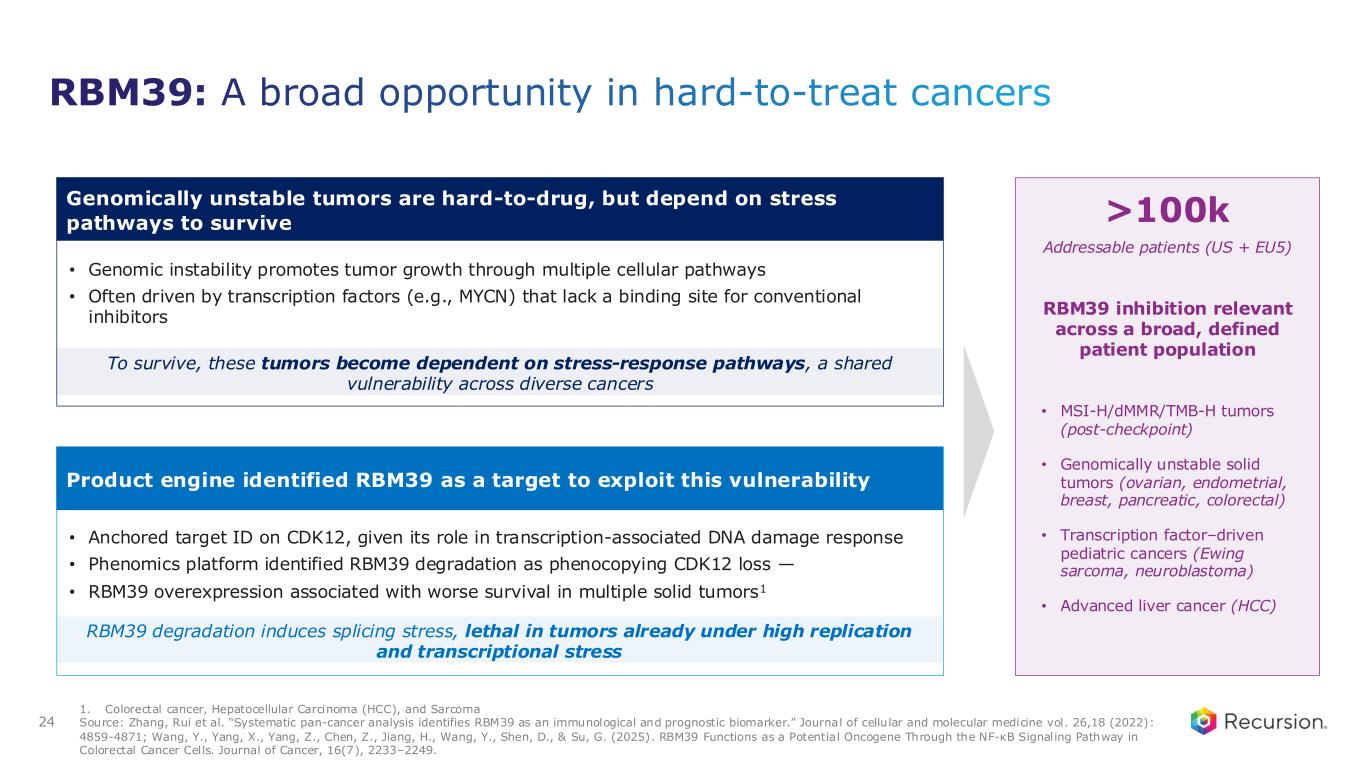
24 RBM39: A broad opportunity in hard-to-treat cancers Genomically unstable tumors are hard-to-drug, but depend on stress pathways to survive • Genomic instability promotes tumor growth through multiple cellular pathways • Often driven by transcription factors (e.g., MYCN) that lack a binding site for conventional inhibitors To survive, these tumors become dependent on stress-response pathways, a shared vulnerability across diverse cancers Product engine identified RBM39 as a target to exploit this vulnerability • Anchored target ID on CDK12, given its role in transcription-associated DNA damage response • Phenomics platform identified RBM39 degradation as phenocopying CDK12 loss — • RBM39 overexpression associated with worse survival in multiple solid tumors1 RBM39 degradation induces splicing stress, lethal in tumors already under high replication and transcriptional stress >100k Addressable patients (US + EU5) • MSI-H/dMMR/TMB-H tumors (post-checkpoint) • Genomically unstable solid tumors (ovarian, endometrial, breast, pancreatic, colorectal) • Transcription factor–driven pediatric cancers (Ewing sarcoma, neuroblastoma) • Advanced liver cancer (HCC) 1. Colorectal cancer, Hepatocellular Carcinoma (HCC), and Sarcoma Source: Zhang, Rui et al. “Systematic pan-cancer analysis identifies RBM39 as an immunological and prognostic biomarker.” Journa l of cellular and molecular medicine vol. 26,18 (2022): 4859-4871; Wang, Y., Yang, X., Yang, Z., Chen, Z., Jiang, H., Wang, Y., Shen, D., & Su, G. (2025). RBM39 Functions as a Potential Oncogene Through the NF-κB Signaling Pathway in Colorectal Cancer Cells. Journal of Cancer, 16(7), 2233–2249. RBM39 inhibition relevant across a broad, defined patient population
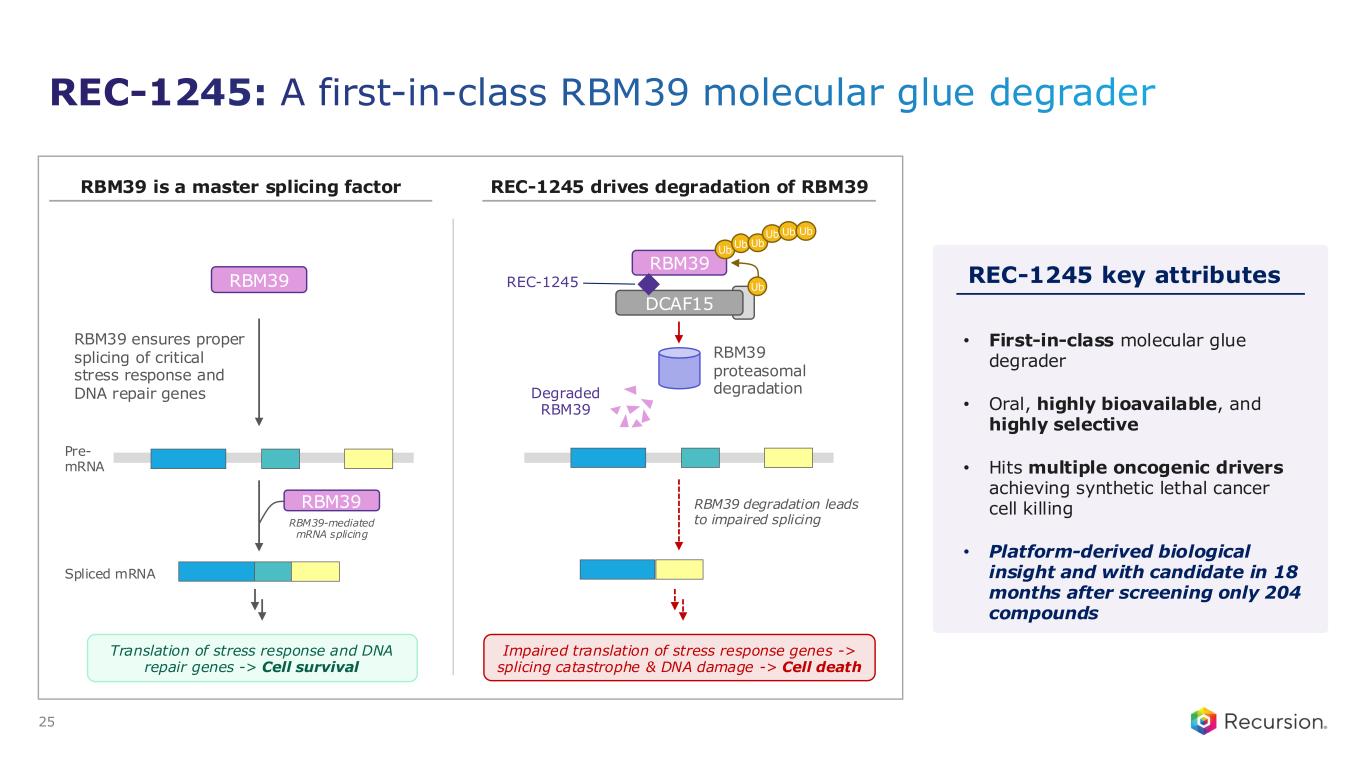
25 REC-1245 key attributes • First-in-class molecular glue degrader • Oral, highly bioavailable, and highly selective • Hits multiple oncogenic drivers achieving synthetic lethal cancer cell killing • Platform-derived biological insight and with candidate in 18 months after screening only 204 compounds RBM39 is a master splicing factor RBM39 Pre- mRNA RBM39-mediated mRNA splicing Spliced mRNA Translation of stress response and DNA repair genes -> Cell survival RBM39 ensures proper splicing of critical stress response and DNA repair genes RBM39 REC-1245 drives degradation of RBM39 Impaired translation of stress response genes -> splicing catastrophe & DNA damage -> Cell death RBM39 degradation leads to impaired splicing RBM39 REC-1245 DCAF15 Ub RBM39 proteasomal degradationDegraded RBM39 Ub Ub Ub Ub Ub Ub REC-1245: A first-in-class RBM39 molecular glue degrader
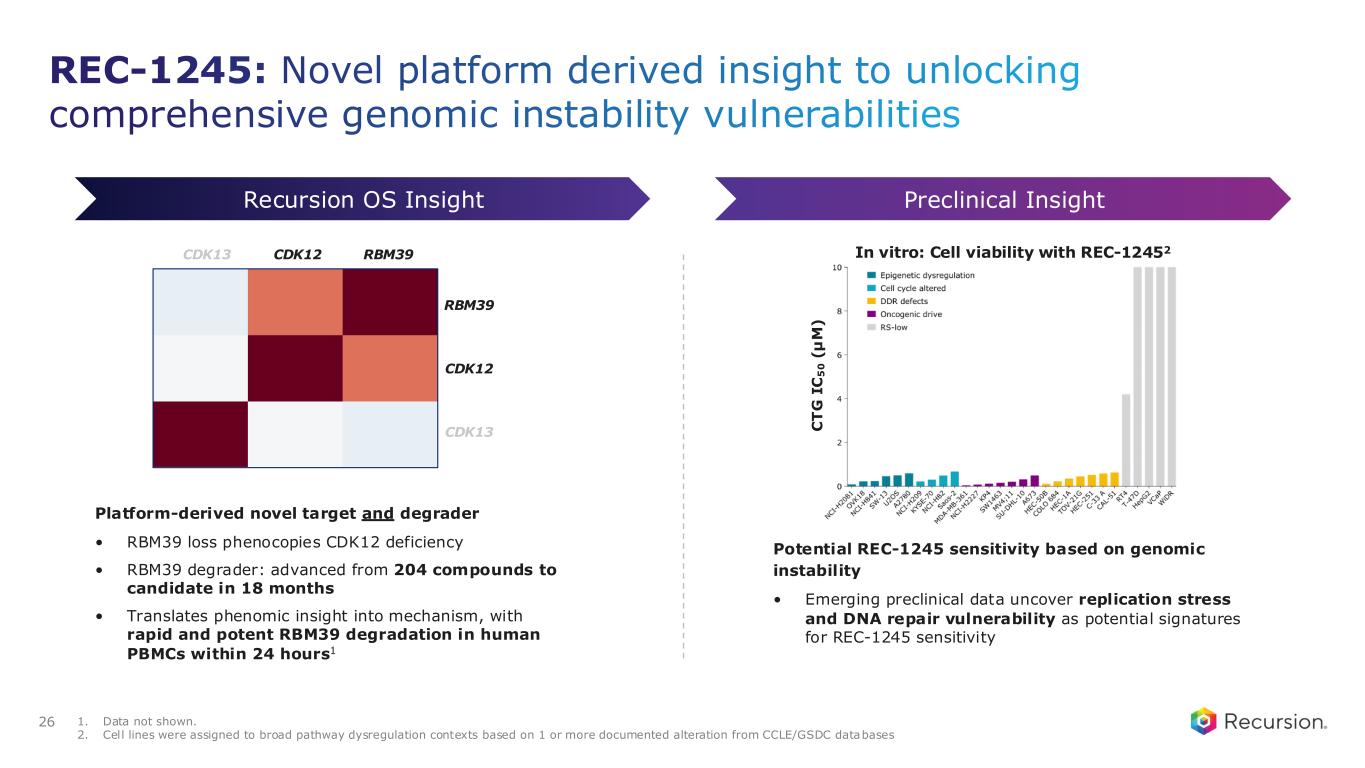
26 1. Data not shown. 2. Cell lines were assigned to broad pathway dysregulation contexts based on 1 or more documented alteration from CCLE/GSDC databases Preclinical InsightRecursion OS Insight Platform-derived novel target and degrader • RBM39 loss phenocopies CDK12 deficiency • RBM39 degrader: advanced from 204 compounds to candidate in 18 months • Translates phenomic insight into mechanism, with rapid and potent RBM39 degradation in human PBMCs within 24 hours1 CDK12 RBM39CDK13 RBM39 CDK12 CDK13 In vitro: Cell viability with REC-12452 C T G I C 5 0 ( µ M ) Potential REC-1245 sensitivity based on genomic instability • Emerging preclinical data uncover replication stress and DNA repair vulnerability as potential signatures for REC-1245 sensitivity REC-1245: Novel platform derived insight to unlocking comprehensive genomic instability vulnerabilities
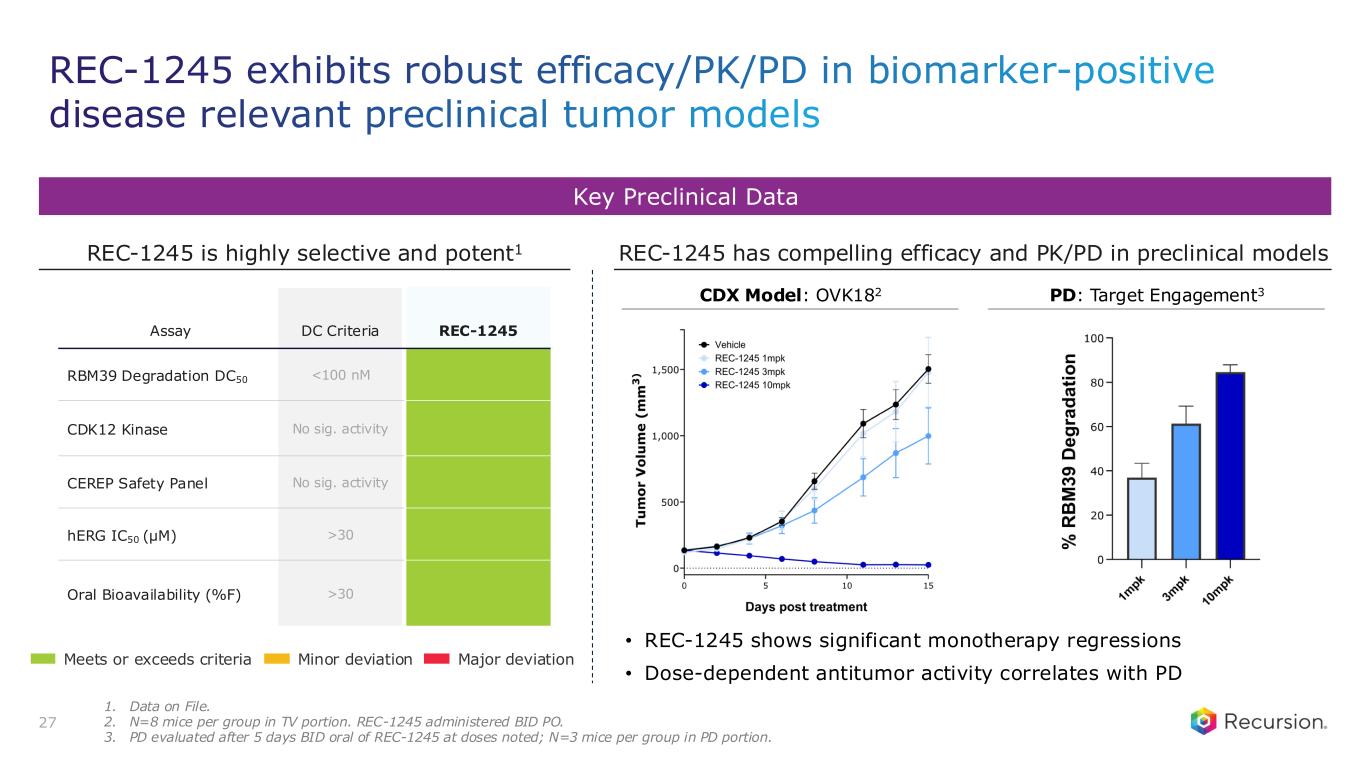
Key Preclinical Data REC-1245 is highly selective and potent1 Assay DC Criteria REC-1245 RBM39 Degradation DC50 <100 nM CDK12 Kinase No sig. activity CEREP Safety Panel No sig. activity hERG IC50 (µM) >30 Oral Bioavailability (%F) >30 REC-1245 has compelling efficacy and PK/PD in preclinical models 27 Meets or exceeds criteria Minor deviation Major deviation • REC-1245 shows significant monotherapy regressions • Dose-dependent antitumor activity correlates with PD CDX Model: OVK182 PD: Target Engagement3 1. Data on File. 2. N=8 mice per group in TV portion. REC-1245 administered BID PO. 3. PD evaluated after 5 days BID oral of REC-1245 at doses noted; N=3 mice per group in PD portion. REC-1245 exhibits robust efficacy/PK/PD in biomarker-positive disease relevant preclinical tumor models
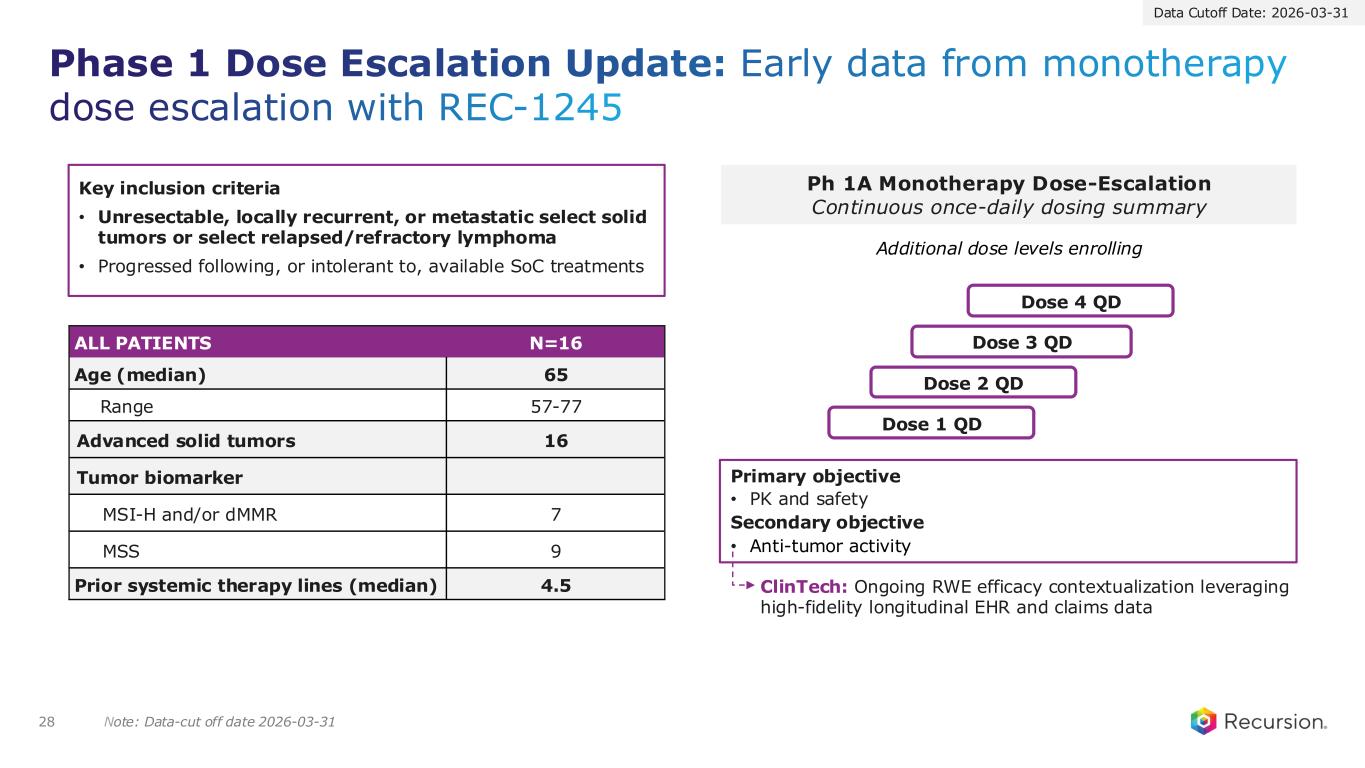
Note: Data-cut off date 2026-03-31 Phase 1 Dose Escalation Update: Early data from monotherapy dose escalation with REC-1245 28 Ph 1A Monotherapy Dose-Escalation Continuous once-daily dosing summary Dose 1 QD Dose 2 QD Dose 3 QD Dose 4 QD Additional dose levels enrolling Primary objective • PK and safety Secondary objective • Anti-tumor activity ALL PATIENTS N=16 Age (median) 65 Range 57-77 Advanced solid tumors 16 Tumor biomarker MSI-H and/or dMMR 7 MSS 9 Prior systemic therapy lines (median) 4.5 Key inclusion criteria • Unresectable, locally recurrent, or metastatic select solid tumors or select relapsed/refractory lymphoma • Progressed following, or intolerant to, available SoC treatments ClinTech: Ongoing RWE efficacy contextualization leveraging high-fidelity longitudinal EHR and claims data Data Cutoff Date: 2026-03-31
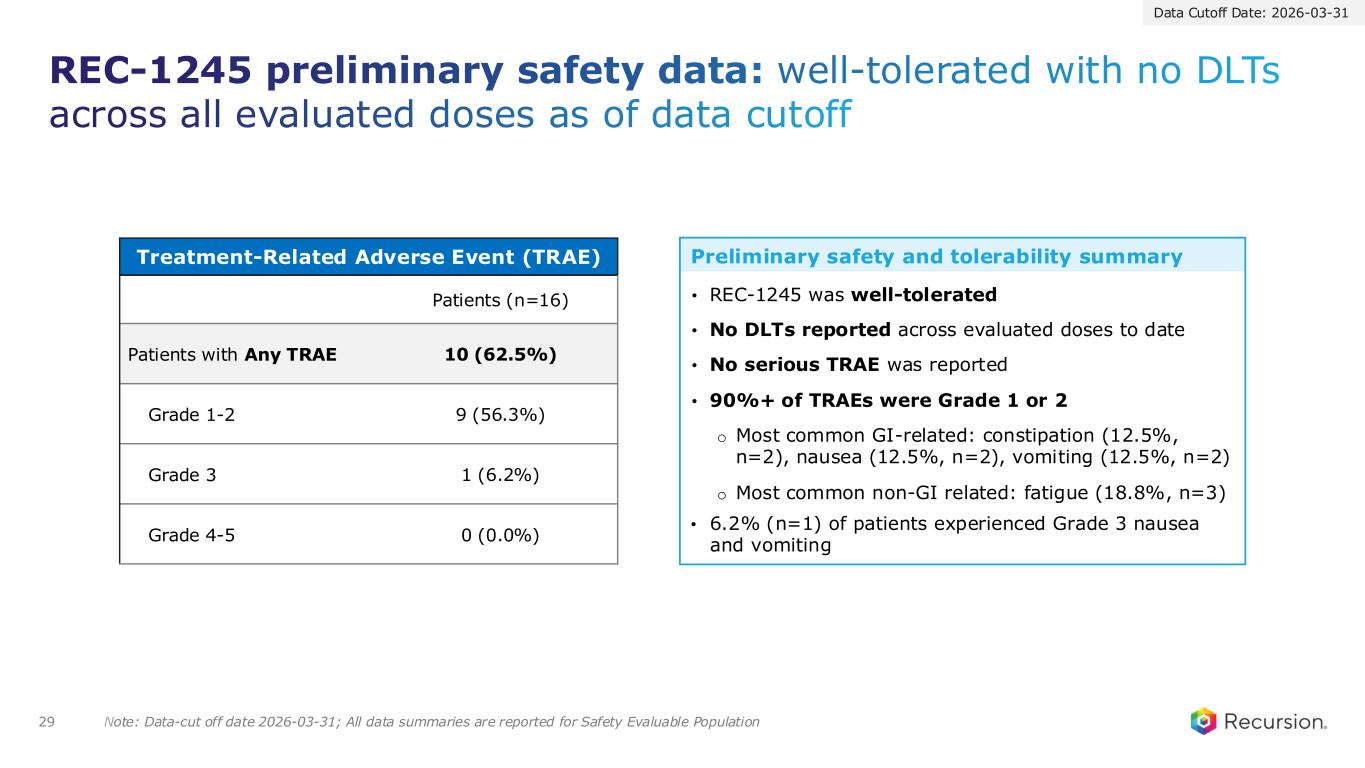
29 Note: Data-cut off date 2026-03-31; All data summaries are reported for Safety Evaluable Population Treatment-Related Adverse Event (TRAE) Patients (n=16) Patients with Any TRAE 10 (62.5%) Grade 1-2 9 (56.3%) Grade 3 1 (6.2%) Grade 4-5 0 (0.0%) • REC-1245 was well-tolerated • No DLTs reported across evaluated doses to date • No serious TRAE was reported • 90%+ of TRAEs were Grade 1 or 2 o Most common GI-related: constipation (12.5%, n=2), nausea (12.5%, n=2), vomiting (12.5%, n=2) o Most common non-GI related: fatigue (18.8%, n=3) • 6.2% (n=1) of patients experienced Grade 3 nausea and vomiting Preliminary safety and tolerability summary Data Cutoff Date: 2026-03-31 REC-1245 preliminary safety data: well-tolerated with no DLTs across all evaluated doses as of data cutoff
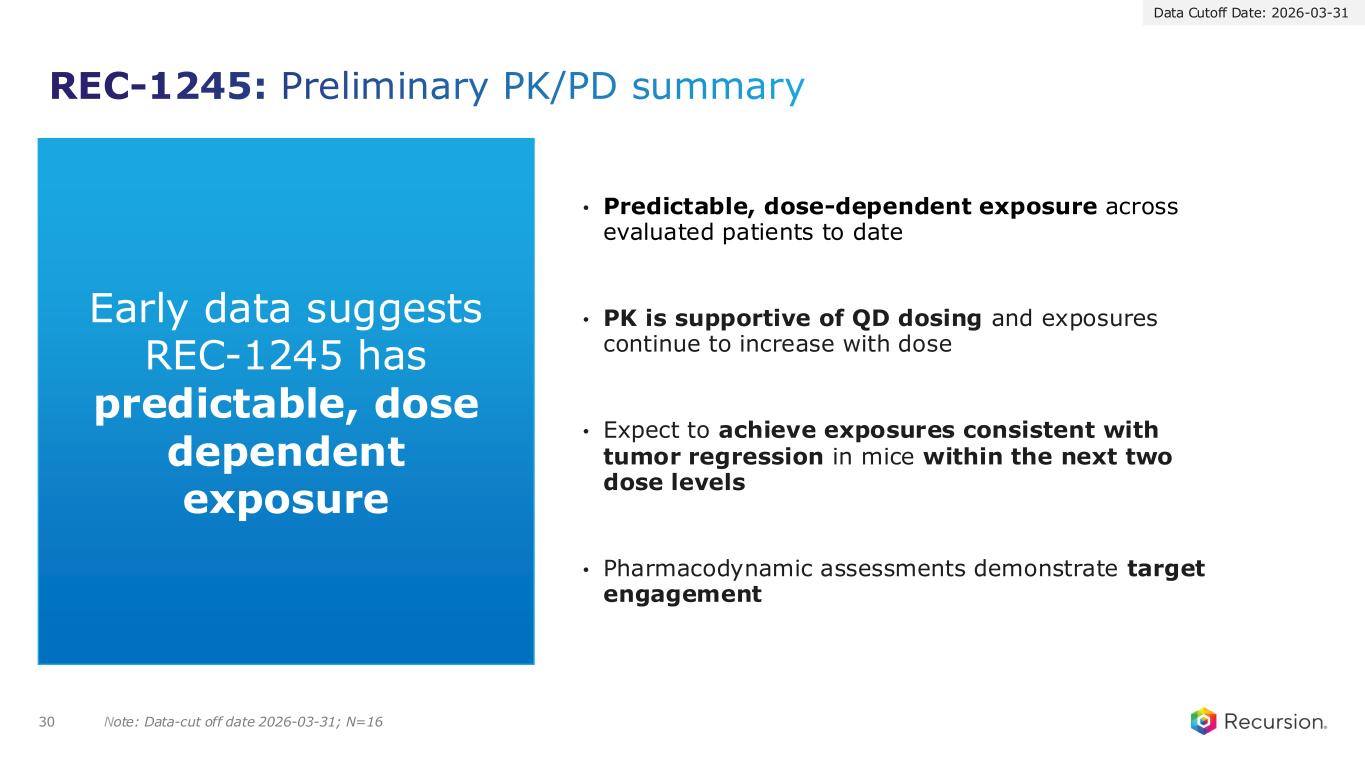
REC-1245: Preliminary PK/PD summary • Predictable, dose-dependent exposure across evaluated patients to date • PK is supportive of QD dosing and exposures continue to increase with dose • Expect to achieve exposures consistent with tumor regression in mice within the next two dose levels • Pharmacodynamic assessments demonstrate target engagement 30 Early data suggests REC-1245 has predictable, dose dependent exposure Note: Data-cut off date 2026-03-31; N=16 Data Cutoff Date: 2026-03-31
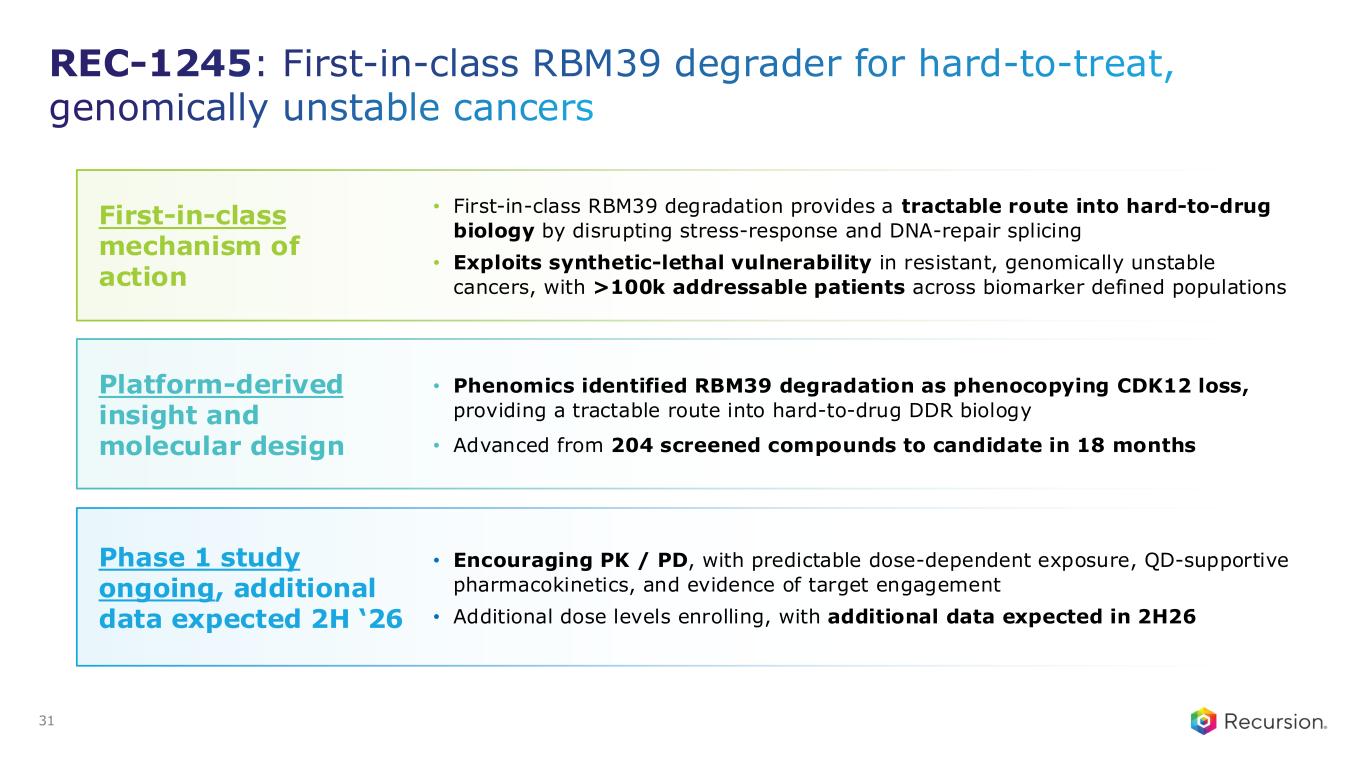
Phase 1 study ongoing, additional data expected 2H ‘26 • Encouraging PK / PD, with predictable dose-dependent exposure, QD-supportive pharmacokinetics, and evidence of target engagement • Additional dose levels enrolling, with additional data expected in 2H26 First-in-class mechanism of action • First-in-class RBM39 degradation provides a tractable route into hard-to-drug biology by disrupting stress-response and DNA-repair splicing • Exploits synthetic-lethal vulnerability in resistant, genomically unstable cancers, with >100k addressable patients across biomarker defined populations Platform-derived insight and molecular design • Phenomics identified RBM39 degradation as phenocopying CDK12 loss, providing a tractable route into hard-to-drug DDR biology • Advanced from 204 screened compounds to candidate in 18 months 31 REC-1245: First-in-class RBM39 degrader for hard-to-treat, genomically unstable cancers
REC-7735 Translating proof to products
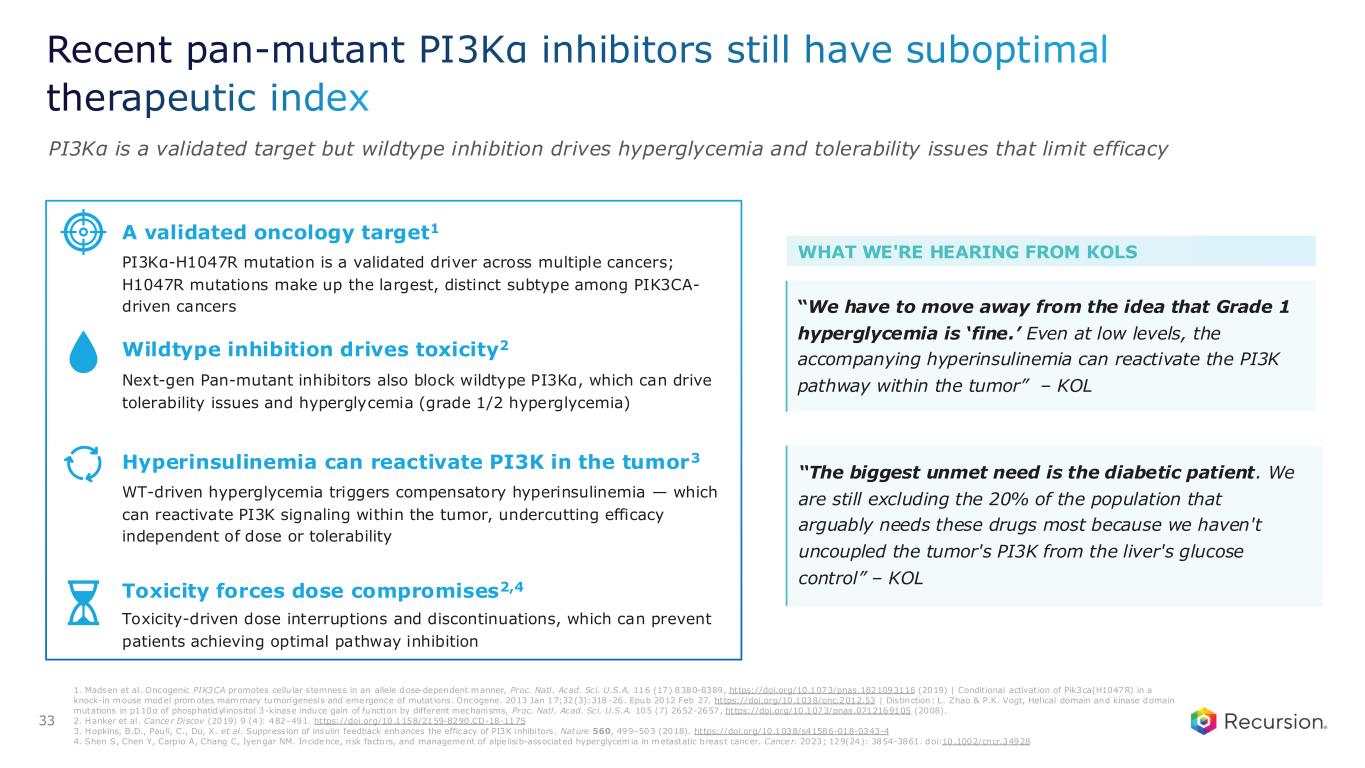
Recent pan-mutant PI3Kα inhibitors still have suboptimal therapeutic index PI3Kα is a validated target but wildtype inhibition drives hyperglycemia and tolerability issues that limit efficacy A validated oncology target1 PI3Kα-H1047R mutation is a validated driver across multiple cancers; H1047R mutations make up the largest, distinct subtype among PIK3CA- driven cancers Wildtype inhibition drives toxicity2 Next-gen Pan-mutant inhibitors also block wildtype PI3Kα, which can drive tolerability issues and hyperglycemia (grade 1/2 hyperglycemia) Toxicity forces dose compromises2,4 Toxicity-driven dose interruptions and discontinuations, which can prevent patients achieving optimal pathway inhibition Hyperinsulinemia can reactivate PI3K in the tumor3 WT-driven hyperglycemia triggers compensatory hyperinsulinemia — which can reactivate PI3K signaling within the tumor, undercutting efficacy independent of dose or tolerability WHAT WE'RE HEARING FROM KOLS “The biggest unmet need is the diabetic patient. We are still excluding the 20% of the population that arguably needs these drugs most because we haven't uncoupled the tumor's PI3K from the liver's glucose control” – KOL “We have to move away from the idea that Grade 1 hyperglycemia is ‘fine.’ Even at low levels, the accompanying hyperinsulinemia can reactivate the PI3K pathway within the tumor” – KOL 33 1. Madsen et al. Oncogenic PIK3CA promotes cellu lar stemness in an allele dose-dependent manner, Proc. Natl. Acad. Sci. U.S.A. 116 (17) 8380-8389, https://doi.org/10.1073/pnas.1821093116 (2019) | Conditional activation of Pik3ca(H1047R) in a knock-in mouse model promotes mammary tumorigenesis and emergence of mutations. Oncogene. 2013 Jan 17;32(3):318 -26. Epub 2012 Feb 27. https://doi.org/10.1038/onc.2012.53 | Distinction: L. Zhao & P.K. Vogt, Helical domain and kinase domain mutations in p110α of phosphatidylinositol 3-kinase induce gain of function by different mechanisms, Proc. Natl. Acad. Sci. U.S.A. 105 (7) 2652-2657, https://doi.org/10.1073/pnas.0712169105 (2008). 2. Hanker et al. Cance r Discov (2019) 9 (4): 482–491. https://doi.org/10.1158/2159-8290.CD-18-1175 3. Hopkins, B.D., Pauli, C., Du, X. et al. Suppression of insulin feedback enhances the efficacy of PI3K inhibitors. Nature 560, 499–503 (2018). https://doi.org/10.1038/s41586-018-0343-4 4. Shen S, Chen Y, Carp io A, Chang C, Iyengar NM. Incidence, risk factors, and management of alpe lisib-associated hyperglycemia in metastatic breast cancer. Cance r. 2023; 129(24): 3854-3861. doi:10.1002/cncr.34928
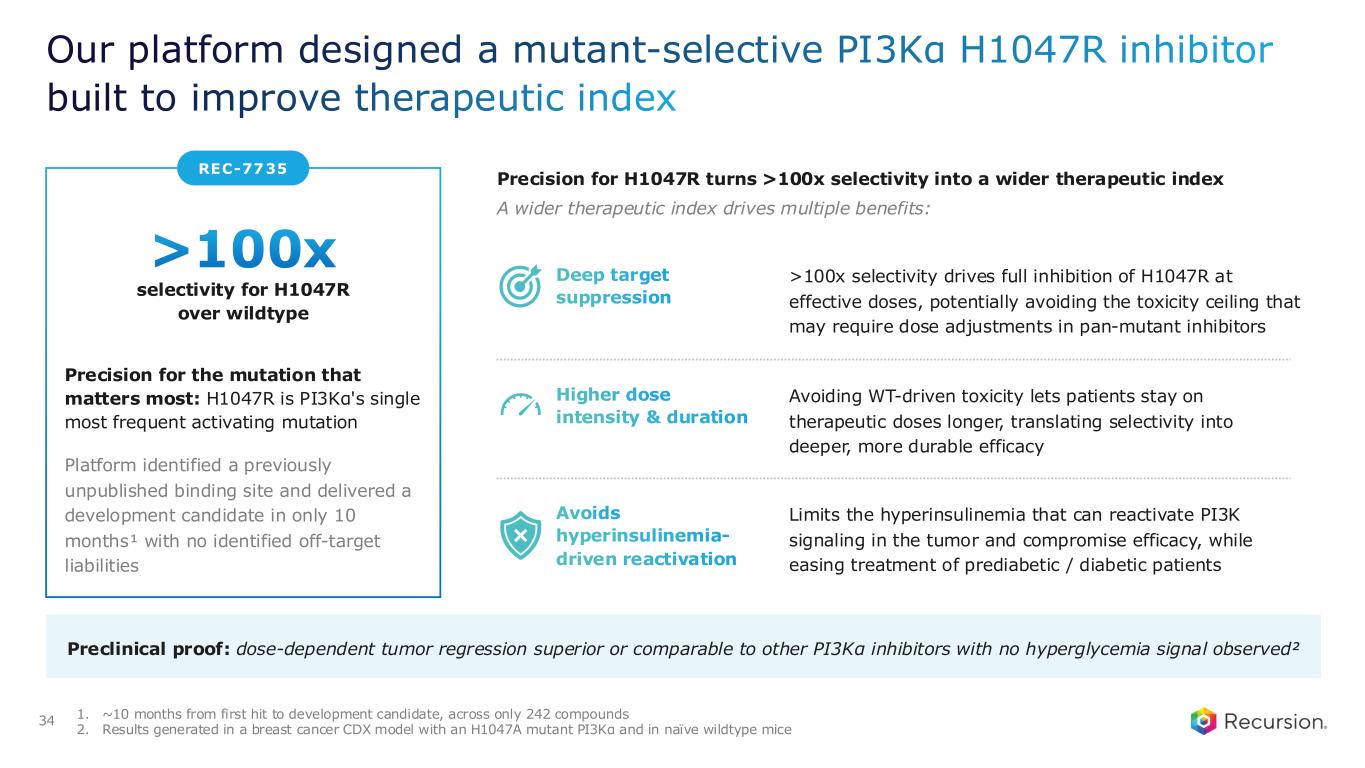
REC-7735 Our platform designed a mutant-selective PI3Kα H1047R inhibitor built to improve therapeutic index >100x selectivity for H1047R over wildtype Precision for the mutation that matters most: H1047R is PI3Kα's single most frequent activating mutation Platform identified a previously unpublished binding site and delivered a development candidate in only 10 months¹ with no identified off-target liabilities Precision for H1047R turns >100x selectivity into a wider therapeutic index A wider therapeutic index drives multiple benefits: Preclinical proof: dose-dependent tumor regression superior or comparable to other PI3Kα inhibitors with no hyperglycemia signal observed² 1. ~10 months from first hit to development candidate, across only 242 compounds 2. Results generated in a breast cancer CDX model with an H1047A mutant PI3Kα and in naïve wildtype mice 34 Higher dose intensity & duration Avoiding WT-driven toxicity lets patients stay on therapeutic doses longer, translating selectivity into deeper, more durable efficacy Avoids hyperinsulinemia- driven reactivation Limits the hyperinsulinemia that can reactivate PI3K signaling in the tumor and compromise efficacy, while easing treatment of prediabetic / diabetic patients Deep target suppression >100x selectivity drives full inhibition of H1047R at effective doses, potentially avoiding the toxicity ceiling that may require dose adjustments in pan-mutant inhibitors
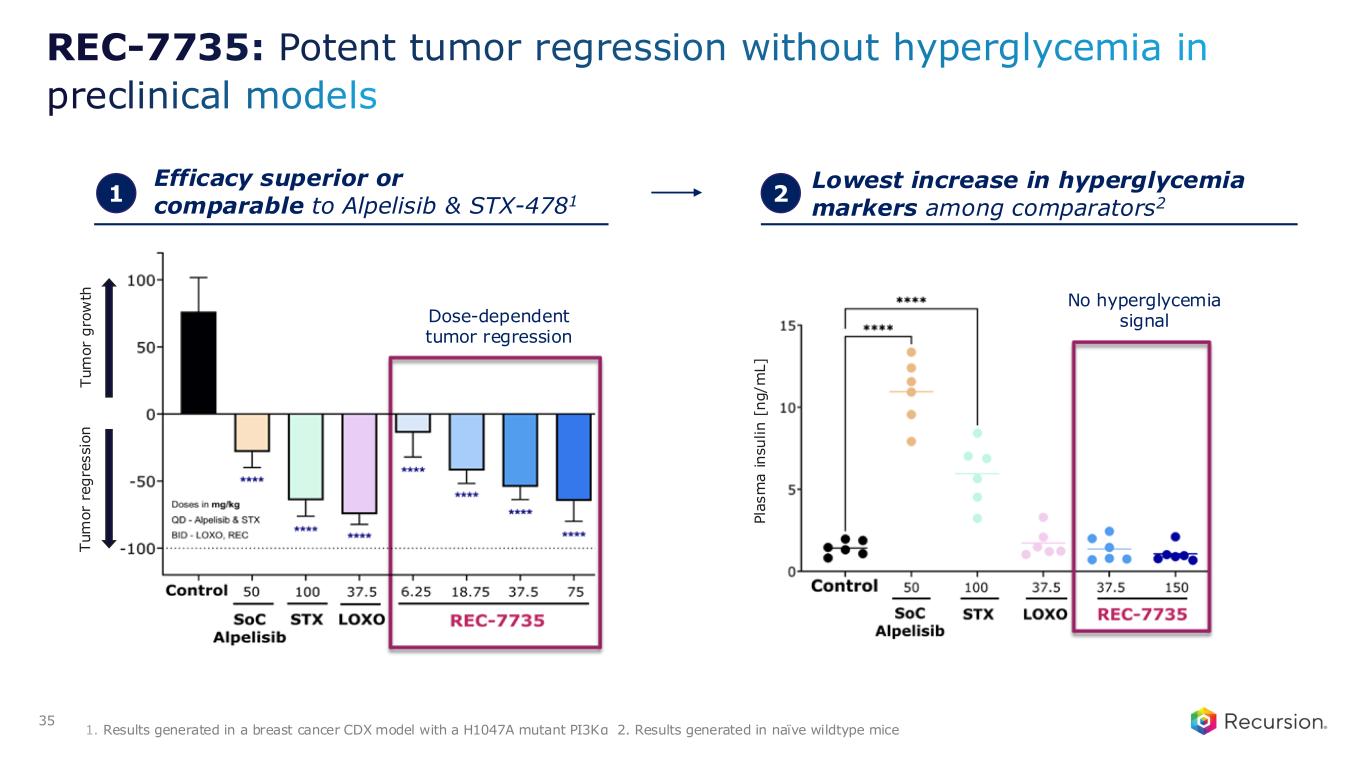
REC-7735: Potent tumor regression without hyperglycemia in preclinical models 35 Efficacy superior or comparable to Alpelisib & STX-4781 P la s m a i n s u li n [ n g / m L ] T u m o r re g re s s io n T u m o r g ro w th 1 Lowest increase in hyperglycemia markers among comparators22 1. Results generated in a breast cancer CDX model with a H1047A mutant PI3Kα 2. Results generated in naïve wildtype mice Dose-dependent tumor regression No hyperglycemia signal
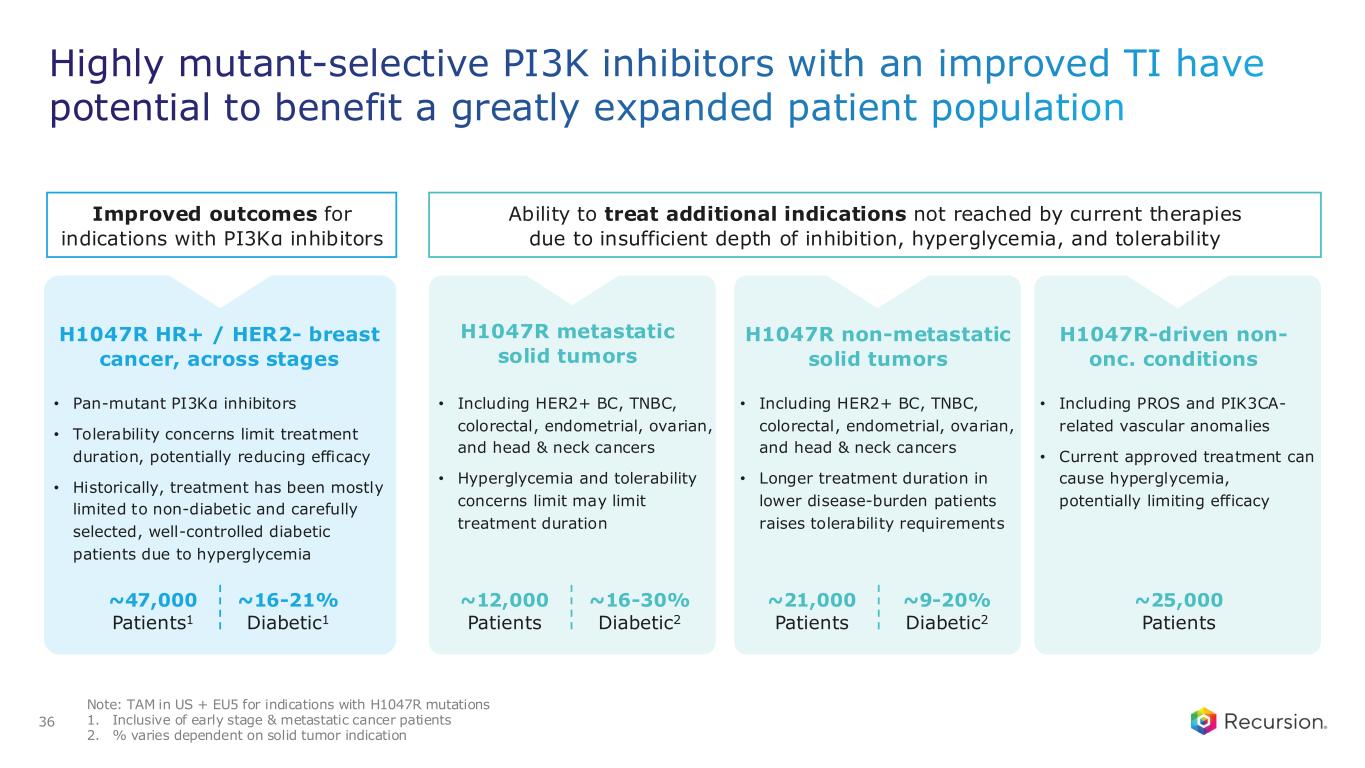
Highly mutant-selective PI3K inhibitors with an improved TI have potential to benefit a greatly expanded patient population 36 Ability to treat additional indications not reached by current therapies due to insufficient depth of inhibition, hyperglycemia, and tolerability H1047R HR+ / HER2- breast cancer, across stages • Pan-mutant PI3Kα inhibitors • Tolerability concerns limit treatment duration, potentially reducing efficacy • Historically, treatment has been mostly limited to non-diabetic and carefully selected, well-controlled diabetic patients due to hyperglycemia H1047R metastatic solid tumors • Including HER2+ BC, TNBC, colorectal, endometrial, ovarian, and head & neck cancers • Hyperglycemia and tolerability concerns limit may limit treatment duration H1047R non-metastatic solid tumors • Including HER2+ BC, TNBC, colorectal, endometrial, ovarian, and head & neck cancers • Longer treatment duration in lower disease-burden patients raises tolerability requirements H1047R-driven non- onc. conditions • Including PROS and PIK3CA- related vascular anomalies • Current approved treatment can cause hyperglycemia, potentially limiting efficacy ~47,000 Patients1 ~16-21% Diabetic1 ~12,000 Patients ~16-30% Diabetic2 ~21,000 Patients ~9-20% Diabetic2 ~25,000 Patients Note: TAM in US + EU5 for indications with H1047R mutations 1. Inclusive of early stage & metastatic cancer patients 2. % varies dependent on solid tumor indication Improved outcomes for indications with PI3Kα inhibitors
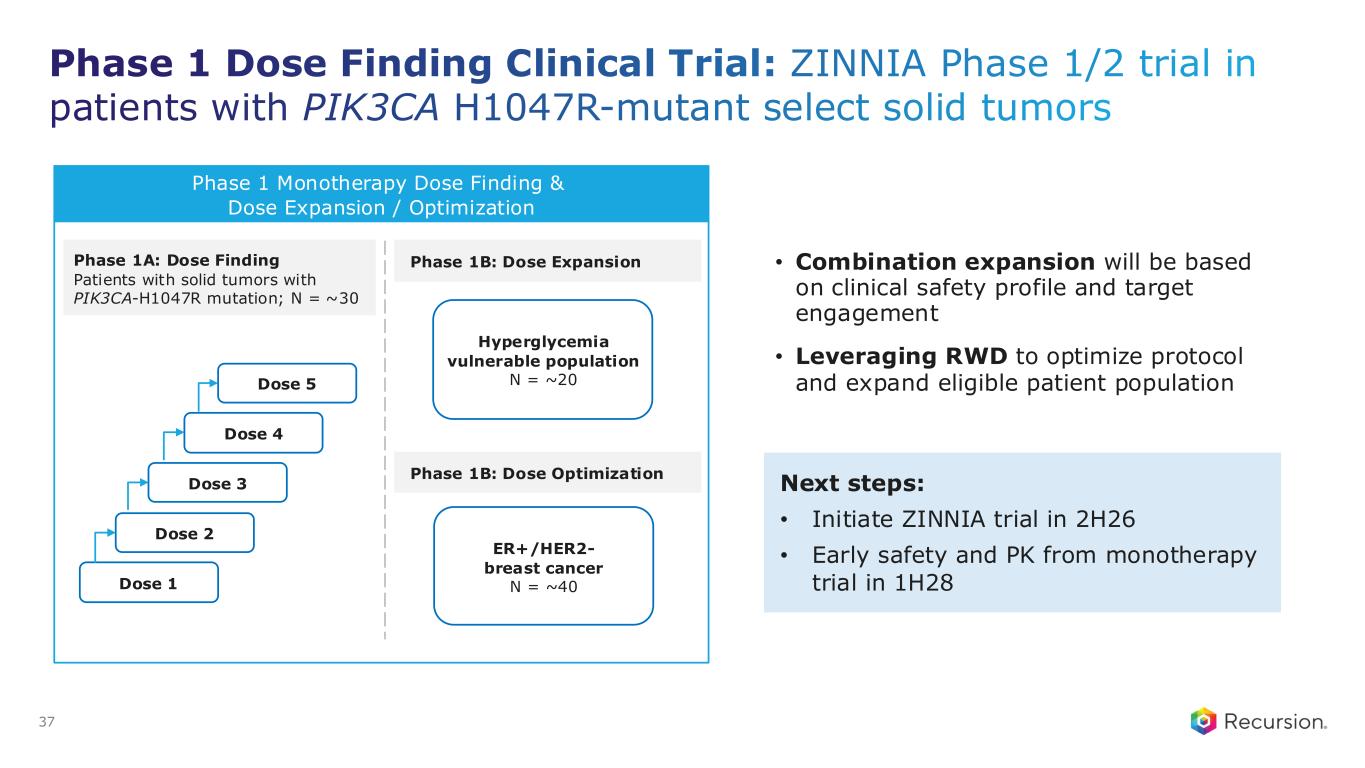
Phase 1 Dose Finding Clinical Trial: ZINNIA Phase 1/2 trial in patients with PIK3CA H1047R-mutant select solid tumors • Combination expansion will be based on clinical safety profile and target engagement • Leveraging RWD to optimize protocol and expand eligible patient population 37 Phase 1 Monotherapy Dose Finding & Dose Expansion / Optimization Phase 1A: Dose Finding Patients with solid tumors with PIK3CA-H1047R mutation; N = ~30 Dose 1 Dose 2 Dose 3 Dose 4 Dose 5 Hyperglycemia vulnerable population N = ~20 Next steps: • Initiate ZINNIA trial in 2H26 • Early safety and PK from monotherapy trial in 1H28 Phase 1B: Dose Expansion Phase 1B: Dose Optimization ER+/HER2- breast cancer N = ~40

Partnered portfolio Translating proof to products
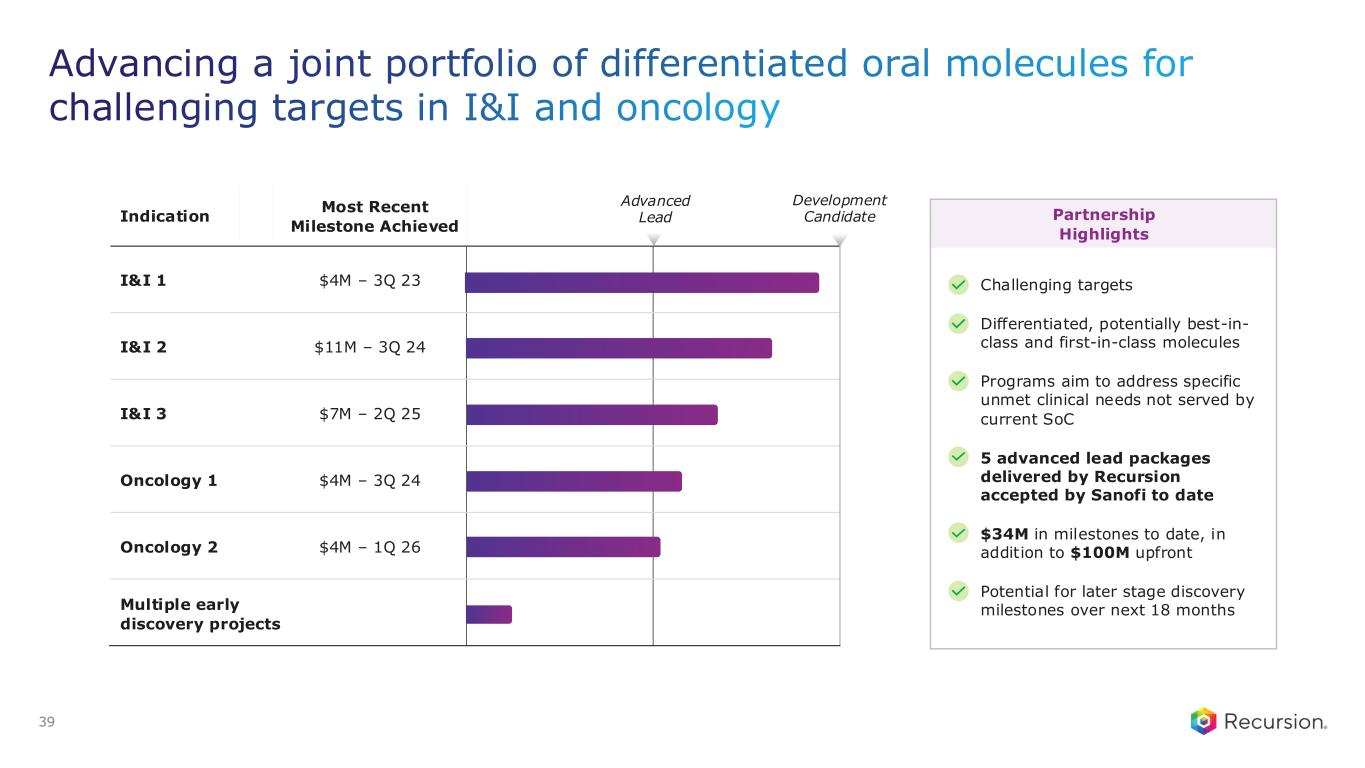
Challenging targets Differentiated, potentially best-in- class and first-in-class molecules Programs aim to address specific unmet clinical needs not served by current SoC 5 advanced lead packages delivered by Recursion accepted by Sanofi to date $34M in milestones to date, in addition to $100M upfront Potential for later stage discovery milestones over next 18 months Advancing a joint portfolio of differentiated oral molecules for challenging targets in I&I and oncology 39 Indication Most Recent Milestone Achieved I&I 1 $4M – 3Q 23 I&I 2 $11M – 3Q 24 I&I 3 $7M – 2Q 25 Oncology 1 $4M – 3Q 24 Oncology 2 $4M – 1Q 26 Multiple early discovery projects Advanced Lead Development Candidate Partnership Highlights
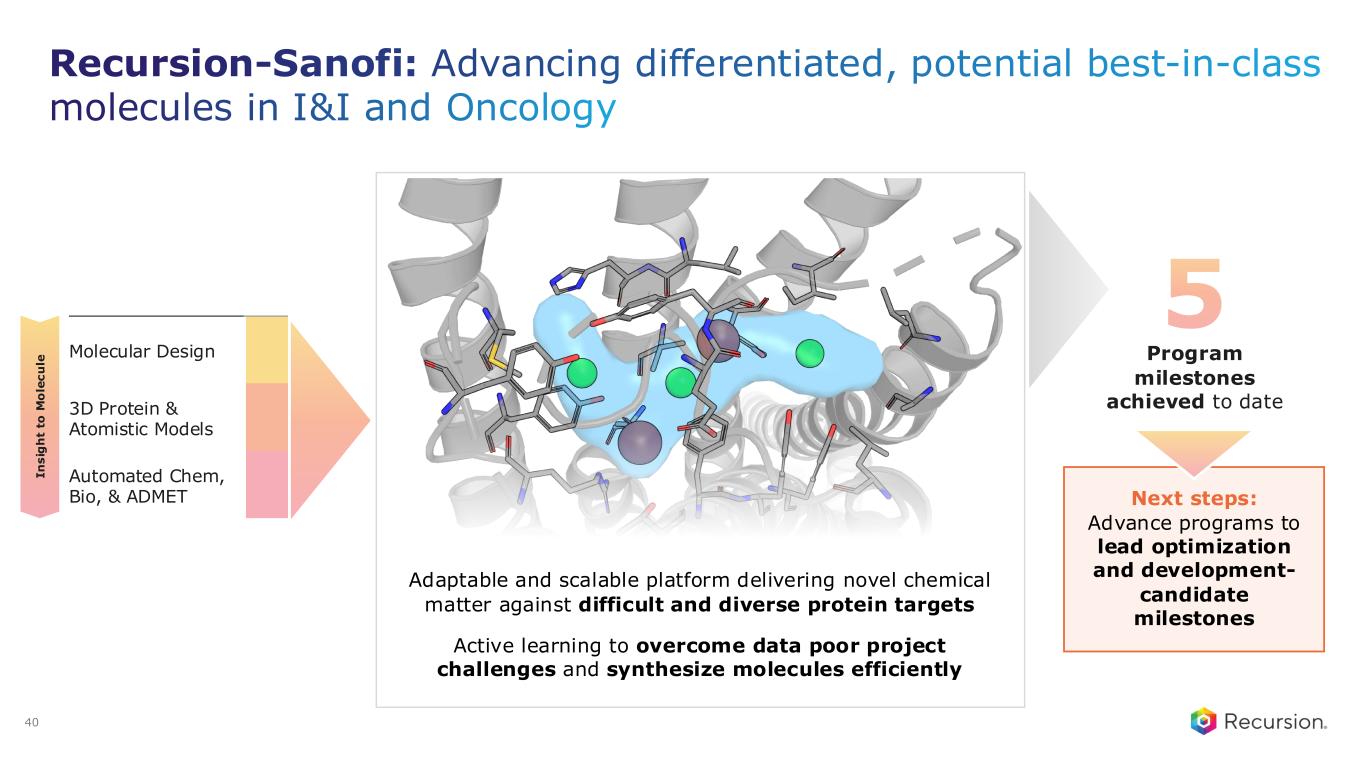
Recursion-Sanofi: Advancing differentiated, potential best-in-class molecules in I&I and Oncology Molecular Design 3D Protein & Atomistic Models Automated Chem, Bio, & ADMET I n s ig h t to M o le c u le 5 Program milestones achieved to date Next steps: Advance programs to lead optimization and development- candidate milestones Adaptable and scalable platform delivering novel chemical matter against difficult and diverse protein targets Active learning to overcome data poor project challenges and synthesize molecules efficiently 40

Roche Genentech Translating proof to products
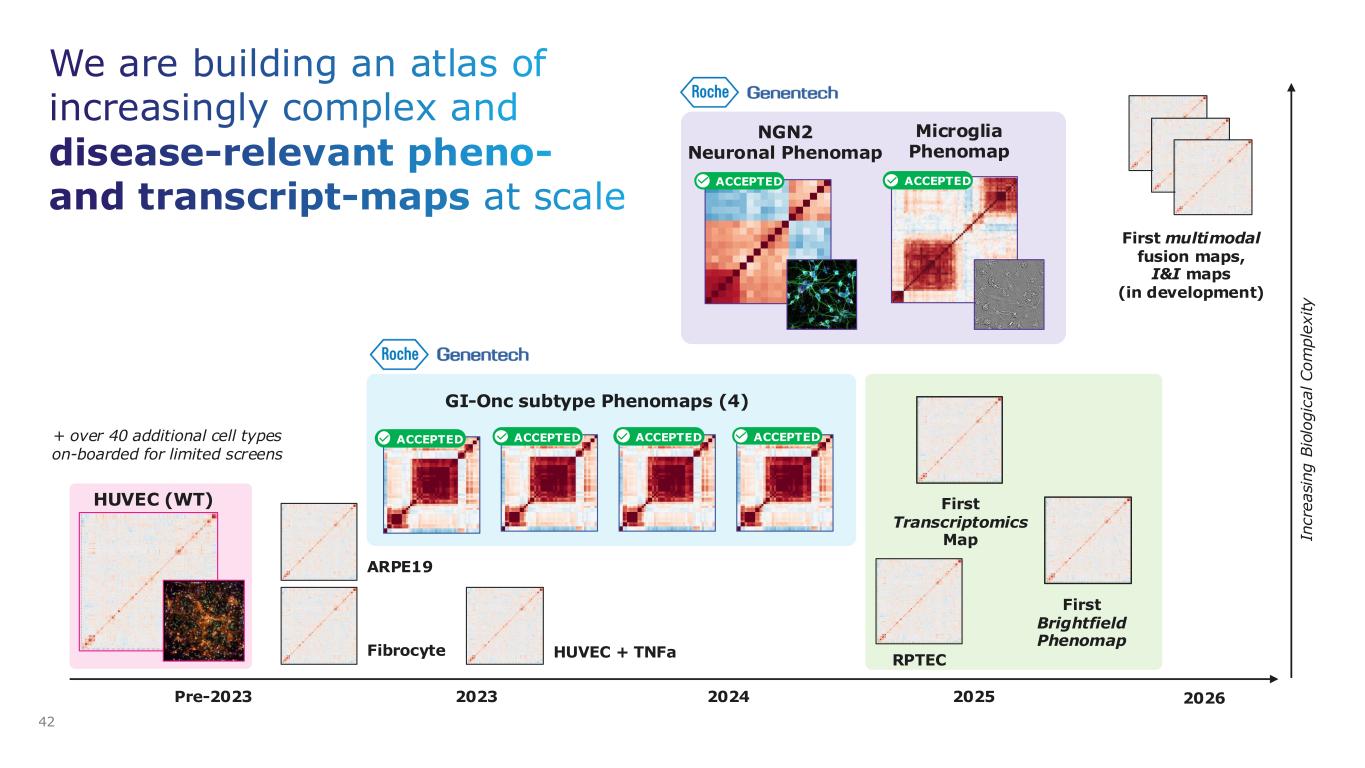
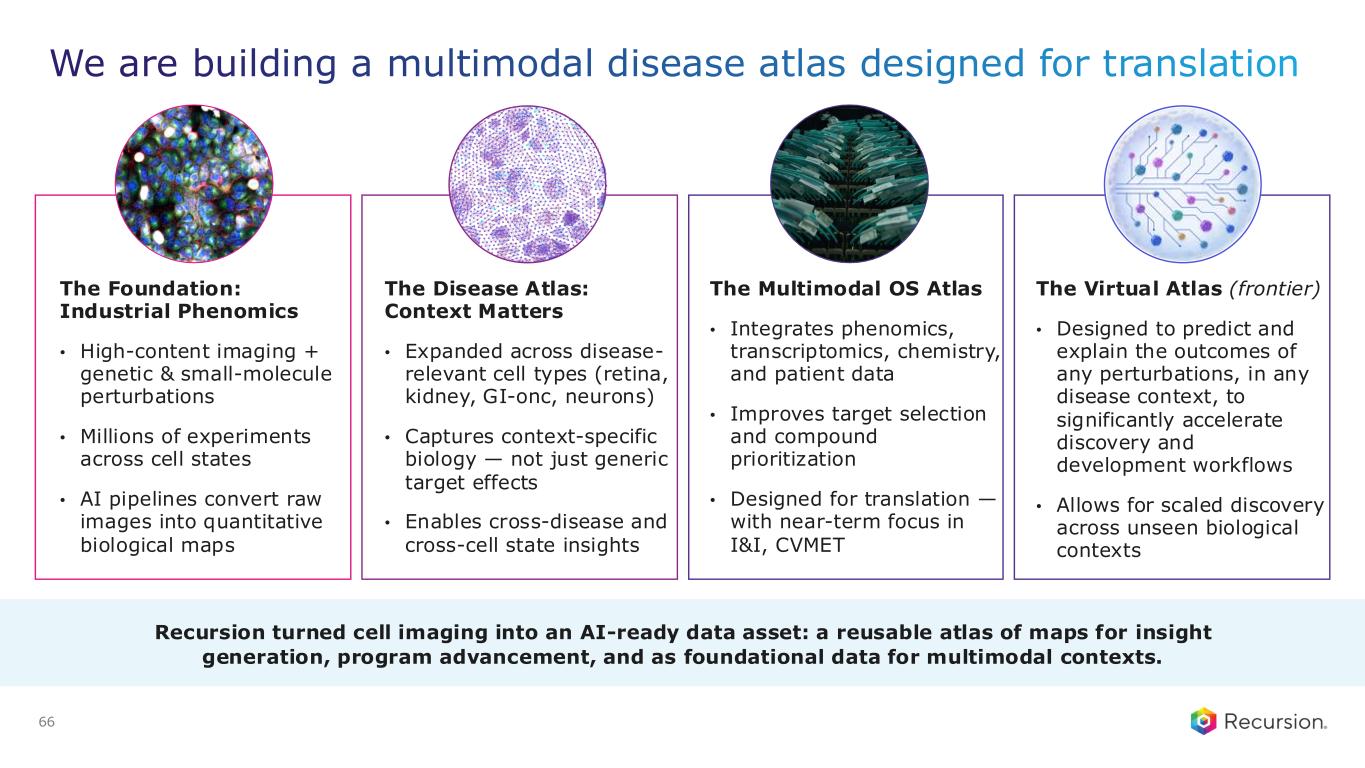
We are building an atlas of increasingly complex and disease-relevant pheno- and transcript-maps at scale 42 Pre-2023 2023 2024 2025 + over 40 additional cell types on-boarded for limited screens HUVEC (WT) In c re a si n g B io lo g ic a l C o m p le x it y RPTEC Fibrocyte HUVEC + TNFa ARPE19 First multimodal fusion maps, I&I maps (in development) First Transcriptomics Map First Brightfield Phenomap 2026 GI-Onc subtype Phenomaps (4) ACCEPTED ACCEPTED ACCEPTEDACCEPTED NGN2 Neuronal Phenomap Microglia Phenomap ACCEPTED ACCEPTED
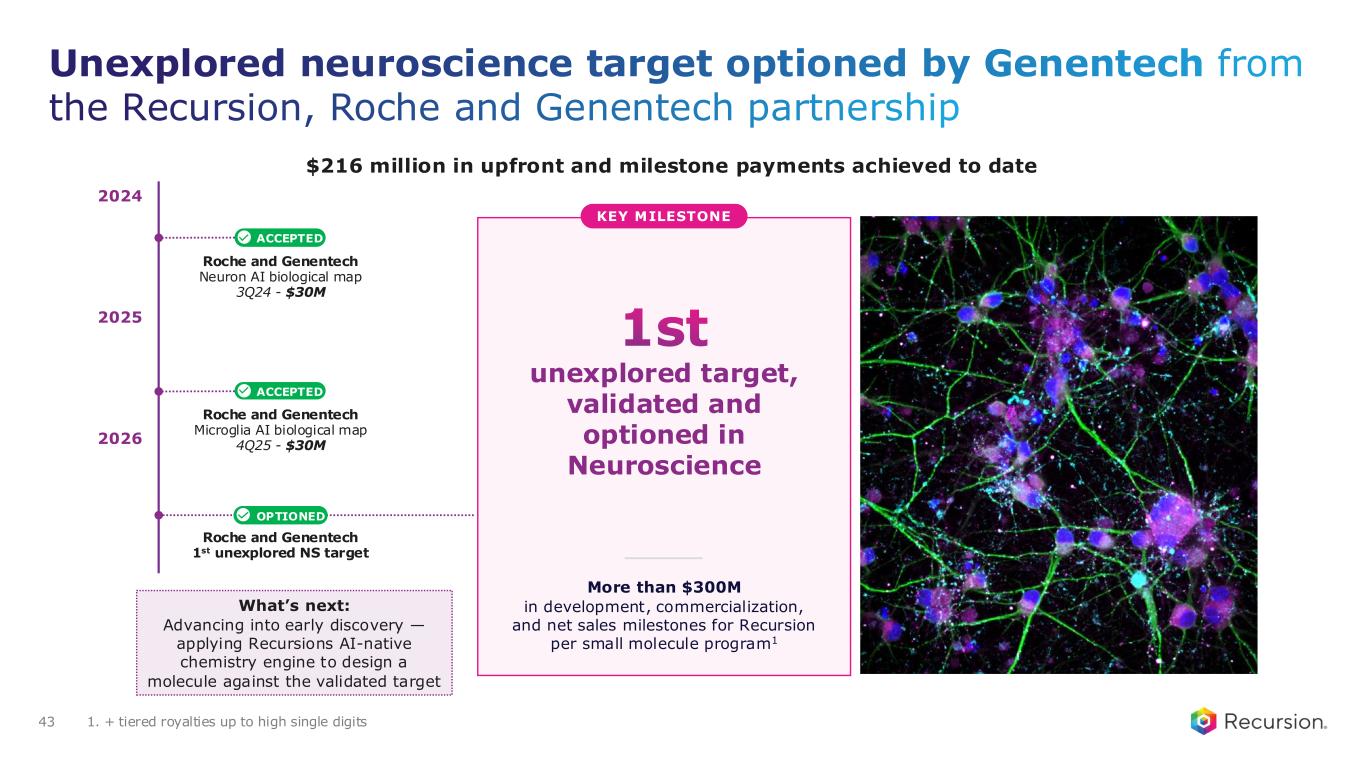
Unexplored neuroscience target optioned by Genentech from the Recursion, Roche and Genentech partnership 43 Roche and Genentech Neuron AI biological map 3Q24 - $30M Roche and Genentech Microglia AI biological map 4Q25 - $30M ACCEPTED ACCEPTED More than $300M in development, commercialization, and net sales milestones for Recursion per small molecule program1 OPTIONED 2026 2025 2024 Roche and Genentech 1st unexplored NS target What’s next: Advancing into early discovery — applying Recursions AI-native chemistry engine to design a molecule against the validated target 1st unexplored target, validated and optioned in Neuroscience KEY MILESTONE 1. + tiered royalties up to high single digits $216 million in upfront and milestone payments achieved to date
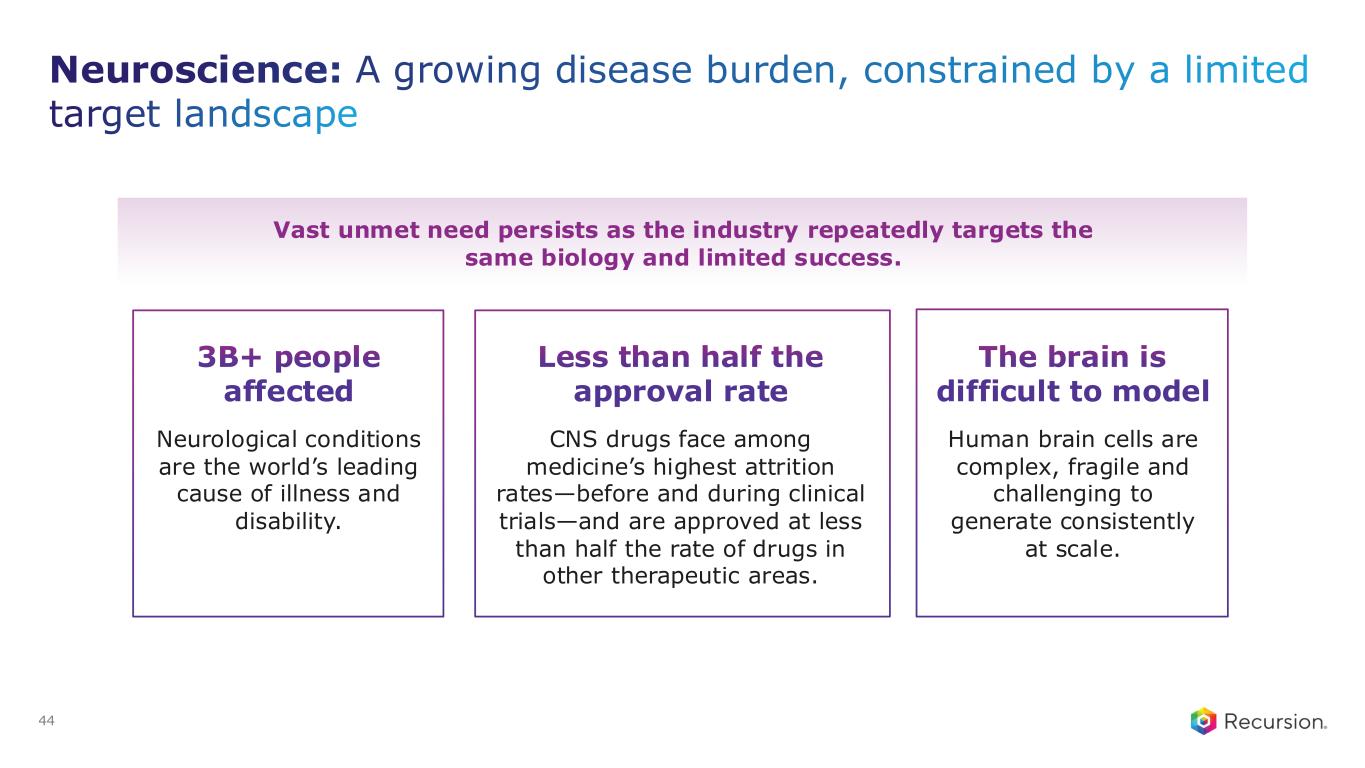
44 Neuroscience: A growing disease burden, constrained by a limited target landscape Vast unmet need persists as the industry repeatedly targets the same biology and limited success. 3B+ people affected Neurological conditions are the world’s leading cause of illness and disability. Less than half the approval rate CNS drugs face among medicine’s highest attrition rates—before and during clinical trials—and are approved at less than half the rate of drugs in other therapeutic areas. The brain is difficult to model Human brain cells are complex, fragile and challenging to generate consistently at scale.
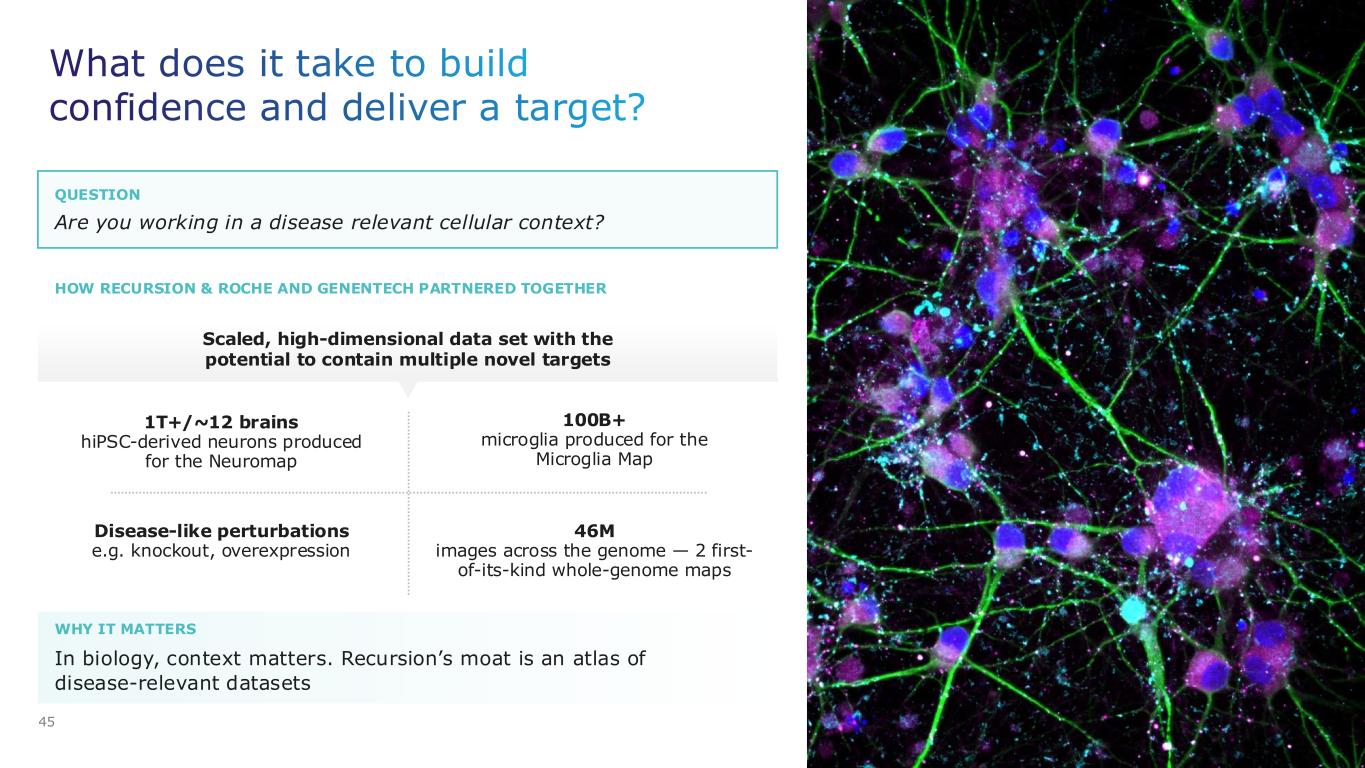
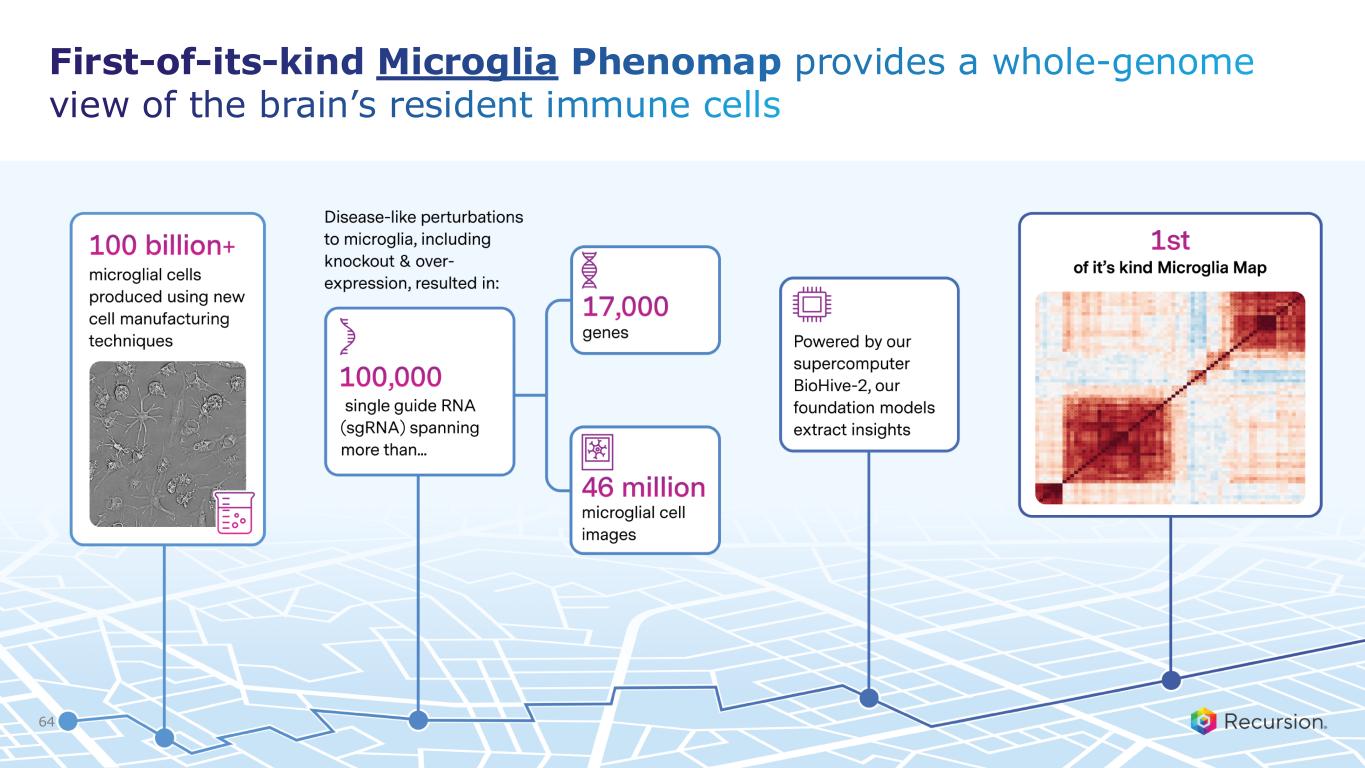
45 In biology, context matters. Recursion’s moat is an atlas of disease-relevant datasets 1T+/~12 brains hiPSC-derived neurons produced for the Neuromap Scaled, high-dimensional data set with the potential to contain multiple novel targets 46M images across the genome — 2 first- of-its-kind whole-genome maps 100B+ microglia produced for the Microglia Map Disease-like perturbations e.g. knockout, overexpression What does it take to build confidence and deliver a target? WHY IT MATTERS Are you working in a disease relevant cellular context? QUESTION HOW RECURSION & ROCHE AND GENENTECH PARTNERED TOGETHER
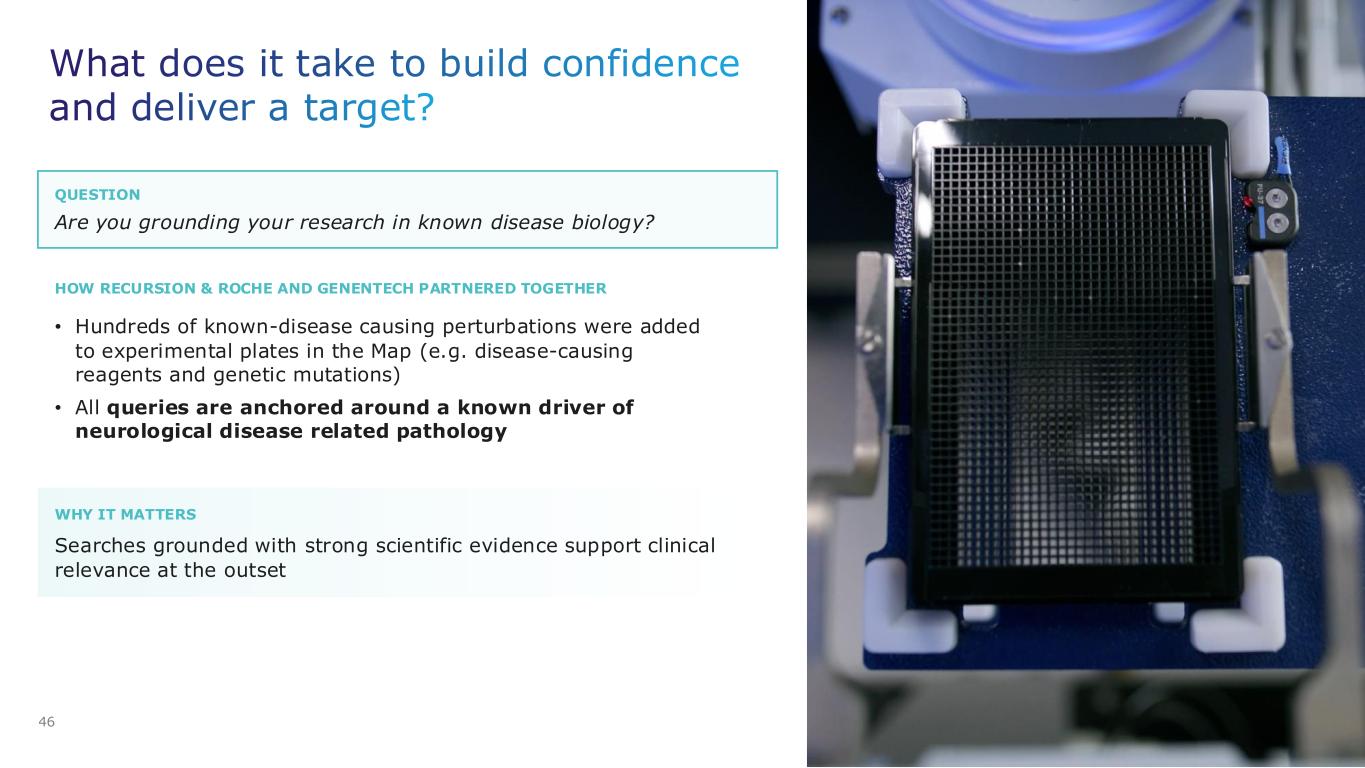
QUESTION WHY IT MATTERS What does it take to build confidence and deliver a target? 46 Are you grounding your research in known disease biology? • Hundreds of known-disease causing perturbations were added to experimental plates in the Map (e.g. disease-causing reagents and genetic mutations) • All queries are anchored around a known driver of neurological disease related pathology Searches grounded with strong scientific evidence support clinical relevance at the outset HOW RECURSION & ROCHE AND GENENTECH PARTNERED TOGETHER
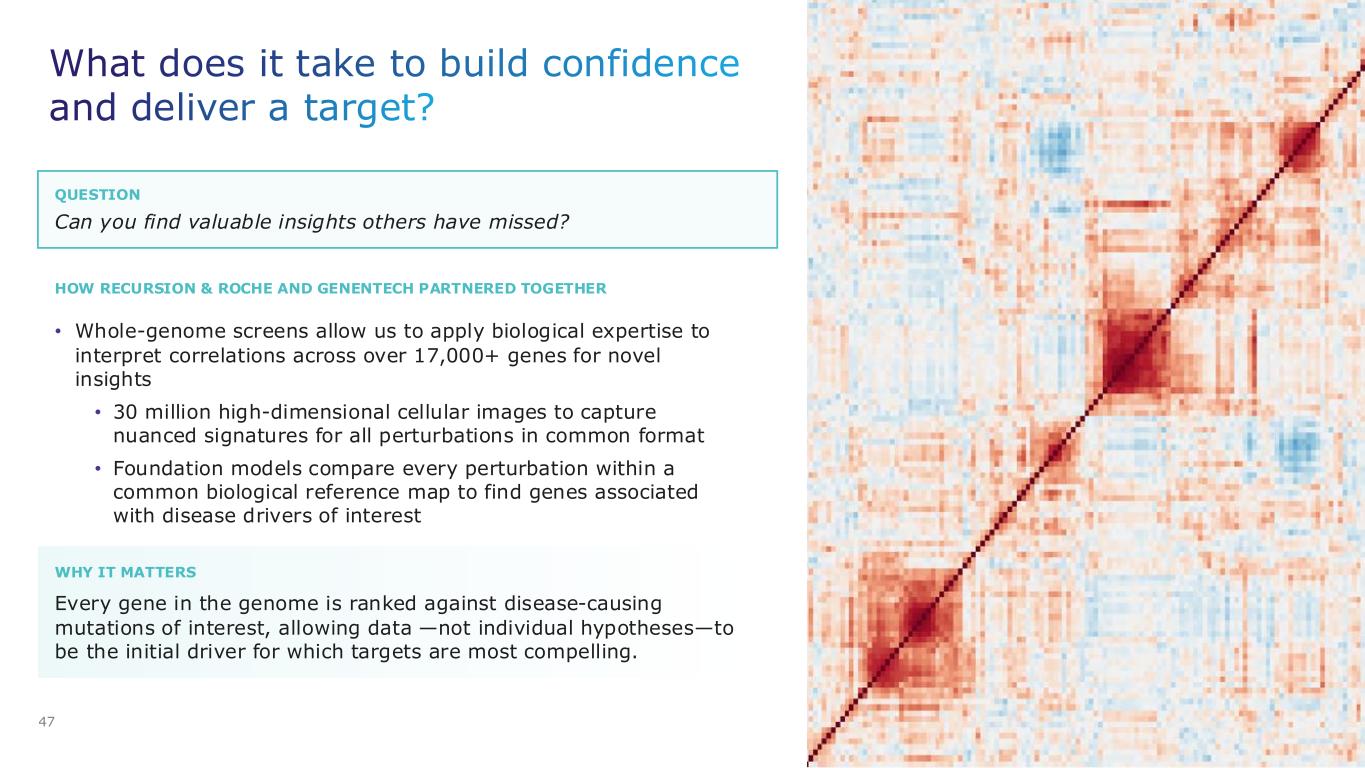
QUESTION HOW RECURSION & ROCHE AND GENENTECH PARTNERED TOGETHER What does it take to build confidence and deliver a target? 47 Can you find valuable insights others have missed? • Whole-genome screens allow us to apply biological expertise to interpret correlations across over 17,000+ genes for novel insights • 30 million high-dimensional cellular images to capture nuanced signatures for all perturbations in common format • Foundation models compare every perturbation within a common biological reference map to find genes associated with disease drivers of interest WHY IT MATTERS Every gene in the genome is ranked against disease-causing mutations of interest, allowing data —not individual hypotheses—to be the initial driver for which targets are most compelling.
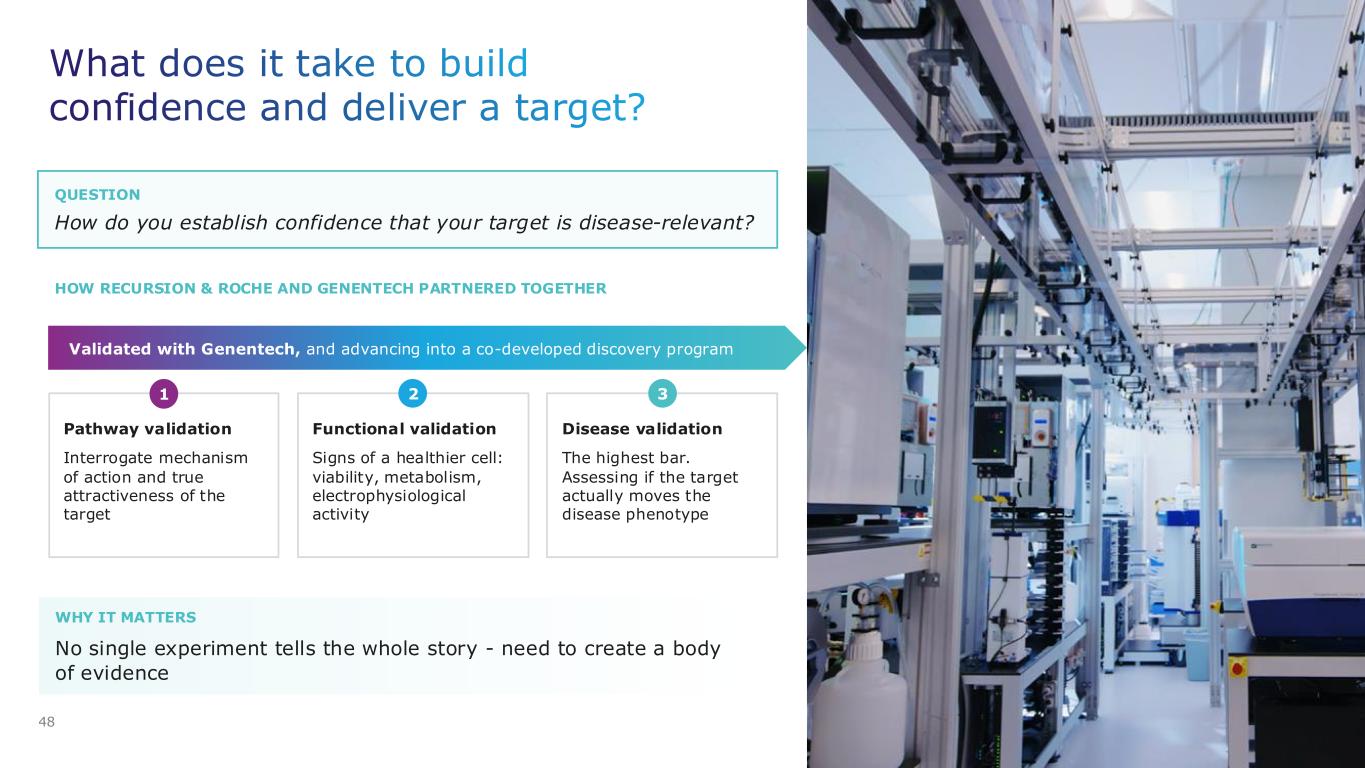
QUESTION HOW RECURSION & ROCHE AND GENENTECH PARTNERED TOGETHER WHY IT MATTERS What does it take to build confidence and deliver a target? 48 How do you establish confidence that your target is disease-relevant? No single experiment tells the whole story - need to create a body of evidence Validated with Genentech, and advancing into a co-developed discovery program Pathway validation Interrogate mechanism of action and true attractiveness of the target Functional validation Signs of a healthier cell: viability, metabolism, electrophysiological activity Disease validation The highest bar. Assessing if the target actually moves the disease phenotype 1 2 3
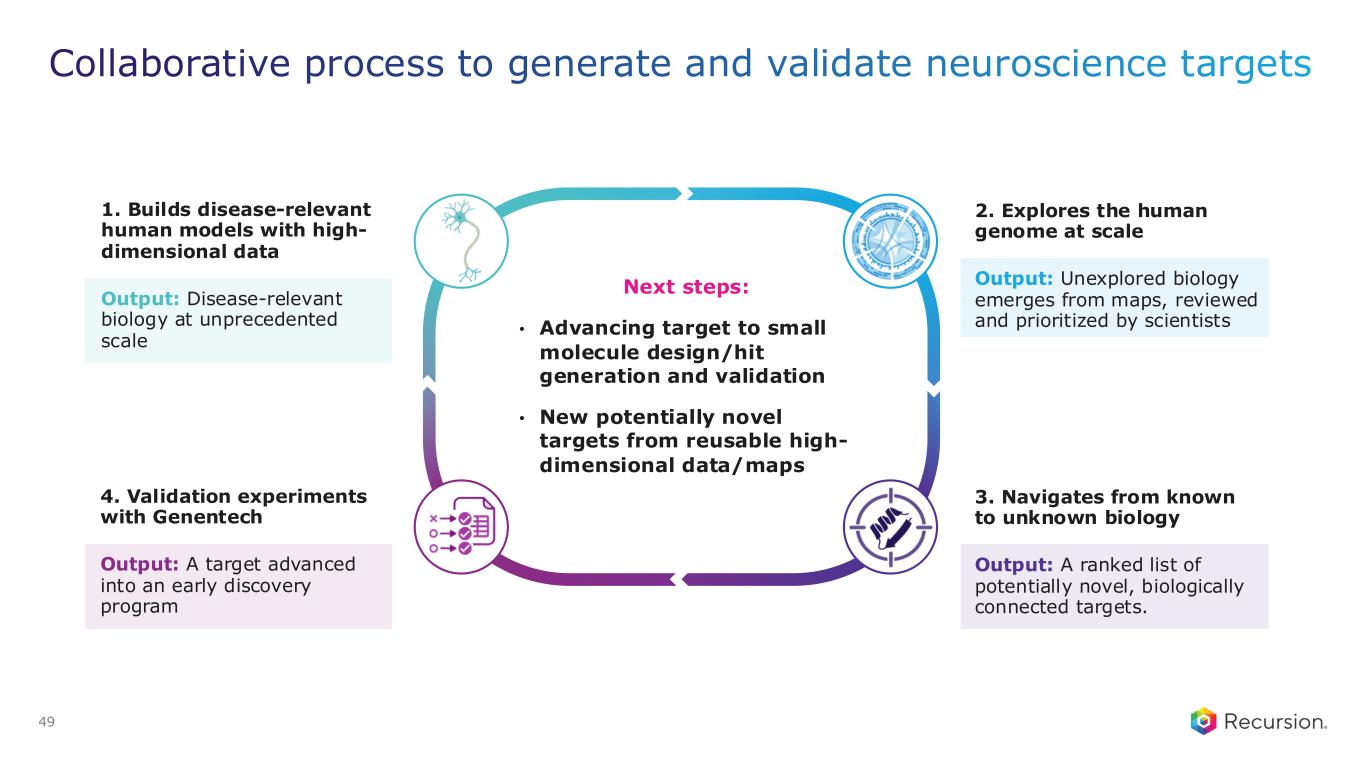
Collaborative process to generate and validate neuroscience targets 49 1. Builds disease-relevant human models with high- dimensional data Output: Disease-relevant biology at unprecedented scale 4. Validation experiments with Genentech Output: A target advanced into an early discovery program 2. Explores the human genome at scale Output: Unexplored biology emerges from maps, reviewed and prioritized by scientists 3. Navigates from known to unknown biology Output: A ranked list of potentially novel, biologically connected targets. Next steps: • Advancing target to small molecule design/hit generation and validation • New potentially novel targets from reusable high- dimensional data/maps

Chemistry AI
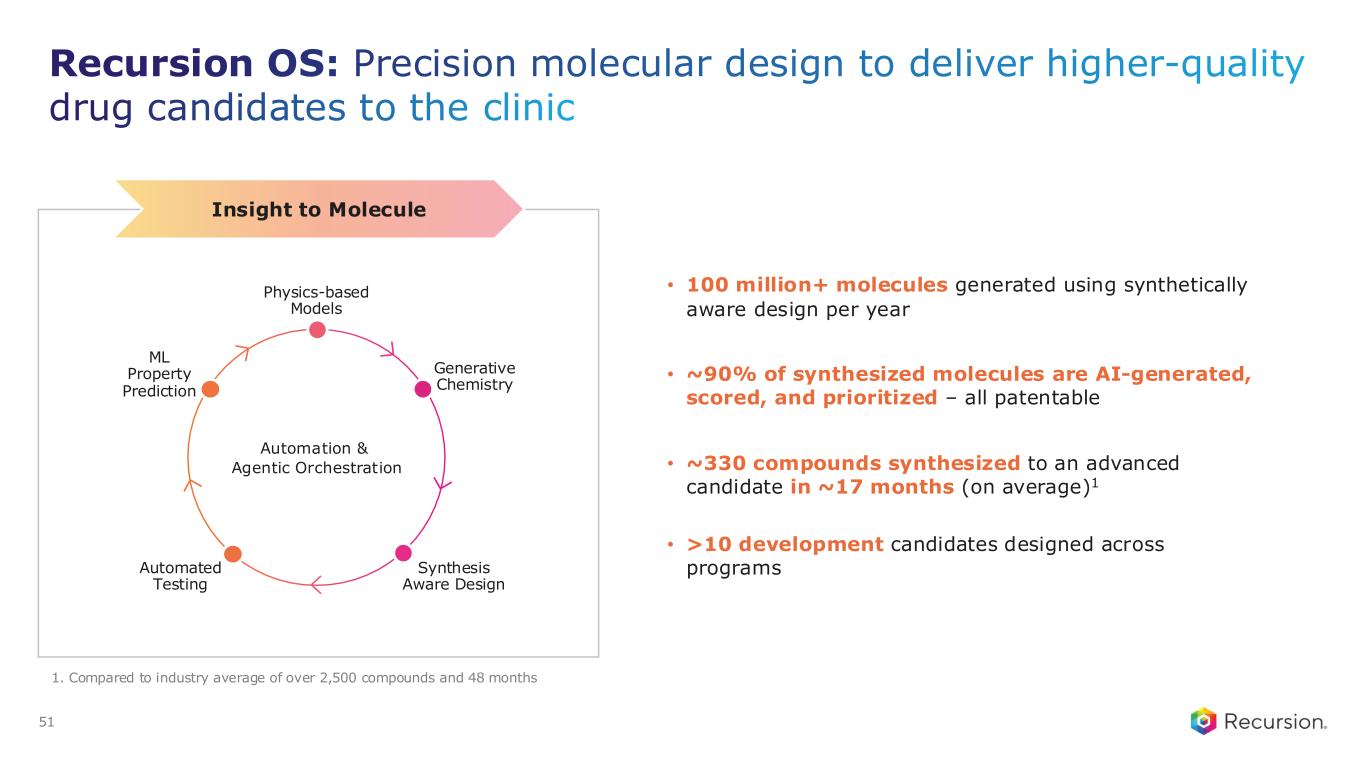
Recursion OS: Precision molecular design to deliver higher-quality drug candidates to the clinic • 100 million+ molecules generated using synthetically aware design per year • ~90% of synthesized molecules are AI-generated, scored, and prioritized – all patentable • ~330 compounds synthesized to an advanced candidate in ~17 months (on average)1 • >10 development candidates designed across programs 1. Compared to industry average of over 2,500 compounds and 48 months Insight to Molecule Automated Testing Synthesis Aware Design Physics-based Models ML Property Prediction Generative Chemistry Automation & Agentic Orchestration 51
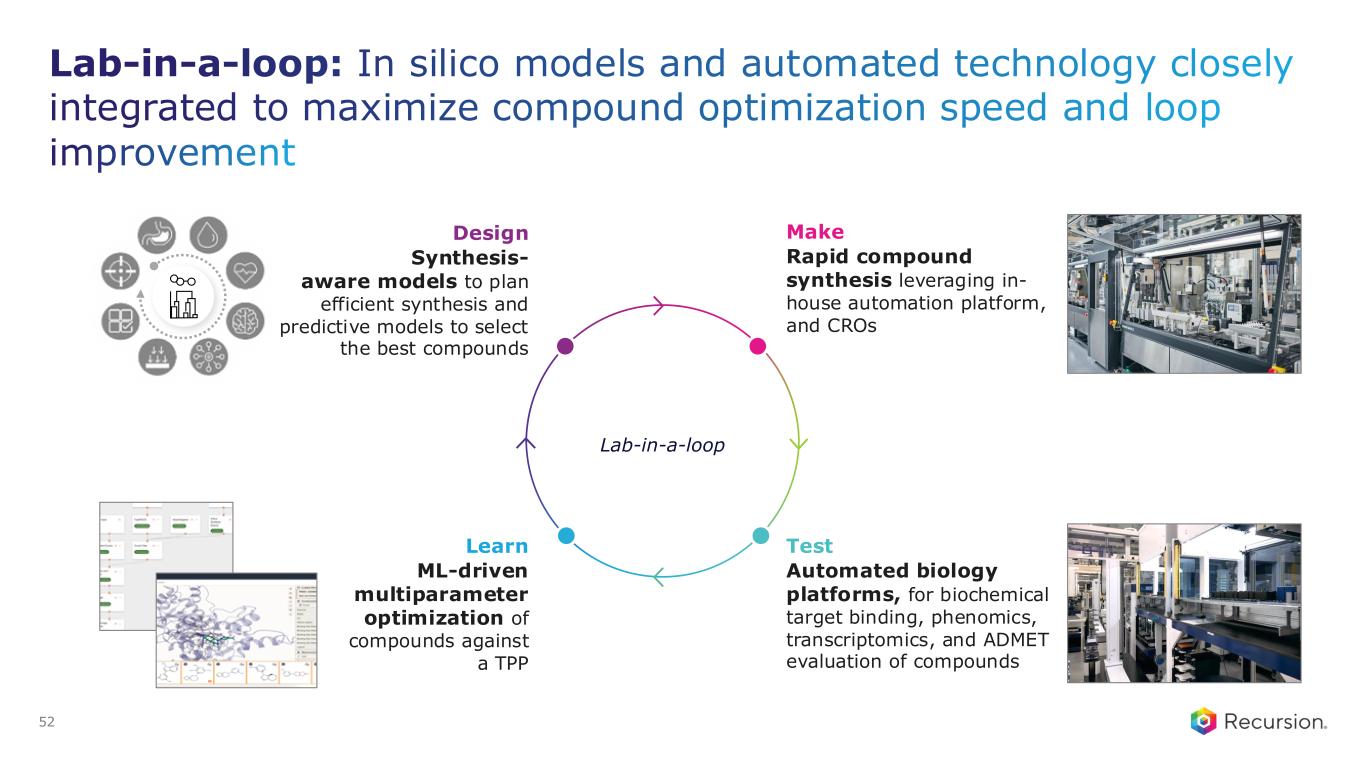
Lab-in-a-loop: In silico models and automated technology closely integrated to maximize compound optimization speed and loop improvement 52 Design Synthesis- aware models to plan efficient synthesis and predictive models to select the best compounds Learn ML-driven multiparameter optimization of compounds against a TPP Make Rapid compound synthesis leveraging in- house automation platform, and CROs Test Automated biology platforms, for biochemical target binding, phenomics, transcriptomics, and ADMET evaluation of compounds Lab-in-a-loop
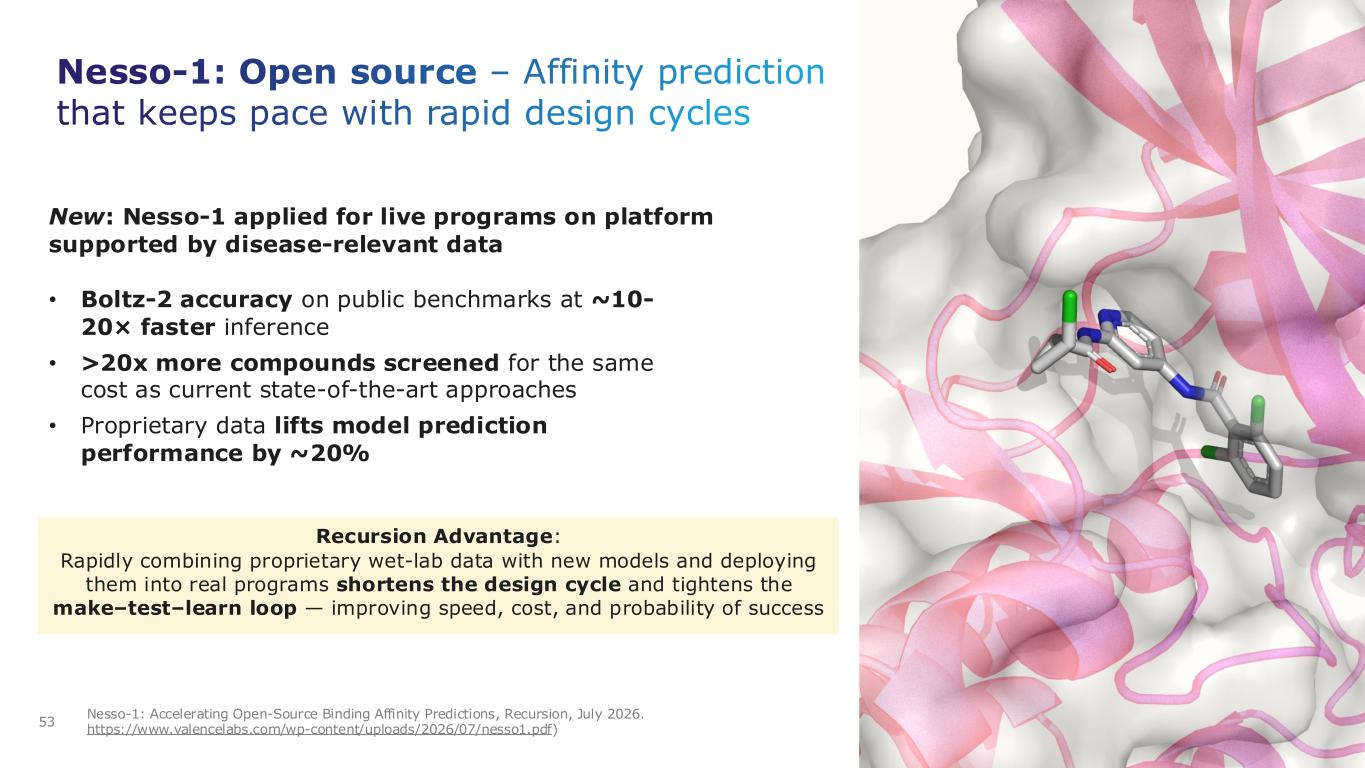
Nesso-1: Open source – Affinity prediction that keeps pace with rapid design cycles 53 Nesso-1: Accelerating Open-Source Binding Affinity Predictions, Recursion, July 2026. https://www.valencelabs.com/wp-content/uploads/2026/07/nesso1.pdf) New: Nesso-1 applied for live programs on platform supported by disease-relevant data Recursion Advantage: Rapidly combining proprietary wet-lab data with new models and deploying them into real programs shortens the design cycle and tightens the make–test–learn loop — improving speed, cost, and probability of success • Boltz-2 accuracy on public benchmarks at ~10- 20× faster inference • >20x more compounds screened for the same cost as current state-of-the-art approaches • Proprietary data lifts model prediction performance by ~20%

ClinTech AI
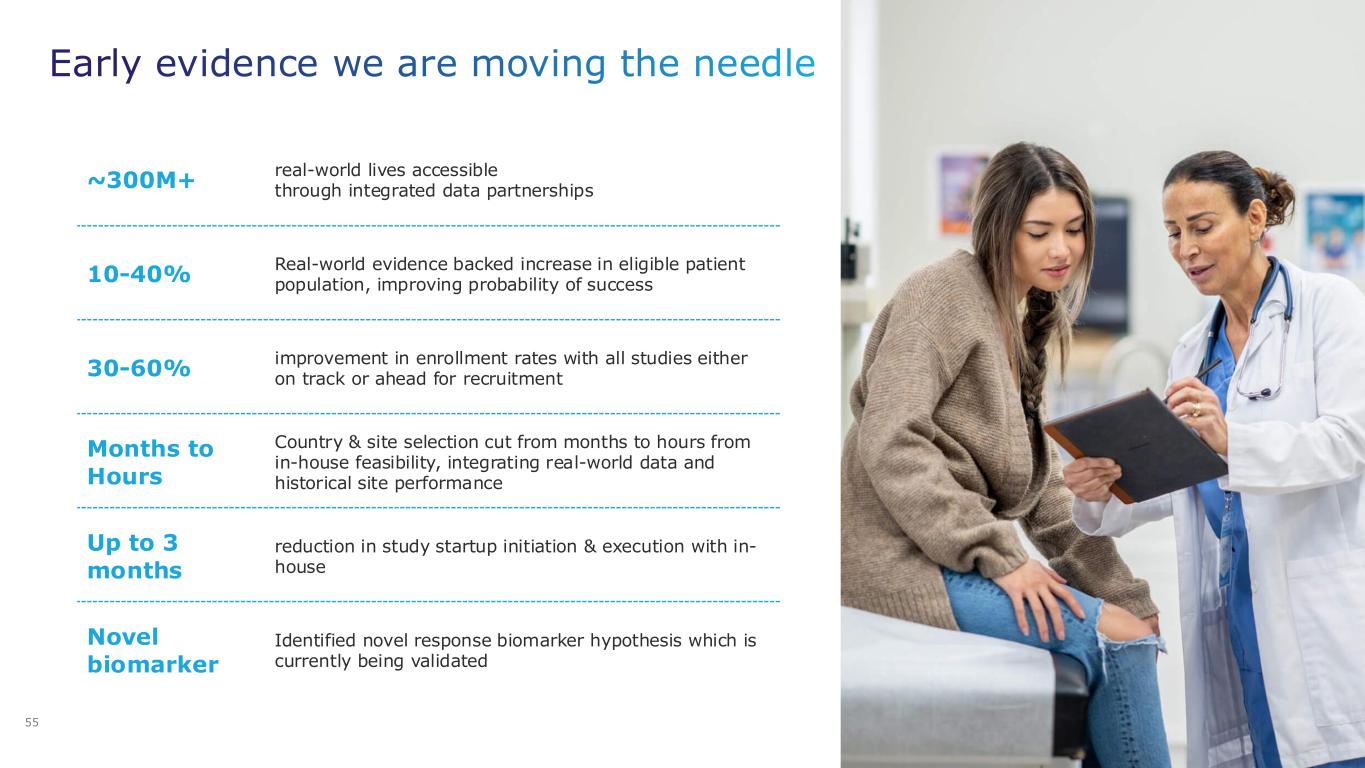
Early evidence we are moving the needle ~300M+ real-world lives accessible through integrated data partnerships 10-40% Real-world evidence backed increase in eligible patient population, improving probability of success 30-60% improvement in enrollment rates with all studies either on track or ahead for recruitment Months to Hours Country & site selection cut from months to hours from in-house feasibility, integrating real-world data and historical site performance Up to 3 months reduction in study startup initiation & execution with in- house Novel biomarker Identified novel response biomarker hypothesis which is currently being validated 55
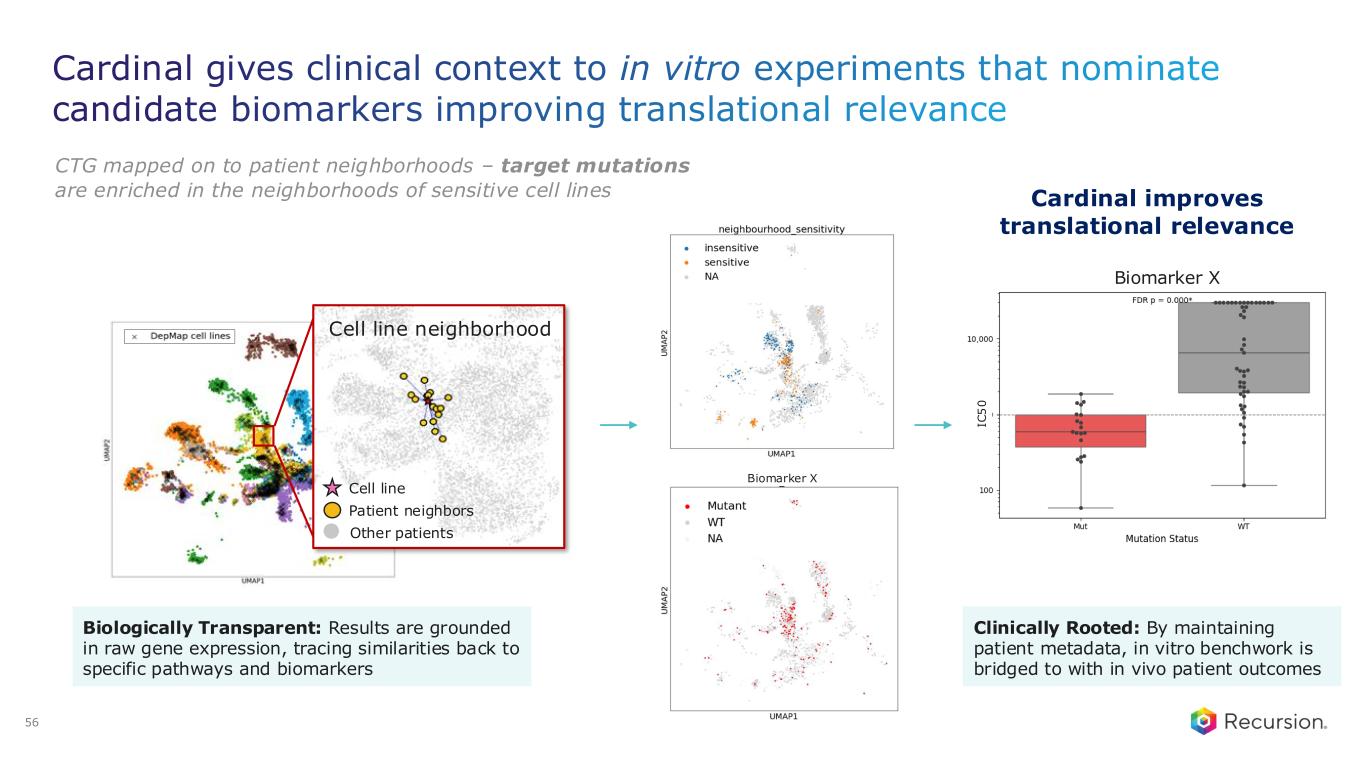
CTG mapped on to patient neighborhoods – target mutations are enriched in the neighborhoods of sensitive cell lines 56 Cardinal gives clinical context to in vitro experiments that nominate candidate biomarkers improving translational relevance Biomarker X Biologically Transparent: Results are grounded in raw gene expression, tracing similarities back to specific pathways and biomarkers Cell line neighborhood Cell line Patient neighbors Other patients Biomarker X IC 5 0 Cardinal improves translational relevance Clinically Rooted: By maintaining patient metadata, in vitro benchwork is bridged to with in vivo patient outcomes
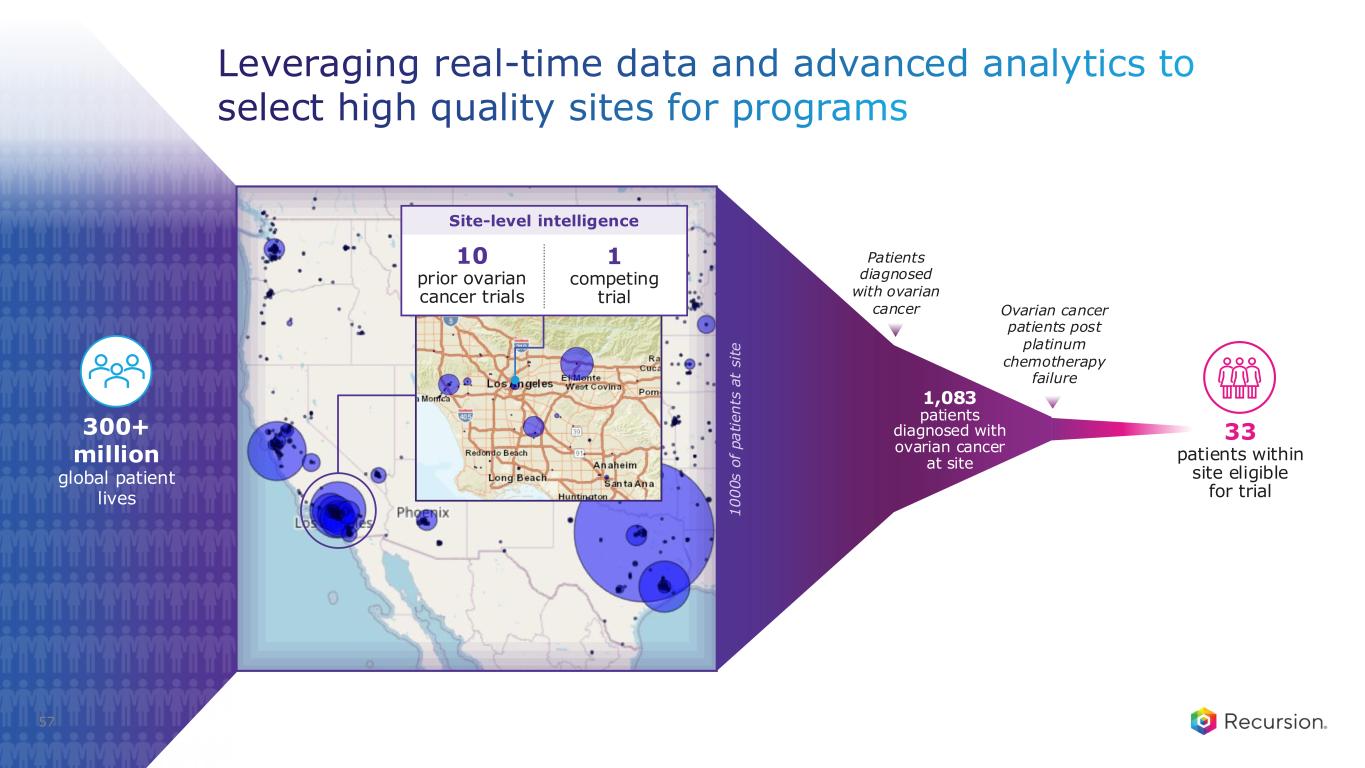
57 Leveraging real-time data and advanced analytics to select high quality sites for programs 300+ million global patient lives Ovarian cancer patients post platinum chemotherapy failure 1,083 patients diagnosed with ovarian cancer at site Patients diagnosed with ovarian cancer 33 patients within site eligible for trial 1 0 0 0 s o f p a ti e n ts a t s it e 10 prior ovarian cancer trials 1 competing trial Site-level intelligence
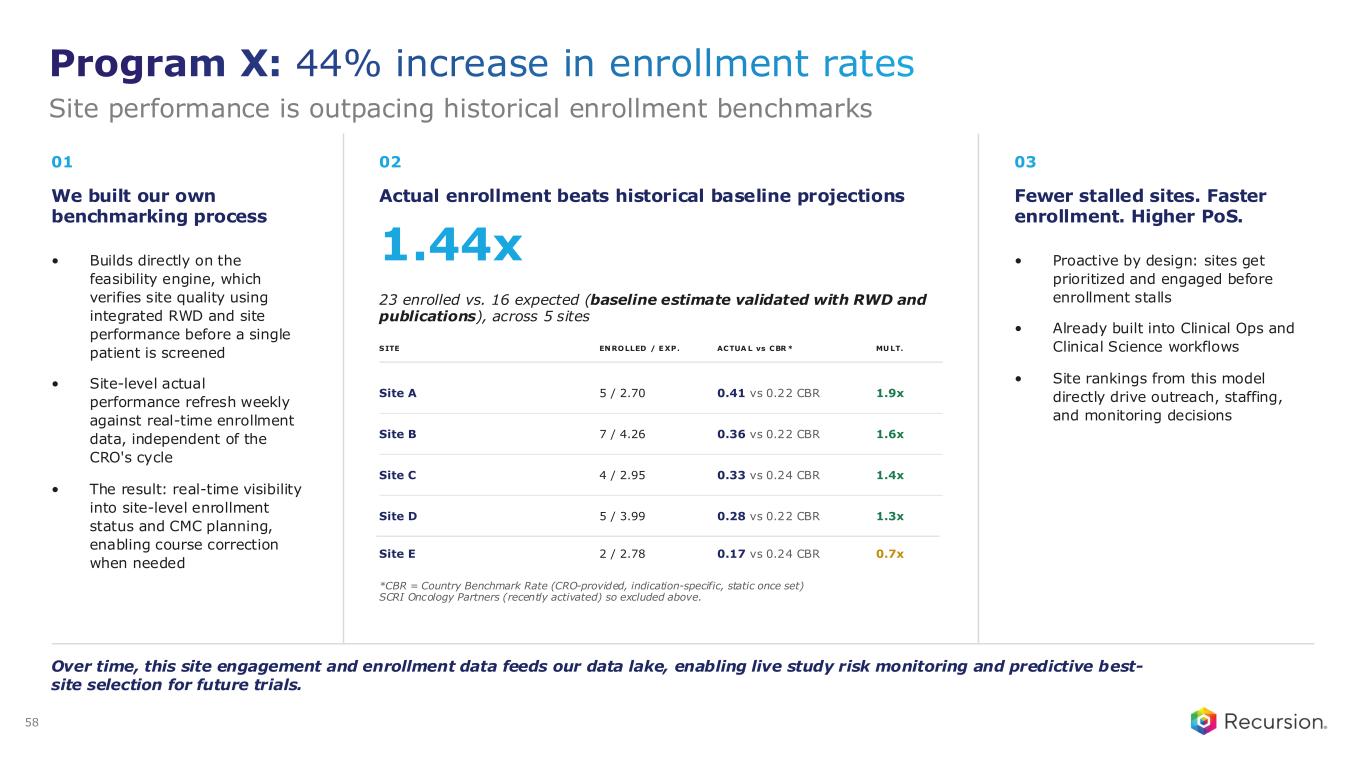
01 We built our own benchmarking process • Builds directly on the feasibility engine, which verifies site quality using integrated RWD and site performance before a single patient is screened • Site-level actual performance refresh weekly against real-time enrollment data, independent of the CRO's cycle • The result: real-time visibility into site-level enrollment status and CMC planning, enabling course correction when needed 02 Actual enrollment beats historical baseline projections 1.44x 23 enrolled vs. 16 expected (baseline estimate validated with RWD and publications), across 5 sites SITE ENROLLED / E XP. ACTUA L vs CBR * MU LT. Site A 5 / 2.70 0.41 vs 0.22 CBR 1.9x Site B 7 / 4.26 0.36 vs 0.22 CBR 1.6x Site C 4 / 2.95 0.33 vs 0.24 CBR 1.4x Site D 5 / 3.99 0.28 vs 0.22 CBR 1.3x *CBR = Country Benchmark Rate (CRO-provided, indication-specific, static once set) SCRI Oncology Partners (recently activated) so excluded above. 03 Fewer stalled sites. Faster enrollment. Higher PoS. • Proactive by design: sites get prioritized and engaged before enrollment stalls • Already built into Clinical Ops and Clinical Science workflows • Site rankings from this model directly drive outreach, staffing, and monitoring decisions Over time, this site engagement and enrollment data feeds our data lake, enabling live study risk monitoring and predictive best- site selection for future trials. Site E 2 / 2.78 0.17 vs 0.24 CBR 0.7x Program X: 44% increase in enrollment rates Site performance is outpacing historical enrollment benchmarks 58
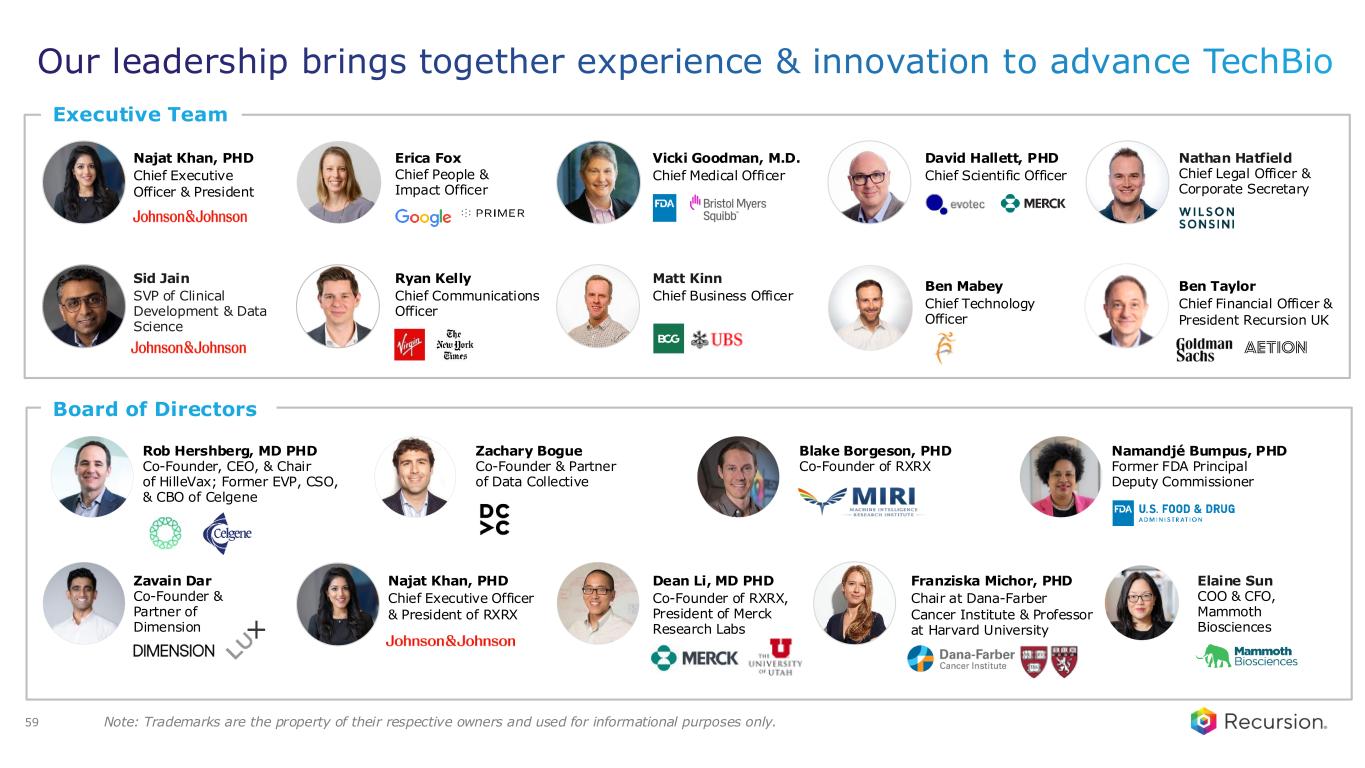
Board of Directors Dean Li, MD PHD Co-Founder of RXRX, President of Merck Research Labs Zavain Dar Co-Founder & Partner of Dimension Executive Team Najat Khan, PHD Chief Executive Officer & President Erica Fox Chief People & Impact Officer David Hallett, PHD Chief Scientific Officer Our leadership brings together experience & innovation to advance TechBio Note: Trademarks are the property of their respective owners and used for informational purposes only. Nathan Hatfield Chief Legal Officer & Corporate Secretary Rob Hershberg, MD PHD Co-Founder, CEO, & Chair of HilleVax; Former EVP, CSO, & CBO of Celgene Sid Jain SVP of Clinical Development & Data Science Vicki Goodman, M.D. Chief Medical Officer Zachary Bogue Co-Founder & Partner of Data Collective Franziska Michor, PHD Chair at Dana-Farber Cancer Institute & Professor at Harvard University Blake Borgeson, PHD Co-Founder of RXRX Namandjé Bumpus, PHD Former FDA Principal Deputy Commissioner Elaine Sun COO & CFO, Mammoth Biosciences Ben Mabey Chief Technology Officer Matt Kinn Chief Business Officer Ryan Kelly Chief Communications Officer Ben Taylor Chief Financial Officer & President Recursion UK Najat Khan, PHD Chief Executive Officer & President of RXRX 59
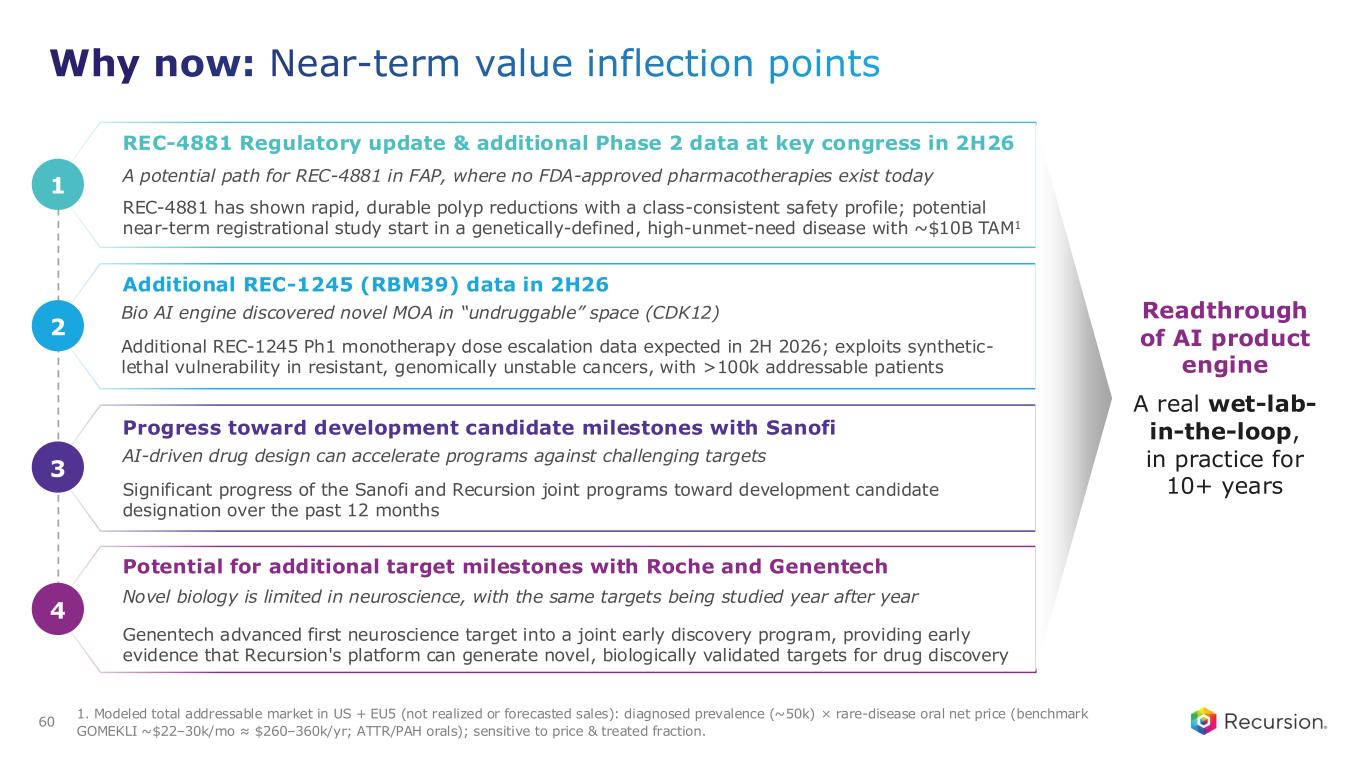
Why now: Near-term value inflection points Additional REC-1245 (RBM39) data in 2H26 Bio AI engine discovered novel MOA in “undruggable” space (CDK12) Additional REC-1245 Ph1 monotherapy dose escalation data expected in 2H 2026; exploits synthetic- lethal vulnerability in resistant, genomically unstable cancers, with >100k addressable patients 2 Progress toward development candidate milestones with Sanofi AI-driven drug design can accelerate programs against challenging targets Significant progress of the Sanofi and Recursion joint programs toward development candidate designation over the past 12 months 3 REC-4881 Regulatory update & additional Phase 2 data at key congress in 2H26 A potential path for REC-4881 in FAP, where no FDA-approved pharmacotherapies exist today REC-4881 has shown rapid, durable polyp reductions with a class-consistent safety profile; potential near-term registrational study start in a genetically-defined, high-unmet-need disease with ~$10B TAM1 1 Potential for additional target milestones with Roche and Genentech Novel biology is limited in neuroscience, with the same targets being studied year after year Genentech advanced first neuroscience target into a joint early discovery program, providing early evidence that Recursion's platform can generate novel, biologically validated targets for drug discovery 4 Readthrough of AI product engine A real wet-lab- in-the-loop, in practice for 10+ years 60 1. Modeled total addressable market in US + EU5 (not realized or forecasted sales): diagnosed prevalence (~50k) × rare-disease oral net price (benchmark GOMEKLI ~$22–30k/mo ≈ $260–360k/yr; ATTR/PAH orals); sensitive to price & treated fraction.
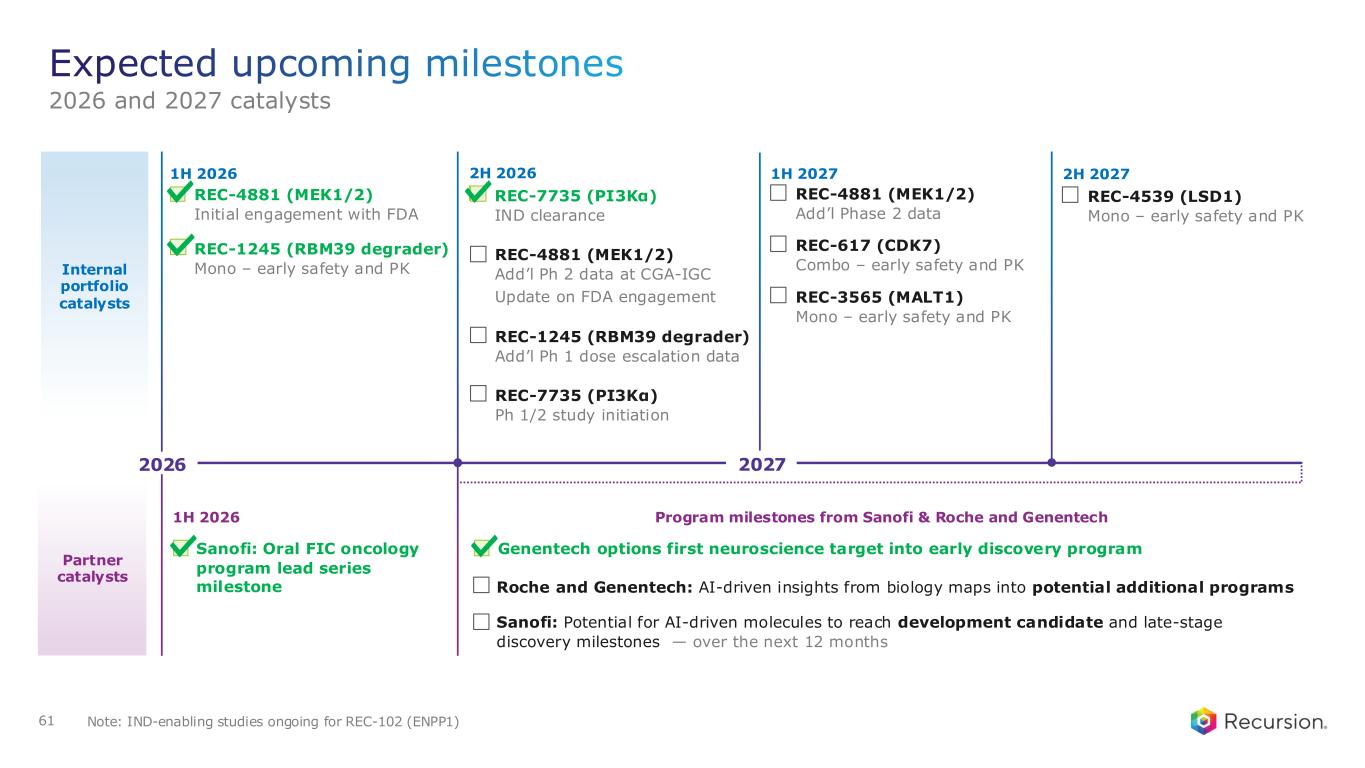
Internal portfolio catalysts 1H 2026 1H 2027 REC-4881 (MEK1/2) Add’l Phase 2 data REC-617 (CDK7) Combo – early safety and PK REC-3565 (MALT1) Mono – early safety and PK 2H 2026 REC-4881 (MEK1/2) Add’l Ph 2 data at CGA-IGC Update on FDA engagement REC-1245 (RBM39 degrader) Add’l Ph 1 dose escalation data 2H 2027 REC-4539 (LSD1) Mono – early safety and PK 61 REC-4881 (MEK1/2) Initial engagement with FDA Partner catalysts REC-1245 (RBM39 degrader) Mono – early safety and PK Program milestones from Sanofi & Roche and Genentech Roche and Genentech: AI-driven insights from biology maps into potential additional programs 1H 2026 Genentech options first neuroscience target into early discovery program Sanofi: Potential for AI-driven molecules to reach development candidate and late-stage discovery milestones — over the next 12 months Expected upcoming milestones 2026 and 2027 catalysts REC-7735 (PI3Kα) IND clearance REC-7735 (PI3Kα) Ph 1/2 study initiation Note: IND-enabling studies ongoing for REC-102 (ENPP1) Sanofi: Oral FIC oncology program lead series milestone 2026 2027

63 Link to Video
First-of-its-kind Microglia Phenomap provides a whole-genome view of the brain’s resident immune cells 64
Transcriptomics Data Foundation Model Phenomics Data & Foundation Model Target identification in disease relevant context Target validation in high fidelity systems Experimental validation Translation in high- fidelity systems Patient Data & Causal Models Virtual Cell Target Validation Our patient-centric approach to data generation and identifying disease-relevant targets at scale Disease-relevant data enables better foundational models and basis for our flywheel Disease context maps / atlases Functional genomics screens Co-culture, iPSC, organoids, ex-vivo, etc. Academic & industry collaborations Rigorous experimentation in disease-relevant models Disciplined prioritization and kills 65 >320M experiments >2M samples sequenced 160k cancer patient records >340M lives of RWD >50 petabytes of unified, multimodal data integrated across platform
We are building a multimodal disease atlas designed for translation The Foundation: Industrial Phenomics • High-content imaging + genetic & small-molecule perturbations • Millions of experiments across cell states • AI pipelines convert raw images into quantitative biological maps 66 The Disease Atlas: Context Matters • Expanded across disease- relevant cell types (retina, kidney, GI-onc, neurons) • Captures context-specific biology — not just generic target effects • Enables cross-disease and cross-cell state insights Recursion turned cell imaging into an AI-ready data asset: a reusable atlas of maps for insight generation, program advancement, and as foundational data for multimodal contexts. The Multimodal OS Atlas • Integrates phenomics, transcriptomics, chemistry, and patient data • Improves target selection and compound prioritization • Designed for translation — with near-term focus in I&I, CVMET The Virtual Atlas (frontier) • Designed to predict and explain the outcomes of any perturbations, in any disease context, to significantly accelerate discovery and development workflows • Allows for scaled discovery across unseen biological contexts