
Earnings 2Q26 AUGUST 5, 2026
This presentation of Recursion Pharmaceuticals, Inc. (“Recursion,” “we,” “us,” or “our”) and any accompanying discussion contain statements that are not historical facts may be considered forward-looking statements under federal securities laws and may be identified by words such as “anticipates,” “believes,” “estimates,” “expects,” “intends,” “plans,” “potential,” “predicts,” “projects,” “seeks,” “should,” “will,” or words of similar meaning and include, but are not limited to, statements regarding the impact of the acceptance of the target validated option milestone by Genentech on future developments and potential treatments; the impact of REC-4881 trial on the Recursion OS and other clinical and preclinical programs; the anticipated benefits of our agentic AI tools, including expected improvements in scientific productivity, design and analysis cycle times, and clinical trial enrollment rates; financial position, cash runway, and ability to reduce our cash expense; our ability to use AI to translate complex science into medicines faster and better; Recursion’s OS industrializing first- and best-in-class drug discovery; our ability to industrialize clinical development and the effect of doing so on clinical trial outcomes; the occurrence or realization of potential milestones and their potential timing or amounts; current and future preclinical and clinical studies, including timelines for enrollment in studies, data readouts, progression toward IND-enabling and other potential studies, and engagement with the FDA; advancements of and other decisions regarding our pipeline, partnerships, and data strategies; the potential size of the market opportunity for our drug candidates; outcomes and benefits from licenses, partnerships and collaborations, including option exercises by partners; the initiation, timing, progress, results, and cost of our research and development programs; advancements of our Recursion OS; and many others. Other important factors and information are contained in Recursion’s most recent Annual Report on Form 10-K, Quarterly Report on Form 10-Q, and the Company’s other filings with the U.S. Securities and Exchange Commission (the “SEC”), which can be accessed at https://ir.recursion.com, or www.sec.gov. All forward-looking statements are qualified by these cautionary statements and apply only as of the date they are made. Recursion does not undertake any obligation to update any forward-looking statement, whether as a result of new information, future events or otherwise. Certain information contained in this presentation relates to or is based on studies, publications, surveys and other data obtained from third-party sources and the company’s own internal estimates and research. While the company believes these third-party sources to be reliable as of the date of this presentation, it has not independently verified, and makes no representation as to the adequacy, fairness, accuracy or completeness of, any information obtained from third- party sources. In addition, all of the market data included in this presentation involves a number of assumptions and limitations, and there can be no guarantee as to the accuracy or reliability of such assumptions. Finally, while the company believes its own internal research is reliable, such research has not been verified by any independent source. Information contained in, or that can be accessed through our website is not a part of and is not incorporated into this presentation. Cross-trial or cross-candidate information about other investigational assets and drug candidates are not based on head-to-head studies and are presented for informational purposes; data presented are based on publicly available information for other clinical trials and other drug candidates. ® 2026 Recursion Pharmaceuticals, Inc. Recursion and its related logo are registered trademarks of Recursion Pharmaceuticals, Inc. All other trademarks are property of their respective owners. Important Information 2
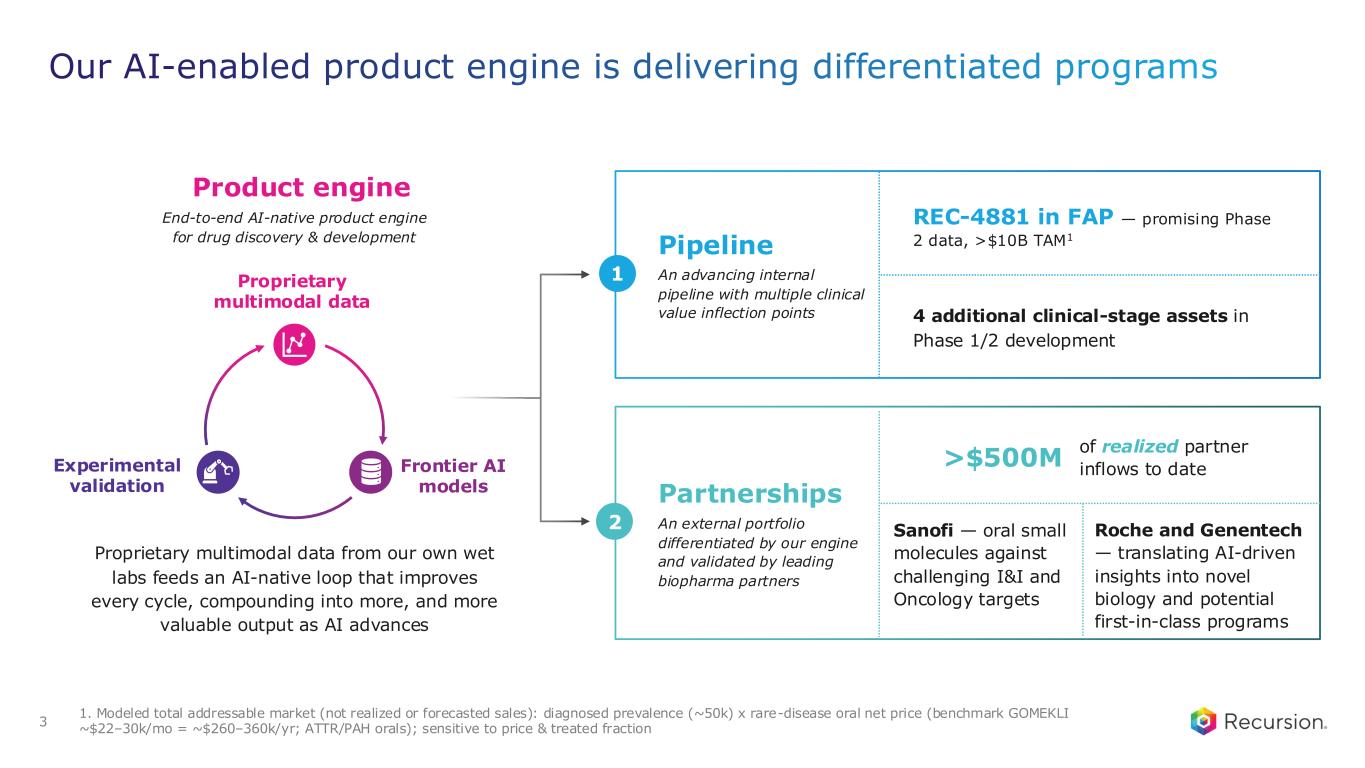
1. Modeled total addressable market (not realized or forecasted sales): diagnosed prevalence (~50k) x rare-disease oral net price (benchmark GOMEKLI ~$22–30k/mo = ~$260–360k/yr; ATTR/PAH orals); sensitive to price & treated fraction Our AI-enabled product engine is delivering differentiated programs 3 Product engine End-to-end AI-native product engine for drug discovery & development Proprietary multimodal data from our own wet labs feeds an AI-native loop that improves every cycle, compounding into more, and more valuable output as AI advances 1 Pipeline An advancing internal pipeline with multiple clinical value inflection points REC-4881 in FAP — promising Phase 2 data, >$10B TAM1 4 additional clinical-stage assets in Phase 1/2 development 2 Partnerships An external portfolio differentiated by our engine and validated by leading biopharma partners >$500M of realized partner inflows to date Sanofi — oral small molecules against challenging I&I and Oncology targets Roche and Genentech — translating AI-driven insights into novel biology and potential first-in-class programs Experimental validation Proprietary multimodal data Frontier AI models
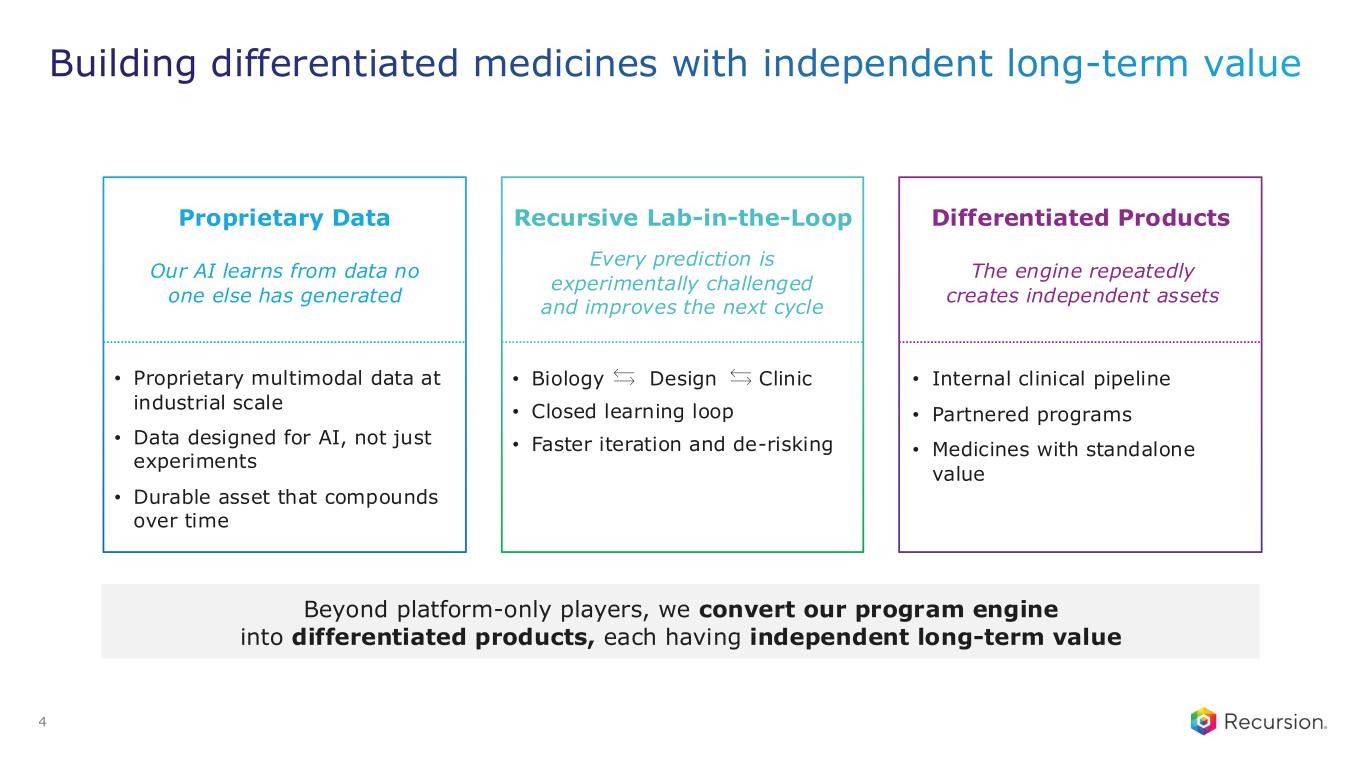
Building differentiated medicines with independent long-term value 4 Beyond platform-only players, we convert our program engine into differentiated products, each having independent long-term value • Proprietary multimodal data at industrial scale • Data designed for AI, not just experiments • Durable asset that compounds over time Proprietary Data Recursive Lab-in-the-Loop • Internal clinical pipeline • Partnered programs • Medicines with standalone value Differentiated Products • Biology Design Clinic • Closed learning loop • Faster iteration and de-risking Our AI learns from data no one else has generated Every prediction is experimentally challenged and improves the next cycle The engine repeatedly creates independent assets
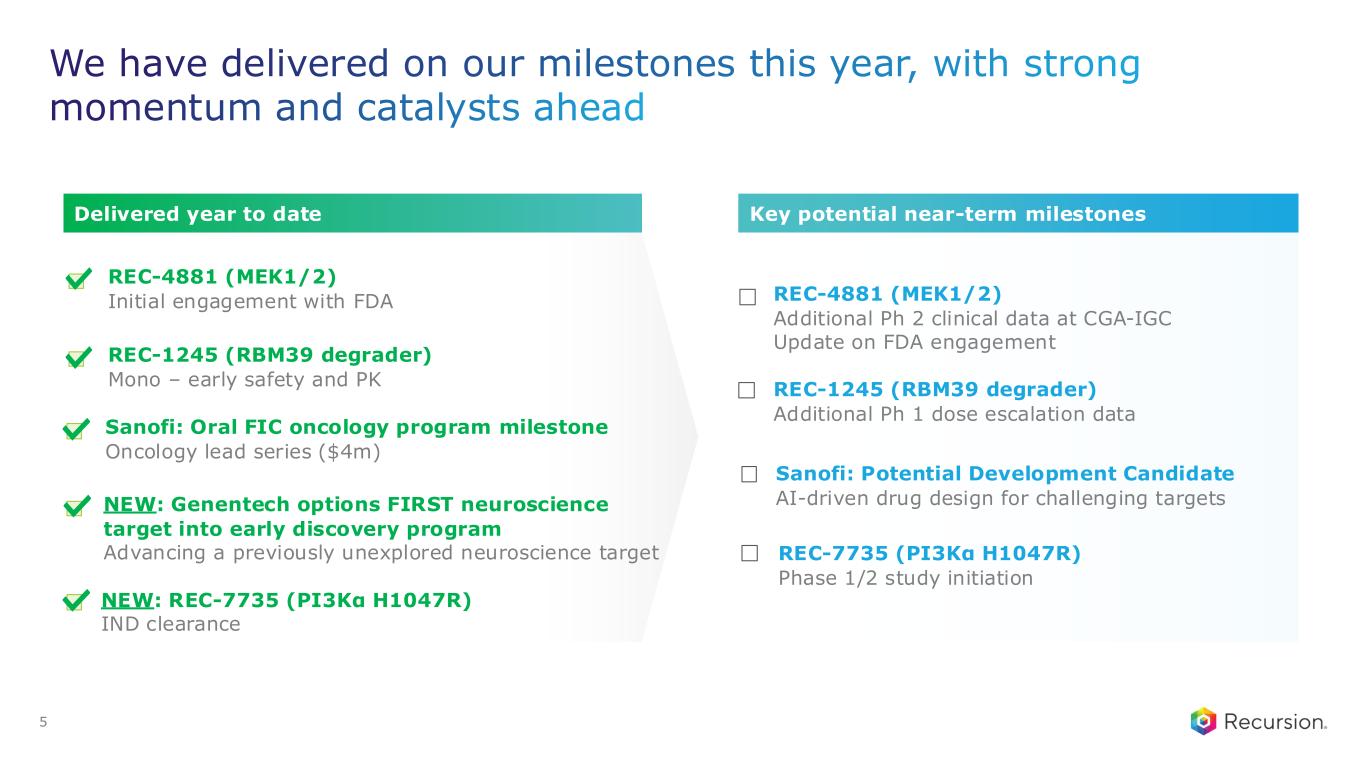
We have delivered on our milestones this year, with strong momentum and catalysts ahead 5 REC-4881 (MEK1/2) Additional Ph 2 clinical data at CGA-IGC Update on FDA engagement REC-1245 (RBM39 degrader) Additional Ph 1 dose escalation data Sanofi: Potential Development Candidate AI-driven drug design for challenging targets REC-7735 (PI3Kα H1047R) Phase 1/2 study initiation Key potential near-term milestones REC-4881 (MEK1/2) Initial engagement with FDA REC-1245 (RBM39 degrader) Mono – early safety and PK NEW: Genentech options FIRST neuroscience target into early discovery program Advancing a previously unexplored neuroscience target NEW: REC-7735 (PI3Kα H1047R) IND clearance Sanofi: Oral FIC oncology program milestone Oncology lead series ($4m) Delivered year to date
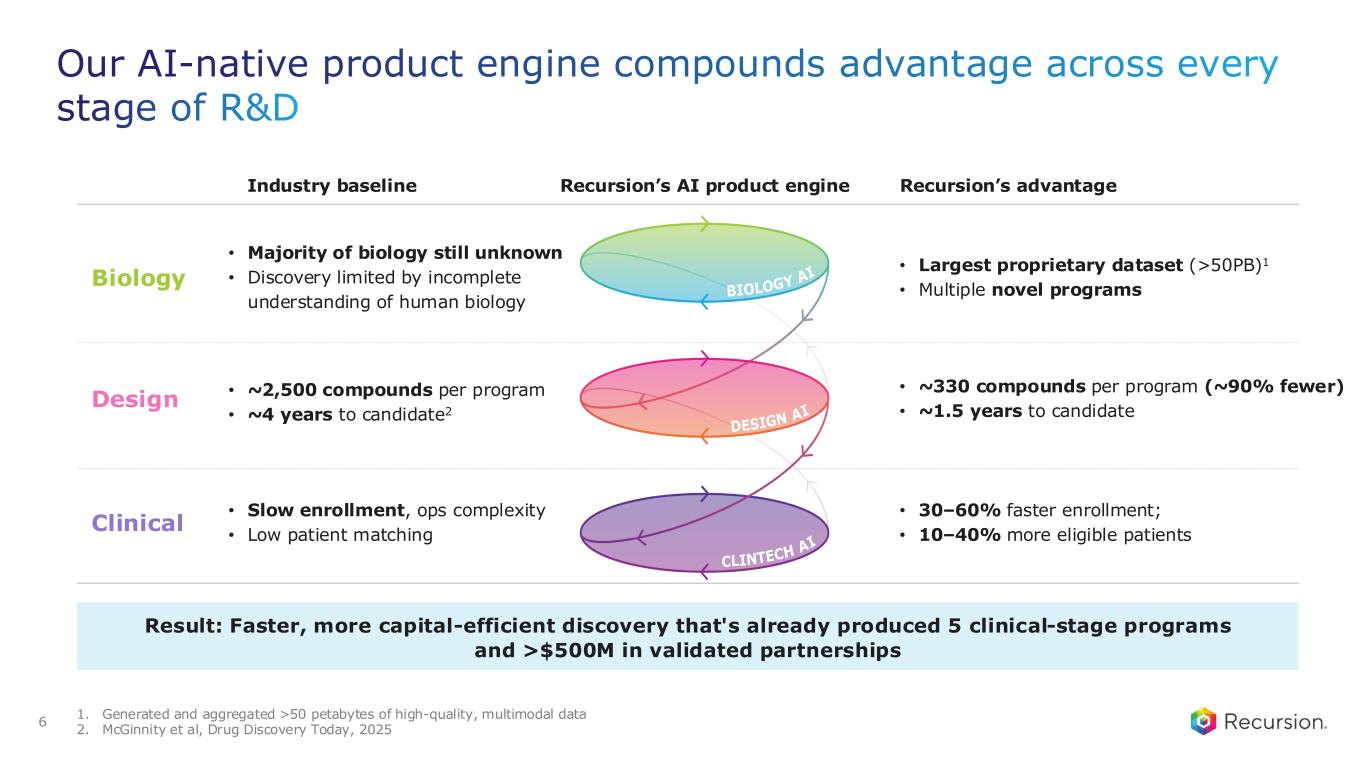
1. Generated and aggregated >50 petabytes of high-quality, multimodal data 2. McGinnity et al, Drug Discovery Today, 2025 Our AI-native product engine compounds advantage across every stage of R&D Industry baseline Recursion’s AI product engine Recursion’s advantage • Majority of biology still unknown • Discovery limited by incomplete understanding of human biology • Largest proprietary dataset (>50PB)1 • Multiple novel programs • ~2,500 compounds per program • ~4 years to candidate2 • ~330 compounds per program (~90% fewer) • ~1.5 years to candidate • Slow enrollment, ops complexity • Low patient matching • 30–60% faster enrollment; • 10–40% more eligible patients 6 Result: Faster, more capital-efficient discovery that's already produced 5 clinical-stage programs and >$500M in validated partnerships Biology Design Clinical
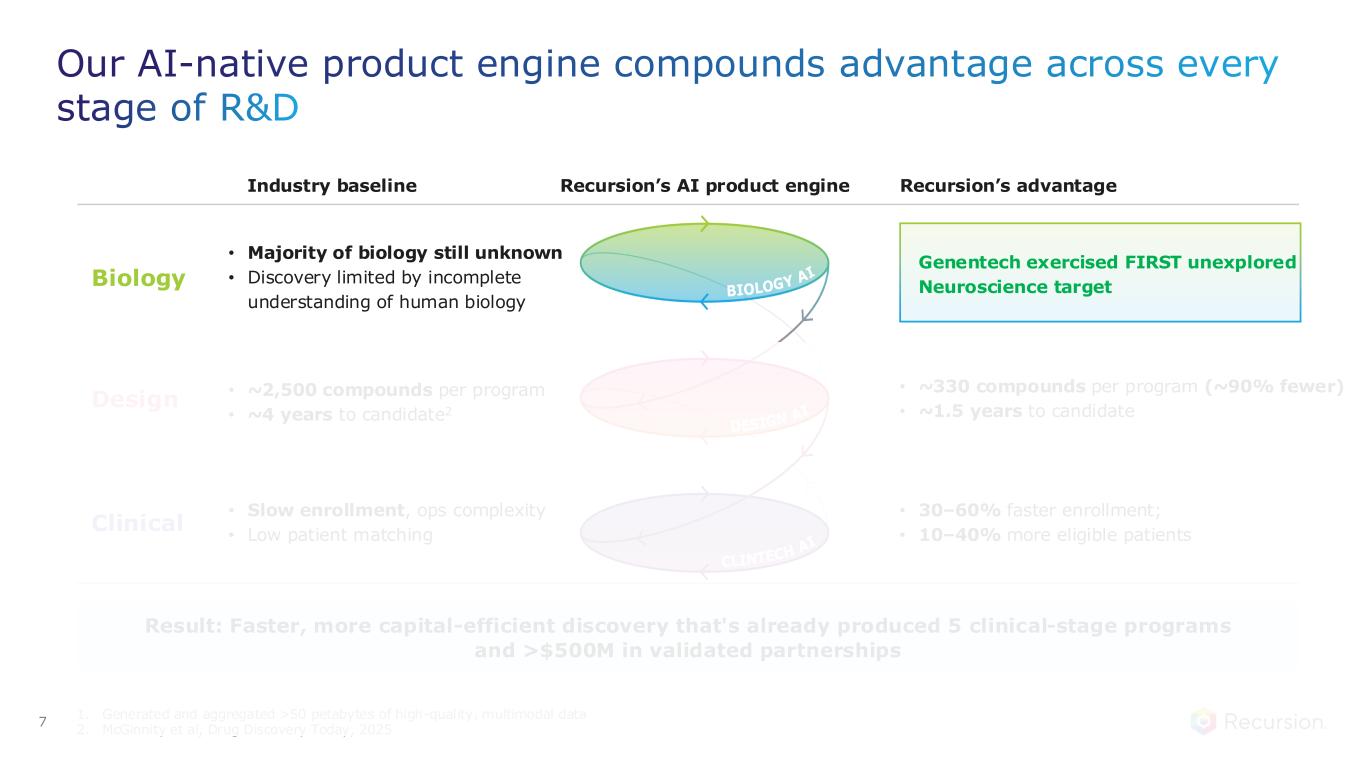
1. Generated and aggregated >50 petabytes of high-quality, multimodal data 2. McGinnity et al, Drug Discovery Today, 2025 Our AI-native product engine compounds advantage across every stage of R&D Industry baseline Recursion’s AI product engine Recursion’s advantage • Majority of biology still unknown • Discovery limited by incomplete understanding of human biology • ~2,500 compounds per program • ~4 years to candidate2 • ~330 compounds per program (~90% fewer) • ~1.5 years to candidate • Slow enrollment, ops complexity • Low patient matching • 30–60% faster enrollment; • 10–40% more eligible patients 7 Result: Faster, more capital-efficient discovery that's already produced 5 clinical-stage programs and >$500M in validated partnerships Biology Design Clinical Genentech exercised FIRST unexplored Neuroscience target
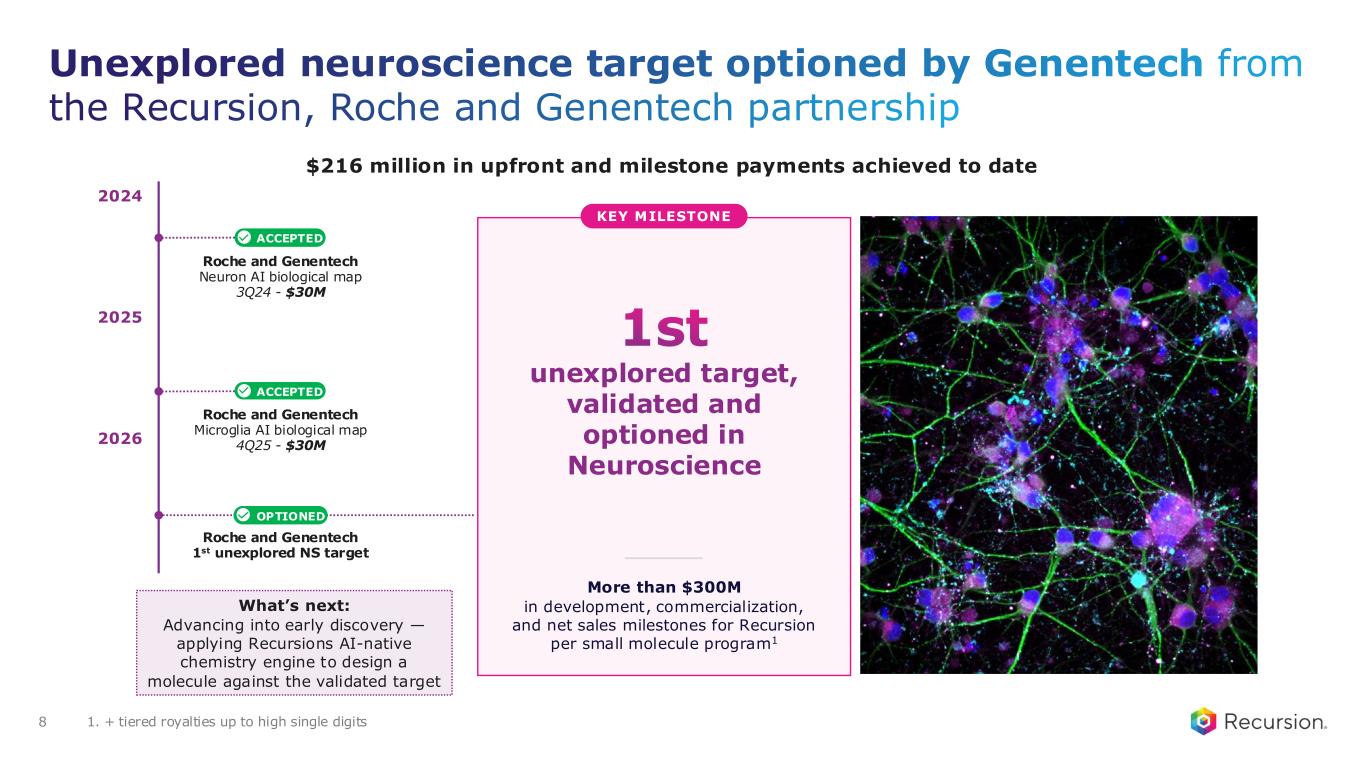
Unexplored neuroscience target optioned by Genentech from the Recursion, Roche and Genentech partnership 8 Roche and Genentech Neuron AI biological map 3Q24 - $30M Roche and Genentech Microglia AI biological map 4Q25 - $30M ACCEPTED ACCEPTED More than $300M in development, commercialization, and net sales milestones for Recursion per small molecule program1 OPTIONED 2026 2025 2024 Roche and Genentech 1st unexplored NS target What’s next: Advancing into early discovery — applying Recursions AI-native chemistry engine to design a molecule against the validated target 1st unexplored target, validated and optioned in Neuroscience KEY MILESTONE 1. + tiered royalties up to high single digits $216 million in upfront and milestone payments achieved to date
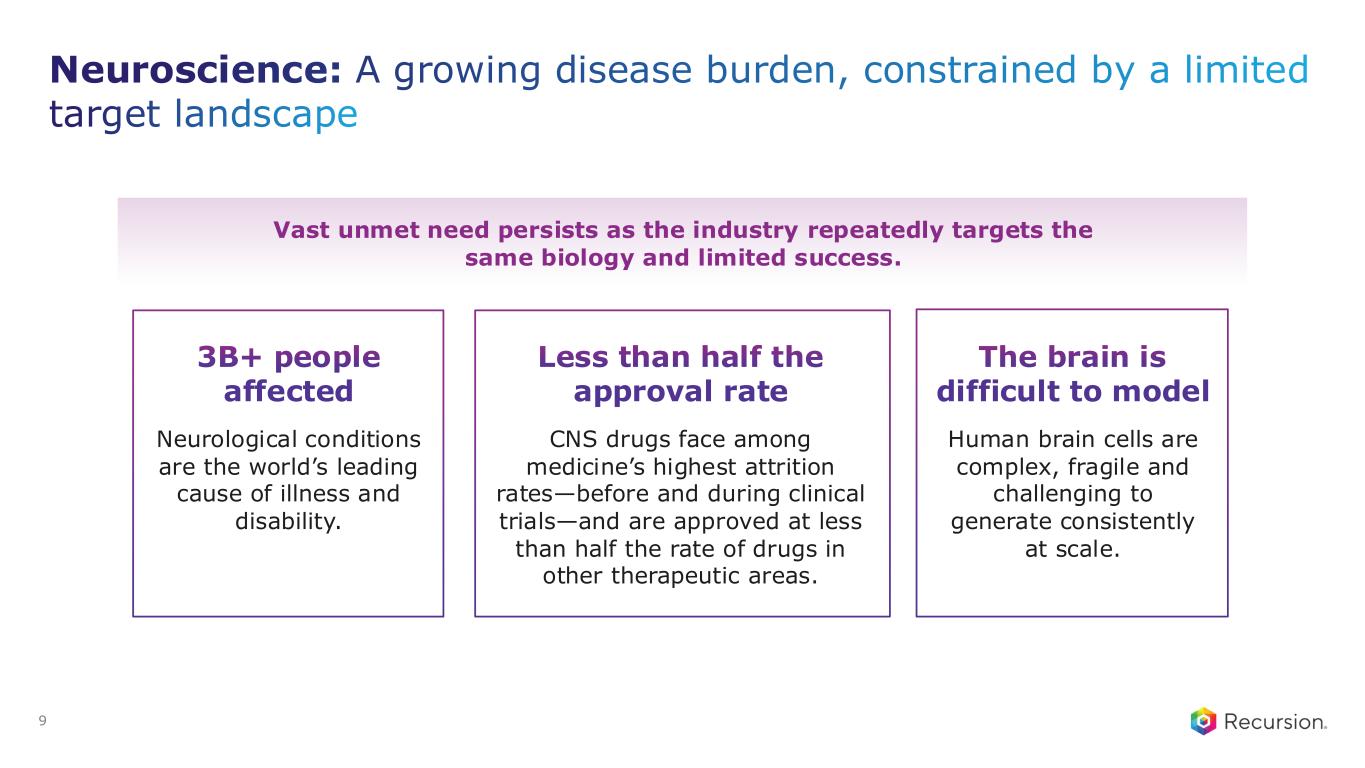
9 Neuroscience: A growing disease burden, constrained by a limited target landscape Vast unmet need persists as the industry repeatedly targets the same biology and limited success. 3B+ people affected Neurological conditions are the world’s leading cause of illness and disability. Less than half the approval rate CNS drugs face among medicine’s highest attrition rates—before and during clinical trials—and are approved at less than half the rate of drugs in other therapeutic areas. The brain is difficult to model Human brain cells are complex, fragile and challenging to generate consistently at scale.
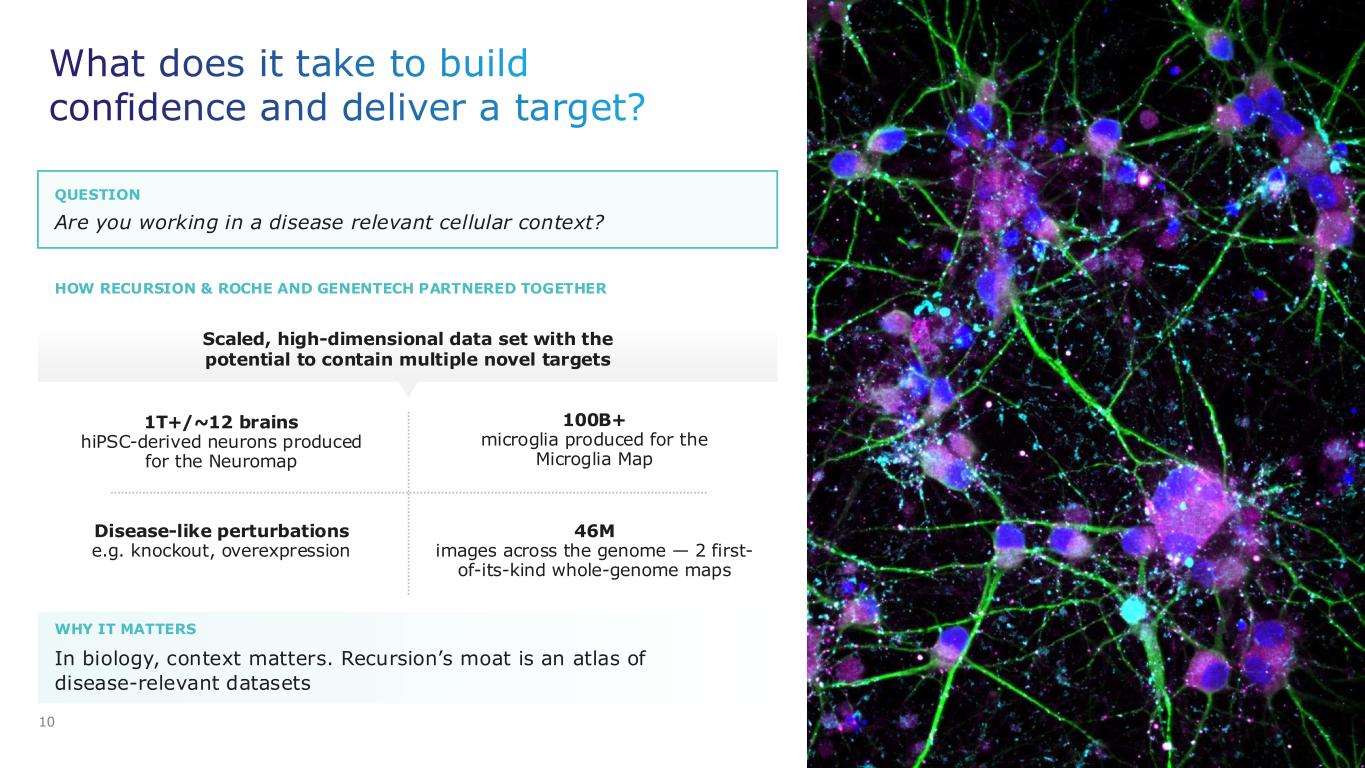
10 In biology, context matters. Recursion’s moat is an atlas of disease-relevant datasets 1T+/~12 brains hiPSC-derived neurons produced for the Neuromap Scaled, high-dimensional data set with the potential to contain multiple novel targets 46M images across the genome — 2 first- of-its-kind whole-genome maps 100B+ microglia produced for the Microglia Map Disease-like perturbations e.g. knockout, overexpression What does it take to build confidence and deliver a target? WHY IT MATTERS Are you working in a disease relevant cellular context? QUESTION HOW RECURSION & ROCHE AND GENENTECH PARTNERED TOGETHER
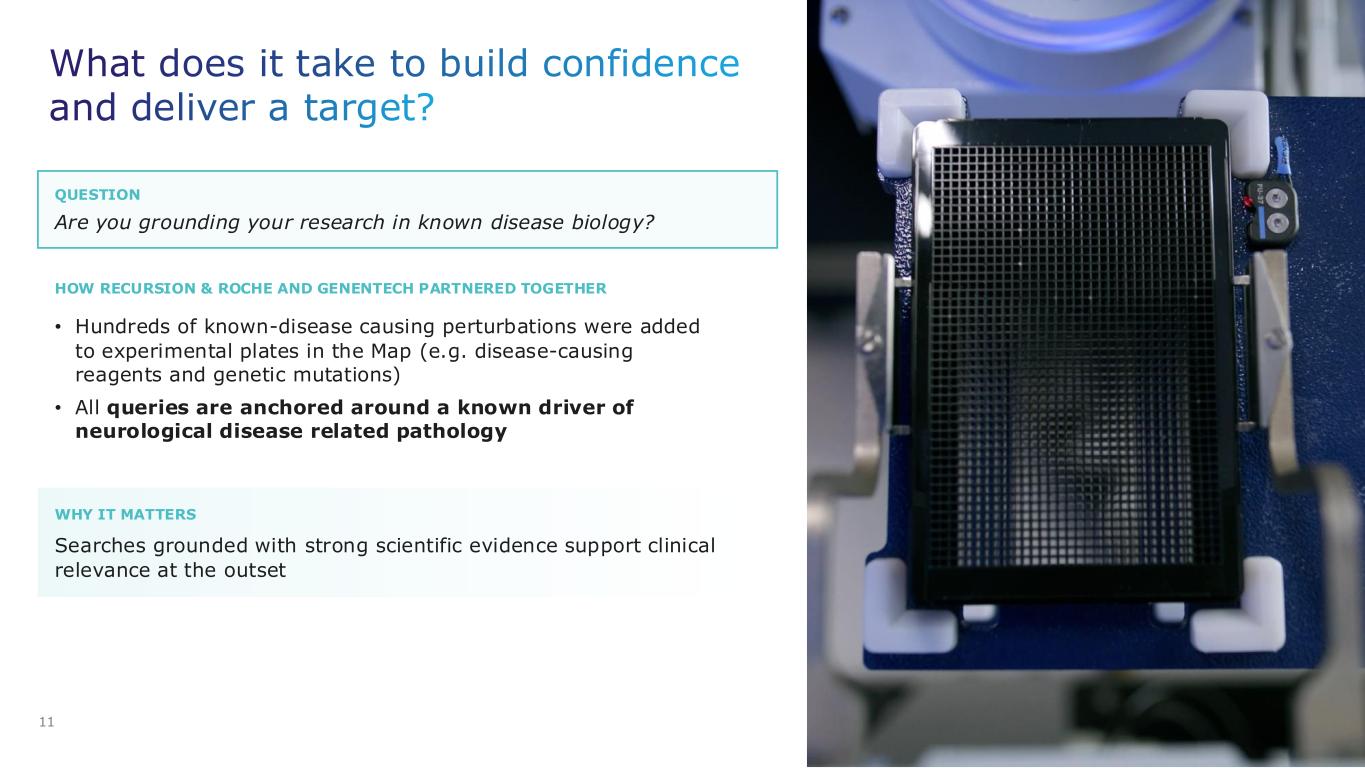
QUESTION WHY IT MATTERS What does it take to build confidence and deliver a target? 11 Are you grounding your research in known disease biology? • Hundreds of known-disease causing perturbations were added to experimental plates in the Map (e.g. disease-causing reagents and genetic mutations) • All queries are anchored around a known driver of neurological disease related pathology Searches grounded with strong scientific evidence support clinical relevance at the outset HOW RECURSION & ROCHE AND GENENTECH PARTNERED TOGETHER
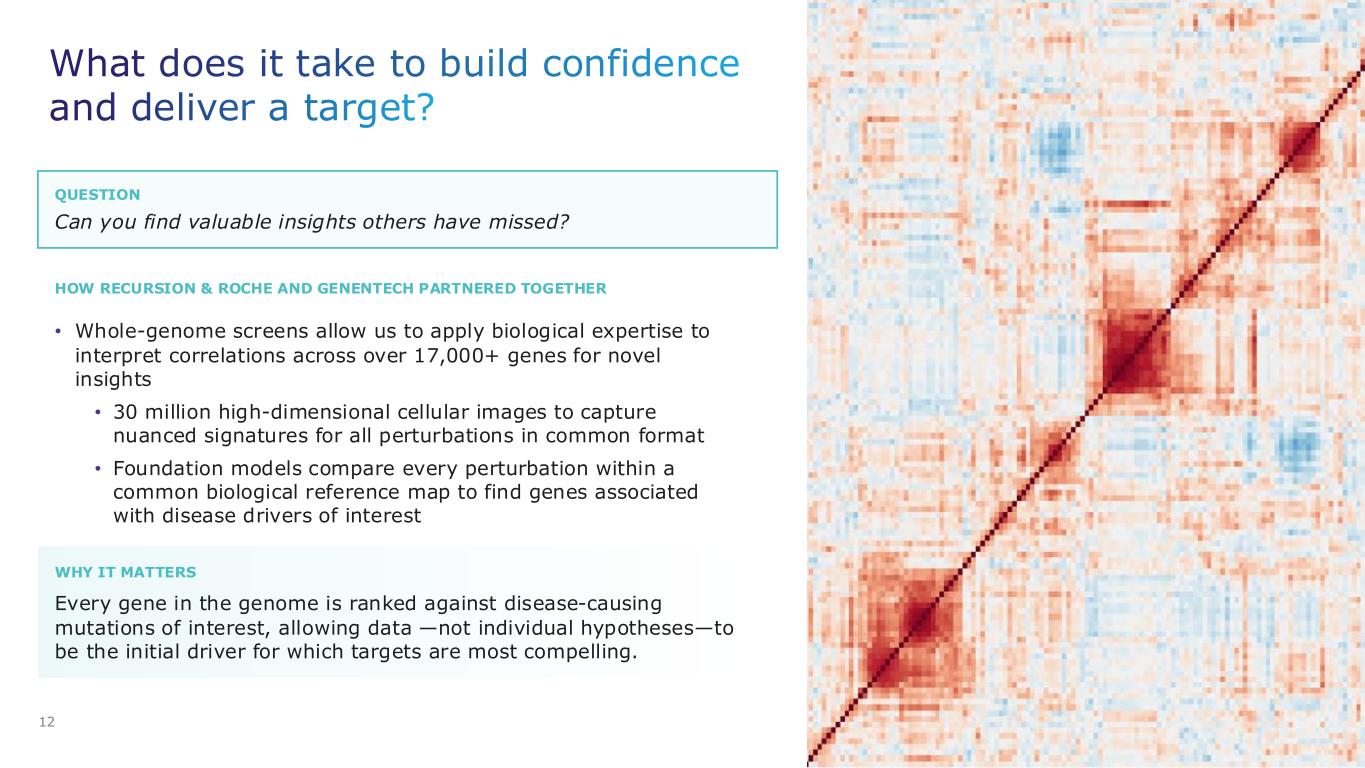
QUESTION HOW RECURSION & ROCHE AND GENENTECH PARTNERED TOGETHER What does it take to build confidence and deliver a target? 12 Can you find valuable insights others have missed? • Whole-genome screens allow us to apply biological expertise to interpret correlations across over 17,000+ genes for novel insights • 30 million high-dimensional cellular images to capture nuanced signatures for all perturbations in common format • Foundation models compare every perturbation within a common biological reference map to find genes associated with disease drivers of interest WHY IT MATTERS Every gene in the genome is ranked against disease-causing mutations of interest, allowing data —not individual hypotheses—to be the initial driver for which targets are most compelling.
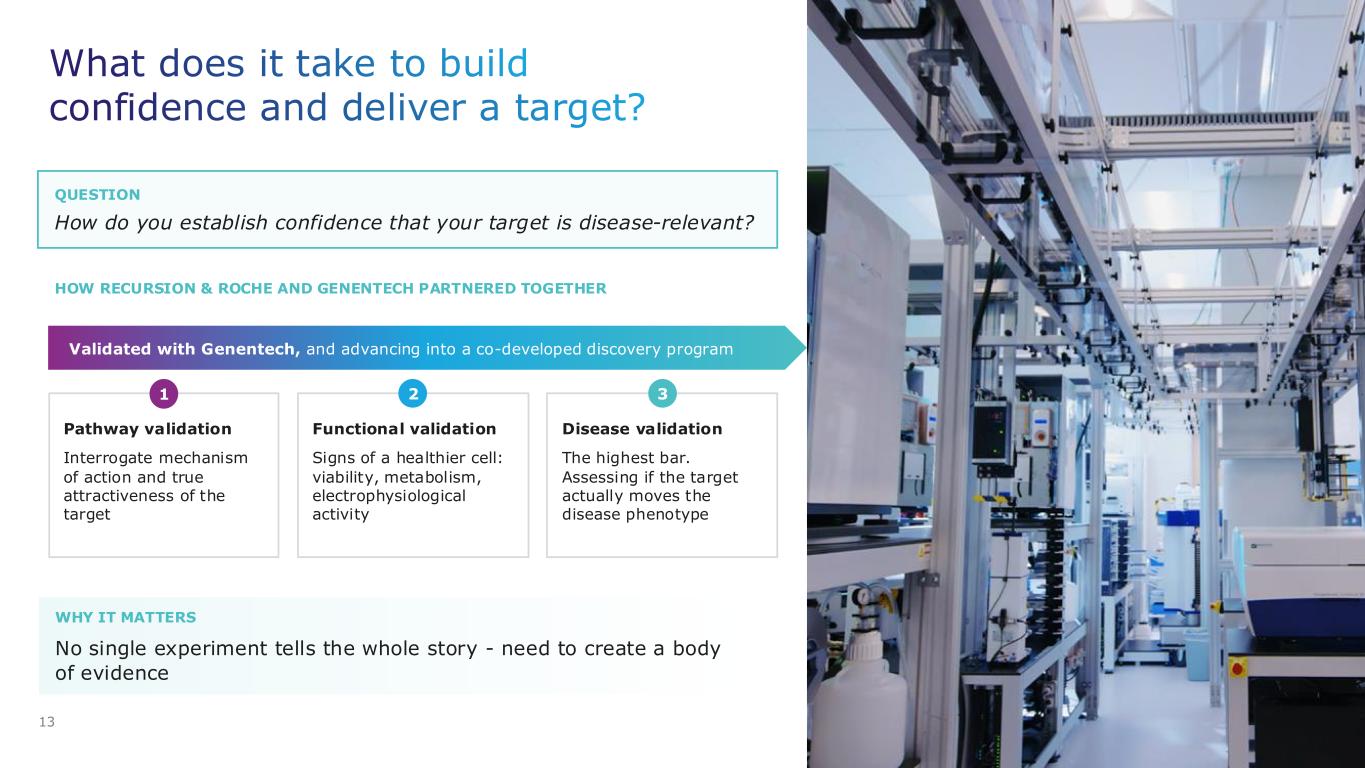
QUESTION HOW RECURSION & ROCHE AND GENENTECH PARTNERED TOGETHER WHY IT MATTERS What does it take to build confidence and deliver a target? 13 How do you establish confidence that your target is disease-relevant? No single experiment tells the whole story - need to create a body of evidence Validated with Genentech, and advancing into a co-developed discovery program Pathway validation Interrogate mechanism of action and true attractiveness of the target Functional validation Signs of a healthier cell: viability, metabolism, electrophysiological activity Disease validation The highest bar. Assessing if the target actually moves the disease phenotype 1 2 3
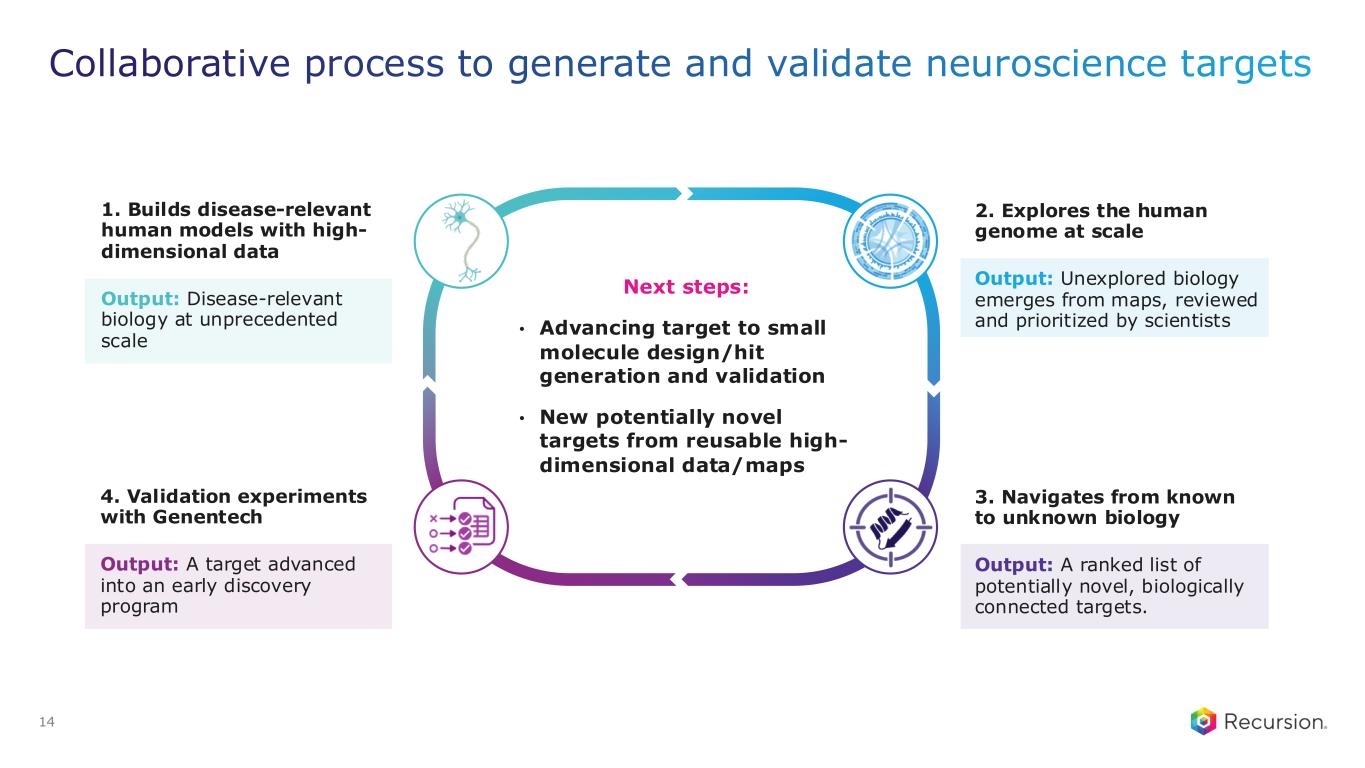
Collaborative process to generate and validate neuroscience targets 14 1. Builds disease-relevant human models with high- dimensional data Output: Disease-relevant biology at unprecedented scale 4. Validation experiments with Genentech Output: A target advanced into an early discovery program 2. Explores the human genome at scale Output: Unexplored biology emerges from maps, reviewed and prioritized by scientists 3. Navigates from known to unknown biology Output: A ranked list of potentially novel, biologically connected targets. Next steps: • Advancing target to small molecule design/hit generation and validation • New potentially novel targets from reusable high- dimensional data/maps

Internal Pipeline Today’s news
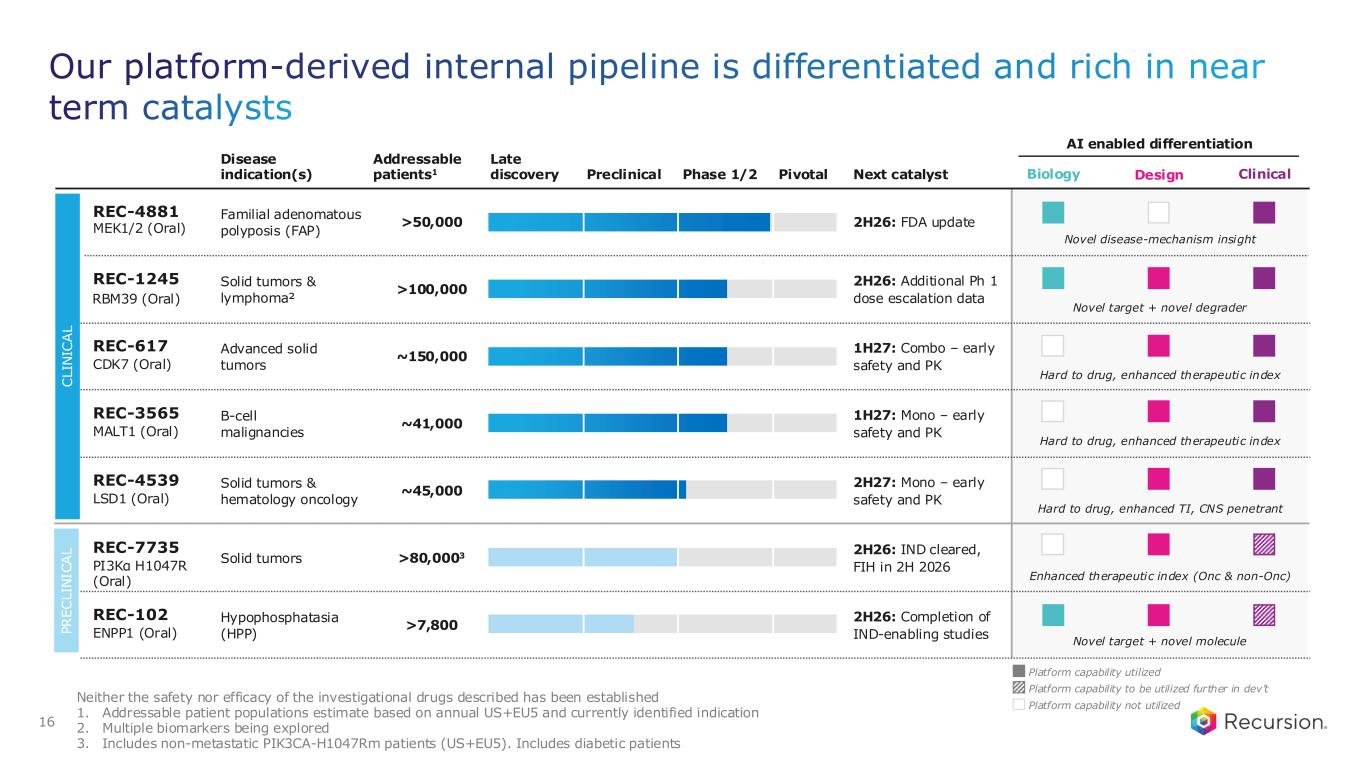
Disease indication(s) Addressable patients1 Next catalyst AI enabled differentiation Late discovery Preclinical Phase 1/2 Pivotal Familial adenomatous polyposis (FAP) >50,000 2H26: FDA update Advanced solid tumors ~150,000 1H27: Combo – early safety and PK Solid tumors & lymphoma² >100,000 2H26: Additional Ph 1 dose escalation data B-cell malignancies ~41,000 1H27: Mono – early safety and PK Solid tumors & hematology oncology ~45,000 2H27: Mono – early safety and PK Solid tumors >80,0003 2H26: IND cleared, FIH in 2H 2026 Hypophosphatasia (HPP) >7,800 2H26: Completion of IND-enabling studies Neither the safety nor efficacy of the investigational drugs described has been established 1. Addressable patient populations estimate based on annual US+EU5 and currently identified indication 2. Multiple biomarkers being explored 3. Includes non-metastatic PIK3CA-H1047Rm patients (US+EU5). Includes diabetic patients C L IN IC A L P R E C L IN IC A L Our platform-derived internal pipeline is differentiated and rich in near term catalysts 16 Design Clinical REC-4881 MEK1/2 (Oral) REC-617 CDK7 (Oral) REC-1245 RBM39 (Oral) REC-3565 MALT1 (Oral) REC-4539 LSD1 (Oral) REC-7735 PI3Kα H1047R (Oral) REC-102 ENPP1 (Oral) Biology Novel disease-mechanism insight Hard to drug, enhanced therapeutic index Novel target + novel degrader Hard to drug, enhanced therapeutic index Hard to drug, enhanced TI, CNS penetrant Enhanced therapeutic index (Onc & non-Onc) Novel target + novel molecule Platform capability utilized Platform capability not utilized Platform capability to be utilized further in dev’t
REC-4881 MEK1/2 Translating proof to products
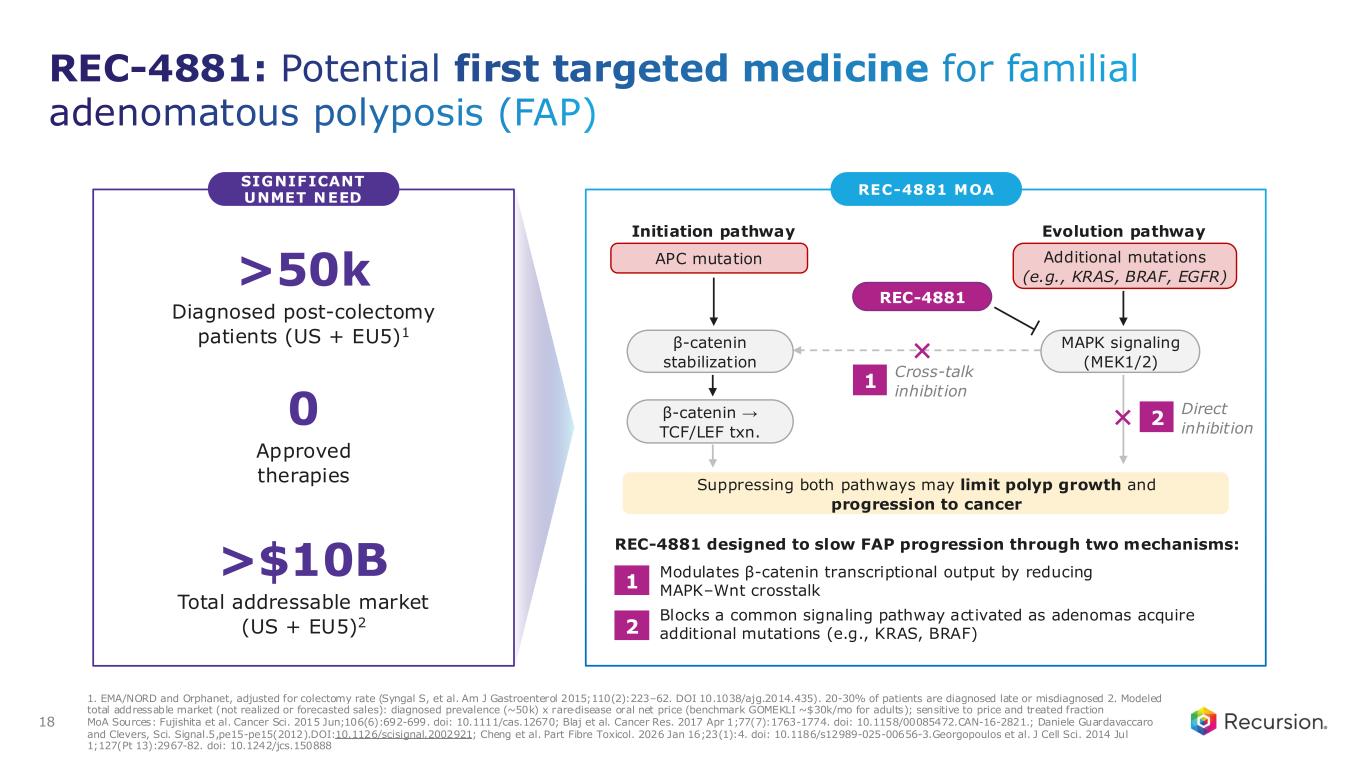
REC-4881: Potential first targeted medicine for familial adenomatous polyposis (FAP) 1. EMA/NORD and Orphanet, adjusted for colectomy rate (Syngal S, et al. Am J Gastroenterol 2015;110(2):223–62. DOI 10.1038/ajg.2014.435). 20-30% of patients are diagnosed late or misdiagnosed 2. Modeled total addressable market (not realized or forecasted sales): diagnosed prevalence (~50k) x rare-disease oral net price (benchmark GOMEKLI ~$30k/mo for adults); sensitive to price and treated fraction MoA Sources: Fujishita et al. Cancer Sci. 2015 Jun;106(6):692-699. doi: 10.1111/cas.12670; Blaj et al. Cancer Res. 2017 Apr 1;77(7):1763-1774. doi: 10.1158/00085472.CAN-16-2821.; Daniele Guardavaccaro and Clevers, Sci. Signal.5,pe15-pe15(2012).DOI:10.1126/scisignal.2002921; Cheng et al. Part Fibre Toxicol. 2026 Jan 16;23(1):4. doi: 10.1186/s12989-025-00656-3.Georgopoulos et al. J Cell Sci. 2014 Jul 1;127(Pt 13):2967-82. doi: 10.1242/jcs.150888 SIGNIFICANT UNMET NEED REC-4881 MOA REC-4881 designed to slow FAP progression through two mechanisms: Modulates β-catenin transcriptional output by reducing MAPK–Wnt crosstalk Blocks a common signaling pathway activated as adenomas acquire additional mutations (e.g., KRAS, BRAF) Suppressing both pathways may limit polyp growth and progression to cancer Initiation pathway APC mutation β-catenin stabilization β-catenin → TCF/LEF txn. Evolution pathway Additional mutations (e.g., KRAS, BRAF, EGFR) MAPK signaling (MEK1/2) REC-4881 Cross-talk inhibition 1 Direct inhibition 2 1 2 >50k Diagnosed post-colectomy patients (US + EU5)1 0 Approved therapies >$10B Total addressable market (US + EU5)2 18
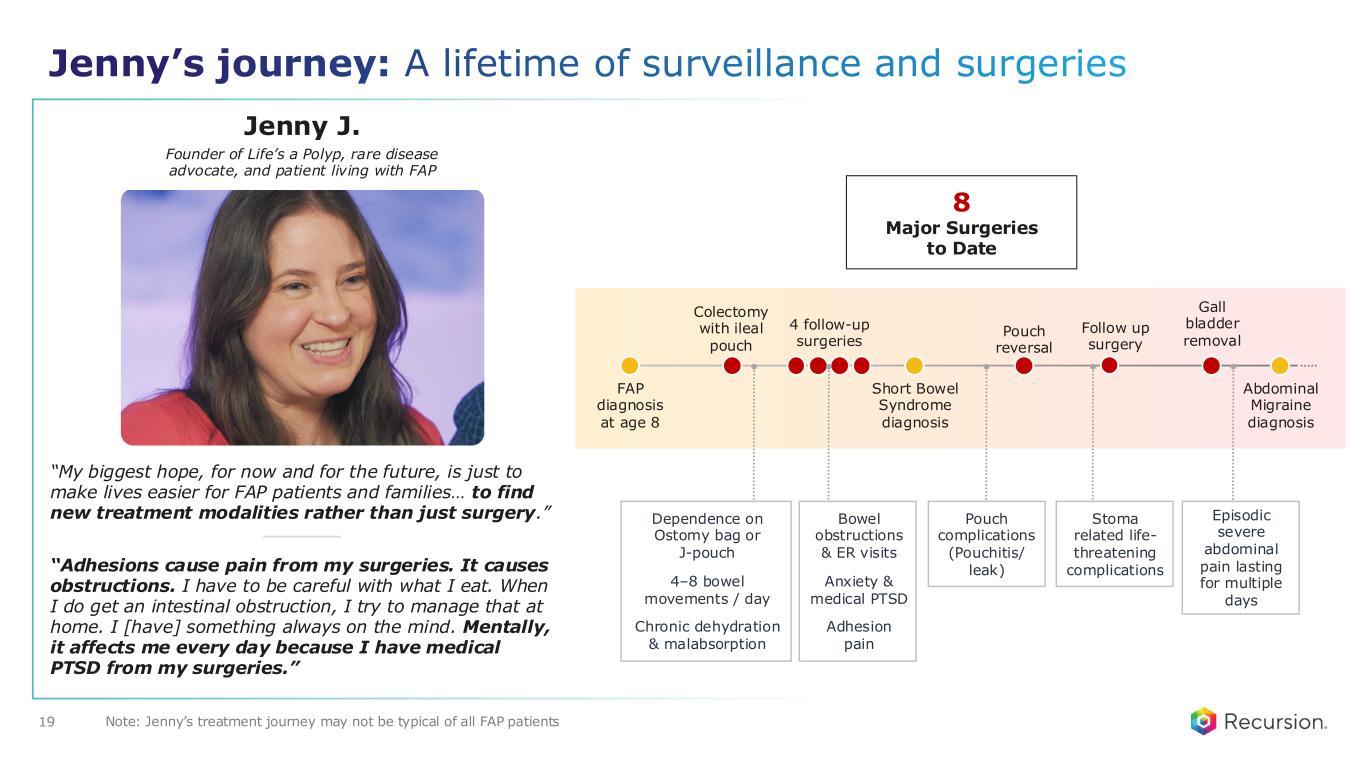
“Adhesions cause pain from my surgeries. It causes obstructions. I have to be careful with what I eat. When I do get an intestinal obstruction, I try to manage that at home. I [have] something always on the mind. Mentally, it affects me every day because I have medical PTSD from my surgeries.” “My biggest hope, for now and for the future, is just to make lives easier for FAP patients and families… to find new treatment modalities rather than just surgery.” 19 Jenny J. Founder of Life’s a Polyp, rare disease advocate, and patient living with FAP FAP diagnosis at age 8 Colectomy with ileal pouch 8 Major Surgeries to Date 4 follow-up surgeries Short Bowel Syndrome diagnosis Pouch reversal Gall bladder removal Follow up surgery Abdominal Migraine diagnosis Jenny’s journey: A lifetime of surveillance and surgeries Bowel obstructions & ER visits Anxiety & medical PTSD Adhesion pain Episodic severe abdominal pain lasting for multiple days Dependence on Ostomy bag or J-pouch 4–8 bowel movements / day Chronic dehydration & malabsorption Pouch complications (Pouchitis/ leak) Stoma related life- threatening complications Note: Jenny’s treatment journey may not be typical of all FAP patients
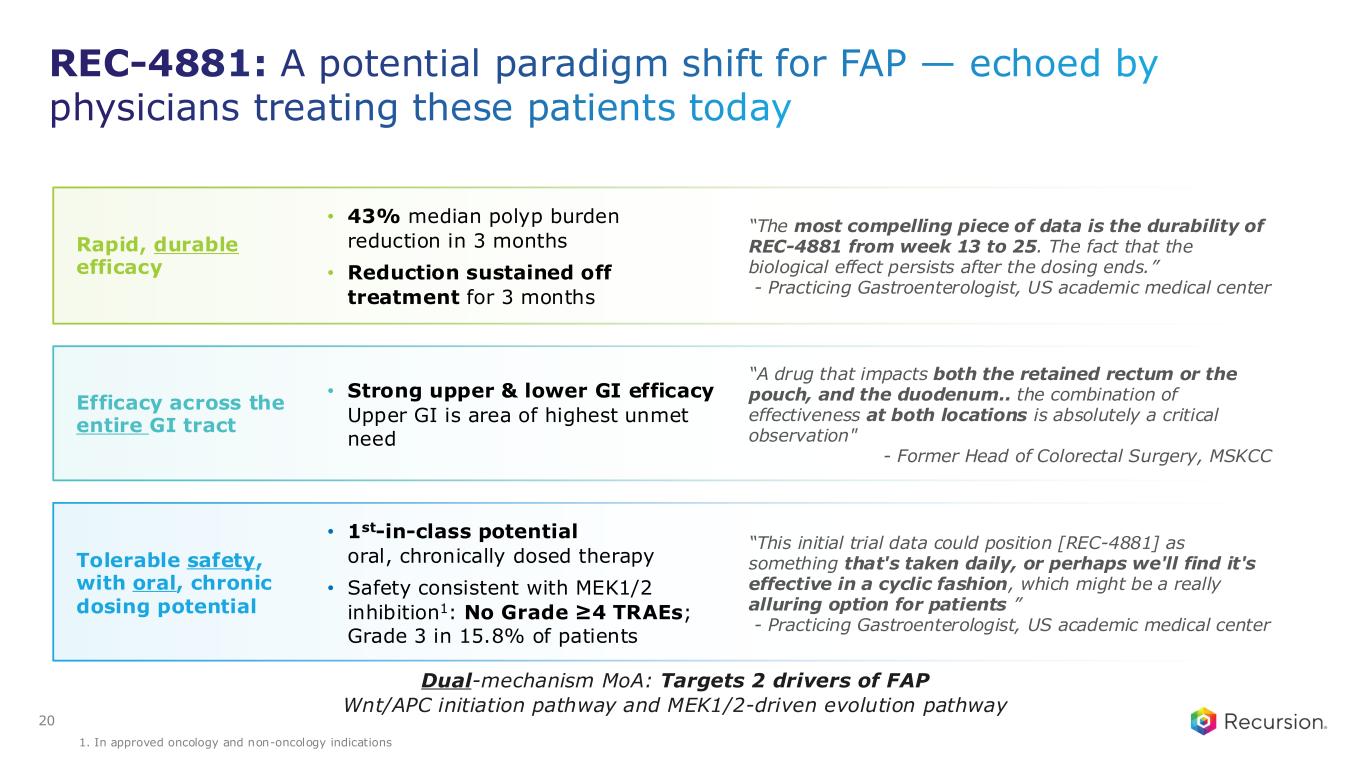
Tolerable safety, with oral, chronic dosing potential • 1st-in-class potential oral, chronically dosed therapy • Safety consistent with MEK1/2 inhibition1: No Grade ≥4 TRAEs; Grade 3 in 15.8% of patients “This initial trial data could position [REC-4881] as something that's taken daily, or perhaps we'll find it's effective in a cyclic fashion, which might be a really alluring option for patients ” - Practicing Gastroenterologist, US academic medical center Rapid, durable efficacy “The most compelling piece of data is the durability of REC-4881 from week 13 to 25. The fact that the biological effect persists after the dosing ends.” - Practicing Gastroenterologist, US academic medical center • 43% median polyp burden reduction in 3 months • Reduction sustained off treatment for 3 months Efficacy across the entire GI tract “A drug that impacts both the retained rectum or the pouch, and the duodenum.. the combination of effectiveness at both locations is absolutely a critical observation" - Former Head of Colorectal Surgery, MSKCC • Strong upper & lower GI efficacy Upper GI is area of highest unmet need 20 REC-4881: A potential paradigm shift for FAP — echoed by physicians treating these patients today Dual-mechanism MoA: Targets 2 drivers of FAP Wnt/APC initiation pathway and MEK1/2-driven evolution pathway 1. In approved oncology and non-oncology indications
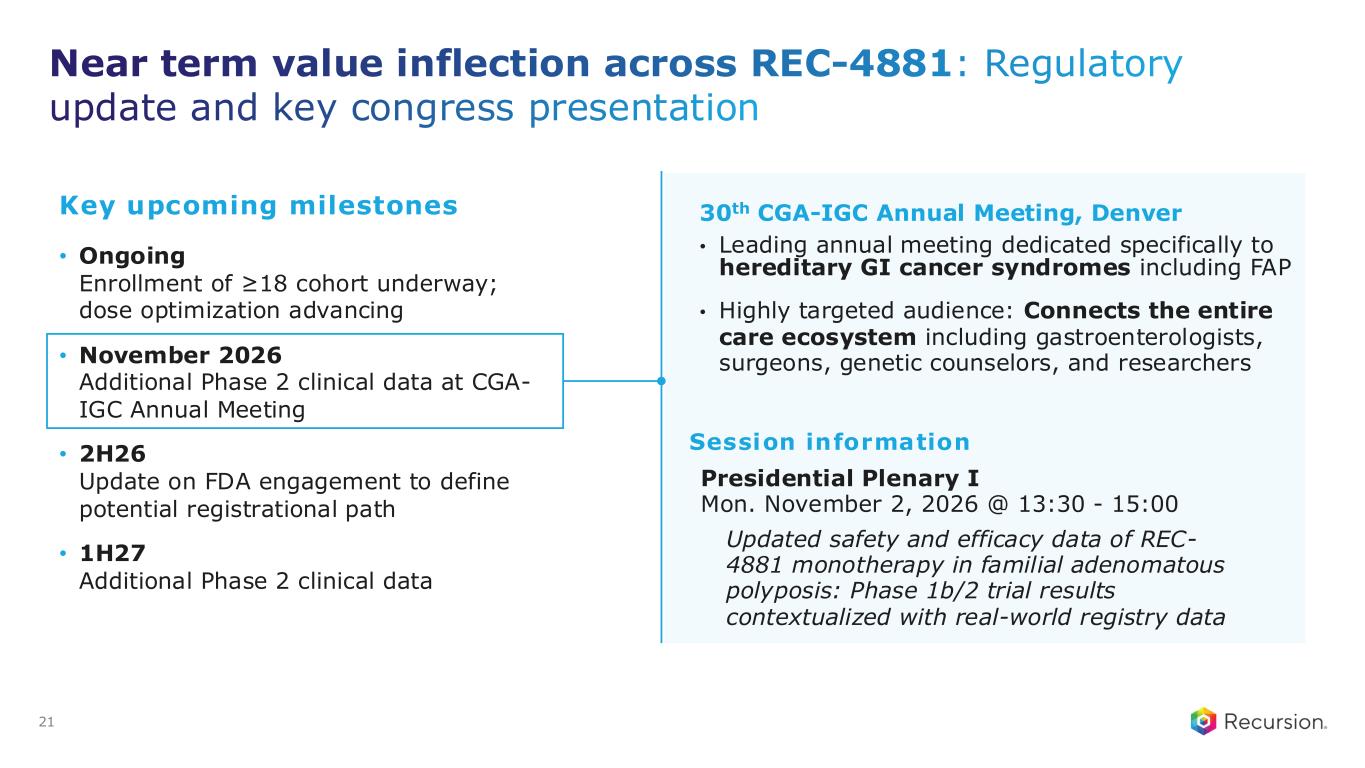
Presidential Plenary I Mon. November 2, 2026 @ 13:30 - 15:00 Near term value inflection across REC-4881: Regulatory update and key congress presentation 30th CGA-IGC Annual Meeting, Denver • Leading annual meeting dedicated specifically to hereditary GI cancer syndromes including FAP • Highly targeted audience: Connects the entire care ecosystem including gastroenterologists, surgeons, genetic counselors, and researchers 21 Updated safety and efficacy data of REC- 4881 monotherapy in familial adenomatous polyposis: Phase 1b/2 trial results contextualized with real-world registry data Key upcoming milestones • Ongoing Enrollment of ≥18 cohort underway; dose optimization advancing • November 2026 Additional Phase 2 clinical data at CGA- IGC Annual Meeting • 2H26 Update on FDA engagement to define potential registrational path • 1H27 Additional Phase 2 clinical data Session information
REC-7735 PI3Kα Translating proof to products
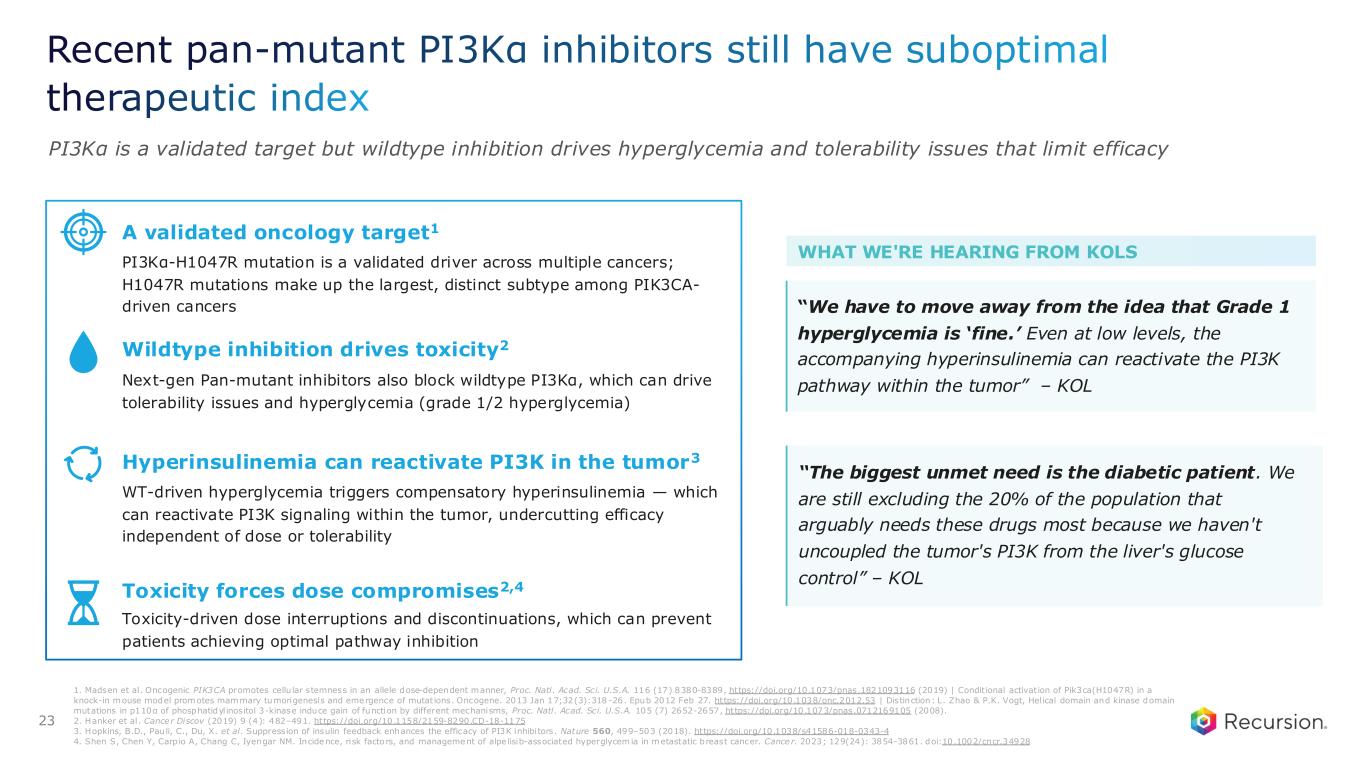
Recent pan-mutant PI3Kα inhibitors still have suboptimal therapeutic index PI3Kα is a validated target but wildtype inhibition drives hyperglycemia and tolerability issues that limit efficacy A validated oncology target1 PI3Kα-H1047R mutation is a validated driver across multiple cancers; H1047R mutations make up the largest, distinct subtype among PIK3CA- driven cancers Wildtype inhibition drives toxicity2 Next-gen Pan-mutant inhibitors also block wildtype PI3Kα, which can drive tolerability issues and hyperglycemia (grade 1/2 hyperglycemia) Toxicity forces dose compromises2,4 Toxicity-driven dose interruptions and discontinuations, which can prevent patients achieving optimal pathway inhibition Hyperinsulinemia can reactivate PI3K in the tumor3 WT-driven hyperglycemia triggers compensatory hyperinsulinemia — which can reactivate PI3K signaling within the tumor, undercutting efficacy independent of dose or tolerability WHAT WE'RE HEARING FROM KOLS “The biggest unmet need is the diabetic patient. We are still excluding the 20% of the population that arguably needs these drugs most because we haven't uncoupled the tumor's PI3K from the liver's glucose control” – KOL “We have to move away from the idea that Grade 1 hyperglycemia is ‘fine.’ Even at low levels, the accompanying hyperinsulinemia can reactivate the PI3K pathway within the tumor” – KOL 23 1. Madsen et al. Oncogenic PIK3CA promotes cellu lar stemness in an allele dose-dependent manner, Proc. Natl. Acad. Sci. U.S.A. 116 (17) 8380-8389, https://doi.org/10.1073/pnas.1821093116 (2019) | Conditional activation of Pik3ca(H1047R) in a knock-in mouse model promotes mammary tumorigenesis and emergence of mutations. Oncogene. 2013 Jan 17;32(3):318 -26. Epub 2012 Feb 27. https://doi.org/10.1038/onc.2012.53 | Distinction: L. Zhao & P.K. Vogt, Helical domain and kinase domain mutations in p110α of phosphatidylinositol 3-kinase induce gain of function by different mechanisms, Proc. Natl. Acad. Sci. U.S.A. 105 (7) 2652-2657, https://doi.org/10.1073/pnas.0712169105 (2008). 2. Hanker et al. Cance r Discov (2019) 9 (4): 482–491. https://doi.org/10.1158/2159-8290.CD-18-1175 3. Hopkins, B.D., Pauli, C., Du, X. et al. Suppression of insulin feedback enhances the efficacy of PI3K inhibitors. Nature 560, 499–503 (2018). https://doi.org/10.1038/s41586-018-0343-4 4. Shen S, Chen Y, Carp io A, Chang C, Iyengar NM. Incidence, risk factors, and management of alpe lisib-associated hyperglycemia in metastatic breast cancer. Cance r. 2023; 129(24): 3854-3861. doi:10.1002/cncr.34928
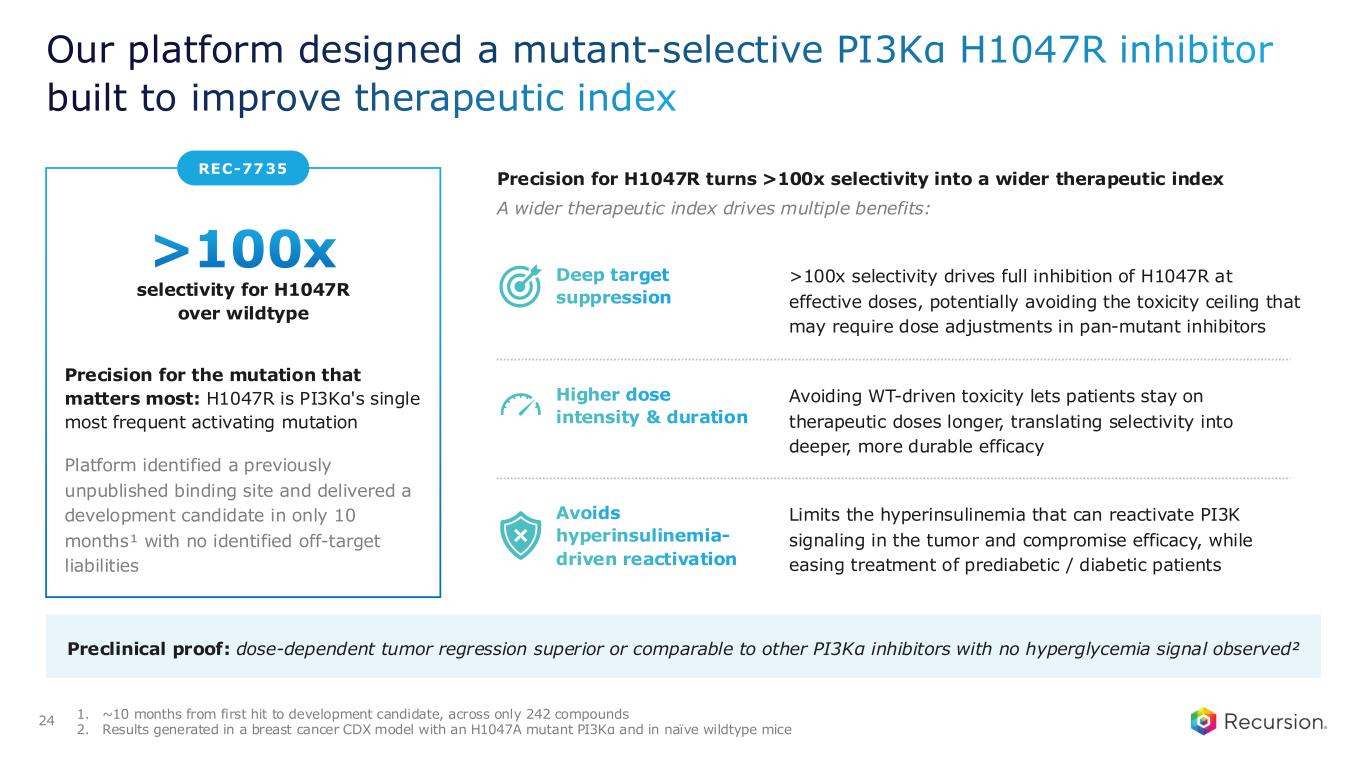
REC-7735 Our platform designed a mutant-selective PI3Kα H1047R inhibitor built to improve therapeutic index >100x selectivity for H1047R over wildtype Precision for the mutation that matters most: H1047R is PI3Kα's single most frequent activating mutation Platform identified a previously unpublished binding site and delivered a development candidate in only 10 months¹ with no identified off-target liabilities Precision for H1047R turns >100x selectivity into a wider therapeutic index A wider therapeutic index drives multiple benefits: Preclinical proof: dose-dependent tumor regression superior or comparable to other PI3Kα inhibitors with no hyperglycemia signal observed² 1. ~10 months from first hit to development candidate, across only 242 compounds 2. Results generated in a breast cancer CDX model with an H1047A mutant PI3Kα and in naïve wildtype mice 24 Higher dose intensity & duration Avoiding WT-driven toxicity lets patients stay on therapeutic doses longer, translating selectivity into deeper, more durable efficacy Avoids hyperinsulinemia- driven reactivation Limits the hyperinsulinemia that can reactivate PI3K signaling in the tumor and compromise efficacy, while easing treatment of prediabetic / diabetic patients Deep target suppression >100x selectivity drives full inhibition of H1047R at effective doses, potentially avoiding the toxicity ceiling that may require dose adjustments in pan-mutant inhibitors
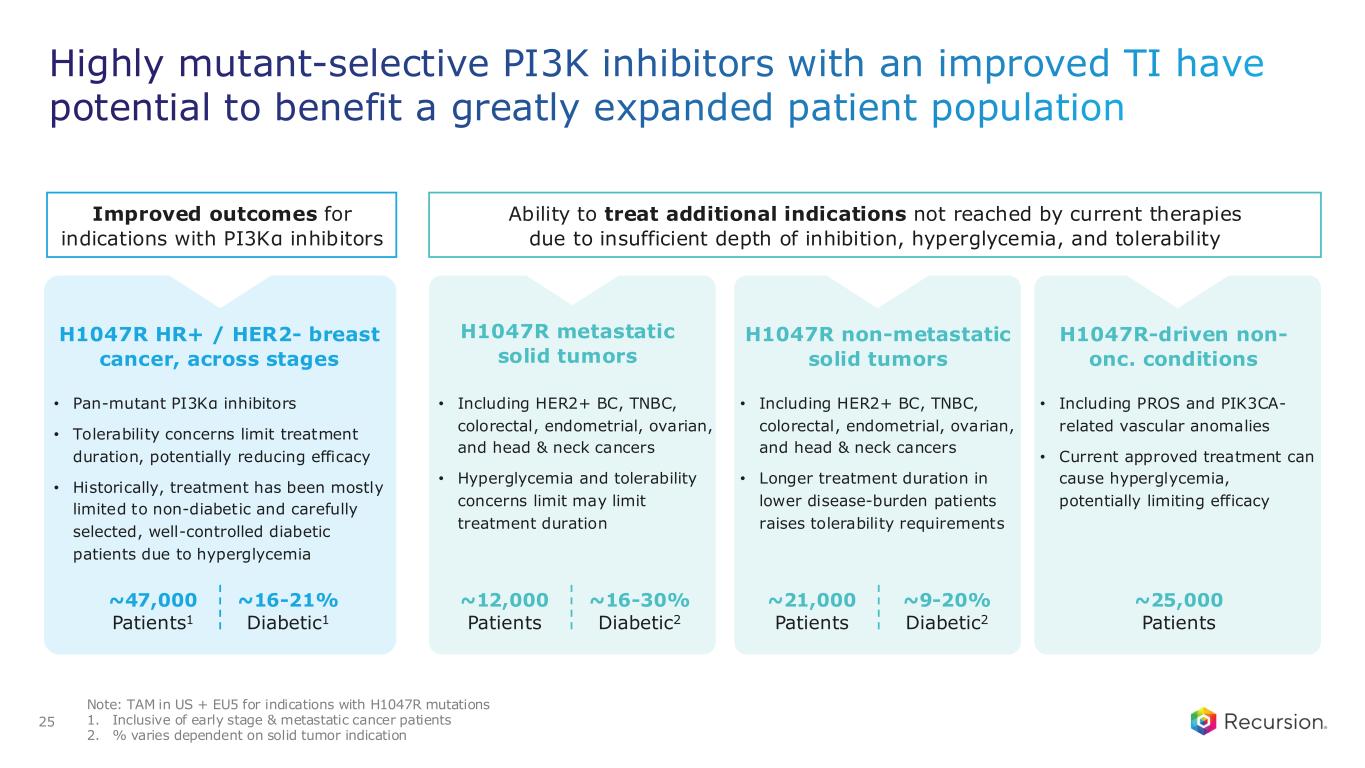
Highly mutant-selective PI3K inhibitors with an improved TI have potential to benefit a greatly expanded patient population 25 Ability to treat additional indications not reached by current therapies due to insufficient depth of inhibition, hyperglycemia, and tolerability H1047R HR+ / HER2- breast cancer, across stages • Pan-mutant PI3Kα inhibitors • Tolerability concerns limit treatment duration, potentially reducing efficacy • Historically, treatment has been mostly limited to non-diabetic and carefully selected, well-controlled diabetic patients due to hyperglycemia H1047R metastatic solid tumors • Including HER2+ BC, TNBC, colorectal, endometrial, ovarian, and head & neck cancers • Hyperglycemia and tolerability concerns limit may limit treatment duration H1047R non-metastatic solid tumors • Including HER2+ BC, TNBC, colorectal, endometrial, ovarian, and head & neck cancers • Longer treatment duration in lower disease-burden patients raises tolerability requirements H1047R-driven non- onc. conditions • Including PROS and PIK3CA- related vascular anomalies • Current approved treatment can cause hyperglycemia, potentially limiting efficacy ~47,000 Patients1 ~16-21% Diabetic1 ~12,000 Patients ~16-30% Diabetic2 ~21,000 Patients ~9-20% Diabetic2 ~25,000 Patients Note: TAM in US + EU5 for indications with H1047R mutations 1. Inclusive of early stage & metastatic cancer patients 2. % varies dependent on solid tumor indication Improved outcomes for indications with PI3Kα inhibitors
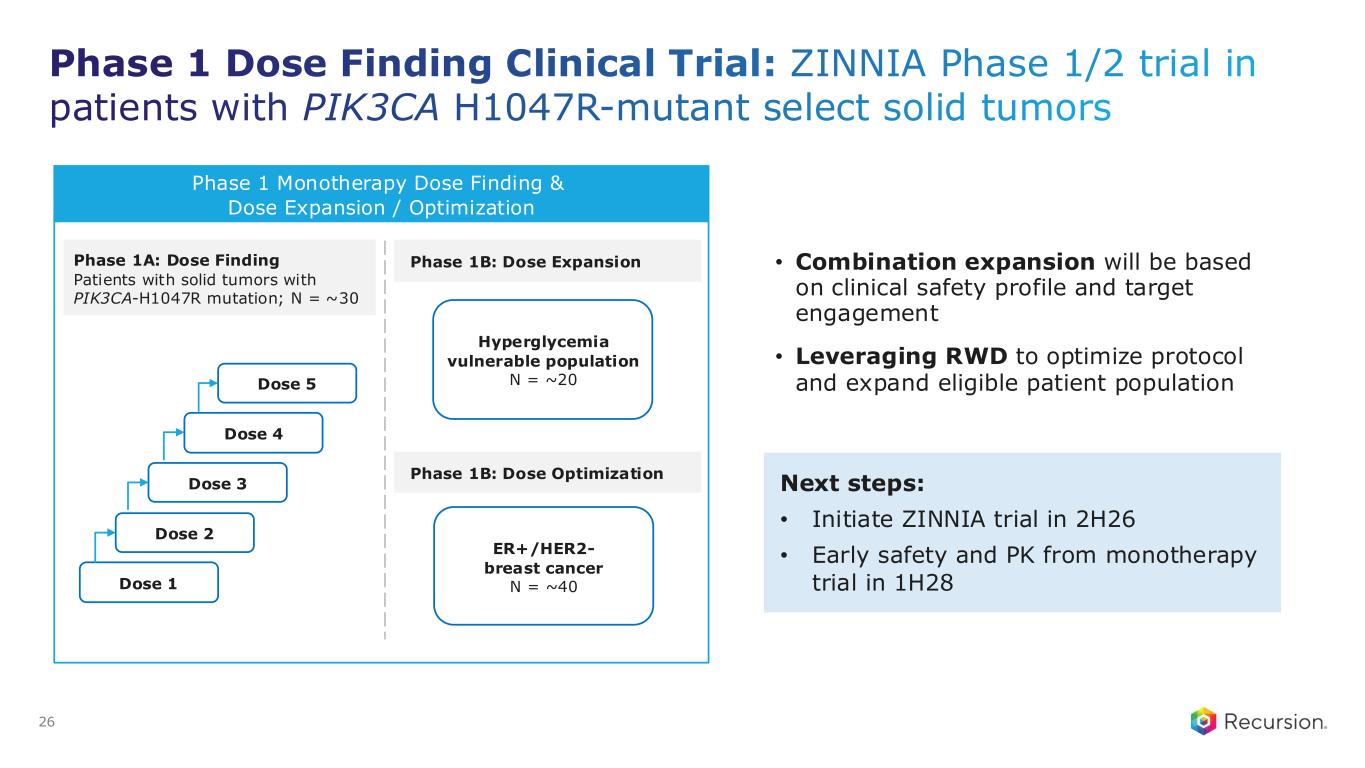
Phase 1 Dose Finding Clinical Trial: ZINNIA Phase 1/2 trial in patients with PIK3CA H1047R-mutant select solid tumors • Combination expansion will be based on clinical safety profile and target engagement • Leveraging RWD to optimize protocol and expand eligible patient population 26 Phase 1 Monotherapy Dose Finding & Dose Expansion / Optimization Phase 1A: Dose Finding Patients with solid tumors with PIK3CA-H1047R mutation; N = ~30 Dose 1 Dose 2 Dose 3 Dose 4 Dose 5 Hyperglycemia vulnerable population N = ~20 Next steps: • Initiate ZINNIA trial in 2H26 • Early safety and PK from monotherapy trial in 1H28 Phase 1B: Dose Expansion Phase 1B: Dose Optimization ER+/HER2- breast cancer N = ~40

Our AI-powered Product Engine
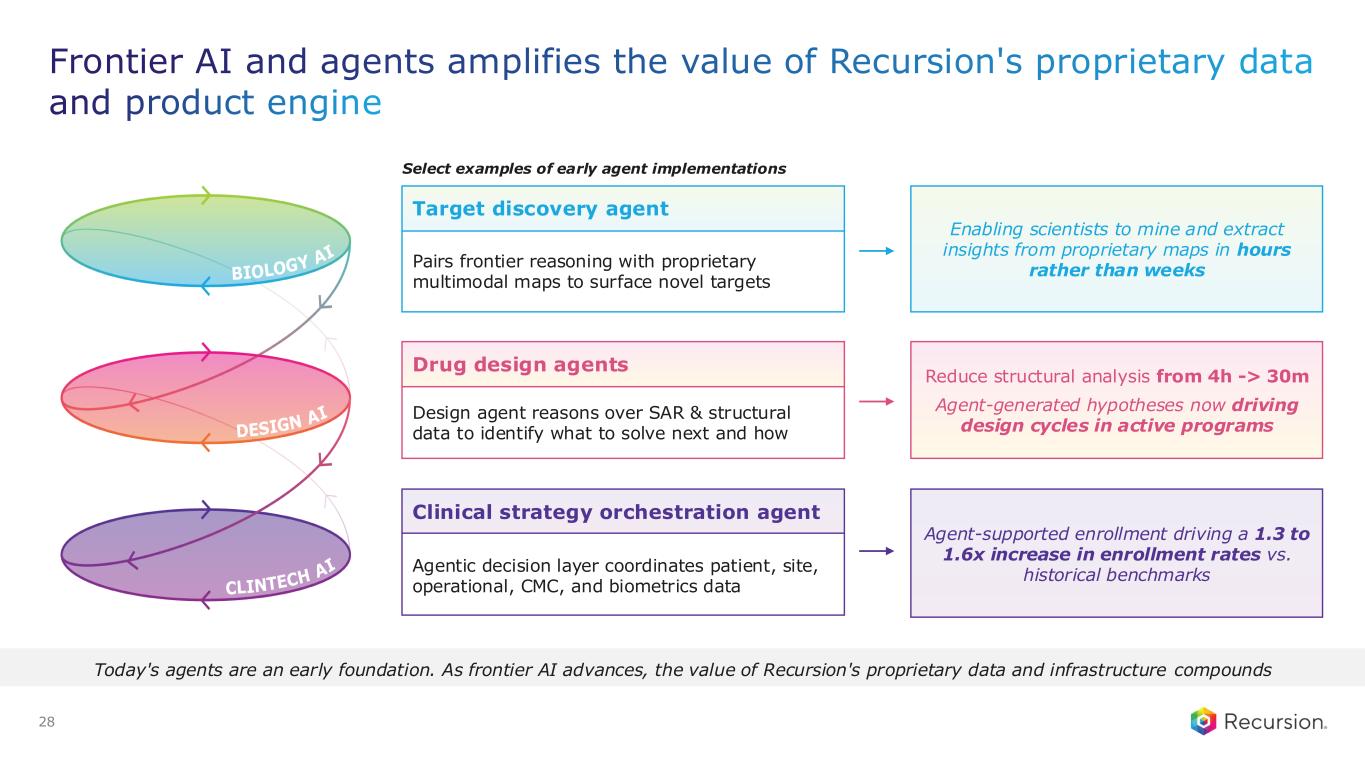
28 Today's agents are an early foundation. As frontier AI advances, the value of Recursion's proprietary data and infrastructure compounds Select examples of early agent implementations Frontier AI and agents amplifies the value of Recursion's proprietary data and product engine Pairs frontier reasoning with proprietary multimodal maps to surface novel targets Target discovery agent Enabling scientists to mine and extract insights from proprietary maps in hours rather than weeks Design agent reasons over SAR & structural data to identify what to solve next and how Drug design agents Reduce structural analysis from 4h -> 30m Agent-generated hypotheses now driving design cycles in active programs Agentic decision layer coordinates patient, site, operational, CMC, and biometrics data Clinical strategy orchestration agent Agent-supported enrollment driving a 1.3 to 1.6x increase in enrollment rates vs. historical benchmarks

29 Link to Video Link to Video
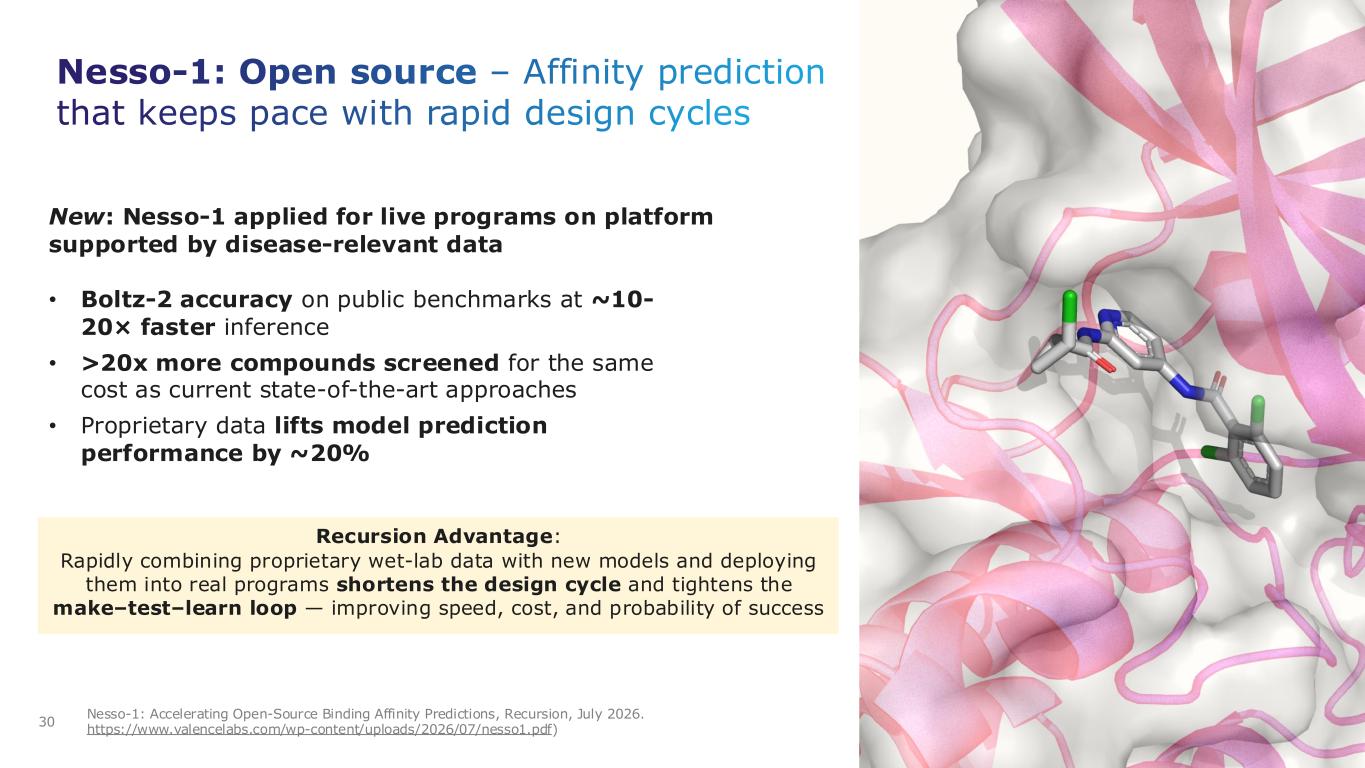
Nesso-1: Open source – Affinity prediction that keeps pace with rapid design cycles 30 Nesso-1: Accelerating Open-Source Binding Affinity Predictions, Recursion, July 2026. https://www.valencelabs.com/wp-content/uploads/2026/07/nesso1.pdf) New: Nesso-1 applied for live programs on platform supported by disease-relevant data Recursion Advantage: Rapidly combining proprietary wet-lab data with new models and deploying them into real programs shortens the design cycle and tightens the make–test–learn loop — improving speed, cost, and probability of success • Boltz-2 accuracy on public benchmarks at ~10- 20× faster inference • >20x more compounds screened for the same cost as current state-of-the-art approaches • Proprietary data lifts model prediction performance by ~20%
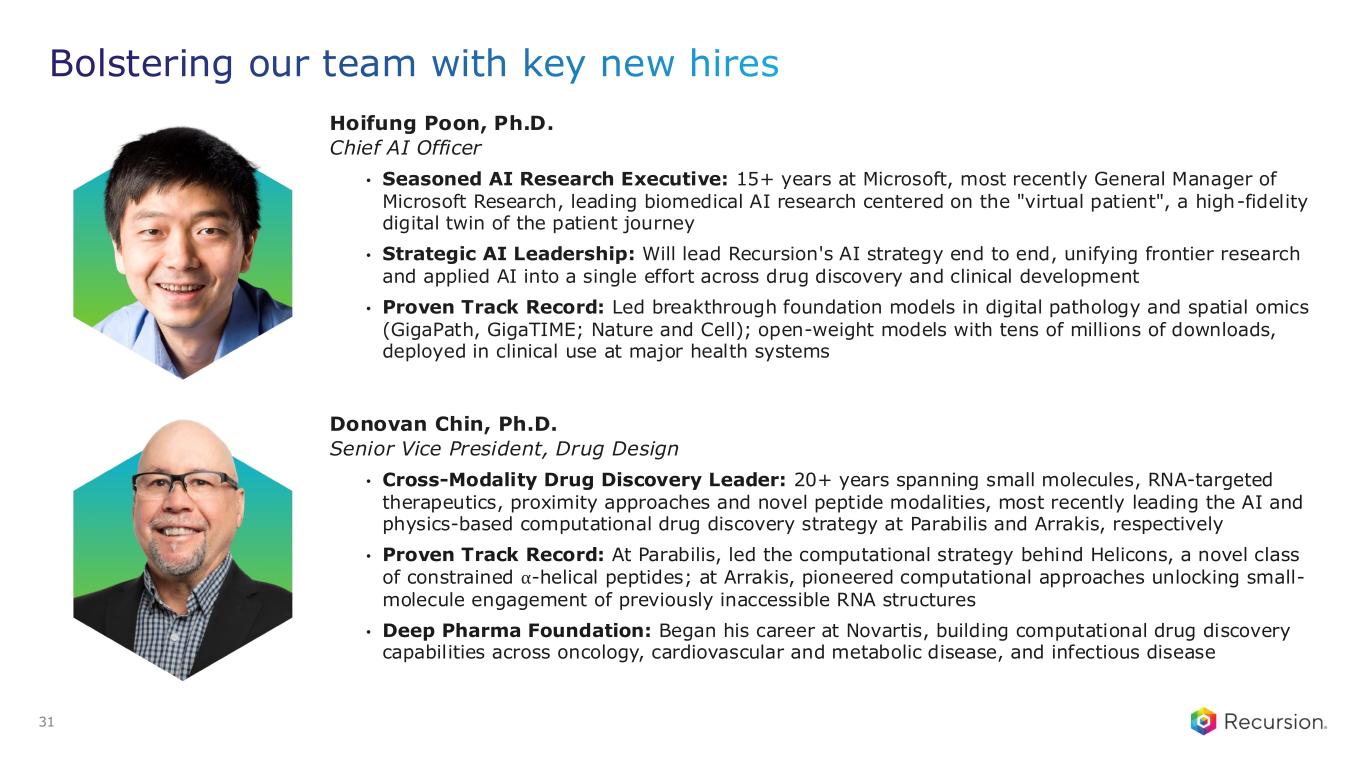
31 Hoifung Poon, Ph.D. Chief AI Officer • Seasoned AI Research Executive: 15+ years at Microsoft, most recently General Manager of Microsoft Research, leading biomedical AI research centered on the "virtual patient", a high-fidelity digital twin of the patient journey • Strategic AI Leadership: Will lead Recursion's AI strategy end to end, unifying frontier research and applied AI into a single effort across drug discovery and clinical development • Proven Track Record: Led breakthrough foundation models in digital pathology and spatial omics (GigaPath, GigaTIME; Nature and Cell); open-weight models with tens of millions of downloads, deployed in clinical use at major health systems Bolstering our team with key new hires Donovan Chin, Ph.D. Senior Vice President, Drug Design • Cross-Modality Drug Discovery Leader: 20+ years spanning small molecules, RNA-targeted therapeutics, proximity approaches and novel peptide modalities, most recently leading the AI and physics-based computational drug discovery strategy at Parabilis and Arrakis, respectively • Proven Track Record: At Parabilis, led the computational strategy behind Helicons, a novel class of constrained ⍺-helical peptides; at Arrakis, pioneered computational approaches unlocking small- molecule engagement of previously inaccessible RNA structures • Deep Pharma Foundation: Began his career at Novartis, building computational drug discovery capabilities across oncology, cardiovascular and metabolic disease, and infectious disease

Financials Pairing bold ambition with disciplined execution
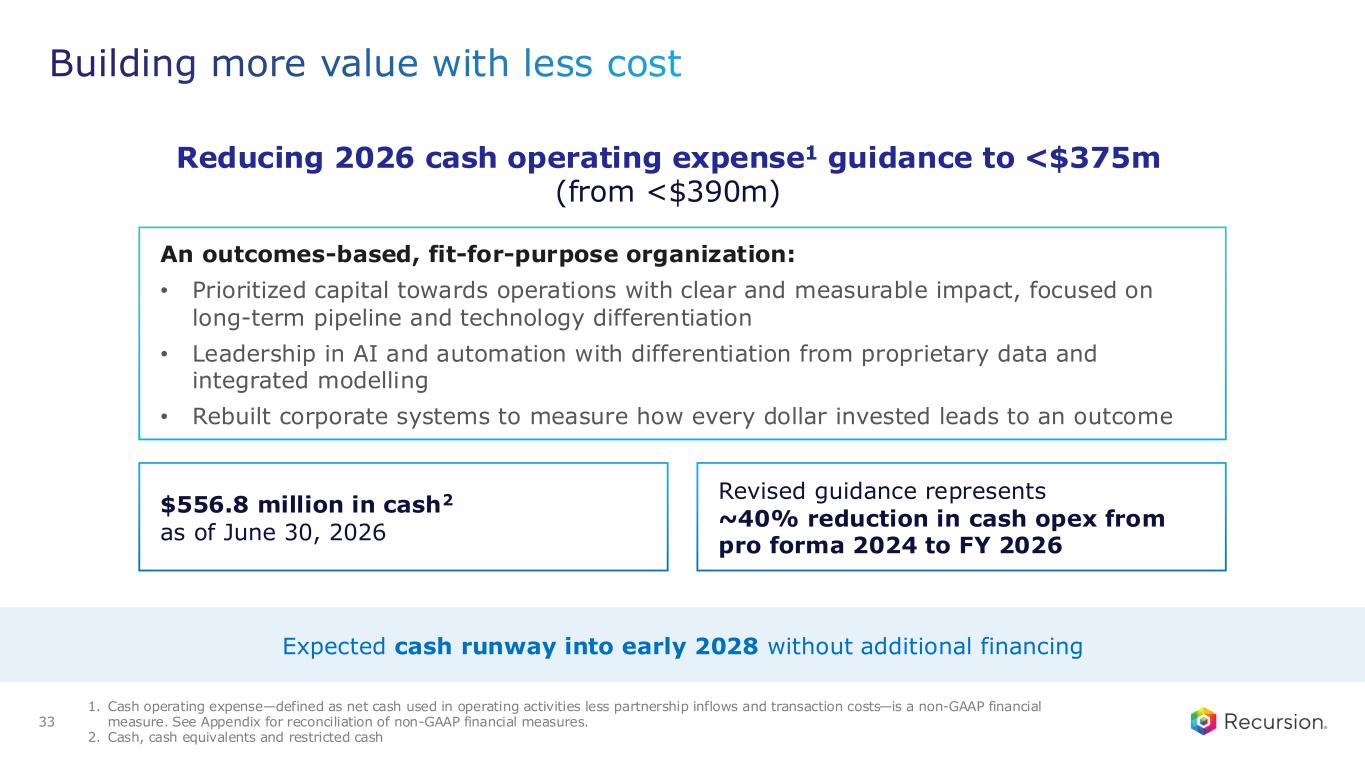
Building more value with less cost 33 Expected cash runway into early 2028 without additional financing An outcomes-based, fit-for-purpose organization: • Prioritized capital towards operations with clear and measurable impact, focused on long-term pipeline and technology differentiation • Leadership in AI and automation with differentiation from proprietary data and integrated modelling • Rebuilt corporate systems to measure how every dollar invested leads to an outcome $556.8 million in cash2 as of June 30, 2026 Reducing 2026 cash operating expense1 guidance to <$375m (from <$390m) 1. Cash operating expense—defined as net cash used in operating activities less partnership inflows and transaction costs—is a non-GAAP financial measure. See Appendix for reconciliation of non-GAAP financial measures. 2. Cash, cash equivalents and restricted cash Revised guidance represents ~40% reduction in cash opex from pro forma 2024 to FY 2026

Looking ahead
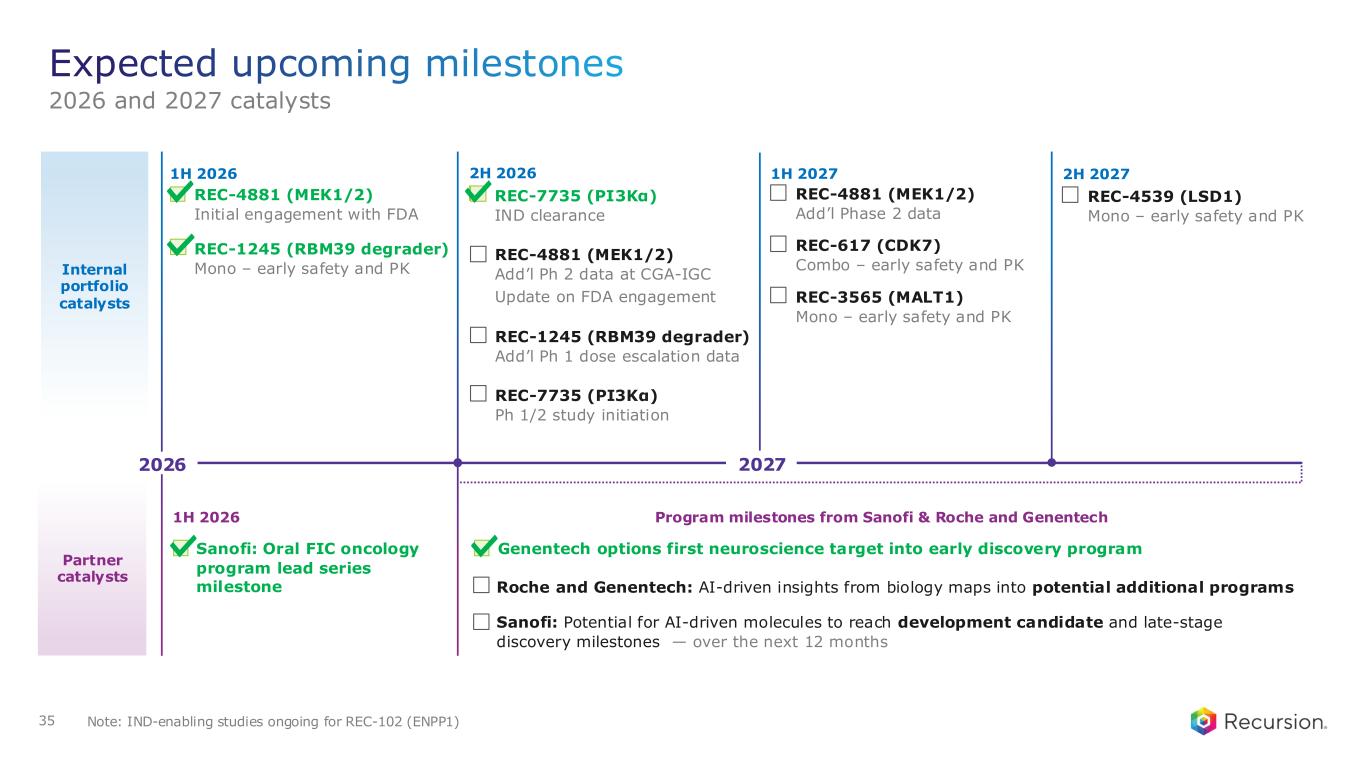
Internal portfolio catalysts 1H 2026 1H 2027 REC-4881 (MEK1/2) Add’l Phase 2 data REC-617 (CDK7) Combo – early safety and PK REC-3565 (MALT1) Mono – early safety and PK 2H 2026 REC-4881 (MEK1/2) Add’l Ph 2 data at CGA-IGC Update on FDA engagement REC-1245 (RBM39 degrader) Add’l Ph 1 dose escalation data 2H 2027 REC-4539 (LSD1) Mono – early safety and PK 35 REC-4881 (MEK1/2) Initial engagement with FDA Partner catalysts REC-1245 (RBM39 degrader) Mono – early safety and PK Program milestones from Sanofi & Roche and Genentech Roche and Genentech: AI-driven insights from biology maps into potential additional programs 1H 2026 Genentech options first neuroscience target into early discovery program Sanofi: Potential for AI-driven molecules to reach development candidate and late-stage discovery milestones — over the next 12 months Expected upcoming milestones 2026 and 2027 catalysts REC-7735 (PI3Kα) IND clearance REC-7735 (PI3Kα) Ph 1/2 study initiation Note: IND-enabling studies ongoing for REC-102 (ENPP1) Sanofi: Oral FIC oncology program lead series milestone 2026 2027

36 THANK YOU

37
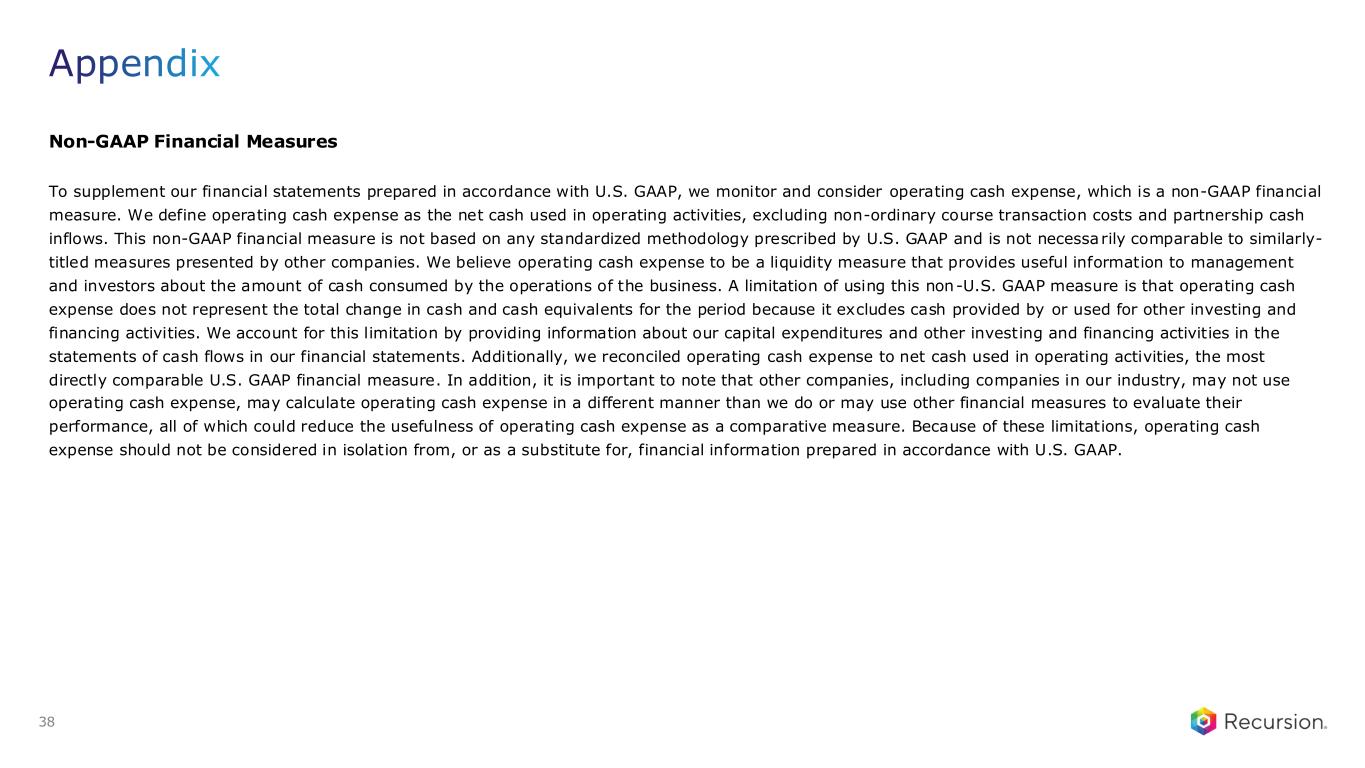
Non-GAAP Financial Measures To supplement our financial statements prepared in accordance with U.S. GAAP, we monitor and consider operating cash expense, which is a non-GAAP financial measure. We define operating cash expense as the net cash used in operating activities, excluding non-ordinary course transaction costs and partnership cash inflows. This non-GAAP financial measure is not based on any standardized methodology prescribed by U.S. GAAP and is not necessarily comparable to similarly- titled measures presented by other companies. We believe operating cash expense to be a liquidity measure that provides useful information to management and investors about the amount of cash consumed by the operations of the business. A limitation of using this non-U.S. GAAP measure is that operating cash expense does not represent the total change in cash and cash equivalents for the period because it excludes cash provided by or used for other investing and financing activities. We account for this limitation by providing information about our capital expenditures and other investing and financing activities in the statements of cash flows in our financial statements. Additionally, we reconciled operating cash expense to net cash used in operating activities, the most directly comparable U.S. GAAP financial measure. In addition, it is important to note that other companies, including companies in our industry, may not use operating cash expense, may calculate operating cash expense in a different manner than we do or may use other financial measures to evaluate their performance, all of which could reduce the usefulness of operating cash expense as a comparative measure. Because of these limitations, operating cash expense should not be considered in isolation from, or as a substitute for, financial information prepared in accordance with U.S. GAAP. Appendix 38