
Investor Presentation August 2026 Exhibit 99.2
Legal Disclaimers Various statements made in this presentation are forward-looking, within the meaning of the U.S. Private Securities Litigation Reform Act of 1995, and are inherently subject to risks, uncertainties and potentially inaccurate assumptions. All statements that address activities, events or developments that we intend, expect, plan or believe may occur in the future, are forward-looking statements, including but not limited to statements regarding: our expectations regarding our clinical development and regulatory plans; our belief that DURAVYU™ is on track and well-positioned to be the first-to-market among all investigational sustained release treatments for the two largest retinal disease markets, wet AMD and DME; our belief that DURAVYU is the only TKI in development for DME; our belief that DURAVYU is uniquely positioned to potentially address both VEGF-mediated vascular leakage and IL-6 mediated inflammatory drivers of DME as a sustained delivery therapy; our belief that DURAVYU’s potential real-world application in multiple retinal disease indications and established, de-risked trial designs position DURAVYU for clinical and commercial success; our expectations regarding the timing of the availability and release of wet AMD and DME clinical data; our financial position and expected cash runway; our belief that DURAVYU has the potential to maintain a majority of patients with active disease with no supplemental anti-VEGF therapy for six months or longer; our beliefs regarding potential market opportunity for DURAVYU in wet AMD and DME; our ability to scale operations at our commercial manufacturing facility in Northbridge, Massachusetts; our expectations that our manufacturing facility will continue to meet FDA and EMA standards and support commercialization efforts of DURAVYU upon regulatory approval; our expectations regarding the timing and clinical and regulatory development of our other product candidates; and other statements regarding the Company’s future plans, objectives, strategies and beliefs, including the use of future dates. Forward-looking statements by their nature address matters that are, to different degrees, uncertain. Uncertainties and risks may cause EyePoint’s actual results to be materially different than those expressed in or implied by EyePoint’s forward-looking statements. For EyePoint, these risks and uncertainties include the timing, progress and results of the Company’s clinical development activities; uncertainties and delays relating to communications with the U.S. Food and Drug Administration and the ability to obtain regulatory approval from FDA for the commercialization of DURAVYU; unanticipated costs and expenses; the Company’s cash and cash equivalents may not be sufficient to support its operating plan for as long as anticipated; the risk that results of clinical trials may not be predictive of future results, and interim and preliminary data are subject to further analysis and may change as more data becomes available; unexpected safety or efficacy data observed during clinical trials; uncertainties related to the regulatory authorization or approval process, and available development and regulatory pathways for approval of the Company’s product candidates; changes in the regulatory environment; disruptions at the FDA; changes in U.S. and international trade policies; changes in expected or existing competition; the success of current and future license agreements; our dependence on contract research organizations, and other outside vendors and service providers; product liability; the impact of general business and economic conditions; protection of our intellectual property and avoiding intellectual property infringement; retention of key personnel; delays, interruptions or failures in the manufacture and supply of our product candidates, including due to unanticipated regulatory compliance issues or warning letters relating to the Company’s manufacturing facilities; the availability of and the need for additional financing; our ability to obtain additional funding to support our clinical development programs; uncertainties regarding the FDA warning letter pertaining to the Company’s Watertown, Massachusetts manufacturing facility; and other factors described in our filings with the Securities and Exchange Commission (SEC). More detailed information on these and additional factors that could affect our actual results are described in our filings with the SEC, including our Annual Report on Form 10-K for the fiscal year ended December 31, 2025, as revised or supplemented by our Quarterly Reports on Form 10-Q and other documents filed with the SEC. We cannot guarantee that the results and other expectations expressed, anticipated or implied in any forward-looking statement will be realized. A variety of factors, including these risks, could cause our actual results and other expectations to differ materially from the anticipated results or other expectations expressed, anticipated or implied in our forward-looking statements. Should known or unknown risks materialize, or should underlying assumptions prove inaccurate, actual results could differ materially from past results and those anticipated, estimated or projected in the forward-looking statements. You should bear this in mind as you consider any forward-looking statements. Our forward-looking statements speak only as of the dates on which they are made. EyePoint undertakes no obligation to update or revise any forward-looking statement, whether as a result of new information, future events, or otherwise.
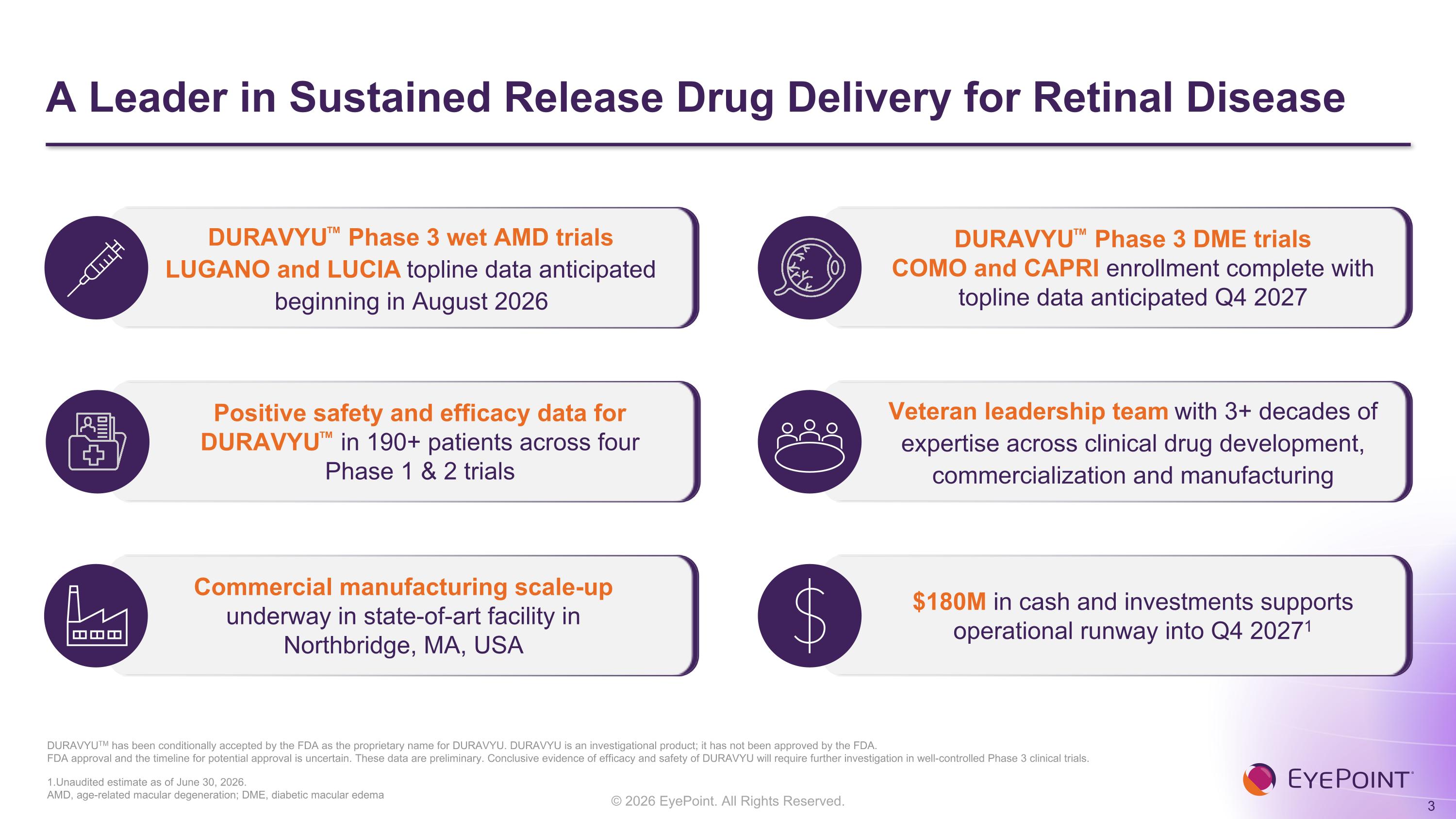
A Leader in Sustained Release Drug Delivery for Retinal Disease 1.Unaudited estimate as of June 30, 2026. AMD, age-related macular degeneration; DME, diabetic macular edema DURAVYUTM has been conditionally accepted by the FDA as the proprietary name for DURAVYU. DURAVYU is an investigational product; it has not been approved by the FDA. FDA approval and the timeline for potential approval is uncertain. These data are preliminary. Conclusive evidence of efficacy and safety of DURAVYU will require further investigation in well-controlled Phase 3 clinical trials. DURAVYU™ Phase 3 DME trials COMO and CAPRI enrollment complete with topline data anticipated Q4 2027 DURAVYU™ Phase 3 wet AMD trials LUGANO and LUCIA topline data anticipated beginning in August 2026 $180M in cash and investments supports operational runway into Q4 20271 Positive safety and efficacy data for DURAVYU™ in 190+ patients across four Phase 1 & 2 trials Commercial manufacturing scale-up underway in state-of-art facility in Northbridge, MA, USA Veteran leadership team with 3+ decades of expertise across clinical drug development, commercialization and manufacturing
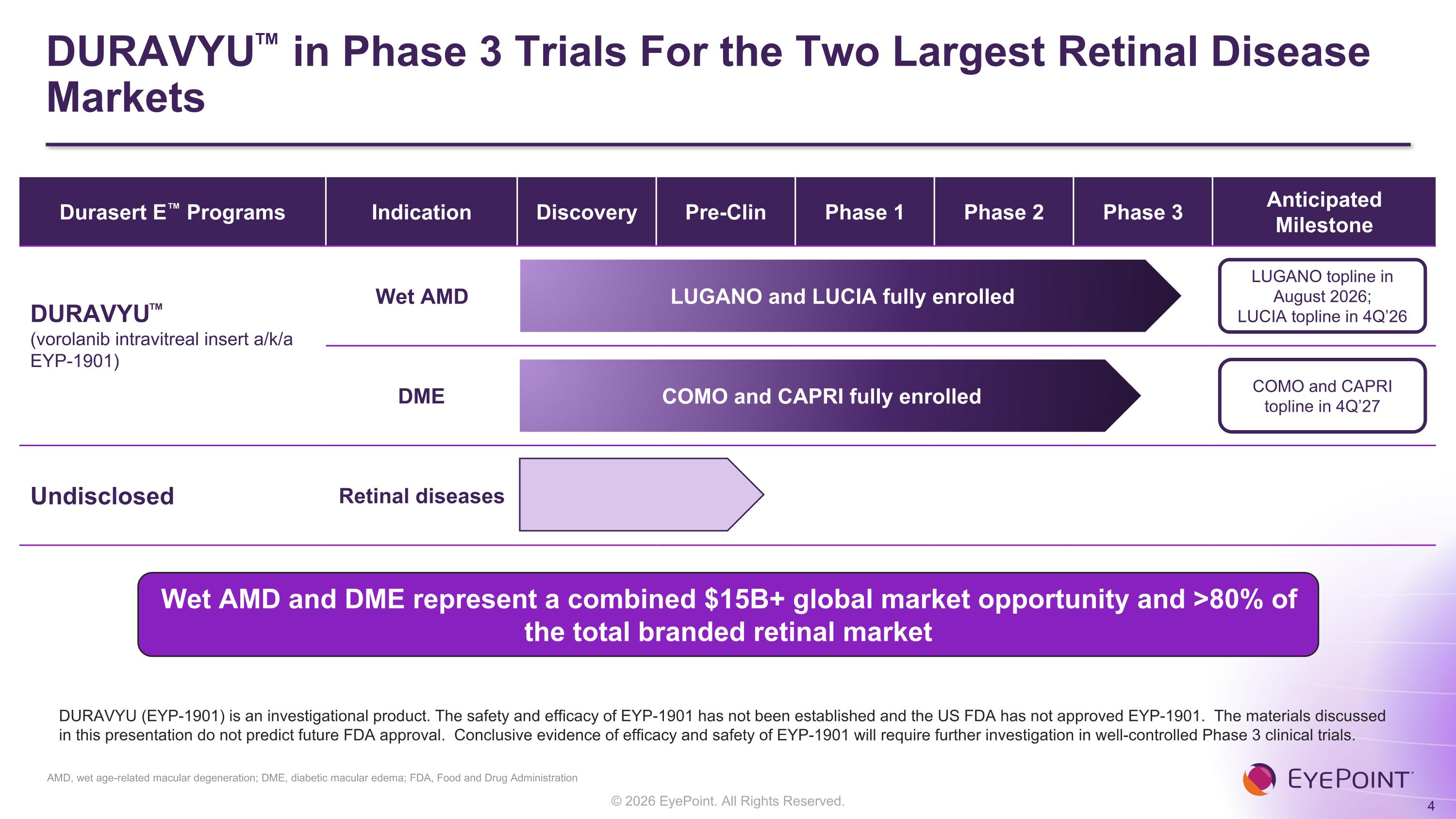
DURAVYU™ in Phase 3 Trials For the Two Largest Retinal Disease Markets AMD, wet age-related macular degeneration; DME, diabetic macular edema; FDA, Food and Drug Administration Durasert E™ Programs Indication Discovery Pre-Clin Phase 1 Phase 2 Phase 3 Anticipated Milestone DURAVYU™ (vorolanib intravitreal insert a/k/a EYP-1901) Wet AMD DME Undisclosed Retinal diseases LUGANO topline in August 2026; LUCIA topline in 4Q’26 COMO and CAPRI topline in 4Q’27 LUGANO and LUCIA fully enrolled COMO and CAPRI fully enrolled DURAVYU (EYP-1901) is an investigational product. The safety and efficacy of EYP-1901 has not been established and the US FDA has not approved EYP-1901. The materials discussed in this presentation do not predict future FDA approval. Conclusive evidence of efficacy and safety of EYP-1901 will require further investigation in well-controlled Phase 3 clinical trials. Wet AMD and DME represent a combined $15B+ global market opportunity and >80% of the total branded retinal market
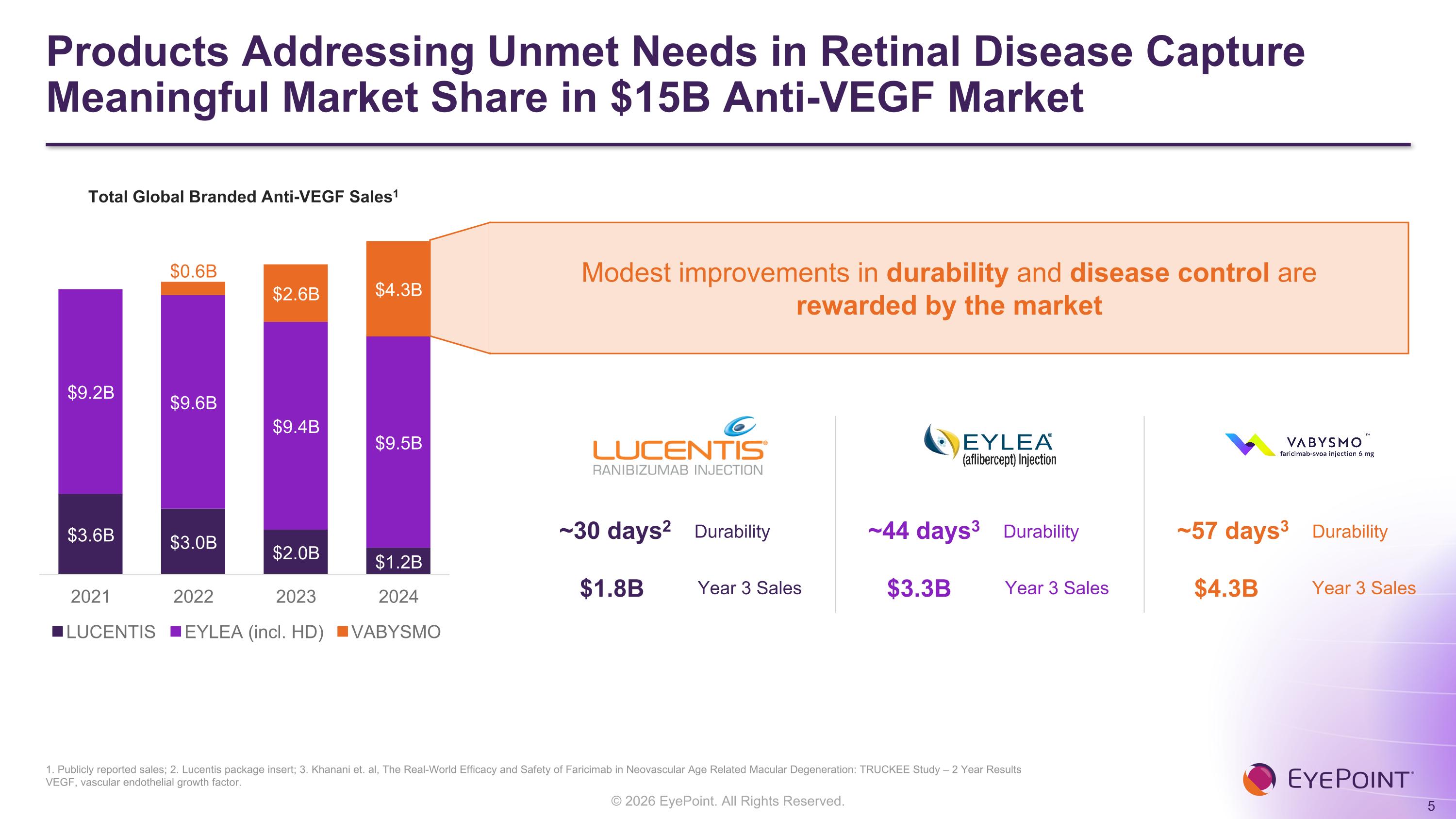
Products Addressing Unmet Needs in Retinal Disease Capture Meaningful Market Share in $15B Anti-VEGF Market 1. Publicly reported sales; 2. Lucentis package insert; 3. Khanani et. al, The Real-World Efficacy and Safety of Faricimab in Neovascular Age Related Macular Degeneration: TRUCKEE Study – 2 Year Results VEGF, vascular endothelial growth factor. Modest improvements in durability and disease control are rewarded by the market Durability ~30 days2 Year 3 Sales $1.8B Durability ~44 days3 Year 3 Sales $3.3B Durability ~57 days3 Year 3 Sales $4.3B Total Global Branded Anti-VEGF Sales1
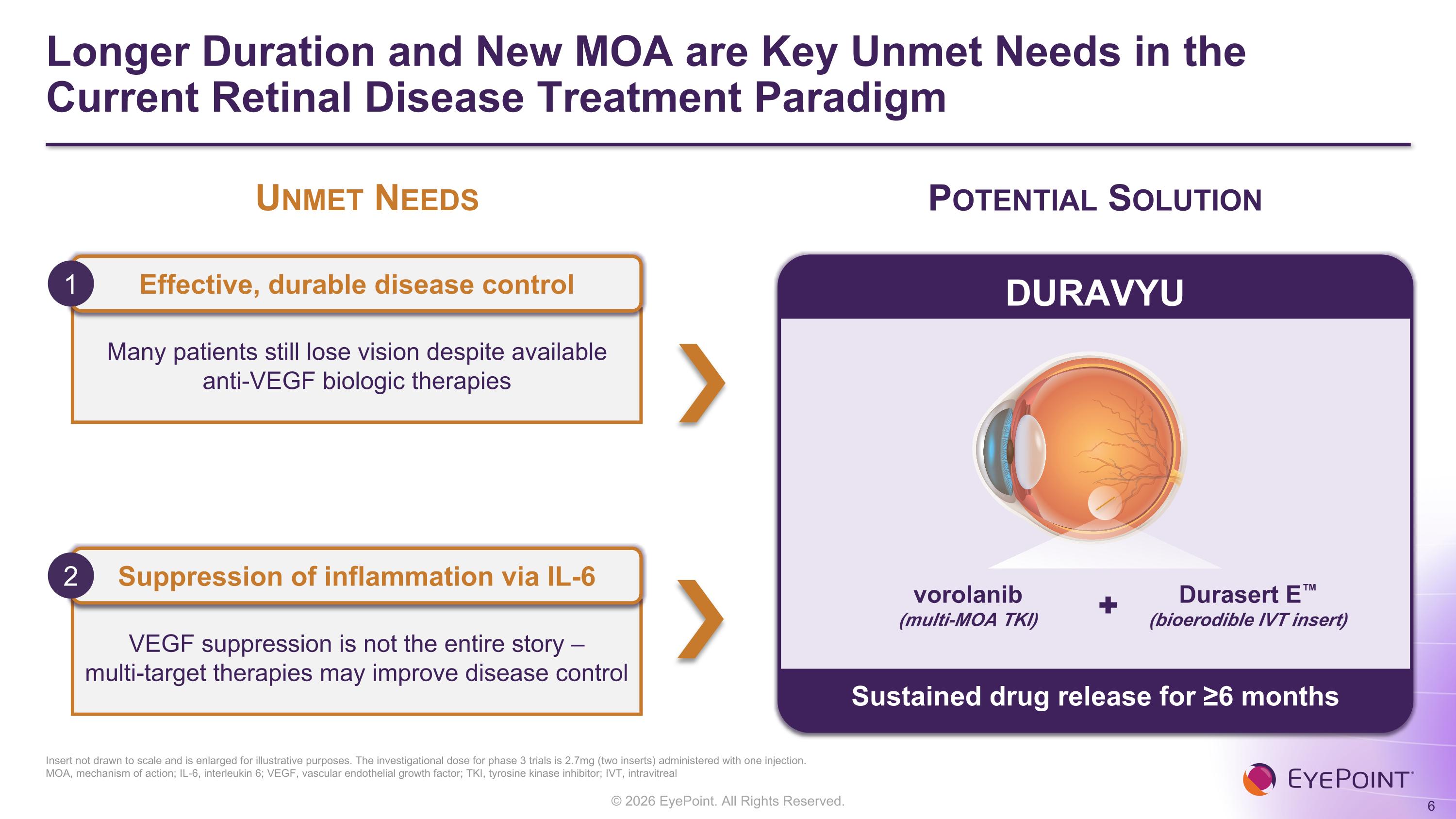
Longer Duration and New MOA are Key Unmet Needs in the Current Retinal Disease Treatment Paradigm Insert not drawn to scale and is enlarged for illustrative purposes. The investigational dose for phase 3 trials is 2.7mg (two inserts) administered with one injection. MOA, mechanism of action; IL-6, interleukin 6; VEGF, vascular endothelial growth factor; TKI, tyrosine kinase inhibitor; IVT, intravitreal Potential Solution vorolanib (multi-MOA TKI) DURAVYU Many patients still lose vision despite available anti-VEGF biologic therapies Unmet Needs VEGF suppression is not the entire story – multi-target therapies may improve disease control Effective, durable disease control 1 Suppression of inflammation via IL-6 2 Durasert E™ (bioerodible IVT insert) Sustained drug release for ≥6 months
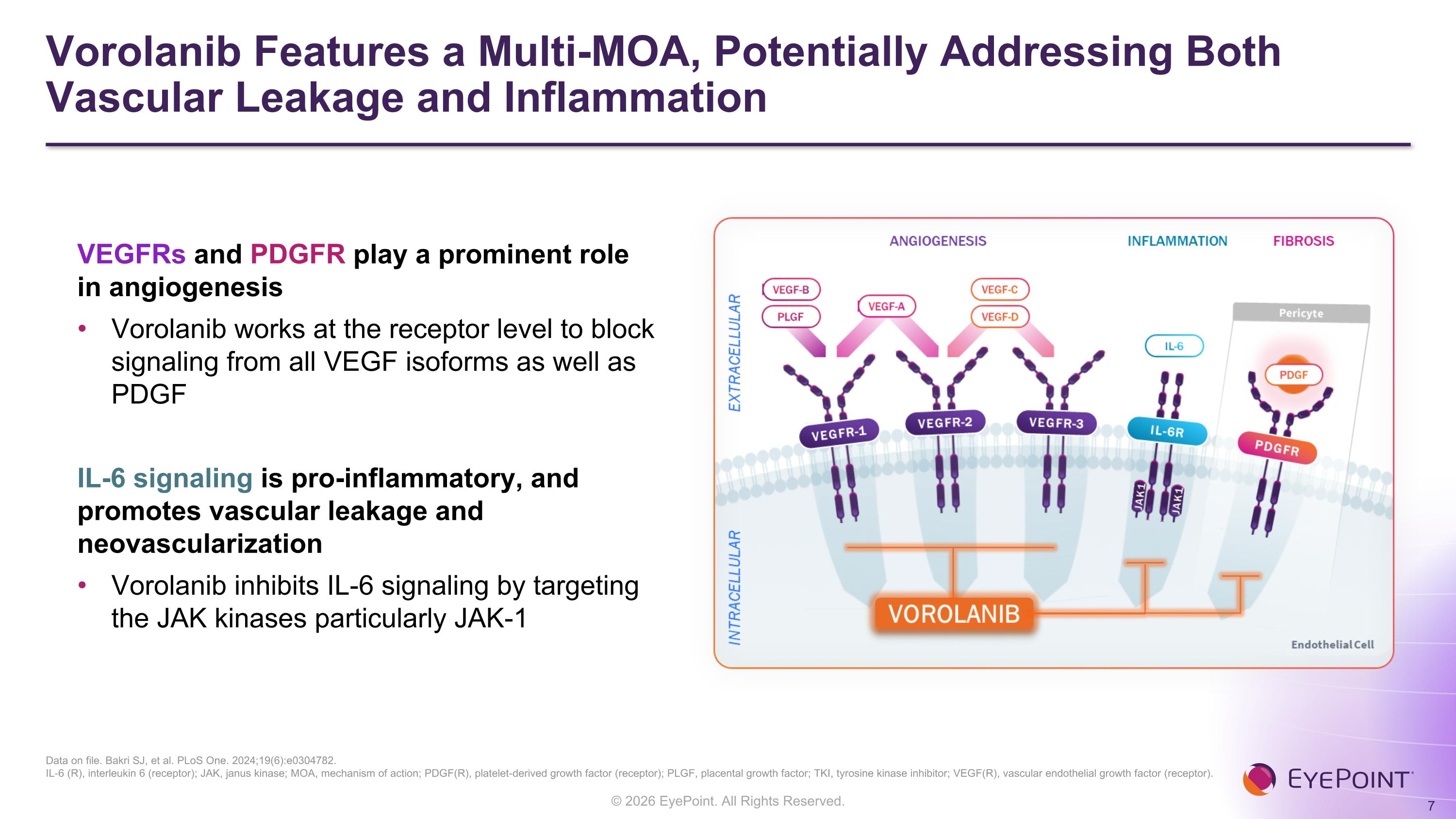
Vorolanib Features a Multi-MOA, Potentially Addressing Both Vascular Leakage and Inflammation Data on file. Bakri SJ, et al. PLoS One. 2024;19(6):e0304782. IL-6 (R), interleukin 6 (receptor); JAK, janus kinase; MOA, mechanism of action; PDGF(R), platelet-derived growth factor (receptor); PLGF, placental growth factor; TKI, tyrosine kinase inhibitor; VEGF(R), vascular endothelial growth factor (receptor). VEGFRs and PDGFR play a prominent role in angiogenesis Vorolanib works at the receptor level to block signaling from all VEGF isoforms as well as PDGF IL-6 signaling is pro-inflammatory, and promotes vascular leakage and neovascularization Vorolanib inhibits IL-6 signaling by targeting the JAK kinases particularly JAK-1
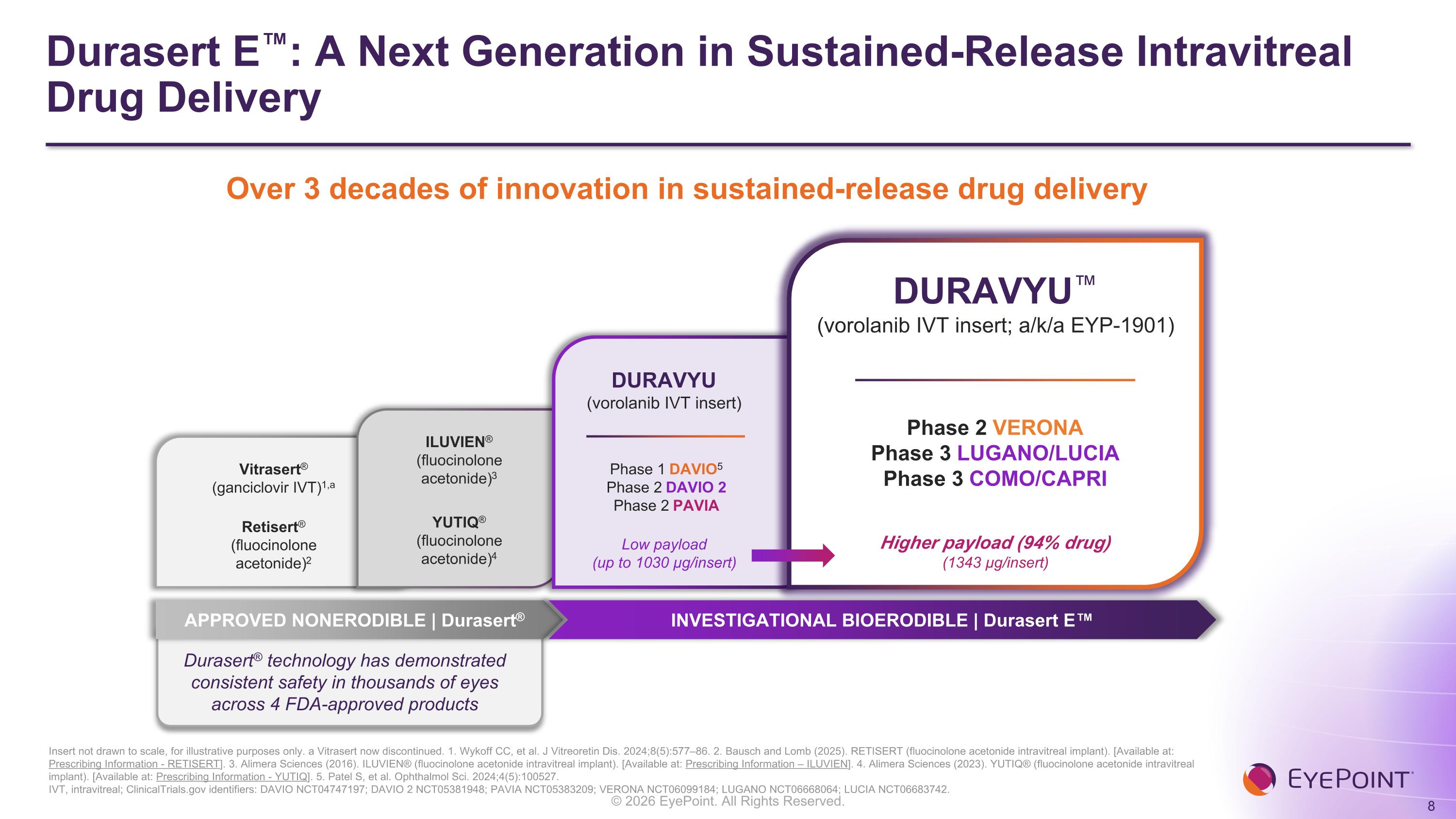
Durasert E™: A Next Generation in Sustained-Release Intravitreal Drug Delivery Vitrasert® (ganciclovir IVT)1,a Retisert® (fluocinolone acetonide)2 ILUVIEN® (fluocinolone acetonide)3 YUTIQ® (fluocinolone acetonide)4 DURAVYU™ (vorolanib IVT insert; a/k/a EYP-1901) APPROVED NONERODIBLE | Durasert® INVESTIGATIONAL BIOERODIBLE | Durasert E™ Durasert® technology has demonstrated consistent safety in thousands of eyes across 4 FDA-approved products DURAVYU (vorolanib IVT insert) Low payload (up to 1030 µg/insert) Higher payload (94% drug) (1343 µg/insert) Phase 1 DAVIO5 Phase 2 DAVIO 2 Phase 2 PAVIA Insert not drawn to scale, for illustrative purposes only. a Vitrasert now discontinued. 1. Wykoff CC, et al. J Vitreoretin Dis. 2024;8(5):577–86. 2. Bausch and Lomb (2025). RETISERT (fluocinolone acetonide intravitreal implant). [Available at: Prescribing Information - RETISERT]. 3. Alimera Sciences (2016). ILUVIEN® (fluocinolone acetonide intravitreal implant). [Available at: Prescribing Information – ILUVIEN]. 4. Alimera Sciences (2023). YUTIQ® (fluocinolone acetonide intravitreal implant). [Available at: Prescribing Information - YUTIQ]. 5. Patel S, et al. Ophthalmol Sci. 2024;4(5):100527. IVT, intravitreal; ClinicalTrials.gov identifiers: DAVIO NCT04747197; DAVIO 2 NCT05381948; PAVIA NCT05383209; VERONA NCT06099184; LUGANO NCT06668064; LUCIA NCT06683742. Phase 2 VERONA Phase 3 LUGANO/LUCIA Phase 3 COMO/CAPRI Over 3 decades of innovation in sustained-release drug delivery
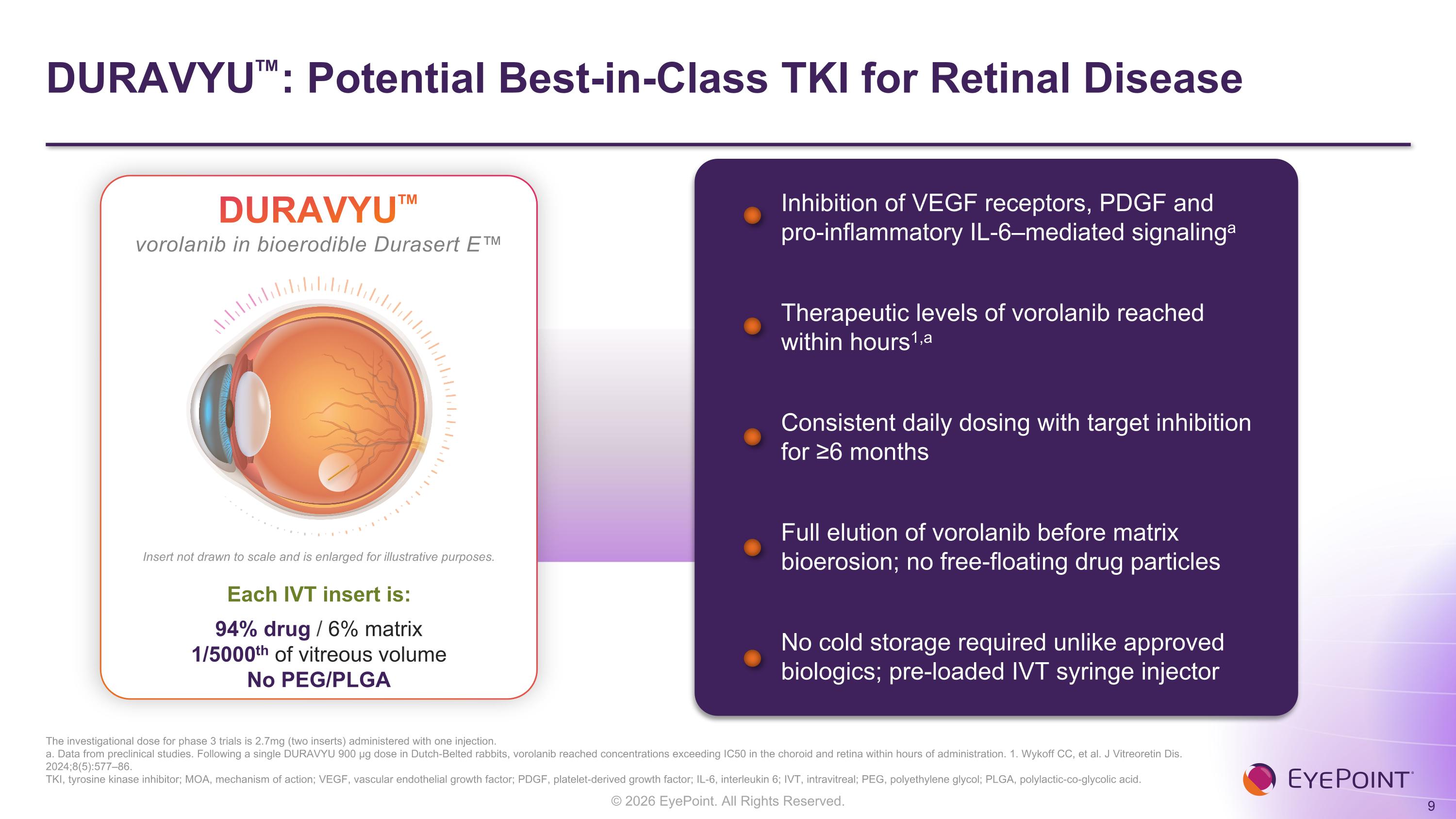
DURAVYU™: Potential Best-in-Class TKI for Retinal Disease The investigational dose for phase 3 trials is 2.7mg (two inserts) administered with one injection. a. Data from preclinical studies. Following a single DURAVYU 900 µg dose in Dutch-Belted rabbits, vorolanib reached concentrations exceeding IC50 in the choroid and retina within hours of administration. 1. Wykoff CC, et al. J Vitreoretin Dis. 2024;8(5):577–86. TKI, tyrosine kinase inhibitor; MOA, mechanism of action; VEGF, vascular endothelial growth factor; PDGF, platelet-derived growth factor; IL-6, interleukin 6; IVT, intravitreal; PEG, polyethylene glycol; PLGA, polylactic-co-glycolic acid. Therapeutic levels of vorolanib reached within hours1,a Consistent daily dosing with target inhibition for ≥6 months Full elution of vorolanib before matrix bioerosion; no free-floating drug particles No cold storage required unlike approved biologics; pre-loaded IVT syringe injector Inhibition of VEGF receptors, PDGF and pro-inflammatory IL-6–mediated signalinga DURAVYU™ vorolanib in bioerodible Durasert E™ Each IVT insert is: 94% drug / 6% matrix 1/5000th of vitreous volume No PEG/PLGA Insert not drawn to scale and is enlarged for illustrative purposes.
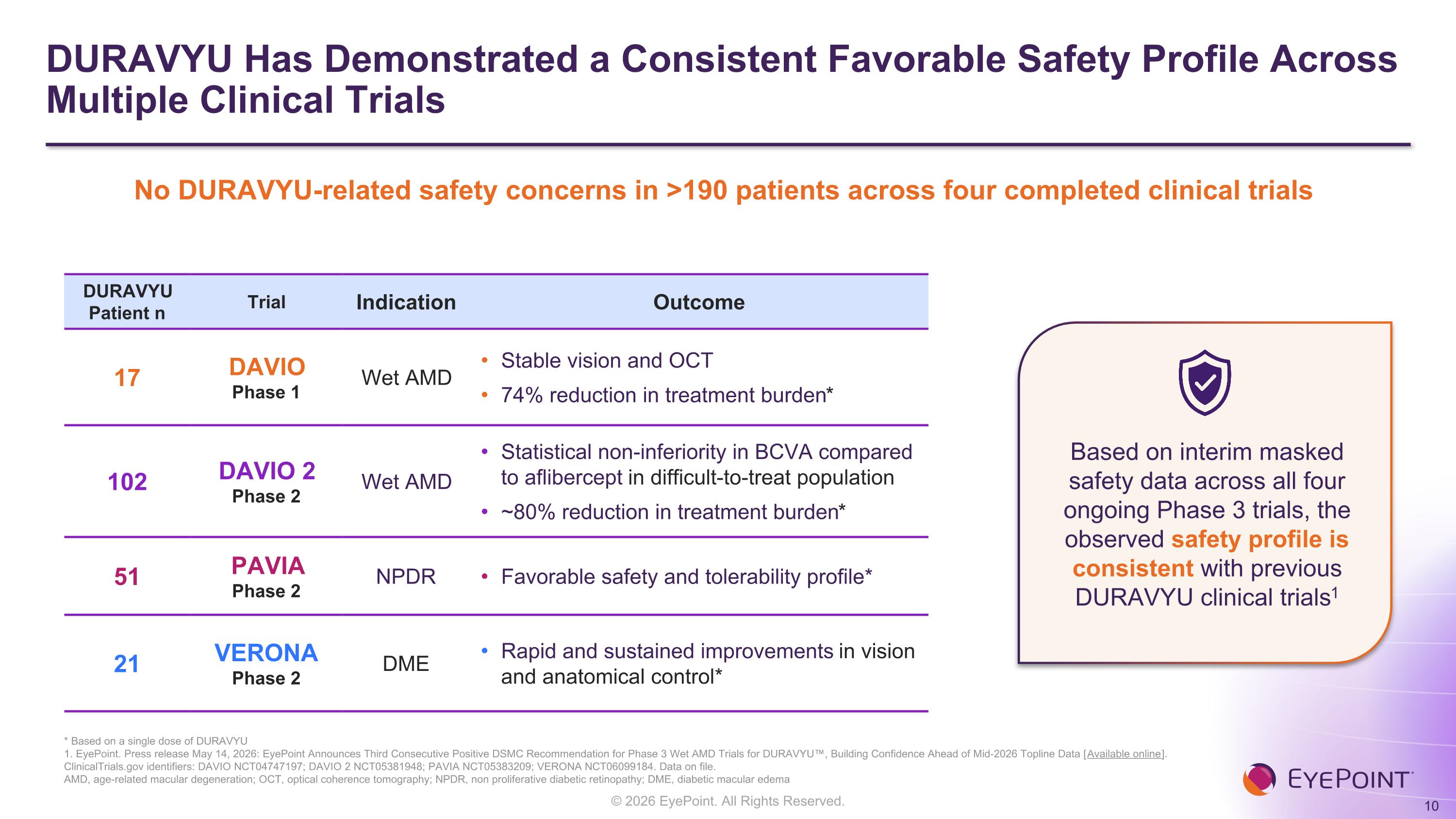
DURAVYU Has Demonstrated a Consistent Favorable Safety Profile Across Multiple Clinical Trials * Based on a single dose of DURAVYU 1. EyePoint. Press release May 14, 2026: EyePoint Announces Third Consecutive Positive DSMC Recommendation for Phase 3 Wet AMD Trials for DURAVYU™, Building Confidence Ahead of Mid-2026 Topline Data [Available online]. ClinicalTrials.gov identifiers: DAVIO NCT04747197; DAVIO 2 NCT05381948; PAVIA NCT05383209; VERONA NCT06099184. Data on file. AMD, age-related macular degeneration; OCT, optical coherence tomography; NPDR, non proliferative diabetic retinopathy; DME, diabetic macular edema No DURAVYU-related safety concerns in >190 patients across four completed clinical trials DURAVYU Patient n Trial Indication Outcome 17 DAVIO Phase 1 Wet AMD Stable vision and OCT 74% reduction in treatment burden* 102 DAVIO 2 Phase 2 Wet AMD Statistical non-inferiority in BCVA compared to aflibercept in difficult-to-treat population ~80% reduction in treatment burden* 51 PAVIA Phase 2 NPDR Favorable safety and tolerability profile* 21 VERONA Phase 2 DME Rapid and sustained improvements in vision and anatomical control* Based on interim masked safety data across all four ongoing Phase 3 trials, the observed safety profile is consistent with previous DURAVYU clinical trials1

DURAVYU for Wet AMD Phase 3 program designed to transform the treatment paradigm through durable disease control and a new multi-moa
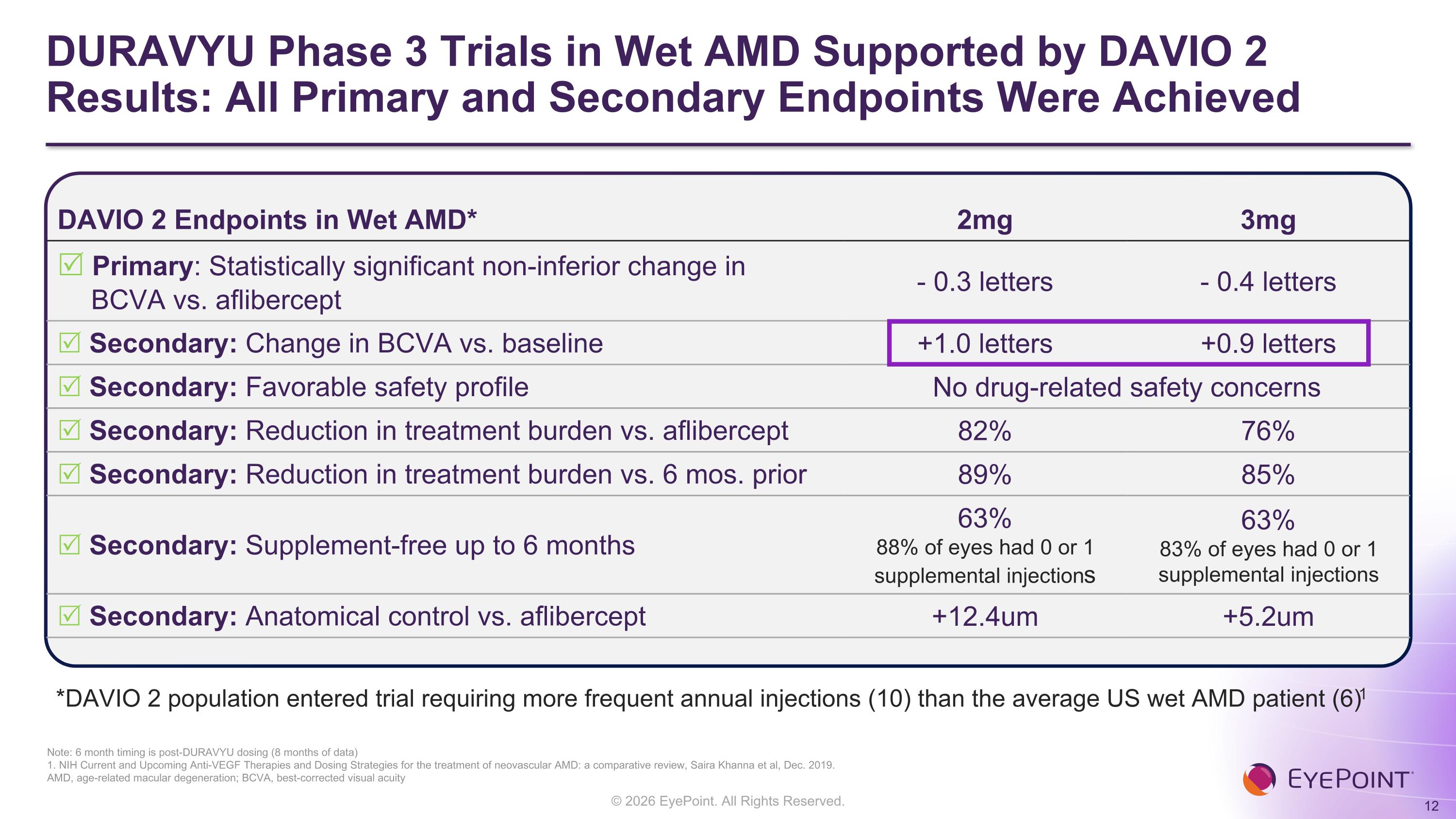
DURAVYU Phase 3 Trials in Wet AMD Supported by DAVIO 2 Results: All Primary and Secondary Endpoints Were Achieved DAVIO 2 Endpoints in Wet AMD* 2mg 3mg R Primary: Statistically significant non-inferior change in BCVA vs. aflibercept - 0.3 letters - 0.4 letters R Secondary: Change in BCVA vs. baseline +1.0 letters +0.9 letters R Secondary: Favorable safety profile No drug-related safety concerns R Secondary: Reduction in treatment burden vs. aflibercept 82% 76% R Secondary: Reduction in treatment burden vs. 6 mos. prior 89% 85% R Secondary: Supplement-free up to 6 months 63% 88% of eyes had 0 or 1 supplemental injections 63% 83% of eyes had 0 or 1 supplemental injections R Secondary: Anatomical control vs. aflibercept +12.4um +5.2um Note: 6 month timing is post-DURAVYU dosing (8 months of data) 1. NIH Current and Upcoming Anti-VEGF Therapies and Dosing Strategies for the treatment of neovascular AMD: a comparative review, Saira Khanna et al, Dec. 2019. AMD, age-related macular degeneration; BCVA, best-corrected visual acuity *DAVIO 2 population entered trial requiring more frequent annual injections (10) than the average US wet AMD patient (6)1
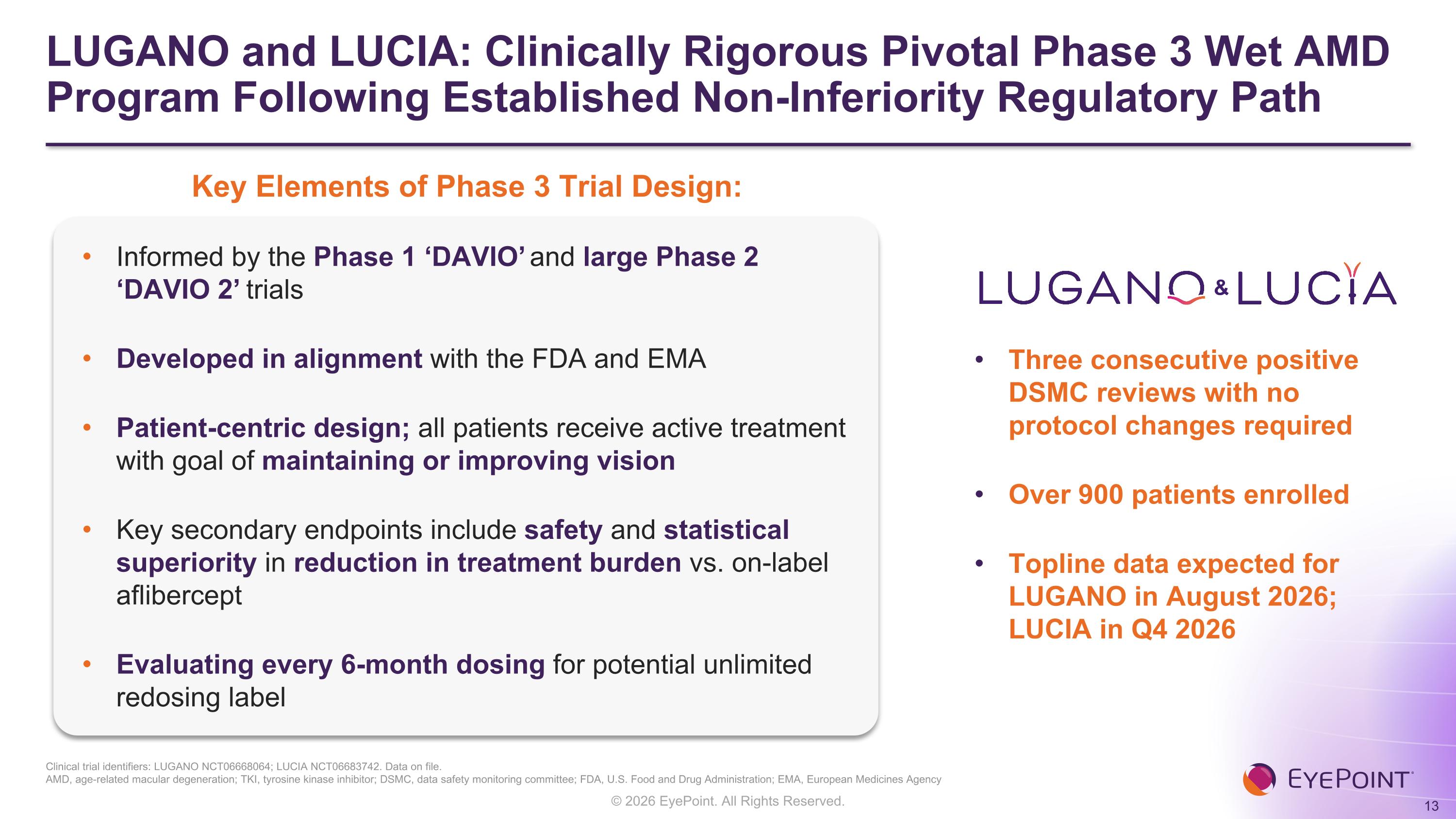
LUGANO and LUCIA: Clinically Rigorous Pivotal Phase 3 Wet AMD Program Following Established Non-Inferiority Regulatory Path & Three consecutive positive DSMC reviews with no protocol changes required Over 900 patients enrolled Topline data expected for LUGANO in August 2026; LUCIA in Q4 2026 Key Elements of Phase 3 Trial Design: Clinical trial identifiers: LUGANO NCT06668064; LUCIA NCT06683742. Data on file. AMD, age-related macular degeneration; TKI, tyrosine kinase inhibitor; DSMC, data safety monitoring committee; FDA, U.S. Food and Drug Administration; EMA, European Medicines Agency Informed by the Phase 1 ‘DAVIO’ and large Phase 2 ‘DAVIO 2’ trials Developed in alignment with the FDA and EMA Patient-centric design; all patients receive active treatment with goal of maintaining or improving vision Key secondary endpoints include safety and statistical superiority in reduction in treatment burden vs. on-label aflibercept Evaluating every 6-month dosing for potential unlimited redosing label
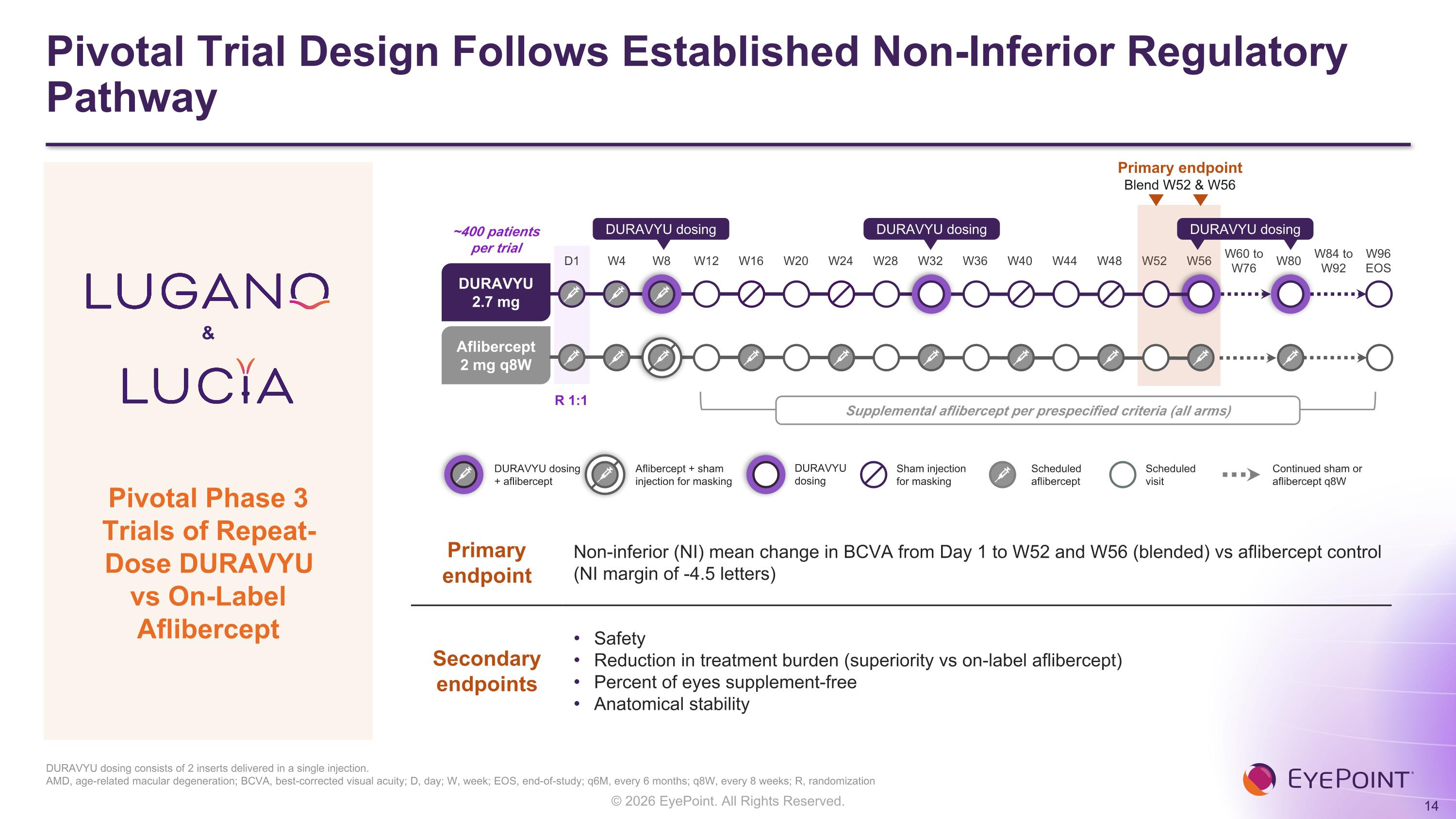
Pivotal Trial Design Follows Established Non-Inferior Regulatory Pathway DURAVYU dosing consists of 2 inserts delivered in a single injection. AMD, age-related macular degeneration; BCVA, best-corrected visual acuity; D, day; W, week; EOS, end-of-study; q6M, every 6 months; q8W, every 8 weeks; R, randomization D1 W4 W8 W12 W16 W20 W24 W28 W32 W36 W40 W44 W48 W52 W56 W60 to W76 W80 W84 to W92 W96 EOS Primary endpoint Blend W52 & W56 DURAVYU 2.7 mg Aflibercept 2 mg q8W DURAVYU dosing DURAVYU dosing DURAVYU dosing ~400 patients per trial R 1:1 Supplemental aflibercept per prespecified criteria (all arms) Scheduled aflibercept Scheduled visit Sham injection for masking Continued sham or aflibercept q8W DURAVYU dosing + aflibercept Aflibercept + sham injection for masking DURAVYU dosing Primary endpoint Non-inferior (NI) mean change in BCVA from Day 1 to W52 and W56 (blended) vs aflibercept control (NI margin of -4.5 letters) Secondary endpoints Safety Reduction in treatment burden (superiority vs on-label aflibercept) Percent of eyes supplement-free Anatomical stability & Pivotal Phase 3 Trials of Repeat-Dose DURAVYU vs On-Label Aflibercept
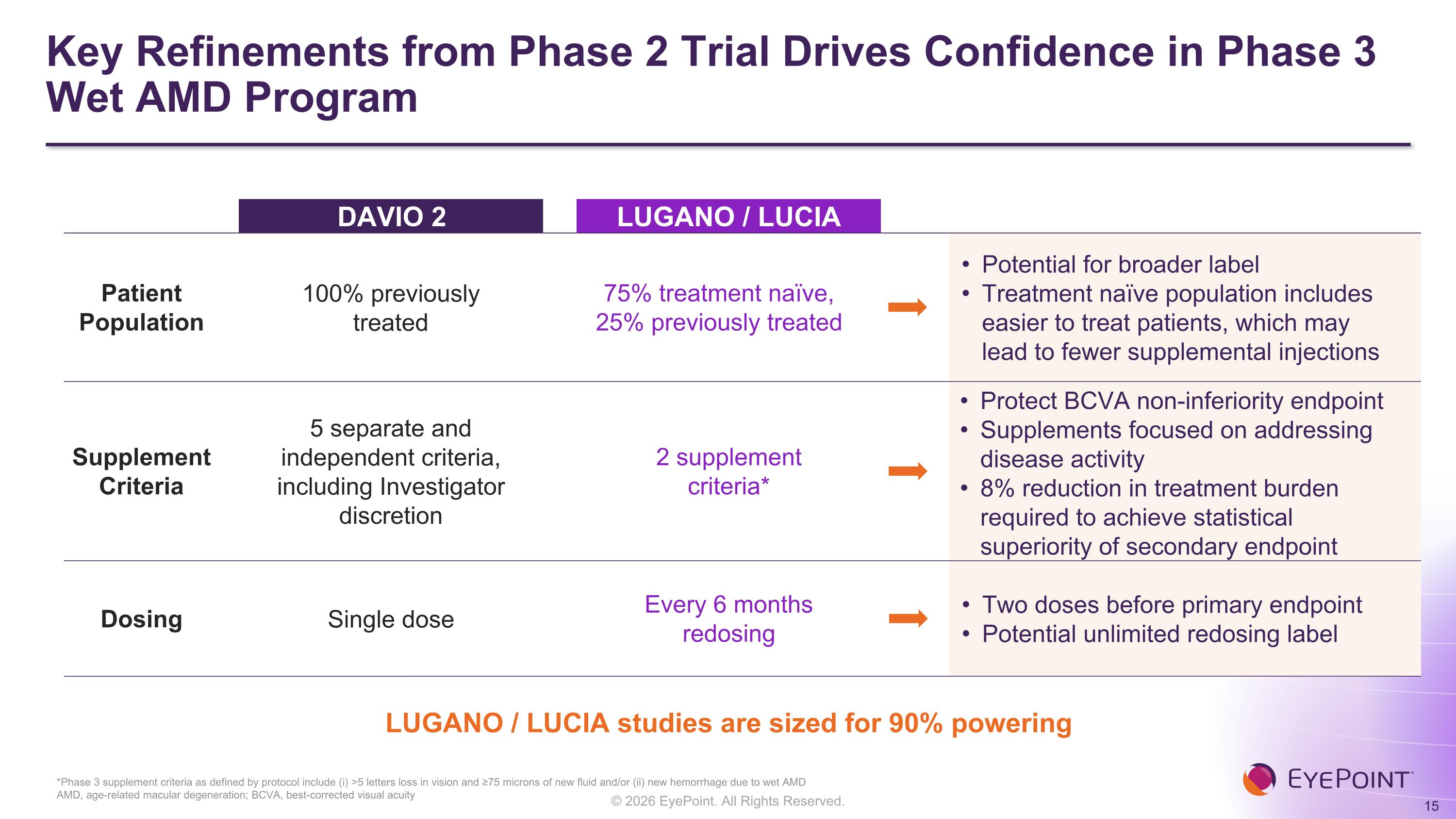
Key Refinements from Phase 2 Trial Drives Confidence in Phase 3 Wet AMD Program DAVIO 2 LUGANO / LUCIA Patient Population 100% previously treated 75% treatment naïve, 25% previously treated Supplement Criteria 5 separate and independent criteria, including Investigator discretion 2 supplement criteria* Dosing Single dose Every 6 months redosing Potential for broader label Treatment naïve population includes easier to treat patients, which may lead to fewer supplemental injections Protect BCVA non-inferiority endpoint Supplements focused on addressing disease activity 8% reduction in treatment burden required to achieve statistical superiority of secondary endpoint Two doses before primary endpoint Potential unlimited redosing label *Phase 3 supplement criteria as defined by protocol include (i) >5 letters loss in vision and ≥75 microns of new fluid and/or (ii) new hemorrhage due to wet AMD AMD, age-related macular degeneration; BCVA, best-corrected visual acuity LUGANO / LUCIA studies are sized for 90% powering
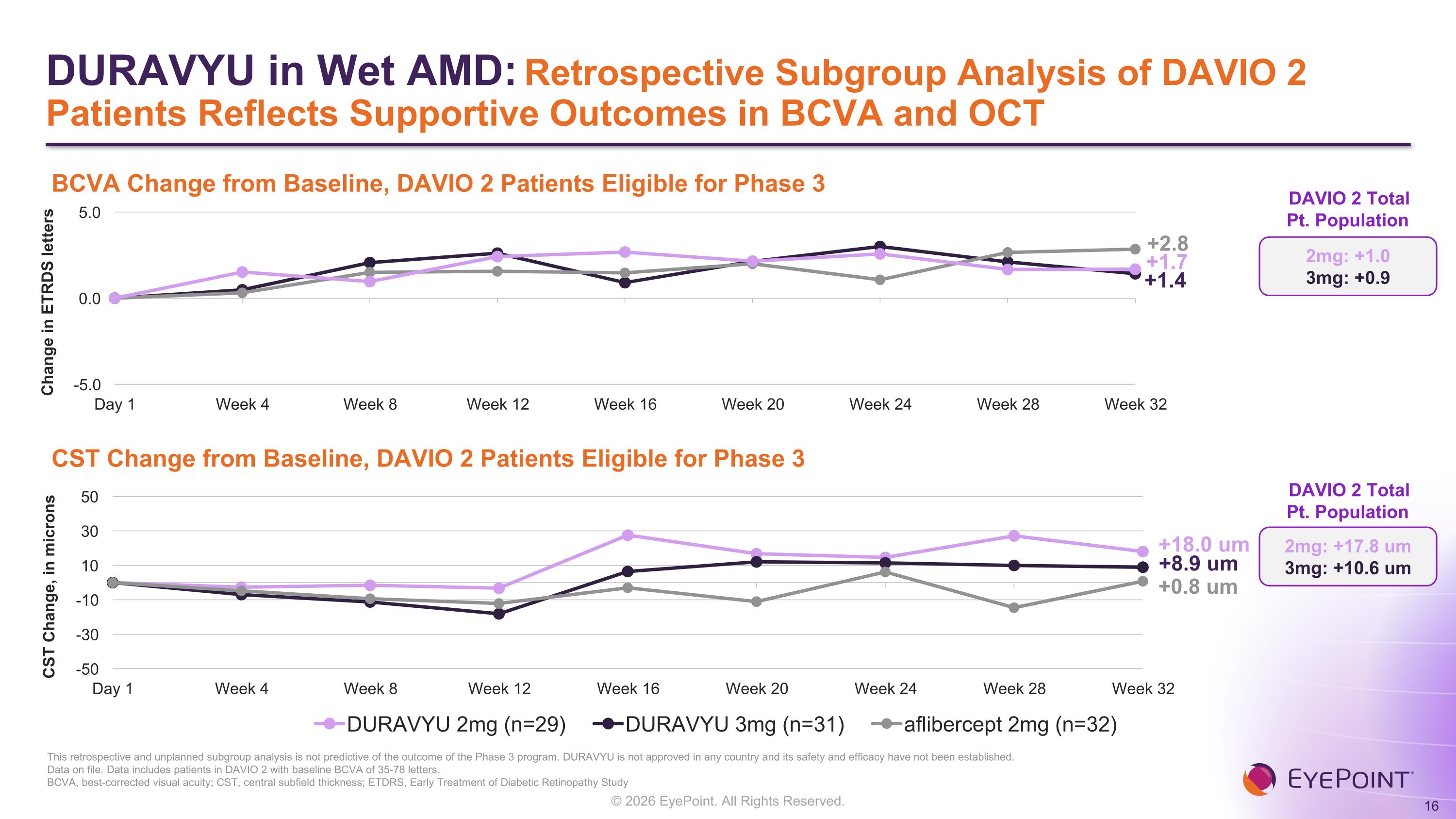
DURAVYU in Wet AMD: Retrospective Subgroup Analysis of DAVIO 2 Patients Reflects Supportive Outcomes in BCVA and OCT This retrospective and unplanned subgroup analysis is not predictive of the outcome of the Phase 3 program. DURAVYU is not approved in any country and its safety and efficacy have not been established. Data on file. Data includes patients in DAVIO 2 with baseline BCVA of 35-78 letters. BCVA, best-corrected visual acuity; CST, central subfield thickness; ETDRS, Early Treatment of Diabetic Retinopathy Study +1.4 +2.8 +8.9 um +0.8 um BCVA Change from Baseline, DAVIO 2 Patients Eligible for Phase 3 CST Change from Baseline, DAVIO 2 Patients Eligible for Phase 3 +1.7 +18.0 um DAVIO 2 Total Pt. Population DAVIO 2 Total Pt. Population 2mg: +17.8 um 3mg: +10.6 um 2mg: +1.0 3mg: +0.9
DURAVYU for DME Phase 3 program underway in second largest retinal disease market
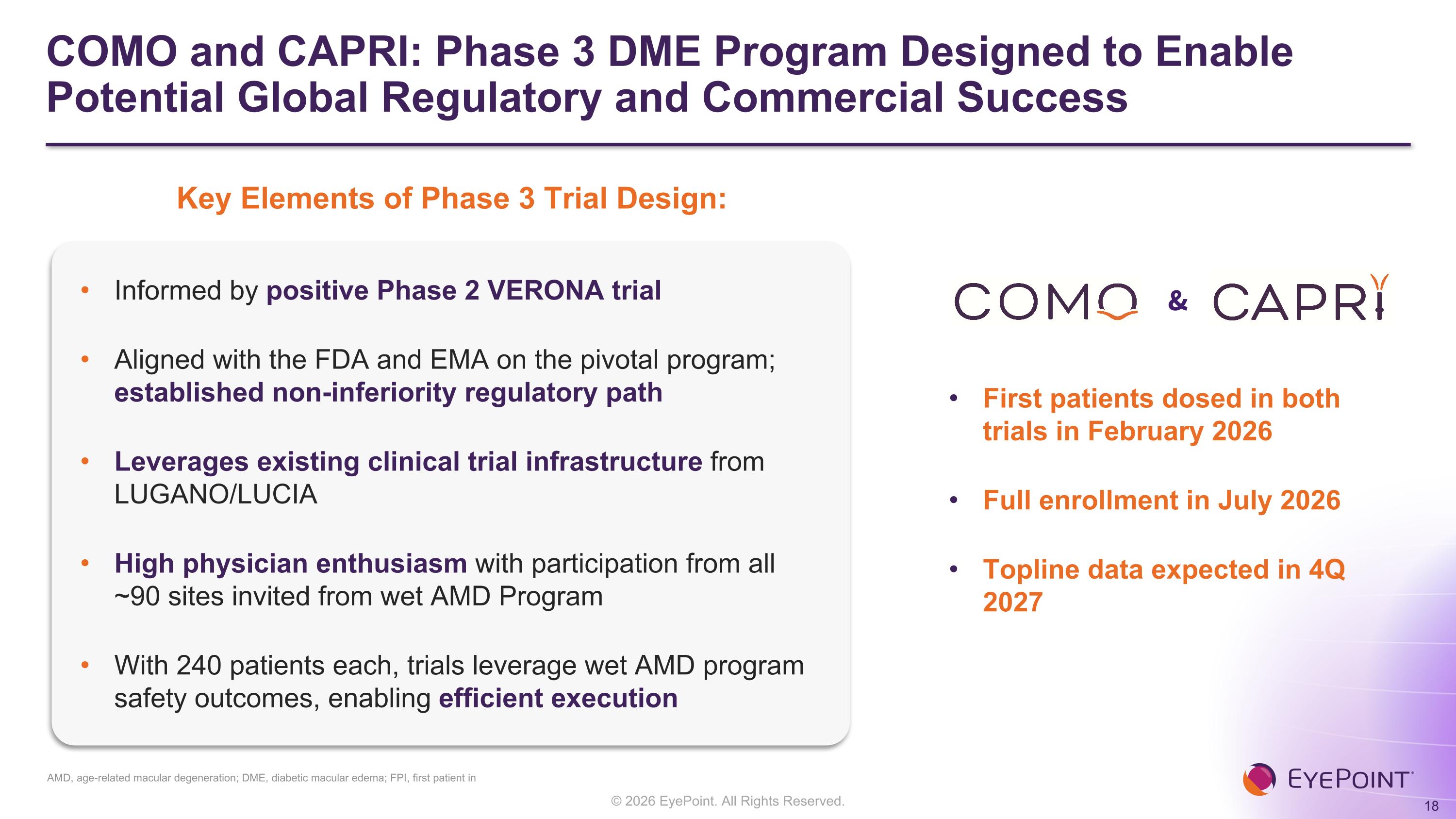
COMO and CAPRI: Phase 3 DME Program Designed to Enable Potential Global Regulatory and Commercial Success First patients dosed in both trials in February 2026 Full enrollment in July 2026 Topline data expected in 4Q 2027 Key Elements of Phase 3 Trial Design: Informed by positive Phase 2 VERONA trial Aligned with the FDA and EMA on the pivotal program; established non-inferiority regulatory path Leverages existing clinical trial infrastructure from LUGANO/LUCIA High physician enthusiasm with participation from all ~90 sites invited from wet AMD Program With 240 patients each, trials leverage wet AMD program safety outcomes, enabling efficient execution & AMD, age-related macular degeneration; DME, diabetic macular edema; FPI, first patient in
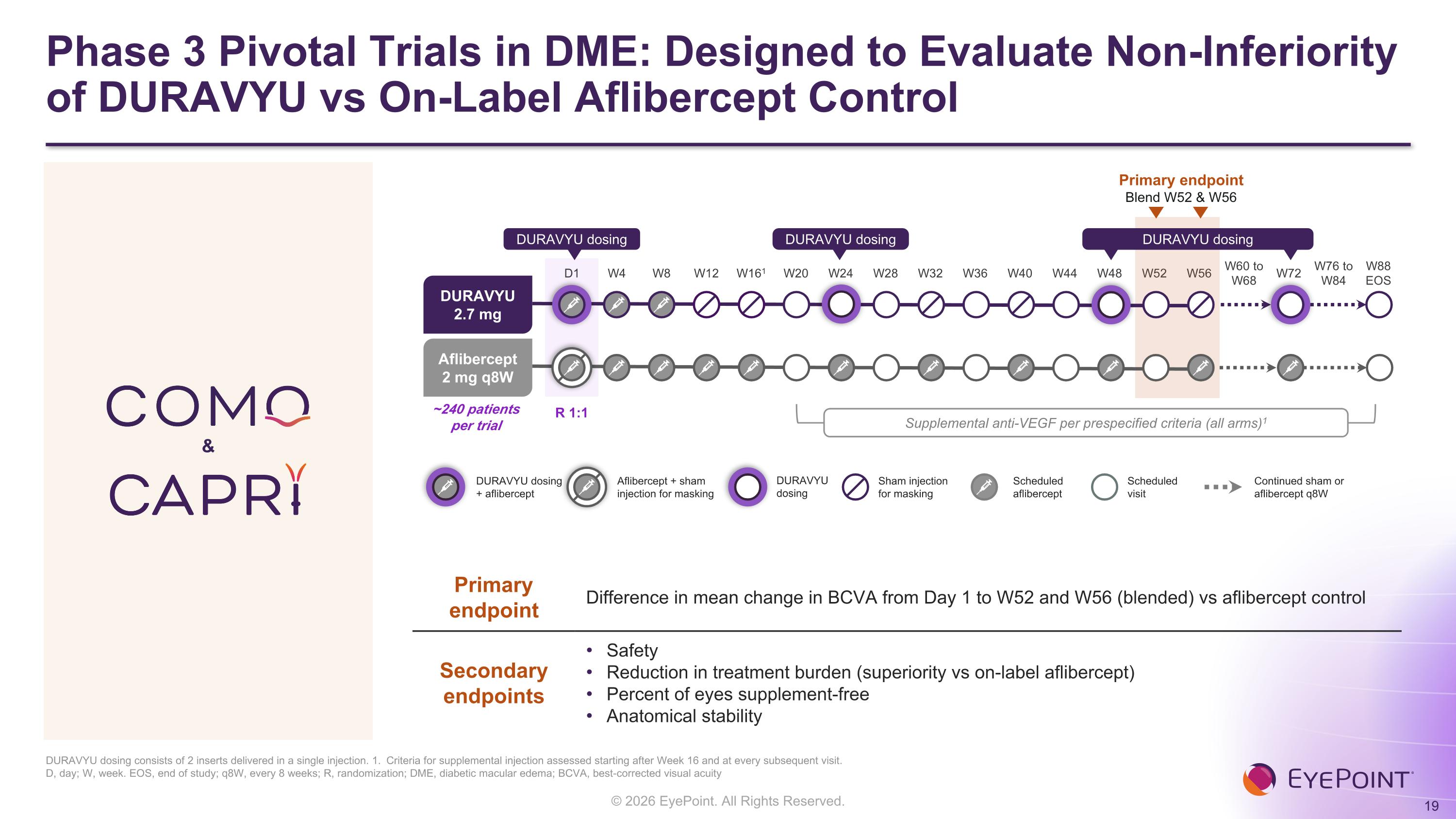
Phase 3 Pivotal Trials in DME: Designed to Evaluate Non-Inferiority of DURAVYU vs On-Label Aflibercept Control D1 W4 W8 W12 W161 W20 W24 W28 W32 W36 W40 W44 W48 W52 W56 W60 to W68 W72 W76 to W84 W88 EOS Primary endpoint Blend W52 & W56 DURAVYU 2.7 mg Aflibercept 2 mg q8W DURAVYU dosing DURAVYU dosing DURAVYU dosing ~240 patients per trial R 1:1 Supplemental anti-VEGF per prespecified criteria (all arms)1 Scheduled aflibercept Scheduled visit Sham injection for masking Continued sham or aflibercept q8W DURAVYU dosing + aflibercept Aflibercept + sham injection for masking DURAVYU dosing Primary endpoint Difference in mean change in BCVA from Day 1 to W52 and W56 (blended) vs aflibercept control Secondary endpoints Safety Reduction in treatment burden (superiority vs on-label aflibercept) Percent of eyes supplement-free Anatomical stability DURAVYU dosing consists of 2 inserts delivered in a single injection. 1. Criteria for supplemental injection assessed starting after Week 16 and at every subsequent visit. D, day; W, week. EOS, end of study; q8W, every 8 weeks; R, randomization; DME, diabetic macular edema; BCVA, best-corrected visual acuity &
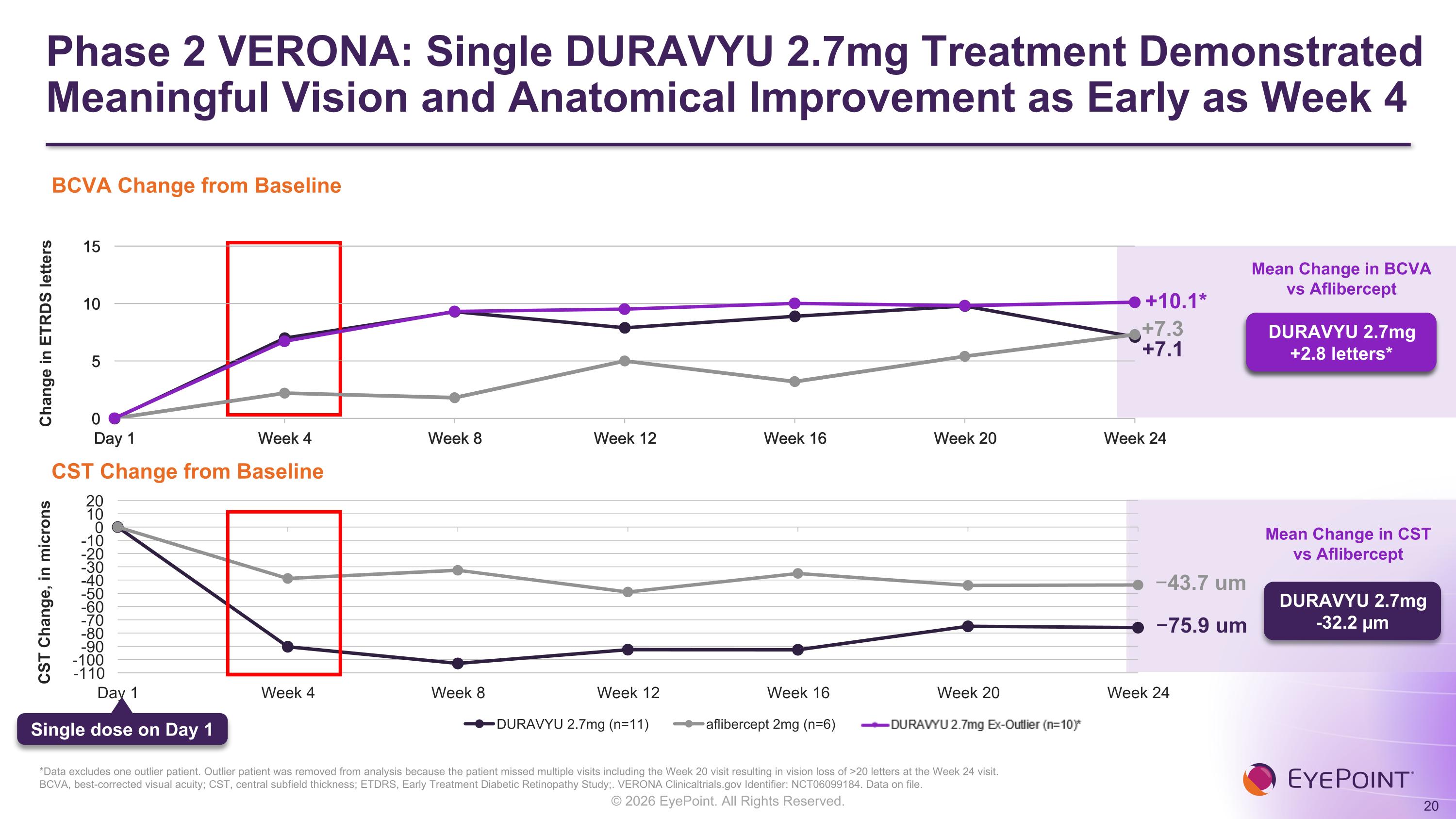
Phase 2 VERONA: Single DURAVYU 2.7mg Treatment Demonstrated Meaningful Vision and Anatomical Improvement as Early as Week 4 BCVA, best-corrected visual acuity; CST, central subfield thickness; ETDRS, Early Treatment Diabetic Retinopathy Study;. VERONA Clinicaltrials.gov Identifier: NCT06099184. Data on file. Mean Change in BCVA vs Aflibercept +7.1 +7.3 −75.9 um −43.7 um Mean Change in CST vs Aflibercept DURAVYU 2.7mg -32.2 µm Single dose on Day 1 BCVA Change from Baseline CST Change from Baseline DURAVYU 2.7mg -0.2 letters +10.1* DURAVYU 2.7mg +2.8 letters* *Data excludes one outlier patient. Outlier patient was removed from analysis because the patient missed multiple visits including the Week 20 visit resulting in vision loss of >20 letters at the Week 24 visit. Change in ETRDS letters
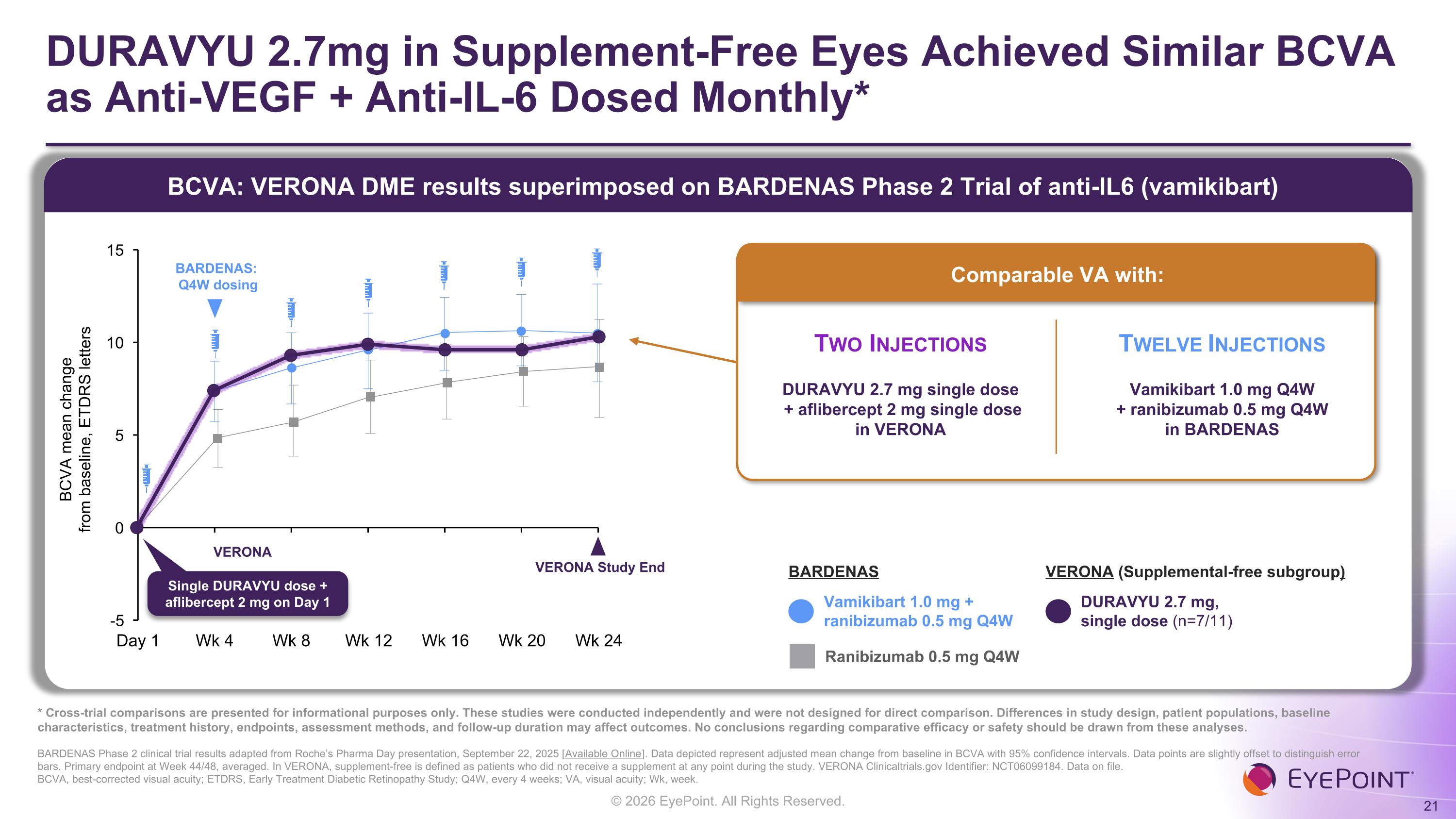
DURAVYU 2.7mg in Supplement-Free Eyes Achieved Similar BCVA as Anti-VEGF + Anti-IL-6 Dosed Monthly* BCVA: VERONA DME results superimposed on BARDENAS Phase 2 Trial of anti-IL6 (vamikibart) * Cross-trial comparisons are presented for informational purposes only. These studies were conducted independently and were not designed for direct comparison. Differences in study design, patient populations, baseline characteristics, treatment history, endpoints, assessment methods, and follow-up duration may affect outcomes. No conclusions regarding comparative efficacy or safety should be drawn from these analyses. BARDENAS Phase 2 clinical trial results adapted from Roche’s Pharma Day presentation, September 22, 2025 [Available Online]. Data depicted represent adjusted mean change from baseline in BCVA with 95% confidence intervals. Data points are slightly offset to distinguish error bars. Primary endpoint at Week 44/48, averaged. In VERONA, supplement-free is defined as patients who did not receive a supplement at any point during the study. VERONA Clinicaltrials.gov Identifier: NCT06099184. Data on file. BCVA, best-corrected visual acuity; ETDRS, Early Treatment Diabetic Retinopathy Study; Q4W, every 4 weeks; VA, visual acuity; Wk, week. Vamikibart 1.0 mg + ranibizumab 0.5 mg Q4W DURAVYU 2.7 mg, single dose (n=7/11) Ranibizumab 0.5 mg Q4W BARDENAS VERONA (Supplemental-free subgroup) VERONA Study End Comparable VA with: Two Injections DURAVYU 2.7 mg single dose + aflibercept 2 mg single dose in VERONA Twelve Injections Vamikibart 1.0 mg Q4W + ranibizumab 0.5 mg Q4W in BARDENAS BARDENAS: Q4W dosing VERONA Single DURAVYU dose + aflibercept 2 mg on Day 1 BCVA mean change from baseline, ETDRS letters
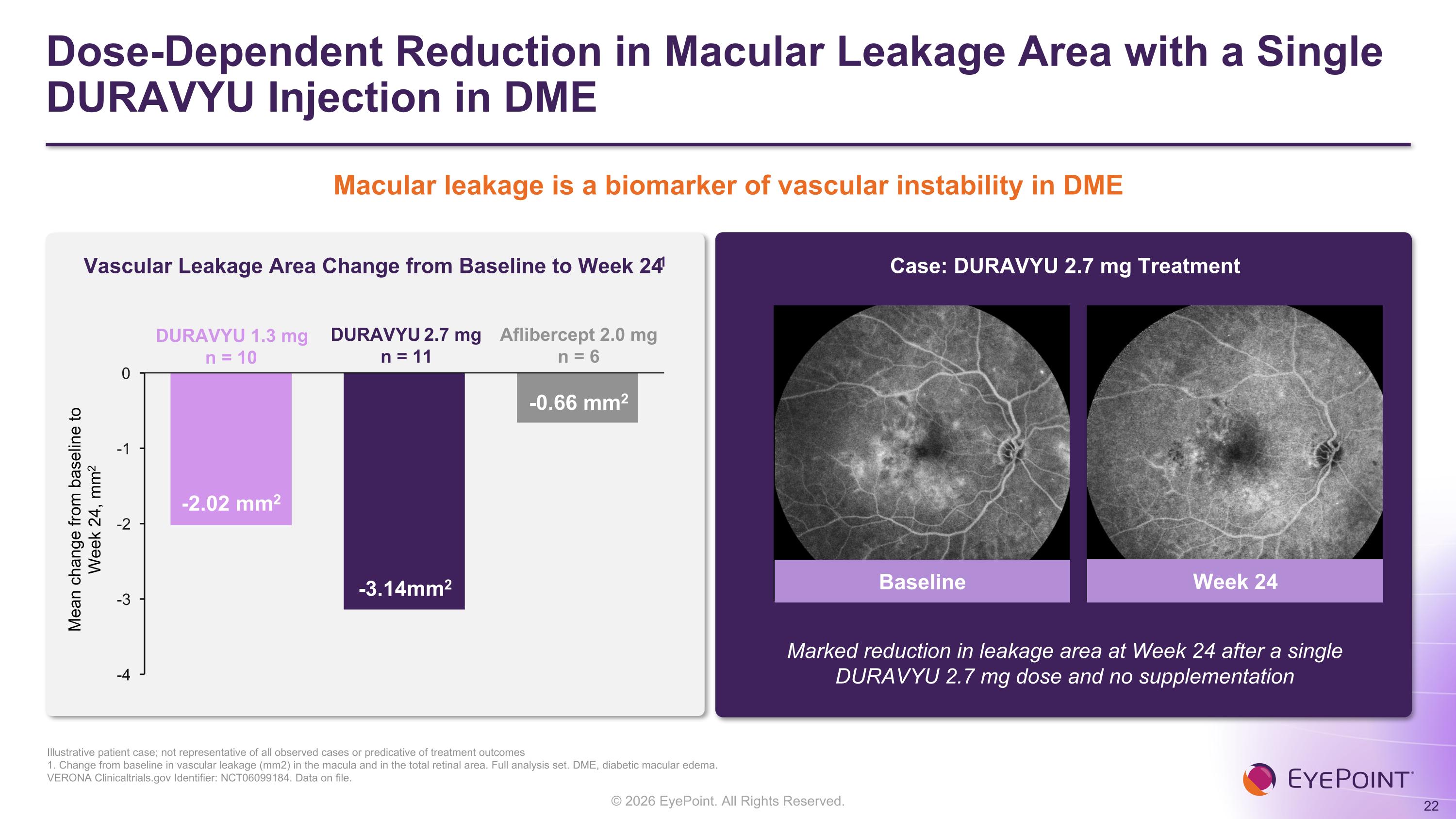
Dose-Dependent Reduction in Macular Leakage Area with a Single DURAVYU Injection in DME Illustrative patient case; not representative of all observed cases or predicative of treatment outcomes 1. Change from baseline in vascular leakage (mm2) in the macula and in the total retinal area. Full analysis set. DME, diabetic macular edema. VERONA Clinicaltrials.gov Identifier: NCT06099184. Data on file. Vascular Leakage Area Change from Baseline to Week 241 Case: DURAVYU 2.7 mg Treatment Mean change from baseline to Week 24, mm2 DURAVYU 1.3 mg n = 10 Baseline Week 24 Marked reduction in leakage area at Week 24 after a single DURAVYU 2.7 mg dose and no supplementation DURAVYU 2.7 mg n = 11 Aflibercept 2.0 mg n = 6 Macular leakage is a biomarker of vascular instability in DME -2.02 mm2 -3.14mm2 -0.66 mm2
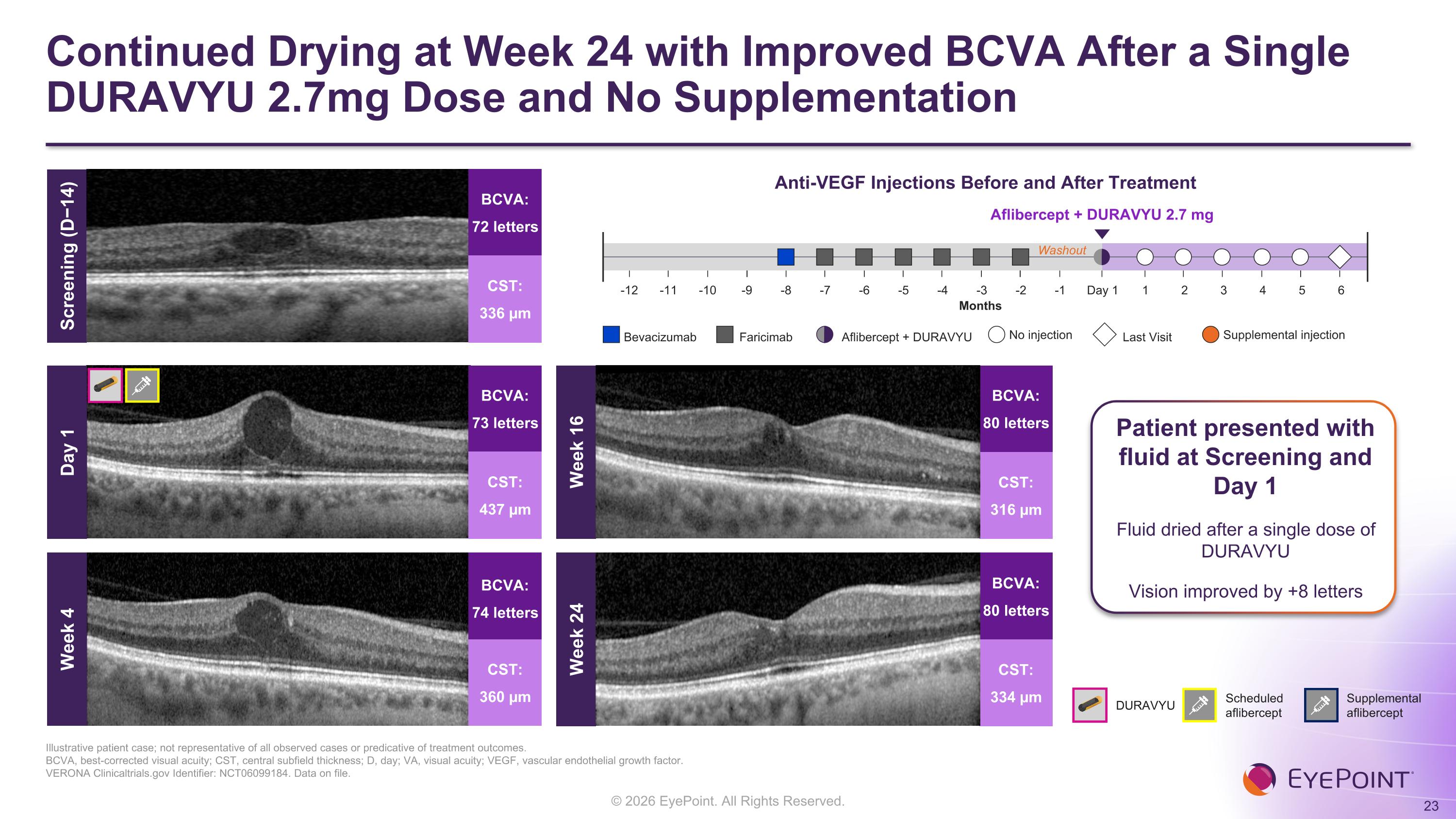
Continued Drying at Week 24 with Improved BCVA After a Single DURAVYU 2.7mg Dose and No Supplementation Illustrative patient case; not representative of all observed cases or predicative of treatment outcomes. BCVA, best-corrected visual acuity; CST, central subfield thickness; D, day; VA, visual acuity; VEGF, vascular endothelial growth factor. VERONA Clinicaltrials.gov Identifier: NCT06099184. Data on file. Week 4 BCVA: 74 letters CST: 360 µm Week 16 BCVA: 80 letters CST: 316 µm Week 24 BCVA: 80 letters CST: 334 µm Anti-VEGF Injections Before and After Treatment Aflibercept + DURAVYU 2.7 mg Months Washout Day 1 2 1 4 5 6 3 -1 -3 -2 -5 -4 -7 -6 -8 -10 -9 -12 -11 Bevacizumab No injection Supplemental injection Faricimab Last Visit Aflibercept + DURAVYU Patient presented with fluid at Screening and Day 1 Fluid dried after a single dose of DURAVYU Vision improved by +8 letters Screening (D−14) BCVA: 72 letters CST: 336 µm DURAVYU Scheduled aflibercept Supplemental aflibercept BCVA: 73 letters CST: 437 µm Day 1
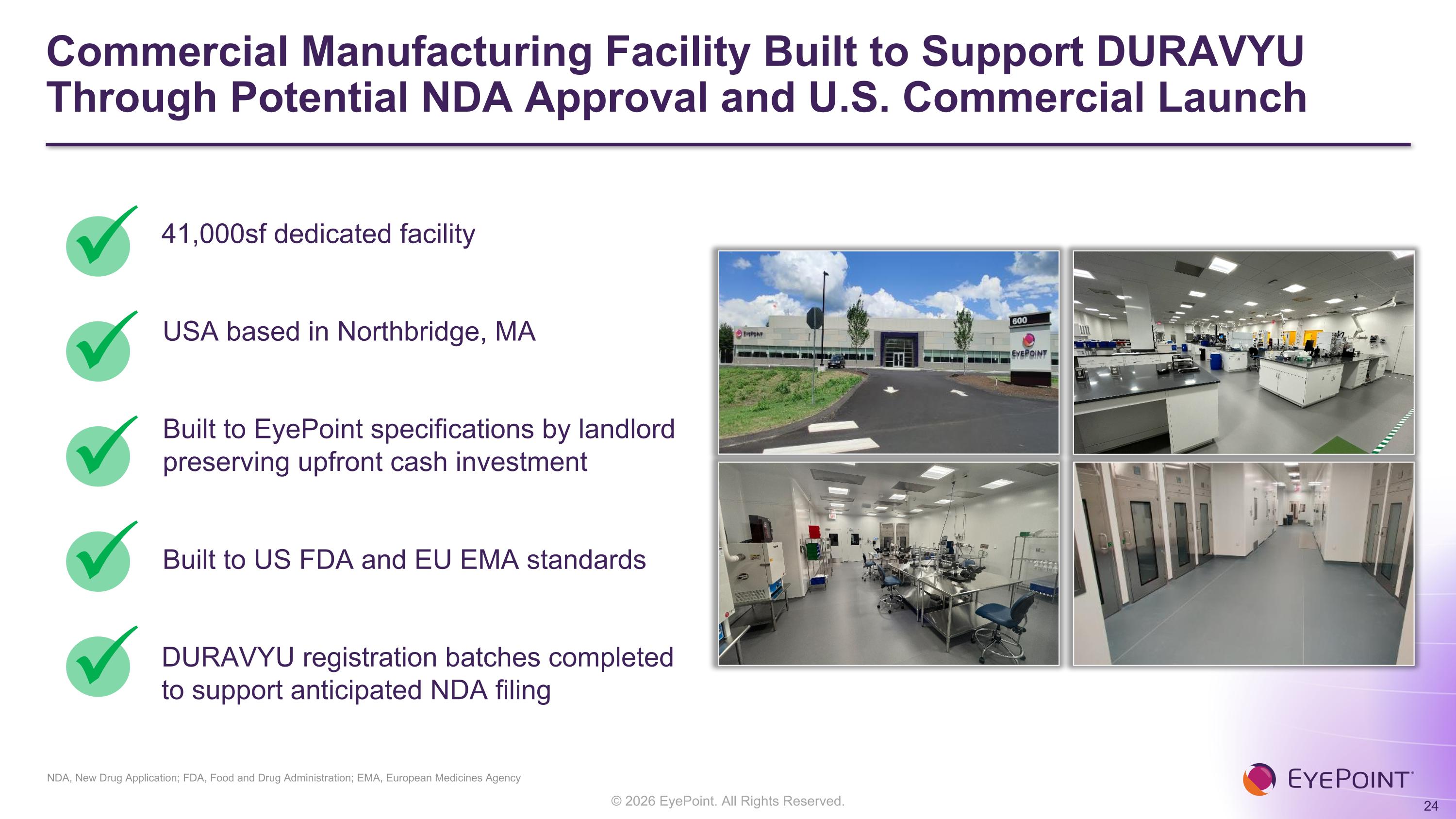
Commercial Manufacturing Facility Built to Support DURAVYU Through Potential NDA Approval and U.S. Commercial Launch NDA, New Drug Application; FDA, Food and Drug Administration; EMA, European Medicines Agency USA based in Northbridge, MA Built to US FDA and EU EMA standards DURAVYU registration batches completed to support anticipated NDA filing Built to EyePoint specifications by landlord preserving upfront cash investment 41,000sf dedicated facility
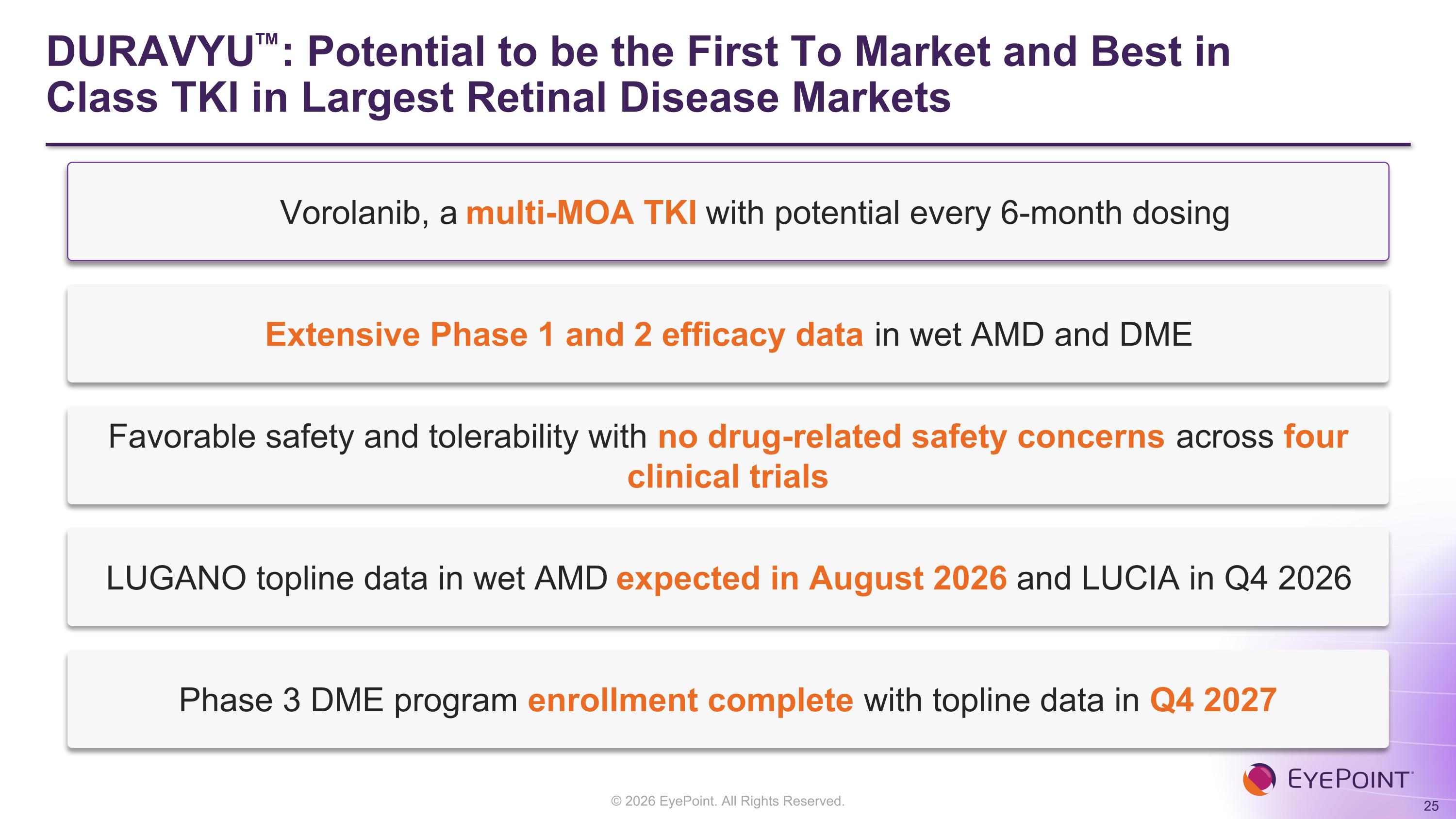
DURAVYU™: Potential to be the First To Market and Best in Class TKI in Largest Retinal Disease Markets Vorolanib, a multi-MOA TKI with potential every 6-month dosing Extensive Phase 1 and 2 efficacy data in wet AMD and DME Favorable safety and tolerability with no drug-related safety concerns across four clinical trials LUGANO topline data in wet AMD expected in August 2026 and LUCIA in Q4 2026 Phase 3 DME program enrollment complete with topline data in Q4 2027

Investor Presentation August 2026