
Exhibit 4.1
DEEP SEA MINERALS CORP.
(formerly, Copperhead Resources Inc.)
ANNUAL INFORMATION FORM
FOR THE
YEAR ENDED DECEMBER 31, 2025
Dated July 27, 2026
TABLE OF CONTENTS
| INTRODUCTION | 1 | |
| TECHNICAL GLOSSARY | 1 | |
| CAUTION REGARDING FORWARD-LOOKING STATEMENTS AND RISK FACTORS | 2 | |
| CORPORATE STRUCTURE | 5 | |
| Name, Address and Incorporation. | 5 | |
| Intercorporate Relationships | 5 | |
| GENERAL DEVELOPMENT OF THE BUSINESS | 5 | |
| Three Year History | 5 | |
| Significant Acquisitions | 9 | |
| THE BUSINESS | 9 | |
| Historical Business | 9 | |
| Current Business | 9 | |
| The Subsea Mineral Exploration and Development Industry | 14 | |
| Legal and Political Issues | 34 | |
| Cost of Environmental Compliance | 34 | |
| Specialized Skill and Knowledge | 34 | |
| Competitive Conditions | 34 | |
| Seasonality | 35 | |
| Economic Dependence | 35 | |
| Changes to Contracts | 36 | |
| Environmental Protection | 36 | |
| Employees | 36 | |
| Foreign Operations | 36 | |
| Lending | 37 | |
| Bankruptcy and Similar Procedures | 37 | |
| Reorganizations | 37 | |
| Social or Environmental Policies | 37 | |
| Regulatory Matters | 37 | |
| RISK FACTORS | 38 | |
| DIVIDENDS | 51 | |
| CAPITAL STRUCTURE | 51 | |
| MARKET FOR SECURITIES | 52 | |
| Trading Price and Volume | 52 | |
| Prior Sales | 52 | |
| ESCROWED SECURITIES | 53 | |
| DIRECTORS AND OFFICERS | 53 | |
| Name, Occupation and Security Holding | 53 | |
| Cease Trade Orders | 57 |
i
| Penalties or Sanctions | 58 | |
| Bankruptcies | 58 | |
| Conflicts of Interest | 59 | |
| AUDIT COMMITTEE | 59 | |
| Audit Committee Charter | 59 | |
| Composition of Audit Committee | 59 | |
| Relevant Education and Experience | 59 | |
| Audit Committee Oversight | 60 | |
| Reliance on Certain Exemptions | 60 | |
| Pre-Approval of Audit Services and Permitted Non-Audit Services | 61 | |
| External Auditor Service Fees | 61 | |
| Exemption | 61 | |
| CORPORATE GOVERNANCE | 61 | |
| PROMOTERS | 63 | |
| LEGAL PROCEEDINGS AND REGULATORY ACTIONS | 63 | |
| Legal Proceedings | 63 | |
| Regulatory Actions | 63 | |
| INTEREST OF MANAGEMENT AND OTHERS IN MATERIAL TRANSACTIONS | 64 | |
| TRANSFER AGENT AND REGISTRAR | 64 | |
| MATERIAL CONTRACTS | 64 | |
| INTERESTS OF EXPERTS | 64 | |
| ADDITIONAL INFORMATION | 64 |
ii
INTRODUCTION
In this annual information form (the “Annual Information Form”), unless the context requires otherwise, references to the “Company”, “Deep Sea”, “we”, “us”, “our” and similar words refer to Deep Sea Minerals Corp. or any predecessor thereto, as the context requires. The information in this Annual Information Form is presented as of December 31, 2025, unless otherwise indicated. All dollar amounts in this Annual Information Form are in Canadian dollars, except where otherwise indicated, and references to “$” or “CAD” refer to Canadian dollars.
TECHNICAL GLOSSARY
The following is a glossary of terms relevant to the subsea mineral exploration and development industry and which may be referenced herein:
“1994 Agreement” means the 1994 Agreement relating to the Implementation of Part XI (deep seabed mining) of UNCLOS, which was entered into to address certain difficulties with the seabed mining provisions contained in Part XI of UNCLOS, which had been raised primarily by industrialized countries, and which is interpreted and applied together with UNCLOS.
“CCZ” means the Clarion-Clipperton Fracture Zone of the Pacific Ocean, one part of international waters for which the ISA has entered into contracts for the exploration of polymetallic nodules rich in critical minerals and for which exploration licenses have been issued by NOAA under the DSHMRA.
“CINES” means the Cook Islands National Environment Service, the government agency responsible for protecting, conserving and sustainably managing the Cook Islands’ environment.
“CISBMA” means the Cook Islands Seabed Mineral Authority, which issues licenses and permits under SBMA for subsea mineral rights in the Cook Islands EEZ.
“DSHMRA” means the Deep Seabed Hard Mineral Resources Act of 1980 (United States), which governs subsea mineral exploration and development in international waters by United States citizens and companies
“Exclusive Economic Zone” or “EEZ” means a sea zone extending up to 200 nautical miles from a nation’s coast, where such nation has special rights to explore, use, conserve and manage marine resources, as defined by UNCLOS.
“ISA” means the International Seabed Authority, an autonomous international organization, comprised of 170 member states and the European Union and established under UNCLOS and the 1994 Agreement, through which the parties to UNCLOS organize and control all mineral-resources-related activities in international waters for the benefit of humankind as a whole, which has the mandate to ensure the effective protection of the marine environment from harmful effects that may arise from deep-seabed-related activities.
“NOAA” means the United States National Oceanic and Atmospheric Administration, an agency under the United States Department of Commerce, which issues licenses and permits under the DSHMRA.
“polymetallic nodules” means mineral concretions on the deep ocean floor rich in minerals, such as manganese, nickel, copper and cobalt, formed slowly from seawater precipitation, which are a major focus for deep sea mining.
“SBMA” means the Seabed Minerals Act 2019 (Cook Islands), which governs subsea mineral exploration and development in the Cook Islands EEZ.
“SBM(E)R” means the Seabed Minerals (Exploration) Regulations 2020, promulgated under the SBMA.
“SBM(F)R” means the Seabed Minerals (Exploration Fees) Regulations 2020, promulgated under the SBMA.
“UAOCMR Order” means the Executive Order signed by President Trump on April 24, 2025, titled “Unleashing America’s Offshore Critical Minerals and Resources”, which directs the Commerce Secretary to implement an expedited permitting process under DSHMRA.
“UNCLOS” means the 1982 United Nations Convention on the Law of the Sea, which provides a comprehensive regime of law and order to the Earth’s oceans and establishes rules for the allocation of states’ rights and jurisdiction in maritime spaces, the peaceful use of the oceans and the management of their resources.
1
CAUTION REGARDING FORWARD-LOOKING STATEMENTS AND RISK FACTORS
Certain statements and information in this Annual Information Form contain forward-looking statements or forward-looking information under applicable Canadian securities legislation that may not be based on historical fact, including, without limitation, statements containing the words “believe”, “may”, “plan”, “indicate”, “will”, “estimate”, “continue”, “anticipate”, “intend”, “expect”, “predict”, “project”, “potential”, “continue”, “ongoing”, “could”, “would”, “seek”, “target” or the negative of these terms or other comparable terminology, although not all forward-looking statements contain these words and similar expressions.
Forward-looking statements are necessarily based on estimates and assumptions made by us in light of our experience and perception of historical trends, current conditions and expected future developments, as well as factors that we believe are appropriate. Forward-looking statements in this Annual Information Form include, but are not limited to, statements relating to:
| ● | the potential benefits, and commercial and technical feasibility, of subsea mineral exploration and development; |
| ● | our intended acquisition of subsea mineral rights; |
| ● | our and our potential future partners’ development and operational plans, including with respect to the planned uses of polymetallic nodules, where and how nodules will be obtained and processed, the expected environmental, social and governance (“ESG”) impacts thereof and our plans to assess these impacts and the timing and scope of these plans, including the timing and expectations with respect to our receipt of exploitation contracts and our commercialization plans; |
| ● | government regulation of mineral extraction from the deep seafloor and changes in mining laws and regulations; |
| ● | technical, operational, environmental, social and governance risks of acquiring, developing and deploying equipment to collect and ship polymetallic nodules at sea, and to process such nodules on land; |
| ● | the sources and timing of potential revenue, if any, as well as the timing and amount of estimated future production, costs of production, other expenses, capital expenditures and requirements for additional capital; |
| ● | cash flow provided by operating activities; |
| ● | the expected activities of our potential future partners under our key strategic relationships; |
| ● | the sufficiency of our cash on hand to meet our working capital and capital expenditure requirements, the need for additional financing and our ability to continue as a going concern; |
| ● | our ability to raise financing in the future, the nature of any such financing and our plans with respect thereto; |
| ● | any litigation to which we are or become a party; |
| ● | claims and limitations on insurance coverage; |
| ● | our plans to mitigate our material weakness in our internal control over financial reporting; |
| ● | geological, metallurgical and geotechnical studies and opinions; |
| ● | our ability to define and declare mineral resources and mineral reserves; |
| ● | our status as an emerging growth company; and |
| ● | our expected financial performance. |
Such forward-looking statements reflect our current views with respect to future events, are subject to risks and uncertainties and are necessarily based upon a number of estimates and assumptions that, while considered reasonable by the Company as of the date of such statements, are inherently subject to significant business, economic, competitive, political and social uncertainties and contingencies. Many factors could cause our actual results, performance, achievements, prospects or opportunities to be materially different from any future results, performance or achievements that may be expressed or implied by such forward-looking statements. In making the forward-looking statements included in this Annual Information Form, the Company has made various material assumptions, in respect of:
| ● | favourability of operating conditions; |
| ● | the receipt of necessary third party approvals, licences or permits on favourable terms; |
2
| ● | the result of any potential legal, regulatory or geopolitical conflict or litigation resulting from the United States asserting governance of subsea mineral exploration and development in international waters under the DSHMRA; |
| ● | the continued cooperation and alignment of national interests between the United States and the Cook Islands; |
| ● | the Cook Islands’ intention to grant mining licenses in the future; |
| ● | the availability of equipment; |
| ● | the availability of qualified vessel operators and marine contractors; |
| ● | our ability to obtain financing on acceptable terms; |
| ● | currency exchange and interest rates; the impact of competition; |
| ● | the changes and trends in our industry and the global economy; |
| ● | changes in laws, rules, regulations and global standards; |
| ● | our ability to build our market share; |
| ● | our ability to retain key personnel; |
| ● | transaction opportunities, exploration potential, and precious metals prices; |
| ● | the sufficiency of the Company’s amended application for an exploration license under the NOAA regime, submitted on July 17, 2026, in responding to the requests for supplemental information in NOAA’s notice to the Company dated May 26, 2026; |
| ● | NOAA will require no further information from the Company in order to determine the Company’s application is in full compliance with applicable regulatory requirements; |
| ● | the federal-agency consultation, antitrust review, public-comment, certification, environmental-review and hearing processes applicable to the NOAA application will proceed generally in accordance with the indicative regulatory periods described herein; |
| ● | NOAA will not identify material deficiencies relating to the Company’s financial responsibility, technical capability, proposed exploration plan, environmental information, proposed licence area or other regulatory requirements that the Company is unable to address; |
| ● | a licensing process or invitation will be available under the Cook Islands seabed minerals regime on terms allowing the Company to submit an application for an exploration licence in the Cook Islands’ Exclusive Economic Zone; |
| ● | the Company will be able to complete the technical, financial, environmental, corporate and work-program materials required for a Cook Islands exploration licence application within its anticipated timeframe; |
| ● | the Company will be able to demonstrate access to sufficient financial resources, technical expertise, vessels, equipment, contractors and environmental capabilities to satisfy the applicable NOAA and Cook Islands regulatory requirements and any other regulatory requirements; |
| ● | the Company will obtain sufficient financing to fund the regulatory, environmental, technical and offshore activities contemplated by its NOAA and Cook Islands work programs when required; |
| ● | the Cook Islands election process and any related government transition will be completed without material delay; |
| ● | following the election, the Cook Islands authorities will designate additional parcel blocks or areas for subsea mineral exploration and exploitation; and |
| ● | there will be no material change in Cook Islands policy, legislation, licensing criteria or regulatory priorities following the election. |
3
Forward-looking information involves a variety of known and unknown risks, uncertainties and other factors that may cause the Company’s actual results, performance or achievements to be materially different from any future results, performances or achievements expressed or implied by the forward-looking information. Actual results may vary from such forward-looking information for a variety of reasons, including but not limited to, the following risks and uncertainties:
| ● | risks related to the highly speculative nature of the Company’s business; |
| ● | risks related to subsea mineral exploration and development operations; |
| ● | risks related to the Company’s limited business history and no history of earnings; |
| ● | risks related to the availability of future financing and the Company’s ability to continue as a going concern; |
| ● | risks related to the Company’s exploration and development activities on the mineral properties; |
| ● | uncertainties regarding the grade and quality of polymetallic nodules; |
| ● | uncertainties regarding the commercial collection of polymetallic nodules; |
| ● | negative perceptions regarding the collection of polymetallic nodules; |
| ● | pressure and lobbying by non-governmental organizations; |
| ● | uncertainties regarding our future reliance on strategic partnerships; |
| ● | uncertainties regarding technology required for our business; |
| ● | uncertainties regarding the treatment and processing of polymetallic nodules; |
| ● | natural hazards and seasonality; |
| ● | expropriation of potential future operating equipment or assets; |
| ● | technological obsolescence; |
| ● | the Company’s dependence on key personnel; |
| ● | risks related to foreign operations; |
| ● | risks related to acquisitions and integration; |
| ● | changes in laws and regulations; |
| ● | risks related to competition; |
| ● | fluctuations in prices of precious metals, other commodities and natural resources; |
| ● | legal and litigation risks; |
| ● | uncertainty and volatility related to stock market prices and conditions; |
| ● | dilution of the interests of shareholders; |
| ● | risks related to geopolitical disputes; |
| ● | risks related to the Company’s officers and directors becoming associated with other natural resource companies, which may give rise to conflicts of interest; |
| ● | risks related to climate change; and |
| ● | risks related to pandemics, epidemics or other health crises. |
In evaluating forward-looking statements, current and prospective shareholders should specifically consider various factors, including the foregoing risks and risks outlined herein under the heading “Risk Factors”. Should one or more of these risks or uncertainties, or a risk that is not currently known to us, materialize, or should assumptions underlying those forward-looking statements prove incorrect, actual results may vary materially from those described herein. These forward-looking statements are made as of the date of this Annual Information Form and we do not intend, and do not assume any obligation, to update these forward-looking statements except as required by applicable securities laws. Investors are cautioned that forward-looking statements are not guarantees of future performance and are inherently uncertain. Accordingly, investors are cautioned not to put undue reliance on forward-looking statements.
4
CORPORATE STRUCTURE
Name, Address and Incorporation.
The Company was incorporated on February 17, 2022, under the Business Corporations Act (British Columbia) (“BCBCA”) under the name “Copperhead Resources Inc.” On January 26, 2026, the Company changed its name to “Deep Sea Minerals Corp.” The Company’s registered office and records office is located at 1500, 1055 West Georgia Street, Vancouver, British Columbia, V6E 4N7. The Company’s head office and mailing address is located at Suite 1600 – 409 Granville Street, Vancouver, BC, V6C 1T2, Canada.
The Company is a subsea mineral exploration and development company focused on acquiring assets in: (i) the CCZ under the NOAA regulatory pathway provided under DSHMRA legislation; and (ii) in the Exclusive Economic Zone of the Cook Islands. See “The Business” for further information.
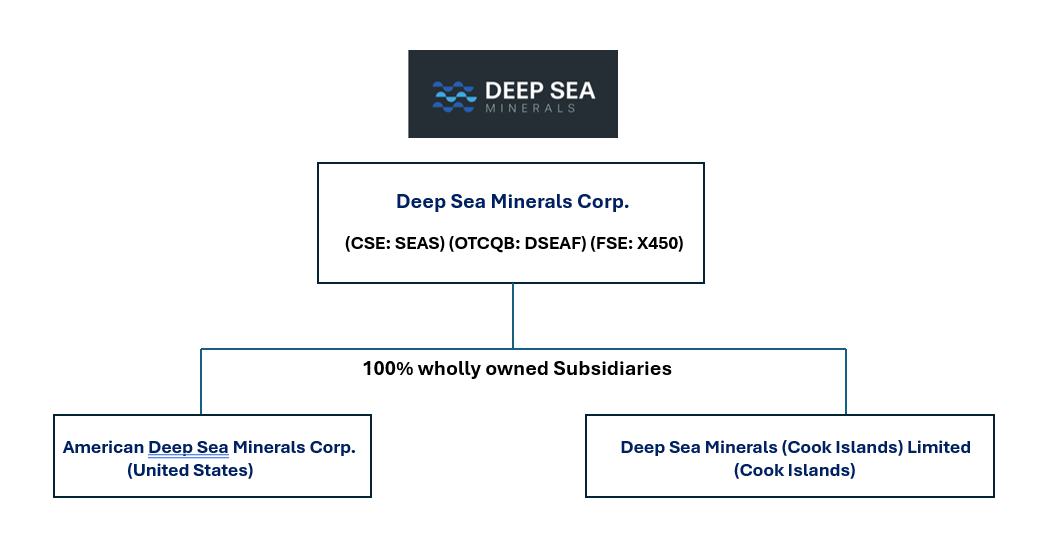
Intercorporate Relationships
GENERAL DEVELOPMENT OF THE BUSINESS
Three Year History
The following is a description of the events that have influenced the general development of the Company’s business since January 1, 2023.
Financial Year Ended December 31, 2023
| ● | On January 10, 2023, the Company issued 303,000 common shares capital of the Company (each, a “Common Share”) in a private placement at a purchase price of $0.10 per Common Share for gross proceeds of $30,300. |
| ● | On March 7, 2023, the Company issued 532,000 special warrants pursuant to a private placement at a price of $0.10 per special warrant for aggregate gross proceeds of $53,200 (the “Special Warrant Private Placement”). Each special warrant will be deemed to be automatically exercised, at no additional cost, into Common Shares on a one to one basis on the earlier of the date that is (i) the third day following the issuance by a Canadian securities regulatory authority of a receipt for a final prospectus qualifying the issuance of the Common Shares upon conversion of the special warrants, (ii) four (4) months and one day after the issue date of the special warrants, or (iii) such later date and time as may be determined by the Company, provided that the conversion date will in any event not be later than one (1) year from the date of issue of the special warrants. In connection with the closing of the Special Warrant Private Placement, the Company issued 200,000 compensation special warrants to Vested Technology Corp. (the “Vested Compensation Special Warrants”). The Vested Compensation Special Warrants will be deemed to be automatically exercised, at no additional cost, into Common Shares on a one to one basis on the earlier of the date that is (i) the third day following the issuance by a Canadian securities regulatory authority of a receipt for a final prospectus qualifying the issuance of the Common Shares upon conversion of the Vested Compensation Special Warrants, (ii) four (4) months and one day after the issue date of the Vested Compensation Special Warrants, or (iii) such later date and time as may be determined by the Company, provided that the conversion date will in any event not be later than one (1) year from the date of issue of the Vested Compensation Special Warrants. |
5
| ● | On May 11, 2023, the Company filed a long form prospectus with the securities regulatory authorities in British Columbia, Ontario, and Alberta, qualifying the distribution of 530,000 Common Shares upon the deemed conversion of the special warrants. |
| ● | On May 19, 2023, the Company announced that it received final approval from the Canadian Securities Exchange (the “CSE”) to list its common shares on the CSE. |
| ● | On May 23, 2023, the Common Shares began trading on the CSE. |
| ● | On July 11, 2023, the Company announced its addition of a new mineral claim for the Company’s Red Line mineral exploration project located in British Columbia, Canada (the “Red Line Project”). |
| ● | On September 8, 2023, the Company announced the latest expansion of the Red Line Project through the addition of another new mineral claim. |
| ● | On September 12, 2023, the Company reported it discovered three highly prospective intrusions on the Red Line Project. |
| ● | On December 1, 2023, the Company announced it granted an aggregate of 975,000 incentive stock options (each, an “Option”) to certain directors, officers and consultants in accordance with the Company’s stock option plan. Each Option vested immediately and entitles the holder thereof to acquire one Common Share at an exercise price of $0.10 per Common Share for a period of five years. |
| ● | On December 11, 2023, the Company announced that Mr. Heran (Kevin) Zhou had been appointed Corporate Secretary of the Company effective as of such date |
Financial Year Ended December 31, 2024
| ● | On December 6, 2024, the Company announced that it intended to complete a non-brokered private placement for gross proceeds up to $300,000, of which up to $100,000 would be raised from the issuance of flow-through Common Shares (each, an “FT Share”) at a price of $0.10 per FT Share and up to $200,000 would be raised from the issuance of Common Shares at a price of $0.075 per Common Share (the “FT and Common Share Private Placement”). |
Financial Year Ended December 31, 2025
| ● | On January 10, 2025, the Company and Romios Gold Resources Inc. (“Romios”) amended their option agreement dated April 6, 2022 pursuant to which the Company could have acquired a 75% ownership interest in the Red Line Project by: (i) incurring $100,000 in exploration expenses on or before September 30, 2025; (ii) incurring $100,000 in exploration expenses on or before September 30, 2026; (iii) issuing a further 500,000 Common Shares to Romios on or before June 30, 2026; and (iv) paying $75,000 in cash to Romios on or before June 30, 2026. On September 29, 2025, the Company withdrew from its option to acquire a 75% interest in the Red Line Project. |
| ● | On March 4, 2025, the Company announced that it had closed the FT and Common Share Private Placement and raised gross proceeds of $92,250 through the issuance of 1,230,000 Common Shares at a price of $0.075 per Common Share. |
| ● | On May 2, 2025, the Company announced the appointment of Keith Li as Chief Financial Officer following the resignation of Mike Dai. |
| ● | On August 18, 2025, the Company announced it entered into an option agreement (the “Twilite Option Agreement”) with TRU Precious Metals Corp. (“TRU”) pursuant to which the Company may acquire from TRU a 100% ownership interest in the Twilite Project by: (i) paying $25,000 in cash to TRU on August 18, 2025 (the “First Twilite Payment”); (ii) incurring an aggregate of $75,000 plus applicable taxes in exploration expenses on or before August 18, 2027 (the “Second Twilite Payment”); (iii) paying an additional $200,000 in cash to TRU and issuing a further number of Common Shares to TRU as is equal in value to $300,000 at a deemed price per Common Share equal to the closing price of the Common Shares on the CSE on the day immediately prior to the Common Share issuance (the “Third Twilite Payment”). The Company has paid the First Twilite Payment. |
6
| ● | On September 24, 2025, the Company announced that Mr. Lopez resigned as director of the Company and from his position as President and Chief Executive Officer effective September 24, 2025, and Mr. Kevin Zhou was appointed as Interim Chief Executive Officer and President of the Company. |
| ● | On December 5, 2025, Sasha Kaplun and Matthew Larsen, directors of the Company, resigned and forfeited an aggregate of 300,000 Options. Geoff Balderson and Denise Lok were appointed as directors of the Company and Ms. Lok was also appointed as Chief Financial Officer of the Company. |
| ● | On December 26, 2025, the Company incorporated its subsidiary, American Deep Sea Minerals Corp. (formerly, American Ocean Minerals Corp.), pursuant to the laws of Texas. |
Current Financial Year
| ● | On January 1, 2026, Kevin Zhou resigned as Interim Chief Executive Officer, President and Corporate Secretary, of the Company, and forfeited 25,000 Options. James A. Deckelman was appointed Chief Executive Officer of the Company and Denise Lok was appointed Corporate Secretary of the Company. |
| ● | On January 16, 2026, the Company entered into a loan agreement (the “Loan Agreement”) with a shareholder of the Company who beneficially owns, or exercises control or direction over, directly or indirectly, less than 10% of the issued and outstanding Common Shares (the “Lender”). Pursuant to the Loan Agreement, the Company obtained an unsecured loan of $50,000 (the “Loan”) from the Lender, which bears no interest until April 16, 2027 (the “Maturity Date”). The Company may repay the Loan on or before the Maturity Date but, if any portion of the Loan remains outstanding following the Maturity Date, the outstanding principal amount of the Loan will bear simple interest calculated on the basis of a 365 or 366 day year (as the case may be) for the actual number of days elapsed at a rate of five percent (5%) per annum, accrued monthly starting from the Maturity Date until the Loan is repaid in full to the Lender. On January 20, 2026, the Company received final approval from the CSE in respect of its change of business into the subsea mineral exploration and development industry. |
| ● | On January 26, 2026, the Company changed its name to “Deep Sea Minerals Corp.” and the Common Shares began trading on the CSE under the stock symbol “SEAS” (CUSIP 24378A101 / ISIN CA24378A1012). |
| ● | On February 6, 2026, the Company closed its oversubscribed non-brokered private placement of Common Shares for aggregate proceeds of $4,220,170 (the “February 2026 PP”). Each Common Share was issued at a price of $0.40 per Common Share. In connection with the February 2026 PP, the Company paid $95,620 in cash and issued 239,050 Common Share purchase warrants (each, a “February 2026 Finder’s Warrant”) to eligible finders. Each February 2026 Finder’s Warrant entitles the holder thereof to acquire one Common Share at an exercise price of $0.40 for a period of 24 months following the date of issuance. |
| ● | On February 17, 2026, the Company appointed Mark Handin as a strategic advisor to the Company. |
| ● | On February 24, 2026, the Company’s application to join the U.S. Defense Industrial Base Consortium, a U.S. government-led initiative that strengthens the defense industrial base by fostering collaboration among government, industry, and academia to ensure resilient supply chains and rapid innovation, which aims to coalesce and expand the U.S. defense industrial base, particularly in critical sectors identified by the Department of War’s Warfighting, Investments, Resourcing and Execution Office, was approved. |
| ● | On March 20, 2026, the Company submitted a response to the U.S. Defense Industrial Base Consortium’s requests for proposals for a reliable supply of critical minerals and a complementary commercialization plan. |
7
| ● | On March 20, 2026, the Company submitted an application to NOAA under the DSHMRA for a subsea mineral exploration license within a defined area of the CCZ. This application was amended and re-submitted on April 23, 2026. On May 26, 2026, NOAA notified the Company that its application for an exploration license was determined to be in substantial compliance and identified a list of supplemental information required to bring the Company’s application into full compliance, including, among other things: (i) additional information regarding the Company’s financial capability, financing strategy, estimated exploration expenditures and financial responsibility; (ii) expanded descriptions of the Company’s proposed exploration program, including work plans, schedules, proposed exploration activities, technical development activities, and environmental monitoring; (iii) additional environmental information, including baseline information, monitoring methodologies and supporting information to facilitate NOAA’s environmental review; (iv) additional information regarding potential conflicts with other ocean uses and activities, including fisheries, navigation, submarine cables, scientific research activities and other seabed mineral interests; and (v) clarification of certain corporate, technical and administrative information supporting the application. On July 17, 2026, the Company submitted an amended application, which the Company believes fully addresses NOAA’s supplemental information requests. The Company did not incur any material incremental costs in responding to NOAA’s supplemental information requests. Although the Company currently believes its amended application is fully responsive to NOAA’s requests, there can be no assurance that NOAA will determine that the application is in full compliance in a timely manner or at all, that the Company will preserve its priority of right, or that NOAA will ultimately issue an exploration license on acceptable terms or at all. |
| ● | On March 27, 2026, the Company incorporated its wholly-owned Cook Islands subsidiary, Deep Sea Minerals (Cook Islands) Limited, as a pre-requisite to applying for a subsea mineral exploration license within the Exclusive Economic Zone of the Cook Islands. |
| ● | On April 6, 2026, the Company appointed John Vonglis as a strategic advisor of the Company. |
| ● | On April 8, 2026, Denise Lok resigned as Chief Financial Officer, Corporate Secretary and a director of the Company and the Company appointed Steven Nguyen as Chief Financial Officer, Corporate Secretary and a director of the Company. |
| ● | On April 9, 2026, the Company changed the name of its U.S. subsidiary from “American Ocean Minerals Corp.” to American Deep Sea Minerals Corp. |
| ● | On April 13, 2026, the Company announced the appointment of Dan McConnell as Vice President of Exploration of the Company. |
| ● | On April 15, 2026, Barry Greene resigned as a director of the Company and Anthony Zelen was appointed as a director of the Company. |
| ● | On May 20, 2026, the Company announced a proposed split of the issued and outstanding Common Shares (the “Split”) on the basis of two post-Split Common Shares for one pre-Split Common Share. Prior to the Split, the Company had 23,904,125 Common Shares issued and outstanding. Immediately following completion of the Split, the Company had 47,808,250 Common Shares issued and outstanding. |
| ● | On May 29, 2026, the Company announced that it filed a listing application (the “Nasdaq Listing Application”) with the Nasdaq Capital Market (the “Nasdaq”), intended to support the Company’s long-term capital markets strategy by increasing its visibility with U.S. institutional and retail investors, broadening its potential shareholder base and enhancing trading liquidity over time. As of the date hereof, the Nasdaq Listing Application remains subject to satisfaction of the Nasdaq’s initial listing requirements, receipt of all necessary regulatory approvals and the completion of customary listing processes. There can be no assurance that the Nasdaq Listing Application will be approved or that a listing on the Nasdaq will be completed. |
8
| ● | On June 25, 2026, Jeremy Perez was appointed as an additional director of the Company and the Company re-constituted its audit committee to be comprised of Mr. Perez (Chair), Geoff Balderson and Anthony Zelen. |
| ● | On June 28, 2026, the Company entered into a non-binding memorandum of understanding with Impossible Metals Inc. (Delaware) (“IM”), a developer of a proprietary autonomous, riserless, robotic polymetallic nodule collection technology designed to minimize sediment disturbance and environmental impact, to establish a framework for non-exclusive collaboration between the parties in respect of: (i) deployment and utilization of IM’s collection technology within the Company’s exploration licenses, when obtained, if ever; (ii) potential seabed mineral exploration, environmental baseline studies, test mining, pilot production and commercial-scale harvesting; and (iii) potential downstream collaboration opportunities, including onshore processing, refining and critical mineral supply chain integration (the “IM MOU”). Pursuant to the IM MOU, the Company documented its intention to not engage, field test or enter into an agreement with any third-party provider of tetherless robotic polymetallic nodule collection technology for a period of 18 months, but is not otherwise restricted from evaluating, field testing or employing any other method of polymetallic nodule test mining and/or collection. There can be no assurance that IM’s collection technology proves to be commercially viable for the Company’s intended subsea mineral exploration and development activities, or that the parties ever enter into a binding definitive agreement. |
In the remainder of the Company’s current financial year, the Company intends to continue its technical, regulatory and stakeholder engagement efforts in the CCZ and in the Cook Islands.
Significant Acquisitions
The Company has not completed any significant acquisitions since the beginning of its most recently completed financial year.
THE BUSINESS
Historical Business
The principal business historically carried on by the Company has been the acquisition and exploration of mineral properties in Canada. The Company’s sole mineral property asset is its option to acquire a 100% interest in the Twilite Project pursuant to the Twilite Option Agreement. To date, the Company has paid the First Twilite Payment. The Second Twilite Payment and Third Twilite Payment remain outstanding. On January 20, 2026, the Company received final approval from the CSE for its change of business into the subsea mineral exploration and development industry. The Company intends to dispose of its interest in the Twilite Option Agreement and focus on its subsea mineral exploration and development business described below.
Current Business
The Company is an early-stage subsea mineral exploration and development company focused on identifying and acquiring mineral rights in select jurisdictions, primarily within the CCZ and Exclusive Economic Zones, and advancing those rights through a staged, environmentally responsible development pathway. Although the Company has not yet acquired any mineral rights, its U.S. subsidiary, American Deep Sea Minerals Corp. has filed an application with NOAA for an exploration license under DSHMRA, which, if granted, would authorize the Company to conduct surveys, research and test mining of polymetallic nodules in respect of a ~150,000 km2 area located within the CCZ. The Company has also incorporated Deep Sea Minerals (Cook Islands) Limited, its wholly-owned Cook Islands subsidiary, to advance an application for an exploration license in the Exclusive Economic Zone of the Cook Islands. The Company does not own and does not currently intend to own proprietary subsea mining technology or specialized marine equipment and does not intend to conduct exploration or development work on behalf of third parties. Instead, the Company expects to engage qualified third-party technology providers, marine contractors, and independent environmental and scientific consultants to perform technical, field, and environmental work required to advance projects. Where appropriate, the Company may enter into joint ventures or similar arrangements to share risk, manage capital requirements, and access complementary capabilities.
9
The Company intends to prioritize subsea mineral projects that are capable of meeting environmental responsibility standards while delivering potential long-term benefits to host communities and countries. The Company’s strategy is to build a diversified portfolio of subsea mineral projects at varying stages of advancement and across a range of mineral resources, subject to applicable regulatory, environmental, and commercial considerations.
The Company’s business model is focused on acquiring exploration licenses, mineral rights, or other forms of project tenure in respect of subsea mineral resources. The Company does not expect to directly conduct exploration, development, or operational activities. Instead, all technical, exploration, environmental, and operational work is expected to be carried out by third-party technology providers, contractors, and independent environmental and scientific consultants engaged by the Company. Under this model, the Company intends to utilize established subsea technology providers and service contractors to perform exploration and development activities, and to engage qualified environmental and scientific organizations to conduct baseline studies, environmental impact assessments, and ongoing monitoring, as required by applicable regulatory authorities. The Company’s role is limited to project identification, licensing, strategic and operational oversight, and capital and commercial structuring. The Company does not anticipate providing exploration, development, or operational services to third parties in exchange for equity, fees, or other consideration.
The Company is focused on identifying, assessing, acquiring, and developing subsea mineral resources located within: (i) the Exclusive Economic Zones of host countries; or (ii) international waters. In particular, the Company is focused on the Exclusive Economic Zones of the Cook Islands and the United States, and the CCZ in international waters. The Company has submitted an application to NOAA for an exploration license for an area covering approximately 147,430 km2 in the CCZ, which NOAA has determined is in substantial compliance with applicable regulations. For further information regarding the Company’s application to NOAA for an exploration license in respect of an area of the CCZ, see “The Subsea Mineral Exploration and Development Industry - (b) Subsea Mineral Exploration and Development in International Waters”. The Company has also incorporated a Cook Islands subsidiary to advance an application for subsea mineral rights in the EEZ of the Cook Islands. As of the date hereof, the Company has not formally applied under the Cook Islands regime. The Company has engaged through correspondence with the Cook Islands Seabed Minerals Authority regarding a potential application for an exploration licence. The Company understands that the Cook Islands authorities do not presently intend to accept further formal exploration licence applications until after the forthcoming Cook Islands election and parliament reconvenes and approves additional designated parcel blocks and areas of the Cook Islands’ EEZ for licensing. Accordingly, although the Company has nearly finalized the technical, financial, environmental, corporate and work-program materials required for an application, the timing of any formal submission will not occur until after the new government in the Cook Islands is formed and is dependent on the new government designating additional parcel blocks and areas of the Cook Islands’ EEZ for licensing. Based on the information currently available to the Company, the Company expects to submit a formal application between Q3 2026 and Q1 2027. This timing is an estimate only and may be delayed if the election process, government transition, regulatory review or reopening of the application process takes longer than anticipated. There can be no assurance that CISBMA will begin accepting applications by Q1 2027, if ever, or that the Company’s formal application, if submitted, will be accepted as complete or ultimately approved. The Company intends to advance the Cook Islands application concurrently with its application to NOAA, subject to regulatory timing, capital availability and management’s assessment of the relative priority of each jurisdiction. Based on its current strategic priorities and expected use of funds, the Company currently expects to allocate approximately 60% of its subsea mineral rights application and project-development resources to advancing the NOAA/DSHMRA application, approximately 30% to advancing the Cook Islands application and approximately 10% to evaluating potential opportunities in the United States EEZ around American Samoa. These allocations are current estimates only and may vary depending on the timing of regulatory review processes, the availability and cost of technical and environmental consultants, vessel and contractor availability, financing, and the Company’s assessment of the relative merits of each opportunity. The Company has not taken any material steps to obtain permits in respect of the United States EEZ in Hawaii beyond preliminary desktop evaluation. The Company is focused on these jurisdictions to align itself with the national interests of the United States. See “The Subsea Mineral Exploration and Development Industry – (d) Competitive Position and Strategic Focus”.
10
While the Company believes the NOAA regime provides a viable regulatory pathway to commercial production, it still remains subject to significant uncertainty and risk. The extent to which rights granted under the NOAA regime may be subject to challenges regarding international recognition, market acceptance and enforceability, and there is potential for legal, regulatory or geopolitical conflicts between the NOAA regime and other international frameworks, such as the ISA framework. For example, there is a risk of overlap between areas subject to licenses or permits granted under the NOAA regime and areas subject to contracts granted under other frameworks, and there is significant uncertainty regarding how any such overlap would be resolved. Furthermore, such uncertainties, legal challenges and geopolitical tensions could significantly and negatively impact the Company’s ability to obtain, maintain, enforce and commercially benefit from any subsea mineral rights it may obtain under the DSHMRA. Despite this uncertainty, the Company believes that DSHMRA provides a viable and robust regulatory path to commercial production because of the existence of enacted legislation and detailed implementing regulations, NOAA’s prior issuance and renewal of exploration licences under DSHMRA, the current U.S. policy objective of advancing domestic critical-mineral supply chains, and NOAA’s acceptance and review of recent applications under the regime. However, the Company’s assessment is subject to additional uncertainty. NOAA has issued only a limited number of exploration licences under DSHMRA, the original licences were issued in the 1980s, NOAA has not issued any new exploration licences more recently, and NOAA has not ever issued a commercial recovery permit. Accordingly, there is limited precedent regarding current application requirements, review practices, licence terms, environmental obligations, timelines, costs and the international recognition or enforceability of rights granted under DSHMRA. The absence of recent precedent reduces the Company’s ability to predict whether, when or on what terms its application may be approved and increases the risk that NOAA may require additional information, impose material terms or conditions, extend its review or deny the application. See “The Subsea Mineral Exploration and Development Industry - (b) Subsea Mineral Exploration and Development in International Waters” and “Risk Factors”.
The following tables summarize management’s expectations regarding the timing and cost of key milestones of the Company’s NOAA and Cook Islands applications:
|
Application Milestone |
Application for Exploration License (NOAA) | |
| Date / Approximate Timing(1) | Approximate Cost | |
| Initial submission | March 20, 2026 (revised April 23, 2026) | C$140,000 |
| Substantial compliance determination | May 26, 2026 | N/A |
| Submission of final amended application | July 17, 2026 | N/A |
| Full compliance determination |
August 17 – October 15, 2026 (within 30 - 90 days following submission of final amended application) |
N/A |
| Deadline for comments from public and other U.S. federal agencies or departments |
October 15 – December 14, 2026 (~60 days after determination of full compliance) |
N/A |
| Completion of antitrust review |
November 16 – January 13, 2027 (~90 days after determination of full compliance) |
N/A |
| Certification of application |
November 23, 2026 – January 25, 2027 (~100 days after determination of full compliance) |
N/A |
| Terms, conditions and restrictions and draft environmental impact statement |
May 24, 2027 – July 26, 2027 (within 180 days following certification of application) |
C$100,000 – C$200,000 |
| Public hearing(s) |
May 24, 2027 – July 26, 2027 (within 180 days following certification of application) |
C$50,000 – C$150,000 |
| Issuance of exploration license and final environmental impact statement |
November 22, 2027 – December 23, 2027 (within 180 days following draft environmental impact statement) |
N/A |
11
| Application Milestone | Application for Exploration Licence (Cook Islands) | |
| Date / Approximate Timing | Approximate Cost | |
| Initial submission | Q3 2026 - Q1 2027 | C$50,000 |
| Determination by CISBMA that application is complete | Seven days after CISBMA receives the application | N/A |
| Deadline to provide supplemental information to make application complete | Five days after receiving notice of determination that application is not complete | N/A |
| Determination by CISBMA that qualification criteria are met and availability of subject area | ~30 – 50 days after receiving the application. | N/A |
| Referral of application to licensing panel, public notice, and notice to other Crown agencies | ~Five days after determination by CISMBA that qualification criteria are met and availability of subject area | N/A |
| Deadline for comments from public and other Crown agencies | 20 days after notice to Crown agencies | N/A |
| Comments received provided to applicant | 5 days after closing date above | N/A |
| Deadline for applicant to respond to comments received and deadline for CISBMA to update its report provided to licensing panel | 5 days after receiving comments above / 10 days after closing of public comment period | N/A |
| Licensing panel recommendation | 50 days after the date application is referred to licensing panel | N/A |
| Minister decision | 10 days after licensing panel recommendation | N/A |
| Draft license provided to applicant | 10 days after Minister decision | N/A |
| Applicant and CISBMA agree on draft license | ~15-20 days after draft license is provided | N/A |
| Cabinet decision of license terms | 10-20 days after date of referral of draft licence (generally, ~150 working days following initial submission) | N/A |
| Notification of Cabinet decision to applicant | 5 days after decision | N/A |
| Exploration licence in force | ~7 days after notification of Cabinet decision | C$100,000 – C$150,000 |
For further information regarding application procedures, see “The Subsea Mineral Exploration and Development Industry - (b) Subsea Mineral Exploration and Development in International Waters” and “The Subsea Mineral Exploration and Development Industry - (c) Subsea Mineral Exploration and Development in Exclusive Economic Zones”.
The Company is focused on acquiring mineral rights through government licensing processes, joint venture agreements, and advancing such rights through responsible and environmentally conscious project development. The Company will prioritize projects that satisfy rigorous environmental and sustainability standards, while delivering meaningful benefits to host countries. Environmental protection is integral to all strategic and operational decisions.
12
The Company does not intend to act as a contractor or service provider to other companies and will not conduct exploration or development work on behalf of third parties. Instead, the Company intends to acquire mineral rights and advance its own projects through the engagement of qualified third-party technology providers, contractors, and independent environmental and scientific consultants. The Company has identified marine vessel contractors based in New Zealand or with global operations, which the Company may engage in the future, if the Company advances its application for subsea mineral rights and initiates its intended offshore operations. However, as of the date hereof, no formal arrangements have been entered into.
The Company intends to advance each project through a defined development pathway designed to reduce risk and build value. This progression may include acquiring exploration rights, verifying and quantifying the mineral resource, collecting baseline environmental data required for permitting processes, preparing environmental impact assessments and reports, and developing and confirming commercial programs. The Company does not intend to perform these technical or field activities itself; rather, such work is expected to be carried out by qualified third-party contractors, technology providers, and independent environmental and scientific consultants under the oversight and direction of the Company. The Company may also choose to divest equity interests in specific projects or enter into joint ventures or similar arrangements to support further project advancement and manage capital requirements and risk.
Subsea mining projects typically progress through phases, including: (i) the license acquisition, exploration and evaluation stage, which involves, among other things, identifying prospective geological settings, conducting desktop geological and geophysical analysis, reviewing historical oceanographic and mineral data, selecting target areas, engaging with relevant authorities to acquire exploration or contract rights, and planning potential reconnaissance surveys and other non-intrusive data-gathering activities to validate the presence and characteristics of seabed mineralization; (ii) resource definition and environmental baseline studies, comprising detailed seabed surveys, sampling, and environmental data collection required to support future permitting; (iii) engineering design and pilot-scale testing, during which third-party contractors or technology providers may design or test subsea collection systems, lift systems, and surface support infrastructure to validate technical and environmental performance; (iv) permitting and pre-commercial development, which includes obtaining regulatory approvals, completing feasibility studies, finalizing processing and logistics strategies, and arranging financing or strategic partnerships; and (v) if warranted based on results, commercial production and ramp-up, involving the deployment of full-scale subsea mining systems, commencement of operations, and generation of revenue. The Company’s subsea mineral exploration and development business is in the exploration, license acquisition, and validation stage, which includes identifying prospective jurisdictions, engaging with host governments, and conducting preliminary surveys and data analysis to confirm subsea mineral potential.
While each jurisdiction is subject to its own regulatory processes and timelines, the Company anticipates that timelines to exploration and potential commercialization may converge over time as regulatory frameworks and industry standards continue to develop and become more standardized globally. The Company expects that advancement toward revenue generation will be contingent upon, among other factors, obtaining appropriate governmental approvals, accessing prospective areas, and demonstrating the technical and economic feasibility of nodule collection and seabed lift systems. Revenue from commercial production, if ever achieved, may take up to an additional 10 years post concession granting from host jurisdictions.
In parallel with the Company’s efforts to acquire subsea mineral rights, the Company is evaluating subsea mineral collection technologies, including nodule-collection systems and seabed lift methodologies, based on publicly available industry data, historical testing by industry participants, and emerging technological developments. The Company has undertaken research and preliminary due diligence on a range of subsea mineral collection technologies and third-party service providers, primarily through the review of publicly available information and non-binding discussions. Such activities have been conducted for informational and comparative purposes only and have not included detailed engineering, environmental, or economic feasibility studies. Publicly reported trials conducted by certain industry participants suggest that elements of such technologies may be technically feasible; however, commercial-scale performance remains dependent on site-specific conditions, regulatory approvals, environmental considerations, and continued technological advancement. The Company has not incurred any costs in connection with its research and preliminary due diligence.
13
While the Company has considered approaches that may offer a credible pathway to future commercial viability and alignment with evolving environmental standards and best practices intended to minimize disruption to marine ecosystems and wildlife, the Company has not selected any specific technology or provider and has not entered into any binding or non-binding agreements as of the date hereof. The Company has not made any determinations regarding the technical feasibility, environmental suitability, or commercial readiness of any subsea mineral collection technology.
The acquisition and realization of the Company’s assets, and the attainment of profitable operations is dependent upon many factors including, among other things: (i) obtaining all regulatory approvals and environmental permitting for commercial operations for identified jurisdictions of operation; (ii) financing being arranged by the Company to explore areas of interest yet to be identified, engaging, contracting or partnering with a third-party that has a nodule collection system for the recovery of polymetallic nodules from the seafloor and the processing technology for the treatment of polymetallic nodules at commercial scale; (iii) the establishment of mineable reserves; (iv) the commercial and technical feasibility of seafloor polymetallic nodule collection and processing; and (v) metal prices. The outcome of these matters cannot presently be determined because they are contingent on future events and may not be fully under the Company’s control.
The Subsea Mineral Exploration and Development Industry
The subsea mineral exploration and development industry is a novel and evolving industry and the achievement of commercialization is subject to numerous contingent factors. The regulation of the subsea mineral exploration and development industry depends on the location of operations and, to the knowledge of the Company, no entity has achieved commercial operations in the subsea mineral exploration and development industry. Furthermore, neither traditional nor alternative subsea mineral collection technologies have demonstrated sustained commercial-scale operations, and advancement of such technologies remains subject to evolving regulatory frameworks, environmental assessment requirements, and stakeholder scrutiny. Achieving commercial operations, if ever achieved, will require significant time and capital expenditures and, similar to the mining exploration industry, most projects will not be successful.
| (a) | Regulation of Subsea Mineral Exploration and Development |
The regulation of the subsea mineral exploration and development industry depends on the location of operations. Subsea mineral exploration and development in an Exclusive Economic Zone is regulated by the applicable host nation. However, regulation of subsea mineral exploration and development in international waters is more uncertain. For parties to UNCLOS and the 1994 Agreement, the ISA governs subsea mineral exploration and development in what the ISA terms “the Area”, which refers to waters that are beyond national jurisdiction.1 Nevertheless, some countries, such as the United States, have not ratified UNCLOS and the 1994 Agreement. Instead, the United States has implemented its own legislation for subsea mineral exploration and development beyond its national jurisdiction by United States companies (i.e. DSHMRA) and has signalled an intent to expedite its subsea mineral exploration and development permitting process.
Before the Company conducts any offshore operations, the Company will require applicable mineral rights and operating authority. Any offshore program would also require compliance with applicable vessel, safety, environmental, monitoring, reporting and operational requirements, including any conditions imposed by applicable regulatory authorities. The Company’s ability to conduct offshore operations is therefore dependent on the applicable licensing process, the scope of any license or permit that may be issued, completion of required environmental review and public or inter-agency processes, the Company’s ability to fund and implement the approved work program, and the availability of qualified vessel operators, marine contractors, subsea technology providers and environmental and scientific consultants. The Company does not currently hold any mineral rights or operating authority in any EEZ or international waters and, as a result, has not commenced offshore operations.
| 1 | Source: https://isa.org.jm/about-isa |
14
| (b) | Subsea Mineral Exploration and Development in International Waters |
Two parallel regulatory regimes exist to regulate subsea mineral exploration and extraction activities in international waters. The United States has adopted DSHMRA, a U.S. domestic statute administered by the U.S. Department of Commerce through the NOAA to regulate deep-sea mining activities of its citizens in international waters. NOAA implemented regulations for exploration licenses in 1981 and for commercial recovery permits in 1989, and amended these regulations introducing a consolidated exploration license and commercial recovery permit application process in 2026. In parallel, the ISA, comprised today of 172 countries and the European Union was established in 1994, pursuant to the UNCLOS to regulate subsea exploration and exploitation activities of the nationals of its member States. The ISA adopted exploration regulations in 2000 (amended in 2013 and 2014) and issued 19 polymetallic nodule exploration contracts (17 of which are located in the CCZ) but has been unable to adopt the final exploitation regulations, standards and guidelines despite initiating work in 2014. Almost 30 countries, including the United States, have not ratified UNCLOS and are not Member States of the ISA. The United States has remained a persistent objector to UNCLOS ratification, primarily due to its Part XI seabed mining provisions.
Parties, State enterprises, or natural or juridical persons with the nationality of ISA members are permitted to apply under the ISA for an exploration work plan. The ISA’s Council, the executive authority of the ISA, along with the ISA’s Legal & Technical Commission, a group of 41 ISA members elected by the ISA’s Council who have appropriate qualifications such as those relevant to the exploration for, exploitation and processing of mineral resources, oceanography, protection of marine environment, or economic or legal matters relating to ocean mining and related fields of expertise, taking into account equitable geographic distribution and special interests,2 is responsible for approving work plans for exploration and exploitation.3 Once the Council approves a work plan for exploration, the work plan is then prepared as a contract between the ISA and the applicant to undertake mining related activities. For an applicant to obtain a contract, a State party to UNCLOS must sponsor the applicant and satisfy certain technological and financial capacity thresholds. The procedures under the ISA relating to exploitation are less clear, however.
Since 2014, ISA has been developing rules, regulations and procedures to govern the extraction of subsea minerals in international waters, which includes the CCZ, including necessary standards and guidelines, which aim to balance economic needs with rigorous environmental protection.4 Despite its work to develop regulations relating to subsea mineral exploitation in the Area, the ISA has not yet implemented such regulations and procedures. Once in place, they will require any entity planning to undertake activities in the international seabed area to abide by stringent global environmental requirements. As a result, the ISA has only allowed exploration activities to date.
However, subsea mineral exploration and development opportunities in international waters, including the CCZ, are also presented by countries that are not party to UNCLOS and 1994 Agreement, such as the United States. Through the UAOCMR Order and DSHMRA, the United States has signalled an intention to advance its leadership in seabed mineral exploration and responsible commercial recovery in international waters, and provide a pathway to subsea mineral exploration and development in international waters for United States individuals and companies. DSHMRA, establishes a domestic legal regime for U.S. citizens to explore for and commercially recover hard mineral resources from the seabed in areas beyond the Exclusive Economic Zone of the United States, such as the CCZ. DSHMRA affirms that deep-sea mining is a lawful freedom of the high seas, subject to a duty of reasonable regard to the interests of other states in their exercise of those and other freedoms recognized by the general principles of international law, and provides a regulatory structure administered by NOAA.
| 2 | Source: https://www.isa.org.jm/organs/the-legal-and-technical-commission/ |
| 3 | UNCLOS, art 162(2)(b); 165(k). |
| 4 | Source: https://isa.org.jm/the-mining-code/draft-exploitation-regulations-2/ |
15
The Company believes that DSHMRA provides a viable and robust regulatory path to commercial production, distinct from the ISA regime under UNCLOS, which despite expectations to the contrary, has repeatedly failed to adopt the Regulations and Standards and Guidelines on the Exploitation of Mineral Resources in the Area. However, the DSHMRA framework still remains subject to significant uncertainty. The extent to which rights granted under the NOAA regime may be subject to challenges regarding international recognition, market acceptance and enforceability, and there is potential for legal, regulatory or geopolitical conflicts between the DSHMRA and ISA frameworks. For example, there is a risk of overlap between areas subject to licenses or permits granted under the NOAA regime and areas subject to contracts granted under the ISA framework, and there is significant uncertainty regarding how any such overlap would be resolved. Furthermore, such uncertainties, legal challenges and geopolitical tensions could significantly and negatively impact the Company’s ability to obtain, maintain, enforce and commercially benefit from any subsea mineral rights it may obtain under the DSHMRA. Despite this uncertainty, the Company believes that DSHMRA provides a viable and robust regulatory path to commercial production because of the existence of enacted legislation and detailed implementing regulations, NOAA’s prior issuance and renewal of exploration licences under DSHMRA, the current U.S. policy objective of advancing domestic critical-mineral supply chains, and NOAA’s acceptance and review of recent applications under the regime. However, the Company’s assessment is subject to additional uncertainty. NOAA has issued only a limited number of exploration licences under DSHMRA, the original licences were issued in the 1980s, NOAA has not issued any new exploration licences more recently, and NOAA has not ever issued a commercial recovery permit. Accordingly, there is limited precedent regarding current application requirements, review practices, licence terms, environmental obligations, timelines, costs and the international recognition or enforceability of rights granted under DSHMRA. The absence of recent precedent reduces the Company’s ability to predict whether, when or on what terms its application may be approved and increases the risk that NOAA may require additional information, impose material terms or conditions, extend its review or deny the application.
Under the DSHMRA, NOAA reviews and processes exploration licenses and commercial recovery permits by United States based companies5. Exploration licenses grant exclusive rights to conduct technical studies in a defined area and are issued for ten-year terms. Commercial recovery permits authorize full-scale extraction for a period of 20 years subject to extension and are subject to enhanced environmental and operational requirements. NOAA must determine that the proposed activities meet a series of statutory requirements, including that the activity: (i) will not unreasonably interfere with the lawful use of the high seas by other states; (ii) is consistent with U.S. foreign policy and international obligations; (iii) does not create a risk to international peace and security; (iv) is not expected to result in significant adverse environmental effects; and (v) does not pose undue risk to life or property at sea. These findings reflect NOAA’s mandate of advancing U.S. commercial interests in seabed minerals while minimizing environmental and diplomatic risk.
An eligible applicant under DSHMRA may apply either under: (i) a two-step sequential process where an applicant first applies for and obtains an exploration license and then applies for the commercial recovery permit; or (ii) a consolidated application process where an eligible applicant applies for and obtains the exploration license and commercial recovery permit at the same time.6 The Company has, through its wholly-owned subsidiary, American Deep Sea Minerals Corp., applied for an exploration license under the sequential pathway.
An applicant under DSHMRA for an exploration license is required to demonstrate it has the financial resources to carry out, the exploration program set forth in its exploration plan. The information must show that the applicant is reasonably capable of committing or raising sufficient resources to cover the estimated costs of the proposed exploration program. Such information on financial resources must include: (i) a description of how the applicant intends to finance the exploration program; (ii) the estimated cost of the exploration program; (iii) with respect to the applicant and those entities upon which the applicant will rely to finance his exploration activities, the most recent audited financial statement; and (iv) the credit rating and bond rating of the applicant, and such financing entities, to the extent they are relevant.7
An applicant under DSHMRA must also demonstrate it has the technological capability to carry out the exploration program set out in the applicant’s exploration plan in accordance with DSHMRA. In particular, the information submitted must demonstrate knowledge and skills which the applicant either possesses or to which the applicant can demonstrate access, including: (i) a description of the exploration equipment to be used by the applicant in carrying out the exploration program; (ii) a description of the environmental monitoring equipment to be used by the applicant in monitoring the environmental effects of the exploration program; and (iii) the experience on which the applicant will rely in using this or similar equipment.8
| 5 | Source: https://oceanservice.noaa.gov/deep-seabed-mining/ |
| 6 | Source: https://www.noaa.gov/news-release/noaa-accelerates-permitting-timeline-for-deep-seabed-mining-applications |
| 7 | Source: https://www.ecfr.gov/current/title-15/section-970.201 |
| 8 | Source: https://www.ecfr.gov/current/title-15/section-970.202 |
16
Each application must include an exploration plan which describes the applicant’s projected exploration activities during the period to be covered by the proposed license. Generally, the exploration plan must demonstrate to a reasonable extent that the applicant’s efforts, by the end of the 10-year license period, will likely lead to the ability to apply for and obtain a commercial recovery permit. The exploration plan must contain: (i) the activities proposed to be carried out during the period of the license; (ii) a description of the area to be explored, including its delineation; (iii) an intended exploration schedule, which must be responsive to the diligence requirements of DSHMRA, and address in some respect approximately when each of the following types of activities is projected to occur: (A) conducting survey cruises to determine the location and abundance of nodules as well as the sea floor configuration, ocean currents and other physical characteristics of potential commercial recovery sites; (B) assaying nodules to determine their metal contents; (C) designing and testing system components onshore and at sea; (D) designing and testing mining systems which simulate commercial recovery; (E) designing and testing processing systems to prove concepts and designing and testing systems which simulate commercial processing; (F) evaluating the continued feasibility of commercial scale operations based on technical, economic, legal, political and environmental considerations; and (G) applying for a commercial recovery permit and, to the extent known, other permits needed to construct and operate commercial scale facilities; (iv) a description of the methods to be used to determine the location, abundance, and quality (i.e., assay) of nodules, and to measure physical conditions in the area which will affect nodule recovery system design and operations (e.g., seafloor topography, seafloor geotechnic properties, and currents); (v) a general description of the developing recovery and processing technology related to the proposed license, and of any planned or ongoing testing and evaluation of such technology; (vi) an estimated schedule of expenditures, which must be responsive to the diligence requirements of DSHMRA; (vii) measures to protect the environment and to monitor the effectiveness of environmental safeguards and monitoring systems for commercial recovery; and (viii) a description of any relevant activity that the applicant has completed prior to the submission of the application.9
An applicant must also: (i) present physical, chemical and biological information for the exploration area to enable NOAA to implement better its responsibility under DSHMRA to develop an environmental impact statement on the issuance of an exploration license;10; (ii) include information known to the applicant with respect to other activities that may give rise to a potential conflict of use of the proposed area to be explored; (iii) demonstrate certain certifications and other evidence of regulatory compliance for its marine vessels to be used in exploration;11 and (iv) include sufficient information to demonstrate that the applicant is a United States citizen, including: (A) the name, address, and telephone number of the United States citizen responsible for exploration operations to whom notices and orders are to be delivered; and (B) a description of the citizen or citizens engaging in such exploration;12 and (v) provide certain antitrust information.13 The applicant must also pay an initial fee of US$100,000 to NOAA.14
Within 30 days of receiving the application, NOAA will notify the applicant of whether its application is in “substantial compliance”. A determination by NOAA that an application is in “substantial compliance” is a significant milestone in the application process because the priority of right for the issuance of exploration licenses is established on the basis of the chronological order in which exploration license applications filed with NOAA that are in substantial compliance are received by NOAA. In order for an application to be in substantial compliance, the application must include information specifically identifiable with and materially responsive to the requirements noted above. However, a determination on substantial compliance relates only to whether the application contains the required information and does not constitute a determination on certification of the application, or on the issuance or transfer of an exploration license or commercial recovery permit. If the application is in substantial but not full compliance, the notice will also specify the information which the applicant must submit in order to bring its application into full compliance, and why the additional information is necessary.15
On May 26, 2026, NOAA notified the Company that its application for an exploration license was determined to be in substantial compliance. As a result, the Company had 60 days following receipt of such notice to bring its application into full compliance, or else risk losing its priority of right obtained by the substantial compliance determination.16 In its notification letter, NOAA identified a list of supplemental information required to bring the Company’s application into full compliance, including, among other things: (i) additional information regarding the Company’s financial capability, financing strategy, estimated exploration expenditures and financial responsibility; (ii) expanded descriptions of the Company’s proposed exploration program, including work plans, schedules, proposed exploration activities, technical development activities, and environmental monitoring; (iii) additional environmental information, including baseline information, monitoring methodologies and supporting information to facilitate NOAA’s environmental review; (iv) additional information regarding potential conflicts with other ocean uses and activities, including fisheries, navigation, submarine cables, scientific research activities and other seabed mineral interests; and (v) clarification of certain corporate, technical and administrative information supporting the application. On July 17, 2026, the Company submitted an amended application, which the Company believes fully addresses NOAA’s supplemental information requests. The Company did not incur any material incremental costs in responding to NOAA’s supplemental information requests. The Company understands from its discussions with NOAA that NOAA may require 30 – 90 days to review the Company’s amended application in order to make a determination in respect of full compliance. Although the Company currently believes its amended application is fully responsive to NOAA’s requests, there can be no assurance that NOAA will determine that the application is in full compliance in a timely manner or at all, that the Company will preserve its priority of right, or that NOAA will ultimately issue an exploration license on acceptable terms or at all.
| 9 | Source: https://www.ecfr.gov/current/title-15/section-970.203 |
| 10 | Source: https://www.ecfr.gov/current/title-15/section-970.204 |
| 11 | Source: https://www.ecfr.gov/current/title-15/section-970.205 |
| 12 | Source: https://www.ecfr.gov/current/title-15/section-970.206 |
| 13 | Source: https://www.ecfr.gov/current/title-15/section-970.207 |
| 14 | Source: https://www.ecfr.gov/current/title-15/section-970.208 |
| 15 | Source: https://www.ecfr.gov/current/title-15/section-970.209 |
| 16 | Source: https://www.ecfr.gov/current/title-15/section-970.210 |
17
After NOAA receives an application that it has determined to be in full compliance, NOAA distributes a copy of the application to each other U.S. federal agency or department which has identified programs or activities within its statutory responsibilities which would be affected by the activities proposed in the application (i.e., the Departments of State, Transportation, Justice, Interior, Defense, Treasury and Labor, as well as the Environmental Protection Agency, Federal Trade Commission, Small Business Administration and National Science Foundation). Based on its legal responsibilities and authorities, each such agency or department may, not later than 60 days after it receives a copy of the application in full compliance, recommend certification of the application, issuance or transfer of the license, or denial of such certification, issuance or transfer. However, the advice or recommendation by the Attorney General or Federal Trade Commission on antitrust review must be submitted within 90 days after their receipt of a copy of the application in full compliance. In any case in which there is a denial recommendation, the department or agency will detail the manner in which the application does not comply with any law or regulation within its area of responsibility and indicate how the application may be amended, or how terms, conditions or restrictions might be added to the license to assure compliance with such law or regulation. Any such denial or amend recommendation will not affect a determination of substantial compliance, and NOAA will cooperate with such agencies and with the applicant with the goal of resolving the concerns raised and satisfying the statutory responsibilities of these agencies.17
An application in full compliance must also undergo a public comment period. NOAA will publish in the Federal Register, for each application for an exploration license, notice that such application has been received. Stakeholders may then examine the materials relevant to such application and have at least 60 days to submit written comments to NOAA in respect of the application.18
To the maximum extent possible, NOAA will endeavor to complete certification of an application within 100 days after submission of an application which is in full compliance. Certification is an intermediate step between receipt of an application for issuance or transfer of a license and its actual issuance or transfer. It is a determination which focuses on the eligibility of the applicant.19 Before NOAA may certify an application that is in full compliance, NOAA must find that the applicant has demonstrated that, among other things:
| 1. | upon issuance of the license, the applicant will be financially responsible to meet all obligations which it may require to engage in the exploration proposed in the application;20 |
| 2. | upon issuance of the license, the applicant will possess, or have access to or a reasonable expectation of obtaining, the technological capability to engage in the proposed exploration;21 |
| 3. | the proposed exploration plan of the applicant contains:22 |
| (a) | the applicant’s proposed individual approach, including a general description of how projected participation by other entities will relate to the following elements, if appropriate; |
| (b) | the activities proposed to be carried out during the period of the license; |
| 17 | Source: https://www.ecfr.gov/current/title-15/section-970.211 |
| 18 | Source: https://www.ecfr.gov/current/title-15/section-970.212 |
| 19 | Source: https://www.ecfr.gov/current/title-15/section-970.400 |
| 20 | Source: https://www.ecfr.gov/current/title-15/section-970.401 |
| 21 | Source: https://www.ecfr.gov/current/title-15/section-970.402 |
| 22 | Source: https://www.ecfr.gov/current/title-15/section-970.404 |
18
| (c) | a description of the area to be explored, including its delineation; |
| (d) | an approximate projection for the intended exploration schedule of exploration activities, including at least the following activities: |
| i. | conducting survey cruises to determine the location and abundance of nodules as well as the sea floor configuration, ocean currents and other physical characteristics of potential commercial recovery sites; |
| ii. | assaying nodules to determine their metal contents; |
| iii. | designing and testing system components onshore and at sea; |
| iv. | designing and testing mining systems which simulate commercial recovery; |
| v. | designing and testing processing systems to prove concepts and designing and testing systems which simulate commercial processing; |
| vi. | evaluating the continued feasibility of commercial scale operations based on technical, economic, legal, political and environmental considerations; and |
| vii. | applying for a commercial recovery permit and, to the extent known, other permits needed to construct and operate commercial scale facilities (if application for such permits is planned prior to obtaining a commercial recovery permit); |
| (e) | a description of the methods to be used to determine the location, abundance, and quality (i.e., assay) of nodules, and to measure physical conditions in the area which will affect nodule recovery system design and operations (e.g., seafloor topography, seafloor geotechnic properties, and currents); |
| (f) | a general description of the developing recovery and processing technology related to the proposed license, and of any planned or ongoing testing and evaluation of such technology, addressing to the extent possible, at the time of application, such factors as nodule collection technique, seafloor sediment rejection subsystem, mineship nodule separation scheme, pumping method, anticipated equipment test areas, and details on the testing plan; |
| (g) | an estimated schedule of expenditures, which must correspond to the activities described in 3d above; |
| (h) | measures to protect the environment and to monitor the effectiveness of environmental safeguards and monitoring systems for commercial recovery; and |
| (i) | a description of any relevant activity that the applicant has completed prior to the submission of the application; |
| 4. | the size and location of the area selected by the applicant is an area of the deep seabed which: (a) can be explored under the license, and within the 10-year license period, in an efficient, economical and orderly manner with due regard for conservation and protection of the environment, taking into consideration the resource data, other relevant physical and environmental characteristics, and the state of the technology of the applicant as set forth in the exploration plan; and (b) must be of sufficient size to allow for intensive exploration;23 |
| 23 | Source: https://www.ecfr.gov/current/title-15/section-970.405; https://www.ecfr.gov/current/title-15/section-970.601 |
19
| 5. | the applicant has paid the license fee;24 |
After certification of an application, NOAA will proceed with a proposal to issue or transfer a license for the exploration activities described in the application. Within 180 days (or such longer period as may be established for good cause) after certification, NOAA will propose terms and conditions for, and restrictions on, the proposed exploration. Proposed and final terms, conditions and restrictions will be uniform in all licenses, except to the extent that differing physical and environmental conditions require the establishment of special terms, conditions and restrictions for the conservation of natural resources, protection of the environment, or the safety of life and property at sea. Public notice of such terms and conditions will be made and such terms and conditions will be included with the draft environmental impact statement on the issuance of a license. If NOAA does not propose terms, conditions and restrictions within 180 days after certification, NOAA will notify the applicant in writing of the reasons for the delay and will indicate the approximate date on which the proposed terms, conditions and restrictions will be completed.25
The terms, conditions and restrictions must include:
| 1. | provisions to assure diligent development;26 |
| 2. | terms, conditions and restrictions, which prescribe actions the licensee must take in the conduct of exploration activities to assure protection of the environment;27 |
| 3. | terms, conditions and restrictions, which have due regard for the prevention of waste and the future opportunity for the commercial recovery of the unrecovered balance of the hard mineral resources in the license area;28 |
| 4. | restrictions as may be necessary and appropriate to ensure that the exploration activities do not unreasonably interfere with the interests of other nations in their exercise of the freedoms of the high seas, as recognized under general principles of international law, such as fishing, navigation, submarine pipeline and cable laying, and scientific research;29 |
| 5. | requirements that vessels documented under the laws of the United States and used in activities authorized under the license comply with conditions regarding the design, construction, alteration, repair, equipment, operation, manning and maintenance relating to vessel and crew safety and the promotion of safety of life and property at sea;30 |
| 6. | requirements that the licensee: (a) allow NOAA to place appropriate Federal officers or employees as observers aboard vessels used by the licensee in exploration activities to monitor and report on such activities; (b) cooperate with such officers and employees in the performance of monitoring functions; and (c) monitor the environmental effects of the exploration activities in accordance with a monitoring plan approved and issued by NOAA as license terms, conditions and restrictions, and to submit such information as NOAA finds to be necessary and appropriate to assess environmental impacts and to develop and evaluate possible methods of mitigating adverse environmental effects;31 |
| 7. | any other special terms, conditions, and restrictions required by NOAA for the conservation of natural resources, protection of the environment, or the safety of life and property at sea when required by differing physical and environmental conditions;32 and |
| 8. | terms, conditions, and restrictions that assure compliance with any law or regulation within another Federal agency's area of responsibility identified during the comment period.33 |
| 24 | Source: https://www.ecfr.gov/current/title-15/section-970.406 |
| 25 | Source: https://www.ecfr.gov/current/title-15/section-970.500 |
| 26 | Source: https://www.ecfr.gov/current/title-15/section-970.517 |
| 27 | Source: https://www.ecfr.gov/current/title-15/section-970.518 |
| 28 | Source: https://www.ecfr.gov/current/title-15/section-970.519 |
| 29 | Source: https://www.ecfr.gov/current/title-15/section-970.520 |
| 30 | Source: https://www.ecfr.gov/current/title-15/section-970.521 |
| 31 | Source: https://www.ecfr.gov/current/title-15/section-970.522 |
| 32 | Source: https://www.ecfr.gov/current/title-15/section-970.523 |
| 33 | Source: https://www.ecfr.gov/current/title-15/section-970.524 |
20
Also within 180 days of certification (or such longer period as NOAA may establish for good cause), NOAA will prepare and publish a draft environmental impact statement, with the proposed terms, conditions and restrictions.34 After the preparation of a draft environmental impact statement on an application, NOAA will hold a public hearing on the application and the draft environmental impact statement in an appropriate location, and may employ such additional methods as NOAA deems appropriate to inform interested persons about each application and to invite their comments thereon. If NOAA determines there exists one or more specific and material factual issues which require resolution by formal processes, at least one formal hearing will be held in the District of Columbia metropolitan area in accordance with prescribed procedures. The record developed in any such formal hearing will be part of the basis of NOAA’s decisions on an application. Any such public hearing and other procedures will be consolidated insofar as practicable with hearings held and procedures employed by other agencies.35
The final environmental impact statement shall be published 180 days (or such longer period as NOAA may establish for good cause) following the date on which the draft environmental impact statement is published.36 If NOAA determines that all regulatory requirements have been met, NOAA will issue the exploration license along with the appropriate terms, conditions and restrictions, providing notice to the applicant in writing and in the Federal Register.
NOAA may deny certification of an application at any time if it finds that the application has not met the regulatory requirements of DSHMRA.37
Any U.S. citizen or company holding a valid exploration license may apply to NOAA for issuance of a commercial recovery permit for all or part of the area to which the exploration license applies. The application must contain a proposed commercial recovery plan and the financial, technical, environmental and other information. Information previously submitted as part of an exploration license application, as well as information submitted during the course of license activities (such as data included in annual reports to NOAA), may be incorporated in the commercial recovery permit application by reference. Applicants must engage in pre-application consultations with NOAA to identify the applicant and describe any significant existing market share it has with respect to the mining or marketing of the metals proposed to be recovered under the permit.38
The application to NOAA for a commercial recovery permit must include the following:
| ● | Information sufficient to demonstrate the applicant will have access to the financial resources to carry out, in accordance with this part, the commercial recovery program set forth in the applicant’s commercial recovery plan, including the likely sources and timing of funds to meet the applicant’s scheduled expenditures in the commercial recovery plan. These sources may include cash flow, reserves, and outside funding.39 |
| ● | Information sufficient to demonstrate the applicant will have access to the technological capability to carry out, in accordance with the regulations, the commercial recovery program set out in the applicant’s commercial recovery plan, including the equipment, knowledge, and skills the applicant possesses, or to which it can demonstrate access. The information must include: (i) a description of the technology or the equipment and methods to be used by the applicant in carrying out each step in the mining process, including nodule collection, retrieval, transfer to ship, environmental monitoring, transport to processing facilities, nodule processing, waste disposal and compliance with applicable water quality standards; and (ii) a functional description of the types of technical persons on whom the applicant will rely to operate its equipment. The description of technology or equipment and methods must include: (i) an analysis of the performance of experimental systems, sub-systems, or analogous machinery; (ii) the rationale for extrapolating from test results to commercial mining; and (iii) the anticipated system reliability within the context of anticipated production time lost through equipment failure.40 |
| 34 | Source: DSHMRA, s. 109(d) |
| 35 | Source: https://www.ecfr.gov/current/title-15/section-970.212 |
| 36 | Source: DSHMRA, s. 109(d) |
| 37 | Source: https://www.ecfr.gov/current/title-15/section-970.407 |
| 38 | Source: https://www.ecfr.gov/current/title-15/section-971.200 |
| 39 | Source: https://www.ecfr.gov/current/title-15/section-971.201 |
| 40 | Source: https://www.ecfr.gov/current/title-15/section-971.202 |
21
| ● | A proposed commercial recovery plan, which describes the applicant's projected commercial recovery activities, in a general way, for the 20-year period to be covered by the proposed commercial recovery permit. Although preliminary and subject to change, the plan must be more detailed for that portion of the commercial recovery permit term leading up to the initiation of commercial recovery. The plan must include: (i) a description of the activities proposed to be carried out during the period of the commercial recovery permit; (ii) the intended schedule of commercial recovery; (iii) environmental safeguards and monitoring systems, which must take into account regulatory requirements, including best available technologies and monitoring; (iv) details of the area or areas proposed for commercial recovery, which meet regulatory requirements for diligence and conservation of resources; (v) a resource assessment of the area or areas proposed for commercial recovery, which meets the regulatory requirements for resource assessment and logical mining unit; (vi) a description of the methods and technology to be used for commercial recovery and processing; and (vii) the methods to be used for disposal of wastes from recovery and processing, including the areas for disposal and identification of any toxic substances in wastes.41 |
| ● | Sufficient marine environmental information for NOAA to prepare an environmental impact statement on the proposed mining activities, and to determine the appropriate commercial recovery permit terms, conditions and restrictions based on environmental characteristics of the requested minesite. Such information must include adequate physical, chemical, and biological information for the permit area.42 |
| ● | A monitoring plan for test mining and at-sea commercial recovery activities which meets regulatory objectives and requirements.43 |
| ● | Certifications and other evidence of regulatory compliance for its marine vessels to be used in commercial recovery.44 |
| ● | The name, address, and telephone number of the United States citizen responsible for commercial recovery operations to whom notices and orders are to be delivered.45 |
| ● | The prescribed antitrust information.46 |
| ● | An initial fee of US$100,000.47 |
| ● | If the processing of recovered minerals is proposed to occur outside of the United States, justification that the processing of the subject minerals at a place other than within the United States is necessary for the economic viability of the commercial recovery activities of the permittee, including an analysis of each factor which the applicant considers essential to its conclusion that processing at a site within the U.S. is not economically viable.48 |
Within 60 days of receiving the application, NOAA will notify the applicant of whether its application is complete. The notice will identify, if applicable, in what respects the application is not complete, and will specify the information which the applicant must submit in order to make it complete, why the additional information is necessary, and a reasonable date by which the application must be completed. Application processing will not begin until the Administrator determines that the application is complete.49
| 41 | Source: https://www.ecfr.gov/current/title-15/section-971.203 |
| 42 | Source: https://www.ecfr.gov/current/title-15/section-971.204 |
| 43 | Source: https://www.ecfr.gov/current/title-15/section-971.204 |
| 44 | Source: https://www.ecfr.gov/current/title-15/section-971.205 |
| 45 | Source: https://www.ecfr.gov/current/title-15/section-971.206 |
| 46 | Source: https://www.ecfr.gov/current/title-15/section-971.207 |
| 47 | Source: https://www.ecfr.gov/current/title-15/section-971.208 |
| 48 | Source: https://www.ecfr.gov/current/title-15/section-971.209 |
| 49 | Source: https://www.ecfr.gov/current/title-15/section-971.210 |
22
Promptly after receipt of an application for a commercial recovery permit that NOAA has determined is complete, NOAA will distribute a copy of the application to every Federal agency or department, which has identified programs or activities within its statutory responsibilities that would be affected by the activities proposed in the application (e.g., the Departments of State, Transportation, Justice, Interior, Defense, Treasury and Labor, as well as the Environmental Protection Agency, Federal Trade Commission, International Trade Administration and National Science Foundation). Based on its legal responsibilities and authorities, each such agency or department may, not later than 60 days after it receives a copy of the application, recommend certification of the application, issuance or transfer of the permit, or denial of such certification, issuance or transfer. The advice or recommendation by the Attorney General or Federal Trade Commission on antitrust review must be submitted within 90 days after their receipt of a copy of the application. NOAA will use this process of consultation and cooperation to facilitate necessary Federal decisions on proposed commercial recovery activities. The Administrator will not issue or transfer the permit during the 90-day period after receipt by the Attorney General and the Federal Trade Commission except upon written confirmation of the Attorney General and the Federal Trade Commission that neither intends to submit further comments or recommendations with respect to the application. In any case in which a Federal agency or department recommends a denial, it must set forth in detail the manner in which the application does not comply with any law or regulation within its area of responsibility and how the application may be amended, or how terms, conditions and restrictions might be added to the commercial recovery permit, to assure compliance with such law or regulation. NOAA will cooperate with such agencies and with the applicant with the goal of resolving any concerns raised and satisfying the statutory responsibilities of these agencies. If NOAA decides to issue or transfer a commercial recovery permit with respect to which denial of the issuance or transfer has been recommended by the Attorney General or the Federal Trade Commission, or to issue or transfer a commercial recovery permit without imposing terms, conditions and restrictions recommended by the Attorney General or the Federal Trade Commission, as appropriate, NOAA will, before or at issuance or transfer of the commercial recovery permit, notify the Attorney General and the Federal Trade Commission of the reasons for its decision.50
NOAA will publish in the Federal Register, for each application for a commercial recovery permit, notice that such application has been received. Stakeholders may then examine the materials relevant to such application and have at least 60 days to submit written comments to NOAA in respect of the application. After the preparation of a draft environmental impact statement on an application, NOAA will hold a public hearing on the application and the draft environmental impact statement and inform stakeholders about each application, inviting their comments thereon. A hearing will be conducted in any State in which a processing plant or any of its ancillary facilities (such as a marine terminal or a waste disposal facility) are proposed to be located.51
To the maximum extent possible, NOAA will endeavor to complete certification within 100 days after receipt of a complete commercial recovery permit application. If final certification or denial of certification has not occurred within 100 days after receipt of the application, NOAA will inform the applicant in writing of the pending unresolved issues, the efforts to resolve them, and an estimate of the time required to do so.52 NOAA may deny certification of an application for a commercial recovery permit if it finds that the regulatory requirements for issuance or transfer have not been met.53
| 50 | Source: https://www.ecfr.gov/current/title-15/section-971.211 |
| 51 | Source: https://www.ecfr.gov/current/title-15/section-971.212 |
| 52 | Source: https://www.ecfr.gov/current/title-15/section-971.300 |
| 53 | Source: https://www.ecfr.gov/current/title-15/section-971.302 |
23
While the Company may seek to enter into exploration contracts with the ISA in the future, the Company is currently focused on subsea mineral exploration and development in Exclusive Economic Zones or, under the NOAA pathway, in the CCZ, which the Company believes provide a more viable path to commercialization than the ISA. The Company has observed other market participants incur significant time and expense pursuing the ISA pathway, only to see the adoption of ISA regulations governing subsea mineral exploitation stall. Although no commercial recovery permits have yet been granted by NOAA under the DSHMRA pathway, the United States has recently demonstrated an intention to expedite commercial recovery of subsea minerals in international waters through the UAOCMR Order. The United States has also indicated it requires a domestic supply of critical minerals, some of which are found in subsea polymetallic nodules.54 As a result of the stated intention and needs of the United States, the Company believes regulatory pathways aligned with U.S. national interests provide a more credible path toward commercial recovery than the ISA, where regulations are subject to negotiation among member nation states with varying national interests and progress toward implementing exploitation regulations has stalled. Uncertainty remains regarding the outcomes of any potential regulatory, legal or geopolitical conflicts between the NOAA and ISA regulatory frameworks, and there can be no assurance that, even if the Company is awarded an exploration license or, in the future, a commercial recovery permit, by NOAA, a regulatory, legal or geopolitical conflict will not prevent the Company from achieving commercial recovery of subsea minerals in the CCZ. Furthermore, the Company believes the jurisdiction of incorporation of its wholly-owned subsidiary, American Deep Sea Minerals Corp. (Texas), and the U.S. citizenship of the Company’s technical leadership, including its Chief Executive Officer, James Deckelman, and its Vice President of Exploration, Dan McConnell, make the Company eligible to obtain exploration licenses and commercial recovery permits under the NOAA regulatory pathway. While NOAA recently determined that the Company’s application for an exploration license is in substantial compliance with regulatory requirements, there can be no assurance that NOAA will ultimately grant the Company an exploration license or, in the future, a commercial recovery permit, if the Company ever applies for one. See “Risk Factors”.
| (i) | Exploration Licenses in International Waters under NOAA Framework |
The Company currently does not intend to pursue an exploration contract under the ISA framework, and no exploration contracts granted under the ISA framework appear to overlap with the Company’s application for an exploration license under the NOAA framework. Based on a preliminary comparison of the coordinates included in the Company’s application for an exploration license under the NOAA framework against publicly available information regarding existing ISA polymetallic-nodule exploration contract areas, the Company is not aware of any direct overlap between the area covered by its NOAA Application and an existing ISA exploration contract area. However, the Company has not obtained an independent legal opinion or third-party geospatial verification confirming the absence of overlap. There can be no assurance that an overlap, competing claim or other spatial conflict will not be identified by NOAA, the ISA, an ISA contractor or another party.
In international waters, the Company is currently focused only on the NOAA framework. Under DSHMRA, NOAA issued four exploration licenses in 1984 to United States-sponsored consortia for polymetallic nodule exploration in the CCZ.55 Two of these licenses (USA-1 and USA-4) remain active and are currently held by Lockheed Martin Corporation. These licenses have been renewed until 2027 in accordance with DSHMRA’s statutory provisions, which require NOAA to grant extensions if the licensee has substantially complied with license terms. On April 28, 2025, TMC The Metals Company Inc., through its wholly-owned subsidiary The Metals Company USA, LLC, formally submitted applications to secure exploration rights over two areas in the CCZ, covering a total area of 187,017 km2.56 On January 22, 2026, The Metals Company USA, LLC formally submitted a consolidated application to NOAA for an exploration license and commercial recovery permit under NOAA’s new consolidated application and review process, increasing the subject exploration area to 65,000 km2 in the CCZ.57 See “The Subsea Mineral Exploration and Development Industry - (d) Competitive Position and Strategic Focus”.
| (ii) | Commercial Recovery Permits in International Waters under NOAA Framework |
The ISA has not currently adopted regulations governing exploitation of subsea minerals. As a result, no exploitation contracts have been granted under the ISA framework. The Company is currently focused only on the NOAA framework.
To date, no commercial recovery permits have been issued by NOAA. However, on April 28, 2025, TMC The Metals Company Inc., through its wholly-owned subsidiary The Metals Company USA, LLC, formally submitted applications for one commercial recovery permit to secure commercial recovery rights for a subset of one of the areas of the CCZ for which it had applied for an exploration license, covering over 25,160 km2.58 Later, on January 22, 2026, The Metals Company USA, LLC, formally submitted a consolidated application to NOAA for an exploration license and commercial recovery permit under NOAA’s new consolidated application and review process, increasing the subject commercial recovery area to 65,000 km2 in the CCZ.59 See “The Subsea Mineral Exploration and Development Industry - (d) Competitive Position and Strategic Focus”.
| 54 | Source: https://www.whitehouse.gov/presidential-actions/2025/04/unleashing-americas-offshore-critical-minerals-and-resources/; https://www.whitehouse.gov/fact-sheets/2025/04/fact-sheet-president-donald-j-trump-unleashes-americas-offshore-critical-minerals-and-resources |
| 55 | Source: https://oceanservice.noaa.gov/deep-seabed-mining/ |
| 56 | Source: https://metals.co/news-release-details-world-first-tmc-usa-submits-application-commercial-recovery-deep/ |
| 54 | Source: https://investors.metals.co/news-releases/news-release-details/tmc-usa-files-first-consolidated-deep-seabed-mining-application/ |
| 58 | Source: https://metals.co/news-release-details-world-first-tmc-usa-submits-application-commercial-recovery-deep/ |
| 59 | Source: https://investors.metals.co/news-releases/news-release-details/tmc-usa-files-first-consolidated-deep-seabed-mining-application/ |
24
| (c) | Subsea Mineral Exploration and Development in Exclusive Economic Zones |
Within its Exclusive Economic Zone, a coastal nation has the exclusive right to explore, regulate, and manage natural resources on and beneath the seabed, including subsea minerals. As a result, any deep-sea mining activity within an Exclusive Economic Zone is governed entirely by the host country’s laws, permitting processes, and environmental regulations. Governments are allowing deep-sea mining exploration primarily to acquire access to critical minerals such as nickel, cobalt, copper, and manganese, which are essential for electrification, renewable energy, and battery supply chains. For countries with large Exclusive Economic Zones—particularly island nations, like the Cook Islands—subsea minerals represent a potential source of economic development and strategic resource diversification. Exploration is generally permitted under a phased and precautionary framework, requiring extensive environmental studies and regulatory oversight before any commercial mining is approved.
The Company is currently, in part, strategically focused on subsea mining in Exclusive Economic Zones because, similarly to working with the U.S. under the DSHMRA regime in the CCZ, the Company believes working with individual governments with respect to subsea mining in their respective Exclusive Economic Zones will result in a more efficient path to commercialization than working with the ISA with respect to subsea mining in the CCZ. Furthermore, on August 5, 2025, the Cook Islands and the United States made a joint statement regarding U.S.-Cook Islands cooperation to advance scientific research and the responsible development of seabed mineral resources in the Cook Islands Exclusive Economic Zone and, in such joint statement, noted that the prominence of U.S.-linked firms in seabed mineral research and exploration in the Cook Islands “reflects strong and shared U.S.-Cook Islands seabed minerals interests”.60 As a result of the joint statement, the Company believes that pursuing subsea mineral rights in the Cook Islands EEZ reduces its risk of pursuing a single regulatory pathway under the NOAA regime, while maintaining alignment with the national interests of the United States. The Company also intends to submit an application for subsea mineral rights in the Cook Islands due to its large and highly prospective Exclusive Economic Zone, which hosts one of the most well-studied polymetallic nodule fields globally.
The Cook Islands Government has historically taken a proactive and transparent approach to deep-sea mineral development by establishing a dedicated regulatory authority (i.e. CISBMA), enacting seabed minerals legislation, and supporting scientific research and data collection to better understand its seabed resources61. In addition, the Cook Islands has historically demonstrated government support through early-stage licensing frameworks for exploration62, active engagement with international scientific and regulatory bodies, and a stated policy objective of responsibly evaluating seabed minerals as a potential long-term economic opportunity. This clear regulatory structure and historical willingness to engage with industry participants provide greater visibility into permitting pathways and timelines, making the Cook Islands an attractive jurisdiction for early-stage subsea mineral exploration, subject to environmental safeguards and ongoing regulatory oversight. However, the CISBMA has indicated to the Company that CISBMA does not presently intend to accept further formal exploration licence applications until after the forthcoming Cook Islands election and parliament reconvenes and approves additional designated parcel blocks and areas of the Cook Islands’ EEZ for licensing. Accordingly, although the Company has nearly finalized the technical, financial, environmental, corporate and work-program materials required for an application, the timing of any formal submission will not occur until after the new government in the Cook Islands is formed and is dependent on the new government designating additional parcel blocks and areas of the Cook Islands’ EEZ for licensing. There can be no assurance that CISBMA will begin accepting applications again or, if they do, that any future application made by the Company will be accepted as complete or ultimately approved for a license to be granted.
Applications for seabed mineral rights in the Cook Islands are administered under SBMA and related regulations by the CISBMA. The SBMA is the primary legislation governing seabed minerals activities in the Cook Islands and establishes the regulatory framework for the exploration and potential development of seabed mineral resources, including the role of the CISBMA in issuing licences, monitoring compliance, managing data, engaging with stakeholders and ensuring that environmental safeguards are upheld.63 The Cook Islands regime provides for prospecting permits, exploration licences and mining licences.
| 60 | Source: https://www.state.gov/releases/office-of-the-spokesperson/2025/08/joint-statement-on-u-s-cook-islands-cooperation-on-seabed-mineral-resources |
| 61 | Source: https://www.sbma.gov.ck/publications |
| 62 | Source: https://www.sbma.gov.ck/licensing-1 |
| 63 | Source: SBMA, ss. 58-59. |
25
A prospecting permit entitles the holder thereof to conduct prospecting within a specified area of the Cook Islands EEZ. However, a prospecting permit does not confer any exclusive rights of access to the subject seabed or water column, and does not permit extraction of minerals for a commercial purpose. Therefore, more than one prospector may conduct prospecting in the same area or areas simultaneously.64 The Company understands a prospecting permit is not a prerequisite for an exploration license under the SBMA and related regulations and, therefore, does not possess a prospecting permit and is currently focused on obtaining an exploration license. While the Company has not conducted any prospecting in the Cook Islands EEZ, the Company believes the publicly available data regarding the Cook Islands EEZ is sufficient for identifying priority areas of interest for its application for an exploration license.
An exploration license or a mining license entitles the holder thereof to conduct exploration or mining, respectively, within a specified area of the Cook Islands EEZ. Exploration or mining may be carried out in an area of the Cook Islands exclusive economic zone only by a person who holds a valid licence for that area granted in accordance with the SBMA. An application for an exploration licence or mining licence may only be made by a company incorporated in the Cook Islands and registered under the Companies Act 2017 (Cook Islands).65 Unlike prospecting permits, exploration licenses and mining licenses confer exclusive rights to conduct exploration or mining, as applicable, in the subject area of the Cook Islands EEZ.66 An exploration license may have a duration of up to five years, but may be renewed for successive periods of up to five years each, provided that it does not exceed 20 years in total.67 A mining license may have a duration of up to 30 years, but may be renewed for successive period of up to 20 years if certain prescribed conditions are satisfied.68
Exploration areas must be released by the responsible minister before exploration license applications can be received for that area. An applicant for an exploration license must include the following minimum details and information:69
| 1. | details of the applicant, including: |
| a. | evidence it is a Cook Islands incorporated company; |
| b. | detailed information on its shareholders, affiliates and associates, or other third parties etc. to demonstrate the necessary competence, expertise and financial capability required; |
| c. | evidence that it and each director, affiliate and associate involved in the management of its business has not: (i) breached a term or condition of an approval to conduct seabed mineral activities or similar activities related to protecting or rehabilitating the environment or safeguarding the interests of a local community; or (ii) been convicted of an offence relating to the conduct of seabed mineral activities or other exploration or mining activities; |
| 2. | the prescribed content, including, among other things: |
| a. | the boundaries of the blocks under application; |
| b. | detailed documentary evidence of the applicant’s technical capability, or access to technical capability, to conduct the proposed activities; |
| c. | a general description of the technology, equipment (such as vessel and surveying equipment), and methods expected to be used in carrying out the proposed work plan and other relevant non-proprietary information about the characteristics of that technology, including technology to monitor environmental parameters; |
| d. | if applicable, evidence of the applicant’s ownership of intellectual property, or licences in respect of intellectual property relating to the equipment or methods to be used; |
| e. | a description of how the applicant’s technical capability will be provided through the use of in-house expertise, including affiliates, associates, and consultants in respect of the proposed regulated activity; |
| f. | details (skills, experience, technical qualifications, and competencies) of key personnel (management and technical personnel (by subject-matter areas)) who will be engaged by the licence holder, its affiliates or associates, together with an organisational structure chart incorporating hierarchical decision-making responsibilities; |
| 64 | Source: SBMA, Part 4, Subpart 2. |
| 65 | Source: SBMA, ss. 52, 58 and 59 |
| 66 | Source: SBMA ss. 69 and 77. |
| 67 | Source: SBMA, ss. 76(1) and (2). |
| 68 | Source: SBMA, ss. 76(3) and (4). |
| 69 | Source: CISBMA, “Guideline for Applications for the Grant of Exploration Licenses”. |
26
| g. | details of processes and systems in place or being implemented for the supervision of operations, including operational management of in-house and external expertise, in accordance with good industry practice; |
| h. | a general description of the applicant’s technical capability to respond to any incident or activity that may cause serious harm to the marine environment or adversely impact other marine users; |
| i. | an explanation of the applicant’s current understanding about the prospectivity of the blocks under application; |
| j. | copies of any technical studies and surveys undertaken by or made available to the applicant in respect of the blocks under application, together with any technical assessments and modelling undertaken in preparing the application; |
| k. | details of the applicant’s internationally accredited certification standards (including for example, the International Organization for Standardization or equivalent) and any independent verification of the standards adopted; |
| l. | details of the applicant’s policy with regard to employing new or advanced technology and the applicant’s track record in introducing new technology to operations; |
| m. | copies of the applicant’s audited financial statements for the most recent five (5) years,; |
| n. | a group structure chart showing the parent company, principal operating subsidiaries, and management structures; |
| o. | detailed information and evidence about how the applicant intends to finance the work plan; |
| p. | details of current borrowing and the applicant’s bo1rnwing history, including details of any defaults together with any credit rating reports and credit reference checks and bank references; |
| q. | details of any issue of additional share capital proposed and evidence that funds have been irrevocably committed to the share issue; |
| r. | a description of the applicant’s financial capacity or access to financial resources; |
| s. | a list of any current or known future financial commitments or contingent liabilities, and a statement on whether these are likely to materially affect the applicant’s financial capability to meet licence obligations, including commitments and liabilities of persons who may finance the applicant; |
| t. | details of the applicant’s tax filings within the last five (5) years; |
| u. | information on planned mergers, acquisitions, and dispositions as well as any medium-term plans which are expected to alter materially the financial status of the applicant or any financial guarantor; |
| v. | evidence of the applicant’s labour standards and practices to be adopted and applied during the conduct of the proposed activities, and details of any significant employee and industrial relations issues in the past five years; |
| w. | occupational health and safety and environmental information; |
| x. | details of the applicant’s corporate governance model and structure, including risk oversight committees, reporting structures, internal policies and codes of conduct; |
| y. | compliance history; |
| z. | commentary in support of the proposed work plan and timeframe covering the extent to which the plan is reasonably likely to result in the identification of commercially recoverable seabed minerals, the likelihood of the applicant applying for a mining license, and the collection of sufficient environmental baseline data and conduct of studies to inform the compilation of any environmental impact assessment for a future mining operation; |
| aa. | details of any existing projects and ventures, future commitments and risks that may affect the applicant’s ability to implement a proposed work plan; |
| bb. | an outline of the potential technology considered or likely to be deployed by the applicant under any future mining license for the recovery of the seabed minerals; and |
| cc. | information about how the applicant has considered and will ensure that the granting of the license is in the Cook Islands’ national interest. |
27
Additionally, an applicant must pay the prescribed fee, which the Company expects to be NZ$50,000 for each parcel block, with additional fees payable based on the size of the application area expected to range from NZ$200 to NZ$450 per approximately 11,000 km2.70 The Company also expects an annual holding fee of NZ$80,000 will be payable in respect of any exploration license obtained.71 Applicable fees may vary depending on the licensing process, area applied for, and any applicable regulatory amendments, invitation terms or licence conditions.
The CISBMA is responsible for reviewing applications, undertaking due diligence and, where applicable, sharing information with Crown agencies and other relevant bodies. If the CISBMA determines that an applicant satisfies the applicable qualification criteria and is a fit and proper person, the CISBMA refers the application and relevant information to the licensing panel for evaluation against the prescribed evaluation criteria.72 The licensing panel is an independent panel established under the SBMA. An application for an exploration license must go through the following assessment and decision-making steps following lodgment, subject to prescribed timelines:73
| 1. | CISBMA: |
| a. | acknowledges receipt of the application and captures information in its application administration system; |
| b. | checks the application for completeness within seven days74 and may request further information; |
| c. | within 30-50 days of receiving the application,75 determines that all qualification criteria are met, and a grant would not conflict with an existing license or an area reserved by the responsible minister or otherwise contravene a marine protected area, the Marae Moana Act 2017 (Cook Islands) or other zoning rules; |
| d. | within five days of the determination above,76 refers the application to an independent licensing panel established under the SBMA, together with a report; |
| e. | within five days of the determination above,77 gives public notice of the application and invites comments from the public for 20 days78; |
| f. | consults with the CINES; |
| g. | considers the public comments, together with advice or comments from other relevant Crown agencies; and |
| h. | updates its report for the licensing panel within 10 days of the closing date for comments79; |
| 2. | The licensing panel: |
| a. | considers the application or revised application and information provided; |
| b. | may request further information; |
| c. | assesses the applicant and application against a set of evaluation criteria; |
| d. | where competing applications exist, rank the applications; |
| e. | makes its recommendation, within 50 days of receiving the application from CISBMA,80 to the responsible minister as to whether to grant or decline an application; |
| 70 | Source: SBM(F)R, |
| 71 | Source: SBM(F)R, |
| 72 | Source: CISBMA, “Licensing”; SBMA, ss. 42, 59, 63-68 |
| 73 | Source: CISBMA, “Guideline for Applications for the Grant of Exploration Licenses” |
| 74 | Source: SBM(E)R, s. 9(2). |
| 75 | Source: SBM(E)R, s. 11. |
| 76 | Source: SBM(E)R, s. 11(6). |
| 77 | Source: SBM(E)R, s. 14. |
| 78 | Source: SBM(E)R, s. 15. |
| 79 | Source: SBM(E)R, s. 17. |
| 80 | Source: SBM(E)R, s. 22. |
28
| 3. | Within 10 days of receiving the licensing panel’s recommendation,81 the responsible Minister will consider the recommendations from the licensing panel and, if the responsible minister intends to grant a licence, the CISBMA prepares a draft licence for approval by the responsible minister and issue to the applicant, which may include specific conditions determined by the CISBMA; |
| 4. | Negotiation of the license by the CISBMA and the applicant, including work and other plans; |
| 5. | Cabinet approval of license terms within 10-20 days;82 |
| 6. | CISBMA notifies the applicant of the decision and reasons within five days83; |
| 7. | If cabinet approves the terms, the exploration license is signed; |
| 8. | Applicant pays applicable fee; |
| 9. | CISBMA enters details of license in register of titles within five days of the later of payment or last signature on exploration license84; |
| 10. | Exploration license becomes in force and exploration activities may commence, subject to conditions precedent in the license and the requirements of the Environment Act 2003 (Cook Islands) (i.e. environmental approval). |
Only those applications which are complete and meet all the qualification criteria will be referred by the CISBMA for an assessment of the merits of the application by the licensing panel. The final plans to be annexed to a licence are subject to amendment during the assessment process. This will be the case particularly for the work plan which may be negotiated with the applicant by the CISBMA.85
The Company understands that the first Cook Islands licensing round in 2020-2021 took approximately 16 months; however, the CISBMA has indicated that it has taken measures intended to improve the efficiency of the review process for any current or future licensing process. The CISBMA has indicated the following expected timeframes for processing exploration license applications86:
|
Application Type |
Timeline (Date of Receipt of Application to Approval of Exploration License) |
| Exploration license application that is complete and has all relevant information required to be assessed | ~130 working days |
| Exploration license application where significant further information is required to complete the assessment or is otherwise complex | ~150 working days |
However, at any time during the assessment process the CISBMA or the licensing panel may require an applicant to clarify an application or provide further information. Therefore, there can be no assurance that any application by the Company would be reviewed within the expected timelines or a shorter timeframe, or that any exploration licence would ultimately be granted. Application and annual fees are payable in accordance with the applicable Cook Islands seabed minerals legislation, regulations and any applicable invitation, tender or licensing process.
Although the Company believes it will ultimately be able to satisfy the eligibility criteria of the Cook Islands regime and submit an application for an exploration license in the Cook Islands EEZ, the Company’s Cook Islands activities are dependent on the availability of a licensing process or invitation, submission and acceptance of a complete application, regulatory review, public consultation, recommendations from the licensing panel, ministerial and cabinet approval, the Company’s ability to demonstrate technical and financial capability, and the Company’s ability to fund and implement the required exploration and environmental work program. The principal risks include rejection of an application, a decision not to grant a licence, delays in review, changes in law or policy, increased environmental or community requirements, and the Company’s inability to satisfy license conditions or fund the required work. No offshore exploration or sampling may be conducted by the Company in the Cook Islands EEZ unless and until the applicable licence and any required operational, environmental, vessel, safety and reporting approvals are obtained.
An application for a mining license in the Cook Islands EEZ may be made only by the holder of an exploration license to the extent the application relates to its exploration title area or by any other person invited to apply by the CISMBA.87 Accordingly, an exploration licence does not automatically result in a mining licence, and a separate application, assessment and approval process is required.
| 81 | Source: SBM(E)R, s. 23. |
| 82 | Source: SBM(E)R, s. 29. |
| 83 | Source: SBM(E)R, s. 30. |
| 84 | Source: SBM(E)R, s. 34. |
| 85 | Source: CISBMA, “Guideline for Applications for the Grant of Exploration Licenses” |
| 86 | Source: CISBMA, “Guideline for Applications for the Grant of Exploration Licenses” |
| 87 | Source: SBMA, s. 59. |
29
The regulatory pathway for applying for a mining license in the Cook Islands EEZ is still under development. Based on the Company’s current understanding, any future mining license process would require a separate application and assessment following, or in connection with, an exploration license or retained blocks. Such process is expected to include, among other things, completion of the applicable exploration work program, submission of technical, financial and project-development materials, preparation and assessment of an environmental impact statement, receipt of required environmental approvals or a project environmental permit from the CINES, assessment of a pre-feasibility study or similar project-development materials by the CISBMA, review under the Cook Islands seabed minerals regime, ministerial and Cabinet approvals, and satisfaction of applicable operational, vessel, safety, community engagement, environmental monitoring and reporting conditions. As a result, even if the Company is successful in obtaining an exploration license in the Cook Islands EEZ, the Company may be unable to obtain a mining license or achieve commercial recovery with its intended Cook Islands operations. While the Company believes the Cook Islands government intends to develop its pathway for granting mining licenses, in particular because of its joint statement with the United States regarding their commitment to advance scientific research and responsible development of seabed mineral resources, no mining licenses have been issued in the Cook Islands EEZ as of the date of this annual information form and there can be no assurance that any such mining license will ever be issued.
| (i) | Exploration Licenses in the Cook Islands EEZ |
In the Cook Islands, the Seabed Minerals Act 2019 provides for seabed mineral prospecting permits, exploration licenses, and mining licenses. Exploration licenses are awarded through a public tender process or through a Cook Islands Seabed Minerals Authority invitation. No future public tender has been announced.
To date, three exploration licenses have been awarded, and remain in effect, in the Cook Islands. They were awarded to CIC Limited, CIIC Seabed Resources Limited, and Moana Minerals Limited in February 2022. The three exploration licenses cover a combined area of 254,654 km2, over 3,142 blocks. See “The Subsea Mineral Exploration and Development Industry - (d) Competitive Position and Strategic Focus”.
| (ii) | Subsea Mining Licenses in the Cook Islands EEZ |
In the Cook Islands, the Seabed Minerals Act 2019 provides for seabed mineral prospecting permits, exploration licenses, and mining licenses. No subsea mining licences have been issued to date and, in April 2026, the regulator stated that the Cook Islands is in an exploration-only phase and that exploration does not give permission to harvest subsea minerals.88 Furthermore, commercial extraction cannot occur without separate and extensive approvals. However, the Company believes the Cook Islands EEZ is still of increasing interest to the subsea mineral exploration and development industry because of its well-defined resource base, its existing regulatory framework and the increasing demand for critical minerals. Seabed minerals were first identified in the Cook Islands in 1963 and the Cook Islands EEZ has been the subject of study, and has attracted the interest of seabed minerals explorers, since the 1970s.89 See “The Subsea Mineral Exploration and Development Industry - (d) Competitive Position”.
| (d) | Competitive Position and Strategic Focus |
The Company is an early-stage issuer compared to more advanced industry participants such as TMC The Metals Company Inc., Lockheed Martin Corporation or state-sponsored ISA contractors in terms of technical capability, access to historical data, offshore operating experience, proprietary technology, financial resources or project development history. The Company has not completed offshore exploration, sampling, test mining, pilot-scale testing or commercial recovery activities in the CCZ, the Cook Islands EEZ, the United States EEZ or any other subsea jurisdiction. The Company has not established a mineral resource or reserve estimate, completed detailed engineering studies, completed environmental baseline studies, selected a specific subsea mineral collection system or demonstrated the technical feasibility, environmental suitability or commercial viability of any subsea mineral project.
Other applicants and industry participants may have access to geological, environmental, oceanographic, technical and operational data that is not currently available to the Company. They may also have larger technical teams, more advanced contractor relationships, greater financial resources, government or institutional support, strategic partners, dedicated vessels or technology arrangements, and more extensive regulatory and offshore operating experience. Those advantages may allow such participants to prepare and support applications, satisfy financial and technical capability requirements, engage contractors, conduct environmental studies and advance offshore work programs more effectively than the Company.
| 88 | Source: https://www.sbma.gov.ck/news-3/article-266 |
| 89 | Source: https://www.sbma.gov.ck/history |
30
The Company believes its current competitive position is based principally on its focus on regulatory pathways aligned with the national interests of the United States and being an early entrant in a developing industry. By aligning with the interests of a global economic leader like the United States, which has expressed both an intention to advance the subsea mineral exploration and development industry and a demand for critical minerals, some of which can be found in subsea polymetallic nodules, the Company believes its regulatory pathway faces less risk than if it pursued regulatory pathways, such as the ISA, that are not currently aligned with U.S. national interests. Additionally, the Company believes its U.S. and Cook Islands subsidiary structure and the U.S. citizenship and offshore technical experience of key members of management and technical leadership, qualify the Company to advance applications and acquire subsea mineral rights under such U.S.-aligned regulatory pathways. The Company also believes that, by being an early mover under such U.S.-aligned regulatory pathways, the Company has an opportunity to acquire exclusive subsea mineral rights in preferred areas compared to future entrants to the industry. Furthermore, despite the industry having participants that are more advanced than the Company, the Company believes the industry has room for the Company and additional participants as the Company due to the recent opportunities to acquire subsea mineral rights availed by the NOAA regime and expected to be availed by the Cook Islands regime. The Company also believes that smaller issuers, like the Company, may be able to advance early-stage work if they can obtain rights and financing because of: (i) their ability to pursue a contractor-based model without the fixed cost of owning specialized marine assets or proprietary subsea collection technology; and (ii) subsea exploration tools and vessels are mobile and most industry participants rely to some degree on specialized contractors, allowing access to qualified service providers. The Company’s assessment is based on several assumptions, including that U.S. policy will continue to prioritize critical minerals supply-chain security and responsible seabed mineral development, that the NOAA/DSHMRA and Cook Islands pathways will remain available and will continue to align with U.S. strategic interests, that the Company can satisfy applicable technical, financial and eligibility requirements through its subsidiaries, management, technical advisors and third-party contractors, and that early participation in these developing pathways may improve the Company’s ability to obtain priority areas or other mineral rights. These assumptions are subject to significant uncertainty. Policy alignment does not assure the grant of any license, permit, financing, government support, offtake arrangement, contractor engagement or international recognition of rights. The Company may be adversely affected by regulatory change, legal or geopolitical challenges, environmental or stakeholder opposition, limited precedent, competing applications or bids, inability to demonstrate sufficient technical or financial capability, inability to secure qualified contractors or vessels, or competition from better-capitalized or more advanced industry participants. Furthermore, access to mineral rights remains a key barrier to entry, and there can be no assurance that the Company will be able to obtain licences, permits or other mineral rights, compete effectively with better-capitalized or more advanced participants, secure qualified contractors or raise sufficient capital to advance any project.
The Company’s near-term regulatory strategy is to align with the national interests of the United States. To further this end, the Company is pursuing: (i) an exploration license in the CCZ through its wholly-owned subsidiary, American Deep Sea Minerals Corp. (Texas), under the NOAA/DSHMRA regulatory pathway; (ii) a potential exploration license or other mineral right in the Cook Islands EEZ through its wholly-owned subsidiary, Deep Sea Minerals (Cook Islands) Limited, under the Cook Islands seabed minerals regime; and (iii) preliminary assessment of potential United States EEZ opportunities, including around American Samoa, through any applicable U.S. federal offshore mineral leasing or permitting process. The Company does not currently intend to pursue an ISA exploration contract as its primary pathway, although it may evaluate ISA-related opportunities in the future.
The Company expects to obtain access to licences or subsea mineral rights only through applicable government licensing, permitting, tender, invitation, priority-of-right or competitive bid processes. In the CCZ, the Company’s ability to obtain an exploration license depends on NOAA’s review of its application, the Company bringing the application into full compliance, any applicable public, environmental or inter-agency review processes, and NOAA’s final decision. In the Cook Islands, access to an exploration license depends on the availability of a licensing process or invitation, submission of a complete application, regulatory and licensing panel review, community and advisory committee input, and ministerial and cabinet approval. In the United States EEZ, any access would depend on the timing and terms of a U.S. federal lease or authorization process, including any competitive bid requirements.
The Company’s intended offshore operations cannot proceed unless the Company obtains the applicable mineral rights and any required operational, vessel, safety, environmental, monitoring and reporting approvals. The Company’s intended offshore activities are also dependent on the availability of financing, qualified vessel operators, marine contractors, subsea technology providers, environmental and scientific consultants, insurance and any required port, flag-state, customs or other logistical approvals. Key risks include regulatory delay or denial, failure to satisfy technical or financial capability requirements, lack of precedent under the relevant regime, competing applications or bids, legal or geopolitical challenges, stakeholder or environmental objections, inability to secure contractors or vessels on acceptable terms, cost escalation and inability to raise sufficient capital.
31
The Company has initiated preliminary processes to identify potential third-party providers, contractors and consultants. These efforts have included identifying marine vessel contractors based in New Zealand and other countries, and other potential marine service providers, obtaining preliminary budgetary estimates, assessing potential survey, environmental and technical consultants, and holding non-binding discussions with certain potential providers of marine services and polymetallic nodule collection systems. The Company expects to tender for services or negotiate more detailed arrangements as work scopes, regulatory timelines and funding requirements become more clear. As of the date hereof, other than the IM MOU, the Company has not entered into any binding agreement, non-binding memorandum of understanding, engagement letter, framework agreement or other arrangement with any vessel provider, subsea technology provider, marine contractor or environmental consultant for offshore operations. Any such arrangements, if entered into, would be subject to the Company obtaining applicable regulatory approvals, finalizing work programs, securing financing and agreeing on commercial terms.
| (e) | Subsea Mineral Deposits |
Subsea mining is focused on polymetallic nodules, polymetallic sulphides and cobalt-rich ferromanganese crusts. However, the Company considers polymetallic nodules to be the most economically viable for extraction and intends to initially focus on the exploration and extraction of polymetallic nodules.
Polymetallic nodules cover vast areas of the ocean floor. They are more abundant in areas of the eastern Pacific (known as the CCZ), the Central Indian Ocean Basin, and the Peru basin. They are composed mainly of manganese, iron, silicates and hydroxides. As reported by the ISA, the trace metal contents such as nickel, copper, cobalt and manganese and rare earth elements are attracting interest to mine these deposits to meet the growing demand for these metals.90 The nodules vary from micro-nodules to about 20 centimetres, the common size being two to eight centimetres.
Polymetallic nodules occur abundantly as 2D deposits at the unconsolidated sediment-water interface, while they can also be scantly buried in sediments at different layers. They occur in different sedimentary environments, shallow waters and lakes. The deposits of economic importance, however, occur mostly at 4,000-6,000 metre depths in areas of extremely low sedimentation rate.91 Nodules require a nucleus to start forming. This nucleus could be anything, varying from a piece of pumice, a shark tooth, an old nodule piece, basalt debris or even microfossils like radiolaria and foraminifera. The enrichment of metals around the nucleus takes place either hydrogenetically by the precipitation of metals from the seawater or through release from the interstitial spaces between the underlying sediments, by early digenetic process or by a combination of both. Nodules from the topographically smooth areas of the abyssal plain with an abundance of greater than five kilograms per metre squared and a combined grade of greater than two percent (copper, nickel and cobalt) form a sound economic proposition. They are found in about a dozen morphological types, such as spheroidal to discoidal.
| (f) | Subsea Mineral Exploration and Development Technology |
The subsea mining industry remains at an early and largely pre-commercial stage of development. Certain third-party participants have undertaken multi-year research programs, pilot testing, and engineering development related to seabed exploration, mineral collection systems, and offshore material handling.92 These initiatives have included controlled testing campaigns, prototype deployments, and environmental studies intended to evaluate technical feasibility and potential environmental impacts.
In addition to traditional seabed collection concepts that rely on tracked or dredging-style systems, other third-party developers have proposed alternative mineral collection approaches intended to reduce seabed disturbance, including selectively targeted or robotic-based collection methods.93 Such developers have publicly stated that these approaches may offer environmental or operational advantages relative to more conventional systems.94 Notwithstanding these claims, neither traditional nor alternative subsea mineral collection technologies have demonstrated sustained commercial-scale operations, and advancement of such technologies remains subject to evolving regulatory frameworks, environmental assessment requirements, and stakeholder scrutiny.
| 90 | Source: https://isa.org.jm/exploration-contracts/polymetallic-nodules/ |
| 91 | Source: https://isa.org.jm/exploration-contracts/polymetallic-nodules/ |
| 92 | Source: https://www.wri.org/insights/deep-sea-mining-explained |
| 93 | Source: https://www.metaltechnews.com/story/2023/08/23/mining-tech/the-lawless-frontier-of-deep-sea-mining/1426.html |
| 94 | Source: https://onepetro.org/OTCONF/proceedings-abstract/25OTC/25OTC/D021S026R004/662725 |
32
| (g) | Importance of Subsea Mineral Exploration |
Global demand for critical minerals continues to rise as countries work to build the green economy, support a growing population, and maintain essential infrastructure. Traditional land-based deposits of cobalt, manganese, rare earth elements, phosphorite, gold, silver, copper, and zinc are increasingly depleted. As population growth and consumption trends drive higher forecasted demand, identifying additional and alternative sources of these materials has become essential.
The Company seeks to benefit from climate-driven shifts toward a low-carbon economy, which require significantly more raw materials for renewable energy generation, energy storage, and related technologies. Meeting this demand will require expanding beyond conventional sources and responsibly developing new resource opportunities.
Subsea mineral deposits offer a potential supply of these critical materials with potentially lower social and environmental impacts than mineral deposits on land. The Company intends to identify, evaluate, and develop these deposits, and prepare projects for extraction in a manner that is both economically viable and environmentally and socially responsible.
| (h) | Potential Benefits of Subsea Mineral Resource Development |
The Company believes some of the potential benefits of subsea mineral resource development include the following:
Infrastructure Expense: Seafloor projects could require no site-specific infrastructure. Ship-based extraction systems could allow for redeployment, repurposing, and improved equipment productivity, supported by cost-per-tonne or vessel-charter financing structures.
Overburden: In polymetallic nodule collection projects, there is no overburden, which could contribute to greater operational efficiency and substantially reduced environmental footprint.
Flexibility: Extraction vessels could be relocated across different deposit types, mineral targets, or project areas in response to market conditions, with minimal cost and without the loss of fixed infrastructure.
Social Displacement: Offshore operations could avoid displacement of communities and interference with existing societal structures or private property.
Environmental Impact: When carried out responsibly, seafloor mining could have limited biological disturbance and a manageable carbon footprint. Being offshore, seafloor mining operations avoid forests and freshwater systems. Furthermore, shallow-water dredging, aggregate extraction, and marine diamond mining have been conducted for decades worldwide, and with proper mitigation measures, have demonstrated minimal adverse effects on marine ecosystems95.
Transshipment: Shipping logistics could be streamlined because extracted material could be transferred directly to bulk carriers, which would reduce handling steps and improve both time and cost efficiency.
Given the potential advantages associated with subsea mineral resource extraction, the Company believes that subsea mining potentially represents a responsible and effective approach to meeting global demand for critical materials. The Company aims to be at the forefront of this emerging sector, advancing environmentally and socially responsible seafloor mineral projects through rigorous validation and development efforts.
| 95 | Source: https://www.frontiersin.org/journals/marine-science/articles/10.3389/fmars.2023.1243252/full |
33
Legal and Political Issues
The Company collaborates with leading international maritime lawyers, lobbyists, and policy specialists to continuously monitor global and domestic legal, regulatory, and political developments that may impact its operations. When conducting mineral exploration or marine activities within the territorial waters, contiguous zones, or Exclusive Economic Zones of host countries, the Company will strive to comply with all verifiable applicable laws, regulations, and treaties. With respect to the CCZ, the Company will follow the regulatory requirements of NOAA under the DSHMRA, as applicable.
As global interest in subsea mineral recovery continues to grow96, the Company intends to support governments and international organizations by providing the expertise needed to manage these resources responsibly. In assessing potential project areas, the Company will evaluate both the political environment and the specific legal requirements relevant to its planned or ongoing activities. Where appropriate, the Company may engage third-party partners with specialized regional or industry experience to assist in navigating local regulatory frameworks.
Cost of Environmental Compliance
The Company’s initial business activities do not generally expose the Company to significant environmental risks or hazards. The Company’s subsea mineral exploration and development business remains in the exploration, license acquisition, and validation stage, and to date has not presented any substantial environmental risks.
Specialized Skill and Knowledge
The Company’s proposed operations will rely on specialized expertise in offshore marine operations, geology, environmental assessment, and regulatory navigation relating to Exclusive Economic Zone and Area mineral rights. Management of the Company does not have direct experience in subsea mining because subsea mining is a novel industry. However, the Company believes that it has the technical expertise and industry knowledge to execute its business plan. The Company’s chief executive officer, James A. Deckelman, possesses experience in planning and executing offshore exploration programs, deploying specialized marine equipment, and working within regulatory and environmental frameworks applicable to offshore activities. Additionally, the Company’s vice president of exploration, Dan McConnell, has over 25 years of deepwater marine geoscience experience, with a specialization in high-resolution geophysics applied to deepwater environments. For further information, see “Directors and Officers – Biographies” herein. Additionally, As the Company’s business develops, the Company intends to acquire or engage additional expertise to assist with its subsea mineral exploration and development operations. For further information see “Economic Dependence” below. The Company believes the skills and experience of its current and future personnel and partners will be essential to acquiring and advancing its future projects.
Competitive Conditions
The Company expects to conduct mineral exploration in both shallow-water and deep-sea environments. Several companies publicly identify as participants in deep-ocean mineral exploration and development, including Odyssey Marine Exploration, Inc. (NASDAQ: OMEX), Ocean Minerals LLC, The Metals Company (NASDAQ GS: TMC), Global Sea Mineral Resources NV, and Chatham Rock Phosphate Ltd. (TSXV: NZP; NZX: CRP; FSE: 3GRE), along with various countries exploring opportunities to develop deep-ocean mineral resources. In addition, the Company may face competition in shallow-water mineral exploration and development from companies engaged in offshore dredging and marine mineral recovery activities, including operators focused on offshore aggregates, phosphates, heavy mineral sands, and placer mineral deposits, as well as government-owned or regionally licensed marine resource operators. For further information, see “The Business – The Subsea Mineral Exploration and Development Industry – (d) Competitive Position and Strategic Focus”.
Because the Company’s business model includes collaboration with other participants in the subsea mining sector through joint ventures, cooperative arrangements, and project-level partnerships, including in respect of existing exploration licenses or new license applications, the Company generally views such entities as potential partners as well as competitors, depending on the jurisdiction, project stage, and licensing context. Collaboration of this nature is common practice in the global mining industry, particularly in frontier or capital-intensive sectors, where participants often seek to share risk, combine complementary capabilities, and align interests at the project level.
| 96 | Sources: https://news.mit.edu/2025/exploring-new-frontiers-mineral-extraction-0429; https://www.shipuniverse.com/news/global-momentum-builds-for-deep-sea-mining-as-nations-seek-critical-minerals/ |
34
The Company expects that its potential contribution to such collaborative arrangements would include the identification and aggregation of prospective subsea mineral opportunities, support in structuring and advancing licensing and permitting strategies, capital markets and financing expertise, and a disciplined focus on environmental stewardship and regulatory alignment. More established subsea mining companies may possess advanced technological, surveying, or environmental capabilities, while the Company’s role would be to facilitate project formation, risk-sharing structures, and access to capital and strategic partners. This complementary positioning is intended to support collaborative development rather than competitive overlap.
Since subsea mineral rights are typically granted on an exclusive basis for a defined area or tenement, the Company does not expect significant competitive interference once licenses have been obtained. While it is possible that another company, known or yet to emerge, may acquire rights to an area the Company or our potential partners may seek, exploration cannot begin until licenses are issued, and the Company does not believe such competition would materially affect its operating plans or overall business strategy.
In subsea mineral exploration and development, certain industry participants may compete with the Company for access to mineral rights while also potentially serving as contractors, technology providers, or joint venture partners in connection with the Company’s projects. Such participants may possess specialized vessels, data, systems, or subsea collection capabilities that could be deployed on a contract basis or through collaborative arrangements. Providers of specialized vessels, survey services, and subsea equipment may function either as competitors or as partners depending on the scope and structure of a given project. In certain cases, these providers may compete by offering integrated offshore survey or exploration services to the same jurisdictions or clients the Company is targeting. In other cases, they act as service providers supplying vessels, crews, survey systems, remotely operated vehicles, and offshore operational expertise. These companies, which commonly serve the oil and gas, offshore wind, and telecommunications sectors, possess established offshore operating capabilities, regulatory compliance experience, and technical expertise that the Company does not intend to replicate internally. Accordingly, the Company views such providers primarily as potential strategic partners or contractors that can support its exploration and development activities, while recognizing that competitive overlap may occur in limited circumstances depending on project structure.
For further information see “Risk Factors”.
Seasonality
Underwater exploration and mineral collection activities are inherently challenging, and they may be delayed or disrupted by weather, sea conditions, or other natural events. These operations can often be conducted more safely during certain seasons. As a result, if the Company’s future subsea mining assets are limited to areas that are contemporaneously affected by the same weather, sea conditions or other natural events, the Company’s proposed business may be seasonal. For further information see “Risk Factors”.
Economic Dependence
The Company expects to rely on various experienced third-party service providers, contractors, technical consultants, and strategic partners in connection with its future subsea mineral exploration and development activities. As the Company does not own and does not currently intend to own or operate proprietary deep-sea mineral extraction technology, production systems, or specialized marine equipment, it intends to rely on external parties to support core elements of its business plan.
The Company expects to engage marine geophysical survey companies, environmental science firms, subsea engineering specialists, offshore logistic providers, and exploration vessel operations for the execution of exploration and validation activities. These parties may be responsible for activities such as geophysical surveying, seafloor sampling, environmental baseline data collection, engineering studies, and project design.
35
The Company will engage on a limited number of qualified contractors capable of providing advanced offshore services. The availability, cost, and scheduling of specialized vessels, remotely operated vehicles, autonomous underwater vehicles, lift systems, and related subsea equipment are subject to industry demand and may be influenced by activity levels in the offshore wind, oil and gas, telecommunications, and marine research sectors. Any inability to acquire or retain qualified service providers on reasonable terms could adversely affect the Company’s exploration timelines, project development activities, or future commercial operations.
The Company also anticipates relying on specialized legal, regulatory, and environmental consultants to navigate the permitting requirements applicable to subsea mineral exploration within a host nation’s Exclusive Economic Zone or within international waters. In certain jurisdictions, access to mineral rights or the advancement of exploration programs may be dependent on cooperation with host country agencies, national research institutions, or state-designated contractors.
As a result of these factors, the Company may face material risks arising from its reliance on third-party service providers. Any delays, cost escalations, operational constraints, or contractual disputes involving these parties could materially and negatively impact the Company’s business, operations, or ability to advance its subsea mineral projects. At this time, the Company considers such reliance to be commercially reasonable and consistent with prevailing practices in the early-stage deep-sea mineral exploration sector.
Changes to Contracts
The Company does not expect to be affected in the current financial year by the renegotiation or termination of contracts or sub-contracts.
Environmental Protection
The financial and operational effects of environmental protection requirements on our future capital expenditures, profit or loss will be dependent upon the jurisdiction(s) in which we ultimately operate, and the existing and developing regulations in such jurisdiction(s). The Company’s competitive position may be affected by the environmental protection requirements in the jurisdiction(s) in which it ultimately operates. For example, if the Company chooses, or by ineligibility under alternative regulatory regimes is forced, to operate in international waters out of an ISA member state that is subject to UNCLOS and the 1994 Agreement, companies operating out of jurisdictions that are not ISA member states, such as the United States, which may be eligible to operate under alternative regulatory regimes, may advance toward commercialization and develop expertise more quickly than the Company, which could affect the Company’s future financial position. While the Company is progressing license applications under existing regulatory regimes that provide clearer pathways to commercialization than the ISA regime, specifically in the CCZ under DSHMRA and in the Cook Islands EEZ, there can be no assurances that the Company will ultimately be eligible or successful in its efforts.
Employees
As at December 31, 2025, the Company had no employees. The Company expects to engage consultants from time to time in the areas of mineral exploration, geology and business negotiations as required to assist in evaluating its interests and recommending and conducting work programs.
Foreign Operations
The Company intends to engage contractors to conduct mineral exploration activities primarily outside of Canadian jurisdiction, including in international waters governed by international maritime conventions and within the Exclusive Economic Zones of foreign coastal states. The Company is focused on the Pacific region, including the CCZ and Exclusive Economic Zone of Cook Islands, subject to applicable regulatory frameworks. Exploration activities conducted outside of Canada are subject to the licensing, permitting, regulatory approval, and reporting requirements of the relevant foreign authorities or international bodies, as applicable.
36
The Company expects to rely on offshore contractors, vessel operators, and technical consultants located outside of Canada to carry out its exploration activities. Accordingly, the operations to be conducted by contractors will be dependent on obtaining and maintaining required licenses, permits, or contractual rights, and on complying with ongoing technical, environmental, and operational reporting obligations imposed by foreign governments or international regulators.
These foreign operations may expose the Company to regulatory, political, operational, and compliance risks, including political and civil unrest, arbitrary or sudden changes to laws, an increased likelihood that laws will not be enforced and judgments will not be upheld, corruption, bribery, economic uncertainty, labour disputes, limitations on repatriation of future earnings, limitations on foreign ownership, government participation, expropriation or nationalization of assets, royalties, duties, currency fluctuations, rates of inflation, audit controls, changes in laws, permitting processes, reporting requirements, or enforcement practices, which could affect the timing, scope, or viability of its exploration programs. Additionally, the Company’s representatives may need to familiarize themselves with and address the laws, requirements and roles of governments, local business culture and practices, and any differences in language, banking systems and controls in and between any future jurisdictions in which the Company operates. While the Company has not identified any material foreign regulatory, political, or operational risks as of the date hereof beyond those disclosed under “Risk Factors”, there can be no assurance that such risks will not arise in the future.
Lending
The Company does not engage in lending activities.
Bankruptcy and Similar Procedures
There are no bankruptcies, receivership or similar proceedings against the Company, nor is the Company aware of any such pending or threatened proceedings. There has not been any voluntary bankruptcy, receivership or similar proceeding, by the Company during its last three financial years.
Reorganizations
The Company has not completed any material reorganization within the three most recently completed financial years.
Social or Environmental Policies
The Company recognizes the importance of aligning its operations with broader social and environmental responsibilities and intends to develop and periodically review its social and environmental practices as part of its broader governance responsibilities. The Company is committed to conducting its future offshore exploration activities in a manner consistent with applicable international marine environmental standards in international waters and with applicable national environmental permitting regimes within the Exclusive Economic Zones in which it may operate in the future. The Company endeavors to incorporate recognized ESG practices into project design and environmental baseline work, including the use of independent scientific advisors, marine impact assessments and community engagement initiatives, where appropriate.
There are significant risks associated with the proposed business of the Company, as described above and in the section “Risk Factors.” Readers are strongly encouraged to carefully read all of the risk factors contained in that section.
Regulatory Matters
The Company operates in an industry subject to a rapidly developing regulatory environment. Activities related to subsea mineral exploration and development are influenced by evolving legal regimes, including international and national permitting frameworks for offshore resource exploration and extraction, environmental assessment requirements, and international and national standards applicable to seabed activities. In particular, regulatory developments under the UNCLOS and the ISA continue to shape expectations regarding environmental impact, operational planning, and compliance obligations for deep sea mineral projects in international waters but states not party to UNCLOS and the 1994 Agreement, such as the United States are also developing their own regulatory regimes. Furthermore, with respect to Exclusive Economic Zones, governments may update legislation, impose new licensing and reporting requirements, or introduce environmental objectives that affect the timing and feasibility of project advancement. Comparable emerging regulatory environments can be seen in other sectors such as commercial space operations and advanced artificial intelligence, where regulatory structures remain in development and are periodically revised. As regulatory frameworks evolve, the Company will monitor the requirements across relevant jurisdictions and intends to adapt its compliance systems and project planning to align with applicable rules and standards. There can be no assurance that future regulatory changes will not impose additional compliance costs, restrict certain activities, or otherwise have a material effect on the Company’s operations.
37
While the Company believes the United States DSHMRA regulatory framework provides a viable regulatory pathway to commercial production, the DSHMRA framework still remains subject to significant uncertainty and risk. The extent to which rights granted under the NOAA regime may be subject to challenges regarding international recognition, market acceptance and enforceability, and there is potential for legal, regulatory or geopolitical conflicts between the DSHMRA and ISA frameworks. For example, there is a risk of overlap between areas subject to licenses or permits granted under the NOAA regime and areas subject to contracts granted under the ISA framework, and there is significant uncertainty regarding how any such overlap would be resolved. Furthermore, such uncertainties, legal challenges and geopolitical tensions could significantly and negatively impact the Company’s ability to obtain, maintain, enforce and commercially benefit from any subsea mineral rights it may obtain under the DSHMRA.
For further information, see “Risk Factors.”
RISK FACTORS
An investment in the Company is highly speculative. An investment in the Company will be subject to certain material risks and investors should not invest in securities of the Company unless they can afford to lose their entire investment. The following are certain factors relating to the Company’s business, which prospective investors should carefully consider before deciding whether to purchase Common Shares. The following information is a summary only of certain risk factors and is qualified in its entirety by reference to, and must be read in conjunction with, the detailed information appearing elsewhere in this Listing Statement. Additional risk and uncertainties not presently known to the Company, or that the Company currently deems immaterial, may also impair its operations. If any such risks actually occur, the business, financial condition, liquidity and results of our operations could be materially adversely affected.
Our business entails substantial risk.
An investment in the Company is highly speculative and involves a significant degree of risk. Marine mineral exploration projects inherently carry uncertainties regarding the quality and quantity of mineral resources, their economic viability, the prices that may be realized from the sale of deposits or extracted ore, the ability to obtain required operational permits, environmental and safety considerations, the effectiveness of extraction and processing technologies, the distribution of any resulting products, and the availability of financing for necessary equipment and infrastructure. For future projects where the Company may hold only a minority interest in the entity that owns the mining rights, additional risks may arise related to that entity’s ability to advance the project.
Our business is subject to numerous regulatory uncertainties which, if not resolved in our favor, would have a material adverse impact on our business.
On May 26, 2026, NOAA notified the Company that its application for an exploration license was determined to be in substantial compliance and identified a list of supplemental information required to bring the Company’s application into full compliance, including, among other things: (i) additional information regarding the Company’s financial capability, financing strategy, estimated exploration expenditures and financial responsibility; (ii) expanded descriptions of the Company’s proposed exploration program, including work plans, schedules, proposed exploration activities, technical development activities, and environmental monitoring; (iii) additional environmental information, including baseline information, monitoring methodologies and supporting information to facilitate NOAA’s environmental review; (iv) additional information regarding potential conflicts with other ocean uses and activities, including fisheries, navigation, submarine cables, scientific research activities and other seabed mineral interests; and (v) clarification of certain corporate, technical and administrative information supporting the application. On July 17, 2026, the Company submitted an amended application, which the Company believes fully addresses NOAA’s supplemental information requests. Although the Company currently believes its amended application is fully responsive to NOAA’s requests, there can be no assurance that NOAA will determine that the application is in full compliance in a timely manner or at all, that the Company will preserve its priority of right, or that NOAA will ultimately issue an exploration license on acceptable terms or at all.
38
Furthermore, the U.S. regulatory regime under DSHMRA has not yet been used for commercial production of seafloor polymetallic nodules and, to date, no commercial collection of nodules has occurred on the seafloor in international waters, which includes the CCZ. To date, NOAA has not issued a commercial recovery permit, and the legal framework, while established, has not yet been applied to the full lifecycle of a seabed mining project. Despite our application now under NOAA review, there can be no assurance that such review will lead to NOAA granting the Company an exploration license on a timely basis or at all, or on commercially viable terms and conditions, which would materially and negatively impact our business, financial condition, liquidity, results of operations and prospects. In addition, there is no assurance that we will be able to comply with, or obtain a waiver of, the requirement under DSHMRA that minerals be processed in the United States.
In addition, permitting under DSHMRA subjects the Company to a complex regulatory system in the United States, which we are in the initial stages of analyzing to determine applicability and how compliance will impact our future development plans and potential commercial operations. We will need to be in full compliance with U.S. environmental laws, and NOAA may deny a commercial recovery permit, if and when we apply for one, if it determines that significant adverse environmental effects cannot be adequately mitigated. The review and approval process will also be subject to a full environmental impact statement process under National Environmental Policy Act, as well as public comments and potential legal challenge in U.S. courts by third parties who can show that they are adversely affected or aggrieved by NOAA’s actions. Although the UAOCMR Order directs the Commerce Secretary to implement an expedited permitting process under DSHMRA, the timing of license or permit issuance remains uncertain while there are statutory guidelines as to timing, there are no mandatory deadlines under DSHMRA and actual review timelines will depend on the scope and outcome of NOAA’s assessment.
Success under the U.S. regulatory pathway will also require continued policy support from the U.S. executive branch and agencies such as NOAA and the United States Department of Commerce. Shifts in U.S. political priorities, legal interpretations, or agency leadership could adversely affect our ability to obtain and maintain required approvals or to rely on DSHMRA as a viable permitting pathway.
The interaction between the NOAA/DSHMRA and ISA regulatory regimes gives rise to material risks and uncertainties that could adversely affect our business.
The United States has not ratified UNCLOS or the 1994 Agreement and is not a member state of the ISA. As a result, the extent to which exploration licenses or commercial recovery permits granted by NOAA under DSHMRA will be recognized, accepted or enforceable under international law or by ISA member states, foreign governments, international courts or tribunals, commercial counterparties, insurers, lenders or end-market purchasers of minerals remains uncertain. Rights granted under the NOAA regime may be challenged on the basis that they lack international legal recognition or that they conflict with the ISA’s mandate to organize and control mineral-resources-related activities in international waters. The Company is not in a position to predict the merits or outcome of any such challenge. There is a risk of overlap between areas subject to licenses or permits granted under the NOAA regime and areas subject to exploration or exploitation contracts granted by the ISA, and there is significant uncertainty regarding how any such overlap or competing claim would be resolved. Any such conflict could give rise to legal, regulatory or geopolitical disputes involving the United States, ISA member states, ISA contractors or other parties, which could result in challenges to the validity or enforceability of our mineral rights, restrictions on our ability to conduct exploration or commercial recovery activities, interference with our offshore operations, difficulty in securing offtake agreements, financing, insurance or qualified contractors, or reputational harm. Furthermore, the NOAA regime has limited historical precedent. NOAA issued only a limited number of exploration licenses under DSHMRA, the original licenses were issued in the 1980s, NOAA has not issued an exploration license under the current application process in recent decades, and NOAA has never issued a commercial recovery permit. Accordingly, there is limited precedent regarding current application requirements, review practices, license terms, environmental obligations, timelines, costs and the international recognition or enforceability of rights granted under DSHMRA. The absence of recent precedent reduces our ability to predict whether, when or on what terms our application may be approved and increases the risk that NOAA may require additional information, impose material or unexpected terms or conditions, extend its review or deny the application. These uncertainties, individually or in the aggregate, could significantly and negatively impact our ability to obtain, maintain, enforce and commercially benefit from any subsea mineral rights we may obtain under DSHMRA and could have a material adverse effect on our business, financial condition, results of operations and prospects. See “The Business – The Subsea Mineral Exploration and Development Industry – (b) Subsea Mineral Exploration and Development in International Waters”.
39
In the Cook Islands, the Seabed Minerals Act 2019 provides for seabed mineral prospecting permits, exploration licenses, and mining licenses. To date, no mining licences have been issued and three exploration licenses have been awarded, which remain in effect.
Subsea development and operations involve inherent risks.
To the knowledge of the Company, no entity has achieved commercial operations in the subsea mineral exploration and development industry. Marine mining operations inherently involve significant risks. The financing, exploration, development, and extraction activities associated with our future subsea assets will be subject to numerous macroeconomic, legal, and social factors, including commodity price volatility, evolving laws and regulations, political conditions, currency fluctuations, the availability and retention of skilled personnel, access to appropriate machinery and equipment, and the availability of necessary services within the jurisdictions in which we operate. Adverse changes in any of these factors could negatively impact our proposed business and operations. Substantial expenditures are often required to identify and define mineral reserves and resources, develop extraction processes, and construct mining and processing facilities, and these activities rely on adequate infrastructure that may be disrupted by extreme weather events, operational sabotage, government action, or other interferences. There is no guarantee that our exploration or development programs will lead to economically viable mining operations, as commercial viability depends on numerous factors, including deposit characteristics, mineral price fluctuations, and government policies relating to taxation, royalties, import and export requirements, and environmental protection. These factors are unpredictable and may result in returns that do not justify the capital invested. Further, exploration efforts may not result in discoveries or production of minerals in commercial quantities, and even once in production, mineral reserves are finite, with no assurance that additional reserves can be identified to replace those that become depleted.
Mineral resource exploration, development, and operations are highly speculative and are characterized by a number of significant risks, including, among other things, unprofitable efforts resulting from the failure to discover mineral resources or finding mineral resources which, though present, are insufficient in quantity and quality to return a profit from production. Once mineralization is discovered, it may take a number of years from the initial exploration phases before production is possible, during which time the potential feasibility of the project may change adversely. Substantial expenditures are required to establish mineral resources and reserves, to determine processes to collect and transport the minerals and, if required, to construct processing facilities.
No deep-sea polymetallic properties in the CCZ or Cook Islands that have been identified have as of today been developed into production. Exploration and exploitation risks exist in the discovery, location, definition and recovery of seafloor polymetallic nodule deposits. Given that no seafloor polymetallic nodule deposit has ever been commercially developed, such risks may have a material impact on our ability to accomplish our objectives. Operations may be affected by the availability of suitable vessels and equipment, prevailing sea conditions, changes in meteorological conditions and climate change, currents close to the seafloor and throughout the water column, recovery of materials sampled, lack of experience in delineating deposits, or unsuitability of equipment for recovering such material in prevailing conditions. Substantial expenditures are required to establish mineral resources, mineral reserves, to develop metallurgical processes, and to construct collection and transportation vessels, and we will be required to rely upon the expertise of consultants and others for exploration, development, construction and operational knowhow, and such consultants and third parties may not always be available to support our operations. If we are not able to obtain such expertise or identify alternative sources of expertise, our operations and financial results will be negatively impacted.
40
While we believe that seafloor polymetallic nodules in the CCZ and Exclusive Economic Zone of the Cook Islands account for some of the world’s largest aggregated estimated deposits of the four critical metals contained in nodules, no assurance can be given that minerals will be discovered in sufficient grade or quantities to justify commercial operations. Whether an exploration property will be commercially viable depends on a number of factors, including: the particular attributes of the deposit, such as size, grade and proximity to infrastructure; metal prices, which are highly cyclical; availability of and effectiveness of technology to recover, trans-ship, transport and process nodules; government regulations, including regulations relating to prices, taxes, royalties, land tenure, land use, and environmental protection; availability of required personnel, third-party partners and contractors, any required financing and commercial demand in the marketplace for such metals. The precise impact of these factors cannot accurately be predicted, but the combination of these factors may result in the inability of our subsidiaries to operate or generate an adequate return on invested capital.
While we and our subsidiaries will evaluate the political and economic factors in determining an exploration strategy, there can be no assurance that significant restrictions will not be placed on intended development areas. Such restrictions may have a material adverse effect on our business and results of operation.
Our proposed exploration, development, collecting, processing and refining activities are subject to extensive and costly environmental requirements, and current and future laws, regulations, and permits may impose significant costs, liabilities, or obligations, or could limit or prevent our ability to continue our operations as currently contemplated or to undertake new operations.
All phases of exploring for, collecting and processing polymetallic nodules are subject to environmental regulation in multiple jurisdictions, including national laws and regulations administered by governmental authorities, such as NOAA pursuant to DSHMRA. No seafloor polymetallic nodule deposit has been developed commercially to date, and the environmental parameters, data sets, methodologies and mitigation measures that regulators may require in connection with the authorization of commercial-scale deep-sea mineral activities have not been fully established under the U.S. or Cook Islands regimes.
Under the United States regulatory framework, commercial recovery activities would require licenses and permits issued by NOAA, including approvals relating to environmental impact assessment, mitigation, monitoring and compliance with applicable federal environmental statutes. While the United States has an established permitting regime under the DSHMRA, the application of that framework to commercial-scale polymetallic nodule recovery has not been tested in practice. Regulatory interpretations, environmental review expectations, interagency coordination requirements and potential judicial review under U.S. law introduce additional uncertainty, and there can be no assurance that permits or licenses will be granted on acceptable terms, within anticipated timeframes, or at all.
Nodule collection operations in the CCZ are expected to disturb wildlife in the operating area and may affect ecosystem function. The nature, extent and duration of these impacts are expected to vary by species and habitat and remain subject to significant scientific uncertainty. As with land-based mining, these studies may not definitively establish the full impacts of operations on biodiversity. Given the scale, depth and logistical challenges of the deep-sea environment, a complete biological inventory may never be established, and impacts on CCZ biodiversity and ecosystem services may never be fully or definitively known.
It is also not definitively known whether the risk of biodiversity loss in the CCZ can be eliminated or sufficiently mitigated through spatial protection measures, operational controls or other mitigation strategies, or how long disturbed seabed areas may take to recover naturally. While prior research suggests that certain fauna may recover over years to decades, significant uncertainty remains, particularly with respect to species that depend on polymetallic nodules as hard substrate for critical life functions. The effectiveness of mitigation measures such as partial nodule retention, no-collection zones and habitat connectivity corridors remains under active study and may vary materially by location and operating conditions.
Although we intend to design and operate our collection systems to mitigate and reduce potential harm to the seafloor, marine life and ecosystem function, we do not know whether regulatory authorities under national permitting regimes, including the United States under DSHMRA, will impose additional or more onerous restoration, rehabilitation, offset or long-term monitoring obligations. Any such requirements, to the extent they are costly, operationally restrictive or open-ended, could result in material changes to our and our subsidiaries’ businesses, increased capital or operating expenditures, or delays or limitations on our ability to proceed with development as currently contemplated.
41
Environmental permitting processes under both international and national regimes are expected to involve multiple layers of technical review, public scrutiny and potential legal challenge. Under national permitting regimes, including in the United States, approvals may be subject to administrative appeals or judicial review, which could delay or prevent project development.
In addition, sponsoring state approvals, governmental licenses and permits may be required in connection with our activities, and failure to obtain or maintain such approvals could curtail or prohibit planned operations. Failure to comply with applicable environmental laws, regulations or permit conditions may result in enforcement actions, including suspension or cessation of operations, monetary penalties, remedial obligations or civil or criminal liability. Parties engaged in collection operations may also be required to compensate third parties for loss or damage arising from such activities. Any of the foregoing could have a material adverse effect on our business, financial condition, results of operations or prospects.
We may become subject to environmental liabilities as a result of noncompliance with existing or future regulations.
All of the proposed exploration and development operations of our subsidiaries will be subject to environmental permitting and regulations, which could make operations expensive or prohibit them altogether. We may also be subject to potential risks and liabilities associated with pollution of the environment that could occur as a result of our subsidiaries’ proposed exploration, development, and production activities.
To the extent that a subsidiary becomes subject to environmental liabilities, the payment of such liabilities, or the costs incurred to remedy environmental pollution, would reduce funds otherwise available to us, which could have a material adverse effect on our business. If we or our subsidiaries are unable to fully remedy an environmental problem, they might be required to suspend operations or enter into interim compliance measures pending completion of the required remedy. The potential exposure could be material to our business.
All of our proposed exploration, development, production and processing activities will be subject to regulation under certain environmental laws and regulations. Our subsidiaries may be required to obtain permits for their activities. They may be required to update and review permits from time to time, and may also be subject to environmental impact analyses and public review processes prior to the approval of any future activities. It is possible that future changes in applicable laws, regulations and permits, or changes in their enforcement or regulatory interpretation by local governments, sponsor states, and other regulatory bodies, could have a significant impact on our business.
There are no guarantees that the grade and quality of the polymetallic nodule deposits that we intend to acquire and develop will be suitable for collecting or commercialization.
The grades and abundances of the seafloor polymetallic nodule deposits that we intend to acquire, develop and commercialize are estimates that may prove to be inaccurate. The precise form of mineral occurrence, grade, abundance, and tonnage, is not yet known. There is a risk that the sampling and imaging, which will need to be completed in the future, has not and/or will not allow us to accurately quantify the tonnage, abundance and grade of identified polymetallic nodule deposits. Moreover, the projections or classifications based on such sampling could result in inaccurate environmental, geological or metallurgical assumptions (including with respect to the size, grade, abundance, and/or recoverability of minerals) or incorrect assumptions concerning economic recoverability.
42
No seafloor polymetallic nodule deposit has ever been commercially collected, and our proposed offshore collection technology and development plans and processes may not be sufficient to accomplish our objectives.
Seafloor polymetallic nodules have never been commercially mined, and there is a risk that our offshore collection and recovery methods and the equipment that we intend to utilize during this process, including transferring nodules to transport vessels and delivering of nodules to port, may not be adequate for the economic development of seafloor polymetallic nodule deposits. The equipment and technology that we intend to utilize has not been fully proven in such subsea conditions and for this specific material and application, and failure to adapt existing equipment or to develop suitable equipment or recovery, transportation and development techniques for the prevailing material and seafloor conditions would have a material adverse effect on the business of our subsidiaries, and the results of their operations and financial condition. As a result, even if we obtain the necessary licenses, permits or approvals to proceed under one or more regulatory pathways, including under the NOAA or Cook Islands regimes, and complete all exploration work required to define a mineral resource, there are no assurances that we will have successfully completed all development and pre-production work necessary to start commercial production.
We have no subsea operating history in an evolving industry, which makes it difficult to forecast our revenue, plan our expenses and evaluate our business and future prospects.
Despite the Company’s experience in terrestrial mining, we have no operating history in the rapidly evolving subsea mining industry, which may not develop in a manner favourable to our proposed business. As a result of our lack of operating history and ongoing changes in our new and evolving industry, our ability to forecast our future results of operations and plan for and model future growth is limited and subject to a number of uncertainties. We expect to encounter risks and uncertainties frequently experienced by companies in evolving industries, such as the risks and uncertainties described herein. Accordingly, we may be unable to prepare accurate internal financial forecasts or replace revenue, if any, that we do not receive as a result of delays arising from these factors, and our results of operations in future reporting periods may be below the expectations of investors or analysts. If we do not address these risks successfully, our results of operations could differ materially from our estimates and forecasts or the expectations of investors or analysts, causing our business to suffer.
We may not succeed in raising the capital required to support our future operations and capital expenditures and there is uncertainty regarding the Company’s ability to continue as a going concern.
Our ability to generate cash inflows in the future will depend on our ability to monetize mineral rights. However, we cannot assure that these activities will produce any cash or sufficient cash to meet our future operational and financial needs. If future cash inflows, if any, fall short of our requirements, we will need to obtain additional capital through external financing. While we have successfully raised funds in the past, there is no guarantee that we will be able to obtain such financing in the future on terms that are satisfactory to the Company or at all. These conditions indicate the existence of material uncertainties that may cast significant doubt about the Company’s ability to continue as a going concern.
We will be subject to extensive regulations that influence our operations and may be unable to obtain permits for subsea exploration or extraction operations.
We may not succeed in obtaining the contracts, permits, licenses or other approvals required to carry out subsea exploration and extraction activities. Furthermore, permits that are granted may later be revoked or not recognized by the issuing authorities. Applicable governments may also introduce new requirements that could delay the commencement of operations.
Our proposed future operations, including exploration, development activities, and any potential transition to production, may require permits or other approvals from applicable governmental authorities and may be subject to extensive laws and regulations governing subsea exploration, subsea extraction, exports, taxation, labor standards, occupational health, waste management, hazardous materials, environmental protection, and related matters. Companies engaged in subsea mineral exploration and extraction frequently experience increased costs and delays due to the need to comply with regulatory requirements and licensing or permitting processes, and we cannot predict whether all licenses or permits required for subsea exploration and extraction operations will be obtainable on reasonable terms, or at all. The terms and conditions attached to such licenses and permits may also change over time, and there is no guarantee that future applications will be approved or that existing terms will remain commercially reasonable. Any delay in obtaining required permits, failure to obtain them, or failure to comply with their conditions could materially and adversely affect our future operations.
43
The costs of satisfying all applicable regulatory requirements may be substantial and could delay planned activities. Failure to comply with applicable laws, regulations, or license or permit conditions may result in enforcement actions, including orders to curtail or cease operations, and may require corrective measures involving significant capital expenditures or remedial actions. Subsea mining activities may also expose us to civil liabilities or penalties for regulatory violations. Moreover, changes to existing laws, regulations, or permit requirements, or stricter enforcement of current rules, could materially and adversely affect our operations by increasing capital or operating costs, reducing production levels at any future producing properties, or requiring delays, modifications, or abandonment of planned development initiatives.
We may also be required to contribute to infrastructure costs associated with developing our properties and must adhere to permit conditions and evolving laws and regulations that may govern operational procedures, waste management, spill response, environmental assessments, and financial assurances. Compliance with these conditions and the subsea mining industry’s evolving laws and regulations cannot be guaranteed, and non-compliance may result in the loss of certain permits or licenses, negatively impacting our business. Additionally, future changes to taxation are uncertain, and although planning is undertaken based on current laws and reasonable expectations of potential changes, there is no assurance that such planning will effectively mitigate adverse tax consequences.
The polymetallic nodules that we may recover may require specialized transfer and delivery equipment and processes, and there is no certainty that we will be able to develop or otherwise access such transfer and delivery equipment or processes that are suitable for our purposes.
The polymetallic nodules that we may collect in the future may require specialized equipment and processes in connection with the transfer of such nodules to transport vessels and delivery of the nodules to port. The anticipated cost to develop this equipment and processes is significant. There is a risk that the equipment and/or processes necessary to transfer commercial quantities of nodules to transport vessels and deliver them to port may be economically prohibitive.
Although we intend to negotiate with third-party shipping companies to transfer nodules to transport vessels and to deliver nodules to port, our future needs with respect to the required equipment and processes have yet to be fully determined, and as such, the capital costs, performance, reliability, and maintenance of such equipment and processes is currently uncertain and may be more expensive and take longer to develop than we currently estimate. In addition, the required equipment and processes may not be developed or become available at commercial scale in the time frame we may require, which could have a material negative impact on our future operations and financial results.
Our business is contingent on our ability to successfully identify, collect, ship and process polymetallic nodules profitably, and in doing so, we will need to rely on certain future strategic relationships, which we may be unable to develop or maintain.
In conducting our business, we will rely on developing strategic relationships in a variety of disciplines, including the offshore equipment and services industries, the onshore mineral processing industry, and others involved in the mineral exploration industry. We will also need to develop relationships with third-party contractors, as well as with certain regulatory and governmental departments. There is no guarantee that we will be able to develop such relationships and any failure to do so could have a material negative impact on our future operations and financial results.
44
Some of the offshore equipment that we will need to accomplish our objectives has not been manufactured and/or tested.
We will need to rely on high-value equipment for the offshore collection and transport of materials. Much of the commercial-scale equipment, particularly as it pertains to subsea engineering and recovery systems, has yet to have completion of engineering, and has not been constructed and fully tested, and may not be suitable or may prove unreliable, and may not be delivered on a timely basis in the future. We have not yet identified a third-party shipping company with the necessary equipment to transfer nodules to transport vessels and deliver nodules to port. Moreover, our future needs with respect to commercial-scale subsea engineering and recovery systems have yet to be fully determined, and as such, the capital costs, performance, reliability, and maintenance associated with the necessary equipment is currently unknown. There can be no guarantees that the necessary commercial-scale subsea engineering and recovery systems can be developed, or if developed, that such systems will be deployable in an economically viable manner. Any equipment downtime or delayed mobilization of equipment may impact operations. Additionally, as we launch exploration, collection, and development initiatives, our subsidiaries may need to compete for the availability of suitable vessels and equipment, even though we have a close commercial relationship with our partners, there is a risk that certain vessels and equipment will be under long-term charter and will thus not be available to them when needed, if at all.
The polymetallic nodules that we may recover in the future may require specialized onshore processing and refining, and there is no certainty that such processes will result in a recovery of metals that is consistent with our expectations, or that we will be able to develop or otherwise access processing plants that are suitable for our purposes.
The polymetallic nodules that we may collect in the future, contain several base metals in varying concentrations, which will require processing and refining in metallurgical plants. To date, no nodules have been processed and refined into metal products commercially, and there is a risk that such processing and refining may not be economically viable and/or that there are presently unknown technical aspects that render the selected flowsheet unsuitable for processing to the products as described.
Should we acquire subsea mineral rights and our intended offshore nodule collection plans become successful, we intend to partner with existing onshore processing partners to produce and develop new build onshore processing plants as we scale up production. Our future needs with respect to such processing plants have yet to be fully determined, and as such, the capital costs, performance, reliability, and maintenance of such plants are currently uncertain. Even if we are able to secure appropriate processing facilities (through tolling arrangements or otherwise) when needed in the future, there is no guarantee that we will be able to provide them with the required nodule feedstocks at the required times. There is a risk that we may not enter into definitive agreements with any third parties capable of processing our intended future products and there is a risk that we will be unable to secure one or more of sites for the potential construction of nodule processing plants on suitable terms when needed. There can be no guarantees that such plants can be developed, or if developed, that such plants will perform in an economically viable manner or provide the projected metal recovery rates with project capital and operating costs at levels viable for our business in the future. Accordingly, even if we acquire subsea mineral rights, the timing in which we expand our operations may vary depending on geological, operational and financial developments, in addition to regulatory approvals from NOAA or the Cook Islands, among other factors, and these may impact our revenue and financial performance.
We may be unable to obtain or validate rights to the resources or items we recover in the future.
We may identify seabed mineral deposits with commercial potential but may be unable to obtain legal title to those deposits or obtain the governmental permits required for commercial extraction. Some deposits may lie within regulated waters where government policies or legal frameworks can change unexpectedly, which could negatively affect our ability to operate in those areas.
We may continue to experience significant losses from operations
For the years ended 2024 and 2023, our operating losses were $114,820 and $334,092, respectively. Even if we achieve operating income in future periods following the Change of Business, changes in our industry, customer base, business operations, cost structure, or unforeseen events, such as major litigation or significant transactions, could result in renewed operating losses. We may not achieve sustained profitability, or profitability in any given quarter. The audit report on our consolidated financial statements includes an explanatory paragraph noting that our history of operating losses and the need for additional capital to support operations and capital expenditures raise substantial doubt about our ability to continue as a going concern.
45
Legal, political, or civil issues may affect our marine operations.
Legal, political, or civil developments in jurisdictions around the world may restrict access to our intended marine operating areas or otherwise interfere with our intended activities or future rights to seabed mineral deposits. In many countries, legislation governing ocean exploration remains unclear or uncertain. Consequently, when conducting projects in the future, we may experience unanticipated delays, requests, or outcomes as we work with local authorities to obtain necessary permits and assert licenses over seafloor assets. Government authorities may also seize or detain our vessels, equipment, personnel, or cargo. Additionally, interactions may involve multiple governmental units, and turnover among government representatives can lead to unexpected changes or new interpretations of contracts and applicable laws.
Non-governmental organizations (“NGOs”) opposed to seafloor mineral extraction may also seek to disrupt our operations. Such groups may engage in public campaigns or spread misinformation intended to harm our reputation or that of our projects. Like other businesses that operate in the resources industry, we along with our potential future partners, and our shareholders, are subject to pressure and lobbying from NGOs, particularly with respect to impacts on the deep-sea environment. These activities can result in project delays and may require the Company to incur additional costs to address, mitigate, or counteract NGO interference. There is a risk that the demands and actions of such NGOs may cause significant disruption to our business, which could have a material adverse effect on our operations and financial condition. It is possible that direct action from NGO environmental groups could physically impact ongoing operation during our intended exploration, development and commercial operations. There can be no assurances that the foregoing activities by NGOs and other stakeholders will not materially impact our future operations.
Our future operations may be affected by natural hazards and seasonality.
Underwater exploration and extraction activities are inherently challenging and hazardous, and they may be delayed or disrupted by weather, sea conditions, or other natural events. These operations can often be conducted more safely during certain seasons, but we cannot assure that we—or our future contractors—will always be able to perform exploration, sampling, or extraction during optimal periods. Although sea conditions in a given area may be generally predictable, unexpected shifts can occur and adversely impact operations. Natural hazards may also prevent or significantly delay project activities. Seabed mineral extraction work is particularly vulnerable to interruptions caused by storms affecting either the extraction site or delivery ports. Furthermore, if the Company’s future subsea mining assets are limited to areas that are contemporaneously affected by the same weather, sea conditions or other natural events, the Company’s proposed business may be seasonal. These risks will be incorporated into our project planning.
Some of our future equipment or assets could be seized or we may be forced to sell certain assets.
Although the Company does not own and does not currently intend to own, develop, or acquire any proprietary seabed mineral exploration or extraction technology, the Company may acquire equipment or assets in the future, and pledge certain assets as collateral to secure debt financing. In addition, some suppliers may have the right to seize specific assets if we fail to make timely payments for services, supplies, or equipment provided. If we are unable to meet these obligations, a lender or supplier could seize or compel the sale of the pledged assets. The loss of such assets in the future could adversely affect our operations. Additionally, any forced sale may occur under circumstances that do not yield optimal value, resulting in proceeds that are lower than the asset’s potential market value.
Technological obsolescence of marine assets or the failure of critical equipment could increase our capital needs or impair our operational capabilities.
The Company does not own and does not currently intend to own, develop, or acquire any proprietary seabed mineral exploration or extraction technology, and expects to rely entirely on third-party contractors for access to required technologies and operational capabilities. We intend to engage contractors who utilize advanced technologies, such as sonar systems, magnetometers, remotely operated vehicles, vessels, and other sophisticated tools, to conduct seabed mineral exploration. Although we intend to ensure our contractors maintain backups for key equipment and components, failures may still occur and could require us to delay or suspend operations. In addition, ongoing technological advancements may result in newer equipment offering greater efficiency than the assets of our contractors may utilize in the future. Adopting such improved technologies may require us to engage different contractors, replace existing service providers or negotiate new commercial terms, which could increase the costs of engaging contractors. The Company does not possess proprietary polymetallic-nodule-collection technology, seabed lift systems, or commercial-scale extraction equipment. If the Company’s future contractors adopt newer systems, experience failures, or fail to provide access on reasonable terms, the Company may face increased costs, reduced competitiveness, or delays to project development.
46
We will rely on key personnel and face competition in attracting and retaining qualified employees and contractors.
The success of the Company is currently largely dependent on the performance of its directors and officers. There is no assurance the Company can maintain the services of its directors and officers or other qualified personnel required to operate its business. The loss of the services of these persons could have a material adverse effect on the Company and its prospects. Employees and contractors that we intend to engage in the future will also be essential to our success, and some of our current management and specialized personnel, including our chief executive officer and vice president of exploration, would be difficult to replace. Some of these individuals are not currently bound by contracts. If we are unable to retain highly qualified personnel in the future, our proposed business could be adversely affected.
We will rely on consultants and contractors to provide expertise and services in certain technical areas, who may not be available when we need them and there could be risks associated with retaining them if they are available.
In the future, we expect our technical consultants and contractors will provide critical expertise and services that supplements and enhances the work of our employees, and we expect that many of these specialists would be difficult to replace. We may face challenges in engaging or retaining highly qualified consultants or vendors in the future, and engagements with key third parties may involve contractual risks. Any such difficulties could adversely affect our business. Because the Company does not expect to maintain its own vessels, survey teams, environmental science staff, or subsea engineering personnel, the Company expects to be highly dependent on third-party contractors for critical operational functions. Delays, resource conflicts, cost increases, or performance failures by third-party providers may directly impact future project costs and schedules.
We will be exposed to risks associated with foreign operations.
The Company intends to engage contractors to conduct mineral exploration activities primarily outside of Canadian jurisdiction, including in international waters governed by international maritime conventions and within the Exclusive Economic Zones of foreign coastal states. The Company expects that it will initially focus on the Pacific region, subject to applicable regulatory frameworks. Exploration activities conducted outside of Canada are subject to the licensing, permitting, regulatory approval, and reporting requirements of the relevant foreign authorities or international bodies, as applicable.
The Company expects to rely on offshore contractors, vessel operators, and technical consultants located outside of Canada to carry out its exploration activities. Accordingly, the operations to be conducted by contractors will be dependent on obtaining and maintaining required licenses, permits, or contractual rights, and on complying with ongoing technical, environmental, and operational reporting obligations imposed by foreign governments or international regulators.
These foreign operations may expose the Company to regulatory, political, operational, and compliance risks, including political and civil unrest, arbitrary or sudden changes to laws, an increased likelihood that laws will not be enforced and judgments will not be upheld, corruption, bribery, economic uncertainty, labour disputes, limitations on repatriation of future earnings, limitations on foreign ownership, government participation, expropriation or nationalization of assets, royalties, duties, currency fluctuations, rates of inflation, audit controls, changes in laws, permitting processes, reporting requirements, or enforcement practices, which could affect the timing, scope, or viability of its exploration programs. Additionally, the Company’s representatives may need to familiarize themselves with and address the laws, requirements and roles of governments, local business culture and practices, and any differences in language, banking systems and controls in and between any future jurisdictions in which the Company operates. While the Company has not identified any material foreign regulatory, political, or operational risks as of the date hereof beyond those disclosed elsewhere under “Risk Factors”, there can be no assurance that such risks will not arise in the future.
47
Changes to our proposed business strategy or restructuring efforts may increase costs or negatively affect the profitability of our operations.
As our business environment evolves, we may need to modify our strategies or restructure our operations, business, or assets in existence at the time in response. Implementing such changes may result in additional costs, and we may be required to write down or dispose of certain assets. These actions could increase our expenses and may lead to significant charges related to asset impairments.
The prevailing market prices of nickel, manganese, copper, cobalt, and other commodities will have a material impact on our ability to achieve commercial success.
The profitability of our nodule collection operations is significantly affected by changes in the market price of critical metals (nickel, copper and cobalt) and manganese ores and the cost of power, natural gas, coal, marine fuels, among other commodities and supply requirements. Prices of such metals are affected by numerous factors beyond our control, including: military conflict; prevailing interest rates and returns on other asset classes; expectations regarding inflation, monetary policy and currency values; speculation; governmental and exchange decisions regarding the disposal of metal stockpiles; political and economic conditions; available supplies of the four critical metals contained in nodules from mine production, inventories and recycled metal; sales by holders and producers of these critical metals; and demand for products containing nickel, manganese, copper and cobalt. The price of nickel, manganese, copper, cobalt and other minerals and natural gas has fluctuated widely in recent years. Depending on the prevailing price of nickel, manganese, copper, and cobalt, and the cost of power, natural gas, chemical reagents, marine fuels, cash flow from our metal production operations may not be sufficient to cover our operating costs or the costs to service any outstanding debt. In addition, our proposed full scale production plans would involve placing a large percentage of global manganese production in the market, and we may be constrained in our ability to sell such large volumes, or such production may negatively impact the market price of manganese, which would, in either case, negatively impact our overall economic position.
We may be adversely affected by fluctuations in demand for nickel, manganese, copper, cobalt, and other commodities.
Between the discovery of a mineral deposit and the eventual sale of extracted minerals, global and local market prices may fluctuate significantly, which could negatively impact the economic viability of the project. Furthermore, although ownership interests in a deposit may be sold earlier, there is no assurance that buyers will be available or that such interests can be sold at favorable, competitive prices.
Because our revenue is expected to be from the collection and processing of minerals, changes in demand for, and taxes and other tariffs and fees imposed upon, such minerals and derived mineral products (most notably, nickel, manganese, copper, and cobalt) could significantly affect our profitability. A prolonged or significant economic contraction in the U.S., China or worldwide could put downward pressure on market prices of minerals. Protracted periods of low prices for minerals could significantly reduce revenues and the availability of required development funds in the future. This could cause substantial reductions to, or a suspension of, our exploration, development, collecting and production operations, and impair asset values.
Demand for our targeted minerals may be impacted by changes in supply dynamics and sources, and changes in demand for downstream products, including batteries for electric vehicles and energy storage that consume high volumes of the metals we intend to produce, as well as demand for manganese alloys used in steel-making, the targeted market for most of our manganese production. Lack of growth or material increases in new sources of supply in this or in any other related markets may adversely affect the demand for our minerals and any related products, and if the market for these critical existing and emerging technologies does not grow as we expect, grows more slowly than we expect, or if the demand for our products in these markets decreases, then our business, prospects, financial condition and operating results could be harmed. Notably, our financial success will depend in part on the expansion of the global manganese market to consume the additional volume of manganese that we intend to produce and on our ability to displace existing supply.
48
In contrast, extended periods of high commodity prices may create economic dislocations that could be destabilizing to the supply and demand of minerals, and ultimately to the broader markets. Periods of high market prices for our targeted minerals are generally beneficial to our financial performance. However, strong prices also create economic pressure to identify or create new sources of supply and alternate technologies requiring consumption of metals that ultimately could depress future long-term demand for nickel, cobalt, copper and related products, and at the same time may incentivize development of competing properties.
Furthermore, technology changes rapidly in the industries and end markets that utilize the four metals contained in polymetallic nodules found in the CCZ and Exclusive Economic Zone of the Cook Islands: nickel, manganese, cobalt and copper. Some of these changes have resulted, and may continue to result, in decreased use of nickel, manganese, cobalt and/or copper in these industries and end markets. For instance, our growth may be affected by the consumer adoption of electric vehicles. The market for electric vehicles is relatively new, rapidly evolving, characterized by rapidly changing technologies, price competition, additional competitors, evolving government regulation and industry standards, frequent new vehicle announcements and changing consumer demands and behaviors. While it has been projected that demand for electric vehicles will surge over time, if the market for electric vehicles does not develop as we expect, or develops more slowly than we expect, our business and operating results may be impacted, as we refocus on other industrial uses of the metals we plan to produce. In addition, the adoption of lithium iron phosphate (“LFP”) battery chemistries has grown substantially in recent years. The continuation of this trend in the use of LFP battery chemistries will decrease the overall demand for nickel- and cobalt-rich battery chemistries in electric vehicle use. Additionally, copper is increasingly being substituted with aluminum or other materials in electrical and infrastructure applications, potentially reducing the overall market demand for copper. Although we are actively monitoring these technological changes and shifts in end-market demand and taking steps designed to diversify the potential applications and markets for our metals, as these industries shift to new or substitute technologies or products or if these industries and end markets otherwise use less of the metals that we intend to collect and process, and our diversification efforts are not successful, there could be a decline in demand for our metal products. If the demand for our metal products decreases, it will have a material adverse effect on our business and the results of our operations and financial condition.
Negative perceptions related to the offshore collection of polymetallic nodules could have a material adverse effect on our business.
There exist certain negative perceptions related to acquiring metals produced from deep-sea minerals. Under pressure from non-governmental organizations, some governments and companies in the electric vehicle supply chain have expressed reservations about using critical metals derived from deep-sea minerals (including polymetallic nodules), pending more research on the impacts of deep-sea mineral extraction operations on marine biodiversity and ecosystem function. If this position gains broad traction by governments and commercial customers alike in relation to critical metals sourced from polymetallic nodules, it could have a material impact on our business and operations.
Estimates of mineral resources are inherently uncertain and may not be precise.
The estimation of mineral resources is inherently imprecise, and the reliability of such estimates depends on the quantity and quality of available data, the assumptions applied, and the judgments made when interpreting geological and engineering information and forecasting future capital and operating costs. Considerable uncertainty exists in any reserve or resource estimate, and the actual economic outcomes of developing or mining a subsea deposit may differ significantly from these estimates as additional data are obtained or interpretations evolve.
Estimated mineral resources may be materially affected by additional factors.
In addition to the uncertainties inherent in estimating mineral resources, a variety of other factors may negatively impact estimated resources and reserves. These factors may include, but are not limited to, metallurgical characteristics, environmental considerations, permitting requirements, legal or title issues, taxation, socio-economic conditions, market factors, political developments, commodity price fluctuations, and capital or operating costs. Any of these or other adverse influences may reduce or eliminate estimated mineral reserves or resources and could materially affect our proposed business, and future prospects, operating results, cash flows, financial condition and corporate reputation.
49
Our future insurance coverage may not adequately protect us against all risks of our proposed business.
Although we will seek to insure certain key operational risks, there is no assurance that our insurance coverage will be sufficient, that coverage will be available when needed, that we will be able to obtain policies when desired, or that insurance will be offered on commercially reasonable terms. We may also be unable to anticipate every risk that requires insurance. While some risks to our future marine assets, such as specific loss or damage scenarios, may be insurable, we may not have coverage for events such as government seizure or detention of those assets. Any permanent or temporary loss of our marine assets, along with the resulting business interruption and without adequate insurance compensation, could significantly affect our financial performance and operational capabilities.
We may face litigation risks
From time to time, the Company may become involved in claims, legal proceedings, or complaints arising in the ordinary course of business. The outcome or likelihood of success in these matters cannot be reliably predicted. Unfavourable results in one or more of these proceedings could result in significant monetary damages or injunctive relief that may impair the Company’s ability to operate. Even where the Company is successful, such proceedings can be costly, time-consuming, and may divert management and key personnel from ongoing business activities.
We may be vulnerable to short selling strategies.
Short sellers may engage in manipulative practices aimed at driving down the market price of our Common Shares. Short selling involves selling securities that the seller does not own but has borrowed, with the expectation of repurchasing the same securities later at a lower price and profiting from the difference. Because short sellers benefit when a share price declines, some may publish, or facilitate the publication of, negative commentary about an issuer or its business prospects to create downward pressure on the share price.
With the widespread use of the internet and modern publishing tools, individuals can easily circulate critical reports or analyses that appear similar to traditional investment research. These publications may challenge a company’s credibility, strategy, or operations and can lead to significant selling activity, particularly for issuers with low trading volumes or higher volatility.
Such short seller publications are generally not subject to regulatory oversight or formal verification requirements. As a result, the opinions and claims they contain may include distortions, omissions, or, in some instances, entirely fabricated information. Because the risks associated with publishing this material are limited and the potential financial rewards can be substantial, it is likely that such short seller activity will continue.
We may encounter risks associated with business expansion and integration.
The Company’s success will depend, in part, on our ability to grow our proposed business in response to evolving technologies, customer needs, and competitive pressures. To support this growth, we may pursue acquisitions of complementary intellectual property, businesses, solutions, or technologies. Identifying suitable acquisition targets can be difficult, time-consuming, and costly, and we may not be able to complete acquisitions we pursue. Moreover, we may face challenges in integrating the operations, technologies, solutions, personnel, or business practices of any acquired entity. Acquisitions may also require us to enter new geographic regions or business areas in which we have limited or no prior experience.
Moreover, the anticipated benefits of any acquisition, investment or business relationship may not be realized or the Company may be exposed to unknown liabilities. For one or more of those transactions, the Company may:
| ● | issue additional equity securities that would dilute the holders of Common Shares; |
| ● | use cash that the Company may need in the future to operate its business; |
| ● | incur debt on terms unfavorable to the Company or that the Company is unable to repay; |
50
| ● | incur large charges or expenses or assume substantial liabilities; |
| ● | encounter difficulties retaining key employees of the acquired companies or integrating technologies; and |
| ● | become subject to adverse tax consequences, substantial depreciation or deferred compensation charges. |
Any of these risks could harm the Company’s business and operating results.
DIVIDENDS
The Company has not, since its inception, declared or paid any dividends on its Common Shares. The declaration of dividends on our Common Shares is within the discretion of the Board and will depend on the assessment of, among other factors, capital requirements, earnings, and the operating and financial condition of the Company. At the present time, the Company’s anticipated capital requirements are such that the Company follows a policy of retaining all available funds and any future earnings in order to finance the Company’s mineral exploration, business development and corporate growth. The Company does not intend to declare or pay cash dividends on its Common Shares within the foreseeable future.
CAPITAL STRUCTURE
The authorized share capital of the Company consists of an unlimited number of Common Shares. As of the date of this Annual Information Form: (i) 47,910,076 Common Shares are issued and outstanding as fully paid and non-assessable shares; (ii) up to 376,324 Common Shares are reserved for issuance upon exercise of 376,324 Warrants outstanding; and (iii) up to 1,100,000 Common Shares are reserved for issuance upon exercise of 1,100,000 options (each, an “Option”) outstanding granted pursuant to the Option Plan. The Company also has 725,000 Common Shares reserved for issuance upon the settlement of 725,000 RSUs outstanding.
The holders of Common Shares are entitled to receive notice of and attend and vote at all shareholder meetings. Each Common Share confers the right to one vote in person or by proxy at all meetings of the shareholders of the Company. The holders of the Common Shares are also entitled to receive such dividends in any financial year as the Board may by resolution determine. In the event of the liquidation, dissolution or winding-up of the Company, whether voluntary or involuntary, the holders of the Common Shares are entitled to receive the remaining property and assets of the Company.
51
MARKET FOR SECURITIES
Trading Price and Volume
The following table sets forth the reported high and low trading prices and the aggregate monthly volume of trading of the Common Shares on the CSE, as applicable, since the beginning of the Company’s financial year ended December 31, 2025:
Period | High ($) | Low ($) | Volume | |||||||||
| July 1 – July 24, 2026 | 1.26 | 0.90 | 2,075,427 | |||||||||
| June, 2026 | 2.44 | 1.14 | 5,394,570 | |||||||||
| May, 2026 | 2.22 | 0.80 | 1,422,158 | |||||||||
| April, 2026 | 2.30 | 1.10 | 1,787,178 | |||||||||
| March 2026 | 1.60 | 0.830 | 1,917,030 | |||||||||
| February 2026 | 1.150 | 0.780 | 953,248 | |||||||||
| January 2026(1) | 1.350 | 0.250 | 1,947,506 | |||||||||
| December 2025 | 0.350 | 0.170 | 64,742 | |||||||||
| November 2025 | 0.260 | 0.175 | 87,600 | |||||||||
| October 2025 | 0.280 | 0.100 | 1,444,882 | |||||||||
| September 2025 | 0.195 | 0.080 | 1,889,306 | |||||||||
| August 2025 | 0.125 | 0.080 | 163,333 | |||||||||
| July 2025 | 0.125 | 0.040 | 230,500 | |||||||||
| June 2025 | 0.050 | 0.035 | 271,334 | |||||||||
| May 2025 | 0.070 | 0.045 | 1,566,082 | |||||||||
| April 2025 | 0.060 | 0.050 | 155,833 | |||||||||
| March 2025 | 0.080 | 0.060 | 459,000 | |||||||||
| February 2025 | 0.120 | 0.070 | 670,850 | |||||||||
| January 2025 | 0.085 | 0.080 | 5,000 | |||||||||
Note:
| (1) | On January 26, 2026, the Company effectively changed its name from “Copperhead Resources Inc.” to “Deep Sea Minerals Corp.” and commenced trading on the CSE under the symbol “SEAS” at the opening of markets. Prior to January 26, 2026, the Common Shares traded on the CSE under the symbol “CUH”. |
Prior Sales
The following table summarizes the issuances or grants by the Company of each class of securities of the Company that is outstanding but not listed or quoted on a marketplace since the beginning of the Company’s financial year ended December 31, 2025:
Date of Issuance/Grant | Type of Securities | Number of Securities(1) | Exercise/Issue Price(1) ($) | |||||||
| June 15, 2025 | RSUs | 125,000 | N/A | |||||||
| April 15, 2026 | RSUs | 200,000 | N/A | |||||||
| April 1, 2026 | Options | 150,000 | $ | 0.60 | ||||||
| April 1, 2026 | RSUs | 400,000 | N/A | |||||||
| February 11, 2026 | Options | 1,150,000 | $ | 0.495 | ||||||
| February 6, 2026 | Warrants(2) | 478,100 | $ | 0.20 | ||||||
Notes:
| (1) | Disclosed on a post-Split adjusted basis. See “General Development of the Business – Three Year History – Current Financial Year”. |
| (2) | Represents the February 2026 Finder’s Warrants issued in connection with the February 2026 Common Share PP. See “General Development of the Business - Three Year History”. |
52
ESCROWED SECURITIES
As of the date hereof, no securities of the Company are, to the knowledge of the Company, subject to escrow or to a contractual restriction on transfer.
DIRECTORS AND OFFICERS
The following table sets out the names, provinces or states of residence, positions with Company and principal occupations of each of the current directors and executive officers of the Company. The term of each director expires on the date of the next annual general meeting of shareholders of the Company.
Name, Occupation and Security Holding
|
Name and jurisdiction of residence |
Position(s) | Principal occupations held during the last five years | Number and percentage of Common Shares held(2) | Date Appointed |
|
James A. Deckelman Age: 69 Houston, Texas, USA |
Chief Executive Officer | VP, Operations then Chief Executive Officer and Director of BluEnergies Ltd. (TSXV: BLU) from January, 2022 to May, 2025(3); Chief Exploration Officer of GeoPark Limited from October, 2023 to August, 2024(4); Vice President of ION Geophysical Corporation from August, 2014 to December, 2021(5). | Nil(13) | January 1, 2026 |
|
Steven Nguyen(1) Age: 32 British Columbia, Canada |
Chief Financial Officer, Corporate Secretary & Director | Principal of Corporate Minds Financial Ltd. since 2024(6); Director of Finance at Amalfi Corporate Services Ltd. from November 2022 to February 2025.(7) | Nil | April 8, 2026 |
|
Dan McConnell Age: 64 Missouri, United States of America |
Vice President of Exploration | Principal consultant at Geomarine Resources PLLC(8) since November 2021; Global Product Manager Gas Hydrates and Marine Minerals at Fugro(9) from March 2015 to October 2021 | Nil | April 1, 2026 |
|
Geoff Balderson(1) Age: 48 British Columbia, Canada |
Director | President of Corporate Minds Financial Ltd. (formerly, Harmony Corporate Services Ltd.) since 2015(6). | Nil(14) | December 5, 2025 |
|
Anthony Zelen (1) Age: 54 British Columbia, Canada |
Director | President at Zelen Consulting Inc. since June 1997(10) | Nil(15) | April 15, 2026 |
|
Jeremy Perez Age: 40 British Columbia, Canada |
Director | Senior Manager – Private Audit at Deloitte(11) from June 2021 to June 2023; Senior Manager – Public Audit at Crowe Mackay LLP(12) from June 2023 to June 2026 | Nil | June 25, 2026 |
Notes:
| (1) | Denotes a member of the Audit Committee. |
| (2) | Percentage calculated on the basis of 47,901,276 Common Shares issued and outstanding as of the date hereof on a non-diluted basis. The Company also has 1,100,000 Options, 725,000 RSUs and 385,704 Common Share purchase warrants outstanding, on a post-Split adjusted basis. |
53
| (3) | BluEnergies Ltd. (TSXV: BLU) is an international oil and gas exploration and development company with a focus on operations offshore of the Republic of Liberia. |
| (4) | GeoPark Limited (NYSE: GPRK) is a Latin America-focused independent oil and gas exploration and production company engaged in the discovery, development, and operation of hydrocarbon assets across Colombia, Ecuador, Chile, Brazil, and Argentina. |
| (5) | ION Geophysical Corporation was a Houston-based tech company providing seismic imaging, software, and services for oil and gas exploration before it filed for bankruptcy in 2022. |
| (6) | Corporate Minds Financial Ltd. (formerly, Harmony Corporate Services Ltd.) is a Canada-based corporate services firm supporting public and private companies by providing integrated solutions in bookkeeping, corporate compliance, secretarial services, and regulatory filings. |
| (7) | Amalfi Corporate Services Ltd. is a Vancouver-based corporate services company providing a range of corporate secretarial services including maintenance of minute books, preparation of financial statements and handling regulatory filings. |
| (8) | Geomarine Resources PLLC is Mr. McConnell’s sole proprietorship, which provides geomarine consulting services to marine operators. |
| (9) | Fugro is a Dutch multinational corporation that provides geotechnical, survey, subsea, and geoscience services to support construction, infrastructure, energy, and environmental projects worldwide, and specializes in collecting and analyzing geospatial and subsurface data. |
| (10) | Zelen Consulting Inc. functions as a management and strategic consulting firm specializing in capital markets, investor relations, and corporate development for publicly traded companies. |
| (11) | Deloitte is a large professional services firm, which provides audit and assurance, consulting, tax and related services to private and public companies. |
| (12) | Crowe Mackay LLP is a mid-sized accounting firm that provides financial and accounting services in northern and western Canada. |
| (13) | Mr. Deckelman also holds options to acquire 500,000 Common Shares. |
| (14) | Mr. Balderson also holds options to acquire 200,000 Common Shares. |
| (15) | Mr. Zelen also holds RSUs to acquire 200,000 Common Shares. |
As of the date of this Annual Information Form, the directors and executive officers of the Company beneficially own, or exercise control or direction, directly or indirectly, over, a total of 900,000 Common Shares (on a partially-diluted basis), representing approximately 1.88% of the total outstanding Common Shares (on a partially-diluted basis).
Biographies
James A. Deckelman, Chief Executive Officer
James A. Deckelman is an exploration and energy executive with over 25 years of international oil and gas experience in resource discovery, operations leadership, and corporate strategy. He has held executive and technical leadership roles with major global energy companies, including ConocoPhillips, BP and Talisman, where he contributed to the discovery and advancement of significant resource portfolios across the Americas, Africa and the Middle East. Mr. Deckelman is currently President of Mayfair Energy Ventures, LLC. He served as Chief Exploration Officer and Director of BluEnergies Ltd. in 2025. Mr. Deckelman holds a Master’s degree in Geology from Utah State University and a Bachelor of Arts degree in Geology from Miami University. He has authored numerous technical publications in the field of petroleum geology and exploration strategy.
54
Mr. Deckelman serves as Chief Executive Officer of the Company and is responsible for overall corporate leadership, strategic direction, capital allocation, and oversight of exploration and development activities. His responsibilities include evaluating and advancing resource opportunities, overseeing management and consultants, and representing the Company to investors, regulators, and strategic partners. Following the effective date of his appointment, Mr. Deckelman is expected to devote substantially all of his professional time to the Company. He will provide services to the Company as an independent contractor and not as an employee of the Company. Mr. Deckelman does not have direct experience in subsea mining because subsea mining is a novel industry. However, Mr. Deckelman has experience in offshore marine operations, international oil and gas exploration, resource development, and corporate strategy. Mr. Deckelman has entered into a confidentiality and non-disclosure agreement with the Company and has not entered into a non-competition agreement.
Steven Nguyen, Chief Financial Officer, Corporate Secretary & Director
Mr. Nguyen is a Chartered Professional Accountant with extensive experience in corporate finance, financial reporting, and governance. Mr. Nguyen is the President of Nuyun Consulting Corp., a Vancouver based company that provides financial reporting consulting services to publicly listed companies. He also acts as an officer for CBOE Canada, TSX-Venture, and Canadian Securities Exchange listed companies. Previously, Mr. Nguyen spent 4 years in the public company audit team at Crowe MacKay. Mr. Nguyen is a Chartered Professional Accountant (CPA) and holds a Bachelor’s degree in Business Administration from Simon Fraser University.
Mr. Nguyen serves as the Company’s Chief Financial Officer, Corporate Secretary and as a director. In his role, he is responsible for oversight of the Company’s financial reporting, accounting and treasury functions, internal controls, budgeting, and compliance with applicable securities laws, and he serves as a member of the Company’s audit committee. Mr. Nguyen does not work full-time for the Company and devotes approximately 20% of his professional time to the Company. He provides services to the Company as an independent contractor and not as an employee of the Company. Mr. Nguyen does not have direct experience in the subsea mining industry because subsea mining is a novel industry. His experience relates to corporate finance, financial reporting, and governance for publicly traded companies. Mr. Nguyen has entered into a confidentiality and non-disclosure agreement with the Company and has not entered into a non-competition agreement.
Dan McConnell, Vice President of Exploration
Mr. McConnell has 25+ years of deepwater marine geoscience experience, with a specialization in high-resolution geophysics applied to deepwater environments. Over the course of his distinguished career, he has served as a research and development advisor to the U.S. Department of Energy and is widely recognized as an expert in deepwater seafloor mapping and geological interpretation. He has extensive operational experience in deepwater vessel contracting and survey specifications, developed through senior roles with Fugro, a global leader in geophysical and geotechnical services, and as a principal shareholder of AOA Geophysics, a specialized consultancy focused on electromagnetics and advanced seafloor mapping technologies. Mr. McConnell has played a key role in the advancement of polymetallic nodule exploration, having served as lead geologist on multiple resource surveys in the Clarion Clipperton Zone, one of the world’s most prospective regions for critical seabed minerals. He was also a principal author of the “Resource Evaluation of Critical and Hard Offshore Mineral Programmatic Reference” a comprehensive assessment of known and prospective offshore mineral deposits across the U.S. and Territorial Outer Continental Shelf published in 2023 by the U.S. Bureau of Ocean Energy Management (BOEM), now reorganized as the U.S. Marine Minerals Administration. Recognized by offshore operators and contractors across the offshore energy sector, Mr. McConnell currently serves as Chairman of the Board of the Offshore Technology Conference where he represents the Society for Mining, Metallurgy & Exploration (SME). He holds a B.Sc. (Geological Sciences: Geology) and a B.A. (History) from the University of Texas at Austin.
Mr. McConnell serves as a Vice President of Exploration of the Company and provides technical and strategic oversight relating to subsea mineral exploration, subsea mineral project evaluation and development. He advises management and the Company’s board of directors on geological matters and subsea mineral exploration and development strategy. Mr. McConnell is engaged to work full time for the Company. Mr. McConnell has entered into a confidentiality and non-disclosure agreement with the Company and has not entered into a non-competition agreement.
55
Geoff Balderson, Director
Mr. Balderson has an extensive background in business and has worked in the capital markets for over 20 years. He currently acts as an officer and director of multiple TSX Venture and Canadian Securities Exchange listed companies. Mr. Balderson is the President of Corporate Minds Financial Ltd. (formerly, Harmony Corporate Services Ltd.), a Vancouver based company that provides administrative services to publicly listed companies. Prior to this, he was an investment advisor with two Canadian investment dealers. Mr. Balderson is a graduate of the Sauder School of Business at the University of British Columbia with a Diploma in Sales and Marketing.
Mr. Balderson serves as a director of the Company. In this role, Mr. Balderson participates in the oversight of the Company’s corporate governance, capital-markets strategy, public-company administration, continuous disclosure and strategic planning. Mr. Balderson does not work full time for the Company and devotes approximately 10% of his professional time to the Company. He provides services to the Company as an independent contractor and not as an employee of the Company. Mr. Balderson does not have direct experience in subsea mining because subsea mining is a novel industry. His experience is in capital markets, public company administration, and corporate governance. Mr. Balderson has entered into a confidentiality and non-disclosure agreement with the Company and has not entered into a non-competition agreement.
Anthony Zelen, Director
Mr. Zelen is a seasoned entrepreneur with over 30 years of experience in the public markets, bringing extensive expertise in finance, investor relations, sales, and corporate development. He is the co-founder of Mindshare Communications Inc. and Senergy Communications Capital Inc., both of which specialized in investor and public relations, social media, and strategic marketing for publicly traded companies across a wide range of sectors, including technology, cannabis, pharmaceuticals, mining, and oil & gas. Throughout his career, Mr. Zelen has served as an officer and director for more than 18 publicly listed companies. His deep involvement in the venture capital space has allowed him to build a strong international network of market supporters, accredited investors, family offices, and investment banking professionals across North America, Europe, and Asia. Mr. Zelen has also co-founded and advised over a dozen startup ventures. His proven track record of leadership, innovation, and capital markets insight continues to add significant value to the companies he is involved with.
Mr. Zelen serves as a director of the Company and provides technical and strategic oversight relating to corporate finance, capital markets, investor relations, sales, and corporate development. He advises management and the Company’s board of directors on corporate finance matters and capital markets. Mr. Zelen does not work full time for the Company and devotes approximately 10% of his professional time to the Company. He serves as a non-executive director and provides services as an independent contractor and not as an employee of the Company. Mr. Zelen does not have direct experience in subsea mining because subsea mining is a novel industry. His experience is focused on corporate finance, capital markets and venture capital. Mr. Zelen has entered into a confidentiality and non-disclosure agreement with the Company and has not entered into a non-competition agreement.
Jeremy Perez, Director
Mr. Perez is a Chartered Professional Accountant with over 15 years of experience in public audit and assurance, bringing deep expertise in the capital markets and junior resource sectors to the board of the Company. He has worked at leading public accounting firms including Deloitte and Crowe Mackay LLP, gaining broad experience across private and public companies of all sizes, including entities listed on the NYSE, TSX Venture Exchange, Canadian Securities Exchange, and OTCBB, with a particular focus on junior mining, clean technology, and technology, media and telecom sectors. Throughout his career, Mr. Perez has developed a strong track record in complex technical accounting matters under IFRS, US GAAP, and ASPE. Through his extensive experience with financial reporting requirements, Mr. Perez brings a deep understanding of the continuous disclosure requirements for publicly listed entities. Mr. Perez holds a Bachelor of Social Sciences with a major in Economics and minor in Business from the University of Victoria and obtained his CPA designation through the Chartered Professional Accountants of British Columbia. He is a graduate of St. George’s School in Vancouver, British Columbia.
56
Mr. Perez serves as a director of the Company and as Chair of the audit committee. In this role, he is responsible for overseeing the audit committee’s mandate, including the review of the Company’s financial statements, internal controls, risk management processes, the Company’s relationship with its external auditors, board risk oversight and financial-reporting governance. Mr. Perez does not work full time for the Company and devotes approximately 10% of his professional time to the Company. He serves as a non-executive director and provides services as an independent contractor and not as an employee of the Company. Mr. Perez does not have direct experience in subsea mineral exploration and development because subsea mineral exploration and development is a novel industry. His experience is focused on accounting, corporate finance and capital markets. Mr. Perez has entered into a confidentiality and non-disclosure agreement with the Company and has not entered into a non-competition agreement.
Cease Trade Orders
Except as disclosed below, no director or executive officer or promoter of the Company is, as at the date hereof, or was, within 10 years before the date hereof, a director, chief executive officer or chief financial officer of any person or company, including the Company, that:
| (a) | was subject to a cease trade order, an order similar to a cease trade order, or an order that denied the relevant company access to any exemption under securities legislation, that was in effect for a period of more than 30 consecutive days, that was issued while the director or executive officer was acting in the capacity as director, chief executive officer or chief financial officer, or |
| (b) | was subject to a cease trade order, an order similar to a cease trade order, or an order that denied the relevant company access to any exemption under securities legislation, that was in effect for a period of more than 30 consecutive days, that was issued after the director or executive officer ceased to be a director, chief executive officer or chief financial officer and which resulted from an event that occurred while that person was acting in the capacity as director, chief executive officer or chief financial officer. |
Geoff Balderson has been subject to the following management cease trade orders (each, an “MCTO”) or cease trade orders (each, a “CTO”) imposed by securities regulatory authorities in Canada for failure to file annual financial statements by the prescribed deadline (“FFCTO”).
|
Name of Reporting Issuer |
Exchange | Order | Reason |
Issued (MM/DD/YY) |
Revoked/Resigned (MM/DD/YY) |
| Argentum Silver Corp. | TSXV | MCTO | FFCTO | 11/02/15 | 12/16/15 |
| CTO | FFCTO | 11/03/16 | 12/05/16 | ||
| Core One Labs Inc. | CSE | MCTO | FFCTO | 06/16/20 | 08/26/20 |
| CTO | FFCTO | 07/15/20 | 08/26/20 | ||
| MCTO | FFCTO | 05/03/21 | 06/29/21 | ||
| MCTO | FFCTO | 05/03/22 | 07/11/22 | ||
| CTO | FFCTO | 08/02/24 | 05/05/25 (Resigned) | ||
| Vinergy Capital Inc. | CSE | MCTO | FFCTO | 06/29/21 | 08/03/21 |
| Lida Resources Inc. | CSE | MCTO | FFCTO | 12/30/21 | 03/04/22 |
| Humanoid Global Holdings Corp. (Formerly New Wave Holdings Inc.) | CSE | MCTO | FFCTO | 07/30/21 | 10/29/21 |
| CTO | FFCTO | 10/07/21 | 10/29/21 | ||
| Lords & Company Worldwide Holdings Inc. | CSE | MCTO | FFCTO | 03/31/22 | 05/10/22 |
| MCTO | FFCTO | 03/31/23 | 05/23/23 | ||
| Thoughtful Brands Inc. | CSE | MCTO | FFCTO | 05/04/21 | 07/15/22 |
| CTO | FFCTO | 07/08/21 | 07/15/22 | ||
| Goldeneye Resources Corp. | TSXV | CTO | FFCTO | 09/02/22 | 12/20/22 |
| Bettermoo(d) Food Corporation | CSE | MTCO | FFCTO | 09/29/22 | 01/16/23 |
| MTCO | FFCTO | 29/11/24 | 12/23/24 | ||
| Grounded People Apparel Inc | CSE | MCTO | FFCTO | 06/29/23 | 08/04/23 |
| Alerio Gold Corp. | CSE | MCTO | FFCTO | 01/02/24 | Superseded by CTO below |
| CTO | FFCTO | 02/28/24 | 10/07/24 | ||
| Plant Veda Foods Ltd. | CSE | MCTO | FFCTO | 04/30/24 | N/A |
| Nexco Resources Inc. | CSE | MCTO | FFCTO | 01/02/25 | N/A |
| GoGo AI Network Inc. (formerly, Medbright AI Investments Inc.) | CSE | MCTO | FFCTO | 06/29/21 | 08/03/21 |
| CTO | FFCTO | 07/07/25 | 08/29/25 | ||
| Way of Will Inc. | CSE | CTO | FFCTO | 09/06/22 | N/A |
| Hawkmoon Resources Corp. | CSE | MCTO | FFCTO | 08/02/22 | 08/29/22 |
57
Anthony Zelen has been subject to the following MCTOs or CTOs imposed by securities regulatory authorities in Canada for failure to file annual financial statements by the prescribed deadline.
|
Name of Reporting Issuer |
Exchange | Order | Reason |
Issued (MM/DD/YY) |
Revoked/Resigned (MM/DD/YY) |
| YourWay Cannabis Brands Inc. (formerly, Hollister Biosciences Inc.) | CSE | MCTO | FFCTO | 06/16/20 | 07/15/20 |
| CSE | MCTO | FFCTO | 05/04/21 | 06/01/21 | |
| Lida Resources Corp. | CSE | MCTO | FFCTO | 12/31/21 | 03/04/22 |
| CSE | MCTO | FFCTO | 01/05/24 | October 2024 (resigned) | |
| QMC Quantum Minerals Corp. | TSXV | MCTO | FFCTO | 12/30/20 | 01/18/21 |
| BIGG Digital Assets Inc. | TSXV | MCTO | FFCTO | 05/03/21 | 07/12/21 |
| Prospect Park Capital Corp. | CSE | CTO | FFCTO | 02/03/23 | 04/24/25 |
| Megawatt Lithium & Battery Metals Corp. | CSE | MCTO | FFCTO | 01/29/26 | 03/05/26 |
| New Wave Holdings Corp. | CSE | CTO | FFCTO | 07/31/21 | 10/29/21 |
| CSE | CTO | FFCTO | 08/03/21 | 11/01/21 | |
| CSE | CTO | FFCTO | 10/05/21 | 10/29/21 |
Penalties or Sanctions
No director or executive officer or promoter of the Company or a shareholder holding a sufficient number of securities of the Company to affect materially the control of the Company, has been subject to:
| (a) | any penalties or sanctions imposed by a court relating to securities legislation or by a securities regulatory authority or has entered into a settlement agreement with a securities regulatory authority; or |
| (b) | any other penalties or sanctions imposed by a court or regulatory body that would likely be considered important to a reasonable investor in making an investment decision. |
On August 22, 2022, Anthony Zelen was apprehended for disorderly conduct and charged with a misdemeanor during an event in Las Vegas. He received a $1,000 fine.
Bankruptcies
No director or executive officer or promoter of the Company or a shareholder holding a sufficient number of securities of the Company to affect materially the control of the Company:
| (a) | is, as at the date of this Listing Statement, or has been within the 10 years before the date hereof, a director or executive officer of any person or company, including the Company, that, while that person was acting in that capacity, or within a year of that person ceasing to act in that capacity, became bankrupt, made a proposal under any legislation relating to bankruptcy or insolvency or was subject to or instituted any proceedings, arrangement or compromise with creditors or had a receiver, receiver manager or trustee appointed to hold its assets; or |
| (b) | has, within the 10 years before the date of this Listing Statement, become bankrupt, made a proposal under any legislation relating to bankruptcy or insolvency, or become subject to or instituted any proceedings, arrangement or compromise with creditors or had a receiver, receiver manager or trustee appointed to hold the assets of the director, executive officer or shareholder. |
58
Conflicts of Interest
To the knowledge of the management of the Company, as at the date hereof, there are no existing or potential material conflicts of interests between the Company and a director or officer of the Company.
AUDIT COMMITTEE
Audit Committee Charter
The Audit Committee’s Charter is attached hereto as Appendix “A”.
Composition of Audit Committee
The Audit Committee of the Company is comprised of the following individuals:
|
Name |
Independent/Not Independent(1) | Financially Literate(2) |
| Jeremy Perez (3) | Independent | Financially literate |
| Geoff Balderson | Independent | Financially literate |
| Anthony Zelen | Independent | Financially literate |
Notes:
| (1) | A member is independent if the member has no direct or indirect material relationship with the Company, which could, in the view of the board of directors of the Company (the “Board”), be reasonably expected to interfere with the exercise of that member’s independent judgment. |
| (2) | A member is financially literate if such member has the ability to read and understand a set of financial statements that present a breadth and level of complexity of accounting issues that are generally comparable to the breadth and complexity of the issues that can reasonably be expected to be raised by the Company’s financial statements. |
| (3) | Chair of the Audit Committee |
All the proposed members of the Audit Committee are considered to be financially literate as generally required by section 3.1(4) of NI 52-110.
Relevant Education and Experience
Jeremy Perez – Audit Committee Chair
Mr. Perez is a Chartered Professional Accountant with over 15 years of experience in public audit and assurance. He has worked at leading public accounting firms including Deloitte and Crowe Mackay LLP, gaining broad experience across private and public companies of all sizes, including entities listed on the NYSE, TSX Venture Exchange, Canadian Securities Exchange, and OTCBB, with a particular focus on junior mining, clean technology, and technology, media and telecom sectors. Throughout his career, Mr. Perez has developed a strong track record in complex technical accounting matters under IFRS, US GAAP, and ASPE, and acquired extensive experience with financial reporting requirements for publicly listed entities.
59
Geoff Balderson – Audit Committee Member
Mr. Balderson has over 20 years of experience in capital markets and public company administration. Through his roles as chief financial officer and director of multiple TSX Venture Exchange and Canadian Securities Exchange listed companies, and as President of Corporate Minds Financial Ltd., Mr. Balderson has significant experience reviewing and evaluating financial statements prepared in accordance with International Financial Reporting Standards, assessing management judgments and estimates, and overseeing internal controls and financial reporting processes at the board level.
Anthony Zelen – Audit Committee Member
Mr. Zelen is a seasoned entrepreneur with over 30 years of experience in the public markets, bringing extensive expertise in finance, investor relations, sales, and corporate development. He is the co-founder of Mindshare Communications Inc. and Senergy Communications Capital Inc., both of which specialized in investor and public relations, social media, and strategic marketing for publicly traded companies across a wide range of sectors, including technology, cannabis, pharmaceuticals, mining, and oil & gas. Throughout his career, Mr. Zelen has served as an officer and director of more than 18 publicly listed companies and has co-founded and advised over a dozen startup ventures. In these roles, Mr. Zelen has been involved in reviewing public company disclosure, corporate budgets, financing matters, business plans and periodic reporting materials, and has worked with senior management, auditors, legal counsel and financial advisors in connection with corporate reporting and capital markets transactions.
Through his experience as a director and officer of public companies, Mr. Zelen has developed an understanding of the accounting principles used by reporting issuers to prepare financial statements, including the general application of such principles to estimates, accruals and provisions. He also has experience reviewing and evaluating financial statements, MD&A and related disclosure documents of public companies, including disclosure concerning liquidity, capital resources, financing activities, going concern considerations and related-party transactions. Mr. Zelen’s public company experience has also provided him with an understanding of internal controls and procedures for financial reporting, including the role of management, auditors and the audit committee in overseeing the financial reporting process.
For further information, see “Directors and Officers” above.
Audit Committee Oversight
Since the commencement of the Company’s most recently completed financial year, there has not been a recommendation of the Audit Committee to nominate or compensate an external auditor, which was not adopted by the Board.
Reliance on Certain Exemptions
Since the commencement of the Company’s most recently completed financial year, the Company has not relied on:
| (a) | the exemption in section 2.4 (De Minimis Non-audit Services) of NI 52-110; |
| (b) | the exemption in subsection 6.1.1(4) (Circumstance Affecting the Business or Operations of the Venture Issuer) of NI 52-110; |
| (c) | the exemption in subsection 6.1.1(5) (Events Outside Control of Member) of NI 52-110; |
60
| (d) | the exemption in subsection 6.1.1(6) (Death, Incapacity or Resignation) of NI 52-110; or |
| (e) | an exemption from NI 52-110, in whole or in part, granted under Part 8 (Exemption). |
Pre-Approval of Audit Services and Permitted Non-Audit Services
Formal policies and procedures for the engagement of non-audit services have yet to be formulated and adopted.
External Auditor Service Fees
The following table outlines the fees incurred for audit and non-audit services for the last two fiscal years as follows:
|
Financial Year Ended |
Audit Fees ($)(1) | Audit Related Fees ($)(2) | Tax Fees ($)(3) | All Other Fees ($)(4) |
| December 31, 2025 | $10,500 | $nil | $850 | $nil |
| December 31, 2024 | $9,750 | $nil | $3,900 | $nil |
Notes:
| (1) | “Audit Fees” include the aggregate fees billed by the Company’s external auditor for audit fees. |
| (2) | “Audit-Related Fees” include the aggregate fees billed for assurance and related services by the Company’s external auditor that are reasonably related to the performance of the audit or review of the Company’s financial statements and are not reported under “Audit Fees”. These audit-related services include quarterly financial statement reviews, employee benefit audits, due diligence assistance, accounting consultations on proposed transactions, internal control reviews, and audit or attest services not required by legislation or regulation. |
| (3) | “Tax Fees” include the aggregate fees billed for professional services rendered by the Company’s external auditor for tax compliance, tax advice, and tax planning. Tax planning and tax advice includes assistance with tax audits and appeals, tax advice related to mergers and acquisitions, and requests for rulings or technical advice from tax authorities. |
| (4) | “All Other Fees” include the aggregate fees billed for products and services provided by the Company’s external auditor, other than the services reported under “Audit Fees”, “Audit-Related Fees” and “Tax Fees”. |
Exemption
The Company is relying upon the exemption in section 6.1 of NI 52-110, which exempts the Company from the requirements of Parts 3 (Composition of the Audit Committee) and 5 (Reporting Obligations) of NI 52-110.
CORPORATE GOVERNANCE
Corporate governance relates to the activities of the Board, the members of which are elected by and are accountable to the shareholders, and takes into account the role of the individual members of management who are appointed by the Board and who are charged with the day-to-day management of the Company. The Board is committed to sound corporate governance practices, which are in the interest of the shareholders and which contribute to effective and efficient decision making.
Board of Directors
The Board facilitates its exercise of independent supervision over the Company’s management through frequent discussions with management and regular meetings of the Board, including in camera segments of such meetings without management present as and when deemed necessary by the Board. Two of the current members of the Board are independent as described below.
The Board currently consists of three (3) directors, two of whom, being Geoff Balderson and Anthony Zelen, are “independent” (as defined in National Instrument 58-101 – Disclosure of Corporate Governance Practices) directors of the Company because they have no direct or indirect material relationship with the Company, which could, in the view of the Board, be reasonably expected to interfere with the exercise of that director’s independent judgment. Steven Nguyen is the chief financial officer of the Company and, as a result, is not independent of the Company.
61
Directorships
The following table sets forth the directors of the Company who currently hold directorships with other reporting issuers:
|
Name of Director |
Name of Other Reporting Issuer(s) | Names of Exchange(s) |
| Steven Nguyen | WestGold Metals Corp. | CSE |
| NextGen Digital Platforms Inc. | CSE | |
| North American Niobium and Critical Minerals Corp. | CSE | |
| Hardcore Discoveries Ltd. | CSE | |
| Filament Health Corp. | CSE | |
| Geoff Balderson | Digital Asset Technologies Inc. | CSE |
| Lighthouse Gold Inc. (formerly, Alerio Gold Corp.) | CSE | |
| Spectre Capital Corp. | TSX Venture Exchange | |
| Canadian Uranium Corp. | CSE | |
| Humanoid Global Holdings Corp. | CSE | |
| Four Nines Gold Inc. | CSE | |
| Shooting Star Acquisition Corp. | TSX Venture Exchange | |
| Luxxfolio Holdings Inc. | CSE | |
| Lida Resources Inc. | CSE | |
| Medbright AI Investments Inc. | CSE | |
| Humanoid Global Holdings Inc. | CSE | |
| Nexco Resources Inc. | CSE | |
| Plant Veda Foods Ltd. | CSE | |
| Alerio Gold Corp. | CSE | |
| Plantable Health Inc. | CBOE Canada | |
| Anthony Zelen | Digital Asset Technologies Inc. | CSE |
| Rush Gold Corp. | CSE | |
| Ronin Ventures Corp. | CSE | |
| MegaWatt Lithium and Battery Metals Corp. | CSE | |
| Humanoid Global Holdings Inc. | CSE | |
| BIGG Digital Assets Inc. | TSX Venture Exchange | |
| Rex Resources Corp. | CSE | |
| ACL Construction Ltd. | TSX Venture Exchange | |
| NextGen Digital Platforms Inc. | CSE |
Orientation and Continuing Education
While the Board does not have formal orientation and training programs for its members, new directors are provided with copies of the Company’s internal policies and are introduced to the other directors and to management. All directors can freely consult with the Company’s external auditors and legal counsel, as well as management, when necessary or desirable.
Ethical Business Conduct
The Company has not adopted formal guidelines to encourage and promote a culture of ethical business conduct, but does so by nominating Board members it considers ethical, by avoiding or minimizing conflicts of interest and by having a sufficient number of independent Board members.
Nomination of Directors
From time to time, the Board informally considers whether the Company should seek to recruit new director candidates in order to enhance Board effectiveness and the skill sets collectively possessed by the Board. New candidates are identified by existing directors and/or management through their respective professional networks. Leading candidates are then selected for an interview with a representative of the Company, followed by Board consideration of the candidate.
62
Compensation
From time to time, the Board considers and determines appropriate compensation levels for the directors and management team, typically following each annual meeting of shareholders and/or any significant corporate developments. Compensation is discussed by the Board and then fixed based on the anticipated workload for the relevant individual(s). In addition, directors are entitled to reimbursement of expenses incurred in connection with their directorship with the Company.
Board Committees
The Company does not have any committees of the Board other than the Audit Committee. When necessary, the Board will strike a special committee of independent directors to deal with matters requiring independent oversight.
Assessments
From time to time, the directors of the Company informally but proactively assess whether the Board, its committees, and individual directors are performing effectively. Any recommended changes are discussed amongst the directors prior to implementation.
PROMOTERS
James A. Deckelman, chief executive officer of the Company, may be considered a promoter of the Company within the meaning of applicable securities legislation. For further information about Mr. Deckelman, see “Directors and Officers”. Other than Mr. Deckelman, management is not aware of any person or company who could be characterized as a promoter of the Company or a subsidiary of the Company within the two most recently completed financial years or during the current financial year. Within the two most recently completed financial years or during the current financial year, no promoters have received any value from the Company nor has the Company acquired any assets from a promoter.
LEGAL PROCEEDINGS AND REGULATORY ACTIONS
Legal Proceedings
The Company is and was not a party to, and none of its property is or was the subject of, any legal proceedings since the beginning of the Company’s most recently completed financial year, and no such legal proceedings are, to the knowledge of the Company, contemplated.
Regulatory Actions
Since the beginning of the Company’s most recently completed financial year, the Company has not been subject to:
| (a) | any penalties or sanctions imposed against the Company by a court relating to securities legislation or by a securities regulatory authority; |
| (b) | any other penalties or sanctions imposed by a court or regulatory body against the Company that would likely be considered important to a reasonable investor in making an investment decision; or |
| (c) | settlement agreements the Company entered into before a court relating to securities legislation or with a securities regulatory authority. |
63
INTEREST OF MANAGEMENT AND OTHERS IN MATERIAL TRANSACTIONS
The Company is not aware of any material interest, direct or indirect, of any of the following persons or companies in any transaction within the three most recently completed financial years or during the current financial year that has materially affected or is reasonably expected to materially affect the Company: (i) a director or executive officer of the Company, (ii) a person or company that beneficially owns, or controls or directs, directly or indirectly, more than 10% of the Common Shares; and (iii) any associate or affiliate of any of the foregoing.
TRANSFER AGENT AND REGISTRAR
The registrar and transfer agent for the Company’s Common Shares is Odyssey Trust Company at its principal offices in Calgary, Alberta.
MATERIAL CONTRACTS
There are no contracts of the Company, other than contracts entered into in the ordinary course of business, that are material to the Company, other than the Twilite Option Agreement and the Loan Agreement. Copies of the Twilite Option Agreement and Loan Agreement were filed under the Company’s profile on SEDAR+ at www.sedarplus.ca on August 22, 2025, and January 19, 2026, respectively. For further information, see “General Development of the Business – Three Year History”.
INTERESTS OF EXPERTS
Adam Sung Kim Ltd., the Company’s external auditors, is the only person or entity named as having prepared or certified a report, valuation, statement or opinion described or included in this Listing Statement and whose profession or business gives authority to the report, valuation, statement or opinion made by them. Adam Sung Kim Ltd. has advised that it is independent with respect to the Company within the meaning of the Rules of Professional Conduct of the Chartered Professional Accountants of British Columbia.
ADDITIONAL INFORMATION
Additional information relating to the Company, including information relating to the directors’ and officers’ remuneration and indebtedness, principal holders of the Company’s securities and securities authorized for issuance under equity compensation plans is contained in our management information circular dated September 24, 2025, and CSE Form 2A – Listing Statement dated January 19, 2026, each of which is filed under the Company’s profile at www.sedarplus.ca. Additional financial information is provided in our audited consolidated financial statements and management’s discussion and analysis for our most recently completed financial year, each of which is available under the Company’s profile on SEDAR+ at www.sedarplus.ca.
64
APPENDIX “A
AUDIT COMMITTEE CHARTER
| 1. | PURPOSE OF THIS CHARTER |
The Audit Committee (the “Committee”) is appointed by the Board of Directors (the “Board”) of Deep Sea Minerals Corp. (the “Corporation”) to assist the Board in fulfilling its oversight responsibilities relating to financial accounting and reporting process and internal controls for the Corporation. The Committee’s primary duties and responsibilities are to:
| (a) | conduct such reviews and discussions with management and the external auditors relating to the audit and financial reporting as are deemed appropriate by the Committee; |
| (b) | assess the integrity of internal controls and financial reporting procedures of the Corporation and ensure implementation of such controls and procedures; |
| (c) | ensure that there is an appropriate standard of corporate conduct for senior financial personnel and employees including, if necessary, adopting a corporate code of ethics; |
| (d) | review the quarterly and annual financial statements and management’s discussion and analysis of the Corporation’s financial position and operating results and report thereon to the Board for approval of same; |
| (e) | select and monitor the independence and performance of the Corporation’s external auditors, including attending at private meetings with the external auditors and reviewing and approving all renewals or dismissals of the external auditors and their remuneration; and |
| (f) | provide oversight of all disclosure relating to, and information derived from, financial statements and management’s discussion and analysis. |
The Committee has the authority to conduct any investigation appropriate to its responsibilities, and it may request the external auditors, as well as any officer of the Corporation, or outside counsel for the Corporation, to attend a meeting of the Committee or to meet with any members of, or advisors to, the Committee. The Committee shall have unrestricted access to the books and records of the Corporation and has the authority to retain, at the expense of the Corporation, special legal, accounting, or other consultants or experts to assist in the performance of the Committee’s duties.
The Committee shall review and assess the adequacy of this Charter annually and submit any proposed revisions to the Board for approval.
In fulfilling its responsibilities, the Committee will carry out the specific duties set out in Part 4 of this Charter.
| 2. | AUTHORITY OF THE AUDIT COMMITTEE |
The Committee shall have the authority to:
| (a) | engage independent counsel and other advisors as it determines necessary to carry out its duties; |
| (b) | set and pay the compensation for advisors employed by the Committee; |
| (c) | communicate directly with the external auditors; and |
| (d) | adopt such policies and procedures as it deems appropriate to operate effectively. |
A-1
| 3. | COMPOSITION AND MEETINGS |
The Committee and its membership shall meet all applicable legal, regulatory and listing requirements, including, without limitation, those of the British Columbia Securities Commission (“BCSC”), the Canadian Securities Exchange, the Business Corporations Act (British Columbia) and all other applicable securities regulatory authorities.
| (a) | The Committee shall be composed of three or more directors as shall be designated by the Board from time to time. The members of the Committee shall appoint from among themselves a member who shall serve as Chair. The position description and responsibilities of the Chair are set out in Appendix “A” attached hereto. |
| (b) | A majority of the Committee shall be “independent” and each member of the Committee shall be “financially literate”. An “independent” director is a director who has no direct or indirect material relationship with the Corporation. A “material relationship” is a relationship which, in the view of the Board, could be reasonably expected to interfere with the exercise of the director’s independent judgement or a relationship deemed to be a material relationship pursuant to Sections 1.4 and 1.5 of National Instrument 52-110 — Audit Committees. A “financially literate” director is a director who has the ability to read and understand a set of financial instruments that present a breadth and level of complexity of accounting issues that are generally comparable to the breadth and complexity of the accounting issues that can be reasonably expected to be raised in the Corporation’s financial statements. |
| (c) | Each member of the Committee shall sit at the appointment of the Board. The Committee shall report to the Board. |
| (d) | The Committee shall meet at least annually, at the discretion of the Chair or a majority of its members, as circumstances dictate or as may be required by applicable legal or listing requirements. A minimum of two members of the Committee present, either in person or by telephone, shall constitute a quorum. The Committee may determine to approve quarterly financial statements via written resolutions. |
| (e) | If within one hour of the time appointed for a meeting of the Committee, a quorum is not present, the meeting shall stand adjourned to the same hour on the next business day following the date of such meeting at the same place. |
| (f) | If, and whenever a vacancy shall exist, the remaining members of the Committee may exercise all of its powers and responsibilities so long as a quorum remains in office. |
| (g) | The time and place at which meetings of the Committee shall be held, and procedures at such meetings, shall be determined from time to time by the Committee. A meeting of the Committee may be called by letter, telephone, facsimile, email or other communication equipment, by giving at least 48 hours’ notice, provided that no notice of a meeting shall be necessary if all of the members are present either in person or by means of conference telephone or if those absent have waived notice or otherwise signified their consent to the holding of such meeting. |
| (h) | Any member of the Committee may participate in the meeting of the Committee by means of conference telephone or other communication equipment, and the member participating in a meeting pursuant to this paragraph shall be deemed, for purposes hereof, to be present in person at the meeting. |
| (i) | The Committee shall keep minutes of its meetings which shall be submitted to the Board. The Committee may, from time to time, appoint any person who need not be a member, to act as a secretary at any meeting. |
A-2
| (j) | The Committee may invite such officers, directors and employees of the Corporation and its subsidiaries as the Committee may see fit, from time to time, to attend at meetings of the Committee. |
| (k) | Any matters to be determined by the Committee shall be decided by a majority of votes cast at a meeting of the Committee called for such purpose. Actions of the Committee may be taken by an instrument or instruments in writing signed by all of the members of the Committee, and such actions shall be effective as though they had been decided by a majority of votes cast at a meeting of the Committee called for such purpose. The Committee shall report its determinations to the Board at the next scheduled meeting of the Board, or earlier as the Committee deems necessary. All decisions or recommendations of the Committee shall require the approval of the Board prior to implementation, other than those relating to non-audit services and annual audit fees which do not require the approval of the Board. |
| (l) | The Committee members will be elected annually at the first meeting of the Board following each annual general meeting of shareholders. |
| (m) | The Board may at any time amend or rescind any of the provisions hereof, or cancel them entirely, with or without substitution. |
| 4. | RESPONSIBILITIES |
| (a) | Financial Accounting and Reporting Process and Internal Controls |
| (i) | The Committee shall review the annual audited and interim unaudited financial statements and related management’s discussion and analysis before the Corporation publicly discloses this information to satisfy itself that the financial statements are presented in accordance with applicable accounting principles and shall report thereon and recommend to the Board whether or not the same should be approved prior to their being filed with the appropriate regulatory authorities. With respect to the annual audited financial statements, the Committee shall discuss significant issues regarding accounting principles, practices, and judgments of management with management and the external auditors as and when the Committee deems it appropriate to do so. The Committee shall satisfy itself that the information contained in the annual audited financial statements is not significantly erroneous, misleading or incomplete and that the audit function has been effectively carried out. |
| (ii) | The Committee shall review any internal control reports prepared by management and the evaluation of such report by the external auditors, together with management’s response. |
| (iii) | The Committee shall be satisfied that adequate procedures are in place for the review of the Corporation’s public disclosure of financial information extracted or derived from the Corporation’s financial statements, management’s discussion and analysis and annual and interim earnings press releases, and periodically assess the adequacy of these procedures. |
| (iv) | The Committee shall review any press releases containing disclosure regarding financial information that are required to be reviewed by the Committee under any applicable laws before the Corporation publicly discloses this information. |
| (v) | The Committee shall meet no less than annually with the external auditors and the Chief Financial Officer or a designate to review accounting practices, internal controls and such other matters as the Committee, Chief Financial Officer or their designate deems appropriate. |
A-3
| (vi) | The Committee shall inquire of management and the external auditors about significant risks or exposures, both internal and external, to which the Corporation may be subject, and assess the steps management has taken to minimize such risks. |
| (vii) | The Committee shall provide oversight of the Corporation’s policies, procedures and practices with respect to the maintenance of the books, records and accounts. |
| (viii) | The Committee shall review the post-audit or management letter containing the recommendations of the external auditors and management’s response and subsequent follow-up to any identified weaknesses. |
| (ix) | The Committee shall ensure that there is an appropriate standard of corporate conduct including, if necessary, adopting a corporate code of ethics for senior financial personnel and all employees. |
| (x) | If the Committee determines it would be advisable given the stage of corporate development, it may consider procedures for: |
| ● | the receipt, retention and treatment of complaints received by the Corporation regarding: (a) accounting, internal accounting controls or auditing matters; or (b) violations of the Corporation’s policies implemented from time to time; and |
| ● | the confidential, anonymous submission by employees of the Corporation of concerns regarding questionable accounting or auditing matters or violations of any of the Corporation’s policies (as described above). |
| (xi) | The Committee shall provide oversight to related party transactions entered into by the Corporation. |
| (xii) | The Committee shall establish the budget process, which may include the setting of spending limits and authorizations, as well as any periodic reports from the Chief Financial Officer comparing actual spending to the budget. |
| (b) | Independent Auditors |
| (i) | The Committee shall recommend to the Board the external auditors to be nominated for the purpose of preparing or issuing an auditors’ report or performing other audit, review or attest services for the Corporation, shall set the compensation for the external auditors, provide oversight of the external auditors and shall ensure that the external auditors’ report directly to the Committee. |
| (ii) | The Committee shall be directly responsible for overseeing the work of the external auditors, including the resolution of disagreements between management and the external auditors regarding financial reporting. |
| (iii) | The pre-approval of the Committee shall be required prior to the undertaking of any non-audit services not prohibited by law to be provided by the external auditors in accordance with this Charter. |
| (iv) | The Committee shall monitor and assess the relationship between management and the external auditors and monitor, support and assure the independence and objectivity of the external auditors. |
| (v) | The Committee shall review the external auditors’ audit plan, including the scope, procedures and timing of the audit. |
A-4
| (vi) | The Committee shall review the results of the annual audit with the external auditors, including matters related to the conduct of the audit. |
| (vii) | The Committee shall obtain timely reports from the external auditors describing critical accounting policies and practices, alternative treatments of information within IFRS that were discussed with management, their ramifications, and the external auditors’ preferred treatment and material written communications between the Corporation and the external auditors. |
| (viii) | The Committee shall review fees paid by the Corporation to the external auditors and other professionals in respect of audit and non-audit services on an annual basis. |
| (ix) | The Committee shall review and approve the Corporation’s hiring policies regarding partners, employees and former partners and employees of the present and former auditors of the Corporation. |
| (x) | The Committee shall monitor and assess the relationship between management and the external auditors and monitor and support the independence and objectivity of the external auditors. |
| (xi) | The Committee shall have the authority to engage the external auditors to perform a review of the interim financial statements. |
| (c) | Other Responsibilities |
The Committee shall perform any other activities consistent with this Charter and governing law, as the Committee or the Board deems necessary or appropriate.
A-5
APPENDIX “A” TO SCHEDULE “A”
POSITION DESCRIPTION FOR THE CHAIR OF THE AUDIT COMMITTEE
| 1. | PURPOSE |
The Chair of the Audit Committee of the Board shall be an independent director who is elected by the Board to act as the leader of the Committee in assisting the Board in fulfilling its financial reporting and control responsibilities to the shareholders of the Corporation.
| 2. | WHO MAY BE CHAIR |
The Chair will be selected from amongst the independent directors of the Corporation who have a sufficient level of financial sophistication and experience in dealing with financial issues to ensure the leadership and effectiveness of the Committee.
The Chair will be selected annually at the first meeting of the Board following each annual general meeting of shareholders.
| 3. | RESPONSIBILITIES |
The following are the primary responsibilities of the Chair:
| (a) | chairing all meetings of the Committee in a manner that promotes meaningful discussion; |
| (b) | ensuring adherence to the Committee’s Charter and that the adequacy of the Committee’s Charter is reviewed annually; |
| (c) | providing leadership to the Committee to enhance the Committee’s effectiveness, including: |
| i) | providing the information to the Board relative to the Committee’s issues and initiatives and reviewing and submitting to the Board an appraisal of the Corporation’s independent auditors and internal auditing functions; |
| ii) | ensuring that the Committee works as a cohesive team with open communication, as well as ensuring open lines of communication among the independent auditors, financial and senior management and the Board of Directors for financial and control matters; |
| iii) | ensuring that the resources available to the Committee are adequate to support its work and to resolve issues in a timely manner; |
| iv) | ensuring that the Committee serves as an independent and objective party to monitor the Corporation’s financial reporting process and internal control systems, as well as to monitor the relationship between the Corporation and the independent auditors to ensure independence; |
| v) | ensuring that procedures are in place to assess the audit activities of the independent auditors and the internal audit functions; |
| vi) | ensuring that procedures are in place to review the Corporation’s public disclosure of financial information and assess the adequacy of such procedures periodically, in consultation with any disclosure committee of the Corporation; |
| vii) | ensuring that clear hiring policies are put in place for partners and employees of the auditors; |
A-6
| (d) | ensuring that procedures are in place for dealing with complaints received by the Corporation regarding accounting, internal controls and auditing matters, and for employees to submit confidential anonymous concerns; |
| (e) | ensuring the establishment of a budget process, which shall include the setting of spending limits and authorizations and periodical reports from the Chief Financial Officer of actual spending as compared to the budget regarding questionable accounting or auditing matters; and |
| (f) | managing the Committee, including: |
| i) | adopting procedures to ensure that the Committee can conduct its work effectively and efficiently, including committee structure and composition, scheduling, and management of meetings; |
| ii) | preparing the agenda of the Committee meetings and ensuring pre-meeting material is distributed in a timely manner and is appropriate in terms of relevance, efficient format and detail; |
| iii) | ensuring meetings are appropriate in terms of frequency, length and content; |
| iv) | obtaining and reviewing with the Committee an annual report from the independent auditors, and arranging meetings with the auditors and financial management to review the scope of the proposed audit for the current year, its staffing and the audit procedures to be used; |
| v) | overseeing the Committee’s participation in the Corporation’s accounting and financial reporting process and the audits of its financial statements; |
| vi) | ensuring that the auditor’s report is delivered directly to the Committee, as representatives of the Corporation’s shareholders; and |
| vii) | annually reviewing with the Committee its own performance. |
A-7