
©2026 Castle Biosciences 1 Empowering people, informing care decisions July 2026
©2026 Castle Biosciences 2 Disclaimers Forward Looking Statements This presentation contains forward-looking statements within the meaning of Section 27A of the Securities Act of 1933, as amended, and Section 21E of the Securities Exchange Act of 1934, as amended, which are subject to the “safe harbor” created by those sections. These forward-looking statements include, but are not limited to, statements concerning: our anticipated 2026 revenue; our positioning for continued growth and value creation; our estimated U.S. total addressable market for our commercially available tests; our ongoing studies generating data and their impact on driving adoption of our tests; study observations and interpretations of study data, including conclusions about the benefits and impact of our tests on treatment decisions and patient outcomes; our ability to advance penetration of our tests with clinicians and payers; our ability to carry out our commercial strategies; our future approach to capital allocation; pipeline opportunities to expand screening and diagnostic support for patients; our test volume growth strategy and expectations; our ability to maintain strong adjusted gross margin and a strong balance sheet; our anticipated path to near term adjusted EBITDA positivity; and the timing and achievement of program milestones. The words “anticipates,” “can,” “could,” “estimates,” “expects,” “may,” “potential,” “target,” “guidance” and similar expressions are intended to identify forward-looking statements, although not all forward-looking statements contain these identifying words. We may not actually achieve the plans, intentions, or expectations disclosed in our forward-looking statements and you should not place undue reliance on our forward- looking statements. Actual results or events could differ materially from the plans, intentions and expectations disclosed in the forward-looking statements that we make. These forward- looking statements involve risks and uncertainties that could cause our actual results to differ materially from those in the forward-looking statements, including, without limitation: our estimates and assumptions underlying our estimated U.S. total addressable market for our commercially available tests; our assumptions or expectations regarding continued reimbursement for our products and subsequent coverage decisions; Novitas’ local coverage determination signifying non-coverage by Medicare of our DecisionDx-SCC test; our estimated total addressable markets for our product candidates; the expenses, capital requirements and potential needs for additional financing, the anticipated cost, timing and success of our product candidates; our plans to research, develop and commercialize new tests; our ability to successfully integrate new businesses, assets, products or technologies acquired through acquisitions or developed through collaborations; the effects of macroeconomic events and conditions, including inflation and monetary supply shifts, tariffs and disruptions to trade, labor shortages, liquidity concerns at, and failures of, banks and other financial institutions or other disruptions in the banking system or financing markets and recession risks, supply chain disruptions, outbreaks of contagious diseases and geopolitical events (such as the ongoing conflicts in the Middle East and Ukraine-Russia conflict), among others, on our business and our efforts to address its impact on our business; the possibility that subsequent study or trial results and findings may contradict earlier study or trial results and findings or may not support the results discussed in this presentation, including with respect to the diagnostic and prognostic tests discussed in this presentation; our planned installation of additional equipment and supporting technology infrastructures and implementation of certain process efficiencies may not enable us to increase the future scalability of our TissueCypher Test; the possibility that actual application of our tests may not provide the anticipated benefits to patients; the possibility that our newer gastroenterology and mental health franchises may not contribute to the achievement of our long-term financial targets as anticipated; and the risks set forth under the heading “Risk Factors” in our Annual Report on Form 10-K for the year ended December 31, 2025, and our subsequent Quarterly Reports on Form 10-Q, each filed or to be filed with the SEC, and in our other filings with the SEC. The forward-looking statements are applicable only as of the date on which they are made, and we do not assume any obligation to update any forward-looking statements, except as may be required by law.
©2026 Castle Biosciences 3 Disclaimers Financial Information; Non-GAAP Financial Measures In this presentation, we use the metrics of Adjusted Revenues, Adjusted Gross Margin and Adjusted EBITDA, which are non-GAAP financial measures and are not calculated in accordance with generally accepted accounting principles in the United States (GAAP). Adjusted Revenues and Adjusted Gross Margin reflect adjustments to GAAP net revenues to exclude net positive and/or net negative revenue adjustments recorded in the current period associated with changes in estimated variable consideration related to test reports delivered in previous periods. Adjusted Gross Margin further excludes acquisition-related intangible asset amortization. Adjusted EBITDA excludes from net loss: interest income, interest expense, income tax benefit or expense, depreciation and amortization expense, stock-based compensation expense and net (gains) losses on equity securities. We use Adjusted Revenues, Adjusted Gross Margin and Adjusted EBITDA internally because we believe these metrics provide useful supplemental information in assessing our revenue and operating performance reported in accordance with GAAP. We believe that Adjusted Revenues, when used in conjunction with our test report volume information, facilitates investors’ analysis of our current-period revenue performance and average selling price performance by excluding the effects of revenue adjustments related to test reports delivered in prior periods, since these adjustments may not be indicative of the current or future performance of our business. We believe that providing Adjusted Revenues may also help facilitate comparisons to our historical periods. Adjusted Gross Margin is calculated using Adjusted Revenues and therefore excludes the impact of revenue adjustments related to test reports delivered in prior periods, which we believe is useful to investors as described above. We further exclude acquisition-related intangible asset amortization in the calculation of Adjusted Gross Margin. We believe that excluding acquisition-related intangible asset amortization may facilitate gross margin comparisons to historical periods and may be useful in assessing current-period performance without regard to the historical accounting valuations of intangible assets, which are applicable only to tests we acquired rather than internally developed. We believe Adjusted EBITDA may enhance an evaluation of our operating performance because it excludes the impact of prior decisions made about capital investment, financing, investing and certain expenses we believe are not indicative of our ongoing performance. However, these non-GAAP financial measures may be different from non-GAAP financial measures used by other companies, even when the same or similarly titled terms are used to identify such measures, limiting their usefulness for comparative purposes. These non-GAAP financial measures are not meant to be considered in isolation or used as substitutes for net revenues, gross margin, or net (loss) income reported in accordance with GAAP; should be considered in conjunction with our financial information presented in accordance with GAAP; have no standardized meaning prescribed by GAAP; are unaudited; and are not prepared under any comprehensive set of accounting rules or principles. In addition, from time to time in the future, there may be other items that we may exclude for purposes of these non- GAAP financial measures, and we may in the future cease to exclude items that we have historically excluded for purposes of these non-GAAP financial measures. Likewise, we may determine to modify the nature of adjustments to arrive at these non-GAAP financial measures. Because of the non-standardized definitions of non-GAAP financial measures, the non-GAAP financial measure as used by us in this press release and the accompanying reconciliation tables have limits in their usefulness to investors and may be calculated differently from, and therefore may not be directly comparable to, similarly titled measures used by other companies. Accordingly, investors should not place undue reliance on non-GAAP financial measures. Reconciliations of these non-GAAP financial measures to the most directly comparable GAAP financial measures are presented in the tables at the end of this presentation. Industry and Market Data This presentation includes certain information and statistics obtained from third-party sources. The Company has not independently verified the accuracy or completeness of any such third- party information.
©2026 Castle Biosciences 4 Registered Trademarks DecisionDx-Melanoma, DecisionDx-CMSeq, i31-SLNB, i31-ROR, DecisionDx-SCC, MyPath Melanoma, AdvanceAD-Tx, TissueCypher, Esopredict, DecisionDx-UM, DecisionDx-PRAME and DecisionDx-UMSeq are trademarks of Castle Biosciences, Inc.

©2026 Castle Biosciences 5 Improving health through innovative tests that guide patient care OUR MISSION Transforming disease management by keeping people first: patients, clinicians, employees, and investors OUR VISION
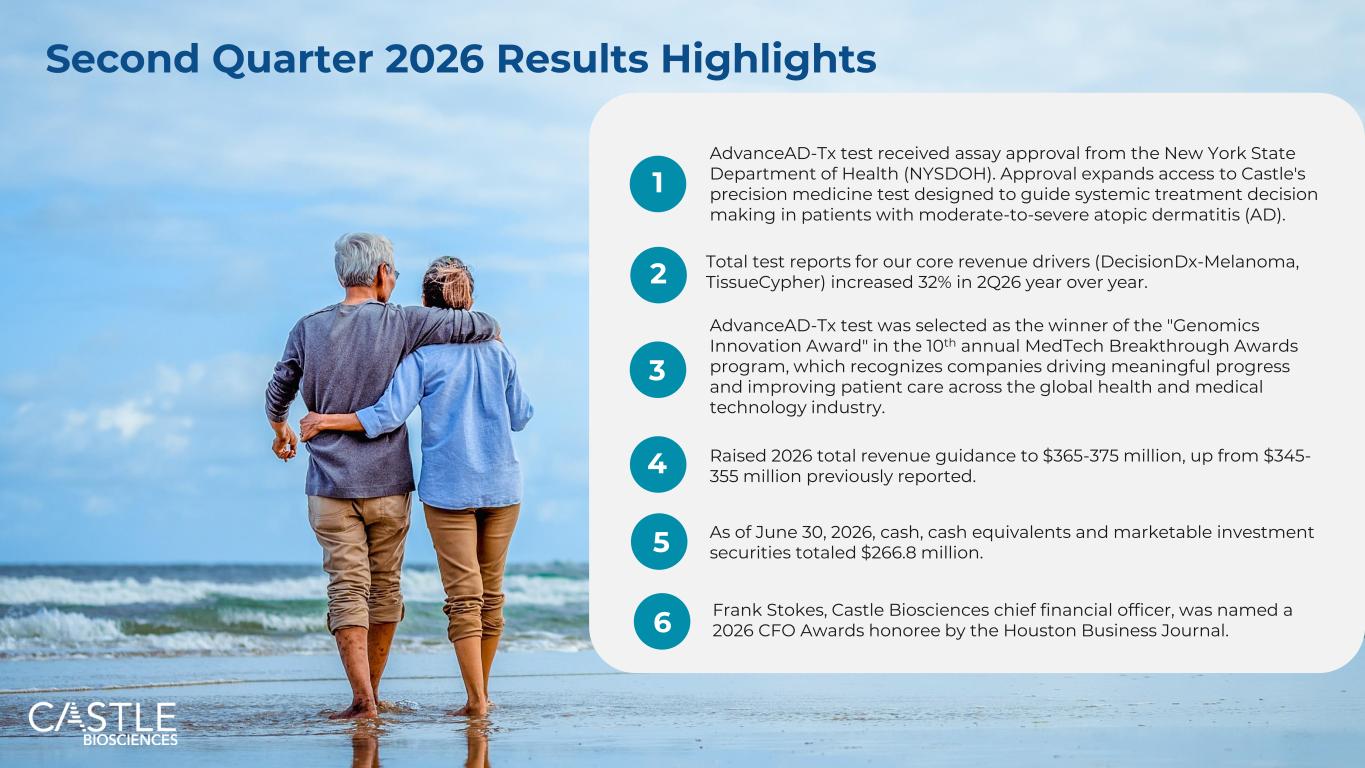
©2026 Castle Biosciences 6 Second Quarter 2026 Results Highlights Frank Stokes, Castle Biosciences chief financial officer, was named a 2026 CFO Awards honoree by the Houston Business Journal. 5 AdvanceAD-Tx test received assay approval from the New York State Department of Health (NYSDOH). Approval expands access to Castle's precision medicine test designed to guide systemic treatment decision making in patients with moderate-to-severe atopic dermatitis (AD). 6 As of June 30, 2026, cash, cash equivalents and marketable investment securities totaled $266.8 million. 2 3 4 1 Total test reports for our core revenue drivers (DecisionDx-Melanoma, TissueCypher) increased 32% in 2Q26 year over year. Raised 2026 total revenue guidance to $365-375 million, up from $345- 355 million previously reported. AdvanceAD-Tx test was selected as the winner of the "Genomics Innovation Award" in the 10th annual MedTech Breakthrough Awards program, which recognizes companies driving meaningful progress and improving patient care across the global health and medical technology industry.
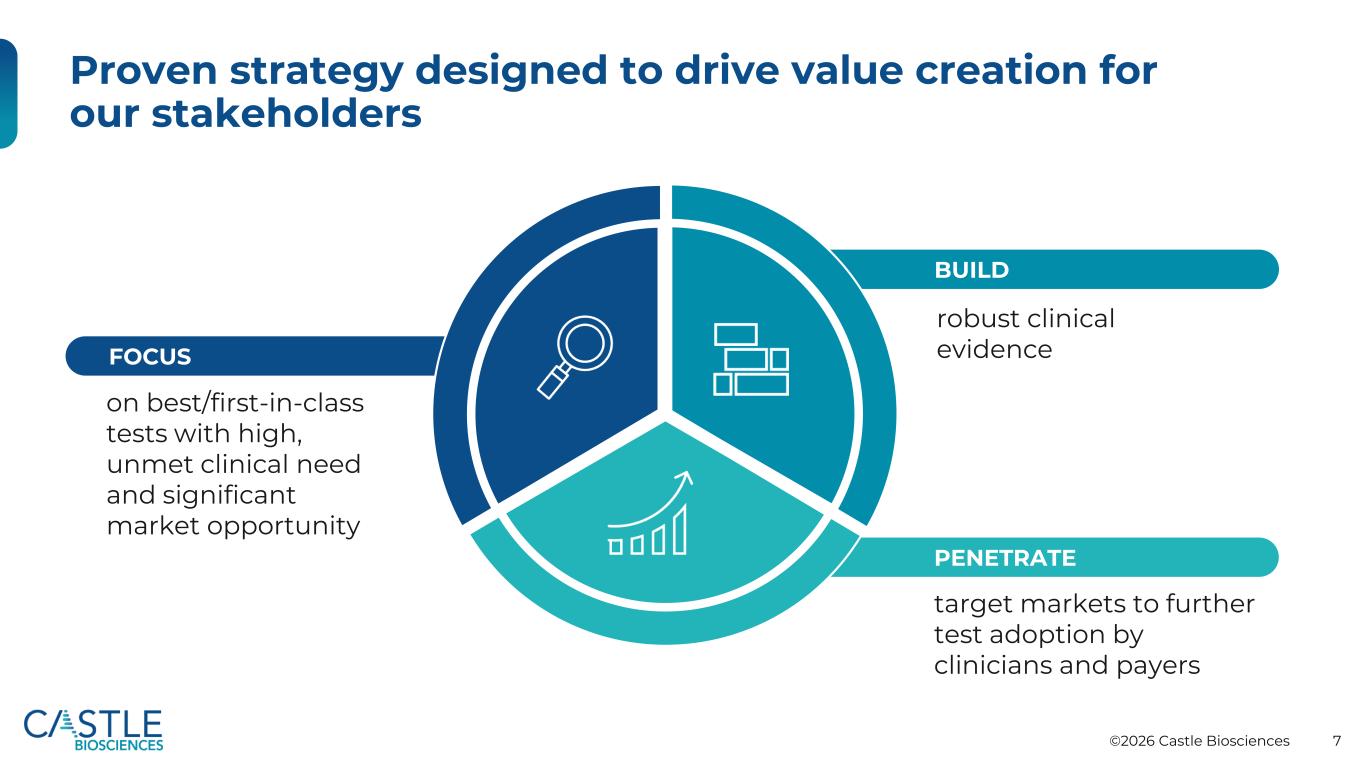
©2026 Castle Biosciences 7 Proven strategy designed to drive value creation for our stakeholders FOCUS on best/first-in-class tests with high, unmet clinical need and significant market opportunity BUILD robust clinical evidence PENETRATE target markets to further test adoption by clinicians and payers
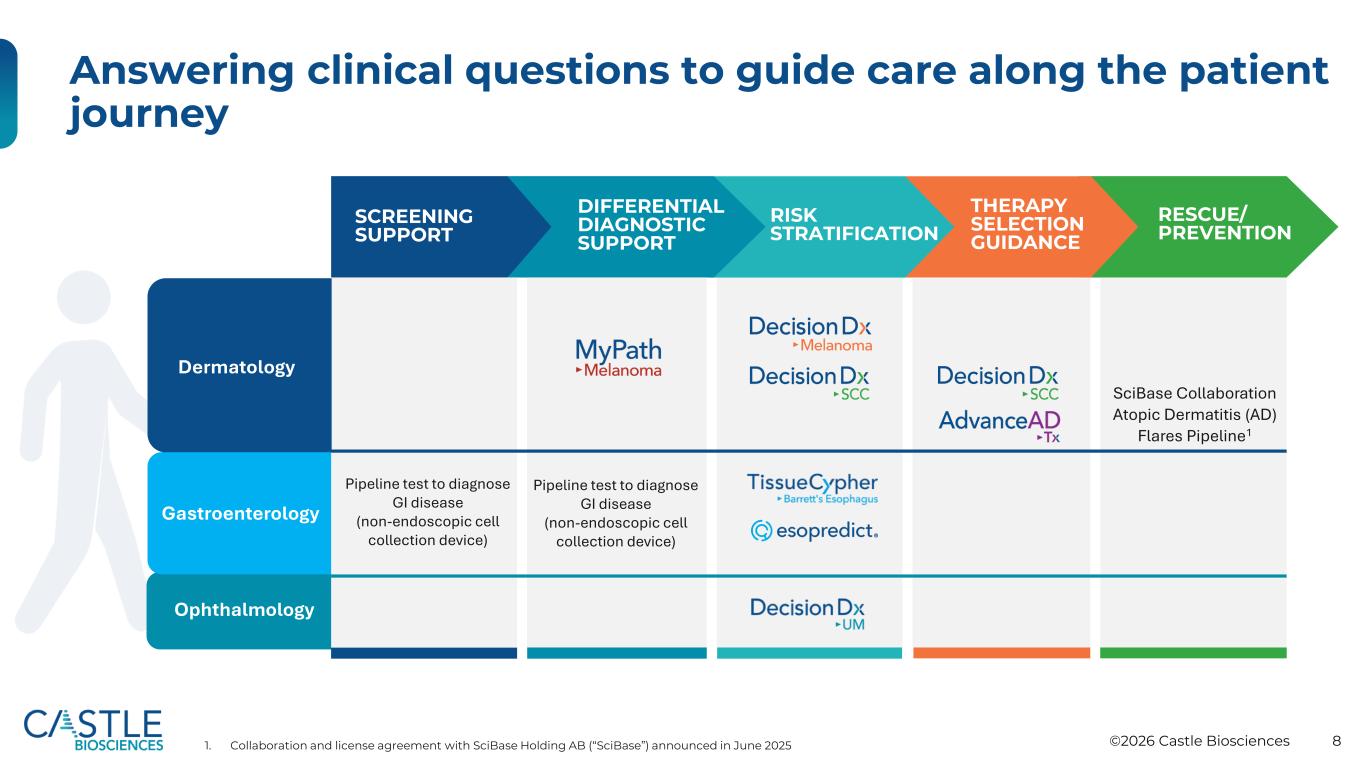
©2026 Castle Biosciences 8 Answering clinical questions to guide care along the patient journey 1. Collaboration and license agreement with SciBase Holding AB (“SciBase”) announced in June 2025 RESCUE/ PREVENTION DIFFERENTIAL DIAGNOSTIC SUPPORT RISK STRATIFICATION THERAPY SELECTION GUIDANCE MRD=minimal residual disease SCREENING SUPPORT Dermatology Ophthalmology Pipeline test to diagnose GI disease (non-endoscopic cell collection device) Pipeline test to diagnose GI disease (non-endoscopic cell collection device) SciBase Collaboration Atopic Dermatitis (AD) Flares Pipeline1 Gastroenterology
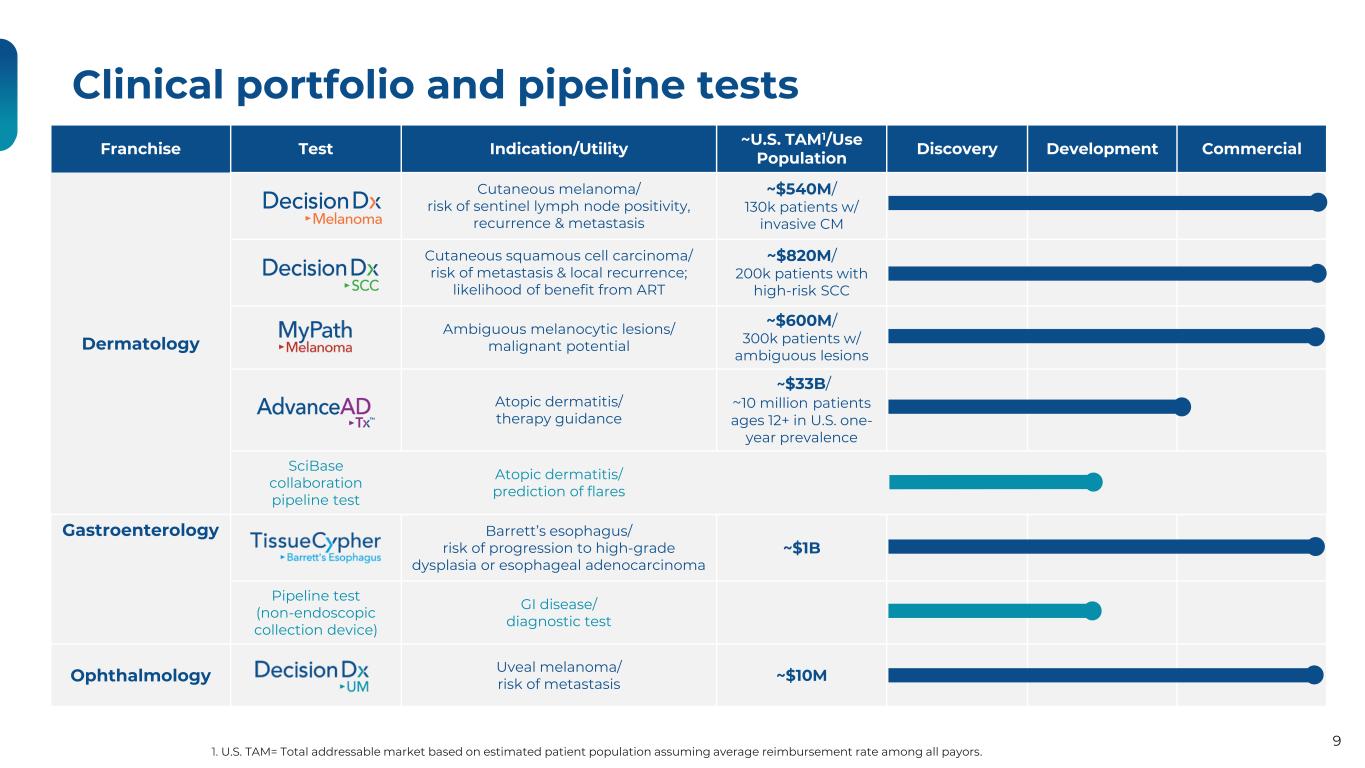
©2026 Castle Biosciences 9 Clinical portfolio and pipeline tests Franchise Test Indication/Utility ~U.S. TAM1/Use Population Discovery Development Commercial Dermatology Cutaneous melanoma/ risk of sentinel lymph node positivity, recurrence & metastasis ~$540M/ 130k patients w/ invasive CM Cutaneous squamous cell carcinoma/ risk of metastasis & local recurrence; likelihood of benefit from ART ~$820M/ 200k patients with high-risk SCC Ambiguous melanocytic lesions/ malignant potential ~$600M/ 300k patients w/ ambiguous lesions Atopic dermatitis/ therapy guidance ~$33B/ ~10 million patients ages 12+ in U.S. one- year prevalence SciBase collaboration pipeline test Atopic dermatitis/ prediction of flares Gastroenterology Barrett’s esophagus/ risk of progression to high-grade dysplasia or esophageal adenocarcinoma ~$1B Pipeline test (non-endoscopic collection device) GI disease/ diagnostic test Ophthalmology Uveal melanoma/ risk of metastasis ~$10M 1. U.S. TAM= Total addressable market based on estimated patient population assuming average reimbursement rate among all payors.
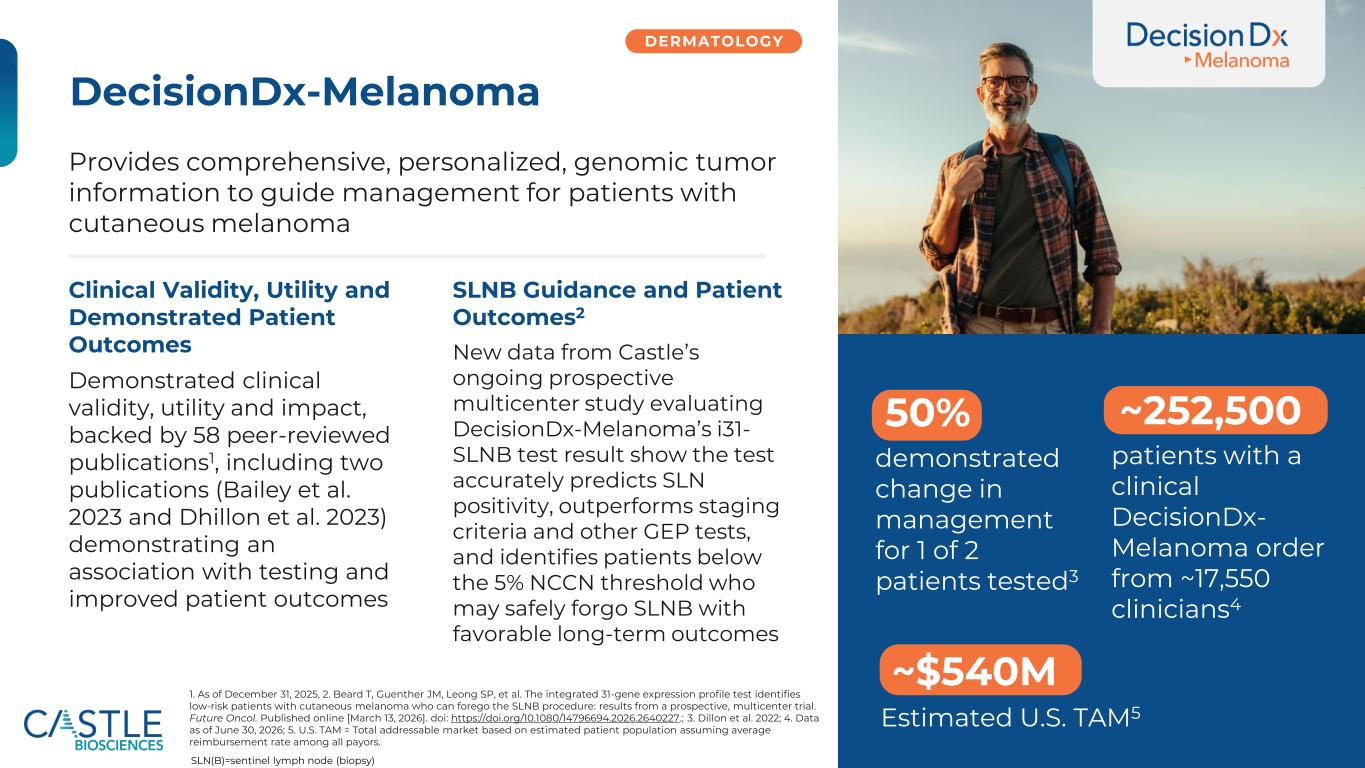
©2026 Castle Biosciences 10 DecisionDx-Melanoma DERMATOLOGY Provides comprehensive, personalized, genomic tumor information to guide management for patients with cutaneous melanoma demonstrated change in management for 1 of 2 patients tested3 ~252,500 patients with a clinical DecisionDx- Melanoma order from ~17,550 clinicians4 50% Clinical Validity, Utility and Demonstrated Patient Outcomes Demonstrated clinical validity, utility and impact, backed by 58 peer-reviewed publications1, including two publications (Bailey et al. 2023 and Dhillon et al. 2023) demonstrating an association with testing and improved patient outcomes SLNB Guidance and Patient Outcomes2 New data from Castle’s ongoing prospective multicenter study evaluating DecisionDx-Melanoma’s i31- SLNB test result show the test accurately predicts SLN positivity, outperforms staging criteria and other GEP tests, and identifies patients below the 5% NCCN threshold who may safely forgo SLNB with favorable long-term outcomes 1. As of December 31, 2025, 2. Beard T, Guenther JM, Leong SP, et al. The integrated 31-gene expression profile test identifies low-risk patients with cutaneous melanoma who can forego the SLNB procedure: results from a prospective, multicenter trial. Future Oncol. Published online [March 13, 2026]. doi: https://doi.org/10.1080/14796694.2026.2640227.; 3. Dillon et al. 2022; 4. Data as of June 30, 2026; 5. U.S. TAM = Total addressable market based on estimated patient population assuming average reimbursement rate among all payors. SLN(B)=sentinel lymph node (biopsy) ~$540M Estimated U.S. TAM5
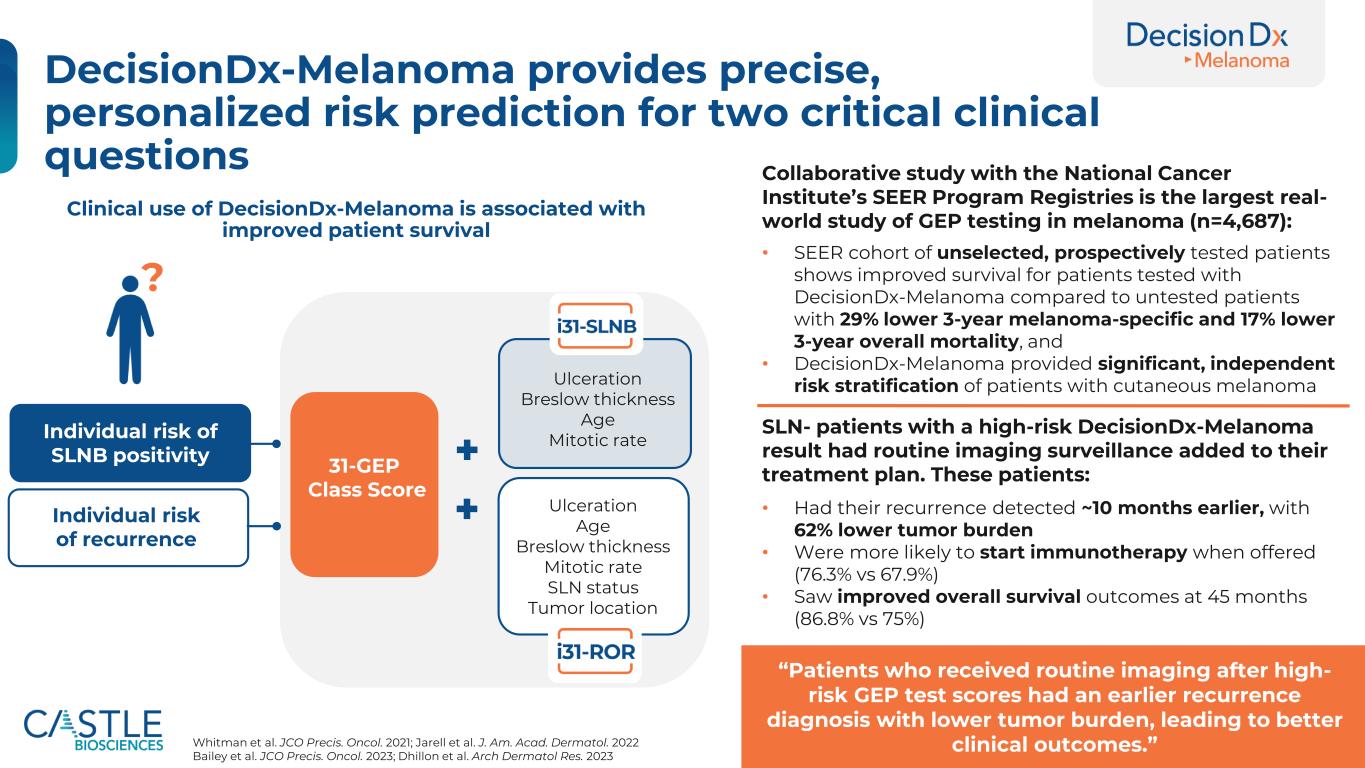
©2026 Castle Biosciences 11 Individual risk of SLNB positivity Individual risk of recurrence ? 31-GEP Class Score Ulceration Breslow thickness Age Mitotic rate Ulceration Age Breslow thickness Mitotic rate SLN status Tumor location Collaborative study with the National Cancer Institute’s SEER Program Registries is the largest real- world study of GEP testing in melanoma (n=4,687): • SEER cohort of unselected, prospectively tested patients shows improved survival for patients tested with DecisionDx-Melanoma compared to untested patients with 29% lower 3-year melanoma-specific and 17% lower 3-year overall mortality, and • DecisionDx-Melanoma provided significant, independent risk stratification of patients with cutaneous melanoma SLN- patients with a high-risk DecisionDx-Melanoma result had routine imaging surveillance added to their treatment plan. These patients: • Had their recurrence detected ~10 months earlier, with 62% lower tumor burden • Were more likely to start immunotherapy when offered (76.3% vs 67.9%) • Saw improved overall survival outcomes at 45 months (86.8% vs 75%) Whitman et al. JCO Precis. Oncol. 2021; Jarell et al. J. Am. Acad. Dermatol. 2022 Bailey et al. JCO Precis. Oncol. 2023; Dhillon et al. Arch Dermatol Res. 2023 “Patients who received routine imaging after high- risk GEP test scores had an earlier recurrence diagnosis with lower tumor burden, leading to better clinical outcomes.” Clinical use of DecisionDx-Melanoma is associated with improved patient survival DecisionDx-Melanoma provides precise, personalized risk prediction for two critical clinical questions
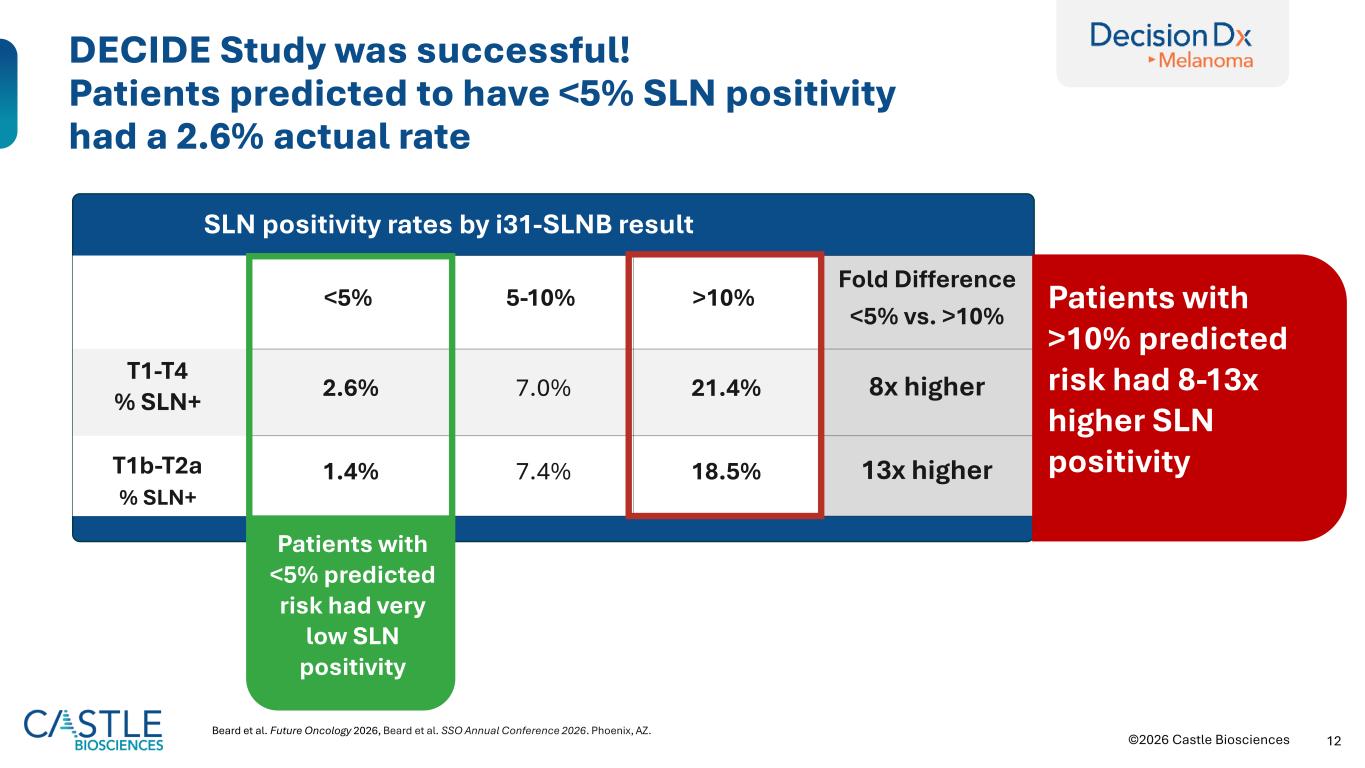
12©2026 Castle Biosciences DECIDE Study was successful! Patients predicted to have <5% SLN positivity had a 2.6% actual rate DECIDE Study was successful! Patients predicted to have <5% SLN positivity had a 2.6% actual rate Beard et al. Future Oncology 2026, Beard et al. SSO Annual Conference 2026. Phoenix, AZ. SLN positivity rates by i31-SLNB result <5% 5-10% >10% Fold Difference <5% vs. >10% T1-T4 2.6% 7.0% 21.4% 8x higher% SLN+ T1b-T2a 1.4% 7.4% 18.5% 13x higher % SLN+ Patients with >10% predicted risk had 8-13x higher SLN positivity Patients with <5% predicted risk had very low SLN positivity
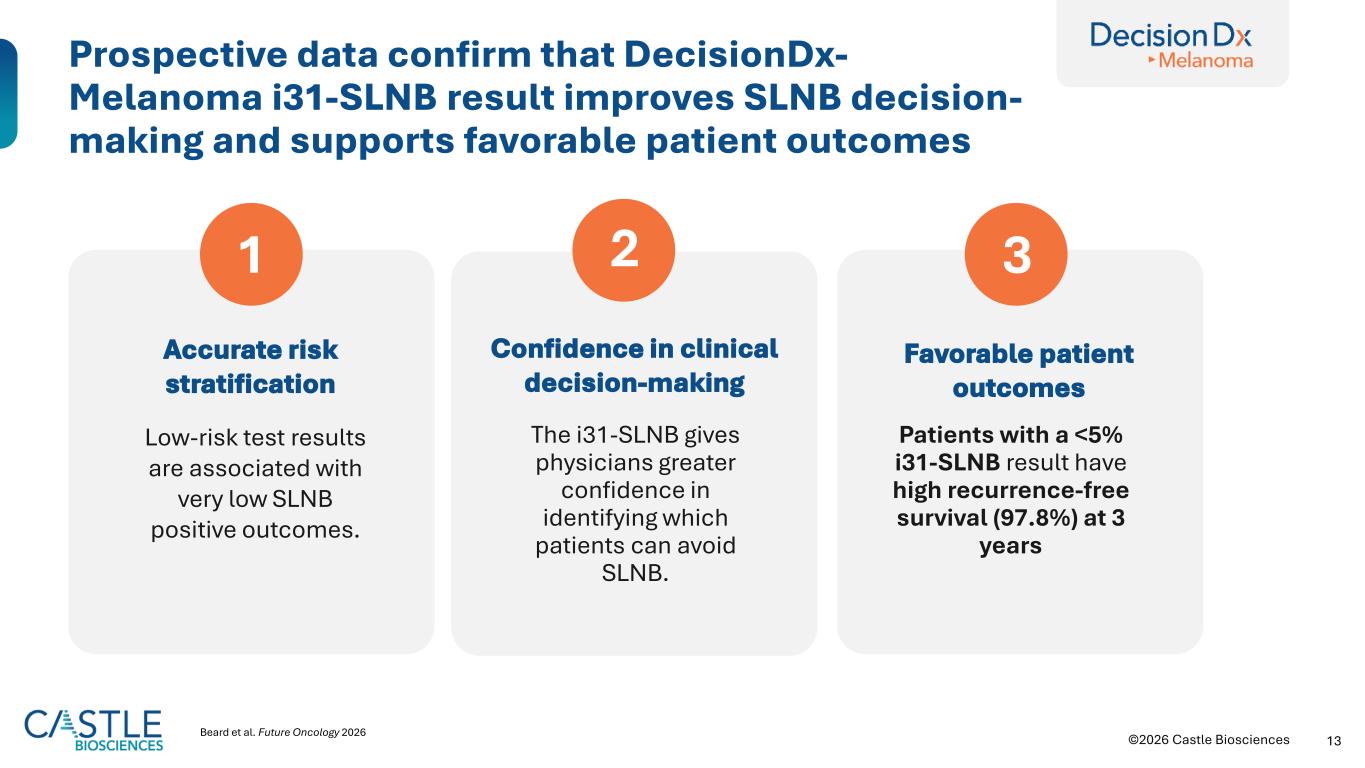
13©2026 Castle Biosciences Prospective data confirm that DecisionDx-Melanoma i31-SLNB result improves SLNB decision-making and supports favorable patient outcomes Prospective data confirm that DecisionDx- Melanoma i31-SLNB result improves SLNB decision- making and supports favorable patient outcomes Beard et al. Future Oncology 2026 1 Accurate risk stratification Patients with a <5% i31-SLNB result have high recurrence-free survival (97.8%) at 3 years 3 Favorable patient outcomes Low-risk test results are associated with very low SLNB positive outcomes. The i31-SLNB gives physicians greater confidence in identifying which patients can avoid SLNB. 2 Confidence in clinical decision-making
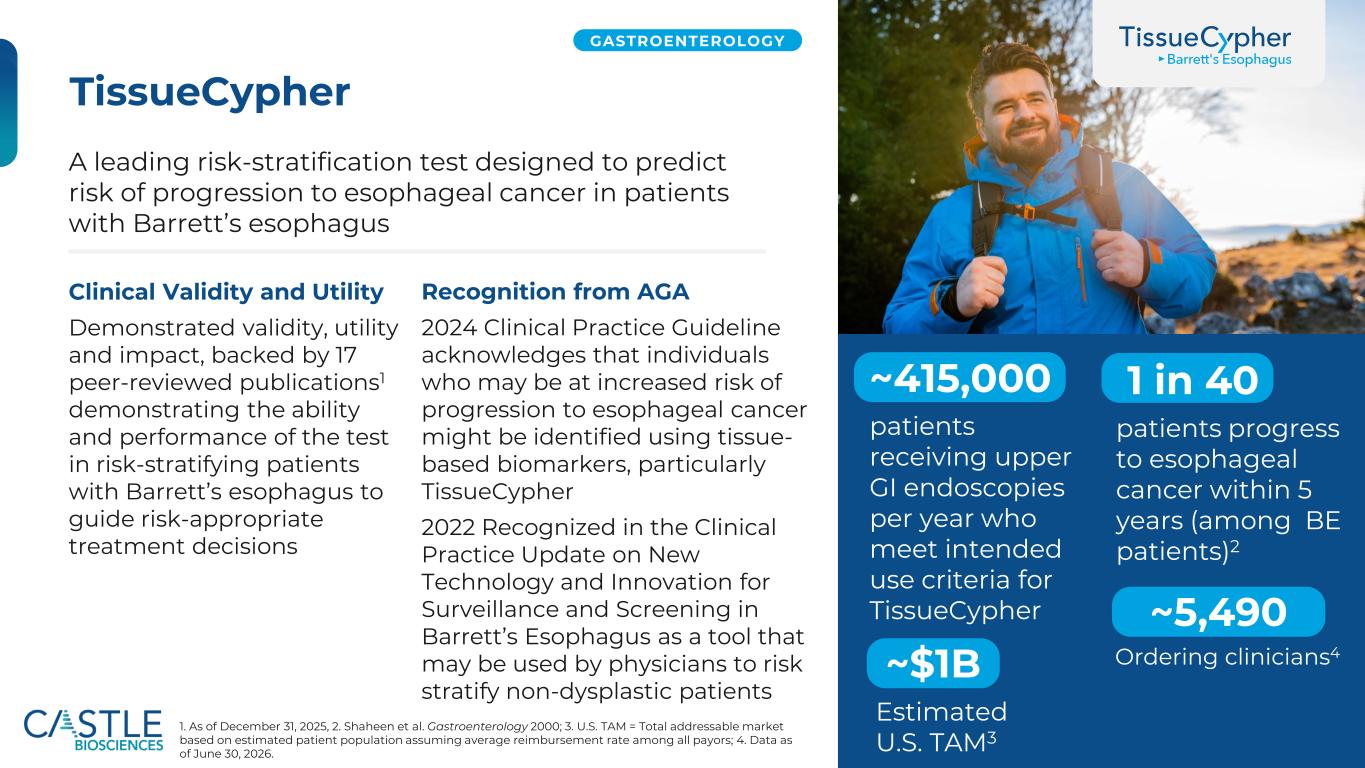
©2026 Castle Biosciences 14 TissueCypher GASTROENTEROLOGY A leading risk-stratification test designed to predict risk of progression to esophageal cancer in patients with Barrett’s esophagus Clinical Validity and Utility Demonstrated validity, utility and impact, backed by 17 peer-reviewed publications1 demonstrating the ability and performance of the test in risk-stratifying patients with Barrett’s esophagus to guide risk-appropriate treatment decisions Recognition from AGA 2024 Clinical Practice Guideline acknowledges that individuals who may be at increased risk of progression to esophageal cancer might be identified using tissue- based biomarkers, particularly TissueCypher 2022 Recognized in the Clinical Practice Update on New Technology and Innovation for Surveillance and Screening in Barrett’s Esophagus as a tool that may be used by physicians to risk stratify non-dysplastic patients ~415,000 patients receiving upper GI endoscopies per year who meet intended use criteria for TissueCypher 1 in 40 patients progress to esophageal cancer within 5 years (among BE patients)2 ~$1B 1. As of December 31, 2025, 2. Shaheen et al. Gastroenterology 2000; 3. U.S. TAM = Total addressable market based on estimated patient population assuming average reimbursement rate among all payors; 4. Data as of June 30, 2026. Estimated U.S. TAM3 Ordering clinicians4 ~5,490
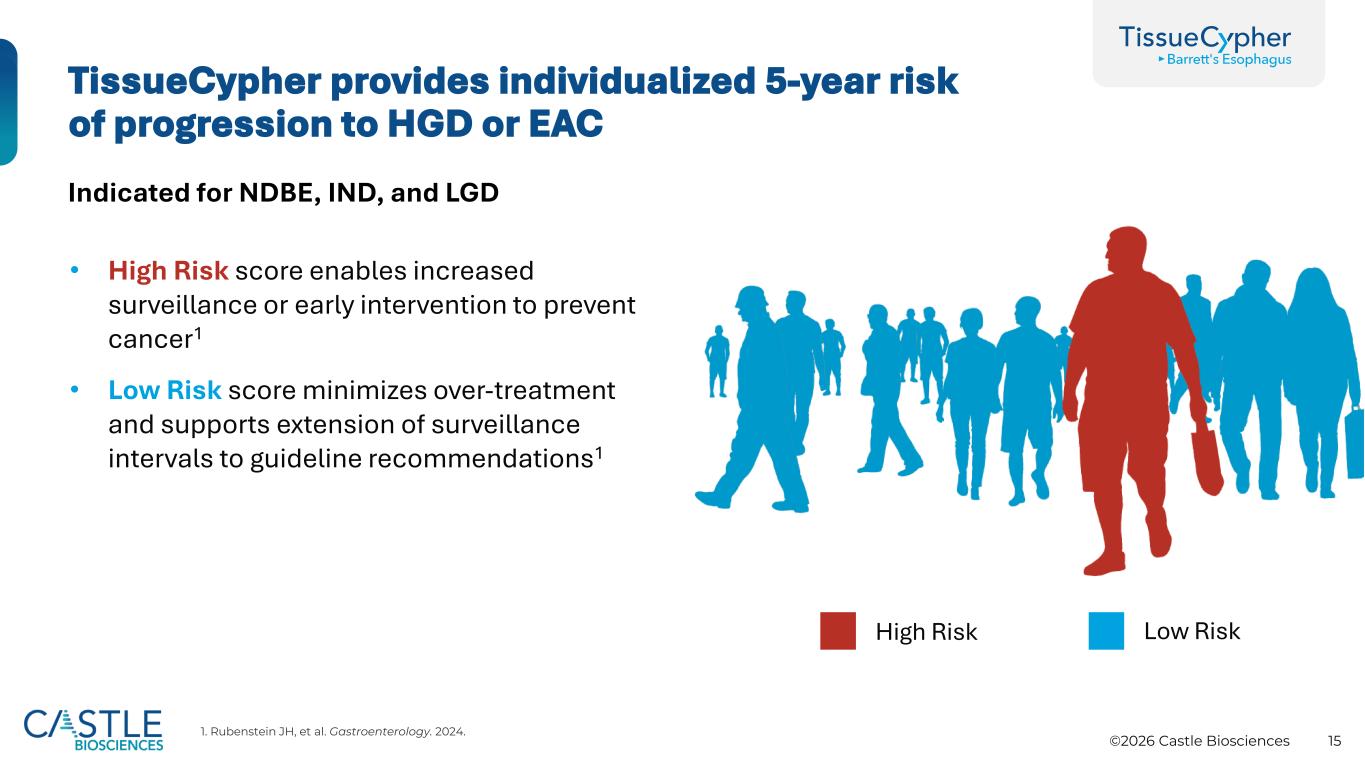
©2026 Castle Biosciences 15 TissueCypher provides individualized 5-year risk of progression to HGD or EAC Low RiskHigh Risk • High Risk score enables increased surveillance or early intervention to prevent cancer1 • Low Risk score minimizes over-treatment and supports extension of surveillance intervals to guideline recommendations1 Indicated for NDBE, IND, and LGD 1. Rubenstein JH, et al. Gastroenterology. 2024.
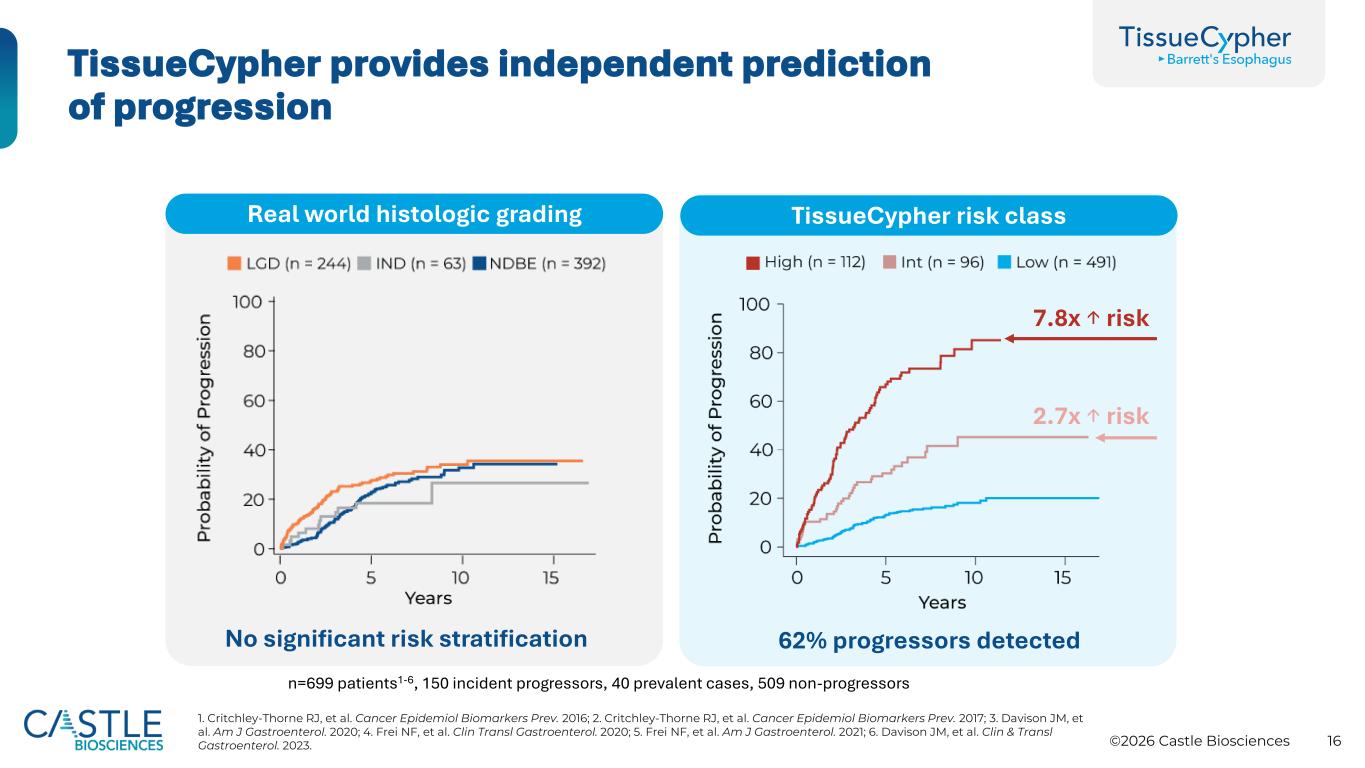
©2026 Castle Biosciences 16 TissueCypher provides independent prediction of progression n=699 patients1-6, 150 incident progressors, 40 prevalent cases, 509 non-progressors No significant risk stratification 62% progressors detected 7.8x ↑ risk 2.7x ↑ risk 1. Critchley-Thorne RJ, et al. Cancer Epidemiol Biomarkers Prev. 2016; 2. Critchley-Thorne RJ, et al. Cancer Epidemiol Biomarkers Prev. 2017; 3. Davison JM, et al. Am J Gastroenterol. 2020; 4. Frei NF, et al. Clin Transl Gastroenterol. 2020; 5. Frei NF, et al. Am J Gastroenterol. 2021; 6. Davison JM, et al. Clin & Transl Gastroenterol. 2023. Real world histologic grading TissueCypher risk class
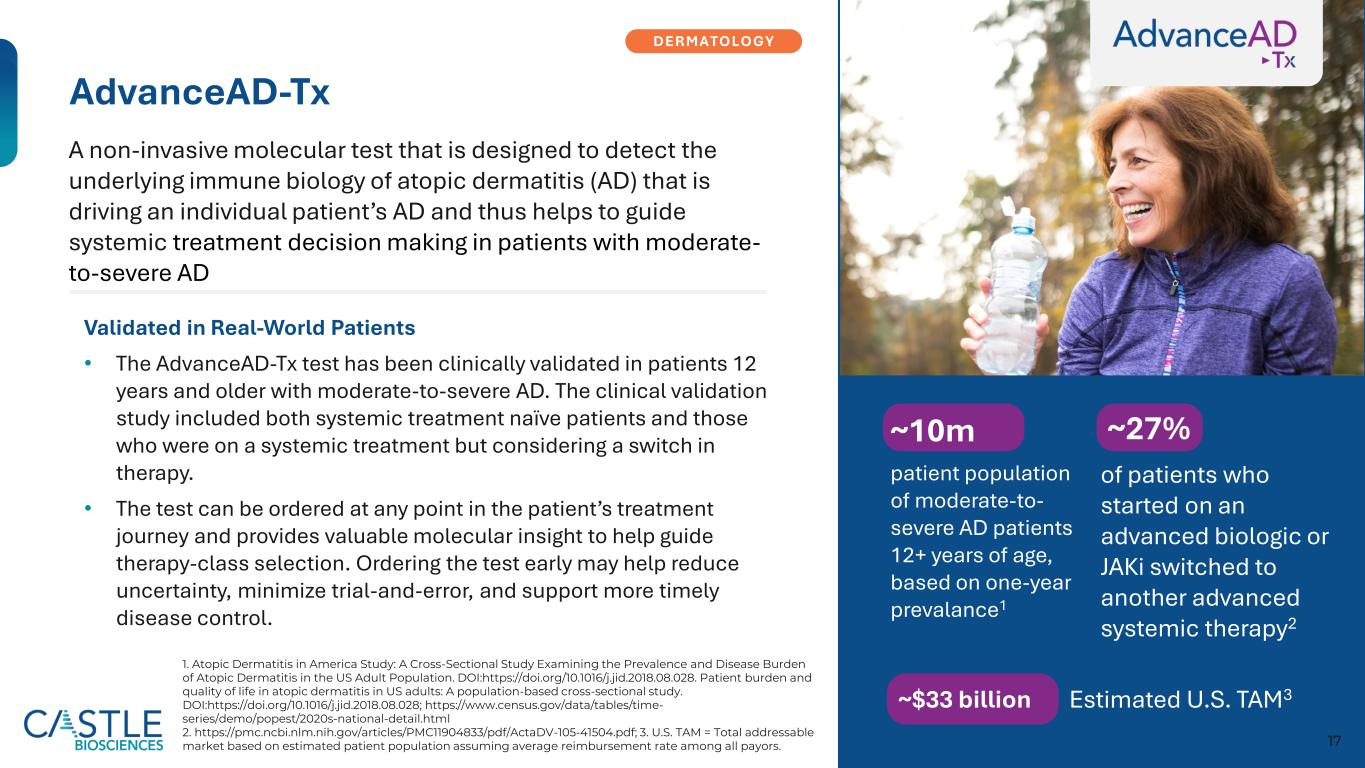
©2026 Castle Biosciences 17 AdvanceAD-Tx DERMATOLOGY A non-invasive molecular test that is designed to detect the underlying immune biology of atopic dermatitis (AD) that is driving an individual patient’s AD and thus helps to guide systemic treatment decision making in patients with moderate- to-severe AD Validated in Real-World Patients • The AdvanceAD-Tx test has been clinically validated in patients 12 years and older with moderate-to-severe AD. The clinical validation study included both systemic treatment naïve patients and those who were on a systemic treatment but considering a switch in therapy. • The test can be ordered at any point in the patient’s treatment journey and provides valuable molecular insight to help guide therapy-class selection. Ordering the test early may help reduce uncertainty, minimize trial-and-error, and support more timely disease control. ~10m patient population of moderate-to- severe AD patients 12+ years of age, based on one-year prevalance1 ~$33 billion 1. Atopic Dermatitis in America Study: A Cross-Sectional Study Examining the Prevalence and Disease Burden of Atopic Dermatitis in the US Adult Population. DOI:https://doi.org/10.1016/j.jid.2018.08.028. Patient burden and quality of life in atopic dermatitis in US adults: A population-based cross-sectional study. DOI:https://doi.org/10.1016/j.jid.2018.08.028; https://www.census.gov/data/tables/time- series/demo/popest/2020s-national-detail.html 2. https://pmc.ncbi.nlm.nih.gov/articles/PMC11904833/pdf/ActaDV-105-41504.pdf; 3. U.S. TAM = Total addressable market based on estimated patient population assuming average reimbursement rate among all payors. of patients who started on an advanced biologic or JAKi switched to another advanced systemic therapy2 ~27% Estimated U.S. TAM3
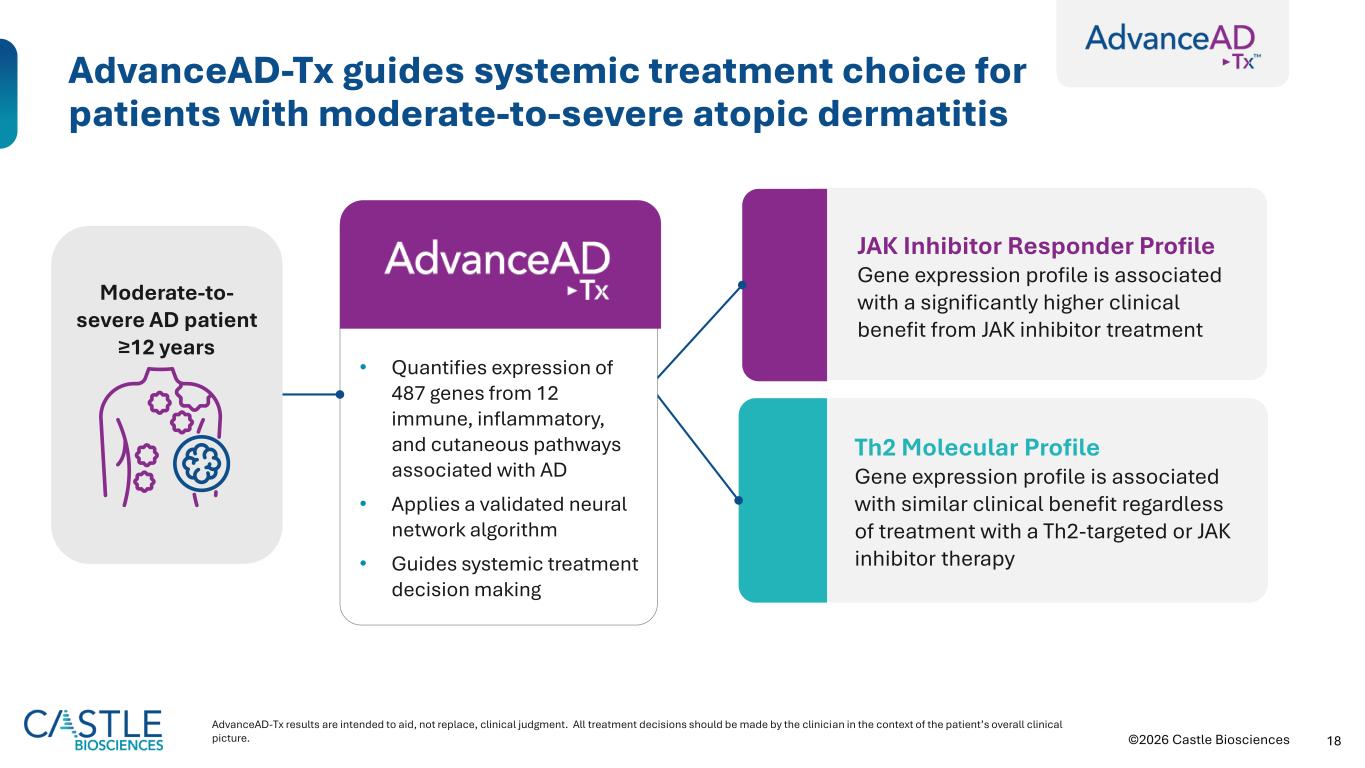
18©2026 Castle Biosciences AdvanceAD-Tx results are intended to aid, not replace, clinical judgment. All treatment decisions should be made by the clinician in the context of the patient’s overall clinical picture. AdvanceAD-Tx guides systemic treatment choice for patients with moderate-to-severe atopic dermatitis AdvanceAD-Tx guides systemic treatment choice for patients with moderate-to-severe atopic dermatitis Moderate-to- severe AD patient ≥12 years JAK Inhibitor Responder Profile Gene expression profile is associated with a significantly higher clinical benefit from JAK inhibitor treatment Th2 Molecular Profile Gene expression profile is associated with similar clinical benefit regardless of treatment with a Th2-targeted or JAK inhibitor therapy • Quantifies expression of 487 genes from 12 immune, inflammatory, and cutaneous pathways associated with AD • Applies a validated neural network algorithm • Guides systemic treatment decision making
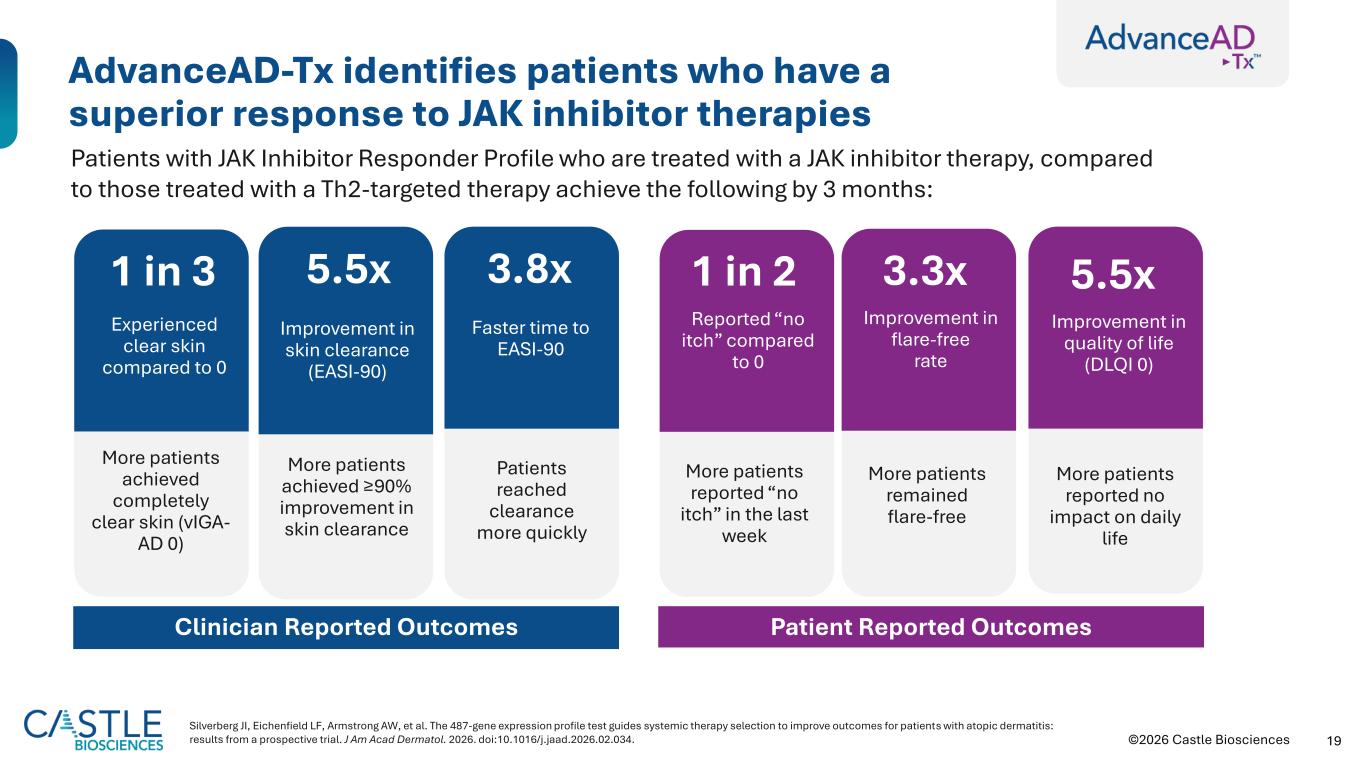
19©2026 Castle Biosciences AdvanceAD-Tx identifies patients who have a superior response to JAK inhibitor therapies AdvanceAD-Tx identifies patients who have a superior response to JAK inhibitor therapies Silverberg JI, Eichenfield LF, Armstrong AW, et al. The 487-gene expression profile test guides systemic therapy selection to improve outcomes for patients with atopic dermatitis: results from a prospective trial. J Am Acad Dermatol. 2026. doi:10.1016/j.jaad.2026.02.034. Presented at Fall Clinical Dermatology Conference 2025. Data on file. 5.5x Improvement in skin clearance (EASI-90) More patients achieved ≥90% improvement in skin clearance 1 in 2 Reported “no itch” compared to 0 More patients reported “no itch” in the last week 3.8x Faster time to EASI-90 Patients reached clearance more quickly 5.5x Improvement in quality of life (DLQI 0) More patients reported no impact on daily life CONTINUE 1 in 3 Experienced clear skin compared to 0 More patients achieved completely clear skin (vIGA- AD 0) Clinician Reported Outcomes Patient Reported Outcomes Patients with JAK Inhibitor Responder Profile who are treated with a JAK inhibitor therapy, compared to those treated with a Th2-targeted therapy achieve the following by 3 months: 3.3x Improvement in flare-free rate More patients remained flare-free
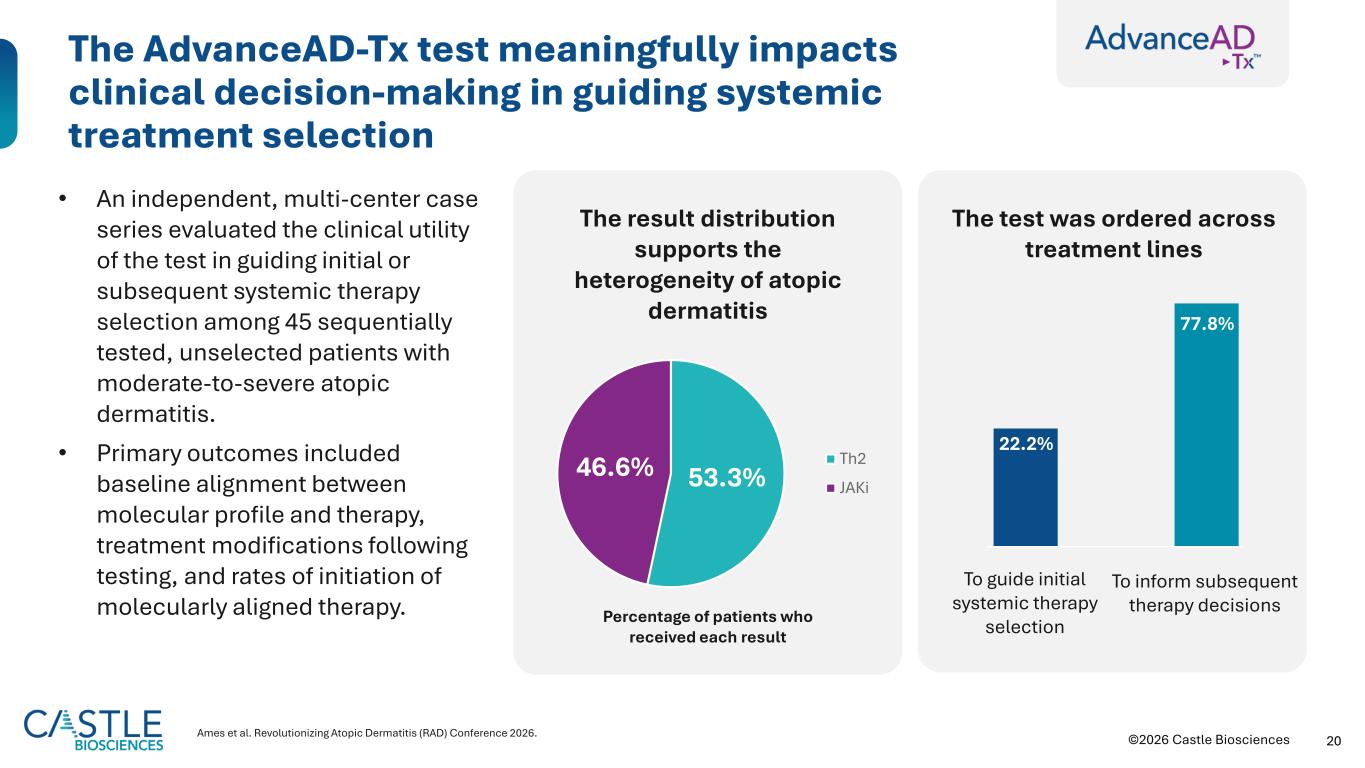
20©2026 Castle Biosciences The AdvanceAD-Tx test meaningfully impacts clinical decision-making in guiding systemic treatment selection Ames et al. Revolutionizing Atopic Dermatitis (RAD) Conference 2026. The result distribution supports the heterogeneity of atopic dermatitis Th2 JAKi53.3%46.6% Percentage of patients who received each result The test was ordered across treatment lines To inform subsequent therapy decisions To guide initial systemic therapy selection 77.8% 22.2% • An independent, multi-center case series evaluated the clinical utility of the test in guiding initial or subsequent systemic therapy selection among 45 sequentially tested, unselected patients with moderate-to-severe atopic dermatitis. • Primary outcomes included baseline alignment between molecular profile and therapy, treatment modifications following testing, and rates of initiation of molecularly aligned therapy.
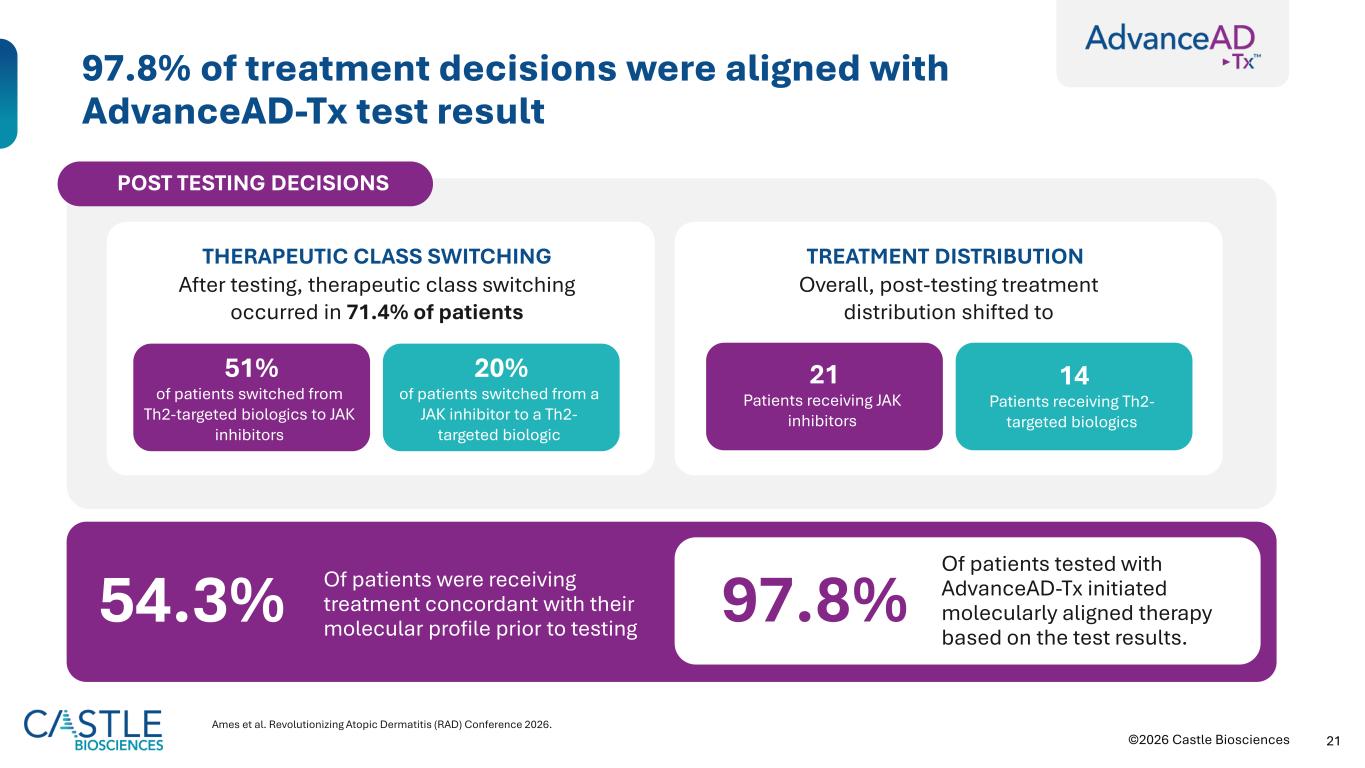
21©2026 Castle Biosciences 97.8% of treatment decisions were aligned with AdvanceAD-Tx test result Ames et al. Revolutionizing Atopic Dermatitis (RAD) Conference 2026. Of patients were receiving treatment concordant with their molecular profile prior to testing POST TESTING DECISIONS THERAPEUTIC CLASS SWITCHING TREATMENT DISTRIBUTION After testing, therapeutic class switching occurred in 71.4% of patients 51% of patients switched from Th2-targeted biologics to JAK inhibitors 20% of patients switched from a JAK inhibitor to a Th2- targeted biologic Overall, post-testing treatment distribution shifted to 21 Patients receiving JAK inhibitors 14 Patients receiving Th2- targeted biologics 54.3% Of patients tested with AdvanceAD-Tx initiated molecularly aligned therapy based on the test results. 97.8%

©2026 Castle Biosciences 22 Financials
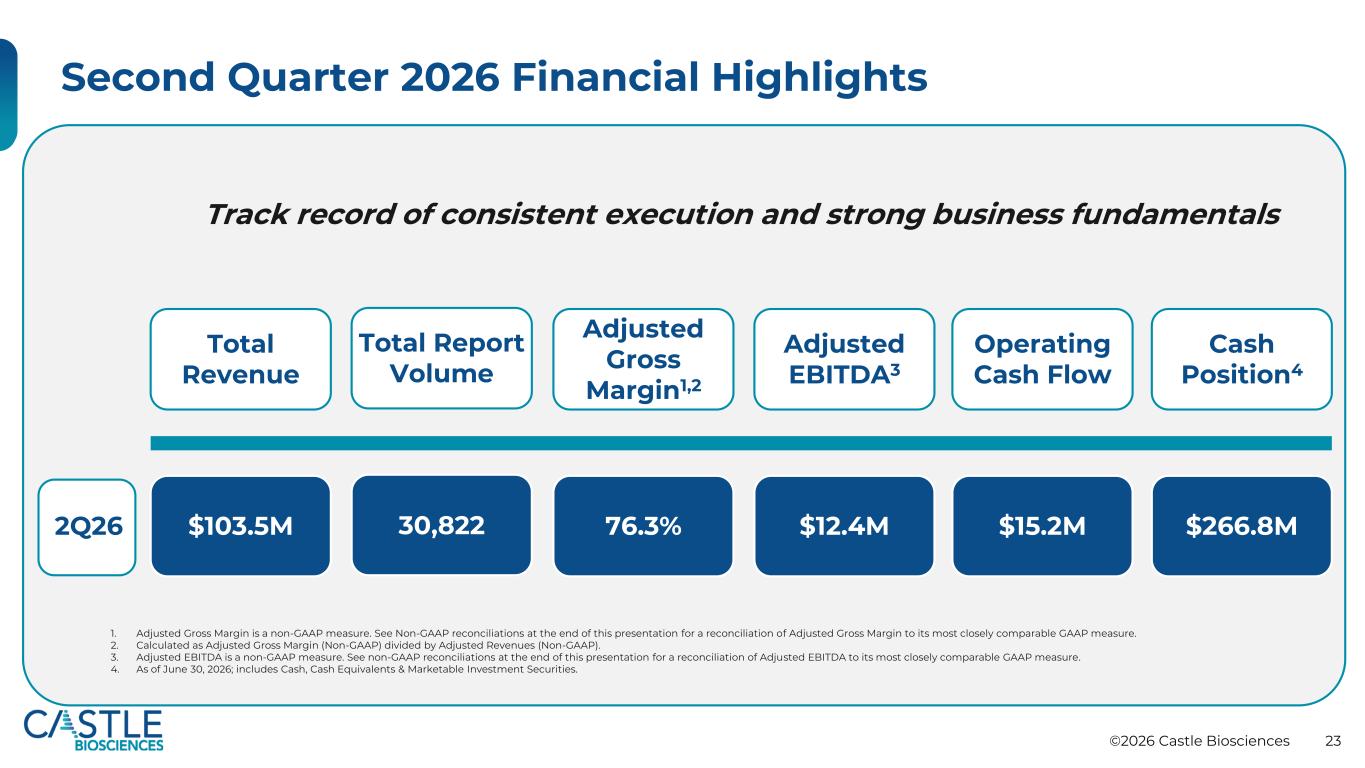
©2026 Castle Biosciences 23 Second Quarter 2026 Financial Highlights Total Revenue Cash Position4 Operating Cash Flow Total Report Volume Adjusted Gross Margin1,2 Adjusted EBITDA3 $103.5M $266.8M$15.2M30,822 76.3% $12.4M 1. Adjusted Gross Margin is a non-GAAP measure. See Non-GAAP reconciliations at the end of this presentation for a reconciliation of Adjusted Gross Margin to its most closely comparable GAAP measure. 2. Calculated as Adjusted Gross Margin (Non-GAAP) divided by Adjusted Revenues (Non-GAAP). 3. Adjusted EBITDA is a non-GAAP measure. See non-GAAP reconciliations at the end of this presentation for a reconciliation of Adjusted EBITDA to its most closely comparable GAAP measure. 4. As of June 30, 2026; includes Cash, Cash Equivalents & Marketable Investment Securities. Track record of consistent execution and strong business fundamentals 2Q26
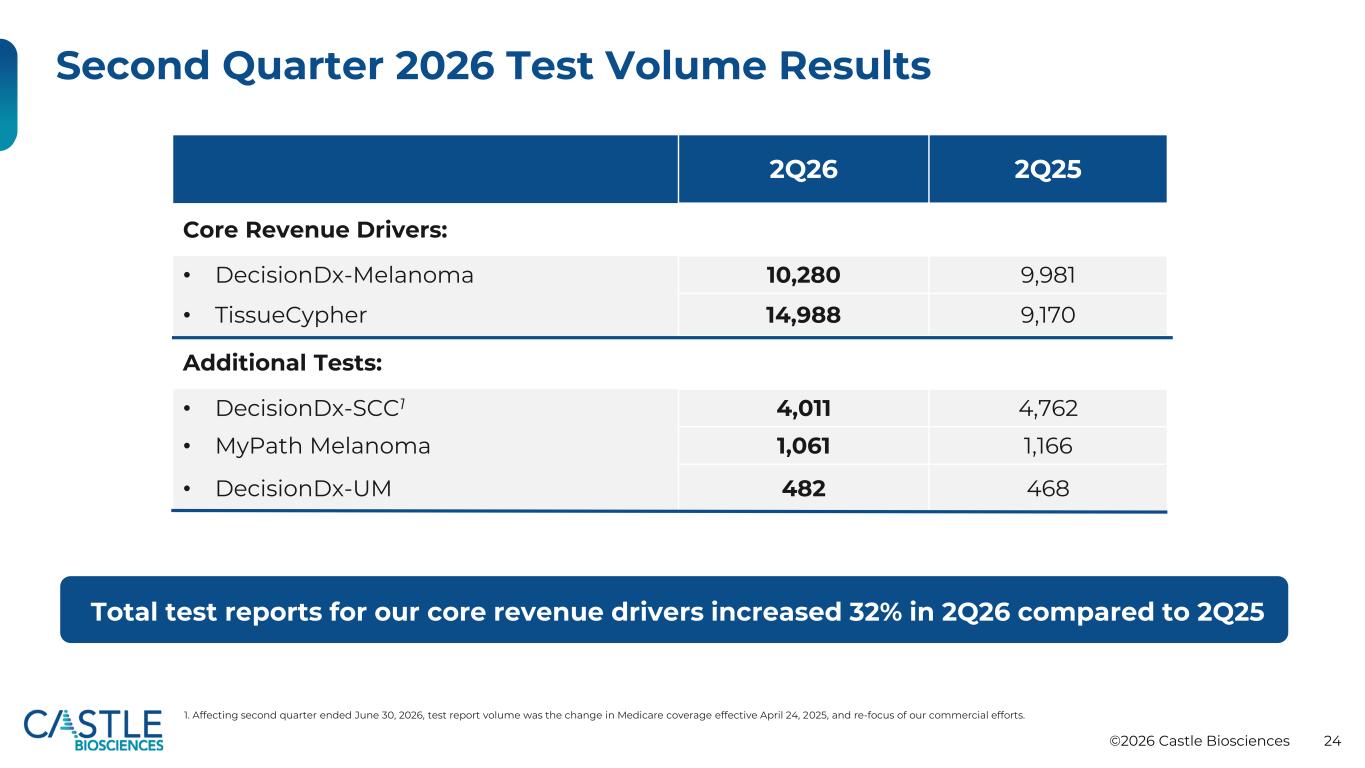
©2026 Castle Biosciences 24 Second Quarter 2026 Test Volume Results 2Q26 2Q25 Core Revenue Drivers: • DecisionDx-Melanoma 10,280 9,981 • TissueCypher 14,988 9,170 Additional Tests: • DecisionDx-SCC1 4,011 4,762 • MyPath Melanoma 1,061 1,166 • DecisionDx-UM 482 468 1. Affecting second quarter ended June 30, 2026, test report volume was the change in Medicare coverage effective April 24, 2025, and re-focus of our commercial efforts. Total test reports for our core revenue drivers increased 32% in 2Q26 compared to 2Q25
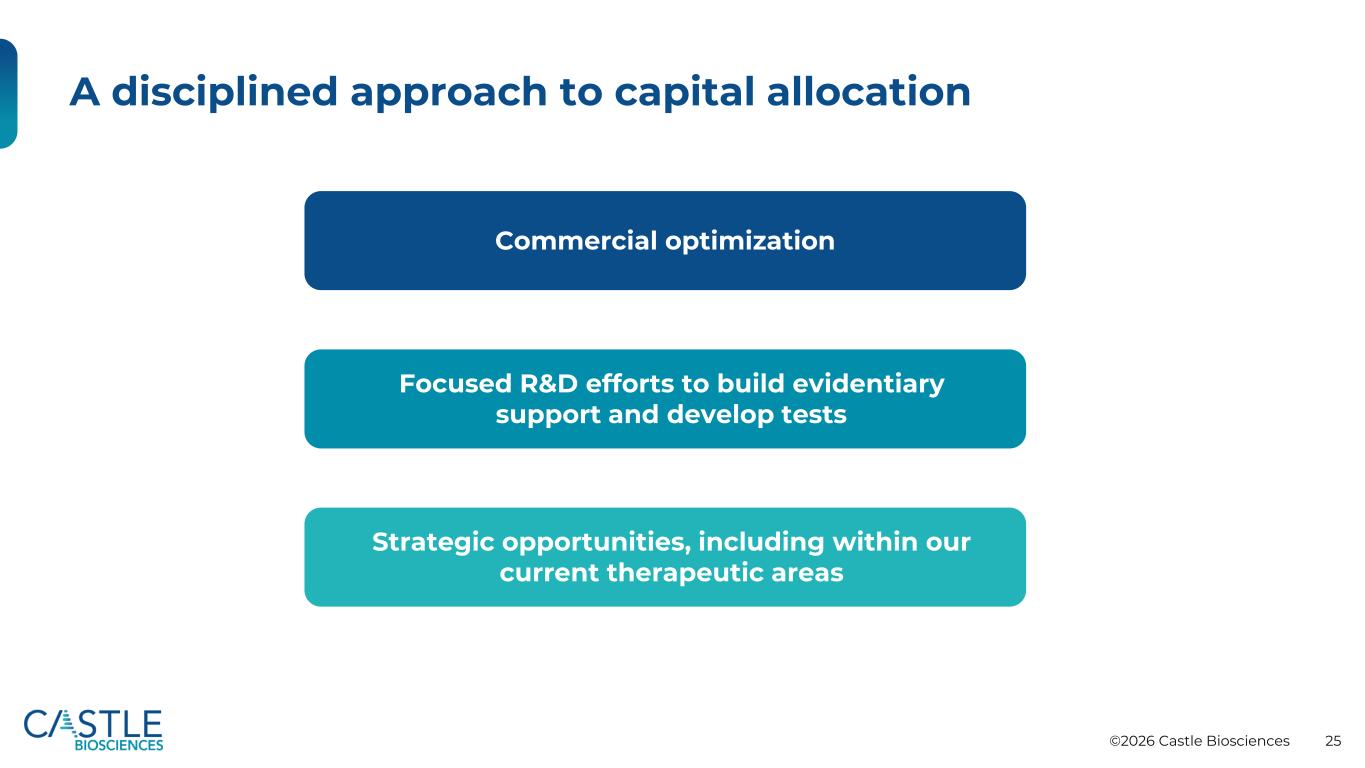
©2026 Castle Biosciences 25 A disciplined approach to capital allocation Commercial optimization Focused R&D efforts to build evidentiary support and develop tests Strategic opportunities, including within our current therapeutic areas
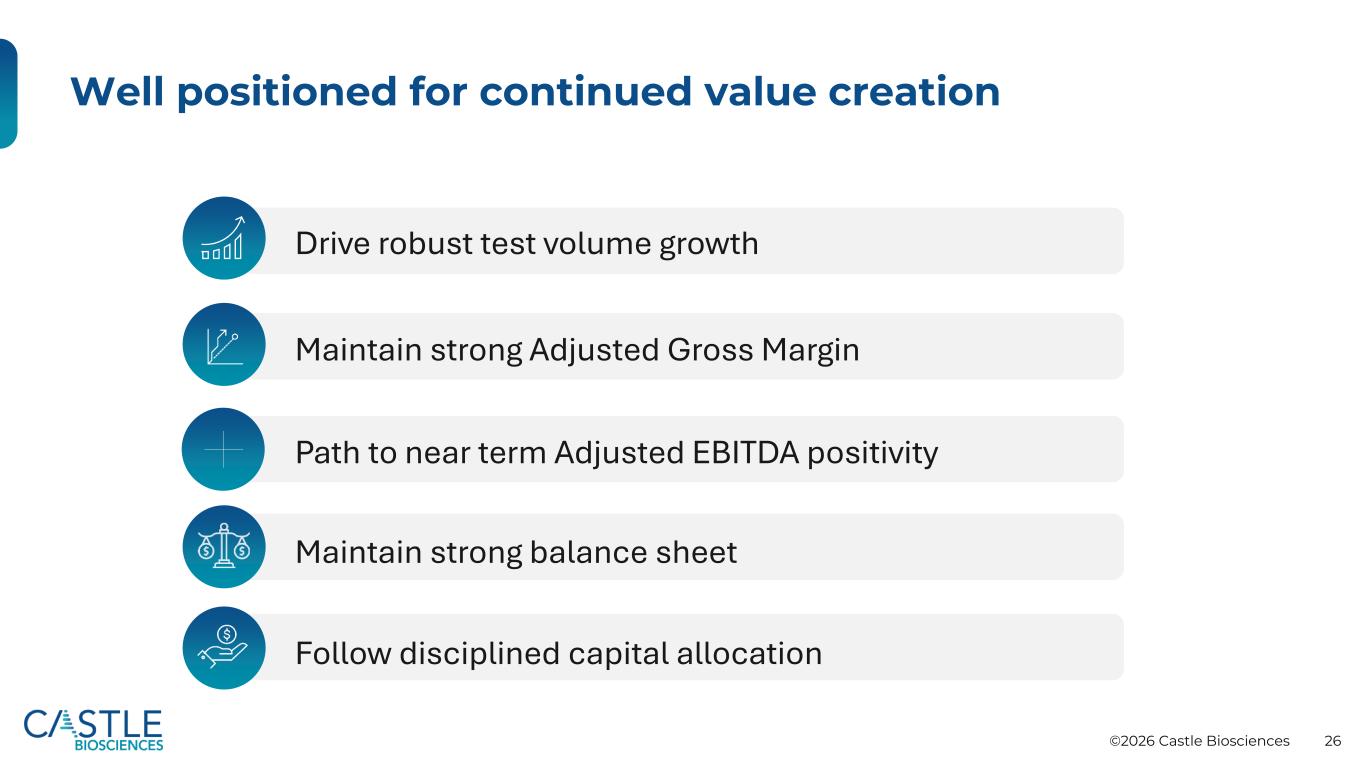
©2026 Castle Biosciences 26 Well positioned for continued value creation Drive robust test volume growth Maintain strong Adjusted Gross Margin Maintain strong balance sheet Follow disciplined capital allocation Path to near term Adjusted EBITDA positivity

©2026 Castle Biosciences 27 Appendix
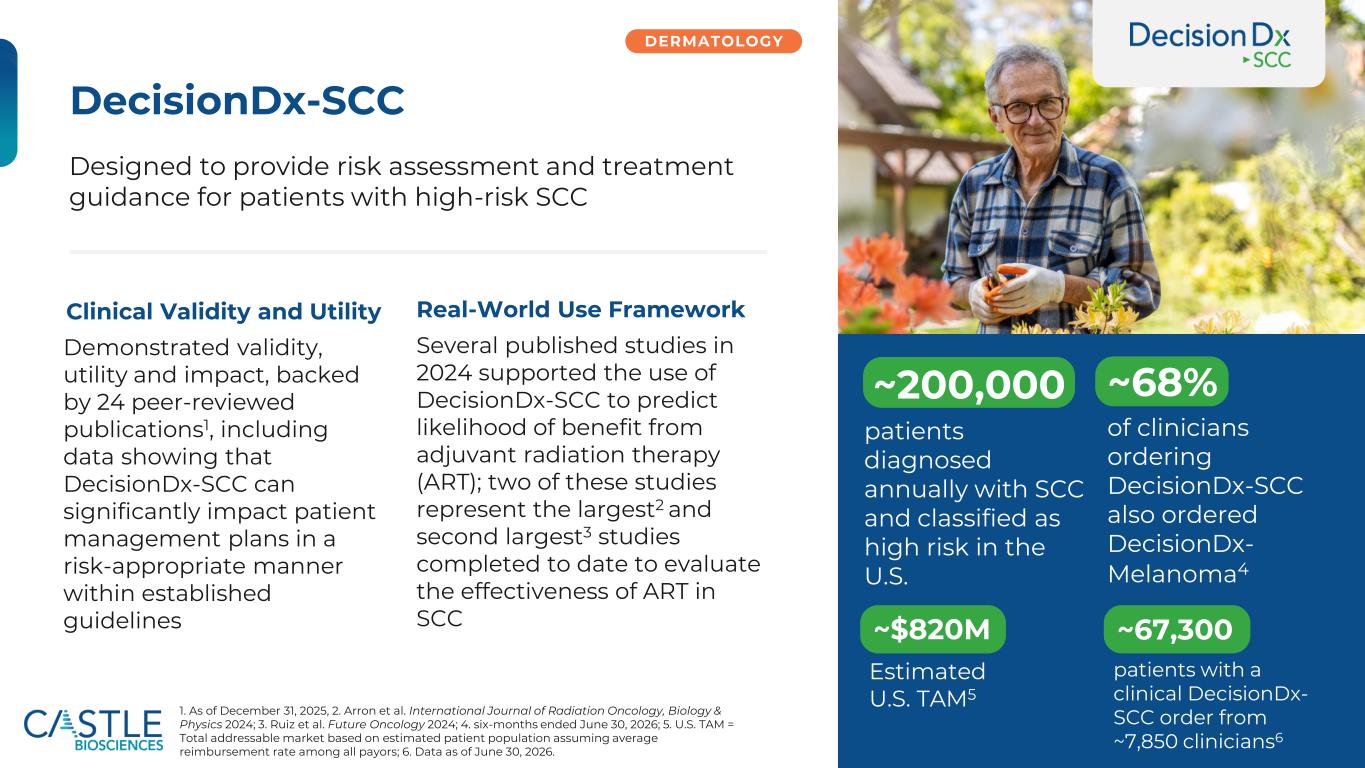
©2026 Castle Biosciences 28 DecisionDx-SCC DERMATOLOGY Designed to provide risk assessment and treatment guidance for patients with high-risk SCC Clinical Validity and Utility Demonstrated validity, utility and impact, backed by 24 peer-reviewed publications1, including data showing that DecisionDx-SCC can significantly impact patient management plans in a risk-appropriate manner within established guidelines Real-World Use Framework Several published studies in 2024 supported the use of DecisionDx-SCC to predict likelihood of benefit from adjuvant radiation therapy (ART); two of these studies represent the largest2 and second largest3 studies completed to date to evaluate the effectiveness of ART in SCC Estimated U.S. TAM5 ~200,000 ~68% ~$820M patients diagnosed annually with SCC and classified as high risk in the U.S. of clinicians ordering DecisionDx-SCC also ordered DecisionDx- Melanoma4 1. As of December 31, 2025, 2. Arron et al. International Journal of Radiation Oncology, Biology & Physics 2024; 3. Ruiz et al. Future Oncology 2024; 4. six-months ended June 30, 2026; 5. U.S. TAM = Total addressable market based on estimated patient population assuming average reimbursement rate among all payors; 6. Data as of June 30, 2026. patients with a clinical DecisionDx- SCC order from ~7,850 clinicians6 ~67,300
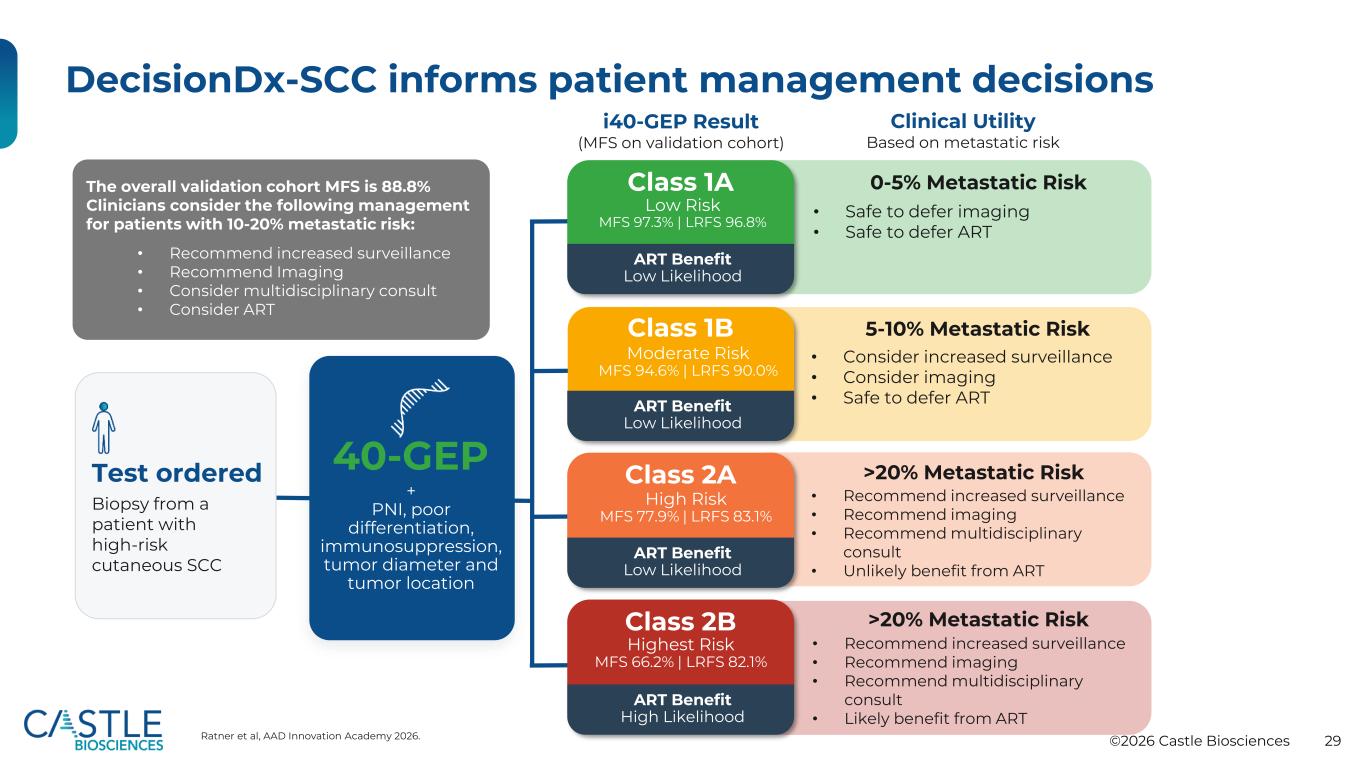
©2026 Castle Biosciences 29 40-GEP + PNI, poor differentiation, immunosuppression, tumor diameter and tumor location Test ordered Biopsy from a patient with high-risk cutaneous SCC i40-GEP Result (MFS on validation cohort) Clinical Utility Based on metastatic risk 0-5% Metastatic Risk • Safe to defer imaging • Safe to defer ART Class 1A Low Risk MFS 97.3% | LRFS 96.8% ART Benefit Low Likelihood Class 1B Moderate Risk MFS 94.6% | LRFS 90.0% ART Benefit Low Likelihood Class 2A High Risk MFS 77.9% | LRFS 83.1% ART Benefit Low Likelihood Class 2B Highest Risk MFS 66.2% | LRFS 82.1% ART Benefit High Likelihood 5-10% Metastatic Risk • Consider increased surveillance • Consider imaging • Safe to defer ART >20% Metastatic Risk • Recommend increased surveillance • Recommend imaging • Recommend multidisciplinary consult • Unlikely benefit from ART >20% Metastatic Risk • Recommend increased surveillance • Recommend imaging • Recommend multidisciplinary consult • Likely benefit from ART The overall validation cohort MFS is 88.8% Clinicians consider the following management for patients with 10-20% metastatic risk: • Recommend increased surveillance • Recommend Imaging • Consider multidisciplinary consult • Consider ART DecisionDx-SCC informs patient management decisions Ratner et al, AAD Innovation Academy 2026.
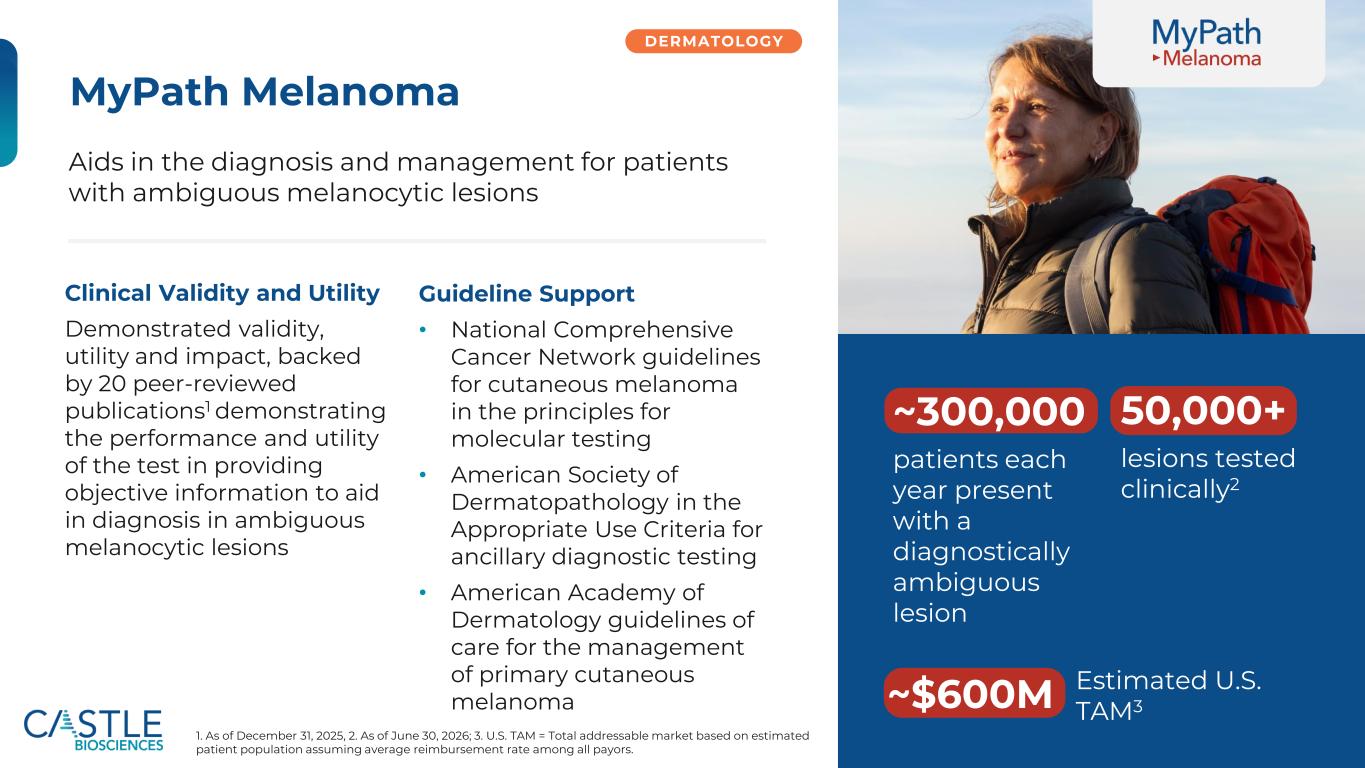
©2026 Castle Biosciences 30 MyPath Melanoma DERMATOLOGY Aids in the diagnosis and management for patients with ambiguous melanocytic lesions Clinical Validity and Utility Demonstrated validity, utility and impact, backed by 20 peer-reviewed publications1 demonstrating the performance and utility of the test in providing objective information to aid in diagnosis in ambiguous melanocytic lesions Guideline Support • National Comprehensive Cancer Network guidelines for cutaneous melanoma in the principles for molecular testing • American Society of Dermatopathology in the Appropriate Use Criteria for ancillary diagnostic testing • American Academy of Dermatology guidelines of care for the management of primary cutaneous melanoma Estimated U.S. TAM3 ~300,000 patients each year present with a diagnostically ambiguous lesion 50,000+ lesions tested clinically2 ~$600M 1. As of December 31, 2025, 2. As of June 30, 2026; 3. U.S. TAM = Total addressable market based on estimated patient population assuming average reimbursement rate among all payors.
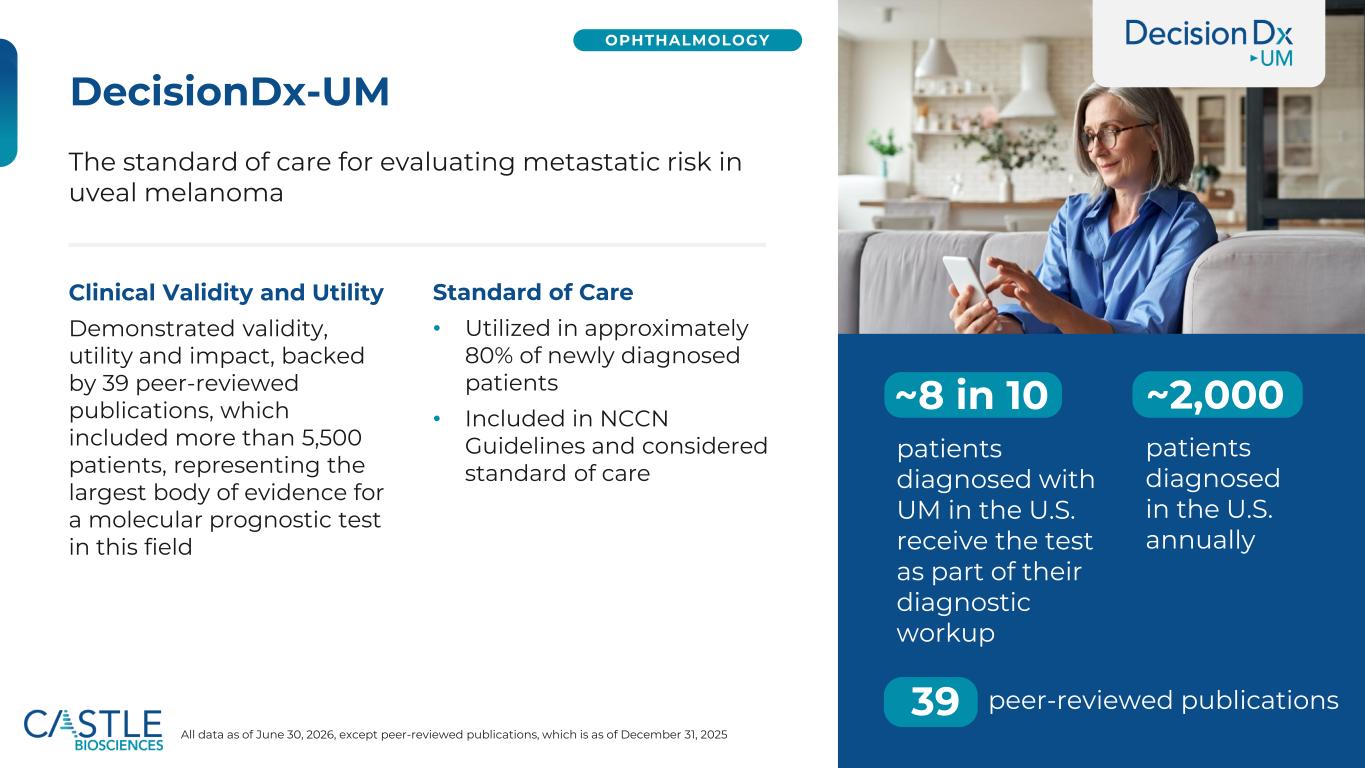
©2026 Castle Biosciences 31 DecisionDx-UM OPHTHALMOLOGY The standard of care for evaluating metastatic risk in uveal melanoma Standard of Care • Utilized in approximately 80% of newly diagnosed patients • Included in NCCN Guidelines and considered standard of care peer-reviewed publications ~8 in 10 ~2,000 39 patients diagnosed in the U.S. annually patients diagnosed with UM in the U.S. receive the test as part of their diagnostic workup Clinical Validity and Utility Demonstrated validity, utility and impact, backed by 39 peer-reviewed publications, which included more than 5,500 patients, representing the largest body of evidence for a molecular prognostic test in this field All data as of June 30, 2026, except peer-reviewed publications, which is as of December 31, 2025
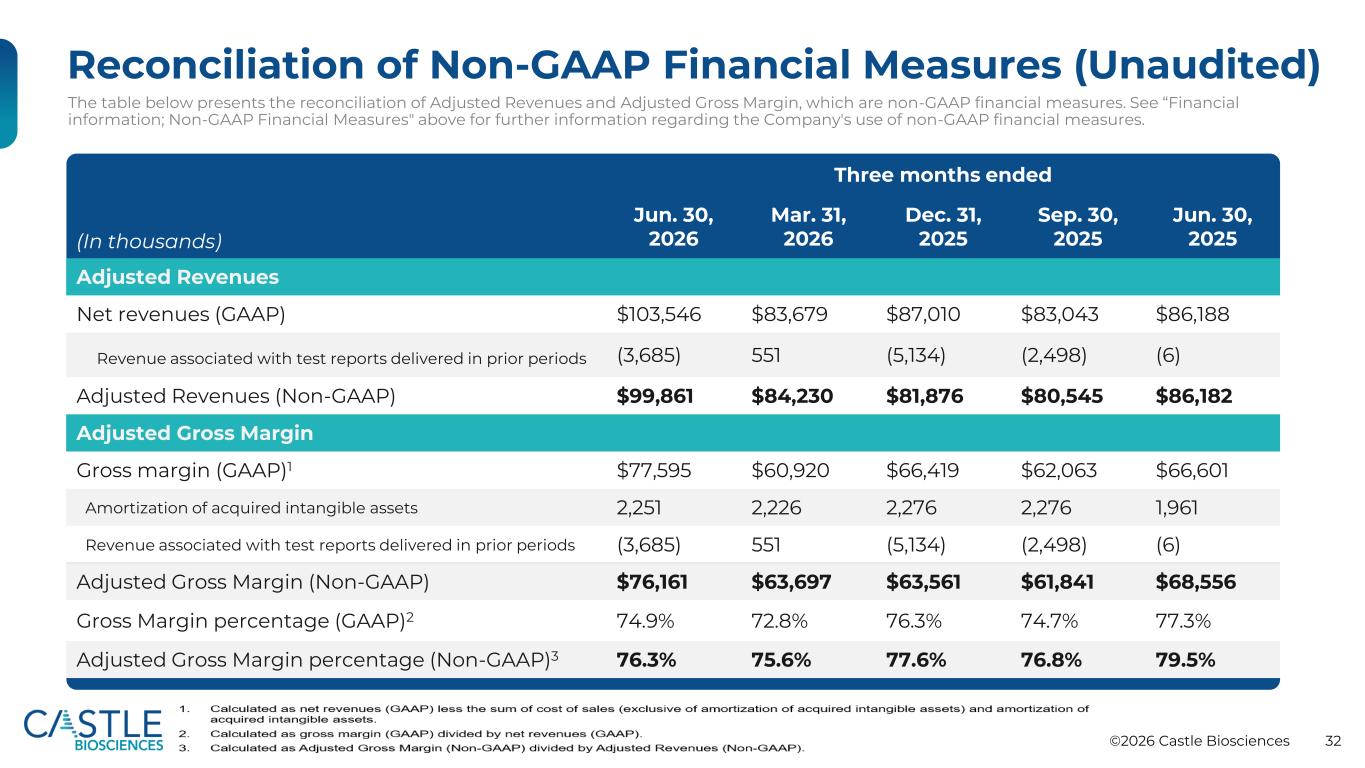
©2026 Castle Biosciences 32 Reconciliation of Non-GAAP Financial Measures (Unaudited) The table below presents the reconciliation of Adjusted Revenues and Adjusted Gross Margin, which are non-GAAP financial measures. See “Financial information; Non-GAAP Financial Measures" above for further information regarding the Company's use of non-GAAP financial measures. (In thousands) Three months ended Jun. 30, 2026 Mar. 31, 2026 Dec. 31, 2025 Sep. 30, 2025 Jun. 30, 2025 Adjusted Revenues Net revenues (GAAP) $103,546 $83,679 $87,010 $83,043 $86,188 Revenue associated with test reports delivered in prior periods (3,685) 551 (5,134) (2,498) (6) Adjusted Revenues (Non-GAAP) $99,861 $84,230 $81,876 $80,545 $86,182 Adjusted Gross Margin Gross margin (GAAP)1 $77,595 $60,920 $66,419 $62,063 $66,601 Amortization of acquired intangible assets 2,251 2,226 2,276 2,276 1,961 Revenue associated with test reports delivered in prior periods (3,685) 551 (5,134) (2,498) (6) Adjusted Gross Margin (Non-GAAP) $76,161 $63,697 $63,561 $61,841 $68,556 Gross Margin percentage (GAAP)2 74.9% 72.8% 76.3% 74.7% 77.3% Adjusted Gross Margin percentage (Non-GAAP)3 76.3% 75.6% 77.6% 76.8% 79.5%
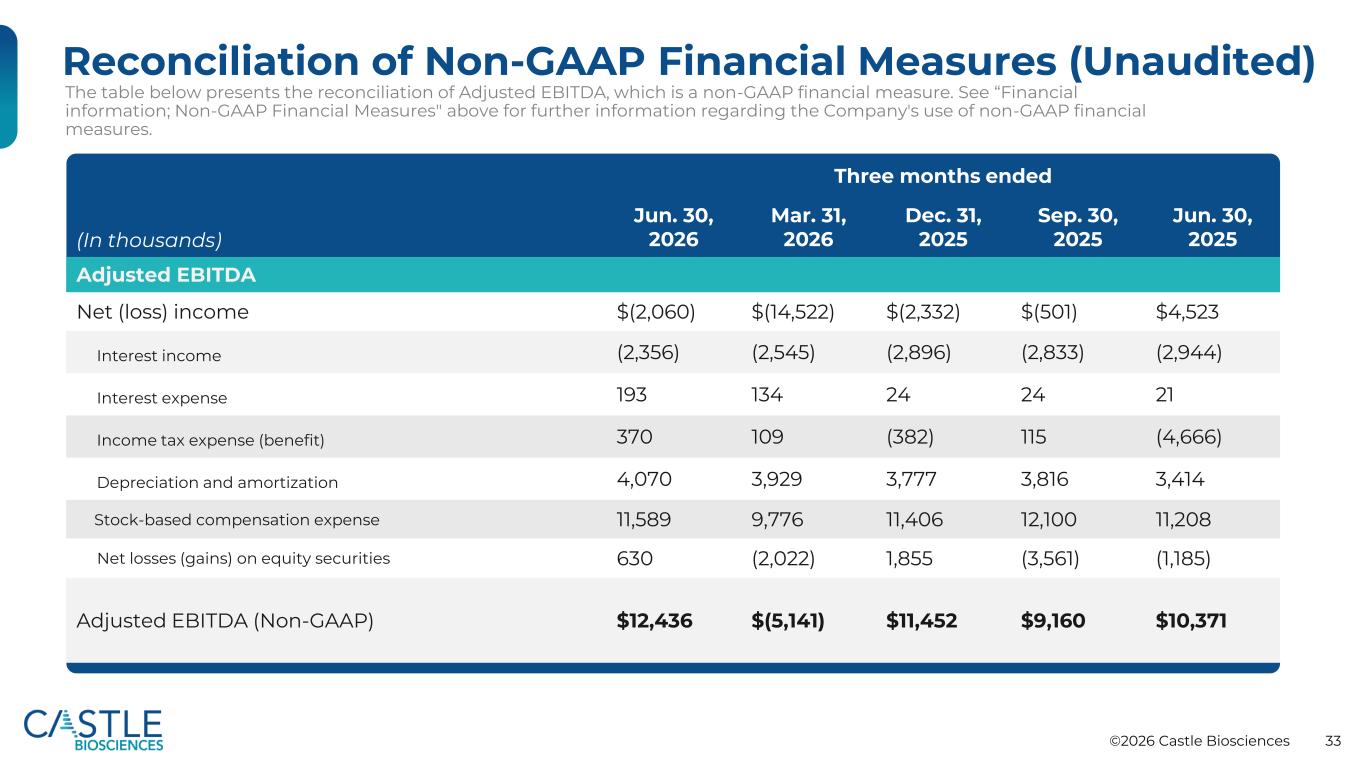
©2026 Castle Biosciences 33 Reconciliation of Non-GAAP Financial Measures (Unaudited) The table below presents the reconciliation of Adjusted EBITDA, which is a non-GAAP financial measure. See “Financial information; Non-GAAP Financial Measures" above for further information regarding the Company's use of non-GAAP financial measures. (In thousands) Three months ended Jun. 30, 2026 Mar. 31, 2026 Dec. 31, 2025 Sep. 30, 2025 Jun. 30, 2025 Adjusted EBITDA Net (loss) income $(2,060) $(14,522) $(2,332) $(501) $4,523 Interest income (2,356) (2,545) (2,896) (2,833) (2,944) Interest expense 193 134 24 24 21 Income tax expense (benefit) 370 109 (382) 115 (4,666) Depreciation and amortization 4,070 3,929 3,777 3,816 3,414 Stock-based compensation expense 11,589 9,776 11,406 12,100 11,208 Net losses (gains) on equity securities 630 (2,022) 1,855 (3,561) (1,185) Adjusted EBITDA (Non-GAAP) $12,436 $(5,141) $11,452 $9,160 $10,371

©2026 Castle Biosciences 34 Thank You