The investment objective of the Fund is to provide total return, consisting of both current income and capital appreciation.
These tables summarize the fees and expenses that you may pay if you invest in the Fund.
| Adviser Class | Class I | Class Y-2 | Class Y-3 | |||||||||||||
| Redemption Fee on shares owned less than 30 days (as a % of total redemption proceeds) | 2.00 | % | 2.00 | % | 2.00 | % | 2.00 | % | ||||||||
| Adviser Class | Class I | Class Y-2 | Class Y-3 | |||||||||||||
| Management Fees(1),(2) | 0.29 | % | 0.29 | % | 0.29 | % | 0.29 | % | ||||||||
| Distribution (12b-1) Fees | 0.25 | % | None | None | None | |||||||||||
| Non-Distribution Shareholder Administrative Services Fees | 0.25 | % | 0.25 | % | 0.15 | % | None | |||||||||
| Other Expenses(3) | 0.31 | % | 0.31 | % | 0.31 | % | 0.31 | % | ||||||||
| Total Annual Fund Operating Expenses(2) | 1.10 | % | 0.85 | % | 0.75 | % | 0.60 | % | ||||||||
| Less Fee Waivers(1)(4) | -0.40 | % | -0.40 | % | -0.40 | % | -0.40 | % | ||||||||
| Net Annual Fund Operating Expenses | 0.70 | % | 0.45 | % | 0.35 | % | 0.20 | % | ||||||||
| (1) | Mercer Investments LLC (the “Adviser”) has contractually agreed, until at least July 31, 2027, to waive any portion of its management fee that exceeds the aggregate amount of the subadvisory fees that the Adviser is required to pay to the Fund’s subadvisers. This contractual fee waiver agreement may only be changed or eliminated with the approval of the Fund’s Board of Trustees. The fees waived by the Adviser pursuant to this agreement are not subject to reimbursement by the Fund to the Adviser. The amount of the fee waiver has been estimated to reflect the subadvisory fees in effect as of the date of this prospectus. |
| (2) | The “Management Fees” and “Total Annual Fund Operating Expenses” have been adjusted to reflect the decrease in the management fee payable by the Portfolio from 0.30% to 0.29% effective as of July 1, 2026. |
| (3) | “Other Expenses” include administrative, custodial, legal, audit, transfer agent and Trustees’ fees and expenses. The “Other Expenses” shown for Adviser Class and Class Y-2 are based on estimated amounts for the Fund’s current fiscal year, as the Adviser Class and Class Y-2 shares of the Fund had not commenced operations prior to the most recent fiscal year end. The “Other Expenses” shown for Class I are also based on estimated amounts for the Fund’s current fiscal year. |
| (4) | The Adviser has also contractually agreed, until at least July 31, 2027, to waive fees and/or reimburse Fund expenses to the extent that annual fund operating expenses, net of the management fee waiver described in footnote (1) above, exceed 0.70% for Adviser Class shares, 0.45% for Class I shares, 0.35% for Class Y-2 shares and 0.20% for Class Y-3 shares, excluding, as applicable, acquired fund fees and expenses, interest, taxes, 12b-1 fees, non-12b-1 shareholder administrative services fees, brokerage expenses, dividend and interest expenses on securities sold short, extraordinary expenses and other expenses not incurred in the ordinary course of the Fund’s business. This contractual fee waiver and reimbursement agreement cannot be eliminated prior to July 31, 2027 without the approval of the Fund’s Board of Trustees. The fees waived by the Adviser pursuant to this agreement are not subject to reimbursement by the Fund to the Adviser. |
The example below is intended to help you compare the costs of investing in the Fund with the cost of investing in other mutual funds. The example assumes that you invest $10,000 in the Fund for the time periods shown, that your investment has a 5% return each year, and that the Fund’s operating expenses remain the same as shown above (taking into account the contractual expense limitation being in effect for the one-year period ending July 31, 2027).
Although your actual costs may be higher or lower, based on these assumptions, your costs would be:
| 1 Year | 3 Years | 5 Years | 10 Years | |||||||||||||
| Adviser Class | $ | 72 | $ | 310 | $ | 567 | $ | 1,304 | ||||||||
| Class I | $ | 46 | $ | 231 | $ | 432 | $ | 1,012 | ||||||||
| Class Y-2 | $ | 36 | $ | 200 | $ | 377 | $ | 893 | ||||||||
| Class Y-3 | $ | 20 | $ | 152 | $ | 295 | $ | 712 | ||||||||
The Fund pays transaction costs, such as commissions, when it buys and sells securities (or “turns over” its portfolio). A higher portfolio turnover rate may increase transaction costs and may result in higher taxes when Fund shares are held in a taxable account. These costs, which are not reflected in Annual Fund Operating Expenses or in the example, affect the Fund’s performance. During the most recent fiscal year, the Fund’s portfolio turnover rate was 166% of the average value of its portfolio.
In seeking to achieve the Fund’s investment objective of total return, the Fund invests in fixed income securities of U.S. and foreign issuers. The Fund invests primarily in U.S. dollar-denominated, investment grade bonds, including government securities, corporate bonds, and securitized bonds such as mortgage- and asset-backed securities, among others. Under normal circumstances, the Fund will invest at least 80% of its net assets (plus borrowings for investment purposes, if any) in fixed income securities. (If the Fund changes this investment policy, the Fund will notify shareholders at least 60 days in advance of the change.) The Fund also may invest a significant portion of its assets in any combination of non-investment grade debt instruments (sometimes called “high yield” or “junk bonds”), floating rate senior loans, non-U.S. dollar denominated bonds, and bonds issued by issuers in emerging capital markets, while limiting its investment in non-investment grade bonds to not more than 20% of its net assets. The Fund may also invest in securities that are subject to resale restrictions such as those contained in Rule 144A promulgated under the Securities Act of 1933, as amended. The Fund may invest in derivative instruments, such as options, futures, and swap agreements. The Fund may engage in transactions in derivatives for a variety of purposes, including changing the investment characteristics of its portfolio, enhancing total returns, or as a substitute for taking a position in the underlying asset. Investments in derivatives may be applied toward meeting a requirement to invest in a particular kind of investment if the derivatives have economic characteristics similar to that investment. The Fund’s duration will typically fall between one and three years. Duration is a measure of the sensitivity of the price of a debt security (or a portfolio of debt securities) to changes in interest rates. The prices of debt securities with shorter durations generally will be less affected by changes in interest rates than the prices of debt securities with longer durations. For example, a 1% rise in interest rates will generally result in a 1% fall in value for every year of duration. Conversely, a 1% decline in interest rates will generally result in a 1% increase in the value of a debt security’s market price.
The following bar chart and table give some indication of the risks of investing in the Fund by showing changes in the performance of the Fund’s Class Y-3 shares from year to year and comparing the Fund’s average annual returns over time with a broad-based securities market index, the Bloomberg U.S. 1-3 Year Government/Credit Index.
The Fund offers four different classes of shares in this prospectus: Adviser Class shares, Class I shares, Class Y-2 shares and Class Y-3 shares. No information is shown for Adviser Class, Class I or Class Y-2 shares because there were no shares outstanding for these classes as of the last calendar year end. Performance information for Adviser Class shares, Class I shares and Class Y-2 shares will appear in a future version of the prospectus once there is a full calendar year of performance information to report. The returns of these share classes would have been substantially similar to the returns of Class Y-3 shares; however, because the Adviser Class, Class I and Class Y-2 shares are subject to a 12b-1 fee and/or a non-distribution shareholder administrative services fee, the returns of these share classes would have been lower than those shown for Class Y-3 shares.
The Fund’s past performance, before and after taxes, is not necessarily an indication of how the Fund will perform in the future. Voya Investment Management Co. LLC, Aristotle Pacific Capital, LLC and Merganser Capital Management, LLC each assumed responsibility for managing a portion of the Fund’s portfolio on December 1, 2023.
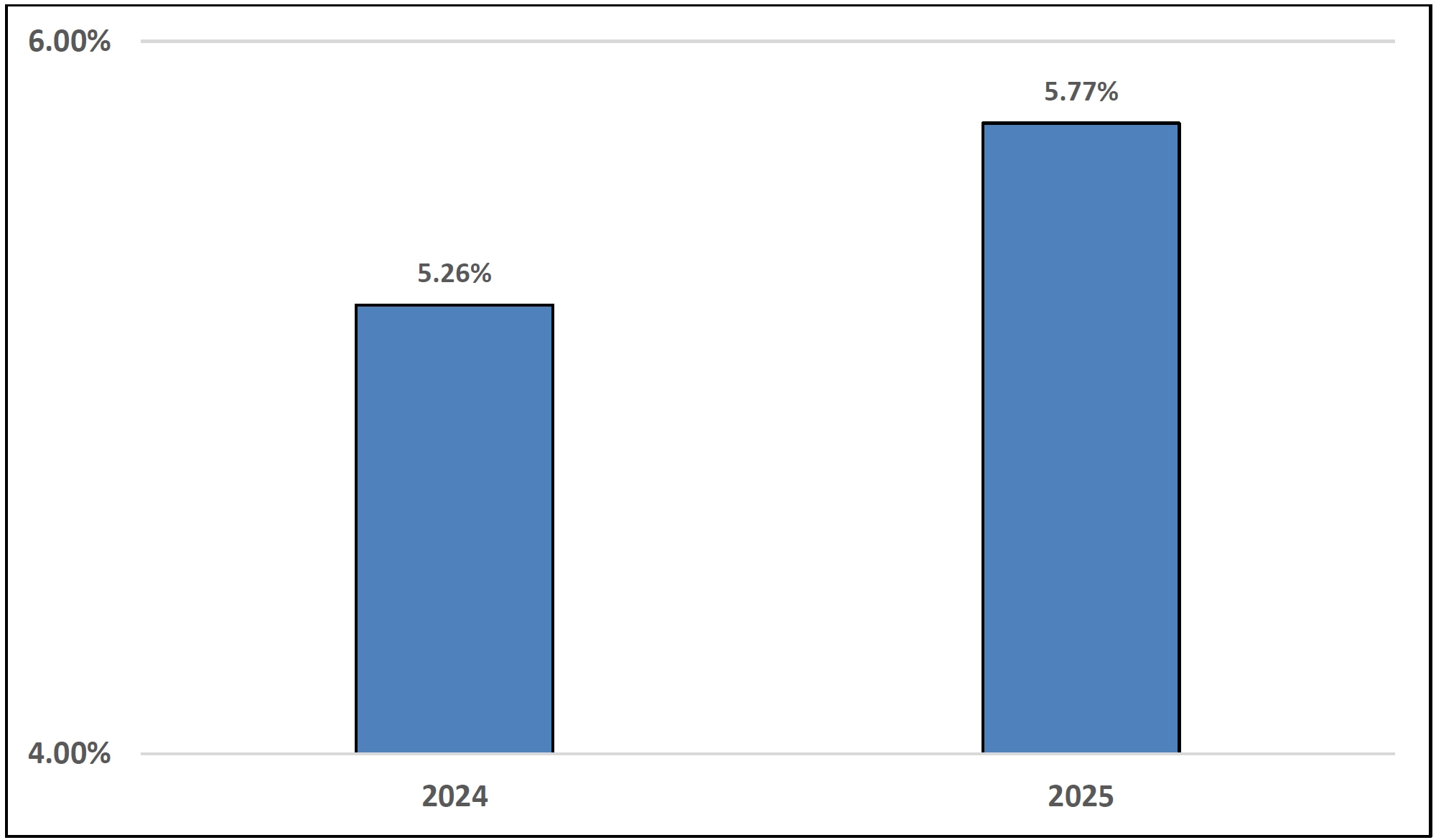
The Fund’s calendar year-to-date return as of June 30, 2026 was 0.98%.
The Fund’s highest return for a quarter during the period shown above was 3.06%, for the quarter ended September 30, 2024.
The Fund’s lowest return for a quarter during the period shown above was 0.18%, for the quarter ended December 31, 2024.
| 1 Year | Life of Class (Inception December 1, 2023) | |||||||
| Return Before Taxes | 5.77% | 5.97% | ||||||
| Return After Taxes on Distributions | 3.70% | 3.73% | ||||||
| Return After Taxes on Distributions and Sale of Fund Shares | 3.41% | 3.61% | ||||||
| 1 Year | Life of Class (Inception December 1, 2023) | |||||||
| Bloomberg U.S. 1-3 Year Government/Credit Index(1) (reflects no deduction for fees, expenses, or taxes) | 5.35% | 5.25% | ||||||
| (1) | The Bloomberg U.S. 1-3 Year Government/Credit Index is an index that measures the performance of investment grade, U.S.-dollar-denominated, fixed-rate Treasury securities and government-related and corporate securities with 1 to 3 year maturities. The index is unmanaged and cannot be invested in directly. |
After-tax returns are calculated using the historical highest individual federal marginal income tax rates in effect and do not reflect the impact of state and local taxes. Actual after-tax returns depend on an investor’s situation and may differ from those shown. In addition, the after-tax returns shown are not relevant to investors who hold Fund shares through tax-deferred arrangements, such as 401(k) plans or individual retirement accounts. In some cases, the after-tax returns may exceed the return before taxes due to an assumed benefit from any losses on a sale of shares at the end of the measurement period.