Author
Approver
Chief Compliance Officer
| Code of Ethics | |||
| Document Number: | WIL-COM-003 | Version: | 3.0 |
| Effective Date: | 12/31/2025 | Review Date: | December 2026 |
| 1 | Purpose |
The Code of Ethics (“Code”) for Wilshire Advisors LLC, Wilshire Associates Europe B.V., Wilshire Advisors UK Limited, and the other relevant entities within, or that become part of, the common control structure that forms the global Wilshire group (collectively, “Wilshire” or the “Firm”) has been adopted in compliance with the requirements of the Investment Advisers Act Rule 204A-1 and Investment Company Act Rule 17j-1, and other relevant rules and regulations in the relevant jurisdictions.
| 2 | Document Approvers |
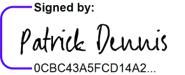
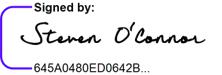
The following stakeholders have approved this document, and the related information security framework, and commit to maintaining compliance within their scope of responsibilities.
| Role | Title | Signature |
|
Author |
SVP - Compliance | |
|
Approver |
Chief Compliance Officer |
|
| 3 | Responsibilities |
| Role | Responsibility |
| Document Author (DA) |
Typically has subject matter expertise in a particular discipline and identifies a Wilshire-level issue that requires further control design and definition. This applies to new controlled documents as well as changes to existing controlled documents. Has ultimate responsibility whether to accept or reject suggested edits made by reviewers. |
| Document Reviewer (DR) | Has subject matter expertise in the area covered by the controlled document. Provides guidance and suggested edits on document drafts. Edits should be tracked in the Word document. |
| Document Approver (AP) |
Has a leadership role in the deployment of, and compliance with the controlled document. Approves the document for implementation into the organisation. |
| Document Librarian (DL) | Manages the Controlled Document development and review process. |
| 4 | Definitions |
| Term | Definition |
| Access Person1 |
An individual for which any of the following apply: i. Directors and officers of Wilshire
(or other persons occupying a similar status or performing similar functions) and directors or officers of affiliated entities only
to the extent they are engaged in Wilshire’s advisory activities or subject to Wilshire’s supervision and control2. |
| 1 | SEC Rule 204A-1 requires investment advisers to adopt a Code of Ethics that sets standards of conduct for supervised persons and imposes additional reporting obligations on access persons. By defining Access Persons as described herein, the Firm establishes that all supervised persons are subject to the Code’s requirements. |
| 2 | For the avoidance of doubt, this shall not include Directors of any Wilshire parent companies nor Directors/Trustees of any of Wilshire’s affiliated Investment Companies, within the meaning of the Investment Company Act, to the extent that such persons are not otherwise Access Persons of Wilshire. |
|
|
Controlled Document Template | ||
| Document Number: | WIL-COM-003 | Version: | 3.0 |
| Effective Date: | 12/31/2025 | Next Review Date: | December 2026 |
| 5 | Scope |
The principles emphasized in this Code detail Wilshire’s overarching fiduciary duty to its investment management and advisory clients and the obligation of the Firm’s personnel to uphold that fundamental duty.
| 6 | Policies and Procedures |
6.1.1 Code of Conduct, Fiduciary Standards, and Compliance with the Federal Securities Laws
At all times, Wilshire and its Access Persons must comply with the spirit and the letter of the Federal Securities Laws and the rules governing the capital markets. The Compliance Department administers the Code. All questions regarding the Code should be directed to the Compliance Department. Access Persons must cooperate to the fullest extent reasonably requested by the Compliance Department to enable Wilshire to comply with all applicable Federal Securities Laws.
Access Persons will act with competence, dignity, integrity, and in an ethical manner, when dealing with Clients, the public, prospects, third-party service providers, regulators, and fellow Access Persons. Access Persons must use reasonable care and exercise independent professional judgment when conducting investment analysis, making investment recommendations, trading, promoting Wilshire’s services, and engaging in other professional activities.
Access Persons are generally expected to discuss any perceived risks, or concerns about Wilshire’s business practices, with their direct supervisor. However, if an Access Person is uncomfortable discussing an issue with their supervisor, or if they believe that an issue has not been appropriately addressed, they should bring the matter to the attention of the Compliance Department.
6.1.2 Reporting Violations
Improper actions by Wilshire or its Access Persons could have severe negative consequences for Wilshire, its Clients, and its Access Persons. Impropriety, or even the appearance of impropriety, could negatively impact all Access Persons, including people who were not involved in the such activities.
Access Persons should report violations of the Firm’s Code promptly to the Compliance Department.
2
|
Controlled Document Template | ||
| Document Number: | WIL-COM-003 | Version: | 3.0 |
| Effective Date: | 12/31/2025 | Next Review Date: | December 2026 |
| a. | Confidentiality. Such reports shall be confidential to the extent permitted by law and investigated promptly and appropriately. |
| b. | Types of Reporting. Examples of the types of reports Access Persons should make, include, but are not limited to: |
| i. | Noncompliance with applicable laws, rules, and regulations |
| ii. | Noncompliance with the Code |
| iii. | Fraud or illegal acts involving any aspect of the Firm’s business |
| iv. | Material misstatements in regulatory filings, internal books and records, client records or reports |
| v. | Activity that is harmful to clients, including fund shareholders |
| vi. | Deviations from required controls and procedures that safeguard clients and the Firm |
Violations of this Code may warrant sanctions including, without limitation:
| a. | requiring that personal trades be reversed, |
| b. | requiring the disgorgement of profits or gifts, |
| c. | issuing a letter of caution or warning, |
| d. | suspending personal trading rights, |
| e. | imposing a fine, |
| f. | suspending employment (with or without compensation), |
| g. | making a civil referral to the SEC, |
| h. | making a criminal referral, |
| i. | terminating employment for cause, and/or |
| j. | a combination of the foregoing. |
If an Access Person believes or suspects that they may have engaged in conduct that could constitute a violation of the Code, they are required to promptly report the matter to the Compliance Department. All sanctions and other actions taken will be in accordance with applicable employment laws and regulations. Violations may also subject an Access Person to civil, regulatory or criminal sanctions.
For the avoidance of doubt, nothing in this Code prohibits Access Persons from reporting potential violations of federal law or regulation to any governmental agency or entity, including but not limited to the Department of Justice, the SEC, or any agency’s inspector general, or from making other disclosures that are protected under the whistleblower provisions of federal law or regulation. Access Persons do not need prior authorization from their supervisor, the CCO, or any other person or entity affiliated with Wilshire to make any such reports or disclosures and do not need to notify Wilshire that they have made such reports or disclosures. Additionally, nothing in this Code prohibits Access Persons from recovering an award pursuant to a whistleblower program of a government agency or entity. Retaliation against any Access Person who reports a violation of the Code in good faith is strictly prohibited.
Wilshire uses FaceUp, a secure third-party platform, to collect anonymous reports. Access Persons can submit concerns through the specific Wilshire FaceUp website link (available on the Wilshire Intranet Compliance page) or by calling a dedicated hotline. All reports are exclusively review by Wilshire’s CCO and Senior Compliance Officers. FaceUp is GDPR-compliant, ISO 27001 certified, offers end-to-end encryption, and supports anonymous, two-way communication.
6.1.1 Distribution of the Code and Acknowledgement of Receipt
Wilshire will distribute this Code to each Access Person upon the commencement of employment or relationship with Wilshire, annually, and after any material change to the Code.
3
|
|
Controlled Document Template | ||
| Document Number: | WIL-COM-003 | Version: | 3.0 |
| Effective Date: | 12/31/2025 | Next Review Date: | December 2026 |
All Access Persons must use Compliance Alpha to acknowledge that they have received, read, understood, and agree to comply with the Company’s policies and procedures including this Code.
| 6.2 | Personal Securities Transactions |
Access Person trades should be executed in a manner consistent with Wilshire’s fiduciary obligations to its Clients. Trades should avoid actual improprieties, as well as the appearance of impropriety. Access Person trades must not be timed to precede orders placed for any Client, nor should trading activity be so excessive as to conflict with the individual’s ability to fulfil daily job responsibilities.
Wilshire’s Personal Securities Transactions policies and procedures apply to all accounts holding any securities over which Access Persons have any beneficial ownership interest, which typically includes accounts held by immediate family members sharing the same household, or non-Clients over which Access Persons exercise investment discretion. Immediate family members include children, stepchildren, grandchildren, parents, stepparents, grandparents, spouses, domestic partners, siblings, parents-in-law, and children-in-law, as well as adoptive relationships that meet the above criteria. For the avoidance of doubt, this policy applies to any trading accounts tied to an Access Person’s Health Savings Account (HSA) or any 401(k) account that includes a self-directed brokerage feature, should either account type allow the individual to select and trade securities, other than selecting from a set menu of mutual funds, at their discretion. Transaction in these accounts involving Reportable Securities (as defined below) require reporting and preclearance.
It may be possible for Access Persons to exclude accounts held personally or by immediate family members sharing the same household if the Access Person does not have any direct or indirect influence or control over the accounts, or if the Access Person can rebut the presumption of beneficial ownership over family members’ accounts. Access Persons should consult with the Compliance Department before excluding any accounts held personally or by immediate family members sharing the same household.
6.2.1 Reportable Securities
Wilshire requires Access Persons to provide periodic reports regarding transactions and holdings in all “Reportable Securities,” which include any Security, except:
| · | Direct obligations of the Government of the United States; |
| · | Bankers’ acceptances, bank certificates of deposit, commercial paper and high-quality short-term debt instruments, including repurchase agreements; |
| · | Shares issued by money market funds; |
| · | Shares issued by open-end investment companies registered under the Investment Company Act of 1940, other than investment companies advised or underwritten by Wilshire or an affiliate; |
| · | Interests in 529 college savings plans; |
| · | Interests in 401(k) or HSA accounts where the only holdings are selected from a menu of mutual funds; |
4
|
|
Controlled Document Template | ||
| Document Number: | WIL-COM-003 | Version: | 3.0 |
| Effective Date: | 12/31/2025 | Next Review Date: | December 2026 |
| · | Shares issued by unit investment trusts that are invested exclusively in one or more open-end investment companies registered under the Investment Company Act of 1940, none of which are advised, sub-advised or underwritten by Wilshire or an affiliate; and |
| · | Bitcoin (“BTC”), Ethereum (“ETH”), Non-Fungible Tokens (“NFTs”) and other Digital Assets (i.e., cryptocurrencies, stablecoins, and similar blockchain-based tokens) -Wilshire currently excludes all Digital Assets from its Reportable Securities reporting requirements. This exclusion reflects Wilshire’s current investment strategies, which do not involve Digital Assets. However, this policy may change if Wilshire’s strategies evolve to include Digital Assets or if regulatory guidance changes. Any changes will be reflected in the Code of Ethics and communicated to all Access Persons. |
Exchange-traded funds, or ETFs and exchange traded notes, or ETNs, while somewhat similar to open-end registered investment companies, are Reportable Securities and subject to the reporting requirements contained in Wilshire’s Personal Securities Transactions policy.
6.2.2 Preclearance Procedures
Access Persons must have the Compliance Department’s written pre-clearance for all transactions in Reportable Securities in which the Access Person has or will have beneficial ownership (including transactions in initial public offerings and private placements in private funds not offered by Wilshire). Access Persons must use Compliance Alpha to submit trade pre-clearance requests for Reportable Securities. Please note, requests for pre-clearance of private investments and IPOs may take an extended period of time to process due to the need to evaluate potential conflicts of interest.
Pre-clearance is valid for two consecutive trading days (two consecutive days on which the New York Stock Exchange is open for business), with the first day being the day that approval is granted. After two trading days, the pre-clearance expires, and any trading would need to be pre-cleared again. Wilshire may disapprove any proposed transaction, particularly if the transaction appears to pose a conflict of interest or otherwise appears improper. Access Persons should be cautious when submitting good-until-cancelled orders to avoid inadvertent violations of Wilshire’s pre-clearance procedures.
The following transactions are exempt from Wilshire’s pre-clearance requirements:
| · | Transactions effected pursuant to an Automatic Investment Plan, including dividend-reinvestment plans, provided the plan was previously approved by Compliance and established in accordance with this Code. An Automatic Investment Plan means a program in which regular periodic purchases (or withdrawals) are made automatically in (or from) investment accounts in accordance with a predetermined schedule and allocation, including a dividend reinvestment plan.; |
| · | Transactions in accounts over which the Access Person had no direct or indirect influence or control, such as an account managed by an investment adviser on a discretionary basis. Persons who claim they have no direct or indirect influence or control over an account are also required to complete the Exempt Accounts Certification in Compliance Alpha upon commencement of their employment and on an annual basis thereafter.; and |
| · | The automatic exercise of options or similar rights, provided that (a) the initial purchase or grant of the option was properly pre-cleared, and (b) the exercise is automatic and not initiated by the Access Person. |
5
|
|
Controlled Document Template | ||
| Document Number: | WIL-COM-003 | Version: | 3.0 |
| Effective Date: | 12/31/2025 | Next Review Date: | December 2026 |
Wilshire’s Compliance Department will maintain a Restricted List of issuers that Wilshire might have received Material Non-public Information in relation thereto. Securities that are associated with any issuers on the Restricted List will not be pre-cleared, subject to the Chief Compliance Officer’s review and discretion.
6.2.3 Reporting
Wilshire must collect information regarding the personal trading activities and holdings of all Access Persons. Access Persons must submit quarterly reports regarding Securities transactions and newly opened accounts, as well as annual reports regarding holdings and existing accounts.
Quarterly Transaction Reports
Each quarter, Access Persons must report all Reportable Securities transactions in accounts in which they have a Beneficial Interest. Access Persons must also report any accounts opened during the quarter that hold any Securities (including Securities excluded from the definition of a Reportable Security). Reports regarding Securities transactions and newly opened accounts must be submitted to the Compliance Department via Compliance Alpha no later than 30 days after the end of each calendar quarter.
Access Persons must use Compliance Alpha to report all quarterly transactions, including any trades that took place outside of a brokerage account (such as investments in private funds).
If an Access Person did not have any transactions or account openings to report, this should be indicated in Compliance Alpha within 30 days of the end of each calendar quarter.
Initial and Annual Holdings Reports
Access Persons must periodically report the existence of any account that holds any Securities (including Securities excluded from the definition of a Reportable Security), as well as all Reportable Securities holdings. Reports regarding accounts and holdings must be submitted via Compliance Alpha on or before February 14th of each year, and within 10 days of an individual first becoming an Access Person. Annual reports must be current as of December 31st; initial reports must be current as of a date no more than 45 days prior to the date that the person became an Access Person. Initial and annual holdings reports should be submitted through Compliance Alpha.
Initial and annual reports must disclose the existence of all accounts that hold any Securities, even if none of those Securities fall within the definition of a “Reportable Security.”
If an Access Person does not have any holdings and/or accounts to report, this should be indicated in Compliance Alpha within 10 days of becoming an Access Person and by February 14th of each year.
Personal Trading and Holdings Reviews
Wilshire’s Personal Securities Transactions policies and procedures are designed to mitigate any potential material conflicts of interest associated with Access Persons’ personal trading activities. Accordingly, the Compliance Department (or designee) will closely monitor Access Persons’ investment patterns to detect the following potentially abusive behavior:
• Frequent and/or short-term trades in any Security, with particular attention paid to potential market-timing of mutual funds;
6
|
|
Controlled Document Template | ||
| Document Number: | WIL-COM-003 | Version: | 3.0 |
| Effective Date: | 12/31/2025 | Next Review Date: | December 2026 |
| • | Trading opposite of Client trades; |
| • | Trading ahead of Client trades; and |
| • | Trading that appears to be based on Material Non-public Information. |
The Compliance Department will review all reports submitted pursuant to the Personal Securities Transactions policies and procedures for potentially abusive behavior and will compare Access Person trading with Clients’ trades as necessary. Any personal trading that appears abusive may result in further inquiry by the Compliance Department and/or sanctions, up to and including dismissal.
The CCO’s designee will use Compliance Alpha to monitor the CCO’s personal Securities transactions for
compliance with the Personal Securities Transactions policies and procedures.
6.2.4 Disclosure of the Code of Ethics
Wilshire will describe its Code in Part 2 of Form ADV and, upon request, furnish Clients with a copy of the Code. All Client requests for Wilshire’s Code should be directed to the Compliance Department.
| 6.3 | Insider Trading |
Section 204A of the Advisers Act requires every investment adviser to establish, maintain, and enforce written policies and procedures reasonably designed, taking into consideration the nature of such investment adviser’s business, to prevent the misuse of Material Non-public Information by such investment adviser or any associated person. In the past, the Federal Securities Laws have been interpreted to prohibit the following activities:
• Trading by an insider while in possession of Material Non-public Information;
• Trading by a non-insider while in possession of Material Non-public Information, where the information was disclosed to the non-insider in violation of an insider’s duty to keep it confidential;
• Trading by a non-insider who obtained Material Non-public Information through unlawful means such as computer hacking; and
• Communicating Material Non-public Information to others in breach of a fiduciary duty.
Access Persons should be aware that the receipt of Material, Non-public Information in the context of a private investment will result in the restriction of trading the public securities of the issuer.
6.3.1 What Information is Material
Many types of information may be considered material, including, without limitation, advance knowledge of:
| • | Dividend or earnings announcements; |
| • | Asset write-downs or write-offs; |
| • | Additions to reserves for bad debts or contingent liabilities; |
| • | Expansion or curtailment of company or major division operations; |
| • | Merger, acquisition or joint venture announcements; |
7
|
|
Controlled Document Template | ||
| Document Number: | WIL-COM-003 | Version: | 3.0 |
| Effective Date: | 12/31/2025 | Next Review Date: | December 2026 |
| • | New product/service announcements; |
| • | Discovery or research developments; |
| • | Criminal, civil and government investigations and indictments; |
| • | Pending labor disputes; |
| • | Debt service or liquidity problems; |
| • | Bankruptcy or insolvency; |
| • | Tender offers and stock repurchase plans; and |
| • | Recapitalization plans. |
Information provided by a company could be material because of its expected effect on a particular class of securities, all of a company’s securities, the securities of another company, or the securities of several companies. The prohibition against misusing Material Non-public Information applies to a wide range of financial instruments including, but not limited to, equities, bonds, warrants, options, futures, forwards, swaps, commercial paper, government-issued securities, and certain types of virtual currency or cryptocurrency coins or tokens that were created in connection with an initial coin offering or ICO. Material information need not relate to a company’s business. For example, information about the contents of an upcoming newspaper column may affect the price of a security and therefore be considered material. Advance notice of forthcoming secondary market transactions could also be material.
Access Persons should consult with the Compliance Department if there is any question as to whether non-public information is material.
6.3.2 What Information is Non-public?
Once information has been effectively distributed to the investing public, it is no longer non-public. However, the distribution of Material Non-public Information must occur through commonly recognized channels for the classification to change. In addition, there must be adequate time for the public to receive and digest the information. Non-public information does not change to public information solely by selective dissemination. The confirmation by an insider of unconfirmed rumors, even if the information in question was reported as rumors in a public form, may be non-public information. Examples of the ways in which non-public information might be transmitted include, but are not limited to:
| • | In person; |
| • | In writing; |
| • | By telephone; |
| • | During a presentation; |
8
|
|
Controlled Document Template | ||
| Document Number: | WIL-COM-003 | Version: | 3.0 |
| Effective Date: | 12/31/2025 | Next Review Date: | December 2026 |
| • | By email, instant messaging, or Bloomberg messaging; |
| • | By text message; or |
| • | On a social networking site. |
Access Persons must be aware that even where there is no expectation of confidentiality, a person may become an insider upon receiving Material Non-public Information. Access Persons should consult with the Compliance Department if there is any question as to whether material information is non-public.
| 6.3.2.1 | Penalties for Trading on Material Non-public Information |
Severe penalties exist for firms and individuals that engage in Insider Trading, including civil injunctions, disgorgement of profits and jail sentences. Further, fines for Insider Trading may be levied against individuals and companies in amounts up to three times the profit gained or loss avoided. Wilshire is not obligated to pay legal fees, penalties, or other costs incurred by Access Persons found guilty of insider trading.
| 6.3.2.2 | Policies and Procedures |
Access Persons are strictly forbidden from engaging in Insider Trading, either personally or on behalf of Wilshire’s Clients. Wilshire’s Insider Trading Policies and Procedures apply to all Access Persons. The policy also applies to transactions by corporations in which the Access Person is an officer, director, or 10% or greater stockholder, as well as transactions by partnerships of which the Access Person is a partner unless the Access Person has no direct or indirect control over the partnership.
| 6.3.2.2.1 | Procedures for Recipients of Material Non-public Information |
If an Access Person is in possession of Material Non-public Information they must notify the Compliance Department as soon as possible upon receipt of such information. If an Access Person has questions as to whether they are in possession of Material Non-public Information, they must inform the Compliance Department as soon as possible. The Compliance Department will conduct research to determine, among other things, if the information is likely to be considered material, and whether the information has been publicly disseminated.
Given the severe penalties imposed on individuals and firms engaging in Insider Trading, an Access Person:
• Must immediately report the potential receipt of Material Non-public Information to the Compliance Department;
• Must not trade the securities of any company about which they may possess Material Non-public Information, or derivatives related to the issuer in question, or the securities of any other company whose value may reasonably be expected to be affected by that Material Non-public information. This includes securities of companies that are economically linked, in the same sector or industry, or otherwise likely to be impacted by the information received;
• Must not discuss any potentially Material Non-public Information with colleagues, except as specifically required by their position; and
9
|
|
Controlled Document Template | ||
| Document Number: | WIL-COM-003 | Version: | 3.0 |
| Effective Date: | 12/31/2025 | Next Review Date: | December 2026 |
• Must not conduct research, trading, or other investment activities regarding a security for which they may have Material Non-public Information until the Compliance Department dictates an appropriate course of action.
If the Compliance Department determines that the information is material and non-public, they will place the security on the Restricted List. Wilshire and its Access Persons will not place any trades in securities for which it has Material Non-public Information.
Trading in affected securities may resume, and other responses may be adjusted or eliminated, when the Compliance Department determines that the information has become public and/or immaterial. At such time, the Compliance Department will amend the Restricted List.
| 6.3.2.2.1 | Selective Disclosure |
Non-public information about Wilshire’s investment strategies, trading, and Client holdings is to be considered confidential and may not be shared with third parties except as is necessary to implement investment decisions and conduct other legitimate business. Access Persons must never disclose proposed or pending trades or other sensitive information to any third party without the prior approval of the Compliance Department. Federal Securities Laws may prohibit the dissemination of such information and doing so may be considered a violation of the fiduciary duty that Wilshire owes to its Clients. Further, Access Persons shall take all appropriate steps to preserve the confidentiality of such information. For example, Access Persons should restrict access to files or computer records containing confidential information, should never leave confidential documents in unattended rooms, discard confidential documents in trash cans, discuss confidential information in public areas and should never copy confidential documents for their personal use.
| 6.3.2.2.2 | Relationships with Potential Insiders |
Wilshire Clients, Investors, third-party fund managers, and other parties Access Persons may come into contact with may possess Material Non-public Information. Access to such information could come as a result of, among other things:
| • | Being employed by a public company or issuer (or sitting on the public company’s or issuer’s board of directors); |
| • | Working for an investment bank, consulting firm, supplier, or customer of an issuer; |
| • | Working for a broker-dealer; |
| • | Accessing an Alpha-capture system that receives information from insiders; |
| • | Sitting on an issuer’s creditors committee; |
| • | Serving as an elected official, or otherwise being involved in non-public political processes; |
| • | Meetings or idea dinners with investment bankers or other connected individuals; |
| • | Personal relationships with connected individuals; and |
| • | A spouse’s involvement in any of the preceding activities. |
10
|
|
Controlled Document Template | ||
| Document Number: | WIL-COM-003 | Version: | 3.0 |
| Effective Date: | 12/31/2025 | Next Review Date: | December 2026 |
Individuals with access to Material Non-public Information may have an incentive to disclose the information to Wilshire due to the potential for personal gain. Access Persons should be extremely cautious about investment recommendations, or information about issuers, that it receives from Clients, Investors, third-party fund managers, or other parties. Access Persons should inquire about the basis for any such recommendations or information and should consult with the Compliance Department if there is any appearance that the recommendations or information are based on Material Non-public Information.
If an Access Person expects that discussions with an outsider might involve the transmission of Material Non-public Information, the Access Person should disclose whether or not Wilshire is an insider and should seek a representation regarding the counterparty’s status as a potential insider. When practicable, this disclosure and representation should be communicated by email. Access Persons should consult with the Compliance Department if there is any question regarding the appropriate types of information that can be provided to, or received from, an outside individual or entity.
6.3.2.2.1 Subadvisory Relationships
Wilshire delegates management of Client assets to third-party fund managers. In doing so, Wilshire may receive Material Non-public Information about these managers’ investment strategies and trading activities. Access Persons are prohibited from trading on, or improperly utilizing, Material Non-public Information obtained from third-party fund managers.
6.3.2.2.1 Rumors
Creating or passing false rumors with the intent to manipulate securities prices or markets may violate the antifraud provisions of Federal Securities Laws. Such conduct is contradictory to the Code, as well as the Firm’s expectations regarding appropriate behavior of its Access Persons. Access Persons are prohibited from knowingly circulating false rumors or sensational information that might reasonably be expected to affect market conditions for one or more securities, sectors, or markets, or improperly influencing any person or entity.
This policy is not intended to discourage or prohibit appropriate communications between Access Persons of Wilshire and other market participants and trading counterparties. Access Persons should consult with the Compliance Department regarding questions about the appropriateness of any communications.
6.3.2.2.1 Value Added Investors
Wilshire Private Funds may accept investments from so-called “value-added” investors. Although the term value-added investor is not defined in the Advisers Act or elsewhere, it is generally understood to refer to an investor who may provide some benefit to the adviser (such as industry expertise or access to individuals in the investor’s network) beyond just the value of their investment. Examples of such investors could include, without limitation, executive-level officers or directors of company or personnel that are affiliated with other investment advisers and/or private funds.
Due to the nature of their position, such investors may possess Material Non-public Information. Therefore, Access Persons should always remain alert to the possibility that they could inadvertently come into possession of Material Non-public Information when communicating with such Investors. Access Persons should refrain from discussing potentially sensitive topics (e.g., specific information about the investor’s employer) with a known value-added investor.
11
|
|
Controlled Document Template | ||
| Document Number: | WIL-COM-003 | Version: | 3.0 |
| Effective Date: | 12/31/2025 | Next Review Date: | December 2026 |
If there is any question as to whether information received from an Investor could be Material Non-public Information, Access Persons are expected to notify the Compliance Department immediately, and otherwise act in accordance with the procedures described above.
| 6.4 | Gifts and Entertainment |
Access Persons may generally give and receive gifts and entertainment, so long as such gifts and entertainment are not lavish or excessive, and do not give the appearance of being designed to improperly influence the recipient.
| 6.4.1.1 | Policies and Procedures |
Wilshire holds its Access Persons to high ethical standards and strictly prohibits any giving or receipt of things of value that are designed to improperly influence the recipient.
It should be noted that these policies and procedures apply only in the context of business-related gifts and entertainment. The giving and receipt of gifts or entertainment of a personal nature or based on personal relationships are not governed by these policies. Business-related gifts and entertainment are those with a purpose of furthering Wilshire’s business, and are with parties with whom Wilshire does, or expects to do, business.
In the event an Access Person pays the fair value of the entertainment or gift themselves, it is no longer considered a gift or entertainment. For example, if an Access Person were invited to a sporting event, and paid the fair value of the ticket (not the face value) as determined in good faith, then that would not be considered a gift or entertainment. If Wilshire pays the cost of the gift or entertainment, then it is not considered a gift or entertainment.
| 6.4.1.1.1 | Specific Policies and Procedures – Gifts |
Access Persons are prohibited from giving or receiving gifts in excess of $100 in the aggregate during a single calendar year to or from any Client, Investor, prospect, or individual or entity that Wilshire does, or is seeking to do, business with without seeking prior written approval from the Compliance Department.
Access Persons should seek approval in Compliance Alpha prior to giving or accepting any gift in excess of
$100. To the extent that a gift is received as part of a conference or other event where it would be impractical to seek prior approval, approval must be sought promptly following receipt. In such situations, Compliance may require return of the gift after considering all the relevant facts and circumstances.
All gifts given or received to or from any Client, Investor, prospect, or individual or entity that Wilshire does, or is seeking to do, business with, with a value of less than $100, must be reported to the Compliance Department in Compliance Alpha within 10 business days of gifting or receipt.
12
|
|
Controlled Document Template | ||
| Document Number: | WIL-COM-003 | Version: | 3.0 |
| Effective Date: | 12/31/2025 | Next Review Date: | December 2026 |
| 6.4.1.1.2 | Specific Policies and Procedures – Entertainment |
Access Persons are prohibited from giving or receiving entertainment that may appear lavish or excessive without seeking approval from the Compliance Department. Entertainment requires both provider and recipient to be present at the event. Where both parties are not in attendance, the activity is treated as a gift. The entertainment should be related to a business purpose.
Entertainment, given or received, that is expected to have a market value (which may or may not be greater than the nominal value) more than $500 per attendee should be approved by the Access Persons’s supervisor and approved by Compliance prior to engagement. The total cost of entertainment should be evaluated in determining the value of the engagement (e.g., if the activity is a conference the costs of travel, accommodation, and activities should be considered as one and not piecemeal when determining the market value). Entertainment with a market value of less than $500 per attendee must be reported to the Compliance Department in Compliance Alpha within 10 business days of the entertainment taking place.
Wilshire expects that it, or the clients and/or funds that it manages, will bear the costs of Access Persons travel and lodging associated with conferences, research trips, and other business-related travel. If these costs are borne by a person or entity other than Wilshire they should be treated as a gift to the Access Person for purposes of this policy.
| 6.4.1.1.3 | Gifts and Entertainment Given to Union Officials |
Any gift or entertainment provided by Wilshire to a labor union or a union official in excess of $250 per fiscal year must be reported on Department of Labor Form LM-10 within 90 days following the end of Wilshire’s fiscal year. Consequently, Access Persons must obtain approval before giving any gifts or entertainment to labor unions or union officials, regardless of value. Pre-clearance must be obtained from the Compliance Department in Compliance Alpha.
| 6.4.1.1.4 | Gifts and Entertainment Given to ERISA Plan Fiduciaries |
Wilshire is prohibited from giving gifts or entertainment with an aggregate value exceeding $250 per year to any ERISA plan fiduciary. Consequently, Access Persons must obtain approval from the Compliance Department in Compliance Alpha before giving any gifts or entertainment to ERISA plan fiduciaries, regardless of value.
| 6.4.1.1.5 | Gifts and Entertainment Given to State and Local Pension Officials |
Wilshire must be mindful that myriad state and municipal regulations exist around the exchange of gifts and entertainment with such officials. These rules may apply broadly to any individuals involved with the management, oversight, or administration of state or local pensions plans, including employees, board members, consultants and other representatives. Accordingly, Access Persons must obtain approval from the Compliance Department before providing any gifts or entertainment, regardless of value, in connection with the solicitation of state and municipal pension, and similar plans.
| 6.4.1.1.1 | Internal Controls |
Gifts and Entertainment Tracking – The Compliance Department uses Compliance Alpha to track Access Persons’ provision and receipt of gifts and entertainment. All gifts and entertainment, regardless of dollar amount, must be reported through Compliance Alpha. The CCO’s designee will be responsible for reviewing any gifts and entertainment reported by the CCO.
13
|
|
Controlled Document Template | ||
| Document Number: | WIL-COM-003 | Version: | 3.0 |
| Effective Date: | 12/31/2025 | Next Review Date: | December 2026 |
Monitoring Third Parties – The Compliance Department is responsible for assessing whether agreements with third parties should include anti-bribery representations, and for ensuring that any necessary representations are included in executed agreements. The Compliance Department may also require that third parties acting on behalf of Wilshire attend the Company’s anti-bribery training sessions. Access Persons may not execute agreements with third parties that are reasonably expected to interact with government officials, union representatives or ERISA plan fiduciaries without the Compliance Department’s approval.
If a third party is reasonably expected to interact with government officials, union representatives or ERISA plan fiduciaries, the Compliance Department will review any expense claims submitted by the third party and may require explanations and supplemental documentation to ensure that the third party has not provided improper gifts or entertainment on Wilshire’s behalf.
| 6.5 | Gifts and Entertainment to Foreign Governments and “Government Instrumentalities” |
Gifts and Entertainment Given to Foreign Governments and “Government Instrumentalities” – The Foreign Corrupt Practices Act (“FCPA”) prohibits the direct or indirect giving of, or a promise to give, “things of value” in order to corruptly obtain a business benefit from an officer, employee, or other “instrumentality” of a foreign government. Companies that are owned, even partly, by a foreign government may be considered an “instrumentality” of that government. In particular, government investments in foreign financial institutions may make the FCPA applicable to those institutions. Individuals acting in an official capacity on behalf of a foreign government or a foreign political party may also be “instrumentalities” of a foreign government.
The FCPA includes provisions that may permit the giving of gifts and entertainment under certain circumstances, including certain gifts and entertainment that are lawful under the written laws and regulations of the recipient’s country, as well as bona-fide travel costs for certain legitimate business purposes. However the availability of these exceptions is limited and is dependent on the relevant facts and circumstances.
Civil and criminal penalties for violating the FCPA can be severe. Wilshire and its Access Persons must comply with the spirit and the letter of the FCPA at all times. Access Persons must obtain written pre-clearance from the CCO prior to giving anything of value that might be subject to the FCPA except food and beverages that are provided during a legitimate business meeting and that are clearly not lavish or excessive.
Access Persons must use Compliance Alpha to disclose all gifts and entertainment that may be subject to the FCPA, irrespective of value and including food and beverages provided during a legitimate business meeting.
Access Persons must consult with the Compliance Department if there is any question as to whether gifts or entertainment need to be pre-cleared and/or reported in connection with this policy.
| 6.6 | Political and Charitable Contributions and Public Positions |
Individuals may have important personal reasons for seeking public office, supporting candidates for public office, or making charitable contributions. However, such activities could pose risks to an investment adviser. For example, federal and state “pay-to-play” laws have the potential to significantly limit an adviser’s ability to manage assets and provide other services to government-related clients or investors.
Rule 206(4)-5 (the “Pay-to-Play Rule”) limits political contributions to state and local government officials, candidates, and political parties by:
| • | Registered investment advisers; |
14
|
|
Controlled Document Template | ||
| Document Number: | WIL-COM-003 | Version: | 3.0 |
| Effective Date: | 12/31/2025 | Next Review Date: | December 2026 |
| • | Advisers that would be required to register with the SEC but for the “foreign private advisor” exemption provided by Section 203(b)(3) of the Advisers Act, or that are exempt reporting advisers; |
| • | Firms that solicit clients or investors on behalf of the types of advisers described above; and |
| • | “Covered associates” (as defined below) of the entities listed above. |
The Pay-to-Play Rule defines “contributions” broadly to include gifts, loans, the payment of debts, and the provision of any other thing of value. The SEC’s enforcement staff has interpreted contributions to include substantive donations of an adviser’s communications networks and other resources. Rule 206(4)-5 also includes a provision that prohibits any indirect action that would be prohibited if the same action was done directly.
6.6.1 Restrictions on Receipt of Advisory Fees
The Pay-to-Play Rule prohibits the receipt of compensation from a government entity for advisory services for two years following a contribution by the adviser or any of its “covered associates”.
A “covered associate” of an adviser is defined to include:
Any general partner, managing member or executive officer, or other individual with a similar status or function;
Any employee that solicits a government entity for the adviser, as well as any direct or indirect supervisor of that employee; and
Any political action committees (“PACs”) controlled by the adviser or by any person that meets the definition
of a “covered associate” under Rule 206(4)-5.
For the purpose of the Code, Wilshire treats all Access Persons as “covered associates”.
However, there is an exception available for contributions from natural persons of $150 per election, or $350 per election if the contributor is eligible to vote in the election on the day of the contribution. An exception is also available for otherwise prohibited contributions that are returned, so long as the contribution in question is less than $350, is discovered within four months of being given, and is returned within 60 days of being discovered. The exception for returned contributions is available no more than twice per calendar year for advisers with 50 or fewer employees; advisers with more than 50 employees can rely on this exception three times per calendar year. However, an adviser cannot rely on the exception for returned contributions more than once for any particular employee, irrespective of the amount of time that passes between returned contributions.
The restrictions on contributions and payments imposed by the Pay-to-Play Rule apply to Wilshire and all Access Persons. The Rule’s look-back period for such contributions is two years (or six months for individuals who become Access Persons after making a contribution).
6.6.2 Restrictions on Payments for the Solicitation of Clients or Investors
The Pay-to-Play Rule prohibits the compensation of any person to solicit a government entity unless the solicitor is an officer or employee of the adviser, or unless the recipient of the compensation (i.e., solicitation fee) is another registered investment adviser or a registered broker/dealer.
15
|
|
Controlled Document Template | ||
| Document Number: | WIL-COM-003 | Version: | 3.0 |
| Effective Date: | 12/31/2025 | Next Review Date: | December 2026 |
However, a registered investment adviser will be ineligible to receive compensation for soliciting government entities if the adviser or its covered associates made, coordinated, or solicited contributions or payments to the government entity during the prior two years.3
6.6.3 Restrictions on the Coordination or Solicitation of Contributions
The Pay-to-Play Rule prohibits an adviser and its covered associates from coordinating or soliciting any contribution or payment to an official of the government entity, or a related local or state political party where the adviser is providing or seeking to provide investment advisory services to the government entity.
6.6.4 Recordkeeping Obligations
The Advisers Act imposes recordkeeping requirements on registered investment advisers that have any clients or investors in private funds that fall within Rule 206(4)-5’s definition of a “government entity4.” Among other things, advisers with “government entity” clients or investors must keep records showing political contributions by “covered associates” and a listing of all “government entity” clients and investors.
6.6.5 Guidance Regarding Bona-Fide Charitable Contributions
Charitable donations to legitimate not-for-profit organizations, even at the request of an official of a government entity, do not implicate Rule 206(4)-5.
6.6.6 Applicability of Rule 206(4)-5 to Different Types of Advisory Products and Services Being Offered
The Pay-to-Play Rule applies equally to:
• Advisers that provide advisory services to a government entity (including, among other things, through the management of a separate account or through an investment in a pooled private fund); and
• Advisers that manage a registered investment company (such as a mutual fund) that is an investment option of a plan or program of a government entity.
6.6.7 Policies and Procedures
6.6.7.1 Political Contributions
Though Access Persons may participate in the political process including personal political contributions, State and Federal regulations exist and may have consequences for certain political activity.
Accordingly, Access Persons:
| a. | May participate in the political process as an individual, not as a representative of Wilshire. |
| b. | May not work on a political fundraiser or other campaign activity during work hours. |
| c. | May not make political contributions in order to obtain or retain business or to obtain any other improper benefit. |
| 3 | FINRA adopted, and the SEC approved, FINRA Rules 2030 (Engaging in Distribution and Solicitation Activities with Government Entities) and 4580 (Books and Records Requirements for Government Distribution and Solicitation Activities) to establish “pay-to-play” rules and related rules regulating the activities of member firms that engage in distribution or solicitation activities for compensation with government entities on behalf of investment advisers, which became effective August 20, 2017. |
| 4 | Government entity means any State or political subdivision of a State, including: |
(i) Any agency, authority, or instrumentality of the State or political subdivision;
(ii) A pool of assets sponsored or established by the State or political subdivision or any agency, authority or instrumental ity thereof, including, but not limited to a “defined benefit plan” as defined in section 414(j) of the Internal Revenue Code (26 U.S.C. 414(j)), or a State general fund;
(iii) A plan or program of a government entity; and
(iv) Officers, agents, or employees of the State or political subdivision or any agency, authority or instrumentality thereof, acting in their official capacity.
16
|
|
Controlled Document Template | ||
| Document Number: | WIL-COM-003 | Version: | 3.0 |
| Effective Date: | 12/31/2025 | Next Review Date: | December 2026 |
d. May not use corporate assets, facilities, or other personnel to improperly benefit any candidate, campaign, political party, or political committee.
e. Will obtain pre-approval of political contributions from themselves or their spouses for elections involving state and local officials or offices with Compliance prior to making such contributions.
f. Are periodically required to certify that no political contributions have been made; or affirm that any political contributions to political figures in a position to influence the selection of the adviser by a government entity:
| i. | Are limited to $350 (including contributions from one’s spouse) per election, per candidate if the Access Person is entitled to vote for the candidate on the date of the contribution; or |
| ii. | Are limited to $150 (including contributions from one’s spouse) per election, per candidate if the Access Person is not entitled to vote for the candidate. |
6.6.7.2 Public Office
Access Persons must obtain written pre-approval from the Compliance Department prior to running for any public office. Access Persons may not hold a public office if it presents any actual or apparent conflict of interest with Wilshire’s business activities. In addition, Access Persons must notify the Compliance Department if their spouse is running for public office, so that any potential conflicts of interests can be assessed.
6.6.1 Charitable Donations
Donations by Wilshire or Access Persons to charities with the intention of influencing such charities to become Clients or Investors are strictly prohibited. Access Persons should notify the Compliance Department about any actual or apparent conflict of interest in connection with any charitable contribution, or about any contribution that could give an appearance of impropriety. Access Persons must use the Conflicts of Interest form in Compliance Alpha to report any potential conflicts of interest to the Compliance Department.
| 6.7 | Outside Business Activities |
Access Persons may, under certain circumstances, be granted permission to engage in outside business activities with public or private corporations, partnerships, not-for-profit institutions, and other entities. Access Persons may also be granted permission to participate in investment clubs. However, such activities can expose the participant to potentially Material Non-public Information and can create conflicts of interest.
Access Persons may be subject to compliance risks or conflicts of interest in connection with information or relationships associated with prior employment with other companies.
6.7.1 Policies and Procedures
| 6.7.1.1 | Outside Business Activities and Investment Clubs |
Access Persons must obtain preclearance from the Compliance Department before:
| · | serving on boards of directors, or serving on boards of companies that a Client has made an investment; |
| · | making investment decisions on behalf of non-Clients other than as reported pursuant to the Personal Securities Transactions policies and procedures, and |
| · | participating in investment clubs. |
17
|
|
Controlled Document Template | ||
| Document Number: | WIL-COM-003 | Version: | 3.0 |
| Effective Date: | 12/31/2025 | Next Review Date: | December 2026 |
Approval will be granted on a case-by-case basis, subject to careful consideration of potential conflicts of interest, disclosure obligations, and any other relevant regulatory issues. Access Persons must use Compliance Alpha to seek approval for the activities. The Compliance Department will track Access Persons’ participation in such activities.
No Access Persons may utilize property of Wilshire or utilize the services of Wilshire or its Access Persons, for his or her personal benefit or the benefit of another person or entity, without approval of the Compliance Department. For this purpose, “property” means both tangible and intangible property, including funds, premises, equipment, supplies, information, business plans, business opportunities, confidential research, intellectual property, proprietary processes, and ideas for new research or services.
An Access Person may not participate in any business opportunity that comes to his or her attention as a result of his or her association with Wilshire and in which he or she knows that Wilshire might be expected to participate or have an interest, without:
| • | Disclosing necessary facts to the Compliance Department; |
| • | Offering the particular opportunity to Wilshire; and |
| • | Obtaining authorization to participate from the Compliance Department. |
Any personal or family interest in any of Wilshire’s business activities or transactions must be immediately disclosed to the Compliance Department. For example, if a transaction by Wilshire may benefit that Access Person or a family member, either directly or indirectly, then the Access Person must immediately disclose this possibility to the Compliance Department. Access Persons may use the Conflicts of Interest form in Compliance Alpha to inform the Compliance Department of any such issues.
No Access Person may borrow from or become indebted to any person, business or company having business dealings or a relationship with Wilshire, except with respect to customary personal loans (such as home mortgage loans, automobile loans, and lines of credit), unless the arrangement is disclosed and prior approval is received from the Compliance Department. No Access Person may use Wilshire’s name, position in a particular market, or goodwill to receive any benefit on loan transactions without the prior express written consent of the Compliance Department.
An Access Person who is granted approval to engage in an outside business activity must not transmit Material Non-public Information between Wilshire and the outside entity. If participation in the outside business activity may result in the Access Person’s receipt of Material Non-public Information the Access Person must discuss the scope and nature of the information flow with the Compliance Department. Similarly, if an Access Person receives approval to engage in an outside business activity and subsequently becomes aware of any conflict of interest that was not disclosed when the approval was granted, the conflict must be promptly brought to the attention of the Compliance Department.
New Access Persons must report any outside business activities within 10 days of employment using the Compliance Alpha system.
| 6.7.1.2 | Prior Employment Arrangements |
Access Persons are expected to act with professionalism, to avoid any improper disclosure of proprietary information, and to satisfy all other obligations owed to Wilshire and to any prior employers. Access Persons should discuss any concerns regarding their prior employment with the Compliance Department. Such concerns may include, but are not limited to, possession of Material Non-public Information from a prior employer, a non-solicitation and/or non-compete clause in the Access Persons’s previous employment agreement, and any prior political contributions made by the Access Person.
18
|
|
Controlled Document Template | ||
| Document Number: | WIL-COM-003 | Version: | 3.0 |
| Effective Date: | 12/31/2025 | Next Review Date: | December 2026 |
| 6.8 | The Code of Ethics |
Wilshire has adopted this Code in order to reflect the Company’s obligations under the Federal Securities Laws, including the Advisers Act and associated rules. The Compliance Department is responsible for maintaining this Code; Access Persons should notify the Compliance Department immediately if the Code does not address a material compliance risk or is inconsistent with Wilshire’s practices. Access Persons are prohibited from modifying the Code without the Compliance Department’s written approval.
| 6.8.1.1 | Electronic Reporting |
Wilshire has implemented the Compliance Alpha electronic reporting system to centralize and automate many Access Person reporting obligations, compliance activities and related documents. Access Persons are expected to use Compliance Alpha to:
• Acknowledge receipt, understanding, and compliance with compliance policies and procedures, including this Code; as well as any other policies deemed necessary by the Compliance department.
• Report Brokerage Accounts
• Report Reportable Securities Transactions
• Report potential conflicts of interest
• Pre-clear personal trades (including Private Placements)
• Pre-clear managed accounts and automatic investment plan
• Periodically report personal trades and holdings;
• Pre-clear and report gifts and entertainment;
• Pre-clear gifts and entertainment to Government Officials
• Pre-clear political contributions;
• Request beneficial ownership exceptions; and
• Pre-clear outside business activities.
Any questions about how to use Compliance Alpha should be directed to the Compliance Department.
| 6.9 | Ongoing Monitoring and Testing |
Wilshire’s Compliance Department will monitor and periodically test Access Persons’ compliance with the Code. In addition to contemporaneous monitoring of individual transactions and other activities, the Compliance Department, in conjunction with other Wilshire business groups as may be appropriate, will periodically analyze Wilshire’s books and records to detect patterns that may be indicative of compliance breaches. These tests seek to identify patterns showing potentially abusive activity.
| 6.9.1.1 | Training |
Wilshire’s Compliance Department will review the Code with all new Access Persons. The Compliance Department (or designee, including a third-party consultant) will also conduct compliance training with Access Persons, either individually or in groups, as necessary.
19
|
|
Controlled Document Template | ||
| Document Number: | WIL-COM-003 | Version: | 3.0 |
| Effective Date: | 12/31/2025 | Next Review Date: | December 2026 |
| 7 | References |
| Ref | Document title | Document number |
| [1] | WIL-XXX-nnn | |
| [2] | WIL-XXX-nnn | |
| [3] | WIL-XXX-nnn | |
| [4] | WIL-XXX-nnn | |
| [5] | WIL-XXX-nnn |
| 8 | Revisions |
| Version | Details of revisions, including revision author and approvers | Date of version |
| 1.0 | ||
| 1.1 | ||
| 1.2 |
20