
Exhibit 99.1
Corporate Presentation July 2026
2 Forward-Looking Statements & Safe Harbour Except for historical information set forth herein, the matters set forth in this presentation contain forward-looking statements within the meaning of the safe harbor provisions of the U.S. Private Securities Litigation Reform Act of 1995. Forward-looking statements may be identified by words such as "may," "might," "will," "should," "expects," "plans," "anticipates," "believes," "estimates," "predicts," "potential" or "continue," the negative of these terms and other comparable terminology. We cannot guarantee future results, level of activity, performance or achievements. Moreover, neither we nor any other person assumes responsibility for the accuracy and completeness of any of these forward-looking statements. We are under no duty to update any of these forward-looking statements after the date of this presentation to conform our prior statements to actual results or revised expectations. These statements are based upon the current beliefs and expectations of Turn Therapeutics' management and are subject to significant risks and uncertainties. By their nature, forward- looking statements involve risks and uncertainties because they depend on circumstances that may or may not occur in the future. If underlying assumptions prove inaccurate or risks or uncertainties materialize, actual results may differ materially. Risks include: industry competition; economic factors; regulatory challenges; uncertainties in clinical development and obtaining regulatory approvals; no guarantees that pipeline products will prove commercially successful; reliance on third-party partnerships and manufacturers; dependence on patent protections for PermaFusion®; and ability to access adequate capital. Although these statements are based on assumptions we believe are reasonable, we caution that forward-looking statements are not guarantees of future performance and you should not place undue reliance on them. Turn Therapeutics undertakes no obligation to publicly update any forward-looking statement, whether as a result of new information, future events or otherwise. Additional factors can be found in the company's SEC filings available at www.sec.gov. This presentation includes market and industry data and forecasts that the Company has derived from independent consultant reports, publicly available information, various industry publications, other published industry sources, and its internal data and estimates. Independent consultant reports, industry publications and other published industry sources generally indicate that the information contained therein was obtained from sources believed to be reliable. Although the Company believes that these third-party sources are reliable, it does not guarantee the accuracy or completeness of this information, and the Company has not independently verified this information. The Company's internal data and estimates are based upon information obtained from trade and business organizations and other contacts in the markets in which the Company operates and management's understanding of industry conditions. Although the Company believes that such information is reliable, it has not had this information verified by any independent sources. In addition, the information contained in this presentation is as of the date hereof (except where otherwise indicated), and the Company has no obligation to update such information, including in the event that such information becomes inaccurate or if estimates change. Subsequent materials may be provided by or on behalf of the Company in its discretion and such information may supplement, modify or supersede the information in these materials. Neither the Company, nor any of its respective affiliates, advisors or representatives shall have any liability whatsoever (in negligence or otherwise) for any loss or damage howsoever arising from any use of these materials or their contents or otherwise arising in connection with these materials. This presentation may contain trademarks, service marks, trade names and copyrights of other companies, which are the property of their respective owners. Solely for convenience, some of the trademarks, service marks, trade names and copyrights referred to in this presentation may be listed without the TM, SM or symbols, but the Company will assert, to the fullest extent under applicable law, the rights of the applicable owners, if any, to these trademarks, service marks, trade names and copyrights.
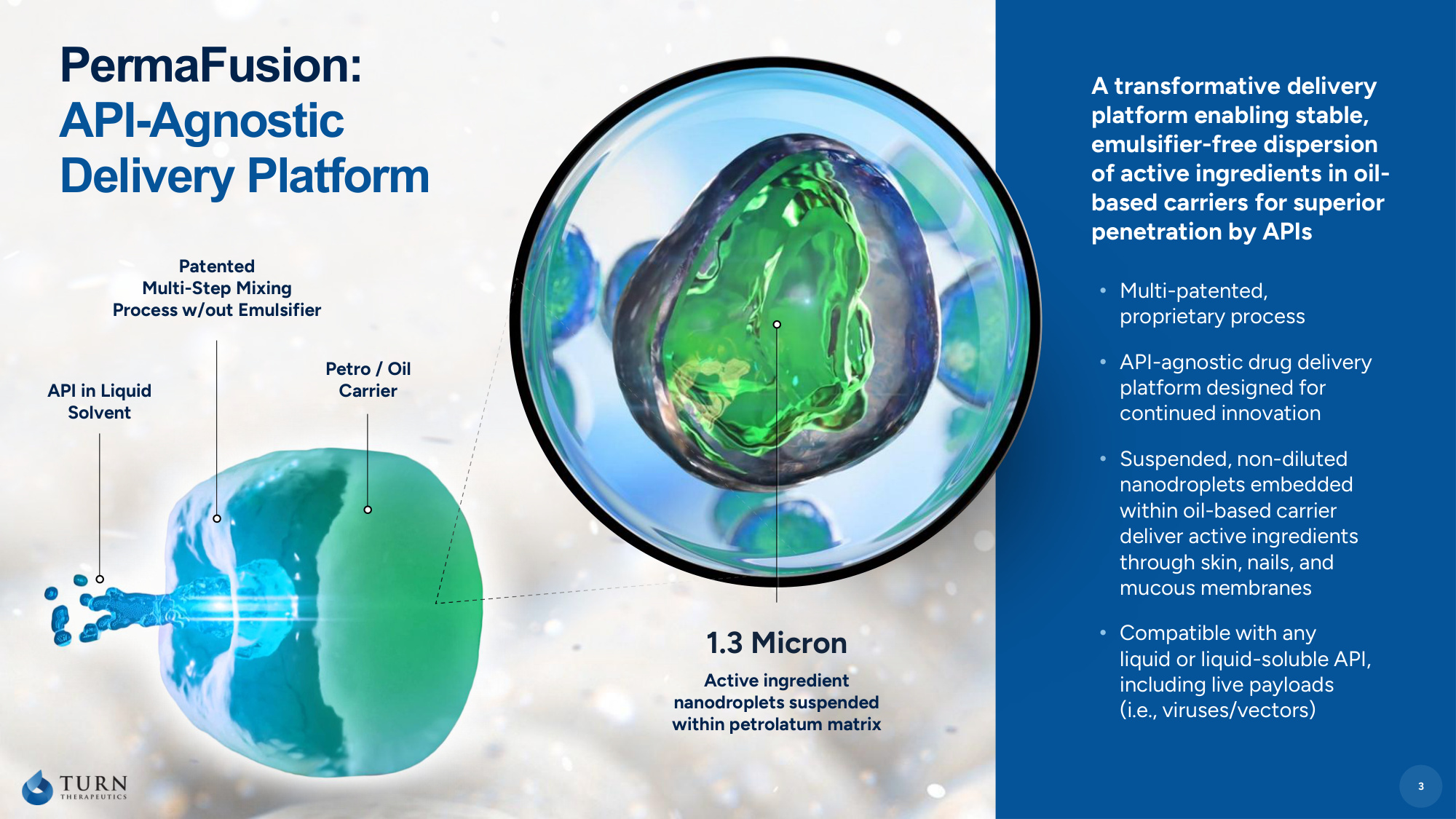
3 API in Liquid Solvent Patented Multi-Step Mixing Process w/out Emulsifier Petro / Oil Carrier A transformative delivery platform enabling stable, emulsifier-free dispersion of active ingredients in oil- based carriers for superior penetration by APIs • Multi-patented, proprietary process • API-agnostic drug delivery platform designed for continued innovation • Suspended, non-diluted nanodroplets embedded within oil-based carrier deliver active ingredients through skin, nails, and mucous membranes • Compatible with any liquid or liquid-soluble API, including live payloads (i.e., viruses/vectors) PermaFusion: API-Agnostic Delivery Platform 3 1.3 Micron Active ingredient nanodroplets suspended within petrolatum matrix
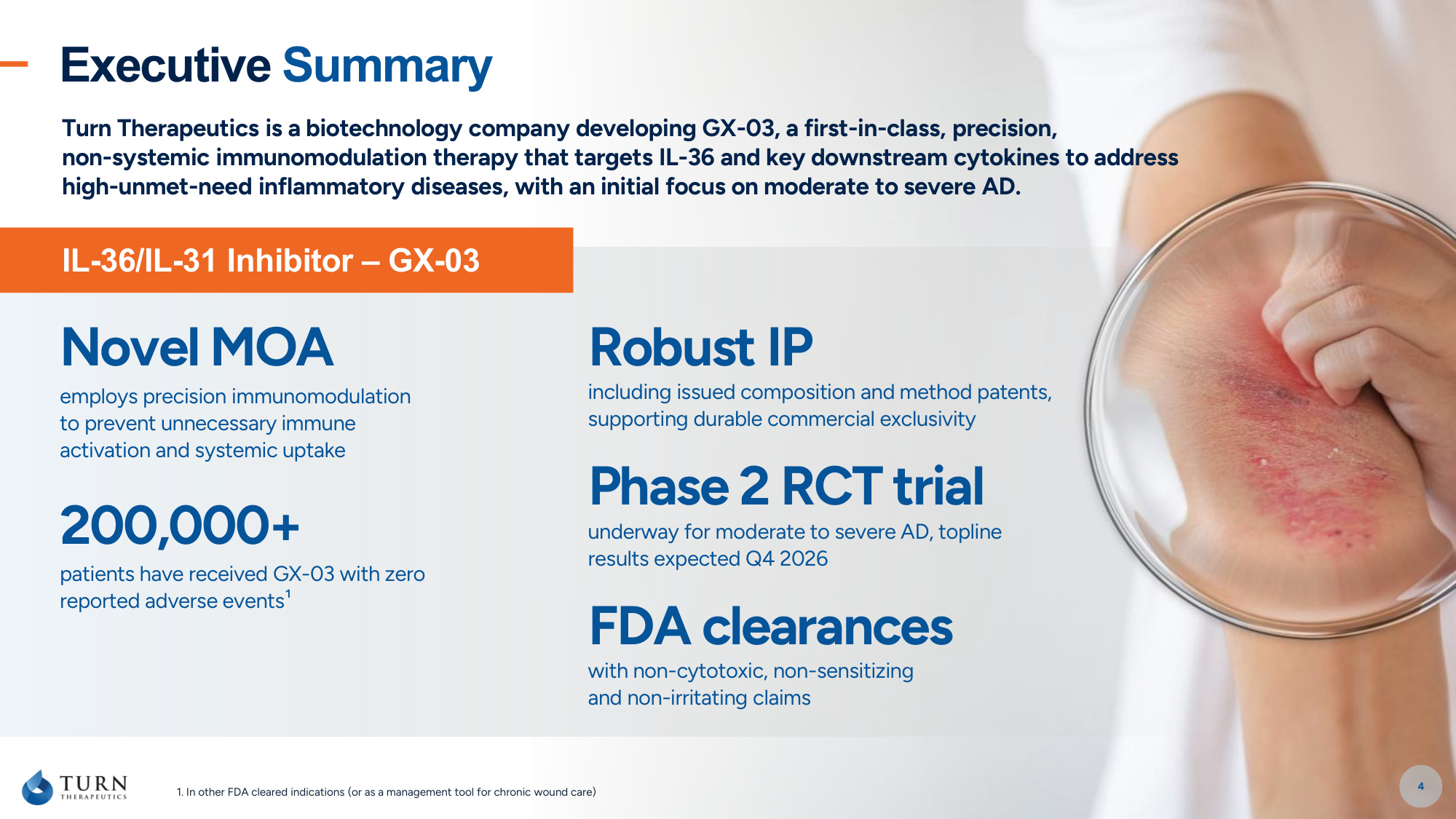
Turn Therapeutics is a biotechnology company developing GX-03, a first-in-class, precision, non-systemic immunomodulation therapy that targets IL-36 and key downstream cytokines to address high-unmet-need inflammatory diseases, with an initial focus on moderate to severe AD. 1. In other FDA cleared indications (or as a management tool for chronic wound care) IL-36/IL-31 Inhibitor – GX-03 Robust IP including issued composition and method patents, supporting durable commercial exclusivity Novel MOA employs precision immunomodulation to prevent unnecessary immune activation and systemic uptake Executive Summary 4 200,000+ patients have received GX-03 with zero reported adverse events¹ FDA clearances with non-cytotoxic, non-sensitizing and non-irritating claims Phase 2 RCT trial underway for moderate to severe AD, topline results expected Q4 2026
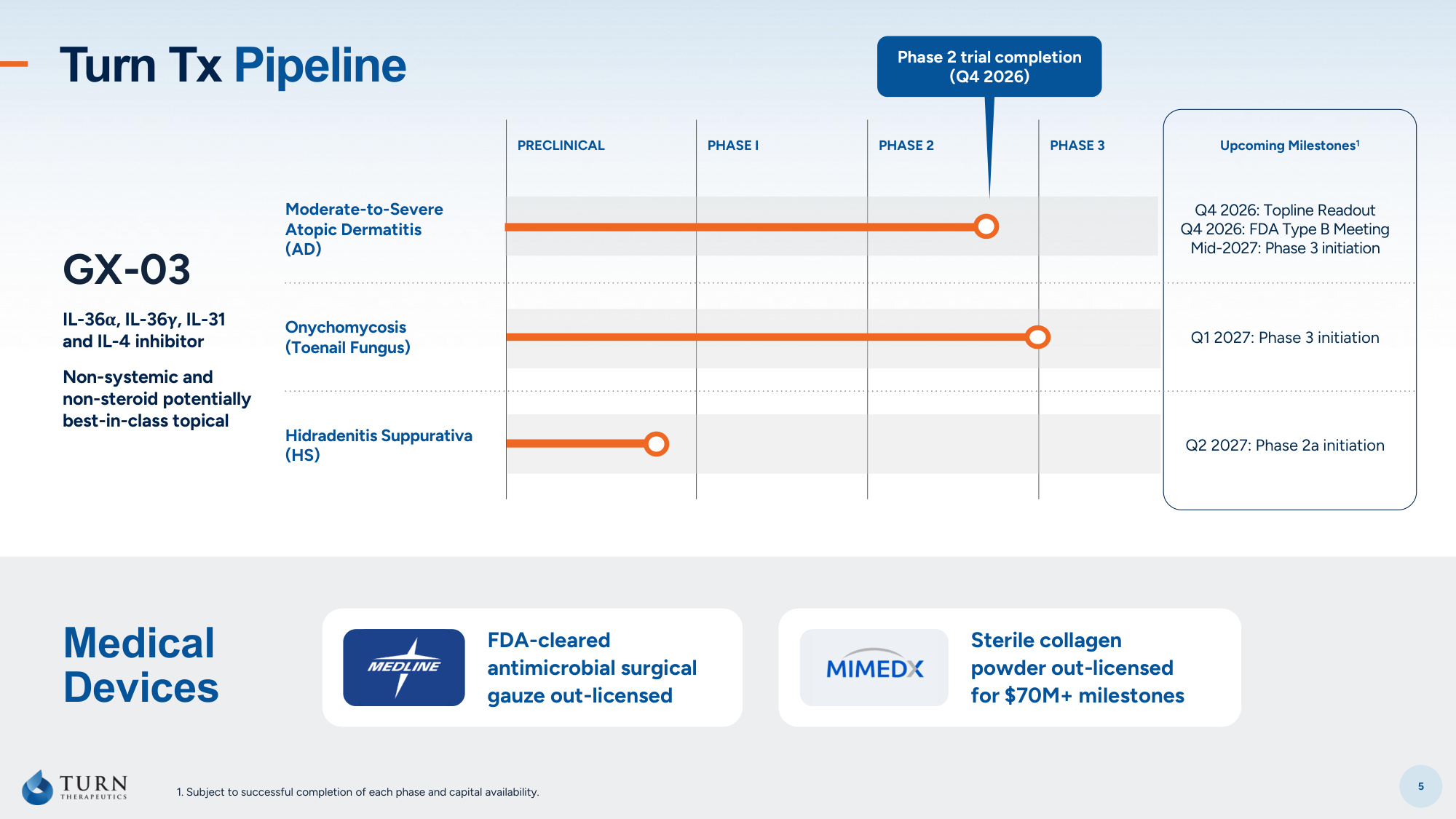
5 PRECLINICAL PHASE I PHASE 2 PHASE 3 Upcoming Milestones1 GX-03 IL-36α, IL-36γ, IL-31 and IL-4 inhibitor Non-systemic and non-steroid potentially best-in-class topical Moderate-to-Severe Atopic Dermatitis (AD) Q4 2026: Topline Readout Q4 2026: FDA Type B Meeting Mid-2027: Phase 3 initiation Onychomycosis (Toenail Fungus) Q1 2027: Phase 3 initiation Hidradenitis Suppurativa (HS) Q2 2027: Phase 2a initiation Medical Devices FDA-cleared antimicrobial surgical gauze out-licensed Sterile collagen powder out-licensed for $70M+ milestones Turn Tx Pipeline Phase 2 trial completion (Q4 2026) 1. Subject to successful completion of each phase and capital availability.
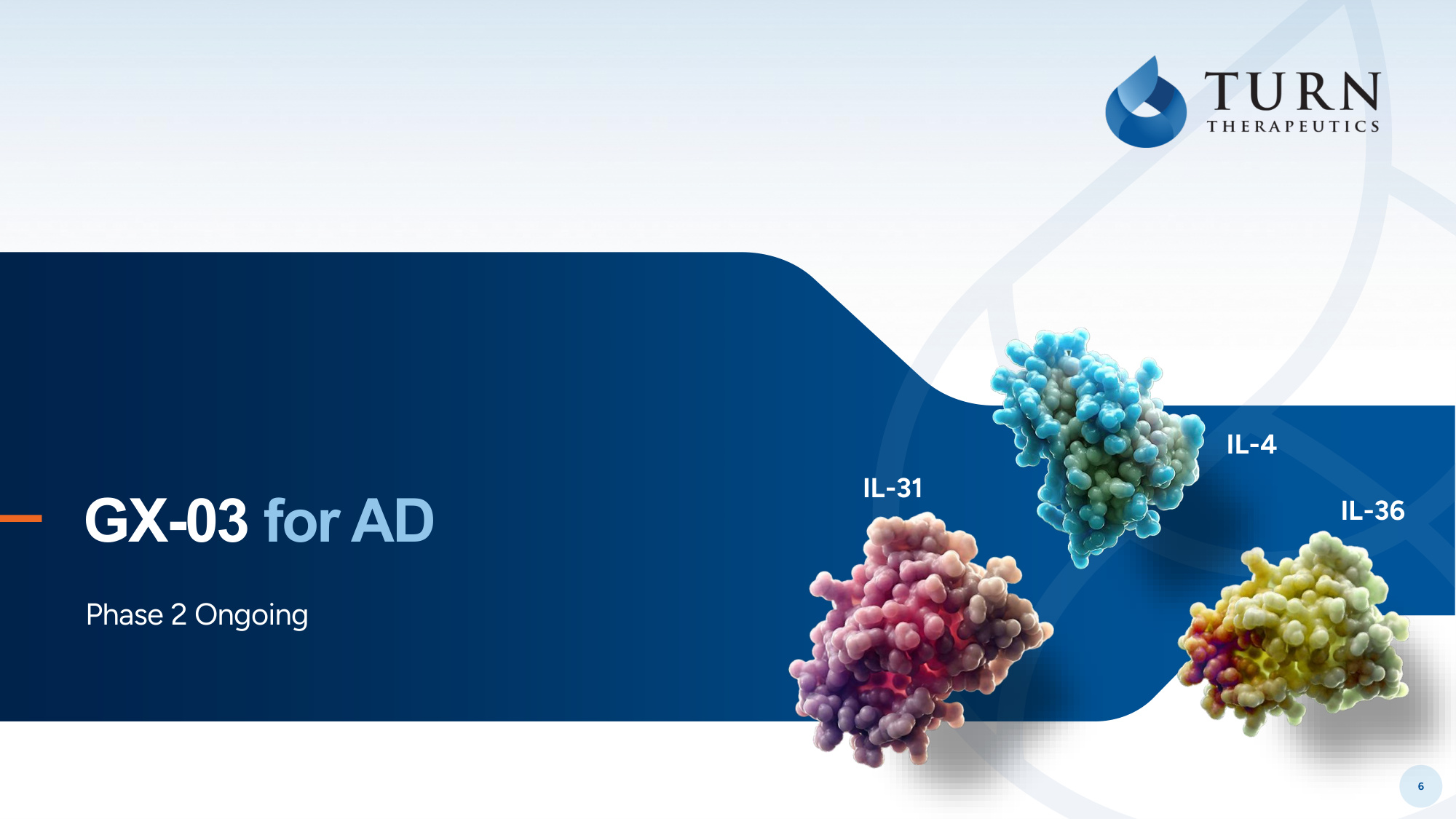
6 GX-03 for AD Phase 2 Ongoing IL-31 IL-4 IL-36
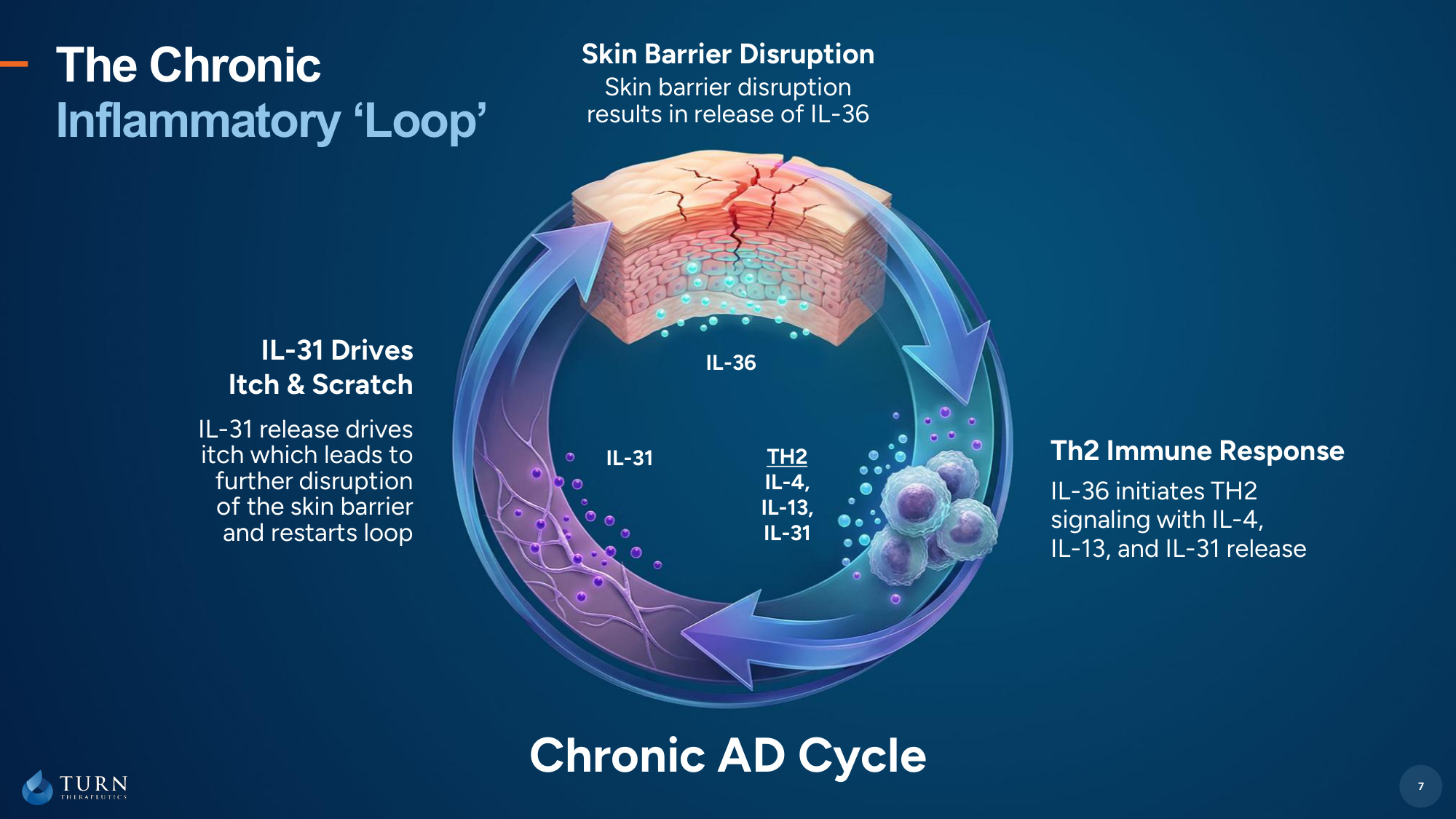
7 The Chronic Inflammatory 'Loop' TH2 IL-4, IL-13, IL-31 IL-31 Chronic AD Cycle IL-31 Drives Itch & Scratch Skin Barrier Disruption Skin barrier disruption results in release of IL-36 IL-36 initiates TH2 signaling with IL-4, IL-13, and IL-31 release IL-31 release drives itch which leads to further disruption of the skin barrier and restarts loop 7 IL-36 Th2 Immune Response
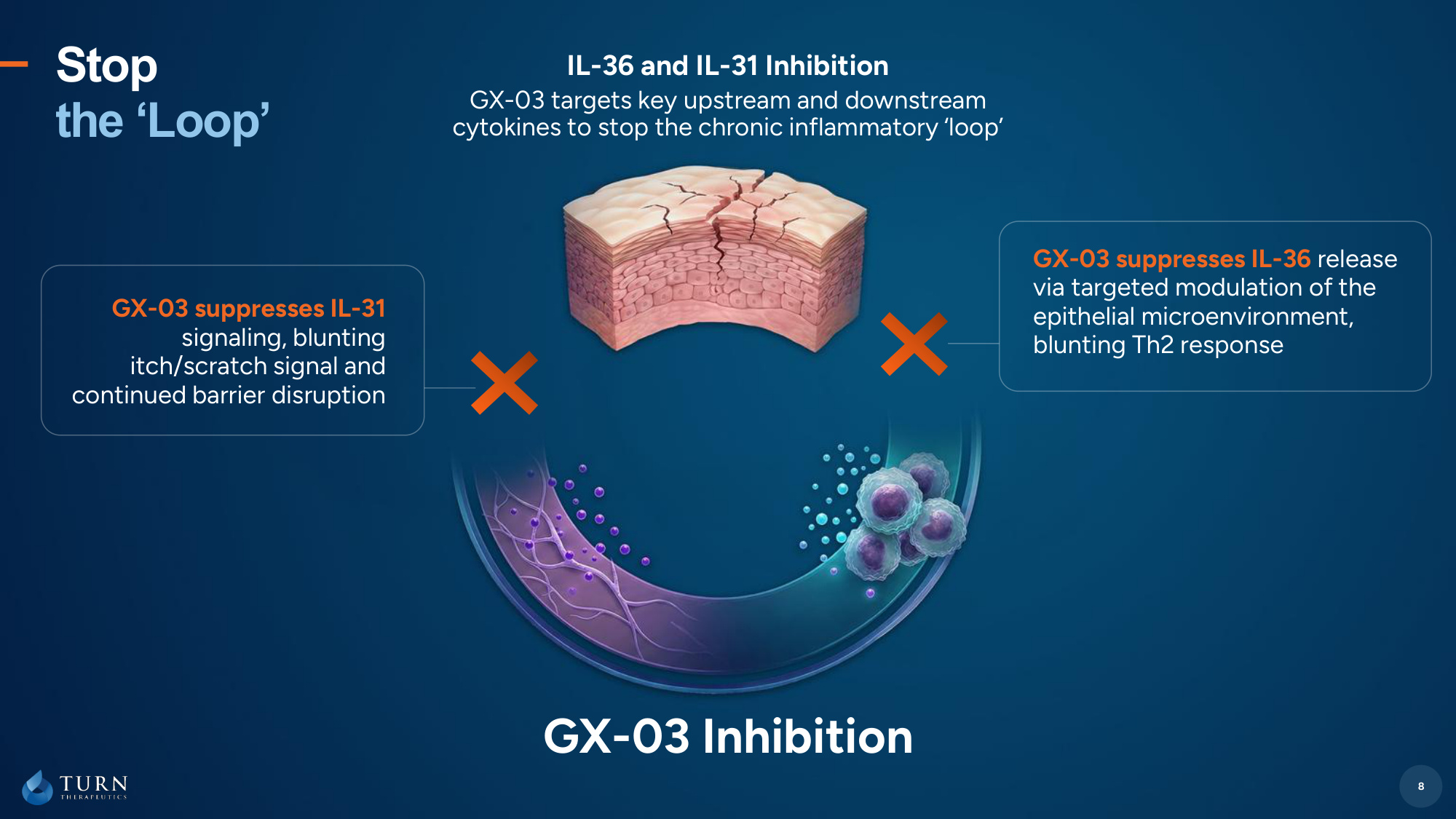
8 Stop the 'Loop' GX-03 Inhibition 8 GX-03 suppresses IL-36 release via targeted modulation of the epithelial microenvironment, blunting Th2 response GX-03 suppresses IL-31 signaling, blunting itch/scratch signal and continued barrier disruption IL-36 and IL-31 Inhibition GX-03 targets key upstream and downstream cytokines to stop the chronic inflammatory 'loop'
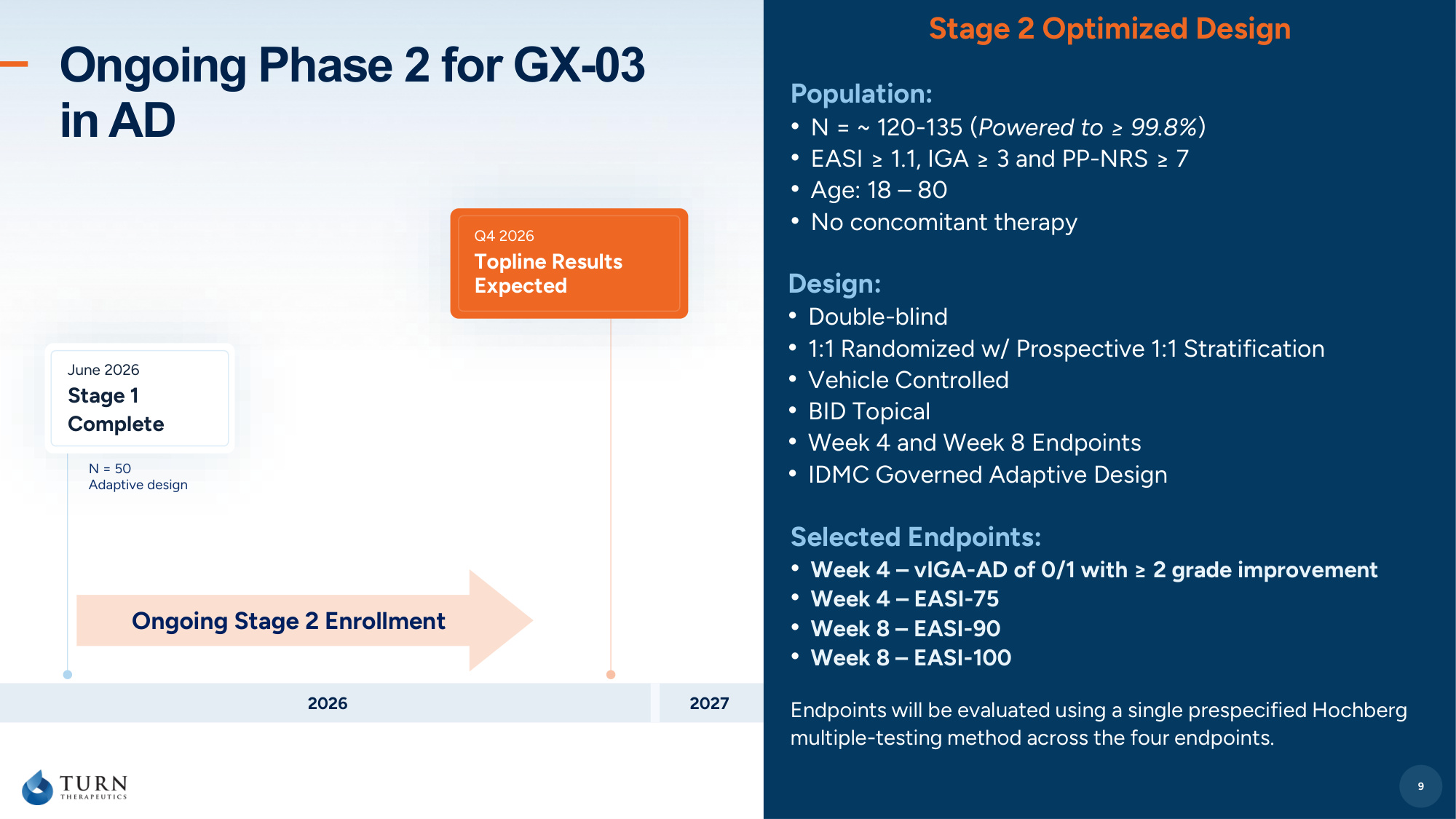
9 Ongoing Phase 2 for GX-03 in AD Design: • Double-blind • 1:1 Randomized w/ Prospective 1:1 Stratification • Vehicle Controlled • BID Topical • Week 4 and Week 8 Endpoints • IDMC Governed Adaptive Design 9 Stage 2 Optimized Design Selected Endpoints: • Week 4 – vIGA-AD of 0/1 with ≥ 2 grade improvement • Week 4 – EASI-75 • Week 8 – EASI-90 • Week 8 – EASI-100 Endpoints will be evaluated using a single prespecified Hochberg multiple-testing method across the four endpoints. Population: • N = ~ 120-135 (Powered to ≥ 99.8%) • EASI ≥ 1.1, IGA ≥ 3 and PP-NRS ≥ 7 • Age: 18 – 80 • No concomitant therapy 2026 2027 June 2026 Stage 1 Complete Q4 2026 Topline Results Expected N = 50 Adaptive design Ongoing Stage 2 Enrollment
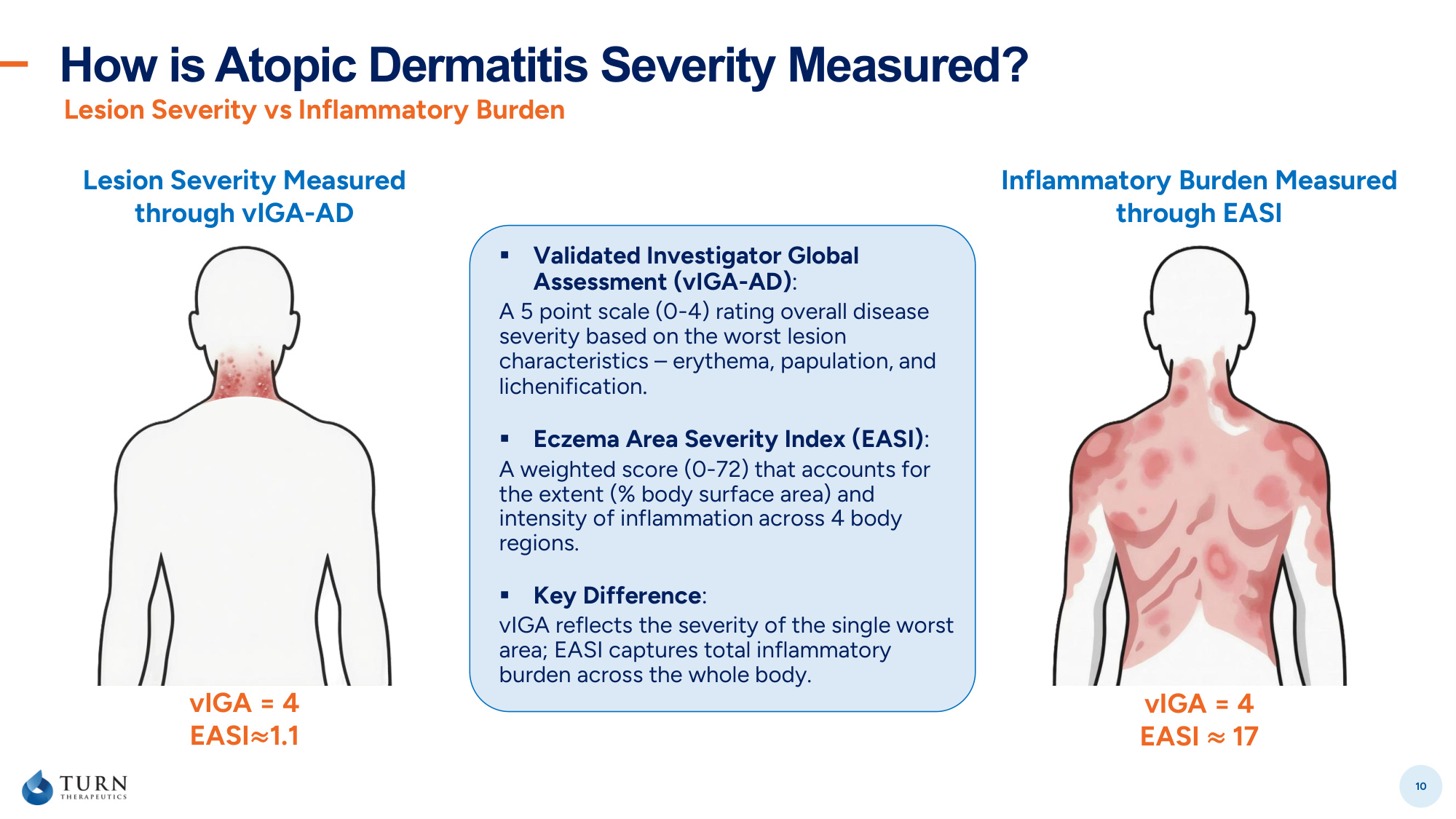
How is Atopic Dermatitis Severity Measured? 10 Lesion Severity vs Inflammatory Burden Lesion Severity Measured through vIGA-AD Inflammatory Burden Measured through EASI vIGA = 4 EASI≈1.1 vIGA = 4 EASI ≈ 17 ▪ Validated Investigator Global Assessment (vIGA-AD): A 5 point scale (0-4) rating overall disease severity based on the worst lesion characteristics – erythema, papulation, and lichenification. ▪ Eczema Area Severity Index (EASI): A weighted score (0-72) that accounts for the extent (% body surface area) and intensity of inflammation across 4 body regions. ▪ Key Difference: vIGA reflects the severity of the single worst area; EASI captures total inflammatory burden across the whole body.
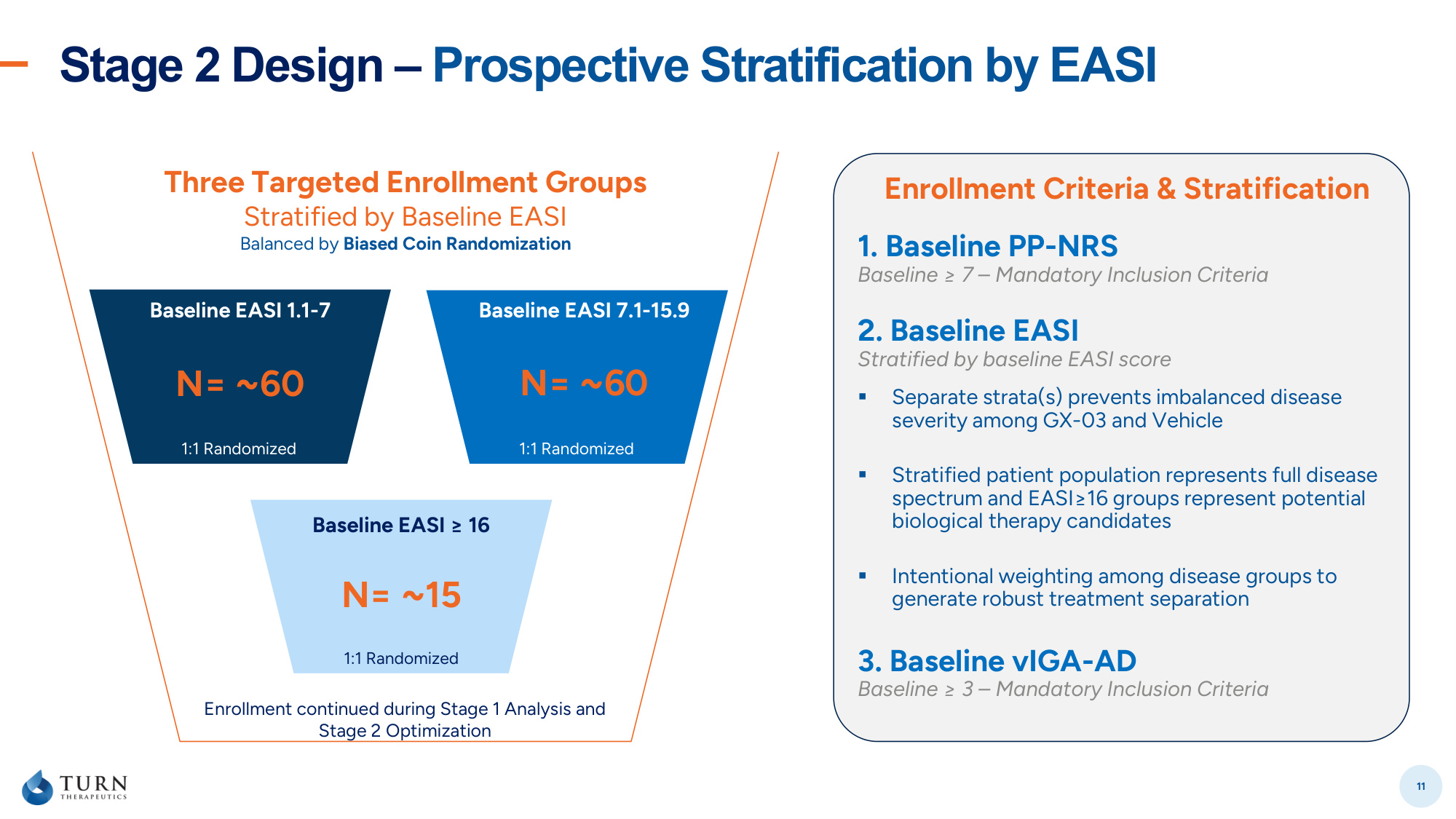
Stage 2 Design – Prospective Stratification by EASI 11 2. Baseline EASI Stratified by baseline EASI score ▪ Separate strata(s) prevents imbalanced disease severity among GX-03 and Vehicle ▪ Stratified patient population represents full disease spectrum and EASI≥16 groups represent potential biological therapy candidates ▪ Intentional weighting among disease groups to generate robust treatment separation 1. Baseline PP-NRS Baseline ≥ 7 – Mandatory Inclusion Criteria 3. Baseline vIGA-AD Baseline ≥ 3 – Mandatory Inclusion Criteria Enrollment Criteria & Stratification N= ~60 Baseline EASI 1.1-7 1:1 Randomized N= ~60 Baseline EASI 7.1-15.9 1:1 Randomized N= ~15 Baseline EASI ≥ 16 1:1 Randomized Three Targeted Enrollment Groups Stratified by Baseline EASI Balanced by Biased Coin Randomization Enrollment continued during Stage 1 Analysis and Stage 2 Optimization
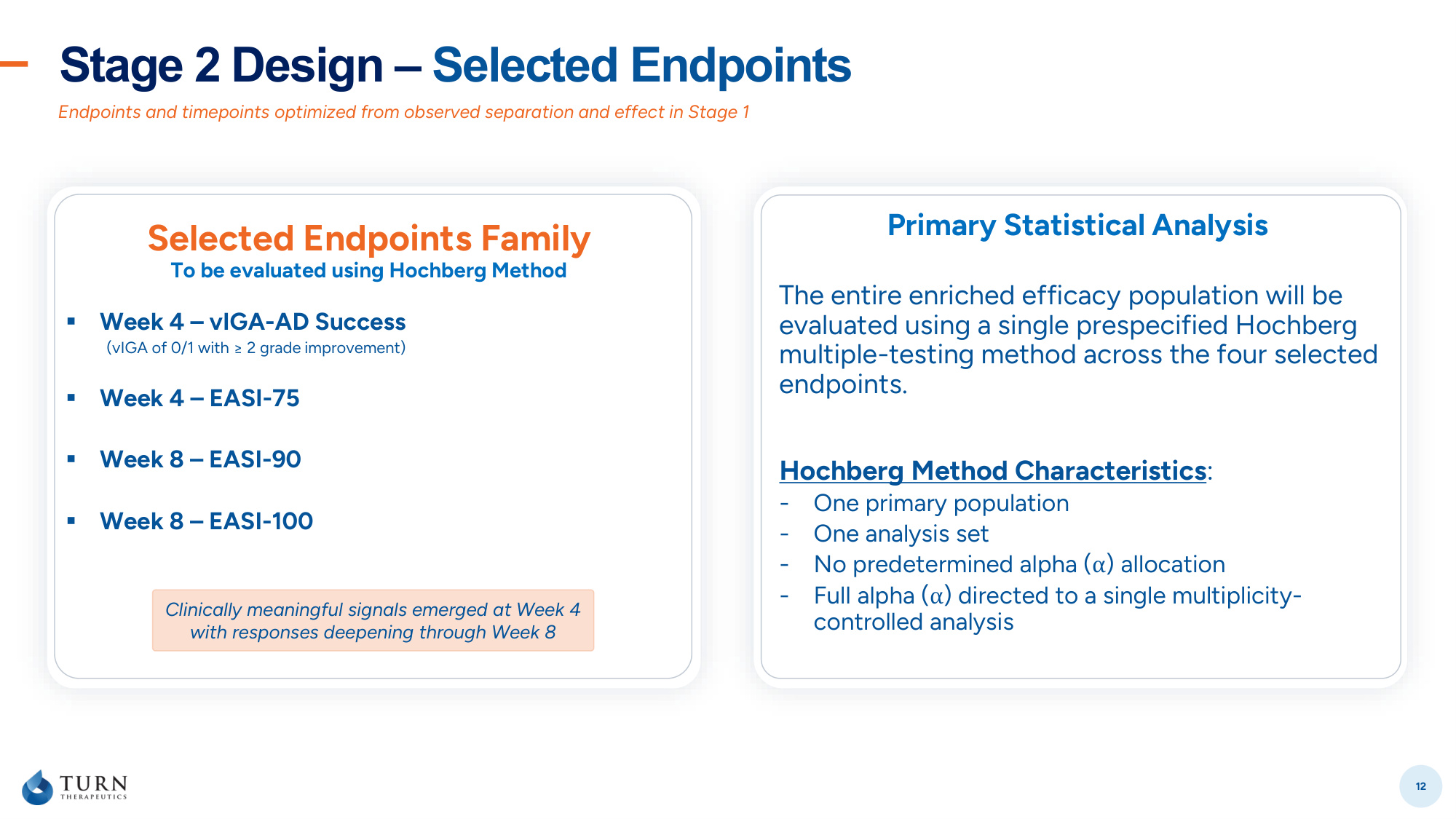
Stage 2 Design – Selected Endpoints 12 Endpoints and timepoints optimized from observed separation and effect in Stage 1 Selected Endpoints Family To be evaluated using Hochberg Method ▪ Week 4 – vIGA-AD Success (vIGA of 0/1 with ≥ 2 grade improvement) ▪ Week 4 – EASI-75 ▪ Week 8 – EASI-90 ▪ Week 8 – EASI-100 Primary Statistical Analysis The entire enriched efficacy population will be evaluated using a single prespecified Hochberg multiple-testing method across the four selected endpoints. Clinically meaningful signals emerged at Week 4 with responses deepening through Week 8 Hochberg Method Characteristics: - One primary population - One analysis set - No predetermined alpha (α) allocation - Full alpha (α) directed to a single multiplicity- controlled analysis
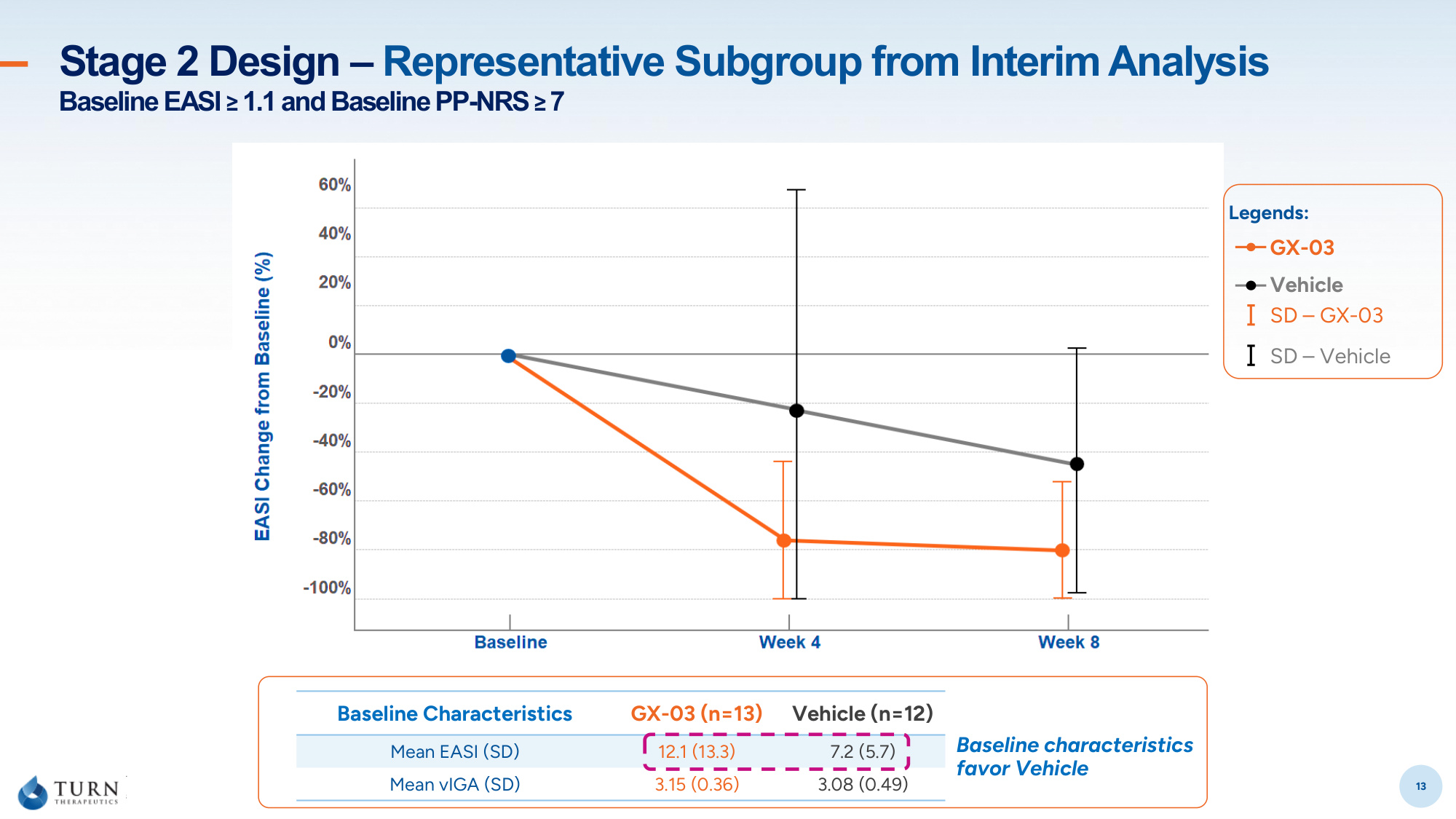
13 Stage 2 Design – Representative Subgroup from Interim Analysis Baseline EASI ≥ 1.1 and Baseline PP-NRS ≥ 7 13 Baseline Characteristics GX-03 (n=13) Vehicle (n=12) Mean EASI (SD) 12.1 (13.3) 7.2 (5.7) Mean vIGA (SD) 3.15 (0.36) 3.08 (0.49) Baseline characteristics favor Vehicle Legends: GX-03 Vehicle SD – GX-03 SD – Vehicle
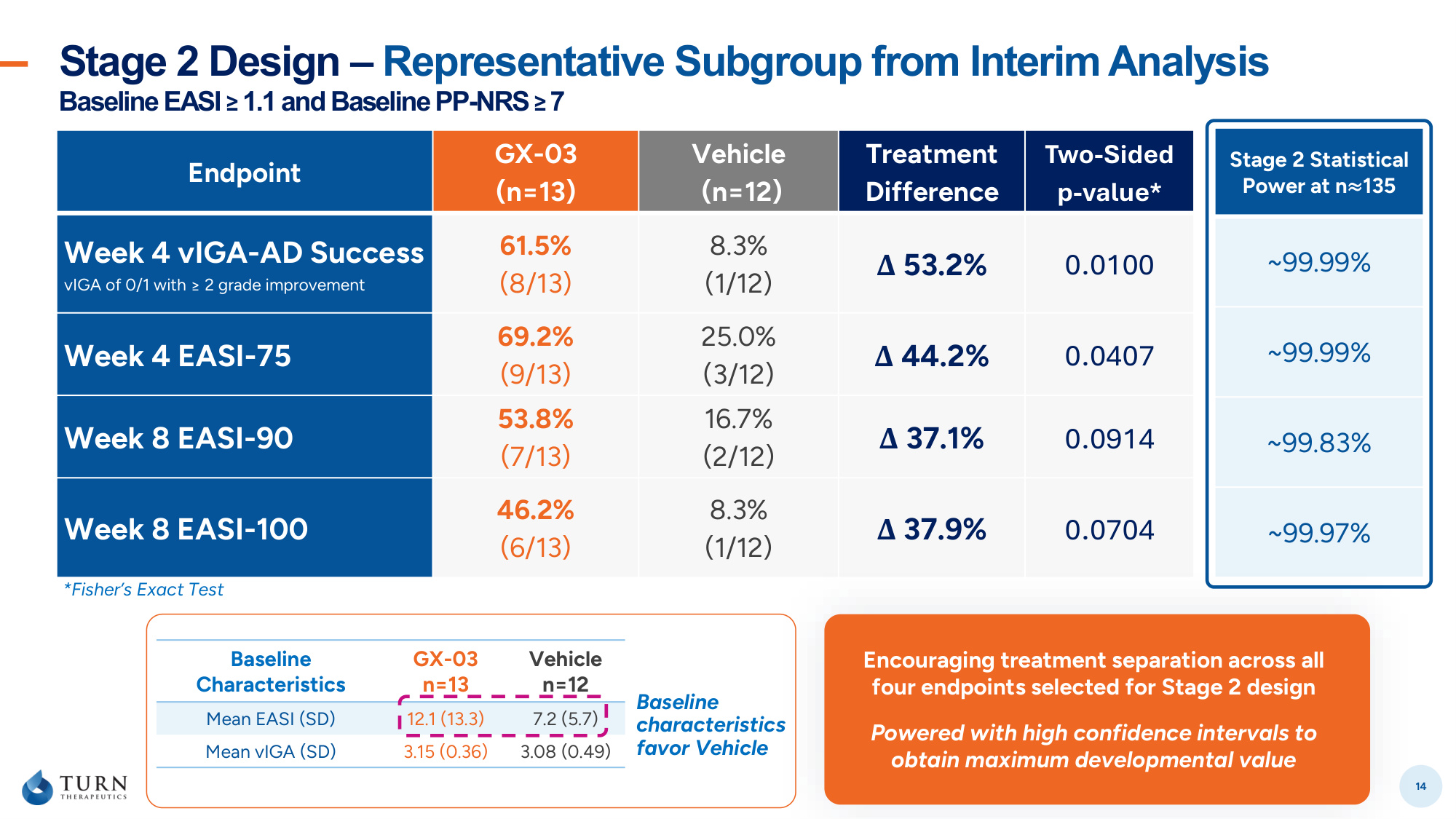
Stage 2 Design – Representative Subgroup from Interim Analysis Baseline EASI ≥ 1.1 and Baseline PP-NRS ≥ 7 14 Endpoint GX-03 (n=13) Vehicle (n=12) Treatment Difference Two-Sided p-value* Week 4 vIGA-AD Success vIGA of 0/1 with ≥ 2 grade improvement 61.5% (8/13) 8.3% (1/12) Δ 53.2% 0.0100 Week 4 EASI-75 69.2% (9/13) 25.0% (3/12) Δ 44.2% 0.0407 Week 8 EASI-90 53.8% (7/13) 16.7% (2/12) Δ 37.1% 0.0914 Week 8 EASI-100 46.2% (6/13) 8.3% (1/12) Δ 37.9% 0.0704 Baseline Characteristics GX-03 n=13 Vehicle n=12 Mean EASI (SD) 12.1 (13.3) 7.2 (5.7) Mean vIGA (SD) 3.15 (0.36) 3.08 (0.49) Baseline characteristics favor Vehicle *Fisher's Exact Test Stage 2 Statistical Power at n≈135 ~99.99% ~99.99% ~99.83% ~99.97% Encouraging treatment separation across all four endpoints selected for Stage 2 design Powered with high confidence intervals to obtain maximum developmental value
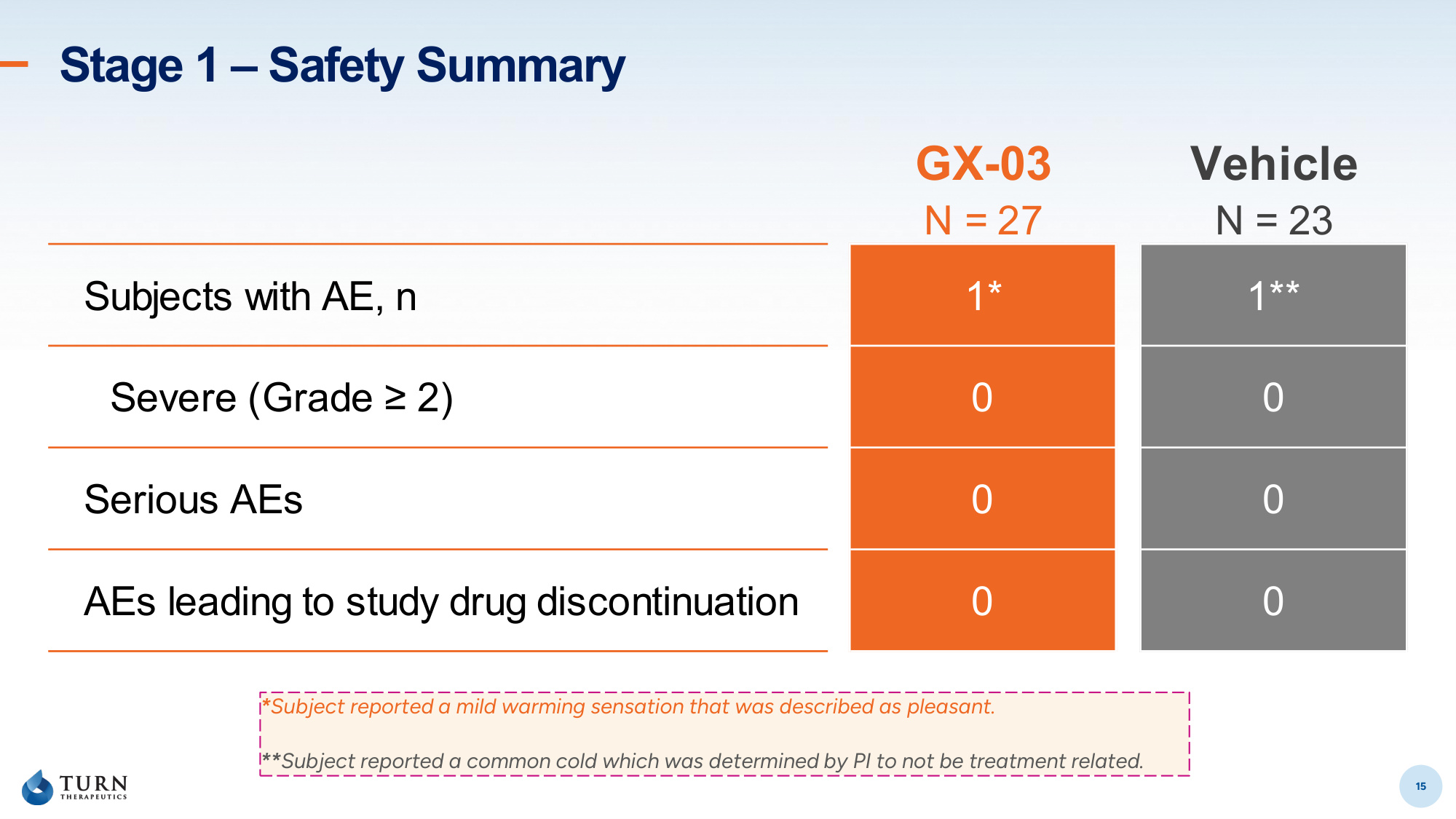
15 Stage 1 – Safety Summary 15 *Subject reported a mild warming sensation that was described as pleasant. **Subject reported a common cold which was determined by PI to not be treatment related. GX-03 Vehicle N = 27 N = 23 Subjects with AE, n 1* 1** Severe (Grade ≥ 2) 0 0 Serious AEs 0 0 AEs leading to study drug discontinuation 0 0
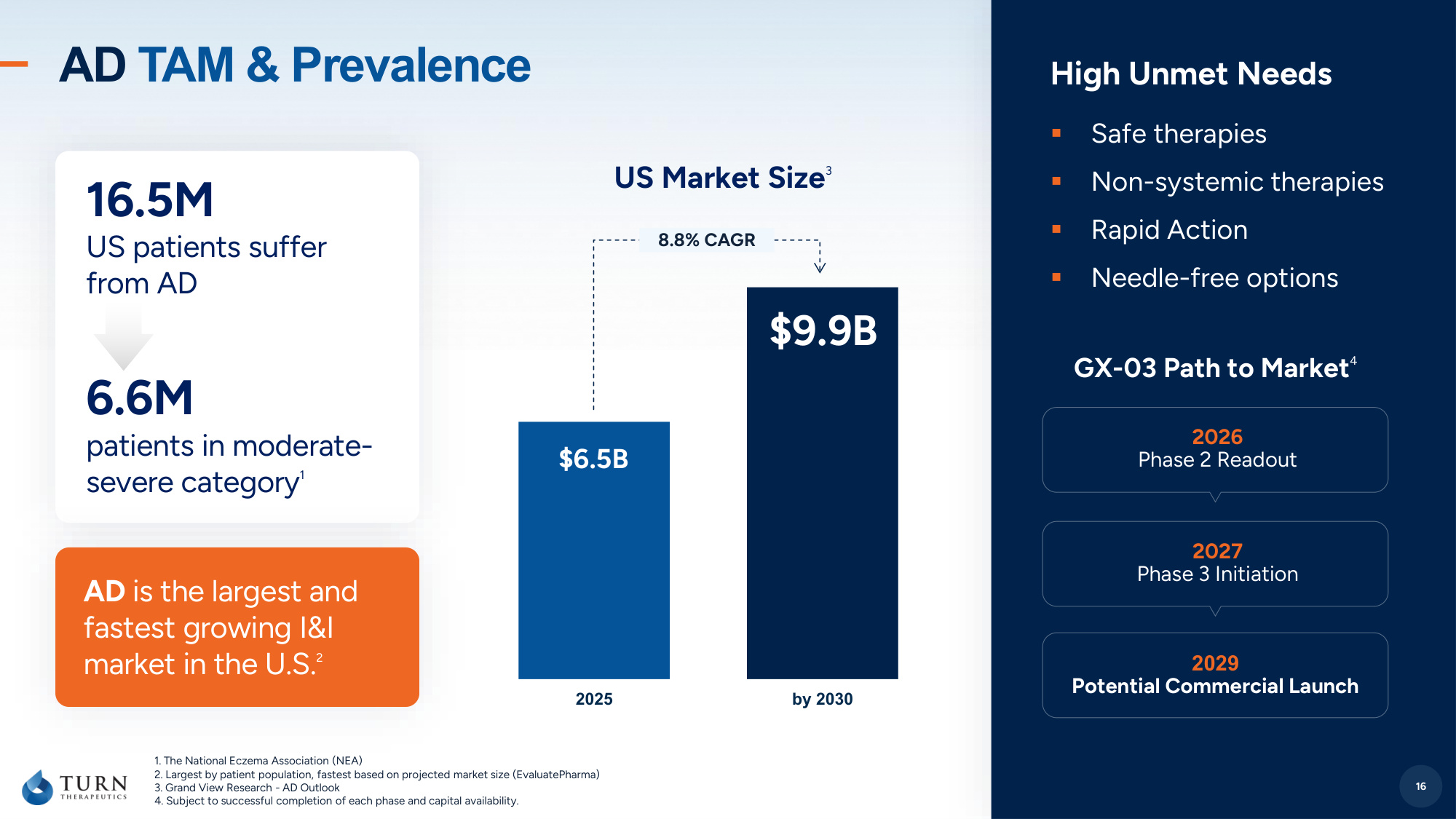
16 1. The National Eczema Association (NEA) 2. Largest by patient population, fastest based on projected market size (EvaluatePharma) 3. Grand View Research - AD Outlook 4. Subject to successful completion of each phase and capital availability. 16.5M US patients suffer from AD 6.6M patients in moderate- severe category 1 AD is the largest and fastest growing I&I market in the U.S. 2 2026 Phase 2 Readout 2029 Potential Commercial Launch GX-03 Path to Market 4 High Unmet Needs ▪ Safe therapies ▪ Non-systemic therapies ▪ Rapid Action ▪ Needle-free options AD TAM & Prevalence 2027 Phase 3 Initiation 16 2025 by 2030 $6.5B $9.9B 8.8% CAGR US Market Size 3
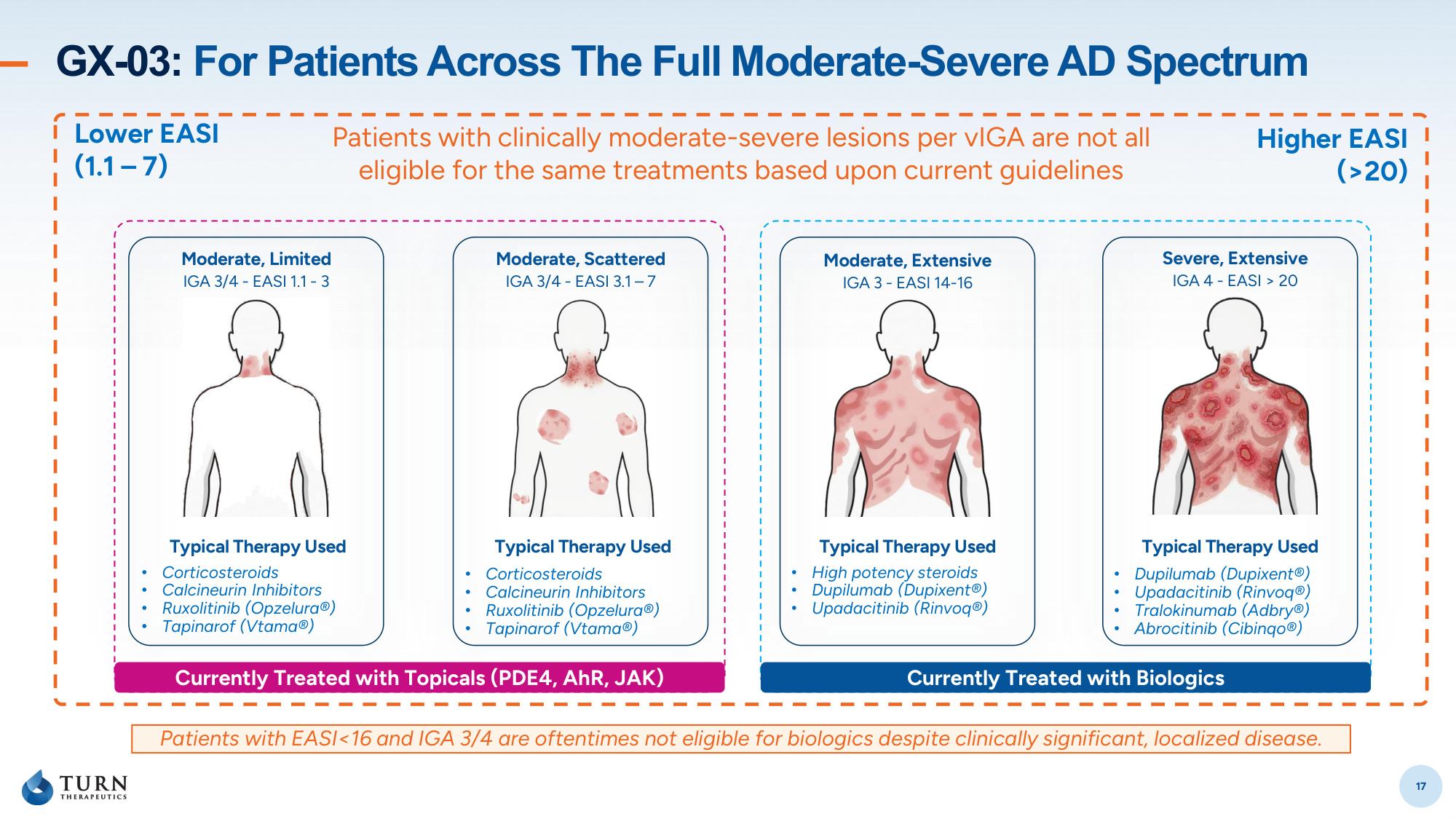
17 GX-03: For Patients Across The Full Moderate-Severe AD Spectrum Moderate, Limited IGA 3/4 - EASI 1.1 - 3 Moderate, Scattered IGA 3/4 - EASI 3.1 – 7 Moderate, Extensive IGA 3 - EASI 14-16 Severe, Extensive IGA 4 - EASI > 20 Typical Therapy Used Typical Therapy Used Typical Therapy Used Typical Therapy Used • Corticosteroids • Calcineurin Inhibitors • Ruxolitinib (Opzelura®) • Tapinarof (Vtama®) • Corticosteroids • Calcineurin Inhibitors • Ruxolitinib (Opzelura®) • Tapinarof (Vtama®) • High potency steroids • Dupilumab (Dupixent®) • Upadacitinib (Rinvoq®) • Dupilumab (Dupixent®) • Upadacitinib (Rinvoq®) • Tralokinumab (Adbry®) • Abrocitinib (Cibinqo®) 17 Currently Treated with Topicals (PDE4, AhR, JAK) Currently Treated with Biologics Patients with EASI<16 and IGA 3/4 are oftentimes not eligible for biologics despite clinically significant, localized disease. Patients with clinically moderate-severe lesions per vIGA are not all eligible for the same treatments based upon current guidelines Lower EASI (1.1 – 7) Higher EASI (>20)
18 (Toenail Fungus) GX-03 for Onychomycosis Phase 3 Ready
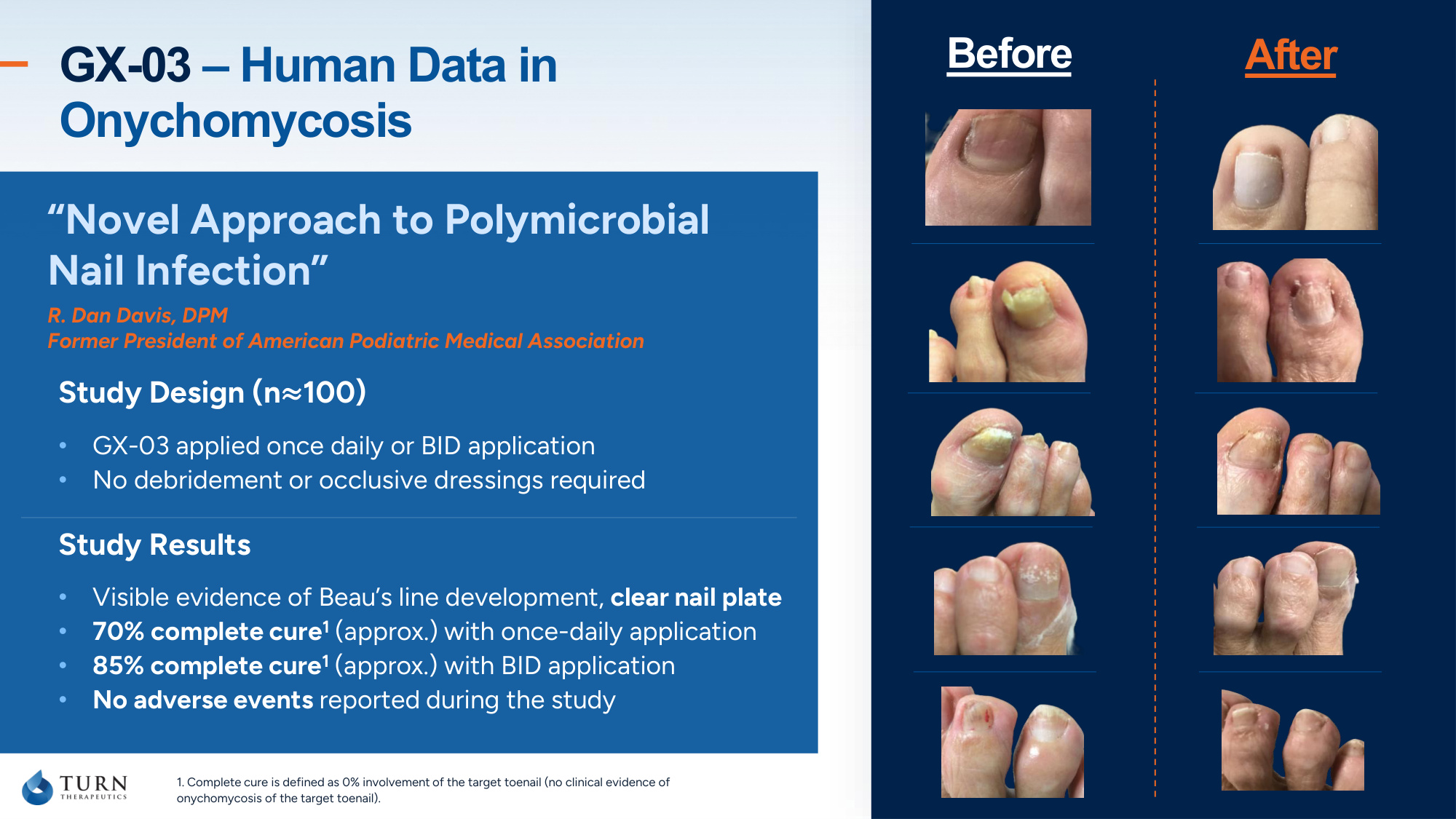
19 Study Results • Visible evidence of Beau's line development, clear nail plate • 70% complete cure1 (approx.) with once-daily application • 85% complete cure1 (approx.) with BID application • No adverse events reported during the study Study Design (n≈100) • GX-03 applied once daily or BID application • No debridement or occlusive dressings required GX-03 – Human Data in Onychomycosis Before After "Novel Approach to Polymicrobial Nail Infection" R. Dan Davis, DPM Former President of American Podiatric Medical Association 1. Complete cure is defined as 0% involvement of the target toenail (no clinical evidence of onychomycosis of the target toenail).
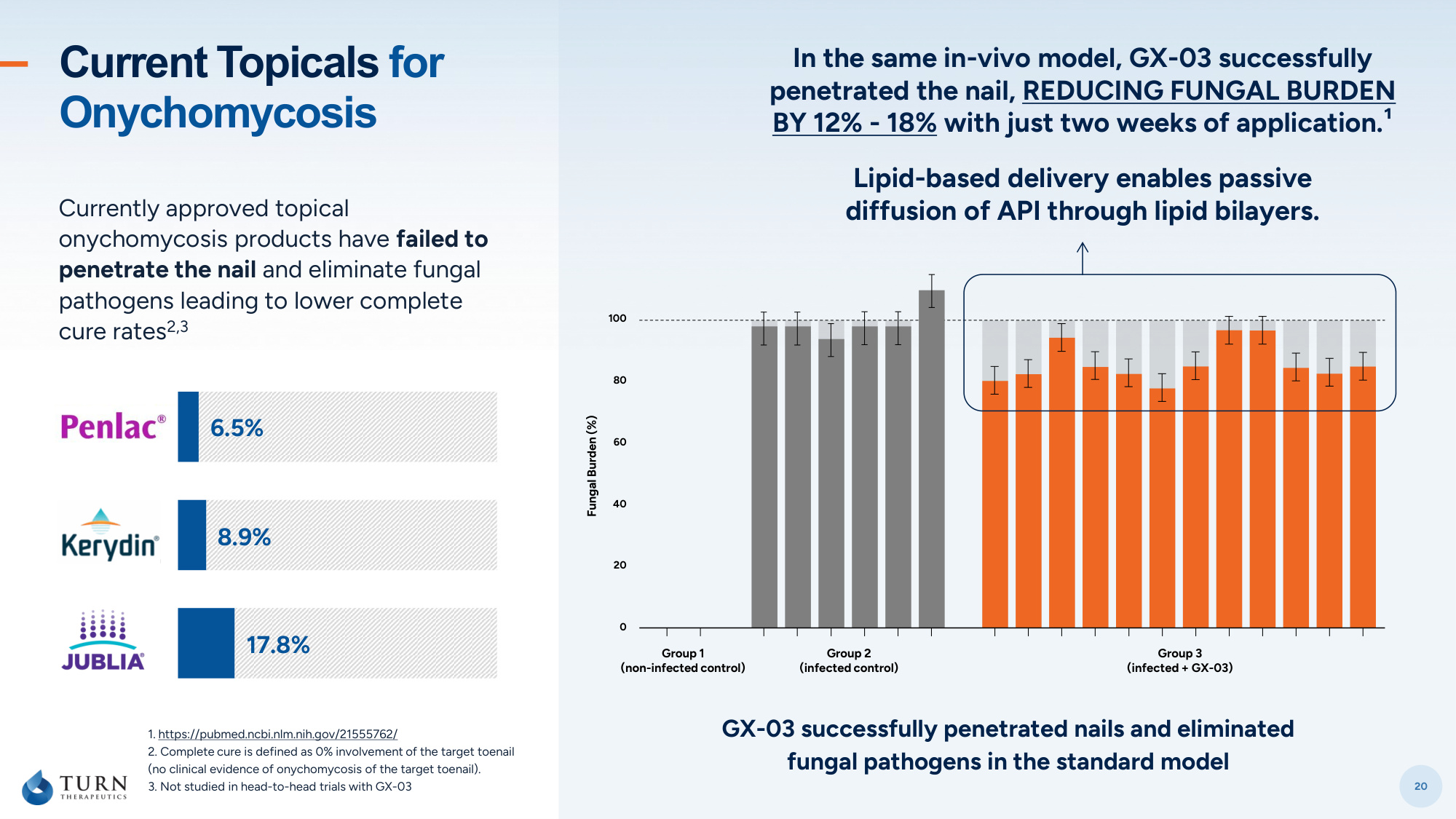
20 1. https://pubmed.ncbi.nlm.nih.gov/21555762/ 2. Complete cure is defined as 0% involvement of the target toenail (no clinical evidence of onychomycosis of the target toenail). 3. Not studied in head-to-head trials with GX-03 GX-03 successfully penetrated nails and eliminated fungal pathogens in the standard model In the same in-vivo model, GX-03 successfully penetrated the nail, REDUCING FUNGAL BURDEN BY 12% - 18% with just two weeks of application.¹ Lipid-based delivery enables passive diffusion of API through lipid bilayers. Currently approved topical onychomycosis products have failed to penetrate the nail and eliminate fungal pathogens leading to lower complete cure rates2,3 8.9% 6.5% 17.8% Current Topicals for Onychomycosis 100 80 60 40 20 0 Group 3 (infected + GX-03) Group 2 (infected control) Group 1 (non-infected control) Fungal Burden (%)
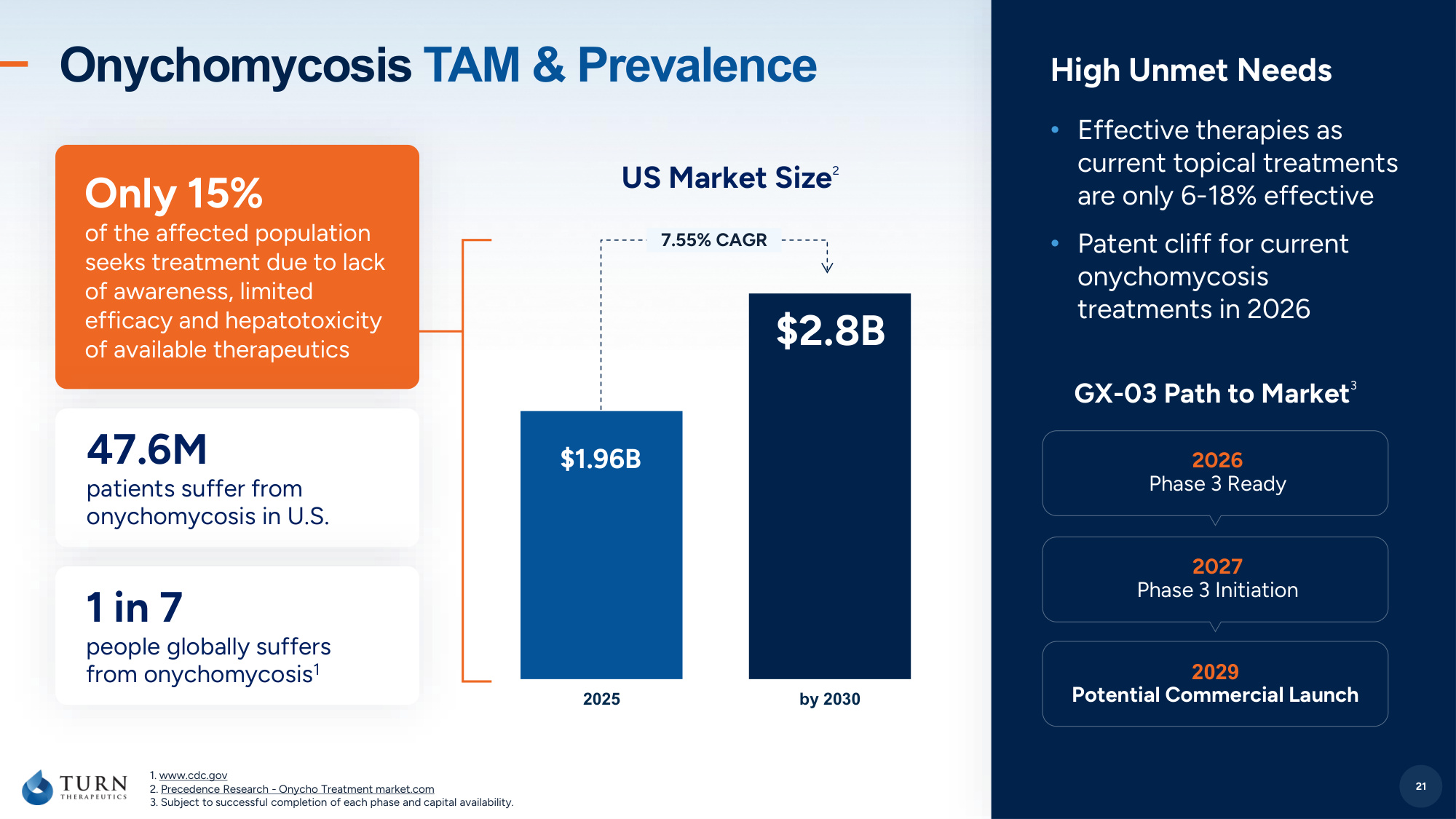
21 2026 Phase 3 Ready 2029 Potential Commercial Launch GX-03 Path to Market 3 High Unmet Needs • Effective therapies as current topical treatments are only 6-18% effective • Patent cliff for current onychomycosis treatments in 2026 Onychomycosis TAM & Prevalence 2025 by 2030 $1.96B $2.8B 7.55% CAGR US Market Size 2 2027 Phase 3 Initiation 21 47.6M patients suffer from onychomycosis in U.S. 1 in 7 people globally suffers from onychomycosis1 Only 15% of the affected population seeks treatment due to lack of awareness, limited efficacy and hepatotoxicity of available therapeutics 1. www.cdc.gov 2. Precedence Research - Onycho Treatment market.com 3. Subject to successful completion of each phase and capital availability.
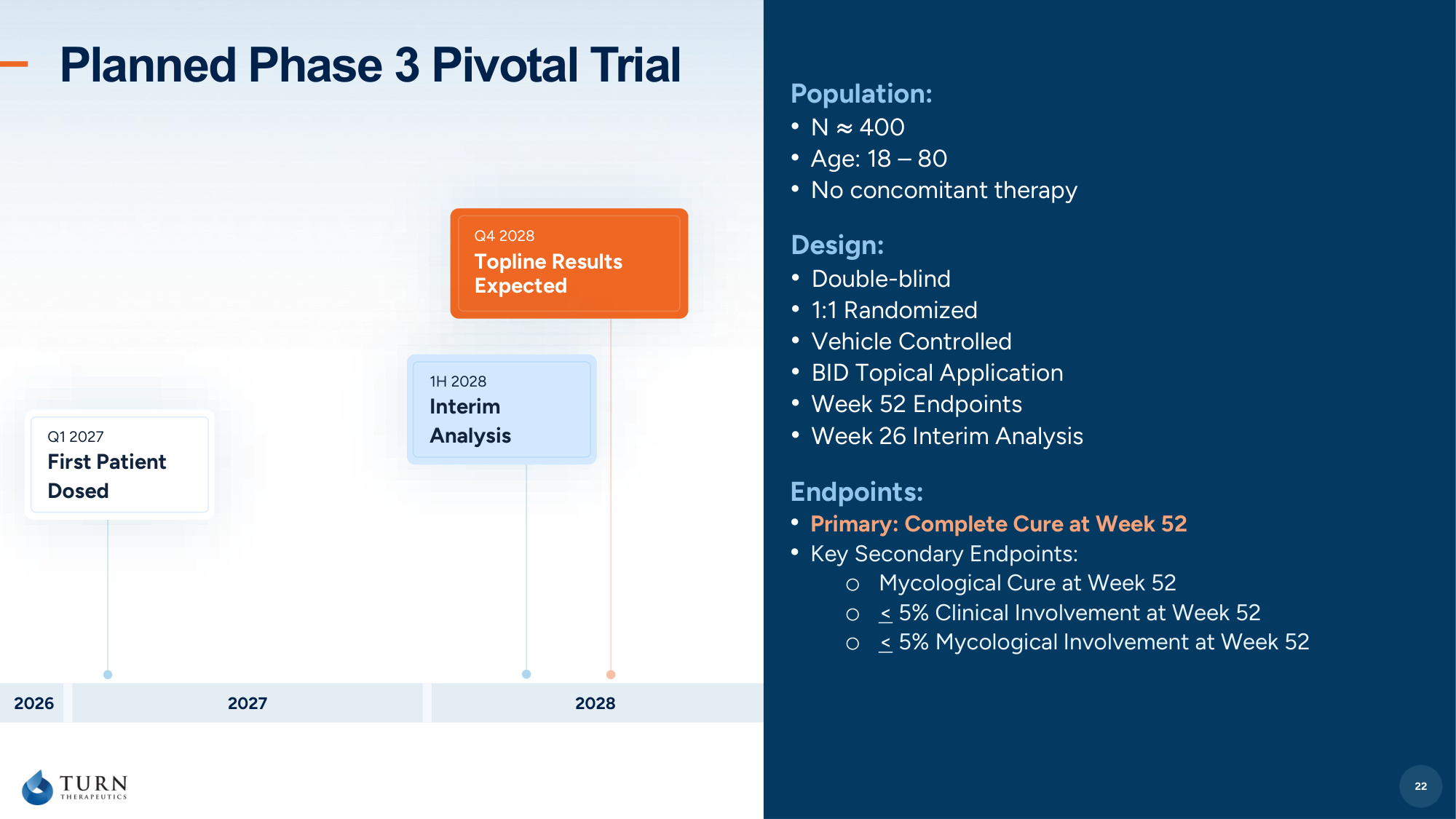
22 Planned Phase 3 Pivotal Trial Design: • Double-blind • 1:1 Randomized • Vehicle Controlled • BID Topical Application • Week 52 Endpoints • Week 26 Interim Analysis 22 Endpoints: • Primary: Complete Cure at Week 52 • Key Secondary Endpoints: o Mycological Cure at Week 52 o < 5% Clinical Involvement at Week 52 o < 5% Mycological Involvement at Week 52 Population: • N ≈ 400 • Age: 18 – 80 • No concomitant therapy 2026 2027 2028 Q1 2027 First Patient Dosed Q4 2028 Topline Results Expected 1H 2028 Interim Analysis
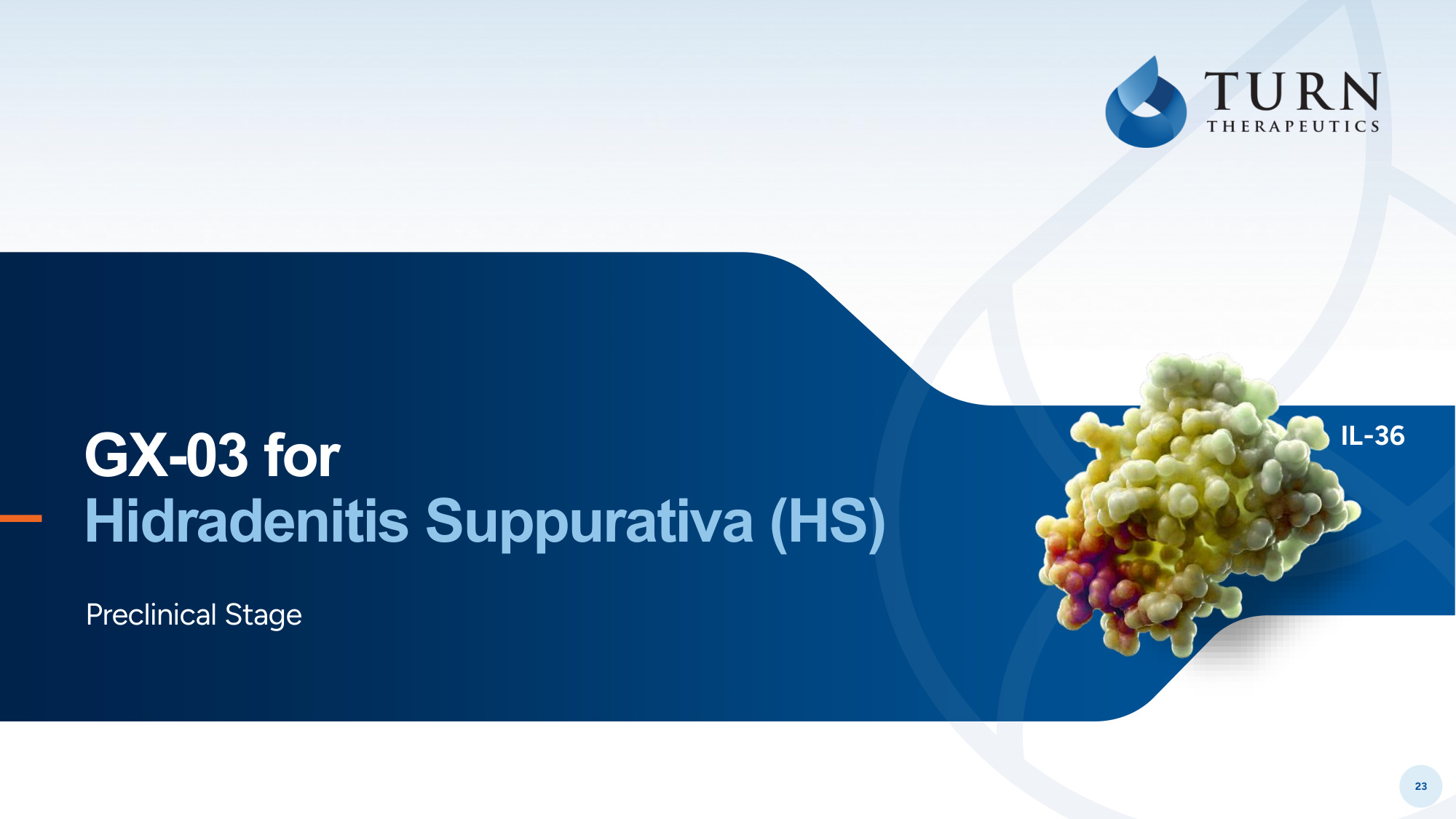
23 GX-03 for Hidradenitis Suppurativa (HS) Preclinical Stage IL-36
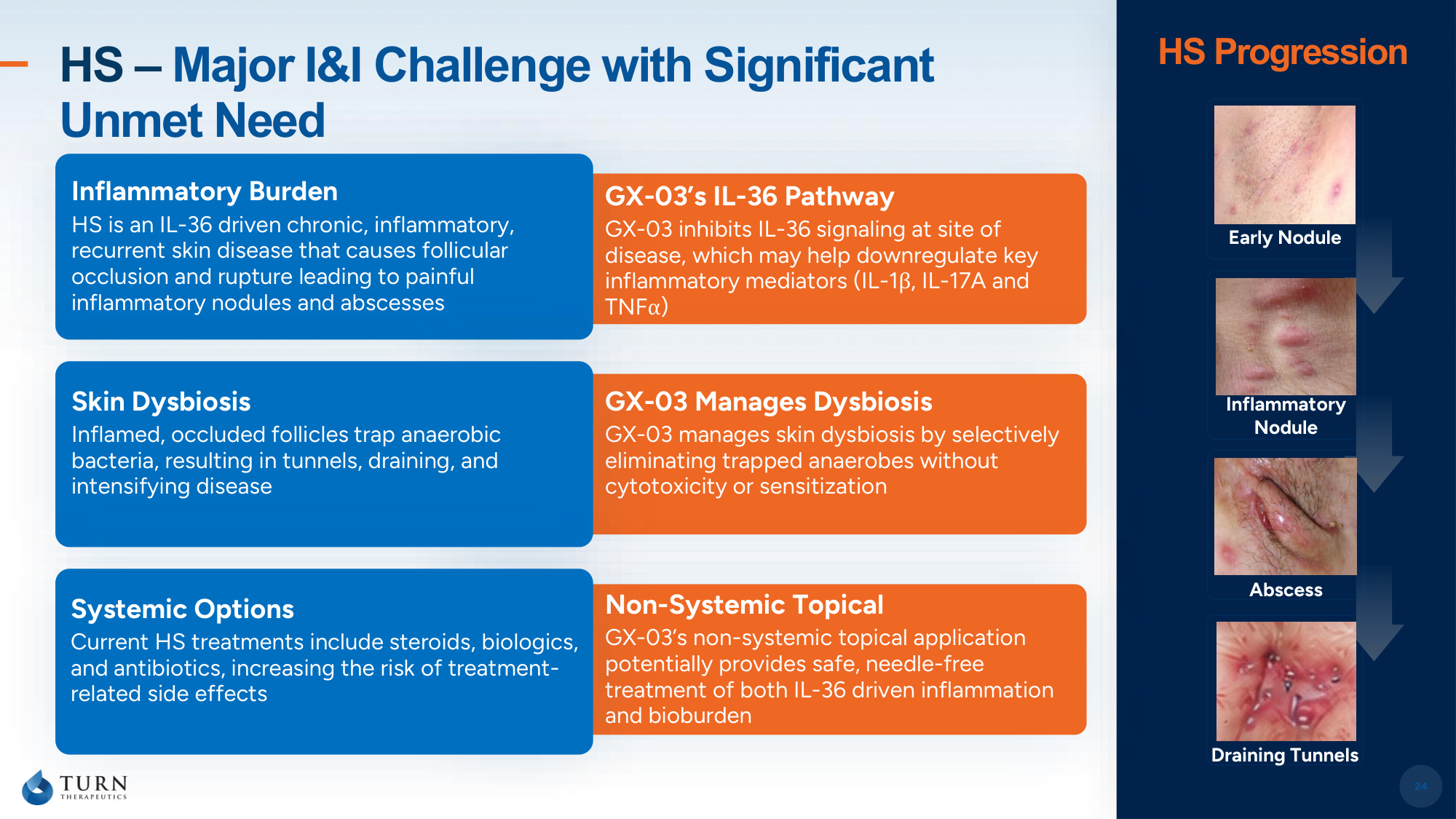
24 Abscess Draining Tunnels Early Nodule HS – Major I&I Challenge with Significant Unmet Need 24 Inflammatory Burden HS is an IL-36 driven chronic, inflammatory, recurrent skin disease that causes follicular occlusion and rupture leading to painful inflammatory nodules and abscesses GX-03's IL-36 Pathway GX-03 inhibits IL-36 signaling at site of disease, which may help downregulate key inflammatory mediators (IL-1β, IL-17A and TNFα) GX-03 Manages Dysbiosis GX-03 manages skin dysbiosis by selectively eliminating trapped anaerobes without cytotoxicity or sensitization Non-Systemic Topical GX-03's non-systemic topical application potentially provides safe, needle-free treatment of both IL-36 driven inflammation and bioburden Skin Dysbiosis Inflamed, occluded follicles trap anaerobic bacteria, resulting in tunnels, draining, and intensifying disease Systemic Options Current HS treatments include steroids, biologics, and antibiotics, increasing the risk of treatment- related side effects Inflammatory Nodule HS Progression
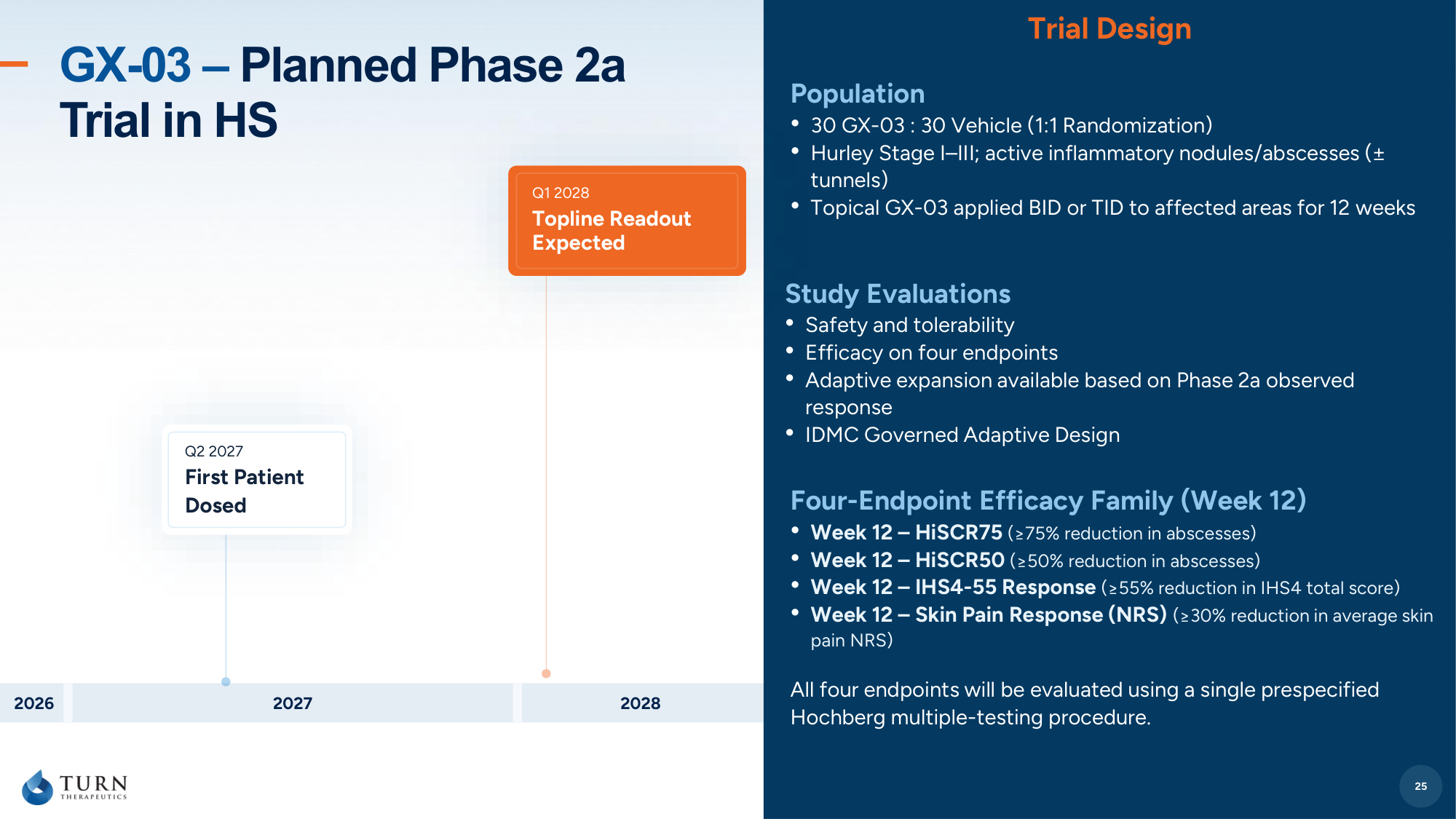
25 GX-03 – Planned Phase 2a Trial in HS Study Evaluations • Safety and tolerability • Efficacy on four endpoints • Adaptive expansion available based on Phase 2a observed response • IDMC Governed Adaptive Design 25 Trial Design Four-Endpoint Efficacy Family (Week 12) • Week 12 – HiSCR75 (≥75% reduction in abscesses) • Week 12 – HiSCR50 (≥50% reduction in abscesses) • Week 12 – IHS4-55 Response (≥55% reduction in IHS4 total score) • Week 12 – Skin Pain Response (NRS) (≥30% reduction in average skin pain NRS) All four endpoints will be evaluated using a single prespecified Hochberg multiple-testing procedure. Population • 30 GX-03 : 30 Vehicle (1:1 Randomization) • Hurley Stage I–III; active inflammatory nodules/abscesses (± tunnels) • Topical GX-03 applied BID or TID to affected areas for 12 weeks Q2 2027 First Patient Dosed Q4 2027 Interim Analysis 2026 2027 2028 Q1 2028 Topline Readout Expected
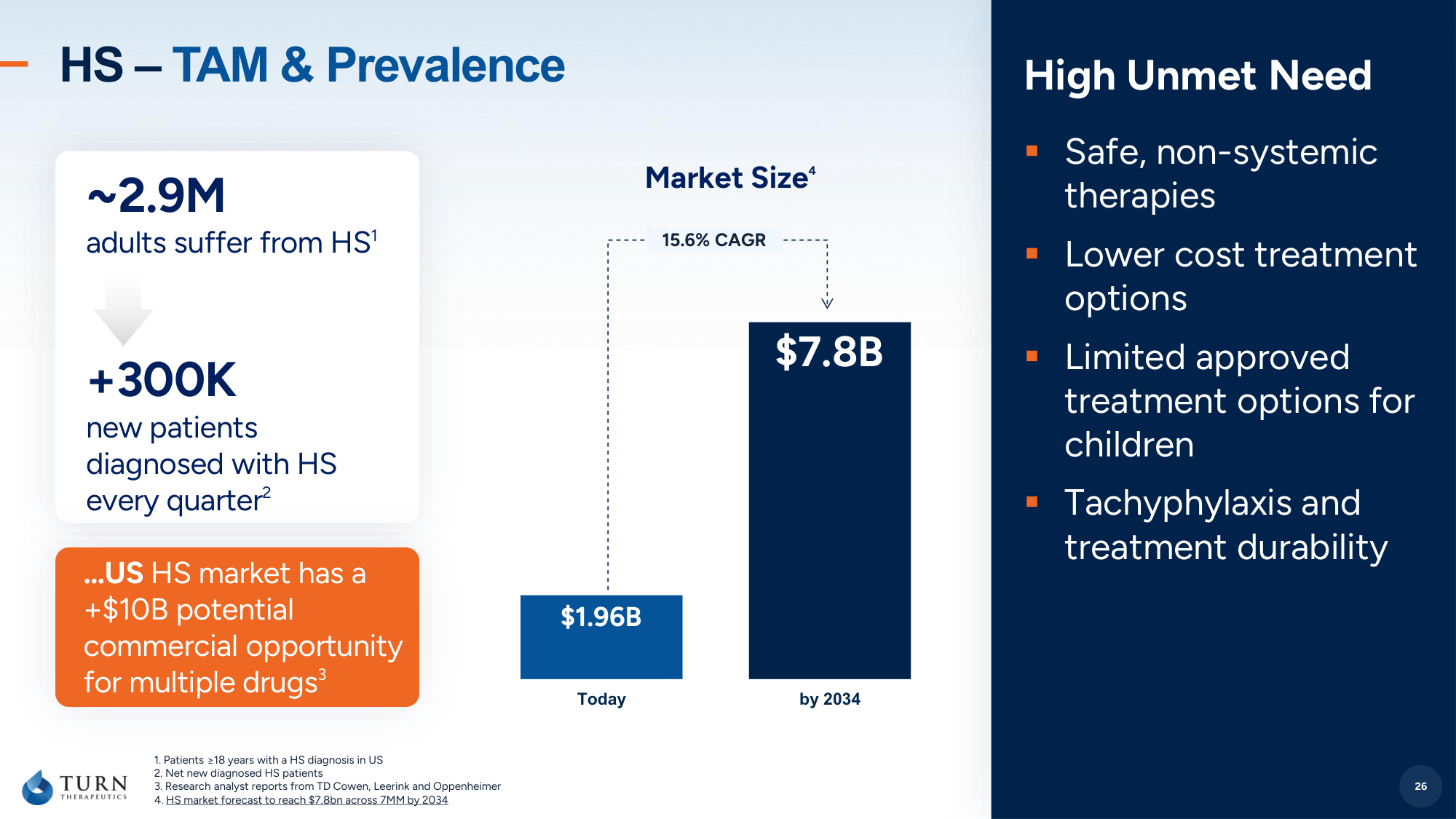
26 High Unmet Need ▪Safe, non-systemic therapies ▪Lower cost treatment options ▪Limited approved treatment options for children ▪Tachyphylaxis and treatment durability HS – TAM & Prevalence Today by 2034 $1.96B $7.8B 15.6% CAGR Market Size 4 26 ~2.9M adults suffer from HS1 +300K new patients diagnosed with HS every quarter2 ...US HS market has a +$10B potential commercial opportunity for multiple drugs3 1. Patients ≥18 years with a HS diagnosis in US 2. Net new diagnosed HS patients 3. Research analyst reports from TD Cowen, Leerink and Oppenheimer 4. HS market forecast to reach $7.8bn across 7MM by 2034
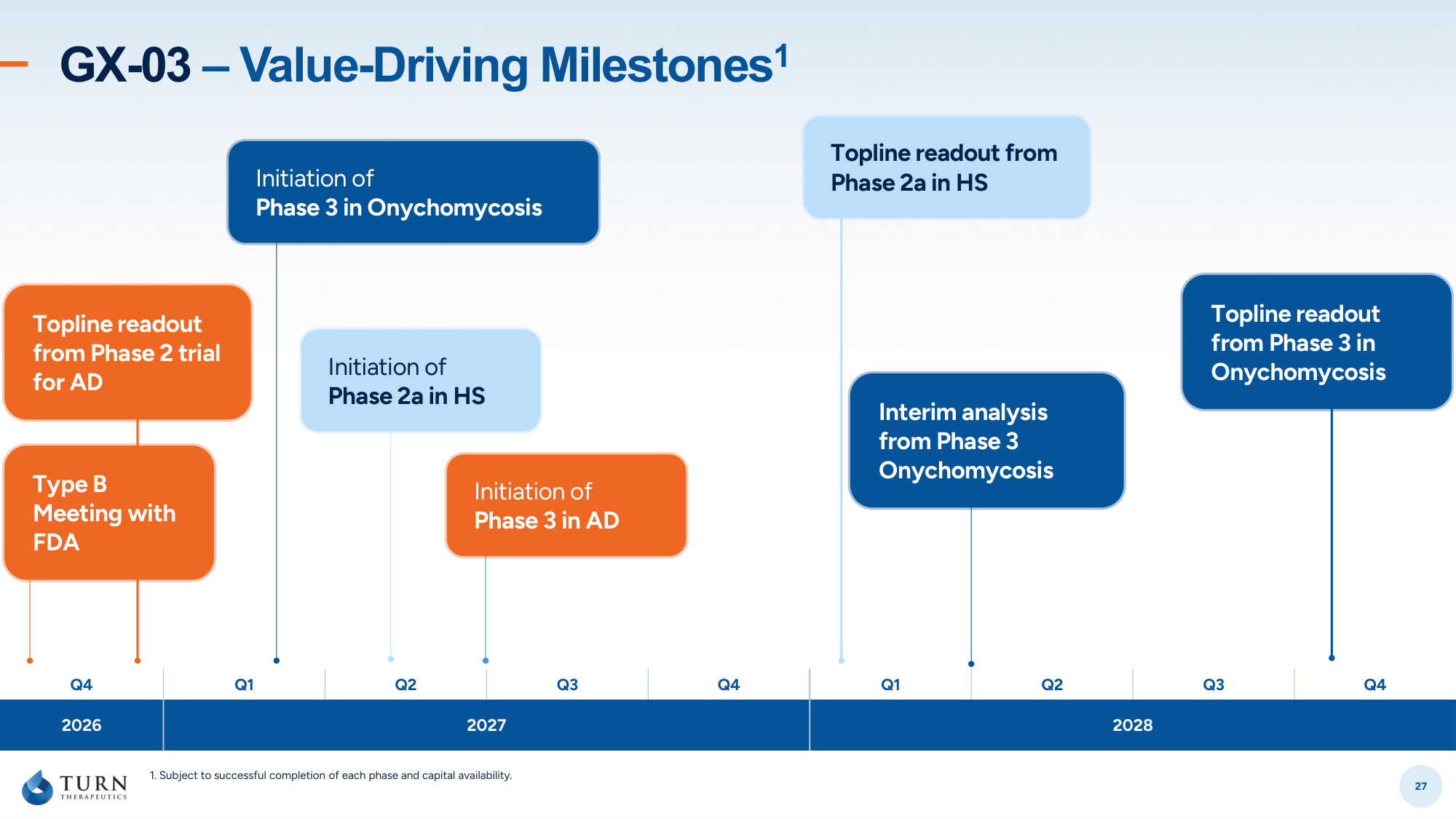
27 GX-03 – Value-Driving Milestones1 Q4 Q1 Q2 Q3 Q4 Q1 Q2 Q3 Q4 2026 2027 2028 Topline readout from Phase 2 trial for AD Initiation of Phase 3 in Onychomycosis Topline readout from Phase 2a in HS Type B Meeting with FDA Initiation of Phase 3 in AD Interim analysis from Phase 3 Onychomycosis Initiation of Phase 2a in HS Topline readout from Phase 3 in Onychomycosis 1. Subject to successful completion of each phase and capital availability.
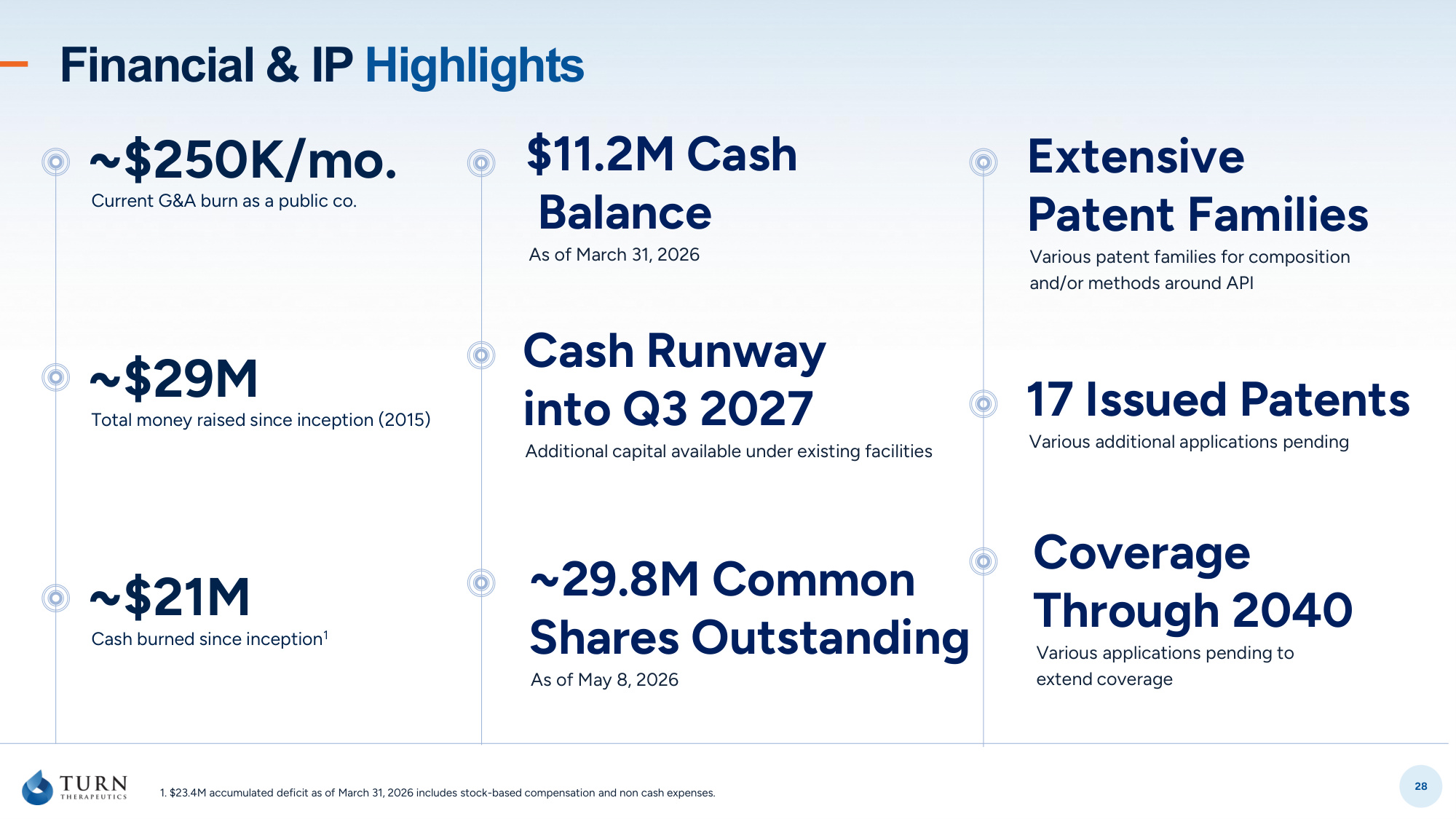
28 Financial & IP Highlights $11.2M Cash Balance As of March 31, 2026 ~29.8M Common Shares Outstanding As of May 8, 2026 Cash Runway into Q3 2027 Additional capital available under existing facilities ~$250K/mo. Current G&A burn as a public co. ~$29M Total money raised since inception (2015) ~$21M Cash burned since inception1 Coverage Through 2040 Various applications pending to extend coverage 17 Issued Patents Various additional applications pending Extensive Patent Families Various patent families for composition and/or methods around API 1. $23.4M accumulated deficit as of March 31, 2026 includes stock-based compensation and non cash expenses.
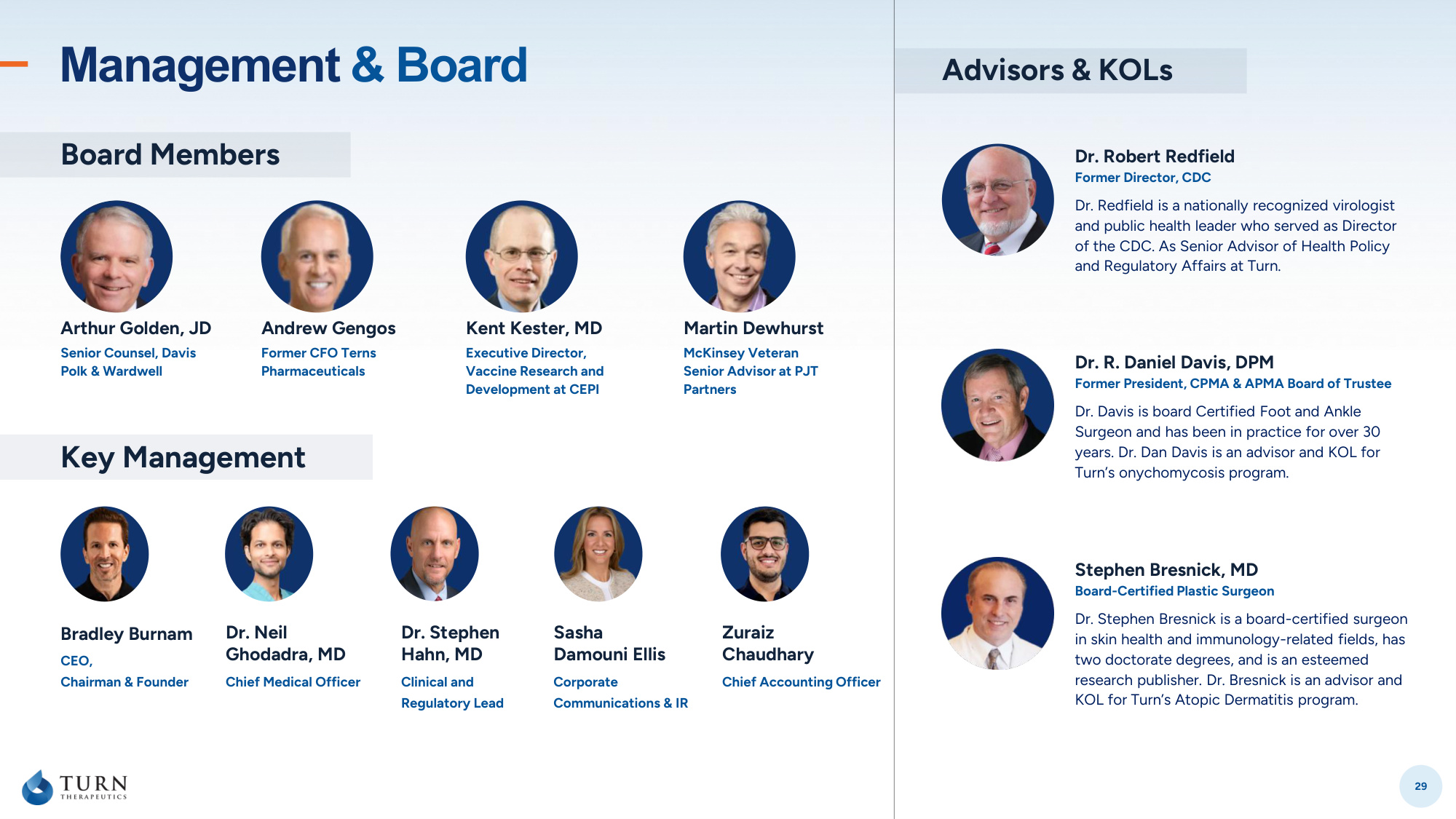
29 Board Members Advisors & KOLs Arthur Golden, JD Andrew Gengos Kent Kester, MD Martin Dewhurst Senior Counsel, Davis Polk & Wardwell Former CFO Terns Pharmaceuticals Executive Director, Vaccine Research and Development at CEPI McKinsey Veteran Senior Advisor at PJT Partners Bradley Burnam Dr. Stephen Hahn, MD Dr. Neil Ghodadra, MD Zuraiz Chaudhary CEO, Chairman & Founder Clinical and Regulatory Lead Chief Medical Officer Chief Accounting Officer Key Management Stephen Bresnick, MD Board-Certified Plastic Surgeon Dr. Stephen Bresnick is a board-certified surgeon in skin health and immunology-related fields, has two doctorate degrees, and is an esteemed research publisher. Dr. Bresnick is an advisor and KOL for Turn's Atopic Dermatitis program. Dr. R. Daniel Davis, DPM Former President, CPMA & APMA Board of Trustee Dr. Davis is board Certified Foot and Ankle Surgeon and has been in practice for over 30 years. Dr. Dan Davis is an advisor and KOL for Turn's onychomycosis program. Dr. Robert Redfield Former Director, CDC Dr. Redfield is a nationally recognized virologist and public health leader who served as Director of the CDC. As Senior Advisor of Health Policy and Regulatory Affairs at Turn. Management & Board Sasha Damouni Ellis Corporate Communications & IR

Investors@turntherapeutics.com 250 N. Westlake Blvd, #210 Westlake Village, CA 91362 Thank You!
31 Appendix In-vivo and Safety Study
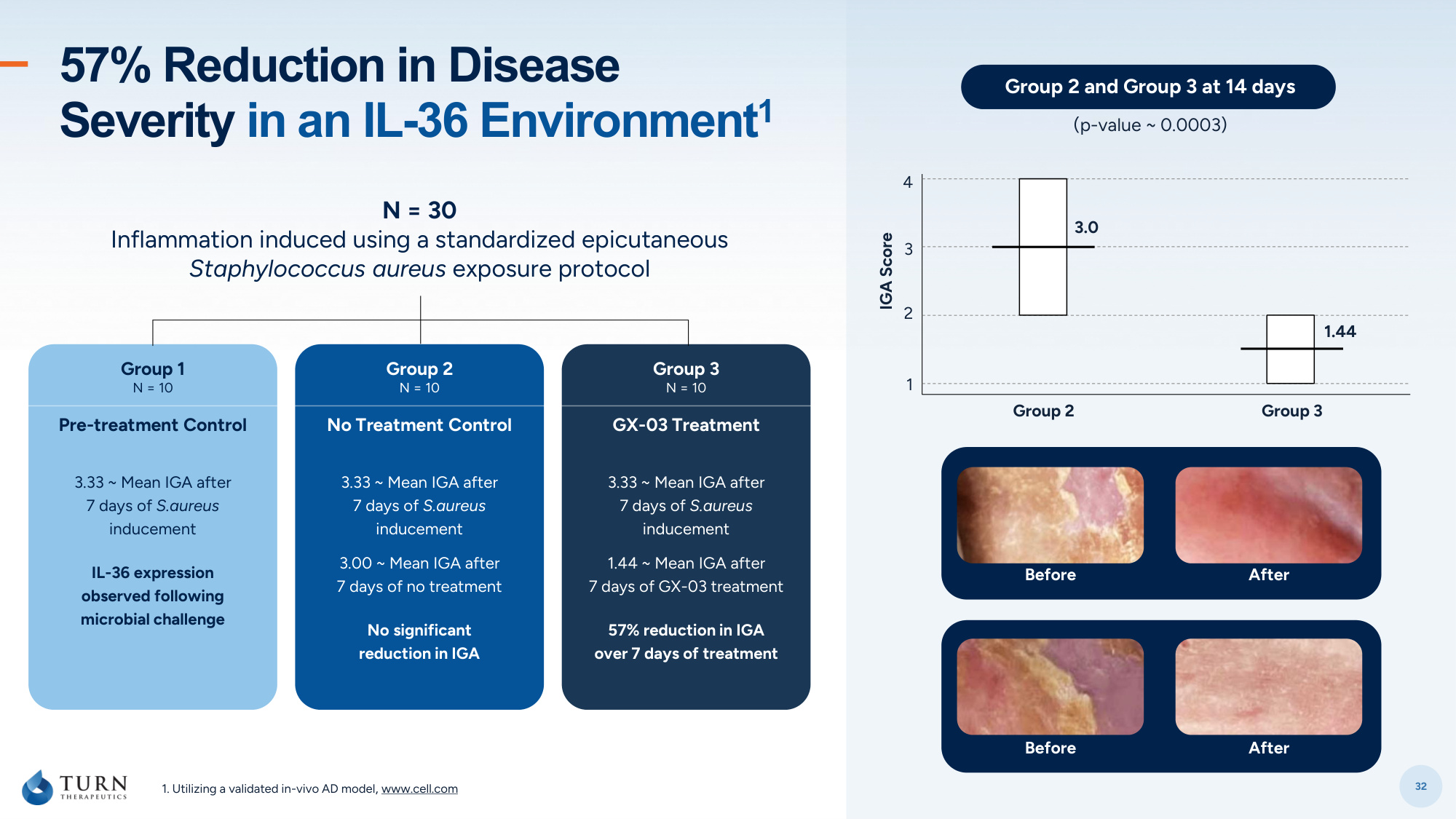
32 1. Utilizing a validated in-vivo AD model, www.cell.com N = 30 Inflammation induced using a standardized epicutaneous Staphylococcus aureus exposure protocol Group 1 N = 10 Pre-treatment Control Group 2 N = 10 No Treatment Control Group 3 N = 10 GX-03 Treatment 3.33 ~ Mean IGA after 7 days of S.aureus inducement IL-36 expression observed following microbial challenge 3.33 ~ Mean IGA after 7 days of S.aureus inducement 3.00 ~ Mean IGA after 7 days of no treatment No significant reduction in IGA 3.33 ~ Mean IGA after 7 days of S.aureus inducement 1.44 ~ Mean IGA after 7 days of GX-03 treatment 57% reduction in IGA over 7 days of treatment Group 2 and Group 3 at 14 days (p-value ~ 0.0003) Before After Before After 57% Reduction in Disease Severity in an IL-36 Environment1 Group 2 3.0 1.44 Group 3 1 2 3 4 IGA Score
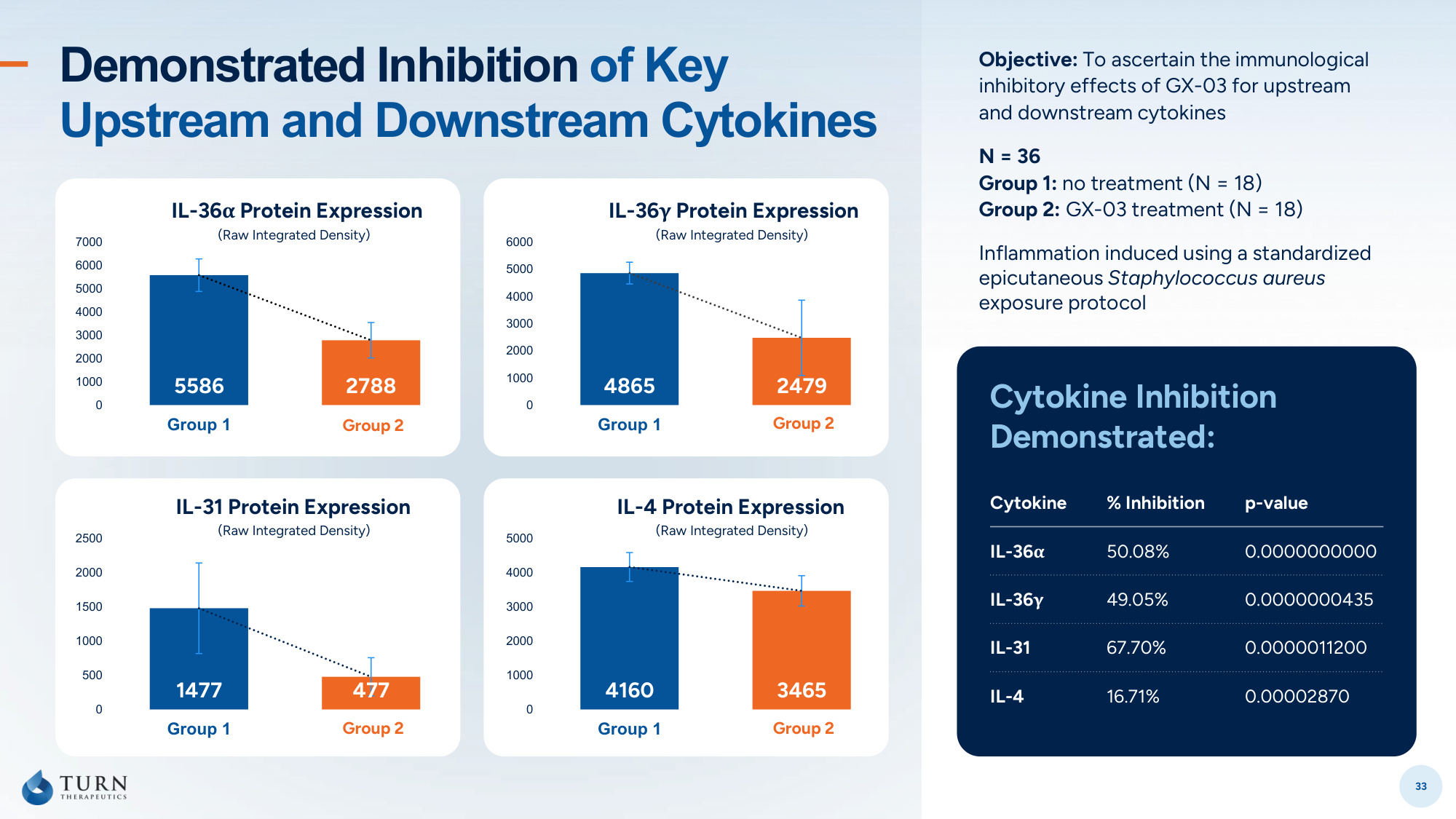
33 Objective: To ascertain the immunological inhibitory effects of GX-03 for upstream and downstream cytokines N = 36 Group 1: no treatment (N = 18) Group 2: GX-03 treatment (N = 18) Inflammation induced using a standardized epicutaneous Staphylococcus aureus exposure protocol Cytokine Inhibition Demonstrated: Demonstrated Inhibition of Key Upstream and Downstream Cytokines 1477 477 0 500 1000 1500 2000 2500 Group 1 Group 2 IL-31 Protein Expression Group 2 4160 3465 0 1000 2000 3000 4000 5000 Group 1 Group 2 IL-4 Protein Expression Group 2 Cytokine % Inhibition p-value IL-36α 50.08% 0.0000000000 IL-36γ 49.05% 0.0000000435 IL-31 67.70% 0.0000011200 IL-4 16.71% 0.00002870 5586 2788 0 1000 2000 3000 4000 5000 6000 7000 Group 1 Group 2 IL-36α Protein Expression Group 2 (Raw Integrated Density) 4865 2479 0 1000 2000 3000 4000 5000 6000 Group 1 Group 2 IL-36γ Protein Expression Group 2 (Raw Integrated Density) (Raw Integrated Density) (Raw Integrated Density)
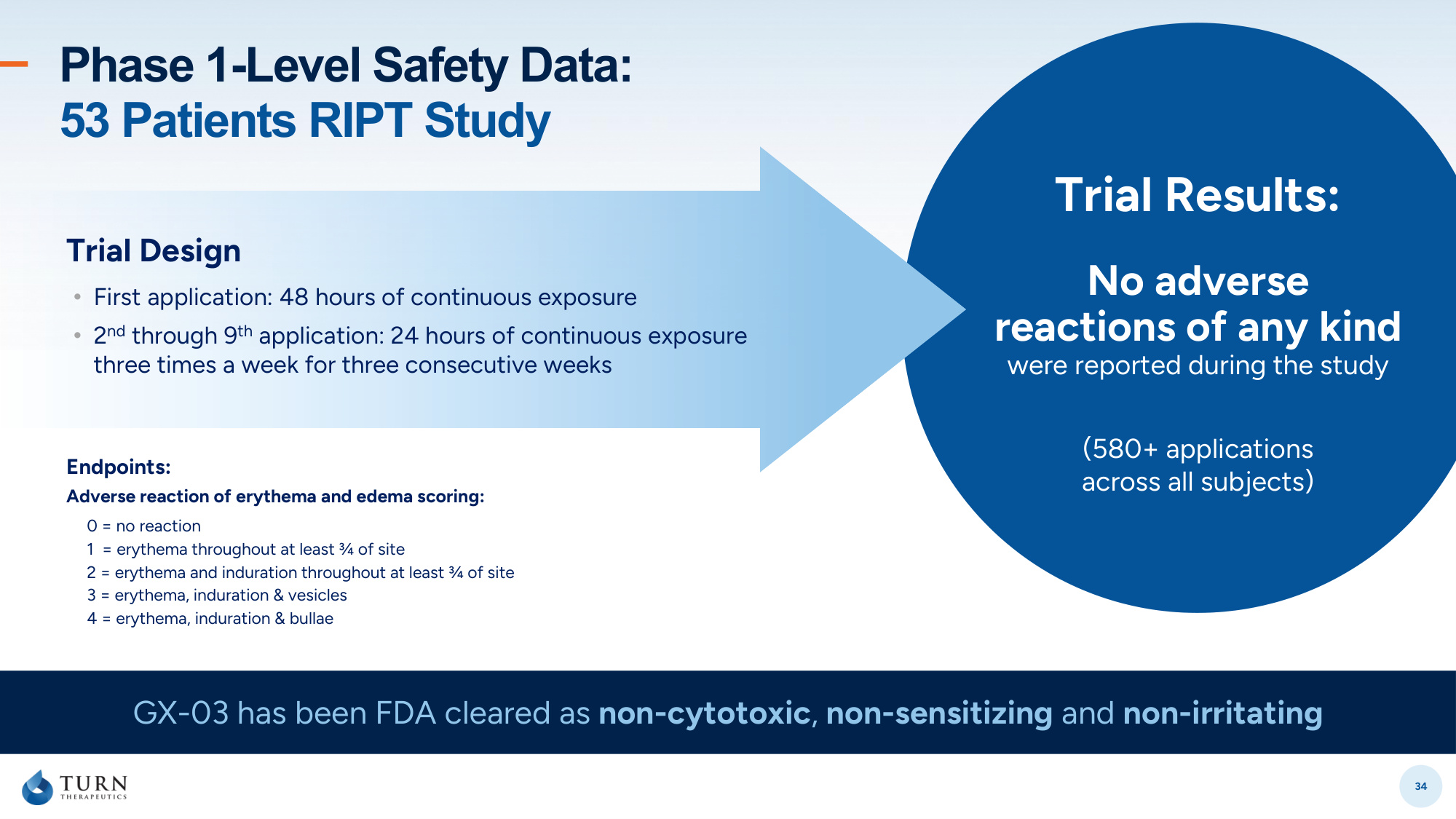
34 Trial Design • First application: 48 hours of continuous exposure • 2nd through 9th application: 24 hours of continuous exposure three times a week for three consecutive weeks Trial Results: No adverse reactions of any kind were reported during the study (580+ applications across all subjects) GX-03 has been FDA cleared as non-cytotoxic, non-sensitizing and non-irritating Phase 1-Level Safety Data: 53 Patients RIPT Study Endpoints: Adverse reaction of erythema and edema scoring: 0 = no reaction 1 = erythema throughout at least ¾ of site 2 = erythema and induration throughout at least ¾ of site 3 = erythema, induration & vesicles 4 = erythema, induration & bullae
35 Appendix Stage 1 Subgroup Analysis
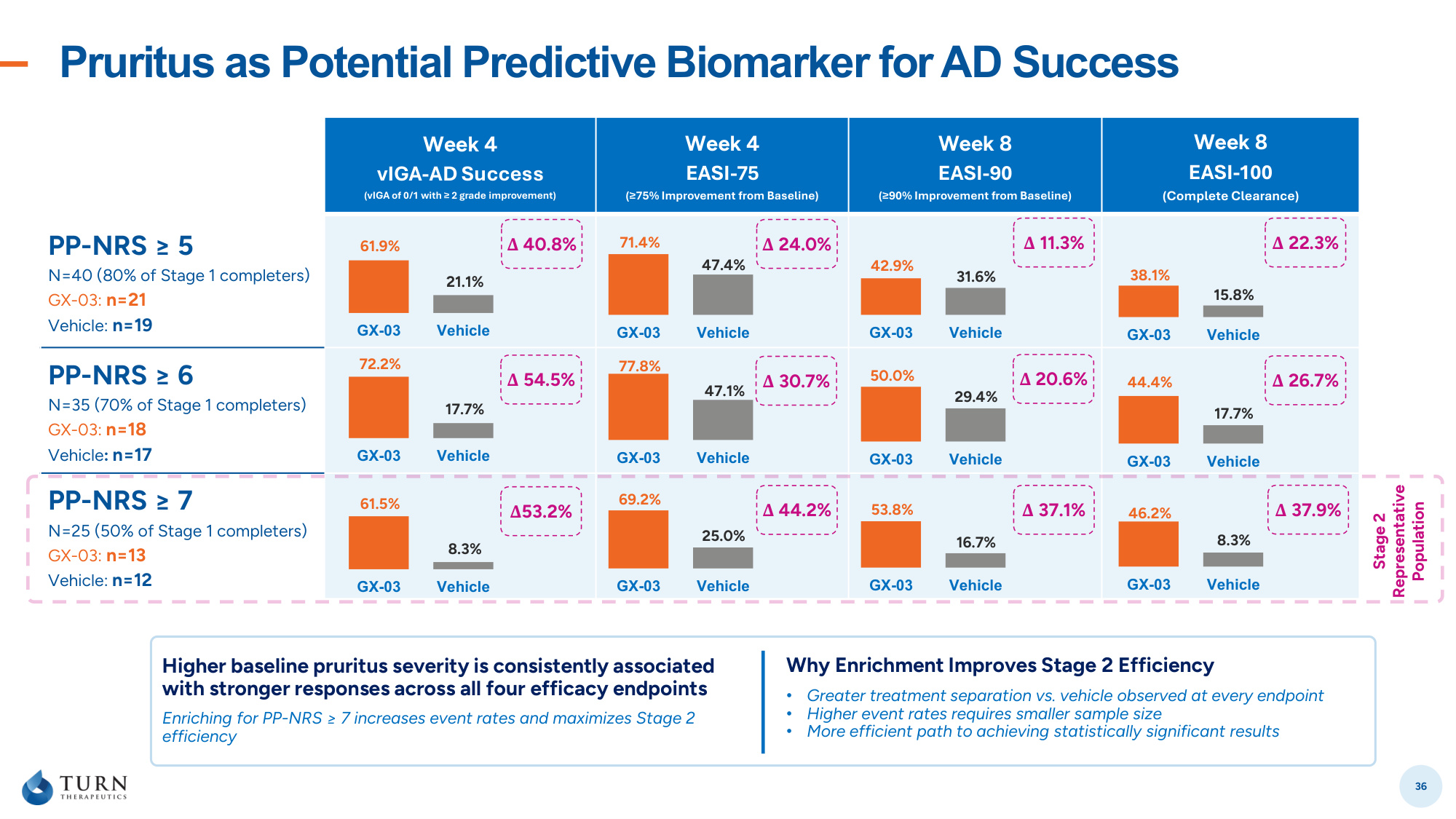
Pruritus as Potential Predictive Biomarker for AD Success 36 Week 4 vIGA-AD Success (vIGA of 0/1 with ≥ 2 grade improvement) Week 4 EASI-75 (≥75% Improvement from Baseline) Week 8 EASI-90 (≥90% Improvement from Baseline) Week 8 EASI-100 (Complete Clearance) PP-NRS ≥ 5 N=40 (80% of Stage 1 completers) GX-03: n=21 Vehicle: n=19 PP-NRS ≥ 6 N=35 (70% of Stage 1 completers) GX-03: n=18 Vehicle: n=17 PP-NRS ≥ 7 N=25 (50% of Stage 1 completers) GX-03: n=13 Vehicle: n=12 GX-03 Vehicle Higher baseline pruritus severity is consistently associated with stronger responses across all four efficacy endpoints Enriching for PP-NRS ≥ 7 increases event rates and maximizes Stage 2 efficiency Why Enrichment Improves Stage 2 Efficiency • Greater treatment separation vs. vehicle observed at every endpoint • Higher event rates requires smaller sample size • More efficient path to achieving statistically significant results GX-03 Vehicle GX-03 Vehicle 61.9% 72.2% 61.5% 21.1% 17.7% 8.3% GX-03 Vehicle GX-03 Vehicle GX-03 Vehicle 71.4% 77.8% 69.2% 47.4% 47.1% 25.0% GX-03 Vehicle GX-03 Vehicle GX-03 Vehicle 42.9% 50.0% 53.8% 31.6% 29.4% 16.7% GX-03 Vehicle GX-03 Vehicle GX-03 Vehicle 38.1% 44.4% 46.2% 15.8% 17.7% 8.3% Stage 2 Representative Population Δ 40.8% Δ 54.5% Δ53.2% Δ 44.2% Δ 30.7% Δ 24.0% Δ 11.3% Δ 20.6% Δ 37.1% Δ 37.9% Δ 26.7% Δ 22.3%
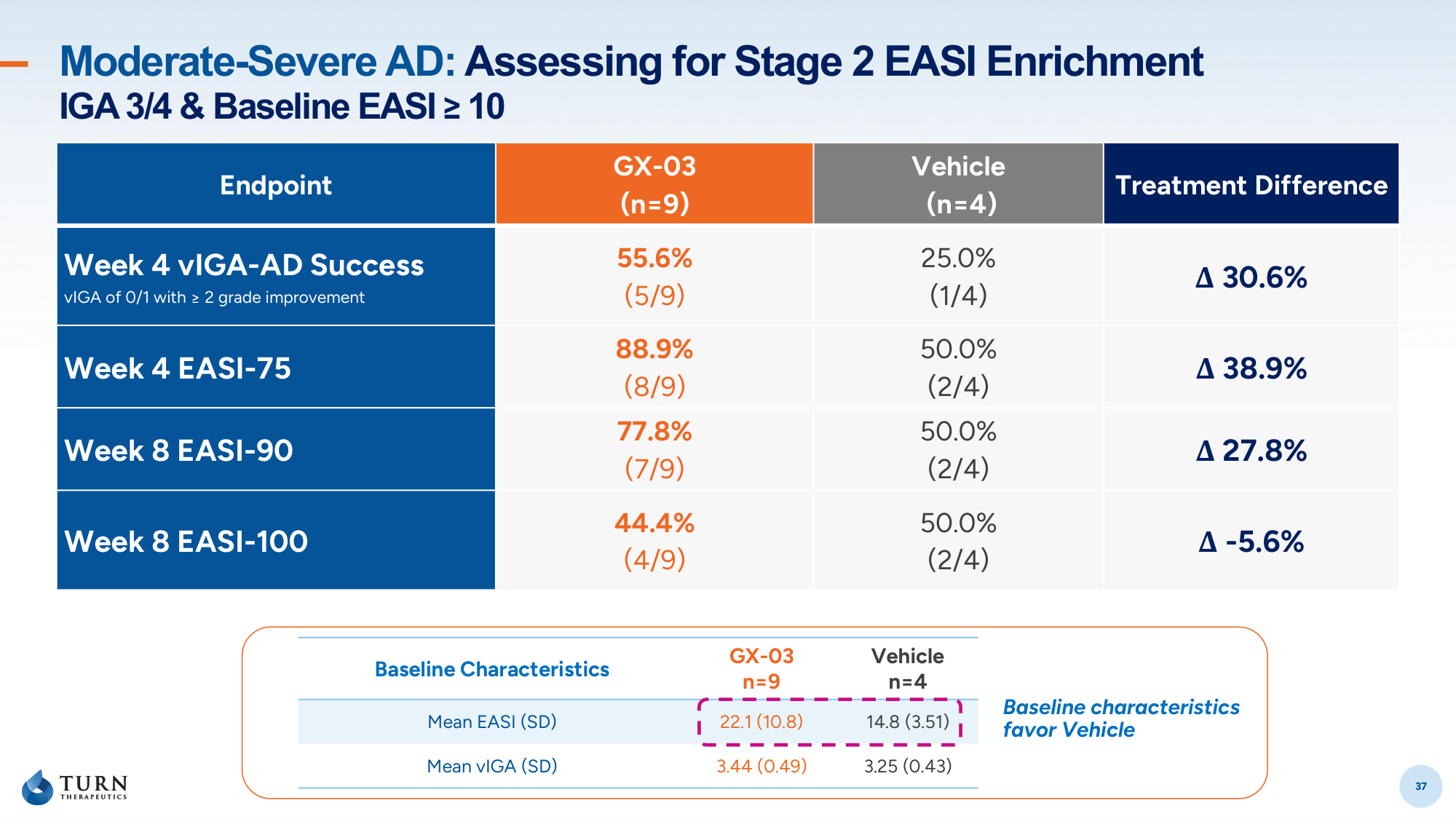
37 Moderate-Severe AD: Assessing for Stage 2 EASI Enrichment IGA 3/4 & Baseline EASI ≥ 10 37 Baseline Characteristics GX-03 n=9 Vehicle n=4 Mean EASI (SD) 22.1 (10.8) 14.8 (3.51) Mean vIGA (SD) 3.44 (0.49) 3.25 (0.43) Endpoint GX-03 (n=9) Vehicle (n=4) Treatment Difference Week 4 vIGA-AD Success vIGA of 0/1 with ≥ 2 grade improvement 55.6% (5/9) 25.0% (1/4) Δ 30.6% Week 4 EASI-75 88.9% (8/9) 50.0% (2/4) Δ 38.9% Week 8 EASI-90 77.8% (7/9) 50.0% (2/4) Δ 27.8% Week 8 EASI-100 44.4% (4/9) 50.0% (2/4) Δ -5.6% Baseline characteristics favor Vehicle
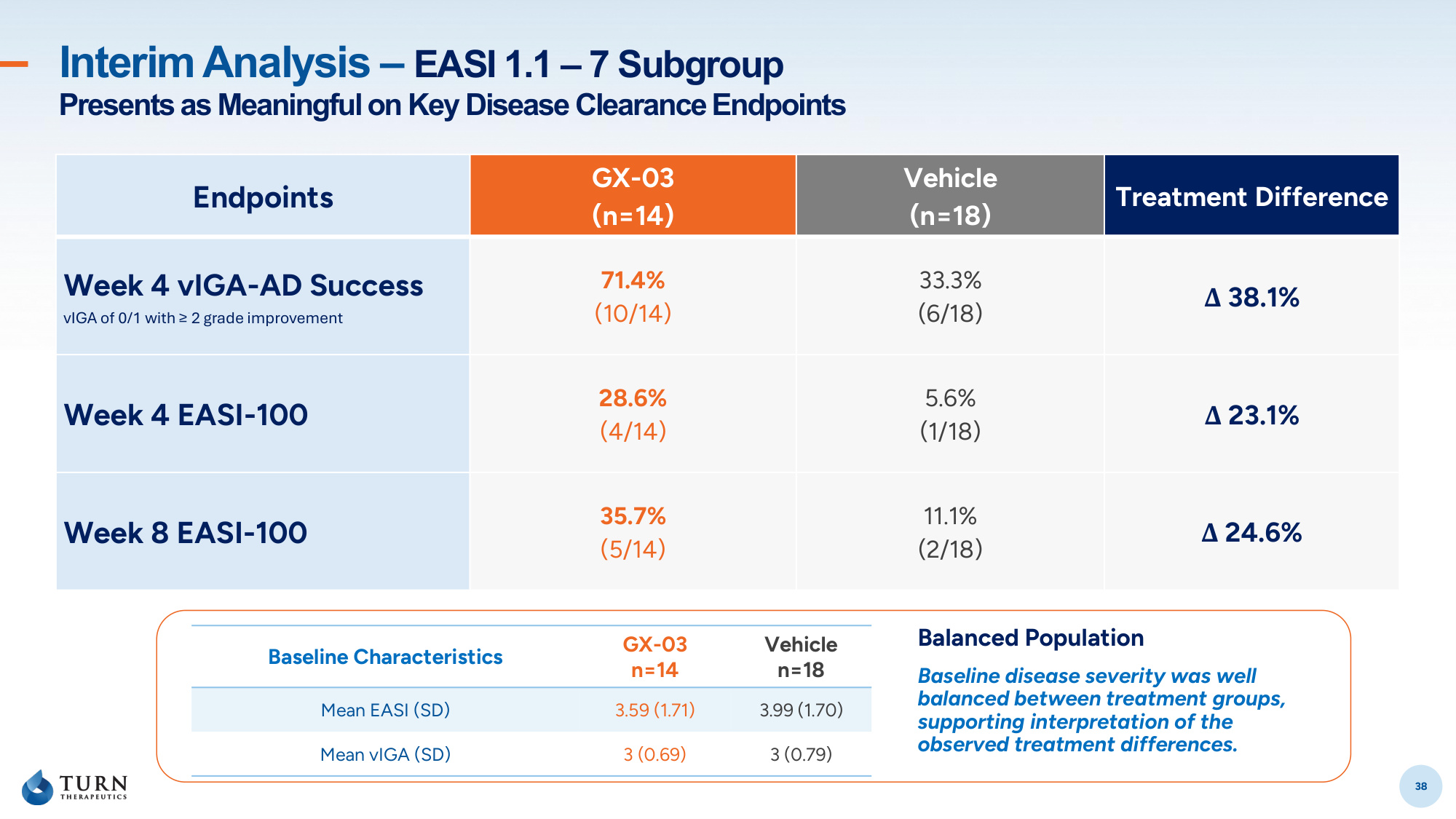
38 Interim Analysis – EASI 1.1 – 7 Subgroup Presents as Meaningful on Key Disease Clearance Endpoints 38 Endpoints GX-03 (n=14) Vehicle (n=18) Treatment Difference Week 4 vIGA-AD Success vIGA of 0/1 with ≥ 2 grade improvement 71.4% (10/14) 33.3% (6/18) Δ 38.1% Week 4 EASI-100 28.6% (4/14) 5.6% (1/18) Δ 23.1% Week 8 EASI-100 35.7% (5/14) 11.1% (2/18) Δ 24.6% Baseline Characteristics GX-03 n=14 Vehicle n=18 Mean EASI (SD) 3.59 (1.71) 3.99 (1.70) Mean vIGA (SD) 3 (0.69) 3 (0.79) Balanced Population Baseline disease severity was well balanced between treatment groups, supporting interpretation of the observed treatment differences.