
Study ‘207’ Phase 2 Topline Open Label Data in Females with Mild-to-Moderate Pattern Hair Loss July 2026

agenda 2 1 Opening Remarks 2 Study ‘207’ results 3 KOL Discussion 4 VDPHL01 Commercial Opportunity 5 Closing Remarks 6 Q&A Reid Waldman, M.D. Chief Executive Officer, Veradermics Mark Neumann Chief Commercial & Strategy Officer, Veradermics Dominic Carrano Chief Financial Officer, Veradermics Jerry Shapiro, M.D.* NYU Langone Health MANE Speakers Joined by JULY 2026 *Dr. Jerry Shapiro is a paid consultant for Veradermics.

This presentation contains forward-looking statements that involve substantial risks and uncertainties. All statements other than historical factual information are forward-looking statements, including without limitation statements regarding our product development activities for VDPHL01 and ongoing clinical trials; the ability of clinical trials to demonstrate safety and efficacy of VDPHL01; the beneficial characteristics, and the potential safety, efficacy and therapeutic effects of VDPHL01; our ability to pursue and execute our strategy for our indications, business, programs and technology; the timing of and our ability to obtain and maintain regulatory approval of our product candidates; our ability to compete with companies currently selling, marketing or engaged in the development of treatments for diseases that our product candidates are designed to target, including pattern hair loss (PHL); our estimates regarding the size and growth potential of the commercial opportunity for VDPHL01 and our current product candidates or other product candidates we may identify and pursue, and our ability to serve those markets; objectives for future operations and other estimates contained herein. In some cases, you can identify forward-looking statements because they contain words such as “may,” “will,” “shall,” “should,” “expect,” “plan,” “anticipate,” “could,” “intend,” “target,” “project,” “contemplate,” “believe,” “estimate,” “predict,” “potential” or “continue” or the negative of these words or other similar expressions that concern our expectations, strategy, plans or intentions, although not all forward-looking statements are accompanied by such words. Forward-looking statements are based on assumptions and assessments made by our management in light of their experience and perceptions of historical trends, current conditions, expected future developments and other factors they believe to be appropriate, and speak only as of the date of this presentation. Disclaimer 3 Forward-looking statements involve known and unknown risks, uncertainties and other factors that may cause our actual results, performance or other events to be materially different from any future results, performance or other events expressed or implied by the forward-looking statements, including the risks and uncertainties identified in the “Risk Factors” section of our Annual Report on Form 10-K, for the period ended December 31, 2025, and subsequent filings with the U.S. Securities and Exchange Commission. Given these uncertainties, you should not place undue reliance on forward-looking statements. Our actual future results, performance or other events may be materially different from what we expect. Except as required by law, we assume no obligation to update these forward-looking statements, or to update the reasons actual results could differ materially from those anticipated in these forward-looking statements, even if new information becomes available in the future. Market data and industry information used throughout this presentation are based on management’s knowledge of the industry and the good faith estimates of management. We also relied, to the extent available, upon management’s review of independent industry surveys and publications and other publicly available information prepared by a number of third-party sources. All of the market data and industry information used in this presentation involves a number of assumptions and limitations, and you are cautioned not to give undue weight to such estimates. Although we believe that these sources are reliable as of their respective dates, we cannot guarantee the accuracy or completeness of this information, and we have not independently verified this information. Projections, assumptions and estimates of our future performance and the future performance of the industry in which we operate are necessarily subject to a high degree of uncertainty and risk due to a variety of factors. These and other factors could cause results to differ materially from those expressed in our estimates and beliefs and in the estimates prepared by independent parties. The trademarks included herein are the property of the owners thereof and are used for reference purposes only. Such use should not be construed as an endorsement of such products. This presentation discusses potential future product candidates that are investigational only and have not yet been approved for marketing by the U.S. Food and Drug Administration. No representation is made as to the safety or effectiveness of these potential future product candidates for the use for which such potential future product candidates are being studied. JULY 2026
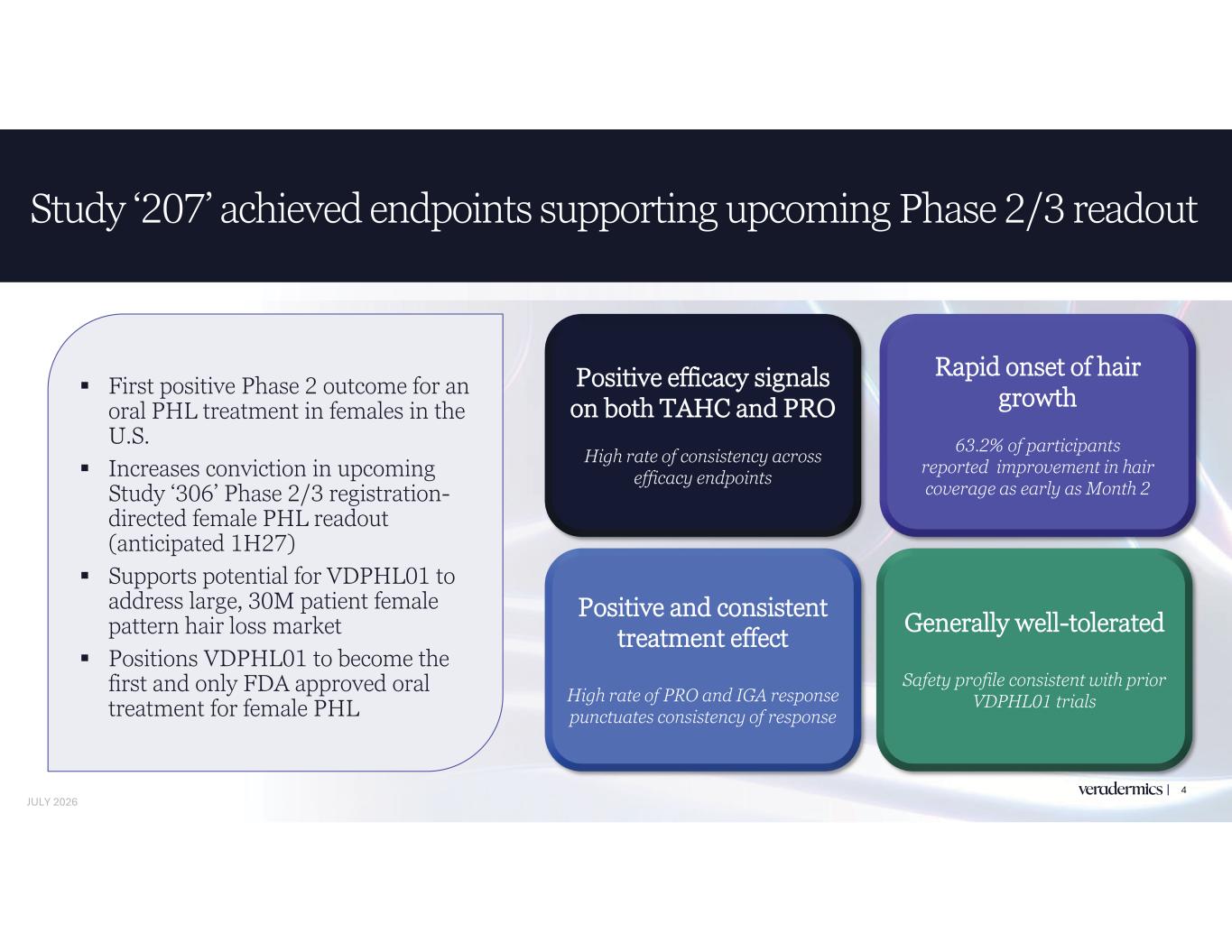
4 First positive Phase 2 outcome for an oral PHL treatment in females in the U.S. Increases conviction in upcoming Study ‘306’ Phase 2/3 registration- directed female PHL readout (anticipated 1H27) Supports potential for VDPHL01 to address large, 30M patient female pattern hair loss market Positions VDPHL01 to become the first and only FDA approved oral treatment for female PHL Study ‘207’ achieved endpoints supporting upcoming Phase 2/3 readout Positive efficacy signals on both TAHC and PRO High rate of consistency across efficacy endpoints Positive and consistent treatment effect High rate of PRO and IGA response punctuates consistency of response Rapid onset of hair growth 63.2% of participants reported improvement in hair coverage as early as Month 2 Generally well-tolerated Safety profile consistent with prior VDPHL01 trials JULY 2026
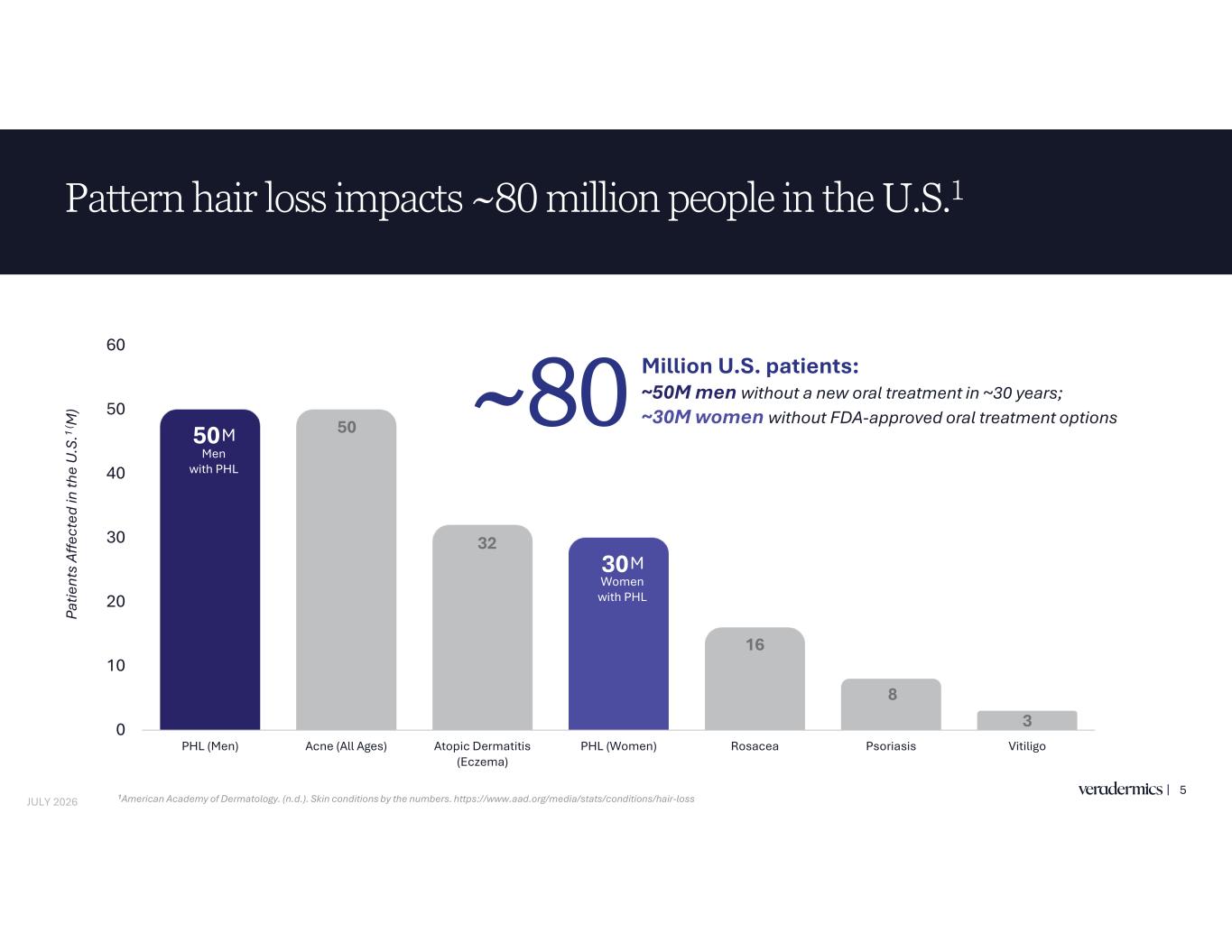
50 50 32 30 16 8 30 10 20 30 40 50 60 PHL (Men) Acne (All Ages) Atopic Dermatitis (Eczema) PHL (Women) Rosacea Psoriasis Vitiligo Pattern hair loss impacts ~80 million people in the U.S.1 5 M Men with PHL Pa tie nt s Af fe ct ed in th e U .S .1 ( M ) 1American Academy of Dermatology. (n.d.). Skin conditions by the numbers. https://www.aad.org/media/stats/conditions/hair-loss M Women with PHL JULY 2026 Million U.S. patients: ~50M men without a new oral treatment in ~30 years; ~30M women without FDA-approved oral treatment options~80
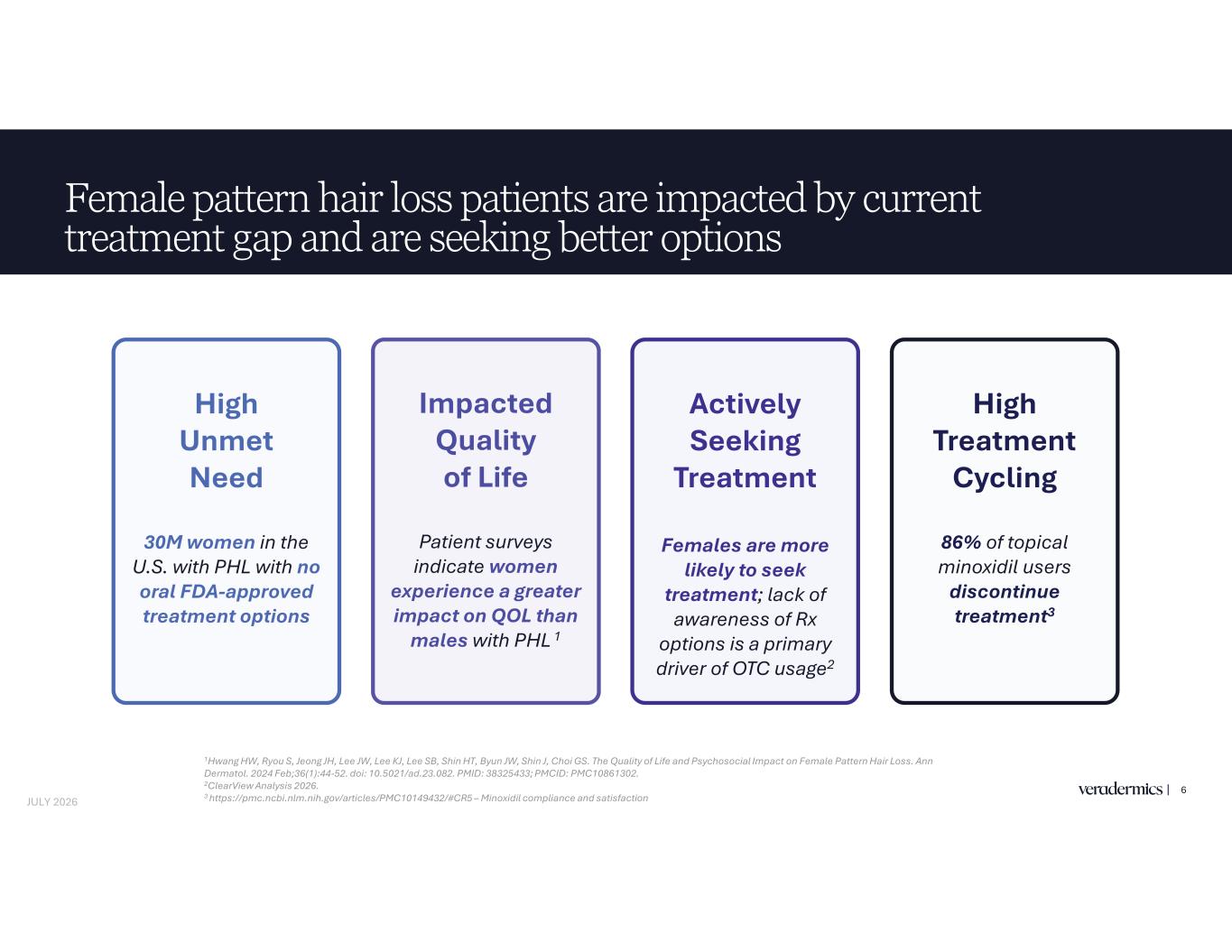
Female pattern hair loss patients are impacted by current treatment gap and are seeking better options 6 Actively Seeking Treatment Females are more likely to seek treatment; lack of awareness of Rx options is a primary driver of OTC usage2 Impacted Quality of Life Patient surveys indicate women experience a greater impact on QOL than males with PHL 1 High Unmet Need 30M women in the U.S. with PHL with no oral FDA-approved treatment options High Treatment Cycling 86% of topical minoxidil users discontinue treatment3 JULY 2026 1Hwang HW, Ryou S, Jeong JH, Lee JW, Lee KJ, Lee SB, Shin HT, Byun JW, Shin J, Choi GS. The Quality of Life and Psychosocial Impact on Female Pattern Hair Loss. Ann Dermatol. 2024 Feb;36(1):44-52. doi: 10.5021/ad.23.082. PMID: 38325433; PMCID: PMC10861302. 2ClearView Analysis 2026. 3 https://pmc.ncbi.nlm.nih.gov/articles/PMC10149432/#CR5 – Minoxidil compliance and satisfaction
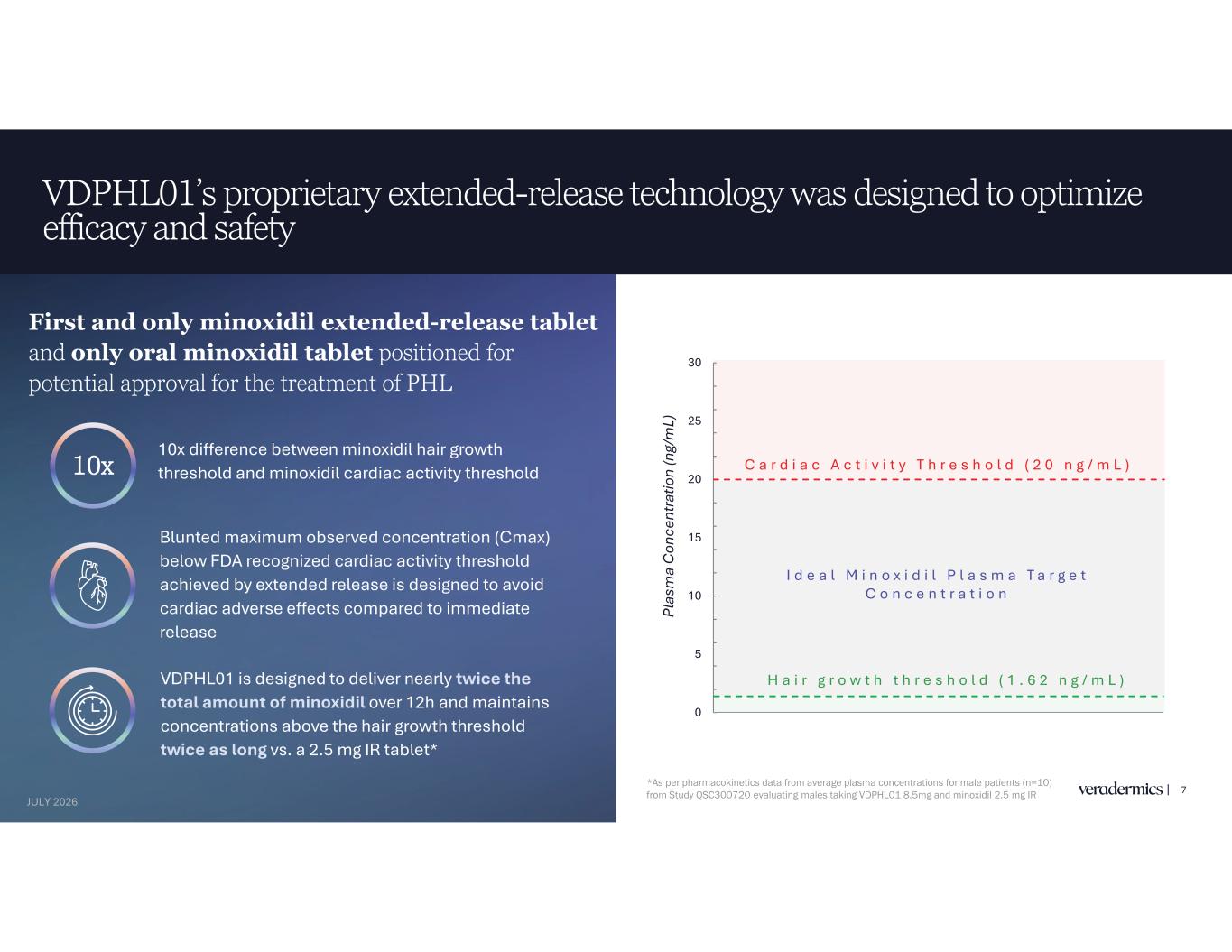
VDPHL01’s proprietary extended-release technology was designed to optimize efficacy and safety 7 10x difference between minoxidil hair growth threshold and minoxidil cardiac activity threshold VDPHL01 is designed to deliver nearly twice the total amount of minoxidil over 12h and maintains concentrations above the hair growth threshold twice as long vs. a 2.5 mg IR tablet* First and only minoxidil extended-release tablet and only oral minoxidil tablet positioned for potential approval for the treatment of PHL 10x Blunted maximum observed concentration (Cmax) below FDA recognized cardiac activity threshold achieved by extended release is designed to avoid cardiac adverse effects compared to immediate release *As per pharmacokinetics data from average plasma concentrations for male patients (n=10) from Study QSC300720 evaluating males taking VDPHL01 8.5mg and minoxidil 2.5 mg IR 0 5 10 15 20 25 30 Pl as m a C on ce nt ra tio n (n g/ m L) C a r d i a c A c t i v i t y T h r e s h o l d ( 2 0 n g / m L ) H a i r g r o w t h t h r e s h o l d ( 1 . 6 2 n g / m L ) I d e a l M i n o x i d i l P l a s m a T a r g e t C o n c e n t r a t i o n JULY 2026
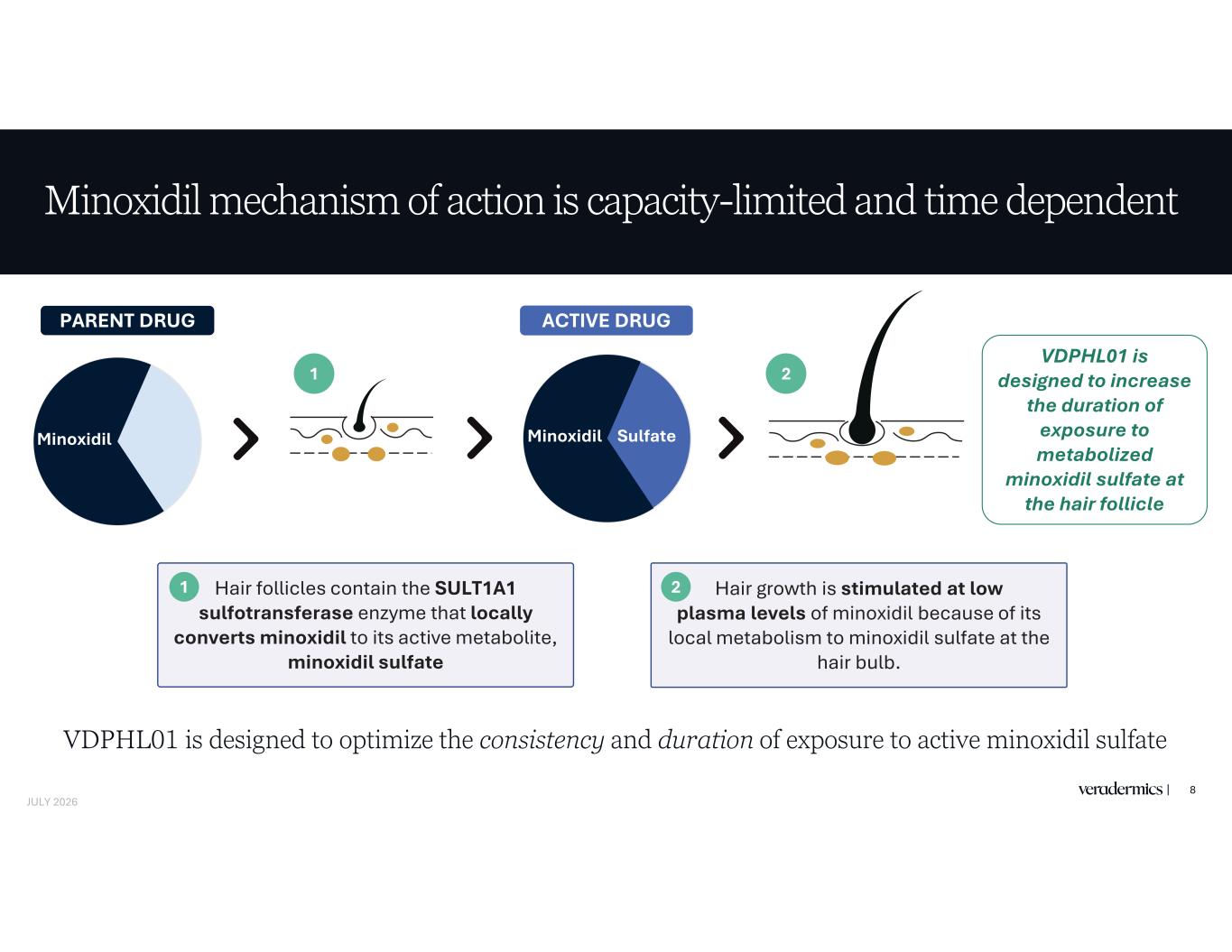
Minoxidil mechanism of action is capacity-limited and time dependent 8 Minoxidil Hair follicles contain the SULT1A1 sulfotransferase enzyme that locally converts minoxidil to its active metabolite, minoxidil sulfate Hair growth is stimulated at low plasma levels of minoxidil because of its local metabolism to minoxidil sulfate at the hair bulb. 2 VDPHL01 is designed to increase the duration of exposure to metabolized minoxidil sulfate at the hair follicle PARENT DRUG ACTIVE DRUG 1 1 2 Minoxidil Sulfate VDPHL01 is designed to optimize the consistency and duration of exposure to active minoxidil sulfate JULY 2026
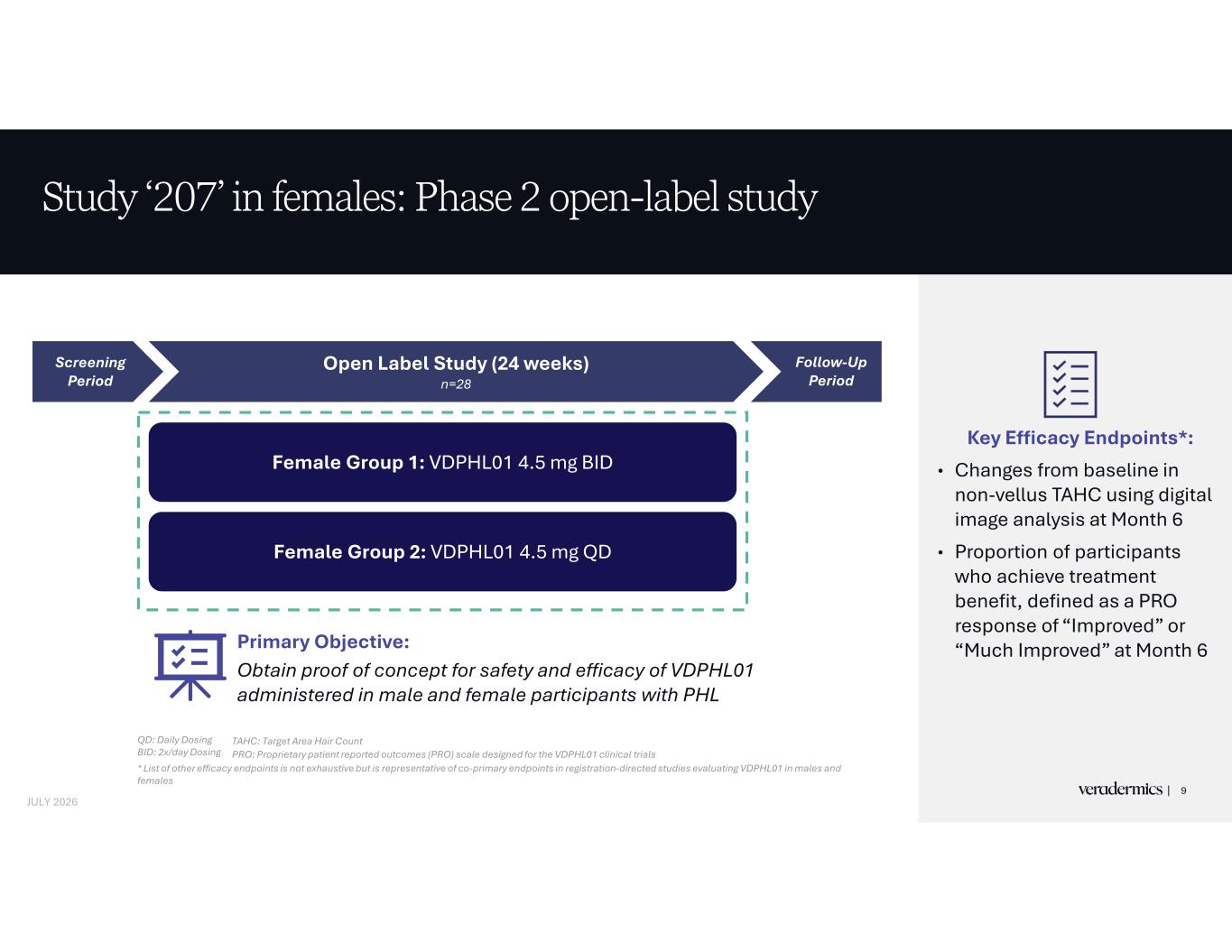
Key Efficacy Endpoints*: • Changes from baseline in non-vellus TAHC using digital image analysis at Month 6 • Proportion of participants who achieve treatment benefit, defined as a PRO response of “Improved” or “Much Improved” at Month 6 Study ‘207’ in females: Phase 2 open-label study QD: Daily Dosing BID: 2x/day Dosing * List of other efficacy endpoints is not exhaustive but is representative of co-primary endpoints in registration-directed studies evaluating VDPHL01 in males and females TAHC: Target Area Hair Count PRO: Proprietary patient reported outcomes (PRO) scale designed for the VDPHL01 clinical trials Primary Objective: Obtain proof of concept for safety and efficacy of VDPHL01 administered in male and female participants with PHL Screening Period Open Label Study (24 weeks) n=28 Female Group 1: VDPHL01 4.5 mg BID Female Group 2: VDPHL01 4.5 mg QD Follow-Up Period | 9 JULY 2026
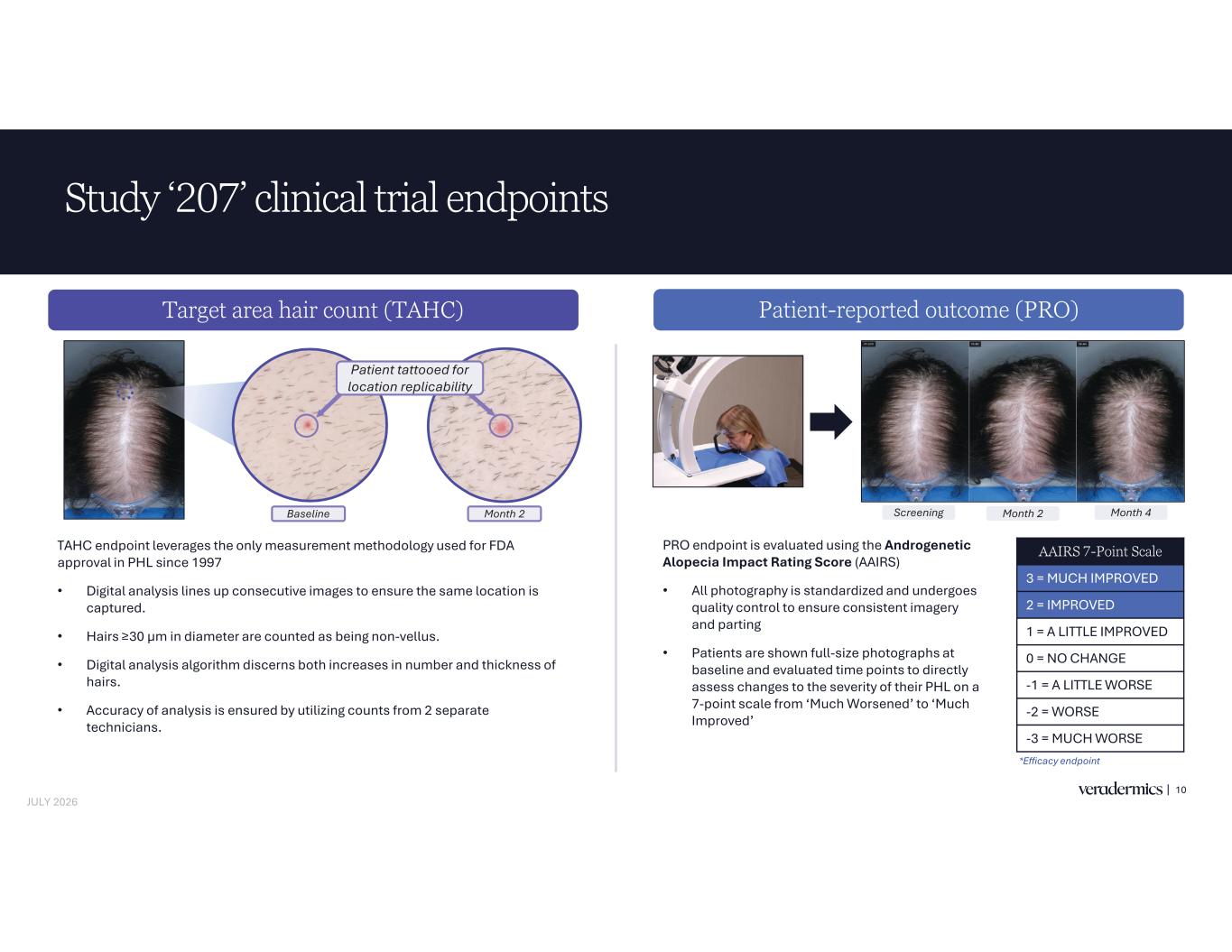
Study ‘207’ clinical trial endpoints 10 Patient-reported outcome (PRO)Target area hair count (TAHC) AAIRS 7-Point Scale 3 = MUCH IMPROVED 2 = IMPROVED 1 = A LITTLE IMPROVED 0 = NO CHANGE -1 = A LITTLE WORSE -2 = WORSE -3 = MUCH WORSE *Efficacy endpoint Baseline Month 2 Screening Month 2 Month 4 Patient tattooed for location replicability TAHC endpoint leverages the only measurement methodology used for FDA approval in PHL since 1997 • Digital analysis lines up consecutive images to ensure the same location is captured. • in diameter are counted as being non-vellus. • Digital analysis algorithm discerns both increases in number and thickness of hairs. • Accuracy of analysis is ensured by utilizing counts from 2 separate technicians. PRO endpoint is evaluated using the Androgenetic Alopecia Impact Rating Score (AAIRS) • All photography is standardized and undergoes quality control to ensure consistent imagery and parting • Patients are shown full-size photographs at baseline and evaluated time points to directly assess changes to the severity of their PHL on a 7-point scale from ‘Much Worsened’ to ‘Much Improved’ JULY 2026
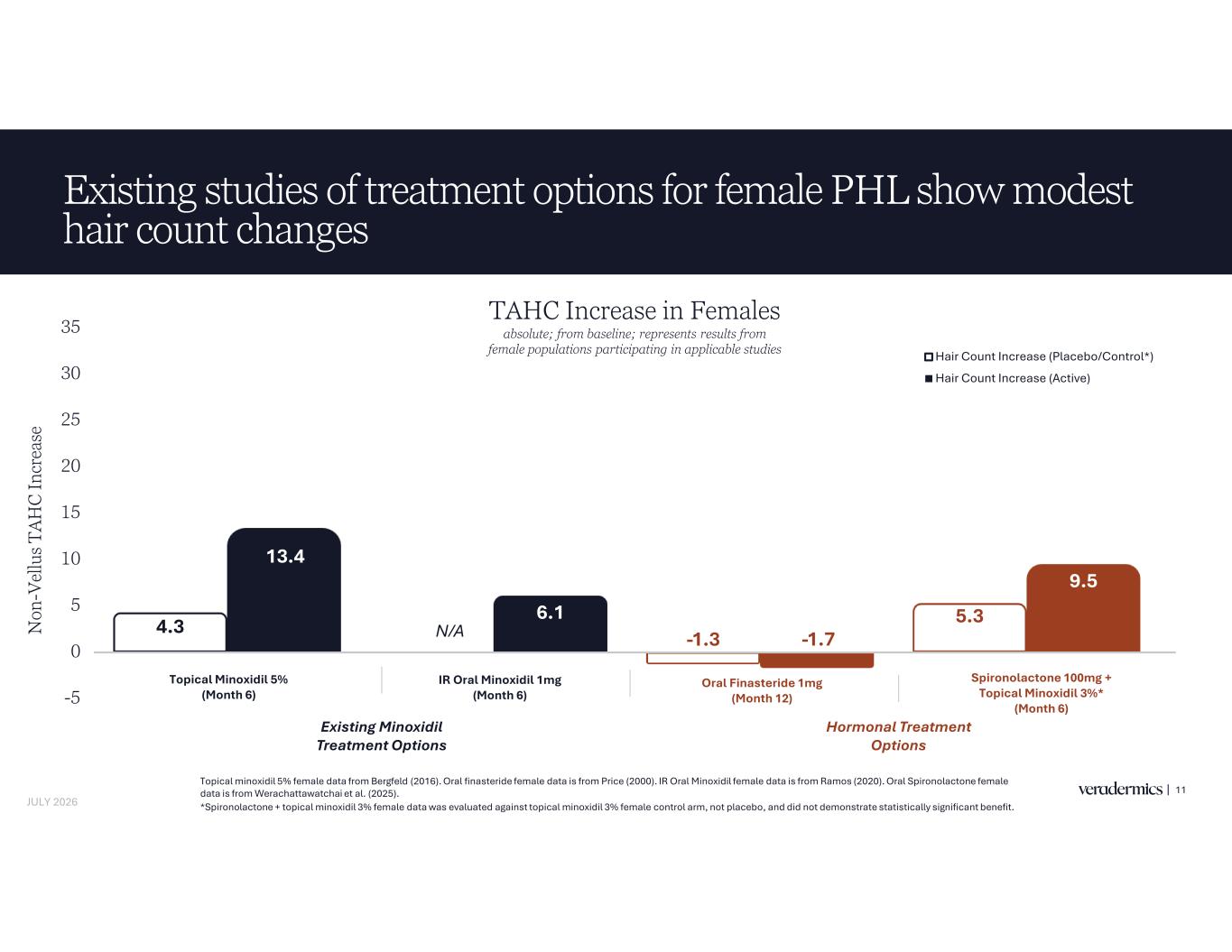
4.3 -1.3 5.3 13.4 6.1 -1.7 9.5 -5 0 5 10 15 20 25 30 35 N on -V el lu s T A H C In cr ea se Hair Count Increase (Placebo/Control*) Hair Count Increase (Active) Existing studies of treatment options for female PHL show modest hair count changes 11 [n=33] Topical minoxidil 5% female data from Bergfeld (2016). Oral finasteride female data is from Price (2000). IR Oral Minoxidil female data is from Ramos (2020). Oral Spironolactone female data is from Werachattawatchai et al. (2025). *Spironolactone + topical minoxidil 3% female data was evaluated against topical minoxidil 3% female control arm, not placebo, and did not demonstrate statistically significant benefit. [n=180*] Oral Finasteride 1mg (Month 12) Spironolactone 100mg + Topical Minoxidil 3%* (Month 6) TAHC Increase in Females absolute; from baseline; represents results from female populations participating in applicable studies JULY 2026 Topical Minoxidil 5% (Month 6) IR Oral Minoxidil 1mg (Month 6) N/A Existing Minoxidil Treatment Options Hormonal Treatment Options
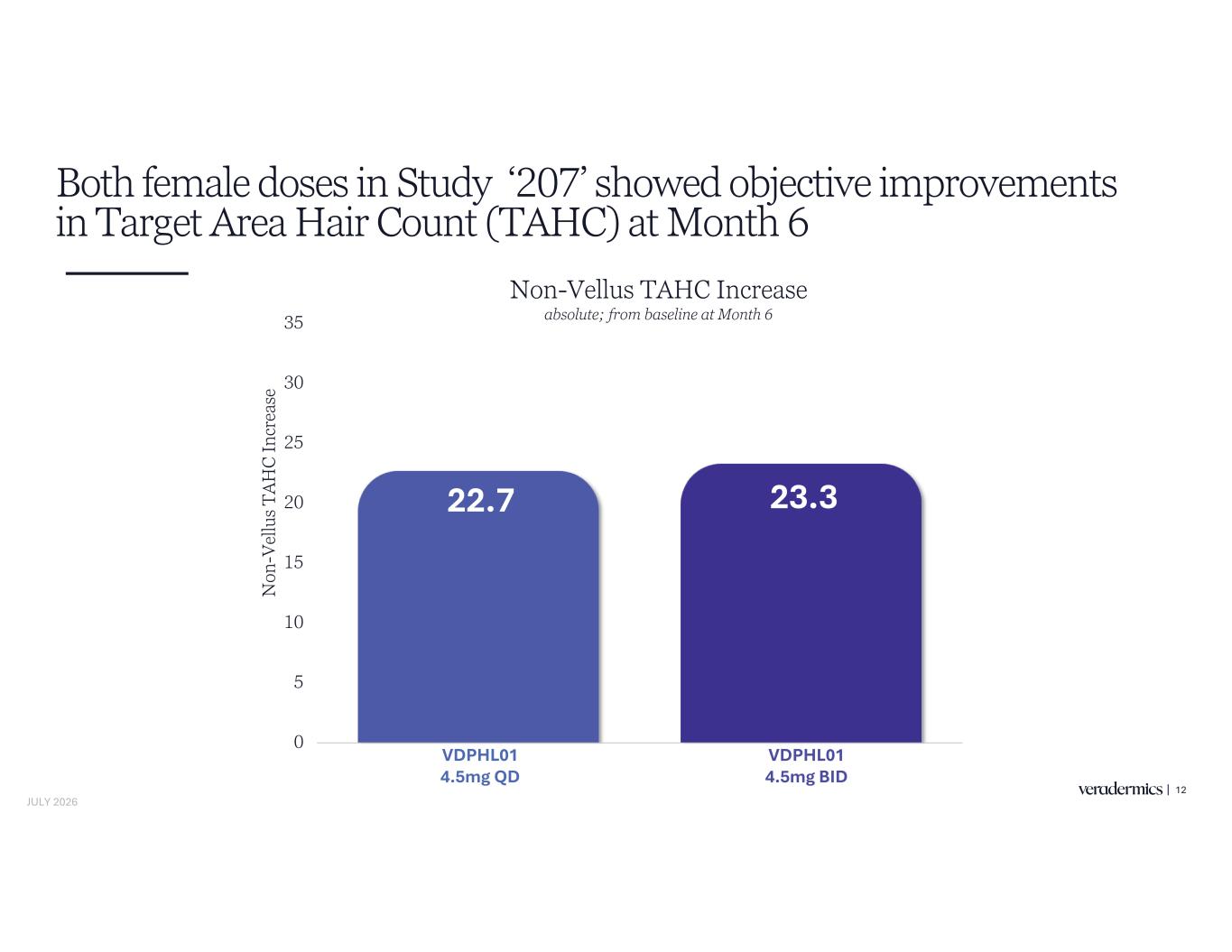
Both female doses in Study ‘207’ showed objective improvements in Target Area Hair Count (TAHC) at Month 6 12 22.7 23.3 0 5 10 15 20 25 30 35 VDPHL01 4.5mg QD VDPHL01 8.5mg BID N on -V el lu s T A H C In cr ea se Non-Vellus TAHC Increase absolute; from baseline at Month 6 VDPHL01 4.5mg QD VDPHL01 4.5mg BID JULY 2026
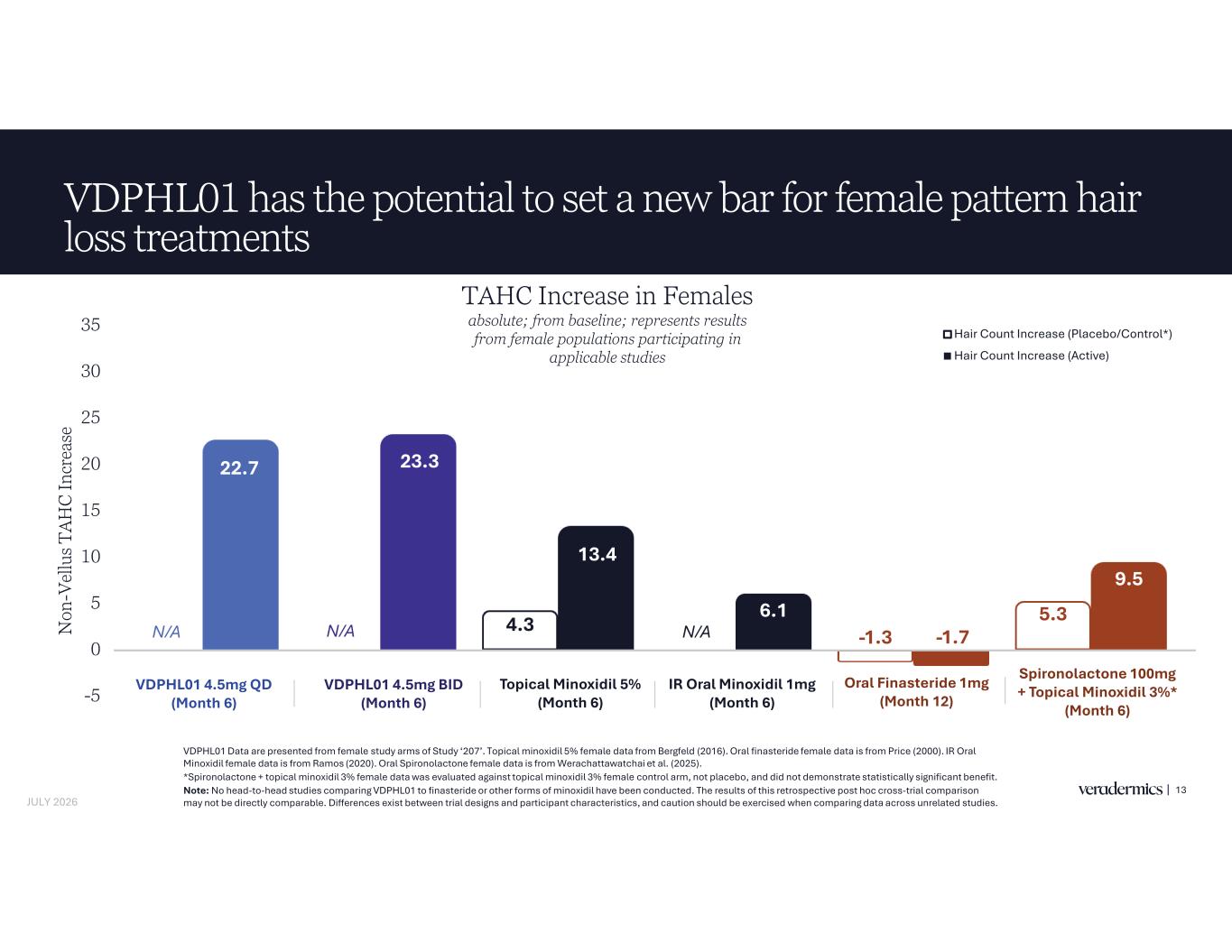
4.3 -1.3 5.3 22.7 23.3 13.4 6.1 -1.7 9.5 -5 0 5 10 15 20 25 30 35 N on -V el lu s T A H C In cr ea se Hair Count Increase (Placebo/Control*) Hair Count Increase (Active) VDPHL01 has the potential to set a new bar for female pattern hair loss treatments 13 [n=33] VDPHL01 Data are presented from female study arms of Study ‘207’. Topical minoxidil 5% female data from Bergfeld (2016). Oral finasteride female data is from Price (2000). IR Oral Minoxidil female data is from Ramos (2020). Oral Spironolactone female data is from Werachattawatchai et al. (2025). *Spironolactone + topical minoxidil 3% female data was evaluated against topical minoxidil 3% female control arm, not placebo, and did not demonstrate statistically significant benefit. Note: No head-to-head studies comparing VDPHL01 to finasteride or other forms of minoxidil have been conducted. The results of this retrospective post hoc cross-trial comparison may not be directly comparable. Differences exist between trial designs and participant characteristics, and caution should be exercised when comparing data across unrelated studies. [n=180*] VDPHL01 4.5mg QD (Month 6) VDPHL01 4.5mg BID (Month 6) Oral Finasteride 1mg (Month 12) Spironolactone 100mg + Topical Minoxidil 3%* (Month 6) TAHC Increase in Females absolute; from baseline; represents results from female populations participating in applicable studies JULY 2026 Topical Minoxidil 5% (Month 6) IR Oral Minoxidil 1mg (Month 6) N/AN/AN/A
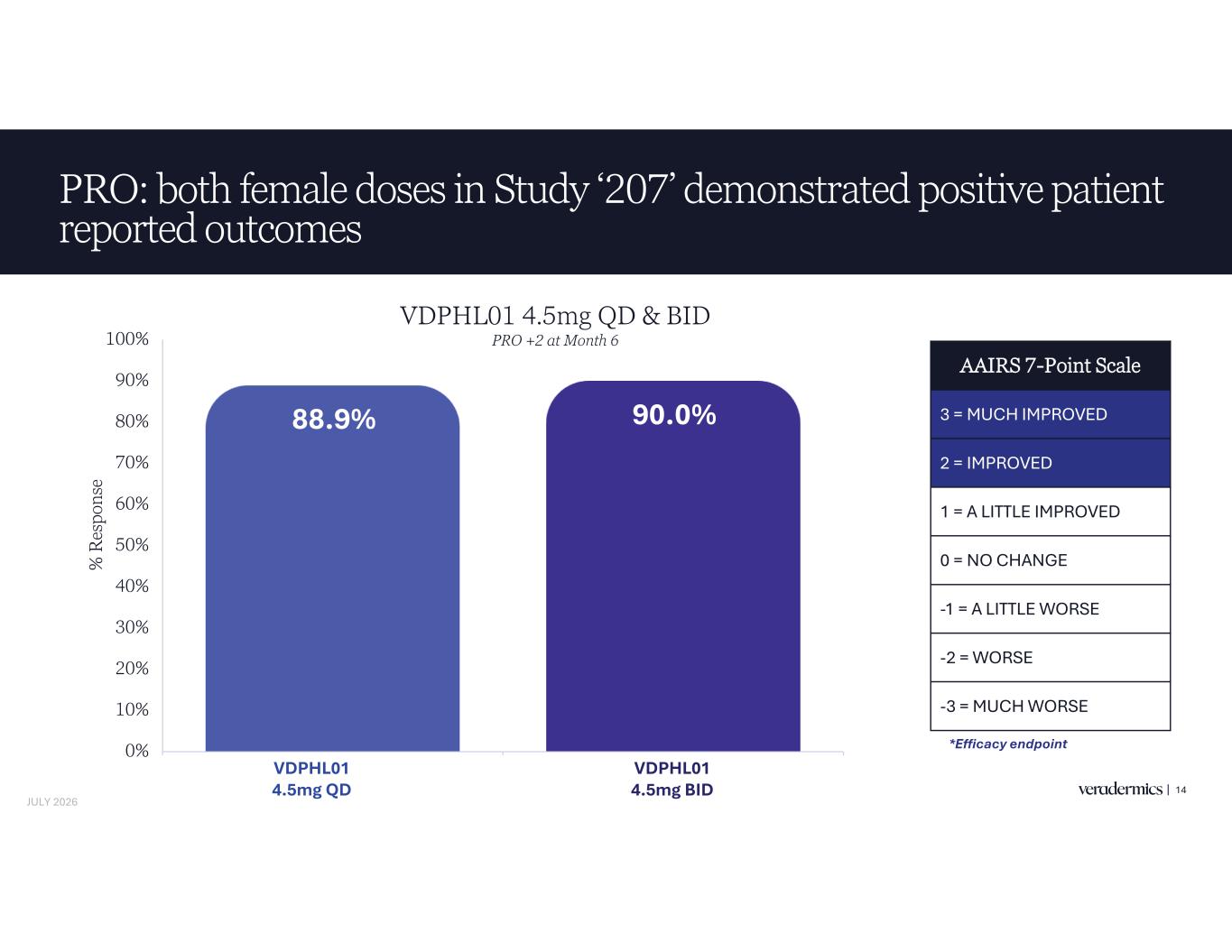
PRO: both female doses in Study ‘207’ demonstrated positive patient reported outcomes 14 88.9% 90.0% 0% 10% 20% 30% 40% 50% 60% 70% 80% 90% 100% VDPHL01 8.5mg QD VDPHL01 8.5mg BID % R es po ns e AAIRS 7-Point Scale 3 = MUCH IMPROVED 2 = IMPROVED 1 = A LITTLE IMPROVED 0 = NO CHANGE -1 = A LITTLE WORSE -2 = WORSE -3 = MUCH WORSE *Efficacy endpoint VDP L01 4.5mg QD VDPHL01 4.5mg BID VDPHL01 4.5mg QD & BID PRO +2 at Month 6 JULY 2026
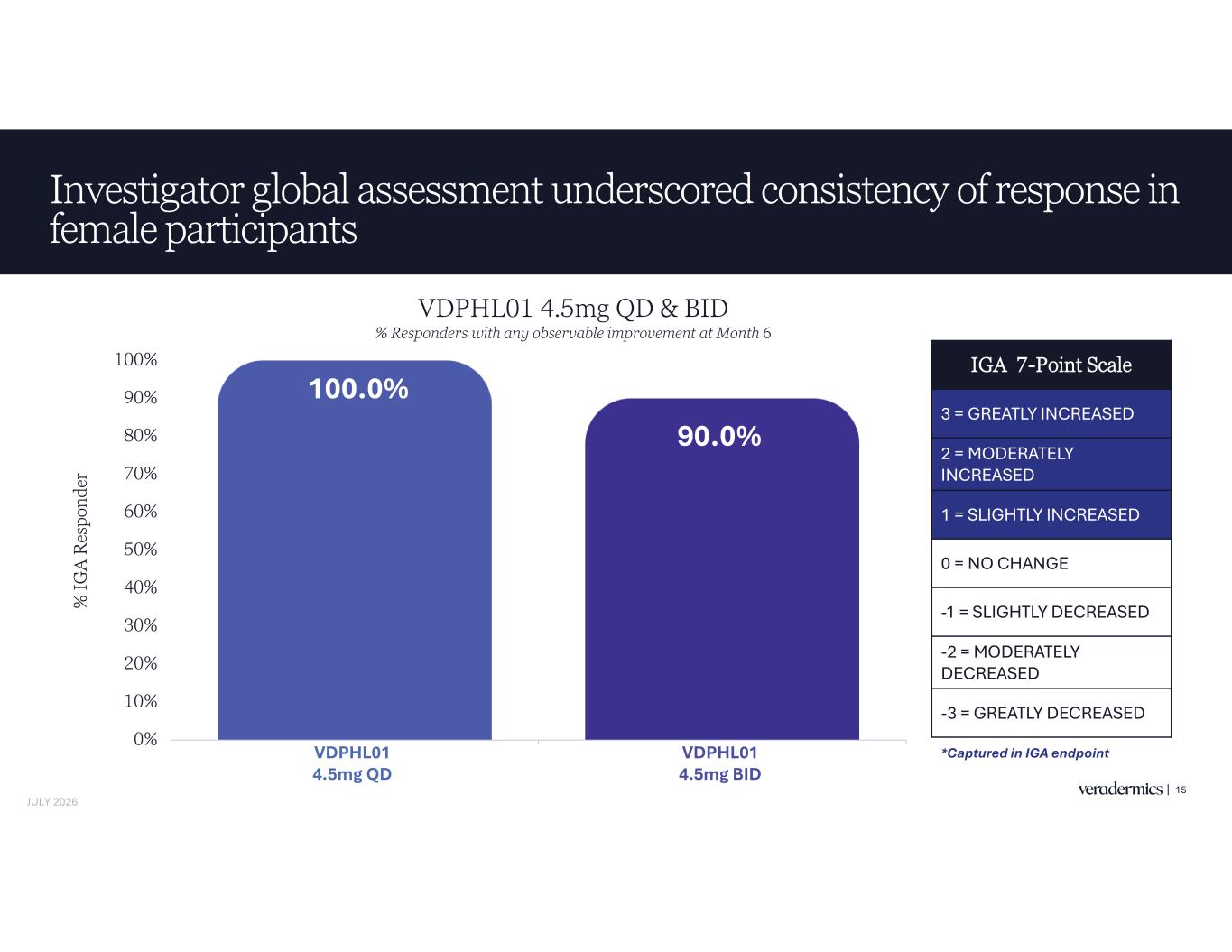
Investigator global assessment underscored consistency of response in female participants 15 100.0% 90.0% 0% 10% 20% 30% 40% 50% 60% 70% 80% 90% 100% VDPHL01 8.5mg QD VDPHL01 8.5mg BID % IG A R es po nd er IGA 7-Point Scale 3 = GREATLY INCREASED 2 = MODERATELY INCREASED 1 = SLIGHTLY INCREASED 0 = NO CHANGE -1 = SLIGHTLY DECREASED -2 = MODERATELY DECREASED -3 = GREATLY DECREASED *Captured in IGA endpoint VDPHL01 4.5mg QD & BID % Responders with any observable improvement at Month 6 VDPHL01 4.5mg QD VDPHL01 4.5mg BID JULY 2026
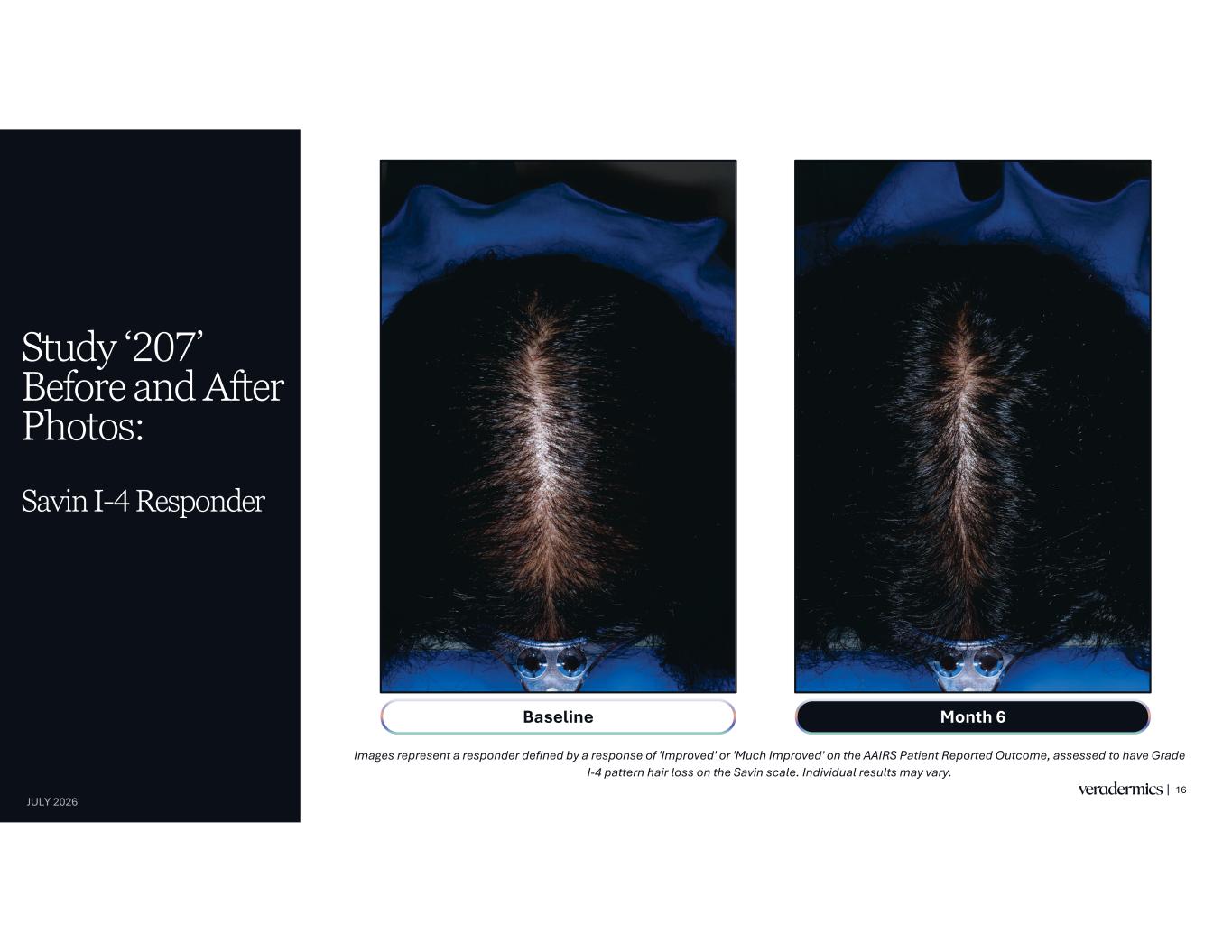
Study ‘207’ Before and After Photos: Savin I-4 Responder 16 Images represent a responder defined by a response of 'Improved' or 'Much Improved' on the AAIRS Patient Reported Outcome, assessed to have Grade I-4 pattern hair loss on the Savin scale. Individual results may vary. Month 6Baseline JULY 2026
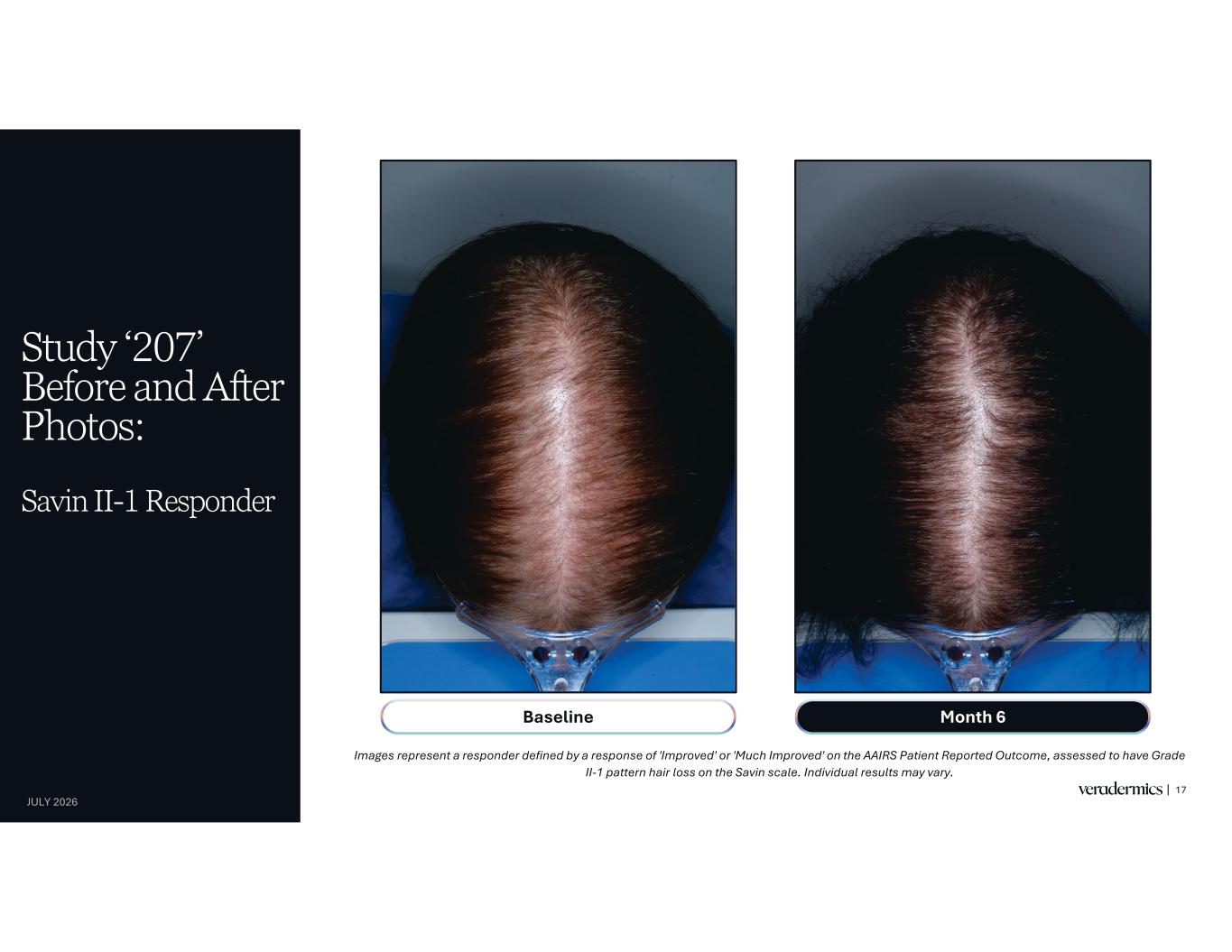
Study ‘207’ Before and After Photos: Savin II-1 Responder 17 Images represent a responder defined by a response of 'Improved' or 'Much Improved' on the AAIRS Patient Reported Outcome, assessed to have Grade II-1 pattern hair loss on the Savin scale. Individual results may vary. Month 6Baseline JULY 2026
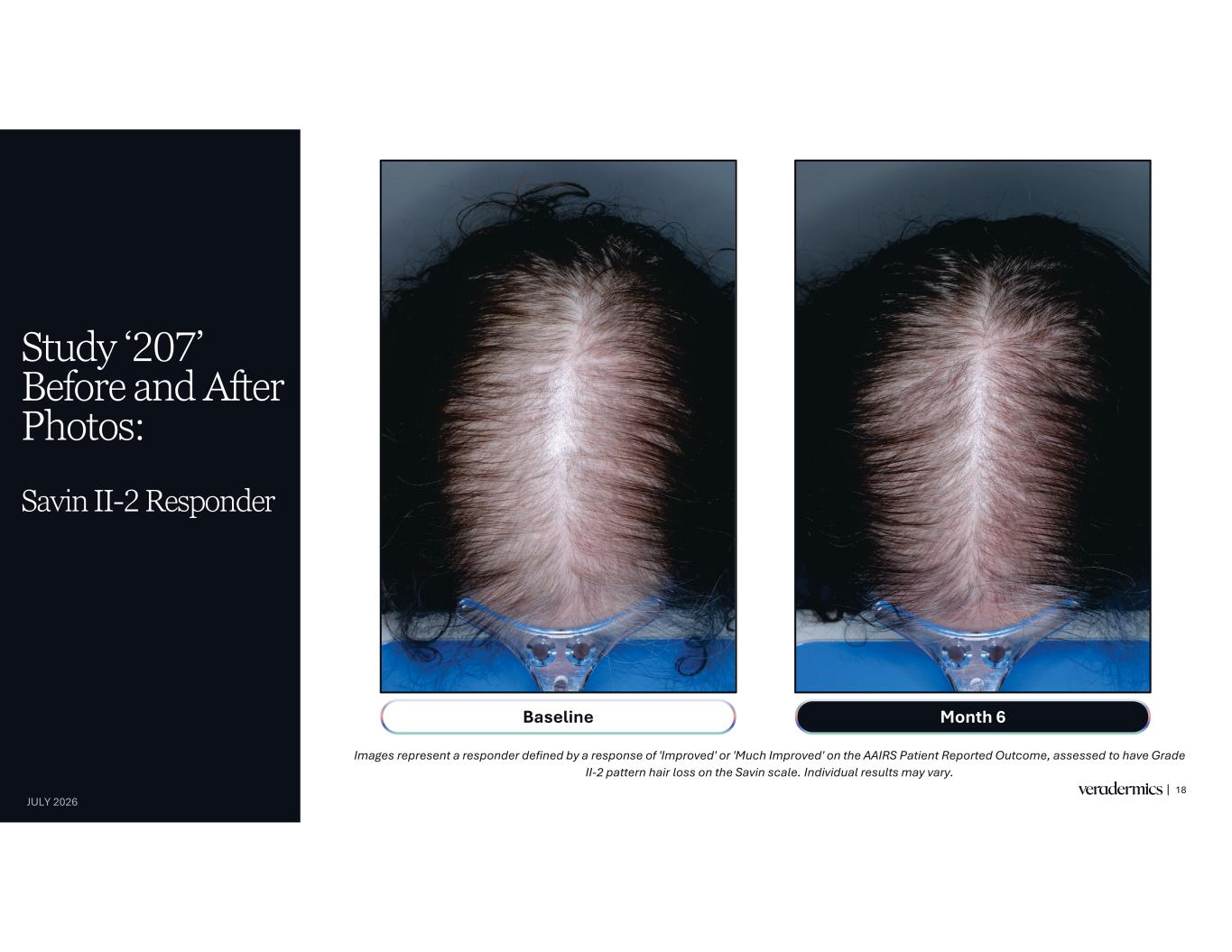
Study ‘207’ Before and After Photos: Savin II-2 Responder 18 Images represent a responder defined by a response of 'Improved' or 'Much Improved' on the AAIRS Patient Reported Outcome, assessed to have Grade II-2 pattern hair loss on the Savin scale. Individual results may vary. Month 6Baseline JULY 2026

Eyebrow Assessments 19
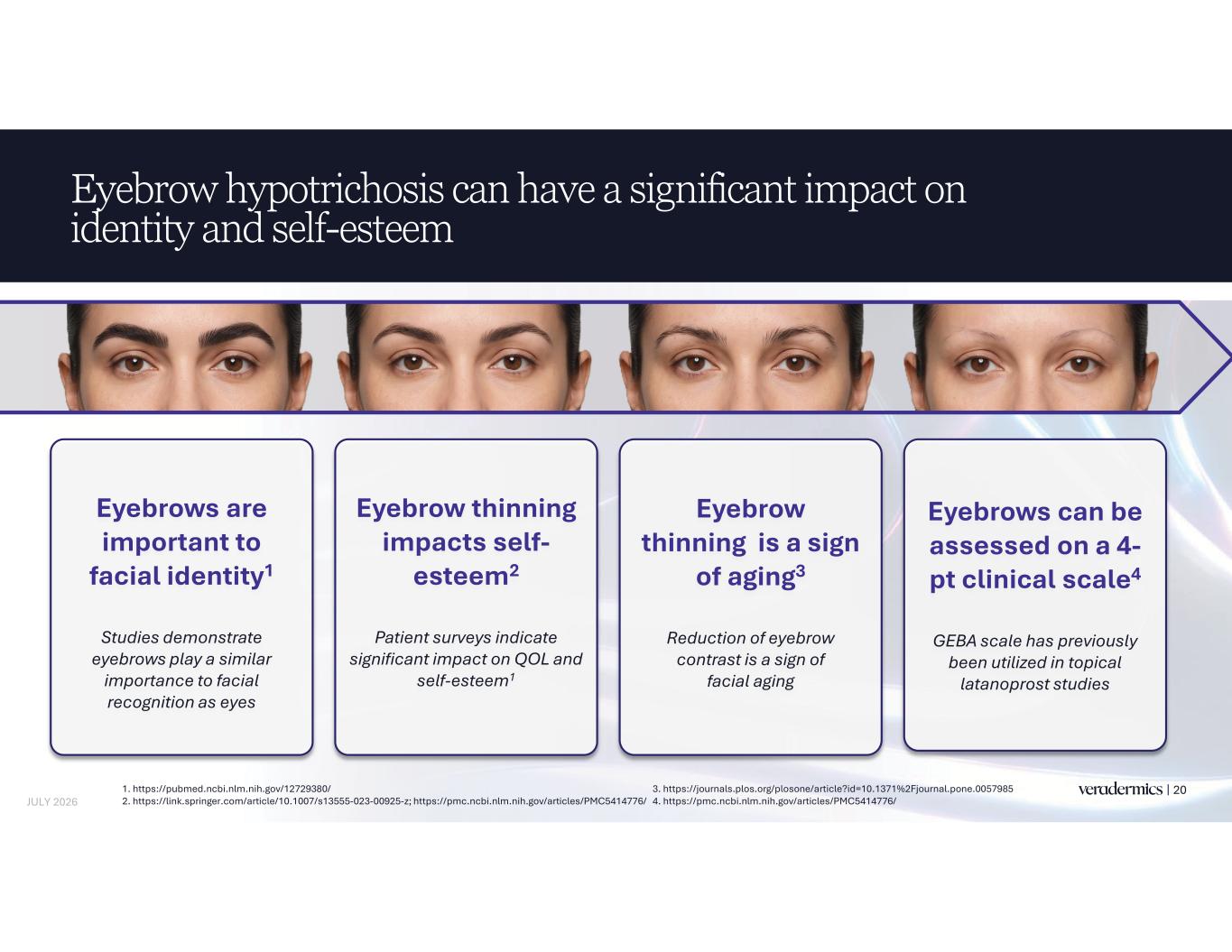
Eyebrow hypotrichosis can have a significant impact on identity and self-esteem 201. https://pubmed.ncbi.nlm.nih.gov/12729380/ 2. https://link.springer.com/article/10.1007/s13555-023-00925-z; https://pmc.ncbi.nlm.nih.gov/articles/PMC5414776/ 3. https://journals.plos.org/plosone/article?id=10.1371%2Fjournal.pone.0057985 4. https://pmc.ncbi.nlm.nih.gov/articles/PMC5414776/ Eyebrow thinning is a sign of aging3 Reduction of eyebrow contrast is a sign of facial aging Eyebrows are important to facial identity1 Studies demonstrate eyebrows play a similar importance to facial recognition as eyes Eyebrow thinning impacts self- esteem2 Patient surveys indicate significant impact on QOL and self-esteem1 Eyebrows can be assessed on a 4- pt clinical scale4 GEBA scale has previously been utilized in topical latanoprost studies JULY 2026
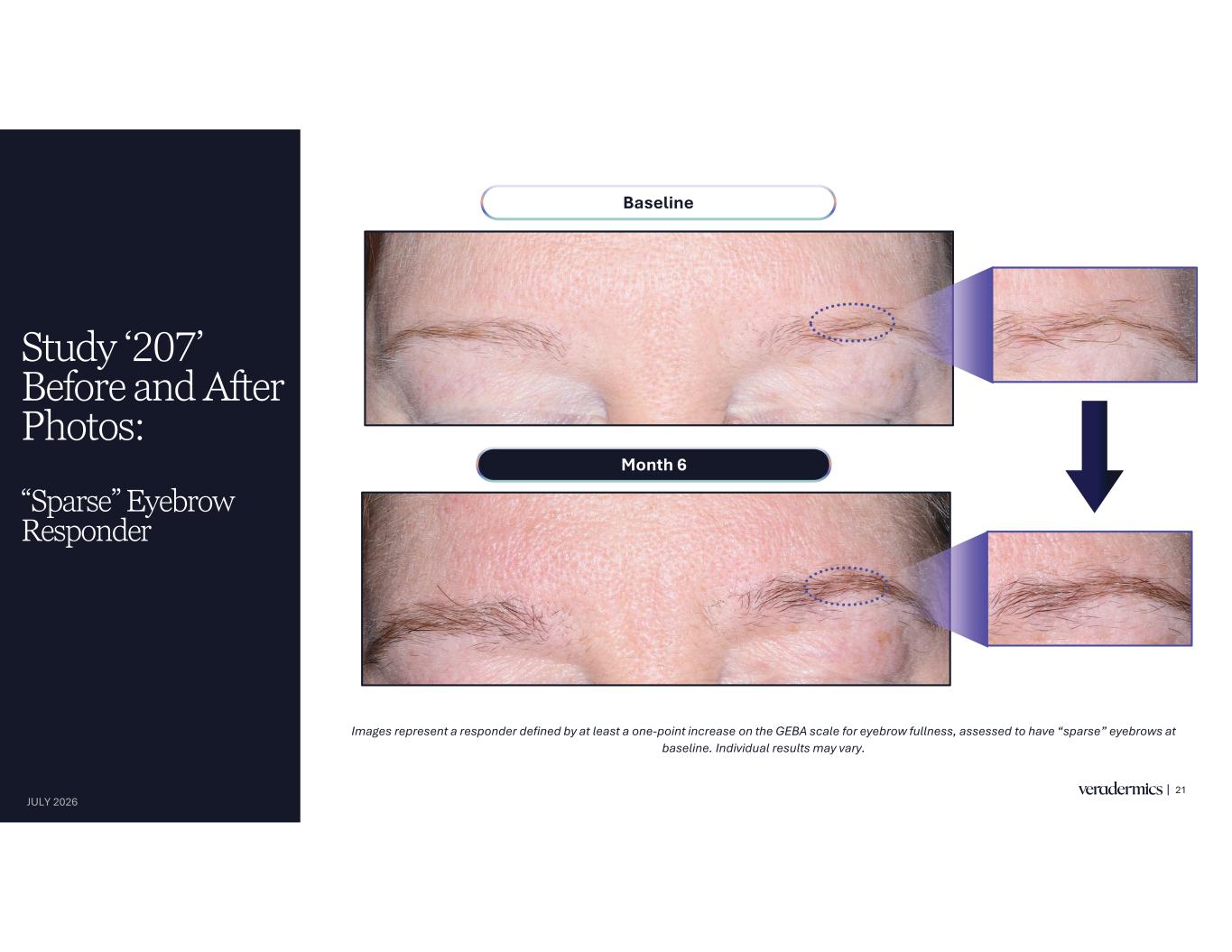
Study ‘207’ Before and After Photos: “Sparse” Eyebrow Responder 21 JULY 2026 Month 6 Baseline Images represent a responder defined by at least a one-point increase on the GEBA scale for eyebrow fullness, assessed to have “sparse” eyebrows at baseline. Individual results may vary.
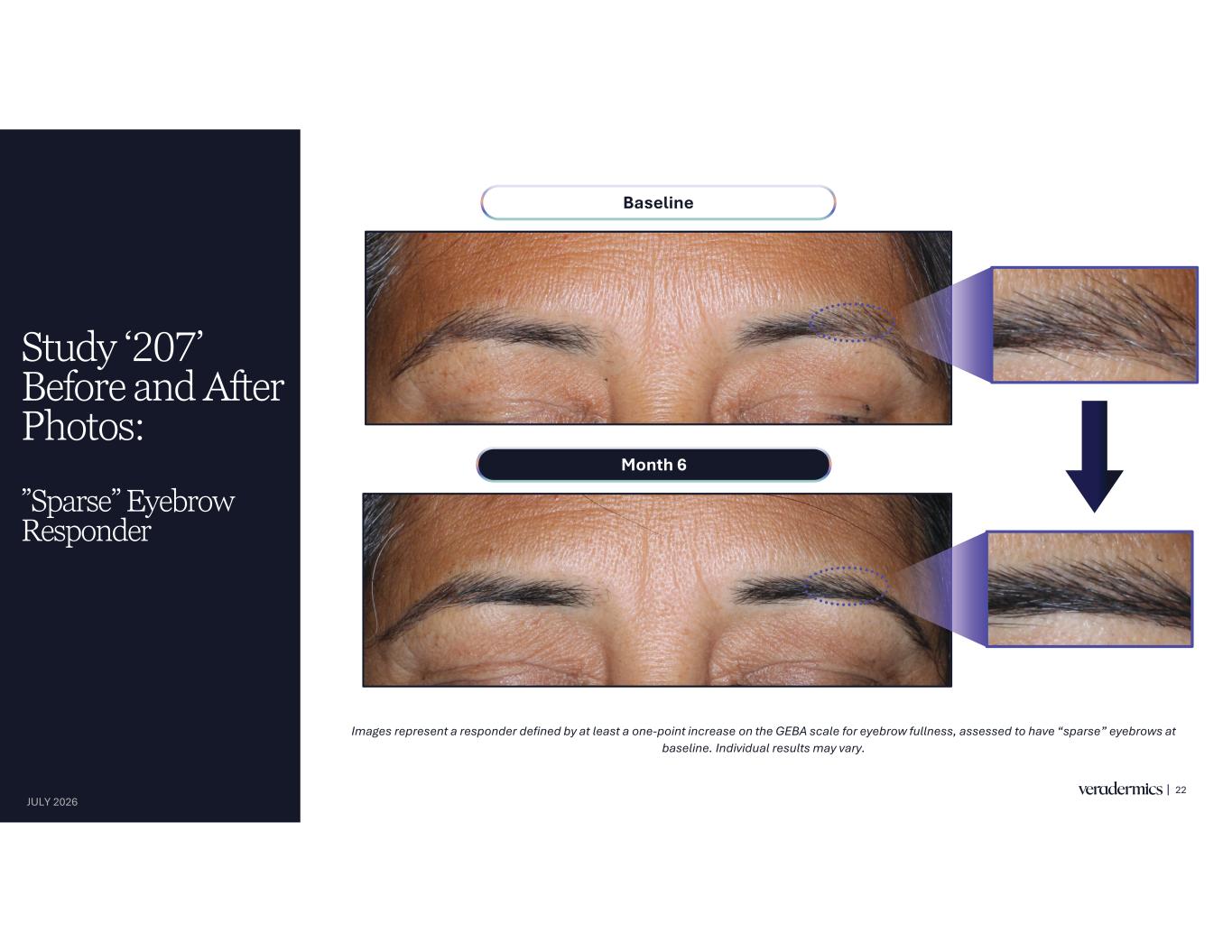
Study ‘207’ Before and After Photos: ”Sparse” Eyebrow Responder 22 JULY 2026 Month 6 Baseline Images represent a responder defined by at least a one-point increase on the GEBA scale for eyebrow fullness, assessed to have “sparse” eyebrows at baseline. Individual results may vary.
Study ‘207’: Female Safety and Tolerability 23
Study ‘207' demonstrated a well-tolerated safety profile • Overall safety and tolerability similar to prior trials with VDPHL01 with no new safety signals identified • No SAEs • No adverse events of special interest (AESI) of cardiac origin • No clinically significant changes in heart rate, blood pressure, or ECG observed • Lack of observed shedding 24 JULY 2026
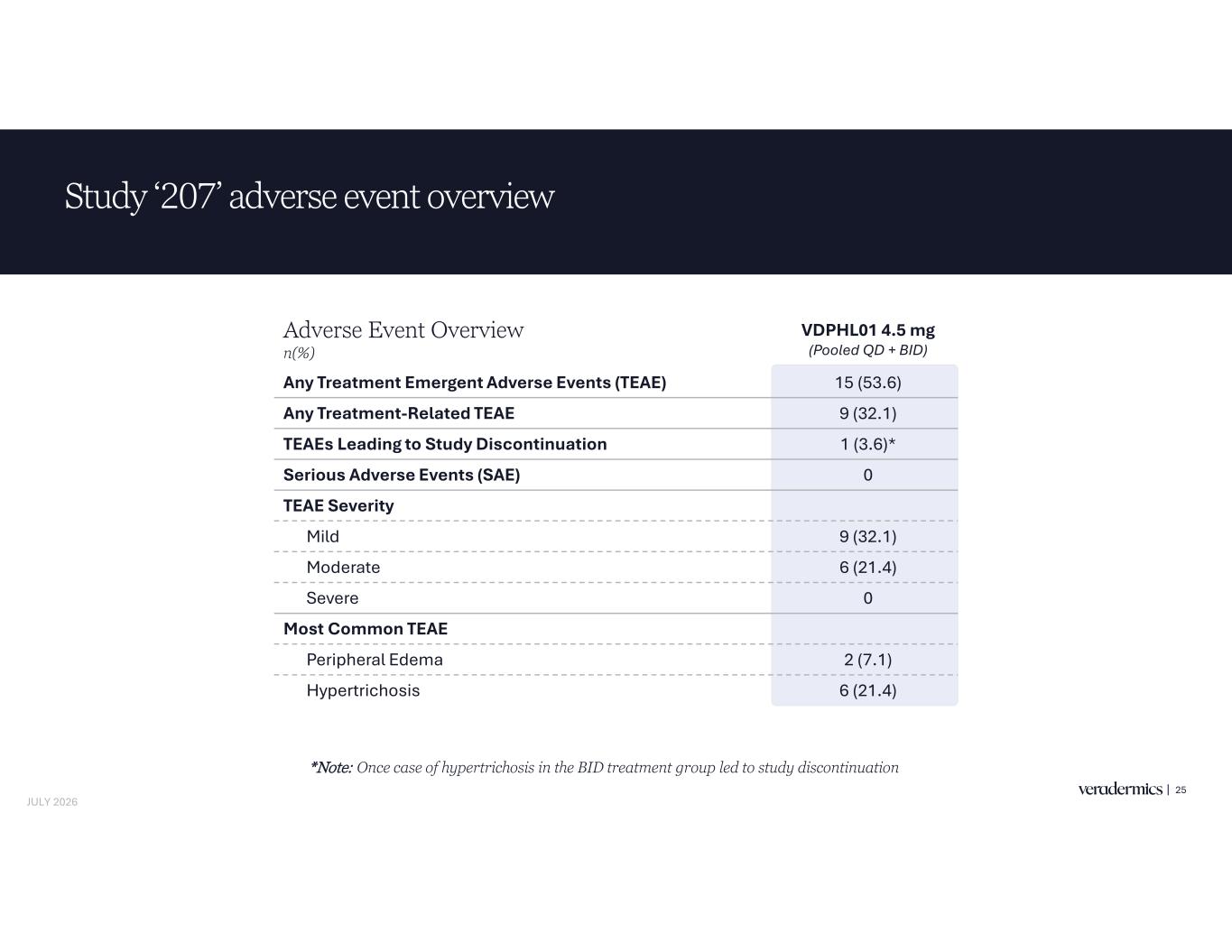
Adverse Event Overview n(%) VDPHL01 4.5 mg (Pooled QD + BID) Any Treatment Emergent Adverse Events (TEAE) 15 (53.6) Any Treatment-Related TEAE 9 (32.1) TEAEs Leading to Study Discontinuation 1 (3.6)* Serious Adverse Events (SAE) 0 TEAE Severity Mild 9 (32.1) Moderate 6 (21.4) Severe 0 Most Common TEAE Peripheral Edema 2 (7.1) Hypertrichosis 6 (21.4) Study ‘207’ adverse event overview 25 *Note: Once case of hypertrichosis in the BID treatment group led to study discontinuation JULY 2026
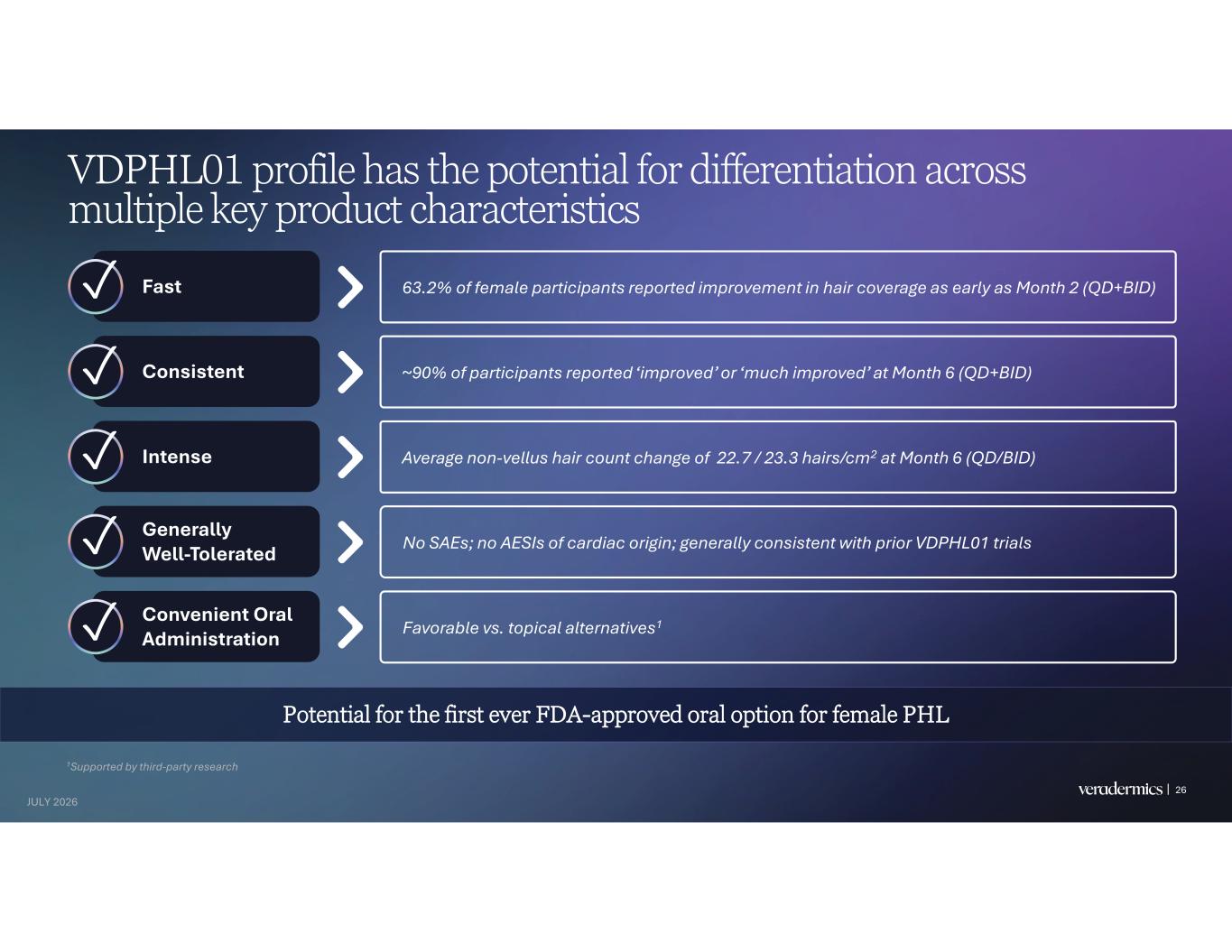
26 VDPHL01 profile has the potential for differentiation across multiple key product characteristics Fast Consistent Intense Generally Well-Tolerated Convenient Oral Administration ~90% of participants reported ‘improved’ or ‘much improved’ at Month 6 (QD+BID) Average non-vellus hair count change of 22.7 / 23.3 hairs/cm2 at Month 6 (QD/BID) No SAEs; no AESIs of cardiac origin; generally consistent with prior VDPHL01 trials Favorable vs. topical alternatives1 63.2% of female participants reported improvement in hair coverage as early as Month 2 (QD+BID) 1Supported by third-party research Potential for the first ever FDA-approved oral option for female PHL JULY 2026

KOL Discussion Jerry Shapiro NYU Langone Health* 27 JULY 2026 *Dr. Jerry Shapiro is a paid consultant for Veradermics.

VDPHL01 Phase 2 FPHL Clinical Topline: FPHL Market Opportunity July 2026 Presented by: Mark Neumann, Chief Commercial and Strategy Officer
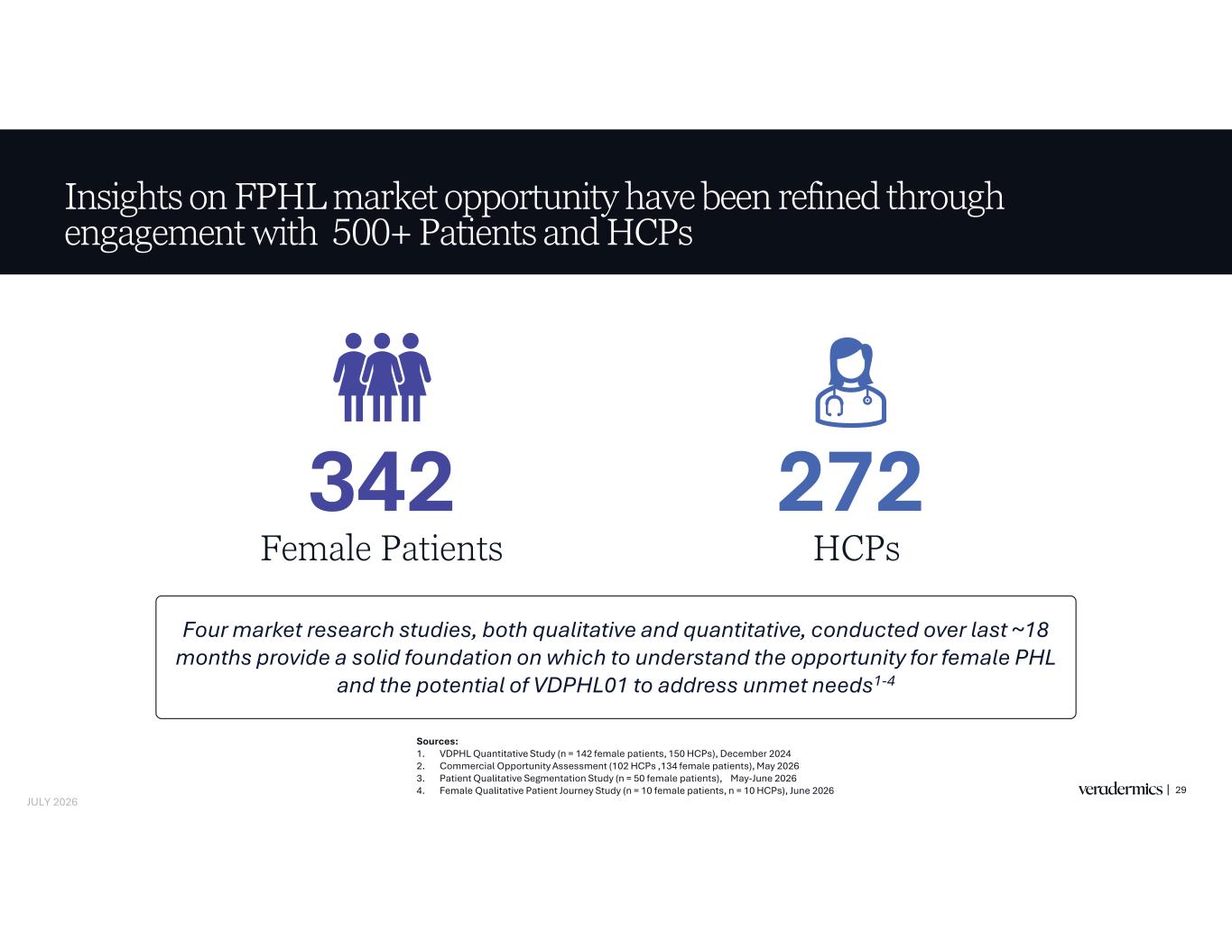
Insights on FPHL market opportunity have been refined through engagement with 500+ Patients and HCPs 29 342 Female Patients 272 HCPs Four market research studies, both qualitative and quantitative, conducted over last ~18 months provide a solid foundation on which to understand the opportunity for female PHL and the potential of VDPHL01 to address unmet needs1-4 Sources: 1. VDPHL Quantitative Study (n = 142 female patients, 150 HCPs), December 2024 2. Commercial Opportunity Assessment (102 HCPs ,134 female patients), May 2026 3. Patient Qualitative Segmentation Study (n = 50 female patients), May-June 2026 4. Female Qualitative Patient Journey Study (n = 10 female patients, n = 10 HCPs), June 2026 JULY 2026
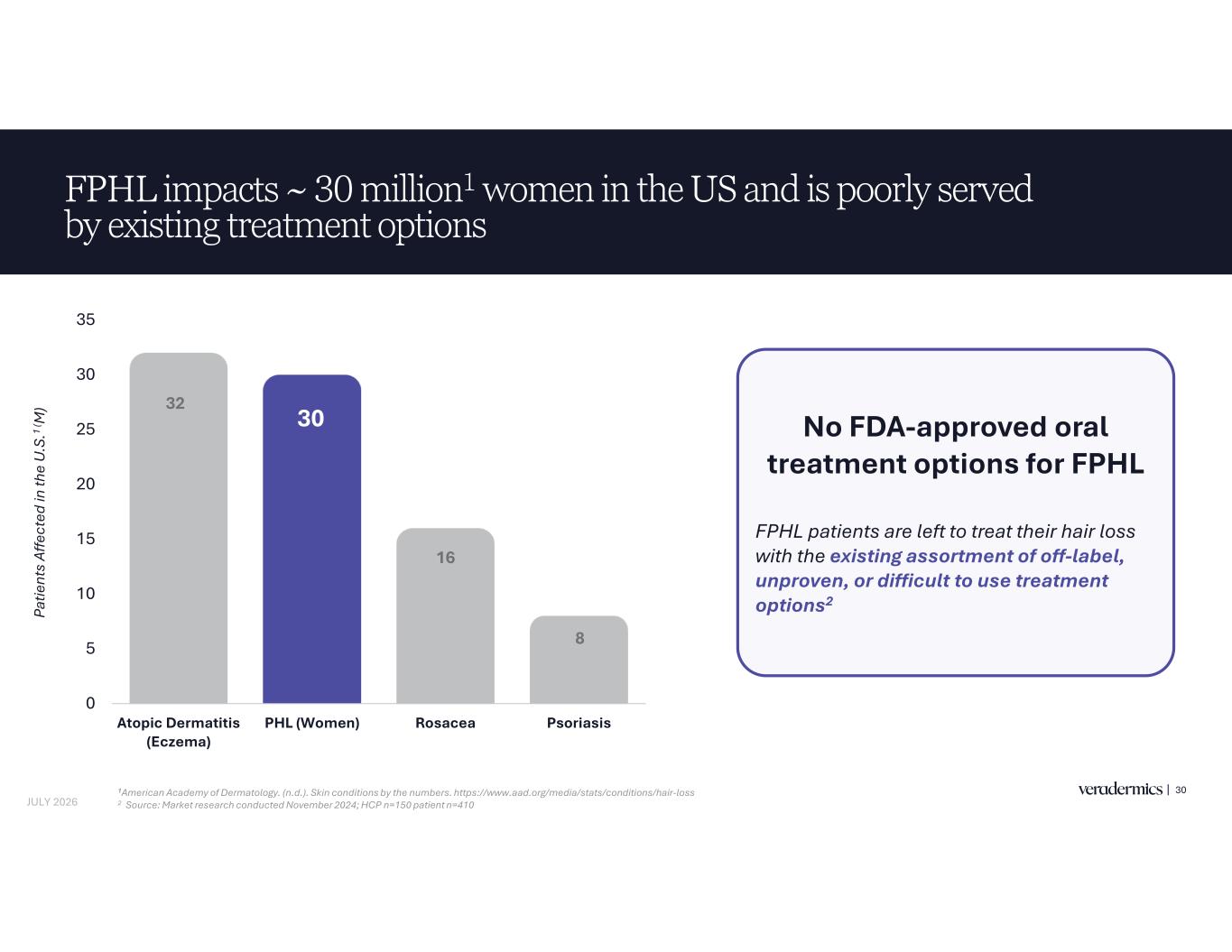
FPHL impacts ~ 30 million1 women in the US and is poorly served by existing treatment options 30 32 30 16 8 0 5 10 15 20 25 30 35 Atopic Dermatitis (Eczema) PHL (Women) Rosacea Psoriasis Pa tie nt s Af fe ct ed in th e U .S .1 ( M ) 1American Academy of Dermatology. (n.d.). Skin conditions by the numbers. https://www.aad.org/media/stats/conditions/hair-loss 2 Source: Market research conducted November 2024; HCP n=150 patient n=410 No FDA-approved oral treatment options for FPHL FPHL patients are left to treat their hair loss with the existing assortment of off-label, unproven, or difficult to use treatment options2 JULY 2026
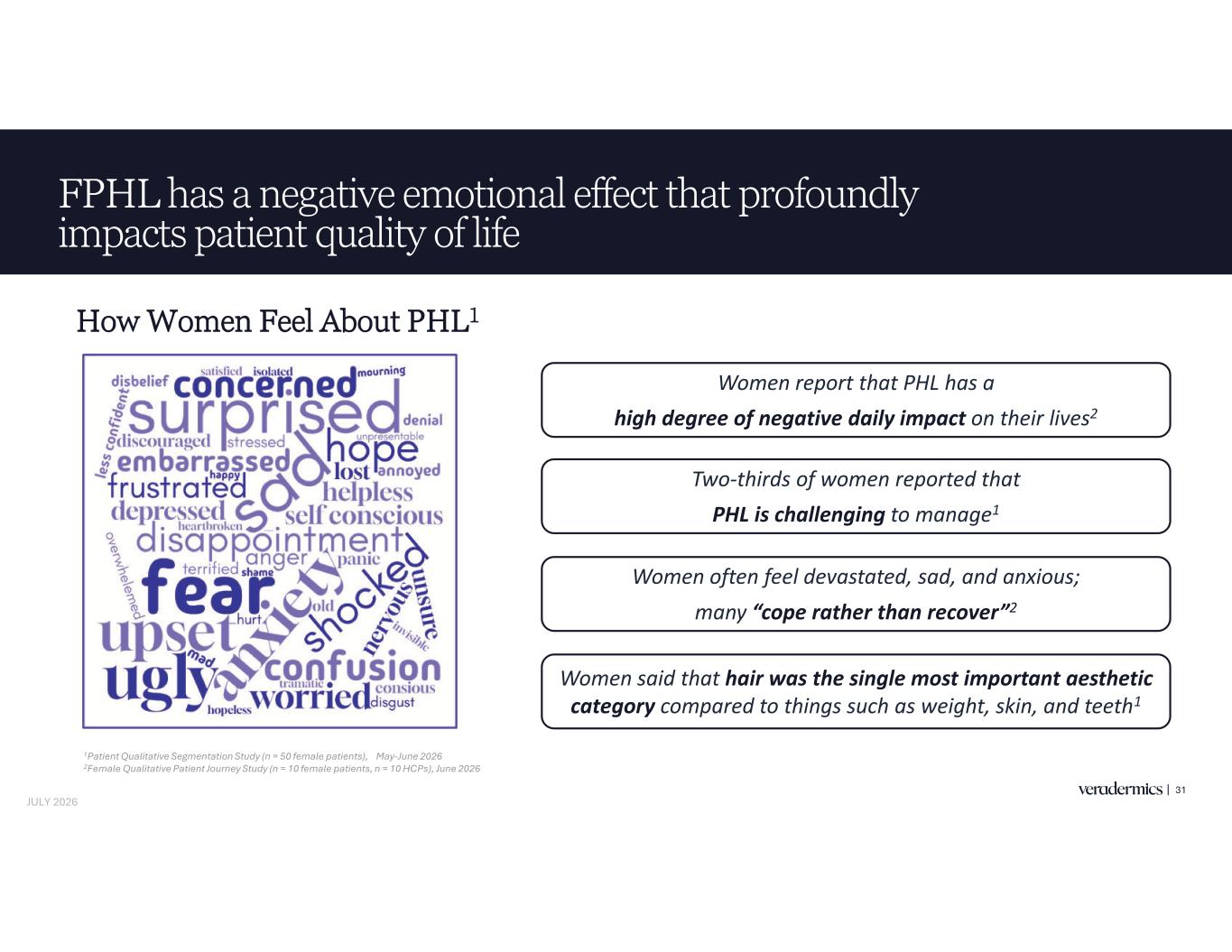
FPHL has a negative emotional effect that profoundly impacts patient quality of life 31 How Women Feel About PHL1 Women often feel devastated, sad, and anxious; many “cope rather than recover”2 Women said that hair was the single most important aesthetic category compared to things such as weight, skin, and teeth1 Women report that PHL has a high degree of negative daily impact on their lives2 Two-thirds of women reported that PHL is challenging to manage1 1Patient Qualitative Segmentation Study (n = 50 female patients), May-June 2026 2Female Qualitative Patient Journey Study (n = 10 female patients, n = 10 HCPs), June 2026 JULY 2026
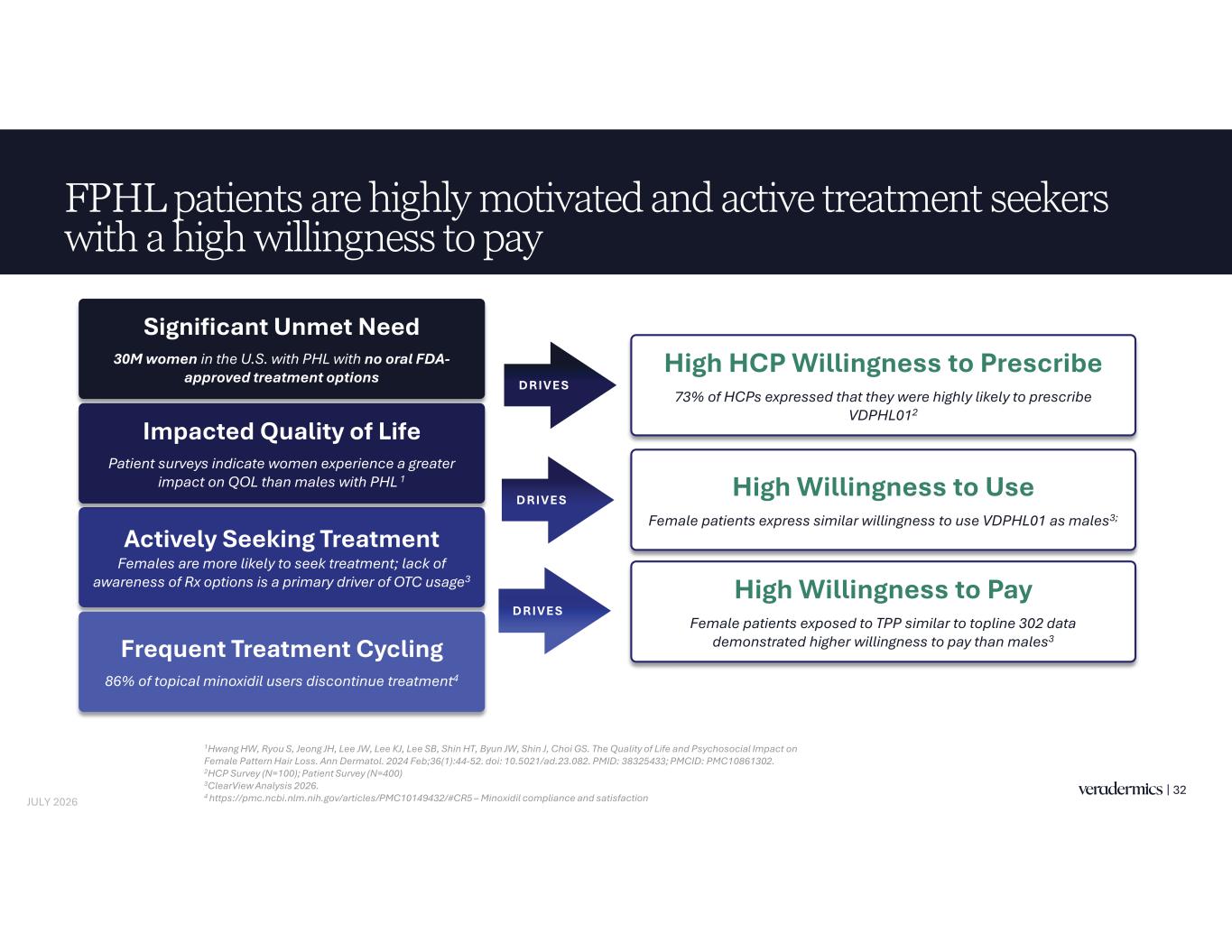
FPHL patients are highly motivated and active treatment seekers with a high willingness to pay 32 High Willingness to Use Female patients express similar willingness to use VDPHL01 as males3; High HCP Willingness to Prescribe 73% of HCPs expressed that they were highly likely to prescribe VDPHL012 1Hwang HW, Ryou S, Jeong JH, Lee JW, Lee KJ, Lee SB, Shin HT, Byun JW, Shin J, Choi GS. The Quality of Life and Psychosocial Impact on Female Pattern Hair Loss. Ann Dermatol. 2024 Feb;36(1):44-52. doi: 10.5021/ad.23.082. PMID: 38325433; PMCID: PMC10861302. 2HCP Survey (N=100); Patient Survey (N=400) 3ClearView Analysis 2026. 4 https://pmc.ncbi.nlm.nih.gov/articles/PMC10149432/#CR5 – Minoxidil compliance and satisfaction High Willingness to Pay Female patients exposed to TPP similar to topline 302 data demonstrated higher willingness to pay than males3 Actively Seeking Treatment Females are more likely to seek treatment; lack of awareness of Rx options is a primary driver of OTC usage3 Significant Unmet Need 30M women in the U.S. with PHL with no oral FDA- approved treatment options Frequent Treatment Cycling 86% of topical minoxidil users discontinue treatment4 Impacted Quality of Life Patient surveys indicate women experience a greater impact on QOL than males with PHL 1 DRIVES DRIVES DRIVES JULY 2026
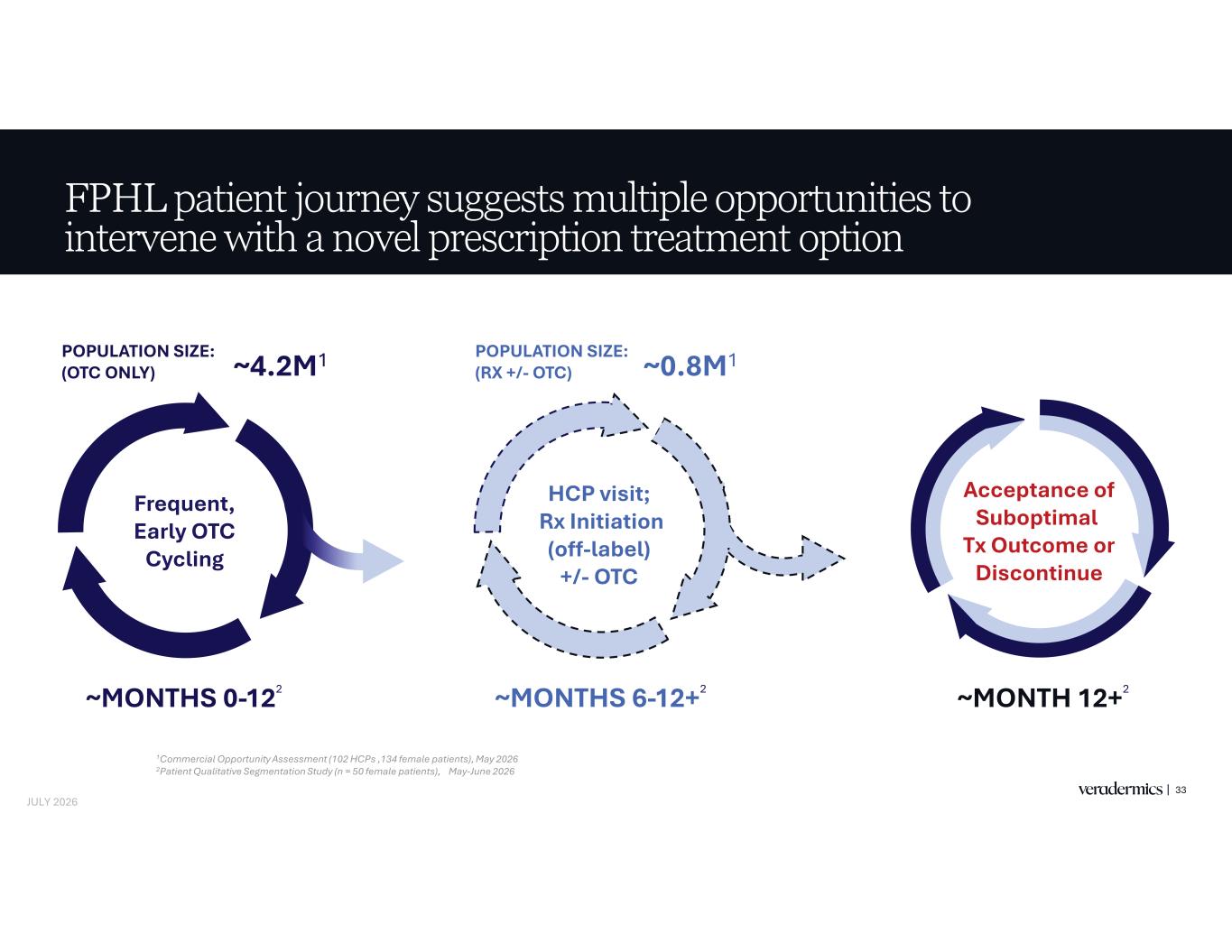
Acceptance of Suboptimal Tx Outcome or Discontinue FPHL patient journey suggests multiple opportunities to intervene with a novel prescription treatment option 33 ~MONTHS 0-122 ~MONTHS 6-12+2 POPULATION SIZE: (OTC ONLY) HCP visit; Rx Initiation (off-label) +/- OTC Frequent, Early OTC Cycling ~0.8M1POPULATION SIZE: (RX +/- OTC)~4.2M1 1Commercial Opportunity Assessment (102 HCPs ,134 female patients), May 2026 2Patient Qualitative Segmentation Study (n = 50 female patients), May-June 2026 ~MONTH 12+2 JULY 2026
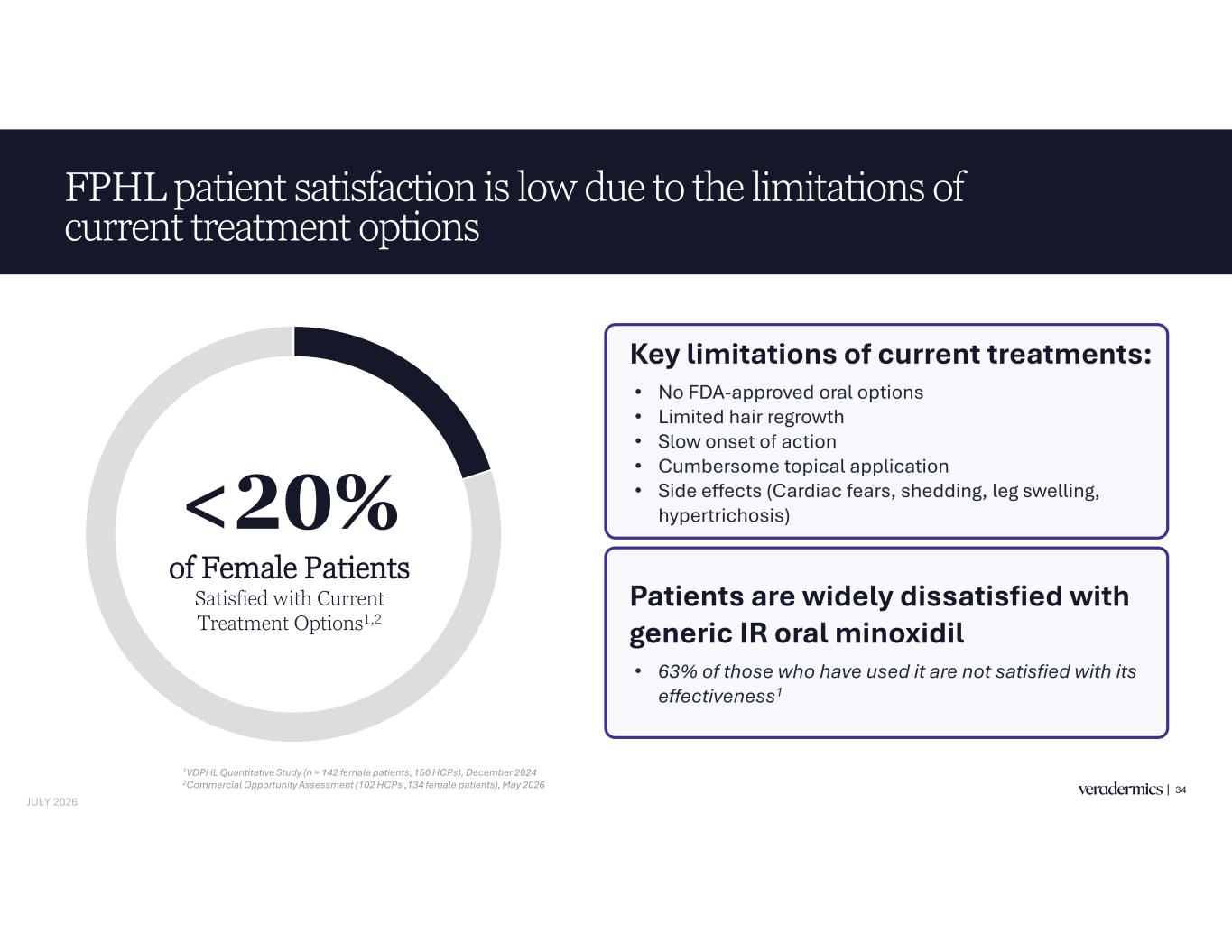
FPHL patient satisfaction is low due to the limitations of current treatment options <20% of Female Patients Satisfied with Current Treatment Options Key limitations of current treatments: • No FDA-approved oral options • Limited hair regrowth • Slow onset of action • Cumbersome topical application • Side effects (Cardiac fears, shedding, leg swelling, hypertrichosis)0% of Female Patients tisfied with Current Treatment Options1,2 Patients are widely dissatisfied with generic IR oral minoxidil • 63% of those who have used it are not satisfied with its effectiveness1 1VDPHL Quantitative Study (n = 142 female patients, 150 HCPs), December 2024 2Commercial Opportunity Assessment (102 HCPs ,134 female patients), May 2026 JULY 2026 34
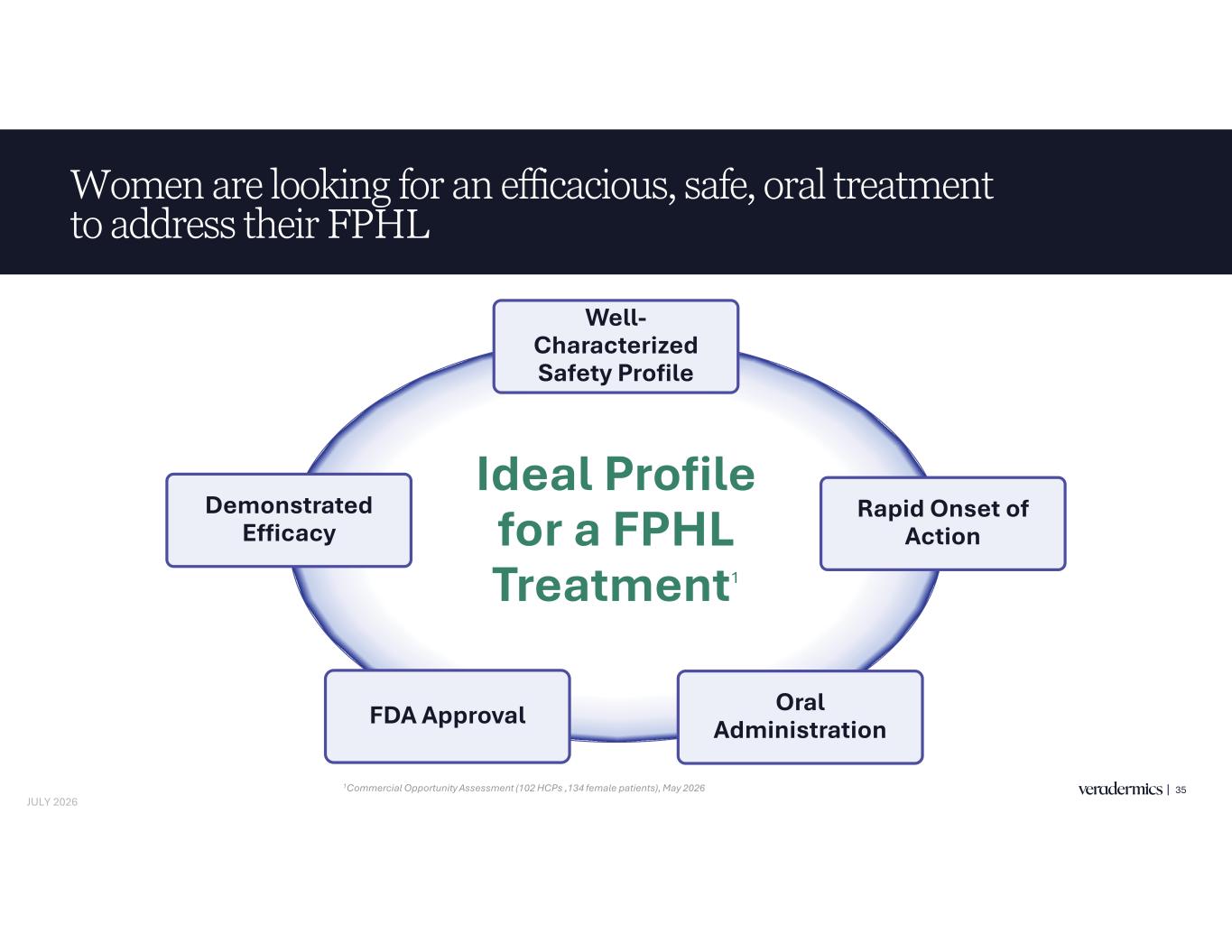
Women are looking for an efficacious, safe, oral treatment to address their FPHL 35 JULY 2026 Ideal Profile for a FPHL Treatment1 Demonstrated Efficacy Oral Administration Well- Characterized Safety Profile FDA Approval Rapid Onset of Action 1Commercial Opportunity Assessment (102 HCPs ,134 female patients), May 2026
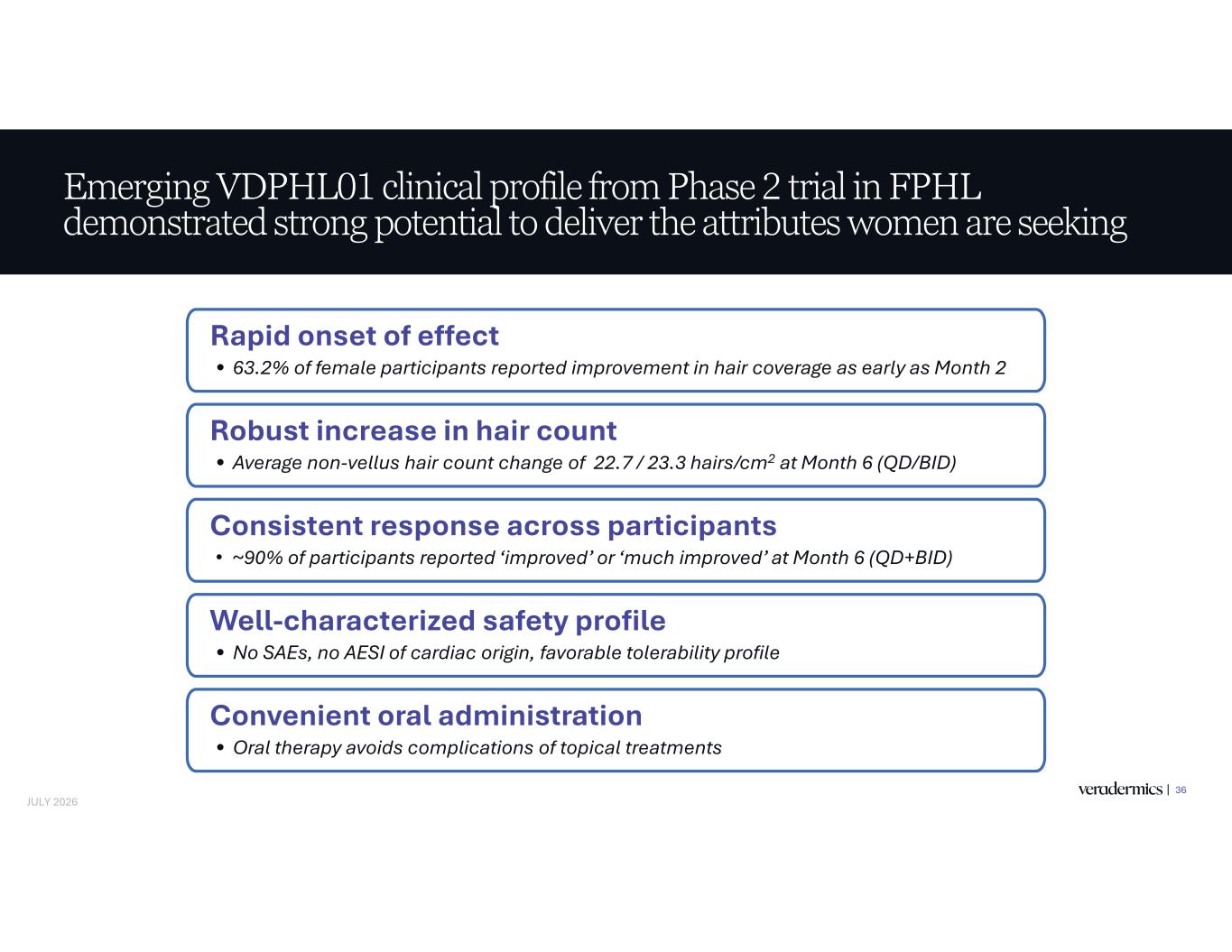
Emerging VDPHL01 clinical profile from Phase 2 trial in FPHL demonstrated strong potential to deliver the attributes women are seeking 36 JULY 2026 Consistent response across participants • ~90% of participants reported ‘improved’ or ‘much improved’ at Month 6 (QD+BID) Rapid onset of effect • 63.2% of female participants reported improvement in hair coverage as early as Month 2 Robust increase in hair count • Average non-vellus hair count change of 22.7 / 23.3 hairs/cm2 at Month 6 (QD/BID) Well-characterized safety profile • No SAEs, no AESI of cardiac origin, favorable tolerability profile Convenient oral administration • Oral therapy avoids complications of topical treatments

Closing Remarks 37
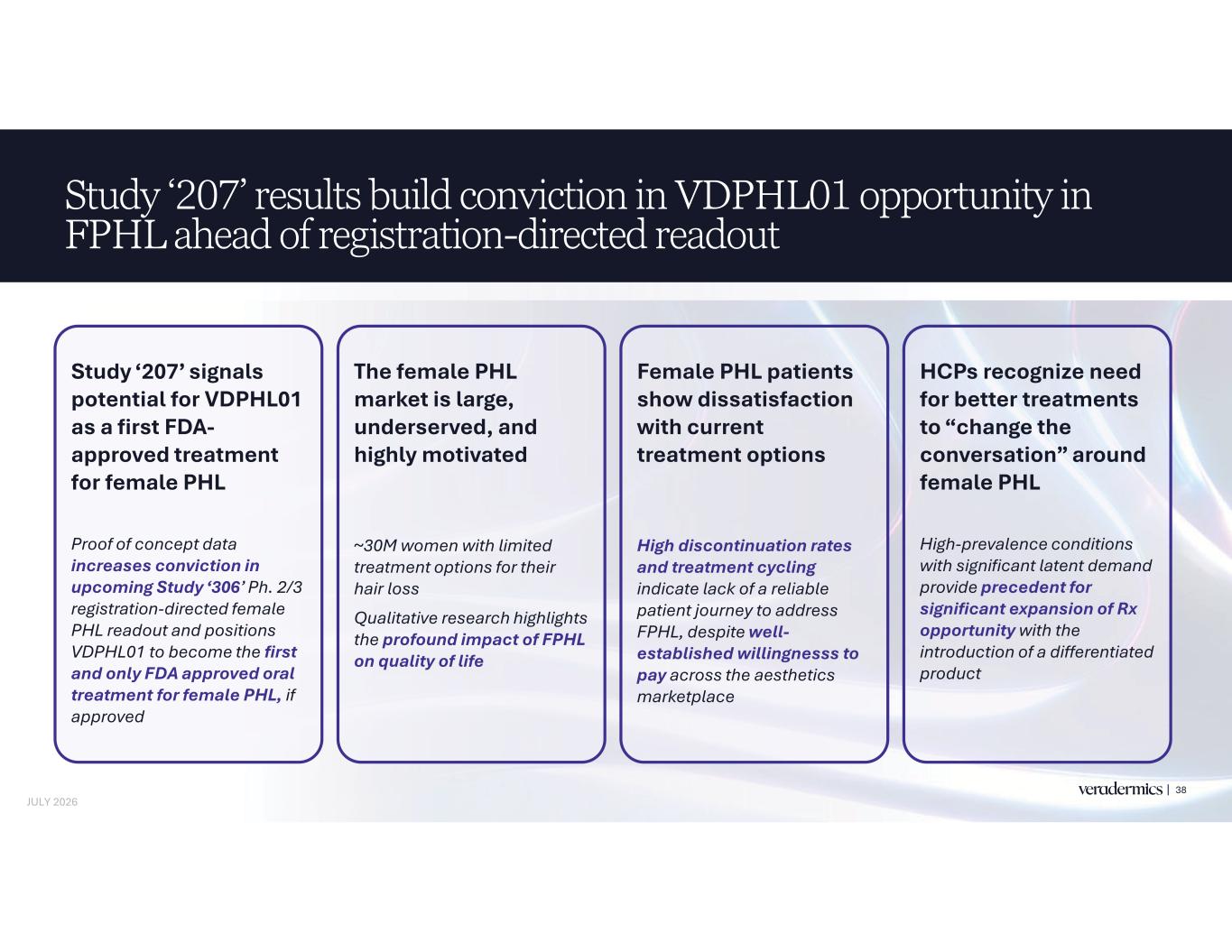
Study ‘207’ results build conviction in VDPHL01 opportunity in FPHL ahead of registration-directed readout 38 Study ‘207’ signals potential for VDPHL01 as a first FDA- approved treatment for female PHL Proof of concept data increases conviction in upcoming Study ‘306’ Ph. 2/3 registration-directed female PHL readout and positions VDPHL01 to become the first and only FDA approved oral treatment for female PHL, if approved The female PHL market is large, underserved, and highly motivated ~30M women with limited treatment options for their hair loss Qualitative research highlights the profound impact of FPHL on quality of life Female PHL patients show dissatisfaction with current treatment options High discontinuation rates and treatment cycling indicate lack of a reliable patient journey to address FPHL, despite well- established willingnesss to pay across the aesthetics marketplace HCPs recognize need for better treatments to “change the conversation” around female PHL High-prevalence conditions with significant latent demand provide precedent for significant expansion of Rx opportunity with the introduction of a differentiated product JULY 2026
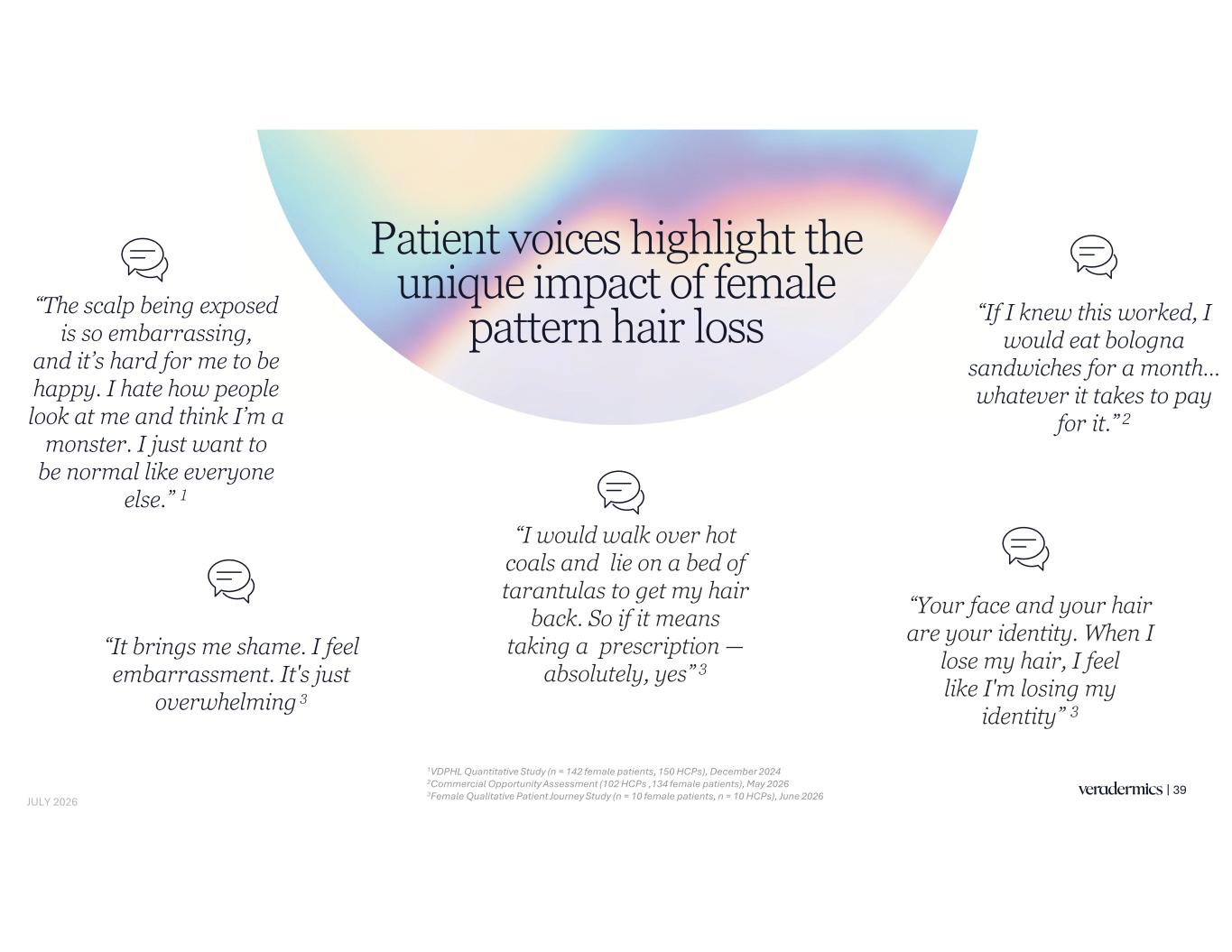
39 Patient voices highlight the unique impact of female pattern hair loss JULY 2026 “The scalp being exposed is so embarrassing, and it’s hard for me to be happy. I hate how people look at me and think I’m a monster. I just want to be normal like everyone else.” 1 “If I knew this worked, I would eat bologna sandwiches for a month… whatever it takes to pay for it.” 2 “Your face and your hair are your identity. When I lose my hair, I feel like I'm losing my identity” 3 “It brings me shame. I feel embarrassment. It's just overwhelming 3 “I would walk over hot coals and lie on a bed of tarantulas to get my hair back. So if it means taking a prescription — absolutely, yes” 3 1VDPHL Quantitative Study (n = 142 female patients, 150 HCPs), December 2024 2Commercial Opportunity Assessment (102 HCPs ,134 female patients), May 2026 3Female Qualitative Patient Journey Study (n = 10 female patients, n = 10 HCPs), June 2026
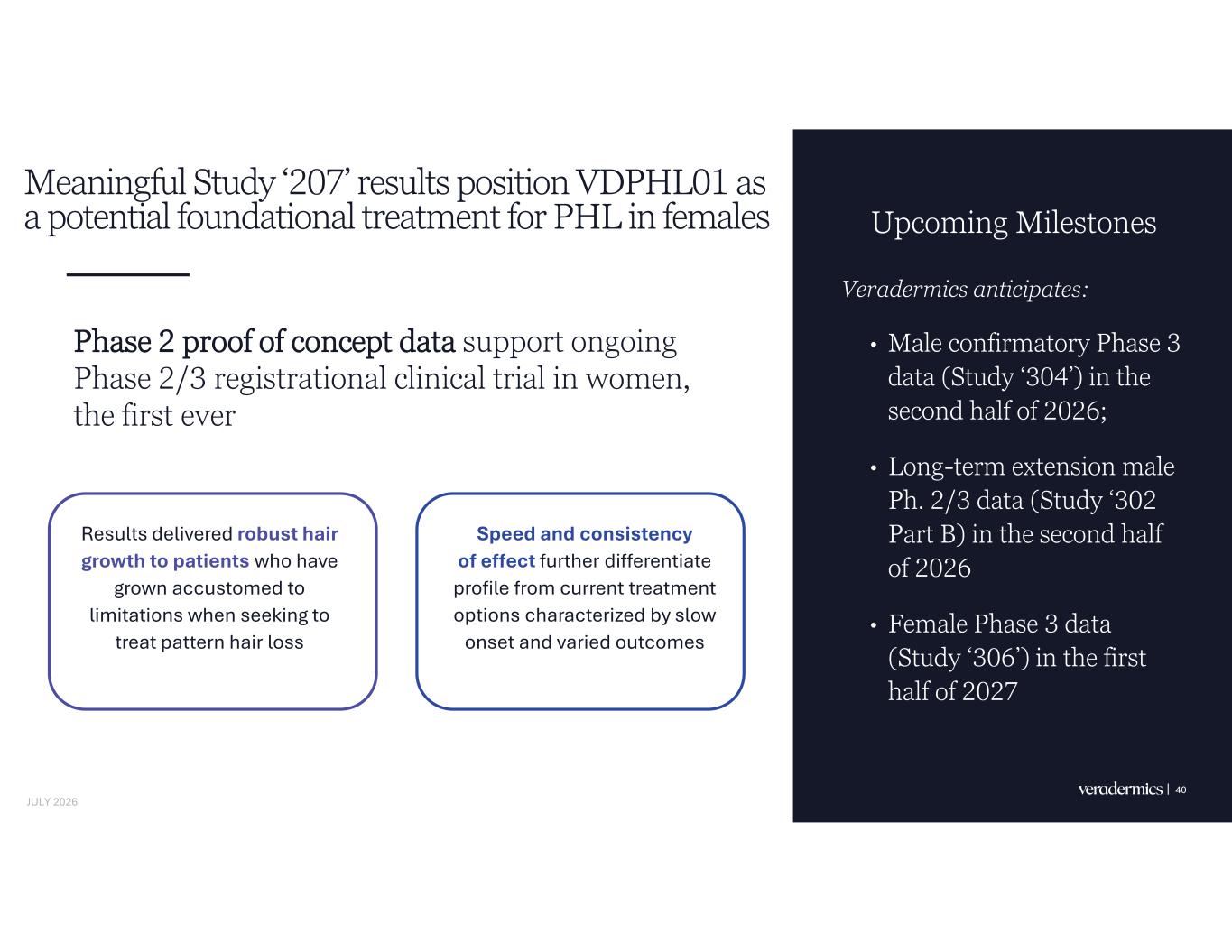
Meaningful Study ‘207’ results position VDPHL01 as a potential foundational treatment for PHL in females Upcoming Milestones Veradermics anticipates: • Male confirmatory Phase 3 data (Study ‘304’) in the second half of 2026; • Long-term extension male Ph. 2/3 data (Study ‘302 Part B) in the second half of 2026 • Female Phase 3 data (Study ‘306’) in the first half of 2027 40 Phase 2 proof of concept data support ongoing Phase 2/3 registrational clinical trial in women, the first ever Results delivered robust hair growth to patients who have grown accustomed to limitations when seeking to treat pattern hair loss Speed and consistency of effect further differentiate profile from current treatment options characterized by slow onset and varied outcomes JULY 2026